Author: Gary Miles

  • Ernest P. Richards, lifelong urban cowboy, musician, and contractor, has died at 85

    Ernest P. Richards, lifelong urban cowboy, musician, and contractor, has died at 85

    Ernest P. Richards, 85, of Philadelphia, lifelong urban cowboy, musician, singer, building contractor, mentor, veteran, and volunteer, died Monday, Jan. 12, of cancer at the Philadelphia VA Medical Center.

    Mr. Richards fell in love with horses when he was a youth in South Philadelphia and went on to own four of his own: Lucky, Jaheel, Pretty Girl, and Dancer. He became an expert in horsemanship and grooming, and dressed daily in cowboy hats, bolo ties, and western boots. He shined his collection of saddles as brightly as any car in the neighborhood.

    “He loved animals, period,” said his wife, Sheila, “and horses are strong. He liked that.”

    Over the years, Mr. Richards adorned his mounts in colors that matched his eye-catching outfits and rode in parades, on local trails, and elsewhere around the city and South Jersey. He started out supervising 25-cent pony rides at a farm in South Philadelphia as a teenager and later stabled his horses most often at a farm near the Cowtown Farmers Market in Pilesgrove Township, Salem County.
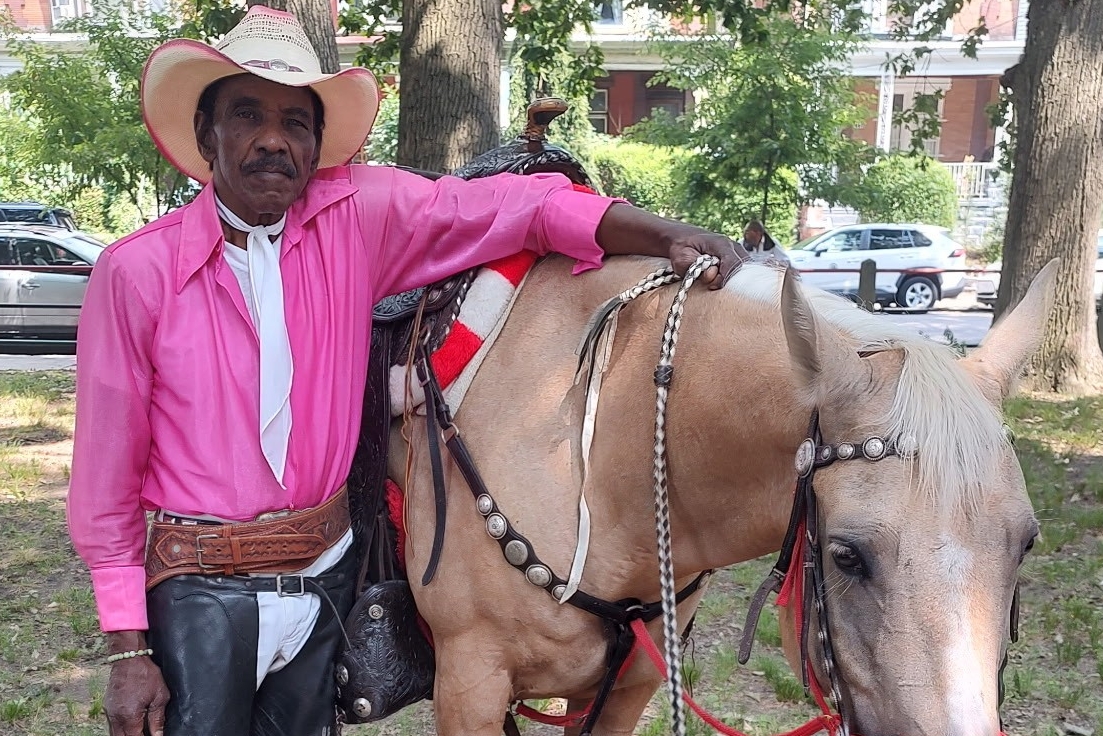
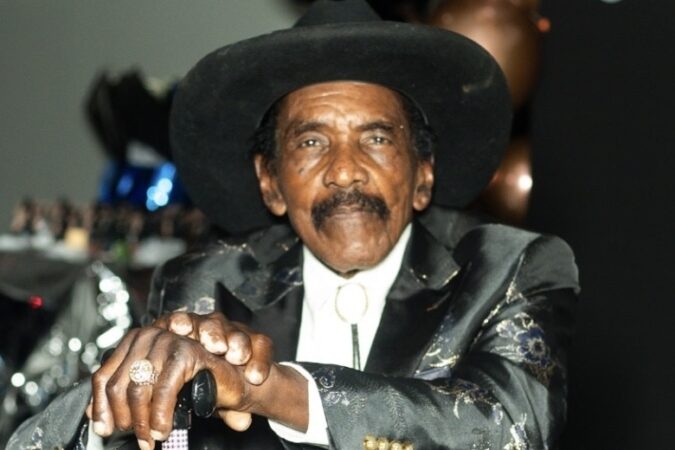
    Mr. Richards was known for his distinctive western attire.

    He became such a good rider, and his horses were so expressive, his family said, that he often led other concrete cowboys in holiday parades on Broad and 52nd Streets. “He was the star of the show,” said his daughter Passion. “My dad was sharp.”

    Mr. Richards enjoyed watching John Wayne westerns and the TV show Bonanza, and he took his family on a memorable trip to a rodeo in Maryland. He taught his children, grandchildren, and anyone else who was interested how to safely ride and care for horses.

    Out of the saddle, Mr. Richards was a gifted singer and guitar player. He formed a band, Fire and Rain, after he returned to Philadelphia from two years in the Army, and they played at the Apollo Theater in New York and at clubs all over Philadelphia for decades.

    He specialized in love songs and covered many made popular by Teddy Pendergrass and Harold Melvin and the Blue Notes. “He was a romantic,” his wife said.
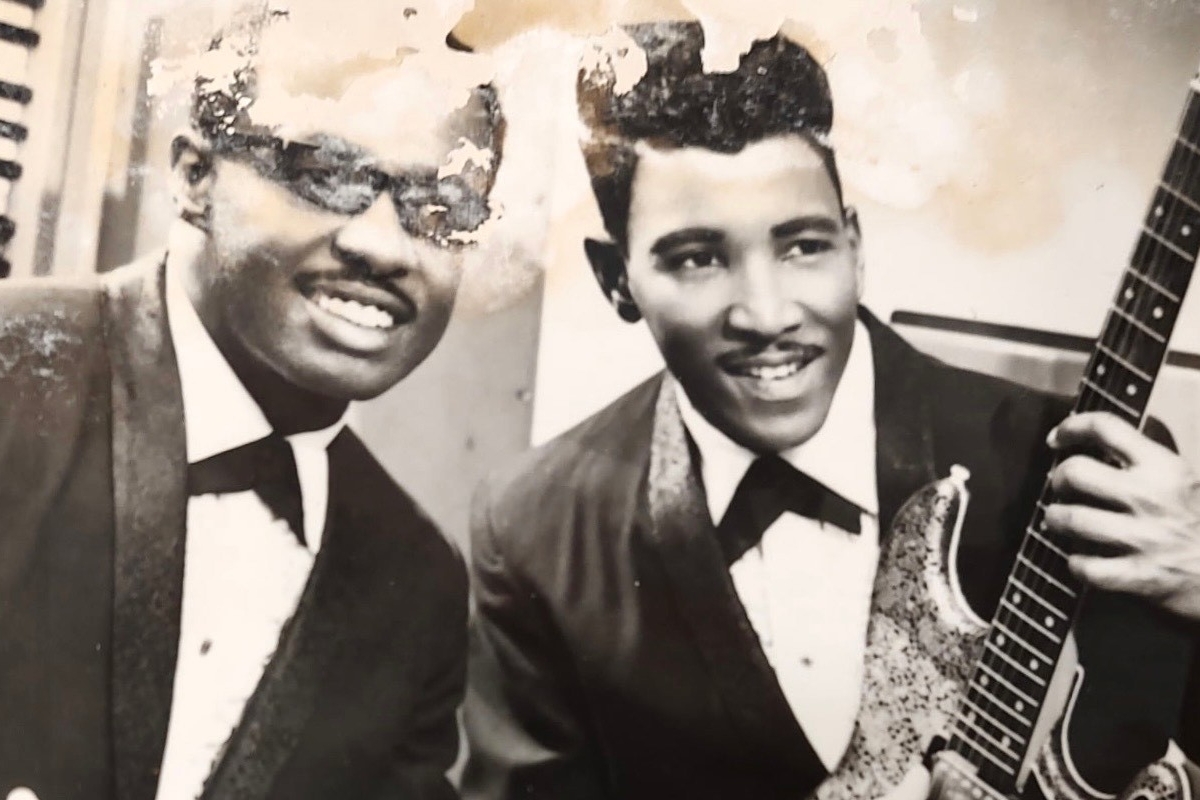
    Mr. Richards (right) was an accomplished singer and guitar player.

    He also had an eye for design and beauty, and a knack for construction. He built decks, repaired roofs, refurbished basements, and raised other buildings, sometimes from the ground up.

    He constructed a barn and stalls for the horse farm he frequented in Salem County, and mentored young men in West Philadelphia who wanted to learn the construction skills he had picked up from his mentors and while in the Army.

    “He loved to beautify things,” his wife said. “He was a beautiful person.”

    Ernest Patrick Richards was born Feb. 25, 1940, in Philadelphia. He graduated from Edward Bok Technical High School in 1958 and spent two years in the Army.
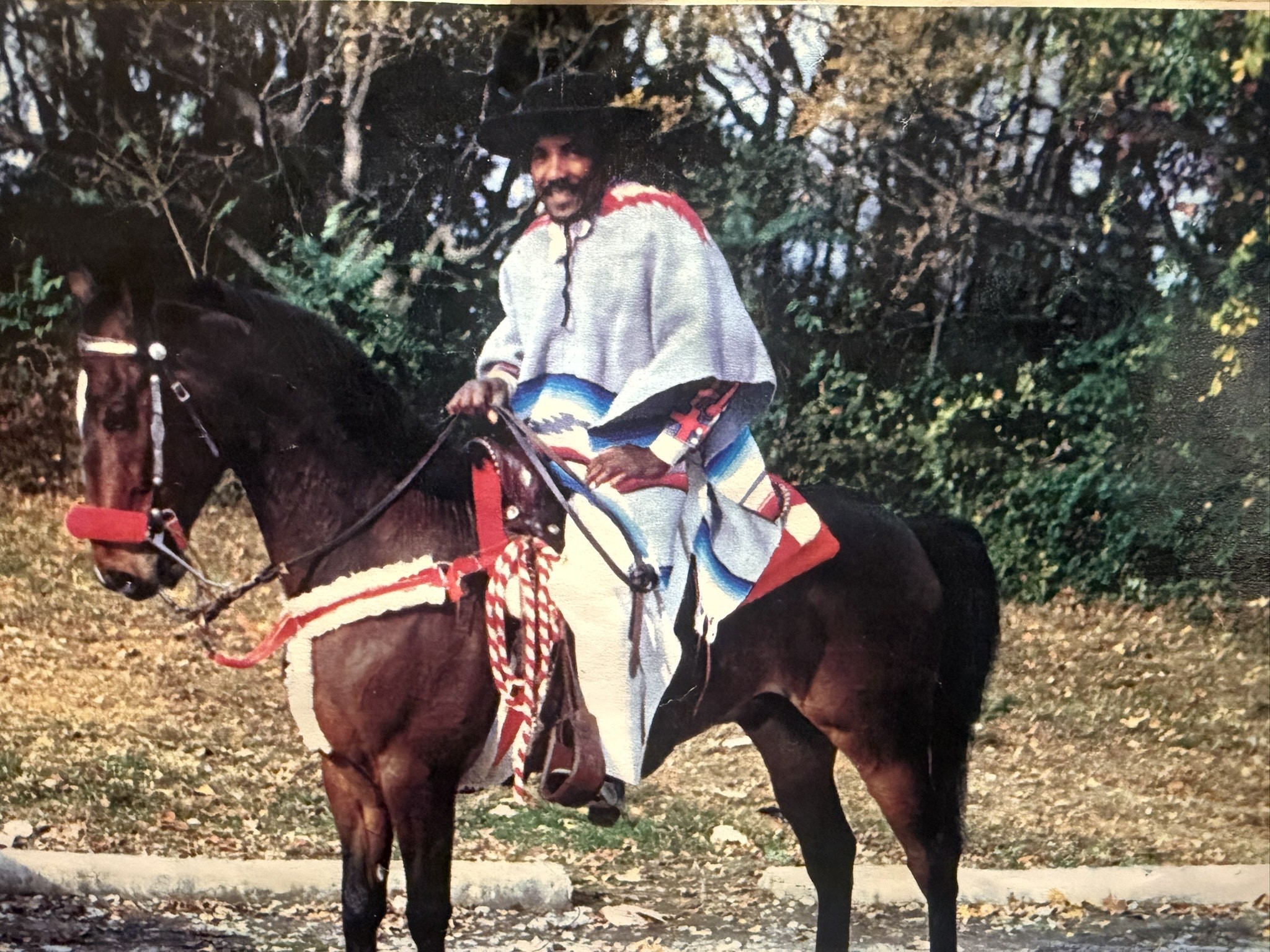
    Mr. Richards often dressed his horse to match his oufit when they rode in parades.

    He met singer Sheila Sampson when she auditioned to sing with Fire and Rain, and they married in 1985 and had daughters Passion, Keshia, Tammy, and Sparkle. He also had daughters Jackie G., Jackie J., and Crystal. Jackie G. and Crystal died earlier.

    Mr. Richards played basketball for years and whiled away many evenings strumming his guitar and singing songs around the house. He adored his family, they said, and attended the Church of Christian Compassion. “He was inspirational about his love of God,” his wife said. “He was all about family and faith.”

    He had a hearty laugh, his daughters said, and tolerated no nonsense, his wife said. He helped anybody who needed anything at any time, they all said.

    He valued independence and knew how to fix cars and home appliances. A friend said online that he had “a heart of gold” and was “an earth angel.” His nephew and nieces said he kept them “laughing and on our toes, teaching us great life lessons and how to repair anything.”

    Mr. Richards was an expert builder.

    Mr. Richards liked flashy western wear, and his wife nicknamed him Richie Rich because he dressed so snazzy. “He was never judgmental,” said his granddaughter Najzhay. “He was always offering help. He was truly my favorite person and the best cowboy.”

    “He was funny,” said his daughter Passion. “He could light up a room. His presence demanded respect. He was the center of our everything.”

    His daughter Sparkle said: “He was a great teacher and our best friend.”

    On his 85th birthday last year, Mr. Richards told his family: “All my blessings are right here in this room. I’m so grateful, eternally grateful.”
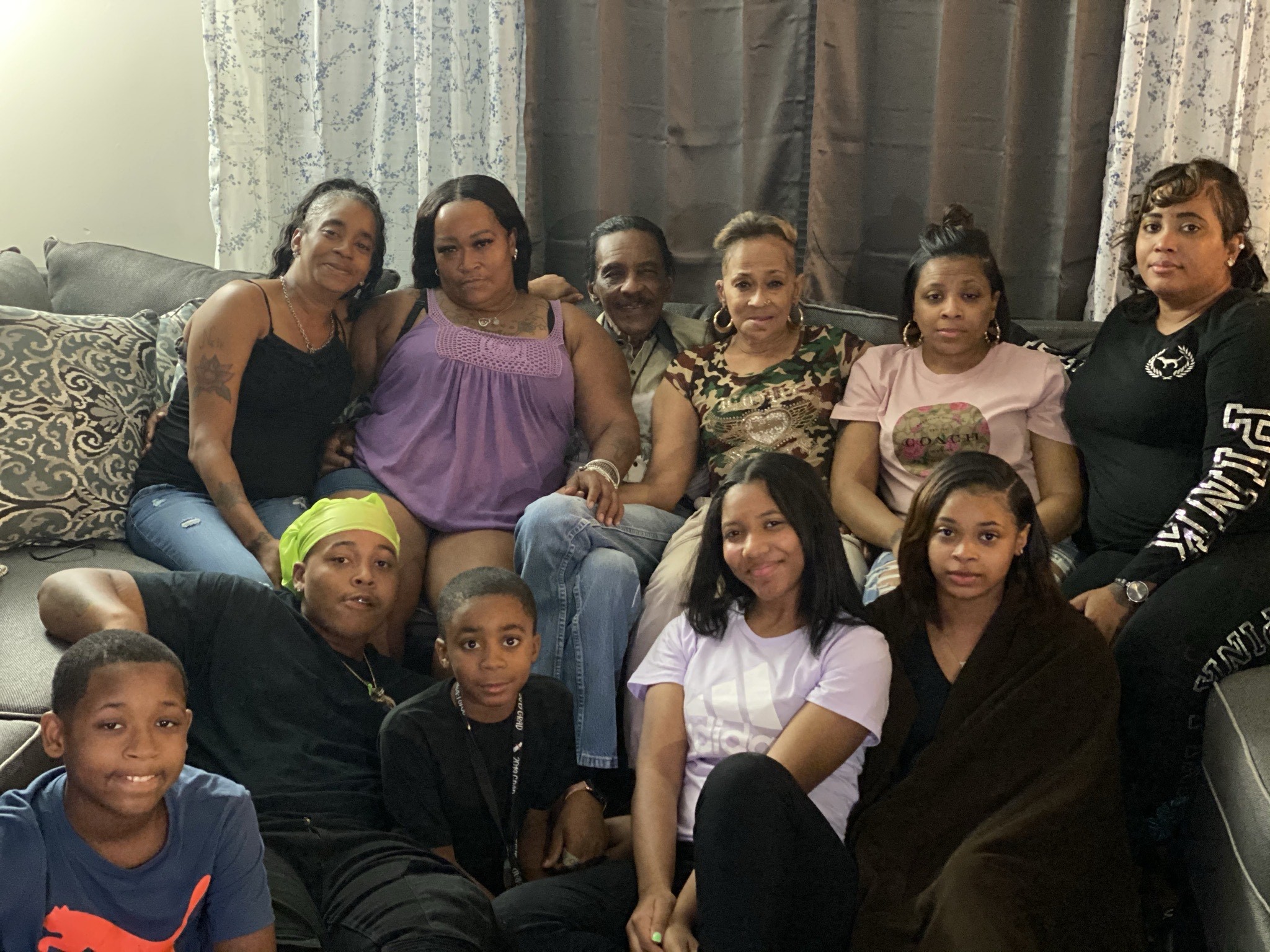
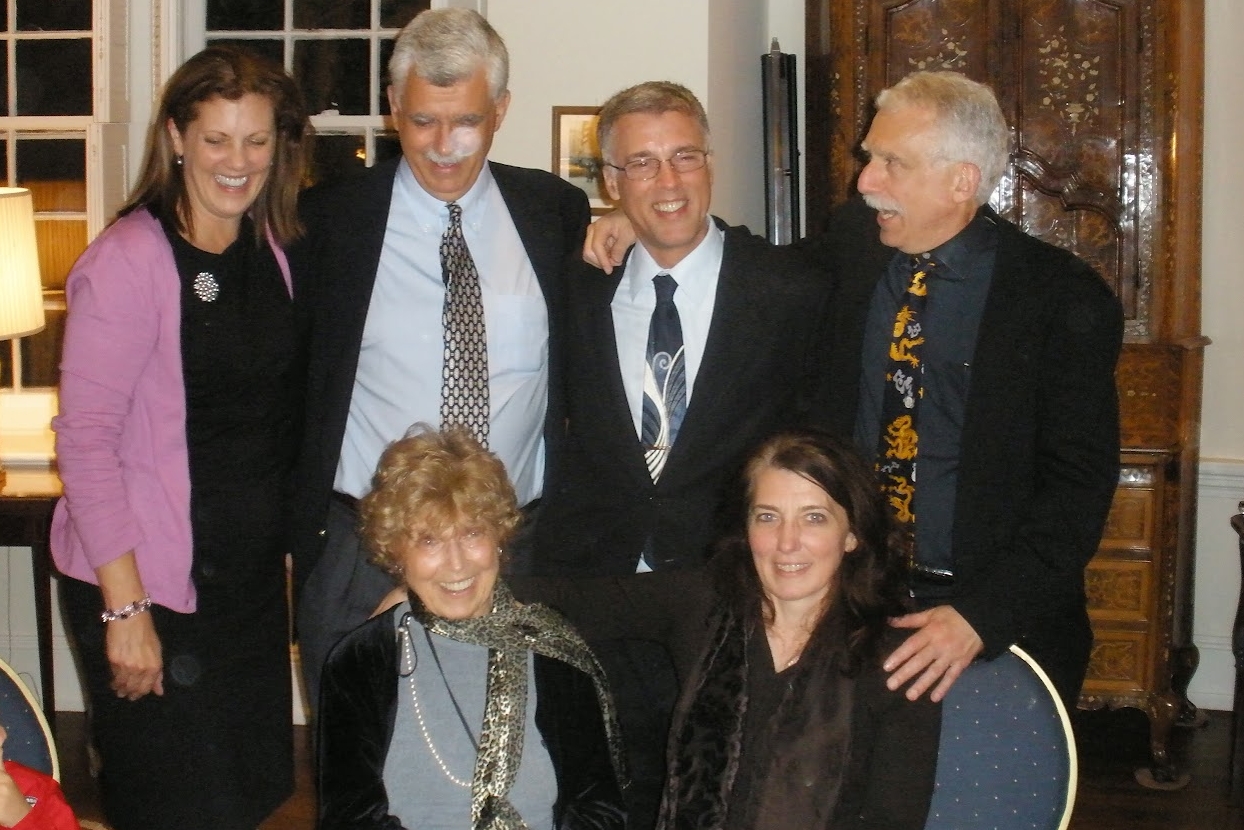
    Mr. Richards (rear, third from left) enjoyed time with his family.

    In addition to his wife, daughters, and granddaughter, Mr. Richards is survived by five other grandchildren, two great-grandsons, and other relatives. A brother and a sister died earlier.

    A celebration of his life was held Thursday, Jan. 22.
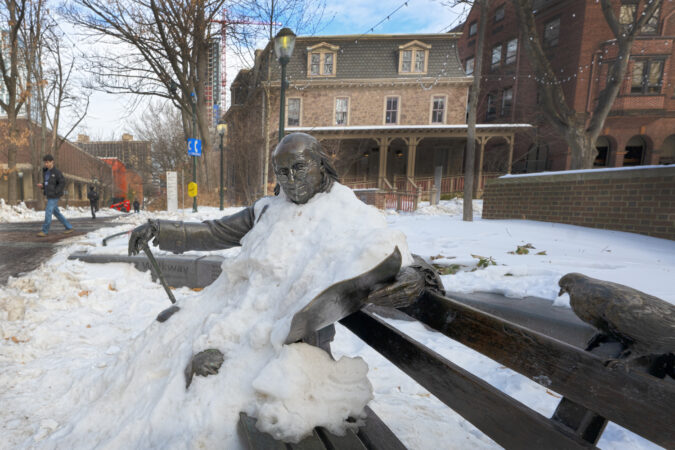
  • Weekend to stay frigid, forecasters say, but heat wave to near 40 may arrive on Wednesday

    Weekend to stay frigid, forecasters say, but heat wave to near 40 may arrive on Wednesday

    The frigid temperatures, the blocks of ice clogging the Delaware and Schuylkill Rivers, and the mounds of snow piled high in driveways and parking lots across the Philadelphia region are not likely to change much Sunday and Monday, Zack Cooper said Saturday afternoon.

    Cooper, a meteorologist at the National Weather Service in Mount Holly, said to expect a high of just 18 degrees on Sunday, a significant drop from Saturday’s high of 28. For Monday’s return to work for many, the weather service predicts a high of 36.

    “It’s been a long time since we’ve seen this type of prolonged stretch of cold weather,” Cooper said. “It’s been about 10 years.”

    The good news, he said, is that the temperature should peak for the week at near 41 on Wednesday. More good news, he said, is that the daytime highs are expected to reach above freezing for the rest of the week, 36 on Tuesday, Thursday, and Friday, and 38 on Saturday. But the nighttime lows should still dip below the freezing point of 32 degrees.

    In that case, Cooper said, some of the ice will melt during the warmer daytime hours but not enough to cause widespread flash flooding near rivers, lakes, and streams. A slow warmup, with warmer days and colder nights, is always best, he said.

    That’s also important regarding the giant snow piles around town because Friday was the 12th consecutive day of a snowpack of at least 5 inches at Philadelphia International Airport. In 2014, the weather service issued warnings of flash floods along the Delaware River south of Trenton after a rapid warmup, and a presidential disaster declaration was needed in 1996 when melting ice jams caused major flooding along the Delaware and the Susquehanna Rivers.

    It’s been a rough February so far for Philadelphia area residents. Daily average temperatures have been below freezing every day since Jan. 23, and the region went nine days, from Jan. 24 to Feb. 2, without reaching 32 degrees at all.

    Last week, a barge heading north got stopped in the ice on the Delaware River, ferry service was halted in the Delaware Bay due to ice, and the Coast Guard had to deploy a 175-foot-long cutter to smash up ice floes in the Delaware all the way up to Trenton.

    Cooper said the recent nine-day stretch of temperatures below freezing is likely among the top 10 longest local cold snaps on record. The last period of such frigidity, he said, was an eight-day stretch in 2015.

    As for the wind chills, Saturday night could reach minus 13 degrees. Sunday could go to minus 12, and Monday could be minus 3. High wind warnings are expected to be lifted on Sunday. No snow is expected next week.

    So what should folks do until Wednesday? Hang in there, Cooper said. “We take weather as it comes,” he said. “It’s ever-changing, and you have to adapt and adjust.”

    And if it does reach 41 on Wednesday, Cooper said, “It will feel nice.”

  • Sandra Schultz Newman, the first woman elected to the Pa. Supreme Court, has died at 87

    Sandra Schultz Newman, the first woman elected to the Pa. Supreme Court, has died at 87

    Sandra Schultz Newman, 87, of Gladwyne, Montgomery County, the first woman elected to the Pennsylvania Supreme Court, the first female assistant district attorney in Montgomery County, the first woman named to the board of directors of the old Royal Bank of Pennsylvania, longtime private practice attorney, role model, mentor, and colorful “Philadelphia icon,” died Monday, Feb. 2. Her family did not disclose the cause of her death.

    Reared in South Philadelphia and Wynnefield, and a graduate of Drexel, Temple, and Villanova Universities, Justice Newman, a Republican, was elected to the Commonwealth Court of Pennsylvania in November 1993 and to the state Supreme Court in 1995. She won a second 10-year term on the Supreme Court in 2005 but, having to step down in just two years due to a mandatory retirement age, left at the end of 2006.

    “I love the court. I love my colleagues. The collegiality was great, and I’m going to miss that,” Justice Newman told The Inquirer. “But I just felt like I wanted to move on.”

    During her 10-year tenure, Justice Newman was chair of the Supreme Court’s Judicial Council Committee on Judicial Safety and Preparedness and the court’s liaison to Common Pleas Court and Municipal Court in Philadelphia. She ruled on hundreds of issues and wrote opinions about all kinds of landmark cases, from environmental protections to school funding to clergy privilege to the Gary Heidnik and John E. du Pont murder cases.

    She had worked in criminal and family law and handled many divorce and custody cases as a private attorney in the 1980s, and was praised later by court observers for her attention to Philadelphia Family Court matters. Lynn Marks, of Pennsylvanians for Modern Courts, told the Daily News in 2005: “She’s been a wonderful justice, and she’s made herself accessible to the public interest community.”

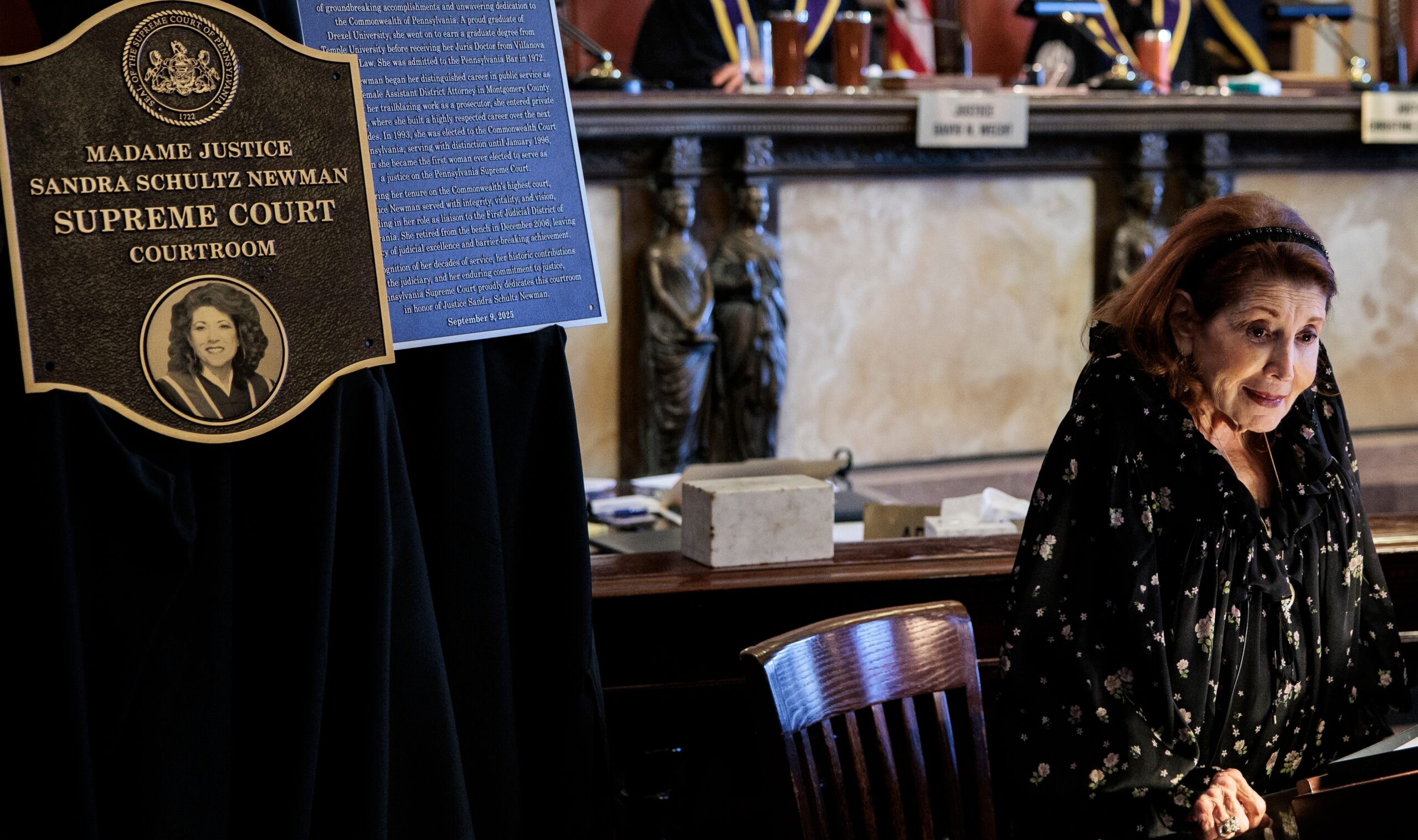
    In 2025, her colleagues on the Supreme Court named their Philadelphia courtroom after her. “She was a remarkable jurist, public servant, and trailblazer for women, whose work and impact will leave a legacy beyond the bench,” Supreme Court Chief Justice Debra Todd said in a tribute.

    News outlets across the state covered Justice Newman’s election to the Supreme Court as she campaigned in 1995, and she easily collected more votes in the Nov. 7 election than any of the other three candidates, all men. She told the Daily Item in Sunbury, Pa., in September ’95: “I don’t think anyone should be elected solely on their gender. But I don’t think anybody should not be elected because of it, either.”

    Justice Newman touted her collegiality and feminine life experience during the 1995 campaign and told The Inquirer she wanted to be a “role model for everyone in Pennsylvania.” She told the Press Enterprise in Bloomsburg, Pa.: “I think I can bring a sensitivity and understanding on many issues, such as criminal issues like rape. I have a deep sense for the need of a safe society.”

    Justice Newman speaks in 2025 during the ceremony in which the Supreme Court named its Philadelphia courtroom after her.

    After her election, Inquirer staff writer Robert Zausnersaid: “Wealthy yet down-to-earth, Newman talked often during the campaign about her grandchildren and insisted that people ‘call me Sandy’ once she was outside her courtroom.”

    Former Gov. Tom Ridge called Justice Newman a “pioneering legal giant” and said she “inspired generations of legal professionals across the Commonwealth.” Ezra Wohlgelernter, chancellor of the Philadelphia Bar Association, noted her “pathbreaking career” and “valuable service to our city and to the Commonwealth” in a tribute.

    Either “the first” or “the only” in many of her professional pursuits, Justice Newman was called a “Philadelphia icon,” “a force of nature,” and a “beautiful and radiant star” in online tributes. She flirted with running for political office several times and was colorfully profiled in Philadelphia Magazine in 1988. In that story, writer Lisa DePaulo called her “part woman/part tigress.”

    She famously endorsed a controversial cosmetic product on TV in 2006 and attended many galas and charity auctions, and her name appeared in the society and opinion pages nearly as often as the news section. In a 1983 feature, Inquirer writer Mary Walton described Justice Newman as “beautiful … with tousled auburn hair and a slender figure that she liked to cloak in expensive designer clothes.”

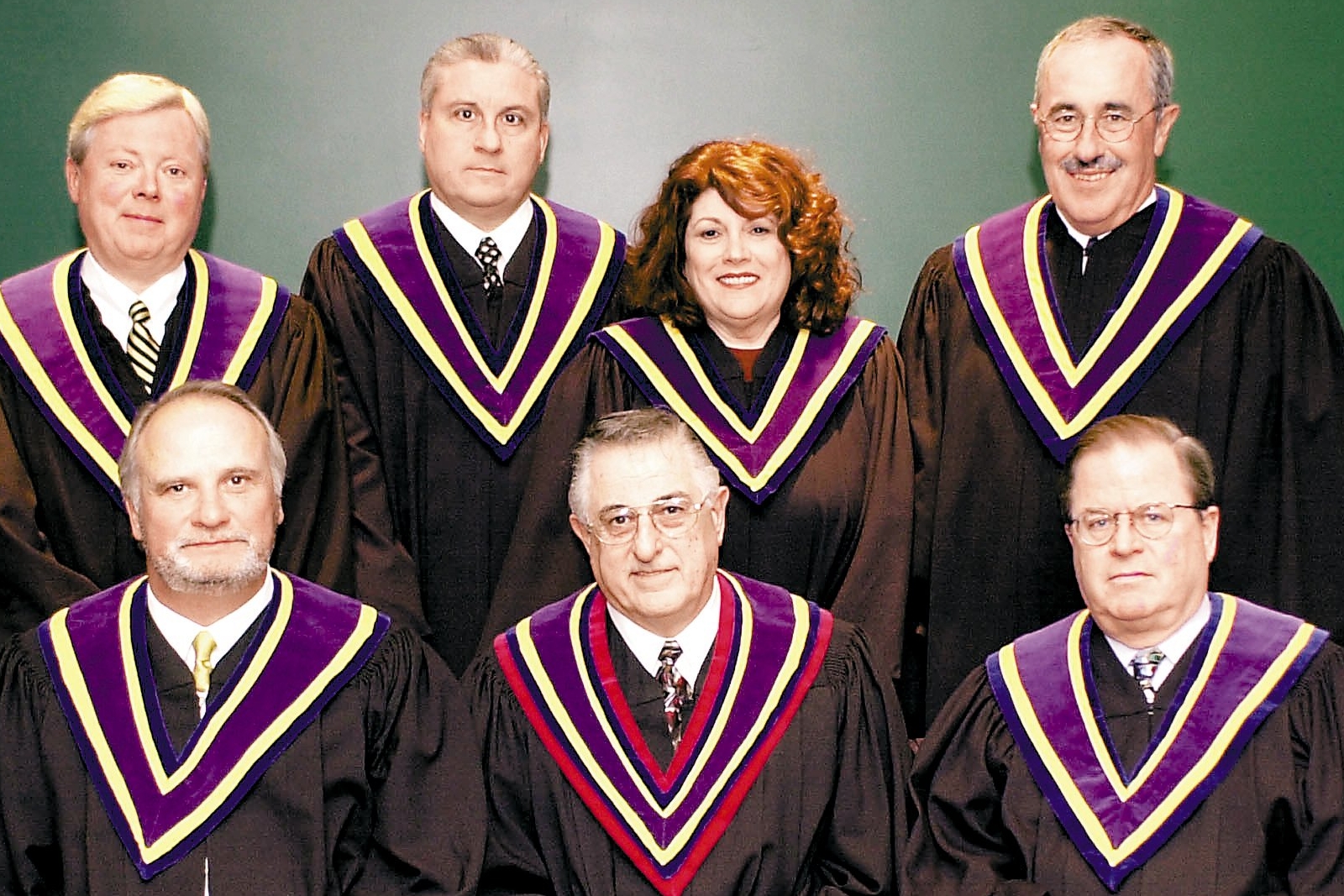
    Justice Newman was the only woman on the state Supreme Court in 2002.

    A friend said online she was “irrepressible in an Auntie Mame sort of way.” Another said: “The world has become a little quieter.”

    Justice Newman served as the first female assistant district attorney in Montgomery County from 1972 to 1974 and was an in-demand, high-profile partner at Astor, Weiss & Newman from 1974 to 1993. She returned to private practice in 2006 and handled mostly alternative dispute resolution cases until recently.

    She told the Press Enterprise in 1995 that colleagues in the Montgomery County District Attorney’s Office had adorned her desk with a green plant on her first day in 1972. “It was marijuana from the evidence room,” she said.

    She wrote papers and book chapters about trial practice, death penalty statutes, and the electoral system in Pennsylvania. She spoke about all kinds of legal topics at seminars, conferences, and other events.

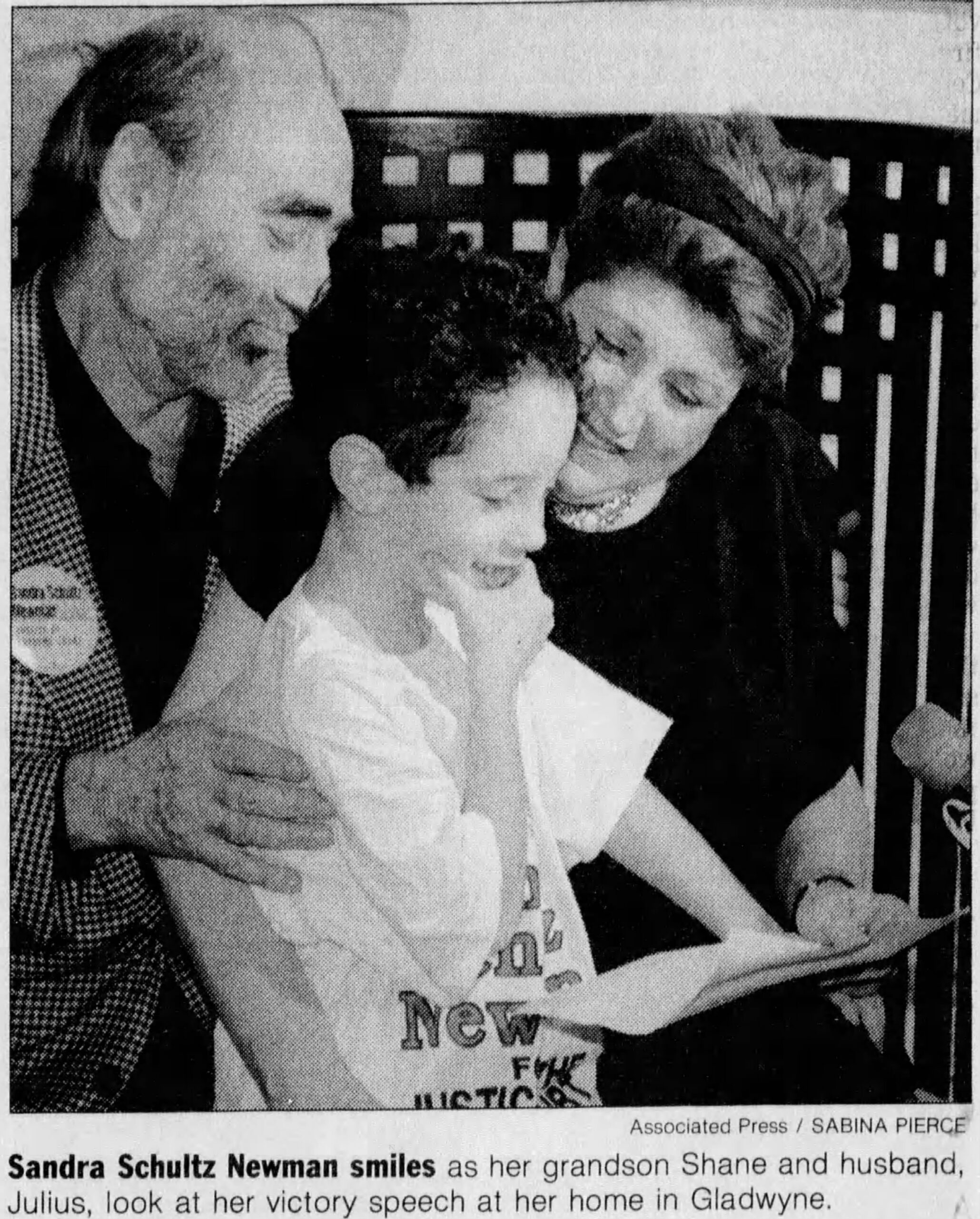
    This photo of Justice Newman, her husband, Julius, and grandson Shane was taken for The Inquirer after she won on Election Day in 1995.

    She cofounded what is now the Drexel University Thomas R. Kline School of Law in 2006, was a trustee for Drexel’s College of Medicine, and received dozens of service and achievement awards from Drexel, Villanova, the Pennsylvania and Philadelphia Bar Associations, the Women’s Bar Association of Western Pennsylvania, the Pennsylvania Association for Justice, and other groups.

    She was the president of boards, chair of many committees, and active with the National Association of Women Justices, the Juvenile Law Center, the American Law Institute, and other organizations. She taught law classes at the Delaware Law School of Widener University in 1984 and ’85, and at Villanova from 1986 to 1993.

    She earned a bachelor’s degree at Drexel in 1959 and a master’s degree in hearing science at Temple in 1969. In 1972, she was one of a handful of women to get a law degree at what is now Villanova’s Charles Widger School of Law. Later, she received four honorary doctorate degrees and was named a Distinguished Daughter of Pennsylvaniaby then-Gov. Ridge in 1996.

    Outside the courtroom, Justice Newman volunteered for charities and legal associations. She was part of a group that tried unsuccessfully to buy the Eagles from then-owner Leonard Tose in 1983, and she was criticized in the early 2000s for her financial involvement in a bungled long-running effort to fund a new Family Court Building in Philadelphia.

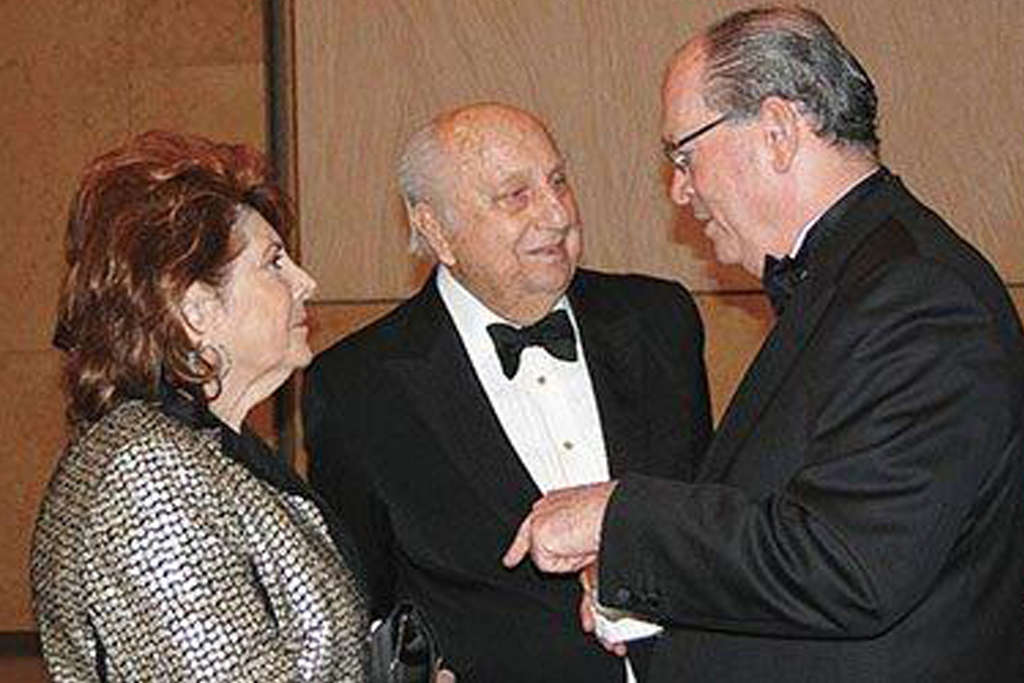
    Justice Newman chats with philanthropists and business leaders Raymond G. Perelman (middle) and Joseph Neubauer at the gala opening of the new Barnes Museum in 2018.

    “Justice Newman filled every room she entered with her strength, energy, and exuberance for life and for the law,” Supreme Court Justice P. Kevin Brobson said in a tribute. “She lived with intention and spent her entire career focused on creating and expanding opportunities for future generations of legal professionals, especially women.”

    Sandra Schultz was born Nov. 4, 1938. She graduated from Overbook High School and married cosmetic surgeon Julius Newman in 1959. They had sons Jonathan and David, and lived in Wynnefield, Penn Valley, and Gladwyne.

    Her husband and son David died earlier. She married fellow lawyer Martin Weinberg in 2007, and their union was annulled 11 months later.

    Justice Schultz was a longtime fashionista. She reveled in shopping trips to New York, and DePaulo reported in 1988 that her closet in Gladwyne was 800 square feet. She was also funny, generous, and kind, friends said.

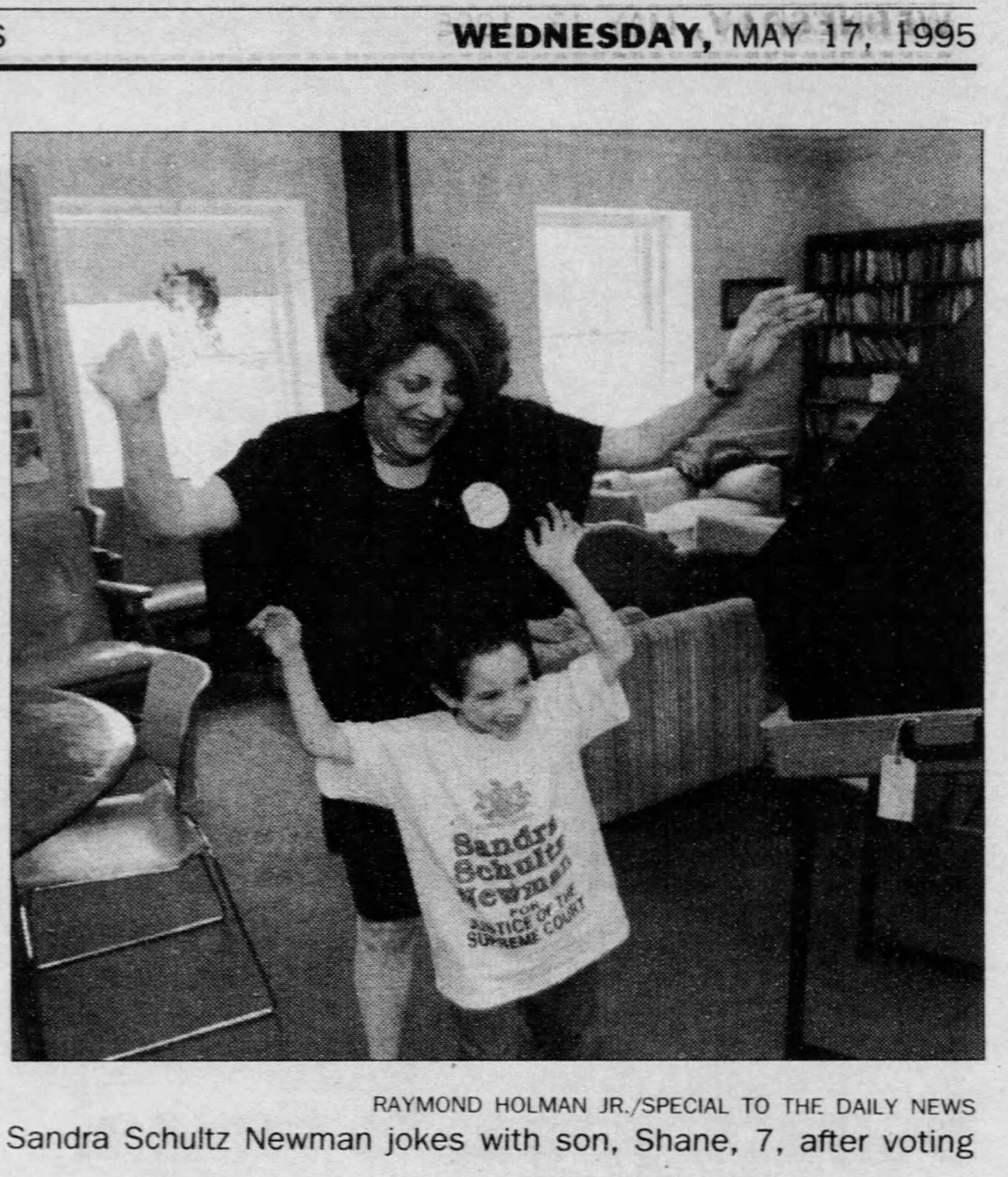
    Justice Newman dances with her grandson on Election Day in 1995. This photo appeared in the Daily News.

    She funded several college scholarships, collected art, owned racehorses, cooked memorable matzo balls, enjoyed giving gifts, and tried to have dinner every night with her family. Sometimes, DePaulo reported, in the 1970s, she took her young sons to her law school classes at Villanova.

    “Despite how busy she was, her family was always her priority,” said her brother, Mark. “She was also a true bipartisan who fought for equal rights and preserving our democratic institutions.”

    In 2003, she was asked by Richard G. Freeman, editor in chief of the Philadelphia Lawyer, to describe her judicial decision-making process. She said: “There are beliefs that you have to put aside. One of the wonderful things about being on our court is that you can make new law where your beliefs fit into the law.”

    In addition to her son Jonathan and brother, Justice Newman is survived by four grandchildren and other relatives. A grandson died earlier.

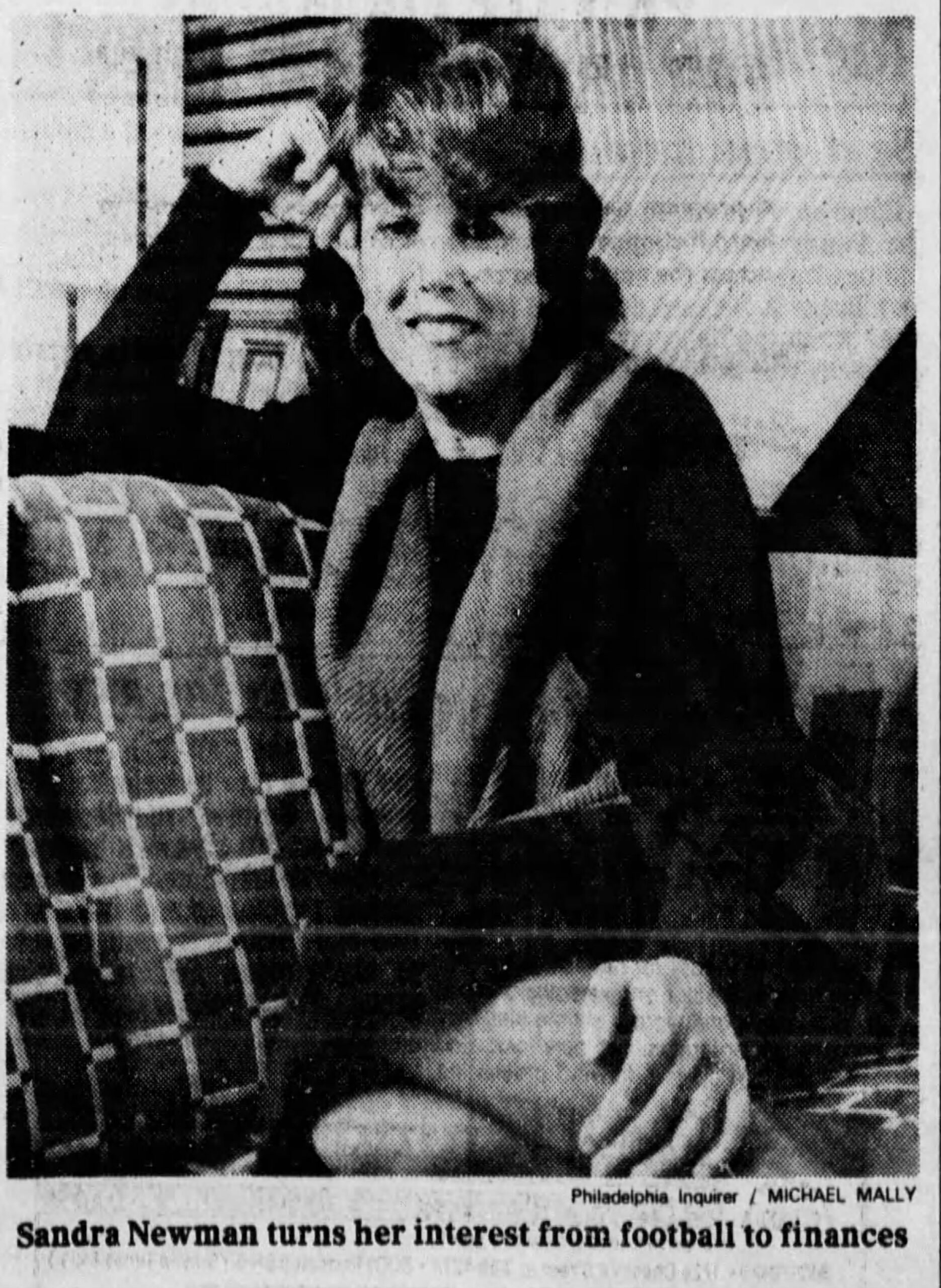
    This photo of Justice Newman appeared in The Inquirer in 1983.

    Services are private.

    Donations in her name may be made to the Crohn’s and Colitis Foundation, 733 Third Ave., Suite 510, New York, N.Y. 10017.

    Correction: One of the communities that Justice Schultz grew up in has been corrected.

  • Ann Harnwell Ashmead, renowned classical archaeology researcher and writer, has died at 96

    Ann Harnwell Ashmead, renowned classical archaeology researcher and writer, has died at 96

    Ann Harnwell Ashmead, 96, of Haverford, renowned classical archaeology researcher, writer, museum curator, volunteer, and world traveler, died Saturday, Jan. 17, of chronic congestive heart failure at her home.

    Dr. Ashmead was an archaeological specialist in Greek vase painting, the depiction of cats on classical and Near Eastern artifacts, and the history of other ancient ceramics. She traveled to Greece, Italy, Turkey, France, and elsewhere around the world to examine, analyze, and research all kinds of ceramics collections.

    She consulted with hundreds of other archaeologists and curators, and wrote extensively about the ongoing international research project to document ancient ceramics and the extensive collections at Haverford and Bryn Mawr Colleges, the Penn Museum, the Rhode Island School of Design, the Louvre Museum in Paris, and other places. She did archaeological field work in Greece during her college years at Bryn Mawr and served as a classical archaeology graduate teaching assistant.

    She was onetime curator of Bryn Mawr’s 6,000-piece Ella Riegel Memorial Museum and a research associate at the Penn Museum. She partnered for years with Bryn Mawr professor Kyle Meredith Phillips Jr. to research and write articles and books about ancient vases, cups, jars, pots, Etruscan images of cats, and other classical antiquities.

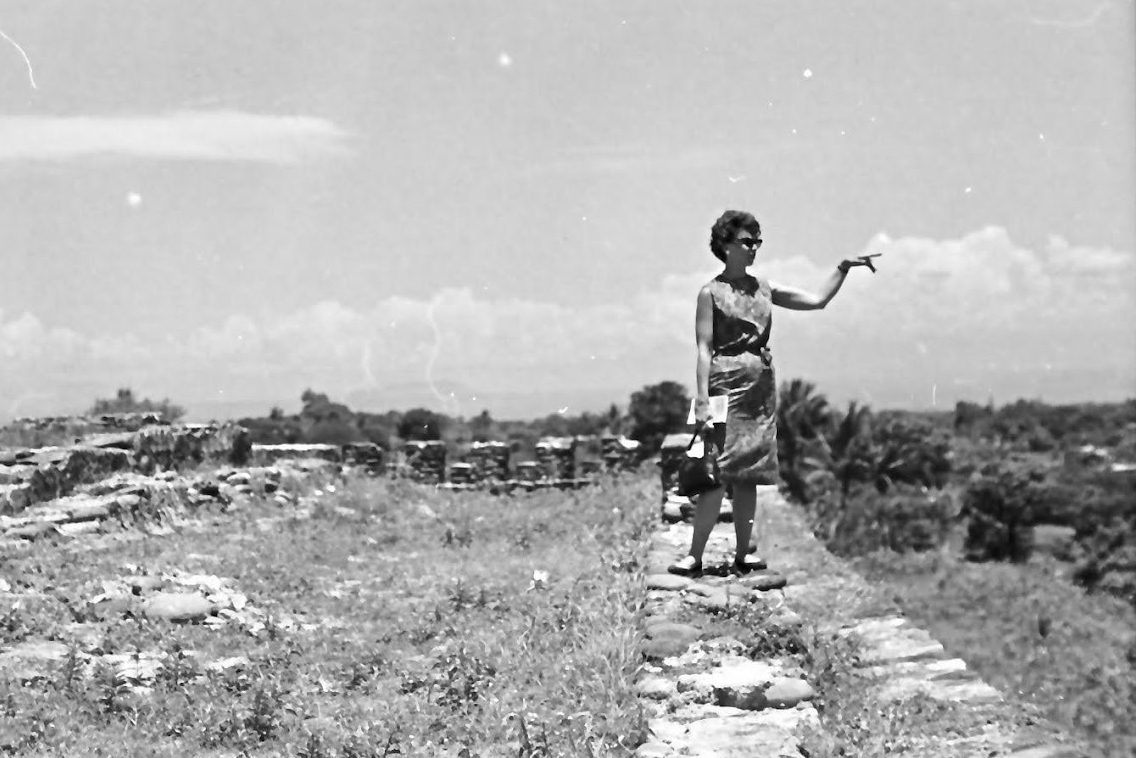
    Dr. Ashmead visited many archaeological sites in Greece and elsewhere.

    Some of her colleagues lovingly called her “the cat lady.”

    Dr. Ashmead often reassembled broken ancient objects for curators and created visual and oral presentations to augment her printed catalogs, articles, and books. “She was indefatigable,“ her family said in a tribute.

    She shared her research at conferences, meetings, and exhibitions around the globe, and most recently collaborated with Ingrid M. Edlund-Berry, professor emerita at the University of Texas at Austin, on a project that scrutinized cats as shield devices on Greek vases.

    “Ann was very modest, humble, and self-deprecating about her publications and academic achievements,” her family said. Her son Graham said: “She was a role model who inspired me with her curiosity on all subjects and issues, and a love of world travel, reading, and lifelong learning.”

    Dr. Ashmead spoke English, Japanese, Greek, Chinese, French, Danish, and Italian.

    Dr. Ashmead was active with the Archaeological Institute of America, and her research was published by the American Journal of Archaeology, the journal of the American School of Classical Studies at Athens, and other groups.

    She married Haverford College English professor John Ashmead Jr. in 1949, and they spent the next two decades traveling the world while he completed Fulbright Scholar teaching assignments. They lived in Japan, Taiwan, and India, and later in Paris, Athens, and Florida.

    She spoke English, Japanese, Greek, Chinese, French, Danish, and Italian. “Her learning never stopped,” her family said.

    Ann Wheeler Harnwell was born Oct. 7, 1929, in Princeton, N.J. Her family moved to Wynnewood in 1938 after her father, Gaylord P. Harnwell, became chair of the physics department at the University of Pennsylvania. He became president of Penn in 1953.

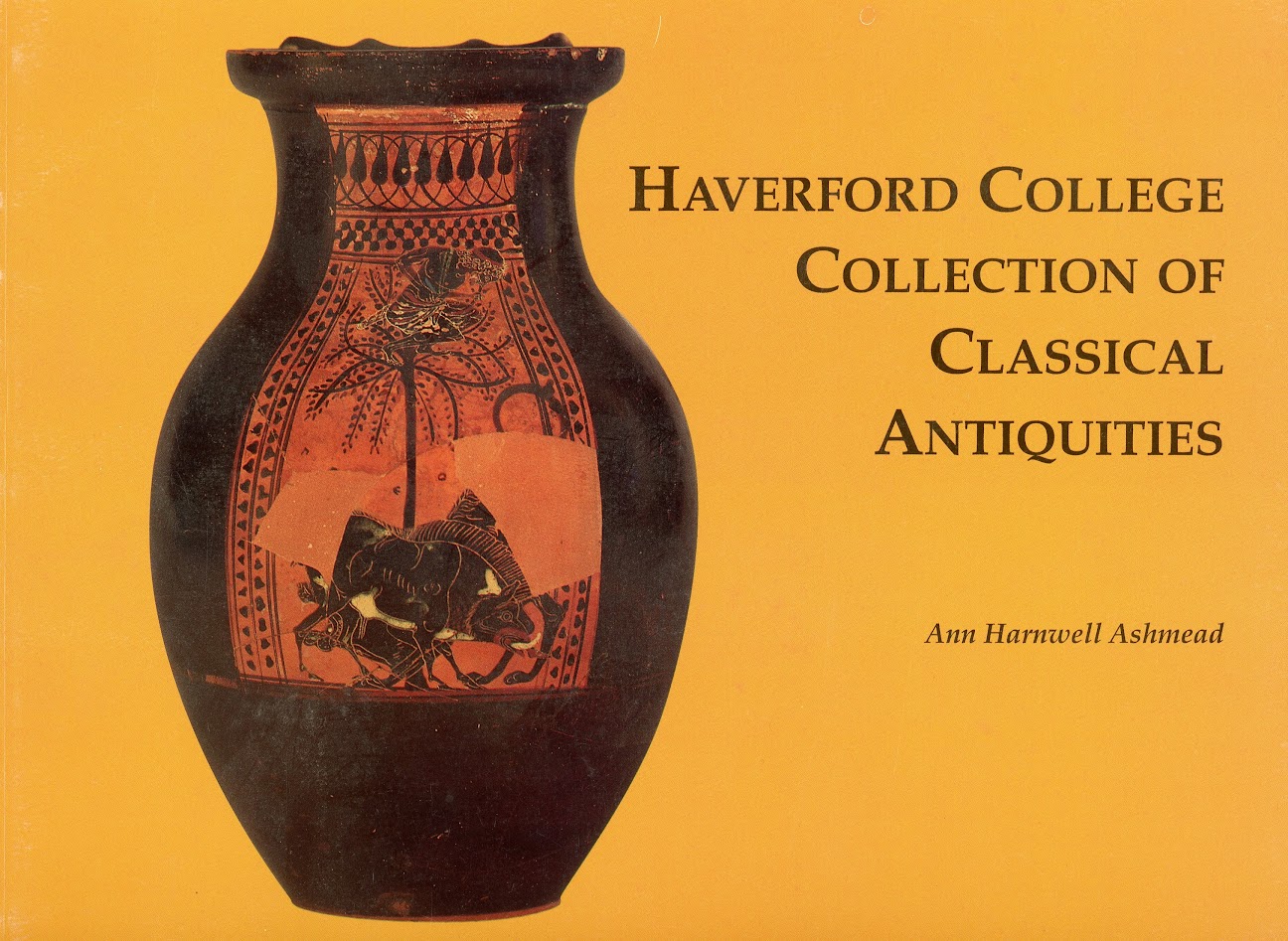
    Dr. Ashmead had many articles, catalogs, and books published over her long career.

    She graduated from Lower Merion High School in 1947 after spending the previous three years with her family in California. She earned bachelor’s and master’s degrees and a doctorate in classical archaeology at Bryn Mawr, and her 1959 doctoral thesis was titled: “A Study of the Style of the Cup Painter Onesimos.”

    On page 2, she wrote: “Such attributions of vases to an artist are a delicate business, the outcome of a long and intricate process of observation and analysis, often of tentative nature.”

    She and her husband had sons John III, Graham, and Gaylord, and daughters Louisa and Theodora. They divorced in 1976 but remained close friends until he died in 1992.

    Having grown up during the stock market crisis in the 1930s, Dr. Ashmead followed the market closely as an adult, and was thrifty and frugal, her family said.

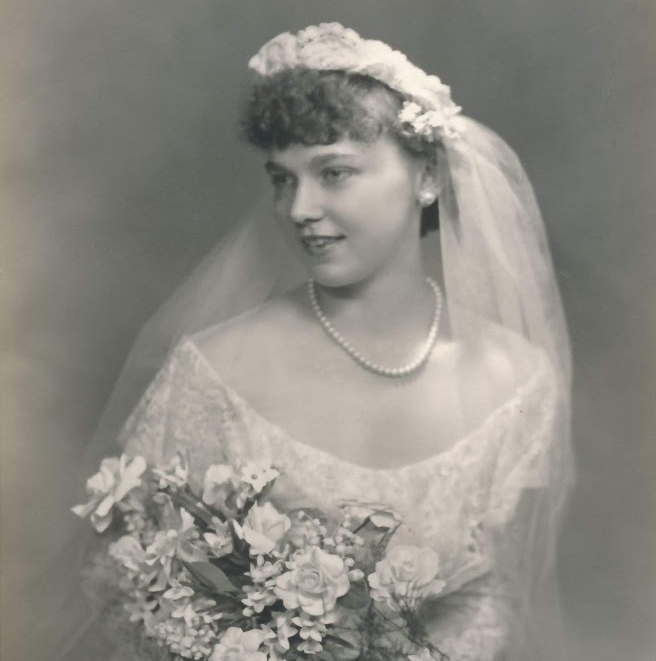
    Dr. Ashmead married English professor John Ashmead Jr. in 1949.

    She was an avid letter writer and reader, and her personal library featured more than 5,000 books. She volunteered for years at Bryn Mawr’s old Owl Bookstore and especially enjoyed reading to her children and grandchildren.

    She was on the board of the Haverford College Arboretum and a member of the Hardy Plant Society, the Henry Foundation for Botanical Research, and the Philadelphia Skating Club. She enjoyed dancing, organizing Easter egg hunts, and hosting birthday parties and family events.

    A fashionista in the 1960s and ’70s, she was adept at needle crafting, quilting, and sewing. She bred cats, painted, collected antiques, and researched her genealogy.

    She always made time for family no matter where in the world they were, and they said: “She was concerned if she was ever separated from a child and distraught if they were distraught.”

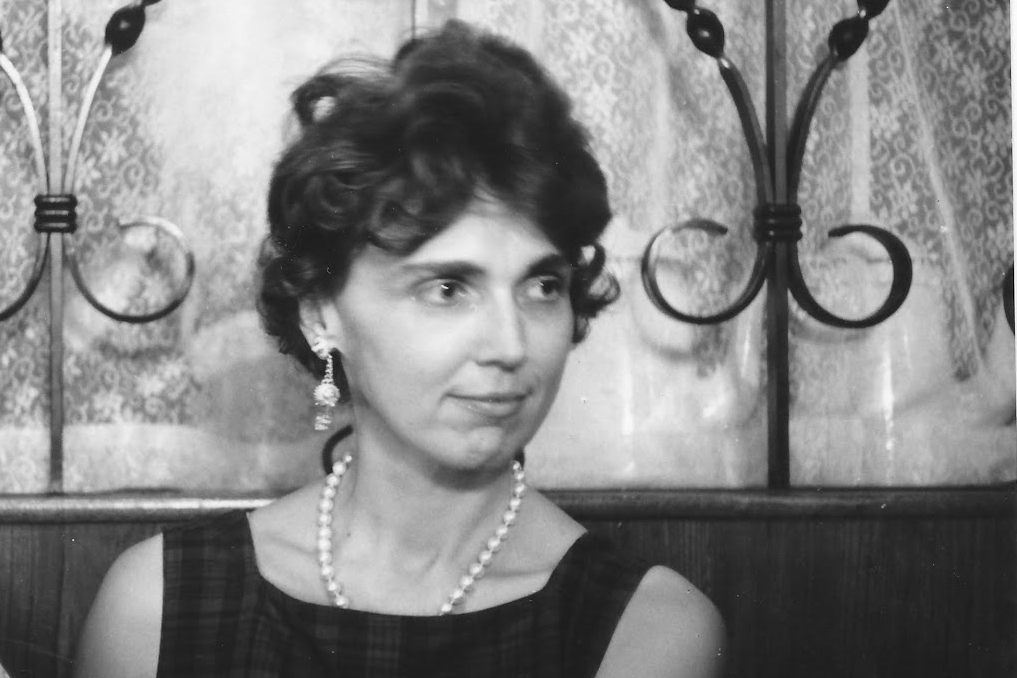
    Dr. Ashmead (front left) always made time for her family.

    She lived in Denmark for a few years and finally settled for good in Haverford in 1983. “She was interesting, smart, capable, strong, articulate, and fun to be around,” her daughter Theodora said. “She was solution-oriented. She sparkled.”

    In addition to her children, Dr. Ashmead is survived by six grandchildren, a sister, and other relatives. A brother died earlier.

    She requested that no services be held and donated her body to the Humanity Gifts Registry through Penn’s Perelman School of Medicine.

    Donations in her name may be made to the Haverford College Arboretum, 370 Lancaster Ave., Haverford, Pa. 19041.

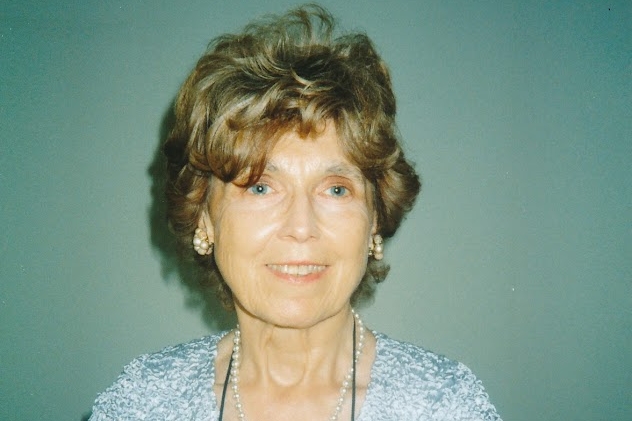
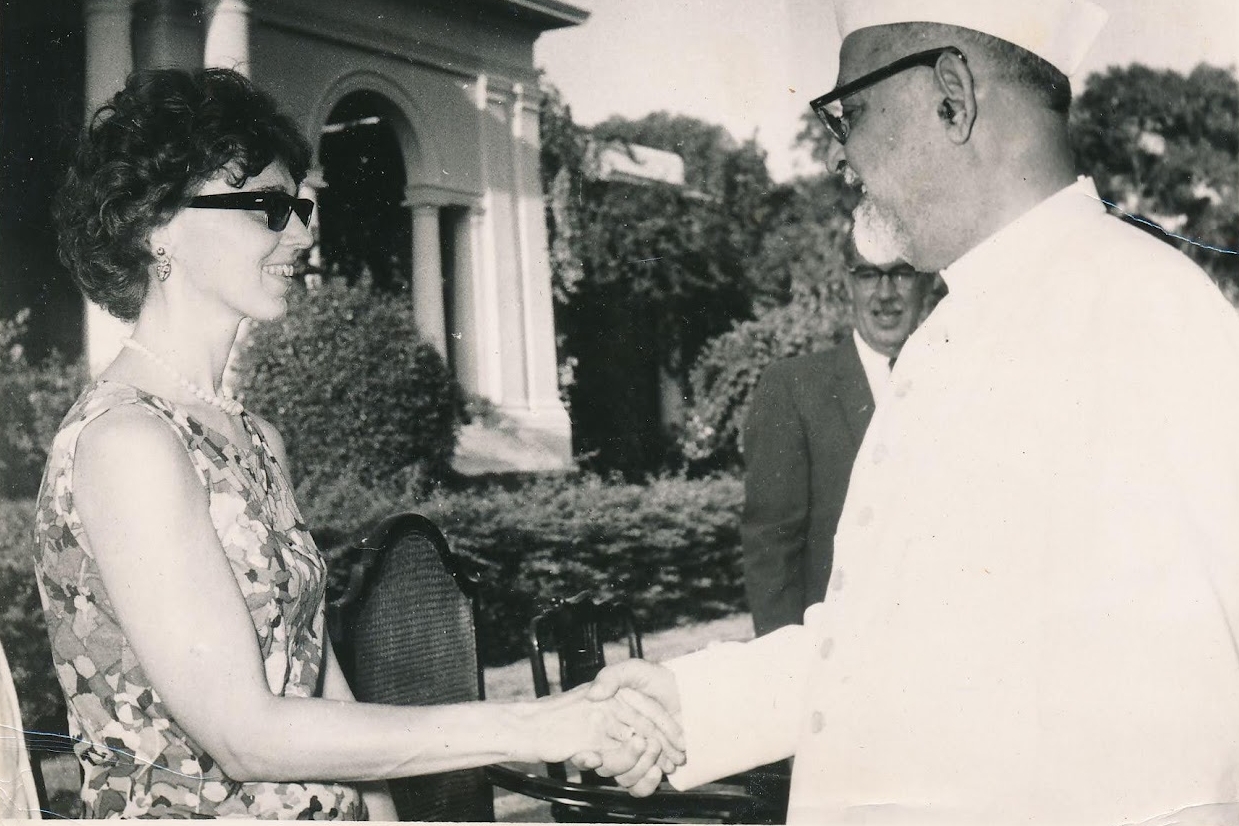
    Dr. Ashmead (left) met many dignitaries during her worldwide travels.
  • Carl W. Schneider, longtime celebrated attorney and former SEC adviser, has died at 93

    Carl W. Schneider, longtime celebrated attorney and former SEC adviser, has died at 93

    Carl W. Schneider, 93, of Philadelphia, retired longtime attorney at the old Wolf, Block, Schorr, & Solis-Cohen law firm, former special adviser to the Securities and Exchange Commission, visiting associate professor at what is now the University of Pennsylvania Carey Law School, writer, poet, mentor, and volunteer, died Thursday, Dec. 18, of pneumonia at Pennsylvania Hospital.

    Mr. Schneider was an expert on corporate, business, and securities law, and he spent 42 years, from 1958 to his retirement in 2000, at Wolf, Block, Schorr, & Solis-Cohen in Philadelphia. He was adept at handling initial public offerings and analyzing stock exchange machinations, and he became partner in 1965 and chaired the corporate department for years.

    Although he did not plan to specialize in securities law after graduating from Penn’s law school in 1956, Mr. Schneider told the American Bar Association in 1999: “I found this type of work to be challenging, gratifying, stimulating, and educational.”

    He spent most of 1964 on leave from the law firm as a special adviser to the Securities and Exchange Commission’s Division of Corporation Finance in Washington. His recommendations to SEC officials regarding its public-offering process, disclosure system, civil liability rules, and arbitration procedure, many of which were ahead of their time, eventually led to modernization and reforms in the administration of federal securities laws. “I was cast in the role of the constructive critic,” he said in 1999.

    He chaired committees for the Philadelphia and American Bar Associations and was active in leadership roles with the American Law Institute and other groups. He clerked for Supreme Court Justice Harold H. Burton and Judge Herbert F. Goodrich of the U.S. Court of Appeals for the Third Circuit for two years after graduating from law school.

    He also taught classes as a visiting associate professor at Penn’s law school and lectured extensively elsewhere on the continuing legal education circuit. “I am aware of two personality traits that have shaped my career,” he said in 1999, “a need to fix things and a love of teaching.”

    He spent the 1978-79 school year as head of Penn’s Center for Study of Financial Institutions and said in 1999 that he would have taught full time had he not enjoyed his legal work so much. “I was a practitioner,” he said, “and I tried to give my classes useful training to do what most practitioners do.”

    Mr. Schneider wrote, cowrote, and edited dozens of scholarly articles, books, and pamphlets, including the celebrated Pennsylvania Corporate Practice and Forms manual in 1997. He also penned poetry, and used this stanza to open a chapter about boilerplate clauses in the Pennsylvania Corporate Practice and Forms manual:

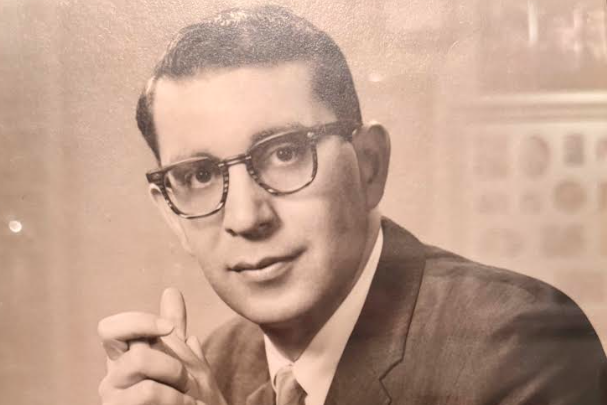
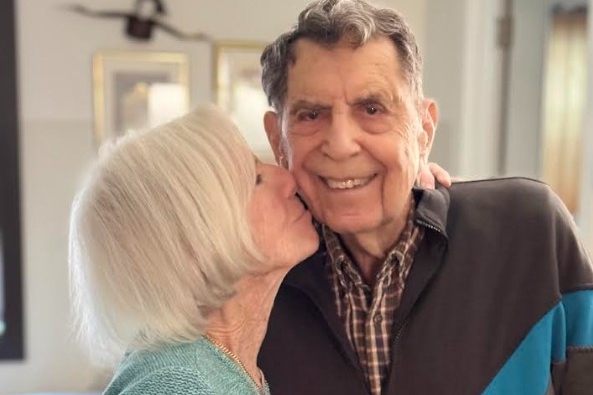
    Mr. Schneider and his wife, Mary Ellen, were inseparable for 68 years.

    “The ending stuff gets little thought/Like notice, gender, choice of laws/If badly done you may get caught/With a provision full of flaws.”

    He volunteered with what is now Jewish Family Service, the Jewish Federation of Greater Philadelphia, Abramson Senior Care, and Congregation Rodeph Shalom. He mentored countless other lawyers and students, and agreed in 1972 to a request by The Inquirer’s Teen-Age Action Line to be interviewed in his office for a high school student’s research project.

    “He was often described as brilliant, humble, a dry wit, and a great listener,” his family said in a tribute. “He gave everyone he spoke to the same time, attention, and respect.”

    He was quoted often in The Inquirer and lectured about legal matters at conferences and panels. He earned several service and achievement awards and said in 1999: “I suppose I am one of those compulsives who cannot see something in the world important to him that is broken without feeling the need to repair it.”

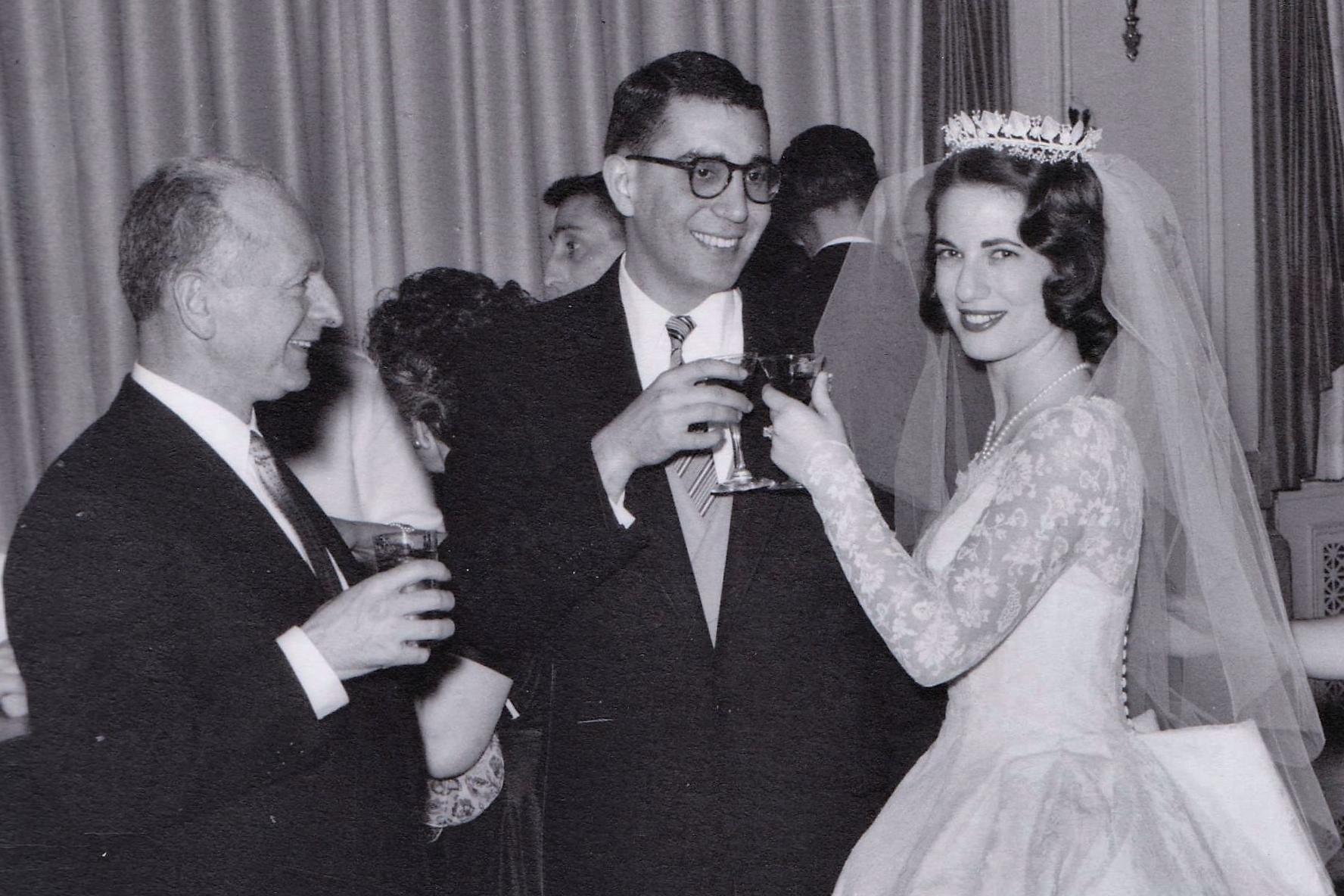
    Mr. Schneider and his wife, Mary Ellen, married in 1957.

    Carl William Schneider was born April 27, 1932, in the Wynnefield section of Philadelphia. His family later moved to Elkins Park, Montgomery County, and he graduated from Cheltenham High School in 1949.

    He knew he wanted to be a lawyer, like his father and grandfather, when he was young and said in a 2014 video interview at Penn that school was his favorite place. He earned a bachelor’s degree at Cornell University in 1953 and served on the law review at Penn.

    He met Mary Ellen Baylinson through a mutual friend, and they married in 1957. They had sons Eric, Mark, and Adam and a daughter, Cara, and lived for years in Elkins Park. He and his wife moved to Center City in 2005.

    Mr. Schneider enjoyed reading, bird-watching, photography, swimming, tennis, and springtime strolls through Rittenhouse Square. His favorite song was “The Gambler” by Kenny Rogers.

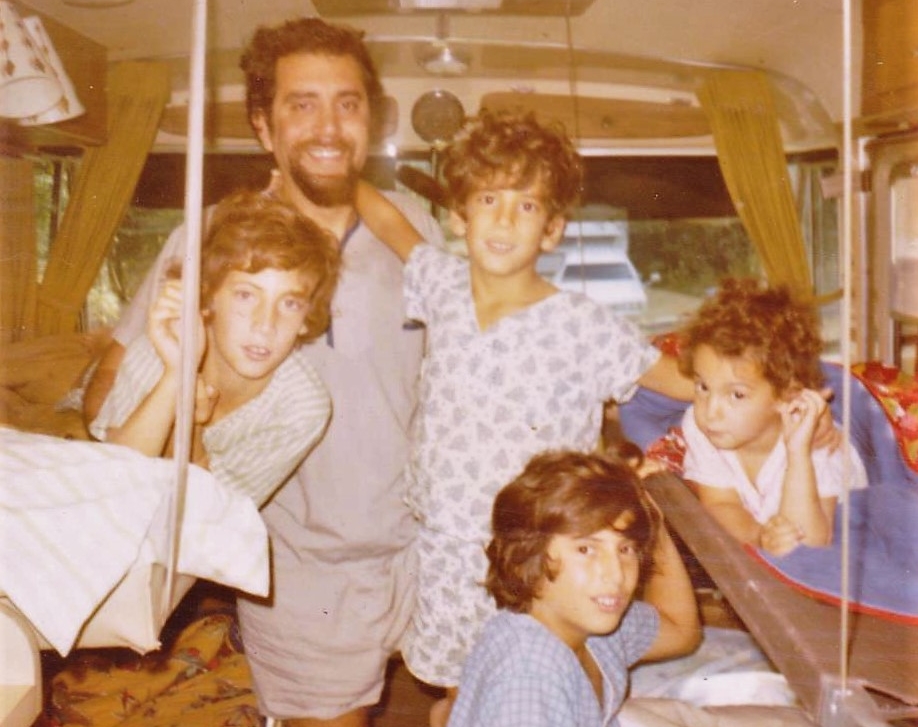
    Mr. Schneider drove his family across the country in a motorhome he nicknamed Herman.

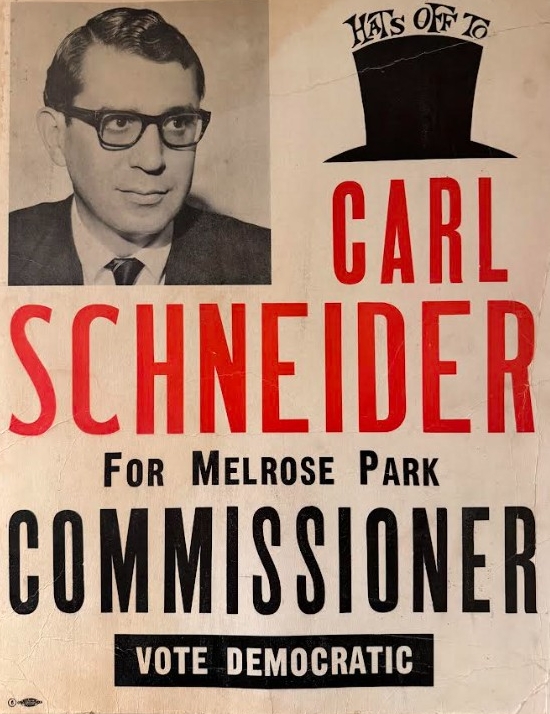
    He collected old-fashioned scales, spent quality time with family and friends on Long Beach Island, N.J., and drove cross-country on a family road trip in a motorhome he nicknamed Herman. He ran unsuccessfully for commissioner in Melrose Park in the 1960s.

    He made sure to be home every night for dinner and drew smiley faces inside the capital C when he signed his name. “He never judged, never overreacted,” his daughter said.

    His son Adam said: “He was a gentle man but forthright and direct.” His son Mark said: “He had a moral code on how to live a life and never deviated from it.”

    His son Eric said: “He left the world a better place.”

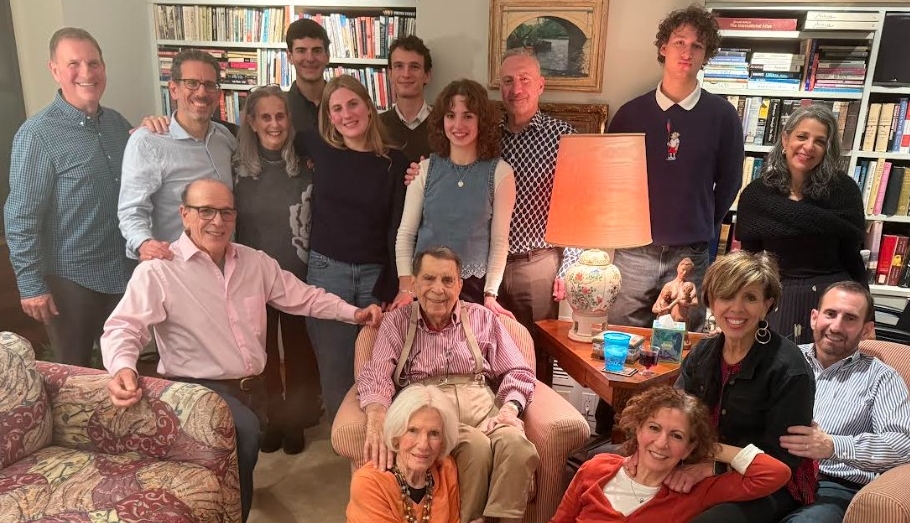
    Mr. Schneider (center) and his family spent many Thanksgivings together.

    In addition to his wife and children, Mr. Schneider is survived by three grandchildren; a sister, Julie; and other relatives.

    Services were held Monday, Dec. 22.
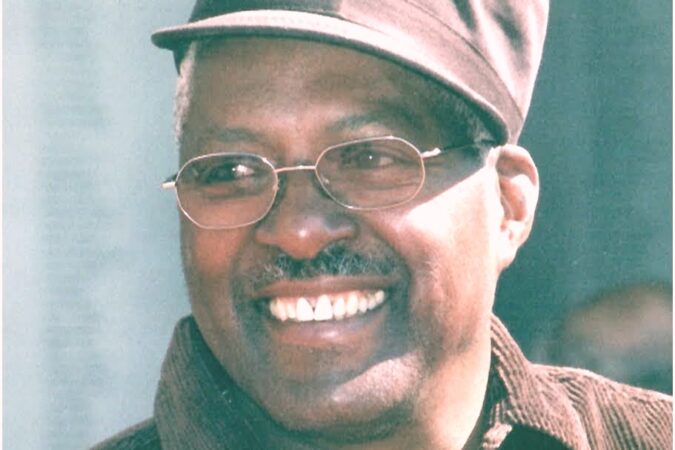
    Donations in his name may be made to Congregation Rodeph Shalom, 615 N. Broad St., Philadelphia, Pa. 19123.
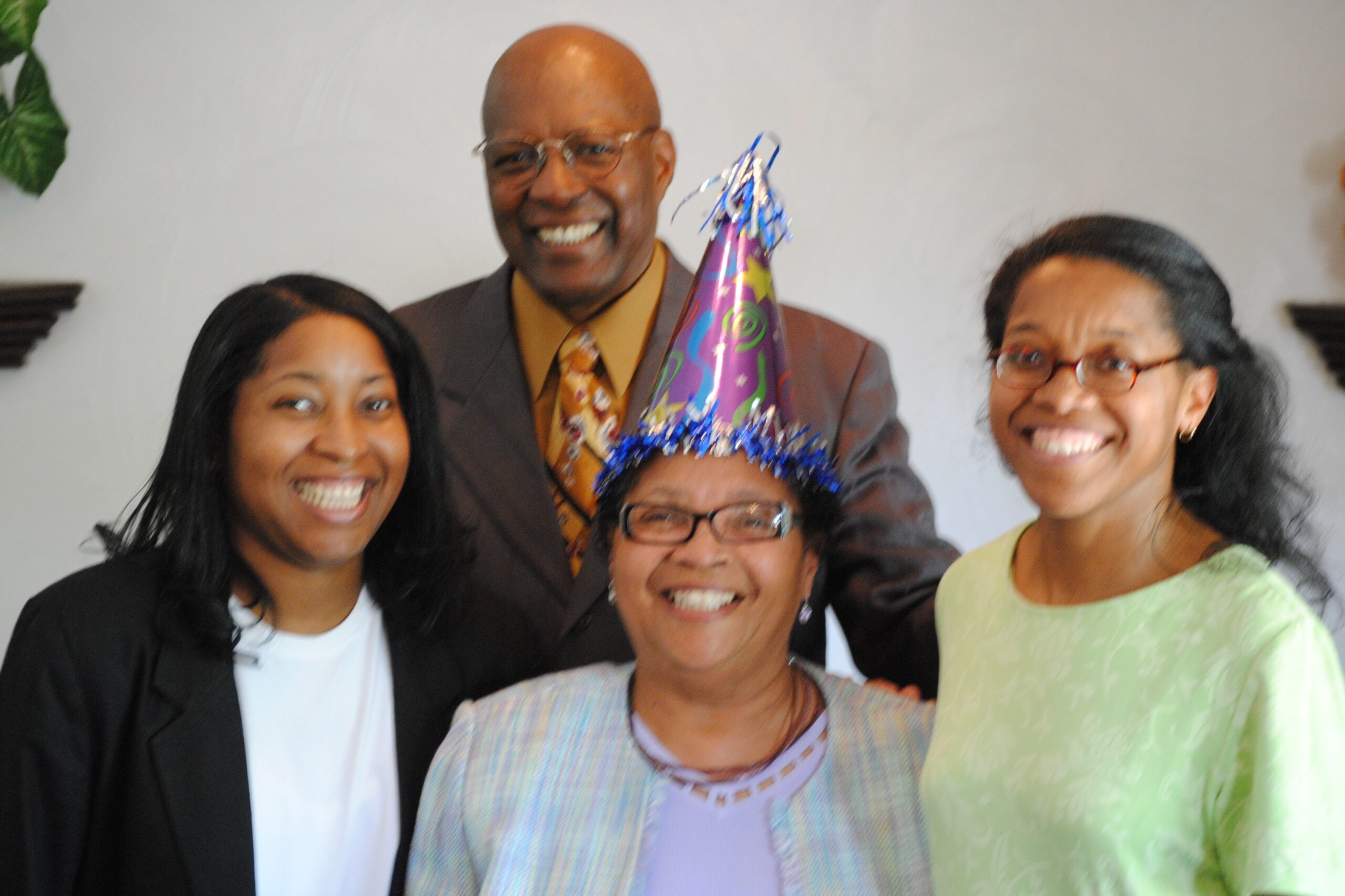
    Mr. Schneider was interested in civic and community issues as well as legal affairs.
  • Dan McQuade, award-winning writer, tireless community activist, and ‘Philadelphia institution,’ has died at 43

    Dan McQuade, award-winning writer, tireless community activist, and ‘Philadelphia institution,’ has died at 43

    Even as a child, Dan McQuade let his imagination run wild. “What are you doing?” his mother, Denise, would ask if she hadn’t heard any noise from his bedroom for a while. “I’m making stories,” he would reply.

    Later, as a young man about town, his compassion for fellow Philadelphians inspired his father, Drew. Dan volunteered to give blood often, donated brand-new sneakers to other guys in need, and continually reached out to people he saw struggling with drug abuse and homelessness. “His kindness was what I loved about him the most,” his father said.

    Dan McQuade was already an award-winning writer, blogger, and journalist when he met his future wife, Jan Cohen, online in 2014. To her, his jovial humor, wide-ranging intelligence, and shoulder-length hair made him unique in her circle. “I thought he was too cool for me,” she said.

    As it turned out, they were all spot on. Mr. McQuade used his quirky creativity to write memorable blogs and freelance stories about culture and sports for The Inquirer, the Daily News, the New York Times, Sports Illustrated, and other publications. He was a cofounder and visual editor at Defector Media and worked previously for Deadspin, Philadelphia Magazine, Philadelphia Weekly, and other outlets.

    His empathy, likely inspired by his parents, his wife said, led him to toil tirelessly for charitable nonprofits such as the Everywhere Project, Back on My Feet, and Prevention Point. “Service was always part of his life,” his wife said.

    His coolness, as unconventional as it sometimes was, made those he encountered feel cool, too. Molly Eichel, an Inquirer editor and longtime friend, said: “He was annoyingly smart and incredibly kind.”

    Dan McQuade died Wednesday, Jan. 28, of neuroendocrine cancer at his parents’ home in Bensalem. He was 43. His birthday was Jan. 27.

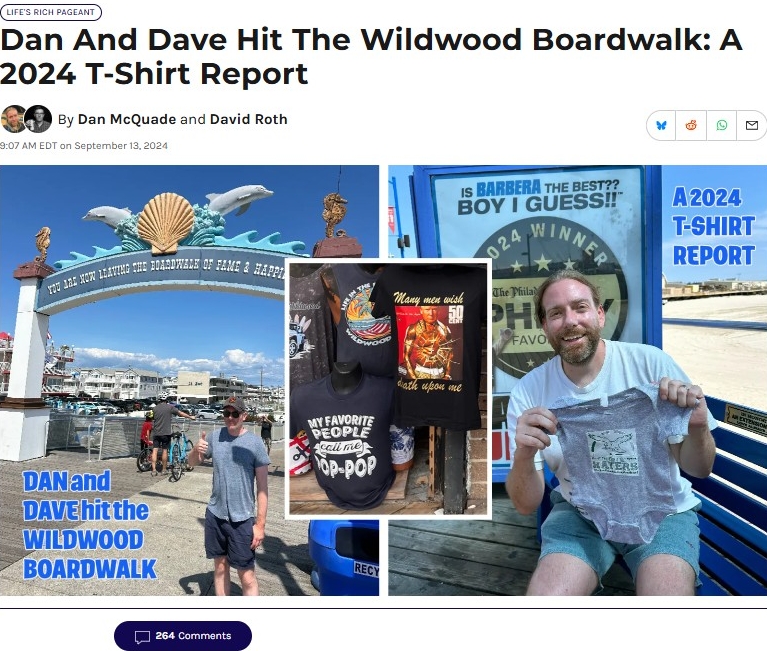
    Mr. McQuade’s annual Wildwood T-shirt report was a favorite of his many readers and fans.

    “It’s incredibly hard for me to imagine living in a Philadelphia without Dan McQuade,” said Erica Palan, an Inquirer editor and another of Mr. McQuade’s many longtime friends. “He understood Philadelphians better than anyone because he was one: quirky and funny, competitive and humble, loyal and kind.”

    A journalism star at the University of Pennsylvania in the early 2000s, Mr. McQuade was a writer, sports editor, and columnist for the school’s Daily Pennsylvanian, and managing editor of its 34th Street Magazine. He earned two Keystone Press awards at Penn, was the Daily Pennsylvanian’s editor of the year in 2002, and won the 2003 college sports writing award from the Philadelphia Sportswriters Association.

    He went on to create Philadelphia Weekly’s first blog, “Philadelphia Will Do,” and was a finalist for the Association of Alternative Newsmedia’s best blogger award. He served an internship at the Bucks County Courier Times in Levittown and worked for a while at the Northeast News Gleaner.

    Often irreverent, always inventive, he filed thousands of notable stories about, among other things, the Wildwood T-shirt scene, the origin of “Go Birds,” sneaker sales, Donald Trump, Wawa hoagies, the Philly accent, parkway rest stops, the Gallery mall, soap box derbies, and Super Bowls. His stories sparkled with research and humor.

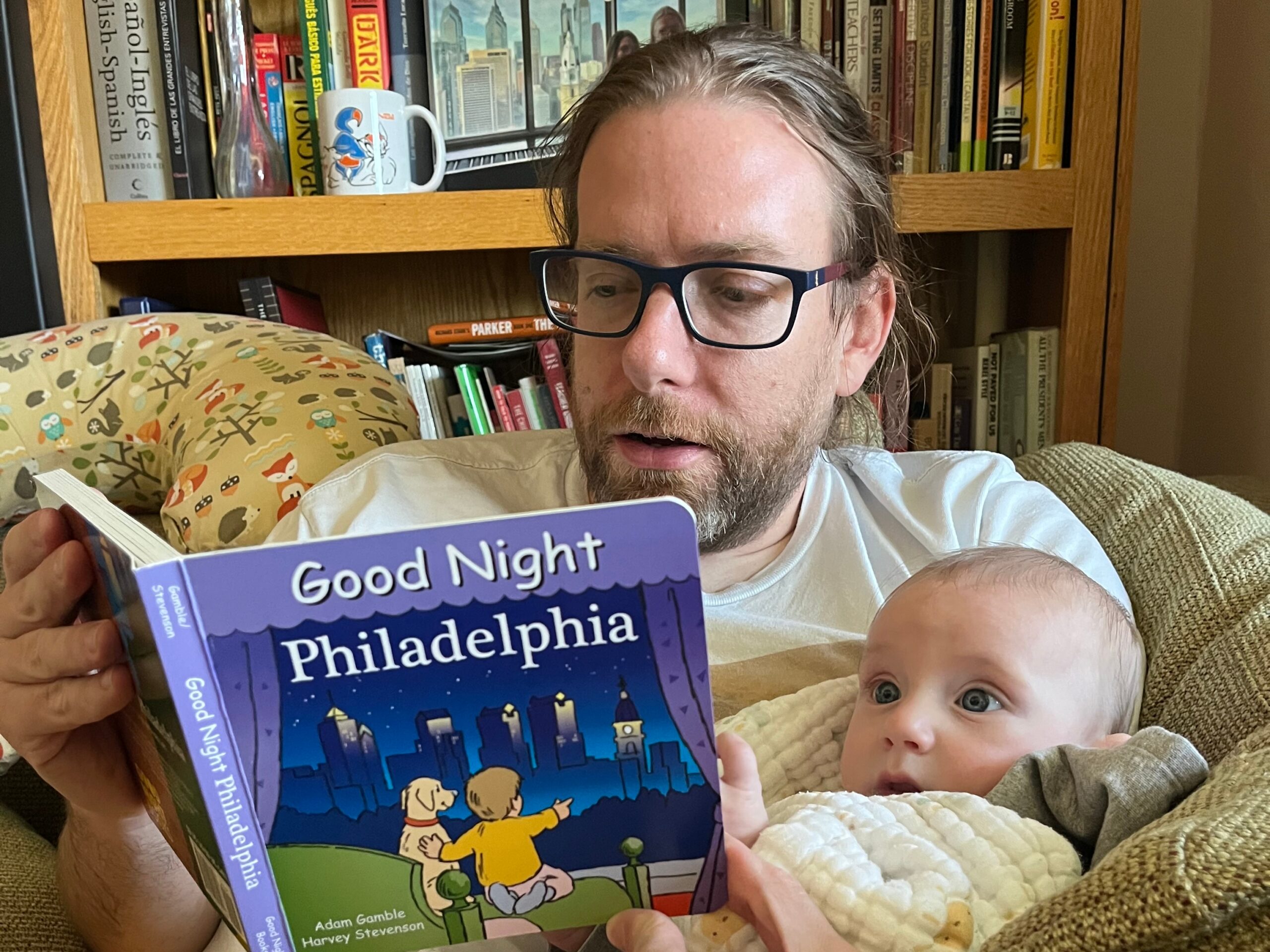
    An avid reader himself, Mr. McQuade enjoyed reading local tales to his son, Simon.

    “Dan was a truly authentic and engaging person,” Tom Ley, editor-in-chief at Defector, said in an online tribute. “His curiosity was relentless, and his interests were varied and idiosyncratic.”

    For example, Mr. McQuade wrote in Philadelphia Magazine in 2013 that Sylvester Stallone’s famous training-run montage in Rocky II — it started in South Philly and ended two minutes of screen time later atop the Art Museum steps — actually showed city scenes that would have had the actor/boxer run more than 30 miles around town. “Rocky almost did a 50K,” Mr. McQuade wrote. “No wonder he won the rematch against Apollo!”

    In 2014, he wrote in Philadelphia Magazine about comedian Hannibal Buress calling Bill Cosby a rapist onstage at the old Trocadero. The story went viral, and the ensuing publicity spurred more accusations and court cases that eventually sent Cosby to jail for a time.

    When he was 13, Mr. McQuade wrote a letter to the editor of the Daily News that suggested combining the Mummers Parade with Spain’s running of the bulls. Crossing Broad’s Kevin Kinkead said he had “an innate gift for turning the most random things into engaging reads.”

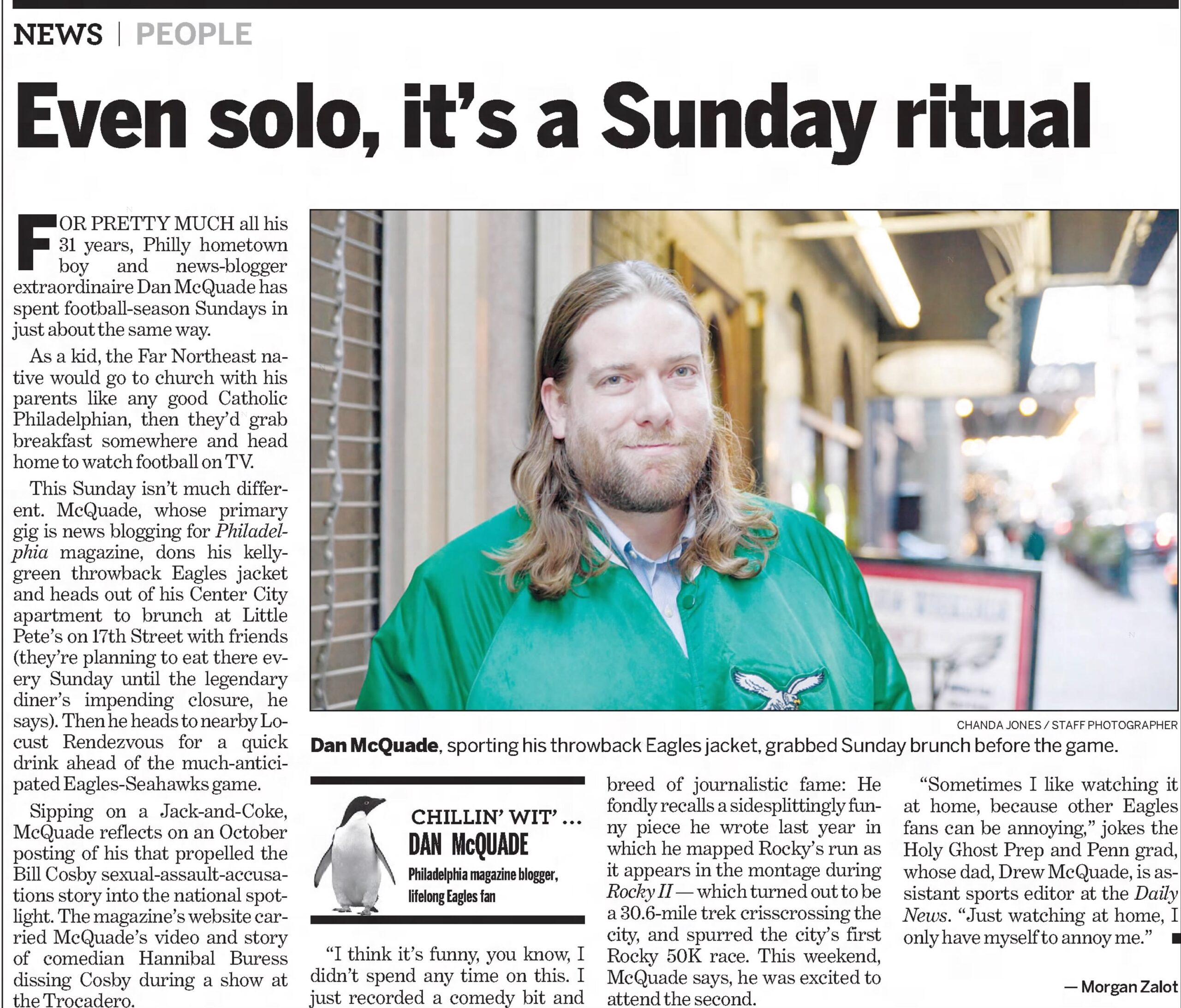
    This story about Mr. McQuade appeared in the Daily News in 2014.

    “Without Dan’s voice, Philly Mag wouldn’t be Philly Mag,” editor and writer Brian Howard said in a tribute on phillymag.com. “And, I’d argue, Philadelphia wouldn’t quite be Philadelphia.”

    Other colleagues called him “a legend,” “a Philadelphia institution,” and “the de facto mayor of Philadelphia” in online tributes. Homages to him were held before recent Flyers and 76ers games.

    “Sometimes,” his wife said, “he inserted himself into stories, so readers had a real sense of who he was because he was so authentic.”

    Daniel Hall McQuade was born Jan. 27, 1983, in Philadelphia. His father worked nights at the Daily News for years, and the two spent many days together when he was young hanging around playgrounds and skipping stones across the creek in Pennypack Park.

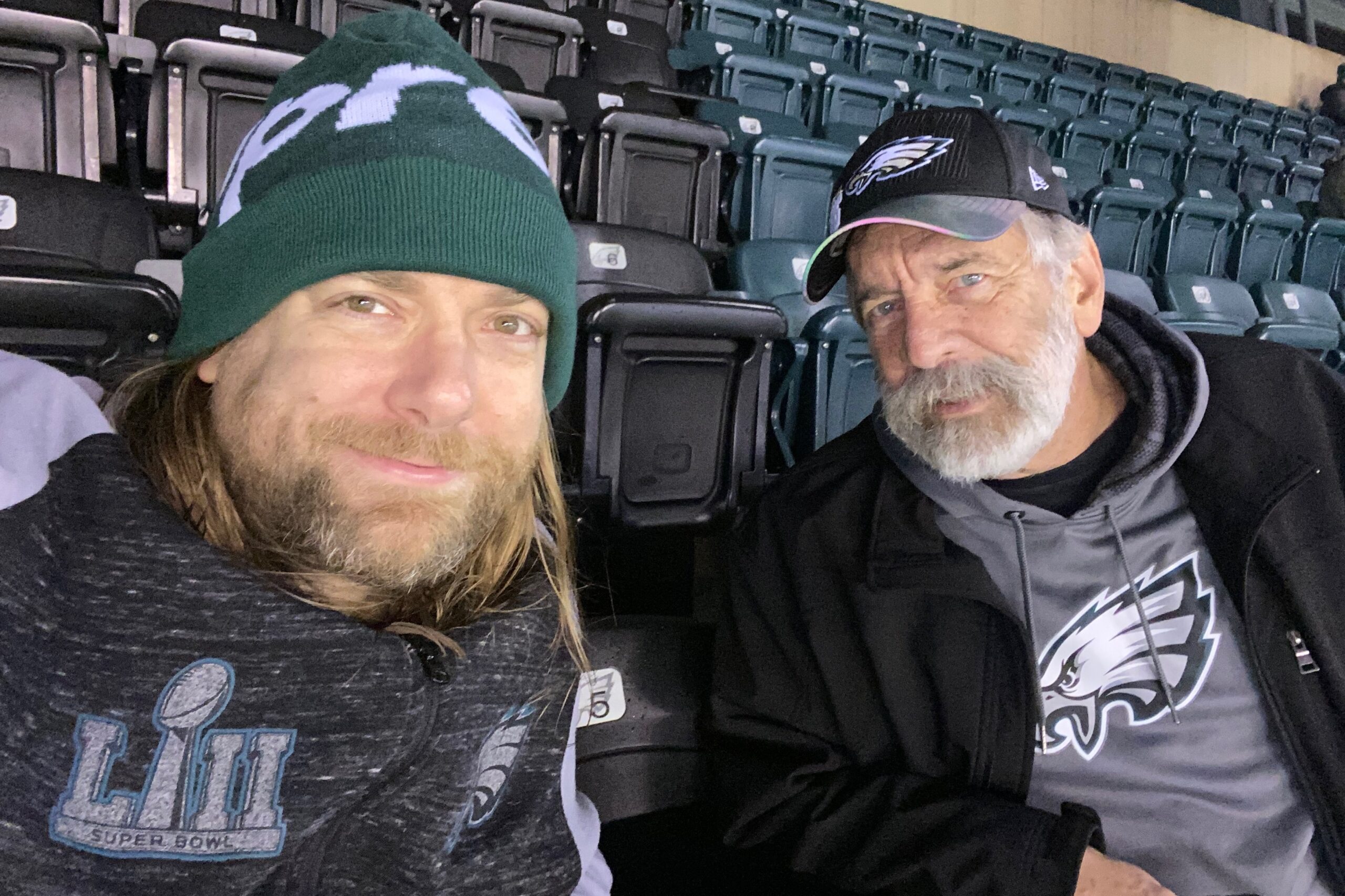
    Mr. McQuade (left) and his father, Drew, shared a love of Philly sports and creative writing.

    Later, they texted daily about whatever came to mind and bonded at concerts, Eagles games, and the Penn Relays. He grew up in the Northeast, graduated with honors from Holy Ghost Preparatory School in Bensalem, and earned a bachelor’s degree in English at Penn in 2004.

    He overcame a serious stutter as a teen and played soccer and basketball, and ran cross-country and track at Holy Ghost. He married Jan Cohen in 2019 and they had a son, Simon, in 2023. They live in Wissahickon.

    Mr. McQuade was a voracious reader and an attentive listener. “He never wanted to stop learning,” his wife said. He enjoyed going to 76ers games with his mother and shopping for things, his father said, “they didn’t need.”

    He was mesmerized by malls, the movie Mannequin, the TV series Baywatch, and his wife’s cat, Detective John Munch. During the pandemic, he and his wife binged all 11 seasons of Baywatch.

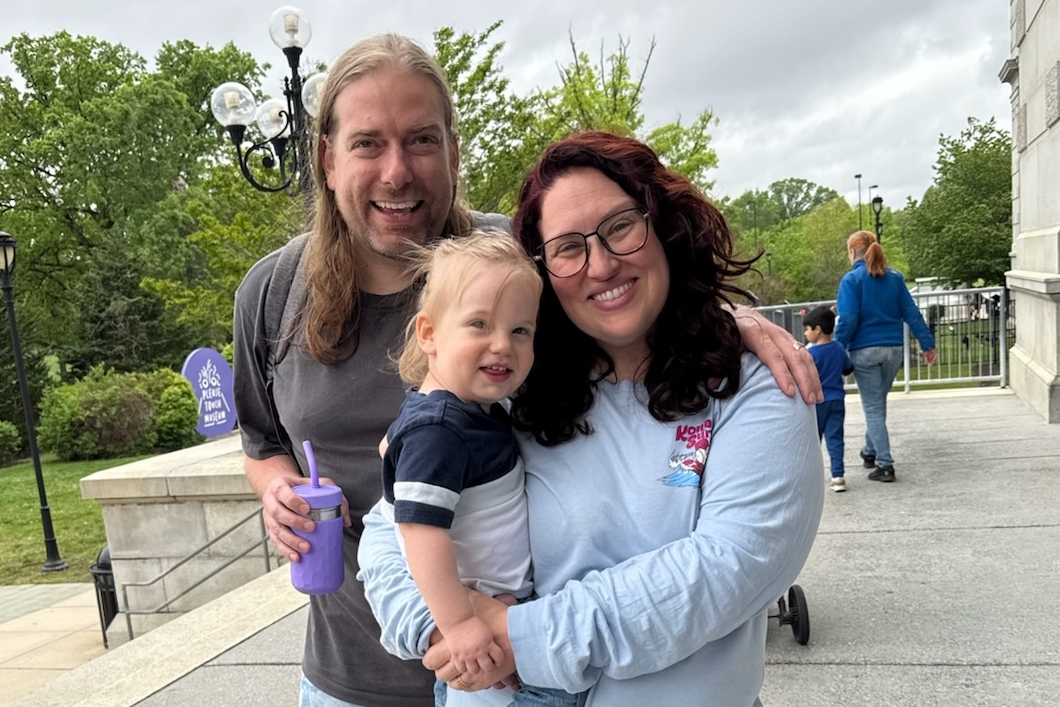
    Mr. McQuade doted on his wife, Jan, and their son, Simon.

    He could be loud, his mother said, and Molly Eichel described his laugh as “kind of a honk.” His friend and colleague Alli Katz said: “In 50 years I’ll forget my own name. But I’ll remember his laugh.”

    He was a vintage bootleg T-shirt fashionista, and his personal collection numbered around 150. He named Oscar’s Tavern on Sansom Street as his favorite bar in a recent podcast interview and said he would reluctantly pick a pretzel over a cheesesteak if that was the choice.

    In September, Mr. McQuade wrote about his illness on Defector.com under the headline “My Life With An Uncommon Cancer.” In that story, he said: “Jan has been everything. My son has been a constant inspiration. My parents are two of my best friends, and I talk to them every day. Jan’s parents have been incredible.”

    He also said: “I believe there are no other people on earth with my condition who are in as fortunate a situation. … For the past thousand words you have been reading about a bad break I got, but if only everyone in my position had it this good.”

    Mr. McQuade and his wife, Jan Cohen, married in 2019.

    His wife said: “He was truly the best guy.”

    In addition to his wife, son, and parents, Mr. McQuade is survived by his mother-in-law, Cheryl Cohen, and other relatives.

    Visitation with the family is to be from 9 to 10 a.m. Thursday, Feb. 5, at St. Martha Parish, 11301 Academy Rd., Philadelphia, Pa. 19154. Mass is to follow from 10 to 11 a.m.

    Donations in his name may be made to the Everywhere Project, 1733 McKean St., Philadelphia, Pa. 19145.

  • Joe Walsh, Hall of Fame football coach and longtime West Chester teacher, has died at 75

    Joe Walsh, Hall of Fame football coach and longtime West Chester teacher, has died at 75

    Joe Walsh, 75, of West Chester, member of four athletic Halls of Fame, longtime high school and college football coach, retired health and physical education teacher at West Chester Henderson High School, mentor, and neighbor extraordinaire, died Tuesday, Jan. 27, of cancer at his home.

    Mr. Walsh grew up in the Farmbrook section of Levittown, Bucks County, and played football at the old Woodrow Wilson High School and what is now West Chester University. He got a job as a health and physical education teacher and assistant football coach at Henderson in 1972 and spent the next five decades coaching thousands of high school and college athletes, teaching thousands of high school students, and mentoring hundreds of friends and colleagues.

    He coached football, wrestling, lacrosse, and tennis at Henderson, and his football teams at Henderson and Sun Valley High School combined to win four league championships. He coached in 13 all-star football games and was named the Chester County area football coach of the year four times, the Ches-Mont League coach of the year three times, and the Del-Val League coach of the year once.

    In 1992, an Inquirer reporter asked him to describe himself. “I am an easygoing, volatile kind of coach,” he said with a big chuckle, the reporter wrote. “Actually,” he said, “I think I’m a player’s coach. I think my rapport with my players is my strong point.”

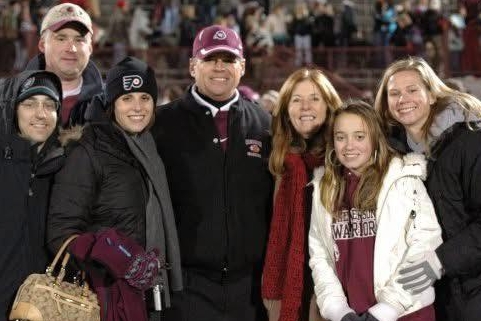
    Mr. Walsh (center) had many occasions to celebrate with family and friends on the football field.

    Former colleagues, players, and friends said in online tributes that Mr. Walsh was “an inspiration,” “a great coach,” and “a positive example for many, many young people.” On Threads, his brother, Russ, called him a “Hall of Fame human being.”

    “He was always there,” said John Lunardi, assistant principal at Henderson, who played quarterback for Mr. Walsh and served later as his assistant coach, “a steady, reliable role model, somebody who could be counted on no matter what.”

    In 20 years as head football coach at Henderson, from 1992 to 2011, Mr. Walsh’s teams won 131 games, lost 104, and captured three Ches-Mont League championships. From 1988 to 1991, he went 17-25 as head coach at Sun Valley and won the 1990 Del-Val League championship.

    His 2007 team at Henderson went 12-2, won the Ches-Mont title, and made it to the district championship game. “Our motto,” he told The Inquirer in 2004, “is no excuses, just results.”

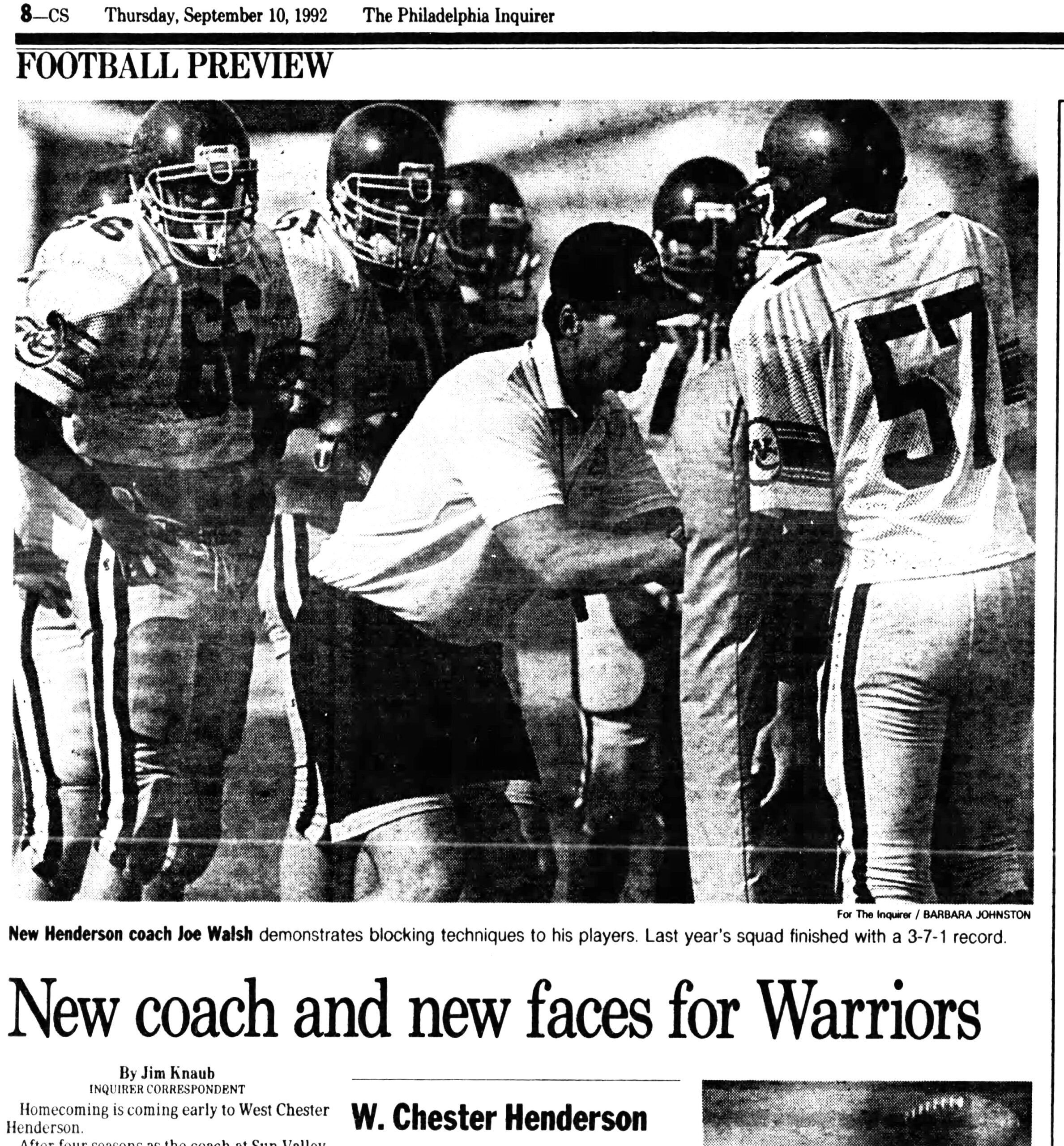
    Mr. Walsh and his Henderson football team were featured in The Inquirer’s 1992 preview section.

    He coached the West Chester University defensive linemen as an assistant for seven seasons after leaving Henderson and was inducted into the university’s Killinger Football Foundation Hall of Fame in 2001. He entered the Pennsylvania State Football Coaches Association Hall of Fame in 2014 and the Ches-Mont League Hall of Fame in 2018.

    In 2025, he was inducted into the Chester County Sports Hall of Fame, and colleagues there noted his “remarkable achievements and contributions to local athletics” in a Facebook tribute. He earned a standing ovation after speaking at the ceremony, and Henderson officials recognized his legacy with a moment of silence at a recent basketball game. They said in a tribute: “Joe Walsh was a Hall of Fame person in every possible way.”

    Mr. Walsh taught health and physical education at Henderson from 1972 to 2008. He organized offseason clinics to encourage all students to join sports teams and told The Inquirer in 1992: “I’ve always tried my best to get as many people out and make it enjoyable for them so they stay out.”

    He served as board president for the Killinger Football Foundation and cofounded W & W Option Football Camps LLC in 2001. “It wasn’t about the wins and losses for him,” said his wife, Pam. “It was all about the kids, and he was that way in all aspects of his life.”

    Mr. Walsh and his wife, Pam, had many adventures together and spent countless afternoons at football games.

    Joseph Richard Walsh was born Feb. 5, 1950, in Philadelphia. He lettered in football, wrestling, and track in high school, and graduated from Wilson in 1968.

    He earned a bachelor’s degree in health and physical education at West Chester in 1972 and played center on its two-time championship football team.

    He married Sharon Clark, and they had a son, Joe, and a daughter, Kelly. After a divorce, he married Pam Connor in 1978, and they had a daughter, Jen, and lived in Downingtown and then West Whiteland Township since 1985.

    Mr. Walsh enjoyed all kinds of fishing and golf. In 2023, he and his wife visited half a dozen college football stadiums on a wild cross-country road trip to Yellowstone National Park.

    Mr. Walsh enjoyed time with his children.

    They entertained often at home, and his gourmet soups were usually the hit of the party. He doted on his children and grandchildren, and never lost his sense of humor, they said.

    He was the best neighbor ever, friends said. He cleared miles of sidewalks and driveways with his snowblower every winter, hosted late-into-the-night firepit parties every summer, and could fix practically anything.

    “He was gentle but strong,” his wife said. “He was kind and considerate, and he never badmouthed anybody. He truly was a great man.”

    In addition to his wife, children, brother, and former wife, Mr. Walsh is survived by seven grandchildren, one great-granddaughter, sisters Eileen and Ruth, and other relatives.

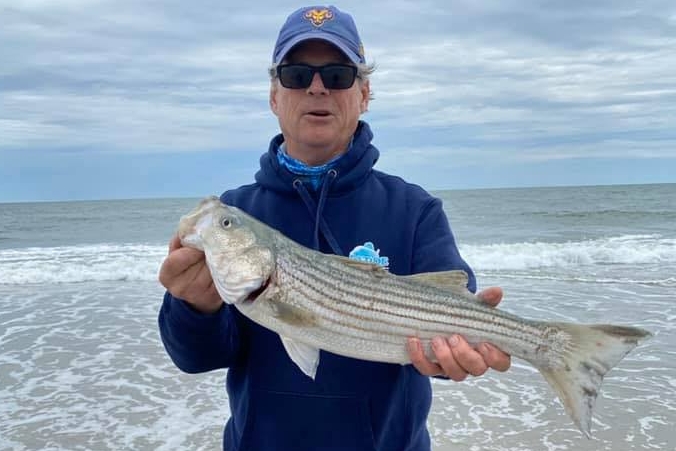
    Mr. Walsh rarely let the big ones get away.

    Visitation with the family is to be from 5 to 8 p.m. Thursday, Feb. 5, and from 9 to 10:30 a.m. Friday, Feb. 6, at DellaVecchia, Reilly, Smith & Boyd Funeral Home, 410 N. Church St., West Chester, Pa. 19380. A celebration of his life is to follow Friday at 10:30.

    Donations in his name may be made to the Joe Walsh Scholarship Fund, c/o the Athletic Department, West Chester Henderson High School, 400 Montgomery Ave., West Chester, Pa. 19380.

  • Evonn Wadkins, high school sports star at Simon Gratz and retired Philadelphia Mounted Police Officer, has died at 88

    Evonn Wadkins, high school sports star at Simon Gratz and retired Philadelphia Mounted Police Officer, has died at 88

    Evonn Wadkins, 88, formerly of Philadelphia, retired Philadelphia Mounted Police Officer, basketball and football star at Simon Gratz High School, builder, carpenter, plumber, bus driver, and volunteer, died Sunday, Jan. 11, of complications from a stroke at Bryn Mawr Extended Care Center.

    A gifted athlete with an innate desire to help others and be part of a team, Mr. Wadkins played basketball and football on Philadelphia playgrounds, in youth leagues and high school, and later with adults in semipro leagues and the Charles Baker Memorial Basketball League. He usually scored in double digits for the Gratz basketball team and went head-to-head against the legendary Sonny Hill and Wilt Chamberlain.

    He overcame a severe ankle injury when he was young and retired from the Baker League years later only after age and ailments forced him off the court. He was a “speedy end” on the football team at Gratz, the Daily Journal in Vineland said in 1955.

    His name appeared often in The Inquirer and other local newspapers in 1955 and ‘56, and they noted his 55-yard touchdown catch against Dobbins, 25-yard scoring reception against Vineland, and 44-yard scoring catch-and-run against Northeast in 1955.

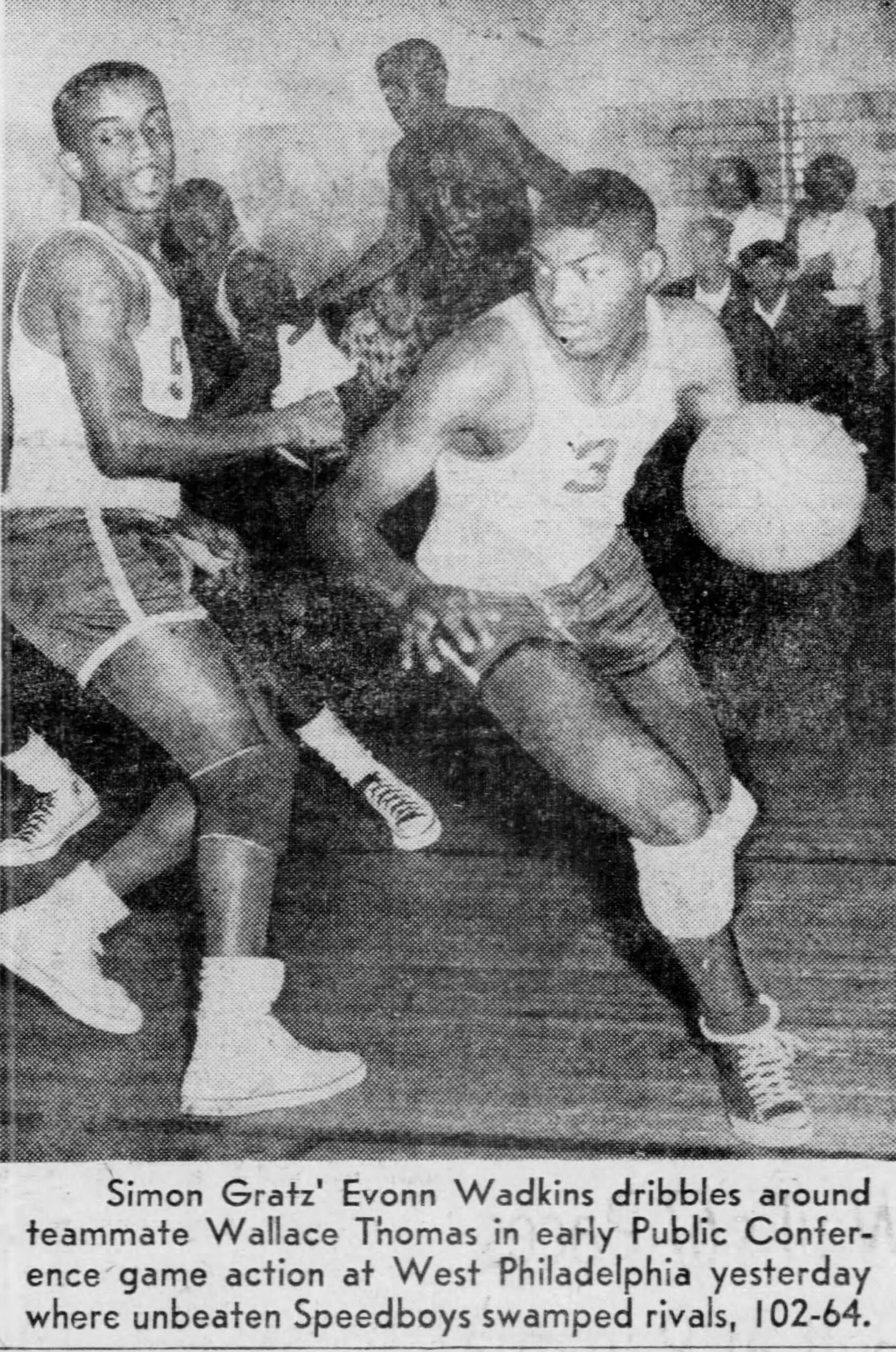
    Mr. Wadkins (right) drives with the ball in this photo that was published in The Inquirer in 1956.

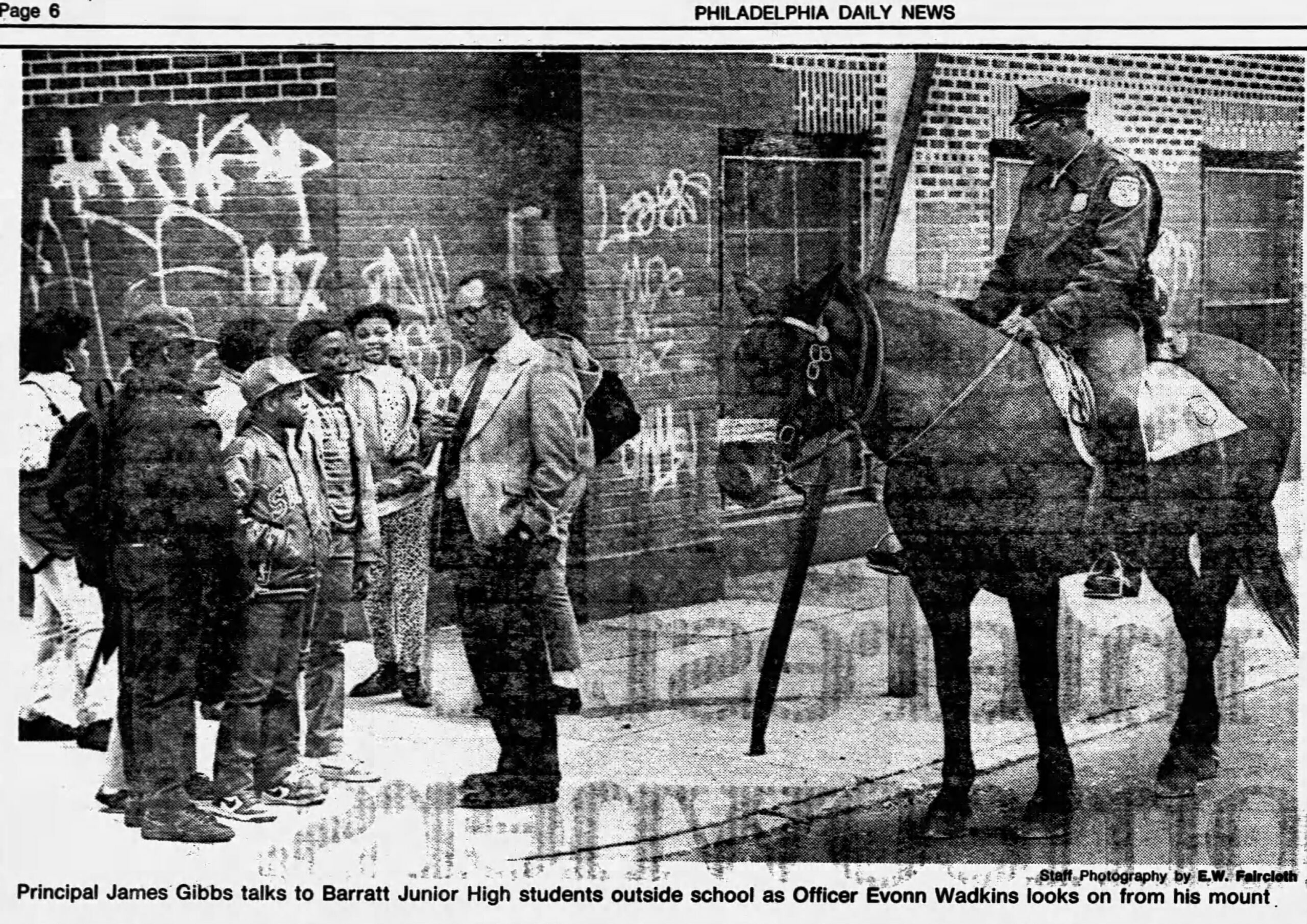
    Mr. Wadkins graduated from the Philadelphia Police Training Center in 1963 and spent 11 years patrolling Fairmount Park and elsewhere in the Traffic Division. He transferred to the Mounted Unit — and met Cracker Jack — in 1974, and officer and horse rode the Philly streets together until they both retired in 1988.

    “When he went on vacation, nobody could ride Cracker Jack,” said Mr. Wadkins’ wife, Elaine. “They could groom him. But Cracker Jack wouldn’t let anyone else ride him.”

    He also worked construction side jobs with neighbors and friends, and learned plumbing, heating, and carpentry skills. “Family and friends are still sleeping comfortably on his one-of-a-kind beds more than 40 years later,” his family said in a tribute.

    He drove a school bus for the School District of Philadelphia for 10 years in the 1980s and ’90s, and made friends with many of the students. He moved with his wife to Goochland, Va., 35 miles northwest of Richmond, in 1998.

    Mr. Wadkins and his wife, Elaine, married in 1959.

    He joined the Goochland chapter of the NAACP and volunteered at the Second Union Rosenwald School Museum. At the Second Union Baptist Church, he mentored boys and young men, and supervised the media ministry.

    He was serious about community service. “He never met a stranger,” his wife said.

    Evonn LeFrancis Wadkins was born June 4, 1937, in Philadelphia. He was the fifth of six children and earned his high school degree at night school after leaving Gratz early.

    He met Flora Elaine Poole at Gratz in 1954, and they married in 1959. They set up house in West Philadelphia a few years later and had daughters Evette and Elise, and a son, Evonn.

    This photo of Mr. Wadkins on his horse appeared in the Daily News in 1987.

    Mr. Wadkins, familiar with Fairmount Park from his time on police patrol, liked to share historical tidbits when the family drove through. He loved cars and traveled to Canada with his wife and to Germany with his brother to shop for several that caught his eye.

    He and his family traveled to Florida for a New Year’s party and to South Dakota to fly over Mount Rushmore. He and his wife cruised the Caribbean and toured the United States and Europe.

    He even flew with a friend to two Super Bowls. “He was a man on the go,” his family said.

    Mr. Wadkins liked McDonald’s pancakes and coached a few youth league basketball teams, one to a championship. When asked how he was doing, his usual response was: “Livin’ slow.”

    Mr. Wadkins enjoyed time with his family.

    His wife said: “He was a good provider. He was a great husband.”

    In addition to his wife and children, Mr. Wadkins is survived by five grandchildren, five great-grandchildren, a brother, and other relatives. Two brothers and two sisters died earlier.

    Private services were held earlier.

    Donations in his name may be made to the Police Athletic League of Philadelphia, 3068 Belgrade St., Philadelphia, Pa. 19134; and the Second Union Rosenwald School Museum, 2843 Hadensville-Fife Rd., Goochland, Va.

  • Helen Cherry, prolific illustrator and artist, has died at 101

    Helen Cherry, prolific illustrator and artist, has died at 101

    Helen Cherry, 101, formerly of Philadelphia, prolific illustrator, artist, and show tunes devotee, died Thursday, Jan. 15, of age-associated decline at her home in the Woodland Pond retirement community in New Paltz, N.Y.

    “It was her decision entirely,” said her daughter, Lynne. “She knew her own mind and made the decision that it was time for her to take flight to the Great Beyond.”

    A lifelong artist, Mrs. Cherry grew up drawing and painting in West Philadelphia. She earned a scholarship to the old Philadelphia College of Art, sold illustrations to the Jack and Jill children’s magazine, and took a 20-year hiatus in the 1950s and ’60s to rear her three children.

    She resumed her career at 50 in 1974 and went on to illustrate 30 books and dozens of magazine stories for Highlights, Cricket, and other publications. Using a combination of her maiden name, Cogan, and her married name, Cherry, she was published under the pseudonym of Helen Cogancherry.

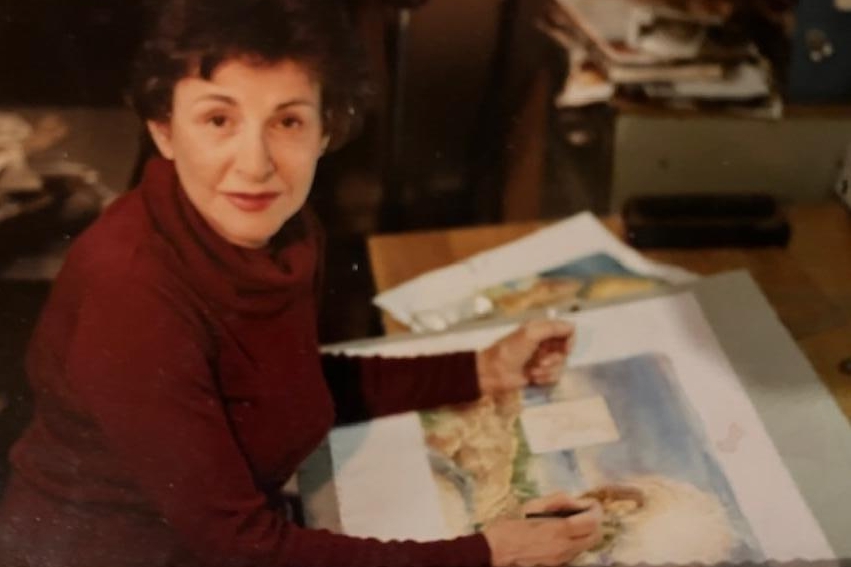
    Mrs. Cherry at work illustrating 1991’s “Fourth of July Bear.”

    “She was always an artist,” said her daughter, also an illustrator and writer. “Art was her hobby, her passion, her work. She said it was something that she can’t not do.”

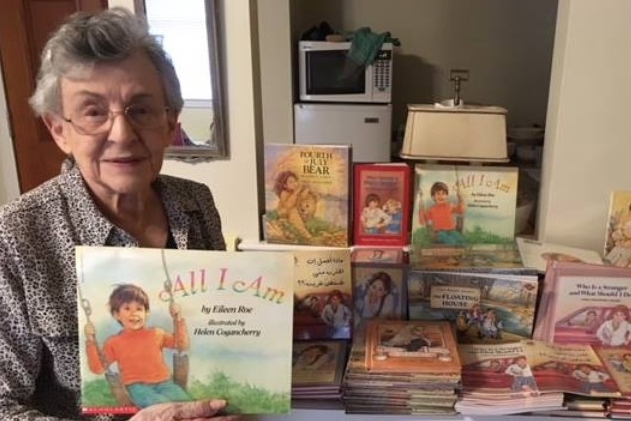
    Mrs. Cherry was a keen and imaginative observer of life, adept at creating visuals that reflected the concepts of the writers with whom she worked. She illustrated many children’s books, such as All I Am, Warm as Wool, and The Floating House.

    She told The Inquirer in 1986 that a book she illustrated helped a girl she knew address a difficult childhood situation. “That made a profound impression on me,” she said. “I saw how my little books could help children.”

    Her career was featured in several publications, and she told The Inquirer that breaking back into the business in the 1970s was “discouraging at first.” She said: “I remember coming home sometimes and telling my husband that it was hopeless. He kept encouraging me to keep at it.”

    Mrs. Cherry (left) and her daughter, Lynne, work on a project.

    Helen Cogan was born July 9, 1924, in a West Philadelphia rowhouse beneath the elevated railroad tracks. The middle of three children, she looked up to her sister, Molly, and cared for her younger brother, Robert, while her parents ran the small grocery store they lived above.

    She contributed illustrations to the yearbook and graduated from West Philadelphia High School. She met Herbert Cherry in French class and sent him beautifully illustrated letters while he served overseas during World War II.

    They married in 1950 and had a daughter, Lynne, and sons Steven and Michael. She helped her husband operate Cherry’s Pharmacy in Ridley Park for years, and they lived in Milmont Park and Wallingford in Delaware County, and Carlisle, Pa. She moved to New Paltz after her husband died in 2000.

    Mrs. Cherry often sang show tunes with family and friends, and while she worked. She whipped up memorable meals, especially on holidays, and enjoyed idyllic summers on family vacations at the Jersey Shore in Ventnor.

    Mrs. Cherry grew up in West Philadelphia.

    She tutored her children and their friends, and later her grandchildren, in drawing and painting. She showed everybody, her daughter said, “how to be a good human being in this world.”

    On Facebook, friends called her “warm,” “beautiful,” and “a talented giver.” One said: “The joy she radiated her whole life long was magical.”

    Her daughter said: “She was quiet and understated but strong.”

    Her favorite song was “Life is Just a Bowl of Cherries.” It opens with: “Life is just a bowl of cherries. Don’t take it serious. Life’s so mysterious.”

    Mrs. Cherry enjoyed time with her children.

    In addition to her children, Mrs. Cherry is survived by five grandchildren, a great-granddaughter, her brother, and other relatives. Her sister died earlier.

    A memorial service was held Sunday, Jan. 18. A celebration of her life is to be held later.

    Donations in her name may be made to the Children’s Environmental Literacy Foundation, Suite 130, 500 Summit Lake Dr., Valhalla, N.Y. 10595.

    Mrs. Cherry and her husband, Herbert, married in 1950.
  • Joseph R. Syrnick, retired chief engineer for the Streets Department and CEO of the Schuylkill River Development Corp., has died at 79

    Joseph R. Syrnick, retired chief engineer for the Streets Department and CEO of the Schuylkill River Development Corp., has died at 79

    Joseph R. Syrnick, 79, of Philadelphia, retired chief engineer and surveyor for the Philadelphia Streets Department, president and chief executive officer of the Schuylkill River Development Corp., vice chair of the Philadelphia City Planning Commission, former adjunct professor, college baseball star at Drexel University, mentor, and “the ultimate girl dad,” died Saturday, Jan. 17, of cancer at his home in Roxborough.

    Reared on Dupont Street in Manayunk and a Roxborough resident for five decades, Mr. Syrnick joined the Streets Department in 1971 after college and spent 34 years, until his retirement in 2005, supervising hundreds of development projects in the city. He became the city’s chief engineer and surveyor in 1986 and oversaw the reconstruction of the Schuylkill Expressway and West River Drive (now Martin Luther King Jr. Drive) in the 1980s, and the addition of new streetlights and trees on South Broad Street and the upgrade of six city golf courses in the 1990s.

    He was an optimist and master negotiator, colleagues said, and he worked well with people and the system. “You have concepts that seem simple,” he told The Inquirer in 1998. “But when you commit them to writing, they raise all kinds of other questions.”

    In 2000, as Republicans gathered in Philadelphia for their national convention, Mr. Syrnick juggled transit improvements on Chestnut Street and problems with the flags on JFK Boulevard. He also helped lower speed limits in Fairmount Park and added pedestrian safety features on Kelly Drive.

    He beautified Penrose Avenue and built a bikeway in Schuylkill River Park. He even moderated impassioned negotiations about where the Rocky statue should be placed.

    Since 2005, as head of the Schuylkill River Development Corp., he deftly partnered with public and private agencies, institutions, and corporations, and oversaw multimillion-dollar projects that built the celebrated Schuylkill River Trail, renovated a dozen bridges, and generally improved the lower eight-mile stretch of the Schuylkill, from the Fairmount Dam to the Delaware River, known as Schuylkill Banks.

    In an online tribute, colleagues at the Schuylkill River Development Corp. praised his “perseverance and commitment to revitalizing the tidal Schuylkill.” They noted his “legacy of ingenuity, optimism, and service.” They said: “Joe was more than an extraordinary leader. He was a great Philadelphian.”

    Dennis Markatos-Soriano, executive director of the East Coast Greenway Alliance, said on Facebook: “He exuded confidence, humility, and unwavering commitment.”

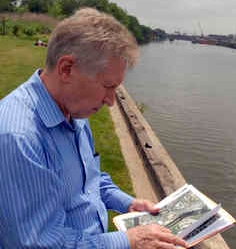
    Mr. Syrnick reviews plans to extend a riverside trail in 2009.

    Mr. Syrnick was a constant presence on riverside trails, other hikers said. He organized regattas and movie nights, hosted riverboat and kayak tours, cleaned up after floods, and repurposed unused piers into prime fishing platforms.

    “Great cities have great rivers,” Mr. Syrnick told The Inquirer in 2005. “Here in Philadelphia, we have Schuylkill Banks.”

    He was a Fairmount Park commissioner for 18 years, was named to the Philadelphia City Planning Commission in 2008, and served as vice chair. He lectured about the Schuylkill often and taught engineering classes and led advisory panels at Drexel. In 2015, he testified before the state Senate in support of a waterfront development tax credit.

    Friends called him “a visionary,” “a true hero,” and “a Philly jewel.” One friend said: “He should be honored by a street naming or something.”

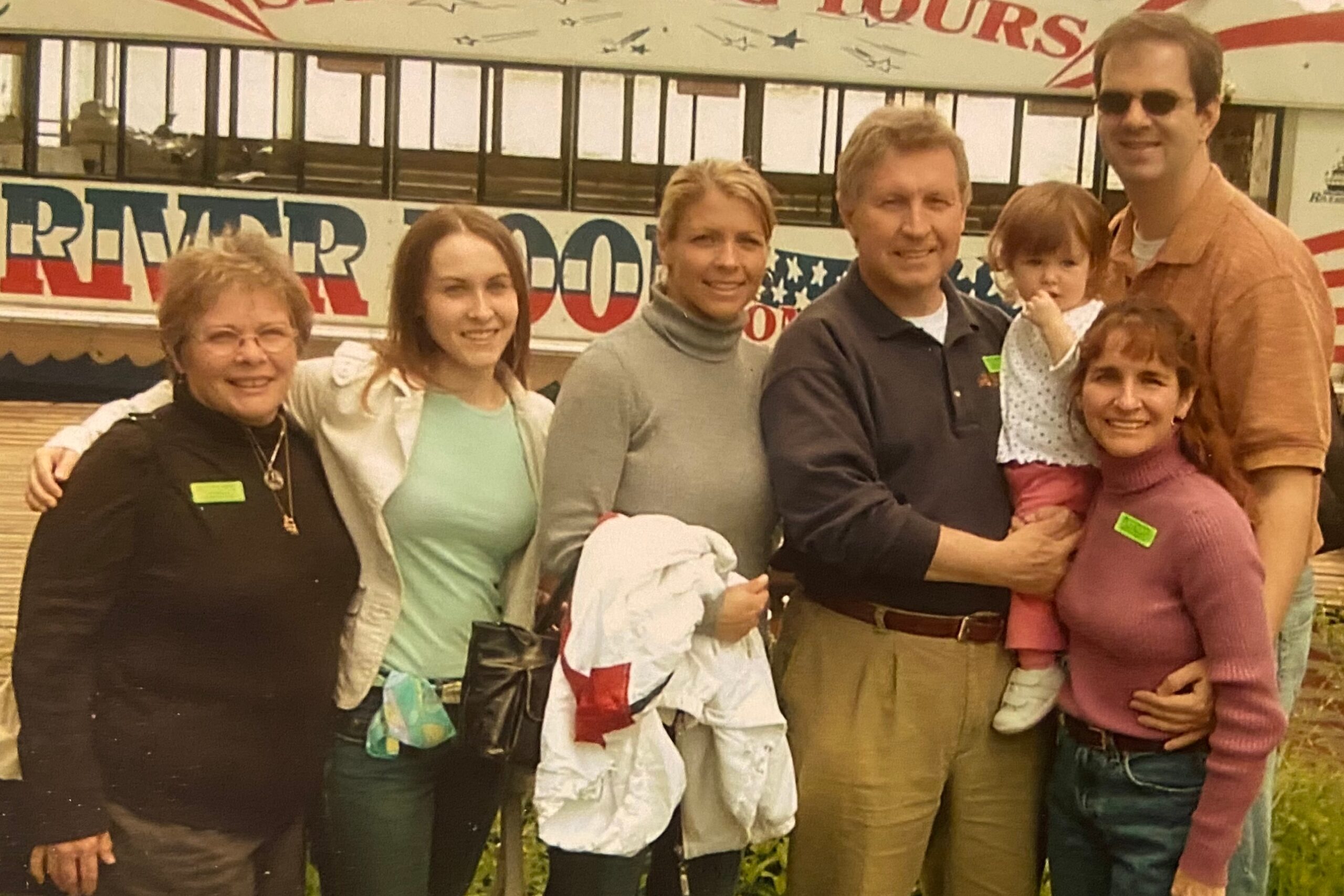
    Mr. Syrnick (fourth from left) and his family pose near a riverboat.

    Paul Steinke, executive director of the Preservation Alliance for Greater Philadelphia, said on Facebook: “He left his native Philadelphia a much better place.”

    Mr. Syrnick was president of the Philadelphia Board of Surveyors and active with the American Society of Civil Engineers, the Engineers’ Club of Philadelphia, and other organizations. At Drexel, he earned a bachelor’s degree in civil engineering in 1969 and a master’s degree in 1971.

    In 2024, Drexel officials awarded him an honorary doctorate for “his visionary leadership in engaging diverse civic partners to revive the promise of a waterfront jewel in Philadelphia.”

    He played second base on the Roman Catholic High School baseball team. He was captain of the 1968 Drexel team and later played against other local standouts in the old Pen-Del semipro league.

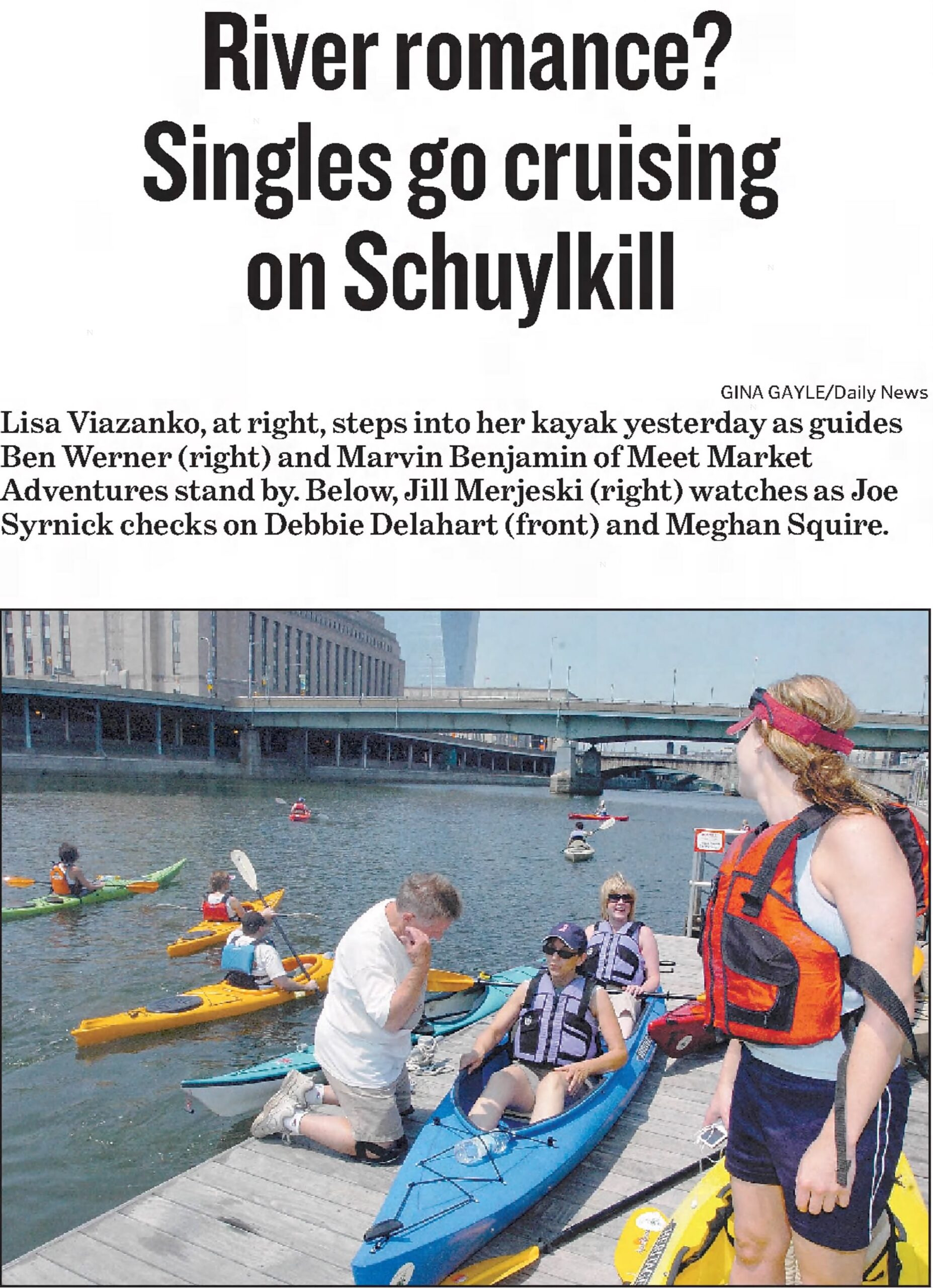
    Mr. Syrnick (center in white shirt) had all kinds of way to publicize fun on the Schuylkill. This photo appeared in The Inquirer in 2007.

    Most of all, everyone said, Mr. Syrnick liked building sandcastles on the beach and hosting tea parties with his young daughters and, later, his grandchildren. He grew up with three brothers. Of living with three daughters, his wife, Mary Beth, said: “It was a shock.”

    His daughter Megan said: “It was a learning experience. Whether it was sports or tea parties, he became the ultimate girl dad.”

    Joseph Richard Syrnick was born Dec. 19, 1946, in Philadelphia. He spent many summer days riding bikes with pals on Dupont Street and playing pickup games at the North Light Community Center.

    He knew Mary Beth Stenn from the neighborhood, and their first date came when she was 14 and he was 15. They married in 1970, moved up the hill from Manayunk to Roxborough, and had daughters Genevieve, Amy, and Megan.

    Mr. Syrnick received his honorary doctorate from Drexel in 2024.

    Mr. Syrnick enjoyed baseball, football, and golf. He was active at St. Mary of the Assumption and Holy Family Churches, and he and his wife traveled together across Europe, Africa, the Middle East, and Asia.

    “He was humble,” his daughter Megan said. “He was quiet in leadership. He always said: ‘It’s the team.’”

    In addition to his wife and daughters, Mr. Syrnick is survived by seven grandchildren, his brother Blaise, and other relatives. Two brothers died earlier.

    Visitation with the family is to be from 6 to 8 p.m. Friday, Jan. 23, at Koller Funeral Home, 6835 Ridge Ave., Philadelphia, Pa. 19128, and 9:30 a.m. Saturday, Jan. 24, at Holy Family Church, 234 Hermitage St., Philadelphia, Pa. 19127. A Mass celebrating his life is to follow at 11 a.m.

    Donations in his name may be made to the Basilica Shrine of Our Lady of the Miraculous Medal, 475 E. Chelten Ave., Philadelphia, Pa. 19144; and Holy Family Parish, 234 Hermitage St., Philadelphia, Pa. 19127.

    Mr. Syrnick (left) and his brother, Blaise, enjoyed being around water.