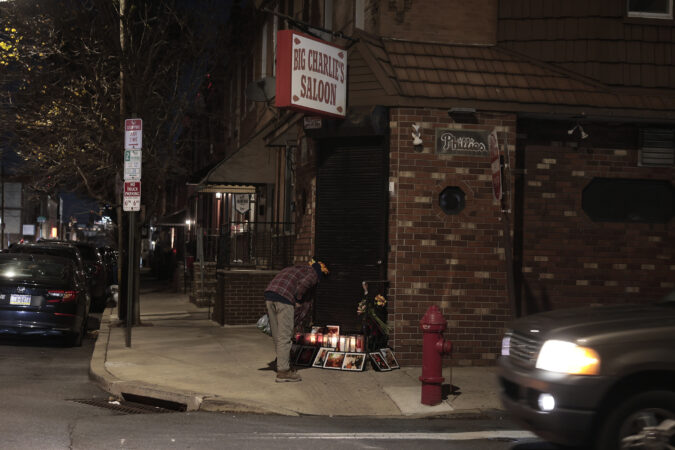
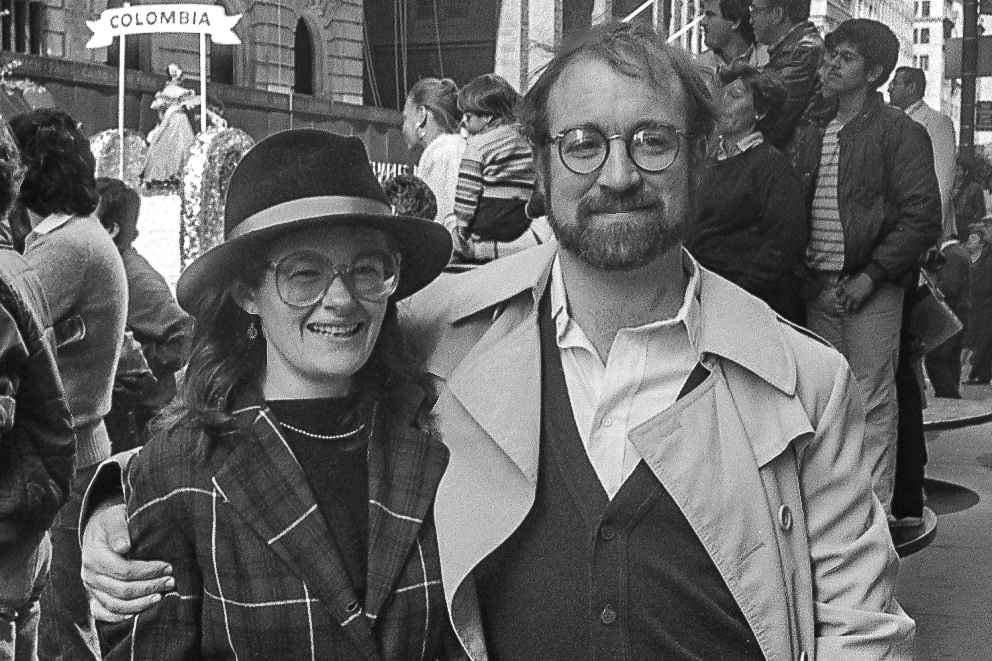
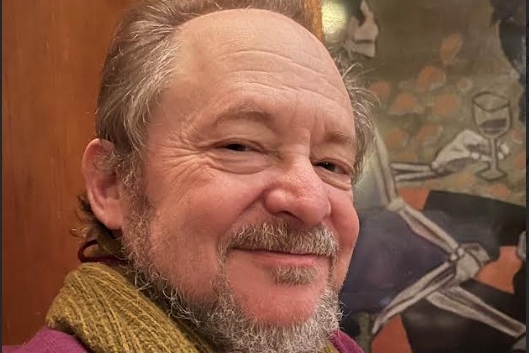
Big Charlie’s Saloon, a South Philly haven for Kansas City Chiefs fans at 11th and McKean Streets, announced on Instagram that it has permanently closed after the recent death of owner and Philadelphia native Paul Staico.
“While this was not how we ever imagined closing our doors, we know Big Charlie’s will never be the same without Paulie, and this is the path we must take,” according to a statement on the bar’s Instagram page.
Staico died suddenly on Nov. 30, three days after Big Charlie’s stayed open on Thanksgiving because the Chiefs were playing. He was 59.
“I wasn’t a Chiefs fan. I’m a Paul Staico fan,” City Councilmember Jimmy Harrity told The Inquirer earlier this month. “If I could name three players, that’s a lot. I was there cheering for him. Some are there to watch the game. But for the most part, they were there for Paul.”
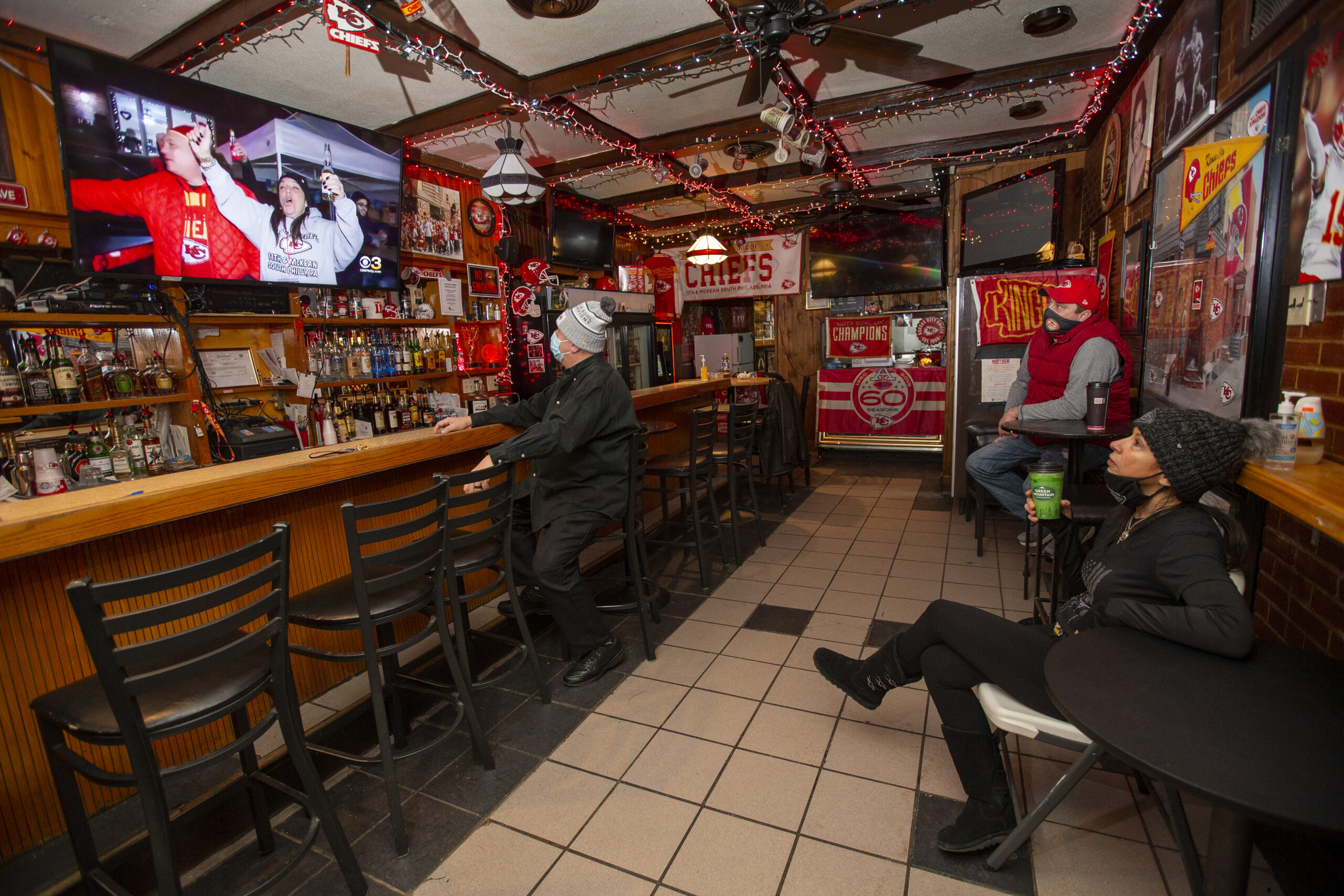
The two-room bar, with its wood paneling, jukebox, vending machine of snacks and cigarettes, and countless Chiefs memorabilia scattered about, became a local media darling in 2023 when the Eagles played — and lost — to the Chiefs in Super Bowl LVII. It was featured by NFL Films in 2003 and 2020 and in The New York Times and The Athletic on the same day in 2023. It got nearly the same treatment in February when the Eagles beat the Chiefs in Super Bowl LIX.
And why was a South Philly bar dedicated to the Chiefs? Staico’s father, Charlie, the former owner of the place, made a bet that the Chiefs would beat the Minnesota Vikings in Super Bowl IV in 1970. When they did, Charlie bought his young son a brand new bike to celebrate. In 1986, an eternally grateful Paul Staico, the bar’s owner since 1983, bought a satellite dish so he could watch the Chiefs, his new favorite team, in every game from then on.
Saloon patrons watch the Chiefs play the Tampa Bay Buccaneers in the Super Bowl in 2021.
“We will continue to find ways to honor Paulie’s legacy and the community he built,” the Instagram post said. “This is not goodbye. This is simply see you later. …As always, go Chiefs.”
The sunshine and relatively mild weather on Christmas in the Philadelphia region and South Jersey will likely be long gone by Friday afternoon, the National Weather Service said in its forecast on Thursday.
Snow, likely no more than 1 or 2 inches, is expected to accumulate between 1 p.m. and midnight Friday, and become mixed with sleet and freezing rain after 4 p.m. New snow and sleet of 2 to 4 inches is possible between 1 and 4 a.m. on Saturday, forecasters said.
“The heaviest precipitation will be the late afternoon on Friday, and it will start to wind down on Saturday,” said Nick Guzzo, meteorologist with the National Weather Service in Mount Holly.
Temperatures are expected to range from the high 20s to low 30s both days. A mild wind of 5 to 10 mph is also expected.
Due to the forecast, PennDot is urging drivers to avoid unnecessary travel. The agency expects vehicle restrictions to begin at 10 a.m. Friday on all interstate highways, banning school buses, commercial buses, motor coaches, motorcycles, and many types of commercial vehicles from the roads.
Friday could be the second measurable snowfall of the season so far. A storm that swept across the Philadelphia region on Dec. 14 left 4.2 inches of snow at Philadelphia International Airport. Some suburban communities in Bucks and Chester Counties reported more than 8 inches.
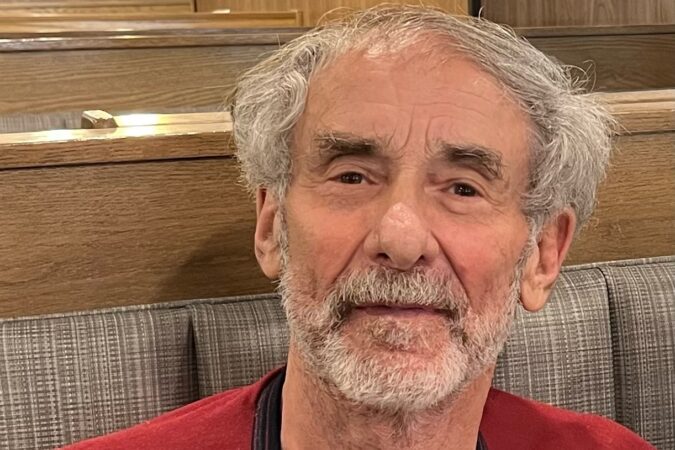
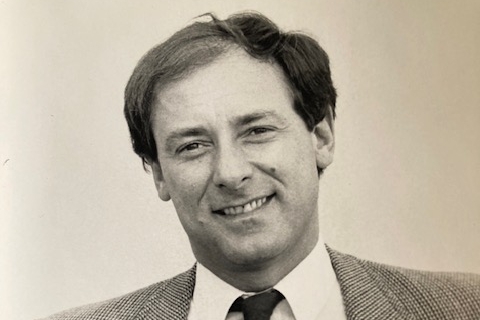
Craig Kellem, 82, of Philadelphia, former talent agent, celebrated TV producer, show developer, writer, longtime script consultant, author, and “comedic genius,” died Monday, Nov. 24, of complications from dementia at Saunders House assisted living in Wynnewood.
Born in Philadelphia, Mr. Kellem moved to New York as a teenager and, at 22, burst onto the entertainment scene in 1965 as a talent scout and agent for what was then called Creative Management Associates. He rose to vice president of the company’s TV Department and, over the next 30 years, served as director of development for late night, syndication, and daytime TV at 20th Century Fox Television, vice president of comedy development at Universal Television, and executive vice president of the Arthur Co. at Universal Studios.
He worked with fellow TV producer Lorne Michaels at Above Average Productions in the 1970s and was a popular associate producer for the first season of Saturday Night Live in 1975 and ’76. He was quoted in several books about that chaotic first season, and his death was noted in the show’s closing credits on Dec. 6.
At Universal Studios, he created and produced FBI: The Untold Stories in 1991.At Universal Television in the 1980s, he developed nearly a dozen shows that aired, including Charles in Charge andDomestic Lifein 1984. In 1980, he developed Roadshow for 20th Century Fox Television.
Mr. Kellem worked for years in New York and Los Angeles.
“He had a lot of energy and ideas,” said his wife, Vivienne. “He had a creative spirit.”
His producing, creating, developing, and writing credits on IMDb.com also include The Munsters Today, The New Adam-12, Dragnet, and What a Dummy. He produced TV films and specials, and worked on productions with Eric Idle, Gladys Knight, Sammy Davis Jr., and the Beach Boys.
“He loved working with writers,” his daughter said. “He was super creative. It was part of his essence.”
Mr. Kellem enjoyed time with his daughter Joelle (left) and his wife Vivienne.
As an agent in the 1960s and ’70s, Mr. Kellem represented George Carlin, Lily Tomlin, and other entertainers. His eye for talent, dramatic timing, and sense of humor were legendary.
“My dad’s humor opened hearts, tore down walls, and allowed people to connect with each other’s humanity, vulnerability, and spirit,” said his daughter Joelle. His daughter Judy said: “He was a comedic genius.”
His wife said: “He was a fascinating, funny, loving, and sensitive man.”
Craig Charles Kellem was born Jan. 24, 1943. He grew up with a brother and two sisters in West Mount Airy, played with pals in nearby Carpenter’s Woods, and bought candy in the corner store at Carpenter Lane and Greene Street.
Mr. Kellem and his son, Sean.
“Craig was like a father to me,” said his brother, Jim. “He helped guide my children and was always there for the whole family.”
He graduated from high school in New York and moved up to senior positions at Creative Management Associates after starting in the mailroom. He married in his 20s and had a daughter, Judy.
After a divorce, he met Vivienne Cohen in London in 1977, and they married in 1980, and had a son, Sean, and a daughter, Joelle. He and his wife lived in California, Washington, New Hampshire, and New Jersey before moving to Fairmount in 2017.
Mr. Kellem enjoyed movies, walking, and daily workouts at the gym. He volunteered at shelters, helped underserved teens, and routinely carried dog treats in his car in case he encountered a stray in need. “That’s the kind of man Craig was,“ his wife said.
Mr. Kellem and his daughter Judy operated their own writing consultation business together for years.
His son, Sean, said: “My dad’s personality was big, and he was deeply compassionate toward other human beings.” His daughter Joelle said: “He was an open, sensitive, warm, and passionate human being who believed deeply in the work of bettering oneself and taking care of others.”
His daughter Judy said: “They don’t make people like my dad.”
In addition to his wife, children, and brother, Mr. Kellem is survived by four grandchildren and other relatives. Two sisters died earlier.
Roberta Fallon, 76, of Bala Cynwyd, cofounder, editor, and longtime executive director of theartblog.org, prolific freelance writer for The Inquirer, Daily News, and other publications, adjunct professor at St. Joseph’s University, artist, sculptor, mentor, and volunteer, died Friday, Dec. 5, at Thomas Jefferson University Hospital of injuries she suffered after being hit by a car on Nov. 24.
Ms. Fallon’s husband, Steven Kimbrough, said the crash remains under investigation by the police.
Described by family and friends as empathetic, energetic, and creative, Ms. Fallon and fellow artist Libby Rosof cofounded the online Artblog in 2003. For nearly 22 years, until the blog became inactive in June, Ms. Fallon posted commentary, stories, interviews, reviews, videos, podcasts, and other content that chronicled the eclectic art world in Philadelphia.
The site drew more than 4,500 subscribers and championed galleries and artists of all kinds, especially women, LGBTQ and student artists, and other underrepresented innovators. “I think we have touched base with every major arts organization in Philadelphia at one point or another, and many of the smaller ones,” Ms. Fallon told The Inquirer in May. “We became part of the arts economy.”
She earned grants from the Knight Foundation and other groups to fund her work. She organized artist workshops and guided tours of local studios she called art safaris.
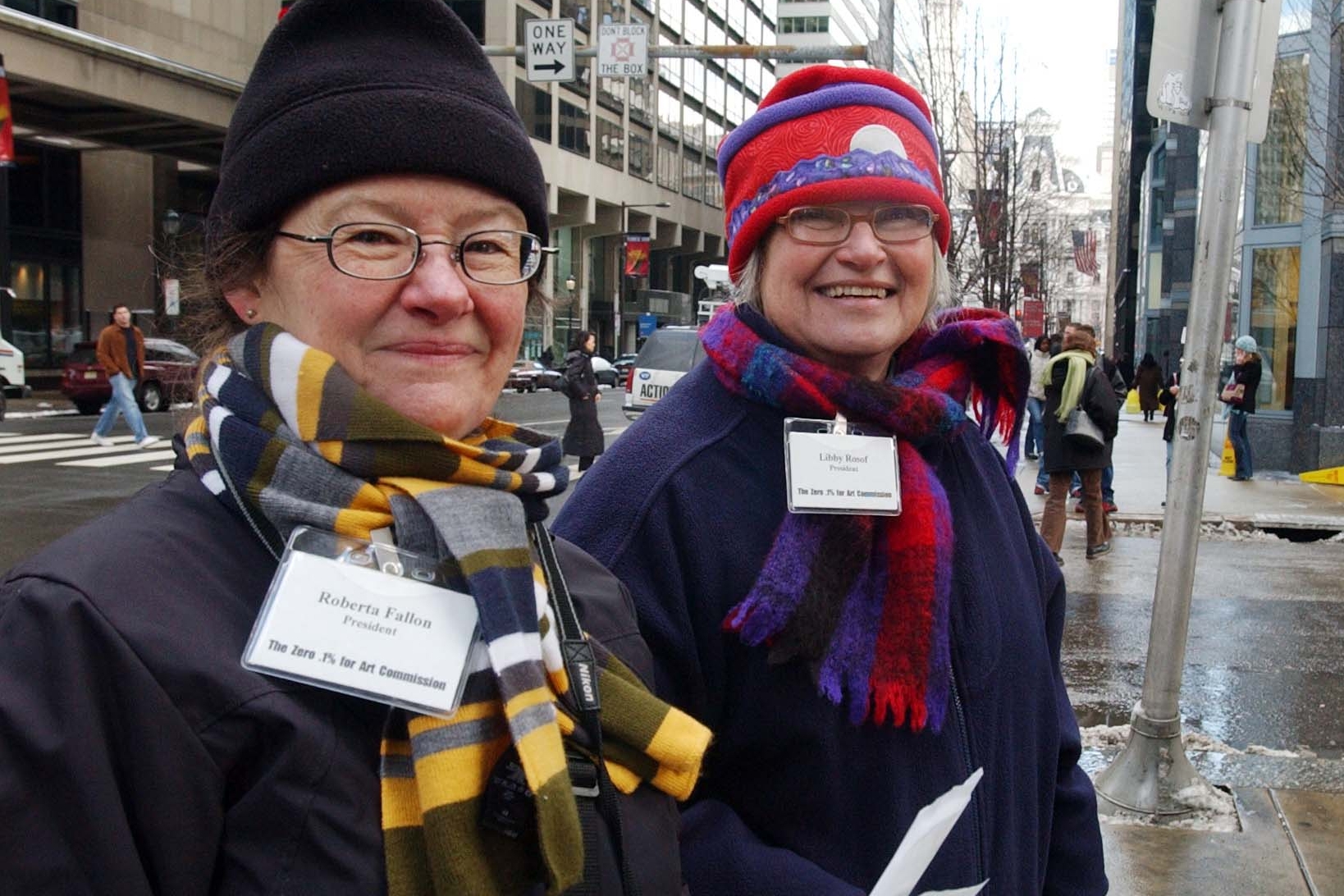
For years, she and Rosof raised art awareness in Center City by handing out miniatures of their artwork to startled passersby. She said in a 2005 Inquirer story: “We think art needs to be for everyone, not just in galleries.”
She mentored other artists and became an expert on the business of art. “She was so generous and curious about people,” Rosof said. “She was innovative and changed the way art reached people.”
Artist Rebecca Rutstein said Ms. Fallon’s “dedicated art journalism filled a vacuum in Philadelphia and beyond. Many of us became known entities because of her artist features, and we are forever grateful.” In a 2008 Inquirer story about the city’s art scene, artist Nike Desis said: “Roberta and Libby are the patron saints of the young.”
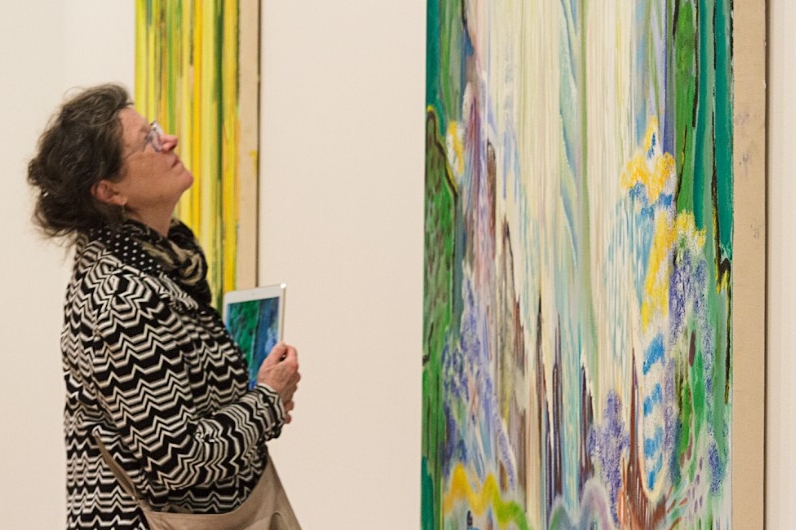
Ms. Fallon never tired of enjoying art.
Colleague and friend Gilda Kramer said: “The Artblog for her was truly a labor of love.”
In November, Ms. Fallon and other art writers created a website called The Philly Occasional. In her Nov. 12 article, she details some of her favorite shows and galleries in Philadelphia and New York, and starts the final paragraph by saying: “P.S. I can’t let you go without telling you about what I just saw at the Barnes Foundation.”
She worked at a small newspaper in Wisconsin before moving to West Philadelphia from Massachusetts in 1984 and wrote many art reviews and freelance articles for The Inquirer, Daily News, Philadelphia Weekly, Philadelphia Citizen, and other publications. In 2012, she wrote more than a dozen art columns for the Daily News called “Art Attack.”
She met Rosof in the 1980s, and together they curated exhibits around the region and displayed their own sculptures, paintings, and installations. Art critic Edith Newhall reviewed their 2008 show “ID” at Projects Gallery for The Inquirer and called it “one of the liveliest, most entertaining shows I’ve seen at this venue.”
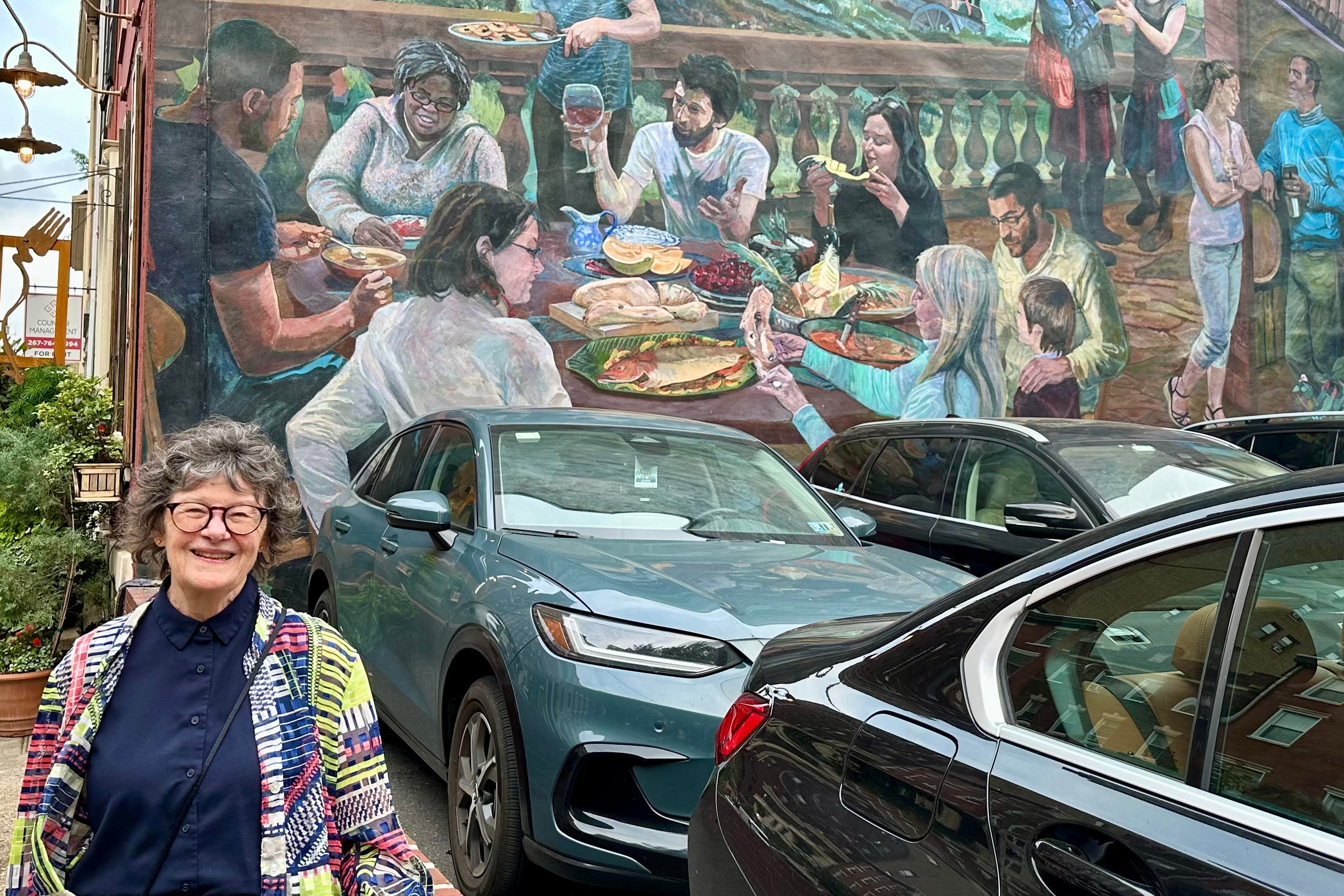
Ms. Fallon stands in front of a mural at 13th and Spruce Streets. She is depicted as the figure profiled in the lower left in the white blouse.
Most often, Ms. Fallon painted objects and sculpted in concrete, wood, metal, textiles, and other material. She was a founding member of the Philadelphia Sculptors and Bala Avenue of the Arts.
She studied at the Pennsylvania Academy of the Fine Arts and Temple University’s Tyler School of Art and Architecture, and later taught professional practice art classes at St. Joseph’s. Moore College of Art and Design, which will archive Artblog, awarded her an honorary doctorate.
“Roberta was an exceptional creative artist” and “a force,” artist Marjorie Grigonis said on LinkedIn. Artist Matthew Rose said: “Robbie was a North Star for many people.”
Her husband said: “Her approach to life was giving. She succeeded by adding value to wherever she was.”
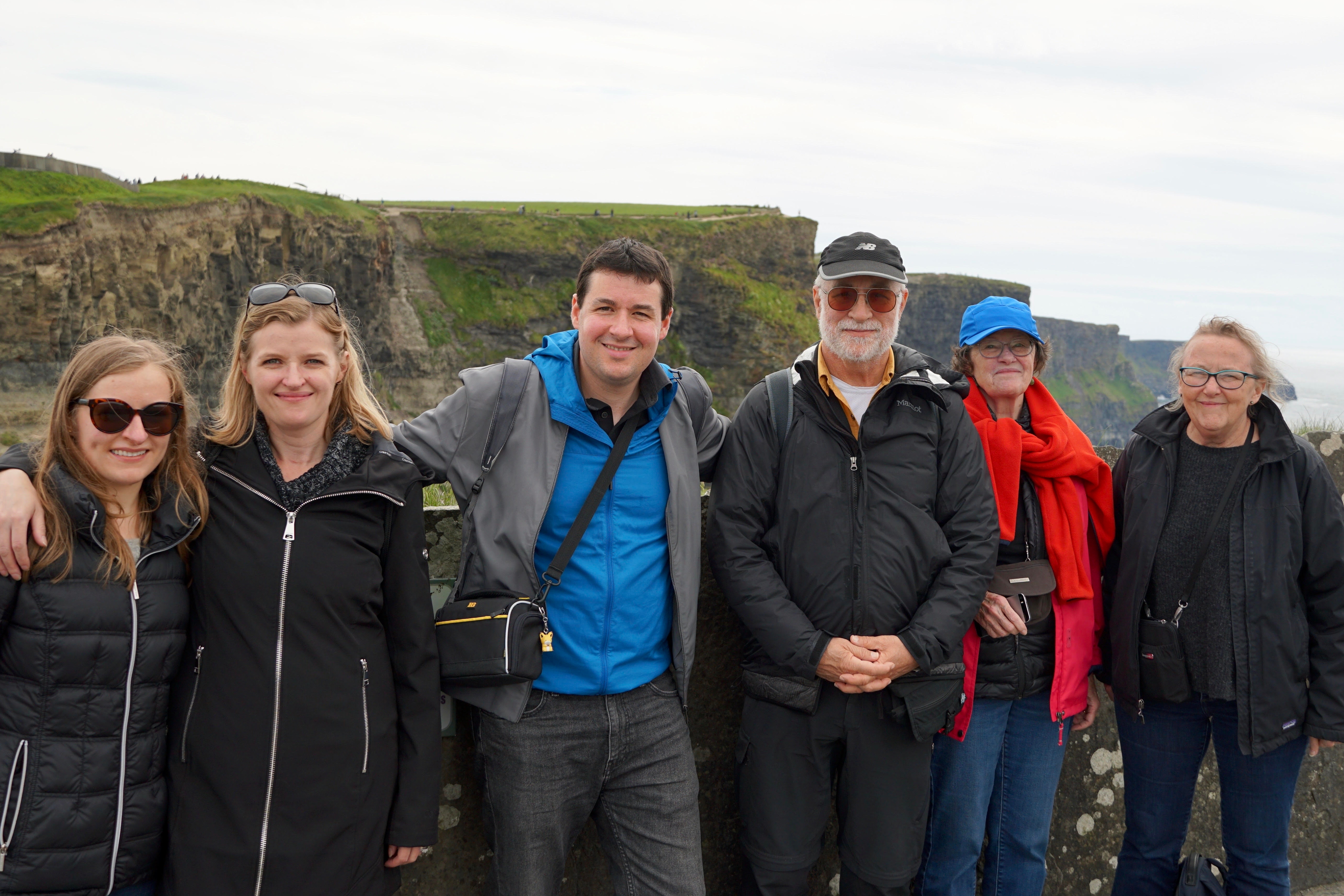
Ms. Fallon (second from right) enjoyed time with her family.
Roberta Ellen Fallon was born Feb. 8, 1949, in Milwaukee. She went to the University of Wisconsin-Madison to study sociology after high school and dropped out to explore Europe and take art classes in Paris. She returned to college, changed her major to English, and earned a bachelor’s degree in 1974.
She met Steven Kimbrough in Wisconsin, and they married in 1980, and had daughters Oona and Stella, and a son, Max. They lived in West Philadelphia for six years before settling in Bala Cynwyd in 1993.
Ms. Fallon was a neighborhood political volunteer. She enjoyed movies and reading, and she and her husband traveled often to museums and art shows in New York and elsewhere.
They had a chance to relocate to Michigan a few years ago, her husband said. But she preferred Philadelphia for its art and culture. “She was like a local celebrity in the art scene,” her daughter Stella said.
Ms. Fallon and her husband, Steven Kimbrough, visited New York in 1982.
Her husband said: “Everybody likes her. Everybody wants to be around her. She made a difference for a lot of people.”
Her daughter Stella said: “The world would be a better place if we all tried to be like my mom.”
In addition to her husband and children, Ms. Fallon is survived by four grandchildren, a sister, a brother, and other relatives.
Aaron Goldblatt, 70, of Philadelphia, award-winning museum services partner emeritus at Metcalfe Architecture & Design, former vice president for exhibits at the Please Touch Museum, exhibit designer, sculptor, adventurer, and mentor, died Sunday, Dec. 7, of lung cancer at his home.
He joined business partner Alan Metcalfe in 2002 and specialized in constructing canopy walks, glass floors, elevated walkways, net bridges, abstract playgrounds, multimedia exhibits, and other unique designs in prominent locations. Visitors encounter their creations at the Museum of the American Revolution, the Independence Seaport Museum, Children’s Hospital of Philadelphia, the National Museum of Industrial History in Bethlehem, Pa., and the Whiting Forest at Dow Gardens in Michigan.
He and colleagues built the Lorax Loft on the Trail of the Lorax at the Philadelphia Zoo, the innovative garden and playground at Abington Friends School, and the lobby at Wissahickon Charter School. At Morris Arboretum, they built the celebrated Out on a Limb and Squirrel Scramble “treetop experiences” that Inquirer architecture critic Inga Saffron called “an irresistible allure, to young and old alike.”
He earned bachelor’s and master’s degrees in sculpture, hitchhiked from adventure to adventure around the country and South America after high school, and said in 2019 that “learning, laughter, and creating genuine connections between people, nature, and history … really inspire my design.”
Play, he said, is one of those genuine connections. “Wherever people are, as long as they are there long enough, play will happen,” he said in 2019. “It happens in schools, museums, and even prisons. Play is fundamental to being human.”
Together, Mr. Goldblatt, Metcalfe, and their colleagues earned design awards from the local chapter of the American Institute of Architects, the American Association of Museums, and other groups. In 2022, they earned the Wyck-Strickland Award from the historic Wyck house, garden, and farm for outstanding contributions to the cultural life of Philadelphia.
In a tribute, colleagues at Metcalfe said Mr. Goldblatt “transformed our studio into the place we are today.” They said: “His generosity, wisdom, and passion for play emanated throughout every conversation, punctuated only by his wit and sense of humor.”
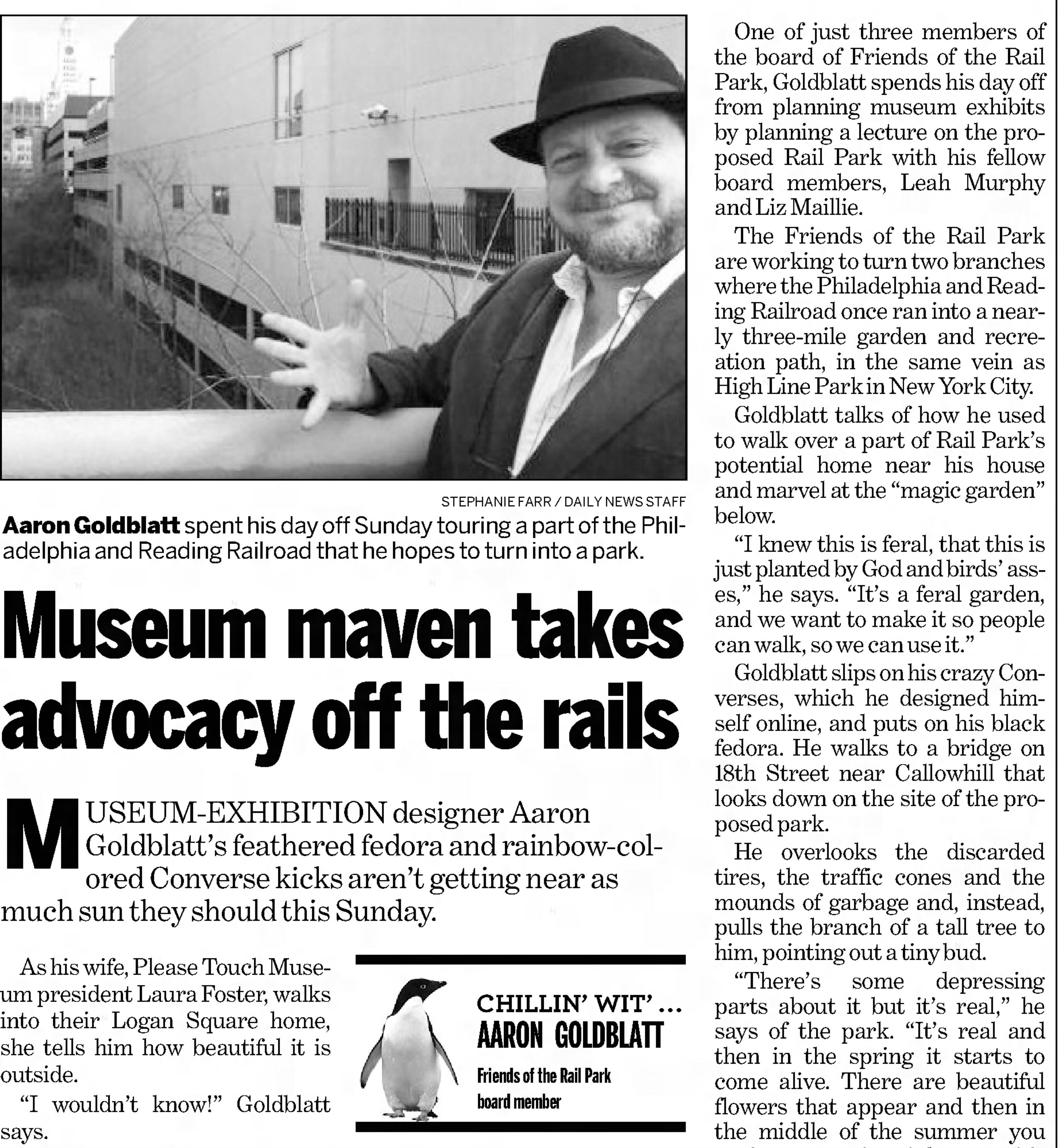
This photo and story about Mr. Goldblatt appeared in the Daily News in 2013.
From 1990 to 2002, he designed and developed exhibits at the Please Touch Museum. Earlier, he was director of exhibits for the Academy of Natural Sciences, assistant director at the Wagner Free Institute of Science, and studio assistant to sculptor Alice Aycock and other artists.
He helped design the Rail Park and was a cofounder and longtime board member of Friends of the Rail Park. He served on boards at the Print Center, the Wagner Free Institute of Science, and other groups, and taught postgraduate museum studies at the University of the Arts for 20 years.
“He developed a love of the process and philosophy of building,” said his daughter, Lillian. His wife, Susan Hagen, said: “He was always engaged, always asking questions. He was curious, funny, and extremely smart.”
Friends called him “lovely, smart, and witty” and “warm, wise, and creative” in Facebook tributes. One friend said: “He always had a spark.”
Aaron Shlomo Goldblatt was born March 22, 1955, in Cleveland. His father was in the Army, and Mr. Goldblatt grew up on military bases across the country and in Germany.
Mr. Goldblatt and his wife, Susan Hagen, married in 2023.
He graduated from high school in Maryland and earned his bachelor’s degree at Philadelphia College of Art in 1982 and master’s degree at Rutgers University in 1990. Before settling in Philadelphia, he worked on farms, painted houses, and spent time as a carpenter, a welder, and a potter.
He married Diane Pontius, and they had a daughter, Lilly. After a divorce, he married Laura Foster. She died in 2019. He married fellow artist Susan Hagen in 2023, and they lived in Spring Garden.
An engaging storyteller and talented cook, Mr. Goldblatt enjoyed all kinds of art, music, and books. He watched foreign films, wrote letters to politicians and the editor of The Inquirer, and visited the Reading Terminal Market as often as possible. He and his wife started birding during the pandemic.
“Aaron led with his heart, engaging deeply with the people and ideas around him,” his daughter said. “He could burst into song at any moment.”
Mr. Goldblatt smiles with his daughter, Lilly.
His wife said: “He was a family person, and everyone talks about his love and kindness.”
In addition to his wife and daughter, Mr. Goldblatt is survived by a grandson, a sister, a brother, his former wife, and other relatives.
Chris Emmanouilides, 63, of Rutledge, Delaware County, digital media director, award-winning filmmaker, TV executive producer, cameraman, teacher, and mentor, died Saturday, April 26, of a heart attack at his home.
Born in Philadelphia and reared in Los Angeles, Mr. Emmanouilides followed his then-girlfriend back to the city in the 1980s, earned a master’s degree in radio, TV, and film at Temple University, and crafted a 36-year career as an independent filmmaker, vice president of programming for Banyan Productions, cofounder and chief content officer of the VuNeex video marketing platform, and director of digital media at the King of Prussia-based American College of Financial Services.
He specialized in independent documentary films, commercials, and early forms of reality TV, and cofounded Parallax Pictures in the 1990s. His films were screened at the Philadelphia Festival of World Cinema, the Sundance Film Festival, and elsewhere around the world.
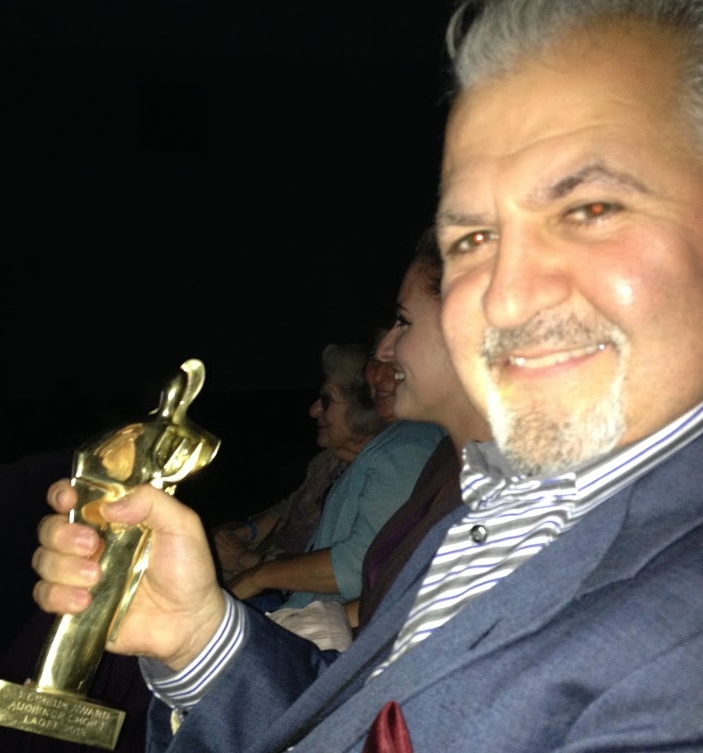
His 40-minute film Archive premiered at the Los Angeles Greek Film Festival in 2013 and earned the Audience Choice Orpheus Award. His 1989 film Suelto! earned first prize at the 1990 Sundance Slice of Life Film Festival.
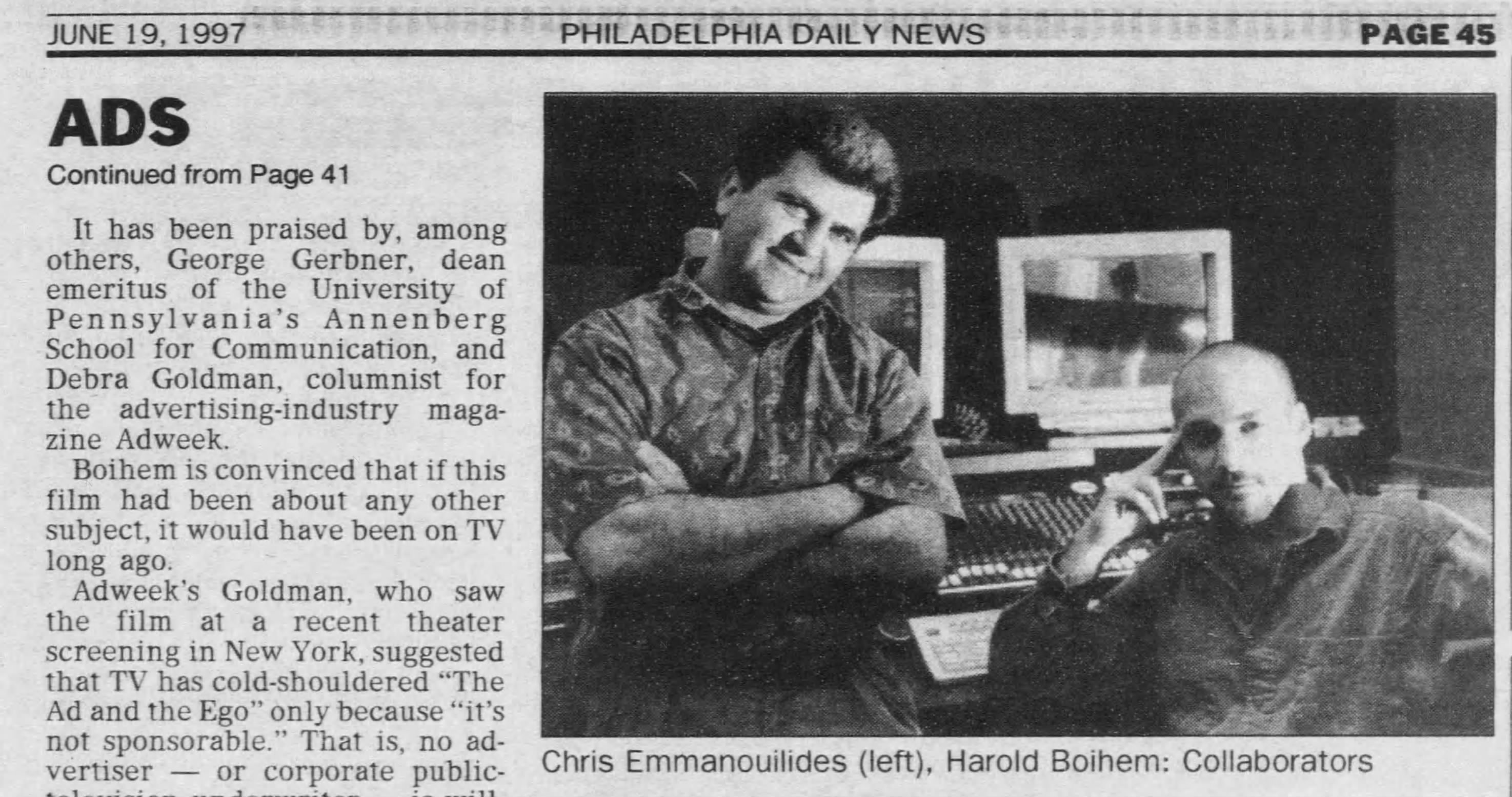
In 1994, Inquirer movie critic Desmond Ryan called Mr. Emmanouilides’ film Remains “especially noteworthy.” In 1997, The Ad and the Egoearned the top prize at the San Francisco International Film Festival.
In 2001, critic Damon C. Williams reviewed TalkFast for the Daily News. Mr. Emmanouilides was the film’s director of photography. Williams said: “It does an incredible job in detailing the desire, dedication and heartbreak that go with pursuing a dream. It also shows that some do indeed find success in chasing their dreams.”
From 1997 to 2014, Mr. Emmanouilides was an executive producer, director of special projects, and vice president of programing at Philadelphia-based Banyan Productions. Working with the Discovery Channel, the Travel Channel, the Food Network, TLC, Lifetime, and other TV outlets, he and his colleagues created thousands of hours of popular award-winning programming. Among his series credits are Travelers, Reunion, Trading Spaces, Deliver Me, Cruises We Love, and A Wedding Story.
“What we pull off in four days — the emotions and the intimacy — is extremely rare on television,” he told The Inquirer in a 1998 story about the Reunion series. “It’s a constant push, trying to make a high-quality show on a limited budget, with limited time. And the question is, will it find an audience?”
He worked with Reader’s Digest and Hope Paige Designs on video marketing projects at VuNeex in 2015, and spent the last 10 years as a senior producer and director of digital media at the American College of Financial Services. “Chris was relentless in the pursuit of quality,” Jared Trexler, senior vice president at American College, said in an online tribute. “He was inquisitive, introspective, and always learning. Most importantly, he was kind, caring, and funny.”
Mr. Emmanouilides won the 2013 Audience Choice Orpheus Award in Los Angeles.
In tributes, colleagues called him “an amazing man and incredible coworker” and “very passionate about our field.” One said: “He always brought genuine fun and energy to whatever we were doing.”
Gregarious and energetic, Mr. Emmanouilides taught film and production courses at Temple, the University of Toledo, the Scribe Video Center, and the old University of the Arts. He lectured at Drexel and Villanova Universities, spoke at conferences and seminars, and taught English-language classes in Greece and Spain.
He was a longtime member and onetime board president of the Philadelphia Independent Film and Video Association, and he mentored production novices at Scribe Video in Center City and elsewhere. “These newcomers don’t respect the conventions of film that much,” he told The Inquirer in 1993. “They’re trying to find their own voice. So they’re finding new ways to tell stories.”
Christopher George Emmanouilides was born Aug. 31, 1961. His family moved from Philadelphia to Los Angeles when he was young, and he earned a bachelor’s degree in philosophy at Colorado College in 1983 and a master’s degree at Temple in 1992.
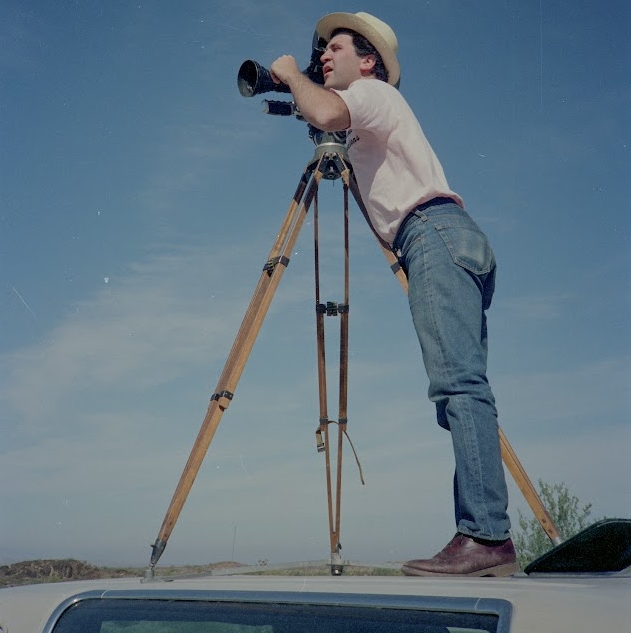
Mr. Emmanouilides was a talented cameraman and photographer.
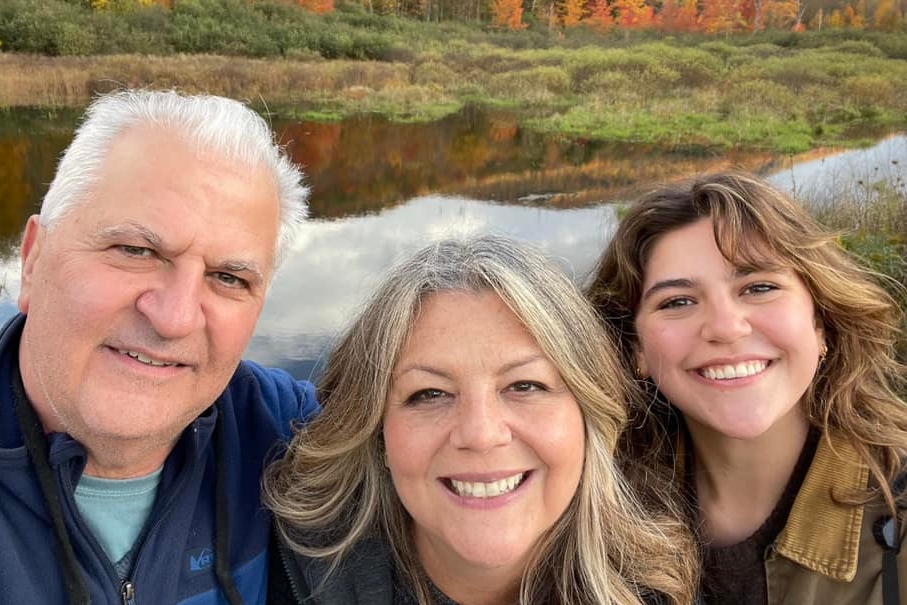
He met Sandra Enck at an independent film event in Philadelphia, and they married in 2004 and had a daughter, Isabella. He doted on his family, and especially enjoyed seeing films with his wife and decorating his daughter’s breakfast pancakes with eyes, nose, and mouth cut from fresh fruit.
“We took their pictures, and we eventually had hundreds of faces from countless mornings together,” his daughter said on her website facethemorning.com. “None were the same, and each seemed to have something to say.”
His wife said: “We’d see a film and then talk about it for three days.”
Mr. Emmanouilides was an avid reader and photographer. He liked to fly-fish, ski, hike, and cook.
This article about Mr. Emmanouilides (left) appeared in the Daily News in 1997.
He had an infectious laugh, performed magic tricks, listened to the Grateful Dead, and followed the Eagles and Phillies. “He was a big thinker,” his wife said. “He was buoyant and a powerful life force. You never forgot that you met him.”
In addition to his wife and daughter, Mr. Emmanouilides is survived by three sisters, a brother, and other relatives.
Celebrations of his life were held earlier.
Donations in his name may be made to the Bryn Mawr Film Institute, 824 W. Lancaster Ave., Bryn Mawr, Pa. 19010.
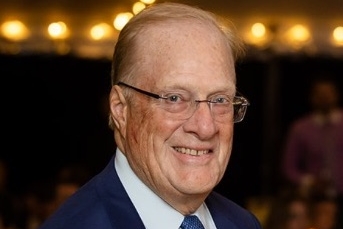
David E. Loder, 71, of Flourtown, longtime attorney at Duane Morris LLP, multifaceted trustee and board member, education advocate, mentor, and volunteer, died Thursday, Oct. 23, of complications from lymphoma and scleroderma at his home.
A graduate of Germantown Friends School and what is now the University of Pennsylvania’s Carey Law School, Mr. Loder spent 43 years, from 1982 to his retirement in 2024, as an associate, partner, and chair of the health law group at the Duane Morris law firm. He became partner in 1989 and helped the health law practice gain national recognition for its success.
Mr. Loder and his team represented the Hospital and Healthsystem Association of Pennsylvania, the Pennsylvania Trauma Systems Foundation, and other medical providers in all kinds of consequential litigation. In 2006, he helped local hospitals win a multimillion-dollar settlement with an insurance company. In 2010, he supervised a case that successfully revived a state abatement program that alleviated medical malpractice costs for physicians and hospitals.
In a tribute, former colleagues at the Pennsylvania Trauma Systems Foundation praised “his ability to see both the legal complexities and the human dimensions of every situation.”
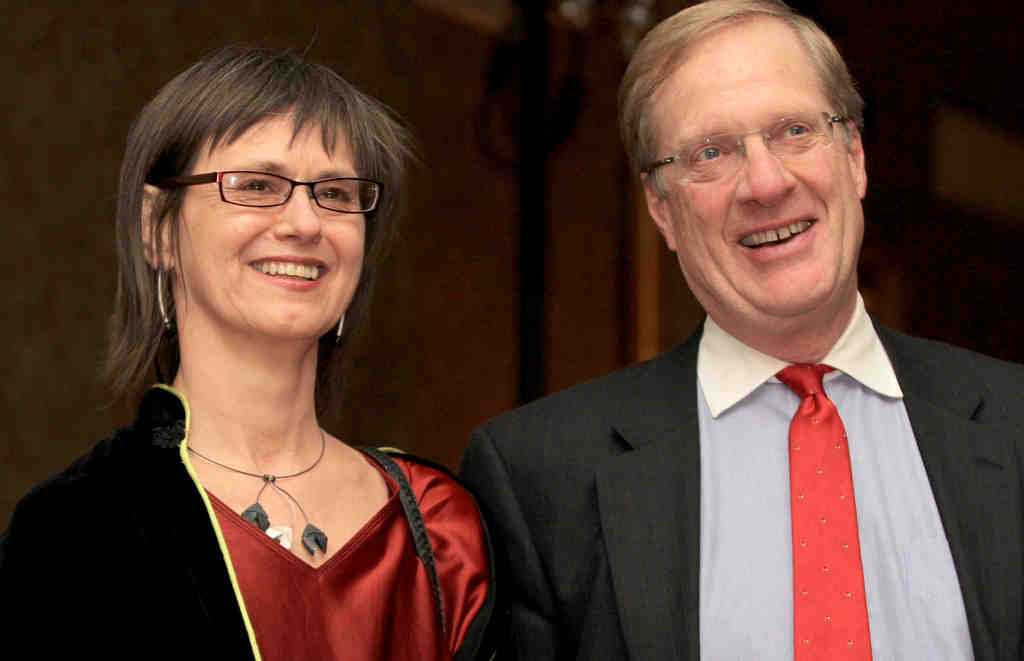
Mr. Loder stands with Blanka Zizka , the Wilma Theater’s artistic director, at an event in 2018.
He was adept in vendor contract law, board governance, policy development, and human relations issues. He took special interest in doctor-patient relations and told the Daily News in 2016: “While it is critical that the healthcare provider convey necessary and accurate information to patients concerning their health condition, it is also important to remain sensitive to the patient’s interest and willingness to hear such information.”
Matthew A. Taylor, chair and chief executive officer at Duane Morris, said in a tribute: “He was one of the nation’s most respected healthcare lawyers.”
Mr. Loder also represented the Philadelphia Zoo, homeowners fighting increased property assessments, participants in gestational-carrier programs, and other clients. “He was a shrewd judge of character,” said his son Kyle. “He was thoughtful and strategic. He became a confidant and adviser to many of his clients.”
John Soroko, chair emeritus at Duane Morris, said in a tribute: “Dave had a unique ability to turn friends into clients. But, even more importantly, to turn clients into friends.”
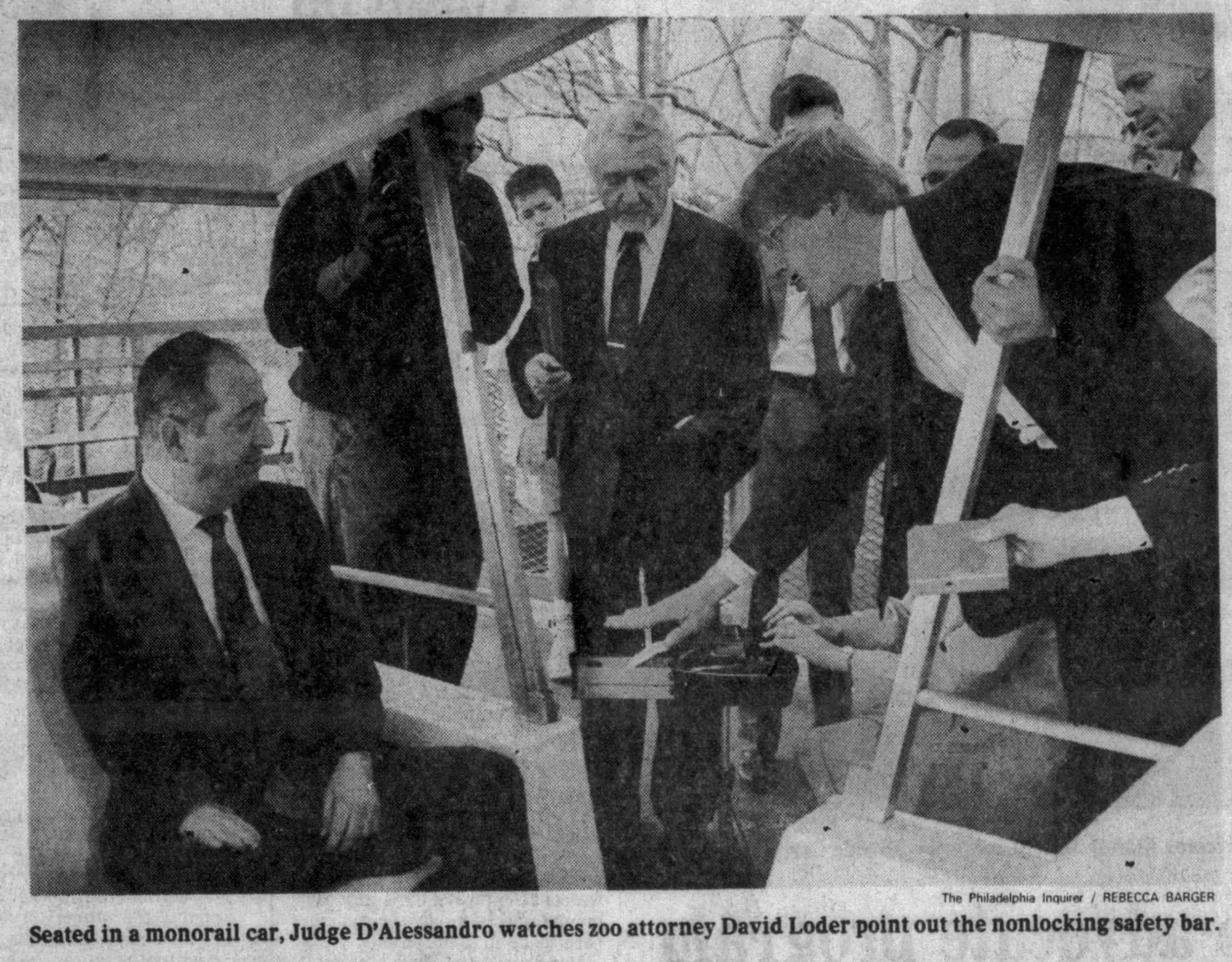
This photo of Mr. Loder (right) representing the Philadelphia Zoo appeared in The Inquirer in 1989.
Away from the law firm, Mr. Loder was chair of the board for the Wilma Theater and served on boards at Germantown Friends, the old University of the Sciences, the World Affairs Council of Philadelphia, and other groups. He was a trustee at the Dolfinger-McMahon Foundation and the Christian R. and Mary F. Lindback Foundation, and represented the Lindback regularly at its annual distinguished educators awards ceremony.
“There’s a firm belief in the importance of excellence in education in the public schools,” he told The Inquirer at the 2016 Lindback ceremony. In 2017, he said: “All of us need to recognize that the Philadelphia public schools are serving an incredibly important function.” In 2018, he said: “People need to know that there are some exceptional educators in Philadelphia public schools.”
He mentored many other lawyers and volunteered to help students in need. In online tributes, friends noted his “kind advice,” “voice of reason and compassion,” and “sense of humor, keen intellect, love of sports, and limitless knowledge on so many topics.”
In 1998, he was featured in an Inquirer story about the challenges parents face when dealing with young children stuck inside during the cold winter months. He said: “I find that if you can get the kids down by 6 p.m. and have a glass of wine in front of the fireplace, it gets you through.”
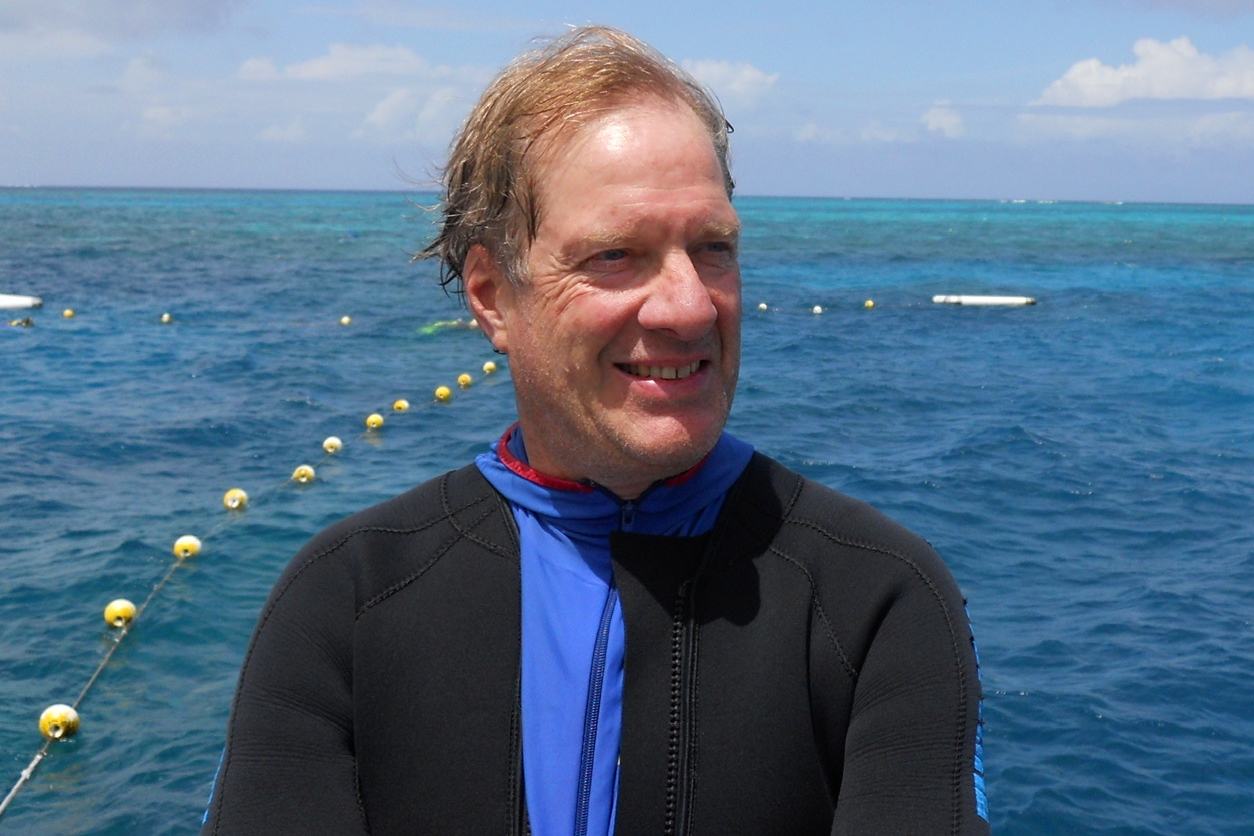
Mr. Loder enjoyed sports and the outdoors.
His family said in a tribute: “He took life seriously but never too seriously, and his warmth, humor, guidance, and generosity will be remembered.”
David Edwin Loder was born April 22, 1954, in Yalesville, Conn. His father, noted theologian Theodore Loder, moved the family to West Mount Airy when Mr. Loder was a boy, and he graduated from Germantown Friends in 1972.
He starred in football, basketball, and baseball in high school, and went on to play basketball and earn a bachelor’s degree in political science at Wesleyan University in Connecticut in 1977. He worked briefly after college as a high school history teacher, served an independent study fellowship in Poland, earned his law degree at Penn in 1981, and studied international law at the London School of Economics and Political Science.
He married Nadya Shmavonian, and they had sons Marek and Kyle, and a daughter, Julya, and lived in Philadelphia and Flourtown. After a divorce, he married Jennifer Ventresca and welcomed her children into the family.
Mr. Loder liked hiking in New York’s Adirondack Mountains and relaxing at his getaway home on Long Beach Island.
Mr. Loder enjoyed tennis, squash, and golf at the Philadelphia Cricket Club. He liked hiking in New York’s Adirondack Mountains and relaxing at his getaway home on Long Beach Island, N.J.
He doted on his family and Labrador, and played cards every month for years with an eclectic group of old friends.
“David embodied the values of faith, service, and integrity,” his family said. His son Kyle said: “He was magnetic, gracious, thoughtful, and curious. He was easy to talk to.”
In addition to his wife, children, and former wife, Mr. Loder is survived by a granddaughter, a sister, two brothers, and other relatives.
Mr. Loder “was magnetic, gracious, thoughtful and curious,” his son Kyle said.
A memorial service and celebration of his life were held earlier.
Donations in his name may be made to the Penn Medicine Scleroderma Center, Attn: Amanda Hills, 3535 Market St., Suite 750, Philadelphia, Pa. 19104.
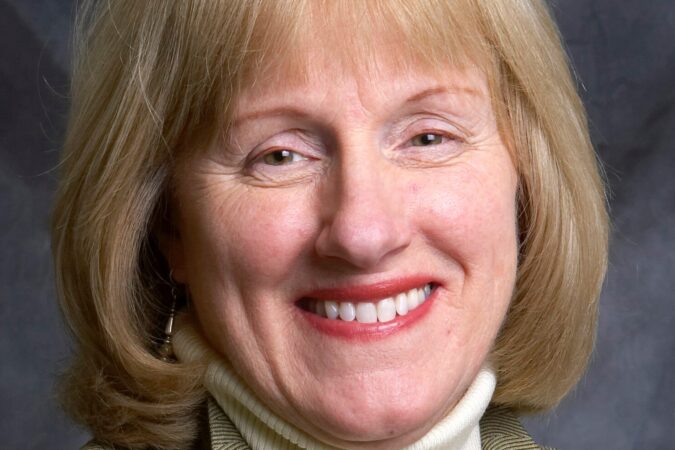
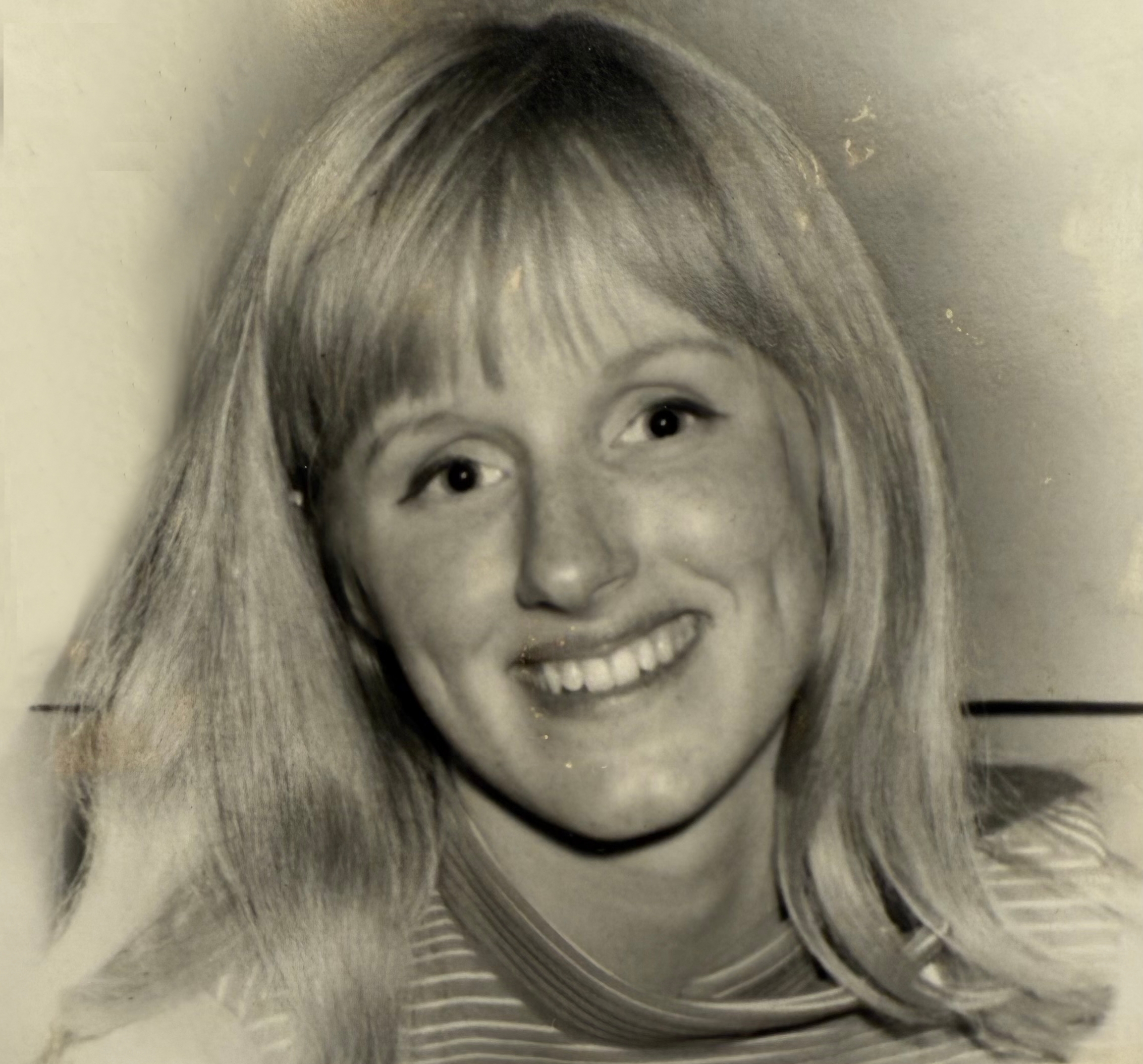
Kathleen A. Case, 80, of Bryn Mawr, longtime writer, pioneering medical journal editor, award-winning historian, researcher, and volunteer, died Friday, Nov. 14, of heart failure at Bryn Mawr Hospital.
A natural wordsmith who was interested in the origins and nuances of language as well as its use, Ms. Case spent 24 years as a top editor for the Annals of Internal Medicine and vice president for publishing at the Philadelphia-based American College of Physicians. Later, for 15 years, she was publisher, archivist, historian, and director of strategic planning for the publishing division of the Philadelphia-based American Association for Cancer Research.
She was adept at understanding and organizing complex research and other medical information, and helped Annals of Internal Medicine digitize its production process and content, expand its reach, and become one of the world’s most influential and cited medical journals. “She loved precise, concise, and unambiguous writing,” her family said in a tribute.
She was one of the few female editors in the medical publishing industry when she joined Annals as an assistant editor in 1977, and she rose to managing editor, executive editor, and senior vice president for publishing by 1998. She attended many international medical publishing conferences around the world, and other journals tried unsuccessfully to lure her away from Philadelphia.
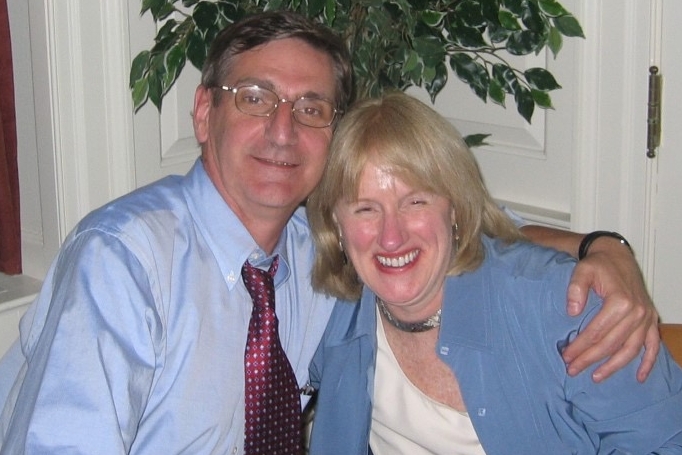
Ms. Case and her husband, Jacques Catudal, married in 1995.
“She set the highest editorial standards in medical publishing and expected the best from everyone around her,” a former colleague said in an online tribute. “But she also took the time to teach. … The lessons I learned from her have shaped my work ever since.”
Ms. Case joined the American Association for Cancer Research in 2001, served two stints as head of the publishing division, and supervised its marketing campaigns, advertising sales, and product development. She retired in 2008 but continued part time as the AACR archivist, historian, and director of strategic planning until retiring for good in 2016.
Away from her day jobs, Ms. Case was past president of the Society for Scholarly Publishing and what is now the Council of Science Editors. She also served on boards and committees for the American Medical Association, the American Chemical Society, the American Heart Association, and the International Committee of Medical Journal Editors.
Even in retirement, she continued to work as a board member, writer, researcher, and historian for the Haverford Township Historical Society. She served on the Haverford Township Historical Commission, was a member of the Historical Society of Pennsylvania, chaired the Friends of the Polo Field, and helped establish the Brynford Civic Association.
Ms. Case graduated from Radnor High School and Pennsylvania State University.
“She was always busy, always involved with some project,” said her husband, Jacques Catudal. She edited his published academic papers, he said, and routinely marked up her two sons’ school reports in red ink for years.
In 2019, she won a historic preservation award from the Heritage Commission of Delaware County. “She was an endlessly inspiring woman whose intelligence was matched only by her sharp wit and her extraordinary cultural sensitivity,” a friend said in a tribute.
Kathleen Ann Case was born Sept. 13, 1945, in Westfield, N.J. The youngest of three children, her family moved to Omaha, Neb., and then Radnor when she was young.
She graduated from Radnor High School, studied journalism at Pennsylvania State University, and earned a bachelor’s degree in English in 1967. She was a reporter and editor for the Penn State student newspaper and so active that school officials waived their prohibition of female students living alone off campus so she could reside near the paper’s office. In 1987, she earned a master’s degree in technical and science communication at Drexel University.
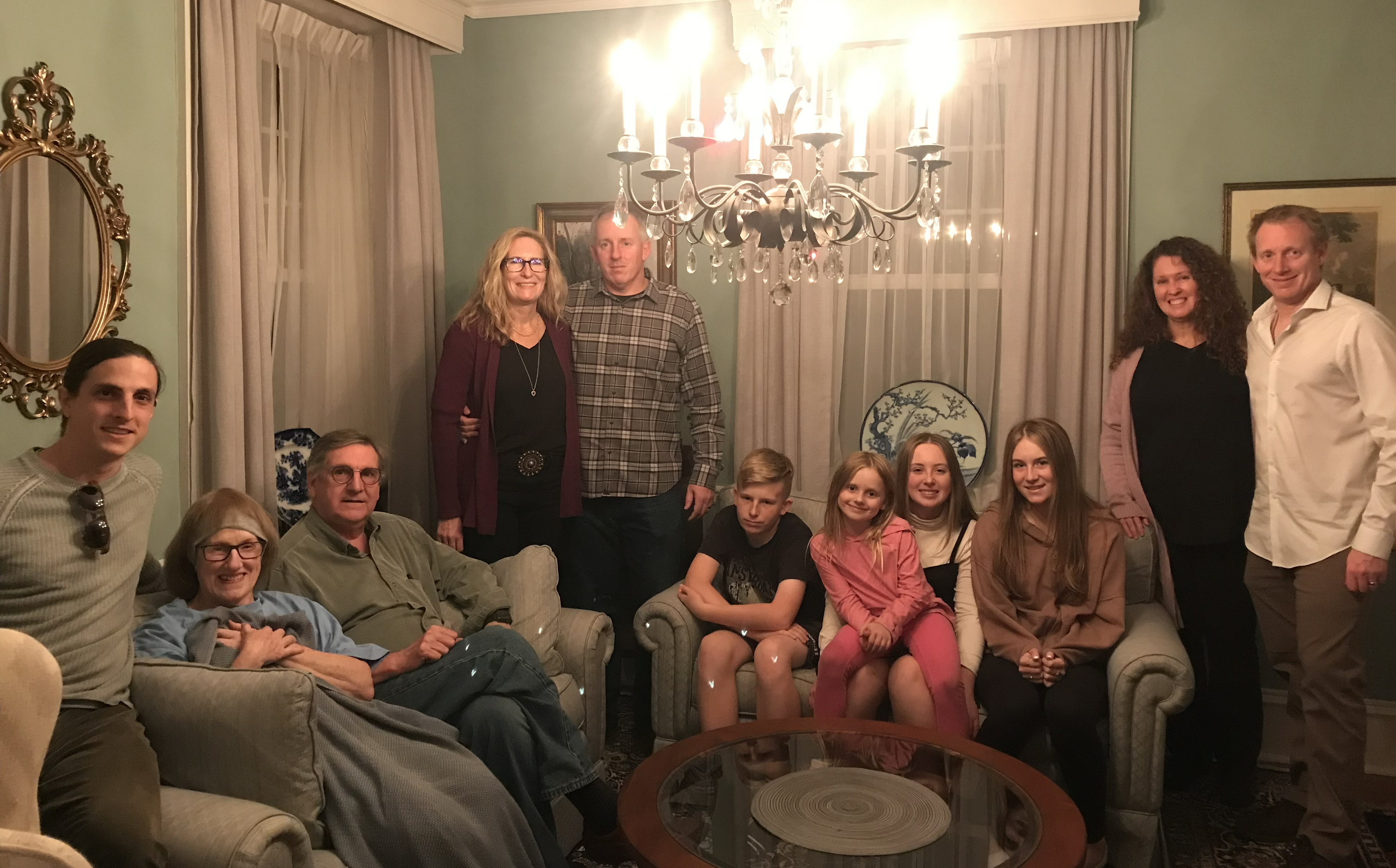
Ms. Case (second from left) enjoyed time with her family
She married D. Benjamin van Steenburgh III, and they had sons Ben and Jason. After a divorce, she married Peter Moor. They divorced, and she married Catudal in 1995.
Ms. Case raised her sons as a single mother in Avondale, Chester County, for years and moved to Bryn Mawr in 1979. She read voraciously about history, collected antiques, and enjoyed travel, classic rock, and Irish folk music.
She rode horses, was an expert archer, and followed the local sports teams. She tended her garden and investigated her genealogy.
She liked to refinish and paint furniture and discuss current events. She and her husband camped, hiked, and canoed all over the world.
Ms. Case enjoyed hiking and the outdoors.
She also dealt with metastatic breast cancer and three heart attacks. “She always gave as much honesty, opinion, perspective, experience, literary acumen, word knowledge, help, advice, comfort, and love as could be needed,” said her son Jason.
Her husband said: “She was brilliant and extremely funny. She was an organizer and always giving of herself.”
In addition to her husband, sons, and former husbands, Ms. Case is survived by four grandchildren, a sister, a brother, and other relatives.
Mark Hallett, 82, of Bethesda, Md., world-renowned scientist emeritus at the Maryland-based National Institute of Neurological Disorders and Stroke, former chief of the clinical neurophysiology laboratory at Brigham and Women’s Hospital in Boston, associate professor of neurology at Harvard Medical School, groundbreaking researcher, prolific author, mentor, and world traveler, died Sunday, Nov. 2, of glioblastoma at his home.
Dr. Hallett was born in Philadelphia and reared in Lower Merion Township. He graduated from Harriton High School in 1961 and became a pioneering expert in movement, brain physiology, and human motor control.
He spent 38 years, from 1984 to his retirement in 2022, at the National Institutes of Health in Bethesda and was clinical director and chief of the medical neurology branch of the National Institute of Neurological Disorders and Stroke. He and his colleagues examined the human nervous system and the brain, and their decades of research helped doctors and countless patients treat dystonia, Parkinson’s, and other neurodegenerative diseases.
“When I met him, I was in bad shape,” a former patient said on Instagram. “I’d also been told … that no one would ever figure out the source of my illness. … He and his team diagnosed me, and thereby, I’m pretty sure, saved my life”
Dr. Hallett told the Associated Press in 1992: “The more that we know about the way these cells function, the better off we are.”
Barbara Dworetzky, current president of the FNDS, said Dr. Hallett was a “brilliant scientist, visionary leader, and compassionate physician whose legacy will endure.” Former NIH colleagues called his contributions “astounding” and said: “The scope and impact of Dr. Hallett’s work transcend traditional productivity metrics.”
He chaired scientific committees and conferences, and supervised workshops for many organizations. He earned honorary degrees and clinical teaching awards, and mentored more than 150 fellows at NIH. “Our lab’s demonstration of trans-modal plasticity in humans was another milestone,” he told the NIH Record in 2023. “And, of course, I am particularly proud of the fellows that I have trained and their accomplishments.”
In a tribute, his family said those he mentored “valued his intellect, his encouragement, his kindness, and his humor.”
Dr. Hallett and his wife, Judy, married in 1966.
Dr. Hallett had planned to study astronomy at Harvard University after high school. Instead, he earned a bachelor’s degree in biology in 1965 and a medical degree at Harvard Medical School in 1969. He completed an internship at the old Peter Bent Brigham Hospital, now part of Brigham and Women’s, and joined a research program at the NIH in 1970 to fulfill his military obligation during the Vietnam War.
A fellowship in neurophysiology and biophysics at the National Institute of Mental Health sparked his interest in motor control, and he served a neurology residency at Massachusetts General Hospital in 1972 and a fellowship at the Institute of Psychiatry in London in 1974.
He returned to Brigham and Women’s in 1976 to supervise the clinical neurophysiology laboratory and rose to associate professor of neurology at Harvard. In 2019, he earned the Medal for Contribution to Neuroscience from the World Federation of Neurology, and former colleagues there recently said his work “had a lasting global impact and shaped modern clinical and research practice.”
He also studied the scientific nature of voluntary movement and free will. He wrote or cowrote more than 1,200 scientific papers on all kinds of topics, edited dozens of publications and books, and served on editorial boards.
He was past president of the International Federation of Clinical Neurophysiology and the International Parkinson and Movement Disorder Society, and vice president of the American Academy of Neurology.
At Harriton, he was senior class president, a star tennis player, and a leading man in several theatrical shows. “The only time he disobeyed his parents,” his family said, “was when he decided to leave Philadelphia to attend Harvard College.”
Mark Hallett was born Oct. 22, 1943. The oldest of three children, he was a natural nurturer, a longtime summer camp counselor, and the winner of an Alfred P. Sloan Foundation national scholarship award in high school.
He grew up in Merion and met Judith Peller at a party in 1963. They married in 1966 and had a son, Nicholas, and a daughter, Victoria.
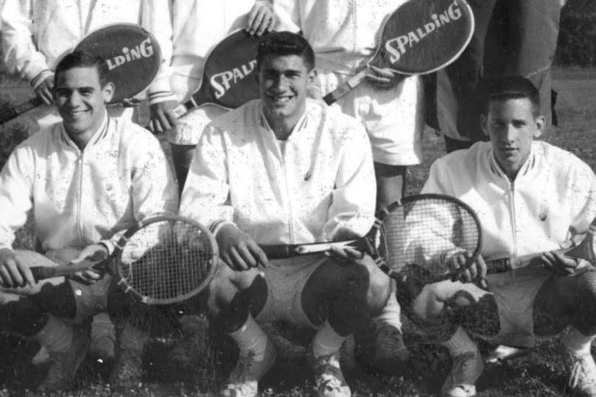
Dr. Hallett (center) was a star on the Harriton High School tennis team.
Dr. Hallett was an avid photographer and a master of the family group shot. He championed a healthy work-life balance, and his family said: “He eagerly built sand castles, skipped stones, and started pillow fights. His easy laugh was contagious.”
He enjoyed hiking, biking, jazz bands, and organizing family vacations. “He was a natural leader,” his son said, “self-assured and patient of others, with a deep sincerity and a desire to help people.”
Jean E. Corrigan, 70, of Roslyn, Montgomery County, retired fleet and operations manager for the Montgomery County Department of Assets and Infrastructure, onetime constituent services representative for then-State Rep. Josh Shapiro, hair salon owner and operator,disability services advocate,and award-winning volunteer, died Saturday, Nov. 22, of non-alcoholic cirrhosis of the liver at her home.
A lifelong resident of Glenside and nearby Roslyn, Mrs. Corrigan was vice chair of the Abington-Rockledge Democratic Committee from 1995 to 2013, and served as Gov. Shapiro’s constituent service agent when he represented the 153rd Legislative District in the Pennsylvania House of Representatives from 2004 to 2012.
“Jean was the very first volunteer on my very first campaign,” Shapiro recalled. “We knocked doors together, met our neighbors together, and, after winning, served our community together.”
In addition to breaking down bureaucratic delays and solving all kinds of constituent problems for Shapiro, Mrs. Corrigan doggedly championed fair wages, reproductive freedom, increased funding for special education and disability services, and improved healthcare. Colleagues called her a “super volunteer” and a “campaign mom” because she helped so many candidates win elections.
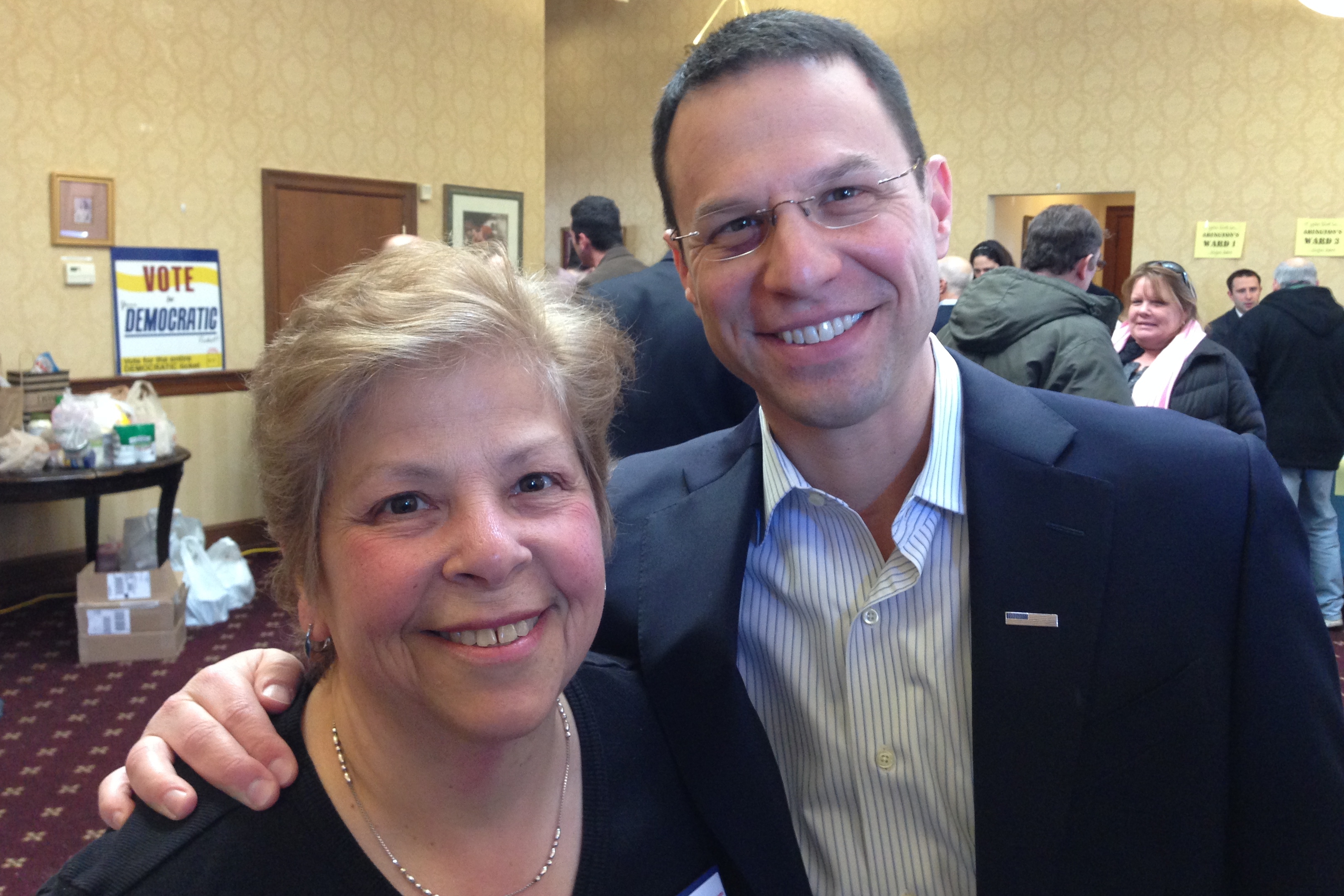
Gov. Shapiro said Mrs. Corrigan “made her neighbors’ lives better.”
She hosted visiting campaign workers at her home for years, took charge of distributing lawn signs and sample ballots, and organized other preelection events at her dining room table. She was named the local committee’s Democrat of the Year in 2002 and earned several awards from community service organizations.
“Through that work, I got to see just how much of herself she gave to others,” Shapiro said. “Where there was a need in the community, she worked to address it. When someone needed help, she lent a hand. She made her neighbors’ lives better, and I will forever be grateful for her life of service.”
In 2001, Mrs. Corrigan ran unsuccessfully for Abington Township commissioner, finishing second among three candidates and losing to a long-entrenched incumbent. In a preelection profile in The Inquirer, she listed “responsible growth” as a top value and “maintain integrity of Abington Township” as a main goal.
“Jean was passionate about serving others,” her family said in a tribute. “She believed that politics and civic activism could make a positive difference in people’s lives.”
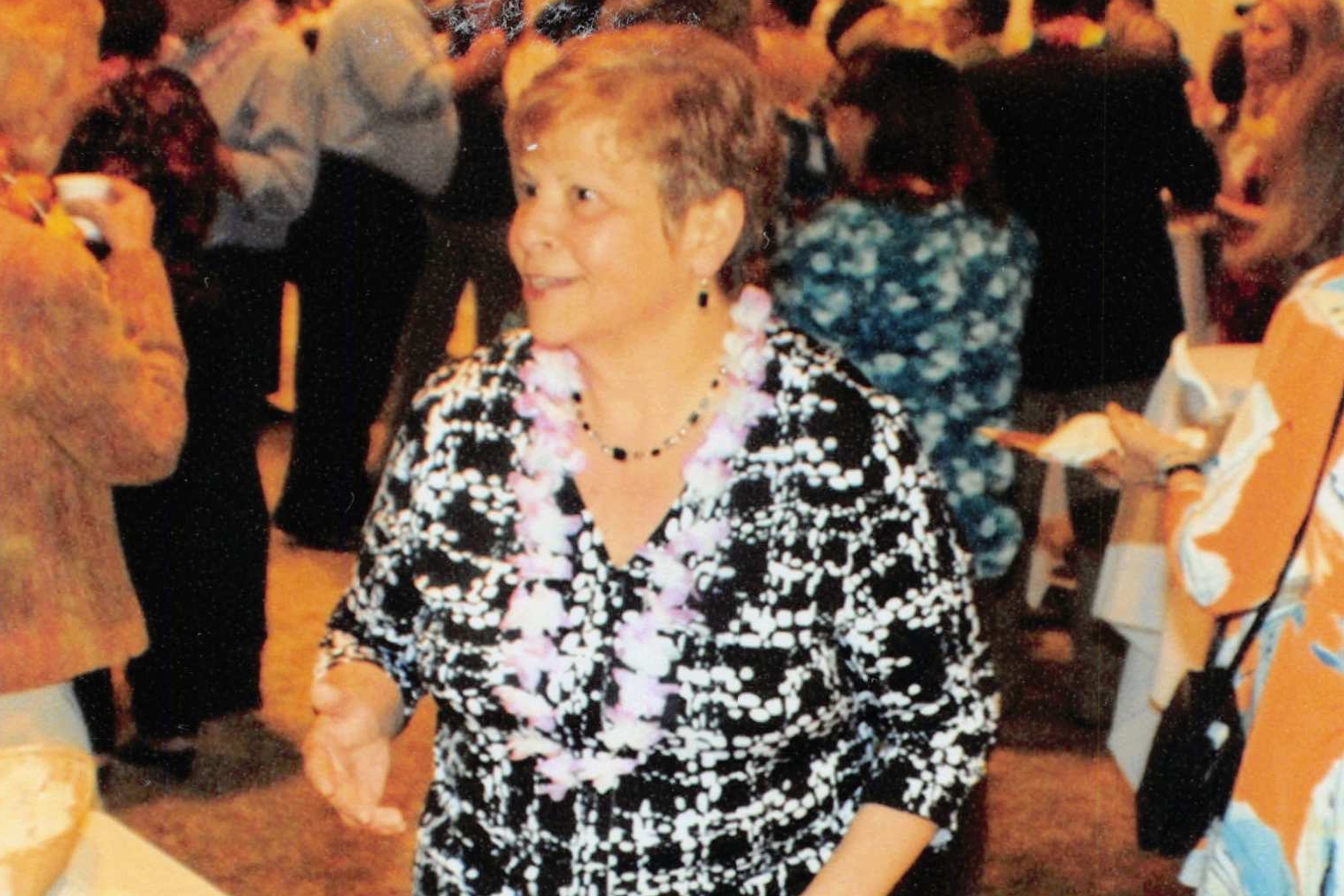
Mrs. Corrigan was called a “super volunteer” by colleagues and friends.
At work, Mrs. Corrigan managed Montgomery County’s fleet of vehicles from 2015 to her retirement in 2022. She joined the county’s assets and infrastructure department in 2012 as operations manager for public property and supervised the county’s building services, construction carpenters, project collaboration, and computer-aided design.
She studied beauty science and hair styling in high school, attended the Willow Grove Beauty Academy, and ran her own salon called Shears to You from 1993 to 2001. As a volunteer, she was one-time president of the Abington School District Special Education Parent Advisory Council, copresident of the Abington Junior High School parent-teacher organization, and chair and vice chair of several Abington Township community initiatives.
She raised funds for school events and served on the board of the Abington YMCA. “Jean was selfless, empathetic, blunt, affectionate, caring, plainspoken, honest, and incredibly hard-working,” her family said. “There was no ego, no vanity.”
Jean Elizabeth Fanelli was born Aug. 30, 1955, in Abington Township. She grew up with a brother, Angelo, and graduated from Abington High School in 1973. She was interested in clothing design as well as beauty culture and took classes at Temple University.
Mrs. Corrigan stands with her husband, Peter, and son David
After a brief marriage to Bruce Cunningham was annulled, she married Peter Corrigan — an usher at her first wedding — in 1977, and they had sons Joseph and David and a daughter, Pauline. They lived in Glenside for decades, in the same house in which she grew up, and moved to Roslyn a few years ago.
Mrs. Corrigan enjoyed shopping trips with her daughter and baking holiday cookies. She liked to entertain and cook for everybody.
She doted on her two granddaughters and spent memorable summers near Arrowhead Lake in the Pocono Mountains. She could talk to anybody, her family said.
“She was a wonderful mother,” her daughter said. “I learned to have respect and manners from her.”
Mrs. Corrigan (front right) enjoyed time with her family.
Her son David said: “She taught me to be considerate and understanding of everyone I encounter, a lesson I will never forget.”
Her son Joseph said: “She was incredibly generous with her time and resources. She could build relationships, and a theme of her life was caring for people.”
Her husband said: “She was one of a kind.”
In addition to her husband, children, granddaughters, and brother, Mrs. Corrigan is survived by other relatives.
A private celebration of her life is to be held later.
Donations in her name may be made to Hedwig House Inc., 1920 Old York Rd., Abington, Pa. 19001.
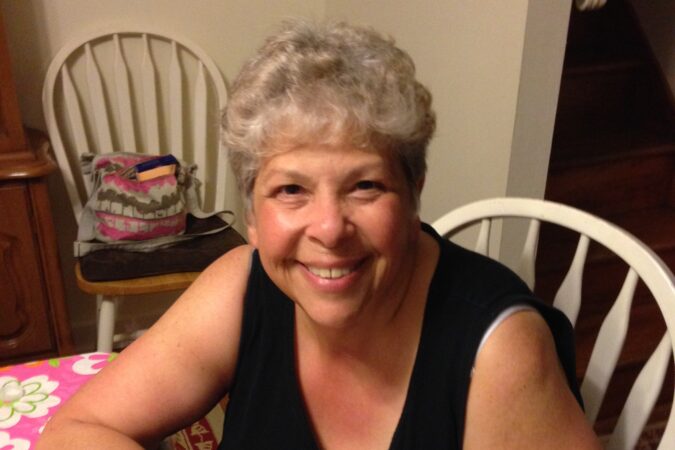
Mrs. Corrigan’s smile could light up a room, her family said.