Author: Gary Miles

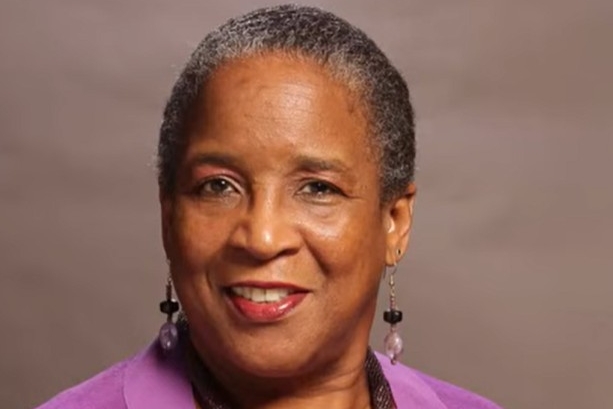
  • Carla Washington Hines, longtime dancer, choreographer, and teacher, has died at 72

    Carla Washington Hines, longtime dancer, choreographer, and teacher, has died at 72

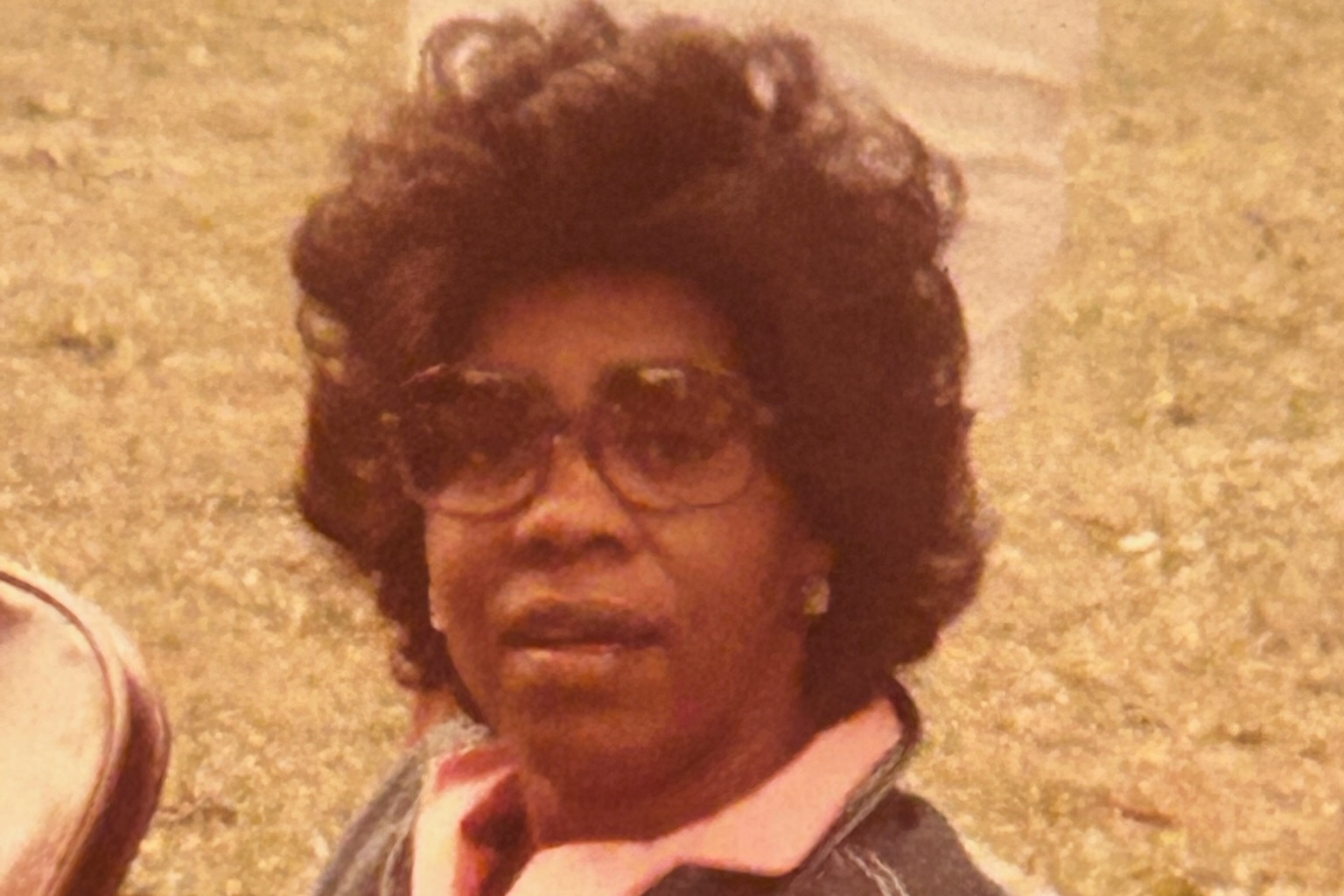
    Carla Washington Hines, 72, of Philadelphia, longtime dancer, pioneering choreographer, celebrated teacher, former artistic director, collaborator extraordinaire, and mentor, died Sunday, Nov. 2, of sepsis at Temple University Hospital-Jeanes Campus.

    Mrs. Hines came to Philadelphia from Virginia in 1974 after college and spent the next four decades dancing, teaching, lecturing, traveling, and generally advocating for arts in education from kindergarten through college. She danced with the Sun Ra Arkestra, the John Hines Dance Co., and other troupes at all sorts of venues in Philadelphia, New York, Chicago, elsewhere in the United States, and throughout Europe.

    She choreographed original performances such as “Montage in Black,” “Reflections,” and “Life Cycle,” and collaborated with notable jazz musicians Herbie Hancock and Alice Coltrane, and other musical stars. She was a guest on TV and radio shows, read poetry at public events, and earned awards from the Pennsylvania Council on the Arts and the Philadelphia-based Bartol Foundation for education.

    She was an expert in jazz dance, modern dance, ballet, and posture, and she lectured, organized workshops, and taught the elements of dance and choreographic principles at schools, colleges, art centers, drama guilds, libraries, and elsewhere around the country. Her mother, Thelma, was a dancer and teacher, too, and Mrs. Hines championed the connection between an interest in the arts and academic success.

    “In dance, I can be anything I want to be,” she said in an online interview. “That’s the magic of the arts.”

    She created an afterschool residency at a Universal charter school and taught dance at E.M. Stanton Elementary School, Strawberry Mansion High School, and other schools. She said in the online interview that her curriculum “is based on the appreciation of dance and movement,” and that it helps students “make sense of their lives using dance as a tool for learning.”

    She said: “I want them to be able to understand through movement exploration how dance can change one’s life.”

    She was artistic director for the Philadelphia chapter of the Institute for the Arts in Education and at the Point Breeze Performing Arts Center. “Her creative guidance helped students tell powerful cultural stories through movement,” her family said.
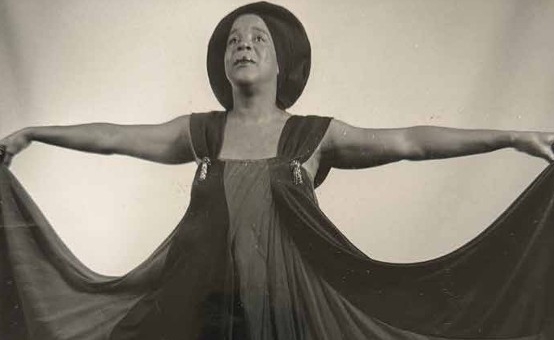
    Mrs. Hines performed with the Jones-Haywood Dance School in Washington before moving to Philadelphia.

    As longtime community engagement manager for the Philadelphia Clef Club of Jazz and Performing Arts, Mrs. Hines wrote grants and choreographed performances. She was executive director of the John Coltrane Cultural Society and active at the old University of the Arts.

    Her family said: “She devoted her life to creativity and to nurturing talent in others.”

    Carla Yvette Washington was born Nov. 3, 1952, in Charleston, W.Va. Her family moved to Grambling, La., when she was young, and she graduated from high school in 1970.

    She was named Miss Freshman at what is now Grambling State University, joined the Alpha Kappa Alpha Inc. sorority, and earned a bachelor’s degree in recreation in 1973. In 1981, she earned a master’s degree in fine arts and dance at the old Philadelphia College of the Performing Arts.
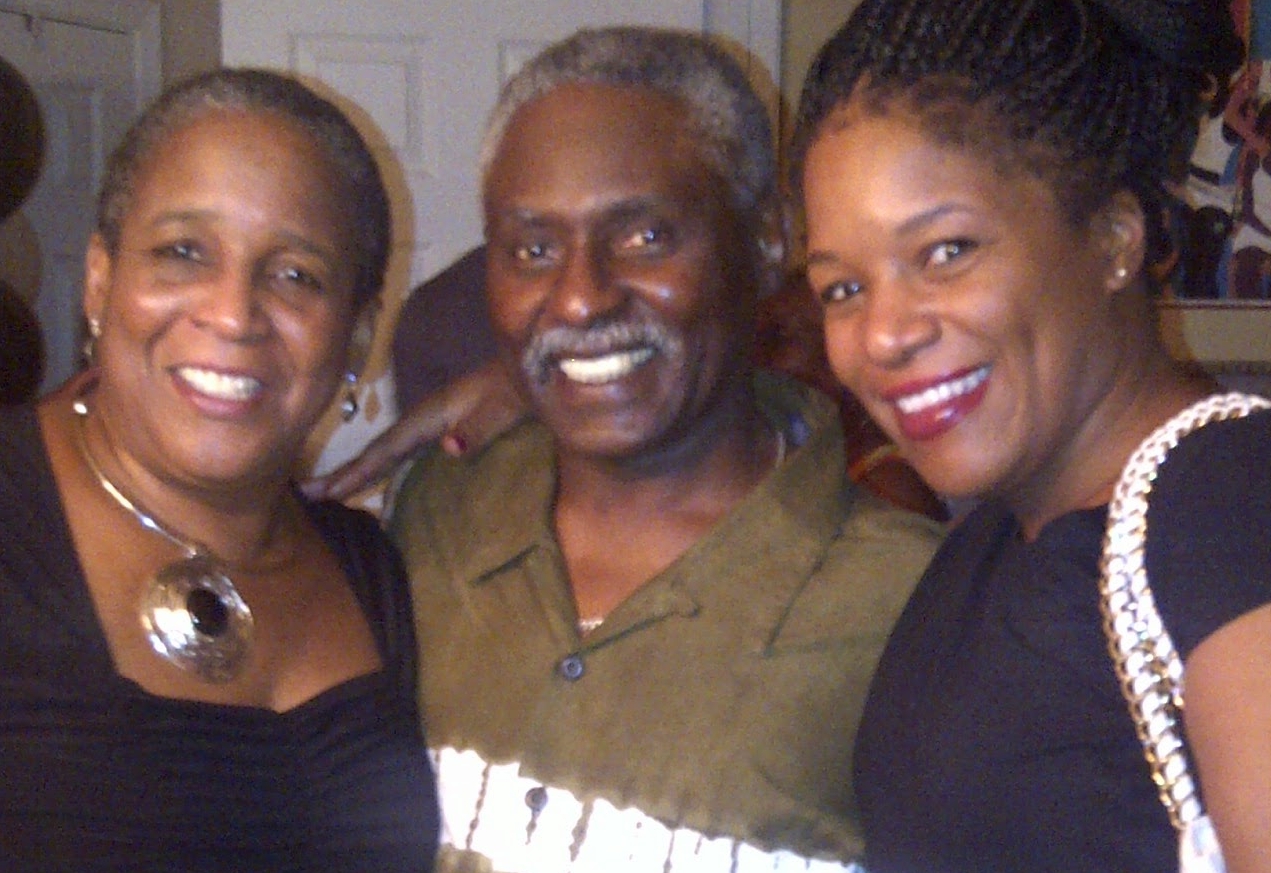
    Mrs. Hines (left) smiles with her husband, Lovett, and their daughter, Zara.

    She worked as a dance teacher for the Fairfax County Department of Recreation in Virginia after college and performed with the Jones-Haywood Dance School in Washington before moving to Philadelphia.

    She met jazz musician Lovett Hines Jr. when they were students at Grambling and they married in 1984 and lived in West Oak Lane. They had a daughter, Zara, and Mrs. Hines welcomed her husband’s son, Lovett III, and his family into her family.

    “She introduced many creatives to dance and culture, and sparked their creative careers,” her stepson said. “That is the essence of her legacy.”

    Mrs. Hines and her husband, their daughter said, were “a partnership of two geniuses.” He played the saxophone and was artistic director at the Clef Club. She loved the drums, and they collaborated seamlessly on many notable projects.

    Friends called her “a sweetheart” and “a beautiful soul” in online tributes. One said she “made an impact on Philadelphia and beyond in countless ways.” Her sister, Alicia Williams, said: “Everyone had a special relationship with her.”

    Mrs. Hines graduated from Grambling High School in Louisiana in 1970.

    Mrs. Hines was diagnosed with a lung disease in 2024 and Stage 4 cancer in 2025. “She was stern but soft,” her daughter said, “loving but able to tell you like it is.”

    Her husband said: “She had special relationships with so many musicians, so many people. It was through insight, understanding, and patience. In them, we see her everyplace, feel her everyplace.”

    In addition to her husband, daughter, mother, and stepson, Mrs. Hines is survived by three sisters, two step-grandsons, and other relatives. A brother died earlier.

    Services were held Wednesday, Dec. 17.
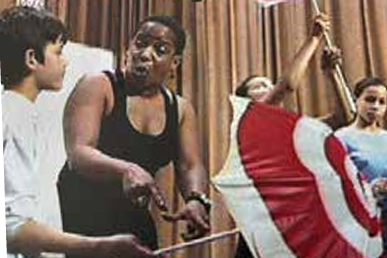
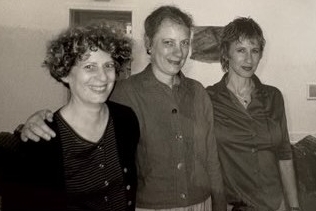
    Mrs. Hines (center) said she adapted her teaching techniques to suit the needs and ages of the students.
  • Daniel Segal, longtime Philadelphia attorney and community activist, has died at 79

    Daniel Segal, longtime Philadelphia attorney and community activist, has died at 79

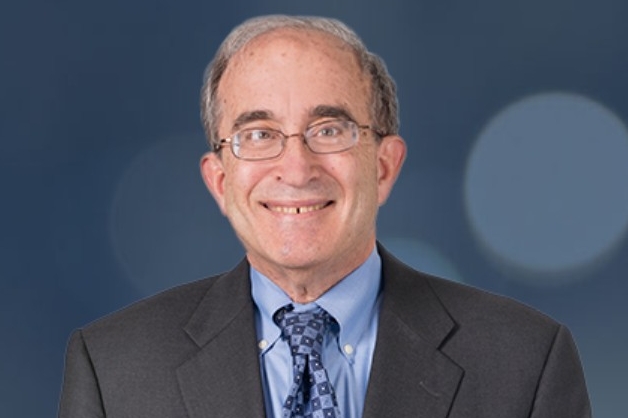
    Daniel Segal, 79, of Philadelphia, cofounder and shareholder of the Hangley Aronchick Segal Pudlin & Schiller law firm, adjunct law professor at the University of Pennsylvania, former cochair of the Philadelphia Soviet Jewry Council, onetime board president at the Juvenile Law Center, mentor, and “mischievous mensch,” died Thursday, Jan. 8, of stomach cancer at his home.

    Born and reared in Washington, Mr. Segal moved to Philadelphia in 1976 to teach at what is now Penn Carey Law School. He went into private law practice in 1979, became cochair of a litigation department in 1993, and joined with colleagues in 1994 to establish Hangley Aronchick Segal & Pudlin.

    For more than 40 years, until his recent retirement, Mr. Segal handled all kinds of cases for all kinds of clients, including The Inquirer. He was an expert in juvenile law, defamation, the First Amendment, professional ethics, education, civil rights, and other legal issues.

    He was president of the board at the Juvenile Law Center and worked pro bono for years, beginning in 2009, to help represent more than 2,400 juvenile victims and win millions of dollars in settlements in what is known as the Luzerne County “kids-for-cash” case. In that case, two judges were convicted of taking kickbacks for illegally sending juveniles to two private for-profit detention facilities.

    “This is one of the worst judicial scandals in history,” Mr. Segal told The Inquirer in 2009. “The people you’re stepping on are the true, true little guys.”

    Mr. Segal was honored in 2010 by the Philadelphia Bar Foundation.

    Among his other notable cases are a 1985 workplace racial discrimination dispute, a 1990 libel case against The Inquirer, and a 2000 trial about the city taxing outdoor advertisers. “Dan Segal was a living testament to professional excellence,” said Mark Aronchick, his law partner and longtime friend.

    Law partner and friend John Summers said: “He was a great teacher and mentor.” Marsha Levick, cofounder of the Juvenile Law Center, said: “He was a brilliant, steady partner who made us smarter and kept us laughing.”

    Mr. Segal clerked for Chief Judge David Bazelon in the U.S. Court of Appeals for the District of Columbia Circuit in 1974 and for Supreme Court Associate Justice Thurgood Marshall in 1975. He was active with the Philadelphia Bar Association, Philadelphia Common Pleas Court, and the Penn Law School American Inn of Court.

    He wrote articles for legal journals and letters to the editor of The Inquirer and Daily News. He spoke at panels and conferences, earned honors from legal organizations and trade publications, and was named the Thomas A. O’Boyle adjunct professor of law at Penn in 1992.

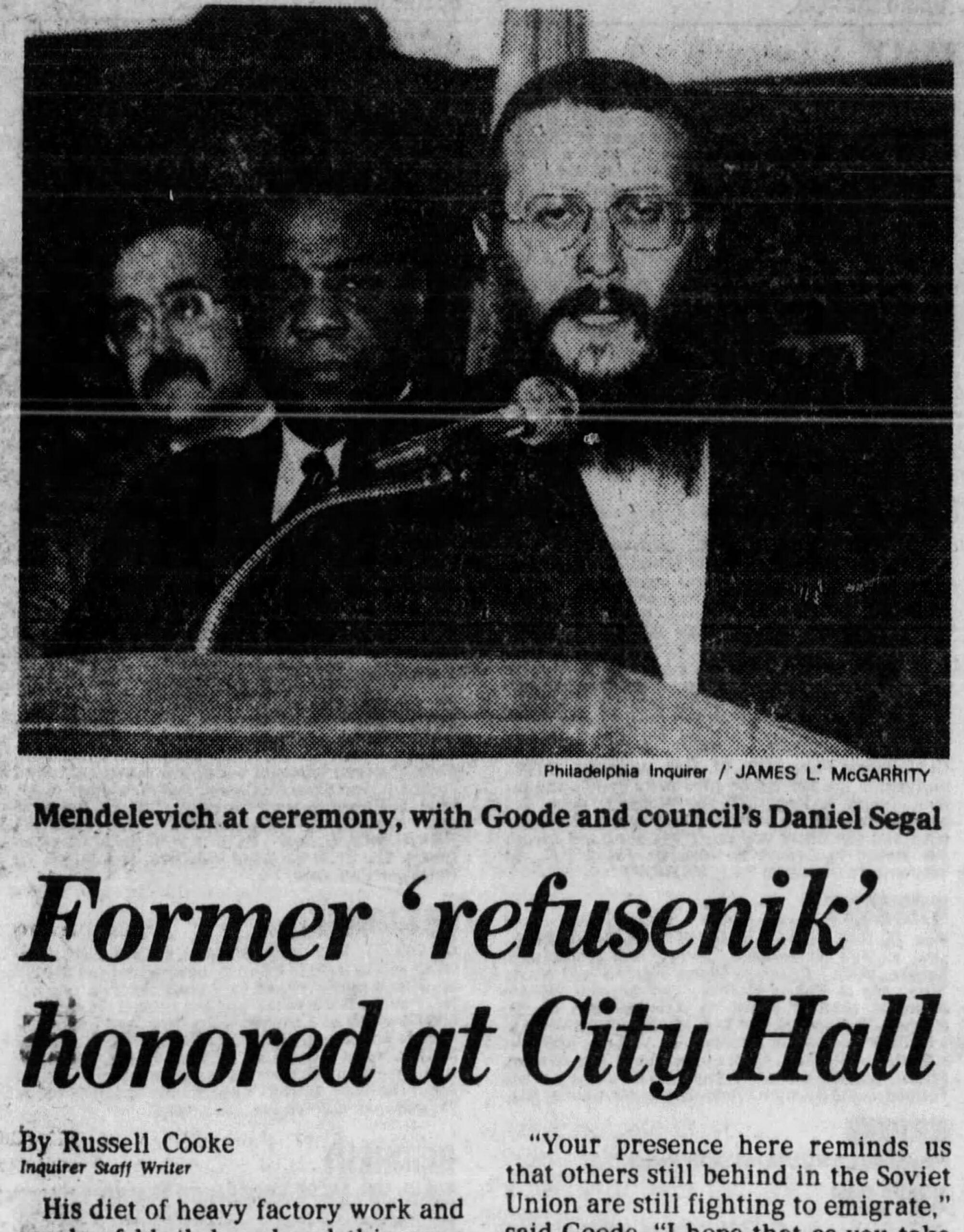
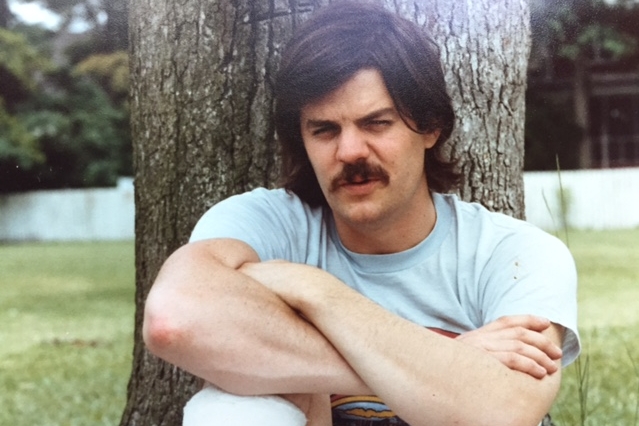
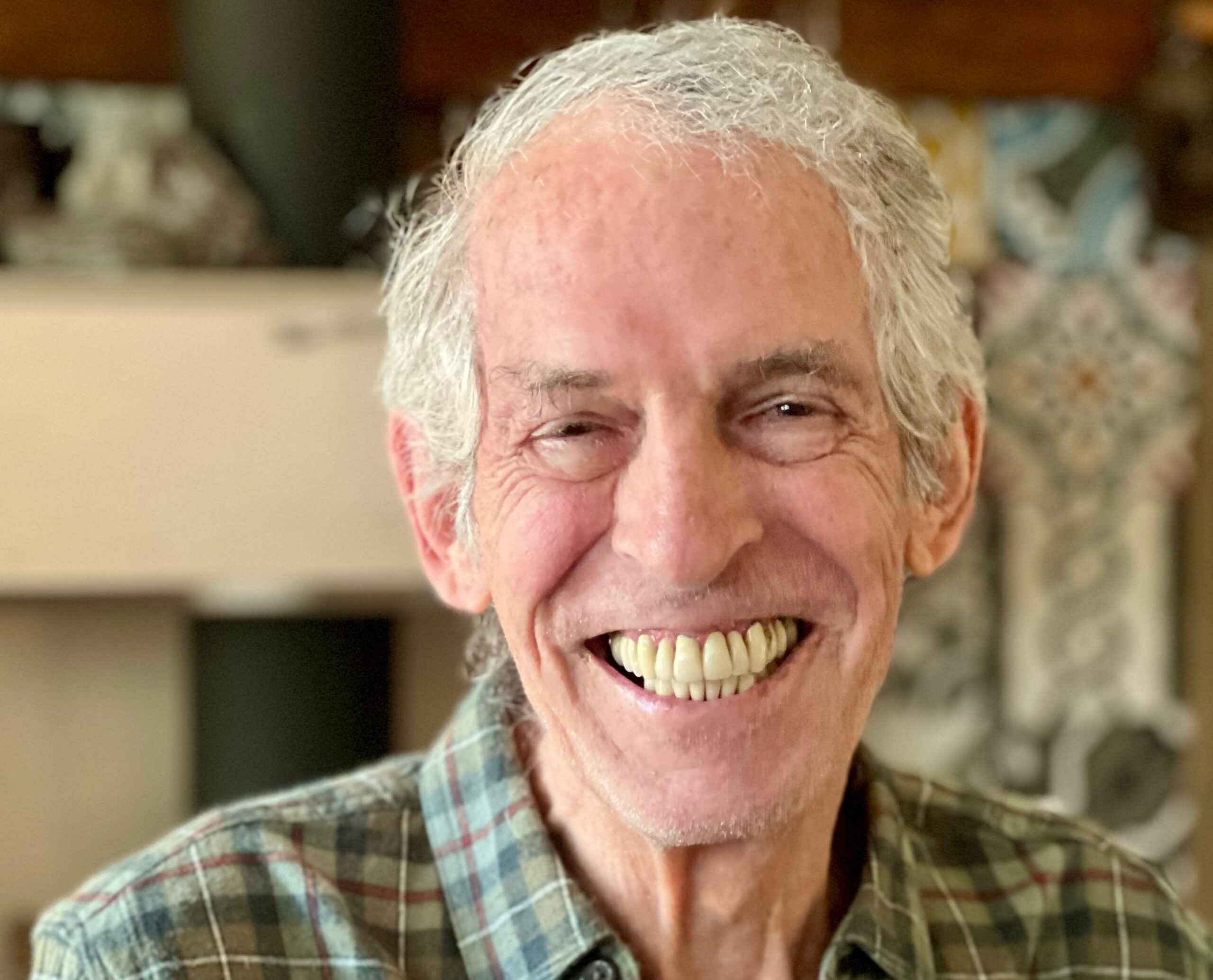
    This story and photo features Mr. Segal (left) and appeared in The Inquirer in 1984.

    The son of a rabbi, Mr. Segal was cochair of the Soviet Jewry Council in the 1980s, and he organized rallies and marches for social justice and human rights. He traveled to Israel often and to the old Soviet Union several times to secretly support Jews not permitted by government officials to immigrate to Israel.

    “We are persuaded that the Soviet Jews are pawns in the Soviet-American relationship,” he told The Inquirer in 1985.

    He served as president of the board of directors at what is now Jack M. Barrack Hebrew Academy and held leadership roles with the Jewish Community Relations Council, the New Israel Fund, Mazon: A Jewish Response to Hunger, and other organizations.

    Colleagues at the New Israel Fund praised his “characteristic kindness” and “gentle and sparkling humor” in an online tribute. They said: “He was everyone’s favorite board member.”

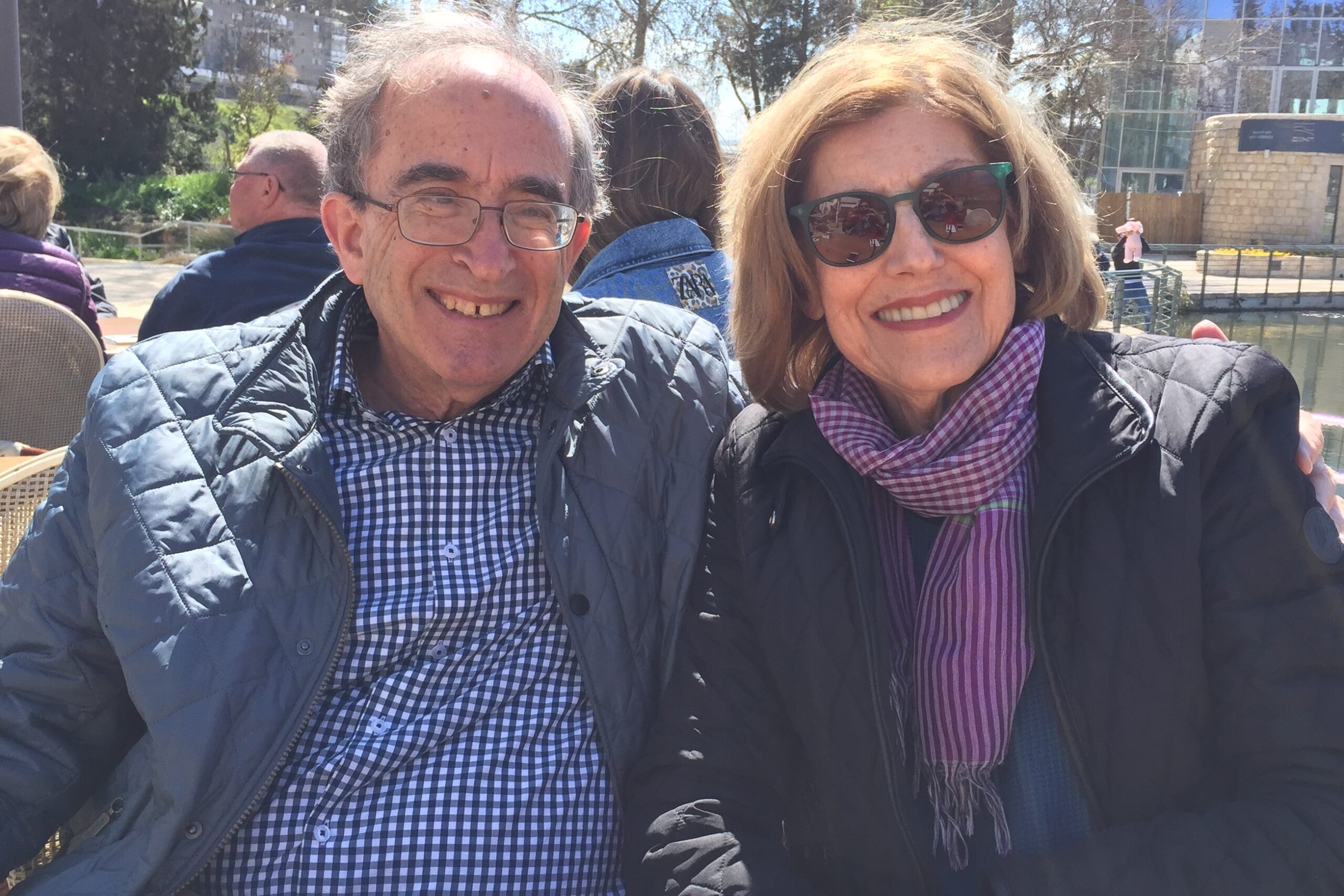
    Mr. Segal and his wife, Sheila, married in 1968.

    Mr. Segal enjoyed pranks and funny jokes, even at work, and neighbors called him Silly Dan. His son Josh said: “His warmth, humor, and humility meant that he could connect with just about anyone.” A friend said he was a “mischievous mensch.”

    He earned his law degree in 1973 and was executive editor of the Law Review at Harvard University Law School. He earned a bachelor’s degree in politics and economics at Yale University in 1968 and a master’s degree in international relations from the London School of Economics in 1969.

    He taught elementary school for a year in Washington and spent another year in Europe before moving to Philadelphia. “He taught us just how important it is to stand up for what is right,” his son Eli said, “and to do so not only with conviction but with humility and kindness, and without a thought of getting personal credit.”

    Daniel Segal was born July 4, 1946. He started dating Sheila Feinstein in ninth grade, and they married after college in 1968. They had sons Josh and Eli, and lived in Center City and Lower Merion before moving to Fairmount in 2018.

    Mr. Segal’s sons said: “Our dad showed us that relationships are the heart of a life well-lived by nurturing lifelong friendships.”

    Mr. Segal loved chocolate and ice cream. He recovered from a traumatic brain injury 20 years ago, and he and his wife traveled to Iceland, Peru, Vietnam, Europe, Japan, and elsewhere.

    He doted on his family and friends, and he and his wife rented vacation places every summer to bring his sons and their families together. “Neither of us were surprised that our dad always made our kids feel so loved,” his son Eli said. “Because that was just how he made us feel.”

    In addition to his wife and sons, Mr. Segal is survived by six grandchildren, a sister, a brother, and other relatives.

    Services were held Sunday, Jan. 11.

    Donations in his name may be made to the New Israel Fund, 1320 19th St. N.W., Suite 1400, Washington, D.C. 20036; and Mazon: A Jewish Response to Hunger, Box 6095, Albert Lea, Minn. 56007.

    Mr. Segal’s sons said: “He was always there for us and made clear that he always would be for as long as he could.”
  • Dilys E. Blum, senior curator emeritus at the Philadelphia Art Museum, has died at 78

    Dilys E. Blum, senior curator emeritus at the Philadelphia Art Museum, has died at 78

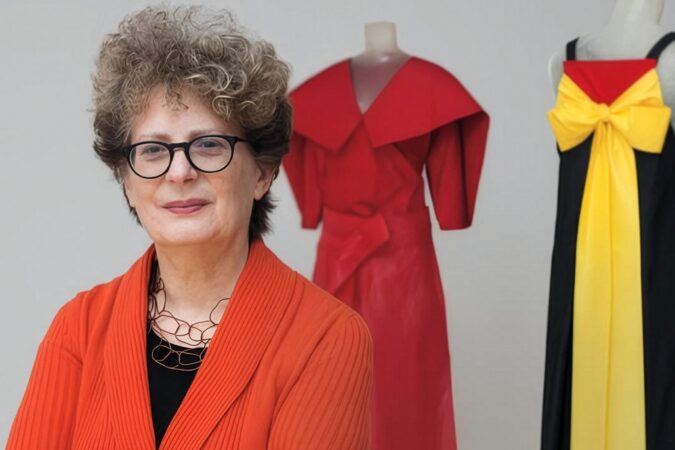
    Dilys E. Blum, 78, of Philadelphia, senior curator emeritus of costume and textiles at the Philadelphia Art Museum, author, lecturer, mentor, and world traveler, died Saturday, Dec. 27, of complications from cancer at Thomas Jefferson University Hospital.

    For 38 years, from 1987 to her retirement in 2025, Ms. Blum served as the museum’s curator of costume and textiles. In that role, she organized the museum’s vast treasure trove of textile artifacts, traveled the world to research noted fashion designers and eclectic collections, and created more than 40 memorable exhibitions about Renaissance velvets, contemporary fashion, Asian textiles, carpets, African American quilts, and dozens of other curios.

    Among her most popular presentations were 1997’s “Best Dressed: 250 Years of Style,” 2011’s “Roberto Capucci: Art into Fashion,” and 2025’s “Boom: Art and Design in the 1940s.” She organized two displays simultaneously in 2007, and The Inquirer said: “One exhibit is elegant, one’s eccentric, both are impressive.”

    She was cited as the world’s foremost authority on avant-garde Italian fashion designer Elsa Schiaparelli, and her 2003 exhibition “Shocking! The Art and Fashion of Elsa Schiaparelli” drew 83,000 visitors. Francesco Pastore, the heritage and cultural projects manager at the House of Schiaparelli in Paris, said: “Her remarkable research, her generosity in sharing knowledge, and her contribution to fashion studies have deeply enriched our field.”

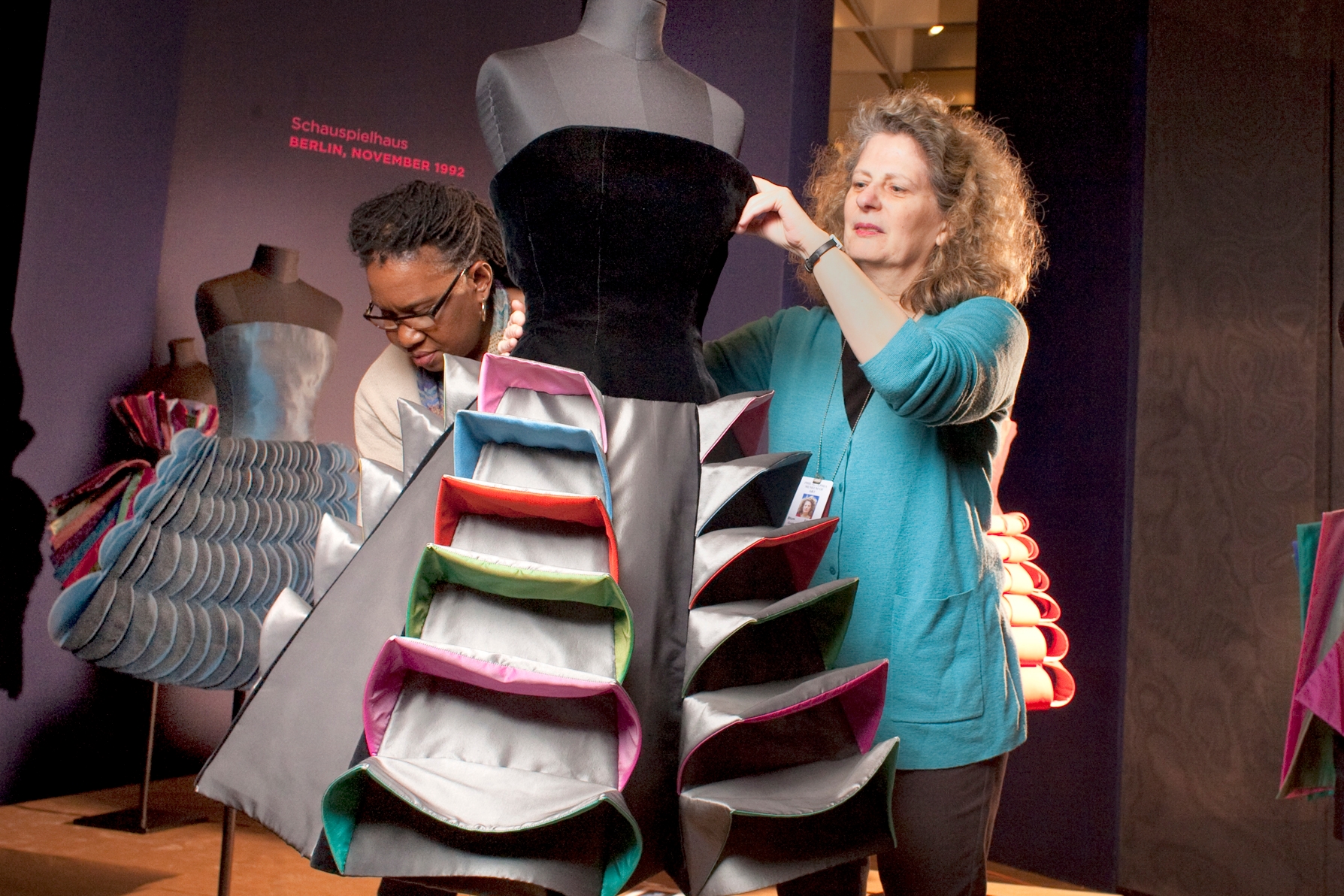
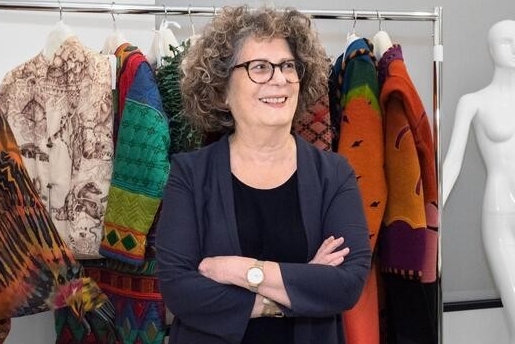
    Ms. Blum (right) and colleague Monica Brown tend to a museum exhibit in 2011.

    In a recent tribute, former museum colleagues marveled at her “technical expertise and cultural insight,” and credited her for reinvigorating the once-neglected textiles collection. Daniel Weiss, director and chief executive officer of the museum, said: “She transformed this museum’s costume and textiles department into a program respected around the world.”

    She told The Inquirer in 1990: “We wanted to remind them that we were here.”

    Before Philadelphia, Ms. Blum was a textile conservator at the Chicago Conservation Center and the Brooklyn Museum, and senior assistant keeper of the costume and textile department at the Museum of London. She earned a bachelor’s degree in art history at Connecticut College and studied afterward at the University of Manchester in England and the Courtauld Institute of Art at the University of London.

    “She was fearless in her pursuit of perfection in her work,” said her sister Galen. Her sister Sydney said: “She was dedicated to her craft and scholarship.”

    Ms. Blum (left) was close to her sisters Sydney (center) and Galen.

    An avid reader and writer, Ms. Blum wrote and cowrote several books about textiles and designers, and 2021’s Patrick Kelly: Runway of Love, coauthored with former colleague Laura L. Camerlengo, earned a 2023 honorable mention publication award from the Costume Society of America. She also wrote essays for exhibition catalogs, served on editorial boards for journals, lectured around the world, and was active with the International Council of Museums, the Association of Art Museum Curators, and other groups.

    In 2025, to celebrate Ms. Blum’s retirement, Camerlengo praised her “deep knowledge, creative vision, and contagious passion for the field.” She said: “Dilys is one of the most influential figures in the world of fashion and textile arts.”

    Ms. Blum’s work and fashion viewpoints were featured often in The Inquirer. In 1997, she said: “People don’t dress up anymore.” In 1999, she said: “I think we’ve lost the joy in dressing. There’s this trend away from clutter in dress and decorating. It’s pared down to the point of visual boredom.”

    In 2001, she said it was easy to differentiate between New Yorkers and Philadelphians. “New Yorkers,” she said, “will invariably be wearing the accessory of the moment, a pashmina shawl, a Kate Spade bag, a Prada loafer.”

    Ms. Blum left “an enduring legacy woven through the art museum and the generations of scholars and visitors who now see costumes and textiles as central to the story of art,” former museum colleagues said.

    Dilys Ellen Blum was born July 11, 1947, in Ames, Iowa. She and her parents moved to Hamilton, N.Y., when she was 1, and the family traveled with her father, an economics professor at Colgate University, on teaching sabbaticals abroad. When she was 12, Ms. Blum spent a year with her parents and sisters living in Norway and touring Europe in a Volkswagen Beetle.

    Her mother was an artist and seamstress, and she and Ms. Blum spent many nights poring over clothes patterns on their dining room table. She enjoyed reading murder mysteries and traveling the world in search of new museum-worthy artifacts.

    She lived in South Philadelphia, was diagnosed with cancer three years ago, and talked often with her sisters on the telephone. “I admired her seriousness and humility,” Sydney said. Galen said: “From my perspective, I was in awe of her.”

    In addition to her sisters, Ms. Blum is survived by a niece, Juniper, and other relatives.

    A memorial service is to be held later.

    Former museum colleagues said Ms. Blum’s writing “consistently amplified the makers and wearers of extraordinary objects, and their intertwined relationships.”
  • Jeffrey A. Woodley, internationally celebrated celebrity hairstylist, has died at 71

    Jeffrey A. Woodley, internationally celebrated celebrity hairstylist, has died at 71

    Jeffrey A. Woodley, 71, formerly of Philadelphia, internationally celebrated celebrity hairstylist, scholar, youth track and field star, mentor, and favorite uncle, died Wednesday, Dec. 10, of complications from acute respiratory distress syndrome at Mount Sinai West Hospital in Manhattan.

    Reared in West Philadelphia, Mr. Woodley knew early that he was interested and talented in hairstyling, beauty culture, and fashion. He experimented with cutting and curling on his younger sister Aminta at home, left Abington High School before his senior year to attend the old Wilfred Beauty Academy on Chestnut Street, and quickly earned a chair at Wanamakers’ popular Glemby Salon at 13th and Chestnut Streets.

    He went to New York in the mid-1970s after being recruited by famed stylist Walter Fontaine and spent the next 30 years doing hair for hundreds of actors, entertainers, models, athletes, and celebrities. He styled Diahann Carroll, Whitney Houston, Aretha Franklin, Anita Baker, Angela Bassett, Halle Berry, and Tyra Banks.

    He worked with Denzel and Pauletta Washington, Eddie Murphy, Jasmine Guy, Lynn Whitfield, Pam Grier, Melba Moore, Jody Watley, and Karyn White. His hairstyles were featured in GQ, Vanity Fair, Ebony, Jet, Essence, Vibe, Vogue Italia, and other publications, and in advertising campaigns for L’Oréal and other products.

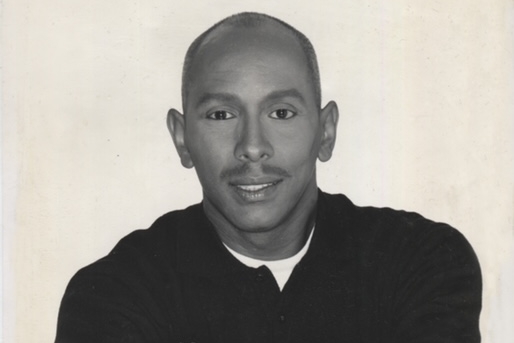
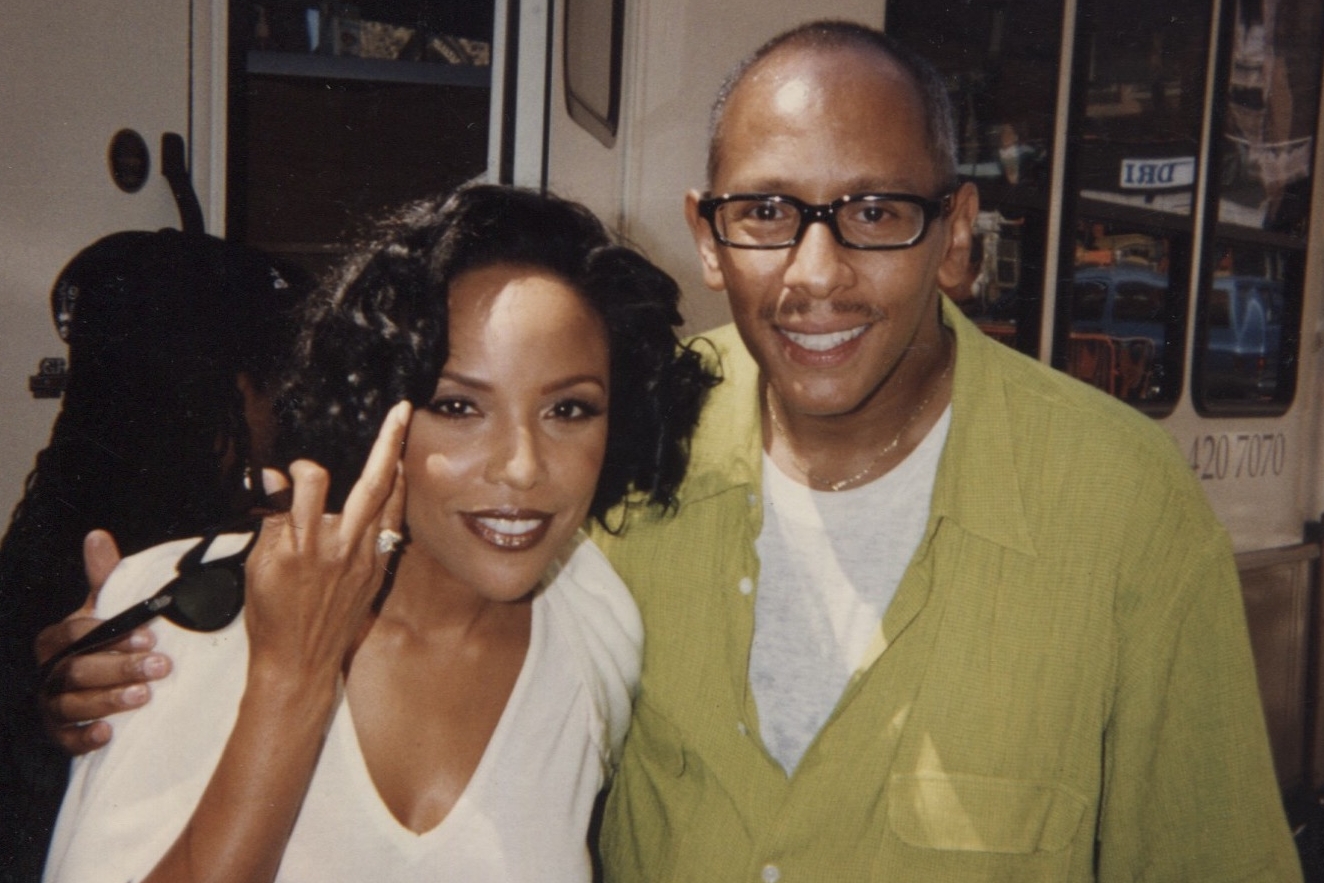
    Mr. Woodley poses with actor Lynn Whitfield.

    For years, actor Terry Burrell said, “He was the go-to hair stylist for every Black diva in New York City.” Pauletta Washington said: “He was responsible for so much of who I became as an artist and a friend.”

    Mr. Woodley worked for Zoli Illusions in New York, Europe, Africa, and elsewhere around the world, and collaborated often with noted makeup artists Reggie Wells and Eric Spearman. Model Marica Fingal called Mr. Woodley “uber talented” on Instagram and said: “He was one of the most skilled artists, creating stunning, innovative styles for models and celebs alike.”

    Friendly and curious, Mr. Woodley told Images magazine in 2000 that learning about the people in his chair was important. “A woman’s hairstyle should take into account the type of work she does, her likes, her dislikes, and her fantasies,” he said. “I’m a stylist, but I never impose hair styles on any client. When we arrive at our finished style, it’s always a collaboration.”

    His hairstyles appeared on record albums and at exhibitions at the Philadelphia Art Museum and elsewhere. He was quoted often as an expert in coiffure and a fashion forecaster. In 1989, he told a writer for North Carolina’s Charlotte Post: “Texture is the key. … Cut will still be important, but the lines will be more softened and much less severe.”

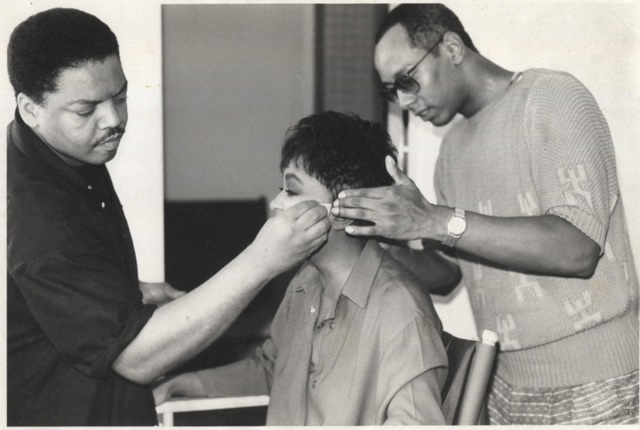
    Mr. Woodley (right) handles hair styling for singer Anita Baker while makeup artist Reggie Wells attends to her face.

    In 2000, he told Images that “low maintenance is the way of the future.” He said: “Today’s woman is going back to school. She has the corporate job. She has children that she needs to send off to school. She doesn’t have time anymore to get up and spend 35 to 40 minutes on her hair. She wants something she can get up and go with.”

    He retired in 2005 after losing his sight to glaucoma. So he earned his General Educational Development diploma, attended classes at the Borough of Manhattan Community College, and studied literature, Black history, and spiritual writing.

    “The entirety of his life was inspired by an insatiable thirst for knowledge,” said his friend Khadija Kamara.

    He was working on his memoir and still taking classes when he died. “He lived life on his own terms,” Burrell said, “and my respect and admiration for his determination will forever be inspiring.”

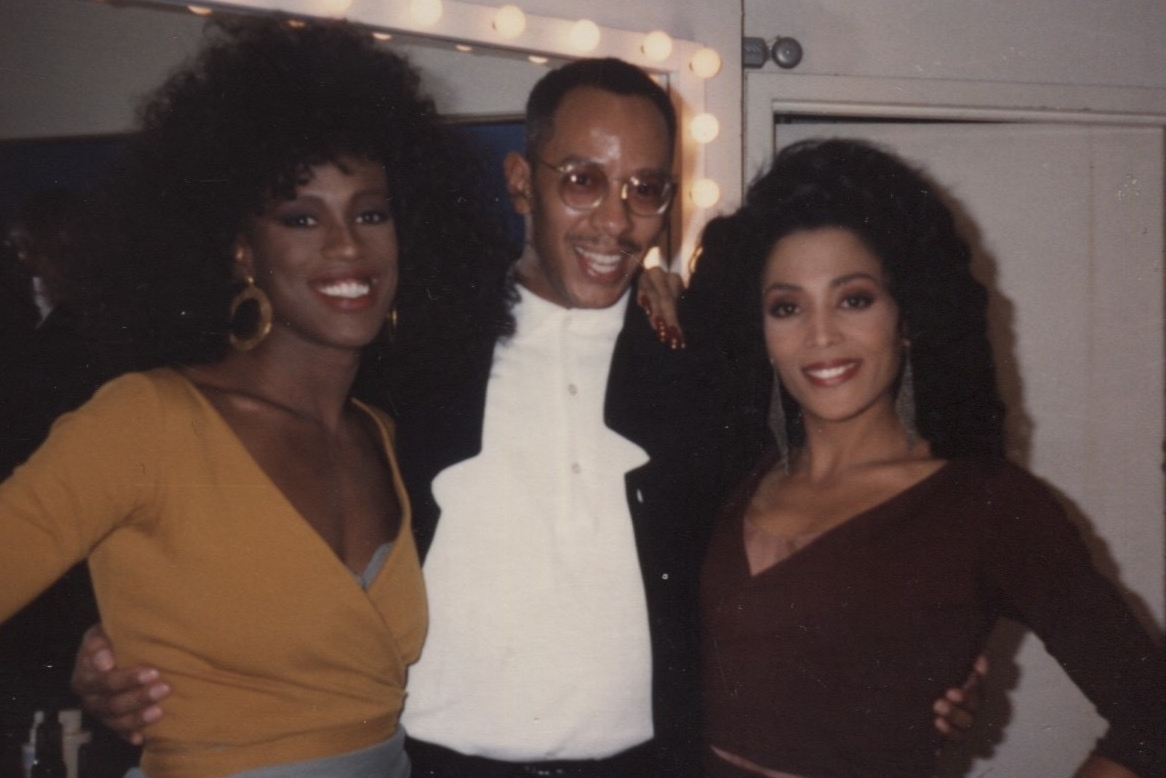
    Mr. Woodley smiles with track stars and celebrities Jackie Joyner-Kersee (left) and Florence Griffith Joyner.

    As a youth, Mr. Woodley excelled in sprints, relays, and the high jump at St. Rose of Lima Catholic School and Abington High School, and for the Philadelphia Pioneers and other local track and field teams. He ran on Abington’s 440-yard relay team that won the PIAA District 1 championship race at the 1970 Penn Relays and helped set a meet record in the four-lap relay at a 1971 Greater Philadelphia Track and Field Coaches Association indoor meet.

    Family and friends called him authentic, generous, and proud of his Philadelphia roots. He mentored his nieces and nephews and hosted them on long visits to his home in New York.

    “He was one of the most talented people around and always a lot of fun,” a friend said on Facebook. “A beautiful soul and spirit who made others beautiful.”

    Jeffrey Alan Woodley was born May 30, 1954, in Philadelphia. He had an older brother, Alex, and two younger sisters, Aminta and Alicia, and ran cross-country as well as track in high school.

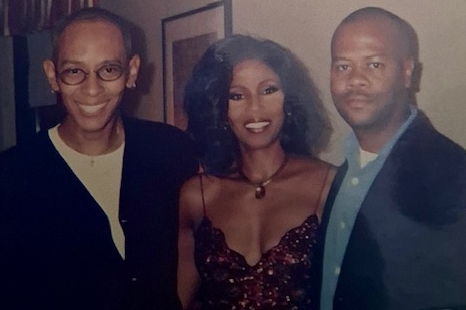
    Mr. Woodley (left) worked with actor and musician Pauletta Washington and makeup stylist Eric Spearman.

    He was always an avid reader and loved dogs, especially his guide dog Polly. He was a foodie and longtime member of the Abyssinian Baptist Church choir in Harlem. His close family and friends called him Uncle Jeff.

    “He was a fun-loving, spirited, and passionate individual,” his brother said. “Uncle Jeff loved the Lord and poured his heart into his work as well as family.”

    His sister Aminta said: “He had a wonderful spirit. He knew the Lord, lived life to the fullest, and was a joy to be with.”

    In addition to his mother, Anna, brother, and sisters, Mr. Woodley is survived by nieces, nephews, and other relatives.

    Mr. Woodley doted on his nieces and nephews.

    A celebration of his life was held Dec. 22.

    Donations in his name may be made to Abyssinian Baptist Church, 132 W. 138th St., New York, N.Y. 10030; and the Anna E. Woodley Music Appreciation Fund at Bowie State University, 14000 Jericho Park Rd., Bowie, Md. 20715.

  • Ena Widjojo, owner and longtime celebrated chef at Hardena in South Philadelphia, has died at 73

    Ena Widjojo, owner and longtime celebrated chef at Hardena in South Philadelphia, has died at 73

    Ena Widjojo, 73, of Philadelphia, owner and longtime celebrated chef at the Hardena restaurant in South Philadelphia, mentor, and mother, died Wednesday, Dec. 24, of cancer at her home.

    Born and reared in Java, Indonesia, Mrs. Widjojo came to the United States in 1969 when she was 17. She opened a cantina at the Indonesian Consulate in New York in 1977, worked as a caterer in the 1990s after the cantina closed in 1989, and moved to Philadelphia in 2000 to open Hardena with her husband, Harry.

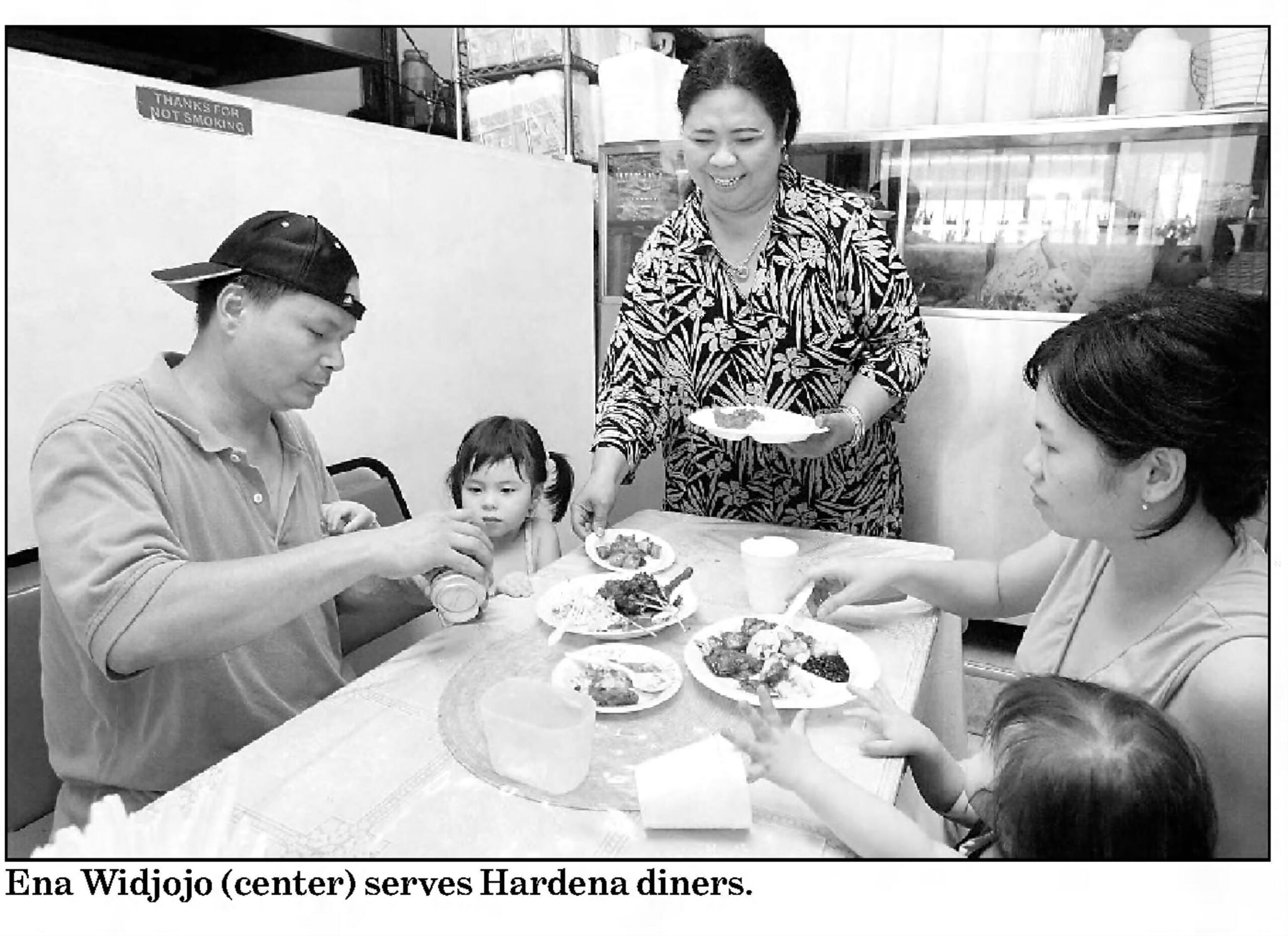
    Over the next decade and a half, until she retired in 2017, Mrs. Widjojo grew Hardena, described by the Daily News in 2007 as “a postage-stamp-size luncheonette at Hicks and Moore Streets in a gritty section of South Philly,” into a culinary and cultural connection for thousands of local Indonesians and other diners who enjoyed her homemade Southeast Asia cuisine.

    The corner restaurant’s name is a blend of their names, Harry and Ena, and features Indonesian specialties such as golden tofu, goat curry, saté chicken, beef rendang, and tempeh. “It’s the best Indonesian food in Philadelphia, a great mix of Indian and Chinese flavors,” elementary schoolteacher Aaron MacLennan told the Daily News in 2007.

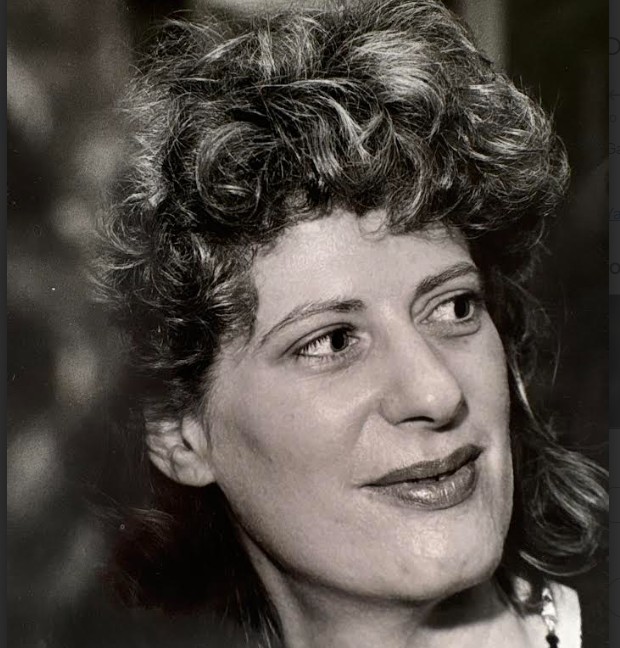
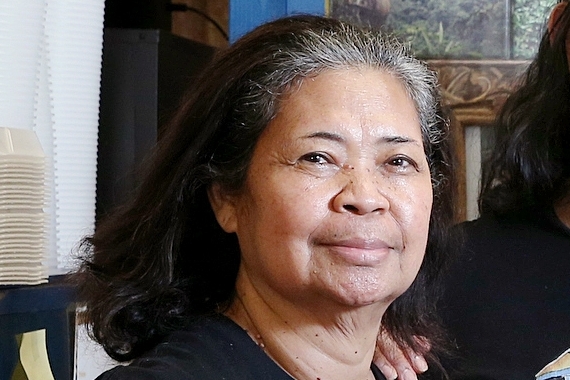
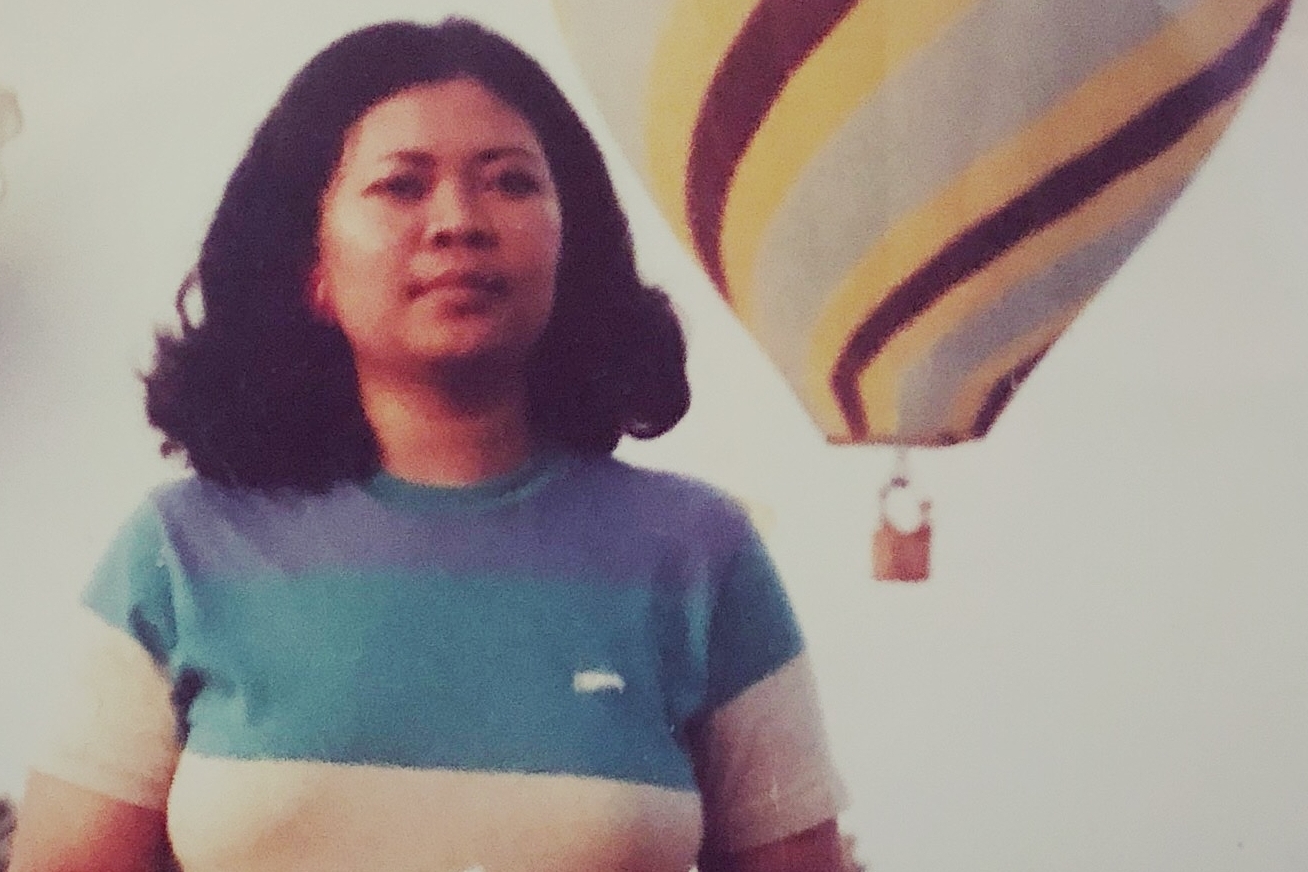
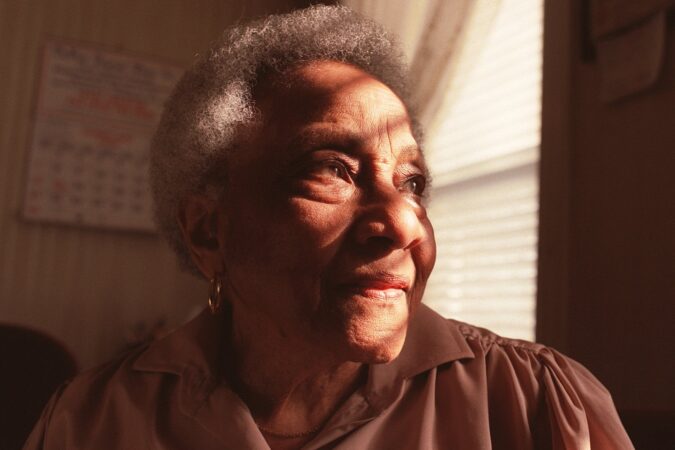
    This photo of Mrs. Widjojo appeared in the Daily News in 2007

    In 2012, Philadelphia Magazine named Hardena one of its Best of Philly Indonesian restaurants, calling it a “no-frills, high-flavor buffet.” In February 2018, Mrs. Widjojo and two of her three daughters were named semifinalists for the James Beard Foundation’s best chef award for the Mid-Atlantic states. In October 2018, Inquirer food critic Craig LaBan praised the restaurant’s “aromatic steam table of homestyle cooking that’s been a well-priced anchor of Indonesian comfort for 18 years.”

    Friendly and ever present at the lunch and dinner rushes, Mrs. Widjojo was known as Mama to many of her customers and friends. She learned how to bake and cook from her mother, a culinary teacher in Java, and later incorporated many of her mother’s recipes into her own memorable melting pot of Indian, Chinese, Arab, Portuguese, Spanish, English, and Dutch dishes at Hardena.

    “She served me greens once, and I felt like I was at home,” a friend said on Instagram.

    She and her husband traveled weekly between Philadelphia and Queens while their daughters — Diana, Maylia, and Stephanie — finished school in New York. Maylia and Diana assumed control of Hardena when Mrs. Widjojo retired, and Diana opened the restaurant Rice & Sambal on East Passyunk Avenue in 2024.

    Earlier, at the consulate in New York, Mrs. Widjojo made meals for former Secretary of State Henry Kissinger and former Indonesian President Suharto and his large entourage. “I cooked for all the diplomats.” she told The Inquirer in 2018.

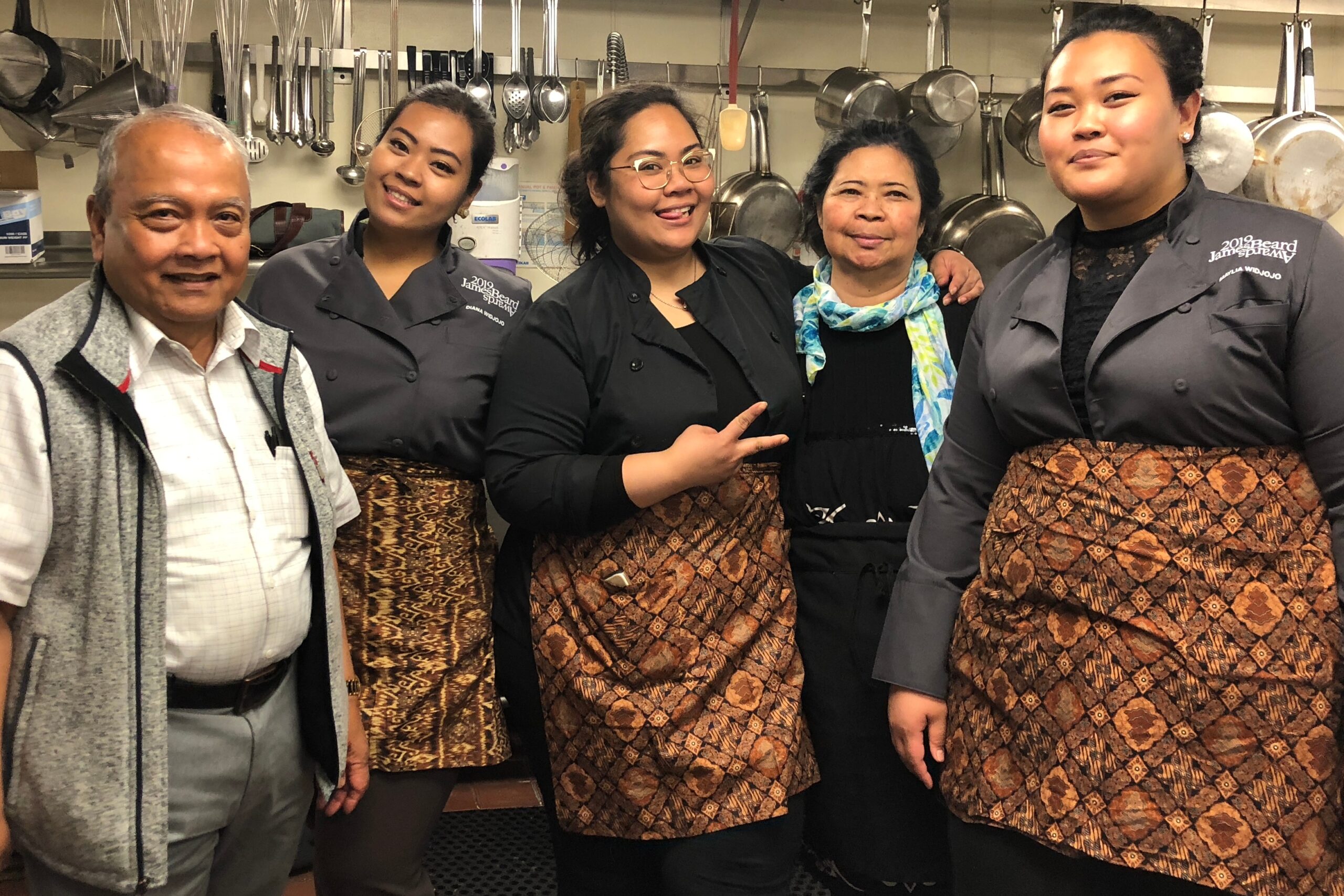
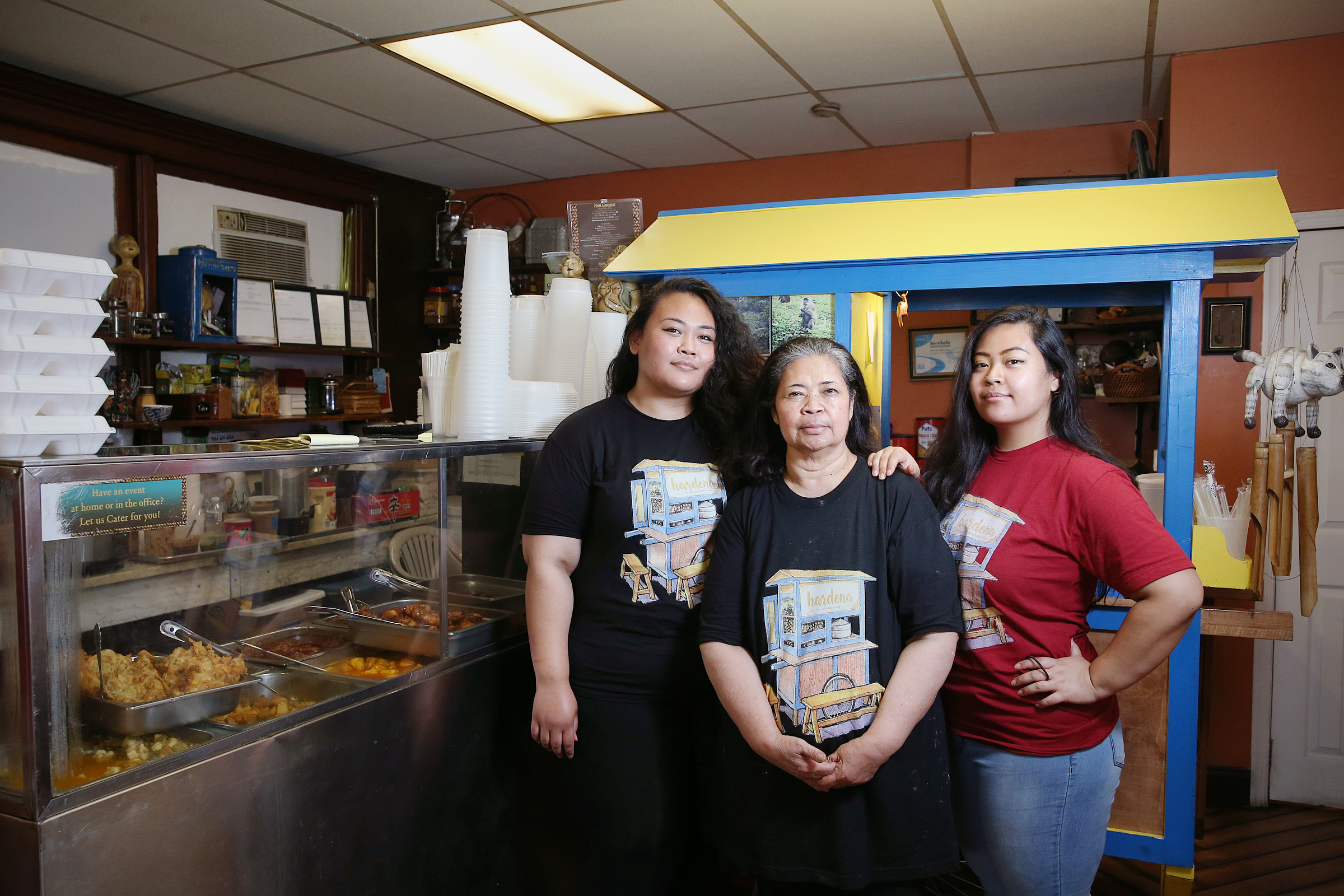
    Mrs. Widjojo (second from right) smiles with her husband and three daughters.

    She grew chili peppers and lime trees in her South Philly backyard, was happy to share kitchen tips and cultural traditions with visitors and cooking classes, and helped her daughters cater the 2019 James Beard Foundation’s annual Media Awards in New York.

    She worked six days a week for years and told edible Philly in 2017 that her retirement was good for her daughters. “If I’m cooking all the time,” she said, “they’re not learning.”

    Ena Djuneidi Juniarsah was born April 24, 1952. She baked cakes in a charcoal oven for her mother in Java and sold cookies and pastries after school when she was young. “

    Her mother was strict about cooking, Mrs. Widjojo said in 2018, and discarded any and all imperfect creations. “Like me, with my kids’ cooking,” she said, “if you’re not good, that’s no good.”

    She married fellow restaurateur Harry Widjojo in New York and spent time as a singer, beautician, florist, and nanny before cooking full time. Away from the restaurant, she enjoyed drawing, painting, crocheting, and family strolls in the park.

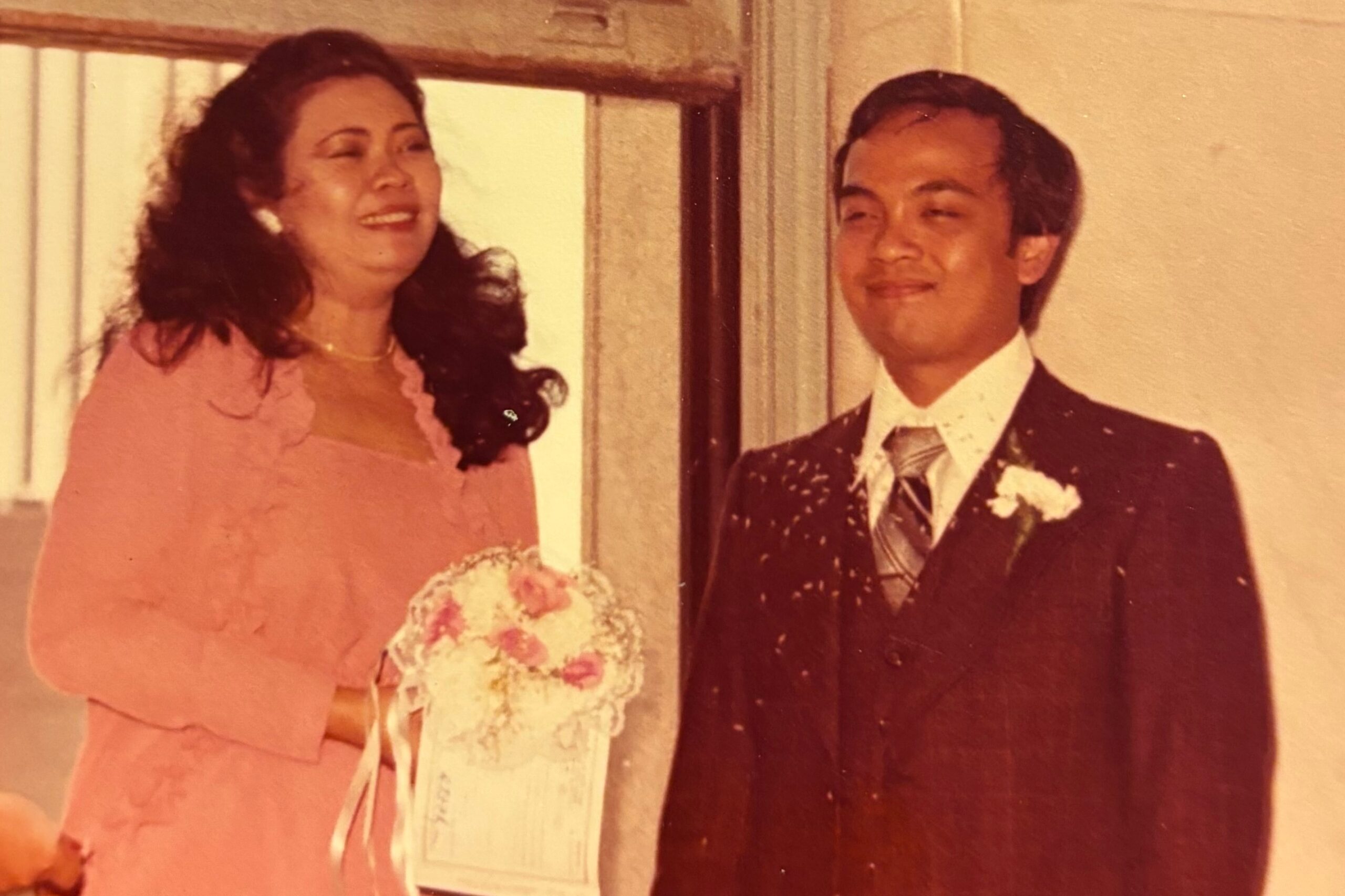
    Mrs. Widjojo and her husband, Harry, were married in New York.

    She could be goofy, her daughters said. She sang “You Are My Sunshine” when they were young and served as their lifelong mentor and teacher.

    Friends called her “sweet,” “amazing,” “a beautiful soul,” and “warm and welcoming” on Instagram. She was diagnosed with cancer in 2015.

    “Her life, generosity, and talent enriched the hearts of all who met her,” her family said in a tribute. “She taught us that feeding people is one of the purest ways to show love, have pride in our culture, and support our family.”

    Maylia said: “She was always giving.”

    Stephanie said: “She was always there for me.”

    Mrs. Widjojo (center) stands in Hardena with her daughters Maylia (left) and Diana in 2020.

    Diana said: “She saw the world with open arms and an open heart. She was a wonder woman.”

    In addition to her husband and daughters, Mrs. Widjojo is survived by two grandchildren, a sister, two brothers, and other relatives. A sister and two brothers died earlier.

    A celebration of her life was held Dec. 27.

    Donations in her name may be made to Masjid Al Falah Mosque, 1603 S. 17th St. Philadelphia, Pa. 19145.

    Mrs. Widjojo came to the United States from Java when she was 17.
  • Kenneth W. Ford, hydrogen bomb physicist, educator, and author, has died at 99

    Kenneth W. Ford, hydrogen bomb physicist, educator, and author, has died at 99

    Kenneth W. Ford, 99, of Gwynedd, Montgomery County, theoretical physicist who helped develop the hydrogen bomb in 1952, university president, college professor, executive director, award-winning author, and Navy veteran, died Friday, Dec. 5, of pneumonia at Foulkeways at Gwynedd retirement community.

    Dr. Ford was a 24-year-old physics graduate student at Princeton University in 1950 when he was recruited by a colleague to help other scientists covertly build a hydrogen bomb. “I was told if we don’t do it, the Soviet Union will,” Dr. Ford told The Inquirer in 2023, “and the world will become a much more dangerous place.”

    So he spent one year at the Los Alamos National Laboratory in New Mexico and another back at Princeton, creating calculations on the burning of the fuel that ignited the bomb and theorizing about nuclear fission and fusion. The H-bomb was tested in 1952.

    Dr. Ford’s expertise was in nuclear structure and particle and mathematical physics. He and Albert Einstein attended the same lecture when he was young, and he knew Robert Oppenheimer, Fredrick Reines, John Wheeler, and dozens of other accomplished scientists and professors over his long career.

    He came to Philadelphia from the University System of Maryland in 1983 to be president of a startup biotech firm. He joined the American Physical Society as an education officer in 1986 and was named executive director of the American Institute of Physics in 1987.
    “He always seemed to be the head of something,” his son Jason said.
    He retired from the AIP in 1993 but kept busy as a consultant for the California-based Packard Foundation and physics teacher at Germantown Academy and Germantown Friends School. Michael Moloney, current chief executive of the AIP, praised Dr. Ford’s “steady and transformative leadership” in a tribute. He said: “His career in research, education, and global scientific collaboration puts him among the giants.”

    As president of the New Mexico Institute of Mining and Technology from 1975 to 1982, Dr. Ford oversaw improvements in the school’s enrollment, faculty, budget, and facilities. He “was an accomplished researcher, scholar and teacher,” Michael Jackson, interim president of New Mexico Tech, said in a tribute, “a techie through and through.”

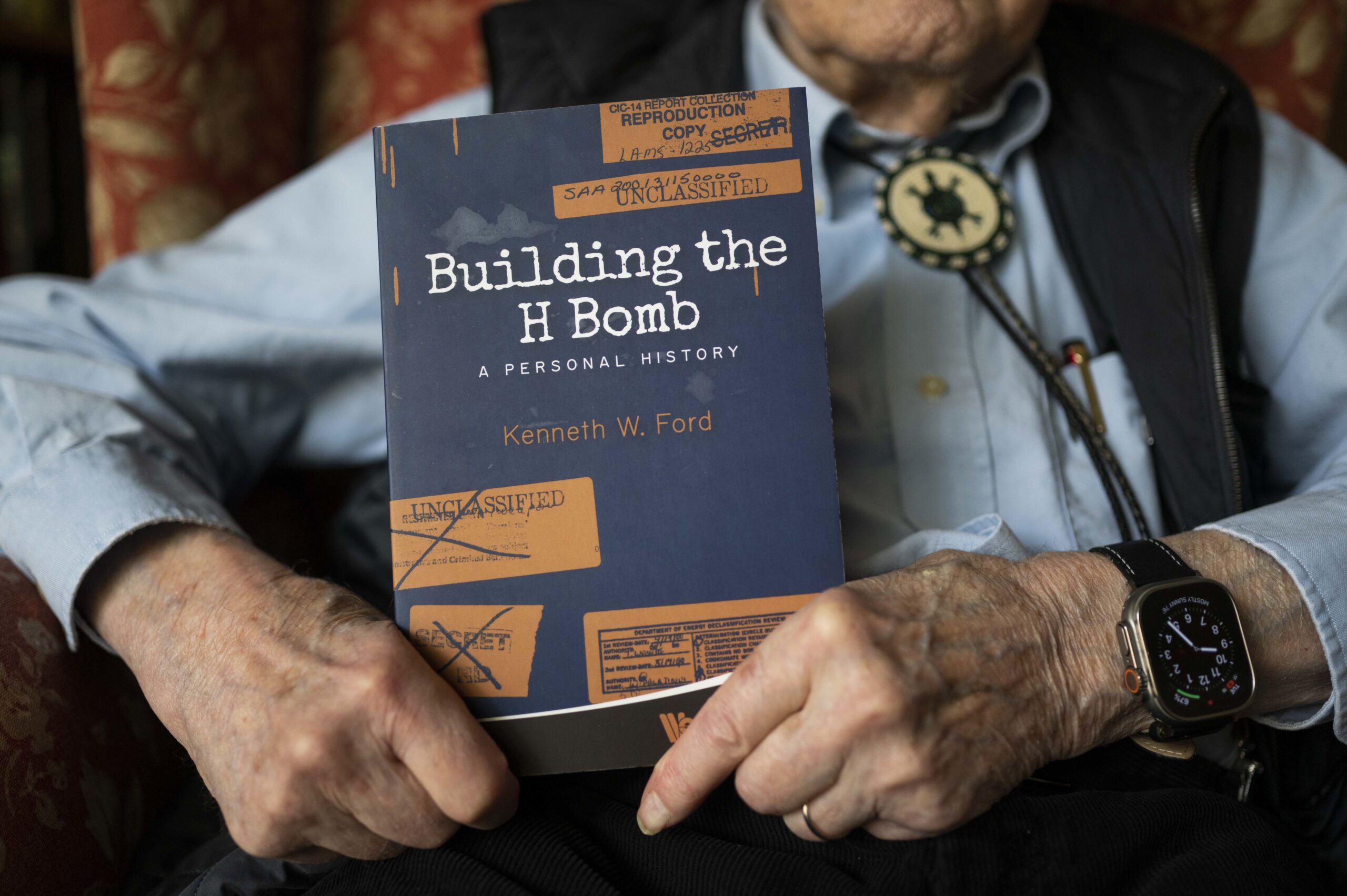
    Dr. Ford wrote “Building the H Bomb,” and it was published in 2015.

    Before Philadelphia, he spent a year as executive vice president of the University System of Maryland. Earlier, from 1953 to 1975, he was a researcher at Indiana University, physics professor at Brandeis University in Massachusetts and the University of Massachusetts, and founding chair of the department of physics at the University of California, Irvine.

    Officials at UC Irvine said in a tribute: Dr. Ford “leaves an enduring legacy as a scientist, educator, and institution builder. … The School of Physical Sciences honors his foundational role in our history and celebrates the broad impact of his distinguished life.”

    He told The Inquirer that he hung out at the local library as he grew up in a Kentucky suburb of Cincinnati and read every book he could find about “biology, chemistry, geology, you name it.” He went on to write 11 books about physics, flying, and building the H-bomb.

    Two of his books won awards, and 2015’s Building the H Bomb: A Personal History became a hit when the Department of Energy unsuccessfully tried to edit out some of his best material. His research papers on particle scattering, the nuclear transparency of neutrons, and other topics are cited in hundreds of publications.

    Dr. Ford was a popular professor because he created interesting demonstrations of physics for his students.

    In 1976, he earned a distinguished service citation from the American Association of Physics Teachers. In 2006, he earned an AAPT medal for notable contributions to the teaching of physics.

    He was the valedictorian at Phillips Exeter Academy in New Hampshire in 1944. He served two years in the Navy and earned a summa cum laude bachelor’s degree in physics at Harvard University and his doctorate at Princeton in 1953.

    In 1968, he was so opposed to the Vietnam War that he publicly declined to ever again work in secret or on weapons. “It was a statement of principle,” he told The Inquirer.

    Kenneth William Ford was born May 1, 1926, in West Palm Beach, Fla. He married Karin Stehnike in 1953, and they had a son, Paul, and a daughter, Sarah. After a divorce, he married Joanne Baumunk, and they had daughters Caroline and Star, and sons Adam and Jason. His wife and former wife died earlier.

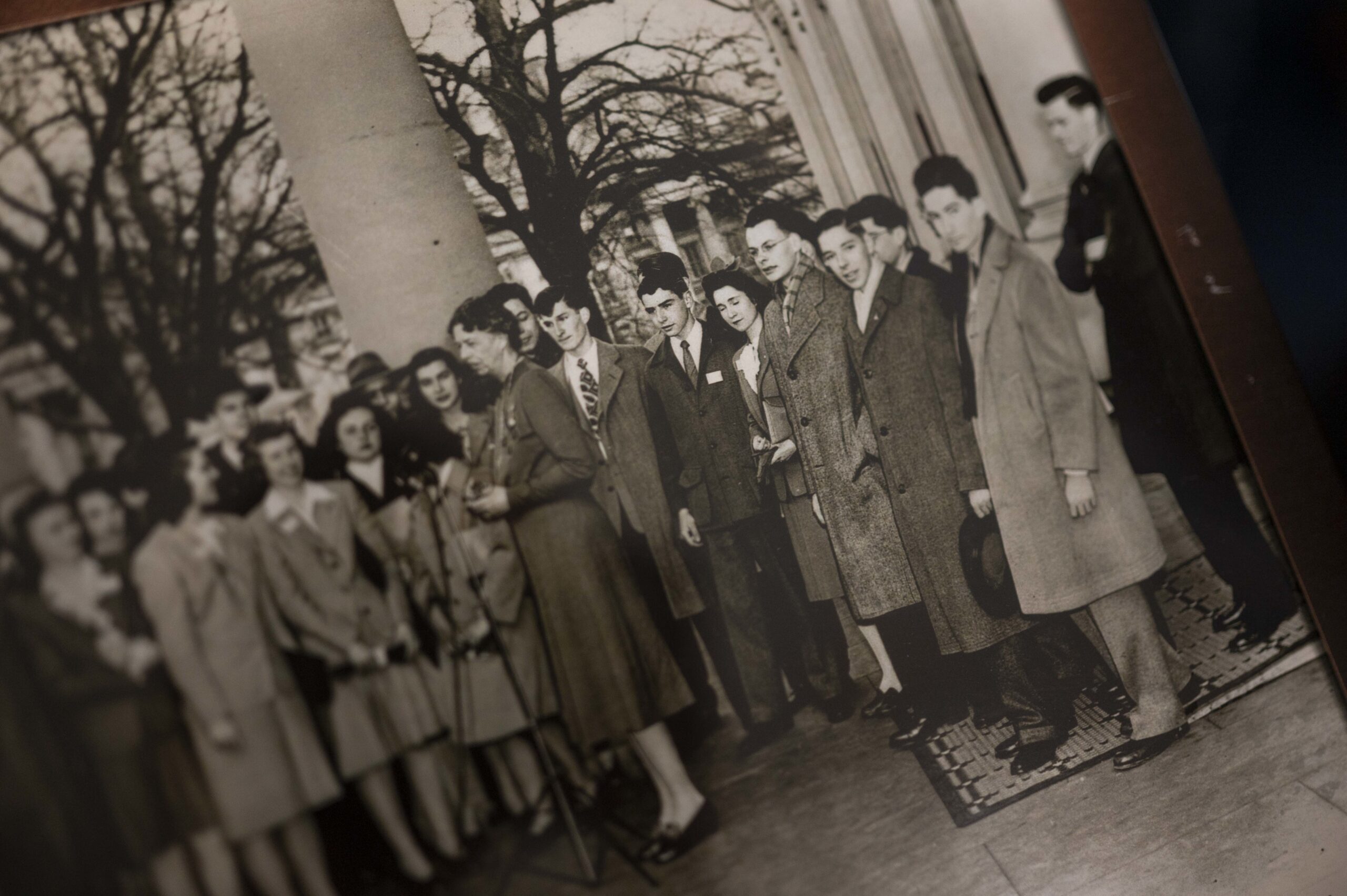
    This photo shows Dr. Ford (center) and other students listening to former First Lady Eleanor Roosevelt speak in 1944.

    Dr. Ford lived in University City, Germantown, and Mount Airy before moving to Foulkeways in 2019. He was an avid pilot and glider for decades. He enjoyed folk dancing, followed the Eagles closely, and excelled at Scrabble and other word games.

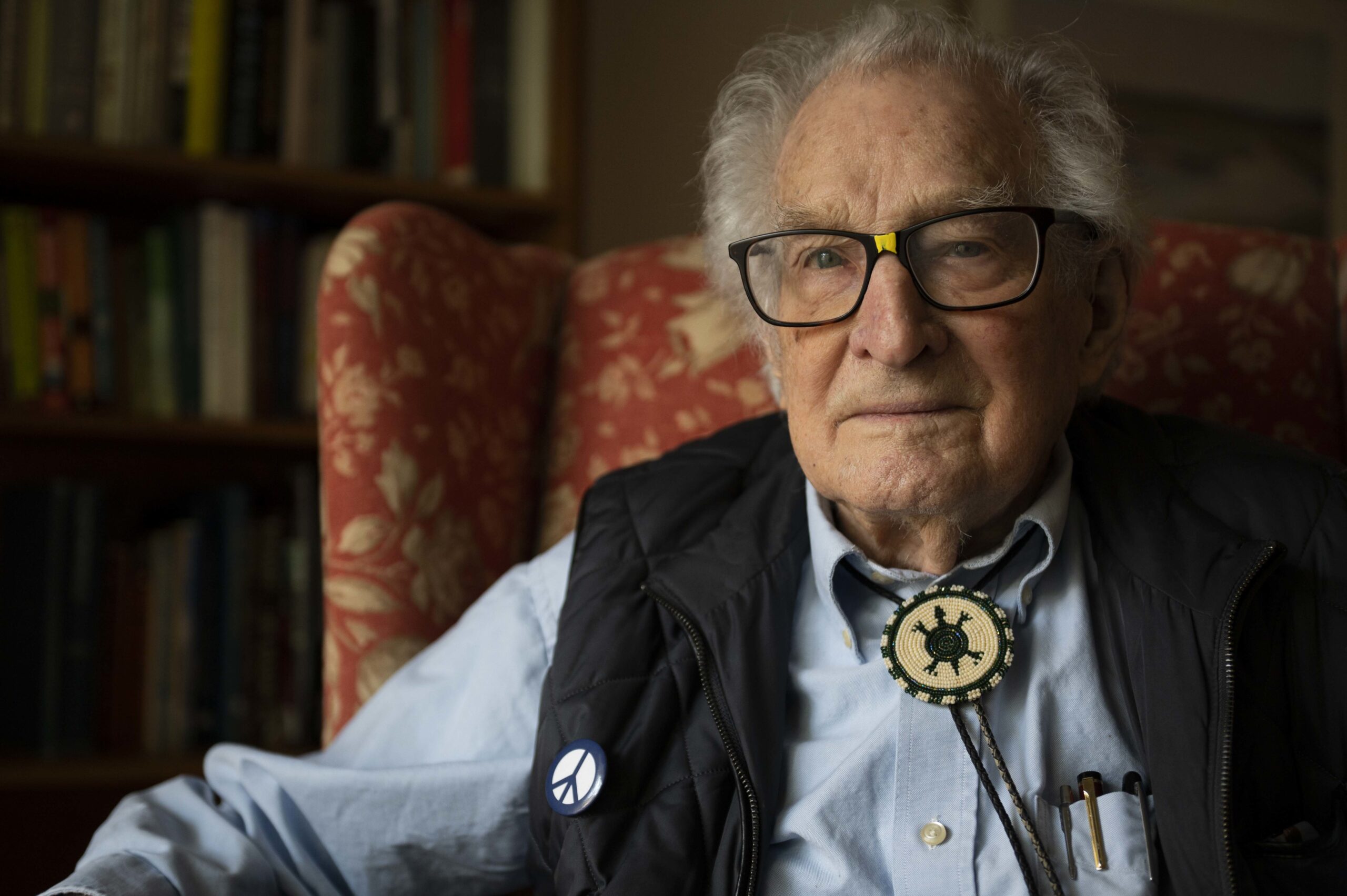
    He loved ice cream, coffee, and bad puns. He became a Quaker and wore a peace sign button for years. Ever the writer, he edited the Foulkeways newsletter.

    In 2023, he said: “I spent my whole life looking for new challenges.” His son Jason said. “He found connections between things. He had an active mind that went in all different directions.”

    In addition to his children, Dr. Ford is survived by 14 grandchildren, a great-grandson, a sister, a stepdaughter, Nina, and other relatives.

    Services are to be from 2 to 4:30 p.m., Saturday, Jan. 24, at Foulkeways at Gwynedd, 1120 Meetinghouse Rd., Gwynedd, Pa. 19436.

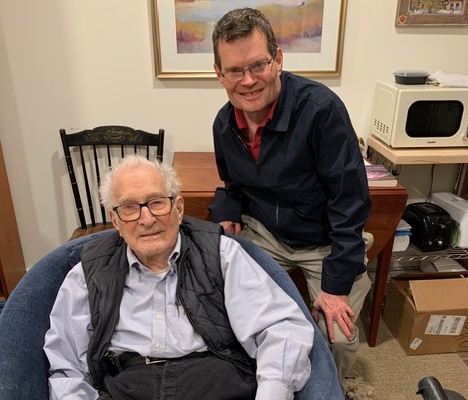
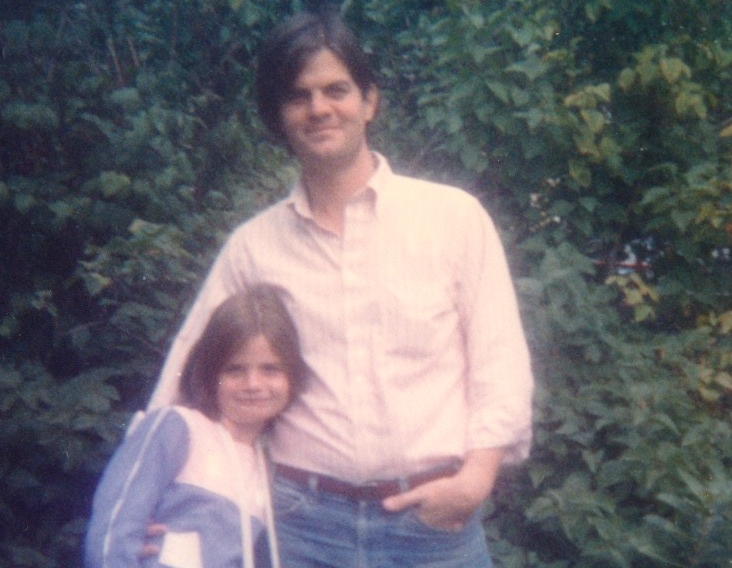
    Dr. Ford and his son Jason
    Dr. Ford wore a peace sign button for years.
  • Frances Ola Walker, cofounder of Parents Against Drugs and lifelong community activist, has died at 86

    Frances Ola Walker, cofounder of Parents Against Drugs and lifelong community activist, has died at 86

    Frances Ola Walker, 86, of Philadelphia, cofounder of Parents Against Drugs and Dunlap Community Citizens Concerned, onetime president of the Mill Creek Coalition and director of the West Philadelphia Empowerment Zone, former aide to U.S. Rep. William H. Gray III, college instructor, mentor, and volunteer, died Tuesday, Dec. 30, of respiratory illness at the Hospital of the University of Pennsylvania-Cedar Avenue.

    A lifelong champion of education, civil rights, comprehensive healthcare, environmental responsibility, employment and housing equity, and community partnerships, Ms. Walker spent more than 70 years, from age 13 to 86, protesting injustice, improving life for her neighbors, and caring for historic residential swaths of West Philadelphia.

    In the 1960s, she marched with fellow activist Cecil B. Moore and others to protest segregation at Girard College. Most recently, she advocated for alternative SEPTA transit routes to support Black-owned businesses.

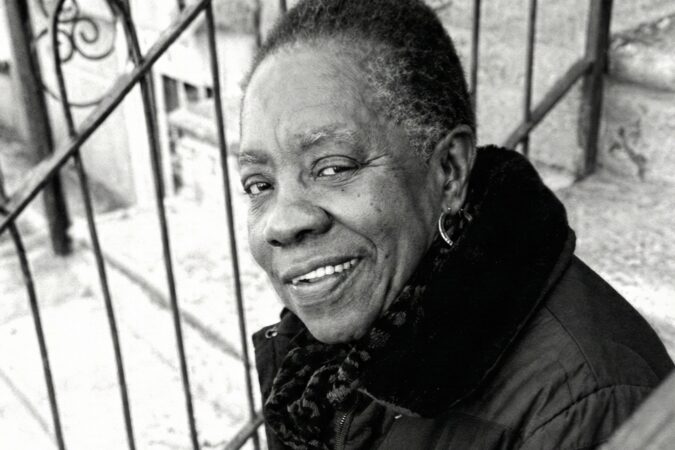
    “I just stayed involved,” she said in a video interview for the West Philadelphia Landscape Project. “If there was a protest, I was leading it. … I’m glad I made a contribution people can respect.”

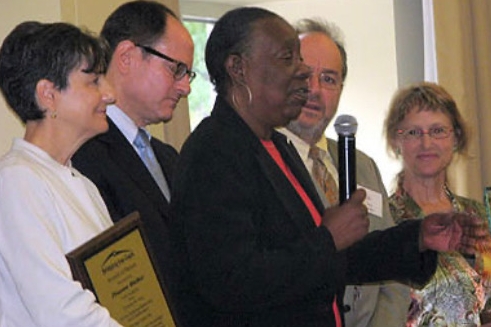
    Ms. Walker (center) spoke often at awards ceremonies and civic events.

    She cofounded Dunlap Community Citizens Concerned in the early 1980s to address housing and infrastructure concerns, and Parents Against Drugs in the late ‘80s. She led the local Healthy Start federal initiative to reduce infant mortality in the 1990s and served on the advisory board of Bridging the Gaps, a healthcare partnership of academic health institutions and community groups.

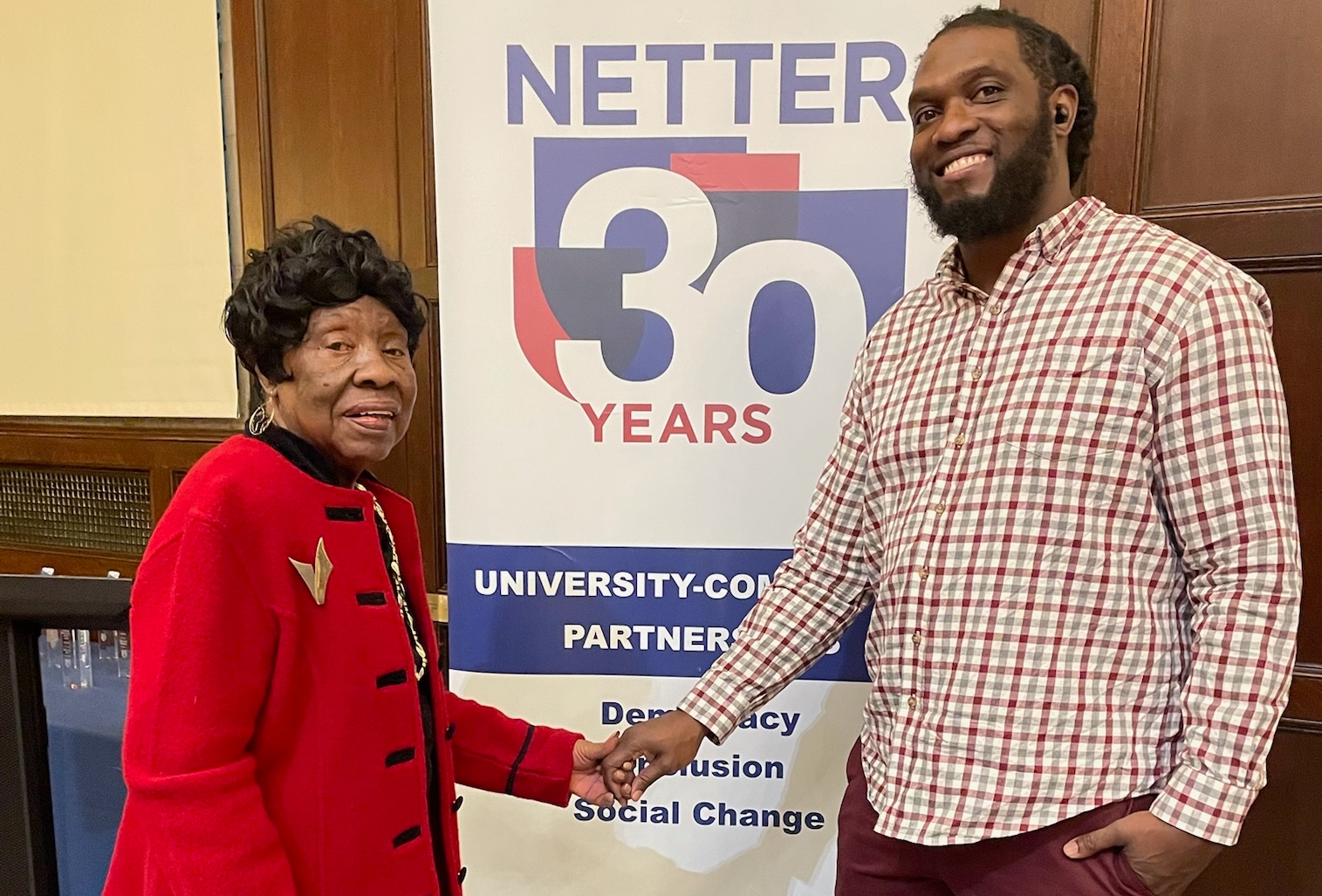
    She developed programs that connected University of Pennsylvania students and faculty with neighborhood residents through what is now Penn’s Netter Center for Community Partnerships. She acquired federal funds to revitalize communities in the West Philadelphia Empowerment Zone, partnered with Penn to pioneer urban ecology projects, and supervised the West Philadelphia Landscape Project in the Mill Creek neighborhood.

    Her family said she was “fearless in her pursuit of justice.”

    Anne Whiston Spirn, professor of landscape architecture and planning at the Massachusetts Institute of Technology in Cambridge, invited Ms. Walker to lecture virtually in her ecological urbanism course. “She bridged the worlds of university, politics, and neighborhood, and called the powerful to account,” Spirn said.

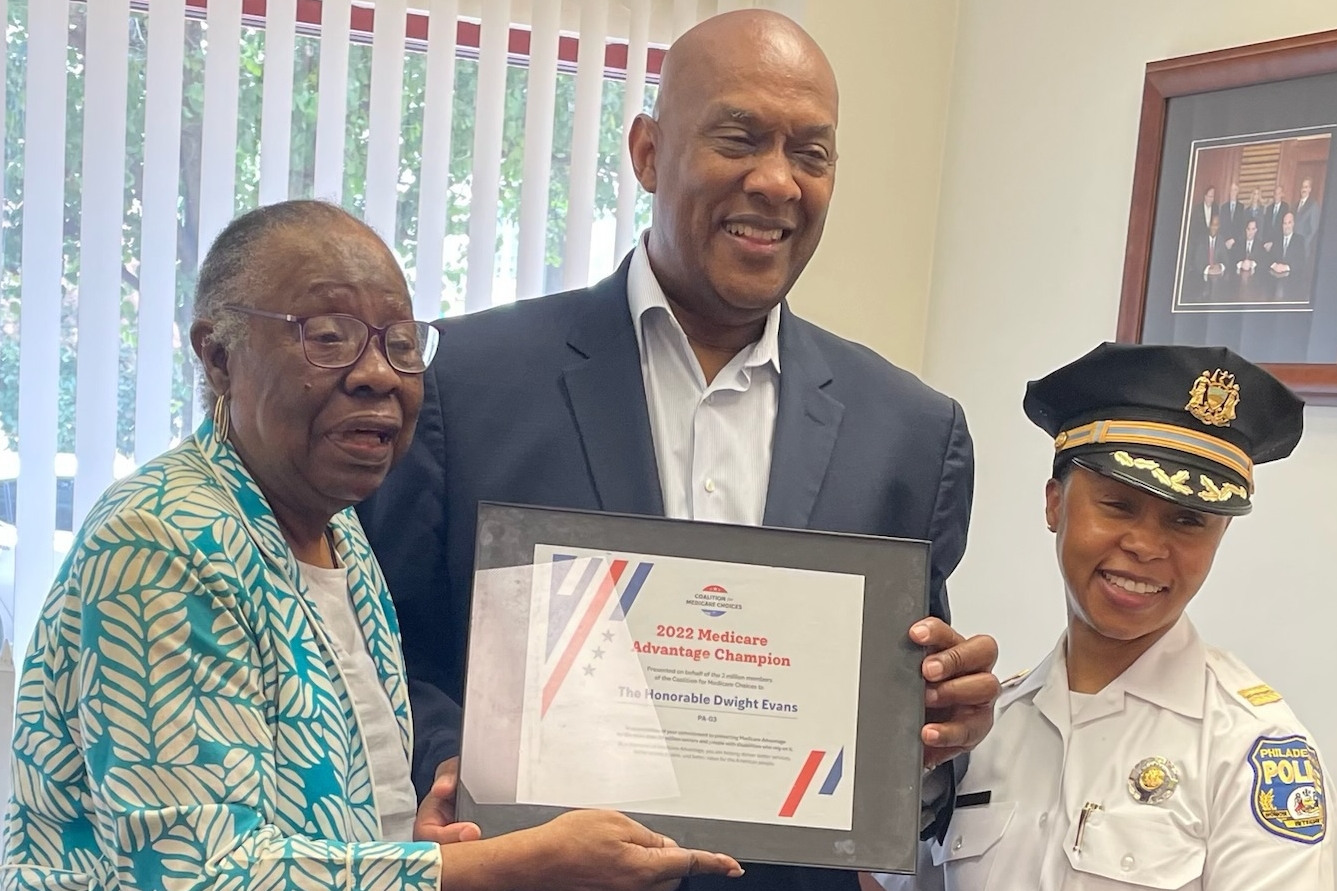
    Ms. Walker (left) presents an award to U.S. Rep. Dwight Evans (center) as a Philadelphia police officer looks on.

    She served on then-Mayor Ed Rendell’s search committee for a new health commissioner in 1993 and briefly considered her own run for City Council. She worked with then-Vice President Al Gore on his community empowerment programs and managed Gray’s West Philadelphia office for 10 years in the 1980s.

    Former U.S. Rep. Chaka Fattah noted her “extraordinary legacy of helping others” and said: “She always chartered her own path and spoke her truth.” Former City Council member at large Blondell Reynolds Brown said: “Her unwavering grassroots work brought care, dignity, and possibility to families facing hardships.”

    She studied community engagement in MIT’s Mel King Community Fellows Program in 2000 and 2001, and earned more than 100 awards, citations, and commendations, including from the White House for her leadership in a children’s immunization campaign.

    She was on the advisory board at Power 99 FM radio and quoted often in The Inquirer and Daily News. Her achievements were noted in two books, They Carried Us: The Social Impact of Philadelphia’s Black Women Leaders and The Lex Street Massacre.

    Regarding drugs and crime in West Philadelphia, Ms. Walker said in 1987: “People in this community have to take a stand.”

    “My grandmother didn’t leave us directions,” said her grandson, Abdul-Malik Walker, “but she left us a compass. Her voice is in our habits, and her strength is in how we handle the miles ahead.”

    Frances Ola Walker was born Jan. 20, 1939, in South Philadelphia. Her father was a preacher, and the family is related to the Rev. Dr. Martin Luther King Jr. So it surprised no one when she began leading academic tutoring for her siblings and teen neighborhood friends on her front stoop.

    She was one of 11 children, and her family moved to the Dunlap section of West Philadelphia in 1945. She attended West Philadelphia High School and worked at first as a personal shopper for neighborhood seniors.

    She was always interested in civic affairs and social justice, and she became the first Black woman to work at an Acme markets warehouse, her family said, and one of the first female postal carriers.

    Ms. Walker stands with her grandson Abdul-Malik Walker.

    She had sons Gregory and James, and daughters Michelle, Roslyn, Wala, and Patricia. She married John Ponnie. Her husband, sons Gregory and James, and daughters Michelle and Patricia died earlier.

    Ms. Walker enjoyed traveling and playing cards with her family. She knew the detailed history of Dunlap and Mill Creek, and delighted in sharing it with others she encountered on her frequent walks.

    “She was an encourager to people of all ages,” said her niece Sibrena Stowe. “She was truly a force to be reckoned with.”

    Ms. Walker told her family: “It is through love that all things are possible. For me, it is when people call on you that lets you know you make a difference.”

    Ms. Walker appeared in this documentary video for the West Philadelphia Landscape Project.

    In addition to her daughters, niece, and grandson, Ms. Walker is survived by 16 other grandchildren, nine great-grandchildren, two sisters, and other relatives. Six sisters and two brothers died earlier.

    Visitation with the family is to be from 9 to 10 a.m. Friday, Jan. 9, at Ezekiel Baptist Church, 5701 Grays Ave., Philadelphia, Pa. 19143. A service is to follow, and a repast at 2 p.m. Livestream is at repastai.com/frances.

  • John Langdon, innovative award-winning graphic designer, has died at 79

    John Langdon, innovative award-winning graphic designer, has died at 79

    John Langdon, 79, formerly of Philadelphia, innovative award-winning graphic designer, painter, writer, and longtime adjunct professor of typography at Drexel University, died Thursday, Jan. 1, of complications from a heart attack at French Hospital Medical Center in San Luis Obispo, Calif.

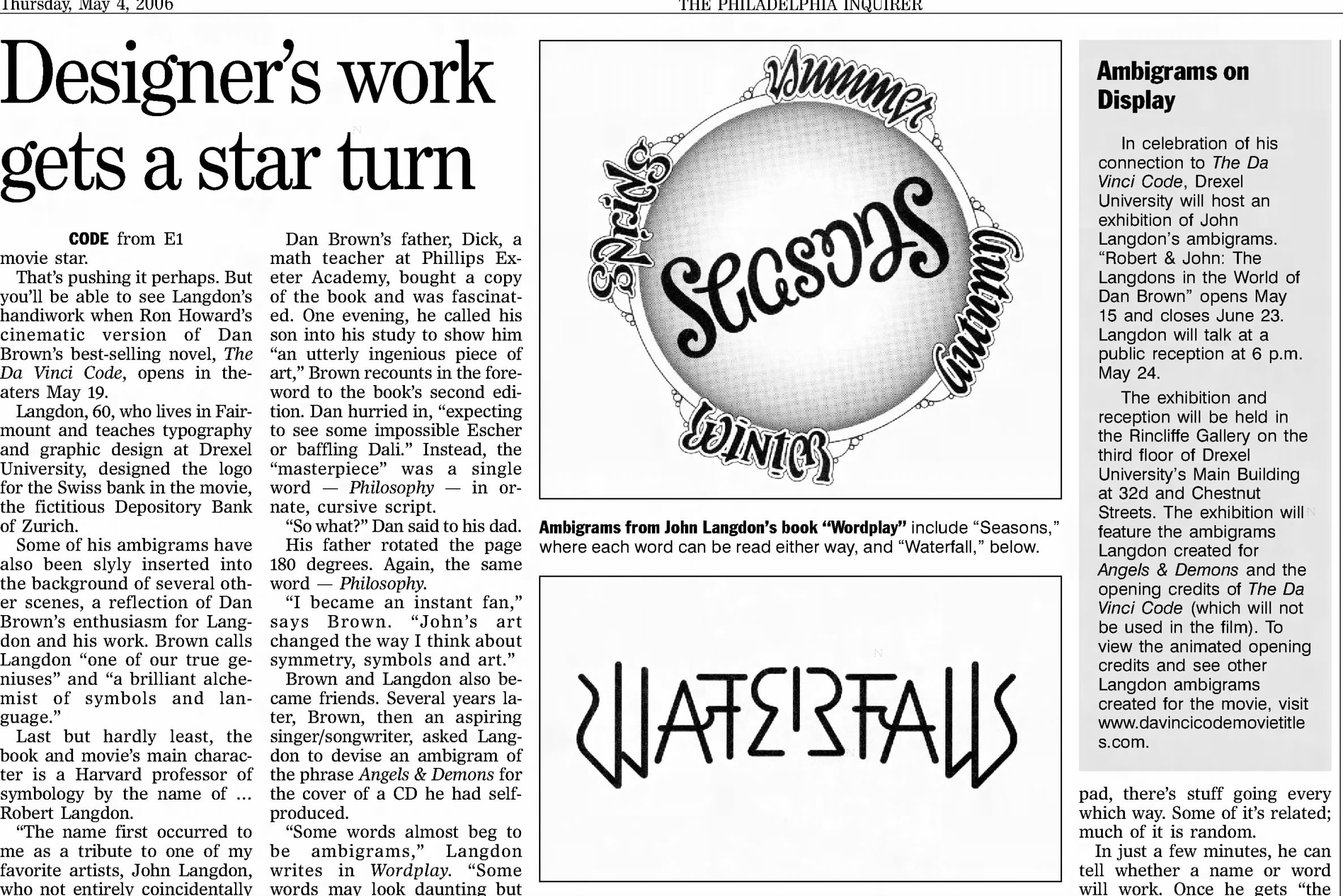
    Mr. Langdon was a lifelong artist and wordsmith. He originated ambigrams in the early 1970s and created distinctive logos for corporate clients, artists, musicians, and others. Ambigrams are words or designs that retain meaning when viewed from different perspectives, and his work influenced countless other designers and typographers who followed.

    “They also present familiar concepts in an unfamiliar way,” he told The Inquirer in 1992, “and thus stimulate the reader’s imagination.”

    On his website, johnlangdon.net, Mr. Langdon described his work as “making abstract concepts visual, almost always through the design of words, letters, and symbols.” He called it “words as art” and said: “I specialize in the visual presentation of words.”

    His designs were featured in more than a dozen solo shows in galleries and museums in Pennsylvania, New Jersey, New York, Connecticut, Maryland, and Delaware, and in more than 50 group exhibitions around the country and Europe. He created six ambigrams for author Dan Brown’s best-selling book, Angels & Demons, and Brown named his fictional protagonist, Harvard symbologist Robert Langdon, after John Langdon.

    “John’s art changed the way I think about symmetry, symbols, and art,” Brown told The Inquirer in 2006.

    Mr. Langdon’s own book about ambigrams, Wordplay, was first published in 1992 and updated in 2005. He also wrote the forwards of other books and articles for journals and newsletters. He said he had a “particular interest in word origins” in an interview on his website.

    He was featured several times in The Inquirer and wrote an op-ed piece in 2014 about the Philadelphia Museum of Art’s new logo. He opened the article with: “Please, beloved Philadelphia Museum of Art, before you print one piece of stationery or a single promotional flier, reconsider your new logo.”

    Mr. Langdon’s work was featured in The Inquirer in 2006.

    In 1996, he began painting what he called his “visual-verbal meditations and manipulations” on canvas. “My paintings still involve symmetry and illusion, a bit of philosophy, and a few puns thrown in for good measure,” he said on his website.

    He cocreated the Flexion typeface and won a 2007 award from the New York-based Type Directors Club. He spoke often about design at colleges and high schools, and to professional societies. He gave a TEDx talk about font and the future of typeface at Drexel.

    Douglas Hofstadter, a professor at Indiana University who coined the term ambigram in 1984, told The Inquirer in 2006 that Mr. Langdon had a “very strong sense of legibility but also a marvelous sense of esthetics, flow, and elegance.”

    Born in Wynnewood and reared in Narberth, Mr. Langdon graduated from Episcopal Academy in 1964 and earned a bachelor’s degree in English at Dickinson College in Carlisle, Pa. He worked in the photo-lettering department of a type house and for a design studio in Philadelphia after college, and began freelancing as a logo designer, type specialist, and lettering artist in 1977.

    He taught typography and logo design classes at Moore College of Art and Design from 1985 to 1988 and at Drexel from 1988 to his retirement in 2015. In an online tribute, one student said he was “one of my favorite teachers of all time.”

    He was interested in Taoism and inspired by artists Salvador Dalí and M.C. Escher, and authors Edgar Allan Poe and Ogden Nash. “In the early ’70s, I tried to do with words what Dali and Escher did with images,” he said in a 2006 interview posted on Newswise.com.

    John Wilbur Langdon was born April 19, 1946. He played high school and college soccer and drew caricatures of classmates for the Episcopal yearbook.

    After college, he took painting and drawing classes at the Pennsylvania Academy of the Fine Arts and the old Philadelphia College of Art. He married Lynn Ochsenreiter, and they had a daughter, Jessica. They divorced later.

    Mr. Langdon enjoyed vacation road trips and told stories of hitchhiking around the country in the 1960s. He followed the Phillies, was interested in genealogy, and traced his family back to the Founding Fathers.

    Mr. Langdon stands with his daughter, Jessica.

    He lived in Darby, Woodbury, Wenonah, and Philadelphia before moving to California in 2016. “He was jovial, social, and amusing,” his daughter said. “People said he was clever, and everyone liked him.”

    He told The Inquirer in 2006: “It may seem counterintuitive, but the more ambiguity you invite into your life, the more things make sense and become understandable.”

    In addition to his daughter and former wife, Mr. Langdon is survived by a brother, Courtney, and other relatives.

    A memorial is to be held later.

    Mr. Langdon lived in Darby, South Jersey, and Philadelphia before moving to California in 2016.
  • Margaret Dupree, longtime funeral director and teacher’s aide, has died at 104

    Margaret Dupree, longtime funeral director and teacher’s aide, has died at 104

    Margaret Dupree, 104, of Philadelphia, cofounder, director, and president of Dupree Funeral Home Inc. at 28th and Diamond Streets in North Philadelphia, former teacher’s aide for the School District of Philadelphia, beautician, and mentor, died Monday, Dec. 15, of age-associated decline at Thomas Jefferson University Hospital.

    Mrs. Dupree and her husband, Troy, established the Dupree Funeral Home in 1955, and she became sole owner and president when he died in 1987. Her son Kenneth joined her as supervisor, and together, for nearly 40 years, they conducted thousands of funerals and oversaw a building expansion in 2000 and renovation in 2003.

    Most often, Mrs. Dupree supervised the books and answered the office telephone. Her son handles the funeral arrangements. “She was very meticulous and organized,” her son said. “She continued our legacy and served with integrity.”

    In the 1960s and ‘70s, Mrs. Dupree told The Inquirer in 1999, funerals were held at night because most people worked during the day. So she and her husband had day jobs, too. She was a reading and math aide at William Dick and Richard R. Wright Elementary Schools. He worked for the telephone company.

    Mrs. Dupree earned a beautician’s license after graduating from Philadelphia High School for Girls in 1941.

    She earned a beautician’s license after graduating from Philadelphia High School for Girls in 1941 and worked at her mother’s beauty shop at 13th Street and Susquehanna Avenue for a while. She became licensed as a funeral director in 1949 and met her husband when they were interns at a funeral home in South Philadelphia.

    “Her lifelong commitment to funeral service stands as a rare and remarkable testament to dedication, professionalism, and service to families during their most sacred moments,” her family said in a tribute.

    Mrs. Dupree was among the oldest licensed funeral directors in the country, her family said, and she told The Inquirer she went into the business because morticians and barbers were so respected when she was a child. “They were the people who were looked up to,” she said.

    She used her makeup and beauty expertise to augment the cosmetic work on bodies in the mortuaries and said in 1995: “In the early stages, I liked doing reconstructive work. I relished doing the ‘invisible stitch.’”

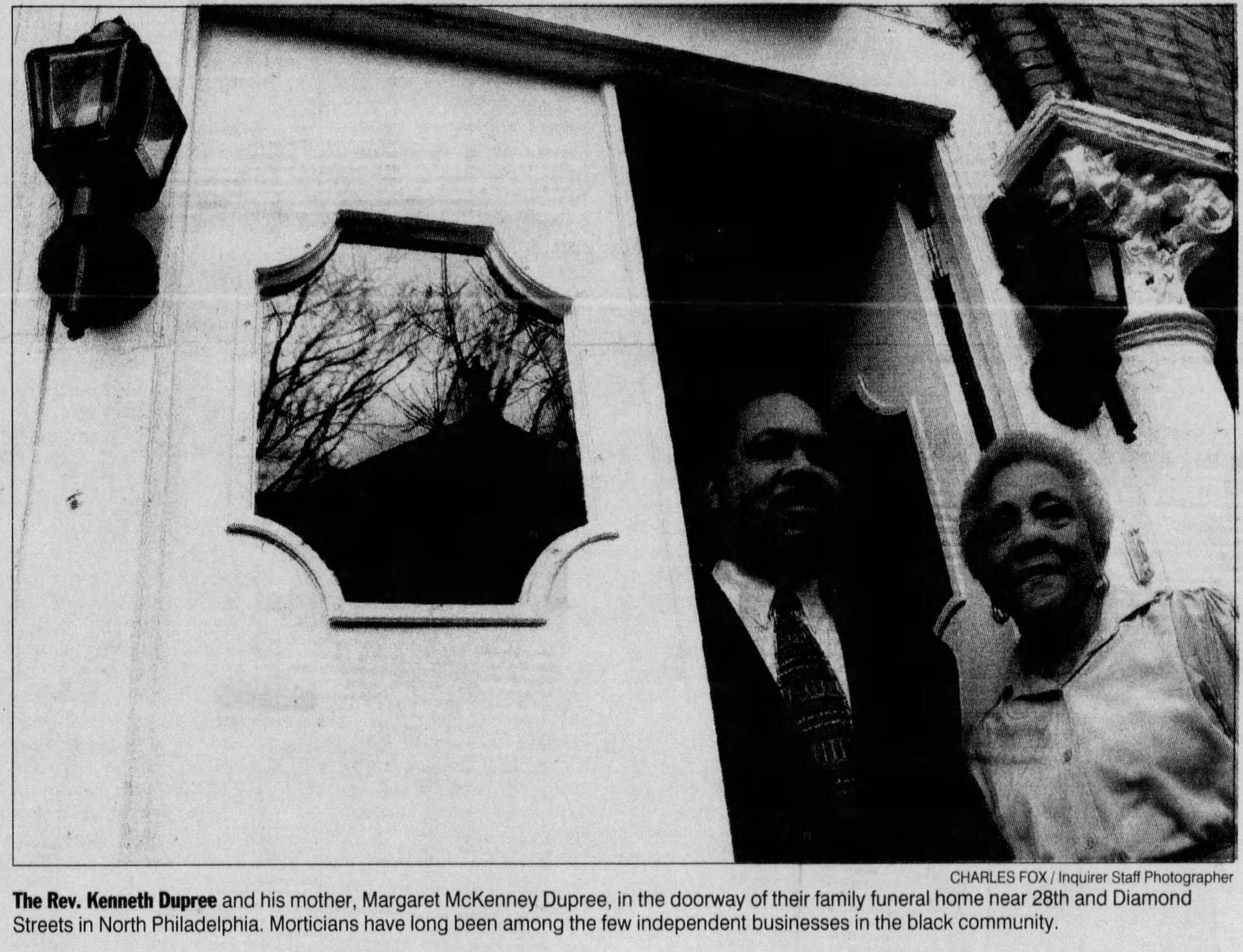
    This photo of Mrs. Dupree (right) and her son Kenneth appeared in The Inquirer in 1999.

    Her family called her career “a powerful symbol of her lifelong devotion to the calling of funeral service” and praised her “mentoring others, serving families with dignity, and remaining deeply connected to the profession she loved.”

    She was a charter member of Child’s Memorial Baptist Church, known now as Keeping It Real Christian Fellowship, and supported affordable housing initiatives in North Philadelphia. “I like for women to have a place to raise their children,” she told The Inquirer in 1998 regarding a proposed housing renewal project. “If you give people a place to work and take care of their children, then the whole neighborhood will be improved.”

    Friends and former colleagues called her “funny and sweet” and a “history maker” in online tributes. One friend said she was “a woman of grace, and her radiant smile always was contagious.” Another said: “She has had a positive impact on so many Philadelphians.”

    Margaret Alma McKenney was born July 8, 1921, in Belvedere, S.C. She relocated with her family to North Philadelphia when she was 5 and grew up at 13th and Diamond Streets.

    Mrs. Dupree doted on her grandchildren and great-grandchildren.

    During World War II, she worked for the Army Signal Corps and at the Frankford Arsenal. Afterward, she earned her funeral director’s license at the old Eckels College of Mortuary Science in Philadelphia.

    She married Troy Dupree in 1951, and they had daughters Melanie and Carrie, and sons Troy Jr. and Kenneth. For years, she reared the children, worked at the funeral home, and helped out at her mother’s shop.

    Later, she doted on her grandchildren and great-grandchildren, and a friend said online: “I am a better grandma having watched from one of the best to ever do it.”

    Mrs. Dupree enjoyed knitting sweaters for her children, solving cryptograms in the newspaper, and traveling with family and friends to Bermuda, Africa, and elsewhere. She always, even at restaurants, her son Kenneth said, ate her dessert first.

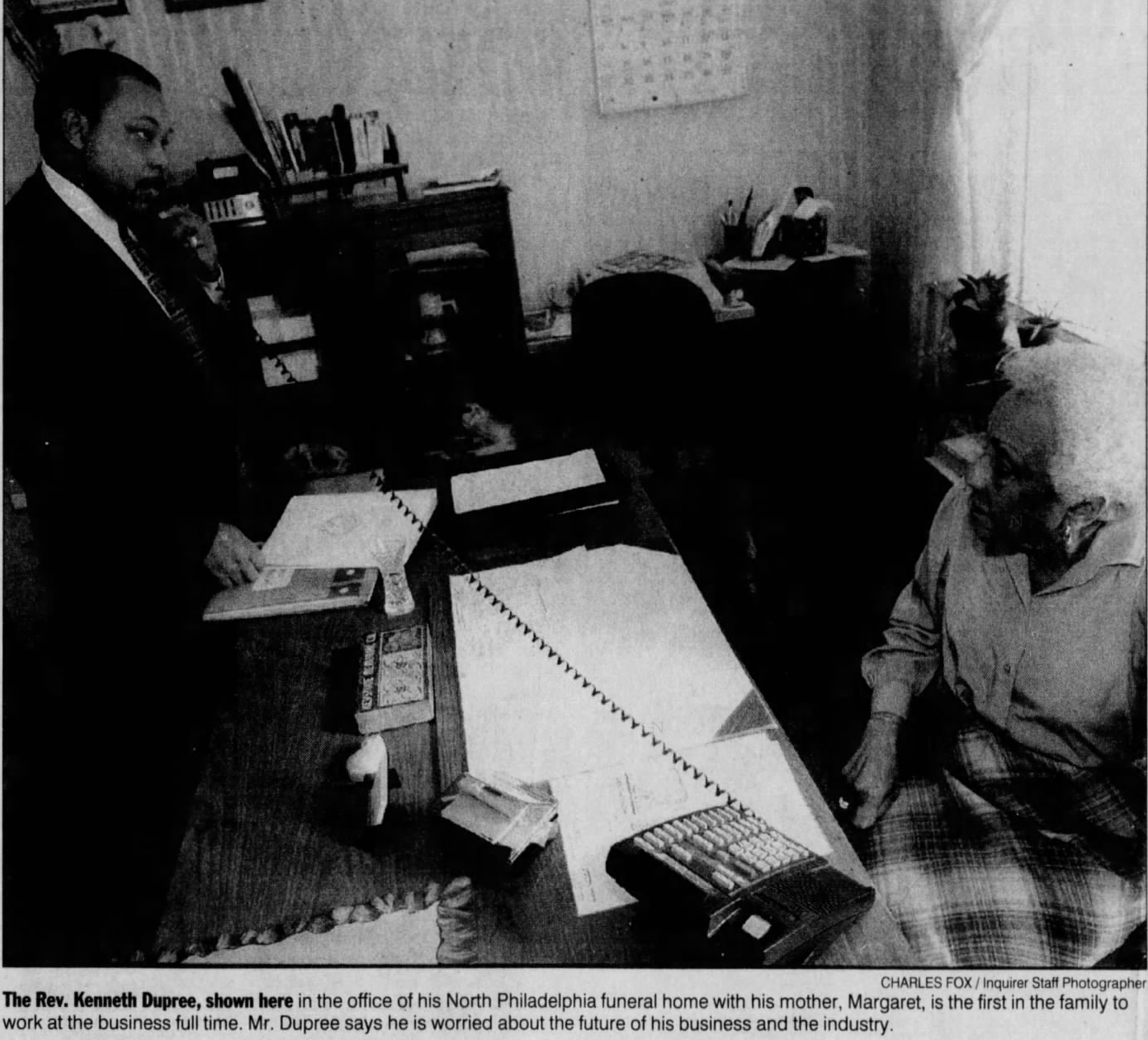
    Mrs. Dupree (right) sits at her office desk while her son Kenneth talks on the phone in a photo that was published in The Inquirer in 1999.

    “She had a multifaceted personality,” her son Kenneth said. “She was a comedian, an organizer, and a fan of the underdog.”

    Her family said: “Margaret lived a life rooted in service, compassion, and purpose. Funeral service and education were never just her profession. It was her calling.”

    In addition to her children, Mrs. Dupree is survived by six grandchildren, six great-grandchildren, and other relatives. Two sisters and five brothers died earlier.

    Services were held on Dec. 28 and 29.

    Donations in her name may be made to Project Home, Development Dept., 1515 Fairmount Ave., Philadelphia, Pa. 19130.

  • Robert Caputo, prolific photographer, writer, and filmmaker, has died at 76

    Robert Caputo, prolific photographer, writer, and filmmaker, has died at 76

    Robert Caputo was captivated by the natural world, its animals and people. So he spent 35 years, from 1970 through 2005, traveling through Africa, Asia, and South America, taking photos, writing stories, and making films and TV shows for National Geographic magazine, Time, PBS, TNT, and other media outlets.

    From Kenya to Egypt, Venezuela to Zanzibar, in China, Cuba, New Orleans, and Boston, Mr. Caputo chronicled the beauty and tragedy of everyday life. He reported as a freelancer, with a camera and a notepad, for National Geographic for decades, covering political coups, civil wars, and famines in Sudan and Somalia, and the AIDS epidemic in Uganda.

    He worked for photographer and filmmaker Hugo van Lawick in Tanzania in the 1970s and then camera-stalked lions and leopards for National Geographic on the Serengeti Plain. He sent back striking images of the Abu Simbel Temples in Egypt and the old Kingdom of Mustang in Nepal.

    In Sudan, he sipped tea with camel traders, slept under the stars, and posed for portraits with tribal chiefs. He trekked the Himalayas and photographed fishermen on the Congo, Nile, and Mississippi Rivers. His poignant August 1993 cover photo for National Geographic of a starving Somali woman gained worldwide attention.

    “In fact, it is a great job,” Mr. Caputo told the Washington Post in 1995, when he was featured in a TV show about the Geographic photographers. “You really do get to go places and do things others only dream about.”

    He told the New York Daily News in 1995: “I’ve always thought of my job as a license to be nosy.”

    In 2002, as he was winding down his international travel, Mr. Caputo moved from Washington, D.C., to a farmhouse in Kennett Square, Chester County. In early 2025, he was diagnosed with Alzheimer’s disease. In December, he and his family traveled to the Pegasos Swiss Association voluntary assisted dying center in Basel, Switzerland. He died Thursday, Dec. 18. He was 76.

    “Fairly early on, Bob had expressed his wishes to go out on his own terms,” said his wife, Amy. “We were able to honestly and pragmatically deal with our situation, and he remained his thoughtful self, with his sense of humor intact till the end.”

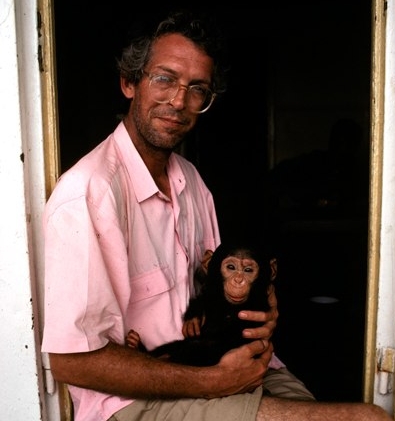
    Mr. Caputo loved spending time with animals.

    Mr. Caputo first went to Africa in 1970. He dropped out of Trinity College in Connecticut as a senior and meandered with friends across the vast continent, from Morocco to Tanzania.

    He returned to earn a bachelor’s degree in film at New York University in 1976. Then, until 1979, he lived in Nairobi, Kenya, and sold photos and stories about Africa to Time, Life, and other magazines.

    “He liked to learn about things,” said his son Nick. “He was constantly inquiring into things.”

    In 1981, National Geographic hired him to report from Sudan on the verge of its civil war, and he produced striking cover photos, dramatic picture spreads, and detailed stories about Africa. In 1984 and ’85, he spent eight months and traveled 4,000 miles on steamboats, tugboats, and all-terrain vehicles to document traditional daily life along the Nile.

    Mr. Caputo had several cover photos for National Geographic.

    “Everywhere he went,” his family said, “Bob found that the people he met were fundamentally good and generous, happy to share their often limited food with him, a perfect stranger, and excited to tell him about their lives.”

    There were challenges, too, he said in many interviews. He was detained by border guards in Uganda in 1979 and contracted malaria nine times. The monthslong assignments in search of remote Indigenous people were often lonely, and he got hungry and tired.

    But the connections he made with people he encountered were worth it, he said. “The great advantage of working for National Geographic is having time,” he told the New York Daily News. “You can go to a village in Africa and not just have to waltz in and start shooting away. You can spend time getting to know people, and they can know you.”

    Mr. Caputo was a natural innovator and teacher, and he organized photo workshops and lectured about photography around the world. He taught digital photography at the Center for Digital Imaging Arts at Boston University and cofounded Aurora & Quanta Productions in Maine in 1985 and the PixBoomBa.com photo website in 2010.

    National Geographic published his Photography Field Guide in 1999 and Ultimate Field Guide to Landscape Photography in 2007. He also authored photo essay books on the Nile and African wildlife, and exhibited his photos at the Delaware Museum of Nature and Science and elsewhere.

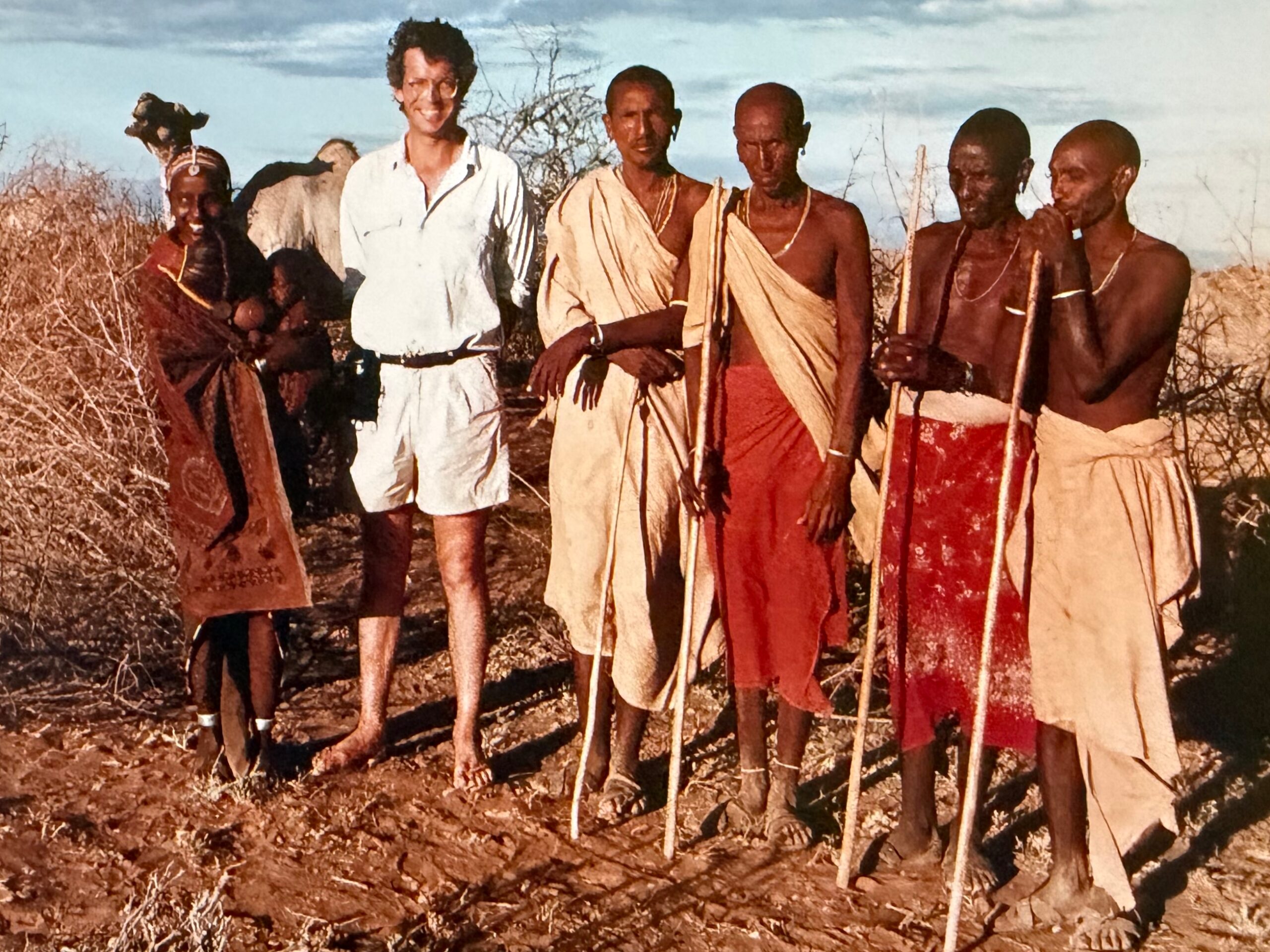
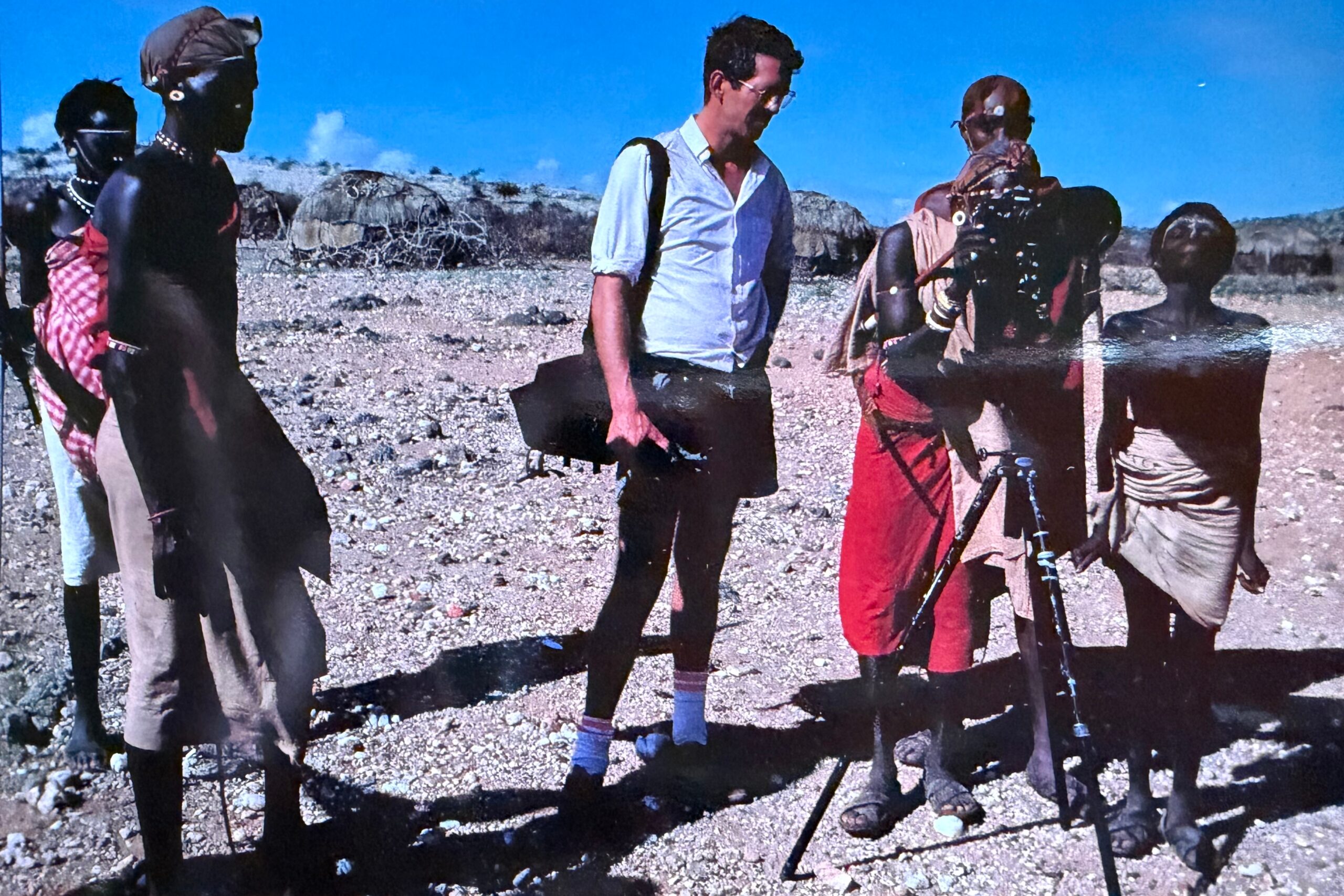
    Mr. Caputo (second from left) poses with local people in Africa.

    He wrote and appeared in wildlife shows, hosted TV programs and YouTube videos about photography, and wrote the story on which Glory & Honor, a 1998 award-winning TV film, is based. He made films about making films in Nigeria and the history of Boston’s Fenway Park.

    He earned awards from the National Press Photographers Association, the American Travel Writers Foundation, Communications Arts journal, and other groups. He was personable and energetic, colleagues said, and he cofounded the annual National Geographic Prom at the Washington office.

    “He was a tremendously caring and loving person,” his son Nick said. “He looked out for other people.”

    Mr. Caputo met TV and film producer Amy Wray on a National Geographic TV shoot in the Amazon rainforest. They married in 1997 and had sons Nick and Matt.

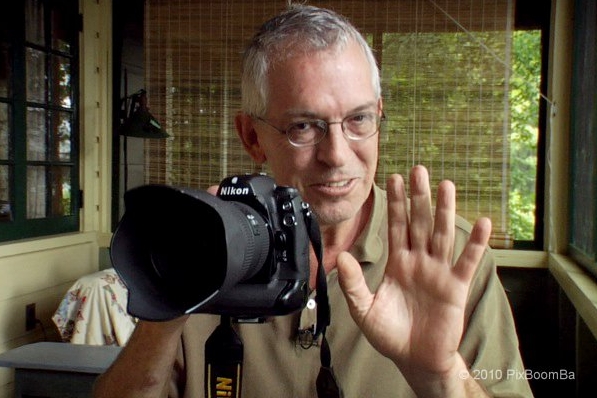
    This photo is featured on Mr. Caputo’s website.

    In Facebook tributes, friends and colleagues noted his “wonderful smile” and “deep love of people and animals.” They called him a “legend” and “amazing.” Robert J. Rosenthal, former Africa correspondent and former executive editor of The Inquirer, called Mr. Caputo “one of the best humans I ever knew.”

    Mr. Caputo told MainLine Today in 2009: “My personal heroes are the people who work for aid organizations and nongovernmental organizations, who go to some faraway place to help people they’re not related to and often put themselves in harm’s way.”

    Robert Anthony Caputo was born Jan. 15, 1949, at Camp Lejeune, N.C. His father was a career Marine and moved the family to bases in Virginia and then Sweden for an assignment at the U.S. embassy there.

    In a 1991 interview with the Newhouse News Service, Mr. Caputo said: “I remember as a kid going to sleep listening to artillery going off in the distance down at the range. It was kind of comforting. I wouldn’t change it for anything.”

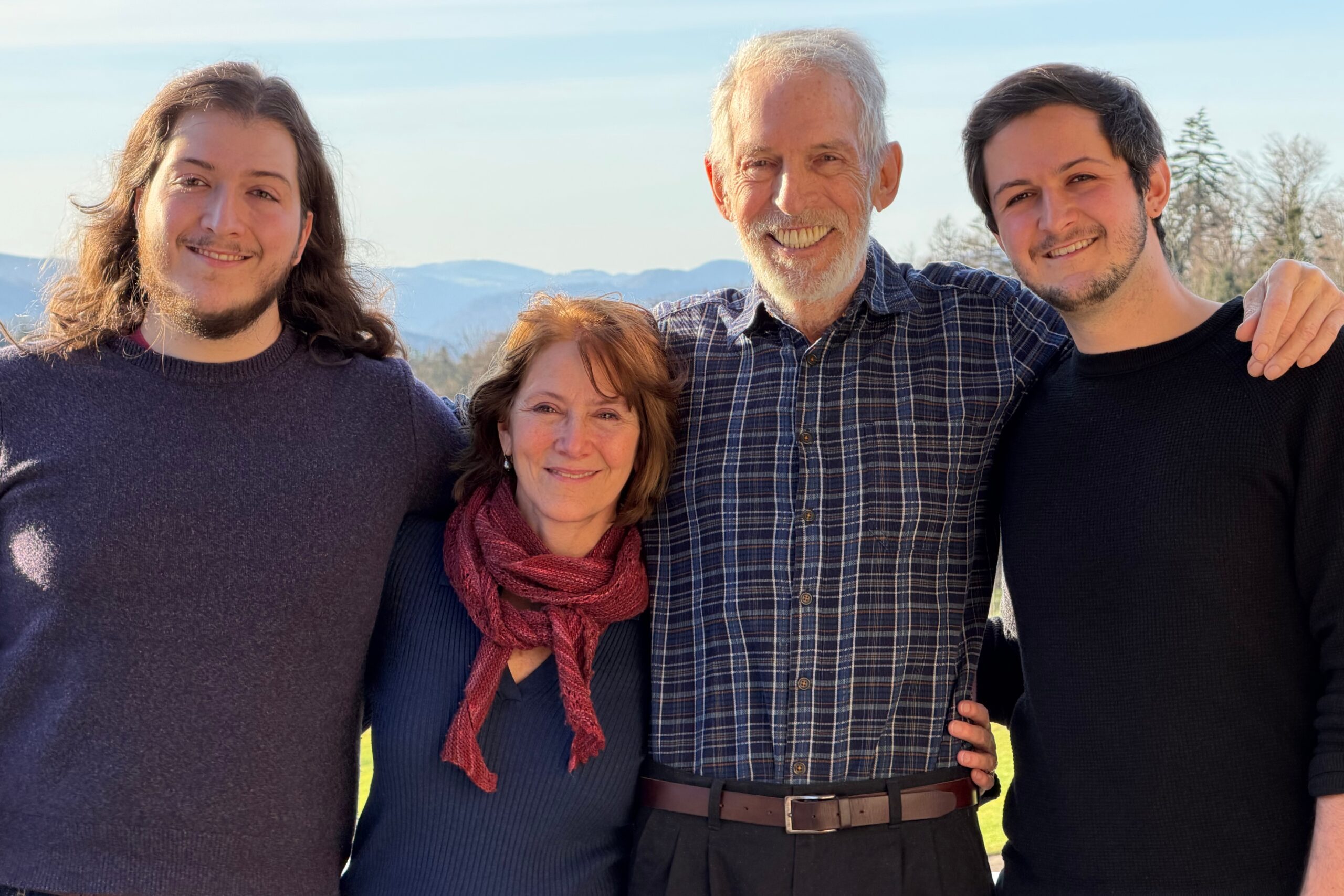
    Mr. Caputo (second from right) doted on his wife and sons.

    He attended a Swedish middle school, learned the language, skied, and played soccer. He returned to the United States in the late 1960s to attend boarding school in Virginia and then Trinity.

    In Kennett Square, Mr. Caputo was a soccer, baseball, and basketball coach to his sons, and a Cub Scouts leader. He walked the boys to the school bus stop in the morning. He told them bedtime tales about secret agents and pirates, they said, and built a tree house in the backyard.

    He decorated his truck on Halloween and grew impressive gardens. His neighbors called him Farmer Bob.

    He took his family on trips to Kenya and Tanzania. He dabbled in experimental playwriting and literature when he was young, and enjoyed classic movies and William Blake’s poetry.

    Mr. Caputo (center) shows his camera to the locals in Africa.

    “He felt extraordinarily lucky to have lived the life he did,” his wife said, “full of adventure, family and friends. And in the end he said, ‘I’m ready.’”

    In addition to his wife and sons, Mr. Caputo is survived by a sister and other relatives.

    Services are to be at 11 a.m. Saturday, Jan. 10, at Kennett Friends Meeting, 125 W. Sickle St., Kennett Square, Pa. 19348.

    Donations in his name may be made to Doctors Without Borders, Box 5030, Hagerstown, Md. 21741.

    His family called Mr. Caputo “buttered side up” when he was young “because no matter
    how he fell he always seemed to end up the right way, and his life was full and lucky.”