Author: David Murphy

  • Brad Stevens says he would rather have not traded Jaylen Brown to Philly, but the Celtics did what they had to do

    Brad Stevens says he would rather have not traded Jaylen Brown to Philly, but the Celtics did what they had to do

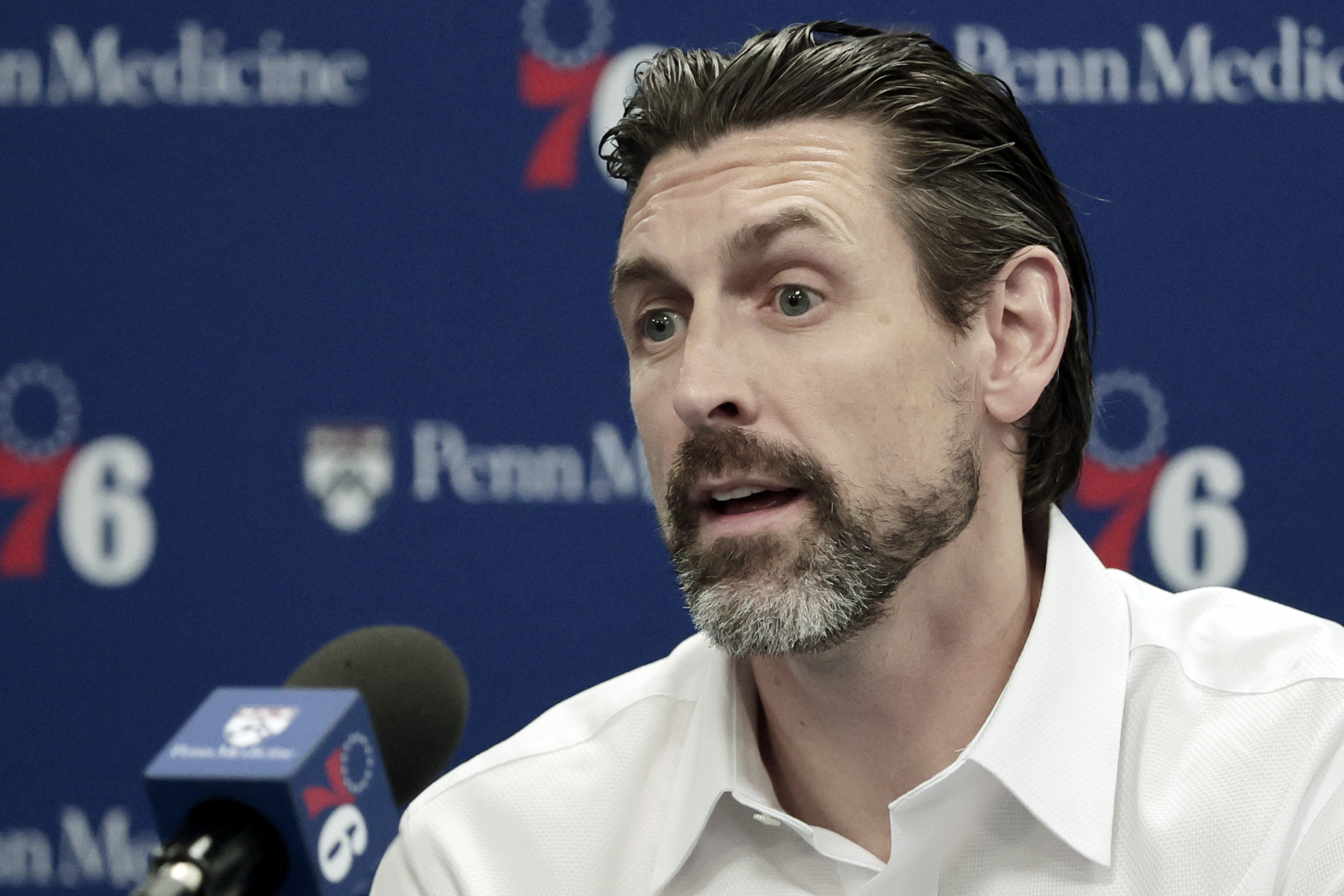
    It wasn’t the first time Brad Stevens had heard the question. His story piques a natural curiosity. A man widely regarded as one of the world’s finest basketball coaches walked away from one of the world’s finest basketball coaching jobs at 44 years old. He did so to become a suit. Over the last five years, plenty of people have wondered aloud to the Celtics’ president of basketball operations.

    So, do you miss coaching?

    “I did this week,” Stevens said on Monday, recounting a conversation he had with an interrogator last week. “This is not for the faint of heart.”

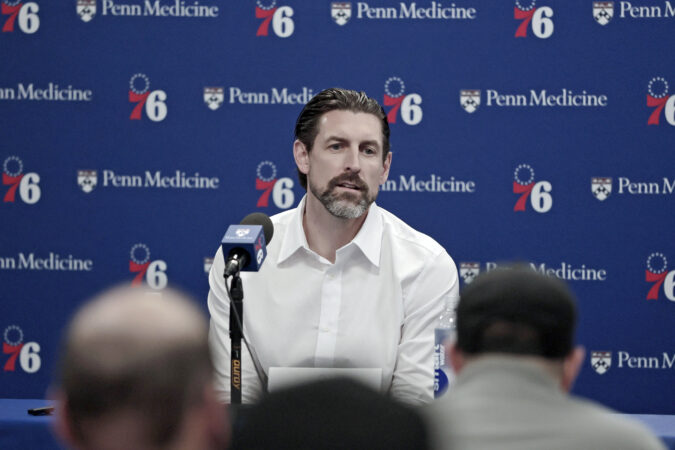
    Stevens’ news conference alongside Celtics majority owner Bill Chisholm earlier this week offered the world its first chance to inform its opinion on a trade that stunned the NBA like few before it. While the Sixers have yet to announce when they will field questions about their blockbuster acquisition of Boston superstar Jaylen Brown, the guys on the other side of the deal didn’t have the same luxury.

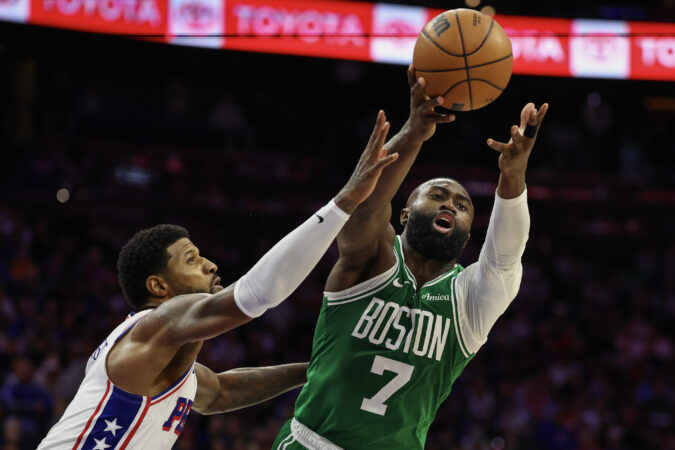
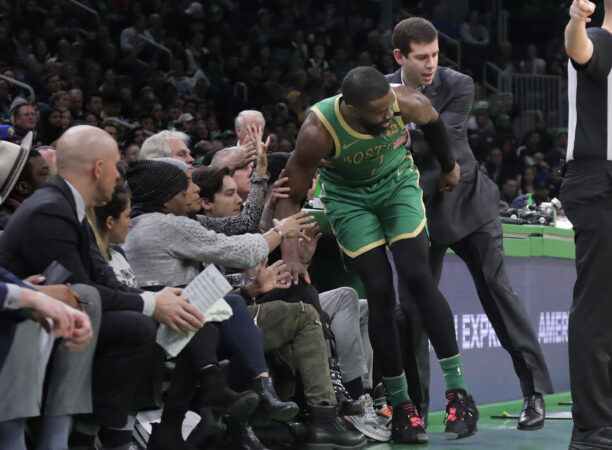
    Rarely does an NBA team encounter such a universal and vociferous disagreement with a trade as the Celtics did to their decision to trade Brown to the Sixers for Paul George and a couple of first- and second- round picks. Here in Philly, the jubilation surrounding such a no-brainer decision was further enhanced by the opportunity to watch Bostonians engage in a collective public meltdown unlike any it has staged since at least the Revolutionary War. One local radio host called it the worst trade in Celtics history. Another said he felt physically ill. Bill Simmons said he woke up from a colonoscopy and assumed he’d died.

    “I’m with you,” Stevens said. “That is a hard thing to trade a guy that you, first of all, care so much about and secondly have so much respect and admiration for, to a team that just beat you in the playoffs and that you’re literally going to play six times before the playoffs next year, with our two preseason games. But I do think that ultimately when you do a deal you need to think about you first and the optionality it creates for you. If I’m being honest, if that exact deal came from a team out west and you were comparing the two, then you’d probably take the team out west. But that’s not the way it was working.”

    Whatever the immediate local reaction to Stevens’ defense of the decision, he and Chisholm offered a master class in how to handle blowback. You do it directly, immediately, and humbly. It helps when you believe in your decision-making process, which the Celtics clearly did. And, look, they were right to feel that way. Because, chances are, this ends up being a good decision for them.

    That’s not the same as saying that the Sixers will regret their decision to trade for Brown. Nor is it the same as saying that the Celtics “won” the deal. None of those things are exclusive from one another. There is a scenario where the Celtics and Sixers both did what was best for them, and that the price was perfectly fair. Granted, things rarely align on all three of those fronts. But this is one of those deals where both sides made the most rational decision and where the market dictated the terms. A lot of the criticism currently being aimed at the Celtics would be better targeted at the 28 general managers who either couldn’t or wouldn’t beat the Sixers’ offer for Brown. If anything, the market was the irrational actor.
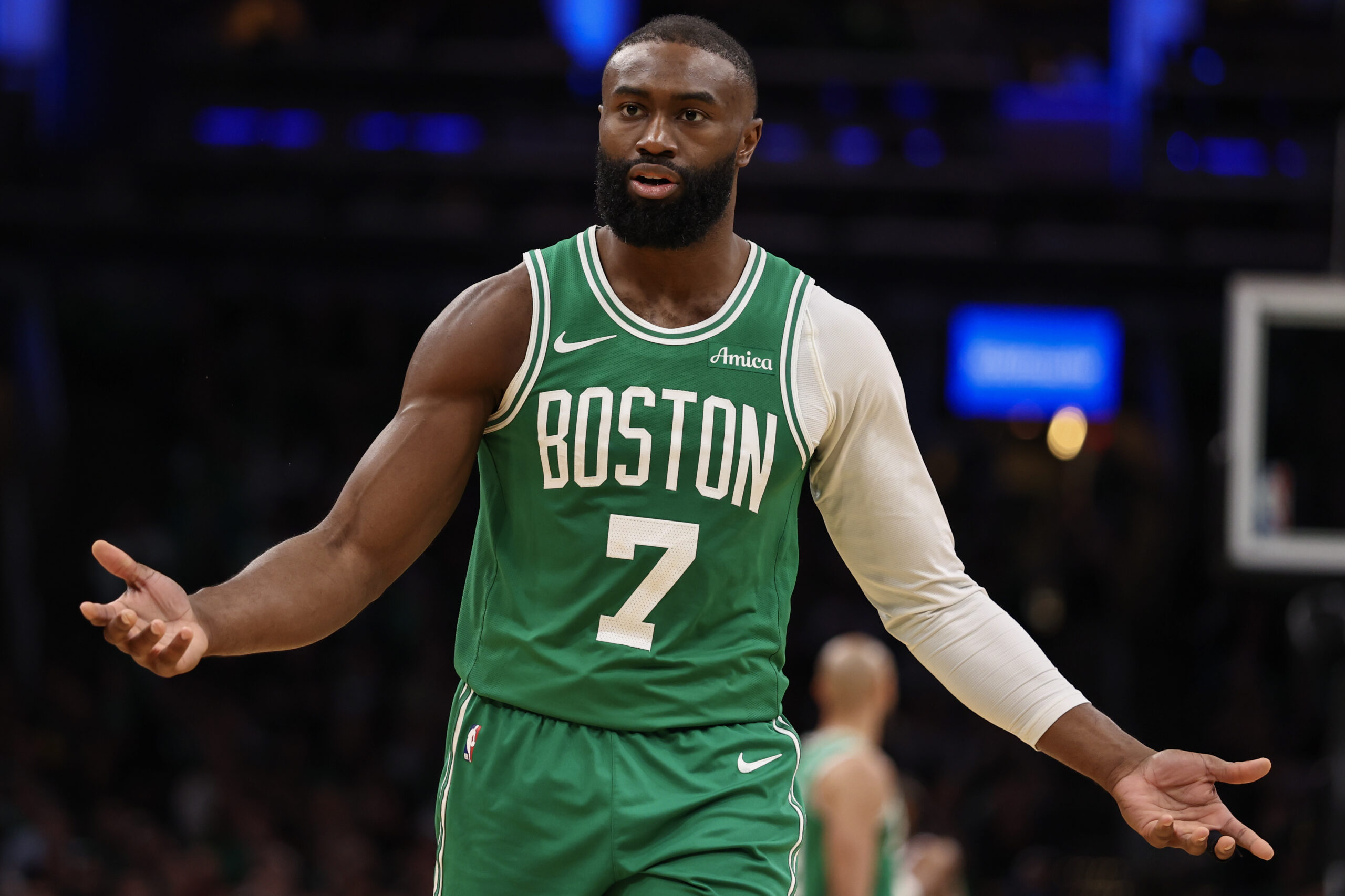
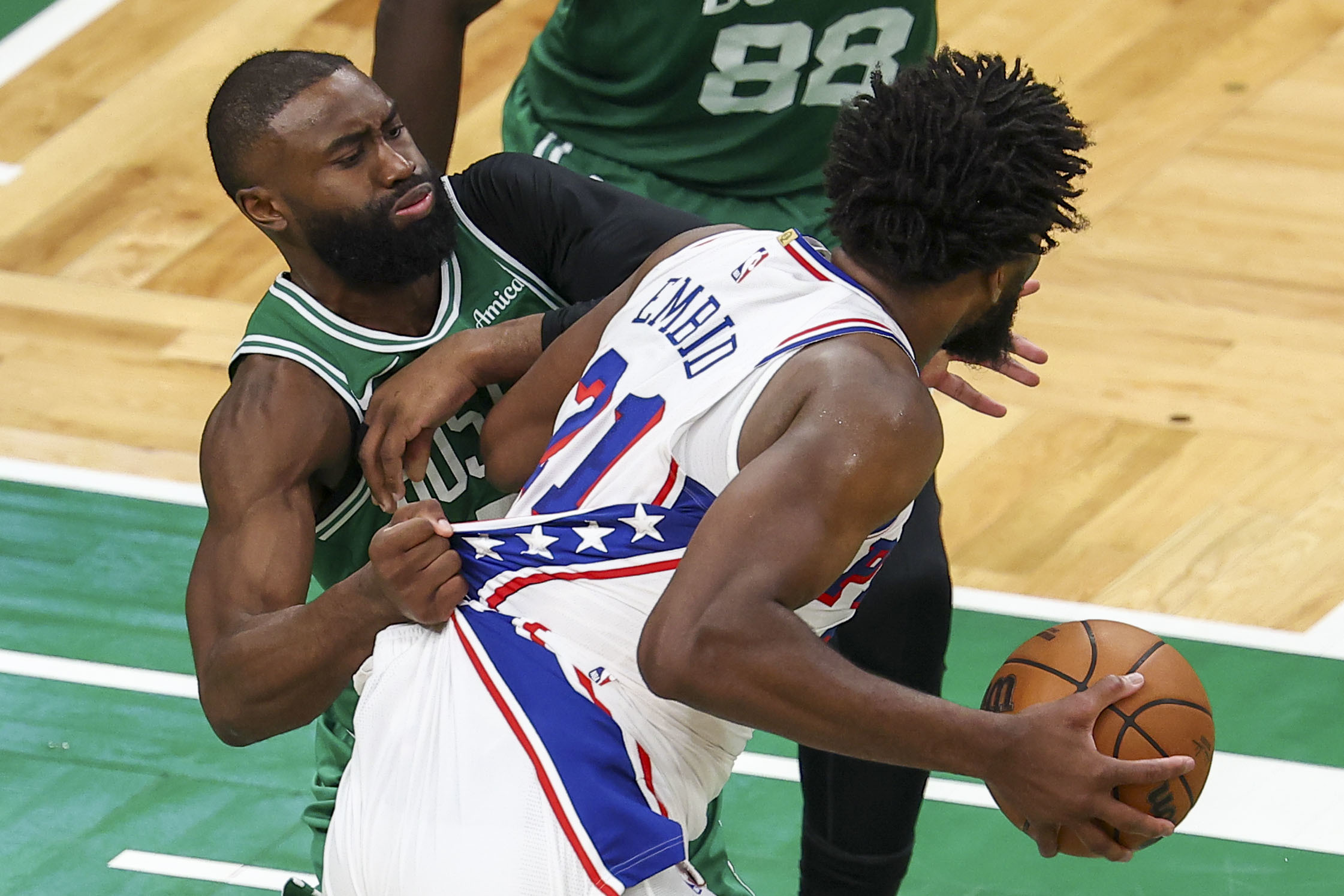
    Jaylen Brown spent 10 seasons in Boston after getting selected third overall by the organization in 2016.

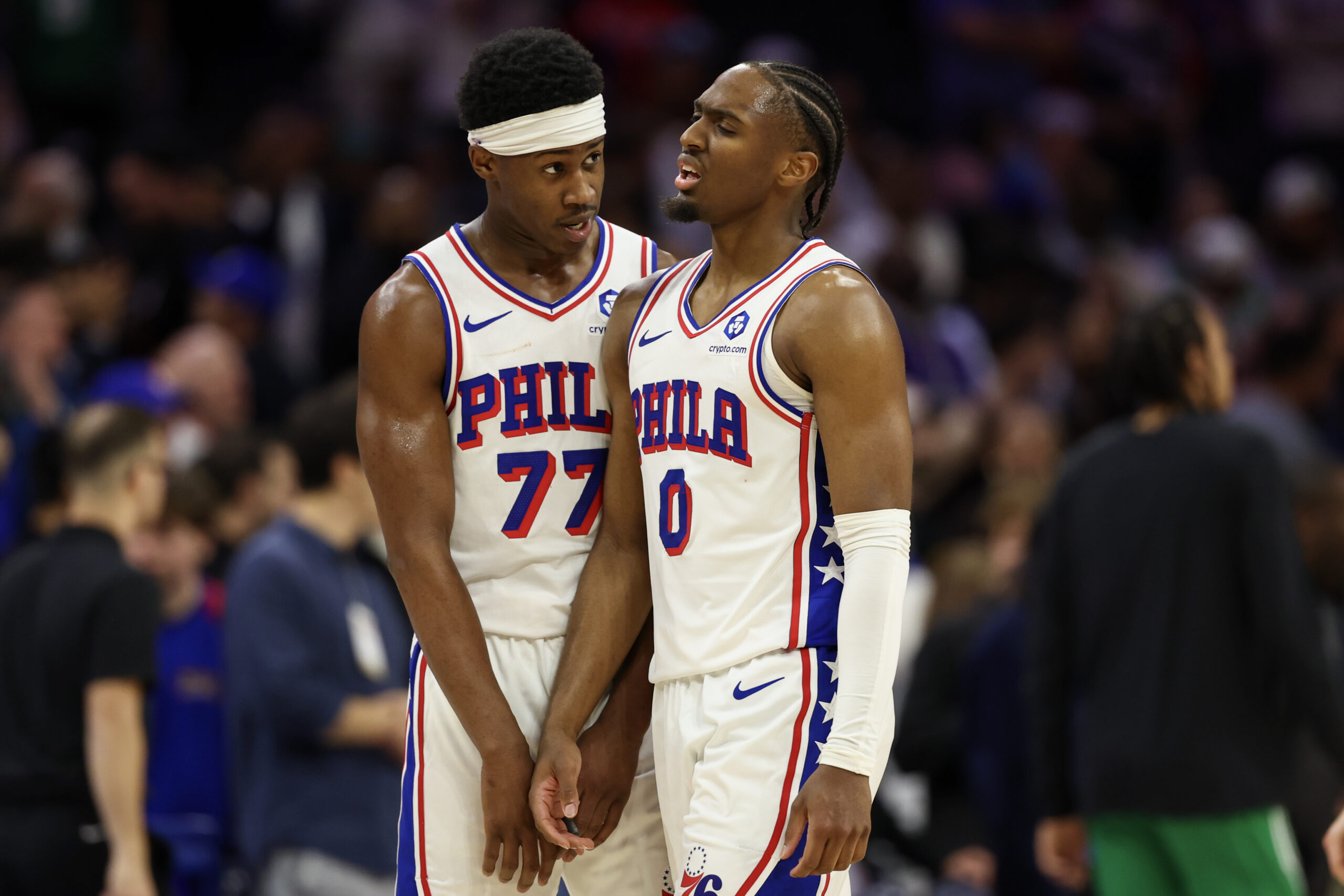
    From the Sixers’ perspective, the argument remains largely as it did in the immediate wake of the deal. More than practically any other player in the NBA, Brown at least renders believable the idea that the Sixers can contend for a championship over the next two years, given both their smallish backcourt of Tyrese Maxey and VJ Edgecombe and their preexisting financial condition. Brown’s size, athleticism, explosiveness and shotmaking are a much better fit at about $60 million over three years than George was for essentially the same AAV over two years. That, at the very least, means the Sixers will be doing something other than treading water and praying for a miracle for the duration of Joel Embiid’s contract, which is as immovable — and limiting — as any in the NBA.

    The Celtics were not bound by those constraints. Their desire to remain that way sits at the heart of the decision to trade Brown. Keeping his contract on their books could easily have led them to a fiscal and competitive cliff. A lot of the criticism of the Celtics seems to underestimate this reality.

    The criticism doesn’t account for the idea that Payton Pritchard is worth the entire amount of the four-year, $100 million extension he is eligible to sign. Over the last two seasons, seven guards in the NBA have a .600-plus true shooting percentage while attempting at least 20 shots per 100 possessions. Those seven are Shai Gilgeous-Alexander, Austin Reaves, Jamal Murray, Anthony Edwards, Luka Dončić, Desmond Bane, and … Pritchard.

    The criticism doesn’t account for the contract that former second-round pick Jordan Walsh could command as a free agent next summer. It doesn’t account for Hugo González potentially hitting his option year at the same time Pritchard’s current deal is expiring. The Celtics could have made it work for the next couple of years, sure. But they wouldn’t be able to do it the two years after that. The teams that lose sight of those years are the ones who end up where the Sixers were.

    The criticism of the Celtics also seems to under-assess the Celtics’ return. The 2028 draft pick they acquired is hugely valuable given the probability that it ends up as a maximum-odds lottery pick and the time-value aspect of its relative immediacy. The 2031 unprotected pick will be perfectly timed on a number of levels.

    I don’t have room to show you all of the work. But you should at least be able to accept that a basketball mind as astute as Stevens’ and an organization as accomplished as the Celtics have done the work. In a weird way, all of the factors that have generated such outrage are also evidence of how strongly the Celtics believed in their decision.

    Few teams have the stones to trade a player at the peak of his value. The Celtics’ skids were greased by Brown’s eligibility for a contract extension. More often than not, the word “No” is a first domino.

    “They convinced me this was the best way for us to win, and I got there, I did, but it was hard,” Chisholm said. “It was really hard. And I recognize this is a big, big move.”

    It is unquestionably a move that works in the Sixers’ favor. But that doesn’t mean it won’t work out for the Celtics, too.
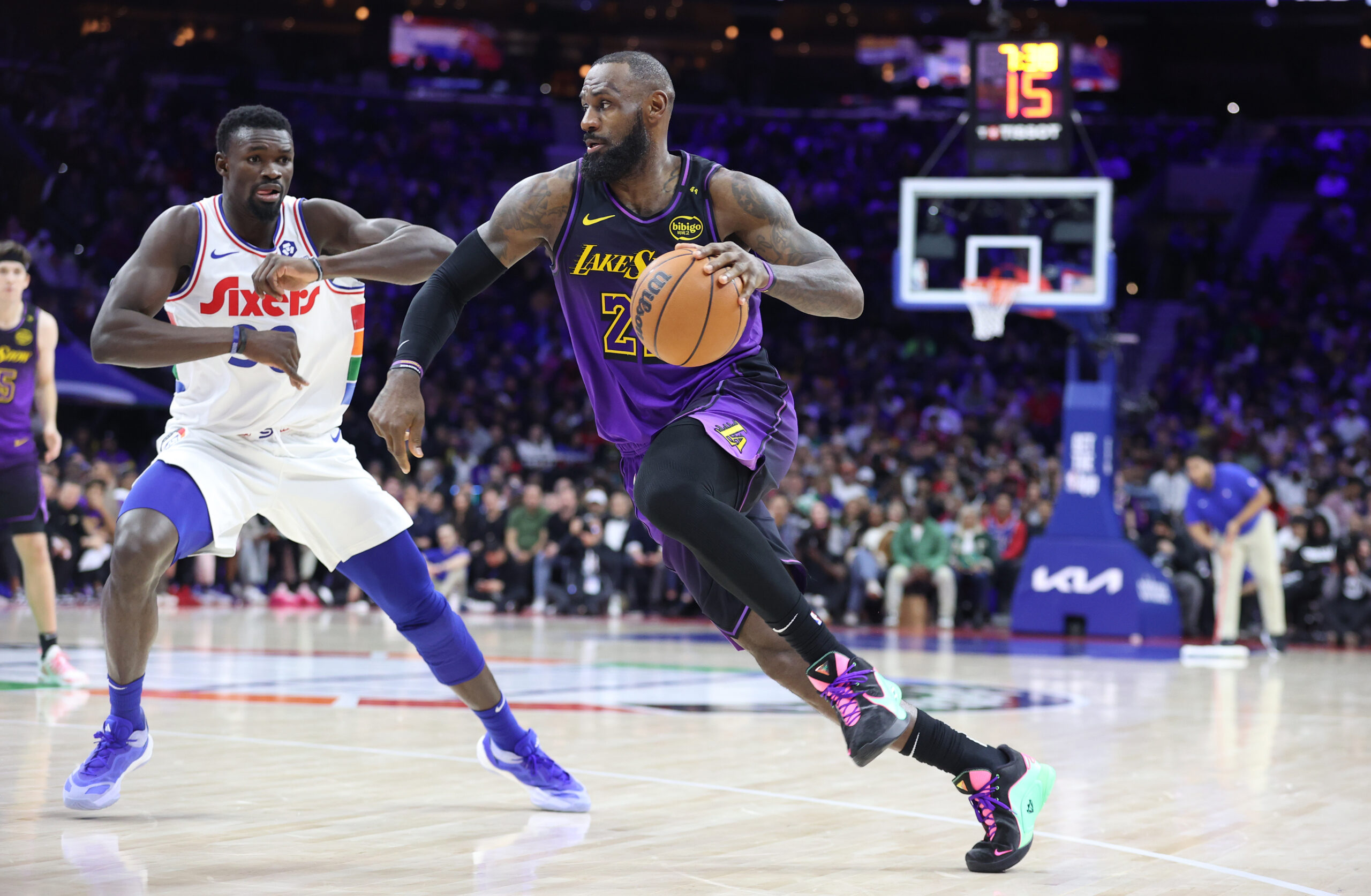
  • The one reason you can’t completely rule out the Sixers for LeBron James

    The one reason you can’t completely rule out the Sixers for LeBron James

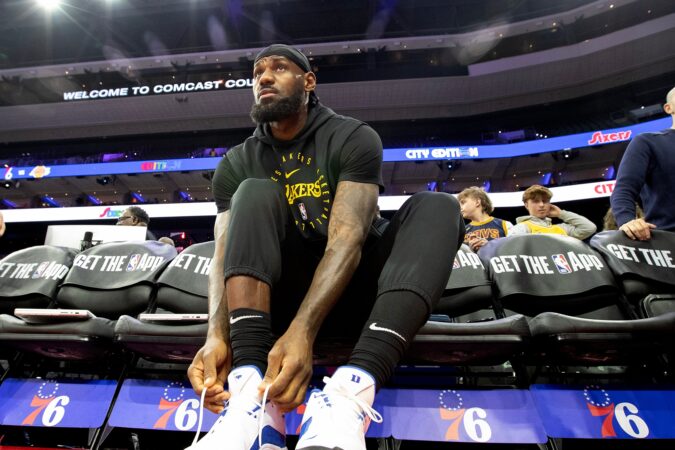
    Rich Paul said something the other day that is worth a little bit of reflection for anybody who rolls their eyes at the idea of LeBron James joining the Sixers.

    Paul, the NBA superagent who was essentially created by James and who also hosts a podcast alongside former ESPN personality Max Kellerman, claimed that the Knicks would have been James’ clear first choice had they not won an NBA title this season.

    “If the Knicks hadn’t have won, this wouldn’t even — there would be no board. He’d be going to the Knicks,” Paul said to Kellerman as he was breaking down James’ potential landing spots.

    The comment was both surprising in its bluntness and unsurprising in its conclusion. To anybody who had followed James’ career and psychologically profiled him from afar, it would have made perfect sense if he decided to go where he would be the biggest fish in the biggest pond and also have a chance to write a story that ended up near the top of the local history books.

    That probably sounds discouraging to anybody who had been holding out of picking Philadelphia from the list of 10-14 potential destinations Paul broke down for Kellerman. And let’s be clear, that’s probably the correct interpretation. Hey, we all love Philly. But it’s generally not a place for people who dream of places like New York, Los Angeles, and Miami.

    Except, there’s another way to interpret Paul’s comments, at least as it pertains to James’ psyche heading into his 24th season in the NBA. While it is impossible to overlook his clear affinity for the bright lights and big city, James also clearly cares deeply about his legacy and his place in the historical record. Neither the Clippers nor the Nets are on his list, after all. His desire for the Knicks would have been as much about the story as the setting. Not only would he have had a chance to become the first player to win four NBA titles with four different teams, he would have won each of them in a place where they meant something.

    Such motivation is perfectly reasonable. Inevitable, even. When a competitor spends two decades as the undisputed greatest player in his sport, he needs to find something else to compete against. For many of them, that something is history. James has accomplished more than almost all of the greatest of the greats, and thus needs to keep coming up with new historical challenges to overcome. Leading the Knicks to their first title in 50-plus years would have been the ultimate bucket list item. But Jalen Brunson did it first.

    The Sixers aren’t to Philly what the Knicks are to New York. As far as I know, Taylor Swift and Travis Kelce didn’t tour Xfinity Mobile Arena as a potential wedding venue. That being said, the Sixers do offer James a chance to do something novel. You can’t say that about many of his potential landing spots.

    What could James accomplish in Denver, Golden State or Boston? All have won championships within the last decade led by stars who’ve spent their entire careers with the organizations. Each has a significant edge over Philly if James’ goal is basketball nirvana. Playing alongside Steph Curry or Nikola Jokic or Jayson Tatum would be a hell of a lot of fun, and any of the three could arguably offer James a better chance at winning a title. But none of them offer him a chance to prove something one last time.

    In Miami and Cleveland, James has been there and done that. Miami would offer him a unique narrative symmetry along with a chance to play alongside Giannis Antetokounmpo. He went back to Cleveland and won a title with a totally different team from his first stint. Now, he can do the same in Miami. That’s almost as compelling as the prodigal son returning home to close out his career where his heart has always remained. The problem with both situations is the fit.

    Look, James would fit pretty much anywhere, even at 42 years old, which he’ll turn Dec. 30. He averaged 20.9 points, 7.2 assists, and 6.1 rebounds last season. His efficiency remains elite. He led his team to a first-round upset of the Rockets before getting swept by the Thunder. The question is whether he would enjoy playing basketball with James Harden in Cleveland.

    LeBron James averaged 20.9 points during the 2025-26 season.

    In Miami, the trio of LeBron, Giannis and Bam Adebayo might be too clunky to get it done given the Heat’s deficiencies in the backcourt and in overall depth. One can argue the Sixers with LeBron have a chance to be a much more enjoyable experience, and potentially much better team than Cleveland and Miami. Going home again comes with the risk of undoing some of the good feelings you carried with your initial departure. Does LeBron really want to risk ending his career in either city with disappointment?

    I’ll believe James is seriously considering joining the Sixers as soon as I see him shaking Mike Gansey’s hand in front of the cameras and fielding questions from reporters at the team’s practice facility in Camden. In the event he does not hold an introductory news conference this summer, I will believe he is joining the Sixers the moment I see him at training camp in a Sixers jersey. Even then, I might want to at least poke him with a finger to make sure my eyes do not deceive me.

    We’ve done this dance before, haven’t we? Once upon a time Ben Simmons was the Klutch Sports mentee and Joel Embiid was the rising superstar. It was only eight years ago that Josh Harris and Brett Brown climbed aboard the Starchaser Enterprise and flew out to California with the hope that they could sway James to sign with the Sixers. Somehow, they managed to express these hopes with a straight face. The result was little more than a needlessly expanded carbon footprint. The Sixers didn’t even get face time with James himself, and the four-time MVP wound up signing with the Lakers, as everybody had long expected.

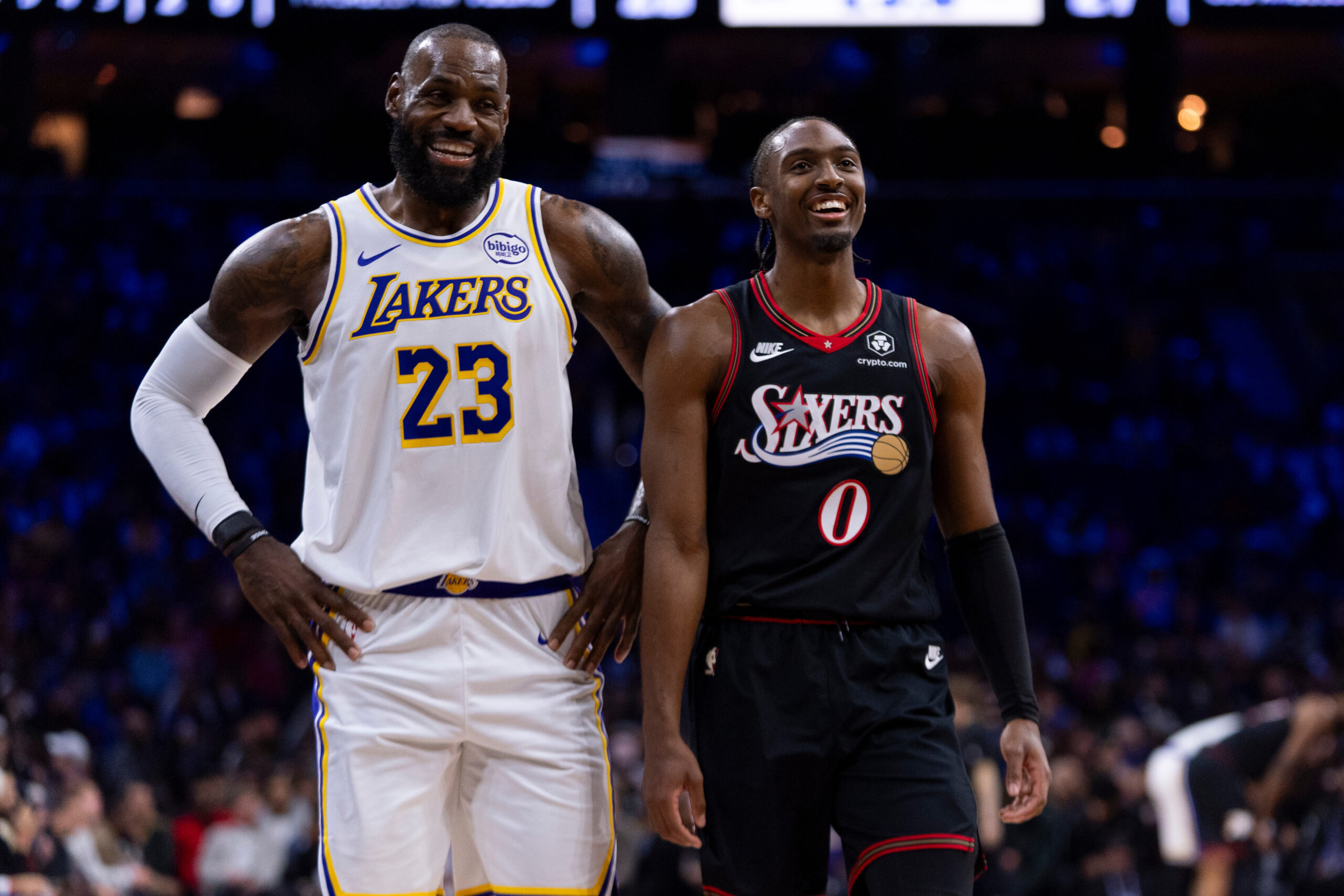
    LeBron James and Tyrese Maxey are both members of Klutch Sports.

    At this point, there is little reason to assume that things will play out any differently. The one commonality between all three of James’ free agencies is that they’ve all involved a level of protracted drama that, in hindsight, seemed at least partially contrived. In all three instances, James wound up in a place that looked like the most obvious option, at least in hindsight. The first time he left Cleveland, and went to a place where he could build his own superteam in America’s premier locale for the young, rich and famous. His return to Cleveland both rebuilt and burnished his standing as a hometown legend. The Lakers are the Lakers.

    No offense to James, and no offense to Gansey or Bob Myers or Tyrese Maxey or whoever else thinks their personal connection to the King is strong enough to convince him to spend what could be the last season or seasons of his career in a city that offers a tiny fraction of the prestige or narrative value of several of the other potential destinations he is allegedly considering after opting out of his Lakers contract.

    I’m not suggesting that anybody on the Sixers side is deluding themselves, and I’m not suggesting that James or Paul is feeding those delusions in bad faith. I’m sure Paul would be thrilled to see James team up with Maxey, another one of his clients at Klutch Sports. I’m sure James loves Maxey, who is impossible not to love, and it’s more than possible that he feels a genuine connection to Gansey, a fellow former Ohio schoolboy star who began climbing up the ranks of the Cavaliers front office around the same time James returned to Cleveland after his four seasons with the Heat. I’m far from sure that any of that will matter in the end.

    The Heat and Cavaliers make the most sense from an end-of-career narrative standpoint. The Warriors and Nuggets make the most sense from a pure basketball bliss standpoint. For James to choose the Sixers, he’d need sentiment, basketball bliss, a setting to take a backseat to his desire to put his singular imprint on a new city and a new organization, and to potentially leave both of those entities better off after he is gone than they were before he arrived.

    As long as the Sixers can offer him that, you can’t rule him out.

  • The Sixers just turned Paul George into Jaylen Brown and transformed themselves for an unbelievable price

    The Sixers just turned Paul George into Jaylen Brown and transformed themselves for an unbelievable price

    Well, aren’t we all a bunch of idiots?

    So much for the two timelines thing.

    And for the long, arduous process of building a contender piece by piece.

    So much for all of the hand-wringing about Kelly Oubre Jr. and Quentin Grimes and LaBaron Philon Jr.

    And about Mike Gansey, for that matter.

    The 76ers did the unthinkable on Wednesday. They did it to such an extent that it still isn’t thinkable. In fact, it’s barely believable.

    Not only did the Sixers come from out of nowhere to stun the NBA by acquiring Celtics superstar Jaylen Brown, and not only did they do it for a criminally cheap price, but they also somehow managed to ship out the remaining two years and $110 million remaining on Paul George’s contract.

    And, just like that, a new window of title contention has arrived.

    That’s the most important takeaway for Sixers fans. Brown transforms the Sixers in both the short and long term. The 2024 NBA Finals MVP and a sixth-place finisher in regular-season voting this year, the longtime Celtics wing is basically the exact player you would create in a lab if you were dreaming up the perfect star to maximize a team with Tyrese Maxey and VJ Edgecombe in the backcourt. He has the size, versatility, and defensive chops to help make up for however much of that they give away at the guard position. He is a straight-line player who can get to the rim through traffic with or without the ball in his hands. He is an adequate and willing three-point shooter who showed signs of being much more than that earlier in his career. He can alternate seamlessly between primary and secondary scoring roles. Basically, he is the exact player the Sixers would have been crossing their fingers to have a chance to draft at some point in order to make the Maxey-Edgecombe pairing a legitimate contender.

    Even if only half of that was true, the Sixers would have still been justified in making this deal. The unprocessable thing about this deal is the mind-bogglingly low price Gansey somehow managed to finagle from a Celtics team that doesn’t make many bad decisions.

    Sixers president of basketball operations Mike Gansey has gotten off to a strong start in Philly.

    Consider a deal that the Lakers and Jazz struck earlier in the day on Wednesday. In exchange for the right to sign restricted free agent center Walker Kessler, a zero-time All-Star who played just five games last season before undergoing shoulder surgery, the Lakers agreed to pay:

    • a 2031 unprotected first-round pick
    • a 2033 unprotected first-round pick
    • two first-round pick swaps

    That’s what the Lakers gave up for the right to sign Kessler to a four-year, $130 million deal.

    Here is what the Sixers will reportedly give up to acquire Brown:

    • a 2031 unprotected first-round pick
    • an additional first-round pick, TBD (initial reports suggest it will either be the Clippers’ unprotected 2028 first-rounder or the Sixers’ 2028 first-rounder, whichever is more favorable).
    • two second-round picks, one in 2028 and the other in 2030

    (It’s worth noting that the Kessler deal was struck by Jazz CEO Danny Ainge, the former Celtics president who once upon a time acquired Brown and Tatum while fleecing teams in the process.)

    Jaylen Brown will partner with Joel Embiid, Tyrese Maxey and VJ Edgecombe to lead a revamped Sixers roster.

    But the real coup de grace is the inclusion of George, whose contract many believed was under water to the point that the Sixers would’ve needed to attach a first-round pick just for some other team to take it onto their books. Maybe that was errant thinking about the rest of the league’s willingness to spend $110 million over two years on a 36-year-old who has played in 78 games over the last two regular seasons and has played in more than 56 games just once since 2019. Whatever the case, the Sixers should be thrilled.

    George is a tidy anchor for such a mind-blowing deal. The Sixers basically traded him for a much better player who is 6½ years younger. The cost for the move was less than what the Raptors traded for 35-year-old Kawhi Leonard (Brandon Ingram, Gradey Dick, two unprotected firsts, a pick swap, and change), who is in the last year of his contract and will be able to walk away if the Raptors don’t give him a huge contract extension into his late 30s.

    Even if the Celtics and the rest of the NBA knows or suspects something that the Sixers don’t, even if the trade doesn’t prove to be a game changer, it still doesn’t leave them a whole heck of a lot worse off than they would’ve been over the next couple of years with George.

    Heading into the offseason, it sure looked like the Sixers would need to be in a mode of making the best of things and preparing for the day when George would move on and free up some payroll maneuverability. Instead, they’ve vaulted themselves into the realm of top-end contenders for the next three seasons.

    On Wednesday evening, FanDuel had the Sixers tied as the fifth favorite for the NBA title at 22-to-1, trailing the Spurs (2.4-to-1), Thunder (2.5-to-1), Knicks (8.5-to-1), and Celtics (14-to-1).

    Their immediate title hopes still hinge largely on the availability of Joel Embiid. The difference now is that they will not need Embiid to be anything close to his MVP prime in order to be taken seriously. Even if he is some lesser form of who he was last postseason, the Sixers can make an argument for having the edge in top-end talent regardless of matchup. Even if Embiid is absent entirely, they almost certainly should be expected to challenge for a top-four playoff seed.

    Are there ways this could go wrong? Sure. The loss of the 2028 pick would be particularly acute for a team that was presumed to need two or three solid drafts to get itself ready for the post-Embiid era. The Sixers’ depth is still a major question mark. They have a conspicuous lack of volume-capable three-point shooting on the wing. We have yet to hear Brown’s thoughts at having been traded to a place like Philadelphia, on a team with two young ball-dominant scorers and Embiid. At the same time, they can always pivot if it doesn’t work.

    There is always risk. The question is the price of it. For the Sixers, there wasn’t much to decide.

  • Dean Wade makes a ton of sense for the Sixers

    Dean Wade makes a ton of sense for the Sixers

    There is more than a little symbolism in Mike Gansey’s first free agent signing as 76ers president.

    In handing a four-year, $39 million contract to veteran forward Dean Wade, the Sixers didn’t just add a veteran glue guy whom Gansey helped to discover during the latter’s tenure as an assistant general manager in Cleveland. They also effectively closed the door on at least one and potentially both of Daryl Morey’s shrewdest wins as a roster-builder.

    Goodbye, Quentin Grimes.

    Good day, Kelly Oubre Jr?

    Time will tell whether Day 1 of NBA free agency was a meaningful step in an intentional direction or just a modest change that will make the Sixers’ roster a little more sensible next season. Either way is fine.

    While many will focus on Gansey’s personal connection to Wade, the 29-year-old iwould have made a lot of sense on virtually any incarnation of the Sixers in the post-Ben-Simmons era. The rare stretch four who adds big value on defense, Wade developed from an undrafted free agent to a critical playoff rotation piece in Cleveland by excelling at a lot of the dirty work that exceeds the capabilities or willingness of many 6-foot-9 shooters. This postseason, the Cavaliers outscored opponents by a net of 16.2 points per 100 possessions when Wade was on the court versus off it. That’s impressive stuff.

    Wade can play small alongside a couple of bigs the way he did with Evan Mobley and Jarrett Allen. He can play a power four alongside a trio of guards, as he sometimes did with James Harden, Donovan Mitchell, and Sam Merrill. He could even give Nick Nurse an option as a small-ball five, though a lot depends on the other pieces the Sixers will presumably add this offseason.

    Wade is hardly a prolific scorer. Among players who have averaged 20 minutes per game in 200+ games over the last four seasons, only Nicolas Batum has scored fewer than Wade’s 5.4 points per game. But he is an effective enough shooter — .375 on about six three-point attempts over 100 possessions this postseason — to create space for others on the offensive end.

    That’s all that’s needed for a team with a couple of ball-dominant scorers in the backcourt. That’s who the Cavs have been in the Donovan Mitchell era, whether paired with Darius Garland or James Harden. It’s who the Sixers figure to be with VJ Edgecombe and Tyrese Maxey.

    There aren’t many value plays on the free agent market. Wade sure doesn’t count as one even at a modest $10ish million per season. But if the Sixers were going to overpay by a couple of million bucks, it made sense to do it for a player with the size and versatility that will be an absolute necessity on the wing with Maxey, Edgecombe, and this year’s first-round draft pick, Labaron Philon Jr.

    Sixers guards Kelly Oubre Jr. and Quentin Grimes are free agents this summer.

    When the Sixers drafted Philon, Gansey said the move was not an indication that the team would move on from Grimes, whom Morey acquired from the Mavericks in a low-cost trade in 2025, and who played well enough that year to enter free agency looking for a serious contract. Grimes was less impressive while playing out 2026 on a qualifying offer, but still agreed to a $60 million deal with the Lakers.

    Oubre could still end up back in Philly, at least according to the math. The Sixers would maximize their available payroll by re-signing Oubre and then using part of the remaining MLE to add another player. Doing so could create some logistical difficulties during the season, and perhaps limit their trade possibilities, given that they’d be hard-capped at the luxury tax line.

    Sixers president of basketball operations Mike Gansey is leading his first free agency in Philly.

    With Oubre reportedly meeting with five teams on Tuesday, the Sixers could be better off focusing on using the rest of their MLE on a player who offers them a better mix of size, shooting, and affordability, not to mention consistency. That’s a difficult combination to find, of course. Retaining Oubre would leave the Sixers with a competitive starting five when Joel Embiid and Paul George are healthy and a potentially competent one even when one of the two veterans is out.

    The important thing is that Gansey’s focus remain as much on the world beyond 2026-27. Wade fits that bill. He will be 33 years old at the end of this contract, when he will hopefully be a solid role player on a championship team. The goal now should be to find the younger versions of Wade: guys you might one day re-sign for a lot more money than you initially needed to give them. It is a difficult thing to develop, grow, and compete all at the same time. But that needs to be the goal.

  • Bryce Harper has proven he is still elite. Now, it’s Dave Dombrowski’s turn.

    Bryce Harper has proven he is still elite. Now, it’s Dave Dombrowski’s turn.

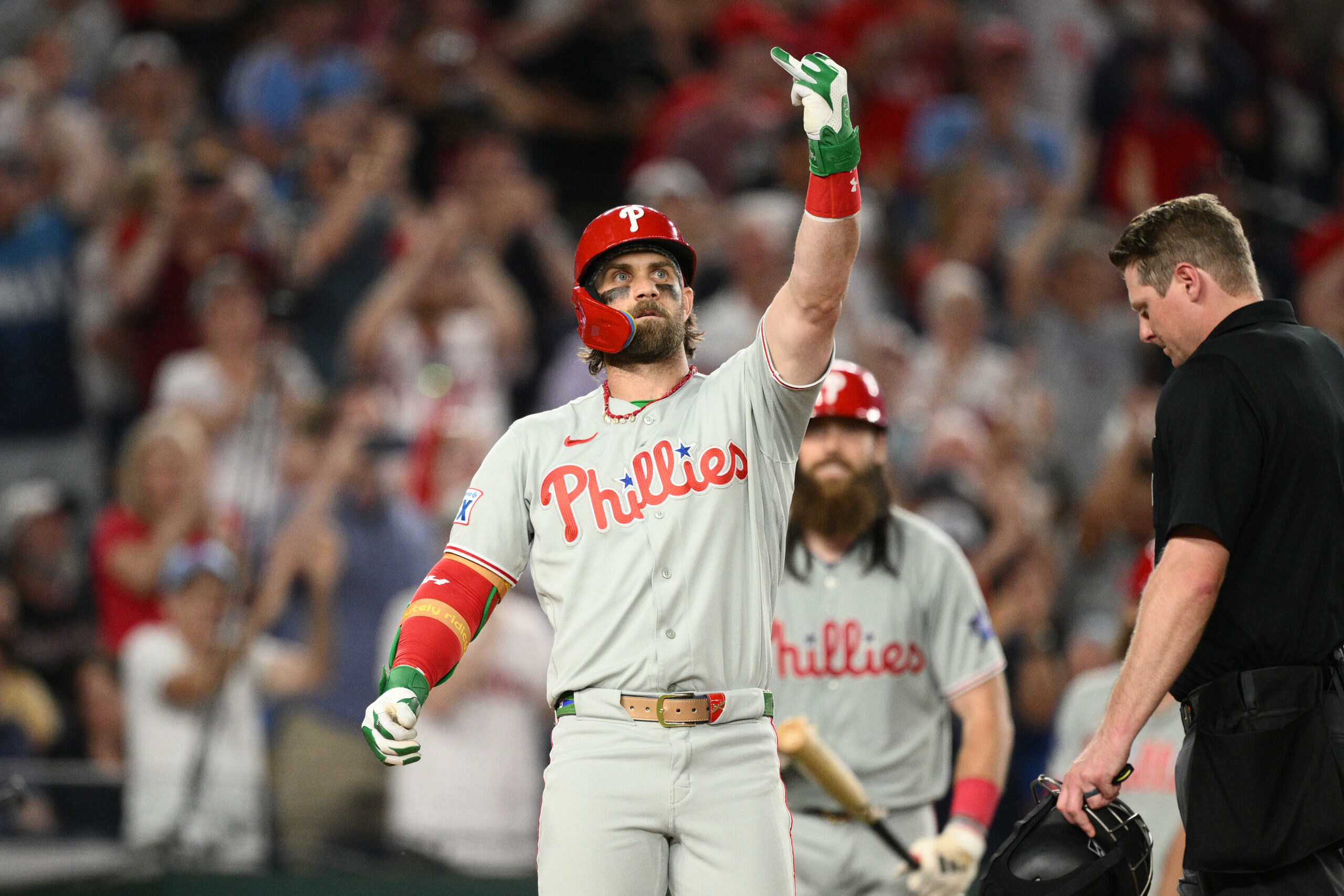
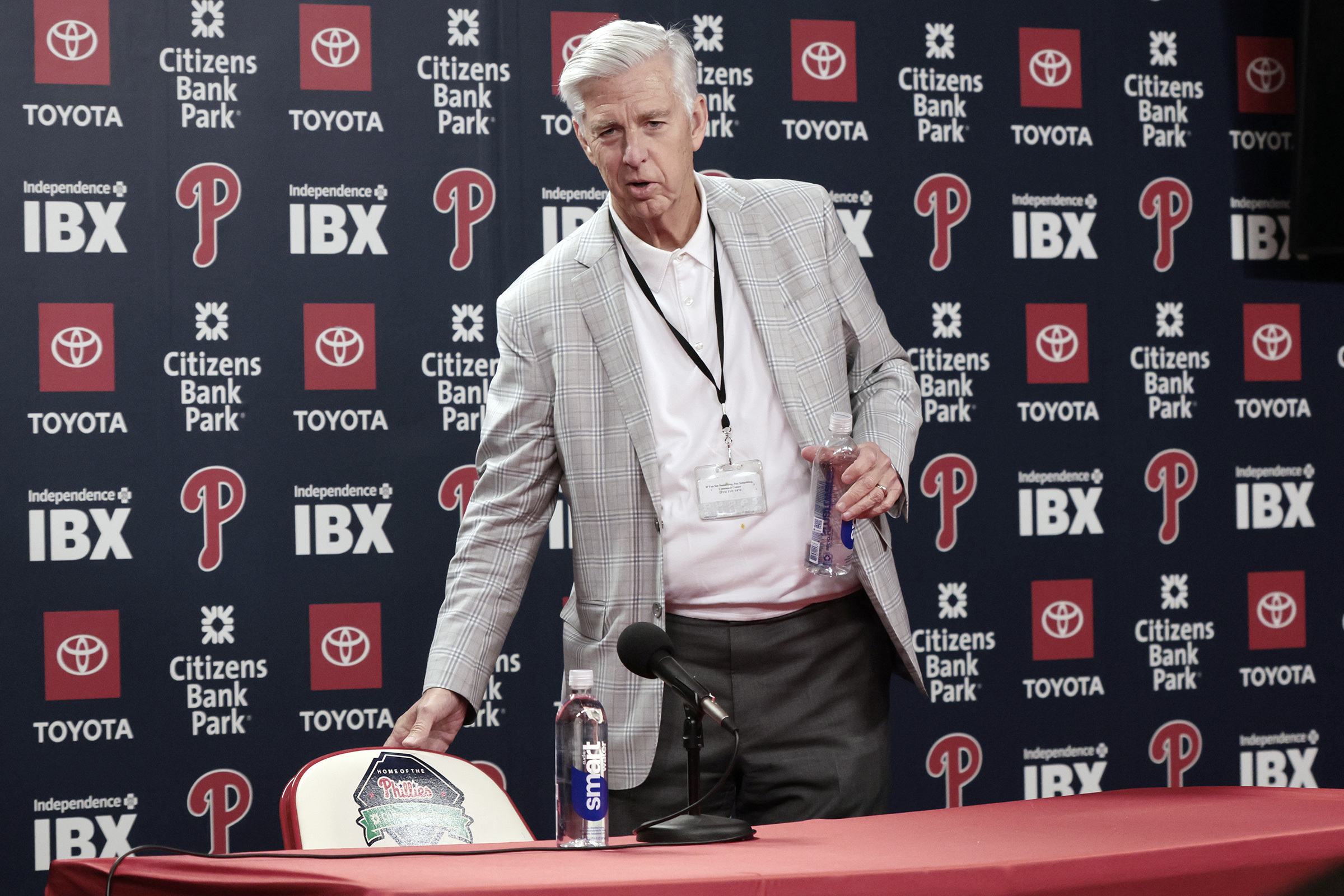
    The funny thing about Bryce Harper’s 2026 world-wrecking tour is that he has somehow managed to both vindicate his boss and hang him over the dunk tank. There isn’t an executive in Major League Baseball that should be feeling more pressure than Dave Dombrowski now that Harper has answered fully and satisfactorily the infamous question that the Phillies president posed this offseason.

    “Can he rise to the next level again?‚” Dombrowski asked about Harper after the Phillies’ postseason loss to the Dodgers. “I don’t really know that answer.”

    Eight months later, Dombrowski should know it better than anyone. The Phillies’ personnel boss has spent 84 games watching Harper bail him out of another failure of an offseason. One year after the Phillies’ superstar posted an .844 OPS that was his lowest since 2016, his current .915 OPS would be his best since 2021, when he hit .309/.429/.615 with 35 home runs en route to winning his second MVP.

    Harper’s 19 home runs in his first 83 games were his second-most as a member of the Phillies. His .391 wOBA ranked eighth in the major as of Saturday. His .278/.379/.536 batting line is pretty much exactly his career baseline. It is a lofty baseline. You might even call it elite.

    While Harper might argue that retribution is a dish best served raw (like milk), his performance this season actually lends some credence to his boss’ offseason critique. Harper isn’t proving Dombrowski wrong. He is proving him right.

    Fact is, Harper wasn’t an elite player in 2025. Between 2021 and 2024, Harper was one of five players in the majors with a wOBA of .390+. The other four were Aaron Judge, Shohei Ohtani, Juan Soto and Yordan Alvarez. Add in Ronald Acuña Jr., Freddie Freeman, and Mookie Betts, and those were the truly elite hitters in Major League Baseball.

    Bryce Harper has hit 19 home runs this season.

    In 2025?

    Harper’s .361 wOBA ranked 25th, behind guys like Ramon Laureano (.364), Pete Alonso (.368) and Geraldo Perdomo (.370). That was Dombrowski’s whole point. You can certainly question whether it was an appropriate one to make. The under-the-hood numbers suggested that Harper’s “down” year was mostly attributable to chance.

    There weren’t any significant dips in his hard hit rate or his strikeout rate or his bat speed. He showed fewer signs of regression than most 32-year-old hitters. The Phillies could not have hoped for a better return on the first seven years of the 13-year, $330 million contract that Harper signed in 2019. As the old saying goes, don’t look a gift horse in the mouth and tell him he isn’t elite.

    At the same time, Dombrowski’s assessment was correct. In 2025, Harper’s production wasn’t in the same realm as a Judge or a Soto or an Ohtani. It just wasn’t. He was still a very, very good player. He just wasn’t a singular one.

    Here in 2026, Harper is reminding us just how much of an impact he can make when he is elite. The Phillies have been the best team in baseball since the beginning of May despite a lineup that has five regulars who have been 30% worse than league average as measured by OPS+. Harper’s 146 OPS+ is more than twice as high as those of four of the six guys who hit behind him in the lineup.

    The onus is now on Dombrowski to do his part.

    How active will Dave Dombrowski and the Phillies be at the MLB trade deadline?

    As good as the Phillies have been since replacing Rob Thomson with Don Mattingly, any realist should wonder how good they’d be with a roster that wasn’t completely reliant on two MVP seasons at the plate, two Cy Young seasons in the rotation, and one of the best closers in the game … and Brandon Marsh. It would be foolish for anybody to think that formula can carry them through a month of playoff baseball.

    With just over a month to go until the trade deadline, Dombrowski and his front office better have a serious plan for broadening the team’s potential contributors for a postseason series against the Dodgers or Braves.

    window.addEventListener(“message”,function(a){if(void 0!==a.data[“datawrapper-height”]){var e=document.querySelectorAll(“iframe”);for(var t in a.data[“datawrapper-height”])for(var r,i=0;r=e[i];i++)if(r.contentWindow===a.source){var d=a.data[“datawrapper-height”][t]+”px”;r.style.height=d}}});

    Even with Marsh’s All-Star-worthy season, the Phillies’ outfield entered Sunday with the sixth-worst collective OPS in the majors. At catcher, theirs is the second-worst OPS. They rank in the bottom five at third base and shortstop and are 23rd at third base. But, hey, other than that they’ve been great.

    Right now, Dombrowski’s offseason looks like a near-total failure. Adolis García, J.T. Realmuto, Andrew Painter, Brad Keller, Justin Crawford — all received his stamp of approval as he tinkered with a roster that had suffered three straight playoff disappointments.

    Even if you are willing to credit Crawford with being a perfectly adequate bottom-of-the-order hitter at a premium position in center field, the aggregate output of the offseason maneuvering still qualifies as a man-made disaster.

    It may not be now or never. But it is getting close. The Phillies owe it to Harper, Schwarber, Zack Wheeler, Cristopher Sánchez and Jhoan Duran to aggressively address the holes that threaten to undermine one of the greatest efforts we’ve ever seen from five superstars in one season.

    Harper is still elite.

    The jury is out on Dombrowski.

  • First-round pick Labaron Philon Jr. will make the Sixers more fun, and that counts for something

    First-round pick Labaron Philon Jr. will make the Sixers more fun, and that counts for something

    There’s a downside to the championship-or-bust mentality that permeates this city. The further one looks into the future, the less visceral the present becomes. One of the local radio stations posted a poll the other day. It asked Phillies fans if they were enjoying the team’s current run of success, or if they were waiting for October. The question was more than fair. Incisive, even. Anyway, are you enjoying your summer or is it just a prelude to winter?

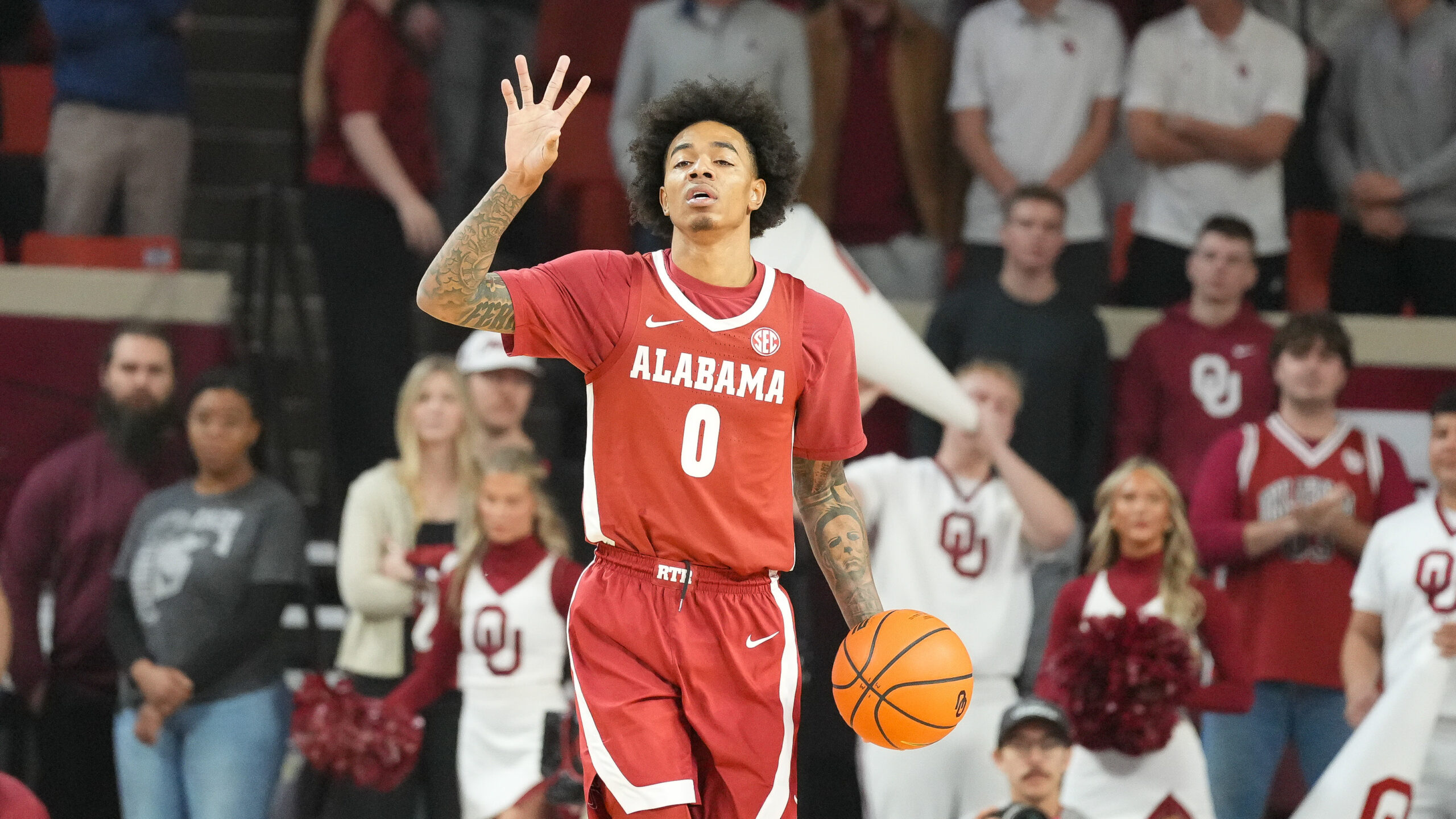
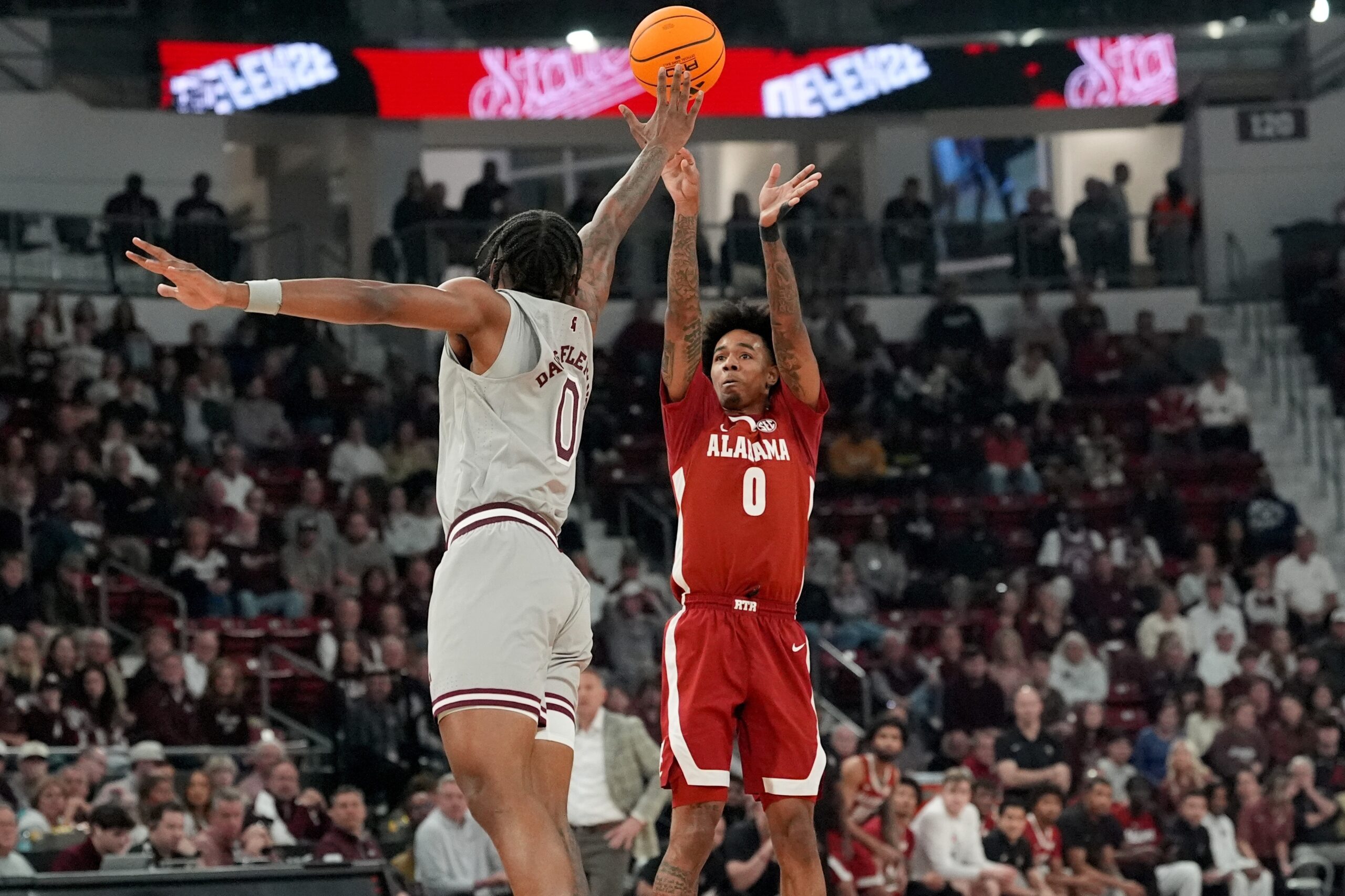
    I’m thinking about these things with regard to the Sixers’ decision to spend a first-round pick on Labaron Philon Jr. By all accounts, the organization made a no-brainer of a move in selecting the former Alabama star. Most experts ranked Philon much higher than the 22nd-best player in the draft. An offensive dynamo who averaged 22 points and 5 assists in his sophomore season, the 20-year-old was available to the Sixers thanks to a draft that was deep on overall talent and especially so on talent matching Philon’s profile. It is rare for a playoff team to draft a player as late as No. 22 and expect him to contribute meaningful minutes as a rookie. It is even rarer to expect him to do so in dynamic fashion. The Sixers expect both out of Philon.

    “My initial thoughts are he’s a really talented scorer, right?” Sixers coach Nick Nurse said on draft night. “Really, really fast and explosive and can really, really get it in the bucket.”

    And yet …

    The Sixers selection of Philon did not come without some raised eyebrows, most of them from folks wondering about the end game. Didn’t the Sixers just trade away Jared McCain, another undersized guard whose upside would be capped by his inability to share the court with Tyrese Maxey and VJ Edgecombe? Is Philon really the kind of player who will meaningfully improve the Sixers’ chances of fielding a championship team around Edgecombe and Maxey after Joel Embiid and Paul George are gone? Where, exactly, does Philon fit in a world where the best NBA teams are physical and positionless and can switch on defense 1 through 5?

    The answer: who cares.

    The healthiest way to look at the Sixers right now is to forget about the bigger picture. They are not chasing a championship right now. Not next year, anyway. They are no longer all-in. The mission statement is no longer parade-or-bust. The Sixers have operated in that mode for most of the last decade. It is exhausting even when it is warranted, which it currently is not.

    Could they surprise us? Sure, there’s a chance. It would involve a lot of ifs: Edgecombe taking a big Anthony Edwards-sized leap toward his full potential, Maxey continuing to take his remarkably consistent steps toward greatness, Embiid and George consistently being the players they were when they were at their best in the postseason. If all of that happens, then, yeah, maybe the Sixers could belong among the Knicks and the Pacers and the Heat and the Cavs and the Celtics and have as good of a shot as any of them at the NBA Finals. Maybe they could outpace the Hawks and the Hornets and the Wizards and the Raptors. Sure. If everything breaks right, then maybe they could.

    Mike Gansey said first-round pick Labaron Philon Jr. has “got good instincts, good hands.”

    The more likely scenario is that the Sixers can be a fun team to watch on a nightly basis, a team that can carry a city through late-winter doldrums between the Super Bowl and opening day. That should be their goal right now. Build toward a championship, and put out a good product while doing so.

    The strongest argument for Philon is that he can play a significant role in that mission. Can a 6-foot-2, 176-pound guard have a role on a championship team that is built around Maxey and Edgecombe? Sure. Miles McBride had a role on a team led by Jalen Brunson. The Thunder traded for Jared McCain despite having Cason Wallace, and then they drafted Bennett Stirtz. De’Aaron Fox entered the NBA weighing less than Philon with similar length measurements. Likewise with Monte Morris, who averaged over 20 minutes per game in the Western Conference finals while playing alongside Jamal Murray and Gary Harris.

    “He’s on the slighter side — he has to get stronger,” Gansey said. “But if you look at his freshman year at Alabama, he really guarded. I think this year he had to carry a huge offensive load, so I think he took a little step back there, but I know it’s in him. He’s got good instincts, good hands. He’s tough. He’ll get into people. He’s competitive. We just can’t have enough guards. In Cleveland, we needed guards, because it’s the playoffs, it’s half court, you need to go get a bucket. I think Labaron can go get one any time he wants.”

    That last point is a significant one. Buckets are the point of basketball. It is fun to watch guys who can get them at will. McBride is fun to watch. McCain is fun to watch. If Philon is the guy McCain was for the Thunder this postseason, then the Sixers will at least have two additional years of him plus a few extra second round draft picks.

    “You need as many guards as you can that can go create a shot,” Gansey said. “Tyrese was No. 1 in minutes last year, VJ was up there as a rookie … we need depth at that guard position. I think he can come in and play some minutes and take a load off those two. I think he can play with Tyrese a little bit.”

    If that’s what happens, then it is a win, even if it isn’t a direct line to a title.

    The NBA has always been the pro sports league whose fans are most susceptible to the existential malaise that can accompany the clear understanding of a team’s place in the grand scheme of things. Only 12 of the last 36 championships have been won by a team that was not led by Michael Jordan, Kobe Bryant, LeBron James, Steph Curry, or Tim Duncan. Dating back to 1991, seven teams account for 28 of 36 titles. That reality is what inspired The Process. The Process led to a desperate quest to make it pay off. The best way to watch the Sixers the next couple of years will be with a little less desperation.

  • Why Mike Gansey’s sound process in selecting Labaron Philon Jr. bodes well for Sixers’ future

    Why Mike Gansey’s sound process in selecting Labaron Philon Jr. bodes well for Sixers’ future

    At the broadest, most general philosophical level, Mike Gansey aced his first test as Sixers president on Tuesday night. He looked at his draft board, saw a player he’d graded as the best talent by a significant margin, and then he selected that player. The process was sound.

    As insignificant as it may seem, plenty of front offices mess it up. They prioritize things like roster construction or positional fit and they allow motivated reasoning to cloud the reality that all of the perfect players are long gone by the 22nd pick in the NBA draft. You must defy the odds just to select a player who ends up deserving a spot in a playoff rotation, let alone one who can make a decisive impact at a position of need. In Labaron Philon Jr., a sophomore guard from Alabama, the Sixers saw a talent so obvious that they didn’t feel like there was a choice to make.

    “He’s someone that fell into our lap, so to speak,” Gansey said.

    Of course, the real test is whether they are right. Not just about Philon, a dynamic ballhandler and shooter who averaged 22 points per game last season and who some mock drafts had going in the top 15. Gansey and his front office must also be correct in their evaluations of the players they could have drafted instead of Philon. Zuby Ejiofor, Chris Cenac Jr., Joshua Jefferson, to name a few. Each of those three possesses the size that Philon lacks and that a roster like the Sixers’ will eventually need on the wing alongside Tyrese Maxey and VJ Edgecombe. Each went off the board in the six picks after Philon. Two of them went to Eastern Conference playoff hopefuls (Ejiofor to the Hawks at No. 23, Cenac to the Celtics at No. 27). History will be written by the teams that got it right.

    All you need to know about how the Sixers feel about Philon can be derived by the fact that they saw fit to draft him despite the overlap in skill sets with Maxey and Edgecombe and also the player they traded away for the pick they used to draft the Alabama guard. When Daryl Morey dealt Jared McCain to the Thunder with ownership’s approval, the thought was that the 2024 first-round pick’s long-term utility would be capped by his inability to play alongside two other smallish guards. He and Philon are hardly carbon copies of each other. Philon is a little longer in terms of standing reach and wingspan, and he is a quicker, more dynamic playmaker with the ball in his hands. But they both exist in the same general bucket, with the same limitations with regard to Maxey and Edgecombe.

    Sixers first-rounder Labaron Philon Jr. averaged 22 points in his final season at Alabama.

    Speaking to reporters after the conclusion of Tuesday’s first round, Gansey and Sixers coach Nick Nurse both spent a lot of time talking about how similar Philon is to Maxey and Edgecombe.

    “He’s another fast, kind of exciting guy that kind of plays a lot like Tyrese and VJ,” Nurse said. “It’s another guy with the speed, athleticism, quickness, deep range, some creativity with the ball. He’s a pretty good pick-and-roll player already, probably more advanced than a lot of guys coming out. I think he sees all the pieces of the pick-and-roll.”

    Nurse and Gansey both hemmed and hawed when asked whether they envisioned using all three of their young guards on the court at the same time.

    “I don’t see a lot of minutes, but maybe in certain situations we can,” Gansey said, while also deferring to Nurse.

    Nurse sounded equally skeptical.

    “I think it’s a little early to answer that,” he said.

    Both downplayed the significance of the question. Games are more than long enough to accommodate three guards playing starter minutes at staggered intervals. Maxey and Edgecombe both finished among the league leaders in playing time last season, perhaps counterproductively so. In a world where each averages 32 minutes per game, that would leave another 32 where one or the other is on the bench.

    “My mindset is he’s talented,” Nurse said of Philon. “Let’s figure out how we’re going to get him on the floor.”

    Nick Nurse and Mike Gansey saw a lot of similarities between new Sixer Labaron Philon Jr. (right) and VJ Edgecombe and Tyrese Maxey.

    The Sixers will have a good problem on their hands if Philon ends up good enough to warrant more minutes than are available. It will mean the minutes he does play are valuable. The Knicks won an NBA championship with Jalen Brunson, Miles McBride, and Jose Alvarado. The Spurs had Dylan Harper playing starter minutes off the bench behind De’Aaron Fox and Stephon Castle. The Thunder had a slew of guards contribute, including the smallish McCain and Cason Wallace.

    “You look at our roster, we need help at every position, one through five,” Gansey said. “Obviously, we have the big four, and I think he fits. He’s another guard so now we can kind of focus in other areas on the roster.”

    However Philon turns out, the pick does offer us a little more evidence on what to expect out of Gansey and this Sixers roster. They didn’t use the No. 22 pick to select a player who might someday help alleviate the roster’s clearest current need (size on the wing). They didn’t trade it for a veteran who might’ve made them better in the short term. They didn’t use it to entice a team to take on Paul George’s contract. They did what a team in their position should be doing. They had an opportunity to draft a player they think will someday belong in a championship-caliber rotation, and they availed themselves of that opportunity. That is how it is going to need to be done: piece by piece.

  • Mike Gansey should consider drafting Zuby Ejiofor at No. 22, or trading up for Morez Johnson, or …

    Mike Gansey should consider drafting Zuby Ejiofor at No. 22, or trading up for Morez Johnson, or …

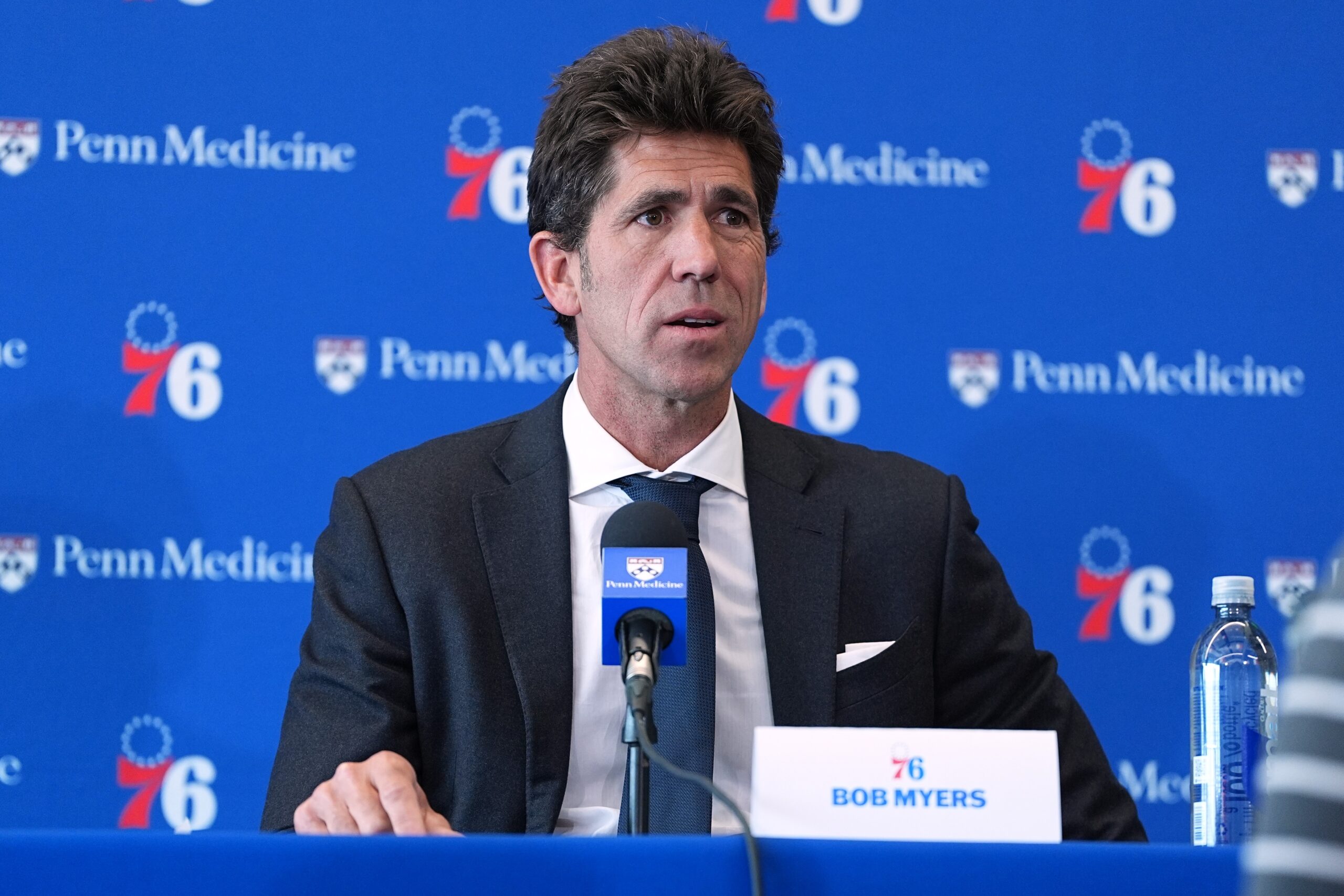
    The tale of the tape is no tale at all for Mike Gansey and Bob Myers. The last month-and-a-half has yielded about 60 minutes of on-the-record comments from the Sixers’ new personnel regime and about zero seconds of actual insight into their immediate plans for the roster.

    Perhaps there is some gamesmanship involved. In a world where information is currency, the first goal is to keep your competition in the red. More likely, the Sixers realize that they need to be in read-and-react mode.

    “These answers are not simple,” Myers said last month after the Sixers announced the hiring of Gansey as their new president of basketball operations. “You wake up in the middle of the night thinking about these things. And when you get fortunate enough to win, it’s all that work and toil that make it worth it.

    Bob Myers, president of sports for Harris Blitzer Sports & Entertainment, says that right now the moves being made within the Sixers organization need to be methodical ones.

    “But there’s nothing more challenging than winning. You can’t buy championships. You have to go through it together. Each decision you make, each transaction you make, is hopefully moving in that direction. But that’s why you do it. That’s what makes it fun.”

    The Sixers’ lack of clarity about their short-term direction has added a layer of intrigue to Tuesday night’s draft. Most years, the No. 22 pick wouldn’t be a major plot point in the trajectory of a roster. The last three players drafted at No. 22 overall have combined to play 116 games in their six NBA seasons. This is not the range where a team expects to draft a future playoff rotation player, let alone a star.

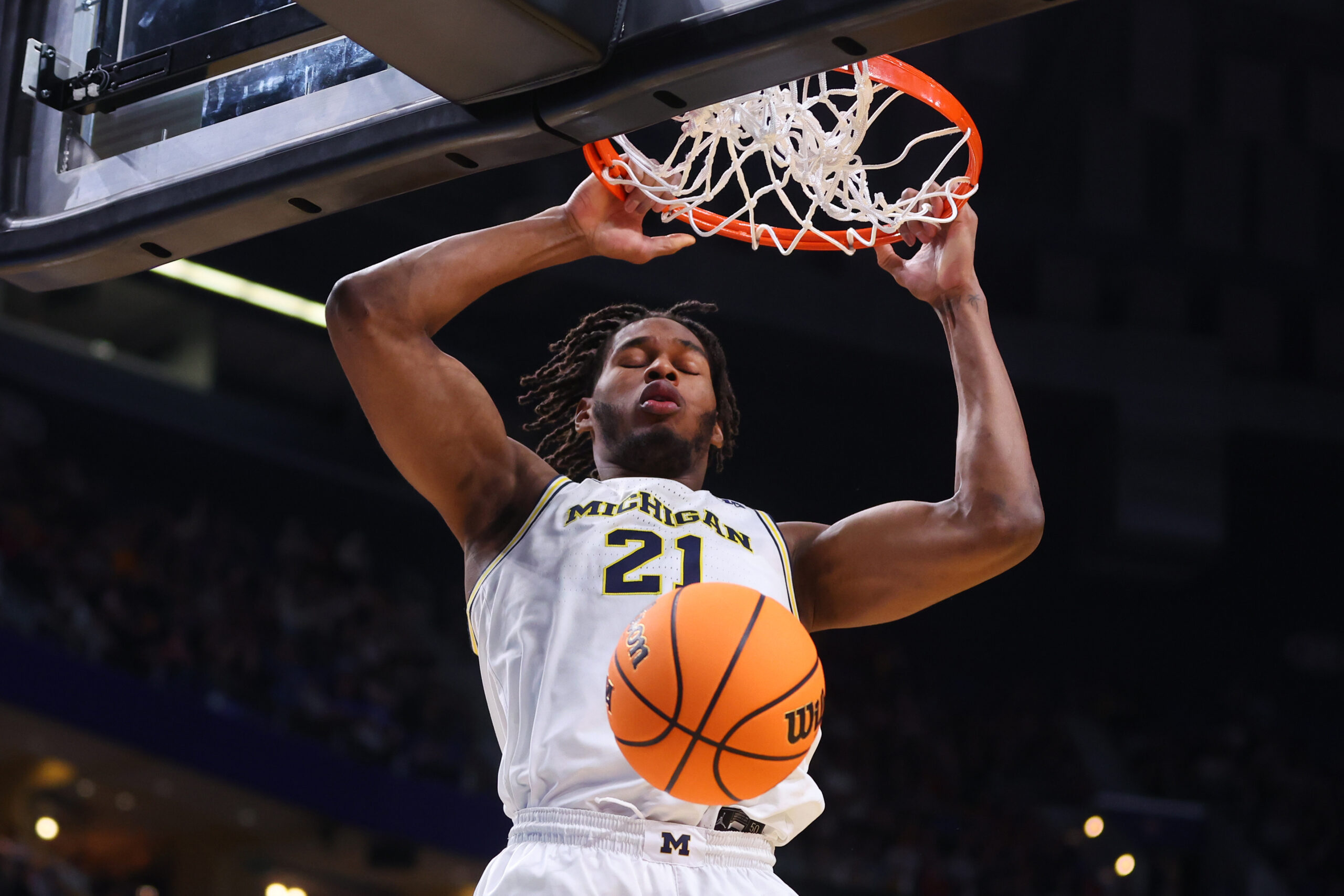
    This year’s draft is better than most. Maybe not to the extent the experts once projected, especially given the lack of a clear No. 1 between BYU’s AJ Dybantsa, Kansas’ Darryn Peterson, and Duke’s Cameron Boozer. But the draft is clearly deep, with Michigan’s Morez Johnson Jr. projected to go toward the back end of the Top 15, and for Houston’s Chris Cenac Jr. and Washington’s Hannes Steinbach to go even later than that.

    Johnson is exactly what the Sixers need at the wing right now, so much so that they would have to think long and hard if presented with an opportunity to move aggressively up the draft board.

    Michigan forward Morez Johnson Jr. is a player who would fit the Sixers’ scheme. But would the team consider moving up to get him?

    Cenac and Steinbach both have the potential to become such a player, though both could be gone by the time the Sixers pick at No. 22. More likely to be there is St. John’s wrecking ball Zuby Ejiofor, who would be perfect for the team the Sixers hope to become, at the expense of some ceiling.

    The big question is the one that Gansey and Myers have both avoided thus far.

    What is the timeline?

    What is the three-year plan?

    “I don’t look at it as a timeline,” Gansey said. “I just look at it like we have those four, and we [have] got to maximize those four. Obviously, VJ [Edgecombe] and Tyrese [Maxey] are younger, but Paul [George] and Joel [Embiid] can still play at a high level … Like, we gotta rely on those four, and obviously keep on the floor, and then just build around them.”

    Your interpretation of that comment hinges on your interpretation of one word.

    Build.

    When Daryl Morey acquired a first-round pick from the Thunder as part of a package for second-year guard Jared McCain, he acknowledged that he did not make the trade with the thought that the Sixers would hold onto the pick long enough to use it. Even Morey, who once upon a time drafted Maxey at No. 21, understood that the No. 22 overall pick is typically more valuable as a trade chip than as a building block.

    The one-two punch of Sixers guard VJ Edgecombe (left) and Tyrese Maxey is a duo that Mike Gansey and the Sixers can build around for the future.

    In 2022, the former Sixers president traded the No. 23 pick to the Grizzlies (in the form of David Roddy) for fifth-year guard De’Anthony Melton. Three years later, Melton signed as a free agent with Golden State, and Roddy ended up playing a few games with the Sixers on a 10-day contract after having been traded by the Grizzlies and later waived by the Hawks.

    Is there a world where the Sixers “build” for next year rather than taking their chances at No. 22?

    A lot could depend on what unfolds across the NBA over the next few weeks. We could be on the verge of an arms race that can create plenty of interesting opportunities for wise teams searching for value.

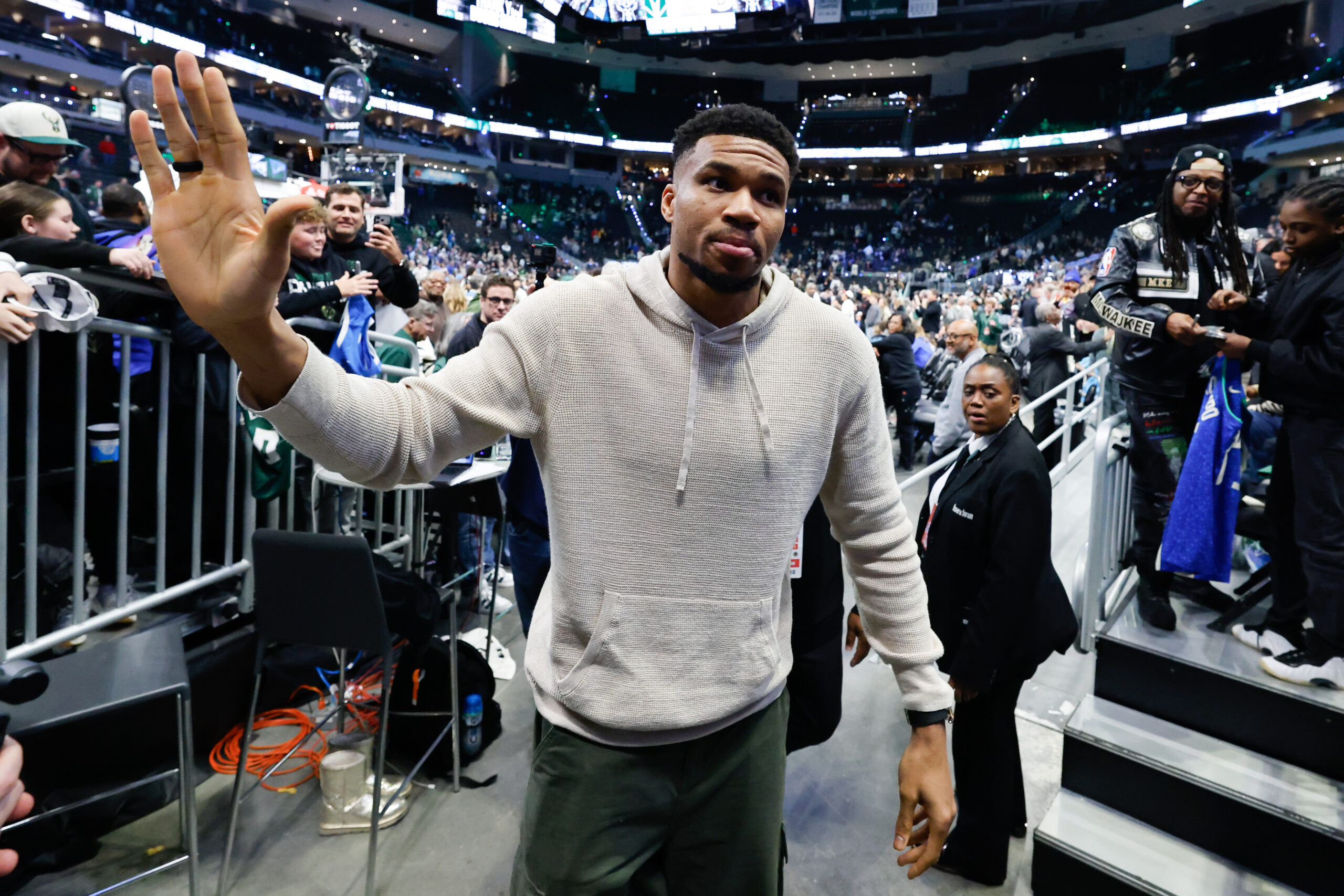
    There’s a belief that Milwaukee star forward Giannis Antetokounmpo (center) could be trade bait this offseason.

    One superstar — the Bucks’ Giannis Antetokounmpo — is almost certain to be traded. A second — the Celtics’ Jaylen Brown — has generated enough smoke to conclude that a deal is possible. The Clippers’ Kawhi Leonard and the Mavericks’ Kyrie Irving are potentially in play. So are younger building blocks like the Pelicans’ Trey Murphy III. After a relatively tepid couple of offseasons, the circus is rolling back into town.

    All of this would be true even without the competitive pressures that should exacerbate and expedite this summer’s decision-making. As it happens, those pressures are at an all-time boil. The Knicks just rattled off one of the great postseason runs in NBA history. The Spurs and the Thunder are both well-positioned to consolidate their talent and make a major move.

    Each is aware that a major move by the other could reduce them to the Harden-era, second-ran Rockets. Both would be wise to get ahead of the curve, like the Knicks did with OG Anunoby, and then Mikal Bridges, and then Karl-Anthony Towns. Both will be drafting ahead of the Sixers, the Thunder twice (at No. 12 and No. 17).

    Zuby Ejiofor fits the mold of a player the Sixers could benefit from. If he’s still on the board with the No. 22 pick, the Sixers should strongly consider using their pick.

    There’s a sense that the Sixers will likely need to play it straight and to make the best of what is there at No. 22. In which case, we should consider some of the keywords that Gansey and Myers both used when describing their vision, as abstract as it was.

    Character. Work ethic. Competitiveness. Accountability. Teamwork. Identity. Culture. Rebounding.

    “I want fountains, not drains,” Gansey said.

    Ejiofor checks off a lot of those boxes. He navigates the court like a linebacker in pass coverage. He rebounds and relocates and screens and drops like a man who just wants to win. He has the makings of a jump shot, the footwork of a seasoned pro, and the quick-twitch bounce of a guy who is more wing than big.

    If he is there at No. 22, Gansey shouldn’t hesitate, whatever the mock drafts say.

  • For the Phillies, it still comes down to Trea Turner

    For the Phillies, it still comes down to Trea Turner

    The Phillies entered the season as a team whose fate would be determined mostly by how little went wrong. That’s somewhat true for most teams, but it is especially true for a team that basically skipped a development cycle while building and retaining a roster via trades, free agency and contract extensions.

    In Major League Baseball, there are three main sources of year-to-year improvement.

    • External additions via free agency and trade.
    • Internal additions from the minor league system.
    • Internal improvement from young players who have yet to reach their peak.

    Every now and then, you’ll see a mid-career bump by a player like Cristopher Sánchez or Brandon Marsh. For the most part, though, a team’s upside is a function of its young potential breakout candidates combined with whatever payroll it adds. Otherwise, what you end up seeing will look a lot like what you’ve previously gotten, along with whatever regression occurs.

    That tracks, right?

    Nearly halfway through the schedule, the Phillies are exactly what you’d expect to get if you took last year’s team and subbed in a leadoff hitter who is batting .223/.276/.334 instead of .304/.355/.457. Marsh’s quasi-breakout has given them enough margin for error to withstand the rookie inconsistency they’ve seen from Justin Crawford and Andrew Painter at the bottom of the lineup and the rotation. But something dramatic is going to need to change for the Phillies to stop yo-yoing back and forth between .500 and a 90-win pace. Right now, the most likely something is the aforementioned leadoff hitter.

    Trea Turner is the man with the keys to the Phillies’ offense for the rest of the season. That’s really all there is to it. You can talk about the trade deadline, talk about the pitcher Painter was supposed to be, talk about the 31-16 record under Don Mattingly … all of it is noise. The Phillies simply aren’t a team that is capable of winning 95 games when one of their megacontract hitters isn’t hitting even half his worth.

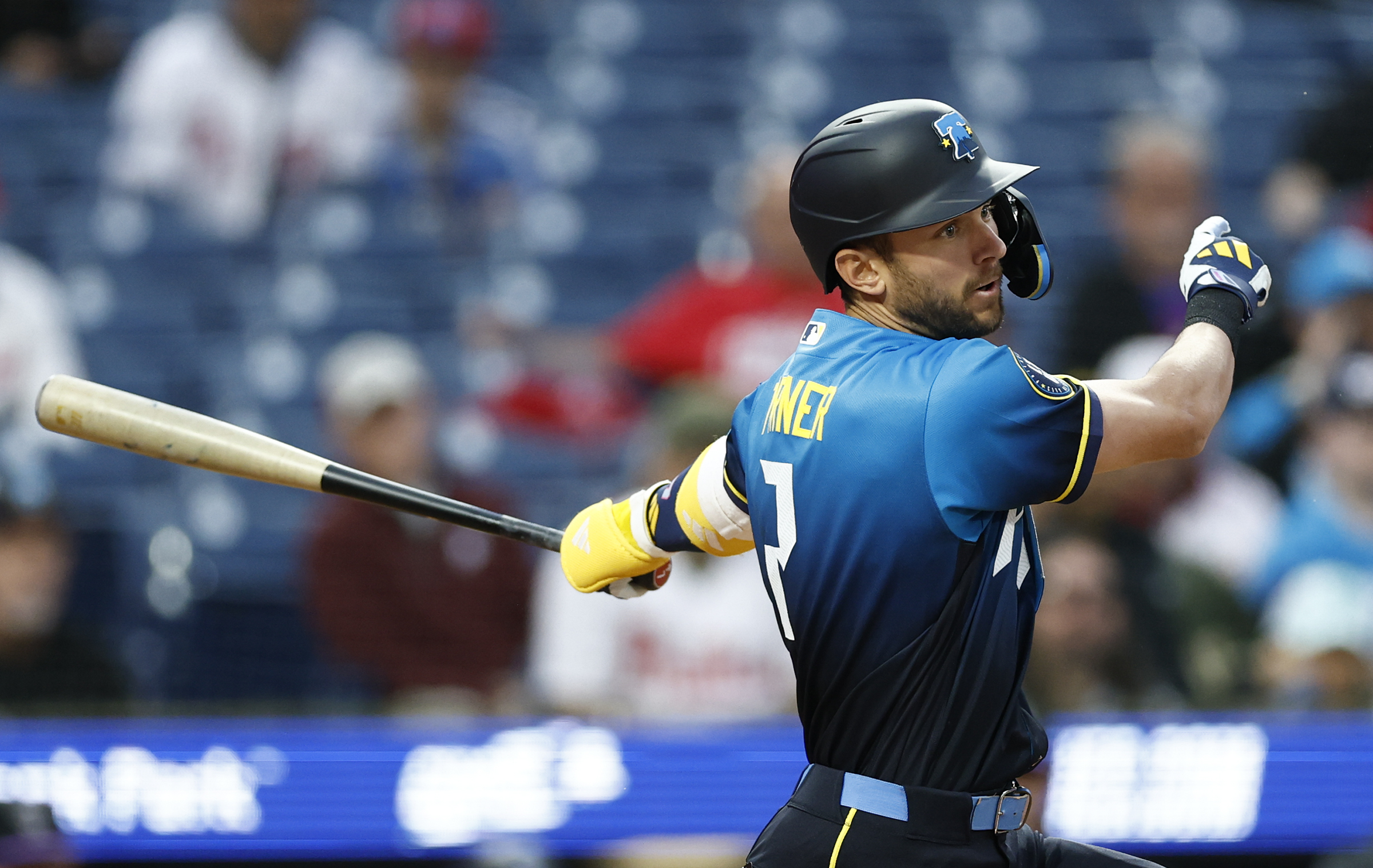
    Phillies shortstop Trea Turner entered the weekend with a .610 OPS. His career mark is .816.

    Mattingly knows this. It’s the reason for the patience he continues to exhibit with Turner at the top of the lineup. Getting him right is the Phillies’ only hope at making a late charge at the Braves. That 31-16 record since Rob Thomson’s firing is glitter more than gold. Seven of those wins came against teams that are 12-plus games under .500. Another seven have come against the Marlins and Athletics. The Phillies are 5-7 against their four opponents who entered Thursday at least four games over .500. Series losses to the Brewers, Dodgers, and Guardians. Their 96-win pace over the last month is more representative than 113.

    Even 96 wins is overstating things. We got a little taste of what a 96-win offense looks like a couple of days ago when Turner was out of the lineup with a sore wrist. Mattingly seized the opportunity to get a little funky with his lineup. The hot-hitting Marsh took the place of Turner in the leadoff spot, giving the Phillies three straight lefties at the top of the order with Kyle Schwarber and Bryce Harper following Marsh.

    Mattingly’s lack of regard for convention paid dividends. Marsh reached base twice, scored two runs, and had two RBIs, which is something Turner has not done since last August. The top three hitters in the Phillies’ order combined to reach base six times and score five runs in an 8-2 win. Sometimes, different is good.

    The next day, Mattingly went back to the old drawing board. Turner went 3-for-5 with a double, his first three-hit game since May 9. It needs to be the start of something, although he left Thursday’s game after again being hit by a pitch.

    Turner is the reason everybody thinks the Phillies need to make a big splash at the trade deadline. President of baseball operations Dave Dombrowski will be hard-pressed to find a hitter who would be more of an improvement than the Turner of last year returning. If he doesn’t, 87 wins is as good as it is going to get.

    The Phillies don’t have many other pathways. They are long on veterans and short on potential upside. It is a daunting position to be in at this stage of a season.

    Look at the teams that overperform their expectations and you’ll find that the differentiator is almost always someone who is at the stage of his career where improvement comes in leaps and bounds. Drake Baldwin will continue to improve for the Braves. Same goes for Andy Pages and Dalton Rushing with the Dodgers. Ben Rice with the Yankees. For all the hand-wringing about the Dodgers and their limitless payroll, they’ve also had five rookies hit 19-plus home runs since 2013.

    The Phillies don’t have any obvious candidates right now. Harper and Schwarber have been about as good as you could hope. Alec Bohm, Bryson Stott, and J.T. Realmuto have been about what you’d expect. Turner’s is the one spot in the lineup where the potential for significant improvement exists. At least, they better hope it still exists.

  • A wild Saturday stampede of stars validates the PGA Championship and Aronimink

    A wild Saturday stampede of stars validates the PGA Championship and Aronimink

    The footsteps of giants were echoing behind him, each one louder than the last.

    All Maverick McNealy could do was wait.

    The PGA Championship co-leader after two rounds was still 40 minutes away from teeing off when he walked off of the practice green and came face-to-face with the avalanche at his heels. On a giant video leaderboard rising in the distance, the household names were floating toward the surface like the first bubbles of a boil. By the time McNealy and fellow longshot Alex Smalley teed off, the 36-hole co-leaders would be joined in first place by Rory McIlroy. Not long after that, they would be leaders no more.

    For all of the grumbling that emanated from the starriest of corners of the players’ locker room during the first two days at Aronimink Golf Club, the mayhem that golf’s titans unleashed in Round 3 will only embolden tournament officials. Long a major in search of an identity, the PGA Championship suddenly has set itself up for a finish that can command the attention of even the casuals. The biggest names, the best games, all will be there, almost without exception.

    McIlroy, Xander Schauffele, Jon Rahm, Ludvig Aberg, Patrick Reed … all will enter Sunday’s final round within two or three strokes of the lead. Right on their heels are the likes of Scottie Scheffler, Justin Rose, Brooks Koepka, and Rickie Fowler.

    Represented in that group are five of the six pre-tournament betting favorites.

    But Smalley, the man who enters Sunday with a two-stroke lead, is a relative unknown who bogeyed three of his first four holes but shot three-under on the back nine to regain the lead.

    “I mean, my PGA Tour career isn’t necessarily very long at this point, but I’ve never seen anything like it,” said Aberg, who shot a 68 to stand in a group of five players two shots behind Smalley. “It’s very tight. I think there’s a lot of good players within striking distance going into tomorrow, and it’s a cool thing, I think, for the viewers. I think it’s cool to see that many guys have a chance to win a tournament.”

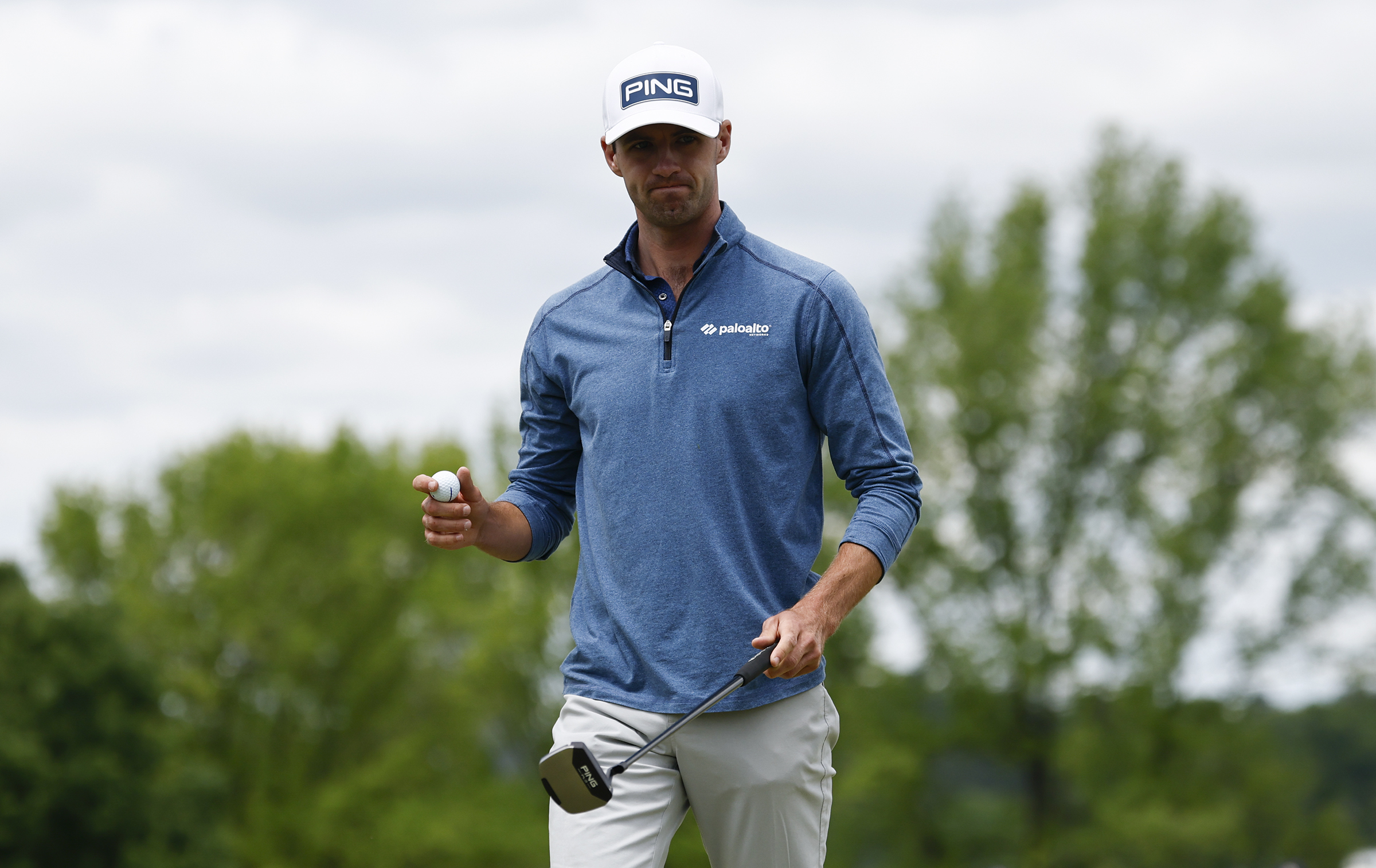
    Alex Smalley holds his golf ball after making a birdie putt on the par-4 fourth hole during the second round of the PGA Championship at Aronimink Golf Club.

    PGA officials deserve plenty of credit for that, especially after the veiled and not-so-veiled criticism they received from the likes of McIlroy, Scheffler and Reed for the setup at Aronomink during the first two rounds. The player’s critiques regarding pin positioning were both understandable and fair. A golf course is supposed to allow for players to differentiate themselves based on their skill. When pin positions are so difficult that they becomes more a matter of chance, it introduces a degree of randomness that can have a leveling effect, particularly in a field as big as the PGA Championship. That was certainly the case in the early going at Aronimink, with 15 players within two strokes of the lead after 36 holes, and with five of the world’s 13 top-ranked golfers missing the cut entirely.

    That being said, the early-round variability played a direct role in what could end up being one of the more memorable weekends of drama. With course conditions loosening, weather warming, and the toughest pin locations exhausted, the final two rounds of the tournament will allow the remaining superstars to battle each other at near-unprecedented level.

    “Credit to the PGA for the setup,” Rahm said. “They found some incredible hard pin locations out there. . . As hard as it is to play, the challenge can also be kind of fun if you do well. That’s probably the reason why the leaderboard is so bunched up and it’s going to be such a good Sunday tomorrow. So in that sense, showmanship-wise, they’ve done a great job.”

    Smalley thickened the plot considerably late in the day, birdieing five of his last 10 holes to separate himself from a pack of seven golfers who had been tied for the lead. That pack at minus-4 also includes longshots Matti Schmid, Nick Taylor, Aaron Rai, and McNealy.

    But the story that will resonate is Saturday’s stampede of superstars. Rose, last year’s Master’s runner-up, shot a 65, with McIlroy and Schauffele shooting 66 and Rahm a 67.

    “It’s a different challenge, and that’s the cool thing about it is it’s on its own,” Reed said. “But the great thing about all the golf courses we play, no matter where it is, whatever major championship we’re playing, if you’re hitting the ball well and you’re putting well, you’re going to be able to handle anything. We’re the best players in the world, so when they throw a really hard challenge at us, that’s when the top players are going to show up.”