Author: David Murphy

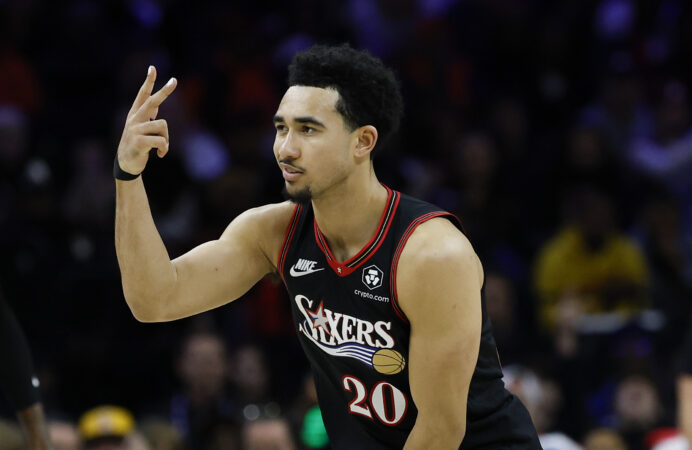
  • The Sixers trading Jared McCain will either be a head-scratcher or an embarrassment

    The Sixers trading Jared McCain will either be a head-scratcher or an embarrassment

    A week ago, Joel Embiid decided to spend a little bit of the organizational capital he reaccrued in recent months. In response to a question about the Sixers’ approach to the upcoming NBA trade deadline, Embiid pointedly expressed his hope that the team would be looking to add talent rather than cut costs.

    “Obviously, we’ve been ducking the tax past couple of years, so hopefully, we’ll keep the same team,” Embiid said. “I love all the guys that are here. I think we got a shot.

    I don’t know what they’re going to do, but I hope we get a chance to just go out and compete because we’ve got a good group of guys in this locker room. The vibes are great. Like I said, in the past we’ve been, I guess, ducking the tax, so hopefully, we think about improving because I think we have a chance.”

    Embiid was surprisingly — some might say ungraciously — candid in noting the Sixers’ recent prioritization of shedding salary at the trade deadline to avoid paying the NBA’s luxury tax (and, thereby, to receive a share of the pooled taxpayer dollars). But he also was prescient, and unfortunately so.

    Sixers president Daryl Morey is scheduled to meet with the media on Friday, so we’ll have to wait to hear the official defense of the team’s decision to trade 2024 first-round pick Jared McCain to the Oklahoma City Thunder for what most likely will be a low-value first-rounder (plus the obligatory smattering of second-round picks). We don’t have to wait to judge the optics of the thing.

    The optics are poor, and that will remain true even if the thing ends up making more sense than we can immediately glean. The Sixers didn’t trade McCain for a player who is more likely to help them contend for a championship, be it this year or beyond. They didn’t trade him for a pick that they then flipped for a player who can help them capitalize on their momentum this season. Everywhere else, teams got better, and many of them did so in ways beyond this season. The Minnesota Timberwolves can re-sign Ayo Dosunmu. The Indiana Pacers can pair Ivica Zubac with Tyrese Haliburton next season. The Sixers can hope a late first-round pick is worth something in June.
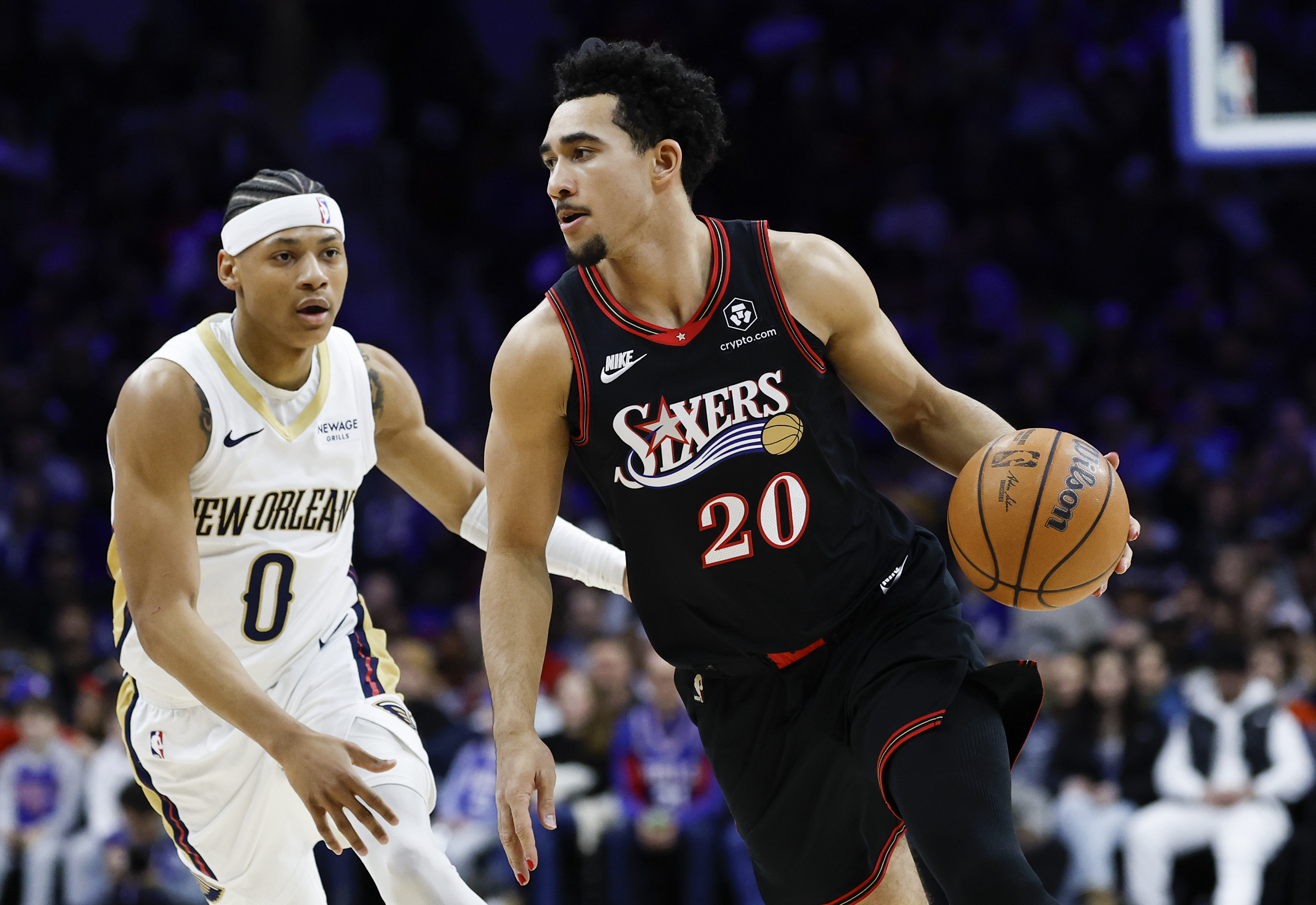
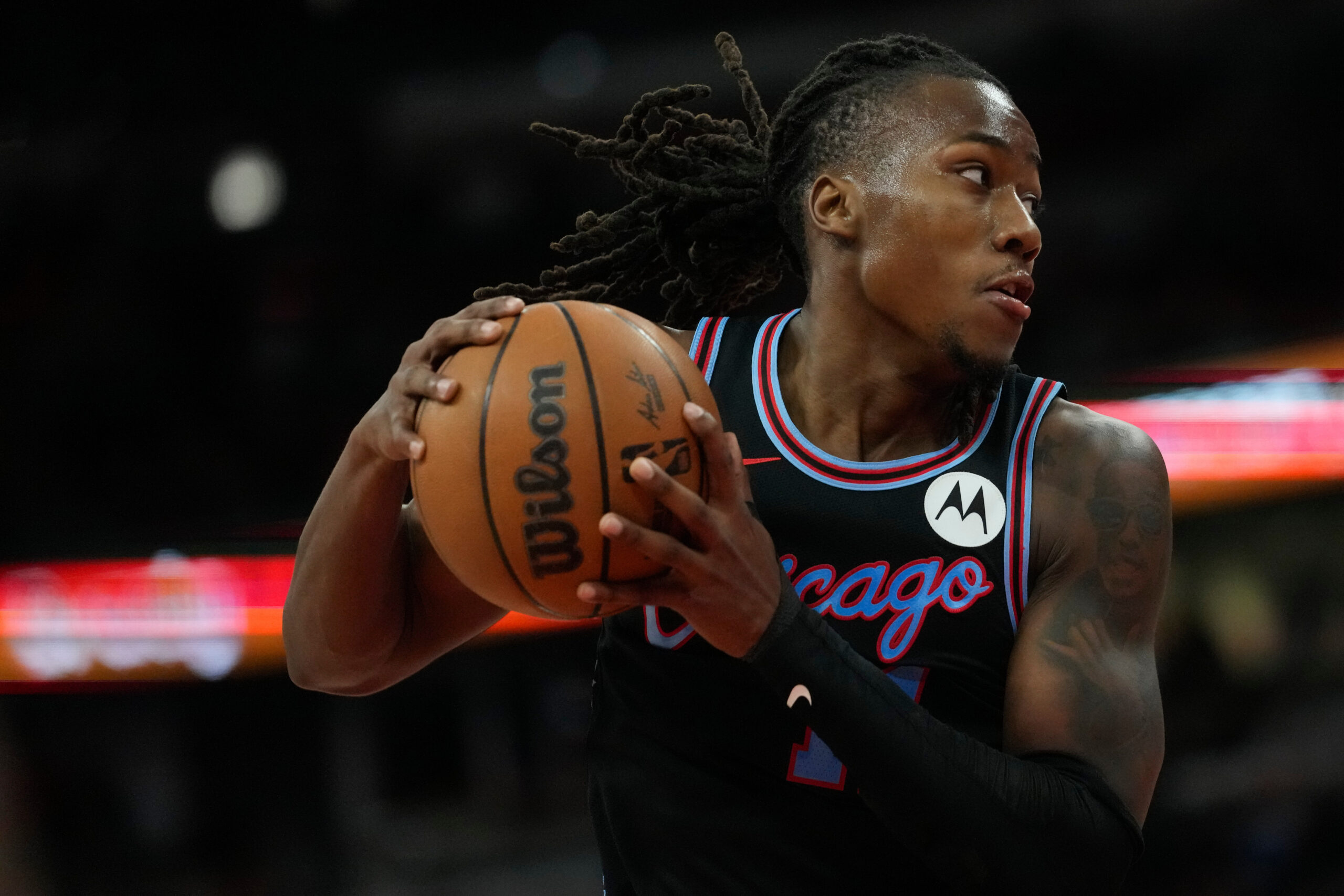
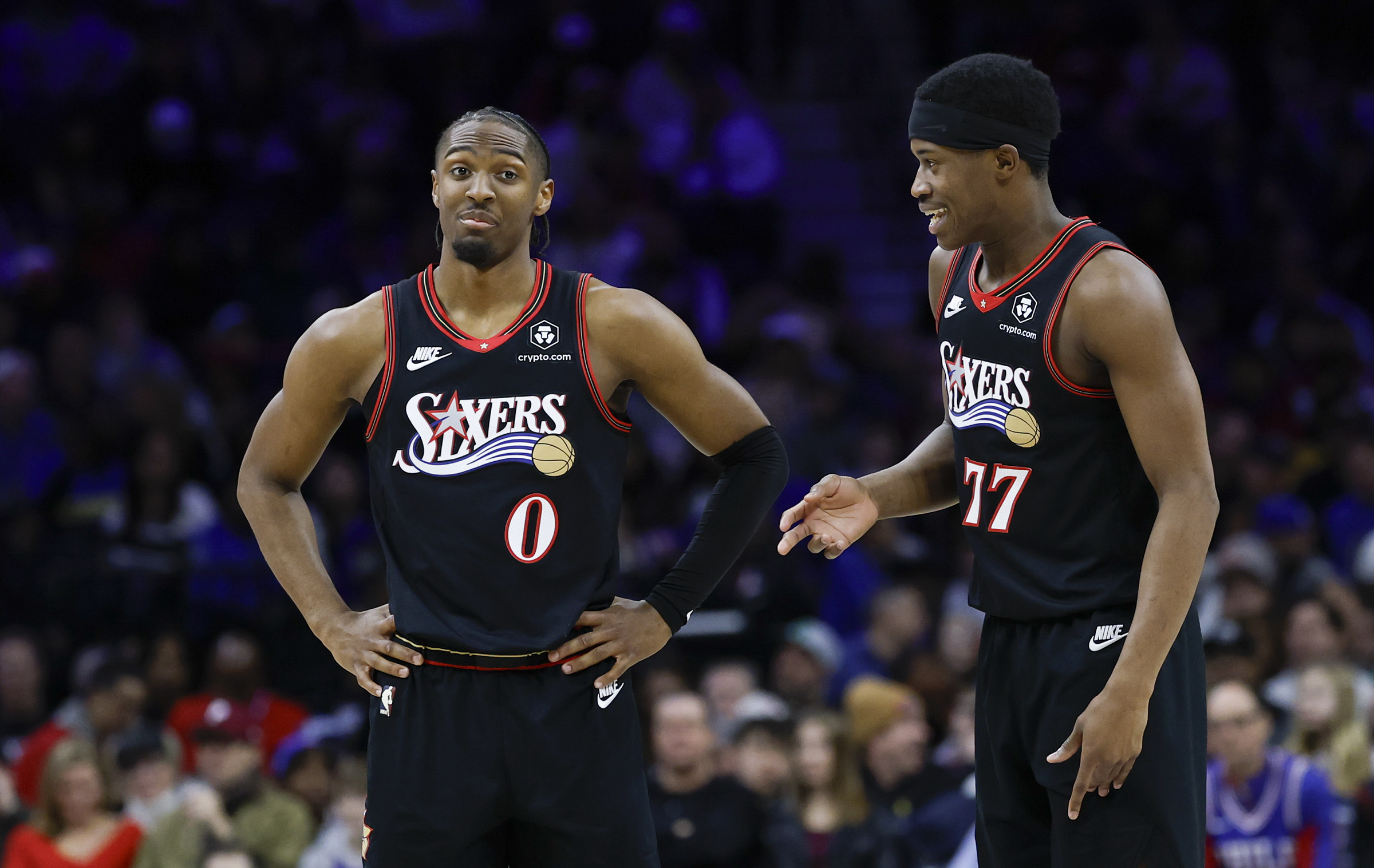
    Jared McCain (right) only played in 60 games with the Sixers after being selected in the first round of the 2024 draft.

    A good way to judge the optics of a move is to attempt to write an executive summary of it in as favorable a way as possible. That’s an extraordinarily difficult task in this case. The Sixers just traded away a guy who they drafted at No. 16 barely a year and a half ago and who probably would be drafted higher in a redo. In exchange, they received a pick that currently projects as the No. 23 pick in the 2026 draft, two picks later than where the Sixers grabbed Tyrese Maxey almost six years ago. It is a range of the draft that rarely yields starters, let alone stars. It is a range where the odds say you are more likely to draft a player who never cracks a first-division rotation than one who becomes a meaningful starter.

    Just look at the track record. Of the 42 players drafted with the last seven picks of the first round since 2020, only 17 have started more than 17 NBA games. Just eyeballing it, you’d be hard-pressed to identify 10 of those 42 who’ve turned out to be better than the median potential outcome of even this year’s version of McCain. Jaden McDaniels and Desmond Bane are stars. They are followed by Payton Pritchard, Immanuel Quickley, Quentin Grimes, and Santi Aldama. Beyond that: Peyton Watson and Cam Thomas, and then Bones Hyland, Day’Ron Sharpe, Nikola Jović, and Kyshawn George. You get the picture.

    Risk vs. certainty is the name of the game. The Sixers traded McCain for a first-round pick that will be uncertain, even on draft day. Let alone five months before. Whatever negative certainty they felt about McCain’s mid-to-long-term trajectory, it can’t possibly be greater than the negative uncertainty of a draft-day replacement. Which is why, optically speaking, the move looks like one that was inordinately influenced by the cost-cutting benefits.

    The Sixers surely will point to optionality as a variable. On draft day, they will have another opportunity to flip the McCain first-rounder for an established NBA player or include the pick in a package. If that influenced the move, then the bet they are making is that the pick will be more in a draft-day trade than McCain would have been himself. There’s a decent chance that is true, given how far McCain has fallen on the depth chart and how little opportunity he could have to reestablish value.

    It just rings a little bit hollow to anybody who has bought into the commendable shift we’ve seen from the Sixers in their roster-building strategy over the last year. And it rings especially hollow when you consider that the team that traded for McCain is one of the best and brightest roster-builders in the modern NBA. As somebody said the other day, when Sam Presti wants one of your guys, it’s a good reason to think a few more thoughts about whether you should want to get rid of him.

    Barely a year and a half has passed since the Sixers made McCain the No. 16 pick in the 2024 draft. In that year and a half, we’ve seen McCain:

    • Play 23 games in which he looked like one of the top five players in the class, forcing his way into the starting lineup and then averaging 19.1 points while shooting 39.7% from three-point range in the 16 games before he suffered a season-ending knee injury.
    • Play 25 games where he looked like a player working his way back from a broken thumb that he suffered while working his way back from knee surgery.
    • Play 11 games in a 15-game stretch in which he logged just 132 minutes.

    In the Sixers’ defense, they’ve seen much more of McCain than the television cameras capture. Nobody can have a more informed opinion on where he projects within the context of their roster. But it wasn’t long ago that McCain looked like a player who could eventually transcend questions of fit. His ceiling never was close to VJ Edgecombe’s, and his probable reality was always short of Maxey’s. Again, though. The Thunder have a lot of guards. They are built on a two-way mentality. It makes you wonder.

    What it comes down to is that the Sixers better be right in their evaluation of McCain. Whatever the marching orders from ownership regarding the luxury tax, there is a level of player even Scrooge McDuck wouldn’t deem an appropriate cost-savings measure. McCain isn’t that player now. The Sixers could be accurate in their judgment of the odds that he ever becomes one. The question is whether they are accurate in their judgment of their risk of being wrong.
  • Trading Jared McCain is a big risk, unless something bigger is in play

    Trading Jared McCain is a big risk, unless something bigger is in play

    Curious.

    Suggestive.

    Dangerous.

    Most of all, unfortunate.

    Those are the only sorts of words you can use right now when evaluating the Sixers’ decision to trade Jared McCain to the Thunder on Wednesday afternoon in exchange for a 2026 first-round pick and some ancillary draft capital.

    To judge the move in more definitive terms would be irresponsible given the amount of time that still remains between now and Thursday’s NBA trade deadline. The final verdict depends on what happens next. If nothing happens next, then, yeah, the Sixers’ decision to jettison their promising 2024 first-round pick will rank somewhere on a spectrum between “underwhelming” and “foolish.” If their primary motivation was to duck below the luxury tax yet again, it will be a level beyond foolish. It will be criminal.

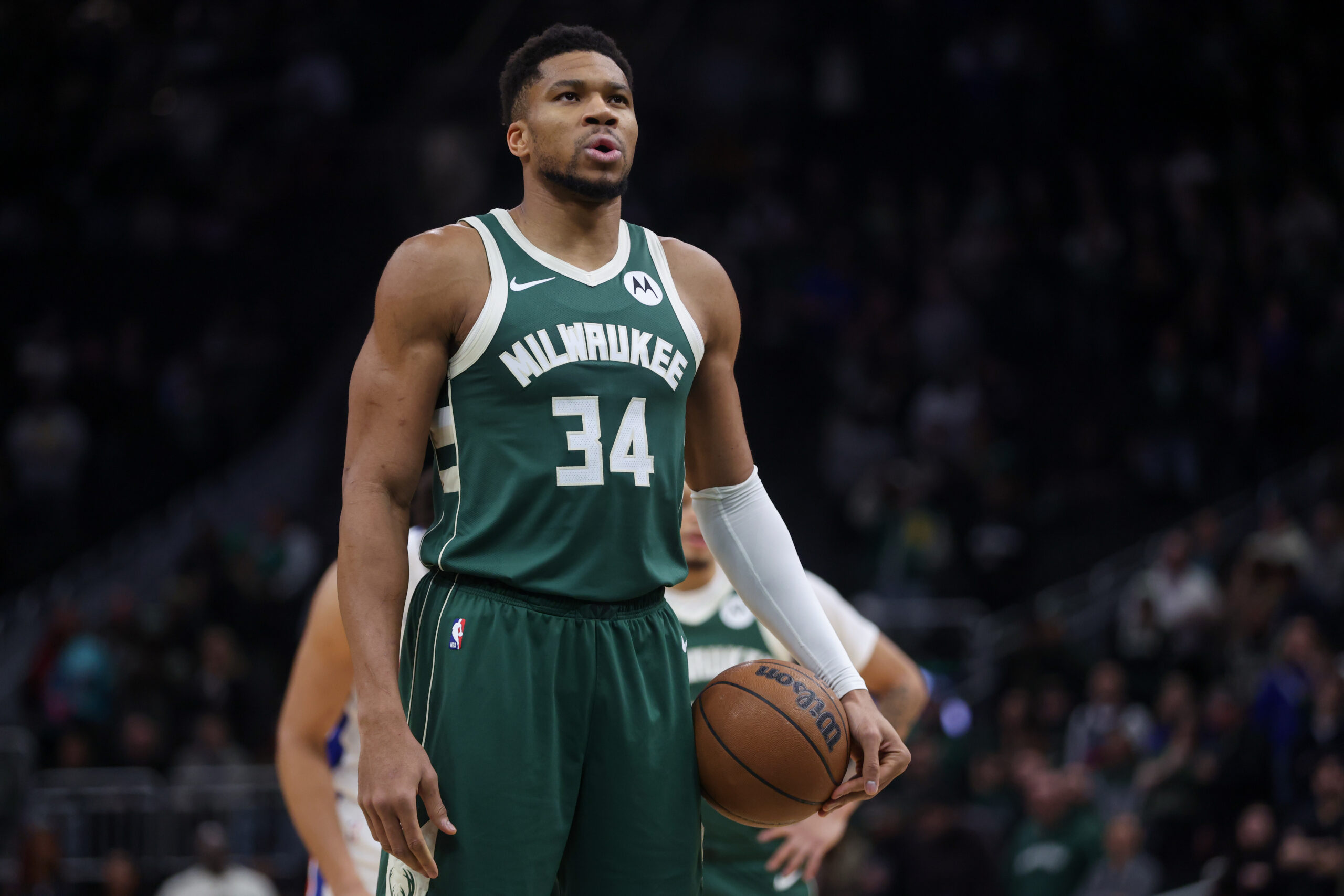
    That being said, there are a lot of other ifs in play, many of them more plausible than Daryl Morey viewing a legitimate asset as a cost-savings vehicle. The NBA’s in-season hot stove is sizzling right now. The Mavericks traded All-Star center Anthony Davis to the Wizards, thereby finalizing their aggregate return for Luka Doncic at a grand total of three first-round picks, each of which is more likely to be closer to No. 30 than to No. 1. Trade rumors continue to circulate around Bucks superstar Giannis Antetokounmpo, with suitors like the Timberwolves and Heat jockeying to present Milwaukee with an offer that will convince it to strike a deal now rather than wait for the offseason. There are a lot of dominoes left to fall, and the Sixers could easily end up toppling one — or being one.

    The Bucks’ Giannis Antetokounmpo remains the big prize at the NBA trade deadline.

    As of Wednesday night, there were no indications that the Sixers were gearing up to make a legitimate run at acquiring Giannis, who was previously reported to be intrigued by the possibility of teaming up with Tyrese Maxey and the Sixers. Such a move would almost certainly require the Sixers to part with rookie star V.J. Edgecombe. That’s a move they almost certainly will not do.

    But the Sixers could easily end up involved on the periphery of the Giannis talks. If Minnesota is determined/desperate to add Giannis, then it would presumably need to be desperate/determined to acquire the first-round picks that the Bucks would require (the Timberwolves don’t have much in the way of draft capital to trade). Minnesota’s determination/desperation creates some intriguing possibilities for a third team that does have first-round picks it can trade. The dream scenario would be someone like young sweet-shooting big man Naz Reid becoming available. A more realistic opportunity could come in the form of former Villanova-turned-Knicks-turned-Timberwolves grinder Donte DiVincenzo.

    I’m throwing those names out there mostly as for-instances. The world remains Morey’s oyster until the clock strikes 3 p.m. EST on Thursday.

    What we can say right now is that trading McCain is a risk. We’re barely a year removed from the 21-year-old guard looking like one of the best players in his draft class. His star has dimmed quite a bit since a season-ending knee injury put the kibosh on his rookie season after 23 games. But remember what we saw in those 23 games: 15.3 points, a .383 three-point percentage, promising toughness and defense. It’s hard to believe that those things were mirages, especially when you consider the track record that the Thunder have in identifying undervalued young talent. If Sam Presti wants to trade for your player, it’s a good reason not to trade him.

    Adding a young guard like the Bulls’ Ayo Dosunmu would help the Jared McCain trade make sense.

    The Sixers surely know this. That’s a good enough reason to give them until the trade deadline before deciding how we feel. The reality on the ground has changed a lot since McCain burst onto the scene early last year. The fit with Edgecombe isn’t an ideal one. McCain is averaging just 16.8 minutes this season. But he was hardly in danger of becoming a sunk cost. The hope here is that the draft capital the Sixers acquired from the Thunder will help them add a player who brings more certainty to go with his youth. The Bulls’ Ayo Dosunmu is just one example of a player who would make all the sense in the world to swap in for McCain.

    Until then, we wait.

  • Follow the money to find the secret to the 2026 Phillies roster

    Follow the money to find the secret to the 2026 Phillies roster

    When it comes to the 2026 Phillies, the three most meaningful words in the human language ring true once again.

    Follow the money.

    Read the menu from right to left. There, you will find the players who will make the Phillies the team they need to be. Or, you will find the players who will deserve the blame if the Phillies prove not to be that team.

    Zack Wheeler is making $42 million, which is the same amount the Mets will pay newcomer Bo Bichette. Kyle Schwarber is making $30 million, the same amount the Cubs will pay newcomer Alex Bregman. Aaron Nola is making $24.5 million, which is about $2.5 million less than the Blue Jays gave Dylan Cease and right in line with what the Padres gave Michael King. Bryce Harper and Trea Turner are combining to make about $52.5 million, which is about $5 million less than the Dodgers have agreed to pay Kyle Tucker over the next four years.

    Ok, that last one is absurd. But the Phillies are one of 29 teams who can’t compare to the Dodgers.

    Anywhere east of Tinseltown, there is no room for excuses. The Phillies are on track to arrive at opening day with a payroll that is $21 million higher than the Braves, $52 million higher than the Cubs, $63 million higher than the Padres, and a whopping $157 million higher than the Brewers. They are a near lock to finish the season with one of the top five payrolls in the game. No, they aren’t the Dodgers ($387 million) or Mets ($363 million). But neither are the Yankees these days ($304 million).

    The criticism must feel good to John Middleton, in a strange way. Two decades ago, he was part of an ownership consortium that oversaw one of MLB’s most underfunded rosters relative to market size/potential. His power play into a majority stake was motivated in large part by his desire to operate like a true economic powerhouse. The fan base has been thrilled to adjust its expectations upward. The way folks are questioning Middleton’s billionaire bona fides, you’d think he spent the offseason picking up shifts in the gig economy. It’s worth stating for the record that the Phillies have signed $227 million worth of new guaranteed contracts at an average annual value of $66 million, or nearly 25% of their payroll.

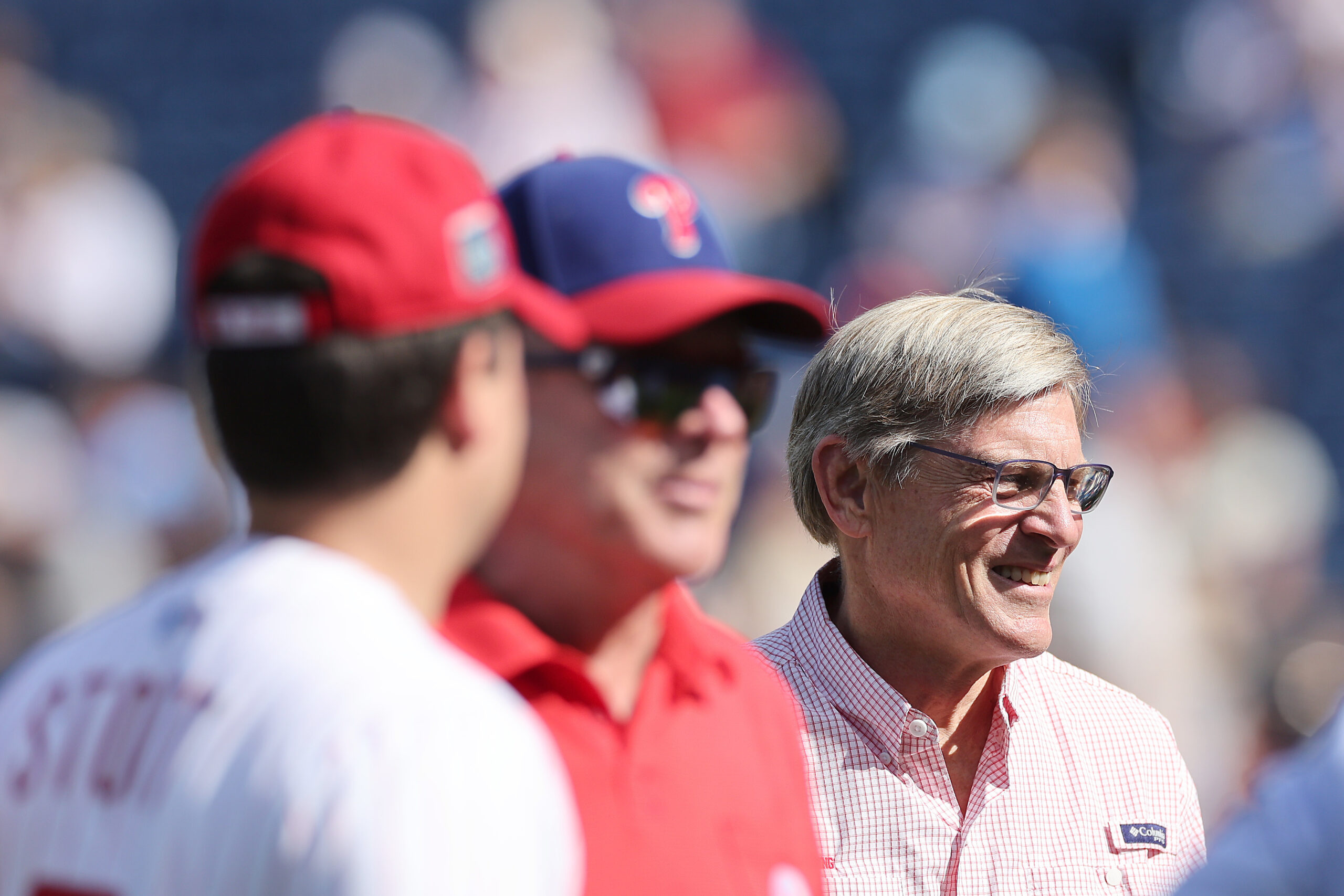
    John Middleton’s Phillies will have one of the most expensive payrolls in the game.

    I’m not licking any boots here. I understand that the criticism levied toward the Phillies is as much a function of makeup as money. The majority of the Phillies’ outlays this offseason have gone to incumbents, with Schwarber re-signing for five years and $150 million and J.T. Realmuto for three years and $45 million. The same was true last offseason, and the season before, when Nola and Wheeler both signed nine-figure deals. After two straight postseason one-and-dones, the impression is of a poker player doubling down while drawing dead.

    One of the difficult parts of being a personnel executive is that a fan base is rarely careful what it wishes for. Middleton’s partiality to the familiar makes plenty of sense when you consider the Phillies’ recent history. The last time they bowed to the wishes of those chanting, “Blow it up,” the result was a lost decade. Creative destruction is a fine idea. But it had better be creative.

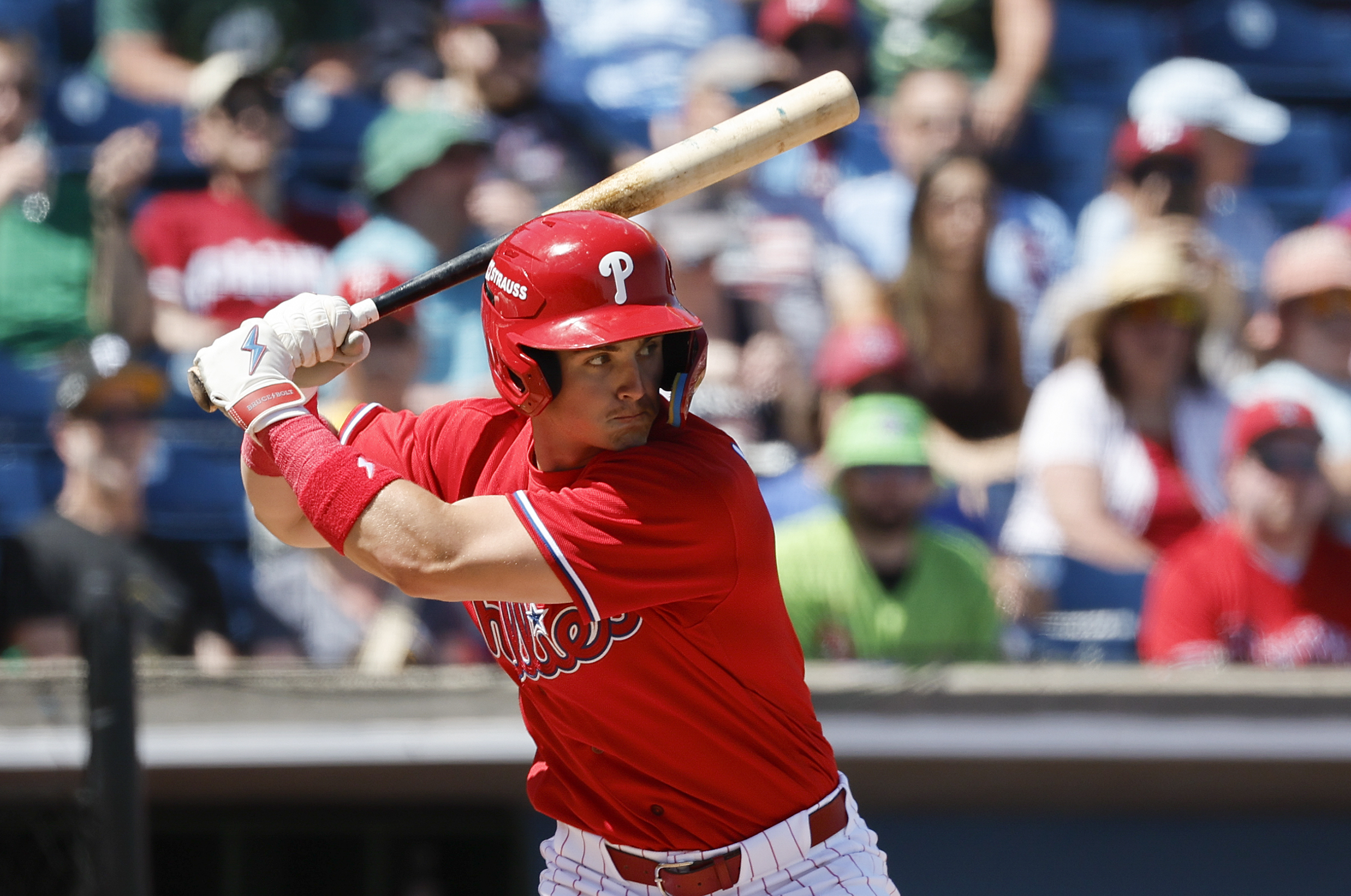
    The Schwarber and Realmuto contracts are perfect examples. Would the Phillies have really been better off if they’d given Schwarber’s money to Bregman or Bichette? You can certainly make the argument. If the Phillies had non-tendered Alec Bohm and let Schwarber walk, they could have signed Bregman to play third base and then given Eugenio Suarez the one-year, $15 million deal he signed with the Reds to play designated hitter. Maybe then they don’t feel the need to pay $10 million for Adolis Garcia’s right-handed power bat and instead sign Luis Arraez (one-year, $12 million) or Ryan O’Hearn (two years, $29 million) and convince Harper to return to the outfield. Or maybe they sign Josh Naylor to play first base and let Realmuto walk.

    So, yeah, there were options. Bregman, Suarez, and Naylor will earn about $65 million in AAV in 2026. Schwarber, Realmuto, Bohm, and Garcia will earn about $65 million in AAV in 2026.

    Would the Phillies have been better off?

    Maybe. But, man, there’s a whole lot of risk baked into maybe. Enough risk that it’s worth stepping back and asking what they’d be trying to accomplish. Neither combination is going to stack up to the Dodgers on its own. Just so happens the first combination has helped the Phillies improve their win total in each of the last four years while also winning 96 games and a division title in 2025. Neither combination will mean much if Harper takes another step backward, or if Wheeler doesn’t return from his blood clot as the same pitcher he was, or if Nola is the same pitcher he was last season, or if Turner is still something less than a guy who deserved $300-plus million.

    The story of this offseason was the money the Phillies spent in previous offseasons. The incumbents are the ones who need to do the heavy lifting. That’s how it should be when the incumbents’ wallets are as heavy as the Phillies’. There is plenty of potential upside in the form of Justin Crawford, Andrew Painter, Aidan Miller, Gabriel Rincones Jr., even Otto Kemp. The floor will be set by the known commodities. This year more than ever, Harper and Co. need to make themselves known.

  • Forget about trading VJ Edgecombe for Giannis. Or anybody.

    Forget about trading VJ Edgecombe for Giannis. Or anybody.

    The following is a list of players who began their NBA careers with 1,500 minutes, 650 points, 225 rebounds, 175 assists and a .534 true shooting percentage in their first 43 games.

    • Oscar Robertson
    • Larry Bird
    • Magic Johnson
    • Michael Jordan
    • Chris Paul
    • VJ Edgecombe

    This shouldn’t need to be said, but the Sixers aren’t going to trade VJ Edgecombe for Giannis Antetokounmpo. Nor should they. Which also shouldn’t need to be said.

    Just in case, let’s say it again.

    No Edgecombe for Giannis. No Edgecombe for anyone. No Edgecombe at the trade deadline. No Edgecombe in the offseason.

    No Edgecombe, know peace.

    The conversation is worth having just to make sure we’re all on the same page. It isn’t every day that a superstar the caliber of Giannis hits the trade market. Even less often are the Sixers identified as a team that “intrigues” said superstar, as they were in a report by the Stein Line over the weekend. Giannis is smart to fancy the idea of teaming up with Tyrese Maxey, who has exploded into the realm of legitimate superstars this season. The Sixers would be foolish not to find out what it would take to land the perennial MVP candidate.

    Draft picks, Jared McCain, maybe even Joel Embiid? Sure, let’s talk.

    Edgecombe?

    Nope. Click.

    Tyrese Maxey (left) and rookie VJ Edgecombe give the Sixers a dynamic backcourt combination.

    To be clear, this isn’t about Giannis. He’s in the midst of the most efficient season of his career, by virtually every measure. His .666 effective field goal percentage is 70 points higher than his career average and 46 points higher than his mark last season. While he largely abandoned his three-point shot after connecting on just 28.3% of his attempts from 2022-24, he already has more makes than he did all last season. His career-best .395 shooting clip from deep comes with a giant asterisk: a mere 38 attempts in 30 games. But, hey, making is better than missing. Giannis still does all of the stuff that has made him a top-five MVP finisher for a remarkable seven straight seasons. Rebounds, assists, steals — all of his numbers are at or above his five-year averages on a per possession basis. His 46.8 points per 100 possessions would be the highest of his career.

    This is purely about Edgecombe. To understand his immense present and future value, you have to watch him on the court. It’s incredibly rare for a 20-year-old rookie to average 35.6 minutes per night for a team that is six games over .500 and has a legitimate chance to make a playoff run. It’s even rarer for said rookie to do it with the maturity and grace that Edgecombe exhibits at both ends of the court. And it’s rarer still for a rookie to possess that veteran-level basketball IQ while also possessing such an electric athletic upside.

    Edgecombe’s polish is evident in two pieces of his stat line, beyond the top-line numbers. He is one 18 players in NBA history to have 178 assists and fewer than 80 turnovers in his first 43 games. That’s incredibly hard to do for any player who routinely has the ball in his hands, let alone a player who expends the amount of energy Edgecombe does on the defensive end of the court. Simply put, he is a winning basketball player, as evidenced by his cumulative plus-minus. The Sixers are outscoring opponents by nearly 1.5 points per game in Edgecombe’s minutes on the court. Again, very rare to see out of a rookie.

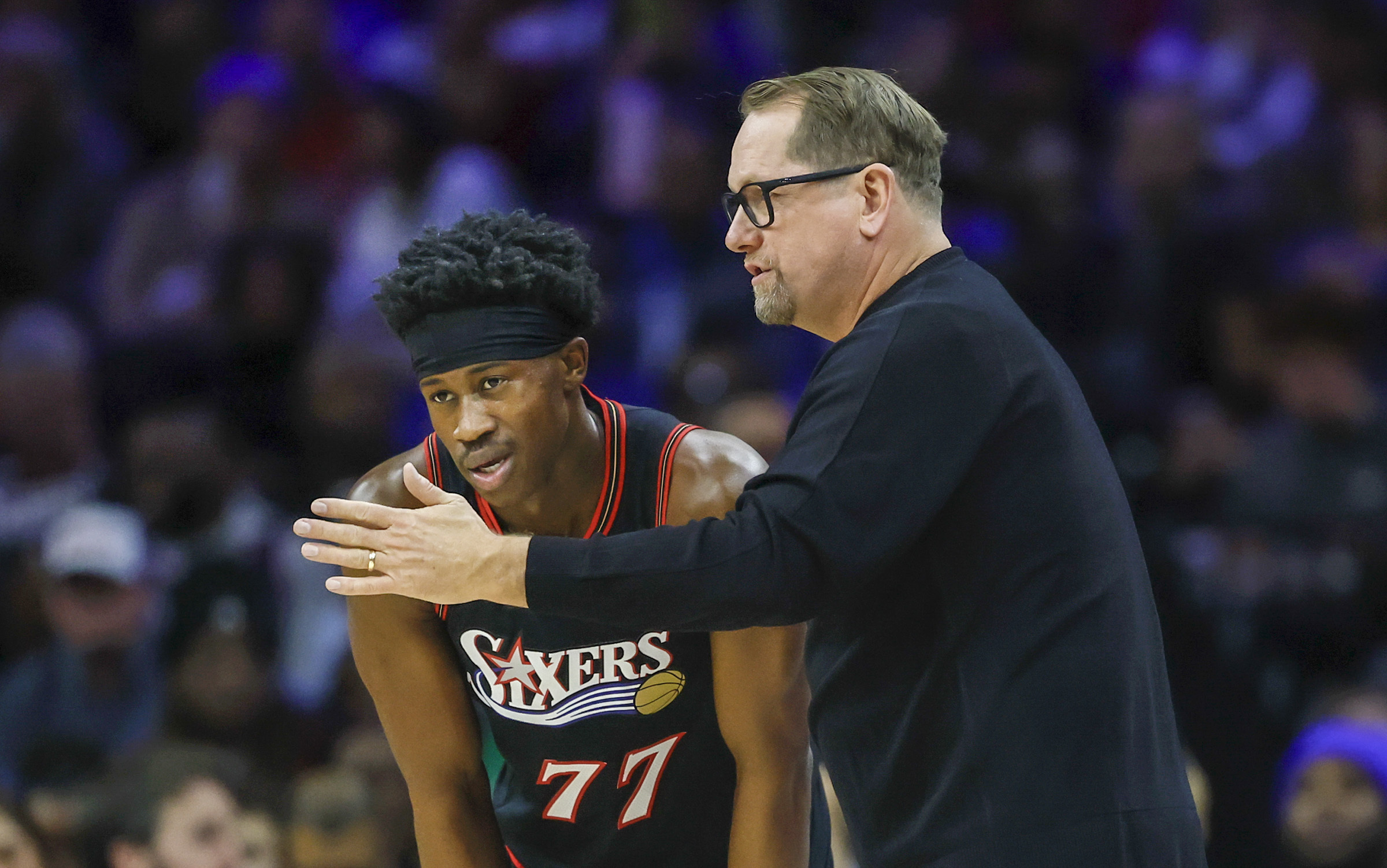
    Sixers coach Nick Nurse knows what he has in rookie guard VJ Edgecombe.

    The Sixers’ state of play in advance of this week’s trade deadline took a hard right turn over the weekend. It did so in a manner that was quintessential Sixers. Paul George’s 25-game suspension for a violation of the NBA’s anti-drug policy was the exact sort of nowhere-on-the-bingo-card development that has come to define the organization in the post-Process era. Unexpected? Only if you forget who you’re dealing with.

    In our defense, the Sixers had done a heck of a job lulling us to sleep over the first half of the season. Maxey was an All-Star starter and MVP candidate while averaging an efficient 29.2 points and 6.9 assists. Embiid was playing basketball reminiscent of his MVP prime. Even George had bounced back from his disastrous debut season, shooting .382 from three-point range while averaging 16 points per night.

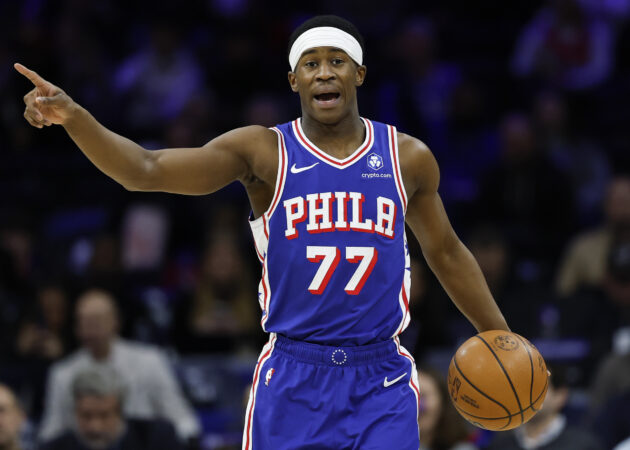
    Yet the brightest development of them all has been the kid with the double sevens on his jersey. Edgecombe’s per-game numbers may not look like the stuff of legends: 15.1 points, 5.3 rebounds, 4.2 assists, a .510 effective field goal percentage. But keep in mind: What we are witnessing right now is the floor. At the very least, he is a winning basketball player who would have a spot in the starting lineup of any contending team. A good defender, a willing rebounder, a capable scorer, an improving passer. Combine that floor with the ceiling afforded him by his explosive physical gifts and you have the sort of player whose trajectory could easily follow Maxey’s into the realm of the NBA’s elite. That’s not the kind of thing a team can afford to trade away.

    Not for Giannis. Not for anybody.

  • Sean Mannion needs to be a Jalen Hurts whisperer. Play-calling is only part of that.

    Sean Mannion needs to be a Jalen Hurts whisperer. Play-calling is only part of that.

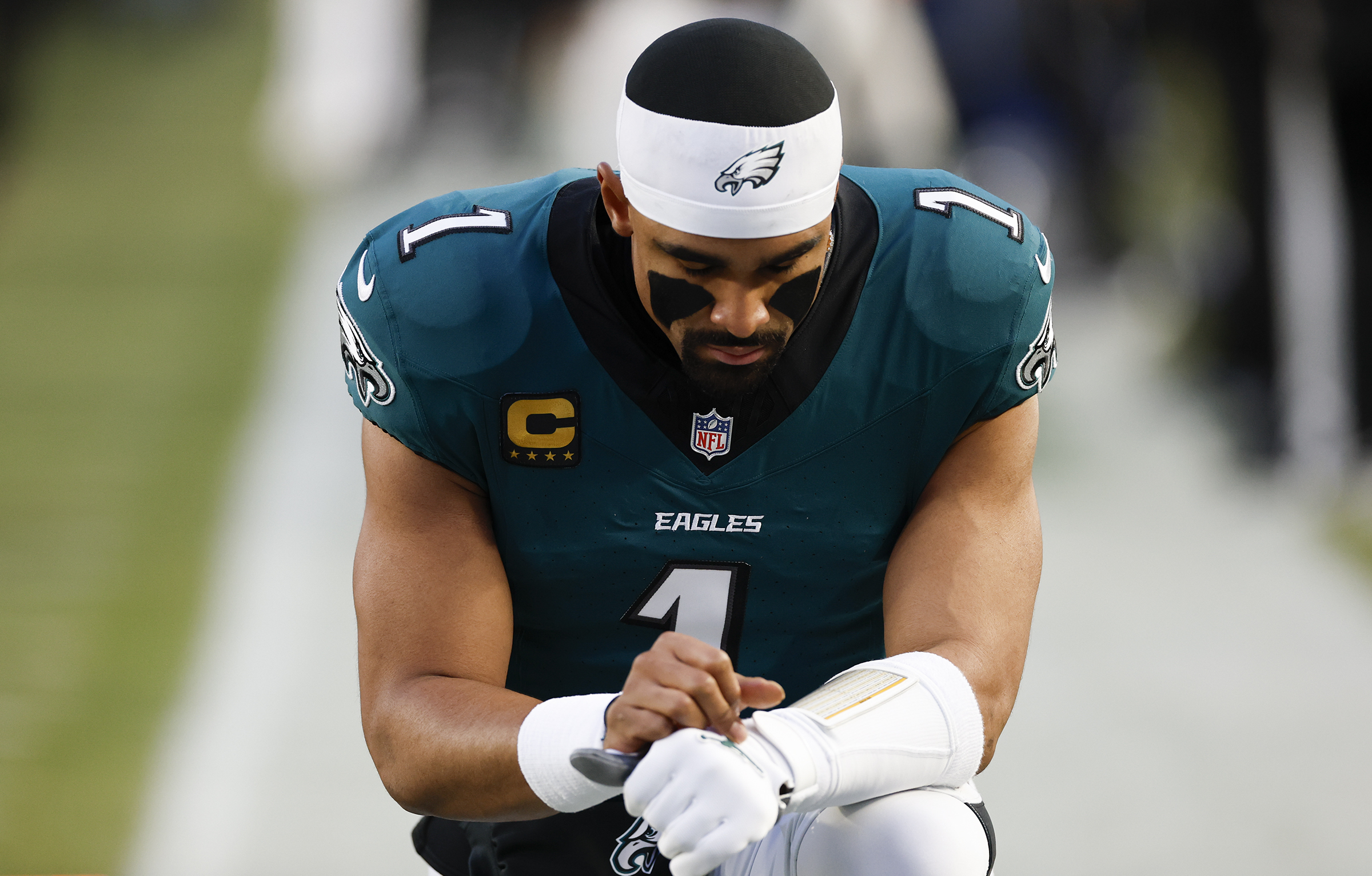
    It almost surely did not escape Jeffrey Lurie’s notice that his offense turned out OK the last time he hired a Packers quarterbacks coach.

    It shouldn’t escape ours, either.

    Sean Mannion may not be the next Andy Reid. The Eagles didn’t hire the 33-year-old Green Bay assistant with the thought that he would become Reid. But Reid was Mannion at one point in time: an under-the-radar position coach without play-calling experience who was hired for a big boy job well ahead of schedule. This was back when Mannion was six years old, of course.

    Has it really been 27 years?

    It has. Mannion and Reid don’t have much of a connection apart from having both sat at the same desk (figuratively … although, knowing Lambeau Field, maybe literally, too). Matt LaFleur is not Mike Holmgren. Sean McVay is not Bill Walsh. The lineage of Packers quarterbacks coaches who became offensive coordinators includes one Ben McAdoo. Having occupied the position is a trait neither prescriptive nor predictive. It is descriptive in one sense, though. A lack of play-calling experience should not be a deal-breaker for a team that is looking to overhaul its offensive identity.

    In fact, play-calling isn’t the thing that will determine Mannion’s success or failure as Eagles offensive coordinator. It is the thing that we will focus on, no doubt. For a variety of reasons. First, because play-calling is the only part of the job that we actually get to see. Second, because guys like Walsh and Reid and McVay (and Mike Martz, Kyle Shanahan, etc.) have led us all to believe that football games are won the same way Jimmy Woods won video games in The Wizard. Which is silly, when you stop and examine the time card. Even at 70 plays per game and a full 40 seconds between plays, an offensive coordinator spends less than an hour of his work week calling the plays. The bulk of the job is the 79 hours that precede it.

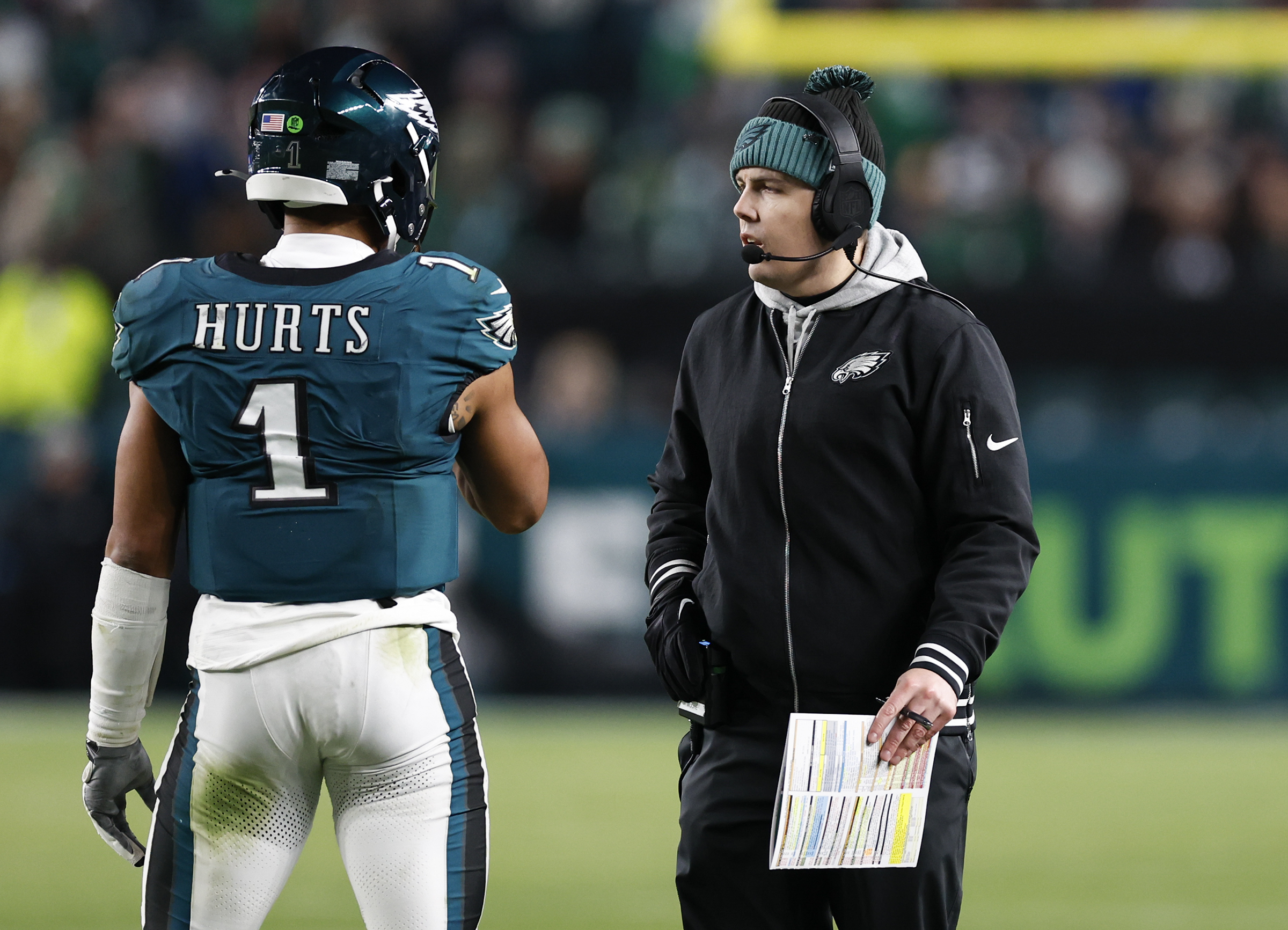
    Can Sean Mannion have the same strong working relationship with Jalen Hurts that Kellen Moore (right) experienced?

    The Eagles need Mannion to be a good coach. Jalen Hurts needs Mannion to be a good coach. Those two things are one and the same. Because Jalen Hurts is the Eagles. Where they go from here as an offense depends almost entirely on who he is as a quarterback. Rather, it depends on who Hurts can be. Who he is? That isn’t good enough. All of us saw that this season. Not all of us understood what we saw. But we saw it. Plain as unflavored yogurt.

    That’s not to say the Eagles’ disappointing 2025 campaign was all on Hurts’ shoulders. Seven months isn’t nearly long enough to transform from a player capable of winning a Super Bowl MVP to a player who simply isn’t good enough. His advocates are correct in that. Hurts would have been equally capable of winning the honor this season as he was in 2024, assuming the rest of the offense was also as capable as it had been. Therein lies the disconnect. You’ll make a you-know-what out of yourself if you’re assuming Hurts’ supporting cast will ever be as good again.

    It’s funny. Nick Sirianni’s detractors constantly portray him as the unwitting beneficiary of a world-class roster. He is the dim-witted only son bequeathed an empire, a head coach who happened to stay at a Holiday Inn Express last night. He showed up in board shorts at his interview and then rode the wave of Howie Roseman’s roster. But a roster that good doesn’t stay it for long.

    Rarely is the same rubric applied to the quarterback. No, A.J. Brown wasn’t the same singularly dominant receiver he has been, which compounded his general malaise. No, the offensive line didn’t manhandle opponents the way it had in previous seasons. Yes, Saquon Barkley was a little less dynamic than he was when he was jumping backward over erect defenders. Each of those claims is perfectly valid. As is the rebuttal: welcome to life as most NFL quarterbacks live it.

    Hurts can’t be the same as he was. He needs to be better. That’s going to take some very good coaching, provided he is no longer willing and/or capable of being the freewheeling scrambler he was in 2022. Being that player afforded Hurts the luxury of not needing to do the things that most other championship quarterbacks must do. He didn’t need to parallel process his pocket navigation, feeling pressure subconsciously while focusing downfield. He didn’t need to recognize that the deep crosser would clear before settling for the hitch in his foreground. He didn’t need to wait for a defense to man-up Brown on a vertical route to generate an explosive play.

    It’s probably time to acknowledge that Jalen Hurts’ supporting cast isn’t going to suddenly revert to its 2024 form.

    Hurts needs to do those things now. That’s the problem. Those things aren’t sustainable. Lane Johnson isn’t going to play forever. Even if he does, he won’t always be the same player. And the four guys alongside him won’t all remain healthy as consistently as he has.

    Same goes for the pass-catchers. Here’s a quick a thought exercise. In the four years since the Eagles traded a first-round pick for Brown on draft day, has any other team managed to swing a move at the position that was even 75% as impactful? The Chiefs have spent five off-seasons trying to replace Tyreek Hill. The Patriots haven’t had a receiver of that caliber since Randy Moss. A great quarterback makes the most of what he has.

    Just to reiterate: Hurts doesn’t need to be Tom Brady. He needs to be better than he was in 2025 in order to win with the supporting cast most quarterbacks have, which is the supporting cast he is likely to have moving forward. Mannion will play a significant role. His profile is intriguing.

    Nobody can understand a quarterback like somebody who has played the position. Kellen Moore was a quarterback. His quarterbacks coach was a quarterback (former NFL backup Doug Nussmeier). Shane Steichen was a quarterback. None of them were as good as Hurts. But they understood what quarterbacks see, how they process, what they need. Sirianni and Kevin Patullo were wide receivers. So were McVay and Shanahan. Again, neither prescriptive nor predictive. But we are talking about Mannion.

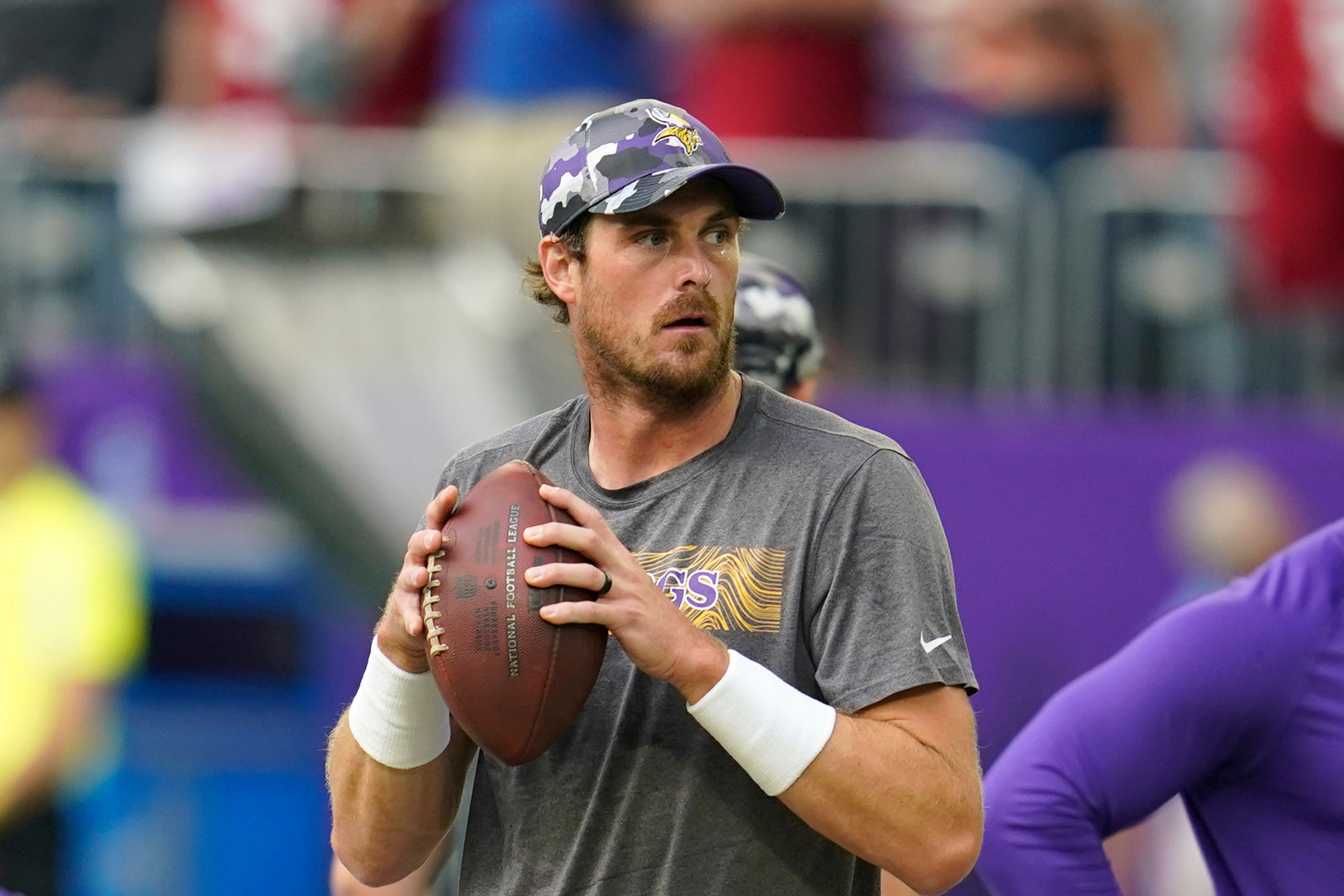
    Mannion is a quarterback, and he has played the position in lots of different settings, under lots of different coaches, including McVay and Kevin O’Connell, as well as Klint Kubiak and Kevin Stefanski. He has coached under LaFleur, who has won a lot of games with a quarterback (Jordan Love) who lacks a lot of what Hurts brings to the table. Mannion’s coaching profile is about as ideal as you can draw up for a guy who has only been a coach for two seasons.

    Sean Mannion understands quarterbacks because he was one… very recently, in fact.

    It is also a vote of confidence in Sirianni. The Eagles could easily have opted for a coach who possessed the play-calling experience that Patullo lacked. Jim Bob Cooter, Matt Nagy, Bobby Slowik — any would have made a fine interim-head-coach-in-waiting. Instead, they went with a coach who lacks anything close to the political capital that Moore brought to the table when they hired him to replace Brian Johnson after 2023.

    Will it work? Who knows. It is the only honest answer. All we can say: it is a sensible move. In the end, it all depends on the quarterback.

  • Believe it or not, Aidan Miller and the Dodgers are more connected than one might think

    Believe it or not, Aidan Miller and the Dodgers are more connected than one might think

    The fun part of the baseball offseason is the illusion of control.

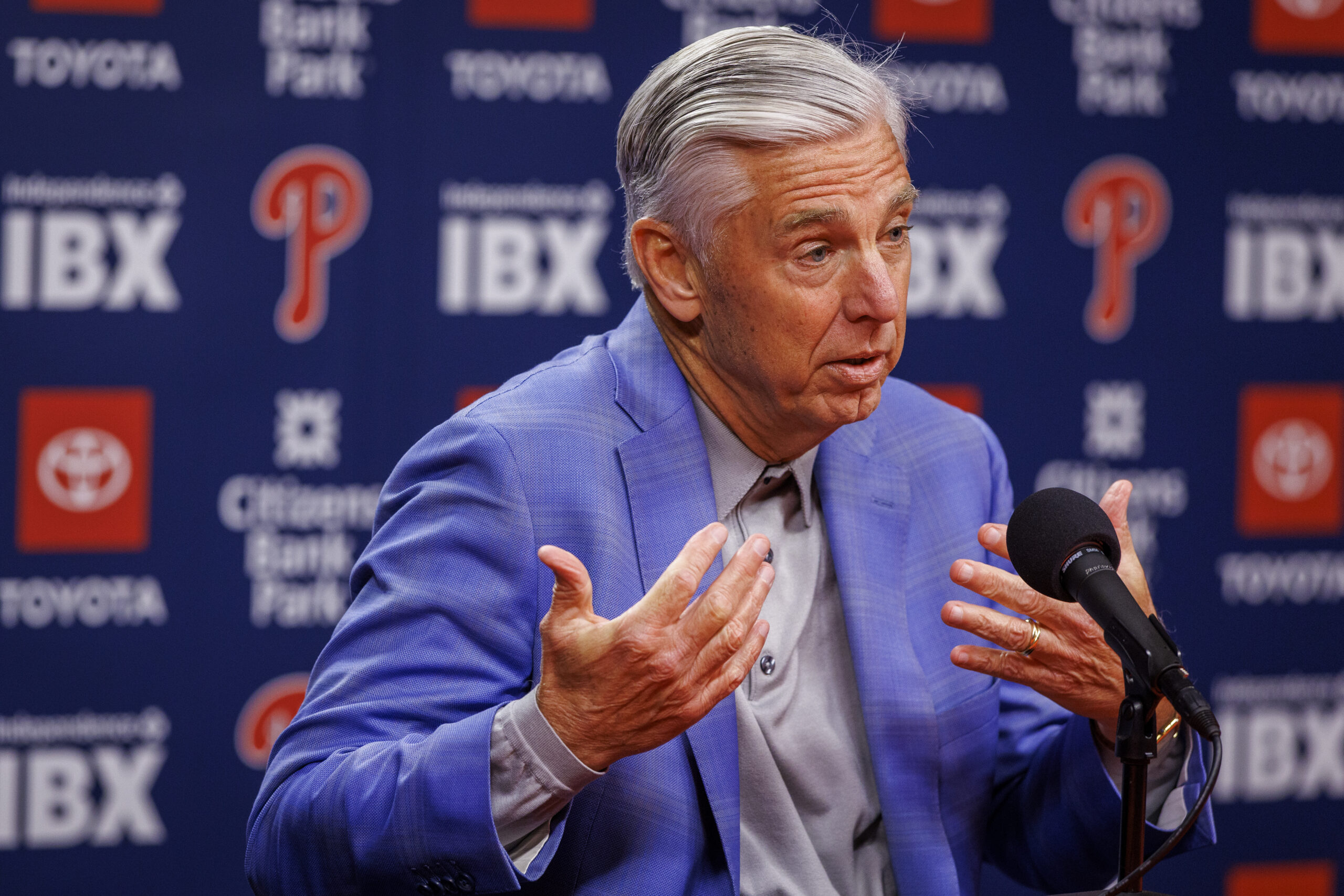
    Unless you are Dave Dombrowski.

    In which case, you’re a sitting duck. Or, even worse, you’re a floating duck, whose legs are tied, except they are tied beneath the surface, and so everybody thinks you’re a dumb little ducky because you don’t know how to swim.

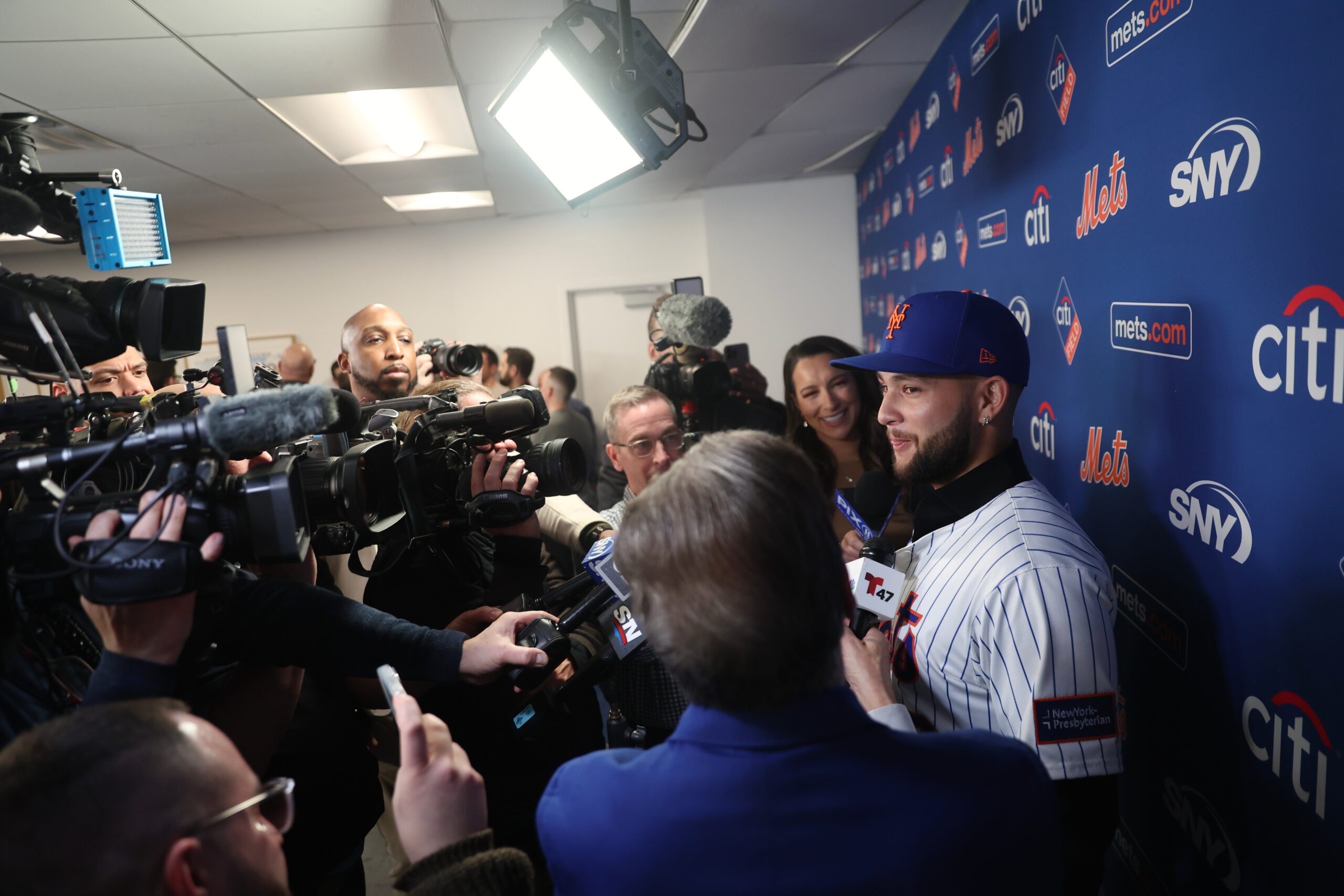
    The Phillies president has earned some of the criticism being lobbed his way. As ridiculous as it may seem for the Mets to pay Bo Bichette $42 million in annual average value, is it any more ridiculous than paying Taijuan Walker and Nick Castellanos a combined $38 million in AAV?

    The substitution costs are always what get you. Thirty-eight million dollars would have been enough to have Jeff Hoffman and Carlos Estévez in your bullpen last season. It would have been enough to have Edwin Díaz in your bullpen this season. General managing is all about the tradeoffs you make.

    The irony is that the Castellanos and Walker contracts are easy ones to stumble into for the same reason that everyone thinks Dombrowski has done a lousy job this offseason. If you happened to be someone who pointed out the overinflated and potentially ill-advised nature of those deals at the time they were signed, you were met with a shrug of the shoulders.

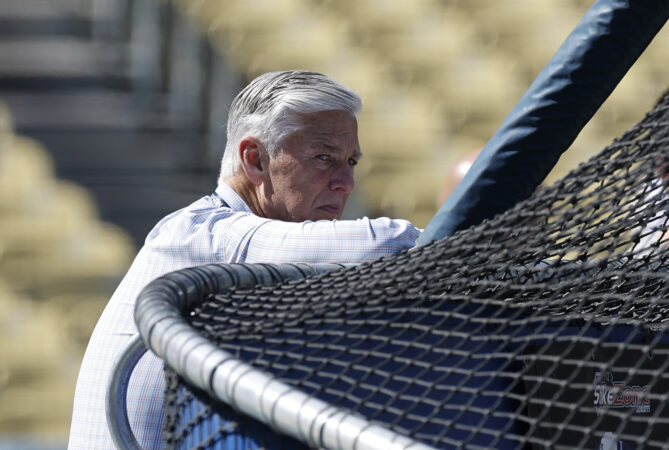
    Phillies president David Dombrowski has been the brunt of a few jokes this offseason as the team looks to retool for this upcoming year.

    Who cares? It’s not our money.

    Well, it’s nobody’s money now.

    But let’s get back to our original point. Whatever nickel-and-diming we do in hindsight, it wouldn’t erase the only conclusion we can draw from this offseason. No amount of fiscal prudence would have given the Phillies the means to catch up to, let alone keep pace with, the Dodgers. Over the last three offseasons, they have signed Shohei Ohtani, Blake Snell, Tyler Glasnow, Yoshinobu Yamamoto, and now Kyle Tucker and Díaz to contracts ranging from $22 million to $57 million in average annual value.

    John Middleton might be a billionaire, but the Dodgers’ annual payroll is pushing half a billion once you factor in the luxury tax. How many billions? That’s the question you need to answer to compete at this level of spending.

    The Phillies know this. Could Middleton and his minority owners rub their pennies together a little harder? Sure. Their attempt to sign Bichette was a sign that they aren’t operating by any hard spending limits. What they lack — what everybody lacks, except for the Dodgers and Mets — is the ability to sign such contracts with the knowledge that they can outspend any mistakes. The Dodgers have plenty of seemingly dead money on their books after last year’s bullpen spending spree. But it doesn’t seem to matter.

    Chasing Bo Bichette, who signed with the Mets, was admirable of the Phillies. But what would the cost have been if they landed him?

    The ability to sign Bichette for what would have been a reasonable seven-year, $200 million deal is a lot different from the ability to spend that money on whoever happens to be available. That’s how you end up hamstringing yourself by overpaying for players like Walker and Castellanos.

    Those contracts only make sense if you can outspend the mistakes. The Phillies aren’t there, nor have they ever pretended to be. It’s plenty fair to criticize Dombrowski and Middleton for offering those deals to begin with. But you can’t fault them for their inability and/or unwillingness to offer another batch of them.

    Which brings us to the illusory aspect of the baseball offseason. Regardless of how the last few months would have played out, the Phillies were always going to enter spring training needing to look inward in order to catch up to the Dodgers. In more ways than one. They are going to need to get some sort of impact from their minor league system. And they are going to need to get the intestinal fortitude to create opportunities for it to happen.

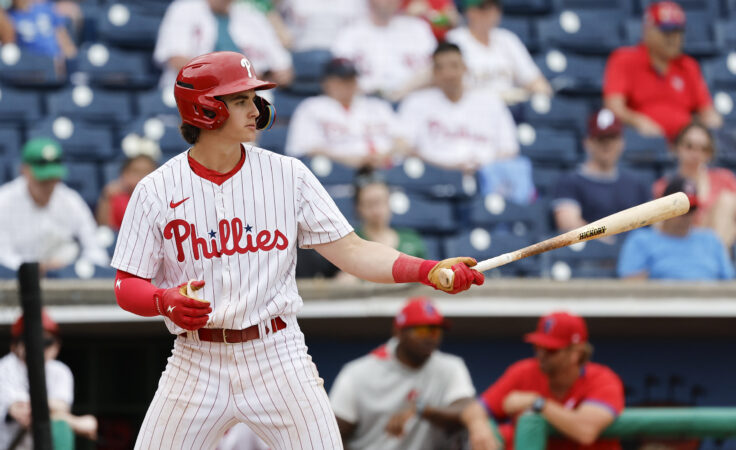
    The best news of the offseason might have come over the last week, when all of the national outlets released their Top 100 prospects lists. Aidan Miller showed up in the Top 10 of two of those lists: No. 6 on The Athletic’s and No. 10 on ESPN’s.

    News? Perhaps not. But confirmation that the national scouting industry agrees with what all of us local yokels have seen with our own two eyes for the last two years. Miller is the kind of prospect who can alter a team’s long-term trajectory while massively boosting its present-day World Series odds.

    Many believe Phillies minor league infielder Aidan Miller is the kind of prospect who can alter a team’s long-term trajectory.

    Years ago, the Dodgers had one of those prospects in Corey Seager. He broke into the big leagues at 21 on a team managed by Don Mattingly. Mattingly happens to be the new Phillies bench coach and the father of the team’s general manager. The Dodgers went to the NLCS the following season, when Seager was 22, and the World Series the year after, when he was 23. Miller will be 22 in June.

    Prospects are largely responsible for writing their own future. Miller needs to start the season the way he ended the last one. If he does, the Phillies need to do their part and find him a spot in the lineup. It could involve difficult conversations, but they will be necessary ones.

    Same goes elsewhere. With Andrew Painter. With Gage Wood. With lesser-heralded prospects like Gabriel Rincones and Jean Cabrera. The Phillies need to be willing and flexible to bring guys up and find out what they have.

    The Dodgers have set the bar high. The Phillies have no choice but to reach for it.

  • Howie Roseman will have a role in remaking the Eagles offense. Here’s his offseason to-do list.

    Howie Roseman will have a role in remaking the Eagles offense. Here’s his offseason to-do list.

    Diversification should be the operational word for Howie Roseman and his front office this offseason.

    You’ve heard it said that the Eagles have more talent on their roster than any team in the NFL. The claim is more often than not the source of the shade thrown at Nick Sirianni and his coaching staff. When the Eagles win, it is because of their overwhelming talent. When the Eagles lose, it is because of how their overwhelming talent is coached.

    That claim wasn’t true at the end of the 2025 season, and I’m not sure it was true at any point. The Eagles were getting less than 100 percent of Landon Dickerson and Cam Jurgens and zero percent of Lane Johnson. Even if A.J. Brown was 95 percent of the player he had been over the previous three years, that missing five percent is often what distinguishes very good players from unstoppable ones. Same goes for Saquon Barkley, whose name popped up on the injury report late in the season and who lacked at least some percentage of the lateral improvisation and finishing abilities that he’d displayed during the Eagles’ 2024 championship run.

    All of these things could prove to be temporary, the result of the shortened recovery period that comes as a result of a season ending in mid-January rather than early February. It stands to reason that those most impacted would be players whose competitive advantage lies in their sheer physicality. Johnson, Brown, Barkley, Dickerson, and Jurgens weren’t as physically capable as they were in 2024. Yet, here we are, fixated on the play-calling.

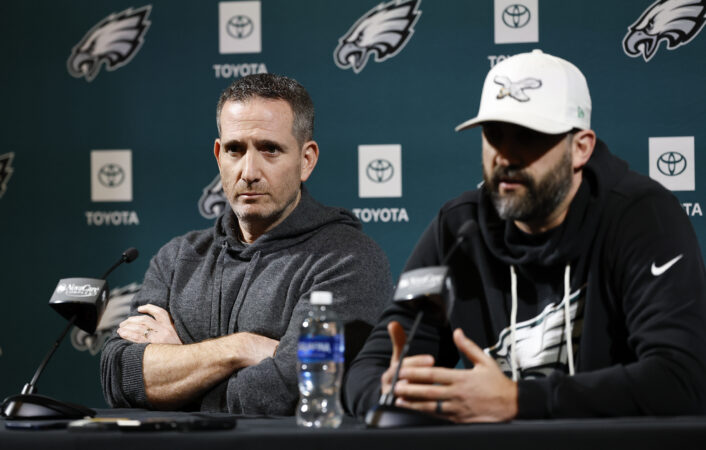
    Eagles general manager Howie Roseman is knee-deep in preparations for the draft and free agency.

    That’s not to say the Eagles offense won’t benefit from a new strategic direction. But their problems clearly are not singular in nature, given the depth and breadth of their issues. For three seasons, the Eagles’ scheme was the logical conclusion of their personnel. They went to two Super Bowls and won one in a blowout because their talent allowed them — heck, required them — to keep it simple.

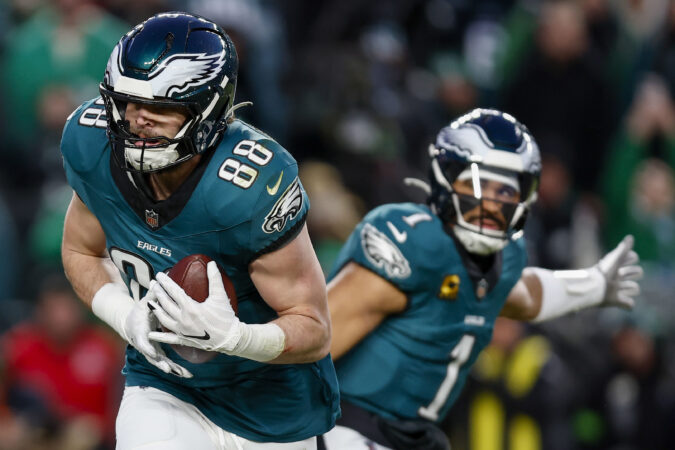
    What we saw this season was a team whose elite performers could be mitigated enough to place the onus on those operating in their shadow. This reality expressed itself most clearly in the form of Dallas Goedert. He scored eight more touchdowns and averaged nearly as many targets per game as he did in 2022, when he averaged 59 yards per game and arrived at the Super Bowl being compared to Travis Kelce. But, this season, Goedert averaged just 39.4 yards per game, his lowest output since he was a rookie.

    If the path forward for the Eagles is a scheme that does not rely as heavily on the singular abilities of players like Johnson and Brown and Barkley — and it almost certainly is — the path forward requires a roster that allows for such a scheme. It is a roster that has a third wide receiver with much better ball skills, and/or physicality on routes, than Jahan Dotson brings. It is a roster that has a second tight end who brings positive value as a run blocker and makes a catch or two a game. It is a roster that has a change-of-pace back who adds a different dimension from Barkley.

    Let’s address those in order:

    1) Fix the tight end position

    Tight end is as important as it has ever been. Among the 13 highest-graded run blockers at the position according to Pro Football Focus, only two played for teams that missed the playoffs.

    All three Eagles tight ends ranked among the 15 lowest-graded run blockers at the position (among 94 total).

    Goedert’s future isn’t the only question. He’ll be a free agent after playing 2025 on a one-year deal. But the Eagles also need to find a TE2 who can complement the starter.

    Grant Calcaterra and the Eagles tight ends came up short as blockers.

    The Eagles were one of only five teams in the league that didn’t have a second tight end with at least 100 yards receiving. That’s partially due to the presence of two top-end wide receivers who were targeted on nearly half of Jalen Hurts’ pass attempts. But there is also a chicken-and-egg component to the Eagles’ narrow pass distribution. Would Hurts distribute the ball more evenly with a wider set of options? The Rams had four tight ends with at least 200 receiving yards despite Puka Nacua and Davante Adams combining for nearly half of the team’s targets.

    The Eagles missed out on last year’s bumper draft crop at the position. They are missing what they once had in Goedert — a young, three-dimensional player who is poised to step up the way he did alongside of and then in place of Zach Ertz. They have no choice but to focus on the free-agent market. Jake Tonges is likely to return to the 49ers as a restricted free agent. The Ravens’ Isaiah Likely is unrestricted, but is likely to have a significant market. The Eagles need to find this year’s version of Colby Parkinson and move aggressively the way the Rams did post-2023.

    2) Replace Jahan Dotson

    A lot was made of the non-pass interference call deep down the left sideline in the Eagles’ playoff loss to the 49ers. But a receiver needs to earn those calls. Dotson has not.

    In the entire NFL, there was only one wide receiver who caught fewer than 29 passes while playing at least 575 snaps. It was Jahan Dotson. He caught 18.

    Eagles wide receiver Jahan Dotson caught only 18 passes this season.

    The Eagles’ fourth-leading receiver was Saquon Barkley with 50 targets, 37 catches and 273 yards. Dotson was behind him with 36 targets, 18 catches and 262 yards.

    Only three playoff teams didn’t have a fourth pass-catcher with 300-plus yards: the Eagles, the Seahawks, and the Panthers. Of the 14 teams that made the playoffs, eight had at least five players with 300-plus receiving yards, including six of the eight teams that advanced to the divisional round.

    That doesn’t prove anything, of course. There are lots of different ways to operate a functional passing offense. Nobody is saying the Seahawks would be better off if more of Jaxon Smith-Njigba’s targets went to Elijah Arroyo. But even the Seahawks’ pass distribution was fairly broad beyond their top three target-getters. They finished the season with eight players who had at least 22 targets and 144 receiving yards. The Eagles had five players with more than 13 targets and 92 receiving yards while throwing the ball about as often as Seattle (slightly more, in fact).

    Let’s not forget the whole point of this exercise. While functional NFL passing offenses take all sorts of forms, the Eagles’ passing offense was not functional. Assuming Brown returns and continues to draw the same coverages he and DeVonta Smith faced this season, the Eagles need a third wide receiver who can actually take advantage of the lack of attention paid to him.

    3) A change-of-pace back

    The Eagles need their version of the Ravens’ Justice Hill, a player who can take a screen pass 20-plus yards or gash a defense on the infamous third-and-long Will Shipley draw. Tank Bigsby was an excellent find by Roseman, but he brings a similar dimension to Barkley. The goal here is to find a veteran back with quickness and pass-catching ability who can be more than a lesser version of the lead back.

    Long story short, the Eagles either need to upgrade the breadth of their skill sets behind their Big Three (Brown, Smith, Barkley) and/or find a fourth player who brings his own dynamic skill set that can exploit the defense’s focus on the stars.

    Sure, they need a play-caller who can enable their skill players to fully express themselves.

    They also need the skills.

  • Mets take aim at Phillies with Freddy Peralta and Bo Bichette, but let’s not get ahead of ourselves

    Mets take aim at Phillies with Freddy Peralta and Bo Bichette, but let’s not get ahead of ourselves

    Well, it finally happened.

    The Mets made a move that makes sense.

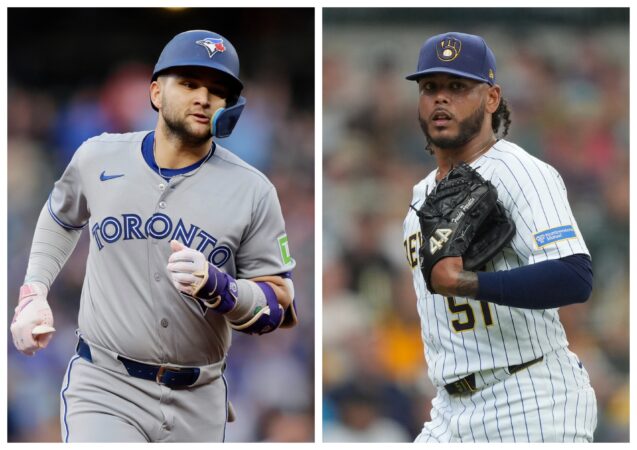
    Freddy Peralta is the kind of acquisition who can change expectations in a hurry. The Phillies know it as well as anybody. They’ve scored three runs in four starts against Peralta since 2022. Bryce Harper, Kyle Schwarber, and Trea Turner are a combined 2-for-26 with 10 strikeouts against the veteran right-hander in that four-year stretch. They’ll go from facing him once or twice a year to potentially three or four times now that the Mets have shipped a couple of top-100 prospects to the Brewers in exchange for the 29-year-old Peralta, who had a 17-6 record last season, with a 2.70 ERA and 204 strikeouts in 176⅔ innings.

    Wednesday’s trade is the second straight salvo the Mets have fired in the Phillies’ direction. The first was a gut-punch in the form of a three-year, $126 million contract signed by Bo Bichette. The Phillies thought they were about to land the former Blue Jays star on a seven-year, $200 million deal. Instead, the Mets unveiled their unique and devastating spin on the notion of addition by subtraction. Needless to say, it has been a rough week for the Phillies’ NL East odds.

    But let’s not go overboard here. While Major League Baseball doesn’t hand out trophies for sensibility, it also doesn’t hang banners for offseason champs. Offseasons are pretty much the only thing the Mets have won in the 40 years since the ’86 Amazin’s did their thing. They are going to need a lot of things to break right for that to change this year.

    It should be almost impossible for a team to enter spring training with a projected $360-plus million payroll and Jorge Polanco batting cleanup. Yet that’s exactly where the Mets find themselves with three weeks to go before pitchers and catchers report. The Mets can argue all they want that Polanco is a much better value on a two-year, $40 million deal than Pete Alonso would have been on the five-year, $155 million deal that he signed with the Orioles. But Alonso has hit 72 home runs over the last two years, while Polanco has hit 72 over the last four.

    Kyle Schwarber is one of several Phillies who have not fared well against Mets pitcher Freddy Peralta.

    And what about the five-hole? Right now, you’d probably pencil in Marcus Semien there. Which would be great, if “right now” was 2023. But Semien has looked nothing like the guy who finished third in MVP voting for the Rangers during their World Series campaign. In 2024 and 2025, the 35-year-old infielder slashed .234/.307/.379 for a .686 OPS that was almost exactly league average. Semien, whom the Mets acquired from Texas in a trade, is making $26 million this year.

    Luis Robert Jr. could work his way up in the lineup if he hits like he did over his last 35 games last season (.819 OPS, six home runs, 140 plate appearances). Or, he could be a $20 million eight-hole hitter if he hits like he did over the last two seasons overall (.660 OPS, 28 home runs, 856 plate appearances).

    There’s no question the Mets have succeeded in building themselves a different lineup. Francisco Lindor and Juan Soto are the only name-brand holdovers from a year ago. Brett Baty figures to start at designated hitter after the former top prospect rescued his career with a .311./.372/.500 batting line and seven home runs in his last 42 games. Mark Vientos can only hope to factor into the equation after a season in which he failed miserably to follow up on his 2024 breakout. Again, there are things that can break right. But a team’s win total usually has a negative correlation with the number of “ifs” it brings to spring training. And that likely would have been the case with the Mets, until Wednesday.

    In Peralta and second-year sensation Nolan McLean, the Mets will have the kind of 1-2 punch atop their rotation that can carry a questionable lineup a long way. In two starts last year, McLean held the Phillies to one run and 14 base runners in 13⅓ innings with 11 strikeouts. Combine his numbers with Peralta’s against Schwarber-Harper-Turner and you get 3-for-40 with 14 strikeouts. If Sean Manaea can get back to his 2024 form (3.47 ERA in 181⅔ innings) and Kodai Senga can stay healthy, the Mets could be a big problem for opposing lineups. And that’s assuming they don’t make another late splash (Framber Valdez, for instance).

    But, then, there’s that pesky little word again. The Mets may yet salvage their offseason and move the needle in a more decisive manner. For now, Phillies fans shouldn’t be too hard on Dave Dombrowski’s roster. It’s still better than the Mets, for about 80% of the price.

  • The argument for Brian Daboll — and Zac Robinson (and even Matt Nagy) — as Eagles’ next play-caller

    The argument for Brian Daboll — and Zac Robinson (and even Matt Nagy) — as Eagles’ next play-caller

    An observation about the Eagles’ offensive coaching staff: 2025 was the first year Jalen Hurts wasn’t surrounded by former quarterbacks.

    It’s something the Eagles should keep in mind, especially if Brian Daboll and Mike McDaniel both land head coaching jobs … or if they both opt for one of the other 73 coordinator positions currently open across the league. (ESPN reported Tuesday night that McDaniel is expected to be hired as the Los Angeles Chargers’ offensive coordinator.) Shane Steichen and Kellen Moore were both Division I starters in college. They both had assistants who were NFL backups. Under both, Hurts finished with a passer rating above 100 and went to a Super Bowl.

    Correlation doesn’t equal causation. Nor should it equal a strike against Daboll or McDaniel as the Eagles look to hire an offensive coordinator who can revitalize their stagnant scheme. Neither man came up as a quarterback. Daboll played safety at Rochester. McDaniel was a wide receiver (at Yale), just like Kyle Shanahan and Sean McVay and Josh McDaniels and Joe Brady (and Nick Sirianni and Kevin Patullo). Andy Reid was an offensive lineman. Bright offensive minds come in all shapes and sizes.

    But I’m not necessarily talking about scheme here. I’m talking about the other important parts of coaching: teaching, explaining, understanding, conveying. McVay and Shanahan are outliers, given their upbringing, which was so rich it barely needs introduction. (McVay, the grandson of 49ers executive John McVay, was once hired by Mike Shanahan, Kyle’s father.) Otherwise, it’s only natural that former quarterbacks would have an edge in understanding how a current quarterback sees the field. Ben Johnson, Liam Coen, Kevin O’Connell, Sean Payton … all former quarterbacks.

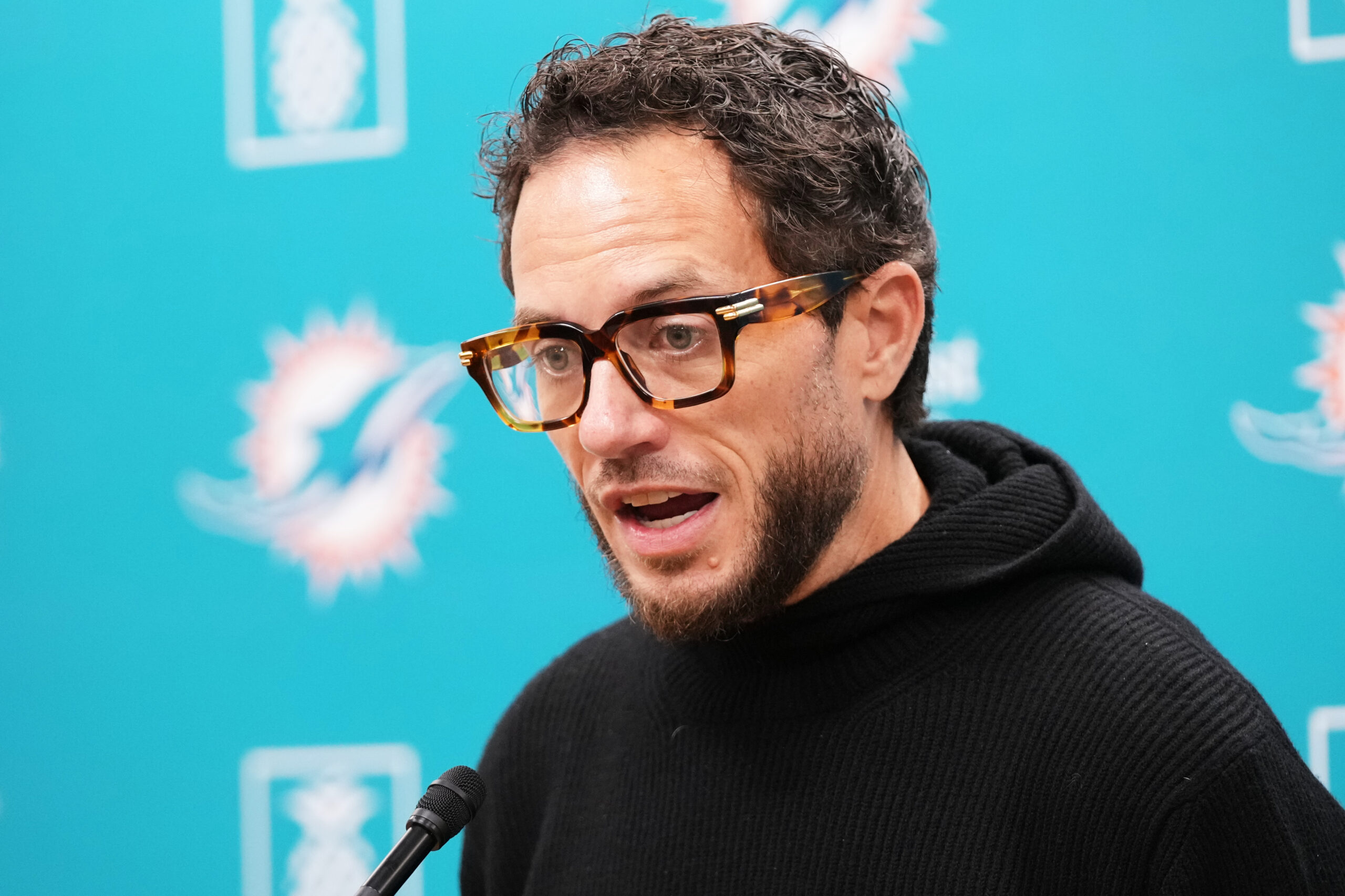
    Former Dolphins coach Mike McDaniel is a candidate for the Eagles’ job at offensive coordinator, although they have not spoken to him yet.

    Again, nothing against the wide receivers (or safeties). McDaniel is clearly the guy every team should have at the top of its list for lead play-calling duties. He went 31-24 with Tua Tagovailoa as his starting quarterback. Nobody schemes the running game better. The Eagles have yet to corral him for an interview, and maybe they won’t. But only because he has better opportunities.

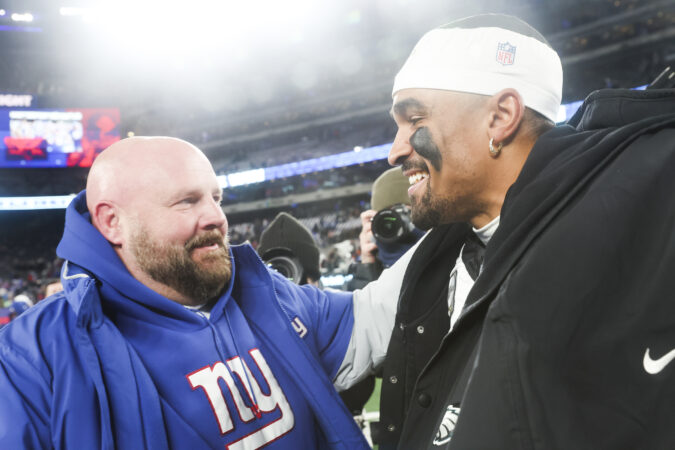
    As for Daboll, he would be an easy choice to snicker at. Hard Knocks did him no favors. But the former New York Giants head coach would make a lot of sense. He is still well-regarded in Buffalo, where he oversaw Josh Allen’s transformation from a raw, erratic bust-in-waiting to one of the most singularly impactful quarterbacks in the game. He also could be around for a while if he misses out on a head coaching gig in the current cycle.

    Both Daboll and McDaniel bring with them the kind of experience that the Eagles lacked in 2023 and 2025 with first-time play-callers Patullo and Brian Johnson (the latter a former quarterback). The biggest weakness of this year’s coaching staff wasn’t just a lack of experience on Patullo’s part: It was a lack of experience behind him, particularly at the game’s most important position.

    Eagles quarterbacks coach Scot Loeffler never took a snap in his four years at Michigan during the mid-’90s. Passing game coordinator Parks Frazier attempted 127 passes at Murray State. Quality control coach Montgomery VanGorder attempted 275 at Youngstown State. Combined, that’s a grand total of two seasons of lower-level collegiate starting experience and zero snaps at the FBS level.

    Compare that to Hurts’ support system in the halcyon days of 2022.

    Steichen played four years at UNLV (465 pass attempts). Johnson played four years at Utah (1,017 pass attempts). Alex Tanney spent nine years as an NFL backup after starring at Monmouth.

    Two years later, the Eagles turned their offense over to Moore, a former Heisman Trophy finalist who starred at Boise State. Quarterbacks coach Doug Nussmeier spent five years as an NFL backup after winning the Walter Payton Award, as the most outstanding offensive player in what was then known as Division 1-AA, at Idaho.

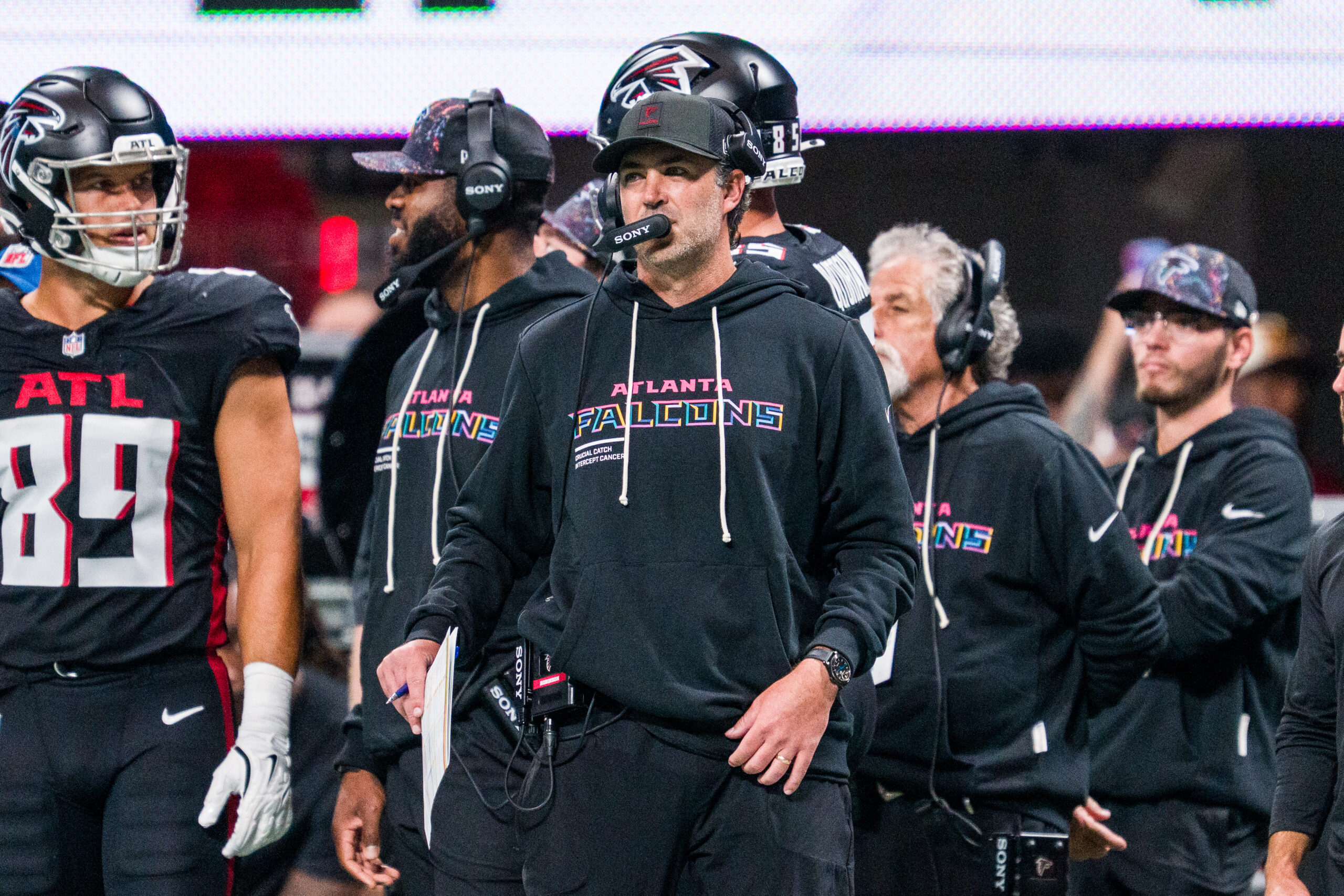
    Former Falcons offensive coordinator Zac Robinson is expected to have several offers.

    The Eagles were behind the eight ball when Moore left to become the New Orleans Saints’ head coach and took Nussmeier with him as his offensive coordinator. Thanks to their Super Bowl run, Sirianni and Howie Roseman had a thin market in which to find their replacements. The same thing happened on the defensive side of the ball post-2022 when Jonathan Gannon left for Arizona. Underlying the cliché and mythical Super Bowl curse are some very real variables.

    This time around, the world is the Eagles’ oyster. They’ve already interviewed Mike Kafka and Zac Robinson, both former NFL draft picks at quarterback. Neither has the sort of profile that fans are coveting, but Robinson in particular has an intriguing background. The Atlanta Falcons played some surprisingly competent football this season, scoring 24-plus points in nine games, two more than the Eagles. They finished ahead of the Eagles in yards per play and net yards per pass attempt in each of the last two seasons that Robinson spent as offensive coordinator after his stint on the staff of kingmaker McVay.

    Robinson will presumably have multiple offers. There are plenty of intriguing situations out there: the Chargers under Jim Harbaugh and with Justin Herbert unless McDaniel has already taken that job, the Baltimore Ravens with Lamar Jackson, the Tampa Bay Bucs with Baker Mayfield and a deep offensive depth chart. Never before has the NFL seen this level of upheaval in a single offseason. Half of the league has an opening at offensive coordinator.

    Which makes Matt Nagy a guy the Eagles should talk to.

    He certainly wouldn’t win the headline battle. But he’s a former quarterback (Delaware) with plenty of experience who got a bit of a bum rap during his four-year stint as head coach of the Chicago Bears. Nagy went 25-13 in the 38 games that Mitch Trubisky started for him. That looks even more impressive in hindsight than it did at the time.

    Whomever the Eagles hire, their top priority should be bolstering the experience of the staff beneath him. Coaching can overcome personnel issues only to a certain extent. But Hurts isn’t going anywhere, and we’ve seen way more out of him than we saw in 2025. The right guy for the job isn’t just a great schemer. He is a communicator and an edifier, and he’ll know how to build a support system that is heavy on both traits.

  • Eagles need more than a new coordinator to revamp their offense

    Eagles need more than a new coordinator to revamp their offense

    The long arc of history is a lot shorter in the modern NFL. Howie Roseman offered a nod to it last week. The tone of his voice was quite grave.

    “There’s natural transition in what we do,” the Eagles’ general manager said. “I’m not making an excuse or anything, but there’s a national transition in that in terms of what you’re paying your guys, which side of the ball you’re paying guys who are coming up.”

    Look back at the historically great teams and you will see a familiar pattern.

    The early-’90s Cowboys won three Super Bowls in four years and have not been back to a conference championship since.

    The turn-of-the-century Rams went to two Super Bowls in three years and then had one winning season in the next 15.

    The Patriots won three Super Bowls in four years in the early 2000s and then did not win another over the next decade. Then they won three in five years.

    And let’s not forget about the Andy Reid Era Eagles: four straight conference championship appearances with one Super Bowl Bowl appearance followed by one conference championship appearance in the next eight seasons.

    More often than not, you look back and realize that the best version of a team was the one that took everybody by surprise. The Chiefs’ two biggest point differentials in the Andy Reid Era came in Patrick Mahomes’ first two seasons as a starter. The Packers outscored opponents by a combined 452 points in Aaron Rodgers’ first four seasons as a starter and then outscored them by 428 in his next eight.

    Tackle Lane Johnson broke down this season and the Eagles offense suffered.

    The phenomenon extends beyond the NFL. You don’t need to look far. The Phillies in 2008 and 2022. The Sixers in 2018-19. The Flyers in 1996-97 and 2009-10.

    By the time you realize the good times are here again, they are already ending.

    You might reject that thought as depressing, even nihilistic. But it is the reality of the Eagles’ situation. Their regression on the offensive side of the football was more due to the natural order of things than it was to the unique and aggressive incompetence of the head coach and his handpicked play-caller. They were a team with disproportionate reliance on the overwhelming talent of its offensive line. That talent advantage wasn’t as great this season.

    Mekhi Becton left for more money. Lane Johnson missed the end of the season. Landon Dickerson and Cam Jurgens weren’t as healthy as last season. Even if the line was 85% of what it was, that would still jibe with the Eagles overall being 85% of what they were, especially if it was compounded by A.J. Brown and Saquon Barkley not being as uniquely dominant as they were last season.

    Attrition is a natural part of the NFL, both at the individual level and the roster level. Those two things go hand-in-hand, obviously. One can argue that the job of a head coach and play-caller is to adapt to the realities on the ground. That’s more than fair. It is also a difficult thing to do midseason. The Eagles are right to be doing it now in their search for a play-caller to replace Kevin Patullo. But nobody should be surprised if they fail to find one.

    Over the next few weeks, we’ll learn a lot about the rest of the NFL’s diagnosis of the Eagles. Former Dolphins head coach Mike McDaniel is a unique enough genius to be interviewing teams rather than teams interviewing him. A recent report said that he would rather accept a great offensive coordinator position than another head coaching job doomed to fail. A year ago, you would have counted the Eagles as such a job. Maybe they still are. But are they really a better job than the Lions?

    McDaniel reportedly has spoken with Detroit, which previously made Ben Johnson a star. Jahmyr Gibbs is a running back with the same skill set that McDaniel had in Miami with De’Von Achane. Amon-Ra St. Brown, Jameson Williams and Sam LaPorta can make their case over Brown, DeVonta Smith, and whoever plays tight end for the Eagles next season. The Lions’ offensive line has consistently ranked near the top of the league, albeit behind the Eagles.

    Eagles running back Saquon Barkley had a subpar season.

    Brian Daboll and Zac Robinson are two other recognizable free agents. At the same time, the Chargers and Ravens are two other recognizable jobs. The Eagles aren’t just looking for the right guy … the right guy is looking for the right team.

    All of that is to say that the real challenge of this Eagles offseason is figuring out the talent situation. Roseman has done a marvelous job of it on the defensive side of the ball, reinventing that unit in barely two offseasons. This season, the Eagles had seven players from their last three draft classes log at least 700 defensive snaps. No other team had more than five.

    Building the offensive line is always the Eagles’ top priority. But they could sure use some reinforcements at the skill positions. Another wide receiver, a tight end, a change-of-pace running back with pass-catching skills, all would have helped immensely this season. That’s true even before we start to contemplate whether to trade Brown.

    “I think we’ve drafted 15 guys since Nick [Sirianni] has been here in the first and second day, and 14 of them have been long-term starters. We’ve got to keep hitting like that. I know that’s hard, but we’ve got to keep doing it,” Roseman said. “That means we have to have a good process. We’ve got to understand the people that we’re bringing into the building. We’ve got to understand the roles and the vision that we have for them when they’re playing. If we do that, good things will happen. We’ll be able to keep the players that we need to keep under long-term contracts and have an influx of young players that are really good that can play at a high level.”

    It’s no coincidence that the NFL’s championship windows are the same as the four-to-five-year windows of rookie contracts. The Eagles have already begun to extend theirs with their draft success on defense. It’s still the place where they are most likely to fix the offense.