
Author: Denali Sagner

  • Cherry Hill brides ‘Say Yes to the Dress’ with bridal fashion superstar Randy Fenoli

    Cherry Hill brides ‘Say Yes to the Dress’ with bridal fashion superstar Randy Fenoli

    On a gray November morning last Saturday, in a converted Cherry Hill Dunkin’ Donuts, bridal magic was in the air.

    At around 9:30 a.m., members of the staff at Dress 2 Impress, a new bridal boutique on Route 38, were furiously preparing for the arrival of one of bridal fashion’s biggest celebrities: designer and Say Yes to the Dress star Randy Fenoli.

    Floors were swept, lipstick was applied, and dainty chocolate pastries were laid out on a towering display.

    Fenoli, 61, is a marquee name in the bridal world. He served as the fashion director for New York City’s Kleinfeld Bridal from 2007 to 2012 and starred in the TLC reality show Say Yes to the Dress, set at Kleinfeld, and later his own, shorter-lived show, Randy to the Rescue.

    Fenoli is currently on a cross-country tour promoting his Keepsake Kollection, a new line of bridal gowns set to hit stores in early 2026. Dress 2 Impress, an authorized dealer of Fenoli’s dresses, was part of a select group of stores debuting the line early, an honor that came with a guest appearance from Fenoli himself.

    He’s “a real celebrity,” especially in South Jersey, said Beni Deliivanova, managing partner of Dress 2 Impress.

    Randy Fenoli is looking for dresses for a bride to try on at the new Dress 2 Impress location.

    Saturday marked the grand opening of Dress 2 Impress’ second store. Their first boutique, located in Linwood, has been open for 13 years.

    It’s a bit of “an American dream story,” said Ivaylo Deliivanov, Beni Deliivanova‘s husband, who managed the front desk and topped off mimosas as Fenoli and the bridal staff tended to customers on Saturday morning.

    Deliivanov‘s mother, Violeta Deliivanova, ran a dressmaking factory back in Bulgaria. When she immigrated to the U.S. around two decades ago, she got into the alteration and dry cleaning business. She opened Dress 2 Impress in Linwood in 2013. In 2022, Beni, Violeta’s daughter-in-law, left the corporate world to become a Dress 2 Impress managing partner.

    Though Dress 2 Impress’ Linwood location has long been a destination for Jersey Shore brides, Deliivanov said they were losing out to boutiques in Cherry Hill, where there are more bridal shops, and a giant mall, to meet brides’ needs. The grand opening of their second location marks an entrance into Cherry Hill’s formidable retail economy.

    The boutique is curated with keepsakes and designed for photo-ops. Sequin-covered purses and statement earrings sit in triptych glass cases. White champagne flutes and feathered fans embroidered with “BRIDE” rest next to a large bell that’s rung when a bride meets her perfect dress. A walk-in closet opens into changing rooms and a sitting area where brides perform mini fashion shows for adoring groups of female family members and bridesmaids.

    Maria Leonetti, of San Carlos, Calif., is trying on dresses with the help from Randy Fenoli.

    Before the marathon of brides arrived, Fenoli and Dress 2 Impress’ staff huddled in a back room, as the celebrity stylist imparted his time-tested wisdom onto the group. How do you match a bride to the right silhouette for her body type? How do you manage an overbearing family member with too many opinions?

    Chewy, Fenoli’s Shih Tzu, meandered around the boutique, at times chasing a stuffed macaroni noodle (Chewy has been on at least 80 flights with Fenoli this year).

    The morning’s first bride was Olivia Hafner, a 23-year-old Cherry Hill teacher engaged to her middle school sweetheart. The couple has been together for 10 years. Maria Hafner, Olivia’s mom, called it “a fairytale.”

    Both Hafner women are Say Yes to the Dress fans. They booked an appointment at Dress 2 Impress after seeing an ad online.

    “I’m open to trying different things, but I want a ball gown,” Olivia Hafner said, waiting in the foyer for Fenoli and Susanna Kavee, her enthusiastic bridal stylist.

    Over the next hour, Hafner emerged from the dressing room in dress after dress, first in a strapless gown with a structured corset top, then another with sequins, one with lace, and another with elegant detachable sleeves.

    Olivia Hafner, 23, of Cherry Hill, N.J., is trying on some dresses with the help from bridal stylist Susanna Kavee.

    The curated selection and hands-on assistance makes for a “boutique” experience, Fenoli said, one that sets the store apart from a trip to Macy’s or the mall.

    What do brides want these days? Fenoli says “everything”: glitter, ball gowns, princess-style skirts, traditional silhouettes. “Clean and simple” is having a moment, Fenoli added (perhaps linked to the omnipresence of the laid-back-but-still-stylish “clean girl aesthetic,” which has dominated TikTok in recent months, with ample criticism).

    Fenoli said the world of bridal fashion has changed “completely” from his mid-2000s Say Yes to the Dress days.

    Brides show up to appointments with screenshots from Instagram and TikTok videos, asking to try on dresses from unknown designers, located oceans away. Others come with AI-generated images that are impossible to match. More and more, original designs are being ripped off and sold for cheap on the internet.

    “I think technology and the internet has really hurt us,” he said.

    He quickly added: “Don’t ever, ever, ever, ever order a wedding dress online.”

    Dress 2 Impress’ Cherry Hill boutique is open from 10:30 a.m. to 6:30 p.m., Mondays through Fridays; 10:30 a.m. to 6 p.m. on Saturdays; and 11 a.m. to 4 p.m. on Sundays.

    This suburban content is produced with support from the Leslie Miller and Richard Worley Foundation and The Lenfest Institute for Journalism. Editorial content is created independently of the project donors. Gifts to support The Inquirer’s high-impact journalism can be made at inquirer.com/donate. A list of Lenfest Institute donors can be found at lenfestinstitute.org/supporters.

  • Lower Merion bans gas-powered leaf blowers, but not without pushback

    Lower Merion bans gas-powered leaf blowers, but not without pushback

    Gas-powered leaf blowers will be banned in Lower Merion starting in 2029.

    The Montgomery County township on Wednesday became the first in Pennsylvania to ban gas-powered leaf blowers, commissioners said, taking a phased approach that will begin with a seasonal prohibition and transition to an all-out ban over the next four years.

    “Together, we will bring us a step closer to providing our residents the right to clean air, pure water, and to the preservation of the natural, scenic, historic, and aesthetic values of the environment as guaranteed by the Pennsylvania Constitution,” Commissioner Gilda Kramer said, addressing a packed house of attendees at the board meeting.

    The commissioners passed the ordinance 10-4.

    Starting on June 1, 2026, gas-powered leaf blowers will be banned seasonally during the summer (June 1-Oct. 1) and winter (Jan. 1-April 1). The use of portable generators to power electric leaf blowers or charge their batteries will also be banned.

    Starting on Jan. 1, 2028, the use of gas-powered leaf blowers will be permitted only during the fall. They will be banned from Jan. 1 to Oct. 1.

    On Jan. 1, 2029, a full-fledged ban will take effect.

    Residents will still be able to use gas-powered leaf blowers during snowfall and within 24 hours after snow has ceased to fall.

    Similar bans have taken effect in Montclair, N.J.; Montgomery County, Md.; Burlington, Vt.; and Evanston, Ill. The City of Philadelphia and Swarthmore tried for similar bans, but those ordinances did not pass.

    Dozens of residents testified in favor of the ban, citing the noise pollution, environmental impacts, and health consequences associated with the use of gas-powered leaf blowers. One third grader presented a petition with 141 signatures collected at Penn Valley Elementary School.

    While the majority of commissioners characterized the ordinance as a step in the right direction — one that prioritizes safety and environmental health — others dissented, warning that the electric leaf blower technology is not currently strong enough to supplant gas-powered blowers and that the costs of the transition are still unknown.

    “The ordinance that we’re considering tonight is based on an aspiration that the technology is going to be there,” Commissioner Joshua Grimes said. “Right now, staff has told us it is not there. Staff has not told us when it will be there, and no one knows when it’s gonna be there.”

    An amendment to implement a seasonal ban only, not a full ban, failed. The amendment was brought by Commissioner Daniel Bernheim.

    Board President Todd Sinai said that while electric leaf blower technology is not yet fully advanced, the ordinance should be seen as Lower Merion setting ambitious, and important, goals for the future.

    “Some town has to go first. Some town has to be the one that is the starting point for all the other municipalities to coalesce around,” Sinai said. “… If we have to backfill things because we’ve discovered things that are friction points, we will fix them, but at least let’s set an objective and try to accomplish it.”

    Commissioners Bernheim, Grimes, Louis Rossman, and Scott Zelov voted against the ordinance.

    This suburban content is produced with support from the Leslie Miller and Richard Worley Foundation and The Lenfest Institute for Journalism. Editorial content is created independently of the project donors. Gifts to support The Inquirer’s high-impact journalism can be made at inquirer.com/donate. A list of Lenfest Institute donors can be found at lenfestinstitute.org/supporters.
  • Wallingford-Swarthmore is facing a $2.6 million deficit. Officials blame a ‘spending problem.’

    Wallingford-Swarthmore is facing a $2.6 million deficit. Officials blame a ‘spending problem.’

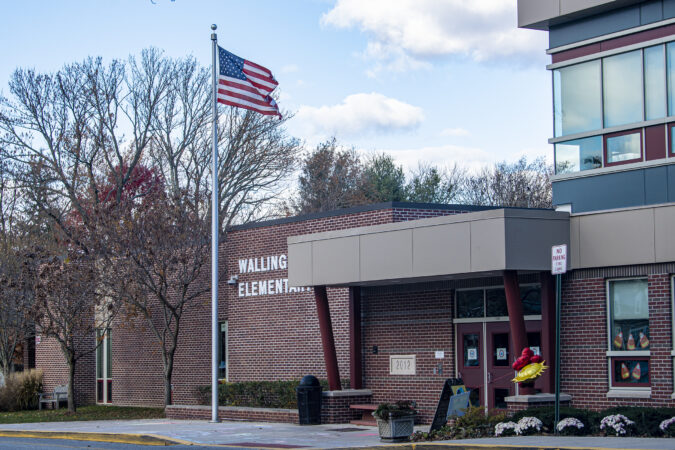
    The Wallingford-Swarthmore School District is headed for a $2.6 million budget deficit, district officials said during a presentation on Tuesday night.

    At a meeting of the district’s finance committee on Nov. 18, Superintendent Russell Johnston and business administrator DeJuana Mosley presented a dire picture of the school district’s finances. Increased staffing costs, subpar inventory management, and costly building repairs have coincided with a shrinking revenue base in the district, officials said. Without implementing a “cultural shift” around spending, Mosley said, the district is staring down major fiscal problems for the 2027-28 school year.

    “Bottom line, the district has a spending problem,” Mosley said.

    Why is Wallingford-Swarthmore facing a budget deficit?

    District administrators say Wallingford-Swarthmore‘s fiscal issues are largely related to runaway spending and insufficient recordkeeping.

    The school district’s budget has increased by 18%, or around $16 million, over the last five years. Administrators said the district has had to pour resources into its security, nursing staff, and costly building repairs that had been put off for years. On top of that, Mosey outlined a lack of inventory management, describing a culture across the district of “just ordering stuff.”

    Johnston was hired earlier this year to replace former Superintendent Wagner Marseille. The school district parted ways with Marseilles in 2024 amid mounting criticism of his management style and spending decisions.

    The district’s unsustainable spending has been set to the backdrop of a decreasing tax base, officials said. The 2025 taxable assessed value in the school district is $2.6 billion, a $5.8 million decrease from 2024. The decrease resulted in a $174,000 loss in revenue.

    School districts in Pennsylvania are limited by the Act 1 Index, a formula used to determine the maximum tax increase a district can levy (without voter approval). The index is calculated using the statewide change in wages, the nationwide change in school employee compensation costs, and an individual district’s relative wealth. Wallingford-Swarthmore’s 2026-27 Act 1 Index is 3.5%.

    Unlike neighboring school districts like Rose Tree Media, which has seen continued population increases and new construction, Wallingford-Swarthmore is small and almost entirely residential. Limited construction and growth leaves few opportunities to increase the district’s tax base.

    Around 20% of the district’s revenue comes from state and federal subsidies. Mosey said poor recordkeeping had impacted state subsidy and grant revenue (the issue has since been cleaned up, she added).

    How is the district planning to balance the budget?

    If no changes are made, the school district is set to be short about $2.6 million for the 2027-28 school year. Mosley recommended the district cut the budget by double that amount ($5.2 million).

    “I know it’s alarming and it’s aggressive and it’s a lot,” she said. “We’re trying to change the trajectory of what we’re doing.”

    Johnston said the district should look at cost savings that are “furthest away from the classroom,” citing examples like professional development and travel for staff, a reduction of the size of the district’s capital plan, and a review of “potential redundancies in services and staffing.” He also suggested evaluating which services the district is required to provide and which are optional.

    “I almost have to take a deep breath when I say this out loud, but kindergarten transportation is not required,” he said, offering cutting buses for kindergartners as an example.

    Johnston emphasized that he was not making a suggestion to cut kindergarten transportation from the get-go, but was offering it as an example of an optional service the district provides.

    What happens next?

    The district has to present a 2027-28 budget draft by June of next year. Johnston and Mosley said they were deliberately bringing the budget process to the public months in advance to allow for ample conversations with teachers, staff, parents, and the school board.

    In early December, Johnston will host optional community forums with school faculty and the community. The school board’s finance committee will present a potential budget reallocation strategy at its Dec. 16 meeting. On Dec. 22, the board is set to vote on its reallocation expectations.

    This suburban content is produced with support from the Leslie Miller and Richard Worley Foundation and The Lenfest Institute for Journalism. Editorial content is created independently of the project donors. Gifts to support The Inquirer’s high-impact journalism can be made at inquirer.com/donate. A list of Lenfest Institute donors can be found at lenfestinstitute.org/supporters.
  • Lower Merion may raise parking meter rates for the first time since 1999

    Lower Merion may raise parking meter rates for the first time since 1999

    Lower Merion’s board of commissioners is set to put multiple new ordinances on the books next month, including policies raising parking meter rates for the first time since 1999, lowering the speed limit on parts of Lancaster Avenue, and regulating where smoke and vape shops can open in the township.

    The smoke and vape shop regulation moved ahead last month, and the commissioners advanced the parking meter and speed limit changes Wednesday evening. Lower Merion’s assistant township manager, Brandon Ford, said the commissioners are poised to formally vote on all three proposals in December. Here’s everything you need to know.

    Parking meter rate may go up

    Commissioners on Wednesday moved forward an ordinance that would raise parking meter rates across Lower Merion for the first time in more than 25 years.

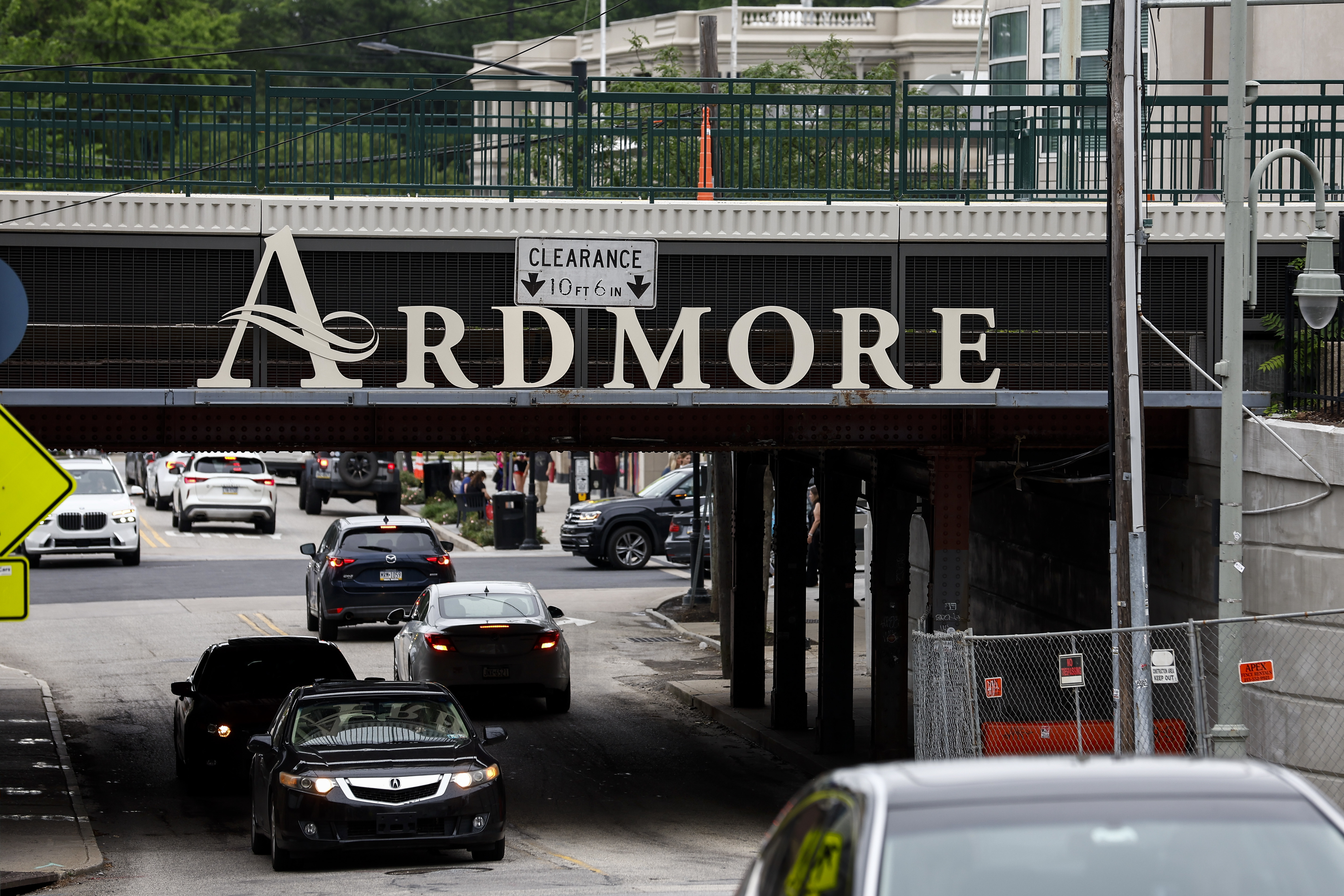
    Under the proposed ordinance, parking would increase from 50 cents per hour to $1 per hour across the township, with the exception of six locations in Ardmore. Parking would go up to $1.50 per hour at Rittenhouse Place, Cricket Avenue, Cricket Terrace, and township-owned parking lots five (Cricket Terrace) and six (Schauffele Plaza). The Cricket Avenue Parking Garage would stay at 50 cents per hour.

    Township staff say the proposed meter rate increase would generate around $900,000 annually and would likely drive quicker turnover in Lower Merion’s commercial corridor, generating more economic activity for local businesses.

    “The rates that we are charging have not kept up with the overall cost for maintaining those parking meters, as well as our overall parking services program,” Ford said during a Nov. 5 meeting.

    The ordinance, if passed, would not change how parking meter fees are collected. The township collects parking fees through meters, kiosks, and a mobile app.

    Commissioner Scott Zelov, who represents Bryn Mawr, Haverford, and Gladwyne, said: “It certainly is time to do this.”

    Anderson Avenue near Suburban Square on June 8. A proposed Lower Merion ordinance would increase parking meter rates across the township in hopes of raising revenue and spurring economic activity in places like downtown Ardmore.

    Lancaster Avenue speed limit reduction

    Lower Merion is set to reduce the speed limit on parts of Lancaster Avenue from 40 mph to 35 mph, bringing township code in compliance with an earlier speed limit change by the Pennsylvania Department of Transportation.

    PennDot has already placed 35-mph speed limit signs on the selected strip of Lancaster Avenue. The board’s approval will bring the township in line with the state and allow township police to start enforcing the reduced speed limit. The speed limit change is the latest development in a major redesign of Lancaster Avenue by the state and the township.

    A study conducted by PennDot earlier this year found that, out of nearly 20,000 vehicles traveling on Lancaster Avenue between Wynnewood Road and City Avenue during a 24-hour period, only 57% were driving at or below the 40-mph speed limit. PennDot considers the intersection of Lancaster Avenue and Remington Road to be a “high crash location.”

    The ordinance, approved for advertisement on Wednesday, also bans right turns on red at three intersections: Lancaster Avenue and Remington Road for eastbound traffic, Lancaster Avenue and Haverford Station Road for westbound traffic, and Montgomery Avenue and Airdale Road for east-west traffic.

    The township aims to place automated red-light cameras at all three intersections. The first red-light camera, at Remington Road and Lancaster Avenue, is in the process of being installed. Andy Block, Lower Merion’s superintendent of police, said the camera should be up and running by the end of the year.

    Smoke and vape shop zoning

    Following a lengthy discussion that stretched across two meetings, the board of commissioners on Oct. 22 moved forward an ordinance that would decide where tobacco and vape shops can operate in Lower Merion.

    Under the proposed ordinance, if a tobacco or vape shop wanted to open in Lower Merion, it would have to be situated at least 1,000 feet from any other tobacco or vape shop and 1,000 feet from any public or private school. The rule would also apply to hookah lounges.

    Township staff said the 1,000-foot buffer would dramatically decrease the opportunity for smoke shops to operate in Lower Merion. Ford said there are currently around 1,000 properties in Lower Merion where smoke shops could operate. If the buffer ordinance were to be implemented, that number would drop to 300.

    While some commissioners inquired about creating a larger buffer, officials said doing so would likely zone smoke shops out of Lower Merion entirely, which would give smoke shop owners the legal claim to build anywhere in the community.

    During an Oct. 17 discussion of the ordinance, Commissioner Anthony Stevenson, who represents Ardmore and Haverford, said: “We need to avoid the continuation of making our township, and particularly in the Ardmore area, a vape central.”

    This suburban content is produced with support from the Leslie Miller and Richard Worley Foundation and The Lenfest Institute for Journalism. Editorial content is created independently of the project donors. Gifts to support The Inquirer’s high-impact journalism can be made at inquirer.com/donate. A list of Lenfest Institute donors can be found at lenfestinstitute.org/supporters.

  • What makes older residents stay in Cherry Hill? A grant-funded study aims to find out.

    What makes older residents stay in Cherry Hill? A grant-funded study aims to find out.

    While East Coast retirees have a reputation for decamping to places like Florida for warm weather and lower taxes, many of Cherry Hill’s older residents have stuck around.

    One-third of Cherry Hill’s residents are 55 or older.

    “Cherry Hill is a wonderful place to raise a family and to live, so people don’t want to leave,” Mayor Dave Fleisher said.

    Cherry Hill prides itself on its work with older residents — from tax-preparation assistance to social events, Fleisher said. Yet as the township continues to grow, local officials want to zero in on what its older community needs and how they can best deliver it.

    Using a $70,000 grant from the New Jersey Department of Human Services, the township is embarking on a multipronged needs assessment to better understand and serve its older residents.

    Why does Cherry Hill have such a large population of older residents?

    Cherry Hill officials say varied housing options, tax-rebate programs like Stay NJ, and multigenerational ties have helped the township’s older population flourish.

    “For those that have the means, it’s a conscious decision to stay,” Fleisher said. “They want to stay close to their kids, close to their grandkids.”

    “It’s a very multigenerational community,” said Beth Segal, interim executive director of Cherry Hill’s Katz JCC, a watering hole for local older residents.

    The JCC runs regular lunches, fitness classes (think pickleball and water aerobics), and programs on politics, literature, and art. Segal said she works with families who have been involved in the JCC for as many as four generations. Though Cherry Hill kids often leave the nest in search of big cities and new experiences, Segal said, many come back to raise their own kids alongside their parents and grandparents.

    Fleisher said Cherry Hill’s relatively diverse housing stock has allowed residents to stay in the township without being forced to remain in the large — and, at times, expensive — single-family homes they raised their families in.

    Around 20% of homes in Cherry Hill are multiunit. That’s higher than neighboring communities like Haddonfield (13%) and Moorestown (13%). Around 40% of homes in Voorhees are multifamily.

    Two affordable housing complexes with designated units for older residents are set to open in Cherry Hill next year, joining existing communities like Weinberg Commons and the Plaza Grande.

    Fleisher also credits tax-relief programs. Stay NJ, a statewide property tax benefit for New Jerseyans 65 and older, allows eligible homeowners to be reimbursed for up to 50% of their property tax bill, up to $13,000.

    In 2023, Cherry Hill’s property taxes were around $1,600 higher than the county average. That year, Cherry Hill residents paid an average of $8,851, compared with the countywide average of $7,222.

    What will the assessment entail?

    There will be two phases. The qualitative phase, which is ongoing, includes focus groups and listening sessions with facilitators (the township has contracted with market research firm 18 Stones). The first phase will wrap up in December.

    The quantitative phase will involve a survey that residents will be able to complete via email or paper mail, online, or over the phone. The survey, which is currently being formulated, will be translated into Spanish and Simplified Chinese.

    The assessment is funded by a $70,000 grant from the New Jersey Department of Human Services. The department awarded grants to 17 municipal governments in March to “make communities more welcoming and livable for people of all ages” and to implement recommendations from the state’s 2024 Age‐Friendly Blueprint. Cherry Hill was the only municipality in Camden County to receive a grant. The assessment is to be finished by July 1, 2026.

  • Lower Merion superintendent recommends against merging district’s football programs

    Lower Merion superintendent recommends against merging district’s football programs

    Lower Merion’s two high school football teams won’t be merging, for now.

    At a school board meeting Monday night, Lower Merion School District Superintendent Frank Ranelli made an official recommendation that the district not merge Lower Merion and Harriton High Schools’ football programs despite a coordinated push by parents to combine the teams.

    “I don’t feel it’s [Lower Merion’s] responsibility to give up their team identity … and playoff chances to merge with Harriton,” Ranelli said. “Lower Merion High School would be giving up a great deal for a problem that they do not need to solve.”

    Parents of Lower Merion and Harriton football players in recent months have petitioned the school board to allow for a merger. They argue that a lack of youth football infrastructure in Lower Merion Township has contributed to a steep decline in player interest, leaving both high school teams under-rostered and unable to compete with neighboring schools. Neither high school has a freshman or junior varsity team, leaving 14-year-old freshmen to play alongside 18-year-old seniors and, the parents argue, increasing the risk of injury.

    Amy Buckman, director of communications for the Lower Merion School District, said any further action or vote on a potential football merger would be the school board’s decision.

    Last fall, Lower Merion went 1-8 in the Central League, the 12-school athletic conference that stretches across parts of Montgomery and Delaware Counties. Harriton went 0-9.

    Ranelli said the issues described by parents were “more of a Harriton problem than [a Lower Merion] problem.”

    Explaining his recommendation, Ranelli cited a potential loss of age-old traditions, school spirit, and playoff eligibility. He expressed concerns that the district’s two cheerleading teams would not combine, creating potential issues.

    Ranelli also cited a survey sent out to football players and parents. He said 95% of Lower Merion High School football players rated “having their own school team [as] important” and 74% of Harriton players “want to maintain the program at their school.” Thirty-nine percent of middle school players were in favor of merging the teams, Ranelli said.

    Parents, students, and alumni, however, called the survey “misleading” and said Ranelli’s comments ignored the safety concerns at the core of their argument. Many urged the school board to take an official vote on the merger.

    “To say I am unhappy and a little shocked with the decision is an understatement,” said Michelle Miller, a Lower Merion football parent.

    Miller called the survey questions “confusing and up for interpretation.”

    About a dozen football players attended the meeting, and four addressed the school board, advocating for their teams to merge.

    “You’re shorting a lot of students this opportunity to develop,” Tommy Burke, a Lower Merion High School football player, said. “You’re shorting them development as players and as young men. A lot of them quit because of it. It’s a complete detriment to both programs.”

    Rahul Mistry, the parent of a Harriton football player, told the board: “We’ve been trying to have a conversation for months. Let’s talk about it. Let’s open the books and have a conversation.”

    This suburban content is produced with support from the Leslie Miller and Richard Worley Foundation and The Lenfest Institute for Journalism. Editorial content is created independently of the project donors. Gifts to support The Inquirer’s high-impact journalism can be made at inquirer.com/donate. A list of Lenfest Institute donors can be found at lenfestinstitute.org/supporters.

  • Lower Gwynedd man charged with attempted murder of a police officer

    Lower Gwynedd man charged with attempted murder of a police officer

    A Lower Gwynedd man has been charged with the attempted murder of a law enforcement officer after authorities say he struck a Plymouth Township police officer with his car multiple times before fleeing the scene.

    Dalton Lee Janiczek, 21, faces multiple felony charges, including attempted murder of a law enforcement officer, aggravated assault, and fleeing or attempting to elude a police officer.

    Around 10:19 a.m. on Friday, Janiczek fled in a white Mercedes-Benz G-Wagon from an attempted traffic stop by Springfield Township police officers, according to police. The officers did not pursue but instead broadcast information about the incident to neighboring police departments.

    Around noon, Sgt. Jon Bleuit of the Whitpain Township Police Department was out on patrol when he heard a radio transmission about the attempted stop, police said.

    Earlier that day, Bleuit had received information that Janiczek had been involved in an incident in Chester County where he “threatened to blow up a police department,” police said. Bleuit and the Whitpain Township Police Department were “familiar with Janiczek” and his SUV, according to police. There was no warrant out for Janiczek’s arrest at the time.

    Several minutes after Bleuit heard the radio transmission, he saw Janiczek driving and attempted to stop him for a traffic violation, police said. Janiczek allegedly drove over a center concrete median barrier and drove off again. Bleuit did not attempt to follow Janiczek and also relayed the information to neighboring departments.

    At 12:39 p.m., a Plymouth Township police officer, whom police did not identify, responded to the Doubletree Hotel in the township, where he saw the Mercedes G-Wagon driven by Janiczek, police said.

    The officer turned on his emergency lights. Within seconds, police said, Janiczek reversed his SUV, hitting the police officer’s car several times. The officer got out of his car, drew his firearm, and started yelling at Janiczek to stop the car and show his hands.

    In response, Janiczek allegedly accelerated directly at the officer, trying to strike him. The officer discharged his firearm at least five times toward the front windshield of Janiczek’s car, police said. Janiczek struck the officer, causing him to fall to the ground and start bleeding out of his leg, police said. Janiczek then drove away briefly before allegedly striking the officer three more times as the officer lay on his back attempting to apply a tourniquet.

    The officer was airlifted to a hospital in Philadelphia with severe leg injuries. As of Saturday afternoon, he was in intensive care and would require multiple surgeries for his injuries, police said.

    The incident was captured by bodycam footage and video taken by a bystander at the hotel, police said.

    After leaving the Doubletree lot, officials say, Janiczek fled the area and began traveling southbound on Walton Road. A Plymouth Township police car with its emergency lights on approached northbound on Walton Road. Janiczek allegedly crossed the double yellow line, striking the police car and causing it to strike another police car. Janiczek continued to travel southbound in the northbound lane, where he struck a stopped Plymouth police car head-on, injuring a Plymouth Township police sergeant.

    The sergeant, who was not identified, was taken to a local hospital for injuries to his legs. Both injured officers are in stable condition, according to a news release from the Montgomery County District Attorney’s Office.

    Janiczek was taken into custody after striking the sergeant’s car. According to police, Plymouth Township Officer Mike Watts said he heard Janiczek say, “Put me in the car or I will kill you,” as officers took him into custody. Janiczek was treated at Jefferson Abington Hospital for injuries, including a graze wound to his head.

    Janiczek was arraigned on Saturday by Judge Thomas P. Murt, who denied bail. A preliminary hearing before Judge Jodi L. Griffis is scheduled for Nov. 4.

    Before Friday’s incident, Janiczek had been charged with driving violations multiple times in both Pennsylvania and Arizona, including careless driving, driving without a license, and driving an unregistered vehicle. Authorities say Janiczek had been involved in several traffic incidents within the last week where he had fled from police.

  • Dinner, dancing, and political power: Cherry Hill’s ‘Golden Age Prom’ harnesses the electoral energy of senior citizens

    Dinner, dancing, and political power: Cherry Hill’s ‘Golden Age Prom’ harnesses the electoral energy of senior citizens

    At the 12th annual Golden Age Prom in Cherry Hill, Shirley Temples were flowing, the buffet line stretched across the room, and seniors — both senior citizens and high school seniors — danced the night away to the Bee Gees’ “Stayin’ Alive” and Gloria Gaynor’s “I Will Survive.”

    The event, hosted by the Cherry Hill Education Association, brings Cherry Hill’s older residents together for a night of food, dancing, and celebrating the prom king and queen.

    “Prom is a very memorable moment for a lot of people, and it makes them feel young again,” said Waleska Batista-Arias, the president of the Cherry Hill Education Association. “Just because the body ages, doesn’t mean you lose your youthful spirit.”

    Though celebration is the centerpiece of the Golden Age Prom, the annual event offers Cherry Hill’s teachers union an opportunity to build support for public education among seniors, a powerful, yet sometimes overlooked, voting bloc.

    According to Kathy Kiehner, 78, a retired reading specialist who has attended the prom for years, it’s about harnessing “the energy of senior citizens that forgets to get tapped.”

    Attendees dance during the Golden Age Prom sponsored by the Cherry Hill Education Association at the Legacy Club in Cherry Hill on Thursday, October 23, 2025.

    Dispatch from the dance floor

    Though the prom has historically been held at one of Cherry Hill’s schools, the education association had to upgrade to the Legacy Club this year to meet rising demand. Even still, they had to turn people away.

    Jeanne Kiefner, a retired school nurse, adjunct professor, and longtime Cherry Hill resident, said the prom “makes people healthy,” offering socialization that can be hard to come by in one’s 70s, 80s, and 90s. Many sources did not share their age with the reporter.

    As the night went on, attendees enjoyed the buffet — one remarked that there’s nothing seniors love more than free food. They posed in the photo booth and line danced with student volunteers from Cherry Hill’s two high schools.

    Seated by the dance floor, Cathy Jenkins, 76, and Emma Waring, 72, said they’ve been friends for longer than they can count. After doing some quick math, the two deduced they had met about 35 years ago while working in the Camden City School District. The retired educators are now involved in the Cherry Hill African American Civic Association, which uplifts Black history education and supports local students.

    When the Golden Age Prom announcement drops every year, Waring said she and her friends start calling and texting each other right away. Waring likes that the event is lively and cross-cultural, bringing together seniors from across Cherry Hill’s diverse communities.

    “This is something we look forward to,” she said.

    Attendees stand in the dinner buffet line during the Golden Age Prom sponsored by the Cherry Hill Education Association at the Legacy Club in Cherry Hill on Thursday, October 23, 2025.

    ‘These people vote’

    The Cherry Hill Education Association hosted the first Golden Age Prom over a decade ago at Kilmer Elementary School to help bring attention to much-needed infrastructure improvements in the district. While teachers and parents understood the district’s dire building needs, many Cherry Hill residents, including seniors who were no longer attached to the schools through their children, did not. In order to pass a bond to pay for the repairs, the education association knew it would have to physically bring voters into the schools.

    “The idea was that these people vote, so if you want them supporting anything in the school system, you have to have them be a part of it,” said Kiehner, the former reading specialist.

    The first bond referendum failed. But in 2022, a $363 million bond, one of the largest in New Jersey history, passed, allowing the Cherry Hill school district to make improvements to all 19 of its schools. It was the first time in 23 years that Cherry Hill voters approved a school bond.

    “Thank you for your support so that we could improve our school facilities for our students and future generations,” Batista-Arias told attendees, an expression of gratitude that was met with roaring applause.

    Batista-Arias said the association wanted to continue the intergenerational prom tradition and bring attention to upcoming elections. Candidates for Cherry Hill school board pitched voters from the dance floor, and some even stuck around for the “Cupid Shuffle.”

    The Cherry Hill Education Association does not make endorsements in local races, but it is supporting the New Jersey Education Association’s endorsement of Democratic gubernatorial candidate Mikie Sherrill, which Batista-Arias announced to attendees (the Sherrill endorsement also received some applause).

    The majority of this year’s prom was funded by the New Jersey Education Association’s PRIDE in Public Education campaign, an effort to build support for public education across New Jersey. The Golden Age Prom is free to attendees.

    Kathy Kiehner wears her hat and sunglasses while talking to friends during the Golden Age Prom sponsored by the Cherry Hill Education Association at the Legacy Club in Cherry Hill on Thursday, October 23, 2025.

    Bringing seniors out of isolation

    Emerging from the photo booth in ankle-length, bedazzled dresses, Ann Alfano and Norma Galosi explained that they met just a few months ago at square dancing class and decided to come to prom together. Alfano never went to her own school dances as a teenager, so this prom was her first. When asked how their first hangout outside of dance class was going, they agreed: “Well.”

    Joyce Layer, 84, moved to Cherry Hill 41 years ago after getting married. At the time, she knew no one. Line dancing classes, she thought, would be a good way to meet people. Four decades later, she dances on Tuesdays and Fridays, and she showed up to The Legacy Club ready to show off her moves.

    “I’m just a person who likes people, who likes to dance,” Layer said.

    “It’s a fun night,” she added. “It’s nice to do it for the seniors because so many of us are isolated.”

    Joanie Broglin dances wearing her tiara during the Golden Age Prom sponsored by the Cherry Hill Education Association at the Legacy Club.

    This suburban content is produced with support from the Leslie Miller and Richard Worley Foundation and The Lenfest Institute for Journalism. Editorial content is created independently of the project donors. Gifts to support The Inquirer’s high-impact journalism can be made at inquirer.com/donate. A list of Lenfest Institute donors can be found at lenfestinstitute.org/supporters.

  • Swarthmore Borough drops income tax proposal after contribution from Swarthmore College

    Swarthmore Borough drops income tax proposal after contribution from Swarthmore College

    Swarthmore Borough is tabling a proposal to implement an earned income tax after Swarthmore College stepped up to cover a funding gap left by the closure of Crozer-Chester Medical Center.

    Under a memorandum of understanding passed by Swarthmore Borough Tuesday, Swarthmore College will contribute $638,000 to the borough to help cover rising emergency service costs.

    The contribution allows the borough to drop a proposal to implement an earned income tax, which faced pushback from residents and some members of borough council.

    In a message to the community, Rob Goldberg, Swarthmore College’s vice president for finance and administration, said, “We’re happy we were able to work with the borough to avoid a new tax being imposed on College employees. We also value our long-standing partnership with the borough and remain committed to supporting the community we share. We’re grateful for the constructive dialogue that led to this outcome and for the continued collaboration that benefits both the borough and the College.”

    In a presentation given last month, the borough projected a 1% earned income tax would bring in at least $3.13 million in the second year of collection (some collection lags would occur in the first year). This would include $760,000 to $1.5 million in taxes collected from nonresidents who work in Swarthmore.

    An earned income tax is a local tax on salary, wages, and tips, but not on passive income like interest, dividends, capital gains, pensions, and Social Security benefits. These taxes are generally capped at 1%.

    If a taxpayer lives in a community with an earned income tax, they pay into their home community’s income tax base. If their home community does not have an earned income tax and the community where they work does, they pay into their work community’s income tax base. One major exception is Philadelphia’s wage tax, which overrides local earned income taxes. This means if a person works in Philadelphia and lives in a suburban municipality with an earned income tax, they would pay Philadelphia’s wage tax rather than their home community’s earned income tax.

    Cindy MacLeod, chair of the borough council’s finance committee, said the borough’s financial outlook is starkly different this year after the loss of Crozer’s ambulance services both increased the borough’s costs and brought down its revenue.

    In April, the borough adopted a declaration of disaster emergency following the closures of Crozer-Chester Medical Center in Chester and Taylor Hospital in Ridley Park. The closures resulted in “significant impacts” to emergency services in the region, the declaration said, including burdening remaining medical centers and increasing wait times for patients.

    According to preliminary estimates, the borough’s public safety costs are set to increase by 41% next year — from $3.1 million to $4.3 million. In addition to the loss of Crozer’s ambulance services, the borough is staring down steep fire equipment repair costs and a drop in the number of volunteer firefighters.

    “The cost assumptions around all these emergency services is a real and meaningful change,” said councilmember Scarlett McCahill at a Sept. 8 meeting. “It’s not that all of a sudden, surprise, we weren’t minding the shop and now we’re really behind and need to do a catchup. The actual costs to the community have changed significantly.”

    In addition to emergency service needs, Swarthmore officials say the borough has not been immune to more general inflationary pressures. Costs are rising for community services that the borough doesn’t want to cut, MacLeod said.

    Though the earned income tax is off the table for now, the borough is considering implementing an emergency services tax, a specific type of property tax that would be earmarked just for emergency services.

    “We hope we don’t have to do an emergency services tax, but we haven’t ruled that out,” MacLeod said.

    Budget discussions will continue at the borough’s Oct. 27 finance committee meeting.

    This suburban content is produced with support from the Leslie Miller and Richard Worley Foundation and The Lenfest Institute for Journalism. Editorial content is created independently of the project donors. Gifts to support The Inquirer’s high-impact journalism can be made at inquirer.com/donate. A list of Lenfest Institute donors can be found at lenfestinstitute.org/supporters.