Author: Denali Sagner

  • The Narberth Council bars borough police from assisting ICE in immigration enforcement

    The Narberth Council bars borough police from assisting ICE in immigration enforcement

    Narberth’s borough council has voted unanimously to bar the municipality’s police officers from cooperating with U.S. Immigration and Customs Enforcement under the agency’s 287(g) program.

    The resolution approved Thursday made clear that “our police department operates to protect our residents and protect the public safety here and does not have a role in immigration enforcement,” said Council President Fred Bush.

    ICE’s 287(g) program deputizes local law enforcement officers to carry out immigration actions, including identifying, arresting, and deporting immigrants. ICE has signed around 1,400 such agreements with law enforcement agencies in 40 states, including dozens in Pennsylvania.

    In Philadelphia’s collar counties, only the Lansdowne Borough Constable’s Office in Delaware County and the Pennsylvania State Constable Office Honey Brook Precinct 1 in Chester County are 287(g) participants. Bucks County Sheriff Danny Ceisler, a newly elected Democrat, terminated his office’s controversial partnership last month, citing negative impacts on public safety and law enforcement trust.

    Neither Lower Merion nor Narberth participates in the program.

    Narberth’s resolution establishes that the borough will not enter into any agreement with the federal government, including 287(g), that would commit borough time, funds, efforts, or resources toward ICE noncriminal enforcement activities.

    Officials clarified that Narberth’s police department would cooperate with ICE officials if they had a judicial warrant to arrest someone. An internal memo first reported by The Associated Press last month has authorized ICE to forcibly enter people’s homes without a judicial warrant.

    Narberth officials acknowledged that the resolution could be seen as “virtue signaling,” given that the borough already does not participate in an ICE partnership. Yet council members said they believe it’s important to publicly signal the municipality’s values regarding immigration enforcement.

    The resolution “lets the public clearly know where we stand on the issues, helps reinforce trust, and provides that clarity of what we will do and what we won’t do,” said Dana Edwards, Narberth’s mayor. “From my standpoint, it’s a practical resolution.”

    “When our community members trust their law enforcement, they feel comfortable reaching out to them for assistance,” said Councilmember Jean Burock. “We can’t afford to erode that trust.”

    Bush cautioned residents against interfering with ICE operations, describing the agency as “poorly trained” and “dangerous,” citing “the actions and the images that came out of Minneapolis” in recent weeks.

    Neighboring Haverford Township similarly barred its law enforcement officers from assisting ICE last month.

    Narberth’s resolution came on the heels of a Jan. 30 incident in which two people were taken into custody by ICE during a traffic stop in Penn Wynne.

    Following the arrests, Lower Merion affirmed in a public statement that the township does not participate in 287(g) and encouraged residents to call 911 if they observe law enforcement activity with no Lower Merion police officers present.

    This suburban content is produced with support from the Leslie Miller and Richard Worley Foundation and The Lenfest Institute for Journalism. Editorial content is created independently of the project donors. Gifts to support The Inquirer’s high-impact journalism can be made at inquirer.com/donate. A list of Lenfest Institute donors can be found at lenfestinstitute.org/supporters.
  • Swarthmore Public Library closes the chapter on overdue book fees

    Swarthmore Public Library closes the chapter on overdue book fees

    The Swarthmore Public Library has officially done away with overdue fees, joining a growing contingent of libraries that say the fines do more to drive patrons away than to get them to return their books on time.

    Swarthmore’s library serves residents of Swarthmore and neighboring Rutledge and is a member of the Delaware County Public Library System. A nonprofit, the library is powered by private donations and government funding. It served around 3,100 cardholders in 2024.

    Overdue fines can actually deter library use, all while bringing in marginal financial benefits, said Alec Staley, the library’s director.

    Case studies have shown that library fees ultimately can discourage people from returning books. After the Chicago Public Library dropped fees in 2019, it saw a 240% increase in return of materials within three weeks. During a six-week fine-forgiveness program at the San Francisco Public Library in 2017, nearly 700,000 items were returned (the items returned were valued at $236,000).

    Once late fees start accruing, many people, especially low-income library patrons, will stay away to avoid paying them, forfeiting their library access entirely. Oftentimes, late fees burden the people who need library resources the most.

    Collecting fees has also become taxing for library staff, Staley said. Turning away families because of overdue fees has weighed heavily on Swarthmore’s librarians.

    “We were just punishing [people] for no reason at all,” he said.

    The new policy means any outstanding late fees will be wiped from cardholders’ balances.

    Elizabeth Brown, president of the library’s board of trustees, said fine revenue is “not a meaningful source of our budget.”

    Swarthmore Borough is set to contribute $277,000 to the library this year, up 17% from the year prior.

    Late fees make up only around 1%, or $5,000, of the Swarthmore Public Library’s annual revenue. Library officials believe they can close the gap with fundraising.

    Does this mean people will be able to take the books and run? Not really.

    “We’ll still have a lost-item charge,” Brown said. “This is by no means a free-for-all.”

    Unreturned items will be marked “lost” after three weeks and a fee will be charged. However, fees will be dropped if the “lost” book is returned.

    The Swarthmore Public Library joins a growing group of Philly-area fine-free libraries.

    The Free Library of Philadelphia went fine-free in 2020, a move the library system said would increase equity and bring back 88,000 cardholders who were unable to access library services due to fines.

    In Delaware County, the Upper Darby Township and Sellers Memorial Free Public Library, Newtown Public Library, Media-Upper Providence Free Library, and Ridley Park Public Library are fine-free.

    Ultimately, Staley said, imposing fines runs counter to the heart of what a public library is supposed to be.

    “We champion that we’re one of the last free spaces in the United States,” he said. “But then we have this secret where we’re still charging fines.”

    This suburban content is produced with support from the Leslie Miller and Richard Worley Foundation and The Lenfest Institute for Journalism. Editorial content is created independently of the project donors. Gifts to support The Inquirer’s high-impact journalism can be made at inquirer.com/donate. A list of Lenfest Institute donors can be found at lenfestinstitute.org/supporters.
  • After a historic win, Joi Washington settles into life as Media’s mayor

    After a historic win, Joi Washington settles into life as Media’s mayor

    Joi Washington’s first challenge as mayor came in the form of a winter weather emergency.

    On Jan. 5, Washington was sworn in as Media’s first new mayor in three decades. On Jan. 25, 9.3 inches of snow fell on Philadelphia, setting off a snow emergency declaration. Washington monitored the storm and worked to put parking restrictions and plowing operations into effect.

    It was “fascinating” — a headfirst dive into running a municipal government, she said.

    A graphic designer by trade and former borough council member, Washington moved to Media from Philadelphia in 2013 and fell in love with its walkability and tight-knit community of 6,000. As she learns on the job, friends and colleagues say her intelligence and ability to work across the aisle make her the right person for the role. For Washington, learning how to be a good mayor is all about “being a good neighbor.”

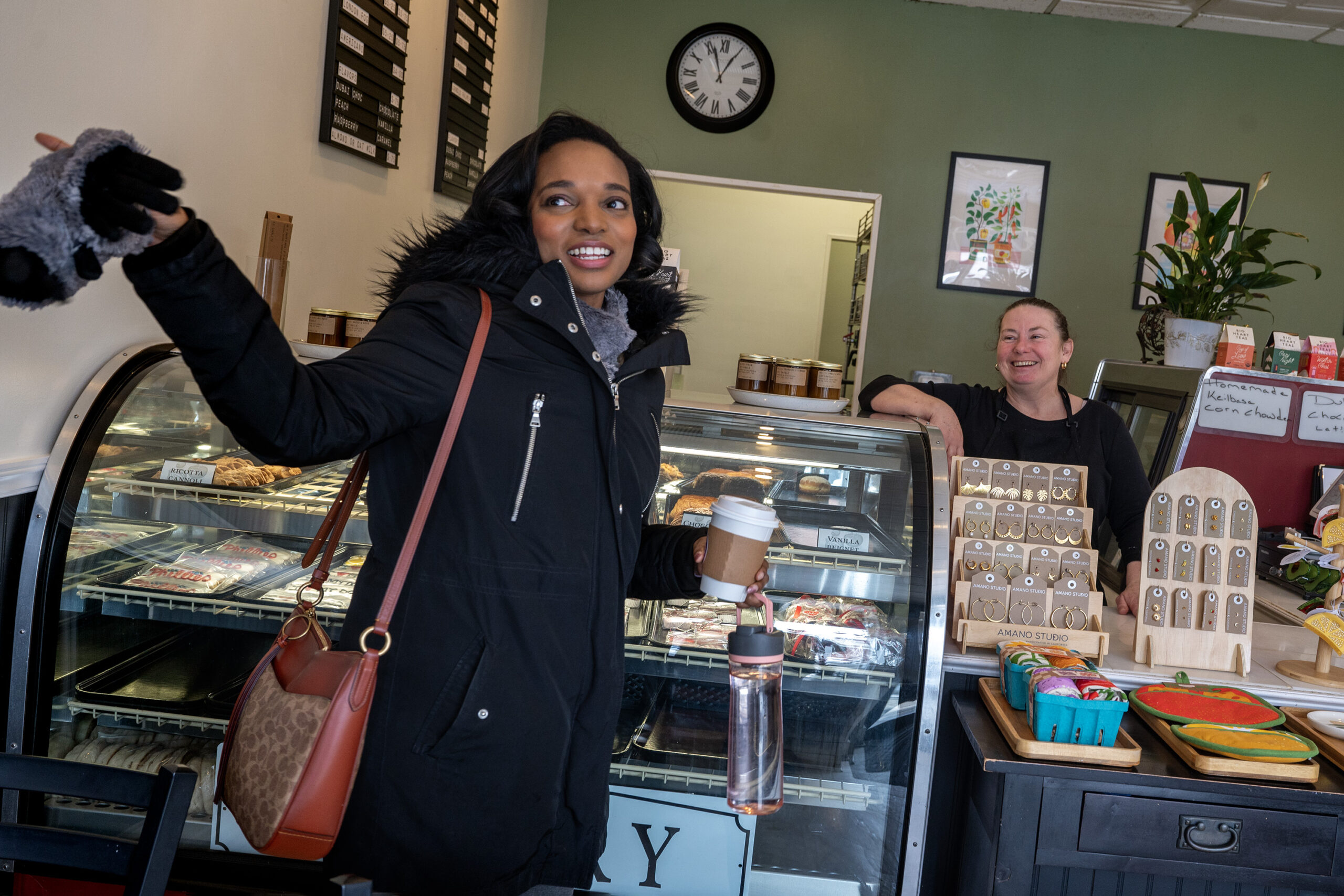
    Media Mayor Joi Washington talks with Garden Café owner Willow Culbertson in downtown Media on Sunday, Feb. 1.

    Who is Joi Washington?

    Washington, 39, was born and raised in Germantown. She graduated from Moore College of Art and Design in 2008 with a bachelor of fine arts in illustration. She has worked for numerous Philly-area companies doing graphic design, digital asset management, and storyboarding.

    Around a decade ago, Washington took a graphic design job in Media. The long commute from Roxborough, where she lived at the time, quickly became tiresome, so she packed up and moved. She met her husband at work, and the two have lived in Media since.

    Washington, a Democrat, was elected to Media’s borough council in 2021, serving until she became mayor last month.

    Katey McVerry, Media’s tax collector, was impressed with Washington as a borough council member. She described Washington as civically and politically engaged, “well known by her neighbors,” and able to work across the aisle.

    When Bob McMahon, Media’s mayor of 33 years, decided to retire last year, Washington stepped up.

    Children played as folks dined on State Street during Media’s Dine Under the Stars event on Wednesday, June 4, 2025.

    A ‘resounding’ win

    Washington campaigned for mayor on expanding public transit options, supporting local businesses, and working with law enforcement to make streets safer for drivers, cyclists, and pedestrians. She was elected with 77% of the vote, beating out Republican Kevin Kellogg.

    Democrats swept local races in Media and Delaware County in November, winning seats on the Rose Tree Media school board, borough council, and Delaware County Council.

    Mary Tonita Austin helped campaign for Washington last year. Austin and Washington met at a Juneteenth celebration when Washington was still on borough council. Last year, when Austin ran for the Rose Tree Media school board, they found themselves in similar spots — Black women running for office in a county that remains largely white (Washington is the first woman and first person of color to be elected mayor of Media).

    Austin gladly handed out Washington’s campaign fliers along with her own.

    “She’s both intelligent and creative, which I think is so important for us to have,” Austin said of Washington.

    Malcolm Yates, a convener of the Delaware County Black Caucus, said Washington’s win was “resounding.”

    Media is 82% white, according to the most recent census estimates — a percentage nearly 1.5 times higher than the Philly metro area at-large. Before Democrats won three seats on the Delaware County Council in 2019, the body had been controlled by Republicans since the Civil War.

    “It shows that the county has been moving and progressing forward to be more of a melting pot,” Yates said of Washington’s win. “You don’t necessarily have to always look or identify a certain way to be a leader.”

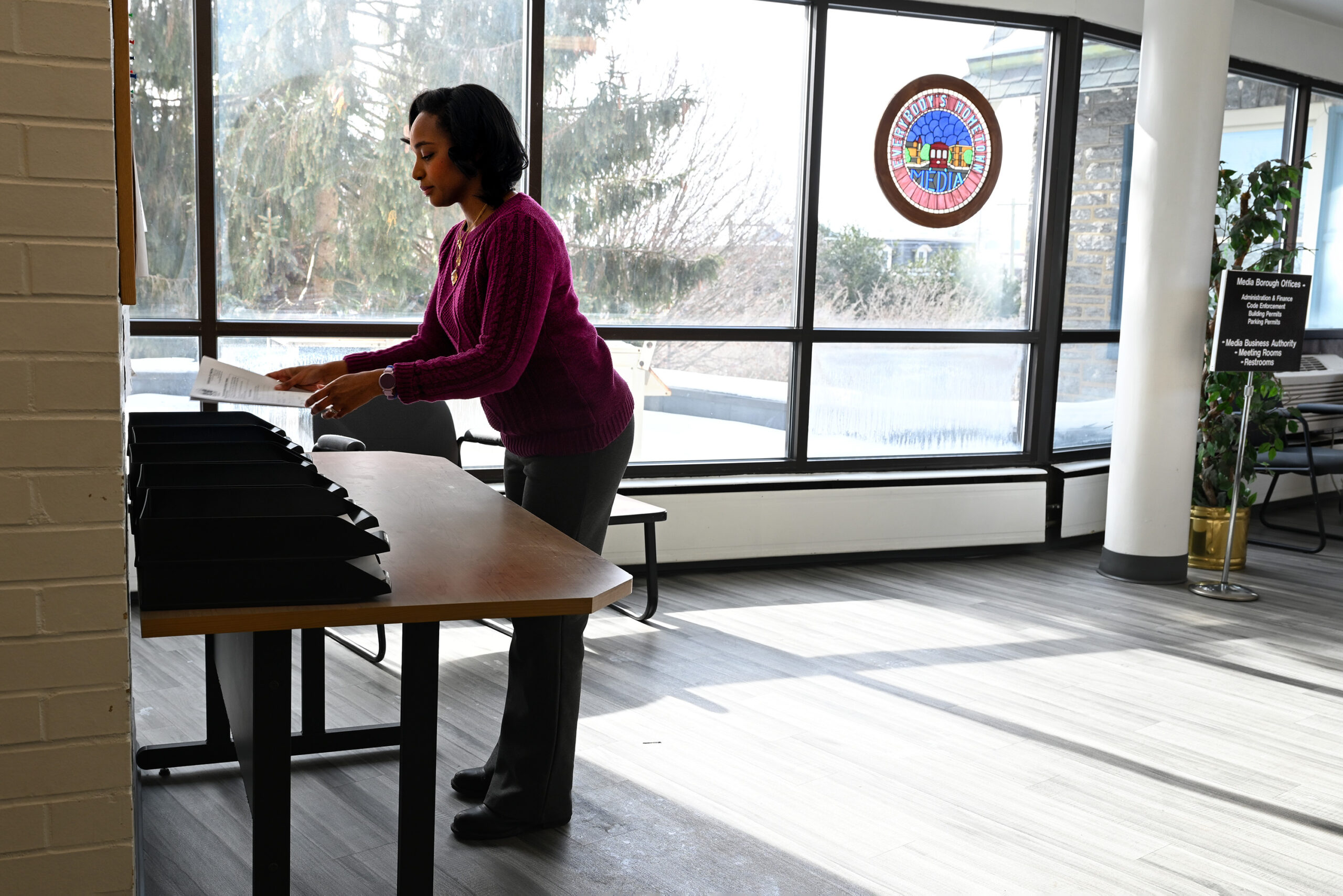
    Media Mayor Joi Washington at Media Borough Hall Sunday, Feb. 1, 2026.

    Becoming the mayor

    Washington describes the first few weeks of being mayor as a “whirlwind.” There are webinars to watch, police reports to study, hands to shake, and nuggets of advice to glean from McMahon, now retired, whom Washington has stayed in touch with.

    There’s a lot to look forward to, as well. Media recently secured grants to purchase a new ambulance, enhance walkability within the borough, and improve Barrall Community Park. Washington hopes to bring in visitors to shop and dine at Media’s small businesses, continuing the borough’s ascent as a Delco destination. Washington rattled off a list of forthcoming events with excitement: Dining Under the Stars, the completion of Plum Street Park, and the Media Spring Arts Show.

    As for her personal life, Washington said she is trying to find balance as mayor, which is a part-time gig in Media. Washington is still working as a freelance illustrator and graphic designer. She is also a natural introvert learning to manage an increasingly busy social calendar.

    “I’m also glad that I have two cats to keep me sane. My husband’s very supportive. I think it’s really good to have a life outside of politics,” she said.

    This suburban content is produced with support from the Leslie Miller and Richard Worley Foundation and The Lenfest Institute for Journalism. Editorial content is created independently of the project donors. Gifts to support The Inquirer’s high-impact journalism can be made at inquirer.com/donate. A list of Lenfest Institute donors can be found at lenfestinstitute.org/supporters.

  • As Di Bruno Bros. prepares to shutter three stores, shoppers say it lost its ‘special touch’

    As Di Bruno Bros. prepares to shutter three stores, shoppers say it lost its ‘special touch’

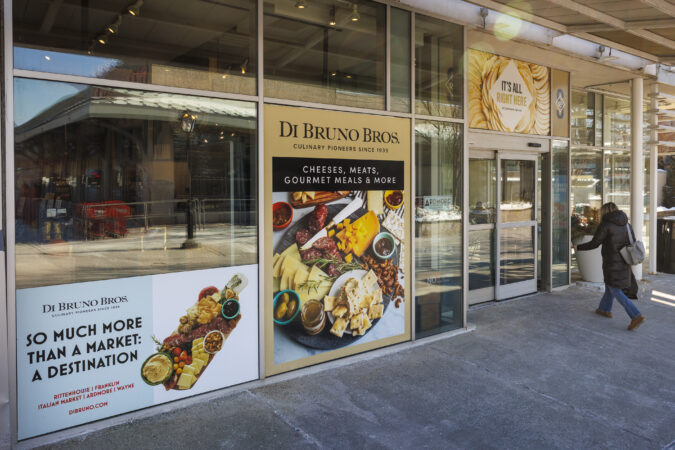
    As word spread Friday that upscale grocery Di Bruno Bros. would shutter three of its five grocery stores in the coming weeks, many customers mourned the imminent loss but added they were unsurprised, citing a noticeable change in quality over the last few years.

    Xavier Hayden, a lawyer who lives in Narberth, said he stopped shopping at Di Bruno’s a few years ago when he noticed changes in the rolls, the bread, and other items that gave Di Bruno’s its strong reputation. “The quality went down, the taste went down,” Hayden said. “Why am I going to pay upmarket prices for a midmarket product?”

    Hayden remembers childhood trips to the Italian Market to visit the original Di Bruno Bros., which will remain open, along with its bottle shop and the store at 18th and Chestnut Streets in Rittenhouse. Its Ardmore store will close Feb. 4, while the location in Wayne as well as the shop at the Franklin Residences at Ninth and Chestnut Streets will close Feb. 11.

    Di Bruno’s, established in South Philadelphia in 1939, had become a major player on the Main Line grocery scene since opening at the Ardmore Farmers Market in 2011 and in Wayne’s Strafford Shopping Center in 2021 to complement its two stores in Center City.

    Now, the company is pulling back to focus on the Italian Market and Rittenhouse locations and its online business.

    The original Di Bruno Bros. location at 930 S. Ninth St. is one of two stores that will remain.

    The closings will affect 59 employees, said Sandy Brown, executive vice president of Di Bruno’s parent company, Brown’s Super Stores. She said the workers have been offered new jobs with the other Brown’s stores in the area, including 10 ShopRites and two Fresh Grocer locations.

    On social media, some Di Bruno’s patrons attributed a change in the store’s offerings to Brown’s, which bought an ownership stake in the company in early 2024 from the Mignucci family, which had led Di Bruno’s expansion. (It’s a complex arrangement; while Brown’s owns the stores, the Di Bruno’s brand and its packaged-product portfolio were later acquired by Wakefern Food Corp., a New Jersey-based supermarket cooperative that includes the Brown’s stores.)

    In an email exchange Friday, Sandy Brown pushed back on the Brown’s company’s role in the closures, saying Di Bruno’s was “very distressed” when her group invested. “We were the only interested party due to the numerous challenges they had,” she said. While many commenters online are blaming her company for the closings, Brown said, “I don’t think they realize the status of the brand at the time of transition.”

    Brown said the company had worked to bring back business that was lost prior to the purchase, “but that did not occur.” She added that her company had a plan to sustain Di Bruno’s but declined to share it at this time.

    Main Line customers said they were sad to see Di Bruno’s retrenchment from the suburbs, though several said the stores had slipped in recent years.

    “It used to be spectacular, delicious … extra special,” said Dana Reisbord, a professor who lives in Ardmore. Reisbord said she used to stop into Di Bruno for a chicken parmesan sandwich and other goodies. Now, she’ll venture into the city if she’s really craving Italian fare. Di Bruno’s fare is too expensive to justify, she said, having “lost that special touch.”

    Diane Fanelli, a retiree who lives in Overbrook, visits the Ardmore Farmers Market Di Bruno’s at Suburban Square a few times a month. She said she would be sad to see the store go. Although she did notice a drop-off in quality, she said it wasn’t significant enough to send her shopping elsewhere.

    “Their food is expensive. It’s very good, but it’s expensive, and everybody’s watching their budget,” said Mike Manley, a cartoonist from Upper Darby who used to patronize the Ardmore store when he was in town for doctors’ appointments.

    It wasn’t necessarily the high-end products that kept Manley coming back. It was the customer service. He liked chatting with the cheesemongers and enjoying samples. Di Bruno’s reminded Manley of his old days in West Philadelphia, when he would regularly patronize Koch’s Deli, known for friendly faces behind the counter.

    “That gains you loyal customers, but I don’t know if corporate appreciates that,” he said. (The stores had lost some longtime employees since the Brown’s Super Store purchase.)

    Earlier this week, Di Bruno notified two landlords that they would be shutting down, said Douglas Green, a principal at MSC, who handles real estate for Kimco Realty Corp. (owner of Suburban Square) and Korman Communities (owner of the Franklin). A representative of Equity Retail Brokers, which leases at Wayne’s Strafford Shopping Center, declined to comment.

    “Operations have not been what they were when the Mignucci family owned the business, and this outcome shouldn’t be a great surprise to most people,” Green said. “It’s a sad day for a very proud Philadelphia brand.”

    He suggested that Di Bruno had expanded into too much space at Suburban Square “and affected [Kimco’s] ability to diversely merchandise the farmers market. It felt like they spread themselves too thin, and the quality suffered.”

    Speaking specifically of the Franklin and Suburban Square locations, Green said both locations are in areas with “pent-up demand and limited supply, and there should be tremendous interest.” He said Kimco, with MSC, wants to “re-merchandise” the farmers market and Di Bruno’s spaces.

    “This gives us a bit of a blank canvas,” Green said. “There are cuisine types not currently represented that we’re excited about bringing to the project. Hopefully, the end of this chapter opens the door to new concepts.”

  • Di Bruno Bros. to close three of its five gourmet markets

    Di Bruno Bros. to close three of its five gourmet markets

    Three of the five Di Bruno Bros. locations will close in the coming weeks, the specialty grocery chain’s owner confirmed to The Inquirer.

    Maureen Gillespie, a spokesperson for Wakefern Food Corp., the New Jersey-based supermarket cooperative that acquired the Di Bruno’s brand in 2024, said closing dates were not available.

    Employees at the Ardmore Farmer’s Market location, which opened in 2011 at Suburban Square, said they were told that its last day would be Feb. 4. Staff at the locations in Wayne, which opened in 2021 in Strafford Shopping Center, and at the Franklin Residences on Ninth Street in Center City, which opened in 2013, said they were notified Wednesday that those stores would shut down Feb. 11.

    Di Bruno’s original location on Ninth Street in South Philadelphia and the two-level store at 18th and Chestnut Streets will remain.

    In a statement, Gillespie said the company was “refocusing” Di Bruno’s market strategy on “the heart of the brand”: its Italian Market and Rittenhouse locations and “growing online business.” Concentrating on the two flagship stores and online business will be “a positive reset that allows us to preserve and elevate the in‑store tradition while growing the brand’s reach in meaningful new ways,” Gillespie said.

    Jobs will be offered to every retail employee, said a Sandy Brown, executive vice president of Di Bruno’s parent company, Brown’s Super Stores, the regional grocery chain founded by her husband. The news follows this week’s announcement that Amazon Fresh stores would close, putting about 1,000 people out of work at the six Philadelphia-area stores.

    The three affected stores share the same core Di Bruno’s DNA: cheese, charcuterie, and specialty groceries. The Ardmore Farmer’s Market location is the most “grab-and-go”: a compact counter where bagels and schmear, coffee, and quick bites sit alongside the cheese-and-cured-meat staples. Wayne is more of a full-on neighborhood market with the familiar cheese and charcuterie counters plus a cafe, Roman-style pizza, and an on-site bar for wines and small plates. The outpost at the Franklin, 834 Chestnut St., is the most Center City-practical and office-friendly. It has a coffee bar, sandwich shop, and petite bottle shop — suitable for lunch runs, last-minute gifts, and commuter provisions.

    The five Di Bruno’s stores were acquired in April 2024 by corporate entities controlled by Brown’s Super Stores. Six months later, Wakefern acquired the Di Bruno’s trademark and branded products.

    At the time, Wakefern said it expected to grow the Di Bruno brand and take it “to the next level.” In December 2024, Brown’s Super Stores said it planned to open an additional 12 to 15 Di Bruno stores in the coming decade.

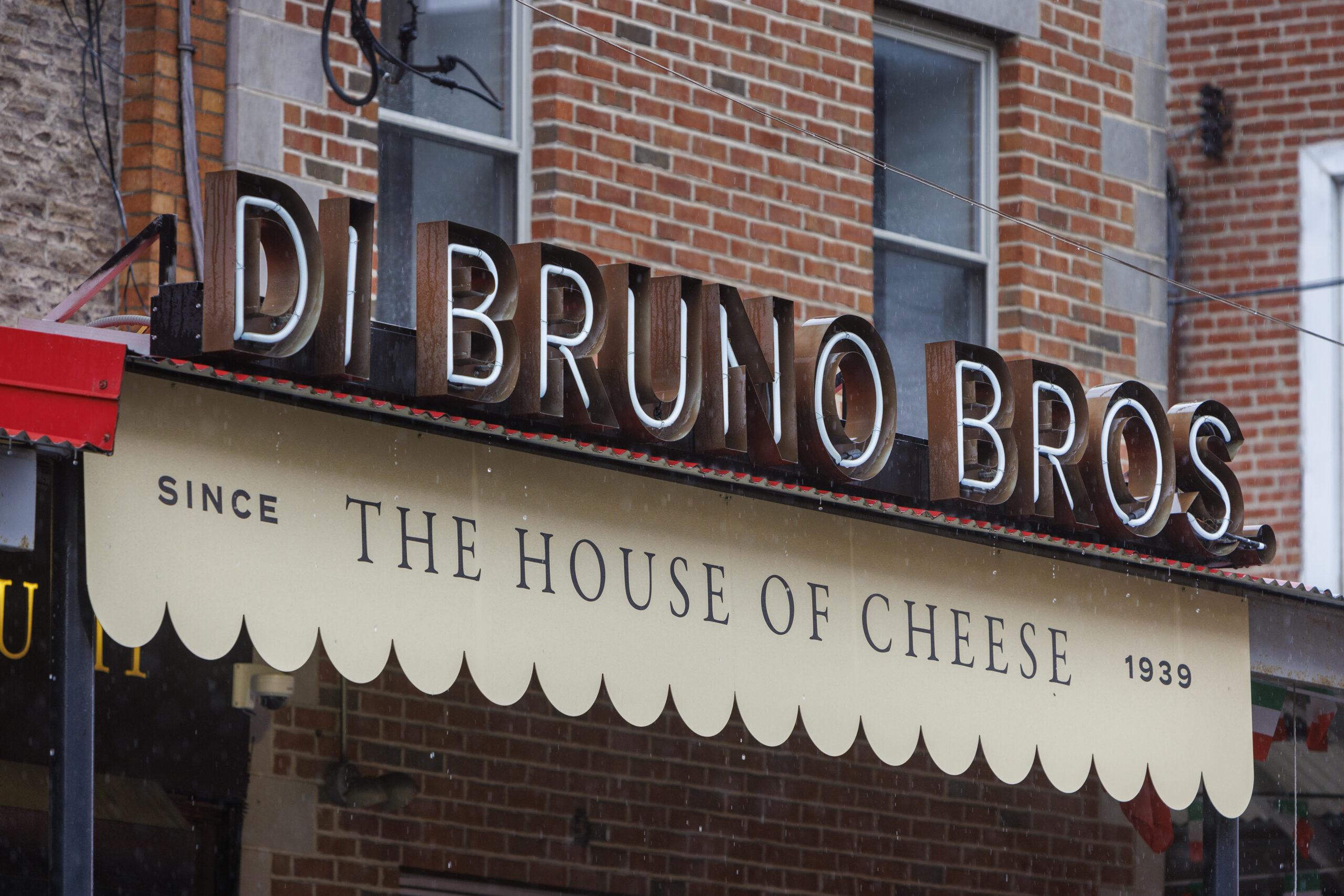
    Wine and cheese at Di Bruno Bros. in South Philadelphia.

    Di Bruno’s is a unit of Wakefern, whose 45 member companies own and operate more than 380 retail supermarkets. The company generated $20.7 billion in retail sales during the 2025 fiscal year, a 3.1% increase over the prior year.

    The 2024 acquisition of Di Bruno Bros. turned heads in the grocery world, as the Brown family supermarkets like ShopRite and the Fresh Grocer operate in a considerably different fashion than Di Bruno’s specialty model.

    Italian immigrant brothers Danny and Joe Di Bruno opened the first Di Bruno’s store in Philadelphia’s Italian Market in 1939. The grandsons and nephews of the founders took over in 1990 and grew the brand. In 2005, the cousins opened the first store outside South Philadelphia at 18th and Chestnut Streets.

    Clarification: A comment from Sandy Brown, executive vice president of Brown’s Super Stores, was added to this article after publication to explain that affected Di Bruno’s employees would be offered other jobs.

  • A plan to redevelop Gladwyne has residents split on their town’s future. What happens next?

    A plan to redevelop Gladwyne has residents split on their town’s future. What happens next?

    Three weeks after developers unveiled a sweeping plan to revitalize much of downtown Gladwyne, the affluent Main Line community has been abuzz with excitement, and skepticism, about the village’s future.

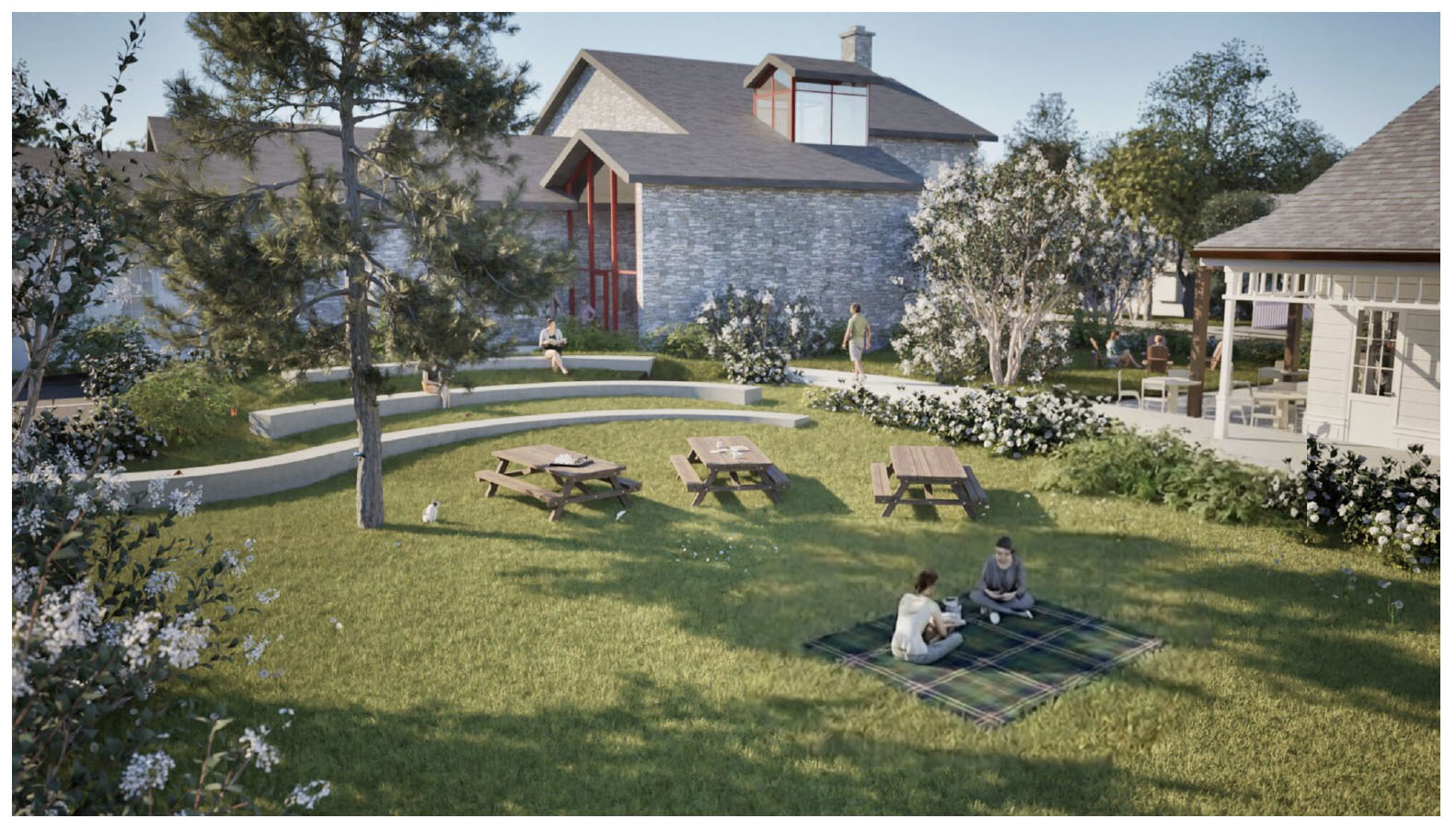
    On Jan. 8, Andre Golsorkhi, founder and CEO of design firm Haldon House, presented plans for a revitalized town center, complete with historic architecture, green spaces, and businesses that “fit the character” of the area. Golsorkhi told a packed school auditorium that Haldon House plans to bring in boutique shops, open an upscale-yet-approachable restaurant, and create spaces for communal gathering.

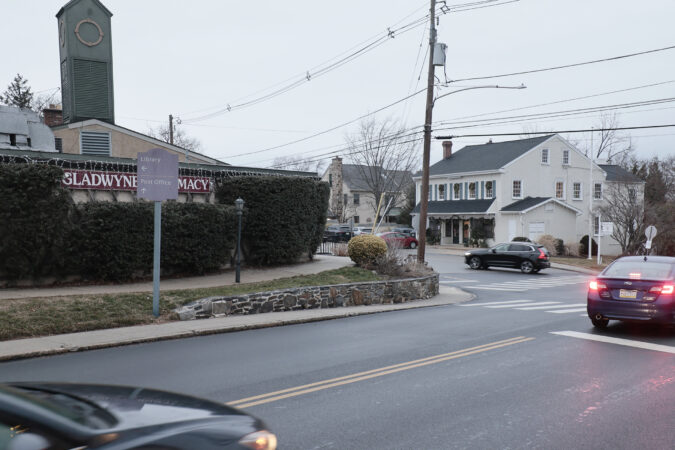
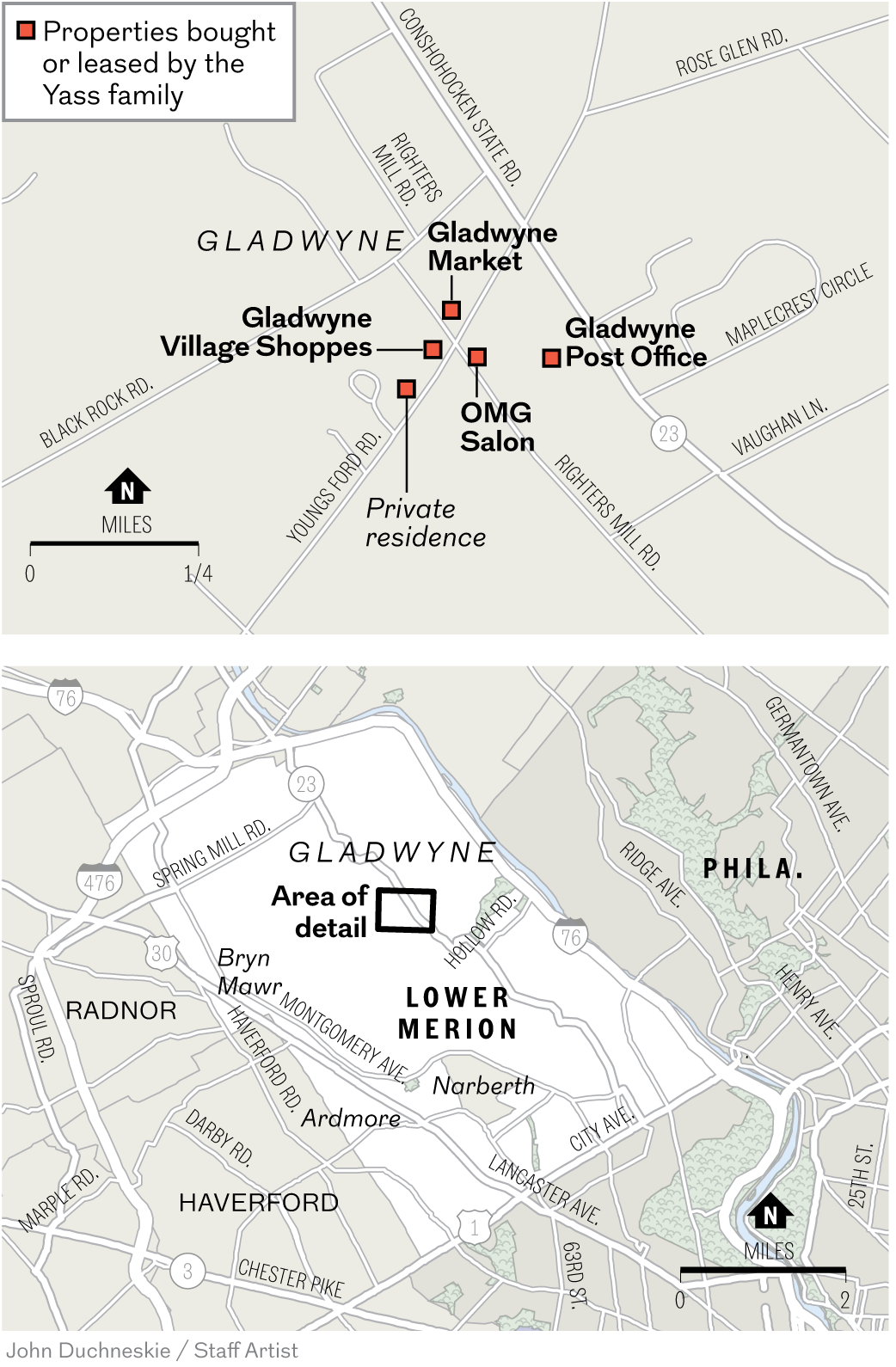
    At the meeting, Golsorkhi also revealed that the project was backed by Jeff Yass, Pennsylvania’s richest man, and his wife, Janine. Golsorkhi said the Yasses want to revitalize Gladwyne as part of a local “community impact project.” Haldon House and the Yasses, who live near Gladwyne, have spent over $15 million acquiring multiple properties at the intersection of Youngs Ford and Righters Mill Roads.

    The news drew a flurry of social media posts — and a write-up in a British tabloid. While some praised the proposal, others protested the changes headed toward their quaint community, and the conservative donor financing them.

    Renderings of a proposed revitalization project in Gladwyne, Pa. Design firm Haldon House is working with billionaire Jeff Yass to redevelop the Main Line village while preserving its historic architecture, developers told Gladwyne residents at a Jan. 8 meeting.

    What is, and isn’t, allowable?

    For some residents, one question has lingered: Is one family allowed to redevelop an entire village?

    A petition calling on Lower Merion Township to hold a public hearing and pass protections preventing private owners from consolidating control of town centers had gathered nearly four dozen signatures as of Friday.

    Around 4,100 people live in the 19035 zip code, which encompasses much of Gladwyne, according to data from the 2020 U.S. Census.

    “Residents deserve a say before their town is transformed. No one family, no matter how wealthy, should unilaterally control the civic and commercial core of a historic Pennsylvania community,” the petition reads.

    Yet much of Haldon House’s plan is allowable under township zoning code, said Chris Leswing, Lower Merion’s director for building and planning.

    Plans to refurbish buildings, clean up landscaping, and bring in new businesses are generally permitted by right, meaning the developers will not need approval from the township to move forward. Gladwyne’s downtown is zoned as “neighborhood center,” a zoning designation put on the books in 2023 that allows for small-scale commercial buildings and local retail and services. The zoning code, which is currently in use in Gladwyne and Penn Wynne, ensures commercial buildings can be no taller than two stories.

    The developers’ plans to open a new restaurant in the former Gladwyne Market and renovate buildings with a late-1800s aesthetic, including wraparound porches and greenery, are generally within the bounds of what is allowed, once they obtain a building permit.

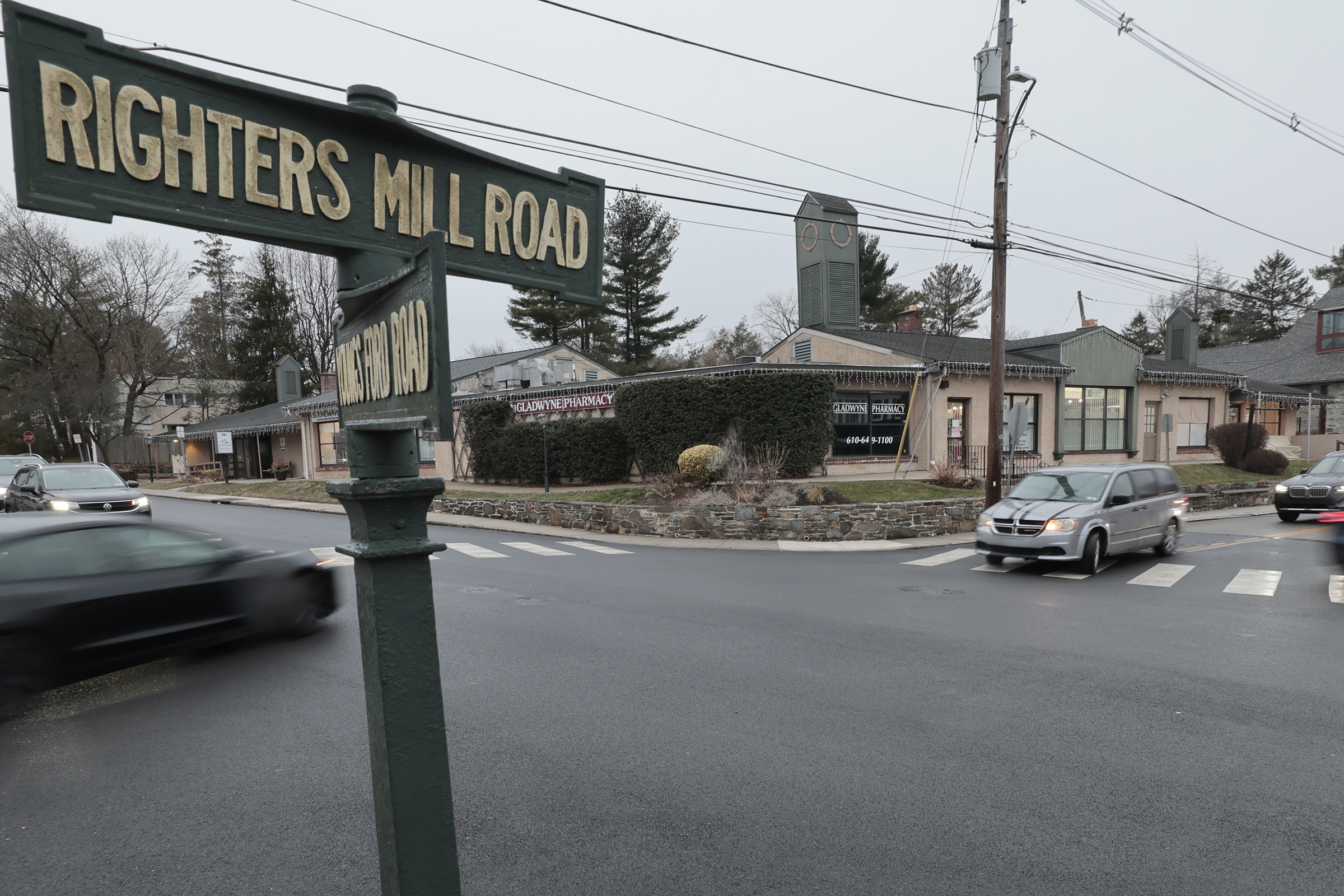
    The Village Shoppes, including the Gladwyne Pharmacy, at the intersection of Youngs Ford and Righters Mill Roads in Gladwyne on Friday, Jan. 9, 2026.

    More ambitious plans, however, like converting a residential home into a parking lot or burying the power lines that hang over the village, would require extra levels of approval, Leswing said.

    The developers hope to convert a residential property on the 900 block of Youngs Ford Road into a parking lot. Lower Merion generally encourages parking lots to be tucked behind buildings and does not allow street-facing parking, a measure designed to avoid a strip mall feel, Leswing said. In order to turn the lot into parking, the developers would need an amendment to the zoning code, which would have to be approved by the board of commissioners.

    Various approvals would also be needed to put Gladwyne’s power lines underground, an ambitious goal set by the Haldon House and Yass team.

    Leswing clarified that no official plans have been submitted, making it hard to say how long the process will take. It will be a matter of months, at least, before the ball really gets rolling.

    Leswing added the developers have been “so good about being locked into the community” and open to constructive feedback.

    Golsorkhi said it will be some time before his team can provide a meaningful update on the development, but expressed gratitude to the hundreds of residents who have reached out with questions, support, and concerns.

    Map of properties in Gladwyne bought or leased by the Yass family.

    From ‘110% in favor’ to ‘a tough pill to swallow’

    Fred Abrams, 65, a real estate developer who has lived in Gladwyne for seven years, said he and his wife are “110% in favor” of the redevelopment, calling it an “absolute no-brainer.”

    Many Gladwyne residents live in single-family homes that keep them in their own, sometimes isolating, worlds, his wife, Kassie Monaghan Abrams, 57, said.

    “Here’s an opportunity for being outside and meeting your neighbors and, to me, getting back to spending time with people,” she said of the proposal to create communal gathering areas.

    “I think it’s a very thoughtful, beautiful design,” Monaghan Abrams added.

    Some social media commenters called the proposal “charming” and “a fantastic revitalization.”

    Others were more skeptical.

    Ryan Werner, 40, moved to Gladwyne in 2012 with his wife, who grew up in the town.

    “One of the things I’ve kind of fallen in love with about Gladwyne is the sense of community,” said Werner, who has a background in e-commerce sales and is transitioning to work in the mental health space.

    Werner is not necessarily opposed to the renovations (although he loved the Gladwyne Market). Rather, he said, it’s “a tough pill to swallow” that Yass is promoting a community-oriented project while supporting President Donald Trump’s administration and Trump-affiliated groups.

    “I’m less opposed to just the commercial side of it and more grossed out by the involvement of certain people in it,” Werner said.

    Gladwyne is a Democratic-leaning community that voted overwhelmingly for former Vice President Kamala Harris in the 2024 election.

    On social media, some griped about the changes.

    “The Village will be just like Ardmore and Bryn Mawr. Can’t undo it once they build it,” one commenter wrote in a Gladwyne Facebook group.

    Golsorkhi said in an email that the “enthusiasm, excitement and support” from the community have been “overwhelming.”

    This suburban content is produced with support from the Leslie Miller and Richard Worley Foundation and The Lenfest Institute for Journalism. Editorial content is created independently of the project donors. Gifts to support The Inquirer’s high-impact journalism can be made at inquirer.com/donate. A list of Lenfest Institute donors can be found at lenfestinstitute.org/supporters.
  • Grammar nerds and language lovers gather for a sold-out documentary at the Bryn Mawr Film Institute

    Grammar nerds and language lovers gather for a sold-out documentary at the Bryn Mawr Film Institute

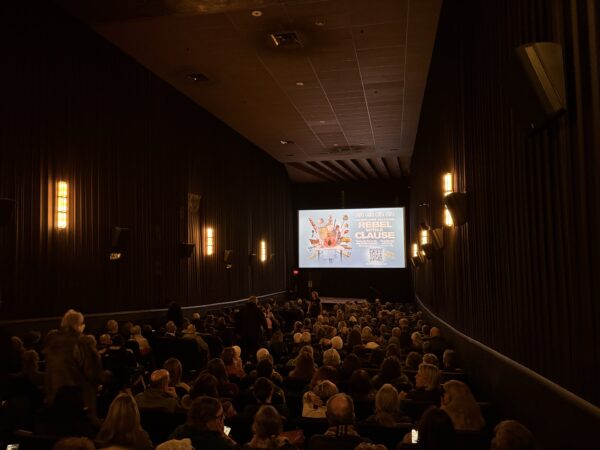
    Despite frigid temperatures and the specter of the Philly area’s largest snowstorm in years, hundreds of language lovers and grammar nerds gathered in Bryn Mawr on Saturday for a screening of Rebel with a Clause, the hottest “road trip, grammar docu-comedy” on the indie movie circuit.

    Rebel with a Clause follows language expert Ellen Jovin as she takes her makeshift “Grammar Table” on a journey across the United States, from Bozeman, Mont., to New York City (and everywhere in between). From behind the table, Jovin asks strangers to divulge their questions, comments, and concerns about the English language, from when it’s best to use a semicolon to how to properly punctuate “y’all.” What starts as an amusing grammar refresher turns into a moving text on Americans’ shared humanity, even in polarizing times.

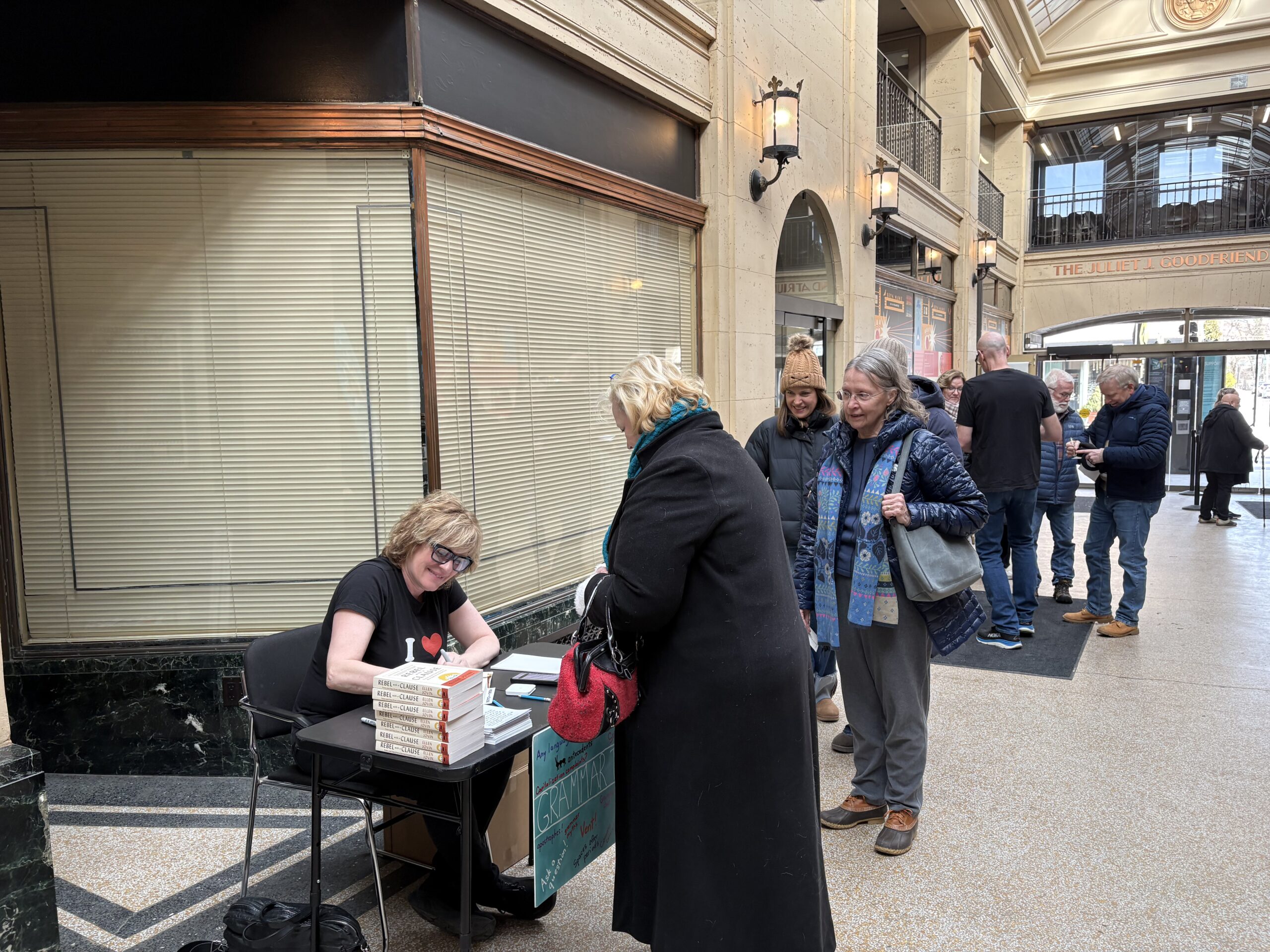
    Ellen Jovin, subject of “Rebel with a Clause,” signs books at a screening at the Bryn Mawr Film Institute on Jan. 24, 2026.

    Jovin, the movie’s star, has written four books on writing and grammar, including Rebel with a Clause: Tales and Tips from a Roving Grammarian, a reflection on her cross-country tour. The movie was directed and produced by Brandt Johnson, a writer and filmmaker who also happens to be Jovin’s husband.

    Jovin and Johnson, who are based in New York, are on a second cross-country tour as the Rebel with a Clause movie graces audiences. The Bryn Mawr screening marked the film’s first public showing in the Philly area.

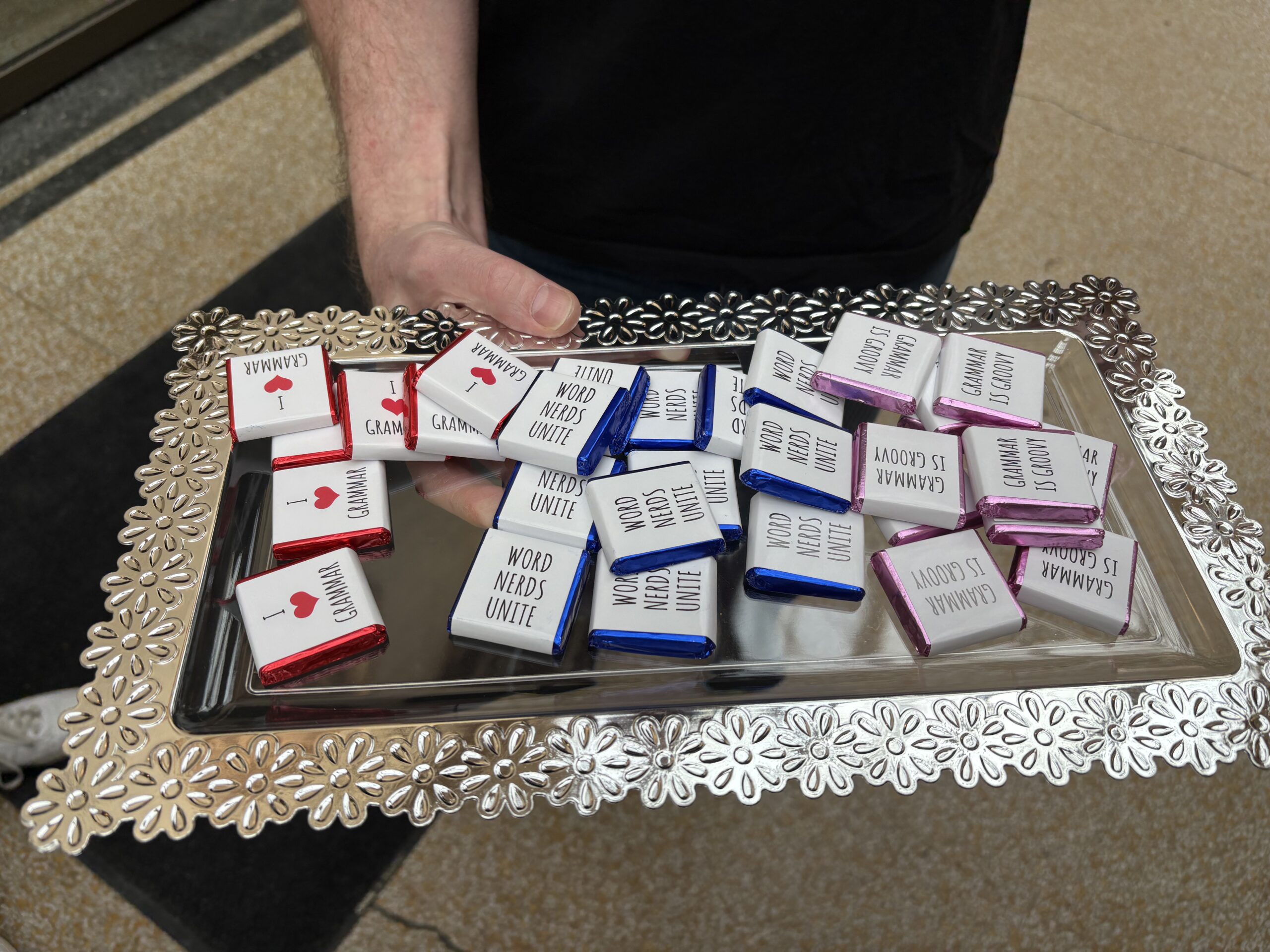
    As he handed out optional grammar quizzes and grammar-themed chocolates in the Bryn Mawr Film Institute’s foyer, Johnson said the response to the movie has been “extraordinary.”

    “Ellen’s Grammar Table that she started in 2018 was about grammar, for sure, but it turned out to be as much about human connection,” Johnson said.

    “Just as a life experience, oh my gosh,” he added. “It’s been something that I certainly didn’t anticipate.”

    “Rebel with a Clause” producer Brandt Johnson hands out grammar-themed chocolates to moviegoers at the Bryn Mawr Film Institute on Jan. 24, 2026.

    Before the screening, attendees waited for their turn at the table, where Jovin was signing books and answering pressing questions about commas and ellipses.

    Mary Alice Cullinan, 76, said she and her friends are fascinated by grammar and how it seems to be losing ground among younger generations.

    Cullinan, who lives in Blue Bell, spent her career working in the restaurant industry but always read and wrote on the side.

    “I read to live,” she added.

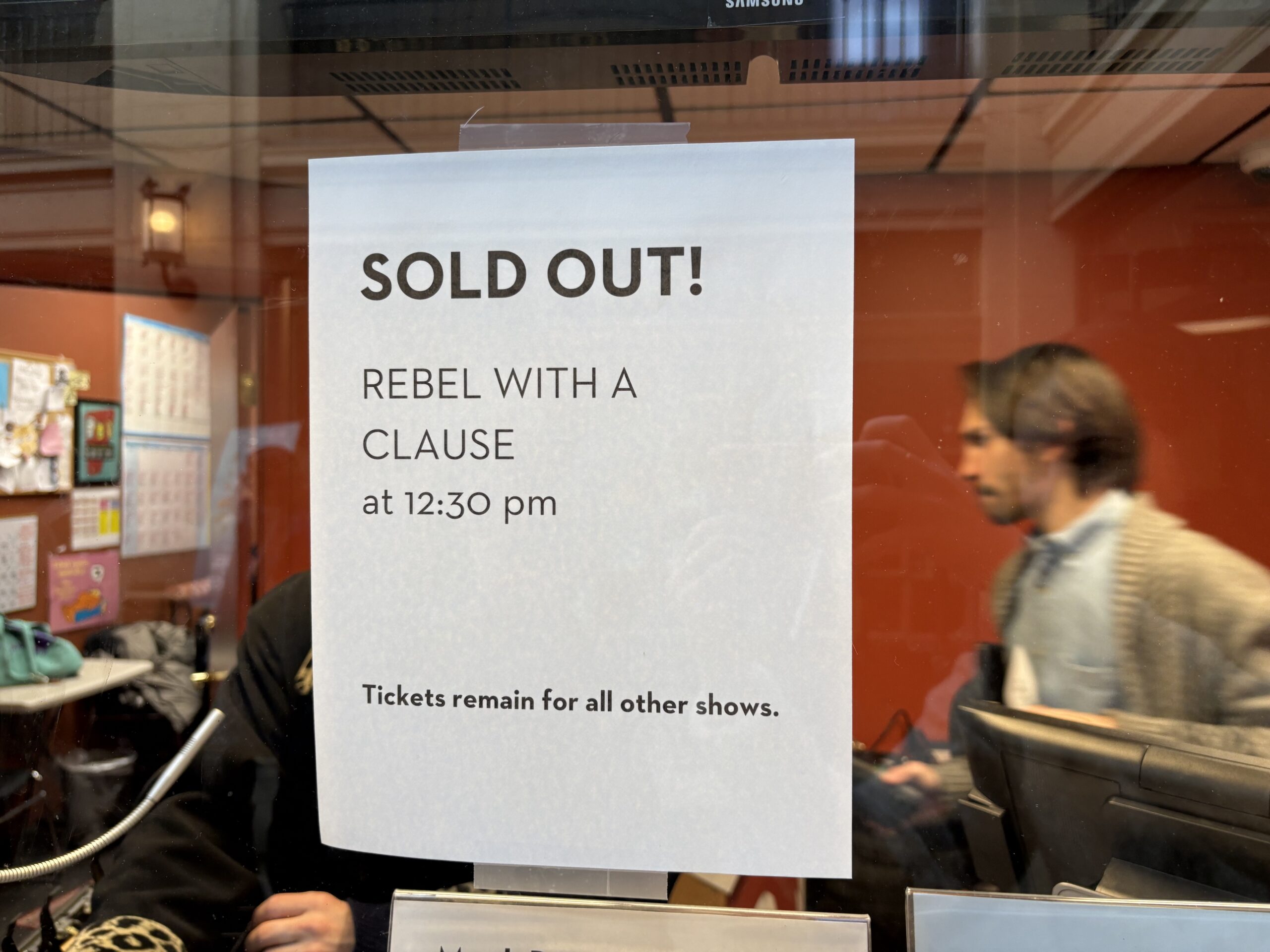
    The Bryn Mawr Film Institute was packed with retired teachers, avid writers, and grammar aficionados who came armed with gripes about commas, parentheses, and quotation marks. At five minutes to showtime, an employee plastered a “SOLD OUT!” sign on the box office window.

    A sign announcing that the Bryn Mawr Film Institute’s screening of “Rebel with a Clause” was sold out. The grammar-themed documentary played at the Main Line movie theater on Jan. 24, 2026.

    Jen Tolnay, 63, a copy editor from Phoenixville, heard about the movie at an editors’ conference. She was so excited that she moved a haircut appointment to be there.

    The 86-minute film provoked regular laughter in the audience (and a line about Philadelphians’ pronunciation of the wet substance that comes out of the sink got a particularly hearty laugh).

    During a post-screening question-and-answer session, moviegoers complained about the poor grammar of sportscasters, praised Jovin and Johnson, and inquired about the colorful interactions Jovin had at the Grammar Table.

    For Katie McGlade, 69, grammar is an art form.

    The retired communications professional from Ardmore described herself as a habitual grammar corrector who would often fight with her editors about proper language usage. Now, as an artist, she makes colorful prints that center the adverb.

    “I love that’s she’s bringing joy to the word,” McGlade said of Jovin. ”We need joy and laughter, and we need to communicate with each other.”

    This suburban content is produced with support from the Leslie Miller and Richard Worley Foundation and The Lenfest Institute for Journalism. Editorial content is created independently of the project donors. Gifts to support The Inquirer’s high-impact journalism can be made at inquirer.com/donate. A list of Lenfest Institute donors can be found at lenfestinstitute.org/supporters.
  • Trash pickup, school closures, and rescheduled events: What you need to know post-snowstorm in Lower Merion

    Trash pickup, school closures, and rescheduled events: What you need to know post-snowstorm in Lower Merion

    The largest snowstorm in a decade just hit the Philadelphia area, closing schools and coating the roads with a sheen of slippery white stuff.

    Penn Wynne received 9.4 inches of snow on Sunday, according to the National Weather Service.

    Lower Merion lifted its snow emergency declaration at noon on Monday, though crews are continuing to do post-storm cleanup.

    Trash and recycling will not be picked up Monday in Lower Merion, and a holiday schedule will go into effect. To figure out when your garbage will be picked up, use the township’s address lookup tool to determine what zone you live in. Then, use this chart to determine your holiday garbage pickup day. If you live in Zone 3, your garbage will be picked up on Thursday following today’s Monday snow “holiday.”

    The township has asked residents to bring their trash curbside because garbage trucks may not be able to get into alleys with the high volume of snow. Any missed collections from this week will be made up next week.

    Narberth residents can expect their normally scheduled trash pickup on Tuesday and Wednesday.

    Sidewalks must be cleared (36 inches in width) within 24 hours of the last flakes falling in both Lower Merion and Narberth (here are The Inquirer’s tips for shoveling snow safely). It’s illegal to throw or plow snow into the street.

    The Lower Merion School District has declared today a remote instruction day (rest in peace to the snow day), and all libraries and township offices are closed.

    Narberth Borough’s administrative offices are also closed, and any documents that need to be dropped off can be left in the secure lockboxes outside the building entrance on Haverford Avenue. Narberth Borough Hall’s multipurpose room will be open until 8 p.m. for residents who need access to heat, water, and power.

    Waldron Mercy Academy, Friends’ Central School, the Baldwin School, Agnes Irwin School, Holy Child School at Rosemont, and Gladwyne Montessori, and the Shipley School are closed. Merion Mercy Academy is having a remote learning day.

    Monday’s Coffee with a Cop has been rescheduled to Wednesday.

    This suburban content is produced with support from the Leslie Miller and Richard Worley Foundation and The Lenfest Institute for Journalism. Editorial content is created independently of the project donors. Gifts to support The Inquirer’s high-impact journalism can be made at inquirer.com/donate. A list of Lenfest Institute donors can be found at lenfestinstitute.org/supporters.
  • Trash pickup, school closures, and more: What you need to know post-snowstorm in and around Media

    Trash pickup, school closures, and more: What you need to know post-snowstorm in and around Media

    The largest snowstorm in a decade just hit the Philadelphia area, closing schools and coating the roads with a sheen of slippery white stuff.

    Seven inches of snow fell in Media on Sunday, according to the National Weather Service. Swarthmore got 7.3 inches and Nether Providence got 8 inches.

    There will be no trash or recycling pickup in Media on Monday. All borough offices are closed. Parking restrictions will be in place until 5 p.m. See the full list of restricted streets here. Media residents who live on a designated snow emergency route are encouraged to park in the Baltimore Avenue parking garage on the first or second level. Parking fees will not be enforced during the snow emergency declaration, which runs until 5 p.m. Monday.

    There will be no trash collection in Swarthmore on Monday. All trash scheduled to be picked up Monday will be picked up on Tuesday. The Swarthmore library and borough offices are closed.

    Middletown and Upper Providence townships’ offices are also closed Monday.

    The Rose Tree Media School District is holding a flexible instruction day (a remote learning day with a combination of live instruction and office hours). The Wallingford-Swarthmore School District is closed.

    The Walden School, Benchmark School, and The School in Rose Valley are also closed. Notre Dame de Lourdes School is having a remote learning day.

    This suburban content is produced with support from the Leslie Miller and Richard Worley Foundation and The Lenfest Institute for Journalism. Editorial content is created independently of the project donors. Gifts to support The Inquirer’s high-impact journalism can be made at inquirer.com/donate. A list of Lenfest Institute donors can be found at lenfestinstitute.org/supporters.
  • Trash pickup, school closures, and rescheduled meetings: What you need to know post-snowstorm in Cherry Hill

    Trash pickup, school closures, and rescheduled meetings: What you need to know post-snowstorm in Cherry Hill

    The largest snowstorm in a decade just hit the Philadelphia area, closing schools and coating the roads with a sheen of slippery white stuff.

    Cherry Hill received 7 inches of snow as of Sunday evening, according to the National Weather Service.

    Garbage and recycling will not be picked up in Cherry Hill on Monday. There will be a one-day delay on all pickups.

    Cherry Hill’s township offices, the public library, and the Cherry Hill schools are all closed Monday. The King’s Christian School and the Y.A.L.E. School in Cherry Hill are also closed, as is the Katz J.C.C.

    The township has urged residents to stay off the roads so that crews can continue plowing.

    The township council meeting scheduled for Monday night has been moved to Wednesday, with the caucus meeting beginning at 7 p.m. and the council meeting beginning at 7:30 p.m.

    This suburban content is produced with support from the Leslie Miller and Richard Worley Foundation and The Lenfest Institute for Journalism. Editorial content is created independently of the project donors. Gifts to support The Inquirer’s high-impact journalism can be made at inquirer.com/donate. A list of Lenfest Institute donors can be found at lenfestinstitute.org/supporters.