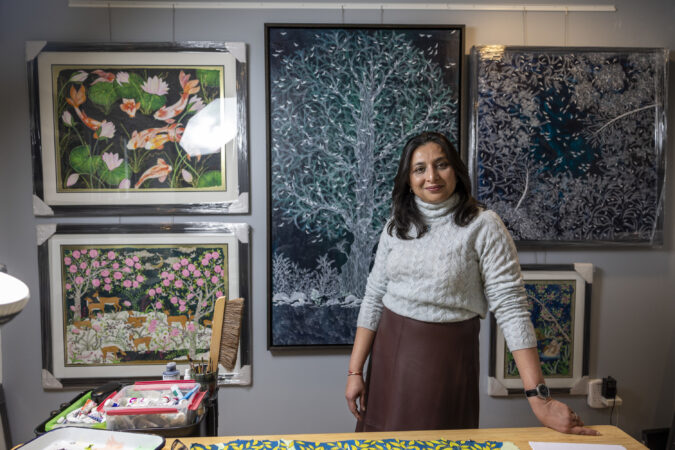
As a blanket of snow and sleet melted into the grass and an early winter fog hung over the Delaware Valley last month, Rinal Parikh’s art studio was a tranquil portal to the outside world.
In her studio, lofty windows look out onto a sprawling backyard. The walls are adorned with Parikh’s paintings, both completed and in progress, and its shelves are stacked with art supplies and mementos.
“What inspires me is my surroundings, and I’m blessed with an amazing backyard,” Parikh said, looking out the window. “That is my main inspiration.”
Parikh is a Media-based painter and biochemist by trade whose art blends traditional Indian folk styleswith contemporary themes. Her art, rich in texture, color, and meaning, uses a collection of materials, from sand and fabric to glass, beads, and stucco. She paints with acrylic and watercolors, and creates detailed drawings with thin brushes. Her work fuse her upbringing in India with her current life in Media, an amalgamation of past and present, of here and there.
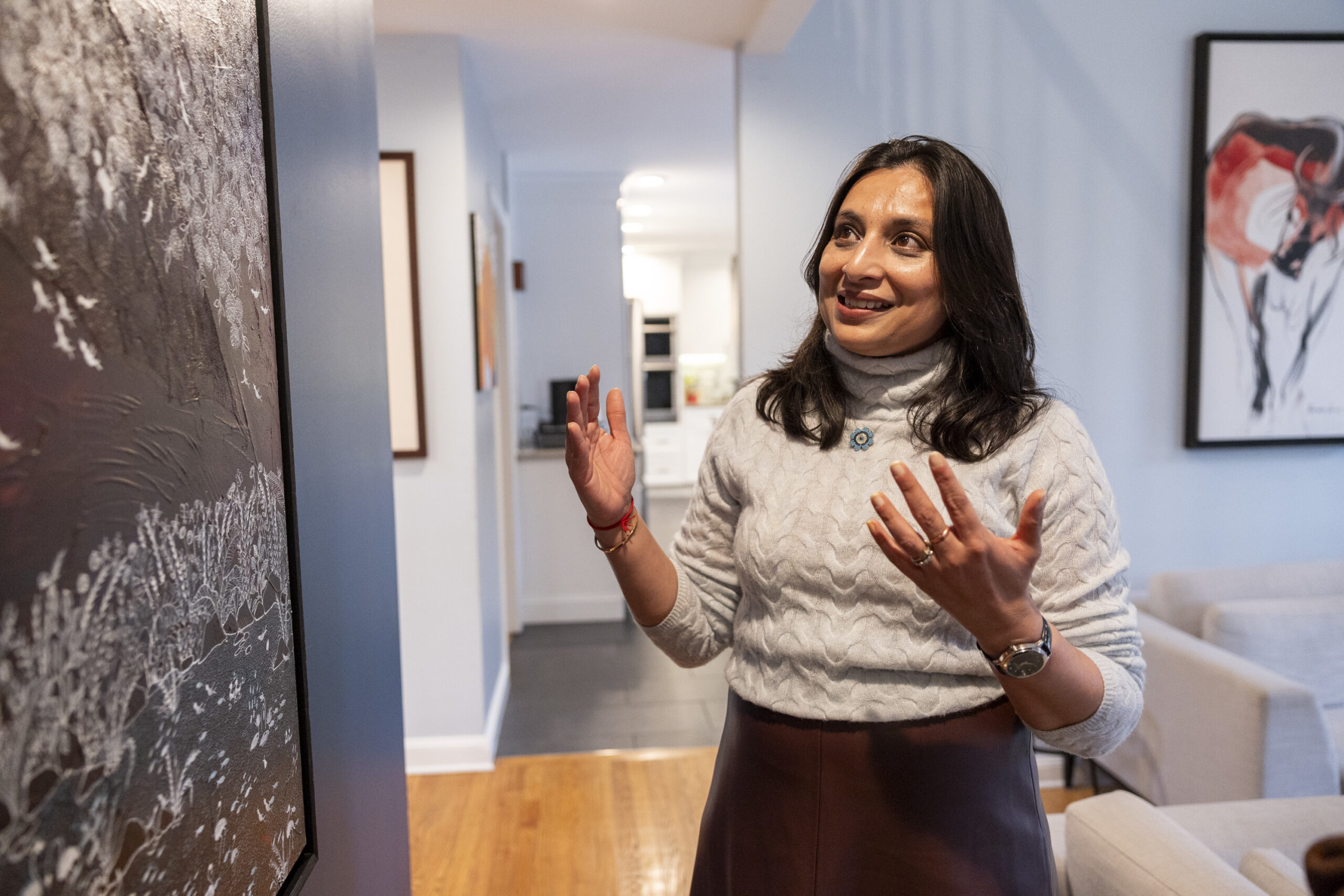
Rinal Parikh, 43, Media-based artist, talking about her art work in her home in Media, Pa., on Tuesday, Dec. 23, 2025.
Parikh, 43, took a circuitous route to becoming an artist. She moved to Philly in 2005 from Gujarat, India, to follow her husband, Bhavin, who had immigrated a few years earlier (the day of our interview was the 20th anniversary, to the date, of her arrival in the U.S.). She enrolled in a masters in molecular biology program at Drexel University, a step toward her Ph.D., and got a job in a lab at Penn Presbyterian Medical Center.
A few years after her move, Parikh’s first son was born with health complications. With no family close by, Parikh quit her job to focus on taking care of her son. He’s now a healthy teenager, she notes.
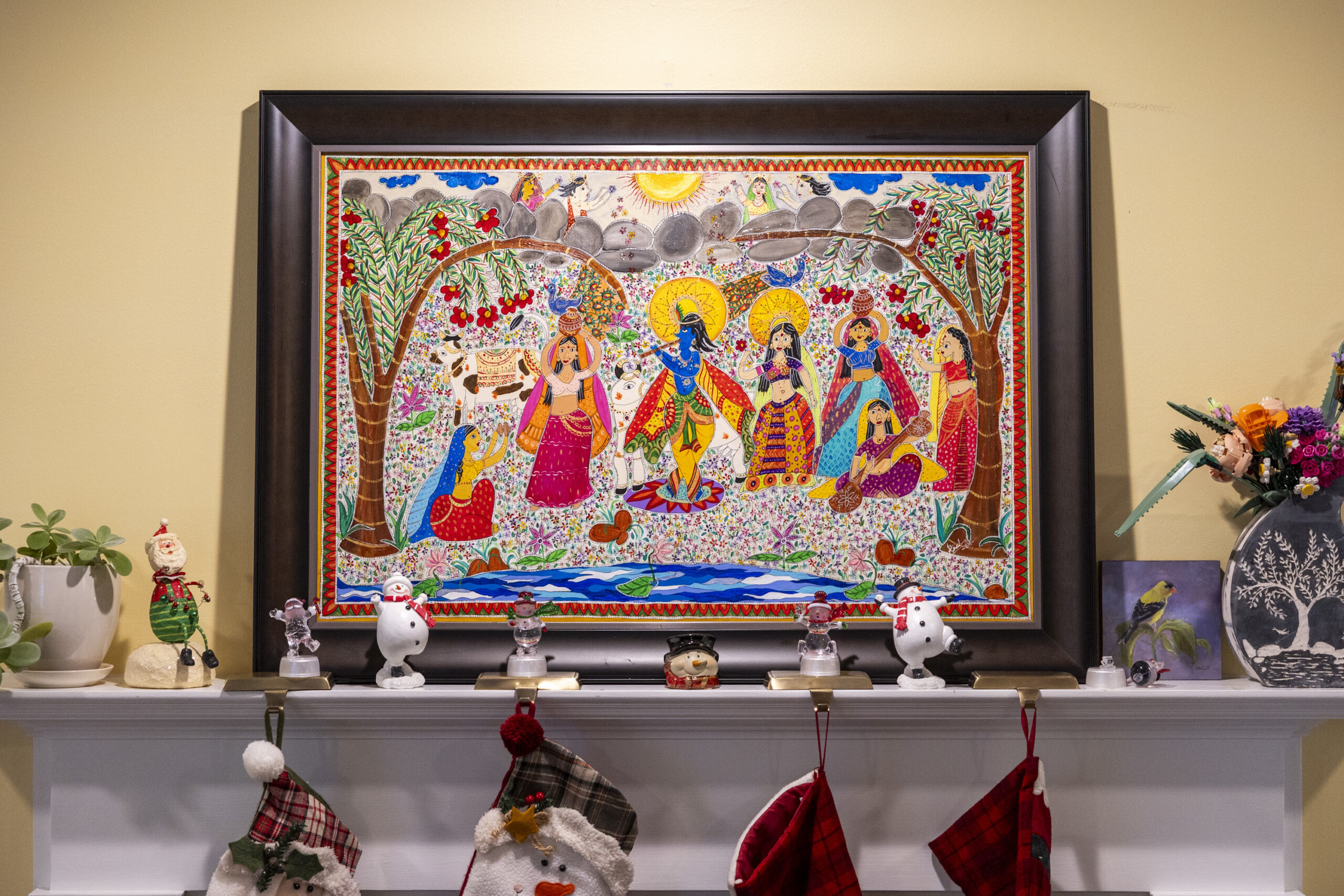
Seeing that Parikh was missing out on work, her husband made a suggestion: Why not paint something for their new house? That first painting, “Krishna-leela,” now hangs in the Parikhs’ living room, an eye-catching depiction of the Hindu deity Krishna.
Rinal Parikh’s painting “Krishna-leela” is displayed at home in her formal living room in Media, Pa., on Tuesday, Dec. 23, 2025.
When her son was 9 months old, Parikh stopped by an art fair at the Creative Living Room, a community arts center in Swarthmore. She struck up a conversation with some of the women there. A few days later, they called with a question: Would she like to do a solo show?
“I didn’t even know what that means,” she said.
Nonetheless, she agreed. She worked tirelessly for three months to make 20 pieces. She didn’t know where to buy art supplies, so she imported them from India (someone would later point her toward the now-closed Pearl Art & Craft Supplies on South Street). In fall 2009, she displayed her paintings for the first time as a professional artist — and sold her first painting, too. The rest, she said, is history.
Parikh melds together three types of Indian folk art — Warli, Madhubani, and Kalamkari. Warli is a tribal art that depicts day-to-day life in a mural-like format. Madhubani uses geometric patterns and typically reflects celebrations of life. Kalamkari, Parikh said, is “very refined,” a style of art that uses a fine brush to create delicate and detailed line drawings. All three art forms have traditionally been practiced by women.
Parikh feels like she speaks “a global language.”
Though her paintings take inspiration from the traditional Indian folk style, the scenes depicted are not just of India. They’re often of the Philly area, and of the flora and fauna in her backyard.
“I still practice Indian folk art, but the subject matters are very ‘now,’” Parikh said. “The language is still very traditional, but the conceptualization, the visualization, is much more contemporary.”
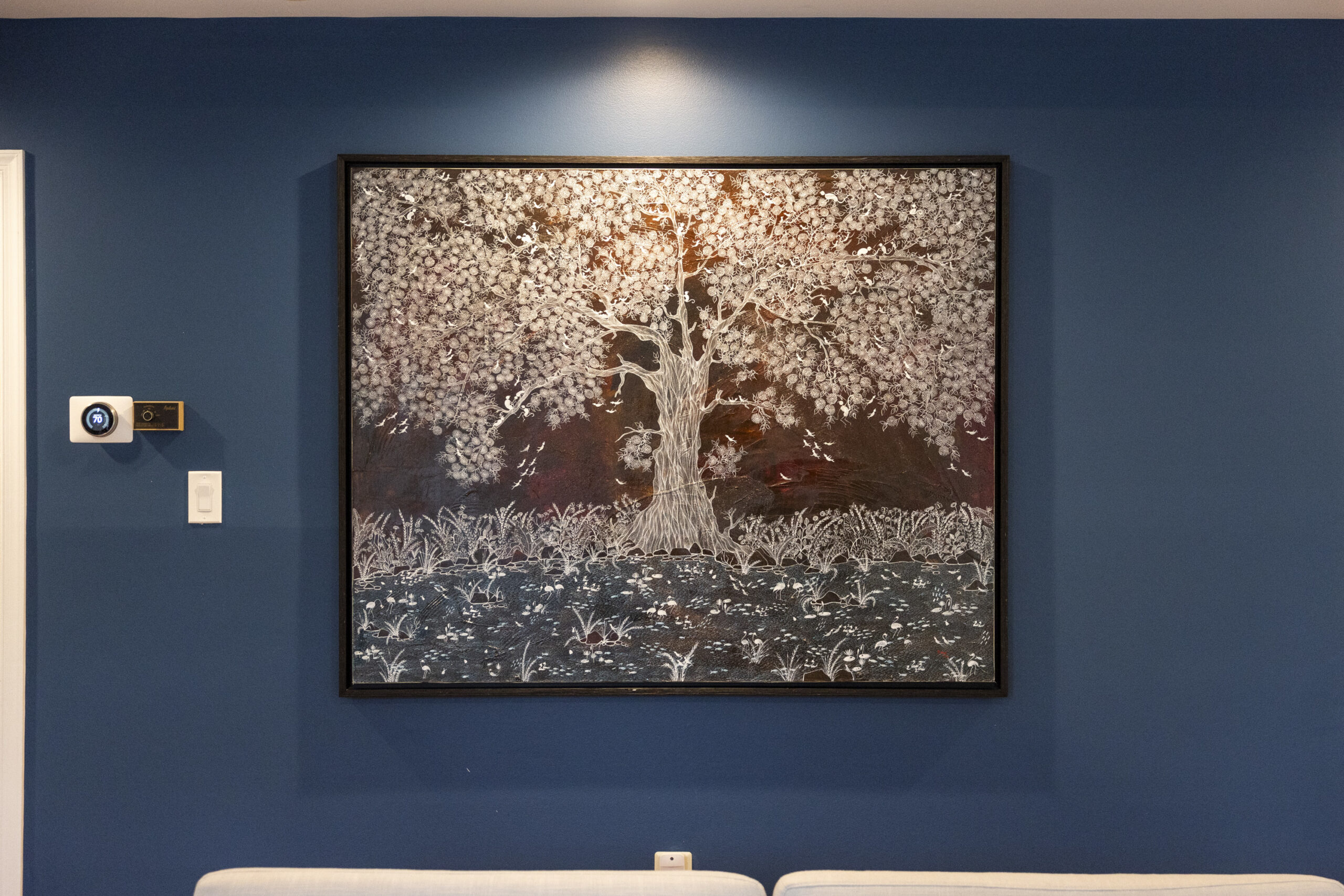
A painting called “Home” painted by Rinal Parikh, 43, displayed in the family room of her home in Media, Pa., on Tuesday, Dec. 23, 2025.
In her family room hangs “Home,” a 2021 Warli painting of a tree. The background is complex in both texture and color, with blues, browns, and purples peeking out. Hanging from the tree are monkeys, which Parikh said captures the energy of having two boys, now 17 and 12,in the house. (They’re very good kids, she clarifies.)
“I observe my surroundings, I experiment with styles, I do a lot of repetitive patterns, and I tell my story,” she said.
Since jumpstarting her art career, Parikh has become involved in the region’s growing art community. She’s the marketing chair for the Rittenhouse Square Fine Arts Show and is involved with the Community Arts Center of Wallingford.
She said she understands the anxieties of young artists and wants to support the organizations that nurture their careers.
“I was supported by the community, and I want to do the same thing.”
Parikh’s art can be found on her website and her Instagram page.
This suburban content is produced with support from the Leslie Miller and Richard Worley Foundation and The Lenfest Institute for Journalism. Editorial content is created independently of the project donors. Gifts to support The Inquirer’s high-impact journalism can be made at inquirer.com/donate. A list of Lenfest Institute donors can be found at lenfestinstitute.org/supporters.
It’s the first week in January, which means the gym is packed and the health food section at the grocery store is more picked over than usual, as many of our friends and neighbors vow to start the new year off on a healthier foot.
Around 3 in 10 Americans made New Year’s resolutions in 2024, according to the Pew Research Center. At the top of the resolutions list were aspirations related to diet and exercise, finances, relationships, and hobbies. The percentage of resolution makerswas even higher amongyoung adults (ages 18 to 29), around half of whom committed to dropping, or picking up, a habit when the clock struck Jan. 1.
Here’s how to get started on a New Year’s resolution in Lower Merion. If you haven’t picked a resolution yet, take this as some inspiration to get going.
Try a new workout (for free)
“Exercise more” is often at the top of New Year’s resolution lists. While a walk around the block or a visit to the gym is a reliable way to get back into the swing of things, fitness studios across the Main Line are offering free trials, from Tai Chi to yoga sculpt.
Get your first class free at Pure Barre in Wayne, a workout studio chain that fuses yoga, Pilates, and ballet to strengthen and tone. Try your hand at Tai Chi at the Bryn Mawr Presbyterian Church on Tuesdays at 10:30 a.m. or on Zoom. Your first Tai Chi class is free. BodyX Kitchen & Fitness Studio, a boutique studio in Bryn Mawr with group fitness classes, personal training, and healthy cooking classes, offers a free week of fitness classes to all new participants. If you’re interested in CrossFit, Ardmore’s CrossFit Main Line offers a free trial for new participants. The gym also has locations in Wayne and Plymouth Meeting. And if you want something more personalized, Train and Nourish, a women’s-only personal training studio in Ardmore, offers free consults for new clients.
As John Romani, owner of Sales by Helen, a Philly-based estate sale giant, told The Inquirer early last year, the Main Line abounds with great secondhand shops. Romani recommends Bryn Mawr Hospital Thrift, a top spot for furniture, high-end clothing, art, and collectibles, and Ardmore’s Pennywise Thrift Shop, which has a rotating inventory, low prices, and some luxury brands. Romani also has high praise for thrift stores in Wayne and Berwyn, including the Berwyn Goodwill and Neighborhood League in Wayne.
Romani’s tips? Use your phone to look up items, seek out high quality, and be assertive.
The Main Line Art Center in Haverford offers art classes and workshops for adults. Take tapestry weaving or portrait painting, learn to make jewelry, or try your hand at pottery.
Looking for a book club? Ardmore’s Mavey Books has book clubs for adults and teens. The Lower Merion Library System also hosts book clubs across its locations, including in Ardmore, Belmont Hills, and Penn Wynne. Ludington Library has a book club dedicated specifically to LGBTQ+ stories.
The Lower Merion Library System also hosts board game cafés, family puzzle nights, film discussions, and art events (you can see their full calendar here).
Declutter your house by donating
After all holiday presents are unwrapped and the last Christmas cookies are eaten, it’s customary to look around and think: “How did I accumulate so much stuff?“ If you’re looking to declutter, nonprofits in and around Lower Merion are accepting gently used clothing, furniture, kitchen tools, and other items.
Our Closet In Your Neighborhood (OCIYN), a program of Jewish Family and Children’s Service of Greater Philadelphia, accepts casual clothing and shoes for men, women, and children of all sizes. OCIYN is a free mobile program that provides Philly-area residents with food, clothing, and access to services and benefits. Those looking to donate clothes to OCIYN can contact Skylar Fox, program manager, at 267-273-5537 or sfox@jfcsphilly.org.
Cradles to Crayons is a national nonprofit with a Philadelphia-area presence that provides clothing, shoes, books, school supplies, and hygiene items to kids in need. The nonprofit has a small collection site at Church of the Redeemer in Bryn Mawr and a larger site at the Haverford YMCA. Cradles to Crayons accepts new youth socks and underwear, new arts and school supplies, new hygiene items, unopened diapers, pull-ups, and diaper wipes, and new or gently used clothes and shoes in youth and adult sizes. See the full list of collection sites here and donation guidelines here.
This suburban content is produced with support from the Leslie Miller and Richard Worley Foundation and The Lenfest Institute for Journalism. Editorial content is created independently of the project donors. Gifts to support The Inquirer’s high-impact journalism can be made at inquirer.com/donate. A list of Lenfest Institute donors can be found at lenfestinstitute.org/supporters.
Philadelphia is unlikely tohave a white Christmas, but snow is on the horizon for the weekend.
The National Weather Service on Wednesday afternoon issued a winter storm watch for much for eastern Pennsylvania and New Jersey. The watch will be in effect from Friday afternoon through Saturday morning.
From Friday into Friday evening, forecasters are “near 100% confident” that most of the Philly area will get some form of winter precipitation, according tothe National Weather Service. But exactly what type of precipitation, how much, and the precise timing remains uncertain.
“We’re likely going to see an impactful winter storm,” said Eric Hoeflich, meteorologist with the National Weather Service in Mount Holly.
Philadelphia may get between 1 and 4 inches of snow Friday into the night, according to the National Weather Service. Light precipitation could linger into Saturday morning.
Forecasters expect between 1 and 3 inches of precipitation in northern Delaware, far southern New Jersey, and Southeastern Pennsylvania. Eastern Pennsylvania and much of New Jersey may see 4 to 7 inches. Actual precipitation totals and types, however, may vary. Some areas could get snow, sleet, freezing rain, or plain rain depending on temperatures and timing.
Ahead of the expected weekend storm, Philadelphians are unlikely to be greeted with snow-dusted streets on Christmas morning.
After sun and high temperatures in the 40s on Wednesday, Christmas Day may also bring above-average temperatures, with highs forecast in the mid-40s and a potential for light showers in the morning.
It will be “not great weather, but not bad either for late December,” according to forecasts from the National Weather Service.
Friday’s winter weather event would mark the second measurable snowfall of the season in Philly. The snowstorm that swept across the Philadelphia region on Dec. 14 dumped 4.2 inches of snow at Philadelphia International Airport. Some suburban communities in Bucks and Chester Counties recorded over 8 inches.
If you’re planning to travel on Friday evening, expect impacts to your plans, as roads may get snowy and icy.
Lower Merion residents will see an 8% increase on their property tax bill in 2026, a move commissioners say is a necessary remedy to the “mistake” of keeping tax rates stagnant for over a decade.
The township board of commissioners on Dec. 17 approved an 8% property tax increase for next year. The increase will bring the property tax millage rate from 4.462 mills to 4.819 mills. The median single-family homeowner in Lower Merion will pay around $1,386 in real estate taxes, a $103 increase from 2025.
The 8% tax increase approved by commissioners is lower than the 9.5% increase proposed by staff and supported by board President Todd Sinai. The board landed on the 8% hike after a protracted discussion about how much of an increase residents could, and should, shoulder in 2026.
Commissioners acknowledged the “sticker shock” of the tax hike but said years of stagnant tax revenue had put the township in an impossible position. Real estate taxes did not increase for 13 consecutive years in Lower Merion, from 2011 to 2024. The township voted to raise taxes by 6.5% for 2025, the first increase in over a decade.
“Those years of no tax increase have proven to be a mistake, given that each year we were presented with a structural deficit and a looming cliff,” Commissioner Ray Courtney said. “By holding out on increases as long as we did, we have painted ourselves into a corner.”
Under the proposed 9.5% tax hike,Lower Merion projected $83.8 million in general fund expenditures in 2026 against arevenue of $79.3 million. With the 8% tax hike passed by the board, revenue will be lower and the township will have to lean more heavily on its general fund reserves to cover the deficit.
Around half of Lower Merion’s revenue comes from real estate taxes, yet township residents continue to pay taxes calculated on property values established in 1998, the last time Montgomery County conducted a property reassessment.
The decades-old property values have kept tax revenue low, relative to the high market costs of a home in Lower Merion. The median sale price for a home in Lower Merion was $803,500 in 2024, according to data from Montgomery County.
Notably, only 10% of Lower Merion residents’ property taxes goes to the township. Around 12% goes to Montgomery County and 78% goes to the school district.
Montgomery County will be increasing taxes by 4% in 2026.
In a Nov. 7 report addressed to the board of commissioners, Township Manager Ernie McNeely wrote that, while Lower Merion has weathered the post-pandemic economy with relative success, its general fund has run a deficit multiple times since 2020.
McNeely’s report points to three major burdens on Lower Merion’s budget in 2026: healthcare premiums, staffing costs, and the Solid Waste Fund.
The township is expected to see a 20% increase in healthcare premium costs in 2026. McNeely’s report said the increase is due, in part, to the costs associated with nondiabetic weight-loss drugs and other “specialty pharmaceuticals.”
Lower Merion Township’s employment vacancy rate is also expected to fall in 2026. While a lower vacancy rate is good for departments needing to fill positions, each percentage-point improvement in the employment vacancy rate costs the township $520,000. On top of the falling vacancy rate, over 35% of township staff are set to receive a salary boost in 2026.
And the town’s Solid Waste Fund is in dire straits. Even with the 5% solid waste fee rate hike planned for 2026, the fund is set to face a $700,000 deficit. Rising costs for disposal, equipment, and personnel, as well as a declining regional market of mills able to purchase paper recycling material, were identified as the main reasons for cost increases.
The major challenges outlined by McNeely are set to the backdrop of persistent inflation, which is putting cost pressures on local governments.
This suburban content is produced with support from the Leslie Miller and Richard Worley Foundation and The Lenfest Institute for Journalism. Editorial content is created independently of the project donors. Gifts to support The Inquirer’s high-impact journalism can be made at inquirer.com/donate. A list of Lenfest Institute donors can be found at lenfestinstitute.org/supporters.
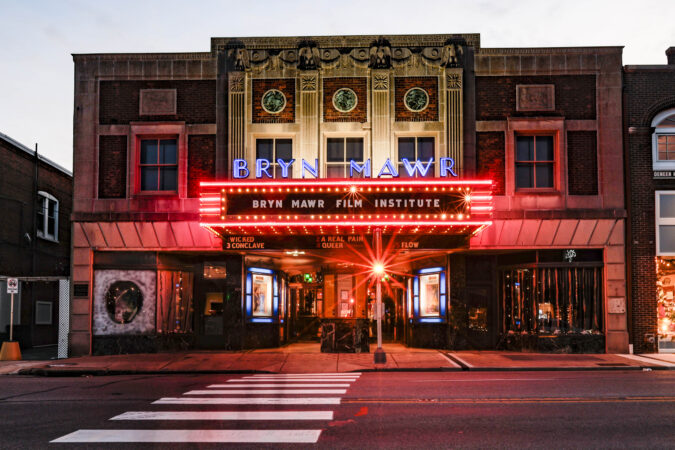
There are few facades more iconic in Bryn Mawr than the marquee of the Bryn Mawr Film Institute (BMFI), an enduring Main Line institution and watering hole for cinephiles from across the region.
BMFI has turned 20, marking two decades of the nonprofit community theater founded by Juliet Goodfriend in 2005. In the early 2000s, Goodfriend found herself dismayed when a historic movie theater in neighboring Ardmore was converted into a short-lived gym. To protect Bryn Mawr’s historic Seville Theatre from the same fate, Goodfriend rallied a team of local stakeholders around the theater. In December 2004, BMFI purchased the Seville, and in March 2005, the film institute opened its doors. Today, BMFI screens new and historic films, hosts lectures, teaches courses for children and adults, and celebrates the art of the film.
“It means a lot … to see what this place has become through the generous support and engagement of the community,” said Andrew J. Douglas, deputy director of the film institute who has worked at BMFI since it first opened.
To celebrate BMFI’s 20th anniversary, its staff compiled a list of 20 of the most iconic films the theater has screened, from Philly-based flicks to beloved musicals:
‘Blue Velvet’
If there’s an iconic filmmaker with a Philadelphia connection, it’s the late David Lynch, said Jacob Mazer, BMFI’s director of programs and education.
Blue Velvet is Lynch’s 1986 mystery thriller. It follows college student Jeffrey Beaumont after he discovers a severed ear in a vacant lot in his suburban hometown and is drawn into a dark world of crime.
“When we look at this arc of [Lynch’s] career, it’s really the film where he finds his way,” Mazer said.
Lynch began his filmmaking career in Philadelphia at the Pennsylvania Academy of the Fine Arts and regularly discussed basing his landmark debut Eraserhead on the city in the 1970s. When Lynch returned to Philly for a retrospective of his work at PAFA in 2014, he visited BMFI for a screening of his films and a Q&A session with the audience. Blue Velvet was the first film BMFI played to commemorate Lynch after his death in January.
‘The Philadelphia Story’
There’s a lot of local love for The Philadelphia Story, George Cukor’s 1940 romantic comedy set on the Main Line and based on the life of socialite Helen Hope Montgomery Scott, said Gina Izzo, BMFI’s communications director.
Plus, Izzo added, “It’s funny. It holds up.”
‘Lawrence of Arabia’
The annual summer screening of David Lean’s 1962 film Lawrence of Arabia is the oldest-running BMFI tradition. It’s a movie that is just “not done justice on a small screen,” said Mazer.
‘The Sound of Music’
Each December, lovers of The Sound of Music descend on BMFI for what Izzo describes as an “interactive screening” of the 1965 musical directed by Robert Wise. Over the course of three hours and many songs, The Sound of Music tells the World War II-era story of Maria (Julie Andrews), a young woman who becomes a governess for the von Trapps, an aristocratic Austrian family.
At the annual Christmastime screening at BMFI, moviegoers sing along from their seats and, each year, wear increasingly elaborate costumes. Last year, there were nuns, goats, and “brown paper packages tied up with strings” (a la the song “My Favorite Things”). The showings sell out months in advance.
As Izzo put it, “It’s sort of our Rocky Horror Picture Show equivalent.”
‘Harold and Maude’
Hal Ashby’s Harold and Maude has been a mainstay at the Seville Theatre since it was released in 1971. It was the last movie shown on the Seville’s single screen before the theater was twinned (split into two screening rooms) in the 1980s.
“Harold and Maude just comes back again and again and again” in the theater’s history, said Mazer. “It’s one of the quintessential cult movies.”
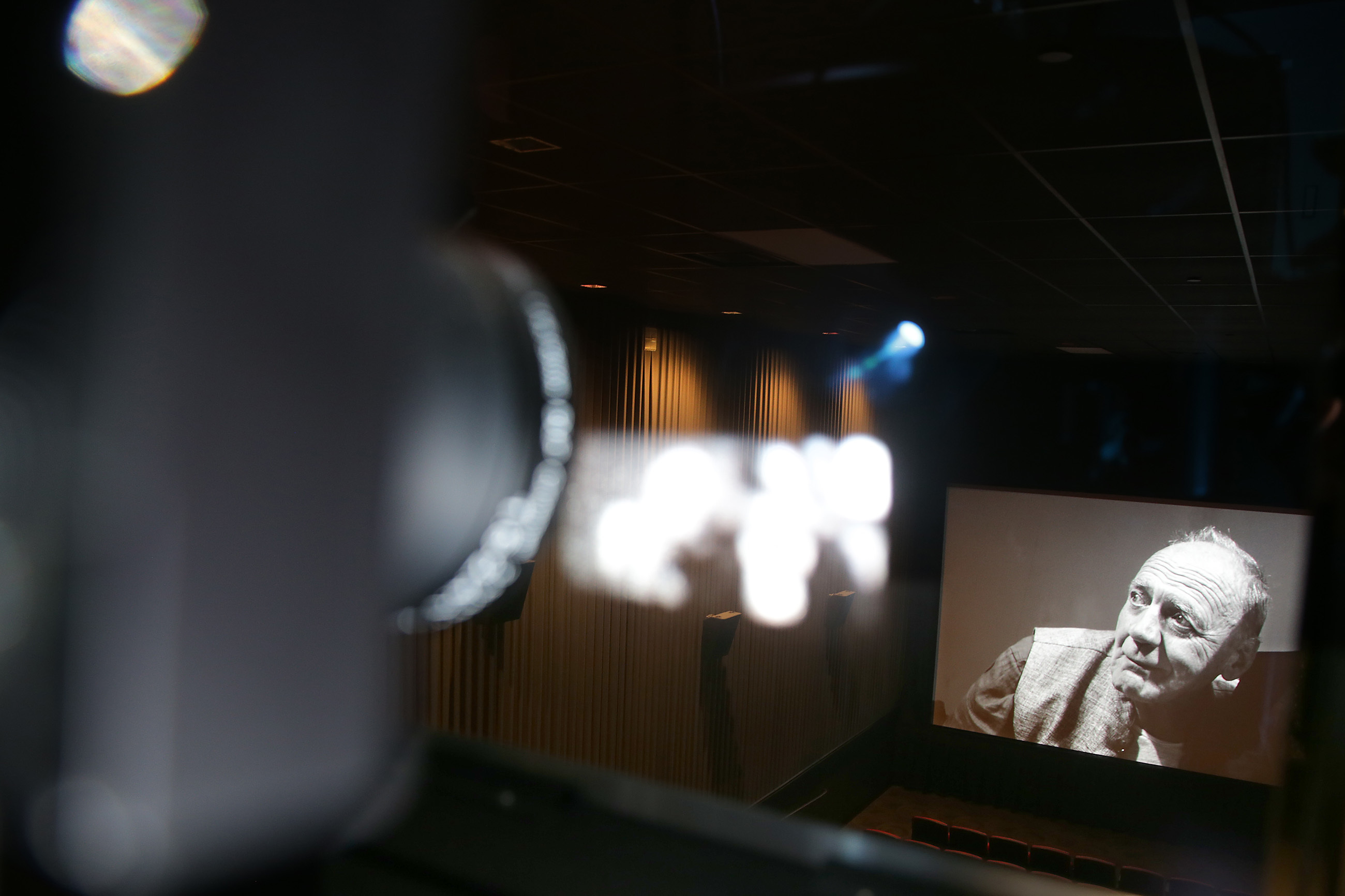
A view from one of the projection booths inside the Bryn Mawr Film Institute in Bryn Mawr on March 8, 2018.
‘Casablanca’
Michael Curtiz’s 1942 romantic-drama Casablanca is “one of the great examples of the difference [between] seeing a movie in a theater with other people versus by yourself at home,” said Douglas.
BMFI screens Casablanca every summer, and Douglas teaches an annual lecture on the film. When he watches Casablanca at BMFI, Douglas says he regularly hears people sniffling at sad moments or guffawing at funny ones, a stark comparison to the muted reactions one often has from the comfort of their own couch.
“You’re reminded how funny it is, you’re reminded how moving it is, and you’re reminded, in a sense, how human it is,” he said.
‘The Grand Budapest Hotel’
Why include Wes Anderson’s 2014 film The Grand Budapest Hotel? Put simply, people just love Wes Anderson, Izzo said.
‘2001: A Space Odyssey’
Stanley Kubrick’s 2001: A Space Odyssey was the first film shown at the theater after it developed the capacity to screen 70 mm film. Mazer called the 1968 movie an “iconic film” in cinematic history.
‘Silver Linings Playbook’
In a way, Silver Linings Playbook is a “modern-day Philadelphia Story,” said Douglas. The 2012 film, directed by David O. Russell, follows Pat Solitano Jr. (Bradley Cooper), recently released from a psychiatric hospital who works to win back his estranged wife, and Tiffany Maxwell (Jennifer Lawrence), a young widow also struggling with mental illness, as she prepares for an upcoming dance competition.
Philadelphia’s favorite rom-com is an homage to Delco, Eagles fans, and the Montgomery County-born-and-raised Cooper. It’s a “local guy makes good” story, Douglas said, referring to Cooper. It’s also the highest grossing main attraction in BMFI history.
“For our community, it was an enormously meaningful movie‚” Douglas said.
‘La La Land’
Benj Pasek and Justin Paul, known as Pasek and Paul, are a composing and songwriting duo responsible for the lyrics in La La Land, the acclaimed 2016 musical directed by Damien Chazelle.
Pasek is “Bryn Mawr’s son,” Izzo said. The composer graduated from Friends Central, the Wynnewood Quaker school, and is a longtime supporter of BMFI. When Pasek and Paul won an Oscar for the movie, everybody at home “had a little piece,” said Izzo.
‘Barbie’
Greta Gerwig’s 2023 Barbie felt like the “big wave back after the pandemic,” Izzo said. People dressed in pink and flocked to the movies after months of isolation and uncertainty.
Parasite, Bong Joon Ho’s 2019 South Korean Oscar winner, was the third-longest running main attraction in BMFI history with a 16-week run.
“We were proud to show that one,” Izzo said. “It was very popular here.”
‘Rocky’
Rocky, the 1976 film directed by John G. Avildsen about boxer Rocky Balboa (Sylvester Stallone), may seem like an obvious addition to any Philly-area iconic movies list. But the local history behind the movie is deeper than meets the eye, Mazer said.
Rocky was one of the first to be filmed with the Steadicam, a revolutionary invention of Garrett Brown, a Haverford High School graduate and prolific Philadelphia inventor. The Steadicam, created by Brown in 1975, is a camera stabilizing device that revolutionized the movie industry, allowing filmmakers to shoot scenes without having to mount cameras onto cranes or dollies.
In testing out his new invention, Brown shot various scenes around Philadelphia, including one of his future wife running up the steps of the Philadelphia Art Museum. That scene would later become an iconic motif of Rocky, shot by Brown.
“It’s this place where film history and Philadelphia history really connect,” Mazer said.
Brown is a friend of BMFI and has given numerous lectures at the theater, including for the 40th anniversary of Rocky.
‘Superman’
James Gunn’s 2025 Superman is another story of a local hero. David Cornswet, who played Superman, was raised in Lower Merion and graduated from the Shipley School, a Bryn Mawr private school. Cornswet hosted a friends and family debut of Superman at BMFI.
‘Brooklyn’
Brooklyn, John Crowley’s 2015 period drama, stars Saoirse Ronan as Ellis Lace, a young Irish immigrant to New York City. The movie was immensely popular at BMFI, said Izzo.
‘On the Waterfront’
Elia Kazan’s 1954 crime drama On the Waterfront helped revolutionize BMFI’s educational programming. The film was the first of the theater’s one-night seminars, during which moviegoers listen to a short lecture, sit for a screening, and then stay for a discussion. Now, they’re a popular part of the theater’s educational menu.
‘RBG’
RBG, Julie Cohen and Betsy West’s 2018 documentary about late Supreme Court Justice Ruth Bader Ginsburg, was the highest-grossing documentary screening in BMFI history. It’s also in the top 20 of the highest-grossing screenings in the theater’s history (including movies and documentaries).
National Theatre Live: ‘The Audience’
Though movies are at the core of BMFI’s work, the theater has expanded its repertoire to include cinematic presentations of ballet, theater, opera, and behind-the-scenes tours of art museums, all filmed and fit for the movie screen. BMFI’s most popular alternative program to date was a screening of The Audience, a 2013 play starring Helen Mirren as Queen Elizabeth II. BMFI sold out 13 showings of the show.
Izzo and Douglas said the screenings help transport locals to places that can be difficult to get to — New York City’s Broadway, London’s West End, or European museums.
“Even at current prices, it’s still a tremendous bargain for access to the arts,” said Douglas.
‘Metropolitan’
To commemorate the 30th anniversary of Whit Stillman’s 1990 movie Metropolitan, the director visited BMFI in 2022 for a screening of the film and Q&A with the audience. Metropolitan follows the Sally Fowler Rat Pack, a group of young Manhattan socialites in the throes of debutante season.
Stillman’s visit to BMFI “was the beginning of a really nice friendship,” Mazer said.
This suburban content is produced with support from the Leslie Miller and Richard Worley Foundation and The Lenfest Institute for Journalism. Editorial content is created independently of the project donors. Gifts to support The Inquirer’s high-impact journalism can be made at inquirer.com/donate. A list of Lenfest Institute donors can be found at lenfestinstitute.org/supporters.
On a frigid Tuesday morning, stakeholders from across Delaware County toasted champagne and popped mini pastries under the roof of Middletown Township’s new Hilton Garden Inn.
“We may be the only Hilton Garden Inn in the world that serves Wawa coffee and drinks it all the time,” quipped hotel owner Patrick J. Burns, standing before a sea of family members, hotel staffers, business associates, and elected officials.
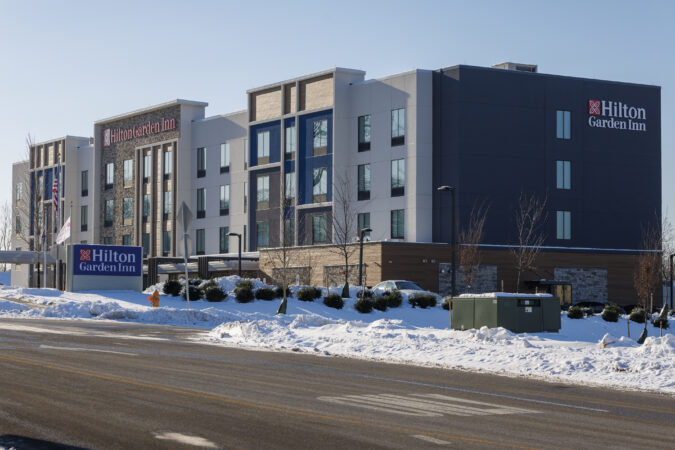
The 107-room, 67,000-square-foot Hilton, located off Baltimore Pike at the former Franklin Mint site, is open and welcoming guests. It’s the 42nd hotel in Delaware County and first full-service hotel in Middletown Township.
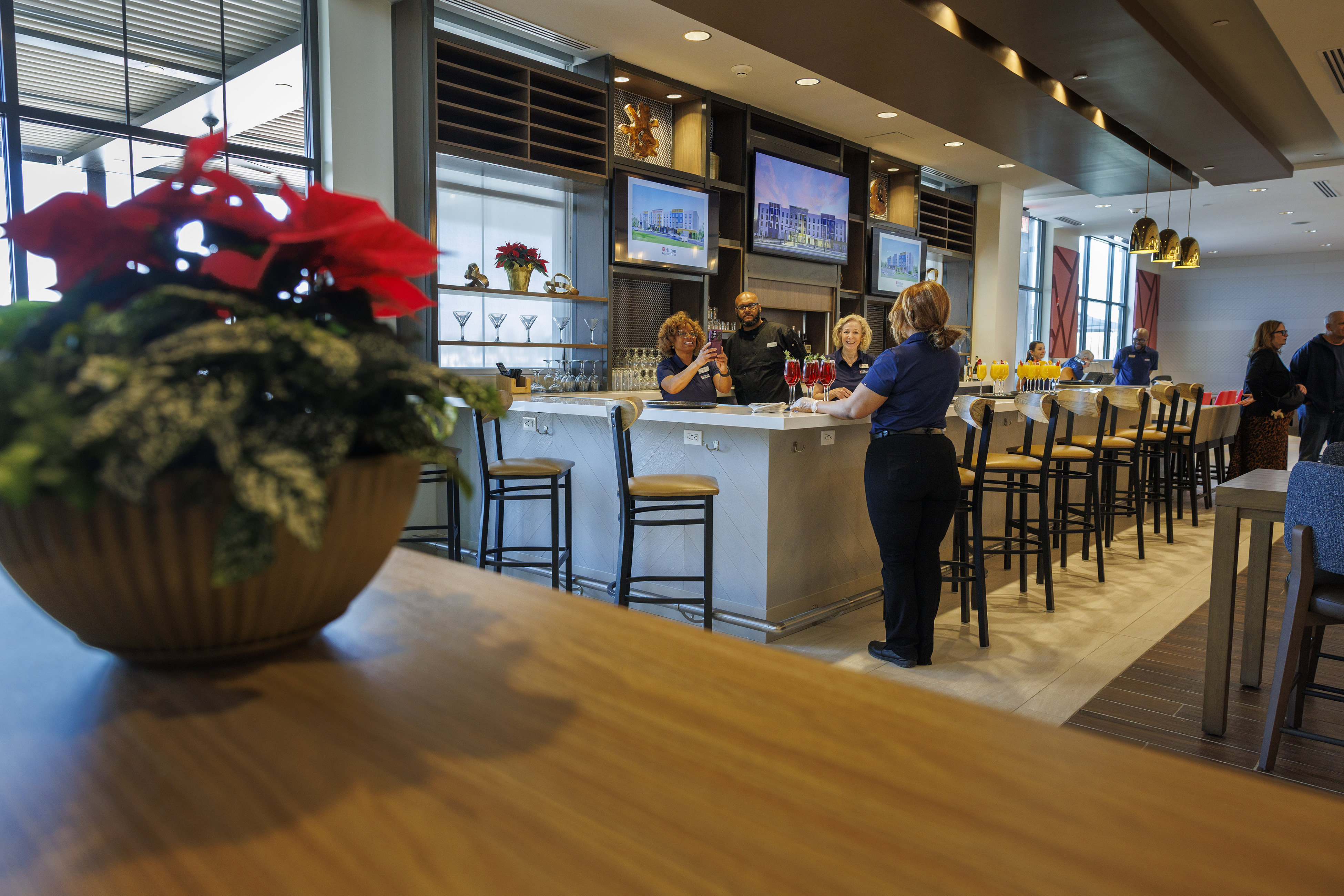
The hotel features app-to-room device integration, mobile key and contactless check-in, meeting and banquet spaces, an outdoor patio with fire pits, a fitness center, and the Garden Grill, a restaurant serving “American cuisine with local flair” that will be open to the public.
The hotel is long awaited, borne from a yearslong planning process and delayed by pandemic-era construction slowdowns. On Tuesday, attendees expressed gratitude that what was once an economic dream for the township was finally becoming reality.
The Hilton marks an important expansion of the collar county’s tourism economy, according to Delaware County’s major economic stakeholders. And as far as tourism in Delco, they say, it’s only up from here.
The bar area off of the lobby at the new Hilton Garden Inn of Middletown Township on Tuesday, Dec. 16, 2025.
Delaware County hosted 4.5 million visitors in 2024, according to Steve Bryne, executive director of Visit Delco. Those visitors spent $860 million, generated $1.2 billion in economic impact, and sustained 13,000 jobs. In 2025, the county is on track to sell more than one million hotel room nights for the first time in its history.
Representatives from the Hilton say it created 200 construction jobs and 40 new hospitality jobs.
Bryne said tourism to Delaware County is a “combination of everything.” The county doesn’t have one major anchor (like Longwood Gardens in Chester County, for example). Rather, it’s home to 12 colleges and universities, major corporate employers like Wawa, and sports complexes like IceWorks and Subaru Park, home of the Philadelphia Union. That means regular tournaments, business conferences, parents weekends, homecomings, and graduations — events that, collectively, help power the county’s economy.
Already, Penn State Brandywine, located down the road, has named the Hilton Garden Inn its host hotel.
Delaware County also gets spillover from visitors to Philadelphia, especially those who want proximity to Philadelphia International Airport.
The hotel is a property of Metro Philly Management, owned by Burns. Burns’ management company also owns the Courtyard by Marriott in Springfield, the Fairfield Inn & Suites in Broomall, and the Springfield Country Club, as well as numerous grocery stores and restaurants.
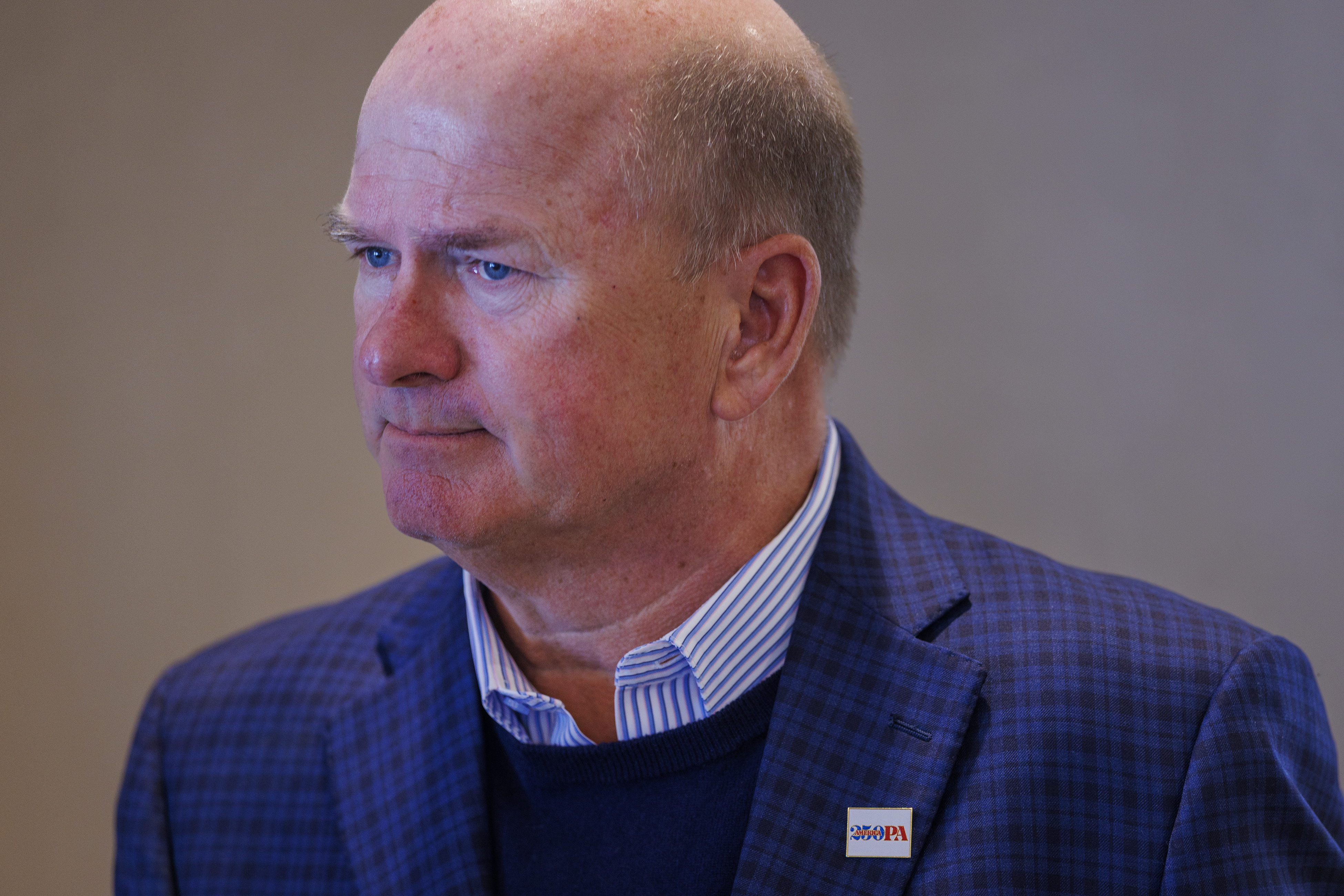
Patrick J. Burns, pictured at Middletown Township’s new Hilton Garden Inn on Tuesday, Dec. 16, 2025. The hotel is owned by Burns’ company, Metro Philly Management.
Stakeholders lauded the hotel’s location in a central, and rapidly developing, part of Middletown Township.
The former Franklin Mint complex, now home to the Hilton, has been a hotbed of development in Middletown Township since the mint shuttered in 2004. Two newer housing developments — Pond’s Edge and Franklin Station — have added over 450 units of housing to the site. Middletown Township outpaced its neighbors — Media, Nether Providence, and Upper Providence — in populationgrowth in 2024.
“Middletown Township is such a vital corridor of Delaware County,” Burns said.
The hotel’s opening coincides with major events coming to the region in the coming months: semiquincentennial celebrations in Philadelphia and in Delco, the FIFA World Cup, the PGA Championship at Aronimink Golf Club, and the MLB All-Star Game. For the PGA Championship alone, Delaware County is expecting 200,000 visitors and $125 million in economic impact.
This suburban content is produced with support from the Leslie Miller and Richard Worley Foundation and The Lenfest Institute for Journalism. Editorial content is created independently of the project donors. Gifts to support The Inquirer’s high-impact journalism can be made at inquirer.com/donate. A list of Lenfest Institute donors can be found at lenfestinstitute.org/supporters.
’Twas a few days before Christmas, and all through Cherry Hill, children were running outside with no jackets to chase Santa, and sometimes with no shoes.
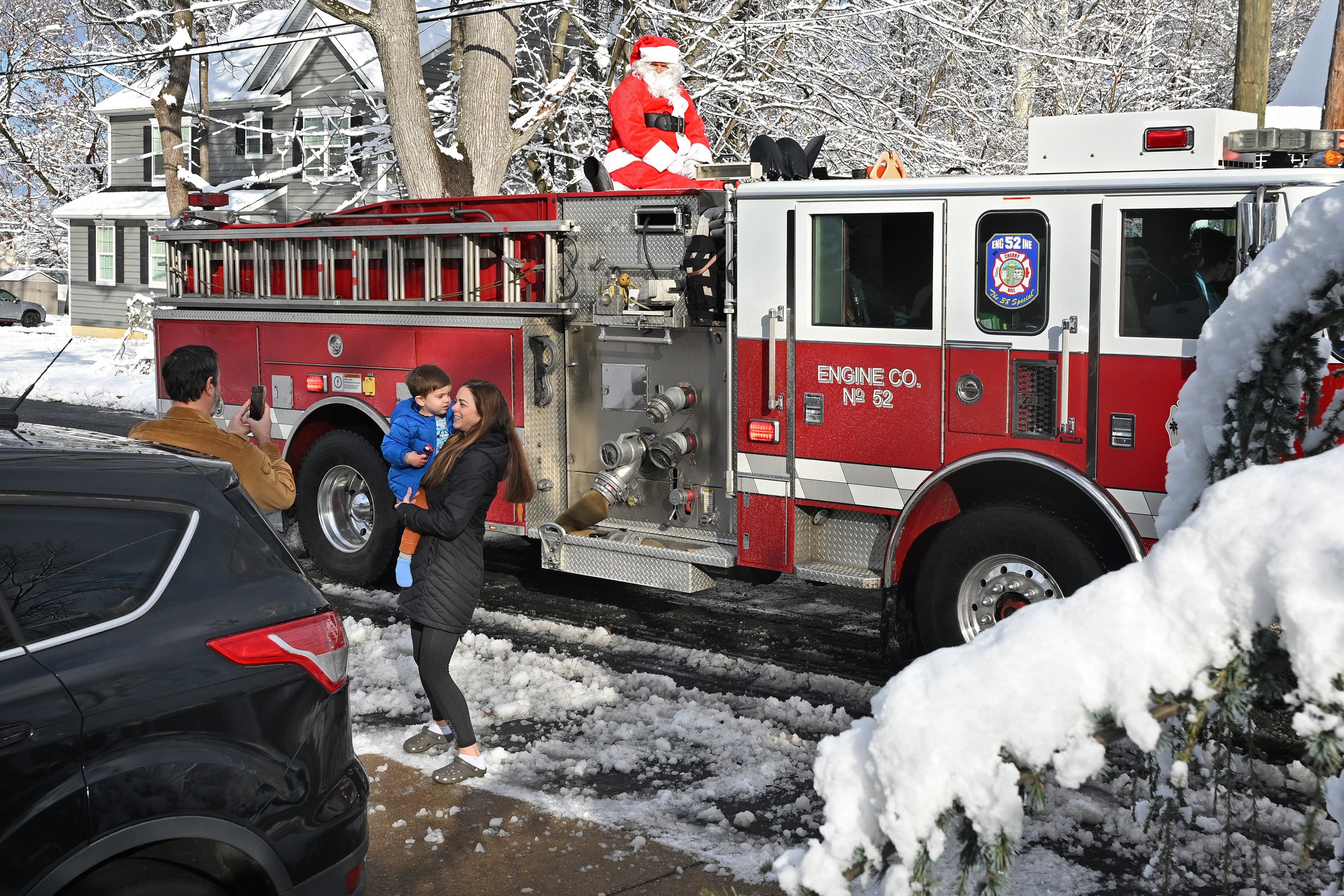
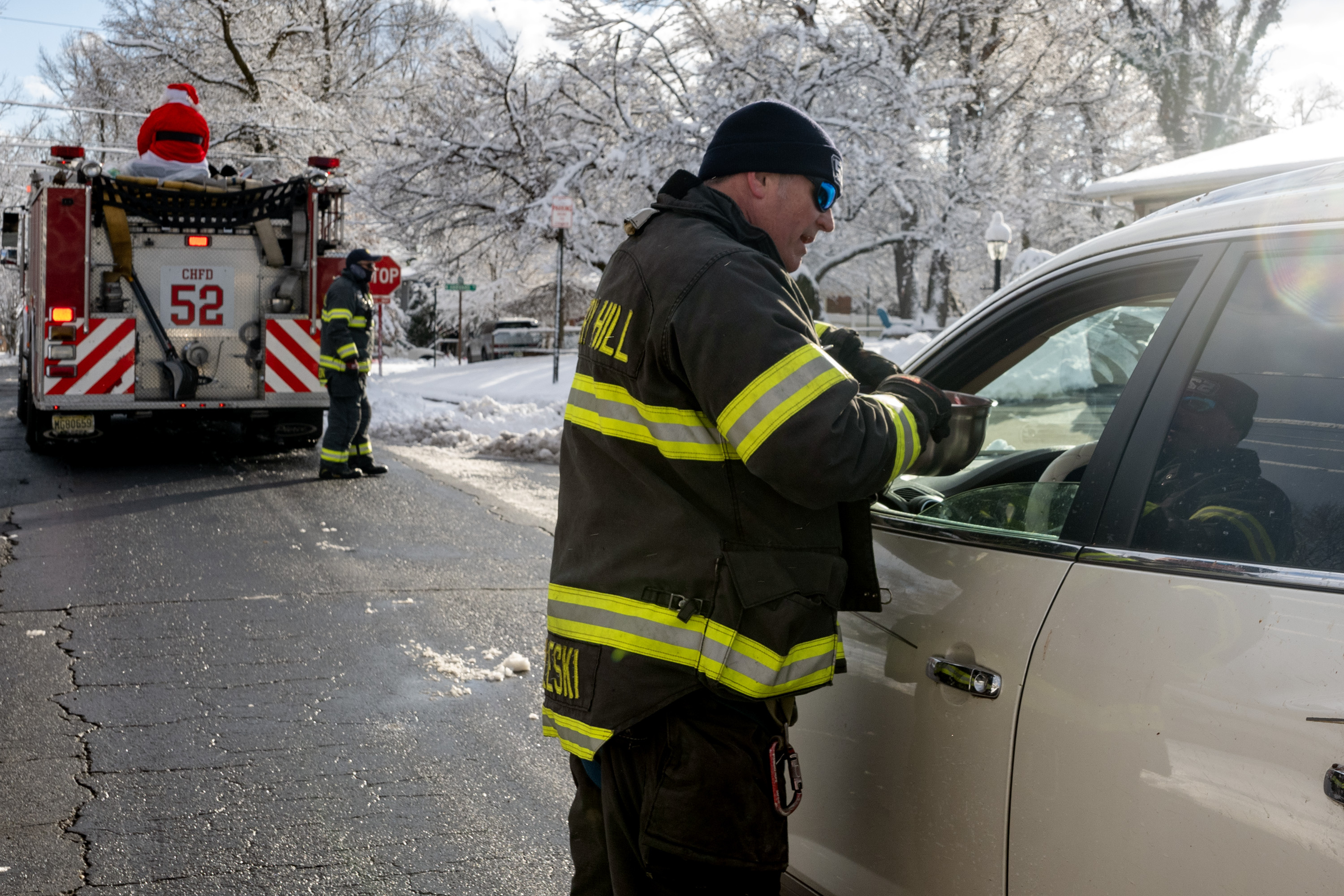
Strapped to the top of a Cherry Hill fire truck, Santa Claus made his rounds through the South Jersey community on Sunday, waving as he passed through condominiums decorated for Christmas and snow-dusted cul-de-sacs. Santa’s firefighter escorts handed out candy canes and holiday greetings as Christmas cheer warmed the frigid township.
“There’s nothing better than when you pull around the block with Santa on the roof,” said Jim Aleski, a Cherry Hill Fire Department lieutenant.
Each December, Santa makes a special trip to Cherry Hill, meticulously visiting every street in the township over the course of the department’s multiday Santa Tour. A fresh coat of rare December snow made for a particularly picturesque scene over the weekend, when kids, parents, and dogs chased down the fire truck to get a coveted glimpse of St. Nick.
Mark Yakovich, 3, and his dad, Ed Yakovich, 44, flagged down the fire truck from their driveway as if they were hailing a cab. Mark, the toddler, is very into trains at the moment. Luckily, fire trucks remain pretty high on his list (specifically when they’re associated with Marshall, the Dalmatian puppy fire marshal in PAW Patrol). Holding two candy canes and a toy train, Mark eyed the fire truck with glee, and a healthy skepticism, from the comfort of his dad’s arms.
Though Ed Yakovich said they are still “figuring out the family traditions with the new little guy,” seeing Santa was at the top of their December to-do list.
At the Burrough’s Mill subdivision, Andrew Lee said he and his family wait for Santa every year. A bit of Christmas light amid so much darkness in the world was a welcome respite this time around, he said.
“Santa brings the spirit,” Lee said.
What is Lee’s son, Makai, 10, asking for this Christmas? An Xbox, Roblox, and more Roblox.
Ed Yakovich takes a photo of his wife Kendra McGarvey with their son Mark Yakovich, 3, as Santa, leaves after stopping at their home.
As the firefighting crew and its guest of honor wound through the township, delighted residents waved and cheered, stopped for selfies, and honked in appreciation. One resident ran out to gift a box of brownies to the firefighters.
Aleski said no one can quite pinpoint when the Santa Tour began, but residents say they remember the tradition happening as far back as the 1960s.
Archives show Santa visiting South Jersey via fire truck as early as 1931, when he distributed gifts to the children of Barrington on Christmas Day.
Sandy Chase, 54, said she remembers a Santa Tour from her childhood in northern New Jersey.
“This is a big Jersey thing,” she said.
Nicole Gaunt, 31, has lived in Cherry Hill her whole life. She and her daughter Khaos, 8, were out playing in the snow when Santa rounded the corner.
Gaunt said the duo were prepared to see the big guy.
“We’ve chased him down before,” she added.
Three-year-old Michele Peruffo pauses as firefighter Sam Harrison (left) walks behind a fire truck with Santa through the neighborhood.
Aleski said nothing drives community engagement like the Santa Tour. Each year, his department gets dozens of calls, emails, and social media inquiries about when Santa will pass by each house.
Though the department is meticulous in hitting every block, it’s a fire department first, and emergency operations supersede Santa. Santa has shown up at more than a few unexpected emergencies during tours past.
The Santa Tour in Cherry Hill will continue over the next few days. To see when Santa is visiting each neighborhood, explore this interactive map.
Firefighter Lt. Jim Aleski gives candy canes to a driver “stuck” behind the Santa fire truck.
This suburban content is produced with support from the Leslie Miller and Richard Worley Foundation and The Lenfest Institute for Journalism. Editorial content is created independently of the project donors. Gifts to support The Inquirer’s high-impact journalism can be made at inquirer.com/donate. A list of Lenfest Institute donors can be found at lenfestinstitute.org/supporters.
Standing before a room full of parents, administrators, and taxpayers on Monday morning, Wallingford-Swarthmore School District Superintendent Russell Johnston opened the conversation: “None of us is as smart as all of us.”
At the listening session at Strath Haven Middle School, Johnston and members of the Wallingford-Swarthmore administration took suggestions from the public and laid out the district’s dire budget issues, which came into the public eye at a board meeting last month.
The main message Johnston came to deliver: As Wallingford-Swarthmore works to cut its budget, everything is on the table, no idea is too big, and no cut is too small.
“None of this is easy and, like I said, everything is up for consideration right now,” Johnston said, emphasizing that the district is “turning over every stone” and is eager to hear good ideas.
The Wallingford-Swarthmore School District is facing a $2.6 million budget deficit for the 2027-28 school year. Administrators say the shortfall is due to a combination of factors, including runaway spending, rising staffing costs, a stagnant revenue base, and costly infrastructure repairs, which are needed due to years of deferred maintenance.
At the community meeting (which was the first of two sessions that took place on Monday), Johnston and colleagues broke down expenses related to staffing, transportation, special services, curriculum, and the district’s long-range capital plan, which was approved in June.
The conversation stretched across the big picture and the nitty-gritty.
How often should classrooms be deep-cleaned? How important is renovating the swimming pool? Should the district run late buses for students in after-school clubs? Could the number of district administrators be reduced?
Suzanne Herron, a parent of young children in the district, said the meeting felt “thoughtful and transparent.”
“I walked out of there feeling pretty confident that they were going to think about the right things,” Herron said.
Johnston took the helm of Wallingford-Swarthmore in May, closing an embattled chapter for the Delaware County school district. The district parted ways with its former superintendent, Marseille Wagner, with a $330,000 payout in August 2024. Wagner was accused of spending excessively on administrative initiatives and facilitating an unhealthy work environment for staff, including pitting staffers against one another and dismissing efforts for consensus building.
The district and Wagner said in a statement at the time that they had “mutually agreed to amicably end their contractual agreement.”
Wagner’s tenure hung over the conversation at Strath Haven Middle School. Attendees asked how many administrators had been added under the prior superintendent and how the administrator-to-student ratio compared with neighboring districts (administrators said they didn’t have exact numbers off the top of their heads). One parent said that while she was grateful for the open discussion, she struggled to understand how the district got to such a dire place.
Parents also raised concerns that a disconnect remains between school needs and what taxpayers, especially those without children in the district, see as wasteful spending
In contrast to neighboring districts like Rose Tree Media and Radnor, which are home to a mix of residential and commercial properties that feed their tax bases, Wallingford-Swarthmore is small and largely residential. This means its school district tax base is powered almost completely by homeowners, many of whom feel stretched thin by the growing tax burden. Swarthmore College, a major presence in the borough, pays limited taxes as a 501(c)3 nonprofit.
On top of local taxes, Delaware County is expected to increase residential property taxes by 19% for next year. That’s in addition to the 23% increase the county approved for 2025.
Joyce Federman, an attendee who recently moved to the area and does not have children in the school district, said she has been “staggered” by the amount of school taxes she pays.
“My tax burden is unbearable,” she added.
District officials emphasized that there will be continued opportunities for feedback as the budget process continues. The school board finance committee is set to present a potential budget reallocation strategy on Tuesday, and the board is set to vote on reallocation expectations on Dec. 22. A budget must be adopted by June.
This suburban content is produced with support from the Leslie Miller and Richard Worley Foundation and The Lenfest Institute for Journalism. Editorial content is created independently of the project donors. Gifts to support The Inquirer’s high-impact journalism can be made at inquirer.com/donate. A list of Lenfest Institute donors can be found at lenfestinstitute.org/supporters.
A driver struck and killed a man who was crossing a street in Cherry Hill on Monday night.
Cherry Hill resident Gerald S. Yashinsky, 51, was crossing Haddonfield Road near Yale Avenue around 6:41 p.m. Monday when the driver of a northbound vehicle struck him, according to the Cherry Hill Police Department. Law enforcement officers, firefighters, and EMS personnel responded and provided medical aid.
Yashinsky was later pronounced dead.
The driver remained at the scene and was cooperating with investigators.
No additional injuries were reported.
The crash remains under investigation by the Cherry Hill Police Department, the Camden County Prosecutor’s Office, and the medical examiner’s office.
Anyone who witnessed the incident or has information is encouraged to contact Cherry Hill Police Officer Geoffrey Byrne at 856-432-8859 or traffic@cherryhillpolice.com.
They say it takes a village to raise a child. But what about to age in place?
More than ever, older adults want to age in their homes. According to a 2024 survey by AARP, 75% of adults ages 50 and over want to stay in their homes as they get older, and 73% want to stay in their communities.
Economic and logistical barriers, however, can make aging in place difficult. Single-family homes in suburban neighborhoods can be isolating for older adults, especially those who don’t drive.
Moving into a retirement community with built-in care and socialization, on the other hand, can be expensive. This paradigm often forces older adults to make difficult decisions about if, and how, they can age in their homes.
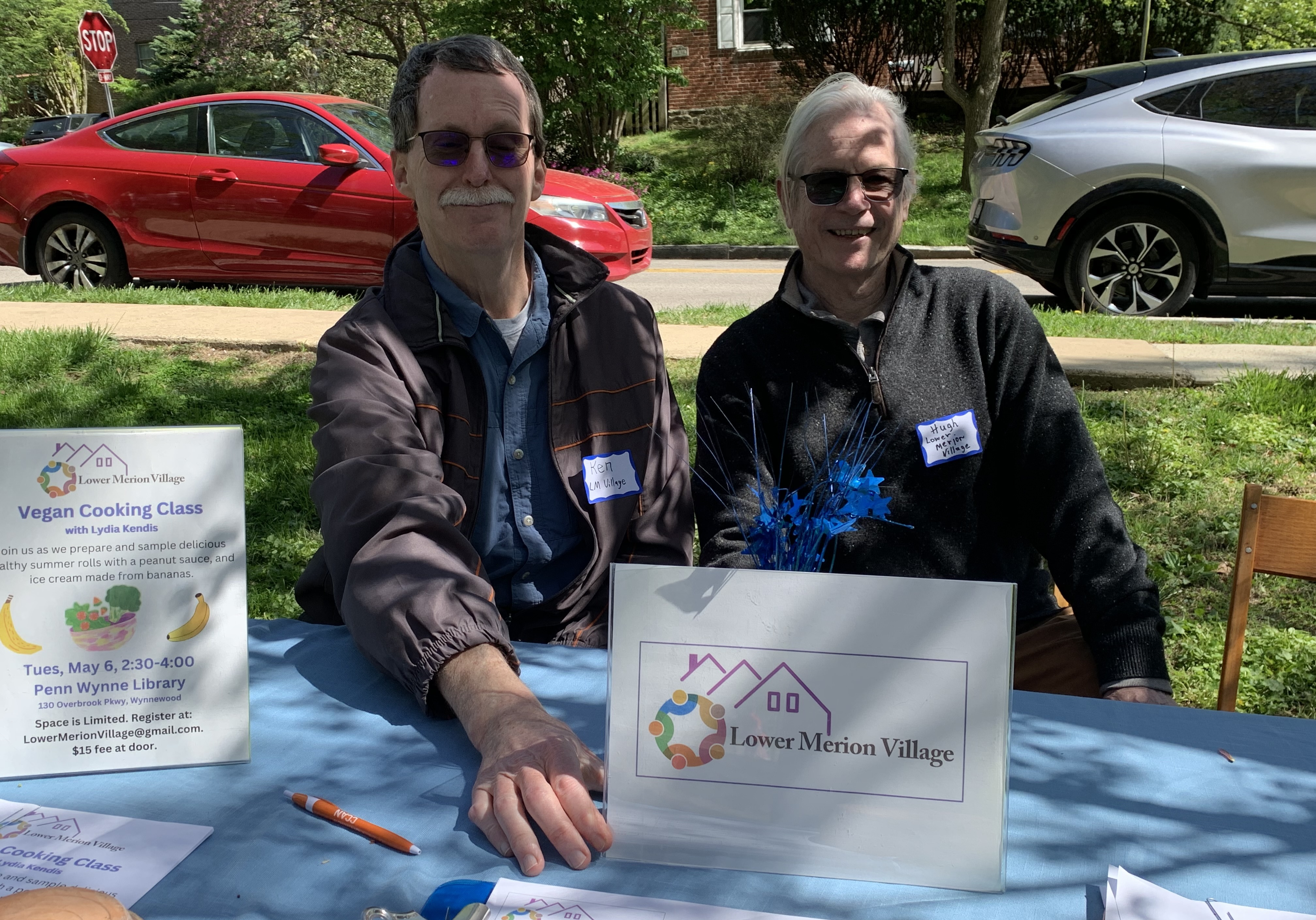
To combat these challenges, a group of Lower Merion residents is building the Lower Merion Village, a local chapter of the nationwide Village to Village Network. The network seeks to “change the paradigm of aging” by connecting older adults to social events, transportation, household help, and other services while keeping them in the neighborhoods they know and love.
Lower Merion Village volunteers tabling at an Earth Day celebration in Wynnewood Valley Park in April.
Bonnie Asher, a member of the Lower Merion Village’s program committee, got introduced to the village model through her mother, who lived in her suburban Maryland home until her death at 99.
Asher remembers worrying about her mother, especially as she got older and driving became a challenge. Getting involved in a village changed her mom’s life. Suddenly, she made new friends, got rides to the doctor’s office, and signed up for lectures, which she brought Asher to when she visited.
“Those connections were just really important,” Asher said.
The Village to Village Network is a national nonprofit that originated in Boston and has since spread from Fairbanks, Alaska, to upstate New York. The network provides guidance and resources to local chapters, which cater to older adults’ needs on a hyperlocal level.
Villages are membership-driven, self-governing organizations that are run by volunteers, and, at times, have a small paid staff.
There are five existing villages in the Philadelphia region: Penn’s Village (Center City), Village on the Ridge (Roxborough), East Falls Village, Shtetl 2.0 (Northwest Philly), and the Northwest Village Network (Northwest Philly).
In 2023, a group of neighbors in Wynnewood began tossing around the idea of starting a village. One conversation turned to a few gatherings at a neighbor’s house, then a monthly meeting at the library.
As the Wynnewood group dreamed up their village, its members got connected with Sara Crimm, also a Wynnewood resident and the founder of Families CCAN, a nonprofit focused on adults with disabilities.
Crimm saw the village as an opportunity to create a strong community infrastructure for both older adults and people with disabilities who want to stay, and thrive, in Lower Merion. Crimm met with the village organizers, and the newly formed coalition quickly got to work.
In spring 2024, Families CCAN received around $21,000 in American Rescue Plan (ARP) funds as part of Lower Merion Township’s ARP Non-Profit Vitality Grant Program. The funds were earmarked to help get the village off the ground, and most of the grant money went to pay Crimm’s salary as its first and only staff member.
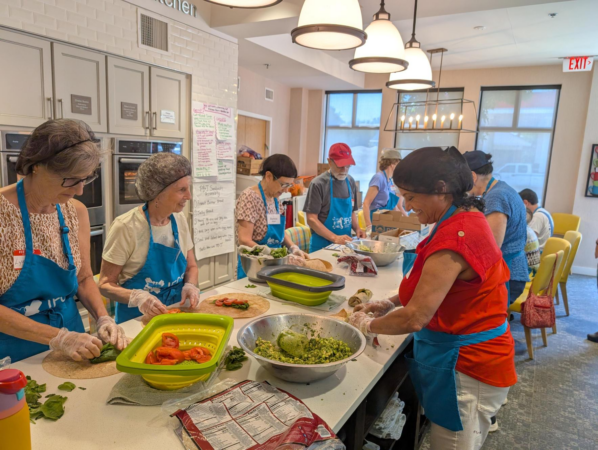
With that foundation, the village has launched a growing slate of social events as it works to establish its official nonprofit structure. The group takes weekly walks, perusing the Wynnewood Valley Park Sensory Garden or the local fall foliage. They’ve baked challah with Jewish Family and Children’s Service of Greater Philadelphia and hosted lectures — last month’s was on “ethical wills.” They meet monthly for coffee at Narberth’s GET Cafe.
When Asher moved to Lower Merion, her kids were already out of school, so she missed out on the opportunity to make friends through her children’s activities.
“One of the things that I’ve already gotten from the experience is making new friends. At this age, it’s just amazing,” said Asher, 74.
With regular lectures, walks, volunteer commitments, and lunches, Asher said with a laugh, “I got kind of busy.”
“We’re safer living in communities that are connected,” Crimm said, noting that many of the village programs are designed to build social connections and ward off the loneliness and depression that can sneak into older adulthood.
The Lower Merion Village is still in its infancy. It’s not officially accepting members yet, and Crimm is working to build a dues structure, create a website, and establish the organization as a 501(c)3 nonprofit.
The Lower Merion Village plans to charge an individual membership rate of $125 per year and a household rate of $200 per year. The village hopes to provide a scholarship option down the road for people who can’t afford it. The membership will come with access to all of the village’s programs, as well as to a network of volunteers who can help with household tasks, give rides, and troubleshoot technology.
Transportation is a particularly difficult issue for older people in Lower Merion, Crimm said. While SEPTA can take people into Center City or out to Norristown, getting around within the township can be difficult for people. Rideshares like Uber offer a temporary, but costly, solution.
Crimm noted that Lower Merion’s village will be less expensive than neighboring villages and assisted living communities. (Penn’s Village members pay $600 annually to gain access to services, and a one-bedroom apartment at Sunrise of Haverford, asenior living community that offers healthcare services, starts at $3,770 per month).
When asked about the misconceptions around aging, Crimm said there’s a pervasive ageism in how we see older adults’ wants and needs.
“These are people who are so rich in experience, and they have so much to give back,” she said. “Let’s support people to stay in their neighborhoods and to make those neighborhoods richer and stronger.”
Those interested in getting involved in the Lower Merion Village can email lowermerionvillage@gmail.com.