In building the concept for his newest restaurant, Sam Li flew halfway across the world for a culinary research journey. He traveled across China, Japan, and Korea to study, and sample, the three countries’ ways of doing barbecue. It was at a Japanese yakiniku — or grilled meat — restaurant that he knew he had found his next project.
Li is the owner of OGYU Japanese BBQ & Bar, an upscale, grill-it-yourself Japanese barbecue restaurant that opened in Ardmore last month. The restaurant offers a tiered, fixed-price menu with a focus on “higher quality premium Wagyu beef.” OGYU is located in the former Iron Hill Brewery at 60 Greenfield Ave., which closed in 2024 before Iron Hill filed for bankruptcy last year.
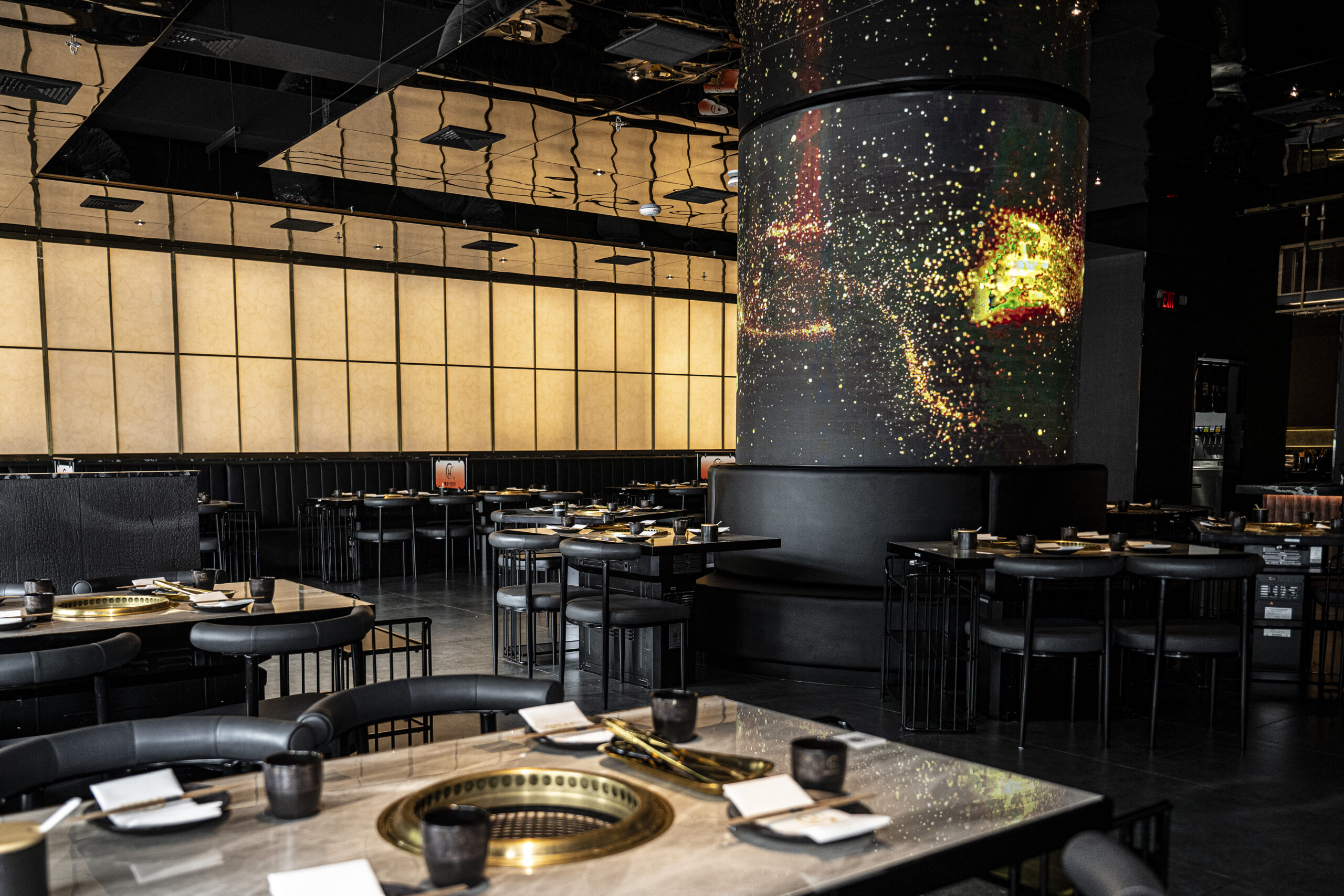
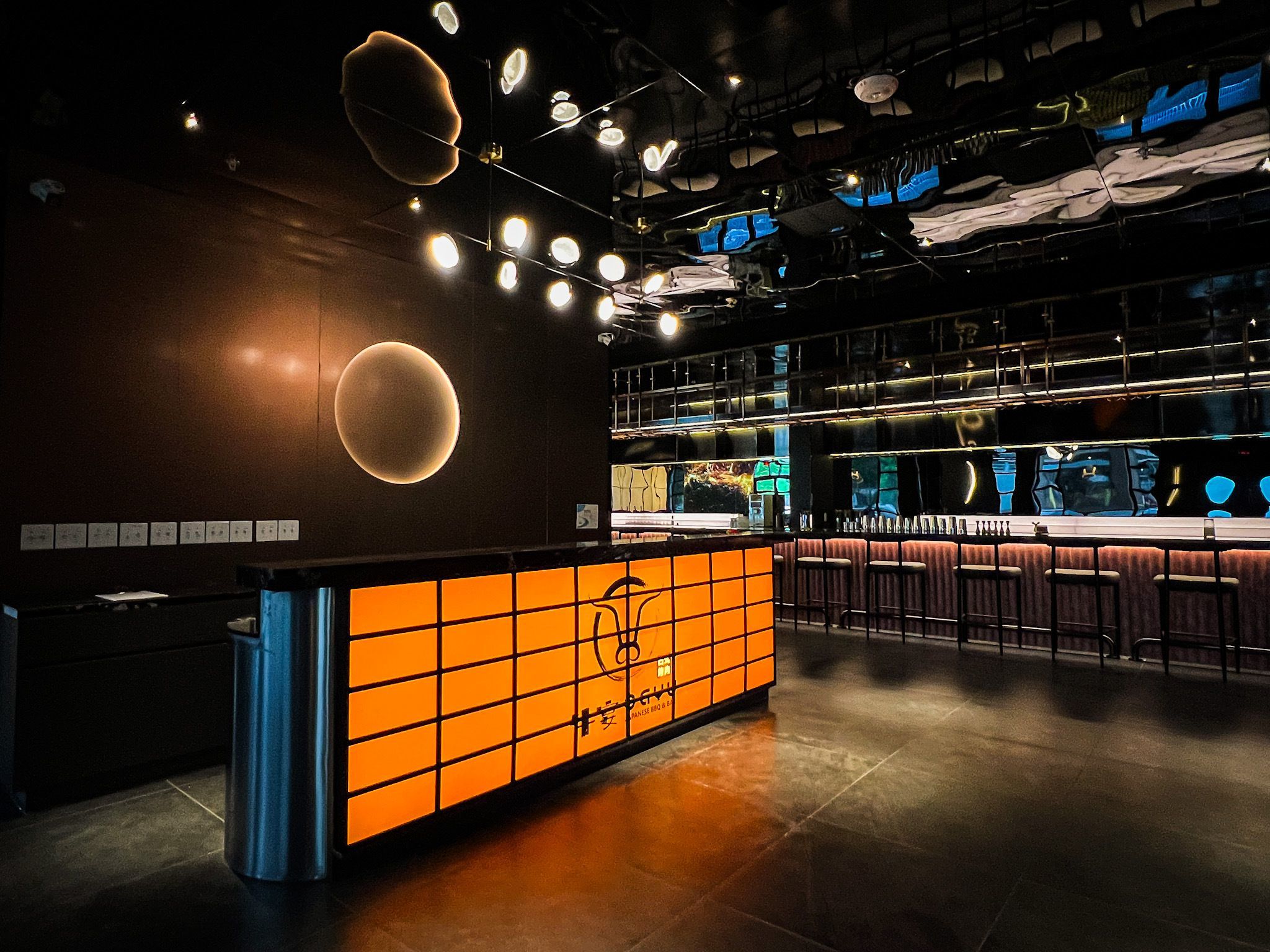
Though OGYU has found a home in what was onceIron Hill, Li and his team have transformed the former brewery’s space into a sleek, club-like atmosphere, with black and gold detailing, marble-paneled walls, and an opulent, fully stocked bar.
OGYU Japanese BBQ restaurant is shown on Tuesday, July, 7, 2026 in Ardmore. The new restaurant by Sam Li offers a modern Japanese steakhouse experience with tabletop cooking, adding to Ardmore’s growing portfolio of restaurants.
He now sits at the helm of seven restaurants in the Philly suburbs, including sushi restaurant Osushi, with locations in Marlton, Ardmore, and Wayne; upscale Japanese restaurant Hiramasa in Newtown Square; and fast-casual chain bb.q Chicken, with two locations inSouth Jersey.
While Li has built his brand largely around sushi, he said he saw an opportunity in the market when it came to Japanese barbecue. There aren’t many yakiniku restaurants in the region, he said, and it’s a relatively new concept to many of his diners. People tend to be familiar with Korean barbecue, which leans more into marinades and flavors than its Japanese counterpart, which more often lets the meat speak for itself, Li said.
“We felt that it could be a new concept that we could bring into the U.S, and it’s something new to Ardmore,” Li said.
Restaurant owner, Sam Li is photographed at OGYU Japanese BBQ restaurant on Tuesday, July, 7, 2026 in Ardmore. His new restaurant offers a modern Japanese steakhouse experience with tabletop cooking, adding to Ardmore’s growing portfolio of restaurants.
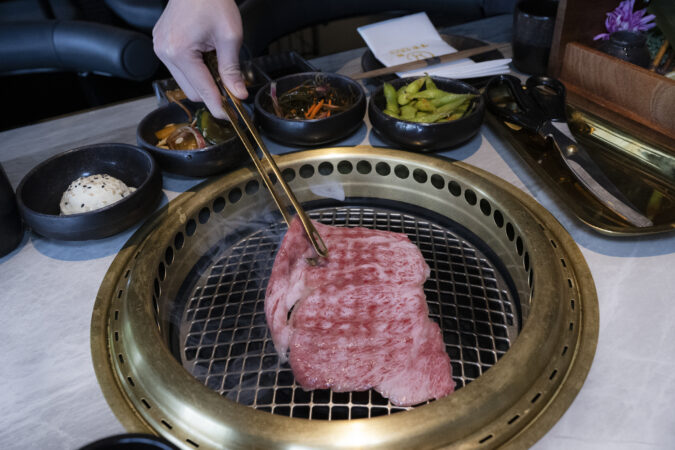
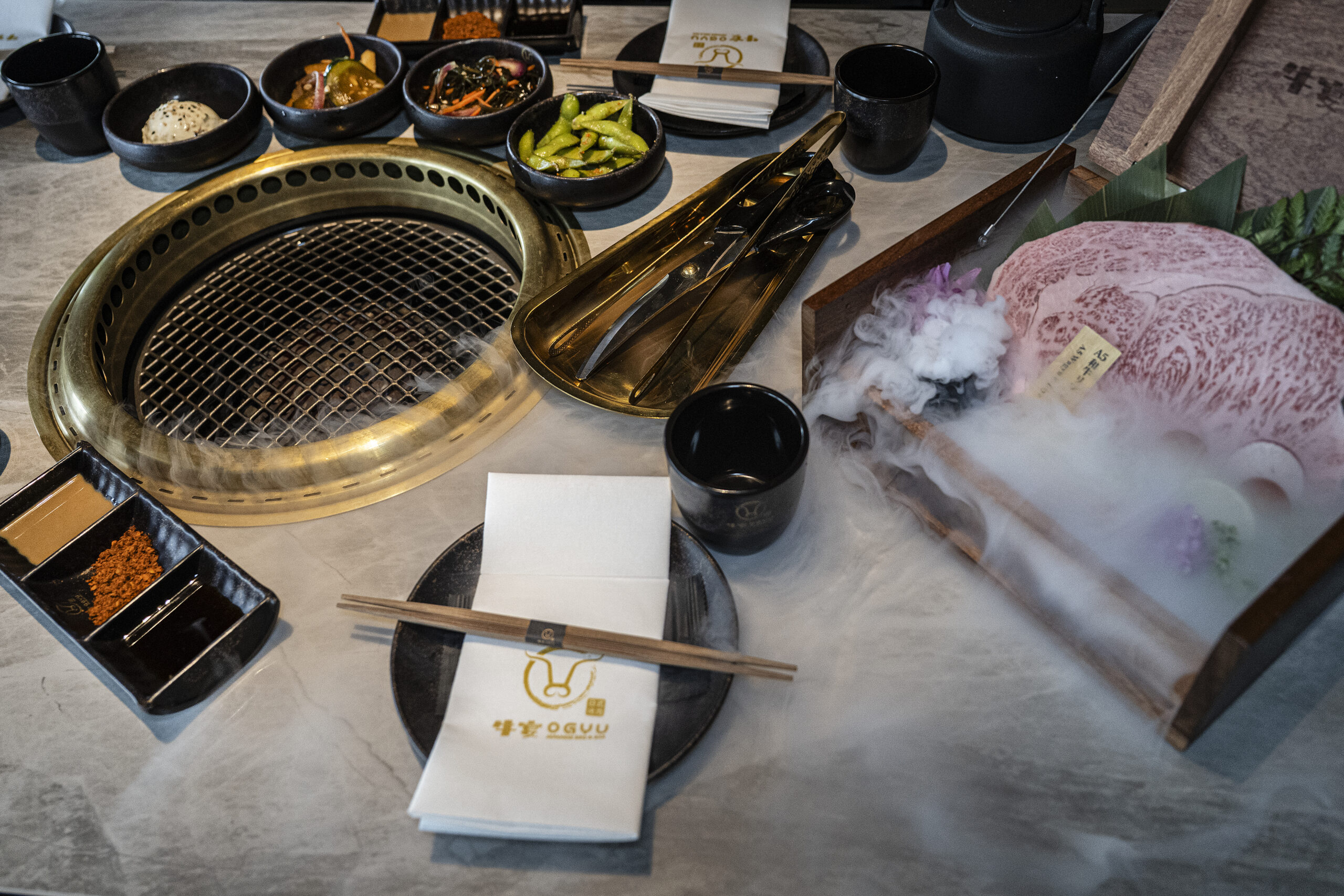
Bringing a new concept to customers has meant lots of education, both for OGYU’s staff and its customers, who need to learn how to operate the tabletop grills and cook pieces of Wagyu to perfection. OGYU is an interactive experience, in addition to a meal, with flashy dry ice presentations and the challenge — and excitement — of grilling your own dinner in the middle of the table.
The main difference in the tiers is the quality of the meat, Li said. The introductory tier is best for diners who “just want to experience and explore what yakiniku is about.” The Diamond tier will be “the ultimate experience.”
OGYU Japanese BBQ restaurant is shown on Tuesday, July, 7, 2026 in Ardmore. The new restaurant by Sam Li offers a modern Japanese steakhouse experience with tabletop cooking, adding to Ardmore’s growing portfolio of restaurants.
Beyond what goes on the grill, OGYU offers a menu of à la carte dishes, including spicy kani salad ($9.95), wagyu truffle fried rice ($21.95), wasabi lobster tempura ($19.95), butter cheese corn ($9.95), and various hand rolls and sashimi. Li describes the à la carte menu as inspired by Japanese street food.
OGYU is open from 11:30 a.m. to 10 p.m., Sunday through Thursday, and 11:30 a.m. to 11 p.m., Friday and Saturday.
This suburban content is produced with support from the Leslie Miller and Richard Worley Foundation and The Lenfest Institute for Journalism. Editorial content is created independently of the project donors. Gifts to support The Inquirer’s high-impact journalism can be made at inquirer.com/donate. A list of Lenfest Institute donors can be found at lenfestinstitute.org/supporters.
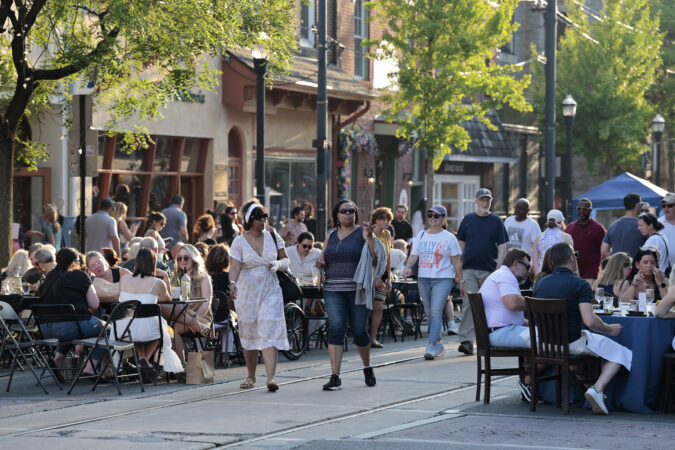
A dozen new businesses have opened in downtown Ardmore so far this year, bringing Japanese barbecue, build-your-own salads, and organic dog treats, among other goods, to the Main Line community. New and incoming businesses include mom-and-pop shops, national chains, and expansions of popular Philly-area names, such as decorated Szechuan eatery EMei and New Jersey-based burger chain Gouldsburger’s.
Here’s a breakdown of the new retailers that have opened in Ardmore this year, and some others that are on the horizon.
What’s new?
OGYU Japanese BBQ
OGYU Japanese BBQ (60 Greenfield Ave.) is a tabletop cooking Japanese steakhouse experience from Osushi owner Sam Li. OGYU offers an all-you-can-eat, tiered, fixed-price menu, as well as a full bar. Li has opened Osushi locations in Wayne, Ardmore, and Marlton, as well as upscale eatery Hiramasa in Newtown Square. OGYU opened last month.
Just Salad
Healthy food chain Just Salad (167 W. Lancaster Ave.) opened in Ardmore in May, adding to the company’s more than 100 locations across seven states. Just Salad serves fast-casual salads, warm bowls, wraps, and smoothies.
Barizi
Barizi (29 W. Lancaster Ave.) is a design, home, and gift store offering curated ceramics, textiles, leather goods, vintage furniture, and self-care items. Barizi’s Ardmore store opened in May and is its second after New York City.
Gouldsburger’s
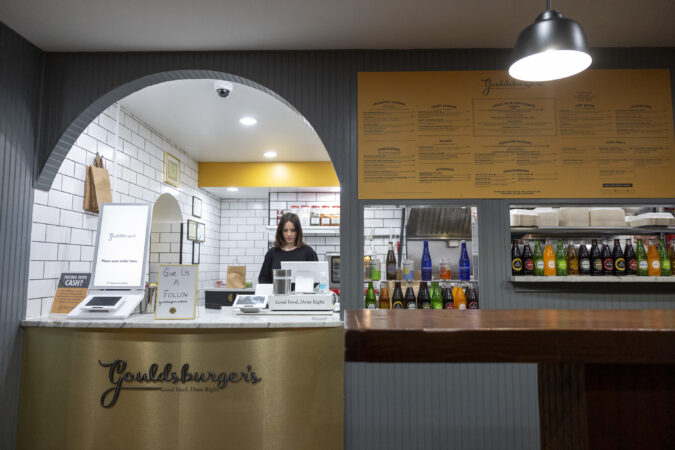
Gouldsburger’s (4 Station Rd.), a Jersey-based mini-chain serving up burgers, cheesesteaks, chicken sandwiches, and other fried snacks, opened across from Ardmore’s train station in February. The restaurant has vegan and vegetarian options, and its cheesesteak has even made the ranks of the Inquirer’s favorites.
Inside OGYU Japanese BBQ in Ardmore.
CorePower Yoga
CorePower Yoga (169 W. Lancaster Ave.), a heated yoga and strength training studio with hundreds of locations across the U.S., opened in Ardmore in April. This is the chain’s third location in the Philadelphia area, after Center City and Northern Liberties.
Bikini Burger
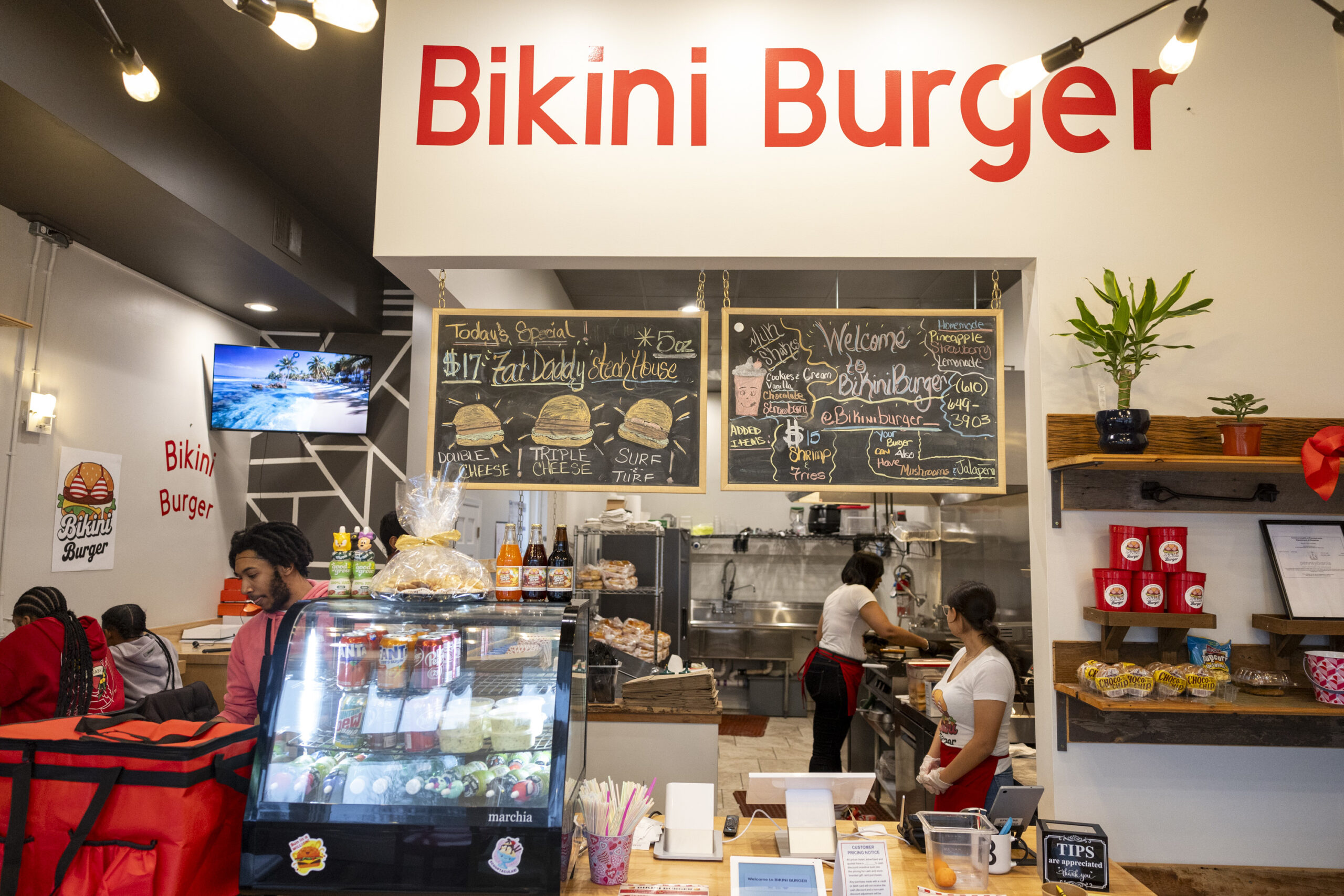
Penn Valley resident Mia Robertston opened Bikini Burger (44 Rittenhouse Pl.) in January with the goal of bringing a simple and “really good burger” to the area. Robertson’s Burgers are made with beef from a Lancaster County butcher, can be topped with Cooper Sharp, among other accoutrements, and are never smashed.
R3 Gaming & Toys
R3 Gaming & Toys (6 W. Lancaster Ave.) is a toy and game shop built for collectors and “curious minds of all ages.” The store stocks classic toys, board games, puzzles, comics, graphic novels, and other novelties.
Jersey Mike’s
Sub sandwich giant Jersey Mike’s (20 Greenfield Ave.) opened its doors in the former Revitalize Aesthetics storefront in March. The sub shop is open seven days a week and offers both hot and cold sandwich options.
Mia Robertson, owner of Bikini Burger, makes a cheeseburger at the Bikini Burger in Ardmore. The burger joint is one of a slate of new businesses to open in Ardmore this year.
Revivéa Health
Revivéa Health (20 Ardmore Ave.) opened in Ardmore in April and offers various wellness treatments including IV therapy, vitamin injections, and red light therapy. Ardmore is Revivéa’s second local storefront after West Chester.
Raffs Italian Cuisine
Raffs Italian Cuisine (65 Cricket Ave.) is the second restaurant of chef and owner Raffael Kupa, who also runs Buona Vita in Somers Point, N.J. Raffs, which opened in April, is BYOB, open for dinner seven days a week, and offers traditional Italian fare.
Bored Trading Café
Bored Trading Café (43 Cricket Ave.) is an all-day eatery serving bagels, sandwiches, salads, wraps, smoothies, and burgers, among other items. The cafe held its grand opening in January.
What’s coming soon?
Mango Mango
At Mango Mango (38 Greenfield Ave.), an Asian-inspired dessert chain with locations across the U.S., “mango’s our muse.” Mango Mango serves mango- and non-mango-flavored cakes, waffles, smoothies, ice creams, and teas. Its Ardmore franchisewill be opening later this month.
Vintner’s Table
Vintner’s Table (24 Cricket Ave.) is an Italian-inspired wine bar affiliated with Folino Estate Winery & Restaurant in Kutztown. The Ardmore location will be the third Vintner’s Table after Phoenixville and Wyomissing. Vitner’s Table has not shared an anticipated opening date yet.
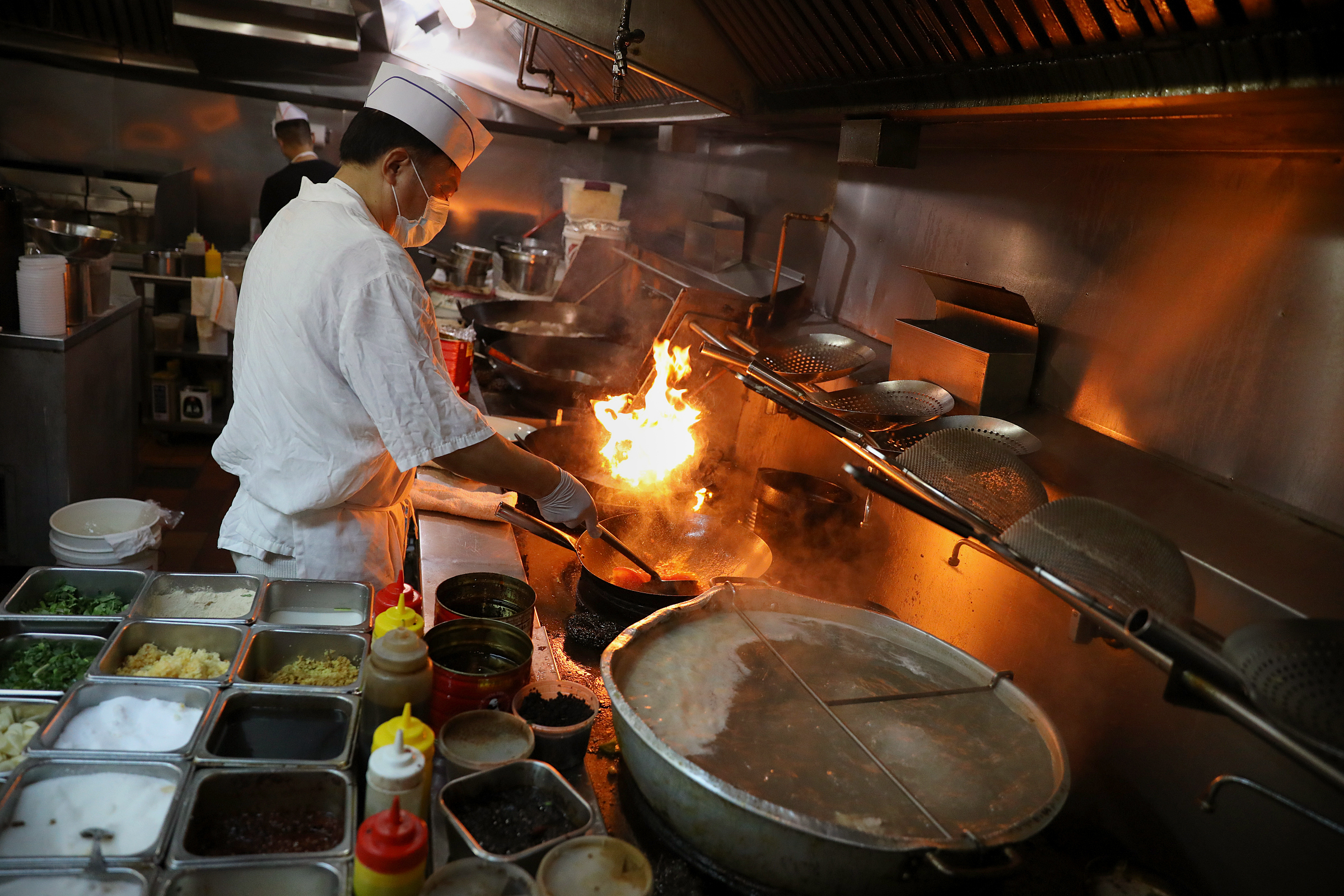
Chef Yongcheng Zhao preparing a crispy whole boneless sea bass dish at EMei in Chinatown. The restaurant is set to expand to Ardmore.
EMei
Inquirer food critic Craig Laban says EMei (98 Cricket Ave.) is a “Szechuan feast with few peers in Philly.” The lauded Chinatown eatery, owned by Dan Tsao, is expanding to South Philly and Ardmore in the near future, though the timeline for expansion has been pushed back due to permitting and architecture hiccups.
Pure Green
Cold-pressed juice company Pure Green (56 E. Lancaster Ave.) is set to open in Ardmore next year. Pure Green offers superfood smoothies, acai and pitaya bowls, steel-cut oatmeal bowls, sourdough toasts, and cold-pressed juices.
Calm and Strong Yoga and Pilates
Calm and Strong (46 Rittenhouse Pl.) is a yoga and pilates studio bringing a variety of sculpt, flow, and strength classes to Ardmore. The studio is set to open this fall.
This suburban content is produced with support from the Leslie Miller and Richard Worley Foundation and The Lenfest Institute for Journalism. Editorial content is created independently of the project donors. Gifts to support The Inquirer’s high-impact journalism can be made at inquirer.com/donate. A list of Lenfest Institute donors can be found at lenfestinstitute.org/supporters.
What are the defining characteristics of Media, and how should the borough plan for the next decade?
Those are the questions at the core of “Media 2035,” the comprehensive plan adoptedby Media’s borough council last month designed to shape the next chapter of land use, housing, economic development, traffic planning, and environmental decision making in the 5,900-residentDelaware County community.
“A comp plan is a long-term vision of how a community can look in the future,” Brittany Forman, Media’s borough manager, said.
The 166-page plan, built on feedback from around 500 residents, is centered around four guiding principles: Preserving Media’s character, fostering inclusivity through housing diversity, preserving the environment, and becoming a more connected and less car-dependent borough.
Media’s leaders have been tasked with stewarding a borough that has seen immense economic growth in recent decades, transforming it from a sleepy town wrought by financial disinvestment and crime to a cultural hub and destination for families settling in the suburbs. While Media’s metamorphosis has brought new residents and investment into the borough, it has also pushed the community’s limits around housing affordability, traffic, and growth.
“We’re a victim of our success, and it’s a good thing to be a victim of your own success,” said borough Council President Mark Paikoff. “But careful planning really is helpful.”
Here are fourkey takeaways from Media’s comprehensive plan.
Media’s charm has made it a desirable, and increasingly unaffordable, place to live
Surveyed residents said Media’s “small-town feel,” including its historic architecture, walkability, and diverse local businesses, is the borough’s most important asset. Yet the traits that make Media a great place to live have also made it a harder place to afford tostay.
“For generations, Media has prided itself on being ‘Everybody’s Hometown,’ a motto that reflected a genuine reality: a community where wealthy professionals, hourly service workers, young families, and retirees lived side-by-side,” the comprehensive plan states, adding that economic diversity was made possible by a “varied housing stock that offered entry points for people at every stage of life.”
As demand for walkable, transit-accessible living has surged in the Philly region, rising real estate costs are chipping away at this accessibility, creating a “severe burden” for a large segment of Media, notably seniors, teachers, nurses, and first responders, the plan states.
Recommendations outlined in the plan include deepening partnerships with affordable housing agencies, updating the borough’s zoning code to spur housing development in key areas, and promoting non-traditional housing options like in-law suites. Officials said there’s a significant opportunity in converting underutilized office spaces into housing, as many of Media’s vacant offices are already located in former residential properties.
Paikoff said the borough has had informal conversations with developers who are interested in both renovating older units and building new housing, though he stressed that bringing additional housing to the borough “will take some time.”
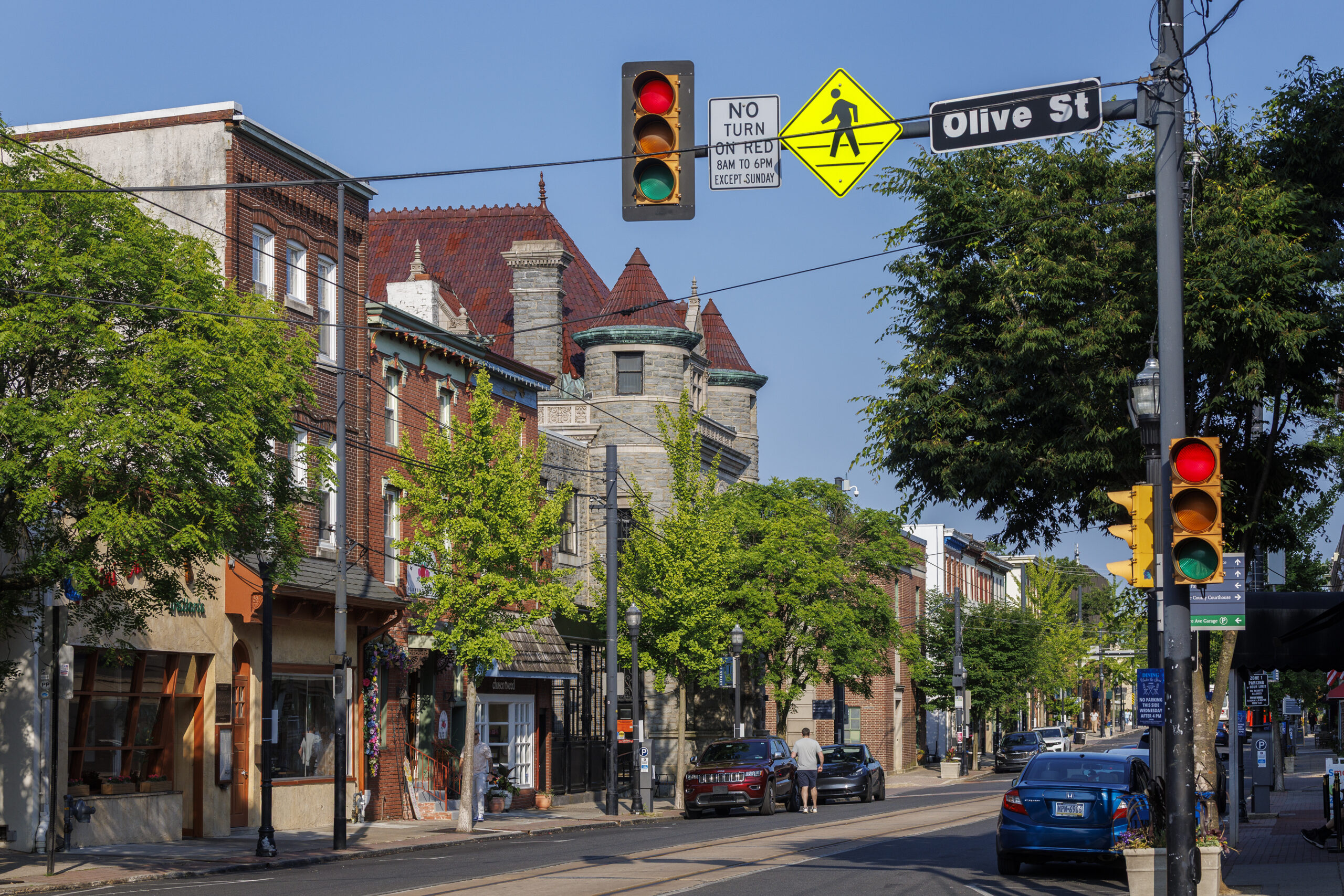
Downtown Media on a June day.
Media has strong transit access but ample traffic safety challenges
Media is defined by its density. The borough’s footprint is under one square mile, and it’s a place where pedestrians, cyclists, cars, buses, and SEPTA trolleys regularly interact.
“For a small town, I’d say we’re very sophisticated in terms of multimodal transportation,” said Forman.
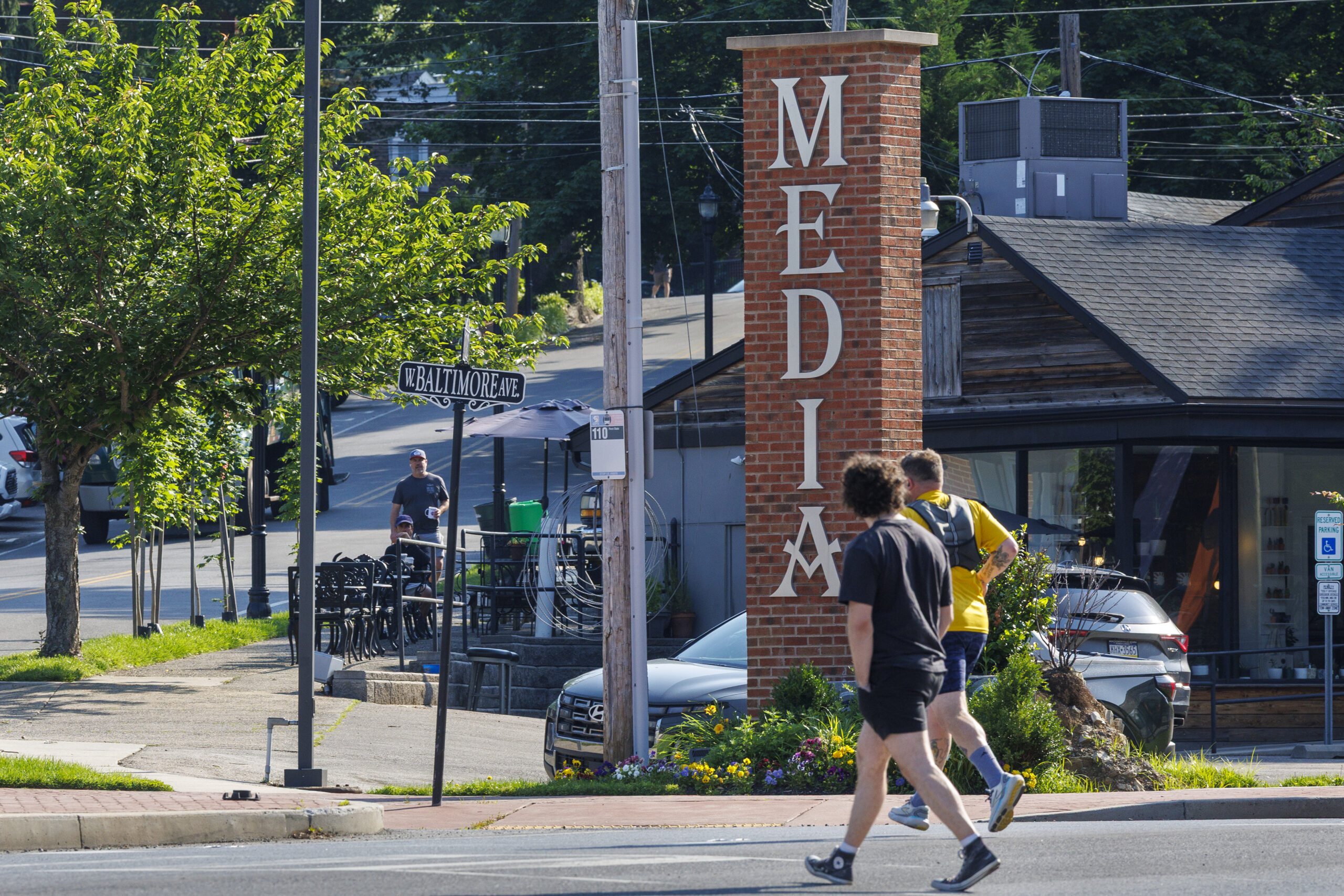
Yet Media’s density and busy streets have also created the conditions for traffic safety issues. The borough recorded eight vehicle crashes resulting in serious injury and two resulting in death between 2013 and 2024. A 2020 traffic study conducted by the borough found that drivers regularly speed, especially along Baltimore Avenue, and roll through stop signs. Media’s only bicycle infrastructure comes in the form of painted road markings. Residents expressed a desire for more crosswalks, less disruptive downtown traffic patterns, and protected bike lanes.
Parking, too, remains a “source of friction.” The Baltimore Avenue parking garage is the anchor of the borough’s parking system, but it’s aging and requiring increased maintenance. At the same time, a surge in food delivery services has led to frequent double-parking outside of restaurants and blocking travel lanes. Media’s current parking and loading setup, the plan states, is “largely organized for a world that no longer exists.”
The vast majority of Media’s workforce lives outside the borough
Nearly all workers employed in Media commute from outside the borough. Of the approximately 9,800 primary jobs in Media, only 2.5% are held by residents. While Media’s accommodation, food service, healthcare, and arts and entertainment sectors have grown, its office administration, public administration, and wholesale trade sectors have shrunk. Overall tax revenues have increased in the past decade, led primarily by a growth in earned income tax revenues.
The post-pandemic shift to hybrid and remote work has also “fundamentally altered” travel behavior in the borough, according to the plan. Twenty percent of Media residents worked from home in 2023, up from 3% in 2014, according to estimates from the U.S. Census Bureau. With fewer residents and workers commuting on a daily basis, traditional 9-to-5 traffic on SEPTA’s Regional Rail and trolley lines has shifted, following regional and national trends. Local neighborhood activity, on the other hand, has increased during the workday.
Elizabeth Romaine, borough council vice president, said local businesses are already shifting to meet new consumer patterns, extending their hours or opening on weekdays when they would have previously been closed.
The intersection of W. State Street and Baltimore Pike in Media.
Residents love Media’s dining scene, but want more retail options
Nearly 80% of surveyed residents reported satisfaction with Media’s vibrant restaurant scene, which draws diners from across the region. Media’s downtown is viewed as the borough’s “defining economic and social heart,” according to the plan.
At the same time, residents expressed desire for a greater variety of retail, dining, and entertainment options. Non-food destinations and stores that fulfill everyday needs, specifically bakeries, clothing and home goods stores, and fitness centers, are outlined as particular areas of need.
The plan recommends increasing funding for the Media Business Authority, conducting a business-focused parking study and crosswalk inventory, and working to court new retailers. Recommendations also include enhancing programming at the Media Theatre to generate more foot traffic, deepen Media’s identity as a cultural destination, and “further solidify Media’s draw for visitors from across the region.”
This suburban content is produced with support from the Leslie Miller and Richard Worley Foundation and The Lenfest Institute for Journalism. Editorial content is created independently of the project donors. Gifts to support The Inquirer’s high-impact journalism can be made at inquirer.com/donate. A list of Lenfest Institute donors can be found at lenfestinstitute.org/supporters.
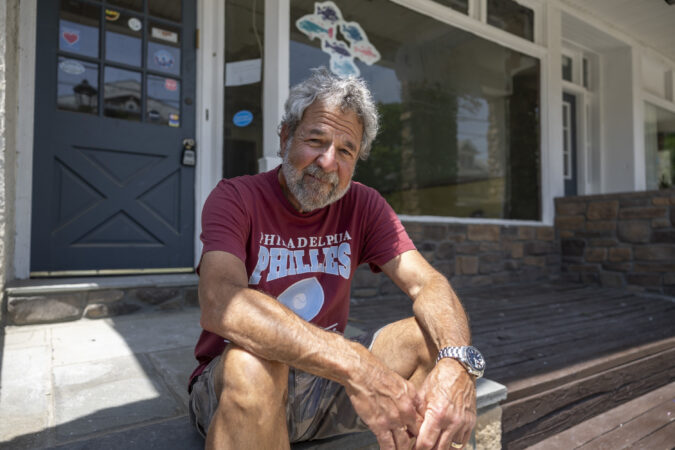
Danny’s Guitar Shop, an independent guitar store and lesson center run by musician Dan Gold, closed its doors after 17 years in downtown Narberth.
Over nearly two decades, Gold forged connections along the Main Line, sold guitars to celebrities, brought outdoor music to Narberth’s streets, and, briefly, starred in a TV show that drew on his talents as a self-proclaimed “kibitzer.”
Gold, 72, said retirement was already on his mind when his landlord raised the rent beyond what Gold could pay. Danny’s officially closed at the end of May. As Gold prepares for the next chapter, which will be filled with swimming, traveling, and playing bassin Broken Arrow, his Neil Young cover band, he said his time in Narberth was “just perfect.”
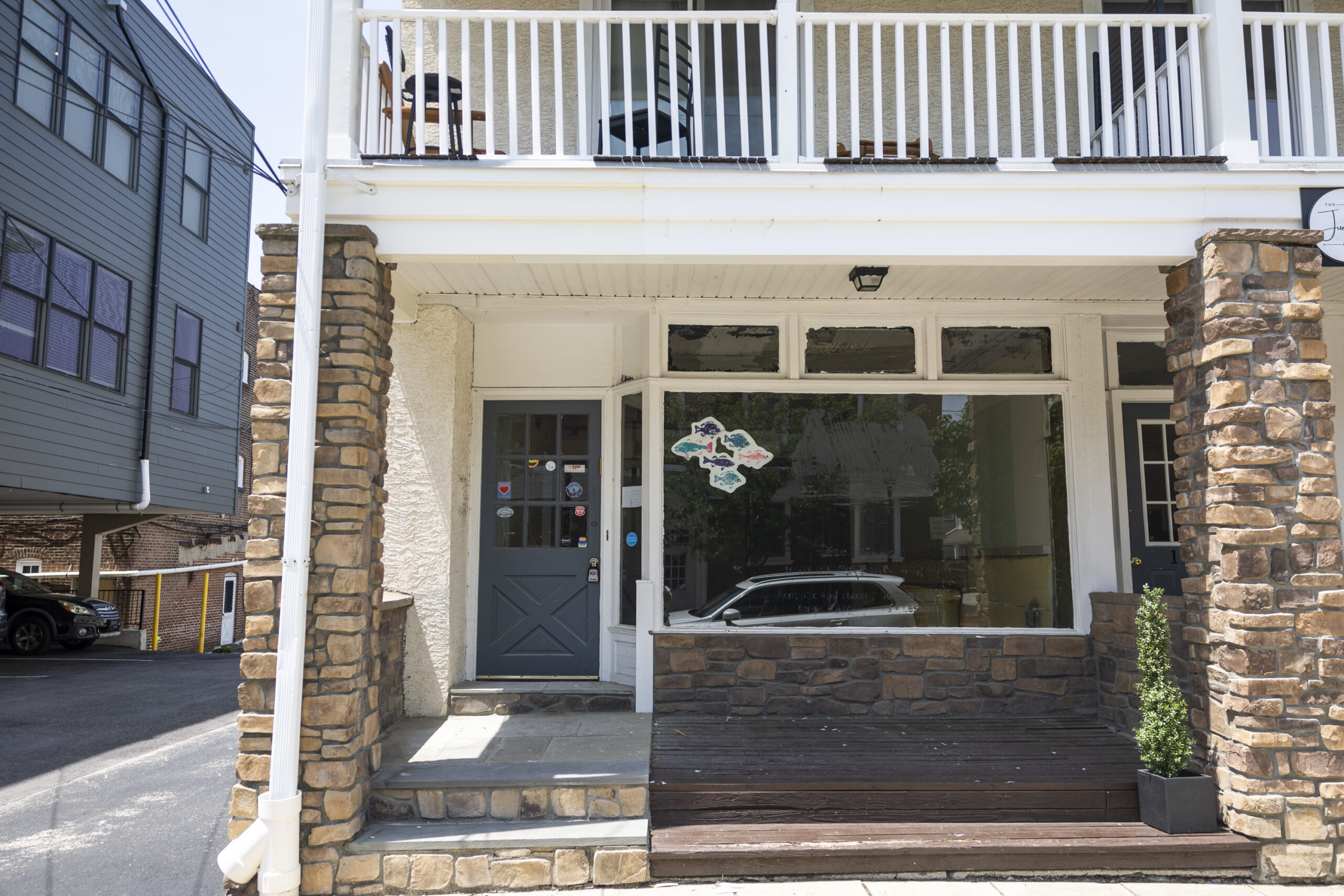
The former storefront of Danny’s Guitar Shop in Narberth.
Gold opened Danny’s Guitar Shop in June 2009, right as the country had begun to dig itself out of the Great Recession. Guitar store Medley Music of Bryn Mawr had closed the year prior, and Center City’s 8th Street Music had moved across the bridge to New Jersey, leaving a vacuum for guitar lovers in Philly’s western suburbs.
Gold, a Newtown Square resident, grew up in Havertown and graduated from Haverford High School and Temple University. He started his career as a schoolteacher before taking a gig as a district sales manager for Fender Guitars, traveling across the region, from rural Pennsylvania to North Jersey, selling instruments and accoutrements.
Though it was risky to open a brick-and-mortar store at the heels of the financial crisis, Gold was bullish on the prospect. His mentors told him that as long as he ran guitar lessons, he’d be able to pay the rent. Gold had always loved Narberth’s “very distinct, charming personality” and was smitten with the Forrest Avenue storefront right away, with its ample natural light and welcoming front porch.
When Danny’s opened in 2009, the Main Line Times described it as having promptly “established itself as that rare kind of clubhouse — the kind where everybody’s allowed in.”
Over the years, the storefront’s shaded porch became the site of dozens of guitar recitals and summer evening jam sessions. Narberth residents gathered outside of Danny’s to talk about the news and the neighborhood gossip, and Gold always had treats for local dogs. Gold helped bring live music to Narberth during First Fridays and the annual July Fourth celebration. Ahead of a recital last fall, Gold posted on Facebook: “Students playin’ on the porch this Sunday 3:00! Bring a chair and come hang out!”
“Danny is loved around here and for good reason,” said Ed Ridgway, president of the Narberth Business Association, who took guitar lessons at Danny’s.
Ridgway described Danny’s as resembling an“old-timey barbershop.” If you asked Ridgway to make a list of 10 things that define Narberth’s downtown, he said Danny‘swould be on the list.
“He was just such a good presence in Narberth,” said Tracy Tumolo, owner of Narberth art and gift shop Sweet Mabel Store.
“This place,” Gold said. “It just fit me like a glove.”
Danny Gold (center) pictured at Danny’s Guitar Shop in Narberth in 2018 with partners Larry Freedman (left) and Ron Stanford.
Every once in a while, a star or two would stop into Danny’s Guitar Shop while visiting the area or prepping for a show at Ardmore Music Hall. The Eagles’ Timothy B. Schmit bought a few guitars and gave Gold backstage passes when the band played Atlantic City. Wilco’s John Stirratt stopped by, as did Dweezil Zappa, Frank Zappa’s son. Tumolo said Gold always encouraged them to shop at Narberth’s other businesses.
In 2014, Gold starred in a 13-episode series on WHYY-TV’s YArts cable channel, which aimed “to do for guitars what Anthony Bourdain has done” for international cuisine or ”Mike Rowe for the art of cleaning septic tanks,” according to an Inquirer story from the time. In the series, Gold explored the origins of Klezmer music, interviewed the scholar who wrote the definitive book on the history of the accordion, and spent quality time with electric guitar giant Paul Reed Smith.
Lessons were the biggest part of Gold’s business model at Danny’s, as his mentors predicted. He did a large consignment and secondhand business, as well, as he was mostly selling to first-time and beginner players.
“The lessons made me a destination store. It’s never like I carried away wheelbarrows full of money, but we were able to make a modest living and enjoy doing what we were doing,” Gold said.
Like many brick-and-mortar merchants, Gold said it became more difficult over time to keep up with the ubiquitous online marketplace. Consumers can now buy any model of guitar, in any color, at any time. Music stores across the countryhave shuttered in recent years, pointing to online shopping as a factor in their decline.
On one hand, Gold feels somewhat liberated from the day-to-day responsibilities of running his namesake storefront. On the other hand, there’s a lot he’ll miss — the people, the borough, watching the neighborhood kids grow up.
At the end of the day, Gold said, “It’s been a great run.”
This suburban content is produced with support from the Leslie Miller and Richard Worley Foundation and The Lenfest Institute for Journalism. Editorial content is created independently of the project donors. Gifts to support The Inquirer’s high-impact journalism can be made at inquirer.com/donate. A list of Lenfest Institute donors can be found at lenfestinstitute.org/supporters.
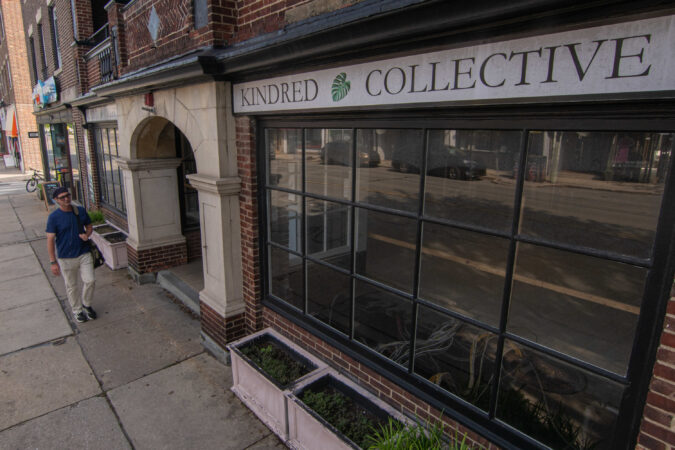
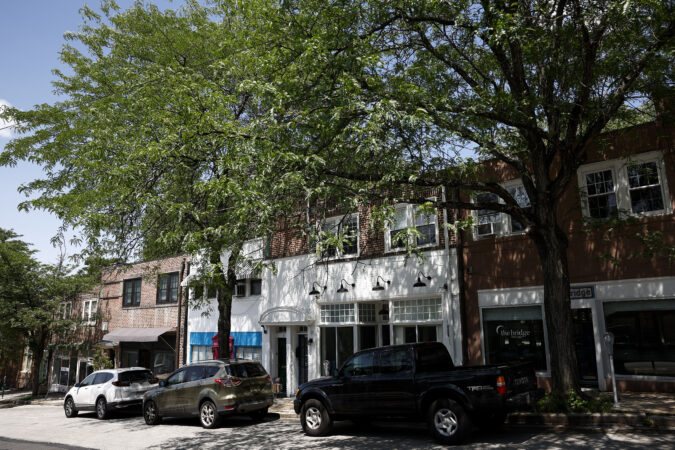
Five buildings in downtown Bryn Mawr, including the storefronts of Carina Sorella, Jeni’s Splendid Ice Creams, and the Buttery Bryn Mawr, are up for sale.
The Bryn Mawr Collection, a nearly26,000-square-foot portfolio that includes residential, retail, medical, and office space, was recently listed by real estate firm CBRE. The properties are owned by Main Line-based real estate developer Tim Rubin and are located in the heart of Bryn Mawr at 834-40 W. Lancaster Ave. and 860-66 W. Lancaster Ave.
CBRE’s Chris Munley said the properties could sell for around $12 million.
Rubin is a Narberth native who has owned the properties for almost 20 years. With the sale, he is hoping to recycle capital and make a similar investment somewhere else, Munley said.
The Bryn Mawr Collection is “extremely rare, irreplaceable ‘Main Street’ real estate, providing a once-in-a-lifetime opportunity to break into a high barrier to entry market,” according to the listing. The portfolio is a stone’s throw from the Bryn Mawr SEPTA station and down the road from Villanova University, making it well positioned in one of the region’s most “affluent, educated, and densely populated suburban communities,” the listing reads.
The properties are currently home to TCO Fly Shop, the Buttery, Jeni’s Splendid Ice Creams, and Carina Sorella, as well as apartments and offices.
Beloved tenants such as Carina Sorella and The Buttery, which opened last week, aren’t going anywhere, Munley said. The successful businesses are “one of the reasons this is attractive” for potential buyers, and they have long-term leases that would extend beyond the sale of the properties.
The properties are in their second week on the market, and Munley said the level of interest has been “eye-opening.” In addition to local players looking to expand their portfolio on the Main Line, Munley said he has seen interest from investors that usually focus on larger markets like New York, San Francisco, and Los Angeles.
This suburban content is produced with support from the Leslie Miller and Richard Worley Foundation and The Lenfest Institute for Journalism. Editorial content is created independently of the project donors. Gifts to support The Inquirer’s high-impact journalism can be made at inquirer.com/donate. A list of Lenfest Institute donors can be found at lenfestinstitute.org/supporters.
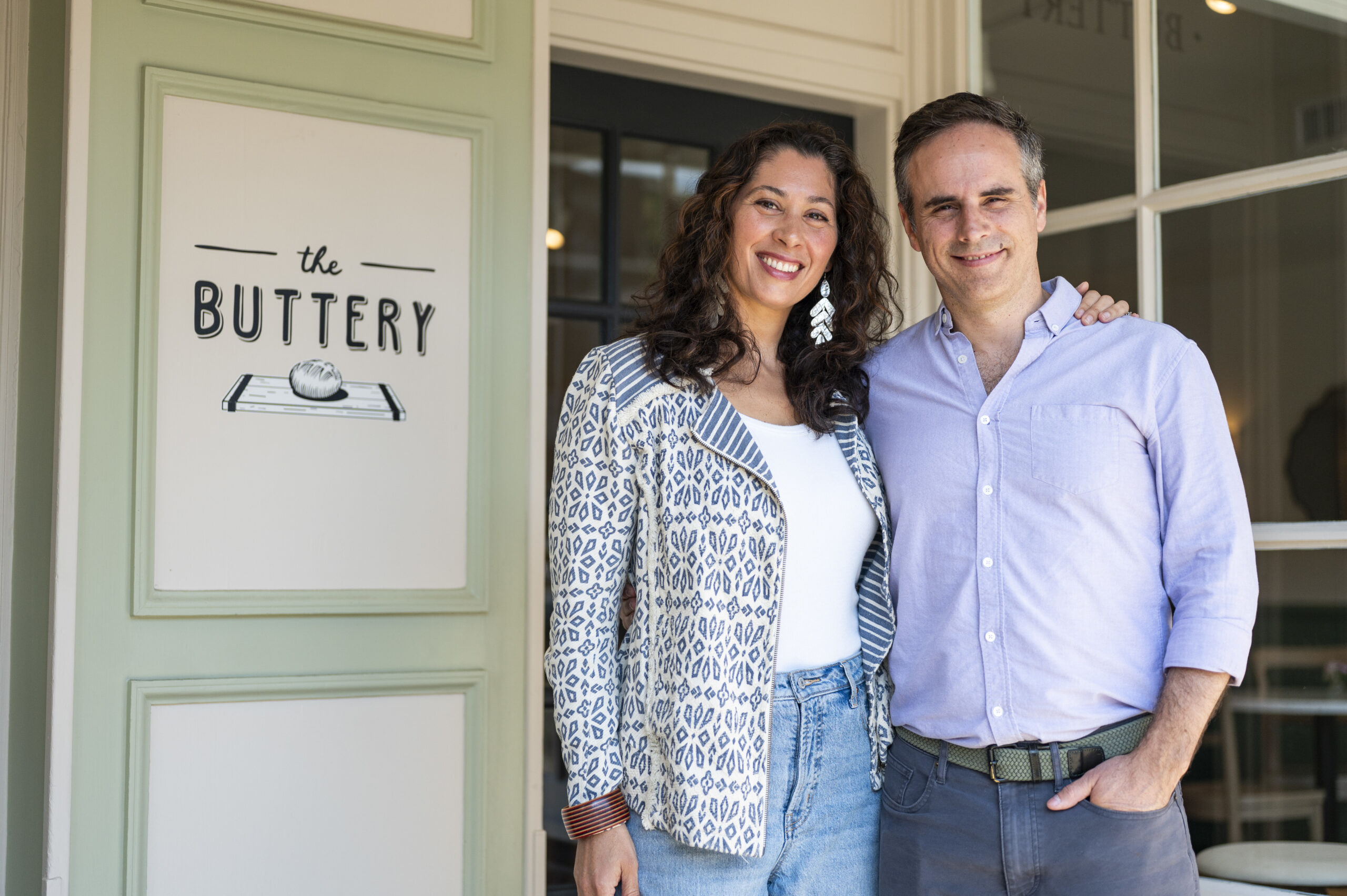
Popular Main Line bakery The Buttery is officially opening its doors in Bryn Mawr this weekend, marking the third location in a growing collection of cafésowned by husband-and-wife duo John and Silenia Rhoads.
Known for its sourdough breads, homemade pastries, and seasonal dishes, The Buttery describes itself as “part village bakery, part coffee shop, and part scratch kitchen.”
The Rhoadses opened the first Buttery location in Malvern in 2015 and have since expanded into the Ardmore Farmers Market and now Bryn Mawr, at 836 W. Lancaster Ave. The Buttery previously had a satellite location at the Malvern train station, which closed in December.
Vinny Petraglia, culinary operations director, drizzles olive oil on the avocado toast at The Buttery in Bryn Mawr.
Joli Ridenour, The Buttery’s community manager, said customers have been asking the bakery to expand for years. When they opened in Ardmore in October, patrons were over the moon about not needing to drive to Malvern to get their beloved kouign-amann and sourdough.
John Rhoads grew up in Devon, and he, Silenia, and their three teenagers now live in Paoli, so finding another outpost on the Main Line just felt right.
Bryn Mawr felt like “a good center point on the Main Line,” John Rhoads said.
“We’re so excited to be in this town. There’s such a hustle and bustle,” Silenia Rhoads said, adding that she’s already seen a “sense of community.”
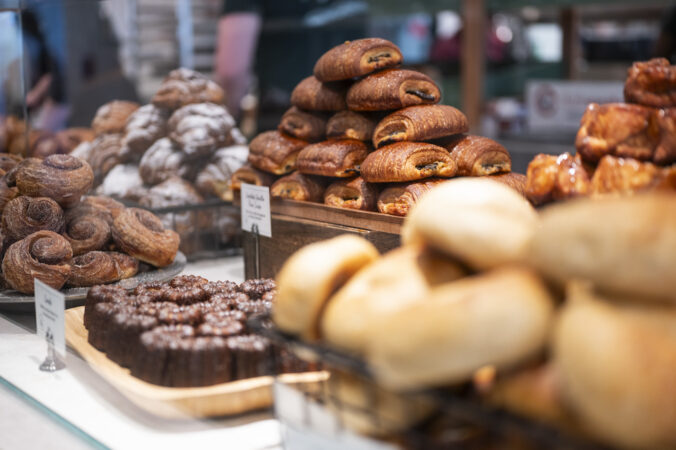
At the bakery’s soft opening on Wednesday, loaves of sourdough and baguettes peeked out from behind long glass cases stuff with butter croissants, lemon currant scones, and fresh bagels. Packaged cookies, branded T-shirts, and bags of homemade granola lined the walls, and customers stopped to chat with the Rhoadses.
The 82-seat café is spacious, laid out with long communal tables, corner booths, and scattered two- and four-tops. The Buttery team wanted multiple kinds of seating options to allow for different dining experiences, from neighbors grabbing a quick coffee to families coming in for a long lunch.
Silenia (left) and John Rhoads, owners of The Buttery, at their new location in Bryn Mawr. Said Joli Ridenour, The Buttery’s community manager, “We want people to feel really at home and welcome and like they’re walking into an old friend’s house.”
“We want people to feel really at home and welcome and like they’re walking into an old friend’s house,” Ridenour said.
The Buttery’s Bryn Mawr location is serving its full breakfast and lunch menu, which includes bagels, quiches, sandwiches, open-face tartines, salads, and speciality Passenger coffee and tea drinks. The Rhoadses said they are hoping to expand to dinner service, as they have in Malvern, in the fall or winter.
Ridenour said the bakery always tries to source locally, milling flour out of local grain and purchasing eggs from Highspire Hills Farm in Glenmoore. Almost everything is made in-house, including roasting their own meat for roast beef sandwiches.
What to order? The Buttery’s staff says you can’t go wrong. The sablé cookie, a buttery French shortbread cookie, is a signature dish. Silenia Rhoads recommends the seasonal panzanella salad, made with fresh smashed cucumber, asparagus, homemade croutons, and a potpourri of herbs. The breakfast sandwich, serviced with harissa aioli on an everything brioche bun, is also a fan favorite.
Turkish eggs with homemade naan at The Buttery in Bryn Mawr.
The Buttery has been able to expand in large part due to a bakehouse the Rhoadses opened in Norristown a year ago. With more space and a centralized food preparation location, the bakehouse has “enabled us to set our sights on more,” John Rhoads said.
The couple said a Northern Liberties location will open later this year, and further growth is on the horizon for 2027.
The Buttery’s Bryn Mawr grand opening will kick off on Saturday. The bakery will debut a special Bryn Mawr-only pastry, a lemon poppy kouign amann baked with house-made creamy poppy seed spread and lemon sugar. The first 50 customers will get a branded tote bag and the first 100 will get a sablé cookie, on both Saturday and Sunday.
The Buttery will be open daily from 7 a.m. to 5 p.m., with kitchen service until 3 p.m.
This suburban content is produced with support from the Leslie Miller and Richard Worley Foundation and The Lenfest Institute for Journalism. Editorial content is created independently of the project donors. Gifts to support The Inquirer’s high-impact journalism can be made at inquirer.com/donate. A list of Lenfest Institute donors can be found at lenfestinstitute.org/supporters.
Brenna Carswell has lived on the same street in Narberth for a decade.
Carswell moved to Narberth,a small Montgomery County borough encircled by Lower Merion, in 2011 from Upper Darby with her younger daughter after a divorce. She knew early on that her daughter would need more support than the Upper Darby schools could provide, so she scraped together the cash for a rental in the Lower Merion School District.
“It’s been a great place for my girls to grow up,” Carswell said of her Main Line community. “It’s given them a town that I didn’t have.”
After four years and threerentals, Carswell, 44, a small-business owner, bought a home in the borough.In early 2020,she sold her house with the intention of buying another place in Narberth, but the pandemic hit and Carswell was furloughed. She ended up in a rental across the street, where she still lives. By the time Carswell was ready to buy again, houses around her had exploded in price.
She and her family have outgrown their space, but in the current market, “there’s literally nowhere to go.”
Narberth’s borough council last August directed its planning commission to studyhow it could use zoning to increase affordable housing and support the local economy. Officials say living in the borough has become increasingly expensive, as experiences like Carswell’s become more and more common.
In February, the commission came back with a handful of recommendations in two zoning districts: the higher-density residential area that surrounds the Haverford Avenue downtown, and the commercial mixed-use corridor along Montgomery Avenue.
Recommendations included allowing apartments, cottages, and rowhouses by-right, in the ring around the downtown core, and permittingextra floors for apartment buildings that include affordable units in both zoning districts. The commission suggested reducing minimum parking requirements, allowing ground-floor apartments on Montgomery Avenue, and lettingdevelopers build off-site parking lots for apartment complexes.
Adam Krom, the planning commission’s chair, has said the changes would “provide flexibility” and incentivize developers to build both market-rate andaffordable housing units in areas where similardevelopments already exist.
But what began as a municipal land-use discussion has morphed into a monthslong debate in the borough over what, if anything, Narberth should do to fight America’s housing crisis. Proponents say changes would bring inmuch-needed tax revenue, create foot traffic for downtown businesses, and help preserve socioeconomic diversity. Others, however,feel that a small contingent on the borough council has charged ahead with proposals to increase density while ignoring growing concerns over traffic, neighborhood character, and the reality of supportingtransit-oriented development with a transit system marred by uncertainty.
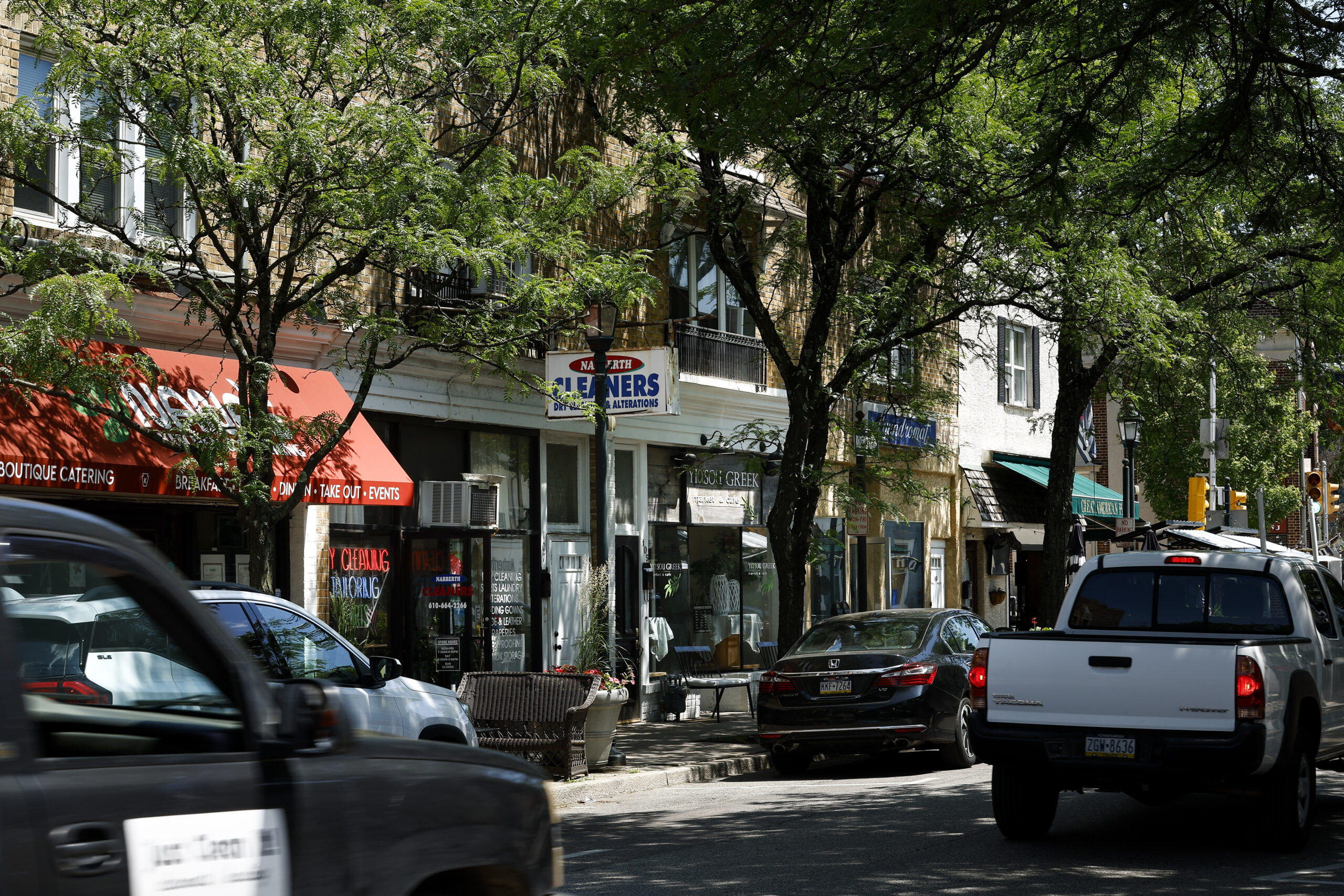
Shops line North Narberth Avenue.
Rising costs, shrinking options
In Narberth, and across the Philadelphia suburbs, the cost of housing is outpacing the ability of large segments of the population to afford it, said Scott France, executive director of the Montgomery County Planning Commission, which consults the borough on land-use issues.
Narberth had the highest median housing sales price of any municipality in Montgomery County in 2024, at $751,000, a 70% increase from 2014.
The average rent for a one-bedroom apartment in Narberth is $2,050 per month, according to Zillow rental data. As housing prices have risen, incomes have stayed largelystagnant. In2024, 46% of renters and 19% of homeowners in Montgomery County were spending more than 30% of their income on housing, according to a Housing Blueprint recently published by the county.
In Montgomery County, boroughs like Narberth were often the first point of entry for people looking to settle in the suburbs, France said, given their more urban-suburban feel and smaller lot sizes.
Yet the factors that once made places like Narberth starter-home magnets have now made them increasingly inaccessible. As millennialshave sought outpremiums like walkability and transit access, the cost of both renting and homeownership in places like Narberth, Conshohocken, and Ambler has risen, France said.
Montgomery County’s and Narberth’s housing woes are part of a well-documented housing shortage that has swept the United States, as a widening gulf between supply and demand has put homeownership further out of reach for many, especially for younger people.
Some communities facing housing shortages have loosened zoning restrictions in order to court developers who are willing to build housing and, in certain cases, set aside affordable units in exchange for height and other bonuses. On the Main Line, luxury apartmentshave cropped up in large numbers, especially in areas where officials have used zoning to increase density.
Fred Bush, president of Narberth’s borough council, said the county’s Housing Blueprint crystallizes why Narberth needs to ease its zoning regulations and incentivize development.
“It’s very difficult for people who come in here — who are renting or who are looking to move in, young families — to find a place to stay,” Bush said.
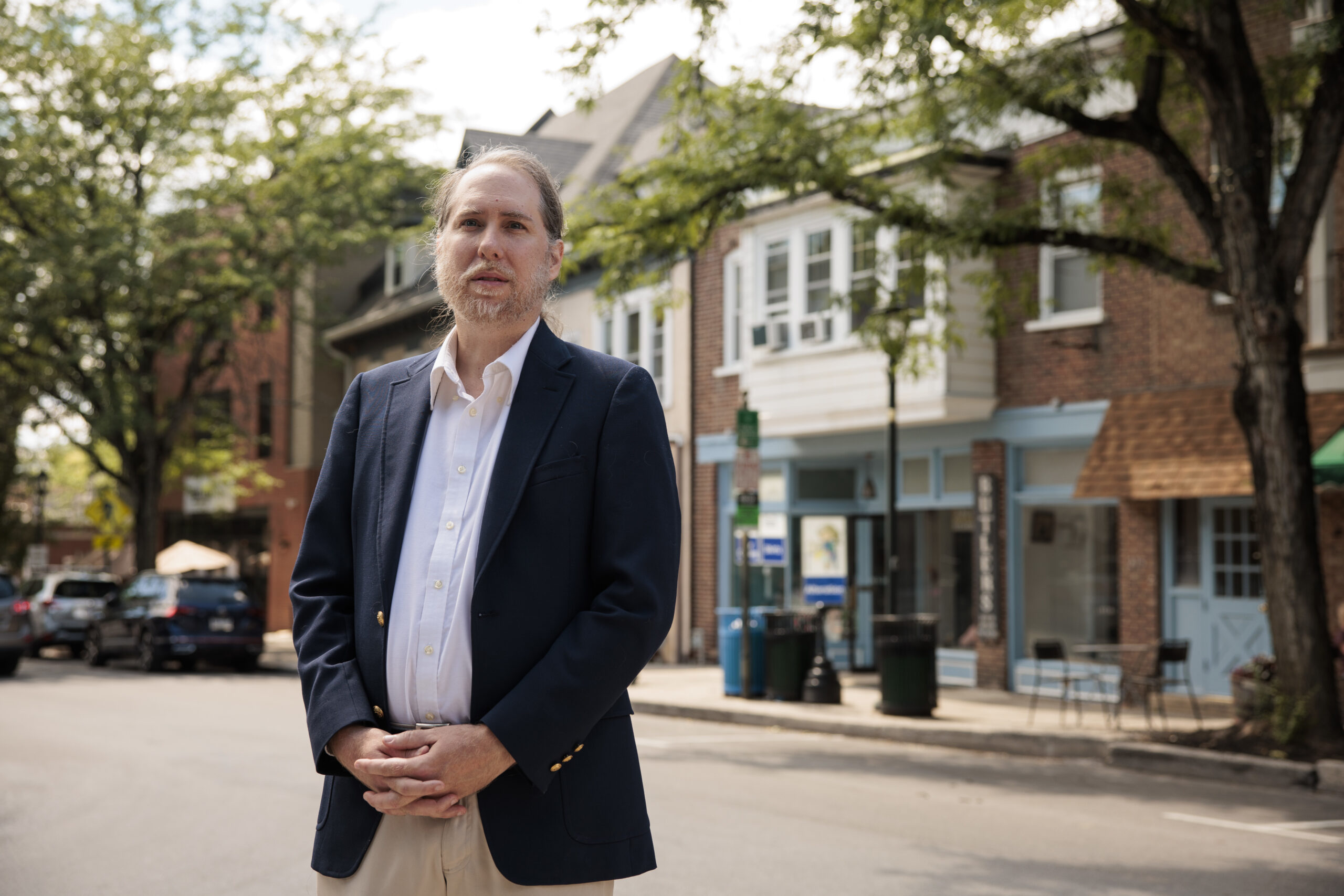
Narberth Borough Council President Fred Bush. Bush is part of a contingent of borough council members who see zoning changes as a key to increasing the availability of affordable housing in the borough.
‘Is that what’s best for this area?’
Narberth residents like Margot and Jason Deitz describe the push to rezone as confusing and misguided. The couple, both 40, have lived together in Narberth since 2020. Their house is near the Montgomery Avenue corridor, where changes are being considered.
The Deitzes are among a large contingent who feel the proposals would complicate an already hairy parking situation, allow for buildings outside of Narberth’s quaint character, and tip the balance of the borough in favor of renter-occupied units. They feel the borough is putting the cart before the horse, trying to address national problems rather than the sidewalk repairs and parking shortages on their front steps.
For Margot Deitz, the idea of building fewer parking spaces and askingresidents to rely on SEPTA, a sometimes unreliable transit system, was confounding. Her questions to the borough council about parking went unanswered, she said. Both Margot and Jason Deitz wondered how, in a town with shuttered storefronts and parking problems, building new apartments became the council’s priority.
Homeowner Michelle Karten, 52, went to a public meeting to ask questions about the proposals but felt the changes were a “foregone conclusion.”
Karten said she hopes the borough can find a more “holistic” approach, rather than just allowing for the proliferation of luxury apartments. She believes the borough has already made a number of concessions to developers and does not need to offer density bonuses to get affordable housing.
“Do we really need to go up that extra level? Is that what’s best for this area? And what other solutions could there be?” Karten said.
Matt Patrick, 37, a homeowner in the borough since 2018, is “not against affordable units” but thinks the council is using the affordability crisis to push through incongruous density in spite of resident opposition.
“It seems like more of a developer bonus than something aimed at conquering affordability,” Patrick said.
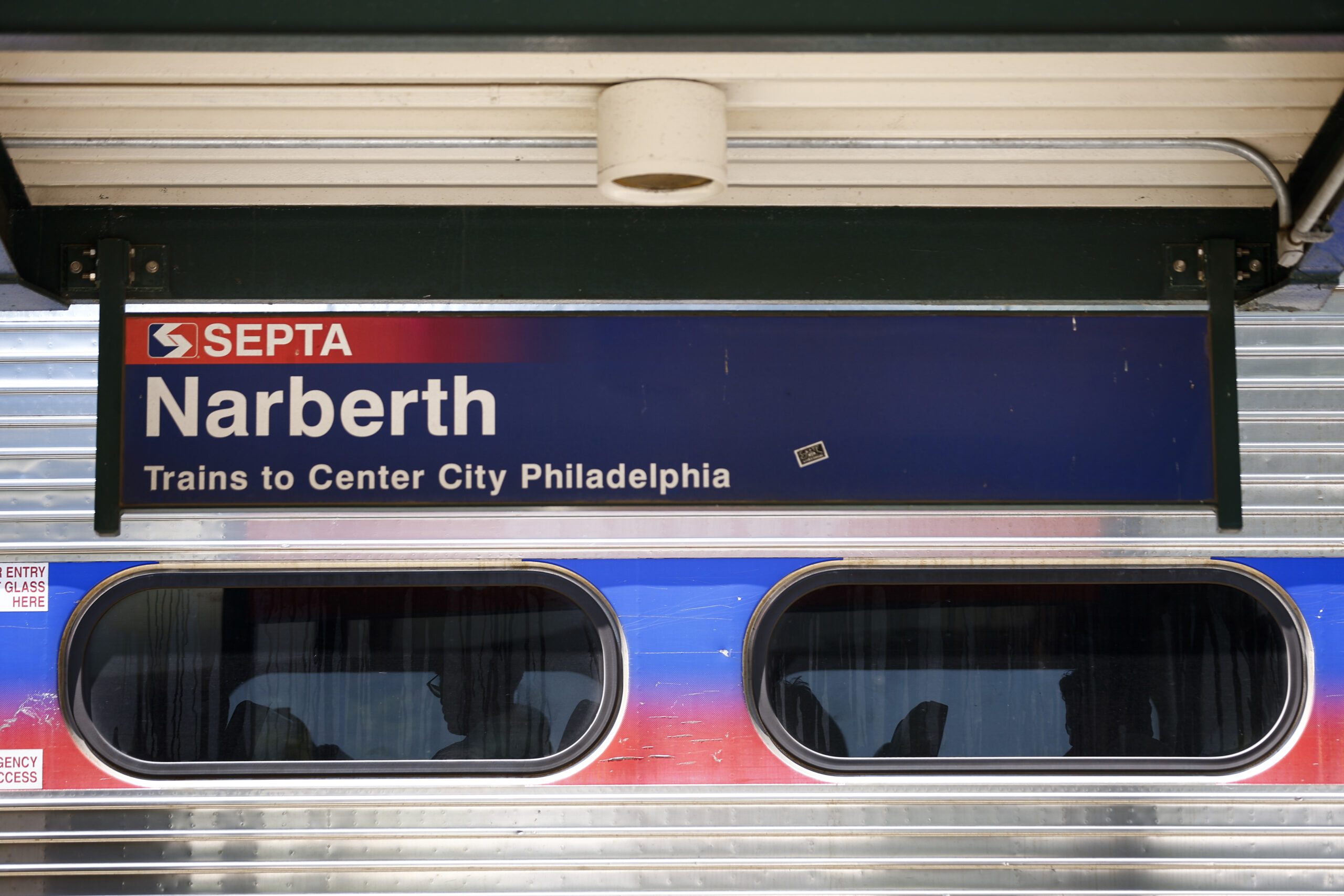
Narberth’s SEPTA train station on the Paoli/Thorndale Line.
Luxury apartments’ “two truths problem”
For others, the debates over parking requirements and maximum heights are a distraction from a looming reality: The national housing crisis has hit Narberth, and prices will only continue to rise without new inventory.
Blessing Osazuwa, 28, thinks the changes are a “great idea.” Osazuwagrew up in Lower Merion and moved to Narberth three years ago. Her roommate’s family owns the house they live in, giving her a break on the rentthat allows her to affordNarberth.
“I love Narberth,” Osazuwa said. “I would love to stay, but there’s no way that I’ll be able to afford that on my own, and it’s a shame, because I feel like I contribute to the community.”
Numerous residents said the conversation around zoning in Narberth has devolved into misconceptions and ad hominem attacks hurled from all sides, across public meeting forums and Facebook groups.
Carswell said there is amisconception that Narberth and surrounding communities alreadyhave plenty of affordable apartments.
Little existsin Carswell’s price range in or around Narberth. She has chased multiple “ghost” listings, reaching out to property managers only to find out listed units are occupied. She wants to stay in Narberth to provide consistency for her kids. When she explains her reality, she said, she is often told to just move somewhere else.
Osazuwa said the refrain that those who cannot afford Narberth should simply move ignores a souring economic reality.
“I tend to encounter that ‘pulling yourself up from the bootstraps’ mentality without regard to the times that we’re living in, without regard to inflation, without regard to the fact that jobs don’t pay as much,” shesaid.
Advocatesacknowledge thatfuture development will likely rely on luxury rentals, many ofwhich have popped up in neighboring communities like Ardmore andBala Cynwyd andwould be unaffordable to all but a wealthy set of renters. They believe, however,that any new housing units can help moderate the market, and even a few affordable units attached to the developments could provide housing for lower-income residents.
“I agree that struggling families are not going to be moving into luxury apartments, but it just puts an overall downward pressure on rental prices for the rest of the market,” Bush said.
Vincent Reina, a University of Pennsylvania professor and founder of the Housing Initiative at Penn, said there is “a two truths problem” when it comes to luxury apartments. High-end buildings do not fill the need for affordable housing. But, without new construction, existing prices can be pushed up even further as demand continues to outpace supply.
“What you aren’t going to see is the natural market production of [low-cost] units because the price is too high,” he said. Without government incentives for affordable units, “the numbers just don’t pencil out.”
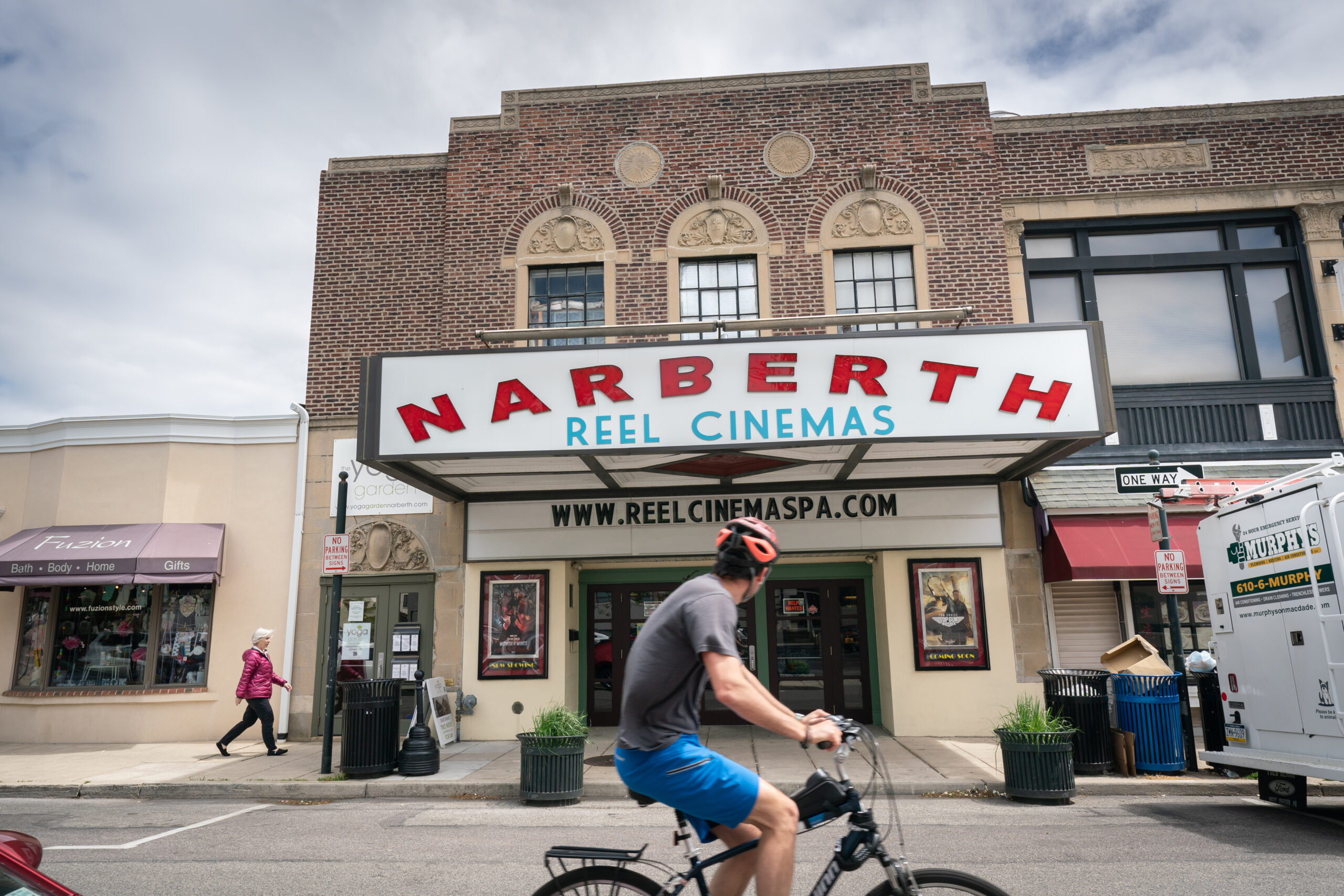
Narberth Reel Cinemas. The borough is considering zoning changes that would increase density around its downtown core.
Balancing ‘what should be complementary interests’
The borough council has drafted comments to send back to the planning commission for consideration. The draft splits the difference on some issues, dropping the parking reduction and someheight bonuses, but keeping other changes. It could be months before any changes are actually adopted.
Council member Mike Salmanson said Narberth is trying to balance “complementary interests” in keeping the borough’s character while ensuring fiscal stability. Salmanson said the borough has maxed out how much it can charge in earned income tax. Because Pennsylvania does not require regular property reassessments, it is difficult for municipalities to collect the revenue they need without just raising taxrates.
“Increased housing creates a broader tax base,” Salmanson said. “I see the advantages of that.”
But he also called zoning changes that cater to current market conditions, and not the long-term success of the borough, “short-sighted.”
Council member Cyndi Rickards believes the council has yet to meaningfully engage withincentivizing housing options beyond luxury apartments, such as reasonably priced ownership opportunities that would allow residentsto build equity.
“I really struggle to understand how those of us who own homes … [see] luxury apartments as a tool for justice,” Rickards said.
Carswell said she understands the concerns about zoning changes and was once opposed herself.
“There is a deep fear, that I understand, that the good old days are slipping away,” Carswell said. “The good old days are gone. … The changes that happened to our economy on a national scale absolutely impacted Narberth.”
This suburban content is produced with support from the Leslie Miller and Richard Worley Foundation and The Lenfest Institute for Journalism. Editorial content is created independently of the project donors. Gifts to support The Inquirer’s high-impact journalism can be made at inquirer.com/donate. A list of Lenfest Institute donors can be found at lenfestinstitute.org/supporters.
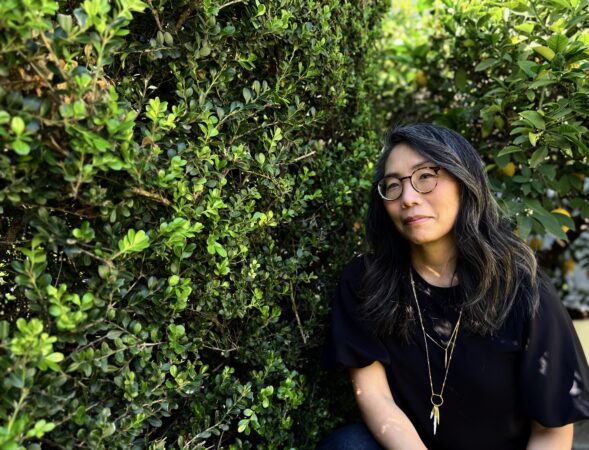
In her poem, “To the Chimeras of South Jersey,” Jia-Rui Cook writes of teenage heartache, ’80s movies, and the gulf between her American childhood and the world of her parents, immigrants from China by way of Taiwan and Singapore.
“… Acing / honors English but flunking Saturday / Chinese School: double cherries that ripen / when summer sun runs hot. This world / will feel less than whole for many years.”
The Cherry Hill-bred and Los Angeles-based writer isset to release her debut poetry collection, Soft Beasts, next year. The book explores Cook’s upbringing in South Jersey, her coming of age in Los Angeles, and the various bodies we inhibit in our ever-changing world. Cook is the 2025 winner of the Philip Levine Prize for Poetry, a national prize out of Fresno State University that awards one writer $2,000 and the publication and distribution of a book.
As she prepares for the release of Soft Beasts next year, Cook reflected on her formative years in Cherry Hill, which shaped her career as a writer and figure prominently in her poetry. Cherry Hill “was kind of an amazing incubator” for young writers like herself, Cook said.
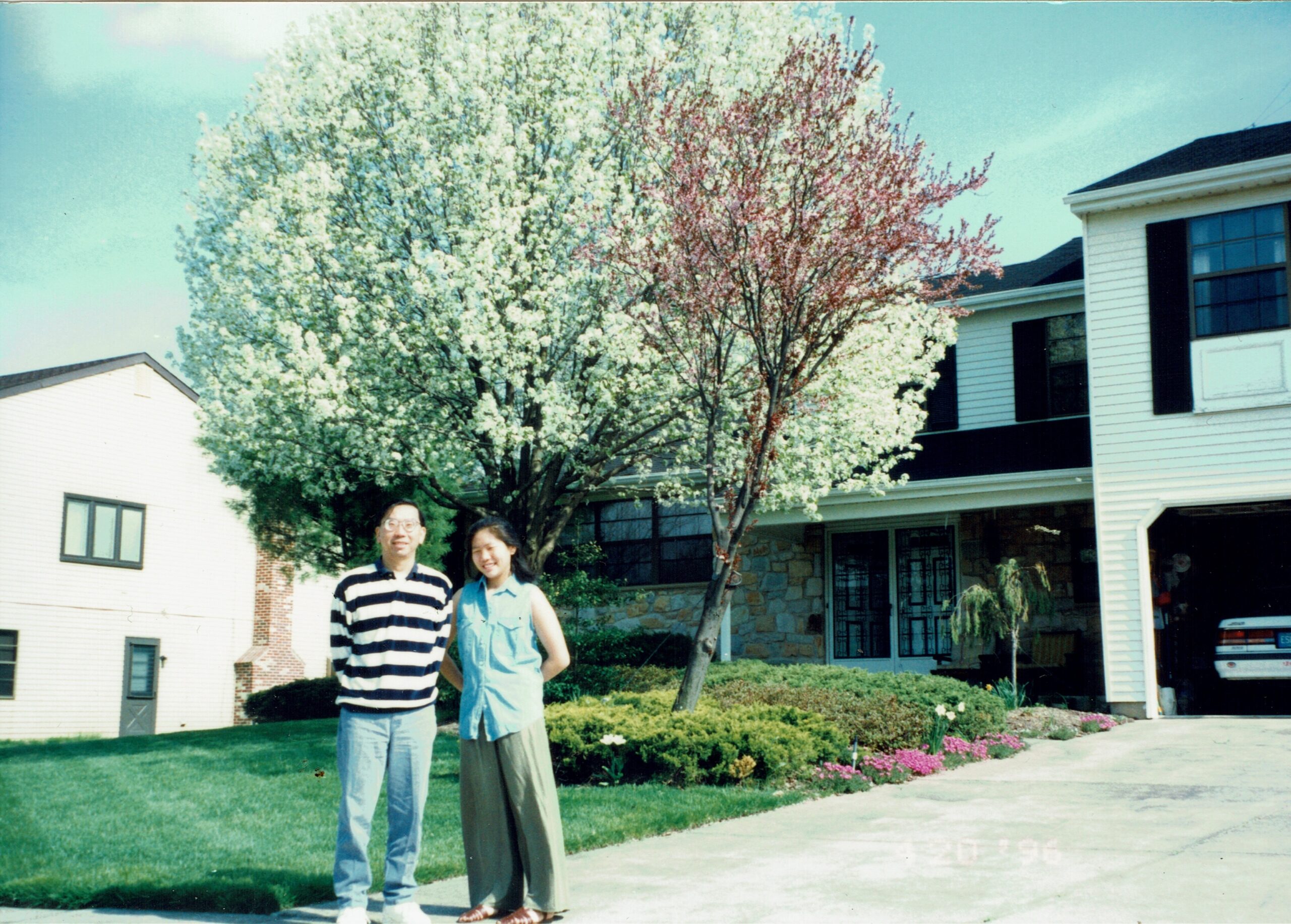
Jia-Rui Cook (right) and her father standing in front of her childhood home in Cherry Hill, N.J. around 1995, the year she graduated from Cherry Hill High School East.
Cook’s parents settled in Cherry Hill when she was a toddler and sent her to James H. Johnson Elementary School, Henry C. Beck Middle School, and Cherry Hill High School East. At East, Cook played lacrosse, worked on the yearbook, participated in the all-South Jersey band, and wrote for the student newspaper. Cook took an early interest in playing with words (her parents had an Inquirer subscription, and Cook was a habitual reader of the crosswords and comics page). A 1995 Inquirer story profiled Cook (whose maiden name was Chong) and her classmate Gina Kang, both star lacrosse players who were headed to Harvard University.
In Cook’s high school yearbook, she wrote that it was her goal “to write good poetry.”
Cook studied American history and literature at Harvard, joining the poetry board and studying under writers Seamus Heaney and Helen Vendler. She wrote a thesis on “Moby Dick.”
Cook always wanted to be a writer, but didn’t know if she could make a living out of poetry. After college, she ventured into another form of storytelling — journalism. Cook spent six years at the Los Angeles Times, covering everything from medical research to Asian-American life in the city. She left journalism in 2009, and has worked in science and health communications since, including a stint at NASA’s Jet Propulsion Laboratory.
Reporting and science writing are grounded in third-person observation and objectivity, Cook said, and as she was writing about rocket launches and research breakthroughs, she missed the creativity that drew her to writing in the first place.
She wrote a few poems in the mid-2010s, and won the Zócalo Public Square Poetry Prize in 2013, but life quickly became busy with parenthood and work (Cook and her husband, Bryan, who is from the Main Line, have two daughters). It wasn’t until 2021 that Cook felt like she could pick up the pen again.
“You get on this roller coaster of going, going, going, and then when you suddenly stop, you think, ‘Wow, actually, maybe I’ve learned some things. I have some things to share,’” she said, recalling how it felt to return to poetry five years ago.
Jia-Rui Cook’s (then Chong) photo in her Cherry Hill High School East yearbook. Cook graduated from East in 1995.
So Cook began to write again — about people, animals, her childhood in Cherry Hill, the subtleties of the Chinese-American experience she came to understand while living in and writing about Los Angeles.
“I had to really step away and experience the world for a bit,” she said. “I had to go out and experience the world and to see it, and maybe try to tell other people’s stories for a while before I really understood, ‘What story did I want to tell about my own life?’”
Anagrams (words or phrases made by rearranging the letters of a different word) figure prominently in her work.
In her poem “Anagram No. 2,” Cook anagrams “Cherry Hill, New Jersey,” rearranging the letters to make sentences that resemble English, but don’t precisely follow its conventions. English was not Cook’s parents’ first language, and “there was always this kind of slipperiness with the language” in her house, she said.
“Anagram No. 2” is “playing around with the English language” in a way that echos the experience of learning it.
In January, Cook became a fellow with the Periplus collective, a mentorship program for writers-of-color. In February, she won the Levine Prize. Jake Skeets, the Levine Prize’s final judge, called Cook’s poetry “both wonder and wander,” holding “stark, living images of place” and teachings on how “to be alive in the present moment.”
For Cook, publishing poetry has been an opportunity to “create something meaningful” in a world that “feels under siege.” The immigration crackdown that overtook Los Angeles last summer weighed heavily on her as the child of immigrants.
“It just was really wonderful and incredibly meaningful to feel like I’ve been creating these little, tiny bits of beauty where I can in the world,” she said.
Winning Fresno State’s Levine Prize is poignant for Cook. Fresno State was the first place Cook’s mother landed when she arrived in the U.S. and was where she learned English. Decades later, the university is helping to publish Cook’s first book.
“It felt like a full-circle moment,” Cook said.
Though California has been her residence for decades (and Cook says she has decidedly fallen in love with Los Angeles), she still considers South Jersey home. It’s the place where she became a writer and where her journey of self-understanding began.
“It has to start somewhere,” she said of her book. “So it really does start in Cherry Hill.”
This suburban content is produced with support from the Leslie Miller and Richard Worley Foundation and The Lenfest Institute for Journalism. Editorial content is created independently of the project donors. Gifts to support The Inquirer’s high-impact journalism can be made at inquirer.com/donate. A list of Lenfest Institute donors can be found at lenfestinstitute.org/supporters.
A longtime township educator will become Cherry Hill High School East’s new principal this summer, months after the former principal resigned amid an ongoing legal battle with another former administrator.
The Cherry Hill school board on Feb. 24 appointed John Cafagna, currently the principal of Rosa International Middle School, to take the helm of East beginning July 1.
“I look forward to providing operational stability, being the wellness guardian for our students and staff, honoring our great traditions, and leading us as we move forward together as one East, one community, and one vision,” Cafagna said, addressing the school board.
Cafagna has worked in the Cherry Hill Public Schools for nearly three decades, starting as an educational technologist and working his way up as a teacher, assistant principal, and, most recently, principal. He holds a bachelor’s degree in psychology from Rowan University, master’s degrees in education and educational leadership from the University of Pennsylvania and Capella University, and a doctorate in educational administration from Capella University.
Cafagna will earn a salary of $200,000 as East’s principal.
Leslie Walker, a longtime educator who became interim East principal in October, stepped down abruptly late last month, according to Eastside, the high school’s student newspaper. Walker’s contract was set to end in June. Walker told Eastside personal stressors in her life prompted her resignation.
Neil Burti, Cherry Hill’s director of secondary education, will handle East’s principal responsibilities in the interim, said Nina Baratti, the district’s public information officer.
Cafagna’s appointment came five months after the school’s former principal resigned.
Daniel Finkle resigned in September after David Francis-Maurer, a former assistant principal, accused Finkle and the school district of discrimination and a “calculated campaign of targeted retaliation” in a lawsuit. According to Francis-Maurer, the district retaliated against him by not renewing his contract after he blew the whistle on Finkle for skirting school policies and engaging in offensive behavior.
Finkle has denied the allegations in legal filings, saying that he did not discriminate against Francis-Maurer and that the decision to not renew Francis-Maurer’s contract was due to “job performance and nothing else.” Finkle alleged Francis-Maurer was argumentative and made “egregious errors” as assistant principal. Finkle also denied allegations that he did not follow school policy when sensitive student issues emerged.
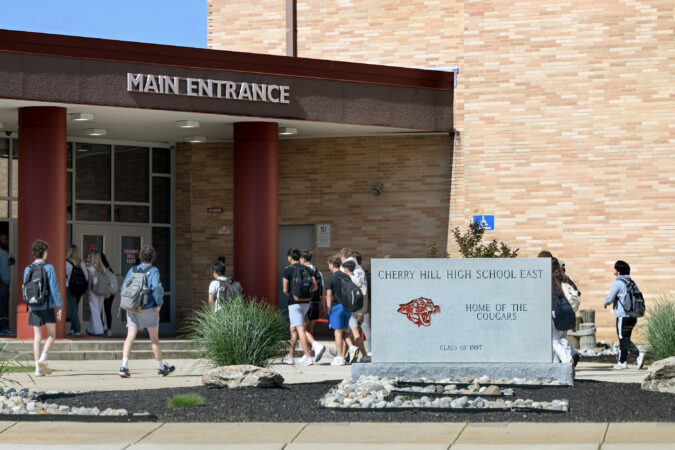
Cherry Hill High School East, located on Kresson Road, enrolls around 2,000 students in grades nine through 12.
This suburban content is produced with support from the Leslie Miller and Richard Worley Foundation and The Lenfest Institute for Journalism. Editorial content is created independently of the project donors. Gifts to support The Inquirer’s high-impact journalism can be made at inquirer.com/donate. A list of Lenfest Institute donors can be found at lenfestinstitute.org/supporters.
Swarthmore Borough manager Sean Halbom has been terminated from the office after just six months, the latest in a string of short employment stints he has held in recent years.
The borough council voted unanimously on the termination Monday, though Council President Jill Bennett Gaieski declined to give a reason for the decision in a phone call with The Inquirer.
Halbom did not respond to phone or email messages lefton Thursday.
He began in the borough manager role in September after holding several roles in Montgomery County, including most recently in Upper Frederick Township, where he was township manager for less than a year, according to his LinkedIn profile. Halbom resigned from his position in Upper Frederick in June 2025.
Prior to the job inUpper Frederick, Halbom was an interim human resources director in Bucks County for two months and township manager for Worcester Township for a year and a half. Halbom’s employment in Worcester Township was terminated by its board of supervisors in April 2024.
He was also thedirector of veterans affairs for Montgomery County for six years, from 2012 to 2018, his LinkedIn profile shows.
Halbom succeeded William Webb, who left the Swarthmore manager role in September to become an assistant county administrator in Isle of Wight County, Va.
Halbom’s leave came around the same time as another personnel shake-up in the small borough. On Feb. 18, Scott Schumacher vacated his position as a longtime Swarthmore Public Library employee and children’s librarian.
Swarthmore Public Library board president Elizabeth Brown said Schumacher’s departure was unrelated to Halbom’s termination.
The Swarthmore council on Monday also named David Unkovic as interim borough manager. He “came highly recommended” by Upper Providence Township, where he previously served as interim township manager, Gaieski said.
Before retiring as a practicing lawyer, Unkovic spent a decade at McNees Wallace & Nurick, a Harrisburg-based law firm with multiple offices, including in Radnor. He also briefly served as the state receiver for the City of Harrisburg in 2012.
The Swarthmore council has already begun the search for a permanent borough manager, Gaieski said, and hopes one will be in placeas early as June 1.
The search will take “until we find the right person,” Gaieski added. “We have a really good interim in place. We will do what we need to do to find the right person.”
This suburban content is produced with support from the Leslie Miller and Richard Worley Foundation and The Lenfest Institute for Journalism. Editorial content is created independently of the project donors. Gifts to support The Inquirer’s high-impact journalism can be made at inquirer.com/donate. A list of Lenfest Institute donors can be found at lenfestinstitute.org/supporters.