Author: Brooke Schultz

  • ‘A substantial change’: Residents upset after developers of controversial Chesco data center project seek another alteration

    ‘A substantial change’: Residents upset after developers of controversial Chesco data center project seek another alteration

    The developer of a 1.5 million-square-foot data center project proposed for an East Whiteland Superfund site has again returned to the township requesting changes to the plan — even as they’ve already started preparing for construction.

    The newest request may look somewhat familiar: Developers Green Fig LLC and Sentinel Data Centers had gone through a monthslong process earlier this year, presenting an amended project to municipal leaders and residents, at first growing — and then offering to shrink — the overall footprint of the site. They argued that the plans first approved in 2024 were less desirable and less efficient, and that the updated plans would allay concerns about environmental impact. They scrapped those ambitions in May, and reverted back to the older concept.

    But on Wednesday, the developers asked for a “field change,” requesting permission to put into place some of the changes that would have been included in those amended plans.

    The changes — which include the ambitions they’ve had since January — would remove the cooling towers, eliminate water cooling for the computer equipment, and install air-chilled units on the building’s roofs. These changes are permitted under the Land Development Agreement, Township Manager Steve Brown told the community at the meeting. But they require the board’s approval.

    The request drew ire from community members who have for months been opposed to the project, fearing the data center’s impact on health and the environment. They’ve also raised concerns that it will rest atop the former Foote Mineral Co., a contaminated industrial site that landed on the federal list of hazardous places.

    The query to the board of supervisors also comes as the developers agreed last week to temporarily halt work on the site that moves the soil while the township reviews soil and human safety plans.

    The board voted, 2-1, to table approval of the proposed changes; chairman Scott Lambert and supervisor Clinton Smith said there were still too many questions. Supervisor Peter Fixler cast the dissenting vote.

    “What’s been presented to us this week, as I said before, I think is a gift. … What’s in front of me now is a data center that’s a third the size of their original proposal,” Fixler said ahead of the vote. “It would, I feel, be environmentally irresponsible to not approve this plan. I know that doesn’t sound popular.”

    The developer said the reason for the change is water conservation, Brown said. The approved plan would use more than 3 million gallons of water a day, vs. the proposed plan, which would use air chillers.

    Separately, the developer proposed slashing the size of the buildings, down from a sprawling 1.5 million square feet total build-out — with two data center buildings roughly 772,000 square feet each — down to a total of 536,000 square feet. It would strike a basement in the current plans, and also reduce the height of the building. These changes don’t necessitate board approval, Brown said.

    In an email Thursday, Lou Colagreco, the attorney representing the developers, said they would respond to any of the board’s questions “that may still be outstanding.”

    “At the end of the day, this is a simple question: Will we use a cooling system that consumes millions of gallons of water a day, as approved, or not?” he said. “We believe this is a very easy decision. We are at a moment in the job where we have no choice but to move forward with whatever path provides us certainty of execution. If the Board wants us to build with evaporative water cooling, we will continue to do so.”

    As he discussed his decision, board chairman Lambert told residents that “we could get a call tomorrow from the developer, and he may say, ‘That 536,000 square foot offer we put out there to make it smaller, it’s gone.’”

    Residents weren’t cowed by that. When the developer first proposed shrinking the data center to address concerns, some said it wasn’t “an act of good will.”

    On Wednesday, the community called for the rejection of the plans, saying that it was too big a transformation to be considered a field change.

    “This isn’t moving a pipe from five feet away to have some mud moved on top of it. This is a half-a-million-square-foot change,” resident Tony Gianino said. “This is crazy. This is a completely new project. I’ve been saying this since the beginning. This is a substantial change. If not this, then what counts as substantial?”

    Jeff Katz, another resident, said that the plans looked like those initially presented to the township in the spring, which were ultimately withdrawn.

    “Bringing substantially the same changes back tonight … looks like an attempt to get through the back door of what could not be brought through the front,” he said.

    This suburban content is produced with support from the Leslie Miller and Richard Worley Foundation and The Lenfest Institute for Journalism. Editorial content is created independently of the project donors. Gifts to support The Inquirer’s high-impact journalism can be made at inquirer.com/donate. A list of Lenfest Institute donors can be found at lenfestinstitute.org/supporters.


  • Phoenixville’s Bluebird Distilling combines alcohol and artisanal dough making in new $2.2M expansion

    Phoenixville’s Bluebird Distilling combines alcohol and artisanal dough making in new $2.2M expansion

    When Jared Adkins gets interested in something, he goes all in. That’s how he ended up learning about distilling, opening Bluebird Distilling in Phoenixville roughly a decade ago. Then, he became infatuated with pizza dough.

    It’s led to an expansion of the business: Bluebird Distilling & Dough House, which will open its doors officially on Tuesday.

    The $2.2 million renovation adds a whole new component to the cocktail bar, which will now offer a “neo-Neapolitan” — a modern, Americanized take on the classic — pizzeria and restaurant. Changes also have expanded the bar itself, added to the dining room, and enhanced the retail and bottle shop.

    Adding food was something Adkins, Bluebird’s owner and master distiller, didn’t initially anticipate when they opened the distillery in 2015. But in 2022, he started to get the itch. He considered a full-scale restaurant, and began the early planning for one. But then there was just something about pizza dough that caught his attention.

    He signed himself up for pizza school, and spent three days in Washington, D.C., learning from chefs about the art of pizza making.

    “There was like a light bulb that went off,” he said. “We’re already doing so much fermenting that just seemed the natural next step to get into dough making.”

    Bluebird Distilling founder and master distiller Jared Adkins. The expansion has been a year in the making, a longer consideration for Adkins.

    As he threw himself into dough-making a few years ago, he connected with pizzaiolo Gregorio Fierro to learn the basics. That helped get his vision off the ground, as he began designing what the kitchen would look like.

    Devon Migeot is joining as executive chef to bring the menu to fruition every night. Migeot spent roughly a decade working as sous chef at Philadelphia’s Zahav and Laser Wolf, plus Tresini in Ambler, and as chef du cuisine at Rosalie in Wayne.

    Together, they’ll offer pizza made with 100% Petra stone-ground Italian flour, milled from 100% Italian wheat, with no preservatives or additives. The business will have house-baked breads, plus shareable small plates. Offerings will include ricotta gnudi with sweet corn, brown butter, and scallions; meatballs with beef, pork, gravy, and Parmesan; beets and burrata; chicory salad; a snacking plate of meats and cheeses; and more.

    The decision to expand into food comes at a particularly salient time, Adkins said. The industry as a whole has been seeing a decrease in people drinking.

    “It’s kind of perfect timing that it’s going to fill a niche where maybe people aren’t coming in solely just for drinks anymore as much, but now [we’re] giving another artisan aspect of having pizza, or something that we’re really putting a lot of time in, to craft the best,” he said.

    A look at the expanded cocktail bar, part of the distillery’s larger renovation.

    The distillery will still, of course, honor its roots with its spirits and cocktails. It’ll feature old favorites, such as Bluebird (a vodka, blueberry, lime, and mint mix) and the Phoenixville Old Fashioned.

    But new additions will join too. Customers can try the Huntsman, which will feature French cigar bourbon, morel-infused vermouth, tobacco bitters, and stave smoke; or the Rum Ham, a pancetta fat-washed Bluebird dark rum along with burnt pineapple syrup, and tiki bitters; or Off the Vine, a “garden-inspired” martini composed of Juniperus Gin, basil, lemon, agave nectar, Aleppo pepper, and “clarified” tomato.

    The renovation also came with some aesthetic changes. In 2015, they led with a steampunk vibe, Adkins said. They refreshed the interior, using a Japanese-style charred wood that resembles the inside of a barrel.

    A transformed Bluebird Distilling will open July 7 after a $2.2 million renovation has expanded founder Jared Adkins’ vision. The space adds a new neo-Neapolitan pizzeria and restaurant, plus a reimagined cocktail bar, dining room, and retail and bottle shop.

    The outside patio is now enclosed, featuring a “huge” rectangular bar, which can seat up to 30 people. Adkins described the bar area as light and airy, where it feels communal and social. It feels more “upper casual” than “too-serious speakeasy.” Surrounded by windows, it feels like you’re sitting on the street, in the middle of the action, he said.

    When customers are ready for dinner, they can head back to the lounge, which curates a masculine, Western style.

    And the kitchen, where customers get to enjoy watching the whole process unfold, embraces that steampunk essence with barrels hanging from the ceiling.

    “I feel like as you walk through the area, you’re getting two or three different experiences all at once,” he said.

    The bar was open through renovations, but operating with 50% of the facility for the last seven or so months, and maintaining about 80% of their normal crowds. It took some ingenuity, he said.

    As they look at the new chapter, it feels like starting all over again, he said.

    “I think it fills a gap on one side for us there, of now we have something else that we can present to our customers for an overall experience,” he said. “That’s what we’re going for the most. We’re giving our cocktail experience, our spirits experience, and now a dough side of it.”

    This suburban content is produced with support from the Leslie Miller and Richard Worley Foundation and The Lenfest Institute for Journalism. Editorial content is created independently of the project donors. Gifts to support The Inquirer’s high-impact journalism can be made at inquirer.com/donate. A list of Lenfest Institute donors can be found at lenfestinstitute.org/supporters.

  • East Whiteland directs data center developer to stop work on Superfund site

    East Whiteland directs data center developer to stop work on Superfund site

    The developer of a sprawling proposed data center on an East Whiteland Superfund site must temporarily halt any work that disturbs the soil as the municipality reviews plans, the township said Thursday.

    “Any work involving earth disturbance of any kind must cease,” the township said.

    The stoppage was requested “until greater clarity is provided with respect to the ongoing review” of the soil and health and safety plans by the township and U.S. Environmental Protection Agency.

    The EPA said in a statement that it had nothing to do with the work stoppage.

    Permits needed for the development such as fencing, construction trailers, and signage are still valid.

    Township residents have raised concerns that the planned 1.5-million-square foot data center will be built on top of the Cyprus Foote Mineral Co., which was contaminated by chemicals such as lithium, arsenic, and hexavalent chromium.

    The developers, Green Fig LLC and Sentinel Data Centers, have said the site has been cleaned.

    A representative for the developers said they agreed to the stoppage “so that [the township] had a few more days to satisfy its questions.”

    Site work had been underway since early June, after the developers saw success in court when a judge dismissed residents’ challenges to the project.

    Residents told The Inquirer they saw dust plumes rising from the site last month. It resurfaced concerns about what contamination may still exist on the land that previously housed the 79-acre Foote Mineral, which was added to the Superfund list in 1992.

    Contamination likely started as soon as 1941 when the company began crushing ores and minerals. Lithium metal, lithium chemicals, and inorganic fluxes were part of the process.

    Cleanup so far has included capping contaminated quarries, stabilizing waste areas, and maintaining a long-term monitoring program for an evolving groundwater plume. Pollutants included lithium, boron, and low-level radiation.

    The work stoppage is another wrinkle in the ongoing saga of the project, which first secured approvals in 2018 and 2024. The project has seen staunch opposition from residents since it resurfaced last year with amended plans.

    This story has been updated to clarify that the EPA had no role in the decision to order a work stoppage.

    This suburban content is produced with support from the Leslie Miller and Richard Worley Foundation and The Lenfest Institute for Journalism. Editorial content is created independently of the project donors. Gifts to support The Inquirer’s high-impact journalism can be made at inquirer.com/donate. A list of Lenfest Institute donors can be found at lenfestinstitute.org/supporters.

  • Historic St. Peter’s Village is going up for auction. It prompts the question: Will it be preserved, or developed?

    Historic St. Peter’s Village is going up for auction. It prompts the question: Will it be preserved, or developed?

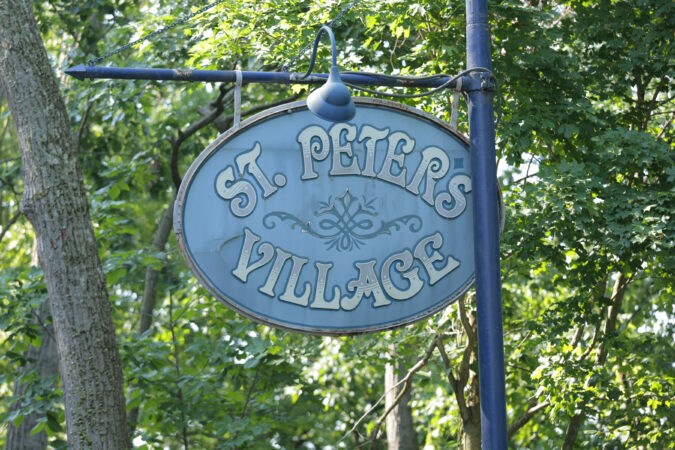
    Roughly 83 acres of the historic St. Peter’s Village in Chester County will go up for auction this fall to the highest bidder, opening up potential for massive development of the land. And it already has seen thousands of interested parties.

    The auction, scheduled for Sept. 30 at The Desmond Malvern, will put on offer the entirety of the Warwick Township village, in what auction and preservationist experts call an “unusual” type of sale.

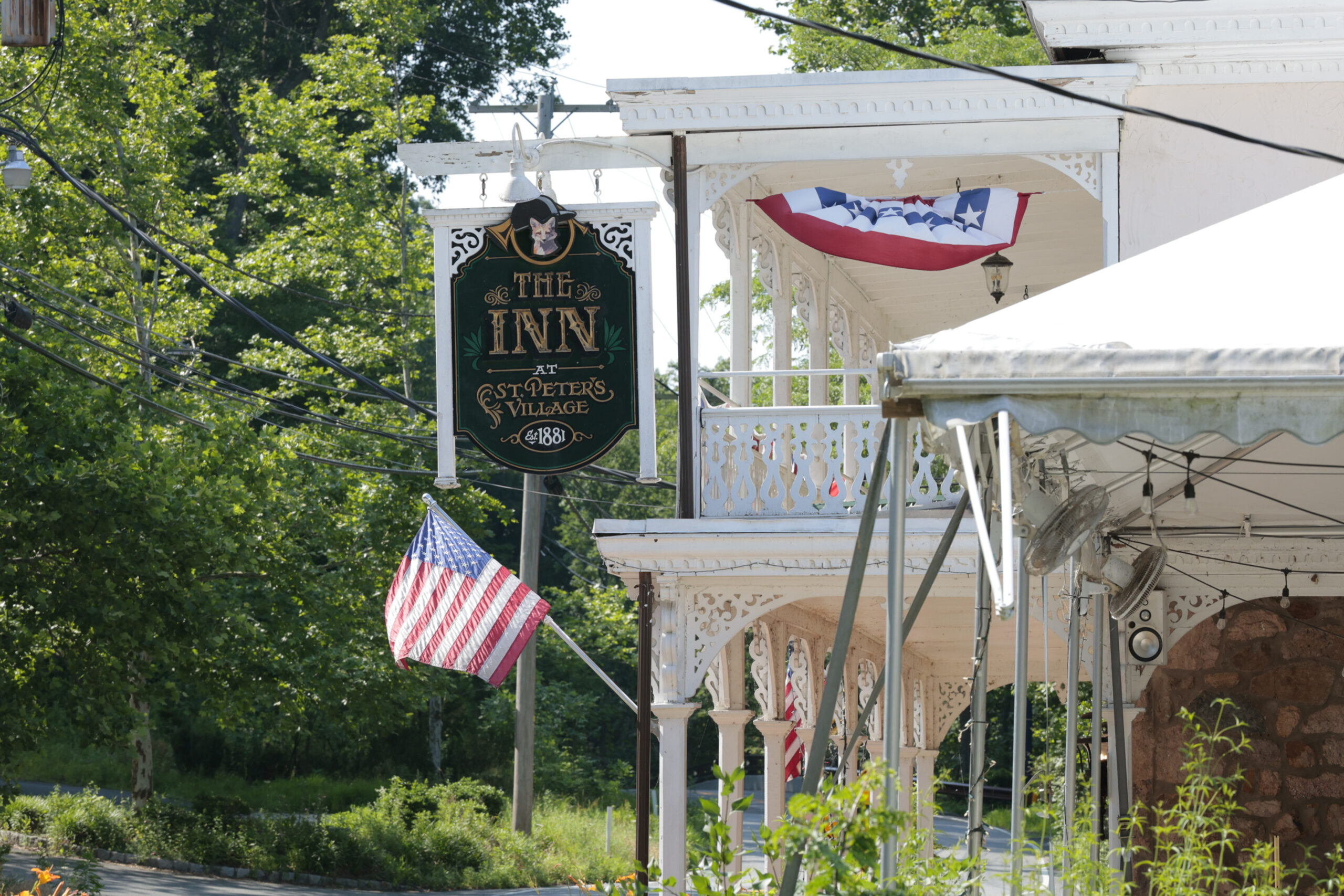
    On the table: 121 homes, which consist of 33 single-family homes, 33 twins, 34 townhomes, and 21 two-acre home sites; a wastewater treatment plant that serves the existing buildings; and 13 historic and commercial village buildings — including The Inn at St. Peter’s — which total about 43,500 square feet.

    The new owner could also clinch iron ore deposits on site, “adding a rare investment dimension,” the auction website notes.

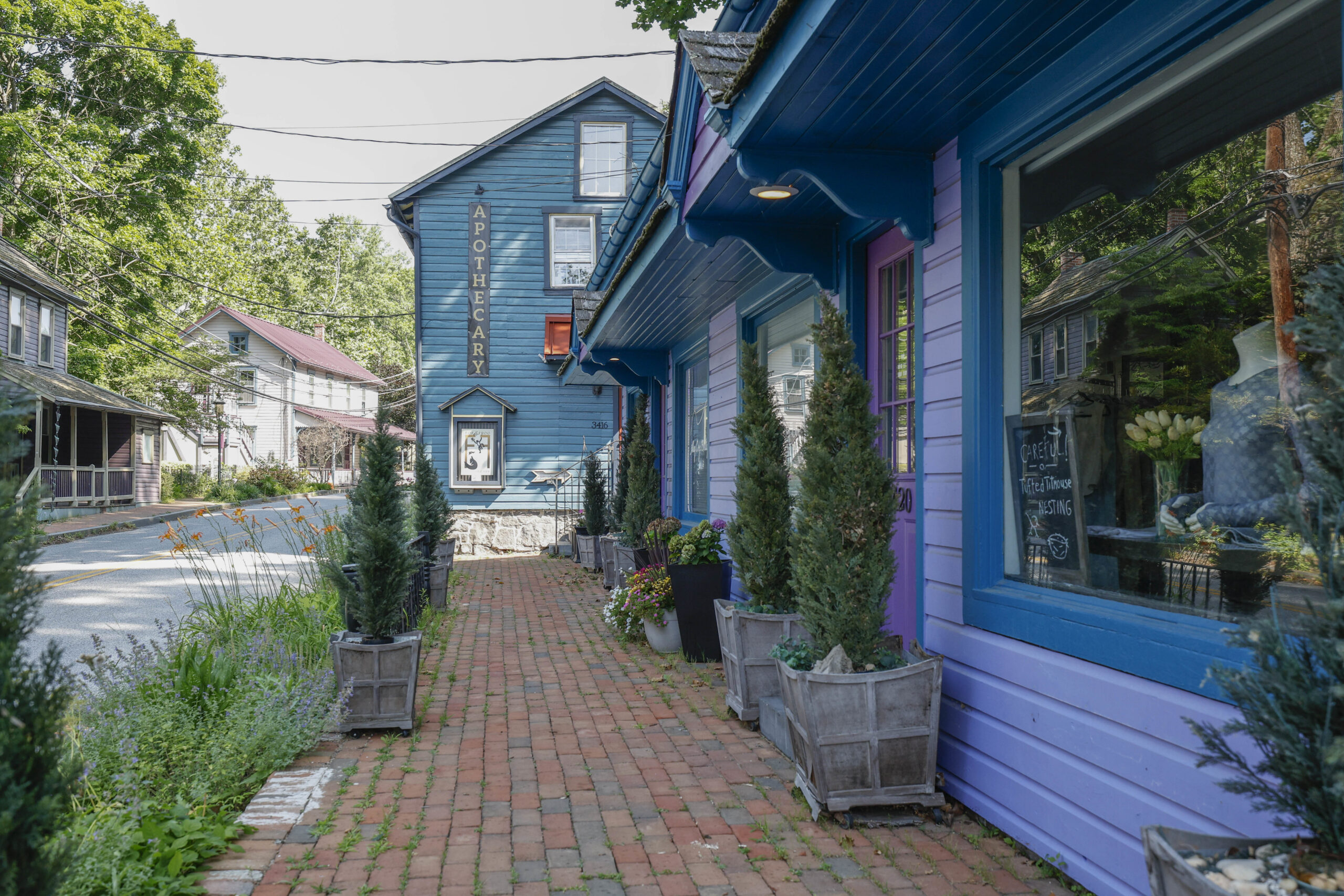
    The 83-acre St. Peter’s Village — a historic destination in Chester County — will be sold at an absolute public auction to the highest bidder in September. The Inn and various shops on the main drag. Wednesday, July 1, 2026

    The property is being sold as one unit. The buyer will have to improve the existing wastewater treatment plant for a full build out. The land is zoned for residential and neighborhood business uses.

    It is definitely an “unusual property” and the auction is unusually large as well, said Doug Clemens, chief executive officer of the Traiman Real Estate Auction Company, which is overseeing the sale. Clemens said the property is owned by one entity. The Piazza family, which runs the Piazza Management Co. and owns multiple Main Line car dealerships, is listed on associated parcels. A spokesperson declined to comment.

    “We’ve sold properties that were thousands of acres, but they weren’t builder properties, so this is a large property for a builder,” Clemens said.

    Its good reputation, long history, and the sheer size of the parcel are why Clemens suspects they’ve seen remarkably high interest. The auctioneers put out a news release about the upcoming sale last week. They’ve received 14,000 responses since, he said.

    St. Peter’s Village sprung up because of its nearby natural assets: the French Creek, timber, good soil – and resources like iron ore, copper and black granite.

    Bidders must register at the auction with $150,000 guaranteed funds, but the bids will start wherever they’re comfortable.

    “At the conclusion, we’ll know what the bidders were willing to pay for it,” Clemens said.

    Following the curves of the French Creek, the village was established in the 1880s during the Gilded Age — a point in history where America was going through “growing pains” of both capital and labor, as well as whether it would be an “industrialized or agrarian nation,” said Jared Frederick, a history professor at Penn State Altoona.

    Like many a small village or hamlet in Pennsylvania, St. Peter’s sprung up because of its nearby natural assets: the French Creek, timber, good soil – and resources like iron ore, copper and black granite.

    Its economy flourished, thanks to those natural resources, which it transported to Philadelphia. It’s a “fascinating little enclave that demonstrates how some places were caught in the middle” of semi-ruralness and proximity to the big city, Frederick said.

    Alongside that growing economic engine was also leisure, though. St. Peter’s Village became a recreational getaway due to its beautiful, scenic vista — something considered a “majestic retreat for commoners,” Frederick said. And while Chester County places high value on its green spaces now, it was even more essential for people living in urban areas to have access to such places in the 1880s through the 1900s, Frederick said.

    St. Peter’s Village is on the National Register of Historic Places, but that may not safeguard it from development after it is auctioned off.

    Its sale has prompted concern about what it could become, with the auction site touting it as “suitable for major builders, venture capitalists, historic preservationists, and entrepreneurs.”

    Places like this are increasingly rare, Frederick said. And while the village is on the National Register of Historic Places, that doesn’t necessarily safeguard it, Frederick said. There’s a “fairly lengthy list” of places that have earned such recognition, but been bulldozed or neglected.

    And while development and other attractions could help revive the village by drawing in tourism, he believes it’s a careful balancing act.

    “Something that I always impart to my students in the classroom when we talk about the power and the need to preserve historical places, is that regret only goes one way,” he said. “When a place is gone, it’s gone forever, and that is something that very much needs to be kept in mind when pondering the fate of places like this.”

    This suburban content is produced with support from the Leslie Miller and Richard Worley Foundation and The Lenfest Institute for Journalism. Editorial content is created independently of the project donors. Gifts to support The Inquirer’s high-impact journalism can be made at inquirer.com/donate. A list of Lenfest Institute donors can be found at lenfestinstitute.org/supporters.
  • A Chester County lake is planned for draining as a dam is decommissioned. Residents are worried about what it’ll become.

    A Chester County lake is planned for draining as a dam is decommissioned. Residents are worried about what it’ll become.

    Dorothy Verdon had a history of moving around every few years. But when she found her lakefront — or, technically, lake-back — home in the Arbours of West Goshen in Chester County 12 years ago, she just really liked it.

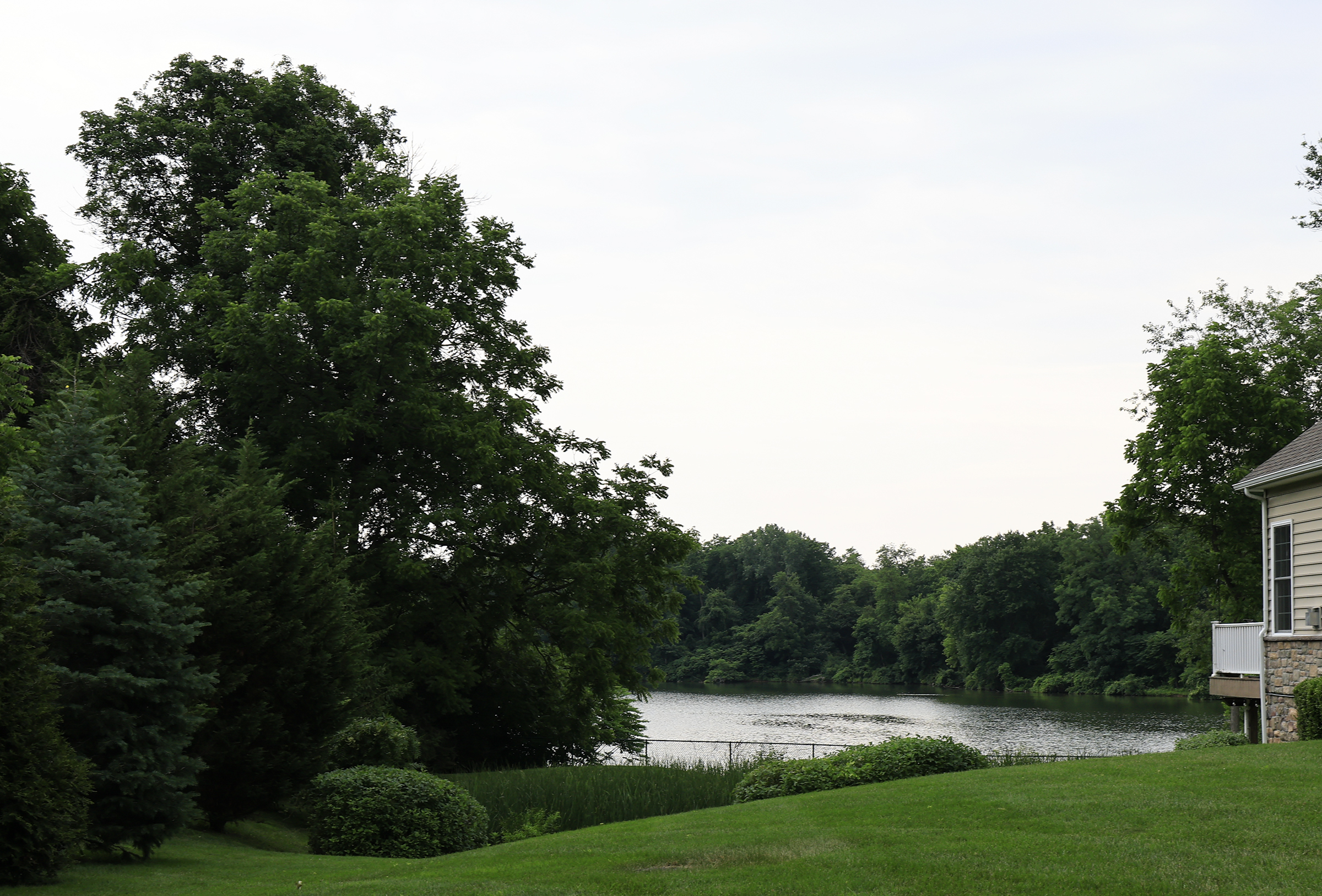
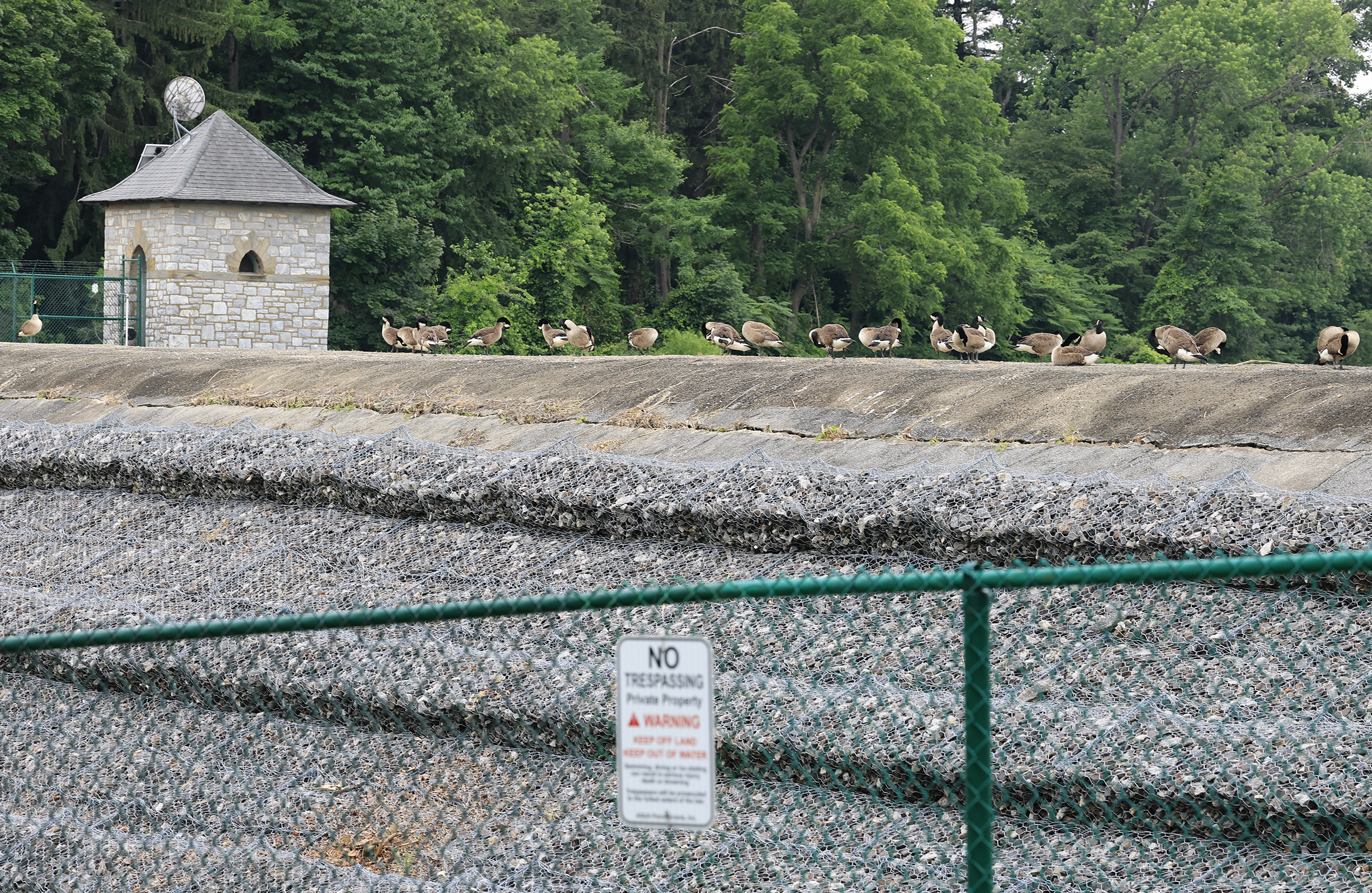
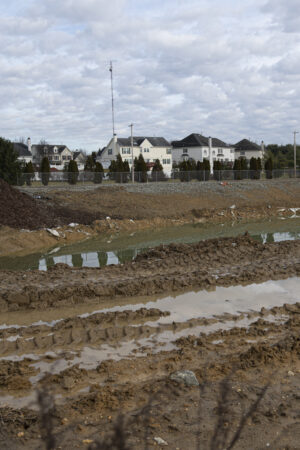
    Her loudest neighbors are the geese, who live at the banks of Fernhill Lake, a 64-acre impoundment formed from Aqua’s Township Line Dam. But under a plan from the public water company to partially decommission the dam and draw down the reservoir, returning the natural flow of Chester Creek, Verdon and her neighbors’ backyards would be subject to great ecological change in the coming years.

    It’s a change environmentalists generally support, as dams greatly affect the ecosystem around them: increasing water temperature, generating algae growth, and fragmenting habitats. But residents, some of whom paid up to $20,000 for their lake-facing yards, worry what their backyards, and the developed habitat, could become.

    “My immediate concern, and that of several residents and the township, is what’s going to happen to the ecosystem, because it is a water-based ecosystem,” Verdon said. “There’s that. It’s really financial. And it’s aesthetic. What are we going to have behind us as the lake gets drained?”

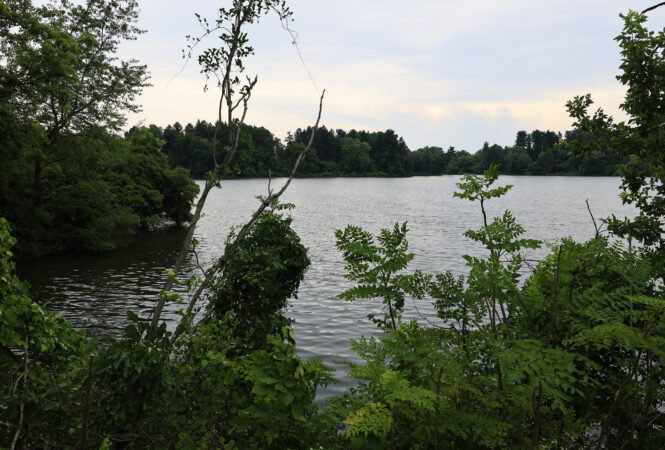
    A view of Fernhill Lake from the Arbours at West Goshen in West Goshen, Pa., on Monday, June 22, 2026.

    The planned decommissioning

    Built in 1935, Township Line Dam once supplied drinking water for surrounding customers. But, as with a number of dams before it, that has not been the case for decades. Aqua acquired the dam in 1998 and does not use it for daily operations.

    Township Line requires “extensive investment” to satisfy requirements from the Pennsylvania Department of Environmental Protection, which outweighs the benefits of a dam that no longer serves its purpose, Michael Fili, the company’s vice president of planning, design, and construction, wrote in a letter to the township’s board of supervisors in May.

    Under its plan, the company will begin drawing down the water in the reservoir by eight to 10 feet, leaving the water at that reduced level until it begins construction for partial dam removal in early 2028 through 2029, Fili wrote. At that time, the entire lake would be drained. (The company originally planned to begin the process in July, but pushed the timeline back to fall following concerns from residents.)

    A view of the Township Line Dam along Airport Road in West Goshen, Pa., on Monday, June 22, 2026.

    Following decommissioning, Aqua proposed transferring ownership of the 114 acres to West Goshen Township, making the municipality “stewards of the land” that could “utilize the land for the benefit of its residents,” Fili wrote.

    “We understand the reservoir and surrounding area is enjoyed by the community, and we do not take this action lightly,” Fili wrote.

    The announcement drew concerns during a May board meeting from residents, who questioned why it had to be drawn down so quickly, and worried about what would become of the land — fearing further development, or lack of adequate care to keep it from becoming an eyesore. Some wondered if there might be a path to maintaining the lake.

    “With all due respect to my fellow supervisors’ opinion, I don’t think we have an option here,” said Shaun Walsh, chairman of the township’s board. “If you keep it as a dam, you need to spend millions of dollars to fix it.”

    Walsh said the township would keep it as an open space, possibly turning it into a mixture of wetlands, meadow, woodlands with walking trails — an “ultimately real beautiful amenity for people in the area to use,” he said.

    “I think there are so many advantages in it becoming a publicly owned asset, given that the township is so built out,” he added. “I personally believe in 10 years’ time we should have an attractive amenity there for the community.”

    (“When we’re all dead,” someone in the meeting responded.)

    West Chester appears to have a right of first refusal to purchase the property at low cost, based on old agreements, officials for the borough said. West Goshen Township Manager Chris Bashore said that town was waiting to see what West Chester decides.

    In a message, Aqua said it is communicating with both municipalities and “no determination has yet been made as to whether the 114 acres of property will be conveyed and to whom.”

    Birds rest on the Township Line Dam along Airport Road in West Goshen, Pa., on Monday, June 22, 2026.

    Dams and wildlife

    Residents also worry about what will become of the waterfowl, turtles, fish, and a bald eagle who have begun to call it home over nearly a century.

    Largely, environmental activists believe that “the positives of dam removal outweigh any kind of negatives” said Faith Zerbe, advocacy and science community action coordinator with the Delaware Riverkeeper Network, which has sought the decommissioning of multiple dams over the last two decades.

    The Chester Creek, a tributary of the Delaware River, is steeped with “impairments” — situations when a waterway does not meet environmental or regulatory quality — along much of its length. Removing the dam would help chip away at some of those larger issues.

    “Removing a dam, allowing the natural stream to find its pattern over time as that dam removal takes place, and then restoring the stream banks with natural native indigenous species is kind of a critical piece to getting ecology back to the river,” she said.

    Aqua said it is coordinating with the Pennsylvania Fish and Boat Commission and Department of Conservation and Natural Resources, and the federal Fish and Wildlife Services, as it prepares for its drawdown.

    It is essential for the dam decommissioning to be done right, environmentalists said. But when done “thoughtfully and with the proper permissions, dam removal can have remarkable benefits for local ecosystems, allowing these areas to return to their original landscape,” said Carly Lare, executive director of Chester Ridley Crum Watersheds Association.

    Her organization has been communicating with Aqua to better understand the project’s goals and timelines, she said.

    “Since colonization of the area, this landscape has greatly changed, which in turn alters which native species can survive throughout our region,” Lare said. “When habitats are fragmented, our creeks experience diminished migration of native fish populations, which in turn influences the health and diversity of other native organisms, ranging from freshwater mussels to river otters.”

    This suburban content is produced with support from the Leslie Miller and Richard Worley Foundation and The Lenfest Institute for Journalism. Editorial content is created independently of the project donors. Gifts to support The Inquirer’s high-impact journalism can be made at inquirer.com/donate. A list of Lenfest Institute donors can be found at lenfestinstitute.org/supporters.
  • Gov. Shapiro welcomes 63 new U.S. citizens from 17 countries in Chesco alongside a George Washington reenactor and bald eagle

    Gov. Shapiro welcomes 63 new U.S. citizens from 17 countries in Chesco alongside a George Washington reenactor and bald eagle

    It’s been a long time coming, Matthew Mckena reflected. There were hiccups in the process. But by midday Friday, he was officially a U.S. citizen, in time for the country’s 250th birthday, and welcomed by Gov. Josh Shapiro, a George Washington reenactor, and even a bald eagle.

    “It just became a battle of perseverance, but also we’ve come so far,” he said. “The hope in itself is also in the waiting, and so it’s now coming in full circle. It’s just unbelievable of having waited for so long for something, and then finally having it.”

    Mckena, 21, was one of 63 people from 17 counties to take their oaths as new citizens in Valley Forge on Friday. For many of them, who ranged in ages 18 to 87, the day was a culmination of years of effort and lives they’d built in the country.

    Mckena’s siblings were born in the United States, before his family moved back to Kenya, where he was born. When he was in high school, his family returned to the U.S. He’s now a college student pursuing a degree in mechanical engineering.

    “[There are] so many opportunities that have been afforded with this move to be at a place where it’s so easy to access education infrastructure,” he said.

    New citizen Helene Hartmann Dirani with her 3-year-old daughter Victoria are greeted by Gov. Josh Shapiro as he welcomes 63 new citizens from 17 countries at the historic Founding Forward in Phoenixville.

    Helene Hartmann Dirani, 42, has called a few nations home: Originally from Kazakhstan, she moved to Germany at 13 years old, and then studied in Austria. She later met her now-husband in the United States. After years of long-distance dating, they settled down, and she moved to the country 13 years ago. Three children later, the ceremony felt like a special moment for Hartmann Dirani.

    “Being with my husband and my children, and settling down is really what makes it so special,” she said.

    The naturalization ceremony was held one week before America’s Semiquincentennial in historic Valley Forge. Chester County Court of Common Pleas President Judge Ann Marie Wheatcraft called the new citizens’ attention to that legacy.

    “Valley Forge reminds us that citizenship is not simply inherited, it is claimed often at a great cost, and many of the many of us take that for granted. You understand better than most,” she said. “You chose America. You worked hard for this. … Bear with us your gifts, your culture, and all that makes you unique.”

    Rohan Bakshi talks about becoming a new citizen before Gov. Josh Shapiro welcomed 63 new citizens from 17 countries at the historic Founding Forward in Phoenixville on Friday, June 26, 2026.

    America has always been “a land of dreams” for Rohan Bakshi, 45. He came to the country from India in 2012, and has felt a part of the country. He built a life, family, and career here. After so many years, this was a “dream come true,” he said.

    “This is the best country to live in,” said Bakshi, whose wife will be sitting in his seat soon, as she pursues her own citizenship. “I’ve seen other countries as well. It’s a privilege to be an American citizen.”

    Lina Zhang, 41, felt emotional as she waited to take her oath. Roughly 14 years ago, she moved from China to the United States. In the beginning, her English “sucked,” she said. But she learned fast: attending GED classes, using her translator app to translate English to Chinese, and then translating back to English, so she could take her exams.

    Her hard work earned her some of the highest marks her teacher had seen in years, she said. She went on to college, majoring in accounting and minoring in finance, landing a job with a public accounting firm.

    Surrounded by her family Friday, she was glad to be sitting at the ceremony.

    “I’m proud of myself,” she said.

    New citizen Lina Zhang poses with George and Martha Washington reenactors Randall Spackman and Karyrn Saece before taking the oath of citizenship with 63 new citizens from 17 countries at the historic Founding Forward in Phoenixville.

    Speaking to the new citizens, Gov. Josh Shapiro recognized the work each person had put in to reach this moment. But, he warned: “As new Americans, your work is just beginning.”

    Recalling Ben Franklin’s famous quote, “A Republic, if you can keep it,” Shapiro told them those words — “if you can keep it” — was their charge.

    “Each successive generation of Americans have continued that work, caring for their neighbors, standing up for freedoms that our founding fathers fought for, taking an oath of citizenship, working in the halls of Congress, the halls of our state capitol, the halls of our county — that work now falls to each of you to be engaged American citizens,” he said.

    New citizens got to visit with Noah the bald eagle from the Elmwood Park Zoo after some 63 new citizens from 17 countries took the oath of citizenship at the historic Founding Forward in Phoenixville.

    After the ceremony, Mckena said, from his experience, a lot of people discount the value of American citizenship.

    “There really is a high cost that a lot of people pay, and there really is a huge disparity in what democracy offers and what the rest of the world offers, and so really it’s a special opportunity,” he said. “People who already had it [should] really treasure and understand it. And for those who don’t, seek after it.”

    This suburban content is produced with support from the Leslie Miller and Richard Worley Foundation and The Lenfest Institute for Journalism. Editorial content is created independently of the project donors. Gifts to support The Inquirer’s high-impact journalism can be made at inquirer.com/donate. A list of Lenfest Institute donors can be found at lenfestinstitute.org/supporters.
  • ‘Continuing that legacy’: Caterer John Serock purchases historic Loch Aerie Mansion wedding venue in Malvern for $4M

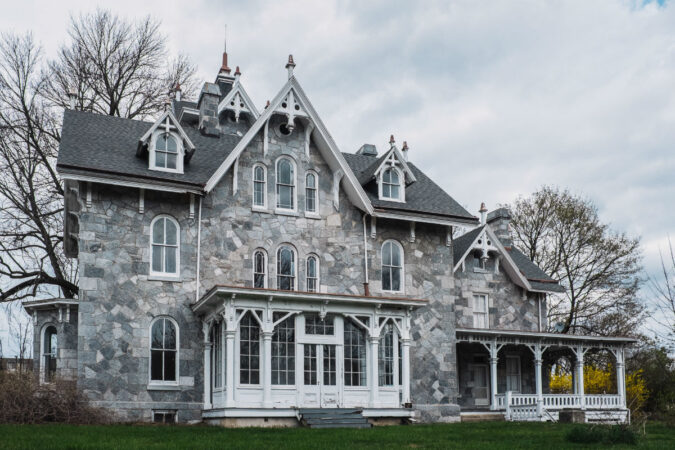
    ‘Continuing that legacy’: Caterer John Serock purchases historic Loch Aerie Mansion wedding venue in Malvern for $4M

    John Serock closed on the historic wedding venue Loch Aerie Mansion on a Tuesday. The first wedding was that Saturday.

    It was a natural transition for Serock, whose catering company has exclusively worked with the venue since its former owners, Steven and Dana Poirier, purchased the Malvern mansion in 2016 with the intention of giving the property a new life. Serock had come in early in the process, working with the Poiriers as they restored the historic estate and turned it into its latest iteration: a wedding venue.

    But Serock had first laid eyes on the property, which is more than a century old, in 2006. He had a storefront up the street and, one day, with the leaves off the trees, the mansion just appeared before him. He thought it would make a “cool” wedding venue.

    Now, 20 years after that first sighting, the mansion has become Serock’s first venue of the sort.

    “I was starting to get the itch to maybe look into my own venue, and then COVID hit, and I swore I said it’ll be a long time before I ever sign another piece of paper,” he said. “Then as the few years went on, and we started talking with Loch Aerie, I went back and forth … did we need this next step? But when I really broke it down, this is something I felt I needed.”

    Serock closed in mid-May, purchasing the property for $3 million and the business for $1 million. His company took over the existing book of business, honoring all future weddings. It is working on filling up the rest of the calendar, aiming for not a single Saturday off, he said.

    Under the new ownership, Serock plans few cosmetic changes — except making more photo-worthy backdrops — but will focus on operational tweaks and increasing business from corporate and nonprofit clients midweek.

    The venue is rolling out “Nonprofit Thursdays,“ offering “severely discounted” rates for nonprofits to throw fundraisers during the week.

    To appeal more to business leaders, it is looking into putting a central sound system, so clients do not have to bring in a separate company.

    More generally, Serock is looking to add a liquor license — Loch Aerie is currently BYOB — with the goal of making things as “easy and turnkey as possible” for clients, he said.

    For weddings, which make up 95% of Loch Aerie’s business, the venue lowered its offseason pricing immediately, Serock said. Saturdays in the offseason will run $7,000, compared with about $10,000 during the peak in May, June, September, and October. Fridays and Sundays go from $4,500 in the offseason to $8,000 and $7,000, respectively.

    The four-story stone mansion has a newly constructed 5,000-square-foot ballroom addition that accommodates around 200 guests. The venue features billiards and dining rooms, a parlor, an entry hall and dramatic stairway, suites to get ready, and outdoor spaces.

    Serock sees this as a first of several venues to come, hoping to build a portfolio out of multiple properties. He is not in a rush, he said, and Loch Aerie has served as a learning experience.

    “You couldn’t ask for a better opportunity, because really, like I said, nothing changed,” he said. “It’s an easier transition, because I already understood ‘where’s the circuit breaker,’ or ’how’s this work’ … so that’s a good first step. And even since then, I learned a lot.”

    Built in 1865, the estate had sat vacant for roughly 12 years. It went to auction in 2016, purchased for $700,000 by a businessman who looked to restore the home and build a hotel next door. But when the deal fell through, according to VISTA.Today, the Poiriers — who had been outbid earlier — came out triumphant.

    In the years before that, it served as a home or a business space for those “whose occupancies were short lived and rather destructive,” according to the website.

    Since first seeing the property in 2006, Serock has heard dozens of stories about it — almost folkloric in its history between historic design and a biker gang — and how it has served as a reference point, a piece of Chester County legacy.

    “For me, we’re building these new memories with our couples and families, but I think it’s really important that we’ve been able to also save and maintain this property, especially in the age where everybody wants to just knock down and have the brand, the shiny new toy, and whether it’s a house or car,” Serock said. “I think it’s really cool that we’ve had this opportunity to save this house. The Poiriers saved it, but we’re continuing that legacy.”

    This suburban content is produced with support from the Leslie Miller and Richard Worley Foundation and The Lenfest Institute for Journalism. Editorial content is created independently of the project donors. Gifts to support The Inquirer’s high-impact journalism can be made at inquirer.com/donate. A list of Lenfest Institute donors can be found at lenfestinstitute.org/supporters.

  • The USA Table Tennis Pennsylvania Open is coming to Phoenixville this month, with rankings and cash prizes — and community — up for grabs

    The USA Table Tennis Pennsylvania Open is coming to Phoenixville this month, with rankings and cash prizes — and community — up for grabs

    For Deepak Gupta, playing Ping-Pong is something of living out a childhood dream for him.

    Later this month, he’ll be taking that dream to the next level, as he makes his tournament debut at the USA Table Tennis Pennsylvania Open in Phoenixville.

    “I’ve never met two people who play the same … they have a unique style of playing, and every player has strengths and weaknesses, the way they spin the ball, the way they serve,” he said. “I’m looking forward to playing against more people whom I’ve never met, so that’ll be challenging.”

    Gupta, 52, will be among the 40 to 50 players from the region competing; the tournament has six events and will be held at the Phoenixville Recreation Center.

    Players will compete in women’s singles, juniors, over 40, the open, or skill-capped events. On the line: cash prizes, trophies, and national ratings points.

    It’s the fourth time the Phoenixville Table Tennis Club, established in 2009, is holding a USA Table Tennis tournament, and its second Pennsylvania Open.

    “We do have a lot of lower-level players participating in those events, and one, it gives them the opportunity to win trophy and money, but two, it gives them the opportunity to continue to compete … and get better in their games,” said Nick Flor, organizer and one of the founders of the Phoenixville club. “Say you come across your archnemesis that you play at the club in the tournament. … It’s going to give you that drive to learn to beat them, to learn to get better.”

    Gupta will be playing in the “under 1200″ event, for beginner to intermediate players whose rating is below 1200. A rating represents their skill level and determines where a player is seeded in an event. Low-level players would be rated around 900 or 1000, while high-level players approach 3000, Flor said. As players win matches and tournaments, up goes their rating. The tournament will have several events split by rating level.

    Players will also be competing for ranking points as part of the USA Table Tennis’ system. Depending on how many tournaments players win, they earn points. Top-point earners are considered for the Olympics, or the sport’s World Cup.

    Aside from rankings, players are drawn to the community the sport has given them.

    Serving up community

    Gupta loved the game passionately as a child, but it faded into the background after high school. Some 30 years later, he started playing against a couple of friends in the basement. He found out about the Phoenixville club, which meets twice a week at the recreation center, hosts a smattering of smaller tournaments and competitions, and provides support for new players. But it wasn’t enough; he ended up opening his own club in Exton, called Exton Table Tennis.

    The club is run by friends, for friends, he said. Before he started playing table tennis a few years ago, he had few of them. He met other parents in school groups, but those social interactions were limited to talking about their kids.

    “Once I started playing table tennis with some of the other dads, we started getting to know each other more as individuals and more as friends,” he said, “and then taking that spirit and … expanding it to a community.”

    Flor, 53, caught the bug in high school, when he’d play with his friends in the senior lounge. They started playing before and after school. They were “terrible,” Flor recalls. But they kept playing, deciding to enter a tournament. They got crushed and had the experience he’s seen in many players: the shock and awe at the level of gameplay, of technique, and skill it takes. The group began going to a club in Pottstown, getting tutelage from an older gentleman, and eventually opened their own club, he said.

    He’s seen the sport change over time, fluctuating in popularity. They see surges around the Olympics, and during the colder months. Marty Supreme drummed up excitement among players but didn’t seem to inspire a new generation. (Forrest Gump has probably done more for the sport, he noted.)

    A game for all

    Flor’s love of Ping-Pong has seeped into his marriage, as he slowly turned his wife, Janel Flor, into a convert. Now the two are evenly matched.

    It’s been a journey for Janel, whose first experience was in the place that makes or breaks anyone’s love of sport: gym class. It put her off table tennis for years. She was supportive of her husband but felt it was “kind of a dumb sport.” But, ever persistent, he coaxed her into a lesson. About a month later, she felt it sink in and sent the ball exactly where she wanted it to go. She was hooked.

    She was not very competitive until she was able to beat Nick. “Once I could do that,” she said, “I was like, you know what, I actually really like this game.”

    It’s been her goal to get more women into the game and to have fun doing it.

    “My goal is always to help build confidence and help get them playing, so that they’re not overthinking everything,” she said.

    Janel, 50, will compete in the women’s event in the upcoming tournament, against roughly six others. She has gotten over some of the initial fears of tournament play but said she still gets butterflies when she steps up to the table.

    Despite those butterflies, it’s often an encouraging, but still competitive, game, she said.

    For Gupta, it’s a game where people of all ages, genders, and abilities can thrive. The clubs welcome kids, whom they have watched level up over time.

    “Table tennis is one game where it evens everything out. It doesn’t matter,” he said. “If you have skills, you can become really good, that’s one thing that I really love about this game. … I think now I’m finally trying to live my childhood dream, and I hope other kids can enjoy the same passion that I had as a child.”

    This suburban content is produced with support from the Leslie Miller and Richard Worley Foundation and The Lenfest Institute for Journalism. Editorial content is created independently of the project donors. Gifts to support The Inquirer’s high-impact journalism can be made at inquirer.com/donate. A list of Lenfest Institute donors can be found at lenfestinstitute.org/supporters.
  • Five Chester County centenarians, ranging from 99 to 104, give their life secrets

    Five Chester County centenarians, ranging from 99 to 104, give their life secrets

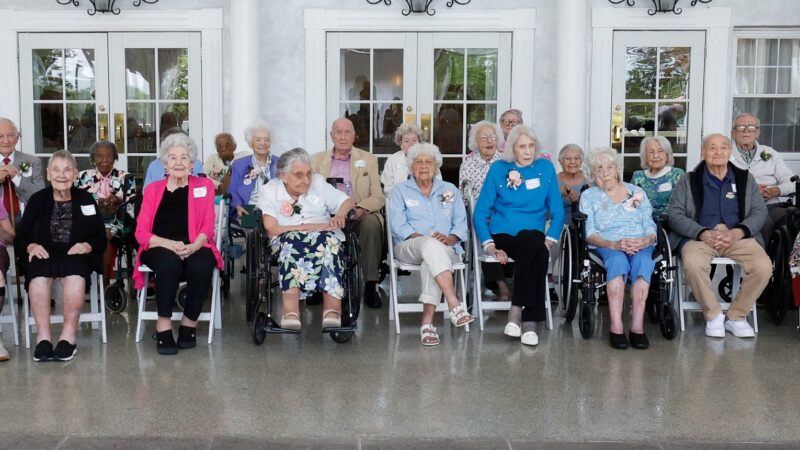
    From horses giving way to cars and the invention of television, to the election of more than a dozen presidents, World War II, and even the sale of sliced bread — the 45 Chester County centenarians who gathered for an annual luncheon this week have watched the world remake itself time and time again.

    “I saw a lot of things. A lot of wars, and a lot of popes. There’s a lot of good things,” said Anne Caporale, who will turn 100 in July. “I got married, had a family. I had a good life.”

    The annual luncheon celebrated Chester County’s group of centenarians — a total of 57 residents reaching or surpassing the milestone. Tuesday’s celebration saw a dozen who would turn 100 this year, plus quite a few returning attendees, including 108-year-old Evelyn Fair, who still writes poetry.

    “You are the builders, the teachers, the parents, the neighbors, and the foundation of the Chester County community,” Josh Maxwell, chair of the board of county commissioners, told attendees. “Every single comfort and freedom we enjoy today is a direct result of the hard work, sacrifice, and grace you poured into the world decades and decades ago. We are walking today on paths that you have all cleared.”

    Meet some of Chester County’s longest residents.

    Henry Jacks, 104

    Henry Jacks, 104, enjoys the annual centenarian luncheon hosted by the Department of Aging.

    Henry Jacks moved to South Coatesville when he was 4 years old, and has called it home ever since. He’s witnessed “quite a bit of change.”

    He remembers watching deliveries come by horse and wagon and recalls the hard days of the 1930s during the Great Depression (“cost of living wasn’t as bad as it is now,” he noted). Jacks joined the Army in 1940 during World War II, serving in the 92nd Engineers Regiment, and was stationed in Africa and Italy. He came back home to have three children, a boy and two girls.

    He was a Boy Scout leader, the first Black mail carrier in Coatesville, a city council member, and a judge of elections. He still sings in the church choir. (His advice: “Treat people right. Go to church.”)

    “So many changes that I’ve seen in the days,” he said. “I remember when I first saw TV; one of the neighbors had one, and all of the kids used to watch through his window. I’ve seen from the horses, to the cars, to the jet airplanes. And it’s been a wonderful life.”

    Letitia Hemphill, 103

    Letitia Hemphill, 103, at Tuesday’s luncheon.

    Letitia Hemphill started her working life at the candy counter at the former F.W. Woolworth’s five-and-dime in her hometown of West Chester. Though her father remarked she wasn’t good at math, she’d go on to have a long career using her skills while filling the registers and doing the end-of-day count in a department store and later at the treasurer’s office.

    She retired in 1986 but had trouble sitting still.

    “I got bored of not working,” she said.

    She started cleaning houses. It was something she’d always done: help her mother clean in the morning, and then go to the park in the afternoon. She kept up the tradition with her two grandkids and her two great-grandkids, whom she babysat for 14 years.

    An active life has been key to Hemphill, who did 10 years of ballroom dancing and more than 20 years at the gym.

    “Keep your body moving and keep your mind moving,” she said.

    She keeps her mind active by painting landscapes in watercolor, a hobby she took up in 1995.

    Hemphill was born in West Chester to a stonemason father and a stay-at-home mother. Once, someone asked Hemphill if she had a lot of friends. With 11 brothers and sisters, she remarked she didn’t need any.

    When she journeys through West Chester, she points out all the stores that have changed over time.

    Still, Chester County is “beautiful,” and much of her family is still around to keep her moving: two children, two grandchildren, and two great-grandchildren.

    Joseph Donia, 100

    Joseph Donia, 100. There were 45 centenarians in attendance at Tuesday’s luncheon.

    Up until last year or so, Joseph Donia’s hobby was building boats. He constructed a 20-foot wooden cabin cruiser from scratch. He had it for 40 years.

    “The only reason I sold it — my wife couldn’t get on it anymore,” he said.

    He had a lifelong love of boats, and spent five years at sea for the U.S. Merchant Marine in World War II. His time in service was the only time he wasn’t living in West Chester, where he bought a house and raised three kids. He also has six grandkids and three great-grandkids.

    His most recent project was a 35-foot sailboat. It’s still sitting behind his West Chester home, but he’s given it to his son to finish.

    It kept the 100-year-old active — something he advises.

    Eleanor Hammond, 101

    Eleanor Hammond, 101, enjoys Tuesday’s annual luncheon.

    Eleanor Hammond has always been a fan of creative pursuits: a voracious reader who knitted and sewed. She stitched her daughter’s wedding gown, and, perhaps more memorably, a jacket for her husband.

    “He insisted I make him a jacket because I sewed for everyone else. He picked out the material; looked like Liberace. It was horrible,” she said. “I wouldn’t go out with him when he wore it.”

    A graduate of Coatesville High School, Hammond would go on to work there until she was 81, in the principal’s office. She was once a disciplinarian, and truancy officer. She’s watched the county change over time, marveling at the amount of development. And, less positively, the traffic.

    “The way to get here, I used to zip here,” she said. “But I can’t do that now.”

    Still, she likes it, and the changes that have come with time.

    “I’ve been here a long time. Everything about it is beautiful. The people are friendly, and it’s a beautiful place,” she said.

    And as much as she loves home, she recommends travel. If you don’t know the language, be nice, smile, and “use your arms” to convey your meaning.

    Anne Caporale, 99

    Anne Caporale, who turns 100 in July.

    Anne Caporale graduated alongside Hammond at Coatesville High School. She went on to raise six kids, and has 10 grandchildren, 27 great-grandchildren, and three great-great-grandchildren.

    “We have quite a group,” she said. “I love them.”

    She has found Chester County to be a good place to live and “wouldn’t want to live anywhere else.”

    She lives at home, right by one of Downingtown’s high schools, which she loves because “the kids are great.” She still does her laundry and cooks every day. The luncheon Tuesday was a treat for her. “Let somebody else do the cooking,” she said.

    Keeping active is the secret, she said.

    “I know we’re here for a reason, but I don’t know it. I don’t question it,” she said.

    This suburban content is produced with support from the Leslie Miller and Richard Worley Foundation and The Lenfest Institute for Journalism. Editorial content is created independently of the project donors. Gifts to support The Inquirer’s high-impact journalism can be made at inquirer.com/donate. A list of Lenfest Institute donors can be found at lenfestinstitute.org/supporters.
  • Tredyffrin residents are concerned over the police response to the suspect who allegedly shot and killed a woman in a random attack

    Tredyffrin residents are concerned over the police response to the suspect who allegedly shot and killed a woman in a random attack

    Residents in Tredyffrin, where a woman was killed in a random act of violence last weekend, said Monday that more could have been done in the hours leading up to the shooting and criticized the township’s lack of communication before and after the crime.

    The remarks were brought before the township’s elected board of supervisors in the first public meeting since Steve Jahn, 44, was arrested and charged with murdering Megan Nieberle, a 53-year-old nurse, while she was driving home from seeing friends late in the evening of March 7. She died the next day.

    Residents were chilled by the fact that, in the hours before Jahn killed Nieberle, he had called the police himself, telling them he was being followed by undercover officers, according to authorities. Officers, who said Jahn was showing “frantic behavior,” escorted him to Paoli Hospital for a voluntary mental health evaluation but let him leave when he requested it, knowing he legally owned firearms and had one with him. Jahn was arrested and charged with murder the day after the shooting.

    “We can frame this a lot of ways: It was a random act of violence,” said resident Joe Maugeri. “But we could also frame it as: Was it a preventable act of violence? And I think that’s the question that all of us are thinking. Were there tools that police had? Were there things that could have been done?”

    Authorities said that Jahn had no connection with Nieberle, a Children’s Hospital of Philadelphia nurse and mother of three. A few hours after leaving the hospital, Jahn allegedly drove to the intersection of Contention Lane and Old State Road in Berwyn and shot Nieberle from his car.

    Passersby who saw Nieberle’s crashed car called police, who rushed her to Paoli Hospital.

    Her death has “left a profound void in the hearts of the many who were fortunate enough to know and love her,” loved ones wrote in her obituary last week. Nieberle’s “warmth, humor, and loyalty made her a cherished presence in the community,” the obituary says.

    In his opening remarks Monday, board chairman David Miller said that officers were limited in what they could do that day. Pennsylvania has no “red flag” law, which allows for the temporary removal of lawfully owned guns when the owner appears at risk for danger.

    “Now I’m not saying a red flag law would have changed what happened on [that] night. I can’t know that, but certainly would have given our police another tool to help manage the situation,” Miller said.

    Such a measure has repeatedly failed to get enough support in politically divided Harrisburg. Another version of the bill was introduced this session.

    Democratic State Rep. Melissa Shusterman, who represents the area, said in a statement that there had been an increase in interest in extreme risk protection orders in the community.

    “The loss of our neighbor was tragic, and while we may not know for certain if an ERPO would have prevented this senseless tragedy, we do know they help to reduce gun violence and keep our communities safer,” she said.

    Residents also criticized the township for not notifying the community of the possible danger, saying they went more than 30 hours before knowing Jahn had been arrested.

    “What are the protocols and policies that we have in place around notification when things like this happen?” resident Katie Angstadt asked. “From what we’ve understood is that there was someone in our community who was very dangerous, armed for six or seven hours, and we were not notified.”

    Superintendent of Police T. Michael Beaty said he understood why the incident was concerning.

    “Questions about firearm laws and policy are ultimately determined by legislators at the state and federal levels. Our role as law enforcement is to enforce the laws as they exist and to investigate crimes thoroughly when they occur,” he told them. “That said, when tragedies like this happen, it often leads to important conversations about how we can strengthen public policy, improve crisis intervention, and ensure officers and communities have the tools that they need to prevent violence whenever possible.

    “This is a very devastating situation, which has left a profound impact on many of our community members. At this time, my deepest condolences are with Megan’s family and loved ones as they navigate this unexpected loss. While I cannot speak on the timeline or specifics of the investigation, I know it remains ongoing.”

    This suburban content is produced with support from the Leslie Miller and Richard Worley Foundation and The Lenfest Institute for Journalism. Editorial content is created independently of the project donors. Gifts to support The Inquirer’s high-impact journalism can be made at inquirer.com/donate. A list of Lenfest Institute donors can be found at lenfestinstitute.org/supporters.