Author: Brooke Schultz

  • North Coventry residents and leaders reject data center plan — before it was even formally submitted

    North Coventry residents and leaders reject data center plan — before it was even formally submitted

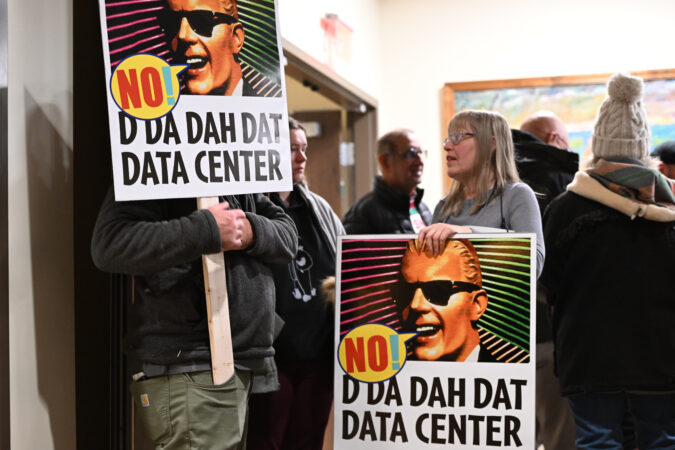
    The developer of a “boutique data center” will look elsewhere after public outcry and a preemptive board of supervisors vote showed no appetite for the facility in North Coventry Township.

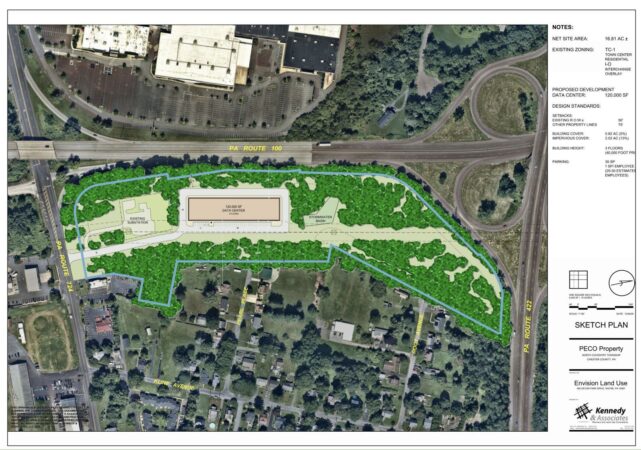
    The data center, informally proposed by Envision Land Use, would have been situated adjacent to Route 100 at 299 W. Schuylkill Road, in an industrial lot sitting near a Peco utility substation and a residential development.

    But swift and early public discontent — and the township’s leadership— stopped the data center before a formal application was even submitted to the Chester County municipality.

    The township’s board of supervisors voted, 3-2, on Monday that they would reject a proposal for the site eyed by Envision Land Use, said Erica Batdorf, the township’s manager. It was the first data center to be proposed in North Coventry.

    The board’s chair did not immediately respond to a request seeking comment.

    Though the developer could still formally submit its plans, it will scrap them for the municipality, said Envision Land Use’s Reiss Rosenthal.

    “[With] this much public pushback, we just thought at this time it didn’t make sense to try to go forward with this,” he said.

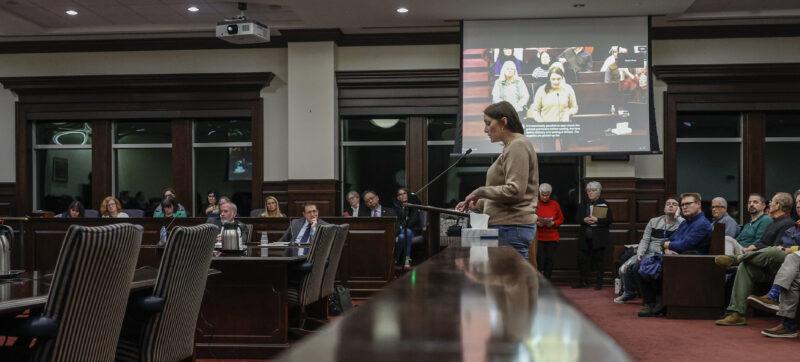
    On Monday, the crowd of roughly 100 residents booed when the supervisors discussed pushing back the vote to a subsequent meeting, Rosenthal said.

    The vote follows a growing public pushback of data centers in the region, particularly in Chester County. Last week, East Vincent’s planning commission told the township’s board of supervisors that it should reject a massive data center project there after months of tense public meetings. A proposed project in East Whiteland also saw backlash from residents last month after it sought to expand the footprint of its project.

    Though roughly 38% of Pennsylvanians support data centers being built in the commonwealth, residents are less likely to support data centers in their own backyards, according to a December survey, even as Democratic Gov. Josh Shapiro seeks to entice such projects to Pennsylvania by cutting some regulations.

    There are more than 150 data centers in Pennsylvania and New Jersey.

    Data centers are buildings or campuses that handle cloud-storage and computing needs of massive corporations, like Amazon, Google, Microsoft, or Meta.

    And though those kinds of corporations are looking at setting up shop in Pennsylvania, at about 17 acres the North Coventry project would have been smaller than its proposed counterparts in other pockets of Chester County, the developer said. These smaller centers have been around for longer than the ones making recent headlines, Rosenthal said.

    The proposed site would have been a 120,000 square-foot three-story building, making it relatively small compared with the sprawling plans in East Vincent and East Whiteland, which would both exceed a million square feet.

    Plans for the site say that it would have preserved and added trees and that its proximity to the Peco station would have required minimal additional power supply.

    The proposed project would have been within the township’s residential zoning district that has an industrial overlay. It would have had six full-time employees.

    “We were kind of surprised that this ended in a vote already,” Rosenthal said. “We thought it was possibly going to be a little bit more down the line, after we were able to meet with the neighbors as well as show our hands on what we were actually planning on doing.”

  • A deteriorating West Goshen house is at the center of a preservation fight

    A deteriorating West Goshen house is at the center of a preservation fight

    Posts online beckoned urban explorers to creep through a century-old West Goshen home that has sat empty and deteriorating for more than two decades. Police have frequented the property — responding to sounds of gunshots, or finding the doors open, but halting their searches, worried the floor might collapse.

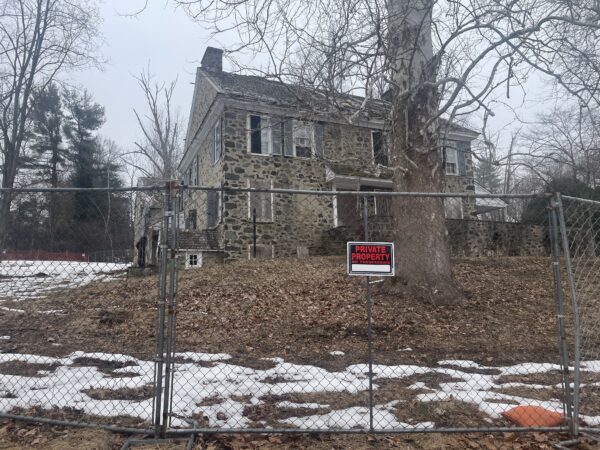
    The once-impressive three-story fieldstone house, with its private bridge and stonemason barn, has become something of an “attractive nuisance,” as a court document says, and a safety threat as it deteriorates.

    After the township intervened, the future of the privately owned property at 905 Westtown Rd. is now in the hands of a judge, who will weigh whether the property can be restored or if it ought to be demolished.

    But a group of residents fear losing the house, even in its much-diminished state, and have launched an effort to save the property. The hope is to halt possible development and instead turn it into a heritage center that would educate visitors on Chester County’s Quaker history and its roots to the Underground Railroad.

    It’s one example of a broader push and pull in Chester County, where residents want to preserve open space and history, and hold off development. But with privately owned land, especially land that is not protected for being historic, municipal officials can only do so much.

    “It’s a beautiful place. When you spend some time there, it’s like a window through time,” said Stephen Lyons, who is leading the preservation group Save Forsythe Farm, an unofficial name for the property derived from John Forsythe, who lived from 1754 to 1840, eventually owning the land and helping establish Westtown School.

    “It has a spirit of beauty,” he said.

    After sitting vacant for 20 years, the house has rotted from the inside

    The home was built more than a century ago — a structural engineer’s report puts it at 1900, a datestone on the property indicates 1818, and others suggest it may be older.

    The property, purchased by Joseph Kravitz in 2003, has descended into disrepair in the last two decades. Kravitz was found to have violated property maintenance codes in recent years. The property went into foreclosure and was listed for sheriff’s sale several times.

    But in September, with the property still owned by Kravitz, West Goshen officials submitted a 350-page petition to Chester County Court seeking conservatorship, arguing the house was neglected and in need of substantial rehabilitation.

    A judge approved the petition in November and appointed BDP Impact Real Estate as the conservator, which was tasked with creating a plan for abatement. Its final report will be heard in court on March 16, and the judge will determine what path should be followed. To retain ownership, Kravitz can reimburse the conservator and pay a fee, township officials said.

    Kravitz did not respond to phone calls or an email seeking comment.

    Under the conservatorship, a fence was placed to fend off explorers, and a structural engineer was brought in to assess the structures on the property. The engineer would not go beyond the front door of the house, out of fear of falling through the floor.

    But without going inside, the engineer found significant interior deterioration from a leaking roof, according to the report. Plaster, which once covered the ceilings, had rotted, fallen, and created mounds on the floor, revealing the skeletal wooden beams. The gutters have been disconnected, with water saturating the soil near the foundation. Cracks were seen on some windows.

    An in-ground swimming pool had “substantial” algae growth. A pool equipment shed was distorted. And a masonry barn structure was “in a state of impending collapse.”

    A single-lane bridge, allowing access from Westtown Road across a creek, is “not suitable for permanent use without repair or reconstruction.”

    When township solicitor Carl Ewald visited the property with the structural engineer in November, he mistook the swimming pool for a murky patch of grass.

    “It’s a very unfortunate situation, because I was able to find online pictures of this property from 20-some years ago, when it last went up for sale, and it was a really nice property back then,” he said.

    Along with an estimated $171,730 to install a temporary bridge to ferry equipment to the property, it would cost roughly $121,600 to demolish the main house, the conservator estimated.

    The estimated cost of rehabilitation was much higher: $1.2 million. Under that plan, the masonry walls would have to be stabilized and retained, and the interior fully gutted.

    It is unclear whether that is feasible and where the money would come from, Ewald said.

    “The court will be looking at that and determining whether that’s something that could be done, or whether demolition is the only real option,” he said.

    He thinks people might not realize how far gone the property is.

    “It’s unbelievable how fast water penetration into a structure really damages it, and how a house like this that stood for many years and, in 20 years, was really reduced to a shell,” Ewald said.

    The ability to ‘synthesize all these histories’

    With such a difficult path ahead, why not let the property go?

    For residents, it represents the region’s deep historical ties, and it offers the potential for preserving open space.

    Lyons grew up one mile away from the area. After living in New York as a musician and actor, he returned during the height of the COVID-19 pandemic to care for his parents, and Lyons became immersed in learning about the history of West Goshen, and the abolitionist and Quaker histories entrenched in the community.

    The goal for Save Forsythe Farm would be to create an open space that connects to the nearby Barker Park. In the group’s vision, the home would become a historic site that teaches about abolition, Black history, civil rights history, Quaker history, and more.

    “Forsythe Farm has a tremendous potential to synthesize all these histories and our connection to land and also First Nations people as well,” Lyons said.

    But this experience has prompted a proposed ordinance to address how demolition by neglect is handled amid private property rights, which the township’s board of supervisors and historic commission are set to discuss Thursday.

    Still, the hope is to keep the house from being demolished, said Brittany Schugsta, vice chair of the Save Forsythe Farm group. Her family once tried to buy the property, but ended up in East Goshen.

    “When I lived in West Goshen … it felt much more convenient. There was all the shopping hubs and all of those kind of places around, but it lacked that richness of history,” she said.

    If the owner does not reimburse the conservator, the property would be sold by the court to the highest bidder, Ewald said. The money would pay off the liens, debts, and the conservatorship. Any money left over would go to Kravitz.

    The township could buy the property, if officials are willing to spend a couple of million dollars “at minimum,” Ewald said. But it is not yet clear how much the property would cost, or if officials would want to purchase it.

    The house is something of a symbol of the past, said Bill Aaronson. He can see 905 Westtown from his front porch on Bob-O-Link Lane, where he has lived since the 1980s. He watched the home sell. He didn’t think much about it, until his son took a stroll and saw how much it had declined.

    And then he heard what it could become: a development.

    Speaking at a historical commission meeting last year, Kravitz said he envisioned several draftsman-style houses, called “Forsythe’s Homes” or “Barkerville.”

    (Though Kravitz has discussed his intentions previously, township officials said no plans had been submitted or were under review.)

    The concept prompted Aaronson to become more involved with Save Forsythe Farm.

    “The house itself is an extraordinary presence, and it symbolizes what the history here was, more than a plaque ever would,” Aaronson said.
  • The detective who helped advise ‘Mare of Easttown’ is suing Chester County over discrimination

    The detective who helped advise ‘Mare of Easttown’ is suing Chester County over discrimination

    A former Chester County detective — who served as a technical adviser for the HBO crime drama Mare of Easttown — is suing her former employer and supervisor in federal court over alleged sex discrimination.

    Christine Bleiler, who became Kate Winslet’s “go-to person” on developing her Emmy-winning performance as titular character Mare Sheehan, says she was subjected to a “prolonged pattern of hostile, discriminatory, and demeaning treatment based on her sex,” according to a complaint filed this month in the Eastern District of Pennsylvania.

    And though an internal investigation “corroborated” that she was being harassed, according to the suit, the county failed to remedy the harassment to which she was subjected.

    In addition to Chester County, the lawsuit names as a defendant Thomas Goggin, who was Bleiler’s supervisor from 2021 to 2023. Bleiler resigned in September.

    A spokesperson for the county declined to comment on ongoing litigation. An attorney for Goggin, who now serves as police chief in West Pikeland Township, did not immediately respond to a message seeking comment.

    Bleiler, who worked as a police officer for nearly a dozen years in Oxford Borough before beginning as a Chester County detective in 2015, began working under Goggin in February 2021. He accused her of talking too much, yelled at her repeatedly over how she handled suspects or on differences in opinion, demeaned and condescended to her, and told her “she ‘better not’ tell anyone that he was a problem,” according to the complaint.

    In August 2023, Bleiler brought the complaints to the detective division’s leadership, prompting an internal investigation that ultimately corroborated her claims, the suit says. Goggin was suspended for two weeks and was demoted, according to the complaint.

    Bleiler was worried about working near Goggin once he returned from his suspension, the suit says, fearing that he might retaliate. She was instructed by the department’s leadership to “bury her head in her work” and “move on from this.” Though she began reporting to a new supervisor, working in proximity to Goggin “caused her significant discomfort, anxiety and distress over potential retaliation and continued harassment,” the complaint says.

    Bleiler is asking a judge to declare that the county and Goggin’s actions violated federal and state antidiscrimination laws. It asks the court to grant her compensation for past and future lost earnings, earning capacity, and benefits, which the complaint argues Bleiler lost due to the “discriminatory and retaliatory conduct.”

    “The conduct of defendants, as set forth above, was severe or pervasive enough to make a reasonable person believe that the conditions of employment had been altered and that the working environment was hostile or abusive, and in fact made plaintiff believe that her working environment was hostile and abusive because of her sex and her complaint of sex discrimination,” the complaint states.

    While a detective for the county, in 2019 Bleiler served as a technical adviser for HBO’s Mare of Easttown, taking phone calls from Winslet morning and night to discuss upcoming scenes or to answer questions. At one point, Winslet visited her at the Justice Center in West Chester.

    “She insisted,” Bleiler told The Inquirer in 2021. “I told my lieutenant at that time, he couldn’t believe it. He said, ‘All right, she’s your responsibility. Get her in and get her out, keep it quiet.’”

  • The 300-year-old Cochranville is moving toward its first public water line

    Cochranville is moving toward getting its first public water line, after West Fallowfield Township secured a grant to fund the project earlier this month.

    Installing public water in the 300-year-old village situated within the largely agricultural township in western Chester County has been more than a decade in the making, said Duane Hershey, the chairman of the board of supervisors.

    Residents told officials water was a concern in a survey a few years ago, and the township has a desire to bolster the commercial landscape of Cochranville, Hershey said. But leadership wants to accumulate as much funding as possible to limit the blow to residents.

    The $1 million federal grant is the springboard for the municipality to gather more funds for the project, which Hershey estimates could cost $5 million to $6 million. The township is still years out from breaking ground.

    West Fallowfield covers a relatively large geographic area, but a majority is composed of agricultural properties. Its town center — the village of Cochranville — boasts a population of roughly 500, with a small number of residences and businesses sitting around the major intersection of state Routes 41 and 10. The lots are relatively small, and have on-site well water and septic.

    “It’s difficult for anybody to drill a well, and it’s really difficult to put any kind of a septic system in, other than a tank that has to be pumped and hauled,” Hershey said.

    That can be challenging for new businesses to come in without existing public utilities, said Michael Crotty, the township’s solicitor.

    “We are hoping it strengthens our particular commercial core right there, at the main intersection, by giving them a much easier base to build and develop,” he said.

    But, Hershey cautioned, it’s not because they want to vastly expand Cochranville. Rather, it’s to improve quality of life for people already there, and to bring in businesses to expand the tax base. The community has high nitrates due to its water setup, he said, which can be dangerous, particularly for babies. Consuming too much nitrate can lead to negative long-term health for adults, too.

    “We’re not doing this because we want to develop Cochranville and build a whole bunch more houses,” Hershey said. “The reason we want to do it is just to improve the infrastructure that’s already there, that is struggling because of our water issues.”

    The township plans to connect a water line to Cedar Knoll Homes at Honeycroft Village, a 55-and older-community about a half mile away, which has public water through the Chester Water Authority, Hershey said. It’s cheaper than if the township were to build its own water system.

    They’ll connect most-needed areas first, and possibly expand in the future. Officials couldn’t say exactly how many households would be connected to the line. The project is in early development stages, Hershey said.

    It’s not unusual for new water lines to be installed; that’s pretty much what happens whenever a new development is being constructed. But it’s a bit more unusual for the houses to come before the water line. The homes in Cochranville that will connect to the line are “long existing,” Crotty said.

    “The way this might be handled elsewhere would be a big, huge residential development comes in, and that would bring public water, and maybe that only brings it for itself, or maybe it brings it part of the way, but that could often be at the expense of the agricultural land that we’re all seeking to preserve,” Crotty said.

  • Township should deny data center project proposed for Pennhurst, planning commissioners say

    Township should deny data center project proposed for Pennhurst, planning commissioners say

    Calling a developer’s plan for a data center at the historic Pennhurst site “technically deficient” and not in compliance with the zoning ordinance, East Vincent’s planning commission voted Tuesday to recommend that the township’s board of supervisors deny the proposal.

    The decision, which passed the commission unanimously and saw enthusiasm from residents who had been vehemently pushing back against the project for months, doesn’t hit the brakes completely. The township’s board of supervisors will still have a hearing for the project in March.

    The developer declined to appear at the meeting Tuesday, instead sending a letter indicating they intended to revise the submitted plan and pressing the commission for a positive vote.

    Their absence rankled the commission.

    “I take exception to the fact that the applicant and the applicant’s lawyers have declined to present this evening, and they informed us by letter” that morning, said vice chairman Lawson Macartney. “This is especially germane, given the lamentably poor technical quality of detail presented in the plans.”

    The commission’s vote is a win for the residents in the township — and surrounding municipalities — who have decried the plan that would bring five two-story data center buildings, a sixth building, an electrical substation, and a solar field, totaling more than 1.3 million square feet, according to sketch plans.

    The data center would sit on the property of the former Pennhurst State School and Hospital — known as Pennhurst Asylum during the Halloween season. It’s situated near the Schuylkill and borders Spring City, and would be a close neighbor to the Southeastern Veterans’ Center.

    “Based on the materials presently before the township, there is no factual or legal basis to conclude that the proposed development would create impacts greater than those ordinarily associated with a permitted conditional use,” Matthew McHugh, the developer’s attorney, wrote in the letter.

    But the commission found the plans lacking in detail and explanation of what impact it’d have on water, trees, employment, and more, saying the materials were “significantly technically deficient and do not comply with our zoning ordinance in some major ways.”

    The letter indicated the developer would submit a revised plan that would add private power generation consisting of natural gas and battery storage installation, and relocate the proposed substation. The overall square footage and building heights wouldn’t change, the letter said.

    “I just think this is the biggest, most impactful development that’s been proposed in our community since I’ve been on the planning commission,” said the commission’s chairwoman, Rachael Griffith. “I’m just shocked at the minimal detail that has been provided and just doing the absolute bare minimum, especially when data centers are just such a hot topic these days…I’m just sort of dumbfounded as to why they thought we might be interested in recommending this in the first place.”

    Residents praised the commission’s decision.

    “This is the kind of stuff that keeps people up at night, especially those of us who are impacted,” resident Larry Shank told the board. “You really made my night. Thank you.”

    State Sen. Katie Muth, who represents the township and is a resident, said commissioners protected the community.

    “I think that you all made the right decision tonight on a multitude of fronts,” she told them.

    In a statement, Kevin A. Feeley, a spokesperson who represents the developer, rejected the commission’s assertions, saying that they had “exchanged information about the development on a regular basis throughout this period.”

    He added that the developer would submit revised plans to “address some of the review comments, particularly with respect to onsite power generation and water usage.”

    East Vincent’s proposed data center comes as Democratic Gov. Josh Shapiro has championed data center development, promoting a 10-year plan that includes cutting regulatory “red tape” to make it easier to approve them. The governor’s office also announced Amazon would spend $20 billion to develop data centers and other artificial-intelligence campuses across Pennsylvania.

    Despite pushes at the federal and state level, 42% of Pennsylvanians say they would oppose the centers being built in their area, according to a recent survey.

    With the state’s strong private property rights, it creates a bind for township officials, who are struggling with residents’ pushback and zoning allowances.

    “Pennhurst LLC owns the land, so they can do what they want with it, as long as it aligns with our ordinances and what they’re allowed to do,” Griffith told attendees Tuesday. “They’re trying to do something that is not really allowed. It’s our role to uphold our zoning ordinance so that they stick to that.”

    In December, the township’s board of supervisors declined to move forward with a draft ordinance it had been penning for months that would govern data center development in the township, allowing the application to come before the planning commission and continue on to the conditional use hearings.

    The township’s solicitor said the scheduled March 16 conditional use hearing for the project would move forward. If the developer submits an updated plan, the proposal could come back before the planning commission.

  • A historic Chesco bridge will be rehabbed to extend a scenic trail

    A historic Chesco bridge will be rehabbed to extend a scenic trail

    A project to expand the Chester Valley Trail and repair the historic Downingtown Trestle Bridge, which has spent decades largely untouched, will kick off soon, Chester County officials said.

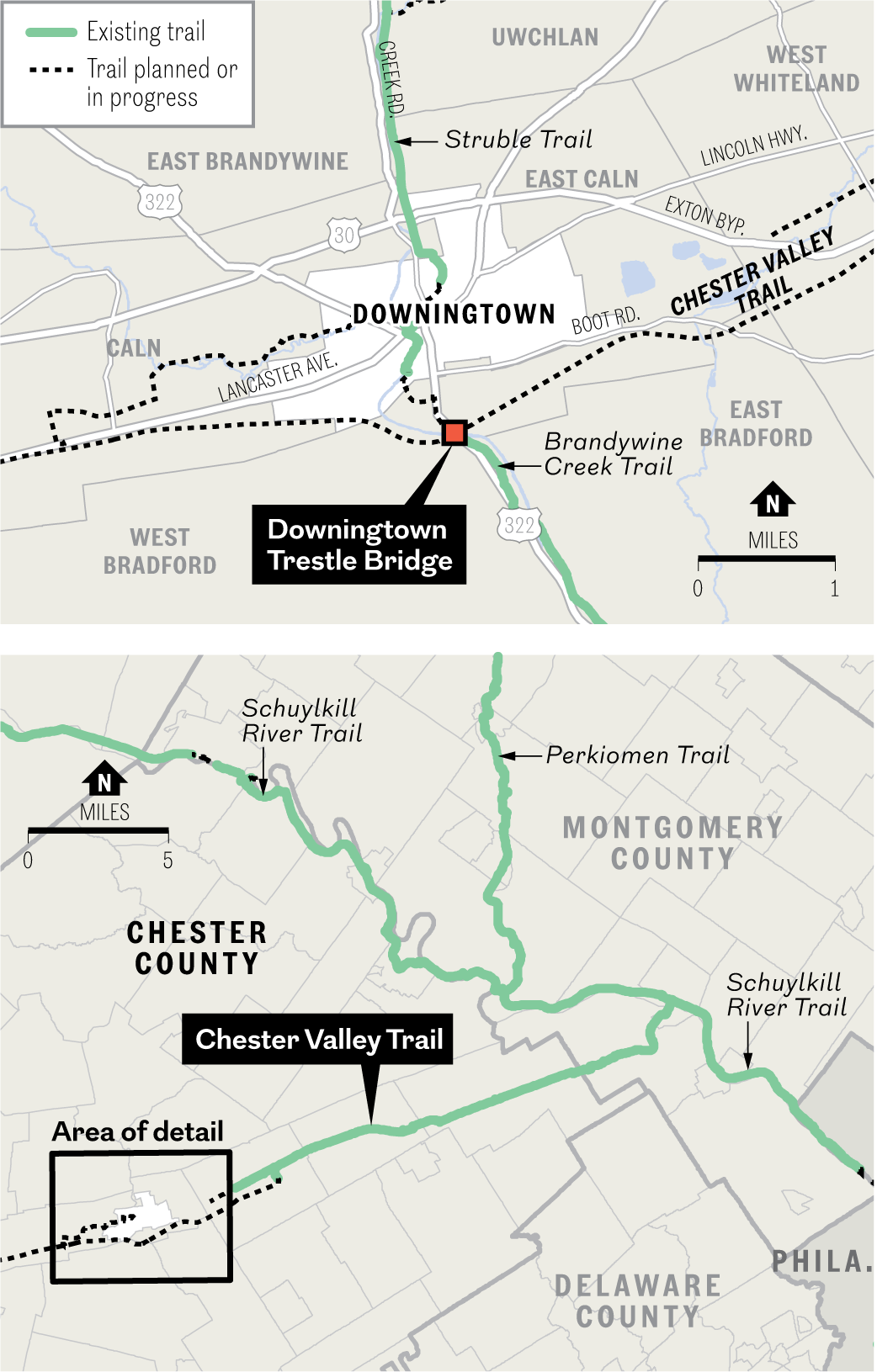
    It’s part of a larger effort to expand the sprawling Chester Valley Trail, a 19-mile rail trail that runs through Chester and Montgomery Counties, from Exton to Atglen.

    “The bridge is a really key part of it, because it’s multimodal,” said George Martynick, director of Chester County’s facilities and parks department. “Without that bridge, I really don’t know what we’d do with this project. It is the keystone of that project. It’s a big job.”

    As the county kicks off the project, people can expect to see inspections taking place on the bridge in the coming months. The trestle will get a full inspection to make sure it meets federal standards, Martynick said. Design is slated to begin in the next year, and the rehabilitation and extension should be completed in five to seven years, he said.

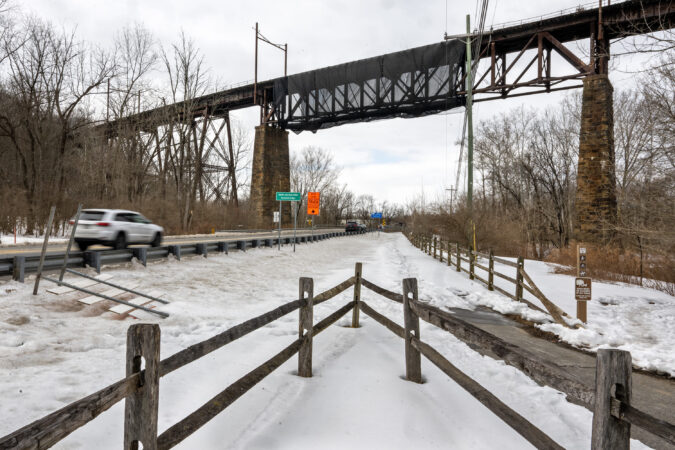
    The bridge stretches 1,450 feet long and more than 130 feet high over the east Brandywine River. Known as the “Brandywine Valley Viaduct,” “Downingtown High Bridge,” or “Pennsylvania Railroad Freight Bridge”— but colloquially called the Downingtown Trestle Bridge — it was constructed in the early 1900s, according to the Downingtown Area Historical Society.

    “This is taking on something much bigger than I think a lot of people understand,” Martynick said.

    Map of the Downingtown Trestle Bridge and the Chester Valley Trail in Chester County.

    The Trestle Bridge has been out of commission since the 1980s, with the track removed. Since then, the bridge has sat abandoned, and has had a troubled history. Security measures were added to prevent people from accessing it, and netting was put on it to keep debris from falling off it.

    The county completed a drone inspection before it took ownership of the bridge last year.

    In May, the county commissioners voted to purchase a portion of the former Philadelphia and Thorndale railroad corridor from the Pennsylvania Department of Transportation for $1.

    Other than some growth and weeds, “it’s in fairly good shape,” Martynick said.

    The county has received three grants for the project — two from the state department of conservation and natural resources, each for $500,000, and a Delaware Valley Regional Planning Commission grant for $200,000, said Brian Styche, the multimodal transportation planning director for the county’s planning commission.

    The county is matching both of the conservation and natural resources grants, for a total of $2.2 million in funding toward the bridge’s design.

    “It’s a good project. It’s going to take a lot of time and effort and a lot of patience, but it will be a pretty impressive project for the community,” Martynick said.

    It’s a personally important project, too: Martynick applied to work in the county’s parks department because of his love of the trail.

    “I love it,” he said. “It’s a very, very special trail.”

  • Only 1 in 10 people survive cardiac arrest. Here’s how to help if you’re a bystander.

    Only 1 in 10 people survive cardiac arrest. Here’s how to help if you’re a bystander.

    When Bob Borzillo collapsed a few months ago, he could have become a statistic: More than 350,000 people go into cardiac arrest each year, with a 90% fatality rate. But his wife’s quick response — and a calm 911 dispatcher — saved his life.

    Bystanders could do this too, advocates say.

    But in the Philadelphia region, only 26% of people suffering cardiac arrest receive bystander intervention, said Jeffrey Salvatore, the vice president of community impact for the American Heart Association of Greater Philadelphia. That’s much lower than the national average of 40%.

    Though often used interchangeably, a heart attack and a cardiac arrest are not the same, and they warrant (slightly) different responses.

    A heart attack is a “plumbing issue,” where there’s some blockage in the arteries that supply blood to the heart, Salvatore said.

    But a cardiac arrest is an “electrical problem;” the heart pumps through an electrical system, and when something misfires or stops, that’s when a cardiac arrest occurs. It necessitates CPR.

    “When the heart stops doing its job, we have to take over, and that’s when CPR comes into play,” he said.

    That’s what happened to Borzillo.

    Someone in cardiac arrest is unresponsive, and requires immediate intervention to prevent death.

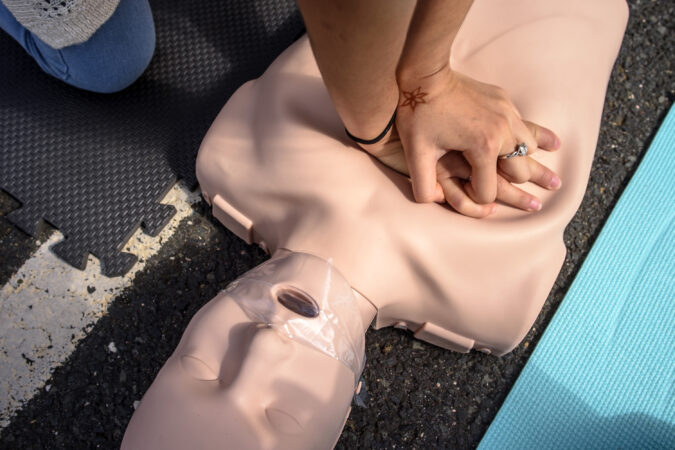
    You can check for unresponsiveness by tapping someone on the shoulder, rubbing their chest, or yelling loudly. If they don’t respond, call 911, and begin hands-only CPR, pressing hard and fast in the center of the chest.

    In many cases, 911 operators have been trained to walk callers through delivering CPR.

    A heart attack can lead to cardiac arrest, but it can also happen separately, and never result in the heart stopping, Salvatore said.

    If someone is exhibiting signs of a heart attack — chest discomfort; or discomfort in other areas of the upper body, such as arms, back, neck, jaw and stomach; shortness of breath; cold sweats; light-headedness; rapid or irregular heartbeat — call 911, Salvatore said.

    The American Heart Association is seeking to expand training in hands-only CPR for adults and teens, to increase low bystander-intervention rates.

    Just doing chest compressions — no mouth-to-mouth contact required — and calling 911 can double someone’s chance of survival, Salvatore said.

    “They are the first responder before EMS gets to the scene,” he said.

    For more information, or to get CPR certified, you can go to cpr.heart.org

  • A Chesco man’s heart stopped. His wife’s fast response — and a steady 911 dispatcher — saved him.

    A Chesco man’s heart stopped. His wife’s fast response — and a steady 911 dispatcher — saved him.

    Bob Borzillo has a deal with his wife Terri: She puts everything in the dishwasher, but he has to unload it.

    That’s what he was doing on a night in November, after the couple had arrived back home in Willistown from Barcelona. He was putting the very last thing — a wine glass — away. That’s where the 65-year-old’s memory stops.

    But for Terri Borzillo, also 65, that’s where a terrifying ordeal began.

    She had been just a few feet away, writing in her journal as her husband unloaded the dishwasher in the background. She heard him groan and glass shatter. She got up to help him, expecting to find him picking up glass shards. Instead she found him on the floor, unresponsive.

    What they did not know then was that a piece of plaque had broken off, completely blocking his artery. He was in cardiac arrest — not breathing, no pulse. After having walked around Barcelona, averaging 18,000 steps a day, he had no symptoms, no warning signs, until he collapsed in their kitchen.

    More than 350,000 people annually experience cardiac arrest outside hospitals, and only one in 10 survives, said Jeffrey Salvatore, the vice president of community impact for the American Heart Association of Greater Philadelphia.

    The association has been leading a campaign to teach more teens and adults hands-only CPR to increase bystander response rates. Nationally, 40% of those who experience cardiac arrest each year are helped by a bystander. The rate in the Philadelphia region is significantly lower: less than 26%.

    The association also holds telecommunicator CPR training, so dispatchers can instruct people over the phone on how to provide CPR, said Salvatore.

    “Cardiac arrest is 100% fatal without any intervention. If nobody does anything for the person, there’s no chance of survival,” he said. “By just calling 911 and just doing compressions, you can still double someone’s chance of survival.”

    Terri Borzillo immediately went into action, calling 911.

    “I think my husband’s having a heart attack,” she remembers screaming to the dispatcher.

    Calmly, the Chester County dispatcher, Kayla Wettlaufer, had Borzillo describe her husband’s condition.

    “She said, ‘OK, lady, get control of yourself. We’re going to do this together,’” Borzillo recalls. “By the command in her voice, and because there was no option, I had to do this.”

    Wettlaufer led Borzillo through CPR over the phone — telling her where to place her hands, when to compress. Wettlaufer even told her when it was time to unlock the front door so the nearby first responders could get in.

    “It was horrible to watch my husband in that condition, and it was horrible to know that I had the balance of his life in my hands,” Borzillo said.

    With Wetlaufer guiding her — and, she swears, every doctor in heaven — she did compressions until the EMTs arrived, using paddles to restart his heart.

    As the EMTs wheeled Bob Borzillo out, Terri Borzillo retrieved the bottles of holy water they had picked up at Our Lady Lourdes in Barcelona. She sprayed her husband and the EMTs.

    It got her an odd look, but, she said, “For somebody who has deep faith, I know all the angels and saints were there with us, and we’re smiling today instead of crying,” she said.

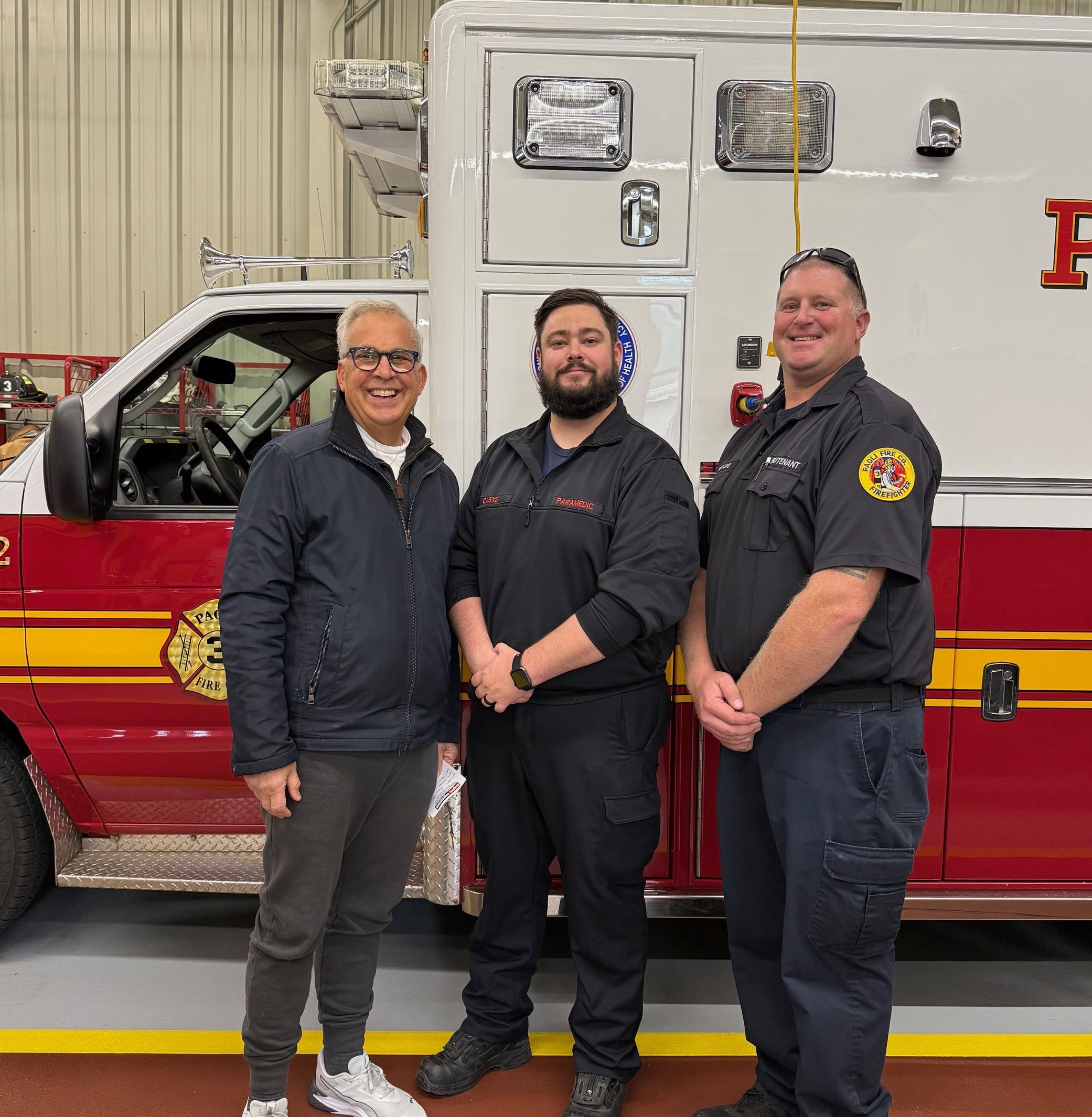
    Bob Borzillo, left, takes a photo with two first responders who arrived to his home in November when he was in cardiac arrest.

    Terri Borzillo’s faith runs back to their first date, more than 40 years ago. It was 1982, she was single, and her coworker asked her if she’d like to meet a nice guy. What do I have to lose? she thought. Acting as an intermediary, that colleague — a friend of Bob Borzillo’s family — told Bob about Terri. The young man’s father happened to know Terri’s father. He told his son, “Call that girl.” Bob listened.

    On their blind date, Terri Borzillo knew he was the one. There was something to how he talked, explaining — of all things — turbine generators.

    He really was a nice guy, she thought. (“I was a nerd,” he said.) She felt something click. Dear God, she thought, let him ask me out again.

    One big Italian wedding, three sons, and seven grandchildren later, the two have lived in Chester County for more than 40 years.

    This experience has made him proud to be a county resident, Bob Borzillo said. After he was released from the hospital a few days later, Borzillo went to the firehouse and met the first responders. He and his wife met Wettlaufer, and toured her workplace.

    Wettlaufer, an operator who has been with the county for almost five years and was honored by the county this month, was the start of a well-oiled machine, Borzillo said. Their proximity to the firehouse and Paoli Hospital helped get him professional care quickly.

    “If the Eagles offense executed that efficiently, we would have been in the Super Bowl,” he said.

    Terri Borzillo said meeting Wetlaufer helped ease the trauma of the situation.

    “She’s beautiful. And what they do there is amazing, and they get all of the credit,” she said.

    Saturday marks three months since Bob Borzillo’s cardiac arrest. He and his wife are in Florida while he recovers, and will celebrate Valentine’s Day with friends from Chester County.

    “Certainly the heart and what Valentine represents has a special meaning this year, and I am blessed to be here to celebrate it,” he said in an email.

    This suburban content is produced with support from the Leslie Miller and Richard Worley Foundation and The Lenfest Institute for Journalism. Editorial content is created independently of the project donors. Gifts to support The Inquirer’s high-impact journalism can be made at inquirer.com/donate. A list of Lenfest Institute donors can be found at lenfestinstitute.org/supporters.

  • Chesco makes another election error, after residents said their faith in voting security was shaken

    Chesco makes another election error, after residents said their faith in voting security was shaken

    On the heels of a massive pollbook error that left thousands of voters off the rolls in the November election and prompted an independent investigation, Chester County is facing another mistake from its voter services department.

    Earlier this month, the county’s reminder notices, sent to voters who said they would like to receive an annual mail ballot application, reversed the first and last names of voters on the applications. It was not clear how many applications were affected by the error.

    “This printing error will not affect the processing of the form,” the county’s voter services department posted on its website. “Whether voters choose to submit their application online or using the paper form, all applications will be processed accordingly.”

    It was another blunder for a department that has made administrative mistakes in its elections, with residents telling county commissioners last week the errors were eroding their trust in election safety. It also comes as voters have called for the firing of the director of the department after the office has seen high numbers of turnover.

    Counties across the state are sending reminders to voters who said they would like to receive an application to vote by mail. The county became aware of the mistake on Feb. 4, after it mailed out the applications earlier that week.

    County officials alerted the Pennsylvania Department of State that day, a spokesperson for the agency said.

    “We agree with county officials that there is no need to reissue the applications,” the spokesperson said in an email.

    A county spokesperson referred to the voter services statement.

    More than 52,000 county voters cast their ballots by mail in November.

    Residents had worried during a public meeting last week that the county would make another misstep. The meeting was the first since the county released an independent report investigating a pollbook error that omitted roughly 75,000 unaffiliated and third-party voters and forced more than 12,000 voters to cast provisional ballots in the general election.

    November’s error followed another omission in May, when the county did not include the office of the prothonotary on its primary ballot, due to a legal misinterpretation from the county’s solicitor.

    The issues come as the department’s director, Karen Barsoum, has been accused of fostering a toxic workplace, leading to unusually high turnover. The independent investigation found no evidence of that, the lawyers who penned the report said last week.

    The investigation found no evidence of malfeasance in the election blunders, but rather that lack of training, poor oversight, and staffing challenges compounded to cause the pollbook error.

    This suburban content is produced with support from the Leslie Miller and Richard Worley Foundation and The Lenfest Institute for Journalism. Editorial content is created independently of the project donors. Gifts to support The Inquirer’s high-impact journalism can be made at inquirer.com/donate. A list of Lenfest Institute donors can be found at lenfestinstitute.org/supporters.

  • Roadside bakeries are growing in Chester County: ‘It’s that home-sweet-home comfort food’

    Roadside bakeries are growing in Chester County: ‘It’s that home-sweet-home comfort food’

    When Jacqueline Spain’s now-grown kids were having a bad day, she would sit them down at the kitchen island and bake them something. Now, she has opened up that kitchen island to her community with her roadside home bakery, Devon Road Made.

    “Food is love, love is food,” Spain said, standing in her kitchen recently, bread in the oven and cookies on the counter. “I like to put a lot of heart and soul into it. I feel if you’re going to put good energy into that, people are going to feel that. They’re going to taste it; they’re going to like it.”

    Devon Road Made is one of the newer additions to a trend of microbakeries that are cropping up in Chester County, some with roadside carts and stands dotting residential roads in Paoli, Downingtown, West Chester, and elsewhere.

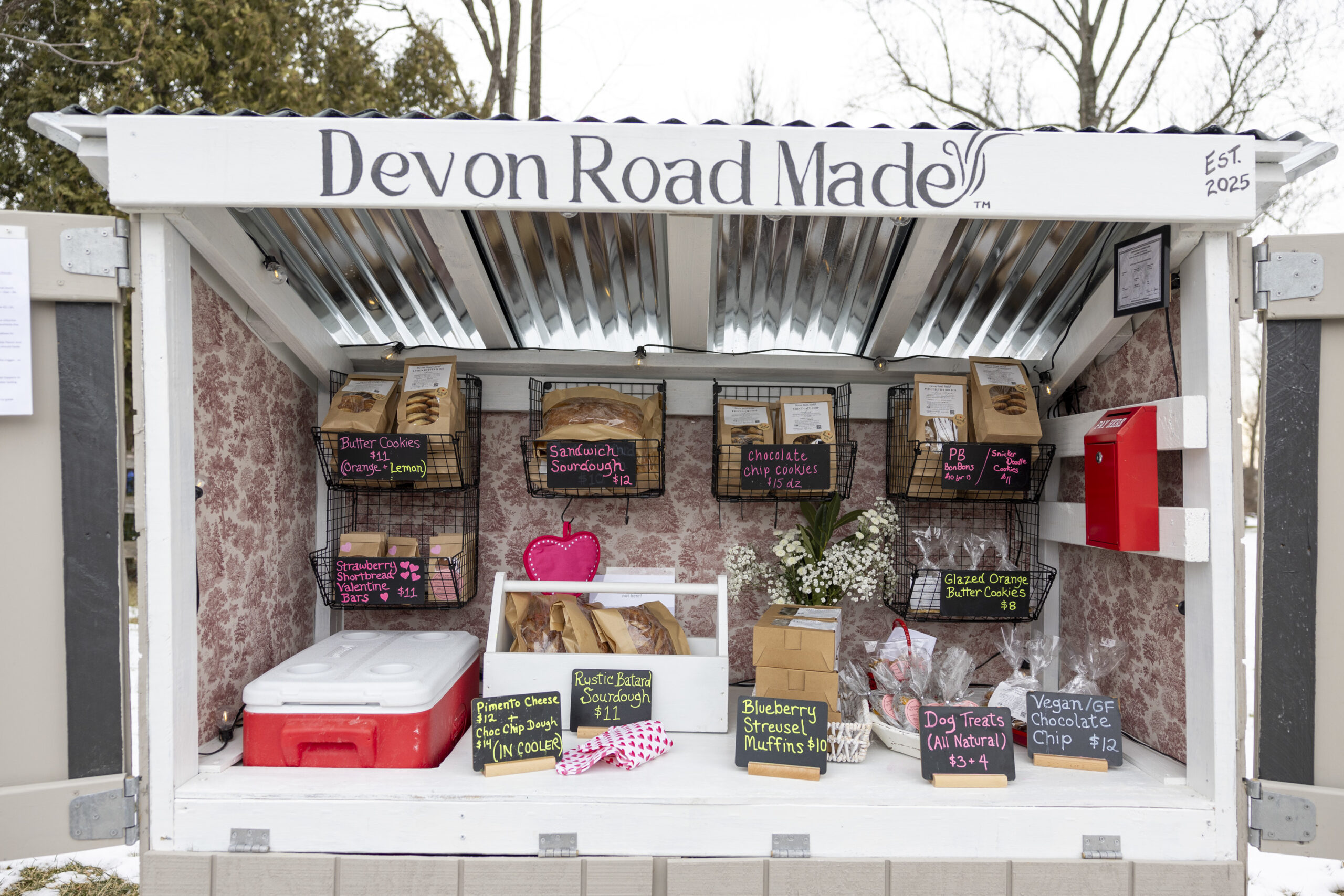
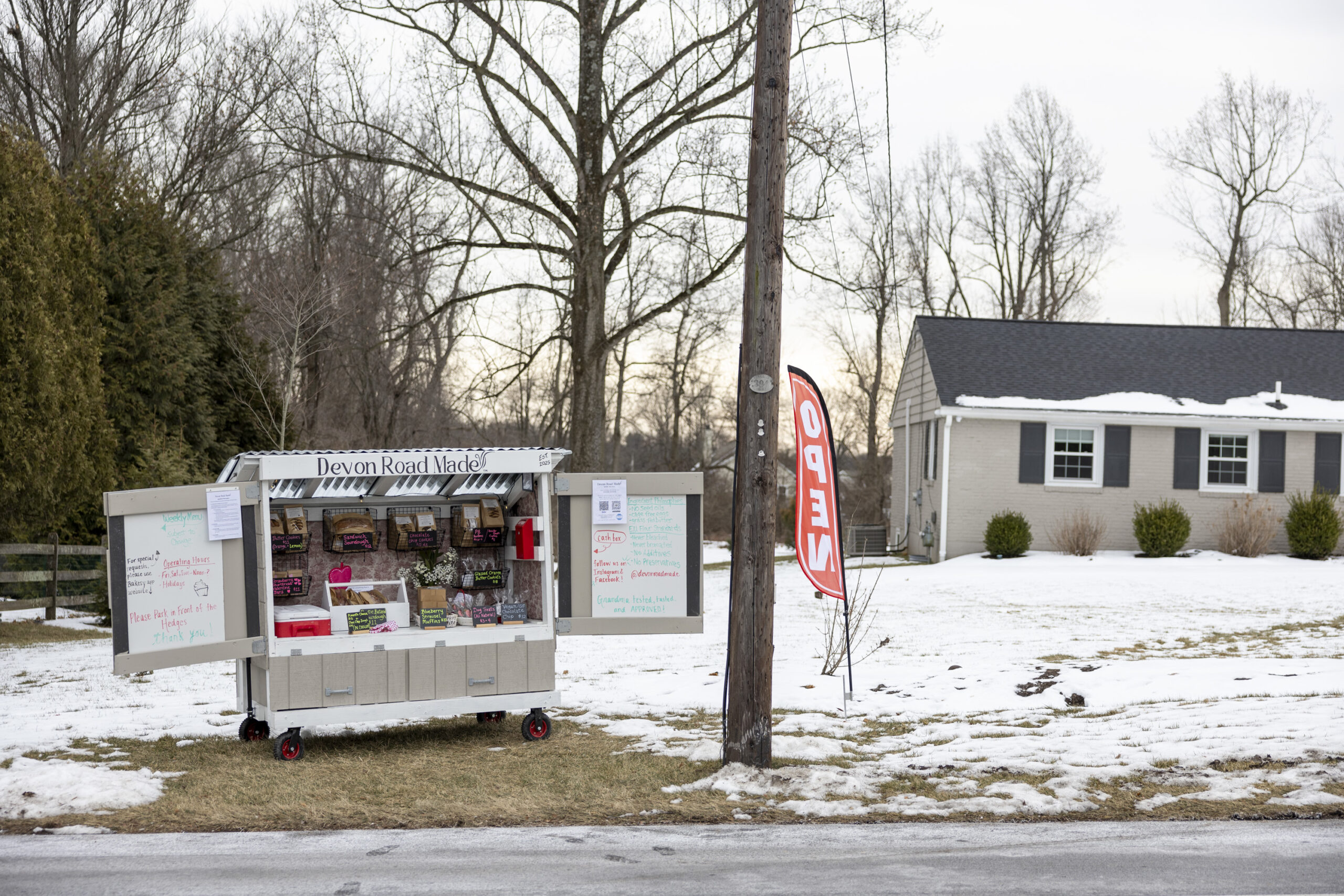
    The Devon Road Made bakery cart outside the home of David and Jacqueline Spain for folks passing by to buy some home baked goods in Willistown, Pa., on Friday, Jan. 23, 2026.

    Statewide, interest in selling home-baked goods has been growing. Pennsylvania had 361 licensed home bakeries in 2023. That nearly doubled, to 663, in 2025, according to the state agriculture department, which oversees the inspections and licensing of food businesses that operate out of home, rather than commercial, kitchens. There has been a general bakery boom, too, in Philly.

    Chester County appears to be a growing incubator of such little bakeries: It had 28 licensed home bakeries in 2025, compared with 16 in 2023, the department said.

    Before issuing a license, the department inspects the baker’s food production site. Bakers must verify they have zoning approval to have a business on their property, submit ingredient labels, restrict pets or not have them, and have an approved water supply. It costs $35 to register.

    In the few weeks since, Spain, 59, and her husband, David, 60, rolled their bakery cart to the foot of their yard at 60 Devon Rd. in Willistown, the community has indeed seemed to like it. Jacqueline Spain’s cookies and David Spain’s sourdough loaves continually sell out. People knock on their door to ask if things will be restocked. One woman sat at the Spains’ kitchen island, sampling freshly baked cookies, while awaiting her pickup order.

    “Everything we make, she has been making for years,” David Spain said. “That’s kind of part of our DNA. It’s got to taste really good — something that we would only serve our friends and family.”

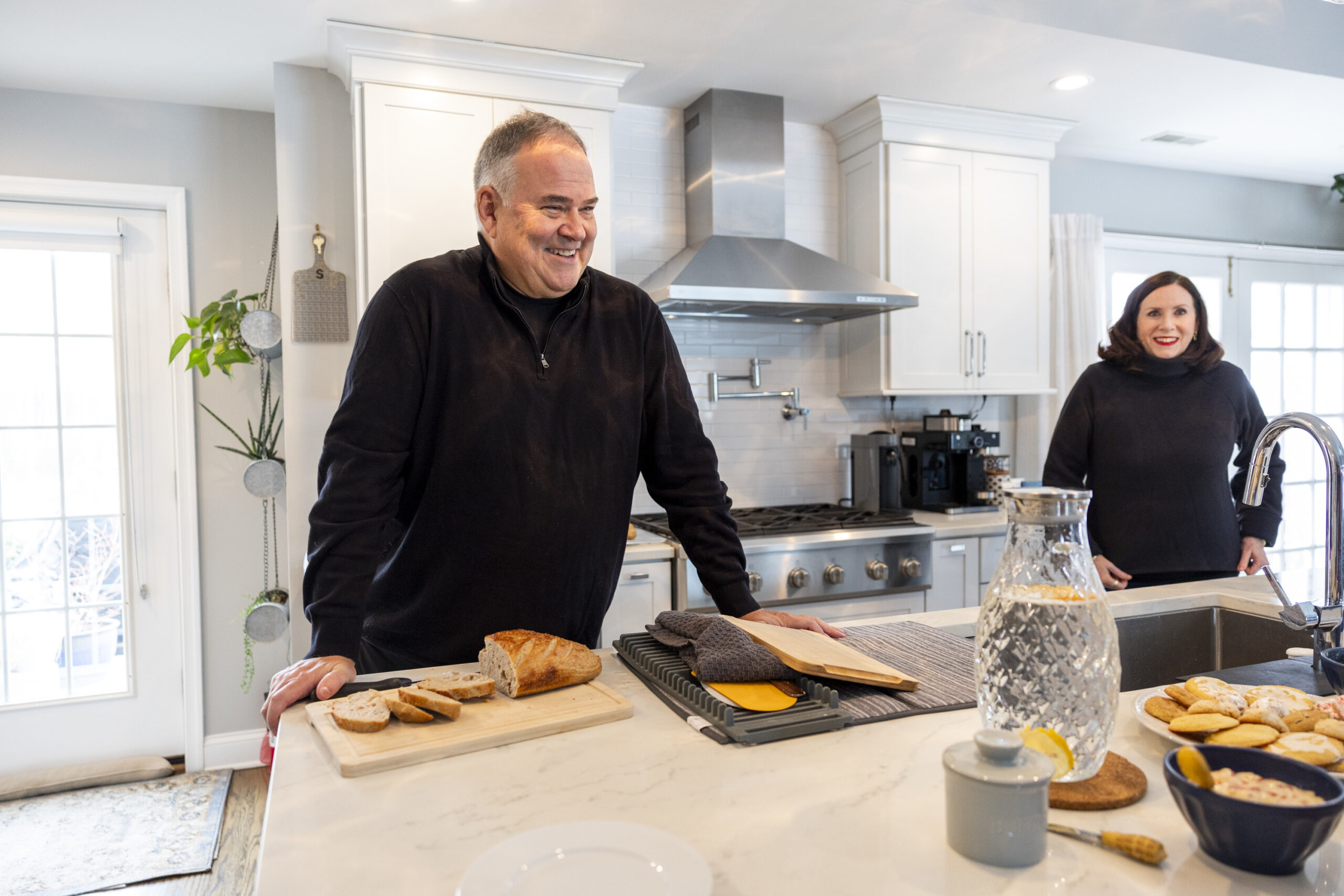
    David Spain, of Willistown, Pa., and his wife Jacqueline Spain, chat with Inquirer Reporter Brooke Schultz about their Devon Road Made bakery cart at their home on Friday, Jan. 23, 2026.

    And Chester County seems like a place perfectly ripe for these little bakeries to thrive, several home bakers said: It’s not a wholly rural community, nor is it totally Main Line. There is an affluent clientele (Chester is the wealthiest county by median income in the state) with an interest in homemade, quality ingredients.

    But they do face some headwinds: A number of municipalities restrict such carts through zoning codes, even if the bakers are licensed to sell.

    Alexa Geiser, 28, of Lulu’s Bread & Bakery in West Chester, opened her home bakery in October, originally selling her sourdough first come, first served from her porch. But then the borough told her she was not permitted to sell from her residential porch, and she moved entirely online to sell her bread and the occasional chocolate chip cookie batch.

    Though it’s a bummer — she said it was nice to talk with people stopping by for a peaceful hour on Fridays — she felt supported by the community, who offered their businesses for her to host her pickups.

    “I think people really value homemade goods that people put a lot of effort into, and good quality ingredients,” she said. “I use all organic flours and filtered water and good salt in my bread, which is something I personally value. It’s what I want to give to my customers as well.”

    The Devon Road Made bakery cart outside the home of David and Jacqueline Spain for folks passing by to buy some home baked goods in Willistown, Pa., on Friday, Jan. 23, 2026.

    But the stands are a niche the bakers feel they are filling.

    “I noticed around here, at least where I live specifically, there aren’t really that many,” said Maddy Dutko, of Maddy Makes. “I’ve seen a couple that sell honey or some that sell flowers, but I haven’t really seen any that sell baked goods. I was like, why not? It’s a way for me to connect with people around here. Maybe bring them something that they didn’t know was necessarily in their community.”

    Dutko’s stand, at 623 Sanatoga Rd. in East Coventry Township, is open on the weekends from spring to fall. Dutko sells bread loaves, coffee cakes, cinnamon buns, cookies, and dry mixes for pancakes or cornbread. She tries to keep things fresh and interesting, but also consistent for loyal customers. Dutko, 29, also sells orders online and at markets.

    The physical presence has led to customers hiring her to bake for kids’ birthdays, or people approaching her at markets to tell her they always stop by for a treat when they end their walk on a nearby trail.

    The Devon Road Made bakery cart outside the home of David and Jacqueline Spain for folks passing by to buy some home baked goods in Willistown, Pa., on Friday, Jan. 23, 2026.

    There’s something to be said for products baked with love in someone’s home, Jacqueline Spain said.

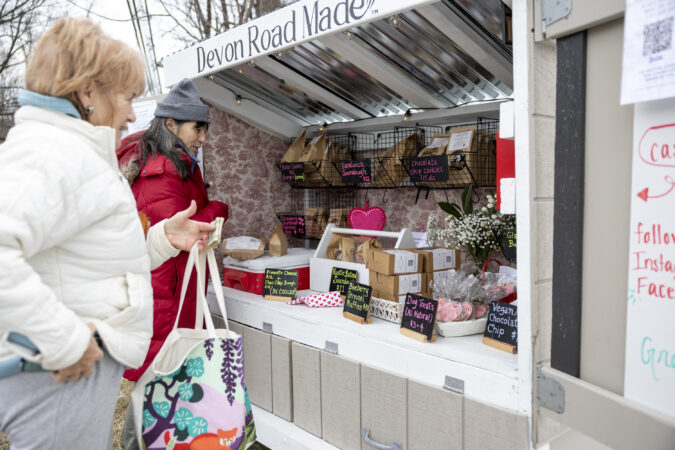
    On a recent Friday afternoon in Willistown, the Spains stocked the baskets of their cart with baggies of cookies, breads, and dog treats — a customer request that their daughter, a veterinary nurse, fulfilled. A red open flag commenced their weekend hours of “noon-?” People pulled up onto the lawn to shop.

    “It’s feel-good, it’s warm, it’s friendly, it’s inviting,” Jacqueline Spain said. “It’s that home-sweet-home comfort food.”