Author: Brooke Schultz

  • This Chesco business wants to create a ‘third place’ between home and work or school

    This Chesco business wants to create a ‘third place’ between home and work or school

    When you walk into Koselig Nook, Aracelis Mullin wants you to feel a wave of calm. She intentionally designed the teahouse that way: From its welcoming furniture to its lighting, its green paint, its scents, it is meant to be a relaxing third space, a stopping point between work and home, where people can gather, craft, focus on wellness, or anything between. Don’t forget to take off your shoes. (Really. It’s a rule.)

    Koselig Nook, a late-night teahouse, plans to open in Exton, at 333 E. Lincoln Highway, later this month. The business is relocating from Coatesville, where it opened in 2024, to be more central for customers within the county and traveling from Philly.

    “The whole idea and the purpose is to bring the people out of their houses and to enjoy another place where they can network or just spend some time or talk,” Mullin said.

    Named for the Norwegian term encompassing contentment and coziness, Koselig Nook’s seating is meant to be secure and comfortable — with plush, downy pillow seating and blankets, oils, and low lighting, inviting people to lounge.

    So much of today’s gathering culture revolves around bars and drinking, Mullin said. Though sober options are opening in metropolitan areas, like Philadelphia, people in the county have fewer places — especially places open later, she said.

    That’s the gap Koselig Nook seeks to fill, she said.

    “I think there’s a big need for third places that are more calm; for introverted people, they can come and network, too, little by little, but they don’t have the pressure of society saying, ‘Hey, do you want to drink?’” she said.

    Instead, customers can sit and study or work from 11 a.m. to 3 p.m. for $25 on Tuesdays through Fridays. Students spent a lot of time holed up in the Nook’s Coatesville location during finals week in December, Mullin said.

    In the evenings, from 7 to 11 p.m. for $35 on Friday and Saturday, people can go somewhere that is not about drinking.

    During various events offered week to week, people can come to workshops where they junk journal, cutting up pictures and pasting them into notebooks, or take a meditative break surrounded by gongs and chimes and singing bowls in a sound bath session, or spend time with a medium. You can pick up letters from a pen pal in another country or pen your own, facilitated through Koselig Nook. You can silently read your own book and then, in a formal discussion, chat about it with other readers, trading recommendations.

    Some make events out of it. For one 24-year-old’s birthday, she and her friends journaled together, sipping their tea, and had a sound bath.

    Others come alone and leave with connections: During a full moon ceremony, only two of the 15 women who came knew each other. By the end, “they all shared their phone numbers. … It was amazing,” Mullin said.

    The business traces its lineage to when Mullin’s daughter, Victoria, was living in California in 2020. She frequented a teahouse where customers could reserve time and sit and enjoy themselves during the evening hours. After Mullin visited herself, she felt compelled to bring something similar to the East Coast. She picked the brains of the owners.

    With her background — she ran a traveling tea party business for young girls and a birthday party business in Thorndale — Mullin embraced their model; her teahouse is reservation-only. There is unlimited tea, and a selection of premade snacks. Everything is provided without extra charge once you are in the Nook. Socks only.

    “I wanted to have that community place where the people come and gather, regardless of what your politics and your religion, so we did it. I was scared to death,” she said.

    She expected to have to go a bit more slowly in Chester County, for people to understand the business. But she was met with a lot of enthusiasm.

    “The people are so in need of this that they love it,” she said.
  • Downingtown dog involved in 4 attacks is euthanized

    A Downingtown dog has been euthanized after it injured multiple people in recent months and made residents feel unsafe, officials said.

    The decision, made the day of a Thursday hearing in district court, stems from a November incident in which the dog bit a child in a neighboring house on the 500 block of Thomas Road.

    Whitley Coggins said her sons, ages 4 and 8, had been playing in the backyard when the neighbor’s dogs were let outside. One mixed-breed dog got through the fence, attacking her youngest son, she said. The boy was bitten on his upper arm and required stitches.

    There are four dogs that had been known to neighbors for aggressive behavior, she said. Though the Coggins family had never personally experienced it until November, the mother said, she warned her sons to run back inside if they ever saw the dogs in the yard.

    After the hearing and the owner’s decision to euthanize, Coggins said she was frustrated that the only positive was that one of the dogs was removed from the house.

    “I feel like I’m supposed to feel like something was done, I’m supposed to feel good that the one dog that attacked my child is gone, and I do feel a small sense of replaced safety or something — that that one dog is not there,” she said. “But that one dog has never been the problem, not the whole problem.”

    Coggins said her sons still feel unsafe leaving the house and are fearful of dogs.

    “Following our time in court, we still had to return — and the rest of the neighbors had to return — to a neighborhood with three dogs who have registered attacks on other people and other animals, and because of the laws and the way the laws are written or interpreted, there is nothing to go forward with to remove these dogs,” Coggins said.

    Reached by phone, the attorney for the dog owner declined comment.

    Brendan Brazunas, Downingtown’s chief of police, said the owner’s defense counsel immediately suggested euthanasia given the seriousness of the 4-year-old’s injury, and the fact that this was the fourth documented bite involving this dog since 2023.

    “The dog that created the most issues at that house is this dog that was euthanized,” Brazunas said. “Obviously, the community is very concerned and they’re afraid, and I think this was the first step with regards to dogs at that house.”

    Brandywine Valley SPCA, which had assisted the Downingtown police in the case, transported and euthanized the dog, a spokesperson for the organization said.

    “This was a tragic situation that never should have escalated to this point,” Erica Deuso, mayor of Downingtown, said in a statement. “I love animals, and I am heartbroken any time a dog loses its life, but public safety comes first.”

    The charges were dropped, as they can only be made for live dogs, Brazunas said. But there are ongoing cases facing the owner’s other dogs.

    A Jan. 20 incident was reported to police when the dogs escaped through an open door and injured an adult man, a tow-truck driver who was returning a vehicle. That case will be heard in the coming weeks.

    The SPCA has six outstanding charges for other dogs in the owner’s home regarding rabies vaccinations, dog licenses, and the dogs getting loose, the spokesperson said.

  • ‘The first step’: Chester County commissioners present poll book investigation to voters

    ‘The first step’: Chester County commissioners present poll book investigation to voters

    Chester County residents called for accountability after a poll book error led to thousands of voters being left off the rolls in November’s election, and said the recent investigation solicited by the county fell short of addressing problems they fear could happen again.

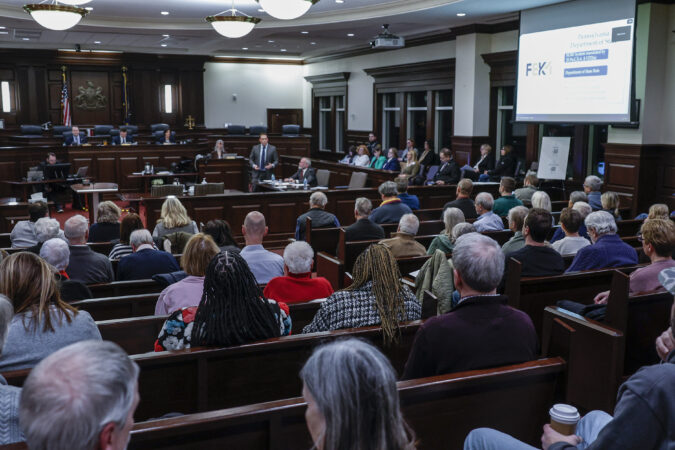
    Tuesday’s public meeting was the first time community members — and the county commissioners themselves — were able to respond to an independent firm’s investigation and report, which found that insufficient training, poor oversight, and staffing challenges in the county’s elections office forced more than 12,000 voters to cast provisional ballots in the general election. The poll book error occurred as the 25-person department has faced unusually high turnover in recent years, and as the director faces allegations of fostering a toxic workplace.

    “This is the first step, this is not the last step … to rebuilding trust with the public and improving elections in a way that ensures this never happens again,” Josh Maxwell, chairman of the county commissioners, told the attendees.

    The 24-page report, prepared by West Chester law firm Fleck, Eckert, Klein & McGarry LLC and published last month, found that two employees mistakenly included only registered Democrats and Republicans when using the statewide voter roll to create the poll book, omitting more than 75,000 registered independent and unaffiliated voters from the rolls.

    The employees, inexperienced and never formally trained, lacked direct supervision, the report said. No one in the county’s department checked the books until a poll worker noticed the omissions before polls opened on Election Day.

    There was no evidence of malfeasance, the report said. County officials said previously that everyone who wanted to vote could cast a ballot, despite the issue.

    Still, the error rocked Election Day in the county, with officials scrambling to print supplemental poll books and poll workers staying late to address the challenges. Republican Commissioner Eric Roe broke with his Democratic peers by voting against the certification of the election results in December, saying his conscience would not allow it.

    Community members said Tuesday the error further eroded trust in voting security.

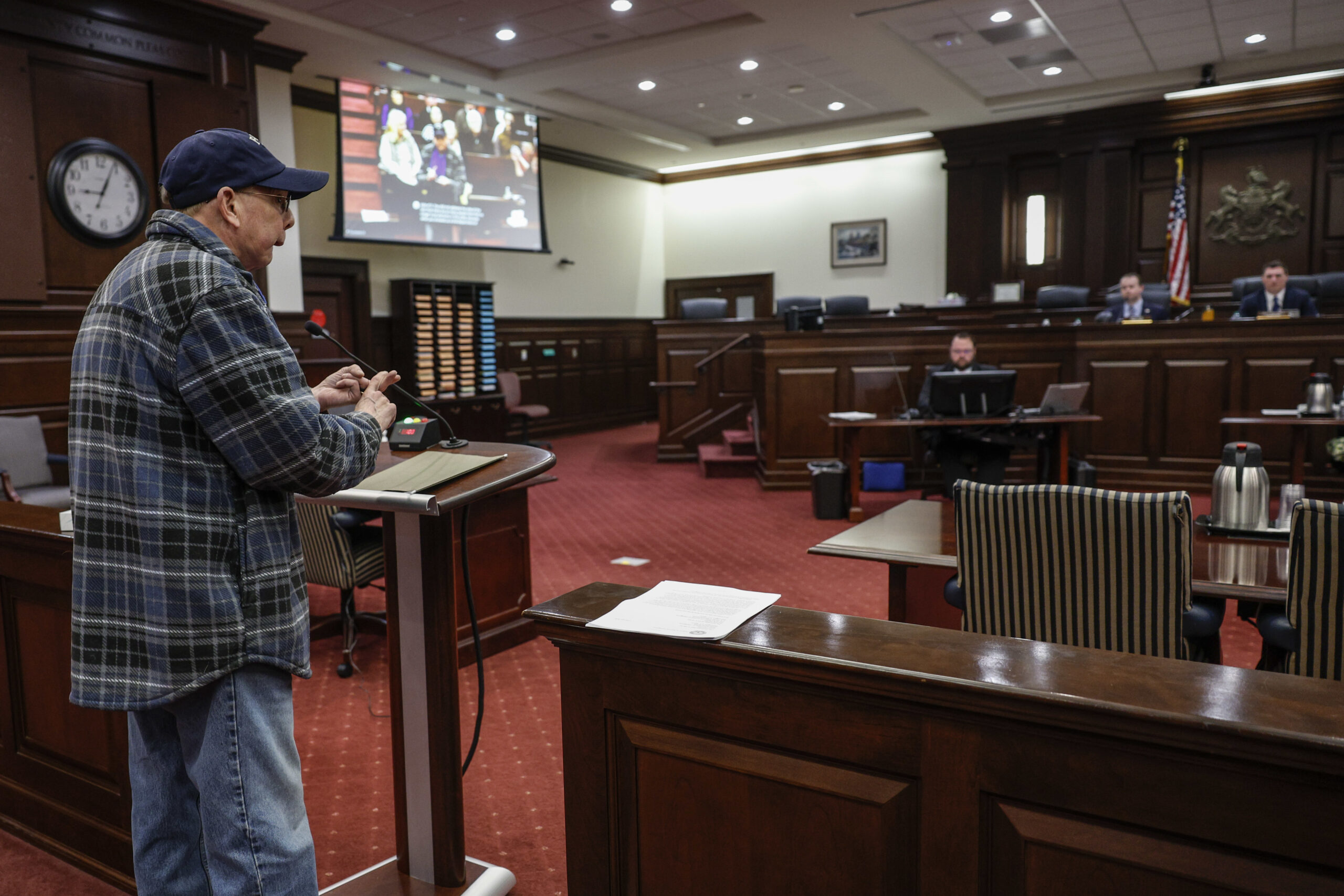
    John Luther addresses the Chester County Commissioners as they hold a public meeting to discuss the errors they had in the pole books during the November election. West Chester. Tuesday, February 3, 2026

    “How many voters were disenfranchised and did not vote?” resident John Luther asked the commissioners. “That is the most important thing. You guys can fix all the rest, but you can’t fix what you messed up in the front.”

    Kadida Kenner — who leads the New Pennsylvania Project, an organization dedicated to voter registration — said she rushed on Election Day to West Chester University, where the organization had helped students register to vote, to make sure they were not disenfranchised.

    “I see the impact of this mistake, this opportunity for change and growth,” she said. “The events of Election Day really did not help our efforts to be able to overcome feelings of individuals, as it relates to the electoral process, here in the commonwealth and across the country.”

    The report recommended more than a dozen changes for the county to prevent future errors, including improved training, reviewing processes and policies, and evaluating staff levels and pay. The county rolled out a plan to address the recommendations and intends to make monthly reports on its progress, saying some recommendations would be in place ahead of May’s primary.

    “Everyone in this room knows that a grievous error was made, and everyone is upset about it,” resident Marian Schneider said. “We can stop the browbeating and focus on the path forward.”

    The report stopped short of recommending personnel changes. Maxwell said the commissioners would not discuss personnel actions.

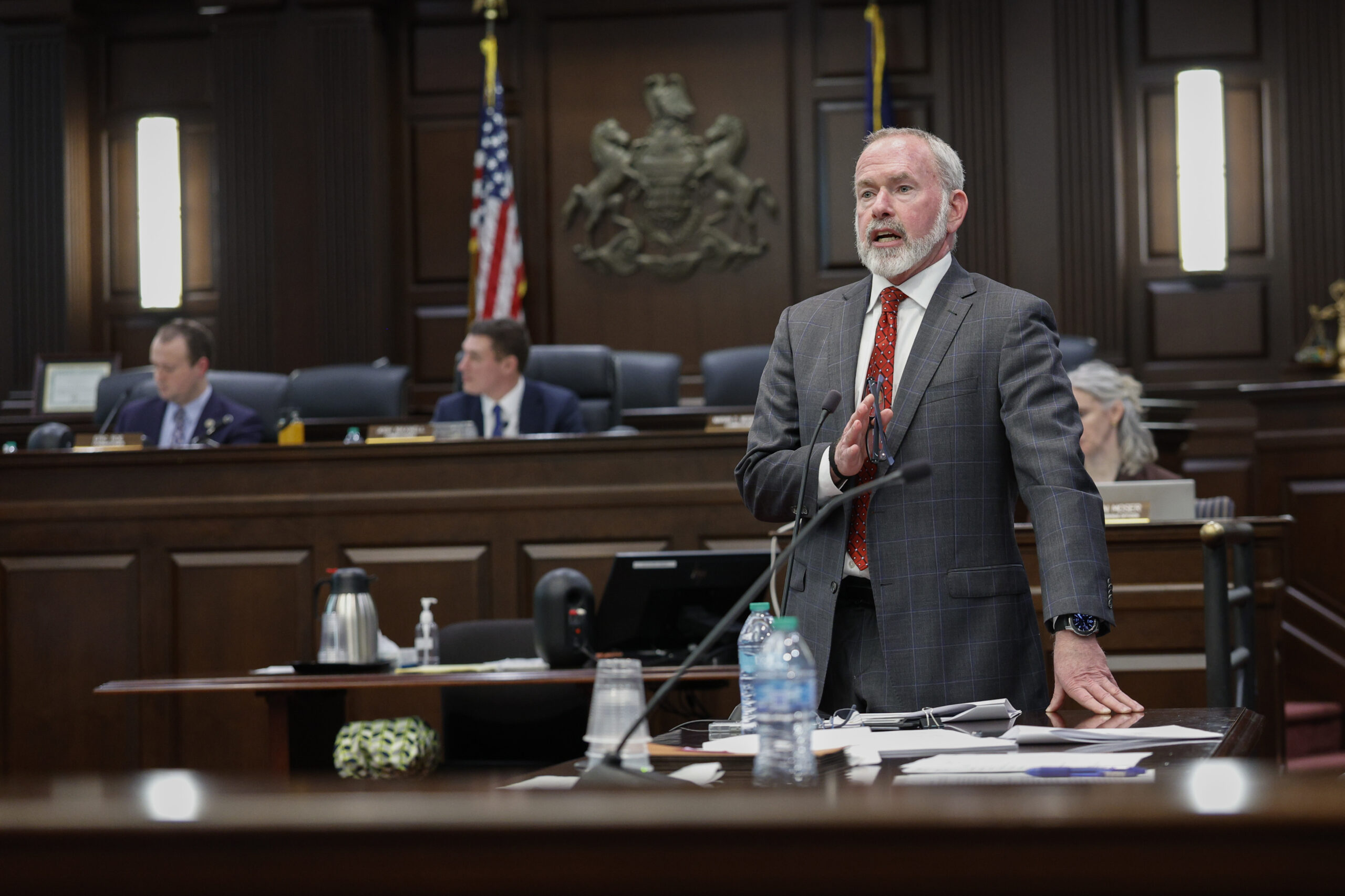
    Attorney Sigmund Fleck addresses the Chester County Commissioners as they hold a public meeting to discuss the errors they had in the pole books during the November election. West Chester. Tuesday, February 3, 2026

    “Bottom line, this appears to be a human error — clicking the wrong box,” said Sigmund Fleck, one of the attorneys who oversaw the report.

    Residents worried that those errors were symptoms of a deeper problem, and that the report’s scope did not fully address issues within voter services.

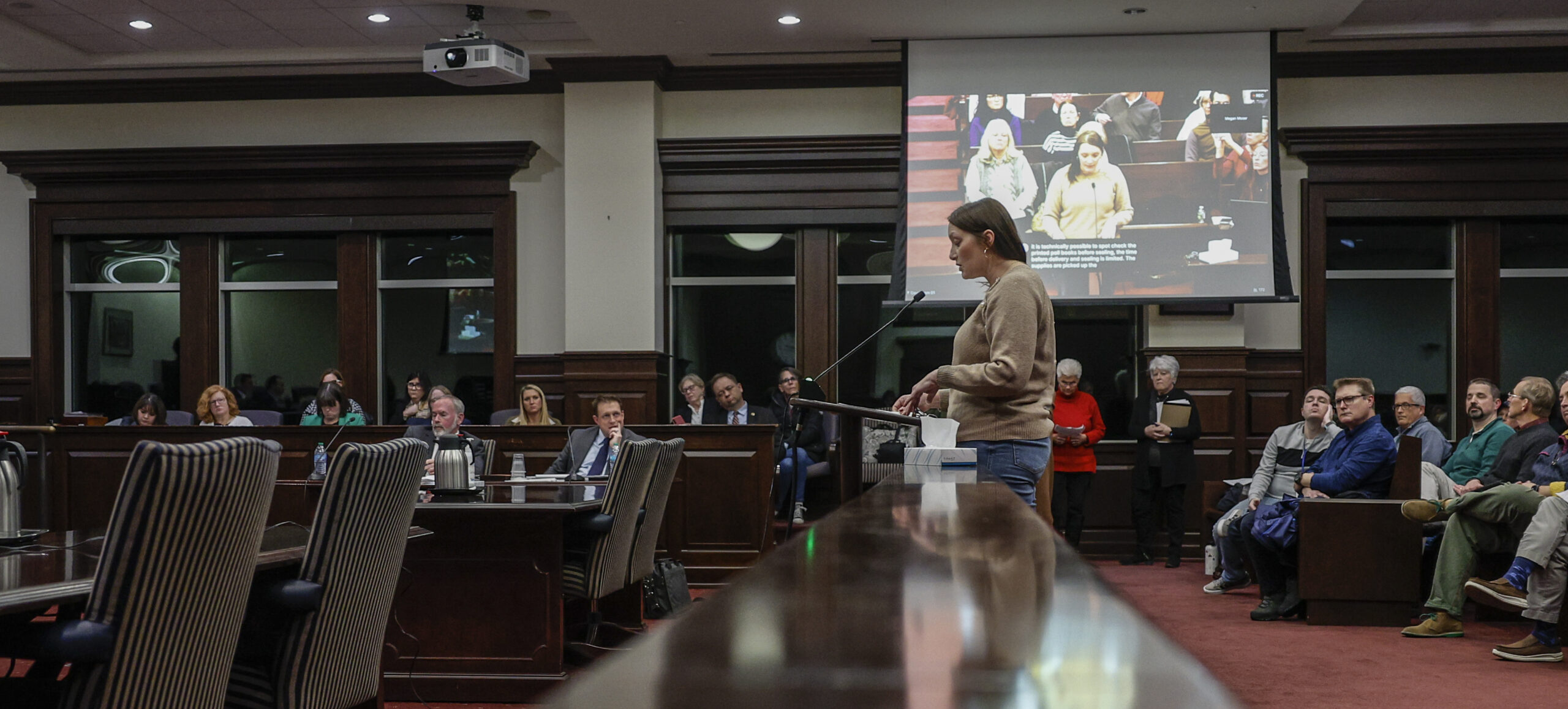
    “Yes, human error is a factor here,” Elizabeth Sieb told the commissioners. “This goes far beyond that. Mistakes of this magnitude require consequences.”

    Fleck pointed to larger issues with the state’s election system that culminated in the error, such as tight turnaround times for publishing the poll books, lack of statewide training, and a fairly old-school online voting roll system.

    Elizabeth Sieb addresses the Chester county commissioners as they hold a public meeting to discuss the errors they had in the pole books during the November election. West Chester. Tuesday, February 3, 2026

    But other counties deal with those same complications, some community members argued. November’s error came after the county omitted the office of the prothonotary on the ballot in May’s primary. The report found that error was due to the county solicitor’s office misinterpreting state law.

    “Sixty-seven counties face the same exact issues, except for one: management,” said Nathan Prospero Fox, a former voter services employee.

    Roe acknowledged the anger directed at county staff, but said: “The truth is, the buck doesn’t stop with staff. It stops with us.”

    “I am so sorry,” he continued. “This is not the end; there’s still time for accountability and improvement.”

    This suburban content is produced with support from the Leslie Miller and Richard Worley Foundation and The Lenfest Institute for Journalism. Editorial content is created independently of the project donors. Gifts to support The Inquirer’s high-impact journalism can be made at inquirer.com/donate. A list of Lenfest Institute donors can be found at lenfestinstitute.org/supporters.

  • Local businessman and ‘Task’ stuntman is appointed to Kennett Square council

    Local businessman and ‘Task’ stuntman is appointed to Kennett Square council

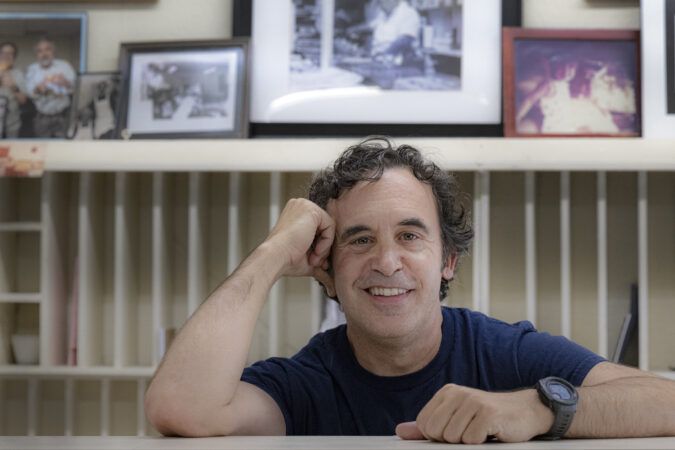
    Michael Bertrando’s first brush with Kennett Square’s council three years ago was to discuss a parking issue at his family’s legacy sandwich spot, Sam’s Sub Shop. He saw his neighbors, listened to them, and started to see how the council worked. Eventually, he became something of a regular.

    When the issue of short-term rentals came up last month, Bertrando had a lot of perspective: As an actor — you might have seen him on HBO’s Task — he has traveled extensively. He has seen the negative effects short-term rentals can have had on communities from New York to Argentina to Brazil. He spoke up.

    And then people started to drop by the sandwich shop, which he runs alongside his parents, suggesting that he put his name in for a vacant seat on the council.

    The council voted last month to appoint Bertrando, 52, from a crowded field of applicants to fill former council member Julie Hamilton’s seat through December 2027. He was sworn in Monday.

    The seat will be on the ballot for a four-year term in the 2027 general election. Hamilton resigned for a job in Texas, the Daily Local reported.

    Long ties to Kennett Square

    Council member is another job title the local businessman and Task stuntman can add to his resumé.

    “I’m volunteering to help the residents of my community; that’s my primary goal,” he said in an interview Tuesday.

    Bertrando — an actor, director, and producer — has worked at his family’s 80-year-old sub shop for decades. It drew him back home a few years ago, so he could help his aging parents run the shop.

    But in the years between, Bertrando left Kennett Square to pursue acting, appearing in commercials for brands like Mercedes, McDonald’s, Nintendo, and Oscar Mayer; traveling the world as a professional clown; and working the improv comedy circuit in New York and Chicago.

    His film career has continued back in Pennsylvania; Bertrando served as Mark Ruffalo’s stand-in and stunt double in Task, the HBO crime drama set in Delco. In his own productions, his hometown has seeped into his work. A short film, Italian Special, is set within Sam’s Sub Shop and Kennett Square.

    Since returning to the borough, Bertrando has been a frequent visitor to council meetings, and advised the borough alongside other business leaders on what was going well, and what wasn’t, in Kennett Square.

    Priorities on council

    His professional career and his family’s long lineage in Kennett Square have shaped his perspectives on the borough, and what he thinks he can add as a council member.

    He is motivated by the possible development of a new theater. Infusing more arts into the community would be beneficial, he said.

    Having worked on Task, he saw how other municipalities the show filmed in benefited from an influx of revenue: from parking to hiring police for traffic control, to renting out locations in town, to ordering food for lunches and snacks, to coffee runs, to overnight stays in hotels.

    “We have all the infrastructure needed for that to happen here in Kennett,” he said.

    Both Task and fellow Pennsylvania-based crime drama Mare of Easttown mention Kennett Square, but neither used the borough for filming.

    “When you have a theater or something arts-driven in the town, I think that’s a signal,” he said. “I think a theater can work as a beacon for revenue from other sources, like film production.”

    Beyond the intersection of his passion for film and the borough, he said the development of the former National Vulcanized Fiber land, a large undeveloped parcel that is being remediated for contamination in soil from the industrial site, has been of concern for residents.

    While the project would be years out even if ultimately approved, Bertrando said he would advocate for environmental transparency and affordable development that respects the existing neighborhoods.

    He would also like to improve communication between the municipality and its residents — the longtime community members, like Bertrando’s family, and those who are choosing to relocate.

    As he began his term on the other side of public comment, he said, he focused in, listening closely to what his neighbors were saying. He feels the burden to pay close attention, since he was appointed to the role, rather than elected.

    “I really have to make the effort to listen to their concerns and really try the best ways to help in their concerns,” he said. “Sitting on the other side was exciting. It was important. It’s serious. It’s my town. I really care about it.”

  • A developer is seeking to expand its proposed data center in East Whiteland

    A developer is seeking to expand its proposed data center in East Whiteland

    A developer wants to increase the size of its proposed data center on a remediated Superfund site in East Whiteland Township, stoking ire from nearby residents who worry about the increased scope stressing the power grid and driving up costs, along with environmental and health risks.

    The facility — which would exceed 1.6 million square feet in the amended plan —would sit on roughly 100 acres at 13 S. Bacton Hill Rd., located along the boundary line for East and West Whiteland Townships, and near U.S. Route 202.

    The amended plan, brought before the township’s planning commission Wednesday, would increase the size of the two data center buildings by roughly 61% from what was previously approved.

    Other changes in the new plan include:

    • Scrapping two microwave towers, antenna yards, and ground-mounted cooling towers
    • Relocating office and loading facilities to face Swedesford Road
    • Redesigning cooling equipment to use waterless chillers instead of water-consuming cooling towers, reducing water use by about 3 million gallons per day

    The applicants are asking the planning commission to approve the modifications because the currently approved plan is outdated, in both technology capacity and what occupants of such centers would need, said Josh Rabina, principal for Sentinel Data Centers, who is working with Green Fig Land LLC on the project.

    The planning commission had approved the original plan in 2024, but the project has been underway since at least 2018, when the developer sought zoning changes to OK data center use. After the planning commission’s approval in 2024, Sentinel joined the project, and suggested changes to address water and energy consumption, said Lou Colagreco, the attorney for the applicant.

    “They just looked at it with a different set of eyes, and they said, ‘First plan works; this plan probably works better,’” Colagreco told the commission. “It addresses certain concerns that we have heard about regarding data centers.”

    But nearly an hour and a half of public comment showed that residents’ concerns weren’t assuaged by the proposed new plan.

    “My head’s spinning with what’s going on here. I think you guys are way out over your skis here with what you should be asking, and there’s a lot that appears to me that you don’t even know you should be asking,” said one resident, Dean Prescott.

    Across the county — and the region — data center projects have been met with scrutiny from the people who will reside near them. Their opposition clashes with Democratic Gov. Josh Shapiro, who has been championing data center development, promoting a 10-year plan that includes cutting regulatory “red tape” to make it easier to approve them. The governor’s office also recently announced Amazon would spend $20 billion to develop data centers and other artificial-intelligence campuses across Pennsylvania.

    Despite the enthusiasm at the state level, 42% of Pennsylvania say they would oppose the centers being built in their area, according to a recent survey.

    And it’s creating a bind for local officials, who are limited in what they can do to prohibit development in areas that are zoned for such purposes.

    Residents in nearby East Vincent, also in Chester County, are pressing hard on their board of supervisors to reject a proposed data center at the historic Pennhurst State School and Hospital. The board there had sought to impose restrictions on data centers, but last month declined to move forward with an ordinance after the township’s solicitor warned it could lead to a challenge from the developer.

    In East Whiteland, as residents called on officials to reject the plan, township solicitor Michael Gill warned it wasn’t that simple.

    “This property is zoned to allow a data center use,” Gill said. “From a perspective of sheer outright denial of the use, that is not likely something that the township has the authority to do at this point in time. Nor did the township ever have the opportunity or the legal right to completely say, ‘We do not want data centers at all in East Whiteland Township.’”

    The proposed data center would be located at a former limestone mining site that eventually became a lithium ore-processing business called the Foote Mineral Co., which closed in 1991. A Superfund cleanup was completed in 2010.

    It is slated to sit across from Malvern Hunt, a neighborhood with about 280 homes and would be intersected by the Chester Valley Trail, a 18.6-mile route popular with walkers, cyclists, and runners.

    Residents worried about the noise, the safety of their well water, and whether digging at a remediated site could adversely affect health. They also raised concerns about the stress — and cost — the facility could put on the power grid.

    The facility would be adjacent to Peco’s Planebrook substation, and the developer is paying for the upgrades needed to support the project, they said Wednesday. Peco officials said previously that surrounding customers wouldn’t see any impact.

    The developers sidestepped questions about resident utility cost increases. The township’s planning director, Zachary Barner, said they had not seen “any sort of detailed analysis of consumer prices or anything like that.”

    Chris Fontana, a Wakefield resident who said he works in software and infrastructure engineering leadership at Zillow, the real estate website, said industrial noise, massive infrastructure, and energy demands make buyers hesitate, affecting home values.

    “Any tax benefit does not outweigh the permanent impact on our land, the strain on local utilities infrastructure, and the risk to the value of our homes, the single biggest investment most families here will ever make,” he said.

    The developer will submit a revised plan and responses to consultant review letters in the coming days, township officials said. The developer will return to the planning commission next month, seeking a positive recommendation from the planning commission to go forward to the township’s board of supervisors.

  • Chesco saw some of the area’s highest snow totals, closing schools and delaying trash collection

    Chesco saw some of the area’s highest snow totals, closing schools and delaying trash collection

    Parts of Chester County saw more than a foot of snow, with the heavy snowfall delaying trash collections, closing municipal offices, and shuttering school buildings countywide Monday.

    East Nantmeal saw some of the highest snow totals in the county — and the entire Philadelphia region — with 12.8 inches blanketing the township as of Monday morning, according to the National Weather Service. Malvern wasn’t far behind, with 12.5 inches. East Goshen racked up the lowest total reported in Chester County, sitting around 8. Chester County municipalities saw some of the highest snowfalls in the collar counties, and outdid Philadelphia, which topped out at 9.3 inches.

    Most of the region received between six and 12 inches by Sunday evening.

    But even with the gradient of difference in Chesco, it was enough to close all school districts’ buildings in the county Monday. Some districts instituted flexible remote learning schedules. Others gravitated toward a traditional snow day.

    “Students are officially expected to enjoy this winter wonderland — and take a well-deserved breather at the midpoint of our school year,” Kennett Consolidated School District wrote in a post on its website.

    The districts hadn’t yet made their calls by noon Monday about returning to school for the rest of the week, but several said flexible instruction may be implemented if road conditions don’t improve.

    As municipalities continue to plow streets, many are still calling for no street parking, with several offering free parking in borough lots or parking garages. Municipal meetings are also being rescheduled as residents continue to dig out.

    Meanwhile, across the county, residents should expect their trash and recycling collection to follow a different schedule this week.

    Here’s a look at the trash collection delays municipalities have advertised online:

    • Avondale: Trash pickup moved to Tuesday.
    • Caln: Shifted by one day through the week, beginning Tuesday for Monday customers.
    • Kennett Square: Trash pickup moved to Wednesday.
    • East Brandywine: Trash pickup moved to Wednesday.
    • East Bradford: Trash pickup moved to Saturday.
    • East Caln: Trash pickup canceled this week.
    • East Fallowfield: Trash pickup moved to Saturday.
    • East Goshen: Shifted by one day through the week, beginning Tuesday for Monday customers.
    • Easttown: Trash pickup moved to Tuesday.
    • Elverson: Trash pickup moved to Wednesday.
    • Sadsbury: Shifted by one day through the week
    • Spring City: Trash and recycling delayed until Tuesday and Wednesday.
    • Upper Uwchlan: Trash and recycling for Monday will be delayed until at least Tuesday, but the township may have further updates.
    • Uwchlan: Trash pickup moved to Wednesday.
    • West Chester: Shifted by one day through the week.
    • West Goshen: No collection Monday; the township will provide updates on collection for Tuesday.
    • West Whiteland: Trash pickup moved to Wednesday.
    • Westtown: Shifted by one day through the week, beginning Tuesday for Monday customers and Friday for Thursday customers.
  • A former industrial site making up 10% of Kennett Square could become housing — after it’s decontaminated

    A former industrial site making up 10% of Kennett Square could become housing — after it’s decontaminated

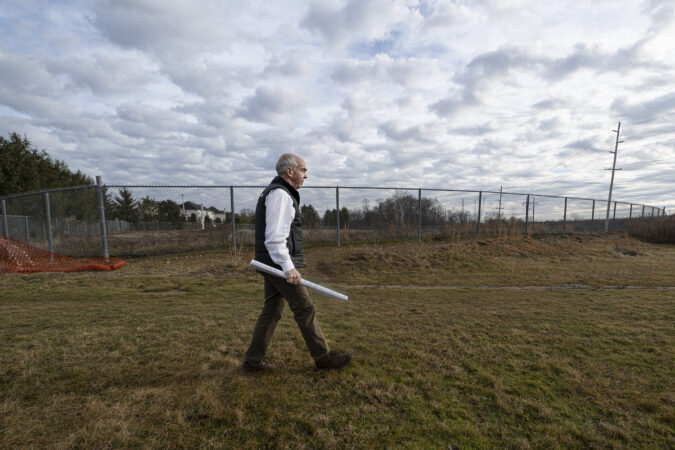
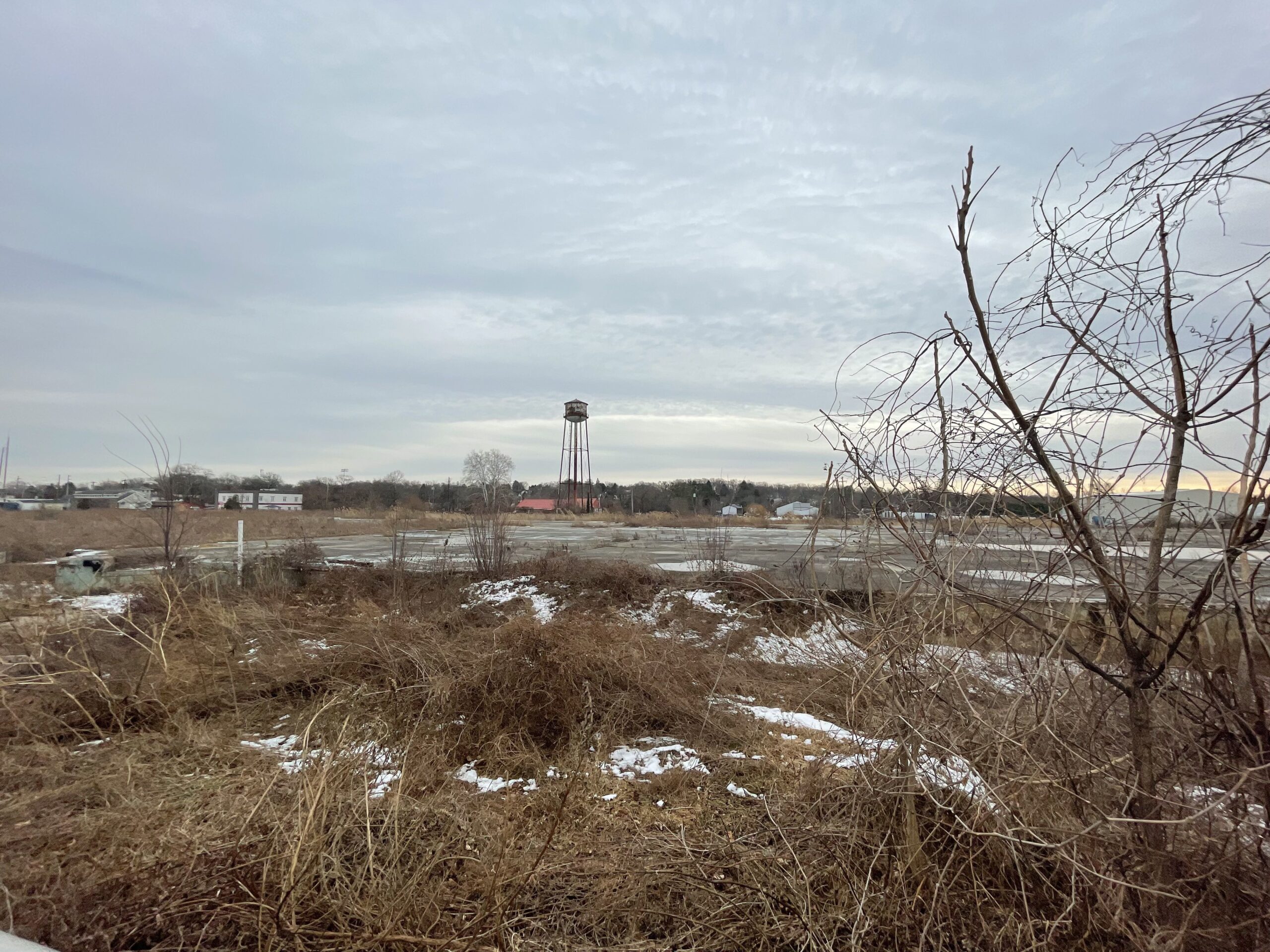
    One of Kennett Square’s last remaining sizable undeveloped parcels could get hundreds of townhomes and apartments — once contamination cleanup of a former industrial site passes muster.

    But even with the OK from state and federal environmental officials, it would be years — and require more sign-offs at the municipal level — before the developer eyeing a residential complex at the former National Vulcanized Fiber site could break ground.

    And the site’s owners face headwinds beyond the governmental approval, as some borough residents worry that the site is not safe for homes.

    Officials from the U.S. Environmental Protection Agency and the Pennsylvania Department of Environmental Protection, agencies that have to ultimately green-light the land as safe for people to live on, sought to assuage those concerns Tuesday during a town hall that explained the processes for cleanup and the standards the developer would have to meet for any homes to be built.

    It was the latest update regarding a proposed residential complex that would feature 246 townhomes and 48 apartments, located at the 22-acre lot on 400 W. Mulberry St., not far from the historic district of the borough, on a plot of land that has languished for almost 20 years.

    It’s one of the largest untouched parcels in the borough, making up at least 10% of Kennett Square, which is one square mile. Developers project the residential complex would increase the population of the 7,000-person borough by 15%.

    The site, which housed National Vulcanized Fiber from the late 1890s until it shut down in 2007, was purchased by its current owner in 2009 and has been the subject of cleanup efforts for more than a decade after the land was found to be contaminated with so-called forever chemicals.

    “It feels like the cart was put before the horse for the public,” one resident, Sarah Hardin, said during Tuesday’s meeting. “I think it’s the fact that we’re all feeling like this was guns a-blazing forward, and we would like to know that all the proper environmental steps are taken.”

    The former National Vulcanized Fiber in Kennett Square on Friday, Jan. 23, 2026. Once an industrial site, the property’s current owner is seeking to eventually turn it into a residential development. But first, the property has to be decontaminated that satisfy state and federal requirements.

    What’s the history of the site?

    For more than 100 years, National Vulcanized Fiber ran operations on the property, creating a slew of products with vulcanized fiber — a durable, flexible, lightweight plastic-like material that was used to make anything from trash cans to computer circuit boards.

    Production of those items led to contamination of the site; polychlorinated biphenyls (PCBs) were identified in the 1980s, after contamination spread into Red Clay Creek. That prompted the EPA to become involved, said Amanda Michel, the agency’s PCB coordinator for the region.

    The chemicals are probable carcinogens, linked to liver and breast cancer, melanoma, and non-Hodgkin lymphoma. The chemical is also associated with birth defects, developmental delays, and immune system dysfunction.

    Remediation began after the chemicals were found in the 1980s, and NVF folded in 2007. Rockhopper LLC purchased the property two years later and began cleaning the site, eyeing future residential development.

    Along with the federal cleanup, in 2010 the owners began a voluntary state cleanup process — which is aimed at redeveloping contaminated, vacant, and unused parcels into productive uses — to target the other chemicals found on the site.

    In both cases, the owners have to demonstrate, through sample testing, that contamination has been lowered to a threshold acceptable for human health or that they have the proper barriers in place to prevent exposure.

    “Until that happens, there will not be a residential occupant at this property,” said Jonathan Spergel, an environmental lawyer representing Rockhopper.

    What is the developer proposing?

    Under the proposed development, the property would have 104 stacked and 38 unstacked townhomes, along with 48 one-, two-, and three-bedroom apartments. The owners said the project would comprise affordable and market-value units. A proposed rezoning ordinance would require 15% of the homes to be affordable.

    That component was critical for Kennett Square officials, Mayor Matt Fetick said in an interview last week.

    “It’s our best opportunity to have an affordable component,” he said.

    Alongside those homes, the property would have roughly 732 parking spaces, and 50 would be added to Mulberry Street.

    To offset feared bottlenecks, the property’s proposed plan would have five driveways to distribute traffic flow.

    The site’s developers estimate that the property would bring in $382,000 for the borough and more than $830,000 for the school district each year.

    Another portion of the site serves as a baseball field at the high school, and no further development is planned there, the property’s owners said in 2024.

    The project is helmed by Rockhopper LLC, which is led by two development firms, Delaware Valley Development Corp. and Catalyst City. They brought in Lennar, a home-building company, in 2021. Lennar has done at least two similar projects, remediating industrial lots in Phoenixville and in Bridgeport for residential use, a representative said previously.

    What are residents’ concerns?

    On Tuesday, residents shared stories of loved ones who lived near the site who have been diagnosed with cancer. They worried that the developer could skew data to move the project forward. They wondered why there had been no urgency to clean it up before.

    Officials said the developer has to work with an independent environmental professional and their agencies had been on site throughout the cleanup process.

    Corey Barber, who lived near the site for 20 years and moved out of the area after her cancer diagnosis in 2021, worried what construction on the site would bring.

    “People are going to believe that they’re going to get cancer from the dust kicking up,” she said.

    Charla Watson, who lives right by the property, said there was distrust because the community has not seen the work the developer says is happening.

    “It’s just been a wasteland,” she said. “Everything looks the same the day they moved out of there.”

    What comes next?

    The developer is going through two processes simultaneously. As it cleans up the property to get the necessary state and federal approvals for residential development, it is also working at the municipal level for the land to be rezoned so it can build the residences.

    The borough is advertising a change to the ordinance that would rezone the land.

    If the ordinance is approved, the developer could formally start developing the land — which would come with at least another year of planning and meetings.

    This suburban content is produced with support from the Leslie Miller and Richard Worley Foundation and The Lenfest Institute for Journalism. Editorial content is created independently of the project donors. Gifts to support The Inquirer’s high-impact journalism can be made at inquirer.com/donate. A list of Lenfest Institute donors can be found at lenfestinstitute.org/supporters.

  • New grocery stores are coming to Chester County. Here’s what and where.

    New grocery stores are coming to Chester County. Here’s what and where.

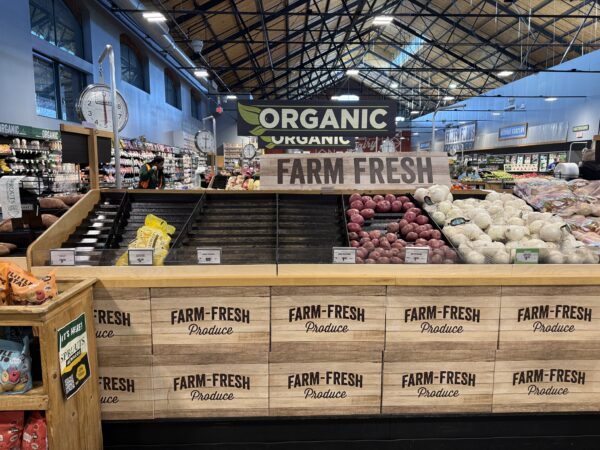
    From national chains to homegrown operations, as Chester County continues to grow, so too do the grocery store offerings.

    Here’s a look at some of the stores opening around the county.

    Kimberton Whole Foods expanding

    This spring, locally owned Kimberton Whole Foods will open its largest location in the county in Eagleview Town Center. Construction began in 2024, roughly 20 years after the location in Kimberton Village opened at a former hardware store.

    “We look forward to serving Eagleview and the surrounding communities with healthy, locally sourced grocery options in a customer-focused environment,” Ezra Brett, chief operations officer for Kimberton Whole Foods, said in a statement.

    The new 14,000-square-foot facility will continue the store’s offerings of organic produce, grass-fed meats, specialty cheese, grab-and-go meals, and more.

    The store will join the growing Eagleview Town Center, which offers restaurants, salons and spas, professional offices, daycares, and more.

    West Chester Cooperative slated for opening

    West Chester is slated to get a brick-and-mortar member-owned grocery this year, with West Chester Cooperative at 204 W. Market St.

    Permits were submitted to the borough in December, according to the grocery’s website.

    The cooperative kicked off more than a decade ago, formed by a group of borough residents who wanted sustainable, local alternatives to chain grocery stores.

    Over the next 10 years, the group launched outreach efforts, opened a pop-up market, and did curbside pickup and limited in-store shopping hours. In 2022, it reached 500 member-owners.

    The grocery will be open to all shoppers, but member-owners will receive select benefits.

    Kennett Square is also getting its own cooperative grocery store

    West Chester isn’t the only municipality in Chesco getting a different model of grocery store. Also nearly a decade in the works, Kennett Square’s Kennett Community Grocer is expected to open this spring at 625 E. Cypress St.

    Renovations began in 2025, and the store will offer locally grown produce; dairy, eggs, and meat from county farms; local baked goods and prepared foods; pantry staples from local producers; and a cafe for community members. It will also hold educational and other events led by healthcare professionals and farmers.

    “It felt like doing this was to highlight for everyone that we have this precious land that’s quite beautiful, that is very bountiful with products, not just mushrooms, but meat, dairy, produce, fruit, vegetables,” said Edie Burkey, president of the nonprofit board leading the grocer. “We felt that bringing people together for the common cause of supporting the land that we’re very, very proud to be part of was a good thing.”

    Farmers will get a free cup of coffee at the cafe, which will sell locally roasted coffee, and local teas and honey. The store hopes to partner with the high school’s culinary students for an internship program. Products that don’t sell will be donated to organizations like Philabundance’s Mighty Writers, Children’s Advocacy Centers of Pennsylvania, and others, Burkey said.

    “We all eat, and to create a community around eating — things that are grown around here — and protecting the land so that maybe farmers don’t sell their land to developers, you’re just creating a sense of community in and around an activity that is so vital to every part of your day, every day of the year,” Burkey said.

    Other national chains coming to the county

    Meanwhile, bigger chains are also looking to call the county home. Phoenixville could see two national stores coming in the coming months.

    Construction for an Aldi, an international discount supermarket, began over the summer at 297 Schuylkill Road.

    Meanwhile, Sprouts Farmers Market, the Arizona-based organic and natural grocery store, is also eyeing a location in Phoenixville. Most of the grocer’s local footprint is within Philadelphia, but a Phoenixville location would broaden the store’s reach further west.

    The Phoenixville location is proposed at 808 Valley Forge Road, where the former Royal Bank used to sit. It would operate 7 a.m. to 10 p.m. daily, next to an indoor self-storage facility.

  • PennDot plans changes to U.S. 30 interchanges in Chester County

    PennDot plans changes to U.S. 30 interchanges in Chester County

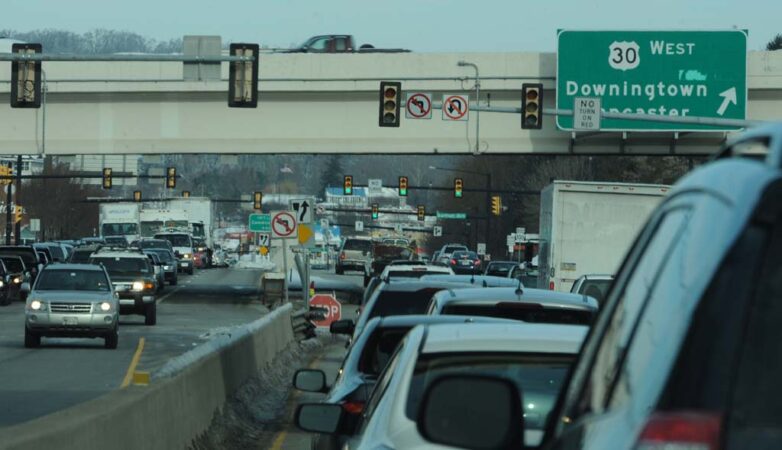
    Changes are coming to several interchanges in Chester County that could affect commuters in roughly a decade, under projects aimed at improving a 7.5-mile stretch of U.S. Route 30.

    Pennsylvania’s Department of Transportation is nearing the end of the conceptual design period for proposed changes to interchanges affecting Caln, East Brandywine, Easttown, West Brandywine, Uwchlan, and Downingtown in a project that seeks to reduce traffic congestion and collisions.

    PennDot presented the alternatives for the eastern section of the bypass during an online session last week. An in-person poster session is scheduled for Tuesday evening at Pope John Paul II Regional Catholic Elementary School in West Brandywine. But breaking ground remains years out: Construction is expected to start in spring 2034, costing roughly $874 million. The federal government is slated to pick up the bulk of the cost, with the state taking a sliver, officials said last week.

    “The purpose is to provide a safe and efficient transportation system by improving safety, reducing future congestion, accommodating planned growth, and improving deficiencies,” said Bruce Masi, consultant project manager with GFT, an engineering consulting firm.

    The eastern section of the Coatesville-Downingtown bypass corridor runs from just west of the Reeceville Road interchange, east to the Quarry Road interchange, where it becomes the Exton Bypass, heading toward U.S. Route 202.

    Changes to U.S. 30

    Under the plan, PennDot would widen the road by up to 35 feet. It would also introduce flexible-use lanes on the left sides to function as needed during high traffic volume.

    A regional transportation center, based in King of Prussia, would monitor the flexible lane through cameras along the route. The flexible lane would likely be used eastbound during the morning commutes, and westbound in the evenings. But it could also be used to facilitate traffic flow after crashes or incidents, Masi said.

    Heading west, the flexible lane would begin around the Quarry Road interchange and taper back to a median as you approach State Route 82. Heading east, it would return to a median around the Exton Bypass.

    Changes to access points

    When it comes to actually getting on U.S. 30, changes are coming at different junction points: Reeceville Road, Pennsylvania Routes 340, 322, and 133, and Norwood Road.

    Masi presented a slew of options for Norwood Road and Route 113’s interchange, which PennDot is accepting public comment on.

    One alternative would leave the existing location for westbound and eastbound on- and off-ramps, updated to meet current standards. It would also create two new “movements” that do not currently exist: Drivers headed west would exit onto a bridge that crosses over U.S. 30, and then tie back in with State Route 113; another ramp would run drivers eastbound. This model has the fewest predicted crashes, and wiggle room for cars to weave, but would potentially have a higher environmental impact.

    “What that does is creates a full interchange — all movements at 113, but in this alternative, we retain the Norwood Road ramps as well,” Masi said.

    Other alternatives would remove the existing ramps at Norwood Road for the public, and traffic using those ramps would redistribute through the region, Masi said.

    Removing the ramps on Norwood Road would also go against the wishes of the public, emergency services, and the municipalities. PennDot was looking to mitigate those effects, Masi said.

    In another alternative, Norwood House Road would be relocated north of an existing apartment complex, into the side of a hill.

    The last alternative would tweak the configuration of Norwood House Road to use it as a direct connection between Norwood Road and State Route 113.

    While PennDot awaits public review and input on Norwood Road, its selected alternatives would affect several other interchanges.

    Near Caln, at Reeceville Road, PennDot would replace the current structure and add traffic lights for westbound and eastbound drivers on Reeceville Road.

    Fisherville Road would be relocated north, to sit between the CVS and Wawa, but a remnant of the road would connect to the existing properties.

    On State Route 340 between Caln and Downingtown, PennDot would scale up the current interchange for longer ramps, and add a single-lane roundabout to eliminate the traffic signal at the U.S. 30 westbound intersection.

    West Bondsville Road would be moved north to maintain access to residences.

    Continuing east, State Route 322 around Downingtown would create a new traffic flow with traffic lights at either end of the interchange, to prevent left-turning cars from crossing paths with approaching vehicles. The change would affect drivers stopping for coffee or gas at the Royal Farms or heading to PennDot’s park-and-ride, however. It would become a right-turn-in and right-turn-out only traffic flow.

    Lloyd Avenue would also be relocated.

    What comes next

    Electronic comments are being taken through Feb. 6. Paper comment forms are available at Tuesday’s open house.

    Property impacts are not yet known, officials said. If a property is needed for the project, PennDot will reach out.

    Once PennDot closes out its conceptual design, it will start preliminary engineering and environmental evaluation. The public will be able to weigh in again between that period and the final design period, before the plans go out for construction bids.

    This suburban content is produced with support from the Leslie Miller and Richard Worley Foundation and The Lenfest Institute for Journalism. Editorial content is created independently of the project donors. Gifts to support The Inquirer’s high-impact journalism can be made at inquirer.com/donate. A list of Lenfest Institute donors can be found at lenfestinstitute.org/supporters.

  • In ‘Steel Magnolias’ in Chesco, some of the cast has worked together for 50-plus years

    In ‘Steel Magnolias’ in Chesco, some of the cast has worked together for 50-plus years

    In a small fictional town in Louisiana, the six women centered in Steel Magnolias have forged a community among — and an ever-deepening relationship with — each other. In a real town in southeastern Pennsylvania, a group of women who have worked together for decades are bringing those characters and those deep bonds to life at People’s Light in Malvern.

    “You don’t have to worry about if that familiarity is there,” said Janis Dardaris, who portrays Clairee, the widow of the town mayor. “You just sit on the stage and it’s there. There’s no working at it. I sometimes wonder, what would it be like doing this play with completely different people that I didn’t know?”

    As the women portray lifelong friendships, they have been able to find that depth and heart because of their own close connections. They’ve known each other for decades through their work in the arts — up to 50 years, in some cases, with some combination of them overlapping in at least a dozen shows in recent years.

    Talking together in a room at the theater days before the Sunday opening, they occasionally finished each other’s sentences, extrapolating thoughts for each other.

    Abigail Adams, the production’s director who has directed the women in several other performances, has a sense of how each of them works — how much time it takes for them to process, when to ask for something in their performance and when to hold back.

    Claire Inie-Richards, who plays young nurse and newlywed Shelby, and Susan McKey, who plays her mother, M’Lynn, have portrayed a mother-daughter duo three times over 20 years.

    Though with each role they learn each other anew, “There’s no substitute for time,” Inie-Richards said.

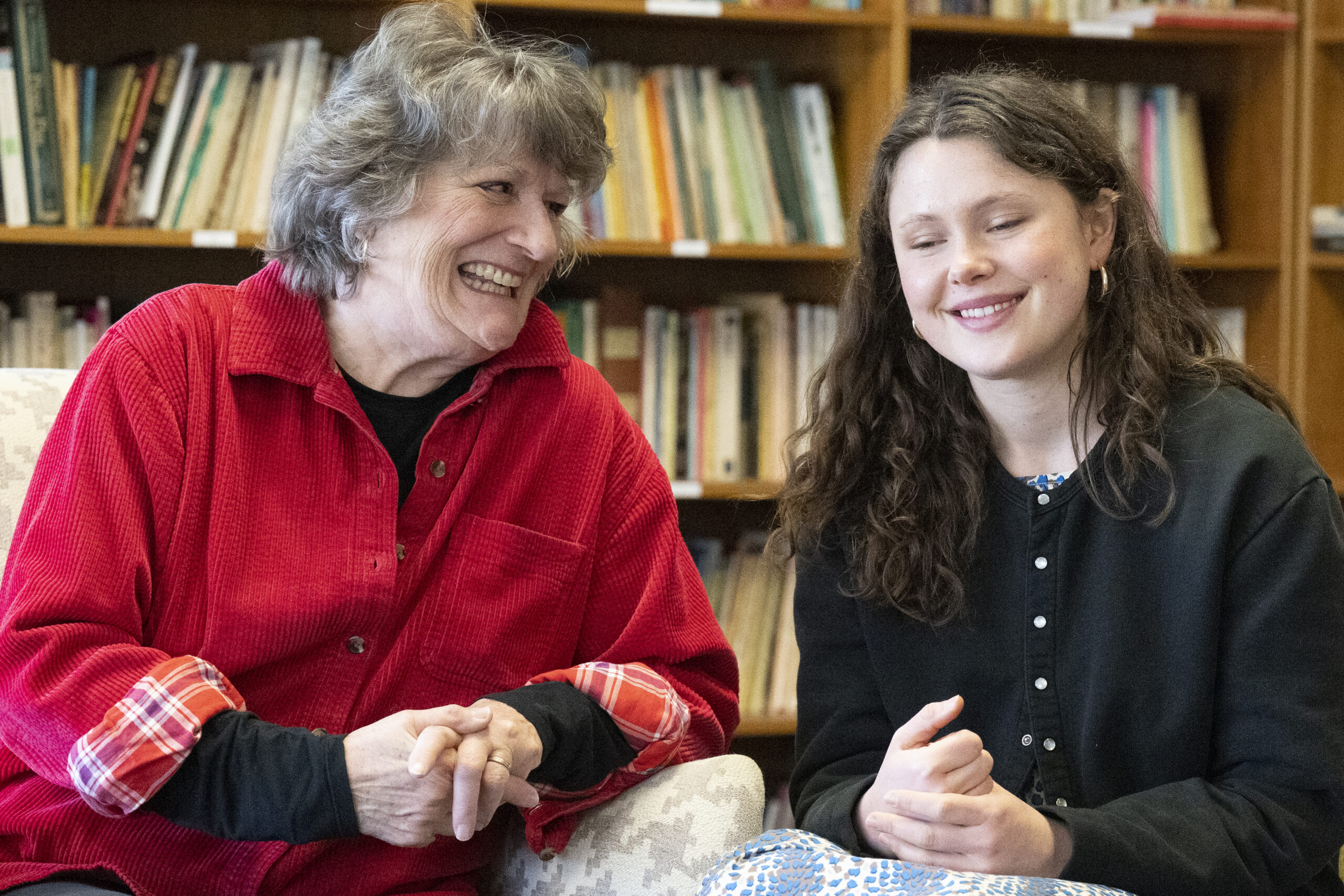
    Marcia Saunders (left) and Brynn Gauthier are part of an all-women ensemble performing “Steel Magnolias.”

    Brynn Gauthier, who makes her People’s Light debut in her portrayal of Annelle, is the new addition to a group of women whose history stretches back decades.

    At first she thought it might be intimidating to work with people who have known each other and worked together for so long, but it felt like she got to be part of the journey of the cast getting to know each other in a new way through this show.

    That familiarity is not without its challenges, though. Marcia Saunders sometimes feels “Marcia” surface in place of “crusty” Ouiser.

    “That’s been challenging because of my relationship with these people and this institution, which is like a home to me,” she said.

    Told as a series of moments in the women’s life within the safe confines of Truvy’s in-home hair salon, the play opens with Truvy and newcomer Annelle preparing Shelby for her wedding. Shelby and mother M’Lynn discuss wedding preparations, while local grouch Ouiser gripes about their property line.

    Clairee arrives, windswept, from a dedication ceremony honoring her late mayor husband. Annelle, originally reluctant to give any information at all about herself, breaks down, admitting to the women that her husband has disappeared — with her money, her car, and her jewelry. She finds immediate support.

    It’s just the start of how the relationships evolve and deepen in Robert Harling’s play, set in a southern town in the 1980s.

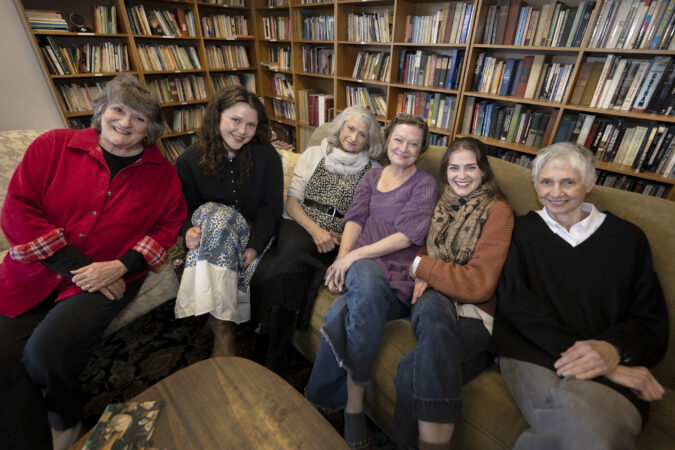
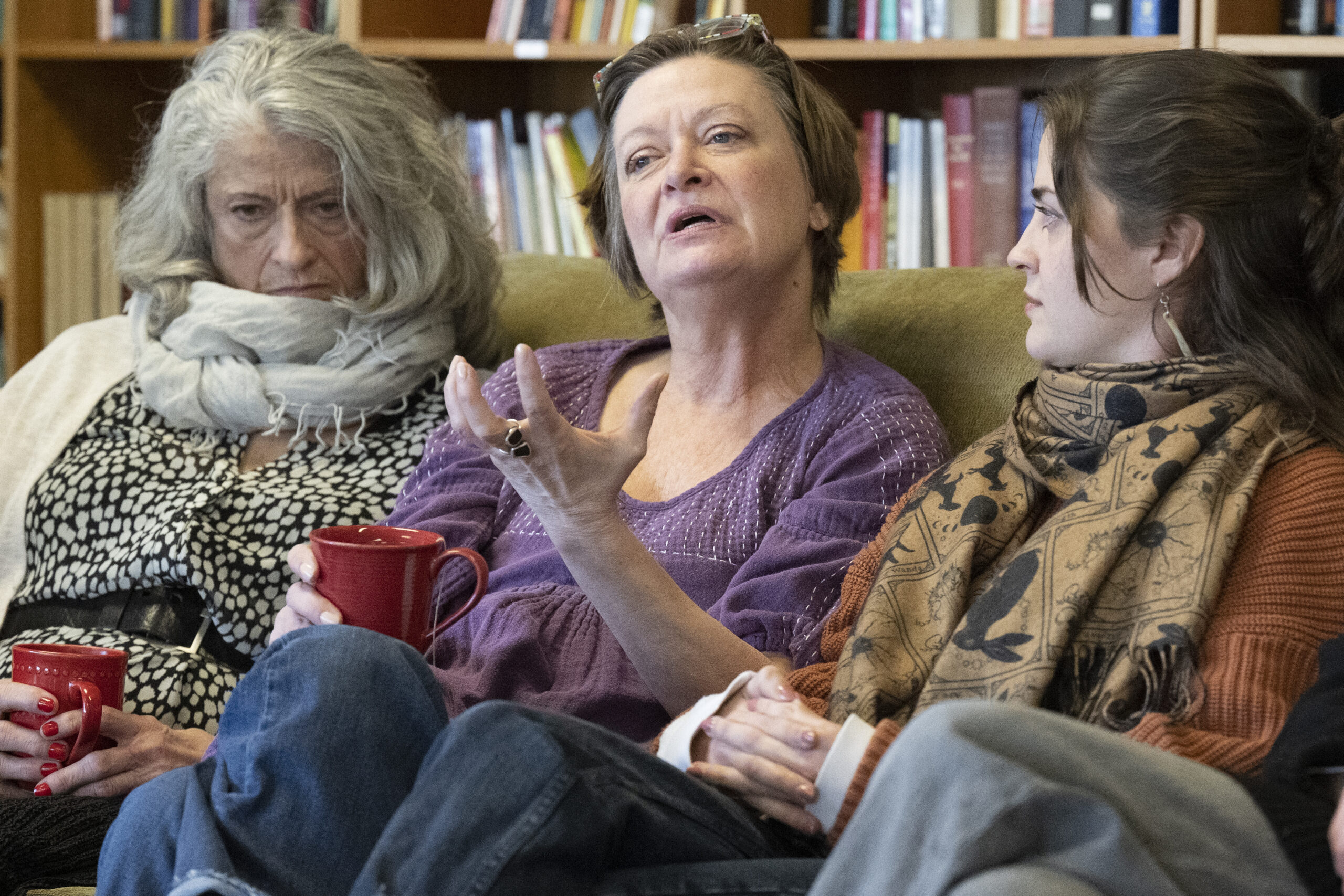
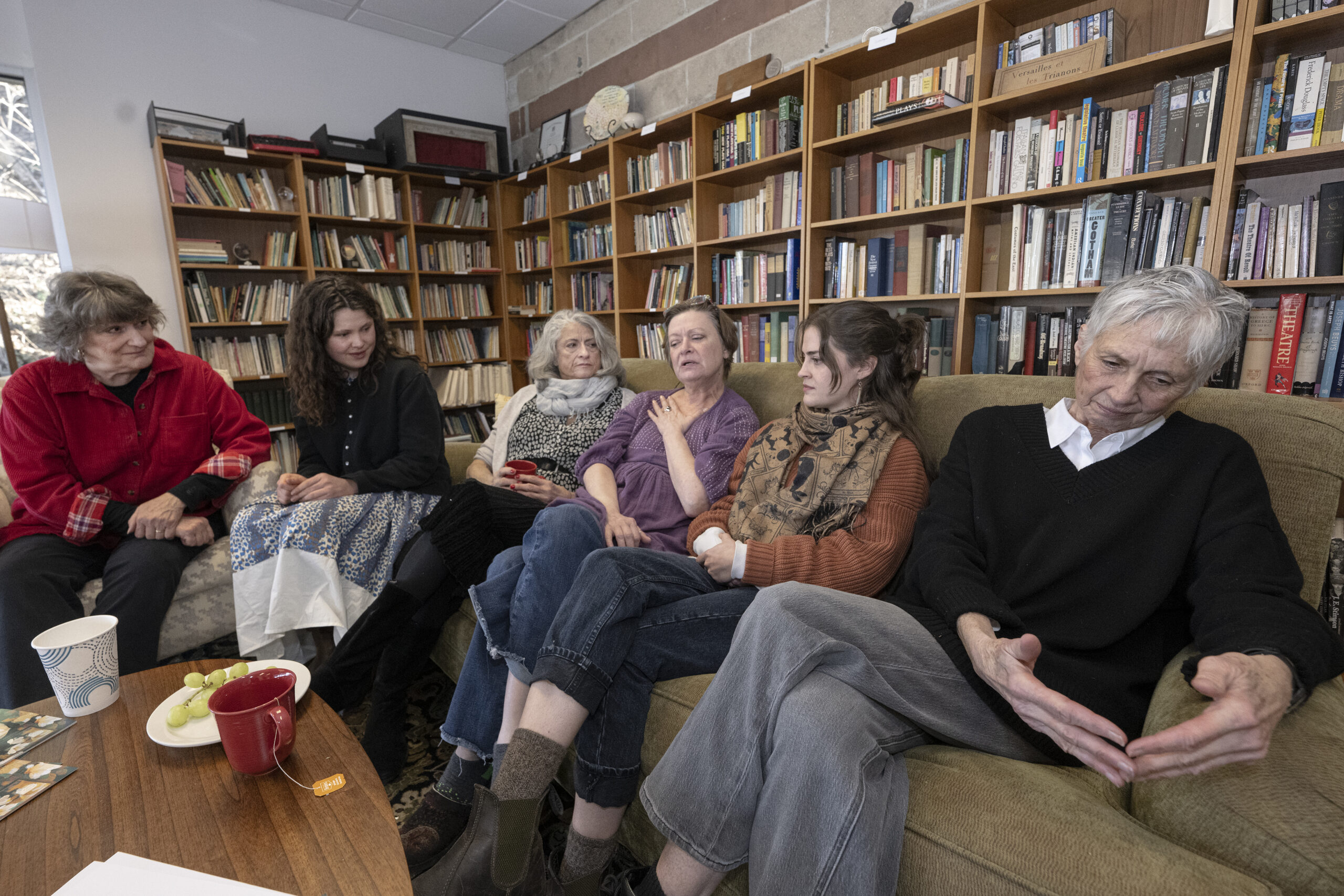
    From left, Janis Dardaris, Susan McKey, and Claire Inie-Richards, members of an all-women ensemble performing “Steel Magnolias,” speak about working together for decades — some for more than 50 years — during an interview at People’s Light in Malvern.

    Even though the viewer slowly learns more about the women’s external lives and pressures — confronting joys and tragedies — the play never leaves the salon.

    “I love how this play – it’s about these women. It’s about this place. It’s about us. And I just think that makes for such a strong story, and I think more poignant than the movie,”McKey said.

    Gauthier observed that there’s something inherent to women’s friendships in how they can discern when to tiptoe and when to confront in their care for each other.

    Marcia Saunders (from left), Brynn Gauthier, Janis Dardaris, Susan McKey, Claire Inie-Richards, and Abigail Adams speak of their performing “Steel Magnolias” at People’s Light in Malvern.

    “Truvy’s place is the place where they can be fully themselves, and they really can’t be fully themselves in their domestic arrangements, not in the same way,” Adams said. “They can’t be as outrageous, and they can’t be as vulnerable.”

    It’s the vulnerability, that unyielding support for each other despite personal differences, that the women think today’s audiences will connect with. Though the story — popularized by a film adaptation released in 1989 starring Julia Roberts, Sally Fields, and Dolly Parton — is often thought about as a sentimental tearjerker, it’s injected with lightness, Gauthier said. .

    “It’s kind of like the best episode of like Friends or a TV show you really love, where you just are spending time with these people,” she said.

    “There’s always going to be intrigue and interest and drama, but there’s an element of just sitting with these people that you really enjoy and getting to experience them really fully,” Gauthier said. “It’s really nice to just have these characters that are so easy to fall in love with.”

    “Steel Magnolias” continues through Feb. 15 at People’s Light, 39 Conestoga Rd. in Malvern. Information: peopleslight.org or 610-644-3500.