Author: Brooke Schultz

  • A Chesco town lowered taxes. That’s pretty unusual — but may not be something others can copy.

    A Chesco town lowered taxes. That’s pretty unusual — but may not be something others can copy.

    It was something of a lucky confluence of factors in West Bradford Township that led to residents seeing a reduction in their property taxes going into the new year, as other communities in the state see hikes.

    A number of loans that were refinanced during record-low interest rates at the height of the COVID-19 pandemic in 2020, plus long-term lease agreements that brought the municipality more money, eventually equaled “substantial savings,” said Justin Yaich, town manager.

    Savings in hand, the township decided they’d give it back to residents, he said, rather than funding “another pet project or another program.”

    In the budget, passed last month by the town’s board of supervisors, West Bradford set its property tax millage for a 0.25 mill — a 50% reduction in the tax for residents. For a home worth roughly $300,000, residents will now pay $75 a year, down from $150.

    It comes as Philadelphia’s collar counties and municipalities have faced tightening budgets and have had to hike taxes after years of stagnation.

    It’s unusual, John Brenner, executive director of the Pennsylvania Municipal League, said of West Bradford’s reduction.

    “There have been increases, and I’ve seen a number of them from municipal leaders throughout the Commonwealth — cities, boroughs, townships,“ Brenner said. ”You’re seeing counties raise taxes that haven’t in a long, long time. So that tells you the environment we’re in.”

    Local governments are fairly limited in how they can levy taxes under state law, with the biggest portion of revenue coming from “the beleaguered property tax,” Brenner said. Schools and the county take from that same source, with local municipalities usually taking far less.

    “Local government is not a business,” Brenner said. “It’s a provider of services, and those services cost money, and somebody has to pay for it.”

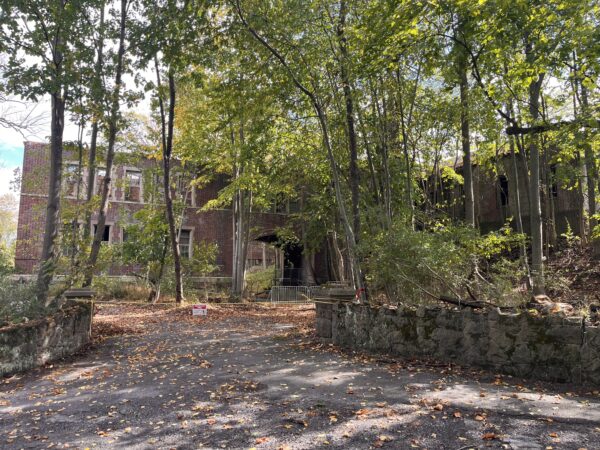
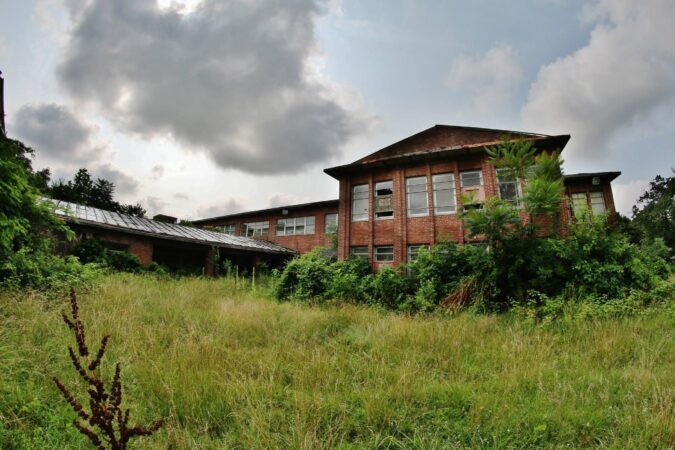
    But in West Bradford, it was years of planning and a flurry of factors, Yaich said. It started in 2019, when the town purchased the former Embreeville State School and Hospital, an abandoned 900,000-square-foot psychiatric hospital that had been deteriorating for more than two decades. A developer had sought to transform the property into a high-density residential complex, which saw community pushback and years of litigation.

    To purchase the site for roughly $23 million to turn it into 200 acres of open space, the township — for the first time — levied a real estate tax. (Residents already paid property tax to Downingtown Area School District and the county but previously did not pay the town.)

    But early in 2020, West Bradford refinanced its outstanding debts, renegotiated some lease terms, and began to hold other costs consistent. Over the years, it culminated in the township being able to reduce the real estate tax, Yaich said.

    The board’s philosophy is to do its core responsibilities — taking care of roads and infrastructure, caring for the open spaces and parks, running trash and recycling programs — and make sure there’s enough leftover for new programs or capital improvements, Yaich said. But anything beyond that, return it to the taxpayers, rather than figure out how to spend it, he said.

    It is easier to spend money than it is to trim, Yaich added, noting that the township faces rising costs and shrinking revenue sources: Cable providers, who once were paying $300,000 to the township in a year to put their lines in, are dwindling as people turn to streaming services. With more electric vehicles, fewer people are filling up at the pumps, meaning less liquid fuels money for the township, too. It’s rare, and unlikely to be replicated in a few years, to cut costs for residents like this, he acknowledged.

    As other town managers call and ask Yaich how to emulate him, he tries to dispel the magic.

    “We’re in a unique situation that we were able to do it,” Yaich said. “There’s no magic sauce or magic potion that we’re doing here that other places aren’t doing. It’s just that we were set up at the right time in the right place, and we acted when things were favorable to us and we were fortunate.”

    This suburban content is produced with support from the Leslie Miller and Richard Worley Foundation and The Lenfest Institute for Journalism. Editorial content is created independently of the project donors. Gifts to support The Inquirer’s high-impact journalism can be made at inquirer.com/donate. A list of Lenfest Institute donors can be found at lenfestinstitute.org/supporters.
  • Art makes this Chesco 15-year-old happy. So she launched a nonprofit to teach younger kids.

    Art makes this Chesco 15-year-old happy. So she launched a nonprofit to teach younger kids.

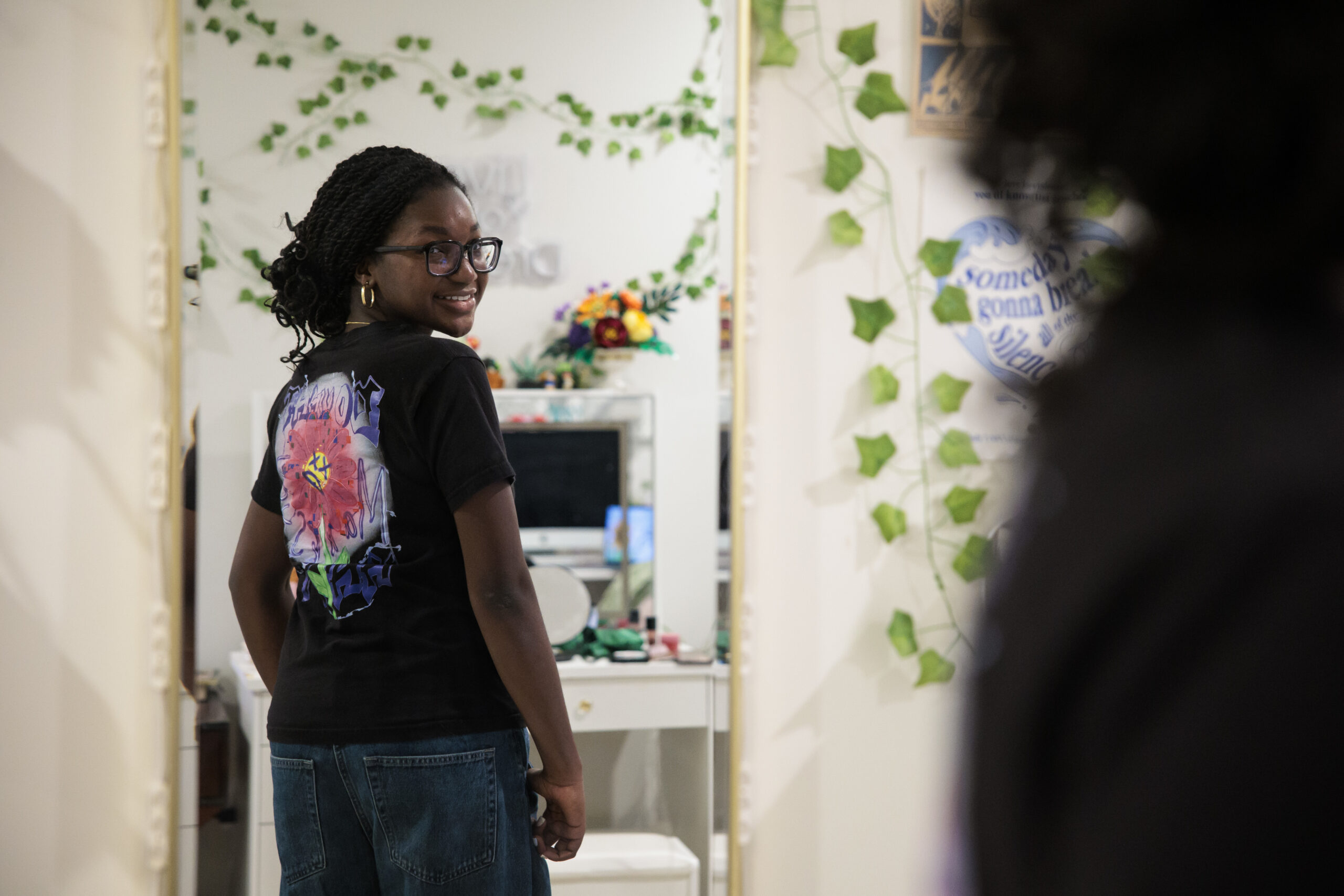
    Something about the phrase “Do what makes you happy” struck Faridah Ismaila. It became the title of, and inspiration behind, one of her art pieces. It’s printed onto the back of her T-shirt. It’s something the 15-year-old artist lives her life by.

    “When I do art, it’s because it makes me happy, and when I can give my art to other people or spread the joy of art, it’s making them happy,” she said.

    Following that guiding light of happiness, Ismaila, a digital artist and a sophomore at Great Valley High School, recently launched her nonprofit, A Paint-full of Promise, which offers free monthly art classes for kids in her school district in kindergarten through grade six.

    Working with educators in the district, Ismaila devises themed art projects and provides supplies and classroom time to teach young artists how to express themselves. The first club is slated for mid-January, with a winter wonderland theme. Children will make snowflakes and paint winter-themed coasters.

    Ismaila has been recognized for her art nationally: She was the state winner and a national finalist in the 2022 Doodle for Google competition, where young artists compete for their work to be featured as the Google homepage design. That recognition helped give her the confidence to pursue big dreams, like her nonprofit and club.

    “It makes me feel I can still do this. Because sometimes I’ll doubt myself. … I can’t be having all these big dreams,” she said. “But if people want to vote for me and I am recognized nationally, I feel on top of the world. I can do anything.”

    The first brushes of the nonprofit — which she hopes one day will grow to multiple sessions a month — started years ago, when Ismaila began making YouTube videos, teaching the fundamentals of art. She showed viewers how to make a gradient, how to depict a sunrise. She circulated the videos around her Malvern neighborhood, and she thought: Why not hold a class for younger kids?

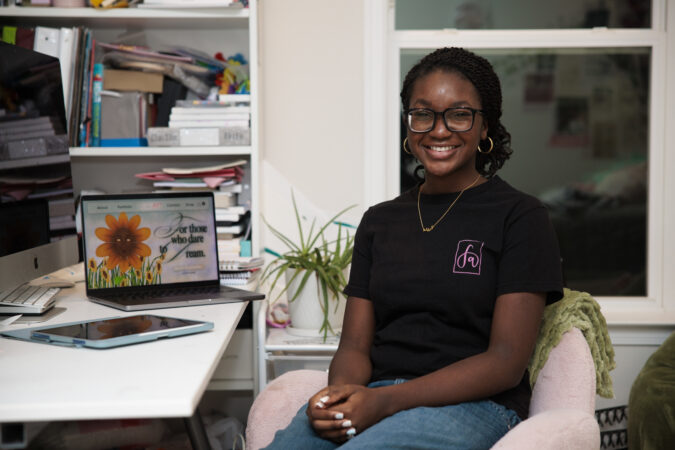
    Faridah Ismaila, 15, poses for a portrait at her home on Wednesday, Dec. 17, 2025, in Malvern. Ismaila started a kids art nonprofit called A Paint-full of Promise. She also sells her art online.

    Over a summer, in her garage, she set up two art projects — painting and colored pencils — and led about eight kids through a lesson. She called it Faridah’s Art Crafty Corner.

    Holding the class made her happy. So she did it again, but bigger, turning it into a summer camp, under the new name: A Paint-full of Promise.

    “Then I decided, why not actually make this a club, so not only my community can get this, my entire district can?” she said.

    And now, the teenager has a nonprofit under her belt. She officially launched the organization last month at an event in Malvern, where she raised money by auctioning off prints of her work and selling T-shirts with her designs.

    Anne Dale, an art teacher at Great Valley High School who is an adviser for the club, said she was impressed with Ismaila’s ability to get other high school students involved in running the club.

    “A lot of students have big ideas for clubs, but there’s not always follow-through. With her, it’s definitely different, and I knew that when she approached me with it,” Dale said.

    Giving kids the tools and opportunity to create artwork was essential to Ismaila, who gravitates to art to process her emotions.

    “It’s just the best thing ever,” she said. “Once you start doing art as a kid, it’s just a great way to get your feelings out there and express yourself, even if you can’t use words to describe it.”

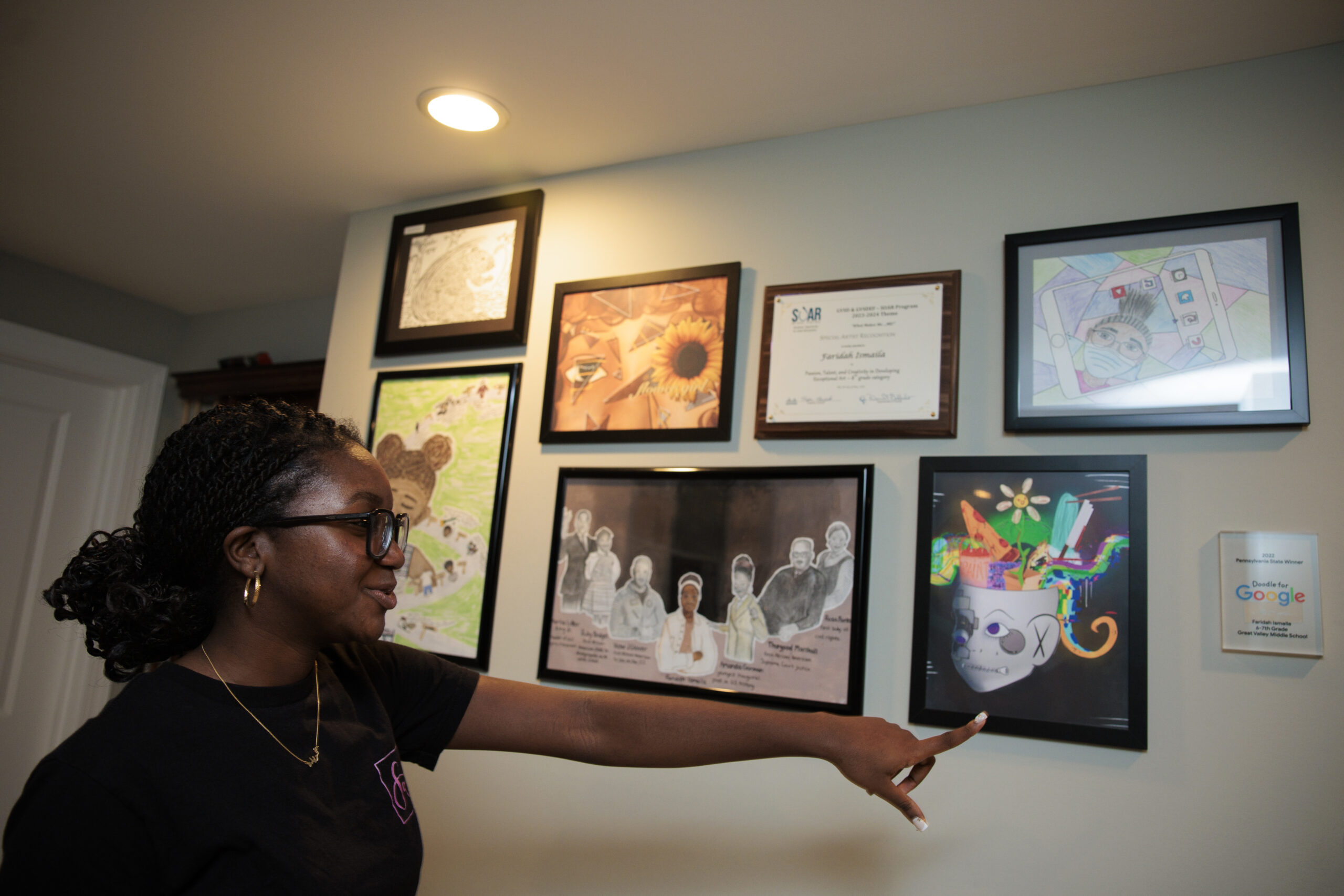
    One of her pieces, Beauty Within, depicts a skeletal hand holding a white mask, a tear running down its cheek. Behind the mask, flowers bloom. It came from a feeling of constantly analyzing herself, the feeling that what you show people is not necessarily what’s on the inside.

    Another piece, made when she was “seriously sleep-deprived,” shows a face with an assortment of pixels, pizza, stick figures, and paint pouring out.

    Faridah Ismaila, 15, talks about some of her early works at her home on Wednesday, Dec. 17, 2025, in Malvern. Ismaila started a kids art nonprofit called A Paint-full of Promise. She also sells her art online.

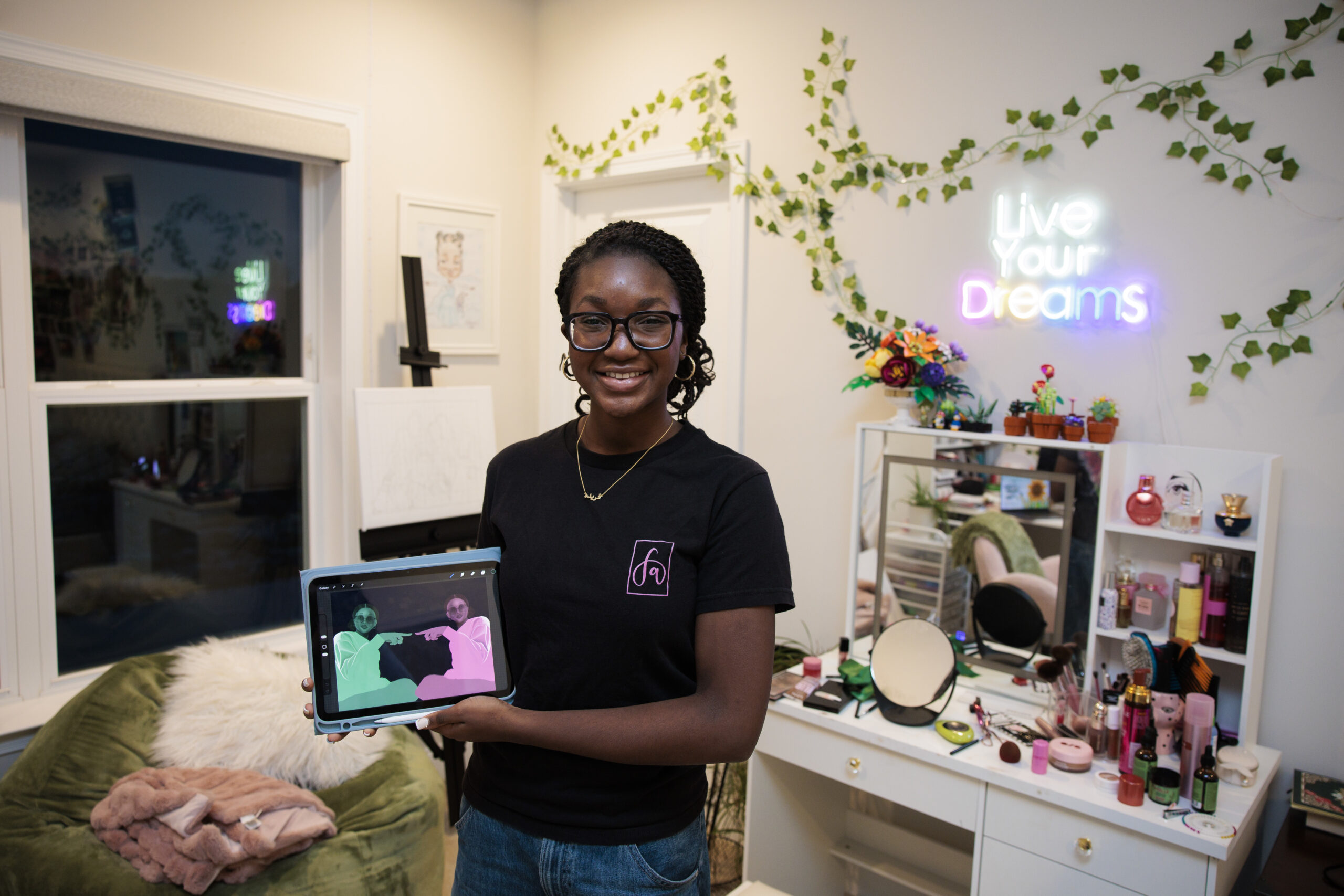
    A piece she is working on now shows herself, in vibrant colors, pointing to her reflection. She wanted to capture the feeling of two versions of the self — one confident, the other fragile.

    Sometimes, her mother Nofisat Ismaila said, her parents feel as if they are holding her back.

    “I don’t know how I’m gonna keep keeping up with this girl, because she’s just taking us to places, keeping us busy, keeping us on our toes,” she said. “She’s turning out to be a really young, determined adult.”

    Faridah Ismaila, 15, poses for a portrait at her home on Wednesday, Dec. 17, 2025, in Malvern. Ismaila started a kids art nonprofit called A Paint-full of Promise. She also sells her art online.

    But to Faridah Ismaila, it’s about finding happiness, and giving it to others, too.

    “I really hope the kids just do what makes them happy. … It’s also just not being afraid to get out there, because when I was a kid-kid, I wasn’t afraid of anything,” she said. “I think middle school really kicks some kids in the butt, and getting up out of that — at least for me, art was a way to do that. I just want to give that to kids.”

    This suburban content is produced with support from the Leslie Miller and Richard Worley Foundation and The Lenfest Institute for Journalism. Editorial content is created independently of the project donors. Gifts to support The Inquirer’s high-impact journalism can be made at inquirer.com/donate. A list of Lenfest Institute donors can be found at lenfestinstitute.org/supporters.
  • A person was injured by a coyote in Chester County

    A person was injured by a coyote in Chester County

    A person was injured by a coyote this week in Chester County, and officials are trying to locate the animal, health officials said.

    The Chester County Health Department said in a social media post that the injured person was seeking medical care. The incident happened Sunday on Warwick Furnace Road in Warwick Township.

    The injury, which broke skin, occurred on a trail during daylight hours, a spokesperson for the county said in an email Wednesday. No one else was involved, and there have been no further reports of contact with a coyote in that area, he said.

    The department does not know if the coyote was rabid.

    The last incident with a coyote was reported to the health department in late October, in the southern part of the county, the spokesperson said. Several people were injured, and the coyote was rabid, the health department said at the time. Everyone injured was identified and was provided medical guidance in that incident, the department said.

    The state game commission was involved with locating the coyote, officials said.

    Coyotes are not necessarily rare in Pennsylvania, and their numbers are growing. They have been spotted near Philadelphia, and can thrive in suburban and urban areas, according to Chester County’s parks department.

    In Chester County, they are usually spotted near heavy, brushy cover and around woods, fields, and agricultural areas where their prey (mice, voles, rabbits, woodchucks, and birds) live. Sightings and signs have been reported in all county parks, the county said previously.

    They rarely attack humans, but they will engage with pets. (Health officials advised residents to remain aware of their pets following this week’s incident in Warwick Township.)

    Residents who come in contact with a coyote were asked to call the Chester County health department at 610-344-6225 for further information and guidance.

    This suburban content is produced with support from the Leslie Miller and Richard Worley Foundation and The Lenfest Institute for Journalism. Editorial content is created independently of the project donors. Gifts to support The Inquirer’s high-impact journalism can be made at inquirer.com/donate. A list of Lenfest Institute donors can be found at lenfestinstitute.org/supporters.
  • Local pro athletes bring Christmas surprise to Chester County family

    Local pro athletes bring Christmas surprise to Chester County family

    They almost didn’t put up a Christmas tree this year.

    R.C. Wilson Sr. knew things were going to be tight for his family this holiday, with him starting a new job and “life just being hard,” he said. It was a week before Christmas when he reached out to Justin Brown, who leads an organization that connects athletes with community initiatives and had arranged several holiday donation drives this season, asking if Brown knew of any agencies that might donate some gifts to Wilson’s six kids.

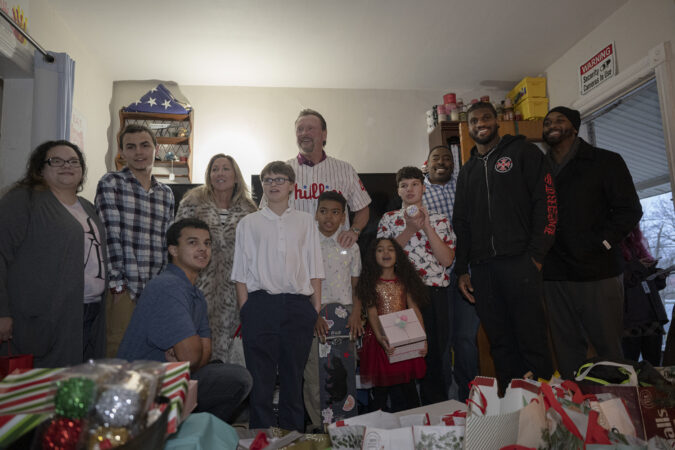
    Brown reached out to the Chester County community, and he got an outpouring of support. He asked NFL tight end Kenny Yeboah, a former Temple player who later joined the New York Jets and Detroit Lions, and former Phillies pitcher Tommy Greene to be part of a surprise. He told Wilson to put up the Christmas tree.

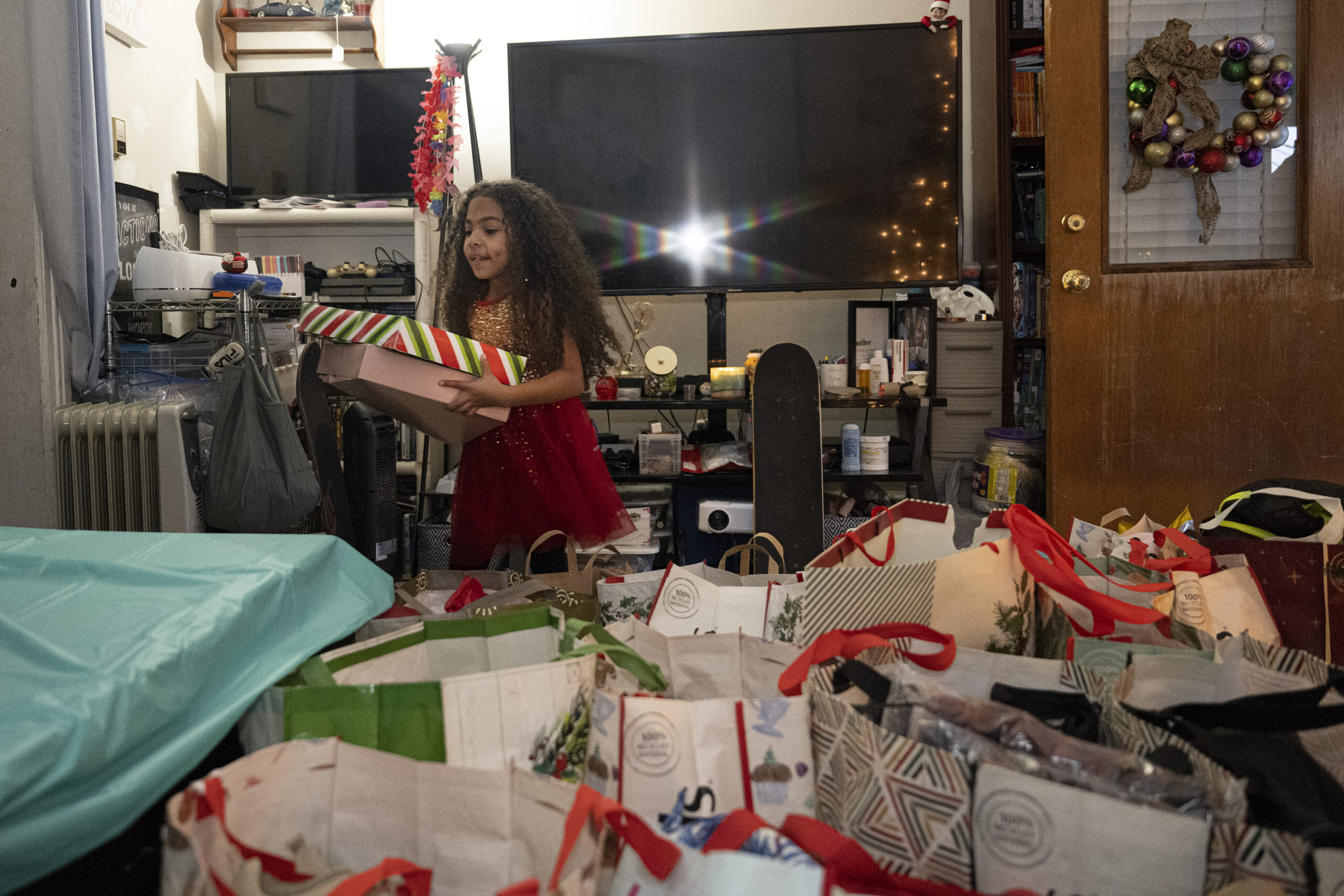
    And on their quiet Coatesville street a few days before the holiday, the community showed up at Wilson’s doorstep with bags upon bags of gifts — essentials like clothing and shoes and food, plus toys and more than $500 in gift cards.

    “We always try to do what we can for [the kids] to give them the best, but they also understand life gets hard for everybody. We went from, I feel like, being up top to rock bottom,” Wilson said Tuesday. “It’s amazing to get to see in person. Seeing it in person, especially when I needed the help, was a blessing from the community and for my family.”

    Nevaeh Miller-Wilson, 8, organizes presents after a Christmas surprise from former Philadelphia Phillies pitcher Tommy Greene and New York Jets tight end Kenny Yeboah at her home in Coatesville, Pa. Greene and Yeboah surprised the family, which includes six children, with a full Christmas celebration, providing gifts and holiday essentials.

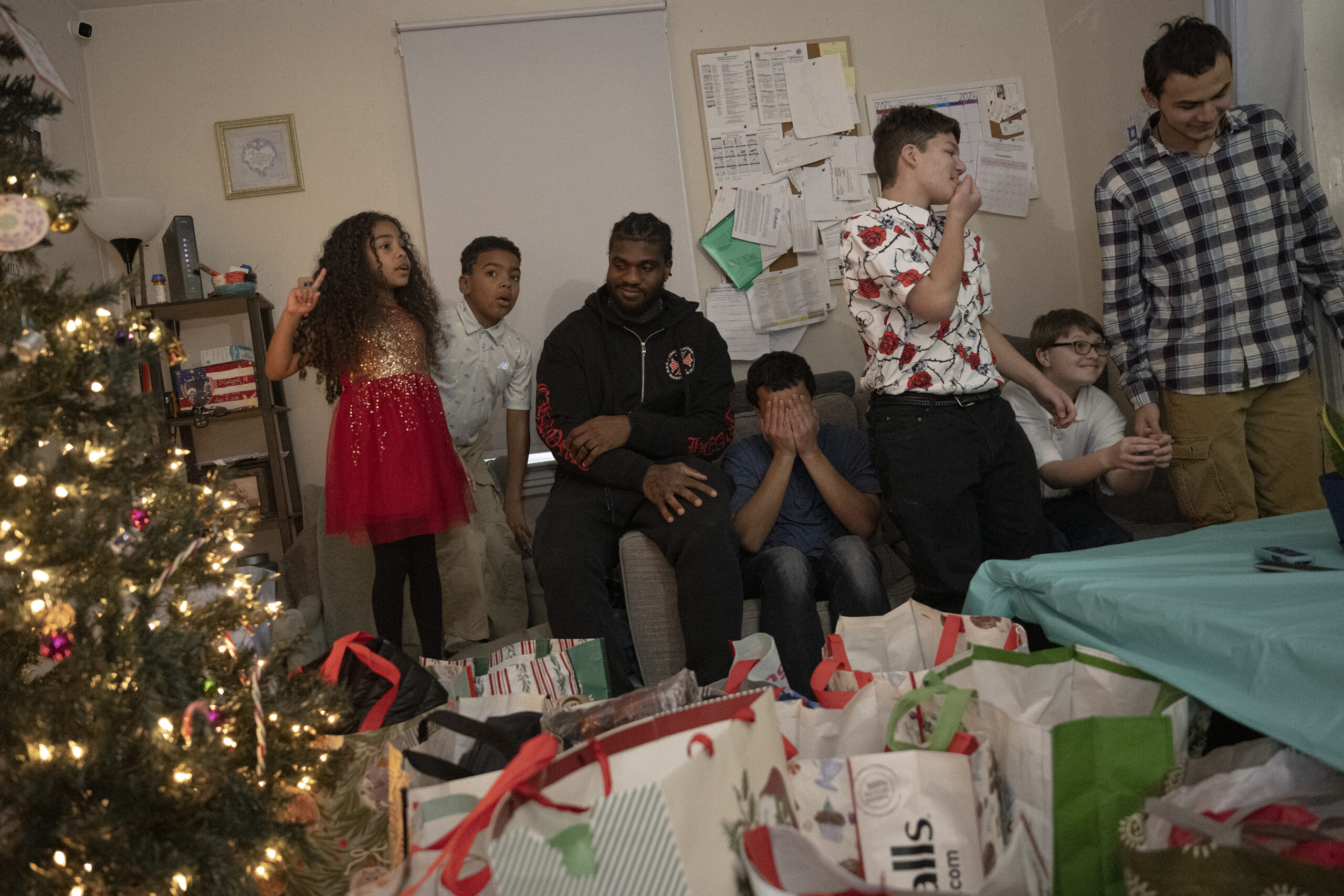
    The gifts were stacked under the Christmas tree and through the living room. It was overwhelming, said his wife, Chelsea Miller.

    Yeboah, a new resident of Downingtown, and Greene signed footballs, baseballs, and the backs of T-shirts and posed for photos with the family.

    It was cool to see, said Aadan Miller-Wilson, 15.

    “I’ve never met an athlete, and I play two of the sports they play, too,” he said.

    Yeboah, out with an injury, offered to coach the kids while he recovered. He had wanted to give back to the community he was now part of, and was connected with Brown.

    New York Jets tight end Kenny Yeboah interacts with members of a family of six children, from left, Nevaeh, Robert, Bryden, Jacob, David and Aadan, during a Christmas gift surprise at their home in Coatesville, Pa.

    “To come here and see all these people help out and give back to the community that they’re in, it’s just an amazing feeling,” Yeboah said. “It’s really, really cool to see that everyone’s here just to help out.”

    Greene credited his “better half,” Wendy, for quickly becoming involved with the surprise. When you help each other out, you help everyone out, Greene said.

    “When you get a chance to make a difference, you do,” he said.

    Wilson, who kept the surprise a secret from his family until the community showed up at their door, also found the support overwhelming.

    “It’s a blessing,” he said.

    This suburban content is produced with support from the Leslie Miller and Richard Worley Foundation and The Lenfest Institute for Journalism. Editorial content is created independently of the project donors. Gifts to support The Inquirer’s high-impact journalism can be made at inquirer.com/donate. A list of Lenfest Institute donors can be found at lenfestinstitute.org/supporters.

  • Chesco has seen ‘entrepreneurial spirit’ this year, with more new businesses to start 2026

    Chesco has seen ‘entrepreneurial spirit’ this year, with more new businesses to start 2026

    As major retailers made Chester County home in 2025, start-ups were the fastest-growing group that the Chester County Economic Development Council found itself providing support for this year.

    The region saw interest in expansions from big manufacturers — think chemical tech company Johnson Matthey, or coffee manufacturer Lavazza — and major retailers, like a Trader Joe’s in Berwyn and Exton, or even a Sheetz deep in Wawa country in Downingtown.

    But in a continued trend from the pandemic, which saw a surge in “entrepreneurial spirit,” the county has seen a continuation of new, small businesses taking shape, said Mike Grigalonis, president and COO for the county’s economic development council.

    “That’s our biggest area of growth, services that we’re providing to start-up businesses and entrepreneurs,” Grigalonis said. “That ranges from a salon, or a cafe, or a retail shop — any of those Main Street mom-and-pop businesses that you might think of — all the way to very kind of cutting-edge high tech, emerging tech — whether that be a new med device, a new drug, a new app, and everything in between.”

    The county’s wide-ranging restaurant scene saw a number of businesses planning new locations.

    Here’s a look around the county at some of the comings and goings in the final stretch of 2025.

    New local spots

    Expansions are on the menu. Stubborn Goat Brewing — which boasts craft beers, food, and a live music lineup — opened its doors this year in West Grove, and is planning an expansion into Kennett Square in 2026.

    Our Deli & Cafe, which has enjoyed four decades in Paoli, opened a second location in Phoenixville this month at 498 Nutt Road.

    The borough also recently welcomed The Local, a breakfast and lunch restaurant at 324 Bridge St.

    In West Chester, Olive & Meadow, a business focused on charcuterie boards and grazing tables, opened its brick-and-mortar location at 1388 Old Wilmington Pike this month.

    The business, which began in 2020 when Ariel LeVasseur dropped off charcuterie boards for her friends to enjoy while they chatted from afar on Zoom, grew from custom orders prepared in a commercial kitchen to a spot where customers can seek grab-and-go board items.

    “I love Chester County. I’m from Delco, but I think Chester County is so historic and beautiful,” she said. “I feel like everybody is very welcoming, and I know that a lot of people like supporting small businesses.”

    The new shop near the former Dilworthtown Inn offers all that, and everything else LeVasseur hopes will make hosting a breeze. Coming next year, she hopes to partner with local wineries and host workshops.

    “I just want them to feel like they stepped into my home, and grab some gourmet cheeses and meats and like, share the love of charcuterie that I have,” she said.

    Others close their doors

    As new businesses enter the scene, the community is also losing some favorites: Bookstore Bakery, a bookstore that offers gourmet pastries at 145 W. Gay St., will be closing its doors by the end of the year after having opened in 2024.

    LaCava Coffee, a neighbor on Gay Street, is also winding down its brick-and-mortar, but will continue selling its coffee beans online.

    “I always wanted to create something that connects my roots and that I can be connected to my home country,” said its owner, Jose Oliva, who is from Honduras. “I started the dream of creating a brand, and by 2022 we were able to accomplish a dream, and by personal efforts, we opened a very beautiful store that we ran and operated into November 2025.”

    Oliva said the increased cost of coffee, a lack of substantive foot traffic, and the initial difficulty in opening the location, which sapped his capital, ultimately led to the decision. He is eyeing a relocation to Virginia.

    “In a business if you don’t have a working capital for innovation, for development, for marketing, it is very difficult. Even so, we did it for almost two years and a few months,” he said. “We did it very successfully and with a lot of pride and we always maintain our customer service at its fullest.”

    This suburban content is produced with support from the Leslie Miller and Richard Worley Foundation and The Lenfest Institute for Journalism. Editorial content is created independently of the project donors. Gifts to support The Inquirer’s high-impact journalism can be made at inquirer.com/donate. A list of Lenfest Institute donors can be found at lenfestinstitute.org/supporters.
  • Plans to develop Pennhurst into a data center move forward as township scraps ordinance

    Plans to develop Pennhurst into a data center move forward as township scraps ordinance

    A data center planned for the Pennhurst State School and Hospital site will move forward in a monthslong, multistep process, after East Vincent Township’s board of supervisors scrapped a draft ordinance seeking to impose restrictions on data-center construction.

    At a crowded meeting Wednesday night — which at one point had residents yelling and prompted officials to call for a break — the board declined to move forward with the draft ordinance it had been penning for months that would govern data center development in the township. The draft ordinance came after the owner of the 125-acre historic Pennhurst site, which currently serves as a popular Halloween attraction, submitted a sketch to develop the land as a data center complex.

    The application will now move forward, coming before the township’s planning commission over the next several months, before it eventually returns to the board of supervisors for a conditional-use hearing, which is slated for March.

    “I understand it’s a very emotional issue,” the board’s chairman, Craig Damon, told residents. “I have to keep an open mind through all of this, so I don’t stand on one side or another, because I have to keep an open mind to this.”

    Data centers are buildings or campuses that handle cloud-storage and computing needs of massive corporations, like Amazon, Google, Microsoft, or Meta. They require large-scale ways of cooling computing equipment and are often dependent on water to do that.

    The potential data center in East Vincent would add to the more than 150 in Pennsylvania and New Jersey. Pennsylvania Gov. Josh Shapiro’s administration has encouraged data centers to locate in the state and has developed a “fast track” program for permitting. Recently, the governor’s office announced Amazon would spend $20 billion to develop data centers and other artificial intelligence campuses across the state.

    But data centers face a cooler reception from residents, with 42% of Pennsylvania residents saying they would oppose the centers being built in their area, according to a new survey.

    East Vincent officials had sought to impose restrictions on data centers by limiting building heights, mandating buffers, requiring lighting, and limiting the number of trees that could be cut down, among other rules. No one representing landowner Pennhurst Holdings LLC spoke Wednesday, but at a Dec. 3 meeting, an attorney for Pennhurst Holdings told officials the proposed ordinance had conditions that “appear reasonable and necessary on their face, but the struggle we have is when you put all of those together, they ultimately act as prohibitive to the development of the Pennhurst property as currently drafted.”

    On Wednesday, the officials declined to move forward with the ordinance, after the township’s solicitor warned it could lead to a challenge.

    Even with the ordinance shelved, residents in East Vincent and neighboring municipalities decried the prospective data center.

    The sketch plan totals more than 1.3 million square feet, with five two-story data center buildings, a sixth building, an electrical substation, and a solar field. Pennhurst State School and Hospital — known as Pennhurst Asylum in its Halloween capacity — opened in 1908 for individuals with intellectual and developmental disabilities. It closed in 1987, after legal challenges to its abusive and neglectful treatment of those who lived there, and was turned into a Halloween attraction in 2008.

    The property is situated near the Schuylkill and borders Spring City, which sits to the south. It is close to the Southeastern Veterans Center.

    window.addEventListener(“message”,function(a){if(void 0!==a.data[“datawrapper-height”]){var e=document.querySelectorAll(“iframe”);for(var t in a.data[“datawrapper-height”])for(var r,i=0;r=e[i];i++)if(r.contentWindow===a.source){var d=a.data[“datawrapper-height”][t]+”px”;r.style.height=d}}});

    “These centers, as they’ve been built, have been nothing but trouble for the neighborhood,” said Tim Thorton, a Spring City resident who was handing out “No Pennhurst Data Center” yard signs to attendees. “They make noise, they use water. This thing would have to have its own generator.”

    Residents pressed their concerns about noise, pollution, and exhausting resources like electricity and water. Veterans worried what the data center would do to their health and their quality of life in what is supposed to be a quiet, peaceful center.

    “Would you want a data center in your neighborhood? Would you want a data center 500 feet from where you live?” one veteran, John J. Coyle, pressed the board.

    Jason Cary, a union representative for local electricians, said members were scared to speak publicly in support of the center.

    “While I think your township is beautiful, to stop a project like this stops high-paying construction jobs coming to the area,” he said, drawing an immediate negative response from the crowd, with people yelling at him to “go away” and “get out.”

    The township’s planning commission will now weigh the application and will make its recommendation to the board of supervisors. Conditional-use hearings will be slated for early next year, an attorney for the township said.

    In nearby East Coventry, the planning commission last week rejected a bid to amend the zoning code to build a data center on Route 724, sending it to the township’s board of supervisors for review, the Mercury reported last week. The planning commission said it could tee up a legal challenge.

    This suburban content is produced with support from the Leslie Miller and Richard Worley Foundation and The Lenfest Institute for Journalism. Editorial content is created independently of the project donors. Gifts to support The Inquirer’s high-impact journalism can be made at inquirer.com/donate. A list of Lenfest Institute donors can be found at lenfestinstitute.org/supporters.
  • Chester County is rolling out a fleet of propane buses

    Chester County is rolling out a fleet of propane buses

    Chester County is rolling out a fleet of propane public buses — in what could be a broader trend for municipalities looking to cut costs, especially as the federal government moves away from pushing electric vehicles.

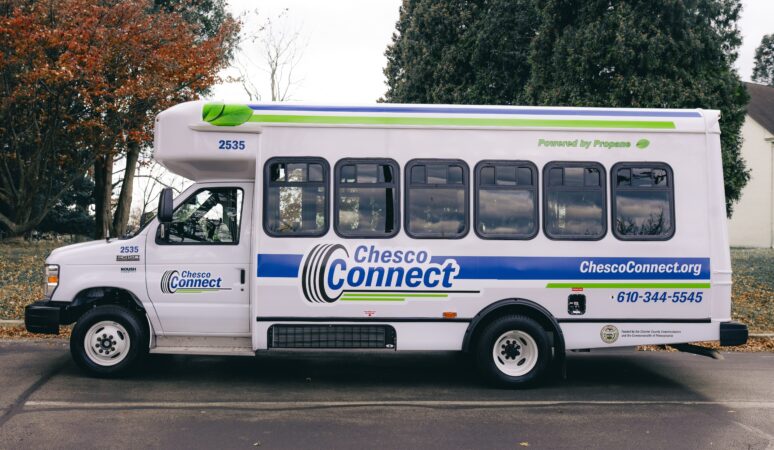
    The county will run 16 propane Chesco Connect buses by February, with seven already on the roads. The majority of the 74-bus Chesco Connect fleet, a door-to-door shared ride transportation system that covers the county, is gasoline-fueled, but the county plans on adding more propane buses in 2027, said Gene Suski, director of transportation for the Chester County Department of Community Transit.

    Propane is a cleaner fuel source than gasoline or diesel, and costs $1 to $1.50 less than gasoline per gallon.

    “On any given day, our buses go anywhere between 150 and 250 miles a day, so when you can save that kind of money per gallon, it’s a significant factor,” Suski said.

    A propane bus costs roughly $33,000 more than a gas bus, but with $20,000 saved in fuel costs annually, “it pays for itself” in 18 months, a county spokesperson said. The buses being replaced were “well past their useful life.”

    Chester County’s new propane buses follow similar moves made by neighboring Montgomery and Lancaster Counties, which in recent years have embraced propane for part of their fleets. School districts across the state have also used the model, with more than a thousand propane school buses on the streets through the state, said Tony Bandiero, executive director of Eastern Pennsylvania Alliance for Clean Transportation, an organization that works with 34 counties to encourage alternate fuels.

    It’s a relatively easy–and cheap–change for municipalities to make, Bandiero said.

    “There’s a little bit of upfront cost, but usually that could be recuperated within a year just by fuel saving, cost savings, and maintenance on the vehicles,” he said.

    Propane buses “hit a niche” about seven years ago, Bandiero said. Under President Joe Biden’s administration, his organization saw a ton of interest in electric projects. But that shifted with President Donald Trump’s return to office and the president slashing electric goals. Bandiero expects to see more projects focused on propane and natural gas in response.

    In Chester County, the buses are part of the county’s climate action plan, approved by the commissioners in 2021. The county worked with ROUSH CleanTech, which has developed propane buses, vans, and pick up trucks since 2010.

    The county was drawn to propane buses for the environmental benefits, and operating more efficiently, said David Byerman, the county’s chief executive officer.

    “We believe that we have a duty as a county to be good environmental stewards, and this initiative is a way for us to demonstrate that leadership, and we’re very much looking forward to continuing to realize the goals we laid out in our climate action plan, and continuing to provide a model for sustainability for southeastern Pennsylvania,” he said.

    Despite a recent state of emergency over propane woes in neighboring New Jersey, Suski said the county hasn’t had issue with fueling the current supply of buses. A tanker arrives each morning to fuel the buses. But in the next three to six months, the county plans to build its own propane fueling station in Coatesville to directly fuel its fleet.

    This suburban content is produced with support from the Leslie Miller and Richard Worley Foundation and The Lenfest Institute for Journalism. Editorial content is created independently of the project donors. Gifts to support The Inquirer’s high-impact journalism can be made at inquirer.com/donate. A list of Lenfest Institute donors can be found at lenfestinstitute.org/supporters.
  • Coatesville district is closing 2 elementary schools, opening a new one, and realigning boundaries

    Coatesville district is closing 2 elementary schools, opening a new one, and realigning boundaries

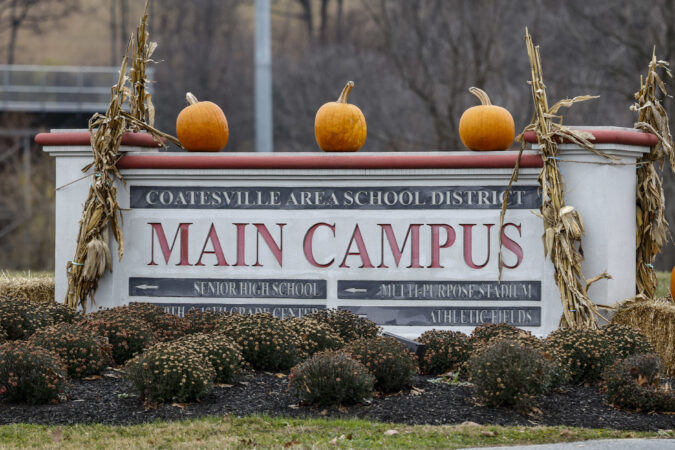
    The Coatesville Area School District will soon see a swath of changes as it prepares to shutter two elementary schools at the end of the school year, open a new one, and realign its attendance boundaries to ensure equity amid the transition.

    The new map, approved by the school board Tuesday, splits the district into four geographic regions, intended to keep communities together while maintaining ethnic and socio-economic balance, according to the district’s presentation.

    “We’re proud of our diverse population that we have in Coatesville, so we were looking to sustain that in each of our elementary schools as well,” the district’s superintendent, Anthony P. Rybarczyk, said in an interview Thursday.

    The update, slated to take effect next school year, comes as the district has been rolling out a new facilities plan over the last several years, while its enrollment has declined and its budget has been squeezed by charter schools. When students leave Caln and East Fallowfield elementary schools for the summer, the two nearly century-old schools will close permanently. The schools, which both serve kindergarten through fifth grades, enroll roughly 730 students between them.

    Under the new attendance zones, families in the Indian Run Village are being reassigned to Kings Highway Elementary School. Families in the area of Millview Park will be reassigned to Kings Highway, rather than split among three of the district’s elementary schools. The community divided by Barley Sheaf Road will now attend Reeceville Elementary. The district began communicating the changes Wednesday.

    “Geographically, it made sense,” Rybarczyk said during the school board meeting. “We met with transportation as well, they were very promising in how they said this could save time on their runs and avoid the crossovers between going from one community to the next.”

    The middle school feeder pattern will be split into two sections, with Kings Highway and Reeceville matriculating to North Brandywine Middle School. Rainbow Elementary School and the new Doe Run — which will open in August on the former South Brandywine Middle School site — will feed to Scott Middle School.

    Fourth graders at elementary schools will be “grandfathered in” to complete their fifth-grade year at the elementary school they’ve been in, even if its enrollment is set to shift. The district plans to ask parents to provide transportation for those students next year, Rybarczyk said.

    As the district winds down two of its schools, it will celebrate their history over the summer, with legacy walks and celebrations.

    “The great thing about Coatesville is the children are in the schools where their parents went,” he said.

    The district will keep the buildings, with an eye toward potential growth in the future, Rybarczyk said, though the district has no immediate plans for them.

    The schools’ closure and the opening of Doe Run Elementary School are part of a broader effort to update the district’s aging facilities, which Rybarczyk said would continue next year.

    “I think the community has been looking for something like this for a long time as well,” he said.

    With “a shift of a number of charter school families coming back to our district” and new development, Rybarczyk said he believes the district could see its enrollment grow. Its campaign to bring students back from cyber and charter schools, launched alongside its upgrading of facilities in the last few years, has gained back 64 students, and hundreds of thousands of dollars, he said.

    “We’re going to see what the need will be in the future, because we could have an influx where we need to repurpose them in some way,” he said at the board meeting. “Obviously, they’re two older schools …There’s some work to be done if we were to repurpose those.”

    This suburban content is produced with support from the Leslie Miller and Richard Worley Foundation and The Lenfest Institute for Journalism. Editorial content is created independently of the project donors. Gifts to support The Inquirer’s high-impact journalism can be made at inquirer.com/donate. A list of Lenfest Institute donors can be found at lenfestinstitute.org/supporters.