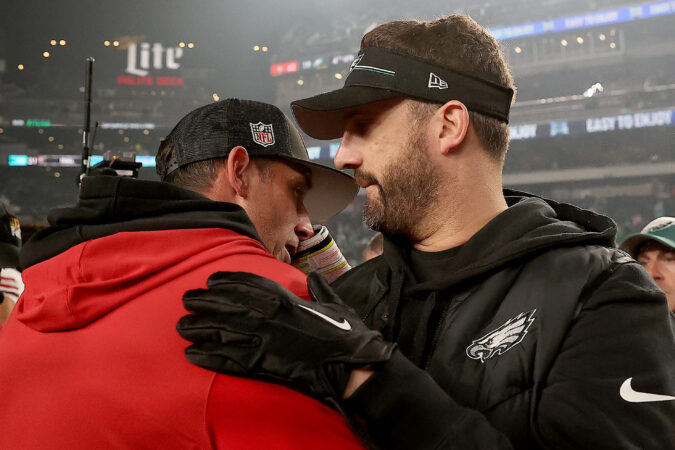
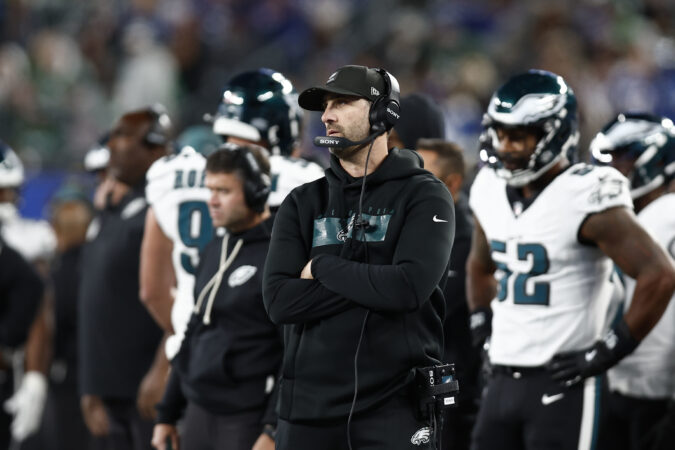
The play that encapsulated everything the Eagles offense wasn’t this season was a play that they themselves didn’t even run. First snap of the fourth quarter Sunday night for the San Francisco 49ers, first-and-10 from the Eagles’ 29-yard line, and there was Kyle Shanahan, calling a double-wing reverse pass that made one of the NFL’s best defenses look like a bunch of suckers. Brock Purdy handed the football to Skyy Moore, who pitched it to Jauan Jennings, who rainbowed a pass toward the end zone to Christian McCaffrey, who didn’t have an Eagles player within 5 yards of him.
A six-point Eagles lead suddenly was a one-point deficit. And though that touchdown technically wasn’t the winning score in the 49ers’ 23-19 wild-card victory, it was the perfect symbol for the difference between a team that played like it had nothing to lose and a team that played like it was fearful of taking the slightest of chances.
From Nick Sirianni to Kevin Patullo to Jalen Hurts, the Eagles spent too much of this season acting as if being daring was taboo for them. Sirianni preached the importance of minimizing turnovers, citing the Eagles’ marvelous record during his tenure as head coach when they protected the football better than their opponents. But it turned out that a Super Bowl champion cannot defend its title on caution alone. The 49ers committed two turnovers. The Eagles didn’t commit any. And the final score was the final score.
In the locker room afterward, player after player used the same word as the cause of the Eagles’ struggles during the regular season and their quick exit from the postseason: execution. “If there are multiple players saying that,” tackle Jordan Mailata asked, “why don’t you believe us?” Good question. Here’s why: It’s a familiar, sometimes default way of thinking among elite athletes: It doesn’t matter what the coach calls. It doesn’t matter if my opponent knows what’s coming. If I do exactly what I’m supposed to do exactly when I’m supposed to do it, nothing can stop me, and nothing can stop us.
“I don’t think we were playing conservatively,” running back Saquon Barkley said. “I think it comes down to execution. A lot of the same calls we have — I know it was a new offensive coordinator and new guys, but we kind of stuck with the same script, to be honest, of what we did last year. It’s easy to say that when you’re not making the plays. … If we’re making the plays, no one is going to say we’re being conservative.”
The Eagles could get away with following that mantra last season. Their offensive line was the best in the league, and they shifted midseason from having Jalen Hurts throw 30-plus passes a game to giving the ball to Barkley and counting on him for consistent yardage and big plays. But, as Barkley acknowledged, they returned this season with pretty much the same offense — after the other 31 teams had an offseason to study what the Eagles had done and come up with ways to neutralize it.
“If they call inside zone and we call inside zone and they run it better than us, they just ran it better than us,” Barkley said. “They executed better than us. That’s just my mindset. Maybe I’m wrong.”
He is. There rarely was any surprise to the Eagles’ attack this season, rarely any moments when A.J. Brown or DeVonta Smith was running free and alone down the field, when Barkley wasn’t dodging defenders in the backfield, when anything looked easy for them. When everyone in the stadium knows you’re likely to call a particular play in a particular situation, yes, you had better be perfect in every aspect of that sequence. But when you catch a defense off guard — as Shanahan did on Jennings’ pass — your execution can be less than ideal, and the play will still work.
Look at Sunday: Barkley had 15 carries in the first half and 11 in the second. He had 71 yards in the first half and 35 in the second; after halftime, the 49ers started sending more players toward the line of scrimmage just before Hurts took the snap. The proper countermove would have been to throw the ball downfield more often, but the Eagles were reluctant to court such risk. It doesn’t much matter whether Patullo couldn’t scheme up such plays or whether, even if Patullo had opened up the offense, Hurts would have held the ball anyway. The result was the same. They settled for what was safe.
“I think that’s always the go-to. … People think you take your foot off the gas,” Sirianni said. “We didn’t create enough explosives. They did.”
To the end, the head coach struggled to see the connection between his conservatism and the problems that plagued his offense. No Super Bowl appearance, no title defense, not even a spot in the playoffs’ second round. Over 18 games, this team wrote its own epitaph.
The 2025 Eagles: They played not to lose. Which is why they did.
Ray Didinger is gone. Gone on vacation, gone to the other side of the world, gone to places he has never been before and will never visit again.
He and his wife, Maria, left last Sunday on a five-month Magellan-like cruise, a journey to Bora Bora, to the Hawaiian Islands, to New Zealand and Tasmania, to the Far East, to Canada and Alaska and back home again to their 15th-floor apartment in Center City.
He will not be in Philadelphia to watch Super Bowl LX — a prospect, given the very real possibility that the Eagles will return to the big game and win it again, that once would have been unthinkable. Didinger, after all, is regarded as the foremost authority on the franchise and its history, having covered, commented on, and written comprehensive books about the Eagles over his half-century-plus in journalism and media.
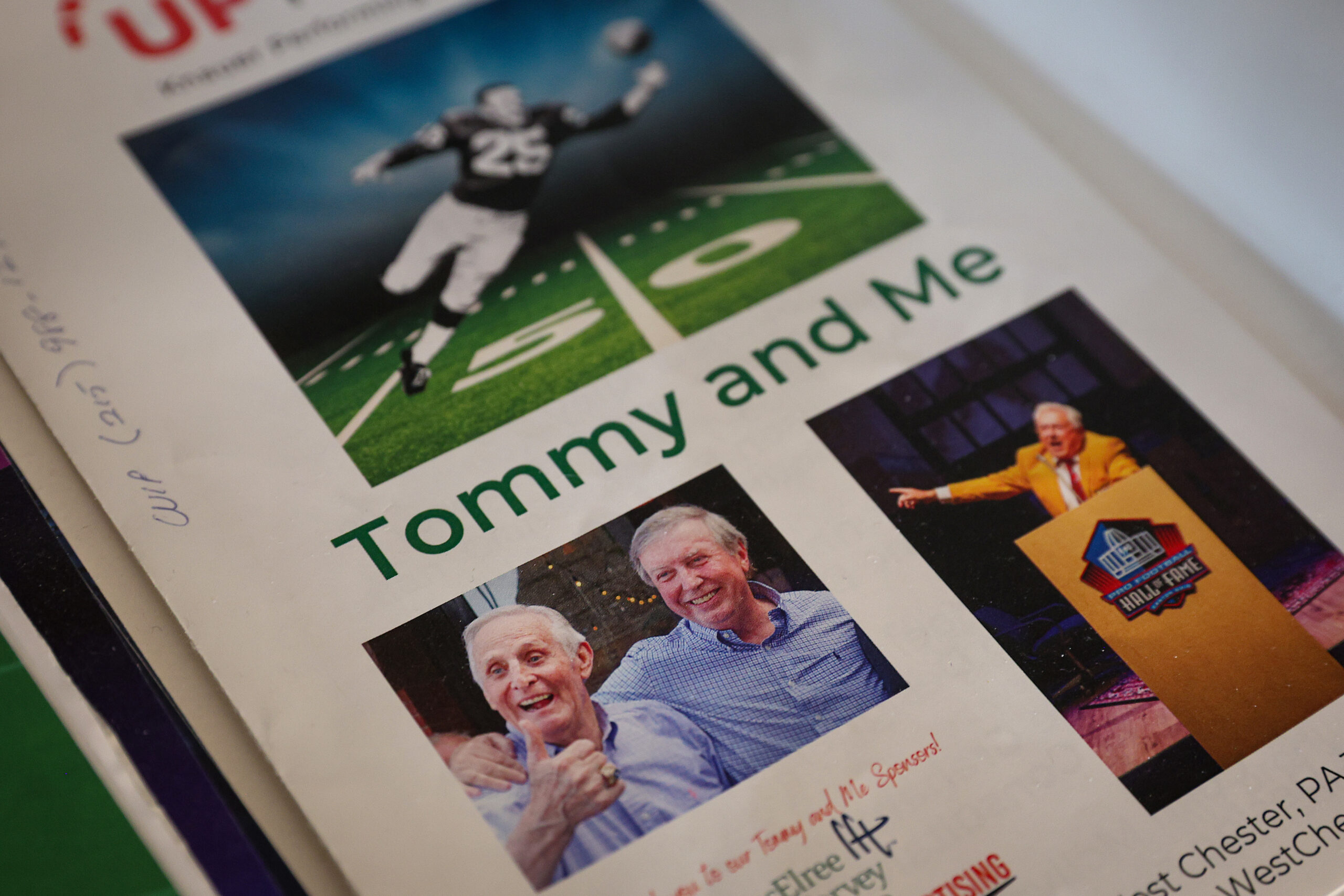
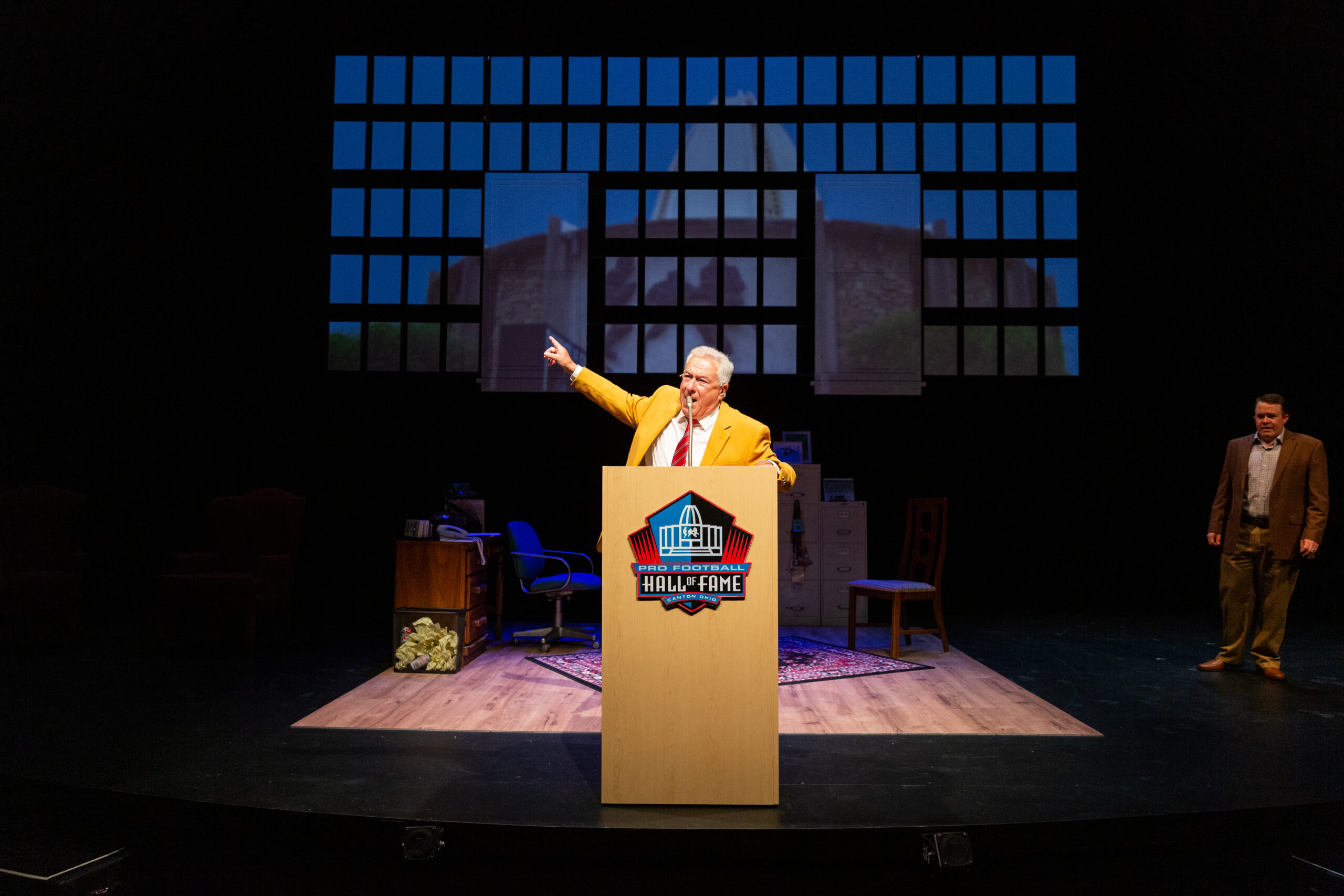
He also wrote a play tied to the Eagles, Tommy and Me, about his relationship with Hall of Fame wide receiver Tommy McDonald, and the play is the thing that makes the timing of his once-in-a-lifetime trip so ironic. Ten years after Tommy and Me’s debut, Boys to Fame — a documentary/feature film, produced by Sam Katz, about Didinger, his play, and McDonald — became available for purchase and viewing on Sunday morning.
Tommy and Me, the play created by Ray Didinger, chronicles his childhood and its close relationship to former Eagles great Tommy McDonald.
Didinger, a week into his journey, isn’t around for the release. And there was no chance he would be.
“I would rather be here to help Sam promote it as best I could,” he said before embarking on the cruise. “But this trip has been two years in the making, so there was no way to be here and tell Maria, ‘Honey, we’ve got trip insurance. Let’s just bag this thing.’ It’s a long fall from the 15th floor to Locust Street.”
Katz, 76, has seen his career evolve into multiple iterations that he still maintains simultaneously: a player in Philadelphia and Pennsylvania politics — he ran for mayor three times — a venture capitalist, and a filmmaker. Through his company, History Making Productions, he has produced documentaries about Philadelphia’s filmmaking history, the rise of classical music in China, and one about Detroit’s bankruptcy, Gradually, Then Suddenly, which in 2021 won the Library of Congress’ Lavine/Ken Burns Prize for Film.
When he saw Tommy and Me in 2016, its first run, he thought the play was worthy of film treatment — a film about the play and Didinger, that is. “The play itself was powerful, emotional, and a really incredible story of a relationship between two men,” he said. “I felt that a feel-good story like this would be timely, and I still feel that way.”
He worried, though, that funding such a project would be a challenge.
His other documentaries, all historical and to one degree or another educational in nature, lent themselves to philanthropic contributions. A film delving into the life of a sportswriter, even one as well-known and locally admired as Didinger, required Katz to find private investors — and contribute money himself.
He found a group willing to back the film, former City Council member Allan Domb and Bullpen Capital founder Paul Martino among them, and decided, instead of pursuing a deal with a streaming service or television station, to release the film independently. It will be available on a website, boystofame.com, on a pay-per-view basis — “I’m selling it direct to the Philadelphia sports fan,” Katz said — and he hopes to generate attention and interest through grass-roots media coverage and screenings at film festivals and private clubs.
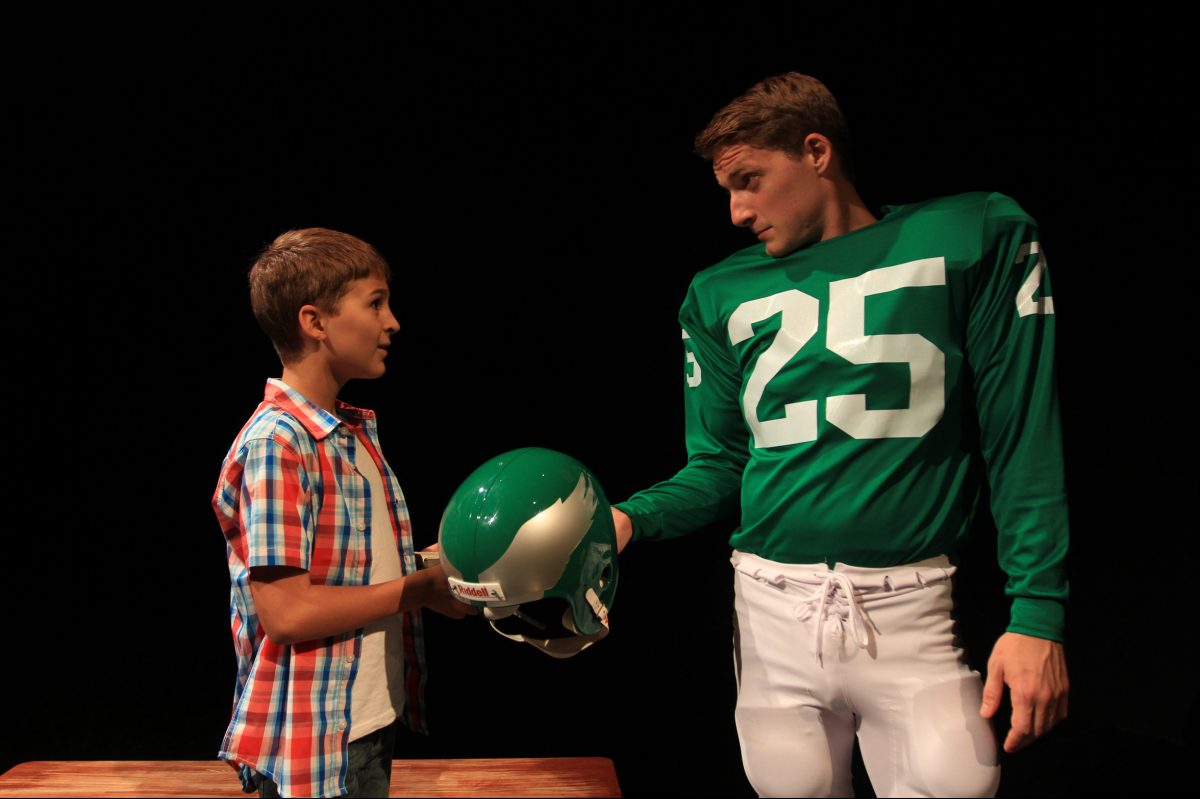
In the play Tommy and Me, Ray Didinger (left, Simon Canuso Kiley) meets boyhood hero, and Eagles player Tommy McDonald (right, Ned Pryce) in the late 1950s in Theatre Exile’s world premiere of the play in 2018.
The 82-minute film covers topics, features voices, and reveals details and emotions that Tommy and Me, by its singular focus on the big brother/little brother dynamic between McDonald and Didinger, and on Didinger’s efforts to get McDonald into the Hall of Fame, didn’t and couldn’t.
Katz interviewed Didinger for more than five hours, talked to all four of McDonald’s children and several members of his Hall of Fame class, and even tracked down Billie Jo Boyajian, who was McDonald’s Queen’s Court escort at the 1998 induction weekend — and whom McDonald scooped up in his arms and carried to the stage during the Hall of Fame dinner.
(In a fascinating side note, Boyajian pleaded guilty last January to charges of theft, forgery, and misuse of credit cards while she was the treasurer of a Canton high school basketball booster club. Katz had interviewed her for Boys to Fame years earlier.)
The documentary bookends both McDonald’s life and Didinger’s. It directly confronts the fact that in 2021, three years after his death at 84, McDonald was diagnosed with the brain disease chronic traumatic encephalopathy, commonly known as CTE.
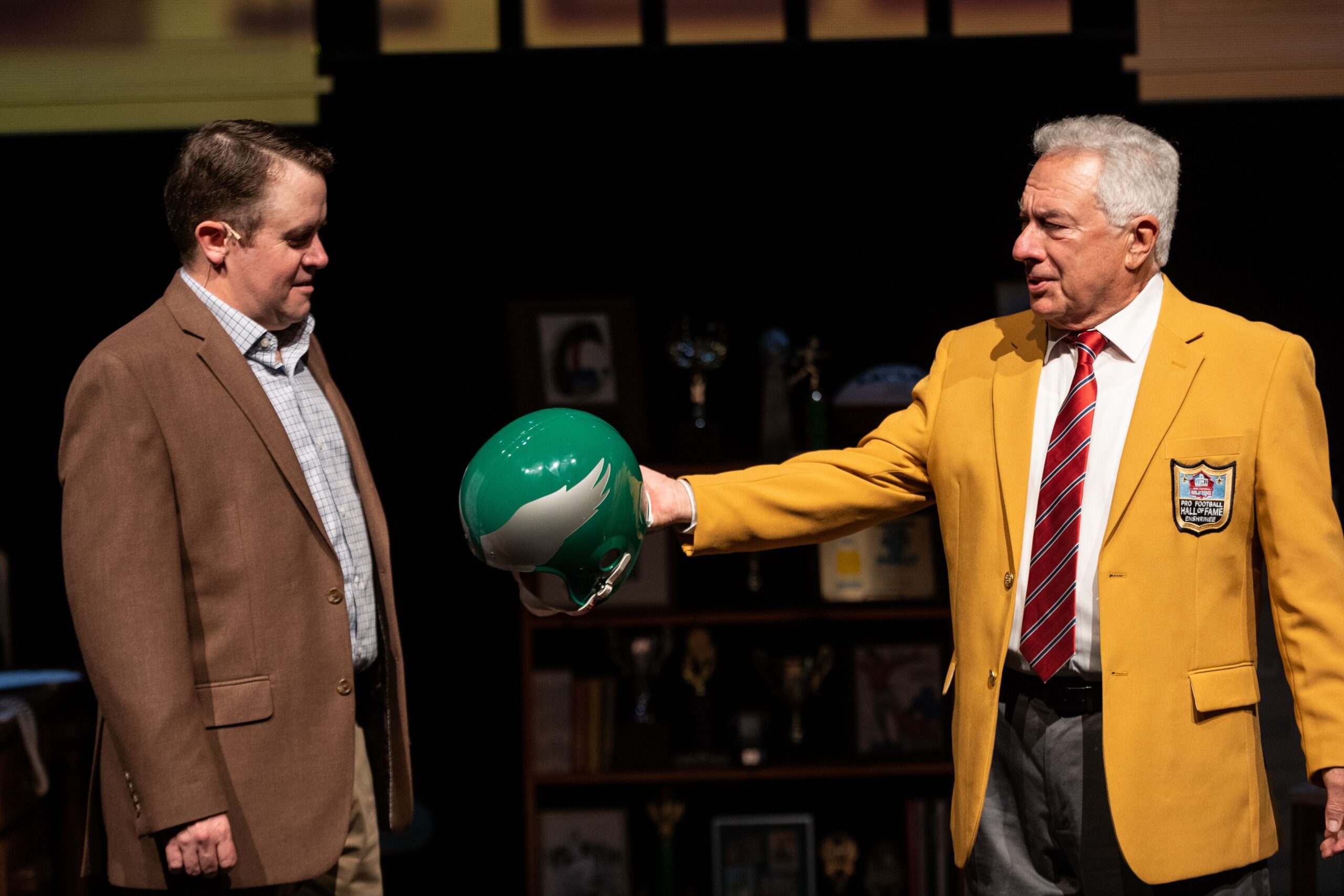
Tommy and Me at Bucks County Playhouse in New Hope, with (left to right) Matt Pfeiffer and Tom Teti.
The McDonalds gave Katz access to scrapbooks that Tommy’s parents had begun keeping of his exploits when he was a high school phenom in Roy, N.M., in the early 1950s. They also provided him with a video of McDonald’s reaction — joyful tears, dozens of thank-yous and thank-Gods — when he received the phone call to tell him that he finally would be inducted into the Hall of Fame.
“I’ve seen it a hundred times, and I still get a lump in my throat,” Didinger said, “because it’s so raw and real and so true to the guy I know.”
To Katz, though, it was important to give Didinger’s background and story — his childhood in southwest Philadelphia, his careers at The Bulletin and The Daily News, NFL Films and WIP and NBC Sports Philadelphia — as much weight as McDonald’s. To recreate Didinger’s youth, Katz took over The Barn, a pub near his vacation home in Eagles Mere, Pa., for two days and transformed it into Didinger’s grandfather’s bar, the place where Didinger, as a kid, spent hours wowing patrons with his encyclopedic Eagles knowledge. Katz hired several of The Barn’s regulars and a 10-year-old boy, none of whom had ever acted before, to star in the film.
To depict the vacations that Didinger’s family would take to Hershey each summer to watch the Eagles at training camp, Katz coaxed a collector of antique cars to bring three 1955 vehicles to the Eagles Mere community center. “I insisted on everything being better,” he said.
The most poignant moments of the film come when Didinger describes in depth his last visit with McDonald, on the day before McDonald died.
A play about ex-Eagle Tommy McDonald‘s road to the Pro Football Hall of Fame, and his connection with legendary sports writer Ray Didinger, at People’s Light Theatre last year. The play is being turned into a film by Sam Katz.
“Sam kept telling me, ‘For this thing to work, I need you to open your kimono,’” Didinger said. “That was the hardest and least comfortable aspect for me, but that day Tommy and I spent together had to be talked about.”
In the film’s final scene, Didinger and his son, David, sit together on the couch in Ray’s home, watching an Eagles game. On Feb. 8, the day of this year’s Super Bowl, the Didingers’ cruise ship is scheduled to be off the coast of New Caledonia.
If the Eagles do make it to Santa Clara for the big game, it would hardly be surprising if Ray stood atop the bow, hurled himself into the South Pacific, washed up on the beach in Sea Isle City, and was in front of his TV, pen and yellow legal pad in hand, by kickoff. Sorry, but that would be a better ending to the doc. Prepare accordingly for a reshoot, Mr. Katz.
Columnist’s note: In the interest of full disclosure, I succeeded Didinger as a WIP co-host in July 2022, and I appear briefly in the documentary.
Is anyone on or around the Eagles having any fun? It doesn’t seem that way. It hasn’t seemed that way all season. Sure, Jordan Davis has a personality as big and buoyant as he is, and Brandon Graham’s return from retirement has brought some effervescence back to the locker room. But on the whole, things have been pretty dour, or at least kind of grave and serious and humorless, for a team that’s coming off a championship.
The examples are everywhere. Jalen Hurts has won a Super Bowl, was named the most valuable player in that Super Bowl, plays his best in the Eagles’ most important games, and has a smile that would stop a beauty shop. Yet in public, he often has a demeanor that suggests that, if he so much as grinned, his face would split open down the middle. Before he left the lineup because of his foot injury, Lane Johnson had not spoken after a game since the Eagles’ loss to the New York Giants on Oct. 9, when he called out the team’s offense for being “too predictable.” Not exactly Once more into the breach, dear friends stuff.
Hurts’ relationship with A.J. Brown has been a source of speculation and tension for months. Brown has made his feelings about getting the ball — or, more accurately, not getting the ball — plain on social media, and his complaints sparked a ridiculous discussion about whether the Eagles might/should trade him in the middle of this season. Adoree’ Jackson and Kelee Ringo have, at various times, been considered the single worst cornerback in team history, as if Izel Jenkins, Nnamdi Asomugha, or Bradley Fletcher had never lined up against a decent receiver and immediately been burnt like toast. And if you want to be the ultimate Debbie Downer at a friendly get-together, just say the words Kevin Patullo, and you’re bound to start one of the partygoers ranting like a wing nut online influencer. Hell, your house might even wind up covered in egg yolk.
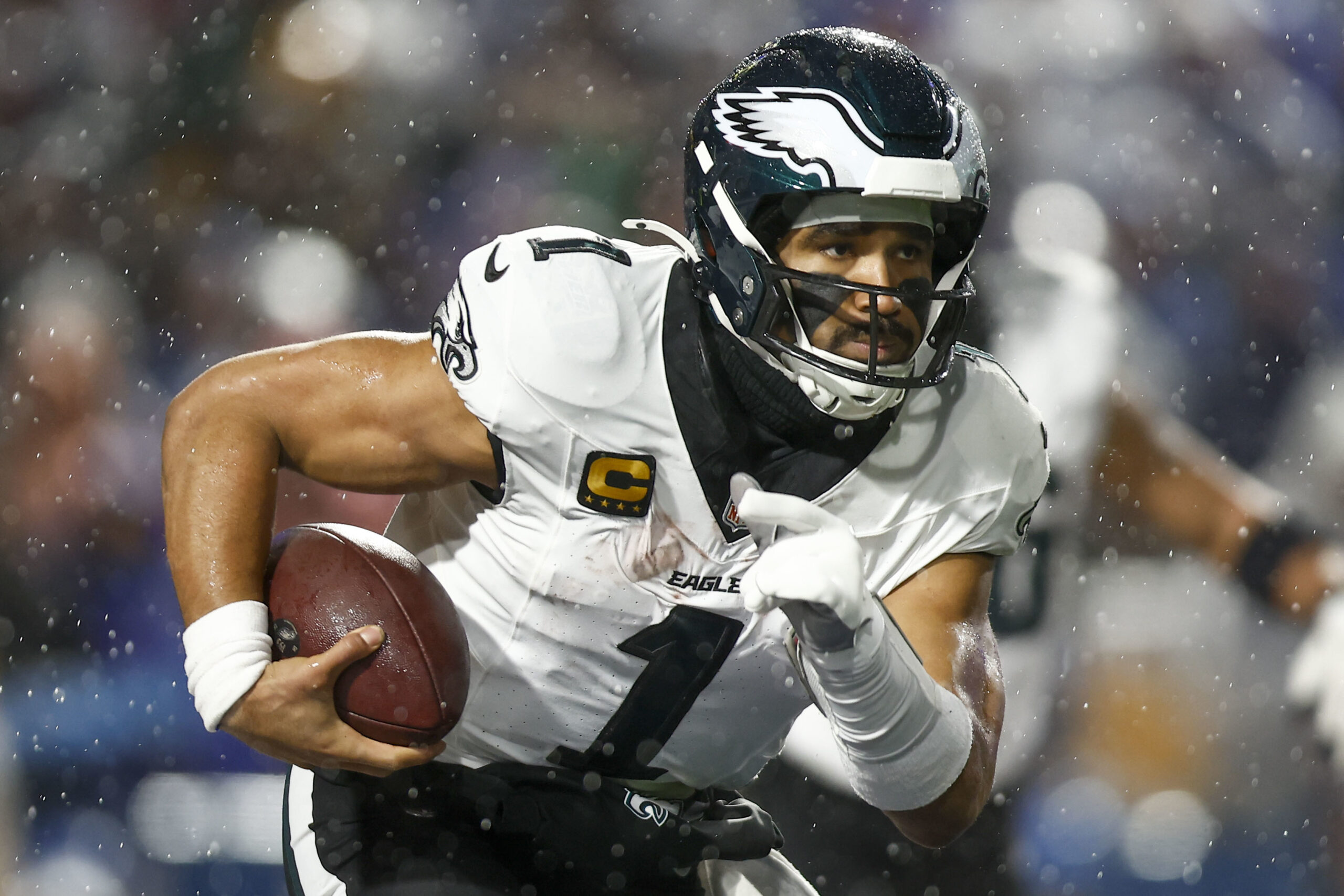
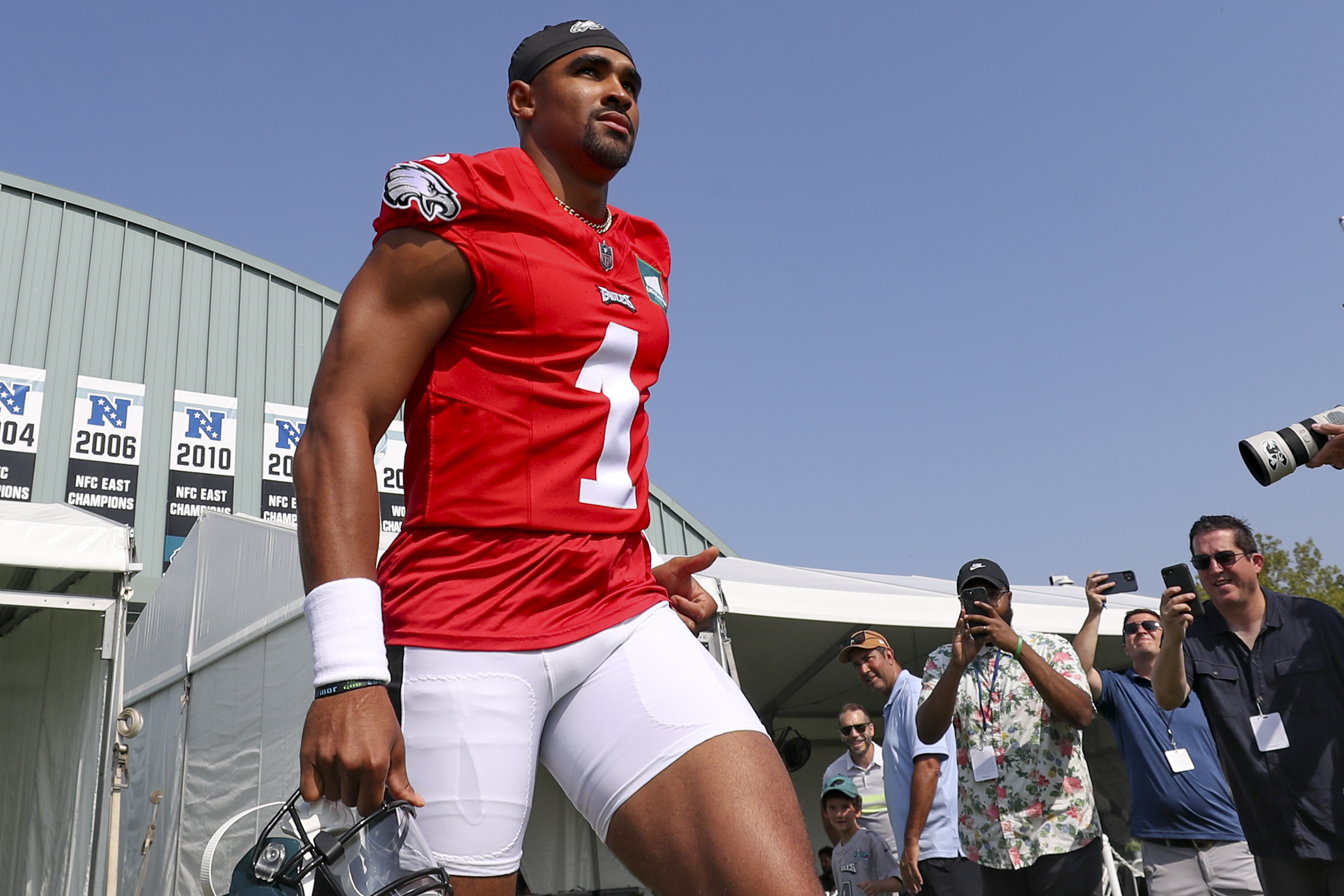
Eagles quarterback Jalen Hurts, the Super Bowl LIX MVP, has come under criticism this season.
The point here is not to suggest that the Eagles have been beyond criticism. Of course they haven’t. The point is that their entire season has felt like one of their offensive possessions. It has been a generally joyless slog that, even when it leads to a good outcome — a touchdown, a victory, a second straight NFC East title — hasn’t inspired much optimism or hope that the team will repeat or sustain that success.
You don’t need to be a gridiron genius or a Philly sports sociologist to understand why. There are plenty of cities and markets where, if a team won a Super Bowl in the manner that the Eagles did last season — winning 16 of its final 17 games, dominating the conference championship game and the Super Bowl itself — the celebratory buzz would last for years. Championship? Who needs another championship? We just won one! That backup long-snapper never has to buy a drink in this town again.
Philadelphia is not one of those cities or markets. Here, winning is the most addictive of drugs, and when it doesn’t happen, or when it doesn’t happen in the most satisfying manner, the entire region goes into a collective withdrawal, and a more powerful hit — a higher high — is required for everyone to level off.
From Eagles fans to the players themselves, there has seemed to be an ever-present blanket of expectations weighing on them. It’s as if the only thing that would make anyone happy and relieved at any moment this season would be another Super Bowl victory — a benchmark so lofty that it virtually guarantees people will be worried at best and miserable at worst unless the Eagles win every game 49-0.
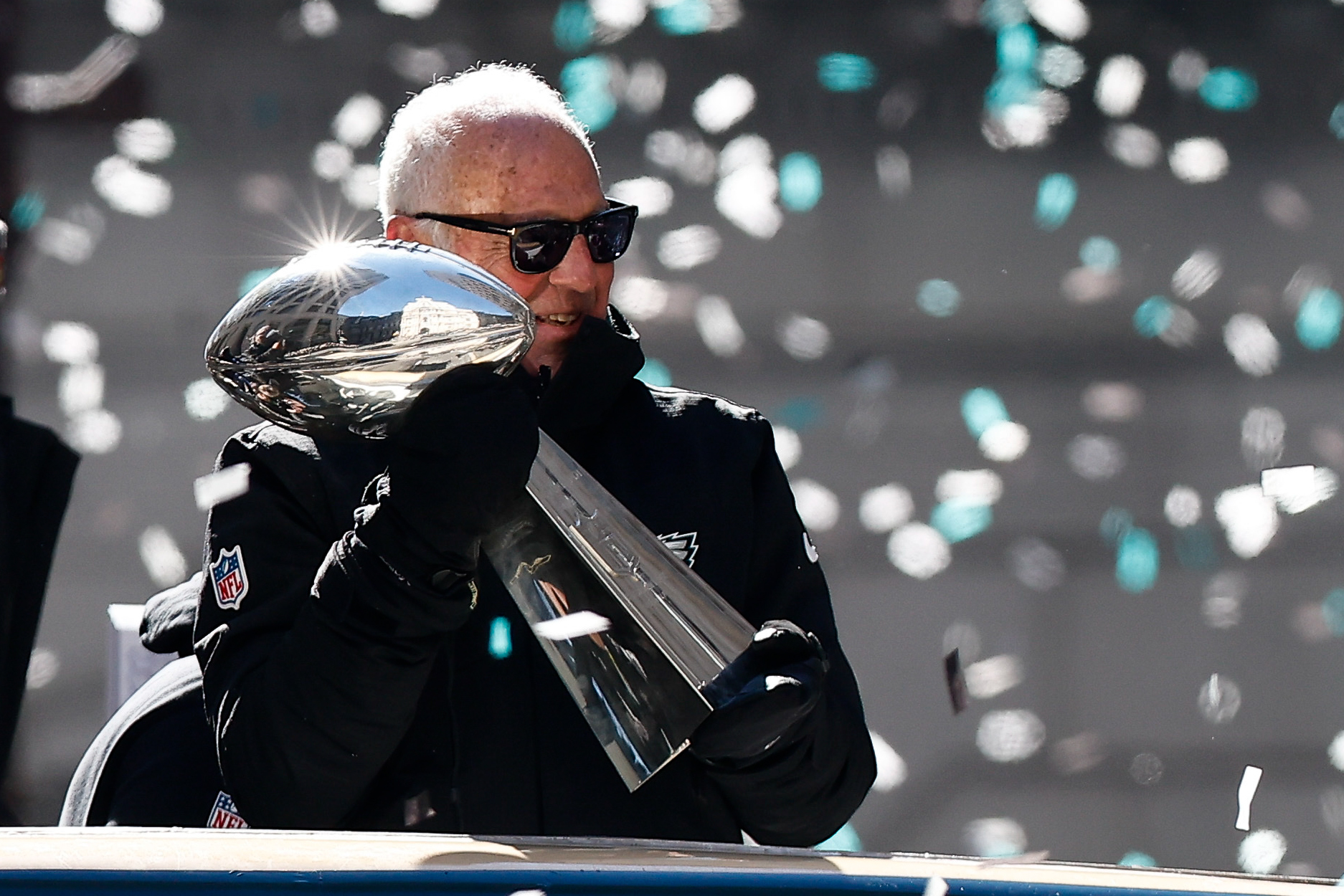
Jeffrey Lurie and his Eagles are chasing that Super Bowl glow again.
The one person who appears to acknowledge this dynamic, and appears to be fighting against it, is Nick Sirianni. He has spoken since the middle of last season about his attempts to “bring joy” to every practice, every game, every day of work, as if to lighten the burden that his staff and players were bearing.
“In professional football,” he said recently, “there are all these pressures, these ups and downs and everything like this, but we got into this game because we loved it. I think that’s a really important thing. In the world, you can let things beat you down a lot and not really give knowledge to all the things you have going on that are really good.”
Hanging on a wall in Sirianni’s office is a photograph of him and his three children. The photo was taken after the Eagles’ 20-16 victory over the Cleveland Browns last season — the game after which Sirianni brought the kids into his postgame news conference and was criticized bitterly for it. I did some of the criticizing, and I stand by it. The gesture was silly and tone-deaf at the time, mostly because the Eagles were 3-2 and playing terribly and Sirianni’s career-dissipation light was flickering. No one was about to give him or them the benefit of the doubt then.
But now that they have won a championship, it’s easier to see that moment as part of a continuing effort by a head coach to keep the pressure of meeting that standard from crushing his team. In that way, the Eagles’ toughest opponent in this postseason won’t be the San Francisco 49ers or the Los Angeles Rams or the Seattle Seahawks or whatever team they meet in Super Bowl LX if they happen to make it that far. Their toughest opponent will be, and has been all along, themselves.
For most of professional football’s history, few people among the millions who tuned in every Sunday and every Monday night actually understood what was happening on the field. There was a quarterback, of course, dashing and rugged, the clear leader. There were collisions of giant bodies. There were smaller, faster men with a ballet dancer’s flexibility and a sprinter’s speed who made breathtaking plays. But no one really knew how those men freed themselves, or were freed, to make those plays. How did anyone get open? Who was supposed to block that blitzing linebacker?
This is a newer, more informed era. This is the era of All-22 film, available to everyone, showing everything. This is the era of the next-level analyst, the football-aholic who grinds tape, the mind who can demystify an entire sport for you. Which means that, when it comes to NFL coaches, this is the era of the great play-caller, the great play-designer, the great scheme-creator, the brilliant and beautiful brain. The players are more than just athletes with distinct strengths and roles and personalities. They are clusters of pixels on a screen, moving as if drawn by a magnet on a particular route to a particular spot on the field.
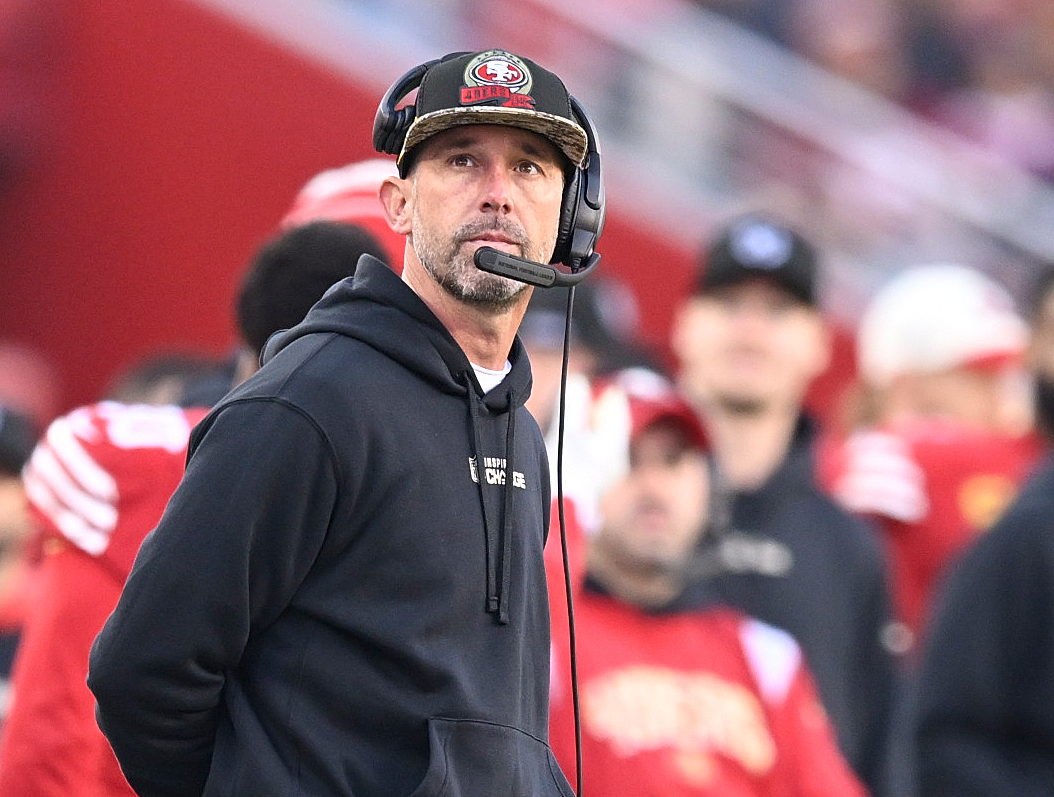
Kyle Shanahan, the head coach of the San Francisco 49ers, whom the Eagles face Sunday in the NFC wild-card round, is considered one of these savants. He is a terrific coach in just about every regard, having guided the 49ers to two Super Bowls and two other appearances in the NFC championship game. But it is in his creativity and orchestration of the team’s offense where he is truly elite.
San Francisco 49ers coach Kyle Shanahan has had his share of success, but a Super Bowl title has eluded him.
Shanahan calls all the 49ers’ plays, and his offense is so quarterback-friendly that the team has reached those two Super Bowls and four NFC title games with Jimmy Garoppolo, who backed up Tom Brady in New England, and Brock Purdy, who was the last player picked in the 2022 draft, as its starters at the position. Loaded with motion and deception, based on a zone-running attack that features Christian McCaffrey, Shanahan runs as close to a plug-and-play system for a quarterback as it gets in the NFL, and it works. San Francisco has finished among the top 10 teams in scoring in four of the last seven years.
“They have a really good scheme,” Eagles defensive coordinator Vic Fangio said Tuesday. “It’s all packaged together very nicely. They give you a lot of good motions. Everything they do is with a purpose and they do a really good job of it.”
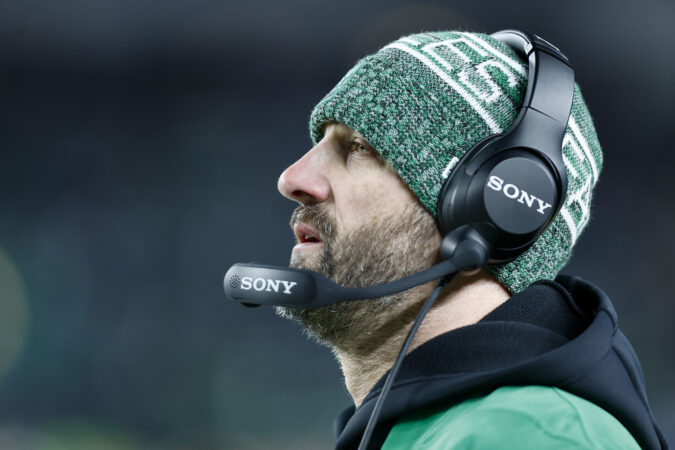
Nick Sirianni, the Eagles’ head coach, and Kevin Patullo, their offensive coordinator, are not considered the same kinds of coaches that Shanahan is. Say what you want about them — and a lot of what is said about them around here, especially about Patullo, can’t be repeated in decent company — but generally they are not among the first names mentioned when anyone starts listing the top offensive minds in the NFL. Sirianni stopped calling plays, for instance, in 2021, his first season as a head coach. Patullo had never been an NFL coordinator or play-caller before this season, and the Eagles’ up-and-down (to put it kindly) performance has made him a convenient and oft-deserved target of criticism.
Nick Sirianni has yet to have a losing season or miss the playoffs in his five years with the Eagles.
NFL coaching, though, is about more than being an offensive wizard. Shanahan hasn’t won a Super Bowl in his career yet, and one of the reasons is that, when he and his teams have had opportunities to bury their opponents, they’ve failed to do it. He was the offensive coordinator of the 2016 Atlanta Falcons, who infamously blew a 28-3 lead in Super Bowl LI to the Patriots in part because Shanahan got too aggressive in his late-game play selection. Under him, the 49ers had double-digit fourth-quarter leads in Super Bowl LIV and in the 2021 season’s NFC title game … and lost both. And in Super Bowl LVIII against the Kansas City Chiefs, Shanahan took the ball first in overtime, opted to kick a field goal on fourth-and-4 from the Chiefs’ 9-yard line, and handed the ball back to Patrick Mahomes with a chance to win the game. Patrick Mahomes, to no one’s surprise, won the game.
Sirianni, meanwhile, has won a Super Bowl, has reached another, and has yet to have a losing season or miss the playoffs in his five years with the Eagles. Does he need a Shanahan-like or Shane Steichen-style play-caller to make his offense go? The presence of such an assistant certainly helps. But by all indications, he makes up for whatever shortcomings his coordinators — or, in fairness, his quarterback, Jalen Hurts — might have with his abilities as a culture-builder.
“Week-to-week, day-to-day, his energy, his passion, everything you want in a leader who stands in front of this team in team meetings and at practice, he gives you,” Patullo said. “His attention to detail — we talk about core values all the time: toughness, together, detailed, all that stuff. And when we look at those things, that’s what he embodies and brings that to the team. Every day, he’s consistent in who he is. You’re not going to get somebody who goes back and forth on what they say, and I think when he speaks, everybody receives it and they’re ready to go.”
There’s more than one way to be an excellent head coach, even if one of those ways gets a little more attention, a little more scrutiny, a little more credit these days. The film can tell you how good a coach Kyle Shanahan is. What Nick Sirianni does well sometimes isn’t so easy to see. Come Sunday, may the best savant win.
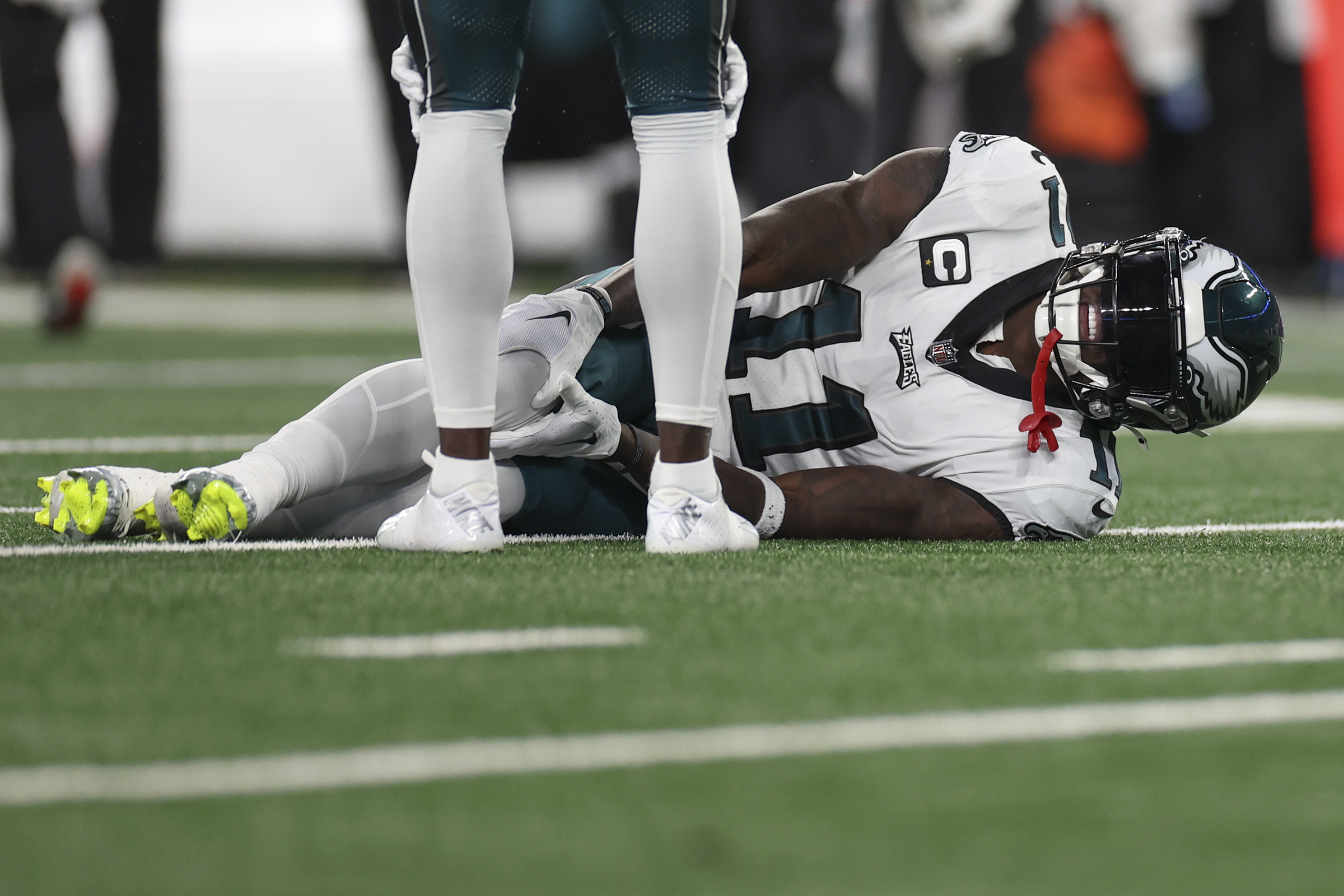
OK, let’s play this out. Let’s go back to the third quarter of the Eagles’ 24-17 loss Sunday to the Washington Commanders, to a first-down completion for 6 yards from backup quarterback Tanner McKee to Grant Calcaterra, the team’s second tight end — an innocent enough play. Let’s go back to Washington safety Jeremy Reaves grabbing Calcaterra from behind and dragging him down in an illegal (and yet unpenalized) hip-drop tackle. Let’s go back to Calcaterra limping off the field then into the locker room, his right knee and ankle injured so badly that he couldn’t return to the game.
Now, let’s pretend that coach Nick Sirianni had made a different decision ahead of Sunday’s results: the Eagles’ loss, the Chicago Bears’ loss to the Detroit Lions, the Eagles’ ending up with the No. 3 seed in the NFC playoffs when they could have had the No. 2 seed. Let’s pretend Sirianni had played all the team’s starters instead. Hell, let’s pretend that, because all their starters played, the Eagles beat the Commanders.
And let’s pretend that it wasn’t Calcaterra who suffered those injuries. Let’s pretend it was Dallas Goedert.
Would the victory have been worth it? Would it?
Let’s pretend some more. Let’s pretend that it wasn’t Brett Toth who started at left guard Sunday … and who suffered a concussion in the second half and, like Calcaterra, left the game. Let’s pretend it was the Eagles’ usual starting left guard. Let’s pretend it was Landon Dickerson.
Perhaps no Goedert. Perhaps no Dickerson. Perhaps another vital player who might have ended up unavailable, or at least damaged, for next Sunday’s wild-card game against the 49ers.
Would the victory and the No. 2 seed have been worth it then? Would it?
On the crucial question ahead of Sunday for the Eagles, the easiest position to take was, Play the starters. It required no calibration of whether a theoretically weaker opponent in the first round (the Green Bay Packers) and a potential extra home game in the divisional round was better for the Eagles than a week of rest for their top guys. It required none of the responsibility that Sirianni bore: to take the pulse of the locker room, to understand where his players stood on the matter, and act accordingly. It required nothing other than the simplest of calculations, one that could be drawn without any context. You play to get the higher seed. End of story.
But that context matters, and it includes some relevant recent history. It’s no coincidence that each of the two teams that have repeated as Super Bowl winners in the last quarter-century — Tom Brady and the 2003-04 New England Patriots, Patrick Mahomes and the 2022-23 Kansas City Chiefs — had an all-time great at quarterback. That measure of greatness at the most important position in sports is the closest thing that an NFL team can have to a shortcut to a Super Bowl. Remember: The Eagles played four playoff games last season in reaching and winning Super Bowl LIX, and a team attempting to win back-to-back championships needs every hour of rest and recovery it can get. It’s the price of success, sure, but an NFL season that’s 24% longer than a regular 17-game campaign — and an offseason that’s 24% shorter — does exact a toll.
“I don’t know whether people think about it, but it does, a hundred percent,” defensive tackle Moro Ojomo said. “You think about the Niners when they went to the Bowl in ’23 — they just completely dropped [the following season]. The Eagles went to the Bowl [in 2022]; after that year, they had a slump at the end of the season. It’s insanely hard, what the Chiefs have done and what we’re trying to get done. You play a lot of football, and you want to keep on going.
“You get this late in a season, and you get bruised up and banged up, and you don’t know how much it helps a guy who’s been dealing with a shoulder [injury] to have a week off. That goes a long way. Now that guy’s coming into the playoffs a little fresher. So if you’re a running back, maybe instead of going for 85 yards you go for 115. That’s the goal, to give yourself any advantage you can get.”
The Eagles cost themselves that advantage as recently as 2023, when Sirianni suited up his starters for the season finale in East Rutherford, N.J., just for the sake of trying to snap the team out of a terrible slump. What happened was the true worst-case scenario in such situations: A.J. Brown injured his knee and missed the following week’s wild-card game against Tampa Bay. Jalen Hurts dislocated his finger. And the Eagles lost to the Giants.
The Eagles decided not to rest starters in the 2023 season finale and lost A.J. Brown for the playoffs that year.
So Sirianni went the other way Sunday, effectively manufacturing a bye week for his best players. They had one in 2022-23, when they were the conference’s No. 1 seed, and they had one last year, when Sirianni played his backups against the Giants in Week 18.
“Every year is different,” Sirianni said. “Every year that you go through it, you’re judging this team. Of course you think back to that. My mindset was more all the good things that have happened as we’ve rested guys. I didn’t really think too much about the negatives of it.”
The positives outweighed them anyway. Do the Eagles have a harder road back to the Super Bowl now? Maybe, but not necessarily. They got some rest and eliminated any risk that they’d be shorthanded to a significant degree next Sunday. The defending champs let everything play out, and now they really get to take their chances, to show that being healthy and healed up is a bigger advantage than anything they might have gained from treating Sunday’s game like their season depended on it.
The stakes for the Eagles on Sunday are clear: If they beat the Washington Commanders and if the Detroit Lions beat the Chicago Bears, then the Eagles would secure the No. 2 seed in the NFC playoffs.
It would likely make for an easier road back to the Super Bowl (easier on paper, anyway), because they’d be assured of having home-field advantage in at least the wild-card and divisional rounds, and the matchups they’d face in those games might be more favorable.
So the Eagles had a choice: They could play their starters against the Commanders, giving their most important players no rest ahead of the postseason, with no guarantee that, even if they beat Washington, that they’d end up with the second seed anyway.
Or they could sit their starters, banking that a well-rested team would be better off no matter who or where it plays. Nick Sirianni and his staff, as we now know, opted to rest the starters.
It was the right decision, for this reason: Given that Washington is 4-12 and will have third-stringer Josh Johnson at quarterback Sunday, there’s a decent chance that the Eagles will secure the best of all outcomes for themselves.
They can give their starters a week off, still win the game, and have the Bears lose to the Lions. After a regular season that raised some questions about the Eagles’ ability to repeat, that scenario would be a timely reassertion of strength from the defending champs.
Too hot for pucks
The entire premise and most of the appeal of the NHL’s Winter Classic, when it began in 2008, were based around the notion that hockey in its best and purest form was a cold-weather sport.
A pond or stream or lake froze over. Kids bundled up, grabbed their skates and sticks and a couple of rickety little goal nets, and just played. The sport was a natural and seamless part of life in Canada and in certain regions of the United States.
But not in Miami. Which is where this year’s Winter Classic, between the Florida Panthers and the New York Rangers, was held Friday. How do you know a gimmick has gotten stale? When you’re playing an outdoor hockey game in early January in a place where it’s 70 degrees in the shade.
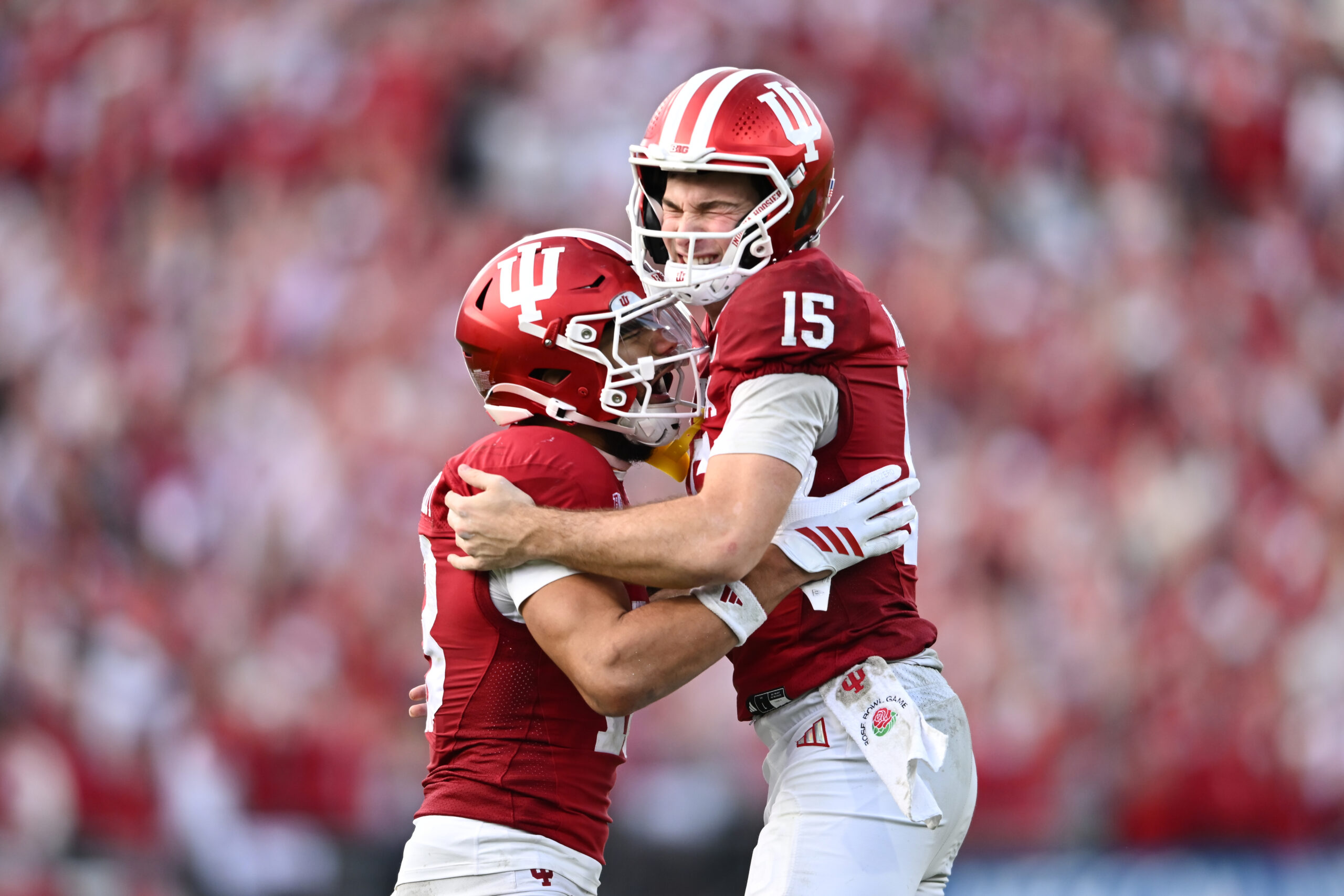
Quarterback Fernando Mendoza (right) and Indiana routed Alabama on the way to the College Football Playoff semifinals.
Hoosier daddy?
The benefit of the 12-team College Football Playoff is that it is a great revealer. Most of the sport’s regular season is marred by “expert analysis” that is based on little more than arrogance and presumptuousness: The SEC is obviously a better and more challenging league than the Big Ten, which is better and more challenging than the Big 12, which is way ahead of the ACC, and so on. It’s regional bias and figure-skating-style judging all the way down.
Then they actually play the games. And we learn that Alabama has no business being on the same field as Indiana, that Texas Tech is a long way from the days of Kliff Kingsbury and Patrick Mahomes, that Ohio State’s lopsided intraconference victories aren’t a true indication of how good the Buckeyes really are.
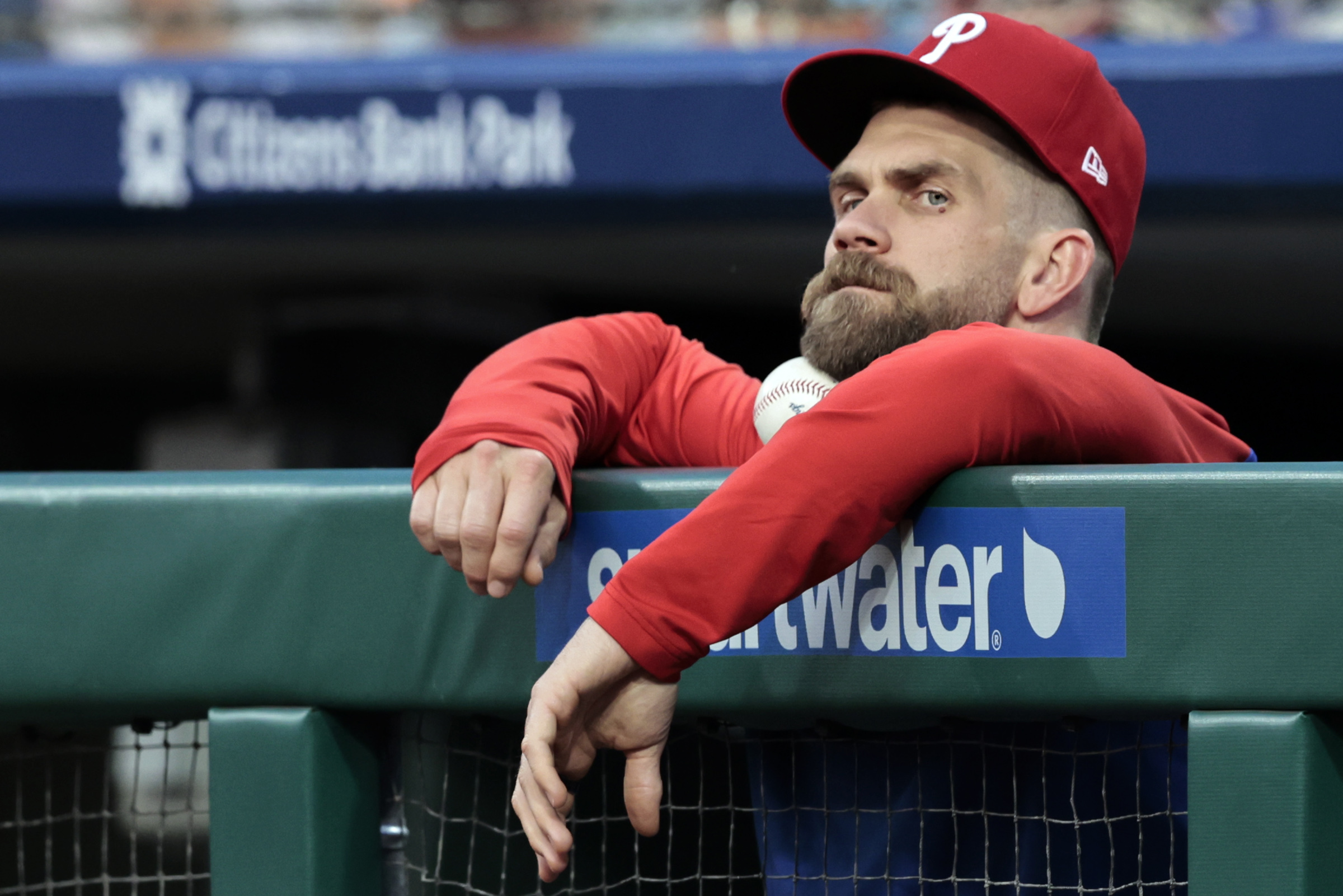
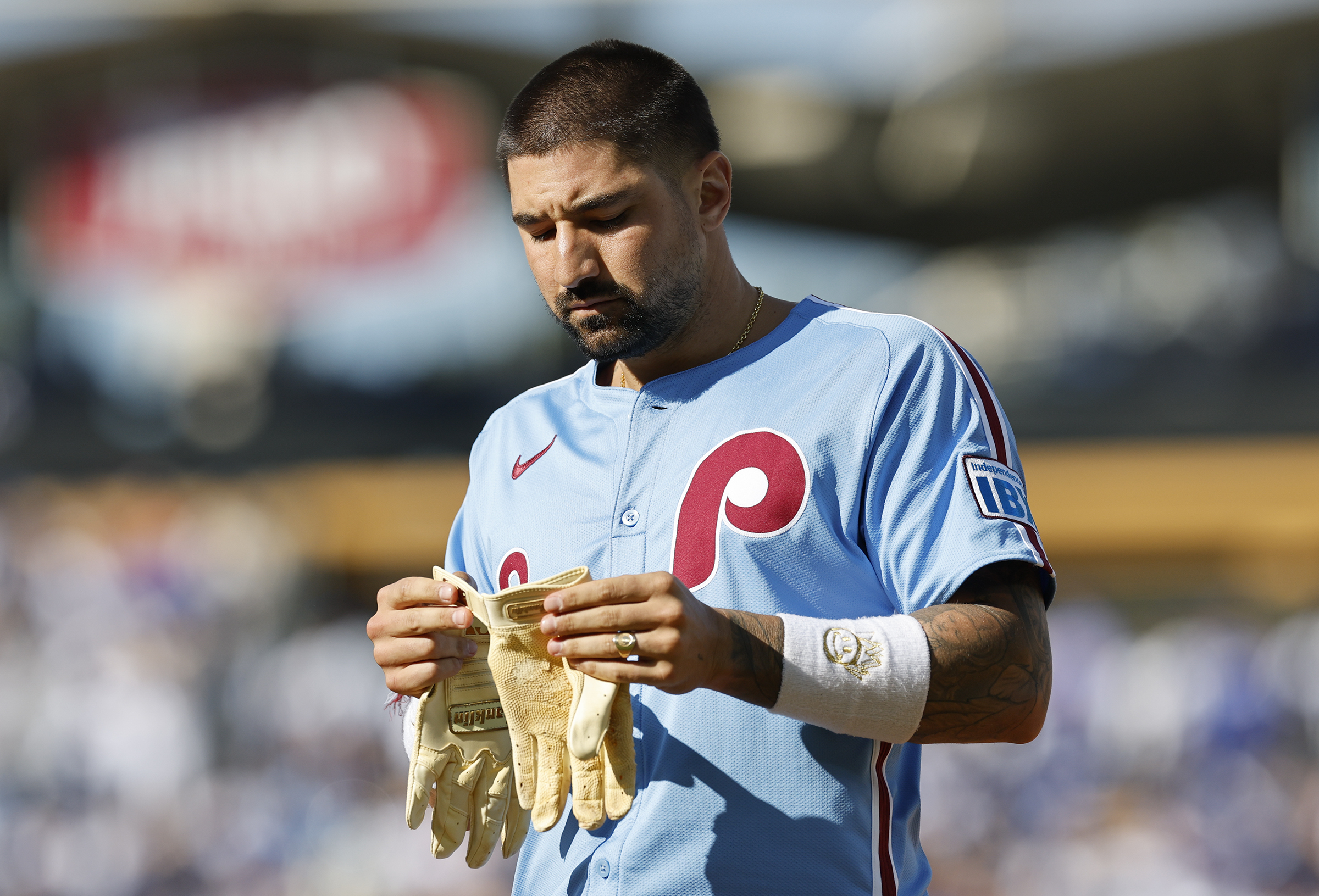
Dave Dombrowski apparently provided Bryce Harper with some extra motivation this offseason.
An elite idea
Bryce Harper recently posted a video of himself taking batting-cage swings while wearing a T-shirt with “NOT ELITE” across the front, a reference to Phillies president Dave Dombrowski’s description of Harper’s 2025 season.
You’ve got to love that defiant, near-vindictive energy from Harper, and it was a brilliant idea to take Dombrowski’s words and strip them across a shirt. Imagine an entire apparel line, marketed to individual athletes, made up of critical yet potentially inspiring phrases. The possibilities are endless.
In his 33 games during his only year of college basketball at Baylor, VJ Edgecombe took 4.6 three-pointers a game and made 34% of them. In his 28 games so far with the 76ers, he is taking 5.8 a game and making 38% of them. That improvement might be the most pleasant surprise of his terrific rookie season.
One last one-liner
Congratulations to former Eagles great Frank Gore for being a Pro Football Hall of Fame finalist.
Dave Barry, arguably the funniest columnist ever and certainly the funniest Haverford College alumnus ever, has a tradition. Every December, he writes a piece in which he reviews everything that happened over the previous calendar year. Some of the things are true. Some of them are kinda true. All of them are hilarious.
Barry got his start in journalism at the West Chester Daily Local News, was almost hired by The Inquirer in 1983, won the Pulitzer Prize in 1988, and has written more than 40 books, including a terrific memoir, Class Clown, that was published in May. (Dave, when you update the “Acknowledgments” section for the paperback edition, it’s S-I-E-L-S-K-I.) So in honor of a great writer with strong local ties, let’s close out 2025 with a look back at the year in Philadelphia sports.
January
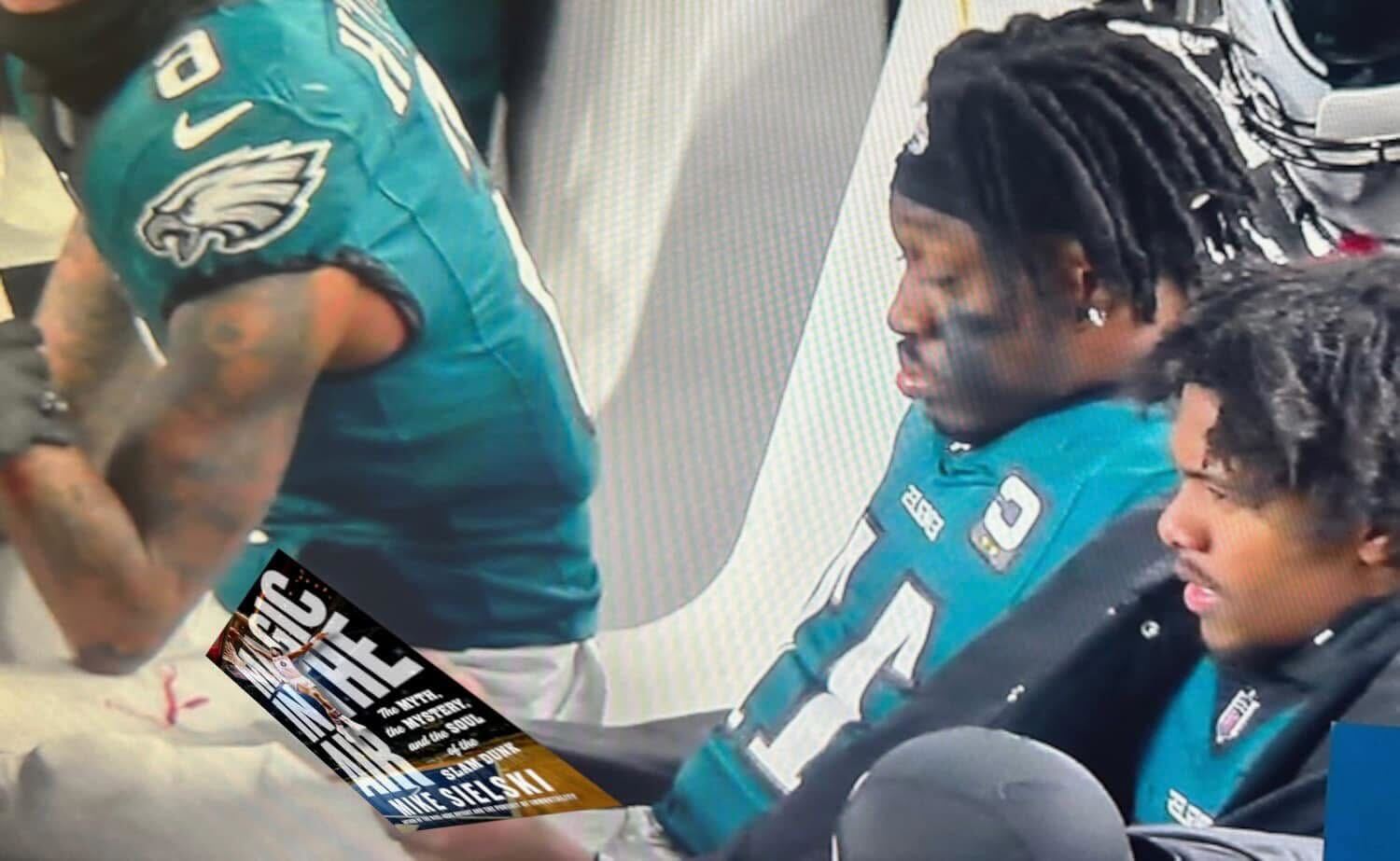
The year got off to a rough start when Howard Eskin, the Edward R. Murrow of autograph seekers, lost his very important job of telling everyone how awesome the Eagles are. Tanner McKee started the team’s final regular-season game and played well against the Giants, proving that he is better than Jalen Hurts, Tom Brady, and Joe Montana combined. Nevertheless, coach Nick Sirianni insisted on starting Hurts in the Eagles’ first playoff game, which led to wide receiver A.J. Brown’s decision to sit on the sideline and read a book called Magic in the Air, which was written by some hack from the suburbs. Hurts shook off his two tepid performances against the Packers and the Rams to play brilliantly in the NFC championship game against the Commanders, who aided him by refusing to cover any receivers or tackle Saquon Barkley.
A.J. Brown plays football and has impeccable taste in literature.
Meanwhile, the Sixers played 17 games in the month and lost 11 of them, which cut into the listenership for Paul George’s podcast. But on the bright side, Penn State lost a close game to Notre Dame in the College Football Playoff semifinals, inspiring optimism that James Franklin finally would guide the Nittany Lions to a national championship the following season.
February
Speculation of a pro-Chiefs conspiracy among NFL officials swirled in the run-up to Super Bowl LIX, but those rumors were put to rest once Patrick Mahomes conspired to throw the ball to Cooper DeJean and Zack Baun throughout the first half. The Eagles thumped Kansas City, 40-22, prompting Brady to provide no discernable analysis on the telecast other than shouting “WOW!” after every significant play. At the Super Bowl parade, Eagles vice president Howie Roseman was struck in the head by a full can of beer. He immediately found the fan who threw the beer and signed him to a three-year, cap-friendly contract. On WIP, Spike Eskin argued that the fan should start ahead of Hurts.
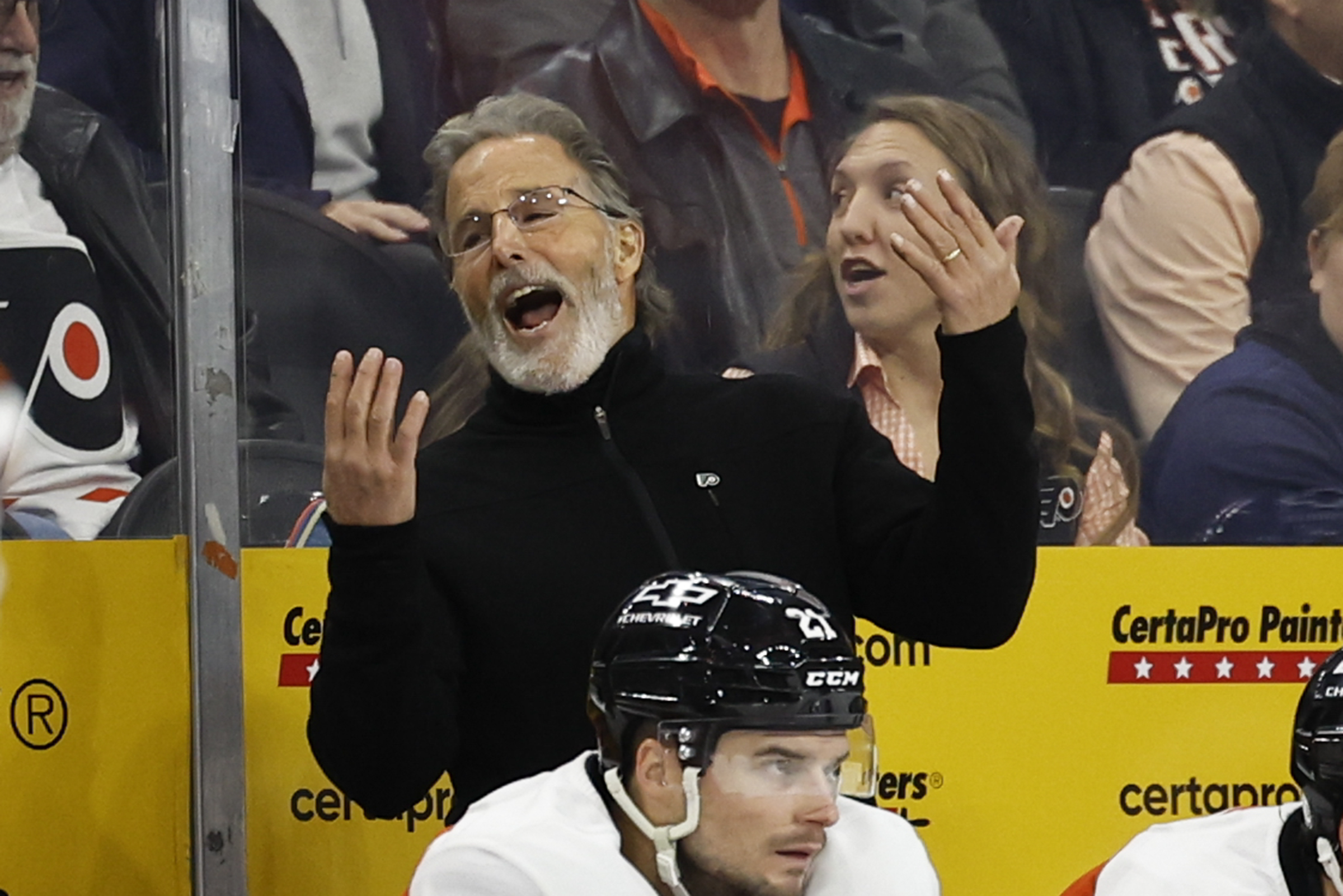
March meant a pink slip for Flyers coach John Tortorella.
March
The Phillies began the 2025 season with three wins in their first four games and the expectation that, if the team did not win the World Series, fans would storm Citizens Bank Park, bind and gag team president Dave Dombrowski, and throw him into the Schuylkill. Villanova’s men’s basketball team lost in the quarterfinals of the Big East tournament and fired coach Kyle Neptune, which reminded everyone that Kyle Neptune had been coaching Villanova’s men’s basketball team. The Flyers lost 11 times in a 12-game stretch and fired coach John Tortorella, which reminded everyone that Philadelphia used to have a hockey team.
Brandon Graham said he was retiring after 15 years with the Eagles. Yep. He said that. There was a news conference and everything.
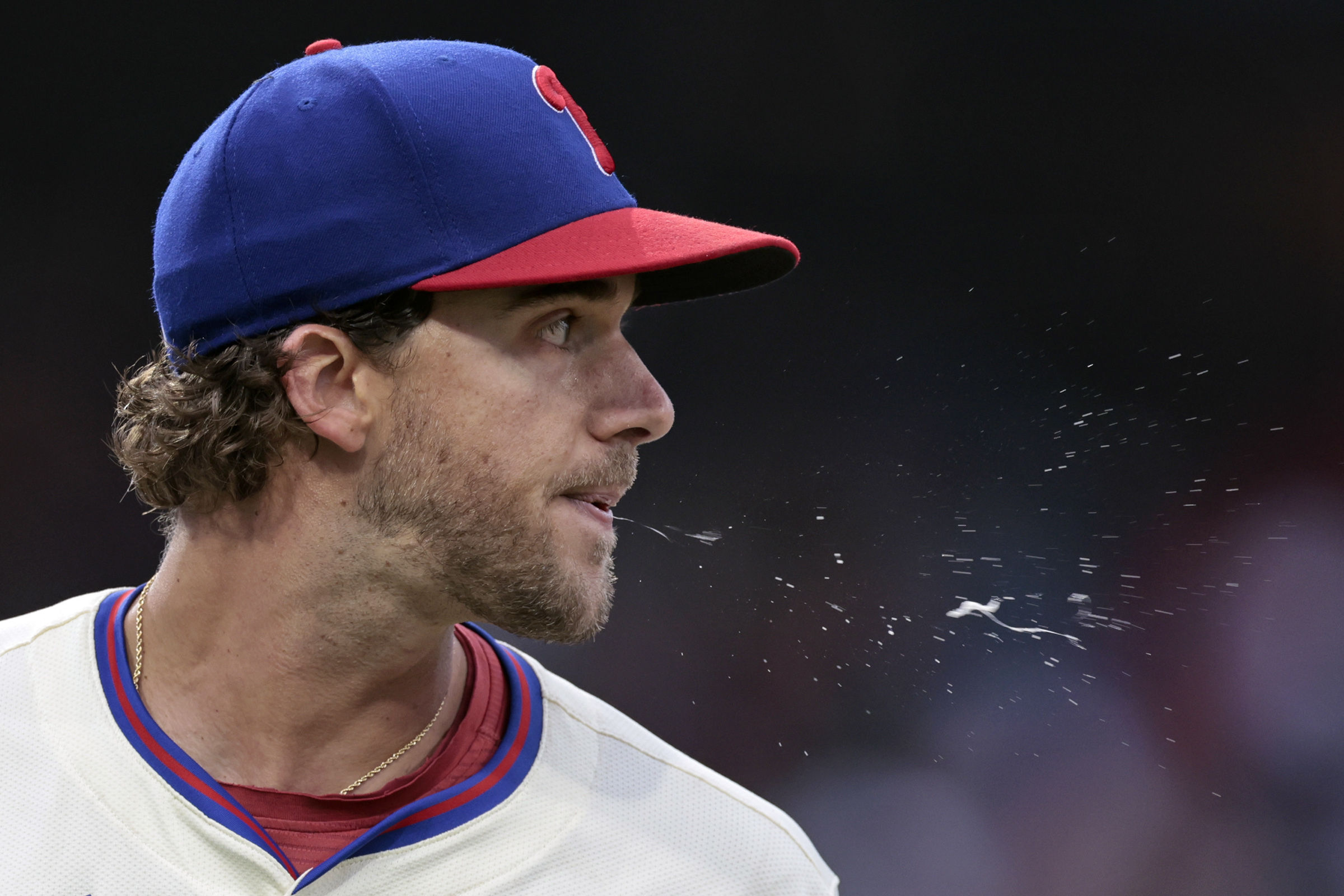
Aaron Nola elicited deep concern in April.
April
Aaron Nola lost four consecutive starts for the Phillies, which raised the concern that fans would storm Citizens Bank Park, bind and gag him, and throw him into the Schuylkill. Coaches and executives around the NFL began lobbying the league to ban the Tush Push. The Eagles responded by encouraging their offensive linemen to stop blocking altogether — a strategy they carried into the 2025 season. The team then drafted Jihaad Campbell, the first time that the Eagles had selected a linebacker in the first round since 1979 … two years before their head coach was born. Seriously.
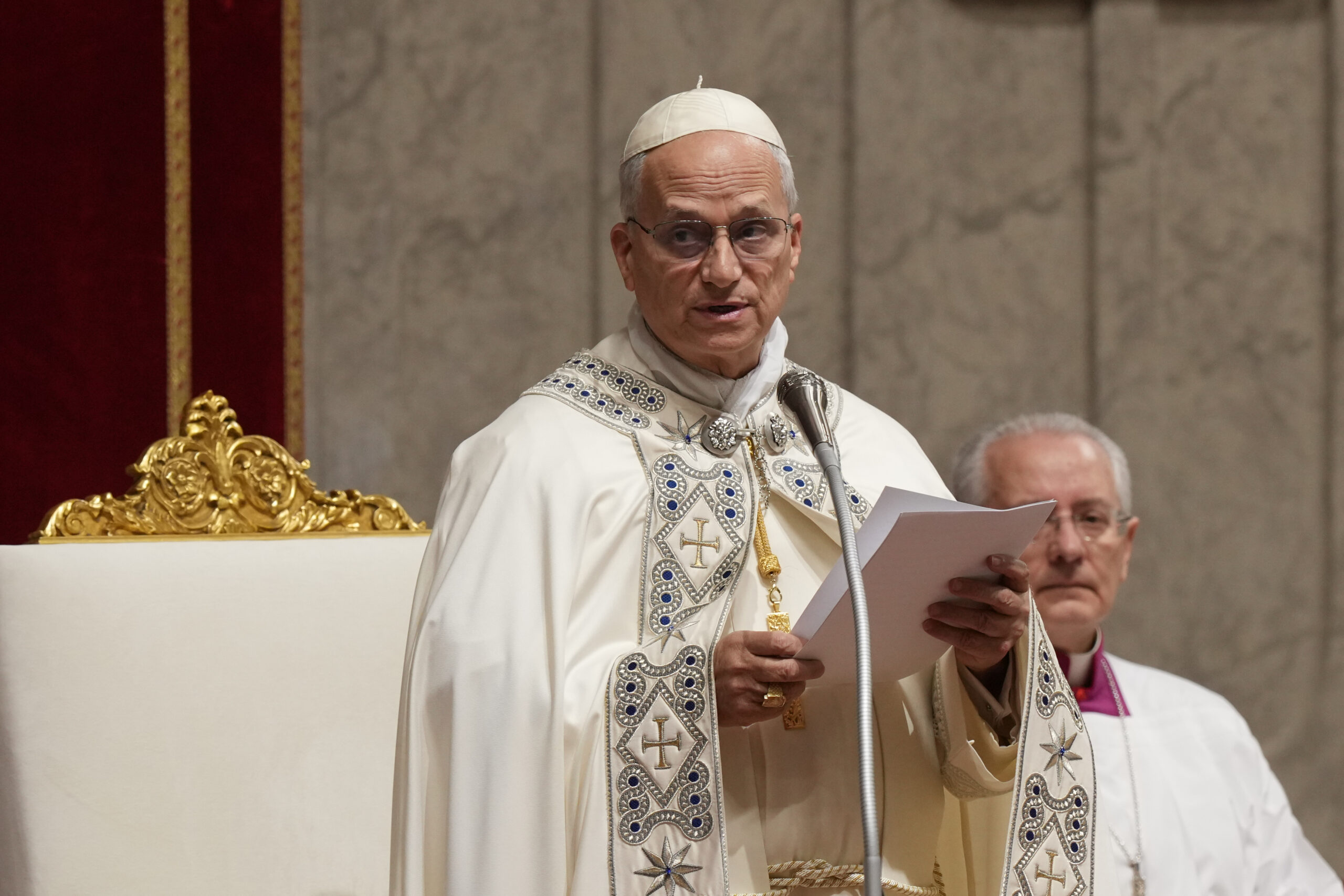
Big Five Hall of Fame induction continues to elude Pope Leo XIV.
May
A busy time. The Flyers hired Rick Tocchet as their new head coach, which prompted several 55-year-old South Jersey women to dig their TOCCHET, ZEZEL, and MELLANBY jerseys out of mothballs and start wearing them again.
The Phillies won nine straight games, but bad news marred their hot streak. Major League Baseball suspended closer José Alvarado for 80 games and ruled him ineligible for the postseason after a drug test revealed he had not told gamblers that he was using a banned substance. Nola gave up 12 hits and nine earned runs over 3⅔ innings against the St. Louis Cardinals, after which the Phillies placed him on the injured list. Then Jesús Luzardo gave up 12 hits and 12 earned runs over 3⅓ innings against the Milwaukee Brewers, which raised the concern that fans would storm Citizens Bank Park and insist that Nola pitch again.
DeJean and his fellow Eagles defensive back Reed Blankenship launched their podcast, Exciting Whites, which immediately rocketed up the audience rankings in Mayfair, Somerton, and Ridley Township. The College of Cardinals elected Robert Francis Prevost, a Villanova alumnus, as the new Pope. In his first declaration as Pope Leo XIV, Prevost announced that “V for Villanova” would become the official Communion hymn for every Catholic Mass in the United States, replacing “Taste and See,” “Eat This Bread,” and the ever popular “One Bread, One Body.”
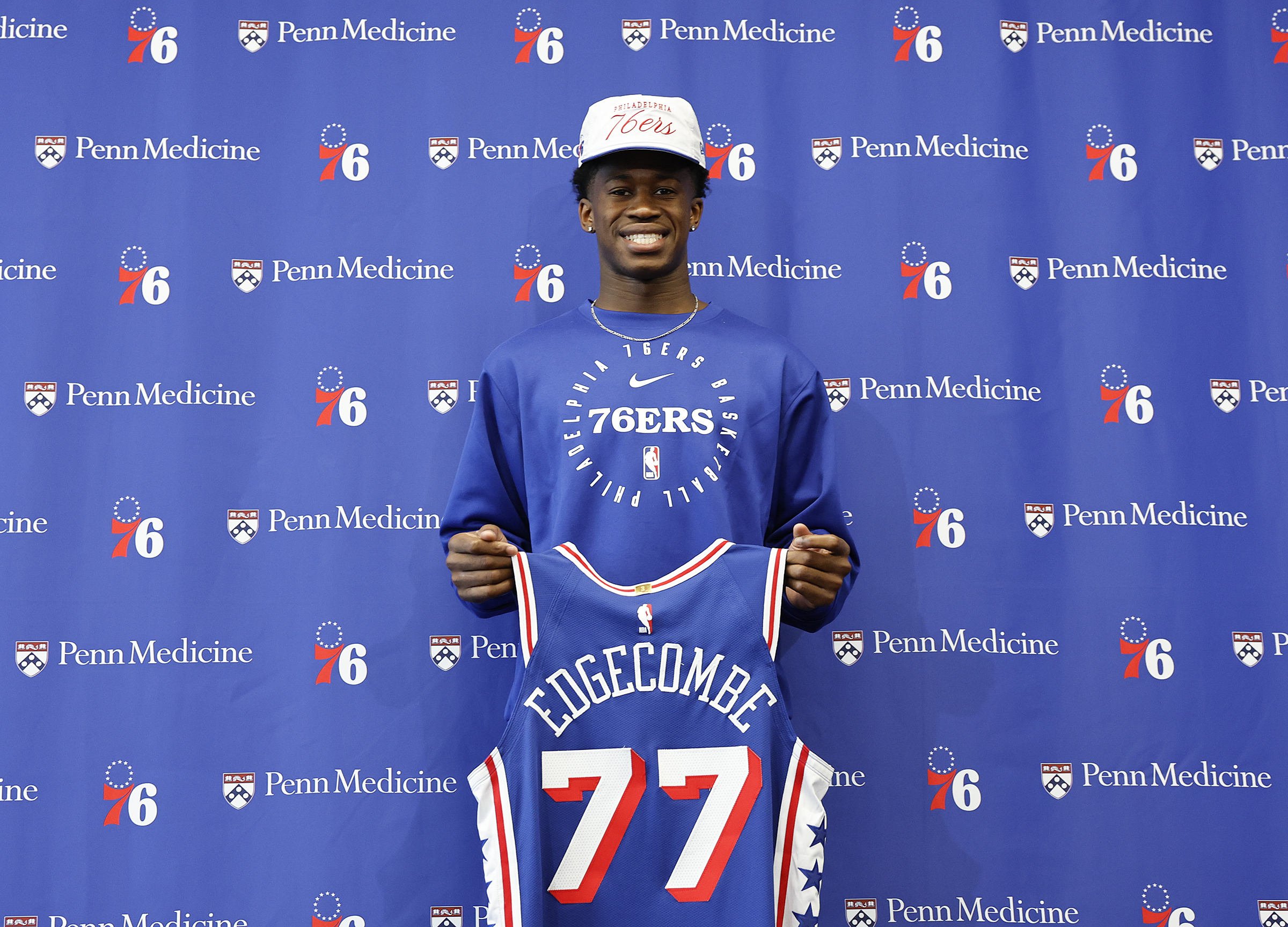
The Sixers drafted VJ Edgecombe and everyone blindly trusted that the franchise made the correct choice.
June
The Indiana Pacers’ remarkable run to Game 7 of the NBA Finals — thanks in large part to T.J. McConnell — reminded Sixers fans of those halcyon days when the team tanked for three years to acquire a 5-10 backup point guard who might someday lead them to an almost-championship. Things got better once the Sixers selected VJ Edgecombe with the third overall pick in the draft, allowing them to phase out Joel Embiid and George with a roster made up entirely of guards who were 6-4 or shorter.
The Flyers used their first-round pick on a promising winger, Porter Mantone, though fans remained disappointed that neither Tocchet, general manager Danny Brière, nor team president Keith Jones would be suiting up for the team himself.
Jalen Hurts and the Eagles did not win a single game in July.
July
The WNBA announced that Philadelphia would get an expansion franchise in 2030, provided that the WNBA still exists in 2030. The NCAA announced that it would keep the March Madness field at 68, quelling any remaining hope that any Big 5 team would ever qualify for the Tournament again. At the MLB trade deadline, the Phillies acquired Harrison Bader, who immediately became their best player, and Jhoan Duran, who immediately increased their in-game pyrotechnic production costs by 250%.
The Eagles began training camp, and Hurts laid out the team’s message for the season: “We are focused on 2025. We’re acting like we didn’t just win the Super Bowl. We’ve forgotten that we won the Super Bowl. You either win or you learn. We are keeping the main thing the thing that is mainly the thing that we think is, in the main, what we want to be doing. What is the Super Bowl anyway? What is soup? What are bowls? Who am I? Why am I here?”
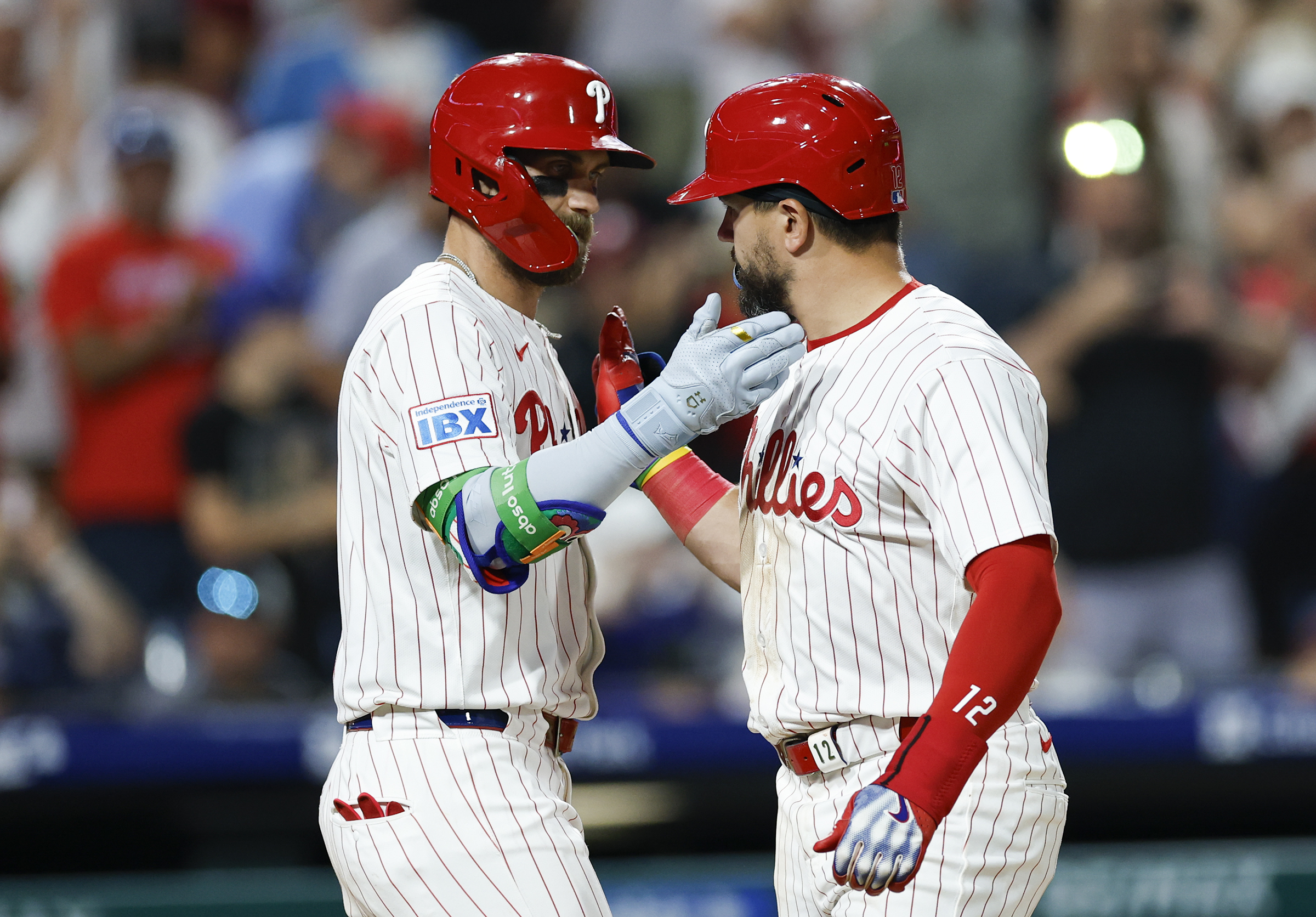
Kyle Schwarber (right, with Bryce Harper) heated up the Philadelphia summer.
August
Kyle Schwarber became the 21st player in major-league history to hit four home runs in a game, raising questions about whether the Phillies would re-sign him in the offseason — questions that Dombrowski dispelled: “Kyle is an elite power hitter. He’s the most elite hitter we have. He’s the elitist elite hitter around. Got all that, Bryce?”
Taylor Swift and Travis Kelce announced that they were engaged and that their wedding ceremony would be streamed live on the New Heights podcast. That way, someone would finally have a reason to listen to a full episode of the New Heights podcast.
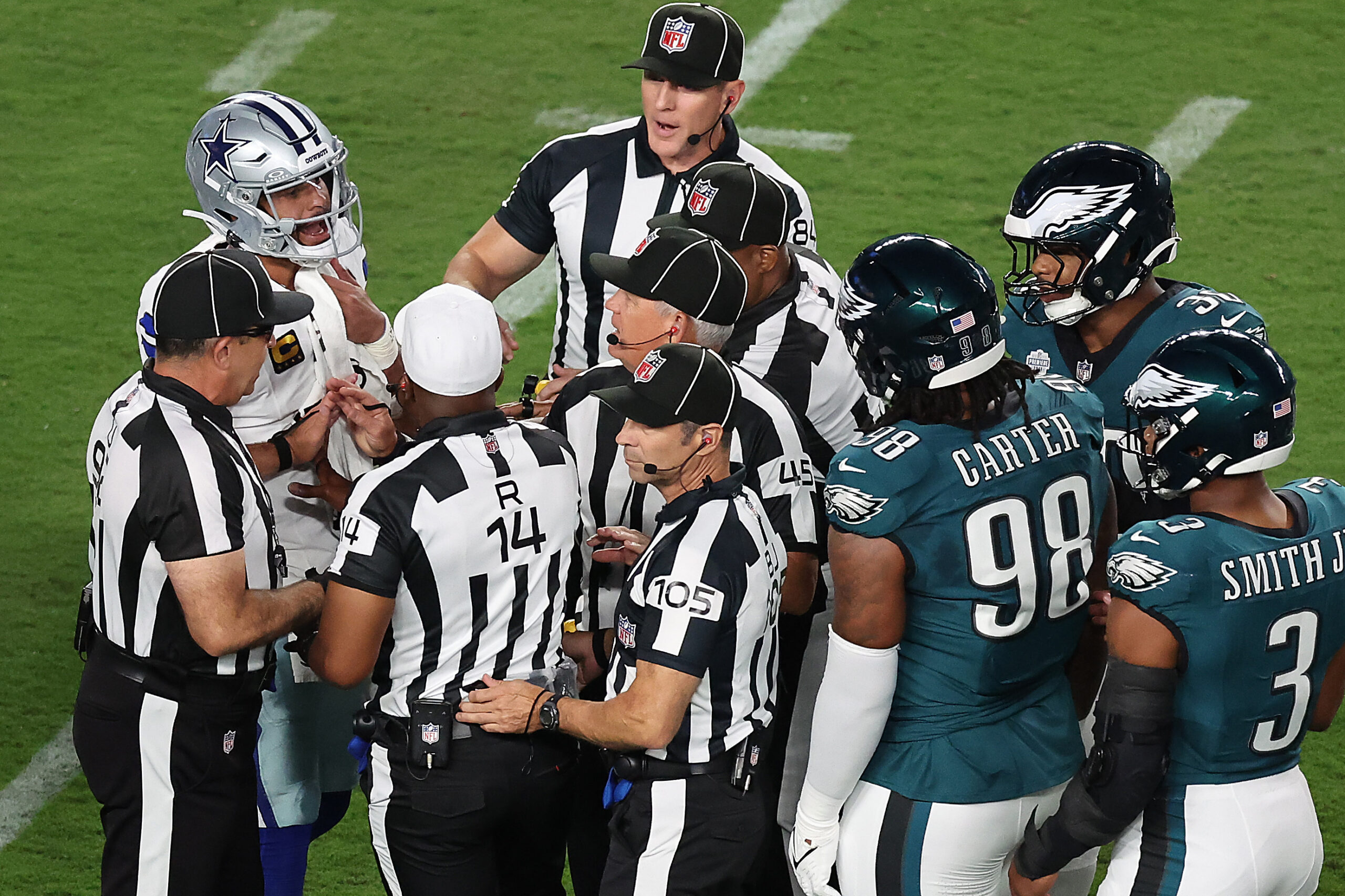
Jalen Carter’s one magic loogie earned him an early trip to the locker room.
September
Seconds into the Eagles’ season opener, Jalen Carter spat on Cowboys quarterback Dak Prescott. Carter was ejected from the game and, via referendum, elected mayor of Philadelphia. The Eagles won their first four games, which everyone agreed was awful, just like A.J. Brown said on Twitter/X.
Before the ninth inning of a Phillies-Nationals game at Citizens Bank Park, Duran set himself on fire and jogged to the pitcher’s mound, where he sacrificed a goat to what he later called “the mighty spider god who gives me strength.” He then gave up two runs for his first blown save.
After manager Rob Thomson benched him, outfielder Nick Castellanos complained that Thomson didn’t communicate well. When asked to respond to Castellanos’ comments, Thomson shrugged and said, “Welp.”
Orion Kerkering could have done without all of that.
October
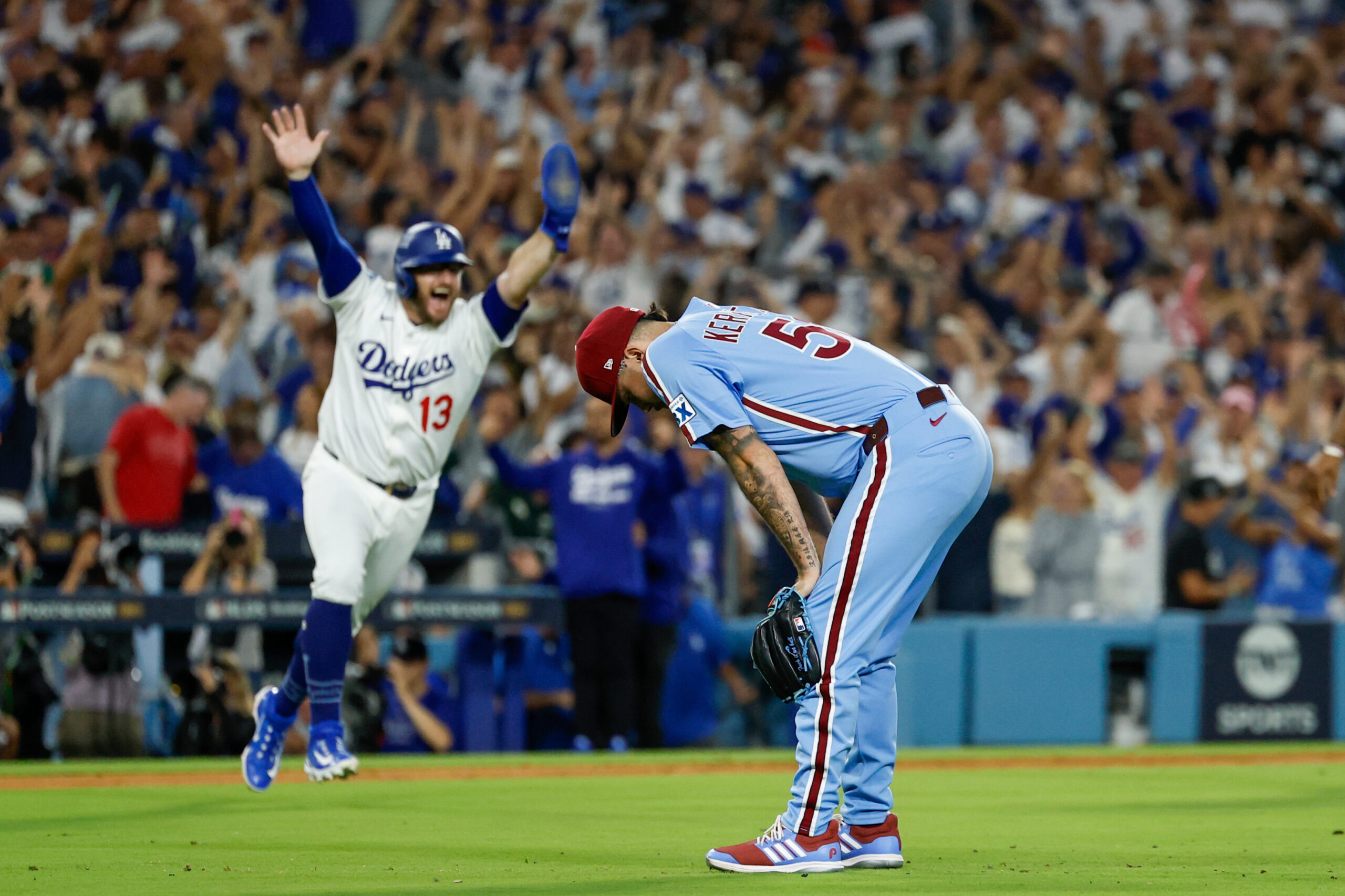
A not-so-great month. The Phillies lost in the National League Division Series when a Dodgers batter hit a ground ball back to the mound and reliever Orion Kerkering passed out. The Eagles lost back-to-back games to the Broncos and Giants. To adjust to their team’s limitations, Sirianni and new offensive coordinator Kevin Patullo decided that Hurts would be forbidden from throwing a pass after halftime for the rest of the season. Penn State fired James Franklin after losses to Oregon, UCLA, Northwestern, Archbishop Ryan, and the Lenape Valley 10U Pop Warner team.
The silver lining? Brandon Graham — surprise! — came out of retirement to rejoin the Eagles.
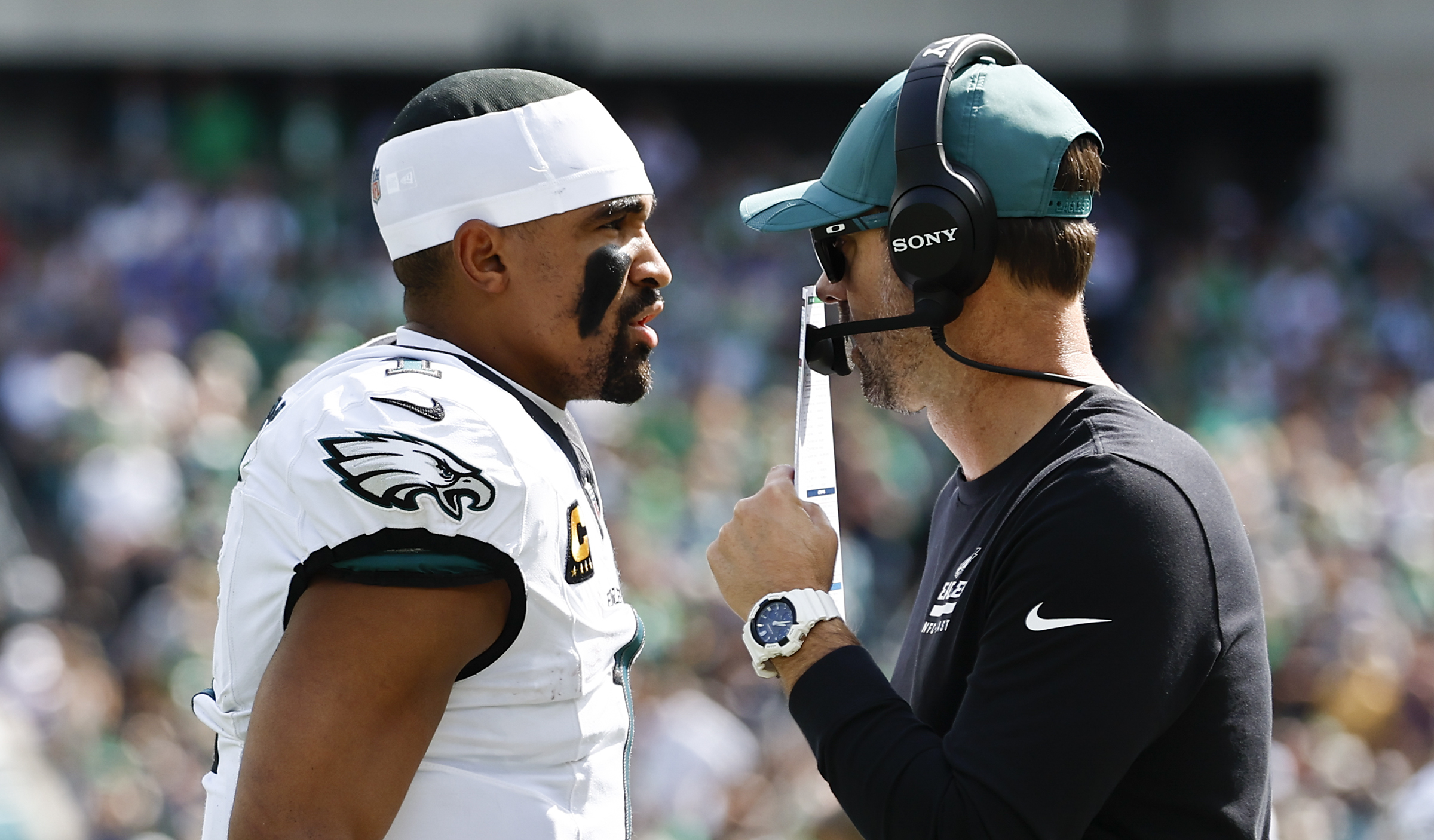
Jalen Hurts and Kevin Patullo are pleased to give Eagles fans something to discuss.
November
The media who cover the Eagles grappled with a simple question: Does the offense stink because of A) Jalen Hurts, B) Kevin Patullo, or C) Yes? The Eagles then squandered a 21-point lead in losing to the Cowboys and got pushed around in losing to the Bears, leading NFL experts to wonder whether a team coached by Sirianni and quarterbacked by Hurts could ever win anything of consequence.
Tocchet faced withering criticism from Flyers fans for limiting the ice time of Matvei Michkov, who showed up for training camp weighing 350 pounds and having forgotten how to skate. The Sixers got off to an excellent start as Edgecombe and Tyrese Maxey showed they could form the franchise’s best backcourt since Isaiah Canaan and Ish Smith.
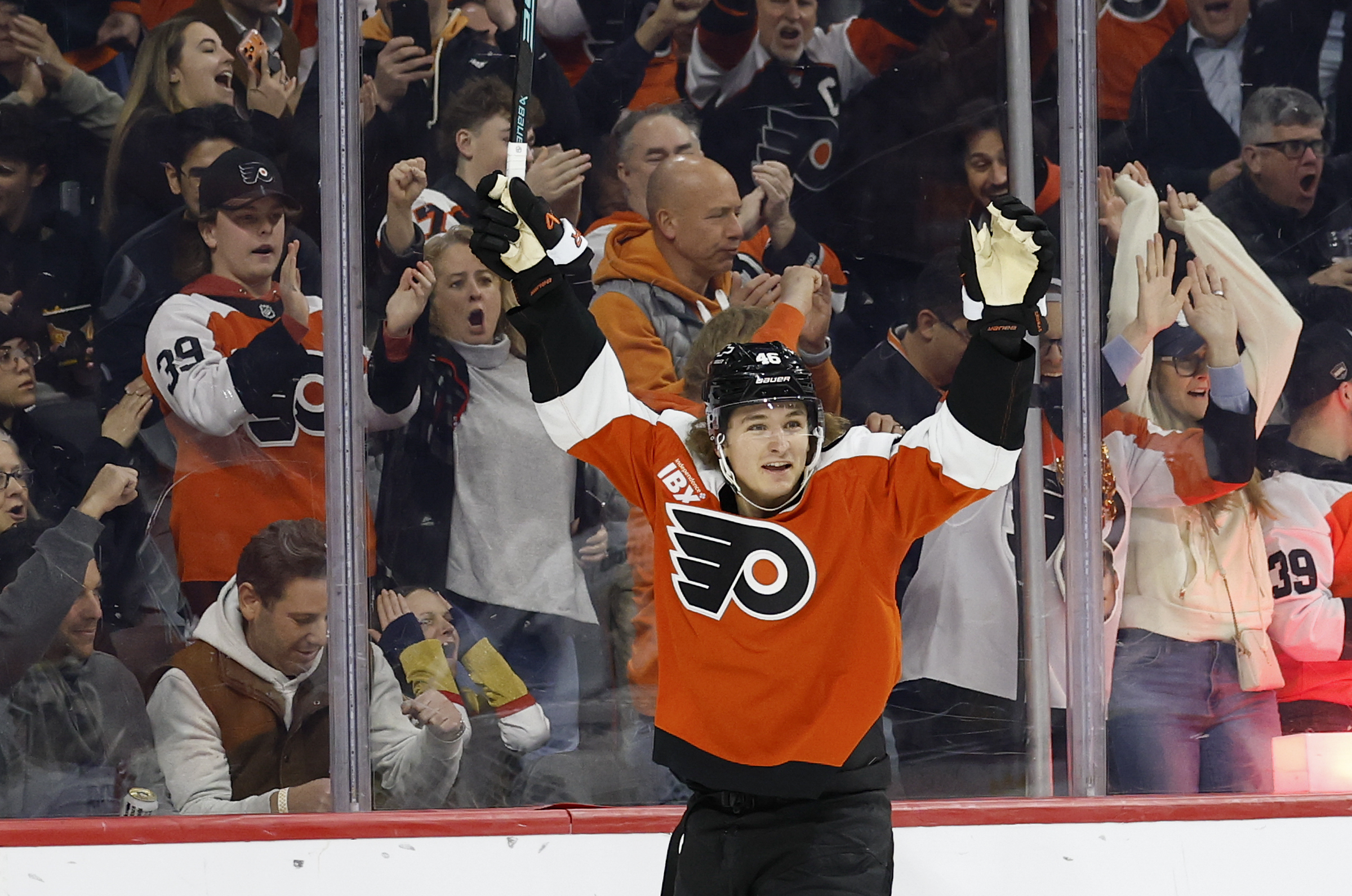
The Flyers are good again and we all saw it coming.
December
The Phillies re-signed Schwarber for too many years and too much money for a 32-year-old designated hitter, handing him a contract that will prevent them from breaking down the roster and beginning the 15-year rebuild that any true fan would really want. In response to Dombrowski’s assertion that he was “not elite,” Harper began a new offseason training program similar to Robert De Niro’s in Cape Fear.
The Flyers finished the month in third place in the Metropolitan Division and on pace to make the playoffs, disappointing those fans who hated the idea of tanking right up until the Flyers stopped tanking. Maxey and Edgecombe kept up their fine play for the Sixers, and Villanova won 10 of its first 12 games, even though no one, not even new coach Kevin Willard, could identify a single player on the Wildcats’ roster.
In a possible Super Bowl preview, the Eagles beat the Buffalo Bills despite scoring one point and racking up negative-19 yards of total offense. Sirianni then chose to have most of the Eagles’ starters sit out the team’s regular-season finale, because if 2026 turns out to be anything like 2025, everyone is going to need some rest.
The quieter his offense is, the louder Nick Sirianni gets. There he was Sunday night, strutting down a tunnel at Highmark Stadium in the aftermath of the Eagles’ 13-12 victory over the Bills, crowing about how all those Buffalo fans had nothing more to say, how they didn’t have so much bleep to talk anymore. He caught up to A.J. Brown and turned to look him in the eye, and Brown shot a smirk back that said, Coach, did you watch us try to move the ball after halftime?
Did Sirianni watch it? Of course. Did he care? My guess: only so much. If you’re complaining about the Eagles’ impotent offense and unimaginative play-calling both from Sunday’s second half and from several previous games this season, if you’re waiting for Sirianni and coordinator Kevin Patullo to have some eureka moment and suddenly start dazzling everyone with their play designs and a wide-open style of offense, you’re missing the key to understanding the 2025 Eagles.
They want to play like this. They want to rely on their defense. They want to limit every and any available possibility that their offense and special teams might commit a turnover. It took some time and some trial and some error, but they’ve settled on an approach, and this is it.
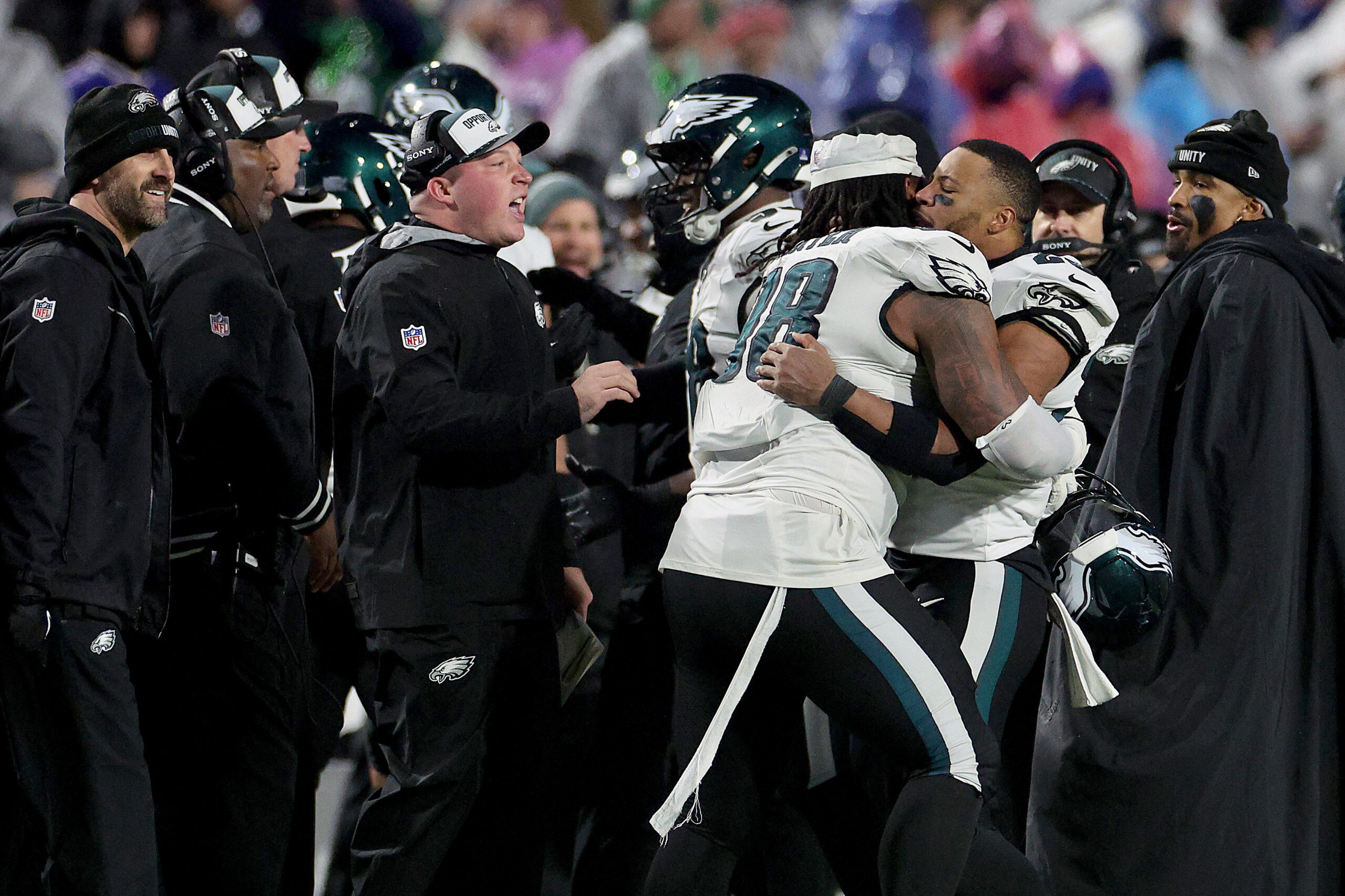
Running back Saquon Barkley (right) embraces defensive tackle Jalen Carter after the Eagles defense stopped the Bills on a two-point conversion attempt late in the fourth quarter Sunday.
By they, I don’t necessarily mean Jeffrey Lurie and Howie Roseman. They’re happy with the wins, to be sure, and they’re surely thrilled that Roseman and Vic Fangio have worked to create a defense of such quality that the Eagles can gain all of 17 yards in a single half and still hold on to beat a Super Bowl contender, which is what happened Sunday. But you can pretty much guarantee that Lurie, in particular, is looking at the money and salary-cap space that he has allocated to Brown, Jalen Hurts, Saquon Barkley, DeVonta Smith, Dallas Goedert, Lane Johnson, Jordan Mailata, Landon Dickerson, and Cam Jurgens and asking himself, Did I really spend all that money so Jalen could hand the ball to Saquon on delayed inside handoffs in second-and-long situations?
No, by they, I mean Sirianni. If he rented a small plane, attached to its tail a banner that read, WHEN WE DON’T TURN IT OVER WE WIN, and flew it over Lincoln Financial Field, he could not be more overt about his intentions here, about the way he wants the Eagles to play. He even put the lie to the notion that nothing revealing comes out of HBO Max’s Hard Knocks series anymore, because the cameras captured him in a team meeting earlier this month spelling out this strategy.
“This is what it’s about this week,” he said to an auditorium full of players. “We’ve got to be obsessed with the football. We’ve got to be obsessed with the [expletive] football. When we take care of the football, it is so hard to beat us. When we turn the football over as a defense, it is so hard to beat us. …
“This is the most important fundamental we have. We’ve got to be so locked in to this, because as we continue on this year, this is what presses us: the ball, the ball, the ball, the ball. We win when we take care of the football. We win when we turn them over on defense.”
Here is Nick Sirianni’s message to the team prior to last weeks game from Hard Knocks.
He is hammering home the importance of turnovers saying “we gotta be obsessed with the football.”
He stressed when the Eagles take care of the football they are very hard to beat as well as… pic.twitter.com/3kqo1UagBn
During Sirianni’s five-year tenure as their head coach, the Eagles have won 42 of the 44 games in which they have committed fewer turnovers than their opponents; that record includes Sunday’s win, when Josh Allen lost a fumble while trying to fend off Jaelan Phillips and the Eagles did nothing so daring that might have cost them possession of the football. That 42-2 mark is a stark and striking statistic, one that has a talismanic quality for Sirianni. He believes in its power so deeply that he is willing to bet that the Eagles can build an early lead, then hold any opponent at bay thereafter.
Two games from the last five weeks are particularly insightful in this regard. On Nov. 23, the Eagles lost to the Dallas Cowboys, 24-21, after getting out to an early 21-point lead. On Dec. 8, they moved the ball well against the Los Angeles Chargers but still lost, 22-19 in overtime, largely because Hurts threw four interceptions and lost a fumble. One could certainly conclude from those losses that the Eagles should have continued to be aggressive on offense, that it would be a mistake for them to dial back their aggressiveness. They tore up the Dallas defense for that game’s first 15½ minutes, and it took an all-time terrible performance from Hurts, maybe the worst of his career, to cost them a victory against the Chargers.
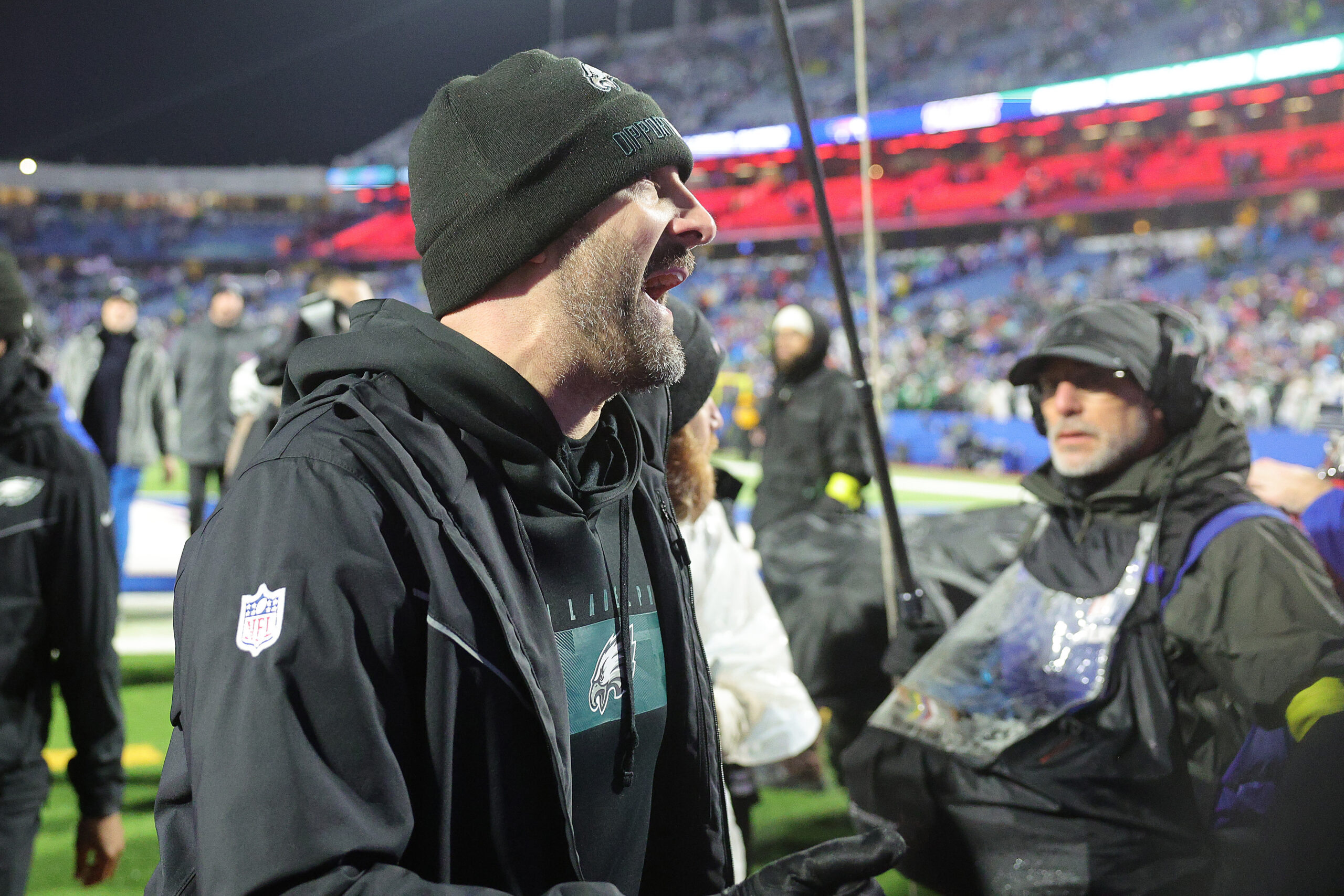
Eagles coach Nick Sirianni banters with Buffalo Bills fans after Sunday’s victory in Orchard Park, N.Y.
But after scoring a combined 60 points against a couple of bad teams (the Las Vegas Raiders and Washington Commanders), the Eagles went right back to being conservative against a good team, the Bills. The lesson that Sirianni took from the Dallas and L.A. losses wasn’t, In one game, we took our foot off the gas pedal, and it came back to bite us. In the other, Jalen had the kind of game that he’s unlikely to have again. So we can afford to open things up. No, the lesson he took was, We opened things up, and we lost. We can’t afford to do that again.
Can the Eagles return to the Super Bowl and win it again this way? Yes, they can. But that doesn’t mean they will, and even if they do, their journey there will be stressful and tenuous, with winter storms and giant potholes. But this is the road they’ve chosen. So stop mentioning the firepower that they have on offense, the players whose talents are being wasted. Stop arguing over whether Hurts is a winning winner who just wins or a fraud who has been propped up by the infrastructure around him. Those discussions are pointless. This is who the Eagles have been this season. This is who they are. This is who they’re going to be. They don’t have Trent Dilfer at quarterback, but they’re going to play like they do. Get used to it.
Clark Hunt and his family, who own the Kansas City Chiefs and are worth a reported $25 billion, are going to build a new domed stadium for the team in Wyandotte County, Kan. Wait, that’s not quite right. The Hunts aren’t really the ones building it. The construction is projected to take $3 billion to complete, but $1.8 billion — 60% of the cost — will come from Kansas taxpayers.
That’s OK, though, because once the stadium is finished, it’ll be a gleaming football palace where the Chiefs’ opponents will never have to face harsh Midwest winter conditions during December and January. The teams will play football the way it was meant to be played: inside an aseptic arena where the temperature is always 72.3 degrees Fahrenheit.
Best of all, the NFL is sure to hold at least one Super Bowl at the stadium. And by at least one, I mean one, because if there’s anywhere that the celebrities and fat cats and influencers who populate Super Bowl week can’t wait to go, it’s … the Missouri-Kansas border.
What we’re seeing here, of course, is the privatization of profit and the socialization of cost, a dynamic as old as the modern multibillion-dollar industry of pro sports. What we’re also seeing — and it will accelerate — is the slow death of the un-rich sports crowd. Those with the financial means to go to a game in the Chiefs’ new stadium — or in a new Eagles stadium, if Jeffrey Lurie eventually gets his way — don’t want cold and snow to mar their fun. They don’t want the experience they’re having to be common or accessible.
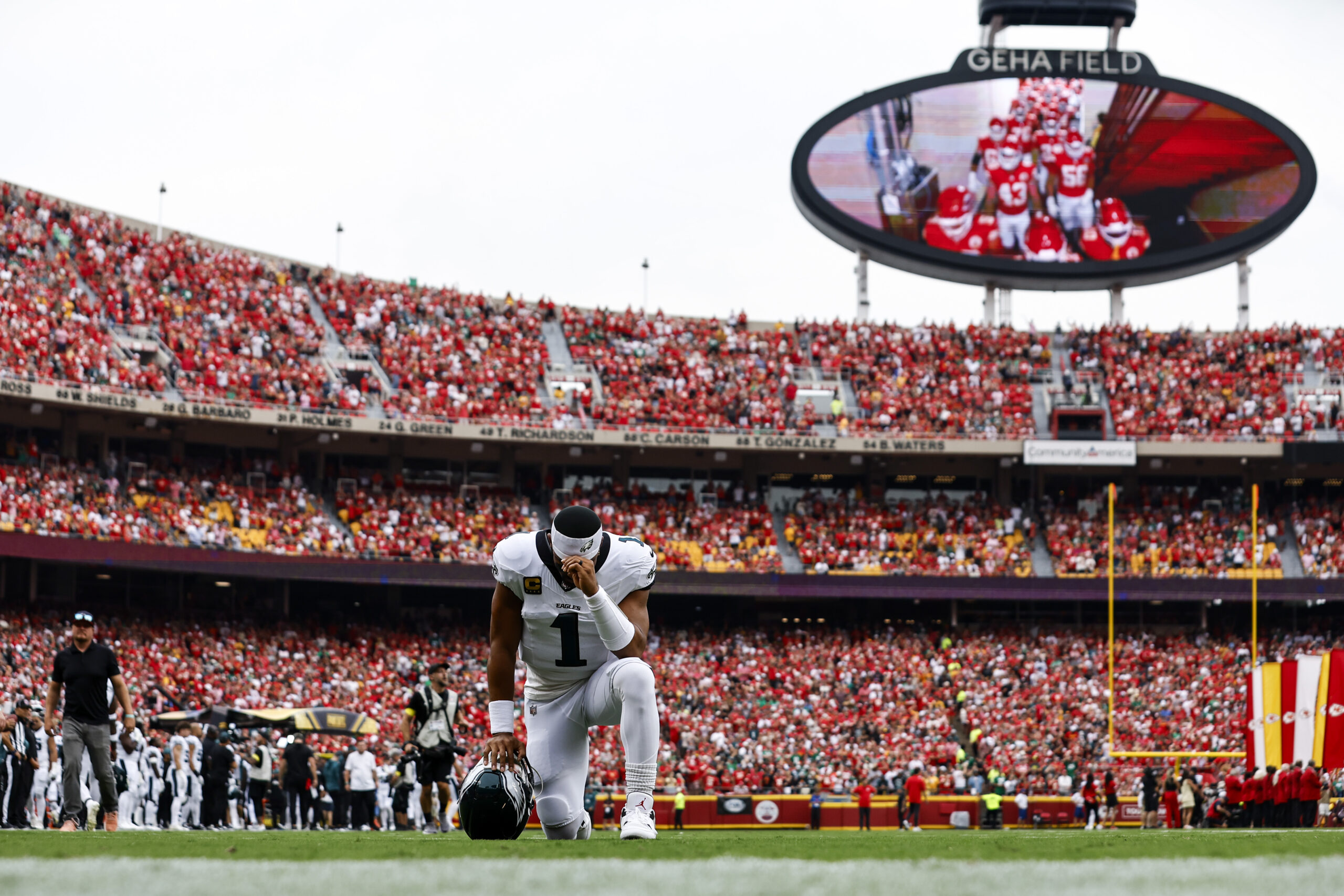
Eagles quarterback Jalen Hurts kneels in the endzone before a game at the Kansas City Chiefs on Sept 14.
Attending a major pro sports contest became a luxury buy long ago. Now it’s on its way to becoming a sterile exercise only a select few can afford, and those fans who care the most, who drive interest and revenue in these games boys and girls can play, end up paying anyway, even while they are kept on the other side of the window.
Still seeking a star
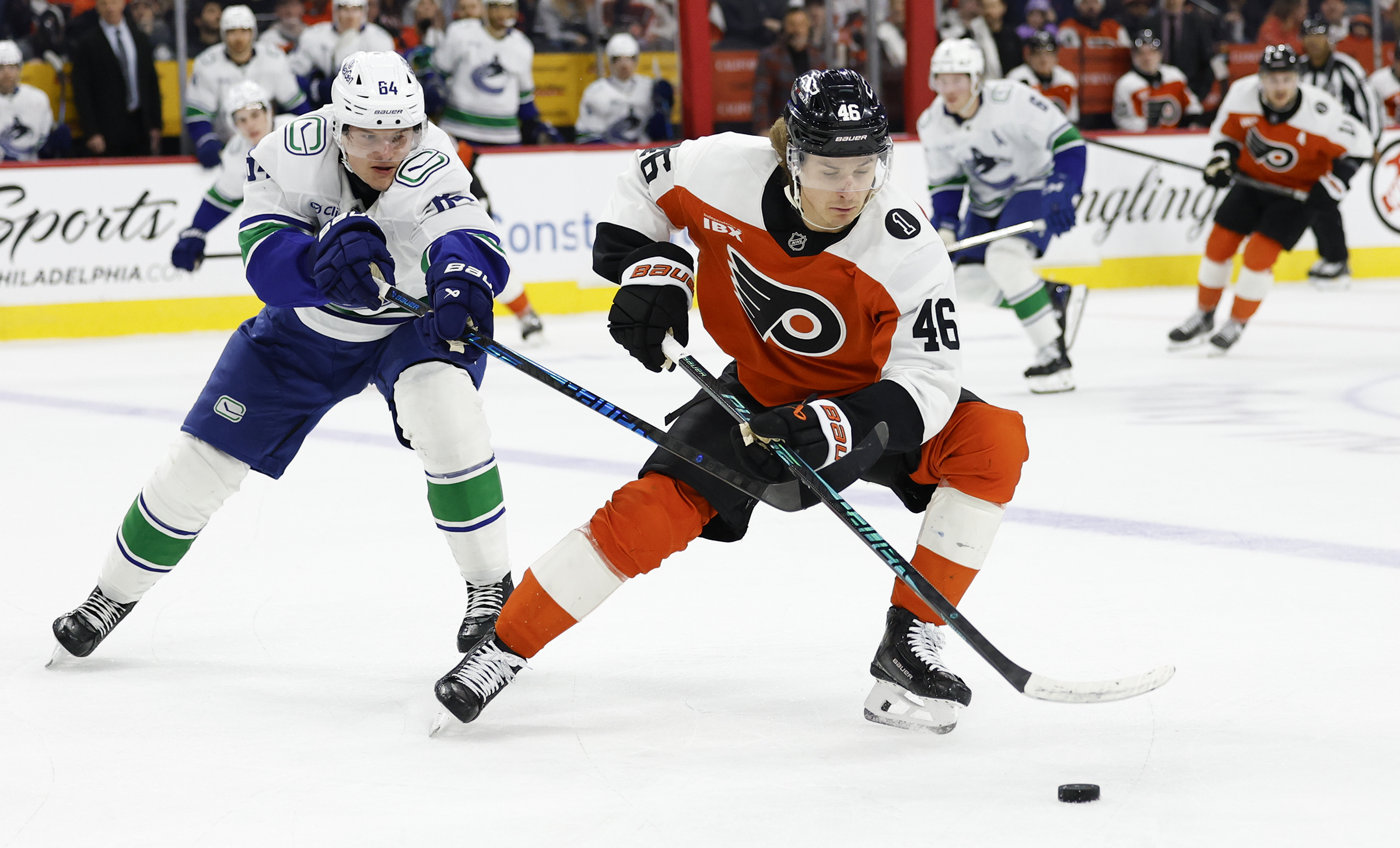
If the NHL season had ended on Christmas … well, that would be a really short NHL season. Also, the Flyers would have qualified for the playoffs for the first time since 2020, and Trevor Zegras would have been considered a brilliant offseason acquisition.
But the season, of course, isn’t even half-finished yet, and, given the Flyers’ recent history, there’s still plenty of reason to wonder whether they’ll keep up a postseason-worthy pace. That natural skepticism accounts for some of the relative indifference to their relative success so far. People will believe the Flyers are a good team when they see the Flyers be a good team over a full 82 games.
After falling out of favor in Anaheim, Trevor Zegras has rebounded in Philly, where he has 37 points at Christmas, besting his mark for the entire 2024-25 season.
There’s another reason, though, why the Flyers haven’t penetrated the broader, more mainstream public conversation about Philly sports so far: They don’t have any stars.
At his current pace, Zegras would finish with 34 goals and 83 points over 82 games, which would lead the team but place him 31st in the league in points per game. Offense has been up in the NHL for a while. This would be the fifth straight season that the average team has scored at least three goals each game, the first such stretch in the league since the early 1990s.
Yet the Flyers haven’t been part of that surge in scoring. They have not had a player with 35 goals or more in a season since 2011-12, when Scott Hartnell had 37. They have not had a player with 40 goals or more in a season since 2008-09, when Jeff Carter had 46. And they have not had a player with 50 goals or more in a season since 1997-98, when John LeClair had 51.
That recent history also explains part of the frustration and disgruntlement from the fan base over Matvei Michkov’s sluggish sophomore season. Michkov was supposed to be the franchise’s next superstar, and he still can be, but his regression has at least delayed his development into the kind of player who even a hockey neophyte knows and feels compelled to watch. The Flyers haven’t had such a star since Eric Lindros, and, at the moment, they still don’t.
Casty got one thing right
A tip of the cap to Mark Whicker, an all-time great Philadelphia sports columnist, for noting that Nick Castellanos delivered the quote of the year in Philly sports.
After Phillies pitchers Cristopher Sánchez and Ranger Suárez were snubbed for the National League All-Star team in favor of the Milwaukee Brewers’ Jacob Misiorowski, who had made just five starts, Castellanos said:
“This is turning into the Savannah Bananas.”
Nick Castellanos is likely out in Philly after a couple tough years in the field and at the mound.
No offense to the Bananas, who make baseball less stuffy and lots more fun for loads of kids in America. But Castellanos’ point about the All-Star Game being more than just a meaningless exhibition — that it is, still, supposed to be an acknowledgment of and accolade for those players who have performed best through a season’s first half — was well taken. Whatever one might think of his performance on the field in 2025, he launched that answer into the upper deck.
Good stuff, Gramps
In his two games with the Indianapolis Colts this season, nearly five years after he had retired, Philip Rivers — 44 years old, father of 10, grandfather of one — has completed 41 of 62 passes for 397 yards and three touchdowns.
How hard can it be to play quarterback in the NFL if Pop-Pop can do it this well?
For a long time when it came to sports, Buffalo was Diet Philadelphia. Similar, but with a little less. A smaller city, yes. Half as many major pro franchises, yes. But those teams — the Bills in the NFL, the Sabres in the NHL — have always occupied an outsized importance within the culture of the region. They mattered to the people of Buffalo as much or more than the Eagles, the Phillies, the Sixers, and the Flyers mattered to the people of Philadelphia.
Oh, and there was one other common thread for decades: None of those teams ever won a championship.
Not ever ever, but close enough. The Bills won back-to-back titles in the American Football League in 1964 and ’65, and Philadelphia had that wonderful 10-year stretch, from 1973-83, when the Flyers won two Stanley Cups, the Phillies won a World Series, the Eagles reached a Super Bowl, and the Sixers won an NBA championship. But for 25 years — until the Phillies won the 2008 World Series — then another nine-plus, the towns could bond through being blue-collar bridesmaids.
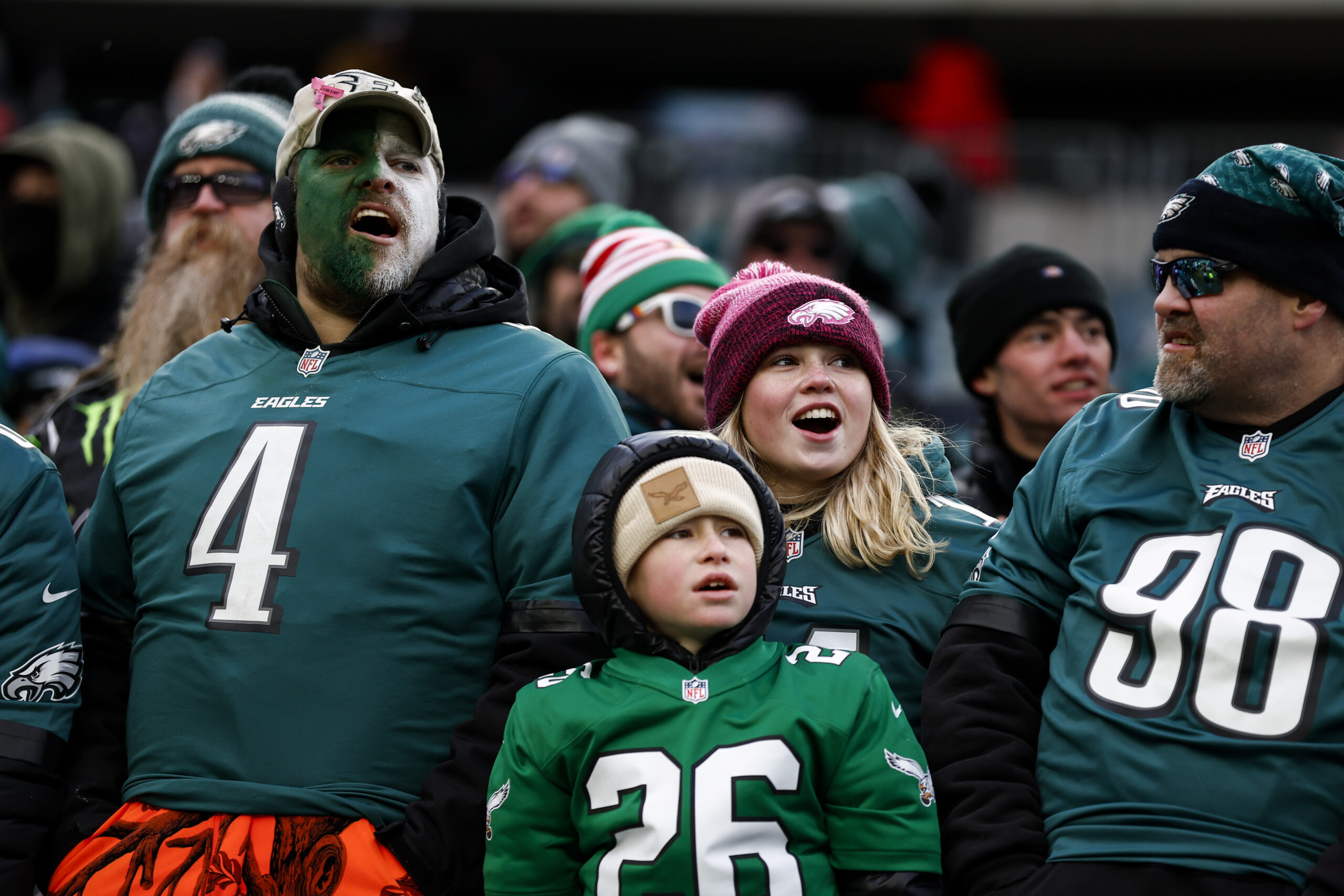
Eagles fans cheer after the win against the hapless Raiders at Lincoln Financial Field on Dec. 14.
Recently, though, the Eagles have altered that dynamic. They won a Super Bowl in 2018, then another earlier this year, and as they prepare to face the Bills this Sunday at Highmark Stadium in Orchard Park, N.Y., they have quelled much of the anger and anxiety that once characterized Philadelphia sports fandom. It might not seem that way, with the attention paid to Jalen Hurts’ play and the worry over the Eagles’ chance to repeat as league champs, but it’s true. The atmosphere was much worse during the Buddy Ryan and Andy Reid eras.
For Buffalo, though, there has been no great expulsion of joy and relief. In their 55 years of existence, the Sabres have never won a Stanley Cup and have reached the Final just twice, losing to the Flyers in 1975 and to the Dallas Stars (on Brett Hull’s disputed triple-overtime goal) in 1999. What’s arguably worse, for a city that loves hockey as much or more than any in the United States, is that the Sabres haven’t even qualified for the playoffs since 2011 and haven’t won a postseason series since 2007, when one of their best players was Danny Brière, now the Flyers’ general manager.
Steve Watson, a friend and former classmate of mine, has lived in the Buffalo region for most of his life. His son, Eli, is 12. Eli has never seen a Sabres playoff game.
“It’s sad,” Watson, 50, who has been a reporter for the Buffalo News since 2001, said by phone Tuesday. “When the Sabres are good, and they have been good for a lot of their history, you see the little flags people put on their cars. We embrace the team, but they’re losing this current fan generation. They took a great hockey town and tarnished it.”
The situation with the Bills has, if possible, been even more painful, for all their near misses. Even a casual football fan is familiar with the Bills’ four consecutive Super Bowl losses from 1991 to 1994 and all the tragic heroes from that period — Jim Kelly, Thurman Thomas, Andre Reed, Bruce Smith, Frank Reich — and the comeback from 35-3 against the Houston Oilers, Scott Norwood and wide right against the New York Giants. But the aftermath has been just as rough.
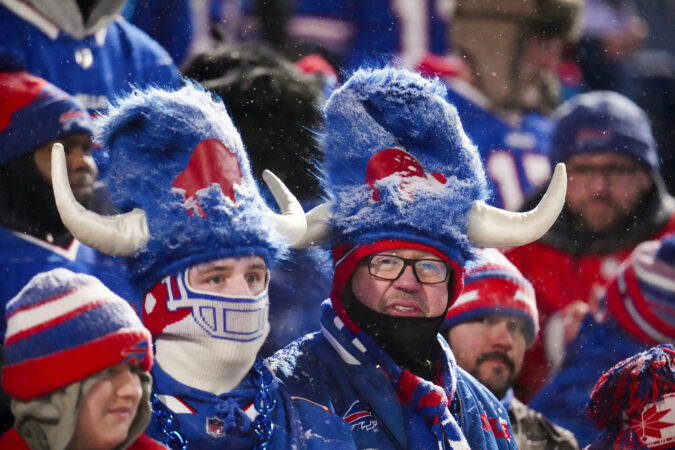
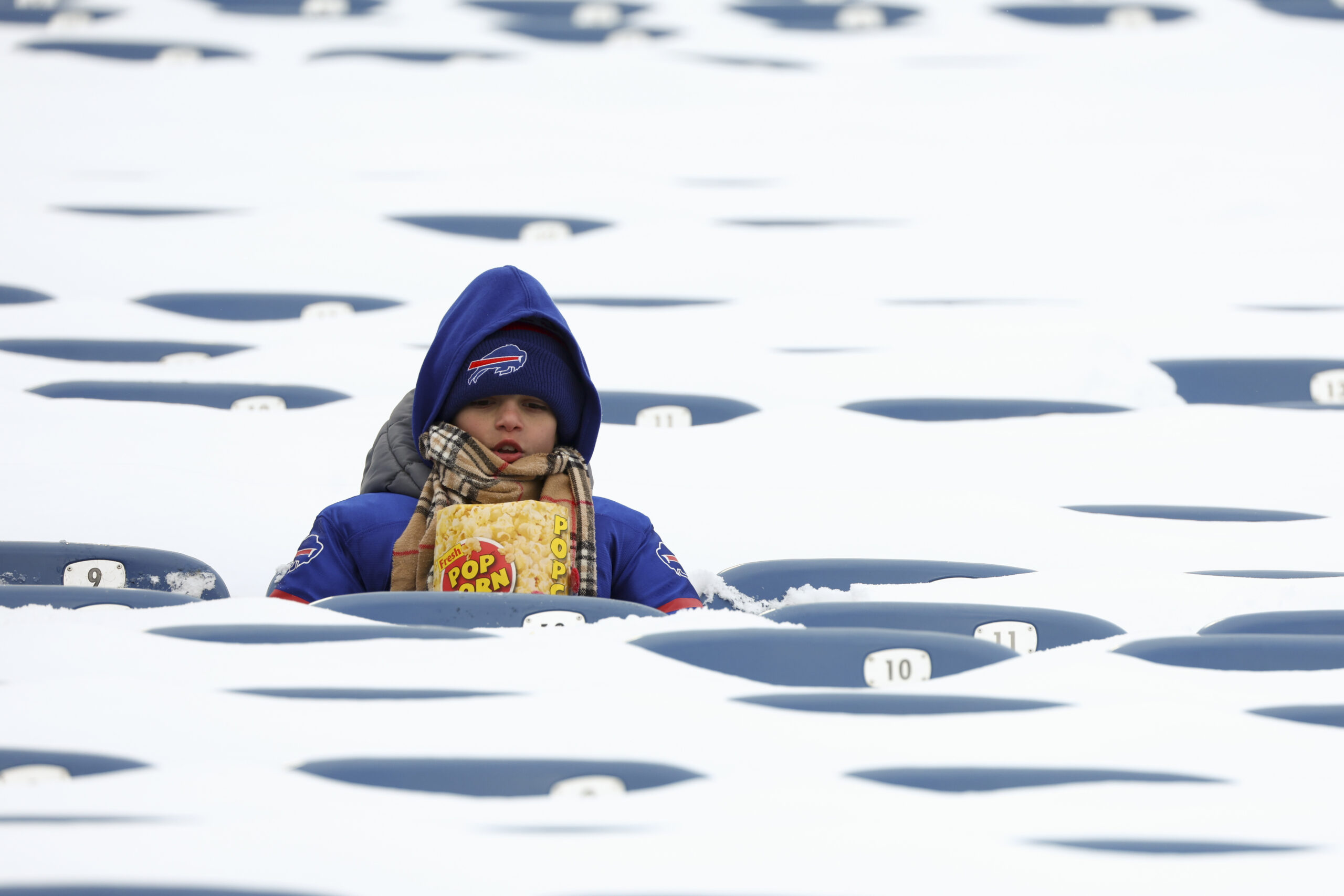
A Bills fan sits among snow-covered seats before the start a wild-card playoff game against the Pittsburgh Steelers on Jan. 15, 2024.
The Bills went 17 years, from 2000 through 2016, without making the playoffs. Now they have Josh Allen, who was the NFL’s Most Valuable Player last season, who is regarded as the second- or third-best quarterback in the league at worst, and who has led the Bills to the postseason for seven straight seasons … and to no Super Bowls. Either Patrick Mahomes or Joe Burrow has been in their way, or they’ve had a bad day at the worst time and squandered home-field advantage, or they’ve stood under a ladder staring at a broken mirror while a clowder of black cats strutted past them. They’re 11-4 this season, and Allen has again been outstanding, but now their intradivisional nemeses, the New England Patriots, are back atop the AFC East after a few years of mediocrity. The cycle seems without end.
This excruciating history wouldn’t generate much sympathy from anyone, let alone from Philly’s famously competitive and insecure sports fans (“Oh, you think you’ve had it rough? Lemme tell ya about the night Joe Carter …”), if we were talking about an area of the country whose lifers didn’t care so much. But that ain’t Buffalo. The people there bleed for their teams just like everyone down here does. After all, sports is their only salvation from spending three-quarters of the year with snowshoes strapped to their feet.
“It’s up there with chicken wings,” Watson said. “It’s up there with our lovely weather. It’s our identity. We are blue collar. We are the city of good neighbors. And we’re a big sports town. I used to write more obituaries for the News, and it was always painful for me to write, ‘Lifelong Bills fan … Lifelong Sabres fan.’ They never got that payoff for their years of suffering.”
Look, if you’re an Eagles fan, you don’t have to root for the Bills — certainly not on Sunday, certainly not if the two teams end up facing each other at Levi’s Stadium in Santa Clara, Calif., on Feb. 8. In many regards, though, you and those fans near Niagara Falls were kindred spirits for years. So if and when the Eagles do bow out of the playoffs, and if Buffalo’s hopes for a Super Bowl victory are still alive, send some good thoughts toward western New York. They’re still waiting for their moment in the warm sun up there, and Lord knows they’ve already suffered enough.