During the early 19th century, gentleman did not play games, at least not outdoors.
Outdoor frolicking was for children.
But the yellow fever epidemic of 1822 and the cholera epidemic a decade later started Philly’s men of means on a health kick. It became cool for grown men to play outside, breathe fresh air, stretch limbs, and build their muscles.
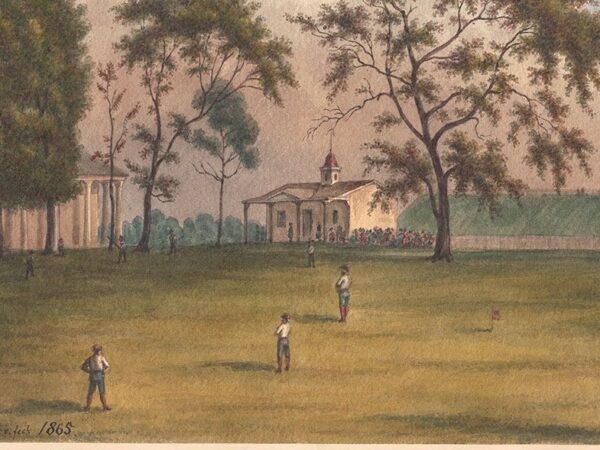
In 1833, a few of them formed a social club to play a fairly new outdoor game called Townball in which a player goes to bat at “home,” and gets three tries to hit a ball. If he manages to hit it, he runs a course, stopping at three bases along the way before returning home, safely.
Every time a player returned home, his team scored a point.
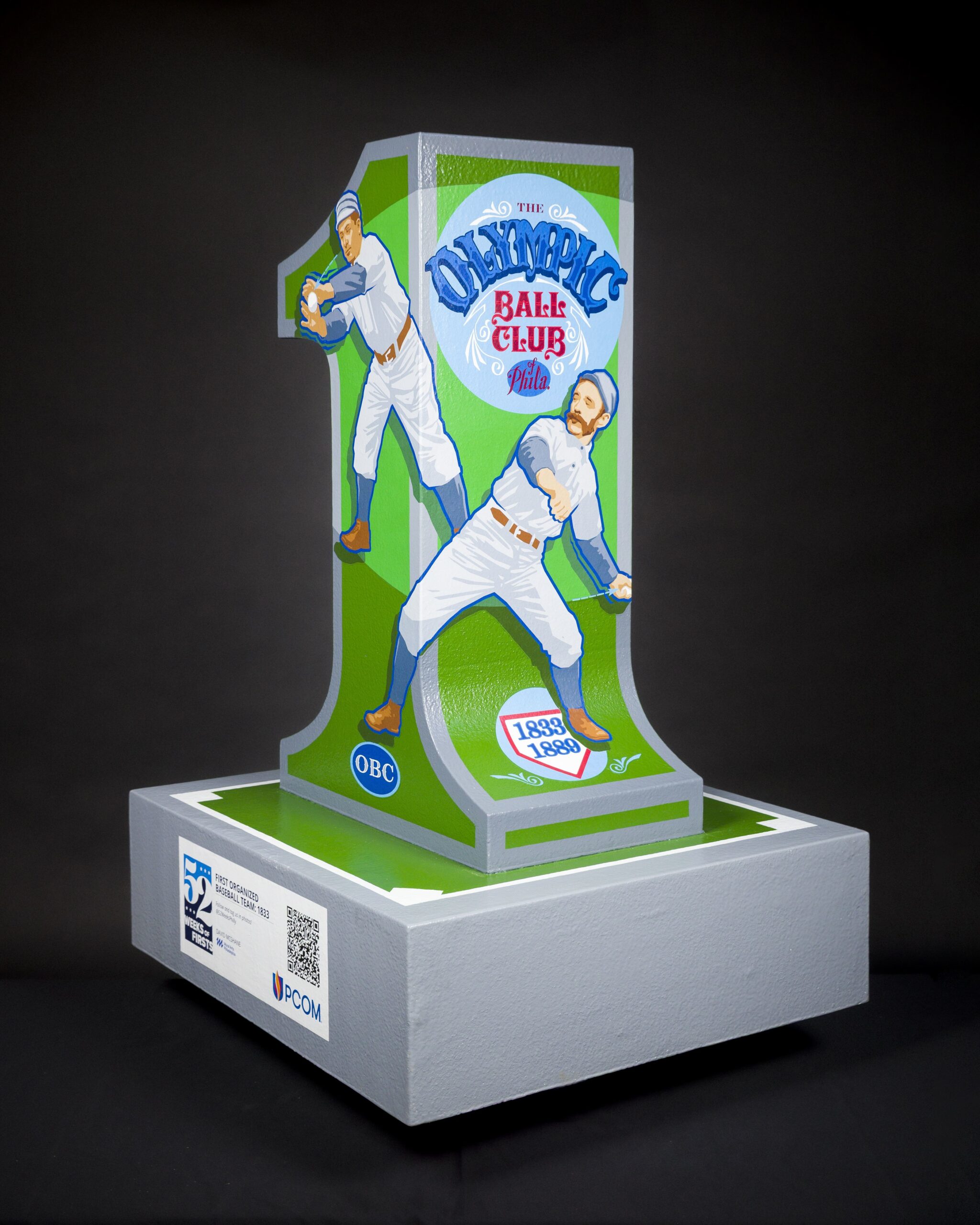
Artist David McShane illustrated three three ball players from the early- and mid-1800s to represent the Olympic Ball Club.
Sounds familiar? John Thorn, the official historian for MLB Baseball agrees.
Townball, Thorn said, caught on because it was a different kind of sport. “It wasn’t not gymnastic. It wasn’t pugilistic. It wasn’t mere combat…It was more than exercise. It was camaraderie. That was nice.”
The recreational athletes referred to themselves as the Olympic Ball Club and are considered America’s first baseball team. As MLB All-Star Week 2026 gets underway in Philly this weekend at Citizens Bank Park, that first ballclub will be feted at the park for the Philadelphia Historic District’s 28th firstival.
Firstivals are weekly day parties honoring events that happened in Philadelphia before anywhere else in the world, part of the city’s yearlong celebration of America’s 250th birthday.
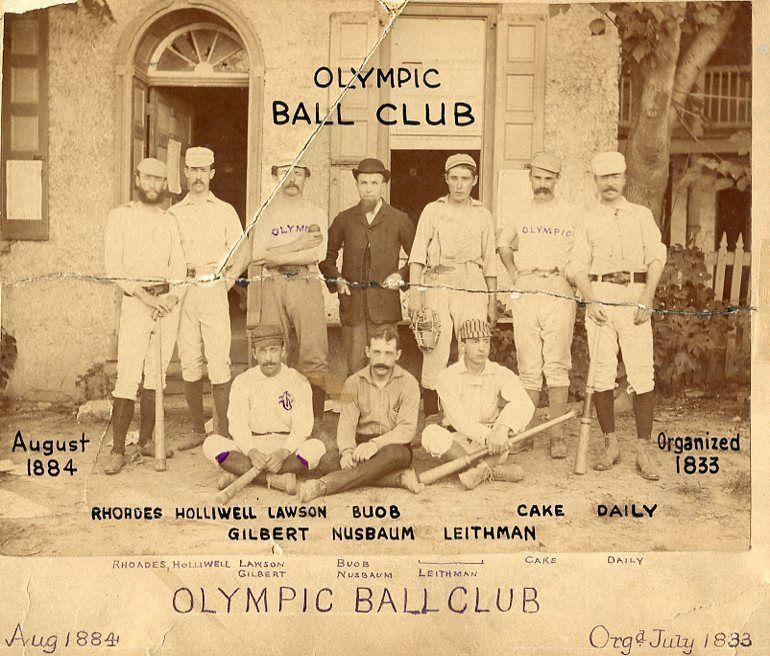
The Olympic Ball clup pictured in 1883, 50 years after the organization was founded.
The Olympic Ball Club played early games in Camden. In those days the club split themselves into two teams and played against each other. There was no foul territory, the ball was smaller, yet softer. And sometimes they even swung the bat with one arm.
“Runners would be declared out if the ball was thrown at them between the bases,” Thorn said. In other words, you didn’t have to tag people out.
In the 1860s, the Olympic Ball Club adopted the same rules as the New York Knickerbockers. In the same decade, they also moved the club’s home to North Philadelphia, a field between Master and 27th Streets. Back then, this area was known as Camac’s Woods, an estate and public park owned by 19th century Philadelphia gentleman Turner Camac.
The first professional base ball team — it was originally spelled with two words — the Cincinnati Red Stockings, were formed in 1869. Their salaries were paid by an organization of local businessmen.
By 1876 — the year the National League was founded — Philadelphia had a second base ball team, the Athletics. On April 22 of that year, the Athletics played the Boston Red Caps in America’s first professional league baseball game. That game was played in North Philadelphia at 25th and Jefferson, and Boston beat Philadelphia 6 to 5.
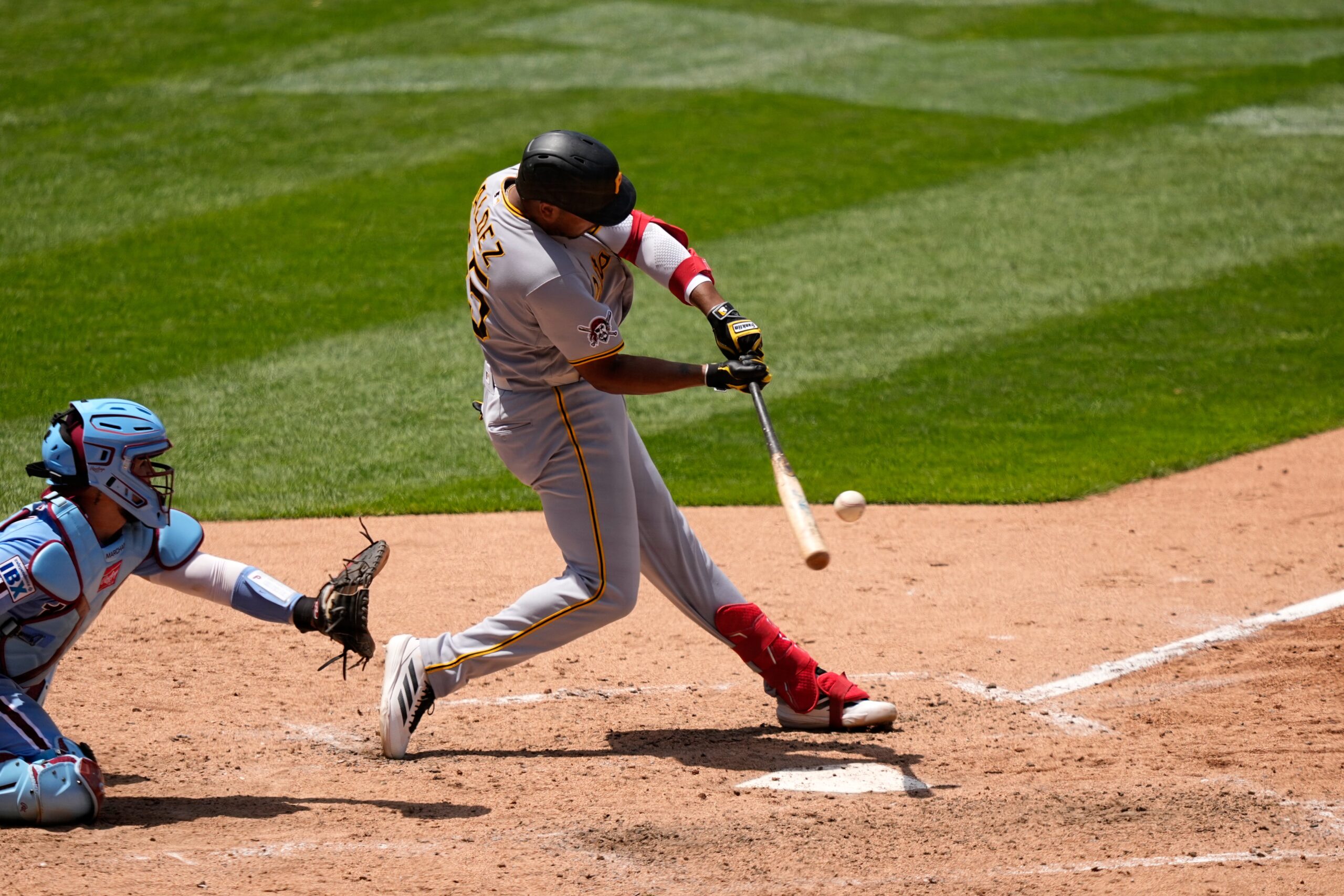
Pittsburgh Pirates’ Esmerlyn Valdez hits a run-scoring single against Philadelphia Phillies pitcher Tim Mayza during the fifth inning of a baseball game Thursday, July 2, 2026, in Philadelphia. (AP Photo/Matt Slocum)
Why are there so many baseball firsts in Philadelphia?
“Philadelphia was the home to organization and structure,” Thorn said. “This was the seat of government, the place where American politics and innovation started. Philadelphia is a town of invention.”
This week’s Firstival is Saturday, June 11, 11 a.m.-1 p.m., at Citizens Bank Park, 1 Citizens Bank Way, Philadelphia, PA
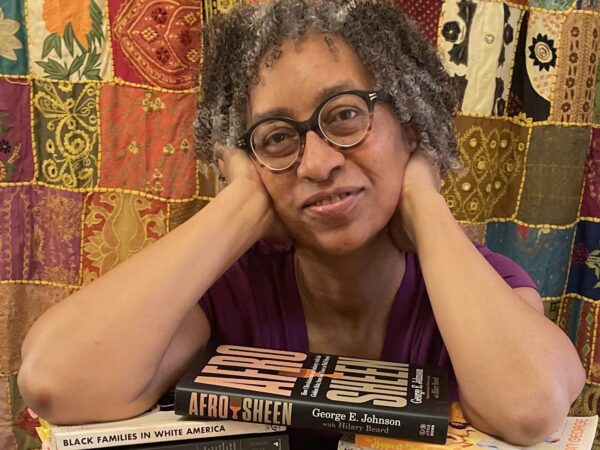
Like many Black children growing up in the ‘70s and ‘80s, Mount Airy author Hilary Beard had fond memories of Afros and Soul Train dancers.
“I was a little Black girl with braids who sat between my mother’s knees every day as she combed my hair and oiled my scalp with Ultra Sheen,” Beard recalled in a recent video chat. “When I was in the seventh grade and cut my hair into an Afro, I used Afro Sheen. I grew up watching Soul Train. I lived in a world created by this man.”
It wasn’t until 40 years later that she realized these hallmarks of Black culture had a common author, George E. Johnson, the father of modern Black hair care.
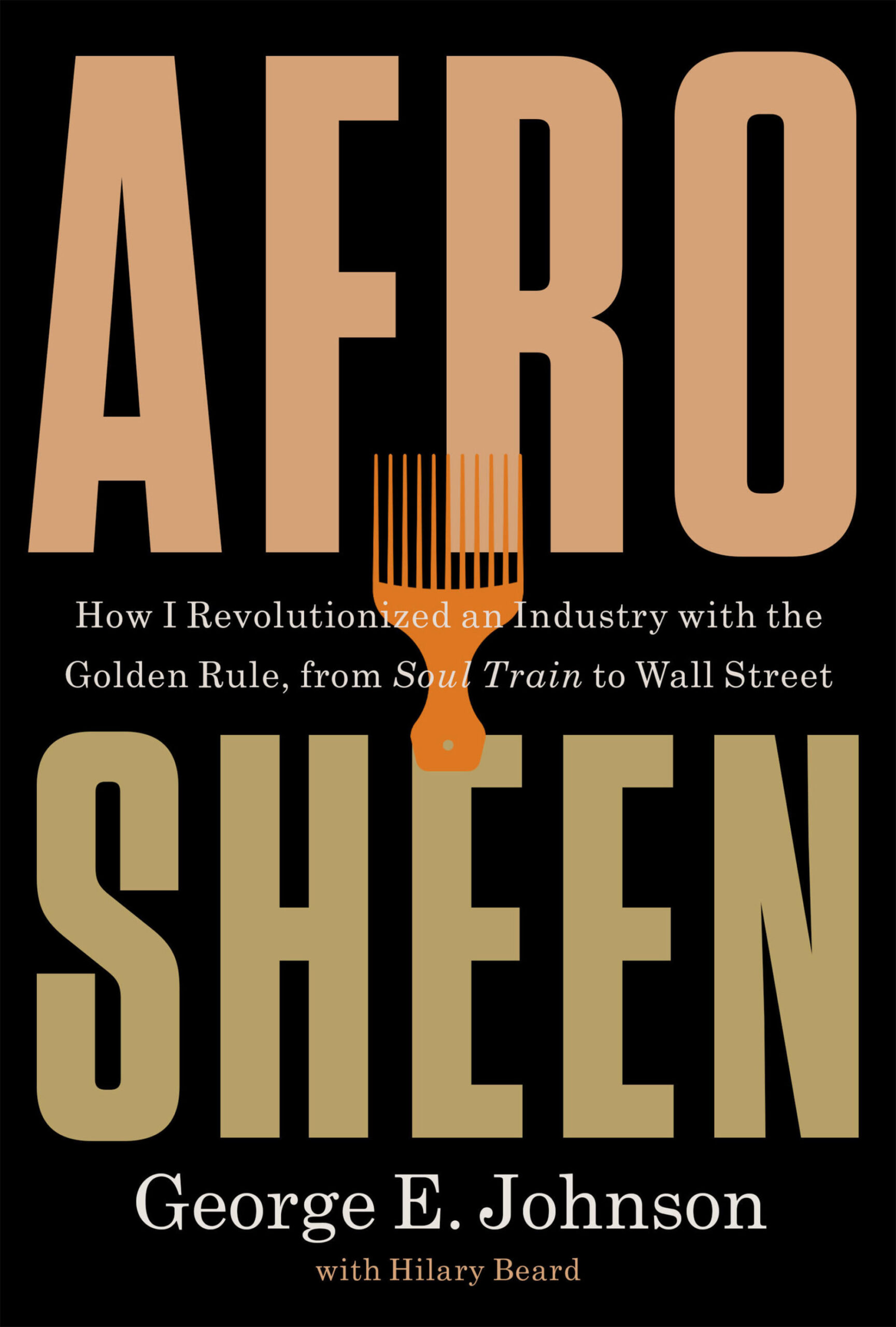
Three years ago, Beard teamed up with a then 94-year-old Johnson to cowrite his memoir. She combined her warm memories of plaits, kinky blowouts, Black power picks, and the Soul Train Line with more than 2,000 pages of interviews to write Afro Sheen: How I Revolutionized an Industry with the Golden Rule, from Soul Train to Wall Street,a 320-page story of entrepreneurship, civil rights, and Black culture, spanning nearly a century.
“Mr. Johnson’s story sweeps through the Cotton South, the Great Migration, the Jim Crow North, the Jim Crow South, World War II, and the civil rights of the 1950s and 1960s,” Beard said. “And it’s told through the perspective of an African American man. We know many of these stories have not been told, they have also been actively suppressed.”
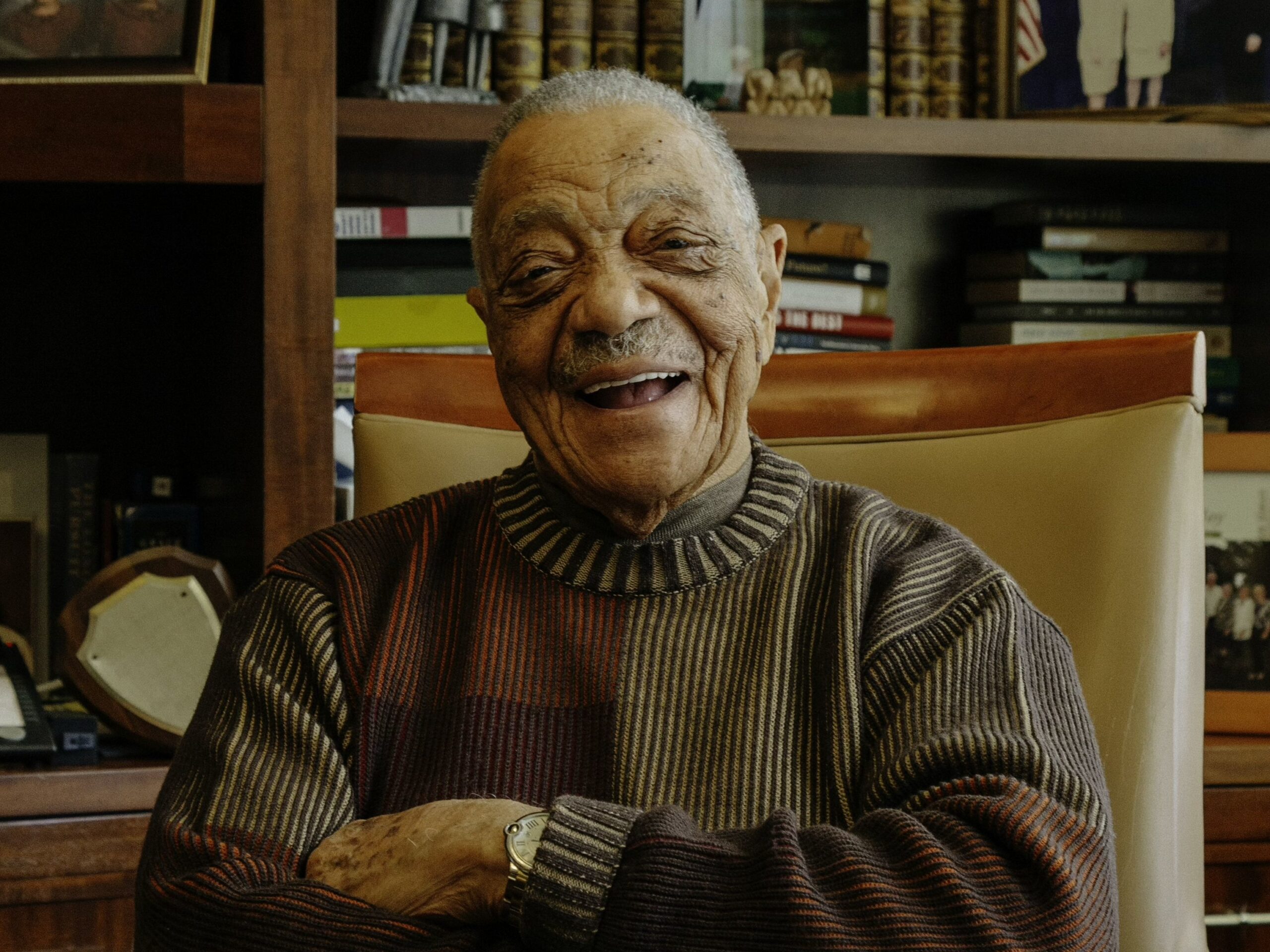
George Johnson, founder of Afro Sheen, in his Chicago study. Johnson is the founder of the first Black company to go public. He also funded the early episodes of Soul Train, for which the Sound of Philadelphia, Gamble & Huff, wrote the soundtrack.
Johnson’s story begins in 1927 Richton, Miss., on a small sharecropping farm. His mother, Priscilla, left his father in 1929, and moved Johnson and his two brothers to Chicago’s South Side. In his early 20s, he worked as a production chemist at the Black-owned cosmetics company Fuller Products, owned by S.B. Fuller, the richest Black man in America at the time.
In the early to mid-20th century, many Black people’s grooming habits included straightening their hair to assimilate, often affording them better jobs in mainstream America. The hair straightening concoctions — a mix of potatoes, lye, and eggs — separated, were messy to apply, and burned.
While working at Fuller Products, Johnson developed Ultra Wave Hair Culture, a creamy emulsified product barbers applied to clients’ hair, giving them the slicked back look popularized in the 1940s by Little Richard, Nat King Cole, and Sammy Davis Jr.
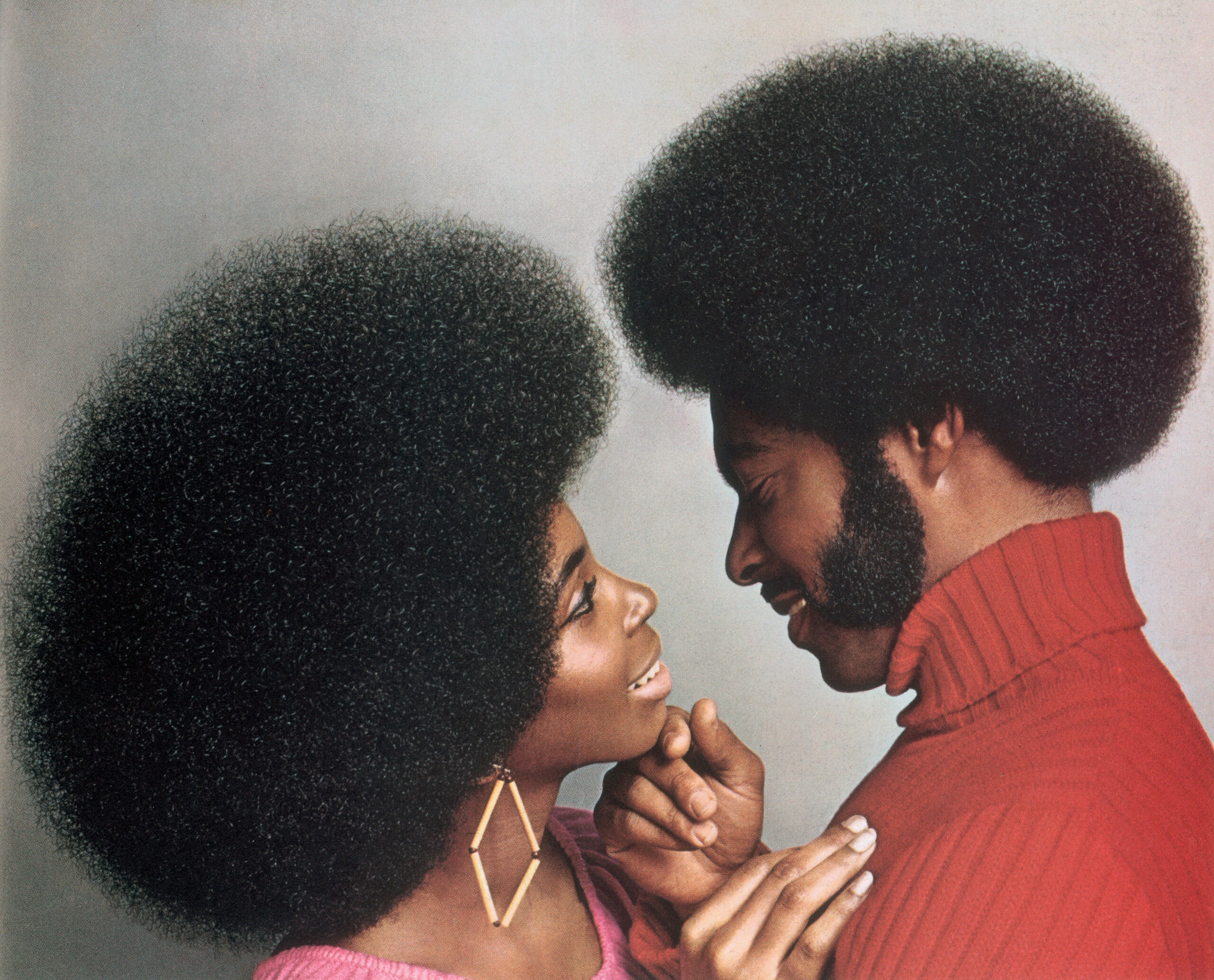
Ultra Wave Hair Culture marked Johnson Products Co.’s debut. In the next decade, JPC introduced Ultra Sheen Cream Satin Press, which hairdressers applied to Black women’s hair before pressing it straight with a hot comb; and Ultra Sheen Relaxer, a lye-based hair straightener for Black women. The “Black is Beautiful” movement birthed Afro Sheen, a spray that left Afros voluminous and glossy.
“A Natural Explosion! Afro Sheen® Blowout Creme Relaxer 1973/2007” from the series “Unbranded: Reflections in Black by Corporate America” by Hank Willis Thomas. MUST CREDIT: Rubell Museum
“The thing that moved my products forward was innovation,” said Johnson, who, at 97, still sounds like a salesman talking to potential customers. “We created something like a new mousetrap, it had never been done before.”
In 1971 — with sales of $12.1 million, or $94 million in today’s dollars — JPC became the first Black-owned company to be publicly traded on the American Stock Exchange, now known as the New York Stock Exchange. Although at the time it was a major achievement, Johnson said that with hindsight, he realized it was a big misstep as he was forced to answer to a board that didn’t understand the Black community.
Creating his lane
Johnson — not to be confused with John H. Johnson, founder of Ebony and Jet magazines — built his empire when banks did not loan money to Black startups, and groceries and drugstores did not stock Black hair care products, let alone place them on endcaps. Johnson remembers struggling to build his business when there were no federal laws to protect him from discrimination. He built his own manufacturing facility and created networks to distribute and advertise his products, and was among the first to sell Black hair care products in mainstream retail outlets.
To see companies like Target and Walmart — which up until recently had a stellar reputation of stocking Black hair care by Black-owned companies — cower under the Trump administration and roll back DEI initiatives is not only disheartening, but it also signals going back to a time when disenfranchisement of minority- and women-owned businesses was standard operating procedure. This reality, Beard says, makes Johnson’s story particularly timely, serving as a road map with young entrepreneurs of color.
“There is a widespread movement to make programs, books, and context that remind us of the bigotry in our nation’s history illegal,” Beard said. “Mr. Johnson is a witness to the overt racism many Americans would like to sweep under the rug. The irony is the very history they don’t want us to know is the reality they are attempting to create.”
JPC was among the first companies to advertise products to Black consumers using images of Black professionals — like doctors, lawyers, and teachers — instead of subservient characters like Aunt Jemima and Uncle Ben.
Johnson created Soul Train with Don Cornelius in 1971 so his advertising dollars could reach Black consumers directly. Soul Train — the hippest trip in America — was modeled after Dick Clark’s American Bandstand, and featured R&B acts, creating the community that bought Afro and Ultra Sheen products. In 1974, Kenny Gamble and Leon Huff wrote Soul Train’s iconic theme song, “T.S.O.P. — The Sound of Philadelphia,” performed by Philadelphia International Records’ The Three Degrees. Soul Train laid the cultural groundwork for MTV and Black Entertainment Television, and “T.S.O.P.” was the first TV theme song to reach No. 1 on the Billboard Hot 100. JPC’s profits nearly tripled to $37 million a year by 1975.
“That was tremendous growth,” Johnson said. “And in 1980, I gave Don my share with the stipulation he keep one minute of advertising time a show to JPC.”
Living history
Johnson never planned to write a book.
“I certainly wouldn’t have waited until I was 94 to do this,” he said. “But I had an epiphany, a real experience and I clearly heard five words, ‘You must tell your story.‘”
Afro Sheen: How I Revolutionized an Industry with the Golden Rule, from Soul Train to Wall Street by George E. Johnson, written with Mount Airy-based author, Hilary Beard.
Beard read 16 books about Black hair care culture and Chicago history. The two-year-long writing process became emotional, especially when Johnson recalled his infidelity and losing his first manufacturing facility to fire.
“When Mr. Johnson contacted me, I thought of the African proverb: when an elder dies, a library burns down,” Beard said. “So, I dropped everything to capture this piece of living history on the page.”
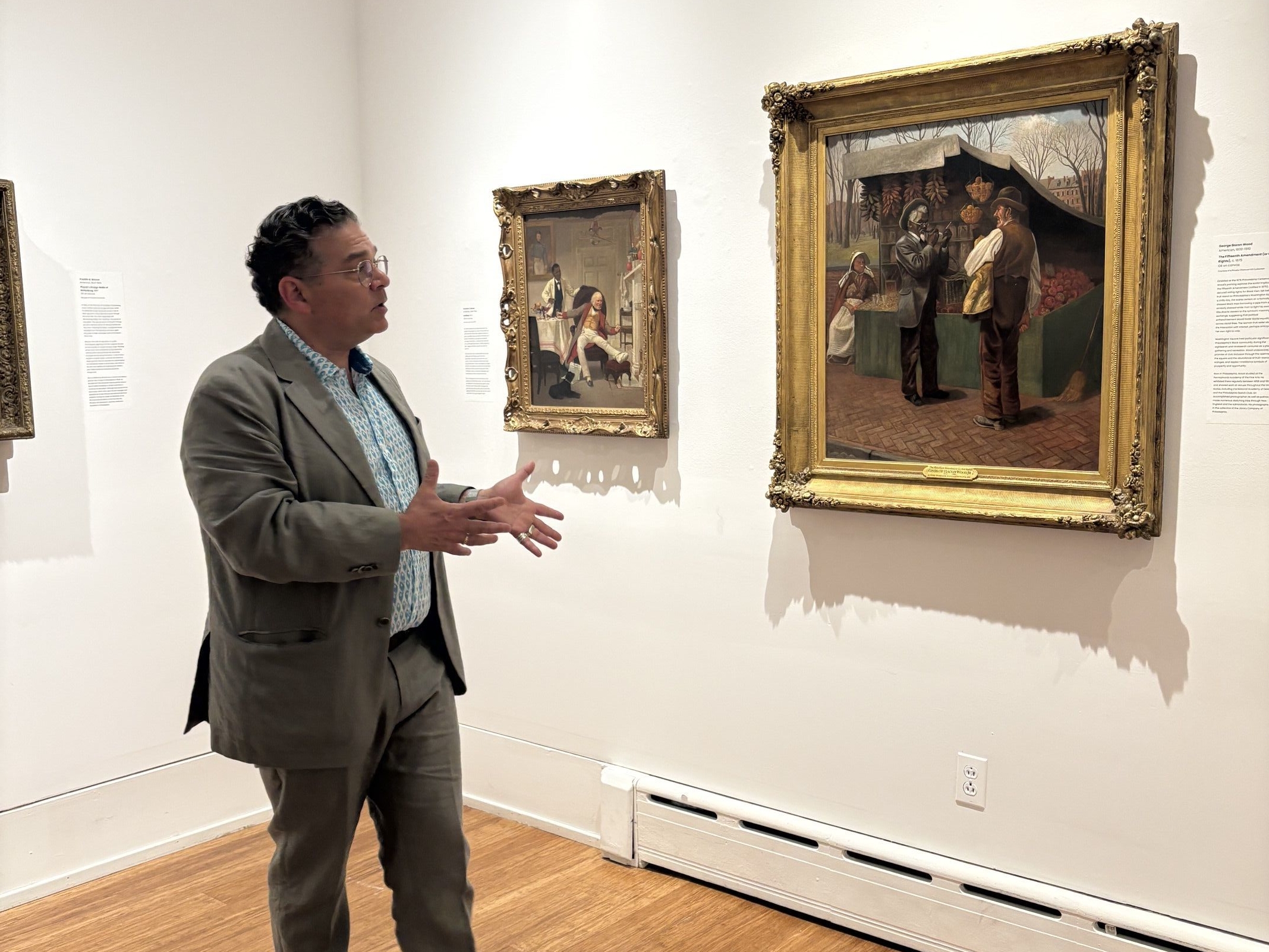
Last week, Woodmere director William R. Valerio stood in front of six vibrant works in Woodmere’s Charles Knox Smith Hall’s Antonelli Gallery.
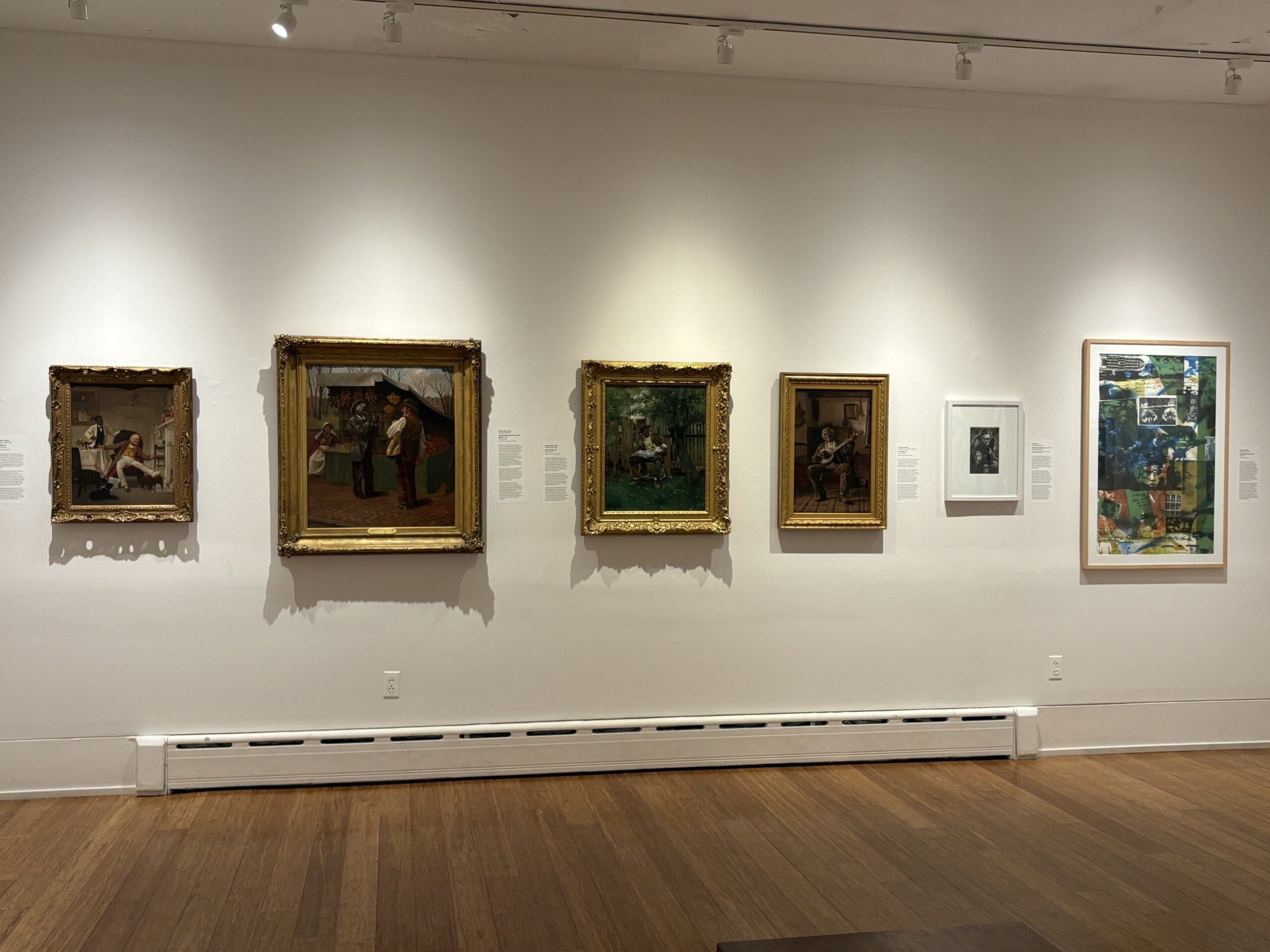
Behind him were two works by Philadelphia painters Francis Coates Jones and Thomas Hovenden, both depicting an elderly Black person named Sam, who lived in the Germantown/Chestnut Hill area, enjoying moments in nature. Another work, a Dox Thrash etching of a man holding a banjo, suggests he’s more than an entertainer; he’s also an introspective thinker.
Woodmere director William R. Valerio discusses the “Arc of Promise” exhibition, featuring the work of Philadelphia artists who portray Black people with humanity. A number of the works are from the Civil War era.
Contemporary artist Allan L. Edmond’s lithograph, America’s Bicentennial, features luminaries Frederick Douglass, Martin Luther King, and Barack Obama alongside scenes of African American struggle and achievement.
What if America in the 19th century — when many of these works were made — embraced Black men’s humanity? Valerio asked, sparking my own questions.
What if we came to terms with how unfair treatment of women, minorities, and immigrants in the past impacted our lives today?
Would America be a different place?
These questions find answers in every nook, cranny, and inch of Woodmere’s “Arc of Promise” exhibit. Each painting, ceramic, map, or mixed media collage speaks to how Philly artists — from the 17th century through today — envisioned the idea of America.
From left to right, “Untitled,” 1874; by Charles V. Brown; Francis Coates Jones; “The Fifteenth Amendment (or Civil Rights), George Bacon Wood, 1875; “Left in Charge,” 1882; Thomas Hovenden, “I’s So Happy,” 1882; Dox Thrash, “Played Out” c. 1937; “American Bicentennial,” Allan L. Edmunds. These photos show the humanity of Black men during an era when art didn’t portray them as such.
But there are also several important works on loan including protest photography by Harvey Finkle and a mixed-media necklace by Teri Hislop, a member of the Lenape Nation of Pennsylvania. Henry Bermudez’s Miss America, completed in 2019, offers a layered vision of America through migration, mythology, and identity. It sits next to sculptor Hiram Powers’ “America,” in which 19th-century America is depicted as a Greek goddess.
There is a lot of pomp, circumstance, and sparkle in this lively retrospective. The must-see gallery, however, is the Schnader Gallery Hall because it includes a pristine collection of refurbished American landscapes by local 19th-century artists Frederic Edwin Church and James Hamilton featuring many a Schuylkill waterfall. Think of this gallery as a place to retreat after a bustling Fourth of July weekend.
“Arc of Promise” takes its name from watercolor artist Jerry Pinkney, a longtime friend of the Woodmere who used the term as a way to speak to an America of unfolding potential, despite its past unequal treatment of Black people, immigrants, and women.
“Arc of Promise” runs through Nov. 2, 2026, Woodmere’s Smith Hall is located at 9201 Germantown Ave.
— Elizabeth Wellington
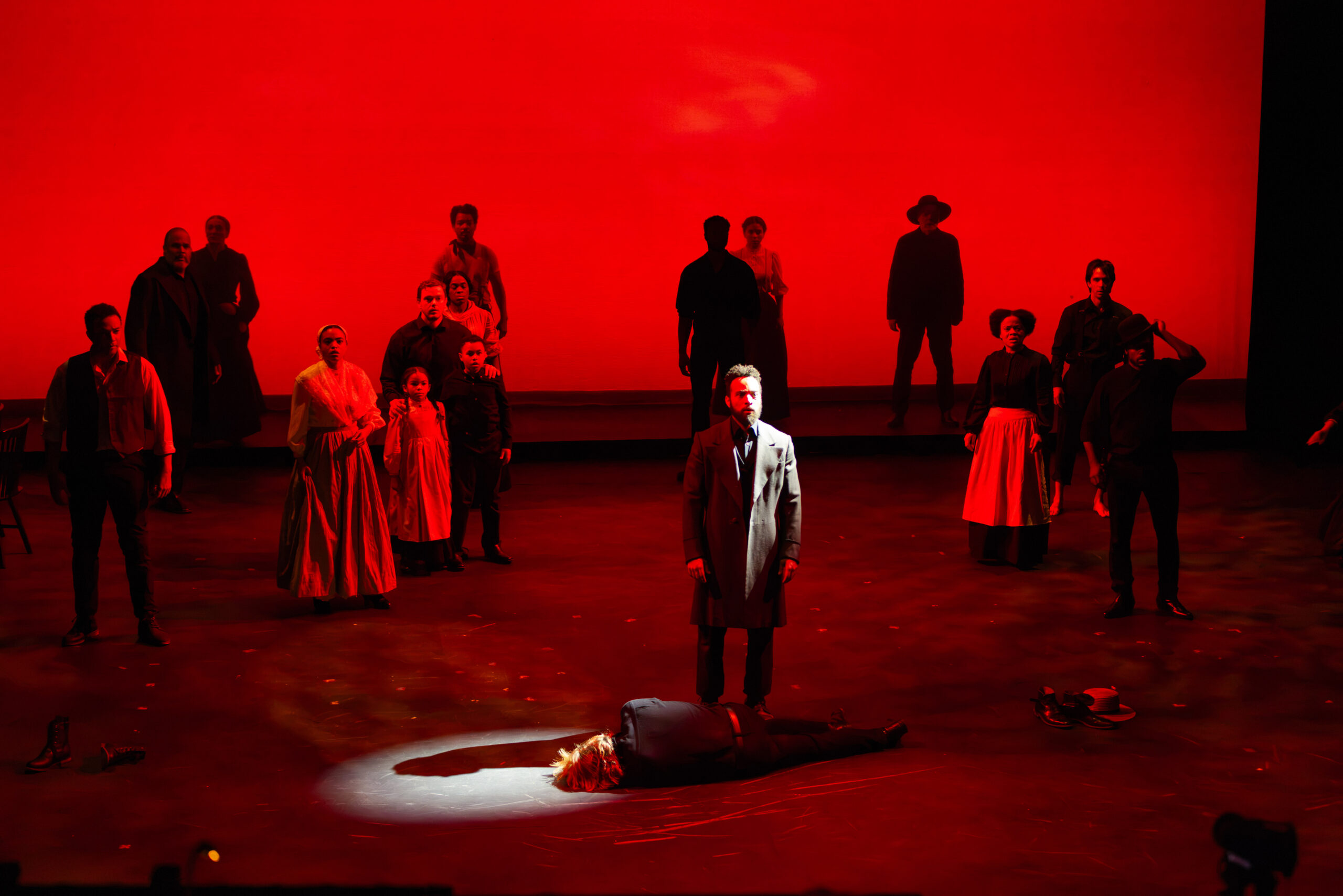
Actor John Clarence Stewart as the titular character in “Basil Biggs” at the Wilma Theater.
Excavating history with ‘Basil Biggs’
There is something so powerful about seeing someone grapple with their personal experience of American history. As Semiquincentennial fanfare reached a fever pitch in Philadelphia, this workshop of a developing play by actor/playwright Anna Deavere Smith was a deeply moving performance about her great-great-grandfather, Basil Biggs, a conductor on the Underground Railroad. Smith learned of him in an episode of Finding Your Roots; even then, she knew his story was worthy of a play, though she didn’t start writing until a decade later.
Biggs was a veterinarian and farmer in Gettysburg during the Civil War, a free Black man who helped fugitives escape slavery and who buried the tens of thousands of soldiers who died in the war’s bloodiest battle. The Biggs family house still stands today, and Smith visited the grounds, as well as the Adams County Historical Society, while she researched the time period. There was little historical documentation about her family, so this work is narrative speculation, based on her research of the time period, much like groundbreaking scholar Saidiya Hartman’s critical fabulation: In the absence of records about African Americans, visionaries use archival materials to imagine the lives of those largely erased from written memory.
Smith crafted a riveting world that showcased fierce resilience, disarming humor, and profound empathy during a painfully divided time. The story is fueled by original music from actor/violinist Edward W. Hardy. It was an honor to experience one of the earliest presentations of this play, which will likely grow into a major production. It’s the kind of honest work about this nation’s bloody, conflicted history that feels like essential viewing for anyone who calls themself a patriot.
“Basil Biggs” ran June 26-28 at the Wilma Theater as part of ArtPhilly’s What Now: 2026 festival.
— Rosa Cartagena
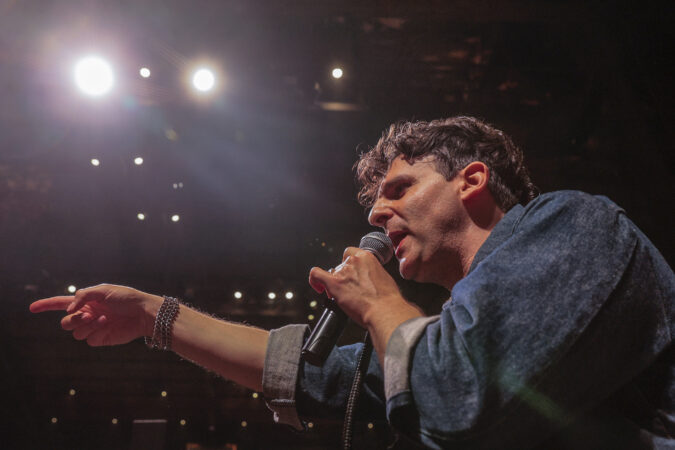
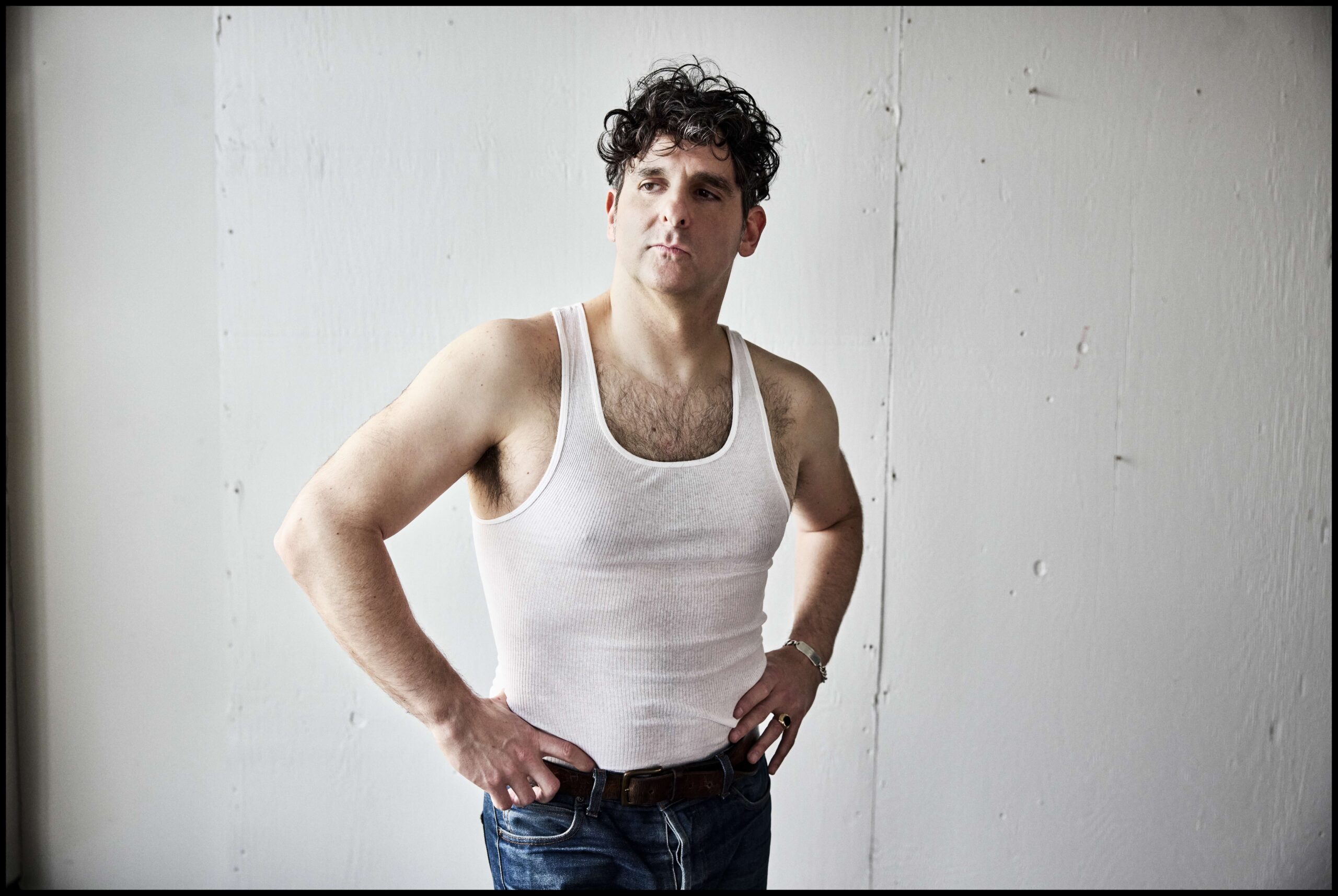
Adam Weiner of Low Cut Connie. The band’s new album is “Livin’ in the U.S.A.”
Romping, stomping, piano-pounding resistance with Low Cut Connie
Adam Weiner of Low Cut Connie has stressed that the band’s eighth studio album, whose release is timed to America’s 250th birthday, is an act of resistance.
Shortly after becoming one of the first artists to cancel at the Kennedy Center after the Trump administration’s takeover of the D.C. institution in early 2025, Weiner recorded what became the title song.
As he explains in an explanatory note that accompanies the album, it addresses “the atrocity of ICE, authoritarianism, racism” and led to a full set of songs “about the times we are living through in America 2026.”
But while Weiner’s political stance is unequivocal — “I made this album to say f— you to this regime, to the brutality, and inhumanity of our tech leaders,” he writes — his music is much more subtle.
Many of the titles like “Oh Yeah” and “Get Down” on Livin in the USA are essentially party songs: romping, stomping, piano-pounding, and saxophone-wailing celebrations of diversity and sexuality that aren’t the slightest bit preachy or pedantic.
Singing a gospel of self-liberation, Weiner is accompanied by the touring LCC band, which includes singer Amanda “Rocky” Bullwinkel,” guitarist-sax player Kelsey Cork, and drummer Jarae Lewis. Occasionally, as in the grinding “Human Condition,” the songs are overt in their condemnation of life during Trump time, which he likens to “living in a house of detention.”
But in general, he heeds lessons learned from favorite albums like Bruce Springsteen’s Born in the USA and Sly and the Family Stone’s There’s a Riot Goin’ On. When delivering a heavy message, always keep the groove going and the rock rolling.
“Just because the world is collapsing,” Weiner writes in his Livin album note, “doesn’t mean we can’t go skinny dipping this weekend.” “Can’t Be Wrong” is perhaps the most grabby earworm in a tight, 10-song set whose energy never flags. In that song, the prospect of “gettin’ naked in the afternoon, or maybe later underneath the moon” leads to an obvious conclusion: “Oh babe, you know it can’t be wrong.”
“Livin in the USA” releases July 3
— Dan DeLuca
Remembering LGBTQ+ activists
Resting in peace can also mean resting in pride and power. A new Gayborhood mural provides a tribute that does exactly that.
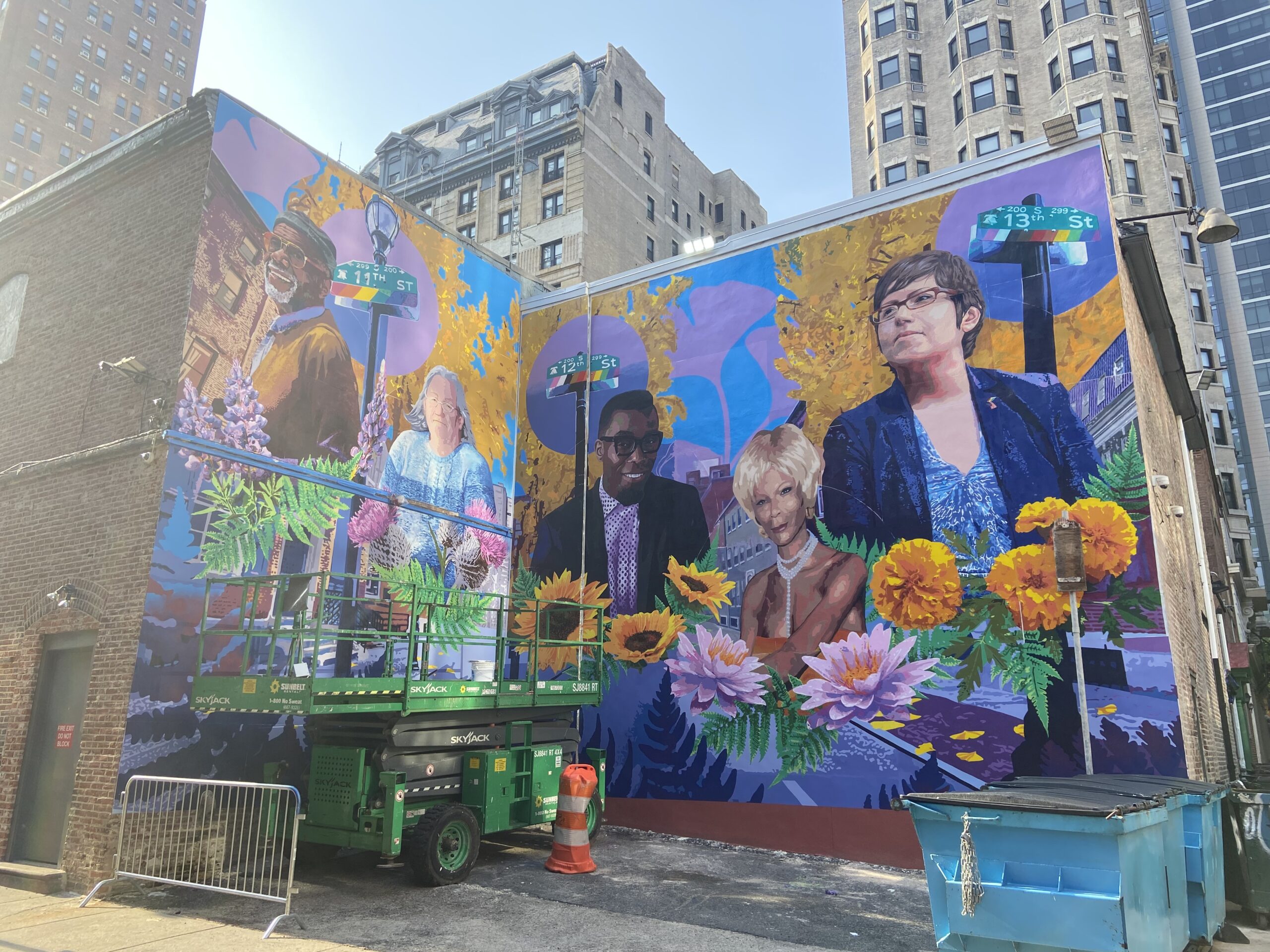
In Pride, In Power, In Memory is located on the side of Voyeur Nightclub at 1221 James St., a prominent spot amid Philadelphia’s queer nightlife.
The mural is located outside of Voyeur Nightclub in Philadelphia’s Gayborhood.
Painted by artist Santiago Galeas, the mural displays portraits of Gloria Casarez, Michael S. Hinson Jr., Tyrone Smith, Nizah Morris, and Dawn Munro; all LGBTQ+ activists who called Philadelphia home.
Each figure is accompanied by a flower symbolizing the person’s life and identity; Casarez’s portrait is adorned by Mexican marigolds, for example, as a nod to her heritage. The faces were all drawn referencing photos of them looking hopeful and optimistic.
The mural is strikingly bright, with vivid shades of purple and yellow illuminating the portraits.
These trailblazers pursued several kinds of activism in their lives, including AIDS awareness, trans rights, and community organization to rally for queer rights. Without them, the status of Philadelphia’s acceptance of the queer community may have looked completely different today.
“In Pride, In Power, In Memory”is located on the side of Voyeur Nightclub at 1221 James St.
The Revolutionary War ended in 1783, but when the 1790s rolled in, America was in an economic spiral. Citizens were broke. Businesses were going under. The government had little money.
So the first United States Treasurer Alexander Hamilton came up with a plan to create a national bank to serve as the primary fiscal agent for the federal government. It would issue paper money, pay America’s bills, provide loans to private citizens, and collect taxes so the country could fund itself.
“Hamilton had been studying the British banking system for decades,” said Lynn Nash, a park ranger at Philadelphia’s First National Bank that is managed by the U.S. National Park Service. “He did a deep dive and decided America needed a similar system to build more fiscal authority.”
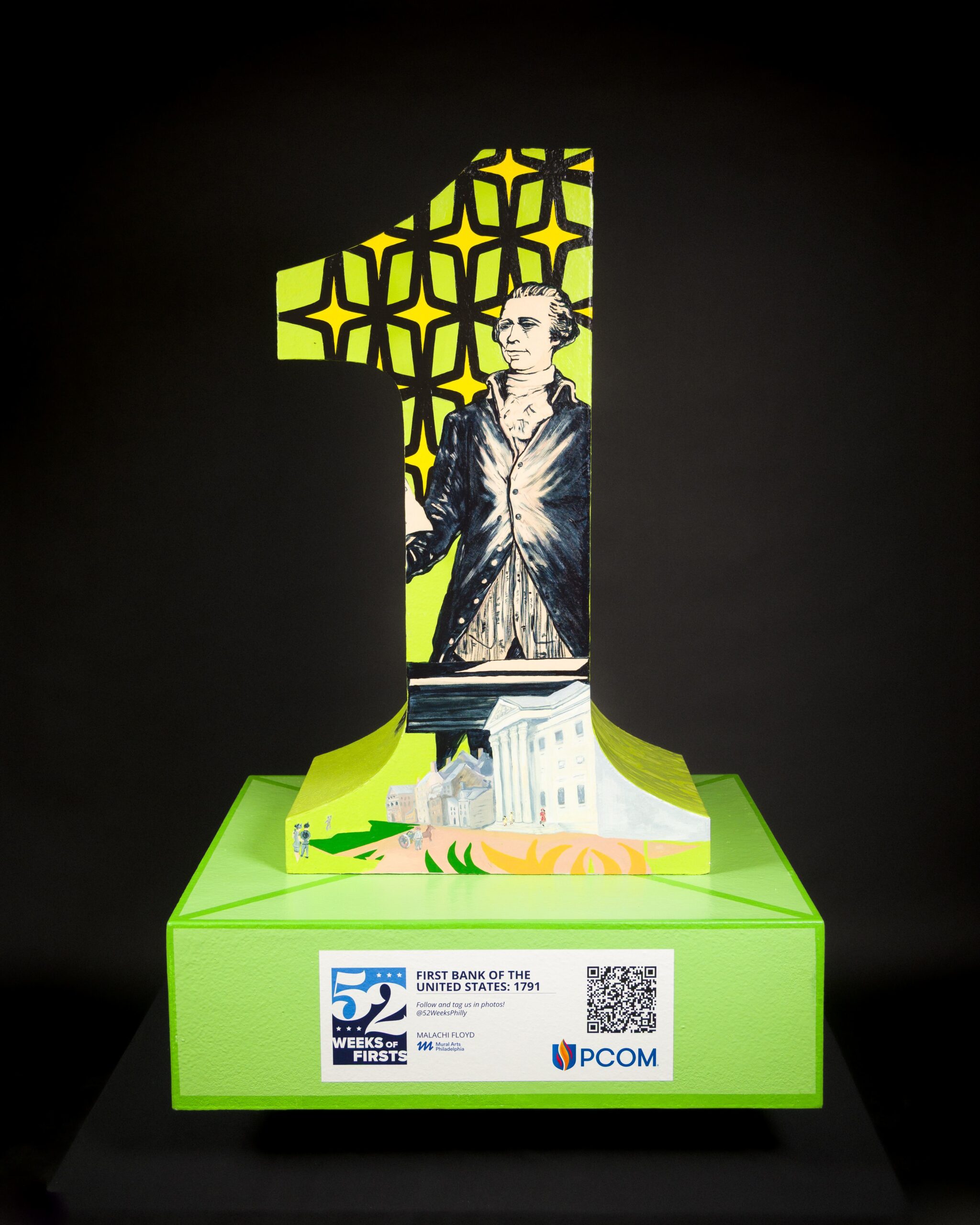
Malachi Floyd’s image of Alexander Hamilton, stacks of money, and the original First Bank of the United States’ building honors Philadelphia’s history as the seat of the federal banking system.
On Feb. 8, 1791, Congress passed a law establishing America’s first federally backed bank, which was located inside Philadelphia’s Carpenter’s Hall.
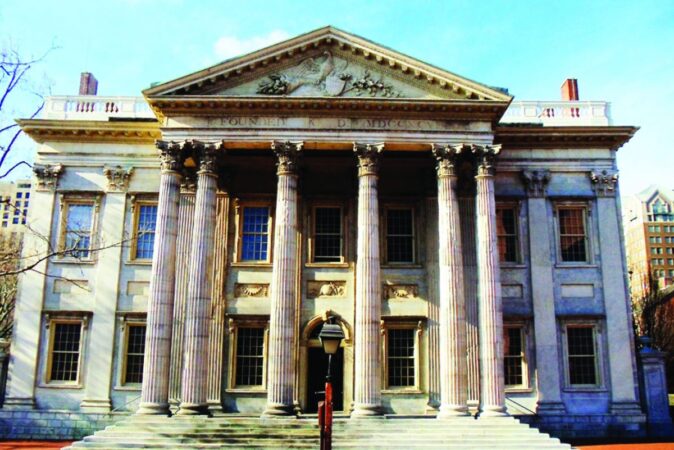
In honor of the Semiquincentennial, the National Park Service will reopen the First Bank to the public on July 1, following a multiyear $43 million rehabilitation. The gleaming Greek Revival-style building will feature exhibits centering on the history of American banking.
America’s first commercial bank, the Bank of North America, was charted by the Continental Congress in 1781 to provide loans to colonists and fund the Revolutionary War. And some lawmakers, especially Thomas Jefferson, thought that was sufficient and that the Federal Bank overstepped the Constitution.
“He writes a letter to George Washington telling him how the bank needs to be housed in a large commercial seat,” Nash said. ”And that he knows Philadelphia will remain prosperous.”
The First Bank of the United States’ charter ended in 1811. Hamilton had died by then and President James Madison did not renew the charter. The next year, the building was purchased by Stephen Girard, who opened a private bank in the space.
“But the War of 1812 was hard on the economy again,” Nash said. On April 10, 1816, Madison signed legislation establishing the Second Bank of the United States at 420 Chestnut St., Nash said.
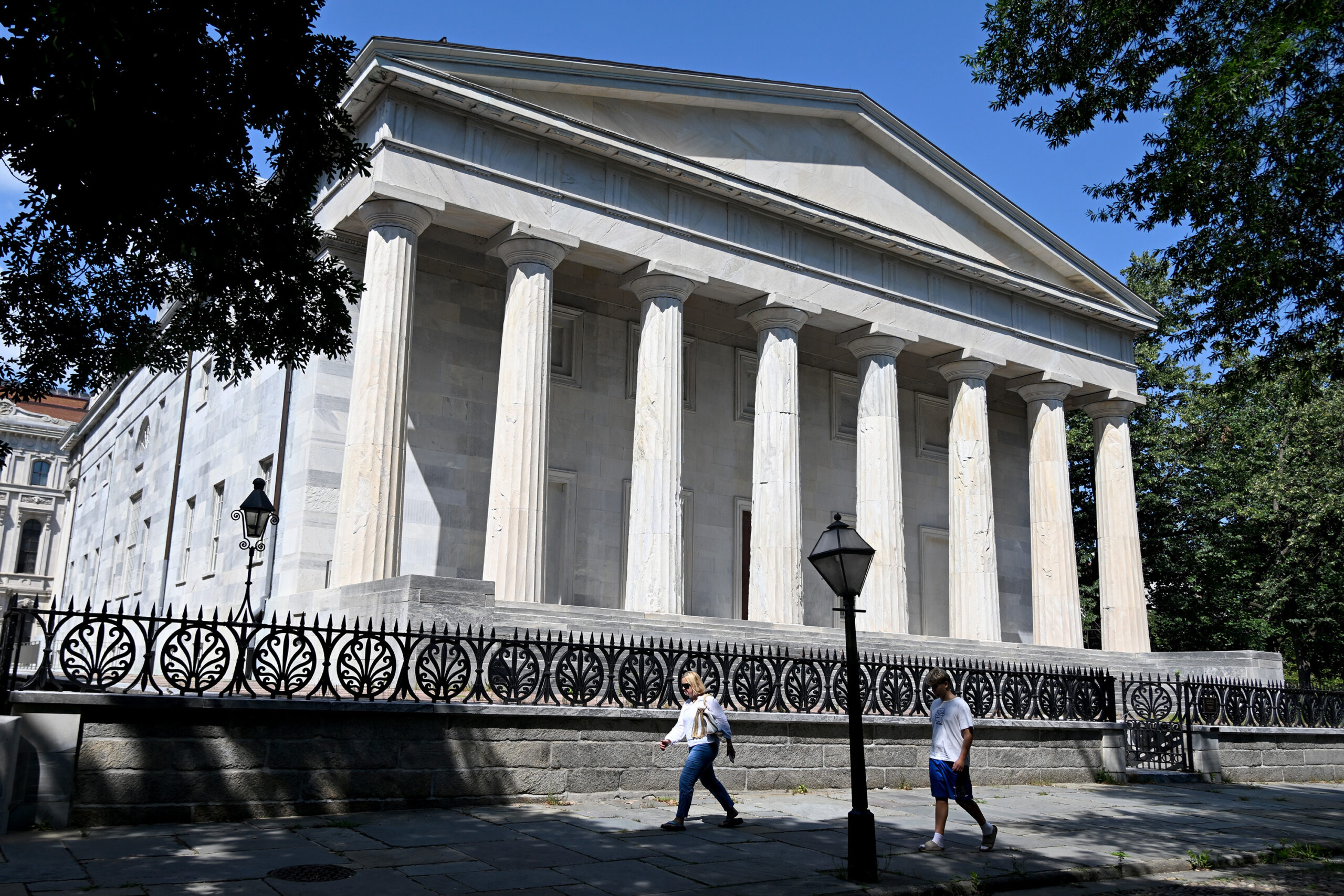
(Today that building is the Second Bank of the United States Portrait Gallery.)
Second Bank of the United States at 420 Chestnut Street. Today it is the Second Bank of the United States Portrait Gallery.
Its charter expired in 1832; Andrew Jackson was president, and he, too, opposed the idea of a federal bank. The charter was not renewed and America didn’t have a federal banking system for 77 years.
In 1907, New York financier J.P. Morgan and a consortium of bankers stopped the American banking system from collapsing by extending a line of credit to banking institutions. Without a federal banking system, the government could not bail these institutions out, so government officials began discussing the establishment of yet another national bank.
Finally, President Woodrow Wilson signed the Federal Reserve Act in 1913, setting up the federal banking system we know today.
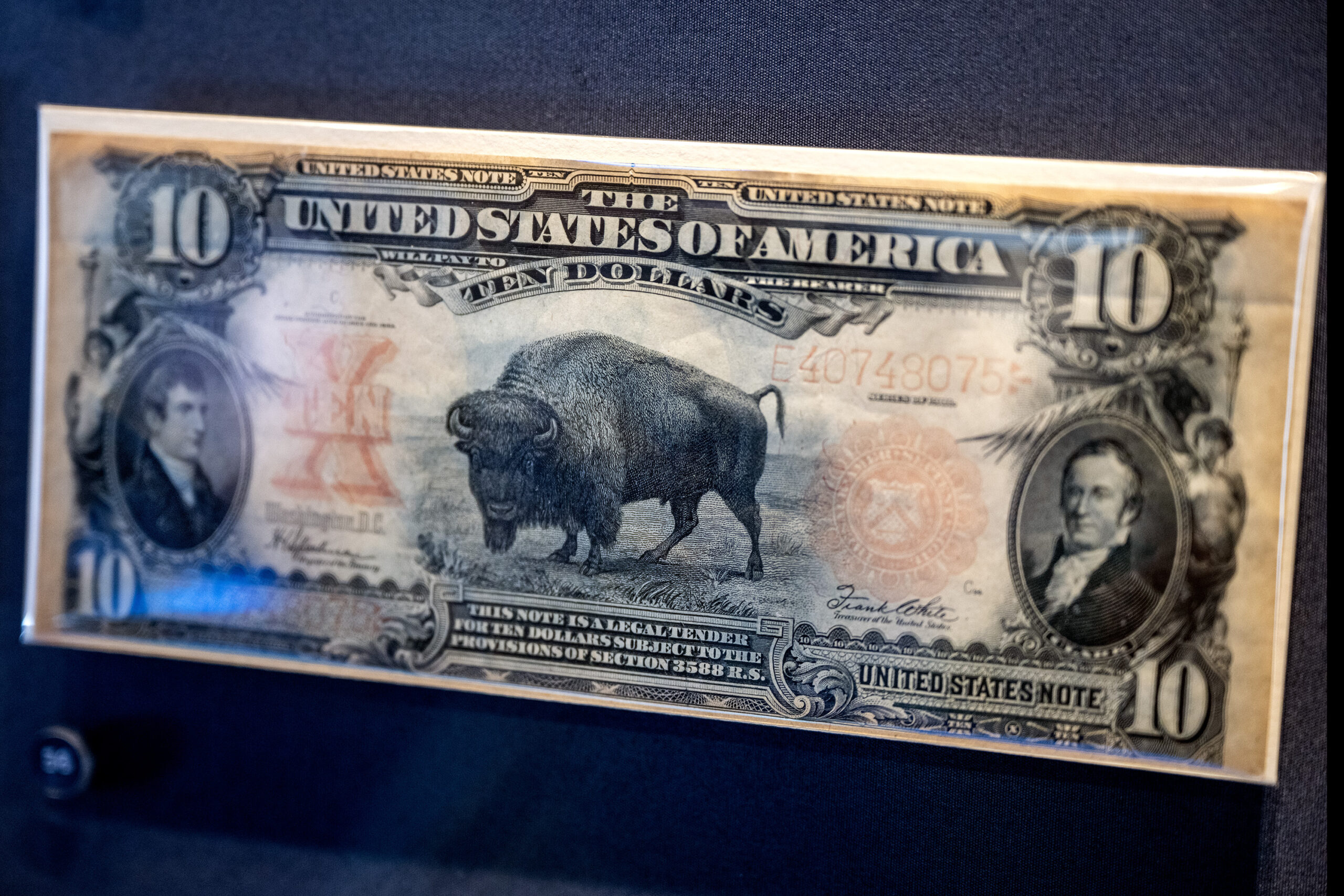
A 1901 $10 Bison Note on display at the Federal Reserve Bank of Philadelphia’s newly redesigned “Money in Motion” exhibit Thursday, May 7, 2026. The bill was issued during the 100 year anniversary of the Lewis and Clark expedition. The exhibit features nearly 400 historic artifacts and interactive installations that explore currency and the Federal Reserve’s mission.
The Federal Reserve is headquartered in D.C., but there are 12 branches across the country; Philadelphia is home to one of them.
Today, the Federal Reserve acts as a fiscal agent for the U.S. Treasury, which issues paper money, collects taxes, and pays America’s bills. It does not offer private loans to businesses or individuals.
Like the national banks, the Federal Reserve also began with a 20-year-charter. But in 1927, Congress passed the McFadden Act, granting the Federal Reserve Bank perpetual succession.
“The government finally agreed that a federal banking system was something America needed,” Nash said. “It just took them more than 100 years to agree.”
America’s First National Bank Firstival will be celebrated on Saturday, July 4, from 11 a.m. to 1 p.m., the First Bank of the United States, 120 S. Third St.
In the early 1780s, Revolutionary War era Jewish patriot and Philadelphian Lt. Col. David S. Franks had a desperate work situation in hand.
He had served as one of Benedict Arnold’s high-ranking personal assistants, and after Continental militiamen discovered Arnold’s intentions to sell America out to the British in 1780, it became nearly impossible for Franks to find ajobwith the United States government.
Franks was cleared of wrongdoing. But working with Arnold made the Founders wary of employing Franks.
But not Thomas Jefferson, who hired Franks as his secretary. By the time the Treaty of Paris ending the Revolution was ratified in January 1784 in Annapolis, Md., then America’s capital, Franks had been Jefferson’s secretary for almost a year.
It was Franks who carried at least one official copy of the finalized treaty to Benjamin Franklin — who was in Paris at the time — and other officials in Britain and France.
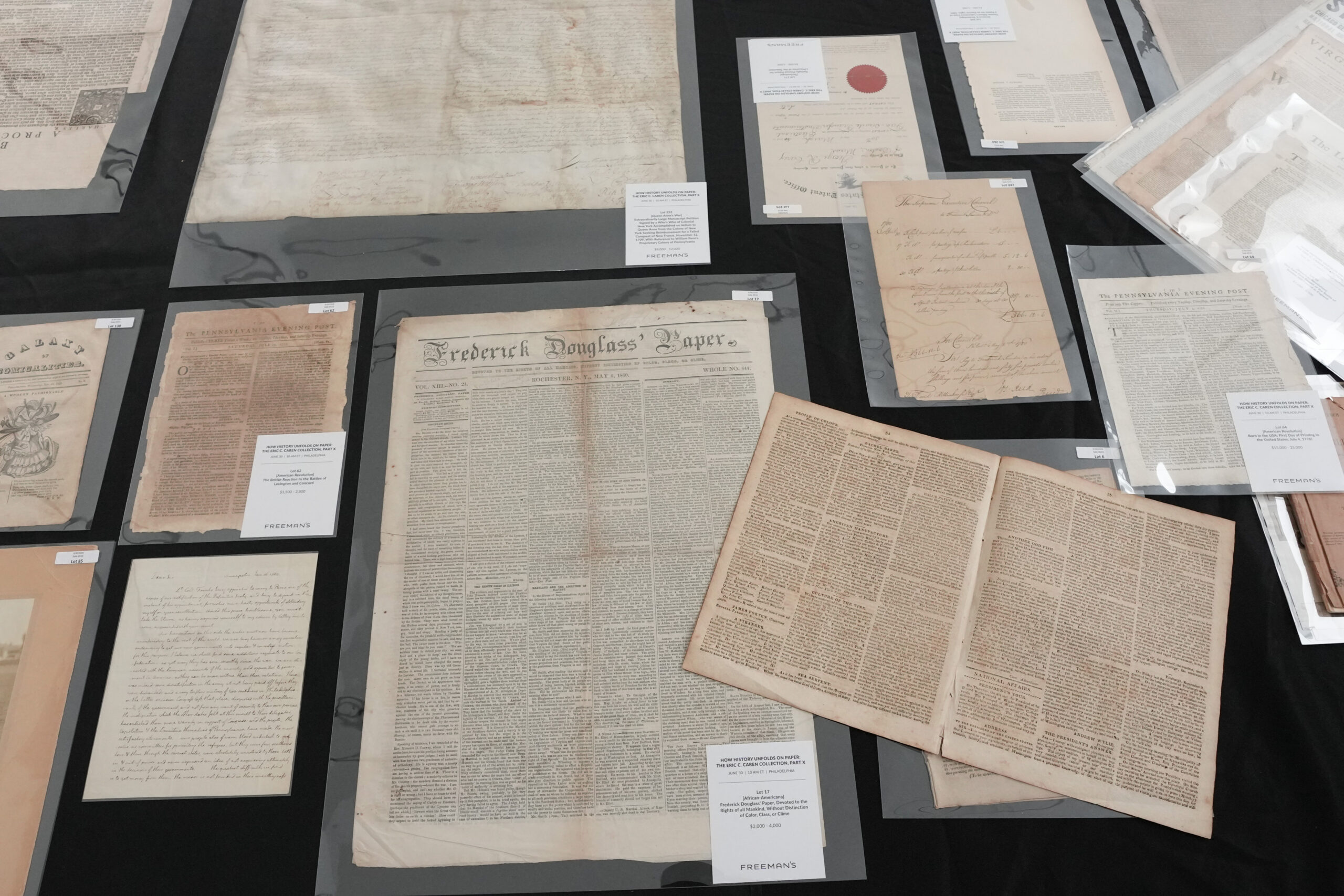
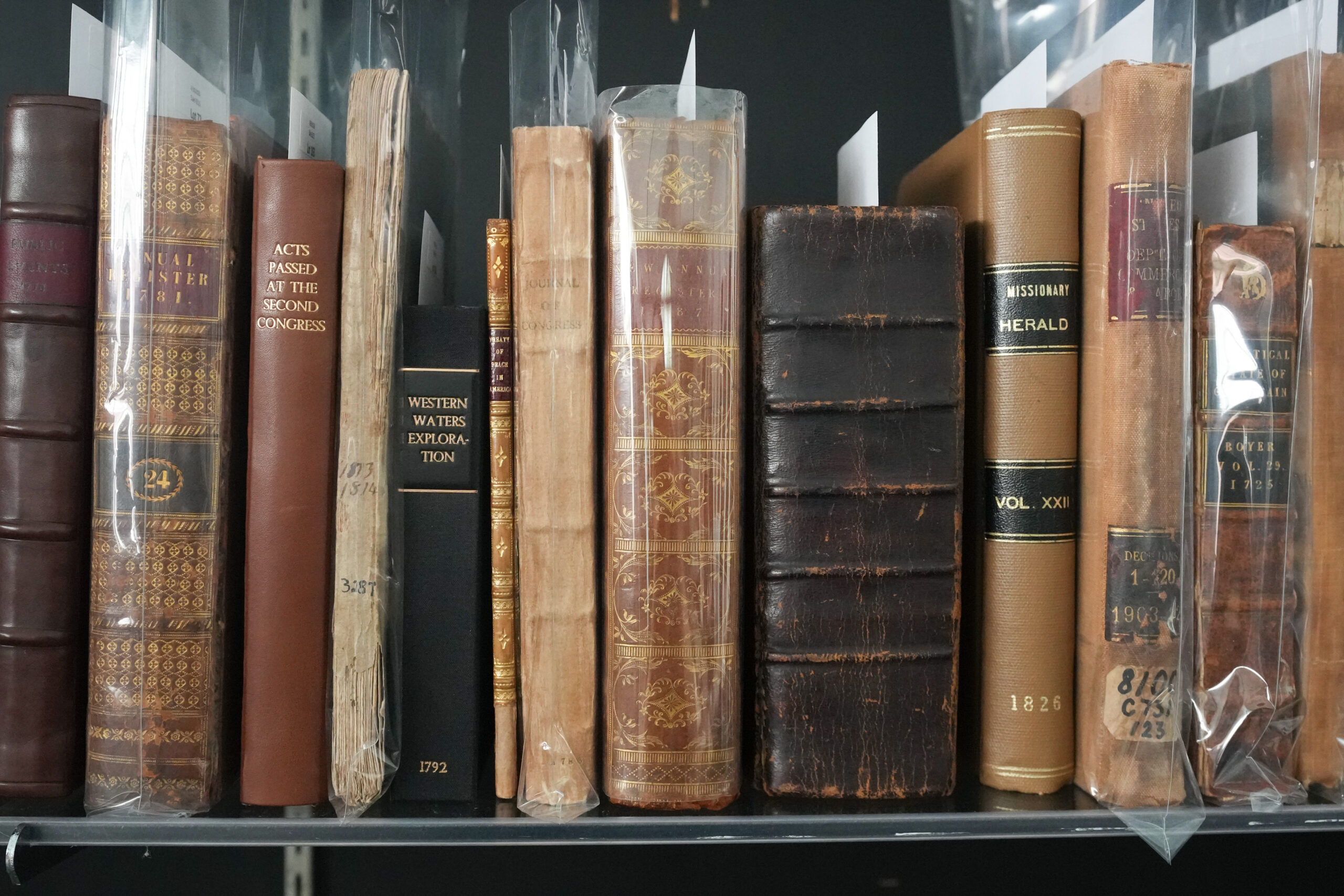
Frederick Douglass’ Paper (front center) and other documents, part of the collection “How History Unfolds on Paper: Important Americana from the Eric C. Caren Collection,” which boasts more than 320 rare newspapers, books, pamphlets, and ephemera tracing the development of printing and publishing in America, an enterprise that started in Philadelphia in1690 with the first paper mill.
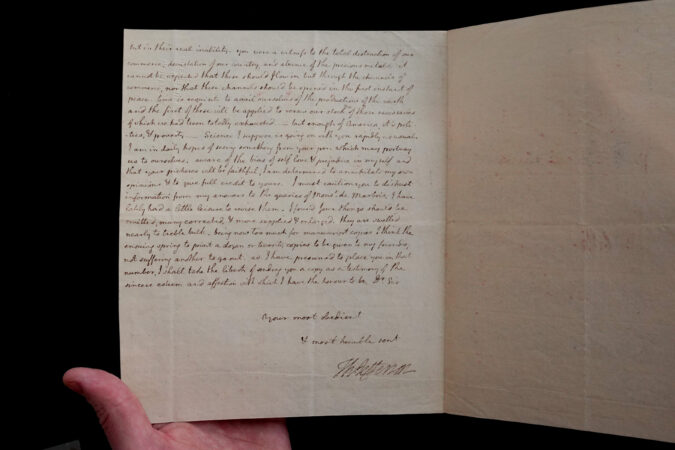
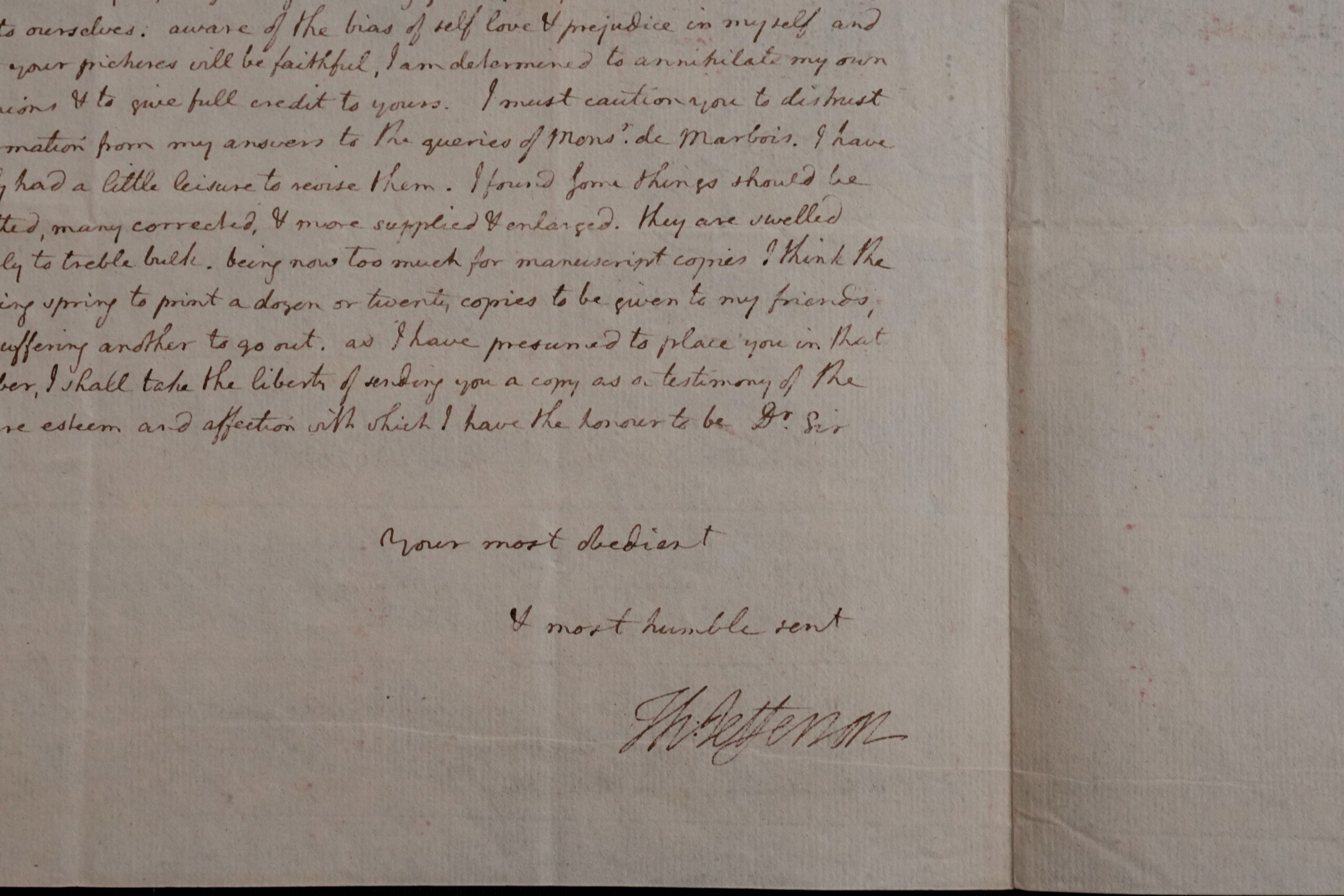
Franks also carried a two-page letter written in Jefferson’s customary neat hand for Francois Jean de Beauvoir, Chevalier de Chastellux. It was a friendly message between the longtime acquaintances, in which Jefferson wrote to the French noble about how America was progressing as a sovereign nation and about his forthcoming book Notes on The State of Virginia.
That letter sold for $108,000 Tuesday as part of an online and in-person auction presented by Philadelphia’s Freeman’s auction house.
Books from the collection “How History Unfolds on Paper: Important Americana from the Eric C. Caren Collection,” which boasts more than 320 rare newspapers, books, pamphlets, and ephemera tracing the development of printing and publishing in America.
“Caren goes where the history leads him. His collection reflects that,” said Darren Winston, Freeman’s senior vice president and head of the books and manuscripts department. “When he asked us to host a sale in honor of the 250th, we immediately said yes.”
18th century news treasures
The vast sepia-hued collection of aged newspapers and bound volumes was heaven sent for primary-source junkies who can afford to plop down a few hundred or several thousand dollars for the kinds of historical gems usually found only on microfilm. It’s also a gold mine for those who think hundred-year-old newspapers in near mint condition are frame-worthy.
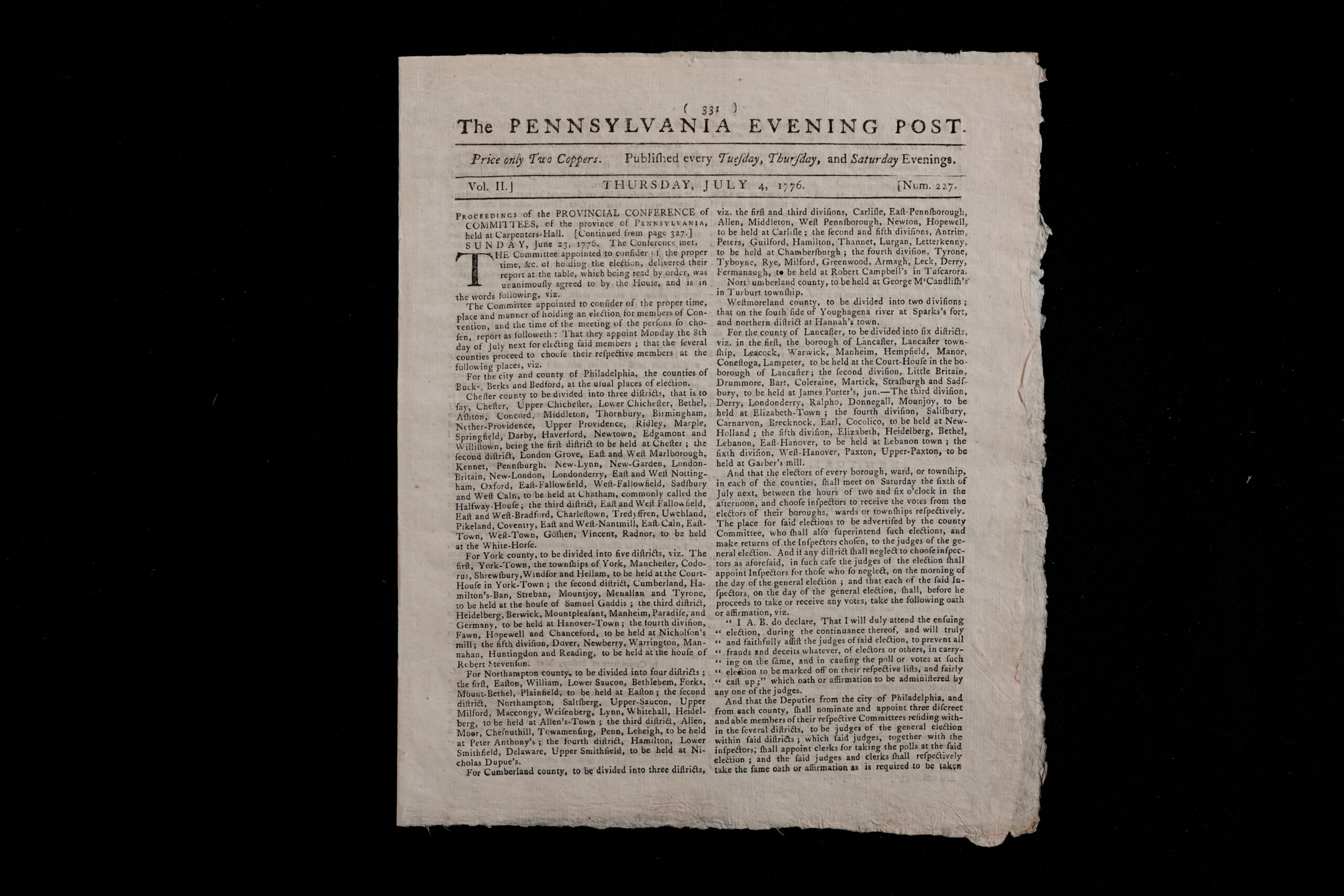
A four-page Pennsylvania Evening Post printed on July 4, 1776, believed to be the first daily newspaper printed on North American soil just declared free of the monarchy.
The Evening Post, founded by printer Benjamin Towne in 1775, was published just a few blocks from the Pennsylvania State House on Tuesday, Thursday, and Saturday evenings.
The July 4 edition contains a short mention that the Continental Congress declared the United Colonies free and Independent States earlier in the day. And “the day before, we had a King in charge,” Winston said.“How History Unfolds on Paper” included five 18th century newspaper editions, including one printed in Scotland, that published the Declaration of Independence in full.
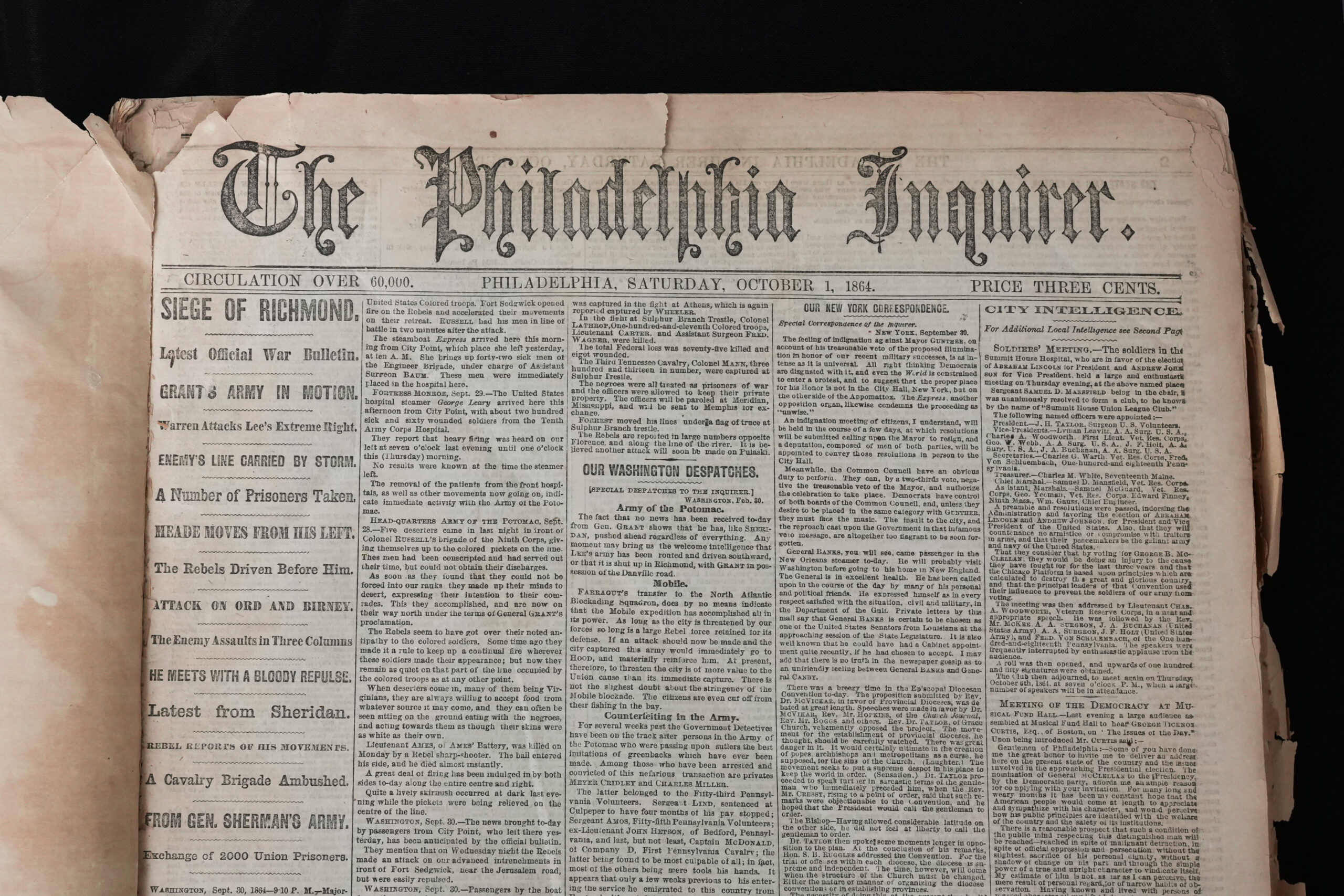
Other archival gems included a copy of the Frederick Douglass Paper from 1860; copies of the Emancipation Proclamation as they appeared in the Daily Globe, the New York Tribune, the Evening Journal Almanac, and The Philadelphia Inquirer; Abraham Lincoln’s second inaugural address as printed in the New York Times in 1865; and more than 70 issues of Civil War-era Philadelphia Inquirers.
A copy of the Philadelphia Inquirer, part of the collection “How History Unfolds on Paper: Important Americana from the Eric C. Caren Collection,” which boasts more than 320 rare newspapers, books, pamphlets, and ephemera tracing the development of printing and publishing in America, an enterprise that started in Philadelphia in 1690 with the first paper mill.
But Caren’s collection is more than weathered newspapers.
The auctioned collection bubbled with relics, collectibles, and keepsakes that speak to the economy, such as a note signed by first director of the U.S. Mint, David Rittenhouse — for whom Rittenhouse Square is named — ordering payment of 350 pounds to a doorkeeper employed at the Pennsylvania State House. (That’s about $107,000 in today’s money.)
“Freeman’s is America’s oldest auction house, and Philadelphia is the birthplace of the United States,” Caren said. “So for the 250th anniversary [of America], I thought this sale would be quite fitting.”
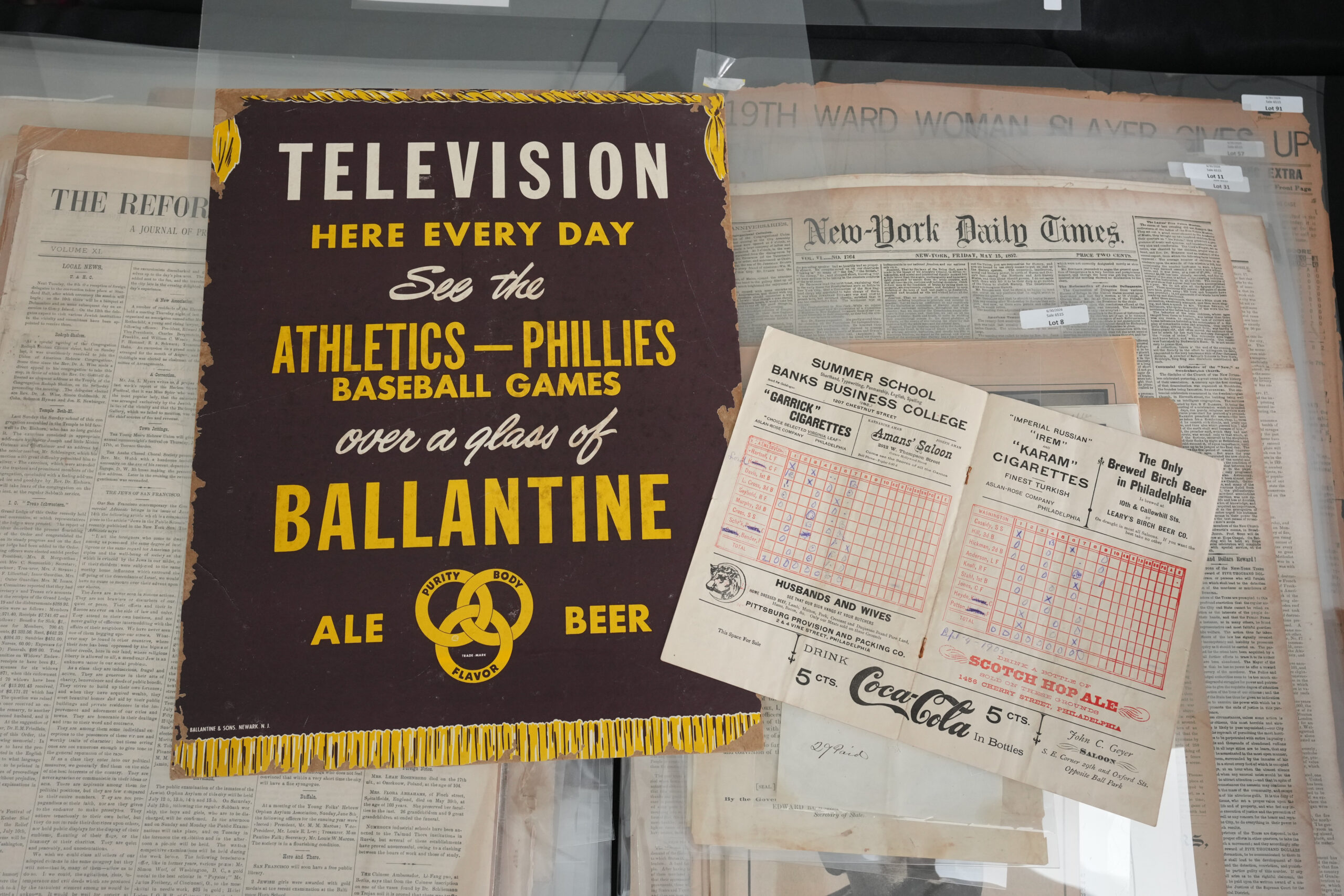
Some of the sports memorabilia featured in “How History Unfolds on Paper: Important Americana from the Eric C. Caren Collection”
50 years of collecting
Caren, 66, is a New Yorker and said he came out of his mother’s womb collecting — starting with comic books, stamps, coins, and baseball cards.
In 1970, he learned that a few of his friends were going rummaging through an abandoned house in Rockland County and that they had found newspapers from the turn of the 20th century.
“I asked them to try and find me a sports page with Babe Ruth, and they brought me one from 1913 and I was mesmerized,” Caren said.
After some cajoling, Caren convinced his friends to reveal their secret treasure trove. There, he discovered periodicals going back to the 1890s and was hooked.
Caren spent the next 50-plus years collecting the printed and written word. He has traveled the world to estate sales, garage sales, rare book shops, and antique shows. He’s one of the founders of the Ephemera Society of America and a member of the American Antiquarian Society and the Grolier Club.
He owns hundreds of thousands of paper items, and pieces of his collection have been sold at the auction houses Christie’s and Sotheby’s. “How History Unfolds on Paper” was his 10th auction and first in Philadelphia.
“If ever there was a Philadelphia item, this is it”
In his travels, Caren has come across many of Jefferson’s letters. The one written to Chastellux, he says, is particularly noteworthy because Jefferson wrote it himself, as opposed to dictating it to a secretary, like Franks.
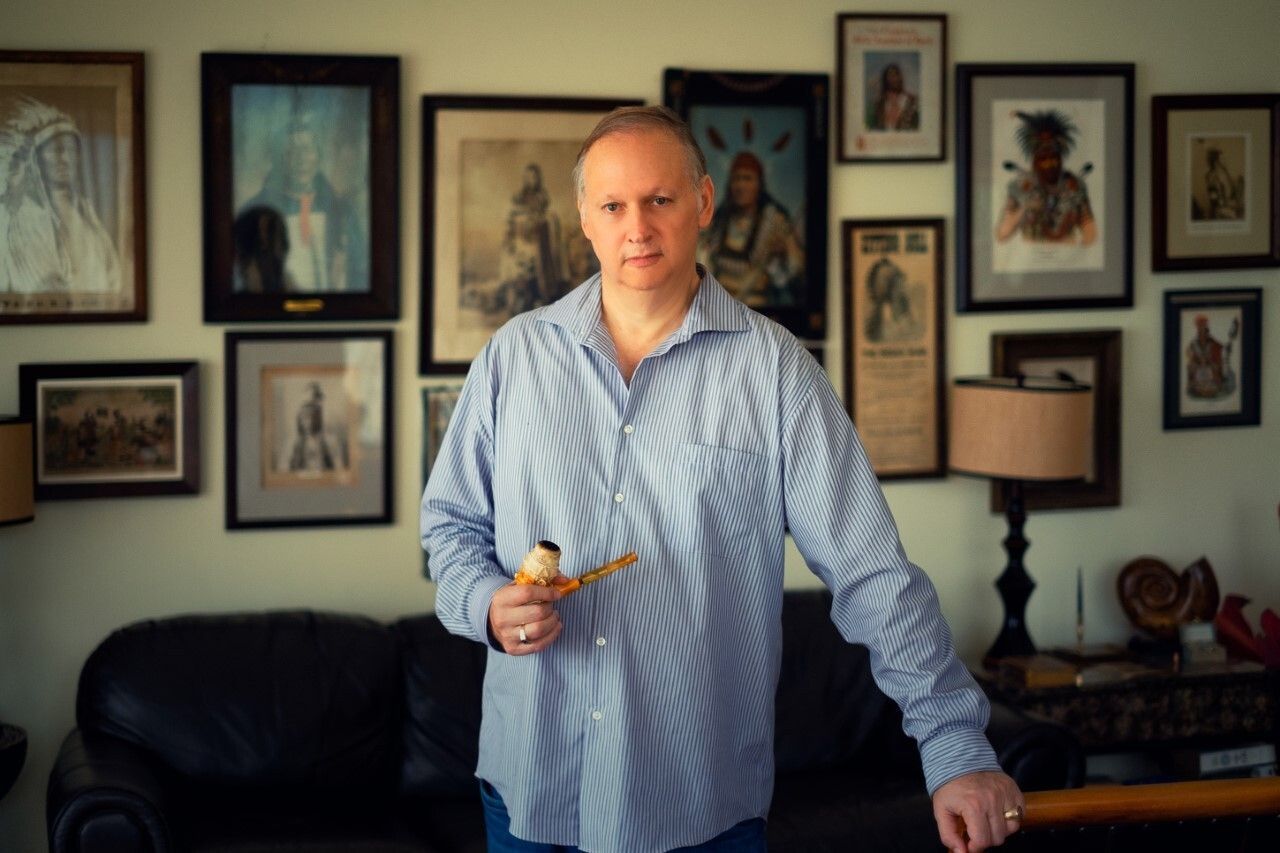
Long-time ephemera collector Eric C. Caren, his collection “How History Unfolds on Paper: Important Americana from the Eric C. Caren Collection, Part X” went to auction at Freeman’s in Philadelphia.
The letter had been in the Chastellux family for centuries before landing at an auction a few years ago. Caren passed it over a few times before recognizing Frank’s name in the first paragraph.
“It was a great example of how even great things can slip by,” Caren said.
The Treaty of Paris was signed in September 1783. The following January, legislators ratified it in Annapolis.
Dated Jan. 16, 1784, Jefferson’s letter reads like a chatty blog of late 18th century American happenings. In the five months since the war’s end, news traveled to Europe that Americans were behaving badly. One of the reasons Jefferson penned this missive, Caren said, was to “dispel [this] fake news.”
“There was indeed some dissatisfaction in the army at not being paid off before they were disbanded and a very trifling mutiny of 200 souldiers in Philadelphia,” Jefferson wrote, playing down the Pennsylvania Mutiny of 1783, during which a few Continental Army soldiers rioted in Philadelphia streets when they weren’t paid.
Thomas Jefferson’s signature on a letter to Francois Jean de Beauvoir, Chevalier de Chastellux, a part of the auction at Freeman’s.
He also mentions his yet-to-be published book Notes on The State of Virginia and encouraged Chastellux to write one of his own. He did.
Voyages de M. le Marquis de Chastellux dans l’Amerique septentrionale, published at theturn of the 20th century, is what rare book dealer Wright Howes described as “the first trustworthy record of life in the United States.”
He spent years trying to restore his name. During his first term, President George Washington helped Franks secure a job as an assistant cashier at the Bank of the United States of America, but Franks was no longer accepted in the Founding Father’s circle.
He died in 1793 during Philadelphia’s yellow fever epidemic.
“If ever there was a Philadelphia item, this is it,” Caren said. “This letter is the intersection between the history of Philadelphia and the history of our nation.”
The headline and article have been updated to include the winning bid at the auction on Tuesday morning.
We take paper for granted now. But in the late 1600s, when Pennsylvania’s founder William Penn recruited German papermaker and preacher William Rittenhouse to manufacture the writing parchment in the New World, paper was a luxury.
England’s King William III made it difficult for his subjects — at home and in the Americas — to have it. Like many monarchs of his day, he believed it was the Crown’s duty to record history.
The English imported paper from other European countries. So, to make matters worse, colonists who managed to appeal to the king for paper were double and triple taxed. They got fed up and went about securing their own paper to document the goings on in the government, inform citizens, record history, and ultimately plan a revolution.
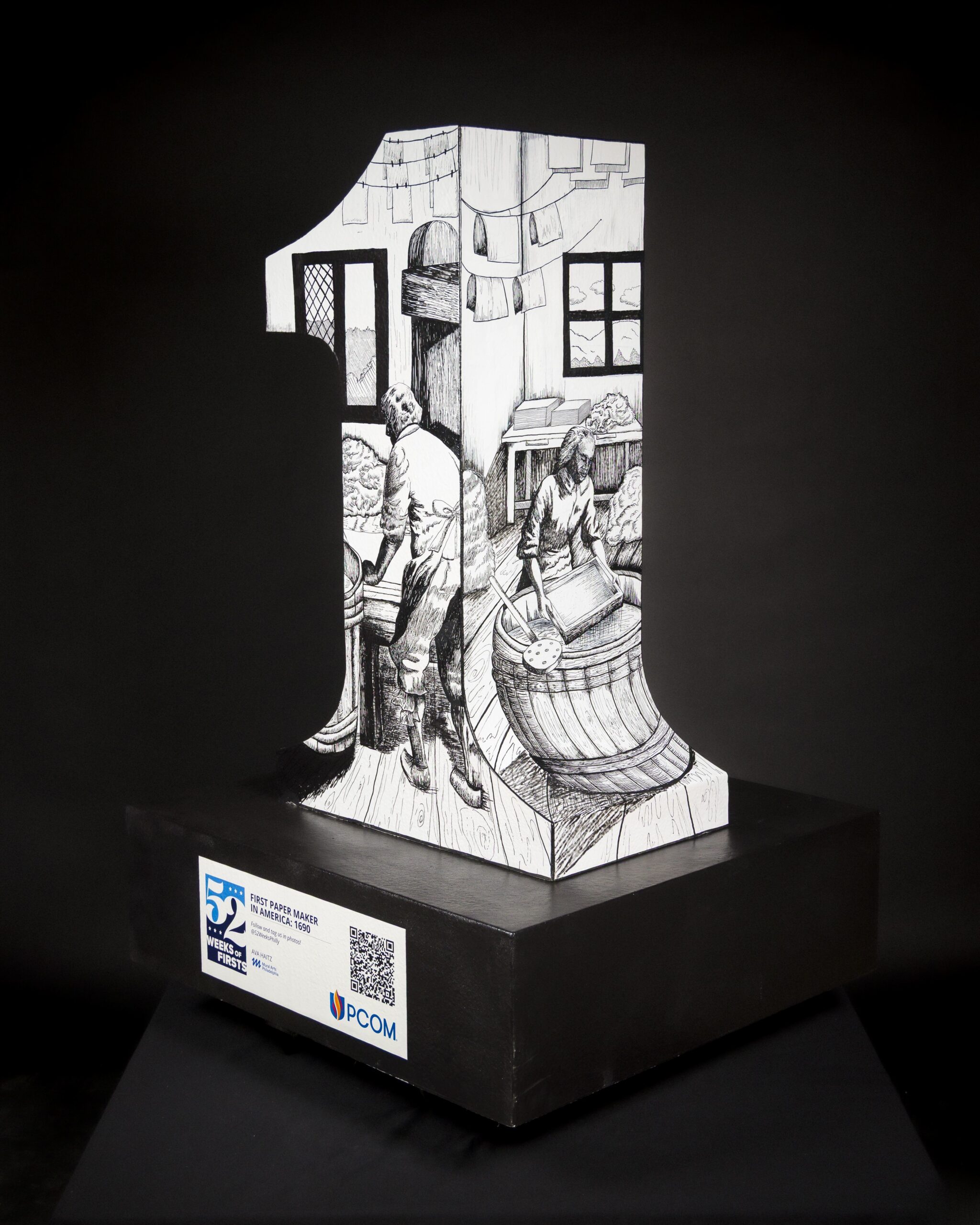
Artist Ava Haitz’s No. 1 honors the country’s first paper mill, celebrating the invention and craftsmanship that made widespread written communication possible.
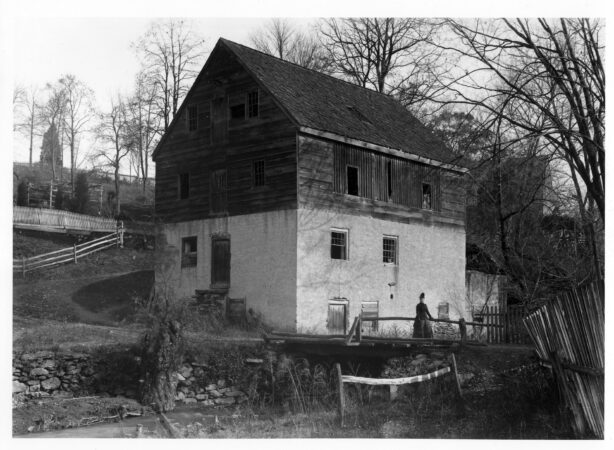
In 1690, Rittenhouse partnered with Philadelphia’s first printer, William Bradford, to build America’s first paper mill, situated in northwest Philadelphia and powered by the Monoshone Creek, a tributary of the Schuylkill.
The paper mill will be celebrated this Saturday at Historic RittenhouseTown, part of a series of weekly “Firstival” celebrations. Firstivals are the Philadelphia Historic District’s yearlong birthday nod to places and events with Philadelphia roots. The day parties are a hallmark of this year’s Semiquincentennial fetes.
At the Rittenhouse mill, paper was made from linen rags fashioned from flax grown in Germantown, that were broken down and shaped into sheets. The mill grew quickly as Rittenhouse, America’s first Mennonite bishop, provided paper for Bibles and Quaker and Mennonite texts in German.
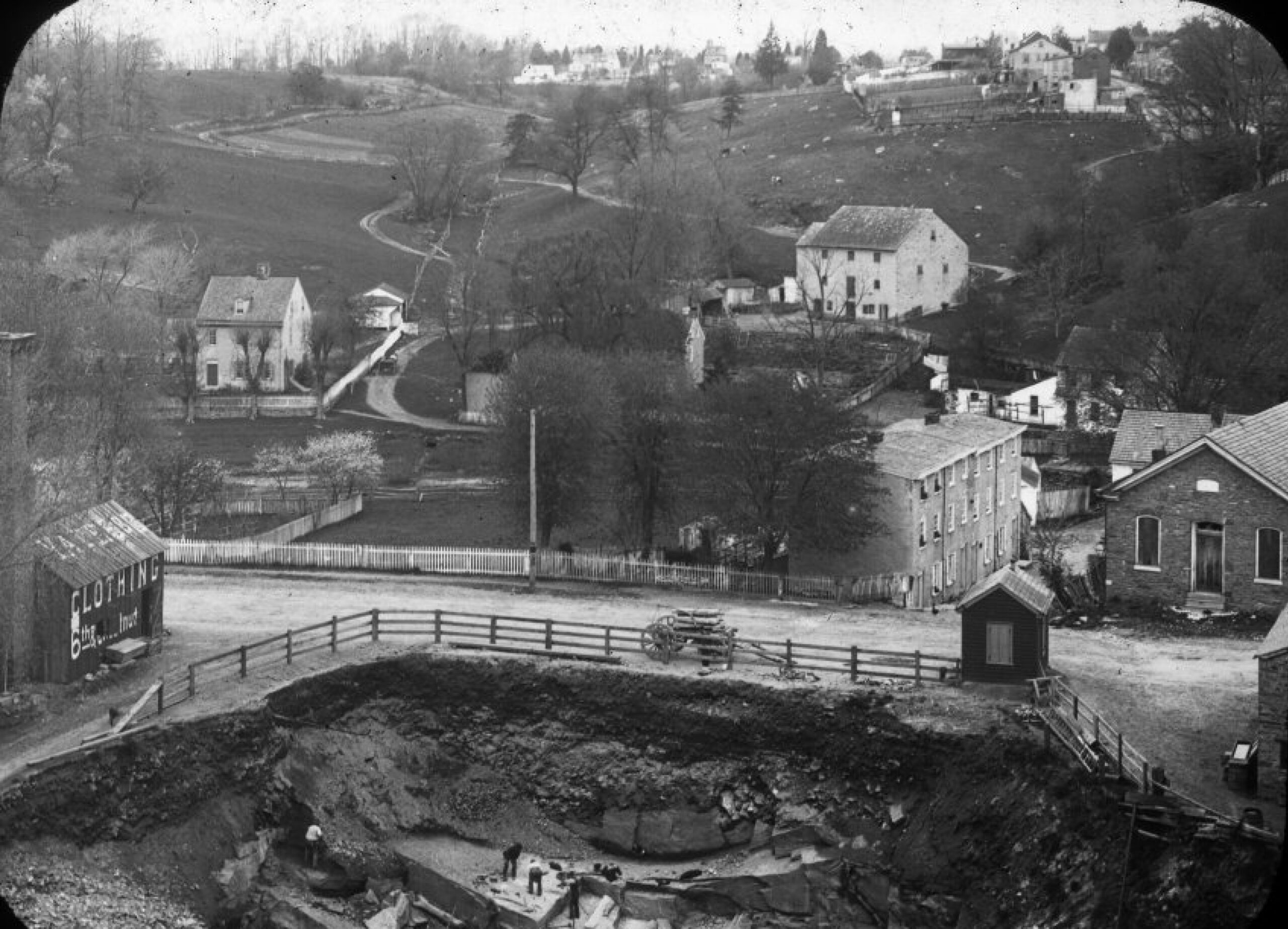
An aerial view of RittenhouseTown circa 1840-1860. The site eventually grew to more than 200 acres.
Rittenhouse’s first paper mill was destroyed by a flood, said Alexander Jones, preservation and education manager at Historic RittenhouseTown.
Then “Rittenhouse rebuilds and he buys out his partner,” Jones said. “The paper mill becomes his sole enterprise. Instead of hiring workers, he recruits his family and it becomes a giant company town. There is a church, a blacksmith, stone houses, a bake house, and more than 40 buildings with five or six of them under what is now Lincoln Drive.”
RittenhouseTown’s paper mill was the only source of paper in America for more than 40 years, Jones said. It would grow to more than 200 acres.
David Rittenhouse — Rittenhouse’s great-grandson and the astrologer, clockmaker, and first director of the U.S. Mint after whom Rittenhouse Square is named — was born in his family’s RittenhouseTown homestead in 1732.
The town thrived for more than a century.
By the mid-1800s, the paper mill began to slow down as dyes from textile and carpet manufacturers and chemicals from blacksmithing started to pollute the Schuylkill. The filthy water made it nearly impossible to produce good quality paper at the mill.
The Fairmount Park Commission began acquiring parts of RittenhouseTown through a series of purchases and donations from 1890 to 1917. The city demolished many of the town’s buildings, including a barn that, Jones said, was razed and rebuilt within a year.
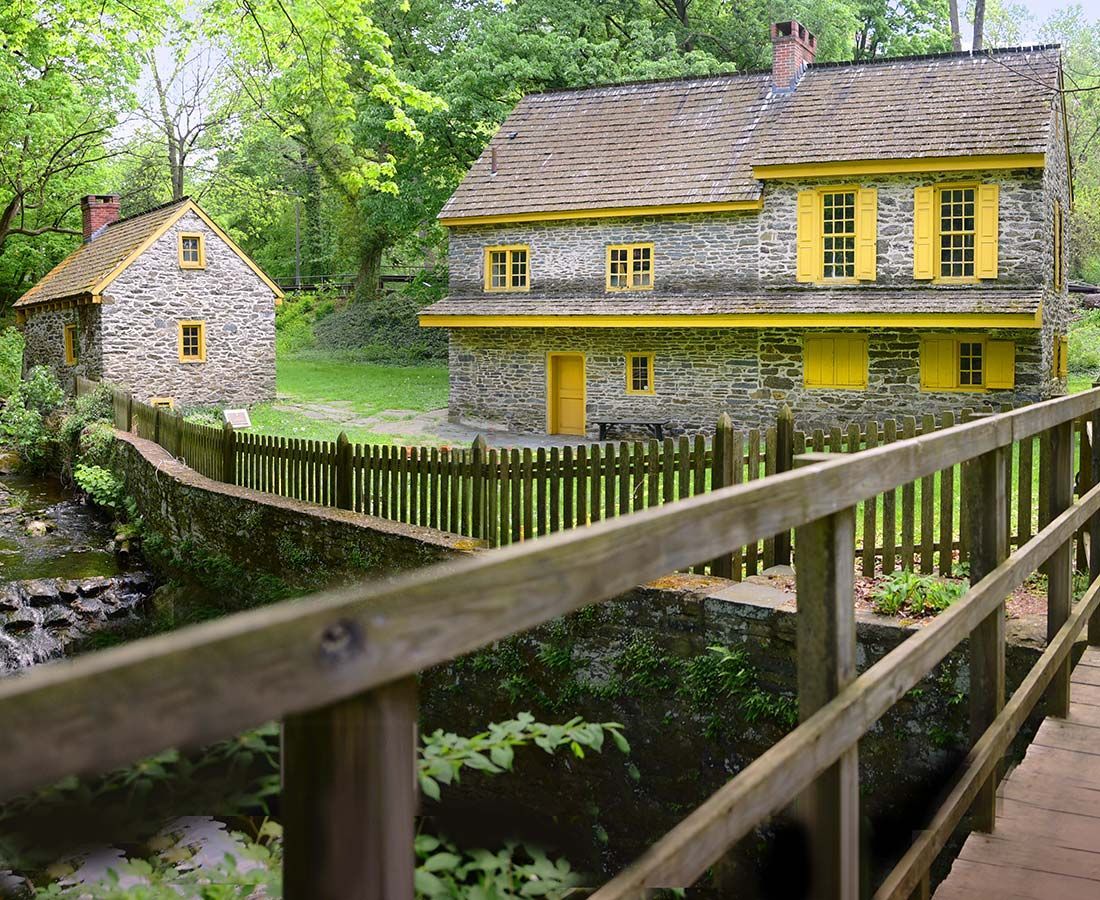
RittenhouseTown’s homestead and bakehouse. The first permanent home for the Rittenhouse family and birthplace of David Rittenhouse, great-grandson of William Rittenhouse for whom Center City’s Rittenhouse Square is named.
By that time, however, the Rittenhouse family had spread throughout the Philadelphia region from Center City to Blue Bell, Jones said.
Today, RittenhouseTown spans 20 acres nestled in Fairmount Park right behind Lincoln Drive. Six of the original buildings remain, serving as a reminder that RittenhouseTown was the first building block of American industry.
“The paper mill really got the ball rolling for Philadelphia,” Jones said. “And from that first came so many other American firsts in Philadelphia: the first Mennonite bishop, the first company town, and America’s first director of the U.S. Mint.”
This week’s Firstival is Saturday, June 27, 11 a.m.-1 p.m., at Historic RittenhouseTown, 208 Lincoln Drive.
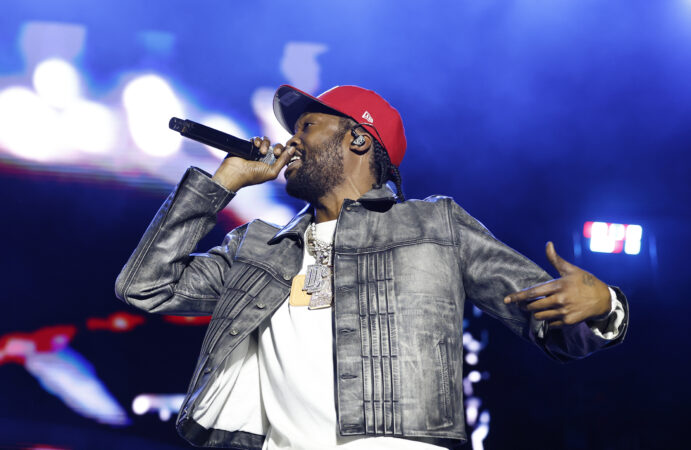
Meek Mill will join headliners Christina Aguilera, Jill Scott, and The Roots to perform at the “One Philly: Unity Concert for America” on July 4 on the Benjamin Franklin Parkway.
ESM Productions and Live Nation Urban announced the addition of the Dreams and Nightmares rapper to the Parkway bill on Tuesday morning, hot off his Saturday night performance at “Lit in AC,” a hip-hop festival featuring early 2000s bling-era rappers T.I., Eve, Shyne, Havoc, and Ms. Jade.
Will Smith & DJ Jazzy Jeff; Kathy Sledge, lead singer of ’70s R&B girl group Sister Sledge; and State Property, the Philly hip-hop collective that includes Beanie Sigel, Freeway, Peedi Crakk, and Chris and Neef, are also scheduled to perform.
While the bill includes mostly Philadelphia-area musicians — Aguilera grew up outside Pittsburgh — performers also include Seal, the Brit whose hit “Kiss From a Rose” still stops music fans in their tracks; Infinity Song, the Detroit-born soft rock and soul family; and Jordan Davis, the Louisiana-born country music singer.
Comedian and part-time Media resident Wanda Sykes is hosting. Gillie da Kid and Wallo267 are also slated to make an appearance.
The nearly seven-hour show will start at 5 p.m. and end just before midnight, with a fireworks finale to follow. Admission to the concert starts at 3 p.m.
The “One Philly: Unity Concert for America” is presented by the City of Philadelphia and produced by Center City-based ESM Productions with executive producers Scott Mirkin, Shawn Gee (The Roots’ manager and head of Live Nation Urban), and Roots frontman Ahmir “Questlove” Thompson.
Wawa is a sponsor of the concert, but the show is not part of Wawa Welcome America, the series of events leading up to the July 4 holiday, which this year will include concerts with Queen Latifah, Eve, Idina Menzel, and Pink Sweat$, among others.
The “One Philly: Unity Concert for America,” according to the news release announcing the event, is “designed as a non-partisan celebration of unity, diversity, and democracy” that brings together “voices, perspectives, and performances that reflect the richness of the American experience across generations and genres.”
Gen Xers watched dial-up phones shrink to pocket size, typewriters turn into touch screens, and appointment TV give way to streaming binges.
But Bicentennial babies are a special group of Xers. Born in 1976, they are celebrating a milestone birthday this year right along with the country. As America turns 250, they are turning 50. And on the cusp of the Semiquincentennial, Philadelphia’s Bicentennial babies are feeling reflective.
1976 was just three years after Roe v. Wade, the landmark Supreme Court ruling giving a woman the constitutional right to end a pregnancy. It came 11 years after the Voting Rights Act of 1965 made it illegal to try to stop Black Americans from voting, and 12 years after the Civil Rights Act of 1964 ended legal segregation.
Yolanda Wisher, producer of the “Bicentennial Baby” podcast, photographed in the Philadelphia Inquirer studio on May 28.
These changes to the American landscape gave Bicentennial babies a level of personal freedom and agency when they were coming of age during the turn of the 21st century that their parents and grandparents did not have. But in the last decade, they’ve seen the Supreme Court reverse Roeand weaken civil rights laws to the point that Bicentennial babies’ babies now don’t have the same privileges their parents did.
“I felt like this opportunity was the best way to study this major moment in American history from a personal angle and revisit what it means to be a Bicentennial baby from a Philadelphia perspective,” Wisher said.
Each of the 10- to 15-minute Bicentennial Baby episodes bubbles with late ’80s and early ’90s nostalgia from the cassette tape centered in the podcast’s logo, to the funky theme music lending to its WDASQuiet Stormvibe, to references to banana clips and acid-washed jeans.
At its core, however, Bicentennial Baby is unapologetically Philly.
Today’s 50-year-olds were in the first grade when Thriller was released, but they also remember 1982 as the year Constance Clayton became the first Black person to serve as the superintendent of Philadelphia public schools. They watched the Flyers on PRISM and music videos on MTV.
Earlier this year, Wisher put a call out on social media asking Philadelphians turning 50 in 2026 to join her in conversation about their unique perspective as they enter middle age.
“I was interested in finding the diversity of the Bicentennial babies’ experience,” Wisher said. “What does it mean to be a 50-year-old born and raised here? Or to be that person, who wasn’t born here, fell in love with the city, and decided to make it home?”
A dozen applied. Wisher chose six.
They are Laurie Allen, a librarian who lives in South Philly; Maleka Fruean, a community journalist who lives in Germantown and is a mom of four; Kenny Guy,who lives in Mount Airy and is a father of six; Michiko Hunt, a development associate at Greene Street Friends School, who lives in Germantown, and is a mom of two; and Stewart Varner, a manager of the University of Pennsylvania’s Digital Humanities Lab who lives in West Philly.
Naila Mattison was selected to participate in the “Bicentennial Baby” podcast. Mattison died in late February, shortly after the podcast was taped.
Naila Mattison, a poet, artist, and mom from West Philly, was the guest on the podcast’s first episode, which aired in late May. She died in February of cancer.
“She came to us with such a sense of urgency,” Wisher said. “She wanted to share her story. I’m so glad we made space for her.”
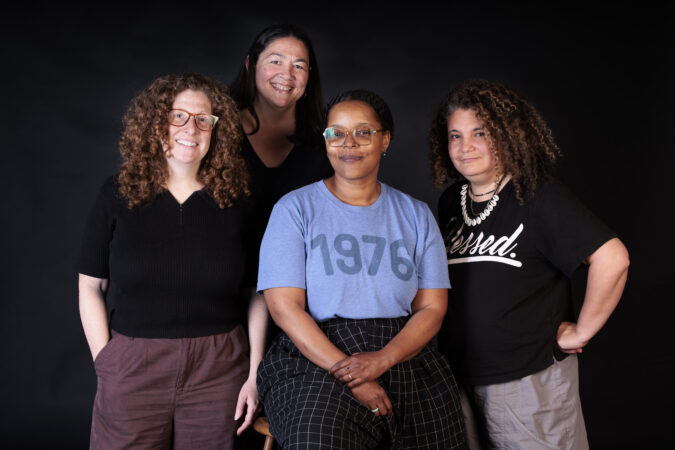
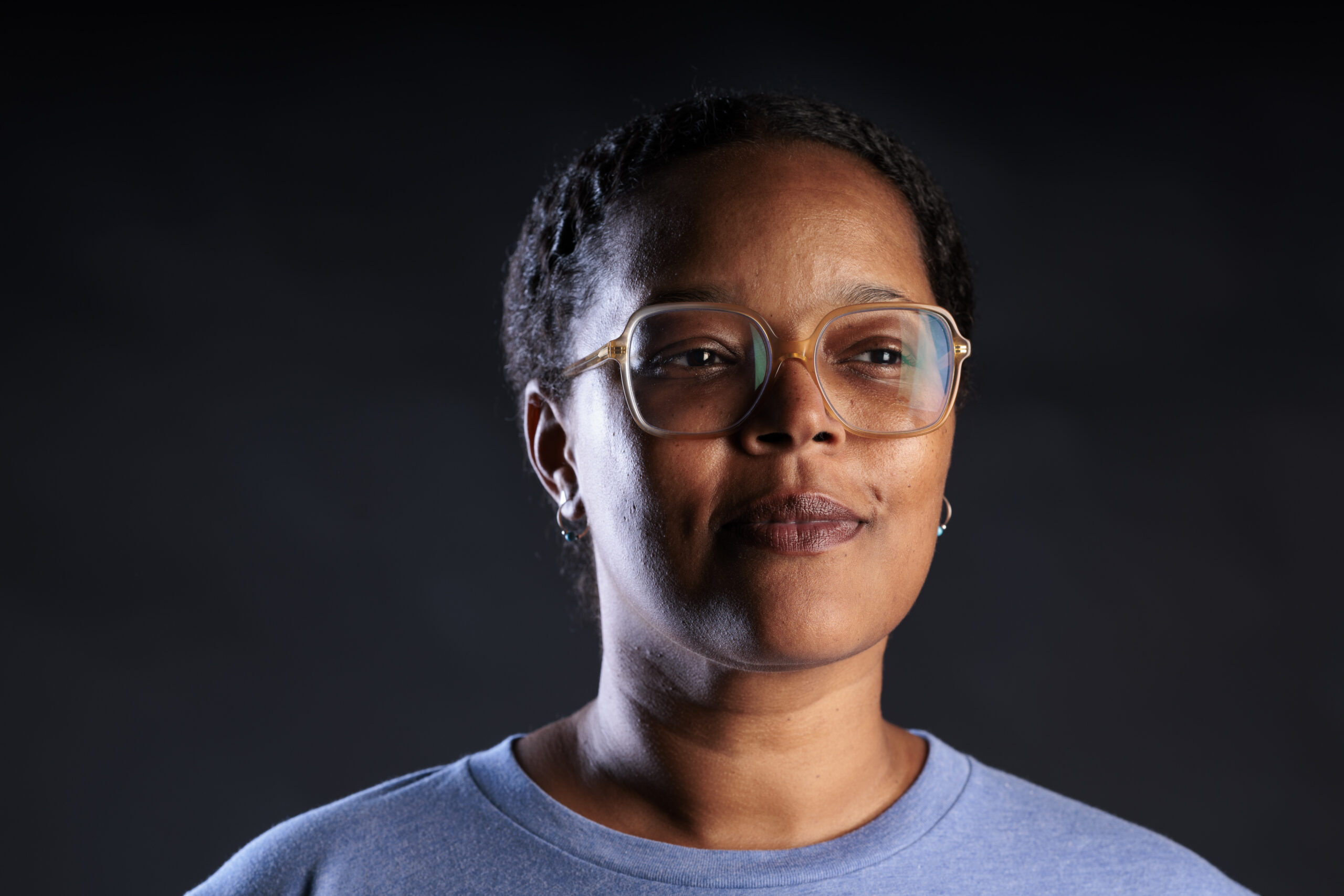
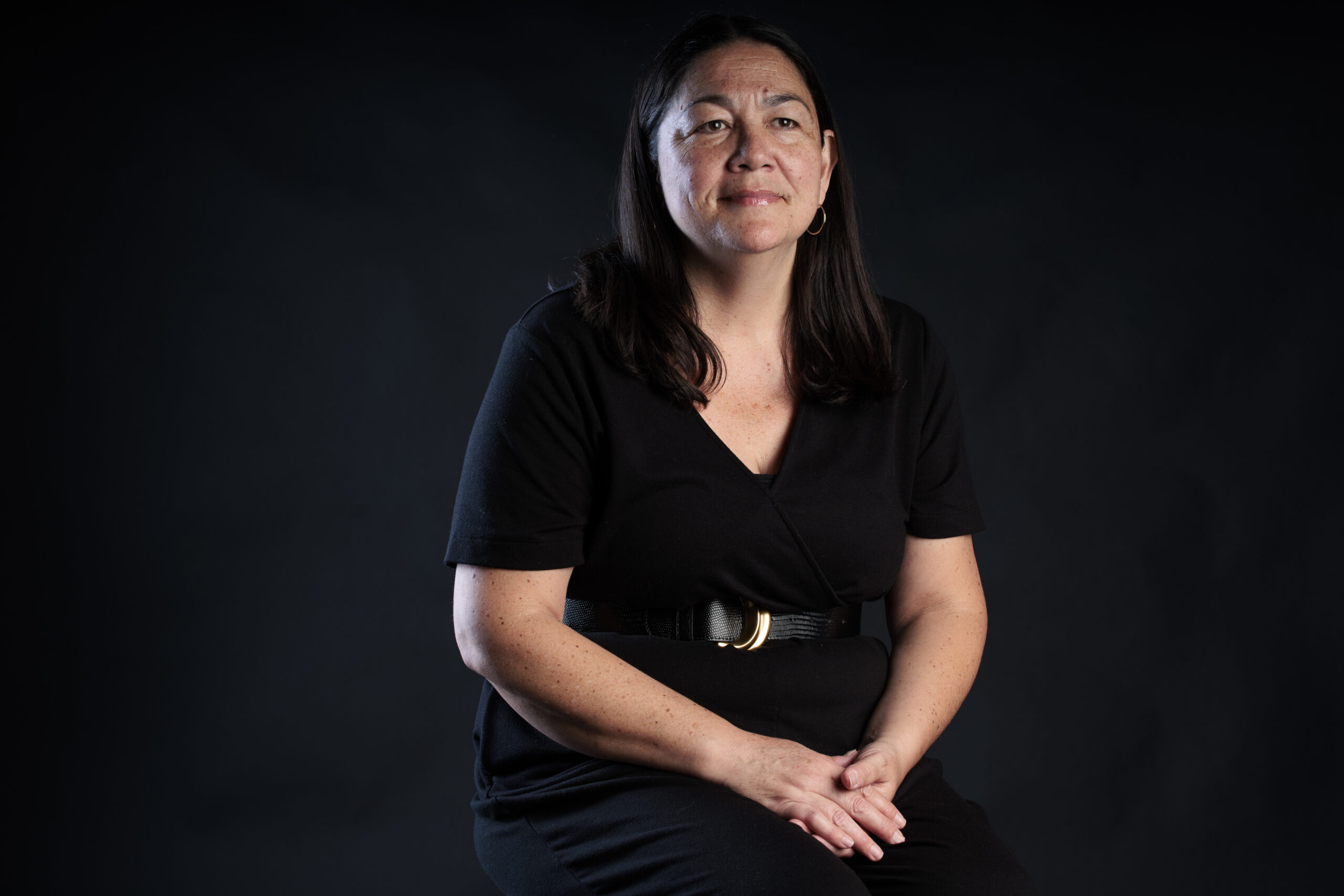
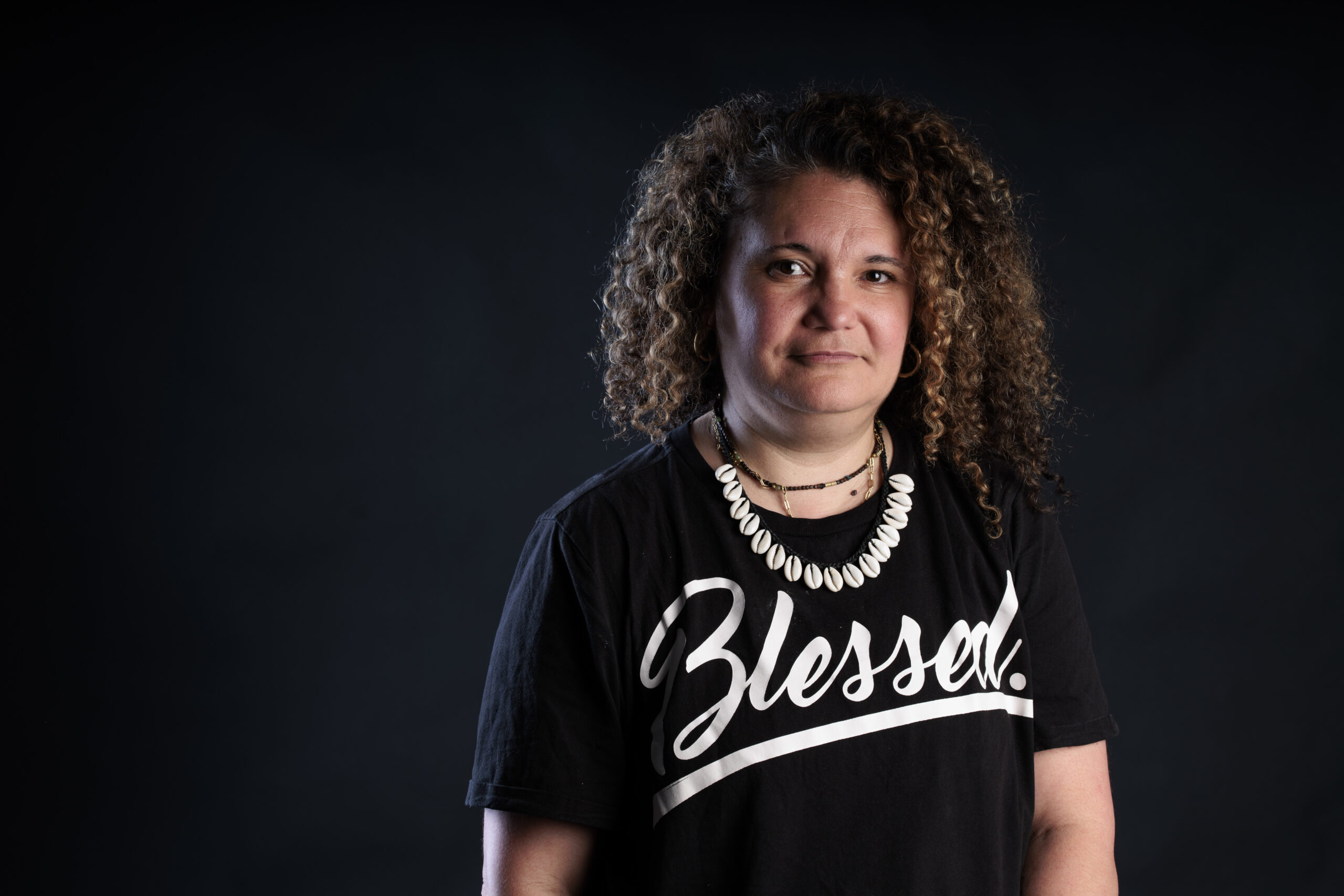
The Inquirer invited the Bicentennial babies to our studios earlier this month for a photo shoot. Allen, Fruean, Hunt, and Wisher — in her blazing blue 1976 T-shirt — came in and shared how being born during the Bicentennial impacted their outlook, is shaping their present, and is setting them up to be cool elders.
The interviews have been edited for clarity.
On Gen X culture
Michiko: In Philly, I was always conscious of being a part of this microgeneration because there were literally less of us. In the 1980s, all the entertainment we watched was focused on our parents, L.A. Law, Hill Street Blues, even The Cosby Show. My parents bought Thriller and Bruce Springsteen. But then when I was in my 20s, everything was teen-focused. I mean, Britney Spears? I was too old for that. There were all these kids who were born in 1982 who loved her. And I just missed it.
Michiko Hunt photographed in the Philadelphia Inquirer studio on May 28. Hunt is featured in the “Bicentennial Baby” podcast, produced by Yolanda Wisher.
On technology
Michiko: I went to my father’s office at 19th and Cherry Streets and typed my college applications on his electric typewriter. It was fancy. You could delete mistakes with correction tape.
Yolanda: My grandmother had a rotary phone. We had a push button phone. I had a pager.
Maleka: And right around our senior year in high school, that’s when cell phones started to come in.
Yolanda: And they were huge, like theNew Jack City phone … They were crazy expensive like video recorders. Like, if you had one of those …
Michiko: You were rich!
On fashion
Michiko: It’s true: What’s old is new again. What we called flare, my mother calls bell-bottom, and my daughter calls wide-legged. We had a distinct style though. Fashion bubbled up from specific subcultures like goth or hip-hop. Now everything comes from the internet. It’s really flattened style.
Maleka: And analog is a style now. Analog, as in not digital. It’s a fashion category. Like what people carry in their analog basket is a thing: a pencil and a notebook? That’s just what I put in my backpack.
Maleka Fruean photographed in the Philadelphia Inquirer studio on May 28. Fruean is featured in the “Bicentennial Baby” podcast, produced by Yolanda Wisher.
On music
Michiko: Our music was the best. I still have ticket stubs when I went to see the Roots. We all listened to hip-hop but we also listened to other kinds of music, too.
Yolanda: Tears for Fears!
Maleka: The Eurythmics!
Michiko: MTV!
Laurie: I remember when the radio was the only thing that mattered. Then we went to tapes, then to CDS, MP3s streaming. Each time I was like, I’m not going to do it. Yet every time I made the switch. Every. Single. Time. But I think it’s going full-circle. I miss playing guilty pleasure music without a digital trail of what I listened to.
On working
Yolanda: I watched my mom work hard everyday. When she retired from her job at Merck, all she got was a watch. That said something to me. I watched my mom struggle as a single mom, work her way up, put my siblings and I through college. That job was in the background of our lives our whole life.
Maleka: My children understand [better than I do]. They are not going to break their backs for a pittance. I’ve worked so hard my whole life. Still, I have no idea what my retirement is going to look like.
On learning from elders and turning 50
Yolanda: Womenfolk in my grandmother’s generation were more matronly. My grandmother had a whole closet full of church hats. She kept her house a certain kind of way. She had a routine. She was very straitlaced, at least in public. She had a secret life we didn’t ordinarily see.
Michiko: We have a blessing of choices. My dad’s mom was Japanese American. She was born in California, a first generation immigrant. She was a teenager during the Depression. Her family worked in a packaged frozen food factory. Today she would have been an artist. She made all of our Cabbage Patch Dolls and all of those beautiful doilies. She had the soul of an artist.
Maleka: We have access to so much more information. And because of that we have wonder.
Laurie Allen photographed in the Philadelphia Inquirer studio on May 28. Allen is featured in the “Bicentennial Baby” podcast, produced by Yolanda Wisher.
On becoming an elder
Laurie: My body does not look like it does when I was 20, 30, or even 40. And I assumed when I got this age I would want to go back in time. But I don’t. Instead, I’m grateful for the wisdom for knowing who I am. I don’t want to go back to those uncertain times. I may have looked better, but I felt worse.
On being American
Maleka: When I was growing up, I had mixed feelings because I saw so many vulnerable people who needed to be protected. I didn’t have the language to define institutionalized or systemic racism. Now that I do, I want America to do better. But I’m still proud to be an American.
Yolanda: The Semiquincentennial isn’t a one-sided story, but one that celebrates the complicated history of America. The racial, cultural, and social point of view of the people who are running isn’t the only perspective. We should be able to hold all of these voices at the same time and move forward.
“Bicentennial Baby“ is available on Apple, Spotify, and Amazon Music.
On July 4, 1965, gay activists Frank Kameny of Washington, D.C., Craig Rodwell of New York, and Barbara Gittings of Philadelphia gathered 40 of their LGBTQ brethren in front of Independence Hall to demand equality.
Dressed in three-piece suits, dresses, pumps, and spit-shined tie-ups, the marchers protested discriminatory policies that allowed gay people to be fired from government jobs and to be denied entry into military service.
Their slogan: “We don’t dodge the draft … the draft dodges us.”
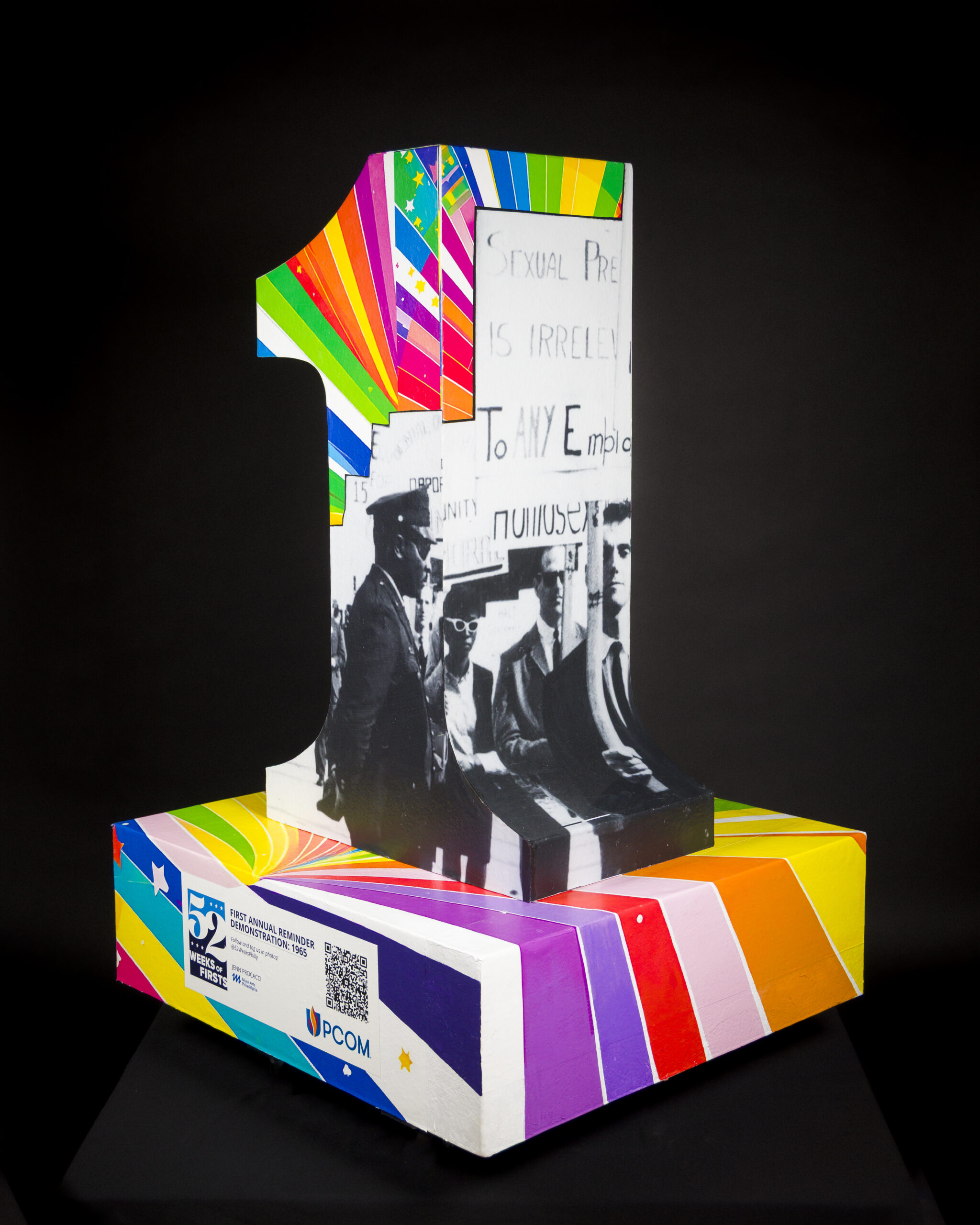
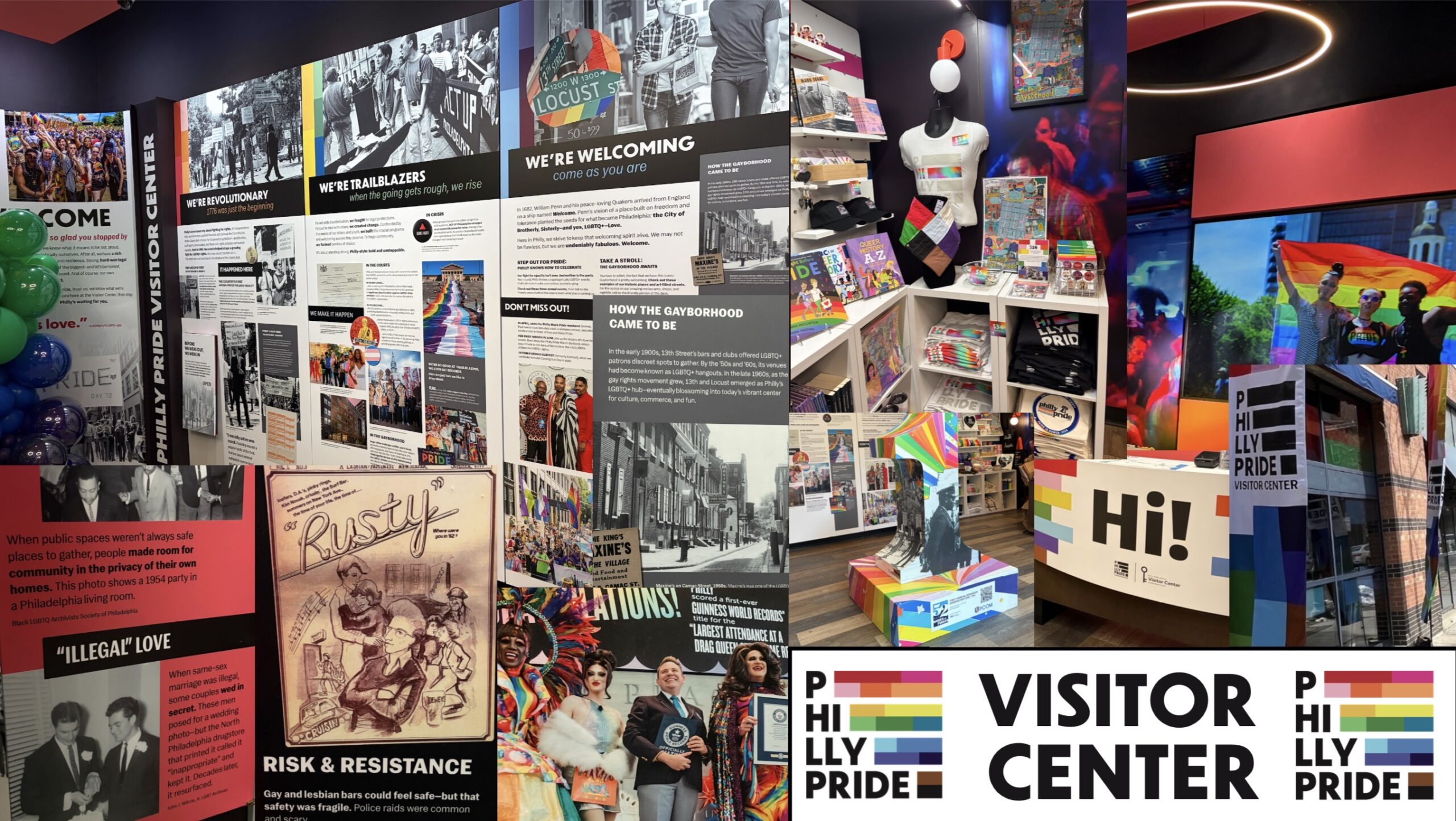
Artist Jen Proacci’s sculpture features . historic photographs of a Remberance Day event rendered as a high-resolution print, paired with a vibrant rainbow sky that symbolizes the LGBTQ+ community’s ongoing pursuit of equality, protection and freedom.
Held four years before the Stonewall Uprising in 1969, the march made history as the country’s first gay rights demonstration. That 1965 march became an annual protest, now known as the Remembrance March.
The first gathering in 1965 will be celebrated at Philly Pride Visitor Center on Saturday, one of Philadelphia Historic District’s weekly firstival celebrations. Each week in 2026, the Historic District is throwing a day party honoring important events that happened in Philadelphia before anywhere else in the nation and often the world.
“They were the only 40 to 100 people willing to get on the picket line for gay rights for those five years for the entire nation,” said Mark Segal, editor of the Philadelphia Gay News, who was a teenager in 1965.
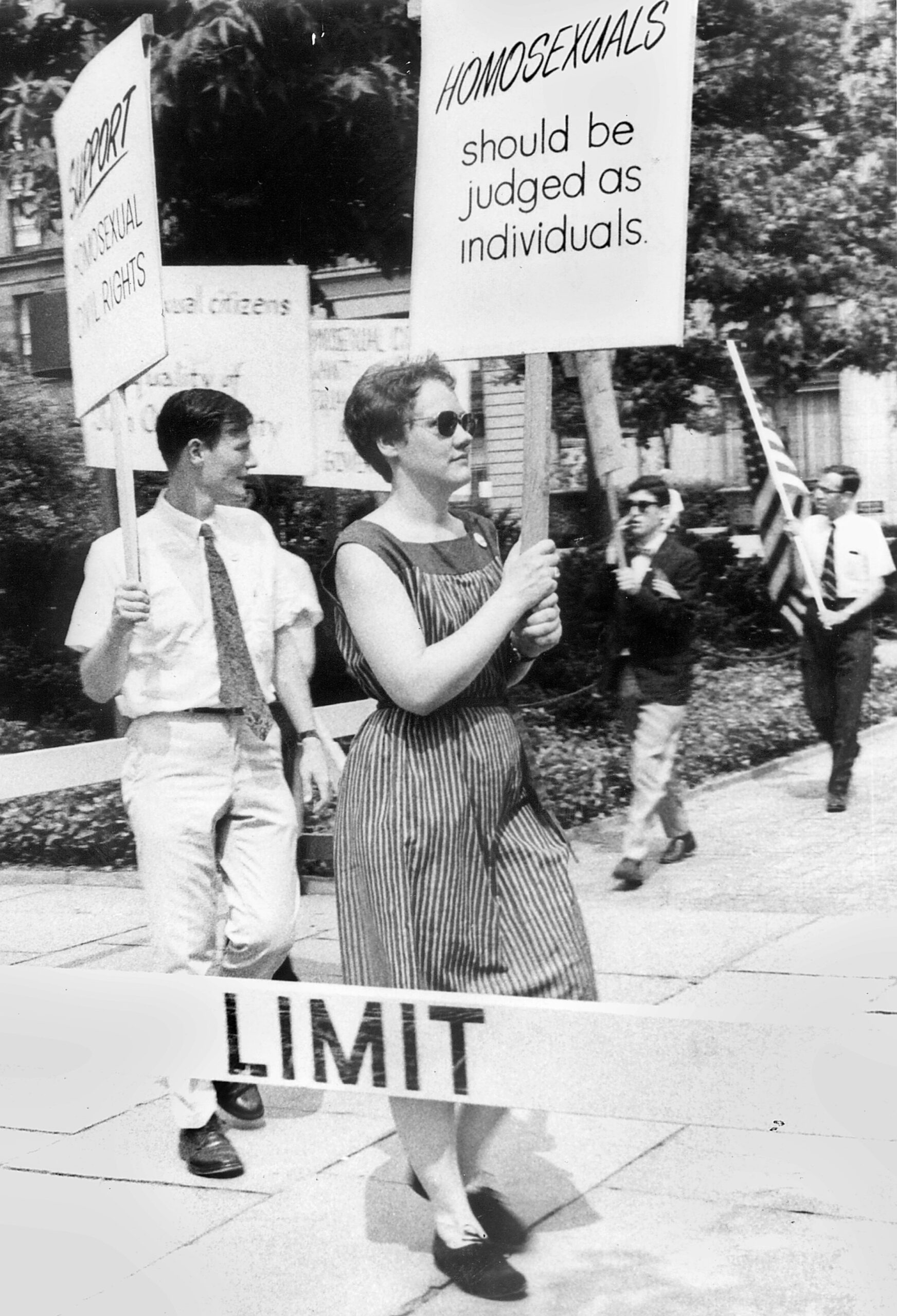
Picket at Independence Hall, Philadelphia. July 4, 1965. Randy Wicker (L), Barbara Gittings (R)
“It was the one and only march of its kind, and it was national,” he said. “People came from Chicago, Los Angeles, San Francisco. If you were someone involved in getting equality for homosexuals at the time, then you were there.”
Remembrance Marches predated Stonewall but they didn’t lead to Stonewall, Segal added.
The Philadelphia demonstrators in the late 1960s were out of the closet but were still very conservative.
“We were fighting for federal employment,” Kay Tobin Lahusen, the first openly gay American photojournalist, and Gittings’ partner, told The Inquirer in 2007 after Gittings’ death. “We wanted to look employable.”
That conservative energy largely excluded young people at that time, including Segal.
“I wasn’t allowed to march in the Remembrance Marches because I was too young. I didn’t want to wear a suit and tie. I wanted to protest in my jeans and my T-shirts. As a Philadelphian, I loved my city. I appreciated the marches and respect these brave people. But we were ready to smash invisibility.”
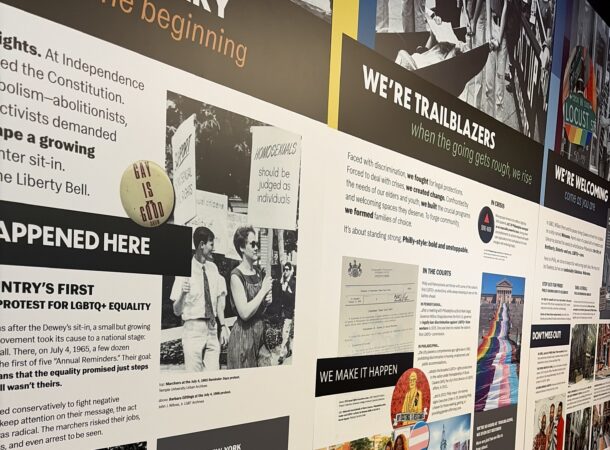
Early photos of Philadelphia-based Gay Pride marches part of a collage in the Philly Pride Visitor Center.
That sentiment bubbled across the nation.
Early in the morning of June 28, 1969, LGBTQ protesters led a series of demonstrations against police raids at the now historic gay bar, Stonewall Inn, in New York City’s Greenwich Village.
As a contrast to the more conservative Remembrance Marches, the Stonewall Riots, which Rodwell also participated in, were more disruptive and intersectional. Trans women of color, like Sylvia Rivera and Marsha P. Johnson, would eventually go on to become key figures in the uprisings.
Philadelphia’s last Remembrance March took place the following week.
The following June, East Coast Regional Conference of Homophile Organizations, also known as ERCHO, adopted a resolution in Philadelphia ending Remembrance March.
“We went from 40 to 100 people in Philadelphia to more than 15,000 in New York,” Segal said.
“The Remembrance Days are important,” echoed Kristopher Lawrence, Philly Pride Visitor Center’s supervisor. “We were all trying to get to the same place, but we had different views on how we thought it should be done.”
This week’s Firstival is Saturday, June 20, 11 a.m.-1 p.m., at the Philly Pride Visitor Center, 1139 Locust St.
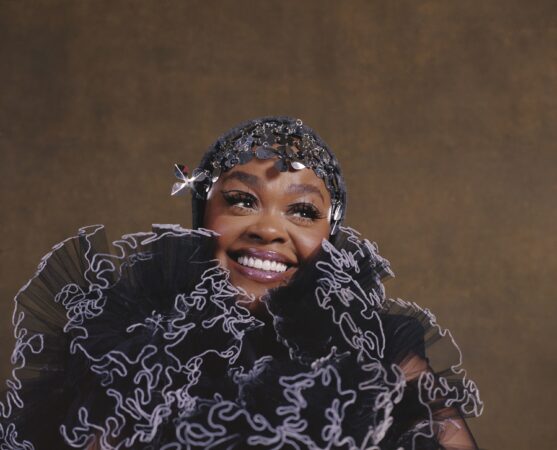
Jill Scott’s sixth studio album To Whom This May Concernis a tapestry of Scott’s familiar easy rhythms with lyrics equal parts sweet longing and self-love.
But on this 19-track project — Scott’s first collection of new music in more than a decade — she isn’t just telling us she plans to live her life like it’s golden the way she did 22 years ago. She’s also telling us about the great life she has right now. And she’s urging us to join her in the present moment with funky beats, powerful lyrics, and tight rhymes.
“You might as well go ahead and be great,” Scott said in a recent video chat. “There’s literally nothing stopping you from being all of yourself.”
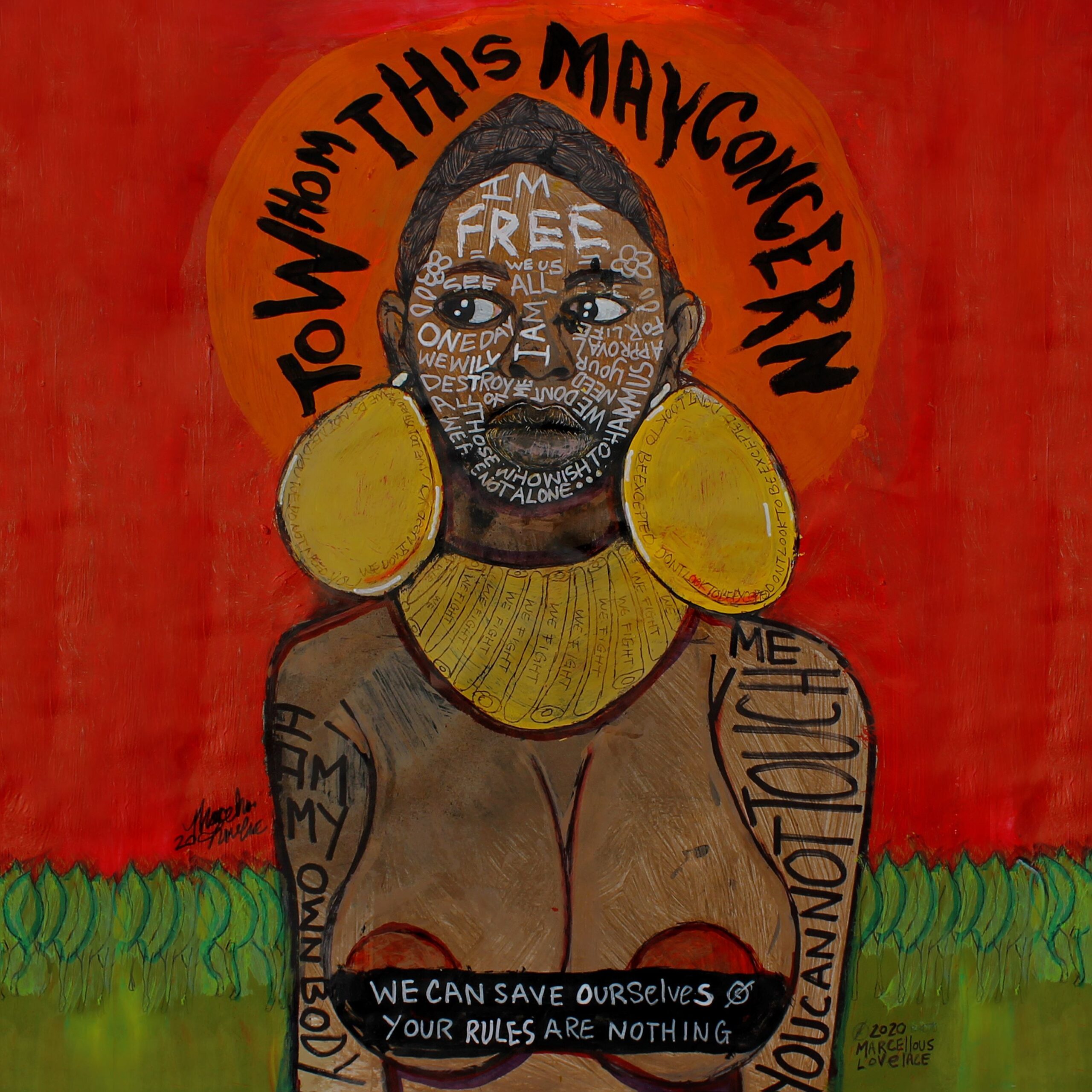
Album cover of Jill Scott’s sixth studio “To Whom This May Concern” is a portrait of Jill Scott by muralist Marcellous Lovelace
To Whom This May Concern is Scott’s assertion of self-love especially evident in the album cover’s illustration — by Chicago-based muralist Marcellous Lovelace — of the 53-year-old multi-hyphenate wearing big gold earrings and her natural hair in a top knot. “I’m free” is written in block letters across her forehead.
“I’m pushing and supporting all of the art we have created as Black people in America,” Scott said. “I support that. [But this album is not for] limited ears. It’s definitely not limited music.”
Scott, who lives in Nashville, Tenn., recorded most of the album in Philly with Grammy winning producer — and her cousin — Carvin Haggins. She has traveled all over the world and says there is no place like Philadelphia.
“The people at home are so dear and warm,” Scott, who often goes by Jilly from Philly, said. “I was grateful to find that again.”
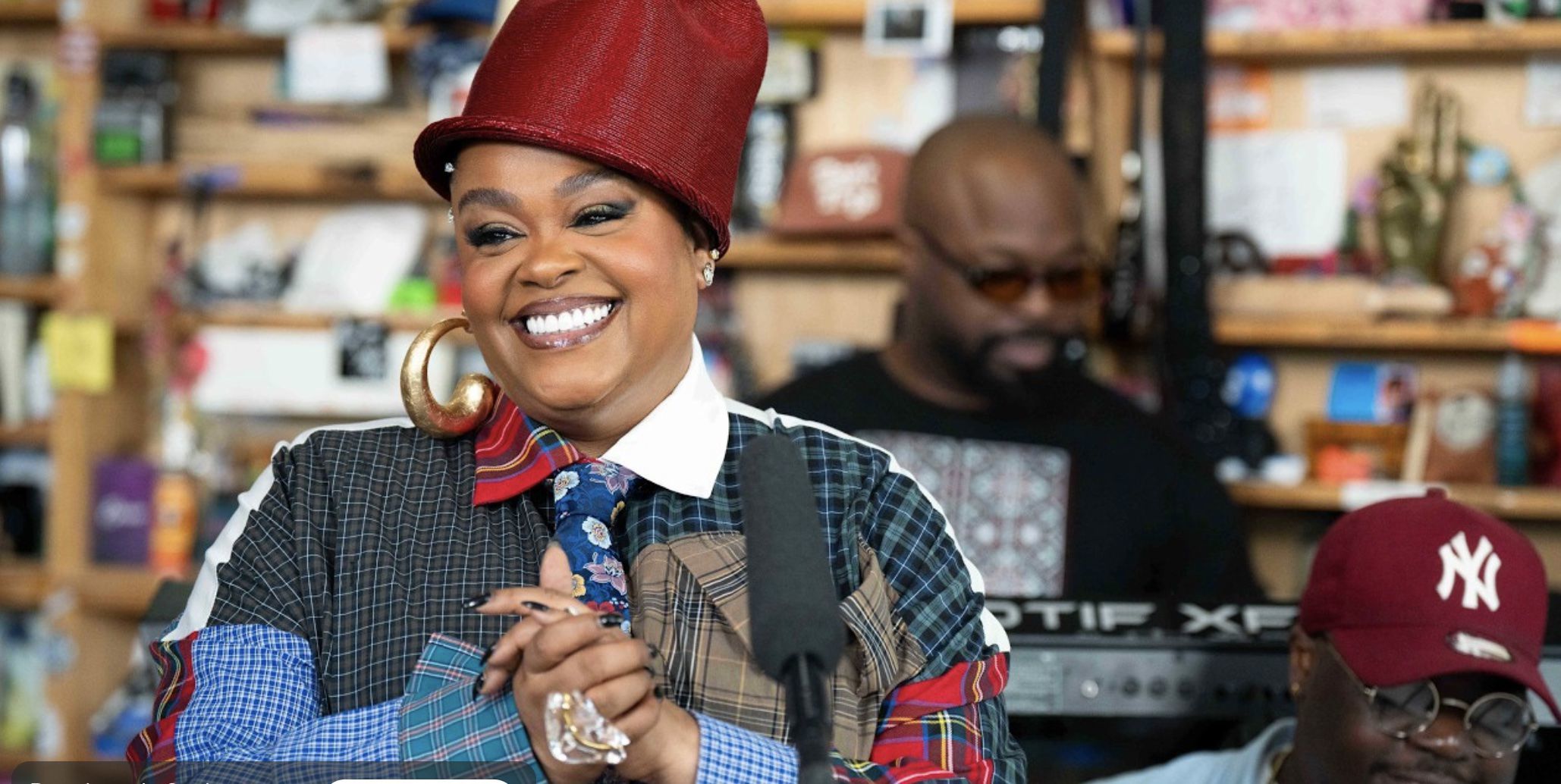
Jill Scott performing on NPR Music Tiny Desk Concert series. The North Philly singer’s new album is ‘To Whom This May Concern.’
Scott loves every nook and cranny of her hometown, but she still pours an extra bit of love for the “Norf Side,” to borrow from the lyrically sound rap she performs with Tierra Whack on the new album.
“So often people have shunned me, making me feel less than because I come from North Philadelphia,” Scott said. “I wanted to shout out my area and remind [that people from] North Philly, we can do anything.”
Here is the songstress’s idea of a perfect Philly day.
7 a.m.
If I lived in an apartment or condo in Philly near a park I’d get up and take a long walk, first thing.
9:30 a.m.
In the summer, I’d go over to the Blues Babe offices on North Broad and greet the kids at summer camp [Blues Babe is Scott’s nonprofit that sends children from Philadelphia and Camden to free summer camp]. The children gather there before taking trips all over the city. It’s important that I tell these kids that came from the same place I do, that they can do anything.
12:30 p.m.
I’d have lunch atContinental Midtown on Chestnut Street. (I’m really sad they closed the one in Old City.) I just love their turkey burger. Then I’d walk over to Rittenhouse Square and sit at the park. I love watching nature. On my perfect day, the artisans would be out selling jewelry and art and I’d find a good deal because you know I like to save money.
2:30 p.m.
From there, I’d go to the Philadelphia Museum of Art and maybe catch the Noah Davis show. Then, I’d go to the African American Museum of Art before making my way down to Ishkabibbles on South Street. There, I’d order a pizza steak with fried onions and mustard and pickles. (Nobody has to understand your cheesesteak.)
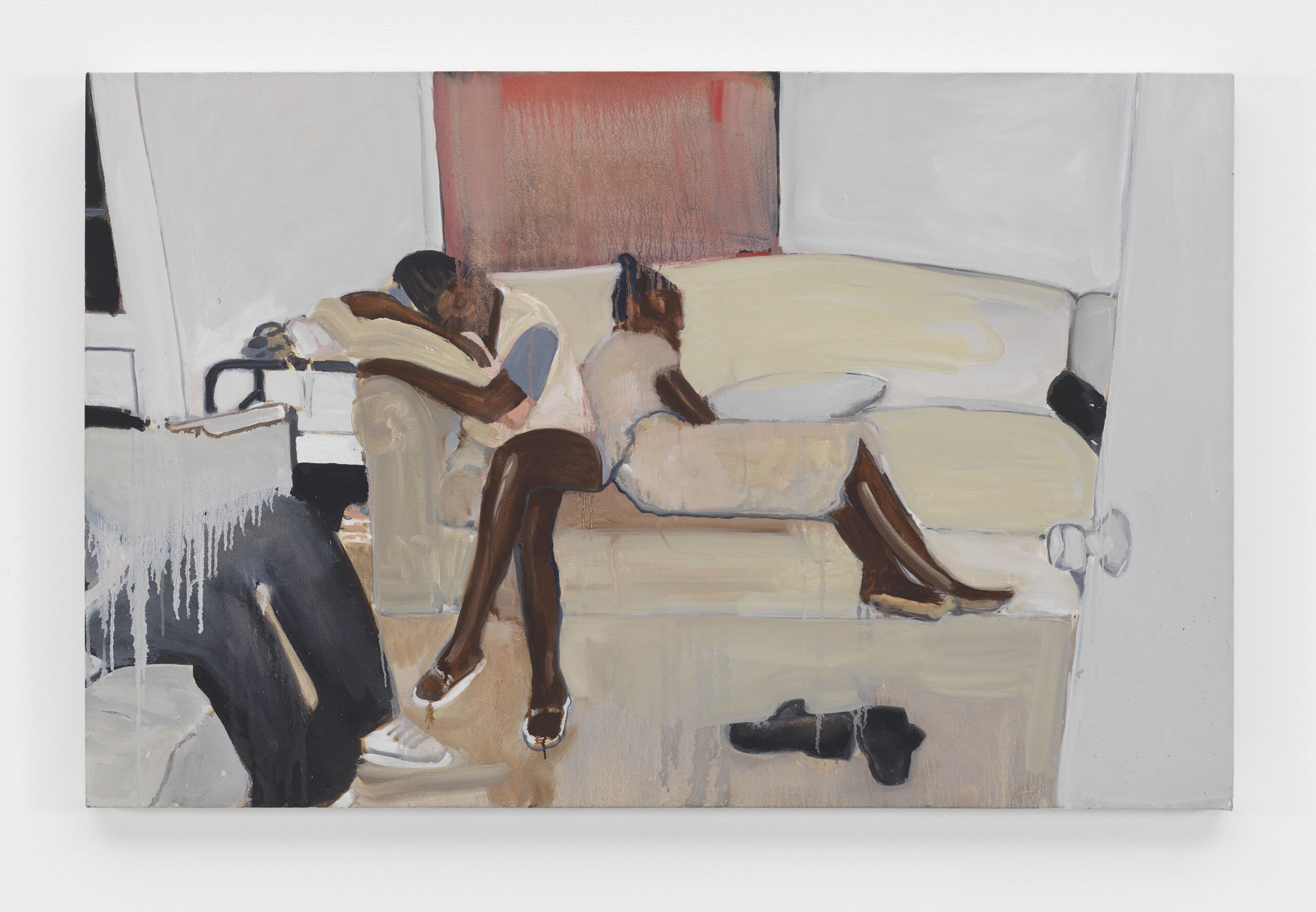
“Untitled Girls” This painting by Noah Davis will be on display in the Philadelphia Art Museum’s 2026 exhibition named after the late artist
5:30 p.m.
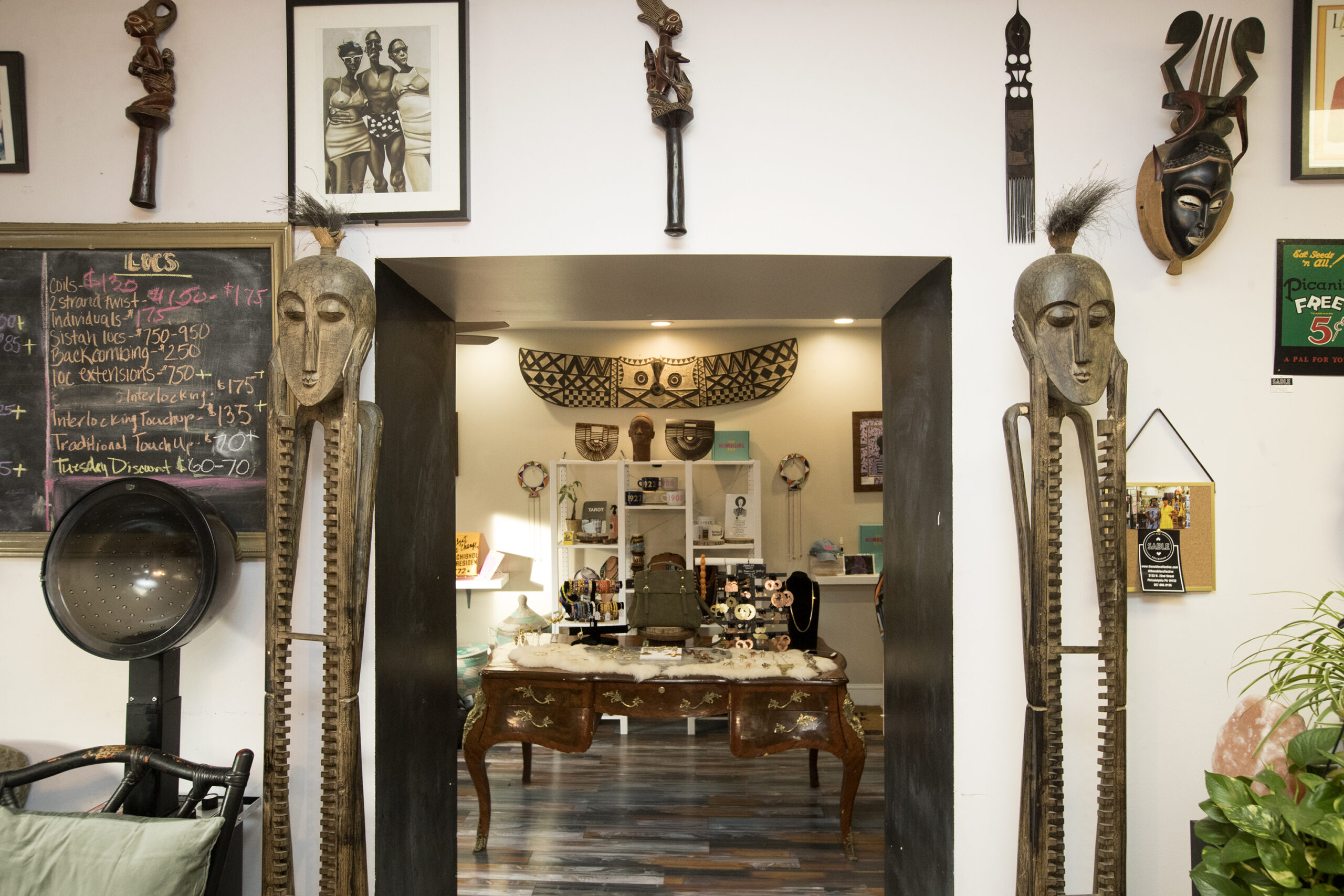
I’d make my way back up to North Philly and visit my friend Syreeta Scott at the natural hair salon Duafe. She has such beautiful art work in there. It’s so peaceful. The energy is so good. We would go out, or she might cook something amazing. I would raid her closet and just chill.
Inside Duafe Holistic Hair Care.
7:30 p.m.
If Syreeta isn’t cooking, we’d make our way to Sid Booker’s. I got to have it. Let me give you the deal: When you go to Sid Booker’s, you have to eat it in the car. There is no such thing as waiting until you get home. You are wasting it. You will ruin it. And if you like ketchup and hot sauce you have to get it on your shrimp, not on the side. But on your shrimp.
Fried shrimp are pictured at Sid Booker’s Shrimp Corner in North Philadelphia on Friday, Sept. 14, 2018.
10:30 p.m.
I’d hope that Stacy “Flygirrl” Wilson is having a party with Mike Nyce, I would definitely go there. That is always a good time.
Stacey “Flygrrl” Wilson and DJ Mike Nyce at the Kimmel Center during a summer happy hour.