The Girl Scouts, founded in Savannah, Ga., in 1912 by philanthropist Juliette Gordon Low, held its first bake sale in 1917 to raise money for troop activities.
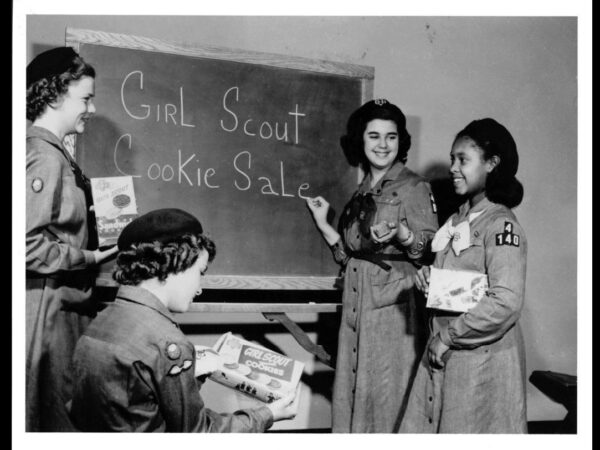
The booming direct cookie sales business, however, was born in Philadelphia on Nov. 12, 1932, at the Philadelphia Gas Co., then located at the intersection of Broad and Arch Streets.
That inaugural public Girl Scout cookie sale will be remembered Saturday at Center City’s PECO building, part of the Philadelphia Historic District’s weekly celebration of America’s 250th birthday. The historic district pays homage to events that happened in Philadelphia before anywhere else in America — and often the world — with a weekly day party called a Firstival.
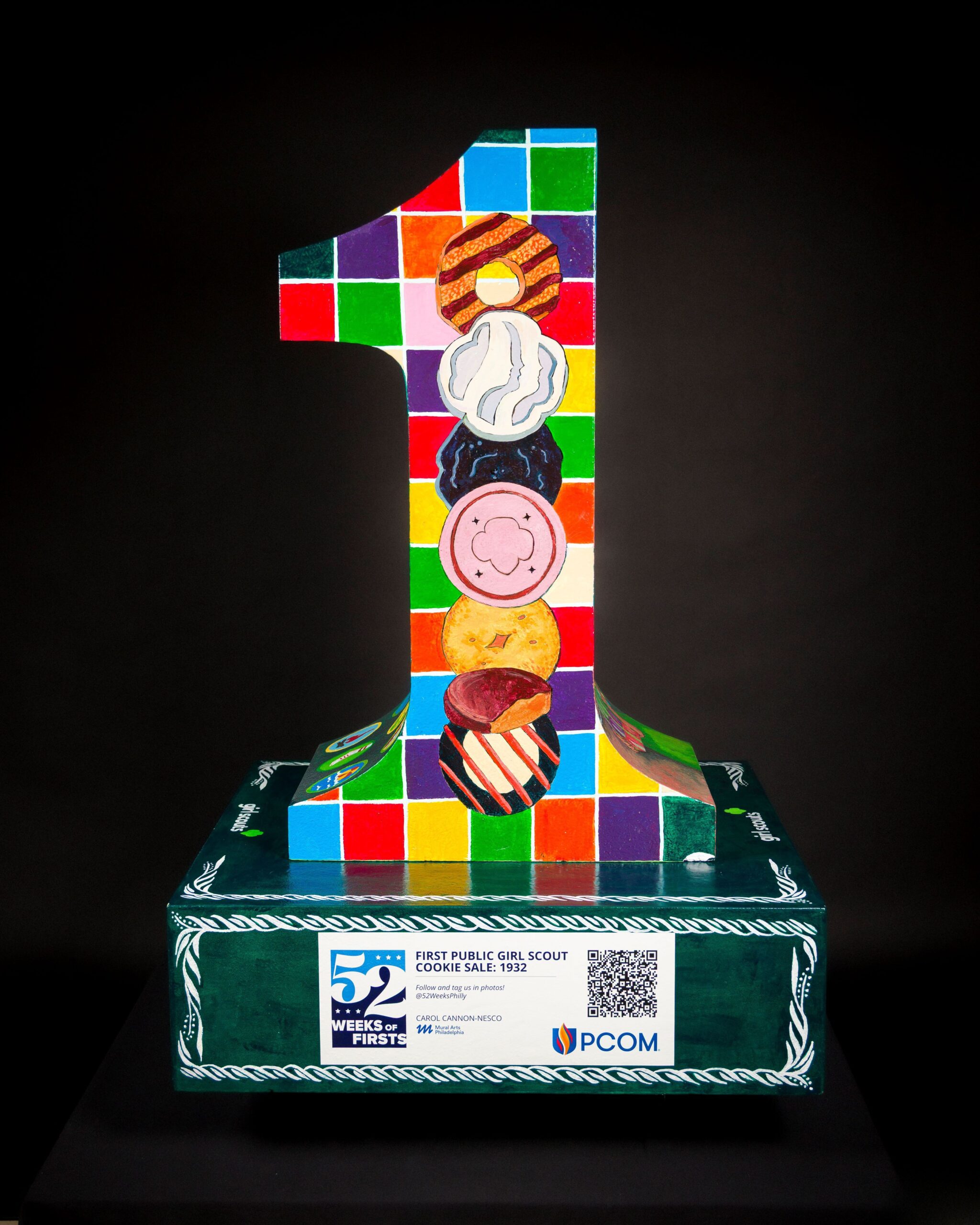
Artist Carol Cannon-Nesco, a top Girl Scout cookie seller as a child, celebrates the legacy of the Girl Scouts with pictures of the individual cookies.
“It was the first time the Girl Scouts sold their cookies to people outside of their immediate community,” said Amanda Harrity, director of product programs for the Girl Scouts of Eastern Pennsylvania.
In 1932, a Philadelphia Girl Scout told her parents that her troop needed a place to bake cookies in order to raise money for nurseries, Depression-era organizations that cared for children of working parents. The little girl’s parents, who worked at the Philadelphia Gas Co., got permission for the Scouts to bake cookies on the shiny new gas ranges in the gas company’s street-level windows.
On the afternoon of Nov. 12, the Girl Scouts baked batch upon batch of their shamrock-shaped signature shortbread cookie, the Trefoil. The sweet, buttery aroma wafted through Center City streets and passersby asked if they could buy the cookies, hot out of the test kitchen’s ovens.
The Girl Scouts agreed.
Trefoils (shortbread) and peanut butter sandwiches, also known as Do-si-dos. (Dreamstime/TNS)
“I don’t remember how many cookies we baked that day,” then 80-year-old Girl Scout Midge Mason told The Inquirer in 2001 when the state erected a historic marker at Broad and Arch, marking the sale. “I do know we baked a lot of cookies.”
The next year, the Girl Scouts were back at the Philadelphia Gas Company to raise the money needed to pay off the mortgage of its facility at Camp Indian Run in Glenmoore, Chester County. (That facility closed in the early 2000s.)
In 1934, the Philadelphia Girl Scouts hired Keebler — now Little Brownie Bakers — to bake Trefoils, selling them at 23 cents a box, making them the first Girl Scouts to sell commercially baked cookies.
Two years later, Girl Scouts all around the country began using commercial bakeries to bake cookies for their yearly fundraiser.
Today, more than 200 million boxes of cookies are sold in America at an average price of $6 a box; 3.5 million of those boxes are sold in Eastern Pennsylvania, Harrity said.
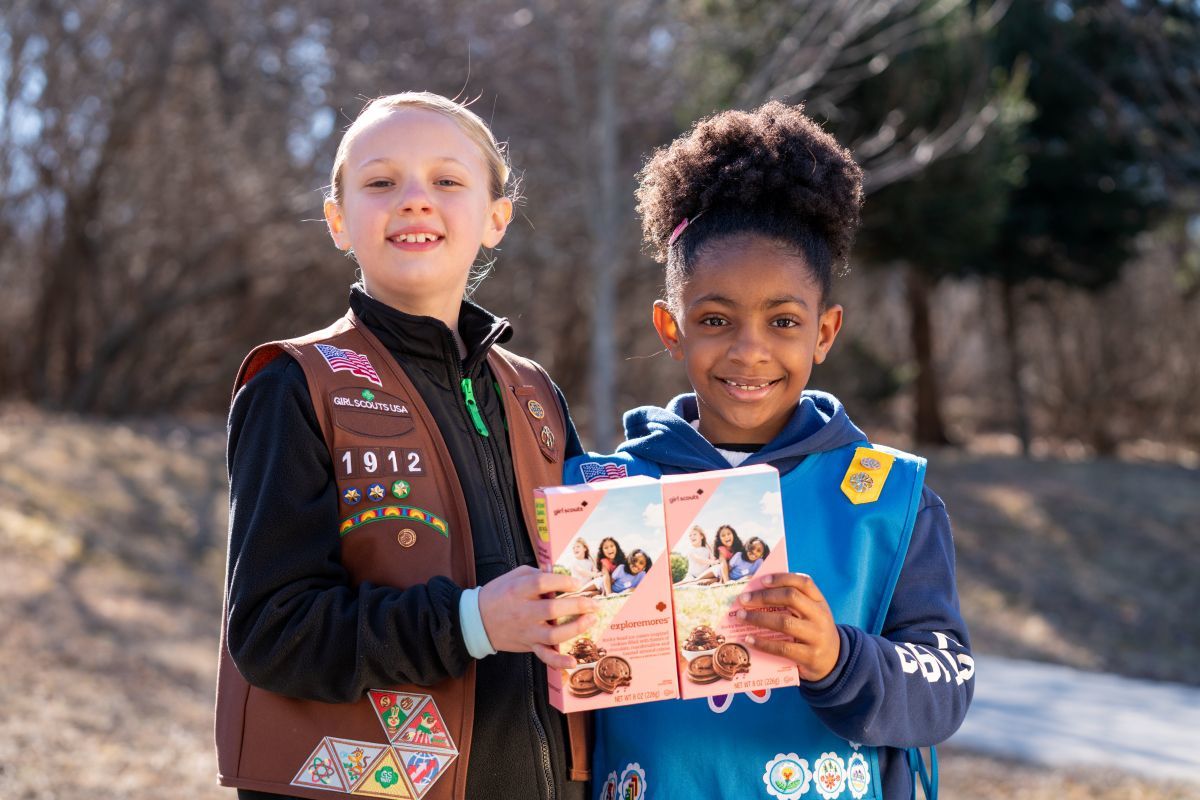
Exploremores are the new flavor of Girl Scout cookie for the 2026 sales campaign.
Seventy-five cents of every dollar from Girl Scout cookie sales are reinvested back into girl scouting, Harrity explained. In Eastern Pennsylvania, that includes maintaining 1,500 acres of property and underwriting Scouts’ camp experiences.
This week’s Firstival is Saturday, Jan. 31, 11 a.m. — 1 p.m., at the PECO Building at 2300 Market Street. The Inquirer will highlight a “first” from Philadelphia Historic District’s 52 Weeks of Firsts program every week.
The 98th Oscar nominations are out. If you are like many of us, you haven’t seen all of the films — yet, any way.
Not to worry. The Oscars don’t air until March 15, so you have plenty of time to catch up. And with this week’s forecast of more than a foot of snow, why not stay home and get started early.
Here’s how and where you can check out some of the Oscar nominated films of 2025.
Best Picture
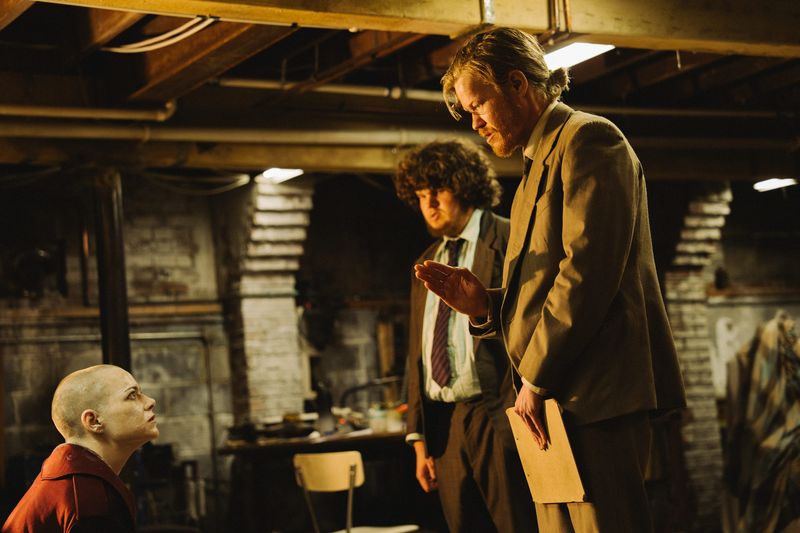
Michelle (Emma Stone) gets interrogated by cousins Teddy (Jesse Plemons, far right) and Don (Aidan Delbis) in “Bugonia.”
‘Bugonia’
This dark comedy stars Emma Stone as Michelle Fuller, the CEO of the fictional pharmaceutical conglomerate Auxolith. She’s abducted by conspiracy theorist Teddy Gatz (Jesse Plemons) and his cousin, Don (Aidan Delbis) after Teddy starts to believe an Auxolith drug has caused his mother’s comatose state. Adding to the creepiness, Teddy also believes Michelle is an alien. Bugonia received four nominations, including a best actress nod for Stone.
Damson Idris, left, and Brad Pitt star in “F1.” MUST CREDIT: Warner Bros. Pictures/Apple Original Films
‘F1′
Brad Pitt stars in this fast-paced drama about a star Formula One driver who returns to the game after being gone for 30 years. His mission: to help his friend’s underdog team take it all. F1 received four Academy Award nods.
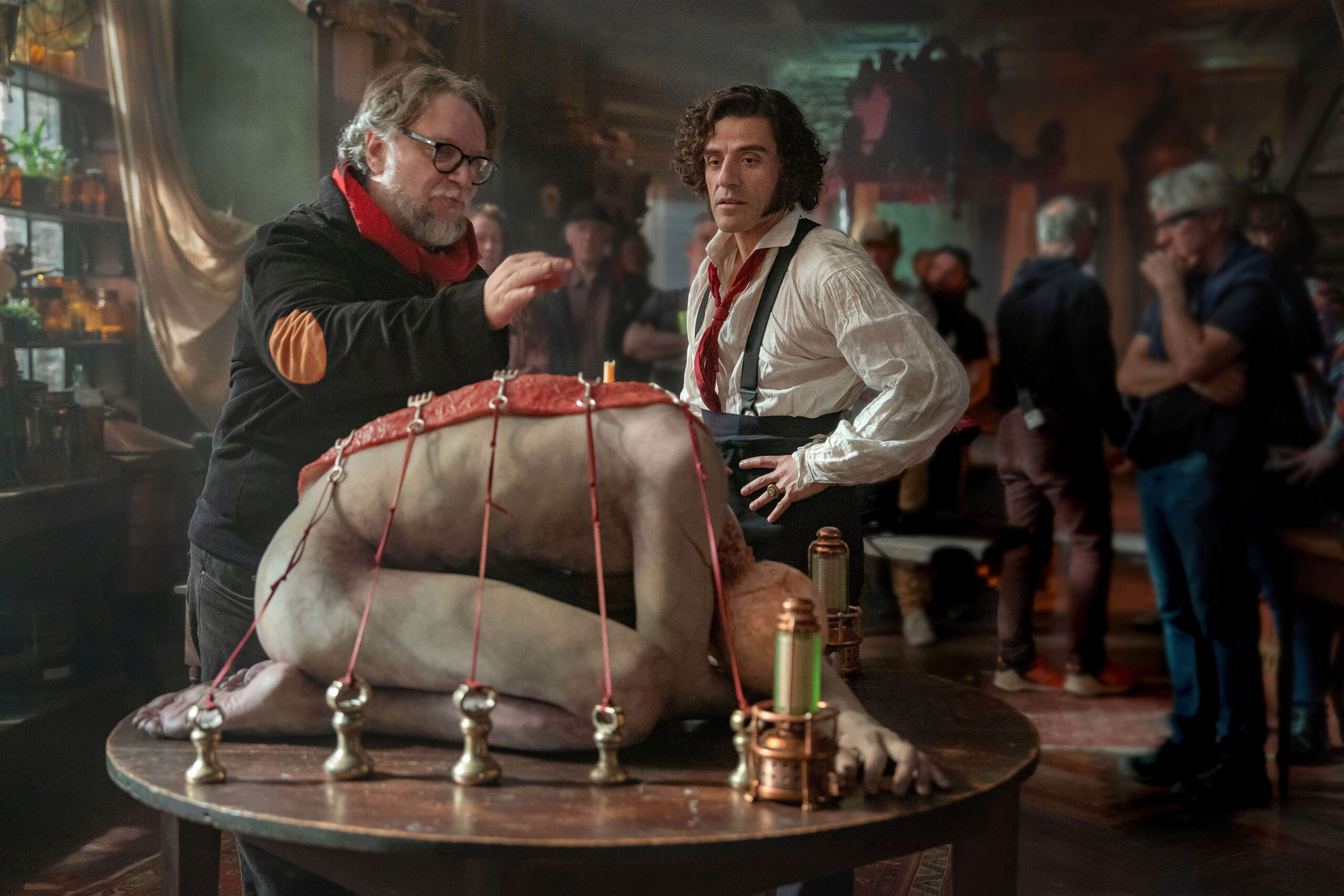
This image released by Netflix shows director Guillermo del Toro, left, and Oscar Isaac on the set of “Frankenstein.” (Ken Woroner/Netflix via AP)
‘Frankenstein’
A cinematic adaptation of the 1818 Mary Shelley classic features Oscar Isaac as Victor Frankenstein and Jacob Elordi as his ghoulish creation. This 2025 film is director Guillermo del Toro’s attempt to be as faithful to the book as he possibly can. Frankenstein earned nine nominations.
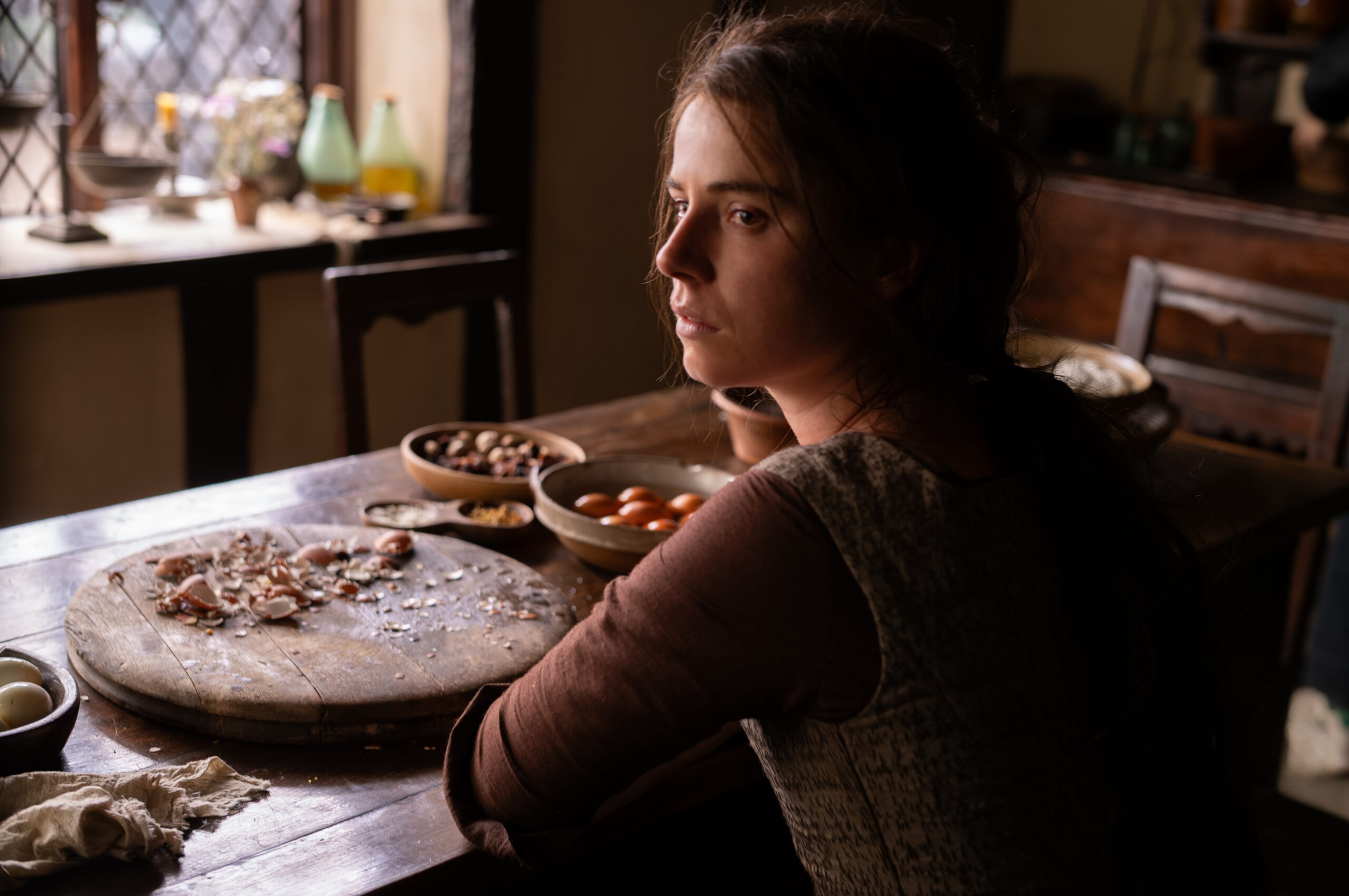
This image released by Focus Features shows Jessie Buckley in a scene from “Hamnet.” (Agata Grzybowska/Focus Features via AP)
‘Hamnet’
William Shakespeare (Jesse Buckley) and his wife, Agnes, (Anne Hathaway) mourn the death of their son in this film based on Maggie O’Ferrel’s 2020 eponymous historical fiction novel. Hamnet received eight nominations.
Playing: Film Society Bourse, Landmark’s Ritz Five, Reel Cinemas Narbeth, Bryn Mawr Film Institute, AMC Cherry Hill 24.
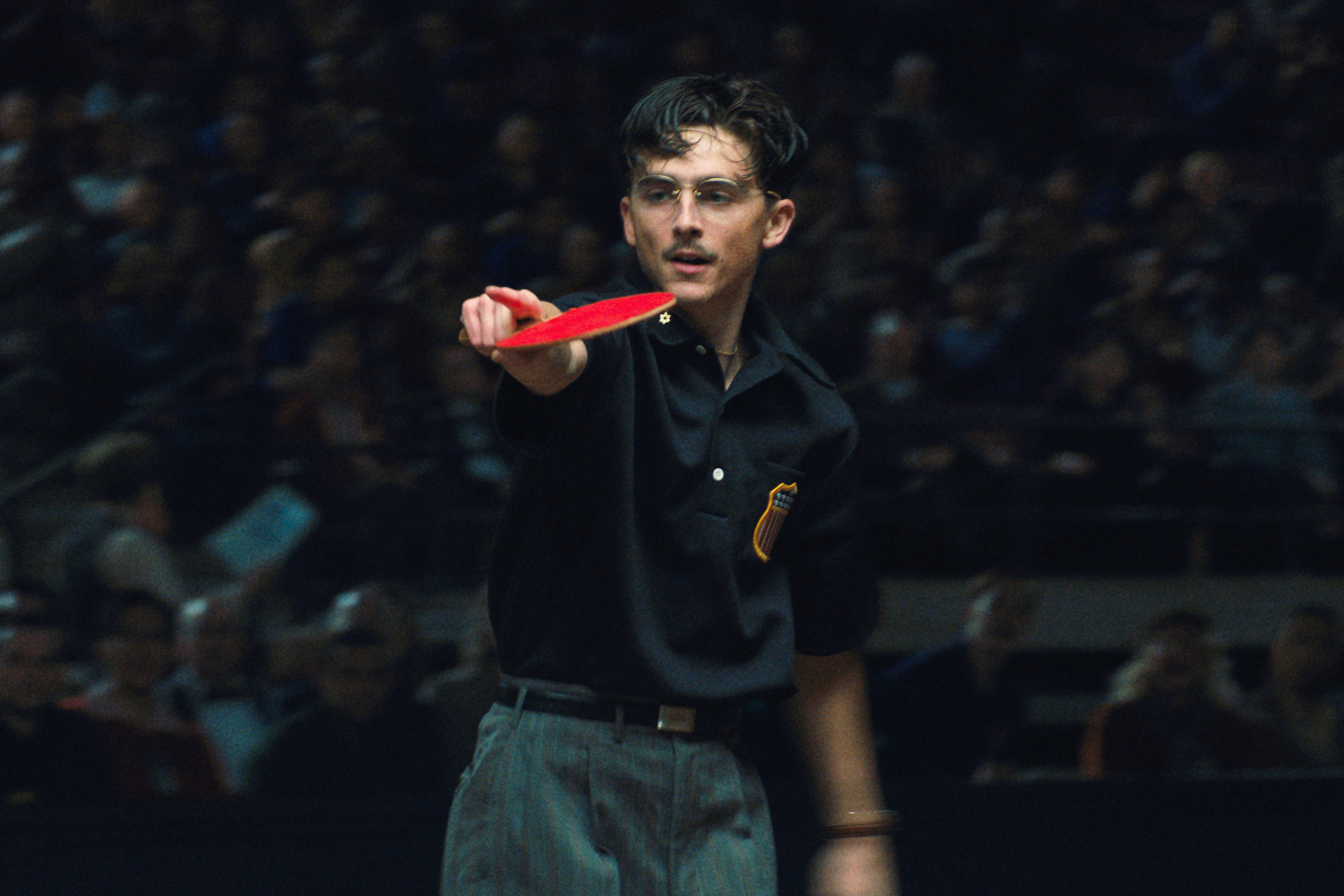
This image released by A24 shows Timothée Chalamet in a scene from “Marty Supreme.” (A24 via AP)
‘Marty Supreme’
Timothée Chalamet is Marty, an ambitious table tennis hustler in 1950s New York whose story is inspired by the real life scammer Marty Reisman. The anxious sports drama follows Marty’s quest for table tennis glory that takes him to Japan. The movie picked up nine nominations including a best actor nod for Chalamet.
Playing: AMC Broad Street 7, Cinemark University City Penn 6, AMC Dine-in Fashion District 8, Film Society Bourse, Film Society East, Landmark Ritz 5, AMC Deptford 8, Bryn Mawr Film Institute, Cinemark Somerdale 16 and XD, AMC Marple 10, Regal Moorestown Mall, AMC Voorhees 16, Regal Plymouth Meeting, AMC Marlton 8
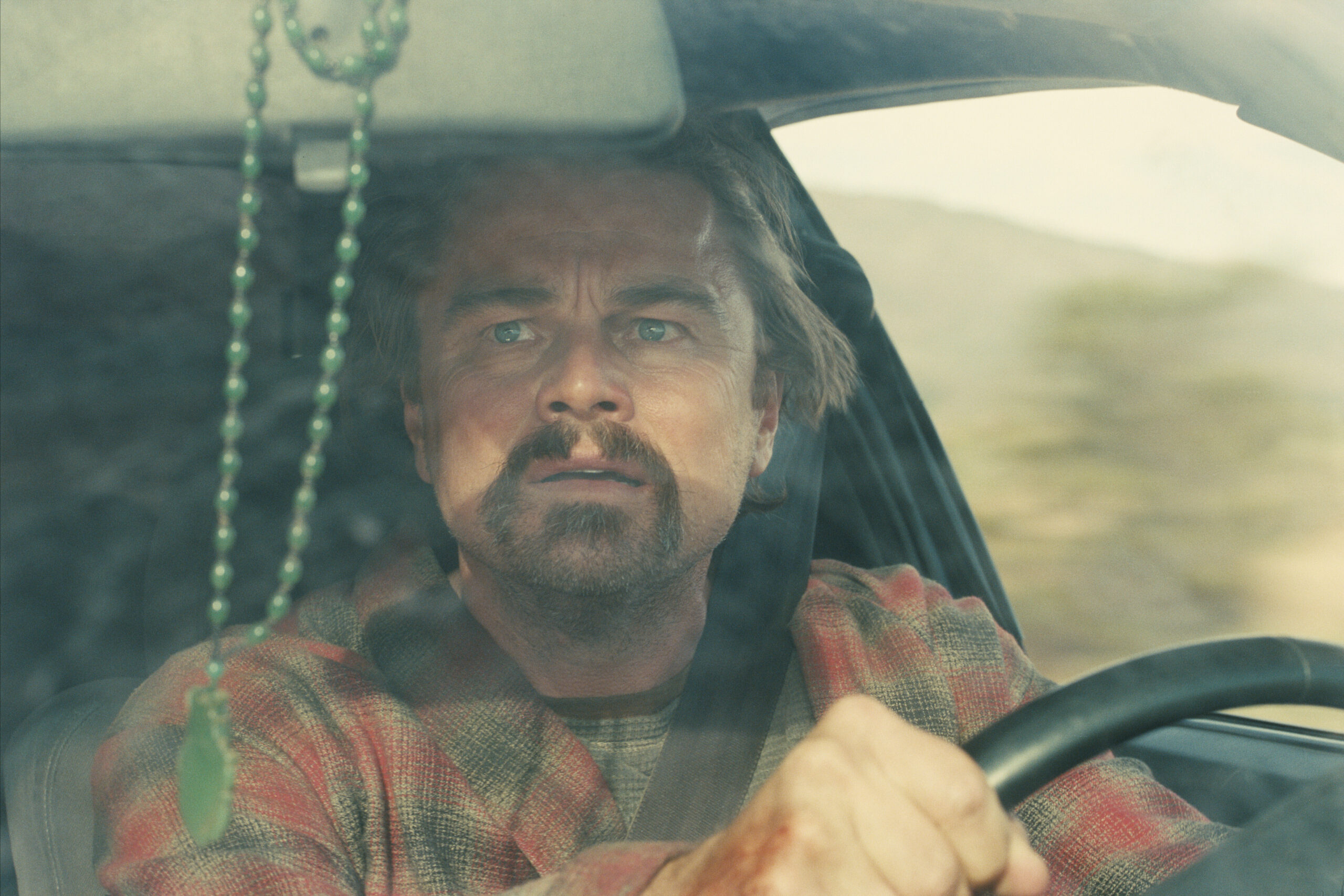
This image released by Warner Bros. Pictures shows Leonardo DiCaprio in a scene from “One Battle After Another.” (Warner Bros. Pictures via AP)
‘One Battle After Another’
In this dense, action-packed thriller by Paul Thomas Anderson, a has-been revolutionary (Leonardo DiCaprio) has to find his missing daughter whose disappearance is connected to his past association with a radical group. This film has 13 Oscar nominations.
Playing: Landmark’s Ritz Five, AMC Cherry Hill 24, Hiway Theater in Jenkintown, Regal UA King Of Prussia, Regal Cross Keys, AMC Neshaminy 24, Regal Brandywine Town Center, Regal UA Oxford Valley, Regal Cumberland Mall, Regal Peoples Plaza, and more.
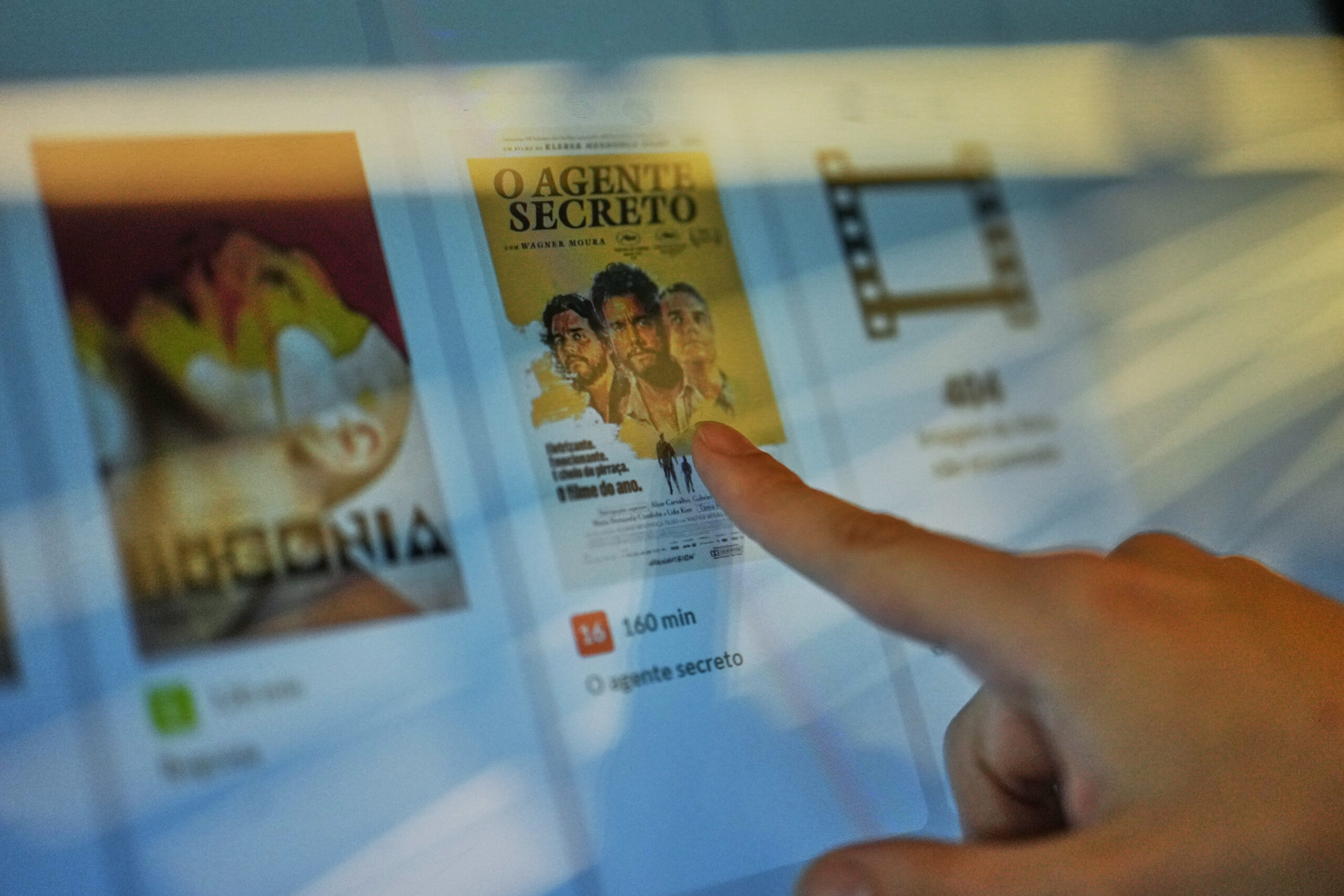
A person buys a ticket for the Oscar-nominated film, The Secret Agent, at a self-service ticket kiosk, at a movie theater in Sao Paulo, Thursday, Jan. 22, 2026. (AP Photo/Andre Penner)
‘The Secret Agent’
A historical nonfiction follows former professor and political dissident Armando (best actor Oscar nominee Wagner Moura) is on the run from mercenary killers in this 1977 Brazilian thriller from Cannes-winning filmmaker Kleber Mendonça Filho.
Playing: Film Society Bourse, Bryn Mawr Film Institute, the Colonial Theatre, County Theater in Doylestown, the Princeton Garden Theatre, Montgomery Cinemas in Skillman, NJ, and more.
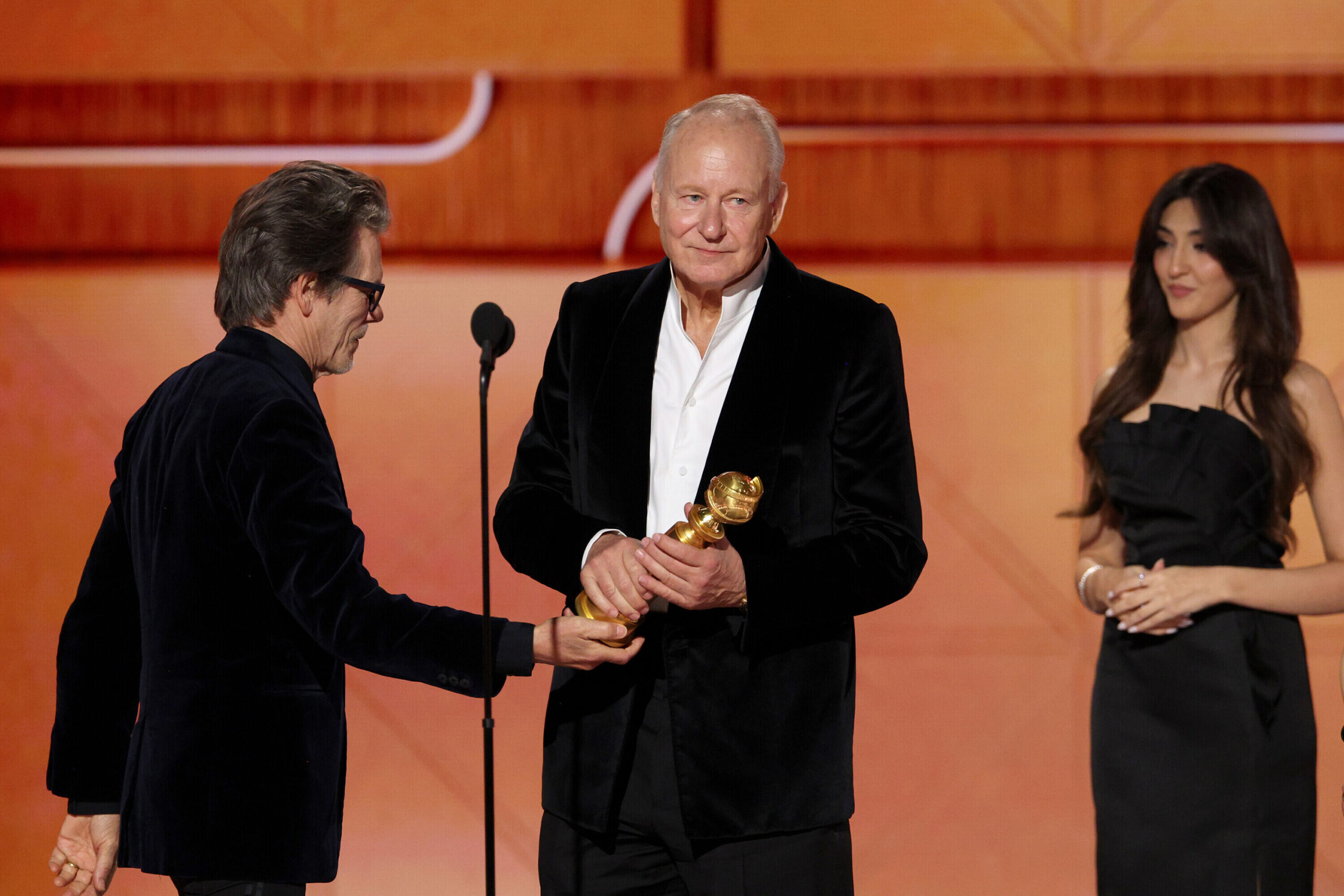
This image released by CBS Broadcasting shows Stellan Skarsgård accepting the award for best performance by a supporting actor in a motion picture for “Sentimental Value,” from presenter Kevin Bacon, left, during the 83rd Golden Globes on Sunday, Jan. 11, 2026, at the Beverly Hilton in Beverly Hills, Calif. (Kevork Djansezian/CBS Broadcasting via AP)
‘Sentimental Value’
Sisters Nora (Renate Reinsve playing a theater actor) and Agnes (Inga Ibsdotter Lileaas) reunite with their distant father Gustav (Stellan Skarsgard), a famous director. The reunion forces the family to confront past trauma and their shared artistic practice as Gustav works on a film based on his family members.
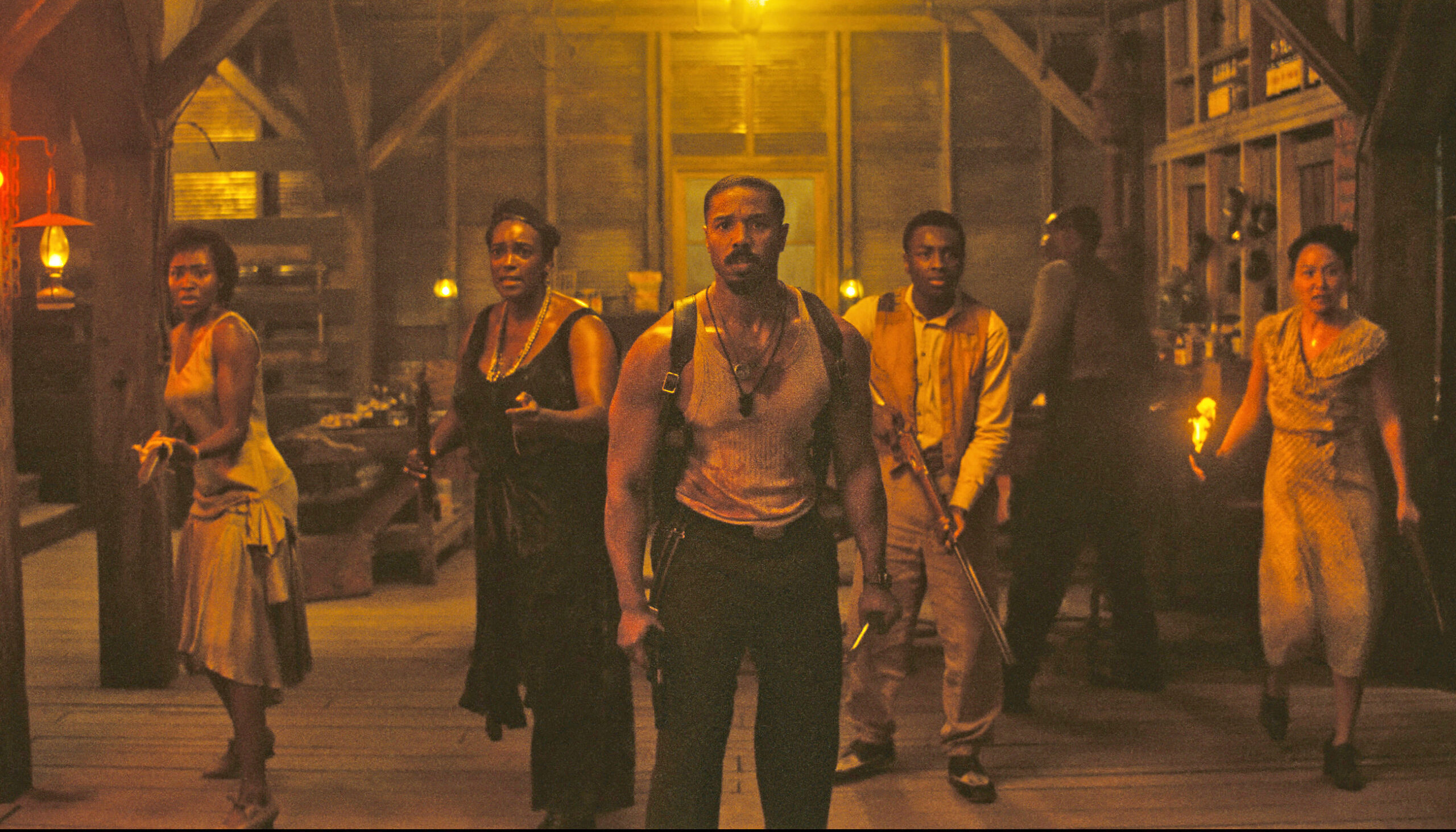
This image released by Warner Bros Pictures shows Michael B. Jordan, center, in a scene from “Sinners.” (Warner Bros. Pictures via AP)
‘Sinners’
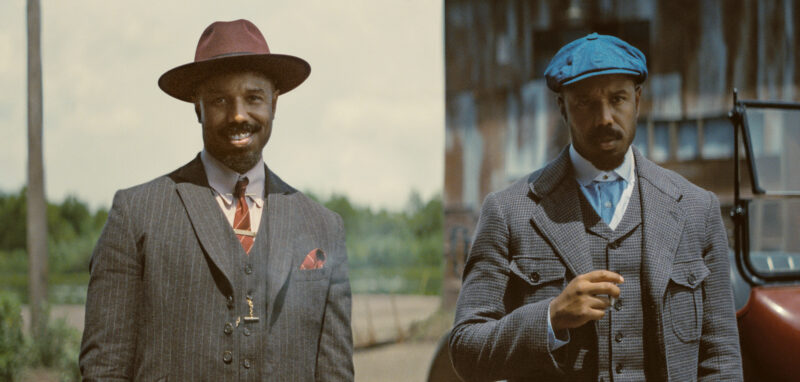
Rich from Chicago bootlegging schemes, twins Smoke and Stack (Michael B. Jordan) return to their home in the Deep South during the 1930s to open a juke joint. Here they come fact-to-face with vampires intent on stealing their souls. The film, directed by Ryan Coogler, received a record-breaking 16 nominations including one for Jordan, who is nominated for best actor.
Playing: Landmark’s Ritz Five, AMC Cherry Hill 24, Cinemark Somerdale 16 and XD, Regal UA King Of Prussia, AMC Neshaminy 24, Regal Warrington Crossing, CAMC Center Valley 16, and more.
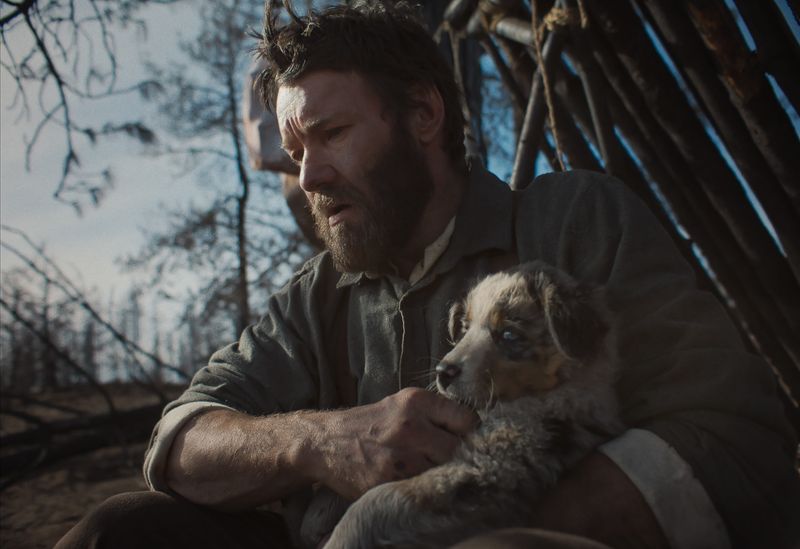
Joel Edgerton navigates personal tragedy and decades of working on the railroad in the period drama “Train Dreams.”
‘Train Dreams’
Early 20th century logger Robert Grainer (Joel Edgerton) builds a life with his wife Gladys (Felicity Jones) only to lose it all to wildfires, violence, and changing times. The film is based on Denis Johnson’s novella and received four Oscar nominations.
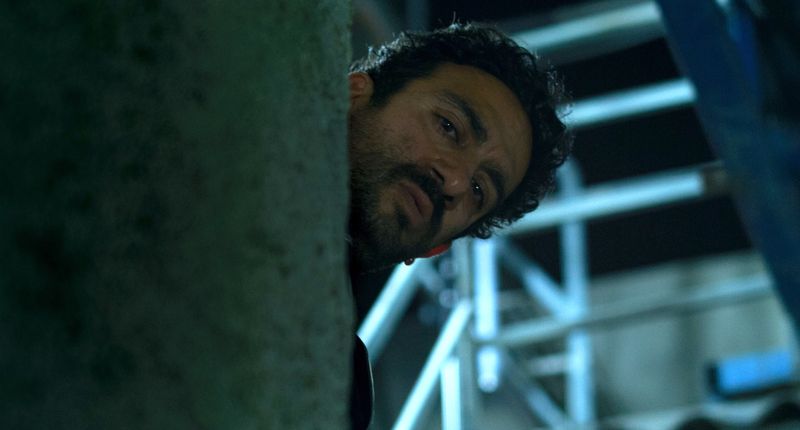
Vahid Mobasseri plays a mechanic and former Iranian political prisoner who kidnaps his former torturer in the genre-mashing thriller “It Was Just an Accident.”
‘It Was Just an Accident’
This Iranian thriller from legendary filmmaker Jafar Panahi follows a mechanic named Vahid (Vahid Mobasseri) who, along with fellow rebels, encounters their former prison tormentor and vows revenge.
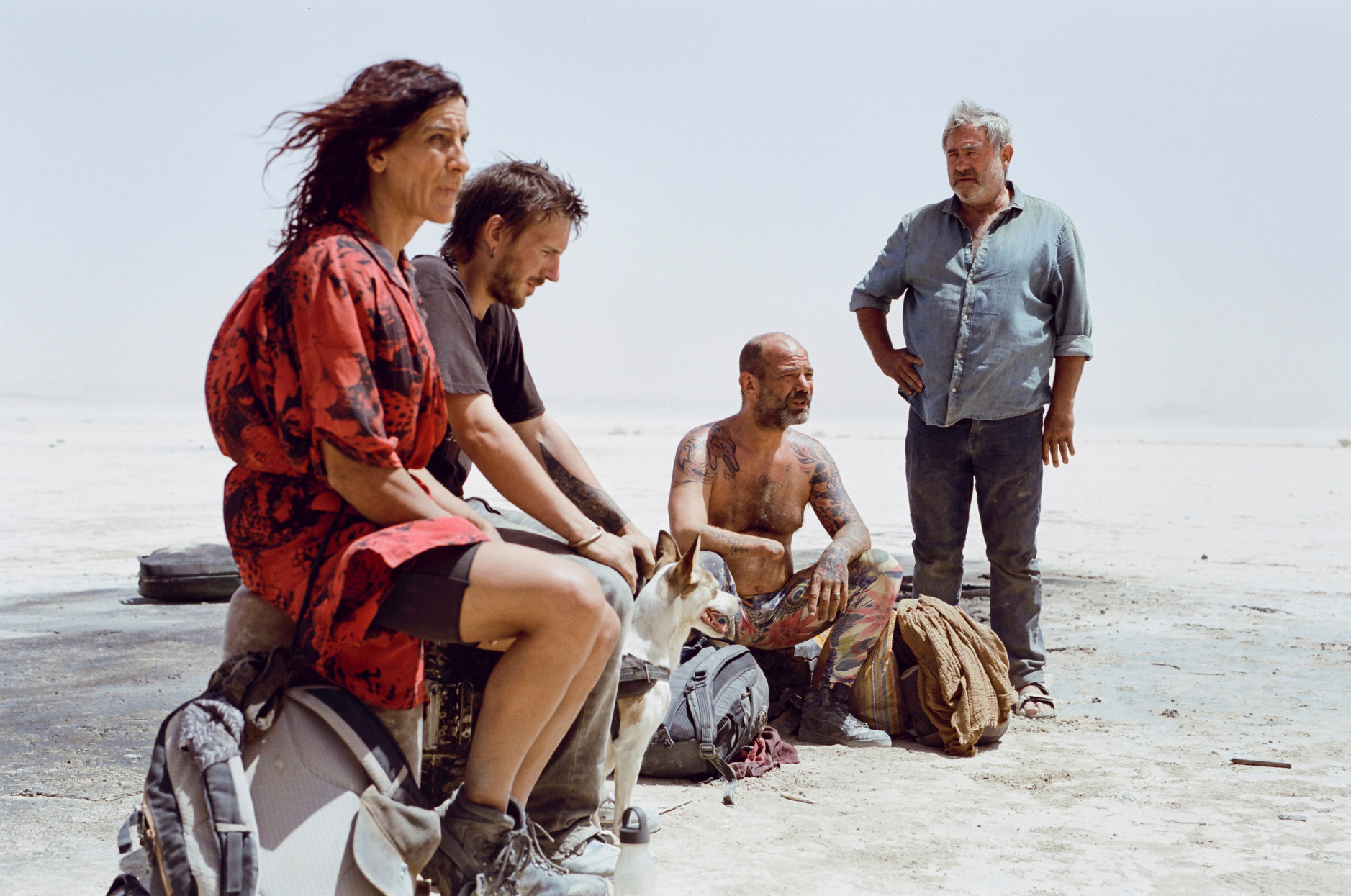
This image released by Neon shows, from left, Stefania Gadda, Joshua Liam Herderson, Richard Bellamy and Sergi López in a scene from the film “Sirat.” (Neon via AP)
‘Sirāt’
A film in French, Arabic, English, and Spanish about a family searching for their missing daughter during a music rave in a southern Moroccan desert. Add to that an armed conflict that escalates into a World War III-like tussle.
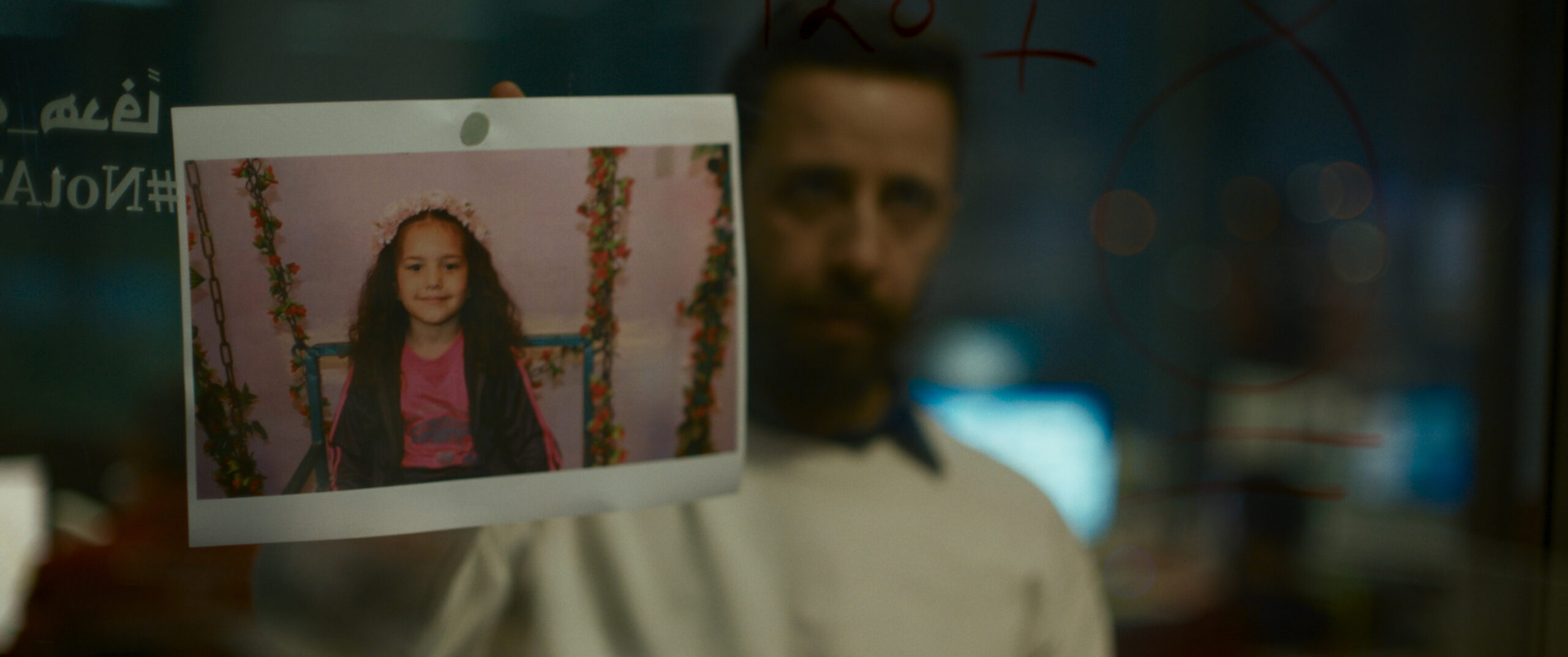
Motaz Malhees stars in “The Voice of Hind Rajab” as a Palestinian Red Crescent Society worker who receives a distress call from 6-year-old Hind Rajab, seen in the photograph. MUST CREDIT: WILLA
‘The Voice of Hind Rajab’
Tunisian filmmaker Kaouther Ben Hania’s docudrama chronicles the killing of Hind Rajab, a 5-year-old Palestinian girl in Gaza using an emergency call Red Crescent volunteers received on January 29, 2024.
Sinners, Ryan Coogler’s vampiric period film starring Michael B. Jordan, made Academy Award history on Thursday when it was nominated for 16 Oscars, more than any other film in the history of the award ceremony’s 98-year run.
It toppled the 14 nominations previously received by All About Eve (1950), Titanic (1997), and La La Land (2016). In addition to Michael B. Jordan’s best actor nomination and Coogler’s best director nod, Sinners Oscar-winning costume designer, Ruth E. Carter, was also nominated for for her work on the film. It’s her fifth overall Oscar nomination.
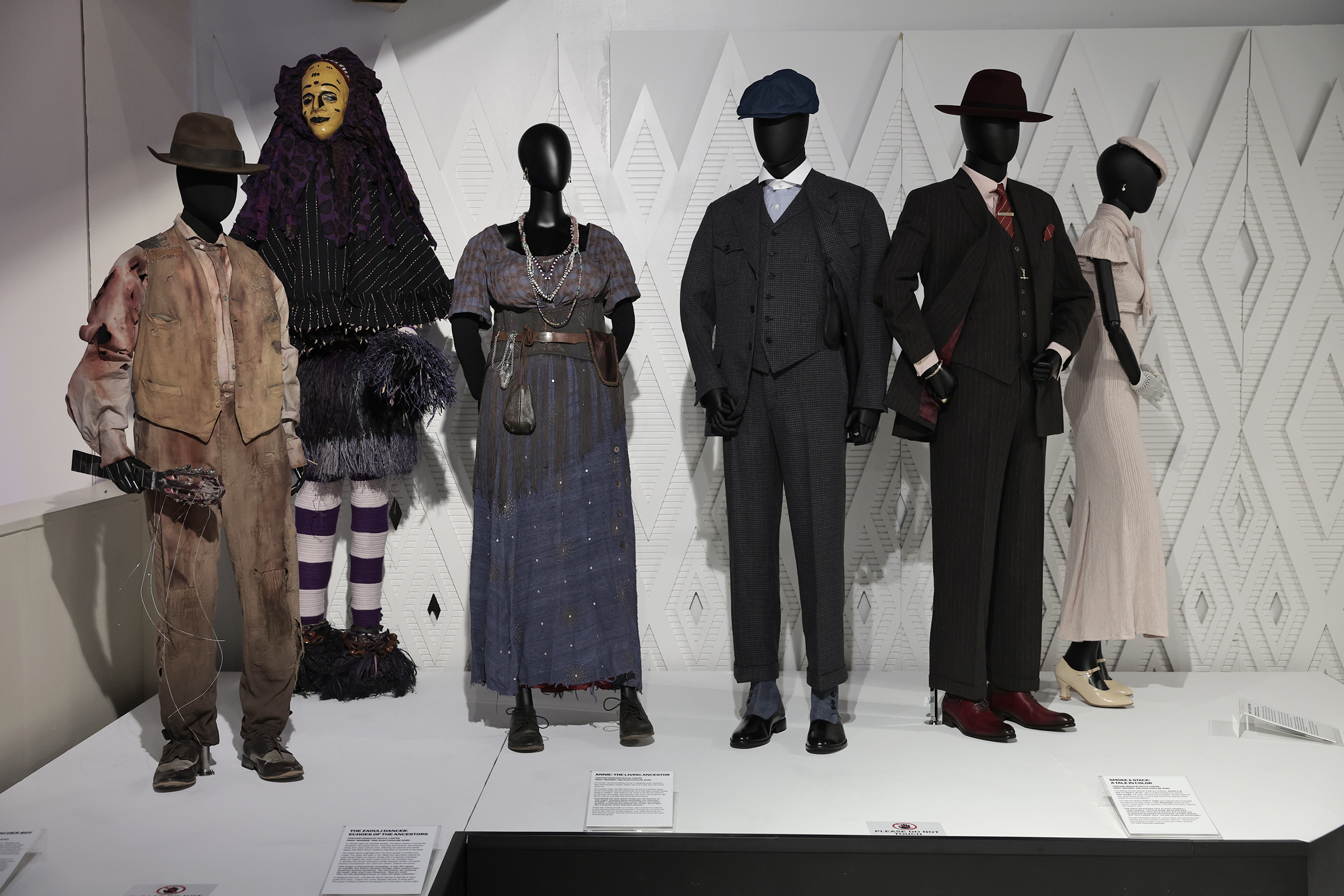
That includes Smoke and Stack’s (twins played by Jordan) memorable 1930s-era three-piece suits, with complementary fedora and newsboy cap, timepieces, and tiepins.
Ruth E. Carter’s Oscar-nominated costumes from “Sinners” starring Michael B. Jordan as twins Smoke and Stack.
Coogler’s only direction to Carter was to dress Smoke in blue and Stack in red, she told The Inquirer in November.
Carter, not one to fret long, dove into her arsenal of research. By the time she began the fittings, she’d amassed an array of blue and red looks befitting of the 1930s sharecroppers-turned-bootleggers and juke joint owners.
“[And] when I put that red fedora on him, Ryan flipped out and said, ‘That’s it!’,” Carter said. “We wanted people to resonate with their clothing and it did.”
The Smoke and Stack effect went beyond Sinners. This Halloween there were tons of social media posts of revelers dressed as the mysterious twins.
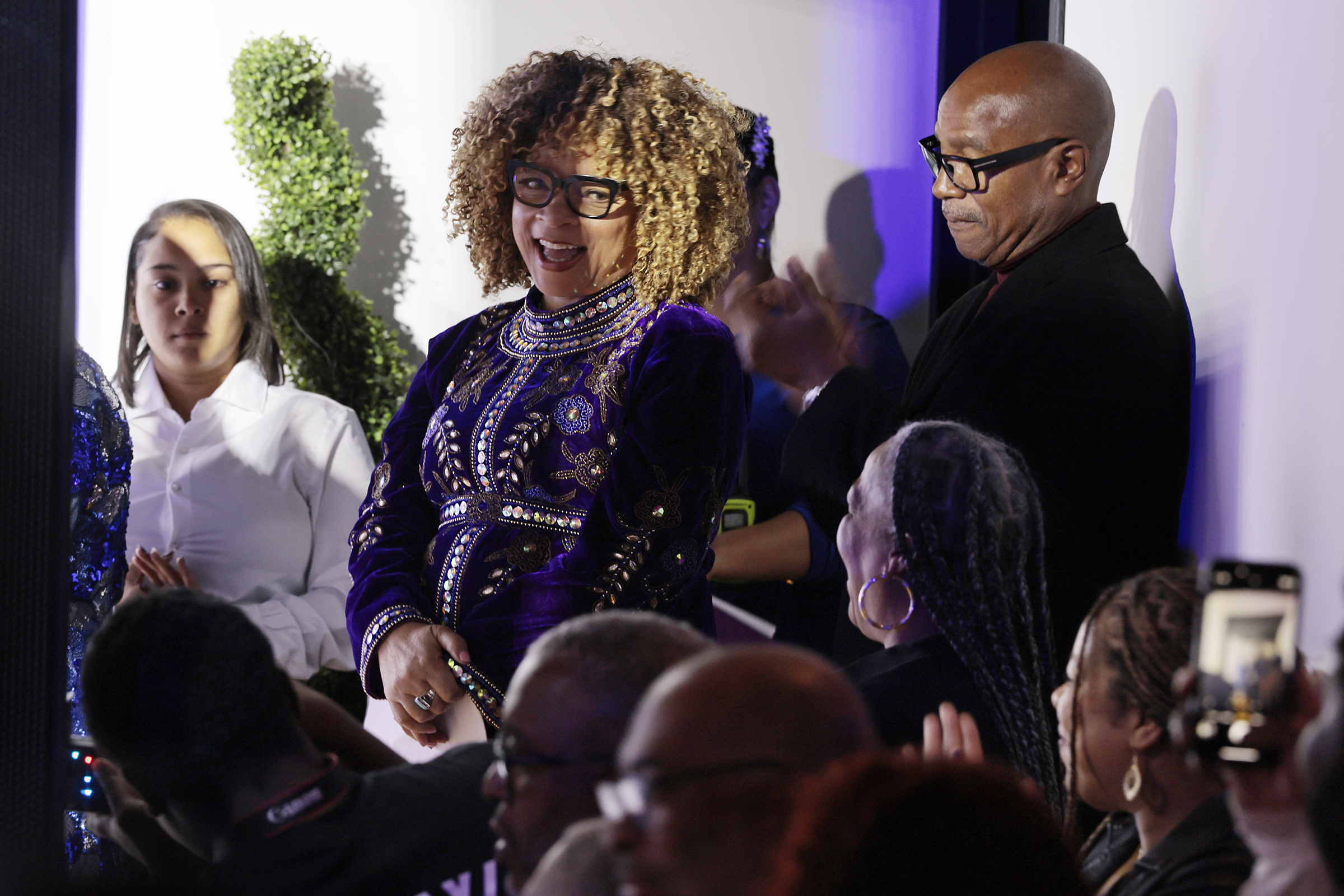
Ruth E. Carter during the “Ruth E. Carter: Afrofuturism in Costume Design” opening gala at the African American Museum in Philadelphia on Saturday, Nov. 1, 2025.
Also a part of AAMP’s Sinners display is the flowy earthy dress that best supporting actress nominee Wunmi Mosaku wore in her role as Annie. Annie is Smoke’s lover and a root woman who discovers the vampires in their Clarksdale, Miss., town.
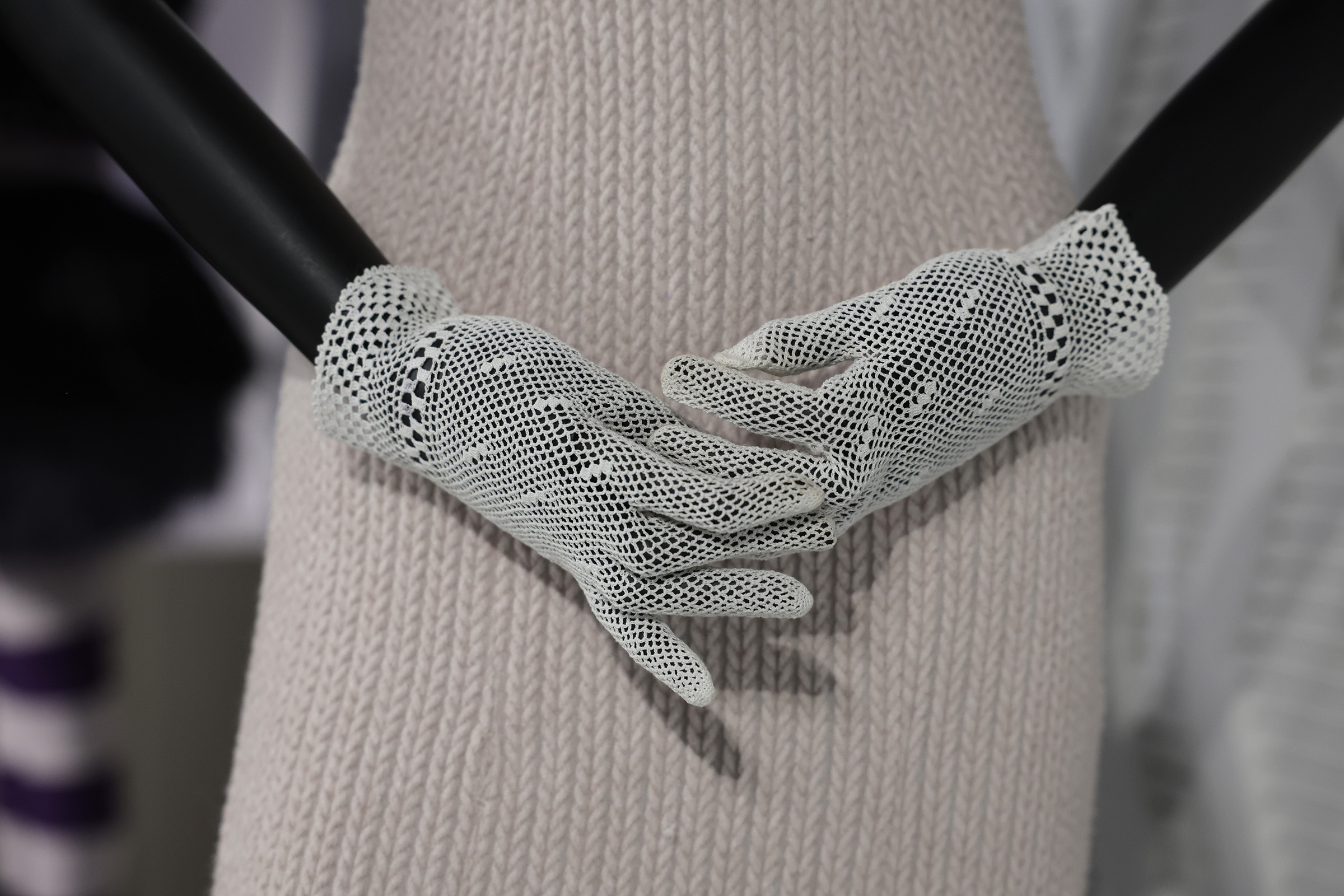
Cornbread’s (Oscar Miller) tattered sharecropper outfit is on the dais along with Mary’s (Hailee Steinfeld) blush knit dress with its short-sleeved bodice and pussy bow accent. Her matching knit beret and pearls are also on display. In the film, Mary is Stack’s childhood friend, turned girlfriend, turned vampire.
“I immerse myself in the mind, body, and soul of my characters,” said Carter. “Then I see them in my mind, how they move and with research, I come up with a look that I feel is unique to them.”
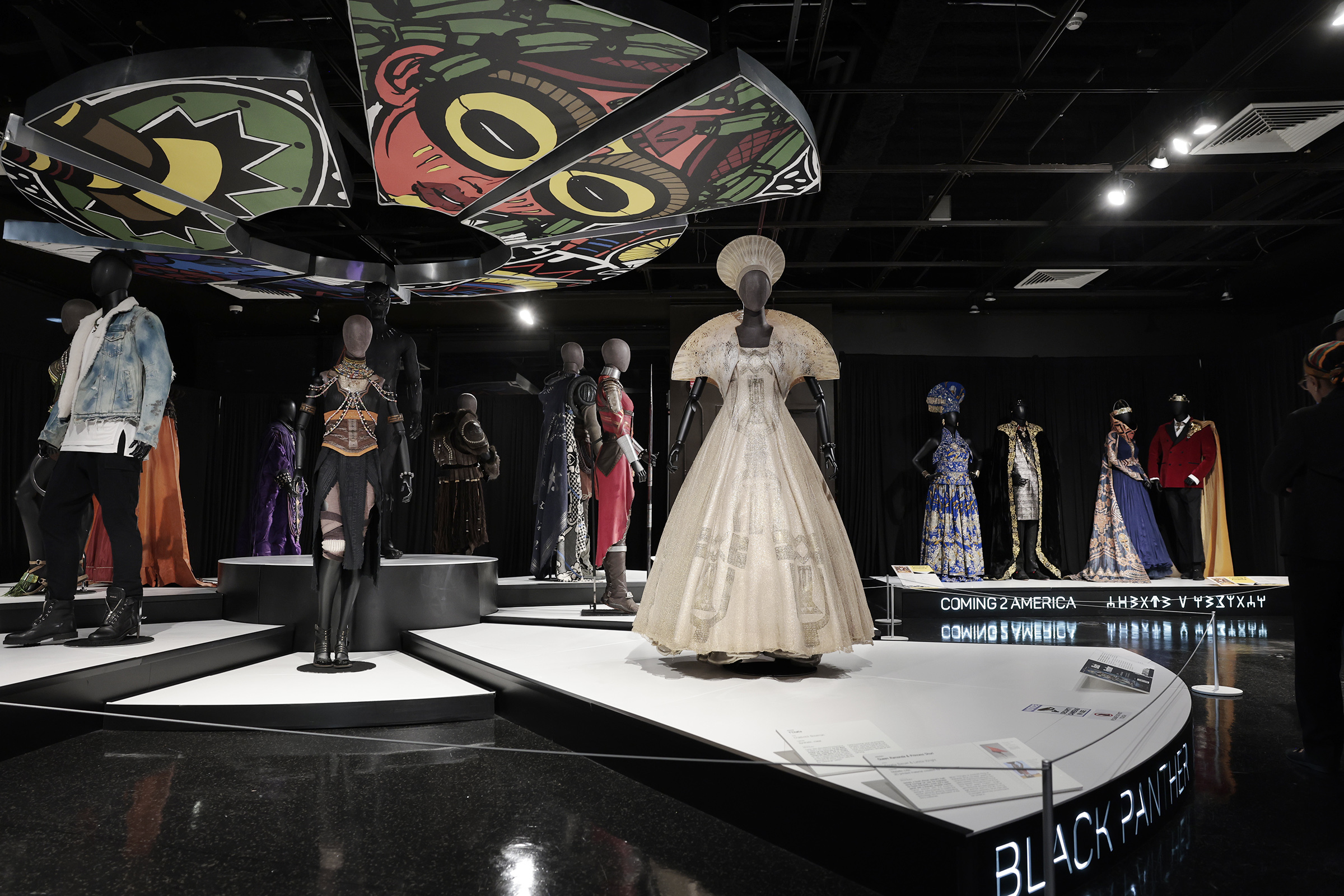
The Sinners pieces are among the more than 80 looks featured in the “Afrofuturism” exhibit, joining outfits from The Butler (Lee Daniels), and from Malcolm X, Coming 2 America, Black Panther, and its sequel, Black Panther: Wakanda Forever.
The show, headlining the African American Museum’s celebration of the nation’s Semiquincentennial, will be on display through September.
Lace gloves and knit dress detail of Mary (Hailee Steinfeld) costume from sinners.
During her five decades in the movie business, Carter has worked on more than 60 big-screen documentations of where Black Americans have been, who they are at the given moment, and who they dream of becoming.
Her work has shaped how the world sees African Americans.
In the 2010s, a friend of hers suggested she plan a museum exhibit around her costumes. After Black Panther, she partnered with Marvel, and in 2019, “Afrofuturism in Costume Design” debuted at the Savannah College of Art and Design’s Atlanta Campus.
The “Ruth E. Carter: Afrofuturism in Costume Design” exhibit at the African American Museum in Philadelphia on Saturday, Nov. 1, 2025.
Philadelphia is the exhibit’s ninth — and longest — stop. It’s also the first stop for the Sinners costumes.
“I am a griot,” Carter said. “[Throughout my career,] I’ve developed a knowledge base that embraces our culture and speaks to all of us in a positive way.”
“Ruth E. Carter: Afrofuturism in Costume Design” will be on view through Sept. 6. at the African American Museum in Philadelphia, 701 Arch St., Thursday through Sunday, 10 a.m. to 5 p.m. Tickets are $20 for adults, $10 for children.
Chill Moody didn’t plan on writing a children’s book.
A story about a young athlete was bubbling in his head. And the West Philly-born rapper and serial entrepreneur wanted to turn it into a screenplay, mirroring the upbeat, have-faith vibe of fellow rapper Bow Wow’s 2002 film, Like Mike.
“Instead of basketball [in Like Mike], I wanted the story to be about golf,” said Moody, whose real first name is Eric.
“And instead of a little boy, I wanted my main character to be a little girl.”
But movies take forever to become a reality. Moody, always ready to churn out his next nice thing, wanted to get this fictional little girl, who rocks a red golf tee and wields golf clubs passed down from the ancestors, into the world quickly.
So Moody, and his coauthor and cousin, Danielle Kellogg, decided a children’s book would be their best bet. This way, Moody could share his message of inspiration directly with his target audience. His character would come alive with every page turn; and a skilled rapper, Moody could write a story that rhymed.
“There had to be alliteration,“ he said. ”So, I named her Gia,”
Gia the Golfer was released in December.
The 36-page picture book, featuring vibrant illustrations by local artist Stephen Hatala, is available on the Barnes & Noble website and Amazon, where it sells for $14.99.
So far, Moody said, he’s sold a few hundred copies of Gia the Golfer. And, he said, 100% of the profits will fund his nonprofit We Golf Now. The two-year-old nonprofit encourages Philadelphia’s Black and brown youth to develop confidence, social, and networking skills through playing golf.
Zane King, 6, get advice from Chill Moody during a We Golf Now event at Five Iron Golf in Philadelphia, Pa., on Sunday, March 30, 2025.
“We serve over 100 kids,” Moody said. “We teach kids how to play golf, the business of golf, and introduce them to careers and job opportunities.”
Moody sees Gia’s spark and optimism in all of his young golfers.
When we meet Gia, her grandfather, Geo, has just died. She and her mother are going through his things when Gia discovers golf clubs that belonged to Geo, a star golfer and winner of a lot of tournaments. She takes the clubs and practices on her own and seems to be a natural. Her mother signs her up for golf classes and, following in her grandfather’s footsteps, she excels and decides to compete in a tournament.
But, on the day of the tournament, the golf clubs — that twinkle like they could be magical — disappear. Gia has to play without them.
“I wanted to teach children about memories and dealing with grief,” Moody said. “And that even if you lose something that you think is important, you aren’t at a loss.”
Moody, 40, finished writing the book in 2024. He shopped it to publishers for nearly a year before taking the self-publishing route.
“I didn’t want to sell the books out of my trunk like I did with my music,” Moody said. “But then I remembered I did this so we could tell our children’s stories. I remembered I could do this … I bet on myself.”
In September, he partnered with Lansdale’s Boardroom Spirits and released Tequila Transfusion, a mix of tequila, grape, ginger, and lime — his version of the country club cocktail.
Just like his drinks, Moody has big plans for Gia.
“I’m thinking animated cartoons and plush toys,” Moody said. “I want her to blow up as a brand. Seriously, I’m thinking Gia will be the next Dora the Explorer.”
On Dec. 1, 1898, about 1,000 people gathered at a court in Textile Hall — today’s Kensington neighborhood. They were there to watch the Philadelphia Hancock Athletic Association play the New Jersey Trenton Nationals in America’s first professional basketball game.
According to an article in the following day’s Philadelphia Times, the game got a late start because referees were still ironing out the rules of the world’s newest professional sport.
But once the game got underway, it was fast and furious.
Hancock “started with a rush, scoring two field goals before the players had become warmed up to their work,” the story reads.
“Throughout the entire first half, the home team had the better of the argument, taking advantage of every opportunity finishing the half in the lead by a score of 11 to [0].”
In the end, Philadelphia lost by two points, a disappointment Philly sports fans know all too well, even in these modern times.
The final score: 21 to 19.
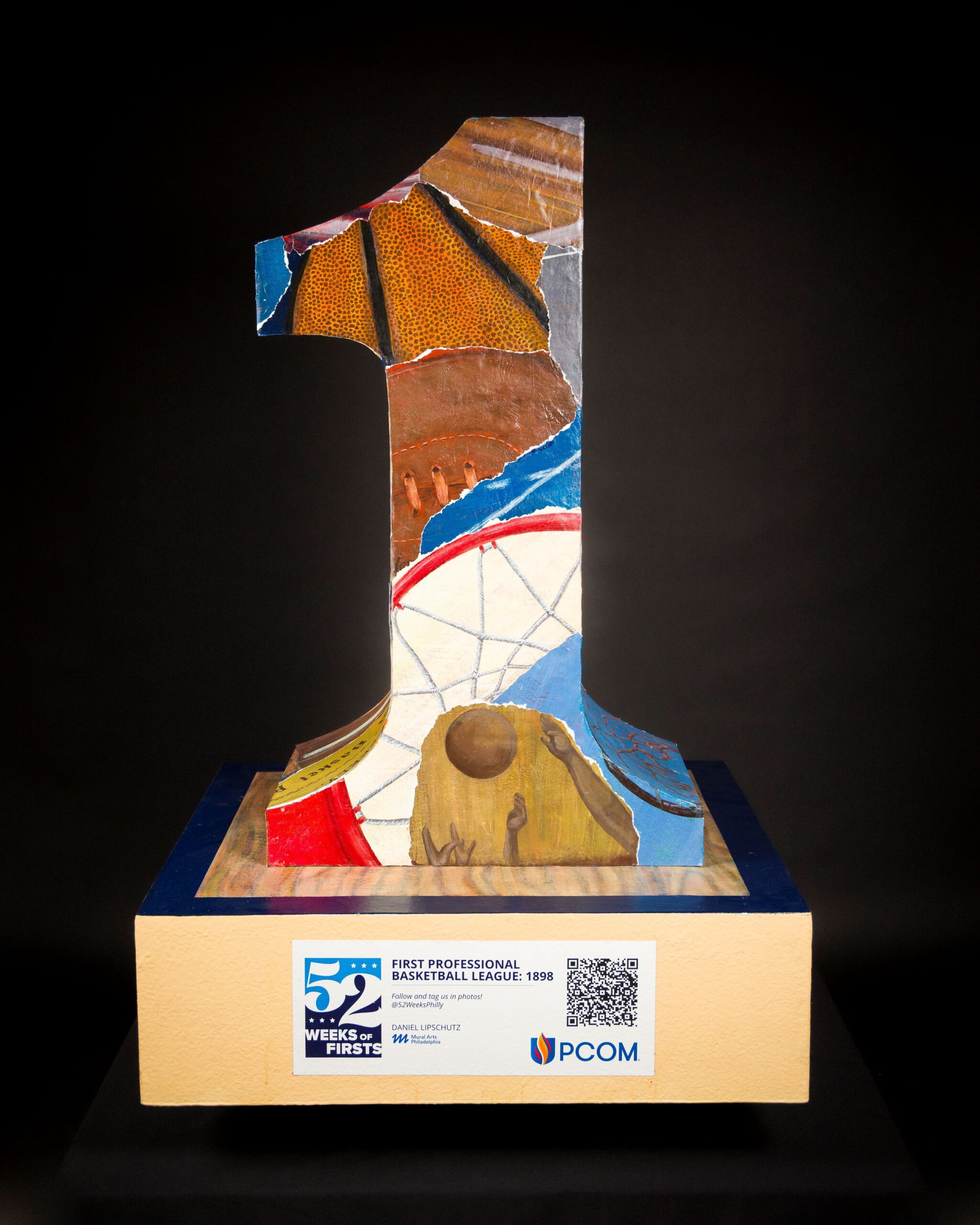
Daniel Lipschutz blended history into his love of the modern day sport for this sculpture.
That first game of the National Basketball League will be feted this Saturday at a Firstival at Xfinity Mobile Arena. Firstivals are the Philadelphia Historic District’s weekly day parties celebrating events that happened in Philadelphia before anywhere else in America, and often the world. They are part of a yearlong celebration of America’s 250th birthday.
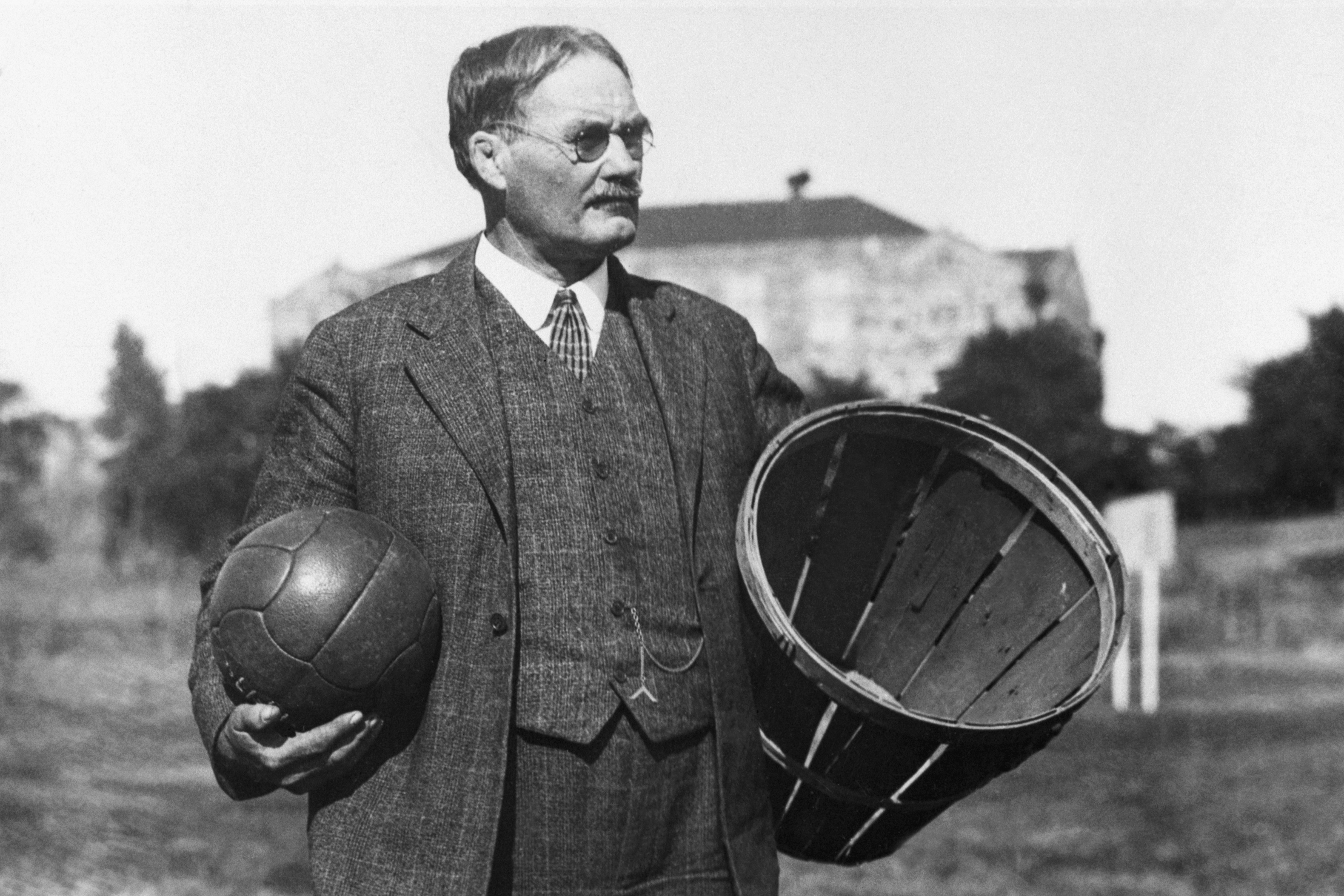
James Naismith, a YMCA coach in Springfield, Mass., invented basketball in 1891 to keep kids active during winter months. The sport incorporated elements of rugby, lacrosse, and soccer. Instead of throwing balls into a bottomless net to score, players threw balls into peach baskets.
(In other words, there was no such thing as a rebound.)
James Naismith, inventor of basketball, with a ball and a basket.
Basketball quickly became popular with college students and in 1898, Naismith was recruited to coach the University of Kansas basketball team.
That same year, Horace Fogel, sports editor of the Philadelphia Public Ledger, organized the first professional basketball league with three teams from Philadelphia and three from South Jersey.
A 12-foot chain-link cage separated players from the fans. Ropes replaced these iron cages in the 1920s.
Fogel’s National Basketball League lasted just five years, folding in 1904 because of quick player turnover eating into profits. A second league was formed in 1937 and was sponsored by Goodyear. In 1946, the Basketball Association of America was established.
And in 1949, the BAA and NBL merged to create today’s NBA.
“This really goes to show that Philadelphia is a sports city,” said Shavonnia Corbin Johnson, vice president of civic affairs for the 76ers. “When people talk about Philadelphia sports rooted in history, tradition, and passion, it’s true, but now we know that America’s true love of sports can trace its roots right back here.”
This week’s Firstival is Saturday, Jan. 24, 11 a.m. — 1 p.m., at Xfinity Mobile Arena, 3601 S. Broad St., Philadelphia, Pa. Premium Access Entrance on the Broad Street side, near Lot C. The Inquirer will highlight a “first” from Philadelphia Historic District’s 52 Weeks of Firsts program every week.
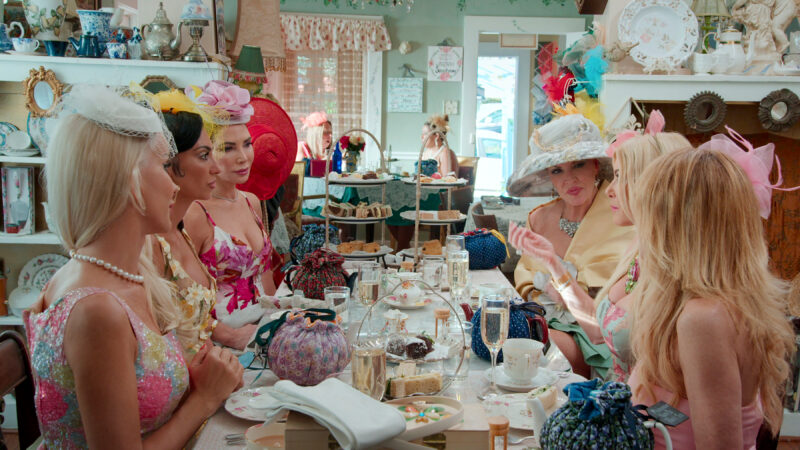
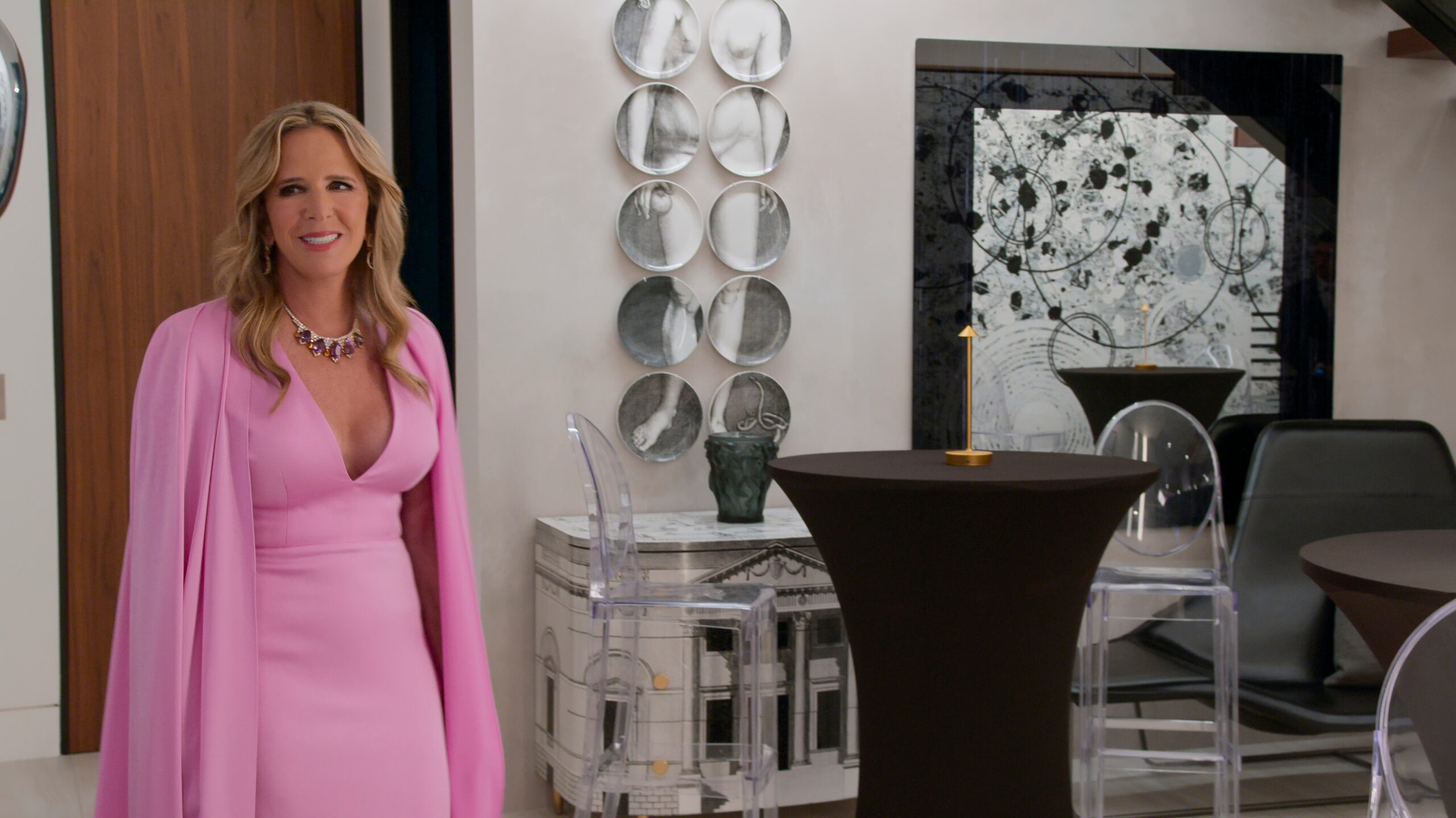
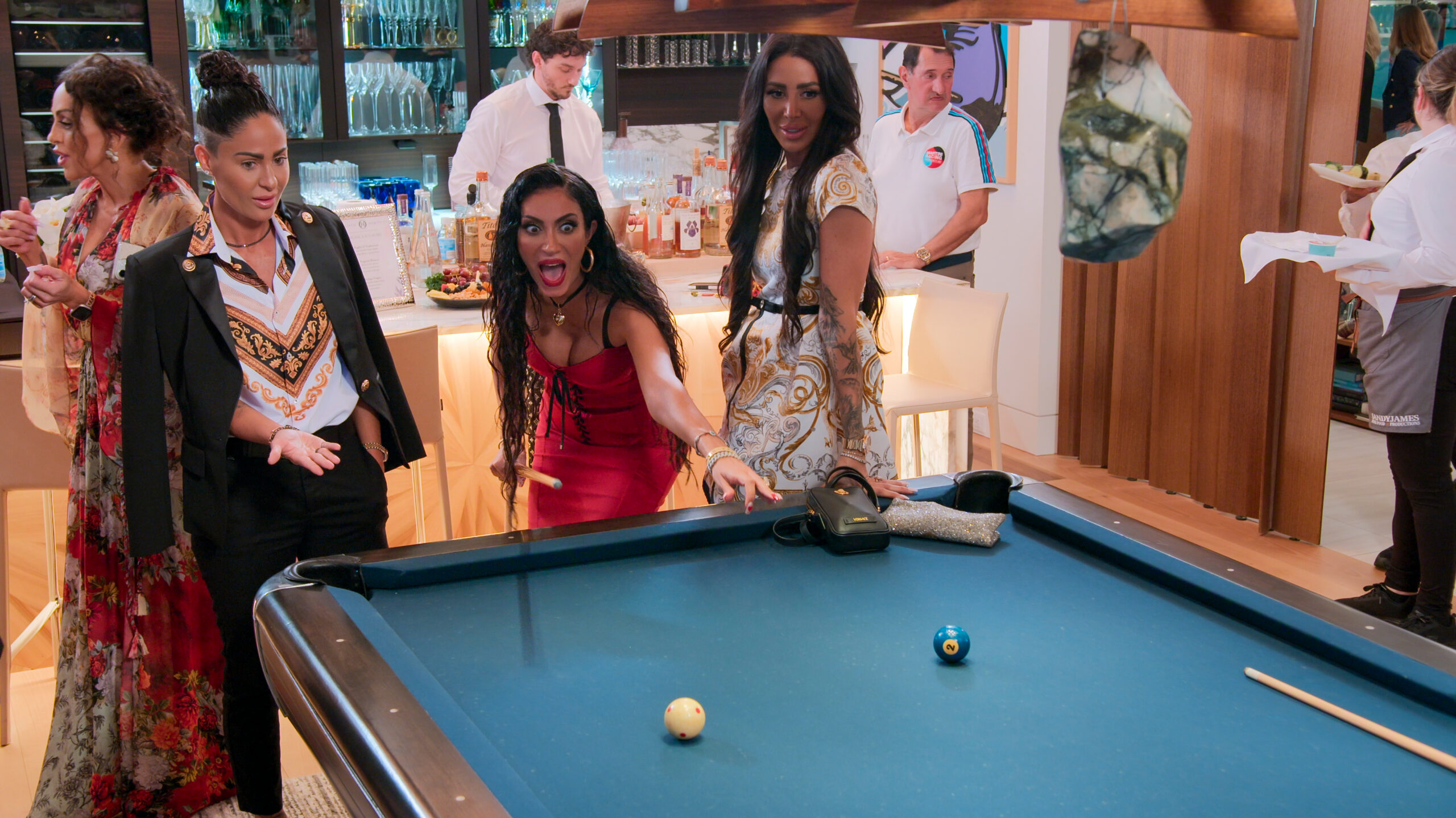
I drank in the glamorous high-pitched cattiness of Netflix’s soapy reality TV series Members Only: Palm Beach — starring four women with Philadelphia ties — like a bottomless carafe of mimosas, finishing the eight 45-minute episodes in less than two days.
Members Only debuted in the final days of 2025 on Netflix’s Top 10 list. It gives old-school Housewives vibes and throws a spotlight on the women who live in and around President Donald Trump’s 20-acre oceanfront Mar-a-Largo estate.
Maria Cozamanis and Romina Ustayev in episode 101 of “Members Only: Palm Beach.”
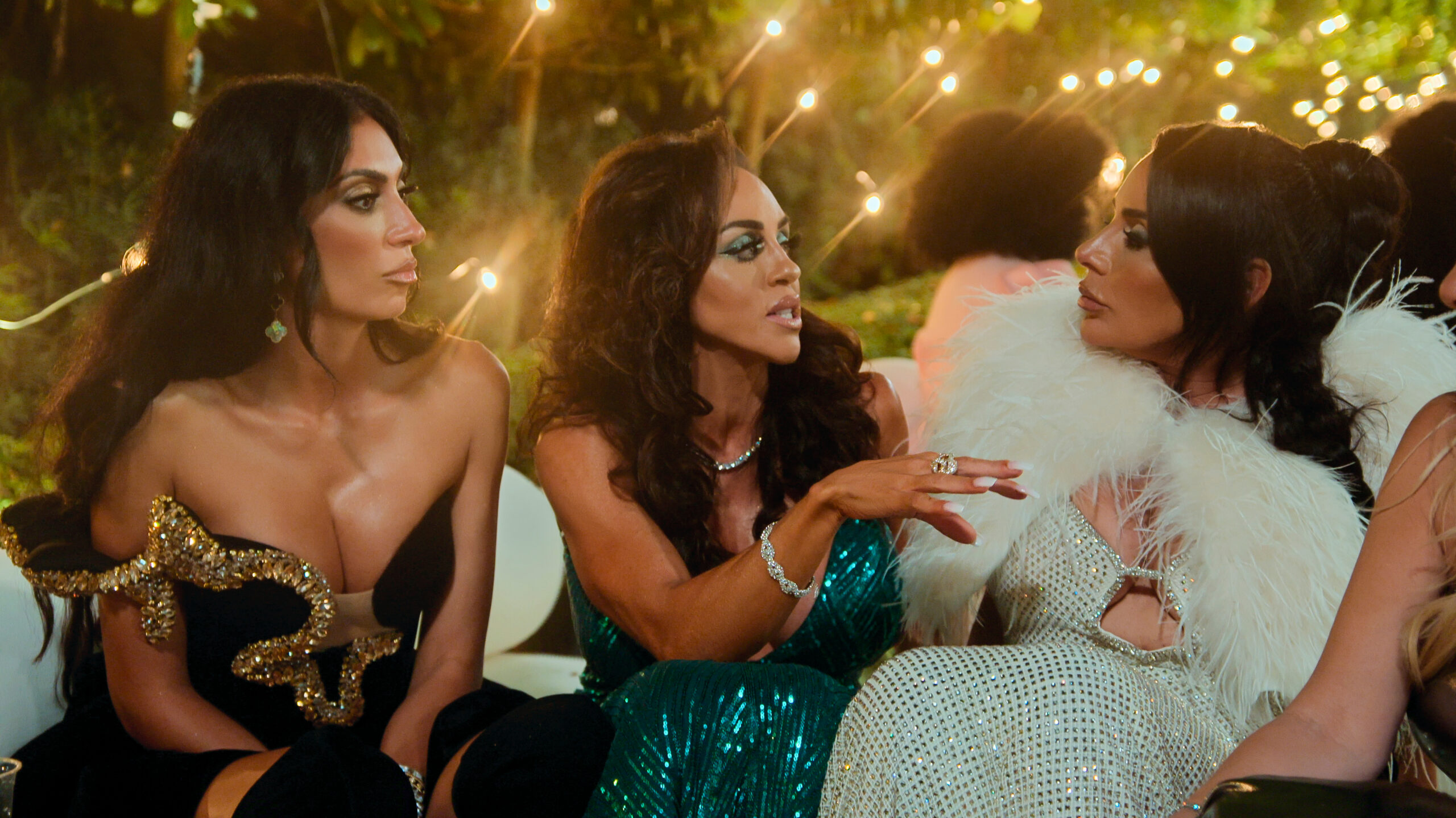
The gaudy maxi dresses, overfilled lips, horrible lace front wigs, and the backstabbing. It’s all a hot mess.
Members Only is if Jersey Shore ran into a train wreck. But instead of getting caught up in the mean girl shenanigans of 20-somethings, I was gobsmacked by the ugly behavior of 50+ women acting like petty middle schoolers in the name of preserving high society.
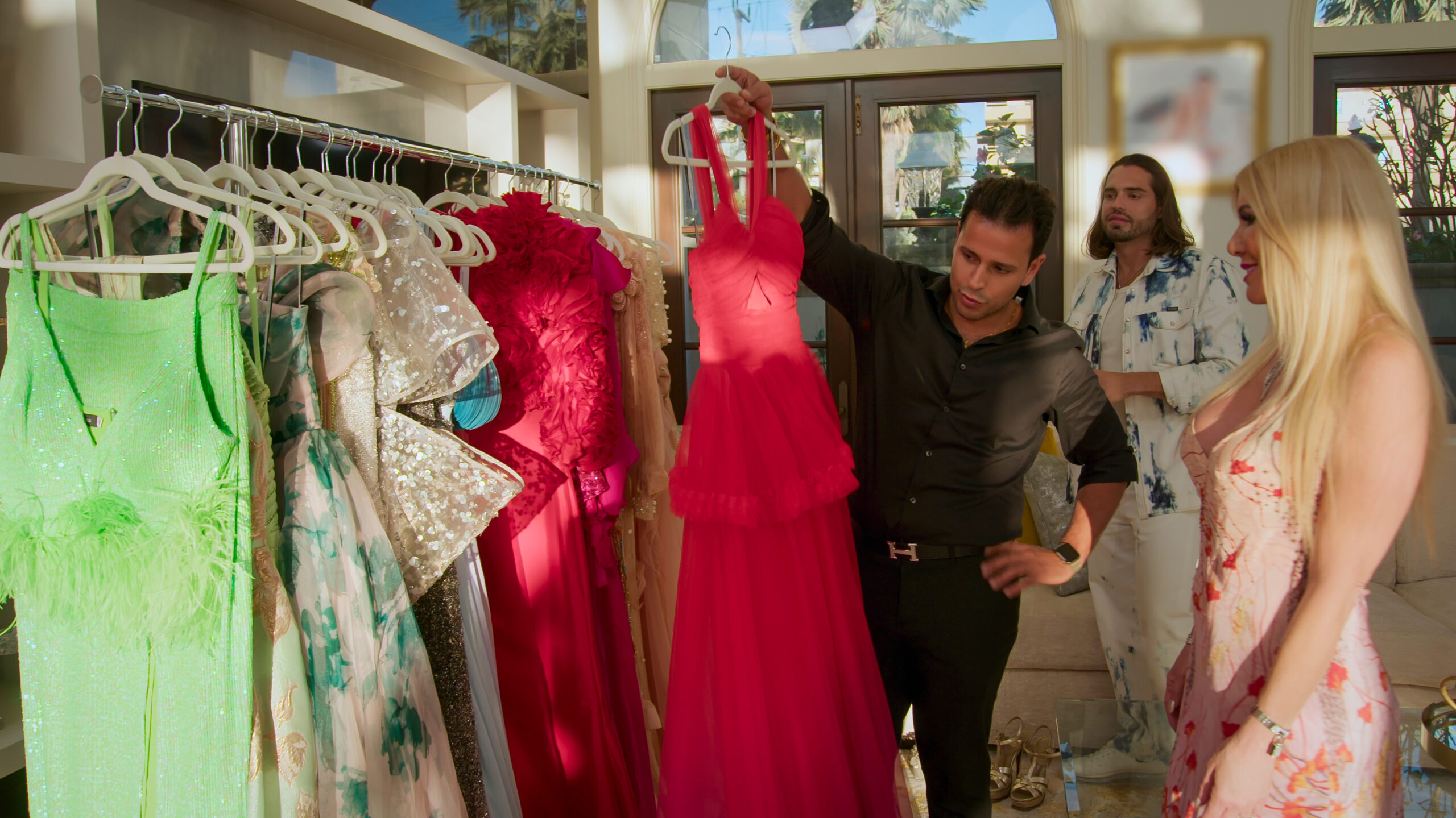
Former Bryn Mawr interior decorator and real estate mogul Hilary Musser, whose fifth wedding to a doorman is one of the ostentatious affairs featured, is the Queen Bee.
Musser now sells million-dollar waterfront mansions in Palm Beach and it’s rumored she joined the rest of the relatively unknown cast to help sell her properties.
Hilary Musser in episode 101 of “Members Only: Palm Beach.”
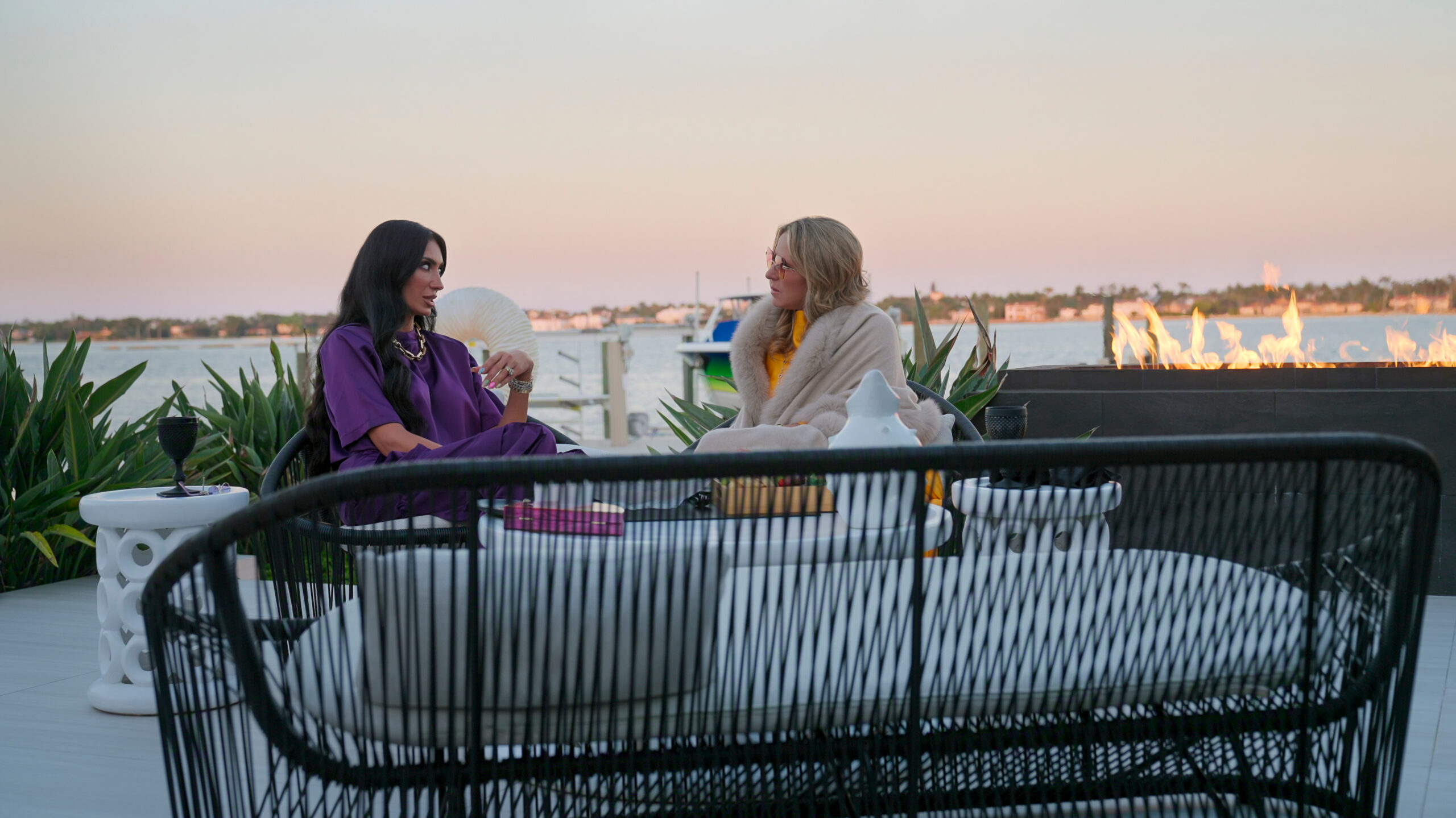
She holds steadfastly to Palm Beach’s strict dress codes. (It’s improper to show cleavage and leg in the same ensemble as a Palm Beach rule). Four-letter words offend her. Crying in public is a no-no. She’s nice only to New Yorker-turned-wellness-entrepreneur Taja Abitbol, partner of former MLB pitcher David Cone and the only non-Philly-affiliated woman in this core group.
The rest of the Philly-connected ladies smile in Musser’s face and grumble behind her haltered and tanned back.
Maria Cozamanis ad Romina Ustayev in episode 101 of “Members Only: Palm Beach.”
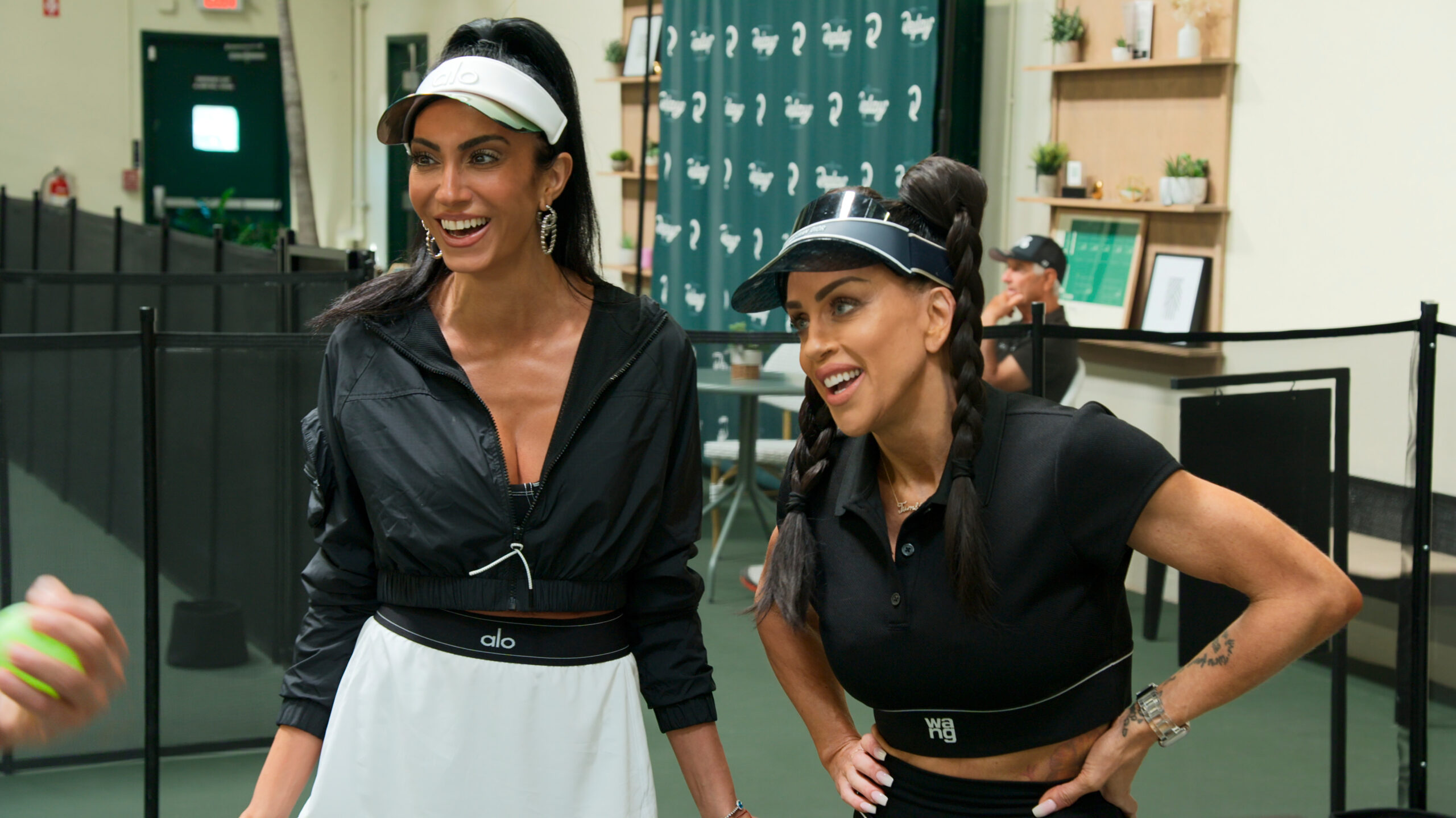
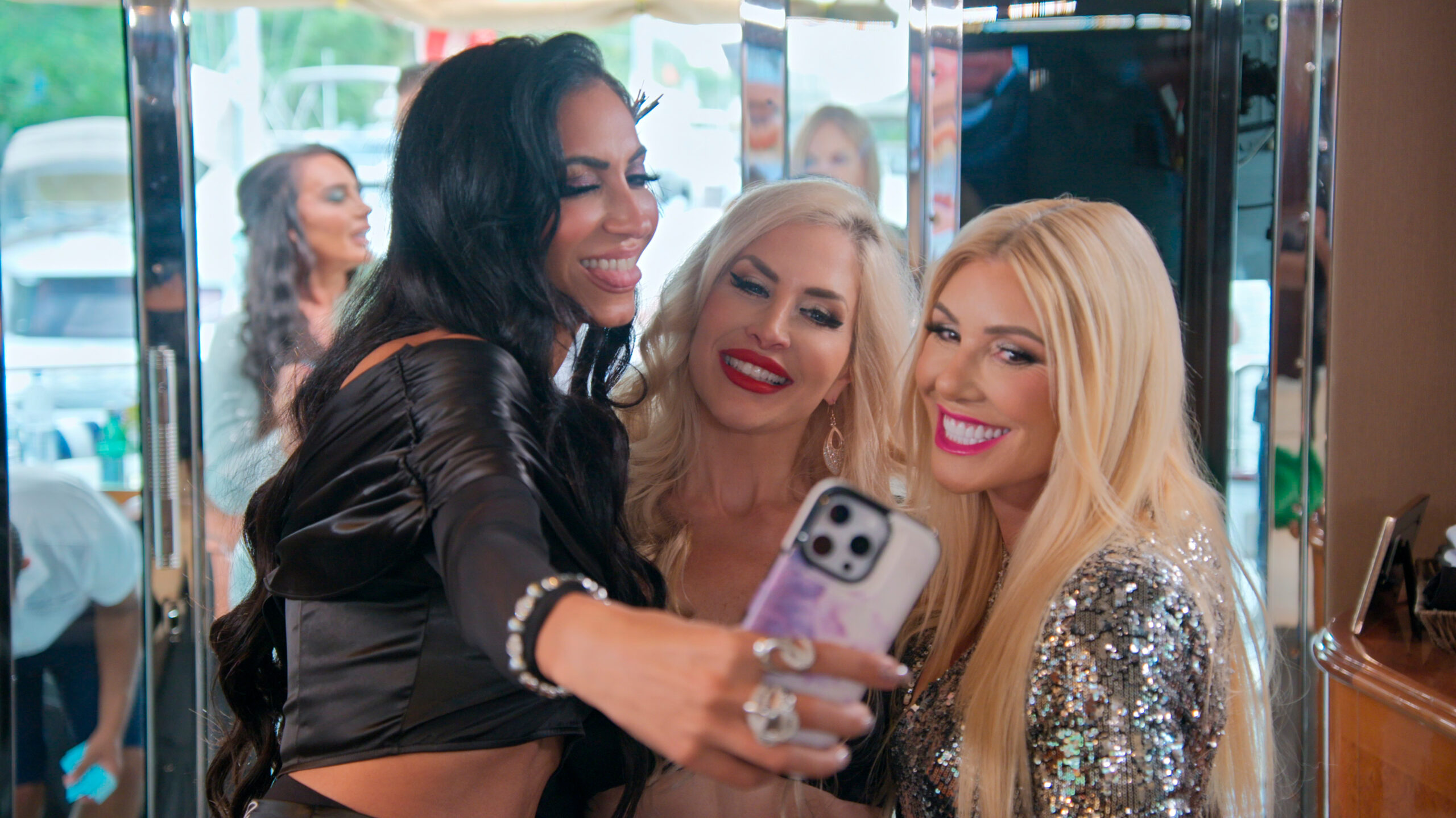
They are: Maria Cozamanis, a DJ who moved from Philadelphia to Florida. As DJ Tumbles, she worked her way onto the Palm Beach society scene DJing lavish charity events at Mar-a-Largo. Roslyn Yellin is a former Bucks County Zumba teacher and grandmother with Cinderella ambitions. “My morals and values start at home with my family and husband,” she said in the first episode, as if reading from Vice President JD Vance’s family value cue cards.
And finally, there’s Yellin’s frenemy, Romina Ustayev, an Uzbeki immigrant and former home care business and fashion line owner in Philadelphia. She calls herself the Kim Kardashian of Palm Beach.
“I love going to Mar-a-Largo and being in the same room as the president and Elon Musk,” she said, near hysterically, in one episode. “You feel like, ‘Oh my God. You’ve made it.’”
Maria Cozamanis and Romina Ustayev in episode 101 of “Members Only: Palm Beach.”
I knew going in that Members Only’s garish opulence and prettied up gluttony was a gold-trimmed Trump fever dream, one where he sits at the center of all things tacky, loud, expensive, and hurtful. (He never makes an appearance in the show, but his name is uttered several times in awe and admiration.)
But the moment Ustayev — an immigrant who is not quite as white as Trump’s favored Norwegian and Danish immigrants — stepped in, I knew I was watching the latest piece of Trump propaganda.
Romina Ustayev, Maria Cozamanis, and Taja Abitbol in episode 101 of “Members Only: Palm Beach.”
Members Only is Trump’s ideal vision of America where obscene wealth is valued and the rest of America can eat cake.
Why is this show in our binging rotation now? Perhaps because Netflix is in the midst of finalizing a merger with Warner Bros. Discovery. The merger, which will give Netflix more than half the streaming market share, needs regulatory approval from the Trump administration.
Thanks to Members Only, the Mar-a-Largo face doesn’t just appear in the context of the White House. Think Attorney General Pam Bondi, Secretary of Homeland Security Kristi Noem, and White House spokeswoman Karoline Leavitt, their plump lips, and heavily Botoxed and made-up faces.
Romina Ustayev and Maria Cozamanis in episode 101 of “Members Only: Palm Beach.”
Now we see these faces as we try to relax and binge-watch trash television. There is no escaping.
Members Only‘s arrival on Netflix is the next logical step in the White House’s messaging and shaping of America’s image. Trump started dismantling America’s diverse optics immediately after he took office and proceeded to remove photos of President Barack Obama from prominent places in the White House in an effort to erase evidence of the first Black president’s existence.
In advance of last Thanksgiving’s travel season, Transportation Secretary Sean Duffy unveiled the Golden Age of Travel campaign, urging airline travelers to dress natty when flying. At the center of the campaign are black and white pictures of white travelers gussied up like the fictional Main Liners in Katharine Hepburn’s 1940 filmPhiladelphia Story.
Rosalyn Yellin in episode 101 of “Members Only: Palm Beach.”
And then last summer, Department of Homeland Security used Norman Rockwell paintings in its social media marketing. The images — denounced by Rockwell’s family — show mid-20th-century suburban whites living a blissful white picket fence existence paired with the administration’s anti-immigration slogans “Protect our American way of life” and “DEFEND your culture.”
During a tense moment on the show, Ustayev shares with Yellin and her mentor, New York socialite and Palm Beach grand dame Gale Brophy, that Palm Beach society did not respect her culture, which includes asking for money at birthday parties and eating with her fingers. (Clutching my pearls.)
Brophy’s response: “Go back to your country.”
The inclusion of this kind of xenophobia into pop culture is better than anything Fox News can drum up.
Johnny Gould, founder and president of Superluna Studios and the executive producer of Members Only, insists his show is not political.
He admitted Mar-a-Largo is in the zeitgeist. “After all it is the winter White House,” he said. But he made Members 0nly because he was intrigued with Palm Beach society’s social hierarchy, one of the last in America.
The heart of Members Only, Gould said, is its “private club culture and B & T [Bath & Tennis] Boca Beach Resort, Breakers, and Mar-a-Largo [which] are at the center of social circles and drive societal rules and expectations,” Gould said. “That’s what connects these five ladies.”
Romina Ustayev, Rosalyn Yellin in episode 103 of “Members Only: Palm Beach.”
The Philadelphia connection, Gould said, was a coincidence.
“I didn’t set out to make a show about Palm Beach featuring Philadelphia society women,” Gould said.
(Good thing, because except for Musser, some of the Philly ladies-who-lunch crowd say they have no idea who these women are, nor do they want to.)
“It was about the chemistry,” Gould continued. “For example, when I went to Hilary’s house and she came sweeping down the stairs in a beautiful gown on a Tuesday, immediately, I was intrigued.”
Romina Ustayev and Hilary Musser in episode 101 of “Members Only: Palm Beach.”
Everything else, Gould said, “fell into place.”
“[Members Only] is not about curing cancer,” he said. “It’s about pouring yourself a glass of wine [and taking] a really fun ride in a place that none of us will ever have access to and a lifestyle none of us will get a chance to experience.”
That’s true.
Of course, these women don’t care about curing cancer. (Trump’s secretary of health, Robert F. Kennedy Jr., is shutting down clinical trials that are meant to find cancer treatments.)
The show sells viewers an “aspirational” lifestyle in Trump’s image. And if Trump has his way, soon we will be living in a society where there will be even more haves and have nots, completely robbing the poor — and the middle class— of upward mobility.
Colonial Philadelphia — a community of wooden dwellings and businesses along the Delaware River back in the 1700s — was under constant threat of burning to the ground. Fires could and did start from the haphazard fling of a cigarette, or burning the soot out of chimneys, or sometimes the accidental drop of a lantern.
By 1730, the city had just one fire engine — a steam-powered box car — and dozens of buckets for carrying water to extinguish flames. When a fire that year on Fishbourne Wharf nearly destroyed the city, causing 5,000 pounds in property damage, Ben Franklin took notice.
The incident prompted him to advocate for fire prevention in his newspaper, The Pennsylvania Gazette, coining the still-used fire safety mantra, “An ounce of prevention is worth a pound of cure.”
On Dec. 7, 1736, Franklin and 24 other prominent Philadelphians established the Union Fire Company.
The formation of the Union Fire Company will be remembered Saturday at the Firstival to be held at Fireman’s Hall Museum. Firstivals are the Philadelphia Historic District’s weekly day parties celebrating historic events that happened in Philadelphia before anywhere else in America, and often the world. They are part of a yearlong celebration of America’s 250th birthday.
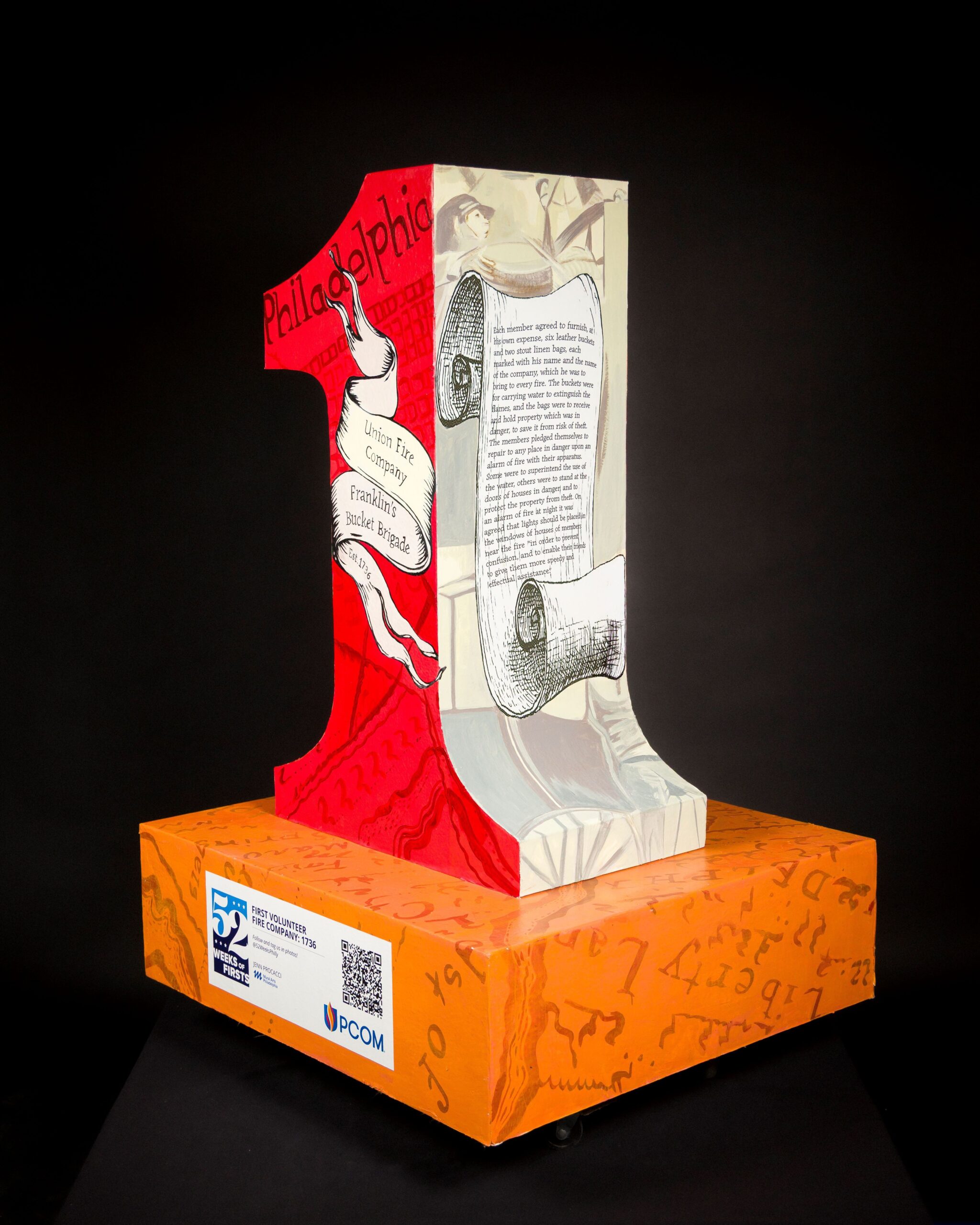
Artist Jenn Procacci’s sculpture incorporates maps of 1700s Philadelphia highlighting routes volunteer firefighters would take to extinguish blazes.
The Union Fire Company, also called the Bucket Brigade, was modeled after mutual aid firefighting organizations in Boston. In its early years, the company only helped its members put out fires in their homes or properties.
In 1742, the members voted to help any Philadelphian whose home or property was ablaze.The fact that they helped all Philadelphians, not just members, made the company America’s first volunteer fire department.
Within the decade, Philadelphia had eight volunteer fire companies.
These early volunteer fire companies were elite organizations that capped their memberships at about 30, explained Carol Smith, curator and archivist at Fireman’s Hall Museum. Members provided their own equipment: buckets for carrying water to put out fires and bags to salvage items from being destroyed. Companies had several meetings a year and members were fined for absence or tardiness.
As the home of the country’s first volunteer firefighting outfit, Philadelphia was progressive when it came to fighting fires — they were among the first companies in the country to experiment with innovative hoses. The city also was unique in establishing ways to support Philadelphia residents impacted by fire.
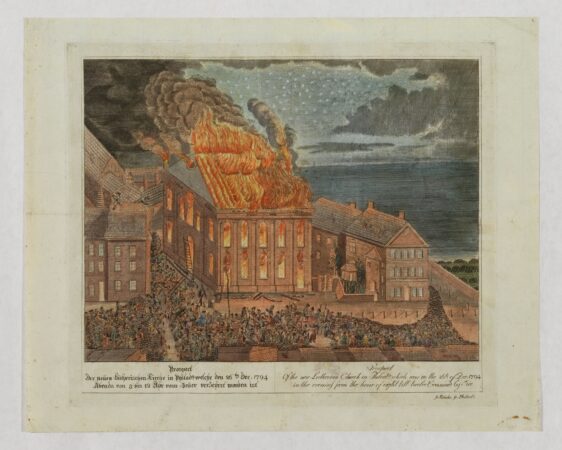
Philadelphia’s early network of volunteer firefighters stopped major fires, like the 1794 burning of Zion Lutheran Church, and prevented extensive fire damage to the city.
“A lot of it was because of the advances in firefighting technology like updated hoses,” Smith said. “Our volunteer fire departments were very proactive.”
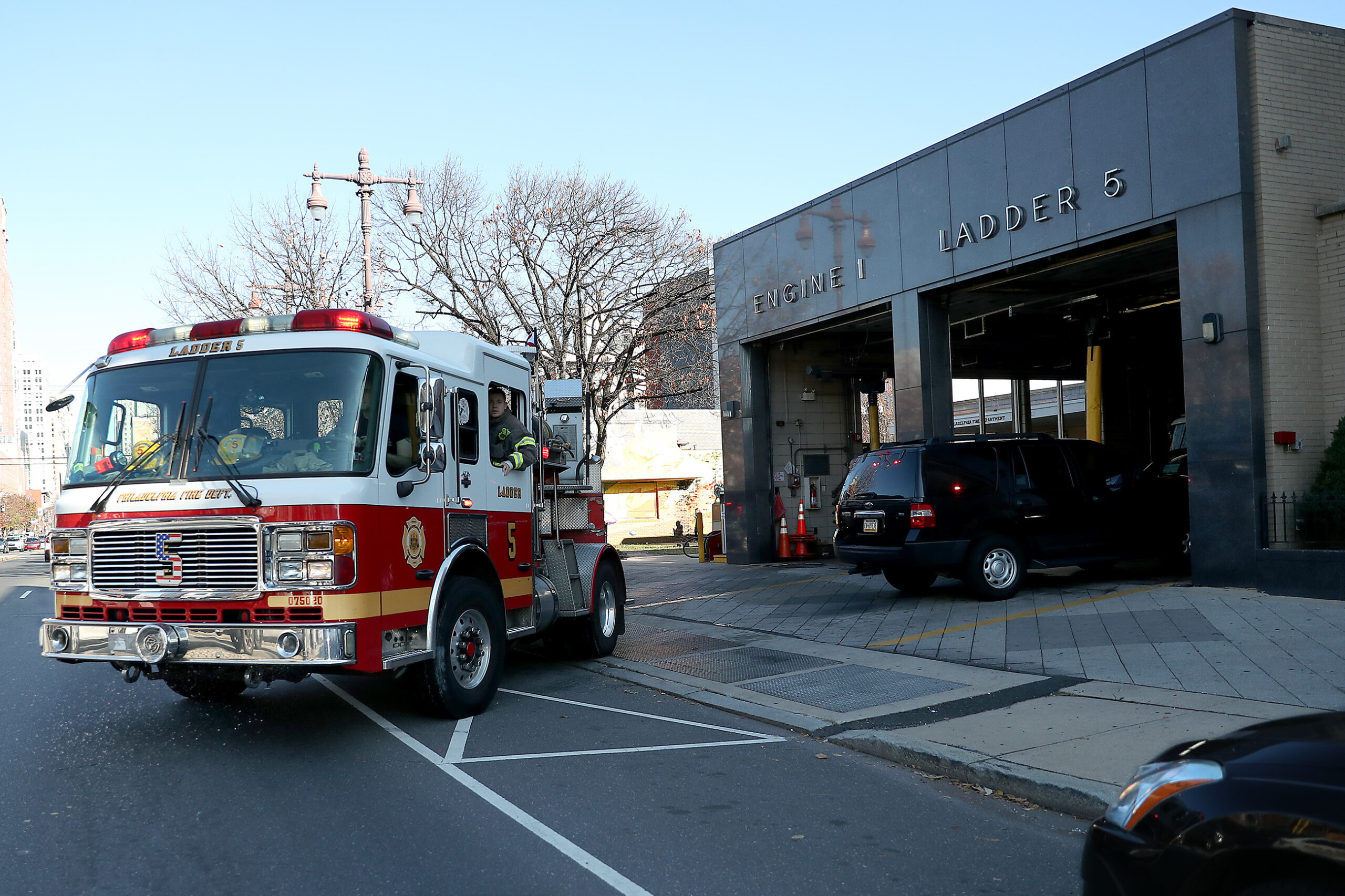
Today’s fire houses are descendants of Ben Franklin’s Union Fire Company.
The Union Fire Company housed its equipment on Old City’s Grindstone Alley and was active through the early 1800s, disbanding in 1843. Its remaining members joined the Vigilant Engine Company, that, in 1871 became Engine 8, one of the city’s first municipal fire stations.
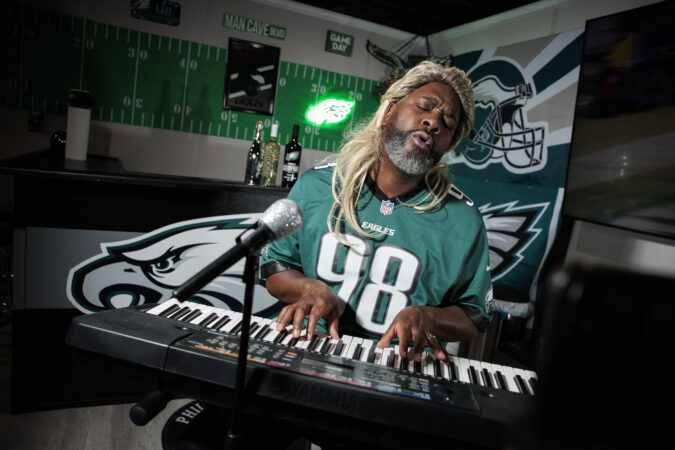
Robert Williams III never knows which Yacht Rock tune or ’90s hip-hop jam he’ll parody when his beloved Birds take the field.
But by the top of the fourth quarter, the Philadelphia Eagles fan and social media content creator not only has the song picked (more times than not, it’s a Billy Joel classic), but he has also written most of the lyrics, practiced the hook, the chorus, and the bridge.
The result looks something like “Allen Down” — a hilarious remix of Joel’s 1982 hit “Allentown.”
Williams, a retired Army veteran who served in the Afghanistan war, wrote that one as he watched the Birds beat the Buffalo Bills the Sunday after Christmas, clinching their spot in this Sunday’s first round of the NFL playoffs.
In the video he’s dressed like a giant Eagle while clowning on Buffalo Bills quarterback Josh Allen. The clip has 19,000 likes on Instagram and tens of thousands of likes on TikTok and Facebook.
“Philadelphia took Allen down
Every time you looked he was on the ground.
Vic Fangio did a heck of a job.
I’m guessing the Bills drank too much eggnog,” the song goes.
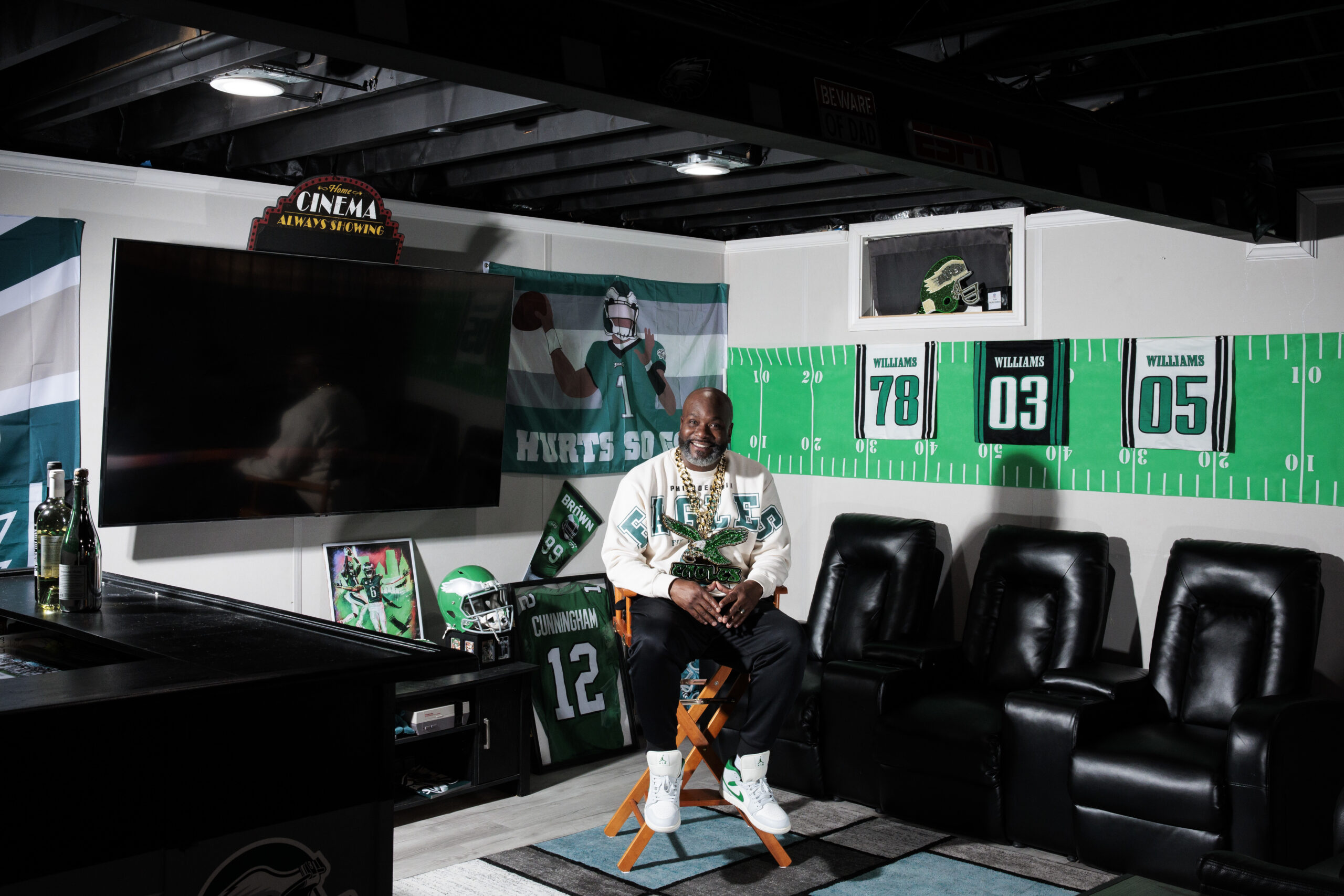
Williams’ cheeky videos, filmed in his Severn, Md., Kelly green man cave, have earned the Hamilton, N.J., native a combined 2 million followers on TikTok, Instagram, and Facebook. And a lot of those followers are from Philly.
That includes Questlove, Jazzy Jeff, Chill Moody, State Rep. Joanna McClinton (D., Philadelphia), and legendary WDAS announcer Patty Jackson.
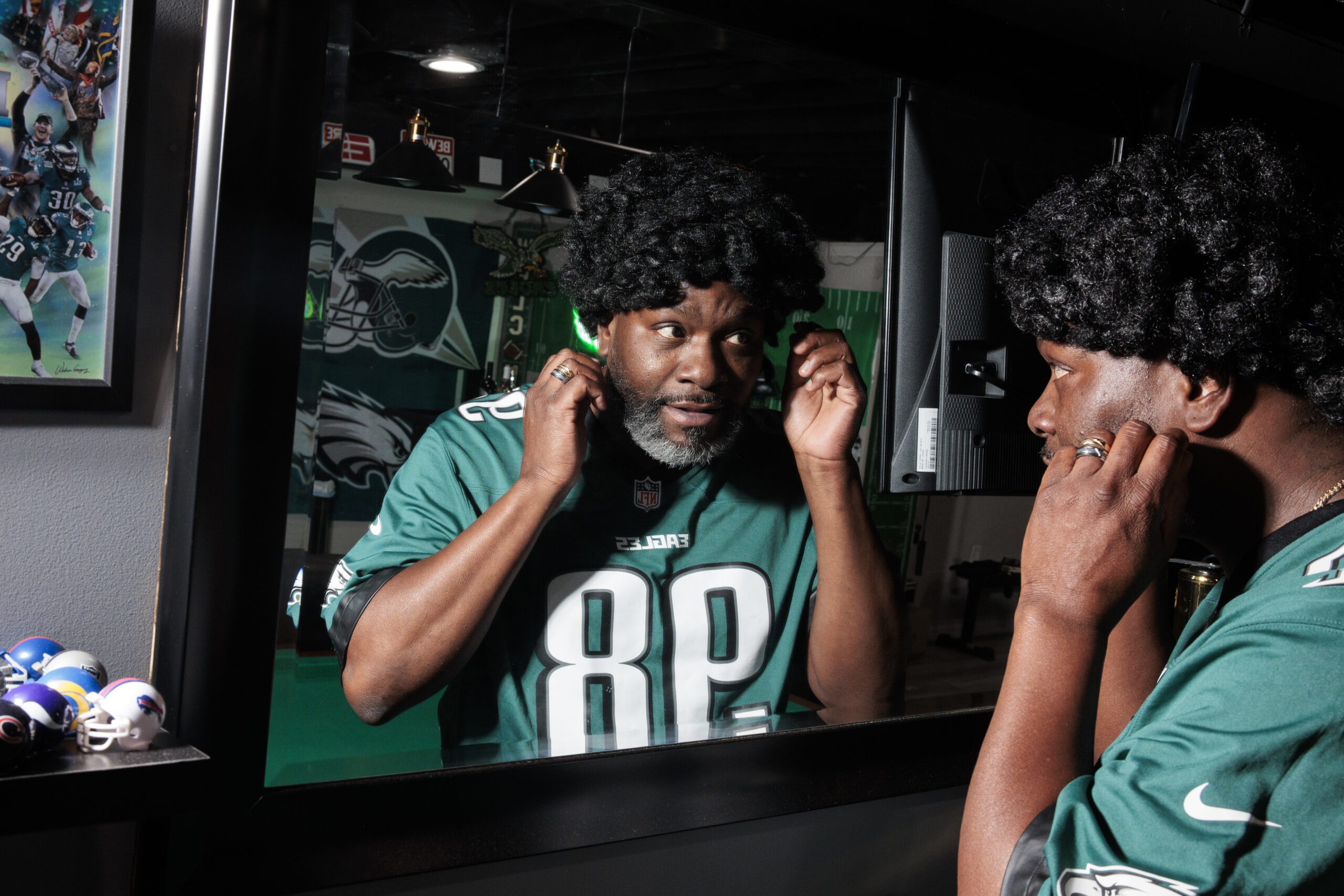
Robert Williams III posed for a portrait at his home on Thursday, Jan. 8, 2026 in Severn, Md. Williams has an Instagram page where he performs parodies of popular songs with lyrics about the Eagles.
Before the 2025 NFL season even started, former NFL player-turned-podcaster Cam Newton ribbed Jalen Hurts, saying he wasn’t one of the league’s elite quarterbacks. Gillie took offense and hazed Newton on social media all season.
After Hurts’ stellar game against the New York Giants in Week 8, Williams dropped a video sampling LL Cool J’s 1997 hit “4,3,2,1.” In it, Williams mocks Newton — complete with long hair, wide-brimmed hat, and round glasses offering a fake apology to Gillie through a series of crisp bars.
Gillie liked and shared it.
“I was like ‘Wow’,” Williams said. “That right there is a big thing for me.”
Williams, who is known across social media as @robertwilliamsfilms, is also recognized as being among the influencers who trade in Gen X nostalgia, creators like Maria Ferrer and the Urban Rewind.
His loyal fans include some of the biggest old-school rappers: Ice Cube, and Wu Tang Clan’s Ghost Face Killah and Inspectah Deck. Common began leaving friendly — albeit slick — comments on Williams’ parodies in Week 13 after the Birds’ devastating loss to the Chicago Bears.
Williams quickly borrowed the arrangement of Common’s “Go,” changing the lyrics to “No.” That post has 74.3K likes on Instagram.
Even famously estranged musicians Daryl Hall and John Oates both agree on Williams’ talent. Williams cover of Hall & Oates’ 1975 hit “Sara Smile” after Week 15’s game against the Las Vegas Raiders as ”Jalen Smile” drew likes and comments from each of the musicians.
Williams’ devotion to the Eagles goes back to the mid-1980s when Buddy Ryan was coach and Randall Cunningham and Reggie White were on the team.
“I fell in love with the passion they brought to the game,” he said
Williams, 49, a fan of soft rock groups Tears for Fears, Toto, Air Supply, and Journey, watched a lot of MTV. He enjoyed Weird Al Yankovic’s parodies of ’80s icons Michael Jackson, Madonna, and later, Coolio.
“I had such an admiration for Weird Al,” Williams said. “Me and my little brothers would walk to school making up our own lyrics … Songs would just pop in my head and I’d rearrange the lyrics.”
He never stopped.
Robert Williams III tries on one of his signature wigs for a portrait at his home on Thursday, Jan. 8, 2026 in Severn, Md. Williams has an Instagram page where he performs parodies of popular songs with lyrics about the Eagles.
While still in the Army, Williams, now a husband and father of two, picked up a side hustle as a videographer, shooting weddings and other special events.
“I was a student of YouTube University,” he said.
COVID ended that gig but also marked the beginning of Williams’ social media career.
He posted his first parody — “It’s Almost Thanksgiving” performed to the melody of The Golden Girls theme “Thank you for Being a Friend” — on social media in 2020.
His bridge: “It won’t be a party, we’ll be talking to everyone on Zoom.”
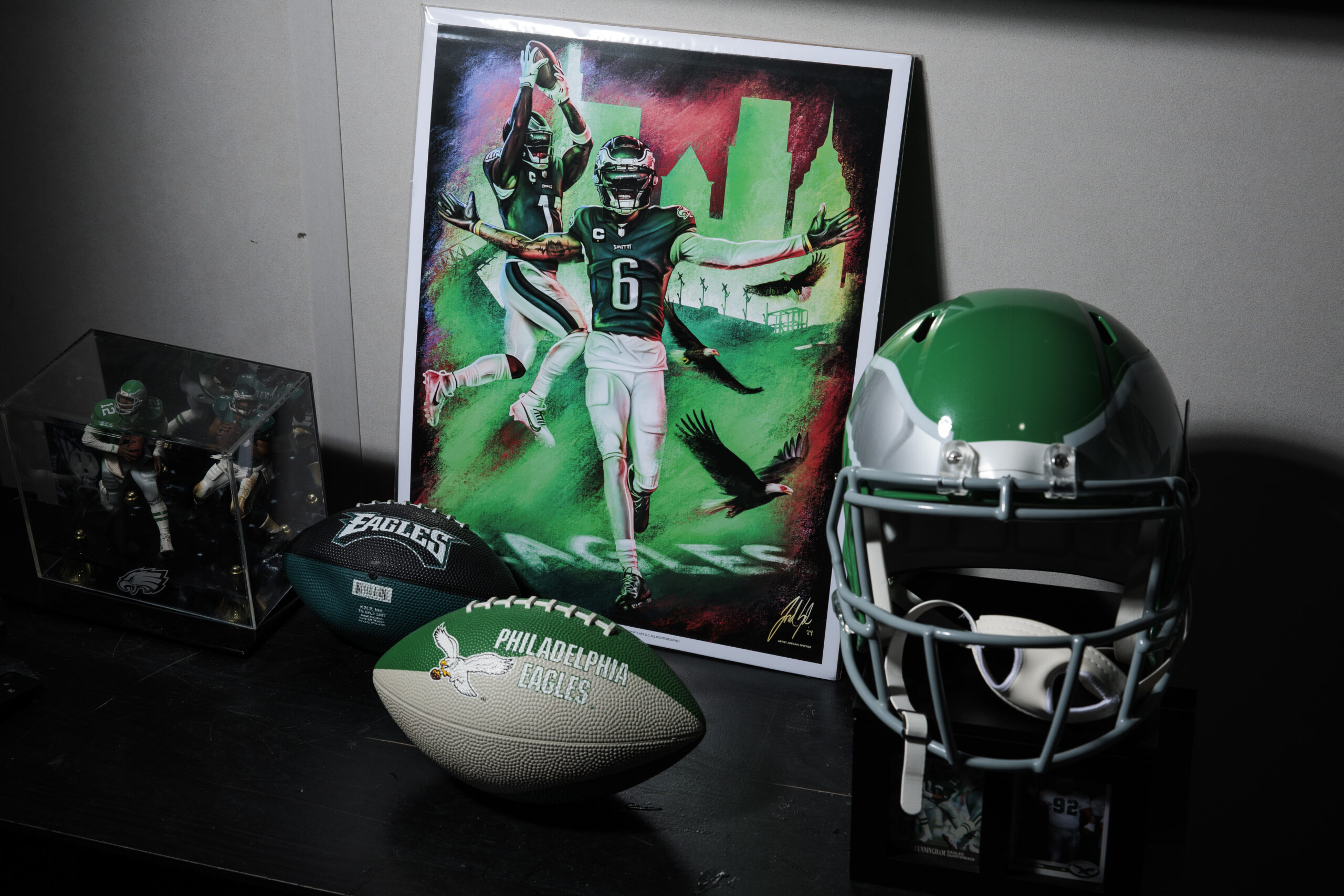
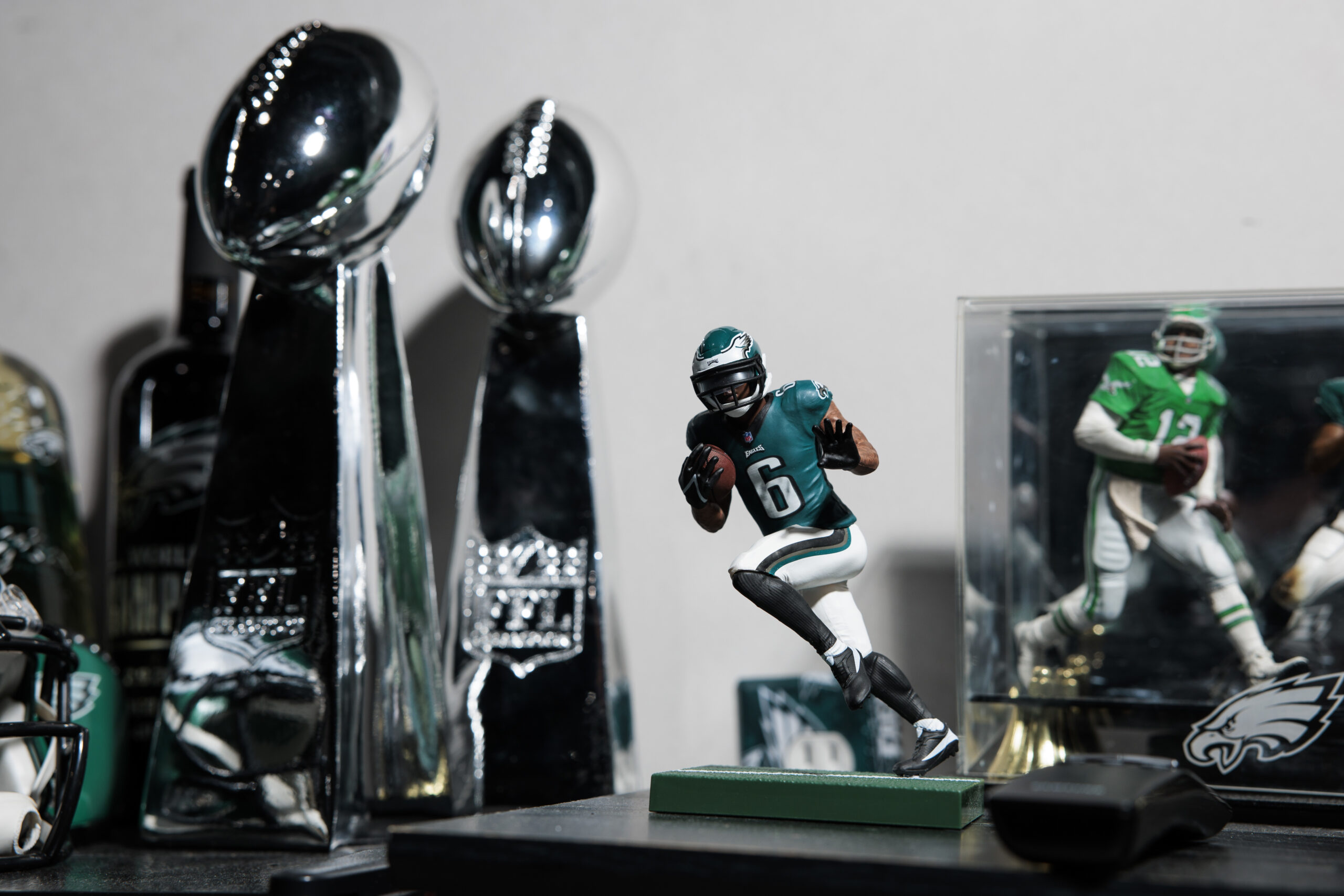
Some of Robert Williams III’s Eagles collection at his home on Thursday, Jan. 8, 2026 in Severn, Md. Williams has an Instagram page where he performs parodies of popular songs with lyrics about the Eagles.
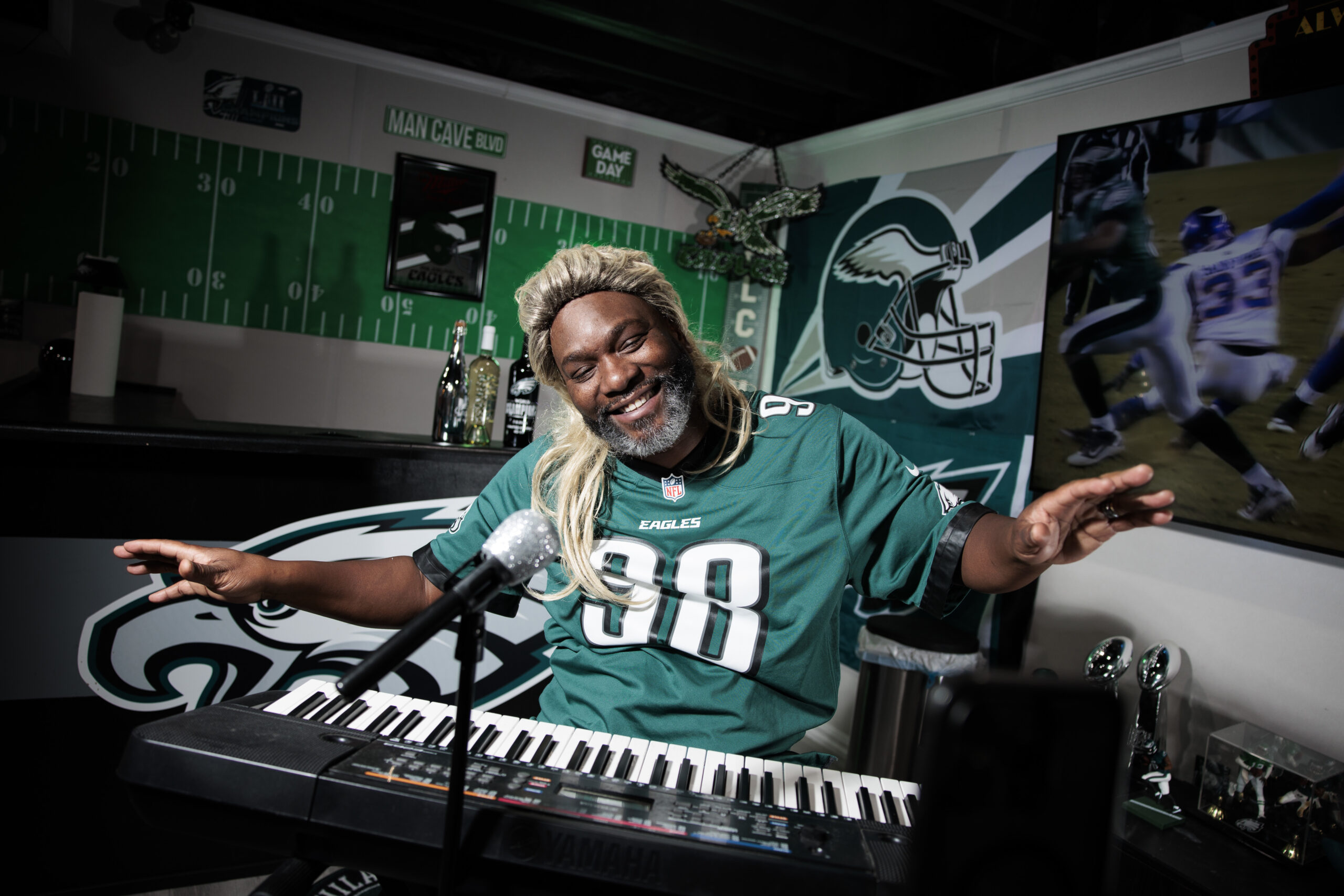
He combined his love of sports and parodies during the 2023-24 NFL season. That first post centered on Williams’ disdain for the Dallas Cowboys. In it, his daughter slyly asks, “Daddy, how long has it been since the Cowboys won the Super Bowl?” Williams (also known as Billy Soul) puts on a strawberry blond wig and spoofs a 1984 Billy Joel hit: “For the Longest Time.”
Some of Robert Williams III’s Eagles collection at his home on Thursday, Jan. 8, 2026 in Severn, Md. Williams has an Instagram page where he performs parodies of popular songs with lyrics about the Eagles.
That video received 212K likes on Instagram and remains one of his top posts.
“My Billy Joel parodies seem to do the best and I have a lot of fun doing them,” Williams said. “My favorite genres of music are hip-hop and R&B so those parodies are easy to me. When I’m doing Billy Joel, I’m challenging myself.”
He is committed to posting an Eagles recap weekly during the 2025-26 season. This year his costumes are more elaborate — he has two boxes of wigs to choose from. His wife, Katrina, and his children, Rakim and Dayla, make regular appearances. He’s also monetized his page, earning a few hundred dollars a month.
Williams’ videos do well because he’s fast. By the end of the game, not only is the song written but he has also cued up the footage to intersperse between verses. It takes him about a half an hour to record his voice and film the storyline.
The videos are posted within two hours after the game ends.
Robert Williams III posed for a portrait wearing his Hall & Oates wig at his home on Thursday, Jan. 8, 2026 in Severn, Md. Williams has an Instagram page where he performs parodies of popular songs with lyrics about the Eagles.
But sometimes, Williams is scrambling.
Last Sunday, after the Birds’ surprising fourth-quarter loss to the Washington Commanders, he had to quickly retool his version to Billy Joel’s “Keeping the Faith.”
In the revamped final verse, he sang: “Some say sitting the starters was a good thing. Now we will play as the No. 3 seed. Now it’s time to be the Broad Street Bullies. ‘Cause the 49ers aren’t all that good and we’ll prove it at the Linc next week …”
As for Sunday’s game, Williams is keeping the faith.
“Some people think we can’t turn on a dime and win this whole thing,” Williams said. “But I believe we will.”
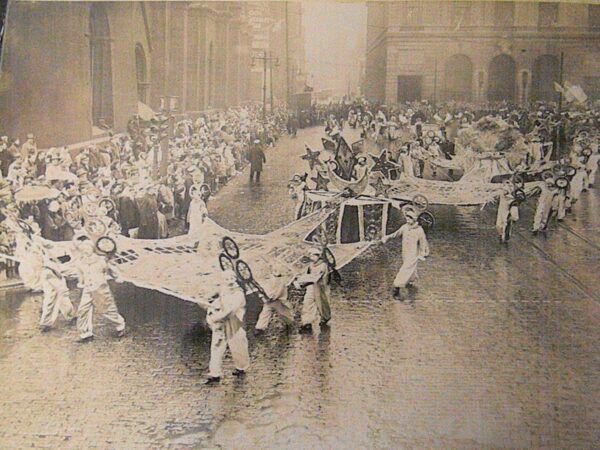
As the fog lifted on Jan. 1, 1901, four Fancy Dress Clubsand 16 Comic Clubs gathered at the corner of Broad and Reed Streets for the first ever Mummers Parade.
“Kings, emperors, knights and jesters, clothed in purple royal or tinkling tensel [sic], wended their way up the broad thoroughfare …” reads a front-page story from the Jan. 2, 1901, Philadelphia Inquirer. “In the throng of merry makers, no tribe no nation, scarcely an individual was neglected.”
That inaugural Mummers Parade was America’s first folk parade. It also marks the first time an American city hosted a New Year’s Day procession.
It will be remembered Saturday at the Firstival in the Mummers Museum. Firstivals are the Philadelphia Historic District’s weekly day parties celebrating historic events that happened in Philadelphia before anywhere else in America, and often the world. They are part of a yearlong celebration of America’s 250th birthday.
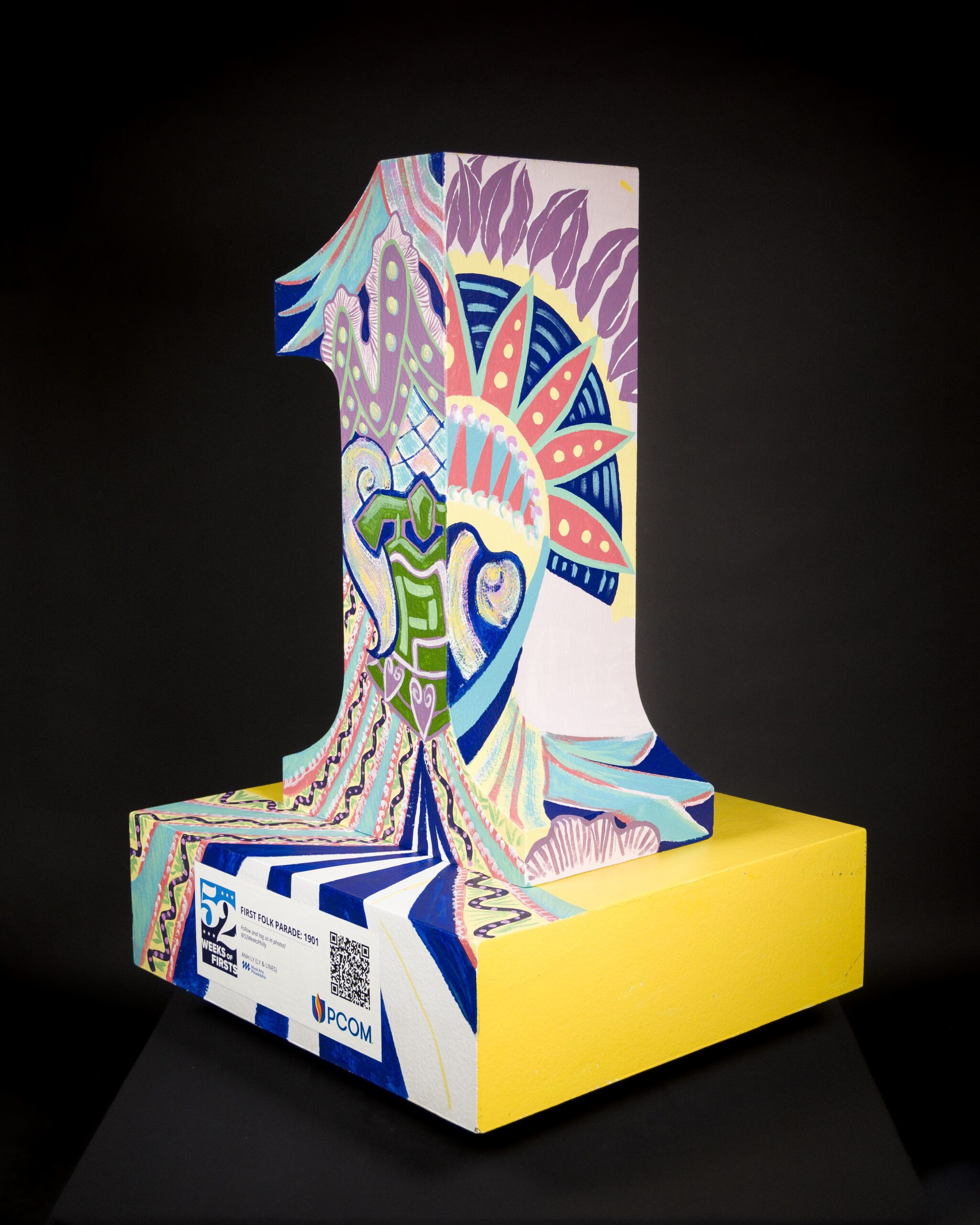
Artist Anh Ly’s No. 1 highlights the Mummers Parade’s vibrant costumes, instruments and playful traditions.
That first Mummers Parade began 125 years ago at 9 a.m. on a chilly overcast morning, said Mark A. Montanaro, the Mummers Museum’s curator. It took participants just two hours to march up Broad Street and around City Hall to Girard Avenue.
Three hundred dollars — $11,575 in today’s money — was awarded to the parade’s two first-place winners: the Elkton Association, part of the Fancy Dressed Club; and the White Cap Association, belonging to the Comic Club.
Revelers partied all day and into the night.
The boisterousness remains to this day. So much so that the Philadelphia Historic District did not want to start the Firstival celebrations with the parade, even though that was the initial plan. Why? Because they assumed the Mummers would still be recovering from their parade.
The word mummer is derived from Momus, the Greek god of satire and mockery. Mommer is the Old French word for mime.
Philadelphia’s 17th century English and Swedish immigrants dressed in elaborate regalia during the days between Christmas and New Year’s, knocked on their neighbors’ doors, and demanded treats of sweets and nuts. Over the decades, the door-to-door tradition turned into rambunctious neighborhood parties as Dutch, Irish, and Italian immigrants joined in on the fun.
In November of 1900, Philadelphia Evening Bulletin reporter and theatrical promoter H. Bart McHugh and City Councilman John H. Baizley asked Mayor Samuel Ashbridge if the city would consolidate the block parties into one big parade.
Plans were finalized by mid-December.
The Mummers Parade remains one of Philadelphia’s most enduring traditions. It’s only been canceled three times: during the 1919 Spanish Flu, 1934 during the Great Depression, and 2021 during COVID. (This year, the String Band Division called off its competition due to strong winds.)
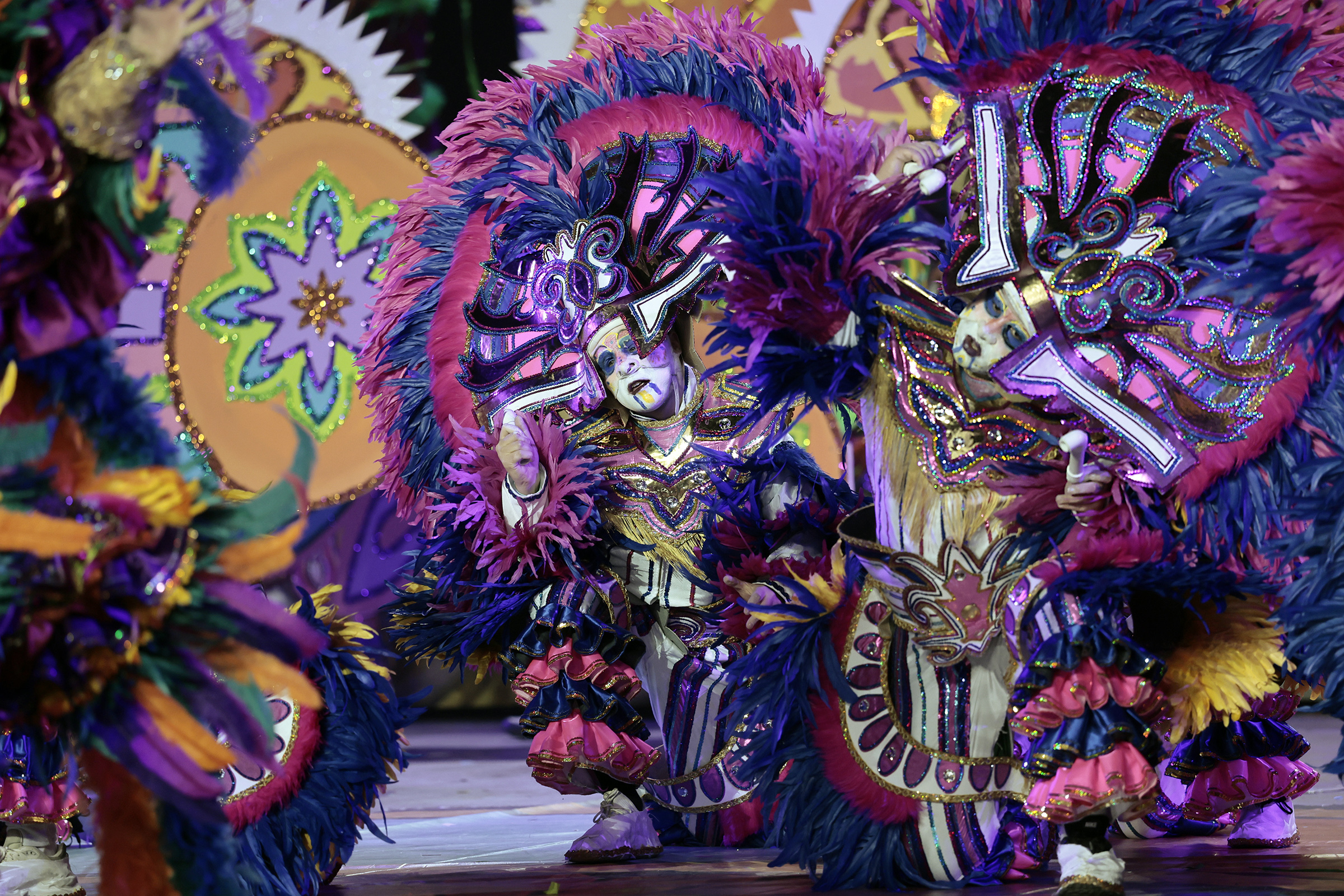
The Jokers perform during the Fancy Brigade Finale at the Pennsylvania Convention Center during the 2026 Mummers Parade in Philadelphia on Thursday, Jan. 1, 2026.
Parade routes have changed; today it starts at City Hall and ends at Washington Avenue. At times its been fraught with racial controversy, as some members have appeared in blackface as recently as 2020.
That’s all in the past, Montanaro stressed.
“The Mummers are striving for inclusivity,” Montanaro said. “We are a little bit of Mardi Gras, a little bit of Carnival, and a whole lot of Philly.”
This week’s Firstival is Saturday, Jan. 9, 11 a.m. — 1 p.m., at the Mummers Museum, located at 1100 S. 2nd Street. The Inquirer will highlight a “first” from Philadelphia Historic District’s 52 Weeks of Firsts program every week.
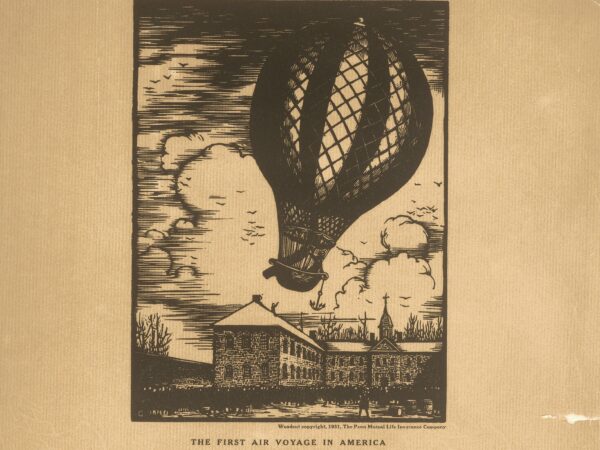
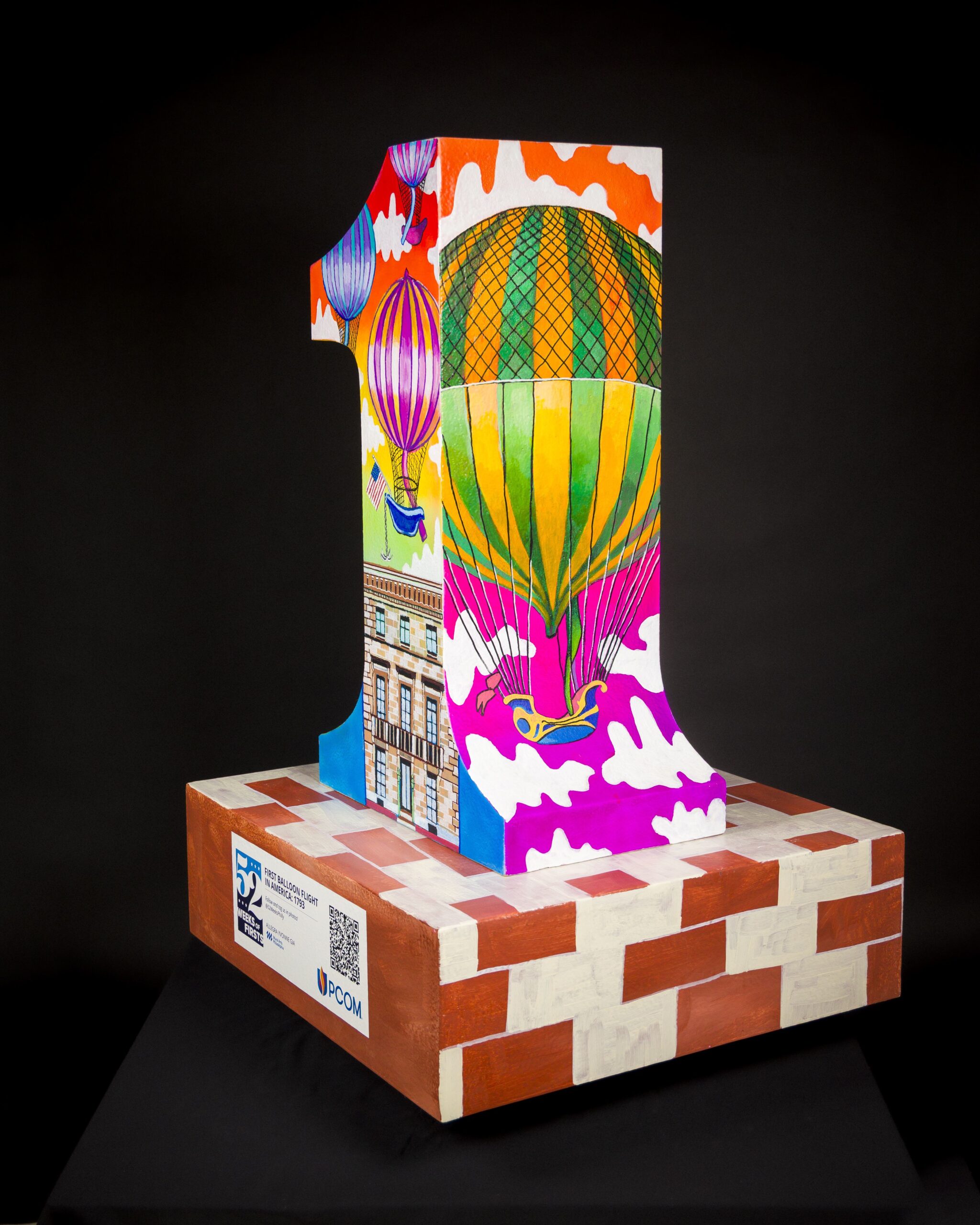
It was a cold January morning in colonial Philadelphia. The year was 1793 and Thomas Jefferson, James Monroe, John Adams, and George Washington were among dozens of spectators gathered in the Walnut Street Prison workyard. The Founding Fathers watched in awe as French aeronaut Jean-Pierre Blanchard prepared to take flight.
Blanchard’s hydrogen-powered balloon rose up into the sky. It was the first time someone had ever seen a balloon take off in America.
Two and a half hours later, Blanchard landed the blue-and-yellow striped silk balloon 15 miles north in a Deptford, N.J., field that today is a Walmart Supercenter parking lot.
That historic moment — America’s first balloon ride — will be remembered on Saturday at the Athenæum, where the Walnut Street Prison workyard once stood.
The festivities will kick off the Philadelphia Historic District’s 52 Weeks of Firsts, a weekly day party marking events that happened in Philadelphia before anywhere else in America, and often the world. Each Saturday, the Historic District will partner with a local institution to host a free festival — or “Firstival.” This will be part of a yearlong celebration of America’s 250th birthday.
Each of those locations will feature a foam sculpture illustrated by a Mural Arts of Philadelphia artist commemorating the historic event.
Mural Arts artist Allegra Yvonne Gia infused images of the Walnut Street prison yard, The Athenæum of Philadelphia, and hydrogen balloons in this illustration.
While in Paris negotiating an end to the Revolutionary War in 1783, America’s A-list forefathers, Ben Franklin, John Adams, and John Jay witnessed some of the world’s first balloon rides. Impressed, they came back to Philadelphia raving about the innovation.
Two years later, Blanchard, and co-aeronaut John Jefferies, became the first people to sail over the English Channel in a hydrogen balloon. (He chose hydrogen because hot air balloons were powered by fire and prone to explosion, thereby making any flight more than three miles risky.)
The English Channel trip made Blanchard a big deal in aeronautical circles, and he started traveling around the world, flying balloons, and charging spectators, explained Beth Shalom Hessel, executive director of the Athenæum of Philadelphia
On Jan. 9, 1793, Blanchard made his landmark 45th flight in Philadelphia, turning the Walnut Street Prison workyard into the birthplace of aeronautics in America.
Onlookers paid $5 — more than $150 in today’s money — to witness Blanchard take off. He carried with him a dog and a letter from Washington. This letter, which demanded that Blanchard be offered safe passage wherever he landed, is considered by many to be the first ever American passport.
“As a way of making money and drumming up interest in his balloon, Blanchard intentionally chose Philadelphia for his first American flight,” Hessel said. “And that’s fascinating.”
This week’s Firstival is Saturday, Jan. 3, 11 a.m.- 1 p.m., at the Athenæum of Philadelphia, 219 S. Sixth St. The Inquirer will highlight a Philly “first” from the 52 Weeks of Firsts program every week.