In a colorless move that, Pantone says, speaks to our collective longing for calmness, a clean slate, serenity, and focus, the New Jersey-based global color authority named Cloud Dancer — a billowy, balanced white — as its 2026 color of the year.
The blank hue’s uncluttered vibe, Pantone says, plucks us out of the day-to-day crazy of our newsfeeds, AI-generated madness, and hustle culture.
White, says Pantone Color Institute’s vice president Laurie Pressman, offers relief and respite. White noise silences the cacophony of worry rattling around in our overstimulated brains. The color gives us permission to think, refocus, and chart a new future.
The pause between the doing, white is the be-ing.
“White speaks to the value of measured consideration and quiet reflection,” Pressman said. “It represents a future free of toxicity and excess … contentment and peace, unity, and cohesiveness. It’s ethereal. White embraces the clouds.”
Sweet dollops of whipped cream are white, meringue is white. Fluffy mashed potatoes are white, too.
A fresh pair of Air Force 1s, patent leather go-go boots, a clean tee, a crisp button-up. A voluminous bridal gown. We ski in winter white.
Mikado crop top with organza ball-gown skirt, limited edition ($1,150) at David’s Bridal, with pearl-drop earrings ($1,300) at Rosnov Jewelers. (Michael Bryant/Staff Photographer)
White is fly.
“In fashion and interior design, white is in our comfort zone,” said Leatrice Eiseman, executive director of the Pantone Color Institute. “It’s natural and organic. It’s about sustainability.”
White is ethereal. She’s dreamy. She represents new beginnings. I’m overwhelmed, too. I would love to drop my precepts and jump into a world of my own making. Architectural white shirts and black pants are my grown woman fashion go-to.
I get it.
But y’all, white is the color of the year in 2026.
As a Black woman living in Trump’s America, I can’t help but wonder if Pantone’s choice of Cloud Dancer was much more of a nefarious harbinger than they perhaps realized.
No, I don’t think Pantone is low key promoting whiteness or advocating for a white savior.
Cloud Dancer, the 2026 Color of the Year, is billowy like this curtain blowing in the wind.
Fashion and style always gives us clues to the future. So, I asked Pantone if they were tapping into something that perhaps they weren’t even aware of?
“Absolutely not,” Pressman said, her tone pleading with me to stop with the correlation. “Pantone is not political.”
Pantone is not political, true. But its trend forecasters keep their manicured fingers on the pulse. And in this moment I’m unable to ignore Ku Klux Klan robes are white, too.
COY is always right
Pantone’s Color of the Year is rooted in fashion. Its early picks – oceanic Cerulean in 2000; orange Tiger Lilly in 2004; and golden Mimosa in 2009 – influenced clothing, accessories, and makeup. As we moved deeper into the millennium, COY was the trendy choice for Kitchen Aids, accent walls, and Post-it notes.
In the last decade, however, color of the year has come to define our collective moods more than just our fashion aspirations.
It’s the aura hovering over the world, indicative not just of the life we have, but the one we want. The colors have become a peek into the energy of the feelings driving tomorrow’s zeitgeist.
That became crystal clear in 2016, the first year Pantone chose two colors — a pink Rose Quartz and a baby blue Serenity. The dual hues were a nod to the emerging blurring of gender lines.
In 2021, Pantone chose two colors again: Ultimate Gray and Illuminating Yellow.
A key reason why Pantone chose white is because, Pressman said, people are craving blank slates.
“People have gotten to a point where they see what’s happening isn’t working for them anymore,” Pressman said. “They want something different, new, authentic.”
Debris is seen at a largely demolished part of the East Wing of the White House, Thursday, Oct. 23, 2025, in Washington, before construction of a new ballroom. (AP Photo/Jacquelyn Martin)
Cloud Dancer, Eiseman said, is a throwback to classic fashion, citing Coco Chanel and Audrey Hepburn. Sure, fashion of the “Golden Era” was glamorous. These women were undeniably well-dressed, but it was also a time when white gloves and girdles were the norm, and equally glamorous Black women like 1940 Academy Award winner Hattie McDanielwas forced to sit in a segregated section during the Oscar ceremony because her white colleagues didn’t want to sit next to her.
When the conversation turned to the yin (black) and yang (white) of fashion, I wondered aloud if, maybe this could have been a year when Pantone chose two colors: black and white. Perhaps this could signify harmony.
Crickets.
Pantone’s Color of the Year image of the Cloud Dancer.
Later, I realized Pantone didn’t pick the cooperative vibe up, because it just wasn’t there.
I’m not ready to wave the white flag yet. In the midst of all this, white remains a shade of hope, purity, and freedom. It’s the color of the Suffragist movement. Pantone’s is simply yet another canary in the coal mine which means I have a lot of work to do.
Talk about a great kick off to the holiday shopping season.
“I’m honored, proud, and excited,” Ellen Shepp said Monday morning. “I mean … I’m really over the moon.”z
Walking into a great clothing store, New York Times cultural trend reporter Steven Kurutz said, is like being “transported to a different world.” It “will make you think about who you are — and may change that perspective in real time.”
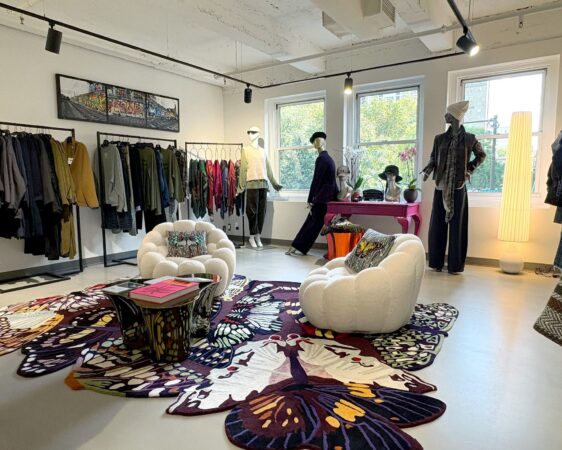
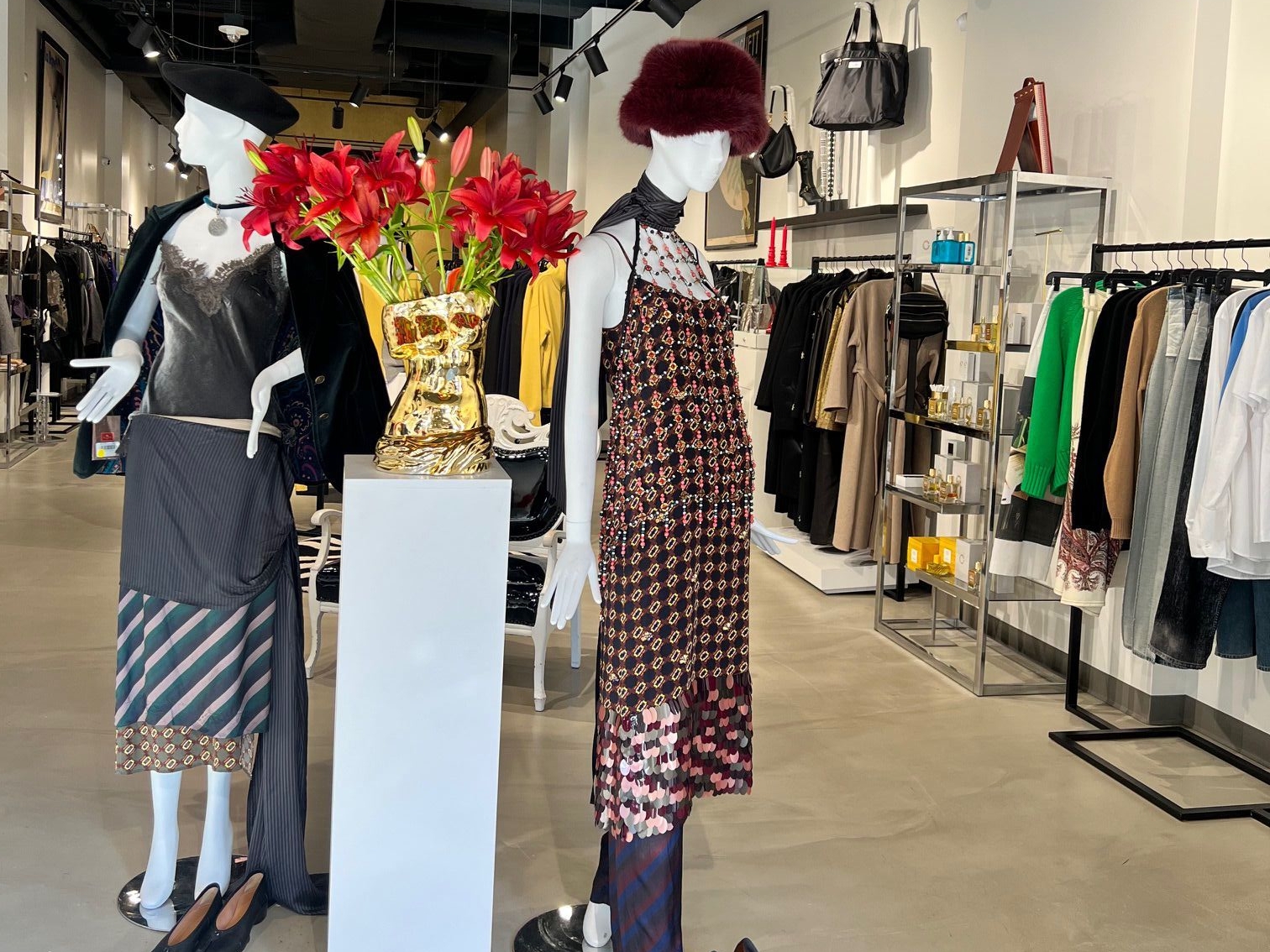
The interior of Joan Shepp at 1905 Walnut St. The 53-year-old store made the New York Times’ list of “50 Best Clothing Stores in America.”
And yes, walking into Rittenhouse Square’s Joan Shepp does feel like stepping into a sartorial fairytale, which you can leave holding a Yohji Yamamoto hoodie that doubles as a dress, or a perfectly tailored asymmetrical shirt dress from Sacai New York.
Everything is dreamy, but nothing comes cheap.
Back in the 1970s, Shepp opened her store to challenge the way the suburban career woman dressed in Philly and introduced her to designer wear, from Yohji Yamamoto to Maison Margiela. One of the earliest entrepreneurs to embrace the store-within-a-store approach to retail, Shepp made space for collections like Yamamoto’s Y-3 and Donna Karan’s Urban Zen.
The clothing sold alongside furniture, bedding, and candles, making Joan Shepp one of the region’s earliest concept boutiques.
Joan Shepp founded the store in 1971. She was a 30-year-old single mother of two young children in need of a flexible work schedule that allowed her time for school pickup and drops, to help her daughters with homework, and make them dinner.
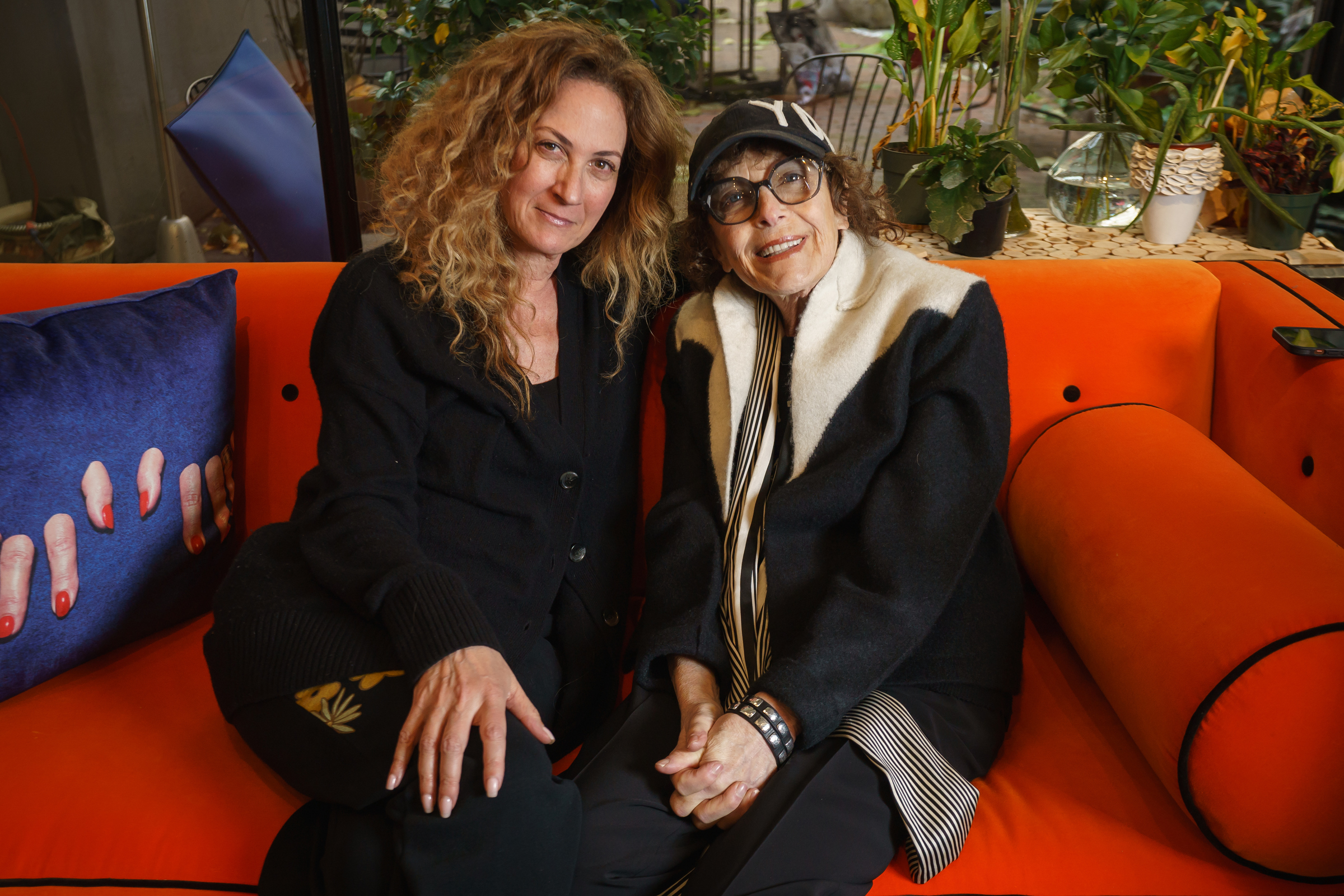
Joan Shepp and her daughter Ellen Shepp, shown here in their Center City store.
“I have so much fun finding things that are new,” she said to The Inquirer in 2022. “I listen to everyone who comes into my store. I watch them go through the racks. And whether/if they are a customer or a person who wants to open a store down the street, I can pick up on it.”
Hers is the only store on the Times list from the Philly region.
The closest is 7017 Reign in Fort Lee, N.J., described by the Times as an “under the radar, street and high fashion” specialty store. There are a handful of stores from downtown New York, but most are in the Midwest and California.
To produce the list, the Times team selected 120 stores, and then sent reporters, editors, and contributors to visit each of them, sometimes more than once.
A videographer visited Joan Shepp in early fall, shortly after the store moved to its new home at 1905 Walnut St.
Noting that Joan Shepp has been in business for more than 50 years — the specialty boutique is in the midst of celebrating its 53rd year — Kurutz wrote “Shepp has flavors of Barneys New York in its heyday.”
The Barney comparison wowed Ellen Shepp. Christmas had no doubt arrived early for the boutique owner and her team.
“The whole time they were like, ‘Listen we don’t know whether/if you made this list,’” she said. “They kept it a mystery until right this second.”
But what will the celebrity couple wear? Will Swift choose a strapless sheath or a princess gown with a halter bodice? Will she opt for a simple sheath? Perhaps a sparkling fishtail.
Do we see Kelce in a classic tux or an easy linen suit sans tie?
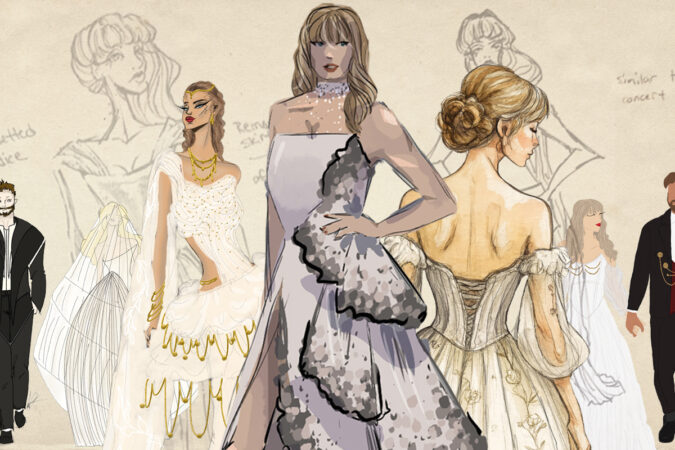
We asked fashion students — and Tayvis fans — at Drexel University, Moore College of Art and Design, and Thomas Jefferson University to sketch America’s favorite couple’s wedding day looks and share their inspirations.
Swifties picture their girl in gowns ranging from fanciful to architectural. And they envision Kelce donning classic or casual suiting with funky NFL detailing.
We combed through the selection and picked our favorites. Swifties, it’s time to vote for yours.
Taylor Swift’s wedding dress
Abigayle Brubaker, 21, Senior, Jefferson University
Abigayle Brubaker’s asymmetrical gown design features three tiers of ruffles along the right side complemented with a deep slit. It’s to be fashioned from silk satin and illusion mesh with hand-beaded crystals along its petal-shaped tiers. “It is slightly understated, to reflect how Swift often separates her personal life from her stardom,” Brubaker said in her design notes. “But it does have a few elements inspired by her career.”
For instance, she says, the strapless silhouette is areference to the custom Schiaparelli Swift wore to the 2024 Grammys and the floral print on the trio of tiers is reminiscent of the floral appliqued Oscar de la Renta mini Swift rocked at the 2021 Grammys. “Overall the dress exudes luxury and encompasses Swift’s style,” Brubaker explained, “while remaining traditional and elegant.”
Courtesy
Caroline Wickramaratna, 20, Junior, Jefferson University
Inspired by a vintage wedding cake, junior Caroline Wickramaratna, said the layered designs in this super-constructed frock “represent the tiers” of the classic dessert. The asymmetrical one-shouldered neckline speaks to the Kansas City Chiefs red Vivienne Westwood number Swift wore to the 2025 Grammys. Structured and fluid, the gown, Wickramaratna said, is a “testament to Swift’s layered personality.”
Courtesy
Ensaam Farraj, 22, Senior, Moore College of Art and Design
An off-the-shoulder, corseted bodice over a full princess skirt gives Ensaam Farraj’s design a hefty dose of delicate whimsy, while the floral designs etched in layers of ivory tulle give it its sweetness.
“Taylor is known for weaving romance, nostalgia, and fairy-tale imagery into both her music and personal style,” Farraj wrote. “The soft, off-the-shoulder sleeves, delicate corset bodice, and flowing embroidered skirt capture the same ethereal poetic energy, like a gown straight from her love songs.”
Courtesy
Gabbi Feaster, 21, Senior, Drexel University
Swift’s dramatic capes, structured bodices, and removable skirts were among the most memorable parts of Swift’s wildly successful “Eras Tour.”
Feaster incorporates the quick change feature — and boy shorts — into her wedding gown. After all, a girl might want a new look when she transitions from the ceremony to the reception. The gauzy silks in the flowing cape and train hearken back to Swift’s softer early pop style, Feaster said.
Courtesy
Who designed your favorite Swift dress?
Thanks for voting
Travis Kelce’s wedding outfit
Isabella Borst, 20, Junior, Jefferson University
The sporty tuxedo — fashioned from dark linen — features a wide lapel jacket and roomy trousers. The look, inspired by the football field, Borst said, would feature aggressive seams running along the arms and the legs, mimicking field lines on NFL turf.
Courtesy
Carly Marquess, 21, Junior, Jefferson University
Gold chains would be a great touch to Kelce’s look, said Carly Marquess. Kelce’s classic black tuxedo’s golden chains were inspired by the lyrics in Swift’s 2020 hit “Invisible String”: “One silver thread of gold tied me to you.”
Courtesy
Kyle Bakonyi, 25, Class of 2025, Drexel University
Kyle Bakonyi’s broad-shouldered silhouette reimagines the classic tuxedo. “The wrapped lapel and draped silk cravat instead of a tie gives the look a bold modern twist,” he said. The piece, Bakonyi said, would be crafted from a silk and wool blend. Straight-legged trousers give the full-shouldered look balance.
Courtesy
Ensaam Farraj, 22, Senior, Moore College of Art and Design
Ensaam Farraj imagines Kelce in a slim cut midnight blue tux with white rose or gardenia boutonniere, plucked from Swift’s bridal bouquet. The suit’s silk lining, Farraj said, would include lyrics from Swift’s love songs and a map of the world featuring the couple’s favorite vacation spots. “His look would be luxe, but refined,” she added.
Courtesy
Who designed your favorite Kelce outfit?
Thanks for voting
Subscribe to The Philadelphia Inquirer
Our reporting is directly supported by reader subscriptions. If you want more journalism like this story, please subscribe today
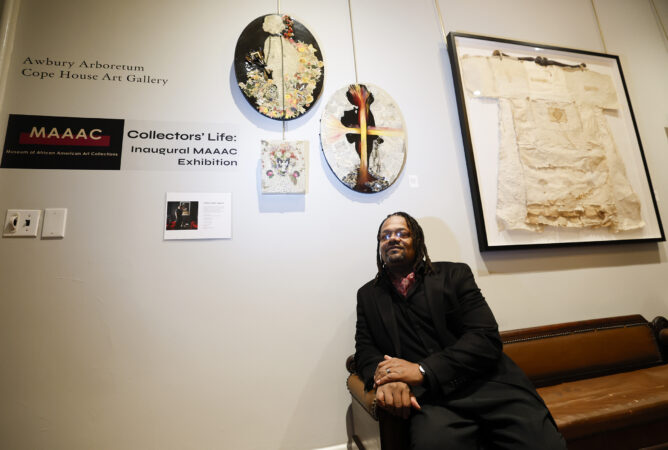
On a recent Thursday evening, Philadelphia art collector William Skeet Jiggetts sat in the foyer of Awbury Arboretum’s Francis Cope House surrounded by grand collages taken from the walls ofhisEast Falls home.
The art — all made by living artists and friends of Jiggetts — is striking. A framed paper and antique lace dress by textile artist Rosalind “Nzinga” Vaughn-Nicole sits next to portrait-size cameos that mixed media artist Danielle Scott fashioned from newspapers and other found objects.
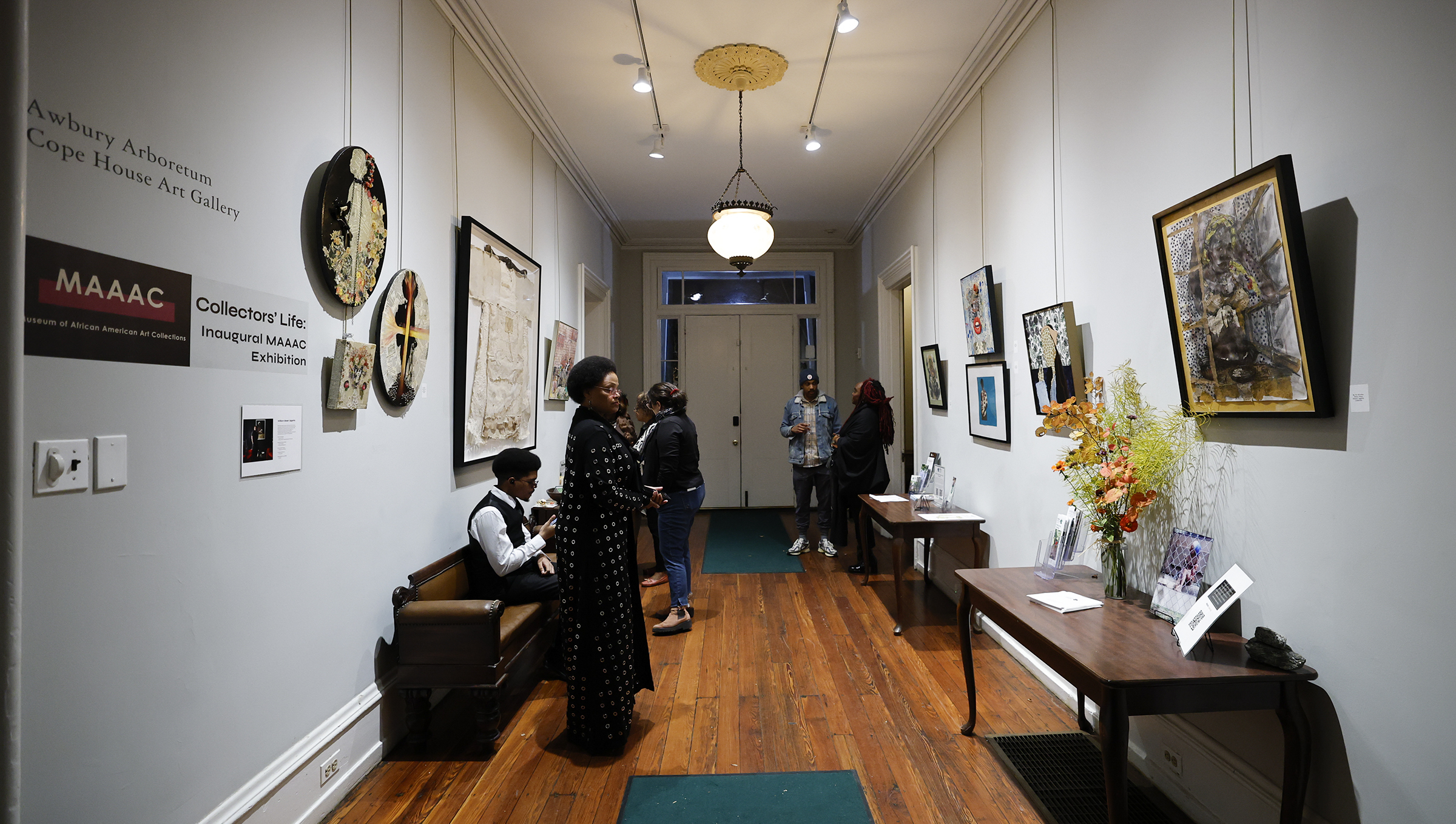
A guest looks at artwork collected by William Skeet Jiggetts during the Museum of African American Art Collections’ inaugural exhibit at the Awbury Arboretum in East Germantown.
Jiggetts, 57, an art collector for more than 30 years, has had pieces from his collection on display in small shows, but never in his wildest dreams did he think that they would anchor an exhibition — in a traveling museum that he founded.
While the Barnes Foundation houses the late chemist and art collector Albert C. Barnes’ collection, there are very few other — if any — museums whose walls are solely dedicated to the collections of collectors. Nomadic, traveling museums, at that.
“It got to the point where I had more art than walls,” Jiggetts said looking over his black-framed glasses. “Nobody saw it … I didn’t even see it. I thought, ‘Wouldn’t it be cool for a bunch of collectors to get together and create a space to show our work. Tell our story?’”
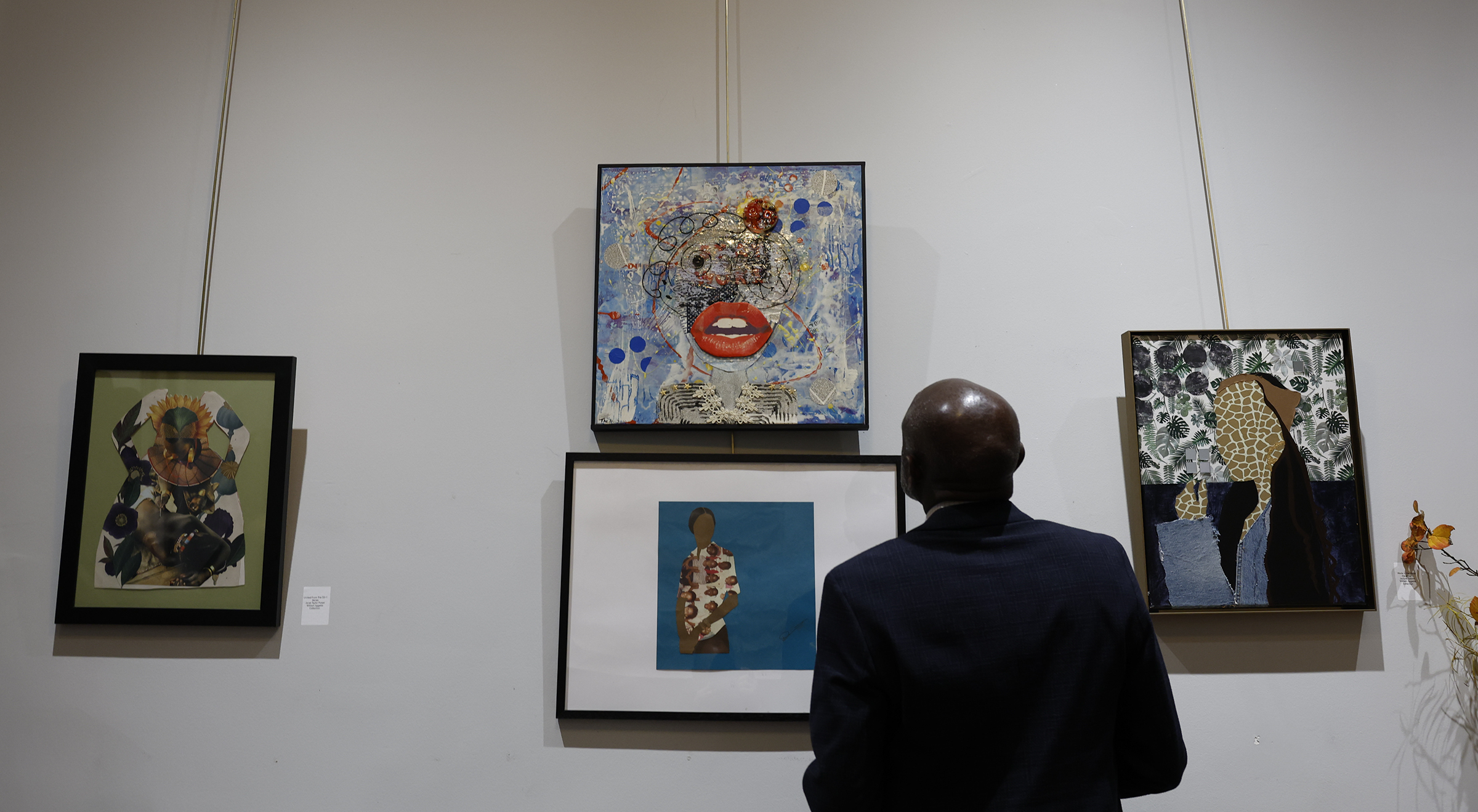
Guest look at art work during the Museum of African American Art Collections inaugural exhibit at the Awbry Arboretum in East Germantown on Thursday, Nov. 6, 2025.
Jiggetts got the itch to show his collection in the early 2020s after talking with colleagues who wanted to show theirs, too. In 2023 he set up a foundation, started approaching collectors, and began nailing down locations.
“There is a treasure trove of African American art in our living rooms, in our reading rooms, and in our dens that need to be shared,” Jiggetts said. “The Museum of African American Art Collections is a forum to host these collections and tell the stories that come with them.”
That’s how the Museum of African American Art Collections began.
A $200 frame and an obsession
Jiggetts, who works as a tax accountant, grew up in Germantown and spent Sunday afternoons at the Philadelphia Art Museum gazing at the impressionist works of Manet and Monet.
When he was in his 20s, he bought a poster of Vincent van Gogh’s Sunflowers. “I spent $200 of 1989 money on that frame,” he said with a laugh. That purchase marked the beginning of an obsession. He bought his first piece of original art from Germantown painter Lucien Crump Jr., who, according to a 2006 Inquirer obituary, owned the first gallery in the city dedicated to Black art.
Jiggetts scoured galleries and festivals for original art, buying any piece that tickled his fancy for under $500. In the early 2000s, his mentors — well known Philadelphia appraiser Barbara Wallace and the late African American collector Ronald Ollie — urged him to start evaluating his choices and he became a serious art collector.
“I figured out what it was I really liked,” Jiggetts said, describing his favorite pieces as ones that marry impressionist and abstract art, like the ones on display at Awbury Arboretum. “I realized I enjoyed the experience of buying art as much as the art. I like the company of artists.”
His collection is comprised of mostly living artists like the mixed media artist Danielle Scott; abstract painter Ben F. Jones; and Paul Goodnight, who is known for his colossal oil paintings featured in the backdrops of TV shows like Seinfeld and The Fresh Prince of Bel-Air. (Although Jiggetts does have a pencil sketch by the late Bahamian artist Purvis Young.)
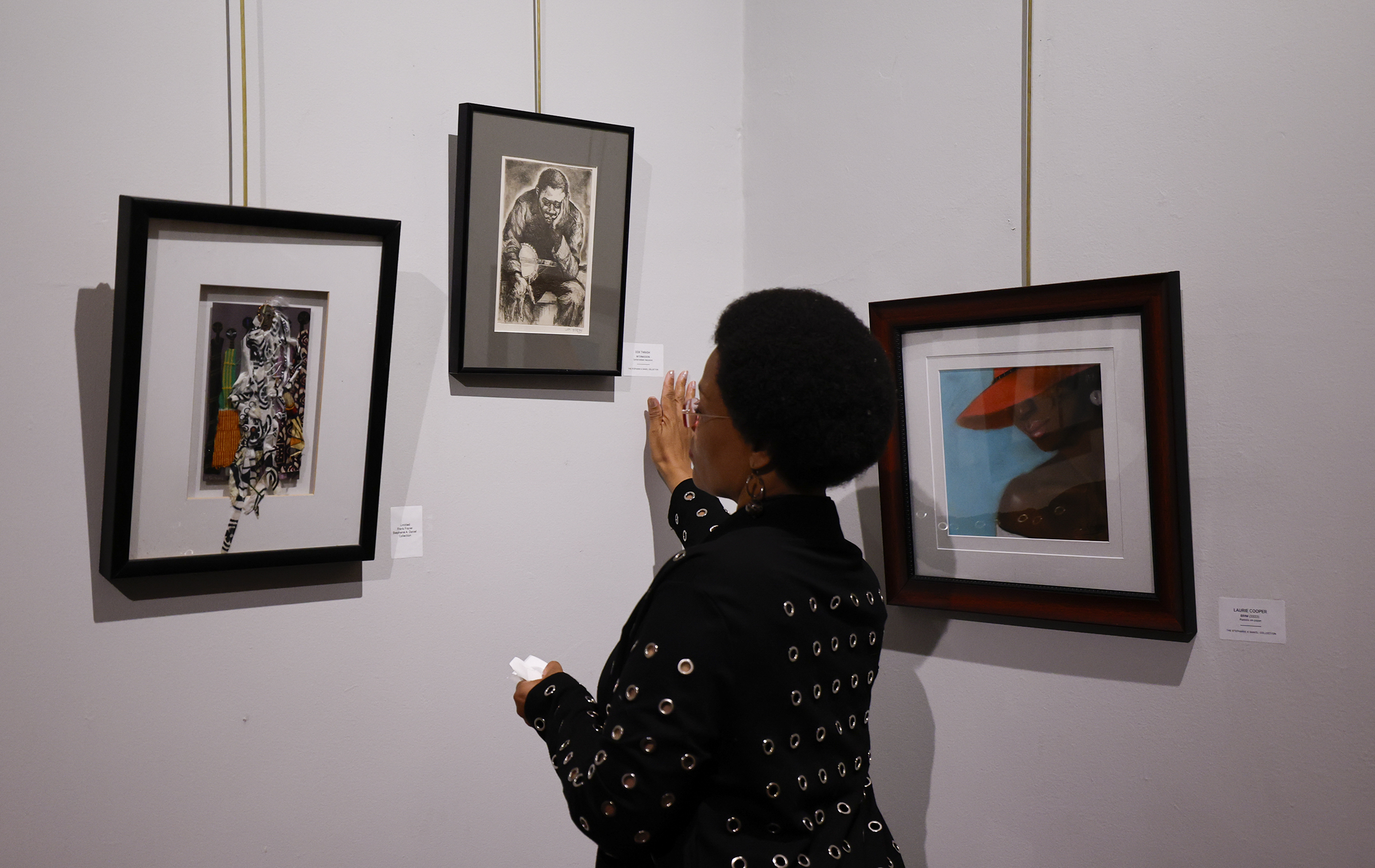
Graphic designer for the Museum of African American Art Collections, Staci Cherry, places labels for the art collection from Stephanie Daniel during the Museum of African American Art Collections inaugural exhibit at the Awbry Arboretum in East Germantown on Thursday, Nov. 6, 2025. The piece in the center is the Dox Thrash mezzotint.
Keepers of history
Collectors are the glue that keep the fine arts ecosystem — artists, patrons, buyers, gallerists, and museum creators — connected and running.
They are often patrons of the arts like James J. Maguire and his late wife, Frances, investing in artists and art institutions, building impressive art collections in their homes. Collectors Adrian Moody and Robyn Jones connect artists to buyers at Jenkintown’s Moody Jones Gallery, but their personal collection has more than 400 pieces.
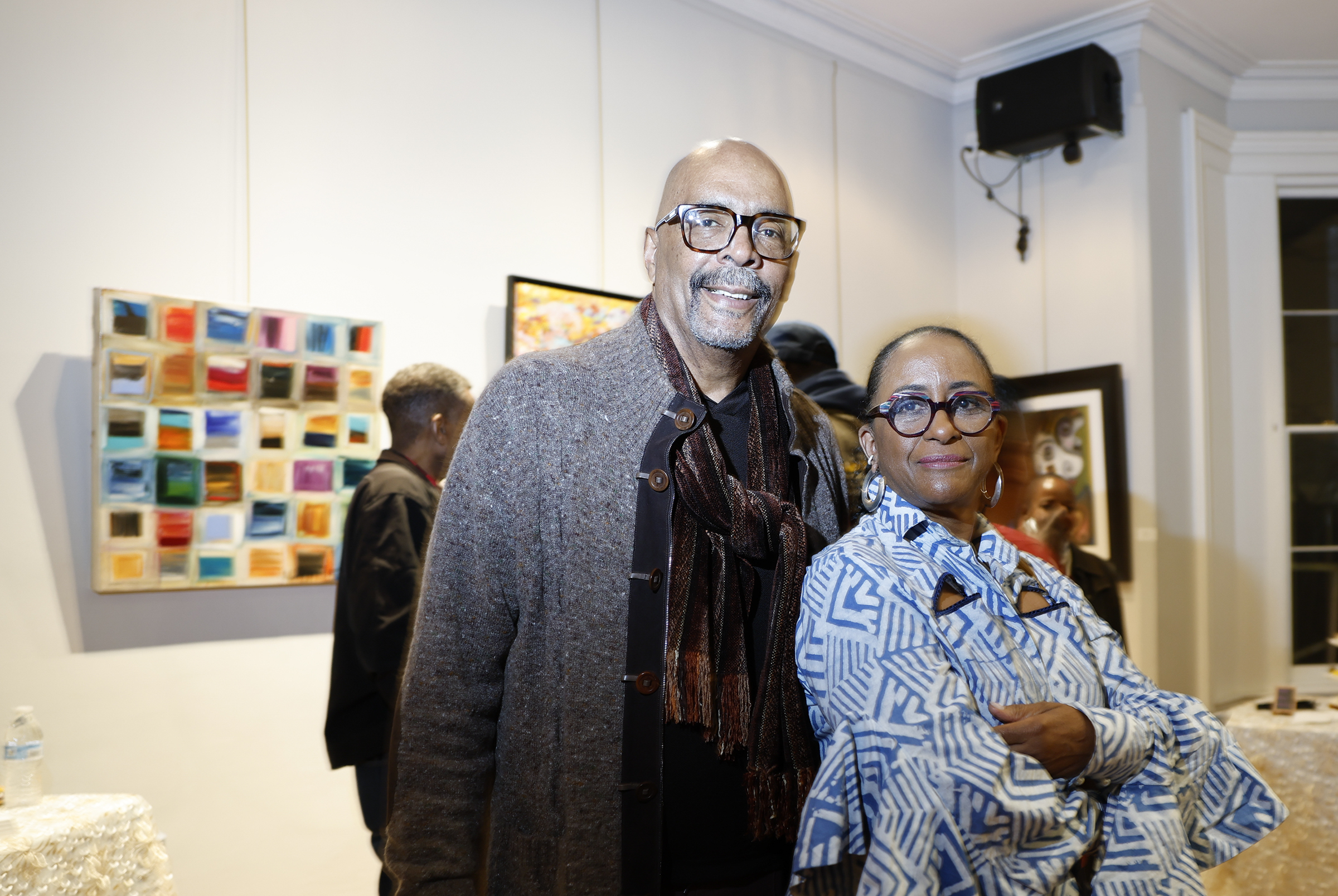
Art collectors Adrian Moody and Robyn Jones during the Museum of African American Art Collections’ inaugural exhibit at the Awbury Arboretum in East Germantown.
“Collectors drive the market,” said Valerie Gay, chief cultural officer for the city of Philadelphia. “They have the power to catapult an artist from obscurity to a household name.”
It’s the Black collector who discovers artists at street fairs, off-the-beaten-path galleries, hair salons, and their friend’s basement.
Their interest — like mid-20th-century author Ralph Ellison’s enthusiasm for Harlem Renaissance-era oil on canvas master Romare Bearden — brings artists’ work to a wider audience that can lead to cementing an artist’s place in the fine arts canon. Their picks speak to the collective Black experience, shaping Black America’s historical image.
“They are the keepers of our history,” Green said. “Mediators who carry the work forward and continue the legacy.”
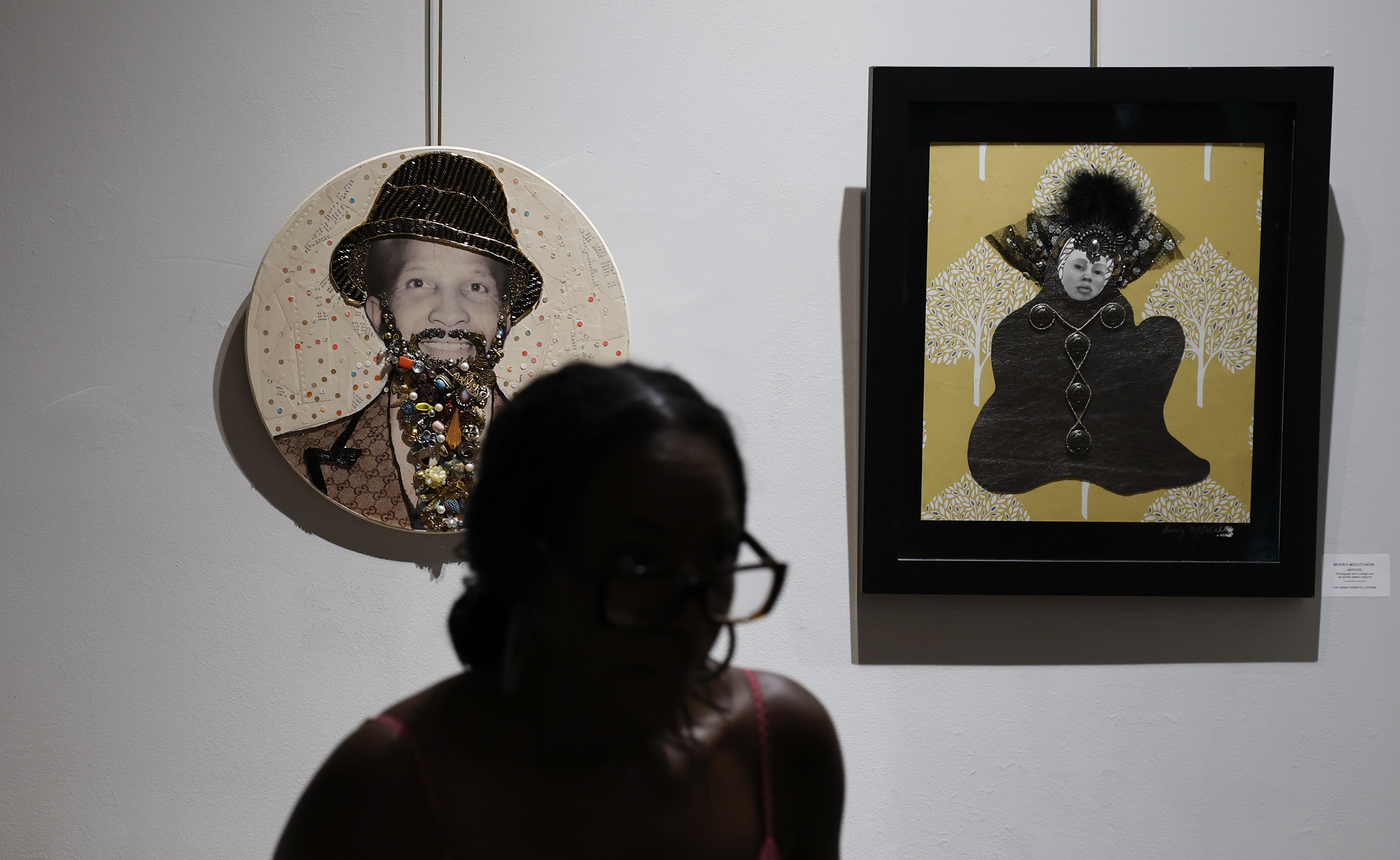
A guest walks past art collected by Diana Tyson during the Museum of African American Art Collections inaugural exhibit at the Awbry Arboretum in East Germantown on Thursday, Nov. 6, 2025. Artis Beverly McCutcheon created Dad (left) and a piece titled Untitled.
Setting value
The Black collectors’ library, Jiggetts says, is the first stop on living artists’ journeys to corporate boardrooms or the walls of major museums. “Our role is that of an economist,” Jiggetts said. “We set the value.”
Collectors shared their experiences over white wine and sweet potato cupcakes on opening night.
Daniel — whose collection features local masters — spoke effusively about her Dox Thrash mezzotint. She will never let the print by the important early 20th-century Black artist go, she said. Robyn Jones interpreted the Jesse Read and Antoinette Ellis-Williams vibrant abstracts. (This reporter thought both of those pieces were images of shoes.)
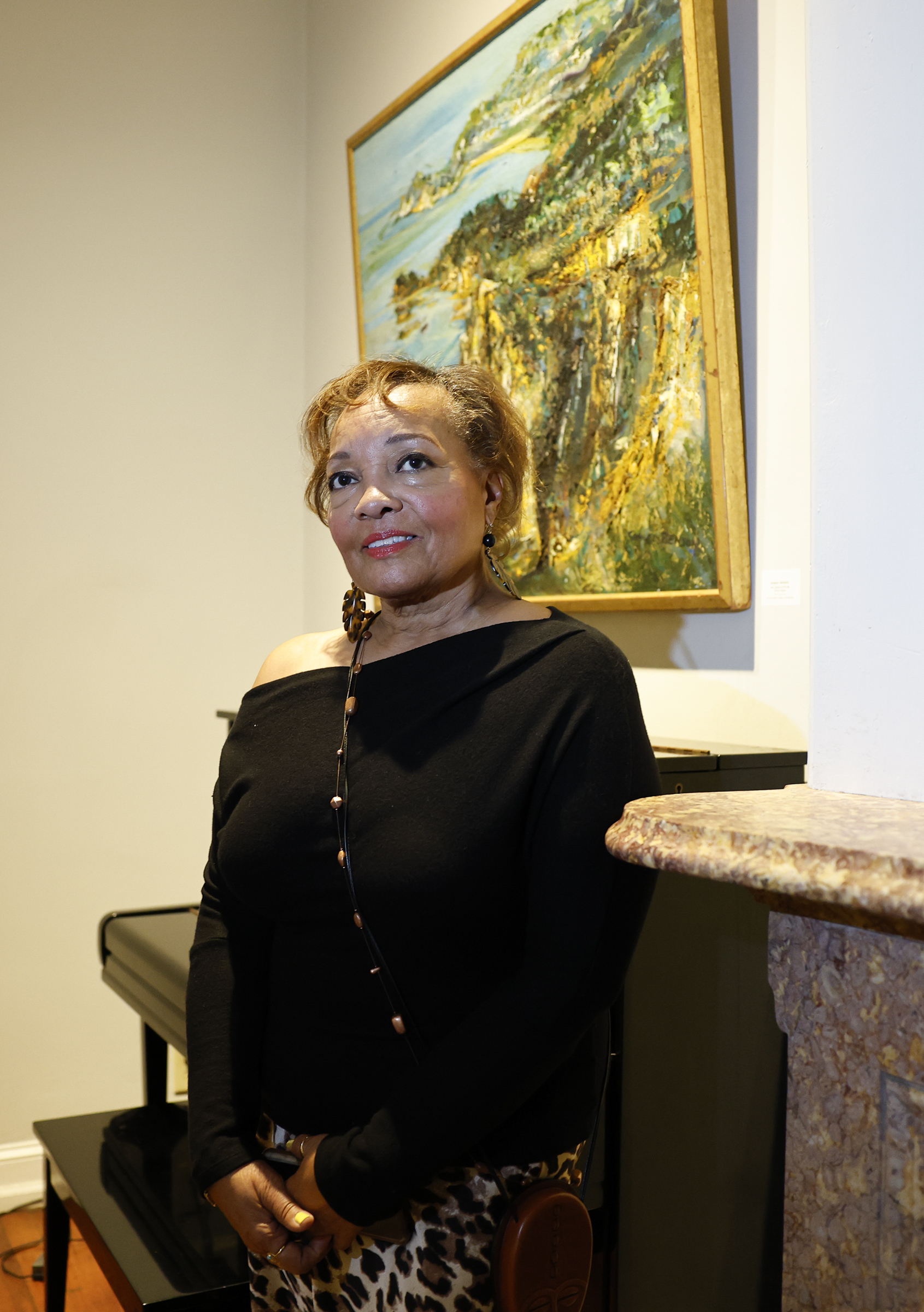
Art collector Stephanie A. Daniel with Samuel Benson’s.Gay Head Cliffs MV painting during the Museum of African American Art Collections inaugural exhibit at the Awbry Arboretum in East Germantown on Thursday, Nov. 6, 2025.
The concept of a collectors museum is a new one. Black collectors are not.
“We’ve always collected our work,” Jiggetts said, stressing that these times require Black people to be stewards of their own stories.
“At the Museum of African American Art Collections, no one can tell us what to do, what not to do, and what we need to do differently. We don’t have to worry about having it being taken away. It’s ours.”
The Museum of African American Art Collections, through Dec. 31, Awbury Arboretum’s Francis Cope House, 1 Awbury Rd., Phila.Monday to Thursday, 10 a.m. to 4 p.m.; Saturday and Sunday, 10 a.m. to 2 p.m. Admission is free.
The new show, aptly named Far Cry, was recently ordered by FX and will stream on Hulu in the United States and Disney+ internationally.
Mac will also star in the adaptation.
Far Cry is an anthology franchise of first-person shooter games created by French-based company, Ubisoft. The details for the television adaptation are still unknown, but it will be action packed, featuring a different cast and setting each season.
“Getting to work alongside Noah Hawley is a dream realized,” Mac, a South Philly native, told Variety. “Ubisoft has been remarkably generous, entrusting us with one of the most iconic video game worlds ever created. And through it all, my FX family continues to lift me up with their constant belief and support.”
Mac created and stars in It’s Always Sunny in Philadelphia, which aired its 17th season earlier this year. He also stars in and executive produces the Emmy-winning FX docuseries Welcome to Wrexham.
The forthcoming series, Mac told Variety, stands to deepen his friendship with Hawley, who also has a long-standing relationship with FX as the creator of Fargo and Alien: Earth
“Each game is a variation of a theme, the same way each season of Fargo is a variation on a theme,” Hawley told Variety. “To create a big action show that can change from year-to-year while always exploring the nature of humanity through this complex and chaotic lens is a dream come true.”
For the most part, award-winning author Diane McKinney Whetstone’s characters live their complicated lives in between El stops in early to mid-20th-century West Philly.
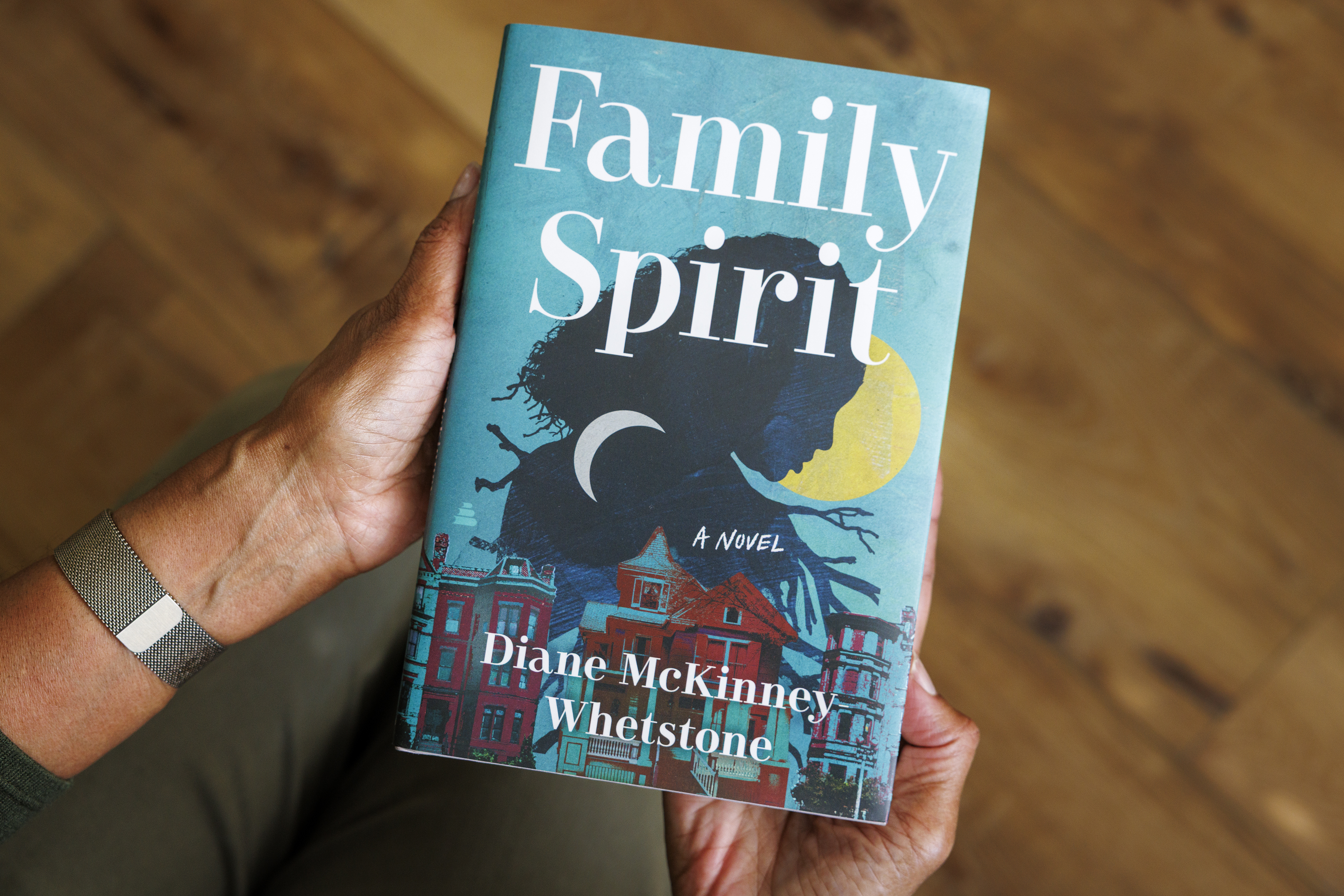
In her new book Family Spirit, released by Amistad earlier this fall, her protagonist Ayana works at a fictional West Philly coffee shop in 2019.
And Ayana is clairvoyant.
Whetstone packs a lot of Philadelphia in this 229-page book. Ayana weaves in and out of downtown office buildings. Her aunt Lil flashes back to 1970s Philly when she was shopping at Wanamakers and up for a gig on TheMike Douglas Show, when the variety show was filmed in Old City.
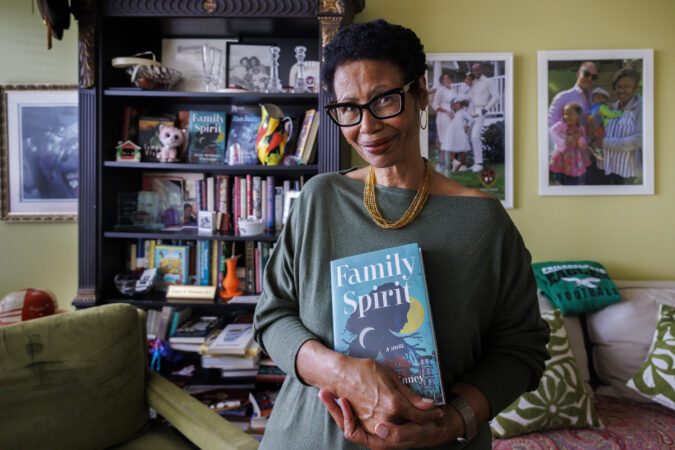
Diane McKinney Whetstone, author of newly published book Family Spirit at her home in Wynnewood, PA., Thursday, October 23, 2025.
But the majority of the story takes place in Southwest Philly at the Mace family house, where women on Ayana’s paternal side have gathered for 100 years to take part in rituals that reveal the future.
We talked to Whetstone, a lifelong Philadelphian, about her perfect Philly day.
5 a.m.
I get up early and make really strong coffee. Every day I spend a couple of hours writing. I have to, that’s my best time of the day. Sometimes I will write for three hours. Other times, I write until noon. Sometimes, I write the whole day if the spirit hits me.
8 a.m.
If it’s not a writing day, and I’m done for the day, my husband and I will go out for breakfast. Sometimes we will go toSabrina’s Cafe in Wynnewood.
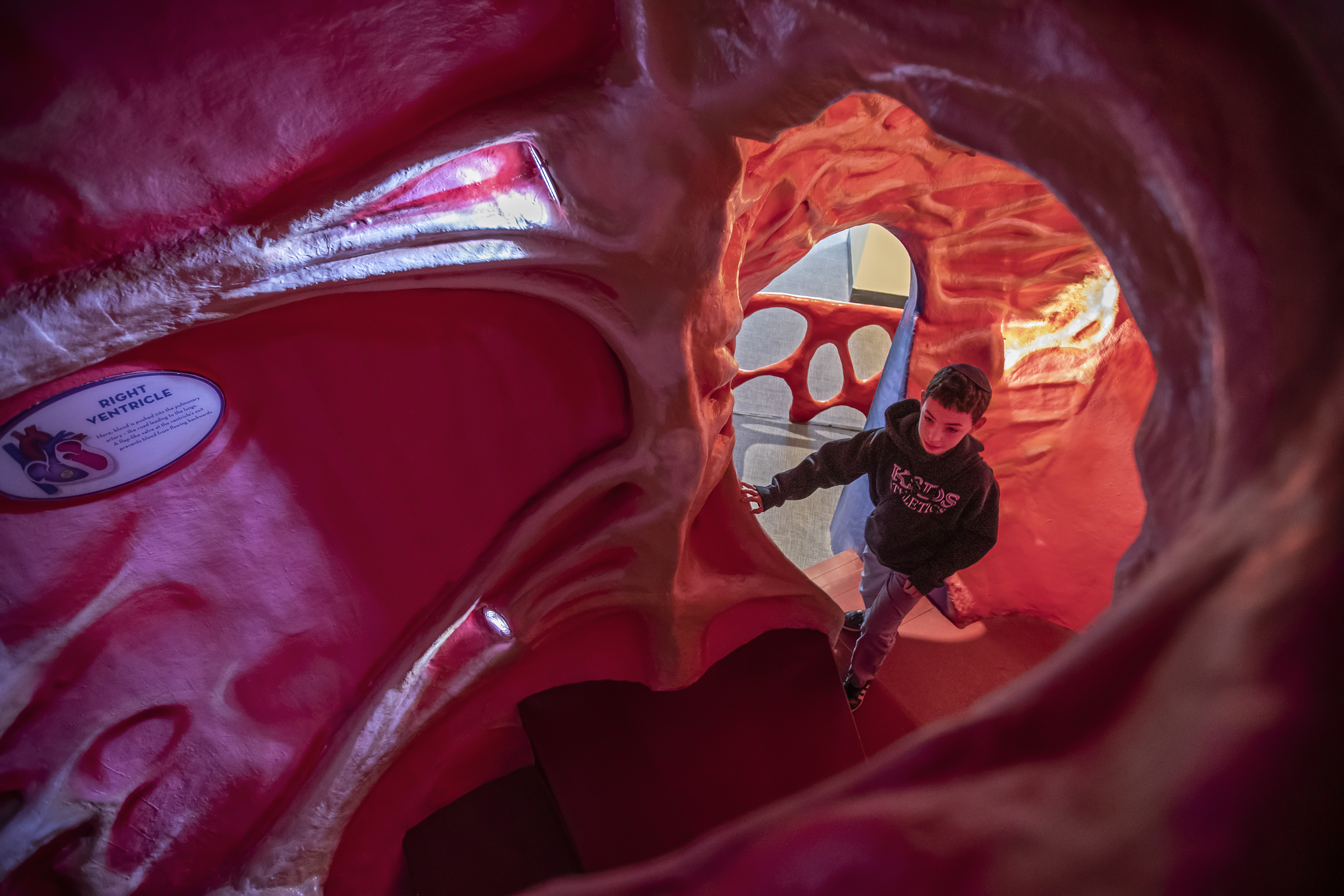
A student from the Krieger Schechter Day School of Baltimore, MD, on a field trip to the Franklin Institute on February 12, 2020, enters the right ventricle of the Giant Heart.
But lately, I’ve really liked going to Boutique River Falls off Kelly Drive, near Midvale. They have the best pancakes and fried fish. If my grandkids are with me, we will go to the Frankie [The Franklin Institute] and go through “Body Odyssey,” especially the “Giant Heart.” They love it.
If we have a lot of time, we take a nice long walk on Kelly Drive. I’m a big walker.
11 a.m.
Both my husband and I are from Philadelphia and we like to drive around our old neighborhoods. On some days we will head down Lancaster Avenue where it intersects with Haverford and reminisce about the days it was a central shopping district like Center City.
Sometimes we will drive down to 52nd Street. When I’m over there, the sounds of the El train, the way the houses are situated on the street, it takes me immediately back to my childhood.
1 p.m.
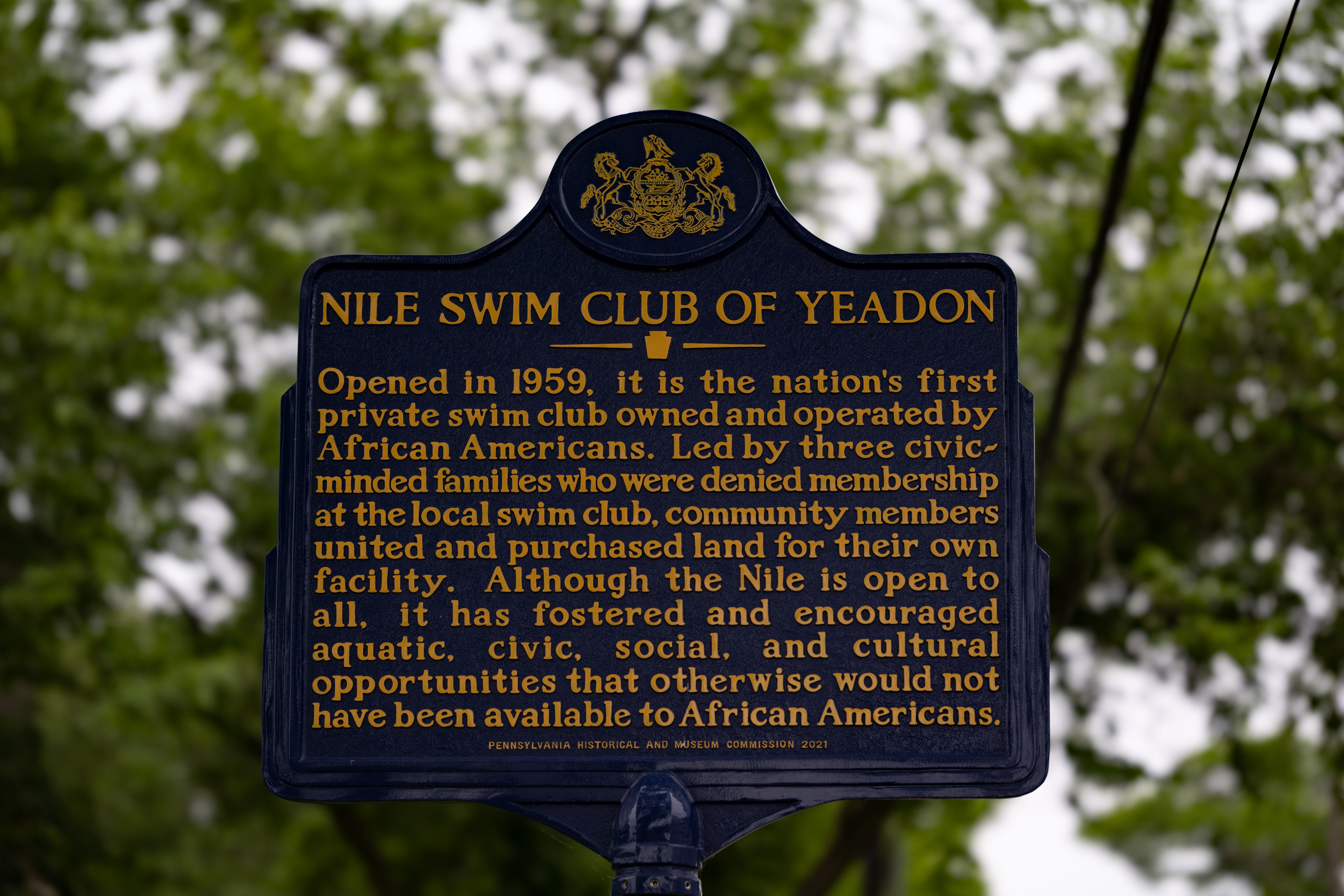
If it’s a nice day in the summer, we may go to theNile Swim Club in Yeadon. My sister has a membership there. On any given day there are families there relaxing, sharing stories. It’s a really nice place to relax.
A historical marker is pictured ahead of the opening for the summer season at Nile Swim Club in Yeadon, Pennsylvania, U.S., May 27, 2022.
2 p.m.
Again, if my grandkids are in town, we may go to a matinee atthe Academy of Musicin Philadelphia. We saw The Wiz. It was so good. Then we went around the corner to Samurai Japanese Restaurant. I’m not a real big fan of raw fish, but the teriyaki there is just so good.
4 p.m.
I cook a lot at home and especially a lot of fish. I eat salmon three times a week and I love it fresh. I really enjoy going down to Fairmount to pick up my order from Small World Seafood. I love that I get to cook restaurant-quality food.
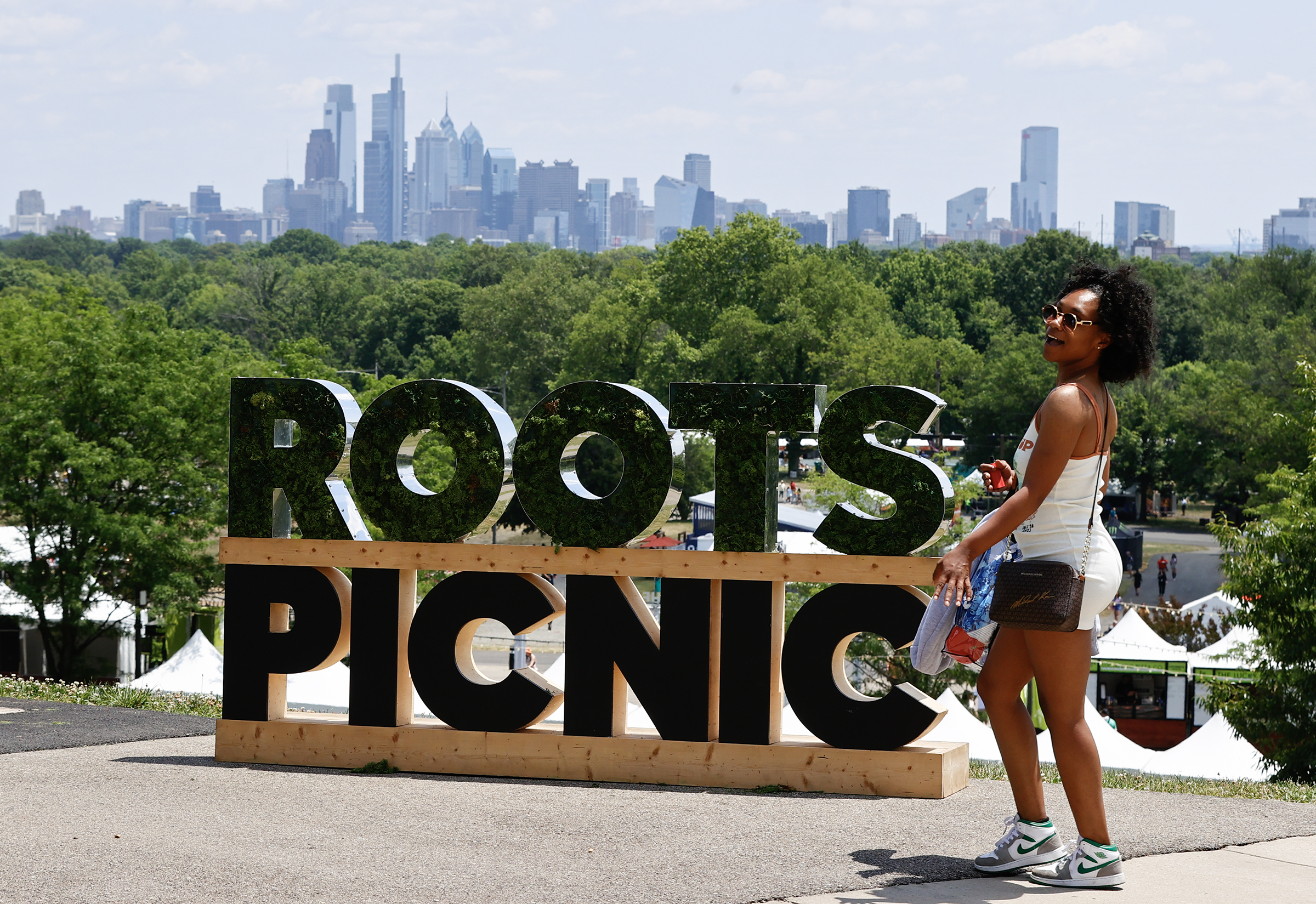
Bri Smith of West Philadelphia poses by the Roots Picnic sign with the city skyline in the background before the start of day 2 of the Roots Picnic at the Mann Center for the Performing Arts on Sunday, June 4, 2023.
8 p.m.
I would end my day at a concert at the Highmark Mann Center for the Performing Arts. I saw Cynthia Erivo there in June and it was incredible. She sang Roberta Flack’s “The First Time Ever I saw Your Face” and I nearly cried. The view of Philadelphia’s skyline is amazing. It’s just a wonderful way to end a day.
Domingo, a native of West Philadelphia, will also receive an honorary degree during the ceremony that will be held at the school’s Liacouras Center on May 6, 2026. Domingo went to Overbrook High School before coming to Temple University in the late 1980s to study journalism.
It was at Temple that Domingo developed a love for theater after a teacher told him he had a special gift. In 1991, with only 50 credits to go, he dropped out and moved to California to pursue a career in acting.
Domingo said returning to Temple for the university’s commencement ceremony will be a full circle moment for him.
“I am beyond grateful and humbled to receive an honorary doctorate from Temple University,” he said in a statement. “As a journalism student who struggled with the balance of working two jobs … this degree is very meaningful to me.”
After being stuck in committee for four years, the Pennsylvania Senate passed the CROWN Act Wednesday with a vote of 44-3.
Passage of the act — an acronym for Create a Respectful and Open World for Natural Hair — means employers and school officials can’t bar people from jobs or schools for wearing their hair as it grows out naturally or choosing styles — box braids, twists, locs, or cornrows — that protect it.
The law applies to all Pennsylvanians, but especially impacts Black people. Black men who opt to wear locs or braids at work and school instead of close cropped Afros are often forced to cut them off.
But Black women, who, are often compelled and required to straighten their naturally curly coils in professional and school settings are the most will benefit the most from the new legislation.
“This law takes discrimination head on,” said Sen. Vincent Hughes (D-Pa.). “Natural hair is beautiful. This law protects Pennsylvanians by abolishing any notion that natural hairstyles are not appropriate in professional, educational, or public settings.”
Black women use scorching hot metal combs, flat irons, or blow dryers to press their manes into smooth styles. The hair remains straight until it gets wet and then it curls back up.
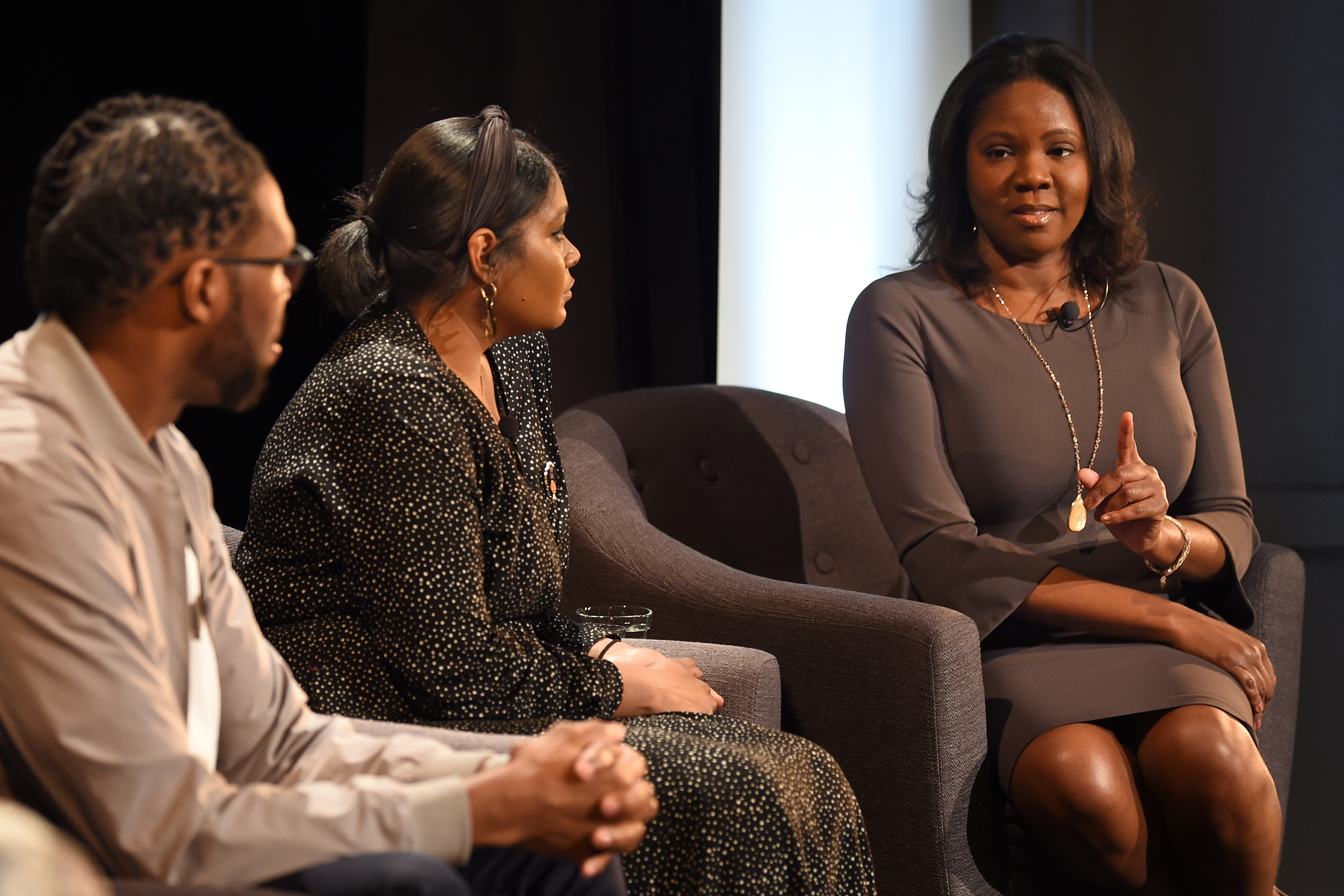
Political strategist and advocate Adjoa B. Asamoah (right) participates on a panel with the Oscar-winning Hair Love filmmakers at the National Museum of Women and the Arts in Washington, DC Feb. 23, 2020.
Some use relaxers. Stylists apply chemicals to the scalp to straighten the hair at the root, causing painful burns. This is a more permanent method, but the chemicals must be reapplied every few weeks when natural hair grows out.
Asamoah worked with attorneys to draft legislation, and champions the bill in legislative houses around the country.
“I shouldn’t have to increase my likelihood of developing cancer to be upwardly mobile. That can’t be the cost,” she said.
Fed up with hair discrimination, Asamoah began working with lawyers on the CROWN Act in 2018.
California, New York, and New Jersey were the first states to pass the CROWN Act the following year. The U.S. House of Representatives passed the CROWN Act in 2020, but it got stalled in the Senate.
Pennsylvania is the 28th state to pass anti-hair discrimination laws joining New York, New Jersey, Delaware, and Maryland. Both Pittsburgh and Philadelphia enacted ordinances banning hair discrimination in 2020, but the Pennsylvania ruling protects people throughout the state.
Gov. Josh Shapiro is expected to sign the bill into law in the coming months.
The Pennsylvania bill amended the Human Relations Act, clarifying the term of race to include traits such as hair texture and protective hairstyles. The House passed the CROWN Act in 2023 but was later assigned to a Senate committee where it lay buried.
It passed the State House again in March, with a vote of 194-8, signaling strong bipartisan support. This time House Speaker Joanna McClinton (D., Phila.) a prime sponsor of the bill, refused to leave its fate up to chance. She worked with Republican Senate president pro tempore Kim Ward to move the bill to the Senate as part of the state’s budget negotiations.
“I told her the CROWN Act was an important piece of legislation for people in all the communities that we serve,” said McClinton, who wears her hair in natural protective styles. “I’m excited about what the future holds for women in the Commonwealth of Pennsylvania who won’t have to face another barrier to succeeding in the work place.
Former first Lady Michelle Obama recently reignited the discussion of Black women’s natural hair during interviews about her book The Look.
Obama didn’t wear braids during Barack Obama’s presidential term because she feared they would be a distraction, she recently told Sherri Shepherd on her daytime talk show.
However, upon returning to the White House in 2022 to unveil her official portrait, she wore braids gathered into a bun at the nape of her neck.
“I wanted to make a statement, ‘Y’all get out of our heads,’” Obama said. “I don’t want any man in any HR department making decisions about what is appropriate, how we look, [to be able to determine] our ability to wear wigs, locs, braids and extensions … Don’t hire or fire somebody based on something you know nothing about.”
Her comments drew ire of Republicans including Megyn Kelly who countered, saying the drama was all in Obama’s head.
That kind of disconnect, Asamoah said, is why the CROWN Act is needed.
“People have been discriminating against Black people’s hair for decades, and yes, it’s still happening,” Asamoah said.
“The important thing is that Black women can no longer be fired, passed over for a promotion, or have a job offer rescinded if we wear our hair in locks, braids, or twists … If someone tells you need to straighten your hair at your job, that’s now a violation.”
The Please Touch Museum is reducing its days of operation from six days a week to five days a week, closing on Mondays.
Its new hours are Wednesday through Sunday 9 a.m. to 4:30 p.m., and select holidays. The museum is also pausing its monthly First Wednesday evening program.
The changes go into effect on Oct. 29.
The reduction in hours is a response to a 15% drop in attendance numbers from 475,000 a year pre-pandemic to 400,000 a year. Mondays, the museum found out, are the lowest visitation days.
“This change in operations reflects post-pandemic visitation trends at Please Touch Museum and cultural institutions across Philadelphia and beyond,” Ivy Brown, spokesperson for Please Touch Museum, said in a statement.“We take seriously our responsibility to ensure the museum’s continued financial stability while delivering exceptional learning experiences for generations of children and caregivers to come.”
O’Shon (Matthew Law) chaperones the ‘Abbott Elementary’ field trip to the Please Touch Museum in the season four finale that aired on April 16 on ABC.
The reduction in hours doesn’t mean that museumgoers will have limited experiences. The beloved museum, featured in the season four finale of Abbott Elementary,boasts 18 permanent exhibits, including the popular Front Step where kids play on the stoop of a make-believe house.
“Food & Family” is a 3,650-square-foot exhibit, presented by the grocery chain Giant, that introduces tots to food systems in a supermarket, a home, an industrial kitchen, and a neighborhood festival. Kids can shop for parties and grill hot dogs at their own block parties.
The museum recently opened “AlegreMENTE | Happy Brain,” a bilingual exhibit, sponsored by Conshohocken-based pharmaceutical company Cencora, centering the relationship between children and their caregivers.
“AlegreMENTE” invites visitors to play in a magical, make-believe forest where they can invent stories, draw, and explore emotions with an emotion wheel.
Woodmere Art Museum director and CEO William R. Valerio never thought he’d be standing in a former second-floor bedroom turned into a cozy, copper-hued art gallery, admiring Violet Oakley’s famous series of paintings: Building the House of Wisdom.
Yet, there he was.
Two weeks before the new Frances M. Maguire Hall for Art and Education opens on Nov. 1, Valerio was brimming with excitement.
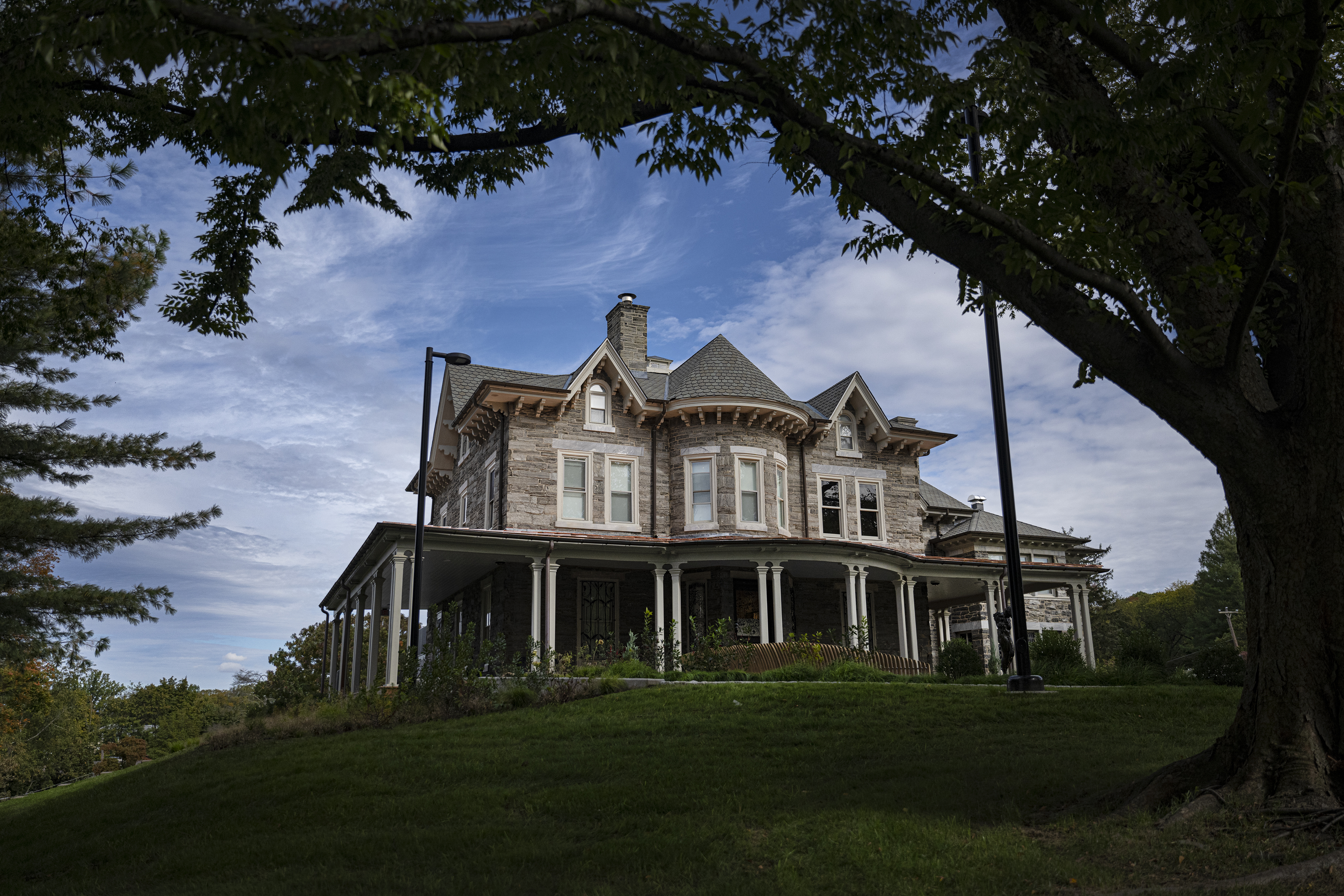
The Victorian mansion and former convent is the new home to the 112-year-old Chestnut Hill museum’s permanent collection, the most definitive group of paintings, sculptures, and prints by Philadelphia artists in the region — if not the world.
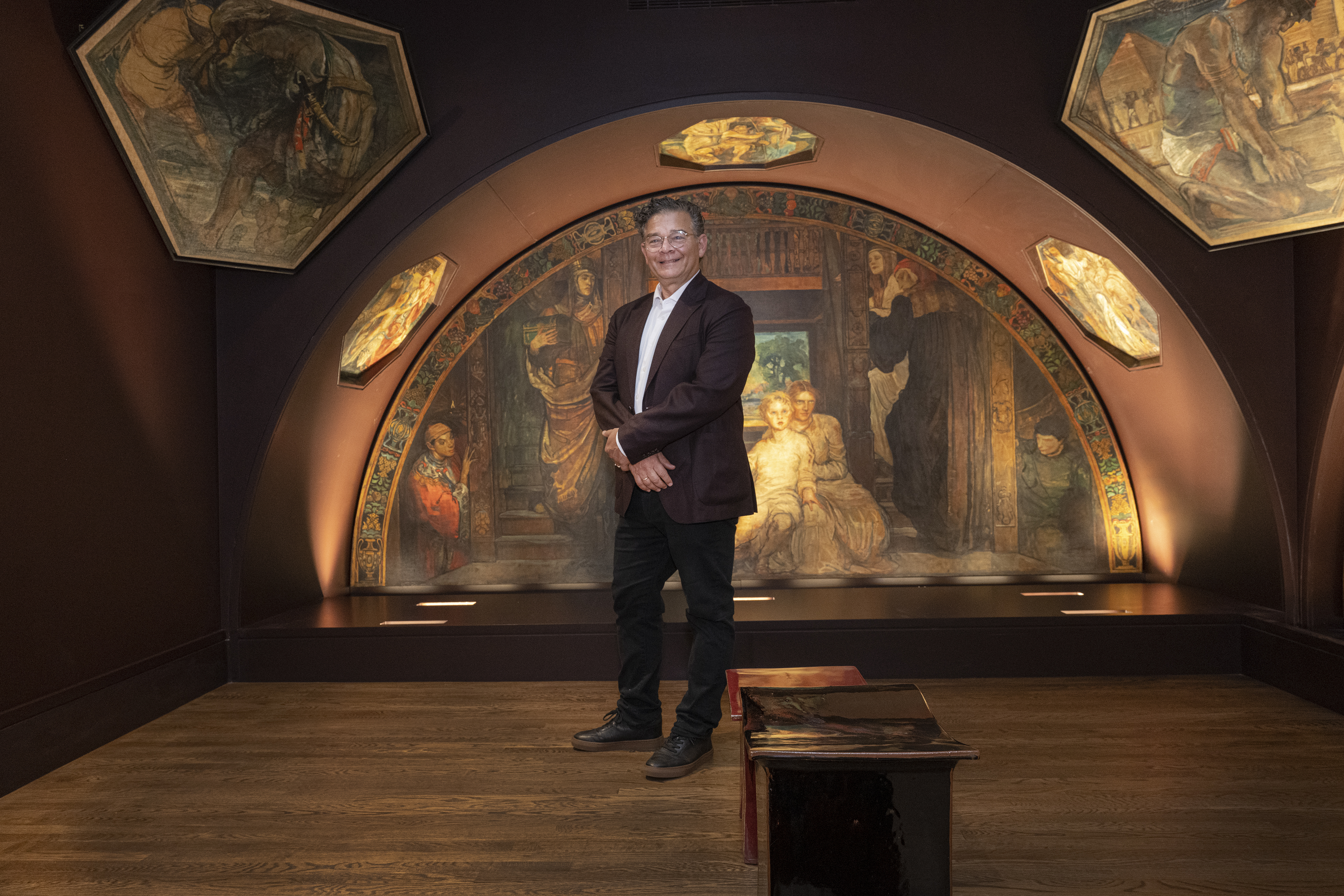
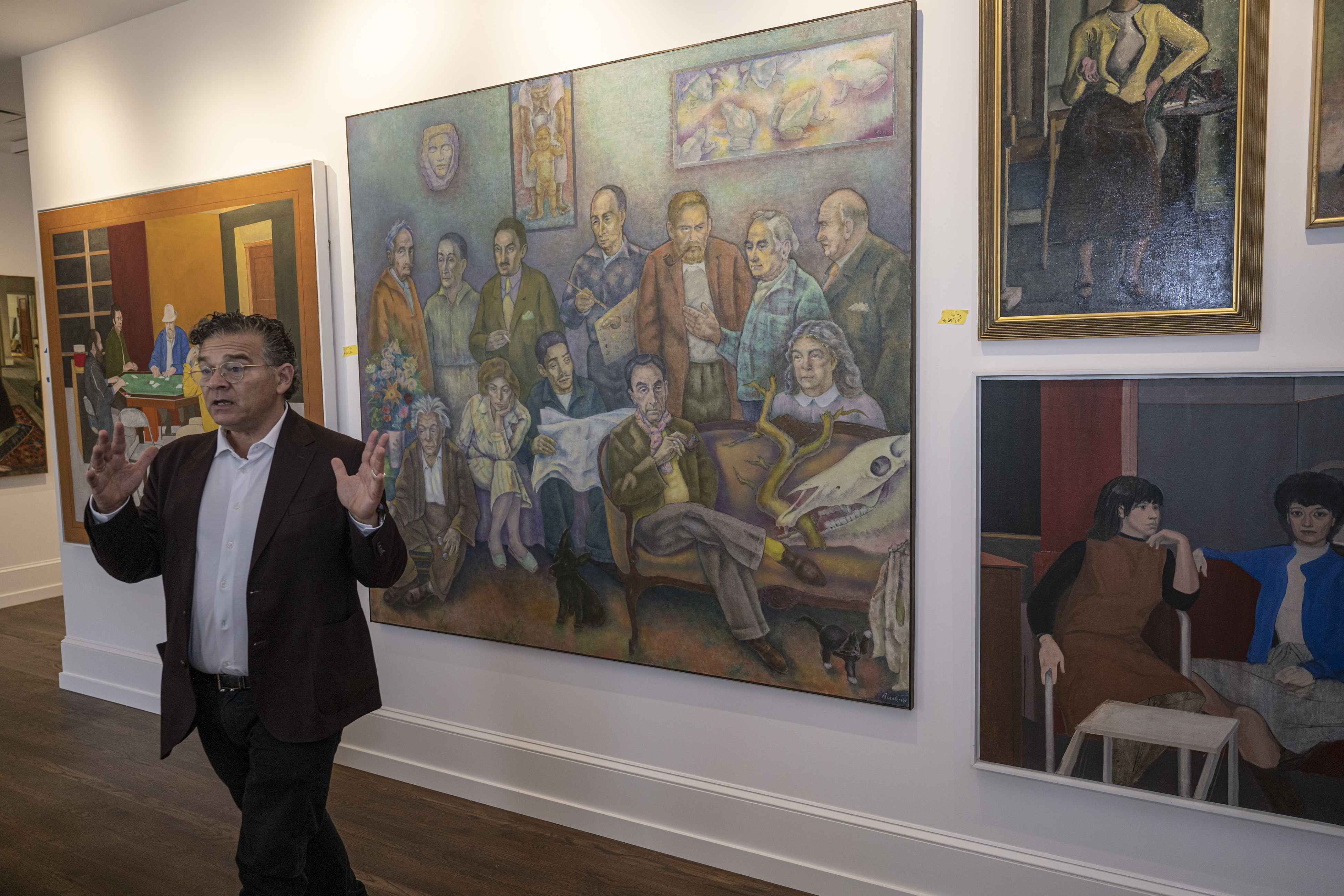
William R. Valerio surrounded by Violet Oakley’s seminal work “Building the House of Wisdom” in the Frances M. Maguire’s second floor Violet Oakley Gallery. Valerio recreated this gallery as a replica of Charlton Yarnall’s early 20th century Rittenhouse Square home where the 12-piece series was commissioned for the mansion’s music room.
“I’ve been at the museum for 15 years and I’ve always wanted to build a space to show House of Wisdom the way Oakley intended it to be shown,” Valerio said. “But I never could have imagined this.”
This is a four-story, 17,000-square-foot,gleaming house museum.
The Violet Oakley Gallery is particularly noteworthy. The 375-square-foot space is a recreation of early 20th-century banker Charlton Yarnall’s music room, where Oakley’s vibrant murals were nestled in the Rittenhouse Square mansion’s vaulted ceilings.
At Maguire Hall, Oakley’s allegorical interpretations of wisdom in the arts and sciences are fixed in lunettes positioned at eye level, allowing museumgoers to sit in a meditative gaze under a glowing replica of Italian designer Nicola d’Ascenzo’s stained glass dome.
Oakley’s House of Wisdom has been on and off view at Woodmere since 1962, when the museum’s then director — and Oakley’s life partner — Edith Emerson brought the 12-piece series to the museum. Yarnall’s mansion was being converted to an office building, and Emerson feared her late partner’s seminal work would be carelessly discarded.
“The House of Wisdom is among the roughly 11,000 pieces of art we’ve acquired over the decades that now have a place to shine like never before,“ Valerio said.
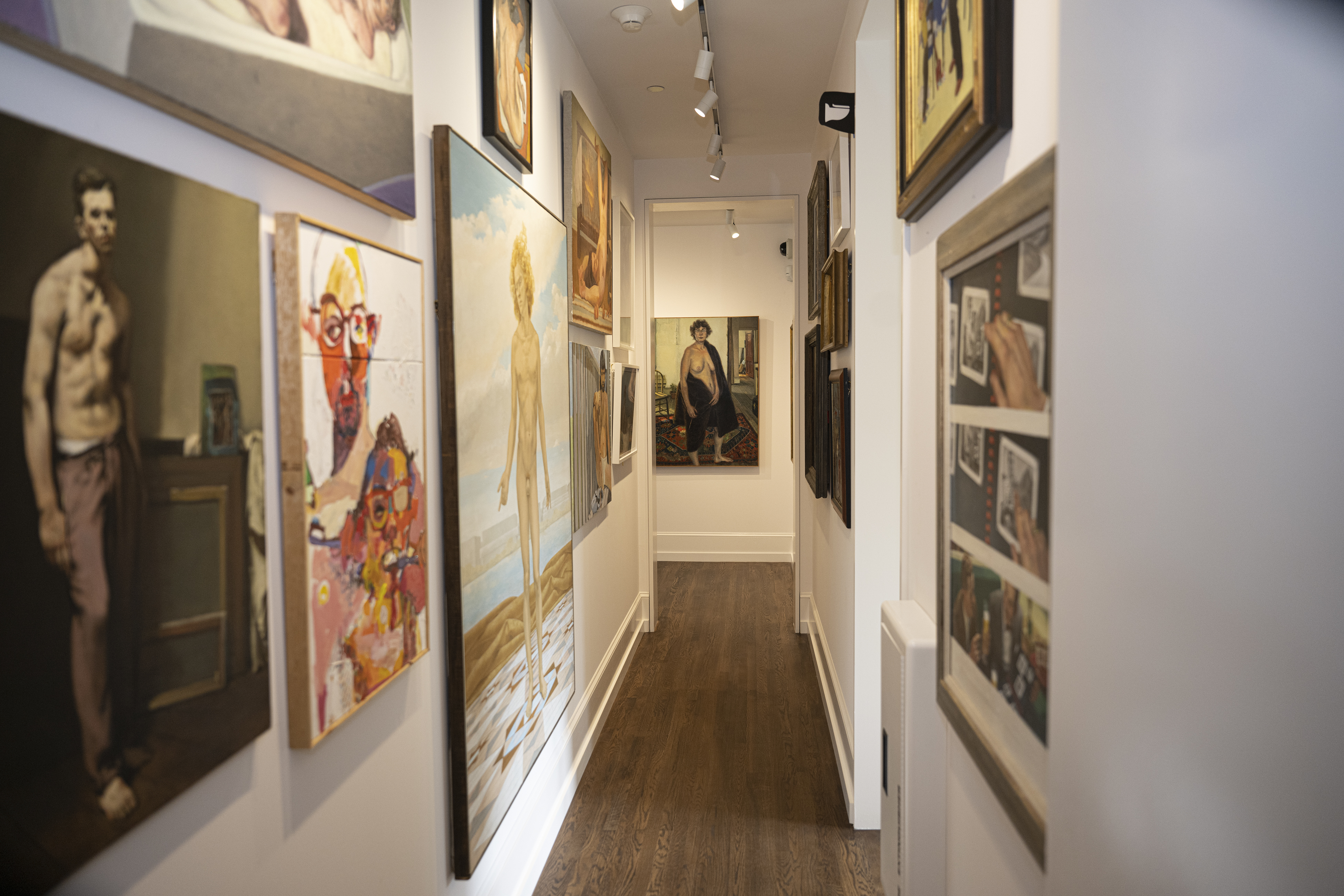
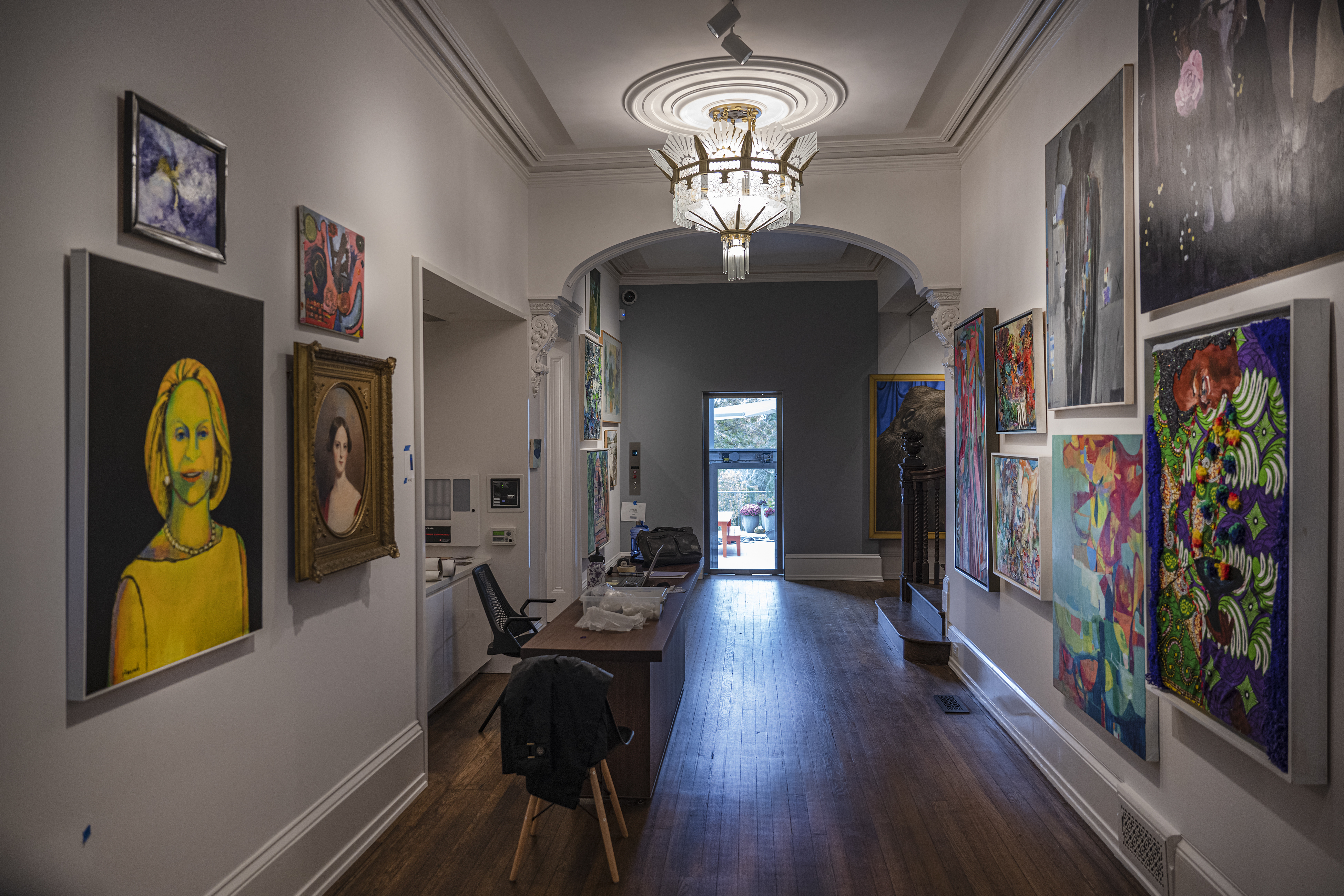
View of hallway between six second-floor galleries at Woodmere’s soon-to-be-opened Frances M. Maguire Hall.
‘Philadelphia’s great masterpieces’
Charles Knox Smith opened the Woodmere Museum — what is now the museum’s Charles Knox Smith Hall — in 1913. It holds Woodmere’s vast 18th- and 19th-century collections, including Smith’s beloved Philadelphia landscapes, and is open Wednesday to Sunday.
A few houses down and across the street, Maguire Hall’s 14 galleries hold paintings, sculptures, illustrations, photographs, and mixed media murals centering 20th-century Philadelphia artists.
William R. Valerio, director and CEO of Woodmere Museum, chatting in front of George Biddle’s 1966 oil on canvas “Evocation of the Past.”
“The idea is to show off Philadelphia’s great masterpieces,” Valerio said.
He and his four-person curatorial team spent months mounting golden frames on the monochromatic walls, so closely together they nearly touched. It gives Maguire Hall the intimate vibe of a 19th-century home.
Every major 20th-century art movement is represented, but the curation is a nod to 21st-century diversity.
African American realist Ellen Powell Tiberino’s striking nude Repose shares gallery space with Martha Mayer Erlebacher’s stunning life-size portrait The Path. Both are only a few feet away from a work by George Biddle — of the illustrious Philadelphia family that traces its roots to the 17th century — the thoughtful Evocation of the Past.
Black Pennsylvania Academy of the Fine Arts scholar Charles Jay’s meticulous floral still life paintings from the early 1980s line Maguire Hall’s grand staircase. It leads to the second-floor galleries, where lauded 1920s impressionist Walter Elmer Schofield’s bucolic renderings of snowy Wissahickon trails coolly hang.
William R. Valerio, director and CEO of Woodmere Art Museum in conversation with Syd Carpenter’s arresting “Frank as the Sun King,” paying homage to Carpenter’s brother who served in the Army during the 90s during Desert Storm and returned to Philadelphia as a quadriplegic.
An entire gallery is dedicated to female artists, featuring portraits by Oakley and Emerson. They are in conversation with an arresting sculpture by Syd Carpenter, Frank as the Sun King, an homage to Carpenter’s brother, who served in Desert Storm and came home to Philadelphia as a quadriplegic. Carpenter curated the Colored Girls Museum’s Livingroom Garden in 2024.
“These diverse backgrounds and social experiences reshape and expand the canon of 20th-century art through a Philadelphia lens,” Valerio said.
A major gift
Maguire Hall was built in 1854 as a country estate for the family of William Henry Trotter, an importer of steel, copper, and tin. In the 1890s, the house was renovated by sugar merchant Alfred C. Harrison.
The Sisters of St. Joseph bought the stately home from developers in the 1920s to serve as the Norwood-Fontbonne Academy dorm. The nuns lived there until 2021, when Woodmere purchased it for $2.5 million.
“It gave us the opportunity to take items out of storage and show the beauty of Woodmere to the world,” Valerio said.
Overview of the former Sisters of St. Joseph Convent that’s been transformed to Woodmere’s Frances M. Maguire Hall for Art and Education in Chestnut Hill.
James J. Maguire Sr. built a string of small insurance companies into a national conglomerate in the mid- to late 20th century. In 2008, he completed a $5 billion merger with a Japanese firm and, with his wife, Frances, became one of the region’s largest philanthropic donors.
An artist and patron of the arts, Frances Maguire died in 2020. Three years later, the Frances M. Maguire Art Museum was opened at the former home of the Barnes by St. Joseph’s University, which had received a $50 million donation from the Maguire Foundation in 2017.
Frances Maguire also spent a lot of time at Woodmere, taking classes and serving on the board of trustees. In her honor, the Maguire Foundation gave the museum $10 million. Valerio raised an additional $18 million from donors, state, and federal funding. The $28 million was used to renovate the mansion and start an endowment.
Entrance way of the Frances M. Maguire hall. To the left is a portrait of Maguire by Kassem Amoudi. The chandelier Chestnut Street’s Boyd Theater open from 1928 to 2002.
A portrait of Frances Maguire by Kassem Amoudi hangs in the foyer.
“In creating the Frances M. Maguire Hall and supporting Woodmere, we are assuring that her legacy is shared with current and future generations,” said Megan Maguire Nicoletti, one of the Maguires’ nine children and CEO of the Maguire Foundation.
All the details
Krieger Architects worked with New York-based Baird Architects to turn the ramshackle convent into a modern museum, complete with wheelchair-accessible ramps and a shiny glass elevator overlooking the art trail connecting Maguire Hall to Charles Knox Smith Hall.
Mammoth sculptures by 1959 Penn graduate Robinson Fredenthal are visible from the elevator as well as chokeberry, bayberry, and pawpaw trees, planted in Woodmere’s perennial Outdoor Wonder garden in honor of the Lenape Indians. Maguire Hall boasts a brand-new porch dotted with bright Adirondack chairs that once belonged to the University of the Arts.
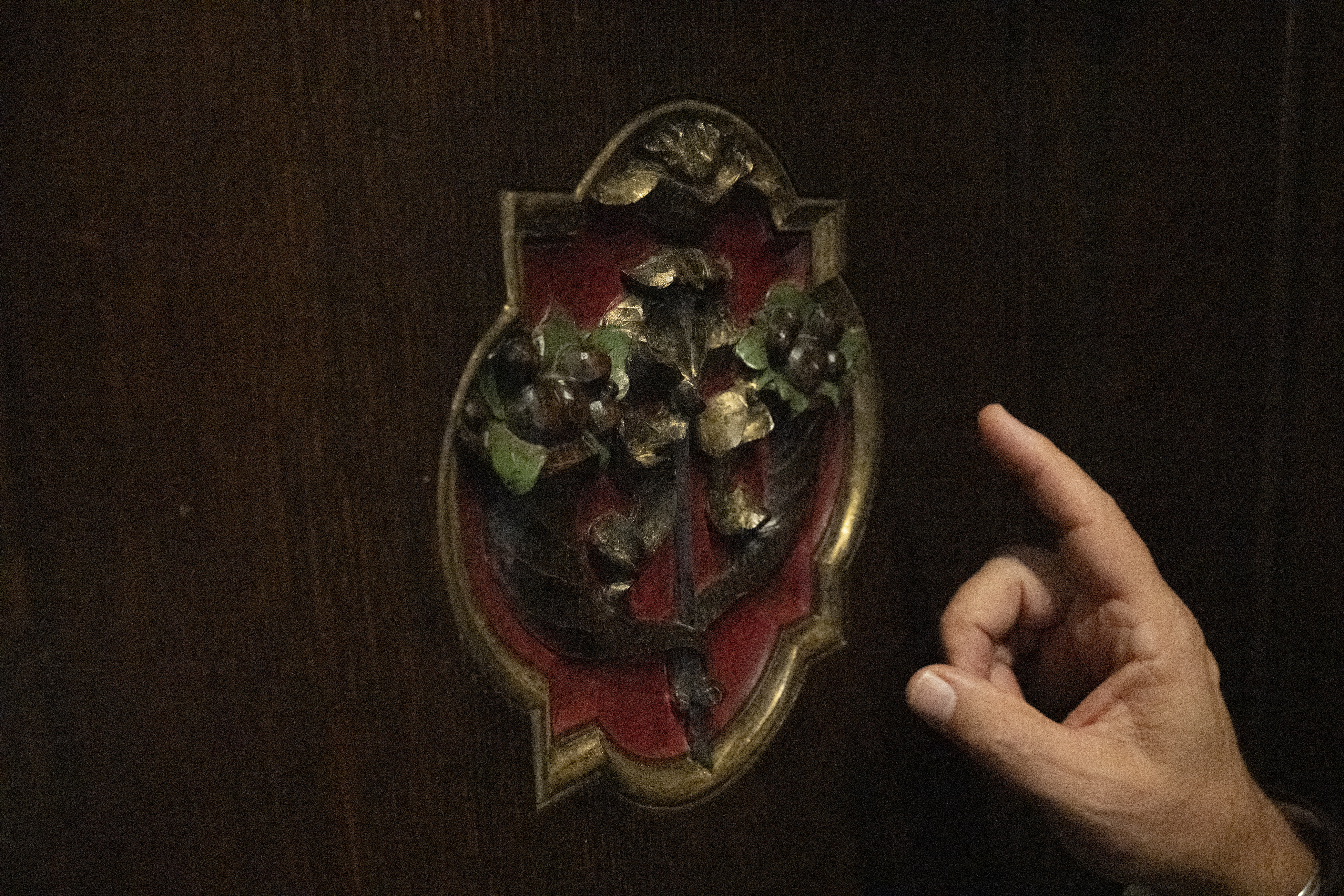
Detail of Belgium carver Edward Maene’s work in The Frances M. Maguire Hall breakfast nook. During the renovation, the carvings original red, green, and golden hues were discovered.
In the mansion’s dining room, breakfast room, and central staircase are exquisite woodcarvings from 20th-century master and Belgium immigrant Edward Maene.
“He went all out and carved fantastical medallions with images of fish that turned into birds and humans that turned into lions,” Valerio said of Maene’s work.
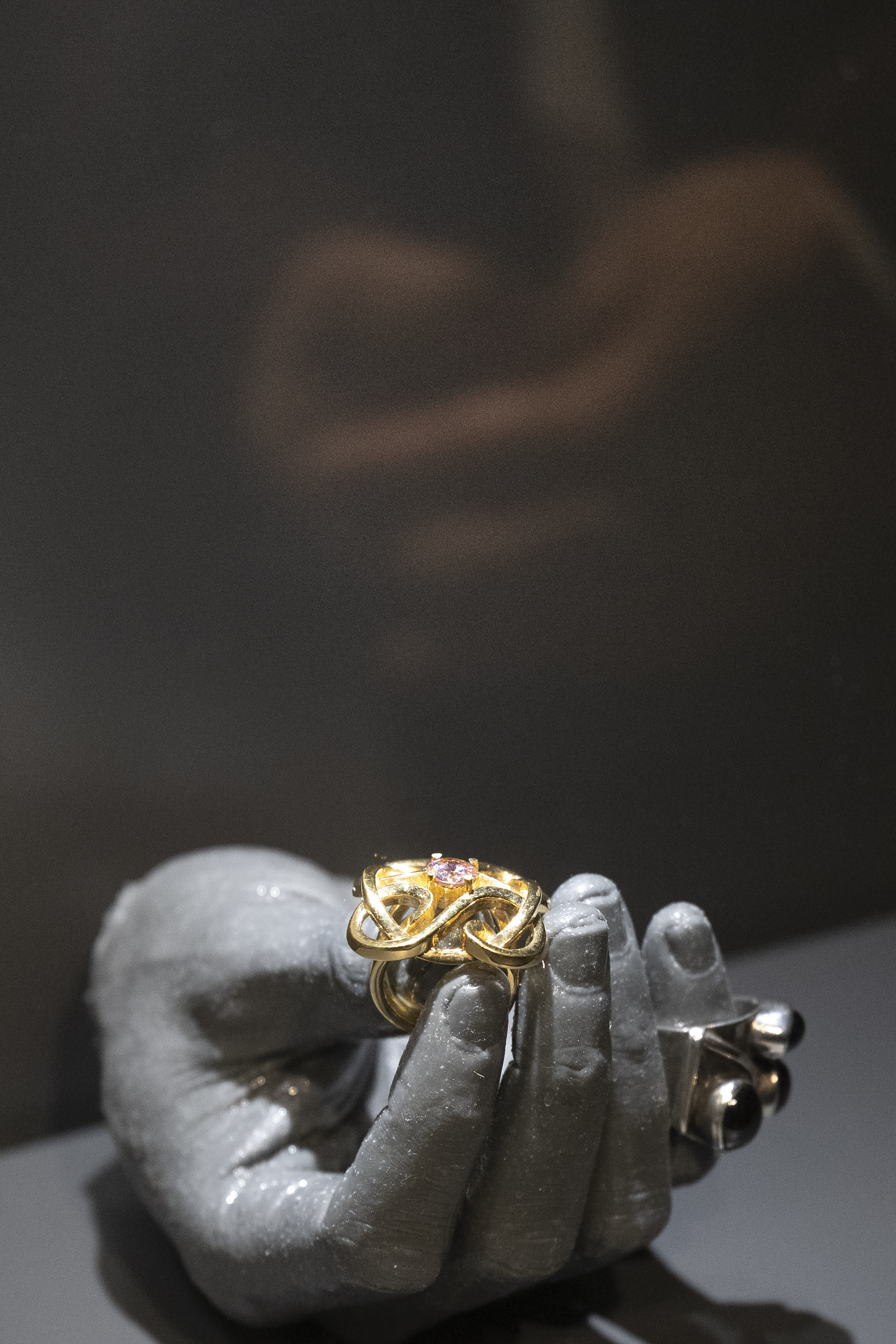
There is the MacDonald Family Children’s Art Studio, where little ones can try their hands at finger painting, watercolors, and perhaps a bit of jewelry making. Right across from it is a jewelry vault, where an ankle-length Henri David coat sparkles with jewels from local Victorian-era jewelry houses: Bailey, Banks & Biddle and Caldwell.
Tyler School of Art and Architecture graduate Theophilus Annor fashioned hand mannequins for the baubles. (Annor also carved Adinkra symbols into John Rais’ decorative wrought iron)
Jewels shown on a hand mannequin fashioned by Ghanian artist Theophilus Annor in the Frances M. Maguire jewelry vault. (L) Theophilus Annor, Holding On, 2024, Gold & faceted gemstone. (R) Richard Reinhardt, Ring, date unknown.
Housing history
The second-floor illustrative arts rooms feature wartime drawings from 1940s issues of the Saturday Evening Post and framed TV Guide images of Kojak’s Telly Savalas and Columbo’s Peter Falk. (TV Guide was owned by former Inquirer and Daily News publisher Walter Annenberg.)
“This part of our history is often forgotten,” Valerio said. “But it was important to artists who lived here and made a living in what was then a big media city.”
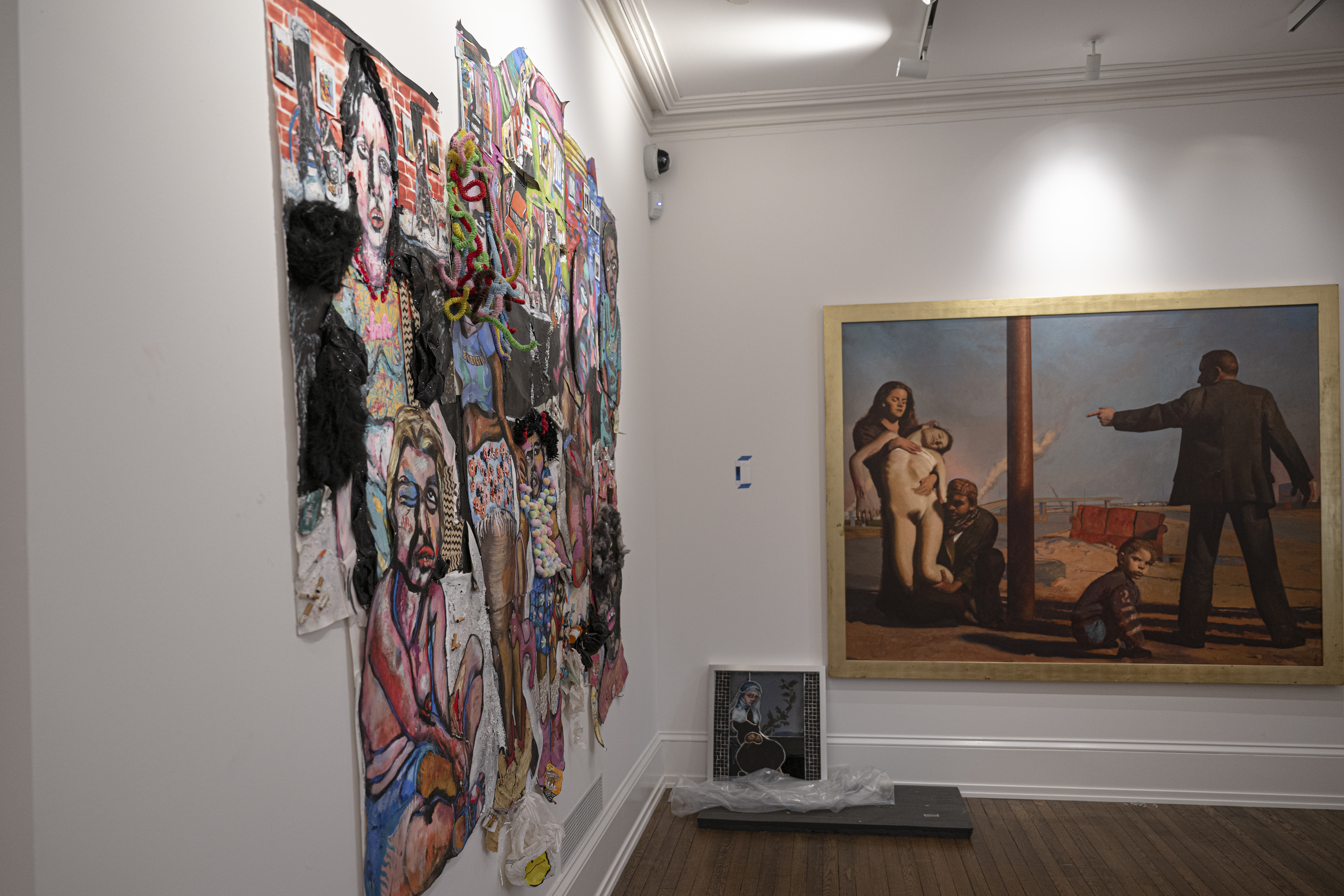
The first floor gallery of the Frances M. Maguire Hall featuring (left) Ashley Flynn’s stark mural of drug culture in Kensington and “Madre del Nene” a1990, oil on linen from Bo Bartlett
But the bottom floor is the star. Housed here are Maguire’s most evocative pieces, like an abstract collage by Danny Simmons — brother of hip-hop luminaries Russell and Joseph “Run” Simmons — titled Hocus Pocus, which interrogates magic in the Black community. Ashley Flynn’s gripping mural depicting drug abuse in Kensington and gay artist and collage maker Stuart Netsky’sHave Your Cake and Eat it Too, which puts a naughty twist on Victorian-era prudishness, radiate under the Boyd Theatre’s chandelier.
With this work, Valerio hopes Maguire Hall plays a role in shaping a more inclusive future in Philadelphia — and around the world — through the arts.
“We do what no other museum does in exploring the art and culture of this city in depth,” Valerio said. “And we welcome everyoneto take part in the conversation.”
Woodmere’s Frances M. Maguire Hall for Art and Education, 9001 Germantown Ave., opens to the public on Nov. 1 and 2. Charles Knox Smith Hall is located at 9201 Germantown Ave. Both are open Wednesday to Sunday, 10 a.m. to 5 p.m. Tickets are $10. Free on Sundays. woodmere.museum.org
The article was updated to reflect the new name of the children’s art studio at Woodmere Museum, and the last name of Maguire Foundation’s CEO.