Author: Kayla Yup

  • Pink noise, a popular sleep aid, could disrupt sleep quality, Penn study suggests

    Pink noise, a popular sleep aid, could disrupt sleep quality, Penn study suggests

    Marketed as a ticket to deeper sleep, the soft hum of pink noise has become part of millions’ nightly routines.

    However, its use may come at the cost of sleep quality, a University of Pennsylvania study suggests.

    Published this month in the medical journal Sleep, the study found that the presence of pink noise at night reduced REM sleep — the stage when most vivid dreams occur and memory, emotional regulation, and learning are supported. This was based on a sample size of 25 healthy adults assessed over seven days in a sleep lab.

    To Mathias Basner, a Penn professor of psychiatry and lead author on the study, it’s evidence that background noise may not be risk-free.

    “The negative consequences of the pink noise far outweigh the positive ones that we saw,” he said.

    Pink noise vs. white noise

    Pink noise is what’s called a “broadband noise,” meaning sounds made up of a wide range of frequencies. The most well-known example of this, white noise, is considered the sound equivalent of the color white, which contains all colors combined.

    Pink, brown, and other colored noises differ based on the frequencies they boost.

    Pink noise, for example, emphasizes lower frequencies — making it sound similar to steady rainfall or ocean waves. It’s often used for sleep, although uses for focus and tinnitus have also been reported.

    These types of background noise can mask unwanted sounds — an appealing quality in an increasingly noisy world.

    Since the first white noise machine for sleep was released in the 1960s, hundreds of variations have spawned. Today, 10-hour videos of pink noise, which is often preferred over white noise for sleep due to its softer sound, pick up millions of views on YouTube.

    “So many people are using it, and it’s really indiscriminate use,” Basner said.

    Putting pink noise to the test

    Having studied the effects of noise his whole career, Basner was surprised to learn several years ago that some people used it as a sleep aid.

    That led him down a rabbit hole of research, where he found dozens of studies assessing the effects of broadband noise on sleep. However, most of them were considered to be low quality — sample sizes were small and the assessments were usually subjective.

    “We don’t know whether it’s working, whether it’s harmful or not,” he said.

    He designed his study to occur in the hypercontrolled environment of a sleep lab at the Hospital of the University of Pennsylvania, where participants were measured using polysomnography, a test that looks at brain waves, eye movements, and muscle tone.

    This allowed his team to differentiate sleep stages and figure out what was happening biologically as participants were exposed to a variety of conditions: no noise, environmental noise, pink noise, pink noise and environmental noise combined, or environmental noise with ear plugs.

    Each night, the 25 participants, comprised of 18 women and seven men, were given an eight-hour window to sleep. (Lights were out at 11 p.m. and back on at 7 a.m.)

    His team found that environmental noise — which ranged from the sound of a helicopter to a sonic boom — led to a 23.4-minute decrease in stage 3 sleep. This so-called deep sleep phase where recovery occurs is important for physical repair and immune function, as well as memory.

    And while pink noise didn’t affect deep sleep, it was associated with an average decrease of 18.6 minutes in REM sleep.

    “REM sleep is extremely important for a lot of things like memory consolidation, emotion regulation, brain plasticity, and neurodevelopment,” Basner said.

    Though the study didn’t look at children, he cautioned that babies spend around half of their time sleeping in REM, compared to a quarter in adults.

    Based on his findings, he would discourage parents from using broadband noise machines in the bedrooms of newborns.

    For adults who don’t want to forgo the noise, he would recommend using the lowest volume and setting a timer so it eventually turns off.

    However, the best option would be to use foam ear plugs, he said. When paired with environmental noise in the study, they were able to block out noise and recover 72% of the deep sleep time that had been lost — although they did start losing effectiveness at higher noise levels, around 65 decibels.

    “You didn’t get the REM sleep reduction because they didn’t play anything back,” Basner said.

    A limitation of the study is that it had a relatively small sample size comprised of younger, healthy people without sleep disorders or hearing loss. It also only looked at the short-term effects of pink noise, and was conducted in a lab setting, versus the participants’ homes.

    In the future, Basner hopes to study the long-term effects of pink noise on sleep, as well as test other types of broadband noise.

    “We need to do the proper research to make sure that it is actually, at least, not harmful,” he said.

  • Philly biotechs are getting a small funding boost from a new city program, but it doesn’t replace ‘America’s seed fund’

    Philly biotechs are getting a small funding boost from a new city program, but it doesn’t replace ‘America’s seed fund’

    Philadelphia biotechs are worried about losing a key source of federal funding for early-stage innovation.

    Known as “America’s seed fund,” the Small Business Innovation Research (SBIR) and Small Business Technology Transfer (STTR) programs help small companies develop innovative technologies. In recent years, they’ve allocated $4 billion annually to more than 4,000 businesses nationwide. However, after Congress failed to reauthorize the decades-old programs last fall, their funding officially expired in September.

    The fallout has affected more than a dozen local life sciences companies, raising concerns about whether they can maintain staffing and make up for the delay in funds promised months ago, said Heath Naquin, senior vice president of innovation and new ventures at University City Science Center, a nonprofit commonly known as the Science Center that provides startup support.

    For many, staffing and financing plans could be disrupted by funding shortfalls, as companies either haven’t gotten their payment yet or can’t get their funding for next year approved, he said.

    An exact figure is unknown, but Naquin estimated that some affected companies could be short up to a million dollars for the year.

    At the same time, the city of Philadelphia launched last spring a new program that provides additional funding to those who have already earned SBIR/STTR grants. The 21 awardees who will share $450,000 from the city were announced publicly in January.

    The city money is earmarked for technical assistance, such as the cost of attorneys, marketing, and anything else needed for commercialization, while SBIR/STTR money normally goes toward research and development.

    “There is no overnight solution to SBIR right now,” said Tiffany Wilson, chief executive officer of the Science Center, which is partnering with the city to implement the program. “It’s just another layer of uncertainty that we’ve got to navigate through.”

    New city-led program

    Pennsylvania is not one of the dozens of states that offer matching programs to supplement the federal SBIR/STTR funds.

    To fill that gap, Philadelphia launched its new city-level program, which is one of the first in the nation and the only one of its kind in the state.

    The idea was to boost companies already vetted by the federal government that could still benefit from smaller amounts of money.

    “Life science companies need millions of dollars, but this was a way that we could help Philadelphia-based companies thrive,” said Rebecca Grant, who runs the program and serves as senior director of life sciences and innovation for the city.

    This year, the city offered funding to all eligible applicants.

    The $450,000 is doled out in three tiers: companies with the earliest stage grants received $20,000 while those in the next phase received $40,000. Those whose grants were no longer active received $2,500.

    The program is still a pilot, and city leaders hope to run it on an annual basis, Grant said.

    Naquin has heard from at least three companies in the last six months that are formally considering moving to Philadelphia as a result of the program’s existence.

    Pivoting

    The SBIR/STTR grants are valuable to early-stage biotechs for two reasons: They provide funding without asking for ownership or equity in return, and signal to potential investors that the company is less risky, Wilson explained.

    The programs traditionally have been reauthorized every few years without major lapses. However, recent debates over reforms have created a deadlock.

    Policymakers from both parties want to address companies that are repeatedly going back for more funding, concerns over foreign involvement, and how to better support commercialization, Naquin said.

    “We’re still in a waiting game,” he said, adding that the programs were not reauthorized in the latest government funding bill passed this week.

    With the SBIR/STTR pipeline stalled, the Science Center has had to pivot. Federal support for science has been particularly precarious under President Donald Trump’s second administration, with widespread cuts and pauses to millions of dollars worth of programs and grants.

    Late last year, the center launched an initiative to help startups figure out which agencies still have available funding opportunities.

    The aim is to help them better shop around for the grants that they can apply to, Wilson said.

  • Philly-area medical schools are enrolling more women and attracting more students, according to the latest trends

    Philly-area medical schools are enrolling more women and attracting more students, according to the latest trends

    Competition at Philadelphia-area medical schools intensified in 2025, with programs seeing about 50 applicants for every open spot.

    That’s the highest demand since 2022, with the number of applications bouncing back after a three-year decline, recently released data from the Association of American Medical Colleges (AAMC) shows.

    The annual report offers a look at the composition of the nation’s future doctors through the demographics of the applicants and enrollees at M.D. degree-granting medical schools across the United States and Canada.

    It showed increased class sizes and strong female enrollment across the Philadelphia area’s five M.D. degree-granting schools: University of Pennsylvania, Thomas Jefferson University, Temple University, Drexel University, and Cooper Medical School of Rowan University.

    And the fraction of first-year medical students from Pennsylvania who identified as Black or African American, excluding the mixed-race student population, fell from 6.9% to 5.4% between 2023 and 2025.

    The racial demographics of entering students are seeing increased scrutiny in light of the 2023 Supreme Court decision that effectively ended affirmative action, barring race from being used in higher education admissions.

    The percentage of first-year medical students from Pennsylvania who are Black is lower this year than the national average. Pennsylvania also lags behind the national average for first-year enrollment of Hispanic or Latino medical students.

    This data reflects the results of the application cycle that concluded last spring. Next year’s prospective medical school students are currently in the thick of admissions season, awaiting interviews and offers.

    Here’s a look at the key trends we’re seeing:

    Applications back up

    Demand for spots at Philadelphia area-medical schools is back up after a three-year decline. There were nearly 5,000 more applications last cycle, a 9.3% increase, with all schools except Cooper seeing a boost.

    Jefferson’s Sidney Kimmel Medical College helped drive growth the most, with a 16% increase in applications compared to the previous year.

    window.addEventListener(“message”,function(a){if(void 0!==a.data[“datawrapper-height”]){var e=document.querySelectorAll(“iframe”);for(var t in a.data[“datawrapper-height”])for(var r,i=0;r=e[i];i++)if(r.contentWindow===a.source){var d=a.data[“datawrapper-height”][t]+”px”;r.style.height=d}}});

    More medical students being trained

    Orientation icebreakers might take a bit longer to get through at area-medical schools as first-year classes continue to get bigger.

    In 2025, Philadelphia-area schools enrolled 1,089 new medical students, compared to 991 in 2017. Drexel University College of Medicine contributed to half of that growth, adding 49 seats to its recent entering class compared to that of 2017.

    Penn’s Perelman School of Medicine was the only school that did not increase its class size in 2025.

    Medical schools around the country have committed to increasing class sizes to address projected shortages of doctors.

    window.addEventListener(“message”,function(a){if(void 0!==a.data[“datawrapper-height”]){var e=document.querySelectorAll(“iframe”);for(var t in a.data[“datawrapper-height”])for(var r,i=0;r=e[i];i++)if(r.contentWindow===a.source){var d=a.data[“datawrapper-height”][t]+”px”;r.style.height=d}}});

    Female enrollment remains strong

    More female students have entered Philly-area medical schools over the last decade.

    In 2025, 55.4% of first-year enrollees at Philly-area medical schools were female, compared to 47.7% in 2017.

    Drexel saw the biggest rise, with 181 women entering in 2025, compared to 120 in 2017.

    window.addEventListener(“message”,function(a){if(void 0!==a.data[“datawrapper-height”]){var e=document.querySelectorAll(“iframe”);for(var t in a.data[“datawrapper-height”])for(var r,i=0;r=e[i];i++)if(r.contentWindow===a.source){var d=a.data[“datawrapper-height”][t]+”px”;r.style.height=d}}});

  • Baby KJ’s father returns to CHOP as a construction worker, building its new patient tower

    Baby KJ’s father returns to CHOP as a construction worker, building its new patient tower

    Inside a heated tent on the Children’s Hospital of Philadelphia campus, 17-month-old KJ Muldoon wiggled around in his mother’s arms, smiling and clinging to a multicolored toy.

    This time, the toddler who has been called one of the top 10 people who helped shape science in 2025 was not here for a medical appointment.

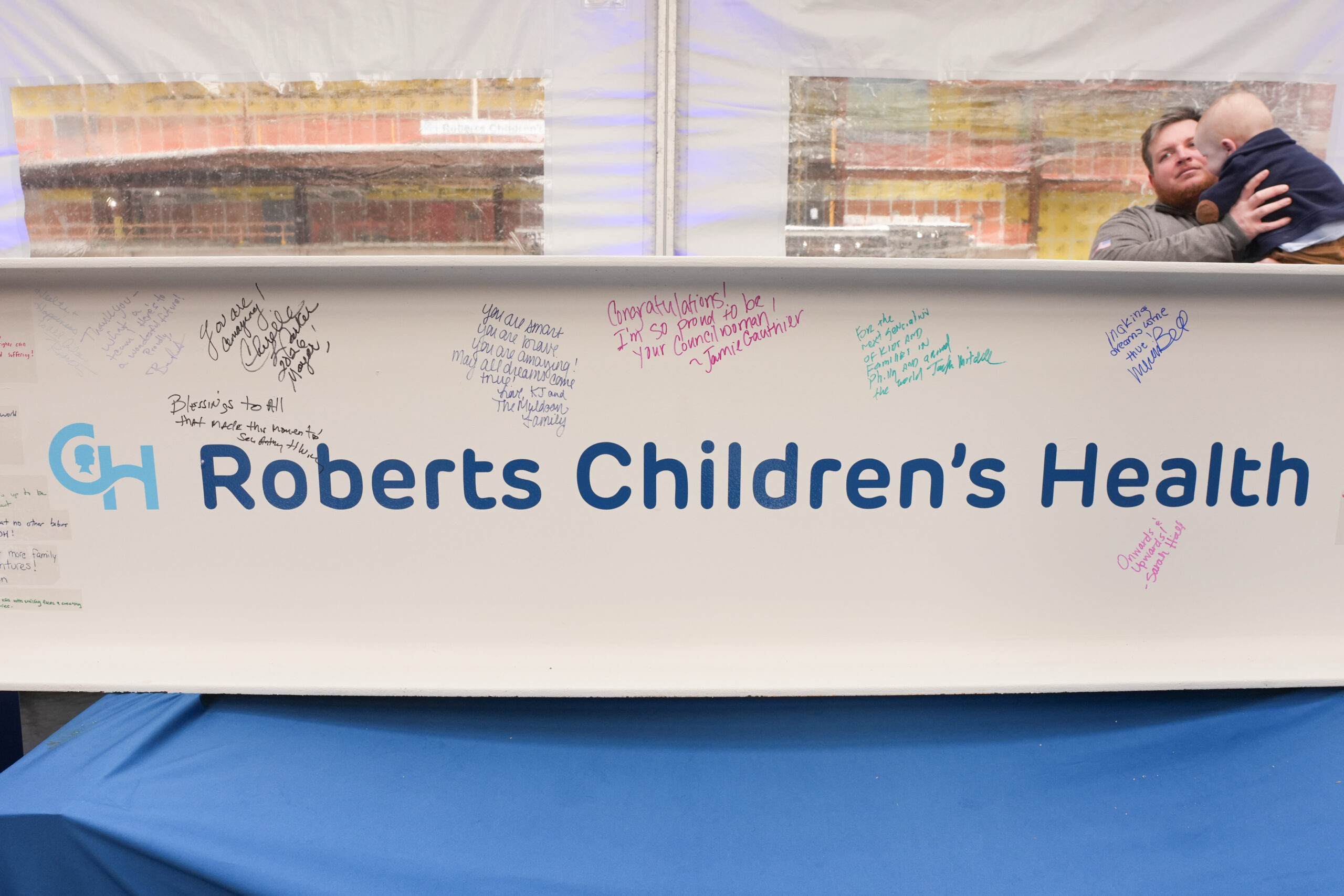
    He was there to celebrate a 26-story patient tower at CHOP that his father, Kyle Muldoon, a longtime construction worker, is helping build. Called Roberts Children’s Health, the new inpatient complex is set to launch in 2028 and significantly expand the number of beds available for patients at CHOP’s main campus.

    Kyle Muldoon had joined the project back in December 2024, when KJ was still hospitalized at CHOP, where his life-threatening genetic condition was successfully treated with a first-of-its-kind personalized gene-editing therapy.

    But in the months before the treatment developed by doctors at CHOP and the Hospital of the University of Pennsylvania sparked international attention, KJ’s father was recently unemployed. The Clifton Heights father of four had accepted a layoff to focus on his sick son.

    When he was connected with the person running the $2.6 billion construction project at CHOP, he asked for a job and explained he would “essentially be living next door.”

    Muldoon joined the crew in December 2024, allowing him to stay close by during KJ’s 307-day stay and contribute to a project that feels meaningful to him.

    “Every day when I get up, I know what I’m doing this for,” Muldoon said.

    KJ Muldoon, left, and his father Kyle Muldoon, right, at a news conference at CHOP.

    His son KJ was born in August 2024 with a metabolic disorder that puts babies at risk of severe brain damage and is fatal in half of cases. Called severe carbamoyl phosphate synthetase 1 (CPS1) deficiency, it prevented KJ’s liver from being able to process protein.

    Doctors Kiran Musunuru and Rebecca Ahrens-Nicklas used a gene-editing technology known as CRISPR to create a personalized drug that would fix the genetic mutation that was driving KJ’s disease. After receiving three doses, he was able to go home last June.

    “This pipe dream that sounded like it came from a sci-fi movie became a reality,” Muldoon said.

    The medication is not a cure, but it has dramatically improved KJ’s liver function and made the effects of his disease milder.

    The treatment approach has been hailed for its potential for rare-disease drug development. The U.S. Food and Drug Administration in the fall announced a new approach to clinical trials to test novel drugs like the one designed for KJ, who was called “a trailblazing baby” by the British scientific journal Nature when it named him to its year-end list of the top 10 influential people.

    With dietary restrictions and daily medication to keep his ammonia levels down, the toddler has been able to meet milestones, like walking and saying some words (currently a lot of “mama” and “dada”).

    These days, KJ likes playing catch, eating, and chasing his siblings around.

    “Sometimes you got to sit back and take it all in, because we never knew if that was going to be a possibility,” Muldoon said.

    The new tower’s construction is funded in part by a $125 million donation from Comcast CEO Brian Roberts and his wife, Aileen, whose name will be on the new building.

    Wednesday’s event included signing and raising the final structural beam of the building’s frame.

    The event included signing and raising the final structural beam of the building. It was signed by patients at CHOP in Philadelphia.

    On the beam were colorful messages from patients at CHOP who were asked to write down their dreams.

    Brian Roberts read some of their notes at the event. One girl said she wanted to become a nurse anesthetist so she “can help people and own a Porsche.” Another said, “My wish is that every kid that goes to Roberts Children’s Health comes out better and stronger.”

    Roberts read aloud messages from patients at CHOP that were signed onto the beam.

    Editor’s note: This story was updated to clarify the message a child wrote on a building beam and shared at the event.

  • Wistar CEO Dario Altieri will step down after 11 years

    Wistar CEO Dario Altieri will step down after 11 years

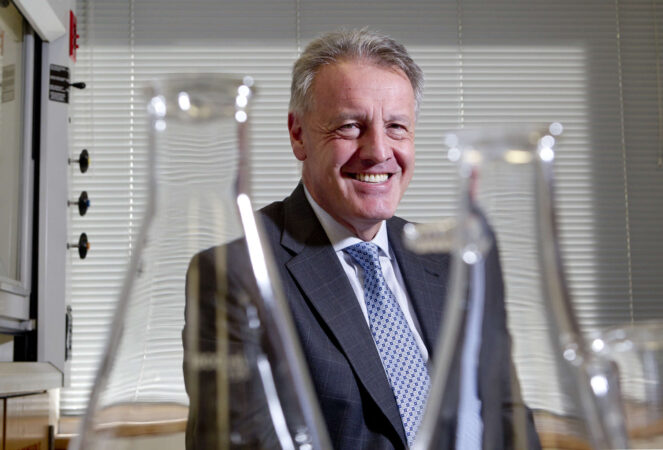
    The Wistar Institute’s long-standing president and CEO Dario Altieri will step down at the end of the year after leading the independent biomedical research institute for 11 years, officials announced Monday.

    Wistar plans to launch a national search for his successor, but did not share further details.

    Altieri joined Wistar in 2010 as its cancer center director and first chief scientific officer. Five years later, he was promoted to the role of president and CEO.

    During his tenure, the West Philadelphia-based institute’s annual budget quadrupled to more than $100 million, and its endowment tripled to $277 million, according to a news release.

    The number of independent labs also grew from 30 to 41, and two new research centers were created.

    Its cancer center, which Altieri directs, received its third consecutive renewal as a National Cancer Institute (NCI)-designated Basic Cancer Center with an “exceptional” rating.

    “Due in large part to Dario’s efforts, Wistar is exceptionally well positioned for continued growth and success,” said Rick Horowitz, the board’s chair, in a statement.

    The 67-year-old started his career in Milan, Italy, where he underwent his medical training. He has served in faculty roles at the Scripps Clinic and Research Foundation, Yale University, and the University of Massachusetts Medical School.

    As a cancer biologist who still leads a research laboratory, he has authored more than 260 research papers and been listed as an inventor on 13 patents.

    “[I] look forward to dedicating my time to the values of work that have defined me since I was a medical student: laboratory research, teaching and mentoring,” Altieri said in a Monday statement released by the institute.

  • Penn’s medical school received an $8 million gift to redesign the way it trains doctors

    Penn’s medical school received an $8 million gift to redesign the way it trains doctors

    The University of Pennsylvania has received an $8 million gift to redesign how it trains doctors at the Perelman School of Medicine, Penn officials announced Thursday.

    Incorporating technology, AI, and data to create customized learning pathways for Penn medical students is an overarching goal. The effort comes at a time when increasingly easy access to medical information and changes in care delivery are leading medical schools nationwide to revamp their curricula.

    The gift to Penn is from New York-based RTW Foundation, a philanthropy associated with the life sciences investment firm founded by Perelman School graduate and Penn Medicine board member Rod Wong. Penn said the gift from Wong, and his wife, Marti Speranza Wong, is the largest single donation to support curriculum innovation at the medical school, which dates back to 1765.

    At a news conference announcing his donation Thursday, Wong recalled his time at the medical school right after its last major overhaul of the curriculum in 1998. One update under Penn’s “Curriculum 2000” revamp was recording and making lectures available online — a relatively innovative move at the time (YouTube wouldn’t be created for another several years).

    “Technology has changed, and obviously we’re at this same inflection point because of AI and data science,” said Wong, who is managing partner and chief investment officer at RTW Investments LP.

    Penn alumnus Rod Wong (center) sits with dean of Perelman School of Medicine Jonathan A. Epstein (left) after signing the gift agreement.

    The vast majority of the $8 million gift will go toward hiring data scientists and engineers, supporting faculty, and building and acquiring the platforms needed to deliver the new curriculum.

    Technology will be incorporated into new training techniques, such as by using augmented or virtual reality to assist in learning anatomy, developing knowledge needed to diagnose illnesses and develop treatment plans, and mastering clinical skills such as IV placement and suturing.

    For example, students can practice taking a person’s medical history or doing a physical exam on a virtual patient, while an AI agent is there to give feedback in real time.

    “It’s really adaptive to the individual learner, but you do it at your own pace, on your own time,” said Lisa Bellini, executive vice dean of the medical school and a leader on the project.

    The redesign will take place over the next three years as school leaders consult with stakeholders and work on building the platform.

    Some of Wong’s gift will be used to create a biannual endowed lecture in business and entrepreneurship that will bring leaders in medicine and healthcare innovation to campus. The gift will also establish the Roderick Wong Entrepreneurship Pathway, which will provide mentorship, workshops, and project-based learning to students with business interests.

    “We really need to incorporate the fundamentals of how best to use technology responsibly within the practice of medicine and create something incredibly enduring, because you’re not going to go through this exercise every three years,” Bellini said.

    The Perelman School of Medicine is embarking on its curriculum revamp at a time when medical education is evolving at many schools.

    Some medical schools have concentrated the traditional two years spent learning science into one year to give students more time to learn how to interact with patients and collaborate with other medical professionals.

    A three-year medical school option is offered at institutions such as the Pennsylvania State University College of Medicine to speed doctors into the clinic and reduce students’ debt loads.

    Jennifer Kogan, vice dean for undergraduate medical education at the Perelman School of Medicine, is a leader in the curriculum revamp.

    Faster, flexible learning

    Like most medical schools, Perelman has a standard curriculum where students take foundational science courses for a stretch of time and then transition to the hospital to gain clinical experience.

    This can lead to some students repeating courses that they already mastered in college.

    “If you were a biochemistry major as an undergrad, do you really have to take biochemistry again?” said Jennifer Kogan, vice dean of undergraduate medical education and a leader on the redesign project. “How could you better use that time to achieve whatever your career goals are?”

    Leaders at Penn want to give students the flexibility to adjust their timelines based on their skill sets and goals.

    Instead of setting a fixed time for how long a class or rotation will take, a student who masters a skill more quickly should be able to move on and devote their time to other interests, such as research or entrepreneurship.

    Many students at Penn pursue dual degrees or research fellowships that end up adding a fifth year of medical school. Penn leaders hope adding flexibility to the curriculum could enable students to instead finish in four years or “maybe even three,” Kogan said. (The possibility of a three-year path is not yet guaranteed but will be explored.)

    “It will be better set up to support students like me who have had to use significant federal loans to finance their way through medical school and might have benefited from the condensed training timeline,” said Alex Nisbet, a fourth-year medical student at Perelman who spoke at the signing event.

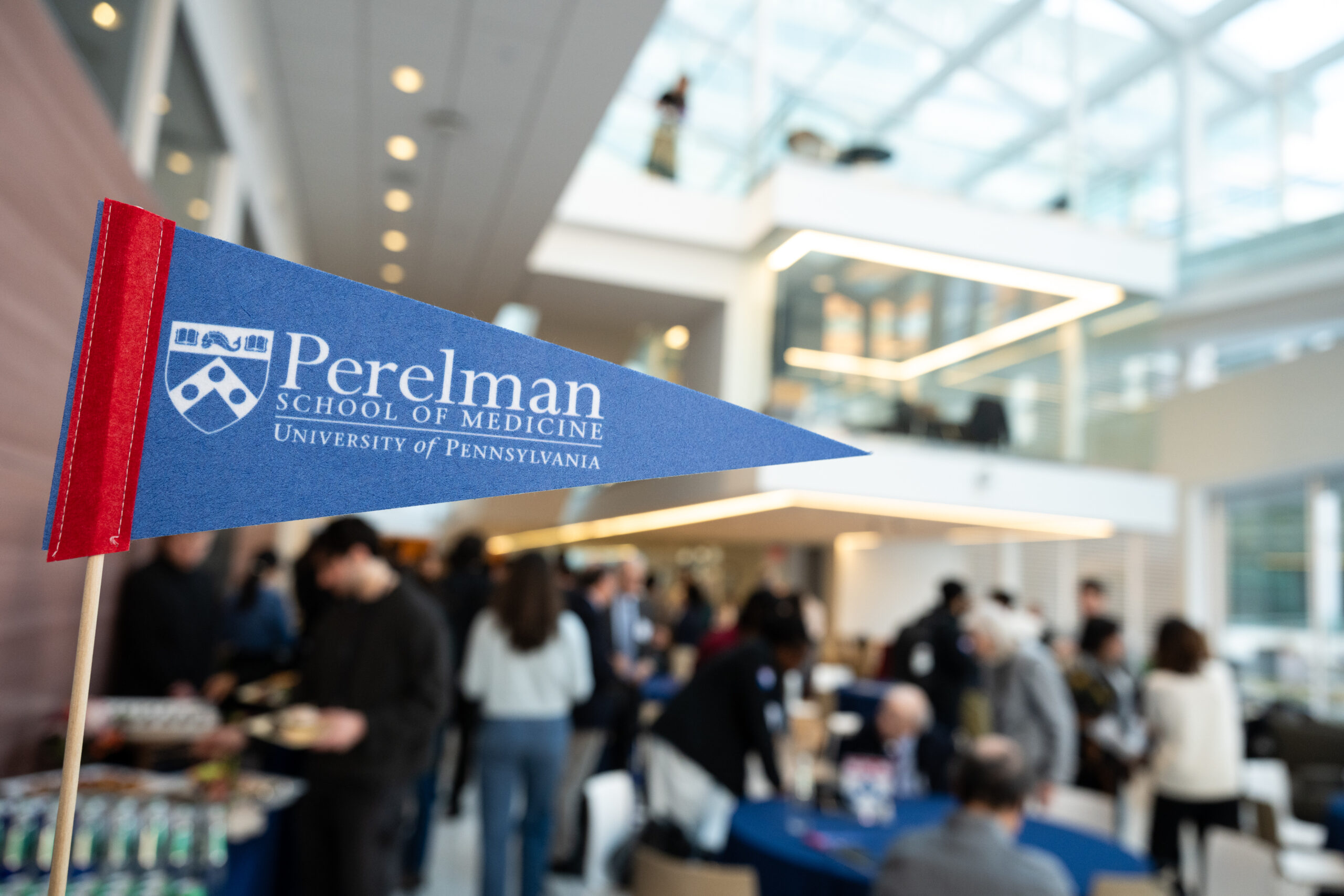
    An attendee holds a pennant flag representing the Perelman School of Medicine.

    The school will leverage data and AI to assess how individual students are progressing in what they’re calling a “precision education model.”

    Though parts of the program will be piloted over the next three years, the first class to see the full implementation of the curriculum will be in the fall of 2029.

  • A Bucks County toddler will advocate for less toxic treatments as an ambassador for a national cancer charity

    A Bucks County toddler will advocate for less toxic treatments as an ambassador for a national cancer charity

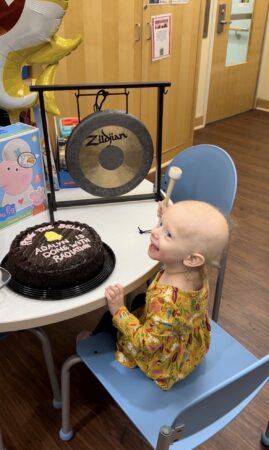
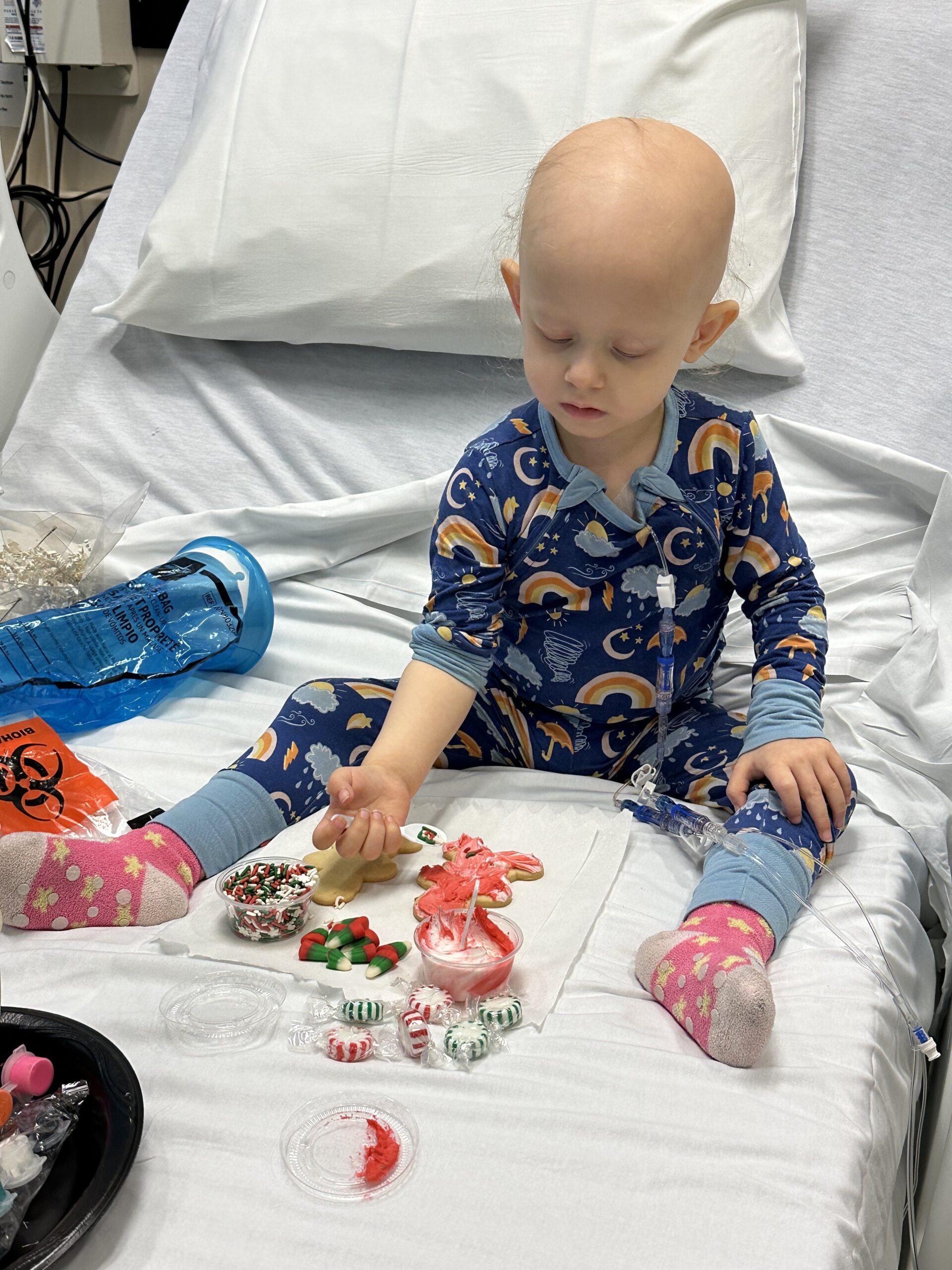
    Adalyn Hetzel had just celebrated her second birthday in the spring of 2024 when doctors at Children’s Hospital of Philadelphia diagnosed her with an aggressive soft tissue cancer.

    She endured 40 weeks of aggressive chemotherapy and a month of daily proton radiation therapy on her road to remission.

    Now, the Bucks County toddler will spend the next year sharing her story as one of five ambassadors for the St. Baldrick’s Foundation, one of the nation’s largest childhood cancer charities.

    The California-based organization has awarded more than $369 million in research grants since 2005, with $18 million going to Philadelphia-based institutions.

    The selected children and their families will attend advocacy days in D.C., to appeal to lawmakers, share their stories with the public, and spread awareness on social media.

    Kristopher Hetzel, Adalyn’s father, said their goal will be to advocate for research into more effective, less toxic treatments.

    While more than 80% of kids diagnosed with cancer in the United States now survive the disease, many sustain long-term side effects due to the harsh therapies. One study found that by age 45, 95% of survivors had at least one chronic health condition, and 80% had one that was disabling or life-threatening.

    Adalyn will likely have severe dental issues, limited jawbone growth, and an increased risk of developing secondary cancers due to the treatment later in life.

    The threat of recurrence also still looms.

    “It can’t be like that for these kids. We got to come up with better treatment,” Hetzel said.

    Diagnosis to treatment

    Hetzel first noticed a small nodule on Adalyn’s tongue in April 2024.

    After appointments with her pediatrician, dentist, and two oral surgeons left the family without a diagnosis, they went to CHOP, where a biopsy confirmed she had a highly aggressive form of soft tissue cancer called rhabdomyosarcoma.

    “All of a sudden your world becomes so small and it’s just your kid. Nothing else matters,” Hetzel said.

    Adalyn and her parents, Kristopher Hetzel and Allison Verdi.

    Doctors started Adalyn immediately on an intense chemotherapy regimen combining three drugs. She also received a month’s worth of daily proton beam radiation, requiring general anesthesia each session due to her age.

    By the end of the 40 weeks of chemotherapy, Adalyn dropped down to the 0.4th percentile of weight. She was so immunocompromised due to the treatment that when she contracted the flu, a critical response team at CHOP had to rush in.

    Doctors withheld her final chemotherapy session for fear it could be life-threatening.

    Adalyn Hetzel, a 3-year-old from Southampton, Pa., received 40 weeks of chemotherapy to treat her rhabdomyosarcoma.

    Being an ambassador

    In April, nearly a year after her diagnosis, Adalyn was declared to be in remission. She still receives scans every three months due to the potential for recurrence.

    “[Adalyn] turned back into this playful, happy, joyful toddler who finally has the energy to be herself,” Hetzel said.

    Her family decided to get involved with St. Baldrick’s after benefiting from their services firsthand. Right after Adalyn’s diagnosis, Hetzel recalled being given a binder with their logo on the front that laid out a “game plan of what our life was going to look like.”

    That resource, called the Children’s Oncology Group Family Handbook, is funded by St. Baldrick’s and is given to newly diagnosed families around the country.

    The St. Baldrick’s Foundation funds the Children’s Oncology Group Family Handbook.

    Given her age, her father said he is cautious of not crossing the line in their advocacy and making her uncomfortable, and hopes that when she is older, she will understand the importance of sharing what she went through.

    Jane Hoppen, director of family relations at St. Baldrick’s, said the family always has veto power. The foundation focuses on highlighting each child’s unique personality and interests to “serve as the face and voice of the foundation.”

    For example, Adalyn, who loves chocolate-dipped croissants, will be featured on its social media for National Croissant Day.

    “What we want for every kid who’s diagnosed is the ability to just go back and enjoy being a kid again,” Hoppen said.

    Adalyn Hetzel, a 3-year-old from Southampton, loves croissants.
  • Black and low-income patients face disparities in access to genetic testing, Penn study finds

    Black and low-income patients face disparities in access to genetic testing, Penn study finds

    At Penn Medicine’s clinic where adults receive genetic counseling and testing, about 9% of patients are Black.

    By contrast, one in four patients at the cardiology and endocrinology clinics located in the same facility in West Philadelphia are Black, while nearly 40% of city residents are. Those from low-income neighborhoods are also less likely to be seen at the genetics clinic, yet more likely to have positive results when tested, a recent Penn study found.

    These findings line up with what Theodore Drivas, a clinical geneticist and the study’s senior author, had long suspected about the impact of racial disparities based on his own experience seeing patients at Penn’s clinic.

    The study, published this month in the American Journal of Human Genetics, found that Black patients were also less likely to be represented at adult genetics clinics at Mass General Brigham, a Harvard-affiliated health system in Massachusetts.

    There’s no biological reason why rates of testing should differ, Drivas said. The overall rate of genetic disease should be similar regardless of race, even though certain diseases are more prevalent in some populations.

    “Genetic disease doesn’t favor one group or another,” he said.

    That means if one group isn’t getting tested as much, they’re probably missing out on key diagnoses.

    Racial disparities are an ongoing concern in medicine and have been attributed to a wide range of causes, including socioeconomic factors, unequal access to care, implicit bias, and medical mistrust due to historic injustices.

    In a study published last August, Drivas’ team found that the chances of a genetic condition being caught varied widely by race. Among patients admitted to intensive care units across the Penn health system, 63% of white patients knew about their genetic condition, compared to only 22.7% of Black patients.

    To address these disparities, Drivas is calling for changes to how the medical field approaches genetic testing, such as by integrating testing into standard protocols and improving national guidelines.

    “It’s not just a Penn problem or a Harvard problem. It’s a genetics problem in general,” Drivas said.

    Diving into the disparities

    Drivas’ team analyzed data from 14,669 patients who showed up at adult genetics clinics at Penn and Mass General Brigham between 2016 and 2021. The findings are limited to the two major academic centers on the East Coast, which tend to see sicker patients compared to community medical centers.

    Black patients were 58% less likely to be seen at Penn’s genetics clinic than would be expected based on the overall University of Pennsylvania Health System patient population.

    At Mass General Brigham, Black patients were 55% less likely than would be expected based on that system’s population.

    Some literature has suggested that Black patients and others from minority groups are less likely to agree to genetic testing because of an inherent distrust in the medical system due to historic injustices. “But we don’t see that in our data,” Drivas said.

    Once evaluated at Penn’s clinic, Black patients were 35% more likely to have testing ordered than white individuals.

    His team also found disparities affecting lower-income individuals. Each $10,000 increase in the median household income of a person’s neighborhood was associated with a 2% to 5% higher likelihood of evaluation at a genetics clinic.

    Meanwhile, patients from neighborhoods with lower median socioeconomic status were more likely to get positive results from testing than those from wealthier neighborhoods.

    “We’re relatively over-testing the people from higher socioeconomic brackets and under-testing the people from lower socioeconomic brackets,” Drivas said.

    The solution is not to stop testing the wealthier people, he clarified, but to improve access to testing for others.

    Undoing disparities

    People who want to get a genetic diagnosis often have to go to major medical centers.

    The University of Pennsylvania health system comprises seven hospitals across Pennsylvania and New Jersey. Its Perelman Center for Advanced Medicine, adjacent to the Hospital of the University of Pennsylvania in West Philadelphia, is the only one that has an adult genetics clinic.

    Drivas has many patients who drive two or three hours to be seen for genetic testing.

    The current wait time at his clinic is around three or four months, which he said is “pretty good” compared to others.

    He thinks part of the solution to reducing disparities requires expanding the size and diversity of the genetics workforce so more patients can be seen.

    Geneticists also need to better educate doctors in other fields about when to refer patients, he said. Creating better guidelines would help.

    Notably, Black patients in the study were more likely to be evaluated than white individuals for genetic risk factors of cancer — an area where there are clear clinical practice guidelines recommending genetic testing.

    They need to come up with similar guidelines for other conditions, such as cardiovascular and kidney diseases, he said.

    Another idea he had was to make genetic testing more integrated into standard care in the hospital.

    His earlier study found a surprising number of adults in ICUs at Penn had undiagnosed genetic conditions. Such testing is now widely available and often costs as little as a few hundred dollars.

    “It costs money, but I think there are cost savings and life-saving interventions that can come from it,” Drivas said.

  • Two men charged in decade-old N.J. home invasion homicide case

    Two men charged in decade-old N.J. home invasion homicide case

    Almost a decade after a 37-year-old New Jersey man was killed by home invaders, two men have been charged with his murder, the Burlington County Prosecutor’s Office announced Monday.

    Norman Mosley was fatally shot in September 2016 when intruders wearing masks broke into the trailer he shared with his girlfriend in the Browns Mills section of Pemberton Township.

    The investigation went on for years without arrests until detectives found DNA evidence on gloves located near the crime scene.

    Kevin D’Costa, 45, of Irvington, and Daemen Hodge, 32, of Brown Mills, were charged with first degree felony murder, first degree robbery, and unlawful possession of a weapon, among other charges, after their DNA matched what was found at the scene, according to the prosecutor’s office.

    Both men had already been named as suspects in the case.

    D’Costa was in custody at the Essex County Correctional Facility in Newark for unrelated charges when he was served last month with his warrant. Hodge was arrested at his girlfriend’s home in Bordentown Township on Friday and subsequently held at Burlington County Jail in Mount Holly.

    The next step in the case will be presenting it to a grand jury for potential indictment.

  • The Trump administration is targeting ultra-processed foods. A Penn researcher explains why that might be complicated. | Q&A

    The Trump administration is targeting ultra-processed foods. A Penn researcher explains why that might be complicated. | Q&A

    On the same day President Donald Trump’s administration targeted ultra-processed foods in its new federal nutrition guidelines, Penn researcher Alyssa Moran published an academic journal article explaining why they’re hard to regulate.

    For starters, there’s no consensus on how policymakers should define the term, she and two coauthors said in a Nature Medicine commentary piece. (The publication timing was a coincidence, but she welcomed the attention to an underestimated challenge.)

    Ultra-processed foods are generally understood to be those with industrially produced ingredients not found in home cooking, but experts have long debated how best to classify the foods for regulation. The wording would need to encompass all the possible variations, without being so rigid that the industry finds loopholes.

    The U.S. Food and Drug Administration and the Agriculture Department have said they are working on developing a federal definition to provide “increased transparency to consumers about the foods they eat.” It’s a key goal of the nation’s top health official, Robert F. Kennedy Jr., who blames ultra-processed foods for the United States’ “chronic disease epidemic.”

    Roughly 60% of an American child’s daily calorie intake is estimated to come from ultra-processed foods, which comprise up to 70% of the U.S. food supply. Studies have linked their consumption to a higher risk of obesity, diabetes, cancer, heart disease, and other harms.

    This is the first time U.S. dietary guidelines have explicitly called out ultra-processed foods, also called highly processed foods, and told Americans to limit consumption, Moran said. The guidance was part of a broader update by the Trump administration the first week of January that flipped the longstanding food pyramid on its head to promote consumption of whole foods, proteins, and some fats.

    Though health experts questioned changes, such as the vague guidance on drinking alcohol, the crackdown on ultra-processed foods mirrors what many health organizations and consumer advocacy groups have been saying for years.

    “I thought it was a bold move, and I was glad to see it,” she said.

    Moran talked with The Inquirer about what people should know about ultra-processed foods and the challenges that remain in regulating the products.

    This conversation has been lightly edited for length and clarity.

    Health & Human Services Secretary Robert F. Kennedy Jr. speaks during a press briefing with leading health officials and nutrition advisors at the White House in early January.
    What are ultra-processed foods?

    It’s a term that’s been used for decades and has been used, I think, interchangeably with ‘the Western diet’ or ‘junk foods’ or ‘highly processed foods.’

    Most foods are processed in some form, whether it’s physical processing, like slicing fruit before you eat it, or adding some chemical preservatives to foods that increase food safety. What changes with ultra-processing is the intent of the processing.

    With ultra-processing, the intent isn’t just to make the food safer or to extend shelf-life. It is to make it more cosmetically appealing and more likely to be overconsumed by individuals. They’re formulated in a way that makes them addictive, and they’re also aggressively marketed.

    What does it mean to make a food ‘cosmetically appealing’?

    It’s the overall sensation of eating the product.

    Companies are manipulating levels of highly palatable ingredients like sugar, salt, and fat to be at levels that are not naturally occurring and that are extremely palatable to consumers.

    They also add additives that enhance the naturally rewarding properties of things like sugar, salt, and fat. Some additives are added to food, for example, to mask a bitter flavor or prevent an aftertaste. They also add emulsifiers to change the mouth feel of a product. They pay attention to how the product sounds — even the crunch of a product when you’re chewing it — and add dyes to make them more visually appealing, especially to kids.

    There are all kinds of strategies that can take advantage of all of the senses to make the product almost irresistible.

    Why is there so much debate over how to define the products?

    The current administration has talked more than any prior administration about potentially limiting the production, marketing and sale, and availability of ultra-processed products. So, to be able to formulate policy to limit intake of these products, we have to be able to identify them.

    Many people have proposed going down the route of defining ultra-processed foods according to a list of additives. And there are many reasons why I don’t think that’s a good approach.

    What are the reasons?

    We need to really be thinking about how companies are going to respond to whatever definition we create.

    If we use a list of specific additives that makes something ultra-processed, companies are going to look at that list and they’re going to say, ‘How can we get around this. How can we skirt regulation?’ They’re either going to increase their use of additives that exist already but aren’t on that list, or they’re going to create new additives with very similar structures and functions as the existing additives.

    We see this happen all the time with commercially regulated products. When policies tax sugar, we see that companies increase their use of non-nutritive sweeteners, so the food supply is just as sweet, if not more. When Red Dye No. 2 was banned (in 1976), companies created Red Dye No. 3, which is almost identical and was also banned (in 2025), but 50 years later.

    Plus, we have hundreds of thousands of products on the marketplace and there are constantly new ones being added. And currently under FDA policy, companies don’t even need to notify the FDA when they add new ingredients to the food supply. So we don’t even have a complete list of every single additive in the food supply right now.

    What approach did you propose in your Nature article on this topic?

    Right now, it has been proposed to use a list of ingredients that would make a food ultra-processed. Everything else is non-ultra-processed.

    Our recommendation is really to flip that.

    We would say, ‘Here are all of the ingredients that make a food non-ultra-processed. Everything else is ultra-processed.’

    There are very few additives that make a food non-ultra-processed. The purpose (of the additive) would have to be for food safety or preservation, and that’s one reason why this is also a much simpler approach. Our approach is saying, for example, your yogurt is considered non-ultra-processed if it contains things like milk, live cultures, fruit, nuts, seeds, and honey, as well as some preservatives, vitamins, and minerals.

    If it has anything else, it’s an ultra-processed food and is in scope for regulation. Then, if companies introduce new additives, they’ll still be considered ultra-processed because they still fall into the ‘everything else’ bucket.

    Are there any other challenges that you see in terms of regulating the industry?

    The biggest one is the pushback from the food industry. They spend a lot of money fighting against policies to regulate production, marketing, and sale. We see it with sweet and beverage taxes that have been enacted in Philadelphia and other places. We see it with front-of-package labeling, which the FDA had been trying to pass.

    The lack of resources at our federal agencies is another barrier. This administration, early on, really dismantled the FDA, which I think would be the main regulatory body involved in creating this definition and potentially developing policy to regulate these products.

    If we don’t have people at those agencies, and they don’t have the resources they need to do their work, you could have a law on the books, but it’s not going to go anywhere.

    What are your tips for consumers?

    Shop on the grocery store perimeter and avoid the center aisles. Avoid ingredients that aren’t familiar to you.

    Classic examples of ultra-processed foods are box macaroni and cheese, many frozen pizzas or frozen prepared meals, and many boxed cookies, candies, cakes, and packaged foods.

    I would never tell consumers in this environment that you have to avoid every single ultra-processed food to be healthy. These products are everywhere. They’re cheap. They’re super convenient. Many people don’t have access to minimally processed whole foods.

    That’s why I think policy is so important — policies that both put limits on ultra-processed foods, but also promote and incentivize the production and sale and marketing of non-ultra-processed products.