Category: Arts & Culture

  • Donors were misled by Trump-backed Freedom 250, House Democrats allege

    Donors were misled by Trump-backed Freedom 250, House Democrats allege

    Some donors who intended to give money to a bipartisan effort to celebrate the nation’s 250th anniversary were, instead, steered to a White House-backed initiative under false pretenses, House Democrats allege in a report released Thursday morning, citing whistleblower interviews and newly obtained documents.

    The donors meant to give money to America250, a congressionally chartered initiative to celebrate the nation’s semiquincentennial, according to Democrats on the House Natural Resources Committee. They instead were given routing and account numbers that directed their funds to Freedom 250, which President Donald Trump established last year to organize anniversary events, the report says.

    The report does not identify the donors. In interviews, Democrats said they needed to protect the identity of whistleblowers who worked with the panel. But they said their report — which includes other allegations of Freedom 250 officials and allies explicitly steering money away from America250 and toward projects shaped by Trump — shows how the president transformed a bipartisan celebration of the nation’s anniversary into an initiative that benefited him and his allies.

    “I’m a lawyer, and I know better than to pronounce that a crime has been committed,” said Rep. Jared Huffman (D., Calif.), who oversaw the report as the committee’s top Democrat. “But I do know the elements of fraud, and there is evidence of all those elements here.”

    The White House referred questions to Freedom 250, which denied that donors had been misled by its fundraising activities and criticized Democrats for the timing of their report.

    “This so-called ‘report’ is nothing more than a partisan smear from politicians who would rather manufacture division than celebrate America’s 250th birthday alongside the rest of the country,” Freedom 250 spokesperson Danielle Alvarez said in a statement.

    Alvarez also criticized America250, saying that the bipartisan organization — which Congress established in 2016 — “had nothing to show” for its 10 years of planning and spending.

    “Freedom 250 was created because the American people deserved better,” Alvarez said.

    America250 declined to comment on the specific allegations in Democrats’ report.

    “America250 will continue to focus on the values-based programming approved by our bipartisan Commission at the local, state, national and international levels, including once-in-a-lifetime celebratory moments during the 4th of July weekend,” Rosie Rios, who chairs America250, said in a statement. “We are supportive of the many other organizations planning events for the 250th at the federal, state and local level, so all Americans have ample opportunities to join in the celebration.”

    Trump has extolled Freedom 250 in public remarks, saying that the initiative has organized multiple special events. The public-private partnership, which the White House launched in December, has overseen a flurry of high-profile announcements, including some from the Oval Office.

    “We’ll have a Freedom 250 Grand Prix right here in Washington around the Capitol,” the president said last week in remarks kicking off the Great American State Fair on the National Mall — another Freedom 250-backed event.

    The Trump-backed initiative has overtaken some efforts led by America250, which is directed by a bipartisan board created by Congress a decade ago.

    America250 originally applied for and received a grant from the Institute of Museum and Library Services for so-called Freedom Trucks, mobile museums inspired by the American Freedom Train that crisscrossed the country from 1975-1976. The institute is a federal agency that provides financial support for museums and libraries.

    Officials have said the grant was later voluntarily transferred to Freedom 250, which is now operating Freedom Trucks that provide a sanitized version of the nation’s founding, according to administration critics.

    America250 officials have said they reoriented their initiative to organize events outside Washington, while Freedom 250 focuses on events in the nation’s capital. But the dueling organizations and approaches have confused some corporate leaders and lawmakers, and tensions between the groups have grown, the Washington Post reported earlier this year.

    The Democratic lawmakers’ report offers further examples of how the two groups have come into conflict.

    Some donors and sponsors interested in donating to America250 were told by the Trump administration that they lacked a “green light” to do so, according to the Democrats. The report also claims that administration officials pressured donors to redirect donations from the bipartisan effort to Freedom 250, with the Trump-backed group conducting outreach to America250 sponsors with donation requests.

    Some corporate executives did not understand the difference between the two organizations and were confused by this process, the report says.

    Freedom 250 officials also worked to deprive America250 of money, the Democrats charge, citing new examples of Trump allies pressuring donors to reallocate funds away from the bipartisan initiative. They also allege that Trump allies worked to shift public financial support away from America250, including $75 million of congressionally allocated funds that America250 leaders were expecting to receive. The remaining funds are likely to be kept by the White House, the report says.

    The reduced funding posed challenges for America250 to execute planned programming, according to the report, including grants, educational initiatives, and volunteer programs. Redirected federal funding created “significant headwinds” for this programming, the Democrats said, though the group still sought to execute all planned events through additional private fundraising.

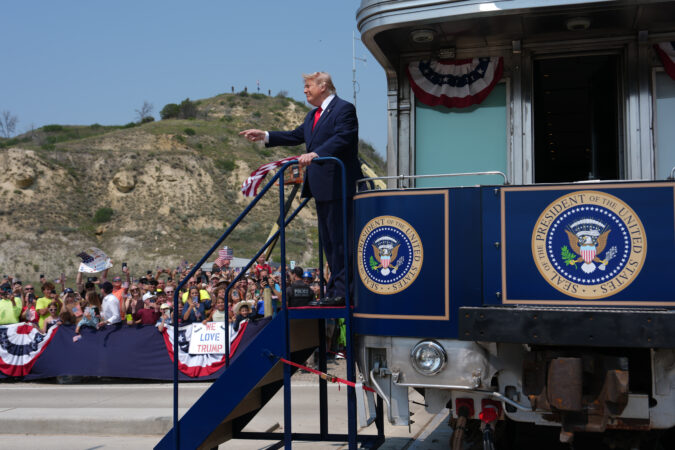
    Though America250 is still organizing anniversary celebrations in large cities across the country, its programming has been overshadowed by that of Freedom 250. The Trump-backed group helped organize last month’s UFC fight on the White House lawn, this week’s opening of the Theodore Roosevelt Presidential Library in North Dakota, and a Trump rally and fireworks show scheduled for the evening of Independence Day.

    Freedom 250 also employs many former U.S. DOGE Service officials and harvested users’ data for political purposes, according to the report.

    Huffman said that if Democrats retake the House this fall — and obtain the power to issue subpoenas — they will open broader investigations into Freedom 250.

    “If and when we have more tools at our disposal to do investigation and oversight, perhaps in the next Congress you will see a lot more information on this, I’m sure,” he said.
  • Philadelphia shipwrights hand-built a replica of the boat Washington used to cross the Delaware. Yes, you can climb on it.

    Philadelphia shipwrights hand-built a replica of the boat Washington used to cross the Delaware. Yes, you can climb on it.

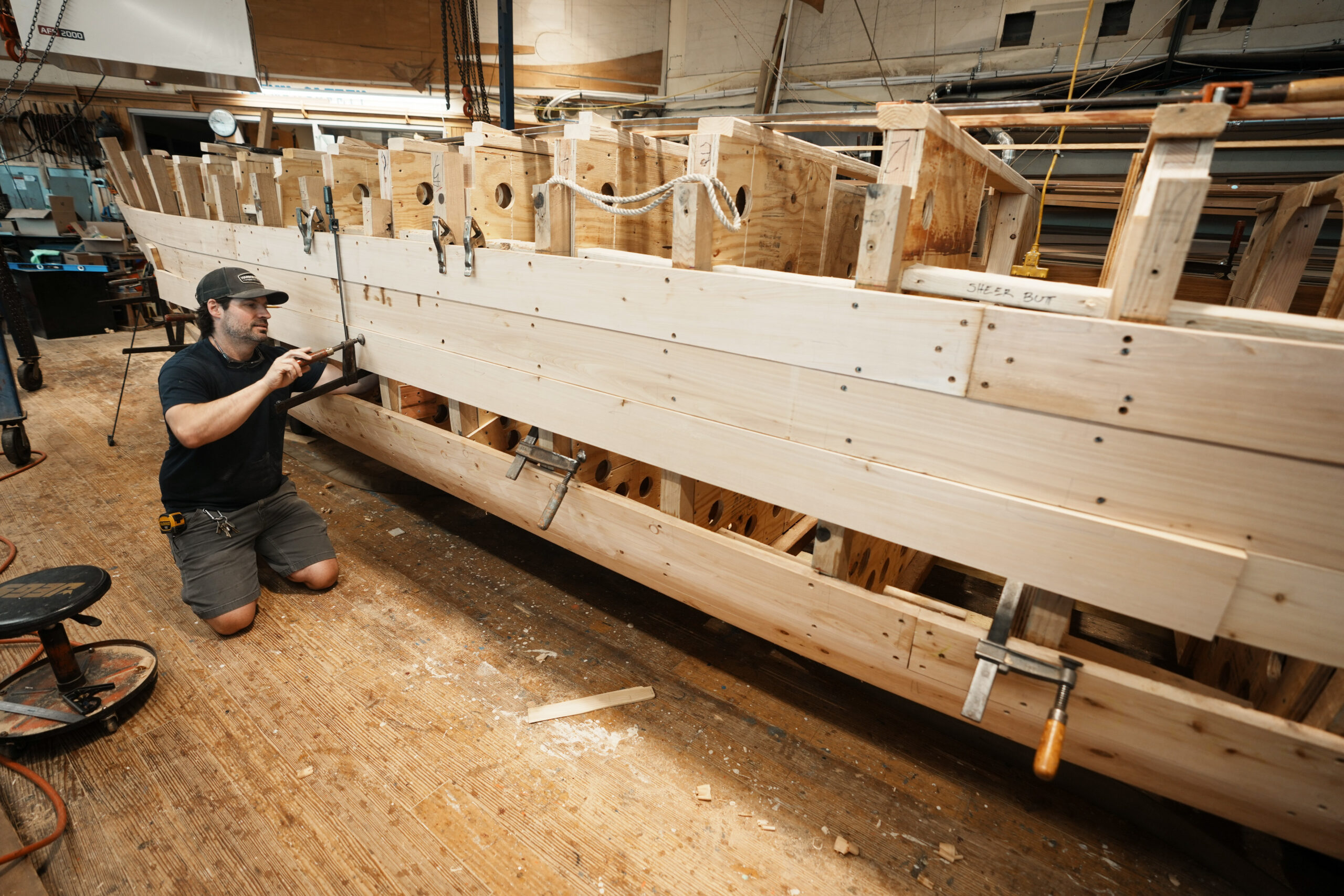
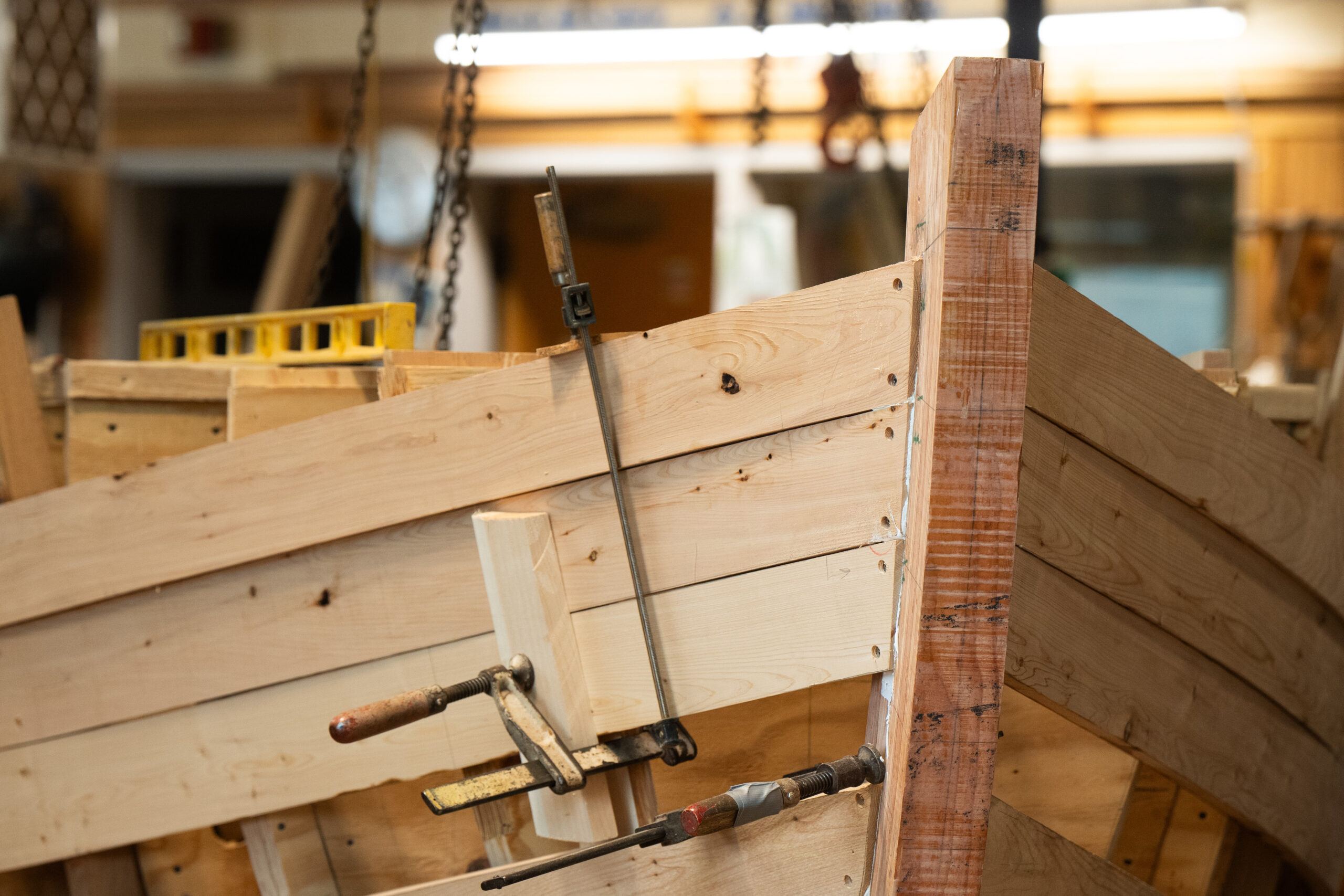
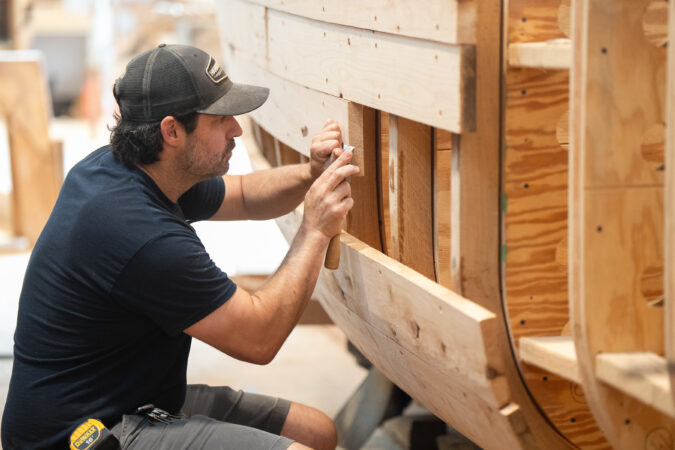
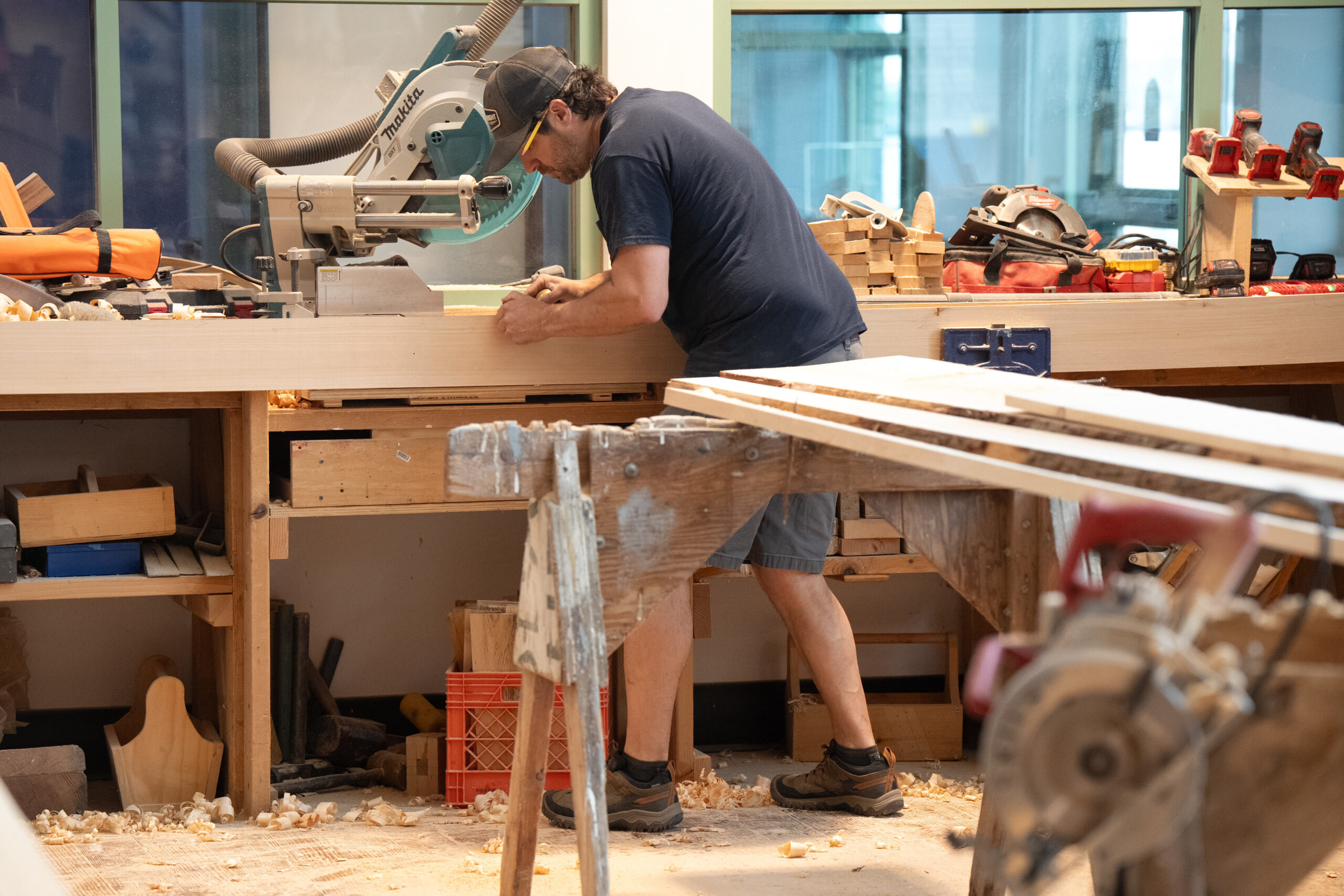
    The floor of David Dormond’s workshop is scattered with wooden planks, shaving piles, and machines that scream “DO NOT TOUCH!” In the middle of it all sits a 40-foot-long, 3500-pound wooden boat that looks like it could hold an army.

    That’s because it’s meant to. Well, sort of.

    It’s a Durham boat, named because the design was used to transport iron from Durham Ironworks in Bucks County to Philadelphia. It is better known as being the model of boat George Washington used to cross the Delaware with his Patriot troops on Christmas in 1776.

    At the Independence Seaport Museum in Philadelphia, David Dormond is replicating the boat Washington used to cross the Delaware River, June 18, 2026.

    “The moment Washington decided to use these boats to cross the Delaware and storm Trenton changed the tide of the [Revolutionary] War,” said Dormond, who is the director of the Seaport Boat Shop at the Independence Seaport Museum (ISM). “It was one of the pivotal points for the U.S. in gaining our freedom.”

    Dormond and his team have built a full-scale replica of the Durham boat to be displayed in Washington Crossing Historic Park. Authenticity was at the forefront of its construction, with Dormond committed to making the boat as historically accurate as possible.

    The wood for the replica was sourced locally, including cedar from Medford, N.J., and white oak for the framing from Reading.

    David Dormond and his team have spent more than a year constructing the boat in the Seaport Boat Shop at the Independence Seaport Museum in Philadelphia.

    “The reason we do that is to keep things just the same as they would’ve been in the 1700s,” Dormond said. “When they were building these boats, they weren’t bringing lumber in from across the country, they were using what they had available to them, so we follow in that tradition.”

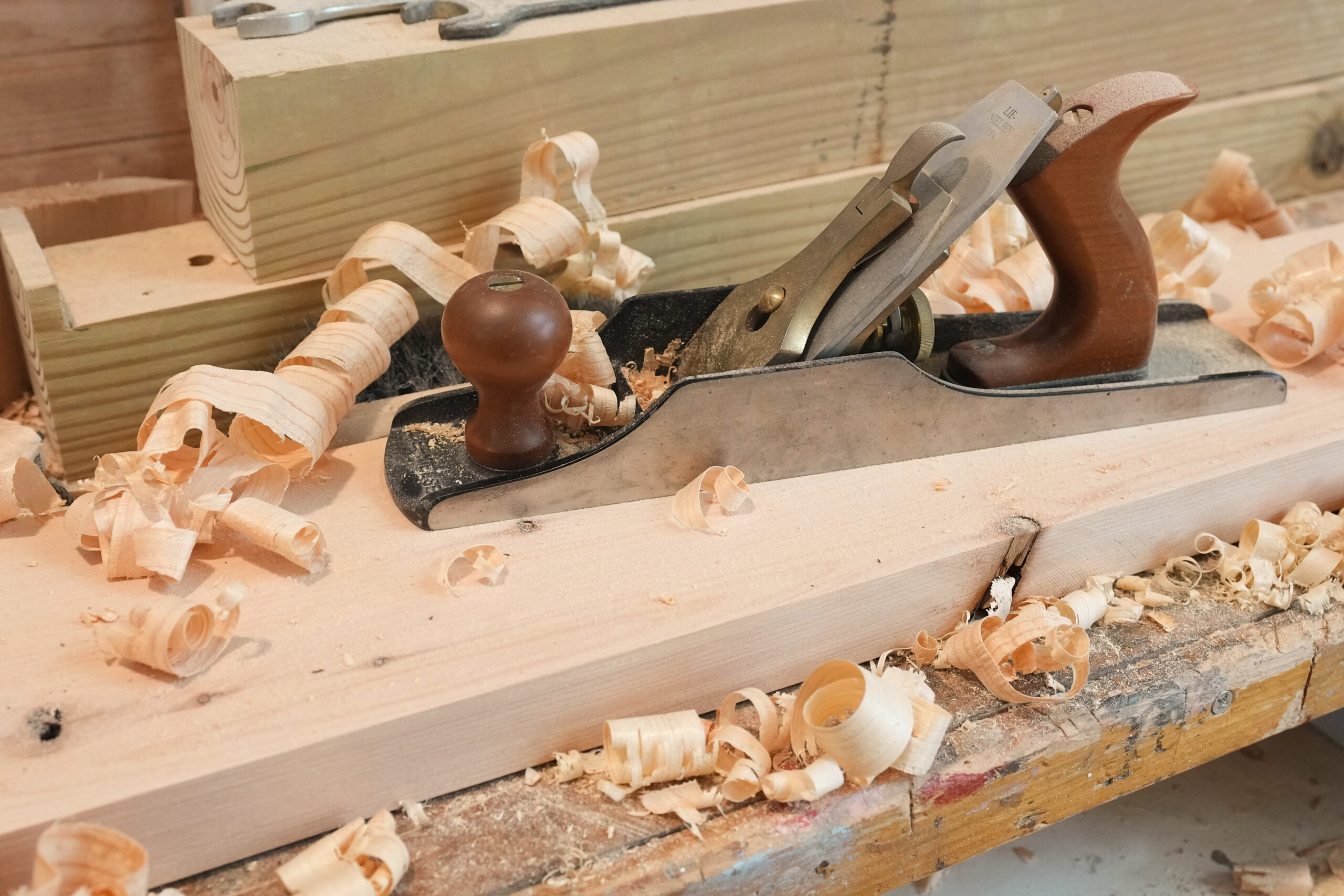
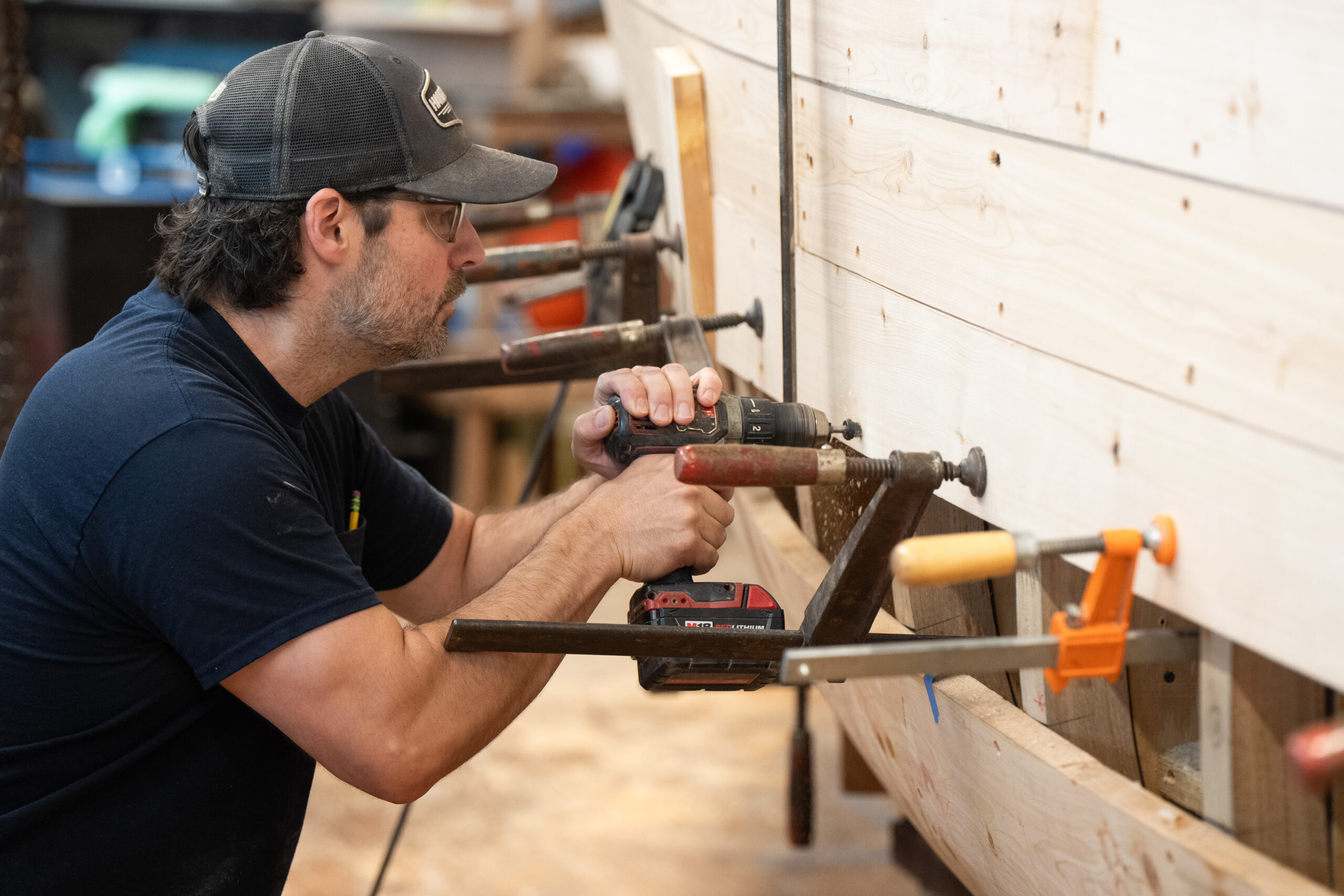
    Nearly every part of the boat was handmade by Dormond and his team, down to the bolts holding the wood together. They steam-bent the frames and used 18th-century-style spokeshaves and batten strips to help shape the boat like they would have in Washington’s day.

    But this boat, now on display in Washington Crossing Historic Park, isn’t just for viewing. Visitors will be able to board the ship and see how grand it was in height and length, but also how cramped the 8-feet-wide interior was for the 2,400 soldiers that crossed the Delaware.

    Most of the boat was handmade, with emphasis on using 18th-century materials to make it as period-accurate as possible.

    The park currently has four Durham boats that sit on the water and are used for historical reenactments. This new boat will be parked on land along the waterline, and will be the first that visitors can walk onto and interact with directly.

    “We were talking about some of the things that people are interested in learning about when they come to the park, but that they can’t necessarily experience. [And] people often asked about the Durham boats,” said Jennifer Martin, director of Friends of Washington Crossing, who collaborated on the boat project with ISM.

    Martin said civilian support played a vital role in the Revolutionary War, and part of that was boat-building.

    “This was trade work. This is something that was passed on and learned,” she said. “I think that there’s an art to handcrafting things and getting people to understand that life was very different in the 18th century.”

    At the Independence Seaport Museum in Philadelphia, David Dormond is replicating the boat Washington used to cross the Delaware River, June 18, 2026.

    Planning for the build started two years ago, with full-time construction beginning in spring 2025. The plans were made by a designer in Maine in the 1960s; Dormond and his team modified them to be truer to what they know of boat-building processes of the 1700s.

    Dormond has built boats at ISM for almost 13 years, and this one is “one of the bigger vessels that we’ve done,” he said. The shop cycles between larger construction projects and simpler boat restorations, commissioned by both institutions, like Washington Crossing, and private customers.
    “It’s a part of our history, so it’s neat to bring back and share that with the public and create something that will be a landmark for visitors at the park for years to come.”

    The Durham boat project is part of a larger revitalization of the riverside at Washington Crossing Historic Park for America’s 250th. This includes a new ADA-accessible trail complete with signs with original artwork that depicts the history being taught.

    At the Independence Seaport Museum in Philadelphia, David Dormond is replicating the boat Washington used to cross the Delaware River, June 18, 2026.

    The park has also invested greatly in a Williamsburg-style experience for the roughly 10,000 field trip students that visit every year. Activities such as hands-on butter churning, gardening, blacksmithing, woodwork, quill handwriting, and soldiers drills give visitors a glimpse into 18th-century living.

    “When people come to the park, a lot of our programs are free,” Martin said. “We wanted to be really intentional with creating more of these living history, immersive learning opportunities that people could experience every day that they come to the park.”

    Though the shop’s team has some finishing touches to make, the boat is currently on display at Washington Crossing Park, ready for visitors amid the nation’s 250th anniversary.

    It will be officially completed and installed by the end of July. It will be posted in the park indefinitely, with Dormond and his team assisting with any maintenance needs to keep it preserved for many years, and visitors, to come.

    The Durham boat is on display at Washington Crossing Historic Park, 1112 River Rd., Washington Crossing, Pa. washingtoncrossingpark.org

  • Alexander Hamilton believed in Philadelphia’s prosperity and insisted the Federal Bank be headquartered in the city

    Alexander Hamilton believed in Philadelphia’s prosperity and insisted the Federal Bank be headquartered in the city

    The Revolutionary War ended in 1783, but when the 1790s rolled in, America was in an economic spiral. Citizens were broke. Businesses were going under. The government had little money.

    So the first United States Treasurer Alexander Hamilton came up with a plan to create a national bank to serve as the primary fiscal agent for the federal government. It would issue paper money, pay America’s bills, provide loans to private citizens, and collect taxes so the country could fund itself.

    “Hamilton had been studying the British banking system for decades,” said Lynn Nash, a park ranger at Philadelphia’s First National Bank that is managed by the U.S. National Park Service. “He did a deep dive and decided America needed a similar system to build more fiscal authority.”

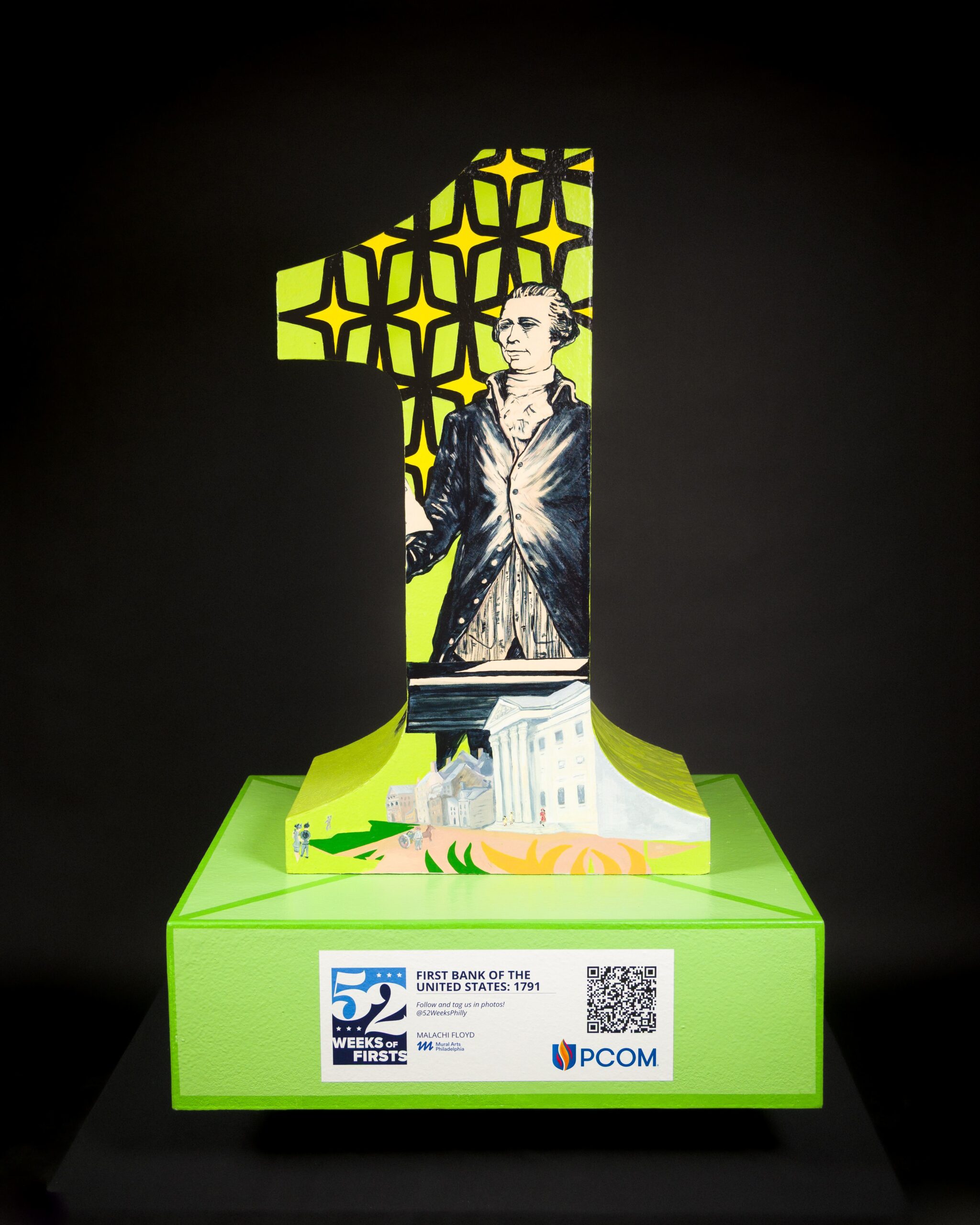
    Malachi Floyd’s image of Alexander Hamilton, stacks of money, and the original First Bank of the United States’ building honors Philadelphia’s history as the seat of the federal banking system.

    On Feb. 8, 1791, Congress passed a law establishing America’s first federally backed bank, which was located inside Philadelphia’s Carpenter’s Hall.

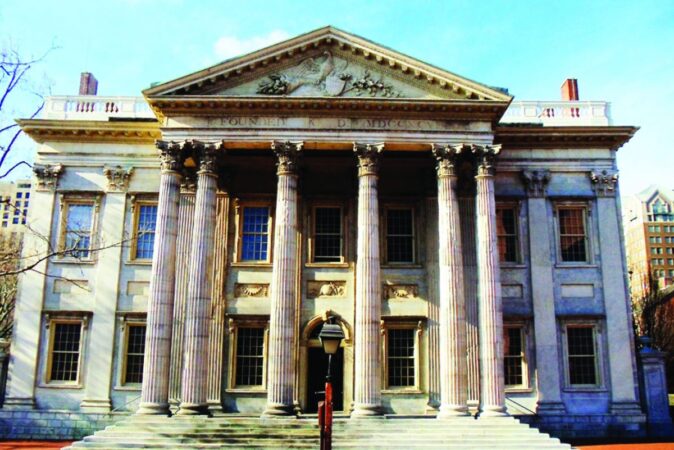
    The city will celebrate America’s First National Bank Saturday, July 4, at the First Bank of the United States, 120 S. 3rd St., where it moved in 1797. The Independence Day fete is part of the Philadelphia Historic District’s 52 Weeks of Firsts program.

    In honor of the Semiquincentennial, the National Park Service will reopen the First Bank to the public on July 1, following a multiyear $43 million rehabilitation. The gleaming Greek Revival-style building will feature exhibits centering on the history of American banking.

    America’s first commercial bank, the Bank of North America, was charted by the Continental Congress in 1781 to provide loans to colonists and fund the Revolutionary War. And some lawmakers, especially Thomas Jefferson, thought that was sufficient and that the Federal Bank overstepped the Constitution.

    While lawmakers settled into their capital digs in Washington, D.C., in 1800, Hamilton argued that the Federal Bank should be kept in Philadelphia through the end of its charter.

    “He writes a letter to George Washington telling him how the bank needs to be housed in a large commercial seat,” Nash said. ”And that he knows Philadelphia will remain prosperous.”

    The First Bank of the United States’ charter ended in 1811. Hamilton had died by then and President James Madison did not renew the charter. The next year, the building was purchased by Stephen Girard, who opened a private bank in the space.

    “But the War of 1812 was hard on the economy again,” Nash said. On April 10, 1816, Madison signed legislation establishing the Second Bank of the United States at 420 Chestnut St., Nash said.

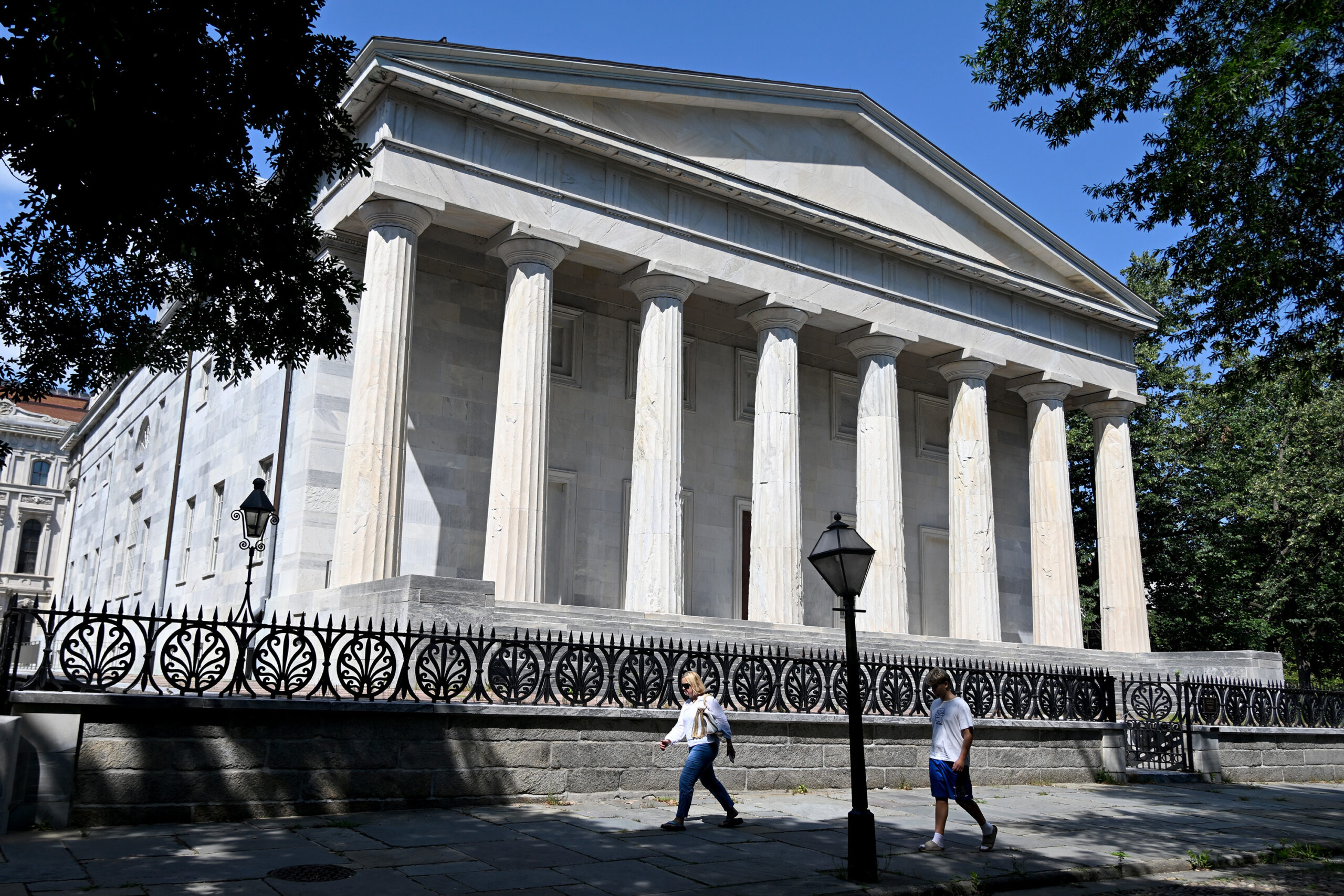
    (Today that building is the Second Bank of the United States Portrait Gallery.)

    Second Bank of the United States at 420 Chestnut Street. Today it is the Second Bank of the United States Portrait Gallery.

    Its charter expired in 1832; Andrew Jackson was president, and he, too, opposed the idea of a federal bank. The charter was not renewed and America didn’t have a federal banking system for 77 years.

    In 1907, New York financier J.P. Morgan and a consortium of bankers stopped the American banking system from collapsing by extending a line of credit to banking institutions. Without a federal banking system, the government could not bail these institutions out, so government officials began discussing the establishment of yet another national bank.

    Finally, President Woodrow Wilson signed the Federal Reserve Act in 1913, setting up the federal banking system we know today.

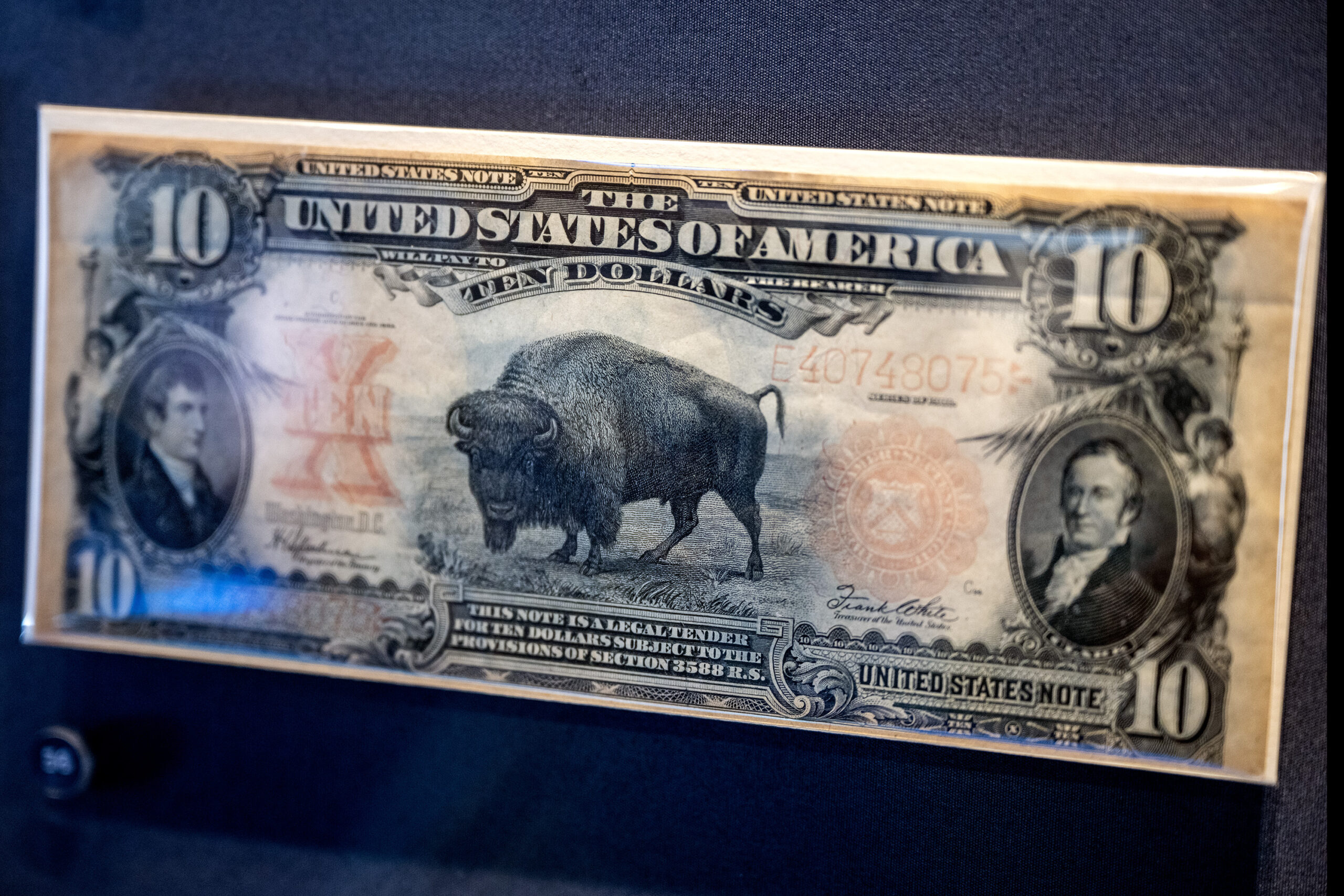
    A 1901 $10 Bison Note on display at the Federal Reserve Bank of Philadelphia’s newly redesigned “Money in Motion” exhibit Thursday, May 7, 2026. The bill was issued during the 100 year anniversary of the Lewis and Clark expedition. The exhibit features nearly 400 historic artifacts and interactive installations that explore currency and the Federal Reserve’s mission.

    The Federal Reserve is headquartered in D.C., but there are 12 branches across the country; Philadelphia is home to one of them.

    Today, the Federal Reserve acts as a fiscal agent for the U.S. Treasury, which issues paper money, collects taxes, and pays America’s bills. It does not offer private loans to businesses or individuals.

    Like the national banks, the Federal Reserve also began with a 20-year-charter. But in 1927, Congress passed the McFadden Act, granting the Federal Reserve Bank perpetual succession.

    “The government finally agreed that a federal banking system was something America needed,” Nash said. “It just took them more than 100 years to agree.”

    America’s First National Bank Firstival will be celebrated on Saturday, July 4, from 11 a.m. to 1 p.m., the First Bank of the United States, 120 S. Third St.

    The Inquirer is highlighting a “first” from the Philadelphia Historic District’s 52 Weeks of Firsts program each week. A “52 Weeks of Firsts” podcast, produced by All That’s Good Productions, drops every Tuesday.

  • Christina Aguilera has been recruiting Philly-area ‘soldiers’ for her July 4 concert

    Christina Aguilera has been recruiting Philly-area ‘soldiers’ for her July 4 concert

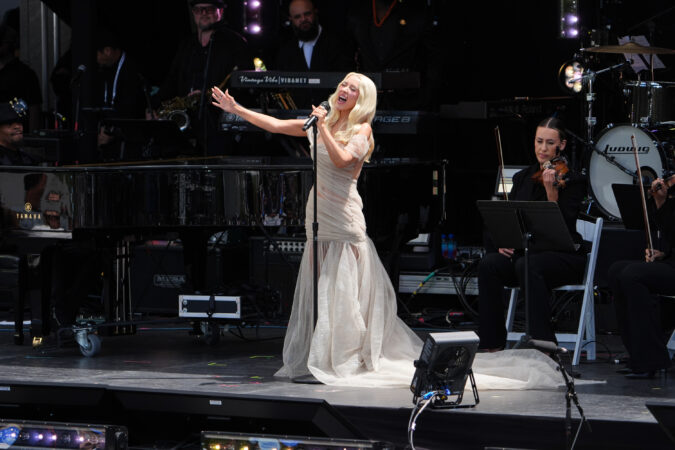
    We don’t know much about the show Christina Aguilera will put up as headliner of the July 4 “One Philly: Unity Concert for America” on Ben Franklin Parkway, but we know there will be local men dancing dressed as soldiers behind her.

    On Tuesday, a casting call from Philadelphia-based casting agency Kathy Wickline Casting announced that the pop singer and Pittsburgh native was looking for non-union male dancers who live within an hour’s commute from Philadelphia, “unless you have family/friends to stay with in the area,” the call reads.

    The quick turnaround call, which was open only for a day, sought talent between ages “20-30s” with a background in dance, acrobatics, or choreography. They should be fit like a soldier, the call specified, and although no military buzzcut is needed, their hair should not be long.

    The dancers needed to make themselves available for the show on July 4 and a rehearsal on the day before.

    The call closed on Tuesday afternoon. Kathy Wickline Casting did not respond to The Inquirer’s request for comment.

    Her setlist for July 4 has not been announced, but Aguilera’s discography doesn’t boast songs directly related to the military.

    However, the music video for her 2006 hit “Candyman” is World War II themed, featuring background dancers and Aguilera dressed in glamorized military uniforms. She also has several songs with themes surrounding strength and empowerment, such as “Fighter” and “Army of Me.”

    While Wawa remains a sponsor of the annual July 4 concert, the show is not part of Wawa Welcome America, the series of events leading up to July 4. Aguilera will be co-headlining the show with Philadelphia native Jill Scott, and other acts include the Roots, Will Smith and DJ Jazzy Jeff, Kathy Sledge, and more.

    Gates for the concert open at 3 p.m. It starts at 5 p.m. with fireworks around midnight. More information at july4philly.com

  • Everything you need to know about Philadelphia’s July Fourth concert and fireworks

    Philadelphia’s celebration of America’s 250th birthday culminates July 4 with a free concert and fireworks on the Benjamin Franklin Parkway.

    The One Philly: Unity Concert for America begins at 5 p.m. in front of the Philadelphia Museum of Art, featuring Christina Aguilera, Jill Scott, Meek Mill, Will Smith, The Roots, DJ Jazzy Jeff, Jordan Davis, Seal, State Property, Kathy Sledge, and more.

    This year’s event is no longer part of the longtime Wawa Welcome America festival. Mayor Cherelle L. Parker’s administration took over production of the annual July Fourth concert, renamed it the One Philly: Unity Concert for America, and hired ESM Productions to produce the show.

    Wanda Sykes will emcee the concert, which concludes with the city’s official fireworks display over the Parkway.

    Here’s everything you need to know before you go.

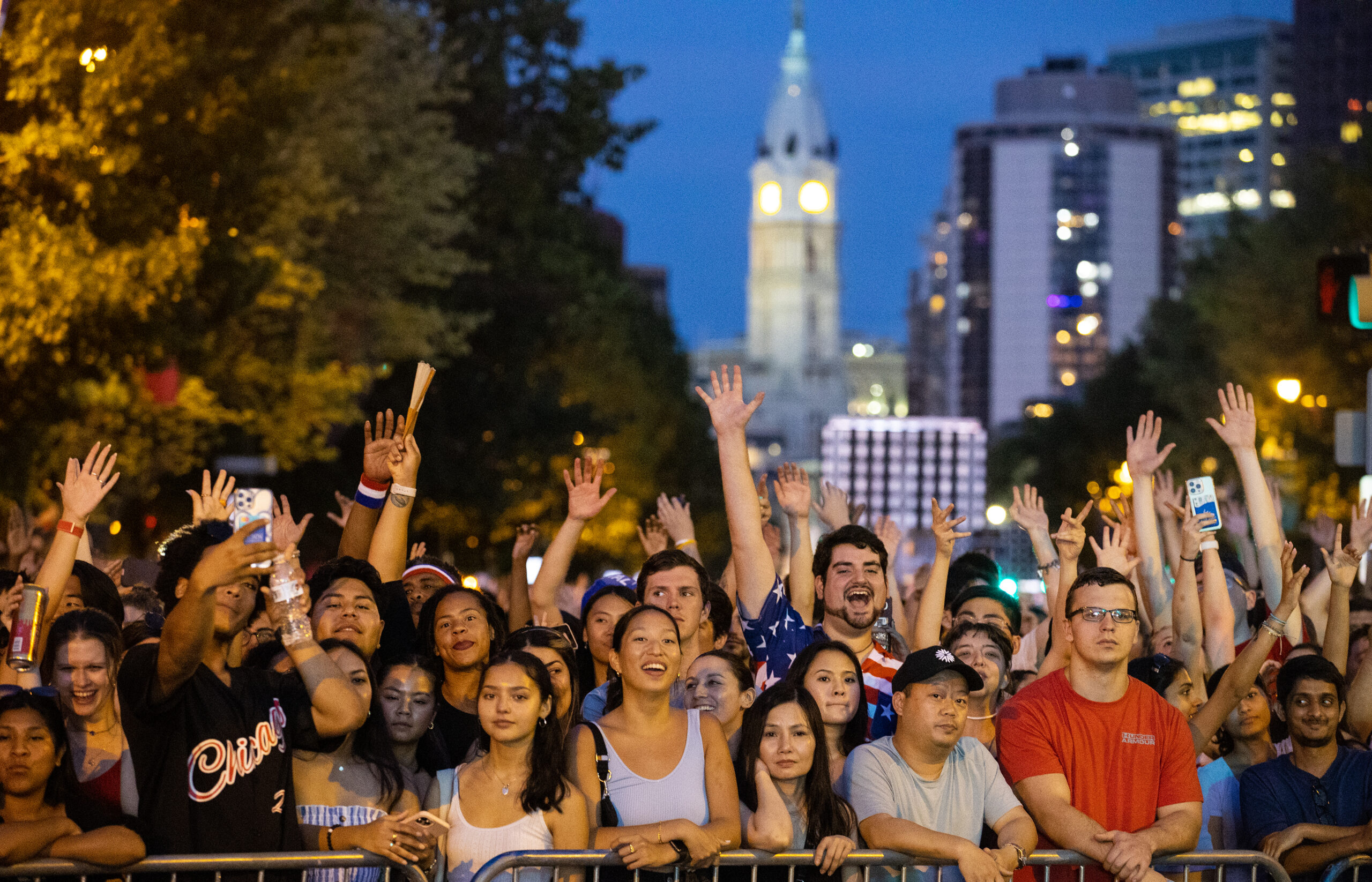
    Fans react to the music as the Wawa Welcome America Festival concluded on July 4, 2023, with a free concert featuring Ludacris on the Benjamin Franklin Parkway.

    Schedule and entry

    Guests must enter through a secure checkpoint at 20th Street and Logan Circle, where security may search attendees and their bags. Gates open at 3 p.m.

    The concert will start around 5 p.m., followed by the fireworks around 11:30 p.m., according to city officials.

    Who is performing at Philadelphia’s Fourth of July Concert?

    Headliners include Christina Aguilera, Jill Scott, Meek Mill, Will Smith, The Roots, and DJ Jazzy Jeff.

    Other performers include Jordan Davis, Kathy Sledge, State Property, Seal, and several others.

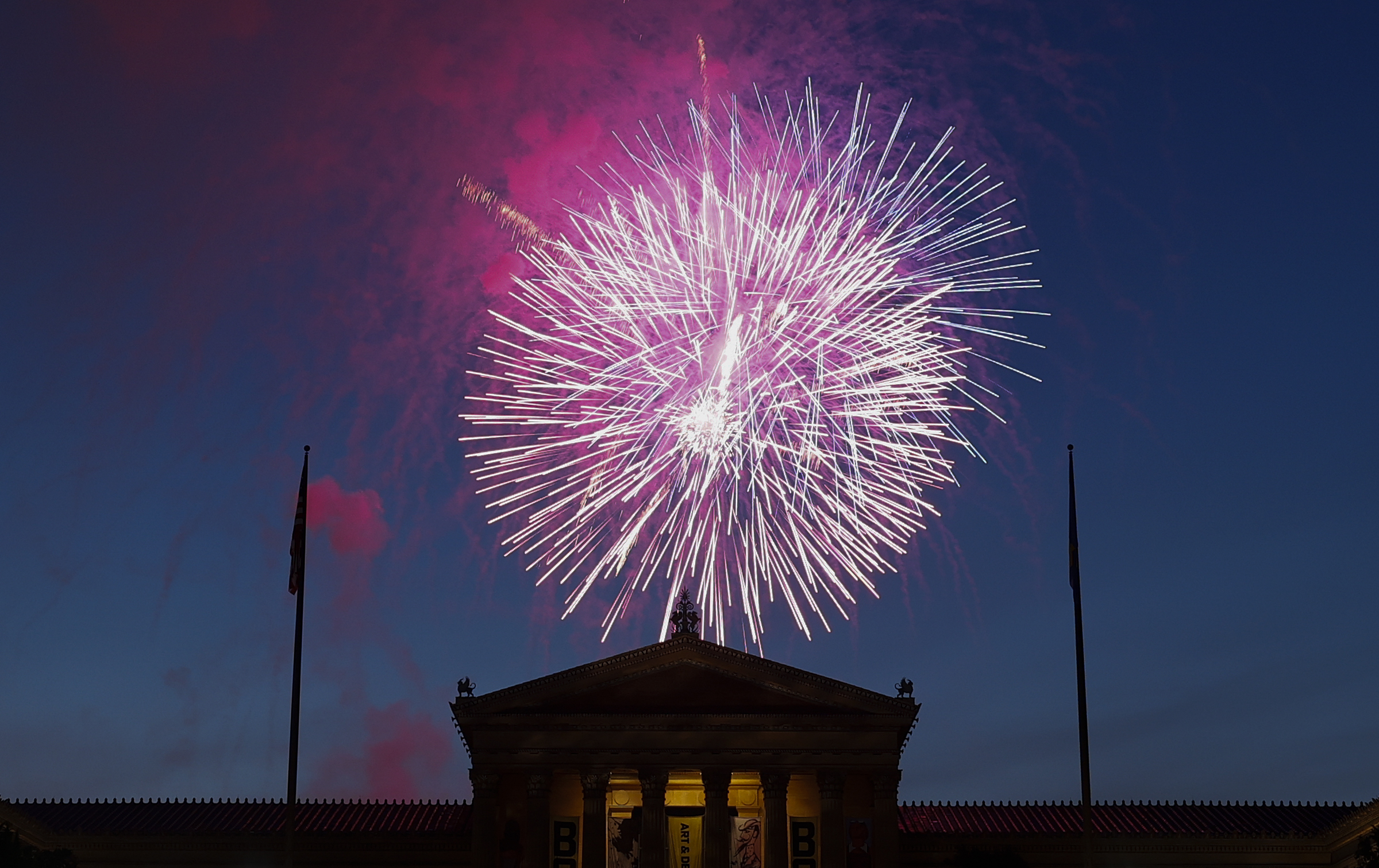
    Fireworks over the Philadelphia Museum of Art along the Benjamin Franklin Parkway on Friday, July 4, 2025.

    Fireworks

    Following the concert, the city’s official July Fourth fireworks display will begin at about 11:30 p.m. The show will be visible from throughout the Parkway and surrounding neighborhoods.

    Looking for more fireworks? Here’s a full list of fireworks shows happening throughout the Philadelphia region.

    The concert and fireworks will also air live on NBC10 and Telemundo62.

    Road closures

    Unless otherwise noted, the following closures will be in effect from approximately 6 a.m. Friday through 6 a.m. Monday:

    • 1900 Race Street
    • 1800-1900 Vine Street
    • I-676 off-ramp at 22nd Street
    • I-676 on-ramp at 22nd Street
    • I-76 eastbound off-ramp at Spring Garden Street
    • Spring Garden Tunnel
    • Park Towne Place between 22nd and 24th Streets
    • 20th Street between Arch Street and Pennsylvania Avenue
    • 19th Street between Callowhill and Cherry Streets
    • Benjamin Franklin Parkway from 17th Street to Eakins Oval
    • Eakins Oval
    • Kelly Drive between Eakins Oval and Fairmount Avenue (inbound traffic closes at Fountain Green Drive beginning about 5 p.m.)
    • 2000-2100 Winter Street
    • Spring Garden Street between Pennsylvania Avenue and 31st Street
    • 23rd Street between Pennsylvania Avenue and Eakins Oval
    • 22nd Street between Winter Street and Pennsylvania Avenue
    • 21st Street between Winter Street and Pennsylvania Avenue
    • All roads from Arch Street to Spring Garden Street between 18th and 22nd Streets (local access maintained for residents)
    • All roads from Arch Street to Fairmount Avenue between 22nd and Corinthian Streets (local access maintained for residents)
    • 16th and 17th Streets between Arch Street and Spring Garden Street will close only if conditions warrant.
    • 1600-1700 Benjamin Franklin Parkway will close only if conditions warrant.

    Beginning at 4 a.m. Saturday, the following roads also will close:

    • Anne d’Harnoncourt Drive behind the Philadelphia Museum of Art
    • Martin Luther King Jr. Drive from Falls Bridge to Eakins Oval

    From 8 p.m. Saturday until approximately 1 a.m. Sunday, Kelly Drive between Fairmount Avenue and Fountain Green Drive and Waterworks Drive also will be closed because of the fireworks display.

    Parking

    Temporary no-parking signs will be posted along streets affected by closures. Vehicles left in those areas will be courtesy towed to another nearby location.

    Public Transportation

    SEPTA

    On July 4, SEPTA Metro, buses and Regional Rail will operate on special schedules with enhanced service.

    Additional trips will run on the L and B lines.

    Most Regional Rail lines will offer additional inbound and outbound service before the fireworks. All Regional Rail lines except the Airport and Cynwyd lines will provide late-night outbound service from Jefferson Station, Suburban Station, and William H. Gray III 30th Street Station after the fireworks.

    Other SEPTA service will operate on a Sunday schedule. Routes without Sunday service will not operate.

    Routes 7, 32, 33, 38, 43, 48, and 49 will be detoured beginning at 5 a.m. Thursday through 5 p.m. Sunday because of road closures.

    SEPTA ambassadors will be stationed at major transit hubs to help direct passengers after the July 4 FIFA World Cup match and the One Philly concert and fireworks.

    Additional information is available on SEPTA’s July 4 service webpage. Riders can also check alerts on the SEPTA mobile app, at septa.org/alerts or by calling 215-580-7800.

    PATCO

    PATCO will operate on a holiday schedule July 4, with trains running every 10 minutes throughout the day. More information is available at ridepatco.org.

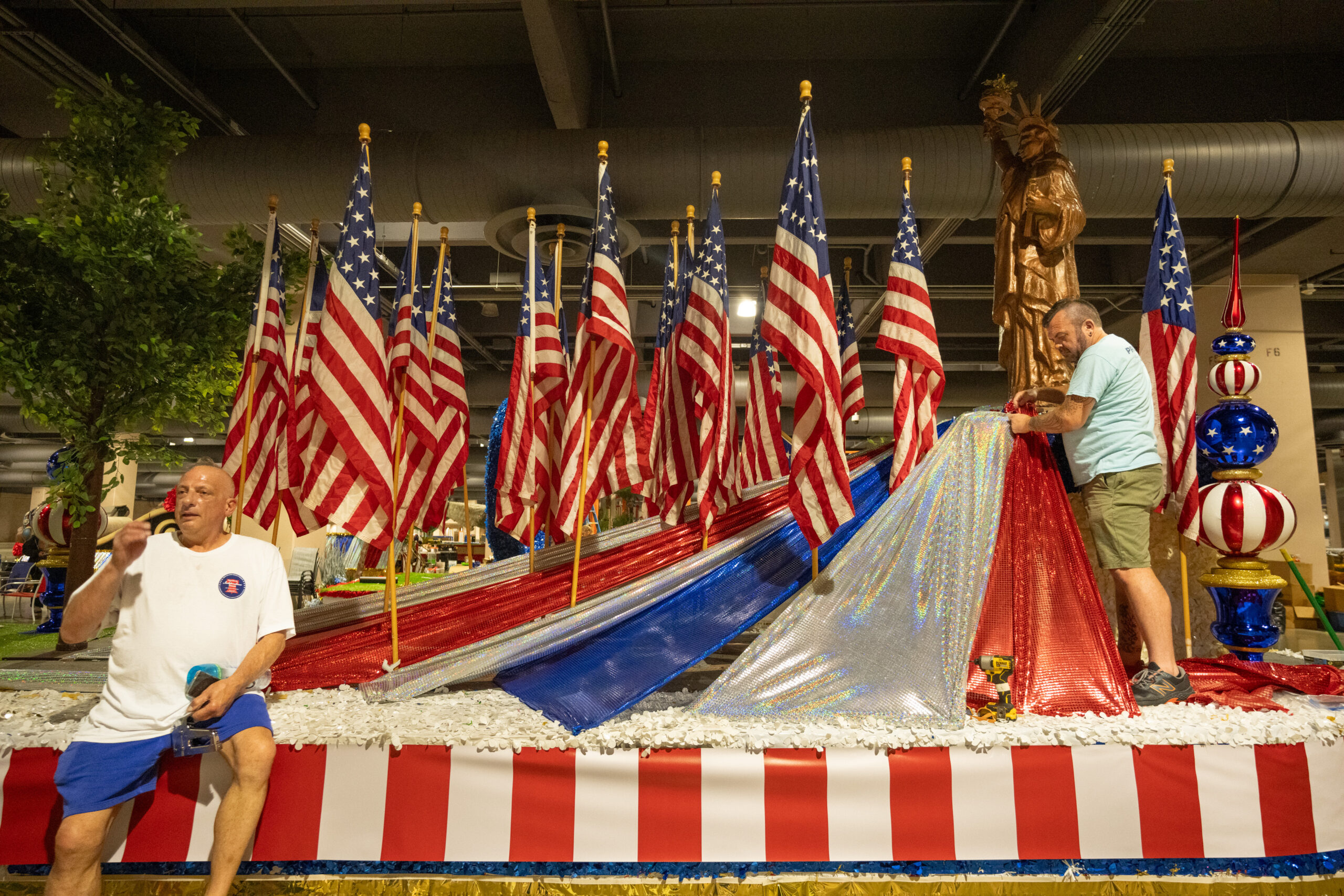
    Todd Marcocci (left) and Jeremy Williams work on a float on Monday for this year’s big Fourth of July parade, in Philadelphia.

    Fourth of July celebrations happening elsewhere in the area

    Fourth of July Freedom Festival at Pleasant Hill Park: 💵 Free, 🕒 July4, 5 to 9:30 p.m., 📍Linden Ave., Philadelphia, Pa 19136

    Philadelphia 4th of July Signature Dinner Cruise: 🕙 July 4, 7:30 p.m., 📍401 S. Christopher Columbus Blvd., Philadelphia, Pa. 19106, 🌐 cityexperiences.com

    2026 Freedom Festival at Wiggins Park 💵 Free, 🕒 6 to 11 p.m., 📍2 Riverside Dr., Camden, NJ 08103

  • ‘Rock star’ Ben Franklin, with some help from Queen and Bruce Springsteen, reminds us that Philadelphia is the soul of America

    ‘Rock star’ Ben Franklin, with some help from Queen and Bruce Springsteen, reminds us that Philadelphia is the soul of America

    We all have a mental image of Benjamin Franklin, thanks to the $100 bill: balding, middle-aged, with tiny glasses and a stern look.

    But what if he had a full head of hair poking out the sides of his tricorn? What if we saw Franklin singing and jamming on a guitar?

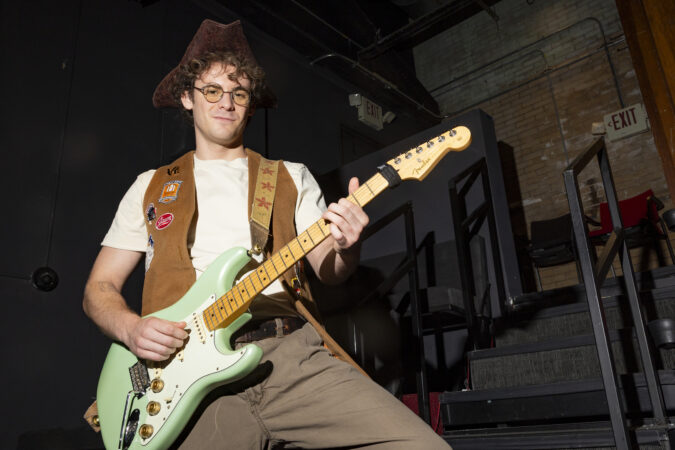
    The Sound of America, a new musical showing at FringeArts this month, imagines Franklin as a young man: America’s very first rock star who finds fame after discovering electric rock and roll from the power of a lightning strike.

    In the musical, he gains fame and fortune as a rock star. But stardom sweeps him up and pulls him away from the people and values that once defined him as a struggling musician, leaving him to question his true identity.

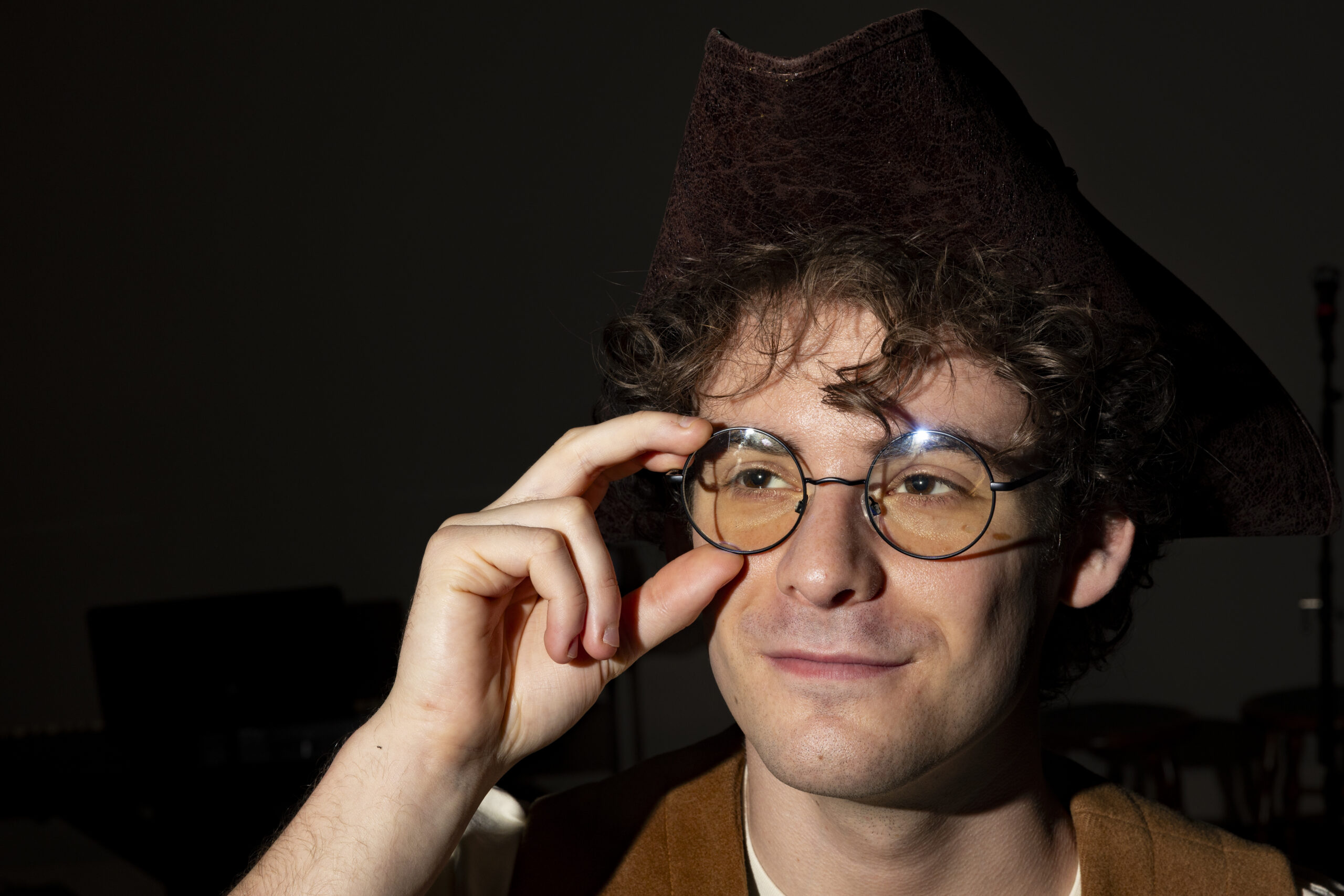
    Leading the ensemble cast is a newly minted Temple musical theater graduate, Kohl Pilgrim. Last week, he stood with fellow actors Federica Andino-Vega and Jameson May, who play Franklin’s wife Deborah Read and his best friend Hugh Meredith, respectively.

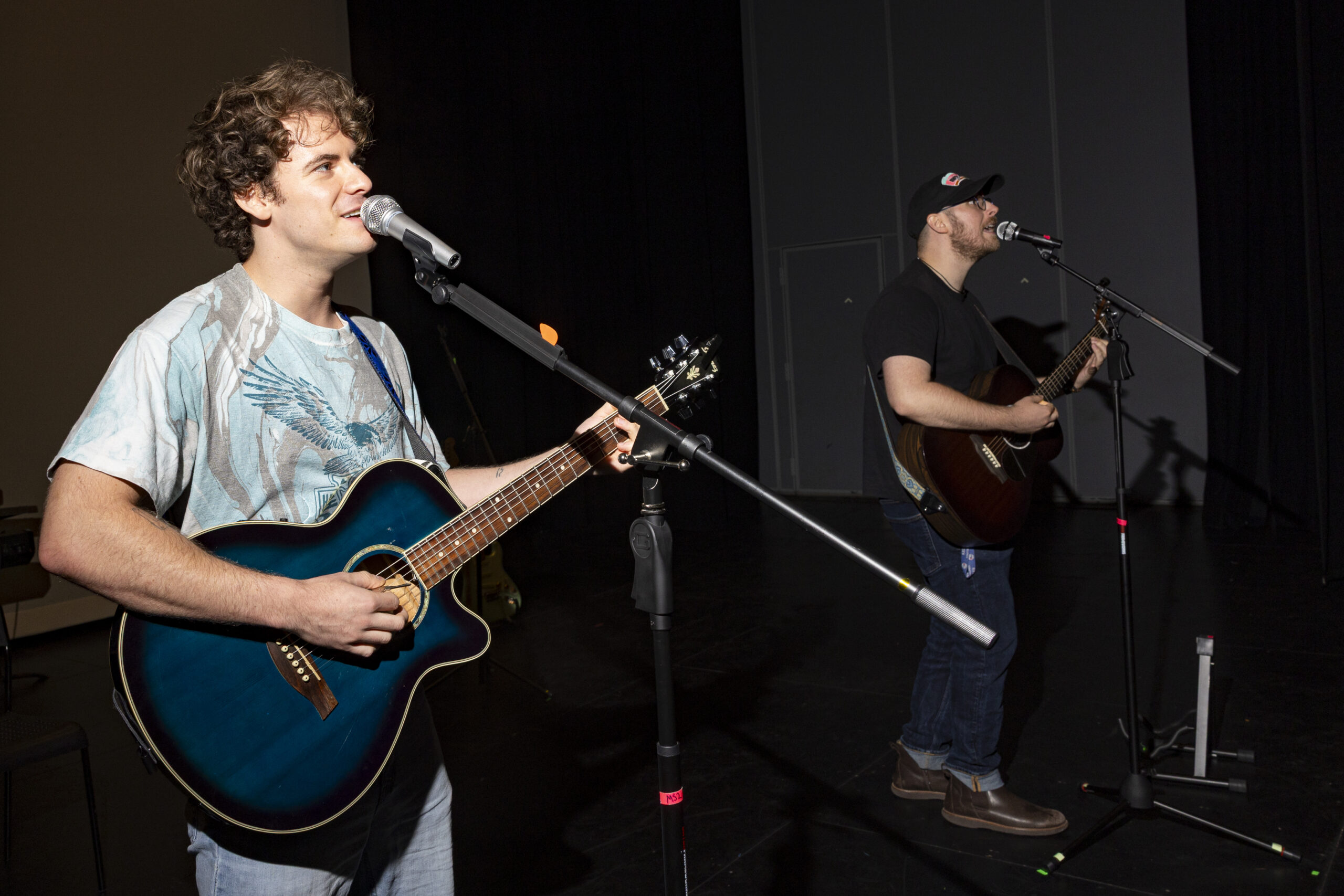
    Pilgrim and cast play their instruments live, serving as both performers and a band.

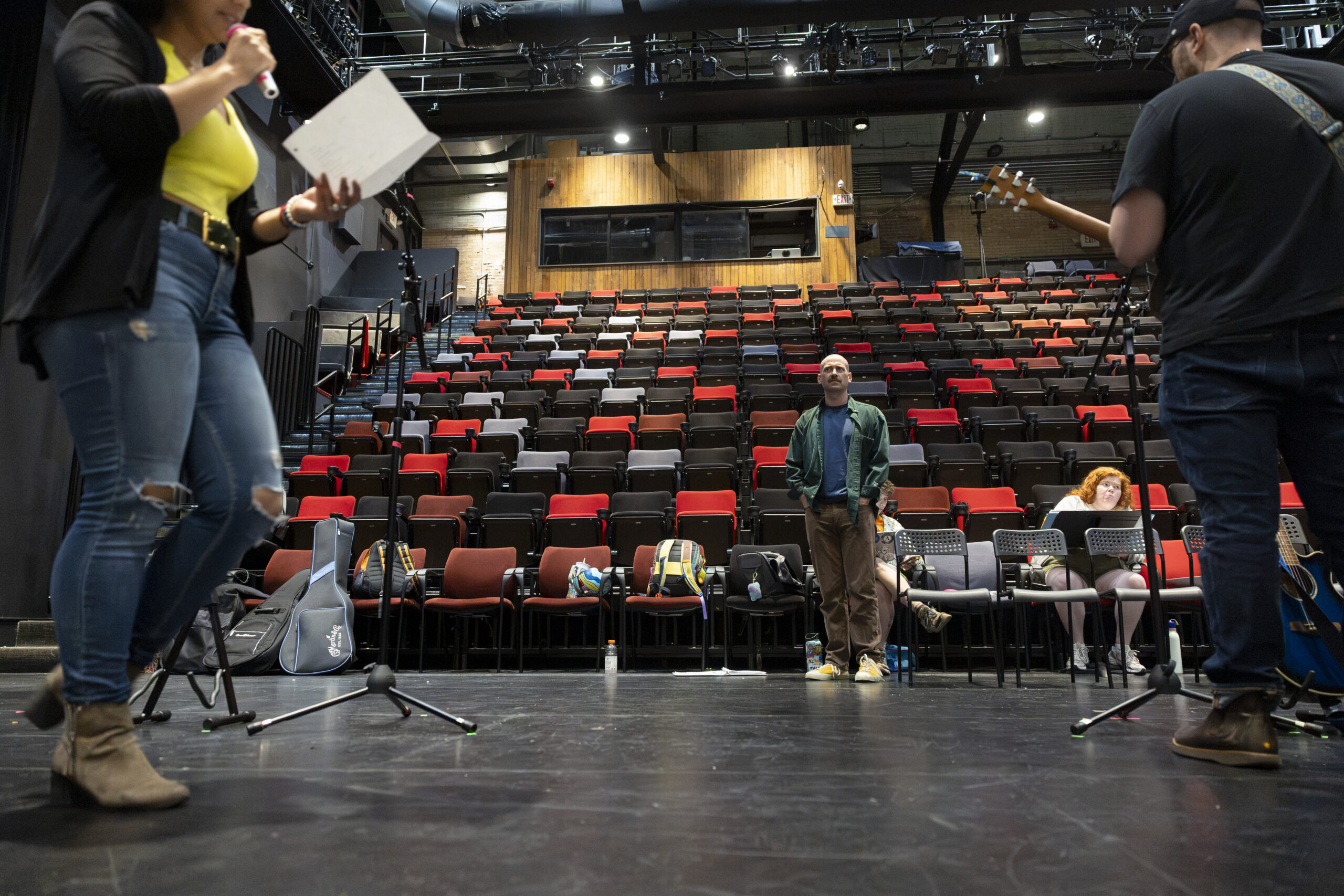
    Delivering their lines and singing at microphone stands, Nashville Bluebird Cafe-style, the three practiced blocking the scene where Franklin and Read first meet. After a flirty exchange, a naive and confused Franklin finds out Read is married to a man who has disappeared without evidence of his death.

    “We tend to see [Founding Fathers] as these infallible perfect people who created the perfect society,” director and Temple professor Kyle Metzger said. “It’s exciting to see a young Founding Father making mistakes and being complex and messy. It’s important to remember these were people, too, who didn’t have all the answers and were trying their best.”

    Setting out to write a write a rock musical, the choice of protagonist was a no-brainer for the musical’s cocreator and Emmy-award winning producer Randall Lane and longtime friend and singer-songwriter Todd Schwartz.

    “Under Poor Richard, he was the lyricist for colonial America,” said Lane, referring to Franklin’s pseudonym under which he published a yearly almanac. “And then when he discovered the lightning rod, he literally became the first American who was world famous, and toured the world.”

    Just like a young rock star.

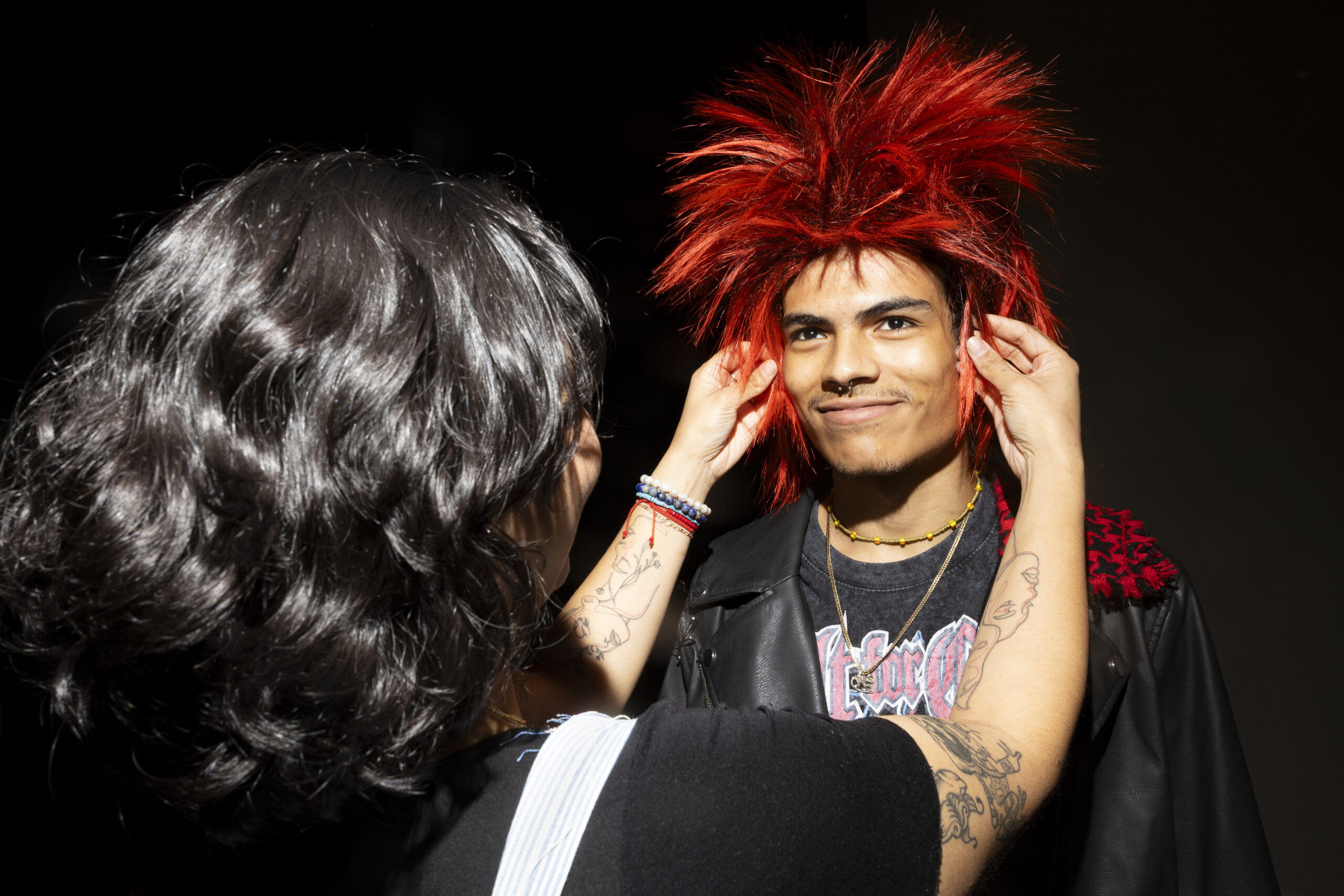
    Federica Andino-Vega (left), who plays Franklin’s wife Deborah Read, adjusts Gerson Malave’s wig during a dress rehearsal for “The Sound of America” on June 24.

    Lane, who is also the editor in chief of Forbes magazine, lives in Saratoga Springs but feels deeply connected to Philadelphia through the years he went to Penn to study history and political science.

    For him, Franklin “checked every box.”

    “He was a teenage fugitive who ran away from home and every Friday he was hanging out [at] the Leather Apron Club,” the mutual-improvement society Franklin and his friends founded in 1727, said Lane.

    Every week, they’d meet in taverns, “jamming out intellectual ideas,” said Lane. In the case of his musical, they create a garage band.

    Franklin, after all, invented the glass harmonica.

    The musical’s soundtrack includes 23 original songs cowritten by Lane and Schwartz, influenced by Queen, Nirvana, Bruce Springsteen, and the Beatles. Metzger describes the production as “80% rock concert, 20% musical.”

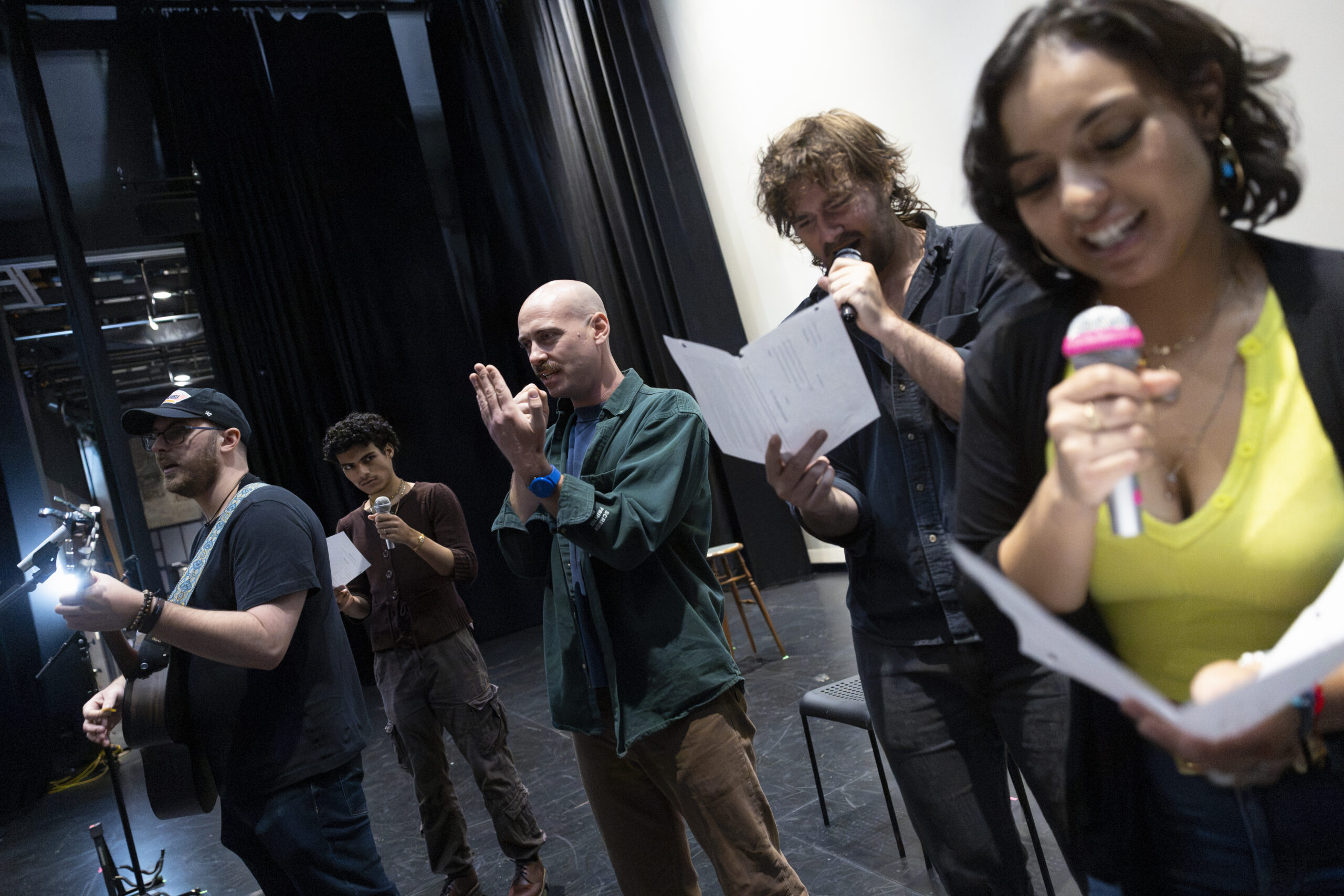
    Kyle Metzger (center), the director for “The Sound of America,” directs the cast inside FringeArts for the forthcoming musical on June 24.

    The cast will serve as narrators at the front of the stage, while a live band plays behind them. Floor seats will be available and swaying arms and singing along will be highly encouraged. It’s meant to feel like a concert and not just another historical “rock” musical (sorry, Hamilton).

    “I’m always drawn to theater that’s untraditional or pushing into other mediums or incorporating other art forms,” Metzger said.

    True to style, The Sound of America also doubles as a walking tour led by Pilgrim, still in character as Benjamin Franklin. After curtain call, audiences can participate in a tour of Franklin’s Old City house and grave, a short walk away from the FringeArts venue.

    Needless to say, Pilgrim has had to really pack on the homework for this portion of the show.

    “Most of my free time when I am not in rehearsal or with friends, I am home reading his autobiography,” he said. “I am reading anything I possibly can because there’s probably going to be a kid that’s like ‘What’s his favorite food? Did he like burgers?’ So I’m researching that, too.”
    Barrymore award-winning director Kyle Metzger is also a professor in Temple’s Musical Theater program.

    When asked about Franklin’s favorite drink, Pilgrim was certain it was wine. As for his hypothetical Jersey Shore vacation spot, Pilgrim named Cape May.

    “I think he would like the houses,” he said.
    “I want to pay homage to how honest, wise, and hard-working he was,” said the actor, who sought inspiration from iconic rock figures like David Lee Roth, Elvis Presley, and Sir Roger Daltrey, frontman of the Who.

    Daltrey, in fact, makes a remote cameo in the musical, in support of Teen Cancer America, the nonprofit he founded along with Who bandmate Pete Townshend.

    Lane and Schwartz’s royalties will be donated to the charity, which partners with Children’s Hospital of Philadelphia (CHOP). The production is also collaborating with Federal Donuts & Chicken for a specialty doughnut called “The Ben”; a portion of its sales will benefit the cause.

    Kohl Pilgrim, the actor bringing Ben Franklin’s rock and roll persona to life, inside FringeArts.

    “We want this to be a really big win to fight cancer, but we think that it’s also super true to the spirit of Benjamin Franklin,” Lane said. “He was a rock star in all the senses, but he was also somebody who really cared about where he lived, and we want to leave Philadelphia better than we found it.”

    But as with any rock star, Franklin’s story would be nothing without his entourage.

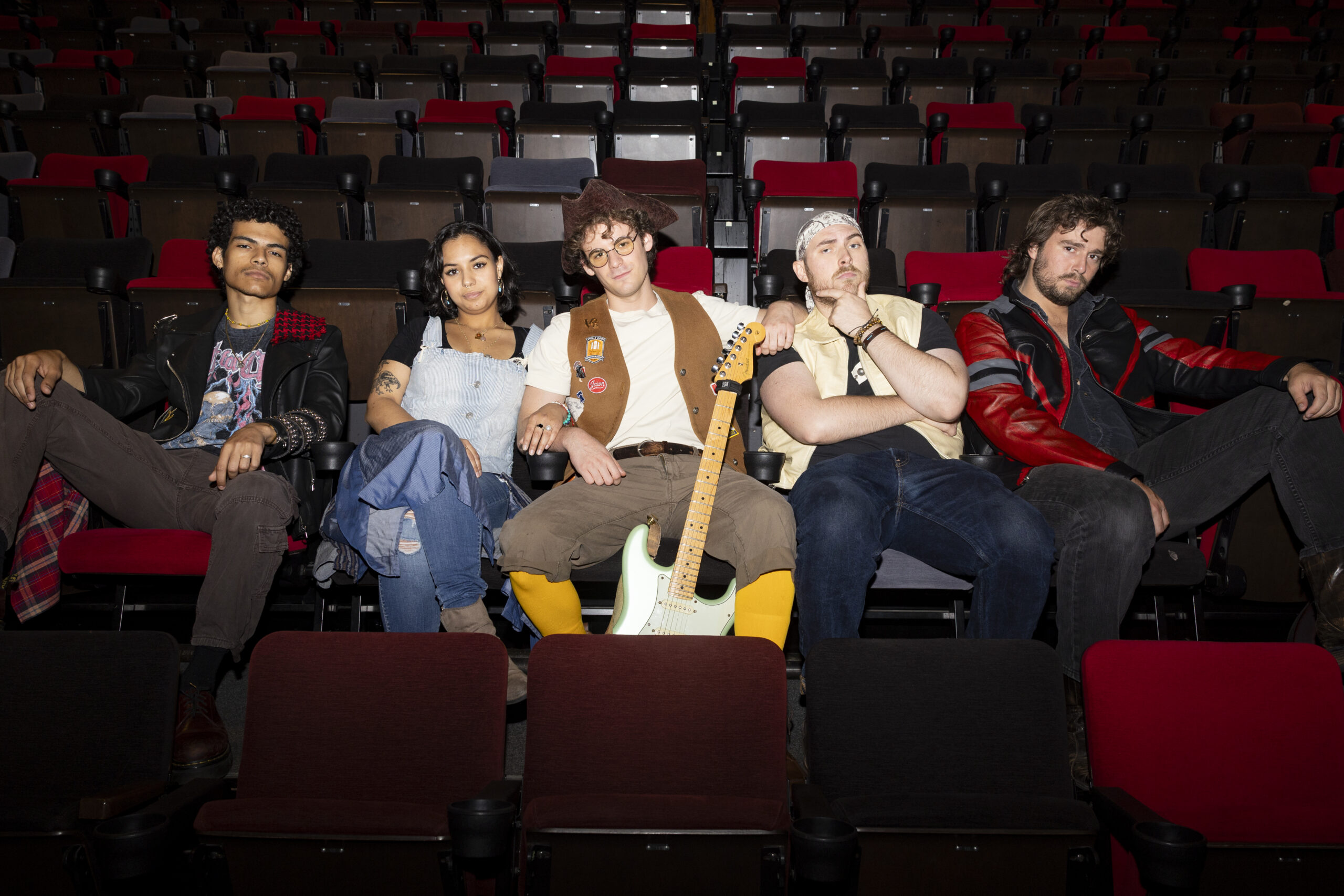
    In addition to wife Read and bestie Meredith, the ensemble cast includes British antagonist Lord Wedderburn, played by Kaedon Knight and Franklin’s illegitimate son William Temple Franklin (aka “WTF”), played by Gerson Malave.

    Read is the only female character in the show, accompanying Franklin on his journey to stardom. Though she is often forgotten in history, her common-law marriage to Franklin saw her holding down the Franklin household and publishing company with a shotgun during the unrest of the Stamp Act.

    “She was a baddie, the baddie on Market Street,” Andino-Vega said. “But [Franklin] got most of the spotlight just because she was very shy and a bit illiterate. I want to shine a light on those special ladies that have been forgotten, and bring them up a little more in a way where they can also be seen like Ben Franklin.”

    The cast of “The Sound of America” are committed to delivering a rock concert, not just a musical.

    The cast and crew, largely Philadelphia-based and/or raised, are deeply committed to reflecting the grit of the city through this unique portrayal, especially in light of the 250th anniversary of the nation.

    “It’s almost like Ben was talking to us saying this year’s really important and this summer is important to Philadelphia,” Lane said. “It gives everybody that visits Philly a reminder that Philadelphia was the birthplace of democracy and it’s the soul of America.”

    The Sound of America runs July 1-Aug. 1 at FringeArts, 140 N. Christopher Columbus Blvd. Tickets start at $60. soundofamericamusical.com, 215-413-1318, or hello@fringearts.com.

    A previous version of the article misidentified the actors playing Hugh Meredith and Lord Wedderburn. Jameson May and Kaedon Knight play the characters respectively.

  • Philadelphia Orchestra has a new assistant conductor. She likens the job to a Formula 1 reserve driver.

    Philadelphia Orchestra has a new assistant conductor. She likens the job to a Formula 1 reserve driver.

    When Sara Aldana auditioned for the coveted Philadelphia Orchestra assistant conductor spot in April, she tried out in front of the ensemble with Copland and Bartok.

    For the third piece, she chose an excerpt from Rachmaninoff’s Symphony No. 2. The Russian composer is closely associated with the Philadelphians — he once called the orchestra the greatest in the world — and the second symphony, Aldana said, was close to her heart.

    “I was like, whatever happens with the audition, I just want that memory of — wow — doing Rachmaninoff Two with Philadelphia for five minutes.”

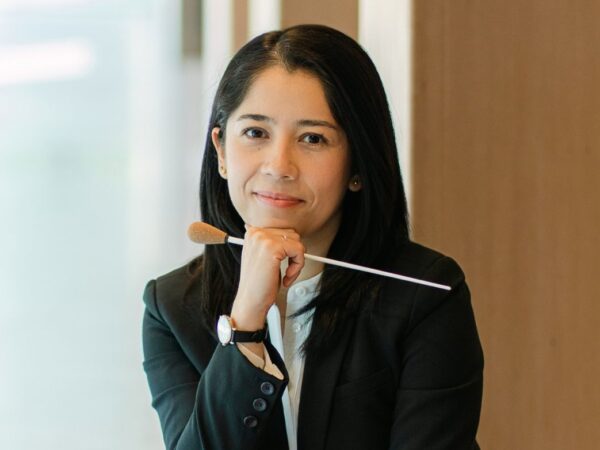
    Now she’ll be spending many more minutes with the Philadelphians. Aldana won the audition, and is the orchestra’s next assistant conductor, the group announced Wednesday.

    The position is a junior one, though it has been a steppingstone to bigger opportunities. Aldana follows Naomi Woo, who has already been engaged as a guest conductor next season.

    Aldana studied with Philadelphia Orchestra principal guest conductor Marin Alsop and worked as a cover conductor with the Detroit Symphony Orchestra. As assistant conductor in Philadelphia, she will lead family and special concerts and give pre-concert talks.

    One of her biggest responsibilities will be one that the public may never get to see — or that could make her career. She will serve as cover conductor, which means she could be tapped to lead a Philadelphia Orchestra concert at any moment if the scheduled conductor falls ill or is otherwise unable to perform at the last minute.

    “I always think it’s like the Formula 1 reserve driver, you know? You might not be driving the car, but you could get a call and you have to get on, driving the car,” she said Aldana.

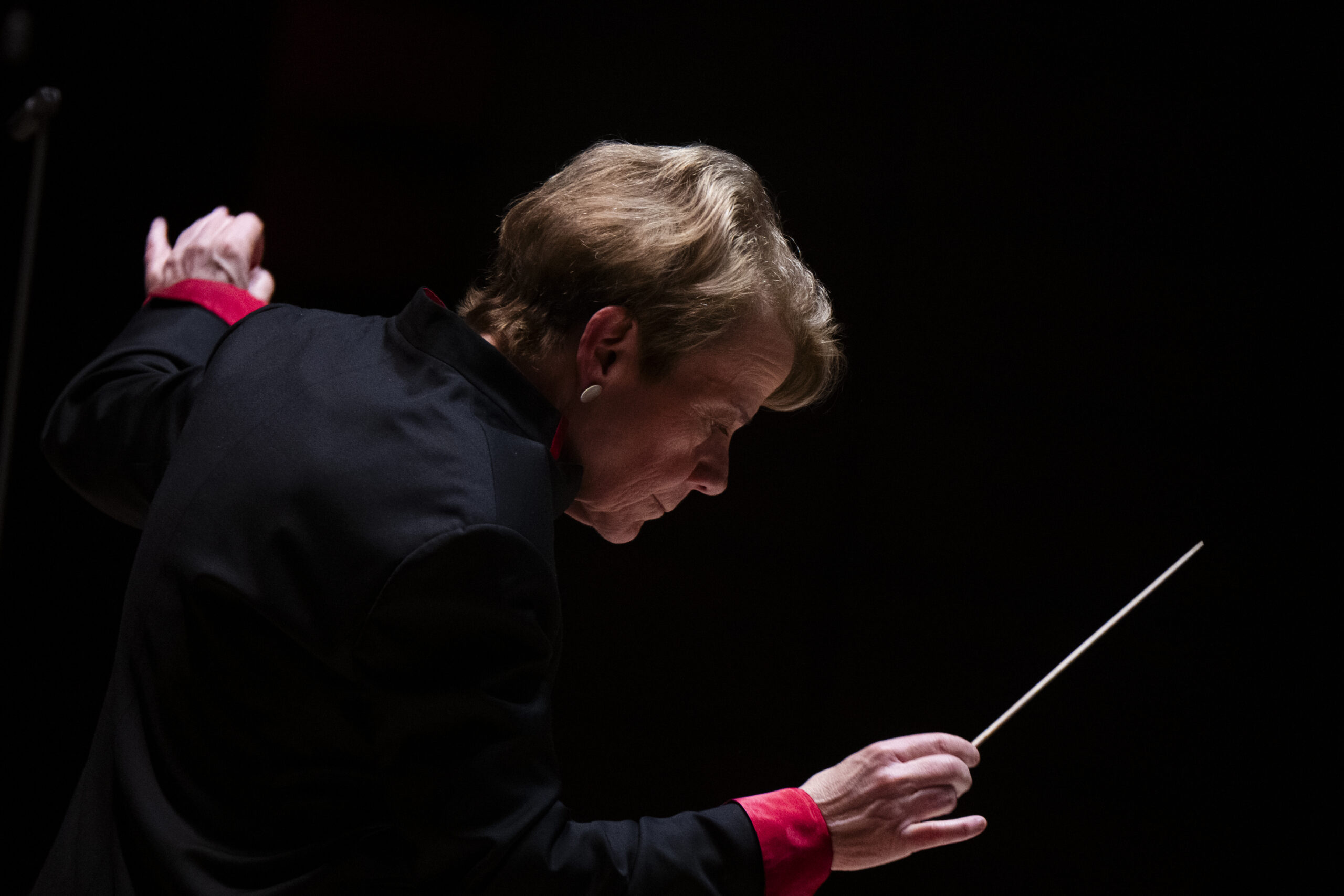
    Conductor Marin Alsop — who has worked with Aldana — leading the Philadelphia Orchestra, May 28, 2026, in Marian Anderson Hall.

    Aldana, 30, was born in Bogotá, Colombia, and earned an undergraduate degree in violin performance at the University of Texas at Austin. She holds a master’s degree in orchestral conducting from the University of Michigan, where she studied with Kenneth Kiesler, and did further studies with Alsop and Joseph Young at the Peabody Institute of the Johns Hopkins University.

    She has served as assistant conductor of the Reno Chamber Orchestra and is a 2026 mentee with the Taki Alsop Conducting Fellowship.

    Aldana was at Peabody for a year, but left after winning the Philadelphia audition.

    That tryout ended with five finalists for the job. Each had a short time conducting the orchestra, dipping into excerpts of various styles — Copland’s Appalachian Spring, Bartok’s Miraculous Mandarin Suite, and the third piece, which the finalists could choose themselves from among three possibilities.

    All five chose the last few minutes of the famously emotive third movement of Rachmaninoff’s Symphony No. 2.

    Why this piece?

    “I’m a violinist by training, and so I absolutely love Rachmaninoff Symphony No. 2.”

    The audition lasted all of 15 minutes.

    “Fifteen minutes is a short amount of time, but you realize with Philadelphia, it’s all you need to get a good idea of who they are as an ensemble and the culture that they have as a group. It just happened to be a beautiful connection.”

    Although Aldana started out as a violinist, she long harbored, even as a child, an interest in conducting.

    “Your instrument is the orchestra, all these colors, and it’s just getting to play with all of them — how you create sound, balance, getting to discover, you’re continuously learning. That’s something that really appealed to me.”

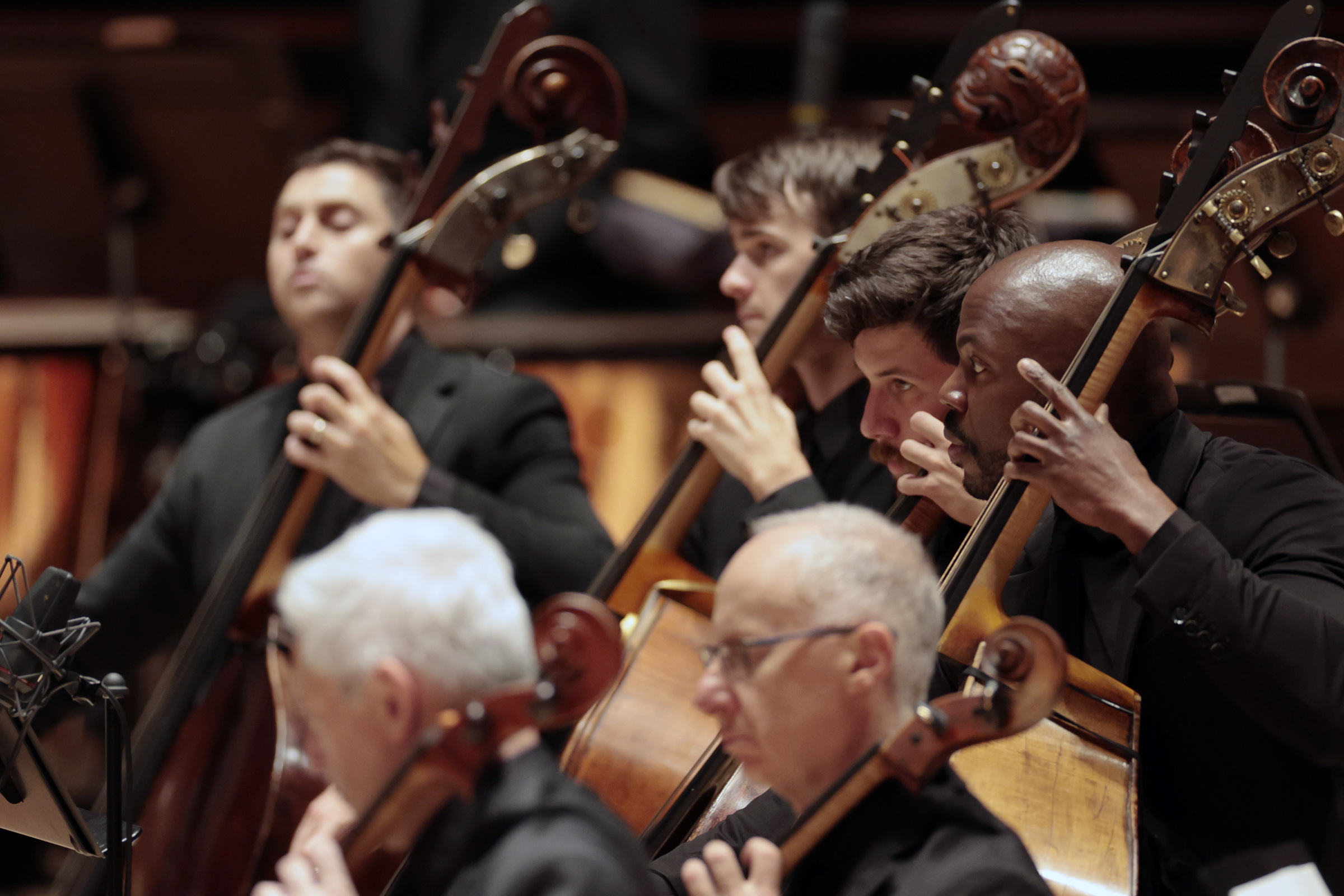
    The double bass section of the Philadelphia Orchestra performing on opening night of the 2025-26 season in Marian Anderson Hall, Sept. 25, 2025.

    Aldana’s official start is Sept. 1. Her first scheduled concert with the orchestra is a Jan. 2 matinee in Marian Anderson Hall of Strauss family waltzes and other works.

    Asked what piece she might dream of someday conducting with this orchestra, Aldana said any Tchaikovsky symphony, but especially the Sixth.

    “There was an Ormandy recording that I remember listening to a lot. I was obsessed with this piece — obsessed. I remember that lush of the strings in the most heart-wrenching moments.”

    Is there a piece she would find too daunting to conduct?

    “Daunting. Hmm. I don’t think so.”

    Does that mean she’s musically fearless?

    “I am a little fearless,” she said, “when you have one of the best orchestras in the world in front of you.”

  • The first Jewish American to serve the government was a Philadelphian. A letter he carried to Paris for Thomas Jefferson just sold for $108,000.

    The first Jewish American to serve the government was a Philadelphian. A letter he carried to Paris for Thomas Jefferson just sold for $108,000.

    In the early 1780s, Revolutionary War era Jewish patriot and Philadelphian Lt. Col. David S. Franks had a desperate work situation in hand.

    He had served as one of Benedict Arnold’s high-ranking personal assistants, and after Continental militiamen discovered Arnold’s intentions to sell America out to the British in 1780, it became nearly impossible for Franks to find a job with the United States government.

    Franks was cleared of wrongdoing. But working with Arnold made the Founders wary of employing Franks.

    But not Thomas Jefferson, who hired Franks as his secretary. By the time the Treaty of Paris ending the Revolution was ratified in January 1784 in Annapolis, Md., then America’s capital, Franks had been Jefferson’s secretary for almost a year.

    It was Franks who carried at least one official copy of the finalized treaty to Benjamin Franklin — who was in Paris at the time — and other officials in Britain and France.

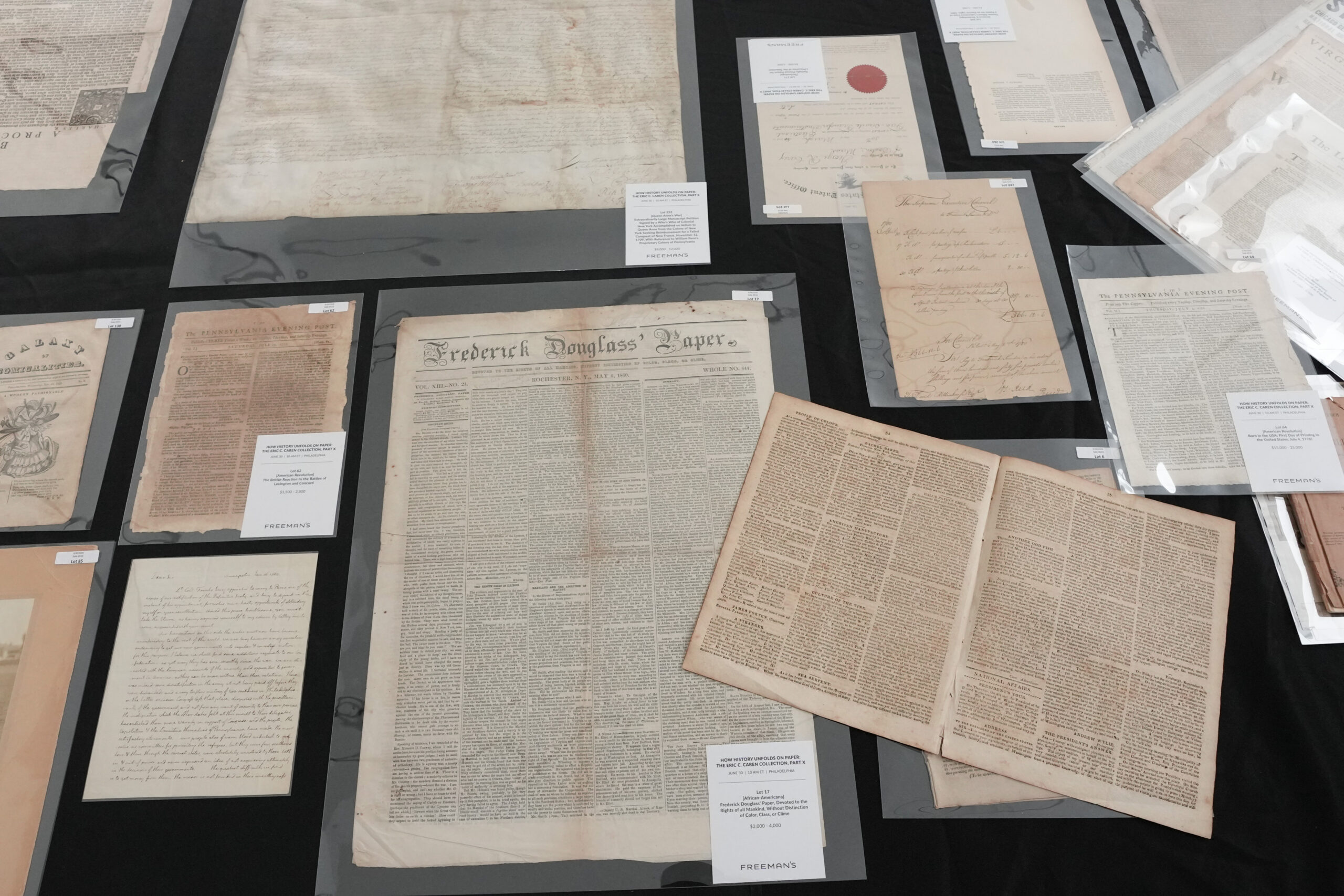
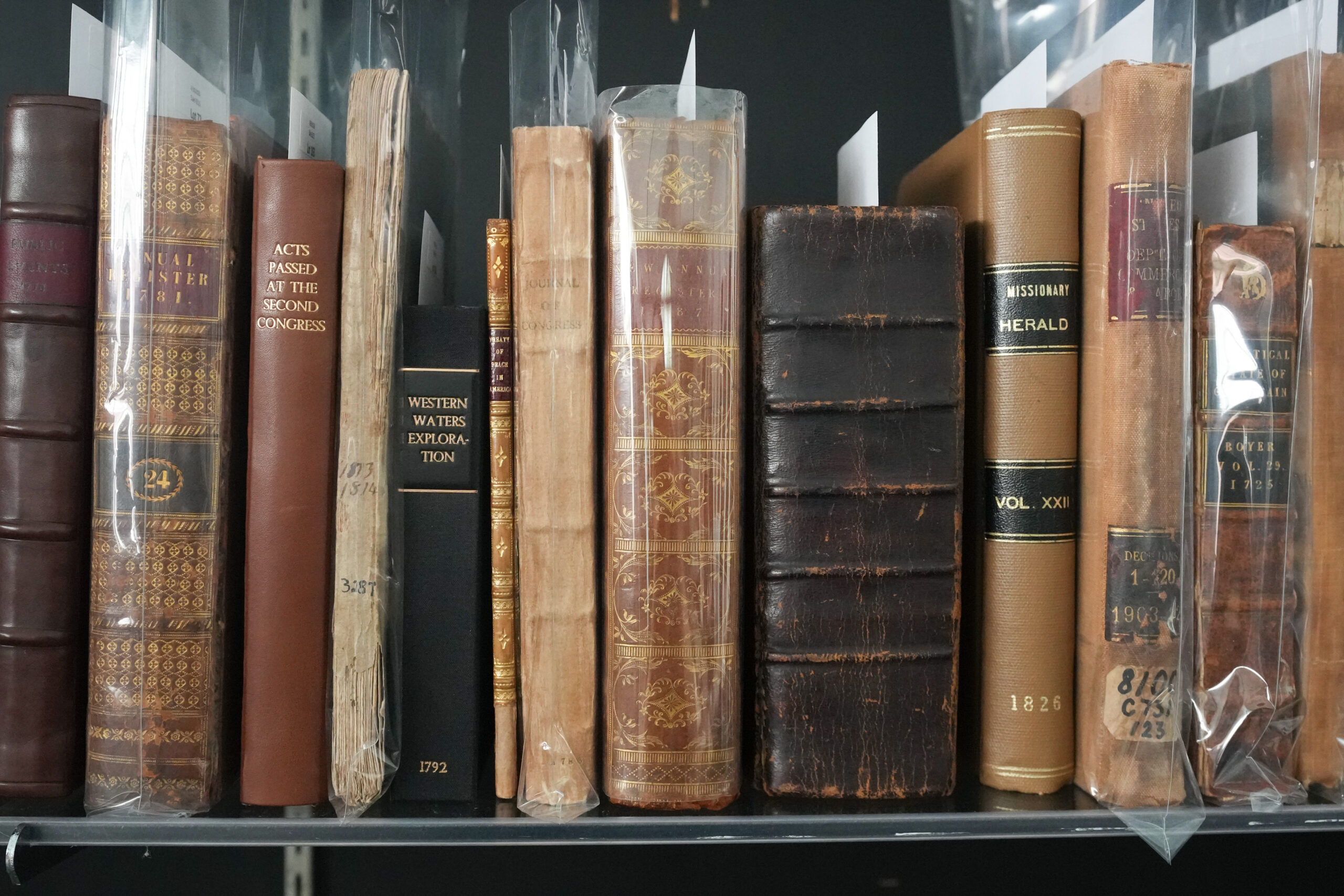
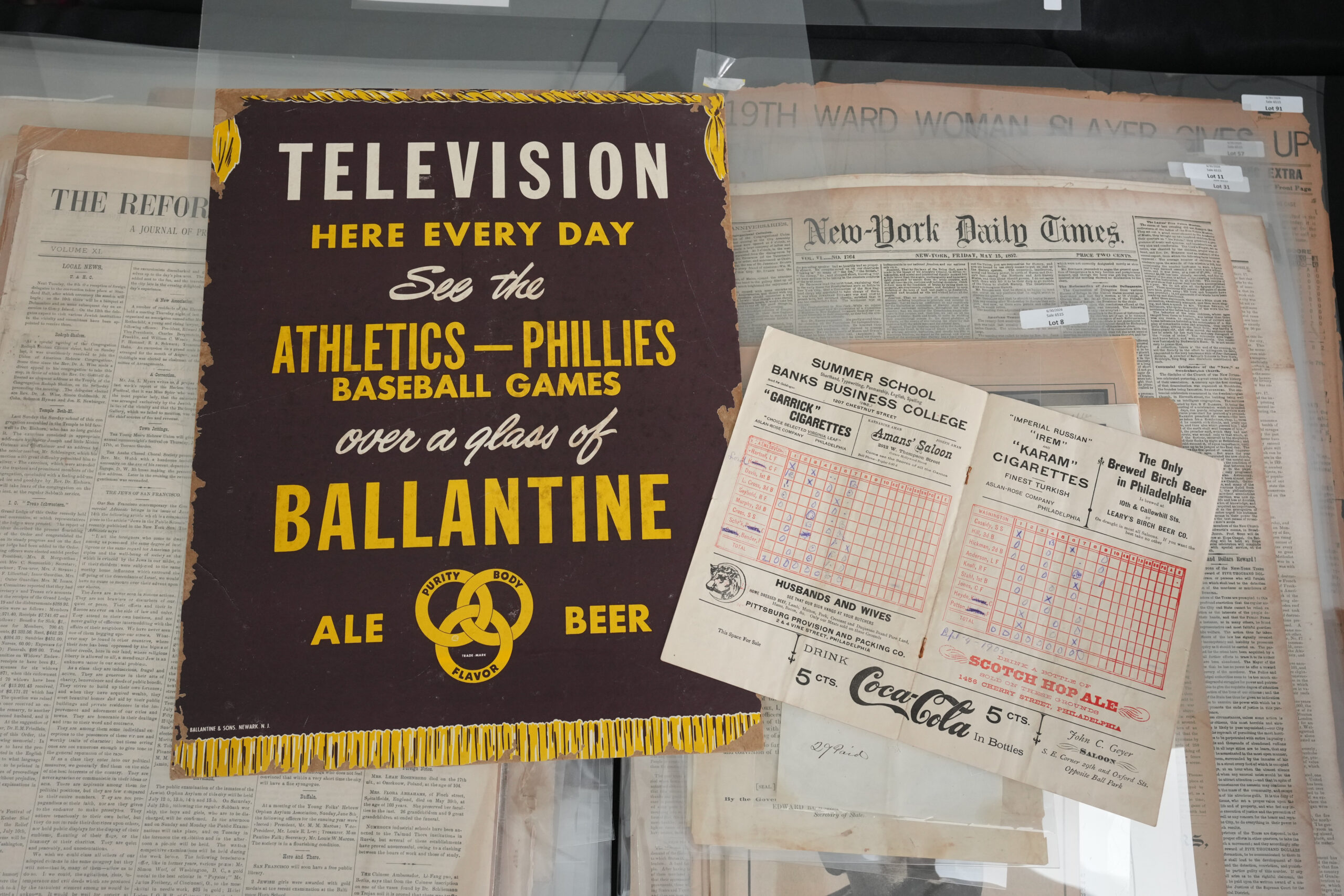
    Frederick Douglass’ Paper (front center) and other documents, part of the collection “How History Unfolds on Paper: Important Americana from the Eric C. Caren Collection,” which boasts more than 320 rare newspapers, books, pamphlets, and ephemera tracing the development of printing and publishing in America, an enterprise that started in Philadelphia in1690 with the first paper mill.

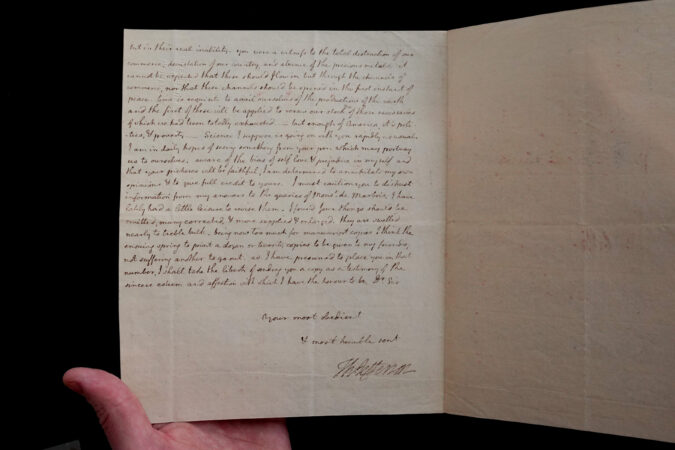
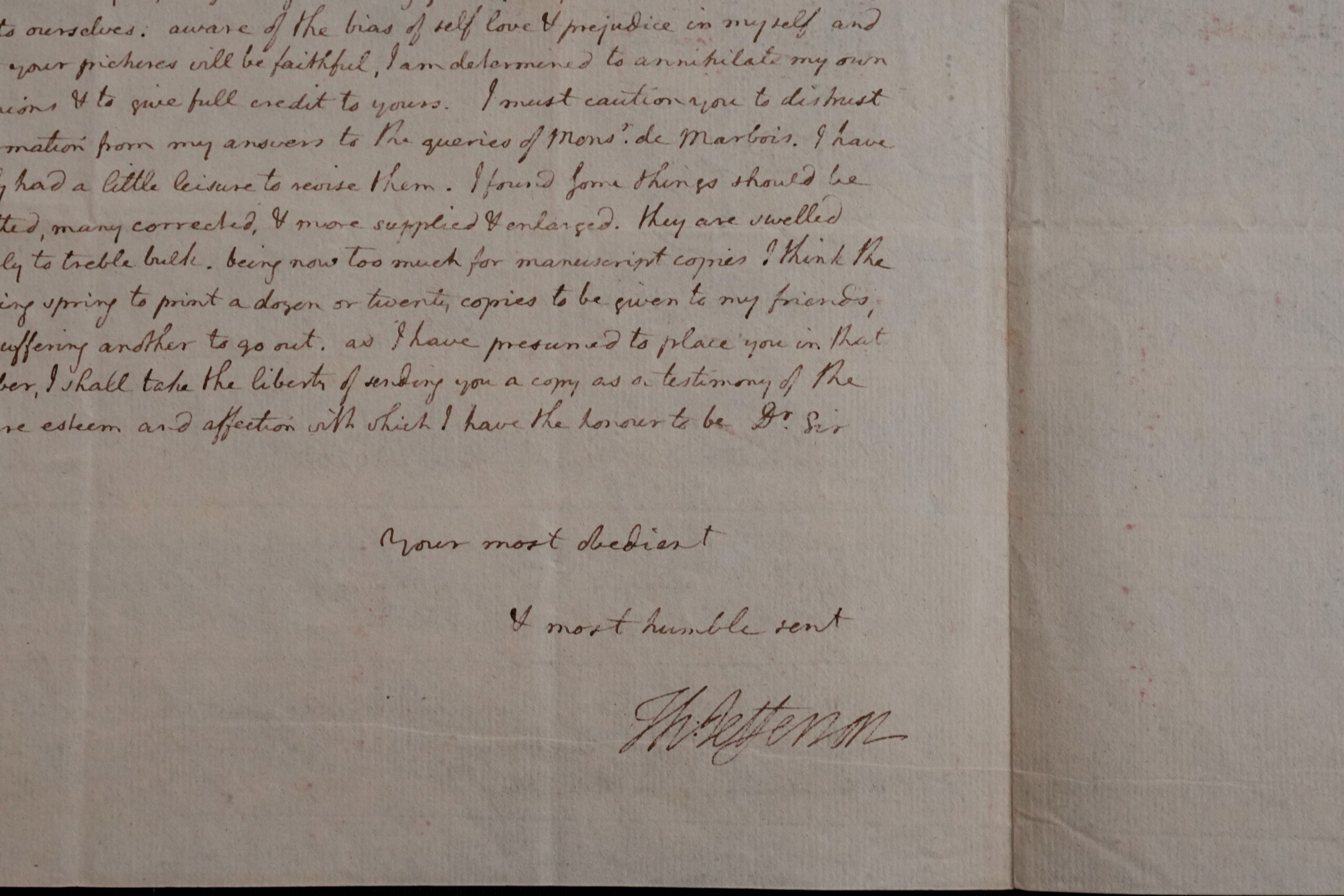
    Franks also carried a two-page letter written in Jefferson’s customary neat hand for Francois Jean de Beauvoir, Chevalier de Chastellux. It was a friendly message between the longtime acquaintances, in which Jefferson wrote to the French noble about how America was progressing as a sovereign nation and about his forthcoming book Notes on The State of Virginia.

    That letter sold for $108,000 Tuesday as part of an online and in-person auction presented by Philadelphia’s Freeman’s auction house.

    “How History Unfolds on Paper: Important Americana from the Eric C. Caren Collection, Part X” boasted more than 320 rare newspapers, books, pamphlets, and ephemera tracing the development of printing and publishing in America, an enterprise that started in Philadelphia in 1690 with the first paper mill.

    Books from the collection “How History Unfolds on Paper: Important Americana from the Eric C. Caren Collection,” which boasts more than 320 rare newspapers, books, pamphlets, and ephemera tracing the development of printing and publishing in America.

    “Caren goes where the history leads him. His collection reflects that,” said Darren Winston, Freeman’s senior vice president and head of the books and manuscripts department. “When he asked us to host a sale in honor of the 250th, we immediately said yes.”

    18th century news treasures

    The vast sepia-hued collection of aged newspapers and bound volumes was heaven sent for primary-source junkies who can afford to plop down a few hundred or several thousand dollars for the kinds of historical gems usually found only on microfilm. It’s also a gold mine for those who think hundred-year-old newspapers in near mint condition are frame-worthy.

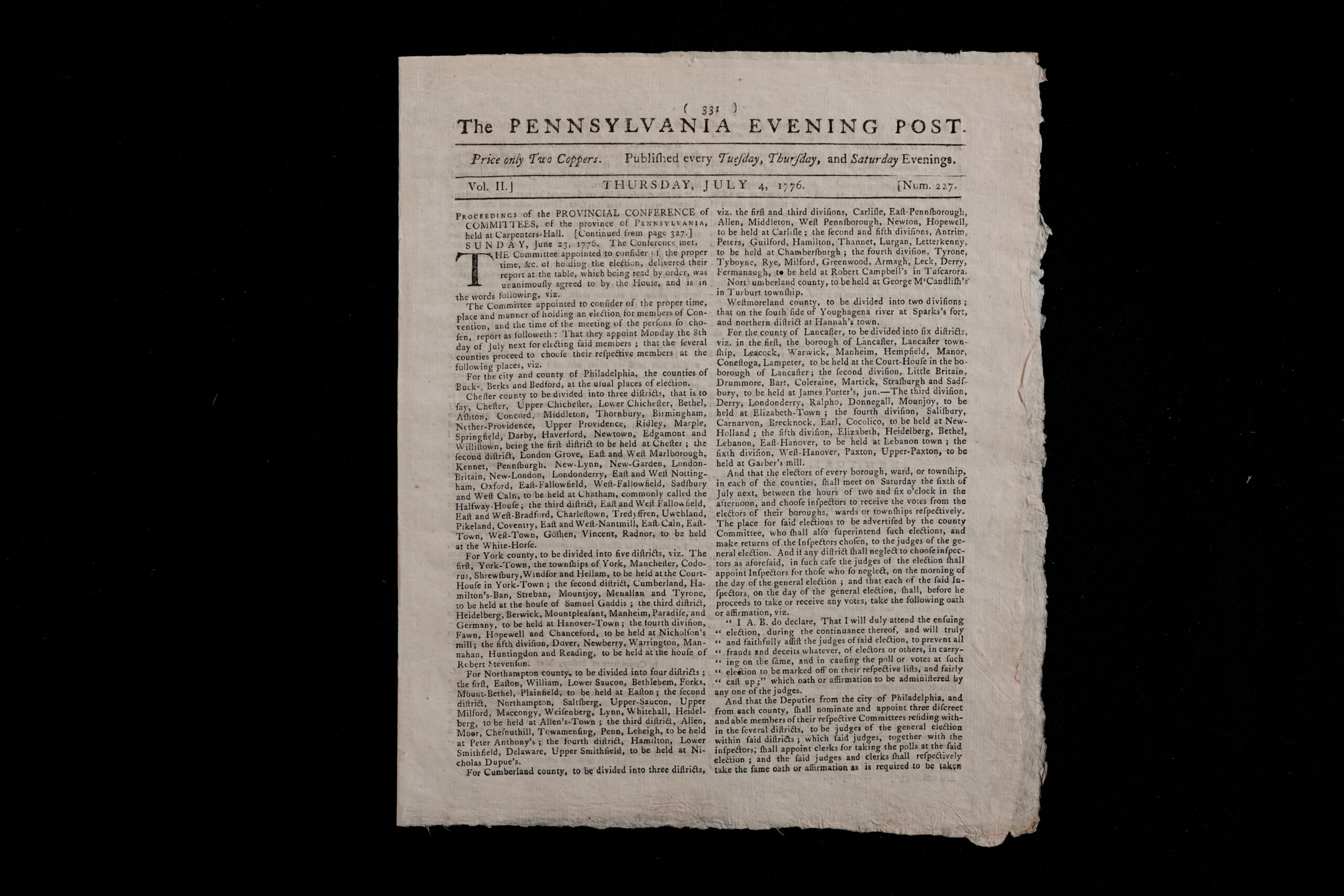
    One such memento was a four-page Pennsylvania Evening Post printed on July 4, 1776, believed to be the first daily newspaper printed on North American soil just declared free of the monarchy.

    A four-page Pennsylvania Evening Post printed on July 4, 1776, believed to be the first daily newspaper printed on North American soil just declared free of the monarchy.

    The Evening Post, founded by printer Benjamin Towne in 1775, was published just a few blocks from the Pennsylvania State House on Tuesday, Thursday, and Saturday evenings.

    The July 4 edition contains a short mention that the Continental Congress declared the United Colonies free and Independent States earlier in the day. And “the day before, we had a King in charge,” Winston said.“How History Unfolds on Paper” included five 18th century newspaper editions, including one printed in Scotland, that published the Declaration of Independence in full.

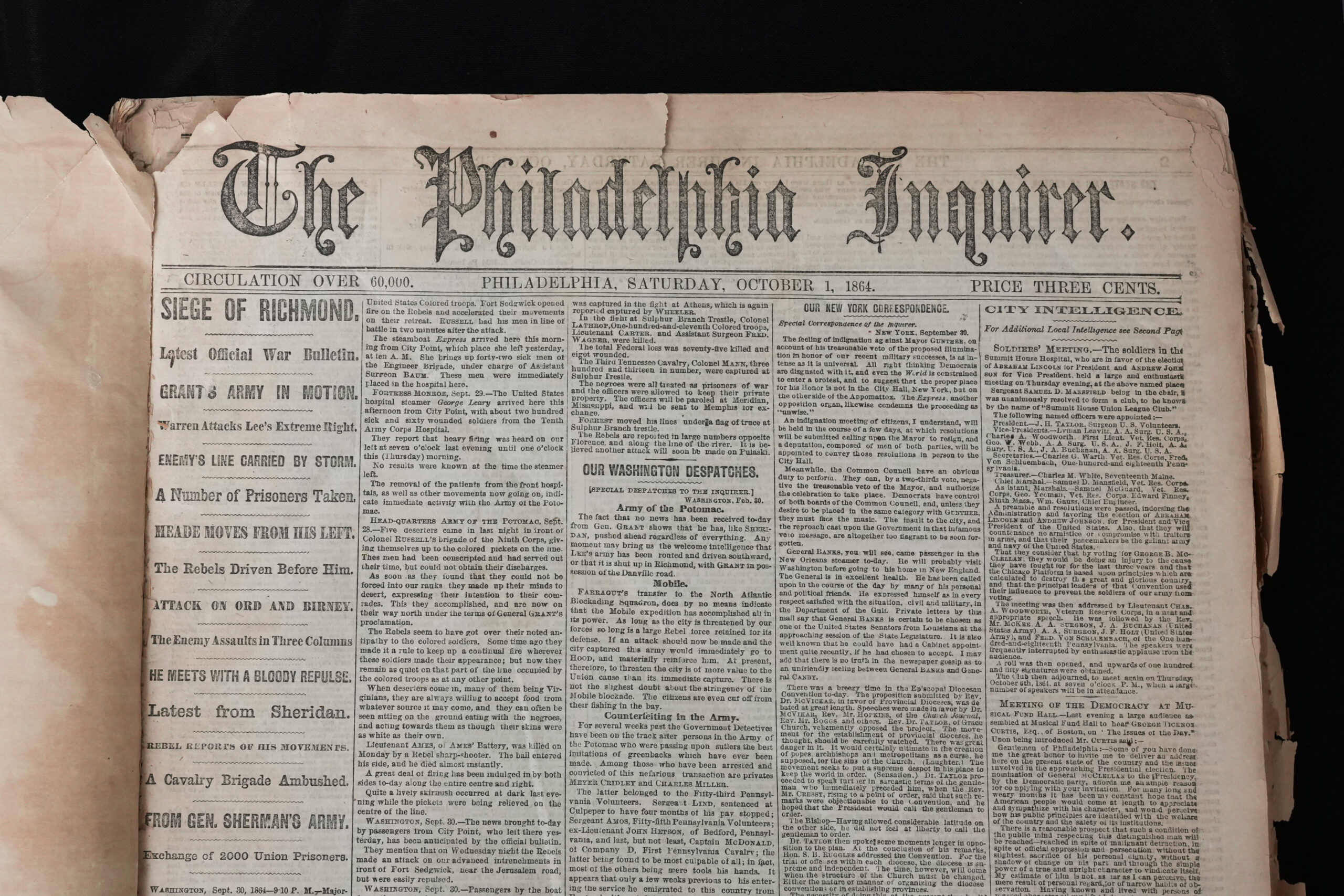
    Other archival gems included a copy of the Frederick Douglass Paper from 1860; copies of the Emancipation Proclamation as they appeared in the Daily Globe, the New York Tribune, the Evening Journal Almanac, and The Philadelphia Inquirer; Abraham Lincoln’s second inaugural address as printed in the New York Times in 1865; and more than 70 issues of Civil War-era Philadelphia Inquirers.

    A copy of the Philadelphia Inquirer, part of the collection “How History Unfolds on Paper: Important Americana from the Eric C. Caren Collection,” which boasts more than 320 rare newspapers, books, pamphlets, and ephemera tracing the development of printing and publishing in America, an enterprise that started in Philadelphia in 1690 with the first paper mill.

    But Caren’s collection is more than weathered newspapers.

    The auctioned collection bubbled with relics, collectibles, and keepsakes that speak to the economy, such as a note signed by first director of the U.S. Mint, David Rittenhouse — for whom Rittenhouse Square is named — ordering payment of 350 pounds to a doorkeeper employed at the Pennsylvania State House. (That’s about $107,000 in today’s money.)

    An 1874 advertisement for Levi Strauss & Co. that appeared in a Montana newspaper was among the cool finds, as was a 1905 Phillies Athletics score card. An 1869 letter signed by Susan B. Anthony and a 1772 volume of poetry including works from Phillis Wheatley are priceless, but their bidding started at $900 and $400 respectively.

    “Freeman’s is America’s oldest auction house, and Philadelphia is the birthplace of the United States,” Caren said. “So for the 250th anniversary [of America], I thought this sale would be quite fitting.”

    Some of the sports memorabilia featured in “How History Unfolds on Paper: Important Americana from the Eric C. Caren Collection”

    50 years of collecting

    Caren, 66, is a New Yorker and said he came out of his mother’s womb collecting — starting with comic books, stamps, coins, and baseball cards.

    In 1970, he learned that a few of his friends were going rummaging through an abandoned house in Rockland County and that they had found newspapers from the turn of the 20th century.

    “I asked them to try and find me a sports page with Babe Ruth, and they brought me one from 1913 and I was mesmerized,” Caren said.

    After some cajoling, Caren convinced his friends to reveal their secret treasure trove. There, he discovered periodicals going back to the 1890s and was hooked.

    Caren spent the next 50-plus years collecting the printed and written word. He has traveled the world to estate sales, garage sales, rare book shops, and antique shows. He’s one of the founders of the Ephemera Society of America and a member of the American Antiquarian Society and the Grolier Club.

    He owns hundreds of thousands of paper items, and pieces of his collection have been sold at the auction houses Christie’s and Sotheby’s. “How History Unfolds on Paper” was his 10th auction and first in Philadelphia.

    “If ever there was a Philadelphia item, this is it”

    In his travels, Caren has come across many of Jefferson’s letters. The one written to Chastellux, he says, is particularly noteworthy because Jefferson wrote it himself, as opposed to dictating it to a secretary, like Franks.

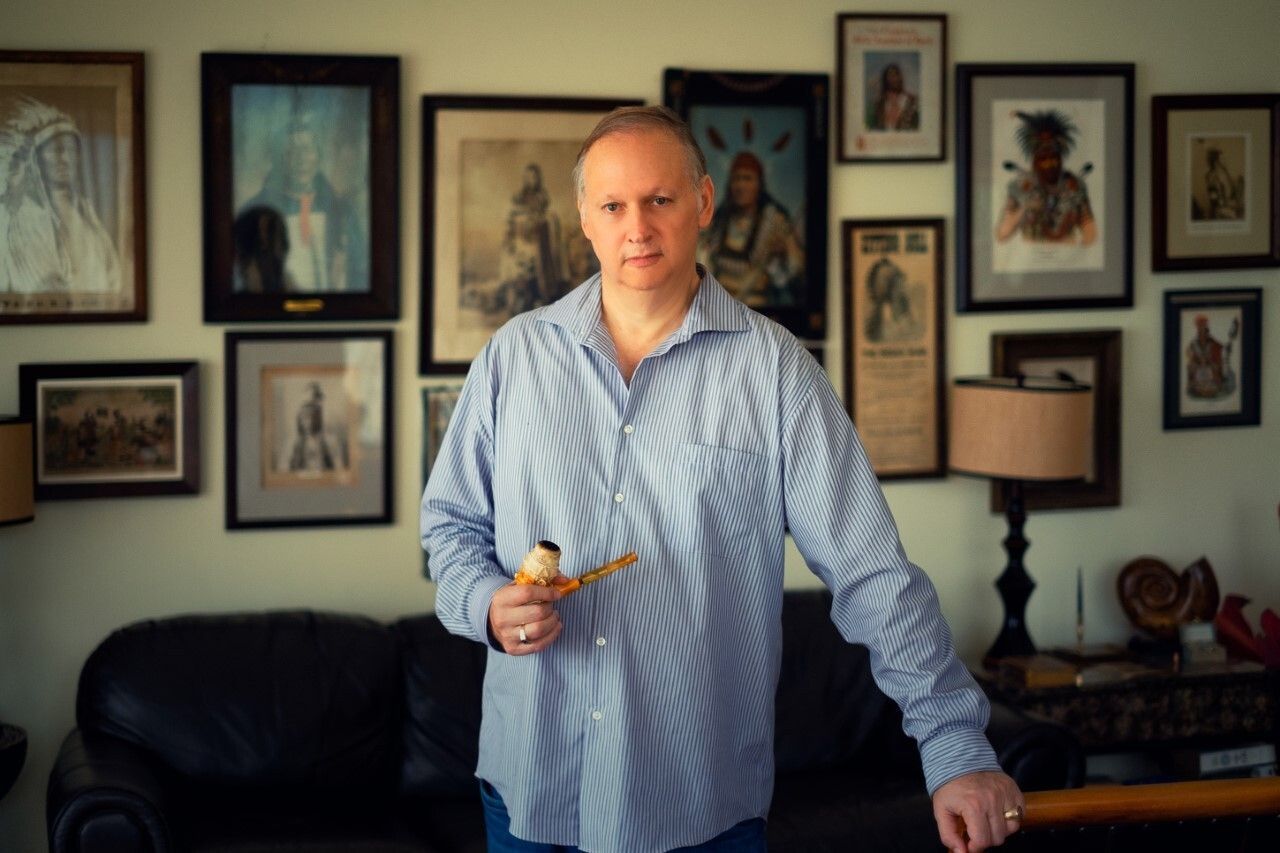
    Long-time ephemera collector Eric C. Caren, his collection “How History Unfolds on Paper: Important Americana from the Eric C. Caren Collection, Part X” went to auction at Freeman’s in Philadelphia.

    The letter had been in the Chastellux family for centuries before landing at an auction a few years ago. Caren passed it over a few times before recognizing Frank’s name in the first paragraph.

    “It was a great example of how even great things can slip by,” Caren said.

    The Treaty of Paris was signed in September 1783. The following January, legislators ratified it in Annapolis.

    Dated Jan. 16, 1784, Jefferson’s letter reads like a chatty blog of late 18th century American happenings. In the five months since the war’s end, news traveled to Europe that Americans were behaving badly. One of the reasons Jefferson penned this missive, Caren said, was to “dispel [this] fake news.”

    “There was indeed some dissatisfaction in the army at not being paid off before they were disbanded and a very trifling mutiny of 200 souldiers in Philadelphia,” Jefferson wrote, playing down the Pennsylvania Mutiny of 1783, during which a few Continental Army soldiers rioted in Philadelphia streets when they weren’t paid.

    Thomas Jefferson’s signature on a letter to Francois Jean de Beauvoir, Chevalier de Chastellux, a part of the auction at Freeman’s.

    He also mentions his yet-to-be published book Notes on The State of Virginia and encouraged Chastellux to write one of his own. He did.

    Voyages de M. le Marquis de Chastellux dans l’Amerique septentrionale, published at the turn of the 20th century, is what rare book dealer Wright Howes described as “the first trustworthy record of life in the United States.”

    Franks, the first Jewish American to serve in the early American diplomatic corps, did not fare as well as Jefferson or Chastellux. Lingering rumors from his association with Arnold continued to follow him, and in 1786, he was fired from the government.

    He spent years trying to restore his name. During his first term, President George Washington helped Franks secure a job as an assistant cashier at the Bank of the United States of America, but Franks was no longer accepted in the Founding Father’s circle.

    He died in 1793 during Philadelphia’s yellow fever epidemic.

    “If ever there was a Philadelphia item, this is it,” Caren said. “This letter is the intersection between the history of Philadelphia and the history of our nation.”

    The headline and article have been updated to include the winning bid at the auction on Tuesday morning.

  • No plans to reschedule Kirk Franklin’s canceled concert, Wawa officials say

    No plans to reschedule Kirk Franklin’s canceled concert, Wawa officials say

    Before gospel singer Kirk Franklin could take the stage at Sunday’s “Gospel on Independence” concert, the show was canceled due to severe weather.

    The concert, scheduled for 7 p.m. at Independence Mall, was initially postponed because of lightning and thunder detected in the area.

    Wawa Welcome America officials, who organized the concert, said there were plans to restart the show, but it was ultimately canceled due to inclement weather.

    There are currently no plans to reschedule Franklin’s show.

    Franklin, however, found a way to greet fans as he briefly stood on top of an SUV as the crowd exited Independence Mall.

    A downpour started shortly after his departure.

    In a video posted on his Instagram page, Franklin explained his intention to put on an “incredible concert.” “I was really excited about it,” he said in a video with the caption, “I need the weather to repent! LOL! 😂❤️🙏🏽.”

    “People were really disappointed,” he wrote. “But I need you to know that I’m more disappointed because I was really, really, really ready to go. I love Philadelphia. I’ll get back, man. I can’t let Philly down like that.”

    Fans stood for hours awaiting Franklin’s arrival.

    “My feet still hurting from standing out there waiting,” one fan commented under Franklin’s Instagram post.

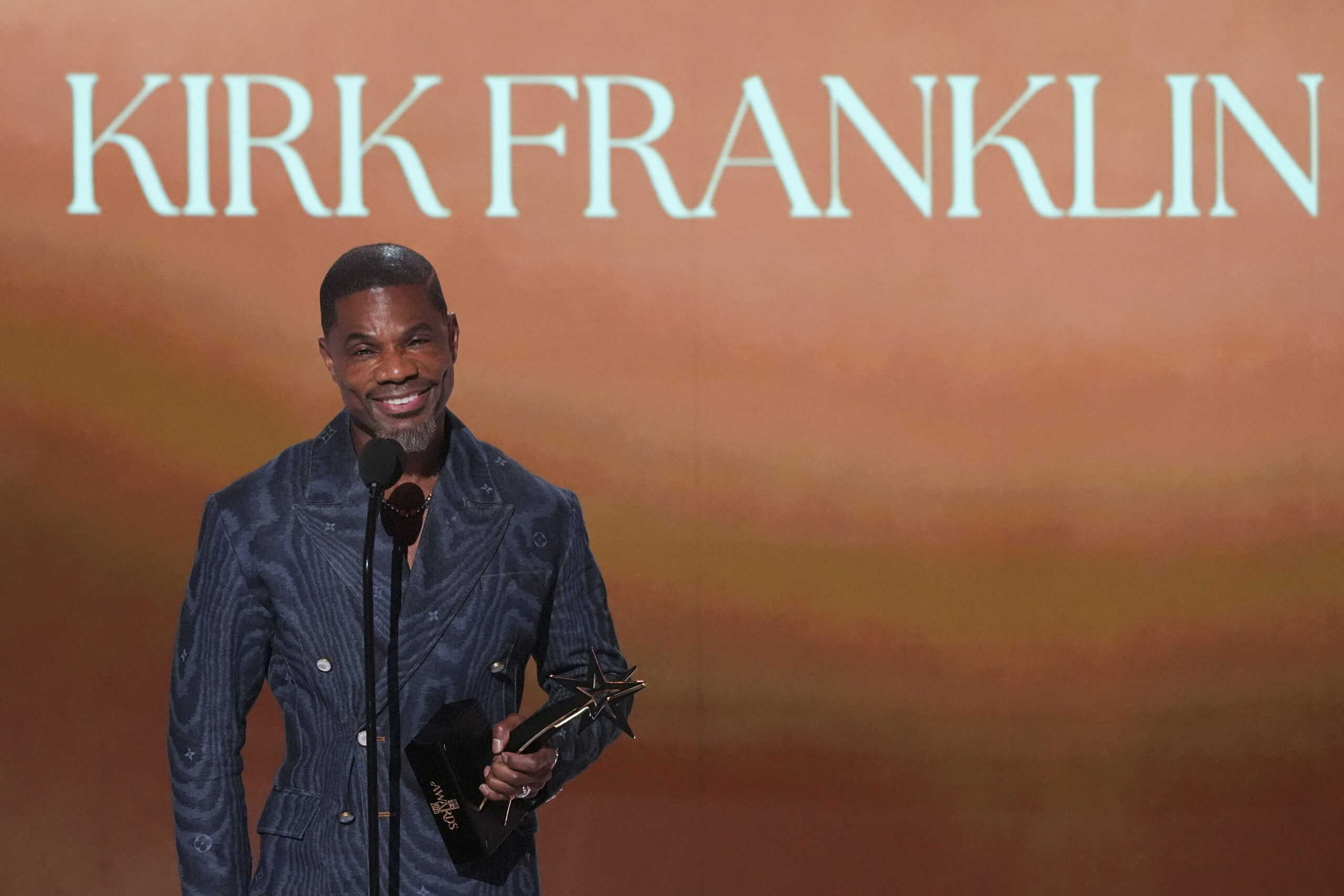
    Kirk Franklin accepts the ultimate icon award during the BET Awards in 2025, at the Peacock Theater in Los Angeles. (AP Photo/Chris Pizzello)

    Not all of Franklin’s interactions with fans on Sunday were as jovial.

    In a now-viral social media video, Franklin is seen arguing with an attendee, who urged the singer to “repent” for his sins. Otherwise, he and his wife, Tammy Franklin, are “going to go to hell,” the attendee threatened.

    Franklin attempted to confront the unidentified man but was held back by several security guards.

    The man was eventually escorted out of the venue by law enforcement officers.

    Before the show’s cancelation, fans enjoyed the opening performances and food vendors at Sunday’s event at the Independence Mall, which was part of this week’s lineup of Wawa Welcome America Festival events and concerts.

    The celebration of the nation’s 250th birthday will continue with Tuesday’s Philadelphia Orchestra’s Pride concert, Thursday’s “Salute to Service” concert, and Friday’s Pops on Independence concert.

    On July 4, the free “One Philly: Unity Concert for America” will take place on the Benjamin Franklin Parkway. Featuring Christina Aguilera, Jill Scott, The Roots, and others, that show is not part of Wawa Welcome America but counts Wawa among its sponsors.

    For more information, visit july4thphilly.com.

  • Joe Frazier statue moves to the base of the Philadelphia Museum of Art

    Joe Frazier statue moves to the base of the Philadelphia Museum of Art

    “Smokin’” Joe Frazier is finally in his new home, just in time for the 250th birthday of the United States.

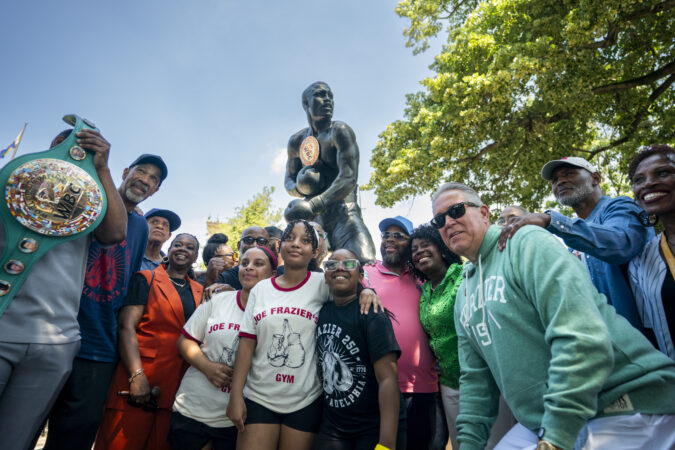
    City officials, alongside Frazier’s family, friends, and fans, on Monday unveiled the real-life heavyweight boxing champion’s statue at the base of the Philadelphia Museum of Art. Intended to be the statue’s new location in perpetuity, the spot was occupied by a monument to fictional boxer Rocky Balboa for two decades.

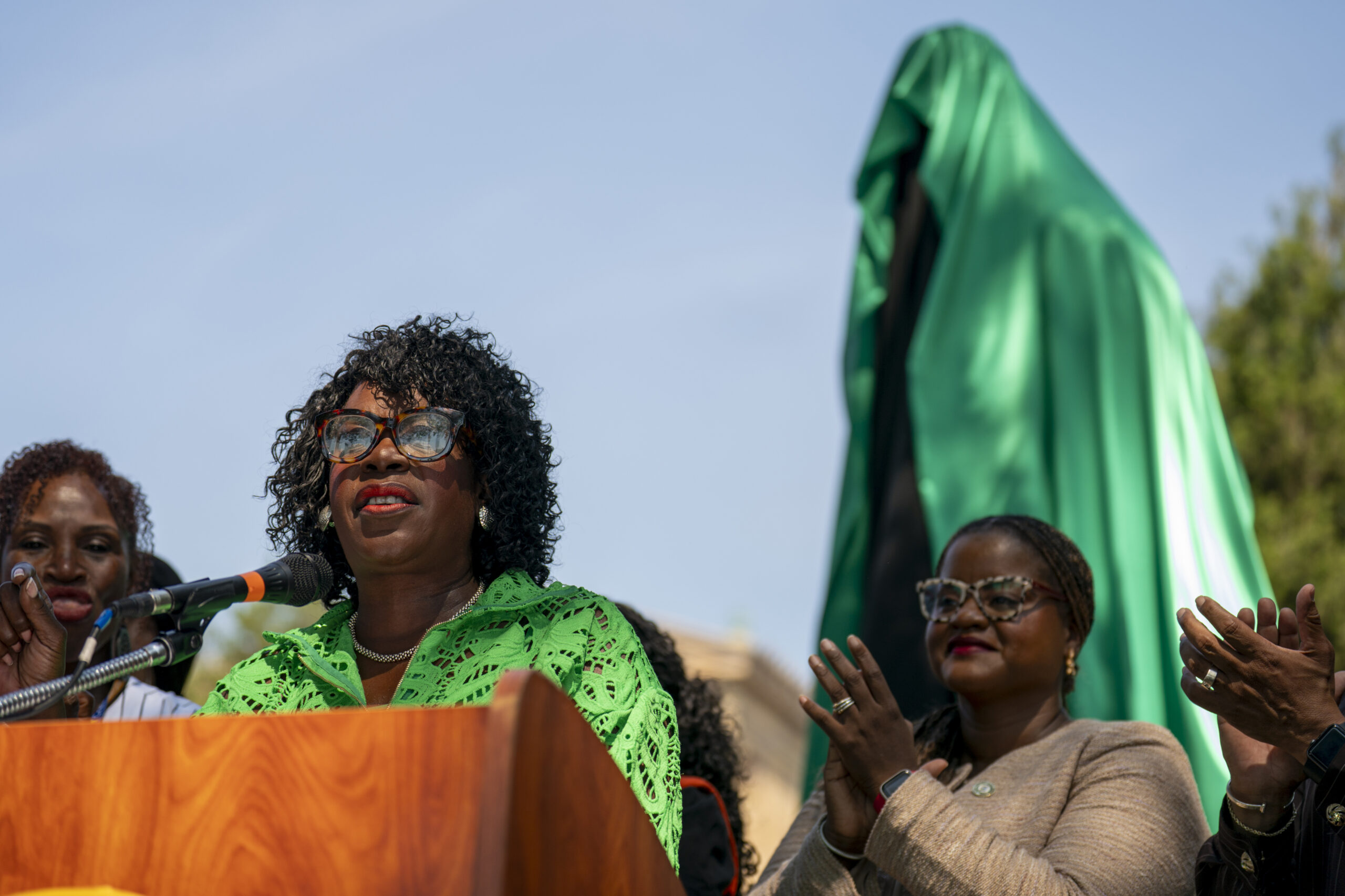
    “During this 250th celebration in the birthplace of democracy, we will forever remember that the city got right what it had gotten wrong for a long, long time,” Mayor Cherelle L. Parker said. “Now, Joe Frazier is attached, and connected to, and will permanently be here at our Philadelphia Museum of Art.”

    Monday’s unveiling was the culmination of months of planning. The Philadelphia Art commission in February approved a plan to move the statue from by Creative Philadelphia, the city’s office for the creative sector. Chief cultural officer Valerie V. Gay said Monday’s event was something of a “soft launch” for the statue’s new home, as a granite base will be installed in the future, along with more formal interpretive panels.

    Mayor Cherelle L. Parker speaks at the unveiling of the statue of former heavyweight boxing champion Joe Frazier at its new home outside the Art Museum.

    “Today, we did not want to wait,” Gay said.

    Frazier’s statue, after all, lived at the South Philadelphia sports complex for more than 10 years. Created by sculptor Stephen Layne, the statue was unveiled outside what is now Stateside Live! in 2015, four years after Frazier’s death in 2011 following a battle with liver cancer. Frazier, the undisputed heavyweight champion in 1970-1973, is probably best remembered for his three battles against Muhammad Ali in the 1970s.

    The city’s statue of Rocky had called the base of the Art Museum’s famed steps home since 2006. The monuments’ moves are part of a larger shuffling of statues at the Art Museum that began in March, when the Rocky statue was moved inside the museum for the first time as part of the ongoing exhibition Rising Up: Rocky and the Making of Monuments.

    That Rocky statue will be installed at the top of the Art Museum steps in the fall, when the statue of the Italian Stallion currently there will be returned to actor Sylvester Stallone’s private collection. Stallone, Parker said, was supportive of the Frazier statue’s new location.

    Dozens of the boxer’s supporters attended on Monday, including Philadelphia boxer Bernard Hopkins who held world championships in two weight classes, promoter Joe Hand Jr., and Frazier’s daughter Jacqueline Frazier-Lyde. Frazier-Lyde, a retired boxer and current Municipal Court judge, said the the color of the shroud covering her father’s statue — green —was fitting.

    “My mother’s favorite color was green, because we’re from the South and we love green, because it represents life,” she said. “My father, Joe Frazier, liked it because it was the color of money.”
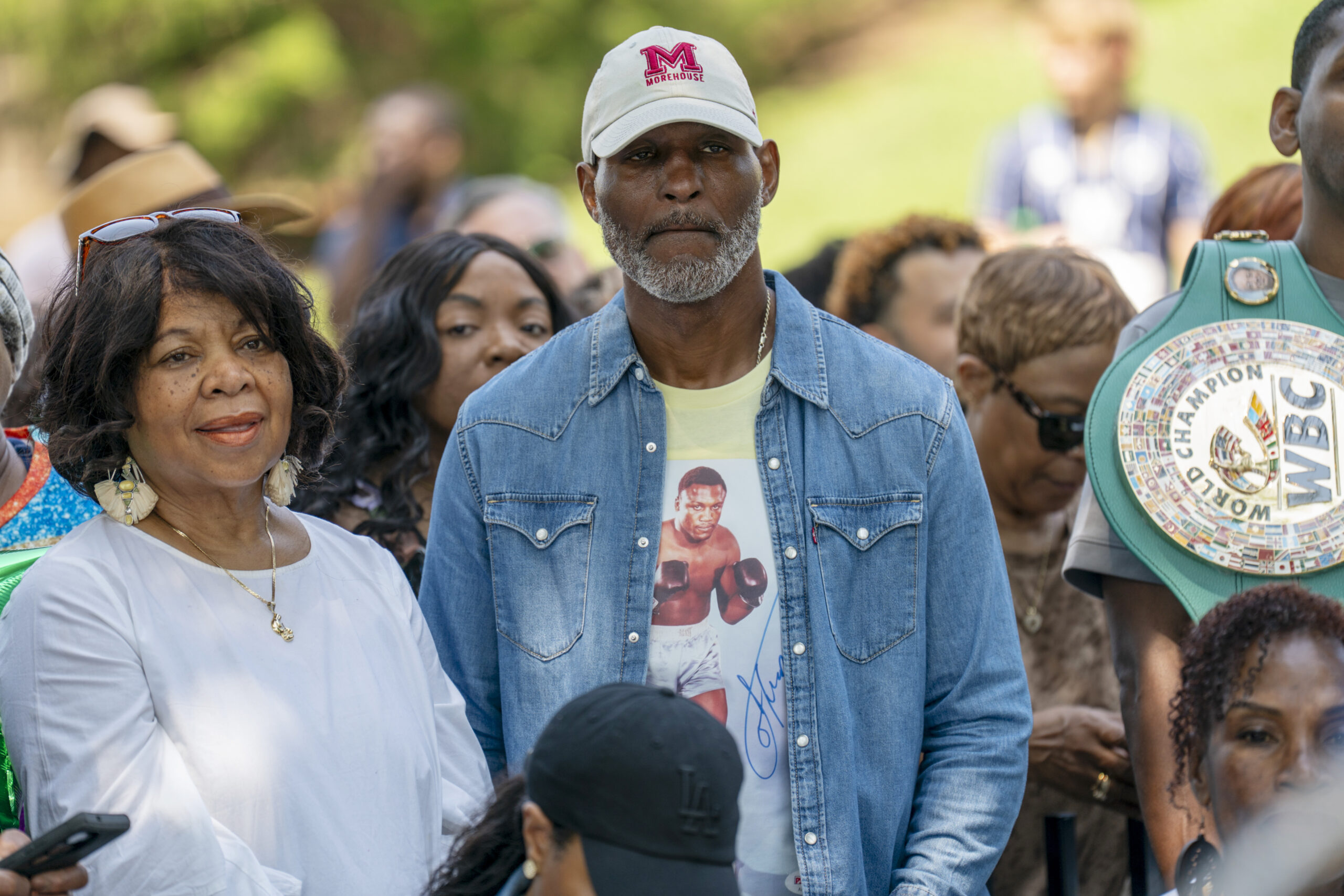
    Boxing legend Bernard Hopkins at the unveiling of the new home for the statue of heavyweight boxing champion Joe Frazier.

    To the end, the statue’s new location wasn’t the end of efforts in the boxer’s memory. Parker also announced plans for a capital campaign to restore the former Joe Frazier’s Gym on Broad Street above Glenwood Avenue in North Philadelphia. Now a discount furniture store, the building is a legendary location in Philadelphia boxing history, having served as a training location for not just Frazier but other famed fighters and community members.

    Parker said plans were underway to establish a way to accept donations for that effort via the Philadelphia City Fund. The amount of funds targeted be raised was not immediately clear.

    “It’s important to show the world who we are,” Gay said. “Joe Frazier was a humble underdog whose determination and grit inspires us all. What could be more [a] more Philadelphia story than that?”