Oh, Mary!, the wacky and irreverent Tony Award-winning play about first lady Mary Todd Lincoln, will stop in Philadelphia on its first national tour next spring, and tickets go on sale this week.
Following a record-breaking box office Broadway run, the Philadelphia premiere of Oh, Mary! will be one of the buzziest theater tickets of the season. Its brief run at the Miller Theater from March 9 to 14 will likely sell fast given the show’s massive popularity.
Written by actor/comedian Cole Escola, the play focuses on the Lincolns in the weeks leading up to the assassination of President Abraham Lincoln (here called “Mary’s husband”). The dark, campy comedy first featured Escola in the role of Mary — which led them to win the 2025 Tony Award for best leading actor in a play — and has since hosted special guest stars like Maya Rudolph, Tituss Burgess, Jinkx Monsoon, and Jane Krakowski. The show also won the Tony for best direction of a play, and was named a Pulitzer Prize finalist.
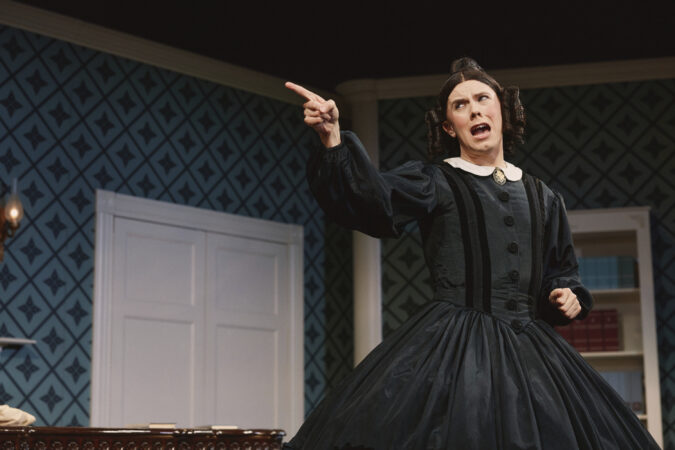
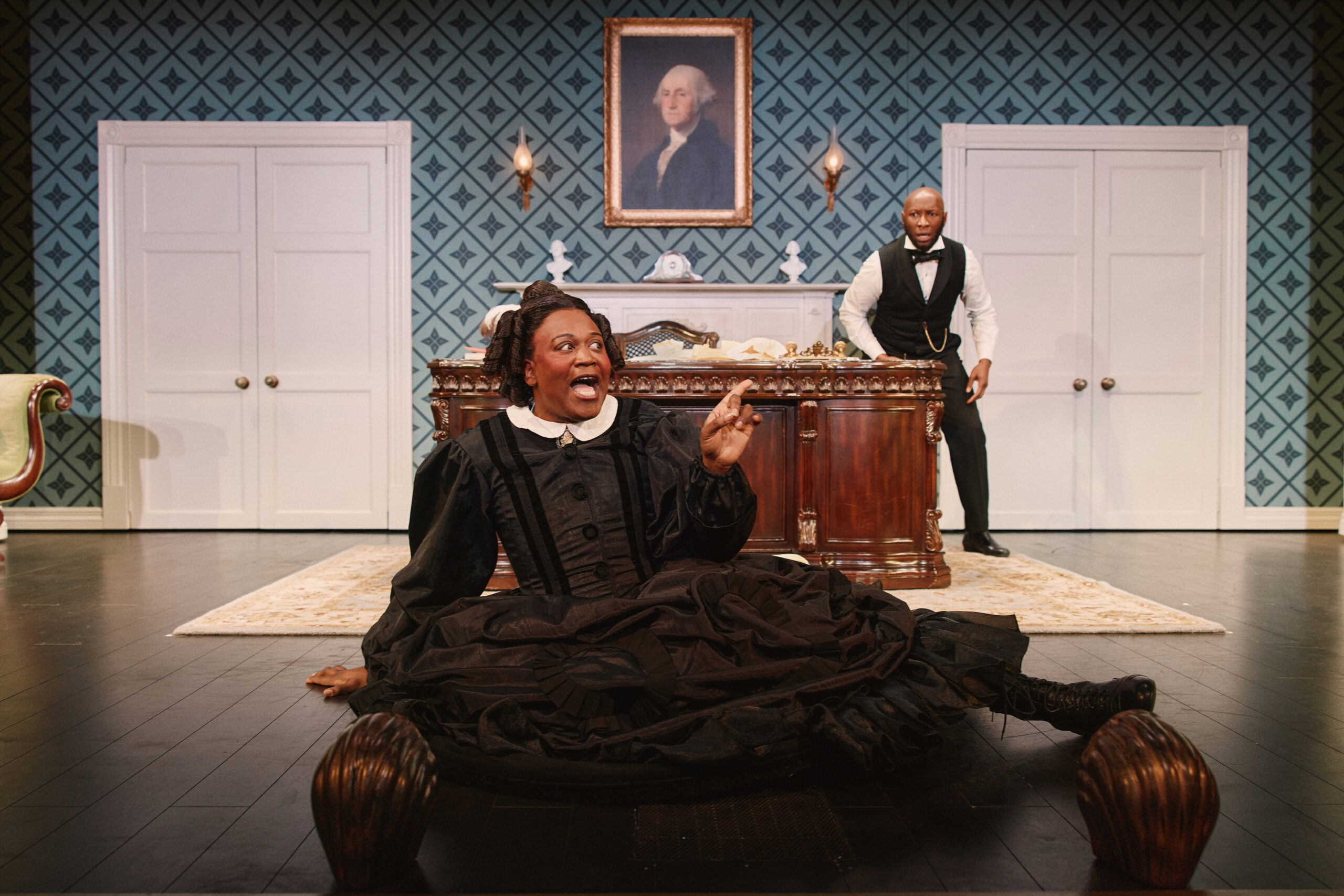
Tituss Burgess and Phillip James Brannon in “Oh, Mary!” on Broadway. The Tony Award-winning comedy about Mary Todd Lincoln runs March 9 to 14, 2027, at the Miller Theater.
“Oh, Mary! is exactly the kind of bold, inventive Broadway sensation that we want to bring to Philadelphia,” said Frances Egler, Ensemble Arts Philly’s vice president of theatrical programming and presentations, in a statement. “The play is both razor-sharp and delightfully idiotic, an absurdist, whip-smart comedy … And given Mary Todd Lincoln’s well-documented fondness for shopping in Philadelphia, it feels only right that she finally gets top billing here.”
Casting for the tour has not been announced yet. Presale tickets are available for Ensemble Arts Philly members; tickets go on sale to the general public at 10 a.m. on Friday, June 26.
“Oh, Mary!”, March 9-14, 2027, Miller Theater, 250 S. Broad St., 215-893-1999 or www.ensembleartsphilly.org.
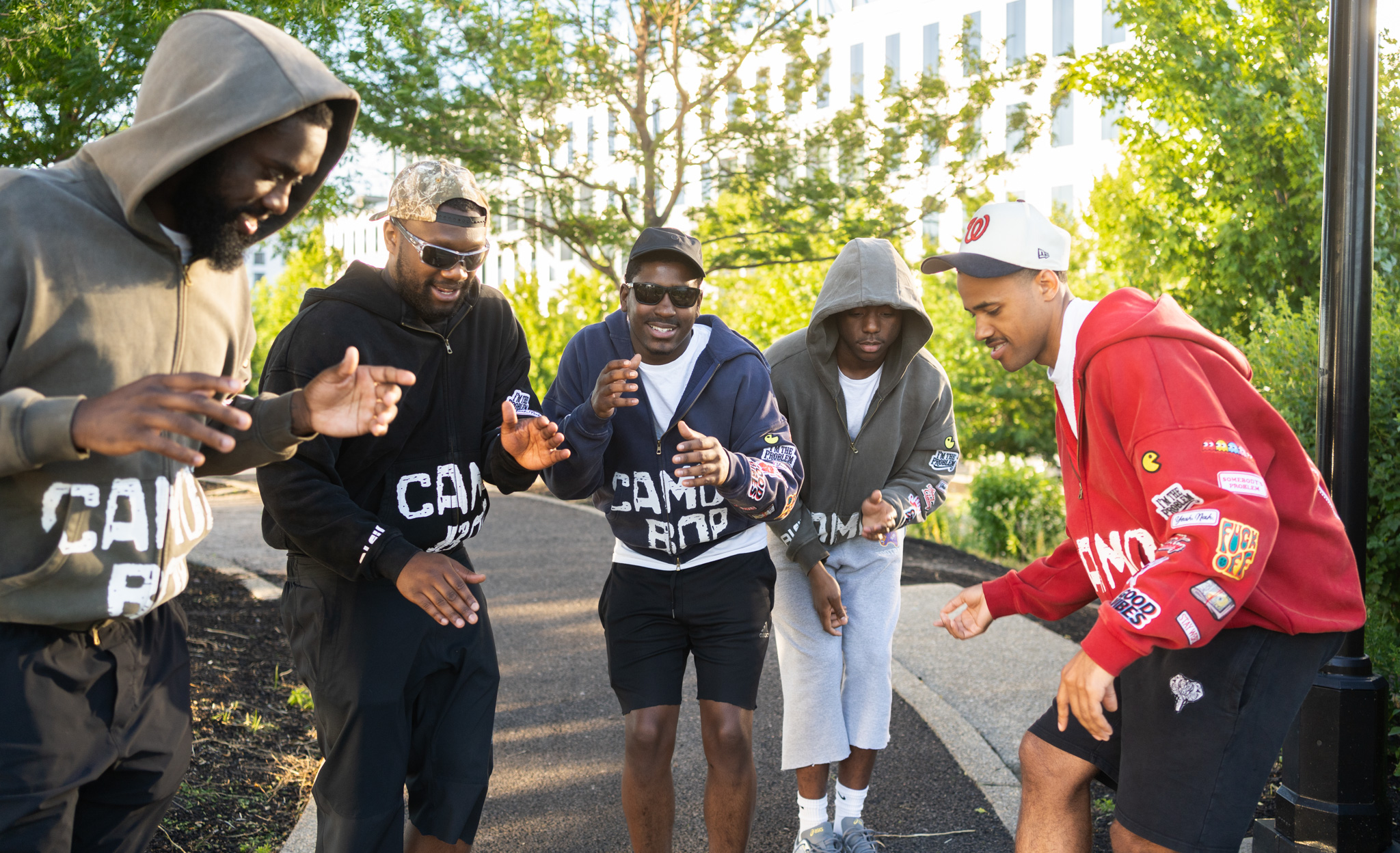
Last week, just outside the Camden Waterfront walkway, stood a group of five men, ages 18 to 25. They were all decked out in embroidered hoodies with the words “Camden Bop” stitched on the front.
They were quiet at first before the sight of a camera and sound of an up-tempo beat grabbed their attention.They smiled and their motionless bodies kicked into action.
They shifted their hips from side to side, while their arms and heels bounced to the song’s drum kicks and chopped vocal sample. They added leg extensions and shifty pivots into the mix, creating a synchronized dance that flowed like water.
The words stitched across their hoodies took on new meaning.
This is the Camden bop. Viral TikTok videos and Instagram clips of the group, known as the Camden Bop Originators, have turned the move into a social media sensation.
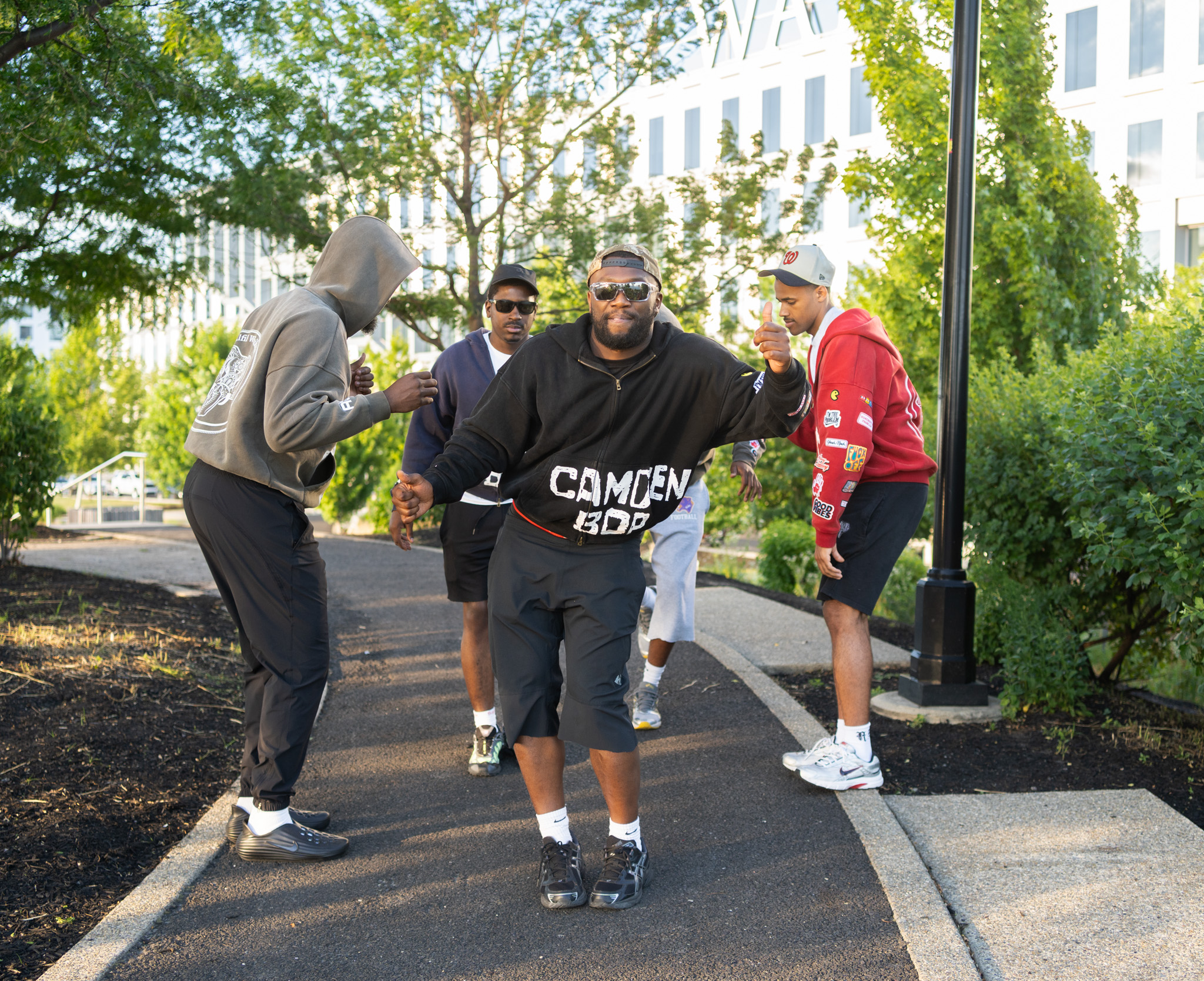
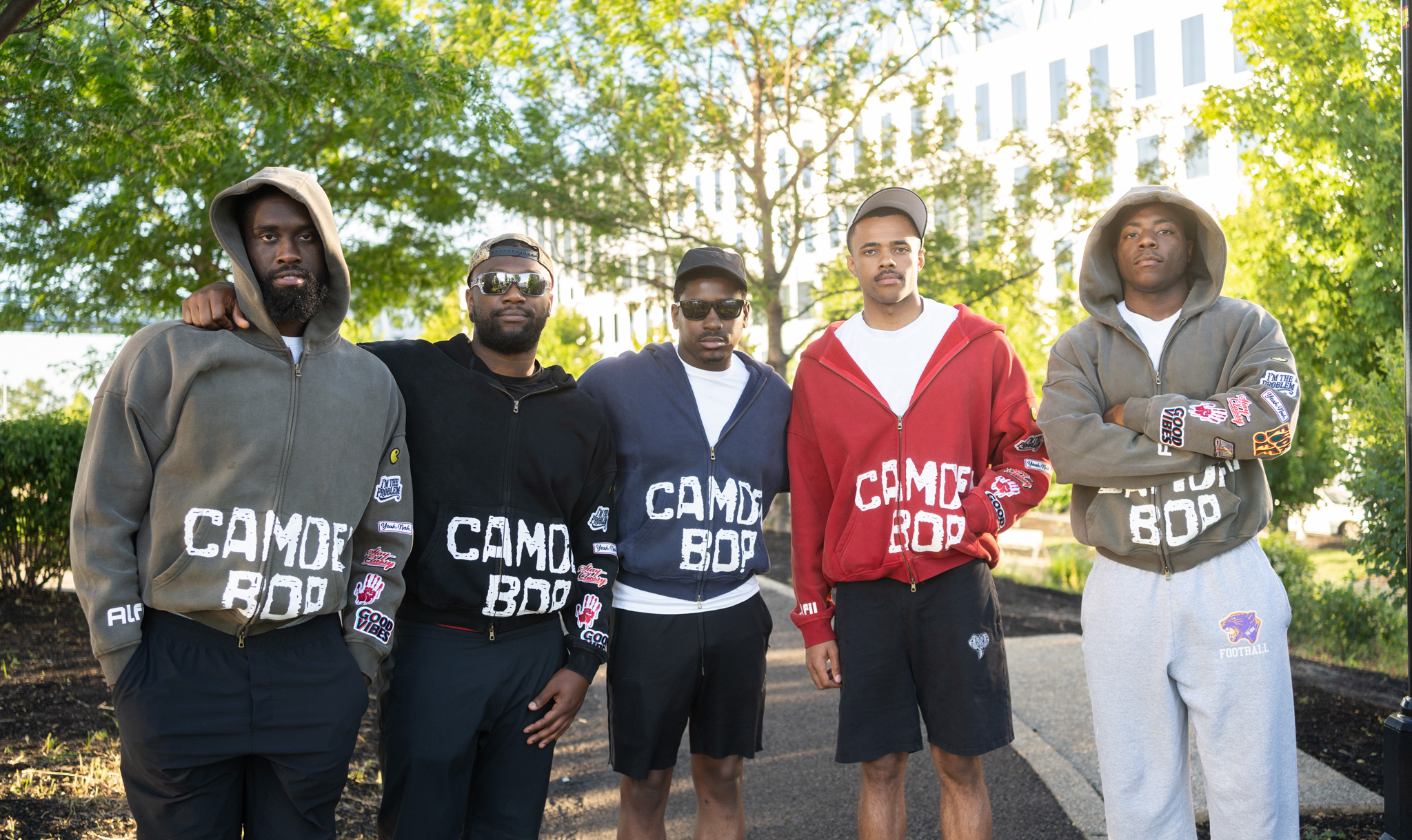
Ethan Tarte, pictured at the center of the image, is the man behind the now-viral dance, the “Camden bop.”
The crew comprises Camden natives Ethan Tarte, Myles Thompson, Nafi Muhammad, Rodney Barge Jr., and Haleem Muhammad.
At 16, Tarte unintentionally created the Camden bop by trying to imagine what it would be like to circle the rink at Camden’s Millennium Skate World. Before he had skates, he practiced his moves barefoot in front of his mirror.
What emerged became the foundation of the Camden bop.
The influence of Jersey Club dances is present in the heel-toe slides, leg extensions, and quick pivots they add to the Camden bop over up-tempo club remixes of popular rap and R&B songs like Ryan Leslie’s “Addiction” and R. Kelly’s “Freaky in the Club.”
“We grew up Jersey Club dancing … back when dancing was allowed,” Tarte, now 25, joked, “so it definitely comes from that.”
‘We’re more than what everybody thinks we are’
When the dance didn’t yet have a name, Tarte flirted with the idea of calling it the E Boogie Bop, after a nickname he had earned for his quick moves on the basketball court at Camden High School. But he opted for the name of his hometown, hoping the dance would change people’s perception of a city that was once among the nation’s poorest and most dangerous.
“I hear how people talk about Camden, and people are genuinely afraid sometimes to come through here,” Tarte said. “I was excited it was the Camden bop, so that everyone knew that there was something good that came out of Camden. We’re more than what everybody thinks we are.”
Not long after, Tarte started posting Snapchat videos of him doing the dance with his friends Thompson, Barge, and Nafi Muhammad. Haleem Muhammad, 18, joined later. Some of their peers called them corny at first, but the bop eventually caught on with others at Camden High.
“It really started from us having fun, and wanting to be us,” Tarte said. “People used to make fun of us, but it really comes from the love [of dancing].”
The same people who called the dance corny are now tripping over their feet to learn it, said Tyray Green, who graduated from Camden High with Tarte.
“People are insecure with themselves,” he said. “The whole time, they could have minded their business.”
“I feel like they’re doing it worldwide now,” Green said.
A fan in 2Rare
The dance shared among high schoolers has now drawn the attention of artists, athletes, and content creators from around the country.
Among them is North Philly rapper 2Rare, best known for his viral TikTok songs and dance videos, who featured the Originators in the video for his single, “Camden Bop,” after seeing the group’s TikTok videos.
2Rare, born Naseem Young, reached out to the Originators so he could put a face and name to the dance that was taking over people’s social media feeds.
“I know how quickly people can steal a wave, and nobody will ever know who the dance was from, who started this or started that,” he said. “I’ve had it happen to me. People have stolen my dances and ran off with it, so reaching out to them was a big deal.”
He first considered shooting the video in Philly, but thanks to advice from Gillie Da King, he recognized the significance of bringing the production to the birthplace of the dance.
“I had to make it happen,” 2Rare said. “I want to really shed light on them, and Gillie said, ‘They will never forget about you for doing something like that,’ and he was absolutely right.”
For Green, the recognition proves what he’s always known: Camden has more than just athletic talent. For him, it’s a city with both grit and style, deserving of its own recognition.
“We get overlooked a lot,” he said. “To see [2Rare] who has eyes on him, stick their arms out to give our city notoriety is big.”
‘There’s love all over the map’
In April, the dancers joined 2Rare outside of Camden High School to film the music video, now sitting at 2.8 million YouTube views since its May 7 premiere.
“It’s humbling,” Tarte said. “This all happened for a reason. It all fell into our lap.”
Earlier this month, their performance on a New York-based music radio show, On The Radar, with 2Rare shined a brighter light on the movement. The viral clips from that performance have reached more than 3 millions views on Instagram, with hundreds of commenters lauding their performance and the homage to their hometown.
“Keep [putting] on for the city @camdenboppers 🙌🏾🕺🏾,” one user commented.
Even Chance the Rapper followed the group’s Instagram page, and top streamer Tylil dropped a comment, giving 2Rare and the crew props for their performance.
Nafi Muhammad, 23, who started bopping as a junior at Camden High, said the reactions have been “overwhelming.”
“My nephew watched it on his tablet like a thousand times,” he said. “It’s been a lot of love.”
For years, Muhammad wondered where the group would be if they dedicated more time to promoting the dance back in high school. Now, with the millions of viewers they have reached, little is left to the imagination.
They are living it.
“If TikTok was jumping like it is now back in high school, we would have the dance in another stratosphere,” Muhammad said. “But we kept saying it, and then it happened.”
The “Camden bop,” originated by dancer Ethan Tarte, has become a viral sensation. Tarte’s group, the Camden Bop Originators, includes members Myles Thompson, Rodney Barge Jr., Haleem Muhammad, and Nafi Muhammad.
“There’s love all over the map, and it’s definitely only the beginning,” Tarte said.
The group has met criticism too, with online comments often ranging from “wild dance” to “horrible song.”
The criticism isn’t new territory for Tarte. “People used to call me weird in high school, and now I hear I’m too old to do the dance,” he said.
None of that has ever stopped him.
The “Camden bop,” originated by South Jersey-born dancers Myles Thompson, Ethan Tarte, Rodney Barge Jr., Nafi Muhammad, and Haleem Muhammad, has become a viral sensation.
“Camden is a small city, but we’re making big noise right now, and we’re trying to keep that going,” Barge said, adding that he’s grateful for the collaboration with 2Rare.
The love is not one-sided. 2Rare said the collaboration has elevated his career, too.
“They are part of the reason I’m hot right now, so I could never not acknowledge them,” the rapper said. “If it wasn’t for the dance, it would have still been difficult. I had a quiet moment, but I had to pop out and show out. That was a big jawn.”
The rapper is already planning for a remix of “Camden Bop,” and wants to bring the Originatorsto Atlanta for Streamer University, a multiday workshop for growing and aspiring content creators.
As for the Originators, they want to continue spreading the joy that dancing has afforded them, and encourage others to absorb it as well.
Gen Xers watched dial-up phones shrink to pocket size, typewriters turn into touch screens, and appointment TV give way to streaming binges.
But Bicentennial babies are a special group of Xers. Born in 1976, they are celebrating a milestone birthday this year right along with the country. As America turns 250, they are turning 50. And on the cusp of the Semiquincentennial, Philadelphia’s Bicentennial babies are feeling reflective.
1976 was just three years after Roe v. Wade, the landmark Supreme Court ruling giving a woman the constitutional right to end a pregnancy. It came 11 years after the Voting Rights Act of 1965 made it illegal to try to stop Black Americans from voting, and 12 years after the Civil Rights Act of 1964 ended legal segregation.
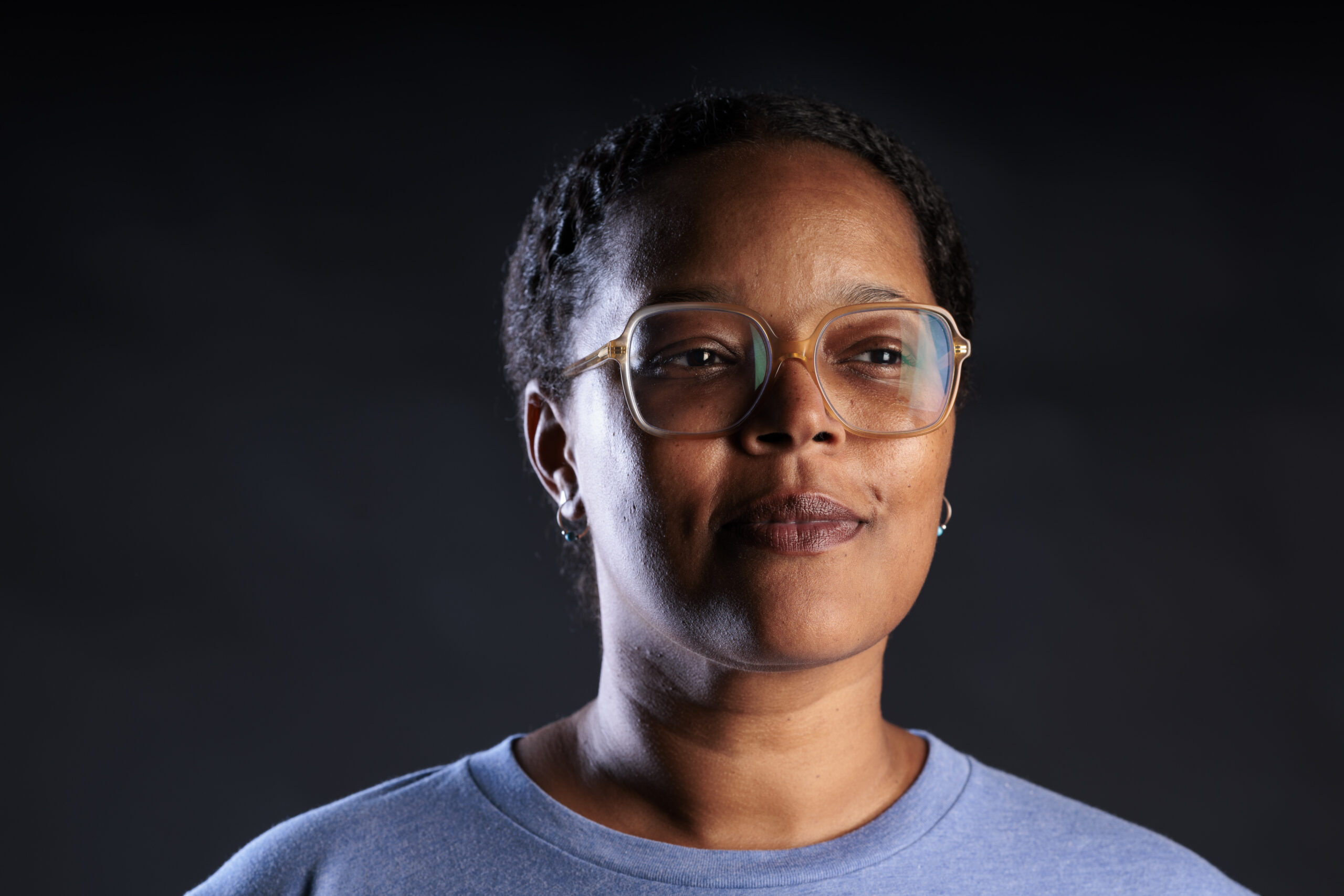
Yolanda Wisher, producer of the “Bicentennial Baby” podcast, photographed in the Philadelphia Inquirer studio on May 28.
These changes to the American landscape gave Bicentennial babies a level of personal freedom and agency when they were coming of age during the turn of the 21st century that their parents and grandparents did not have. But in the last decade, they’ve seen the Supreme Court reverse Roeand weaken civil rights laws to the point that Bicentennial babies’ babies now don’t have the same privileges their parents did.
“I felt like this opportunity was the best way to study this major moment in American history from a personal angle and revisit what it means to be a Bicentennial baby from a Philadelphia perspective,” Wisher said.
Each of the 10- to 15-minute Bicentennial Baby episodes bubbles with late ’80s and early ’90s nostalgia from the cassette tape centered in the podcast’s logo, to the funky theme music lending to its WDASQuiet Stormvibe, to references to banana clips and acid-washed jeans.
At its core, however, Bicentennial Baby is unapologetically Philly.
Today’s 50-year-olds were in the first grade when Thriller was released, but they also remember 1982 as the year Constance Clayton became the first Black person to serve as the superintendent of Philadelphia public schools. They watched the Flyers on PRISM and music videos on MTV.
Earlier this year, Wisher put a call out on social media asking Philadelphians turning 50 in 2026 to join her in conversation about their unique perspective as they enter middle age.
“I was interested in finding the diversity of the Bicentennial babies’ experience,” Wisher said. “What does it mean to be a 50-year-old born and raised here? Or to be that person, who wasn’t born here, fell in love with the city, and decided to make it home?”
A dozen applied. Wisher chose six.
They are Laurie Allen, a librarian who lives in South Philly; Maleka Fruean, a community journalist who lives in Germantown and is a mom of four; Kenny Guy,who lives in Mount Airy and is a father of six; Michiko Hunt, a development associate at Greene Street Friends School, who lives in Germantown, and is a mom of two; and Stewart Varner, a manager of the University of Pennsylvania’s Digital Humanities Lab who lives in West Philly.
Naila Mattison was selected to participate in the “Bicentennial Baby” podcast. Mattison died in late February, shortly after the podcast was taped.
Naila Mattison, a poet, artist, and mom from West Philly, was the guest on the podcast’s first episode, which aired in late May. She died in February of cancer.
“She came to us with such a sense of urgency,” Wisher said. “She wanted to share her story. I’m so glad we made space for her.”
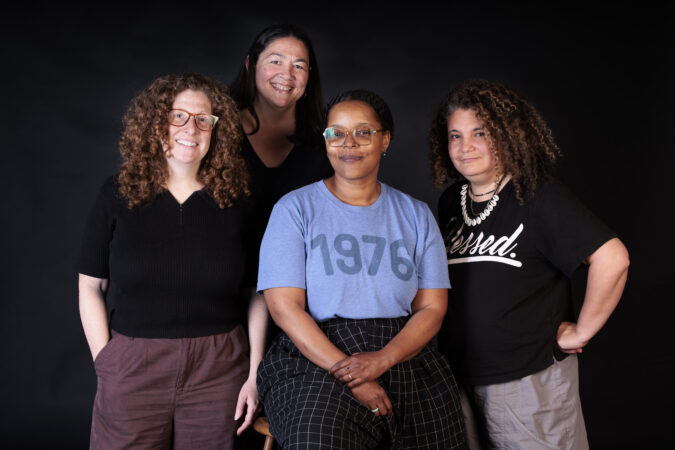
The Inquirer invited the Bicentennial babies to our studios earlier this month for a photo shoot. Allen, Fruean, Hunt, and Wisher — in her blazing blue 1976 T-shirt — came in and shared how being born during the Bicentennial impacted their outlook, is shaping their present, and is setting them up to be cool elders.
The interviews have been edited for clarity.
On Gen X culture
Michiko: In Philly, I was always conscious of being a part of this microgeneration because there were literally less of us. In the 1980s, all the entertainment we watched was focused on our parents, L.A. Law, Hill Street Blues, even The Cosby Show. My parents bought Thriller and Bruce Springsteen. But then when I was in my 20s, everything was teen-focused. I mean, Britney Spears? I was too old for that. There were all these kids who were born in 1982 who loved her. And I just missed it.
Michiko Hunt photographed in the Philadelphia Inquirer studio on May 28. Hunt is featured in the “Bicentennial Baby” podcast, produced by Yolanda Wisher.
On technology
Michiko: I went to my father’s office at 19th and Cherry Streets and typed my college applications on his electric typewriter. It was fancy. You could delete mistakes with correction tape.
Yolanda: My grandmother had a rotary phone. We had a push button phone. I had a pager.
Maleka: And right around our senior year in high school, that’s when cell phones started to come in.
Yolanda: And they were huge, like theNew Jack City phone … They were crazy expensive like video recorders. Like, if you had one of those …
Michiko: You were rich!
On fashion
Michiko: It’s true: What’s old is new again. What we called flare, my mother calls bell-bottom, and my daughter calls wide-legged. We had a distinct style though. Fashion bubbled up from specific subcultures like goth or hip-hop. Now everything comes from the internet. It’s really flattened style.
Maleka: And analog is a style now. Analog, as in not digital. It’s a fashion category. Like what people carry in their analog basket is a thing: a pencil and a notebook? That’s just what I put in my backpack.
Maleka Fruean photographed in the Philadelphia Inquirer studio on May 28. Fruean is featured in the “Bicentennial Baby” podcast, produced by Yolanda Wisher.
On music
Michiko: Our music was the best. I still have ticket stubs when I went to see the Roots. We all listened to hip-hop but we also listened to other kinds of music, too.
Yolanda: Tears for Fears!
Maleka: The Eurythmics!
Michiko: MTV!
Laurie: I remember when the radio was the only thing that mattered. Then we went to tapes, then to CDS, MP3s streaming. Each time I was like, I’m not going to do it. Yet every time I made the switch. Every. Single. Time. But I think it’s going full-circle. I miss playing guilty pleasure music without a digital trail of what I listened to.
On working
Yolanda: I watched my mom work hard everyday. When she retired from her job at Merck, all she got was a watch. That said something to me. I watched my mom struggle as a single mom, work her way up, put my siblings and I through college. That job was in the background of our lives our whole life.
Maleka: My children understand [better than I do]. They are not going to break their backs for a pittance. I’ve worked so hard my whole life. Still, I have no idea what my retirement is going to look like.
On learning from elders and turning 50
Yolanda: Womenfolk in my grandmother’s generation were more matronly. My grandmother had a whole closet full of church hats. She kept her house a certain kind of way. She had a routine. She was very straitlaced, at least in public. She had a secret life we didn’t ordinarily see.
Michiko: We have a blessing of choices. My dad’s mom was Japanese American. She was born in California, a first generation immigrant. She was a teenager during the Depression. Her family worked in a packaged frozen food factory. Today she would have been an artist. She made all of our Cabbage Patch Dolls and all of those beautiful doilies. She had the soul of an artist.
Maleka: We have access to so much more information. And because of that we have wonder.
Laurie Allen photographed in the Philadelphia Inquirer studio on May 28. Allen is featured in the “Bicentennial Baby” podcast, produced by Yolanda Wisher.
On becoming an elder
Laurie: My body does not look like it does when I was 20, 30, or even 40. And I assumed when I got this age I would want to go back in time. But I don’t. Instead, I’m grateful for the wisdom for knowing who I am. I don’t want to go back to those uncertain times. I may have looked better, but I felt worse.
On being American
Maleka: When I was growing up, I had mixed feelings because I saw so many vulnerable people who needed to be protected. I didn’t have the language to define institutionalized or systemic racism. Now that I do, I want America to do better. But I’m still proud to be an American.
Yolanda: The Semiquincentennial isn’t a one-sided story, but one that celebrates the complicated history of America. The racial, cultural, and social point of view of the people who are running isn’t the only perspective. We should be able to hold all of these voices at the same time and move forward.
“Bicentennial Baby“ is available on Apple, Spotify, and Amazon Music.
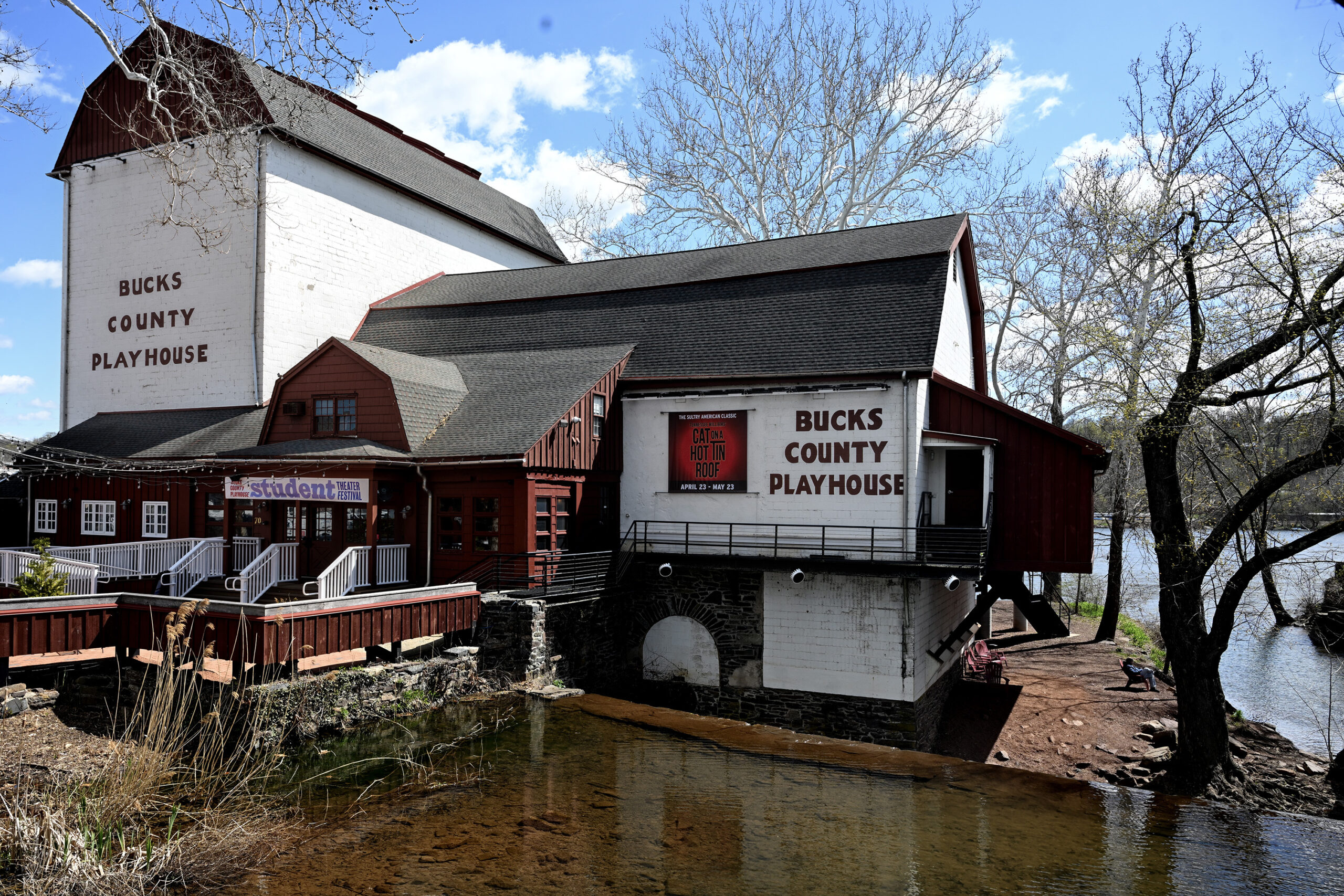
Before the opening of every new production at Bucks County Playhouse, producing director Alexander Fraser scans the audience and walks to the front of the stage to deliver a speech.
In his 12 years with the Playhouse, he has talked about preparation, execution, and the magic of seeing all these things coalesce. He’s thanked all the people involved in the production and the rows of theatergoers who’ve made it worth the grind.
When he arrived in New Hope over a decade ago, Fraser was “terrified” of these speeches. Now he relishes the spotlight.
“I hated doing them in the beginning, but now I’ve turned into Joan Rivers,” he joked.
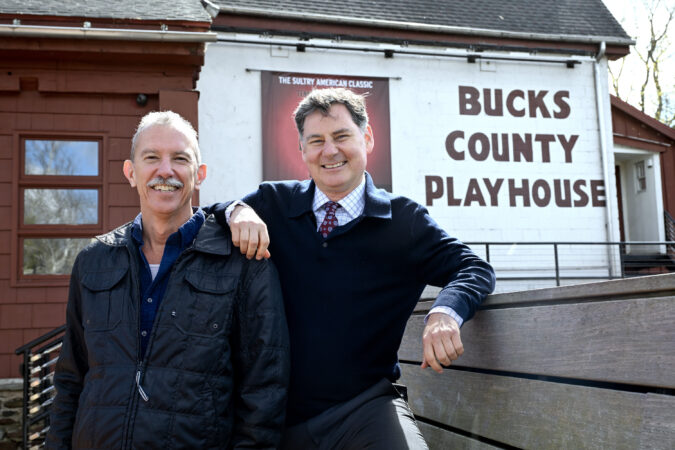
Saturday’s opening of the 1949 musical South Pacific, however, won’t have him do his usual spiel. The opening of the Rodgers and Hammerstein classic is his last as the Playhouse’s producing director.
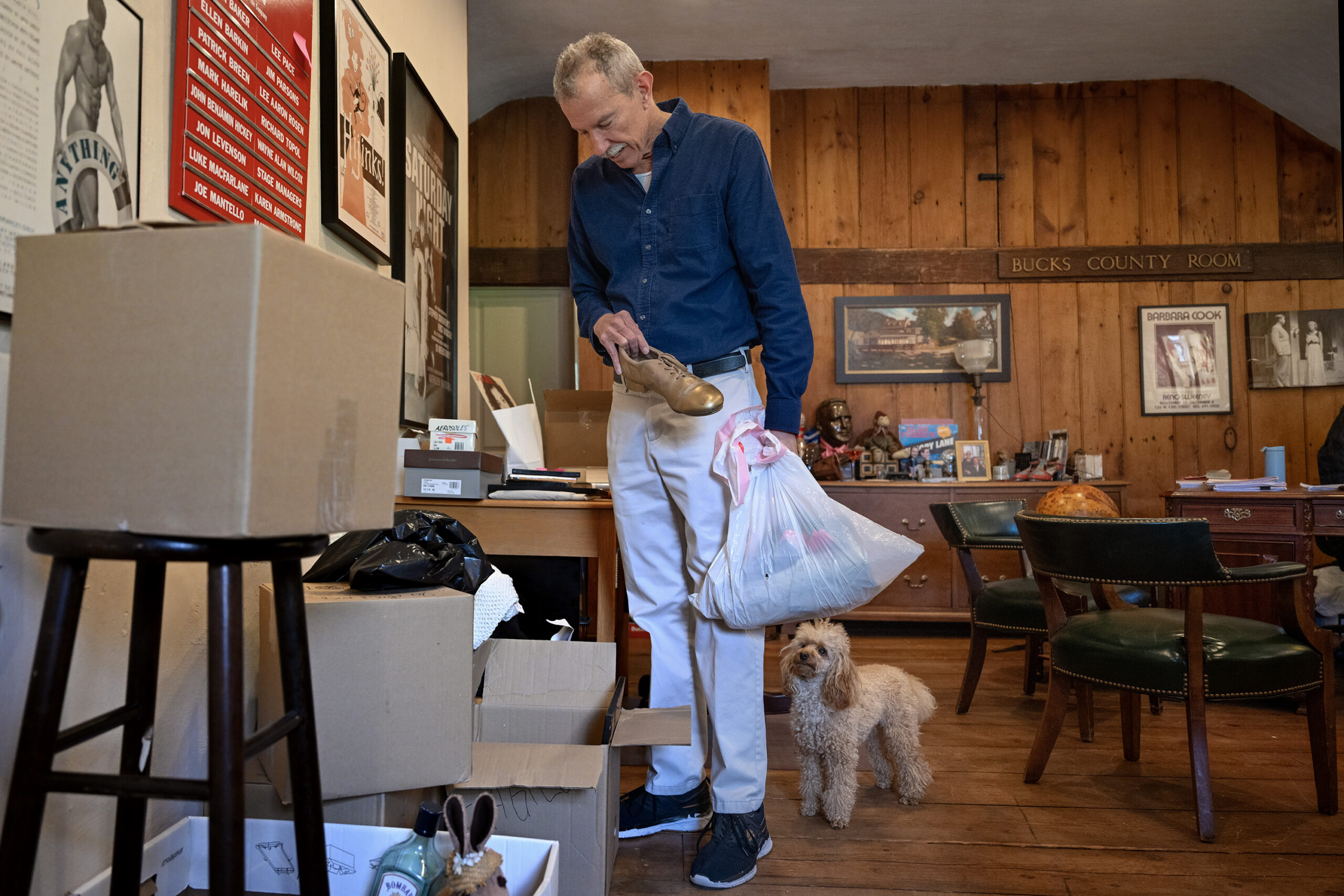
Alexander Fraser finds a pair of shoes from the 1975 musical A Chorus Line as he clears out his office Tuesday, April 7, 2026. His dog is Milo.
“It’s just surreal,” Fraser, who announced his departure last year, said. “It’s been a whirlwind couple of months …It’s been sweet and I feel really complete. I don’t have any regrets about it. I think it’s the right thing to do.”
Fraser is retiring from full-time production, and instead lending his services to develop new musicals and nightclub experiences. His production partners, Robyn Goodman and Josh Fiedler, will also be departing to work on current and future productions under their company, Aged in Wood.
Fraser said he already has a few irons in the fire, but he plans on spending the majority of his days sun-soaked on a beach in Puerto Vallarta, Mexico, and tanning like the “raisins” that walk the beaches of Palm Springs.
The departure, Fraser said, is easier knowing there’s an incoming leader with experience and ideas that mirror his own.
On June 22, theater veteranBT McNicholl will step in as the Bucks County Playhouse’s producing artistic director.
“I’m at home here,” said McNicholl, who grew up in Connecticut and led Los Angeles’ La Mirada Theatre for a decade.
Like Fraser, McNicholl has worked on several Broadway plays and musicals , including Billy Elliot, Cabaret, and A Funny Thing Happened on the Way to the Forum. As director, his work spans productions across Europe, Asia, and Australia, and his regional directing credits include productions at Goodspeed Musicals, the Walnut Street Theatre, and other places.
He said he’s excited to be at the helm of the nonprofit theater and embrace its audience, one that’s seen tremendous growth under Fraser’s leadership.
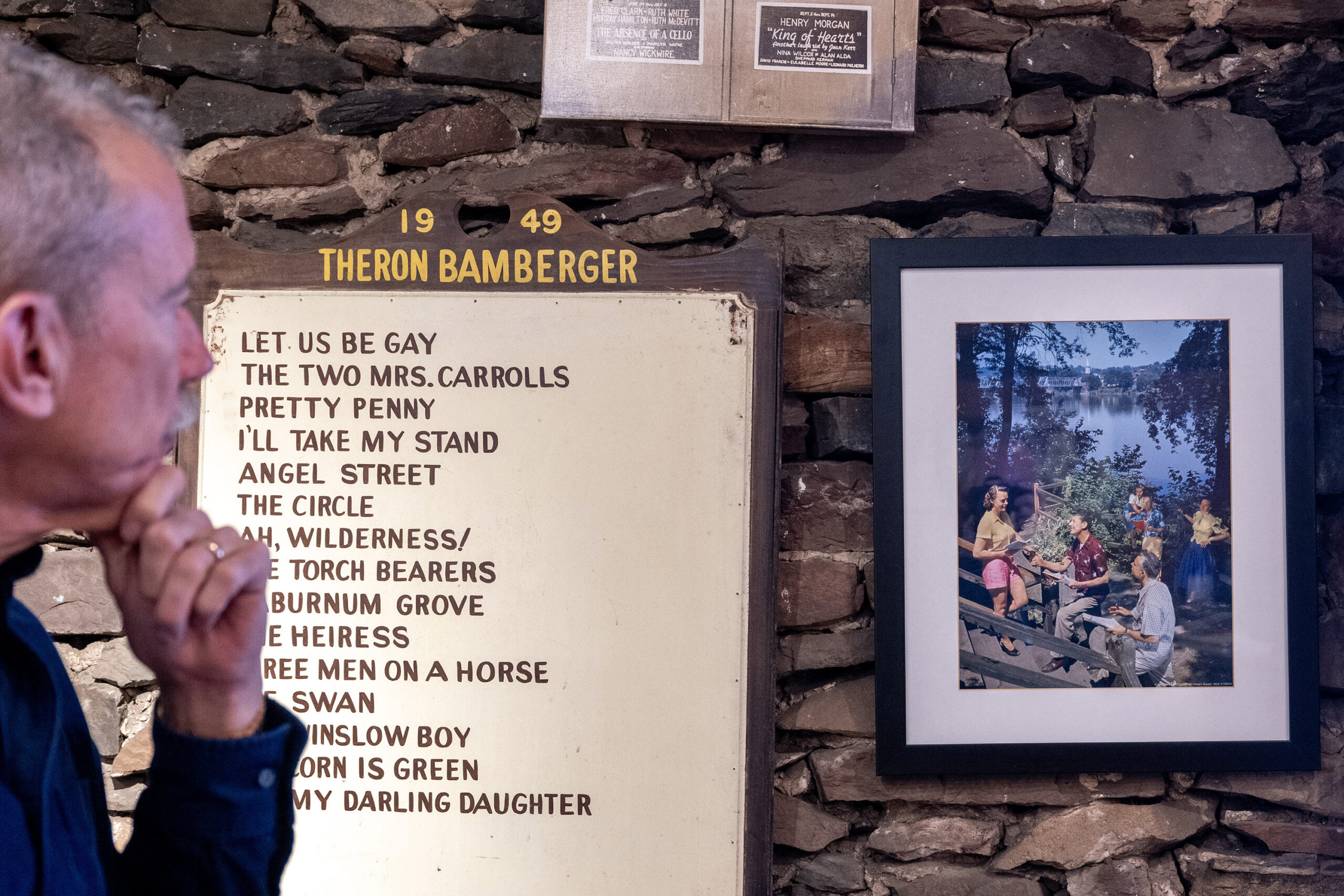
Alexander Fraser, producing director of Bucks County Playhouse, looks at memorabilia as he clears out his office on April 7, 2026. At right is a photo from the July 1952 issue of National Geographic, by photographer Robert F. Sisson for an article about the Delaware River. The caption reads, in part,: “June Lockhart Rehearses Her Lines on the Steps of Bucks County Playhouse. At left is list of plays produced by Theron Bamberger in 1949.
Fraser came to the Playhouse in 2014 from New York, where he produced on and off-Broadway productions for decades. It had only been three years since the historic theater’s $3 million facelift, thanks to Doylestown couple Kevin and Sherri Daugherty.
The theater, founded in 1939, was in dire straits after longtime owner Ralph Miller fell into debt in 2010. The theater lost its status with the Actors’ Equity union and Miller’s mortgage holder seized the venue.
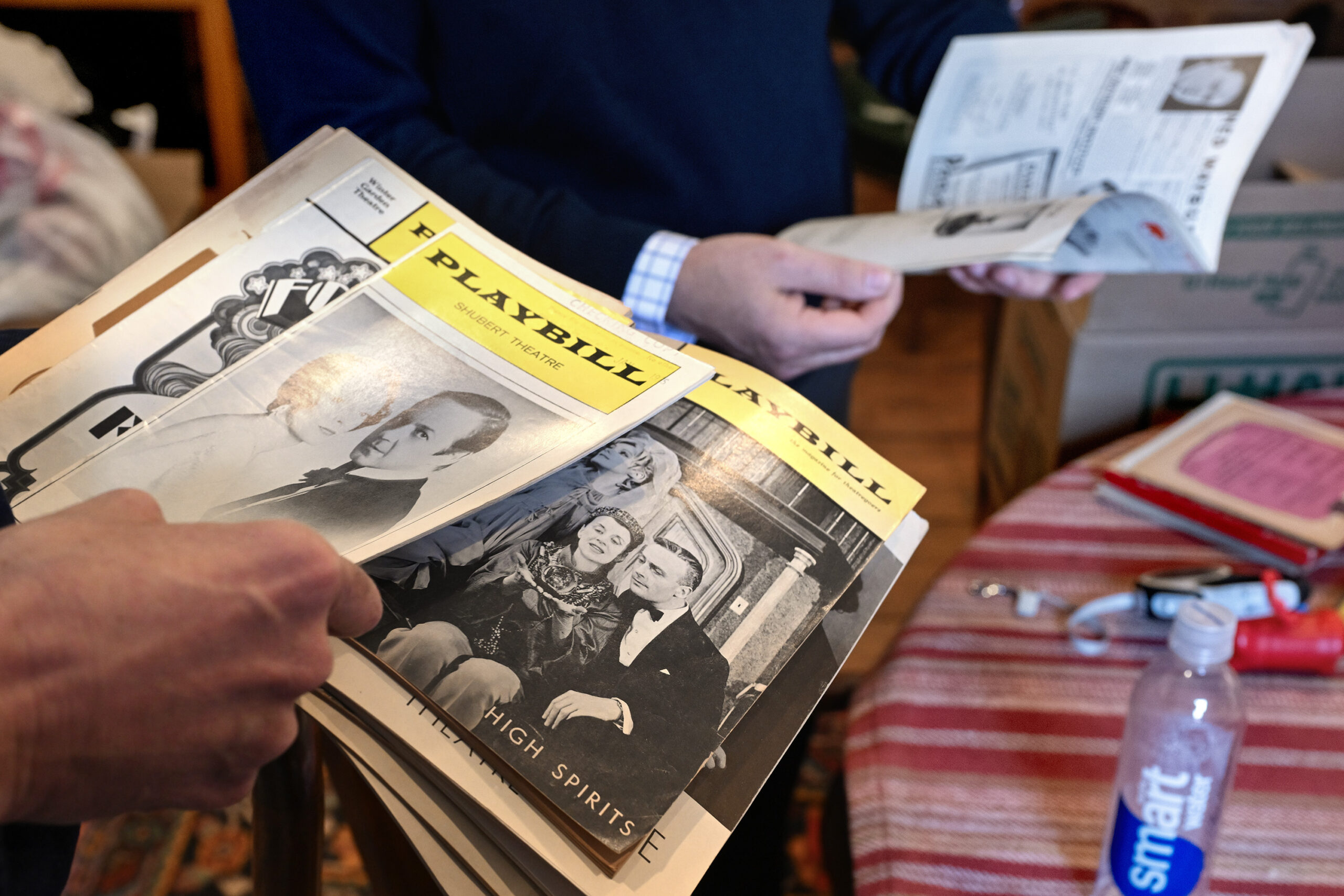
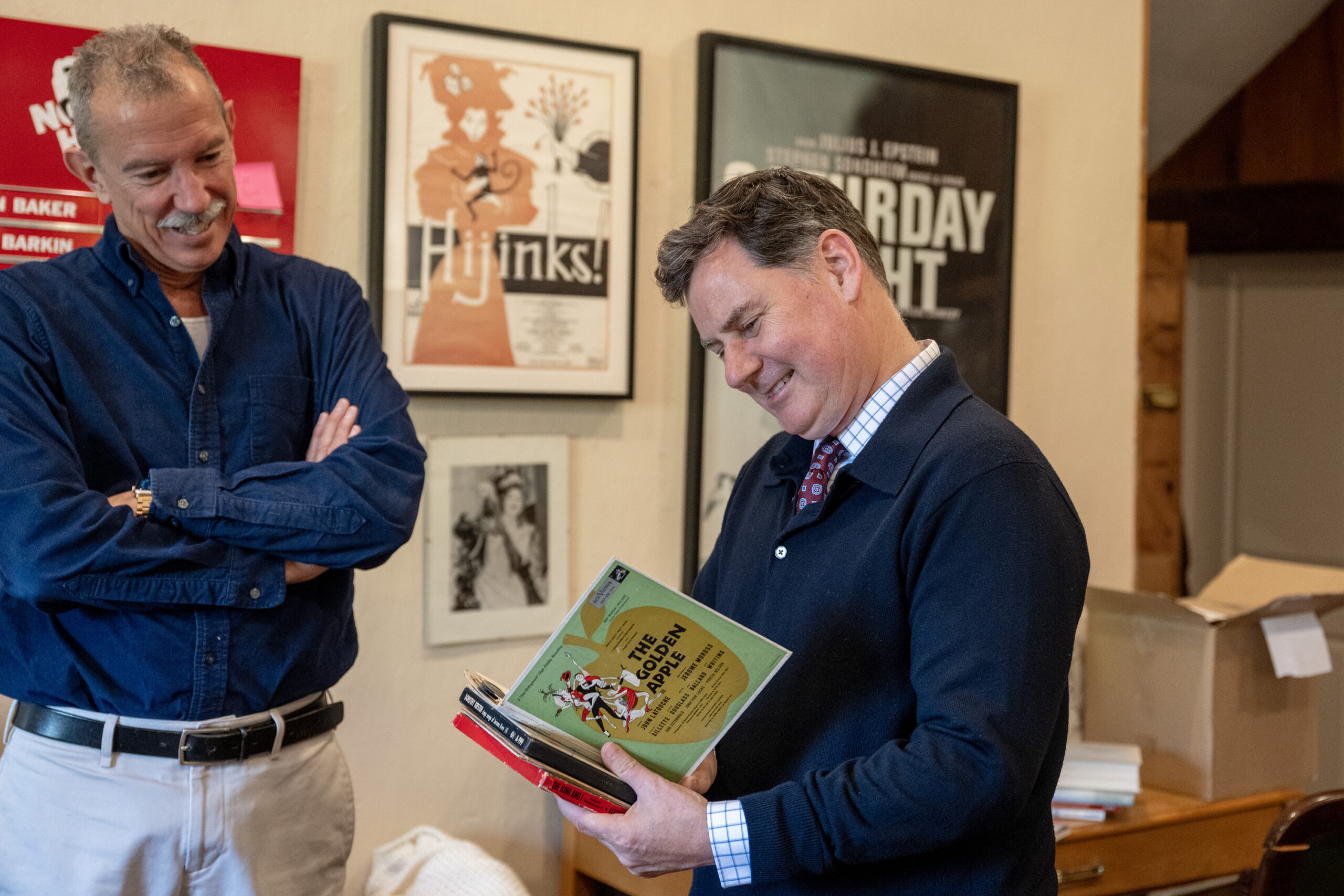
Alexander Fraser (left), outgoing producing director of Bucks County Playhouse, clears out his office on April 7, 2026, joined by newly-appointed producing director BT McNicholl (right) going over old Playbills.
The Daughertys purchased the Playhouse in 2011, and reopened the theater after a year of renovations and repairs. Jed Bernstein, then producing director, set the revamp in motion and went on to become the president of New York’s Lincoln Center. That’s when Fraser stepped in to expand the theater’s revitalization. He recruited Goodman and Fiedler to the Playhouse.
The goal was to reinvigorate the Playhouse and New Hope’s theater community within two years. “It was naive on my part,” Fraser said.
He said people talked about the theater’s heyday, but the majority of people who came to New Hope were “bikers” and not interested in local theater.
“I didn’t realize how depressed [New Hope] was, and frankly, it was a challenge for me and my two producing partners to motivate this community and make this work,” he said.
Around 2019, Fraser said he finally felt things had turned around.
The trio went on to bring in productions like Steel Magnolias, Anastasia, Bridges of Madison County, Other Desert Cities, and Candace Bushnell’s one-woman show, True Tales of Sex, Success, and Sex and the City.
The productions drew theatergoers, both from in and outside of the borough.
During Fraser, Goodman, and Fiedler’s tenure, the organization’s annual attendance doubled, growing from just under 40,000 in 2014 to more than 85,000 in 2025, according to Playhouse officials. Subscriptions also increased, from 1,479 in 2015 to 3,303 in 2026.
The Playhouse then transitioned from a seasonal producing theater to a year-round producing organization.
The Bucks County Playhouse on April 7, 2026.
Nicole Hackmann, executive director at the Playhouse, said Fraser was on the front lines, ensuring there was enough funding to bring in top-end productions, and Goodman and Fiedler used their resources and connections to fill in the gaps.
The Playhouse’s revival didn’t just enliven the region’s theater community. It sparked an economic boom in the borough. As new restaurants, shops, and other businesses populated the town, New Hope Mayor Frank DeLuca said the Playhouse’s resurrection helped drive up support.
“The Playhouse is far more than a theater. It’s one of the cornerstones of New Hope, and a vital part of our community’s identity,” DeLuca said in a written statement to The Inquirer. “It enriches the lives of residents, attracts visitors from throughout the region, and helps support our local businesses by bringing people into town year-round.”
While leadership changes are difficult to navigate, Hackmann said, McNicholl is coming into a theater and arts community with “strong bones.”
“The brick work has been done so well, and [McNicholl] can come in and take off like a shot,” she said. “He’s inheriting an organization with an incredible staff that’s dedicated, determined, and has built something, which means he can fly.”
Alexander Fraser (left), outgoing producing director of the Bucks County Playhouse, clears out his office Tuesday, April 7, 2026, giving his old Broadway musical CDs to newly-appointed producing director BT McNicholl (right).
With the “magic set in place,” McNicholl said he’s ready to accept the baton Fraser, Fiedler, and Goodman are handing off to him.
“We’re part of the relay race,” he said. “I’m taking the next step on the trajectory that they’ve set in motion.”
McNicholl intends to strengthen the “symbiotic relationship” between the New Hope theater and Broadway, not only by bringing New York artists to Bucks County, but also by nurturing in-house productions that end up on Broadway.
At the top of his priority list, however, is to listen to the community that Fraser helped rebuild and the longtime theatergoers who grew up attending the regional gem.
“My job as a steward is to continue that growth and expand upon it,” he said.
Fraser is confident McNicholl will make those strides.
“I learned early on to leave while on top,” Fraser said. “I’m really happy this all worked out. The theater is doing great and there’s a great person coming in after me.”
As for his last speech on Saturday, Fraser doesn’t have notes prepared. He’s usually an “easy crier,” he said, so a friend convinced him to place a rubber band on his wrist, and then snap it whenever he felt the tears coming.There’s no telling how many times he will flick the rubber band against his wrist.
He looks forward to the journey that lies ahead but doesn’t think about his legacy.
Searching for meaning with the 94-year-old John Williams in “Disclosure Day”
There’s plenty of wonder and foreboding in John Williams’ score to Disclosure Day. Anyone hoping for Williams the bellicose, or Williams the painter of twinkling stars that make us look to the Beyond, will find him here.
But what’s fascinating about the orchestral-vocal soundscape of Williams’ and Steven Spielberg’s 30th collaboration is its subtlety. The composer always was more nuanced than he’s generally given credit for being, and here is something unusually introspective.
Williams, 94, has been praised for his understatement in the score (released June 12). The soundtrack titles are listed in lowercase letters with ellipses and names like so many perfumes: “unseen …”, “believe …”, “empathy …”
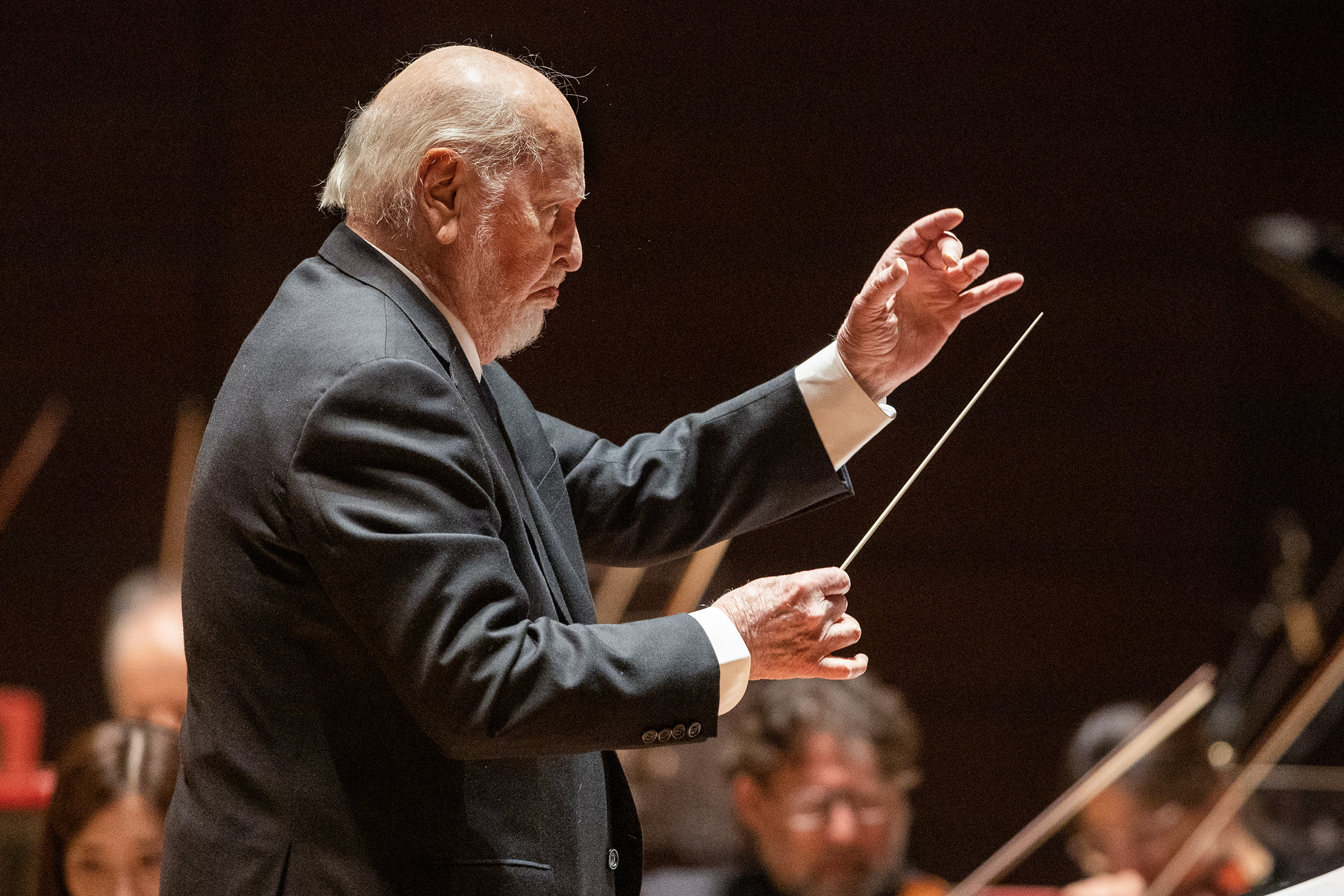
John Williams conducting the Philadelphia Orchestra at the Kimmel Center, Feb. 20, 2024.
But as Spielberg has said:
“Disclosure Day is probably the most restrained score he has ever written for one of our collaborations — at least until it is not.”
As always, Williams — whose film and concert hall music have become a staple at the Philadelphia Orchestra — makes you feel things you can’t put into words. What is a memory if not ineffable, as the music in a so-titled track shows? The narrative progression of “caught…” from poignant oboe and bassoon, to mysterious celesta, to chilling strings and a heart-pounding race, make the track a piece in itself. It’s as good as any concert overture.
There’s no big signature melody or sweeping gesture à la E.T. anywhere in this music. What it does offer is something perhaps better suited to the times: a score that gives listeners the space to search for meaning in a world of ambiguity.
“Disclosure Day”is playing in theaters across the country. John Williams’ soundtrack is available on all streaming services.
— Peter Dobrin
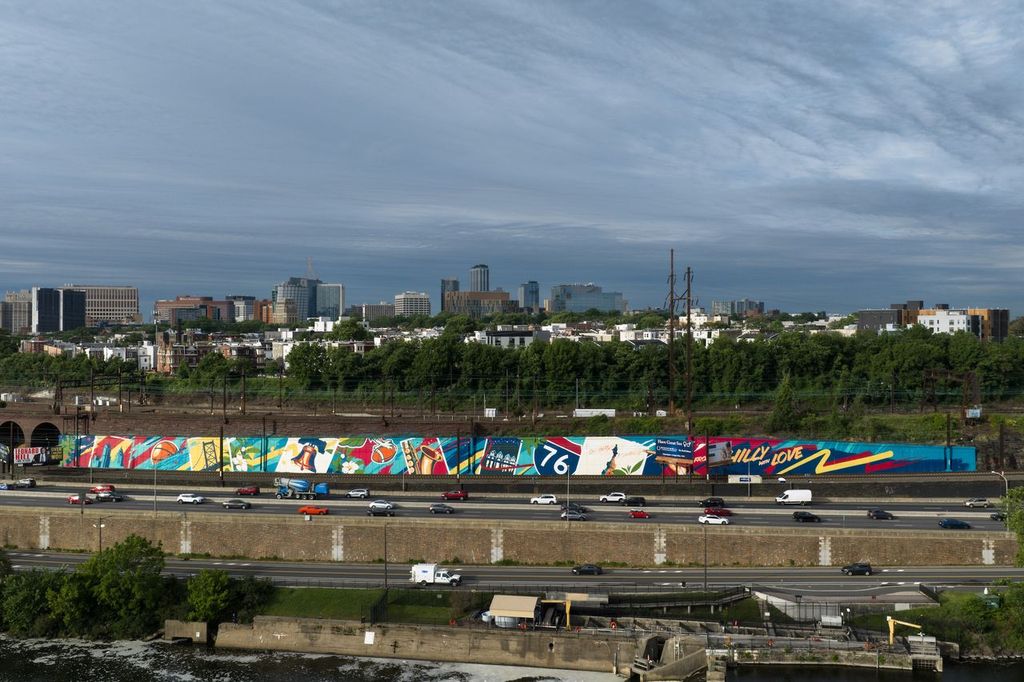
The mural “One Philly, a United City, With Love” overlooks I-76, using bright colors to reflect the highlights of the city.
A burst of color on I-76
I think most everyone can agree that our highways could use a touch more color. A new mural overlooking the Schuylkill Expressway now provides 16,000 square feet of it.
One Philly, a United City, With Love stands over part of I-76, paying homage to the city ahead of the country’s 250th anniversary. It was commissioned by the City of Philadelphia as part of “Gateways to Philadelphia,” an anti-graffiti and highway beautification initiative headed by Mayor Cherelle L. Parker’s Office of Clean and Green Initiatives, the Pennsylvania Horticultural Society, and Mural Arts Philadelphia.
The mural took by artist Carlos Lopez Rosa, a Philly resident, two months to paint. There are depictions of the Benjamin Franklin Bridge, an eagle’s talons holding a football (Go Birds!), the Liberty Bell, an I-76 road sign, and the William Penn City Hall statue. There are arts-focused elements, too, like a blaring saxophone that reflects the city’s vibrant music scene.
Highways can often feel lifeless, simply a means of getting from point A to B. But if you’re ever traveling along the I-76, be sure to glance up and be reminded of the vividness of Philly.
“One Philly, a United City, With Love” mural can be seen on I-76 at Spring Garden Street.
— Morgan Ritter
America’s Reconstruction story with a little dose of Philly history, narrated by Malcolm Gladwell and Barack Obama
As I listened to the History Channel’s eight-part podcast Reconstruction: The Unfinished Promisehosted by Malcolm Gladwell and featuring special commentary by former President Barack Obama, I was amazed to learn of the political progress African Americans made in the 12 years after the Civil War.
The founding of Alabama State University by nine formally enslaved men, the rise of the Black politicians like Florida Sen. Emanuel Fortune, the oratorical genius of Frederick Douglass, even the unfortunate demise of the Freedman’s Savings and Trust Company are fascinating pieces of American history rarely taught in school.
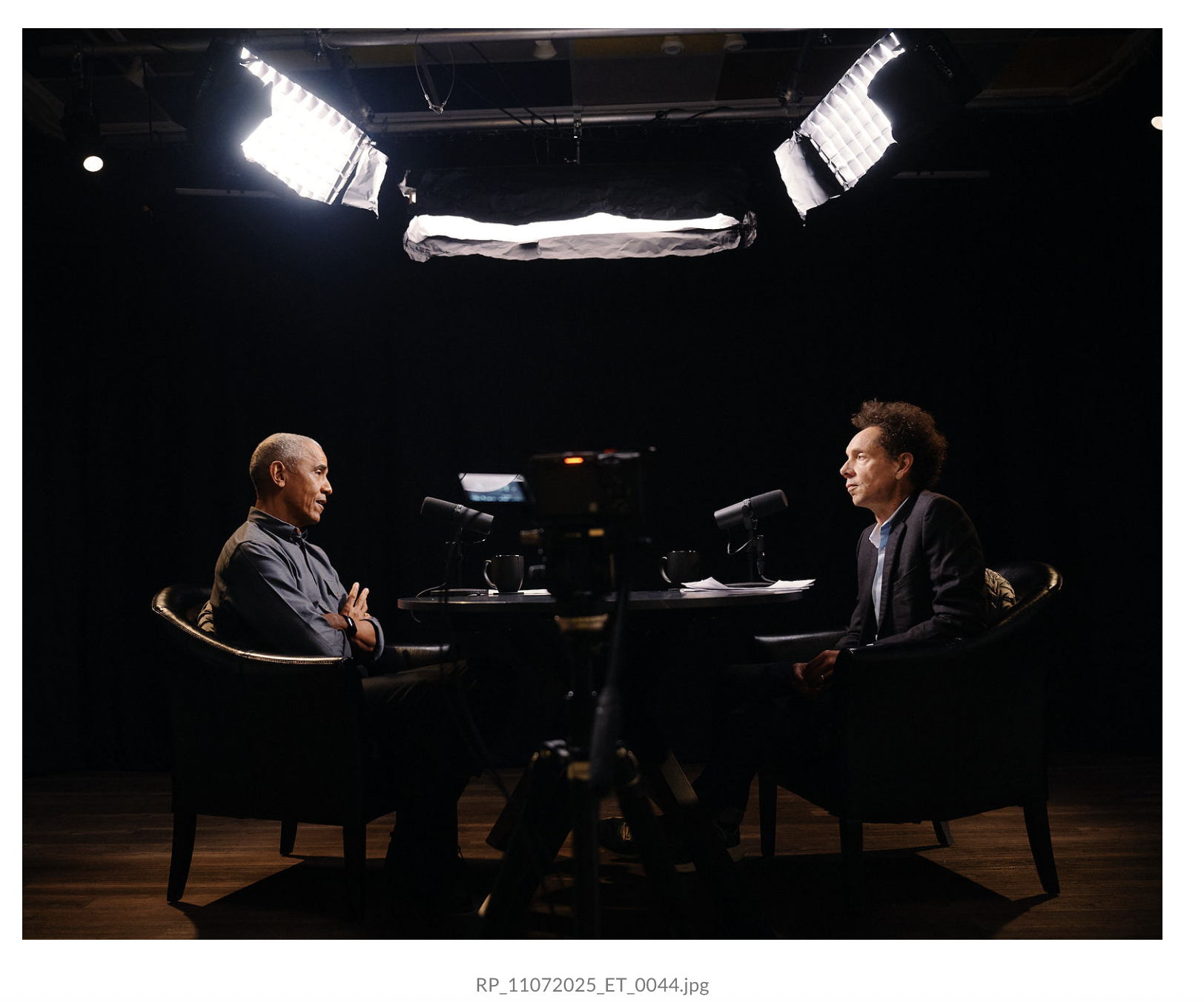
Former President Barack Obama and Malcolm Gladwell recording “Reconstruction: The Unfinished Promise.”
I found myself most interested in the firsthand accounts of Addie Brown, a Black woman born free in Philadelphia in the 1840s, who found herself in Connecticut during Reconstruction working as a domestic. There, she formed a friendship and romantic relationship with Rebecca Primus, the daughter of the Black family for whom she worked.
The podcast draws from archives, letters, diaries, court records, eyewitness testimonies, and the work of some of America’s most accomplished scholars and storytellers, including Jelani Cobb, Kellie Carter Jackson, and Ashley C. Ford
Archival letters, according to historians, provide details about how women’s careers were limited by their sex, how they were forced into marriages, and followed social mores that simply did not serve them.
Salamishah Tillet, Pulitzer Prize-winning critic for the New York Times, distinguished professor of Africana Studies and Creative Writing at Rutgers University-Newark, and University of Pennsylvania graduate and former professor, also makes a brief appearance.
Tillet explains how the 1915 film Birth of a Nation was used to defend Jim Crow, the laws based on racial segregation put in place to undo the progress formerly enslaved people made during Reconstruction.
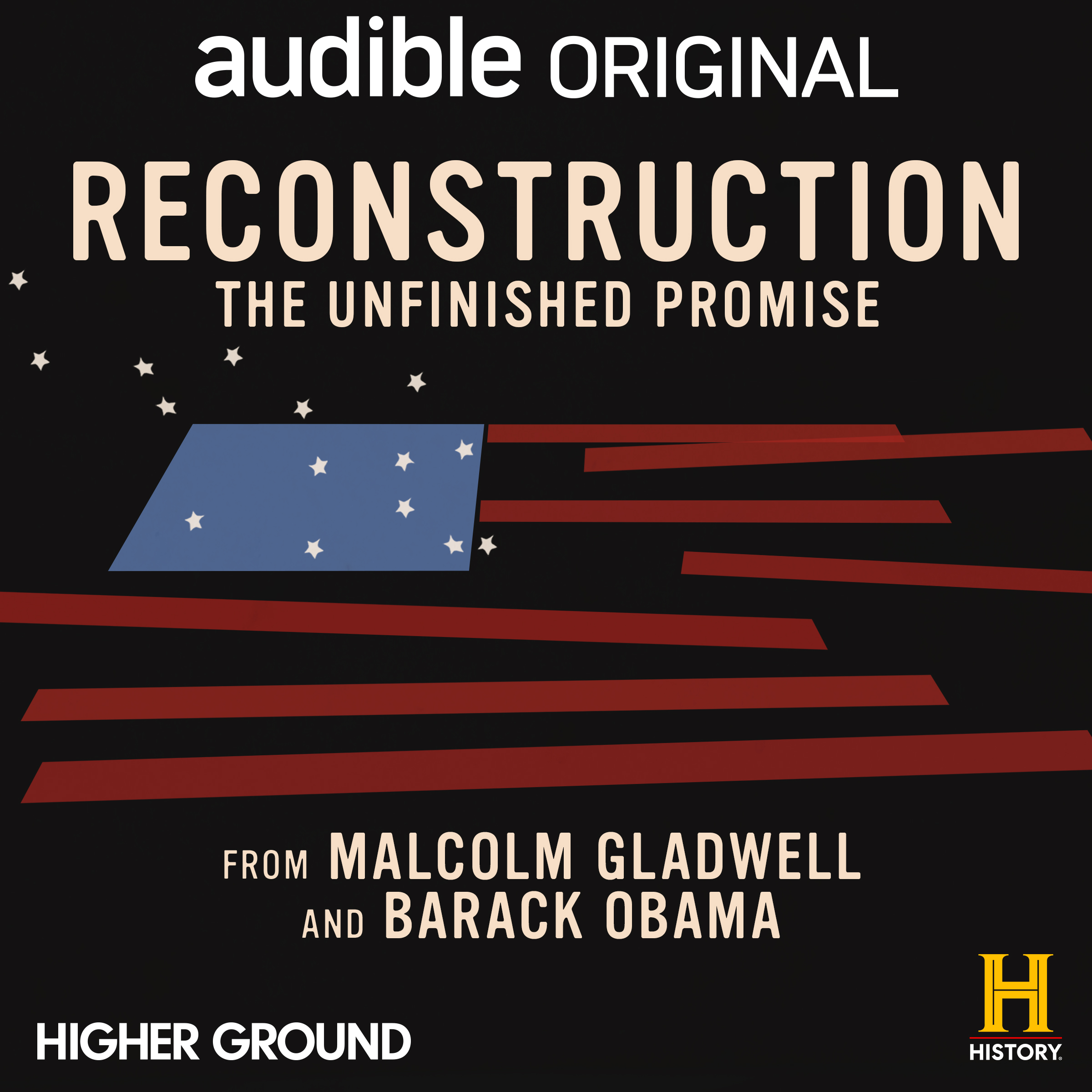
Cover art for “Reconstruction: The Unfinished Promise,” an eight-episode history lesson about how the 12-year period just after the Civil War impacted the America. It’s narrated by Malcolm Gladwell with guest narration by former President Barack Obama.
Both Gladwell and Obama repeatedly make the same point: The end of Reconstruction is proof that North won the war, but the South won the peace. Meaning, in order to appease Southern Dixiecrats, America was forced to abandon its attempts of creating a truly multiracial society.
“The Reconstruction Era was a brief but pivotal and turbulent chapter in our nation’s history,” Obama said in a news release. “One that is often overlooked even though its consequences are still felt today.”
In light of today’s political climate in which politicians are again trying to undo progress made by our country’s most marginalized, Reconstruction: The Unfinished Promise must be listened to, studied, and shared.
“Reconstruction: The Unfinished Promise” is available on Audible. It was produced in collaboration with Barack and Michelle Obama’s Higher Ground, Malcolm Gladwell’s Pushkin Industries, and Audible.
— Elizabeth Wellington
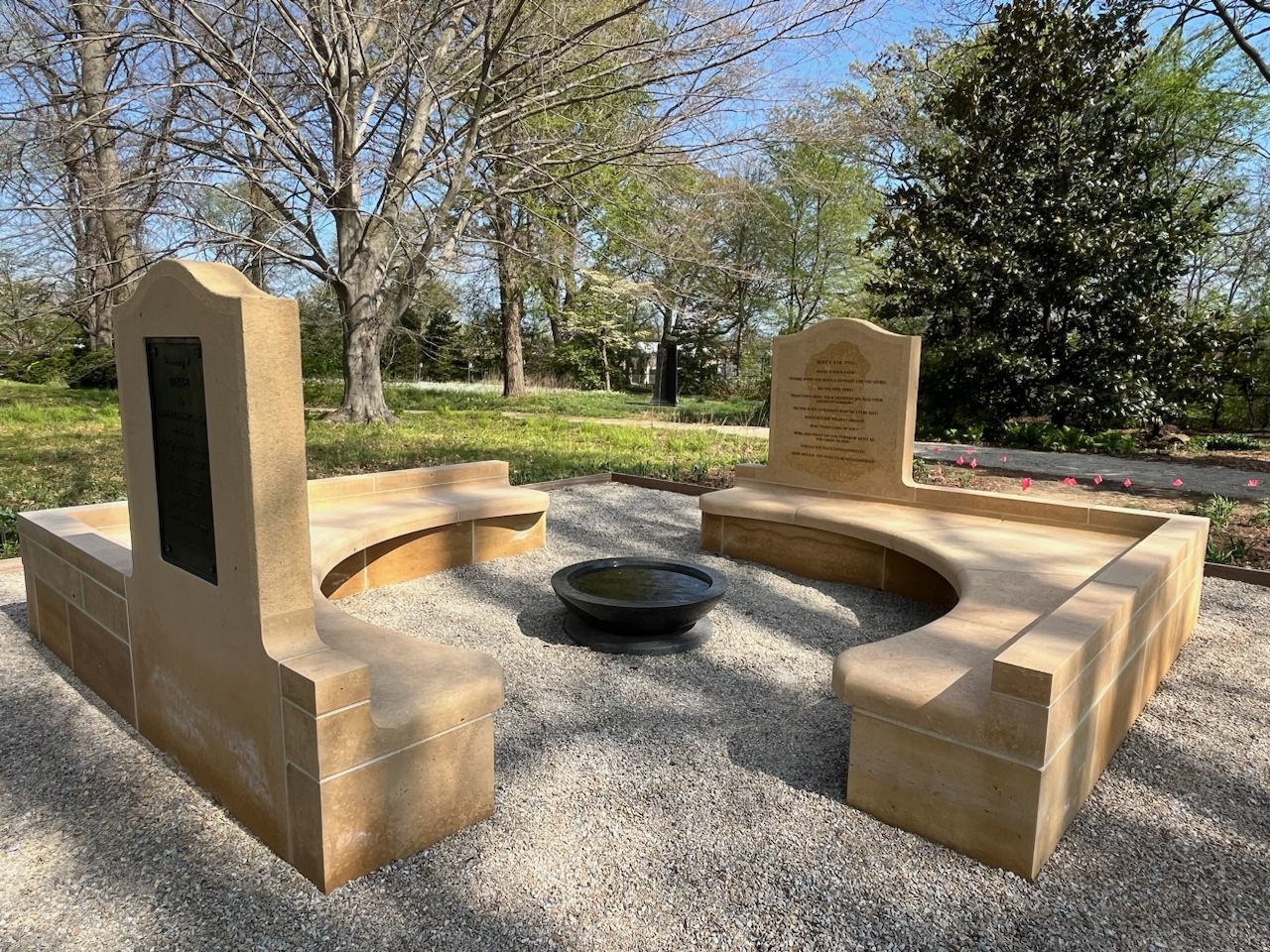
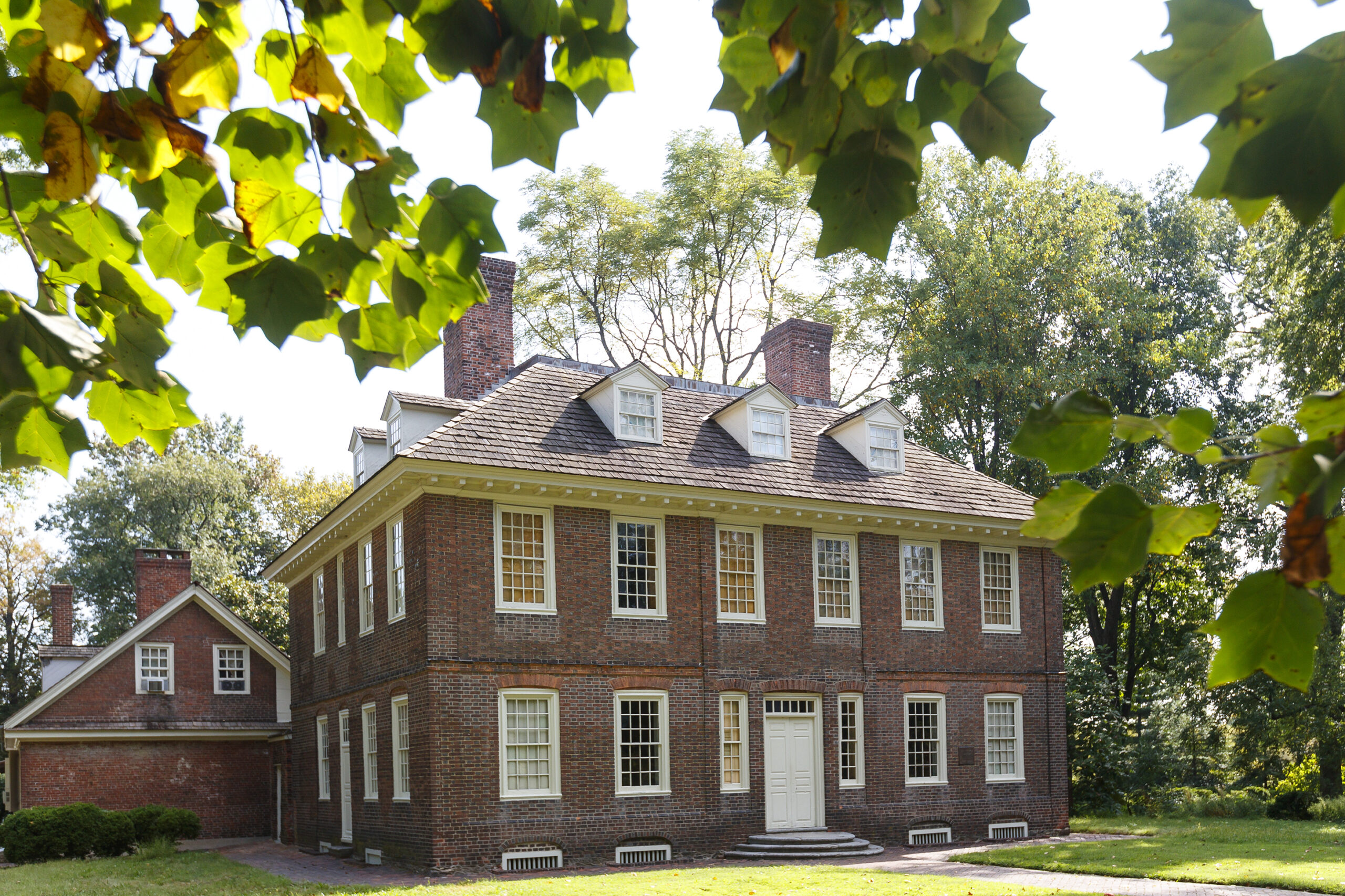
The memorial to Dinah by Philadelphia sculptor Karyn Olivier at the Stenton Museum at 4601 N. 18th St.
Remembering Dinah at Stenton Museum
On a humid day, just hours before a downpour, five Black women in brightly colored colonial-era gowns took the stage on the grounds of Stenton Museum in Germantown. That afternoon, they were all called Dinah as each actor represented the historical figure at different ages throughout her lifetime.
In the winter of 1777, an enslaved woman named Dinah saved the Stenton mansion from British soldiers who planned to burn it down. History has only remembered her with one name. In recent years, Black artists have continued to examine her story.
In this play by Philadelphia poet Trapeta B. Mayson (who codirected alongside fellow poet Yolanda Wisher), Dinah was revived in a lyrical portrayal that presented a fuller picture of the brave woman who rescued her enslavers’ home during wartime, demanded freedom, and received emancipation.
On the night of the show, with a neighboring home blasting dance music that occasionally distracted the audience, the ensemble delivered an ambitious and compelling performance full of profound emotion.
The exterior of Stenton Museum, 4601 N. 18th St., in Germantown.
It was powerful to see their interpretation of Dinah as the actors walked on the same ground she did some 250 years ago. Mayson has said it’s just the first chapter of this project — part of ArtPhilly’s ongoing What Now festival — and I look forward to seeing future iterations as she continues to develop it.
Though it was just a one-day performance, Stenton Museum and its surrounding gardens are open to the public.
Permanently on view is the memorial to Dinah, from Philadelphia sculptor Karyn Olivier, with a stone tablet listing questions she wished she could ask: What was your wildest dream? How did freedom feel? Did you ever wish you had let it burn?
The Stenton Museum is at 4601 N. 18th St., stenton.org
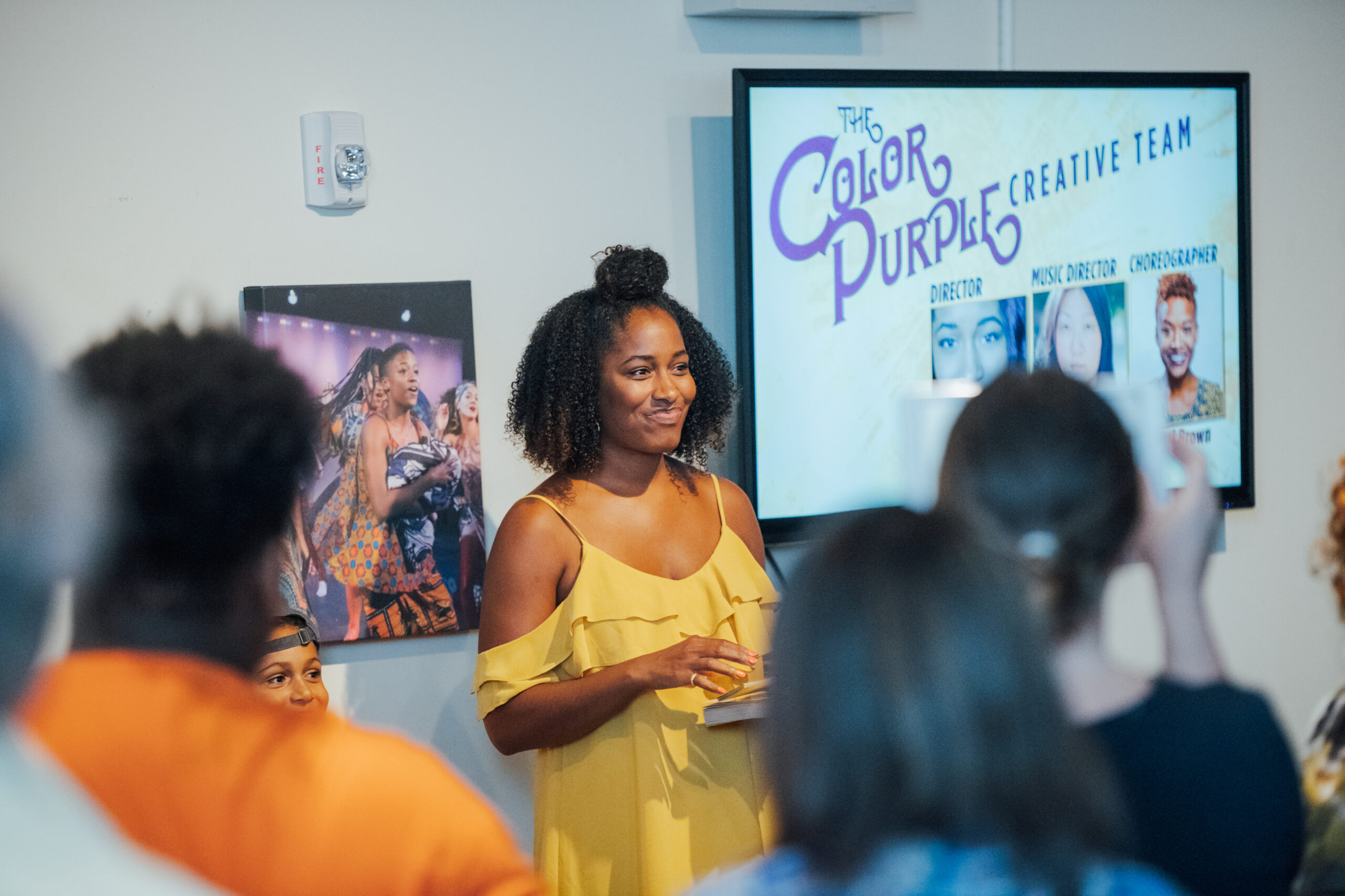
South Philly-raised director and actor Amina Robinson is one of the region’s most celebrated theater makers, known for directing major productions including Fat Ham, Once on This Island, and The Color Purple. Now based in Cherry Hill with her husband and son, Robinson was just named the new artistic director of Norristown’s Theatre Horizon, where she’ll take the helm later this year.
When she’s not directing plays and musicals like this spring’s Ain’t Misbehavin’, the Temple University professor spends her days walking around Philadelphia and visiting family in West Philly. On her perfect Philly day, she takes her family for cheesesteaks at Jim’s before walking around the Schuylkill and, of course, catching a show at her soon-to-be artistic home, Theatre Horizon.
8 a.m.
I get up and I wake up my son and my husband. We decide to get ready and go to Philly for breakfast. We’re gonna go to Eggcellent Cafe on Chestnut Street and I’m gonna eat their truffle avocado toast — it’s so big and good. I’m gonna have their golden turmeric latte, too.
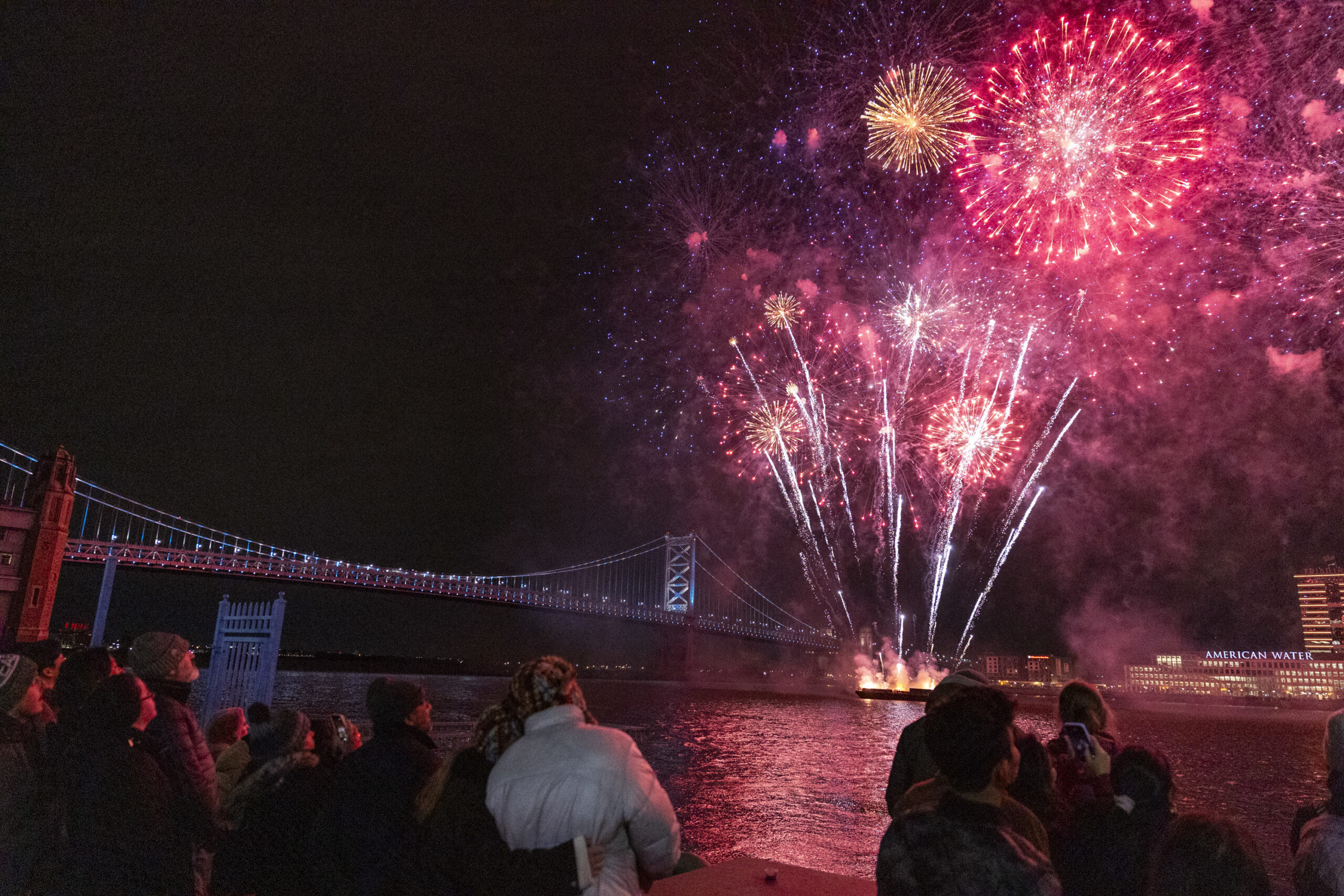
Families and friends gather from all over to watch the firework show over the Delaware River on New Years Eve at Penn’s Landing in Philadelphia on Wednesday, Dec. 31, 2025.
10:30 a.m.
We’ll walk breakfast off by taking a nice little walk down Penn’s Landing, right along the water.
11 a.m.
After that, we’ll go visit my mom in Overbrook Park. I would bring her decaffeinated Dunkin’ Donuts coffee, that’s a must. Then we’ll sit and talk with my mom for a little bit. I would see my brother and my stepdad, and probably my nephew, and maybe my brother’s girlfriend would be there, but I really would be going to visit my mommy.
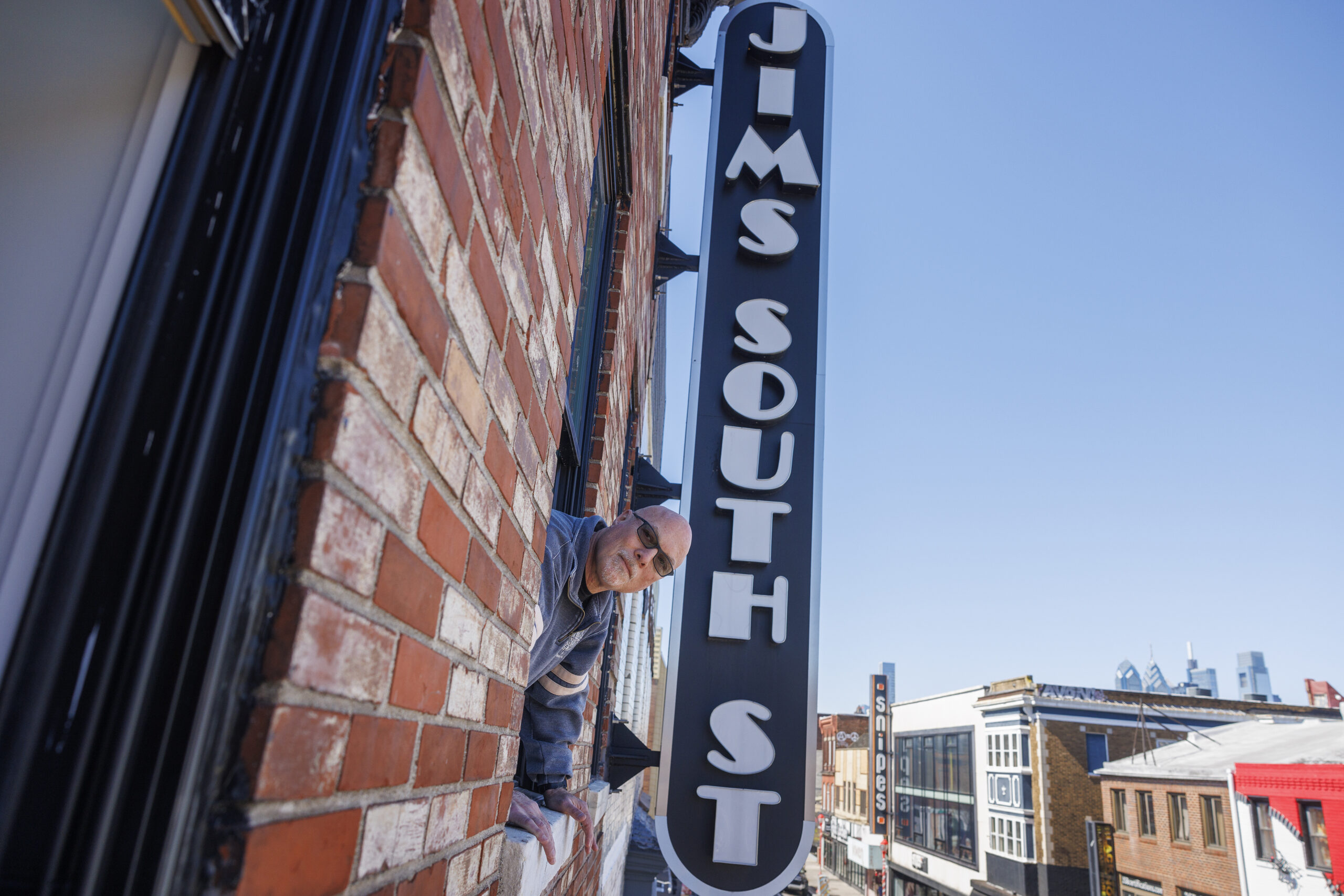
Ken Silver, owner of Jim’s Steaks, corner of 4th and South Street with sign on front of building.The restaurant is under construction after 2022 fire destroyed the cheesesteak restaurant. Photo taken on Monday, March 25, 2024.
1 p.m.
For lunchtime I want to go down to Jim’s on South Street and get a cheesesteak with whiz and fried onions. I probably need to walk off my cheesesteak, but I’m not going to walk off my cheesesteak. I’m going to let it just sit in my belly for a while.
3 p.m.
Then we’ll go out to the Art Museum area and chill out and walk around. Maybe we’ll have ice cream, there are usually ice cream trucks out there. I love walking around that area so much — I’ve always loved West River Drive and Kelly Drive. When I was a kid, I didn’t know that Boathouse Row was like boathouses, even though it’s called that — I used to always say, when I grew up, I’m gonna live in one of those houses.
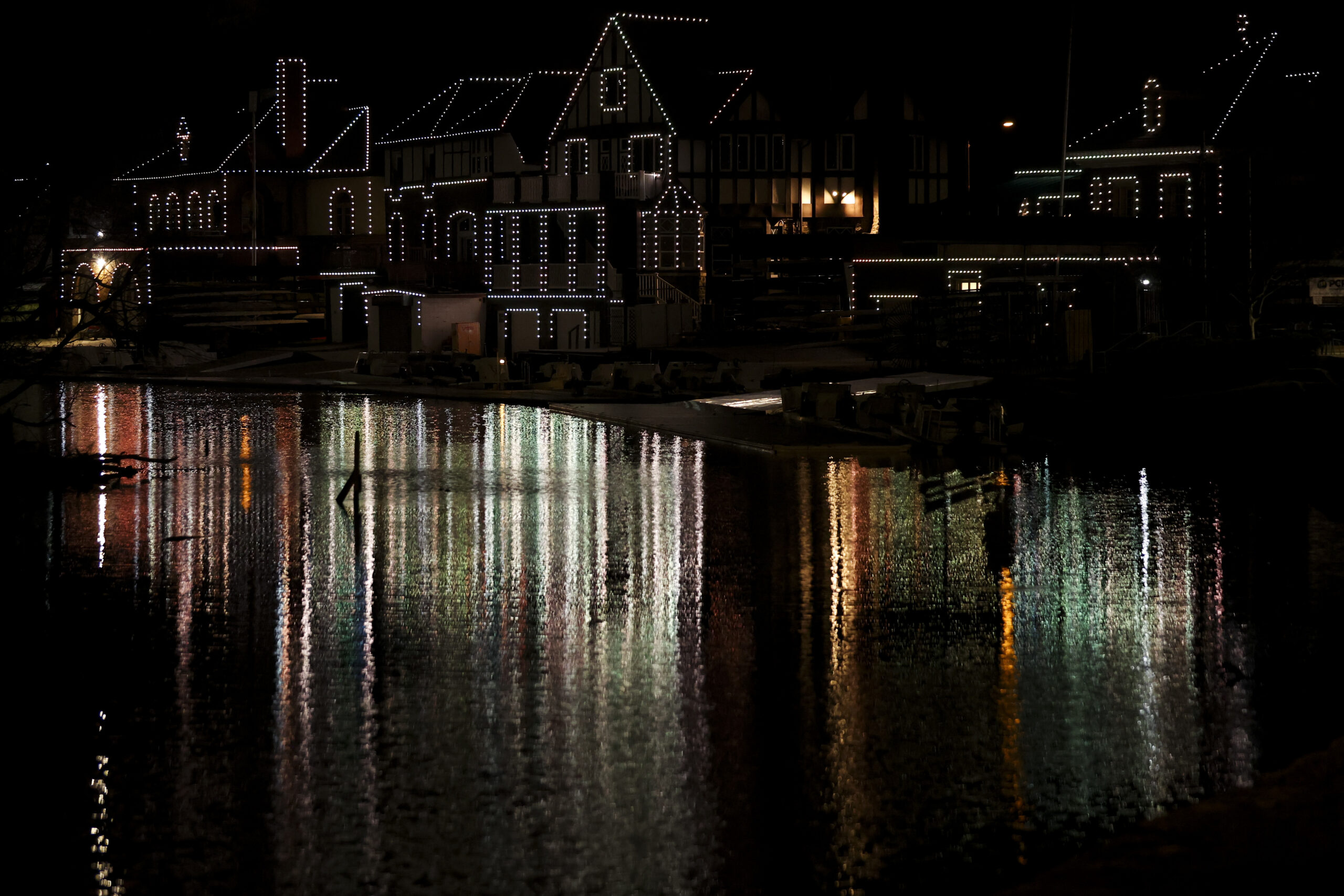
Boathouse Row is relit with a new programmable system containing 6,400 LED lights that allow for 16 million color combinations in Philadelphia, Pa. on Thursday, March 7, 2024.
5:30 p.m.
At night, I’m gonna go to Norristown. There’s this Mexican restaurant on Main Street that’s so freaking good, Taqueria La Michoacana. I would definitely have their beans and rice, and tacos, and I don’t know what else.
7:30 p.m.
I would go see a show at Theatre Horizon. They want to foster empathy and edify the people who come to see the theater. As the incoming artistic director, I’d love to start programs like that to grow the artistic community there, all the while supporting the community that’s already been built there.
New artistic director Amina Robinson at an event for Theatre Horizon’s 2018 production of ‘The Color Purple.’
10 p.m.
I’d head home to sit outside and watch the cars go by, just like chill out and relax. Then I’ll lay on the couch and fall asleep watching a television show, probably a Lifetime Movie Network movie.
The line to enter Philadelphia’s African American Museum stretched a full block up Arch Street on Juneteenth Friday morning and never let up all day — not through performances by the West Powelton Steppers and not even when Doug E. Fresh and Slick Rick took the stage.
History, whether from these hip-hop legends or the Black ancestors summoned by the crowd during the ritual pouring of libations, was all around.
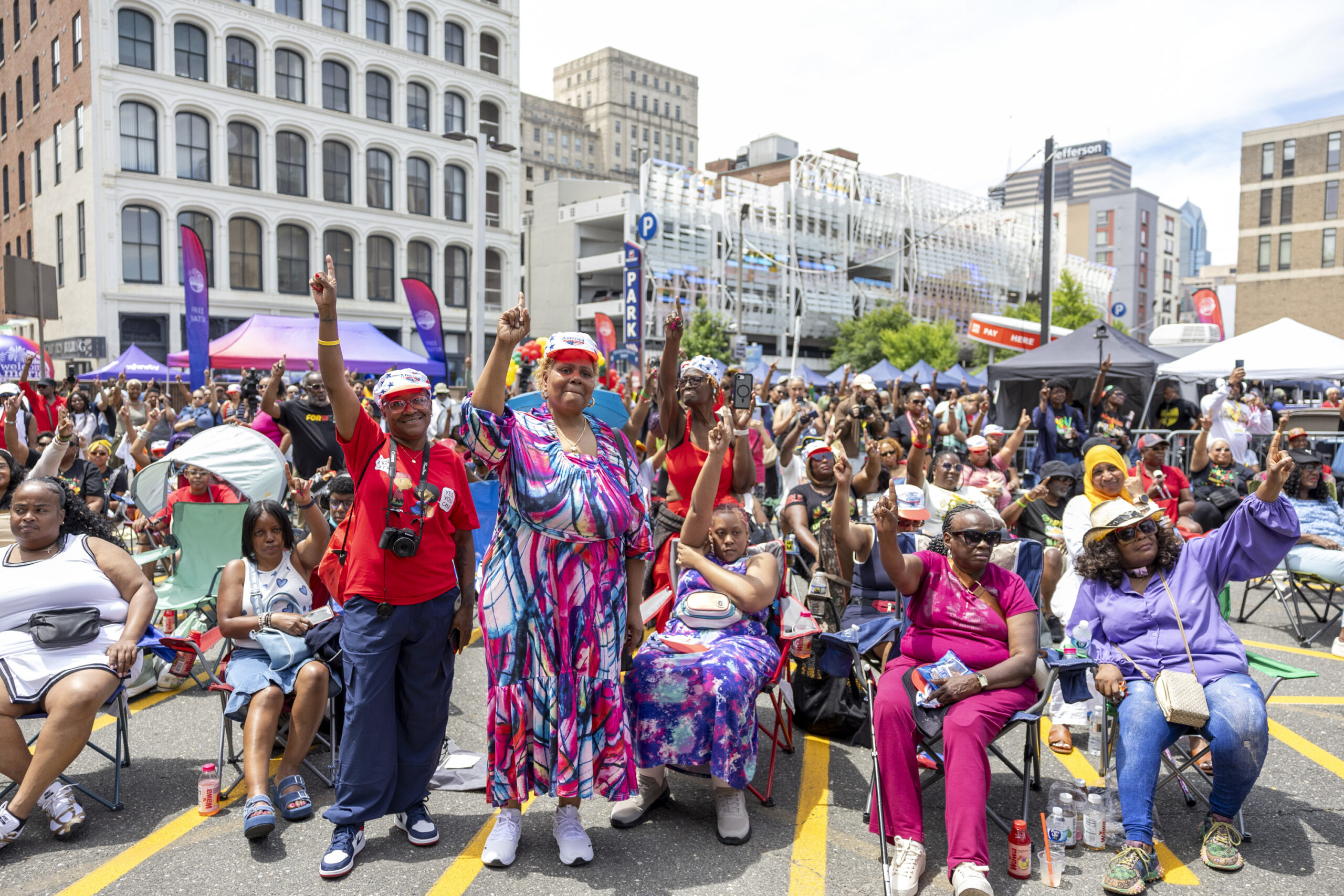
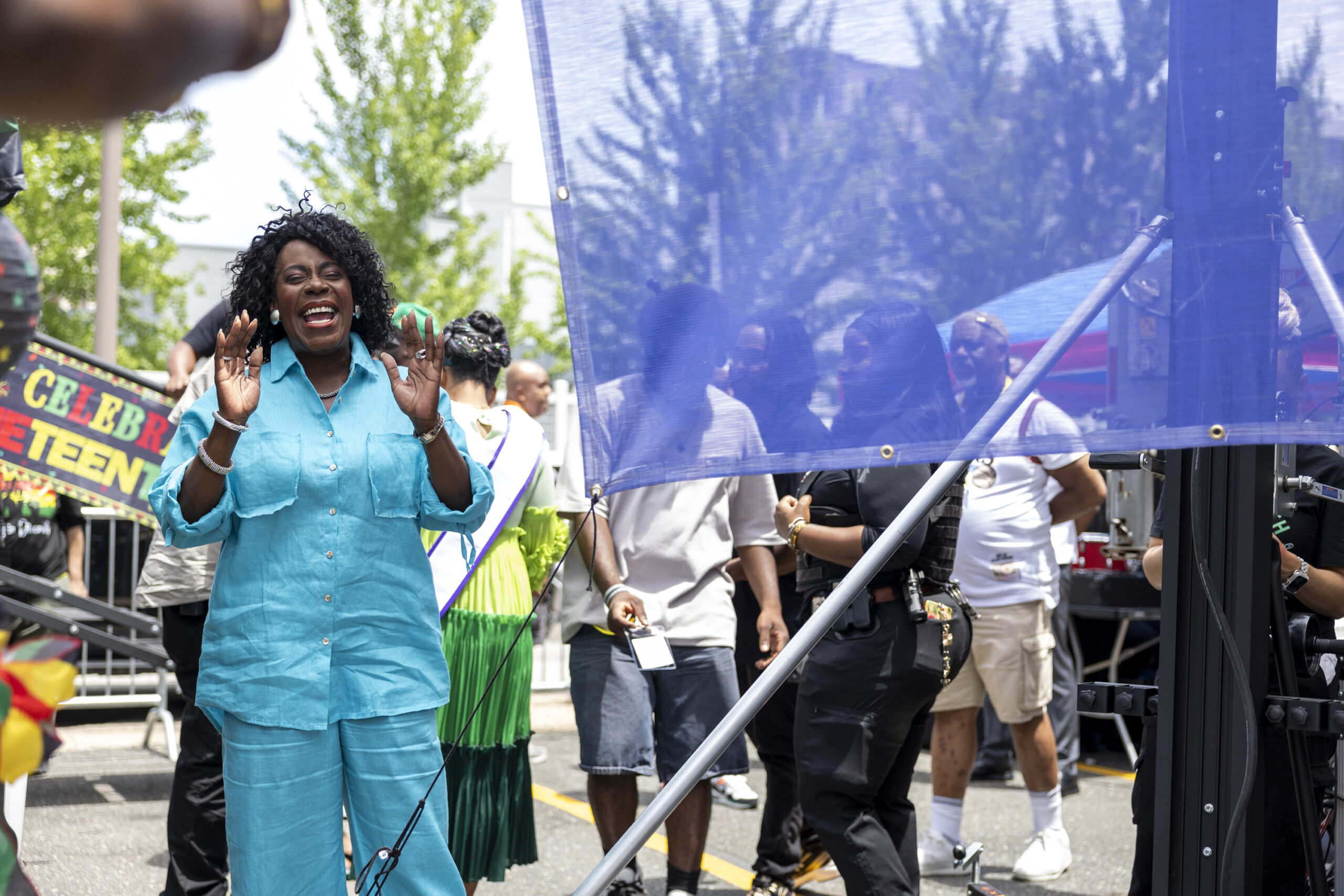
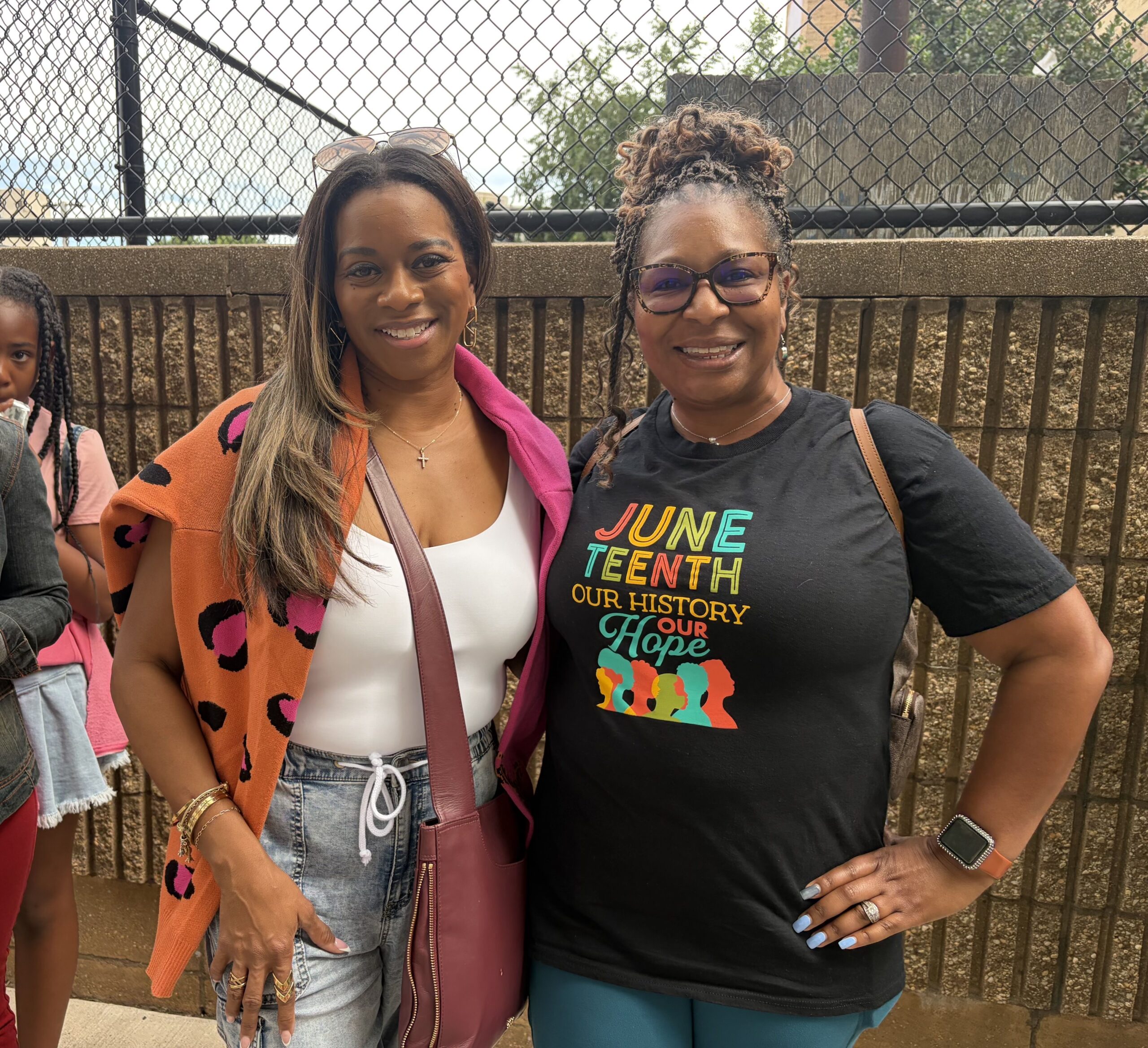
Tahirah Barnett, of Southwest Philadelphia, with Order of Eastern Stars Prince Hall Adopted Commonwealth of Pennsylvania, (Center right) raises her finger in the air with fellow crowd members as Mayor Cherelle L. Parker speaks at the Juneteenth Block Party at the African American Museum in Philadelphia, Pa., on Friday, June 19, 2026.
“It’s important for me to be out and show my kids how we connect to our ancestors, how we connect to the present as well, and to be with community,” said Velena Flores, 47, an administrator at Jefferson Hospital. “My grandmothers, they all passed away. My father passed away, my uncles. So all the ancestors are gone.”
Walene White of Northeast Philadelphia came with her aunt, Tiffany White, and her 13-year-old daughter and niece. As she waited to enter the museum, she reveled in the energy of the day.
“We’re just breaking down Black history, breaking down the day of Juneteenth — the significance— and letting them come and see and enjoy the environment,” White said.
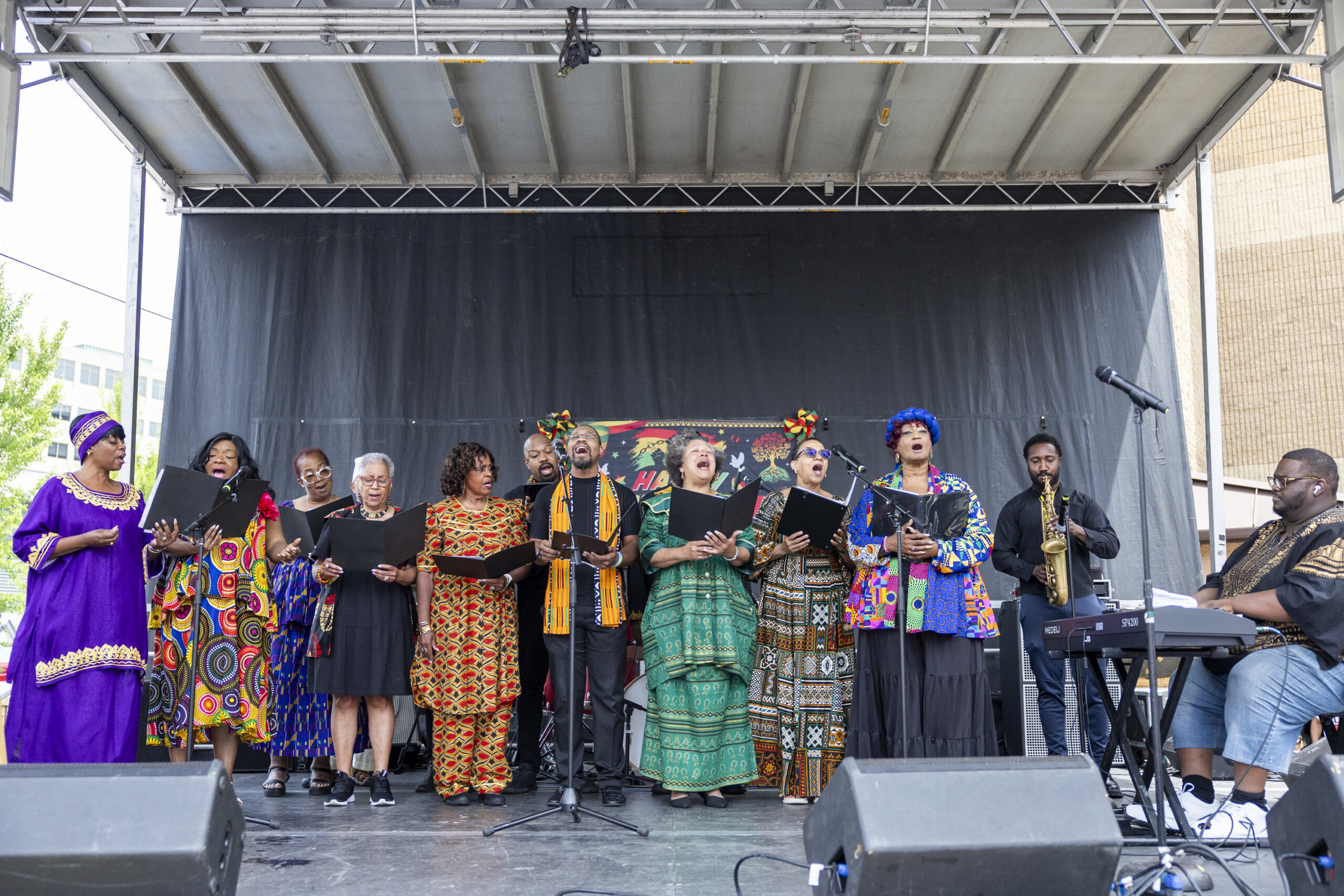
The Marian Anderson Scholar Artists and Choral Ensemble performing at the Juneteenth Block Party at the African American Museum in Philadelphia, Pa., on Friday, June 19, 2026.
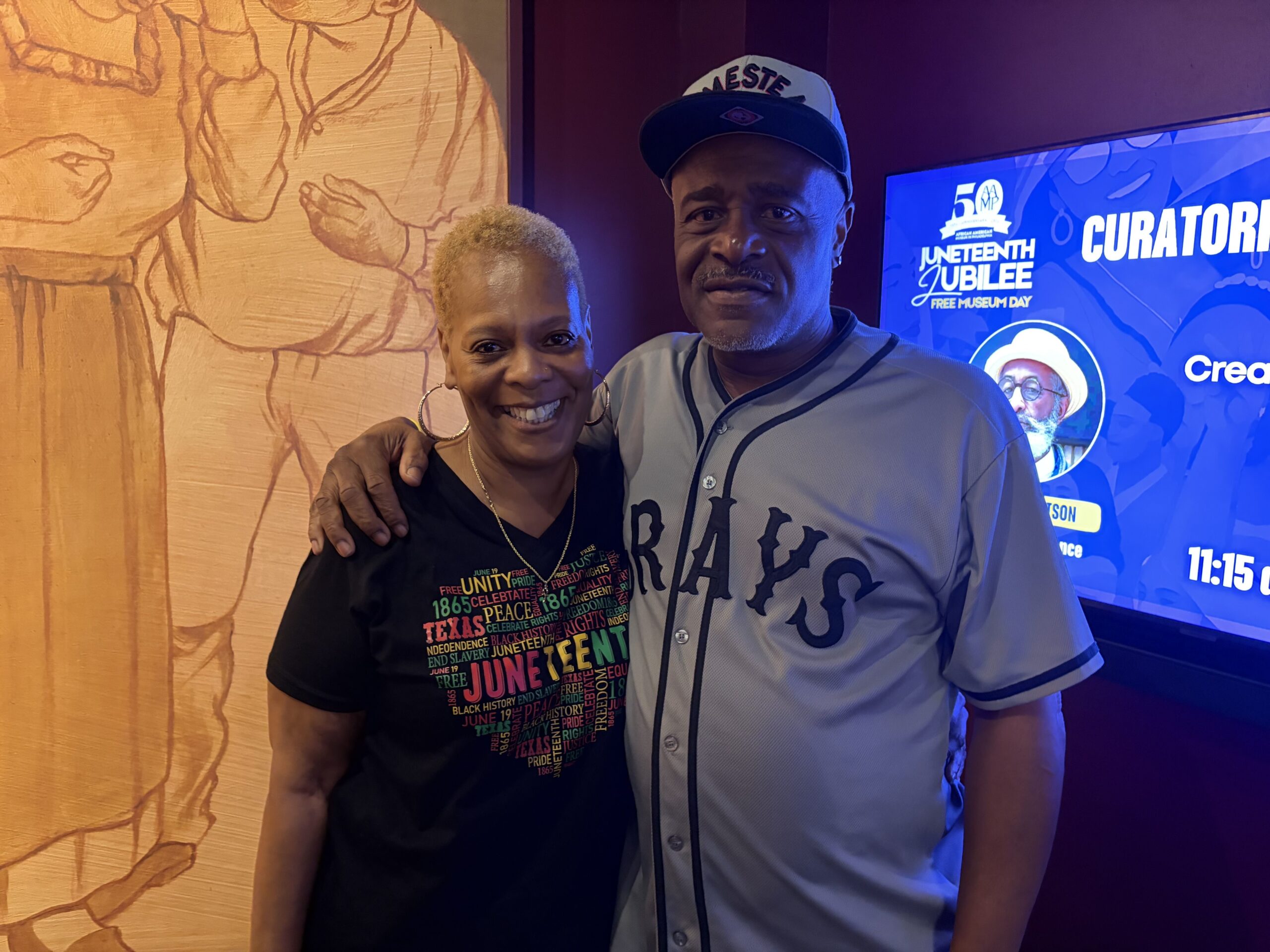
Inside the museum, Ronald Holmes, 66, of Oxford Circle wore his Josh Gibson No. 20 jersey and Homestead Grays cap, honoring the great Negro Leagues catcher.
On the first floor, Holmes encountered a new exhibit on Ona Judge, the young woman enslaved by George and Martha Washington who escaped the presidential mansion in Philadelphia on May 21, 1796. She later settled in Portsmouth, N.H.
Shirley Taylor, 65, and Ronald Holmes, 66, of Oxford Circle, inside the African American Museum of Philadelphia on Juneteenth, 2026.
A few blocks away, at the site of the President’s House, controversy over how that history is presented continued. A federal appeals court ruling issued Thursday said the Trump administration can install its own slavery exhibits over the objections of the city of Philadelphia.
Inside the AAMP, though, Judge’s story was on full display. Created in collaboration with the Ona Judge Coalition, the exhibit includes video featuring some of the panels that the Trump administration fought to remove.
“Why would they fight so hard for that?” Holmes said. “And it’s our money they use to fight to take these things down, think about that, too. It’s mind boggling. But that tells you, the struggle is not over. We celebrate where we got to right now, but you know it’s not that final celebration.”
Mayor Cherelle L. Parker attending the Juneteenth Block Party at the African American Museum in Philadelphia, Pa., on Friday, June 19, 2026.
Founded in 1976 during the nation’s Bicentennial, the African American Museum in Philadelphia was the first institution funded and built by a major municipality to preserve, interpret, and exhibit the heritage of African American history and culture.
West Powelton Steppers at the Philly African American Museum’s Juneteenth block party. pic.twitter.com/5EqiGASe6q
The Juneteenth Jubilee kicks off the 16-day Wawa Welcome America festival, which culminates in the city’s celebration of the 250th anniversary of the signing of the Declaration of Independence.
The Juneteenth holiday, which former President Biden made a federal holiday in 2021, celebrates the day in 1865 when a Union general arrived in Galveston, Texas, and informed enslaved African Americans that the Civil War had ended and they were free — more than two years after President Abraham Lincoln issued the Emancipation Proclamation.
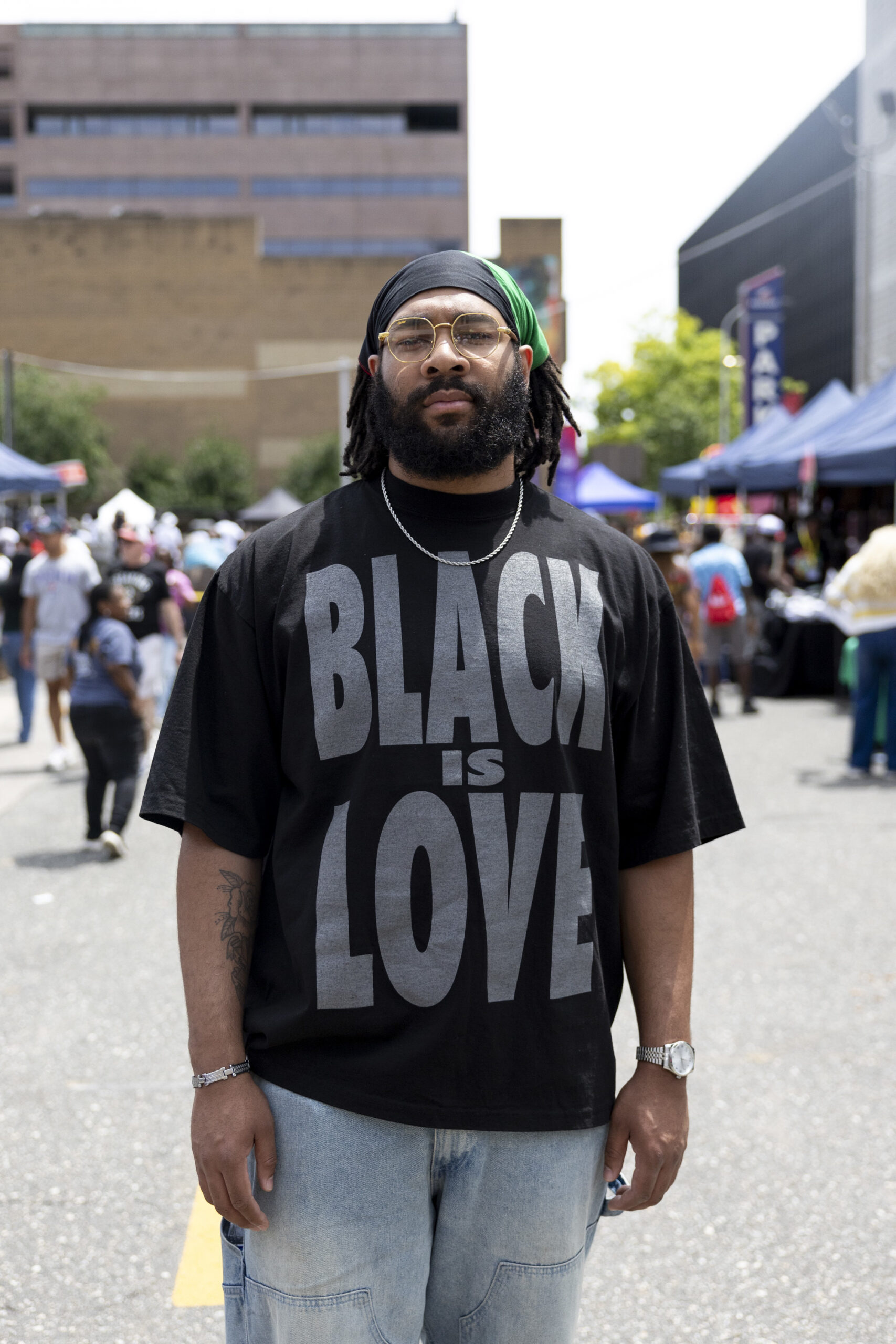
Aquil Dantzler, 26, of West Philadelphia, Pa., Singer and Song writer, poses for a portrait at the Juneteenth Block Party at the African American Museum in Philadelphia, Pa., on Friday, June 19, 2026.
Philadelphia Mayor Cherelle L. Parker, attending the block party, said the museum played a “super huge role” in preserving the city’s history and that she remains committed to raising enough money to move the museum to the Benjamin Franklin Parkway. There’s currently $50 million set aside for that move, she said.
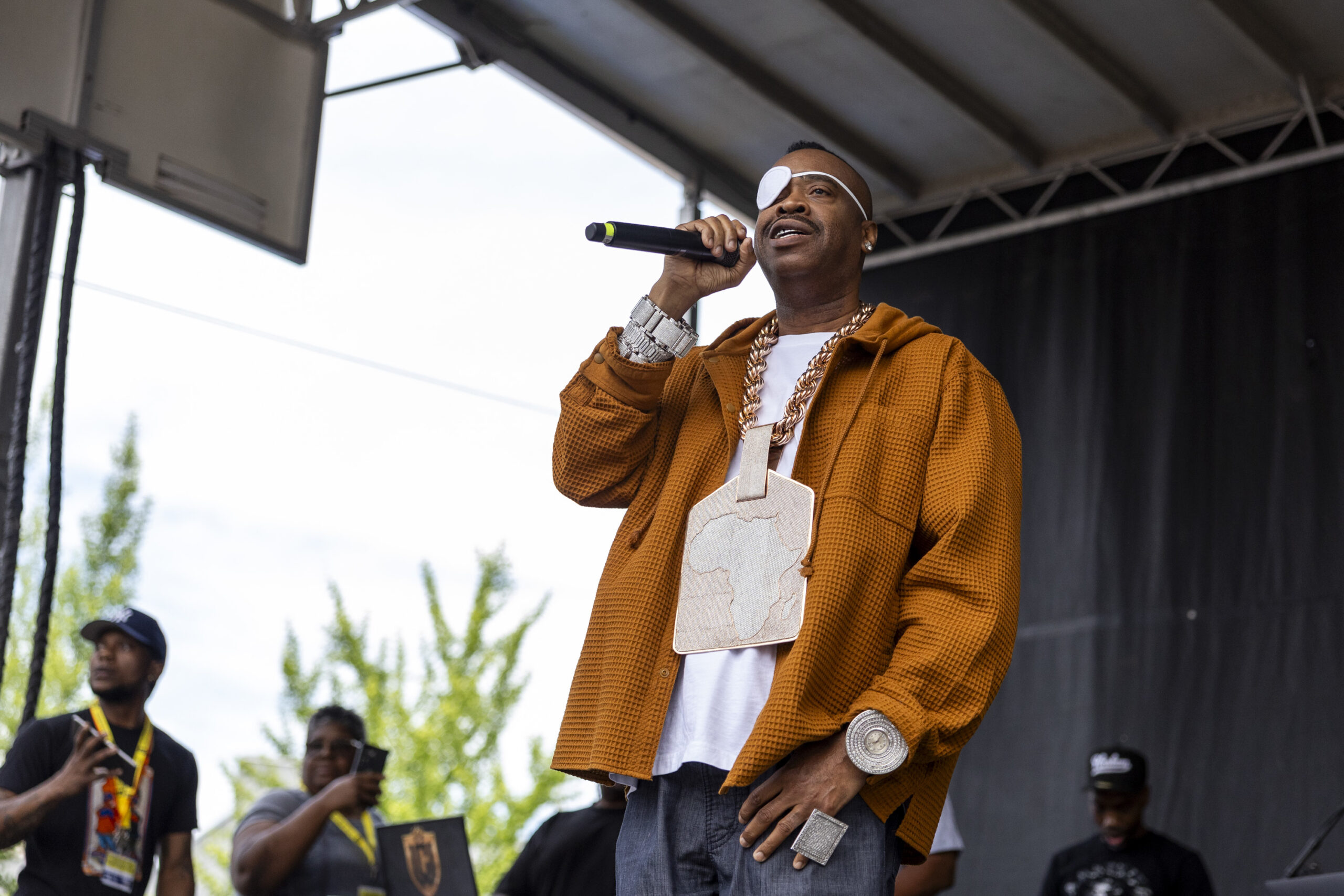
Slick Rick performing at the Juneteenth Block Party at the African American Museum in Philadelphia, Pa., on Friday, June 19, 2026.
After posing for photos with 6-year-old Salani Williams, the Little Miss Black America Ambassador, Parker she said the city would continue the legal fight to determine what is displayed at the President’s House site.
“We do need to think about what it looks like telling the true story of the birthplace of our nation,” she said.
Pennsylvania Gov. Josh Shapiro stopped by the museum in the afternoon and, after touring its exhibits, told reporters he would coordinate with Parker on the city’s response to the President’s House ruling.
“Look, it is unfortunate the president continues to try and whitewash our history,” Shapiro said. “I am not going to back down in the face of these attacks coming from the federal government against understanding our freedom, even the painful parts of it.”
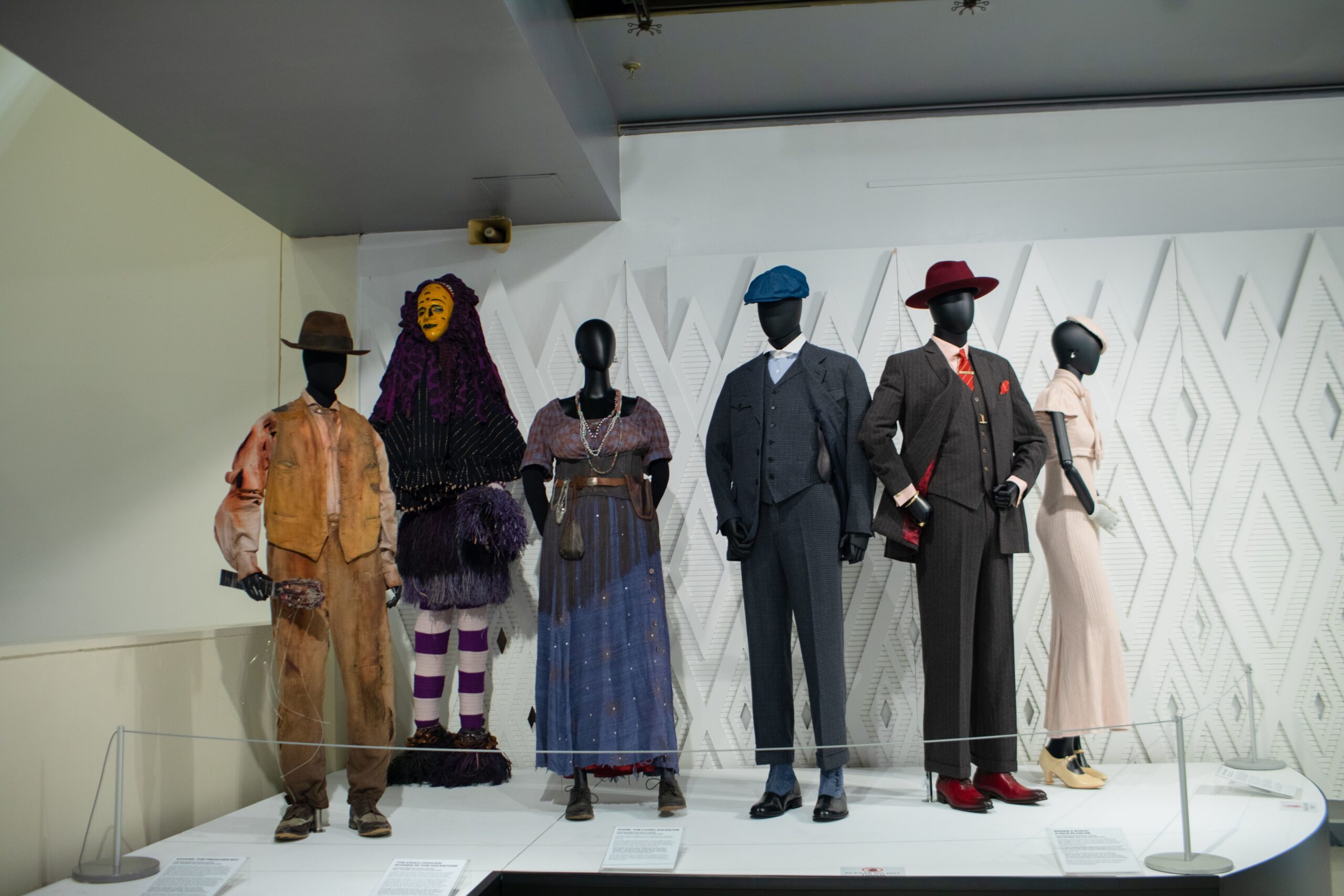
The museum is also hosting “Ruth E. Carter: Afrofuturism in Costume Design,” a touring exhibition featuring more than 80 original designs from the two-time Academy Award-winning costume designer from films including Black Panther, Sinners, Do the Right Thing,Coming 2 America, and Malcolm X.
Costumes from the movie Sinners from the exhibit “Ruth E. Carter: Afrofuturism in Costume Design” exhibition at the African American Museum of Phiadelphia.
By afternoon, an exuberant, old-school block party had taken over the space behind the museum as thousands danced to performances by Doug E. Fresh, Slick Rick, Leah Jenea, and DJ Jazzy Jeff.
“There’s only one Philly baby,” Doug E. Fresh told the crowd before recounting the history behind Juneteenth. “A long time ago, when slavery existed, it was supposed to be ended and they extended it 2 1/2 years more. It was a crime. It was disrespectful. But as usual, Black people survived. And thrived.” .”
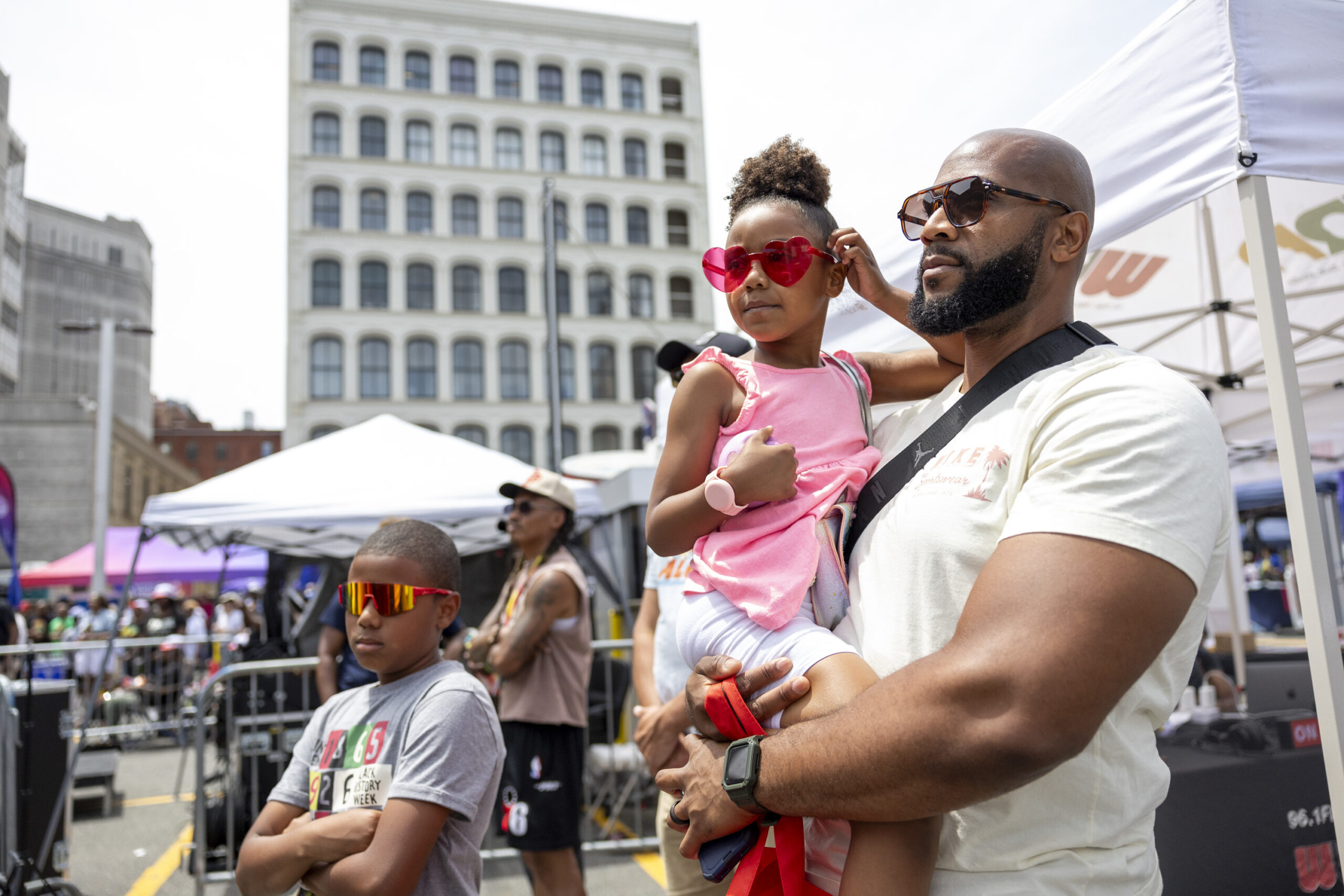
Aaron McCord, of Morrisville, Pa., is with his daughter Charli, 5, and son Bryson, 9, at the Juneteenth Block Party at the African American Museum in Philadelphia, Pa., on Friday, June 19, 2026.
There were local performers, artists, food trucks, children’s activities, and a vendor village of jewelry and crafts.
Tyshia and Joseph Ingram displayed their “ABC Affirmations” flash cards from their business, Liberated Young, they started for their daughter.
“The day historically, but also what we’re going through in our country right now, is really important,“ Tyshia said. ”One of our favorite affirmations is F is for free.”
Ashley Jordan, the museum’s president and CEO, said she was excited about the museum’s role in the 250th celebration and its future.
The Ona Judge exhibit and the President’s House dispute, she said, “show why Black museums matter.”
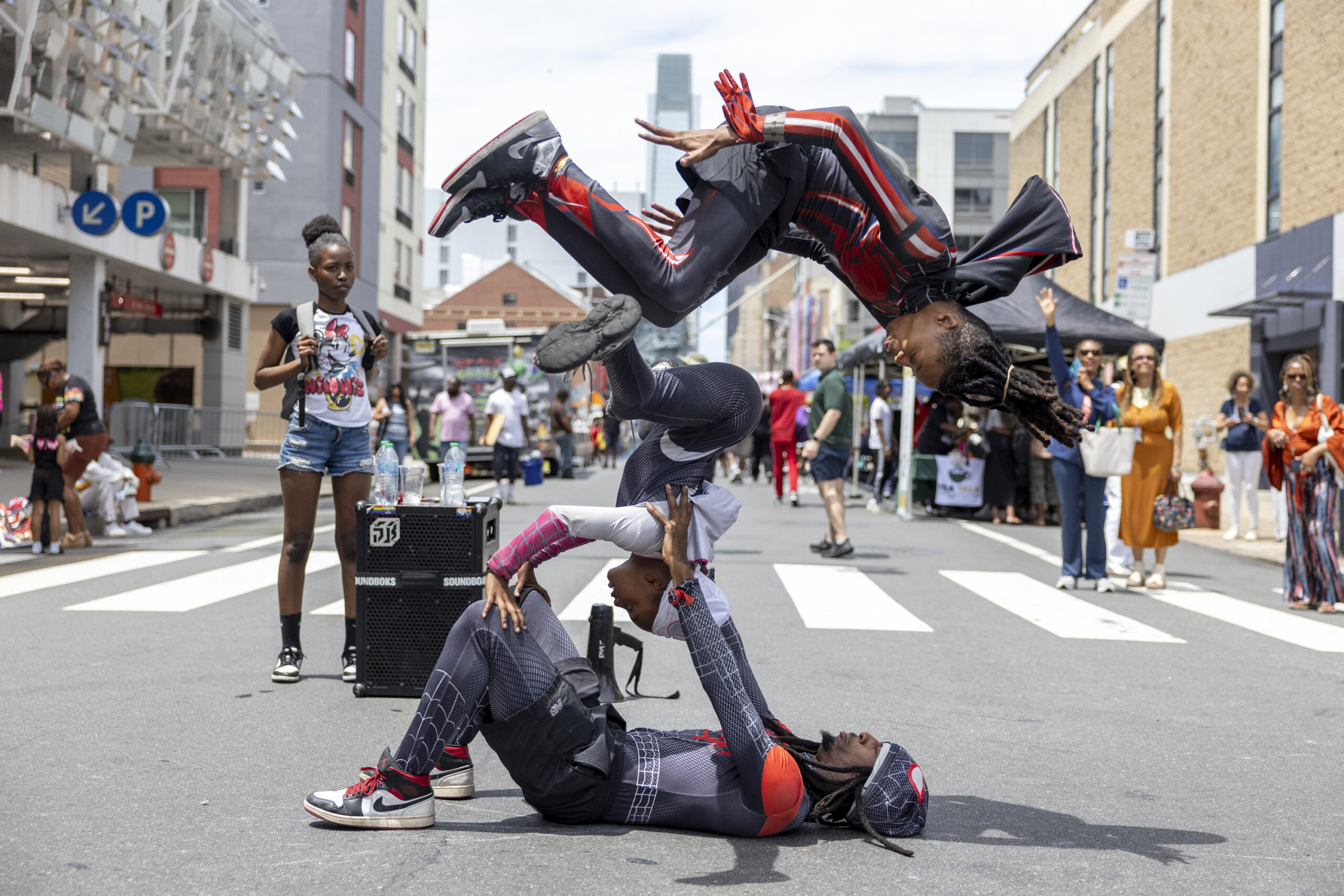
Crowd Pleaserz Donnie “Nyce” Thompson, of North Philadelphia, his daughter Aniyah, 8, and son Jaden, 16, performing on the street for folks attending the Juneteenth Block Party at the African American Museum in Philadelphia, Pa., on Friday, June 19, 2026.
“There was a time when the complete story wasn’t being told,” she said. “Entities like us matter so stories can be told unimpaired. It lives here as its own story, its own entity, complete with its own panels.”
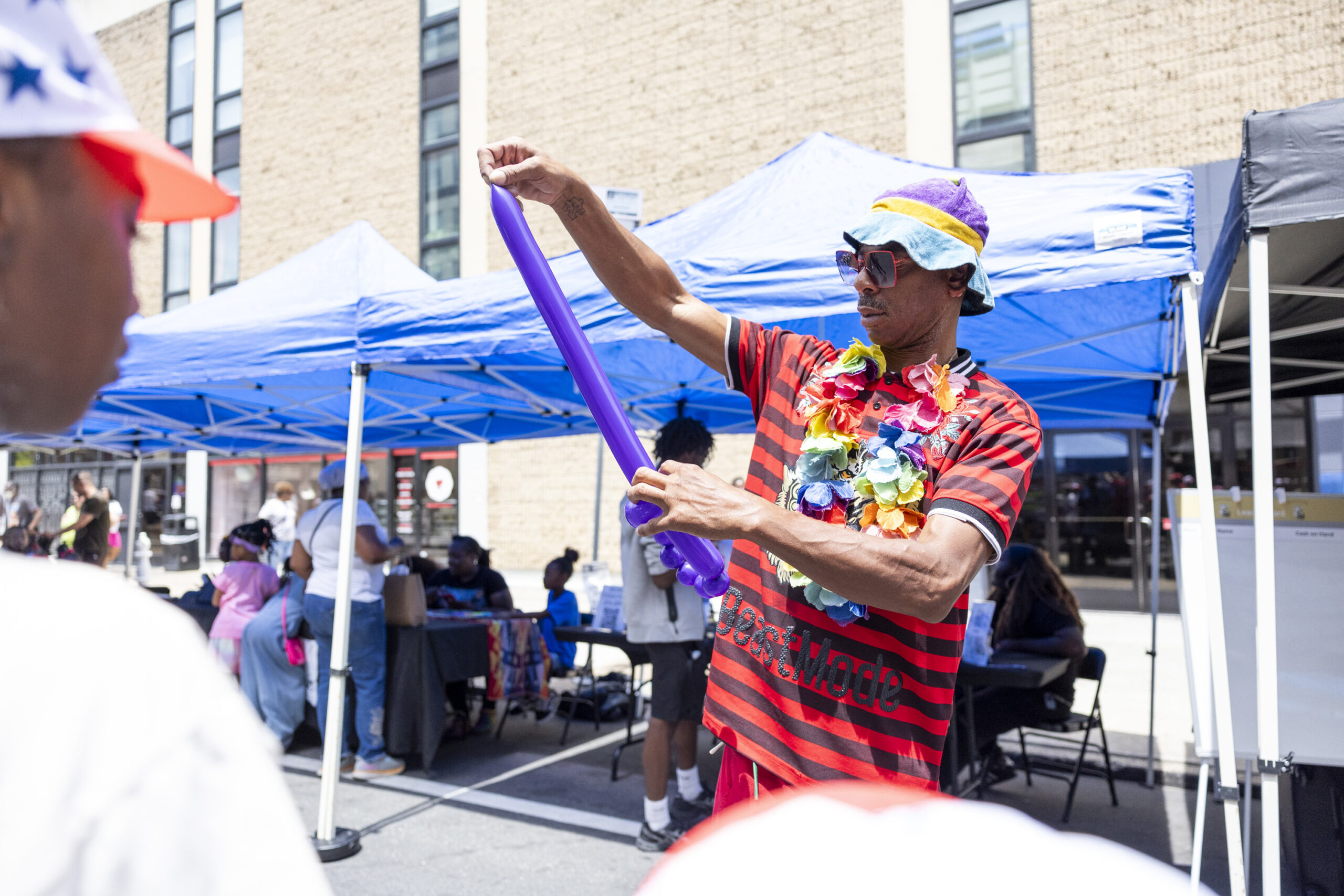
Marquez Efferson, of Northeast Philadelphia, Mlanjeni Magical Touring Theater, making balloons for folks attending the Juneteenth Block Party at the African American Museum in Philadelphia, Pa., on Friday, June 19, 2026.
The museum’s exhibit “Audacious Freedom” has been expanded to include modern Philadelphia heroes, she said. “You don’t have to look far for history,” she said. “There’s Leon Sullivan, Cecil B. Moore, and Patti LaBelle.”
Tiffany White and her niece, Walene White, in line outside the African American Museum of Philadelphia on Juneteenth 2026.
Waiting in line, Tiffany White, 37, reflected on the holiday’s significance. “I can’t believe that it took so long to become a holiday,” she said. “And then people didn’t know, and two years later, they were still slaves? It’s crazy.”
Alaina Gibbs, an innovation strategist at Main Line Health, attended with about 50 colleagues through the health system’s Belonging and Inclusion employee resource group.
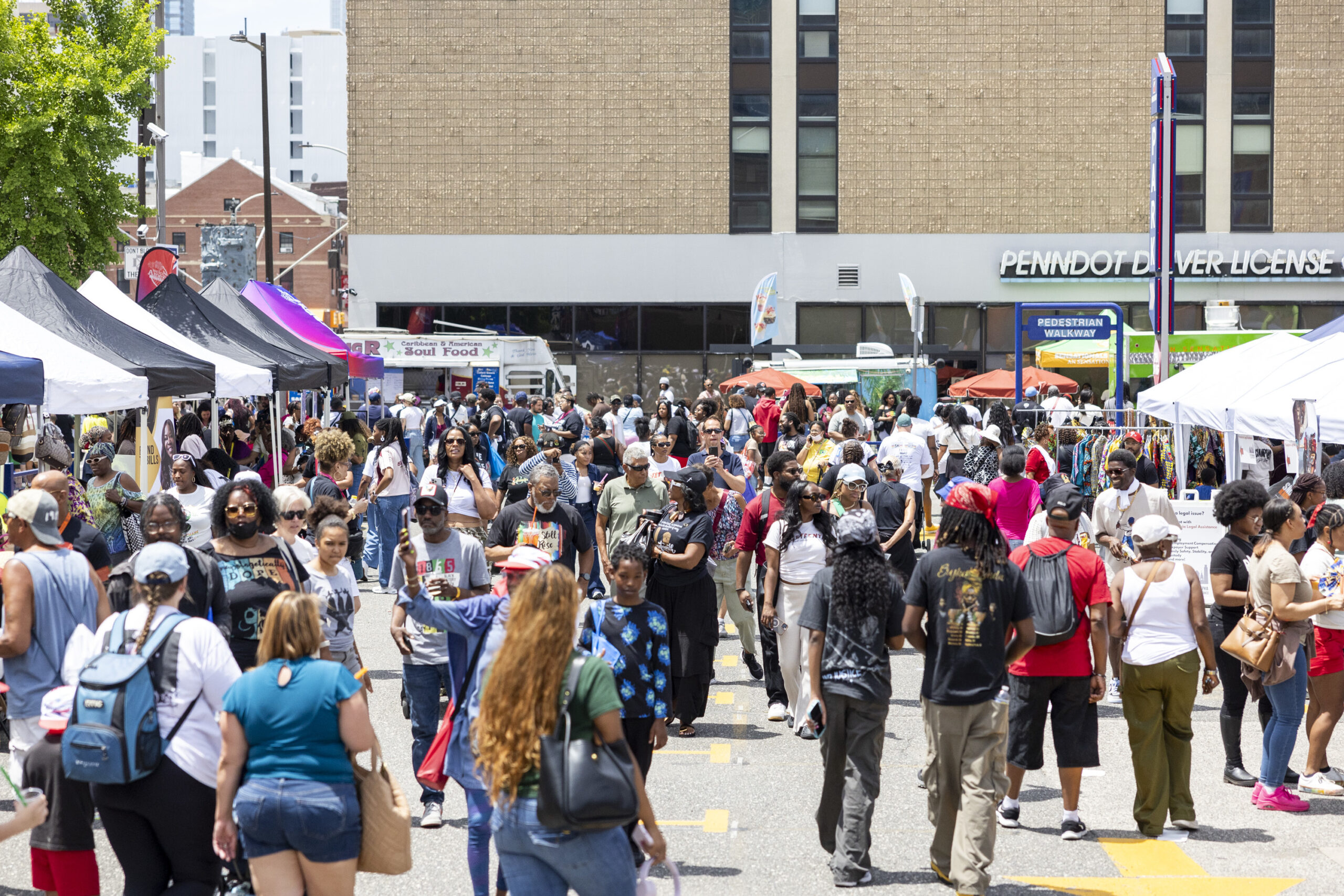
Many gather for this years Juneteenth Block Party at the African American Museum in Philadelphia, Pa., on Friday, June 19, 2026.
Gibbs and colleague Michelle Johnson, 47, said the visit was part of an effort to engage more with the community.
“Today was the perfect place to do that,” Johnson said.
Juneteenth is “really about how you look back at your roots, find your cultural connection, and it’s about observing the freedom that we all enjoy and celebrate,” Gibbs said. “It’s progress.”
Noting the communication breakdown at the heart of the Juneteenth story, Gibbs added: “It brings the community back together to celebrate the freedom and the communication that’s needed to keep community connections.”
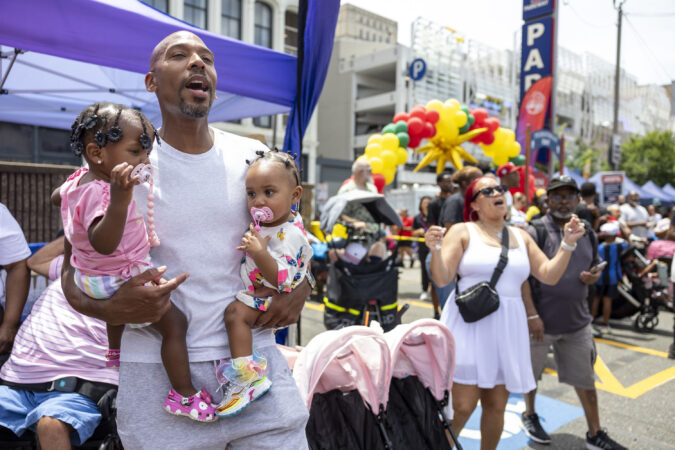
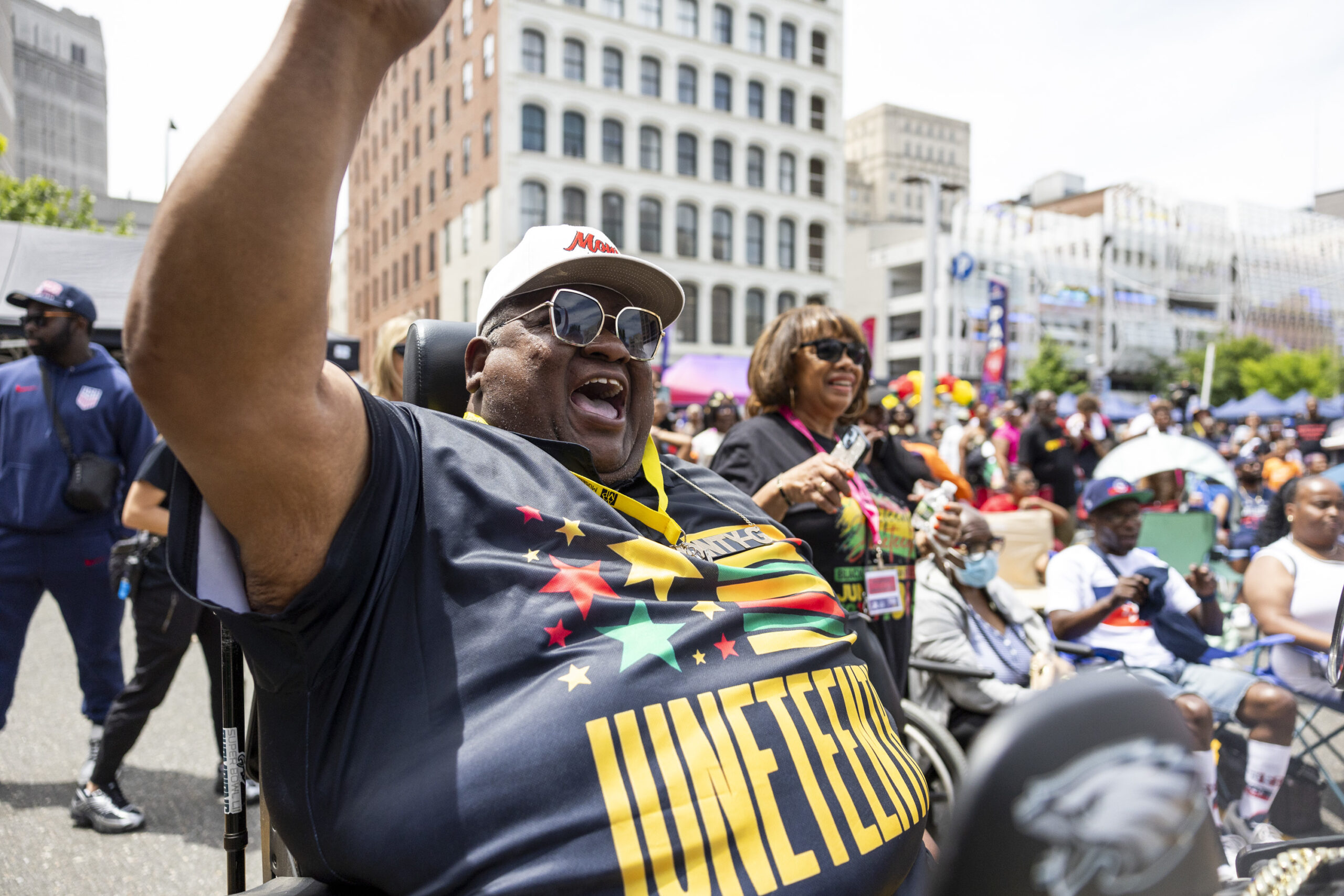
Monty-G, of South Philadelphia, Pa., seen out in the crowd as Mayor Cherelle L. Parker speaks at the Juneteenth Block Party at the African American Museum in Philadelphia, Pa., on Friday, June 19, 2026.
“I like seeing the positivity and the togetherness right now in the city, this is the first time we’re coming together as a group from our organization,” Johnson said.
Flores, meanwhile, said she was mindful of the news surrounding the President’s House and other national debates but focused on the day’s celebration.
“I tell my kids we can get inundated with negative stuff every day,” she said. “The happiness and the love — that’s what I look for.”
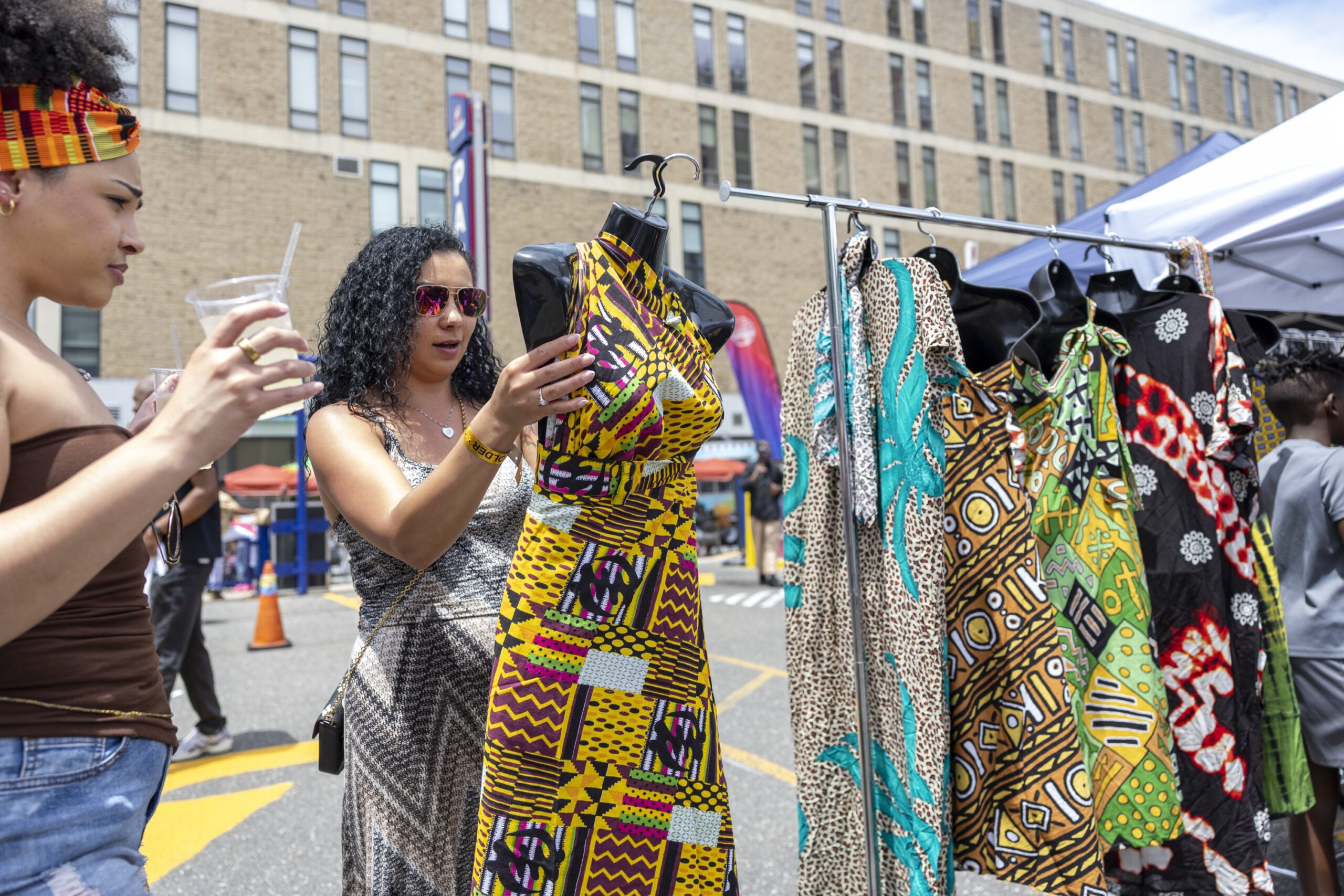
Kids playing a basketball game at the Juneteenth Block Party at the African American Museum in Philadelphia, Pa., on Friday, June 19, 2026.Alexis Nixon, of Salt Lake City, Utah, is checking out GG Afrikan Elganz clothes during her visit to see her brother Daeshawn Nixon, of Brynmawr, Pa., at the Juneteenth Block Party at the African American Museum in Philadelphia, Pa., on Friday, June 19, 2026.Kingkilliam Kato, 5, of Camden, N.J., is with his mom Annagjid Kato, for this years Juneteenth Block Party at the African American Museum in Philadelphia, Pa., on Friday, June 19, 2026.
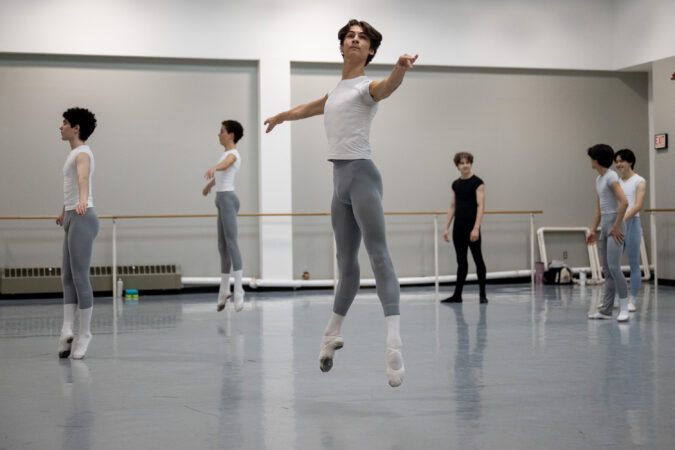
In February, the ballet student at Philly’s Rock School for Dance was one of only 38 boys (81 dancers altogether) from around the world selected to compete at the elite Prix de Lausanne in Switzerland.
He didn’t win a prize at the Prix, but he made the final and got something else valuable: a scholarship to finish his studies at England’s prestigious Royal Ballet School.
But that’s not all. Metcalf also qualified to compete in the Youth America Grand Prix Final in May in Houston.
YAGP, a much bigger competition, attracts thousands of students from 50 countries competing in locations all over the world for months leading up to the final.
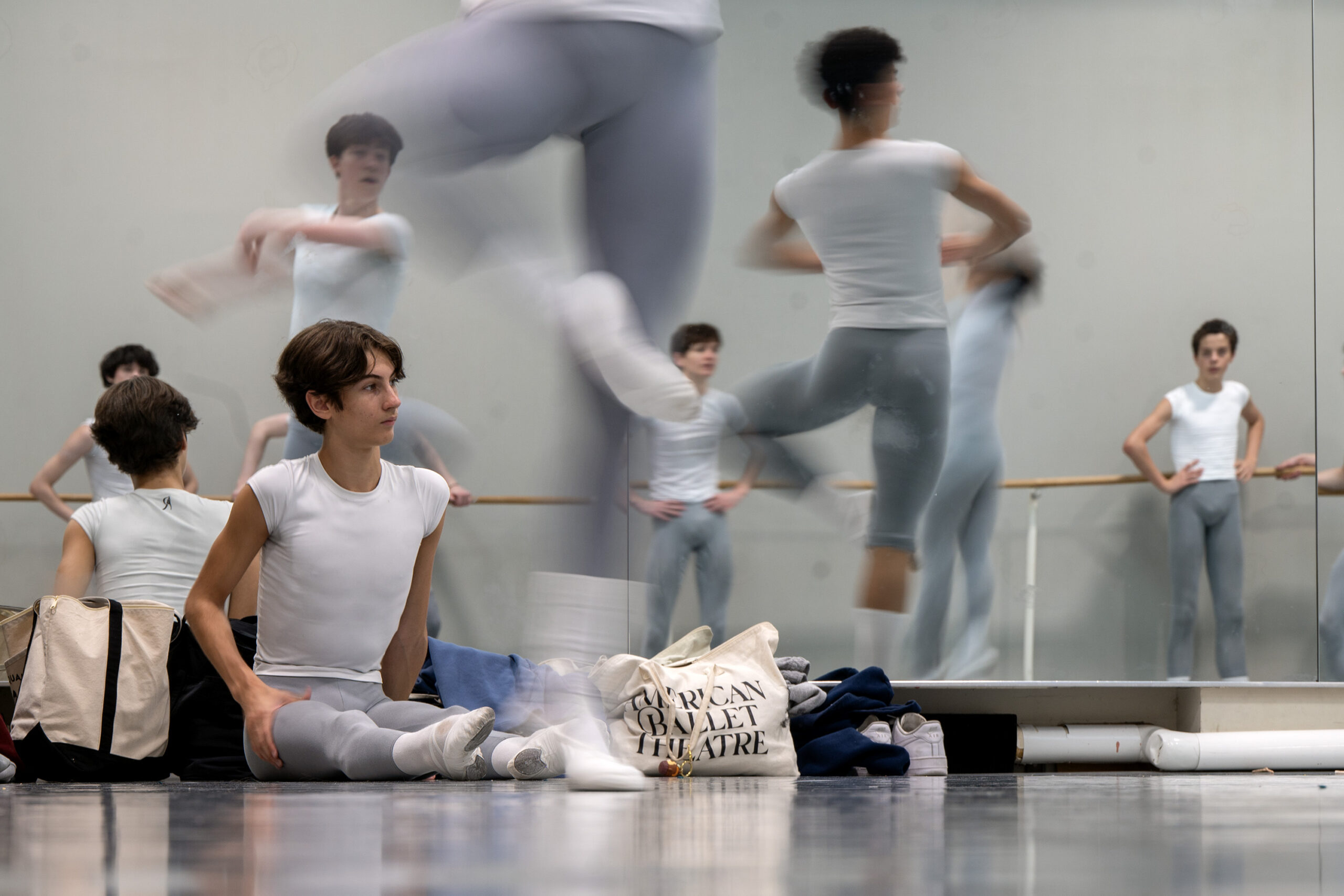
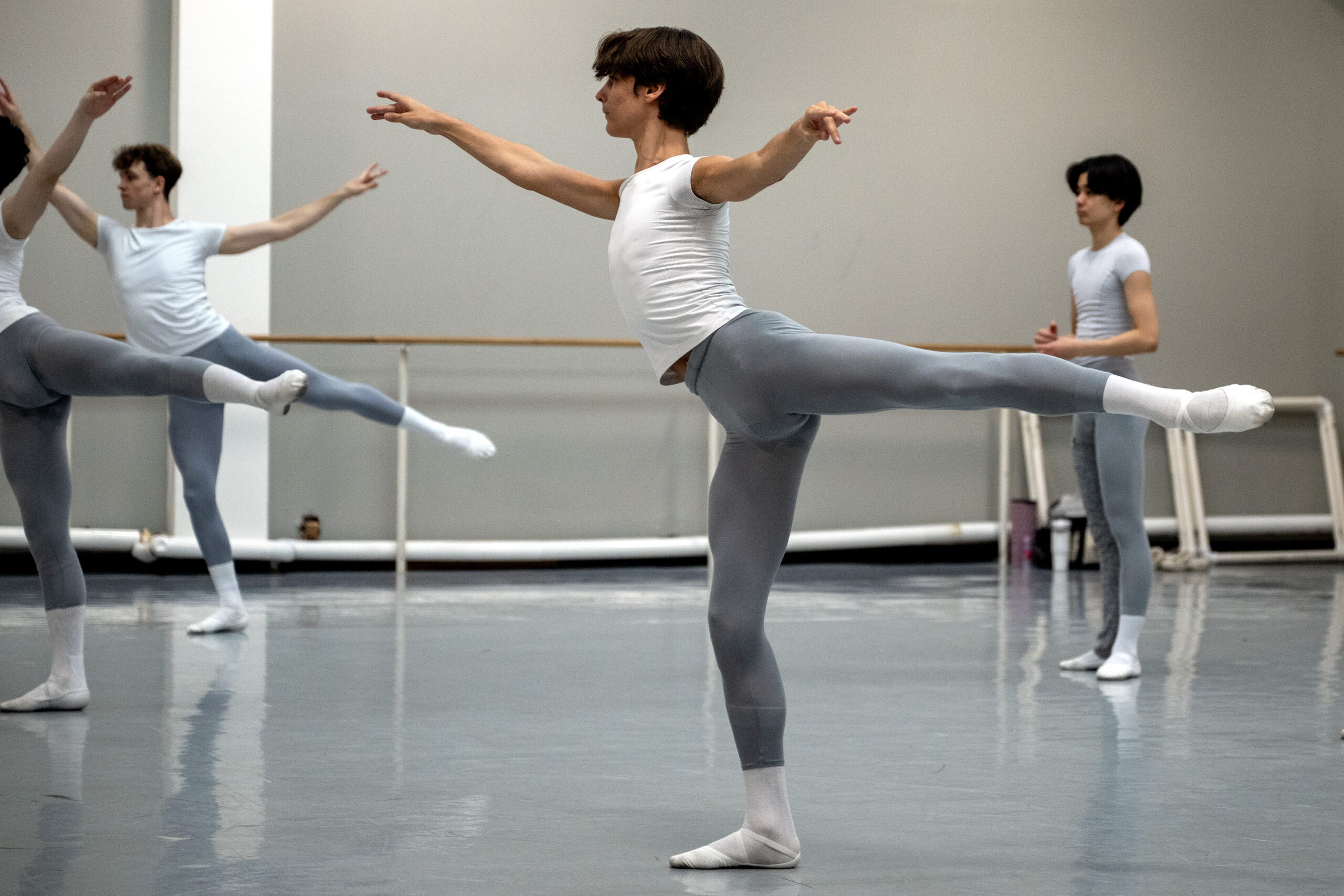
Blake Metcalf stretches and watches his classmates at the Rock School for Dance.
“There was a moment prior to YAGP [Final] where Blake and I spoke,” said Rock president and director Peter Stark, who coached Metcalf, “and I said to him that he didn’t have to do YAGP as he had his plans secured for next year.”
But Metcalf, who grew up in Lake Mary, Fla., and attended many competitions with his mother Sheri’s dance school, Xtreme Dance Studio, wanted to finish out that chapter.
Blake Metcalf in class at the Rock School for Dance.
“I was like, ‘Let me just have fun, I don’t care what happens, just have a good week,’ ” said Metcalf, who recently turned 16. “And then I made it to the final round, I was like, ‘Awesome, that’s great, first-year senior.’”
He was then invited to perform in the gala that closes out the competition, “and that was mind-blowing to me,” he said.
“I was like, ‘Oh my gosh, I’m surrounded by so many people, like professionals I look up to, that I never thought I’d even see in person, dancing on the same stage.’”
When the awards were announced, Metcalf was among the top 12 senior men. His name was the first announced, because he was the youngest, he assumed.
But he had won first place while, he later added, dealing with a cyst in one hip and a muscle strain in the other.
“I look to my right and it’s just these super tall men,” he said.
The YAGP Final turned out well for Metcalf’s classmates as well. In addition to his win, students from the Rock received three second-place awards.
“It was an extraordinary week for the Rock School,” Stark said. “For the second year in a row, we advanced more students to the final round than any other school in the world, and we ended up being the most awarded school at the competition.”
Blake Metcalf in men’s class at the Rock School.
Metcalf, Stark said, “was in a different zone at the finals and it showed in his performances. “Some of the same judges [at the Prix and YAGP final] were especially impressed with his growth.”
“Mr. Stark warmed me up every day for competition, and he took it very slow, didn’t force anything,” Metcalf said, explaining how he succeeded despite the injuries. “I kind of kept it calm and clean, and then saved myself for stage.”
So what changed between February and May?
“I think at Prix de Lausanne, I saw so much incredible talent,” Metcalf said. “I was really inspired, I subconsciously pushed myself more. I came back to Rock, and I was like, ‘alright, let’s do it, like let’s work,’ and I started improving more.”
“Blake has an extraordinary instrument for dance physically with excellent proportion and line with great flexibility and strength,” Stark said. ”However, what really makes Blake special is both his intense focus in class coupled with heartfelt artistry on stage.”
Next year in England, Metcalf expects to work on “my power, my bigger jumps. It’ll come with age,” he said, “it’ll come as I get more muscle. But yeah, I definitely need to work on my strength and my power.”
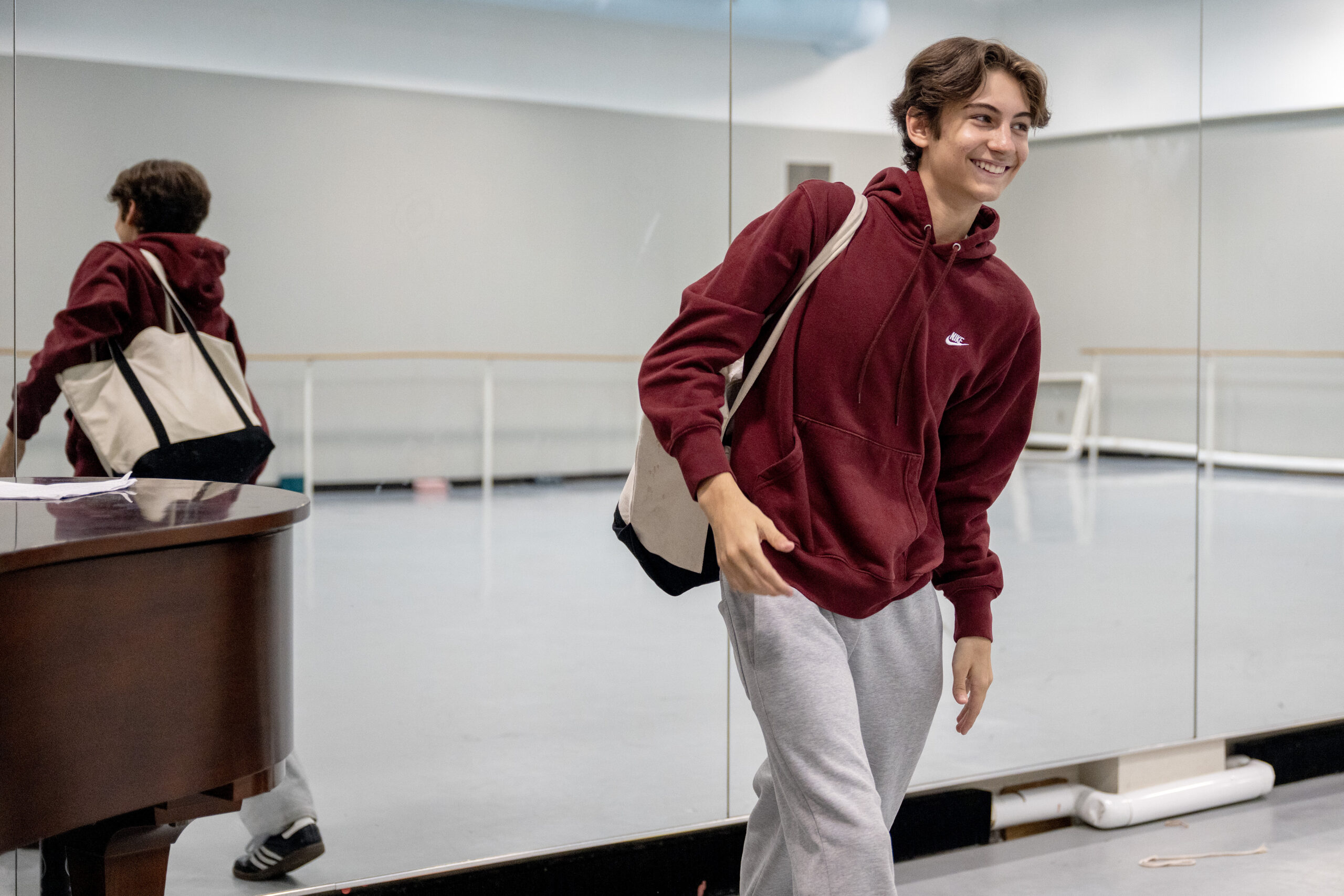
Blake Metcalf leaves the studio after class at the Rock School.
Metcalf started dance when he was 5 or 6, after watching his sister, Ash, (now a New York-based actress) dance and compete with his mother’s school.
“I really wanted to be a dancer, and my mom was like, ‘Alright, Blake, we’ll see, we’ll see.’”
His mother, he said “tried to get me to go into sports because she wanted me to … go to a college, go the academic route. But I would beg my mom every day, because I looked up to my sister a lot as a kid. Ever since then, I just started getting more and more classes, and then I left all the other worlds behind.”
He started with hip-hop. Classical dance didn’t come until he was about 11, when someone at his mom’s studio noticed that he had good feet for ballet.
Soon enough, he’ll get that degree as well. The three-year program at the Royal Ballet School not only prepares its students to join a ballet company, but it also awards its students a bachelor’s at the end.
Blake Metcalf leaves the Rock School after class.
Metcalf had never studied anywhere but his mom’s school when Stark invited him to train at the Rock School two summers ago. He enjoyed it so much that he begged to stay for the year, even though it meant leaving his family and his Boston terrier, Cannoli.
It was Philly where he really began to shine, said Metcalf, who also enjoys drawing, crocheting, knitting, and reading.
“Rock has really refined me as a dancer,” he said. “Rock has also helped me mentally, it has helped me mature, have my own mindset, not worry about what else is going on and just focus on myself.”
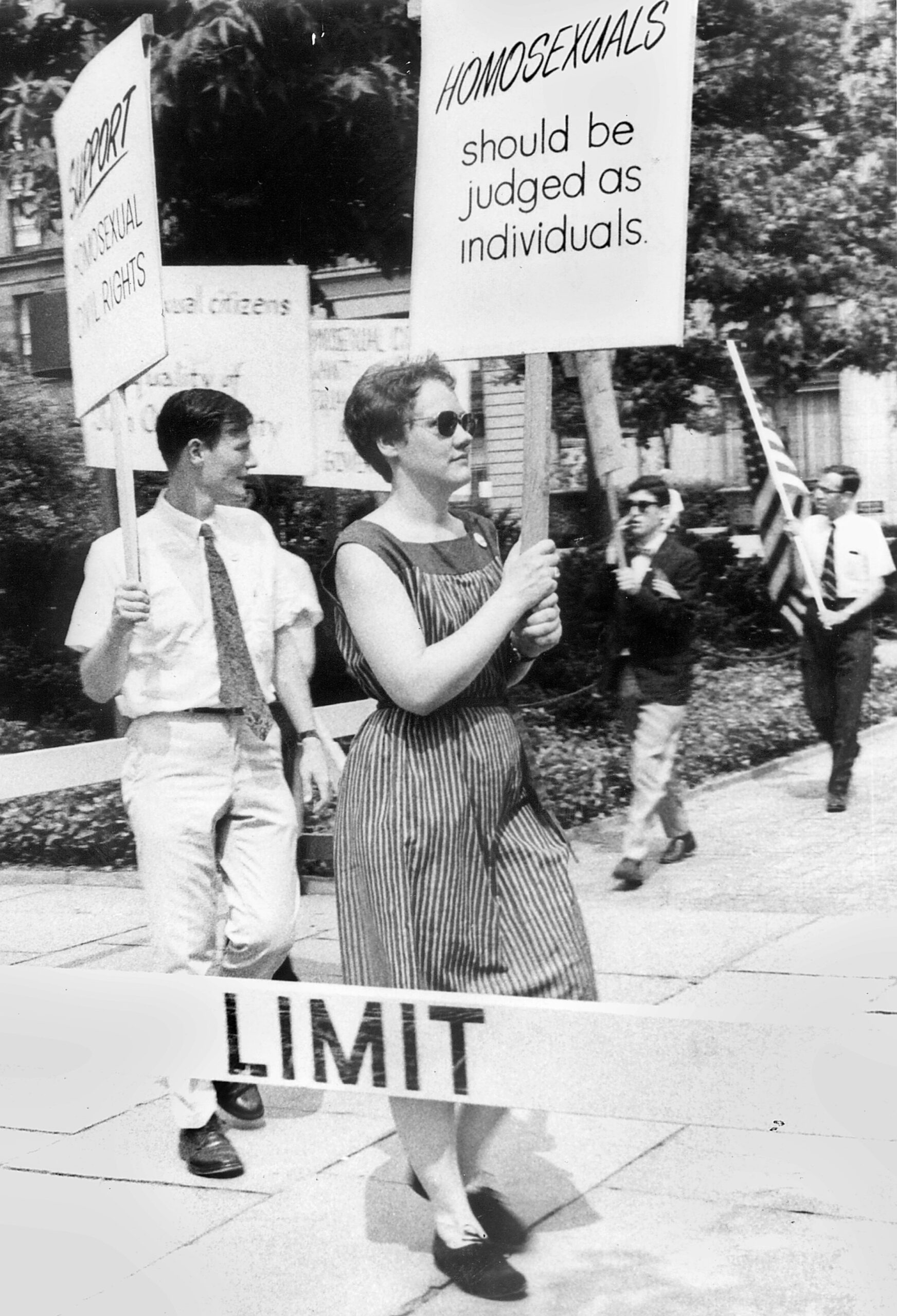
On July 4, 1965, gay activists Frank Kameny of Washington, D.C., Craig Rodwell of New York, and Barbara Gittings of Philadelphia gathered 40 of their LGBTQ brethren in front of Independence Hall to demand equality.
Dressed in three-piece suits, dresses, pumps, and spit-shined tie-ups, the marchers protested discriminatory policies that allowed gay people to be fired from government jobs and to be denied entry into military service.
Their slogan: “We don’t dodge the draft … the draft dodges us.”
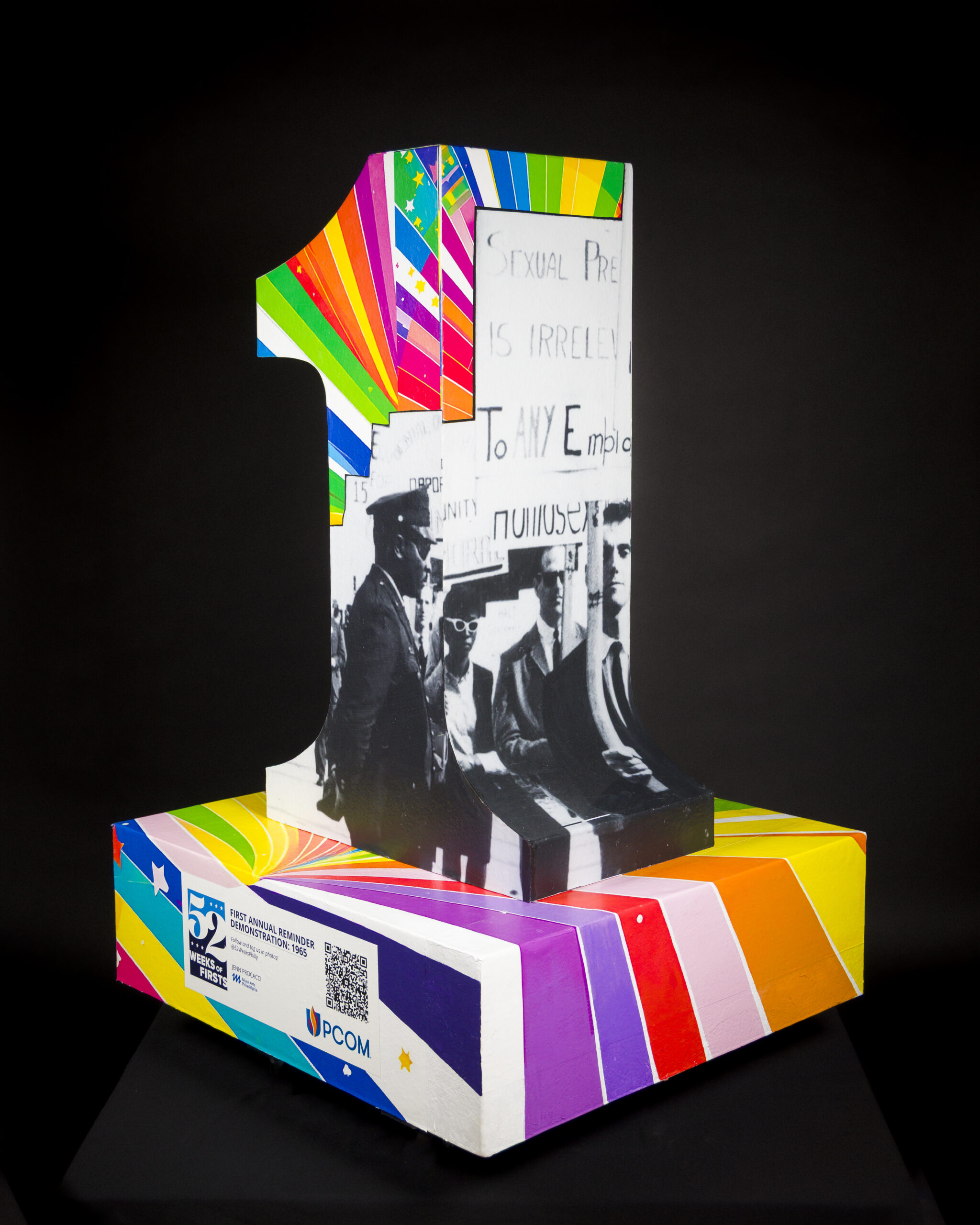
Artist Jen Proacci’s sculpture features . historic photographs of a Remberance Day event rendered as a high-resolution print, paired with a vibrant rainbow sky that symbolizes the LGBTQ+ community’s ongoing pursuit of equality, protection and freedom.
Held four years before the Stonewall Uprising in 1969, the march made history as the country’s first gay rights demonstration. That 1965 march became an annual protest, now known as the Remembrance March.
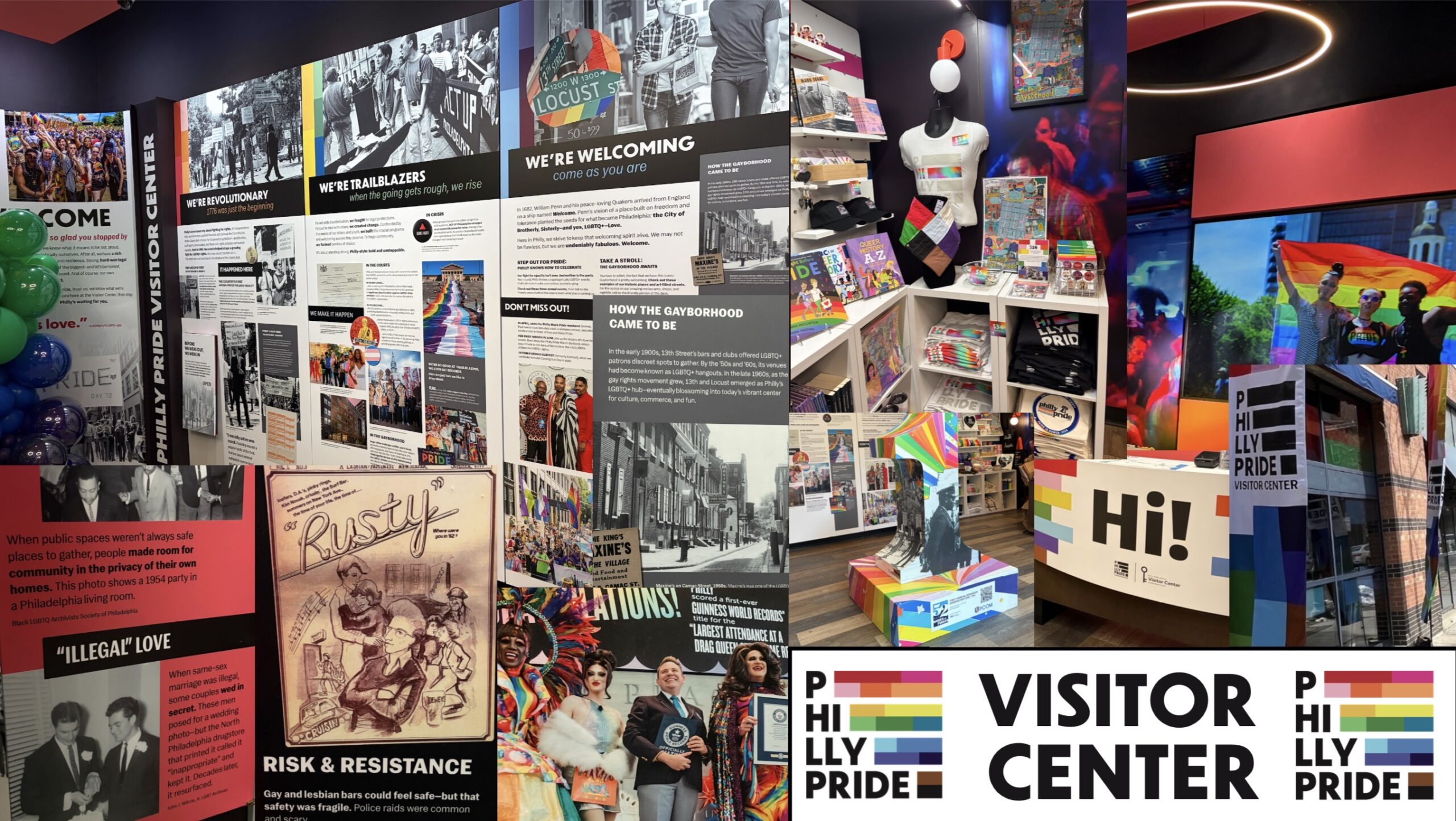
The first gathering in 1965 will be celebrated at Philly Pride Visitor Center on Saturday, one of Philadelphia Historic District’s weekly firstival celebrations. Each week in 2026, the Historic District is throwing a day party honoring important events that happened in Philadelphia before anywhere else in the nation and often the world.
“They were the only 40 to 100 people willing to get on the picket line for gay rights for those five years for the entire nation,” said Mark Segal, editor of the Philadelphia Gay News, who was a teenager in 1965.
Picket at Independence Hall, Philadelphia. July 4, 1965. Randy Wicker (L), Barbara Gittings (R)
“It was the one and only march of its kind, and it was national,” he said. “People came from Chicago, Los Angeles, San Francisco. If you were someone involved in getting equality for homosexuals at the time, then you were there.”
Remembrance Marches predated Stonewall but they didn’t lead to Stonewall, Segal added.
The Philadelphia demonstrators in the late 1960s were out of the closet but were still very conservative.
“We were fighting for federal employment,” Kay Tobin Lahusen, the first openly gay American photojournalist, and Gittings’ partner, told The Inquirer in 2007 after Gittings’ death. “We wanted to look employable.”
That conservative energy largely excluded young people at that time, including Segal.
“I wasn’t allowed to march in the Remembrance Marches because I was too young. I didn’t want to wear a suit and tie. I wanted to protest in my jeans and my T-shirts. As a Philadelphian, I loved my city. I appreciated the marches and respect these brave people. But we were ready to smash invisibility.”
Early photos of Philadelphia-based Gay Pride marches part of a collage in the Philly Pride Visitor Center.
That sentiment bubbled across the nation.
Early in the morning of June 28, 1969, LGBTQ protesters led a series of demonstrations against police raids at the now historic gay bar, Stonewall Inn, in New York City’s Greenwich Village.
As a contrast to the more conservative Remembrance Marches, the Stonewall Riots, which Rodwell also participated in, were more disruptive and intersectional. Trans women of color, like Sylvia Rivera and Marsha P. Johnson, would eventually go on to become key figures in the uprisings.
Philadelphia’s last Remembrance March took place the following week.
The following June, East Coast Regional Conference of Homophile Organizations, also known as ERCHO, adopted a resolution in Philadelphia ending Remembrance March.
“We went from 40 to 100 people in Philadelphia to more than 15,000 in New York,” Segal said.
“The Remembrance Days are important,” echoed Kristopher Lawrence, Philly Pride Visitor Center’s supervisor. “We were all trying to get to the same place, but we had different views on how we thought it should be done.”
This week’s Firstival is Saturday, June 20, 11 a.m.-1 p.m., at the Philly Pride Visitor Center, 1139 Locust St.
A Point Breeze rowhouse, now available for rent, offers residents a chance to live with a one-of-a-kindwork of art — the only Keith Haring collaborative mural that is still intact and in its original location in the world.
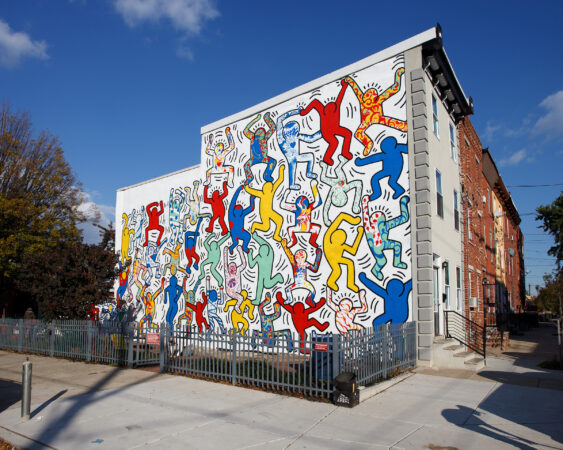
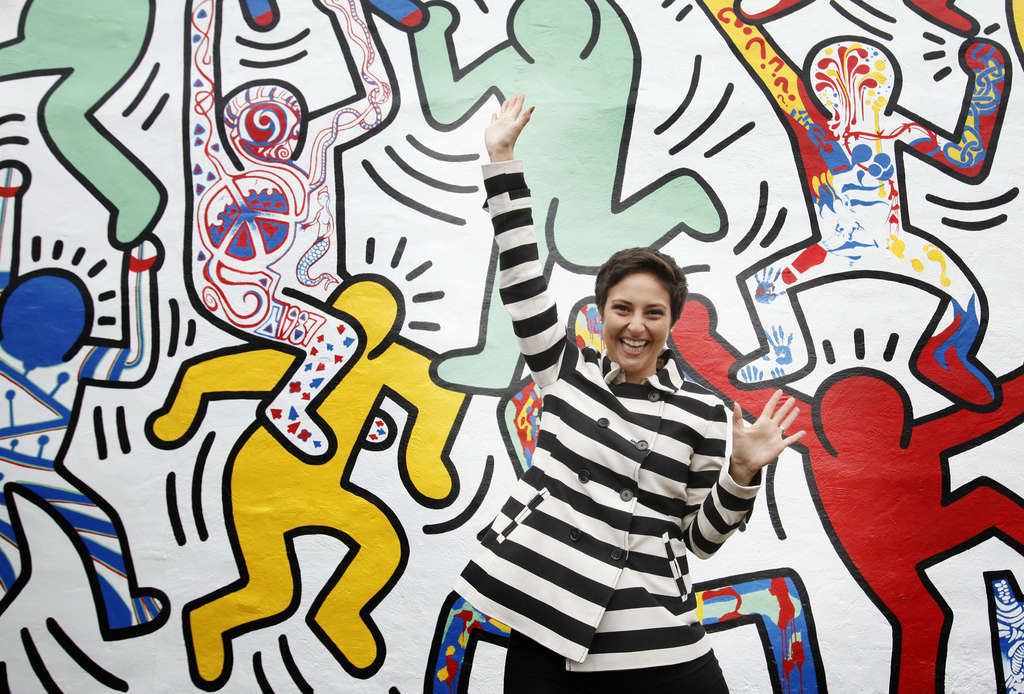
The three-bedroom home at 2147 Ellsworth St. is adorned with the acclaimed street and pop artist’s We the Youth . The mural, painted on the building’s facade, has stoodon the corner of 22nd and EllsworthStreets for almost 40 years.
“Keith believed that art was for everyone and that art should be accessible, so to have this mural still at this location for nearly 40 years is historically and culturally significant,”said Jane Golden, founder and executive director of Mural Arts Philadelphia.
The muralfeatures an array of Haring’s trademark dancing figures filled with bright colors and patterns. Italso has a small garden next to it, affectionately called “Haring Park,” which has been tended by neighborhood residents since the 1980s.
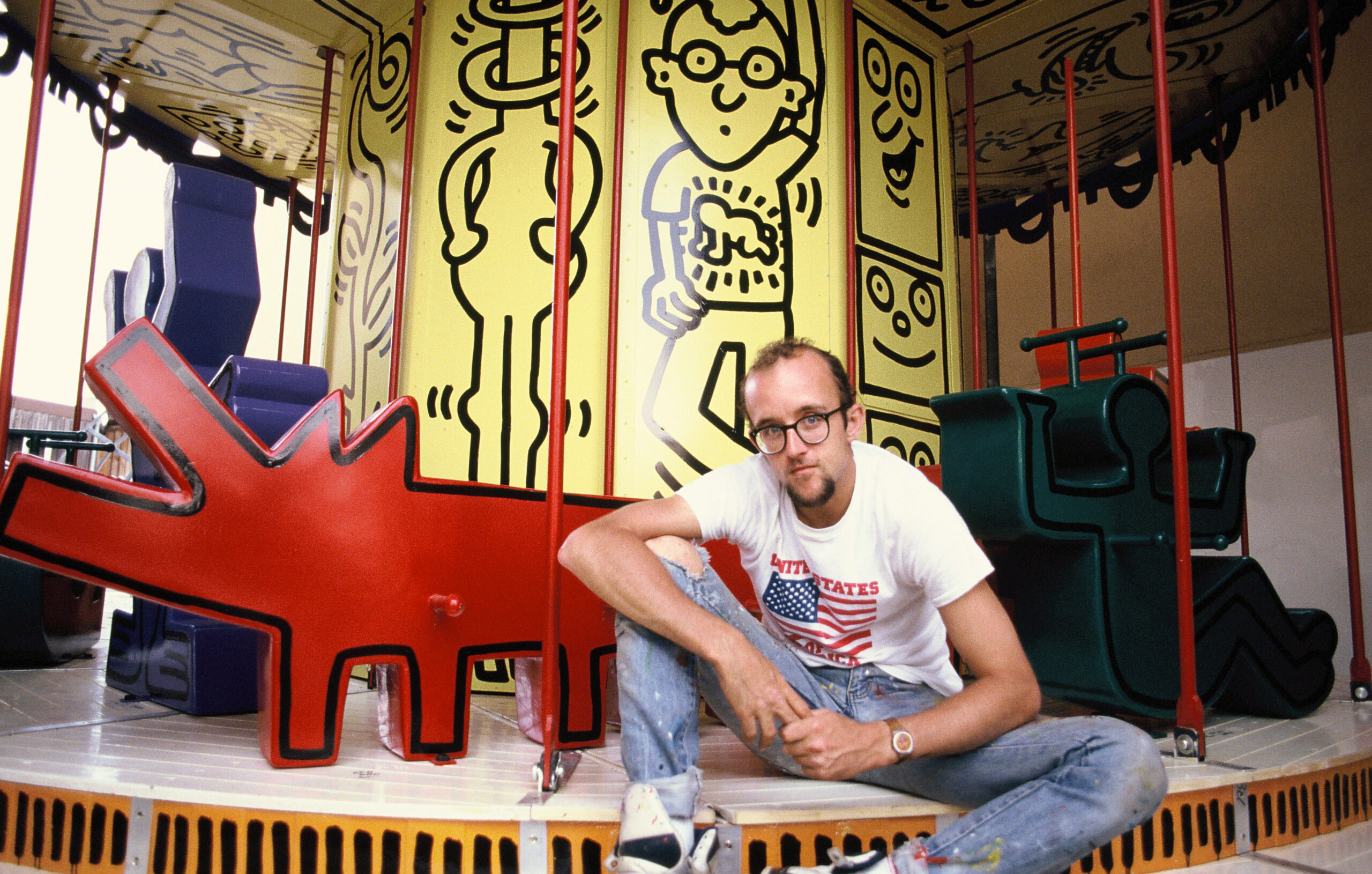
Keith Haring, who died in 1990, with his painted carousel.
Haring, who was born in Reading in 1958 and raised in Kutztown, drew the mural over a few days in September 1987, coinciding with the U.S. Constitution’s bicentennial. The title of the mural pays homage to the Constitution’s opening lines.
Its location was important to Haring.
He did not want the mural to be in a more upscale, trendy part of the city, one of the mural’s student collaborators, Rita Martello, told online art marketplaceArtsy in 2022.
“He wanted to put it in an actual urban neighborhood,” Martello said to Artsy.
Invited by two nonprofits that worked with youth, CityKids NYC and Brandywine Workshop, Haring worked with 14 students. While some of the dancing figures are solid colored, others feature unique patterns and symbols, all contributed by the students.
“Wherever [murals] are, they provide a foundation where change can begin,” said Golden. “They are a vehicle through which important stories are told, and they allow Philadelphia to maintain its status as a global leader in the arts and culture arena.”
Presently about 1,000 murals are displayed on the sides of residential homes in Philadelphia through partnerships with Mural Arts.
Erica Bryant mimics a figure from the Keith Haring mural on the Point Breeze house she and her husband own. It is the only mural Keith Haring made with community groups that is still intact.
Haring, whose preferred medium was chalk, often created works that were not meant to be permanent. We the Youth too was not immune to decay over time.
In 2013, after Erica and Lucas Bryant of St. Paul, Minn., bought the house, Mural Arts undertook a massive restoration of the piece, adding several layers of paintand a protective coating against the sun, entirely replacing damaged sections, and replacing the chain link fence.
“Philly is very proud to have a Keith Haring mural and especially one embedded in the community that was done in such a collaborative manner,” said Golden.
Haring, who started making chalk drawings in the New York subway, first wanted to paint We the Youth on a garbage truck but was refused by the Philadelphia Sanitation Department.
He diedin 1990, from AIDS-related complicationsat age 31.
“You can be the only person in the world who livesin a Keith Haring art piece!” boasts the OCF Realty listing for the three-bedroom, 2 ½ bathroom apartment.
The 1,797-square-foot, three-story rowhouse was renovated in 2020and has a backyard patio andaroof deck. The property, managed by OCF Realty, rents for $3,295/month.