Category: Arts & Culture

  • Austen’s Shelf pens a new chapter with a brick-and-mortar bookstore in South Jersey

    Austen’s Shelf pens a new chapter with a brick-and-mortar bookstore in South Jersey

    On a warm weekend earlier this month, dozens of shoppers, some of them dressed in Regency-inspired apparel, milled about the city of Bordentown, in Burlington County.

    Those donning bonnets and hand fans weren’t time travelers or lost actors — they were there to celebrate the opening of a new bookshop with plenty of historic flair of its own.

    Inspired by the works of renowned 18th- and 19th-century novelist Jane Austen, Austen’s Shelf penned a new chapter June 6 with the opening of its storefront at 230 Farnsworth Ave. The bookshop, which held a period-inspired costume contest for the occasion, is part of a growing surge of independent bookstores nationwide.
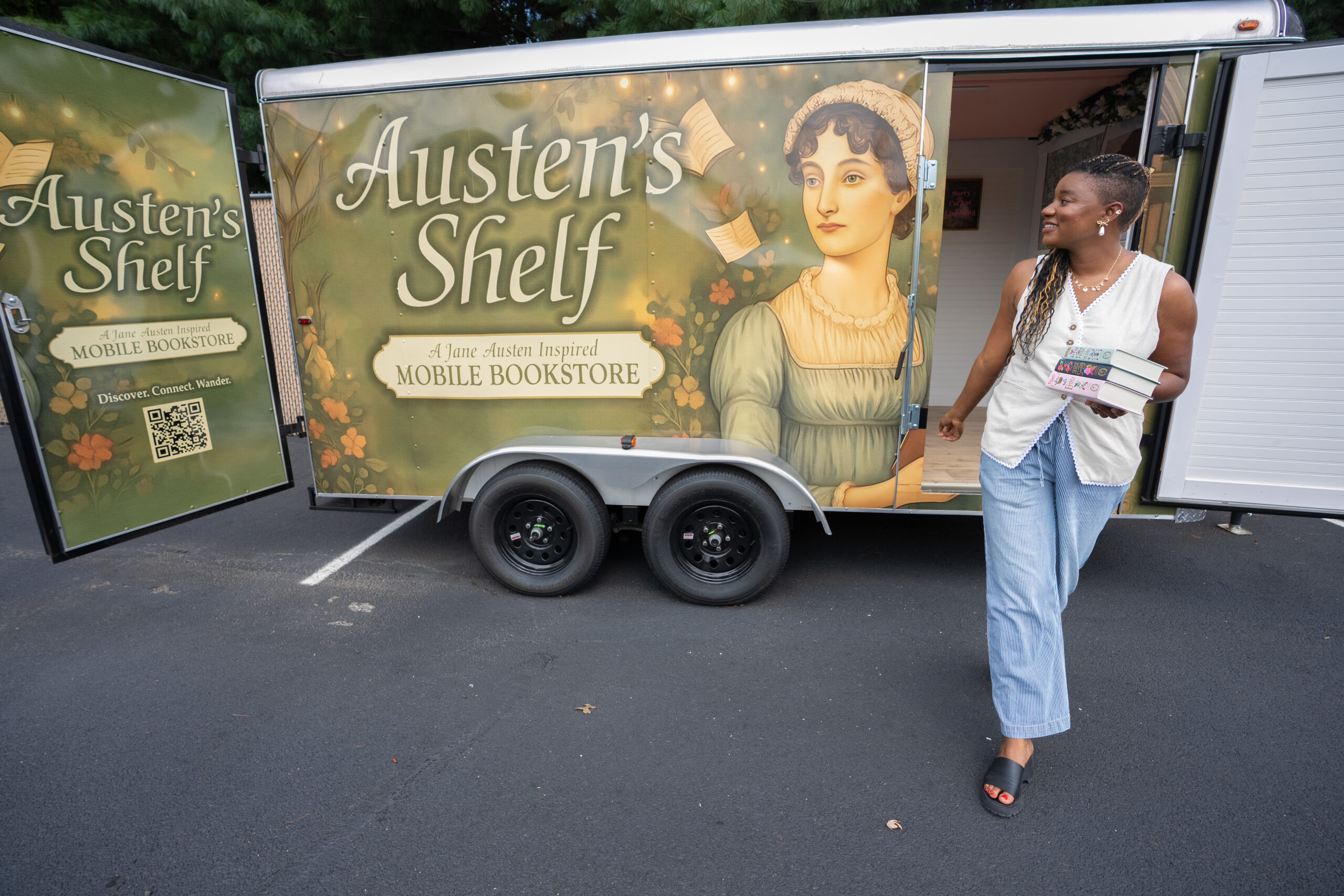
    Austen’s Shelf launched last year as a mobile bookstore in a 98-square-foot trailer.

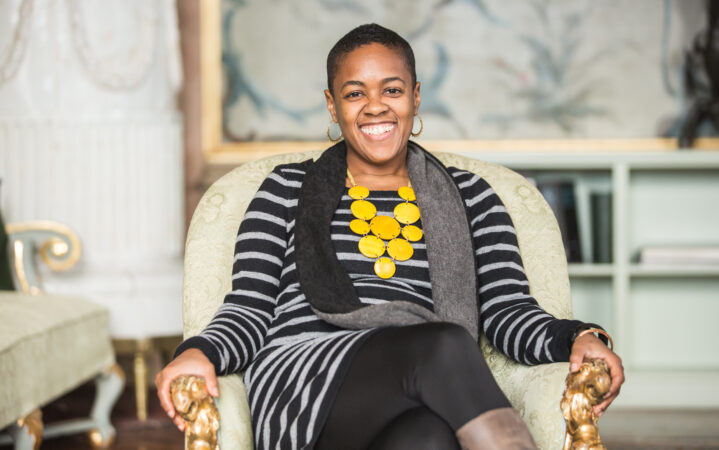
    Austen’s Shelf launched last year as a 98-square-foot mobile bookstore that popped up at festivals and events, many of them in South Jersey. It was born out of founder Charity Herndon’s desire to fulfill a lifelong dream of owning a bookstore, something she decided to pursue after facing a breast cancer scare.

    While she ultimately didn’t end up with a diagnosis, the experience changed how the now-30-year-old looked at life.

    “I feel like a completely different person than I was before the health scare,” she said. “After you get over that mountain, it’s kind of like, all systems go.”

    For Herndon, it was. Within months of her mobile shop’s September opening, she began to contemplate a more permanent space, seeing a desire from customers to “sit and linger.” With long lines forming at pop-ups, she felt like the shop had become as much about buying a book as it was a place for people to connect.

    That was further stoked after a dreary winter and one particularly busy January pop-up at Turtle Beans Coffee in Bordentown. During that event, she said visitors told Herndon “we need a bookstore like this in town.”

    While there’s already an independent bookstore there, Old Book Shop of Bordentown specializes in general used, out-of-print, and antiquarian books. Coincidentally, Jane Austen is the 21-year-old shop’s second-best selling author, owner Doug Palmieri said.

    Given the two don’t have significant crossover in their business models, he welcomes having another bookshop nearby. Like antique stores, “the more there are in one area, the better for business,” he said, adding that he got a boost during Austen’s Shelf’s opening weekend, which coincided with the New Jersey book crawl and another store’s opening.

    Independent bookstores like Austen’s Shelf are on the rise nationally. According to the American Booksellers Association, 605 new bookstore businesses opened in 2025, an 87% increase from 2024.

    They’ve proliferated in the Philadelphia suburbs in recent months. Chapter Two Books opened in Wynnewood in May, Forage Books debuted in Kennett Square in February, and two bookstores, Celia Bookshop and Dirt Farm Books, opened in Swarthmore in October and January, respectively. The latter specializes in used and rare books.

    Books aren’t the only media form making a resurgence. A Passyunk Square resident is on the hunt for a place to set up Little Movie Store, a video rental shop in the vein of Blockbuster.

    Palmieri — a 20-year member, current secretary, and past president of the Downtown Bordentown Association, which promotes and supports local businesses — attributes the growth of indie bookshops partly to an uptick in younger readers, primarily those in their 20s and 30s.

    “They like the touch and feel of books,” he said. “They like to have the books in their hands.”

    DBA treasurer and past president CJ Mugavero, who owns Artful Deposit, sees the rise in retail as something of a reaction to the increased digitization of society.

    “What people are craving is the human factor,” she said. That’s helped spur a number of new businesses in Bordentown recently.

    Located next door to Austen’s Shelf, menswear and home store Haberdashery and Home debuted this month. Earlier this spring, the historic city welcomed art spaces Bonaparte Boutique and Sleeping Cat, an expansion of studio Leaping Dog. Abyssal Brewing and yoga and pilates studio The Movement also put down roots there in the first half of this year.

    Beyond a desire for the tactile, “people long for community, and I think that’s something you can’t necessarily find if you’re just ordering your books off of Amazon,” Herndon said.

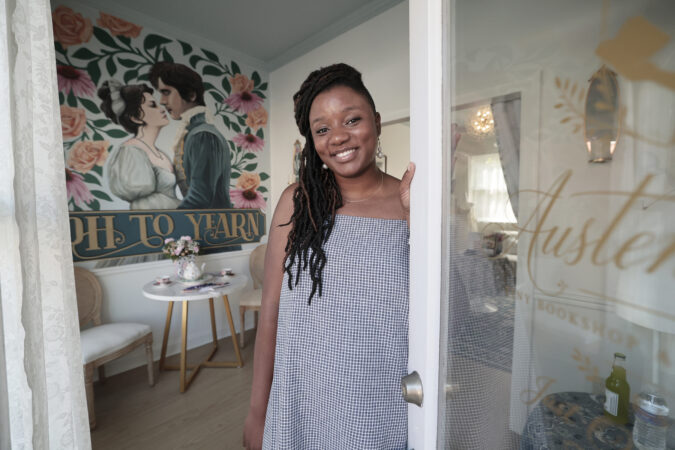
    That was top of mind when she conceptualized her new space, which is small, but more than quadruple the size of the mobile bookshop. Clocking in at under 500 square feet, it has a “homey” vibe that allows for lingering and connecting. There are two sitting areas, one with a couch, the other a table and chairs. The latter sits beneath a large mural depicting Elizabeth Bennett and Mr. Darcy from Austen’s Pride and Prejudice, painted by Philadelphia artist Erik Weedeman.
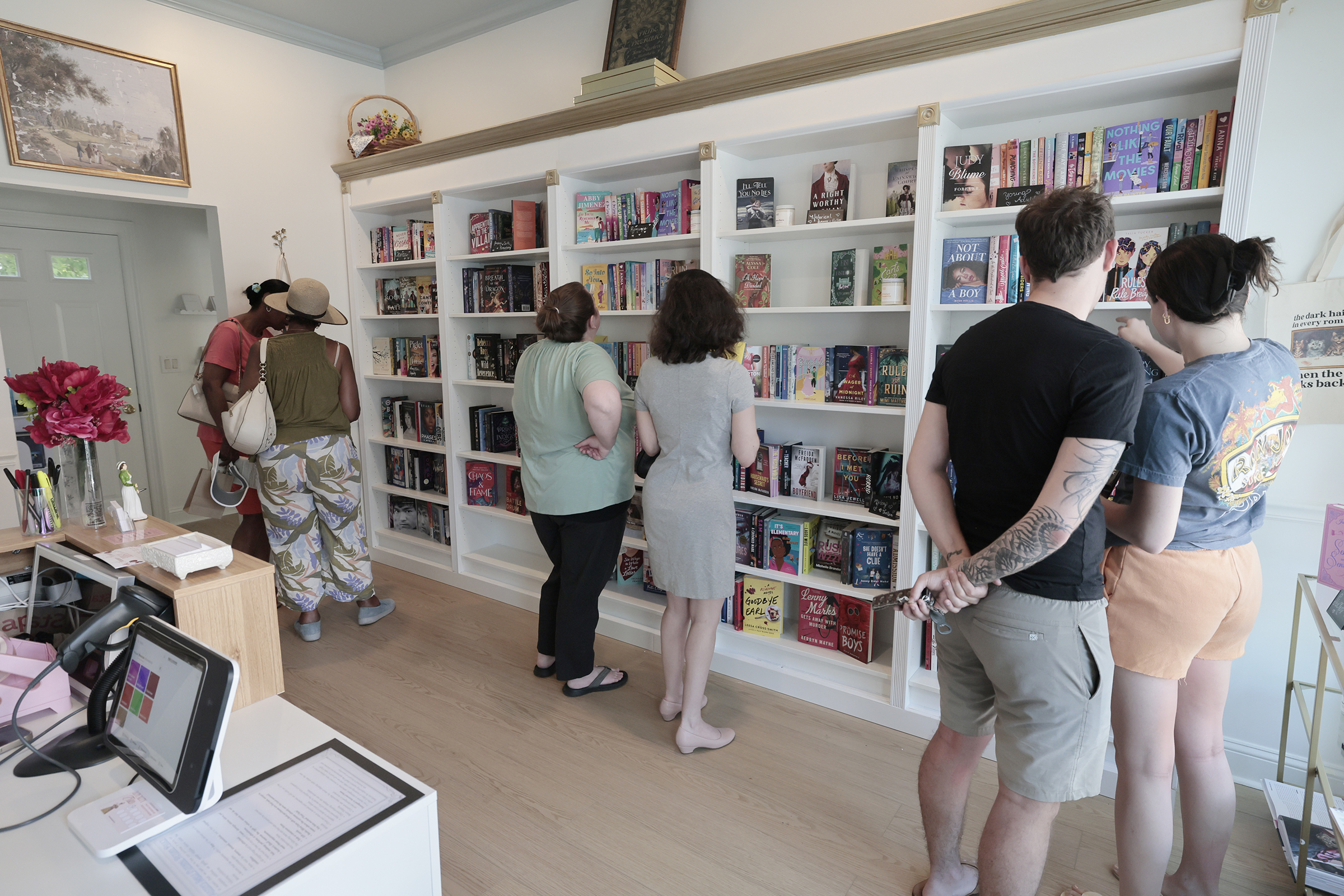
    Shoppers browse for books and other goods at Austen’s Shelf in Bordentown.

    Like its predecessor, this edition of Austen’s Shelf caters to a wide range of readers, stocking a curated selection of young adult, literary fiction, poetry, mystery and thriller, and fantasy, as well as children’s books.

    There’s also a room dedicated to Austen, complete with a gilded digital display showing film adaptations of her books. Herndon also sells a selection of what she’s dubbed “Regency-modern” apparel.

    With a permanent space now up and running, Herndon has no plans to stop taking the mobile bookstore out. She’s just refining the schedule and taking on fewer events.

    A former Bordentown resident who now lives in Gloucester County, Herndon hopes the shop helps draw visitors to the city. She wants visiting Austen’s Shelf to feel “like an experience where the entire town can kind of be a place to linger.”

    If opening weekend was any indication, that just might be the case. Looking out at the historic city during the grand opening and seeing people wander the streets in period-inspired attire, she said the image “just fits like a glove. It’s the dream, literally.”

    Austen’s Shelf is open Wednesdays and Thursdays from 11 a.m. to 6 p.m., Fridays and Saturdays from 11 a.m. to 7 p.m. and Sundays from 11 a.m. to 5 p.m.

    This suburban content is produced with support from the Leslie Miller and Richard Worley Foundation and The Lenfest Institute for Journalism. Editorial content is created independently of the project donors. Gifts to support The Inquirer’s high-impact journalism can be made at inquirer.com/donate. A list of Lenfest Institute donors can be found at lenfestinstitute.org/supporters.

  • Some of the best of Griff Davis’ 55,000 historic black-and-white photos are on display at Lincoln University

    Some of the best of Griff Davis’ 55,000 historic black-and-white photos are on display at Lincoln University

    International photojournalist and foreign service officer Griff Davis died in 1993. Since then, his daughter, Dorothy M. Davis, has been on a fierce mission to keep his memory from fading.

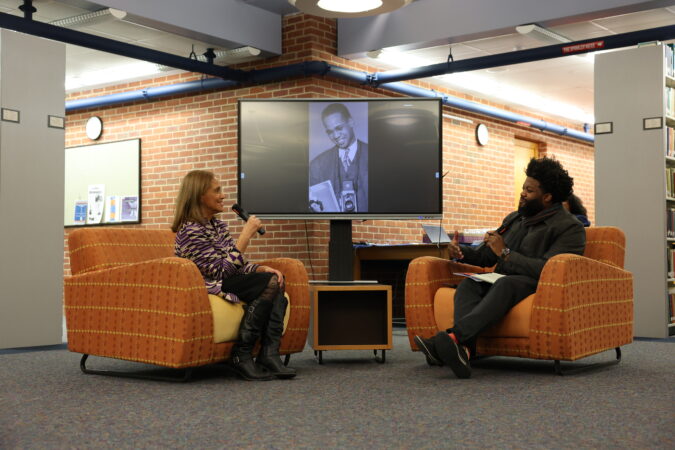
    Davis left behind a legacy of 55,000 historic black-and-white images documenting some of the most significant people of the U.S. civil rights and African independence movements. His daughter has spent the past three decades archiving the photographs and curating exhibitions of his work, including “Lincoln University: Through the Lens of Griff Davis,” which is open through May 3 at the university’s main campus in Chester County.

    The exhibit showcases Davis’ photographs of and correspondence with four of Lincoln University’s most well-known alumni: Langston Hughes, Thurgood Marshall, Nnamdi Azikiwe, and Kwame Nkrumah. Lincoln, the nation’s first degree-granting Historically Black College and University (HBCU), was started in 1854.

    Prime Minister Kwame Nkrumah raising his fist the moment Ghana became independent from Great Britain, March 6, 1957.

    ‘History provides a sense of purpose’

    Davis captured behind-the-scenes photos of Hughes, a leading voice of the Harlem Renaissance, and a young Marshall, who was the first Black U.S. Supreme Court justice. His international subjects included Nkrumah, the first president of Ghana, and Azikiwe, the first president of Nigeria.

    “These men were in touch with each other and supporting each other,” Dorothy Davis said. “My dad knew them as people. Through his photographs and letters, he supported them.”

    “I was inspired as a student of Lincoln to know I had matriculated at a place where Langston Hughes, Thurgood Marshall, Kwame Nkrumah, and Nnamdi Azikiwe matriculated,” said Gordon Linton, a 1970 Lincoln University graduate and former state representative from Philadelphia who was a catalyst for bringing the exhibit to the school.

    “That sense of history provides a sense of purpose that the university holds for its students,” he said.

    Davis was a campus photographer at Morehouse College in Atlanta as a student. A military stint during World War II interrupted his education, but he returned to Morehouse upon discharge. In 1947, during his final semester, he took a creative writing course with Hughes, who was teaching at nearby Atlanta University.

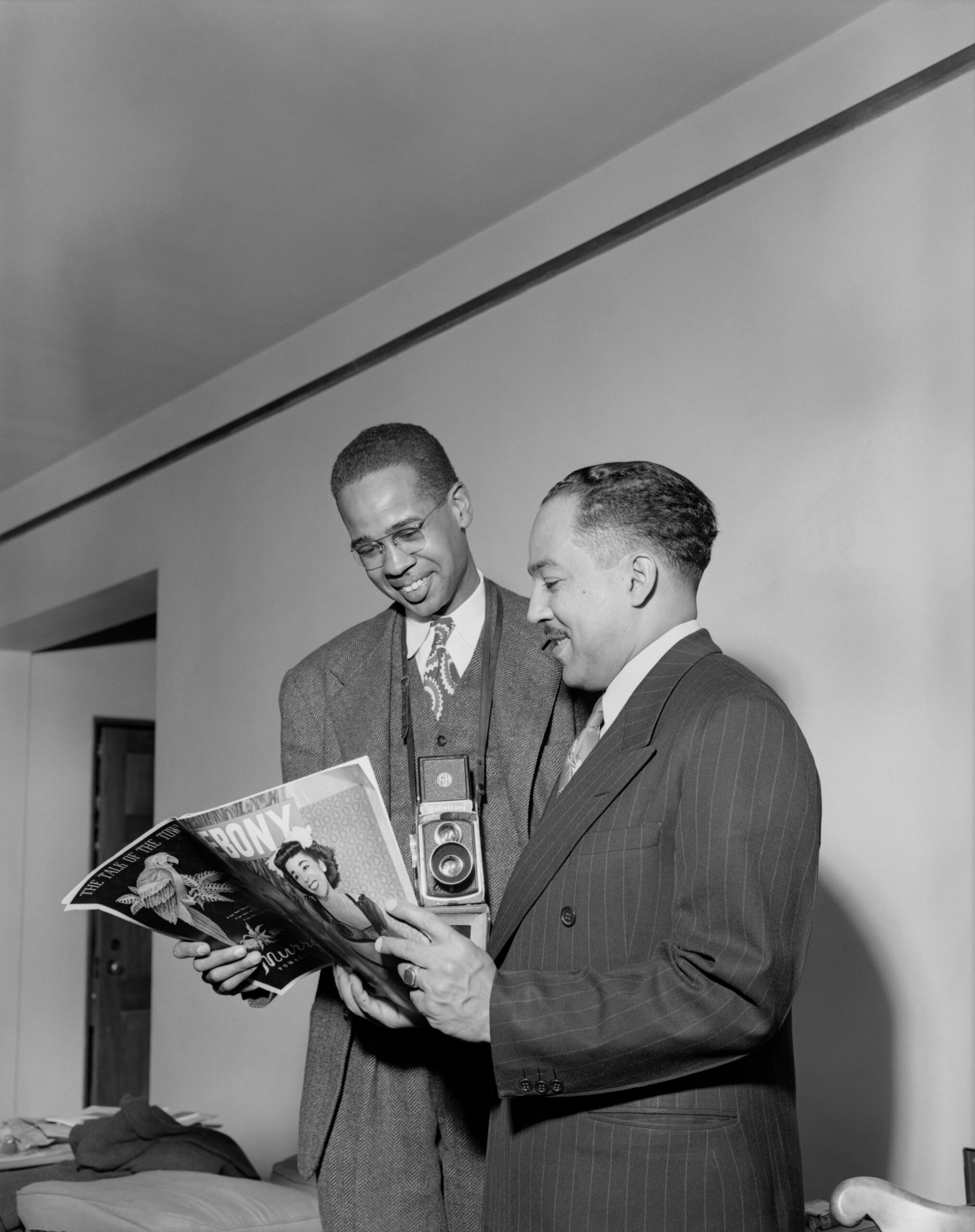
    That launched a 20-year friendship that lasted until Hughes’ death in 1967. After Davis’ graduation, Hughes helped him obtain his first photography job as Ebony magazine’s inaugural roving editor and encouraged him to attend Columbia University’s Graduate School of Journalism. There, Davis was the only Black American student in the class of 1949.

    Griff Davis and Langston Hughes read Ebony Magazine, 1947.

    From photojournalism to foreign service

    After his graduation from Columbia, Davis worked as an international photojournalist for the newly formed Black Star Publishing Company, the country’s first privately owned picture agency, founded by three Jewish émigrés who fled Nazi Germany. Davis, their first Black photographer, was often hailed for bringing dignity to his subjects.

    “I think my father would say he saw himself as a photographer first and a journalist/writer was close second,” Dorothy Davis said. “He could communicate more accurately with his photos.”

    Her father switched hats and joined the U.S. Foreign Service in 1952. His first assignment took him and his new bride to Liberia as the first information officer and audio/visual adviser for the U.S. embassy. Davis worked in many capacities in the Foreign Service for USAID and retired in 1985. Throughout it all, he continued documenting stories with his camera.

    Dorothy Davis was born in Liberia, unaware of what it meant to be American or Black. It was a deliberate move by her parents, who wanted to shield her from the virulent racism of the U.S. and provide her with a multicultural perspective.

    “He was in the present but always aware of the future,” she recalled. “I saw him always turning a moment into a teaching about something.”

    “Lincoln University: Through the Lens of Griff Davis” is open from 8 a.m. to 4:30 p.m. Monday-Friday through May 3 in the Special Collections and Archives department of the Langston Hughes Memorial Library on Lincoln University’s main campus, 1570 Baltimore Pike.

  • Meet the journalist-turned-poet chronicling her Cherry Hill childhood in her debut book

    Meet the journalist-turned-poet chronicling her Cherry Hill childhood in her debut book

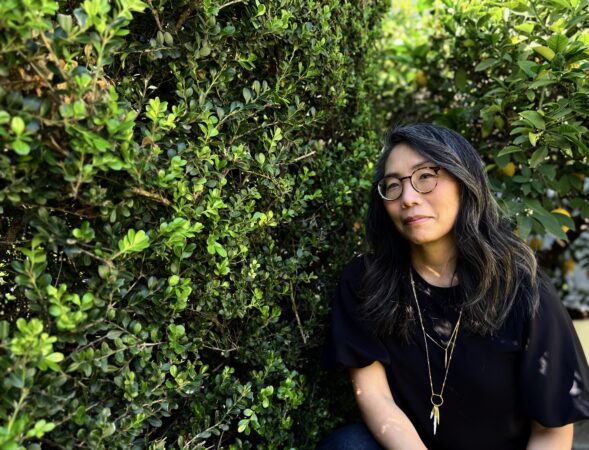
    In her poem, “To the Chimeras of South Jersey,” Jia-Rui Cook writes of teenage heartache, ’80s movies, and the gulf between her American childhood and the world of her parents, immigrants from China by way of Taiwan and Singapore.

    “… Acing / honors English but flunking Saturday / Chinese School: double cherries that ripen / when summer sun runs hot. This world / will feel less than whole for many years.”

    The Cherry Hill-bred and Los Angeles-based writer is set to release her debut poetry collection, Soft Beasts, next year. The book explores Cook’s upbringing in South Jersey, her coming of age in Los Angeles, and the various bodies we inhibit in our ever-changing world. Cook is the 2025 winner of the Philip Levine Prize for Poetry, a national prize out of Fresno State University that awards one writer $2,000 and the publication and distribution of a book.

    As she prepares for the release of Soft Beasts next year, Cook reflected on her formative years in Cherry Hill, which shaped her career as a writer and figure prominently in her poetry. Cherry Hill “was kind of an amazing incubator” for young writers like herself, Cook said.

    Jia-Rui Cook (right) and her father standing in front of her childhood home in Cherry Hill, N.J. around 1995, the year she graduated from Cherry Hill High School East.

    Cook’s parents settled in Cherry Hill when she was a toddler and sent her to James H. Johnson Elementary School, Henry C. Beck Middle School, and Cherry Hill High School East. At East, Cook played lacrosse, worked on the yearbook, participated in the all-South Jersey band, and wrote for the student newspaper. Cook took an early interest in playing with words (her parents had an Inquirer subscription, and Cook was a habitual reader of the crosswords and comics page). A 1995 Inquirer story profiled Cook (whose maiden name was Chong) and her classmate Gina Kang, both star lacrosse players who were headed to Harvard University.

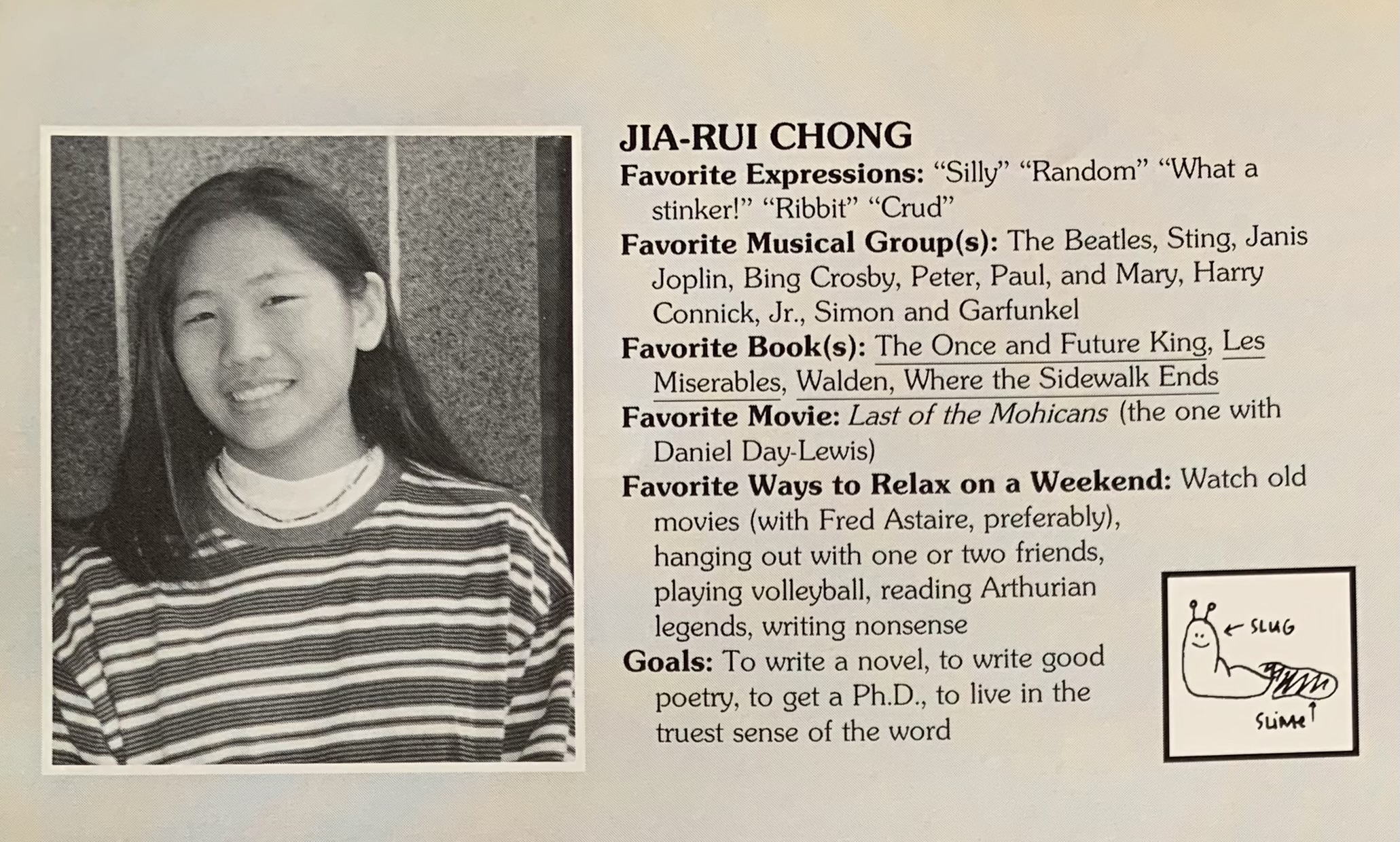
    In Cook’s high school yearbook, she wrote that it was her goal “to write good poetry.”

    Cook studied American history and literature at Harvard, joining the poetry board and studying under writers Seamus Heaney and Helen Vendler. She wrote a thesis on “Moby Dick.”

    Cook always wanted to be a writer, but didn’t know if she could make a living out of poetry. After college, she ventured into another form of storytelling — journalism. Cook spent six years at the Los Angeles Times, covering everything from medical research to Asian-American life in the city. She left journalism in 2009, and has worked in science and health communications since, including a stint at NASA’s Jet Propulsion Laboratory.

    Reporting and science writing are grounded in third-person observation and objectivity, Cook said, and as she was writing about rocket launches and research breakthroughs, she missed the creativity that drew her to writing in the first place.

    She wrote a few poems in the mid-2010s, and won the Zócalo Public Square Poetry Prize in 2013, but life quickly became busy with parenthood and work (Cook and her husband, Bryan, who is from the Main Line, have two daughters). It wasn’t until 2021 that Cook felt like she could pick up the pen again.

    “You get on this roller coaster of going, going, going, and then when you suddenly stop, you think, ‘Wow, actually, maybe I’ve learned some things. I have some things to share,’” she said, recalling how it felt to return to poetry five years ago.

    Jia-Rui Cook’s (then Chong) photo in her Cherry Hill High School East yearbook. Cook graduated from East in 1995.

    So Cook began to write again — about people, animals, her childhood in Cherry Hill, the subtleties of the Chinese-American experience she came to understand while living in and writing about Los Angeles.

    “I had to really step away and experience the world for a bit,” she said. “I had to go out and experience the world and to see it, and maybe try to tell other people’s stories for a while before I really understood, ‘What story did I want to tell about my own life?’”

    Anagrams (words or phrases made by rearranging the letters of a different word) figure prominently in her work.

    In her poem “Anagram No. 2,” Cook anagrams “Cherry Hill, New Jersey,” rearranging the letters to make sentences that resemble English, but don’t precisely follow its conventions. English was not Cook’s parents’ first language, and “there was always this kind of slipperiness with the language” in her house, she said.

    “Anagram No. 2” is “playing around with the English language” in a way that echos the experience of learning it.

    In January, Cook became a fellow with the Periplus collective, a mentorship program for writers-of-color. In February, she won the Levine Prize. Jake Skeets, the Levine Prize’s final judge, called Cook’s poetry “both wonder and wander,” holding “stark, living images of place” and teachings on how “to be alive in the present moment.”

    For Cook, publishing poetry has been an opportunity to “create something meaningful” in a world that “feels under siege.” The immigration crackdown that overtook Los Angeles last summer weighed heavily on her as the child of immigrants.

    “It just was really wonderful and incredibly meaningful to feel like I’ve been creating these little, tiny bits of beauty where I can in the world,” she said.

    Winning Fresno State’s Levine Prize is poignant for Cook. Fresno State was the first place Cook’s mother landed when she arrived in the U.S. and was where she learned English. Decades later, the university is helping to publish Cook’s first book.

    “It felt like a full-circle moment,” Cook said.

    Though California has been her residence for decades (and Cook says she has decidedly fallen in love with Los Angeles), she still considers South Jersey home. It’s the place where she became a writer and where her journey of self-understanding began.

    “It has to start somewhere,” she said of her book. “So it really does start in Cherry Hill.”

    This suburban content is produced with support from the Leslie Miller and Richard Worley Foundation and The Lenfest Institute for Journalism. Editorial content is created independently of the project donors. Gifts to support The Inquirer’s high-impact journalism can be made at inquirer.com/donate. A list of Lenfest Institute donors can be found at lenfestinstitute.org/supporters.
  • What can a short porn film about praying mantises teach us about ‘desire and devotion and sacrifice’?

    What can a short porn film about praying mantises teach us about ‘desire and devotion and sacrifice’?

    The HUMP! Film Festival, the annual tour of DIY adult films made by novices that features a wide range of kink and romance, is returning to Philadelphia on March 27.

    Curated by the popular podcaster and sex columnist Dan Savage, this year’s festival marks the debut of an animated short (porn) film by Philly filmmaker Isabella Akhtarshenas.

    Her film, Prey for Sex, is a stop-motion animation inspired by nature documentaries that showcases the seductive and somewhat violent mating ritual of praying mantises.

    “The man gets his head bitten off early on in the ritual, and they continue having sex while he’s headless, until he dies, basically,” Akhtarshenas, 29, said, summarizing the plot. She designed the female praying mantis character as “very dommy-mom” and her male counterpart as utterly devoted to her.

    An artist based in South Philly, Akhtarshenas conceived and crafted the piece with her romantic and creative partner, Eric Scott, in two weeks last fall, after attending a previous HUMP! Film Festival. (The festival has grown so popular that it now arrives in two parts, one in the spring and one in the fall).

    Akhtarshenas noticed the lineup didn’t include any stop-motion animation, and wanted to change that.

    A clip from “Prey for Sex.”

    She found inspiration in still images of praying mantises and her ”own library” of personal sex videos, and drew each frame in the Procreate app on her iPad. The whole process took about 150 hours, she said.

    She crafted much of it sitting by her mother, who was hospitalized. A hospital bed, she said, was a somewhat incongruous place to bring an animated porn film about praying mantises into being. When it was done, Akhtarshenas was too proud not to share it.

    “I did show it to my family, who was kind of like, ‘OK, I guess!’” she said.

    Out of 400 submissions, Akhtarshenas’s was one of 48 films selected (there are 24 being played in the spring edition and 24 in the fall).

    The female praying mantis is “very dommy-mom,” Isabella Akhtarshenas said.

    This year’s festival will have two showings at FringeArts, one at 6:30 and the other at 9 p.m. An official trailer for the 90-minute compilation highlights elegant rope bondage, lovers in fursuit heads, and a smattering of butts, including one donning a Beyoncé-esque silver-spangled cowboy hat.

    Savage founded Hump in 2005, and often describes it as “not your average porn festival.” Viewers watch the lineup together, which could be a new experience for those accustomed to viewing porn in a more solitary setting.

    The films always feature people (and creatures) of all sizes, ages, races, and genders.
    Akhtarshenas is thrilled to attend the Philly premiere of her film and hopes viewers leave thinking about “desire and devotion and sacrifice.”

    “I want people to feel inspired creatively, more than anything,” she said.

    The 2026 HUMP! Film Festival will host screenings in Philadelphia on March 27 at 6:30 and 9 p.m. For ages 18+. Tickets: $20 plus fees. FringeArts, 140 N. Christopher Columbus Blvd., Philadelphia. Buy tickets here.

  • The man who made musical instruments out of everything: glass bowls, trees, buildings, and even an island

    The man who made musical instruments out of everything: glass bowls, trees, buildings, and even an island

    David Tudor was born in West Philly in 1926 and, at least for a musical prodigy, his career started out conventionally enough.

    He began studying the piano at age 6 before switching his focus to the pipe organ at 11. By his mid-teens he was working regularly at places where you’d expect to find an organist — churches like St. Mark’s in Center City and Trinity Episcopal in Swarthmore, or playing the famed midday concerts at John Wanamaker’s department store.

    But as exemplified by a recent concert of works associated with Tudor, presented by Bowerbird earlier this month at the Community Education Center, Tudor’s music became extremely unconventional over the course of his lifetime.

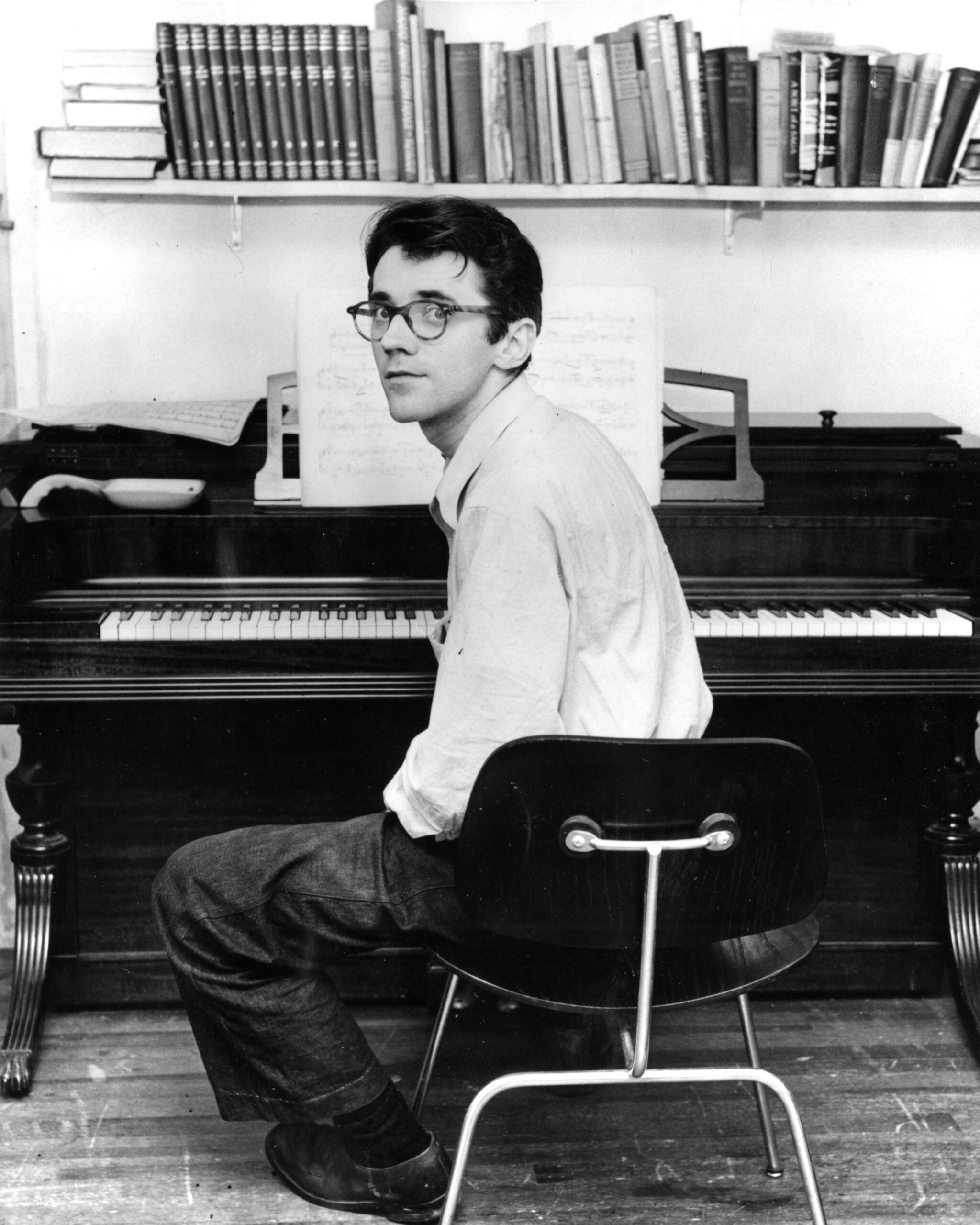
    David Tudor at the piano in 1953.

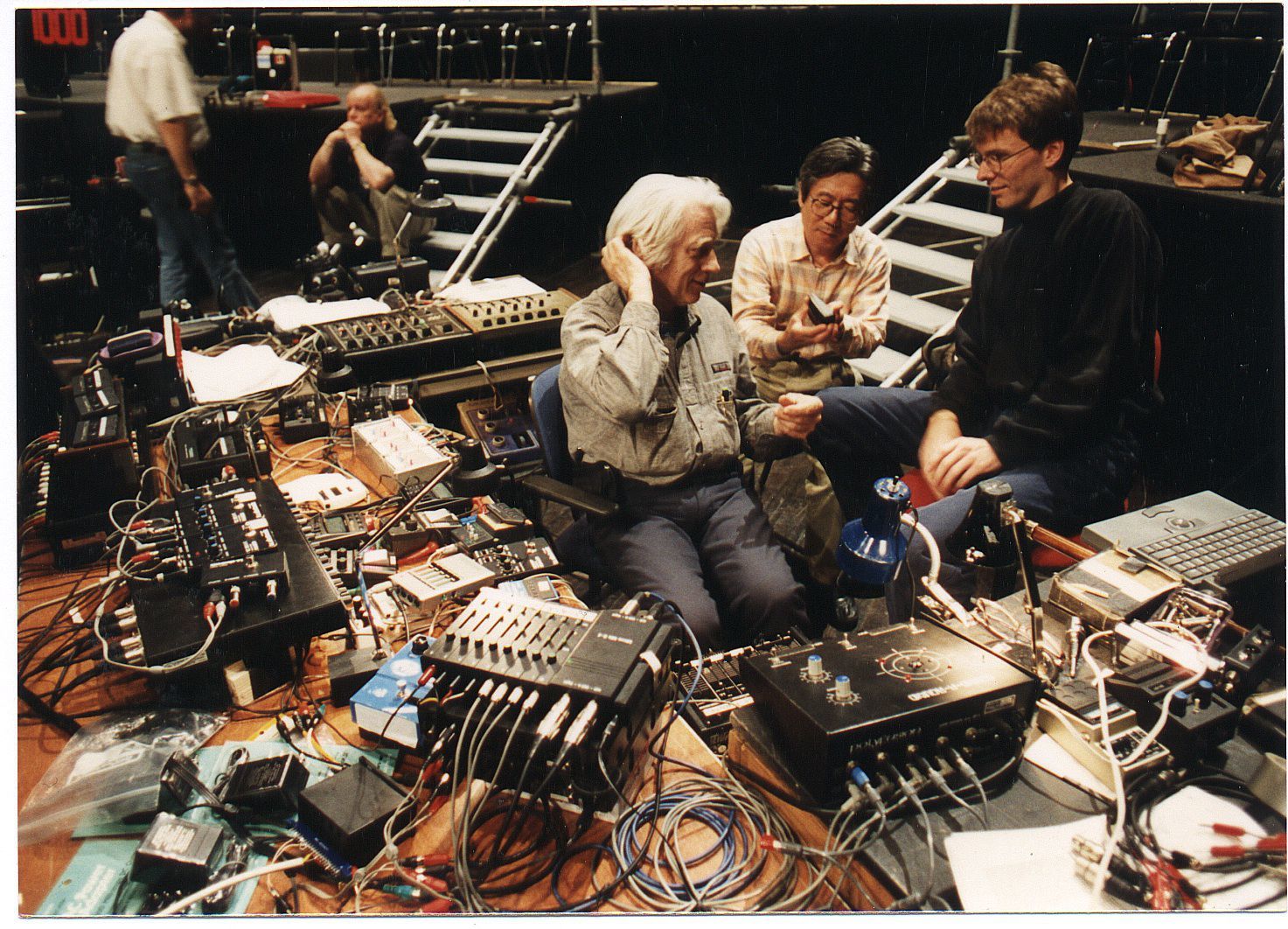
    Just a few miles from the composer’s alma mater, Overbrook High, a half dozen musicians were seated emulating Tudor’s music making process, behind tables piled high with an impenetrable tangle of boxes, wires, knobs, and switches; electronic tendrils snaked from these sources to a bewildering array of objects: glass bowls, a suspended box fan, an oversized die, a copper pot still, even a tree. Each was connected to transducers that took advantage of their resonant properties, turning them into natural amplifiers.
    A century after his birth and three decades since his death in August 1996, David Tudor’s music still seems like something created in a distant, if more analog, future.

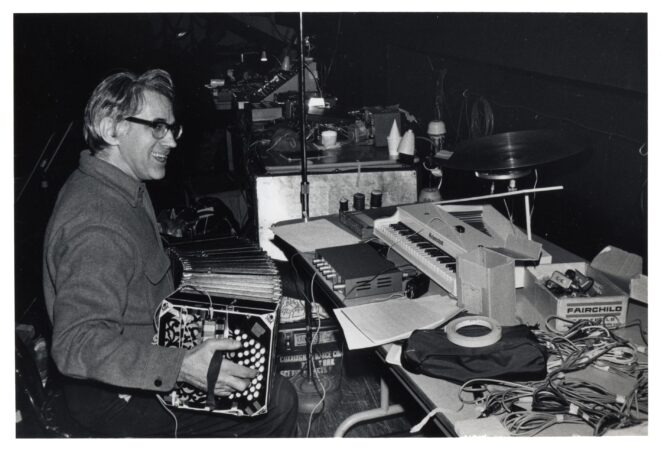
    David Tudor with composer Takehisa Kosugi and musician/engineer John D.S. Adams on the set of Ocean, a collaboration with the Merce Cunningham Dance Company

    Years before, the AI-generated “band” Velvet Sundown grabbed headlines by chalking up more than 1 million subscribers on streaming services and fooling journalists, Tudor was experimenting with machine-learning systems in the early ‘90s, working with engineers from Intel on a project called the Neural Network Synthesizer.

    Those experiments evolved from Tudor’s work with the generation of contemporary classical composers that emerged in the decades after World War II, when he became the pianist and collaborator of choice for such groundbreaking artists as John Cage, Morton Feldman, Earle Brown, Merce Cunningham, and Robert Rauschenberg.

    He was a particularly vital collaborator with Cage, who found in Tudor the ideal vehicle for the use of chance operations in his compositions.

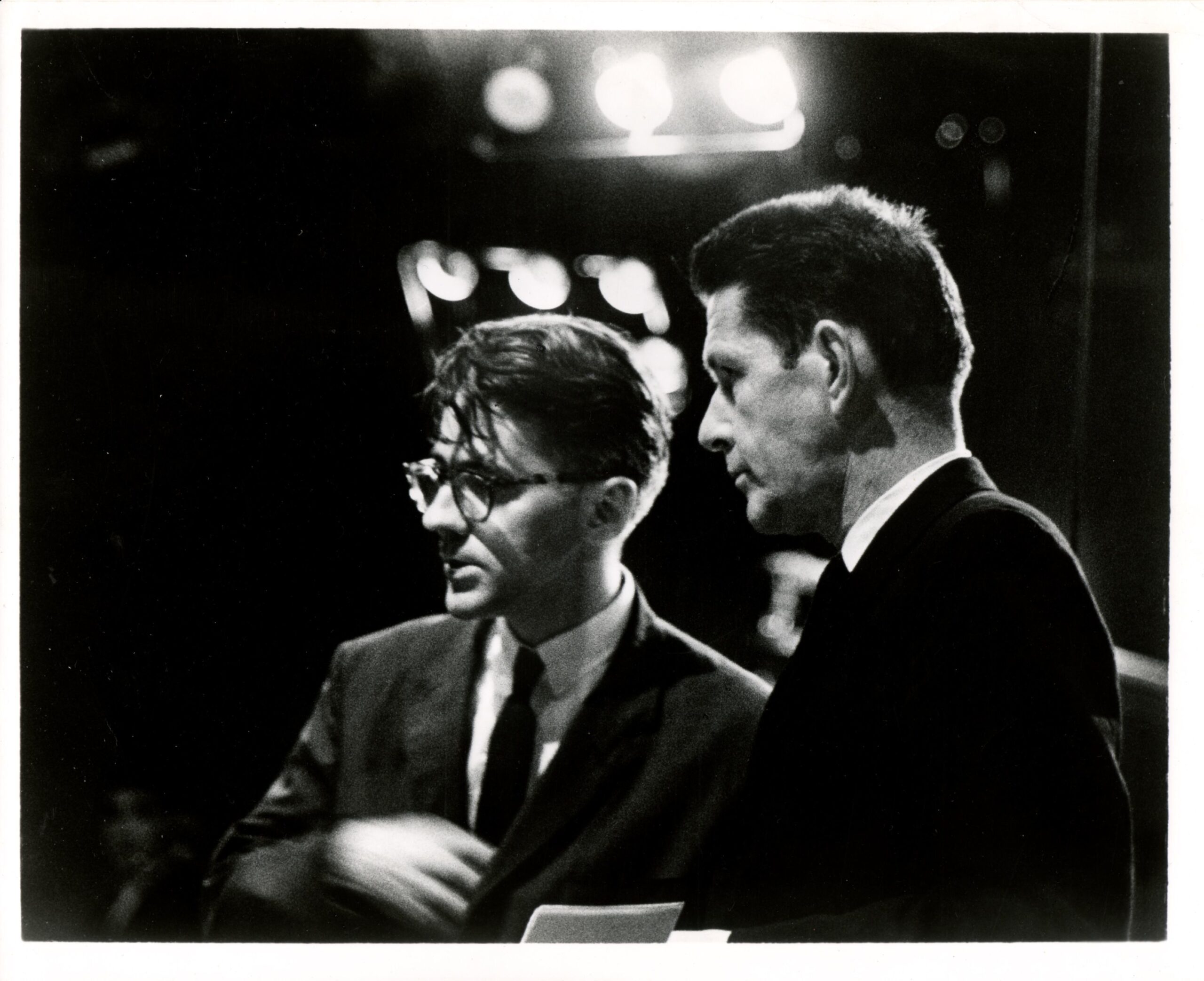
    David Tudor with composer John Cage.

    The turning point for Tudor came at Settlement Music School in South Philly, where he studied with the pianist Irma Wolpe. The young pianist became close with Wolpe and her husband, the modernist composer Stefan Wolpe, and the couple introduced Tudor to new developments in modern music at the time.

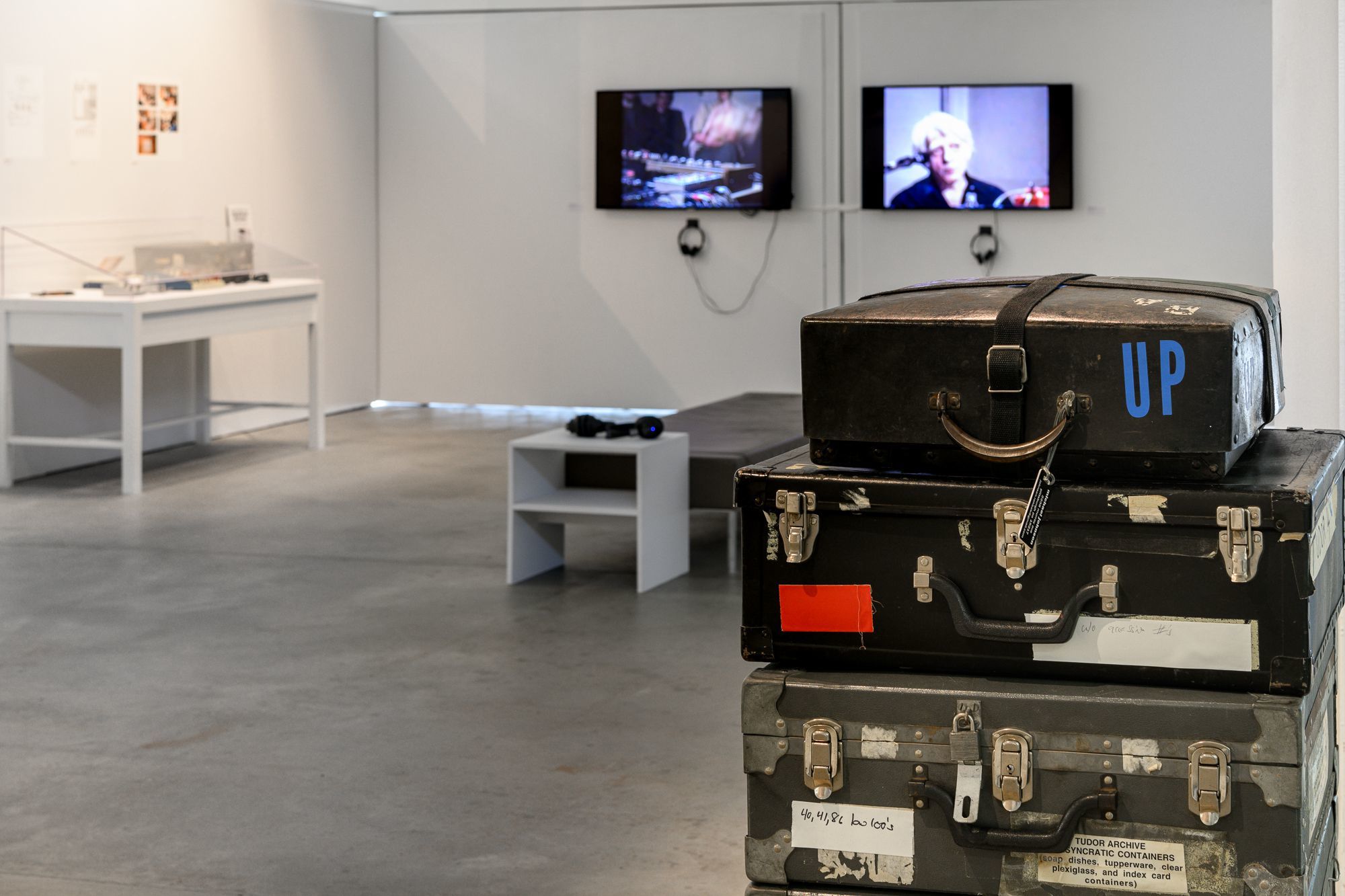
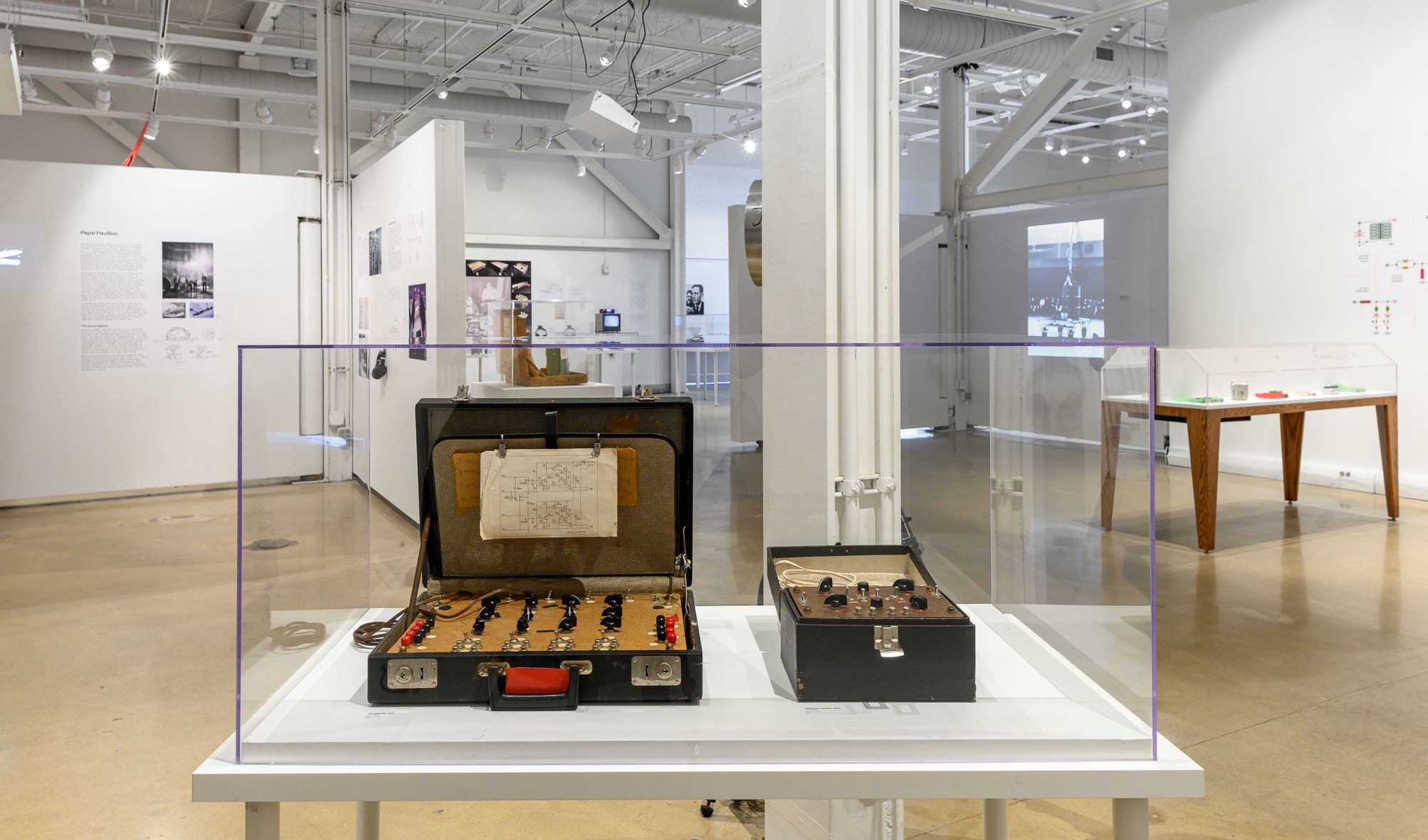
    An ongoing exhibition at Drexel University’s Pearlstein Gallery, “David Tudor: A View From Inside,” traces the roots of his iconoclastic approach to performance and composition back to his early days in Philly.

    The pipe organ — an instrument that literally surrounds the performer, and that they play from within — proved to be a foundational influence on Tudor’s musical philosophy for the rest of his life, said Dustin Hurt, co-curator and director of Philly presenting organization Bowerbird.

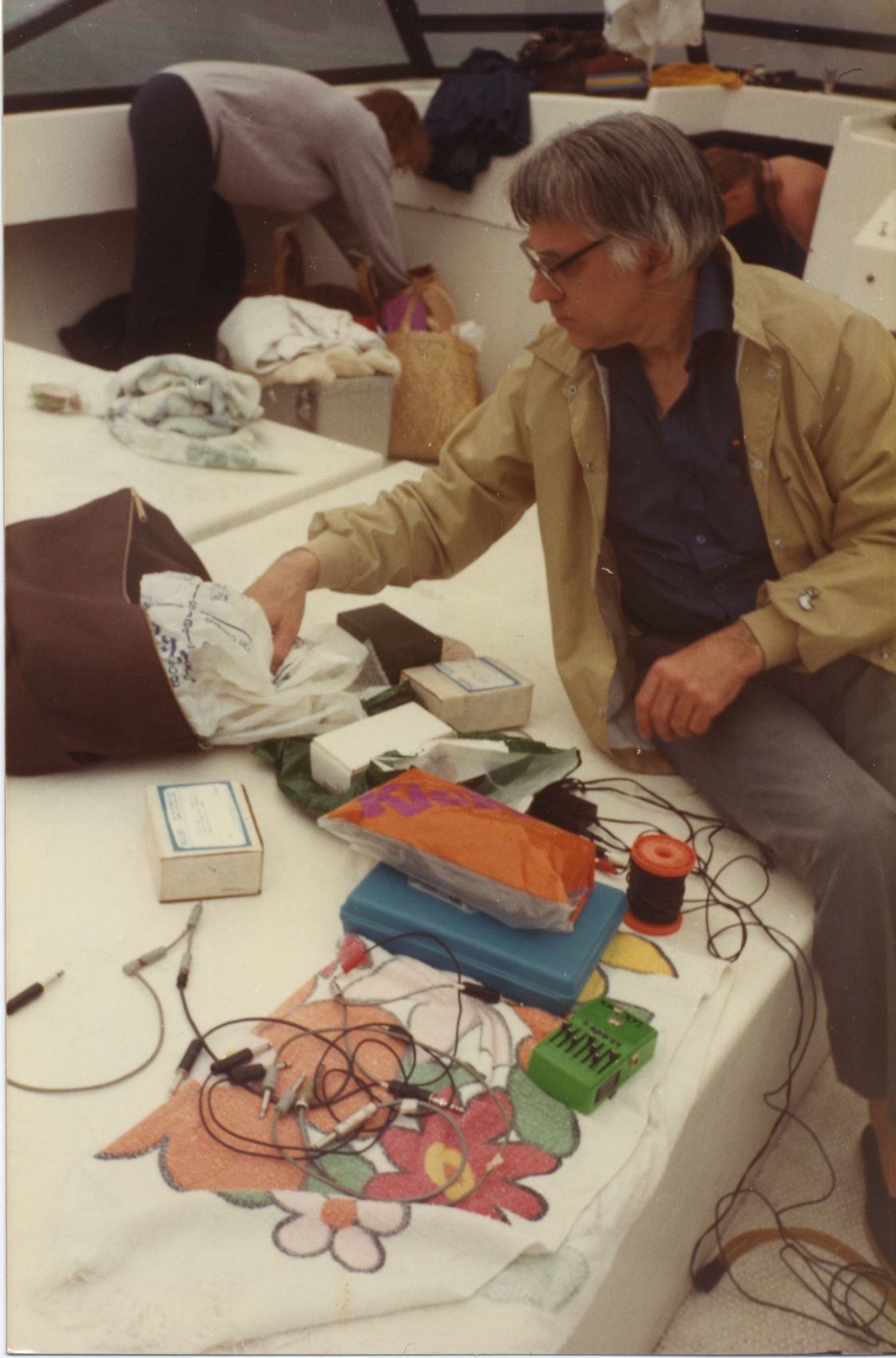
    David Tudor in the Bahamas during the filming of Sea Tails, a project that included sounds collected underwater.

    “That led to the more metaphorical angle of David’s music, which involved discovering what the instruments do on their own,” said Hurt. “That’s the ‘View From Inside.’ He’s not saying, ‘I want to make this music, let me find the instruments that do it.’ He’s saying, ‘This is the stuff that I have. Let’s see what it does.’”

    Discovering Tudor’s fascination with puzzles, composers presented him with scores that offered problems to solve rather than music to play. The exhibition includes mind-boggling lists of calculations and measurements that the pianist meticulously assembled in preparation of performing certain pieces.

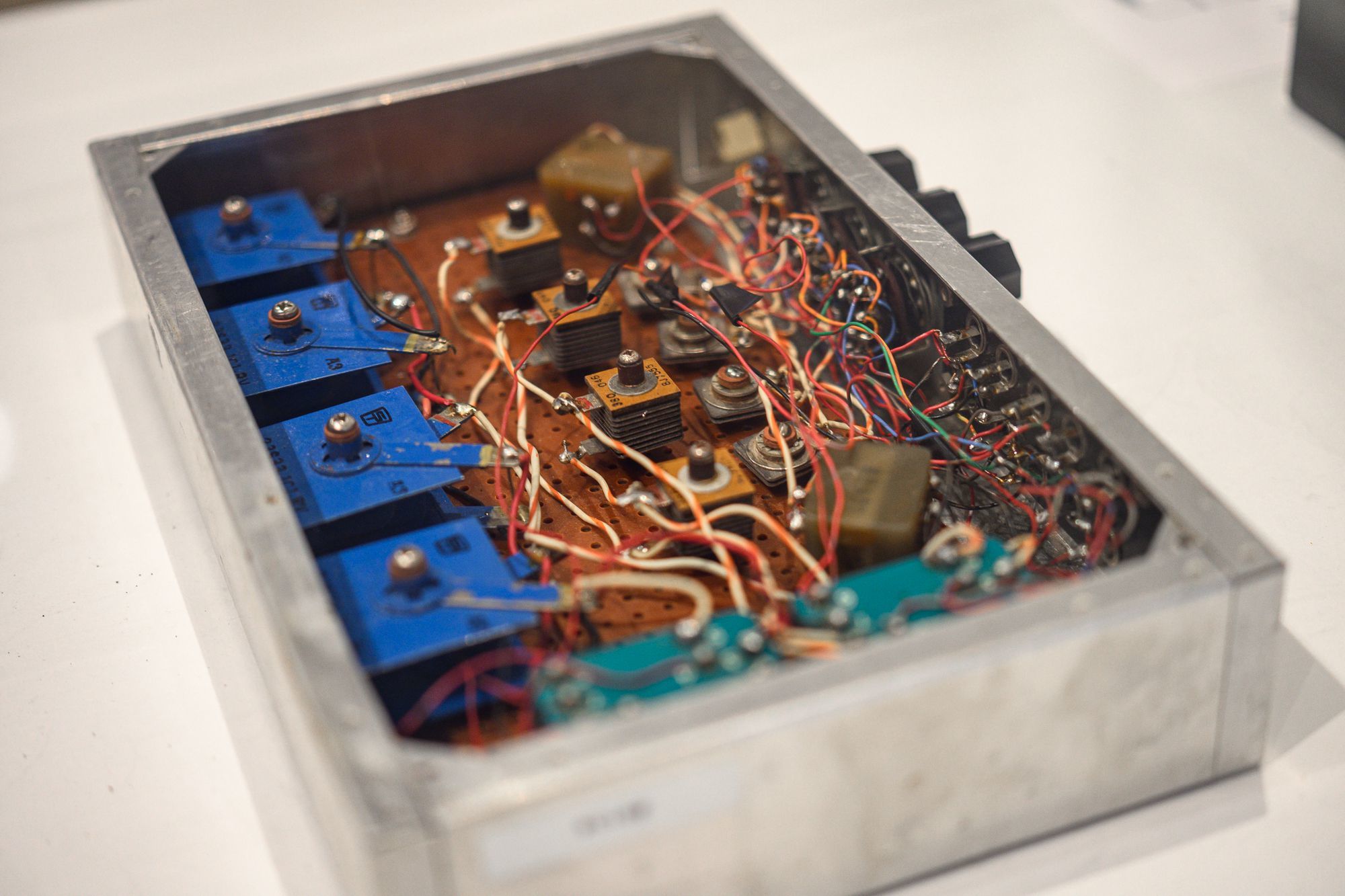
    By the 1960s, he started to abandon the piano altogether, modifying small electronic devices to craft unpredictable music from feedback.

    “David Tudor: A View From Inside” is on view at Drexel University’s Pearlstein Gallery through March 21

    “Tudor was such a skilled virtuoso on the piano, but he showed no interest in performing the classical repertoire,” said co-curator You Nakai, a professor at the University of Tokyo and author of Reminded By the Instruments: David Tudor’s Music.

    “He would only perform scores that challenged him to solve them and produce music that the composer never really thought of,” said Nakai. “So when he started making his own instruments, he strongly focused on ways to implement indeterminacy within the workings of the instruments themselves.”

    Composer Stanley Lunetta includes the following instructions in his “Piece for Bandoneon and Strings”: “If you are already David Tudor, you will have no problem performing this piece; if you are not David Tudor, you must study hard, for you must be him during this performance.”

    “David Tudor: A View From Inside” is on view at Drexel University’s Pearlstein Gallery through March 21.

    The strings in the piece were not the expected violins and cellos, but tethers from Tudor’s limbs to a group of puppeteers who triggered him to play sections of Lunetta’s score.

    Gradually, Tudor’s vision of an instrument that could be inhabited grew in scale far beyond even a department store-sized pipe organ. For Expo ‘70, the 1970 world’s fair in Osaka, Japan, he transformed an entire building into an instrument by mounting loudspeakers in the dome of the Pepsi Pavilion. A few years later, he drew up plans to convert an entire island into an instrument by recording the natural sounds of the space, manipulating them, and playing them back via speakers scattered throughout the island.

    That project wasn’t realized until 2024, long after his passing, off the coasts of Japan and Norway via a collaborative project spearheaded by Nakai.

    “David Tudor: A View From Inside” is on view at Drexel University’s Pearlstein Gallery through March 21.

    Tudor’s pioneering experiments with electronic music seemed to make him an apt collaborator for the Intel engineers and their new neural network chip, but his interest in the technology was diametrically opposed to theirs.

    For all his love of puzzles, “Tudor showed no interest in repeating his past,” said Nakai.

    “He opened it up, went inside the circuitry and figured out how to let the instrument speak for itself. He didn’t understand everything, but he didn’t need to because he was making music that he liked.”

    “David Tudor: A View From Inside” runs through March 21, Pearlstein Gallery in Drexel University’s URBN Annex, 3401 Filbert St. bowerbird.org

  • ‘Oh, Mary!,’ ‘Hell’s Kitchen,’ and ‘Mamma Mia!’ are just a few of the Broadway blockbusters headed to Philly this year

    ‘Oh, Mary!,’ ‘Hell’s Kitchen,’ and ‘Mamma Mia!’ are just a few of the Broadway blockbusters headed to Philly this year

    Some of the best and buzziest Broadway shows will make their way to Philadelphia for the 2026-2027 season, including Cole Escola’s camp comedy Oh, Mary!, the futuristic romance Maybe Happy Ending, a newly staged version of the legendary Phantom of the Opera, and Alicia Keys’ semi-autobiographical musical, Hell’s Kitchen.

    On Monday, Ensemble Arts Philly announced the lineup of 14 Broadway productions running at the Academy of Music, Miller Theater, and Forrest Theatre this upcoming season. The slate features recent Tony Award winners, anniversary tours, fresh revivals, and Philadelphia premieres.

    The season kicks off at the Academy of Music with the ABBA-fueled classic, Mamma Mia! (Sept. 29 to Oct. 4), followed by The Great Gatsby (Oct. 20 to Nov. 1), a musical based on F. Scott Fitzgerald’s roaring twenties novel, and BOOP! The Musical (Nov. 17 to 29), about the cutesy cartoon character Betty Boop.

    Popular British show Operation Mincemeat: A New Musical, a raucous World War II spy comedy based on an actual secret mission of the same name, makes its Philadelphia premiere at the Forrest Theatre, running Dec. 15 to 20.

    The holiday season continues with another British original as STOMP lands at the Miller Theater from Dec. 28 to Jan. 3, 2027. The percussive powerhouse delivers a unique musical experience with eight performers using everything from lighters to hubcaps to make music.

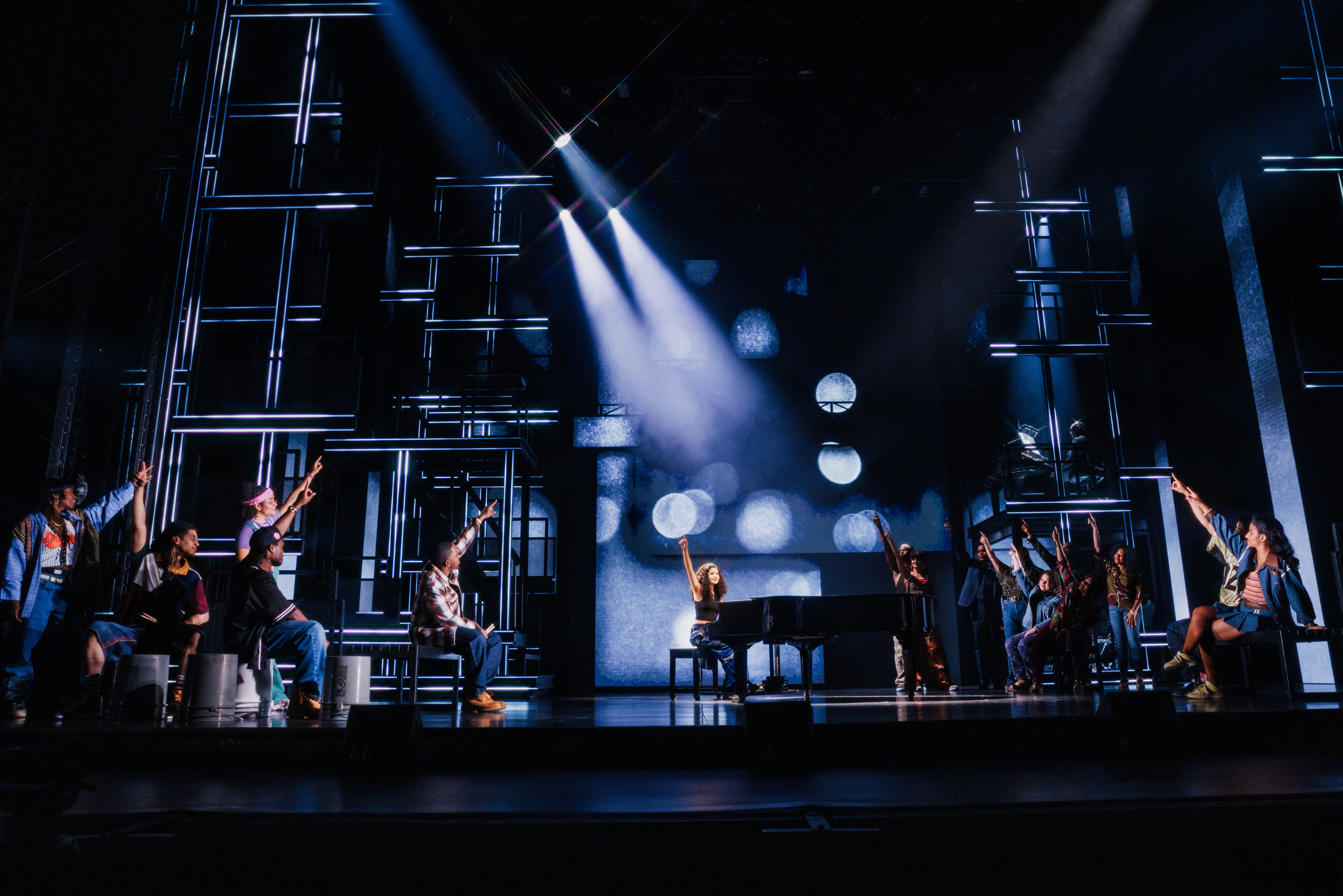
    The company of the North American tour of Alicia Keys’ “Hell’s Kitchen,” which will run Jan. 5 to 17, 2027, at the Academy of Music.

    Alicia Keys fans won’t want to miss the arrival of Hell’s Kitchen, the singer’s heartfelt story about growing up with her single mom in the artistic community at Manhattan Plaza (which historically housed celebrity residents like Samuel L. Jackson, Colman Domingo, and Angela Lansbury). It earned 13 Tony Award nominations and won two. The musical runs Jan. 5 to 17, 2027, at the Academy of Music.

    The Book of Mormon, the Tony Award-winning comedic musical from the creators of South Park, returns to Philadelphia and runs Jan. 26-31, 2027, at the Forrest Theatre.

    Two familiar favorites will celebrate major milestones in spring 2027: Riverdance and Waitress. Riverdance 30 — The New Generation (March 4 to 7, 2027, at the Miller Theater) rings in three decades of Irish dance with new choreography and a young ensemble of dancers ages 30 and under.

    Waitress, the beloved show with original music from singer-songwriter Sara Bareilles, spotlights an overlooked pie maker with ambitious dreams. The musical returns to Philadelphia for its 10th anniversary running Feb. 9 to 14, 2027, at the Academy of Music.

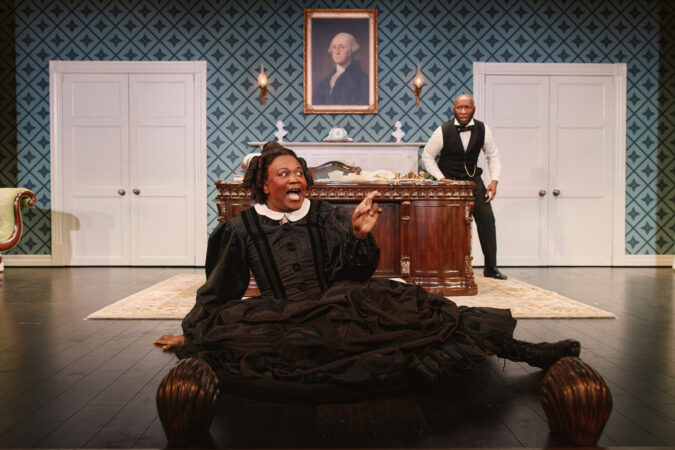
    For audiences looking to laugh, Oh, Mary! will be one of the hottest tickets of the theatrical season as the production embarks on its first tour, with a short run at the Miller Theater from March 9 to 14, 2027.

    The smartly subversive spoof follows Mary and Abraham Lincoln in the days leading up to the presidential assassination. For the hilariously unhinged role of Mary, creator Cole Escola won the 2025 Tony Award for best performance by an actor in a leading role in a play.

    Other comedic stars have taken turns playing Mary, including Tituss Burgess, Jinkx Monsoon, and Jane Krakowski — and Maya Rudolph is up next on Broadway. (The tour’s cast has not yet been announced.)

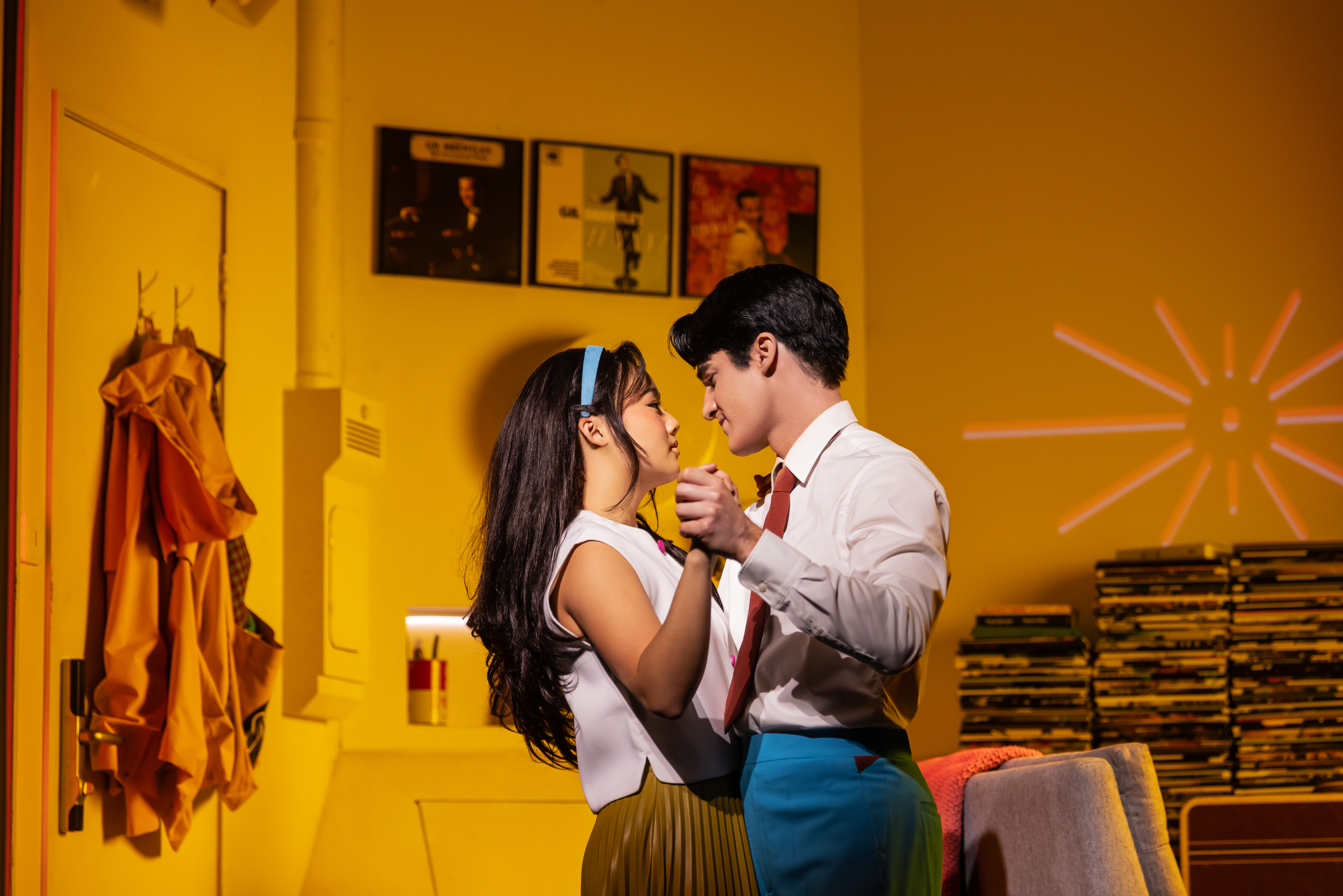
    Maybe Happy Ending, which won six Tony Awards last year, including best musical, is another highly anticipated show set in Seoul, following two humanistic robots who fall in love. It runs March 23 to April 4, 2027, at the Academy of Music.

    Helen J. Shen and Darren Criss in the original Broadway production of “Maybe Happy Ending,” which won the 2025 Tony Award for best musical. It runs March 23 to April 4, 2027, at the Academy of Music.

    A revival of The Who’s Tommy, the rock opera by guitarist/composer Pete Townshend, runs at the Forrest Theatre April 13 to 18, 2027, where the show’s original North American tour premiered more than 30 years ago.

    Phantom of the Opera (June 9 to 27, 2027, at the Academy of Music) also gets a (slight) reexamination in Cameron Mackintosh’s take on the Andrew Lloyd Webber classic. The core of the show remains faithful, but this iteration makes fresh updates to the scenic design with new technology — pyrotechnics! — and choreography.

    Rounding out the Broadway season next summer is Harry Potter and the Cursed Child (July 28 to Aug. 8, 2027, at the Academy of Music), which follows the unlikely friendship between the sons of Potter and his longtime rival Draco Malfoy.

    The 2026-2027 season showcases “the full spectrum of what Broadway is right now,” said Frances Egler, vice president of theatrical programming and presentations at Ensemble Arts Philly, in a statement. “This season was curated to be deeply cohesive, pairing large‑scale Broadway blockbusters with newly acclaimed work, so that audiences can move between spectacular, outrageous, nostalgic, and deeply personal experiences — all within one series.”

    Subscription packages, on sale now, start at $29 per show (the same as last year). The bundle includes six shows, down from seven last year: The Great Gatsby, BOOP! The Musical, Hell’s Kitchen, Maybe Happy Ending, The Phantom of the Opera, and Harry Potter and the Cursed Child.

    The cost of the package ranges from $169 to $816 for all six shows, varying based on performance dates and seat selection. Individual tickets for each show will be available later this year.

  • How to have a perfect Philly Day, according to Jill Scott

    How to have a perfect Philly Day, according to Jill Scott

    Jill Scott’s sixth studio album To Whom This May Concern is a tapestry of Scott’s familiar easy rhythms with lyrics equal parts sweet longing and self-love.

    But on this 19-track project — Scott’s first collection of new music in more than a decade — she isn’t just telling us she plans to live her life like it’s golden the way she did 22 years ago. She’s also telling us about the great life she has right now. And she’s urging us to join her in the present moment with funky beats, powerful lyrics, and tight rhymes.

    “You might as well go ahead and be great,” Scott said in a recent video chat. “There’s literally nothing stopping you from being all of yourself.”

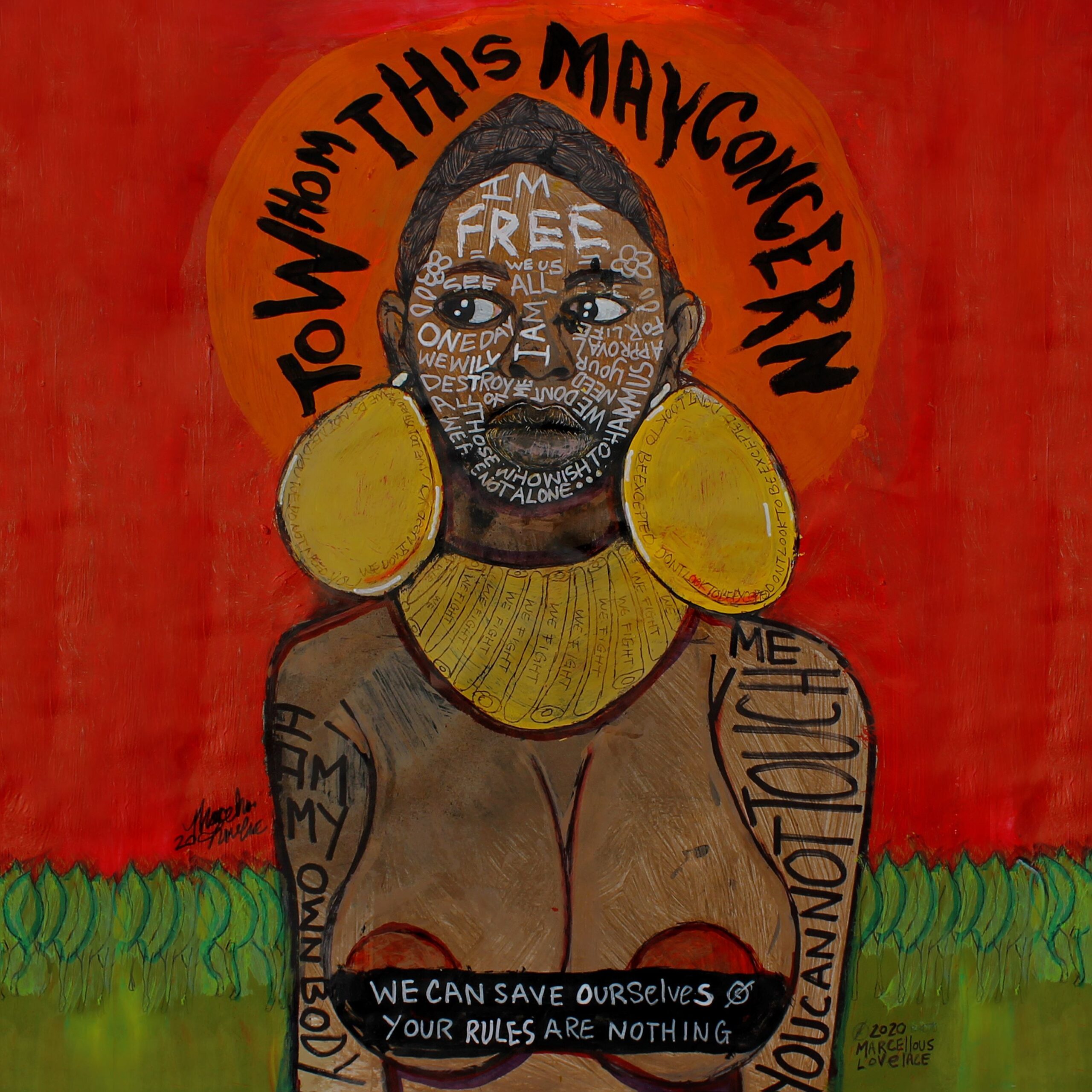
    Album cover of Jill Scott’s sixth studio “To Whom This May Concern” is a portrait of Jill Scott by muralist Marcellous Lovelace

    To Whom This May Concern is Scott’s assertion of self-love especially evident in the album cover’s illustration — by Chicago-based muralist Marcellous Lovelace — of the 53-year-old multi-hyphenate wearing big gold earrings and her natural hair in a top knot. “I’m free” is written in block letters across her forehead.

    “I’m pushing and supporting all of the art we have created as Black people in America,” Scott said. “I support that. [But this album is not for] limited ears. It’s definitely not limited music.”

    But it’s definitely Philadelphia music.

    Scott, who lives in Nashville, Tenn., recorded most of the album in Philly with Grammy winning producer — and her cousin — Carvin Haggins. She has traveled all over the world and says there is no place like Philadelphia.

    “The people at home are so dear and warm,” Scott, who often goes by Jilly from Philly, said. “I was grateful to find that again.”

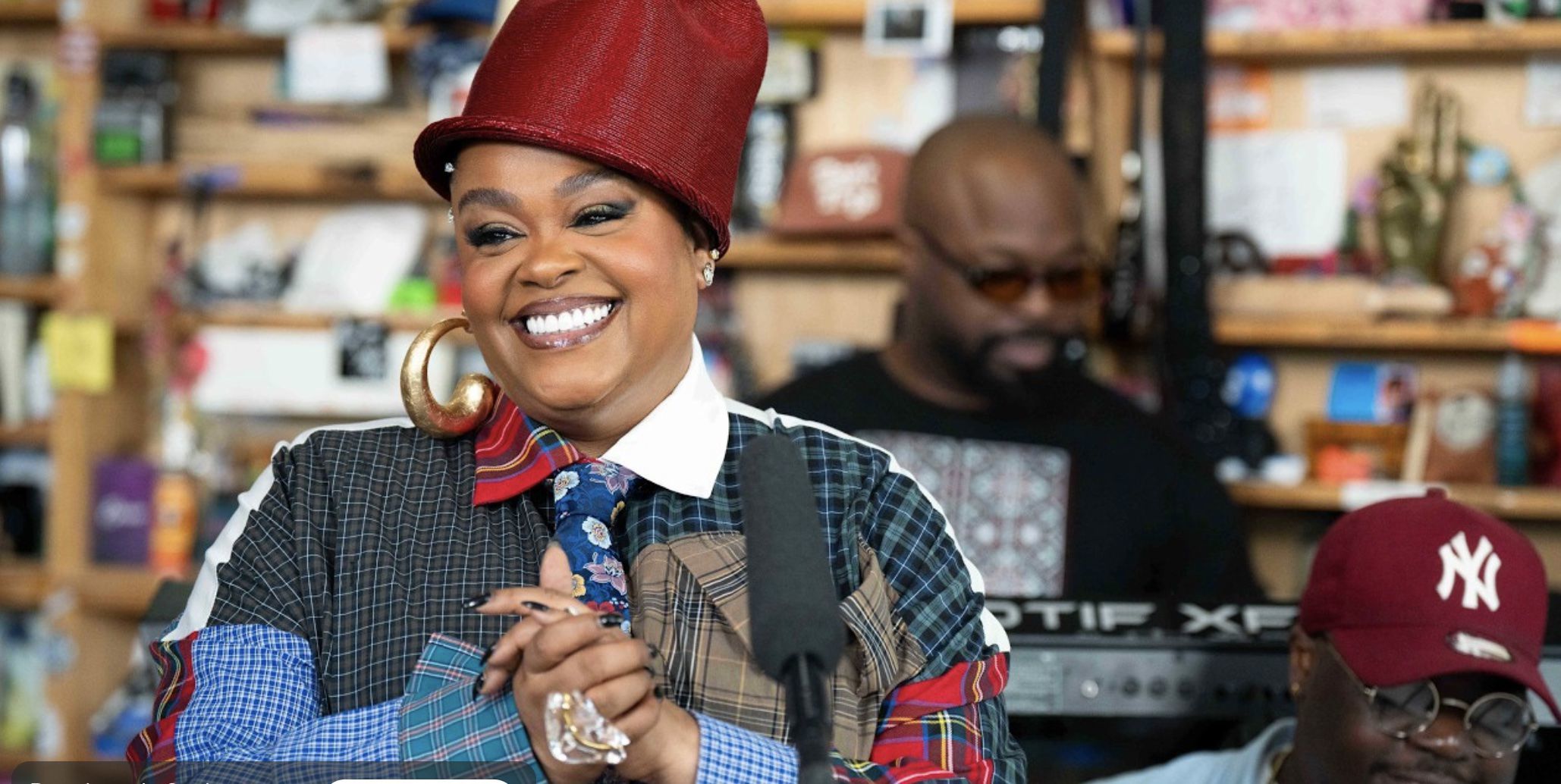
    Jill Scott performing on NPR Music Tiny Desk Concert series. The North Philly singer’s new album is ‘To Whom This May Concern.’

    Scott loves every nook and cranny of her hometown, but she still pours an extra bit of love for the “Norf Side,” to borrow from the lyrically sound rap she performs with Tierra Whack on the new album.

    “So often people have shunned me, making me feel less than because I come from North Philadelphia,” Scott said. “I wanted to shout out my area and remind [that people from] North Philly, we can do anything.”

    Here is the songstress’s idea of a perfect Philly day.

    7 a.m.

    If I lived in an apartment or condo in Philly near a park I’d get up and take a long walk, first thing.

    9:30 a.m.

    In the summer, I’d go over to the Blues Babe offices on North Broad and greet the kids at summer camp [Blues Babe is Scott’s nonprofit that sends children from Philadelphia and Camden to free summer camp]. The children gather there before taking trips all over the city. It’s important that I tell these kids that came from the same place I do, that they can do anything.

    12:30 p.m.

    I’d have lunch at Continental Midtown on Chestnut Street. (I’m really sad they closed the one in Old City.) I just love their turkey burger. Then I’d walk over to Rittenhouse Square and sit at the park. I love watching nature. On my perfect day, the artisans would be out selling jewelry and art and I’d find a good deal because you know I like to save money.

    2:30 p.m.

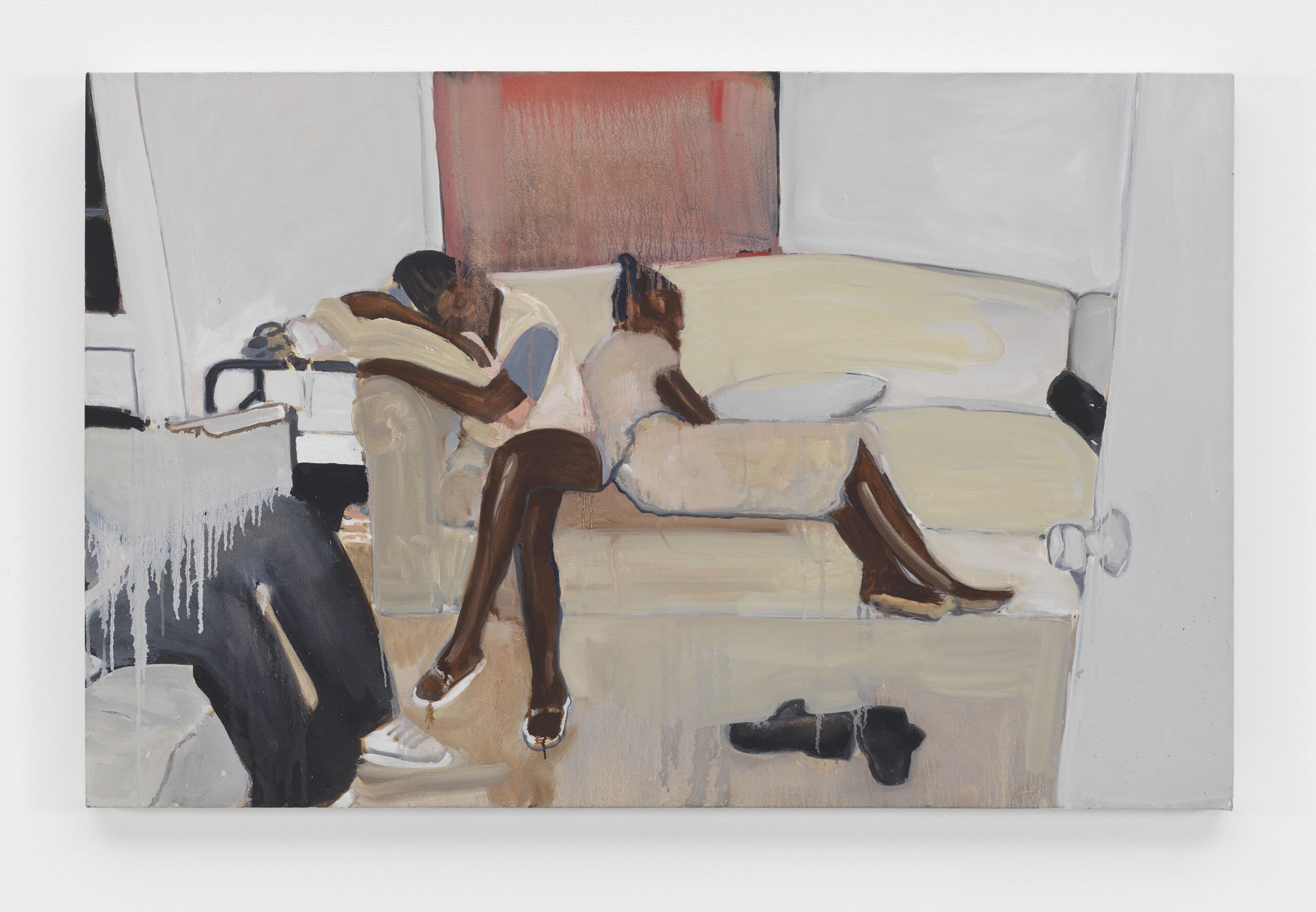
    From there, I’d go to the Philadelphia Museum of Art and maybe catch the Noah Davis show. Then, I’d go to the African American Museum of Art before making my way down to Ishkabibbles on South Street. There, I’d order a pizza steak with fried onions and mustard and pickles. (Nobody has to understand your cheesesteak.)

    “Untitled Girls” This painting by Noah Davis will be on display in the Philadelphia Art Museum’s 2026 exhibition named after the late artist

    5:30 p.m.

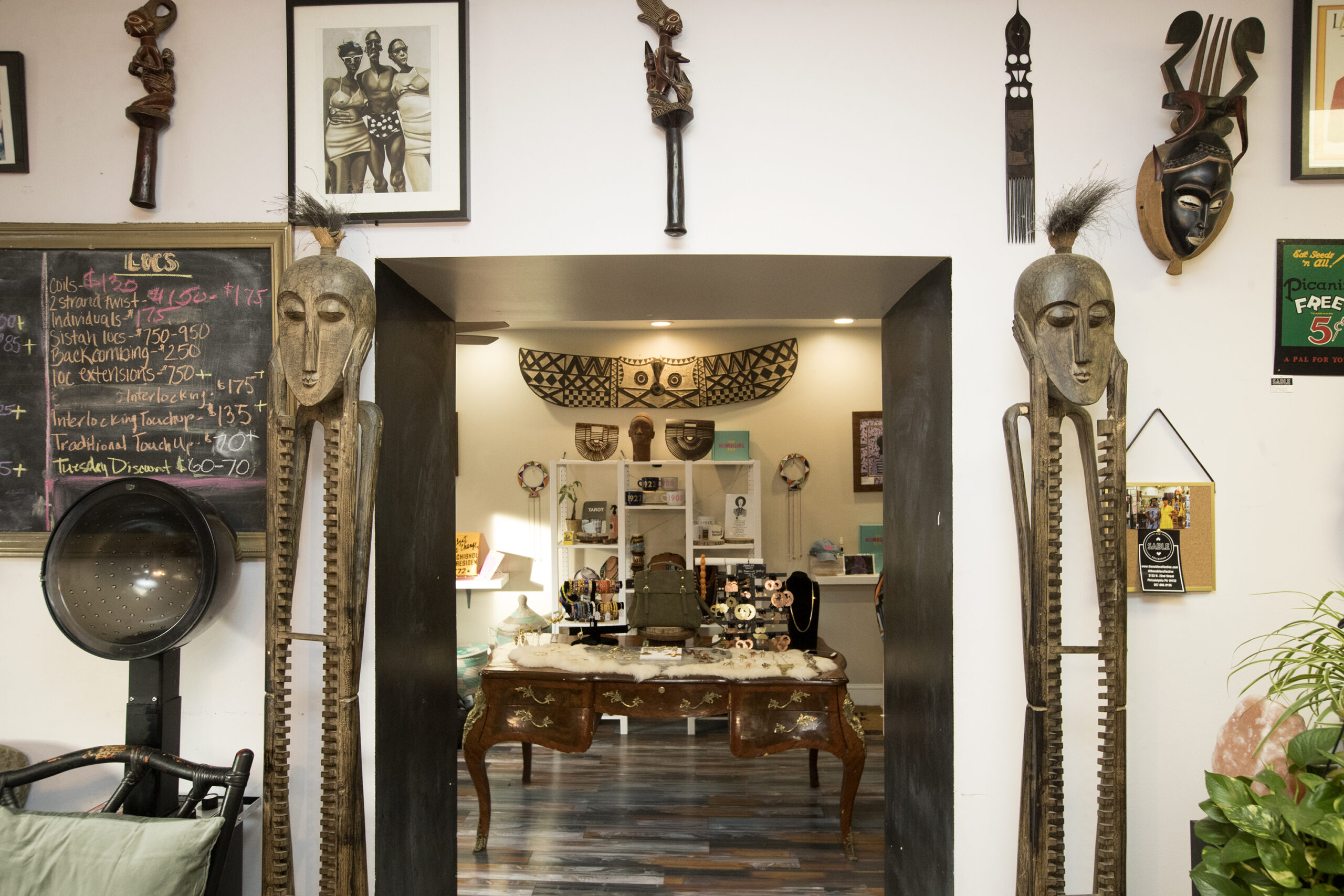
    I’d make my way back up to North Philly and visit my friend Syreeta Scott at the natural hair salon Duafe. She has such beautiful art work in there. It’s so peaceful. The energy is so good. We would go out, or she might cook something amazing. I would raid her closet and just chill.

    Inside Duafe Holistic Hair Care.

    7:30 p.m.

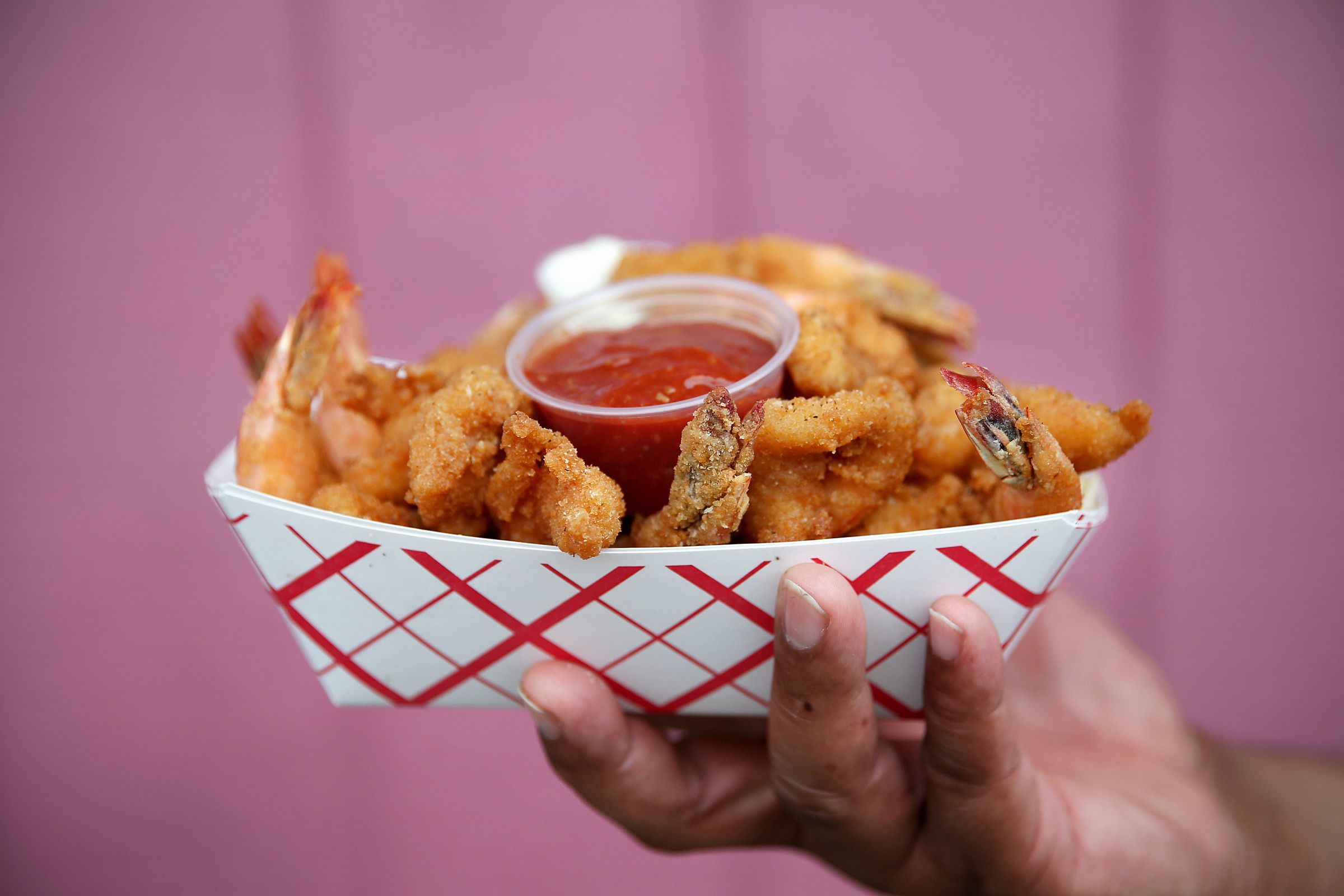
    If Syreeta isn’t cooking, we’d make our way to Sid Booker’s. I got to have it. Let me give you the deal: When you go to Sid Booker’s, you have to eat it in the car. There is no such thing as waiting until you get home. You are wasting it. You will ruin it. And if you like ketchup and hot sauce you have to get it on your shrimp, not on the side. But on your shrimp.

    Fried shrimp are pictured at Sid Booker’s Shrimp Corner in North Philadelphia on Friday, Sept. 14, 2018.

    10:30 p.m.

    I’d hope that Stacy “Flygirrl” Wilson is having a party with Mike Nyce, I would definitely go there. That is always a good time.

    Stacey “Flygrrl” Wilson and DJ Mike Nyce at the Kimmel Center during a summer happy hour.
  • A lot of orchestras play a lot of Mahler but the Philadelphians do it with a high-energy symphonic precision

    A lot of orchestras play a lot of Mahler but the Philadelphians do it with a high-energy symphonic precision

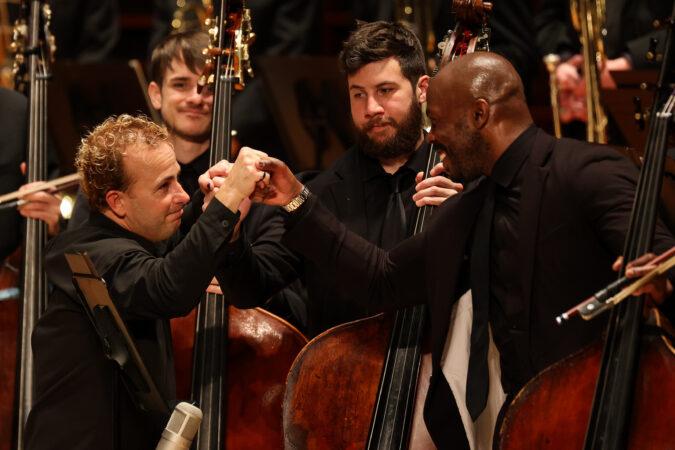
    Symphonic circles look like ongoing constant Mahler festivals these days, but Philadelphia Orchestra’s music-artistic director Yannick Nézet-Séguin somehow leaves you wanting more.

    This weekend’s performances of Mahler’s Symphony No. 2 (“Resurrection”) opened on Friday at Marian Anderson Hall with a well-deserved vociferous audience response to what felt like a very special occasion, whether or not it actually was.

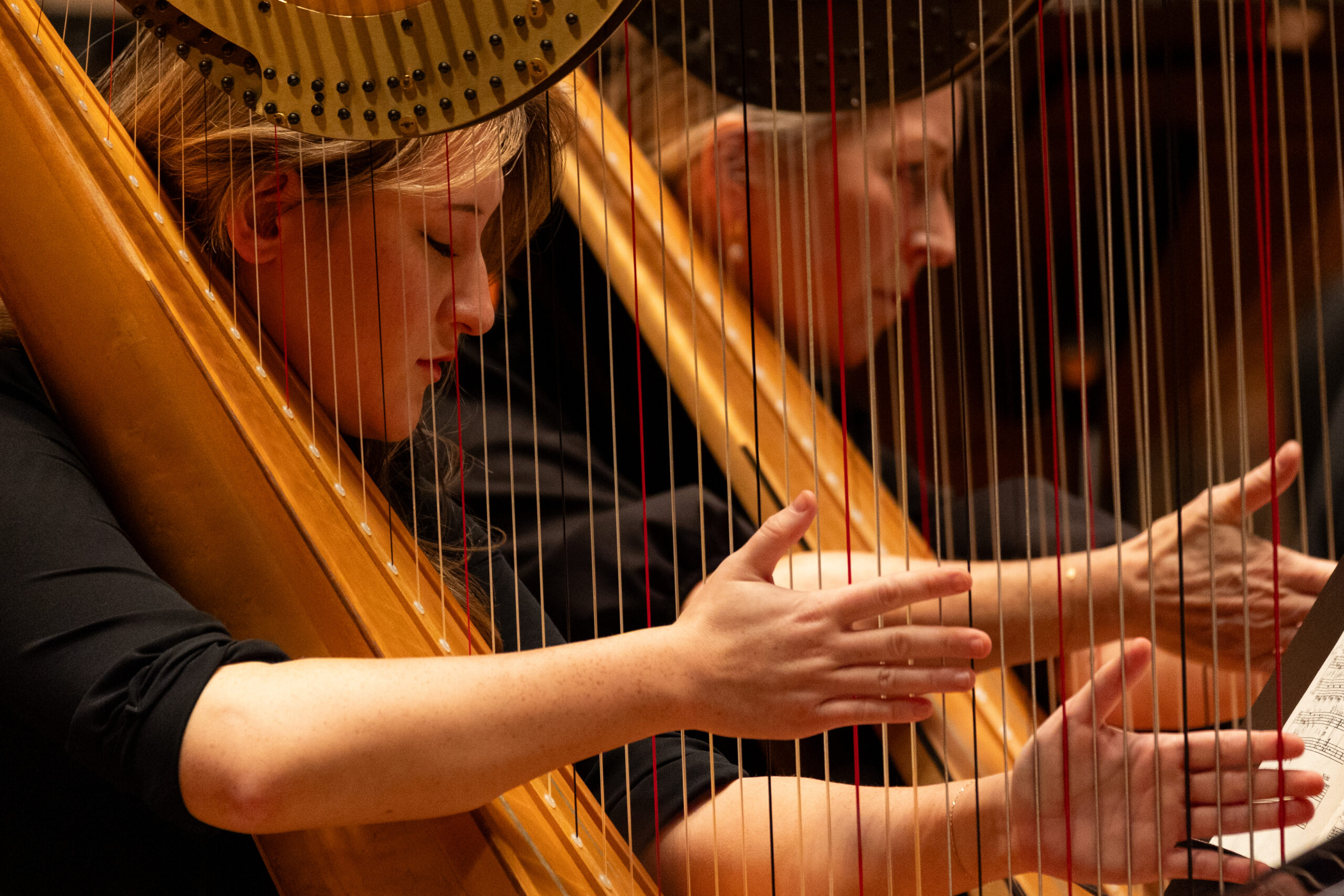
    A member of the Philadelphia Orchestra plays the harp during the performance of Mahler’s Symphony No. 2 at The Kimmel Center on Friday, March 6, 2026, in Philadelphia.

    The Philadelphia Orchestra’s standing is such that Tuesday’s repeat performance at the Mahler-glutted Carnegie Hall had all of six unsold seats as of Friday.

    The laborious Mahler performances of decades past have given way to ones that discover hidden worlds that can be investigated without the symphonic whole lapsing into grandiose incoherence. Not so on Friday.

    The incisive, explosive five-movement 80-minute “Resurrection” symphony—a large orchestra, a competing offstage band, two vocal soloists pondering our existence plus the Philadelphia Symphonic Choir supplying grandeur—had a vast but particularly specific range of expression on Friday.

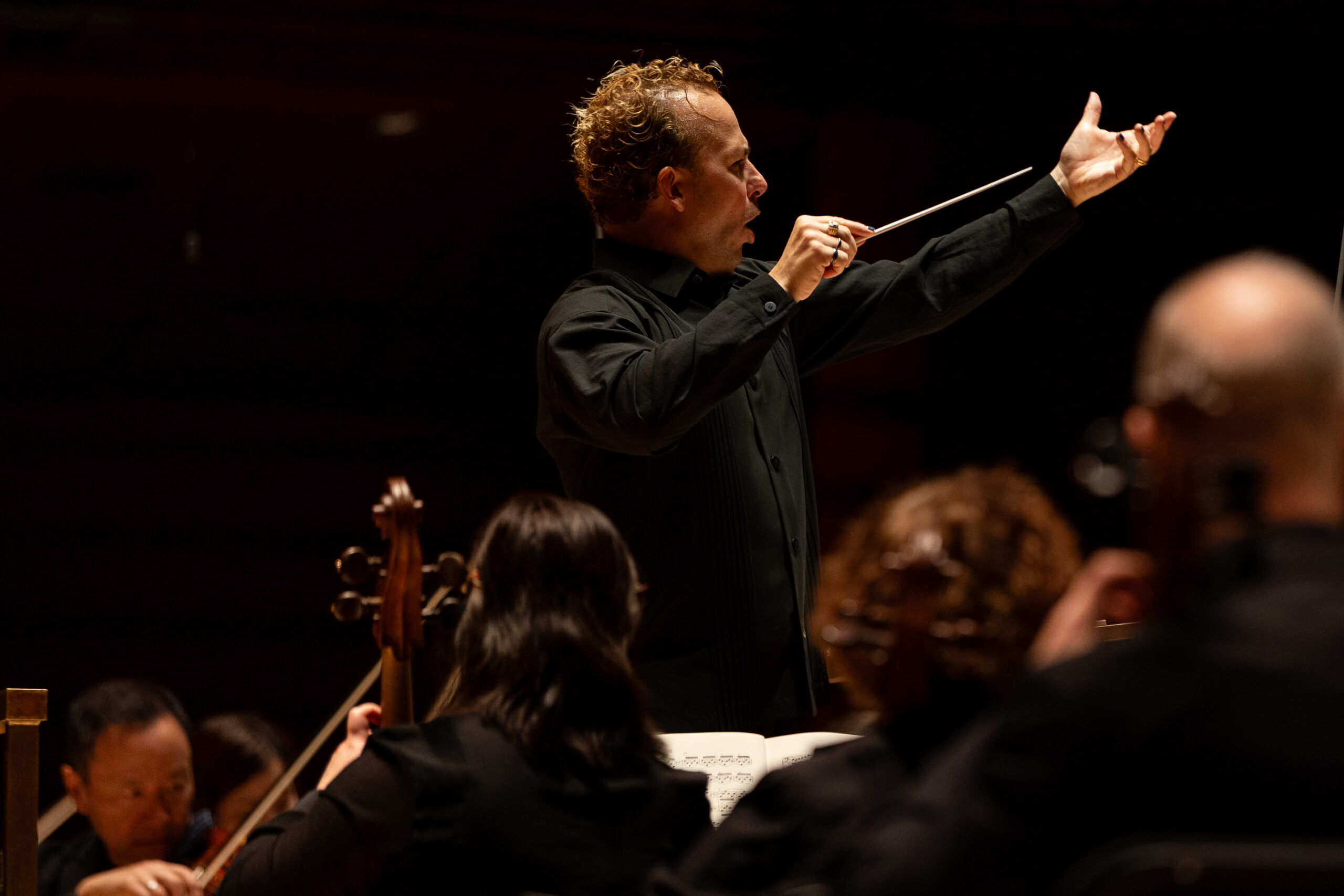
    Yannick Nézet-Séguin conducts the Philadelphia Orchestra’s performance of Mahler’s Symphony No. 2 at The Kimmel Center on Friday, March 6, 2026, in Philadelphia.

    While some conductors slow down to spotlight specific points, Nézet-Séguin was inclined to accelerate; not to be a speed demon but to suggest that this was Mahler “off his meds.” Nothing conveys emotional extremes like high-energy symphonic precision.

    Apocalyptic moments are expected in the violently contrasting sonorities and gestures of the first movement. However, the dance-based second and third movements had their landmine that, in this performance, never allowed moments of gentility and repose to rest easy.

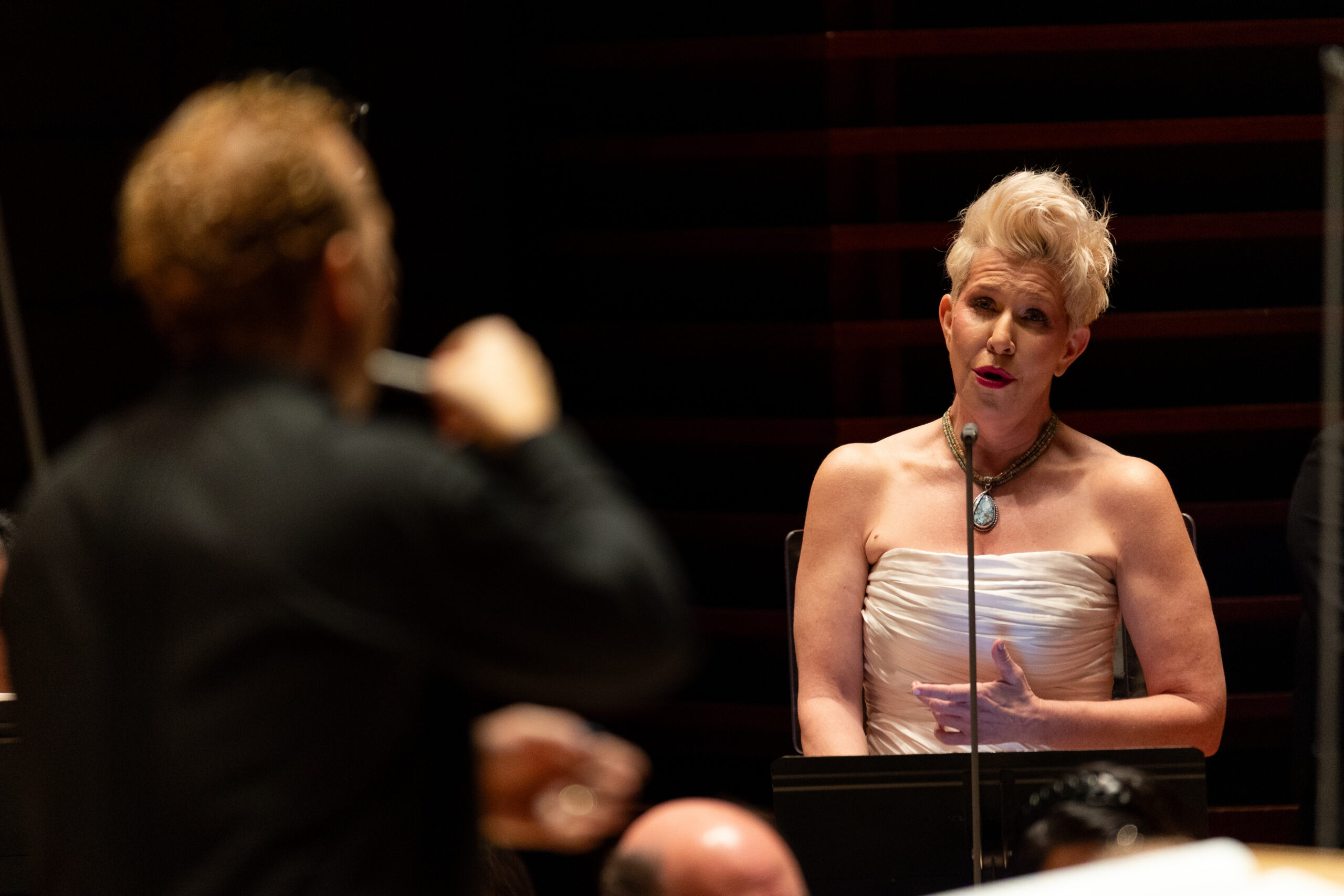
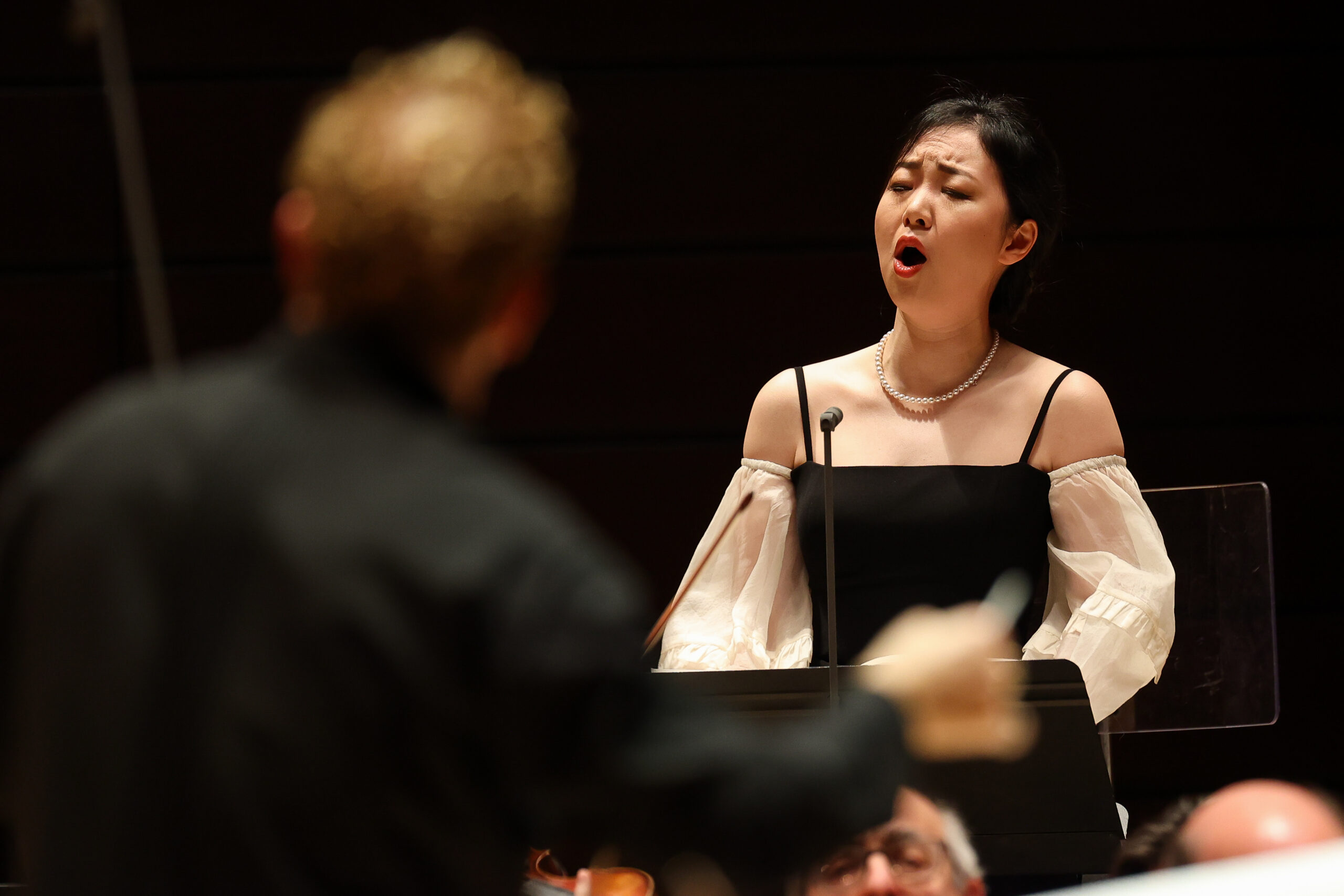
    Mezzo-Soprano Joyce Didonato performs a solo during the Philadelphia Orchestra’s performance of Mahler’s Symphony No. 2 at The Kimmel Center on Friday, March 6, 2026, in Philadelphia.

    In the spare depths of the fourth “Primal Light” movement, mezzo-soprano Joyce DiDonato didn’t just convey profundity, but lived it.

    Though the multisection fifth movement is sometimes framed by soaring solo soprano writing (so well sung by Ying Fang), the words included by Mahler can put the symphony’s many moving parts in perspective.

    For me, in this performance, it was “You were not born for nothing!” This has special poignancy for a composer who had boyhood aspirations to become a martyr. Not a sign of great self value. Is this a to-be-or-not-to-be symphony? With all questions answered with affirmation in fortissimo?

    Soprano Ying Fang performs a solo during the Philadelphia Orchestra’s performance of Mahler’s Symphony No. 2 at The Kimmel Center on Friday, March 6, 2026, in Philadelphia.

    The four previous movements teetering on so many different edges, the symphony was a litany of the joys and horrors of existence; which one can’t help contemplating amid current global power struggles.

    Just for fun: One point of reference was the Mahler 2nd finale that Nézet-Séguin recorded for the Leonard Bernstein biopic Maestro: It’s more imposing but with no sense of triumph over anguish. It was Mahler “on his meds.”

    Good for the film. Not for me. I’m a no-meds Mahlerite.

    “The Mahler Symphony No. 2″ will be repeated 8 p.m. Saturday and 2 p.m. Sunday at the Kimmel Center. $77-$252. philorch.ensembleartsphilly.org

  • Painted Bride’s new executive director is an arts leader who, many years ago, interned at the arts organization

    Painted Bride’s new executive director is an arts leader who, many years ago, interned at the arts organization

    Nearly a year after longtime executive director Laurel Raczka announced she was stepping down from her post at Painted Bride Art Center, the arts organization has found a new leader.

    Risë Wilson is the organizations’s new executive director, succeeding Raczka, who led the Bride for 26 years.

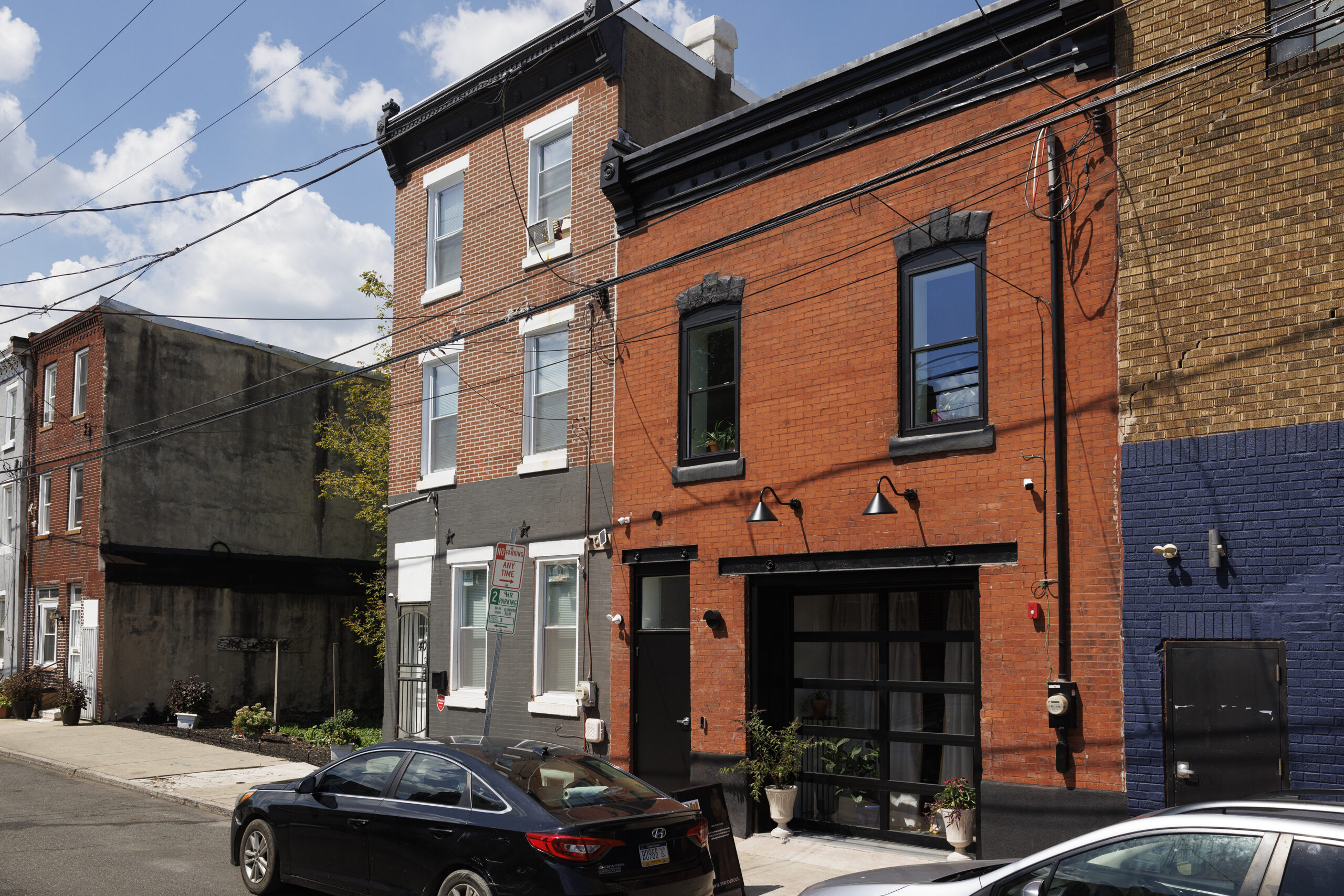
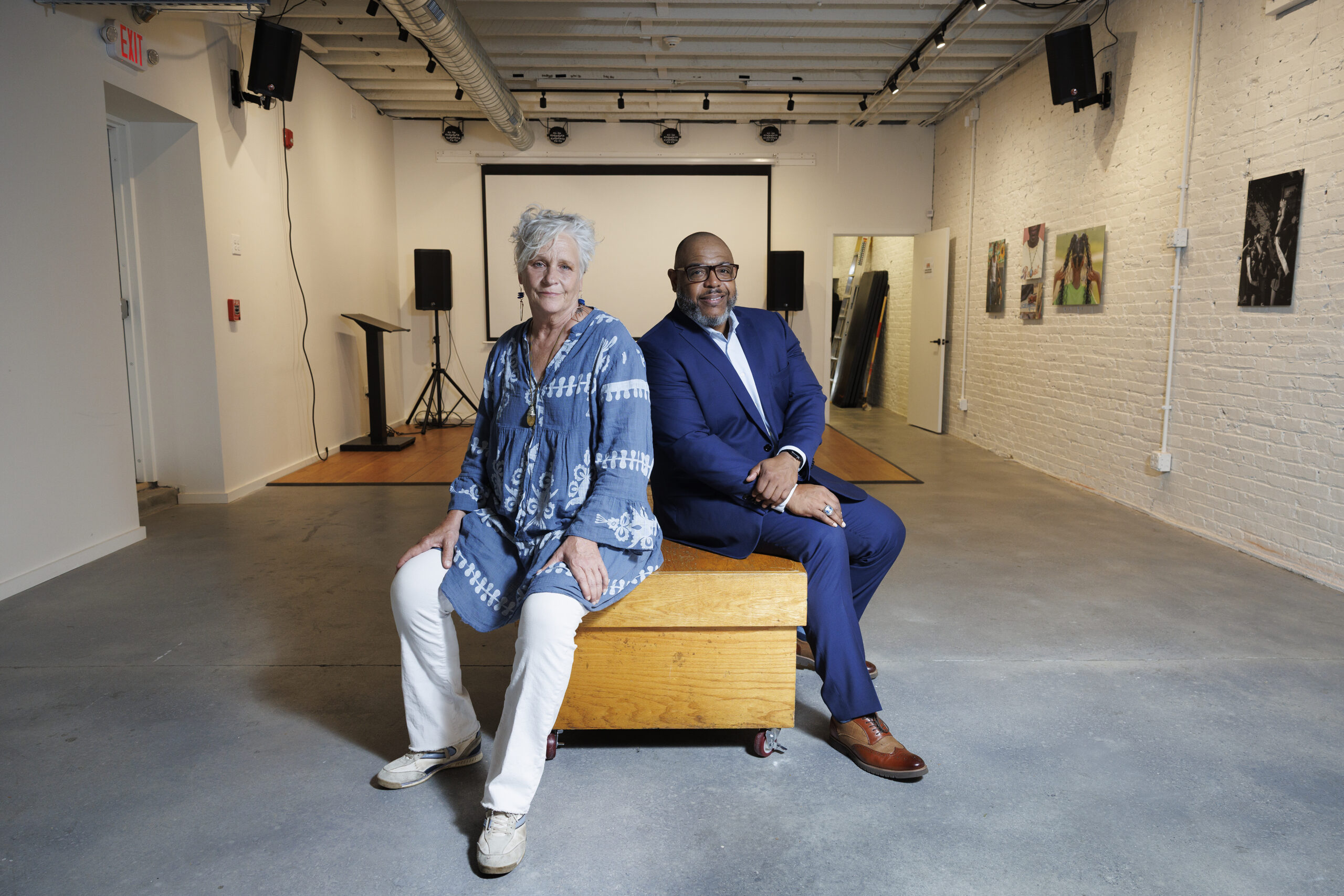
    Th exterior of Painted Bride Art Center Project Space, 4029 Cambridge St., Philadelphia, Wednesday, September 3, 2025.

    With this appointment, Wilson, a Germantown native, will be returning to her hometown and the organization that kick-started her arts career nearly 30 years ago.

    Wilson interned at the Bride under Raczka and former leader Gerry Givnish, who transformed the former cooperative gallery into an alternative performance space.

    “That experience changed my life,” Wilson said in a statement, responding to questions from The Inquirer, “setting me on a course to develop my own socially-engaged artistic practice while championing fellow artists committed to community-based work.”

    Executive director Laurel Raczka and Painted Bride board chair John Barber at the Painted Bride Art Center Project Space, 4029 Cambridge St., Philadelphia, Wednesday, Sept. 3, 2025.

    For the past two decades, Wilson has engaged with that work in Brooklyn, spearheading organizations such as the Laundromat Project, using art as a tool for community building and engagement.

    Wilson’s career has spanned public engagement, artist development, strategic planning, and philanthropic practice. Her previous roles include being the inaugural director of philanthropy at the Robert Rauschenberg Foundation. She has also worked with the Ford Foundation, Parsons: The New School for Design, MoMA, and the International Center for Photography.

    The community organizer and activist holds a bachelor of arts degree from Columbia University, where she was a Kluge Scholar, and a master of arts degree from New York University, where she was a MacCracken Fellow.

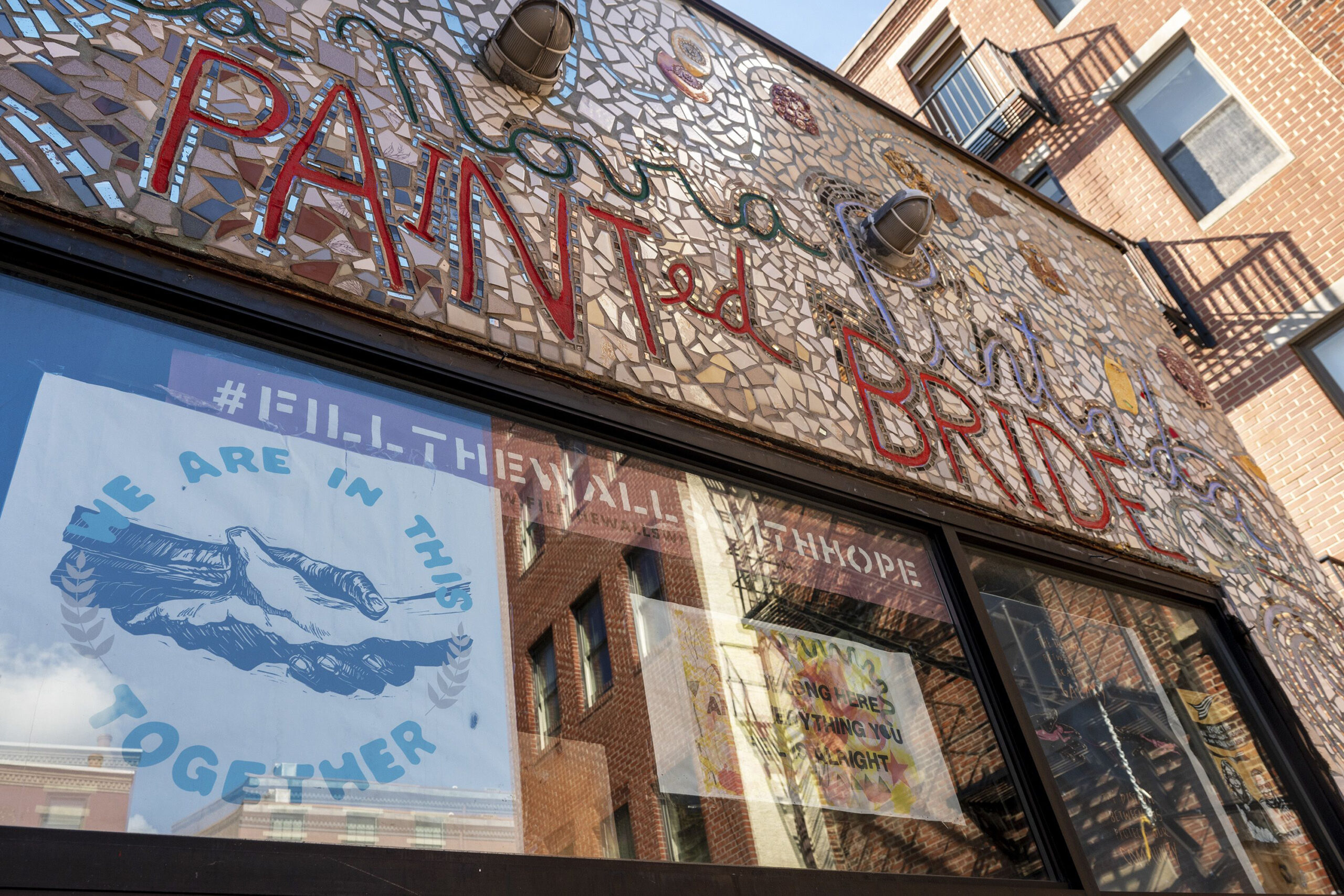
    The former Painted Bride with the iconic mosaic by Isaiah Zagar. Photo taken on Oct. 18, 2023.

    After years at 52nd and Market Streets, the Painted Bride recently moved to a 3,200-square-foot performance space in East Parkside. In her statement, Wilson said she’s stepping in at a time when “we all need to protect and exercise our imaginations.”

    The Bride’s storied commitment to supporting artists and “culture-bearers” is one of many reasons the role resonated so strongly with her.

    “I feel privileged to work for a cultural institution long committed to cultivating the conditions for artists to thrive, for dialogues to deepen, and for each of us to be the authors of our own story,” Wilson said in her statement.

    As she transitions into her new role, Wilson is planning more artist-centered programming and “public-facing cultural dialogue,” which includes added workshops, public discussions, and collaborative projects.

    She’s also working on strengthening collaboration between artists, neighborhood organizations, and the city’s cultural partners. These efforts, Wilson wrote, will firmly establish the Bride’s role as a “civic cultural space.”

    Raczka said she’s confident the organization will continue to be a place for artist development and community engagement under Wilson.

    “I’m excited to see [Wilson] bring her leadership and vision to this next chapter,” Raczka said. “Her work has long centered artists as essential contributors to civic life, and I believe the Bride will continue to grow as a vital cultural space under her stewardship.”

  • Philadelphia Museum of Art hires a new chief financial and operating officer

    Philadelphia Museum of Art hires a new chief financial and operating officer

    Philadelphia Museum of Art director and CEO Daniel H. Weiss has hired a longtime associate to be the museum’s new executive vice president and chief financial and operating officer.

    Mitchell Lee Wein will oversee finances, facilities, operations, risk management, and strategic initiatives, the museum announced Friday.

    Weiss and Wein worked together in similar roles when Weiss was president of Haverford College and, before that, at Lafayette College. Wein, 63, has extensive experience on the financial and operations side of nonprofit organizations, but has never worked in a museum.

    A Philadelphian for more than three decades, he takes up the new post April 22.

    “It’s such an important institution that I’m happy to play a role for as long as I can and leave it better for the future. I think the mission is critical,” said Wein. “When I was in the private sector I thought about how we attract firms to Philadelphia, how people can have a great experience here, and the museum plays a role in that. I smile when I think about the opportunities.”

    Mitchell Lee Wein, newly named CFO and COO of the Philadelphia Museum of Art.

    Wein is currently senior vice president for finance and COO at the Brookings Institute, the Washington, D.C.-based think tank. He was senior vice president for administration and finance at Haverford College and held a similar position at Lafayette College. Previously, he was managing director in investment banking with UBS Investment Bank/UBS PaineWebber, and, before that, at PNC Capital Markets.

    Weiss took over the museum in December and has been making a series of changes in the executive leadership team as he determines how to close the operating deficit and revive attendance. He must decide what to do about paused expansion plans and much-needed maintenance on existing buildings. And he will consider whether to re-open to the public the Ruth and Raymond G. Perelman Building, the museum’s major addition that closed during the pandemic.

    Among Weiss’s early moves: he reversed the name change that had been unveiled months earlier as part of the museum’s widely-panned rebranding.

    Wein says he has been following coverage of the museum’s challenges and reading financial statements in preparation for his start. He said he looked forward to developing a plan for the museum “in support of what Dan has outlined along with other colleagues.”