Category: Arts & Culture

  • Timothée Chalamet said ‘no one cares’ about opera and ballet. He should get to Philadelphia more often.

    Timothée Chalamet said ‘no one cares’ about opera and ballet. He should get to Philadelphia more often.

    From the department of weirdly random, gratuitously hurtful actor observations about the world, Timothée Chalamet has informed us that opera and ballet are passé:

    “I don’t want to be working in ballet, or opera, or things where it’s like, ‘Hey, keep this thing alive, even though, like, no one cares about this anymore.’ All respect to all the ballet and opera people out there.”

    After suggesting that both art forms were wanting for support during a talk with actor Matthew McConaughey at a Variety and CNN town hall in University of Texas at Austin, the American and French actor joked: “I just lost 14 cents in viewership. I just took shots for no reason.”

    Chalamet then mimicked an opera singer, the event video shows.

    Opera and ballet figures all over have seized on his comments, and Philadelphia — where both opera and ballet fill the hall regularly — would like to have a word with the 30-year-old actor.

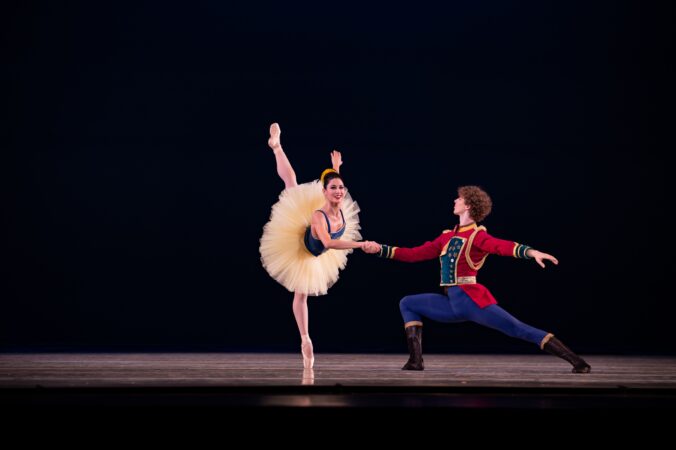
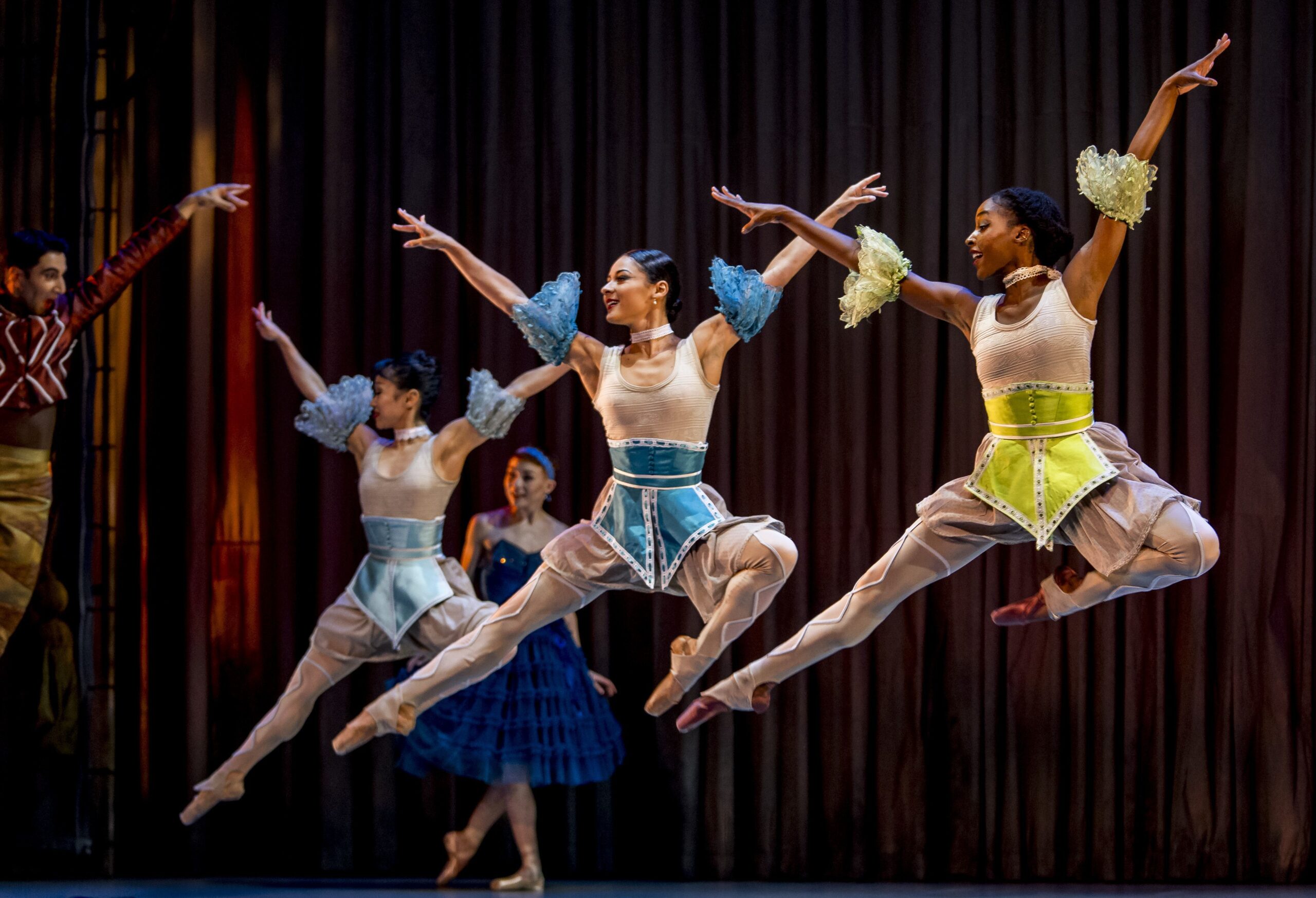
    BalletX dancers Ashley Simpson, Itzkan Barbosa, Minori Sakita, and Lanie Jackson (back) in Amy Hall Garner’s “Petrushka.”

    “I am a huge Timothée Chalamet fan, and I was shocked,” said Christine Cox, artistic and executive director of BalletX. “It was so dismissive and hurtful of entire industries. I see generations of people coming to this art form. We shouldn’t be putting each other down, we should be lifting each other up.”

    BalletX’s spring run of seven performances this month are nearly sold out, Cox pointed out.

    Philadelphia Ballet chief executive officer Shelly Power said that “Mr. Chalamet is obviously living outside the majority of the ballet world and out of touch. If his comments were true, why are our ticket sales and attendance numbers hitting all-time highs? We saw 10,000 more patrons from 2024 to 2025 in The Nutcracker alone.”

    The company premiered its The Merry Widow Thursday night.

    Its subscriber base, Power said, has returned to pre-pandemic numbers.

    This season, most Opera Philadelphia performances have sold out or sold close to capacity. General director and president Anthony Roth Costanzo said that “in terms of whether I agree that no one cares about it, no, obviously I don’t agree with that as someone who cares about it a lot.”

    But Costanzo says he prefers to focus on the underlying question of how to get even more people to care about both opera and film.

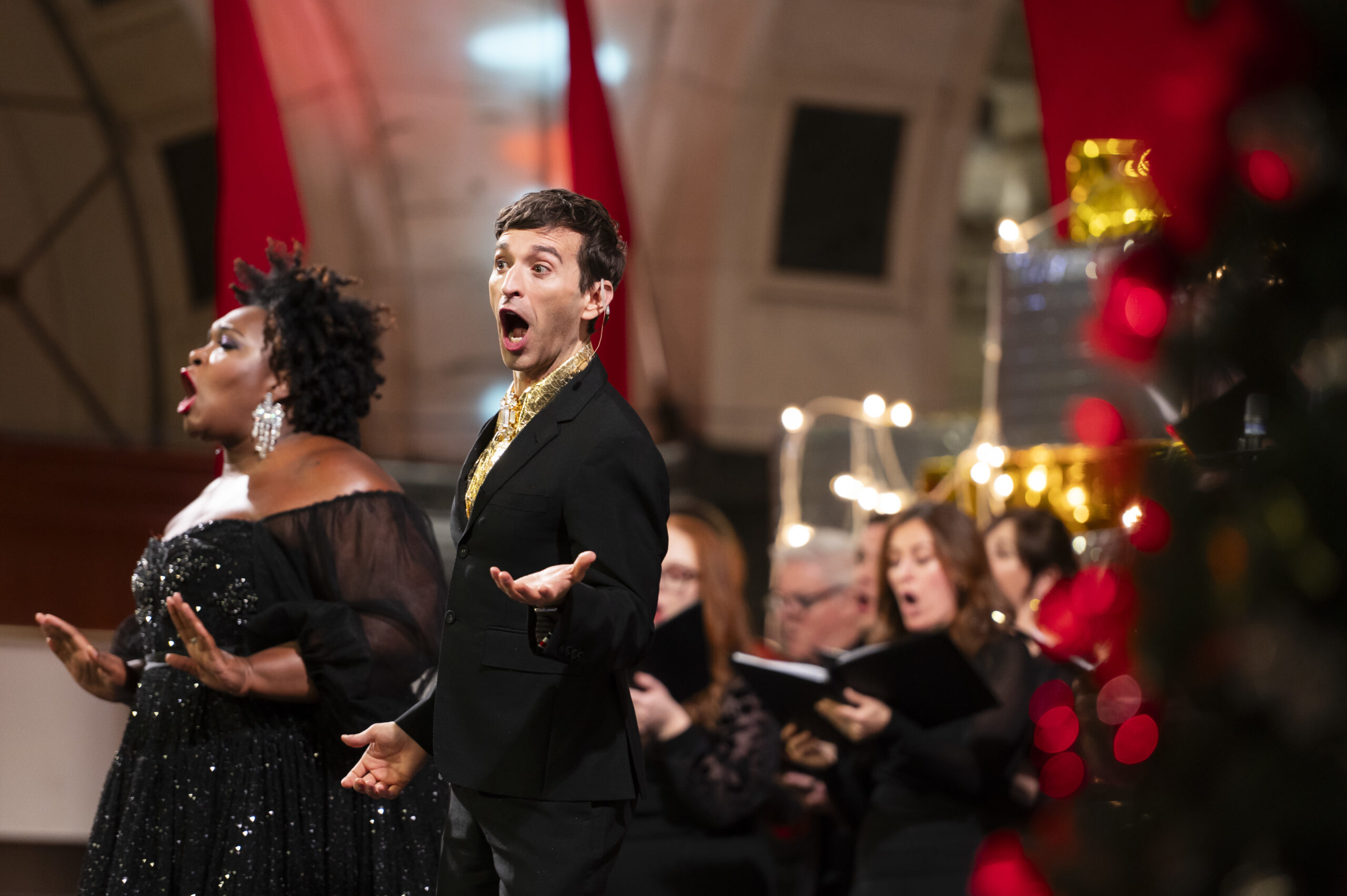
    Anthony Roth Costanzo (right), countertenor, and Leah Hawkins (left), soprano, perform during ‘Home for the Holidays’, a concert part of Opera Philadelphia’s ‘Pipe Up!’ series at The Wanamaker Building’s Grand Court on Tuesday, Dec. 2, 2025.

    “Timothée was talking about making film as relevant as it can be, and in that context, he said that he didn’t want to work in something that wasn’t relevant, to try and make it more relevant, and that’s what I’m doing. So in a way I feel allied. He’s just saying that he doesn’t want to do it in a medium that’s more difficult, so I guess he’s a little bit more of a wimp than I am.”

    BalletX’s Cox said that Chalamet’s comments were surprising coming from someone whose mother, Nicole Flender, was a Broadway dancer, and someone who attended a performing arts high school. Chalamet attended New York City’s Fiorello H. LaGuardia High School of Music & Art and Performing Arts.

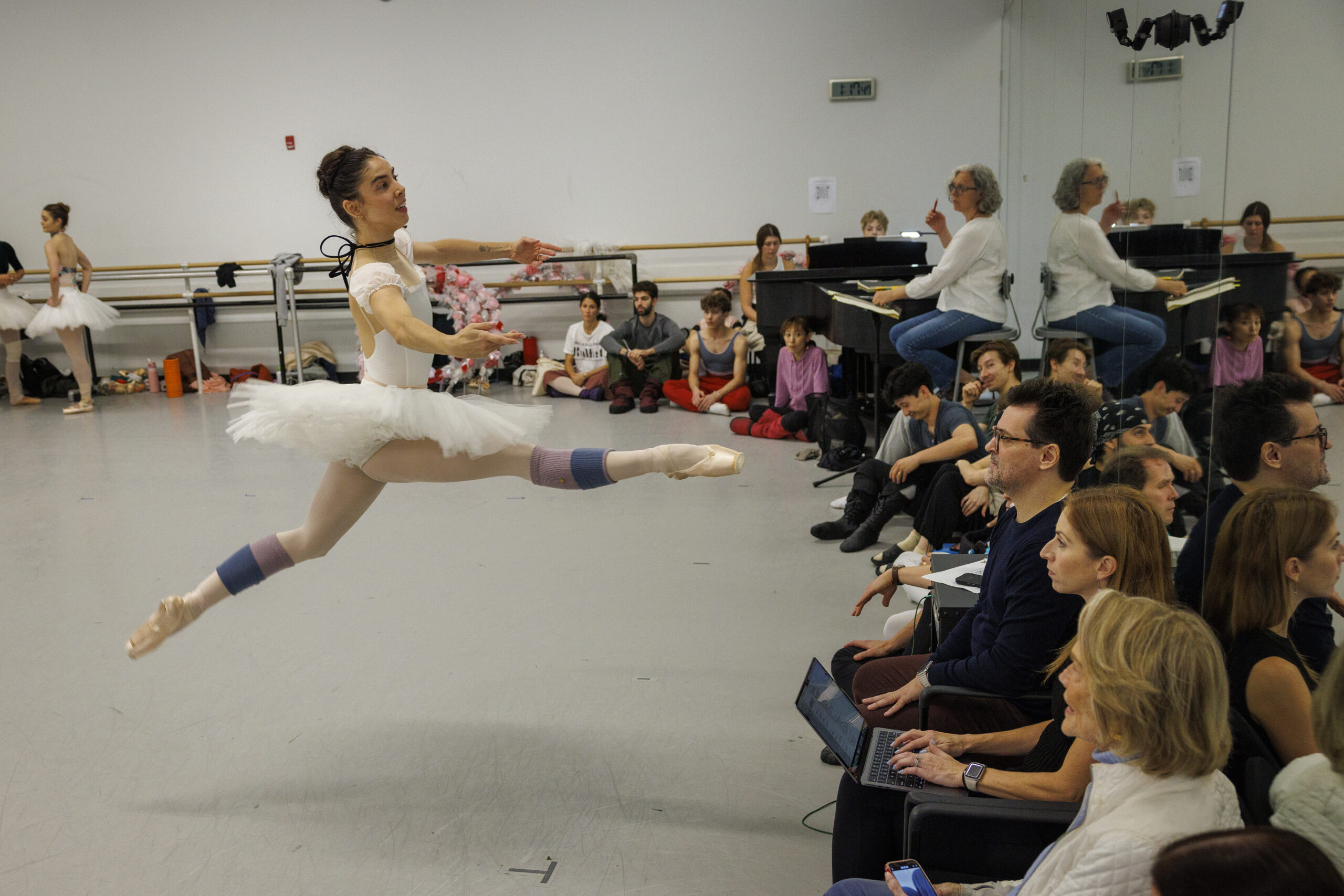
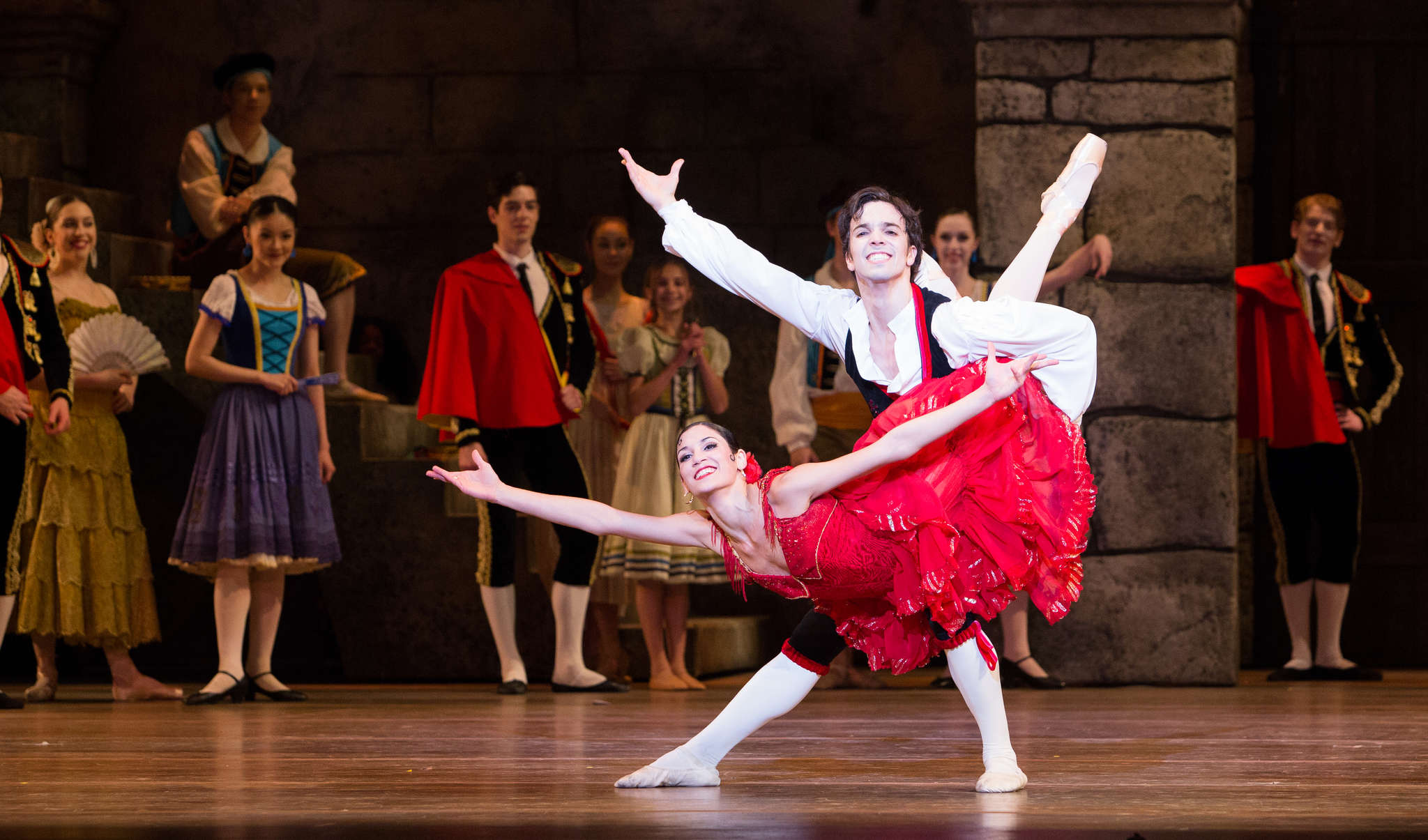
    At left is Dayesi Torriente, playing Gulnare leaps in front of Angel Corella, artistic director, Philadelphia Ballet during rehearsal for “Le Corsaire” at the Philadelphia Ballet, Wood Street, Philadelphia, Wednesday, October 2, 2024.

    “I bet you he’s going to be at a ballet soon, because he’s going to have to fix this,” Cox said.

    As for Chalamet mimicking an opera singer during his talk with McConaughey, Costanzo has an idea.

    “I invite him to star in an opera whenever he wants. Because after he said that, I saw some contrition as he tried to then sing an operatic note. And I thought, ‘Okay, there’s some promise there.’ So if he wants voice lessons, I’m available.”

  • Philadelphia Ballet’s ‘The Merry Widow’ is a rom-com, period piece, and visual feast. It’s the Jane Austen of ballet.

    Philadelphia Ballet’s ‘The Merry Widow’ is a rom-com, period piece, and visual feast. It’s the Jane Austen of ballet.

    If you’re looking to find an artistic escape with your night out, Philadelphia Ballet’s new (to them) The Merry Widow is a good match.

    Set in the Belle Époque era in Paris, it is all glittering dresses, tiaras, stunning ballrooms, and beautiful gardens. The main characters change costumes several times. The movement mixes in waltzes and folk dances (from a fictional country), along with pointe work and partnering.

    A romantic comedy, period piece, and visual feast, it is sort of the Jane Austen of ballet.

    While it’s called The Merry Widow, there are two strong principal couples. On Thursday night’s premiere at the Academy of Music, Mayara Pineiro was Hanna, a rich widow, and Sterling Baca was Danilo, an aristocrat who broke it off with the young Hanna years ago when she was a poor peasant. The leaders of their fictional country, Pontevedro, would like them to marry to keep their homeland afloat.

    Philadelphia Ballet dancers Yuka Iseda (top) and Ashton Roxander in “The Merry Widow.”

    The second couple is Valencienne, danced on Thursday by Yuka Iseda, and Camille, performed by Ashton Roxander. The third wheel in the relationship is Valencienne’s much older husband, Baron Zeta, a character role performed by rehearsal director Charles Askegard.

    Iseda was the best surprise of the night. Her reactions and comedic timing were on point and helped move the narrative along.

    The partnering from both couples was top-notch, and the dancing as a whole was rich and lush.

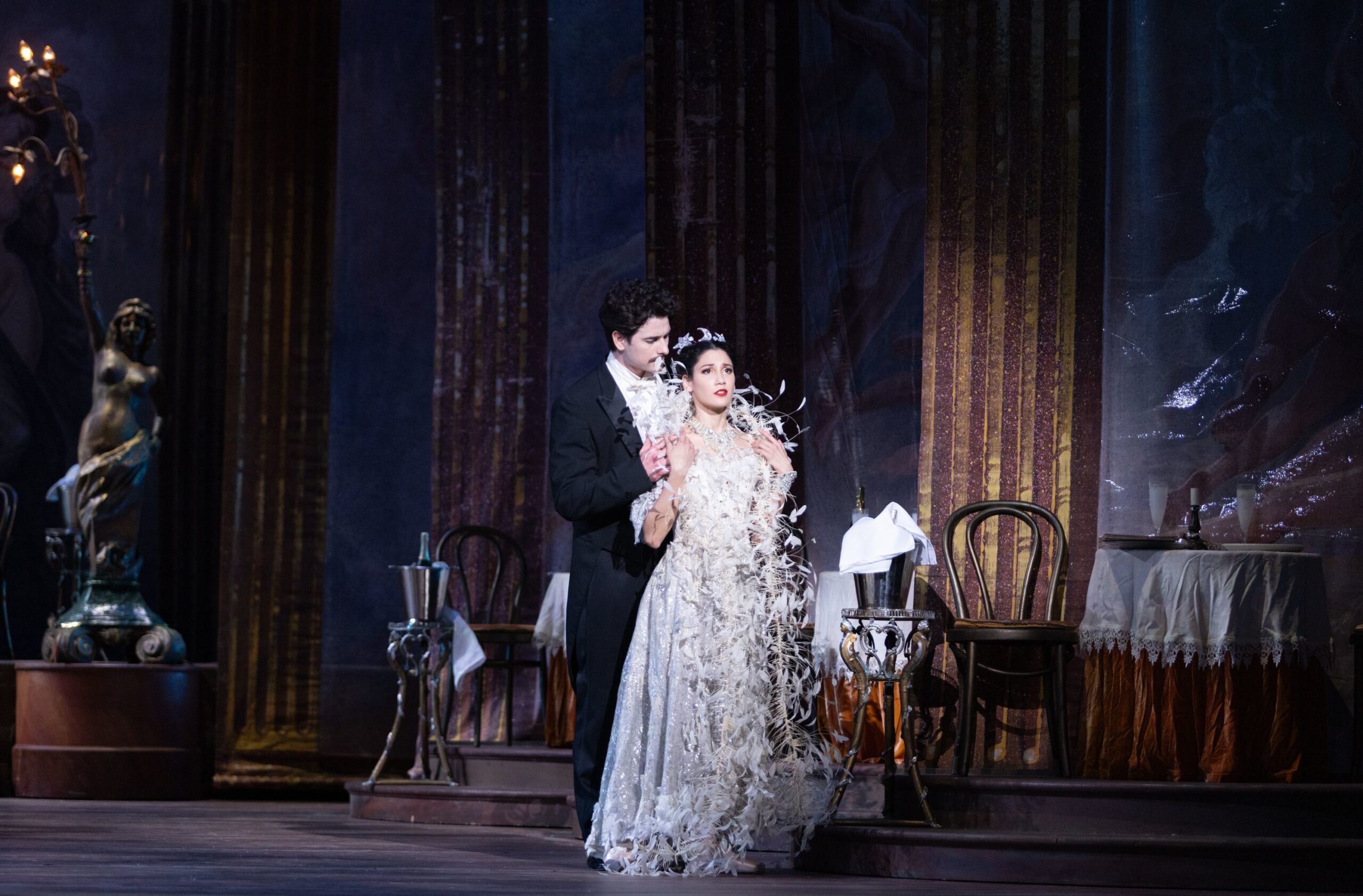
    The sets and costumes, by Roberta Guidi di Bagno, are reason enough to see The Merry Widow. Occasionally the costume changes make identifying the characters confusing, but all is forgiven when Pineiro enters in a white gown and an impossibly lavish feathered scarf.

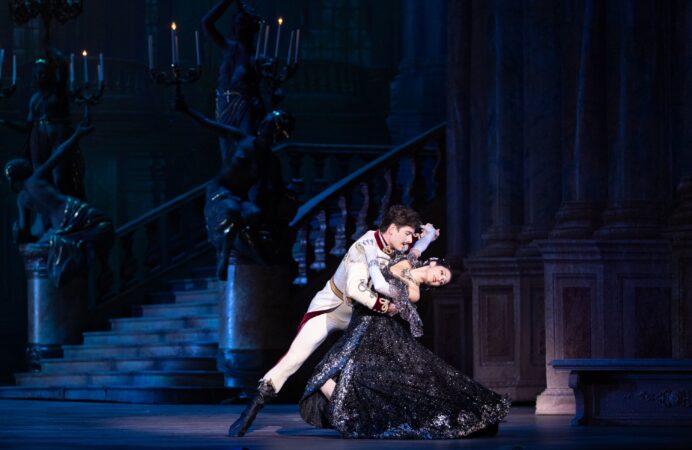
    Philadelphia Ballet dancers Sterling Baca (left) and Mayara Pineiro in “The Merry Widow.”

    Ronald Hynd adapted The Merry Widow in 1975 for the Australian Ballet from the operetta and the Franz Lehár score was arranged for the ballet by John Lanchbery.

    The original Danilo for the Australian Ballet, John Meehan, was a répétiteur for the Philadelphia Ballet, along with Steven Woodgate. So the dancers learned the choreography from an original source.

    Artistic director Angel Corella said last week that he had wanted the company to perform The Merry Widow since he came to the company in 2014.

    “It’s one of my favorite ballets. It’s so much fun,” Corella said. “Great dancing, beautiful music, beautiful story.”

    Philadelphia Ballet dancer Mayara Pineiro (center) in “The Merry Widow.”

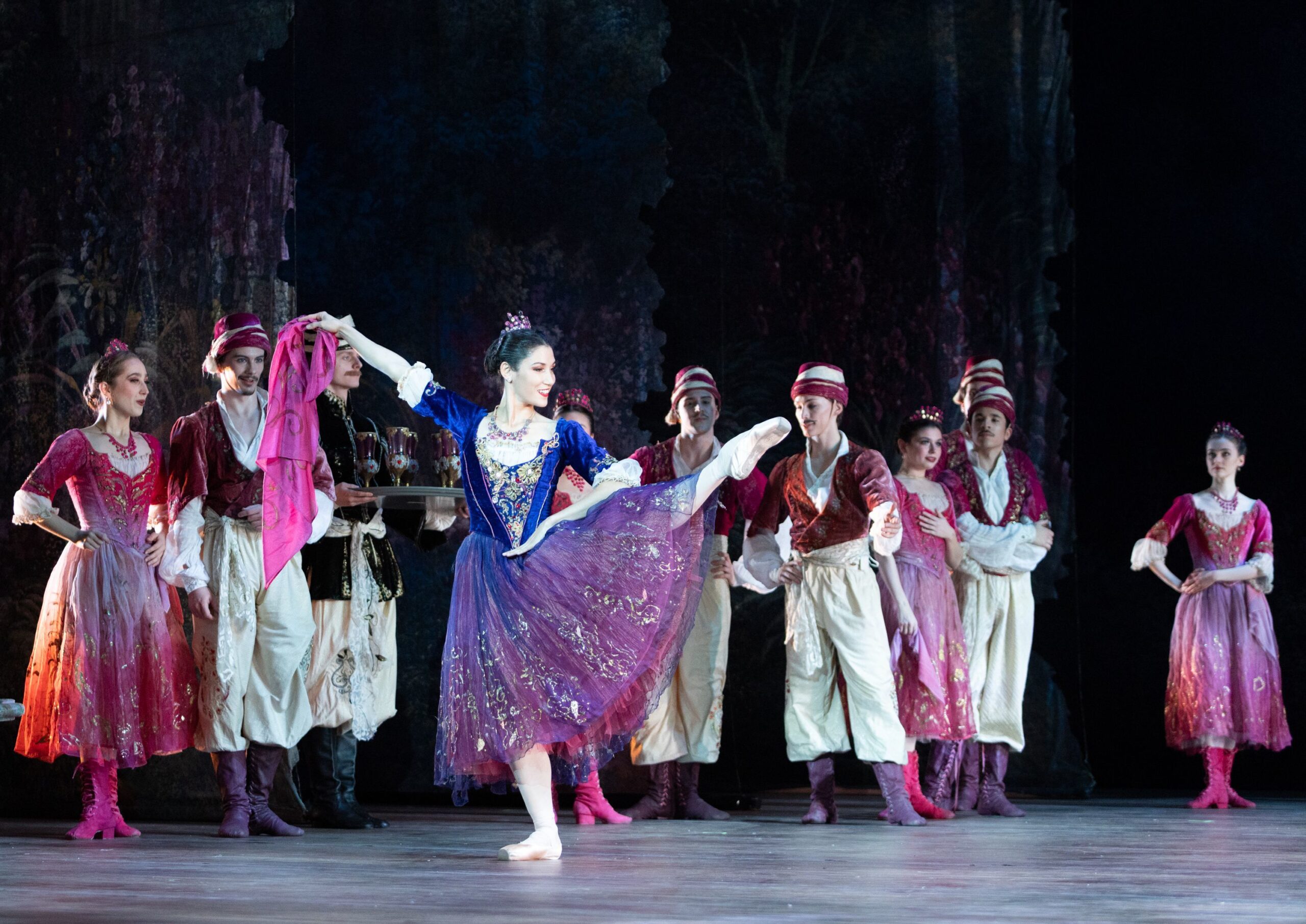
    The group dances add a lot of depth to the ballet — and more stunning costumes. From the ballroom scenes to the folk dances of fictional Pontevedro, a cancan scene, and men performing in tails, the stage nearly vibrates with color and sparkle. The ballet has many dancers to cast, from the advanced levels of the school through the professional ranks, so these large scenes are impressive.

    For a fairly recent ballet, there is some Orientalism in the folk dance scenes. But since it is set in a made-up place, any passing likeness to Turkey or the Middle East is easier to take.

    Philadelphia Ballet in “The Merry Widow.” Through March 15. Academy of Music. $29-$274.40. 215-893-1999 or ensembleartsphilly.org

  • Temple University and the Philadelphia Orchestra and Ensemble Arts have signed a deal for a new partnership

    Temple University and the Philadelphia Orchestra and Ensemble Arts have signed a deal for a new partnership

    Broadway stars and orchestral players might lead budding Philadelphia musical talent in master classes, and new college internships could open up at the city’s largest performing arts producer and presenter.

    As Temple University prepares to establish an outpost in Philadelphia’s major arts district, the school, and Philadelphia Orchestra and Ensemble Arts have signed a memorandum of understanding for a new partnership, formalizing a dream stage for joint activities already underway.

    The new arrangement is expected to benefit not only Temple University students, but also younger students of Temple Music Prep and the Philadelphia School District.

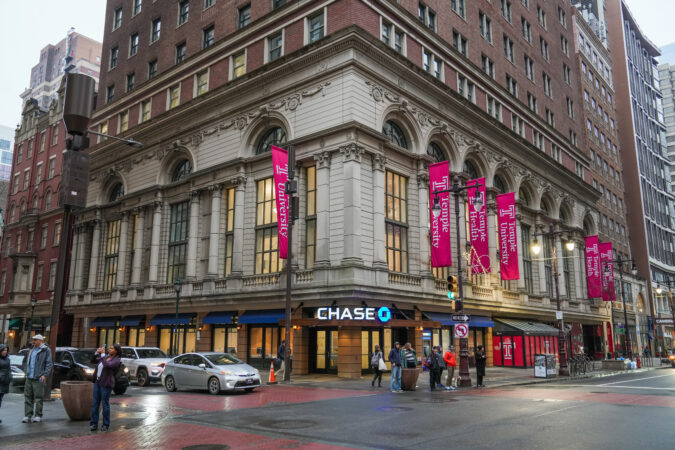
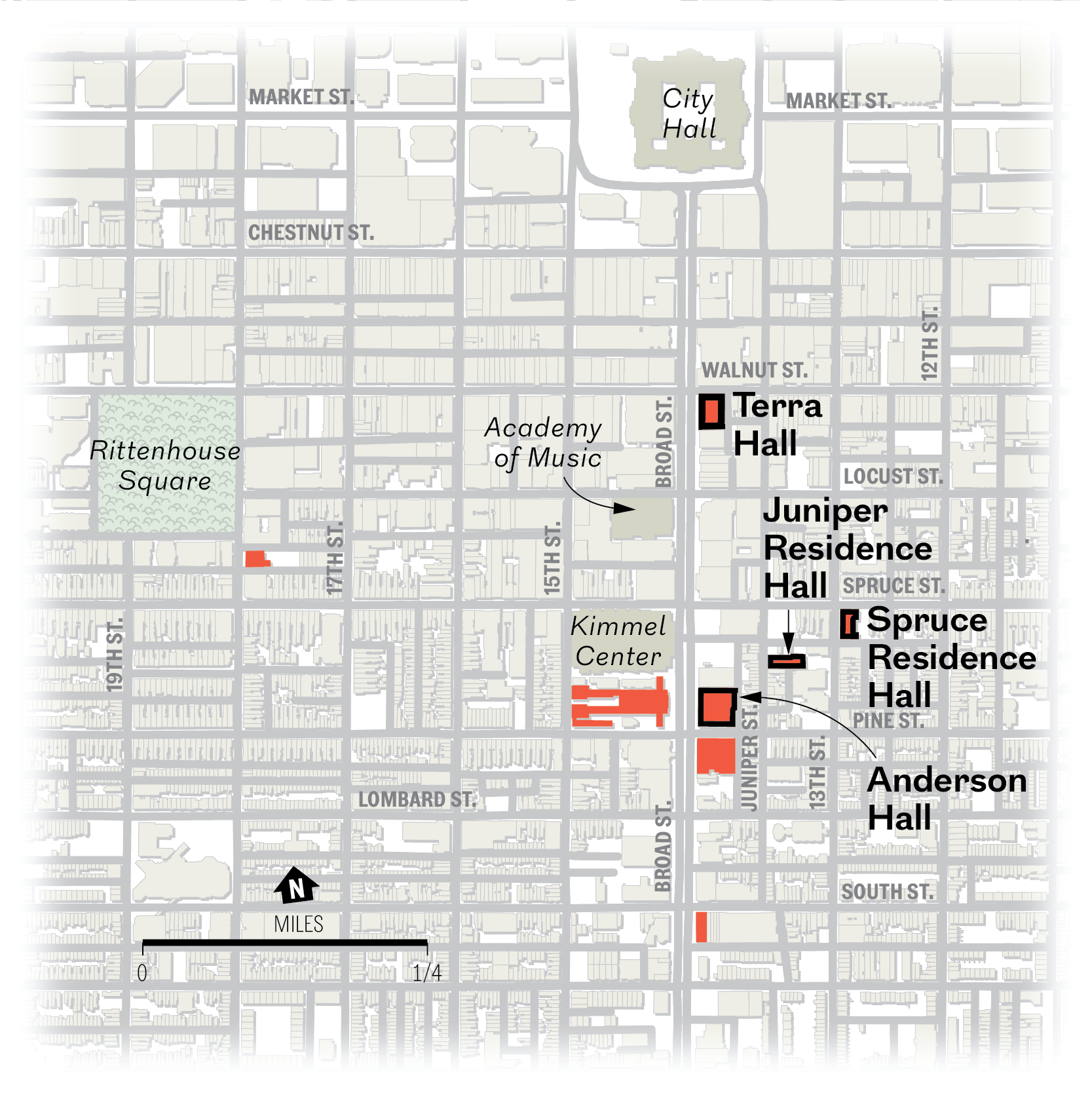
    Temple and the orchestra have long partnered on projects, but the university’s purchase of Terra Hall — near the orchestra and Kimmel Center — will allow a deeper level of involvement, leaders said.

    In the fall of 2027, for instance, about three dozen Philadelphia Orchestra current and retired musicians are expected to move their teaching studios from Temple’s main campus to Terra. Other collaborations are expected to take shape over the next year and half.

    “The gist of it is, Temple University and the Philadelphia Orchestra and Ensemble Arts are committed to working together to build a tangible partnership. It’s aspirational,” said POEA president and CEO Ryan Fleur of the memorandum of understanding, which was signed last month.

    “There’s a lot around the exchange of talent and supporting one another,” said Temple president John Fry.

    Terra Hall – shown here with other former University of the Arts buildings – is near the Academy of Music and Kimmel Center.

    For POEA, the partnership means it will no longer pursue the possibility of building an additional education wing at the Kimmel Center that had been in the early planning stages.

    “When I heard Temple was acquiring Terra Hall,” said Fleur, “the priority shifted from the idea of an education wing over the loading dock to how we could work with Temple to deploy the space in Terra Hall. Our greatest strength is not about building things, and if we unite in Terra Hall for the benefit of Philadelphia students, it’s a win for Philly.”

    An education annex at the Kimmel might have cost in the neighborhood of $100 million.

    “It was a large figure,” said Fleur. POEA is already in the process of raising hundreds of millions of dollars for a variety of needs from endowment to repairing and renovating its facilities, which include Marian Anderson Hall, the Academy of Music, and the Miller Theater.

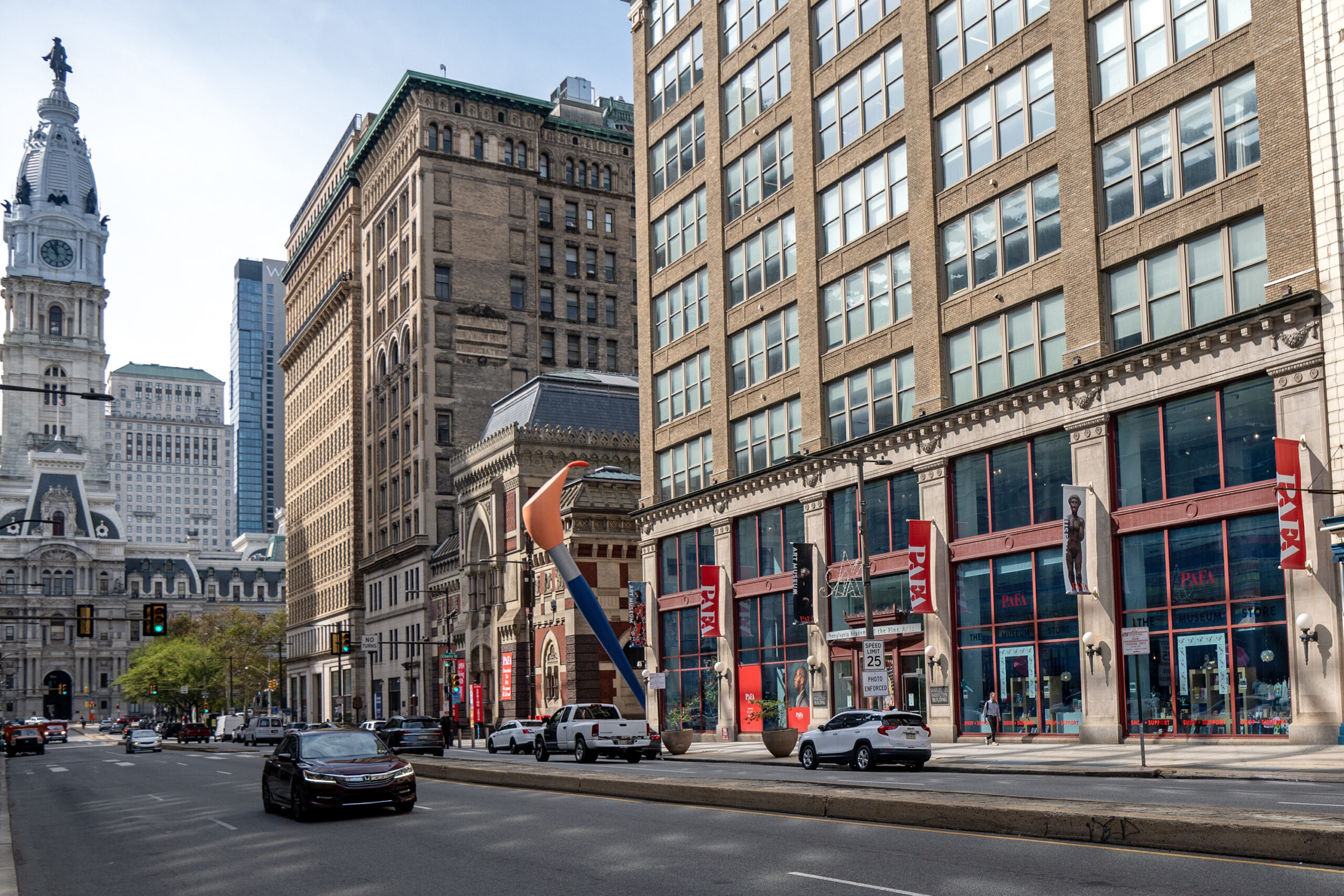
    The Pennsylvania Academy of the Fine Arts on North Broad Street, where Temple University has established a presence in PAFA’s Hamilton building (on right).

    Temple has been establishing a series of partnerships south down Broad Street from its main North Philadelphia campus. It has leased space at the Pennsylvania Academy of the Fine Arts and is developing programs there, and is in the process of taking over the Library Company of Philadelphia, on Locust Street just east of Broad.

    It acquired Terra Hall in 2025 for $18 million after the abrupt bankruptcy and closing of the University of the Arts. Terra was already outfitted with practice rooms, a recording studio, performance space, a dance studio, and classrooms.

    Fry said that Temple is currently doing work on the Terra building, with particular attention to the foundation and elevators, and that the major part of renovations would be done by September 2027. But he said that some of the spaces will be usable this fall.

    Both POEA and Temple have existing relationships with the Philadelphia School District. Fleur said the next step is “uniting” the efforts among the three. Fry said Temple was in discussions with other arts organizations as potential partners in Terra Hall.

    “We want people to think of this as a public resource,” he said, “not a closed academic building just for Temple. Where Temple can play a role, we want to be a part of that.”

  • Holy mackerel! Fishtown man schools neighborhood on fun fish facts.

    Holy mackerel! Fishtown man schools neighborhood on fun fish facts.

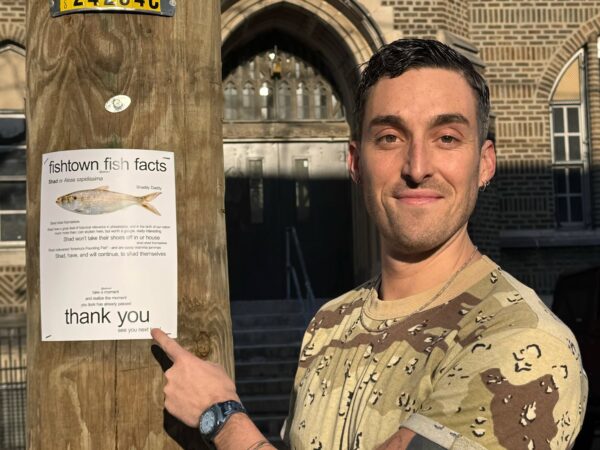
    If you’ve ventured out for a stroll in Fishtown in recent months you may have observed what looks like a page torn out of an oceanography textbook tacked to a lamppost or electrical pole.

    It probably features a clinical-looking photo of a fish, that species’ Latin nomenclature, and a short blurb about the slithering sea dweller.

    However, upon closer inspection, you’ll find these posters are only marginally educational.

    “Striped Bass or Morone saxatilis,” one poster reads, above an image of an open-mouthed, beady-eyed, gray-and-white fish with translucent fins. “Slappadabass mon! Striped Bass live in Philadelphia water slurp slurp. Striped Bass born in saltwater, but live in fresh water. Stripe Bass lay 3,000,000 eggs. not in this economy!!!”

    Disclaimer: Don’t rely on the facts in these posters to ace your next marine biology test. They’re not always accurate. Striped bass actually live in saltwater and spawn in freshwater typically, not the reverse.

    Fishtown fish facts, this series of more than a hundred posters across the area, was never an endeavor to turn a profit or rally support for a cause like some similar lamppost literature. It was just a modest attempt to make his neighbors smile, said 32-year-old Niall Paredes, the brain behind the piscine production.

    The posters contribute to a rich history of both professional and unsanctioned public art across the city. Mural Arts Philadelphia has facilitated more than 4,000 works of public art since its 1984 founding as an anti-graffiti network, while artists and amateurs alike have taken to the streets to plaster their own ephemeral works across Philadelphia.

    Paredes, a native Philadelphian, got the idea for the series about a year ago after moving to Fishtown. As a creative, both professionally producing TV commercials and recreationally working with photo and video, he saw artistic potential in the telephone polls around his new neighborhood.

    They were covered in flyers. Some asked for help. Some asked for attention. Some asked for money.

    None simply asked for a laugh.

    “I just kind of was inspired and started playing around with some funky fish,” he said.

    Because, you know, Fishtown.

    Since then, Paredes estimates he’s created hundreds of Fishtown fish facts posters highlighting dozens of species of fish.

    His write-ups are infused with his own unique brand of humor. The descriptions read like a Mad Libs of Gen Z slang with some 2000s texting lingo sprinkled in the mix.

    He punctuates each poster with the same tagline — “take a moment and realize the moment you took has already passed.”

    The sentiment is intended to encourage the reader to stop, reflect, and “keep pushing” wherever they’re at in life, Paredes said.

    Along the way, Paredes, whose only real relationship with marine biology is through surfing, has boned up on his knowledge of aquatic vertebrates.

    Shad are quickly angling their way to the top of his ranking of most interesting fish, he said. That’s partly due to a legend that asserts that shad saved George Washington’s troops from starvation in 1778 at Valley Forge during the Revolutionary War.

    “When Jeopardy! hits fish, I’m ready to roll,” Paredes said.

    As far as the future of Fishtown fish facts go, Paredes said pedestrians can expect to be enlightened on many more species soon. And he’s planning to expand his fish facts to other neighborhoods; he’s already sprinkled some in Manayunk, Center City, and South Philly.

    “I’m definitely going to be working on it for a bit,” he said. “I mean, there’s a lot of fish in the ocean.”

  • Do you buy a poinsettia to celebrate the holiday season? There is a very Philly history to that.

    Do you buy a poinsettia to celebrate the holiday season? There is a very Philly history to that.

    On Nov. 24, 1827, a group of gentleman who wanted to carry on the tradition of 18th-century area botanists John Bartram and James Logan held the first meeting of the Pennsylvania Horticultural Society.

    Like Bartram and Logan, these men were eager to showcase Philadelphia’s fertile ground for native plants and exotic imports. So, they would often bring along plants to their meetings.

    And it wasn’t just the men at these meetings. According to a history of the Pennsylvania Horticultural Society, published in 1927, members brought “more than 40 specimens of plants and flowers, 15 varieties of pears and apples, American grape wine, cauliflower, and broccoli,” to a Nov. 3, 1828, meeting.

    Less than a year later, the inaugural Horticultural Society members decided to take their admiration of plants and flowers to the city at large.

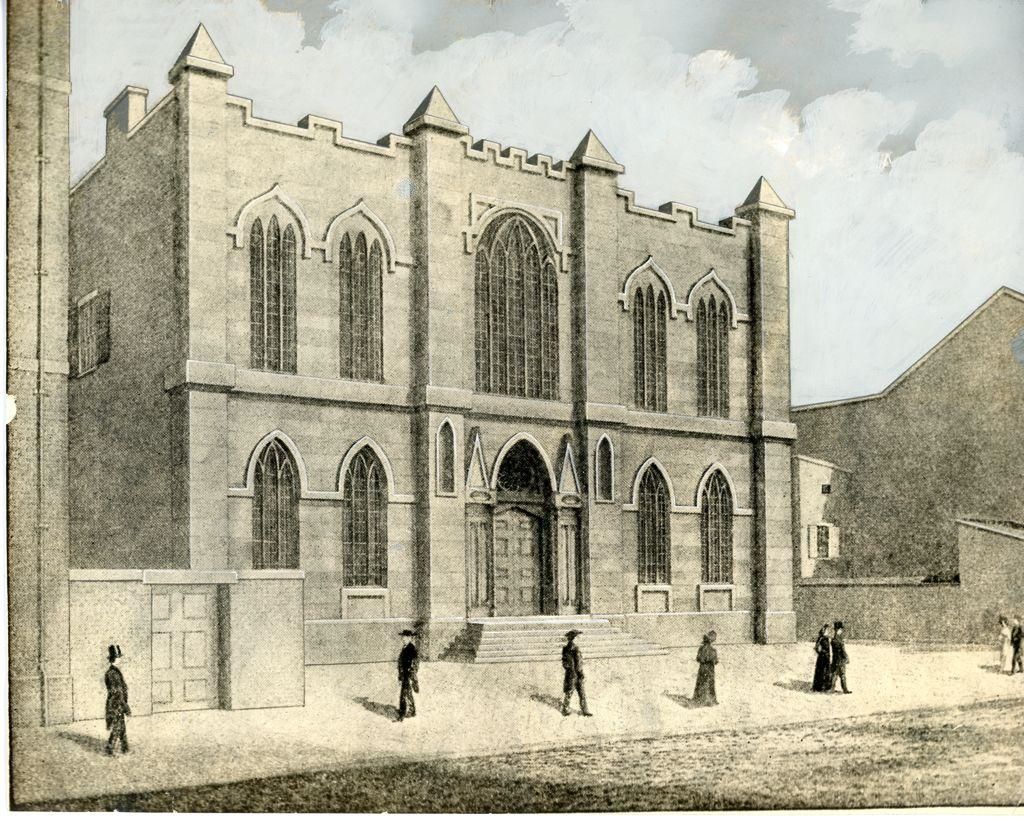
    The first Philadelphia Flower Show was held on June 6, 1829, at the Masonic Hall on Chestnut Street between Seventh and Eighth Streets.

    On June 6, 1829, the Horticultural Society held its first semiannual exhibition of fruits, flowers, and plants at the Masonic Hall on the 700 block of Chestnut Street. That was America’s first public flower show.

    The first flower show will be marked Saturday at the Philadelphia Downtown Marriott, just steps from the Pennsylvania Convention Center where the 197th Philadelphia Flower Show’s final weekend will be underway.

    The celebration is one of this year’s weekly Firstivals. Each Saturday in 2026, the Philadelphia Historic District is throwing a day party marking events that happened in Philadelphia before anywhere else in America and often the world as part of America’s 250th birthday.

    Philadelphia’s first Flower Show, said Janet Evans, librarian for the Pennsylvania Horticultural Society, was a one-day affair.

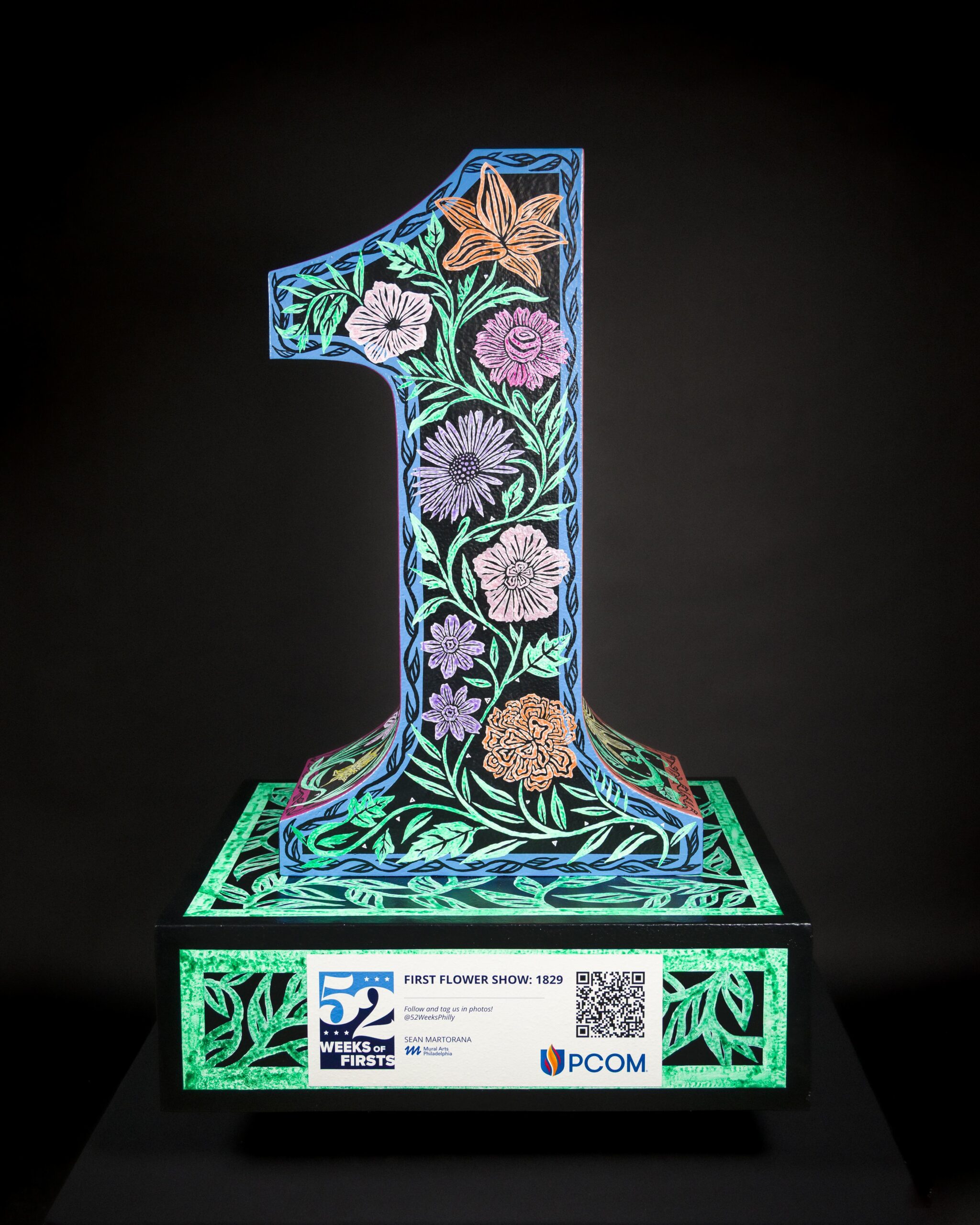
    Sean Martorana’s No. 1 honors the role of art and nature in bringing communities together.

    On display were the bigleaf Magnolia, geraniums, carnations, lilies, and pomegranate, Evans said. It was also the first time the poinsettia — now a symbol of the holiday season — was exhibited in North America.

    “So many plants we take for granted in our gardens today were introduced to the Philadelphia public at the Flower Show,” she said, adding that at later exhibitions, more exotic plants from birds of paradise to dahlias made appearances.

    The show was held in June until the 1830s when it was moved to September to mark the fall harvest. The present-day multiday spring flower shows started in the mid-1920s, to debut Easter blooms.

    The Flower Show was held in venues in West Philly before making the Convention Center its permanent home in 1996. (Although it was held in FDR Park in 2021 and 2022 during the pandemic.)

    There were no shows during World War I (1917-1918) and World War II (1943-1946) because resources were being diverted to war efforts. During those years, Evans said, the Horticultural Society organized Victory Garden Harvest Shows, set up to encourage people to grow vegetable gardens at home and their communities to compensate for wartime shortages.

    There were similar shows during the Great Depression, Evans said. “People flocked to those shows,” she added.

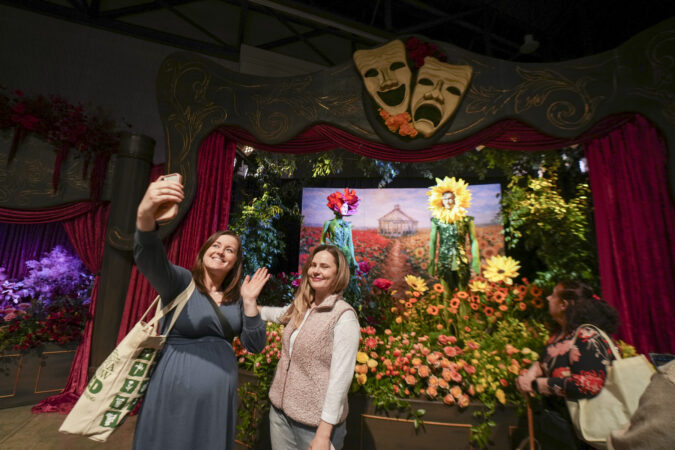
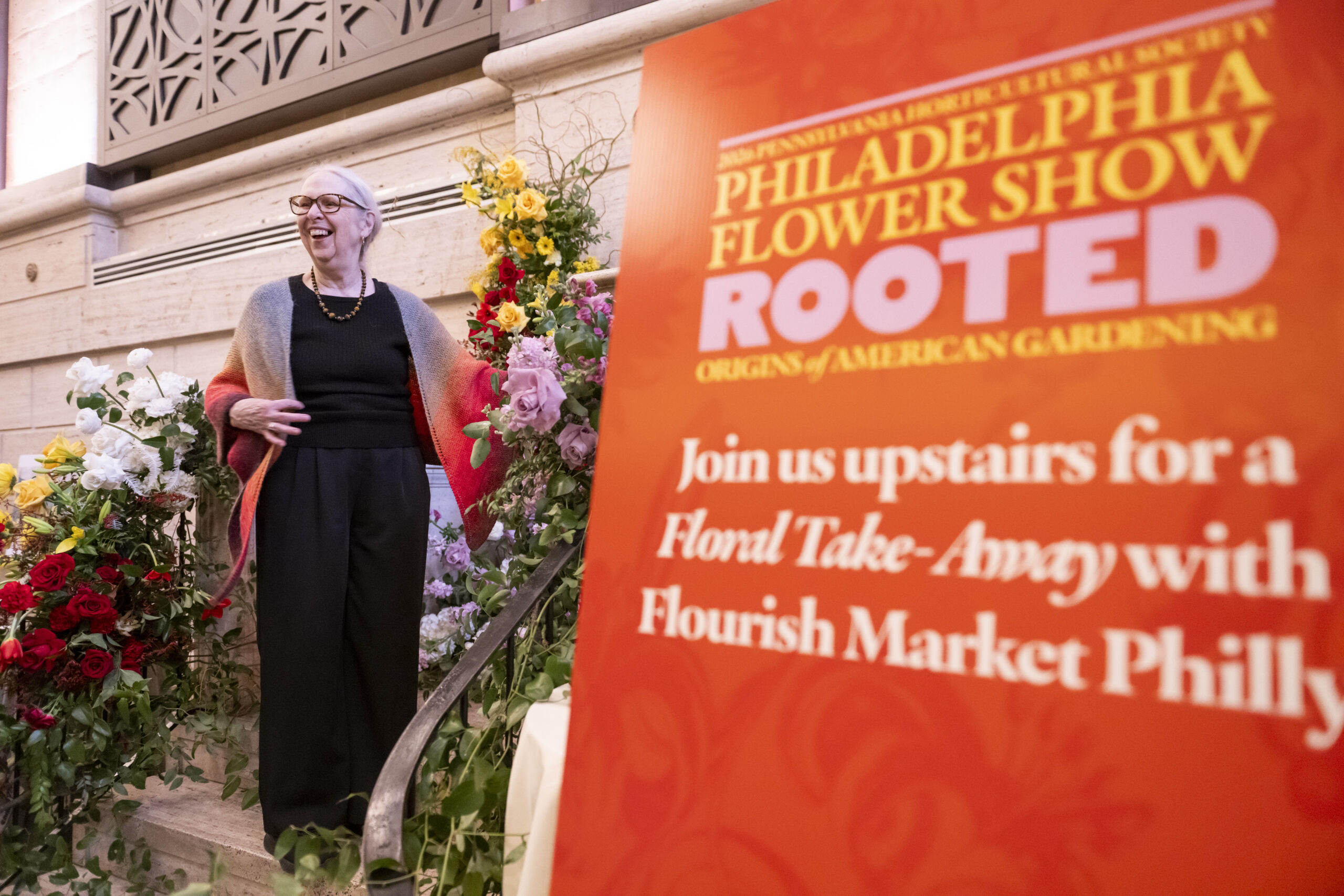
    Laura Blanchard, member and volunteer with the Philadelphia Flower Show, poses for a photo by a flower display at a news conference for a first-look unveiling of the 2026 Philadelphia Flower Show, “Rooted: Origins of American Gardening,” at Union Trust on Wednesday, Jan. 14, 2026.

    Today the Philadelphia Flower Show is a major city attraction. Last year, more than 235,000 people attended, said Lauren Scully, public relations and communications manager for the Pennsylvania Horticultural Society.

    This year’s Flower Show, “Rooted: Origins of American Gardening‚” celebrates America’s 250th birthday, honoring the people, places, and traditions that have shaped gardening.

    “It all started from men whose whole idea was to get together, admire, and share their love of plants,” Evans said.

    This week’s Firstival is Saturday, March 7, 11 a.m.-1 p.m., Philadelphia Marriott Downtown, 1201 Market St. The Inquirer will highlight a “first” from the Philadelphia Historic District’s 52 Weeks of Firsts program every week. A “52 Weeks of Firsts” podcast, produced by All That’s Good Productions, drops every Tuesday.

  • Quinta Brunson’s hit ‘Abbott Elementary’ will be renewed for a sixth season

    Quinta Brunson’s hit ‘Abbott Elementary’ will be renewed for a sixth season

    School will be in session for a sixth year at West Philadelphia’s fictional Abbott Elementary.

    ABC announced Wednesday that Quinta Brunson’s mockumentary based on the goings-on at an underserved Philadelphia public school is being renewed for its sixth season. This was first reported by Variety.

    The news comes on the same day Abbott resumes its fifth season. A new episode is set to air Wednesday night.

    Since its 2021 debut, Abbott has been a crown jewel of ABC. It has been nominated for an Emmy 30 times, including the 2026 Emmy for outstanding comedy series. It has won six.

    Abbott, a workplace comedy about a group of dedicated, passionate teachers determined to help students succeed, has made audiences laugh by pushing boundaries of a typical comedy show. Brunson’s writing has made viewers aware of the bureaucracy in the school system, ageism in the workforce, and what it looks like when administrators count students out because of the neighborhoods they come from.

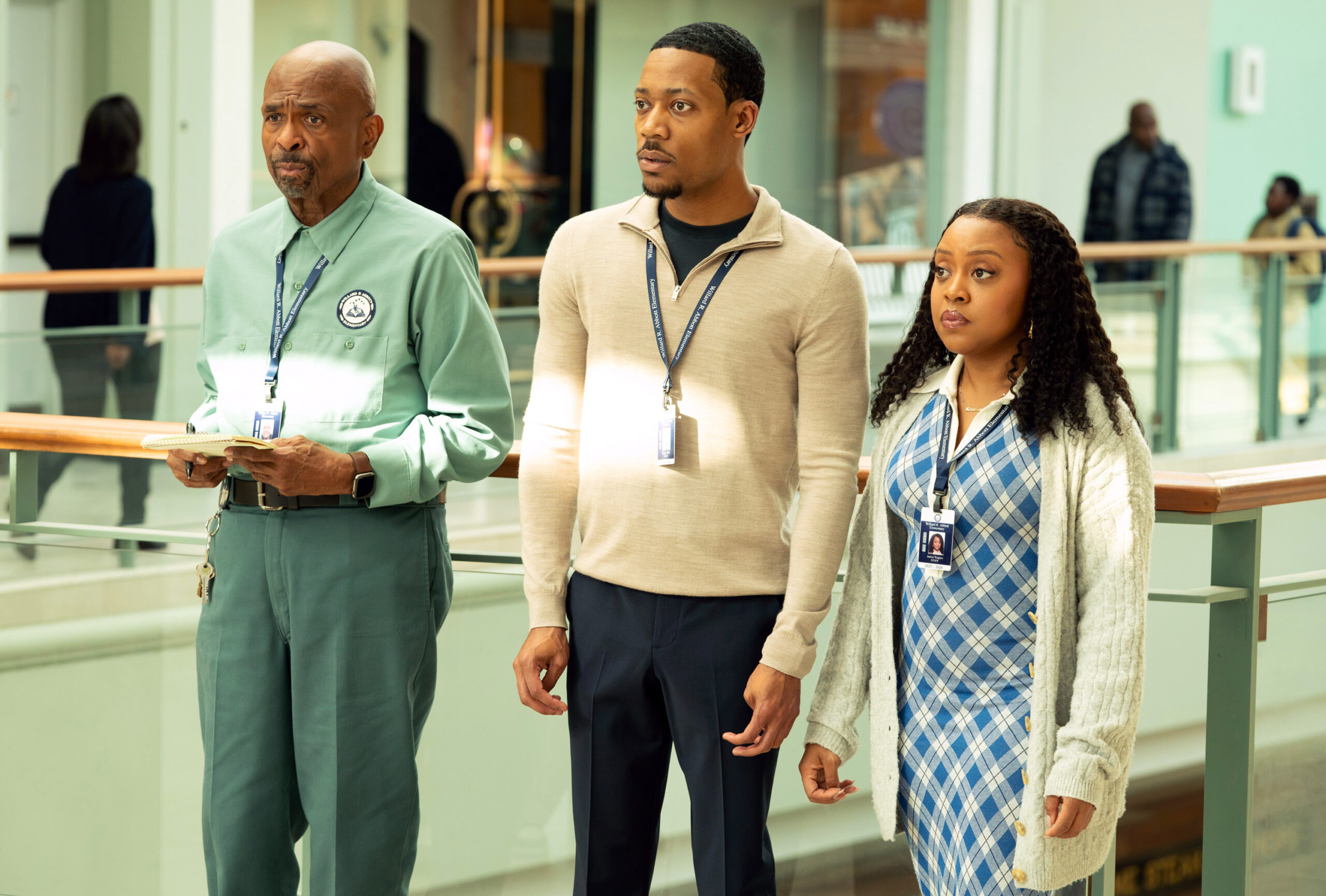
    William Stanford Davis (Mr. Johnson), Tyler James Williams (Gregory Eddie), and Quinta Brunson (Janine Teagues) in “Abbott Elementary.”

    The show enjoyed positive reviews from its crossover episodes with It’s Always Sunny in Philadelphia. Earlier this year, The Philadelphia Inquirer was featured on an episode.

    Brunson was one of the Philadelphia treasures featured on The Simpsons recent 800th episode, an animated homage to Philadelphia. In addition to starring and creating Abbott Elementary, she also serves as an executive producer for the show.

    Brunson grew up in West Philadelphia and spent time in district and charter schools, naming the show for Joyce Abbott, her sixth grade teacher at Andrew Hamilton Elementary.

    In late 2025, Brunson started the “Quinta Brunson Field Trip Fund” for district teachers and administrators to apply for grants after completing a short application. Last year, she received a key to the city of Philadelphia.

  • Claims of ‘rediscovered’ Michelangelos unsettle Renaissance experts

    Claims of ‘rediscovered’ Michelangelos unsettle Renaissance experts

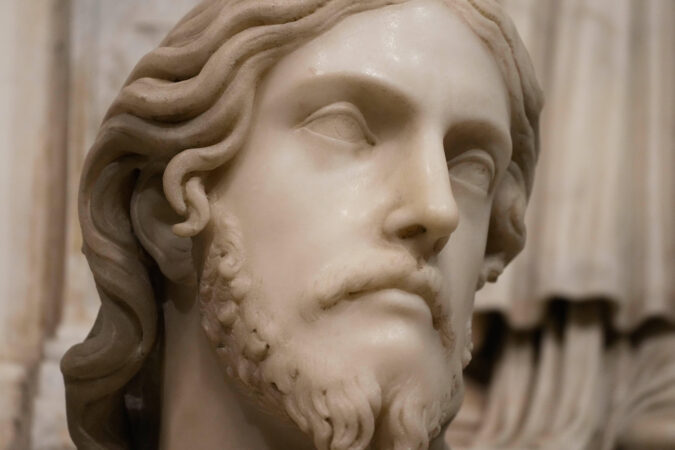
    ROME — An independent researcher claims that a marble bust of Christ in a Roman church is by Michelangelo, the latest purported attribution to the Renaissance genius who is one of the most imitated artists in the world.

    The unverified claim by Valentina Salerno has unsettled Renaissance scholars, especially since a recent sketch of a foot that was attributed to Michelangelo — but disputed by some as a copy — recently fetched $27.2 million at a Christie’s auction.

    Given the stakes — and Salerno’s suggestion that several other works can now be attributed to Michelangelo based on her documentary research — leading experts have declined to comment.

    Salerno has published her theory on the commercial website academia.edu, a non-peer-reviewed social networking site academics use, and announced the first “rediscovery” at a news conference Wednesday.

    The claims have drawn perhaps more attention than they normally would, given the Vatican seemed at least initially interested. Friday marked the 550th anniversary of Michelangelo’s birth, and a number of exhibits, conferences, and commemorations are reviving attention about his genius and legacy.

    The culture ministry was invited to participate in Salerno’s news conference but did not, said the abate of the order that runs the church, the Rev. Franco Bergamin, while the Carabinieri’s art squad refused to weigh in on the authenticity of the statue but said it was being protected and a laminated sign now graces the sculpture: “Alarm armed,” it reads.

    “We hope that this asset, which belongs to our cultural heritage regardless of whether it can be attributed to Michelangelo Buonarroti or not, is part of the national heritage that we are responsible for defending,” said Lt. Col. Paolo Salvatori.

    ‘Documentary evidence on this’

    Michelangelo Buonarroti, who lived from 1475 to 1564, created some of the most spectacular works of the Renaissance: the imposing statues of David in Florence and Pieta in St. Peter’s Basilica, the Sistine Chapel ceiling, and The Last Judgment fresco behind the chapel’s altar. Salerno now says she has located another — a bust of Christ in the Basilica of Sant’Agnese fuori le mura, listed by Italy’s culture ministry as anonymous from the Roman school of the 16th century.

    She is not the first to make the claim. In 1996, Michelangelo expert William Wallace wrote an article in ArtNews about the well-documented history of wrongly attributing works to Michelangelo. It quoted the 19th-century French writer Stendhal as writing that at the Sant’Agnese church, “we noticed a head of the savior which I should swear is by Michelangelo.”

    “Stendhal’s vow notwithstanding, the head has never been taken seriously, and nowadays would not even appear in a catalog raisonné under ‘rejected attributions,’” Wallace wrote.

    Salerno suggests that several documents in the first few hundred years after Michelangelo’s death correctly attribute the work to the artist but that in 1984 a scholar debunked it, erroneously in her view, and it has remained wrongly attributed ever since.

    “I have provided and will continue to provide — I hope, because the research continues — a whole series of documentary evidence on this,” she said. “There will be experts in the field who will conduct their own investigations. To date, we can say that, according to the documents, the object is attributed to Michelangelo.”

    She suggested that the bust was modeled on Michelangelo’s intimate friend, Tomaso De’ Cavalieriis, and was part of the great artistic inheritance Michelangelo left to his friends and students when he died. Salerno said she came to the conclusion tracing wills, inventories, and notarized documents held in church and state archives and the archives of Roman confraternities to which Michelangelo and his students belonged.

    Salerno, an actor and a fiction author, has no college degree or expertise in art history. She has said she fell into the research “by chance” when she set out to write a novel about Michelangelo 10 years ago.

    According to her research published on academia.edu, Salerno uncovered evidence of a secret “pact of indissolubility” among some of Michelangelo’s students and their heirs to keep Michelangelo’s works after he died. The pact included the previously unknown existence of a chamber, whose locks could only be opened with three keys, held by three different students, she said.

    Vatican takes note

    Salerno’s research caught the eye of Cardinal Mauro Gambetti, who runs St. Peter’s Basilica. He named Salerno and her mentor to a scientific committee formed in 2025 to discuss a possible Vatican exhibition to commemorate the anniversary of Michelangelo’s birth.

    Nothing has yet come of the committee’s work. But its members have downplayed the significance of Salerno’s work or refused to discuss it.

    Some expressed surprise at her inclusion in a committee made up of some of the leading Renaissance and Michelangelo scholars in the world, including Barbara Jatta, director of the Vatican Museums; Hugo Chapman, curator of Italian and French drawings, from 1400 to 1800, at the British Museum; and Wallace, professor of art history at Washington University in St. Louis.

    Jatta has distanced herself from the Vatican committee when contacted by the Associated Press.

    The British Museum declined to make Chapman available for comment. Gambetti’s office did not respond to a request. Other committee members declined to comment.

    Wallace told the AP that Salerno’s methodology was sound and noted that there is a strong tradition in Europe of noncredentialed researchers doing solid work. He said he agreed with her thesis that Michelangelo did not destroy his works in a fire, a commonly held belief at the time that has been debunked for years by scholars. Rather, he concurred with Salerno that Michelangelo entrusted what remained of his works in his final years to his students to finish his projects.

    But he disputes Salerno’s conclusion that a huge treasure of Michelangelo’s was secreted away — and is therefore ripe for new discovery — saying Michelangelo simply was not producing that much in his final years. Michelangelo was overseeing six architectural projects in Rome at the time. What drawings he made were sketches to resolve technical problems on the worksite, and likely did not survive because they were merely “working drawings,” he said.

    Wallace concurred that existence of a secret chamber that can be opened only with three keys is new. But he said proper academic scholarship would call for Salerno to transcribe the documents and allow for a peer-review process to take place.

    Italy is no stranger to claims of new discoveries about old artists, with fakes, frauds, and new “discoveries” of Modiglianis and other artists a regular occurrence in art history circles.

    “I think I counted up 45 attributions to Michelangelo since 2000, and not one of which you can remember or mention, but every single one arrived with the headline, ‘The greatest discovery of the time,’ [or] ‘It will change everything we think about Michelangelo,’” Wallace said. “And then, five years later, we can’t even remember what it was.”

  • $7.6 million in grants from William Penn Foundation will support $2 tickets for low-income patrons

    $7.6 million in grants from William Penn Foundation will support $2 tickets for low-income patrons

    A group of special grants from the William Penn Foundation will help ensure continued access to the Please Touch Museum, Franklin Institute, and other Philadelphia nonprofit attractions for patrons of modest means and/or with disabilities.

    William Penn has granted a total of $7.6 million to seven groups to underwrite the existing program providing access to $2 tickets.

    Ticket prices are an obstacle for many, and arts and culture groups must weigh their desire to be open to all audiences, regardless of capacity to pay, against the reality of balancing their own budgets.

    “Our general admission price is around $24 and we believe that’s competitively priced with other peer organizations,” said Please Touch Museum president and CEO Melissa Weiler Gerber. “But we want to make sure that we are committed to having folks come in the door and that not be a barrier.”

    The William Penn money — $872,350 per year for each of the next three years — will support that ambition by underwriting the $2 tickets to the children’s museum in Fairmount Park.

    The groups receiving the grants, in addition to the Please Touch and the Franklin Institute, are the Academy of Natural Sciences, Morris Arboretum and Gardens, the Philadelphia Zoo, and the Philadelphia Museum of Art, where the grant will support the museum’s restoration of pay-what-you-wish Friday evenings.

    The William Penn money is being allotted on top of the regular funding the foundation gives to area arts and culture groups, which is expected to reach $32 million this year.

    Art-Reach will also receive a grant. The group administers the program, which began in 2014 and provides $2 admission to area museums, gardens, theaters, musical groups, and other cultural offerings to those with low incomes and/or disabilities.

    The six attractions were chosen because they are the most visited participants in the program, which is called Harvey and Virginia Kimmel Family Fund ACCESS Program.

    But it’s worth noting that none of the six is a performing arts organization, and the program has about a hundred other groups of various kinds that could also use the support.

    “I think that there is a lot of need for the rest of the partners in the program,” said Art-Reach executive director John Orr, adding that he hoped the William Penn action would be “catalytic” in inspiring other donors to support low-cost access to arts and culture groups.

    Affordability was cited as a factor in deciding which cultural sites to visit by 91% of participants in a recent survey of ACCESS cardholders, Orr said.

    At the same time, cultural groups are being buffeted by multiple challenges, said William Penn Foundation chief philanthropy officer Elliot Weinbaum.

    “There have been lots of shifts and uncertainty around myriad funding sources. You think about federal sources — NEA, NEH, IMLS, National Science Foundation — all of them have seen big cuts and big uncertainty,” he said. “These institutions received some money from some combination of those entities. There have been shifts in corporate giving in the past year or so.”

    Hence the foundation’s decision to step in with new funding for the work of these organizations.

    Said Weinbaum: “We want to strengthen the institutions, support them, and make it clear that for William Penn Foundation it’s important that a population that’s really representative of Philadelphia continues to have access to these great places.”

    For more information about how the ACCESS program works, visit art-reach.org.

  • Philadelphia Ballet’s 2026-27 season brings the fireworks for America’s 250th birthday

    Philadelphia Ballet’s 2026-27 season brings the fireworks for America’s 250th birthday

    The United States is celebrating its Semiquincentennial this year, and Philadelphia Ballet will be bringing the fireworks in its 2026-27 season opener, the company announced Tuesday.

    Instead of commissioning new work, the company is leaning into American classics and other favorites, while also finally establishing a home for itself on North Broad Street.

    The season will open Oct. 8-11 with a celebratory, all-Americana program called “Stars and Stripes Forever.” It will include Jerome Robbins’ Fancy Free, the concert version of George Balanchine’s Who Cares?, Eliot Feld’s Variations on ‘America,’ and Balanchine’s Stars and Stripes.

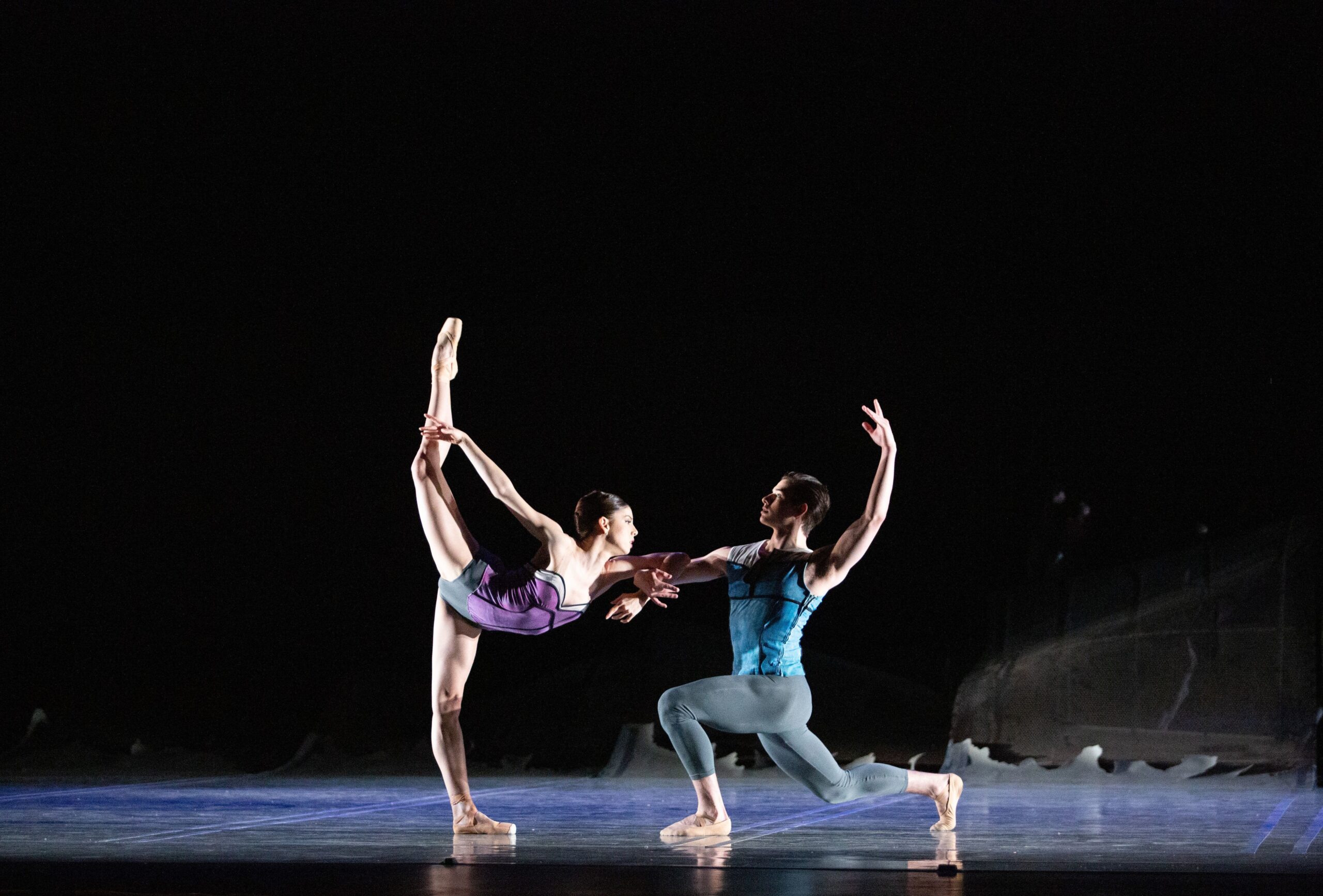
    Pennsylvania Ballet dancers Dayesi Torriente and Sterling Baca in Christopher Wheeldon’s “DGV.”

    The ballet returns to the Academy of Music the following week with a mixed repertory bill on Oct. 15-18. That program will feature Christopher Wheeldon’s DGV: Danse à Grande Vitesse, Wayne McGregor’s Chroma, and Twyla Tharp’s In the Upper Room.

    December will, of course, see the return of George Balanchine’s The Nutcracker, which will take place Dec. 4-31.

    Next year’s spring will be devoted to full-length story ballets.

    On March 4-14, Philadelphia Ballet will bring back Ben Stevenson’s Cinderella.

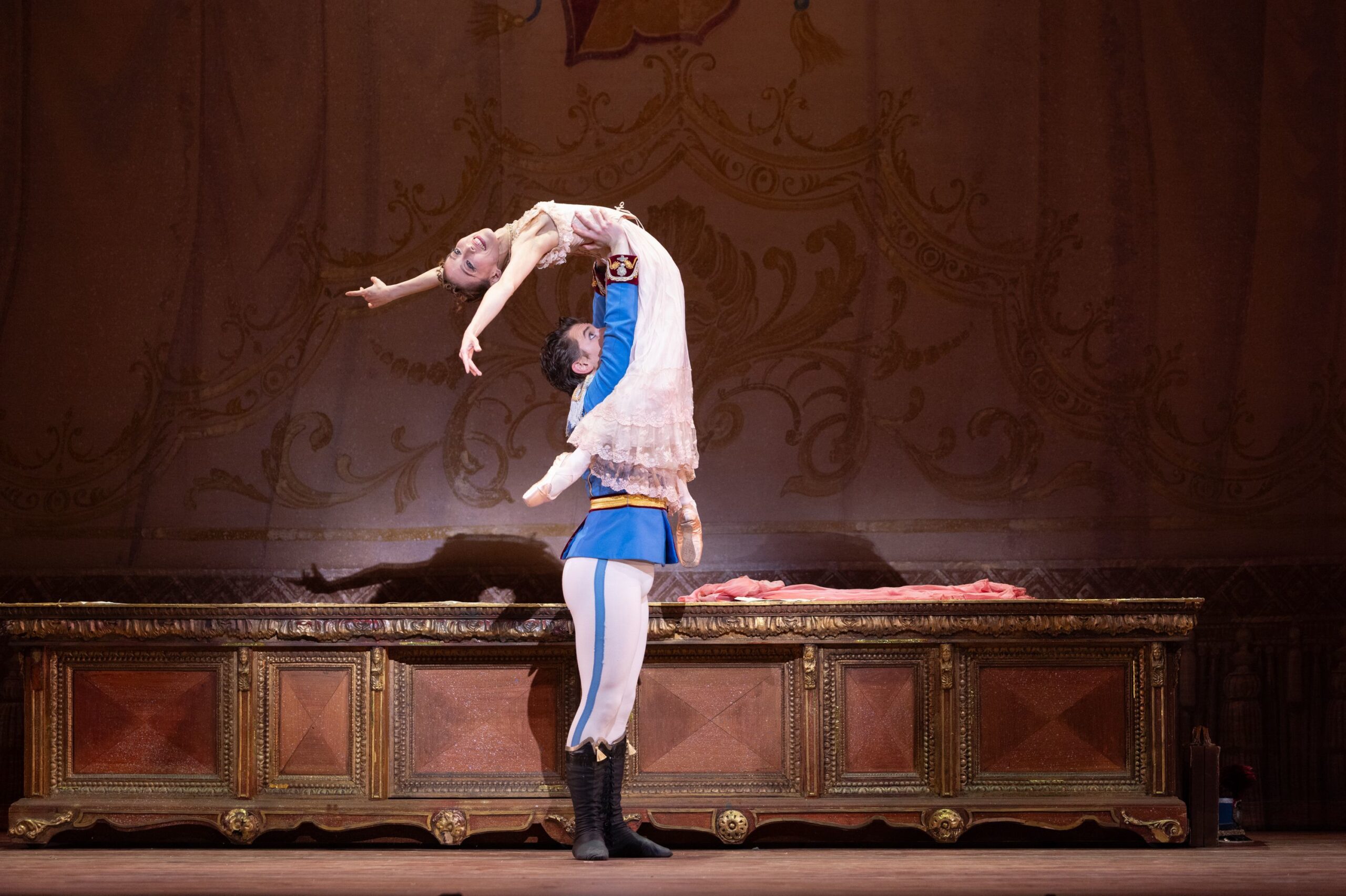
    Mayara Piñeiro as Kitri and Etienne Díaz as Basilio in Philadelphia Ballet’s “Don Quixote.”

    And the season will wrap up April 29-May 9 with the return of artistic director Angel Corella’s Don Quixote.

    The company is also finally expecting to open its new home on North Broad Street. The Philadelphia Ballet Center for Dance is planning its opening in September. Along with studios, offices, space for its wardrobe team, and two wellness centers (one for company dancers, another for ballet students), it will include a black-box theater and gathering space called the Barbara Weisberger Dance Innovation Lab, named after the company’s late founder.

  • Aubrey Plaza’s latest directorial venture is an animated series about a cat named Kevin

    Aubrey Plaza’s latest directorial venture is an animated series about a cat named Kevin

    Delaware native Aubrey Plaza’s new adult animated series, Kevin, is set to premiere on April 20.

    The Prime Video comedy, written and executive produced by Plaza, was co-created by the Parks and Recreation actress and Joe Wengert, who also serves as showrunner. All eight episodes will drop together in more than 240 countries and territories.

    The streamer also revealed the show’s title sequence, which features the original song, “I’m Coming Home,” performed by actor Jason Schwartzman who plays a lead role in the series. Schwartzman co-wrote the song with series composer Dan Romer.

    The Prime Video animated comedy “Kevin,” co-created, executive produced, and starring Aubrey Plaza, is set to premiere on April 20.

    The show follows a cat named Kevin who leaves his humans after their unexpected breakup, and moves into a pet rescue in Astoria, Queens. He joins a “chaotic band of misfit animals,” who help him figure out what he “truly wants out of life,” according to the series logline.

    Schwartzman voices Kevin and Plaza voices Dana, one half of the broken-up couple Kevin leaves behind.

    The stacked cast includes Whoopi Goldberg as Cupcake, John Waters as Armando, and comedian Aparna Nancherla as Judy. They each play Kevin’s new cat roommates at the local pet rescue, which is run by Seth (Gil Ozeri) and his dog Brandi (Amy Sedaris).

    The Prime Video animated comedy “Kevin,” co-created, executive produced, and starring Aubrey Plaza, is set to premiere on April 20.

    Plaza, a Wilmington native, who started out performing improv and sketch comedy at New York’s Upright Citizens Brigade Theater, first rose to stardom playing the deadpan but hilarious April Ludgate in Parks and Recreation.

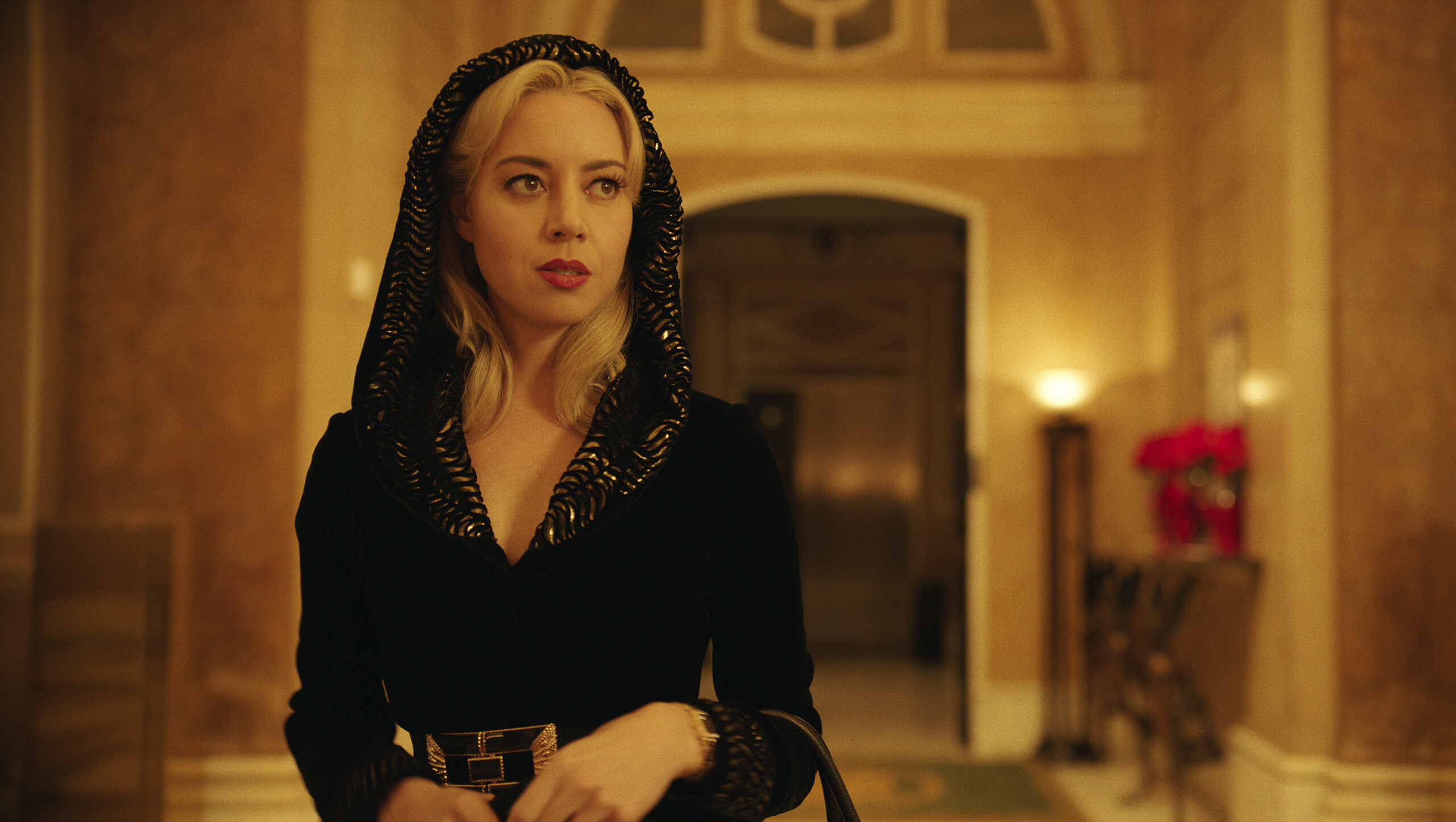
    This image released by Lionsgate shows Aubrey Plaza in a scene from “Megalopolis.” (Lionsgate via AP)

    Plaza has previously produced (and starred in) The Little Hours, the 2020 Black Bear, and the 2022 crime film, Emily the Criminal. She made her directorial debut in the 2021 series Cinema Toast, directing and writing the episode, “Quiet Illness.”