Category: Arts & Culture

  • Isaiah Zagar, legendary South Philly mosaicist, has died at 86

    Isaiah Zagar, legendary South Philly mosaicist, has died at 86

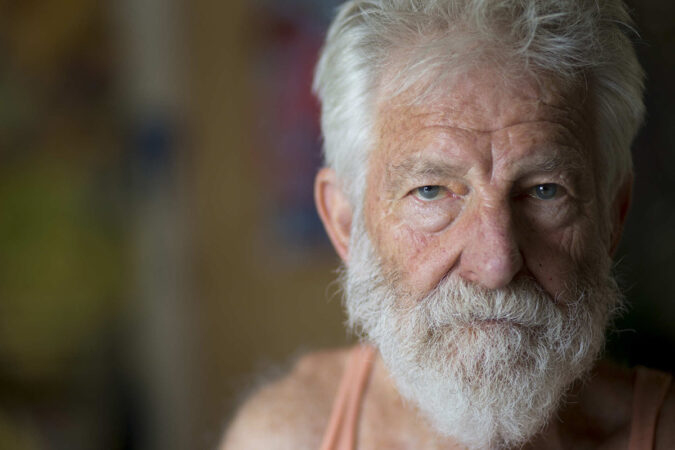
    Isaiah Zagar, 86, of South Philadelphia, the renowned mosaic artist who crafted glittering glass art on 50,000 square feet of walls and buildings across the city and founded Philadelphia’s Magic Gardens, has died.

    Mr. Zagar died Thursday of complications from heart failure and Parkinson’s disease at his home in Philadelphia, the Magic Gardens confirmed.

    “The scale of Isaiah Zagar’s body of work and his relentless artmaking at all costs is truly astounding,” said Emily Smith, executive director of the Magic Gardens. “Most people do not yet understand the importance of what he created, nor do they understand the sheer volume of what he has made.”

    His art, Smith said, “is distinctive and wholly unique to Philadelphia, and it has forever changed the face of our city.”
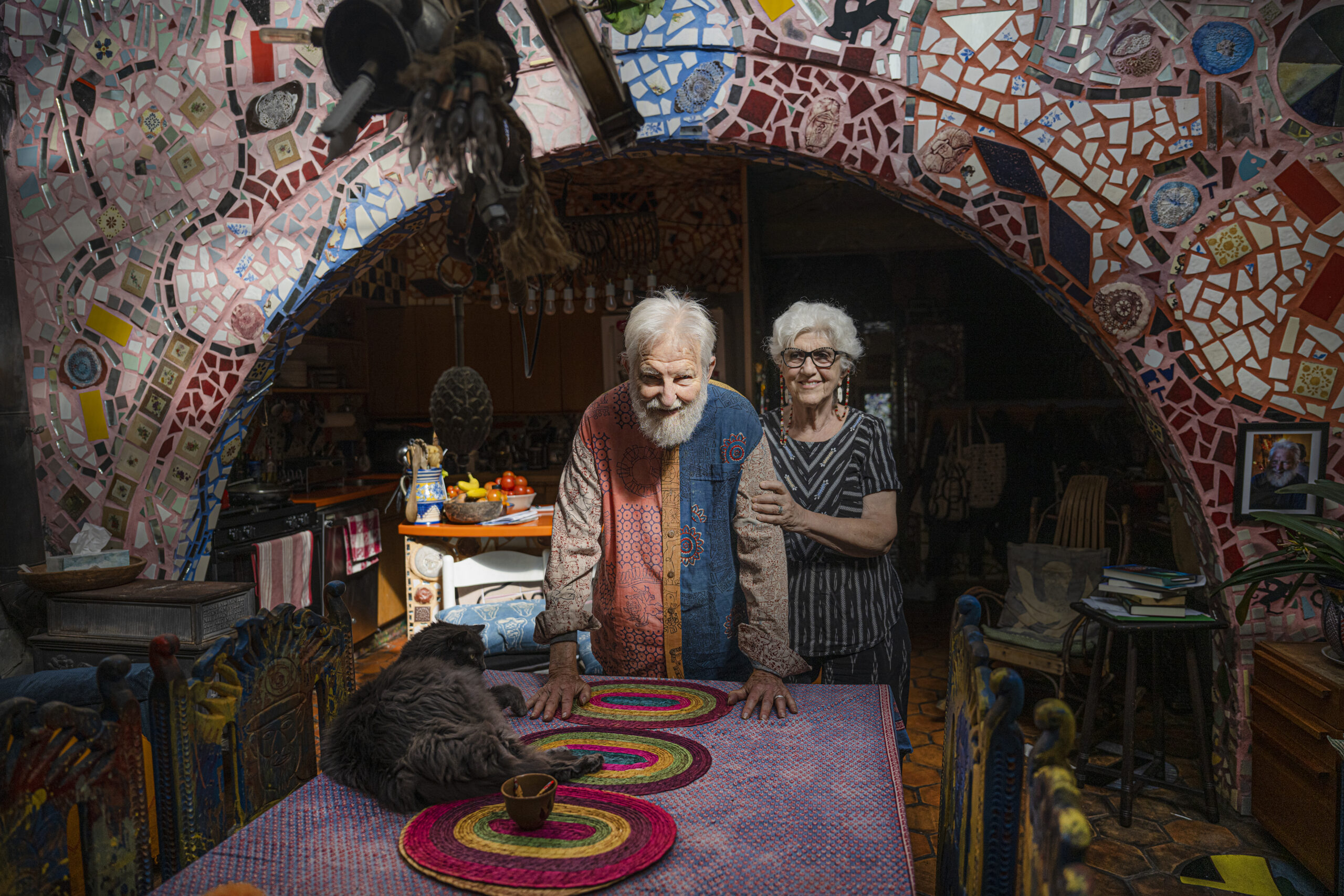
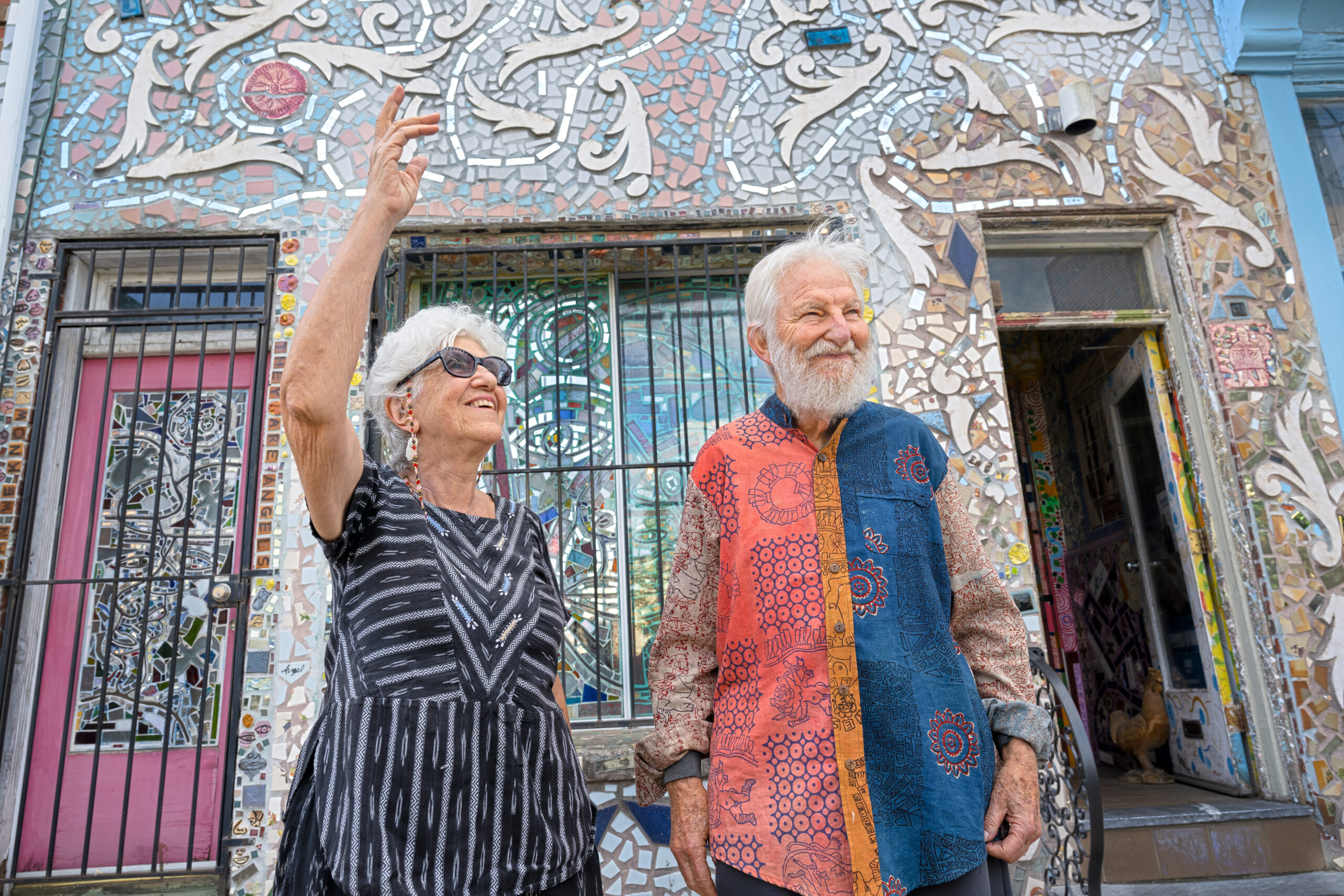
    saiah and Julia Zagar in their mosaic-adorned home in South Philadelphia in October 2024. The couple married in 1963 and moved to South Philly in 1968 after serving in the Peace Corps in Peru.

    Mr. Zagar was born in Philadelphia in 1939, grew up in Brooklyn, N.Y., and received a bachelor of fine arts degree in painting and graphics at the Pratt Institute of Art in New York. He met his wife, artist Julia Zagar, in 1963. The couple married the same year and moved to South Philadelphia in 1968 after serving in the Peace Corps in Peru. Together, they founded Eye’s Gallery at 402 South St., focusing on Latin American folk art.

    In the 1970s, the Zagars were part of a group of artists, activists, and business owners who pushed back against development of a Crosstown Expressway that would have demolished South Street. Their contributions helped lead to a neighborhood revitalization later called the South Street Renaissance.

    “Philadelphia’s iconic South Street area has become inseparable from Isaiah Zagar’s singular artistic vision,” said Val Gay, chief cultural officer and executive director of Creative Philadelphia, the city’s arts office. “His mosaics redefine the very framework of the public space they inhabit. Isaiah Zagar reshaped the visual identity of Philadelphia, and his legacy will endure through all that he transformed.”

    A self-taught mosaicist, Mr. Zagar used broken bottles, handmade tiles, mirrors, and other found objects to cover walls across the city, particularly in South Philly. The artist, who struggled with mental health over many years, found that creating mosaics was a therapeutic practice. He was inspired by artists Pablo Picasso, Jean Dubuffet, Kurt Schwitters, and Antonio Gaudí.

    “He worked with found objects that he found everywhere and put them to use. So, [he thought], ‘Why is the thing a piece of trash? Well, it doesn’t have to be a piece of trash. It could be a piece of art, too, and still be a piece of trash,’” said longtime friend Rick Snyderman, 89, a renowned Philadelphia gallerist based in Old City. An object “in the hands of the right person changes your perspective about it. That’s, I think, what the greatest gift of Isaiah was — to change your perspective.”

    Mr. Zagar’s son, the filmmaker Jeremiah Zagar, documented his father’s life in a 2008 documentary, In a Dream. Jeremiah Zagar recently directed episodes of the HBO miniseries Task. His father came to the show’s New York City premiere last September carrying a mosaicked cane.

    Snyderman remembers Mr. Zagar as a big reader and world traveler who was “eternally curious” and created artwork to make people smile. They first met in the 1960s and their families were part of the South Street community of “creative thinkers” who bonded “because they were misfits in some other world, perhaps.”

    “He was a man who just didn’t pay attention to his own world, he paid attention to the larger world. One of his favorite sayings was that ‘Philadelphia is the center of the art world, and art is the center of the real world,’” Snyderman said.

    More than 200 of Mr. Zagar’s mosaics adorn public walls from California and Hawaii to Mexico and Chile. His artwork is in the permanent collections of the Philadelphia Museum of Art and the Pennsylvania Academy of the Fine Arts, among other museums, and has been shown in solo exhibitions at cultural institutions including Washington’s Hinckley Pottery Gallery and New York’s Kornblee Gallery.

    “Isaiah Zagar was devoted to mosaic work and the creation of immersive art environments. Internationally recognized, he is proudly claimed by Philadelphia as our own,” said Elisabeth Agro, the Nancy M. McNeil curator of modern and contemporary craft and decorative arts at the Philadelphia Museum of Art. “Although his death is a profound loss to our city’s culture and creative economy, Zagar’s indelible imprint remains inextricably linked to Philadelphia’s soul.”

    Synonymous with Philadelphia’s public art

    Mr. Zagar’s colorful and eclectic mosaic murals have become synonymous with Philadelphia’s public art scene.

    After arriving in the city, Mr. Zagar soon set about modifying Eye’s Gallery, which was then also his home. The building, the Daily News reported in 1975, was dilapidated when he took possession of it, and at one point lacked plumbing and had a wood-burning stove.

    Several years into his ownership, the Daily News wrote, Mr. Zagar had evolved the rowhouse into a “womb-like living space with undulating cement walls.” Materials for its decoration were largely scavenged, and included thousands of pieces of broken glass and mirrors.

    Changes, the People Paper reported, started with the cementing of a stairway wall that had become wet. Lacking experience in carpentry, plastering, and home repairs, Mr. Zagar said, he and a fellow artist cemented the wall to hide the leak, and covered it in mirrors to disguise the issue. That didn’t fix the leak, but it did inspire a kind of operating logic for his home repairs.

    “We would do something artistic to hide a fault, then have to correct the fault to save the artwork,” Mr. Zagar said in 1975.
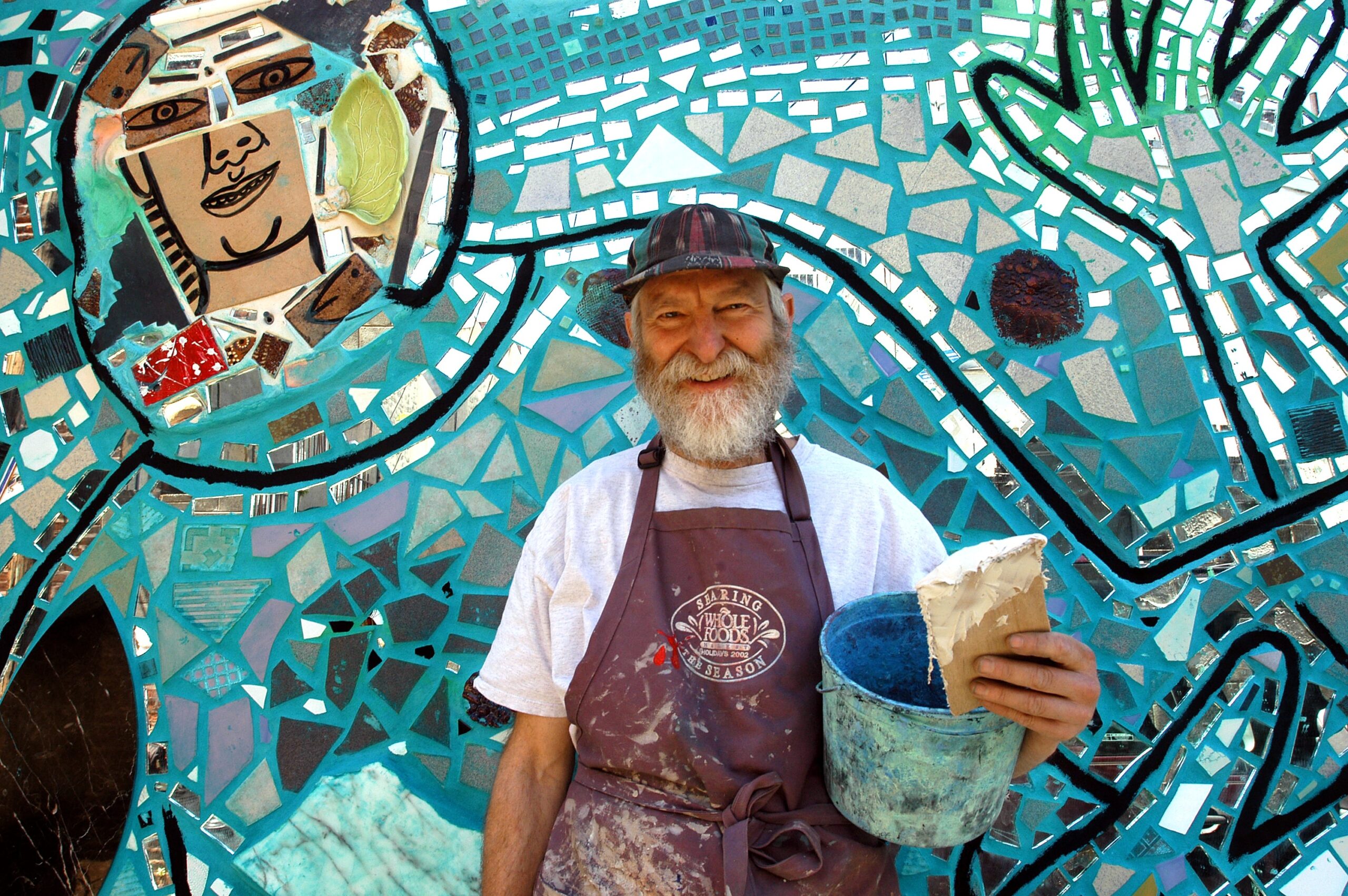
    Isaiah Zagar in May 2004, in front of a wall he was working in Bella Vista, on Clifton Street between Fitzwater and Catharine.

    His process included embedding everything from broken teapots and cups to plates and crystal into the cement while it was still wet. Mirrors, however, were an early favorite of Mr. Zagar’s.

    That idea, he told the Daily News, came from Woodstock, N.Y.-based artist Clarence Schmidt, who covered the outside of his home in broken mirrors embedded in tar.

    “Mirrors intercept space, they keep poking holes in things,” Mr. Zagar said. “If they’re in the sun, they throw prisms around. You can’t fashion a mirror into an anatomical human being. It freed me from the concept of what things were supposed to look like.”

    Preservation challenges

    New development in Philadelphia in recent decades has led to the demolition of many of Mr. Zagar’s mosaic murals, most of which have been on private property.

    By the turn of the century, Mr. Zagar had covered about 30 buildings in the city — largely then in Old City and on South Street — in his distinctive mosaic work, according to reports from the time. Among his largest passions in that medium, he told The Inquirer in 1991, were the colorful mirror and tile murals that today dot the city.

    “These materials have a lasting quality,” he said at the time. “I have never seen an ugly piece of tile, it’s all beautiful.”
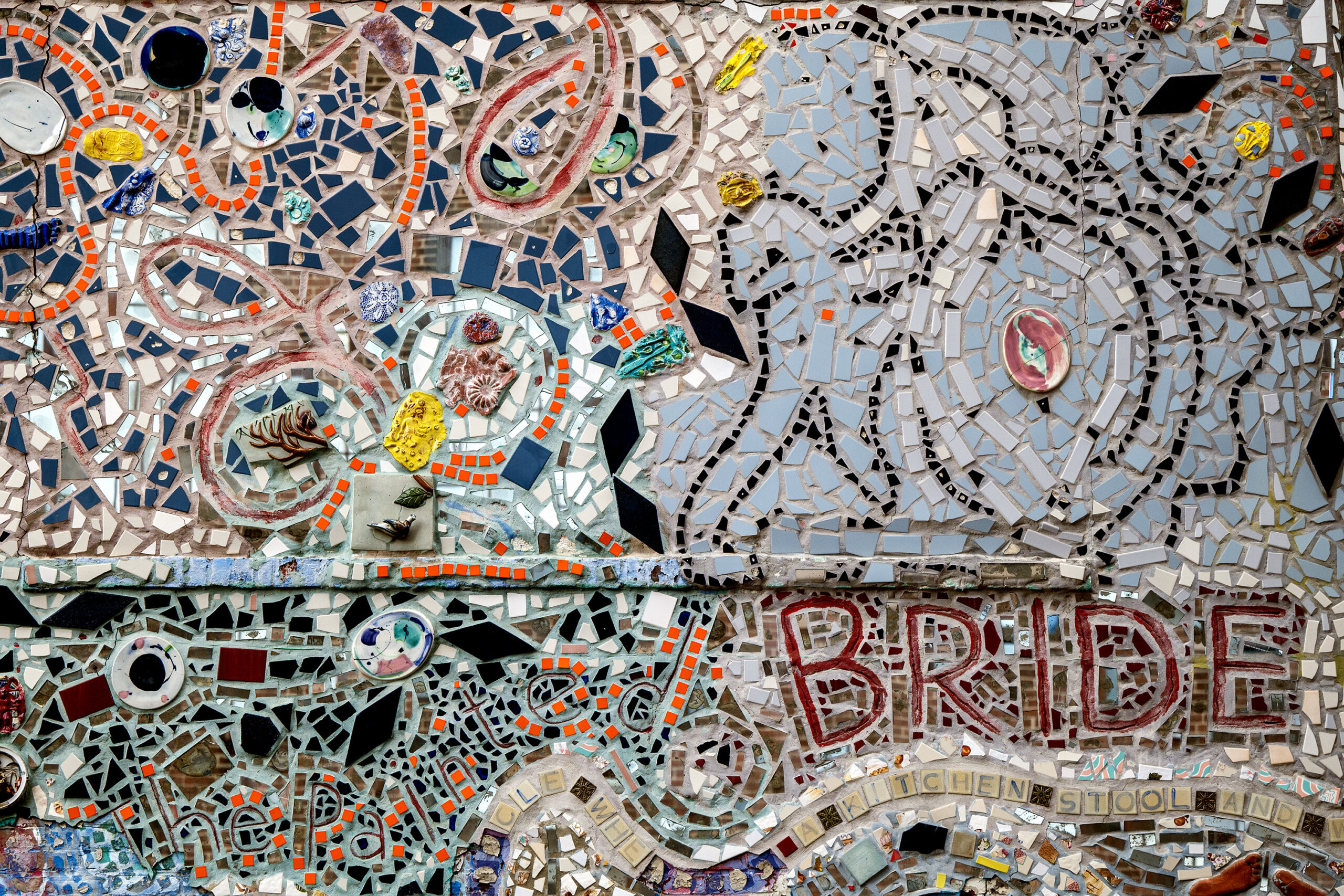
    Detail of the wall of the former home of the Painted Bride Art Center at 230 Vine St. on Oct. 19, 2025. The building is covered by “Skin of the Bride,” a mosaic by Philadelphia artist Isaiah Zagar, created between 1991 and 2000.

    Mr. Zagar held grand ambitions for Philadelphia as the home of his mosaics by the mid-1990s. As he told the Daily News in 1993, he hoped to see Philly changed “into a city of the imagination.”

    “My dream is [to] turn all of Philadelphia into tile city — to turn all these ugly old brick and stucco walls into a manifesto of magic,” he said.

    (function() {
    var l2 = function() {
    new pym.Parent(‘zagar_pmg’,
    ‘https://media.inquirer.com/storage/inquirer/projects/innovation/arcgis_iframe/zagar_pmg.html’);
    };
    if (typeof(pym) === ‘undefined’) {
    var h = document.getElementsByTagName(‘head’)[0],
    s = document.createElement(‘script’);
    s.type = ‘text/javascript’;
    s.src = ‘https://pym.nprapps.org/pym.v1.min.js’;
    s.onload = l2;
    h.appendChild(s);
    } else {
    l2();
    }
    })();

    Perhaps the prototypical example of that dream was the Painted Bride Art Center, which once was home to Mr. Zagar’s Skin of the Bride — a massive, 7,000-square-foot mosaic work that came to envelop the exterior of the building. Demolition of the Painted Bride began in December after a lengthy legal battle, but members of the Magic Gardens Preservation Team had been able to remove about 30% of the tiles for reuse in new mosaics in 2023.

    Mr. Zagar’s work on the Painted Bride began in 1991 and carried on for about nine years. The work was exhausting, and his wife recalled Mr. Zagar working up to 12 hours a day for years to create what he viewed as his masterpiece.

    In 1993, however, he took some creative liberties with the number of tiles, mirrors, and pieces of pottery involved with its creation.

    “I’ve counted them,” he jokingly told the Daily News. “There are exactly 3,333,333.”

    In summer 2022, a fire at Jim’s Steaks damaged the neighboring Eye’s Gallery, requiring lengthy restoration work that Julia Zagar spearheaded. She called the space a landmark “for the creative spirit of South Street.” The fire eventually uncovered a hidden mural by Mr. Zagar from the 1970s that had been covered up by drywall.
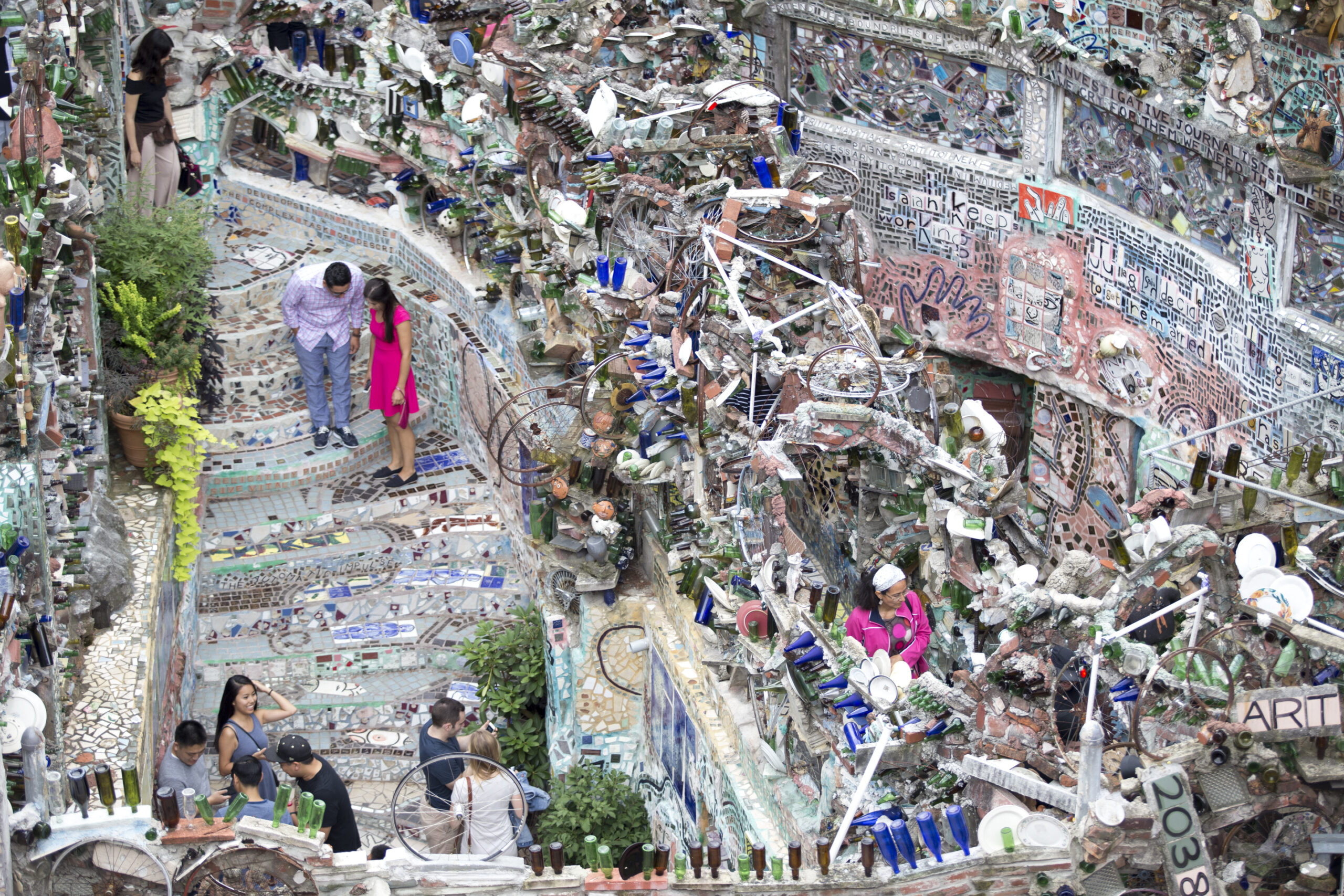
    Tourists at Philadelphia’s Magic Gardens in July 2017. The Magic Gardens has become a Philadelphia landmark, attracting about 150,000 visitors a year to walk through the immersive, labyrinthine indoor and outdoor spaces.

    The Magic Gardens

    In the late 1990s, Mr. Zagar expanded his sculpture and mosaic art into two empty lots neighboring his South Street home. The lots were owned by a group of Boston businessmen who had abandoned them, so with permission from the owners’ agent, Mr. Zagar cleared and transformed the space.
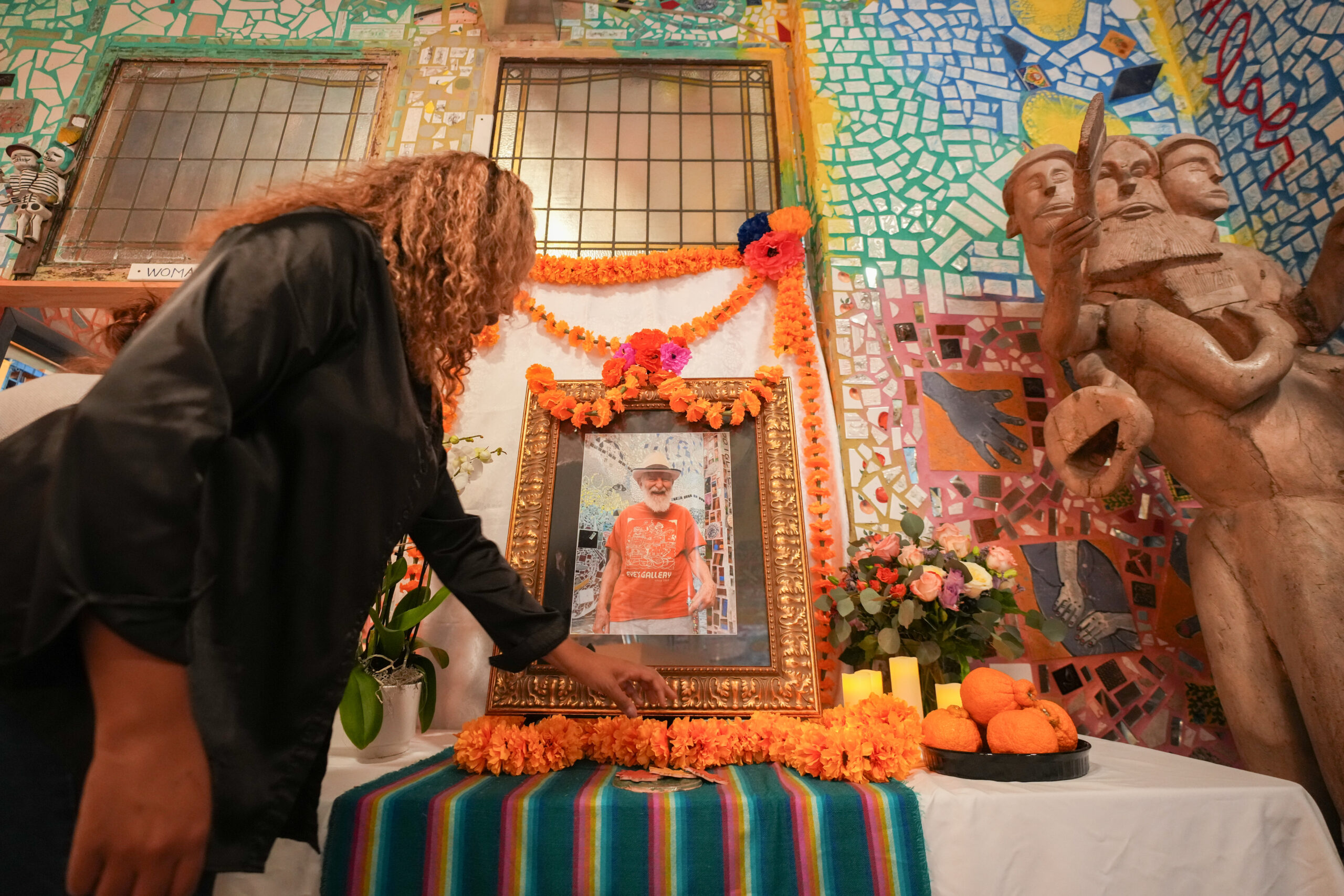
    Chelsey Luster, Exhibition Manager at Philadelphia’s Magic Gardens, places flowers on an Ofrenda that friends and staff members are putting together in honor of artist Isaiah Zagar who passed earlier today, at Philadelphia’s Magic Garden, in Philadelphia, Thursday, Feb. 19, 2026, in Philadelphia

    It would go on to become Philadelphia’s Magic Gardens, but it took a legal battle in the 2000s to keep it there.

    In 2004, about a decade after Mr. Zagar started building in the space, the owners of the land ordered the artist to dismantle and remove the work ahead of plans to market the property for sale.

    Mr. Zagar and a group of volunteers formed the nonprofit organization known as Philadelphia’s Magic Gardens and, with help from an anonymous benefactor, purchased the lot for $300,000, The Inquirer reported that year. The nonprofit had begun collecting donations and was tasked with raising a majority of the funding, and, if successful, the benefactor planned to donate $100,000 to the cause.

    “Why it’s so important for me to save the garden is that it’s not finished,” Mr. Zagar told The Inquirer in late 2005. “The too-muchness of it is the artist’s life.”
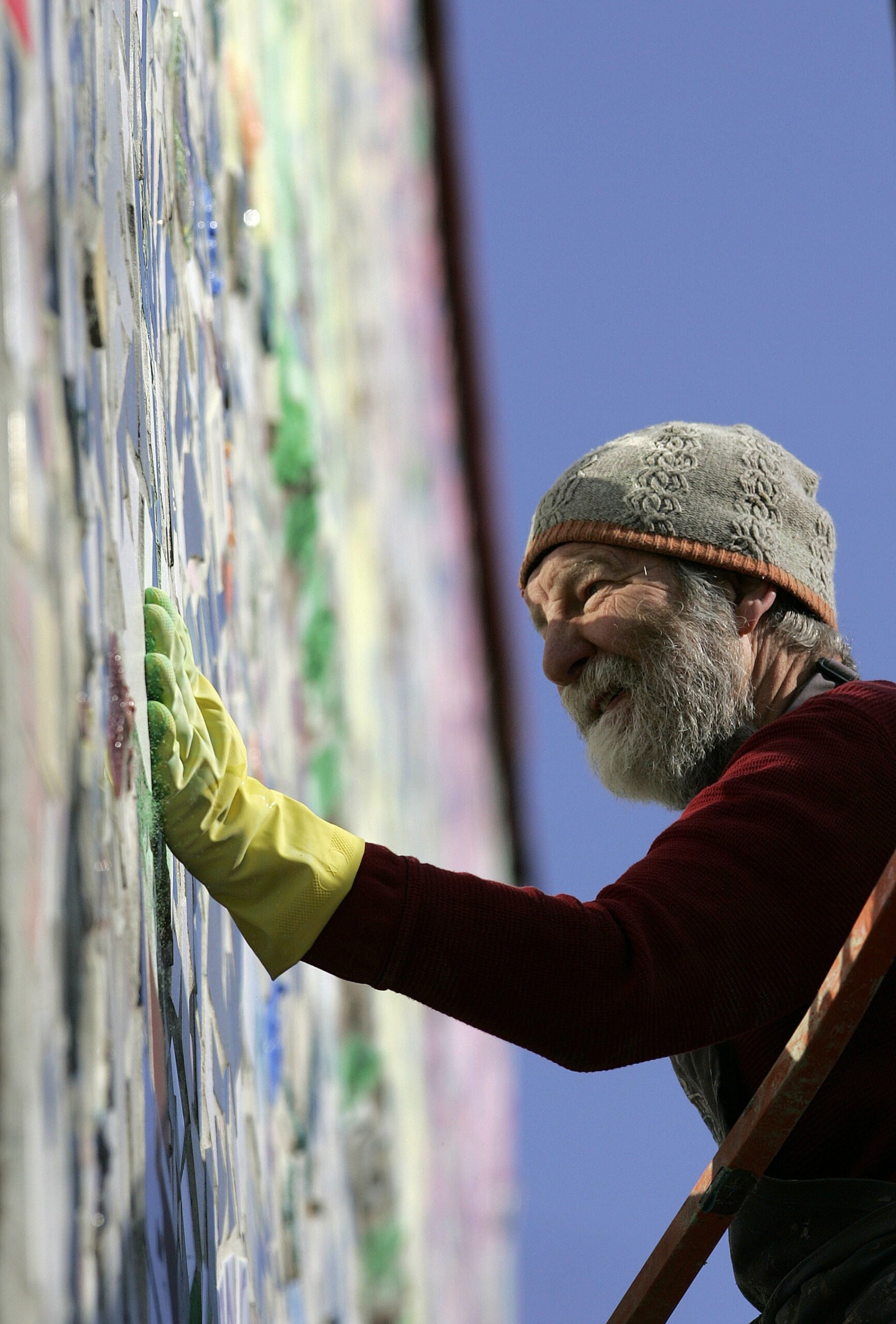
    Isaiah Zagar in April 2007, applying colored cement to his mosaic on the 300 block of Christian Street. He was perched in a cage of a 90-foot boom truck reaching to the top of a 60-foot wall.

    By that time, the garden was open on a limited basis for visitors to help with fundraising efforts, and adopted a more regular schedule several years later. A swing-top trash can was placed just inside the property’s front fence to collect donations from passersby, collecting about $100 a month in its early days, The Inquirer reported.

    “I make art voluminously,” Mr. Zagar told The Inquirer in 2005. “The common man is clear about it: This is art.”

    The Magic Gardens has become a Philadelphia landmark, attracting about 150,000 visitors a year to walk through the immersive, labyrinthine indoor and outdoor spaces.

    In 2020, after allegations of sexual harassment were leveled against Mr. Zagar, the Magic Gardens issued a statement from its board and staff reacting to concerns raised over “inappropriate past behavior.”

    “Though the Gardens were originally created by Isaiah Zagar, he does not own the Gardens or have a vote on its Board of Directors,” the statement read before clarifying that the Magic Gardens operated as an independent nonprofit with its own staff and board of directors.

    The allegations, the statement said, left the staff and board “hurt, angry and confused as we confronted a reality that was in every way the opposite of what we stood for.”

    When asked if there was a formal investigation into Mr. Zagar’s behavior, Leah Reisman, board member of Gardens said on Friday, “Isaiah Zagar experienced mental health struggles throughout his life. While this experience often propelled his artmaking, it also at times led to challenges and repercussions in his personal and professional relationships.”

    In 2020, she said, the Gardens’ staff and board “brought these concerns directly to Isaiah and assisted him in accessing professional support to address these concerns.” Mr. Zagar’s presence on site, she added, was “carefully scaffolded through the years.”

    In 2023, the Zagars donated his Watkins Street Studio to Philadelphia’s Magic Gardens to open a secondary space — also entirely covered in mosaics, of course — to host arts workshops and educational programming.

    Mr. Zagar’s body will be donated to the Parkinson’s Disease and Movement Disorders Center at Johns Hopkins University to support medical research into the degenerative condition, Snyderman said.

    “Even at the end of the day, there was that contribution to people, to humanity,” he said of his friend.

    Mr. Zagar is survived by his wife, Julia, and sons Jeremiah and Ezekiel Zagar.

    Philadelphia’s Magic Gardens said it will announce a public memorial at a later date.

    Update: Additional information has been added to this article to reflect sexual harassment allegations against Mr. Zagar.

    An earlier version of the obituary misstated Mr. Zagar’s place of birth. He was born in Philadelphia.

    Arts and Entertainment editor Bedatri D. Choudhury contributed to this article.
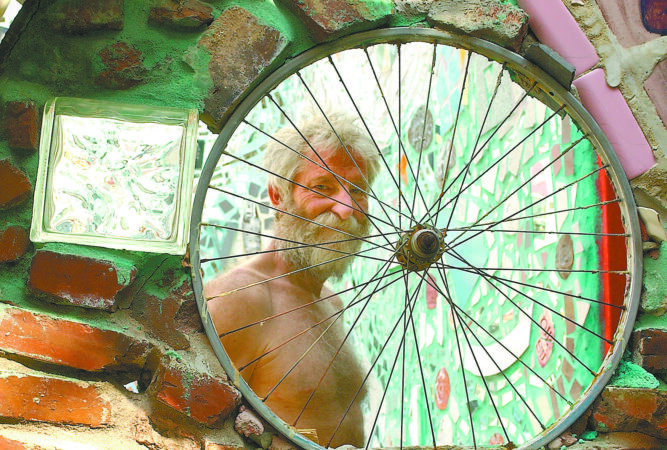
  • Where to see Isaiah Zagar’s mosaics around Philly

    Where to see Isaiah Zagar’s mosaics around Philly

    Famed mosaic artist Isaiah Zagar left a legacy shaped by the glimmering murals and large-scale tile works he created throughout Philadelphia.

    Zagar, who died at 86 on Thursday due to complications of heart failure and Parkinson’s disease, will be remembered for his striking works and unrelenting mission to beautify the city he called home for more than five decades.

    Zagar’s nearly 200 works can be found throughout the country but the bulk of his famed mosaics are within city lines.

    Here’s some of the largest and boldest works the iconic artist handcrafted in Philadelphia.

      (function() {
        var l2 = function() {
          new pym.Parent(‘ZAGARMAP.html’,
                         ‘https://media.inquirer.com/storage/inquirer/projects/innovation/arcgis_iframe/ZAGARMAP.html’);
        };
        if (typeof(pym) === ‘undefined’) {
          var h = document.getElementsByTagName(‘head’)[0],
            s = document.createElement(‘script’);
          s.type = ‘text/javascript’;
          s.src = ‘https://pym.nprapps.org/pym.v1.min.js’;
          s.onload = l2;
          h.appendChild(s);
        } else {
          l2();
        }
      })();

    Philadelphia’s Magic Gardens

    1020 South St.

    Tourists visit Philadelphia’s Magic Gardens, which was built by Isaiah Zagar, in 2017.

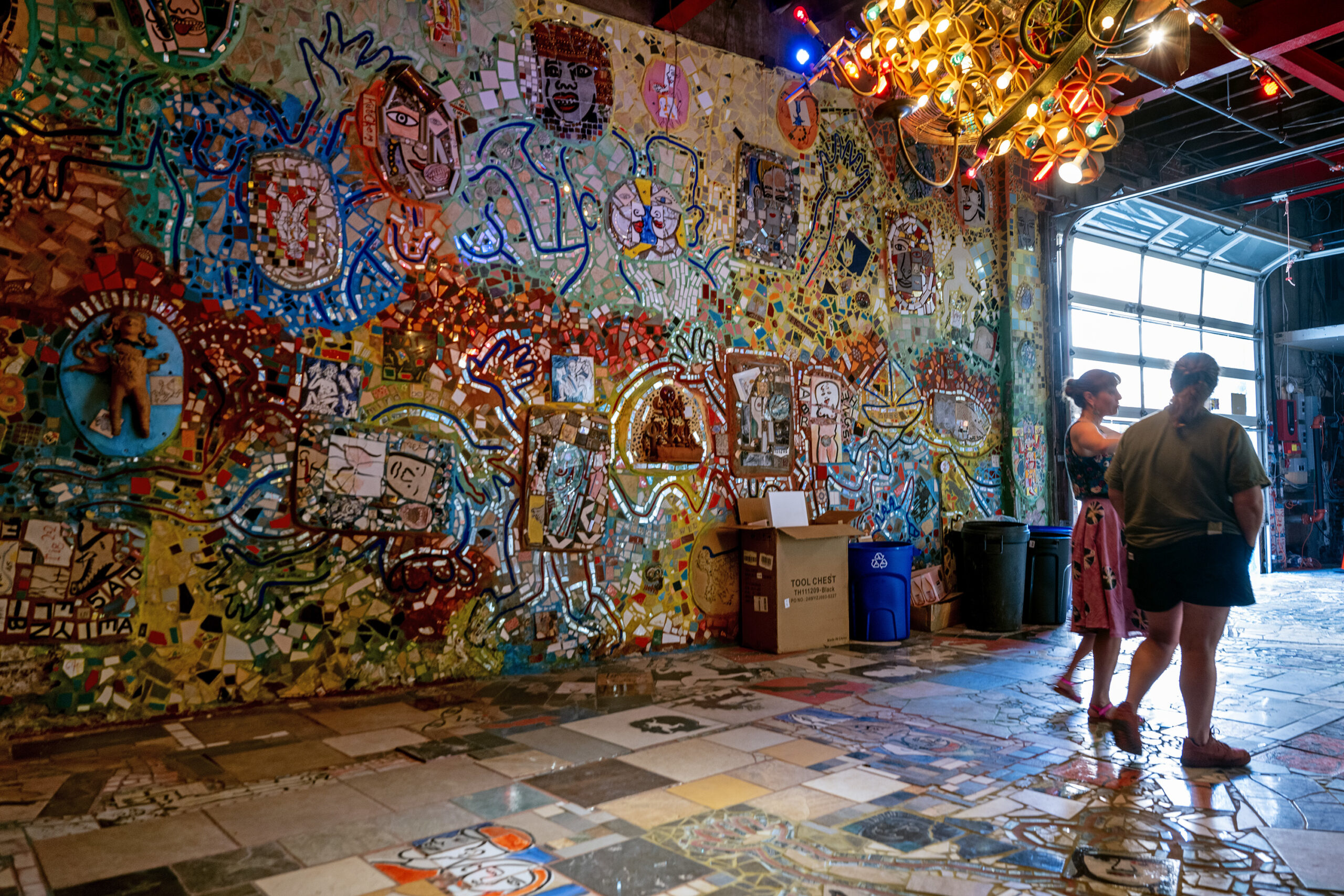
    As inescapable as Zagar’s work is in Philadelphia, the Magic Gardens serves as the artist’s grandest, most well-known project. Dating back to 1994, it consists of thousands of square feet of entirely mosaicked space stretched across three city lots, showcasing what Zagar once referred to as his “voluminous” output of art.

    Magic Gardens Studio

    1002 Watkins St.

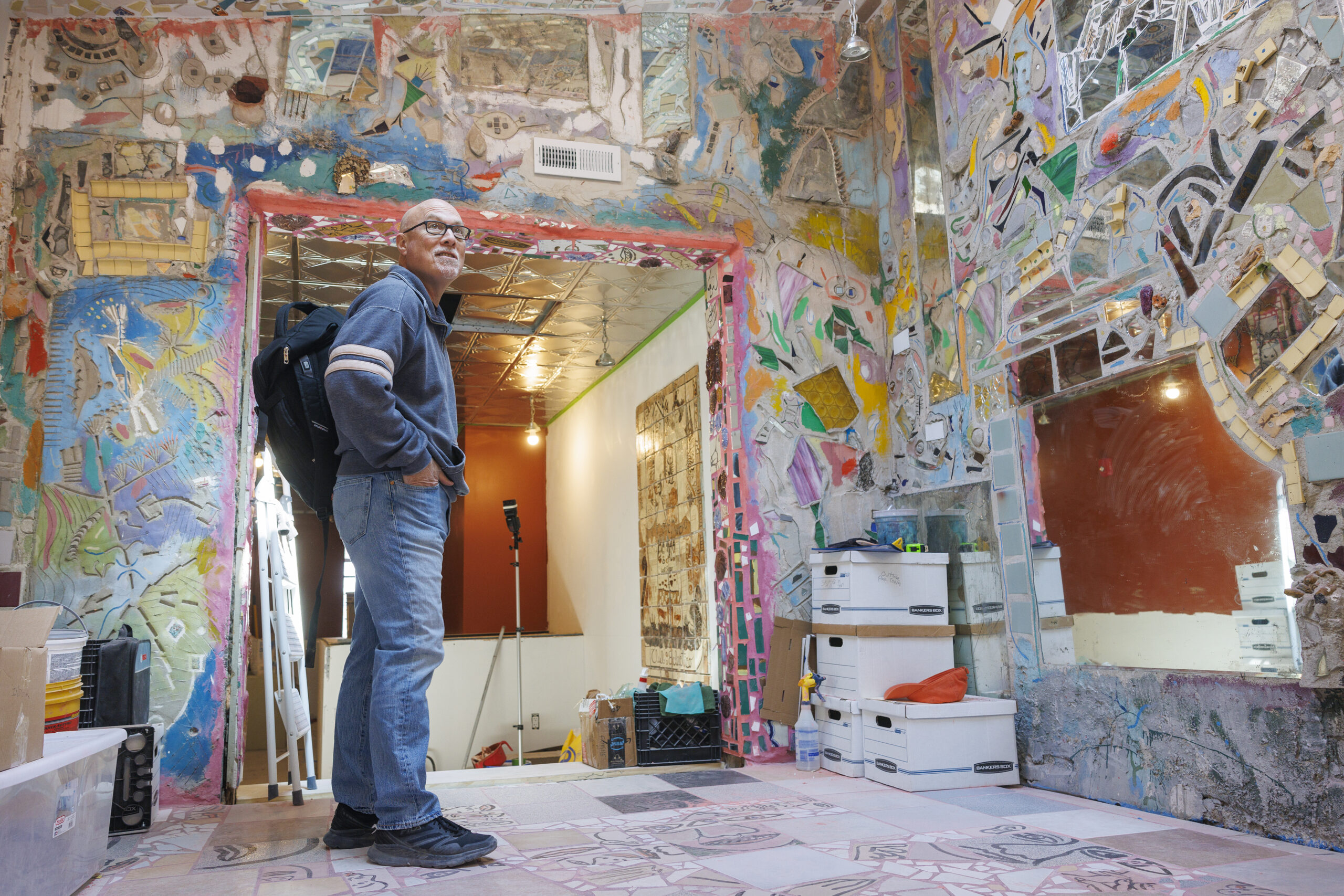
    Philadelphia’s Magic Gardens executive director Emily Smith (left) and Preservation and Facilities manager Stacey Holder stand in the former studio of mosaic artist Isaiah Zagar in 2024.

    If the Magic Gardens is the heart of Zagar’s output, his Magic Gardens Studio is the brain. Purchased in 2007, this 10,000-square-foot South Philly warehouse stands virtually covered — inside and out — in Zagar’s mosaics, and long served as his studio and storage space.

    Home of Isaiah and Julia Zagar

    826 South St.

    Isaiah and Julia Zagar are photographed in front of their home in South Philadelphia in 2024.

    It doesn’t get much more personal than the Zagar’s home, where he and his family lived for about 40 years. Similar to his South Philly studio, the space is mosaicked inside and out in Zagar’s signature style, including a roughly 544-square-foot piece across the building’s façade.

    ‘This Is the Day, Jesus Journey’

    1036 South St.

    Just steps from the Magic Gardens sits the Waters Memorial African Methodist Episcopal Church, its side showcasing the 2006 mosaic Jesus Journey. At more than 400 square feet, it uses excerpts from the Bible detailing the life of Jesus Christ. Across the street, another similarly sized installation titled Bilal From Pakistan was completed in 2012 alongside artist Bilal Khan.

    ‘Rose and the Firefighters’

    600 block of Alder Street

    Among Zagar’s most iconic murals, this piece stretches some 6,000 square feet along Alder and Kater Streets, just east of the Magic Gardens. Completed in 2004, this piece adorns the former headquarters of Engine Company 11, a celebrated Black fire company in Philadelphia between 1919 and 1952.

    Jim’s Steaks

    400 South St.

    Ken Silver, owner of Jim’s Steaks, in a room filled with mosaic tile by Philadelphia artist Isaiah Zagar in the former Eyes Gallery, run by Julia Zagar for decades.

    Blocks from Zagar’s home, Jim’s Steaks showcases the artist’s mosaic work in a space formerly occupied by the Eyes Gallery, which Julia Zagar ran for decades. A 2022 fire damaged both the gallery and the neighboring original Jim’s building, prompting the cheesesteak shop to expand next door — revealing a treasure trove of interior artwork that had long been covered.

    Schell Street Walls

    600 S. Schell St.

    Vacant lots, rowhouses, and cheesesteak shops weren’t Zagar’s only canvasses — he also covered entire side streets in his mosaics. Completed over nearly 30 years, the 600 block of Schell Street showcases the artist’s work on both sides of the street. Many pieces were created during community workshops Zagar held there over the years.

    Fitness Works

    714 Reed St.

    There are better known murals than the one that occupies the lower facade and parking lot of this South Philly gym, but few are as large. At roughly 1,500 square feet, this piece was completed in 2014 as part of a mosaic mural workshop, and has since come to serve as a landmark.

    ‘Homage to Mike Mattio, Master Plumber’

    700 block of Reese Street

    Occupying the side of a number of rowhouses, this Zagar mosaic serves as a tribute to its eponymous Mike Mattio, a former plumber of the artist’s. The piece, with Mattio’s portrait included, is something of a high-brow installation, thanks to references calling out artists ranging from William Blake to Duke Ellington.

    ‘Hip Hop Café’

    705 Passyunk Ave.

    This building has housed quite a few businesses over the years. At least since 2002, it has showcased Zagar’s Hip Hop Café mosaic mural. The piece covers the structure’s 500-square-foot front, which today is home to Momoka Ramen Skewers’ Queen Village location.

  • Library Company names its new chief, the first-ever woman to lead the group in 295 years

    Library Company names its new chief, the first-ever woman to lead the group in 295 years

    The Library Company of Philadelphia has lined up its next chief. Jessica Choppin Roney will take over the 295-year-old institution as soon as its merger with Temple University is approved by Philadelphia Orphans’ Court, leaders said this week.

    Roney has existing ties to both Temple and the Library Company, as director of the program in early American economy and society at the Library Company and as an associate professor of history at Temple. She is also chair of the “integration council” that has been set up to help facilitate the amalgamation of the two groups.

    “She’s been working very closely with us, so she was the obvious choice to take on the new role,” said current Library Company director John C. Van Horne, who will continue in his post until Roney takes over. Director and director-designate are already working together on the transition, he said.

    Roney said this week that even with the merger, the Library Company’s mission won’t change.

    “It continues to be a center of scholarly research and public-facing programming, so we’ve got work in history, in literature, science, and dance and music, and art, and on and on. That all continues and will grow and amplify with our relationship with Temple.”

    The group, founded by Benjamin Franklin in 1731, owns more than 500,000 rare books, manuscripts, prints, photographs, works of art, ephemera, and other objects, mostly from the 17th through 19th centuries.

    “It has always been America’s library, even before it was America,” Roney said.

    The collection will continue to acquire new items, and will explore opportunities for Temple students to “make use of our collections in new ways,” she said.

    Roney noted that even though the Library Company has often been powered by women — staff, trustees, shareholders, and donors — it has never had a woman at the helm.

    “It’s exciting at a time of change that one of those changes is to have the first woman in charge,” she said.

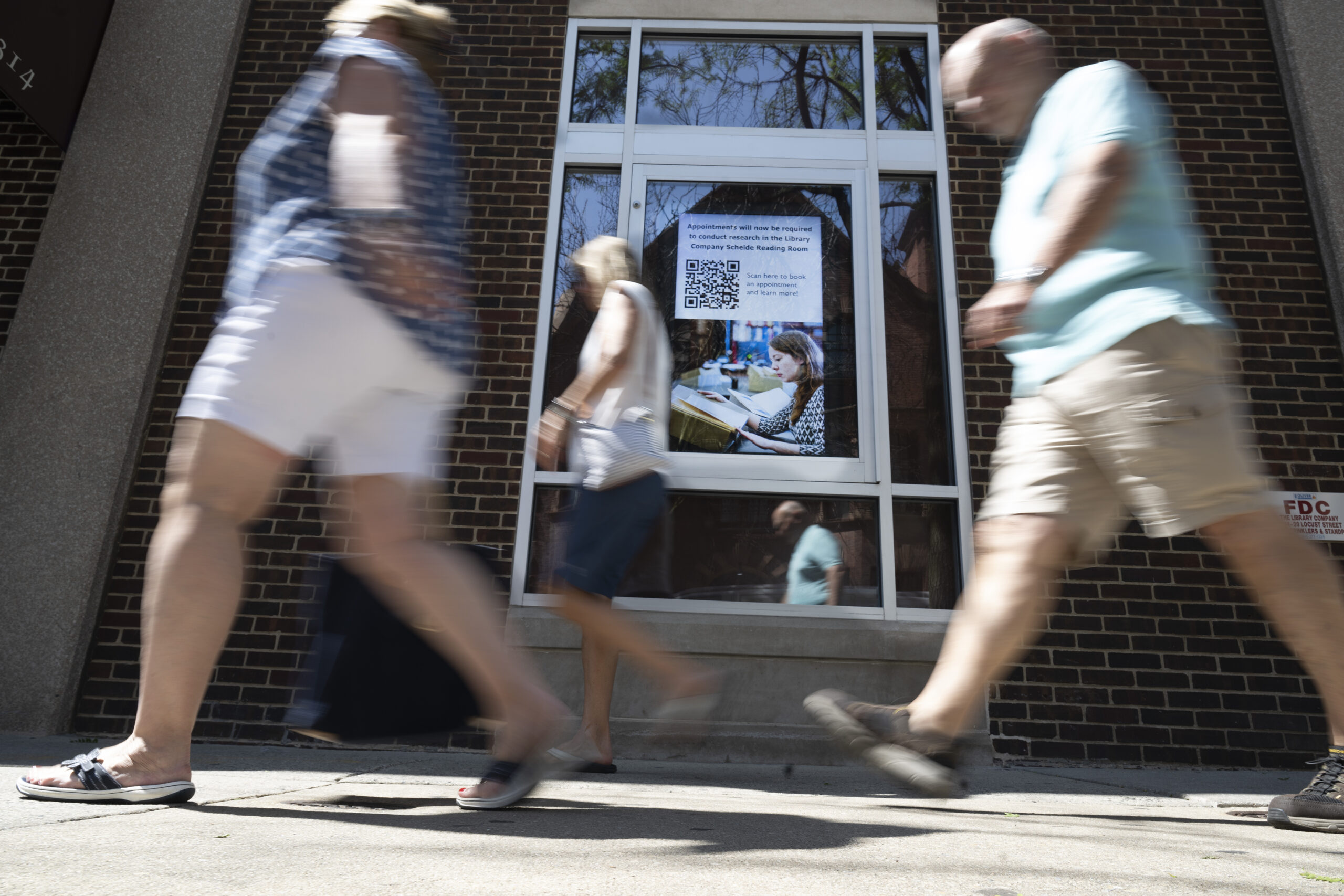
    Pedestrians passing the Library Company of Philadelphia in Center City, June 25, 2025.

    Facing a string of projected operating deficits, the library began to explore merger opportunities with other groups in 2024. Talks with Temple became public this past June. The boards of both organizations have approved the deal, and in December Library Company shareholders voted 174 to 33 in favor of the merger.

    A potential Orphans’ Court approval — which could take weeks to years to receive, said Van Horne — would end nearly three centuries of independence for the library, whose home is on Locust Street just east of Broad, where it will remain.

    Roney started as director-designate Jan. 9, and was approved for the post by the Library Company board on Jan. 22, a Temple spokesperson said. Her appointment, however, was not publicly announced until it was included in a newsletter from the group this week. Van Horne said she was chosen without a search, and no other candidates were considered.

    “We thought it would be good initially since we’re just getting this relationship off the ground to have a Temple faculty person as the first director [of the merged organization], and it was fortuitous that the early Americanist at Temple was on our payroll,” said Van Horne. “She already had a foot in both camps.”

    Roney, 47, earned a bachelor’s degree from Swarthmore College, a master’s from the College of William and Mary, and a Ph.D. from Johns Hopkins University. It was at the Library Company that she conducted research for her first book, Governed by a Spirit of Opposition: The Origins of American Political Practice in Colonial Philadelphia.

    Van Horne was director of the Library Company from 1985 until 2014, and then returned in 2024 to help manage its financial difficulties. He has been a strong proponent of the merger, as he was for Roney’s appointment.

    “She’s energetic, imaginative, and she has ideas about what we can do with Temple and others,” he said. “I’m very hopeful for the future. I think she’s going to be terrific, and I wasn’t so hopeful for the future a year ago.”

  • Colman Domingo to receive the President’s Award from the NAACP Image Awards

    Colman Domingo to receive the President’s Award from the NAACP Image Awards

    Colman Domingo will be presented with the President’s Award at the 57th NAACP Image Awards, on Saturday, Feb. 28.

    The West Philly native and Temple alum is nominated for Image Awards for outstanding supporting actor in a comedy series and outstanding director in a comedy series, both for his work on Netflix’s The Four Seasons.

    “Colman Domingo represents the power of creativity to bring people together and move culture forward,” BET president Louis Carr said in a statement earlier this week. “At BET our commitment has always been to community, culture, and connection. Colman’s impact reflects those values in action.”

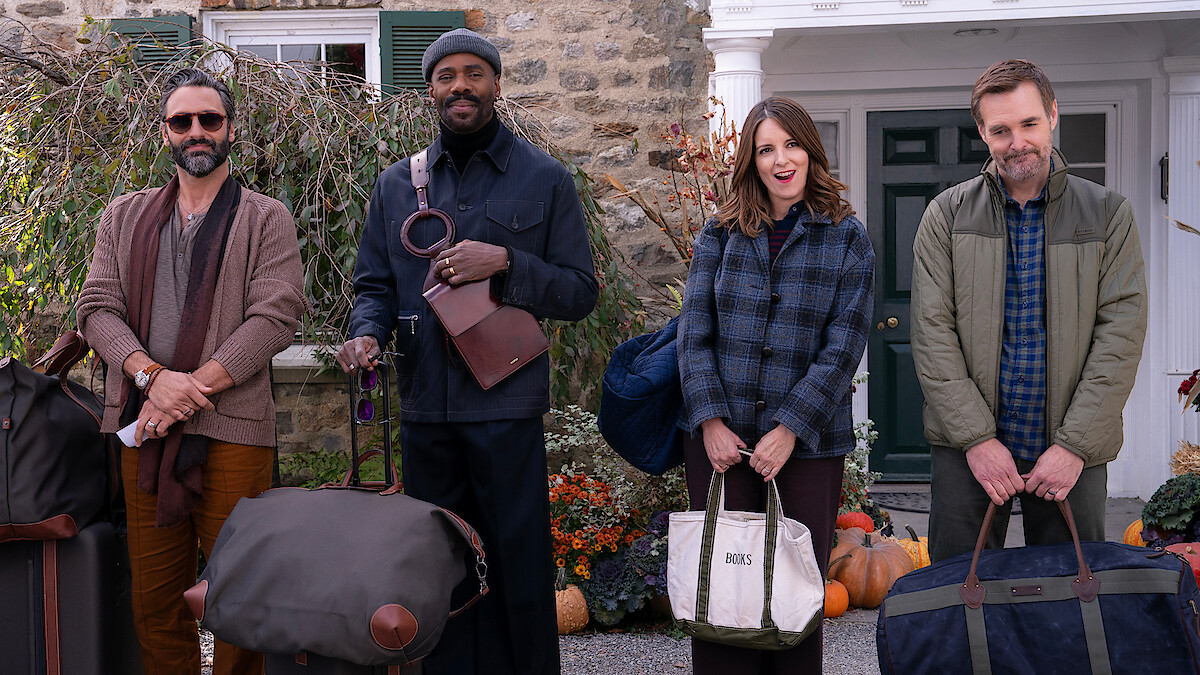
    Marco Calvani, Colman Domingo, Tina Fey, and Will Forte in the 2025 comedy series “The Four Seasons.”

    The NAACP President’s Award is presented for public service. Previous awardees include Dave Chappelle, Usher, Gabrielle Union-Wade, and LeBron James.

    Domingo took home the NAACP Image Award for outstanding actor in 2024 for his work in Netflix’s Rustin and the trophy for outstanding supporting actor for The Color Purple.

    In early February, Deadline reported the biopic that Domingo is working on about legendary singer Nat King Cole will be called Unforgettable. Domingo cowrote the script and will direct, produce, and star in the movie. The film will follow Cole’s success as a musician and quiet revolutionary navigating racial justice. It is set to begin filming at the end of the year.

    Domingo will deliver the commencement address at Temple University this spring and will receive an honorary degree. The ceremony will be held at the school’s Liacouras Center on May 6.

    The NAACP Image Awards will air live from the Pasadena Civic Auditorium on Saturday, Feb. 28, at 8 p.m. on BET and CBS.

  • Yes, there are older Chinatown gates in the country. But Philadelphia’s is the real deal.

    Yes, there are older Chinatown gates in the country. But Philadelphia’s is the real deal.

    By the early 1980s, Philadelphia’s Chinatown was more than 100 years old and struggling to survive.

    Boxed in by the Vine Street Expressway, Market Street, the old Metropolitan Hospital, and the Convention Center, the neighborhood had no space to grow and no way to shine.

    In 1982, executive director of the Philadelphia Chinatown Development Corp. Cecilia Moy Yep — well-known for stopping the razing of Holy Redeemer Chinese Catholic Church — and architect James Guo went to China and formalized a Sister City agreement between Philadelphia and the northern Chinese city of Tianjin.

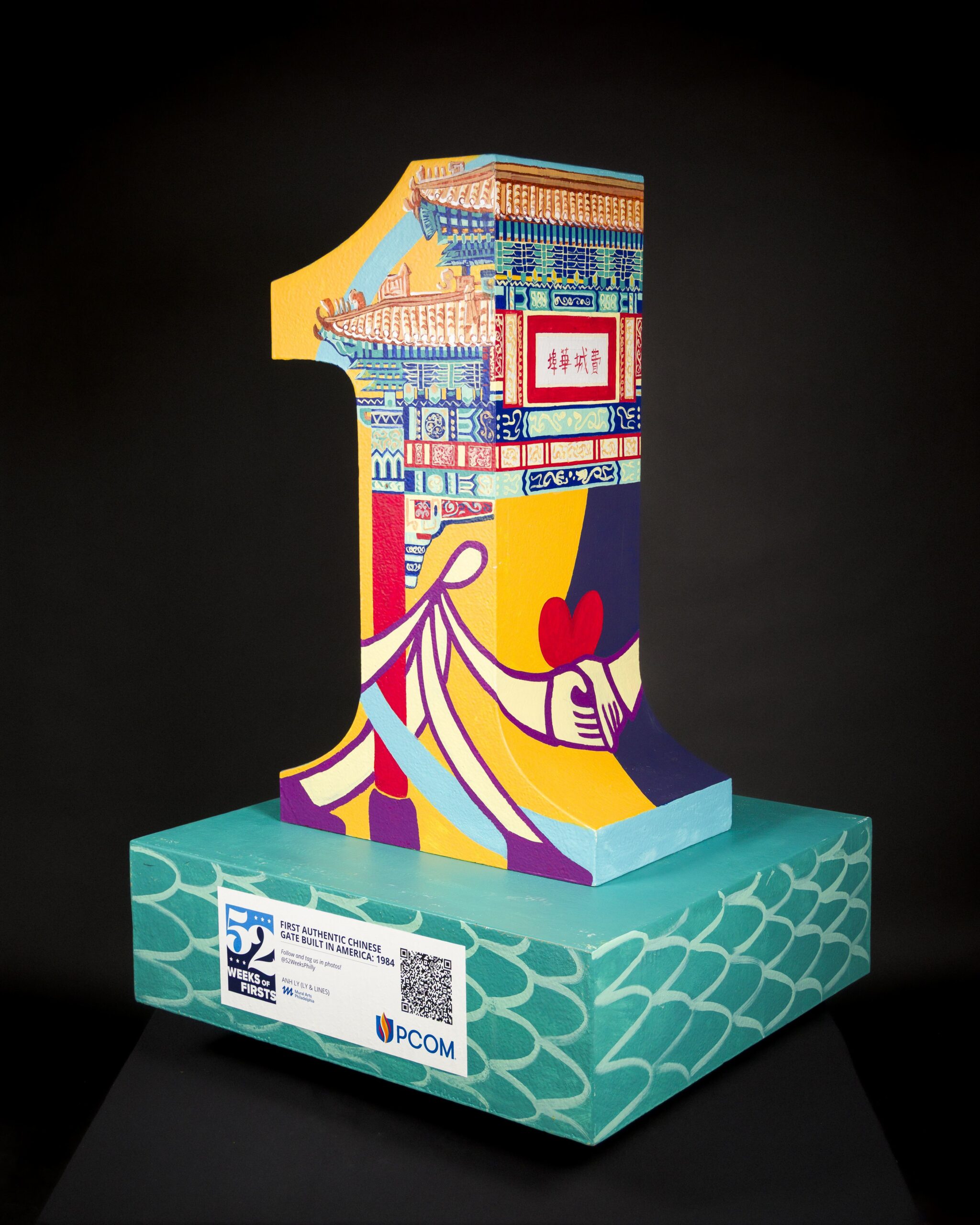
    Anh Ly’s “One” sculpture unites Philly’s Friendship Gate and Tianjin’s Ferris wheel bridge. The supporting legs resemble two people holding hands across culture and distance. The Chinese dragon’s spirit reinforces this connection with resilience and reverence.

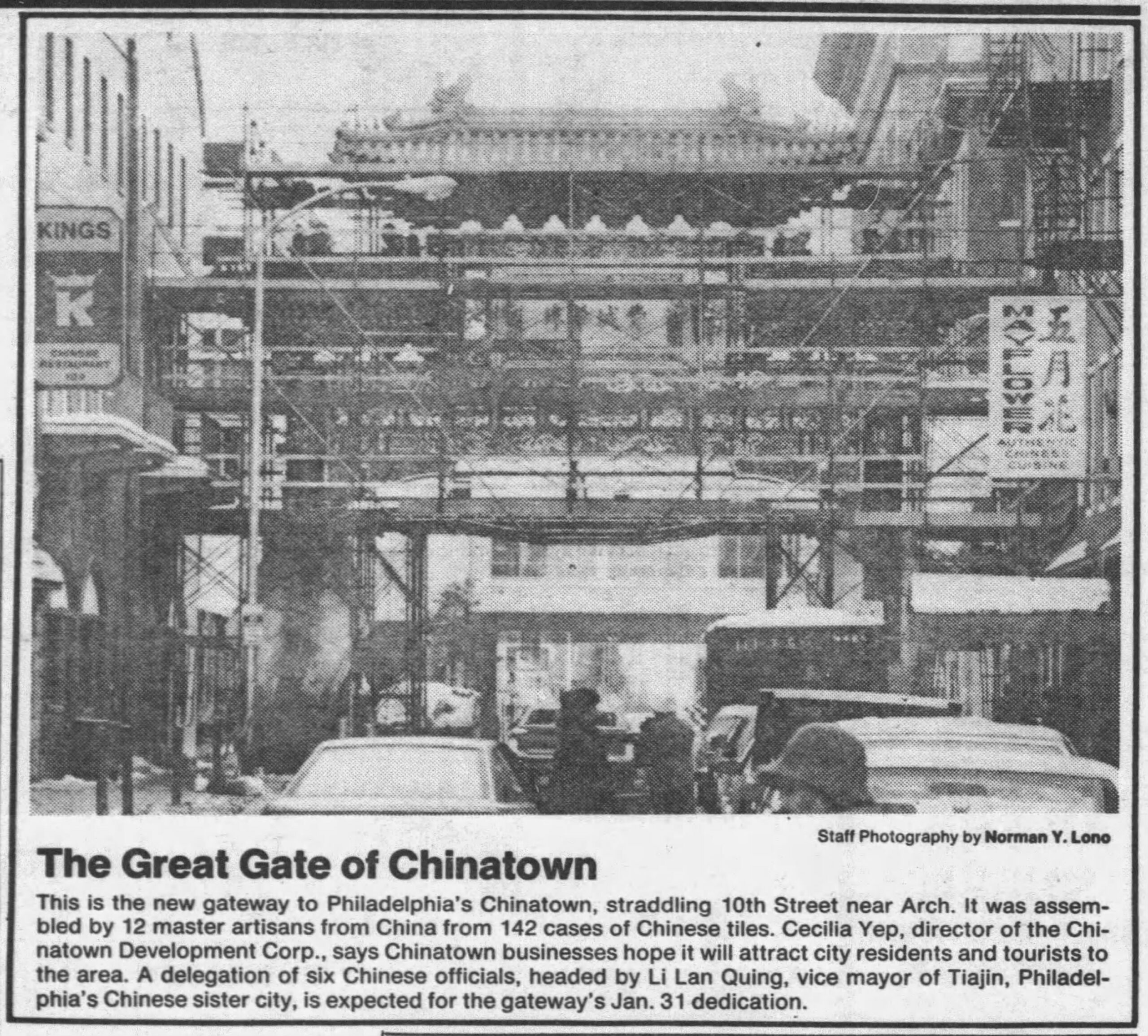
    Plans for an ornate Chinatown entryway followed. In October 1983, 12 artisans from Tianjin and Beijing arrived in Philadelphia and spent three months building a 88-ton, 40-foot-tall gate with wood, tiles, stone bases, and a special material that incorporates pig’s blood that’s painted over the wood to stop it from fading and shipped from China.

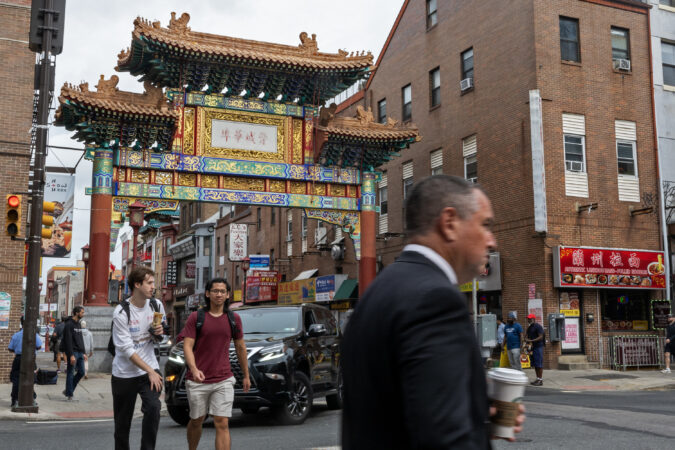
    The San Francisco Chinatown Gate had been built in the 1970s and Boston’s was finished in 1982. But Philly’s Friendship Gate, erected at the intersection of 10th and Arch Streets, is the first Chinese American archway built with materials from Asia, making Philly’s gate the “authentic” deal.

    That first authentic Chinese gate built in America will be feted Saturday in Chinatown at the Crane Community Center, this week’s Philadelphia Historic District’s Firstival celebration. Firstivals are a year’s worth of parties marking America’s 250th birthday, noting events that happened in Philadelphia before anywhere else in America and often the world.

    The Friendship Gate, built in traditional Qing Dynasty style, cost more than $200,000 in city funds to construct. The ribbon-cutting ceremony in January 1984 featured the ceremonial dance of the Chinese lion known as Wushi, performed for good luck and to chase away evil spirits, and speeches from city officials in both Mandarin and English.

    “We needed something to attract people into Chinatown,” Yep told The Inquirer, shortly after its Jan. 31, 1984, unveiling.

    Its mud brown roof, square beams, dazzling green and gold patterns, and birds and dragons outlining the sky, mark the point where Center City meets the Chinese community.

    A Daily News clipping from Jan. 23, 1984, shows Chinatown’s Friendship Gate during construction.

    Five months after the Friendship Gate was completed, a fire — then the biggest in Center City history — raced north from 10th and Filbert Streets and stopped, almost magically, at the Friendship Gate.

    “I am so glad the gate was not damaged,” T.T. Chang, then president of the Chinese Cultural Society — and unofficial mayor of Chinatown — told The Inquirer.

    In September 1984, the Philadelphia Chinatown Development Corporation introduced the first official postcard with the Friendship Gate’s image, marking it as a bona fide tourist attraction. (Although its real goal was to raise $55,000 to pay for the portion of the gate the city refused to pay for.)

    In 2008, in its 24th year as a recognized Philadelphia monument, the gate was rededicated after a yearlong, $200,000 renovation project.

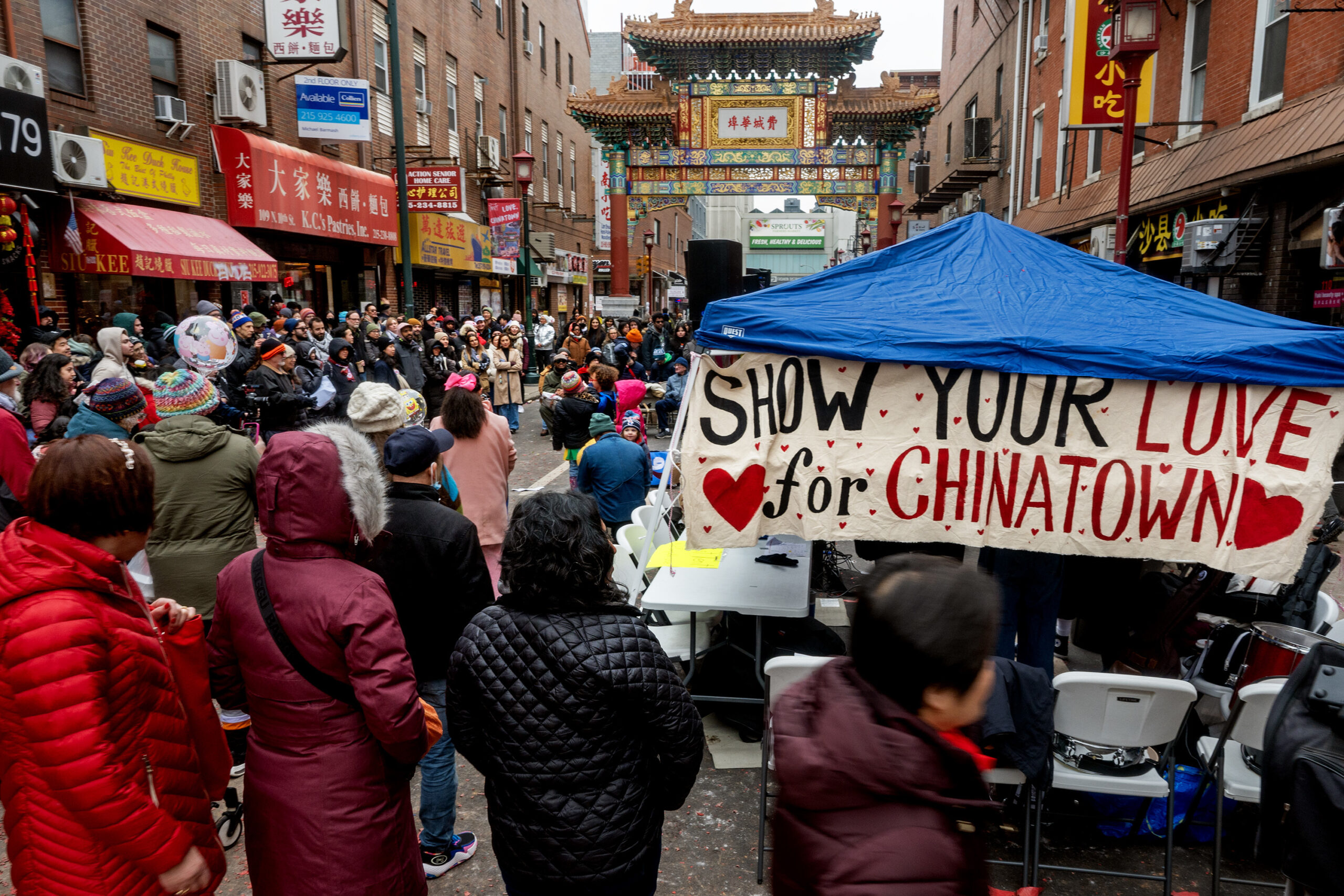
    Community organizers hold a “No Arena” block party near the Friendship Gate in Chinatown on Feb. 2, 2025, as the neighborhood celebrates the Lunar New Year with a parade, lion dancers, and fireworks.

    Chinatown has had its challenges over the last decades, but it continues to thrive. For 41 years, the Friendship Gate has stood proudly, a welcoming archway rooted in resistance.

    This week’s Firstival is Saturday, Feb. 21, 11 a.m.-1 p.m., Crane Community Center, 1001 Vine St. The Inquirer will highlight a “first” from the Philadelphia Historic District’s 52 Weeks of Firsts program every week. A “52 Weeks of Firsts” podcast, produced by All That’s Good Productions, drops every Tuesday.

  • Narberth artist Emily Stewart is making ‘ephemeral’ public art out of snow

    Narberth artist Emily Stewart is making ‘ephemeral’ public art out of snow

    After the biggest snowstorm in a decade dumped more than nine inches of snow on the Philadelphia region, Narberth artist Emily Stewart woke up to a blank canvas.

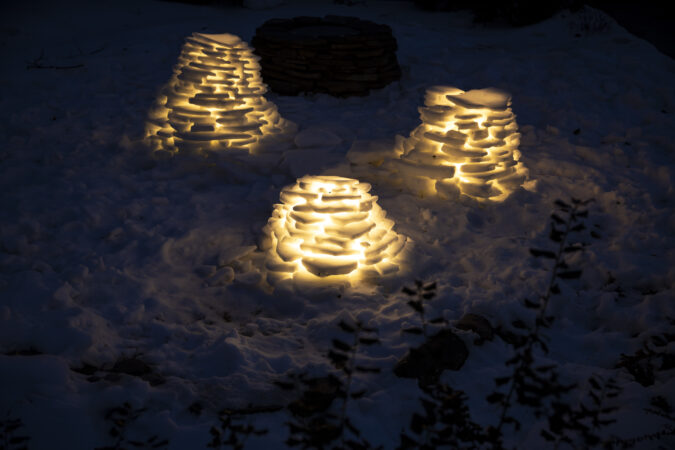
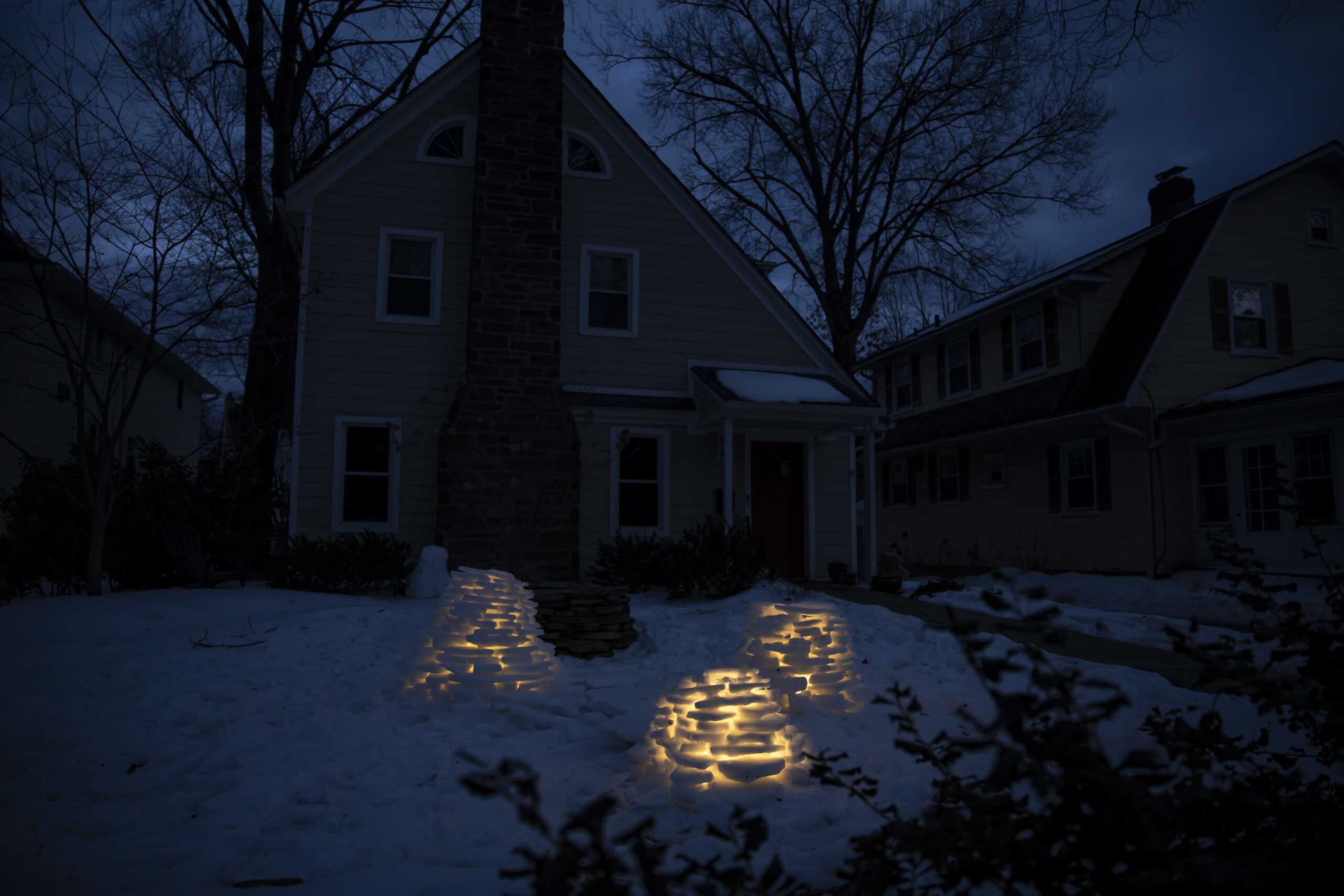
    With her front yard dusted in snow, Stewart zipped up her coat, laced up her boots, and braved the cold to build three Swedish lanterns out of snow and ice. Set against the darkness of winter, the lanterns have offered a glimmer of warmth during the coldest days of a historically frigid period in and around Philly.

    Ice sculptures made by artist Emily Stewart outside her Narberth home on Wednesday, Feb. 11. Stewart said she was inspired to make the structures after reading about Swedish lanterns. “I love working with snow in my yard or other public places because it is inherently social,” Stewart said. “As I work, people walk by, cars pull over, I get to have conversations with neighbors and meet new friends.”

    Stewart is a Main Line-based artist and community organizer who works with ink, graphite, wood, and, yes, snow. She is a lover of art and community building, passions that arose from her time in art school and serving in the Peace Corps. She is also the coordinator of Narberth Public Art, a community group that brings public art displays to downtown Narberth.

    An Ohioan by birth, Stewart isn’t bothered by the snow. In fact, she prefers a long, snowy winter to the Philly area’s increasingly hot summers.

    “I love, love winter,” Stewart said, adding that she has the “opposite of seasonal depression disorder.”

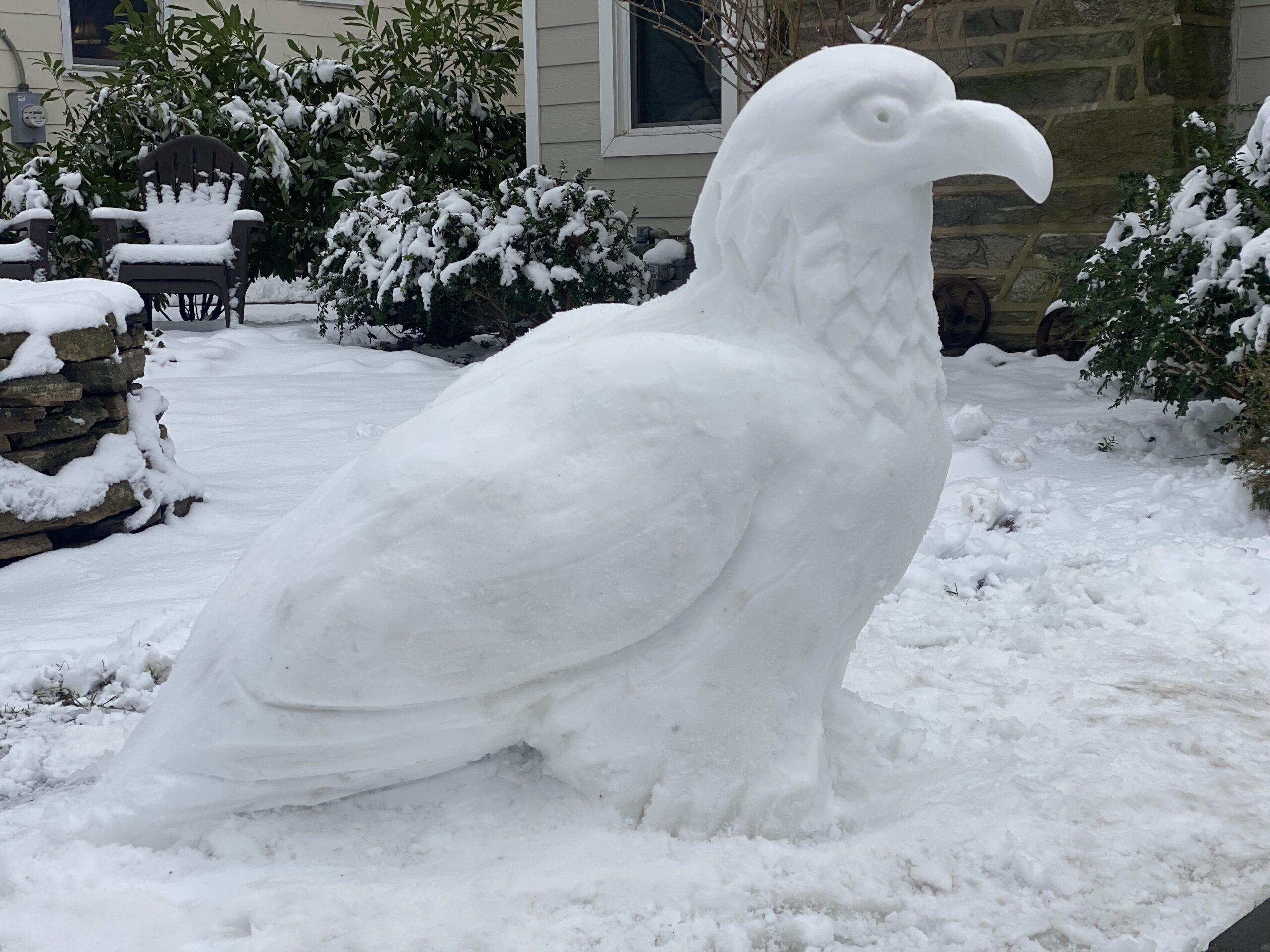
    Stewart grew up making snow sculptures in her hometown of Cleveland. In 2021, as pandemic measures kept Stewart and her family cooped up in their home, she picked up her kitchen spatula and began sculpting snow once again. She built life-size bears, an owl, a giant horse, and an eagle (go Birds). Neighbors began stopping by to ask about the sculptures, and people from outside Narberth even started paying visits to Stewart’s yard after hearing about her art through the grapevine.

    A creature built out of snow by artist Emily Stewart at her home in Narberth in February 2021.

    Though her snow sculptures began as a low-stakes artistic outlet, Stewart says they have become something deeper — a point of connection among neighbors in increasingly polarized and technologically dominated times. Public art provides a “cool little communal social interaction” that “detracts from all the negativity in the world,” she said.

    There’s much that Stewart loves about working with snow. It’s free, abundant, and surprising.

    When asked about the fleeting nature of her snow works, Stewart said it’s part of the beauty. Snow is temporary, as is everything.

    “It’s ephemeral,” she said. “Like, enjoy it, and it’s not yours to keep.”

    An eagle built out of snow by artist Emily Stewart in her Narberth backyard in February 2025.

    This suburban content is produced with support from the Leslie Miller and Richard Worley Foundation and The Lenfest Institute for Journalism. Editorial content is created independently of the project donors. Gifts to support The Inquirer’s high-impact journalism can be made at inquirer.com/donate. A list of Lenfest Institute donors can be found at lenfestinstitute.org/supporters.

  • A Minneapolis artist’s custom font, Times New Resistance, autocorrects Trump to ‘felon’ and ICE to ‘goon squad’

    A Minneapolis artist’s custom font, Times New Resistance, autocorrects Trump to ‘felon’ and ICE to ‘goon squad’

    Abby Haddican got tired of the rhetoric.

    The Minneapolis-based artist can’t unsee the impact ICE and directives from President Donald Trump’s administration’s have had on her hometown in recent months.

    “I don’t really know anyone whose life hasn’t been affected by the occupation in a tangible way,” she said. “Many people I know are volunteering to deliver meals, patrol schools, drive folks to work, and serve as peaceful observers — which is what both Renee Good and Alex Pretti were doing when they lost their lives at the hands of ICE agents.”

    The independent graphic designer thought about ways she could get involved when it hit her. She’s joining a larger tradition of subversive font design.

    Haddican, whose work focuses on typography, branding, and packaging, thought back to Moontype, a font created by designer Olli Meier that autocorrects “bad words,” like hate, into “good words,” like love.

    Then she thought about language and its use today.

    “It’s become impossible to ignore how blatantly the Trump administration is misusing language in order to control and distort the narrative,” she said. It clicked.

    “Wouldn’t it be cool if you could change someone else’s words?” Haddican said. “I decided that the best practical use of this font feature would be a practical joke.”

    This month, she launched Times New Resistance, a parody of the commonly used Times New Roman font, which autocorrects a slew of specific words as they’re typed. Notably, Times New Roman is the new (and old) official font of the State Department.

    Using Times New Resistance, the term ICE autocorrects to “the Goon Squad.” Trump autocorrects to “Donald Trump is a felon.” Gay becomes “gay rights are human rights.” Illegal alien becomes “human being.”

    Kingsley Spencer, a creative director and designer based in Jacksonville, Fla., says using the State Department’s own font is part of what makes Haddican’s font so powerful.

    “Using technology as a form of commentary against a political regime that decided to weaponize Times New Roman as a form of culture shaping is sharp for a designer,” he said. “I love how direct and comical it is.”

    The font is free, “just like America used to be,” Haddican‘s website says. She said Monday that it has been downloaded about 600 times so far. She describes it as a “social commentary meant to autocorrect the autocrats.”

    The hope is that some users might secretly install the font onto the computers of “an ICE apologist,” or “morally bankrupt American” as a way of unleashing mischief.

    To the untrained eye, the typeface looks like Times New Roman in the font menu — there’s just a sneaky extra space between the words Times and New. But it’s likely many downloads are by like-minded supporters who want to enjoy the font for themselves.

    The technology behind the font is simple.

    Haddican modified an existing open-source typeface that resembles Times New Roman and programmed the substitutions. She said the hardest part was deciding which autocorrections to make.

    “I know I’ve done an imperfect job. The corrections are a mixture of serious stuff (for example, the word ‘good’ autocorrects to ‘Renee Good was murdered by ICE’) and things that I find funny, like changing ‘Stephen Miller’ to ‘Nosferatu,’” she said.

    “The first draft was significantly more profane, but I toned it down. I wanted to offend people by speaking truth to power, not for swearing like a sailor.”

    Spencer said the font uses something in the typography world called ligatures, which replaces a set of recognized characters with a single character phrase. An example of this is when you type a fraction or date in a document and it’s automatically formatted.

    Haddican joins a group of other typography artists who have made jokes, social commentary, or both through text.

    Times Newer Roman is a typeface created by the Brooklyn-based art collective MSCHF (pronounced mischief) in 2018 that looks identical to Times New Roman, except each character is 5% to 10% longer, making essays appear slightly longer without changing formatting rules.

    It was billed as a font that could help students cheat on term papers. The font takes jabs at academic productivity culture, using typographic invisibility that’s undetected by the untrained eye.

    Sang Mun, a designer and former National Security Agency contractor, created a subversive “surveillance proof” font called ZXX in 2013. The fonts were created to be legible to the human eye, but difficult for surveillance software used by Google and other companies to scan text to read.

    More mainstream examples include Shepard Fairey, the artist behind OBEY and President Barack Obama’s iconic HOPE graphic, who is known for his use of single phrases and high-contrast graphics to make political propaganda-style art. In the 2024 presidential election, Fairey made a Kamala Harris poster that said FORWARD in the same style as his Obama art.

    On social media, reception for Haddican’s font has been strong, garnering over 6,000 likes on Instagram and hat tips from fellow designers.

    “I think just about anything can be a form of resistance, and I believe that humor and playfulness are powerful tools for pushing back against oppression and authoritarianism,” Haddican said. “The trickster (e.g. Bugs Bunny) always beats the martyr (e.g. Elmer Fudd) in the end.”

  • The ‘AMOR’ sculpture has been removed temporarily from Sister Cities Park

    The ‘AMOR’ sculpture has been removed temporarily from Sister Cities Park

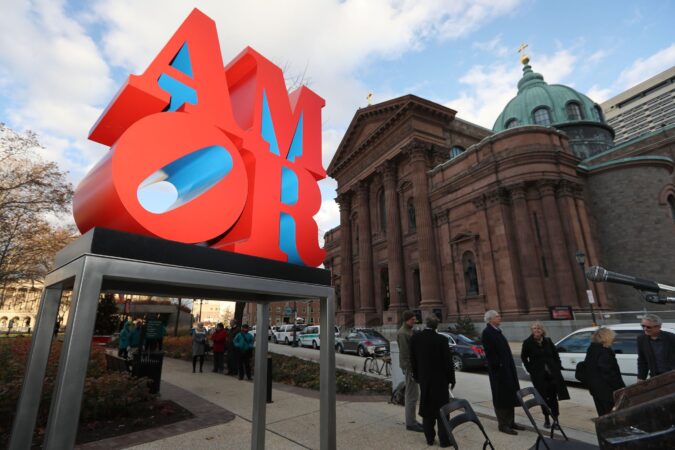
    Those around Logan Circle might notice something missing today: Robert Indiana’s bright red AMOR sculpture.

    On Wednesday morning, Philadelphia officials removed the artwork — a companion piece to Indiana’s iconic LOVE sculpture at nearby John F. Kennedy Plaza — from its perch at Sister Cities Park on 18th Street and Benjamin Franklin Parkway for conservation and restoration.

    Creative Philadelphia, the city’s arts office, said AMOR is scheduled to return on May 1.

    “Over the years, the paint on AMOR has naturally faded due to exposure to UV rays and weather,” said Marguerite Anglin, Creative Philadelphia’s public art director. “We are excited to give the sculpture a full restoration treatment, and look forward to its return back to Sister Cities Park in time for the city’s largest celebrations of America’s 250th.”

    The removal was overseen by Philadelphia Parks and Recreation and Heritage Conservation Collective. The sculpture was transported to Fine Finishes Painting Studio in Peekskill, N.Y., where conservators approved by the Robert Indiana Foundation will strip and repaint it.

    Indiana created AMOR in 1998 “in response to the changing demographics of the U.S. and his desire to speak to his fellow citizens,” according to the Association for Public Art.

    AMOR, meaning love in Spanish and Latin, came to Philadelphia in 2015 to mark Pope Francis’ visit, thanks to the aPA and the Philadelphia Museum of Art. On loan from the New York-based Morgan Art Foundation, it was displayed at the top of the museum steps, where it overlooked the papal Mass held on the Parkway.

    In 2016, it was permanently installed at Sister Cities Park with funding and support from the city, PMA, aPA, the Morgan Art Foundation, and Edith R. Dixon.

  • SNAP cuts are taking a toll on the thousands of Pennsylvanians losing benefits: ‘I fell into a downward spiral’

    SNAP cuts are taking a toll on the thousands of Pennsylvanians losing benefits: ‘I fell into a downward spiral’

    Enrique Fuentes counted on the $250 he received monthly in federal nutrition assistance to cover the cost of groceries. That changed last month.

    Fuentes works three days a week as a technician assisting therapists who help autistic children and adults, ages 3 to 22. He is one of an estimated 3 million able-bodied Americans who do not work enough hours to qualify for the Supplemental Nutrition Assistance Program (SNAP) under a law signed by President Donald Trump.

    “They cut me off because you need to work more than 20 hours a week to get benefits, and I didn’t have those hours,” said Fuentes, 27, who lives in Philadelphia. “I wasn’t even aware of that stipulation.”

    Roughly 4 million Americans are expected to lose SNAP benefits in 2026 under the One Big Beautiful Bill Act. Many of them do not meet work requirements added to the anti-hunger program under the legislation, which paid for Trump’s tax cuts with cuts to SNAP and Medicaid.

    In Pennsylvania, around 144,000 SNAP recipients could see benefits cut this year — an estimated 45,000 in Philadelphia and 12,000 in its collar counties, according to Pennsylvania Department of Human Services estimates.

    Without enough food, Fuentes, who has an associate’s degree in psychology, felt overwhelmed, he said. He is consulting Community Legal Services, which serves people in poverty, for help.

    “I fell into a downward spiral. It’s been upsetting,” he said.

    “Lots of people didn’t know the rules, thinking the winds of Washington don’t affect them. But they do.”

    Since January, advocates say, they have begun to hear from increasing numbers of people suddenly being removed from the program.

    “The White House is rifling through our pockets for lunch money,” said George Matysik, executive director of the Share Food Program, a major provider of food to hundreds of pantries in the region. The cuts constitute “a rounding error for the federal government but [the money is] a lifeline for working-class families,” he added.

    Asked for comment on criticism of the SNAP cuts, a White House spokesperson did not address the program. Instead, the spokesperson praised Trump for helping U.S. families by “fixing” former President Joe Biden’s “broken economy.”

    The spokesperson said that benefits meant for American citizens are “no longer supporting illegal aliens.” But undocumented immigrants have never been eligible to receive SNAP benefits, according to the American Immigration Council, a group that provides legal services to immigrants.

    Policy changes under Trump’s law

    Because the new law revises categories of SNAP recipients — many of which will go into effect at different times — people are uncertain about what they may lose and when. Others who have already seen reductions say they are growing apprehensive because they don’t know whether the law is the reason, or whether bureaucratic adjustments or errors are the cause.

    “Will all this change result in mass panic?” wondered Cailey Tebow, an education outreach coordinator for AmeriCorps VISTA, a national service program designed to alleviate poverty. Tebow works with low-income individuals in Northeast Philadelphia. “It’s scary to think what will happen when people realize what’s being taken from them.”

    Hoa Pham, deputy secretary of the Office of Income Maintenance in the Pennsylvania Department of Human Services, which administers SNAP in the state, is more hopeful. She said she believes the efforts her department has been making will help Pennsylvanians understand SNAP revisions and will “avoid chaos.”

    One category of potential confusion is the change in work requirements.

    Until Trump’s spending plan rewrote the rules, groups of low-income people in Pennsylvania and other states were exempt from a long-standing requirement that childless adults without disabilities and under the age of 54 work, volunteer, or go to school 20 hours per week in order to be eligible for SNAP benefits.

    The work stipulation had been waived for decades because of high levels of poverty and hunger, as well as diminished job opportunities in Philadelphia and elsewhere in the state.

    Under the new policy, childless, able-bodied adults — whose age limit has now been increased to 64 — can be exempt from the work requirements only in areas with at least 10% unemployment — a rate of joblessness considered catastrophic, experts say. In November, Philadelphia’s unemployment rate was 4.8% and other areas in the region saw similar or lower rates.

    “Work requirements in SNAP will put forward a substantial amount of bureaucracy that Pennsylvanians have to contend with,” Pham said. “It could kick many people off SNAP. The impact to people could be severe.”

    She added that reducing SNAP rolls should not be construed as a savings for taxpayers, as Trump and other Republicans have long argued. That is because food insecurity exacerbates health problems, which will add other costs in the long term, Pham said.

    “That will just drive up healthcare and insurance costs,” she said.

    ‘Life is already crumbling’

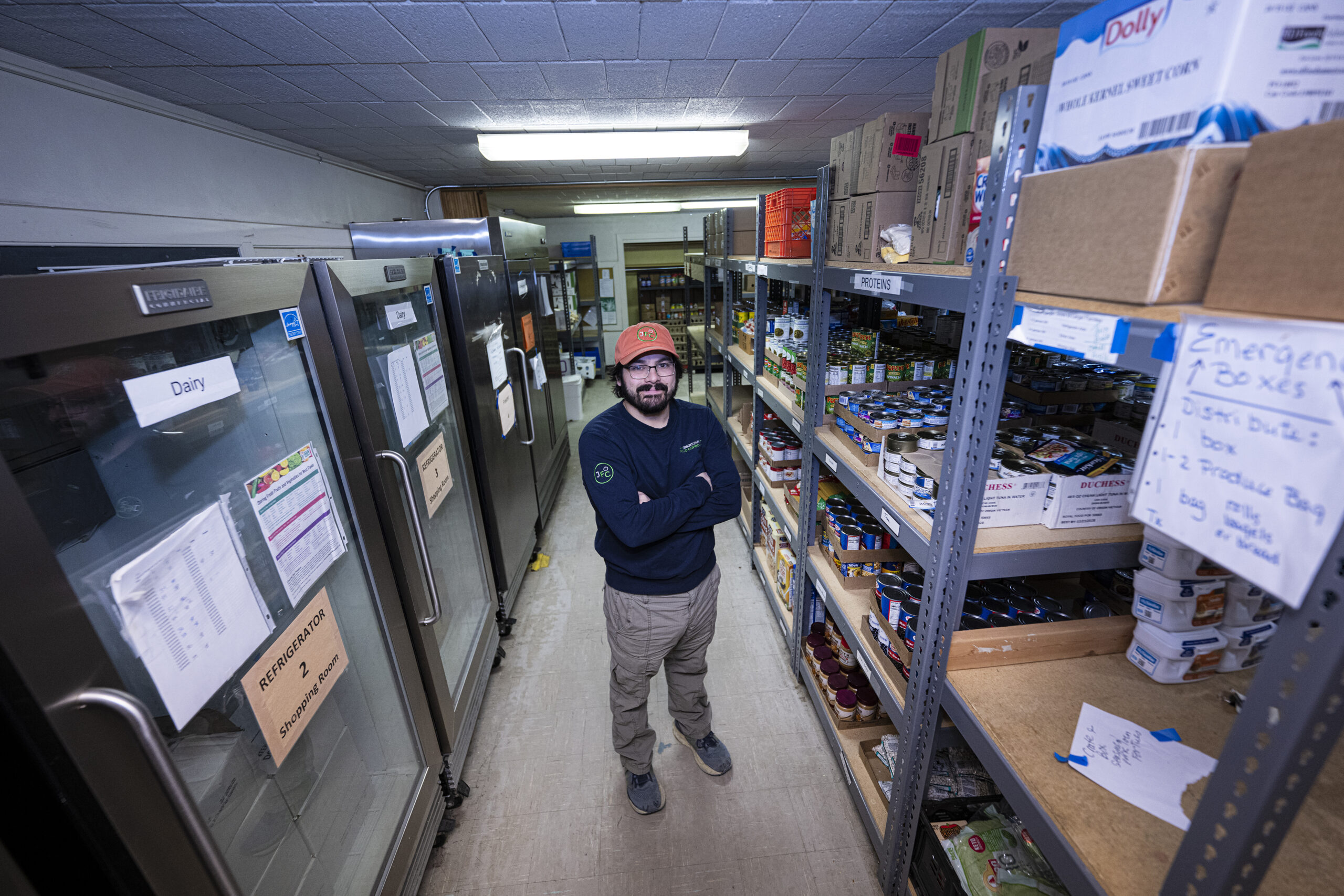
    At the Jenkintown Food Cupboard last week, “anxiety about what will happen is growing,” said Nicolino Ellis, the executive director. “But bellies are already aching from hunger. Life is already crumbling today.”

    Nicolino Ellis, executive director of the Jenkintown Food Cupboard, in the warehouse.

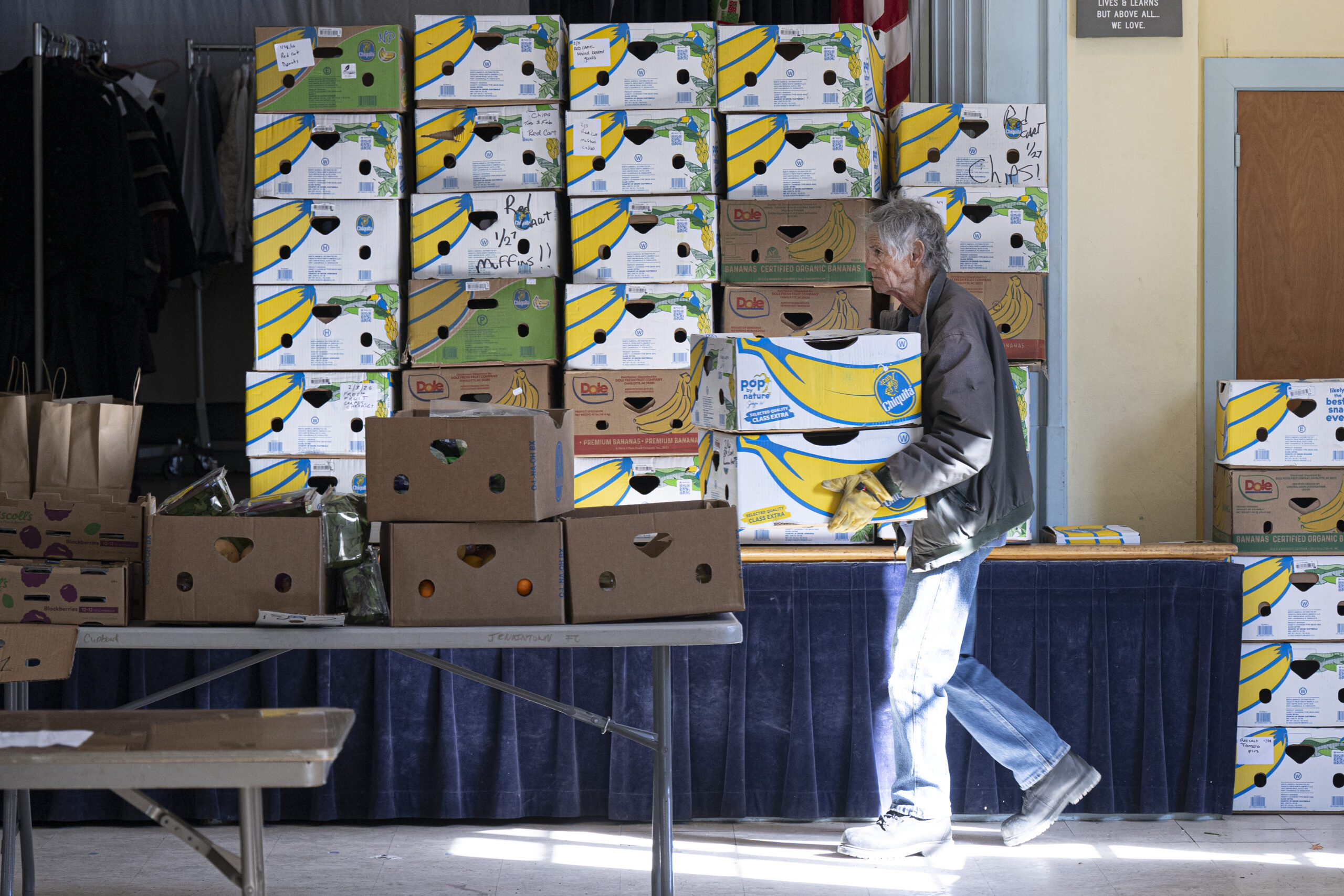
    Outside the cupboard at the Jenkintown United Methodist Church, food was distributed in a driveway to clients who drove up in cars. A phalanx of volunteers slid bags of perishables and shelf-stable foods into trunks and back seats.

    As SNAP benefits dry up while food prices soar, cupboards like this one become overburdened. But they are a less efficient means of feeding Americans in need, according to Stuart Haniff, CEO of the nonprofit Hunger-Free Pennsylvania.

    “For every single meal distributed at a food pantry,” he said, “SNAP provides nine. And need in Philadelphia increased 140% over the last two years.”

    A Jenkintown Food Cupboard volunteer works to set up food distribution.

    Shelley Gaither is one of the hundreds of people receiving groceries from the pantry.

    Gaither, 51, is a former data analyst with an MBA who suffered a disability that caused her to stop working at a Malvern finance company 13 years ago. She now collects Social Security Disability Insurance and lives with her three sons, ages 6, 9, and 18, in Cheltenham.

    Gaither said that in January, her SNAP payment dropped from $400 to $200. “I don’t know if it was a new formula from the government cutting me back, or some other reason,” she said in a phone interview. “No one told me why. It’s not supposed to happen when you have a disability. It’s crazy.”

    Whatever caused the cut, Gaither said, she is in trouble, and worried the benefit will shrink even further.

    “Now, the money I used to pay for electricity and water has to go for food,” she said. “This makes surviving more difficult.”

  • One of the nation’s oldest hospitals will now be one of Philadelphia’s newest museums

    One of the nation’s oldest hospitals will now be one of Philadelphia’s newest museums

    Before 1751, sick Pennsylvanians had few healthcare options other than often expensive home visits from doctors. That changed when Benjamin Franklin and physician Thomas Bond established a medical institution to treat the physically and mentally ill for free.

    The result was the Pennsylvania Hospital on Spruce Street. The 275-year-old institution became home to the country’s first surgical amphitheater to teach students, the oldest medical library, and a nursing museum, among other historic firsts. It continues to advance medical research as part of Penn Medicine.

    Now the nation’s oldest chartered hospital will become Philadelphia’s newest museum.

    The hospital’s Pine Building, which started construction in 1755, will be converted to the Pennsylvania Hospital Museum, Penn announced on Monday. The museum in the majestic Georgian architecture building at Eighth and Pine Streets, designed by architect Samuel Rhoads, is scheduled to open to the public on May 8.

    “It’s a very Philadelphia story to hear the history of the hospital because it really is about caring for other people,” said Stacey Peeples, lead archivist at Pennsylvania Hospital.

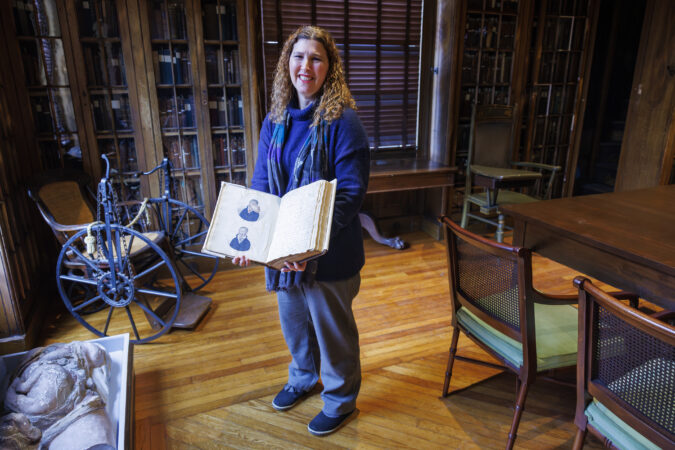
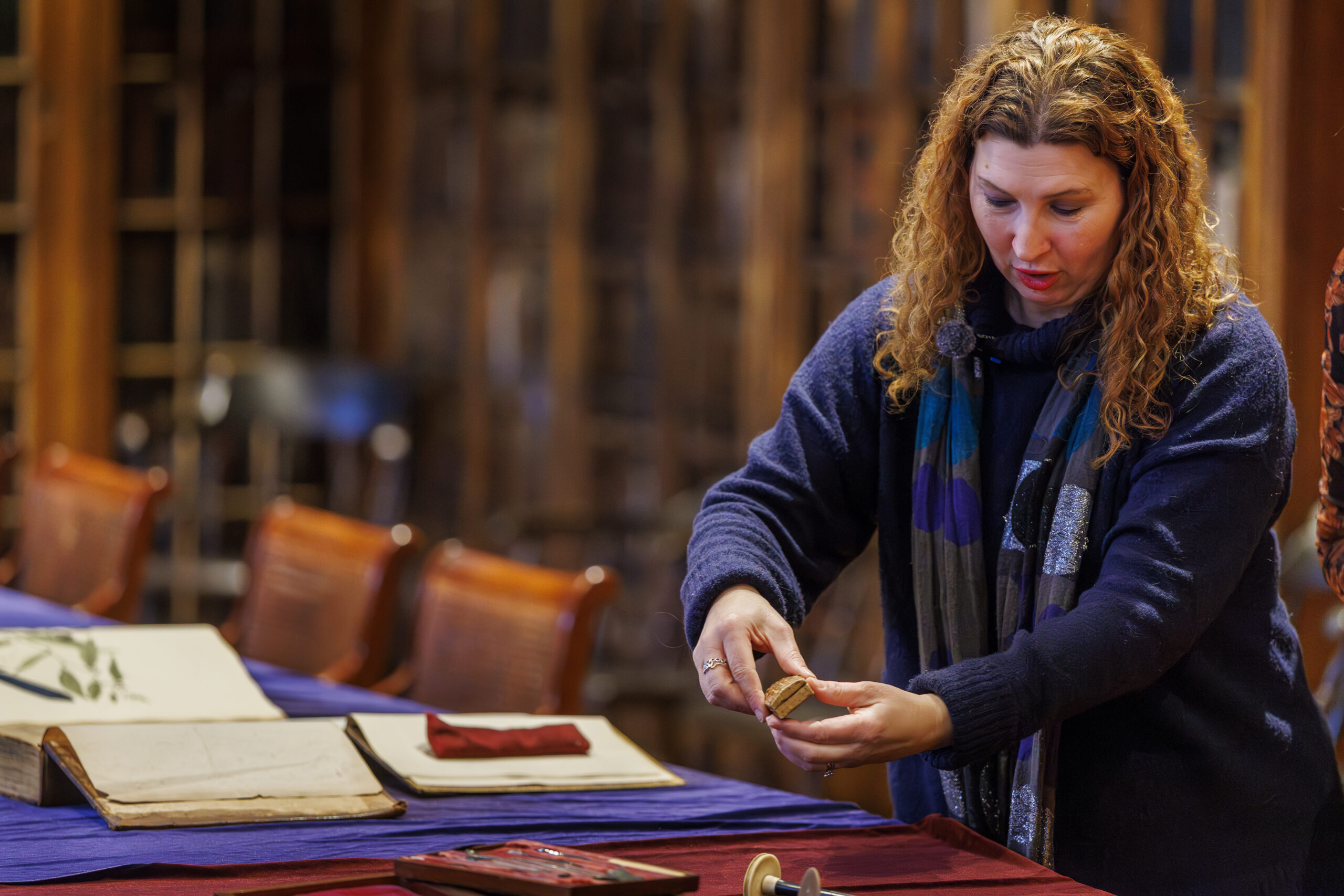
    Stacey Peeples, lead archivist at Pennsylvania Hospital, described artifacts in the hospital’s new museum.

    The medical library, surgical amphitheater, and apothecary have all been restored for the museum. Eight galleries will feature videos, hands-on activities, and archival objects describing the history of the hospital and the care it delivered.

    The opening of the museum in the hospital’s 275th year coincides with America’s Semiquincentennial celebrations. (The University of Pennsylvania Health System, which merged with the hospital in October 1997, will run the museum.)

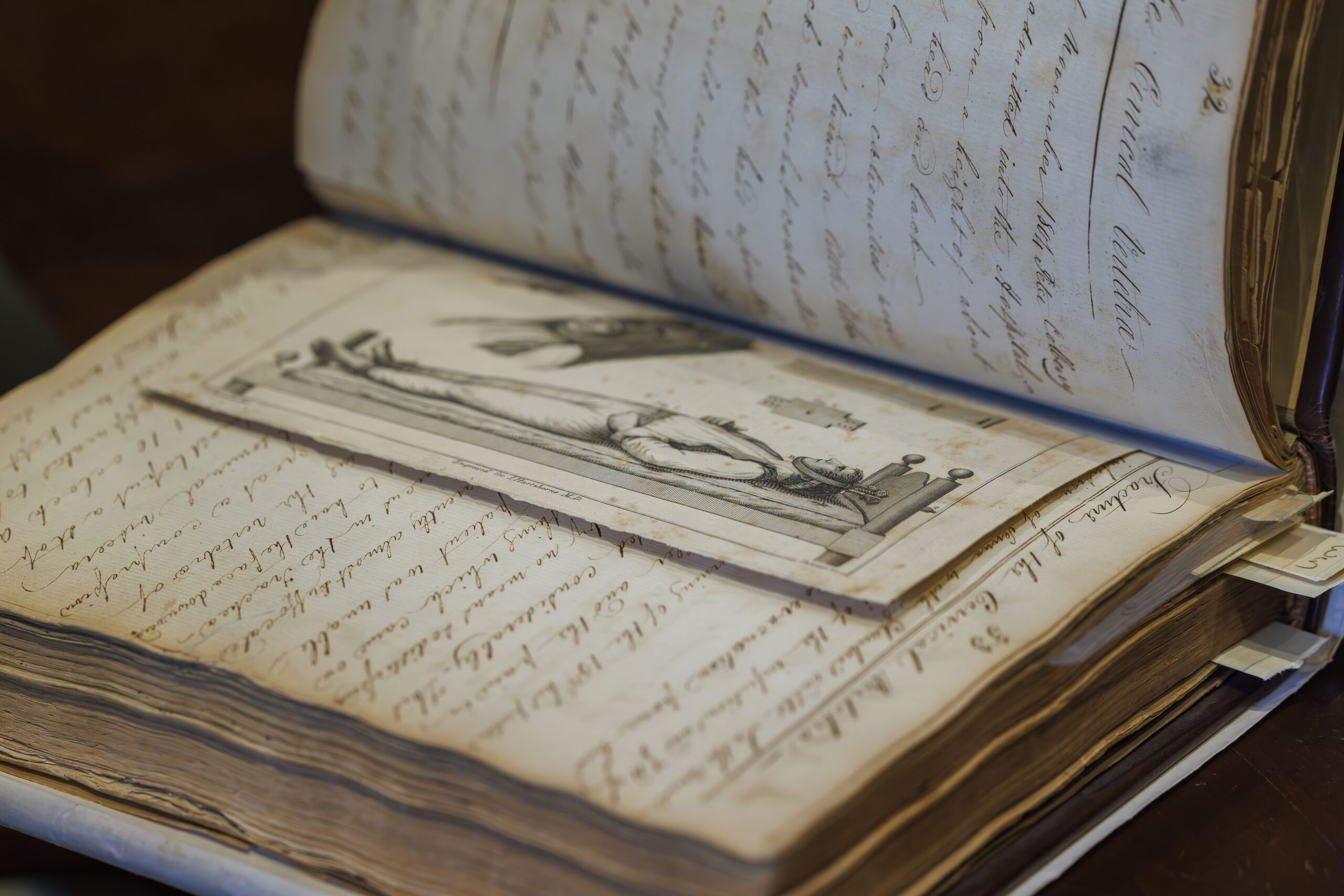
    One of Peeples’ favorite items on display is a collection of medical cases compiled by the hospital’s doctors in the early 19th century.

    Housed in the historic library, the book is flipped to a page showing a man with a seven-pound tumor in his cheek and neck area. Visitors can also find the actual preserved tumor from 1805 on display in the back of the room.

    A historic medical book compiling interesting cases at Pennsylvania Hospital shows an image of Pete Colberry, a patient who fell from ship rigging and was stabilized on a bed to hold him in place, circa 1804.

    A look at early medicine

    Pennsylvania Hospital’s apothecary — where medicines were mixed and sold — was last used for that purpose in the early 1900s.

    Most recently, it served as a conference room.

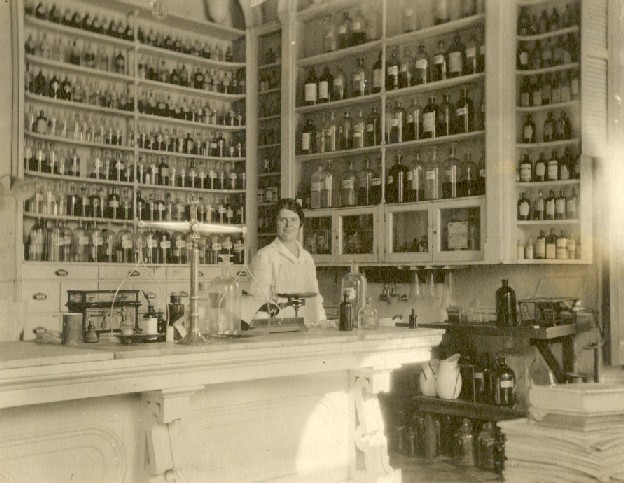
    It’ll now be restored to its original layout, based on historic images from the 19th century. That includes bringing back alcoves filled with shelves of bottles, the scale used to weigh ingredients, as well as a giant counter where the apothecary could mix medications, Peeples said.

    An archival image of Mildred Carlisle working in the Pennsylvania Hospital apothecary, circa 1920s.

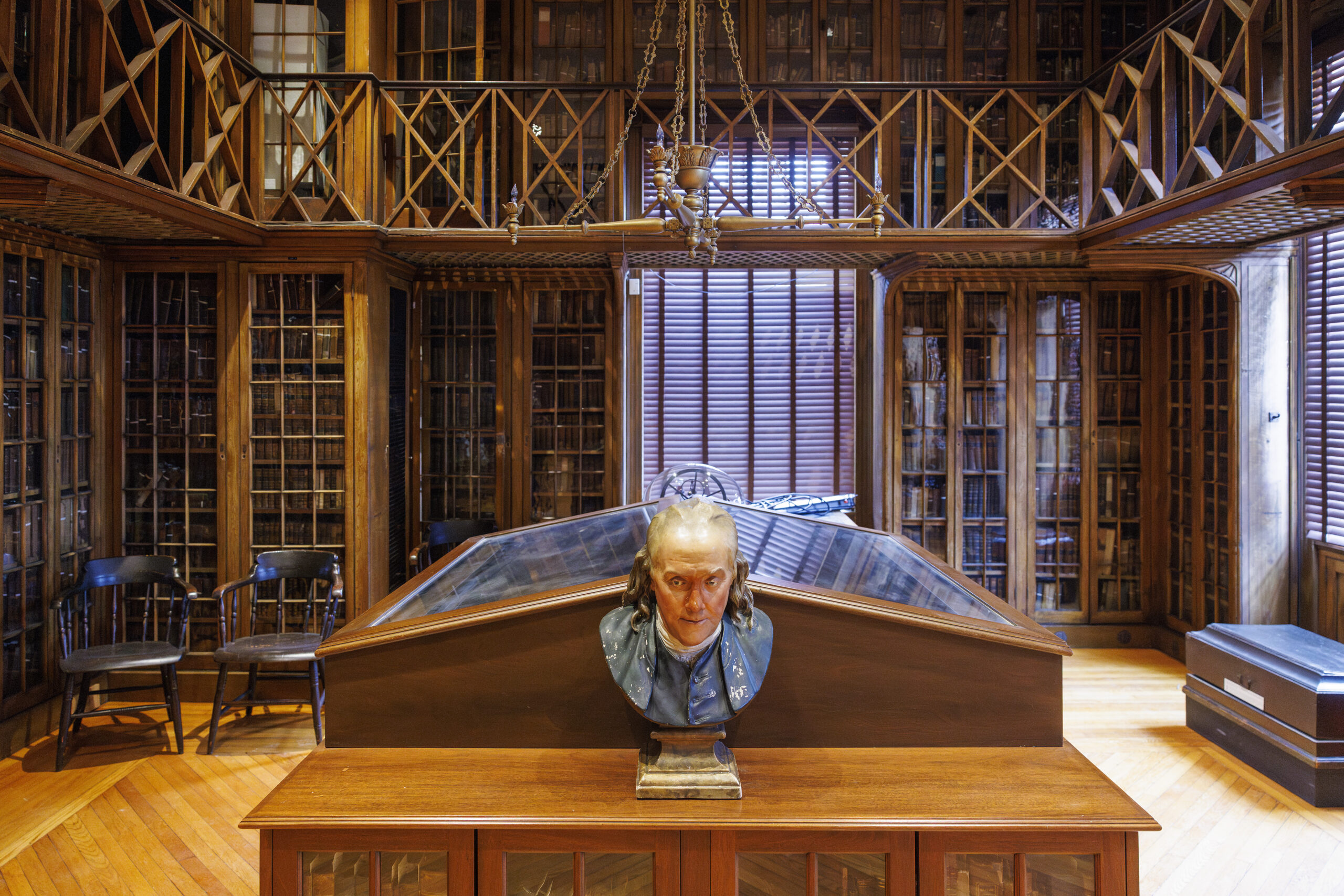
    In the historic library, the only room ready for news media to view this week, the artifacts remained scattered around.

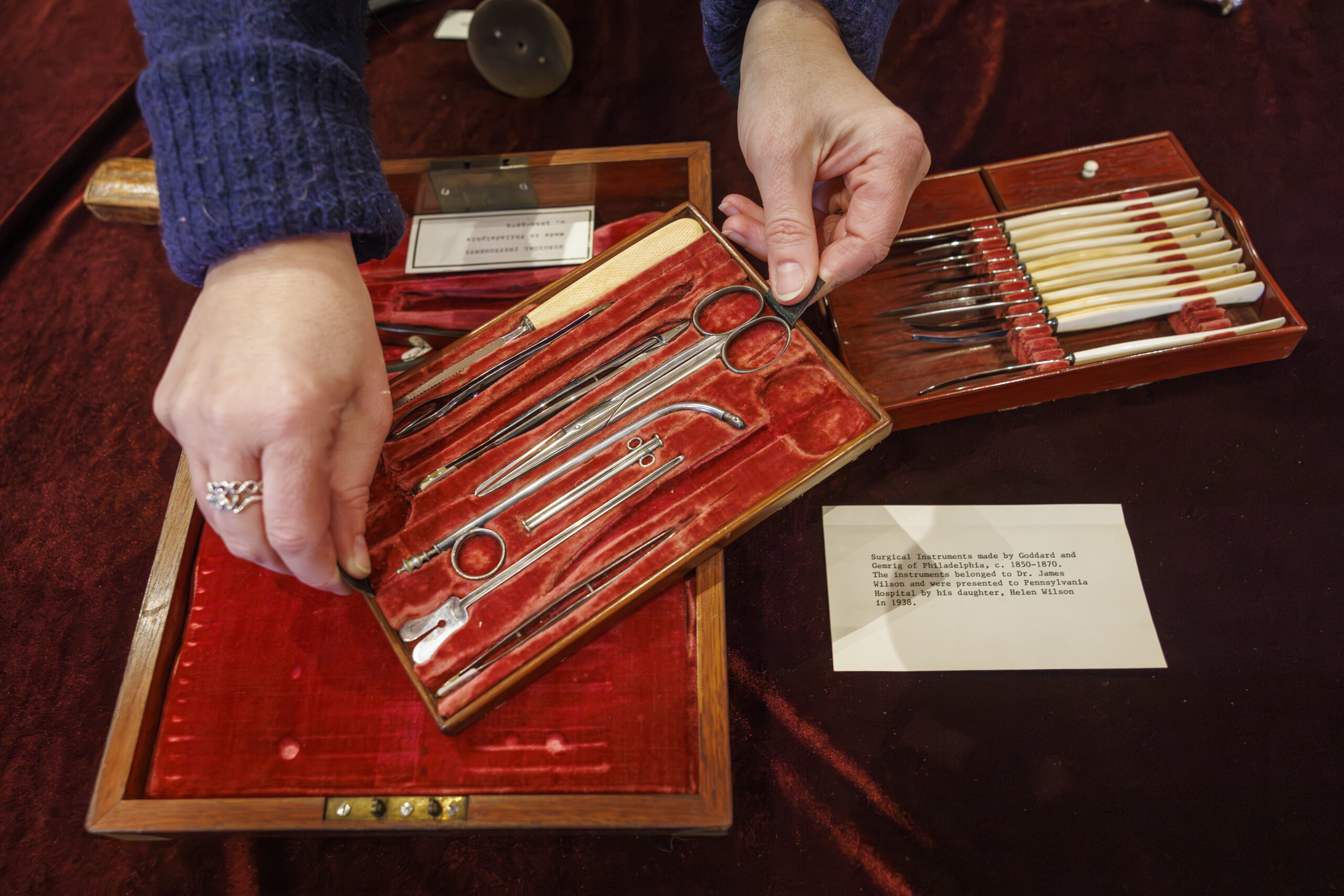
    A tonsil guillotine, designed to remove tonsils using a blade, sat next to early surgical tools and stethoscopes. Some objects, such as the scalpel, have not changed significantly in form through the years.

    “But how we treat those objects certainly is very, very different. We want to make sure everything’s sanitized now,” Peeples said.

    Surgical instruments belonging to Dr. James Wilson from the 1800s.

    Other artifacts included old tools of medical education. Like three anatomical casts of women who died during childbirth in the mid-1700s that were used for anatomical study in lieu of cadavers.

    The museum’s exhibits will showcase the hospital’s history of delivering care related to behavioral health and women’s health, as well as its role treating patients during times of conflicts, beginning with the Seven Years’ War, and through pandemics.

    “People would always talk about us being able to do something on a larger scale like this, and I honestly wasn’t sure that was ever going to happen,” said Peeples, who has been at the hospital for 25 years.

    Tickets will go on sale at the end of the month and cost $12 per person, with discounts for those 12 and under, 65 and over, and the military.

    The plan is for the museum to be a permanent fixture, open Wednesdays to Sundays. The rest of the hospital will keep operating as normal.

    Interior of the Historic Library of Pennsylvania Hospital, located at Eighth and Pine Streets.

    The hospital, older than the nation, houses 517 licensed inpatient beds, and saw 19,759 adult admissions, 54,023 emergency department visits, and 5,163 births in fiscal year 2025, per Penn Medicine’s statement.

    “Pennsylvania Hospital is a jewel in the crown that is Penn Medicine, where our staff draw energy from our rich history to shape the future of medicine,” Alicia Gresham, CEO of Pennsylvania Hospital, said in a statement.