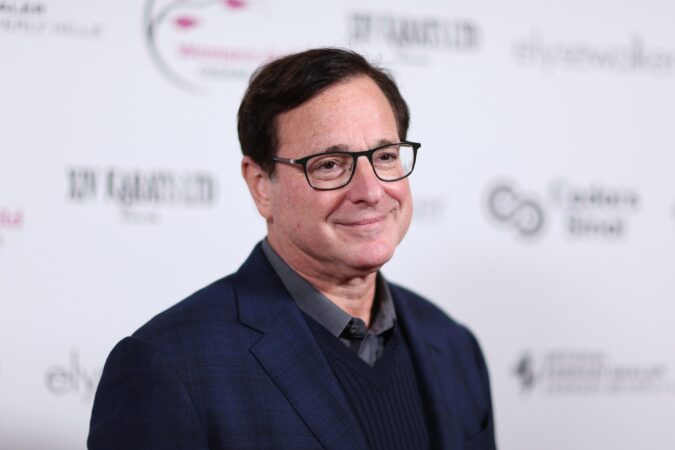
Old City-based 9.14 Pictures is working on an untitled documentary about comedian Bob Saget, the Philly-bred funny man who rose to fame in the 1980s as the affable Danny Tanner on the ABC sitcom Full House.
The announcementcomes on the heels of the studio’s successful projects centering celebrities with local ties including Disney+’s Taylor Swift: The End of an Era and Prime Video’s most-watched documentary, Kelce. Both were directed by the studio’s owners, Don Argott and Sheena M. Joyce.
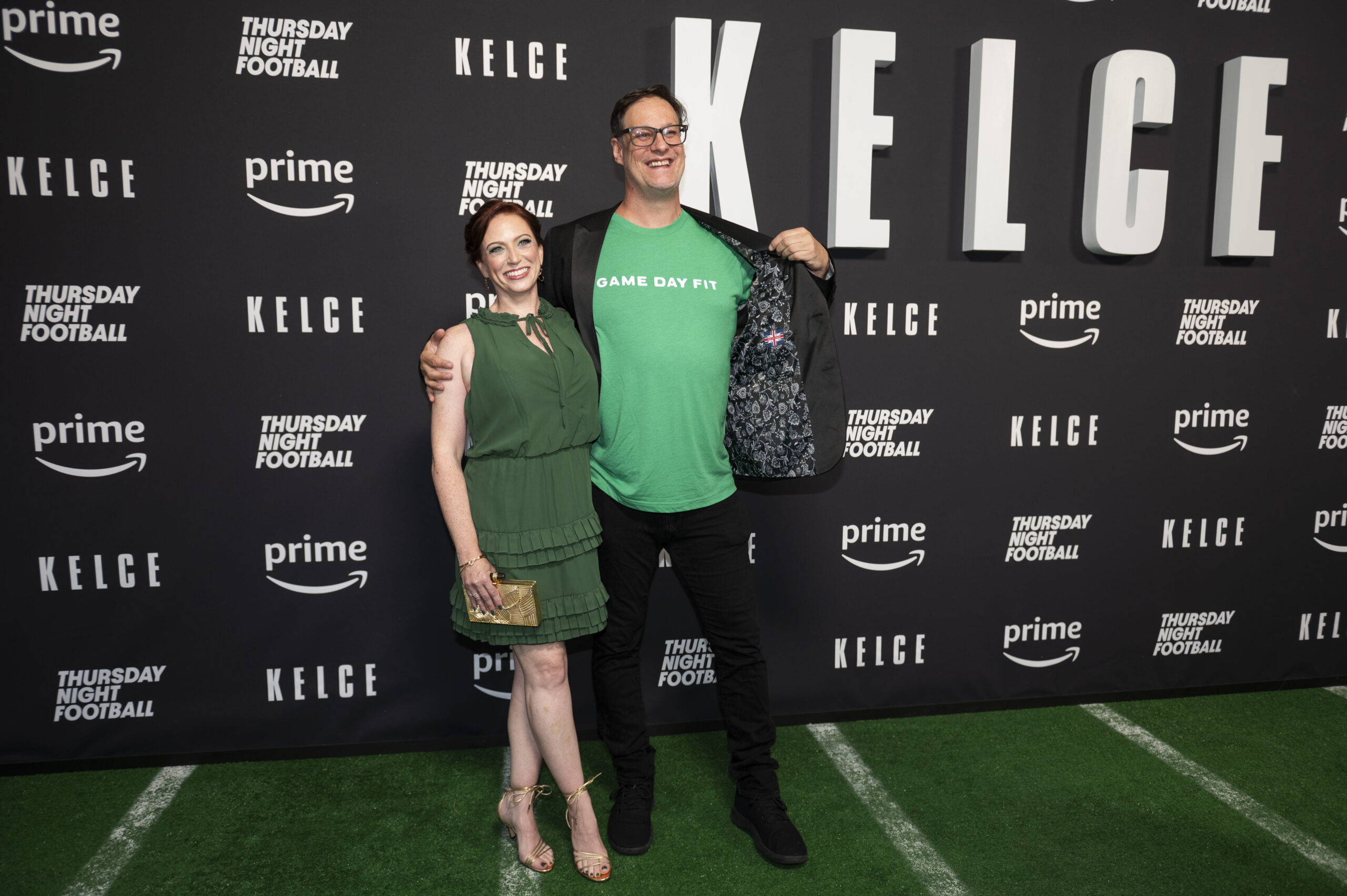
9.14 Pictures Sheena M. Joyce and Don Argott arrive at the premier of “Kelce” at the Suzanne Roberts Theater in Philadelphia on Friday, Sept. 9, 2023. The film is a feature-length documentary featuring Jason Kelce and the Eagles’ 2022-23 season.
According to Deadline, Argott and Joyce will direct this piece, too, and were given access to Saget’s rare home videos and never-before-seen footage.
“The film will reveal the complex life, devastating losses and enduring kindness behind the laughter,” Deadline stated.
The documentary will ultimately help viewers understand how and why Saget’s comedy turned so dark and raunchy before his untimely death in 2022 at a Ritz-Carlton in Orlando, from what medical examiners said was an accidental blow to the head. He was 65.
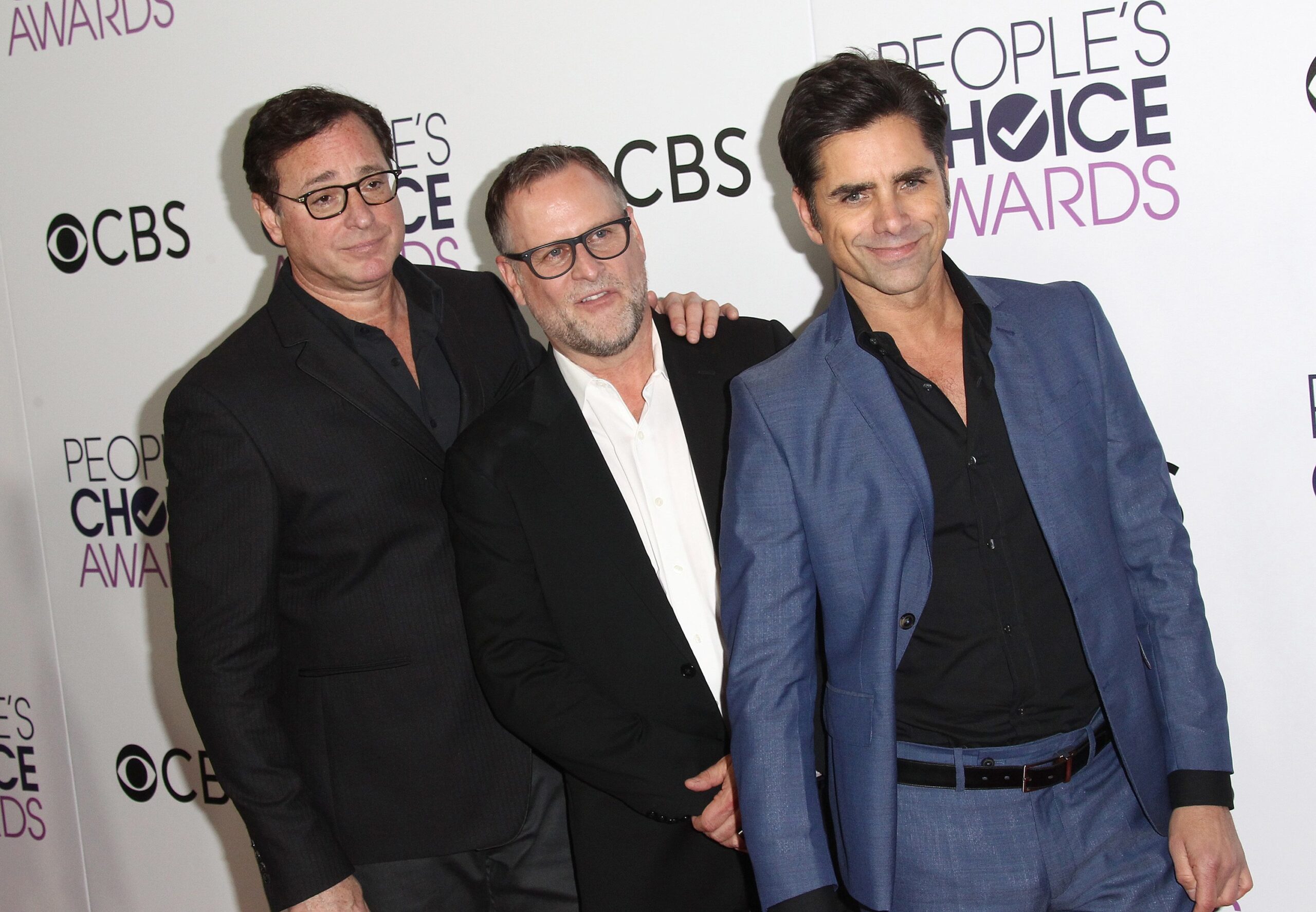
From left, actors Bob Saget, Dave Coulier, and John Stamos at the People’s Choice Awards 2017 at Microsoft Theater in Los Angeles on Jan. 18, 2017. (Tommaso Boddi/AFP/Getty Images/TNS)
Saget, who also hosted America’s Funniest Home Videos for eight seasons, was born in Mount Airy, moved to Virginia, and moved back to the area when he was a teenager. He graduated from Abington Senior High and went on to attend Temple University, where he studied film.
While at Temple University, he practiced his stand-up at Philadelphia restaurateur Stephen Starr’s then-Queen Village nightclub. He also won a student Oscar in 1978 for his 11-minute documentary, Through Adam’s Eyes, the story of an 11-year-old boy who underwent a grueling facial surgery.
After Temple, he moved to the West Coast and attended the University of Southern California’s film school but dropped out to do stand-up.
For the next seven years, he was the emcee at the Comedy Store, working among such comedians as David Letterman, Robin Williams, Michael Keaton, Billy Crystal, Jay Leno, Johnny Carson, and Richard Pryor.
He also warmed up the crowd before tapings of Bosom Buddies, the Tom Hanks-Peter Scolari sitcom. The producer later hired Saget to play Danny Tanner on Full House, on which he portrayed a morning TV host in San Francisco.
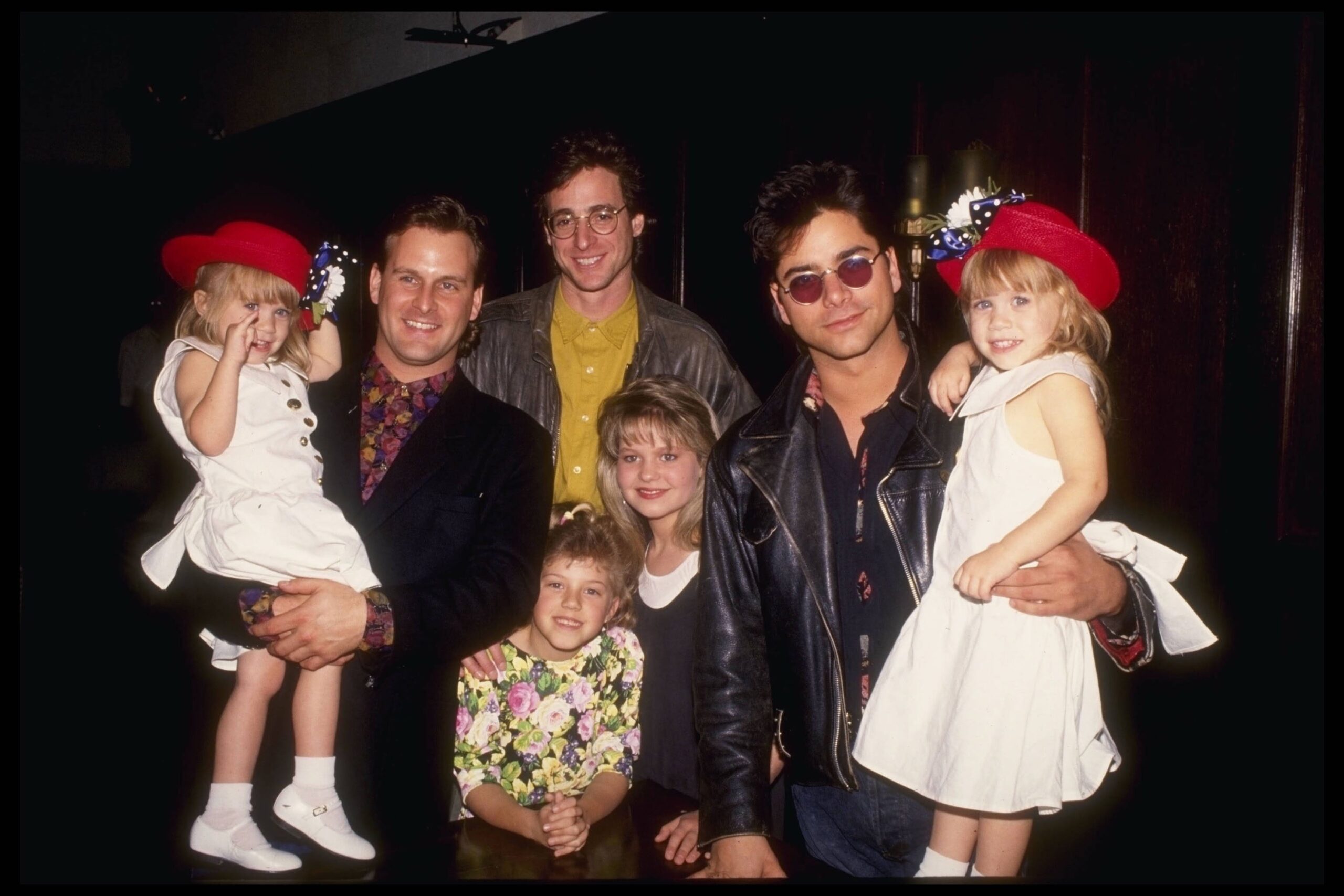
In an undated photo, the cast of the television sitcom “Full House,” from left, Ashley Olsen, Dave Coulier, Jodi Sweetin, Bob Saget, Candace Cameron, John Stamos and Mary-Kate Olsen. (Kathy Hutchins/Zuma Press/TNS)
Saget lost one sister to a rare autoimmune disease and another to a brain aneurysm, he told The Philadelphia Inquirer in 1994. Those losses, he said, helped him prioritize his life and led to his maudlin sense of humor.
The Bob Saget documentary will be produced by Story Syndicate, Revue Studios, and 9.14 Pictures.
History may not repeat itself, but at least in Philadelphia, it sure does rhyme.
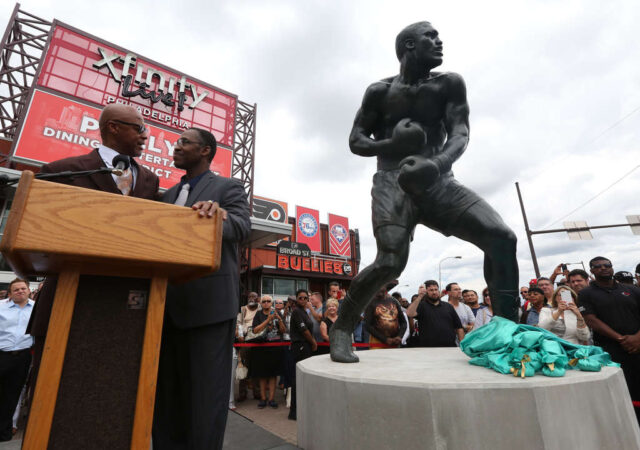
Twenty years ago, our famed Rocky statue made the move from its former perch at the stadium complex in South Philly to the base of the steps of the Philadelphia Museum of Art, where it has stood since.
Now, the city’s statue of former world heavyweight champion “Smokin’” Joe Frazier could soon do the same.
“Relocating the Joe Frazier statue to this prominent civic and cultural space would … create a respectful dialogue between two complementary representations of Philadelphia’s spirit,” chief cultural officer Valerie V. Gay and public art director Marguerite Anglin wrote in a letter to the Art Commission. “Rocky Balboa as a symbol of hard work and aspiration, and Joe Frazier as the embodiment of those values lived out in real life.”
Created by sculptor Stephen Layne in 2014, the Frazier statue has stood in the sports complex outside what is now Stateside Live! for about a decade, and has been a part of the city’s public art collection since its inception. In an effort led by Joe Hand, the owner of Feasterville’s Joe Hand Boxing Gym and a longtime friend of Frazier’s, the statue’s commission was funded by the boxer’s family and supporters before its donation to the city.
The statue, standing at about 12 feet tall, depicts Frazier just moments after besting Muhammad Ali in the so-called “Fight of the Century” — the March 1971 bout in which Ali suffered his first professional loss after 15 grueling rounds.
Frazier, who died in 2011, was a well-accomplished boxer before that matchup, having won an Olympic gold medal in 1964 in Tokyo. He held the heavyweight championship title from 1970 to 1973, when he lost the belt to fellow legend George Foreman following a bout in Kingston, Jamaica, in a matchup referred to as “The Sunshine Showdown.” He retired in 1976, the year following a vicious loss to Ali in the famed “Thrilla in Manila” fight. After returning for a 1981 match against “Jumbo” Floyd Cummings that resulted in a draw, Frazier left the sport for good.
Relocating the Frazier statue to the Art Museum is expected to cost roughly $150,000 in city funds, and has support from leaders including Mayor Cherelle L. Parker, City Councilmember Katherine Gilmore Richardson, State Sen. Sharif Street, and State Sen. Anthony Hardy Williams, according to Creative Philadelphia’s Art Commission proposal.
“Placing the Joe Frazier statue at the Art Museum affirms Philadelphia’s commitment to honoring real-life achievement alongside cultural mythology,” Parker wrote in a letter supporting the move. “Together, these figures reflect the city’s spirit, where determination, resilience, and opportunity meet.”
Friends of Frazier also expressed support in letters included as part of Creative Philadelphia’s proposal — in part, at least, because the Art Museum has higher foot traffic than where the statue currently stands.
The move “will give the Frazier statue many more eyes on it than at the Xfinity area,” wrote Nicholas L. Depace, the boxer’s friend and former physician.
Frazier served as a major inspiration for the Rocky Balboa character, with the man and the character sharing several key elements, according to Creative Philadelphia. Like Rocky, Frazier trained for boxing matches by hitting frozen raw meat, ran the Art Museum steps, and faced opponents that closely mirrored those actor Sylvester Stallone’s character faced in the franchise.
“Stallone made 5 Rocky movies mostly based on the real life humble champion Smokin’ Joe Frazier from Philadelphia,” wrote Smokin’ Frazier Championship Foundation Inc. CEO Pete Lyde in a letter of support for the move. “Joe Frazier’s statue at the Philadelphia Art Museum Steps symbolizes and celebrates the real life human heart and potential within us all worldwide.”
The Rocky statue, meanwhile, is cleared for installation atop the Art Museum steps following its exhibition in “Rising Up: Rocky and the Making of Monuments,” an Art Museum program slated to run from April to August. After that, the statue now displayed at the top of steps — which Stallone lent to the city for the inaugural RockyFest in December 2024 — will head back to the actor’s collection, and the original, screen-used statue will take its place.
It was not immediately clear when the Frazier statue could head to the Art Museum. Creative Philadelphia did not immediately respond to a request for comment.
“Placing the Smokin’ Joe Frazier statue at the Art Museum steps would not only correct a historical imbalance but also serve as an inspirational symbol for residents and visitors alike,” wrote Councilmember at-large Jim Harrity in a letter of support. “It would elevate a true Philadelphia champion whose impact reached far beyond the boxing ring and whose contributions to sports, labor history, and community service continue to resonate today.”
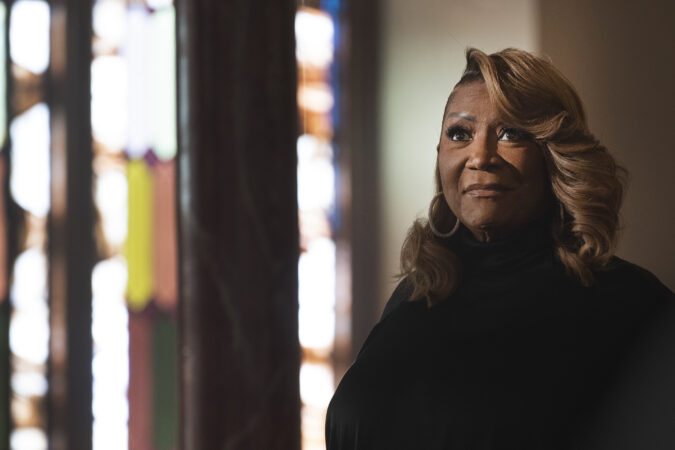
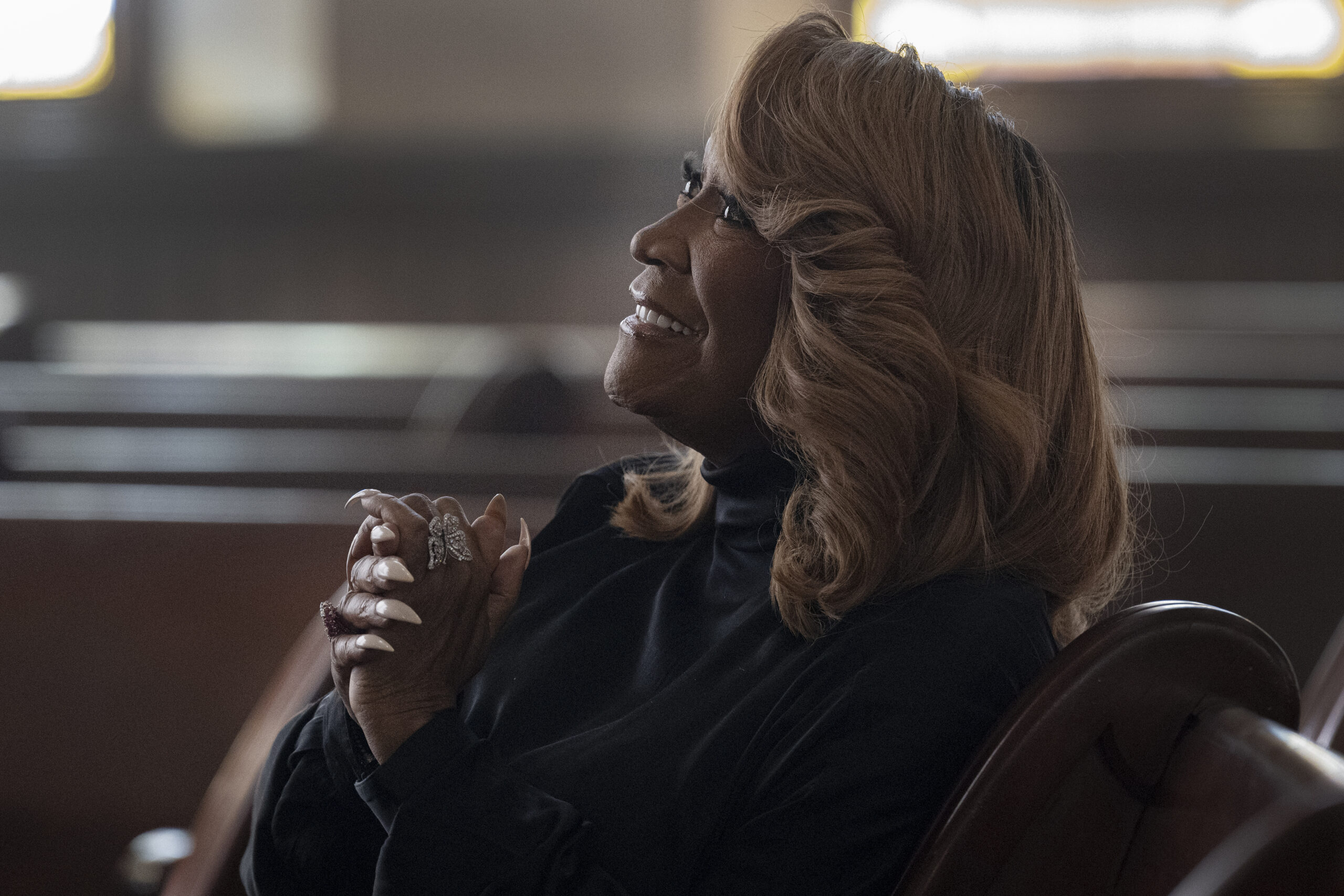
On a bitterly cold afternoon last month, Patti LaBelle walks gingerly down Mother Bethel A.M.E. Church’s center aisle, her left hand grazing the top of each pew, steadying her balance.
Half a dozen content creators, directors, and Visit Philadelphia staff coax the Grammy award-winning songstress toward the 18th century church’s magnificent altar, their voices overflowing with encouragement, reverence, and love.
LaBelle’s stockinged footstepsare deliberate, her unblinking eyes affixed on the organ pipes in front of her.
She’s as contemplative as she is careful.
“Come on, Miss Patti,” cooed Kyra Knox, the Emmy award-winning filmmaker who is directing Visit Philadelphia’s Black History Month promotional video, “We Are the Fabric. We are the Thread,” starring the Philadelphia legend. “You are doing great.”
“We Are the Fabric” is part of the nonprofit tourism agency’s “Indivisible” campaign, a yearlong initiative highlighting Philly’s diverse tourist destinations during America’s 250th birthday and Black History Month, which, coincidentally, is celebrating its 100th birthday this year. (Carter G. Woodson introduced Negro History Week in 1926. It was extended to Black History Month in 1976.)
The videos are streaming on several online platforms including Hulu and HBO Max in seven markets, including Philadelphia, New York, Atlanta, and Washington, D.C. During the month of February, Visit Phillywill conduct a series of neighborhood walks through the city’s historic districts with a special focus on Black history courtesy of the historical arts organizations 1838 Black Metropolis and the Black Journey.
“You cannot tell the story of American culture, innovation, music, art, and food without Black Americans because they are woven into every thread of the national narrative,” said Angela Val, president and CEO of Visit Philly.
The filmmakers squeezed in a lot of places on the cold Thursday afternoon. Mother Bethel — the home of America’s first Black Christian church founded by formally enslaved Richard Allen — is the first stop on the hours-long shoot. After recording takes of LaBelle’s coffin-shaped ivory nails in prayer and the centuries-old church’s sunlit stained glass windows, LaBelle and the crew drive 14 blocks west to South Philadelphia’s Union Baptist Church.
Film rolls and cameras flash as LaBelle, wrapped in an ankle-length vintage chocolate brown fur, is reflective in front of Union Baptist’s 111-year-old stately exterior. Inside, barrier-breaking early 20th century contralto Marian Anderson once sang in the choir. Like Anderson, LaBelle got her start singing gospel at Southwest Philly’s Beulah Baptist Church.
Singer Patti LaBelle at Mother Bethel A.M.E. Church in Philadelphia during a shoot for Visit Philadelphia’s “Indivisible” initiative, part of an effort to celebrate the city’s communities of color during the city’s 250th anniversary. LaBelle is starring in the campaign’s Black History Month promotion.
After a few windy takes, the crew made its way to the southwest corner of City Hall in front of the statue of martyred 19th century civil rights leader Octavius Catto. The day ended at the Arden Theatre, a nod to Philadelphia’s vibrant Black performing arts community.
LaBelle stars in and narrates the video. She’s accompanied by 9-year-old Riley Mills and visits historical sites and modern locations, like Uncle Bobbie’s Coffee & Books in Germantown, reminding us that Black history is to be passed through the generations.
“When the Constitution couldn’t hold us, we held each other,” LaBelle says, her voice clear, sharp, and determined.
“We made the music you move to,” she continues as images of Teddy Pendergrass, Kenny Gamble, and Leon Huff fill the screen. And then, in an “if you blink, you will miss it moment,” there LaBelle is, in an old photograph flanked by her Labelle group members Sarah Dash and Nona Hendryx, followed by her powerful words: “When they wouldn’t give us a stage, we built one.”
Living Black history
Patti LaBelle is 81. She knows she’s Black history. She’s proud of it and doesn’t take it lightly.
“Black people stand for everything,” LaBelle told The Inquirer in between takes at Mother Bethel, her voice barely a whisper, worn out from her performances in the “Queens: 4 Legends Tour” starring LaBelle, Chaka Khan, Gladys Knight. and Stephanie Mills. They all came of age before the Civil Rights Act of 1964 was passed.
“And we continue to. We continue to fight while things are being taken away from us.”
As Visit Philly filmed “We Are the Thread,” the National Park Service was in the midst of dismantling an exhibit honoring nine enslaved people who worked at George Washington’s house when Philadelphia was America’s capital city.
“If we don’t fight to keep what is ours,” LaBelle said, her scratchy voice taking on urgency. “It will be lost.”
Visit Philly’s choice of LaBelle as its Black history spokesperson this year is thoughtful and necessary.
Her generation of civil rights warriors bridges the gap between Black Americans who lived through Jim Crow and those of us who only heard horror stories of how difficult it was for our ancestors to go to school, work, and vote.
As this administration claims that the Civil Rights Act resulted in “white people being very badly treated,” it’s important that stories like LaBelle’s aren’t just repeated but remembered and celebrated — especially as they get up there in age.
We need to give them their flowers now.
Without Patti LaBelle, Philadelphia — and its music — would be a different place.
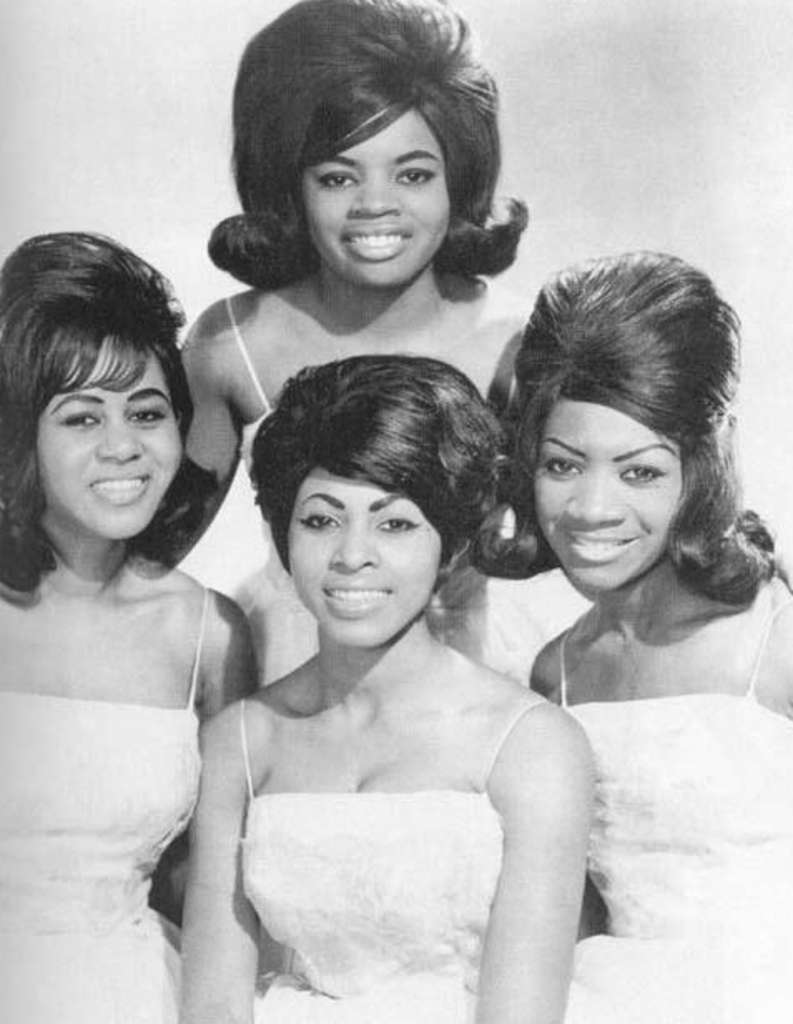
Patti LaBelle (right) and the Blue Belles, the group with which she had her first hit, in 1962: “I Sold My Heart to the Junkman.”
A Philadelphia girl
LaBelle was born Patricia Louise Holte in Southwest Philadelphia in 1944. Her dad, Henry, came to Philadelphia from Georgia in the early part of the 20th century during the Great Migration. He worked on the railroad, was a singer, and an occasional gambler. Her mom, Bertha, was a homemaker. LaBelle was the youngest of five.
She went to Bartram High and sang at Beulah Baptist before becoming the lead singer of Patti LaBelle and the Blue Belles.
The group’s 1962 hit, “I Sold My Heart to the Junkman,” sold millions of copies, cementing LaBelle’s stardom, getting her a spot on the Chitlin’ Circuit for performances at Uptown Theater. She appeared on American Bandstand and Jerry Blavat’s radio show.
By 1975, the group was simply known as Labelle and was a visual smorgasbord of Afrofuturistic sequins and space suits. It released the iconic “Lady Marmalade” that catapulted Labelle to the cover of Rolling Stone, becoming the first Black music group to be featured.
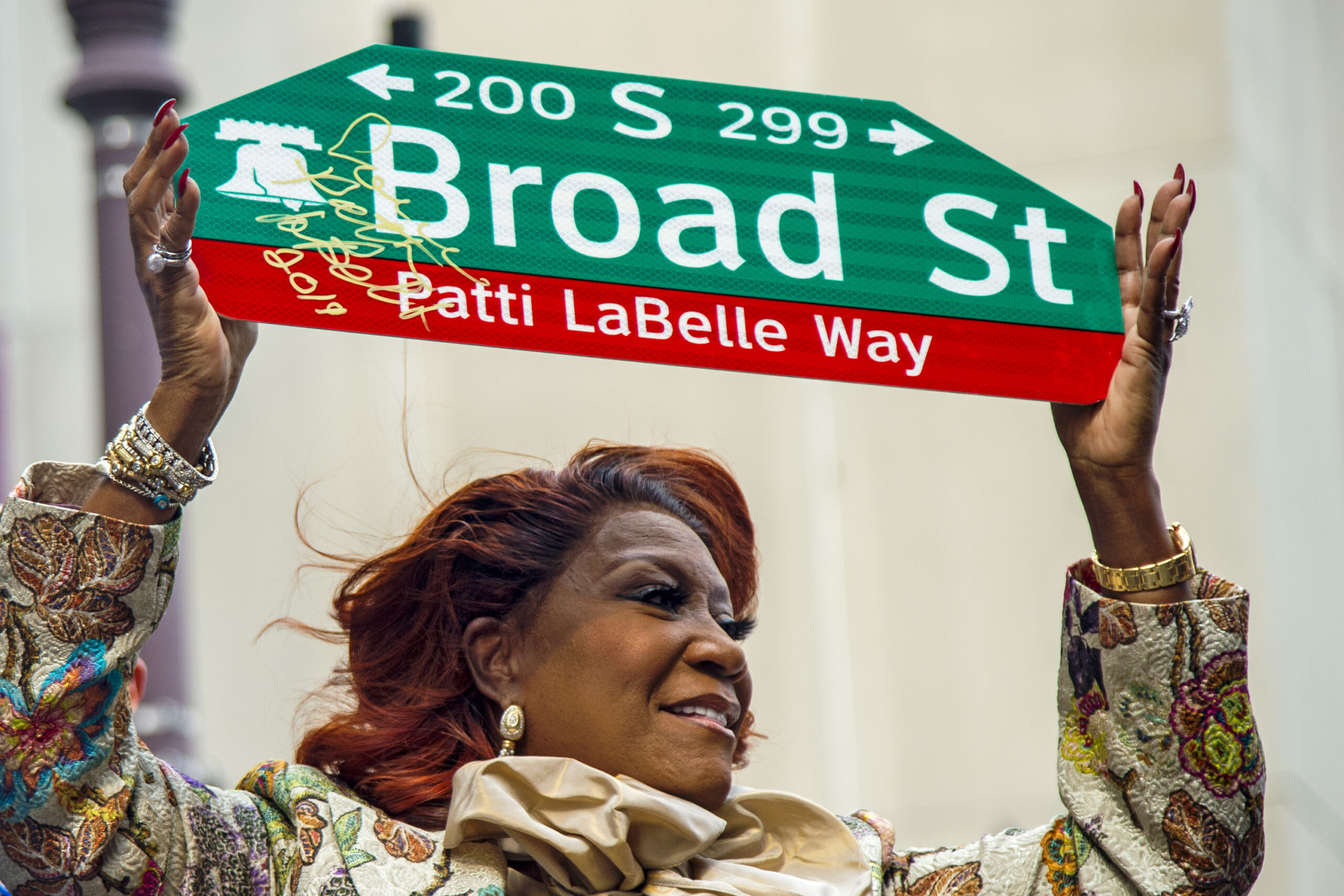
Patti LaBelle holds up a sign during a celebration on July 2, 2019, as the block of Broad Street between Spruce and Locust Streets is renamed Patti LaBelle Way.
“I’ve had a lot of wonderful moments in my career,” LaBelle said. “It’s nice to remember, to be proud. We made a lot of history.”
(Christina Aguilera, Lil’ Kim, Mya, and Pink covered “Lady Marmalade” in 2001 for the Moulin Rouge soundtrack. And in 2003 Labelle’s “Lady Marmalade” was inducted into the Grammy Hall of Fame.)
In 2016, LaBelle received the Marian Anderson Award. Three years later, the city named a block of Broad Street between Spruce and Locust Patti LaBelle Way.
LaBelle, who lives in Villanova now, never left the Philadelphia area.
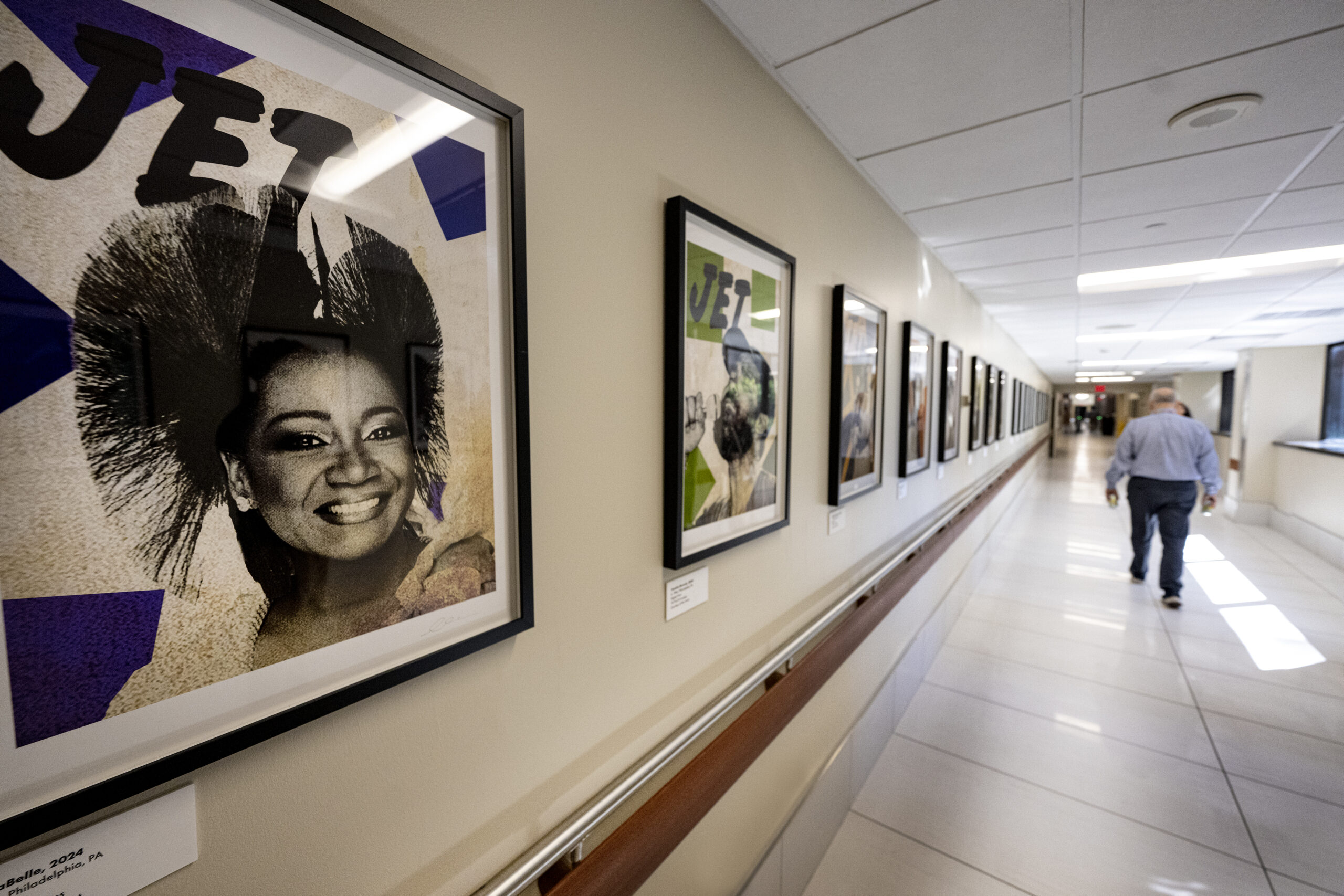
Patti LaBelle and Frankie Beverly are two of the celebrities featured on reimagined Shaheed Rucker’s ‘(re)Covering the Iconic” in in Jefferson Einstein’s community corridor. Monday, Sept. 8, 2025.
“I’m a Philadelphia girl,” she said with pride. “It’s laid back, comfortable. … How I like it.”
Over the decades, she has had a few entrepreneurial endeavors including two short-lived Philadelphia boutiques and a clothing collection on HSN. However, she’s best known for her indisputably yummy line of desserts — sweet potato pies and cobblers. Late last year, she introduced pancake mix and syrup that, she says for the record, is nothing like Aunt Jemima.
“For one,” she said, mustering up a bit of her trademark LaBelle sass, “I’m a real person.”
Real to her core.
“She’s given a lot to Philadelphia,” Val said. “She’s given so much to the country … to the Black community.”
Two more Philadelphia Museum of Art senior staffers are departing as the museum continues to plot out its path after a period of institutional turmoil.
Maggie Fairs, who was promoted to chief of staff last year by former director and CEO Sasha Suda, will leave the museum at the end of the month. CFO Valarie McDuffie has also resigned, with her last day this Friday.
Previously, the museum parted ways with its marketing chief Paul Dien as of Feb. 1. Days later, the museum announced that it was reversing course on a renaming while keeping its new logo. Both changes were unveiled four months earlier in a rebranding overseen by Suda and Dien.
No other immediate departures are expected, though the museum is working on an “organizational review,” with more changes possible later, a spokesperson said.
Suda announced the arrival of both Fairs and McDuffie in May 2023, saying that “these two colleagues reflect the future of the institution.” Fairs was hired as vice president of communications after having worked in the United States, United Kingdom, and Canada. McDuffie had previously held several senior financial posts in secondary education.
Fairs was promoted by Suda to chief of staff in May 2025. A replacement will not be hired, as the museum is restructuring the director’s office without that position.
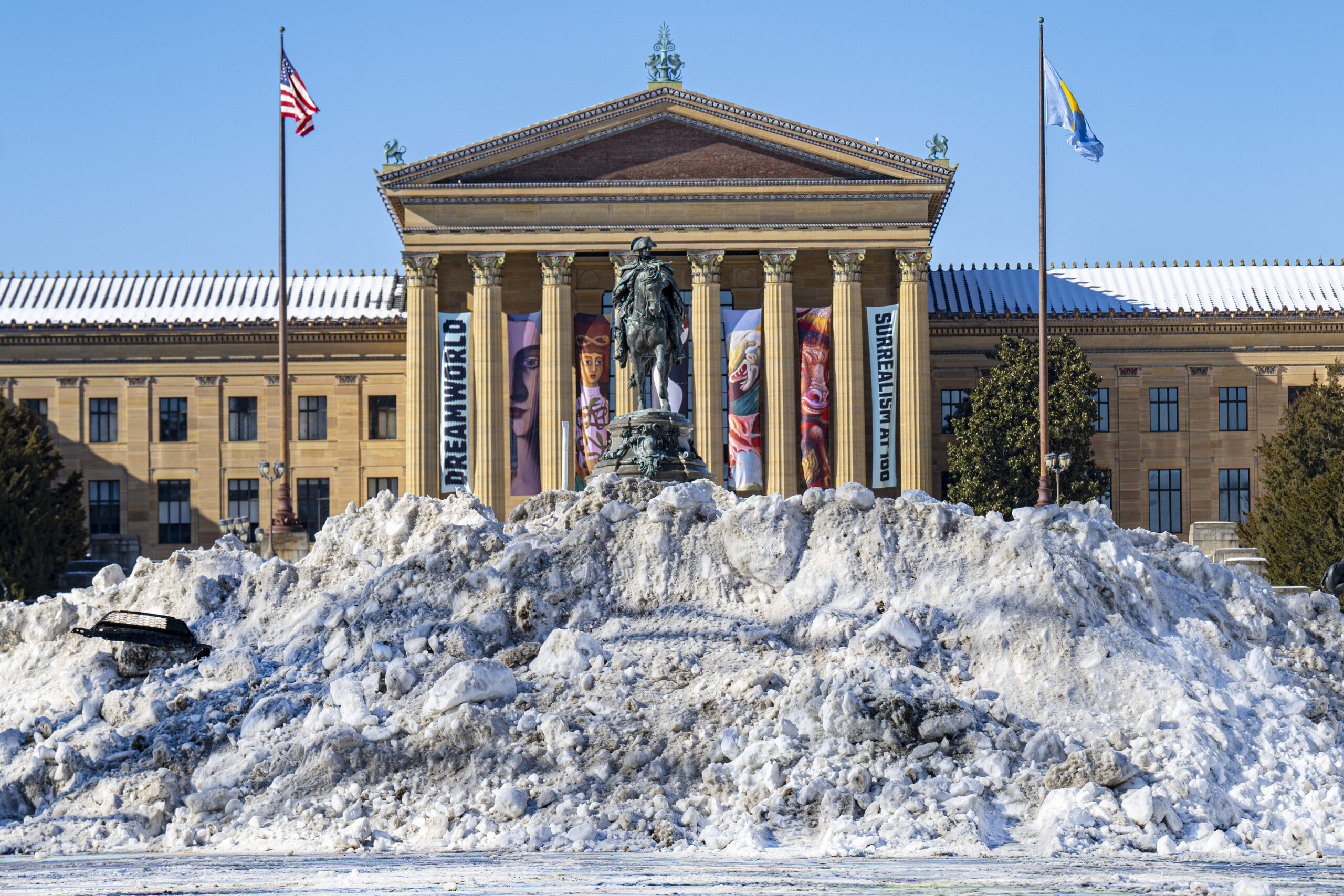
A pile of snow and ice sits on Eakins Oval in front of the Philadelphia Museum of Art on Feb. 2.
Director and CEO Daniel H. Weiss, who took over in December, said in January that the staff of the museum was “the heart and soul of the place and they need to be treasured and supported and also held accountable,” and that the museum needed “a senior management team that is available to them and transparent in its processes and also accountable.”
Asked at the time whether there would be a reorganization, he said:
“With our ambition and our mission, and as that evolves a little bit under each new leader, there needs to be careful review of how the organization serves the needs of the moment. So that’s underway.”
The museum on Monday also announced Katherine Anne Paul as new curator of Indian and Himalayan art. Paul was most recently curator of Asian Art at the Birmingham Museum of Art since 2019, and held earlier positions at the Newark Museum, the American Museum of Natural History, and the Textile Museum in Washington, D.C. She holds a Ph.D. in languages and cultures of Asia from the University of Wisconsin–Madison.
Weiss, in Monday’s announcement, singled out Paul’s scholarship and her extensive knowledge of the Philadelphia Museum of Art’s collection. She was assistant and associate curator of Indian and Himalayan art at the museum from 2002 to 2008.
A previous version of the headline misrepresented the terms of the employees’ work termination. They resigned.
Stagecraft and technology being what they are these days, one can imagine any number of ways Peter and the Wolf could be souped up. If the key to audience-building is children, Prokofiev’s children’s classic would seem to be the perfect chance to engage them with eye-popping visuals.
But the Philadelphia Orchestra is smart enough to let the piece speak for itself.
It also knows you don’t mess with success. Saturday morning in Marian Anderson Hall marked the 10th time the orchestra has presented the piece with actor-narrator Michael Boudewyns over nearly two decades, and no one should ever touch a hair on this modest production’s furry little head. In its simplicity and humor, here is one of those rare, perfect things in this world.
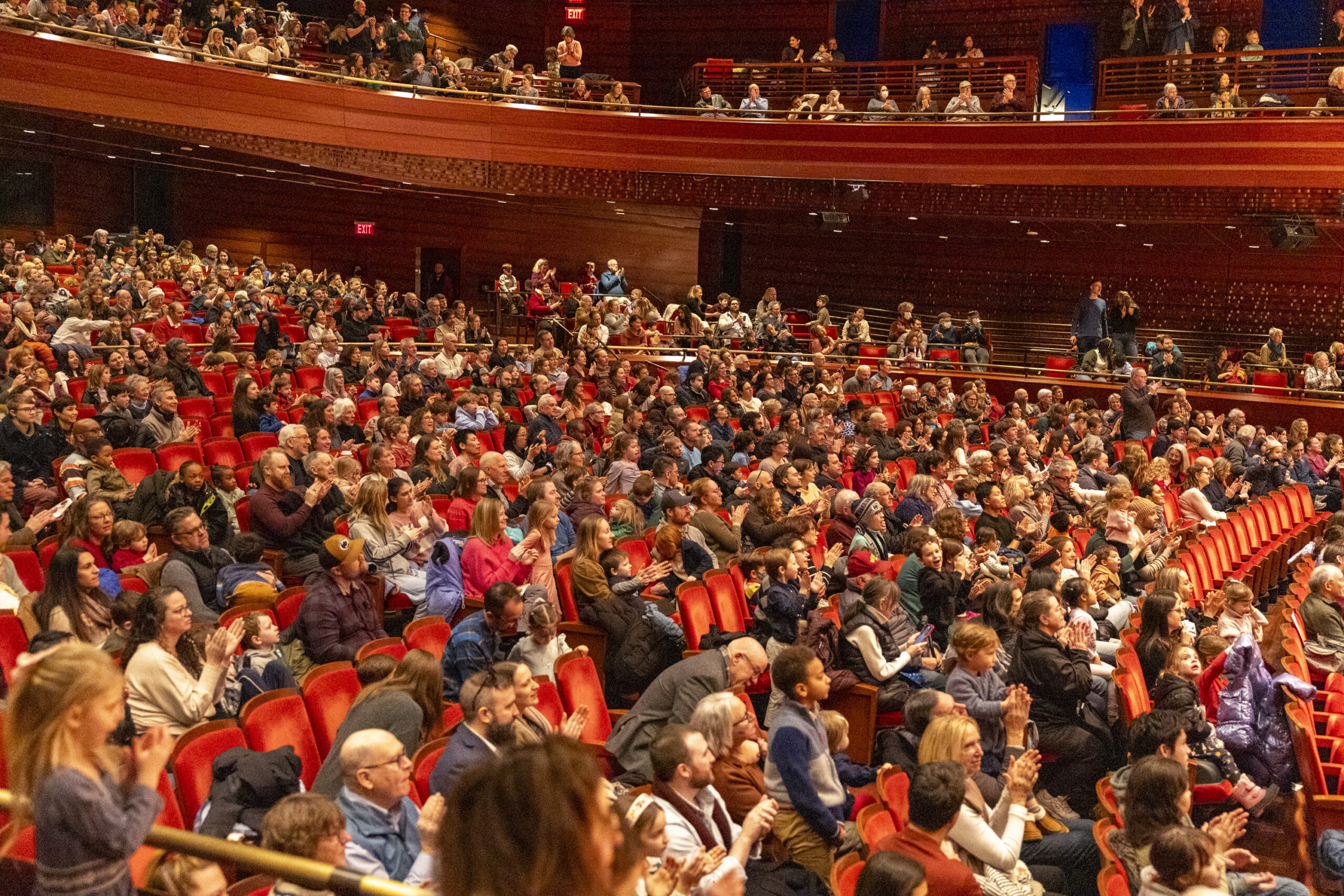
The audience applauds for the Philadelphia Orchestra’s performance of “Peter and the Wolf” Saturday in Marian Anderson Hall.
Saturday’s concert was also, judging from an audience whose ages looked to span from 2 years old to 80, a powerful generational bridge. Surely there were a few grandparents in the hall who remember going to these Philadelphia Orchestra family concerts with Leopold Stokowski on the podium.
The series continues in March with another on-ramp to classical music: Britten’s dazzling The Young Person’s Guide to the Orchestra.
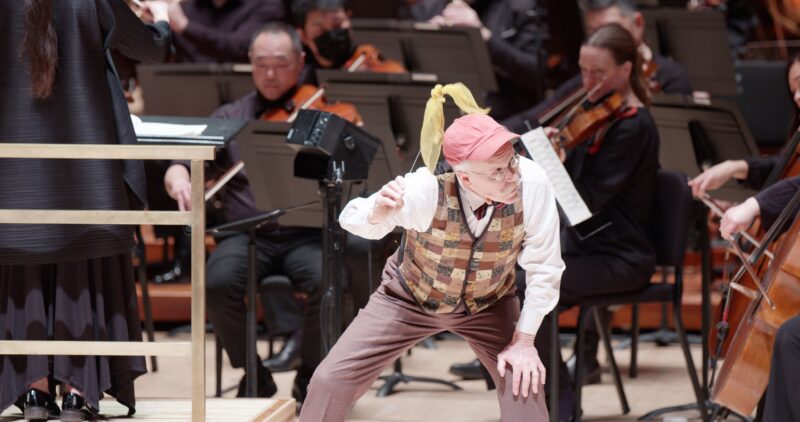
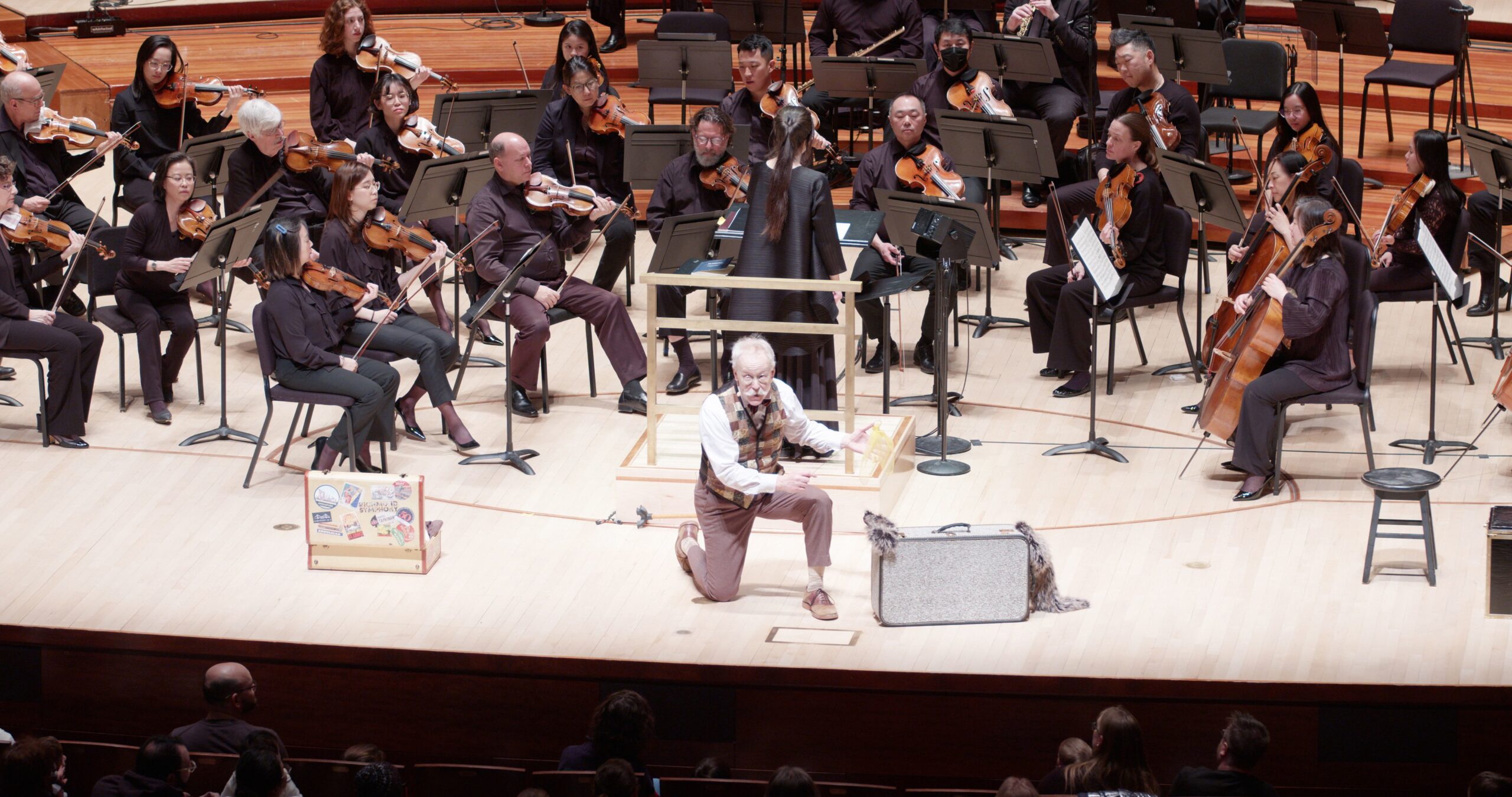
Michael Boudewyns narrating “Peter and the Wolf” with conductor Naomi Woo leading the Philadelphia Orchestra, Feb. 7, 2026, in Marian Anderson Hall.
Prokofiev’s piece — which is about to turn 90 years old — can be frightening in some productions: The French horns are as menacing as the fang-bearing wolf they depict. But Boudewyns has a grab bag of tricks so disarming that the scare factor practically disappears.
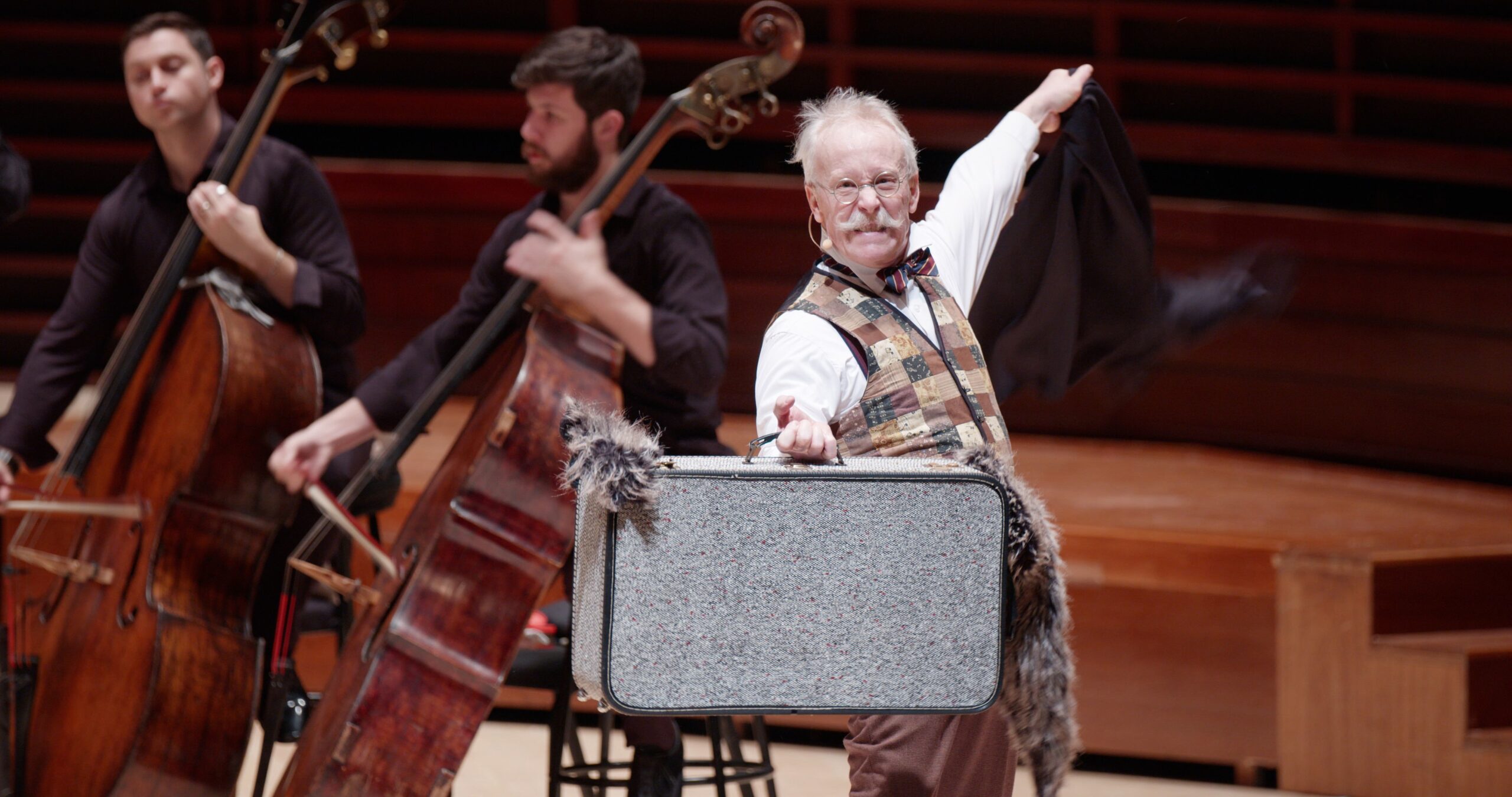
His props are drawn from household items: The duck is a feather duster, the bird a diaphanous, darting, bright yellow swatch of fabric. Who can’t help but laugh at a gun represented by a toilet plunger? Boudewyns narrates while choreographing the action in response to the changing character of the music and arc of the story. For an audience growing up in the digital thicket, here was a bright clearing. Nothing beats a good story, enticingly told and heightened by a great score.
With a suitcase as the wolf, Michael Boudewyns narrating “Peter and the Wolf” with the Philadelphia Orchestra, Feb. 7, 2026, in Marian Anderson Hall. It was his 10th time performing with work with the orchestra since his first appearance in 2007.
Naomi Woo, the orchestra’s assistant conductor, was visually engaging, leading the work and three others, including a truncated version of the first movement of Beethoven’s Symphony No. 5. These concerts are another reminder of the deep bench of talent within the orchestra beyond the principal chairs. In the Prokofiev, that meant Patrick Williams’ glossy flute sound as the bird, clarinetist Samuel Caviezel as the bouncy cat, oboist Peter Smith’s poignant duck, and the appropriately lumbering (but polished) grandfather emanating from the bassoon of Mark Gigliotti.
All deserved special recognition, and Woo gave the players bows, but no orchestra roster was published in the concert’s Playbill (even though the usual lists of board, staff, and oodles of donors were included).
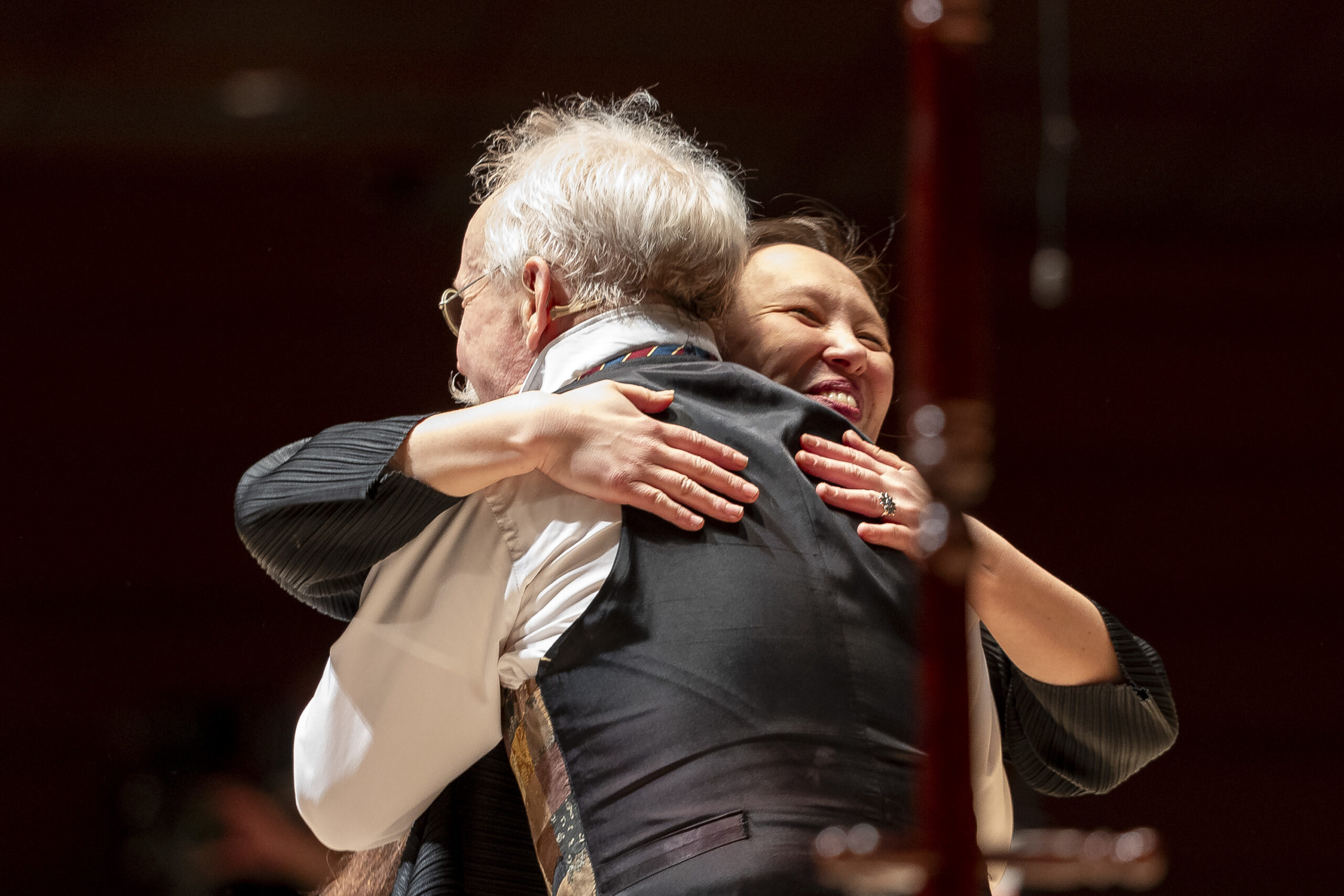
Narrator and actor Michael Boudewyns and conductor Naomi Woo embrace after their performance of “Peter and the Wolf” in Marian Anderson Hall on Saturday.
One of the unspoken truths of all art is that its effect on people is ultimately unknowable. The two children in front of me — one looked to be 3, the other even younger — were ostensibly too small to be there, and yet there’s no way of knowing what they were absorbing. The power of these concerts is in being in the presence of this orchestra, with that incredible sound. No other kind of ensemble has the same impact. And despite all the squirming and low chattering coming from the next row, there was really only one thought to which I kept returning: what lucky children.
The Philadelphia Orchestra, conductor Naomi Woo, and actor Michael Boudewyns perform Britten’s “The Young Person’s Guide to the Orchestra,” March 14, 11:30 a.m., Marian Anderson Hall, Broad and Spruce Streets. Tickets $29-$66. ensembleartsphilly.org, 215-893-1999.
This story first appeared in PA Local, a weekly newsletter by Spotlight PA taking a fresh, positive look at the incredible people, beautiful places, and delicious food of Pennsylvania. Sign up for free here.
If you’ve got coins in your pocket, purse, or wallet, you’re likely carrying around Pennsylvania-created art.
The U.S. Mint produces coins in four cities: Denver, Philadelphia, San Francisco, and West Point, N.Y. But the Philly location — located just a few blocks north of Independence Hall — is the Mint’s hub for engraving, and employs a team of medallic artists who sculpt all the new designs for circulating coins, congressional medals, and collectible pieces.
Yes, sculpt. The images in coins are three-dimensional and extremely detailed despite being only slightly raised.
“There’s a great challenge in making something in relief like this,” said Phebe Hemphill, a medallic artist who has worked at the Mint since 2006. “It’s kind of a weird, fascinating challenge to fit everything into that very, very low space we’re allowed to sculpt.”
Hemphill, a Pennsylvania Academy of the Fine Arts alumnus originally from West Chester, got some early experience working at the Franklin Mint, a private Delaware County-based company that produces coins and other collectibles. Her design and sculpting credits over her two decades at the U.S. Mint number in the dozens, from a Congressional Gold Medal presented to Tuskegee Airmen to a quarter depicting the Cuban American singer Celia Cruz.
The coin-sculpting process requires many “small technical nuances” to create “the illusion of depth,” said Eric David Custer, another medallic artist at the Mint. While medals allow for a bit more “freedom” because they are larger, he said, coins like quarters are trickier. The sculpted image ends up being about as thick as “two or three human hairs” stacked on top of one another.
Custer, who grew up in Independence Township in Western Pennsylvania, did some of his early engraving work at Wendell August Forge, a Pennsylvania-based artisan metalware company. An alumnus of the Art Institute of Pittsburgh with a degree in industrial design, he joined the Mint in 2008 as a product designer and became a medallic artist in 2021.
Custer and Hemphill are part of a small team of medallic artists who span a range of backgrounds and skill sets. One previously designed dinnerware and pottery, while another founded a community sculpture studio.
“Everyone that’s arrived here has come from different avenues in art, sculpture, and manufacturing,” Custer said.
Since the first U.S. Mint was established in Philadelphia in 1792, the city has been the country’s center for coin engraving, according to spokesperson Tim Grant. The Mint’s headquarters moved to Washington in the 1870s, but its engraving operation remained in Philly.
Some notable names in sculpture, such as Augustus Saint-Gaudens, have designed coins for the Mint over the years — a history that is not lost on the artists who work there now.
“A perk of this job and to have this position is that you know that the greats went before you here,” Hemphill said.
How coins are made
The making of new coins and medals generally starts in Congress, which passes laws to authorize their creation.
The Mint then outlines design standards, and taps staff artists and its pool of over two dozen freelancers from around the country to submit line drawings for consideration. The designs go through a robust revision and review process before one gets final approval from the U.S. treasury secretary.
From there, the in-house medallic artists take the selected line art drawing and sculpt it into three dimensions, which can involve adding more detail than what is in the sketch.
“The sculptor has to make some decisions,” Hemphill said. “They can’t just solely take a design and, you know, make it look good as a coin. You have to enhance certain things.”
The completed artwork is then machine-engraved onto steel hubs, which are used to stamp dies that get used to strike coins. And once they enter circulation, the coins make their way to our pockets, jars, and couch crevices.
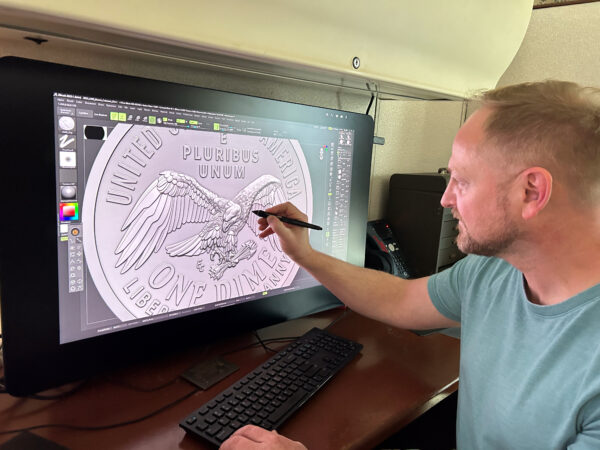
Some medallic artists prefer to sculpt the designs by hand with clay or plaster on rounds that are about 8 or 9 inches in diameter, while others use software, Hemphill explained. She prefers to work by hand initially, then scan her work to make finishing touches digitally.
The traditional approach “really allows the sculptor to gauge the depth properly using your own binocular vision,” Hemphill said, while digital tools make some “cool tricks” possible that “you wouldn’t even imagine you could do in traditional.”
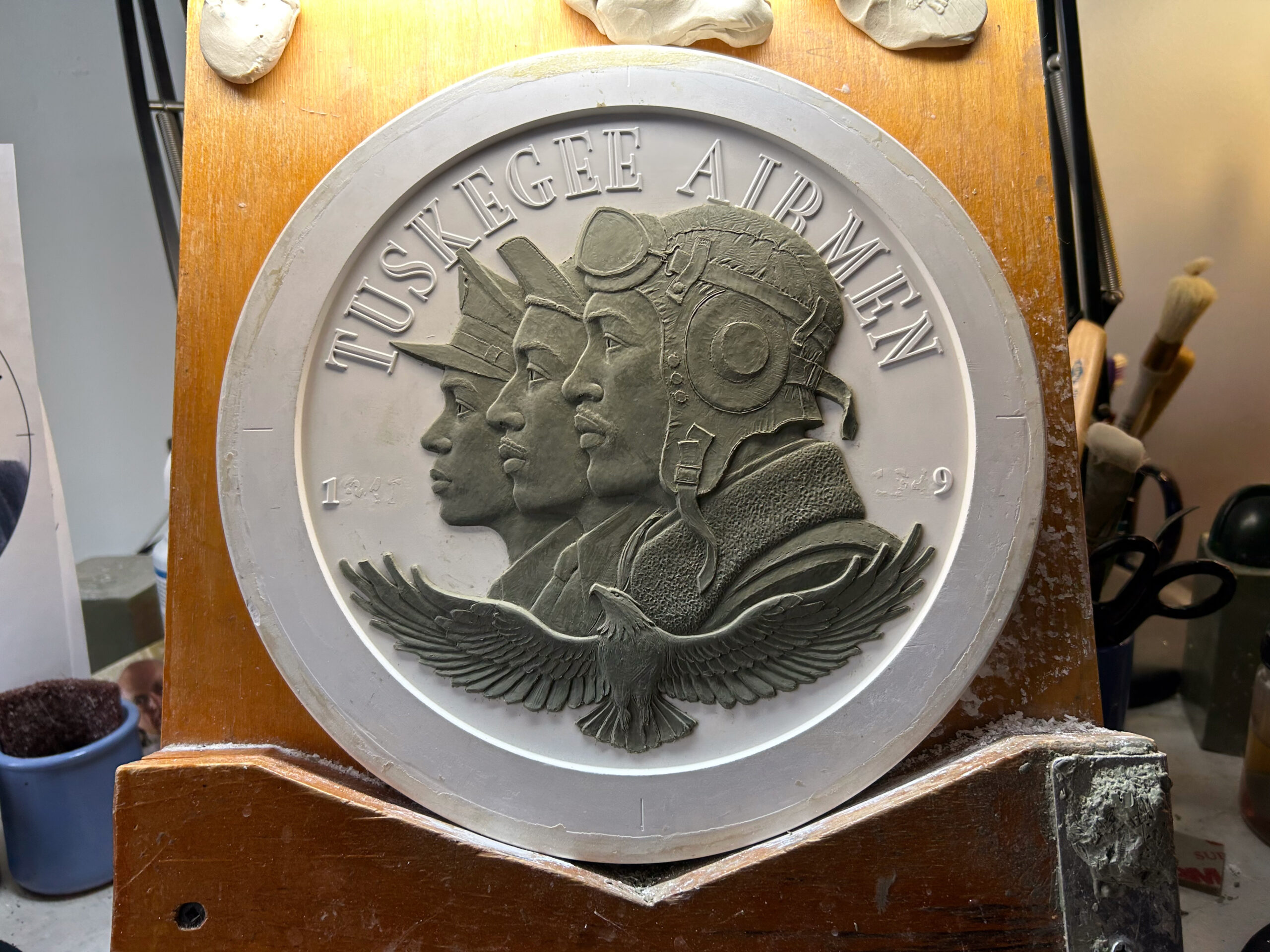
A clay and plaster sculpture in relief of the Tuskegee Airmen by U.S. Mint medallic artist Phebe Hemphill for a Congressional Gold Medal.
Regardless of the methods used, the artistic process involves lots of constraints and “hard limits,” Hemphill said.
First, designs have to comply with the legislation that authorized them, which outlines required elements like the type of people or symbols the coins must depict, as well as phrases to include.
In some cases, stakeholders named in the law that authorized a coin — which can mean governors, museums, or organizations relevant to the design — have to be consulted.
Time is a factor, too. After a design is approved, things can move pretty quickly to meet production schedules, with artists getting around 16 business days to translate a line drawing into a sculpture, according to Hemphill and Custer.
And then there are medium-specific musts: Artists have to create designs that fit coins and medals. For example, certain angles don’t work well in coin art, Custer said, and nickels, dimes, and quarters each have specific font size requirements.
Production design staff also have to provide feedback to artists to make sure an image will be “strikable” and won’t result in manufacturing errors or inconsistencies, Custer explained.
“Designing and sculpting — they’re both problem-solving processes as much as they are art,” he said.
Sculpting stories
A medallic artist’s job ultimately boils down to finding a way to translate iconic moments or people in history into pocket-size art.
In Philadelphia, one of the country’s oldest and most storied cities, that history can be pretty accessible. When working on a new series of coins meant to honor the nation’s 250th birthday, for instance, Custer drew on resources that are practically in the Mint’s backyard.
Custer’s design for the tails side of the coin — which features an eagle with one empty claw and one claw holding 13 arrows — won out in the selection process.
The image takes inspiration from the Great Seal of the United States, and represents the colonists before and during the American Revolution, Custer explained. While he included the arrows from the seal, he left out the olive branch to symbolize the fact that the colonies had not yet reached peace — but left the claw open to demonstrate that they were waiting for it.
Hemphill also used the neighborhood to her advantage while working on the series. She sculpted the back of the “U.S. Constitution Quarter,” a design by Donna Weaver that features an image of Independence Hall.
When translating a line drawing of a building to a three-dimensional coin, sculptors benefit from having additional visual context, like a photograph, to get the details right, Hemphill said. In this case, though, she didn’t need a photo.
“I had a nice little walk down the street to really get a good gauge of how to do that one.”
A high-concept stunt? A rare stroke of artistic luck? A Frankensteinian collage of 21st-century life?
All of that can be said about Complications in Sue, an opera of sorts that premiered with surprising cohesion and great audience response, on Wednesday at the Academy of Music.
Opera Philadelphia is on new ground with this collection of 10 loosely linked scenes by different composers who did their work without knowing what the others were up to.
Each scene documents a decade of the life of Sue, in a birth-to-death chronicle curiously devoid of outstanding achievements but forming a reflection of the worlds (both inside and outside her psyche) swirling around her.
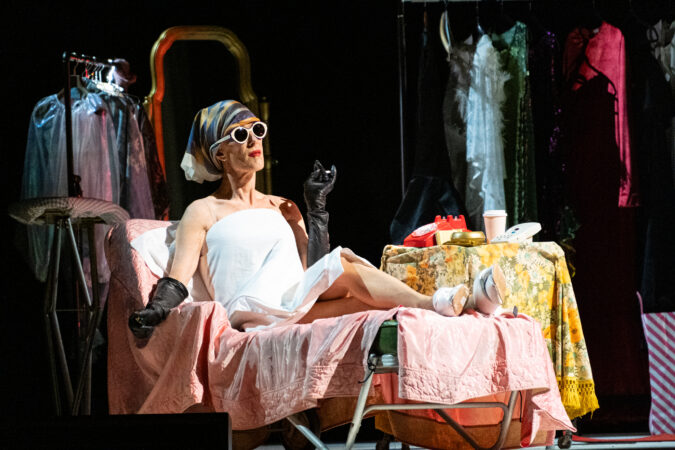
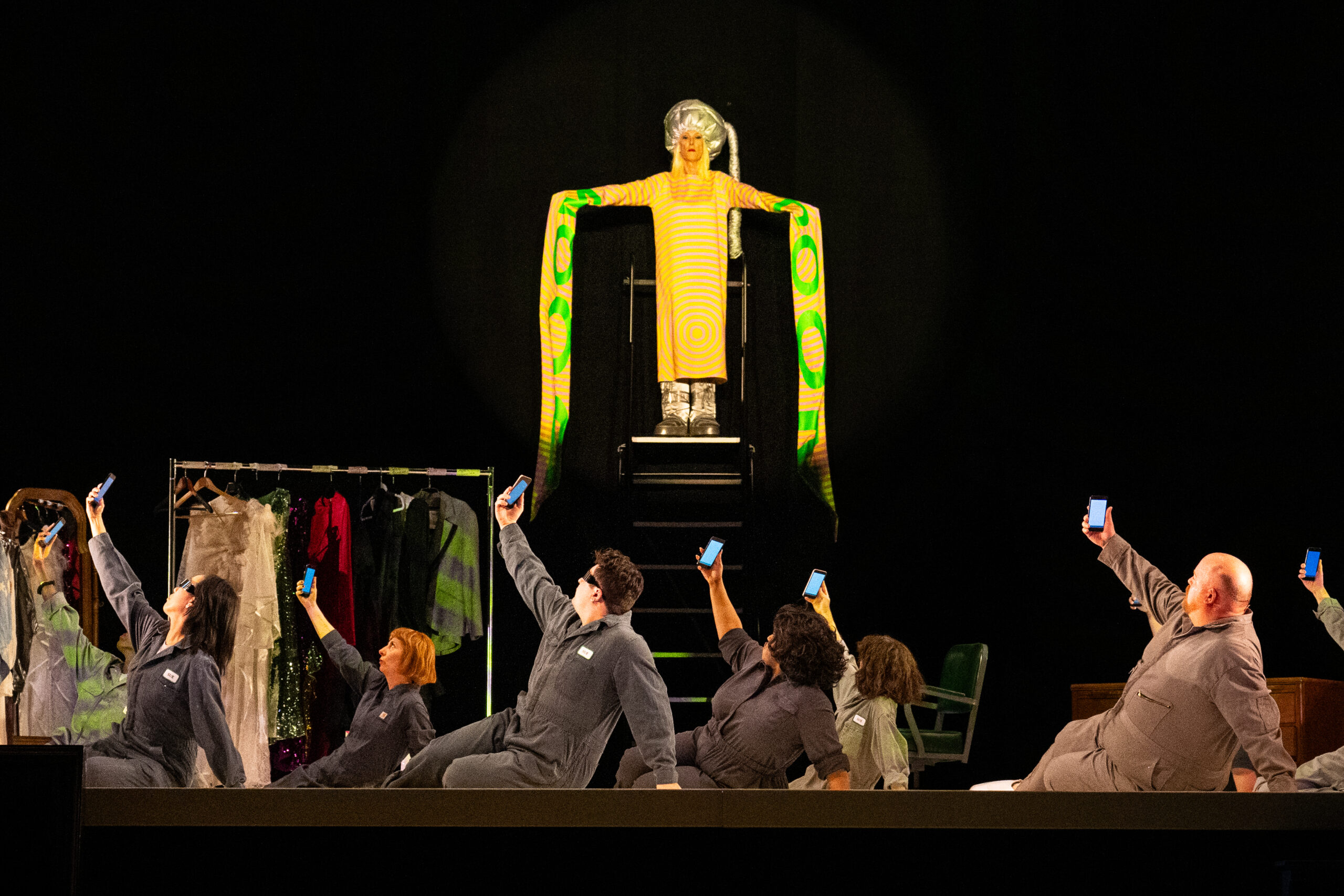
Sue’s shopping algorithm comes to life in Scene 6 of “Complications in Sue.” Justin Vivian Bond’s costumes were designed by JW Anderson.
At the center of it all — including episodes about Santa Claus in crisis, a grieving ex-husband, and Sue’s shopping algorithms coming to life — was the sharp-tongued cabaret artist Justin Vivian Bond.
Playing the imaginary Sue, she sang, talked (and danced here and there), and seemed to go off script with a damning litany of current government persons and entities. She prompted the loudest ovation of the evening with a no-holds-barred condemnation of U.S. Immigration and Customs Enforcement.
Somehow, the components came together, thanks partly to the anything-can-happen atmosphere of the piece.
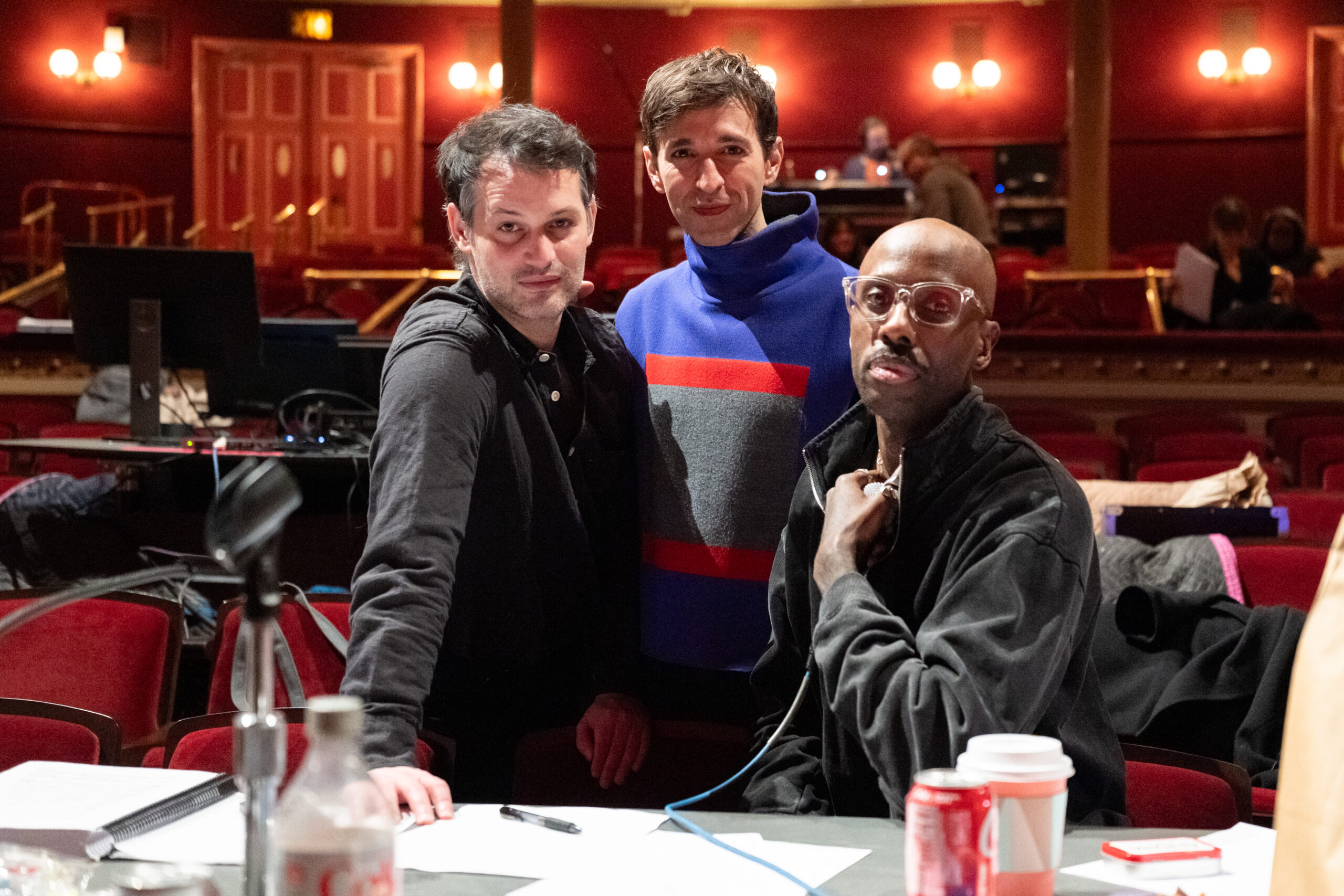
From left: Director Zack Winokur, producer Anthony Roth Costanzo, and director Raja Feather Kelly before a dress rehearsal at the Academy of Music on Jan. 31, 2026. The venue will be showing the new opera “Complications in Sue” from Feb. 4-8.
The 10 episodes — as fantastically conceived by librettist Michael R. Jackson — are like semi-improvised comedy sketches that leave certain psychological doors open for the composers to create a sense of operatic magnitude.
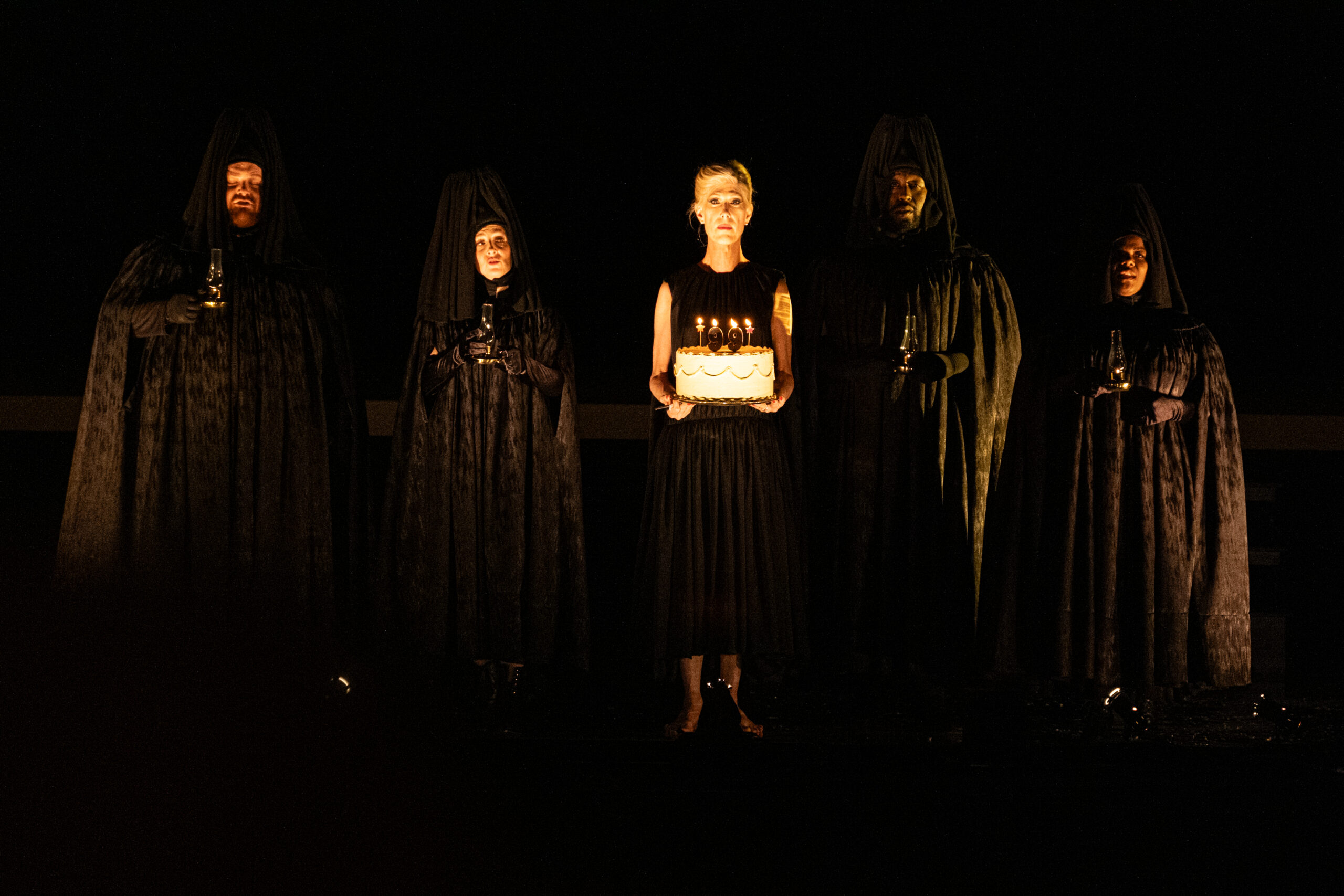
The composer lineup, full of strong personalities, was framed by Errollyn Wallen on birth (during which Bond walked down the theater aisle saying hello to aisle seaters) and Nico Muhly on death (in lovely choral writing with a waning, interior heartbeat).
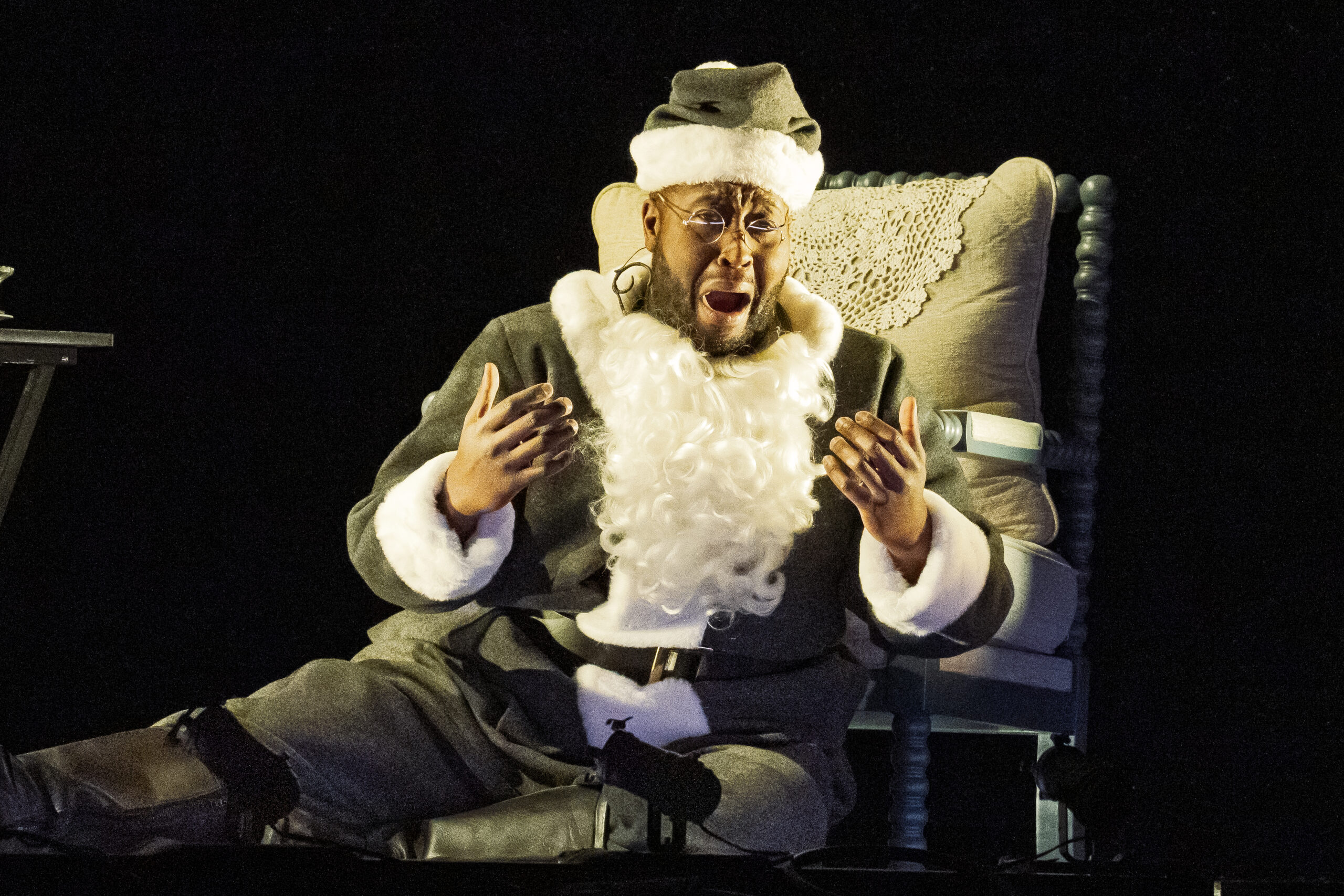
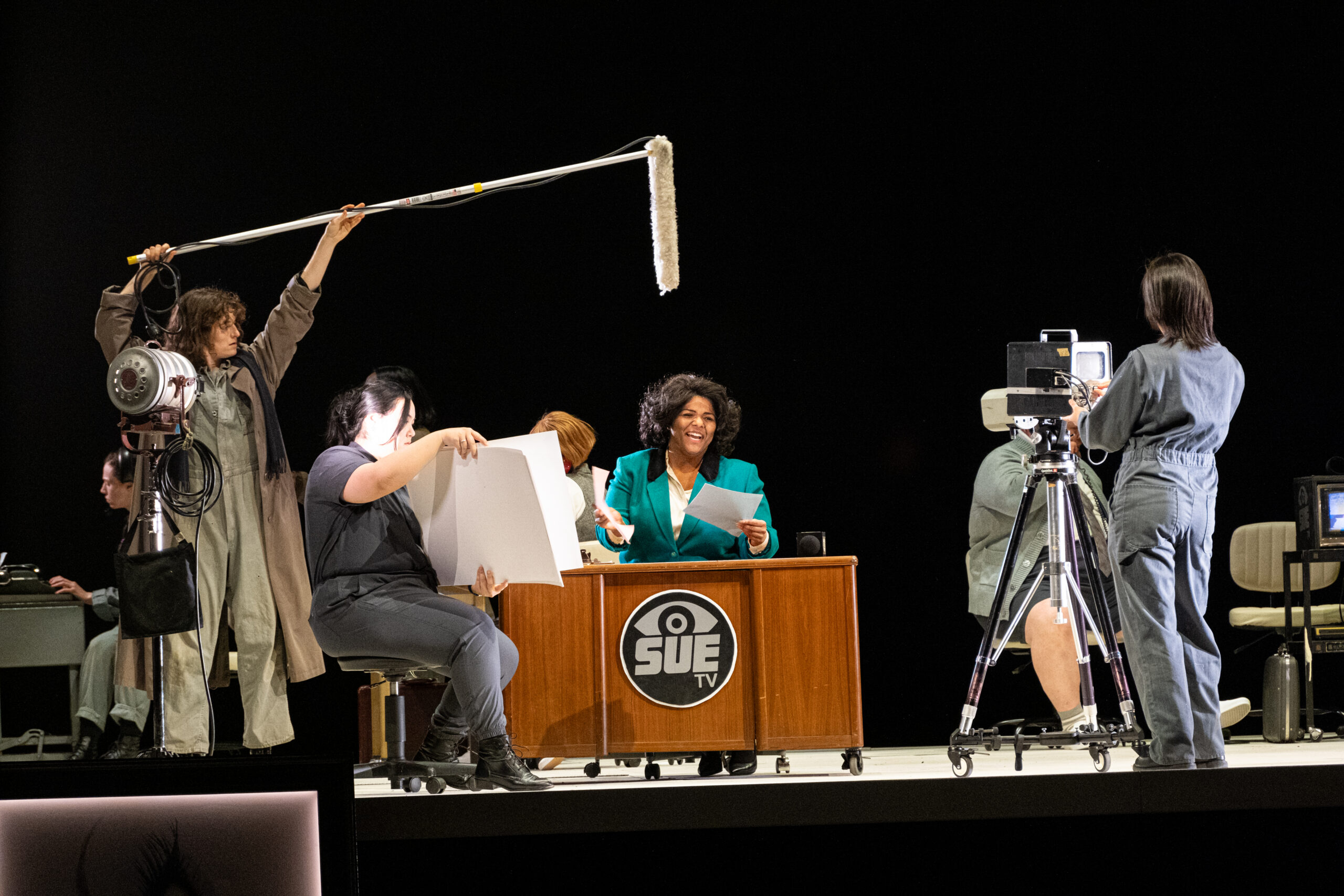
Generally, tunes weren’t a priority as the composers characterized the theatrical events that Jackson gave them, such as Nathalie Joachim’s scene with a newscaster from deep within Sue’s psyche interviewing her about life choices. When Sue’s husband has a meltdown, Dan Schlosberg goes on a rampage through musical styles reflecting the cultural jumbles of our times. Missy Mazzoli makes Santa Claus’ breakdown more tragic than comic.
Bass-baritone Nicholas Newton portrays a disillusioned Santa in Scene 2 of “Complications in Sue.”
Nobody just went for laughs, even when they seemed to.
Andy Akiho had singers being annoyingly manic playing college kids obsessing over who they thought Sue is. But this is where the overall theme of Complications in Sue coalesced: Do we know anybody? Or ourselves? Do we want to?
Composers Cécile McLorin Salvant, Rene Orth, Alistair Coleman, and Kamala Sankaram also wrestled with such issues in one way or another, sometimes using minimalist-shaded repetition for urgency, prominent bass lines for dark corners and with absolutely no need to box these situations into some sort of smooth musical package.
Mezzo-soprano Rehanna Thelwell as Brenda Blackwoman, broadcasting
from inside Sue’s imagination in Opera Philadelphia’s “Complications in Sue.”
That last quality made many of these miniature compositions seem epic in their implications. Was Complications in Sue really just 90 minutes?
Under the confident direction of Caren Levine, the four-member cast consistently gave it their all in deeply unconventional musico-dramatic assignments.
Kiera Duffy and Nicky Spence each had episodes giving them space to dominate the stage on their own. Duffy’s voice was an island of sweet stillness even in tumultuous moments while Spence never let intonation and enunciation slip even in his most reckless moments.
The cast of “Complications in Sue” (From left: Nicky Spence, Kiera Duffy, Justin Vivian Bond, Nicholas Newton, and Rehanna Thelwell) in the final scene of the world premiere opera.
Nicholas Newton played both Santa Claus and Death with equal conviction (an accomplishment indeed). And if you walked in not knowing that Rehanna Thelwell was walking through her stage roles that were actually sung by Imara Miles, you wouldn’t be any the wiser.
The one disappointment on the performance front was Bond’s dance of death: It was just a lot of twirling in moments that asked for transcendence. Much of Bond’s fan base feels anything she wants to do is just fine. I’m not one of them.
One major achievement was how the production elements worked together. That just doesn’t happen very often in new operas.
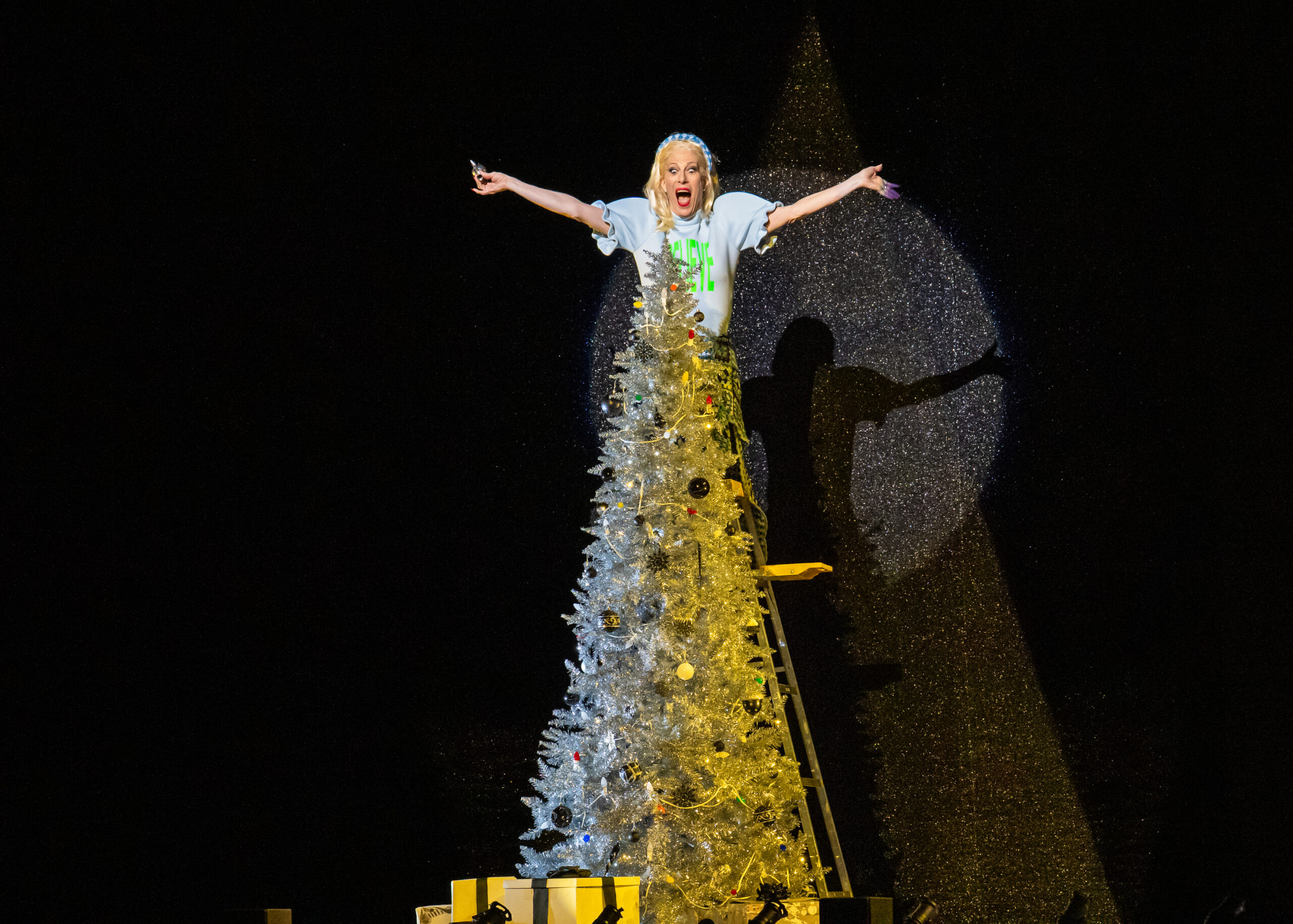
Justin Vivian Bond as 10-year-old Sue in “Complications in Sue,” directed by Raja Feather Kelly and Zack Winokur
The Krit Robinson-designed production ranged from a charmingly makeshift Christmas tree to dazzling abstraction. In later scenes, the stage had concentric rectangular frames, each with changing, subtle coloring.
Raja Feather Kelly and Zack Winokur shared directing duties but in such fluid, choreographic staging, it was hard to determine where one director’s work started and the other left off.
Consider what this team could do in more conventional operatic circumstances. I hope to see that.
“Complications in Sue,” plays at Feb. 5, 7 p.m. Feb. 6, 8 p.m. Feb. 8, 2 p.m. Academy of Music, 240 S Broad St. All tickets are Pick Your Price, starting at $11. operaphila.org, 215.732.8400, tix@operaphila.org
Mark Tyler, historiographer and executive director of research and scholarship of the African Methodist Episcopal Church, often wonders: What if Christians stood up in the 1780s and challenged the articles of the U.S. Constitution that said Black people were not whole human beings?
What if the American branch of the Methodist church followed the teachings of its founder, John Wesley, who taught that slavery was a violation of Christian mercy? What if the ushers of Old City’s St. George’s Methodist Church didn’t kick formerly enslaved congregants Richard Allen and Absalom Jones out of the general congregation and force them to worship in segregated pews?
“We would have avoided the Civil War,” Tyler said. “We would have avoided Jim Crow. We would have avoided the moment in history we are in now.”
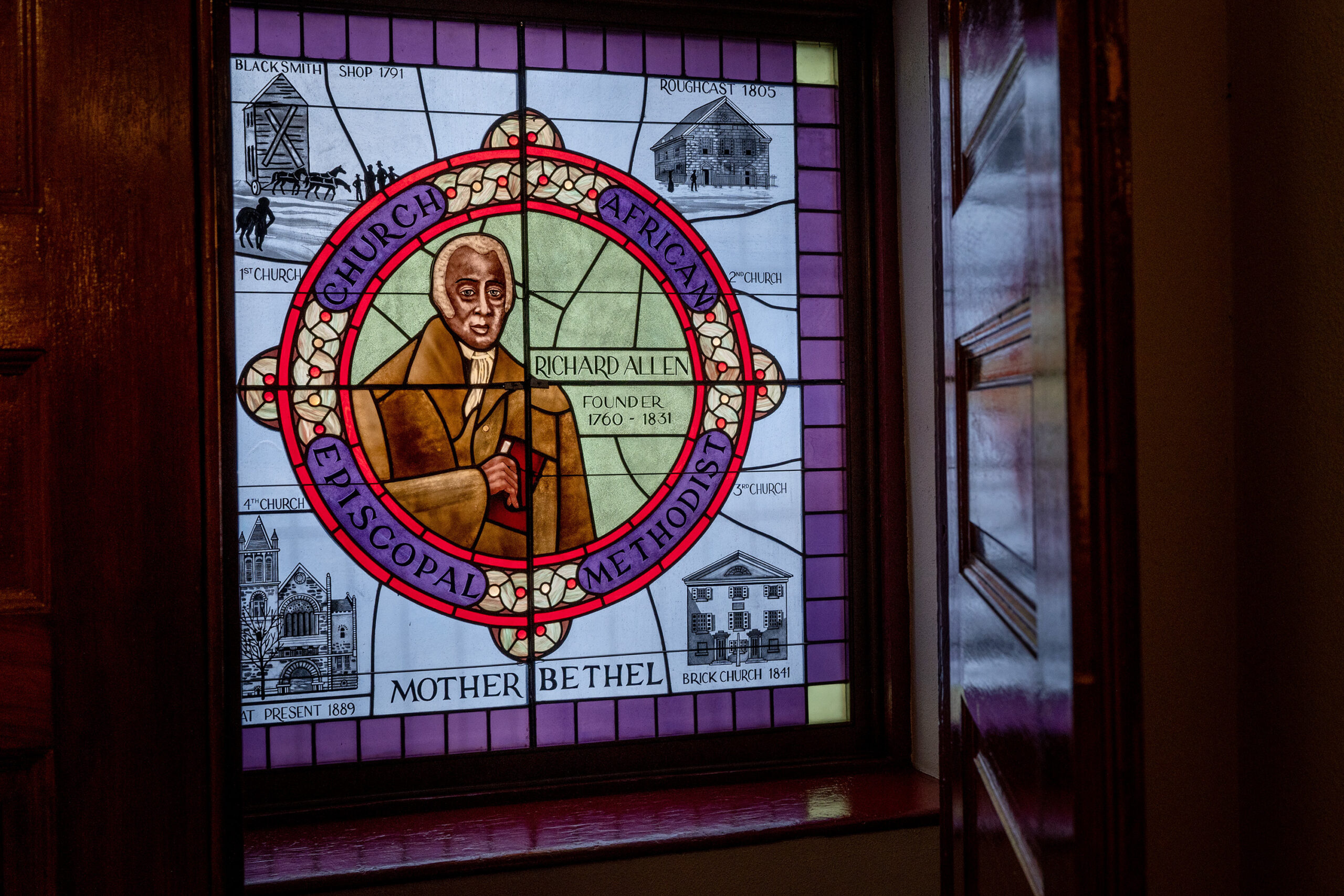
A stained glass window of founder Richard Allen and Mother Bethel AME Church’s previous homes is at entrance of the church.
Instead, American Methodists sided with southern landholders who relied on cost-free Black labor to build their empires. Evangelical churches, Tyler said, were among the first institutions to practice segregation.
Allen and Jones went on to start their own churches.
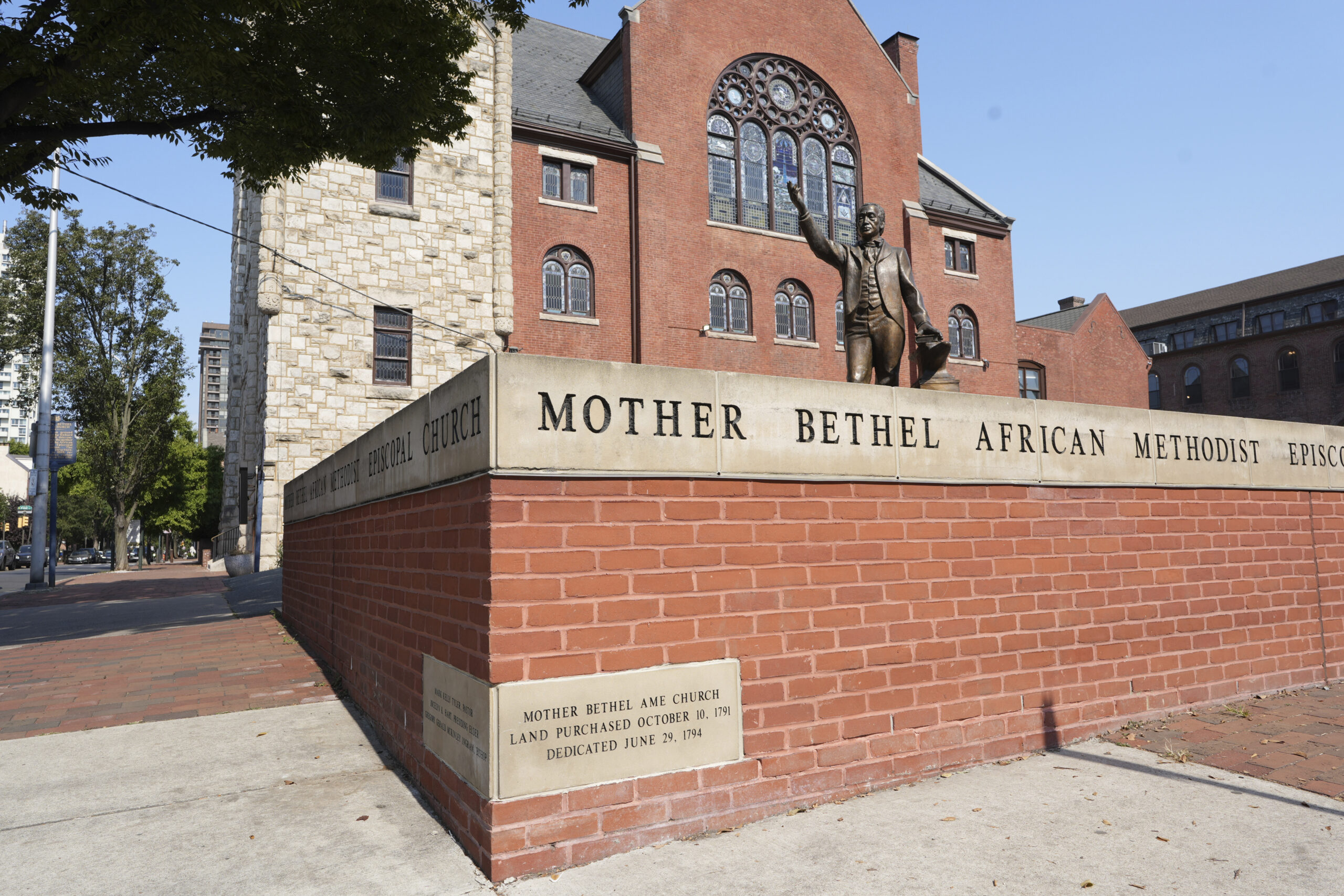
Allen established Mother Bethel African Methodist Episcopal Church, regarded as America’s — and the world’s — first AME congregation.
Mother Bethel will celebrate this history at the Philadelphia Historical District’s weekly “firstival,” part of a yearlong celebration of America’s 250th birthday. Each Saturday in 2026, the historic district is hosting a daytime shindig honoring an event that happened in Philadelphia before anywhere else in America and often the world.
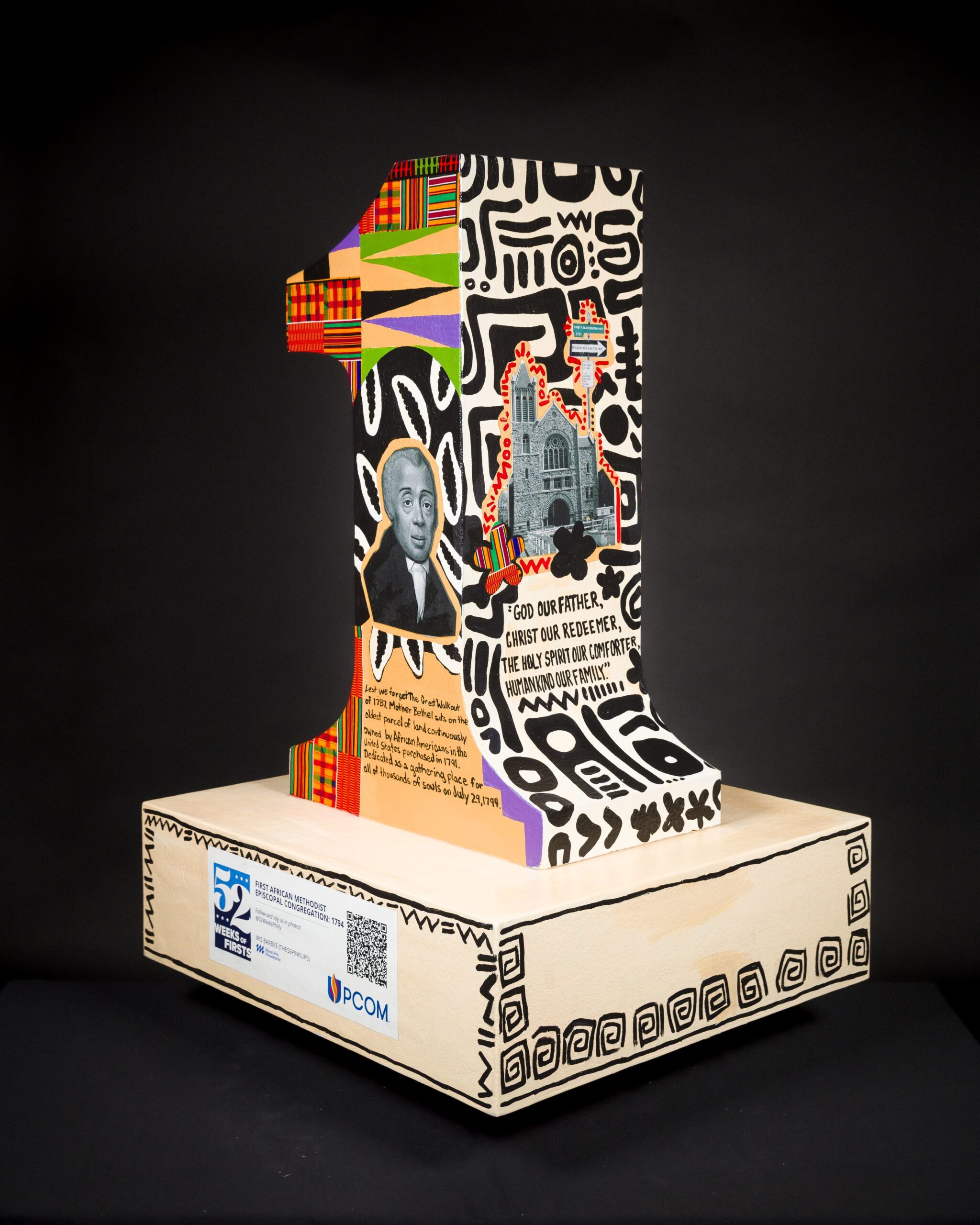
Iris Barbee Bonner is a fashion designer and graphic artist who brought her experience growing up in the AME Church to this 52 Weeks of Firsts No. 1
Allen was born into slavery in Philadelphia in 1760. He bought his freedom from his enslaver, a devout Methodist who converted many of the people he enslaved, in 1783. Allen answered the call to preach and traveled the mid-Atlantic for a few years evangelizing freed and enslaved people.
In 1786, he returned to Philadelphia, joined St. George’s, and started a 5 a.m. worship service. He led the service for a year-and-a-half before walking out in November of 1787.
“Certainly there had been moments of resistance in colonial Black communities,” Tyler said. “But this walkout was significant because it led to the emergence of the first American institutions by and for Black people,” Tyler said.
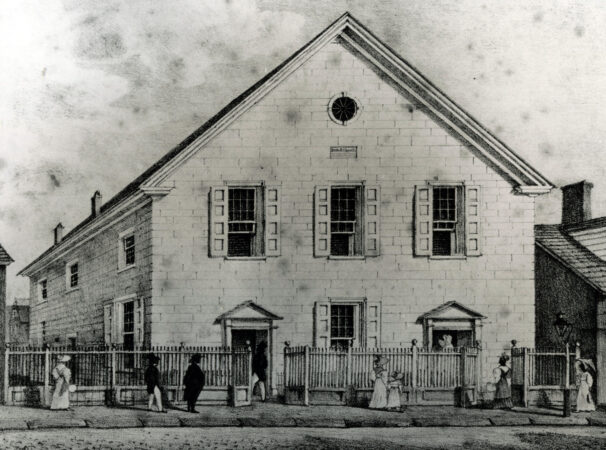
Allen bought land at Sixth and Lombard Streets — where Mother Bethel sits now — on Oct. 10, 1791. Mother Bethel’s first building, a repurposed blacksmith shop, was dedicated on July 29, 1794, by Bishop Francis Asbury.
A second building was erected in 1805, a third in 1841, and the current building was completed in 1890.
“We are the oldest independent denomination founded by people of color in the United States,” said the Rev. Carolyn C. Cavaness, pastor of Mother Bethel. “Our church sits on the oldest parcel of land continuously owned by African Americans.”
In 1816, 30 years after Allen established Mother Bethel, he invited delegates of Black Methodist churches in Pennsylvania, Baltimore, Maryland, Delaware, and New Jersey to a conference, establishing the AME Church as its own denomination.
A statue of Mother Bethel AME Church founder Richard Allen stands on the oldest parcel of land continuously owned by Black Americans in Philadelphia on Oct 13, 2024. (AP Photo/Luis Andres Henao)
Mother Bethel has stood at the center of civil rights for centuries, from serving as a station on the Underground Railroad to uniting interfaith clergy who questioned $50 million of community benefits slated to go to the Sixers arena in 2024.
“We are the Mother Church,” Cavaness said. “ … the foundation of so much Philadelphia history, so much American history. It’s an honor to be the sacred caretaker of this history.”
This week’s Firstival is Saturday, Feb. 7, 11 a.m.-1 p.m., at Mother Bethel, 419 S. Sixth St. The Inquirer will highlight a “first” from Philadelphia Historic District’s 52 Weeks of Firsts program every week. A “52 Weeks of Firsts” podcast, produced by All That’s Good Productions, drops every Tuesday.
About the new name for that big museum at the end of the Parkway: Never mind.
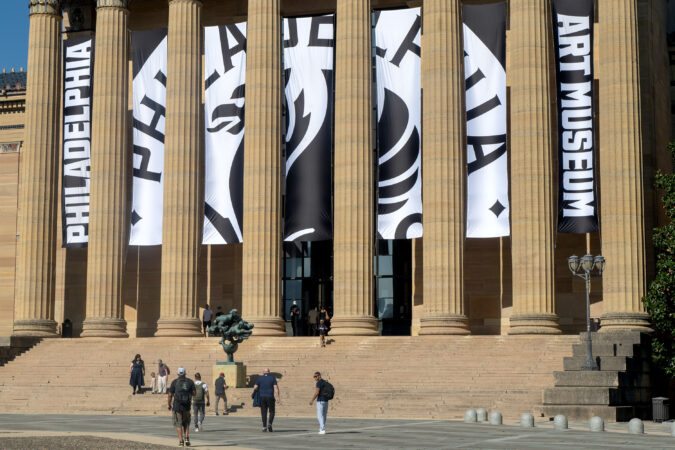
Four months after rolling out a new name with great fanfare, the Philadelphia Museum of Art is once again calling itself the Philadelphia Museum of Art. The museum’s board Wednesday afternoon voted unanimously at a special meeting to scrap the name Philadelphia Art Museum, which had been announced Oct. 8 as part of a larger rebranding.
Some signs and materials are being quickly changed over with the old-new name, while others will be reprinted or revamped in coming weeks. The new PhAM acronym used in marketing materials will be dropped, and the museum will once again refer to itself in shorthand as the PMA, as many Philadelphians long have.
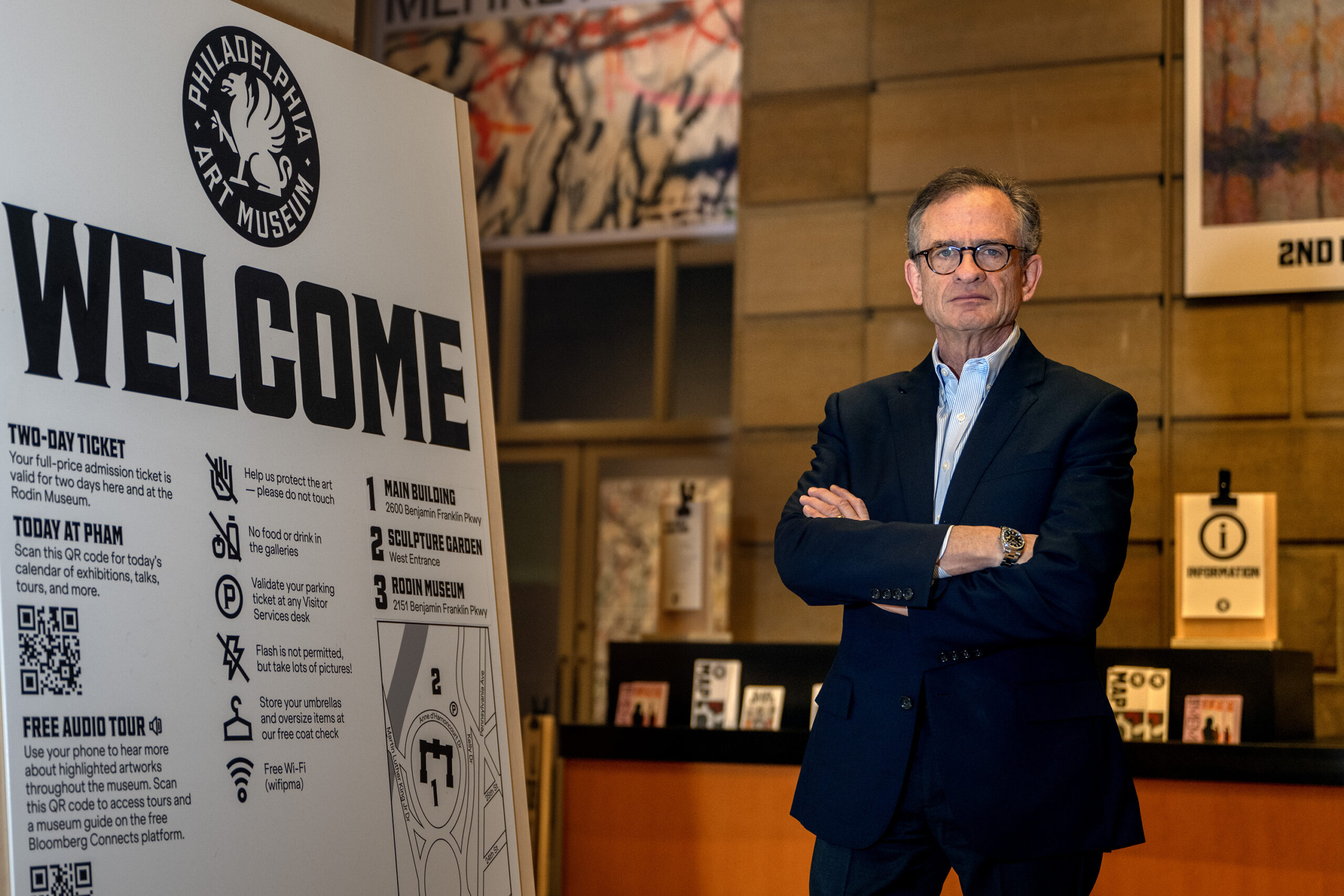
Daniel H. Weiss, director and CEO of the Philadelphia Museum of Art, in the museum lobby, Jan. 7, 2026.
The museum spent the past several weeks surveying opinions, said director and CEO Daniel H. Weiss, and “I think what we learned from our survey, and it’s not surprising, is that people who have any knowledge of the institution — donors, staff, trustees, members — they know the name and it resonates with them. It’s something distinctive, it’s who we are. And changing the name for no obvious reason created a sense of alienation and didn’t make sense to a lot of people.”
Philadelphia Museum of Art had been the name of the nearly 150-year-old institution for 87 years until the change this fall.
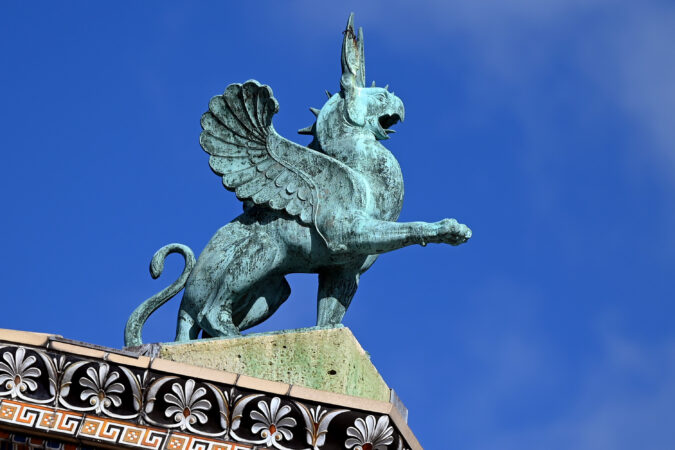
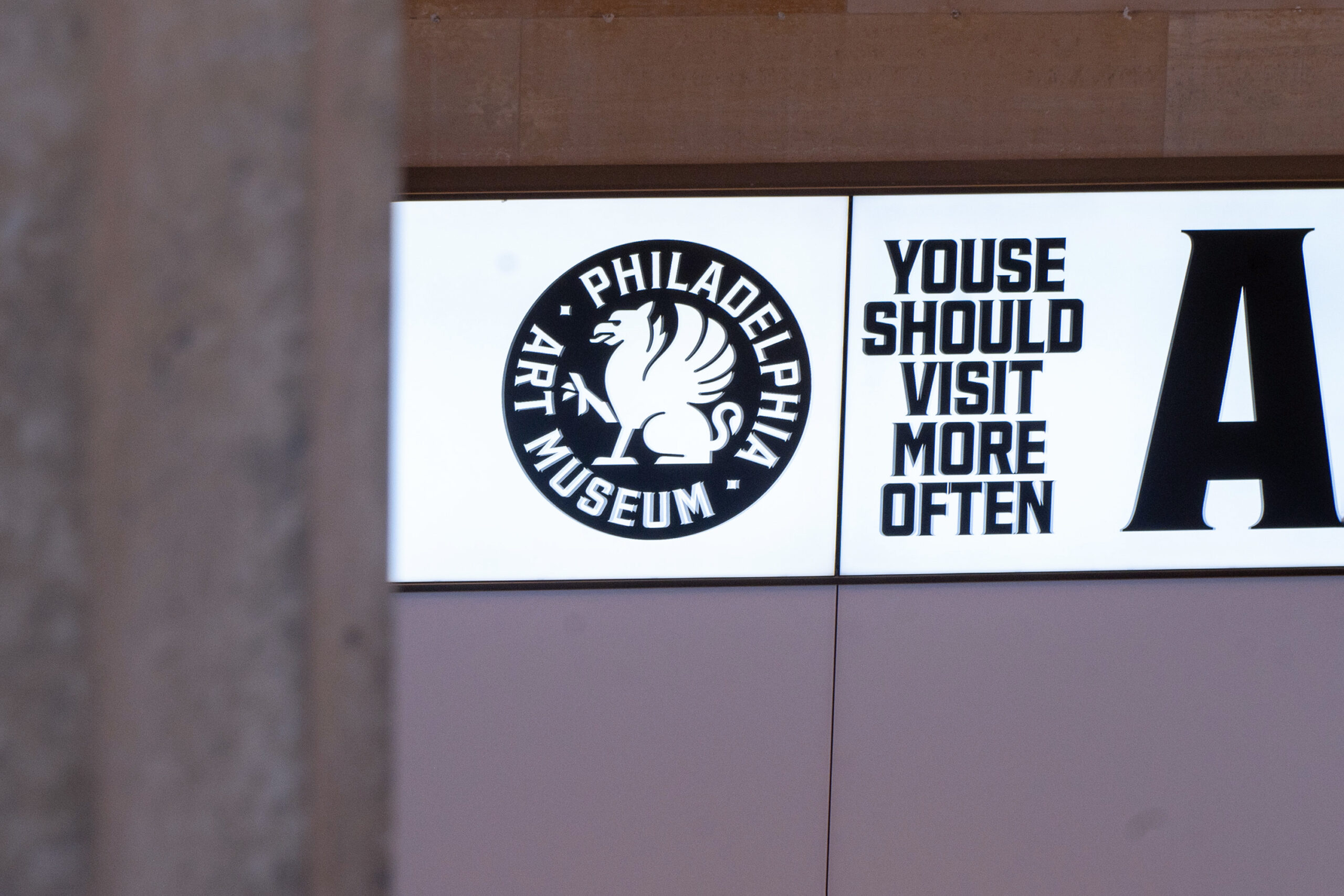
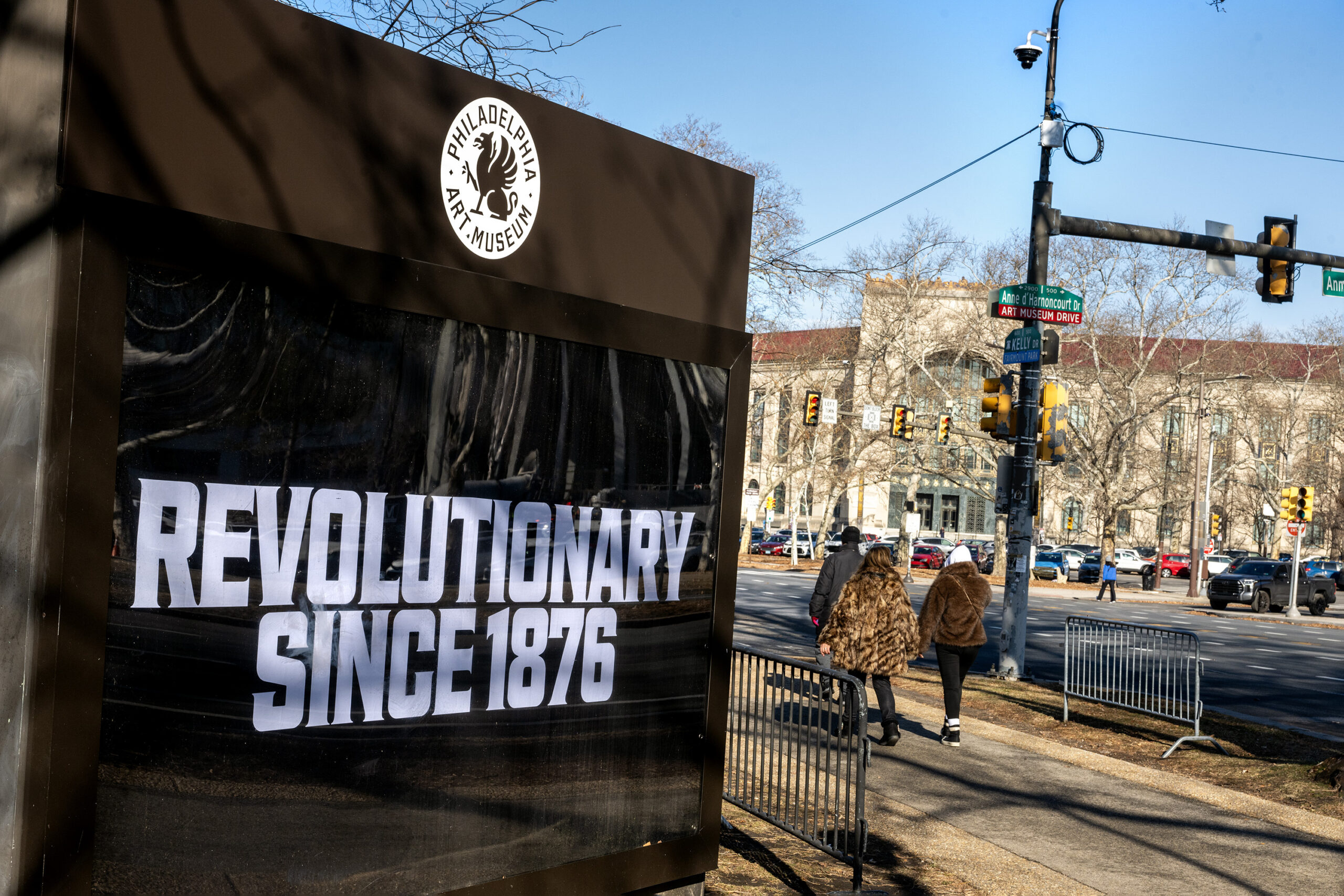
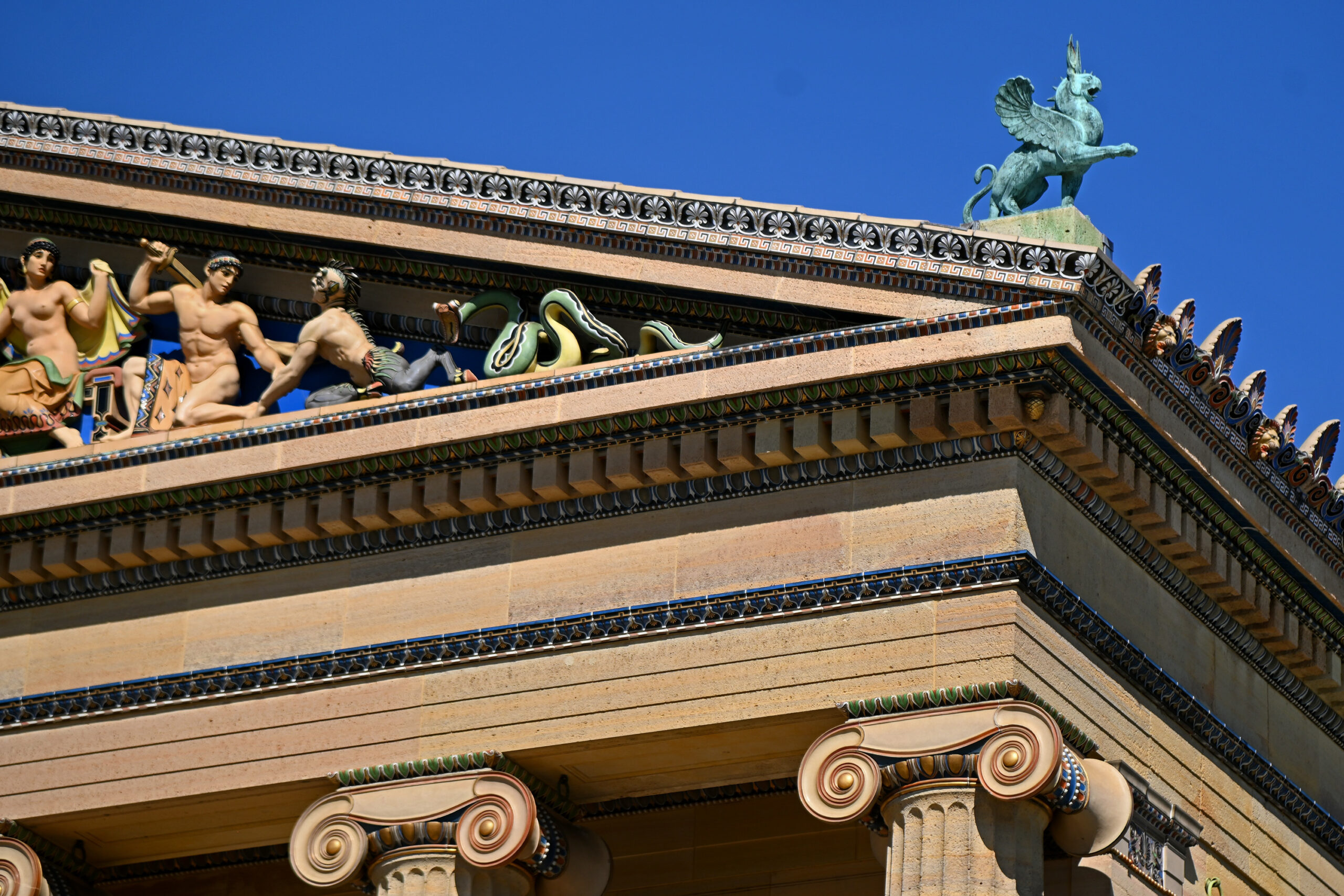
The museum will, however, keep visual elements of the larger rebranding — the logo that echoes one of the griffin figures along the roofline of the museum’s main building, and bold fonts in signage and promotional materials.
A rolling video screen above the admissions counter at the West Entrance at the Philadelphia Museum of Art Oct. 6, 2025.
As for the continued use of slightly irreverent tag lines that came with the rebrand — phrases like “Youse should visit more often,” — “Probably not so much,” said Weiss. “We will modify those a little downstream, but the idea is to return to a slightly more aligned presentation more closely tied to our mission.”
The rebranding — which was widely, though not universally, criticized upon its rollout — was a major initiative of former director and CEO Sasha Suda and marketing chief Paul Dien.
When the museum announced the name change, Suda explained it by saying that it was “truly a reflection of what the community has called it for a long time,” and that it was “also a sort of significant way of starting a new chapter and saying, ‘Look, we’re definitely starting a new chapter here.’”
The north side of the Philadelphia Museum of Art, along Kelly Drive at 25th Street and Art Museum Drive, Jan. 7, 2026.
The decision around the controversial rebranding is the first visible test of Weiss’s leadership, and he chose the route of inquiry and shared responsibility, directing a nine-member task force to assess its reception. The original rebrand was launched after multiple internal meetings, but without final notification to the board, according to one trustee.
In a 3½-page note to staff Wednesday afternoon announcing the decision to keep the logo and reverse the name change, Weiss noted the “siloed process” in which the original rebrand was developed, and took pains to emphasize how the reconsideration of it has been, and will be, different.
“The work of the design team over the past two years was exhaustive, incorporating decades of museum history into their thinking and interviews with dozens of staff and trustees. Yet, the team did not have the benefit of a broad, interdisciplinary group to inform the work along the way, so when the final product was rolled out, many felt surprised or not sufficiently invested in the outcome,” the note reads.
A series of internal meetings with staff will explain the task force’s findings, Weiss wrote in his note.
“The task force did consider reverting completely to the prior brand, but ultimately felt strongly that the original reasons for the rebrand are compelling. It was time for the museum to update its look, and the griffin logo is a strong statement that can successfully strengthen and widen our audience.”
The museum’s new logo keeps the stylized griffin that was part of the rebrand unveiled in October 2025, but shows the return of the museum’s name to the ‘Philadelphia Museum of Art.’ The October rebrand included a renaming to ‘Philadelphia Art Museum,’ a change that has now been scrapped.
Surveys conducted in recent weeks revealed findings that “went in two very different directions,” Weiss wrote. “Staff, trustees, and members were opposed to the name change, the URL, and the look of the new brand, yet the public reacted positively to the new logo and overall look and feel.”
Art Museum fan Brian Forsyth, of Exton, said he felt “blindsided by the sudden and uncalled for rebrand,” and when it happened, he asked for (and received) a membership refund.
He disliked the rebrand in general and said that, while he sometimes called it “the art museum,” he mostly referred to it as “the PMA.”
“When they took that phrasing away from me, it hurt,” he said.
Now that the museum is changing its name back, he says he intends to restore his membership.
“I will not, however, purchase any of the new merch. I still have my classic PMA baseball cap, which I will wear into the ground, literally,” he said.
Inspiring the museum’s logo: a bronze griffin on the roof of the northern wing of the Philadelphia Museum of Art, Oct. 6, 2025.
Weiss said that the museum will not be disposing of current materials printed with the Philadelphia Art Museum name, such as brochures or maps. Rather, the change will be cycled through as items need to be replaced.
Gretel, the Brooklyn firm that designed the rebrand, is working with the museum on the current modifications.
The rebrand cost the museum about $1 million, Weiss said, and the total cost of the change-back may not exceed $50,000.
“The idea is to do this as cost-effectively as we can.”
Weiss called the entire rebrand episode “an unnecessary distraction for us. We want to move on and focus on things that matter most to our mission.”
Gentrification is perhaps not the flashiest subject for a play. But in a city like Philadelphia — which has seen years of rapid development and community backlash, particularly surrounding the contested Sixers arena effort — it serves as a ripe starting point for dramatic exploration in Good Bones, running at the Arden Theatre through March 22.
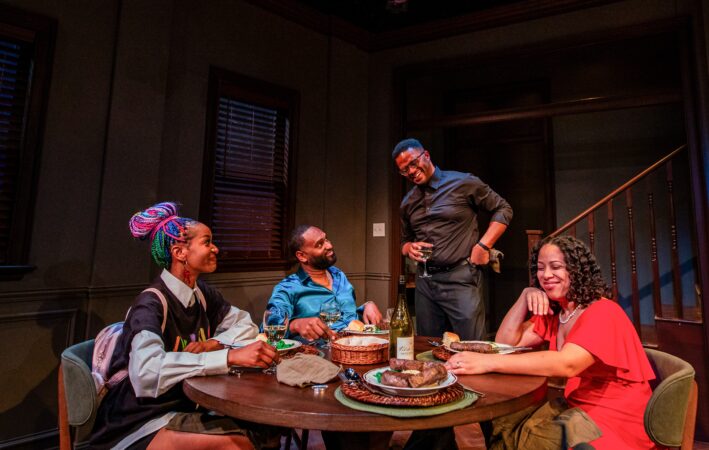
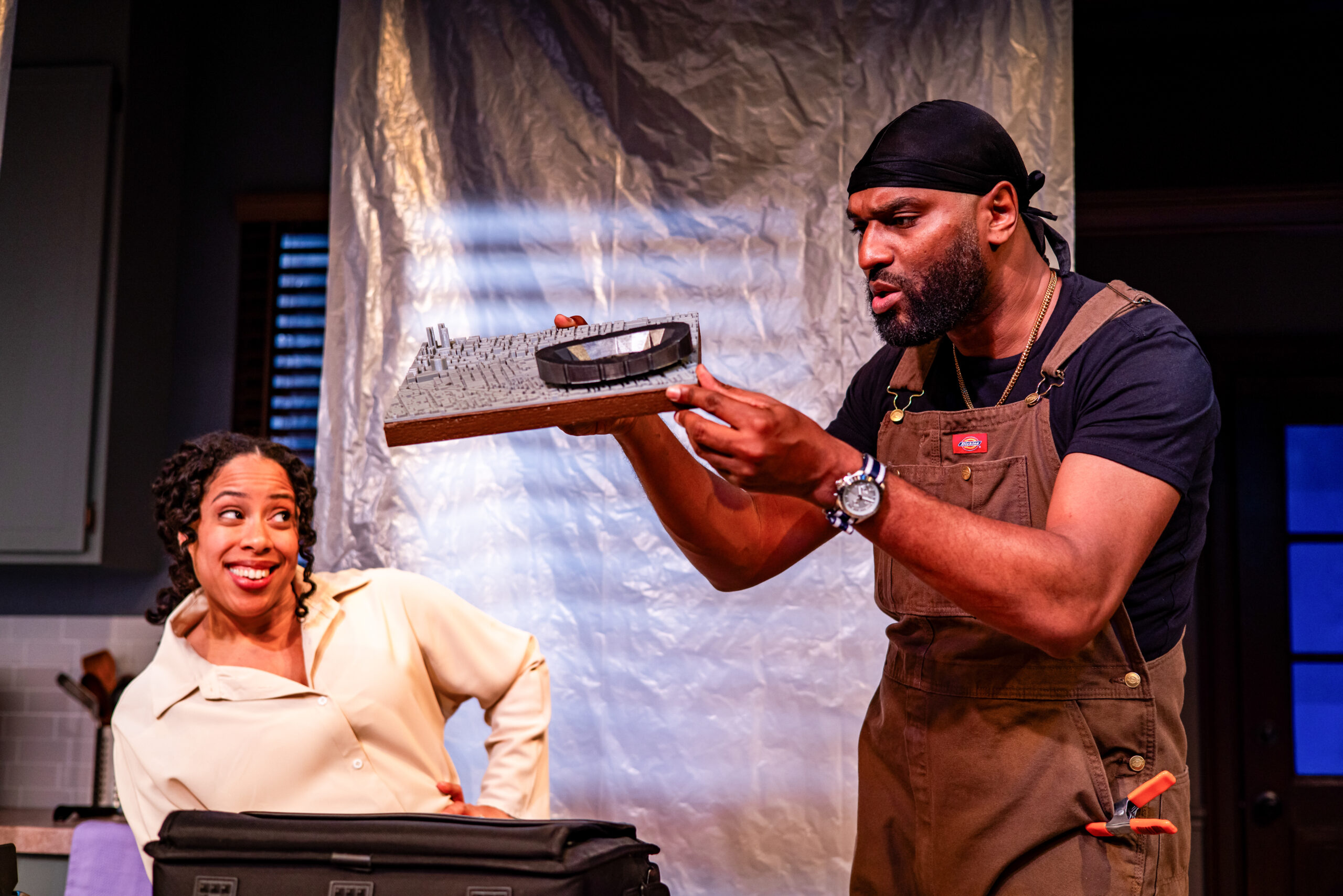
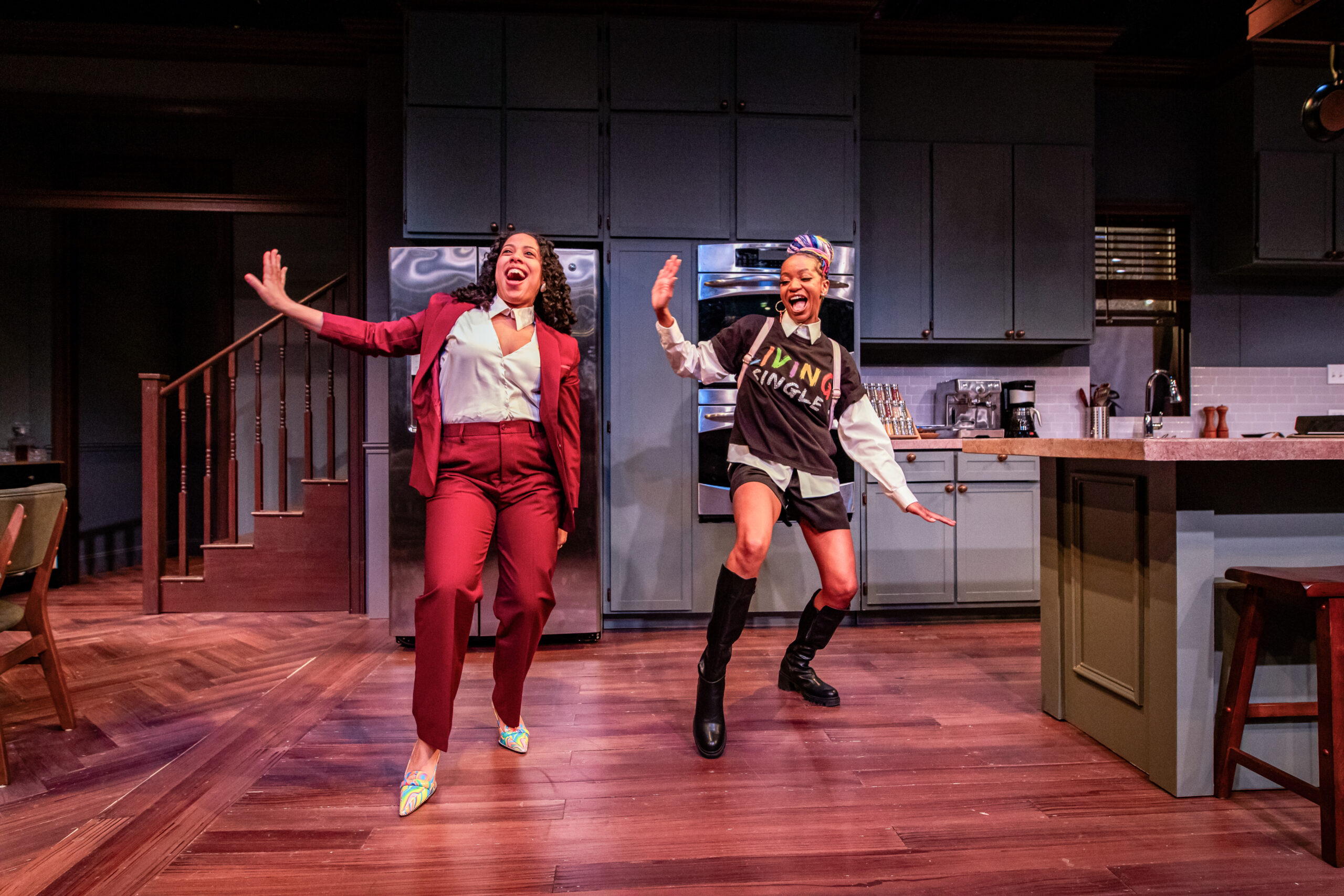
Directed by Akeem Davis and written by Pulitzer Prize-winning playwright James Ijames, the play centers on Aisha (Taysha Marie Canales), a businesswoman tasked with community outreach for sports complex developers, and Earl (Walter DeShields), the contractor she hires for home renovations who vehemently opposes the arena. They both grew up in the same (fictional) neighborhood but hold vastly different visions for its future.
Arts reporter Rosa Cartagena and residential real estate reporter Michaelle Bond discuss the production’s funny, emotional, and complex portrayal of a very Philly reality.
Old neighborhoods, new names
Rosa Cartagena: You’ve been covering real estate extensively here in Philadelphia. I’m wondering what’s your first impression of the way this play addressed gentrification?
Michaelle Bond: I saw a lot of themes that I hear about all the time covering housing. The feelings of longtime residents vs. newer ones, revitalization vs. displacement, what new construction looks like and how it fits (or doesn’t) in a neighborhood, even what a neighborhood should be called.
RC: Right, there was a funny moment on opening night when Earl criticized the newcomers for calling their neighborhood the new name “Finbrook” instead of “the Heat” and an audience member clapped. We’ve seen that kind of rebranding all across this city, too.
MB: I think the Heat is the cooler of the two names, by the way. There’s more passion behind it. But yes, developers and real estate agents have rebranded or tried to rebrand lots of neighborhoods. The Gayborhood, for example, is also called Midtown Village now. Almost 10 years ago, a small developer in North Philly’s Norris Square tried to rename the neighborhood Stonewall Heights and was promptly shut down. In an extreme example, the Black Bottom neighborhood in West Philly was bulldozed and renamed University City.
Taysha Marie Canales (Aisha) and Walter DeShields (Earl) examine a model sports complex development in ‘Good Bones,’ running at the Arden Theatre through March 22.
The Sixers arena influence
RC: This story is set in an American city that could stand in for Philadelphia, or the sites of previous performances in Washington, D.C., and New York. The playwright James Ijames was living in South Philly when he wrote Good Bones, and he’s previously discussed his own growing pains of moving to a new community. This production delivers a specifically Philly version but with a universal resonance.
MB: Right, because in the other productions, the new development coming in wasn’t a sports complex, was it?
RC: Ijames rewrote the script after seeing the local pushback to the Sixers arena proposed in Chinatown. There are a few Philly callouts, like Earl’s sister Carmen (Kishia Nixon) attending the University of Pennsylvania and a joke about the Sixers sucking (which killed).
Revitalization vs. destruction
MB: One thing I’ve heard a lot about across Philly is that residents raise their kids in their neighborhoods, but when the kids grow up, they can’t afford to buy a home in that same neighborhood. Earl says that the public housing complex where he and Aisha grew up will be torn down and probably replaced with condos that no one can afford. The production does a good job highlighting the displacement and the class dynamics that are often at play.
RC: Absolutely. In this case Aisha grew up, moved away, married a guy from a rich family, and returned to purchase a home with “character and charm.” But her view of the neighborhood’s drastic transformation isn’t a negative one — she sees her efforts as “healing” her once neglected and sometimes violent home. Aisha and Earl bond over their memories of the Heat but fiercely disagree about what is revitalization vs. destruction.
MB: That’s the thing. They’re both passionate about the neighborhood and want to help the residents there, but they have different ways of going about it. Aisha wants to get rid of the public housing complex and “start over,” but Earl wants improvements that don’t erase the history.
Taysha Marie Canales (Aisha) and Kishia Nixon (Carmen) in ‘Good Bones,’ running at the Arden Theatre through March 22.
RC: We learn that Earl has been handcrafting cabinet knobs that look like the ones originally in the kitchen, because he has memories of playing in the empty house after the previous owner died.
MB: Earl is a big fan of preservation. He calls new construction ugly and says it has no character or charm. And that’s definitely something I’ve heard from Philadelphians. And how that’s particularly irritating in a historic city like Philadelphia. Inquirer architecture critic Inga Saffron said in a recent column that Philly neighborhoods “are now awash in interchangeable blocky structures, all dressed in the same dreary gray clothing, their aluminum panels shrink-wrapped around the exterior like a sheet of graph paper.”
Block parties and traditions
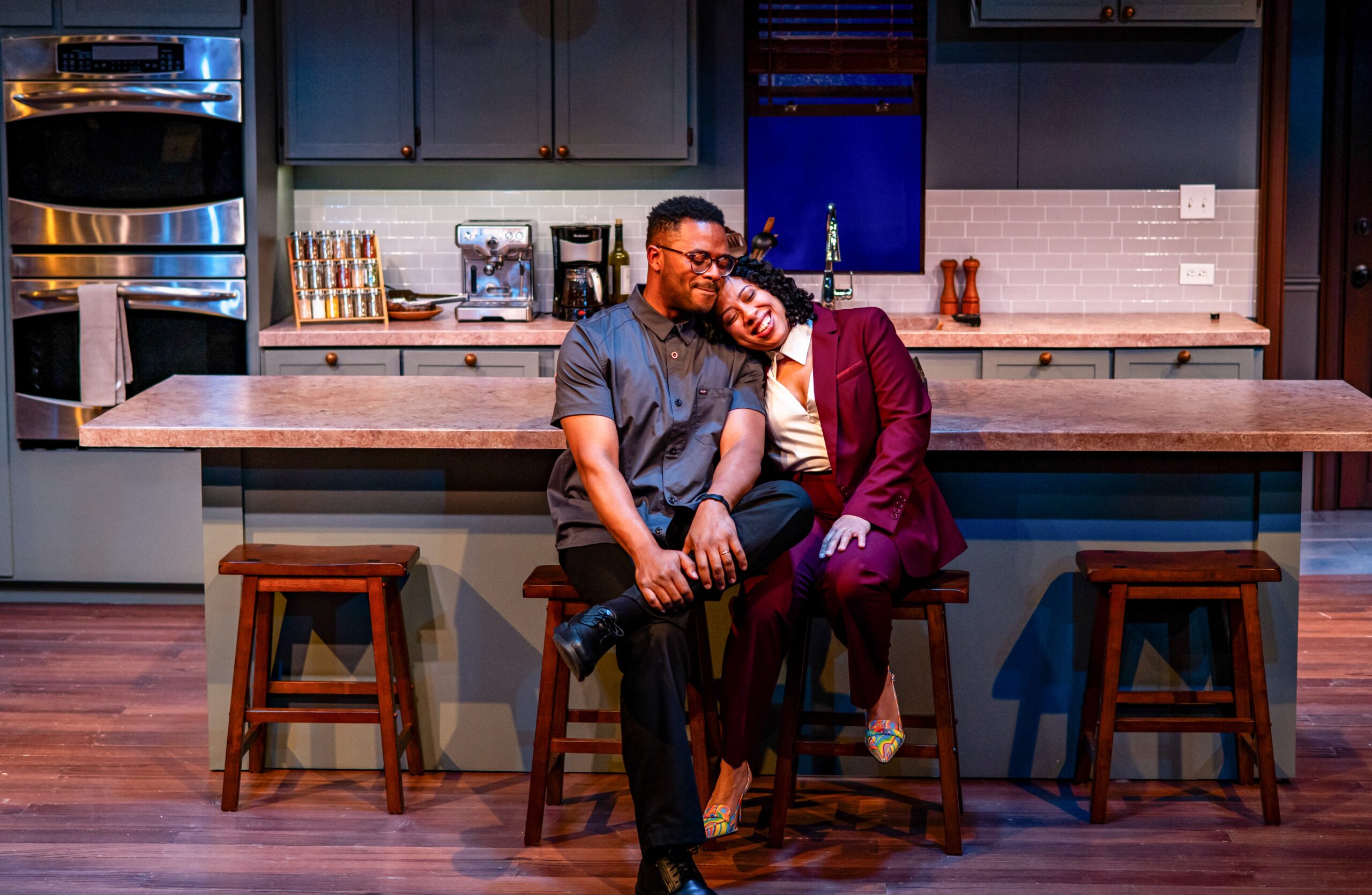
RC: Ew, yeah the millennial gray. New neighbors also bring new problems. When a block party interrupts Aisha’s husband Travis’ (Newton Buchanan) sleep, he decides to lodge a noise complaint using an app called the Hood — a clever Ijames invention that makes “this narc s— so pleasant,” Carmen says — and the cops come in a harrowing scene portrayed through anxiety-inducing lighting design thanks to Shannon Zura. It’s later revealed that the event was an annual community gathering Earl organized.
MB: That’s also something I hear about. The tension between longtime residents who have longstanding traditions and newer residents who don’t have an understanding of that history or what it means to the community.
RC: Or who are scared to even talk to their neighbors. Earl makes the point that Travis could have simply stepped outside and asked them to turn it down. It’s even more damning because Aisha’s whole job is to “help the franchise speak the language of the community.” Earl criticizes her by saying, “I expect more from my people.” As universal as it is, Good Bones isn’t a stereotypical representation of gentrification because these aren’t white newcomers in a historically Black community, which makes this portrayal richer and thornier.
Newton Buchanan (Travis) and Taysha Marie Canales (Aisha) in ‘Good Bones,’ running at the Arden Theatre through March 22.
Nuance and personal experience
MB: Speaking of thorny, the play also touches on what can be development’s double-edged sword. Investment boosts existing residents’ property values, but then everything gets more expensive, from property taxes to groceries. Earl mentions at one point that a Whole Foods replaced a neighborhood spot.
RC: That frustration shined through in DeShields’ strong performance, too. The actor has had his own direct experiences with gentrification here after growing up in South Philadelphia and seeing his neighborhood renamed to Point Breeze. I think that personal pain and loss bolstered his take on Earl, who reminds Aisha that transformation to some means elimination for others. Aisha, on the other hand, primarily focuses on her memories of violence and trauma that she experienced, saying that they deserved better. Canales delivers a layered and emotional speech that underscores how these conversations can be conflicting and difficult.
MB: I went into the play thinking there would be a clear resolution, but there really wasn’t one. And that speaks to the complexity of the subject matter.
RC: That’s also a testament to the play’s strengths — it succeeds in getting audiences to think critically about a nuanced topic. Hopefully that means they’ll actually talk to their neighbors, too.
“Good Bones” runs through March 22 at the Arden Theatre, 40 N. Second St., Phila., 215-922-1122 or ardentheatre.org.Runtime: 1 hour and 45 minutes (no intermission).