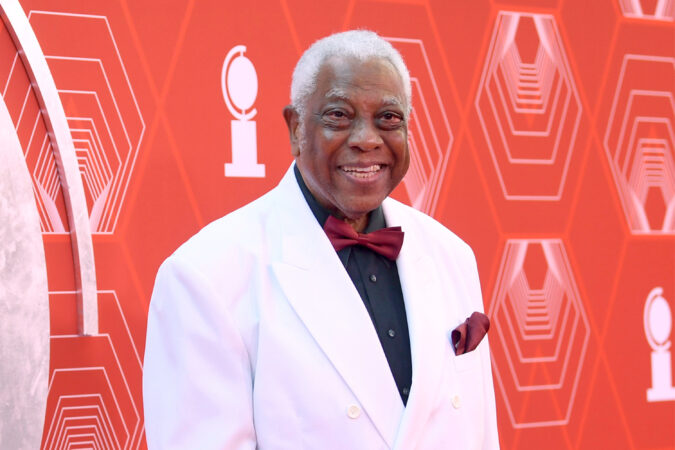
NEW YORK — Woodie King Jr., an actor, director, and producer who founded the New Federal Theatre to give voice and employment to Black playwrights, actors, directors, designers, and young people entering the American theater, has died. He was 88.
His off-Broadway theater company said Mr. King died Thursday at Weill Cornell Medical Center in New York City of complications from emergency heart surgery.
“We have lost a giant,” said Emmy Award-winning actor and educator Erin Cherry on Instagram. “I am here because of Woodie King Jr. My very first introduction to the Black theater scene was the play ‘Knock Me a Kiss’ produced by New Federal Theatre. It changed my life. I’m forever grateful.”
The New Federal Theatre produced such key works as Black Girl by J.E. Franklin, The Taking of Miss Janie by Ed Bullins — which jumped to Lincoln Center and won the Drama Critics Circle Award — and For Colored Girls Who Considered Suicide When the Rainbow is Enuf by Ntozake Shange, which landed on Broadway in 1976 and was nominated for the best new play Tony Award.
The New Federal Theatre was a springboard for many playwrights, including Charles Fuller — later to win the Pulitzer Prize for A Soldier’s Play — who premiered two plays — In My Many Names and Days and The Candidate. David Henry Hwang premiered The Dance and the Railroad at the New Federal and would later win the Tony for M. Butterfly.
Some performers who got early career boosts thanks to the company include Chadwick Boseman, Debbie Allen, Morgan Freeman, Phylicia Rashad, Denzel Washington, LaTanya Richardson Jackson, Samuel L. Jackson, and Issa Rae.
Mr. King was born in Alabama, raised in Detroit, and earned his bachelor’s degree from Lehman College and later his master’s from Brooklyn College. He served as the cultural director of Mobilization for Youth for five years, before founding New Federal Theatre in 1970.
Mr. King is survived by his wife, Elizabeth Van Dyke, and his three children, Geoffrey King, Michael King, and Michelle King Huger, whom he shared with ex-wife Willie Mae Washington, as well as five grandchildren.
Tyler Fauntleroy, an actor who has toured in Hamilton, took to Instagram to recall working at the New Federal in 2019 on a show called Looking for Leroy that would change his career. “His belief in me came at a time when my own was at an all-time low. What a champion he was for Black artists. It was an honor to witness. Thank you, sir and rest easy.”
When Opera Philadelphia announced a new multiauthored work titled Complications in Sue, one was right to ask, “What, exactly, is it?” The piece was written in less than a year and is still in progress, so answers to that question might not be specific until the Academy of Music dress rehearsal.
“Dress rehearsal if we’re lucky! Try opening night,” said general director and president Anthony Roth Costanzo. “Opera is in a constant state of emergency.”
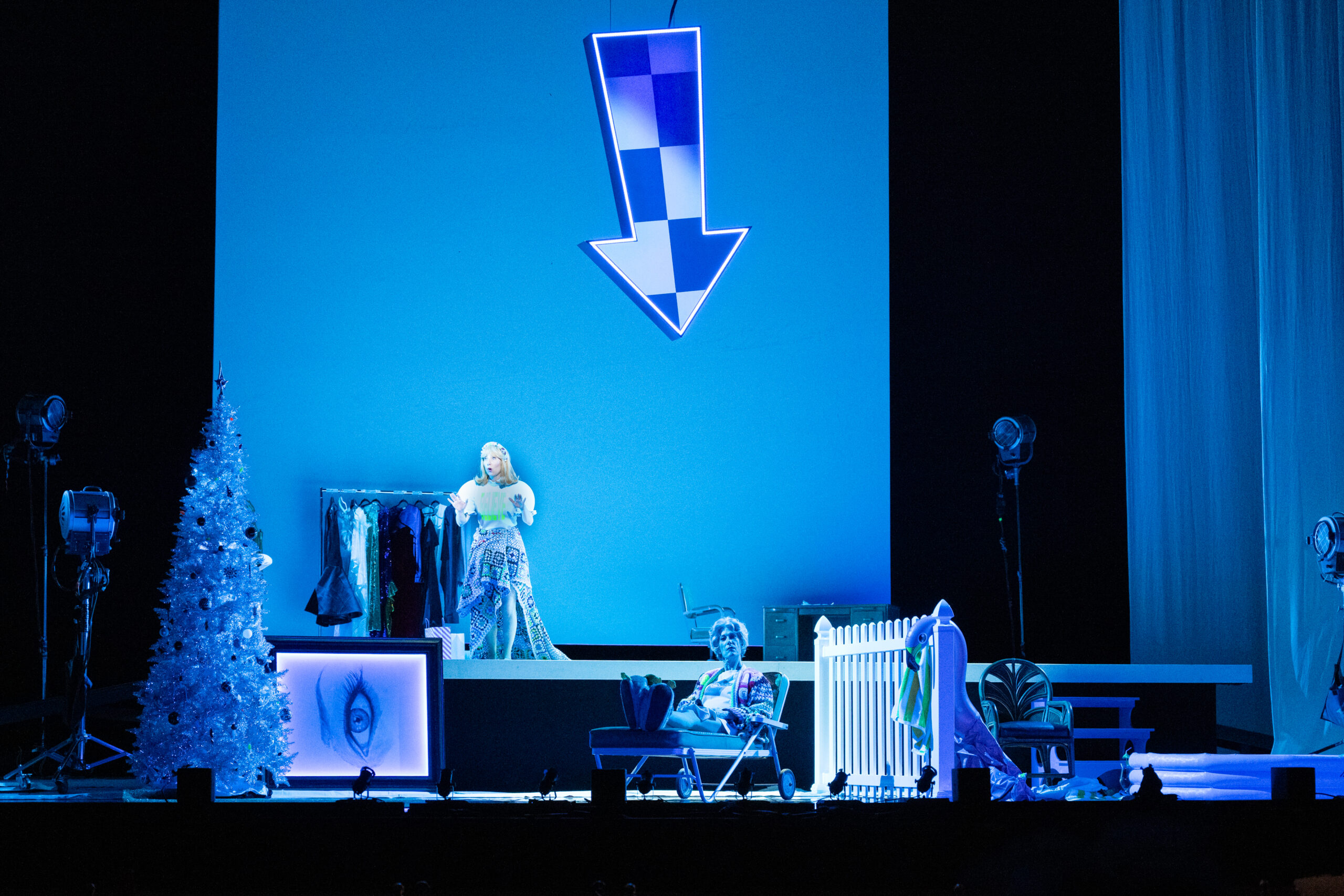
Created to commemorate the company’s 50th anniversary, Complications in Sue opens Wednesday with 10 composers commissioned to write eight-minute scenes. These collectively encompass the century-long life of a mythical everywoman named Sue.
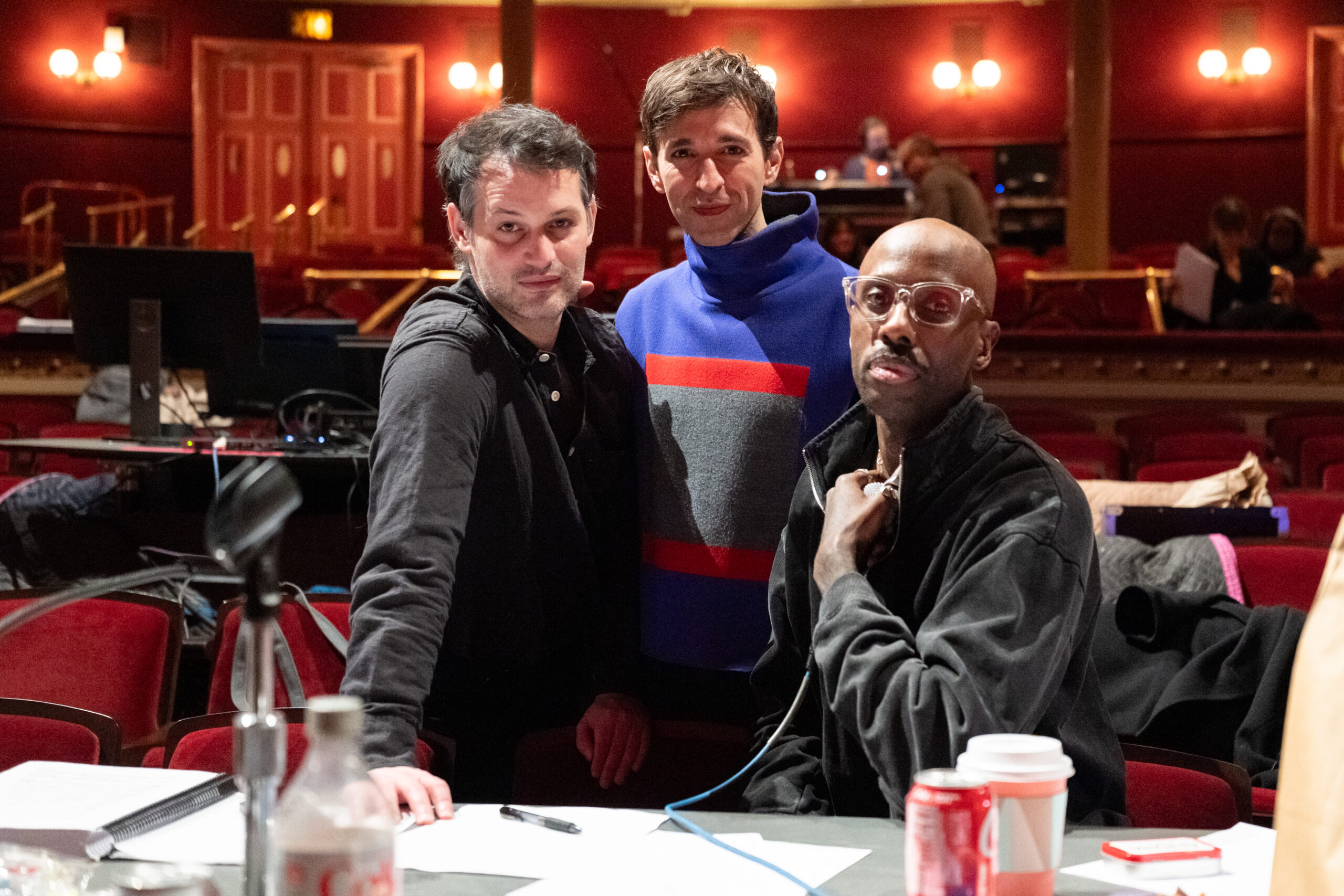
(From left) Director Zack Winokur, producer Anthony Roth Costanzo, and director Raja Feather Kelly pose for a portrait before the first dress rehearsal at the Academy of Music in Center City Philadelphia on Saturday, Jan. 31, 2026. The venue will be showing the new opera “Complication in Sue” from Feb. 4-8.
She saves Santa Claus from an existential crisis in a nonbelieving world, fends off aggressive shopping algorithms that tell her who she is, and deals with more typical stuff like a lonely ex-husband. Forget any typical narrative. It’s what librettist Michael R. Jackson calls “a fantasia … with some real people but some abstractions.”
That last part is a Jackson specialty — as seen in his much-awarded fantasy-prone Broadway hit A Strange Loop. What it all means, will be in the mind of the beholder. “The audience isn’t going to be told what to think or how to feel on this strange little roller-coaster ride,” he said.
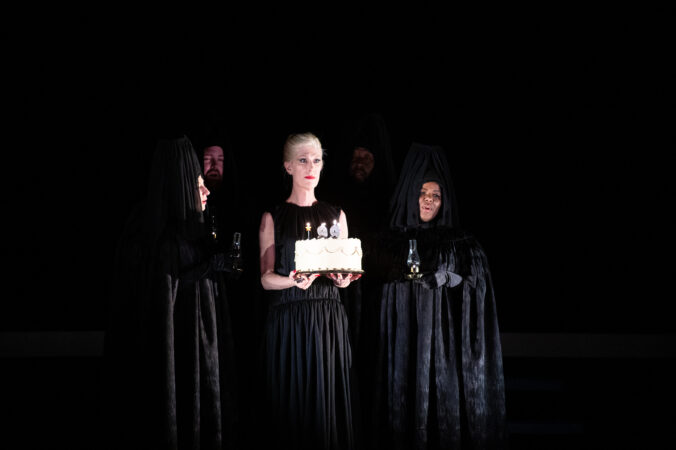
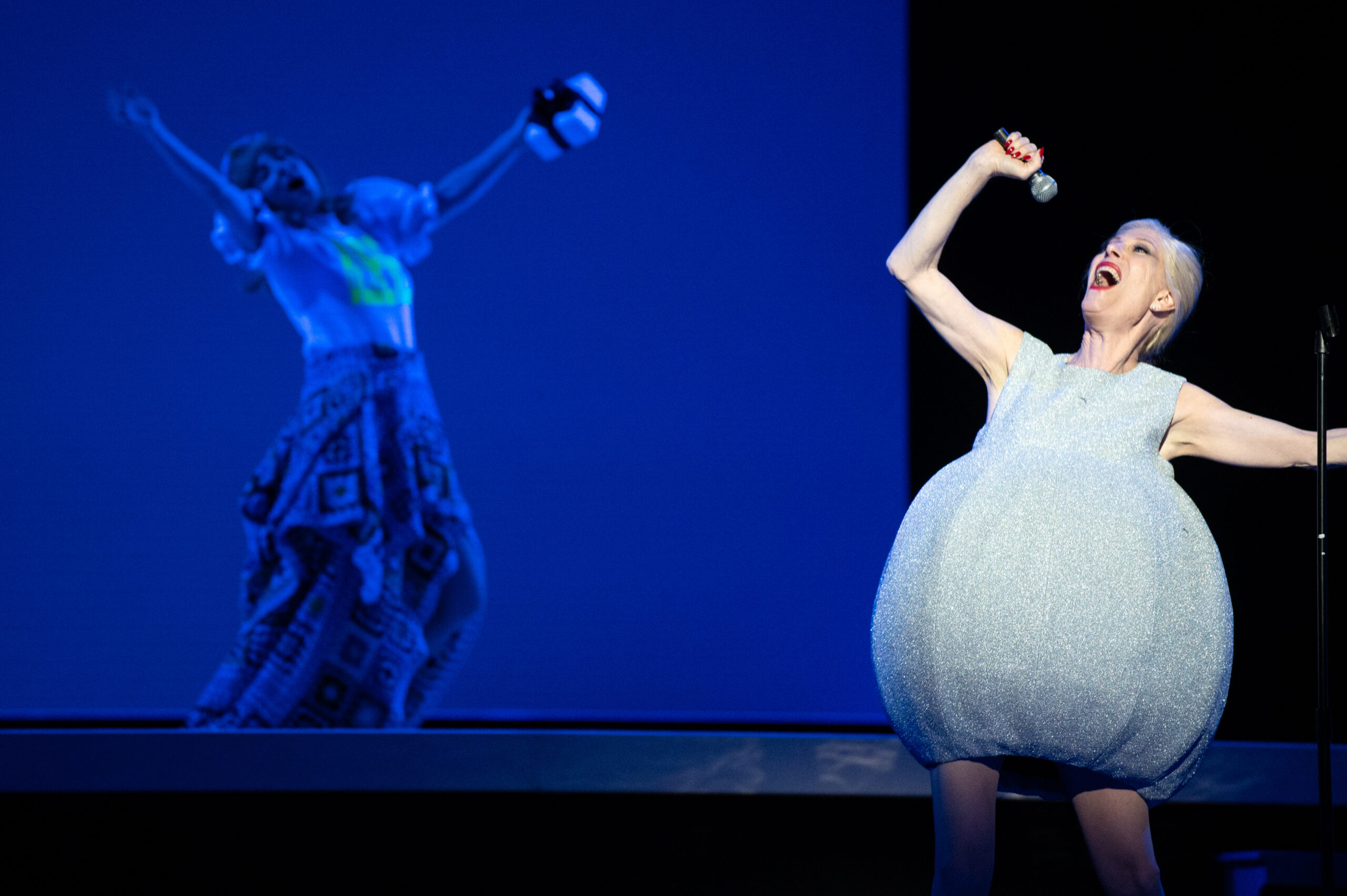
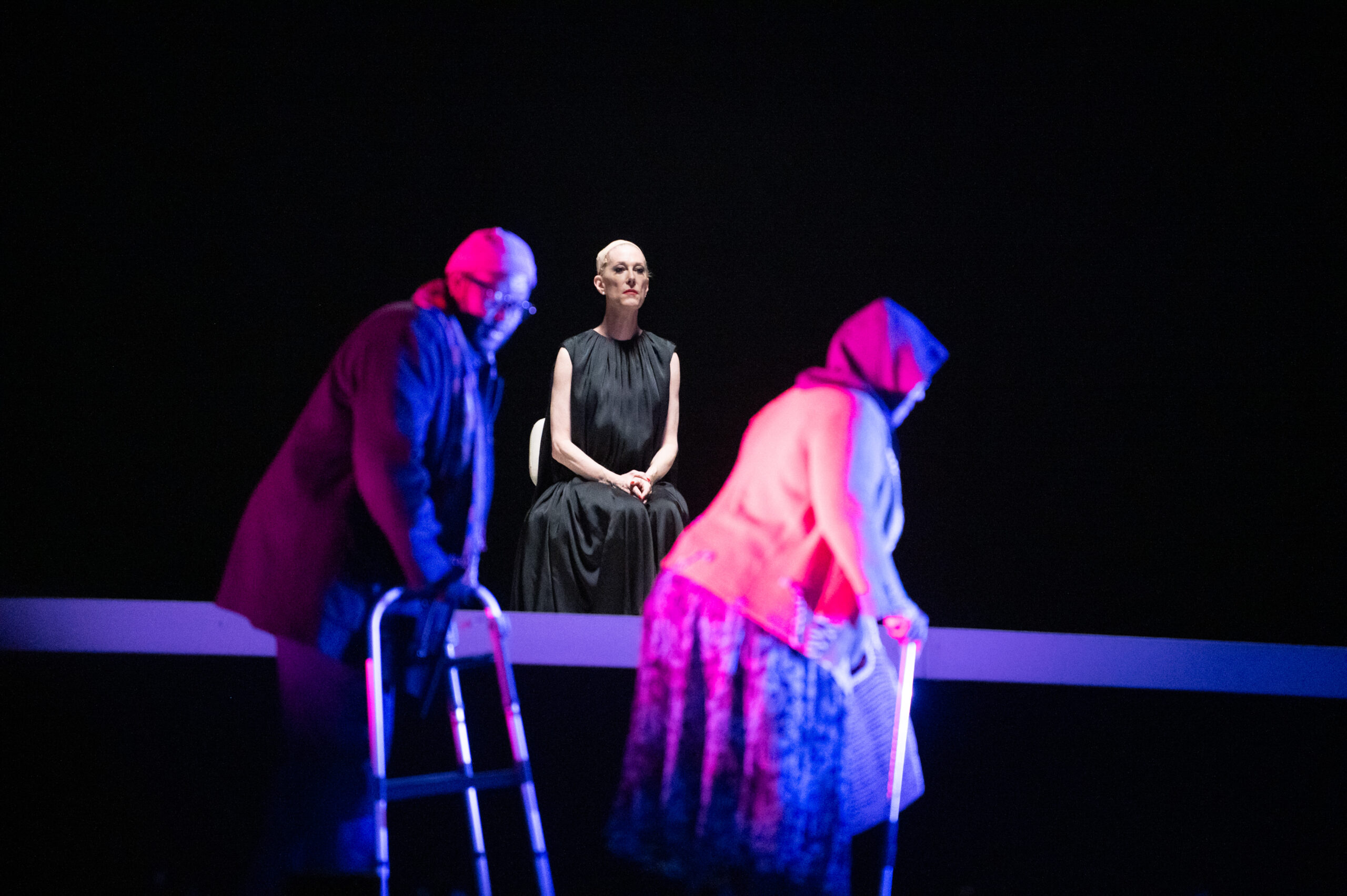
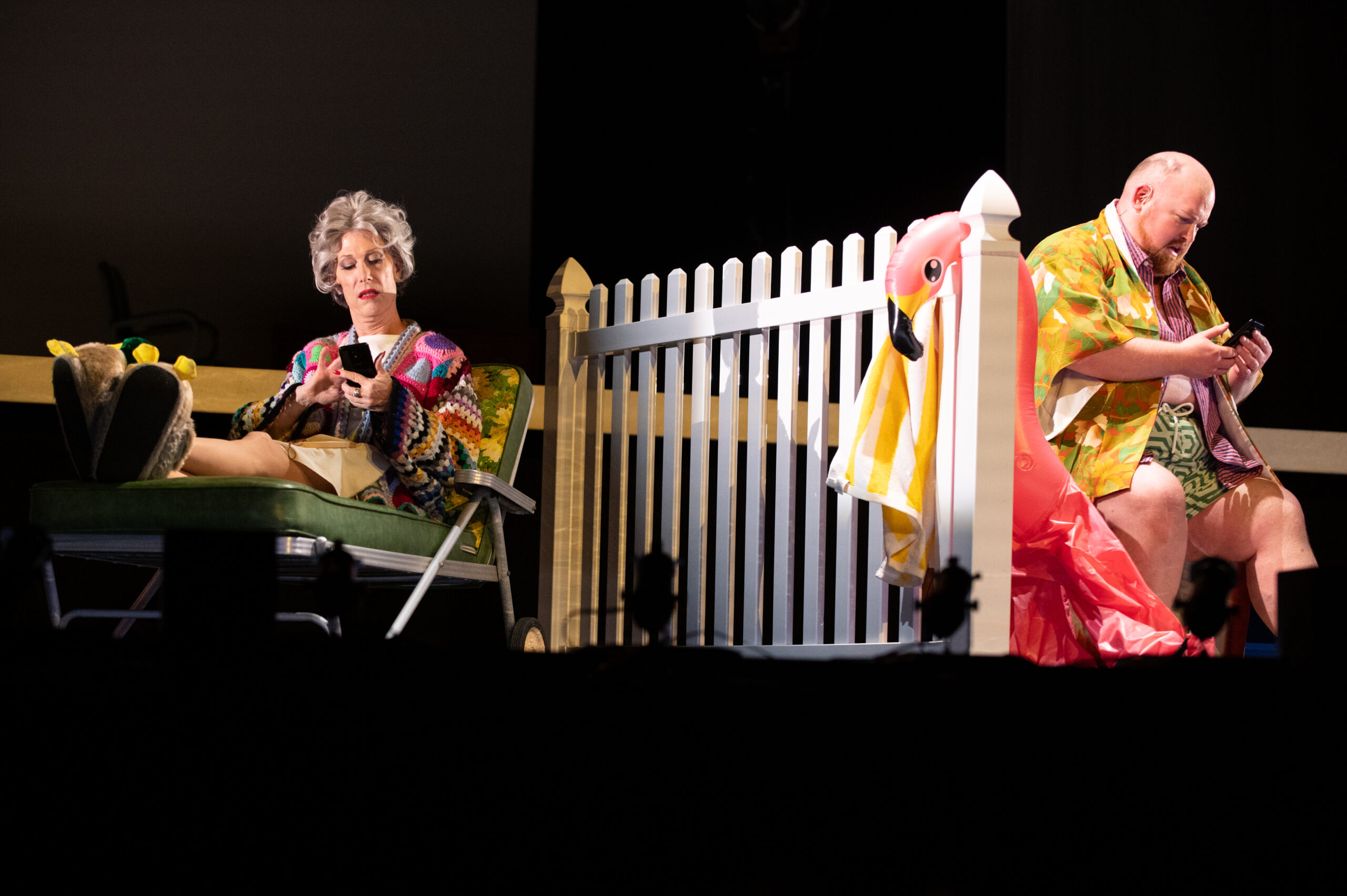
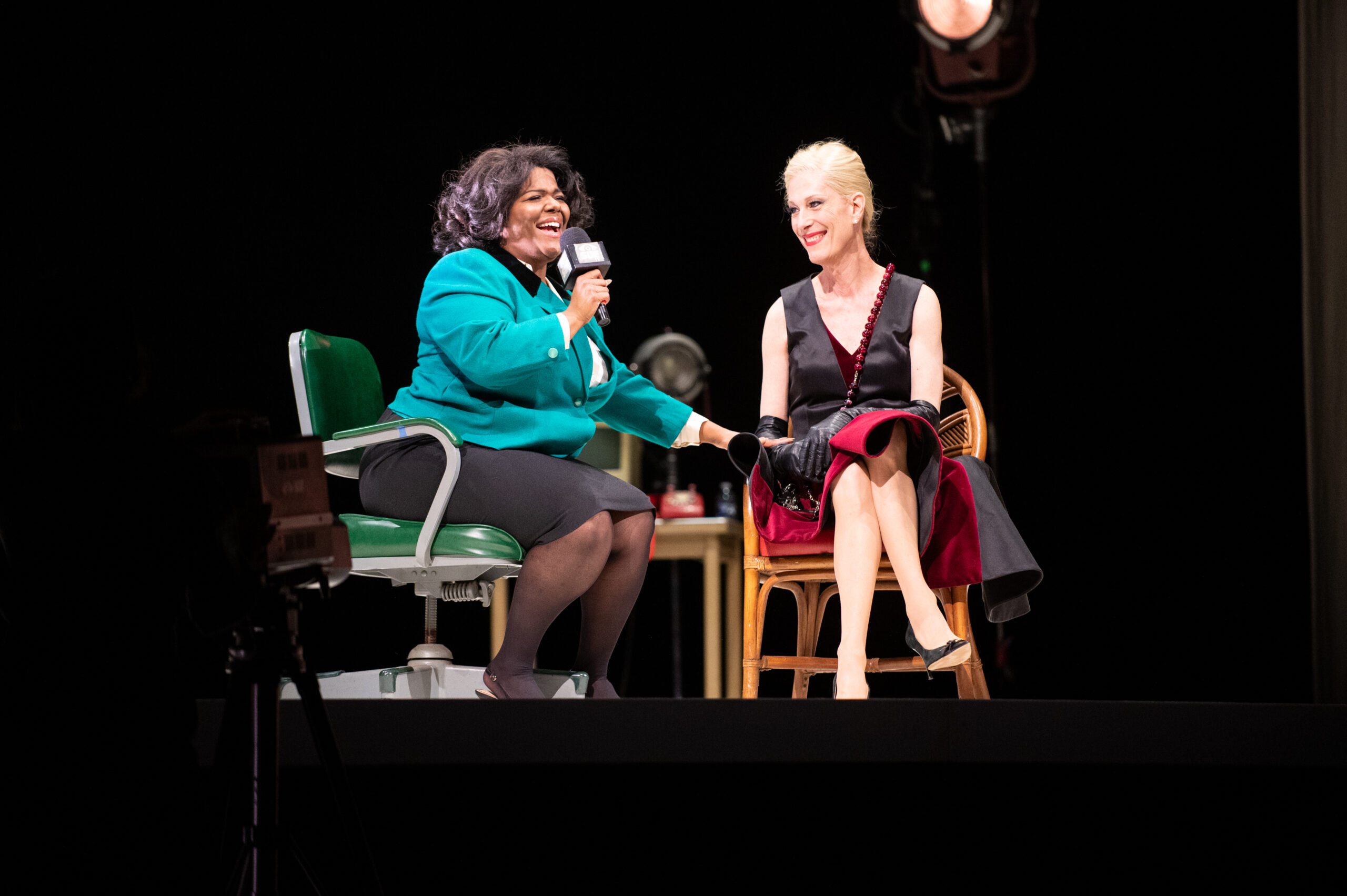
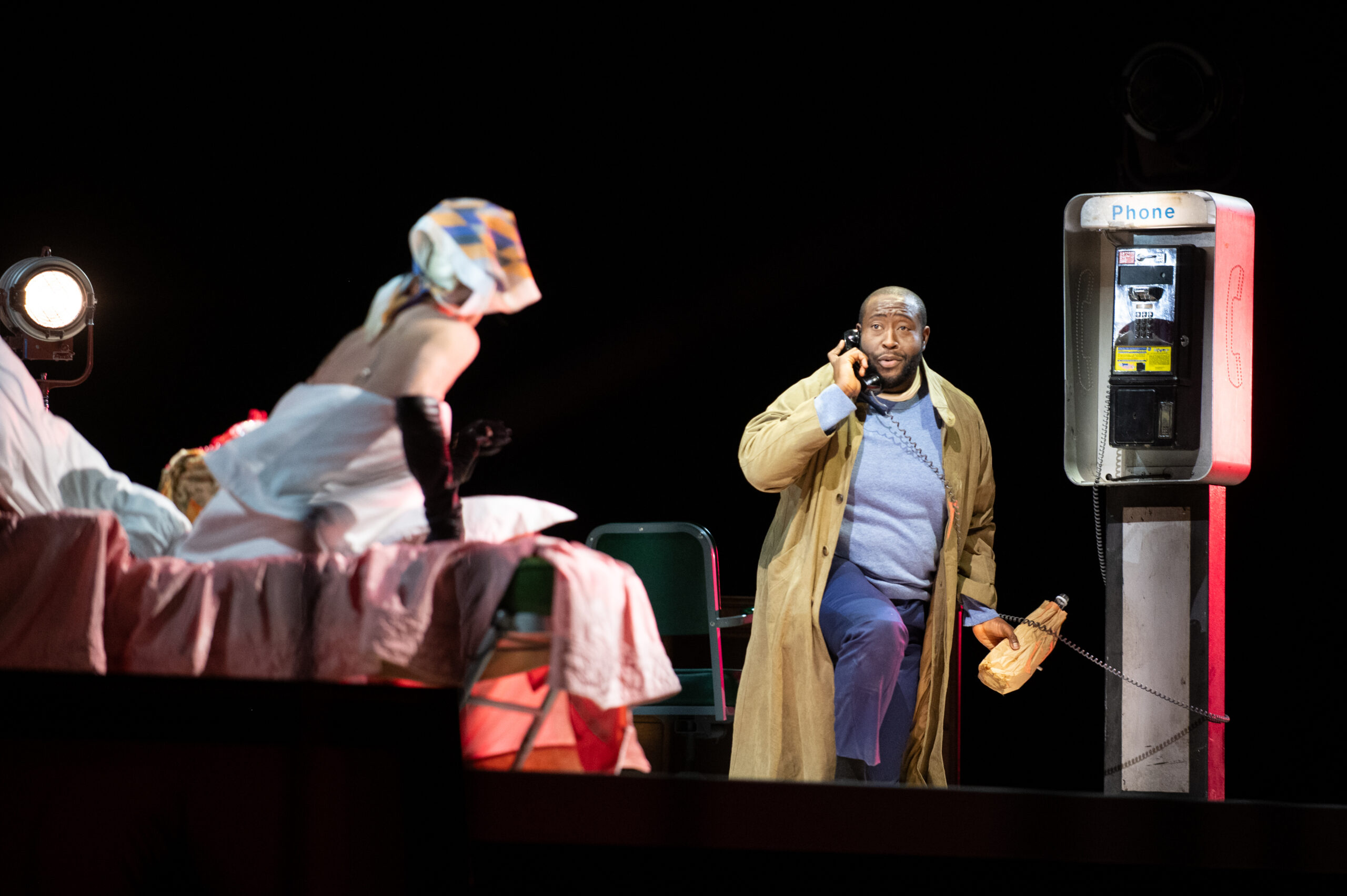
Nicky Spence performs in “Complications in Sue” during the first dress rehearsal at the Academy of Music in Center City Philadelphia on Saturday, Jan. 31, 2026. The performance tells the story of one woman’s existence across 10 decades, each chapter scored by a different composer.
At the center of it all — sort of, at times — is the high-personality cabaret star Justin Vivian Bond, best known as part of the comedy duo Kiki and Herb, but she has enjoyed new respect having been named a 2024 MacArthur Fellow. Bond suggested the title and rough framework of Complications in Sue but has become an unintentionally mysterious factor.
Kiera Duffy (left) and Justin Vivian Bond perform in “Complications in Sue” during the first dress rehearsal at the Academy of Music in Center City Philadelphia on Saturday, Jan. 31, 2026. The original libretto is based on an idea by Bond, and is playwright Michael R. Jackson’s operatic debut.
She plays Sue, speaking and singing at times, functioning within the whole as “a leitmotif … an energy force that tracks through the whole piece,” said Jackson.
But not a typically operatic force.
“Vivian has an operatic-scale charisma … She is very funny, very surreal, and very herself,” said Costanzo.
It all sounds abstract and ambiguous to those who don’t know Bond’s work. But here is what is known: She will look fabulous in a wardrobe designed by JW Anderson (creative director of Christian Dior), not surprising since Bond, who is trans, has described her brand of social commentary as “glamour resistance.”
Justin Vivian Bond performs in “Complications in Sue” during the first dress rehearsal at the Academy of Music in Center City Philadelphia on Saturday, Jan. 31, 2026. The original libretto is based on an idea by Bond, and is playwright Michael R. Jackson’s operatic debut.
Bond has been vague about what she would do within the piece. She has also been strangely absent.
At a Jan. 16 workshop presentation by Works & Process in New York, Bond was reportedly present but didn’t participate. Rather than being in Philadelphia during down-to-the-wire rehearsal weeks, she was in Paris during Fashion Week Haute Couture Spring (Jan. 26-29). Reportedly, she has stayed in close touch with Costanzo — as he continues to find a midpoint between the majestic tradition of creating opera for the ages and the speedy topicality of the highly collaborative “devised theater.”
Justin Vivian Bond (left) and Nicky Spence perform in “Complications in Sue” during the first dress rehearsal at the Academy of Music in Center City Philadelphia on Saturday, Jan. 31, 2026. The opera was directed by Zack Winokur and Raja Feather Kelly.
Opera Philadelphia has previously worked with the drag cabaret group the Bearded Ladies but not on the scale of an Academy of Music production. Multiauthored satirical works have occupied a small but notorious niche on the larger cultural landscape, such as the Jean Cocteau-conceived 1920s ballet The Wedding Party on the Eiffel Tower and, in theater, the Manhattan Theatre Club’s 1988 Urban Blight.
But the 10-composer count of Complications in Sue may be a record of sorts and one that was engineered in a singular way.
The lineup could be called “who’s cool in (the broadest definition of) classical music,” including the Opera Philadelphia’s composer in residence Nathalie Joachim, Errollyn Wallen from London, Cécile McLorin Salvant from the jazz world, Metropolitan Opera vet Nico Muhly, and everything vet Missy Mazzoli.
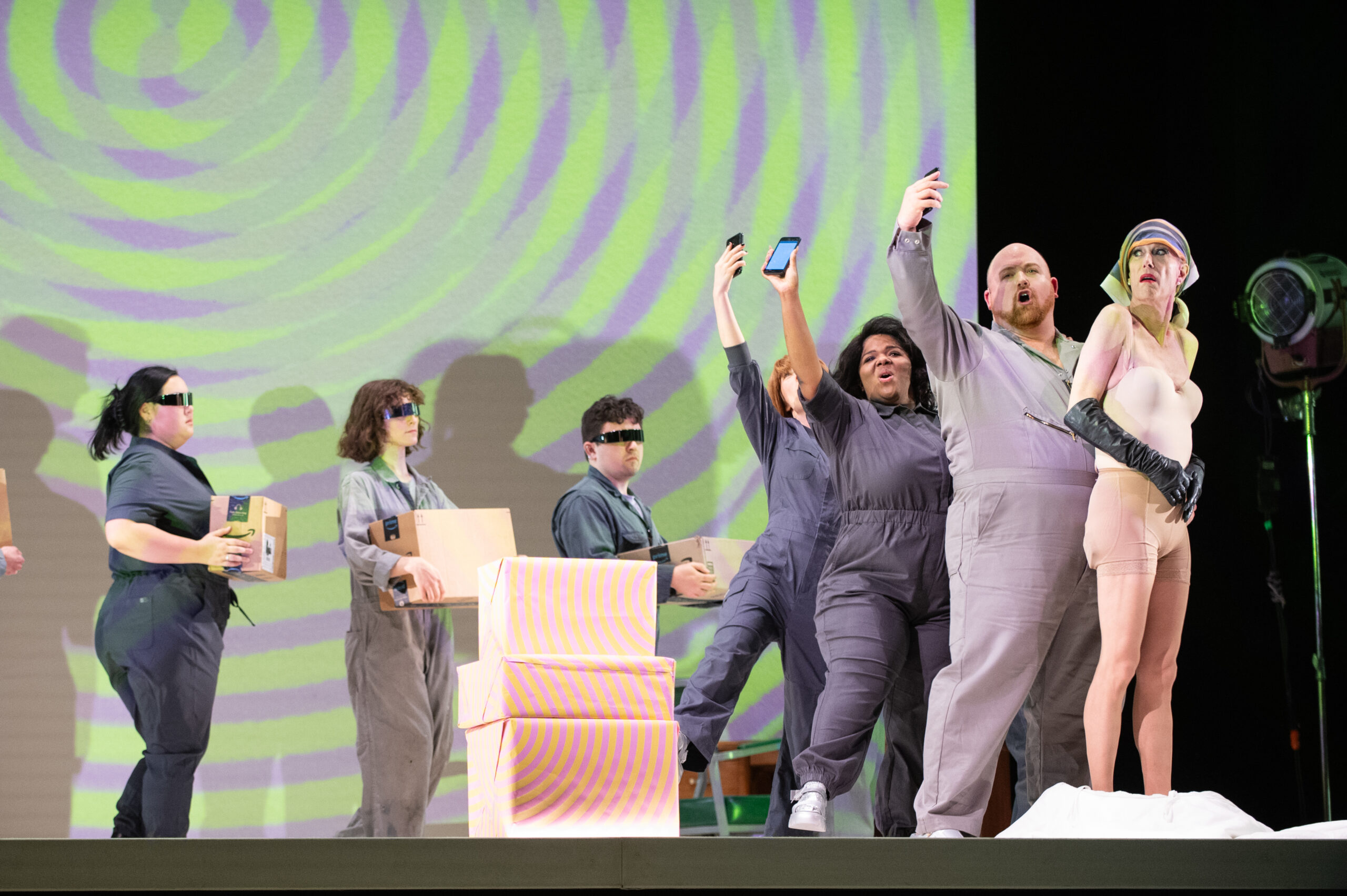
The cast of “Complications in Sue” performs during the first dress rehearsal at the Academy of Music in Center City Philadelphia on Saturday, Jan. 31, 2026. The performance tells the story of one woman’s existence across 10 decades, each chapter scored by a different composer.
Had Costanzo asked any one of them for a full-length opera, they’d have probably said “no” to the four- to five-year commitment. But with eight minutes — and a chance to work with a richly talented creative team — “how could they say no?,” he wondered.
When assigned to their individual scenes, the composers didn’t know what the others were doing — which meant more freedom for those already writing grand operas (such as Mazzoli) and attractive to those newer to the field such as Salvant (“Cécile is really curious about opera,” said Costanzo).
Rehanna Thelwell (left) and Justin Vivian Bond perform in “Complications in Sue” during the first dress rehearsal at the Academy of Music in Center City Philadelphia on Saturday, Jan. 31, 2026.
Up-and-coming, Philadelphia-raised Dan Schlosberg, 38, who grew up in the Academy of Music nosebleed seats and now works with the radically revisionist, New York-based Heartbeat Opera, had already written a few student operas but ran with the grander resources available at Opera Philadelphia.
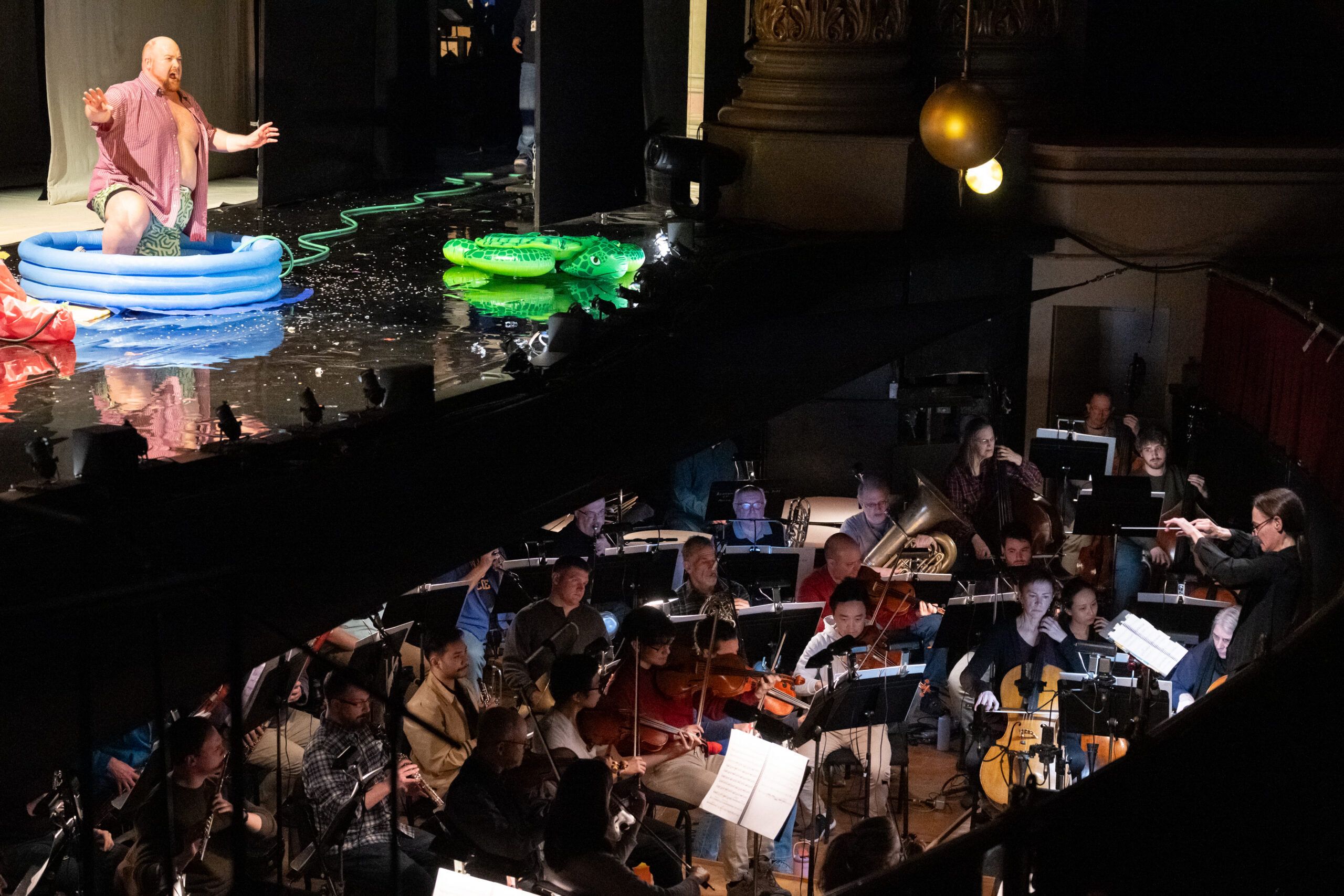
His segment about Sue’s ex-husband going off the rails is a bit of a mad scene. “I wanted to follow his mental journey … the music goes from contemporary to big-band jazz to Broadway-like torch songs and everything in between,” Schlosberg said. “I wanted to harness the full orchestra, tons of brass … percussion … sirens … as many colors as I could.”
The cast of “Complications in Sue” performs during the first dress rehearsal at the Academy of Music in Center City Philadelphia on Saturday, Jan. 31, 2026.
Other composers include Andy Akiho, Alistair Coleman, Rene Orth, and Kamala Sankaram.
The onstage team includes soprano Kiera Duffy, who has fearlessly starred in new works such as Mazzoli’s Breaking the Waves, as well as the edgy, in-demand U.K.-based tenor Nicky Spence. His reason for coming on board was simple: Anthony Roth Costanzo.
“I took the call because it was him,” Spence said.
Costanzo feels that he has hit the lottery with the composers, though one wonders if local audiences are ready for a presence as fierce as Bond.
“Philadelphia is a fierce town,” Costanzo assured.
Justin Vivian Bond (left) and Nicholas Newton perform in “Complications in Sue” during the first dress rehearsal at the Academy of Music in Center City Philadelphia on Saturday, Jan. 31, 2026. The venue will be showing the new opera “Complication in Sue” from Feb. 4-8.
Certainly, he has brought much diversity to mainstream Philadelphia opera venues, especially on the LGBTQ+ front. Amid the shifting political climate, might there be pushback? That’s likely, he admits.
“But Opera Philadelphia is for everyone.”
“Complications in Sue” plays 7 p.m. Feb. 4, 7 p.m. Feb. 5, 8 p.m. Feb. 6, and 2 p.m. Feb. 8. Academy of Music, 240 S. Broad St., Philadelphia. All tickets are Pick Your Price, starting at $11. operaphila.org, 215-732-8400
In December, former Philadelphia Art Museum director and CEO Sasha Suda had pushed for a trial with jury to settle her wrongful-termination lawsuit against her former employer. The Art Museum argued for arbitration.
On Friday, Common Pleas Court Judge Michael E. Erdos settled the question with a ruling — in favor of arbitration. Erdos directed Suda to submit her claim against the museum in arbitration, per the terms of her employment contract.
The museum in a statement Saturday said that it was pleased with Erdos’ ruling “reaffirming the requirement to arbitrate as previously agreed to in the employment agreement, which is the best use of the resources of all — including the court’s.” The statement added that the museum “will now return to our focus on the museum’s mission of bringing art and inspiration to the people of Philadelphia.”
Suda’s lawyer, Luke Nikas of Quinn Emanuel Urquhart & Sullivan, said Saturday that “the court’s procedural, one-sentence decision requiring arbitration has no relevance to the outcome of this case.”
“We are not surprised that the museum wants to hide its illegal conduct in a confidential arbitration,” he said, “but we will hold the museum accountable wherever the case is heard.“
Sasha Suda, with the Art Museum’s Williams Forum in the background, Jan. 30, 2024.
Suda filed her lawsuit Nov. 10, less than a week after being fired by the museum, arguing that the dismissal was “without a valid basis.” The museum responded by calling the suit “without merit.”
Tensions between Suda and the board over authority in running museum matters were cited in court filings. The former director said she was hired in 2022 to “transform a struggling museum, but was later terminated when her efforts to modernize the museum clashed with a small, corrupt, and unethical faction of the board intent on preserving the status quo.”
In a court filing, the museum responded by saying Suda was dismissed after an investigation determined that she “misappropriated funds from the museum and lied to cover up her theft.”
Suda was let go Nov. 4, three years into a five-year contract. With her lawsuit, she sought two years’ pay, as well as “significant damages for the museum’s repeated and malicious violations of the non-disparagement and confidentiality clauses in her employment agreement, and an injunction enforcing the confidentiality and non-disparagement terms of her agreement,” Nikas said.
Less than three weeks after Suda’s dismissal, the museum named Daniel H. Weiss — who formerly led the Metropolitan Museum of Art — its new director.
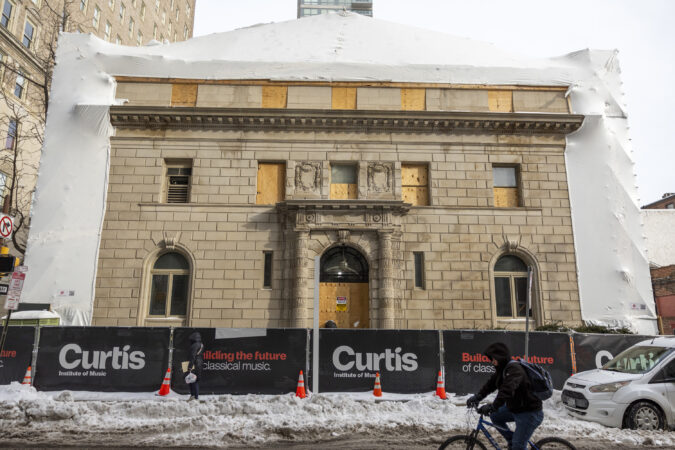
A temporary shrink-wrap covering has been draped over the Art Alliance building as damage is being assessed. The Curtis Institute of Music, which owns the historic, jewel-box structure on the southeast edge of Rittenhouse Square, is in the early stages of dreaming about the building’s eventual use.
Curtis had only recently taken over the Art Alliance, when, in the early hours of July 4, a blaze broke out that took more than 120 firefighters to extinguish. The building’s roof was largely destroyed, and other portions of the building were severely damaged by fire, smoke, and water.
The fire marshal categorized the cause of the fire as undetermined, and Curtis isn’t expecting to ever arrive at an answer.
“We haven’t thought much about it in a few months because it just hasn’t come up,” said Curtis chief financial officer Chris Dwyer, who is overseeing the building rehabilitation process. “What I’m concluding is that the damage is so bad that there’s no answer with a capital A.”
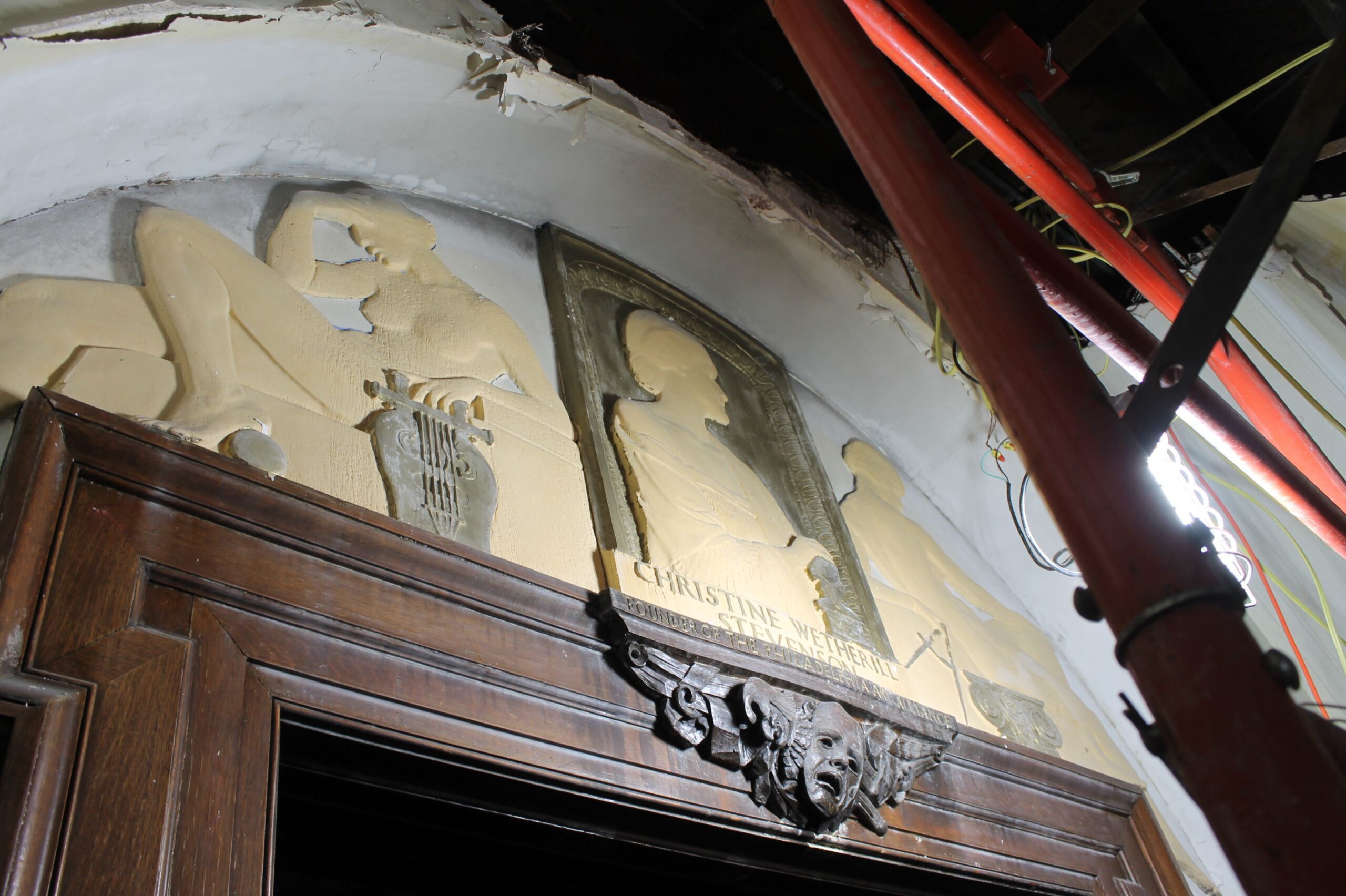
At the Art Alliance building on Rittenhouse Square, a detail of a memorial to Alliance founder Christine Wetherill Stevenson, on the first floor, Jan. 27, 2026. The building, owned by the Curtis Institute of Music, was damaged in a fire early on the morning of July 4, 2025.
At the time of the fire, Curtis was overseeing modest repairs and cleaning and transferring archival materials from the building to other institutions, with an eye toward being able to host a few small community gatherings, a school spokesperson said.
A full damage assessment is due shortly, and while it’s already clear that some historic elements of the interior survived, it is not yet known whether others were lost.
“The whole front of the building is more intact than you might have thought, but [there is] definitely a lot of water and smoke damage,” Dwyer said. “But things like the staircase is still there, the stained glass window [on the south side] is essentially intact.”
Curtis aims to incorporate the surviving historic elements into the design of a rehabilitated building, he said.
What exactly the renowned music conservatory will use the 15,000-square-foot building for is an open question at the moment.
“We’re definitely constrained as far as teaching space, rehearsal space, performance space, and places to welcome the community,” said Dwyer.
Looking through charred timbers and a destroyed section of the attic and roof to the underside of the shrink-wrap covering over the Art Alliance building, Jan. 27, 2026.
The fire has left the configuration of the building slightly changed. The third floor included an attic that was destroyed by the fire, which raises the possibility that a reconstructed third floor will offer higher ceilings than before.
VSBA Architects and Planners has been engaged to assess damage and develop some preliminary concepts for eventual reuse. The firm designed Curtis’ nearby Lenfest Hall on Locust Street, and has a long track record in historic preservation work.
Though reuse plans are still developing, some public-use element seems likely, Dwyer said.
“We’d love for the building to be used year-round. We’d be open to partnerships and rentals and maybe some new imaginative public programming. So it’s definitely on our minds that it would be public and in some way, shape, or form.”
A detail on the first floor of the Art Alliance building on Rittenhouse Square shows some historic elements saved, others damaged, Jan. 27, 2026.
A timeline is far from certain, but if various elements fell into place quickly enough, the building — which was built in 1906 — could reopen by summer or fall of 2028, leaders say.
Curtis is aware of the place the Art Alliance holds in the hearts of many — “of all the nostalgia and the memories of the building that folks in the community cherish,” said Dwyer. “I was at a wedding there in the late ’90s. It seems like everyone has been in that building at least once.”
It has a “pretty special character that we think is possible to bring back.”
Curtis conducted a special fundraising campaign to acquire the building for $7.6 million from the bankruptcy estate of the University of the Arts. The conservatory and its insurance company are working toward arriving at a payout for the damage, but Curtis may want to do more to the building than simply what the insurance would cover.
That would mean more fundraising.
“It’s hard to see how we wouldn’t need to raise funds,” said Dwyer.
The Philadelphia Orchestra’s 127th season will be a mix of standard repertoire, newly minted scores, film music, family concerts, and guest artists new and familiar.
Emanuel Ax has been dubbed “artist of distinction” for the season, the orchestra said in its announcement of 2026-27 artists and repertoire unveiled Thursday. The much-loved pianist makes both recital and concerto appearances to celebrate his half-century-plus history with the orchestra.
Several big, ambitious pieces anchor the season in Marian Anderson Hall.
The Philadelphians will perform their first-ever complete Bach Christmas Oratorio. Following on the heels of last season’s Tristan und Isolde, the orchestra takes on Wagner’s Lohengrin for the first time. Beethoven’s Symphony No. 9 is on the roster, as are four Mahler symphonies — Nos. 1, 3, 5, and 7.
Soprano Elza van den Heever.
Lohengrin, like the Tristan, will be led by music and artistic director Yannick Nézet-Séguin.
“He’s always able to attract the people that are known for these roles,” Jeremy Rothman, chief programming officer for the Philadelphia Orchestra and Ensemble Arts, said of the cast of singers. Tenor Stanislas de Barbeyrac takes the role of Lohengrin, with soprano Elza van den Heever as Elsa.
“It’s the kind of thing that really only the Philadelphia Orchestra can do — attracting this talent with Yannick conducting with this level orchestra,” said Rothman.
Conductor Anthony Parnther leading the Philly Pops in a live orchestra-to-screen performance of “Star Wars: Return of the Jedi” at the Mann Center on Aug. 11, 2022.
Nézet-Séguin will lead 12 weeks of programs in 2026-27 (plus special concerts), with podium appearances by Esa-Pekka Salonen, Anthony Parnther, Dima Slobodeniouk (his debut here), Jane Glover, Fabio Luisi and others.
Marin Alsop, the orchestra’s principal guest conductor, leads three weeks of programs plus special concerts.
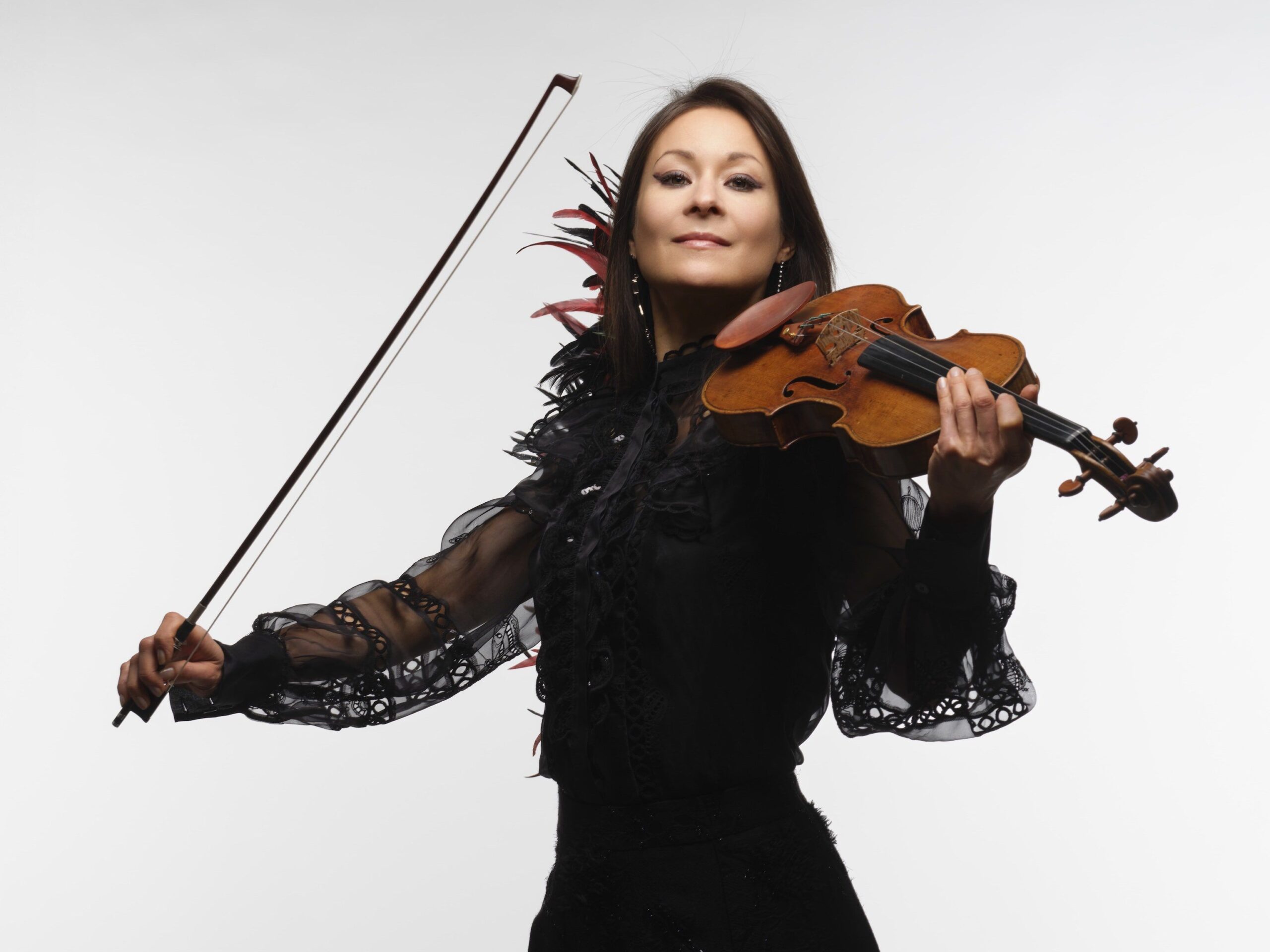
Violinist Arabella Steinbacher.
Guest soloists include pianists Yunchan Lim and Seong-Jin Cho in Rachmaninoff, Nikolaj Szeps-Znaider as both violinist and conductor, violinist Arabella Steinbacher in Beethoven, Yefim Bronfman in Schnitke and Liszt, Daniil Trifonov performing Prokofiev, and Yuja Wang in Beethoven.
The Spotlight recital series continues with artists like Yo-Yo Ma, Yuja Wang, and Itzhak Perlman.
Composer Gabriela Ortiz.
Among the premieres, or first performances by the Philadelphia Orchestra, are works by Reena Esmail, Julia Wolfe, Unsuk Chin, Anna Meredith, Erkki-Sven Tüür, Gabriela Ortiz, and Caroline Shaw.
Film music once again threads throughout the season, with live orchestra-to-screen presentations of Star Wars: A New Hope and Harry Potter and the Prisoner of Azkaban. Film concerts are often a sell-out for the orchestra, but they are also a lure for new audiences who later buy tickets to regular orchestra concerts, said Ryan Fleur, president and CEO of the Philadelphia Orchestra and Ensemble Arts.
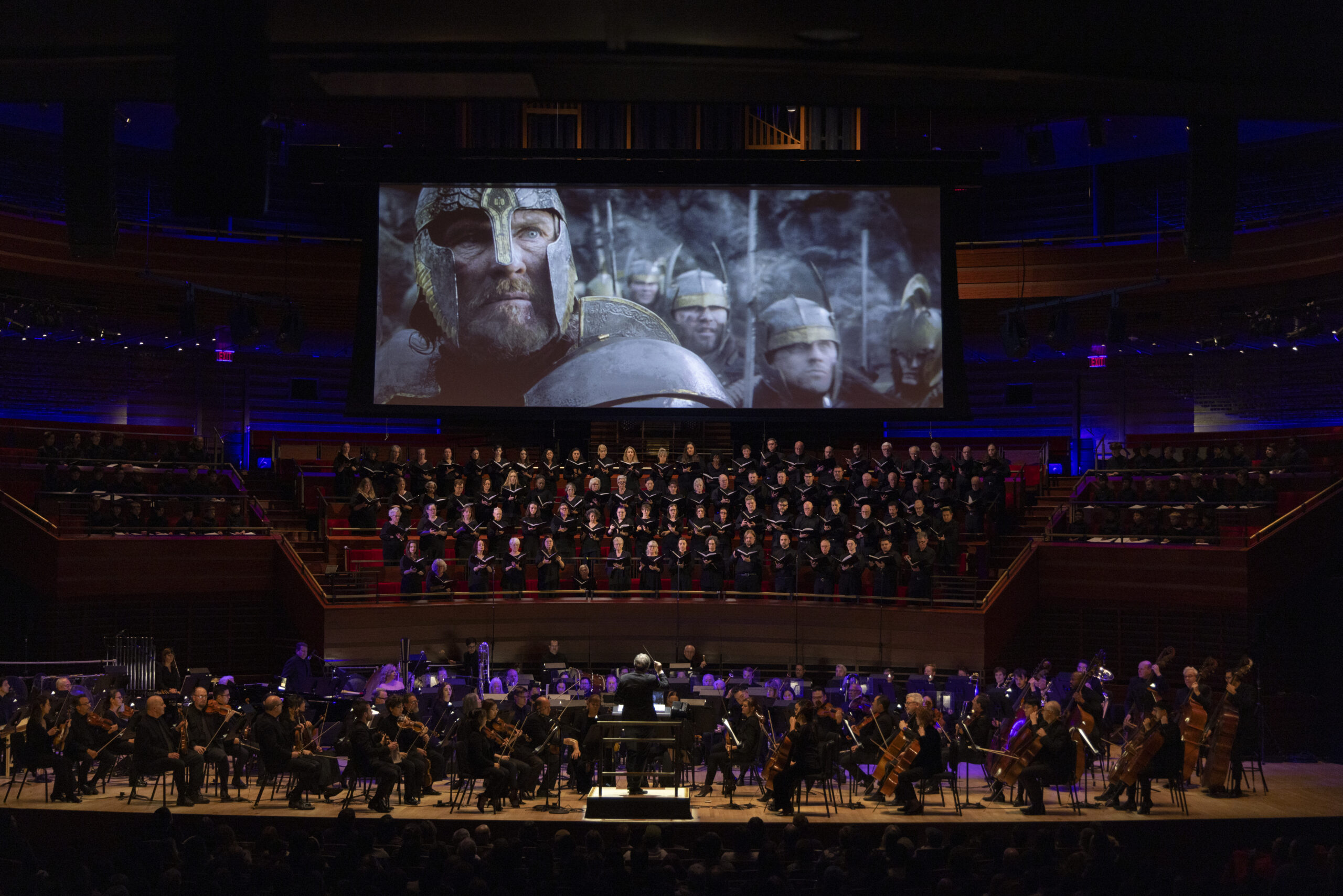
Howard Shore’s score for “Lord of the Rings: The Fellowship of the Ring” was performed live by the Philadelphia Orchestra and guest conductor Ludwig Wicki to a packed house at Marian Anderson Hall, Dec. 5, 2025.
If past statistics are a reliable guide, the orchestra will sell 6,000 tickets to next season’s Star Wars program. About 4,000 of those listeners will be people who had not bought an orchestra ticket previously. Of those, 20% will come back for a straight orchestra concert in the following year and a half.
“It’s pretty consistent data now that we’ve seen over the last few years,” said Fleur.
“Gateway” is the word the orchestra uses to describe concerts like those with film, or the shorter, informal Orchestra After 5 concerts, which also continue next season.
“It’s programs that are accessible as a first date,” said Fleur.
The season-wide average ticket price next season is increasing about 2.5% due to a higher share of premium, or special, programs, a spokesperson said.
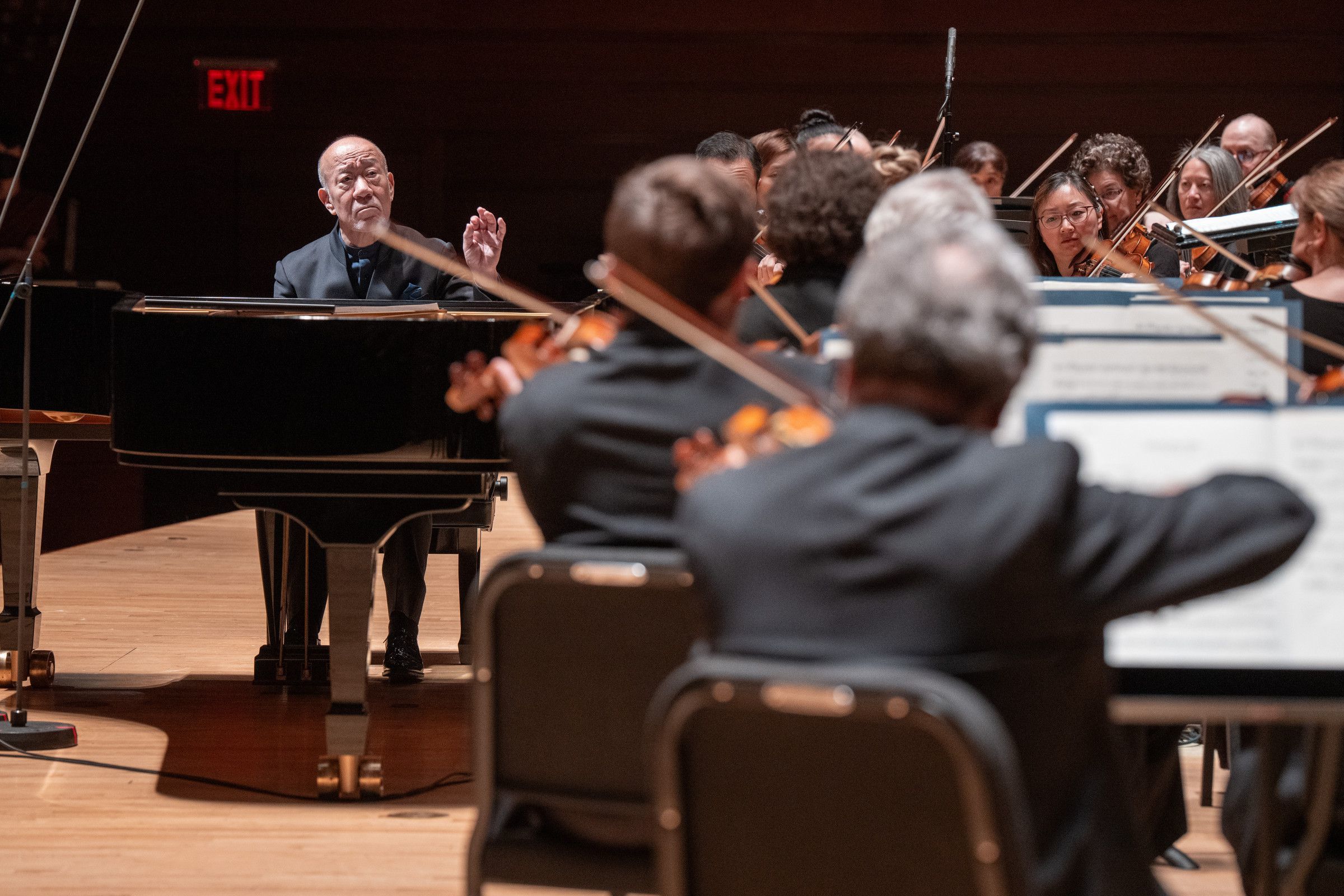
Composer and conductor Joe Hisaishi performing with the Philadelphia Orchestra at Marian Anderson Hall, June 26, 2025.
Another film-adjacent presence next year is Joe Hisaishi, the orchestra’s composer in residence best known for his work on the animated films of Hayao Miyazaki (My Neighbor Totoro, Castle in the Sky). Hisaishi’s Orbis is the very first work heard next season, prefacing Beethoven’s Symphony No. 9 on opening night, Sept. 24. In the spring, Hisaishi leads the world premiere of his own Piano Concerto with Alice Sara Ott as soloist on a program with his Concerto for Orchestra.
Rattle’s concerts, in January 2027, feature familiar territory: John Adams’ propulsive and emotional landmark work from 1985, Harmonielehre; Debussy’s La Mer; and the Ravel Daphnis et Chloé Suite No. 2.
Why these particular pieces?
“We didn’t have an in-depth discussion about it,” said Rothman. “When Simon wants to bring a program here, we trust him with what he knows [is] going to work really well with this ensemble.”
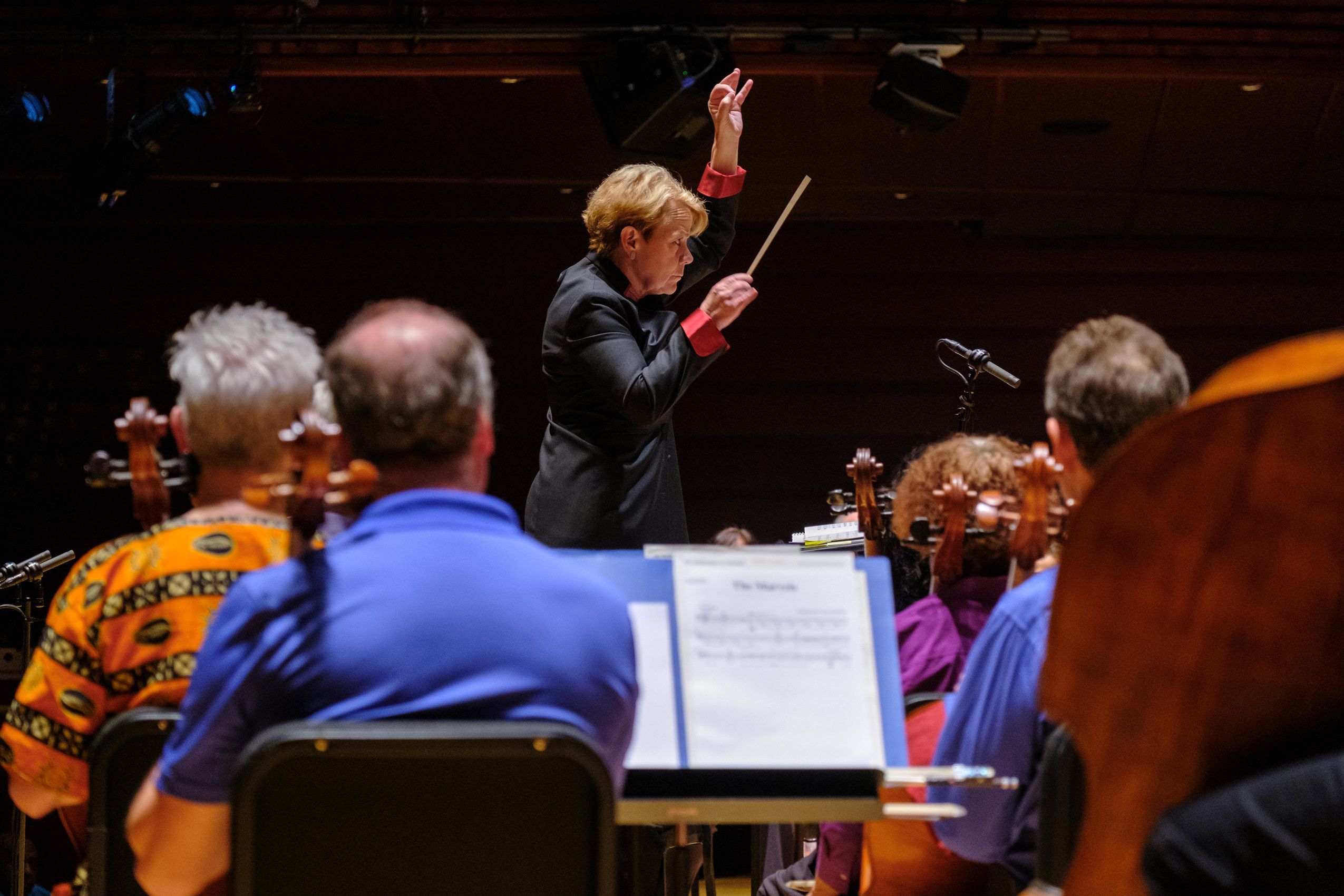
Marin Alsop conducting the Philadelphia Orchestra at its Pride Concert at the Kimmel Center in June 2023.
More novel for both performers and audience is a Marin Alsop program that includes the world premiere of The Party, a collaboration between composer Austin Fisher and conceptual artist Alex Da Corte. The artistic forces include the orchestra, a cast of singers, and life-size sculptures inspired by 1960s artist Marisol Escobar in a stop-motion film.
Rothman calls the work, which was commissioned by the orchestra, “a really novel way to present opera, where you have the singers and the orchestra live on stage, but all the action is taking place up on the screen.”
The Party is on a program with Pacific 231, Arthur Honegger’s classic 1923 depiction of a train accelerating, then grinding to a halt; and Haydn’s Symphony No. 101, “the Clock.”
“It’s a way of exploring the depiction of time,” said Rothman of the three pieces.
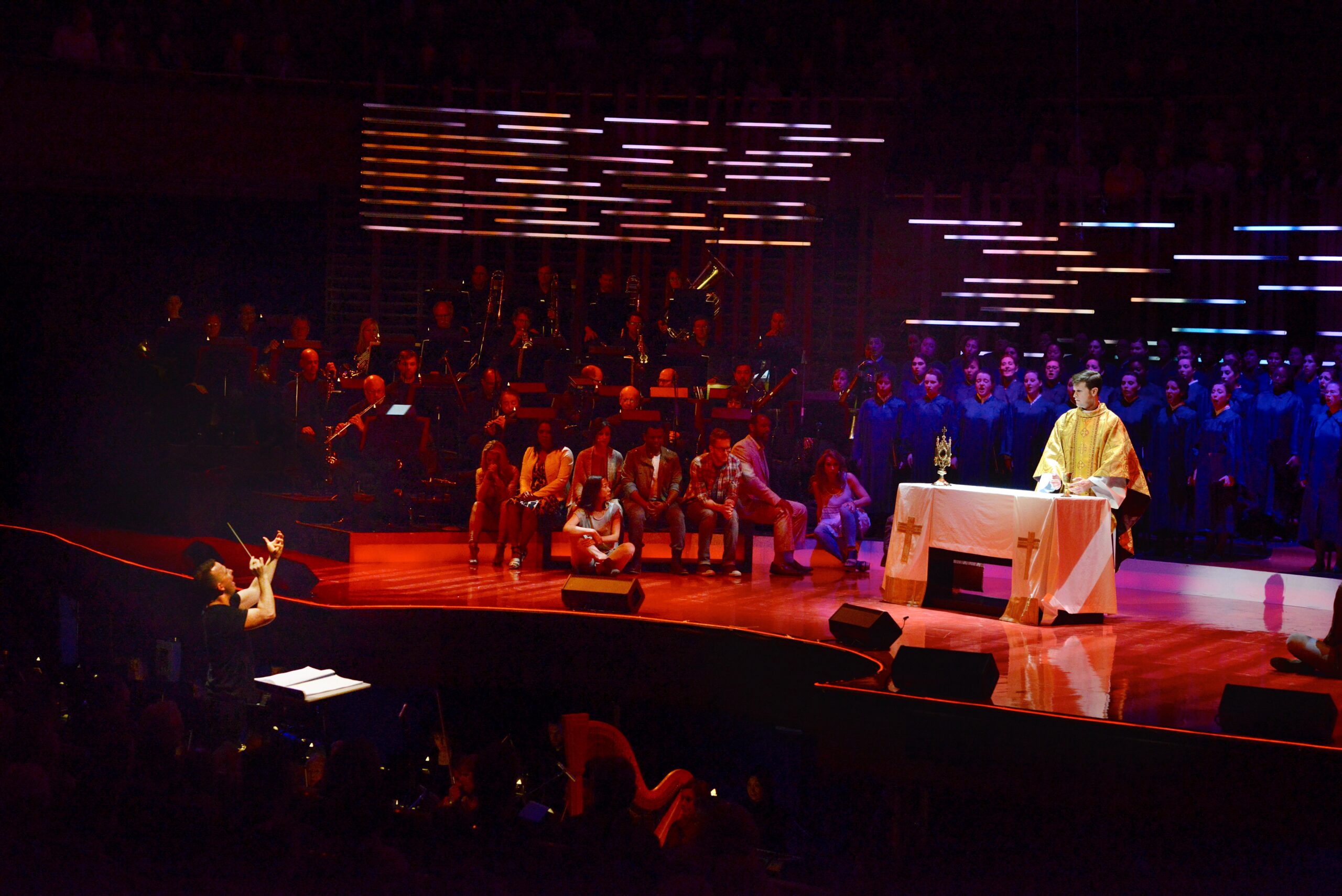
A scene from the Philadelphia Orchestra’s performance in April 2015 – in what was then named Verizon Hall – of Bernstein’s “Mass.”
Rothman was responsible for the creation of one of the season’s most intriguing creations: a “new” work by Leonard Bernstein.
“I was thinking about how Mass has some of his most beautiful music in it,” said Rothman, “but just the scope of that work means that music is rarely ever heard live because of the forces that are required to mount it.”
He conceived of a symphonic suite made of material from Mass, the musical-theatrical piece commissioned by Jacqueline Kennedy that premiered in 1971 at the opening of the John F. Kennedy Center for the Performing Arts.
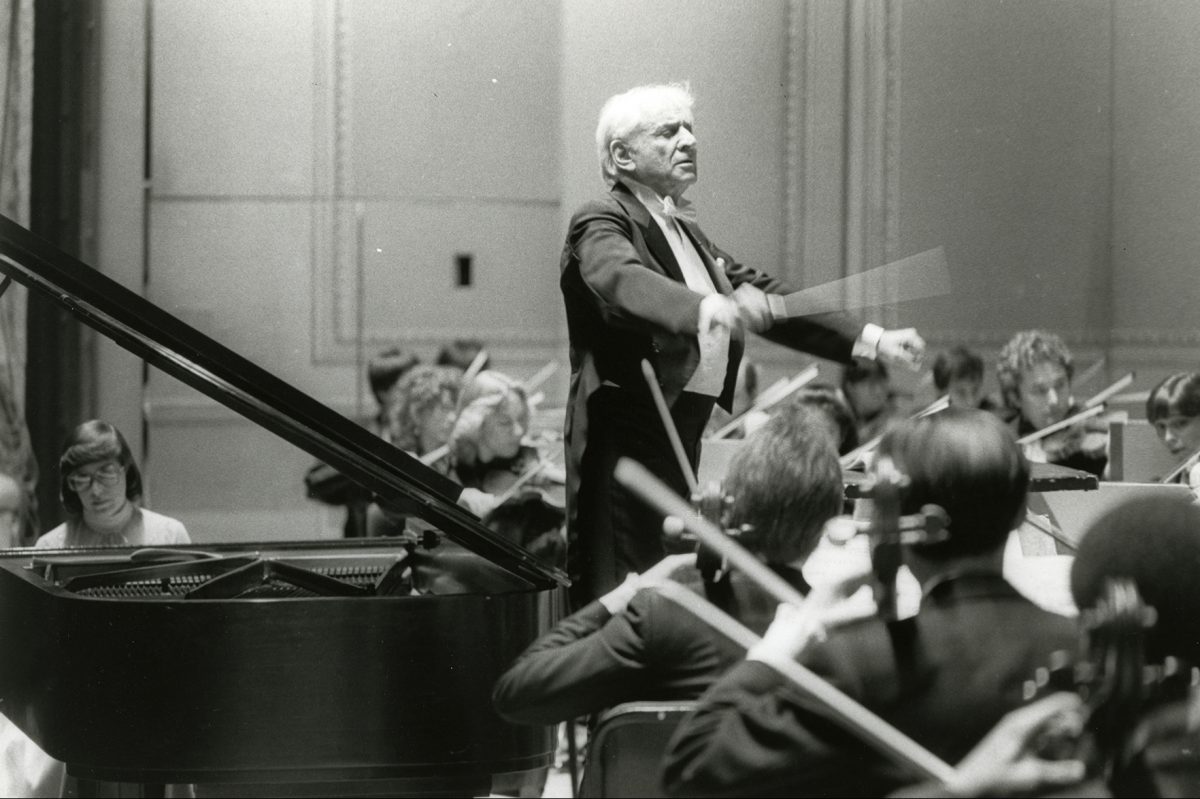
Leonard Bernstein conducts the Curtis Symphony Orchestra with soloist Susan Starr in a 1984 performance at the Academy of Music.
“So I reached out to the kids,” said Rothman, referring to Bernstein’s three children, “and I said, ‘What do you think of this idea?’ And I got back like an immediate, ‘Oh my God, we love it. Let’s do it.’”
Garth Edwin Sunderland, a composer and vice president of creative projects at the Leonard Bernstein Office, was engaged to create Symphonic Rituals from Mass, which contains about 40 minutes of music — a “new” work drawn from Bernstein’s original colorful, groovy score.
“It’s still paying homage to the sacred nature and the ritual of the piece, but bringing all that fantastic musical material into the orchestra, so no vocalists, no choirs,” said Rothman. “There will be a little bit of a rock band because that’s so essential to the core essence of the piece.”
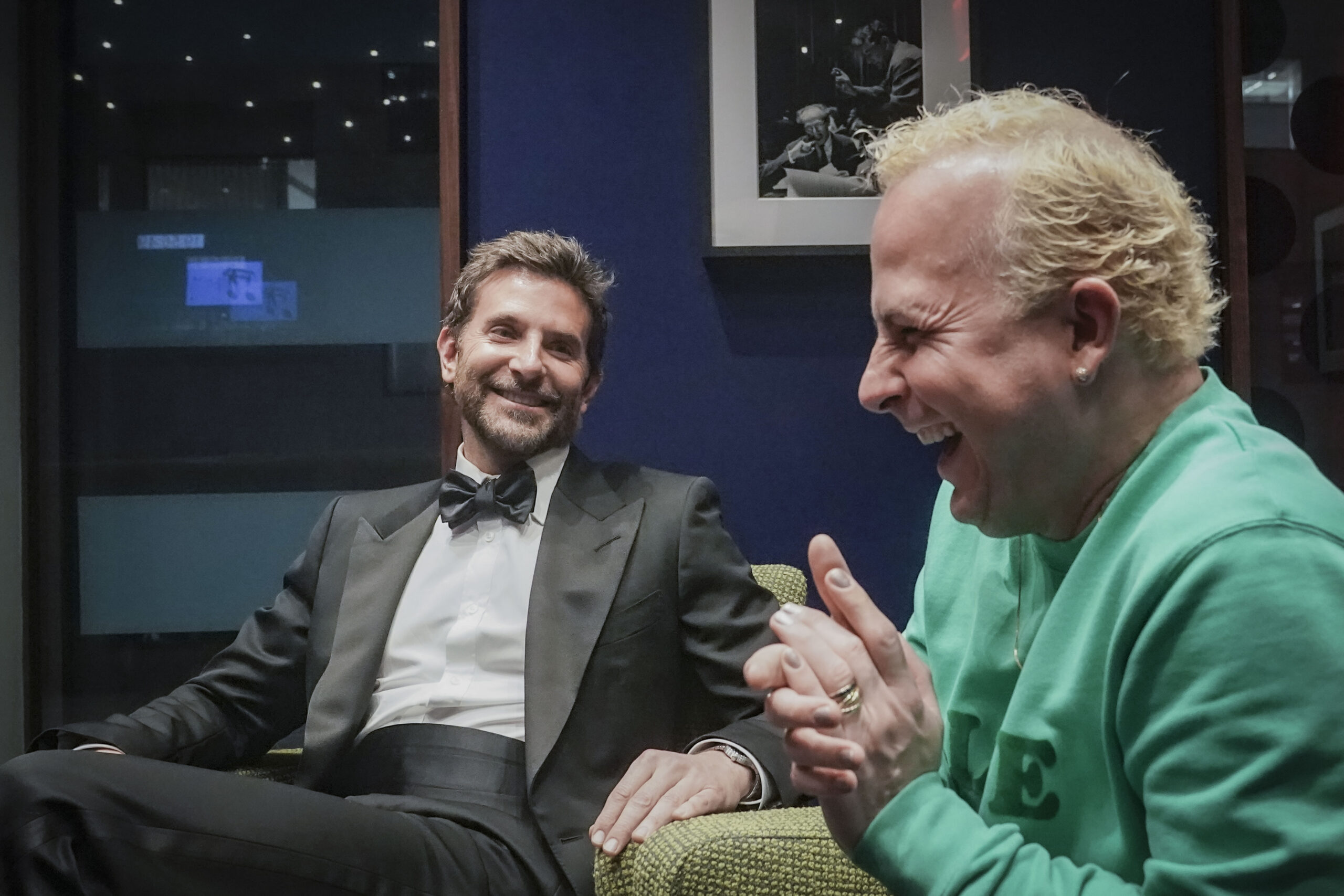
Actor and director Bradley Cooper (left) and Yannick Nézet-Séguin speak during an interview, Feb. 14, 2024, in New York.
Nézet-Séguin was, of course, the perfect choice to conduct. He’s been an enthusiastic champion of Bernstein’s music and was involved in the Bradley Cooper movie about Bernstein, Maestro.
“I texted Yannick,” said Rothman, “and I said, ‘Yannick, how would you like to give the world premiere of a piece by Leonard Bernstein?’ And he goes, ‘What? What are you talking about?’”
Philadelphia Orchestra 2026-26 subscriptions go on sale at noon Thursday, with single tickets available July 30. ensembleartsphilly.org, 215-893-1955.
The Girl Scouts, founded in Savannah, Ga., in 1912 by philanthropist Juliette Gordon Low, held its first bake sale in 1917 to raise money for troop activities.
The booming direct cookie sales business, however, was born in Philadelphia on Nov. 12, 1932, at the Philadelphia Gas Co., then located at the intersection of Broad and Arch Streets.
That inaugural public Girl Scout cookie sale will be remembered Saturday at Center City’s PECO building, part of the Philadelphia Historic District’s weekly celebration of America’s 250th birthday. The historic district pays homage to events that happened in Philadelphia before anywhere else in America — and often the world — with a weekly day party called a Firstival.
Artist Carol Cannon-Nesco, a top Girl Scout cookie seller as a child, celebrates the legacy of the Girl Scouts with pictures of the individual cookies.
“It was the first time the Girl Scouts sold their cookies to people outside of their immediate community,” said Amanda Harrity, director of product programs for the Girl Scouts of Eastern Pennsylvania.
In 1932, a Philadelphia Girl Scout told her parents that her troop needed a place to bake cookies in order to raise money for nurseries, Depression-era organizations that cared for children of working parents. The little girl’s parents, who worked at the Philadelphia Gas Co., got permission for the Scouts to bake cookies on the shiny new gas ranges in the gas company’s street-level windows.
On the afternoon of Nov. 12, the Girl Scouts baked batch upon batch of their shamrock-shaped signature shortbread cookie, the Trefoil. The sweet, buttery aroma wafted through Center City streets and passersby asked if they could buy the cookies, hot out of the test kitchen’s ovens.
The Girl Scouts agreed.
Trefoils (shortbread) and peanut butter sandwiches, also known as Do-si-dos. (Dreamstime/TNS)
“I don’t remember how many cookies we baked that day,” then 80-year-old Girl Scout Midge Mason told The Inquirer in 2001 when the state erected a historic marker at Broad and Arch, marking the sale. “I do know we baked a lot of cookies.”
The next year, the Girl Scouts were back at the Philadelphia Gas Company to raise the money needed to pay off the mortgage of its facility at Camp Indian Run in Glenmoore, Chester County. (That facility closed in the early 2000s.)
In 1934, the Philadelphia Girl Scouts hired Keebler — now Little Brownie Bakers — to bake Trefoils, selling them at 23 cents a box, making them the first Girl Scouts to sell commercially baked cookies.
Two years later, Girl Scouts all around the country began using commercial bakeries to bake cookies for their yearly fundraiser.
Today, more than 200 million boxes of cookies are sold in America at an average price of $6 a box; 3.5 million of those boxes are sold in Eastern Pennsylvania, Harrity said.
Exploremores are the new flavor of Girl Scout cookie for the 2026 sales campaign.
Seventy-five cents of every dollar from Girl Scout cookie sales are reinvested back into girl scouting, Harrity explained. In Eastern Pennsylvania, that includes maintaining 1,500 acres of property and underwriting Scouts’ camp experiences.
This week’s Firstival is Saturday, Jan. 31, 11 a.m. — 1 p.m., at the PECO Building at 2300 Market Street. The Inquirer will highlight a “first” from Philadelphia Historic District’s 52 Weeks of Firsts program every week.
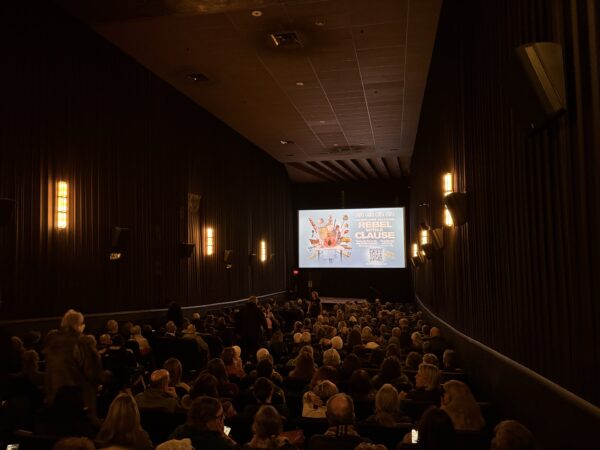
Despite frigid temperatures and the specter of the Philly area’s largest snowstorm in years, hundreds of language lovers and grammar nerds gathered in Bryn Mawr on Saturday for a screening of Rebel with a Clause, the hottest “road trip, grammar docu-comedy” on the indie movie circuit.
Rebel with a Clause follows language expert Ellen Jovin as she takes her makeshift “Grammar Table” on a journey across the United States, from Bozeman, Mont., to New York City (and everywhere in between). From behind the table, Jovin asks strangers to divulge their questions, comments, and concerns about the English language, from when it’s best to use a semicolon to how to properly punctuate “y’all.” What starts as an amusing grammarrefresher turns into a moving text on Americans’ shared humanity, even in polarizing times.
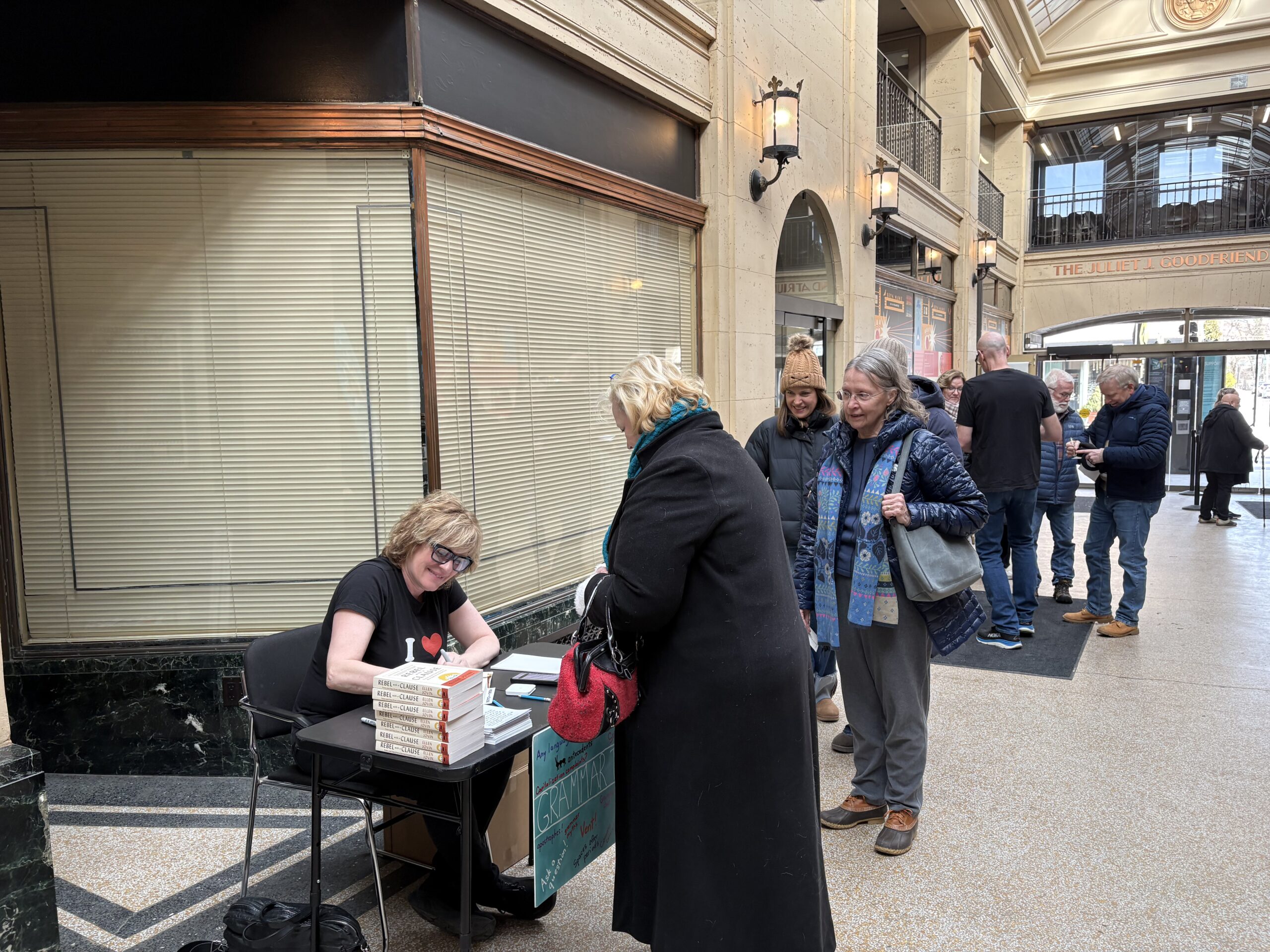
Ellen Jovin, subject of “Rebel with a Clause,” signs books at a screening at the Bryn Mawr Film Institute on Jan. 24, 2026.
Jovin, the movie’s star, has written four books on writing and grammar, including Rebel with a Clause: Tales and Tips from a Roving Grammarian, a reflection on her cross-country tour. The movie was directed and produced by Brandt Johnson, a writer and filmmaker who also happens to be Jovin’s husband.
Jovin and Johnson, who are based in New York,are on a second cross-country tour as the Rebel with a Clause movie graces audiences. The Bryn Mawr screening marked the film’s first public showing in the Philly area.
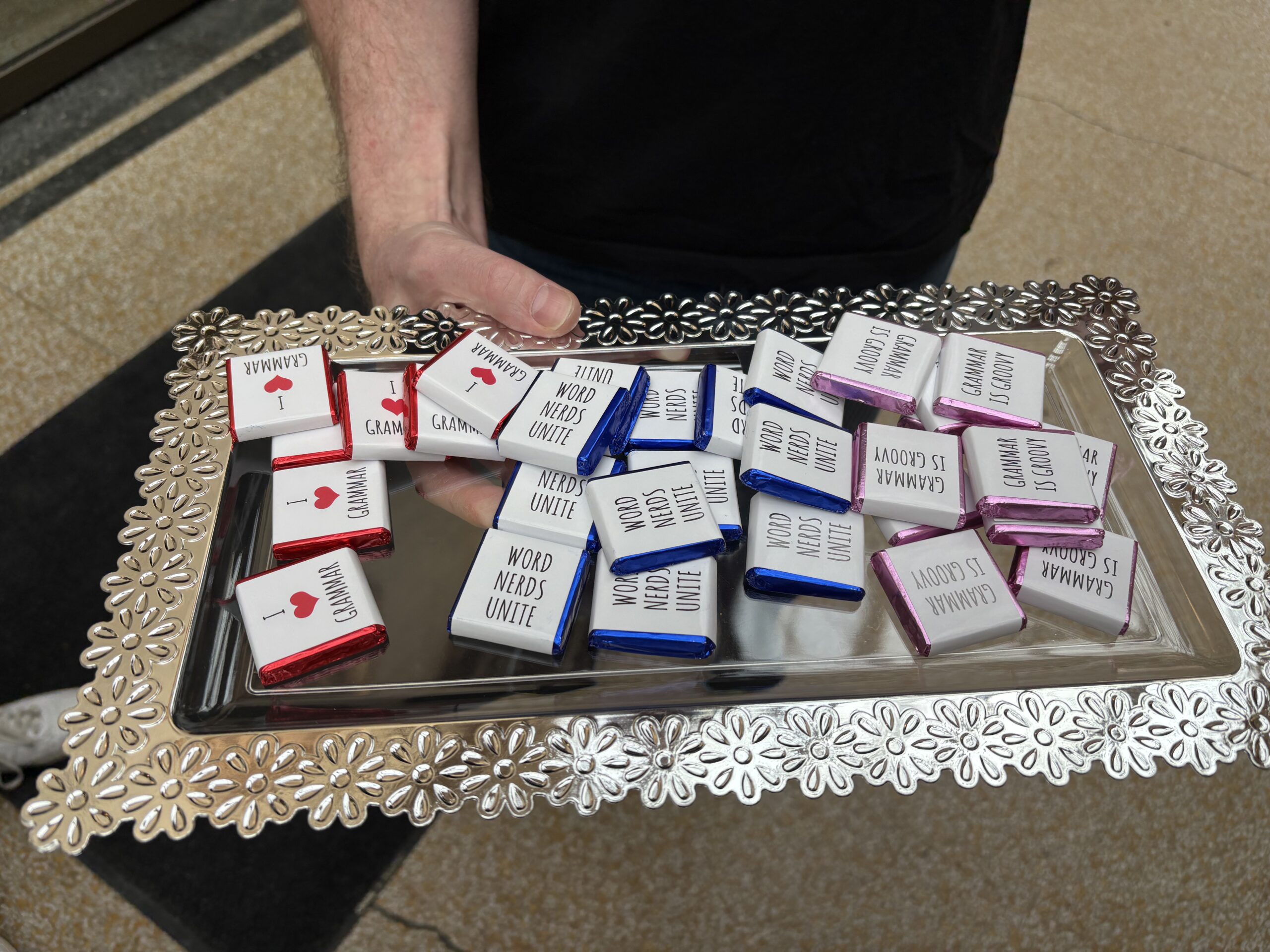
As he handed out optional grammar quizzes and grammar-themed chocolates in the Bryn Mawr Film Institute’s foyer, Johnson said the response to the movie has been “extraordinary.”
“Ellen’s Grammar Table that she started in 2018 was about grammar, for sure, but it turned out to be as much about human connection,” Johnson said.
“Just as a life experience, oh my gosh,” he added. “It’s been something that I certainly didn’t anticipate.”
“Rebel with a Clause” producer Brandt Johnson hands out grammar-themed chocolates to moviegoers at the Bryn Mawr Film Institute on Jan. 24, 2026.
Before the screening, attendees waited for their turn at the table, where Jovin was signing books and answering pressing questions about commas and ellipses.
Mary Alice Cullinan, 76, said she and her friends are fascinated by grammar and how it seems to be losing ground among younger generations.
Cullinan, who lives in Blue Bell, spent her career working in the restaurant industry but always read and wrote on the side.
“I read to live,” she added.
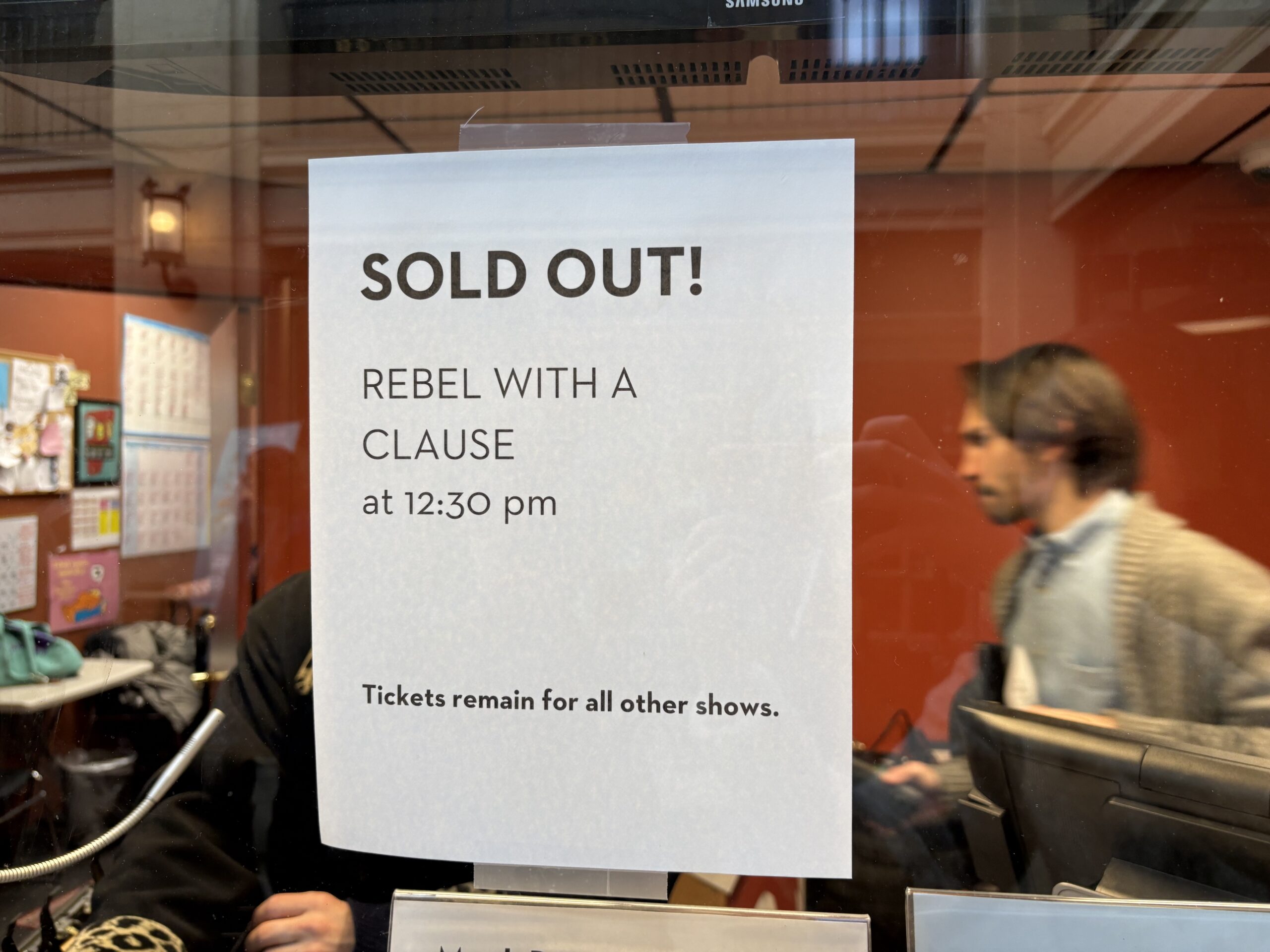
The Bryn Mawr Film Institute was packed with retired teachers, avid writers, and grammar aficionados who came armed with gripes about commas, parentheses, and quotation marks. At five minutes to showtime, an employee plastered a “SOLD OUT!” sign on the box office window.
A sign announcing that the Bryn Mawr Film Institute’s screening of “Rebel with a Clause” was sold out. The grammar-themed documentary played at the Main Line movie theater on Jan. 24, 2026.
Jen Tolnay, 63, a copy editor from Phoenixville, heard about the movie at an editors’ conference. She was so excited that she moved a haircut appointment to be there.
The 86-minute film provoked regular laughter in the audience (and a line about Philadelphians’ pronunciation of the wet substance that comes out of the sink got a particularly hearty laugh).
During a post-screening question-and-answer session, moviegoers complained about the poor grammar of sportscasters, praised Jovin and Johnson, and inquired about the colorful interactions Jovin had at the Grammar Table.
For Katie McGlade, 69, grammar is an art form.
The retired communications professional from Ardmore described herself as a habitual grammar corrector who would often fight with her editors about proper language usage. Now,as an artist, she makes colorful prints that center the adverb.
“I love that’s she’s bringing joy to the word,” McGlade said of Jovin. ”We need joy and laughter, and we need to communicate with each other.”
This suburban content is produced with support from the Leslie Miller and Richard Worley Foundation and The Lenfest Institute for Journalism. Editorial content is created independently of the project donors. Gifts to support The Inquirer’s high-impact journalism can be made at inquirer.com/donate. A list of Lenfest Institute donors can be found at lenfestinstitute.org/supporters.
Blink and you’ll miss it — a sea of Phillies red will be back at Citizens Bank Park for the home opener against the Texas Rangers on Thursday, March 26, with first pitch set for 4:15 p.m.
Along with the on-field action, fans can expect the return of one of baseball’s best supporting casts: the uniquely local ballpark food.
Aramark, which has refreshed the Phillies’ in-stadium menu for four decades, is still putting the finishing touches on a handful of new, experimental bites. While the full 2026 lineup hasn’t been officially announced, longtime fans know there’s a reliable cast of classics that tend to return year after year.
Here’s what we’re ready to welcome back this season, from soft serve worth the sticky fingers to Jersey Shore-style slices that taste like summer.
Served with a side of gravy at Citizens Bank Park, Bulls BBQ’s stuffed turkey egg rolls come with stuffing and cranberry sauce.
Ballpark favorites
General concession stands can be spotted throughout CBP, typically offering old faithfuls like Hatfield Phillies jumbo franks, Federal Pretzel braids, and a mix of domestic and local beer options.
With a little game planning, you could score either a hot dog, a super pretzel, a popcorn box, or a soda for $5 each. And around $10 for a sizable combo at most concession stands in the park.
(You can find these gems at South Philadelphia Market, Hatfield Grill, Cooperstown Café, Shibe Park Eatery, and other concessions throughout the park.)
Two buckets of crabfries from a Chickie’s & Pete’s concession stand at Citizens Bank Park, as shown in this 2023 file photo. One basket is more than $15, not including a side of cheese, at the ballpark this season.
Chickie’s & Pete’s
While not as price-friendly as the previously mentioned menu items, Chickie’s & Pete’s Crabfries are worth every penny. The nearly $20 price tag may seem high for an Old Bay-seasoned fry basket, but the savory offering has won over fans’ hearts for a reason. Oh, and don’t forget to add the cheese sauce on the way out.
Manco & Manco Pizza
This Ocean City staple delivers one of the best slices you’ll find at the ballpark. Go for a personal pie of the iconic thin-crust pizza, then settle in with your crew and let the Phils do the rest against their big-league rivals.
P.J. Whelihan’s
P.J. Whelihan’s is a trusted Citizens Bank Park standby — and for good reason. From savory onion rings to fiery boneless wing combos and crowd-pleasing cheesesteak egg rolls, this original Poconos-area favorite has earned its spot as a must-visit at the ballpark.
1883 Burger Co.
A homage to the year the Phillies were founded, 1883 Burger Co. gives the nation’s oldest, continuously running franchise its proper due. The spot’s smash burgers are stacked with fresh veggies and a flattering dose of Thousand Island, all resting on a soft, buttery bun that seals all of its savory glory in one.
A cheeseburger from Shake Shack at Citizens Bank Park.
Shake Shack
In case the line at 1883 Burger Co. is slammed, stop by Shake Shack for a cheeseburger that’s made the fast-food chain a national treasure. Then wash it down with a hand-spun shake, coming in multiple flavors.
Colbie’s Southern Kissed Chicken
Indulge in Southern-style comfort, brought to you by Phillies legend Ryan Howard. Along with original and Nashville Hot chicken sandwiches, try the Peach Spoon Pie dessert and The Big Piece, an unmistakable ode to the Philadelphia Sports Hall of Famer.
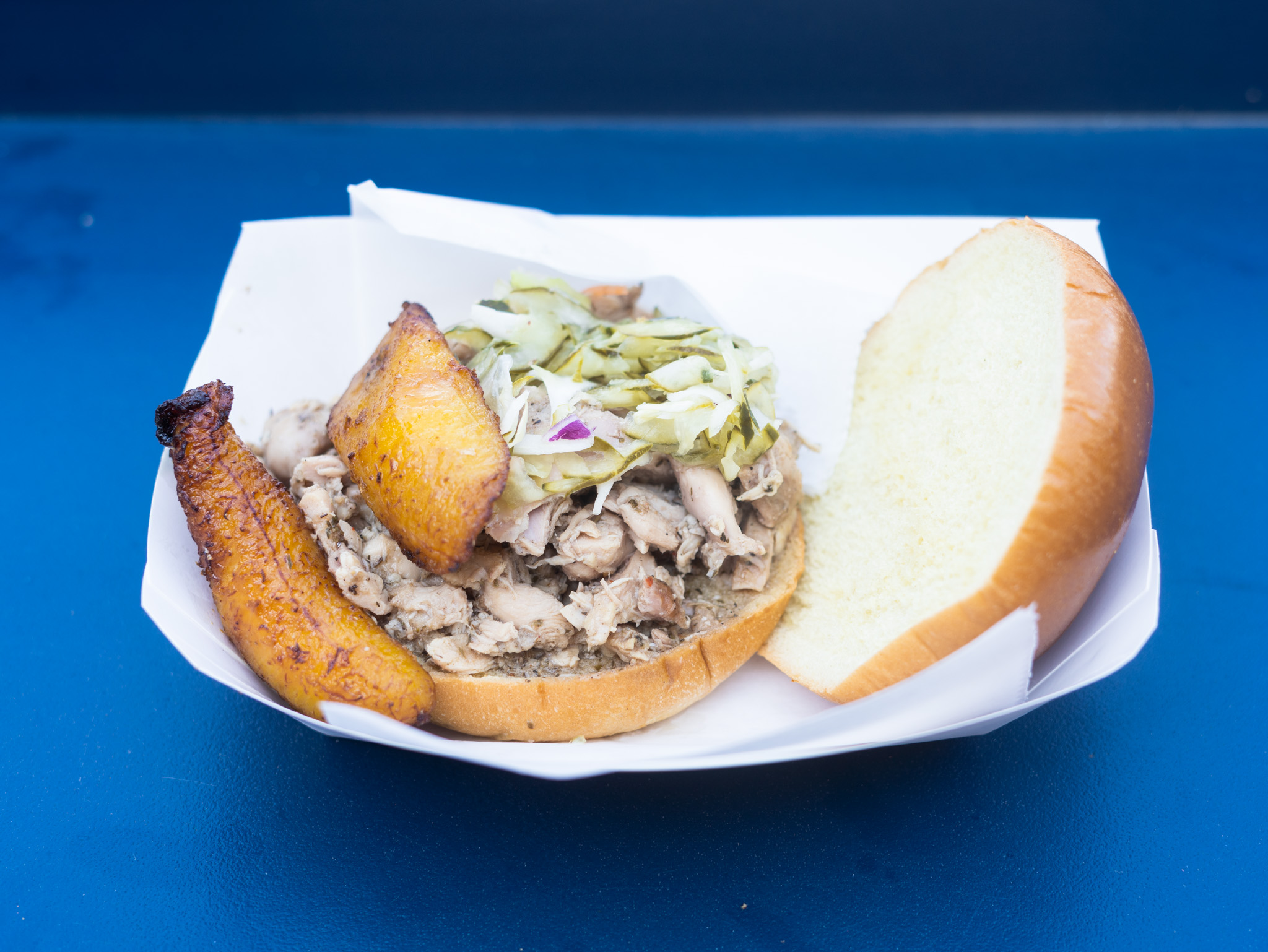
Jerk chicken sandwich from Bull’s BBQ concession stand at Citizens Bank Park on April 9, 2023.
Bull’s BBQ
What’s not to love about burnt-end cheesesteaks, pulled pork, smoked rib platters, and turkey collard greens? Bull’s BQ, a main course concession staple, brings at-home barbecue to your stadium seat. The real highlight is the jerk chicken sandwich, complete with a plantain (or two) for an extra pinch of Caribbean flavor.
Campo’s
If you’re looking for a cheesesteak on game day, stop by Campo’s for the ballpark’s widest variety of the classic sandwich. The Old City staple has everything from a traditional cheesesteak and chicken cheesesteak to a buffalo-sauced sandwich and a vegetarian version.
Doughnuts from Federal Donuts concession stand at Citizens Bank Park on April 9, 2023.
Federal Donuts & Chicken
There are few things better than hand-battered tenders, boneless chicken sandwiches, and freshly made doughnuts from the brainchild of world-famous restaurateurs Michael Solomonov and Steve Cook of CookNSolo Restaurant, as well as Tom Henneman, Felicia D’Ambrosio, and Bob Logue. Stopping by this South Philly-born franchise at CBP is always a home run.
Greens & Grains
Ballpark food isn’t just fare for meat lovers. The grub at Greens & Grains is proof that vegan or vegetarian fans don’t have to settle for french fries or pretzels. The vegan and plant-based eatery offers restaurant-quality dishes like Chk’n parm pesto, gyro pita, and a vegan hot dog.
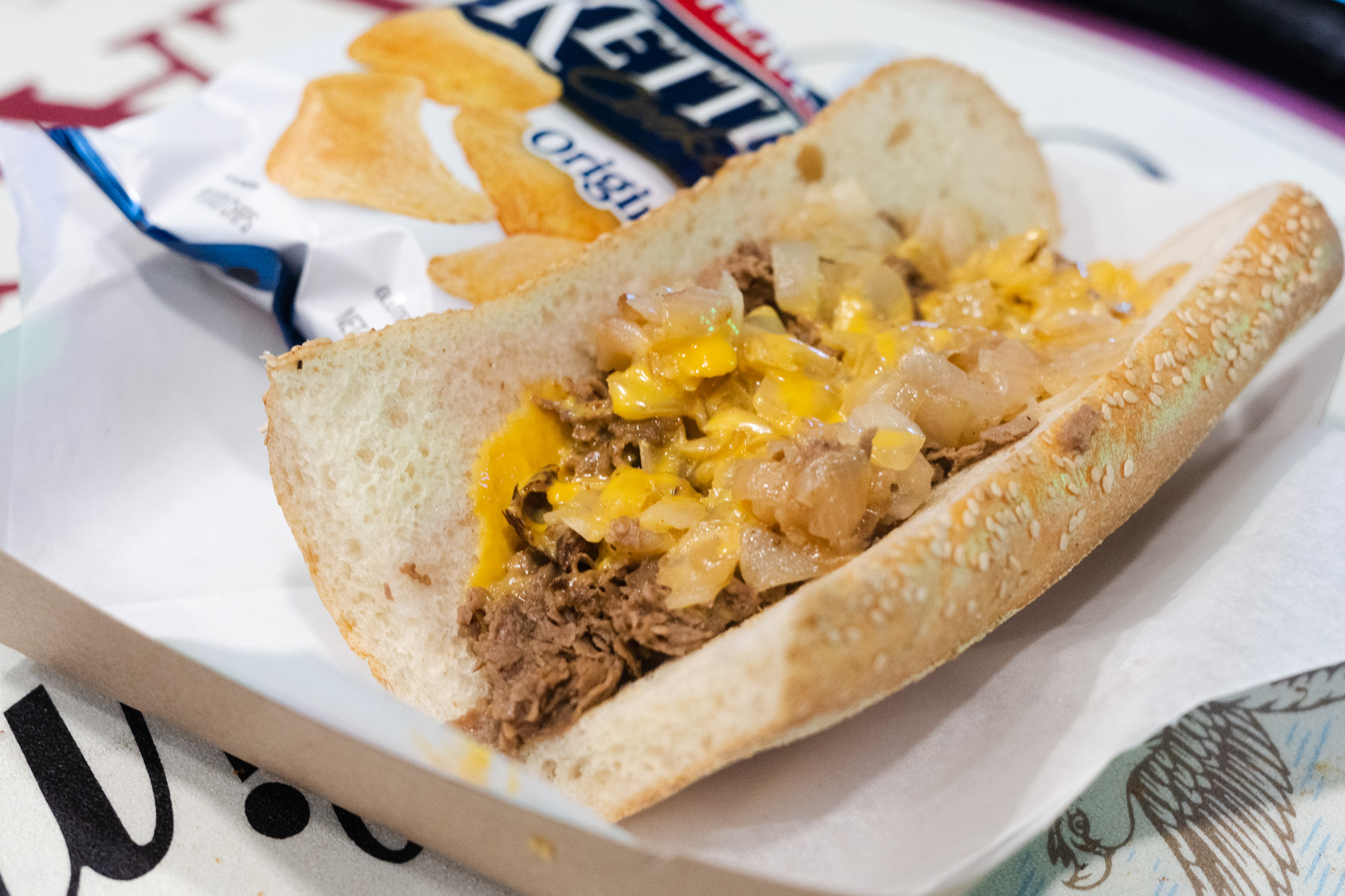
A cheesesteak from Uncle Charlie’s Steaks at Citizens Bank Park.
Uncle Charlie’s Steaks
For classic cheesesteaks at CBP, Uncle Charlie’s Steaks has earned the trust of Phillies fans. The smell of smoked rib-eye and Cooper sharp cheese can be spotted yards away. And the taste certainly matches the pleasant aroma.
Tony Luke’s
The South Philly-made franchise is a ballpark favorite, thanks to the roast pork sandwich and famed cheesesteak. Between the two, the roast pork is among the best CBP has to offer. Don’t believe me? Try it yourself.
Baker Bowl Bistro and Connie Mack’s
For some high-end ballpark bites, this Hall of Fame Club suites destination houses chef-attended specialties like a seared crab cake sandwich and a black bean veggie burger that rivals any other one in CBP.
Chocolate ice cream and sprinkles from Old City Creamery at Citizens Bank Park on April 9, 2023.
Old City Creamery
Old City Creamery is a kid’s dream. Not only do they leave with Richman’s delicious soft serve, stacked with toppings of their choice, but they also get a miniature Phillies batting helmet to go. Sounds like a win to me.
Philadelphia Water Ice
Whether you pronounce it water or “wooder” ice, it makes no difference. This regional staple is all the more delicious under the stadium lights on a simmering summer day. The simple mix of water, sugar, and refreshing fruit flavors is a hit out of the park every time.
A cup of mango water ice from Philadelphia Water Ice concession stand at Citizens Bank Park.
Helen Cherry, 101, formerly of Philadelphia, prolific illustrator, artist, and show tunes devotee, died Thursday, Jan. 15, of age-associated decline at her home in the Woodland Pond retirement community in New Paltz, N.Y.
“It was her decision entirely,” said her daughter, Lynne. “She knew her own mind and made the decision that it was time for her to take flight to the Great Beyond.”
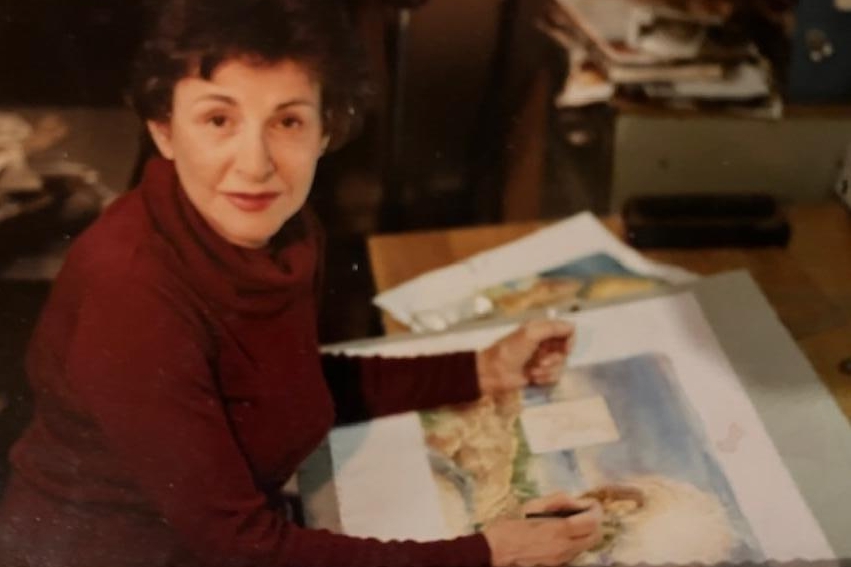
A lifelong artist, Mrs. Cherry grew up drawing and painting in West Philadelphia. She earned a scholarship to the old Philadelphia College of Art, sold illustrations to the Jack and Jill children’s magazine, and took a 20-year hiatus in the 1950s and ’60s to rear her three children.
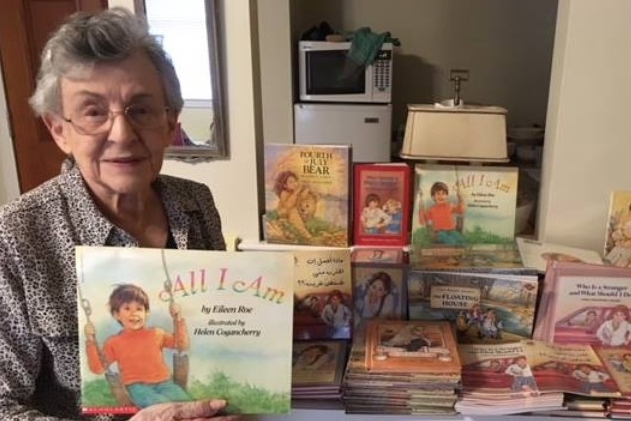
She resumed her career at 50 in 1974 and went on to illustrate 30 books and dozens of magazine stories for Highlights, Cricket, and other publications. Using a combination of her maiden name, Cogan, and her married name, Cherry, she was published under thepseudonym of Helen Cogancherry.
Mrs. Cherry at work illustrating 1991’s “Fourth of July Bear.”
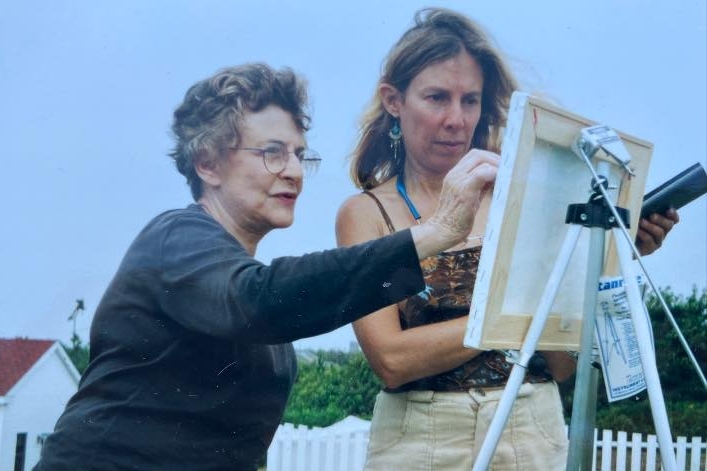
“She was always an artist,” said her daughter, also an illustrator and writer. “Art was her hobby, her passion, her work. She said it was something that she can’t not do.”
Mrs. Cherry was a keen and imaginative observer of life, adept at creating visuals that reflected the concepts of the writers with whom she worked. She illustrated many children’s books, such as All I Am, Warm as Wool, and The Floating House.
She told The Inquirer in 1986 that a book she illustrated helped a girl she knew address a difficult childhood situation. “That made a profound impression on me,” she said. “I saw how my little books could help children.”
Her career was featured in several publications, and she told The Inquirer that breaking back into the business in the 1970s was “discouraging at first.” She said: “I remember coming home sometimes and telling my husband that it was hopeless. He kept encouraging me to keep at it.”
Mrs. Cherry (left) and her daughter, Lynne, work on a project.
Helen Cogan was born July 9, 1924, in a West Philadelphia rowhouse beneath the elevated railroad tracks. The middle of three children, she looked up to her sister, Molly, and cared for her younger brother, Robert, while her parents ran the small grocery store they lived above.
She contributed illustrations to the yearbook and graduated from West Philadelphia High School. She met Herbert Cherry in French class and sent him beautifully illustrated letters while he served overseas during World War II.
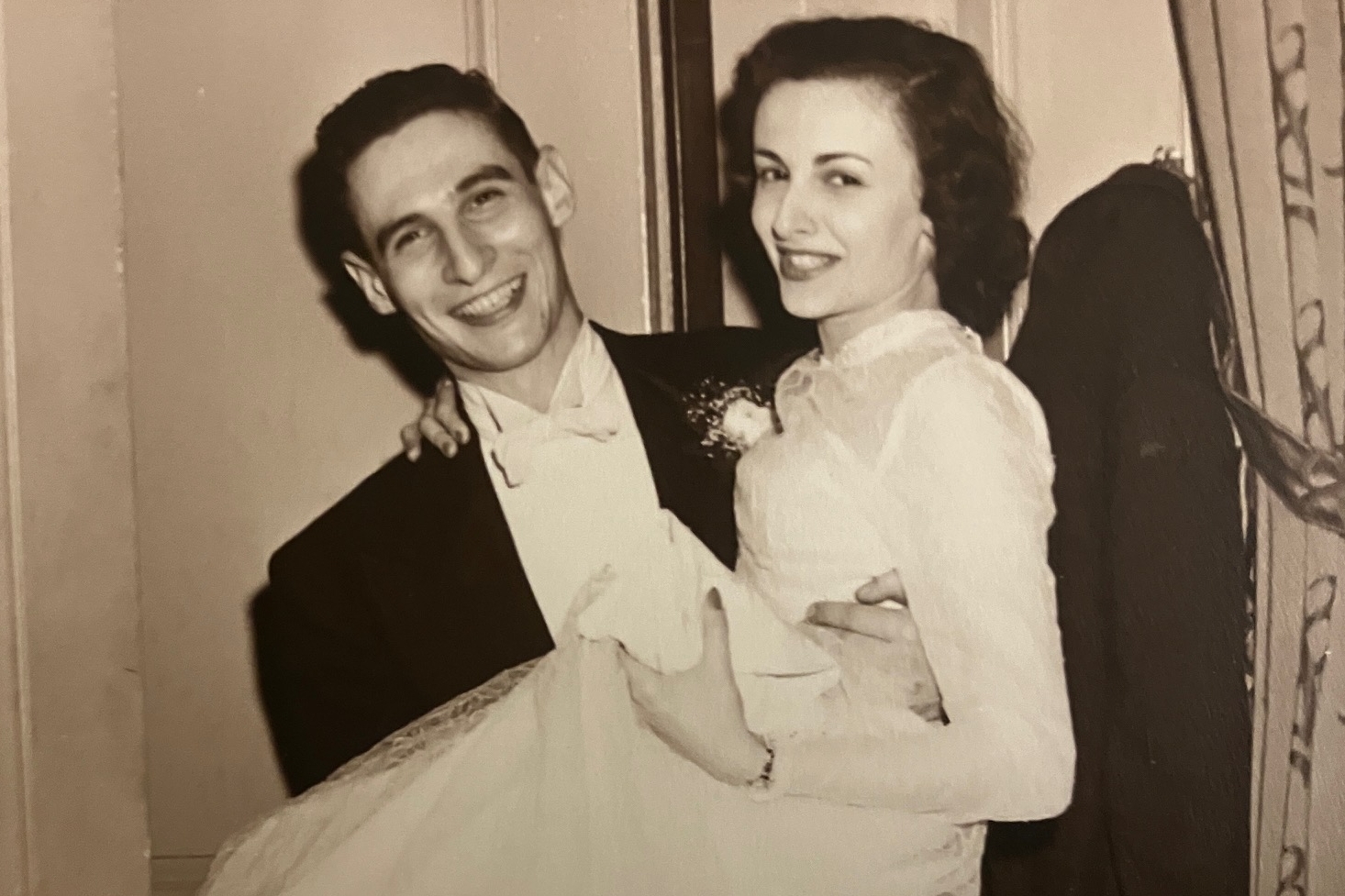
They married in 1950 and had a daughter, Lynne, and sons Steven and Michael. She helped her husband operate Cherry’s Pharmacy in Ridley Park for years, and they lived in Milmont Park and Wallingford in Delaware County, and Carlisle, Pa. She moved to New Paltz after her husband died in 2000.
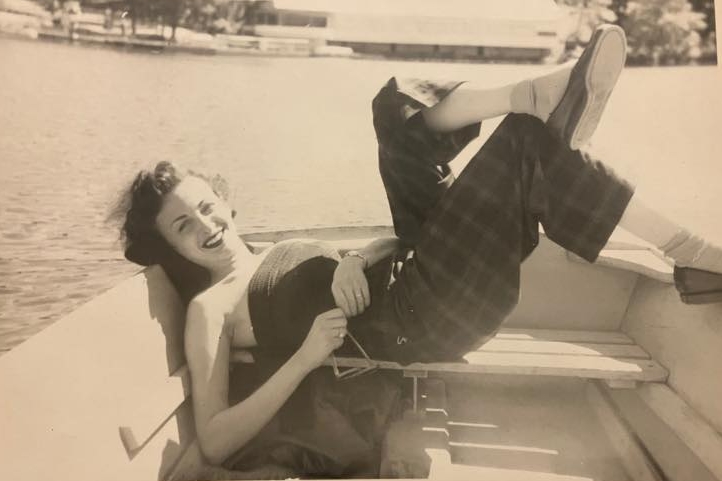
Mrs. Cherry often sang show tunes with family and friends, and while she worked. She whipped up memorable meals, especially on holidays, and enjoyed idyllic summers on family vacations at the Jersey Shore in Ventnor.
Mrs. Cherry grew up in West Philadelphia.
She tutored her children and their friends, and later her grandchildren, in drawing and painting. She showed everybody, her daughter said, “how to be a good human being in this world.”
On Facebook, friends called her “warm,” “beautiful,” and “a talented giver.” One said: “The joy she radiated her whole life long was magical.”
Her daughter said: “She was quiet and understated but strong.”
Her favorite song was “Life is Just a Bowl of Cherries.” It opens with: “Life is just a bowl of cherries. Don’t take it serious. Life’s so mysterious.”
Mrs. Cherry enjoyed time with her children.
In addition to her children, Mrs. Cherry is survived by five grandchildren, a great-granddaughter, her brother, and other relatives. Her sister died earlier.
A memorial service was held Sunday, Jan. 18. A celebration of her life is to be held later.
Composer Philip Glass has joined the list of artists, musicians and performers pulling back from previously scheduled engagements at the Kennedy Center, withdrawing his anticipated Symphony No. 15: Lincoln from the National Symphony Orchestra, which was to perform the world premiere this coming June.
“After thoughtful consideration, I have decided to withdraw my Symphony No. 15 Lincoln from the John F. Kennedy Center for the Performing Arts,” Glass wrote in a statement provided to the Washington Post. “Symphony No. 15 is a portrait of Abraham Lincoln, and the values of the Kennedy Center today are in direct conflict with the message of the Symphony. Therefore, I feel an obligation to withdraw this Symphony premiere from the Kennedy Center under its current leadership.”
Glass, who will turn 89 at the end of this month, is a celebrated and influential American composer, who was awarded the Kennedy Center Honors in 2018. Though often credited as a pioneer of 20th-century minimalism, Glass’s music ranges from intimate piano études and chamber works to sprawling symphonies and ambitious, experimental operas such as Einstein on the Beach, Satyagraha and Akhnaten, about historical figures.
Symphony No. 15: Lincoln was co-commissioned by the Kennedy Center and the NSO, and has already been subject to several delays: It was originally scheduled to premiere in March 2022 and was later postponed to October 2022. This season, the piece was restored to the NSO’s calendar as a centerpiece of the Kennedy Center’s ongoing “250 Years of Us” programming.
Its withdrawal comes amid a wave of cancellations by artists and performers, prompted by the addition of President Donald Trump’s name to the center (as well as to the building’s facade), or attributed to scheduling conflicts or financial strains. It also lands against a backdrop of reputational crisis at the center, a stretch of politically charged changes (like Trump himself hosting the Kennedy Center Honors) that has been met with a sharp decline in ticket sales and an apparent audience boycott over the politicization of the nonpartisan venue.
Glass’s letter arrives 188 years to the day after Abraham Lincoln delivered his 1838 Lyceum Address, from which Glass adapts two movements of the symphony’s libretto — along with Lincoln’s Autobiographical Sketch of 1859, his Farewell Address of 1861 and assorted other writings and correspondence. (Baritone Zachary James was slated to sing the premiere performance in June, on a program led by conductor Karen Kamensek.)
“I think there is no American subject matter more interesting than Abraham Lincoln,” Glass told me in 2022 about the Symphony No. 15, then still in progress. “I read him almost like I would a writer, not a politician or someone in government. There’s a beautiful music to his writing.”
The withdrawal mars a long history between Glass and the center. And while it’s highly unusual for a composer to withdraw a work from a commissioning body as an act of protest, the composer’s work has responded to contemporary politics in the past.
In 2015, Washington National Opera, which this month parted ways with the Kennedy Center, gave the world premiere of an expanded version of Glass’s opera Appomattox, which draws a musical through line from the Civil War to the civil rights movement through the voices of Lincoln, the Rev. Martin Luther King Jr., Lyndon B. Johnson and others.
Glass and playwright Christopher Hampton revised the opera (which premiered in 2007) in response to a 2013 decision by the Supreme Court that invalidated key elements of the Voting Rights Act of 1965.
“It’s almost like a photojournalist approach to opera,” Glass told The Post at the time, “where the material is changing while you’re writing it.”