Opera Philadelphia has signed an early contract extension with general director and president Anthony Roth Costanzo, the company announced Monday.
The initial deal was to have kept the renowned countertenor in the job until the end of the 2026-27 season; the extension commits him and the company to each other for two more years, through May 31, 2029.
Costanzo, 43 — who took over the financially challenged company in 2024 — has maintained an active international performing career while quickly making a mark on the Philadelphia arts scene. Under his watch, Opera Philadelphia has drawn national attention for launching a “pick-your-price” program making tickets available for as low as $11.
The company also played a key impresario and fundraising role last year in keeping the former Wanamaker Center City store space alive for several months with performances after the historic building was vacated by Macy’s. It was Costanzo who landed a $1 million gift from philanthropist and organ enthusiast Frederick R. Haas to fund the concert and film series.
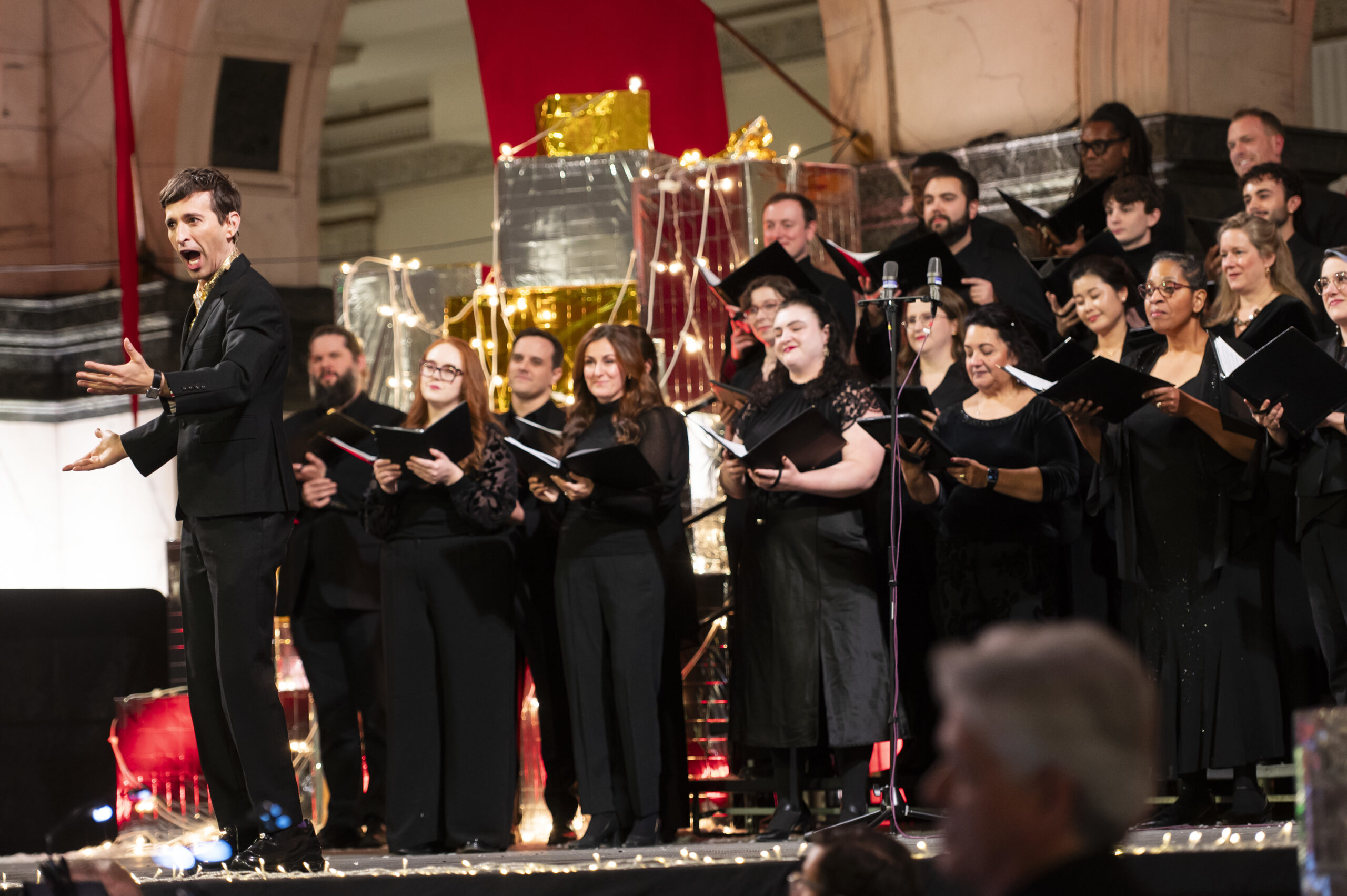
Anthony Roth Costanzo, countertenor, sings with Opera Philadelphia’s chorus during ‘Home for the Holidays’, a concert part of the ‘Pipe Up!’ series at the Wanamaker Building’s Grand Court, Dec. 2, 2025.
Costanzo is in mid-process of retooling the opera company and raising the money to do it, so extending his contract made sense, he said.
“When you’re looking at development, whether it’s of artists, patrons or new business models, those are long trajectories, and it’s been remarkable how fast we’ve been able to accomplish a lot,” Costanzo said. “But there’s a lot more that I want to do, and I think there’s a lot of ambition the board has to grow this organization and its impact.”
The troupe also announced Monday that the company and music director Corrado Rovaris have agreed to a contract extension through May 31, 2029. Costanzo has also promoted David Levy from senior vice president of artistic operations to the company’s executive vice president — making him, essentially, Costanzo’s right-hand man.
Costanzo arrived in June 2024 to a company in debt. He established a fundraising campaign, paid off the debt, and has raised $21 million toward a goal of $33 million. The campaign is expected to run through the end of next season.
“We’re not out of the woods. I don’t know if you ever will be as an opera company,” he said. “We still don’t have an endowment. It’s not that we have transformed entirely.”
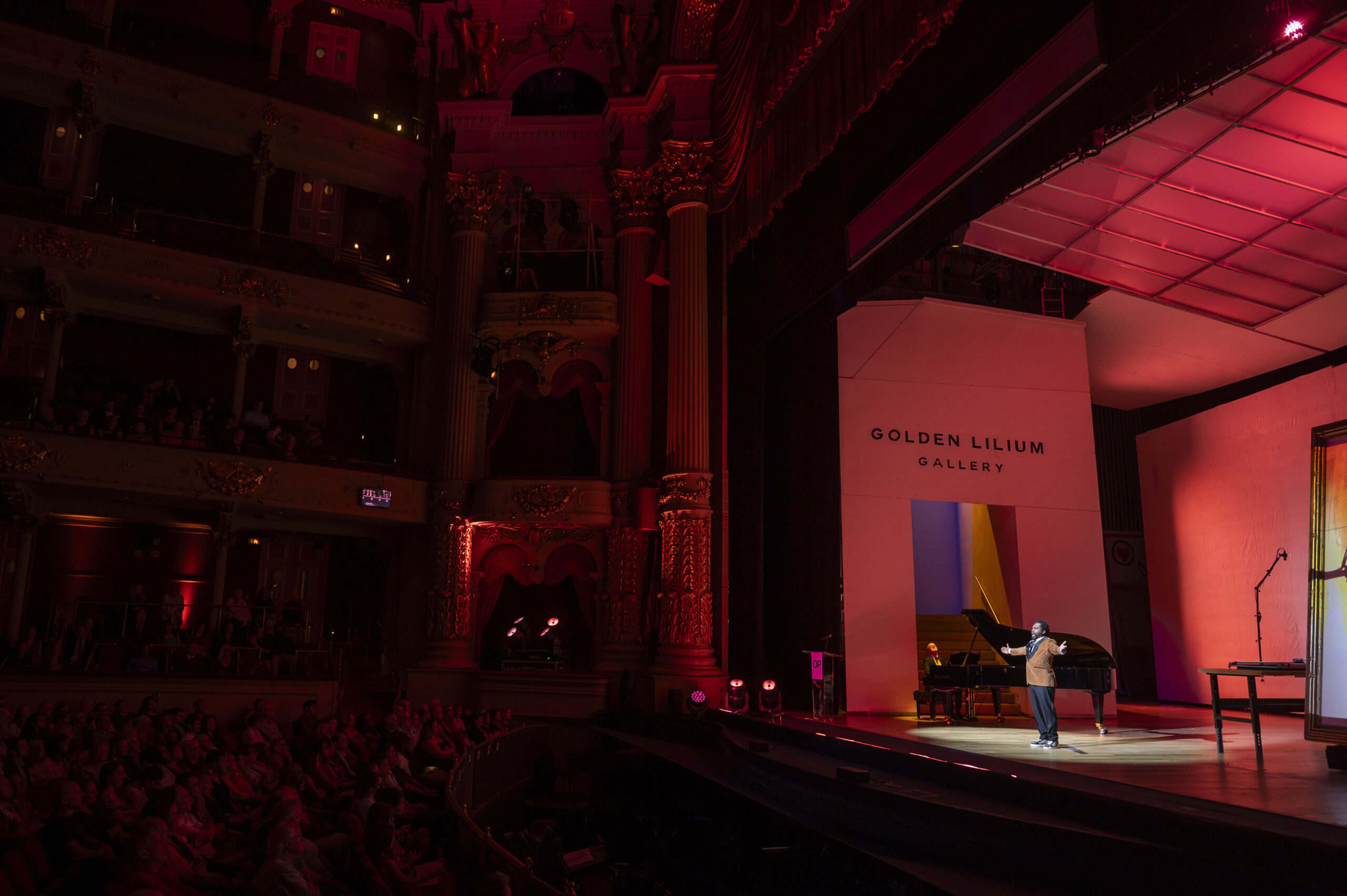
Baritone Will Liverman performing at Opera Philadelphia’s 50th anniversary gala, Vox Ex Machina, at the Academy of Music, Sept. 13, 2025, at which the company announced a $33 million fundraising campaign.
Costanzo has restored some of the company’s artistic initiative. Before he arrived, the season was down to three productions for a total of nine performances. He boosted the schedule this season to five productions and 18 performances. The company closed its 2024-25 season with a $2.1 million surplus on an $11.1 million budget, Costanzo said.
Contract extensions are often used at nonprofits engaged in fundraising campaigns to encourage confidence in the future of the institution.
“It’s good for our patrons, our supporters, our artists to know that this is a long-term commitment on everyone’s part,” said Costanzo.
The 98th Oscar nominations are out. If you are like many of us, you haven’t seen all of the films — yet, any way.
Not to worry. The Oscars don’t air until March 15, so you have plenty of time to catch up. And with this week’s forecast of more than a foot of snow, why not stay home and get started early.
Here’s how and where you can check out some of the Oscar nominated films of 2025.
Best Picture
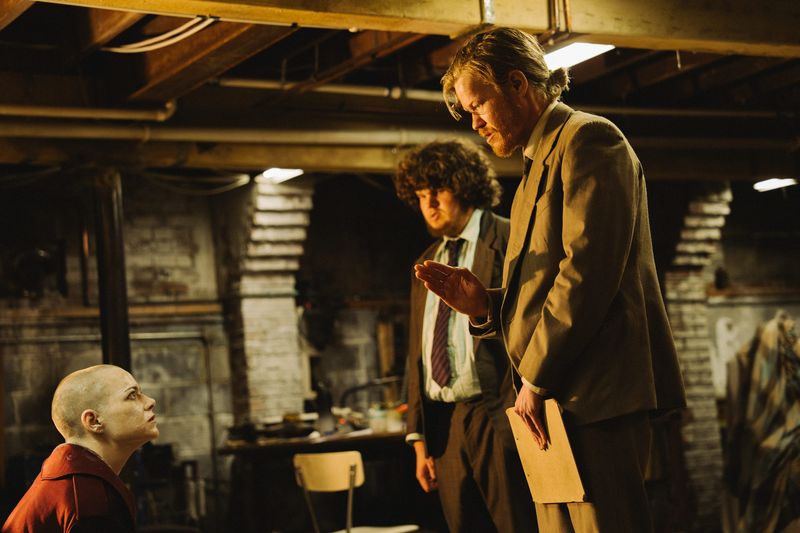
Michelle (Emma Stone) gets interrogated by cousins Teddy (Jesse Plemons, far right) and Don (Aidan Delbis) in “Bugonia.”
‘Bugonia’
This dark comedy stars Emma Stone as Michelle Fuller, the CEO of the fictional pharmaceutical conglomerate Auxolith. She’s abducted by conspiracy theorist Teddy Gatz (Jesse Plemons) and his cousin, Don (Aidan Delbis) after Teddy starts to believe an Auxolith drug has caused his mother’s comatose state. Adding to the creepiness, Teddy also believes Michelle is an alien. Bugonia received four nominations, including a best actress nod for Stone.
Damson Idris, left, and Brad Pitt star in “F1.” MUST CREDIT: Warner Bros. Pictures/Apple Original Films
‘F1′
Brad Pitt stars in this fast-paced drama about a star Formula One driver who returns to the game after being gone for 30 years. His mission: to help his friend’s underdog team take it all. F1 received four Academy Award nods.
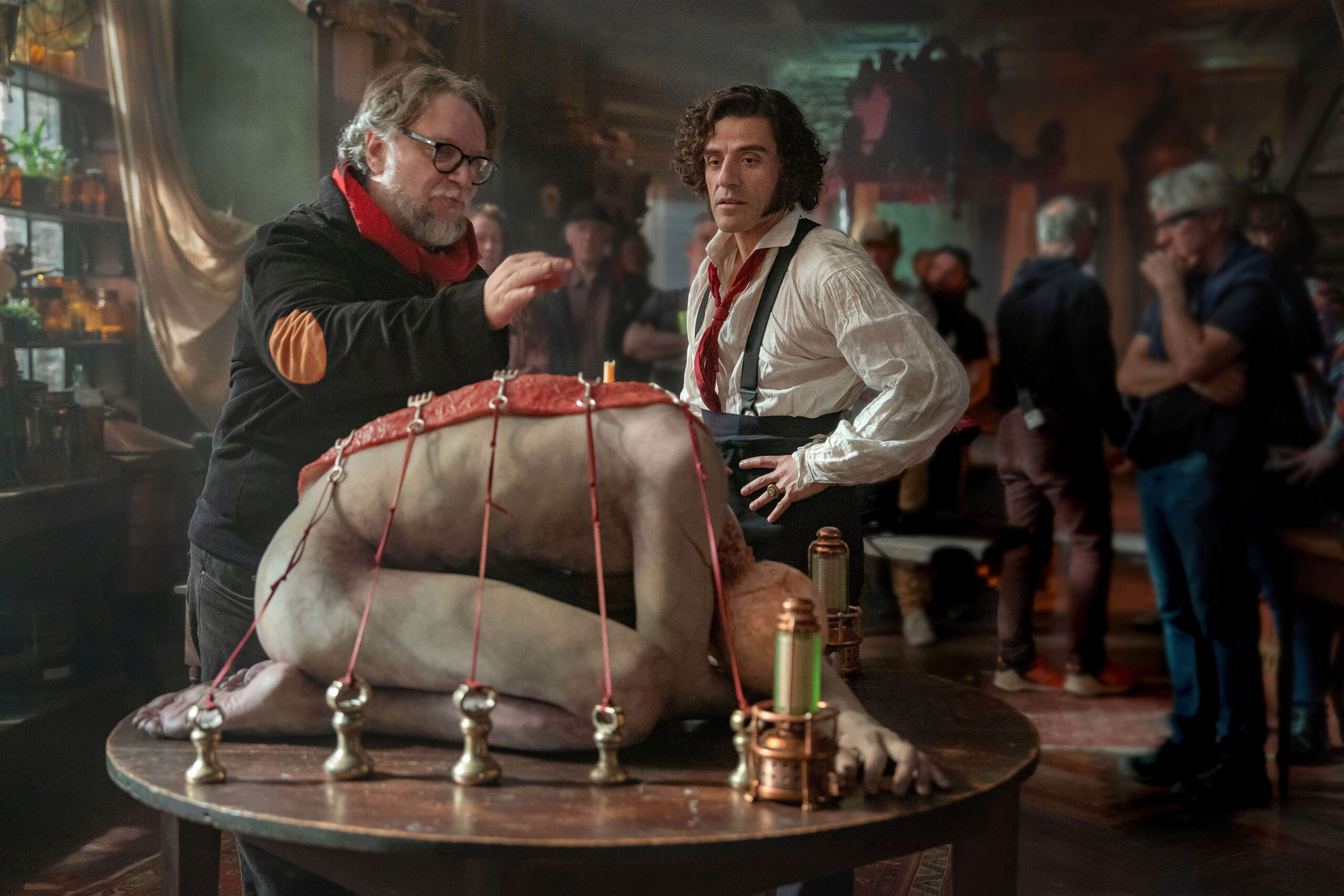
This image released by Netflix shows director Guillermo del Toro, left, and Oscar Isaac on the set of “Frankenstein.” (Ken Woroner/Netflix via AP)
‘Frankenstein’
A cinematic adaptation of the 1818 Mary Shelley classic features Oscar Isaac as Victor Frankenstein and Jacob Elordi as his ghoulish creation. This 2025 film is director Guillermo del Toro’s attempt to be as faithful to the book as he possibly can. Frankenstein earned nine nominations.
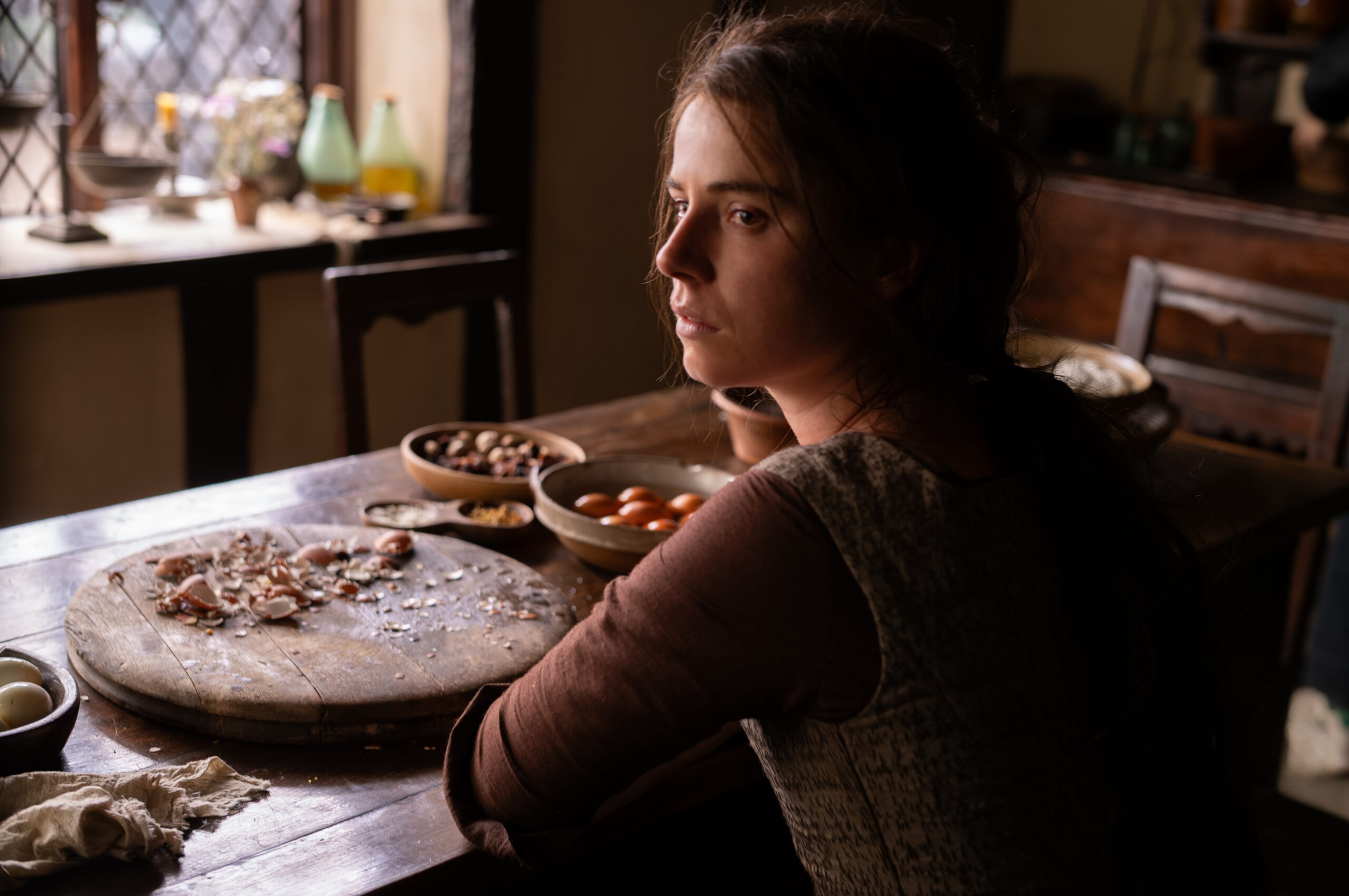
This image released by Focus Features shows Jessie Buckley in a scene from “Hamnet.” (Agata Grzybowska/Focus Features via AP)
‘Hamnet’
William Shakespeare (Jesse Buckley) and his wife, Agnes, (Anne Hathaway) mourn the death of their son in this film based on Maggie O’Ferrel’s 2020 eponymous historical fiction novel. Hamnet received eight nominations.
Playing: Film Society Bourse, Landmark’s Ritz Five, Reel Cinemas Narbeth, Bryn Mawr Film Institute, AMC Cherry Hill 24.
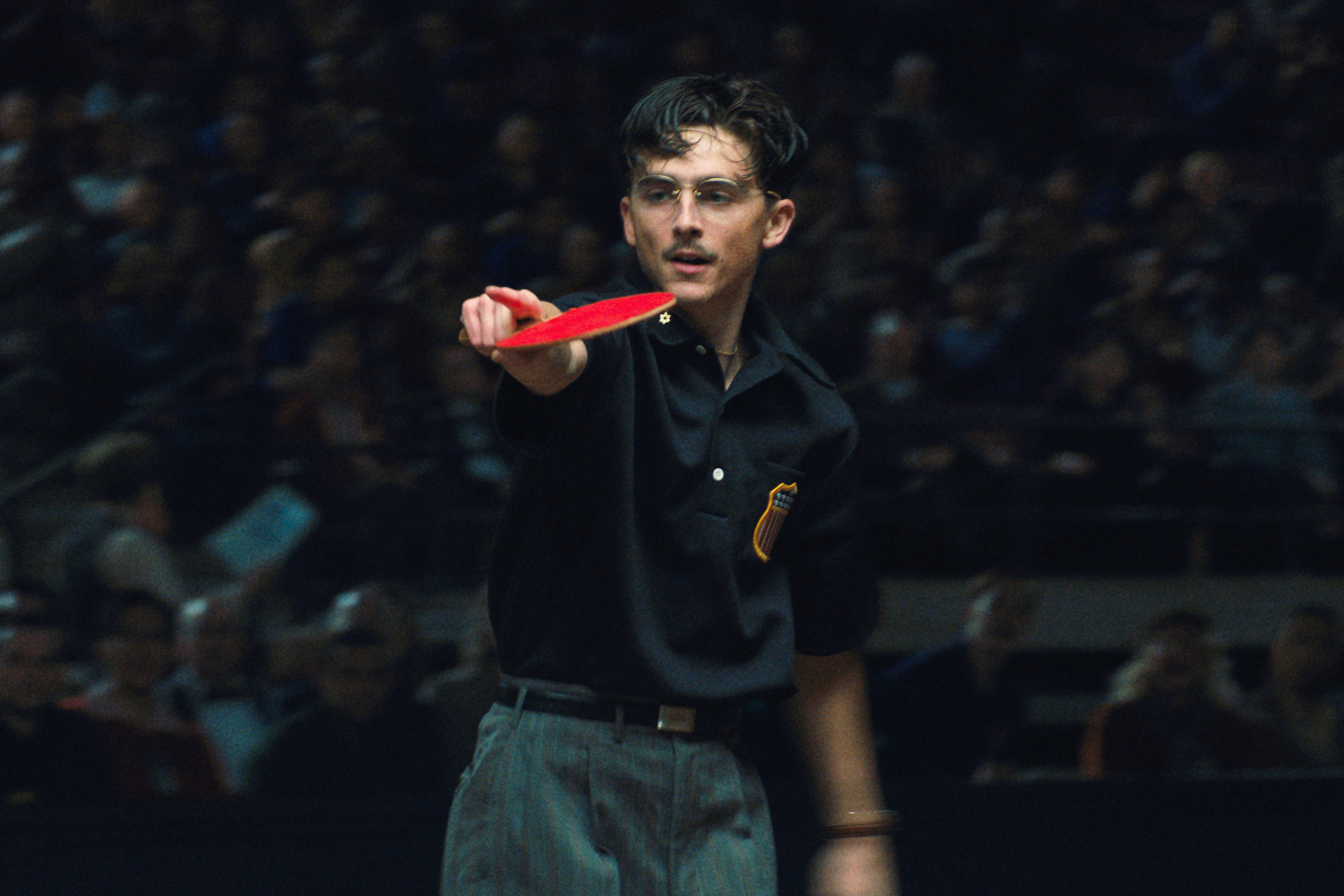
This image released by A24 shows Timothée Chalamet in a scene from “Marty Supreme.” (A24 via AP)
‘Marty Supreme’
Timothée Chalamet is Marty, an ambitious table tennis hustler in 1950s New York whose story is inspired by the real life scammer Marty Reisman. The anxious sports drama follows Marty’s quest for table tennis glory that takes him to Japan. The movie picked up nine nominations including a best actor nod for Chalamet.
Playing: AMC Broad Street 7, Cinemark University City Penn 6, AMC Dine-in Fashion District 8, Film Society Bourse, Film Society East, Landmark Ritz 5, AMC Deptford 8, Bryn Mawr Film Institute, Cinemark Somerdale 16 and XD, AMC Marple 10, Regal Moorestown Mall, AMC Voorhees 16, Regal Plymouth Meeting, AMC Marlton 8
This image released by Warner Bros. Pictures shows Leonardo DiCaprio in a scene from “One Battle After Another.” (Warner Bros. Pictures via AP)
‘One Battle After Another’
In this dense, action-packed thriller by Paul Thomas Anderson, a has-been revolutionary (Leonardo DiCaprio) has to find his missing daughter whose disappearance is connected to his past association with a radical group. This film has 13 Oscar nominations.
Playing: Landmark’s Ritz Five, AMC Cherry Hill 24, Hiway Theater in Jenkintown, Regal UA King Of Prussia, Regal Cross Keys, AMC Neshaminy 24, Regal Brandywine Town Center, Regal UA Oxford Valley, Regal Cumberland Mall, Regal Peoples Plaza, and more.
A person buys a ticket for the Oscar-nominated film, The Secret Agent, at a self-service ticket kiosk, at a movie theater in Sao Paulo, Thursday, Jan. 22, 2026. (AP Photo/Andre Penner)
‘The Secret Agent’
A historical nonfiction follows former professor and political dissident Armando (best actor Oscar nominee Wagner Moura) is on the run from mercenary killers in this 1977 Brazilian thriller from Cannes-winning filmmaker Kleber Mendonça Filho.
Playing: Film Society Bourse, Bryn Mawr Film Institute, the Colonial Theatre, County Theater in Doylestown, the Princeton Garden Theatre, Montgomery Cinemas in Skillman, NJ, and more.
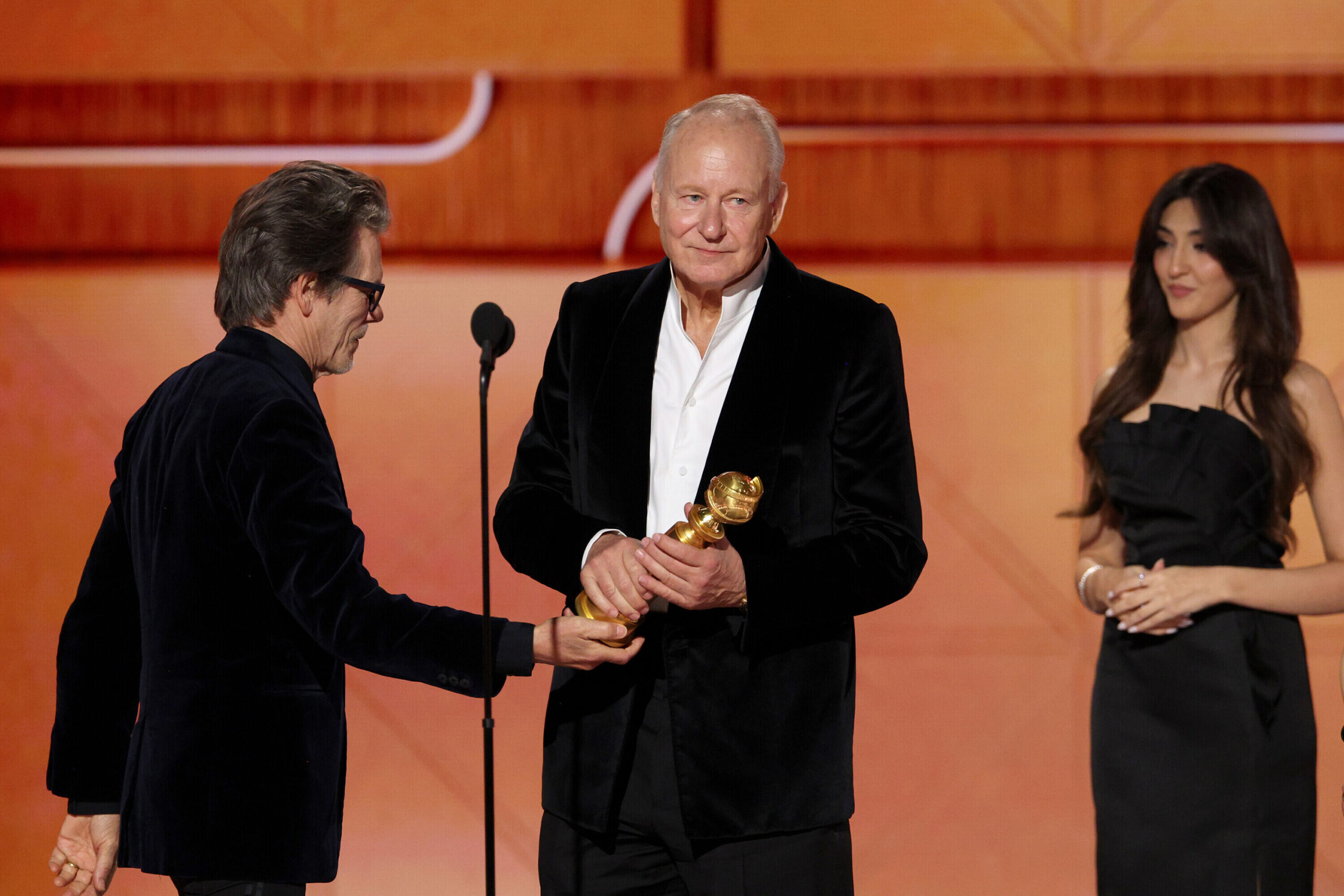
This image released by CBS Broadcasting shows Stellan Skarsgård accepting the award for best performance by a supporting actor in a motion picture for “Sentimental Value,” from presenter Kevin Bacon, left, during the 83rd Golden Globes on Sunday, Jan. 11, 2026, at the Beverly Hilton in Beverly Hills, Calif. (Kevork Djansezian/CBS Broadcasting via AP)
‘Sentimental Value’
Sisters Nora (Renate Reinsve playing a theater actor) and Agnes (Inga Ibsdotter Lileaas) reunite with their distant father Gustav (Stellan Skarsgard), a famous director. The reunion forces the family to confront past trauma and their shared artistic practice as Gustav works on a film based on his family members.
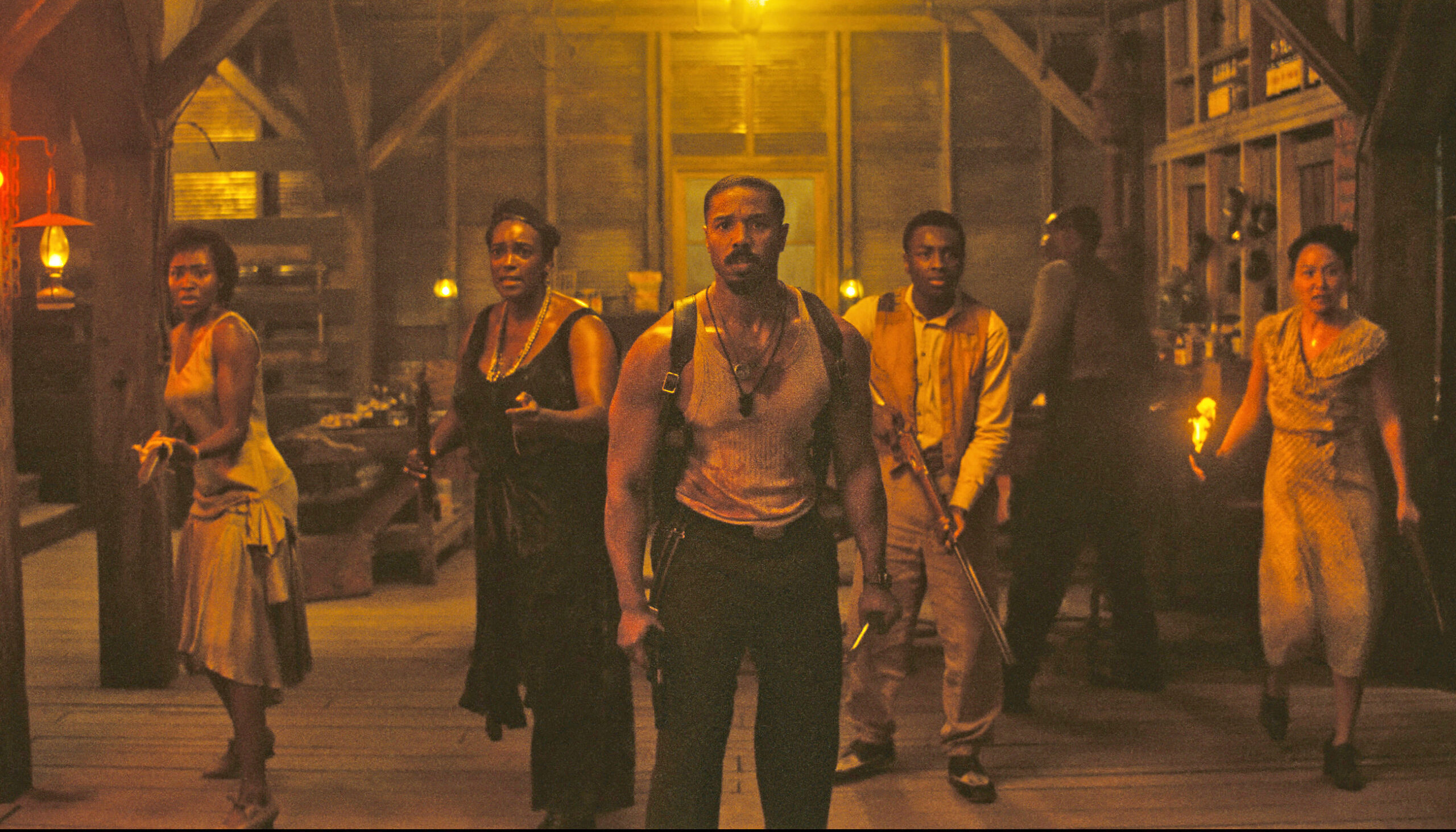
This image released by Warner Bros Pictures shows Michael B. Jordan, center, in a scene from “Sinners.” (Warner Bros. Pictures via AP)
‘Sinners’
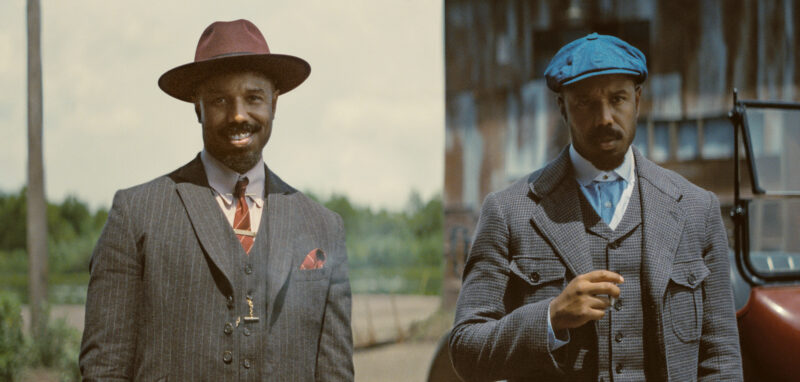
Rich from Chicago bootlegging schemes, twins Smoke and Stack (Michael B. Jordan) return to their home in the Deep South during the 1930s to open a juke joint. Here they come fact-to-face with vampires intent on stealing their souls. The film, directed by Ryan Coogler, received a record-breaking 16 nominations including one for Jordan, who is nominated for best actor.
Playing: Landmark’s Ritz Five, AMC Cherry Hill 24, Cinemark Somerdale 16 and XD, Regal UA King Of Prussia, AMC Neshaminy 24, Regal Warrington Crossing, CAMC Center Valley 16, and more.
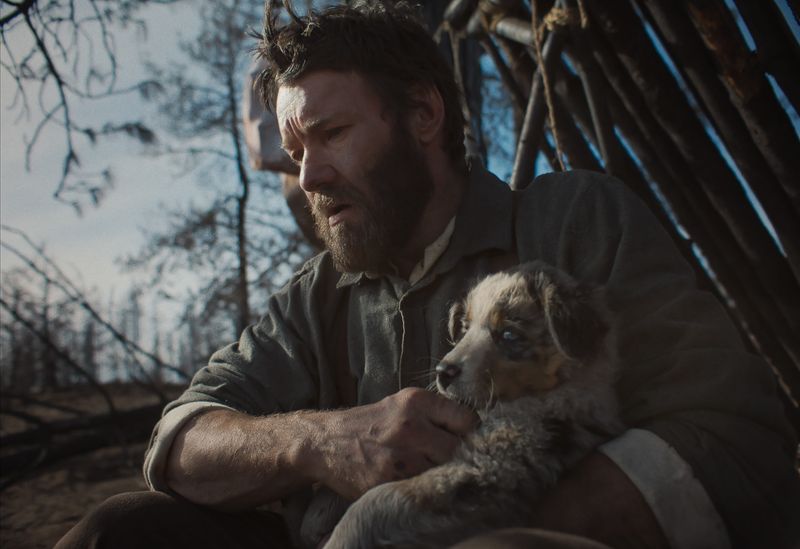
Joel Edgerton navigates personal tragedy and decades of working on the railroad in the period drama “Train Dreams.”
‘Train Dreams’
Early 20th century logger Robert Grainer (Joel Edgerton) builds a life with his wife Gladys (Felicity Jones) only to lose it all to wildfires, violence, and changing times. The film is based on Denis Johnson’s novella and received four Oscar nominations.
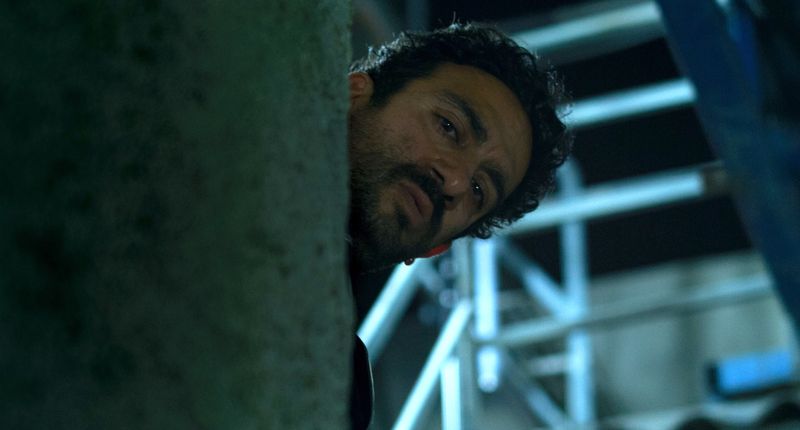
Vahid Mobasseri plays a mechanic and former Iranian political prisoner who kidnaps his former torturer in the genre-mashing thriller “It Was Just an Accident.”
‘It Was Just an Accident’
This Iranian thriller from legendary filmmaker Jafar Panahi follows a mechanic named Vahid (Vahid Mobasseri) who, along with fellow rebels, encounters their former prison tormentor and vows revenge.
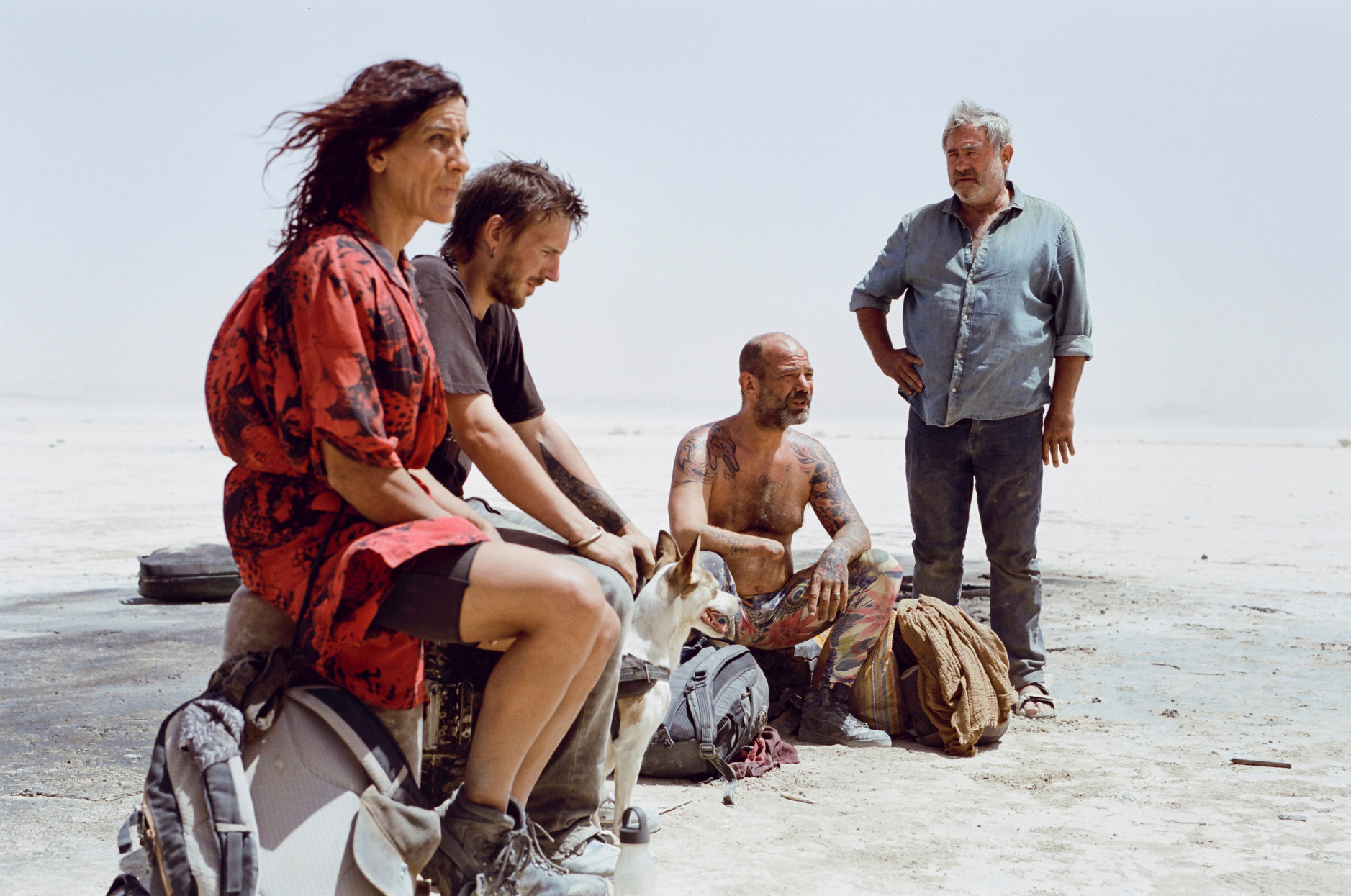
This image released by Neon shows, from left, Stefania Gadda, Joshua Liam Herderson, Richard Bellamy and Sergi López in a scene from the film “Sirat.” (Neon via AP)
‘Sirāt’
A film in French, Arabic, English, and Spanish about a family searching for their missing daughter during a music rave in a southern Moroccan desert. Add to that an armed conflict that escalates into a World War III-like tussle.
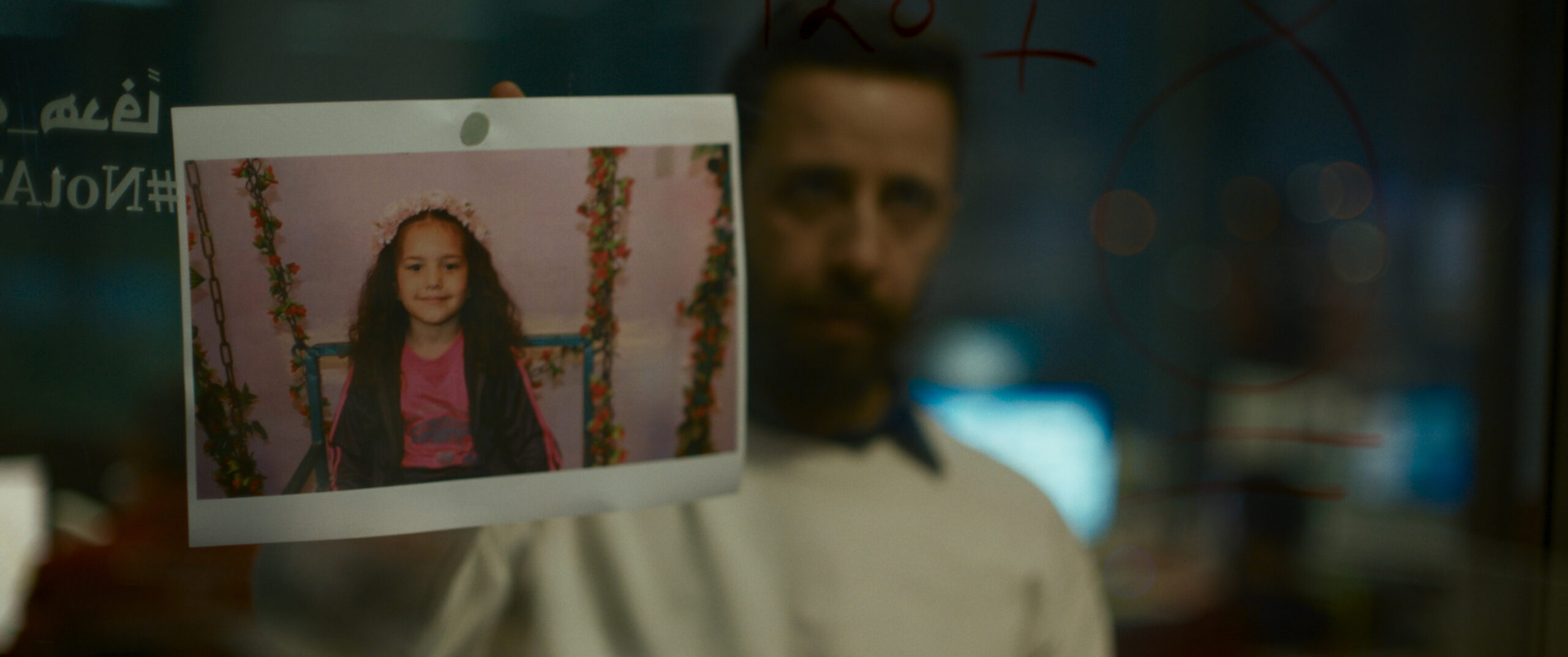
Motaz Malhees stars in “The Voice of Hind Rajab” as a Palestinian Red Crescent Society worker who receives a distress call from 6-year-old Hind Rajab, seen in the photograph. MUST CREDIT: WILLA
‘The Voice of Hind Rajab’
Tunisian filmmaker Kaouther Ben Hania’s docudrama chronicles the killing of Hind Rajab, a 5-year-old Palestinian girl in Gaza using an emergency call Red Crescent volunteers received on January 29, 2024.
Sinners, Ryan Coogler’s vampiric period film starring Michael B. Jordan, made Academy Award history on Thursday when it was nominated for 16 Oscars, more than any other film in the history of the award ceremony’s 98-year run.
It toppled the 14 nominations previously received by All About Eve (1950), Titanic (1997), and La La Land (2016). In addition to Michael B. Jordan’s best actor nomination and Coogler’s best director nod, Sinners Oscar-winning costume designer, Ruth E. Carter, was also nominated for for her work on the film. It’s her fifth overall Oscar nomination.
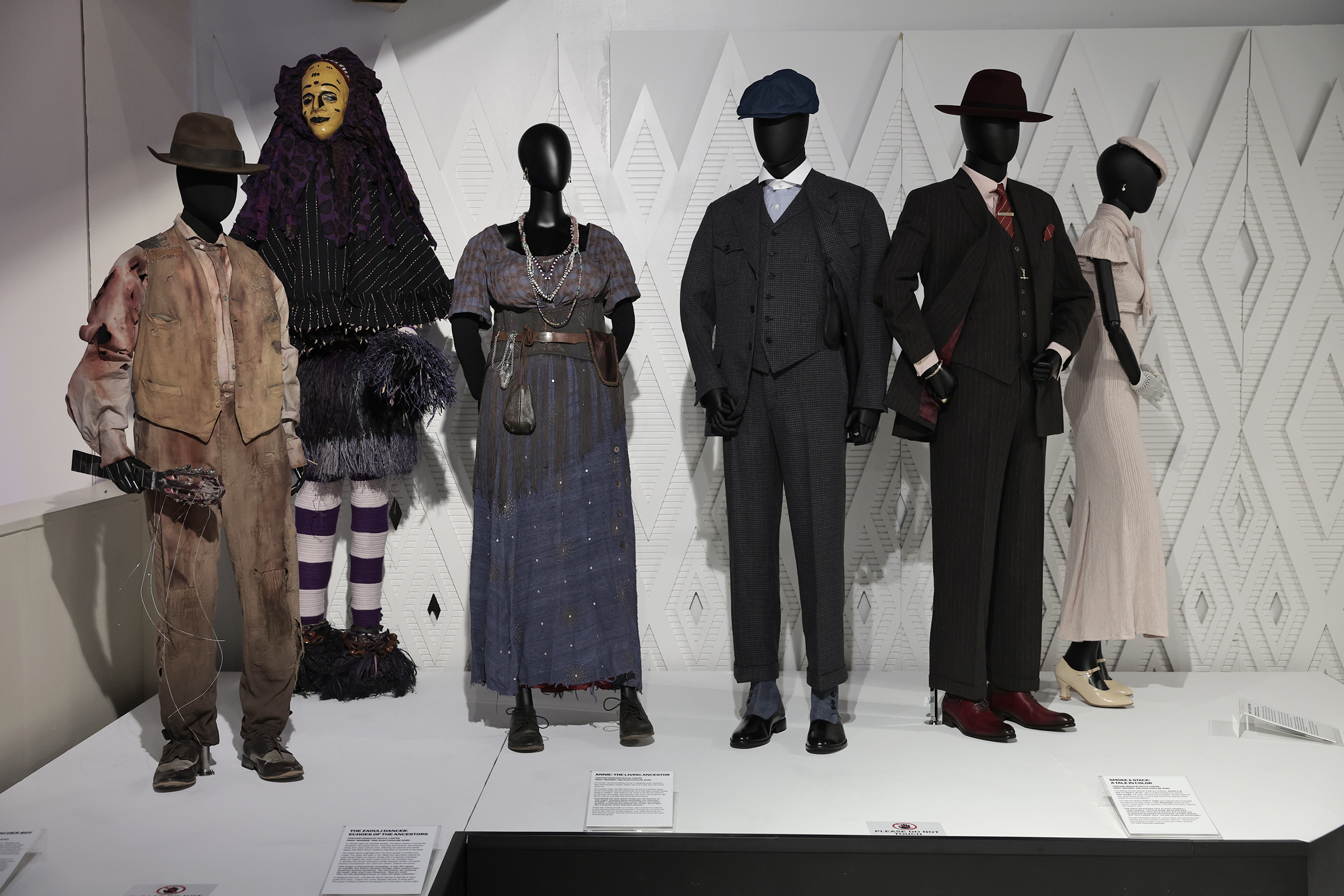
That includes Smoke and Stack’s (twins played by Jordan) memorable 1930s-era three-piece suits, with complementary fedora and newsboy cap, timepieces, and tiepins.
Ruth E. Carter’s Oscar-nominated costumes from “Sinners” starring Michael B. Jordan as twins Smoke and Stack.
Coogler’s only direction to Carter was to dress Smoke in blue and Stack in red, she told The Inquirer in November.
Carter, not one to fret long, dove into her arsenal of research. By the time she began the fittings, she’d amassed an array of blue and red looks befitting of the 1930s sharecroppers-turned-bootleggers and juke joint owners.
“[And] when I put that red fedora on him, Ryan flipped out and said, ‘That’s it!’,” Carter said. “We wanted people to resonate with their clothing and it did.”
The Smoke and Stack effect went beyond Sinners. This Halloween there were tons of social media posts of revelers dressed as the mysterious twins.
Ruth E. Carter during the “Ruth E. Carter: Afrofuturism in Costume Design” opening gala at the African American Museum in Philadelphia on Saturday, Nov. 1, 2025.
Also a part of AAMP’s Sinners display is the flowy earthy dress that best supporting actress nominee Wunmi Mosaku wore in her role as Annie. Annie is Smoke’s lover and a root woman who discovers the vampires in their Clarksdale, Miss., town.
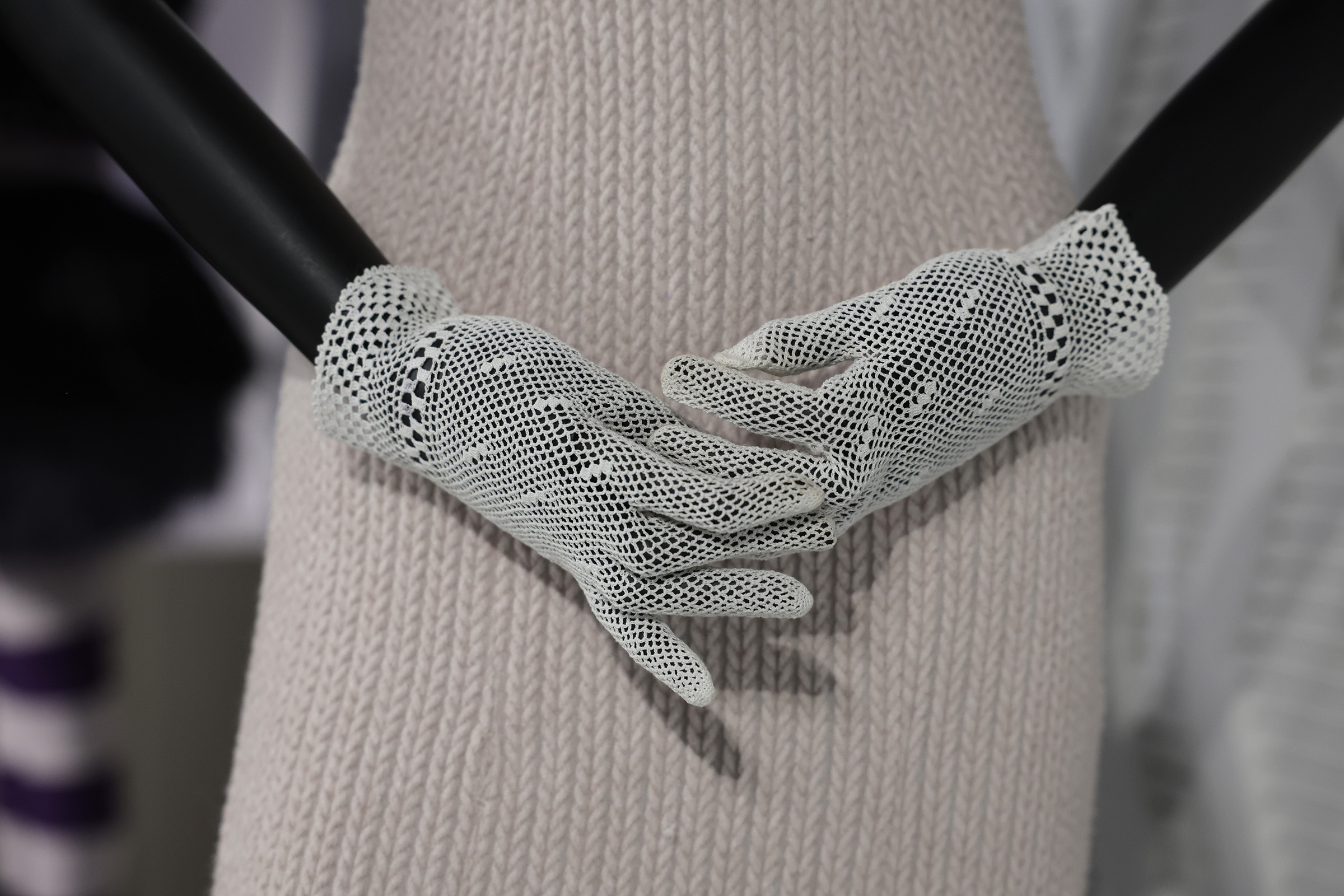
Cornbread’s (Oscar Miller) tattered sharecropper outfit is on the dais along with Mary’s (Hailee Steinfeld) blush knit dress with its short-sleeved bodice and pussy bow accent. Her matching knit beret and pearls are also on display. In the film, Mary is Stack’s childhood friend, turned girlfriend, turned vampire.
“I immerse myself in the mind, body, and soul of my characters,” said Carter. “Then I see them in my mind, how they move and with research, I come up with a look that I feel is unique to them.”
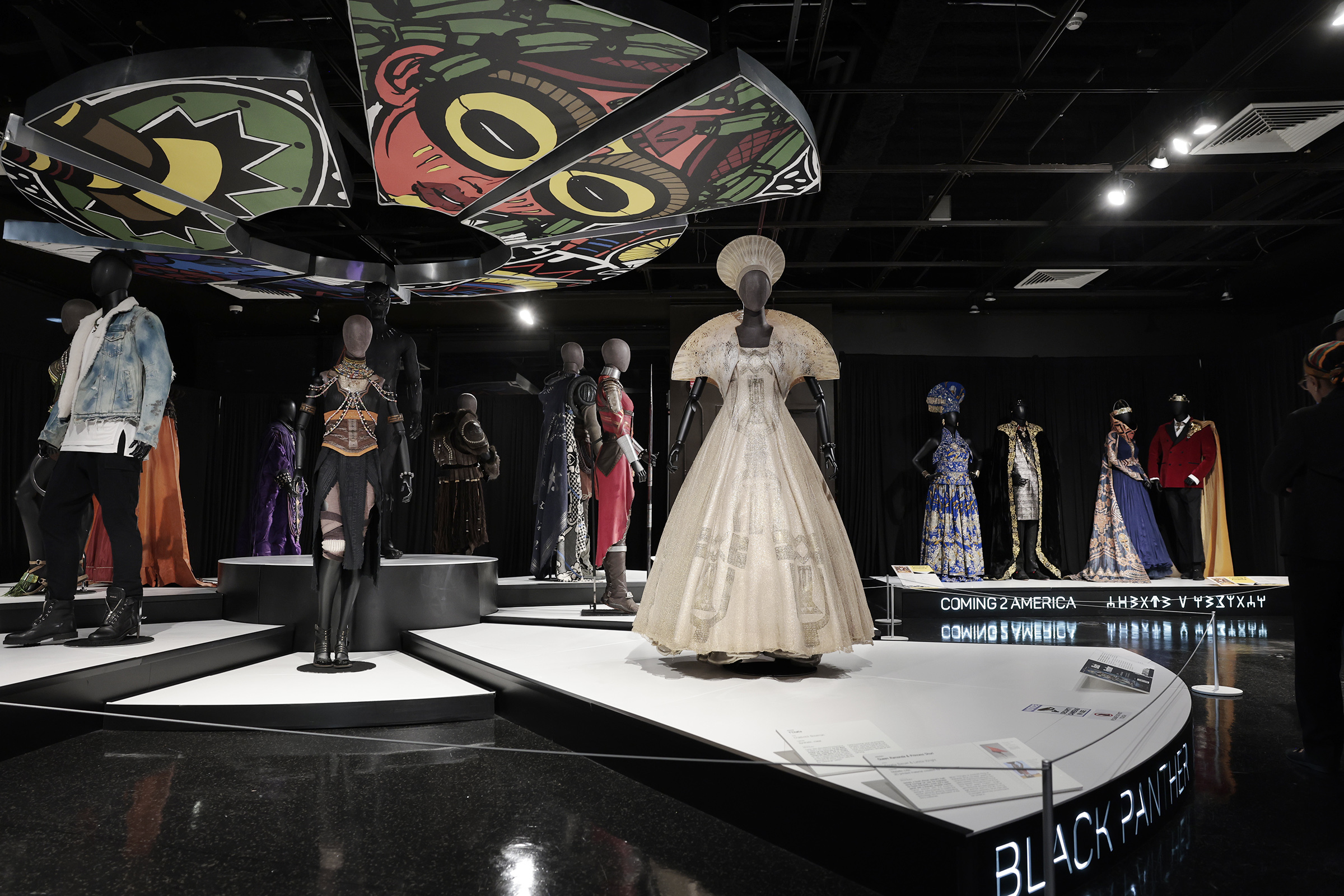
The Sinners pieces are among the more than 80 looks featured in the “Afrofuturism” exhibit, joining outfits from The Butler (Lee Daniels), and from Malcolm X, Coming 2 America, Black Panther, and its sequel, Black Panther: Wakanda Forever.
The show, headlining the African American Museum’s celebration of the nation’s Semiquincentennial, will be on display through September.
Lace gloves and knit dress detail of Mary (Hailee Steinfeld) costume from sinners.
During her five decades in the movie business, Carter has worked on more than 60 big-screen documentations of where Black Americans have been, who they are at the given moment, and who they dream of becoming.
Her work has shaped how the world sees African Americans.
In the 2010s, a friend of hers suggested she plan a museum exhibit around her costumes. After Black Panther, she partnered with Marvel, and in 2019, “Afrofuturism in Costume Design” debuted at the Savannah College of Art and Design’s Atlanta Campus.
The “Ruth E. Carter: Afrofuturism in Costume Design” exhibit at the African American Museum in Philadelphia on Saturday, Nov. 1, 2025.
Philadelphia is the exhibit’s ninth — and longest — stop. It’s also the first stop for the Sinners costumes.
“I am a griot,” Carter said. “[Throughout my career,] I’ve developed a knowledge base that embraces our culture and speaks to all of us in a positive way.”
“Ruth E. Carter: Afrofuturism in Costume Design” will be on view through Sept. 6. at the African American Museum in Philadelphia, 701 Arch St., Thursday through Sunday, 10 a.m. to 5 p.m. Tickets are $20 for adults, $10 for children.
Chill Moody didn’t plan on writing a children’s book.
A story about a young athlete was bubbling in his head. And the West Philly-born rapper and serial entrepreneur wanted to turn it into a screenplay, mirroring the upbeat, have-faith vibe of fellow rapper Bow Wow’s 2002 film, Like Mike.
“Instead of basketball [in Like Mike], I wanted the story to be about golf,” said Moody, whose real first name is Eric.
“And instead of a little boy, I wanted my main character to be a little girl.”
But movies take forever to become a reality. Moody, always ready to churn out his next nice thing, wanted to get this fictional little girl, who rocks a red golf tee and wields golf clubs passed down from the ancestors, into the world quickly.
So Moody, and his coauthor and cousin, Danielle Kellogg, decided a children’s book would be their best bet. This way, Moody could share his message of inspiration directly with his target audience. His character would come alive with every page turn; and a skilled rapper, Moody could write a story that rhymed.
“There had to be alliteration,“ he said. ”So, I named her Gia,”
Gia the Golfer was released in December.
The 36-page picture book, featuring vibrant illustrations by local artist Stephen Hatala, is available on the Barnes & Noble website and Amazon, where it sells for $14.99.
So far, Moody said, he’s sold a few hundred copies of Gia the Golfer. And, he said, 100% of the profits will fund his nonprofit We Golf Now. The two-year-old nonprofit encourages Philadelphia’s Black and brown youth to develop confidence, social, and networking skills through playing golf.
Zane King, 6, get advice from Chill Moody during a We Golf Now event at Five Iron Golf in Philadelphia, Pa., on Sunday, March 30, 2025.
“We serve over 100 kids,” Moody said. “We teach kids how to play golf, the business of golf, and introduce them to careers and job opportunities.”
Moody sees Gia’s spark and optimism in all of his young golfers.
When we meet Gia, her grandfather, Geo, has just died. She and her mother are going through his things when Gia discovers golf clubs that belonged to Geo, a star golfer and winner of a lot of tournaments. She takes the clubs and practices on her own and seems to be a natural. Her mother signs her up for golf classes and, following in her grandfather’s footsteps, she excels and decides to compete in a tournament.
But, on the day of the tournament, the golf clubs — that twinkle like they could be magical — disappear. Gia has to play without them.
“I wanted to teach children about memories and dealing with grief,” Moody said. “And that even if you lose something that you think is important, you aren’t at a loss.”
Moody, 40, finished writing the book in 2024. He shopped it to publishers for nearly a year before taking the self-publishing route.
“I didn’t want to sell the books out of my trunk like I did with my music,” Moody said. “But then I remembered I did this so we could tell our children’s stories. I remembered I could do this … I bet on myself.”
In September, he partnered with Lansdale’s Boardroom Spirits and released Tequila Transfusion, a mix of tequila, grape, ginger, and lime — his version of the country club cocktail.
Just like his drinks, Moody has big plans for Gia.
“I’m thinking animated cartoons and plush toys,” Moody said. “I want her to blow up as a brand. Seriously, I’m thinking Gia will be the next Dora the Explorer.”
The Pennsylvania Academy of the Fine Arts has named an art museum veteran to be its next leader.
Kristen Shepherd will become president and CEO of the oldest art museum and school in the U.S. effective Feb. 9, PAFA announced Thursday.
Shepherd was executive director of the Museum of Fine Arts in St. Petersburg, Fla., for more than 5½ years, and previously held posts at the Los Angeles County Museum of Art and the Whitney Museum of American Art.
She takes over PAFA as it faces financial challenges, remakes aspects of the institution, and prepares to cohost a major show this spring featuring works from the collection of Phillies managing partner John Middleton and his wife, Leigh.
Shepherd, 54, said that she had a “long-standing love affair with PAFA and its mission” that began when she was studying art history at George Washington University, where she earned her bachelor’s and master’s degrees in art history.
“I remember learning about PAFA as a student and just being absolutely floored at the idea of it. The fact that the founders, at the birth of our country practically, made an extraordinary statement about the importance of the fine arts in our young country that continues today.”
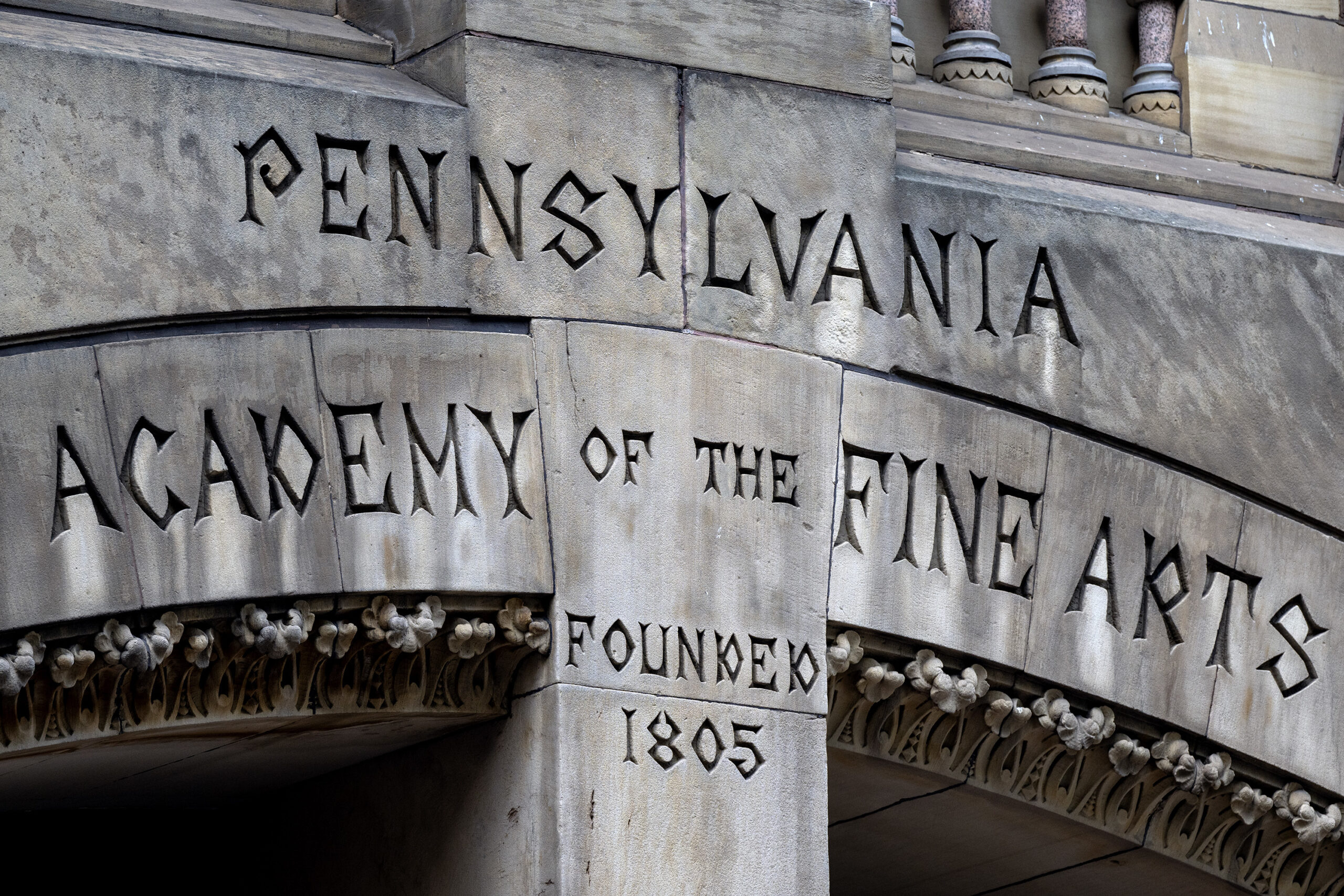
The name over the front entrance of the Pennsylvania Academy of the Fine Arts’s 1876 building at Broad and Cherry Sts., Sept. 29, 2025.
Facing a $3 million deficit and enrollment numbers that had shrunk by about half since 2017, PAFA announced in January 2024 that it would be ending its degree programs at the end of the 2024-25 school year. This past fall it launched a new certificate program that leaders hoped would net more income.
The institution — which was founded in 1805 — began drawing more heavily on its endowment than industry guidelines suggest is prudent. To boost revenue, it has marketed rental of its art-making facilities and spaces in its Samuel M.V. Hamilton Building to outside groups.
Last summer, PAFA shut down its historic North Broad Street museum building for a year to replace the HVAC system and make other improvements, and leaders have been stumping for a donation in exchange for naming rights to the building.
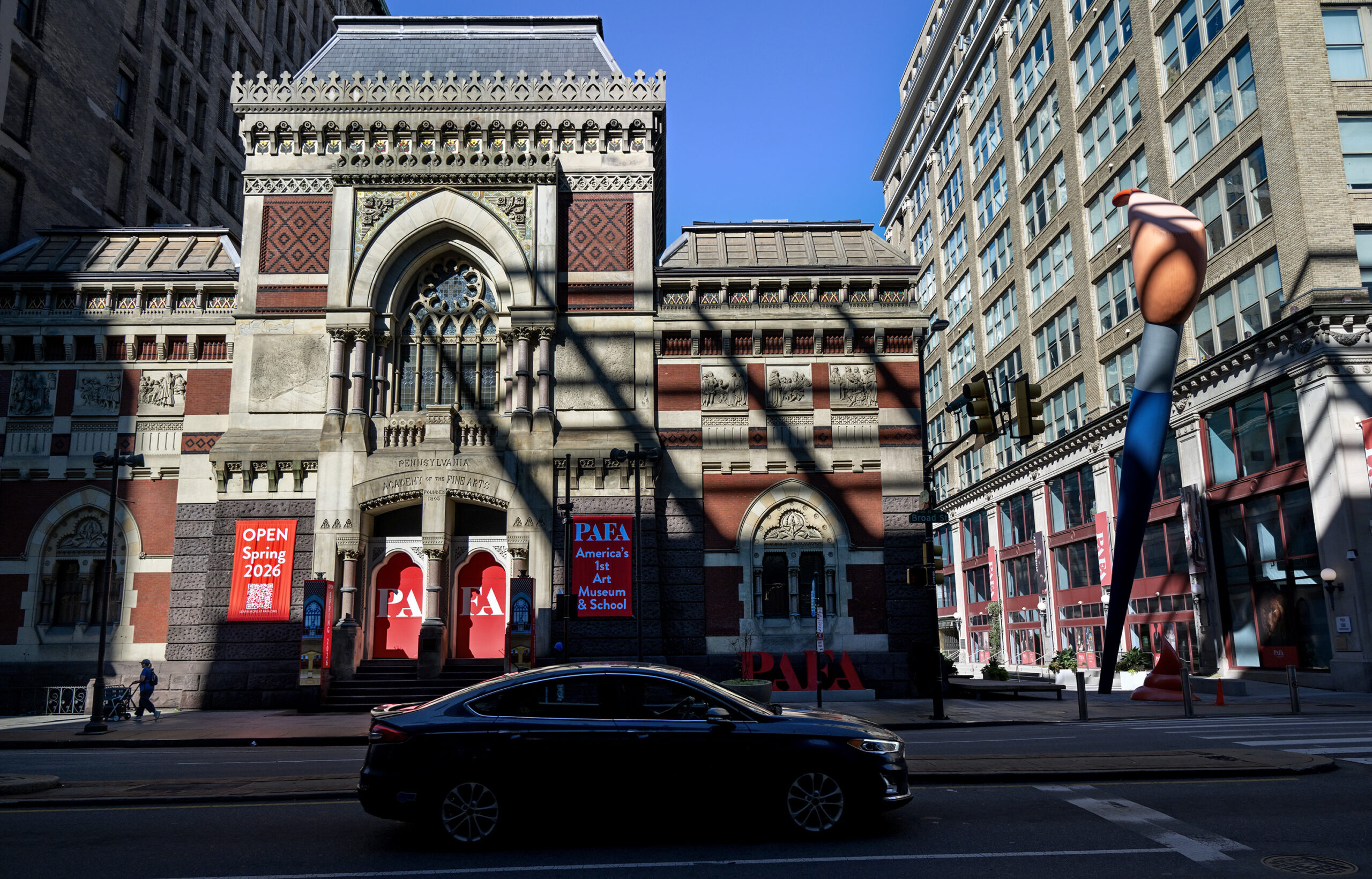
The Pennsylvania Academy of the Fine Arts Furness and Hewitt-designed building (left), with banners announcing the building’s reopening in Spring 2026, and the Samuel M.V. Hamilton Building (right) on N. Broad St., Sept. 28, 2025. In between is the 51-foot-high ‘Paint Torch’ sculpture by Claes Oldenburg.
PAFA’s previous president and CEO, Eric G. Pryor, stepped down more than a year ago, and the museum and school has been run by a team of three administrators in the interim.
Last fall, PAFA and Temple University announced a new affiliation whereby Temple leases the 10th floor of the Hamilton Building, bringing PAFA much-needed revenue. The Center City site gives Temple a home for new programs, including a curatorial studies certificate program. It also gives students access to PAFA’s art-making equipment and its important collection of American art.
Shepherd says not only was she familiar with PAFA’s challenges and ongoing retooling, but they were a factor in her interest in the post.
“That’s actually attractive to me rather than being daunting,” she said. “There’s a lot to be thought through and analyzed, from risk assessments to financial stability and how to create the right financial scenario for the institution’s longevity.”
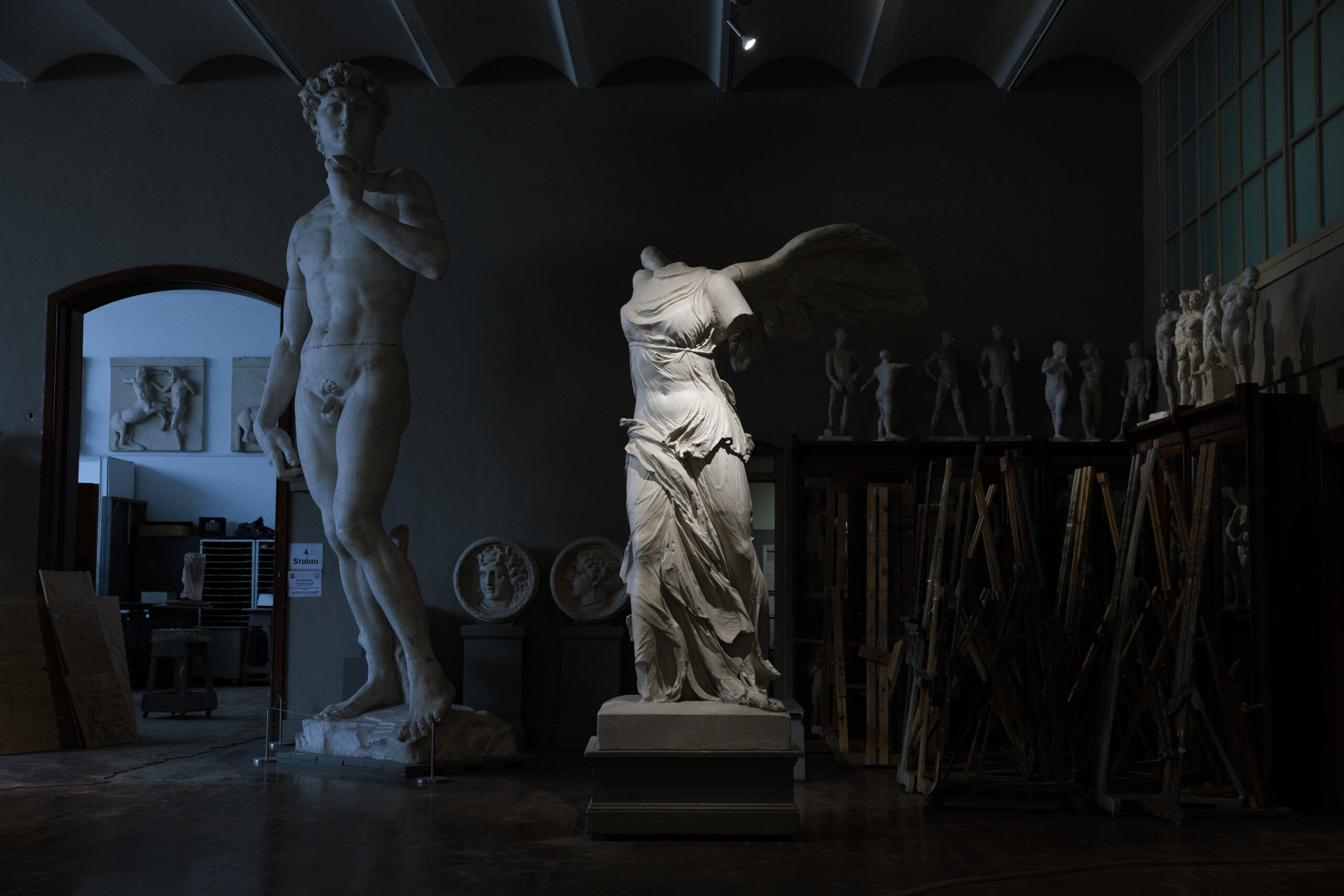
Sculptures used to instruct students at the Pennsylvania Academy of the Fine Arts, July 16, 2025.
Elliot Clark, a PAFA trustee and cochair of the search committee, said that in Shepherd, PAFA had found someone who can “expand membership and bring in new donors, new participants into the community.”
Clark said Shepherd’s “very keen financial mind” impressed PAFA’s leaders during the hiring process.
“She was a business analyst at Sotheby’s, and one of her roles was in strategic operations, and she’s very financially savvy. So she made us dance during the Q&A about financials.”
Clark called her “incredibly diplomatic — she’s a really talented communicator. She’s going to be a great ambassador both locally and nationally to the art community and the Philadelphia community.”
“And you know,” he said, “we’re not always an easy city to deal with.”
Shepherd led St. Petersburg’s relatively small Museum of Fine Arts (with a $6 million annual budget) from 2016 through 2022, and has run an arts consultancy since then with business partner Veronica Lane. At the Los Angeles County Museum of Art, she was associate vice president, head of audience strategy services. And, for 4½ years before that, she was director of the membership and annual fund program at the Whitney Museum of American Art. She worked at Sotheby’s for 9½ years in a variety of positions on the business side.
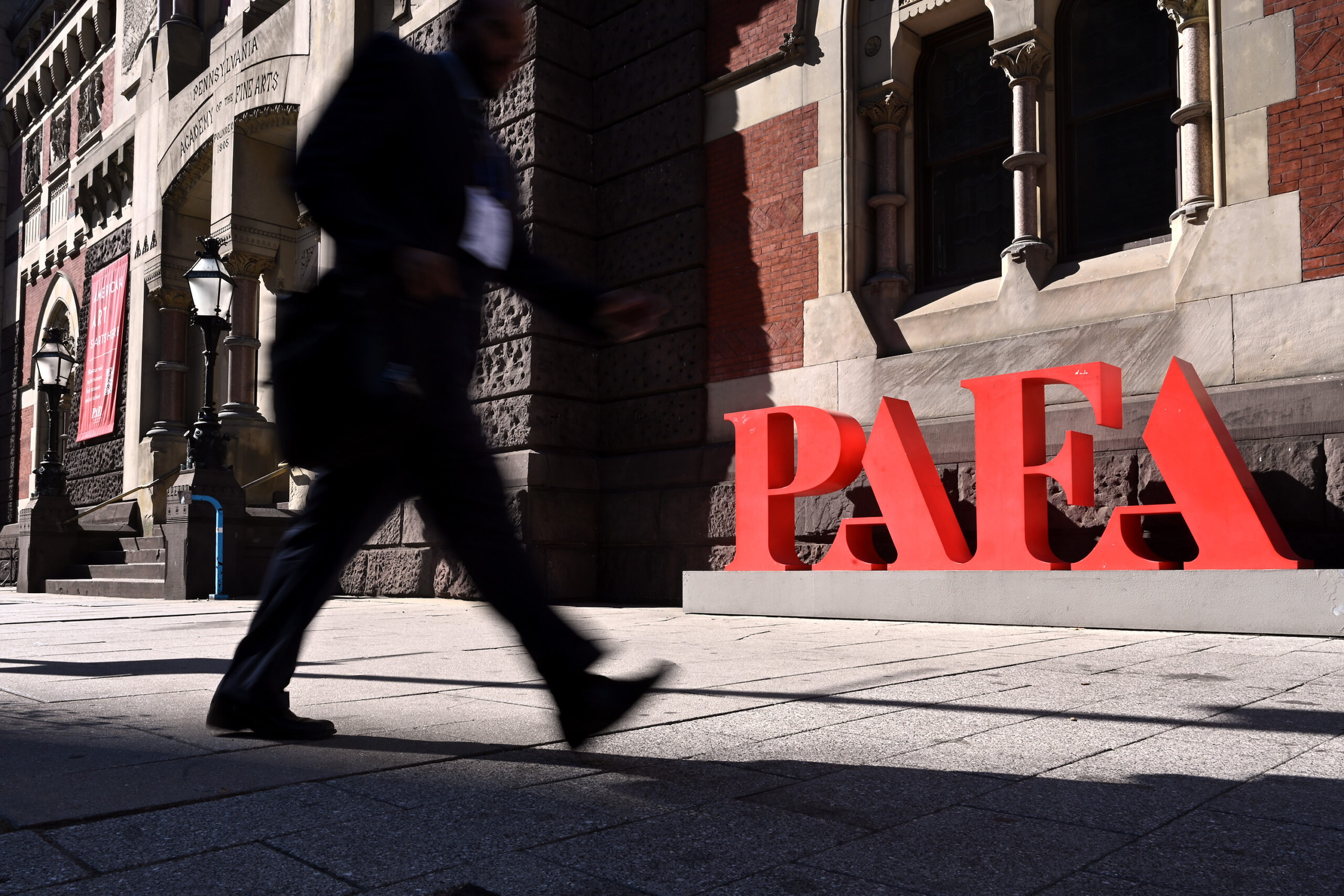
The Pennsylvania Academy of the Fine Arts, Oct. 22, 2024.
Her first few months at PAFA promise to be eventful. Clark says work on the Furness and Hewitt-designed museum building is on budget and on time; it is slated for a reopening celebration April 10. “A Nation of Artists” opens April 12.
The show, which takes place at both PAFA and the Philadelphia Art Museum, features more than 1,000 works curated by the two museums alongside those from the Middleton collection.
Temple’s programs at PAFA are expected to launch in late spring.
PAFA’s fiscal year ends June 30, which will reveal the direction of its finances.
“We’ll see where we are at the end of the year,” Clark said. “Some things have gone better, some things are not coming in as strongly as we would have liked. But overall, we’re still hopeful that we can get to break even this year.”
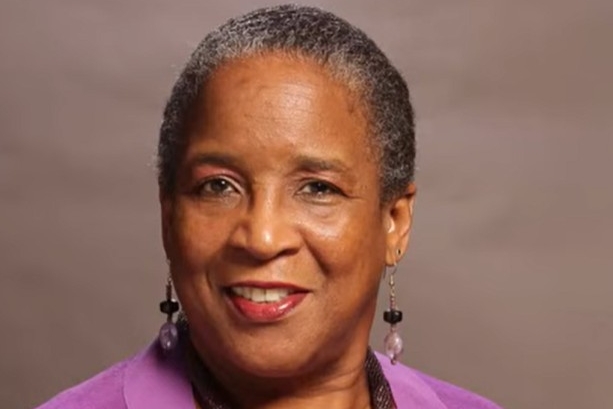
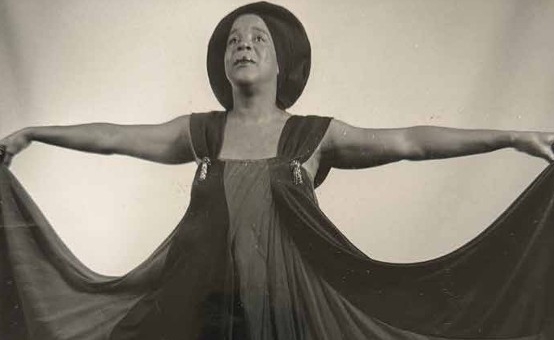
Carla Washington Hines, 72, of Philadelphia, longtime dancer, pioneering choreographer, celebrated teacher, former artistic director, collaborator extraordinaire, and mentor, died Sunday, Nov. 2, of sepsis at Temple University Hospital-Jeanes Campus.
Mrs. Hines came to Philadelphia from Virginia in 1974 after college and spent the next four decades dancing, teaching, lecturing, traveling, and generally advocating for arts in education from kindergarten through college. She danced with the Sun Ra Arkestra, the John Hines Dance Co., and other troupes at all sorts of venues in Philadelphia, New York, Chicago, elsewhere in the United States, and throughout Europe.
She choreographed original performances such as “Montage in Black,” “Reflections,” and “Life Cycle,” and collaborated with notable jazz musicians Herbie Hancock and Alice Coltrane, and other musical stars. She was a guest on TV and radio shows, read poetry at public events, and earned awards from the Pennsylvania Council on the Arts and the Philadelphia-based Bartol Foundation for education.
She was an expert in jazz dance, modern dance, ballet, and posture, and she lectured, organized workshops, and taught the elements of dance and choreographic principles at schools, colleges, art centers, drama guilds, libraries, and elsewhere around the country. Her mother, Thelma, was a dancer and teacher, too, and Mrs. Hines championed the connection between an interest in the arts and academic success.
“In dance, I can be anything I want to be,” she said in an online interview. “That’s the magic of the arts.”
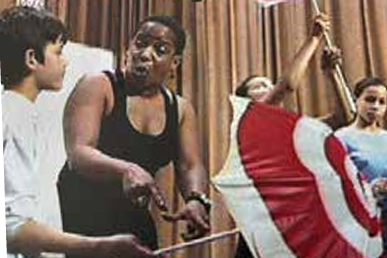
She created an afterschool residency at a Universal charter school and taught dance at E.M. Stanton Elementary School, Strawberry Mansion High School, and other schools. She said in the online interview that her curriculum “is based on the appreciation of dance and movement,” and that it helps students “make sense of their lives using dance as a tool for learning.”
She said: “I want them to be able to understand through movement exploration how dance can change one’s life.”
She was artistic director for the Philadelphia chapter of the Institute for the Arts in Education and at thePoint Breeze Performing Arts Center. “Her creative guidance helped students tell powerful cultural stories through movement,” her family said.
Mrs. Hines performed with the Jones-Haywood Dance School in Washington before moving to Philadelphia.
As longtime community engagement manager for the Philadelphia Clef Club of Jazz and Performing Arts, Mrs. Hines wrote grants and choreographed performances. She was executive director of the John Coltrane Cultural Society and active at the old University of the Arts.
Her family said: “She devoted her life to creativity and to nurturing talent in others.”
Carla Yvette Washington was born Nov. 3, 1952, in Charleston, W.Va. Her family moved to Grambling, La., when she was young, and she graduated from high school in 1970.
She was named Miss Freshman at what is now Grambling State University, joined the Alpha Kappa Alpha Inc. sorority, and earned a bachelor’s degree in recreation in 1973. In 1981, she earned a master’s degree in fine arts and dance at the old Philadelphia College of the Performing Arts.
Mrs. Hines (left) smiles with her husband, Lovett, and their daughter, Zara.
She worked as a dance teacher for the Fairfax County Department of Recreation in Virginia after college and performed with the Jones-Haywood Dance School in Washington before moving to Philadelphia.
She met jazz musician Lovett Hines Jr. when they were students at Grambling and they married in 1984 and lived in West Oak Lane. They had a daughter, Zara, and Mrs. Hines welcomed her husband’s son, Lovett III, and his family into her family.
“She introduced many creatives to dance and culture, and sparked their creative careers,” her stepson said. “That is the essence of her legacy.”
Mrs. Hines and her husband, their daughter said, were “a partnership of two geniuses.” He played the saxophone and was artistic director at the Clef Club. She loved the drums, and they collaborated seamlessly on many notable projects.
Friends called her “a sweetheart” and “a beautiful soul” in online tributes. One said she “made an impact on Philadelphia and beyond in countless ways.” Her sister, Alicia Williams, said: “Everyone had a special relationship with her.”
Mrs. Hines graduated from Grambling High School in Louisiana in 1970.
Mrs. Hines was diagnosed with a lung disease in 2024 and Stage 4 cancer in 2025. “She was stern but soft,” her daughter said, “loving but able to tell you like it is.”
Her husband said: “She had special relationships with so many musicians, so many people. It was through insight, understanding, and patience. In them, we see her everyplace, feel her everyplace.”
In addition to her husband, daughter, mother, and stepson, Mrs. Hines is survived by three sisters, two step-grandsons, and other relatives. A brother died earlier.
Services were held Wednesday, Dec. 17.
Mrs. Hines (center) said she adapted her teaching techniques to suit the needs and ages of the students.
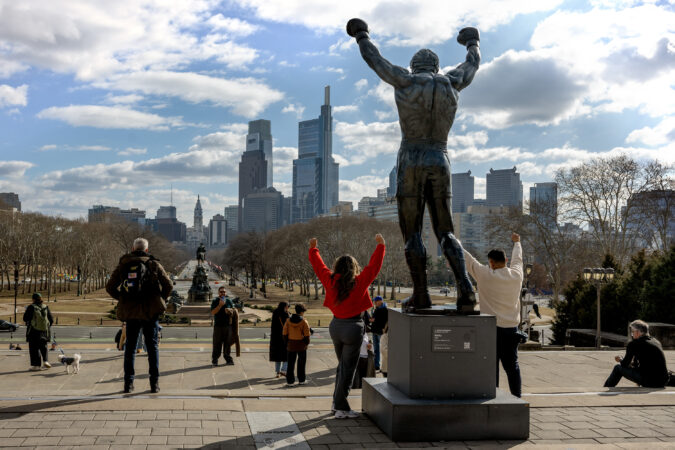
To hear the Parker administration officials tell it, moving the Rocky statue from the bottom of the Philadelphia Art Museum steps to the top is a victory for the underdog.
The new location, which received a green light from the Art Commission on Jan. 14, will certainly create a dramatic, Instagrammable moment for tourists, and further elevate the Rocky brand (and value).
But it’s no victory for Philadelphia residents, who remain the true underdog in this saga. Allowing the old movie prop to dominate the Parkway’s iconic vista is simply the latest in a series of decisions that have privatized the Art Museum’s gorgeous, landscaped grounds.
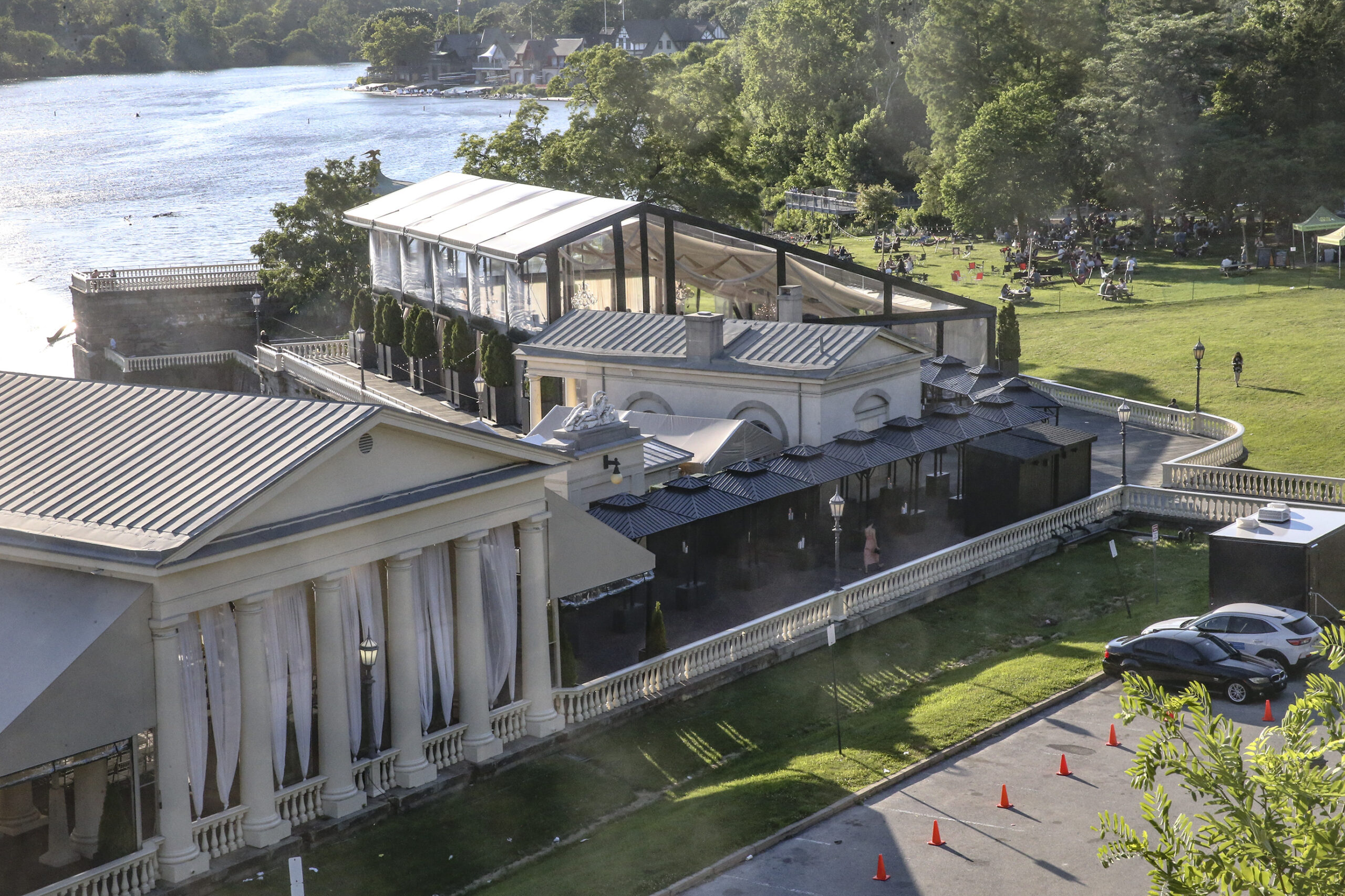
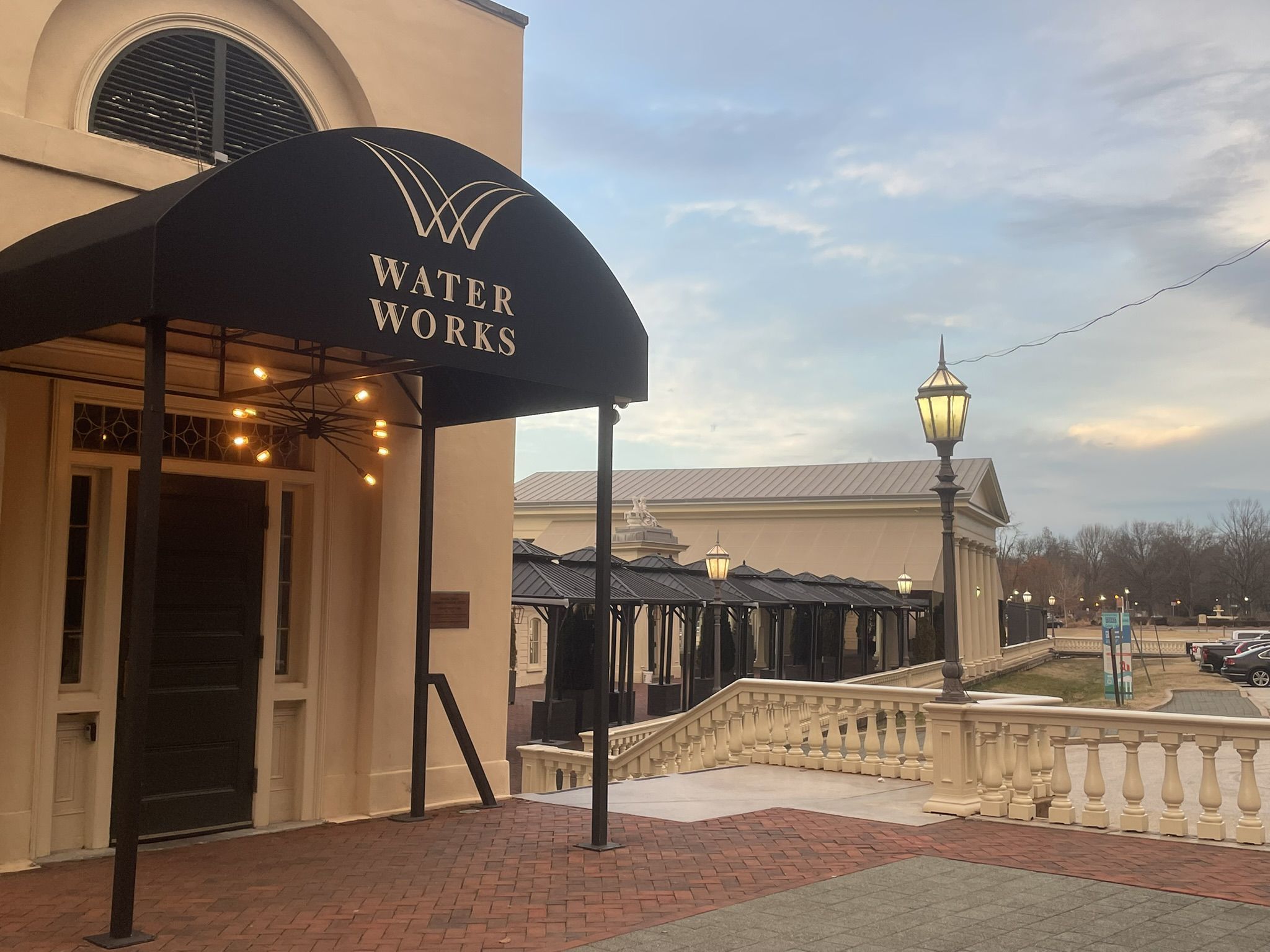
If you walk to the back of the museum, you’ll find the most egregious example of Philadelphia’s zeal for monetizing public space: the sprawling Cescaphe banquet operation at the Fairmount Water Works.
While the main Engine House had been used as a restaurant in the past, the city allowed Cescaphe to take over the entire complex in 2021. Today, the Water Works is surrounded with a cordon of server stations, portable restrooms, and covered walkways.
Since 2021, the historic Fairmount Water Works has been surrounded by a cordon of server stations and covered walkways. A glass party room prevents the public from enjoying the Mill House Deck, a pier overlooking the Schuylkill.
Cescaphe’s presence has drastically limited the public’s access to this historic landmark, a scenic spot where generations have come to stroll and take in views of the Schuylkill. Although visitors are permitted to wander though the Water Works’ classically inspired temples and colonnades when no events are going on, who would know that, given the messaging conveyed by Cescaphe’s formidable barricades?
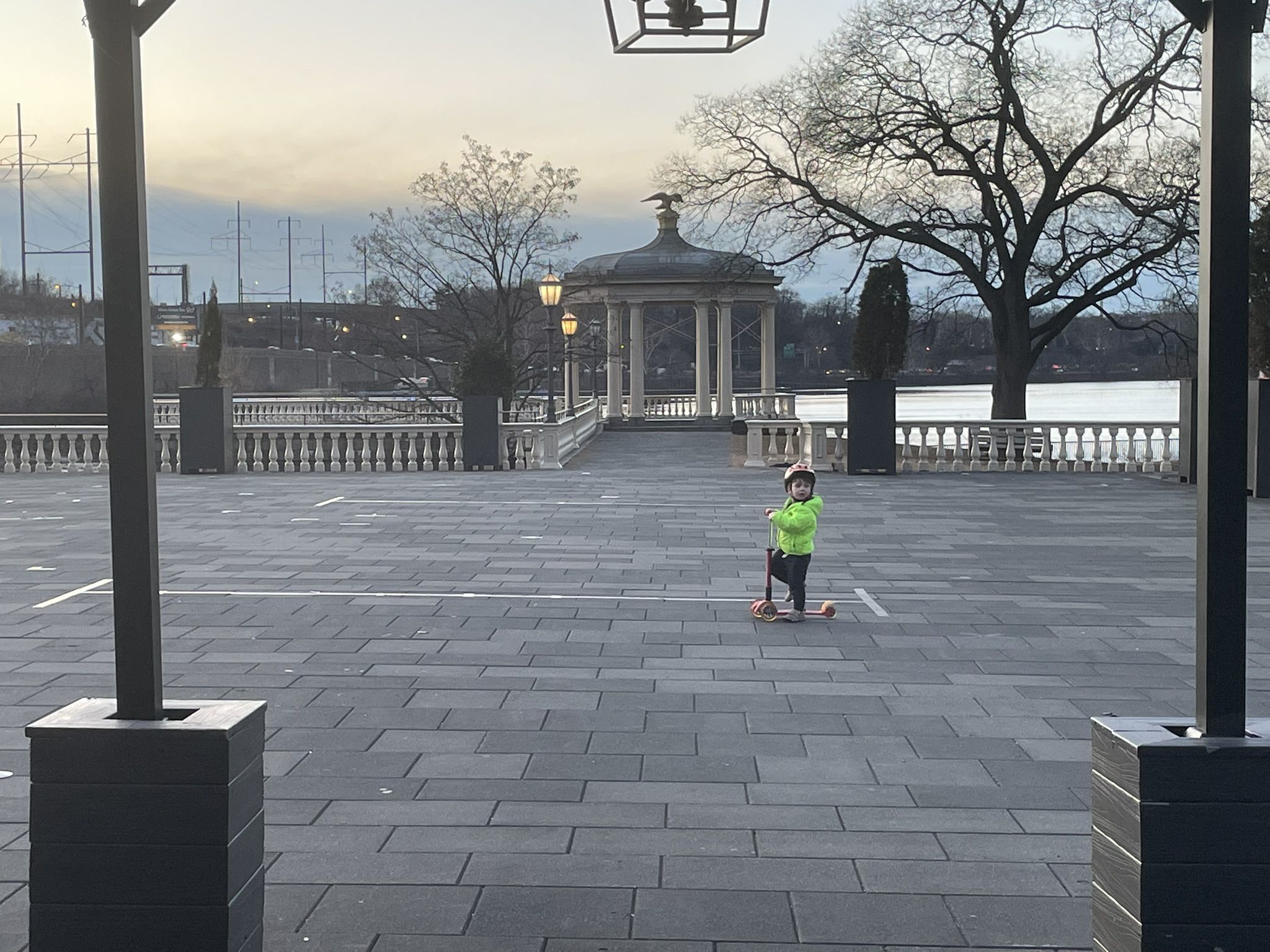
Preparations for evening events often start in the afternoon, further limiting access. Every spring, Cescaphe installs an enormous glass party room on the pier known as the Mill House Deck. It remains in place until late fall, which means the public gets to use the overlook only during the coldest months of the year.
Rocky already has a good spot
Moving the Rocky statue to the top of the steps might seem like a modest imposition by comparison, but the new location will interfere considerably with the public’s enjoyment of the space.
Since people with mobility limitations will have trouble climbing the 72 steps to the top of the museum’s grand staircase, they’ll need transportation. The Philadelphia Visitor Center — the initial advocate for the new location — has offered to run a shuttle bus around the museum apron every 15 minutes. Better watch out when you’re taking that selfie!
During the recent Art Commission hearings, the city’s two top cultural officials, Valerie V. Gay and Marguerite Anglin, argued that the Rocky statue deserves a higher profile perch because it’s a unique tourist attraction. They noted that the statue has been the subject of books and podcasts and will soon be the focus of a major Art Museum exhibition, “Rising Up: Rocky and the Making of Monuments,” curated by Monument Lab’s Paul Farber.
Yet, given the added complications, it’s hard to understand what the city gains by changing the statue’s location.
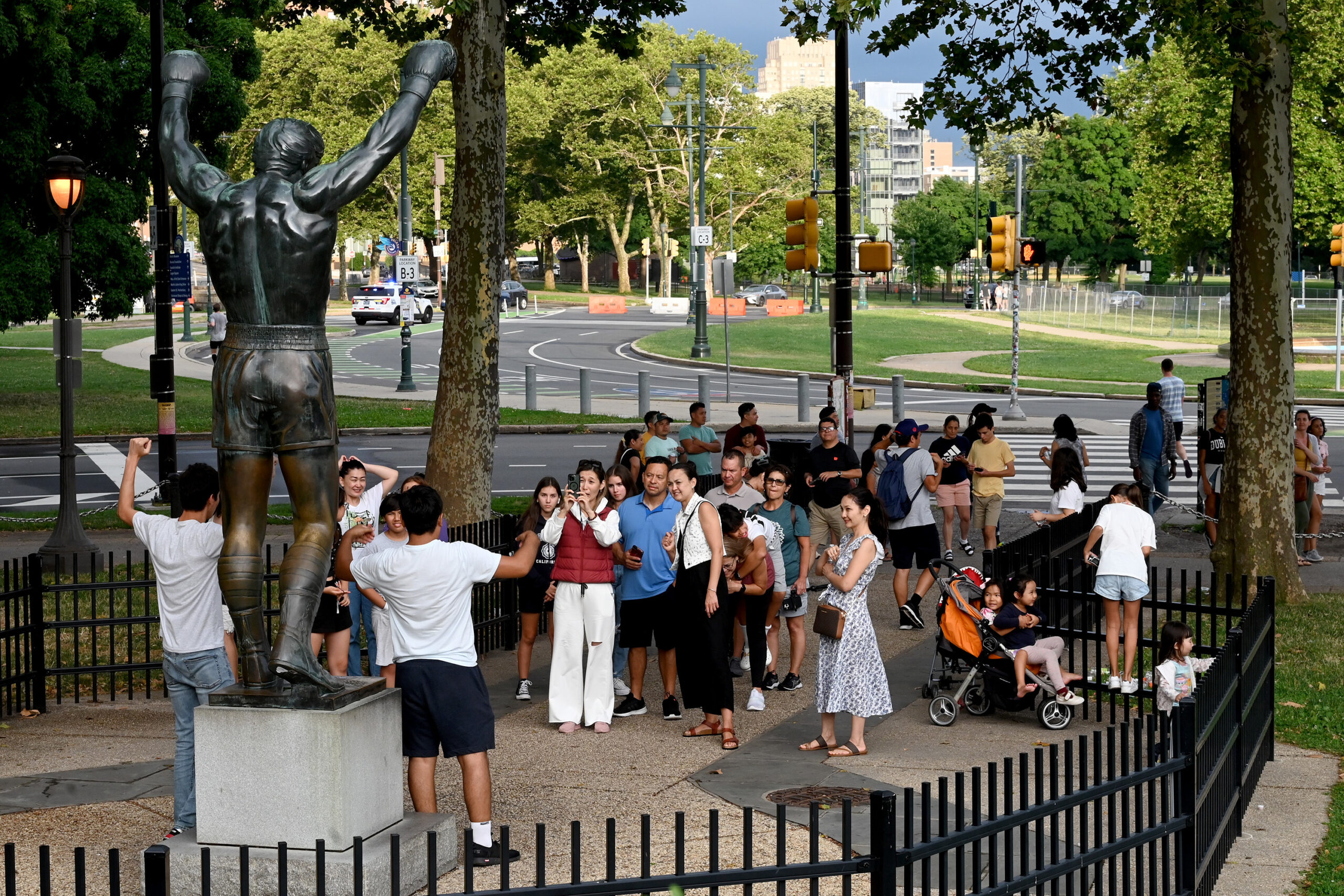
Rocky’s current home — a shady grove at the bottom of the steps — has been a huge success. The statue was installed there in 2006, after years of shuttling around Philadelphia, from the museum to the sports complex and back. In a typical year, 4 million people make the pilgrimage to see Rocky, the same number who visit the Statue of Liberty annually.
The Rocky statue, currently at the base of the Art Museum steps, is easily accessible to visitors and tour groups.
Because the grove is so close to the street, there are no accessibility issues. Tour buses and cars can pull up to the curb, allowing people to jump out for a quick selfie. Sometimes there’s a line for photos, but the mood is always festive, with visitors and locals mingling along the sidewalk. Anyone who wants to reenact the fictional boxer’s run up the museum stairs can do that, too.
Yes, this site occupies a piece of the museum’s grounds. But the intrusion is relatively discreet. Considering how well this location works, why change it? It’s not like there was a huge public clamor to give Rocky more prominence. When Inquirer columnist Stephanie Farr polled readers in September, most respondents said they were happy to keep the statue in its current location — or get rid of it entirely.
Only a single person testified at the Art Commission’s Jan. 14 hearing — and he argued against the move. Several civic organizations, including the Design Advocacy Group (DAG), sent written statements urging the city to reject the proposal.
“All we’re doing is glorifying Sylvester Stallone, who sells merchandise at bottom of the steps,” complained David Brownlee, a member of the DAG board and a renowned University of Pennsylvania art historian who has written a history of the Art Museum.
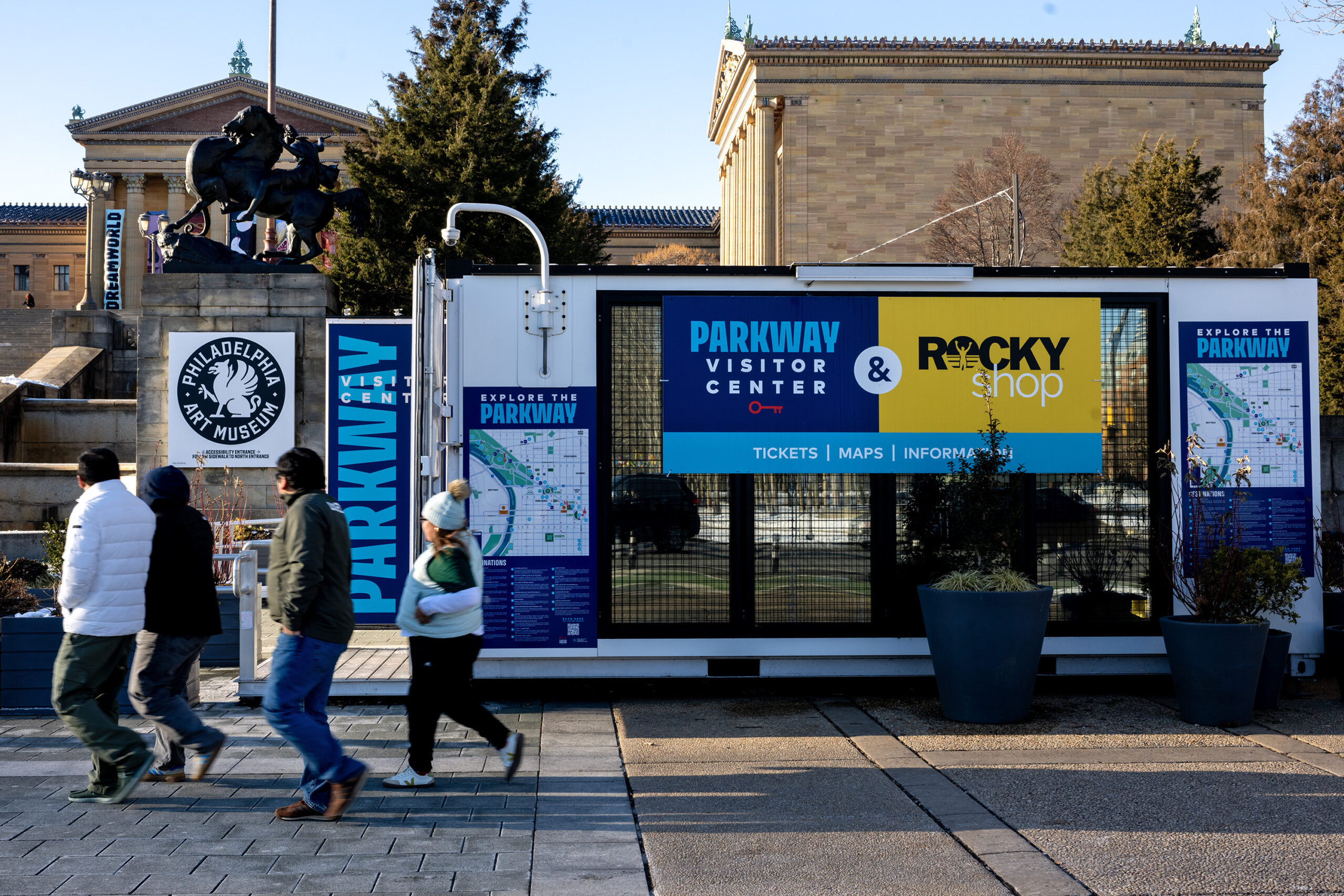
Those Stallone-licensed souvenirs are sold in the “Rocky Shop,” a metal shipping container that was allowed to encroach on the plaza at the base of the museum steps in 2023. Although the metal structure doesn’t take up as much public land as Cescaphe’s banquet operation, it clunks up the approach to the museum’s elegant stone staircase.
The Parkway Visitor Center & Rocky Shop at the base of the Philadelphia Art Museum steps Jan. 20, 2026. In 2023, the city allowed Sylvestor Stallone to set up the metal shipping container at the base of the Philadelphia Art Museum steps.
Initial reports said the Visitor Center, which pushed for the shop, would get a cut of the sales. Yet when I asked how much money that partnership had yielded, a spokesperson for the independent tourism agency declined to answer. The Visitor Center is now run by Kathryn Ott Lovell, who was parks commissioner when the department signed off on Cescaphe’s 2021 expansion at the Water Works.
The exorbitant cost of moving
What jumped out at me during the Art Commission hearing was the cost of moving the bronze sculpture and setting it up on a new base.
Creative Philadelphia, the city department overseeing the move, originally estimated the job would run about $150,000. Now it says the price could rise to $250,000. Those figures don’t include the cost of operating the shuttle, which will be borne by the Visitor Center.
To put those numbers in context, consider the basepayment the city receives from Cescaphe annually for operating a banquet hall at the Water Works: $290,000.
When Cescaphe was given permission to occupy the Water Works complex in 2021, the city said the arrangement was necessary because the parks department could no longer afford to adequately maintain the property. In addition to rent, the agreement generated about $187,000 annually in concession fees between 2015 and 2022 for the city.
That income isn’t peanuts, but is it really worth severely limiting public access to such an iconic Philadelphia landmark? What’s the point of monetizing our parks if the businesses prevent us from enjoying them?
Except for a few months during the winter, the Mill House Deck pier at the Fairmount Water Works is covered with Cescaphe’s glass party room, making it impossible for Philadelphians to enjoy the space.
The privatization of such beloved sites is the direct result of city government’s unwillingness to properly fund its parks. For years, Philadelphia has spent far less than peer cities on green space. Maintenance declined to the point where some parks became unusable.
Rather than devote more money to this basic public amenity, the city has increasingly outsourced its parks to private managers. Enormously popular destinations, such as Dilworth Park and Franklin Square, are run by independent groups.
Cescaphe, a banquet company, has surrounded the Fairmount Water Works with a cordon of arcades, server stations and portable restrooms since it began holding events there in 2021.
But there’s a crucial difference between those private managers and the likes of Cescaphe. First, they’re nonprofits, not businesses. They exist to serve the public. While it’s frustrating when they close their parks for private fundraising events, all the money they raise goes back into improving the parks for the public’s use.
With the Cescaphe deal, the city has crossed a line. Cescaphe is a money-making business that runs the Water Works for its own benefit. In theory, the rent and concession fees are supposed to be invested in the maintenance of the complex, which was considered one of the wonders of the world when it opened in 1815. But it’s Cescaphe, not the public, that benefits from the improvements.
It’s not even clear that Cescaphe is doing the promised maintenance. The Engine House suffered a serious fire in November, and the company still has several outstanding building code violations.
When asked about the citations, a spokesperson for Parks & Recreation described the infractions as minor. “Cescaphe has been a great partner,” Commissioner Sue Slawson said in a statement.
To be clear, there is a big difference between leasing a public building to a restaurant concession and privatizing public space for the sole use of a single business. Restaurants are open to everyone. They also provide services, such as restrooms, that the public can use. It’s a win-win: The city makes a little money on the deal, and the public gets a nice amenity.
The city had the right idea when it leased the Water Works’ Engine House to a restaurateur in the early 2000s. But instead of finding a replacement when that restaurant shut down in 2015, the city turned the complex over to Cescaphe. This April the banquet company’s lease will come up for renewal. It’s time to go back to the original model.
Wouldn’t it be great to grab a sandwich at a Water Works cafe after a long walk or bike ride along the Schuylkill River Trail? The trail, which just completed a spectacular extension, does not have a single cafe between its new Grays Ferry terminus and the museum, apart from a small snack bar at Lloyd Hall. Philadelphia has plenty of great restaurateurs who would jump at the chance to operate in a prime spot like the Water Works.
People have framed the Rocky discussion as a clash between elites, who object to the glorification of a movie prop as art, and the mass of fans who believe the statue embodies their aspirations.
The reality is, there’s nothing less democratic than turning over the public’s land to private companies driven by their own gain.
An earlier version of this column listed FDR Park as one of several city parks that are run by private managers. The Philadelphia Department of Parks & Recreation operates the park and provides workers to staff it.
This story has been updated to remove the Schuylkill River Trail from a list of private managers because the Schuylkill River Development Corp. has a different type of contractual agreement with Philadelphia’s Department of Parks & Recreation and does not lease the land it oversees.
When it opened in 1815 to provide the growing city with a reliable supply of drinking water, the Fairmount Water Works was a major engineering advance and was considered one of the wonders of the world.
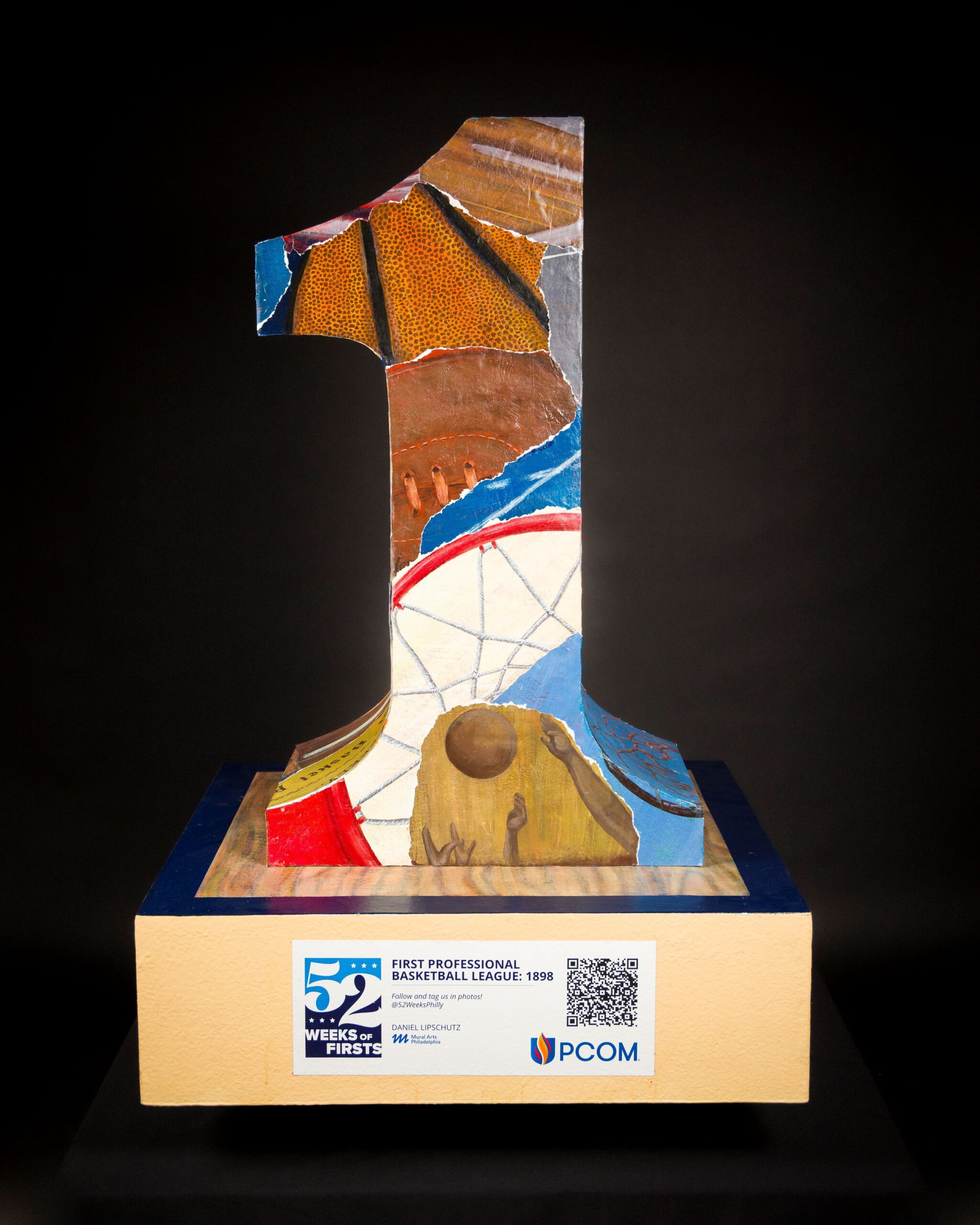
On Dec. 1, 1898, about 1,000 people gathered at a court in Textile Hall — today’s Kensington neighborhood. They were there to watch the Philadelphia Hancock Athletic Association play the New Jersey Trenton Nationals in America’s first professional basketball game.
According to an article in the following day’s Philadelphia Times, the game got a late start because referees were still ironing out the rules of the world’s newest professional sport.
But once the game got underway, it was fast and furious.
Hancock “started with a rush, scoring two field goals before the players had become warmed up to their work,” the story reads.
“Throughout the entire first half, the home team had the better of the argument, taking advantage of every opportunity finishing the half in the lead by a score of 11 to [0].”
In the end, Philadelphia lost by two points, a disappointment Philly sports fans know all too well, even in these modern times.
The final score: 21 to 19.
Daniel Lipschutz blended history into his love of the modern day sport for this sculpture.
That first game of the National Basketball League will be feted this Saturday at a Firstival at Xfinity Mobile Arena. Firstivals are the Philadelphia Historic District’s weekly day parties celebrating events that happened in Philadelphia before anywhere else in America, and often the world. They are part of a yearlong celebration of America’s 250th birthday.
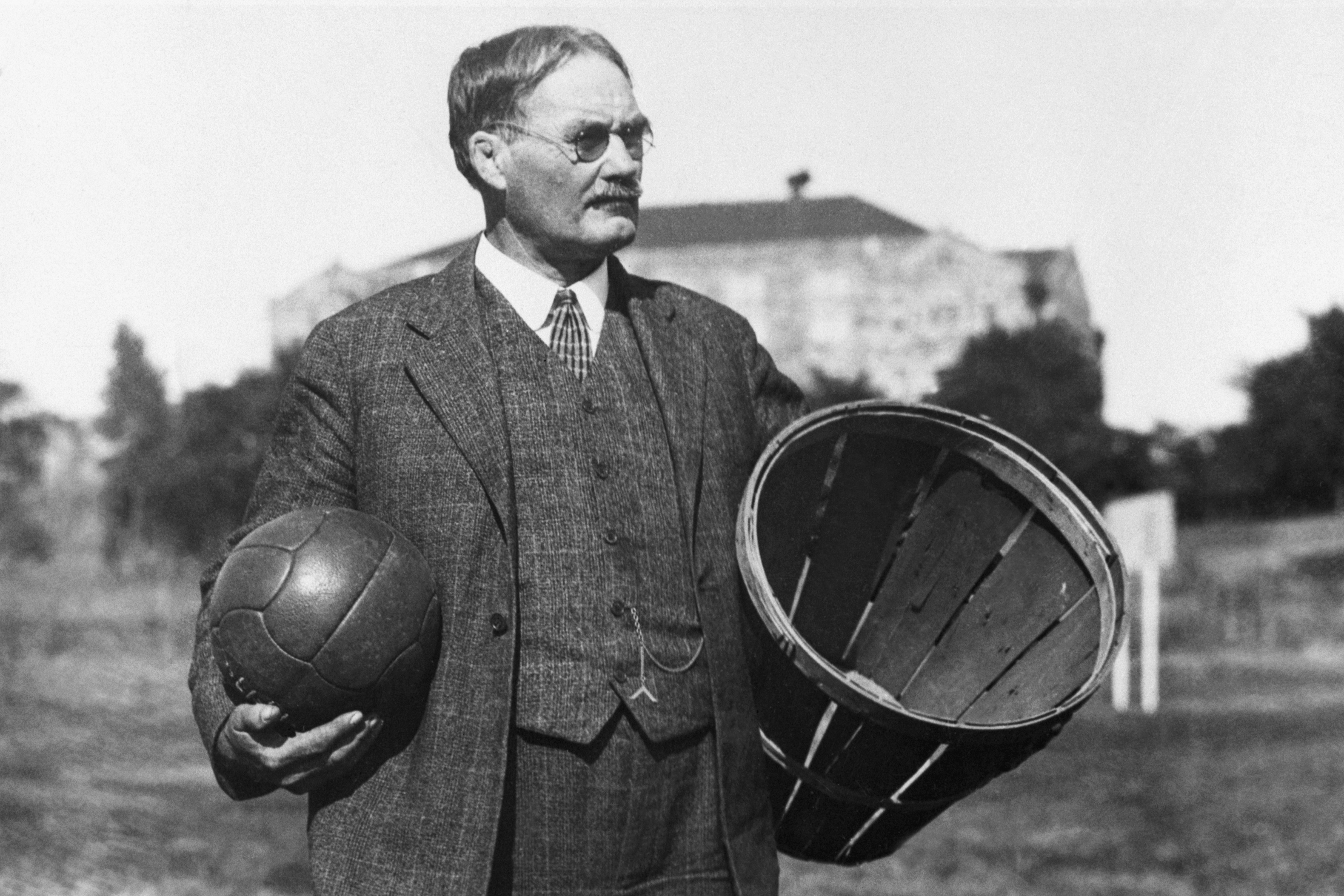
James Naismith, a YMCA coach in Springfield, Mass., invented basketball in 1891 to keep kids active during winter months. The sport incorporated elements of rugby, lacrosse, and soccer. Instead of throwing balls into a bottomless net to score, players threw balls into peach baskets.
(In other words, there was no such thing as a rebound.)
James Naismith, inventor of basketball, with a ball and a basket.
Basketball quickly became popular with college students and in 1898, Naismith was recruited to coach the University of Kansas basketball team.
That same year, Horace Fogel, sports editor of the Philadelphia Public Ledger, organized the first professional basketball league with three teams from Philadelphia and three from South Jersey.
A 12-foot chain-link cage separated players from the fans. Ropes replaced these iron cages in the 1920s.
Fogel’s National Basketball League lasted just five years, folding in 1904 because of quick player turnover eating into profits. A second league was formed in 1937 and was sponsored by Goodyear. In 1946, the Basketball Association of America was established.
And in 1949, the BAA and NBL merged to create today’s NBA.
“This really goes to show that Philadelphia is a sports city,” said Shavonnia Corbin Johnson, vice president of civic affairs for the 76ers. “When people talk about Philadelphia sports rooted in history, tradition, and passion, it’s true, but now we know that America’s true love of sports can trace its roots right back here.”
This week’s Firstival is Saturday, Jan. 24, 11 a.m. — 1 p.m., at Xfinity Mobile Arena, 3601 S. Broad St., Philadelphia, Pa. Premium Access Entrance on the Broad Street side, near Lot C. The Inquirer will highlight a “first” from Philadelphia Historic District’s 52 Weeks of Firsts program every week.
Budding Philly entrepreneurs, it’s time to bring your bold ideas to the table and put your negotiation skills to the test. ABC’s Shark Tank is returning to Philadelphia for an open casting call on March 18.
The hit reality showwill hold in-person auditions for season 18 at the Rivers Casino Philadelphia.
“Whether you just have a fantastic idea, are a startup or already operating successfully and looking to expand, if you feel you have a lucrative business or product and could use financial backing, then Shark Tank is just the show for you,” reads a news release.
Eunique Hunter of Drexel Hill with “The Bear Hug, a friendly, hassle-free stay-put child companion.”
Auditions will take place at the Event Center at Rivers Casino, located at 1001 N. Delaware Ave. Wristbands will be distributed from 9 a.m. to 11 a.m., and interviews will begin at 10 a.m.
The Philadelphia stop marks the show’s final in-person open call of 2026, and the only one on the East Coast. Tryouts are open to anyone 18 or older, or those accompanied by a parent or legal guardian, according to the announcement.
At right is Maya Nazareth founder and CEO of Alchemize Fightwear, Friday, December 5, 2025. She is shown with practitioners of jiu-jitsu the Vault Jiu-Jitsu, Morton, PA, Friday, December 5, 2025. Ladies are wearing Alchemize designed jui-jitsu clothing.
If selected, entrepreneurs will have a chance to pitch their concept, product, or service to industry titans Robert Herjavec, Daymond John, Kevin O’Leary, Barbara Corcoran, Lori Greiner, and Daniel Lubetzky.
Philly’s talent pool has already made a considerable impression on the show.
The show’s casting officials held an open call at Rivers Casino in April 2025. Later that year, Philly-based entrepreneur Maya Nazareth struck a $300,000 deal on the show for her women’s combat sports apparel company, Alchemize Fightwear.
Orka Bar founder Stephen Longo of Belmar, N.J., secured a $100,000 investment for a 25% stake in his high-protein dessert brand.
Interested candidates can apply online or attend the in-person audition. For more information and eligibility requirements, visit abc.com/sharktank.
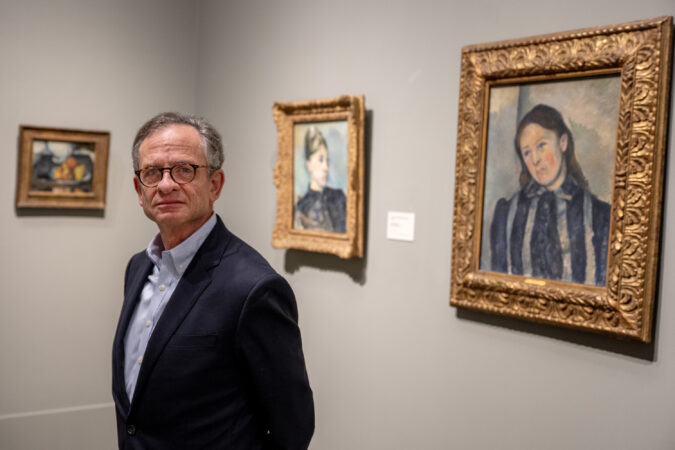
If the question of who gets to call the shots at the Philadelphia Art Museum was a major source of friction between its former chief and board and staff, the museum’s new director and CEO arrives as something of a salve.
Eight weeks on the job, Daniel H. Weiss is signaling a philosophy that is anything but authoritarian.
“I believe very strongly in the idea of shared governance,” Weiss said in a recent interview that represents his most extended public comments since taking over the troubled museum. “Any mission-driven institution is almost axiomatically in service to all of the people who have an interest in what it does. So I don’t really have a lot of executive authority as the director of this institution.”
And yet, Weiss obviously understands that he is the one being tasked with the turnaround of one of the city’s flagship cultural groups. He also knows he must take action quickly.
“I don’t have the luxury of saying, ‘I’m going to spend the next 12 to 18 months meeting with people and then we’ll figure out what needs to happen.’ We need to get after it.”
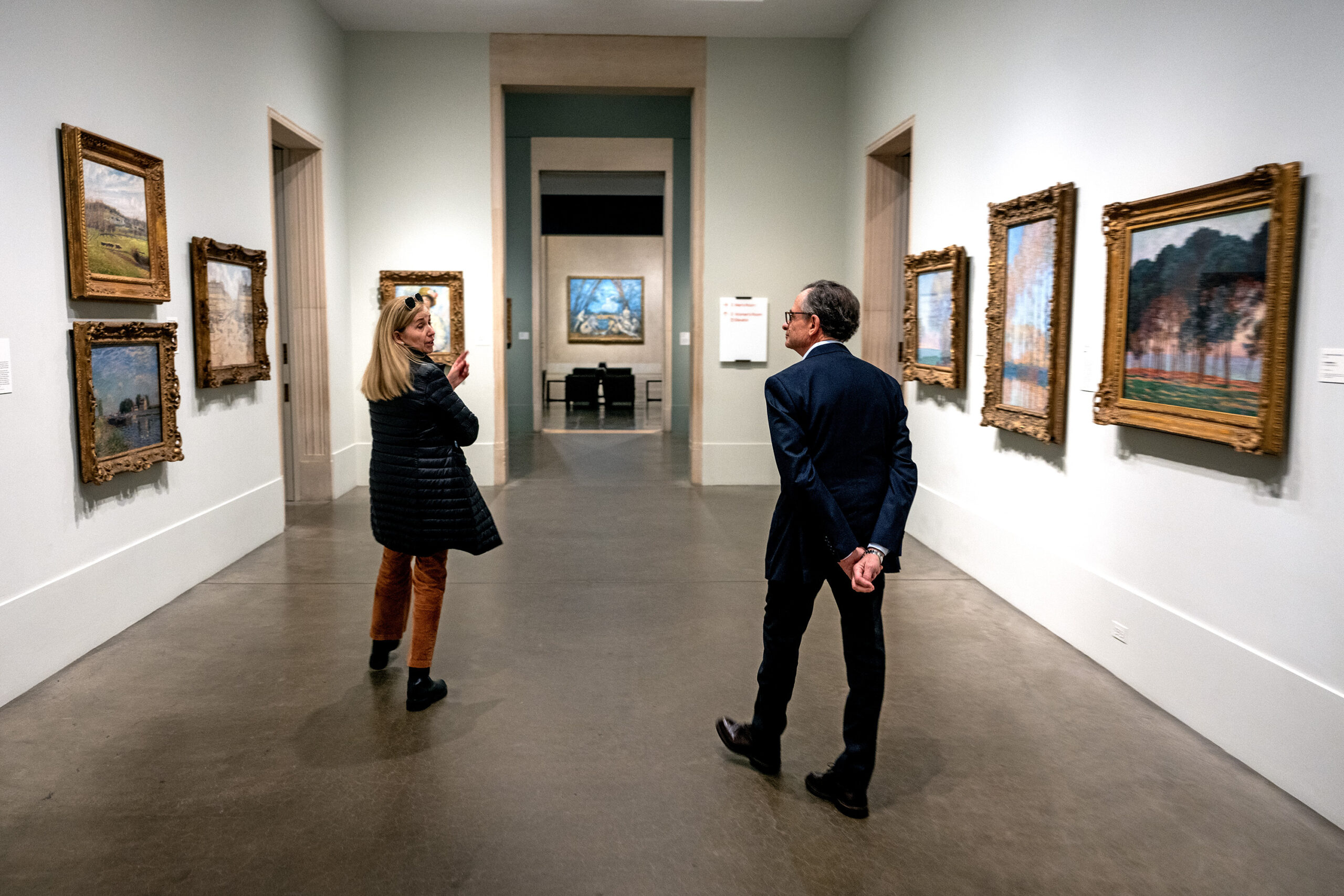
Daniel H. Weiss, director and CEO of the Philadelphia Art Museum, walks through galleries with museum staffer Laura Coogan on Jan. 7.
The listening tour
Weiss, 68, the former leader of the Metropolitan Museum of Art, is well into his listening tour, talking to staff, board members, and others about the museum’s last three years with Sasha Suda at the helm and the messy split with her still playing out in courts both legal and of public opinion.
He says the next few months are about him getting a sense for “the most present problems that need to be addressed.”
“We need to sort out the rebrand and determine whether we change it or stay with it. And we’re looking at that,” said Weiss, who has put together a task force of staff and board to consider the question.
Earlier this week, the museum confirmed that it was parting ways with the marketing chief who oversaw the rebrand.
The financial picture remains challenging.
“We have a deficit. It is not sustainable and we need to fix it. In order to do that, we need to take a larger look at the organization and build a healthy model.”
There are facilities needs that are complex and very much rooted in the reality of how to pay for them. Like, what form a proposed new education center should take; what to do about the Perelman annex, the former office building across the street that opened in 2007 after a $90 million renovation and has been closed to the public since the pandemic; and where and how to address deferred maintenance to the main building.
“We need to prioritize our list so that we can begin a thoughtful plan of following up on all the work that was done before on the core project to figure out the next chapter.”
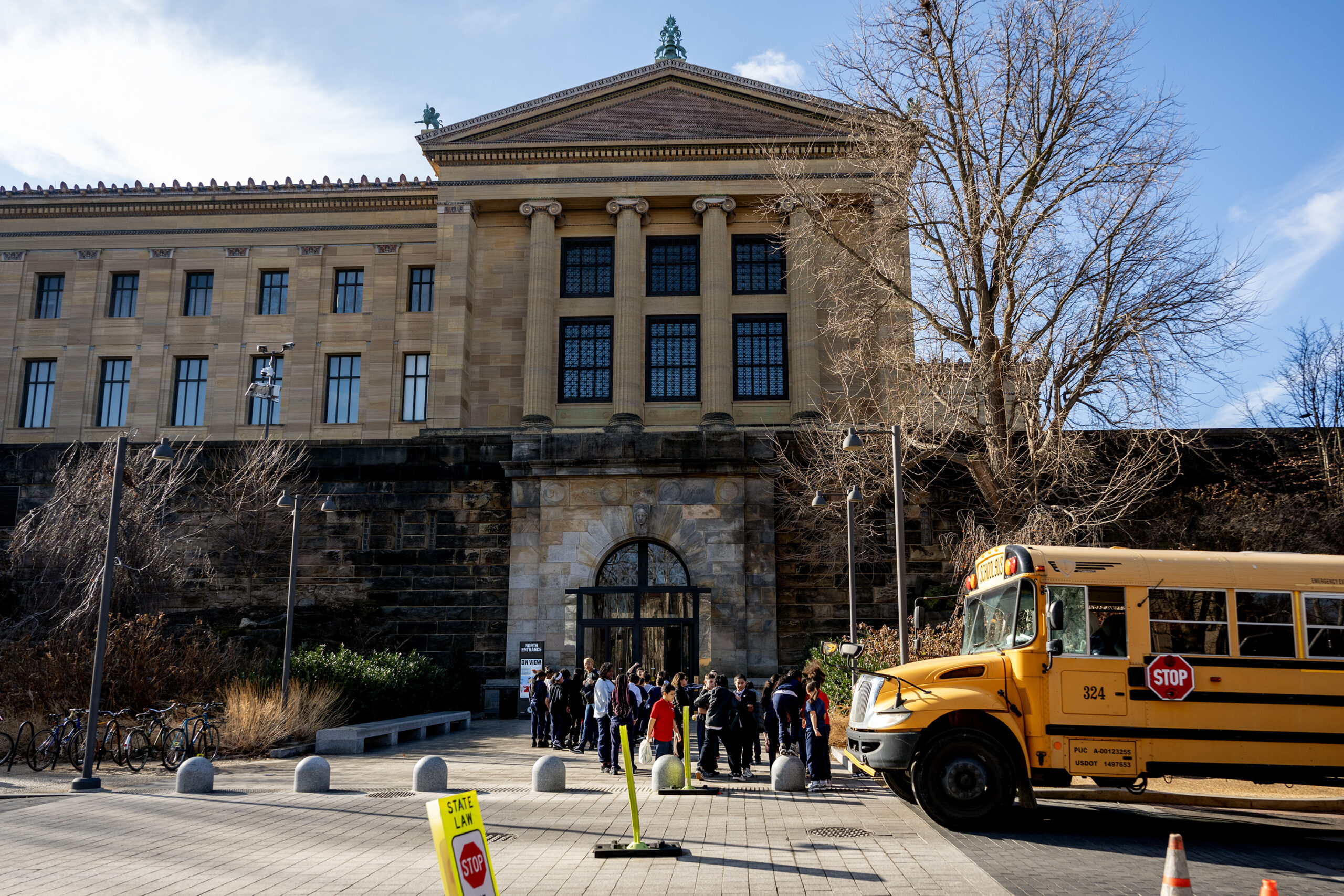
School groups at the North Entrance to the Philadelphia Art Museum on Jan. 7.
A strategic plan
The “next chapter” will eventually take shape in a new strategic plan.
In the spring and summer, Weiss hopes, conversations with board and staff will give the museum a “better sense of what our resources could be as we work our way to balance and health. And then next year, maybe early next year, we begin the process of putting together a plan.”
Weiss’ credentials in both business and art seem suited to the moment. He holds an MBA from Yale School of Management and has worked for Booz Allen Hamilton. His master’s degree in medieval and modern art and Ph.D. in Western medieval and Byzantine art were earned at Johns Hopkins University, where he is finishing up his teaching at the end of the semester.
Weiss, who has moved to Philadelphia with his wife, Sandra, sees his immediate job as reminding everyone what Philadelphia has in its museum.
The events of the last few months — the widely ridiculed rebrand, Suda’s mid-contract ouster, and the dramatic language used in her subsequent wrongful-dismissal lawsuit against the museum — have often eclipsed the art and made the main message coming out of the museum one of acrimony.
The new director is eager to change the message.
“What I’d like to do over the next six months to one year is to get everybody excited about what’s possible, what we already have. How, by supporting each other and investing excitedly in our mission, we can do something really important.”
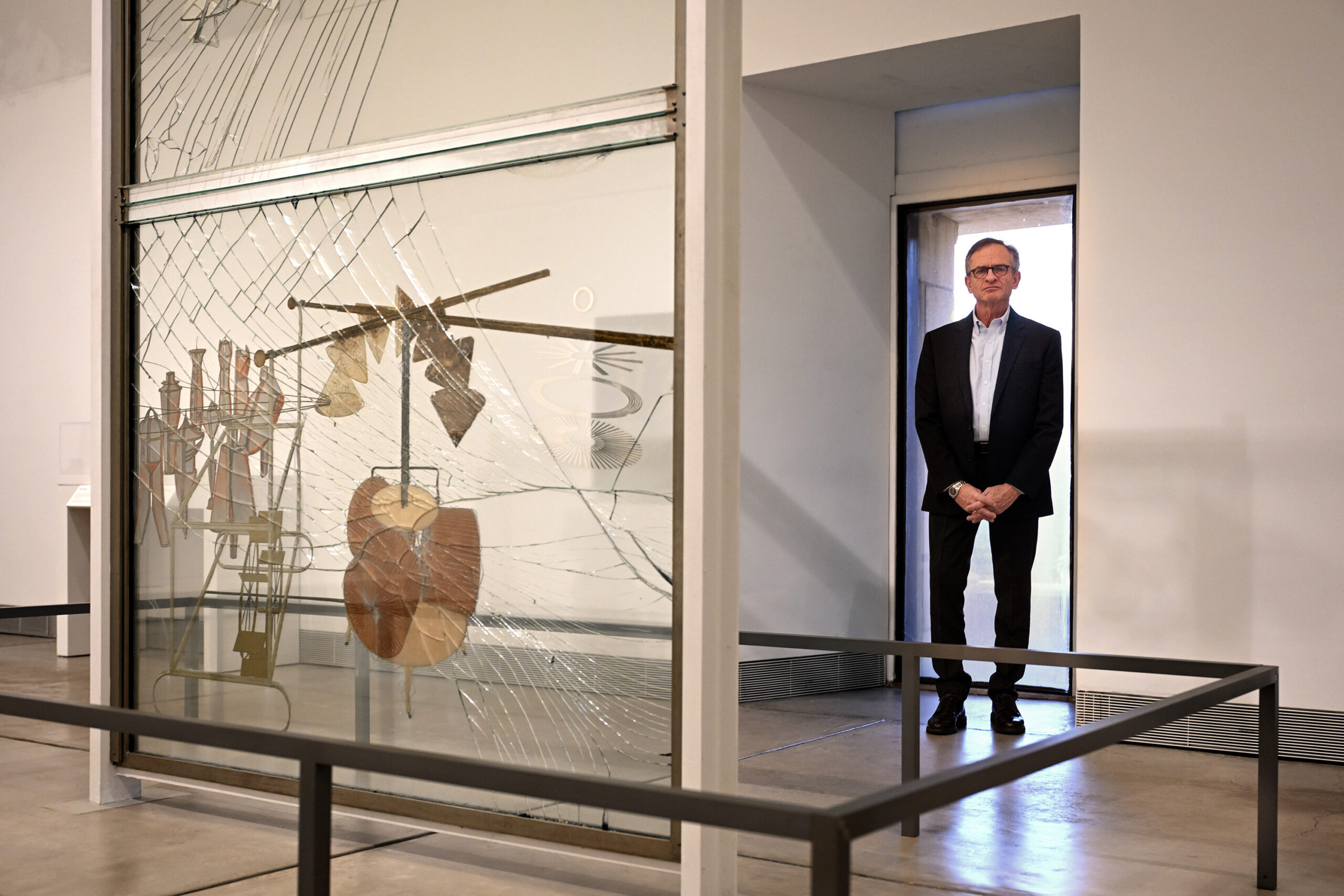
Daniel H. Weiss, director and CEO of the Philadelphia Art Museum, with “The Bride Stripped Bare by Her Bachelors, Even” (1915–1923, also called “The Large Glass”) by Marcel Duchamp.
The role of the board
Weiss also needs to consider the role of the Art Museum board, which, on the one hand, was not informed that the rebrand was final, according to some board members. On the other hand, it has been accused in Suda’s initial court filings of being overinvolved in museum matters.
“I don’t think our board needs radical restructuring … and this may seem counterintuitive in light of what you’ve been reading about in the newspapers, I think our board needs to be embraced as a real partner,” Weiss said. “And I do believe deeply in shared governance and that means the director and the senior administration have a job to do and the board has a job to do.”
“They’re different jobs but when they’re working in concert, you get much more for the institution than you do if they’re at odds with each other.”
How much of board-CEO relations is about structure, and how much is it the function of the personality of the person whose job it is to be the connective tissue? “Almost always it is more a function of the personalities than it is the structure,” he said.
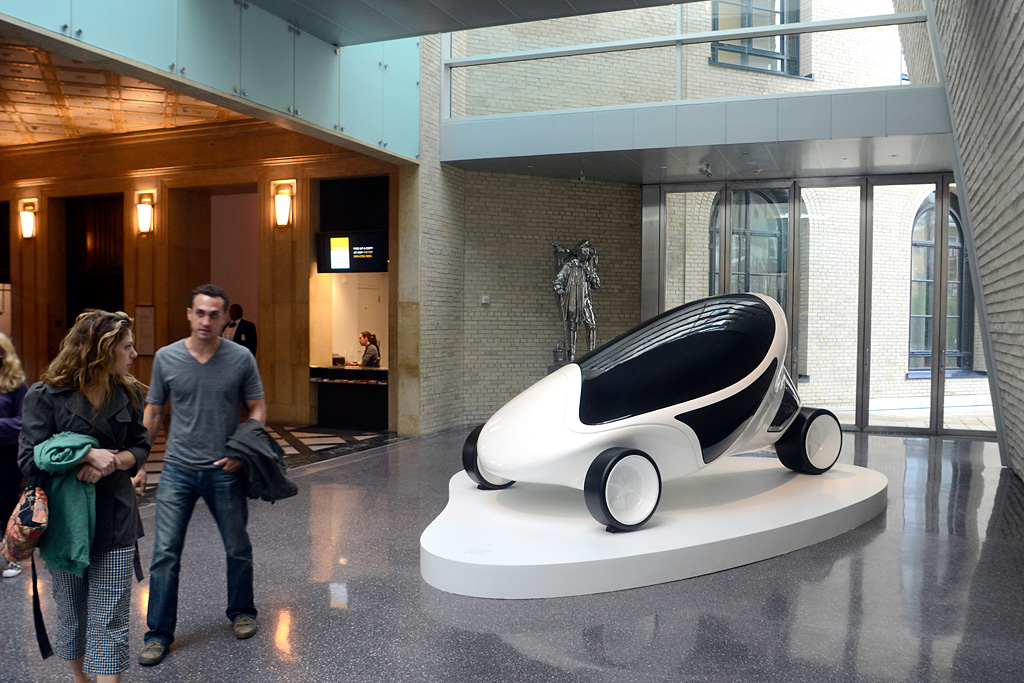
In 2011, when the museum’s Perelman building was still open to the public, visitors view a three-wheel car.
As for the involvement of one emeritus board member, Julian A. Brodsky, Weiss has to determine the future of an unannounced, but reported by Philadelphia Magazine, $20 million pledge from the Comcast cofounder toward a dreamed-of education center.
“It’s an incredible gift and we’re enormously grateful for that. I’m in the process of talking about the timing of that and all of that,” he said.
The art itself
Weiss does not dispute that the museum needs changing. But a host of questions beckon.
What about the art itself? Is the museum’s pipeline of shows — some of which are years in the planning — the right mix for the audience the museum wants to attract? Why are doors open only five days and past 5 o’clock one day a week? Is a general admission ticket of $30 too high for this city?
Daniel H. Weiss, director and CEO of the Philadelphia Art Museum, is well into his listening tour.
“Every great art museum faces the same challenge, which is that these are intimidating places by design. So how do you, on the one hand, celebrate this great magnificent institution sometimes called a castle on the hill? And at the same time [be] welcoming to schoolchildren who have never been here before? That’s not easy. We faced the same issue at the Met.”
He sees the shifting societal context in which the museum finds itself as an opportunity.
“The world is a mess,” he said. He would like the museum to be an answer to that turmoil — though clearly, given the last few months, Philadelphia’s major art museum is not cloistered from conflict.
“There are very few places in the world that are entirely to the good, and art museums are among them. We are here to enrich, to enlighten, to inspire, to build community, to invite difference to come together, to have shared learning experiences for everyone,” Weiss said.
“The world is a lot bigger, more complicated, richer, and inspiring than just the world you live in on a day-to-day basis. If everybody can have that experience, we are incrementally a more civil society than we were before people came into the institution. Those are all great things.”