Category: Arts & Culture

  • The Art Commission is weighing the fate of the Rocky statue. It’s been controversial for decades.

    The Art Commission is weighing the fate of the Rocky statue. It’s been controversial for decades.

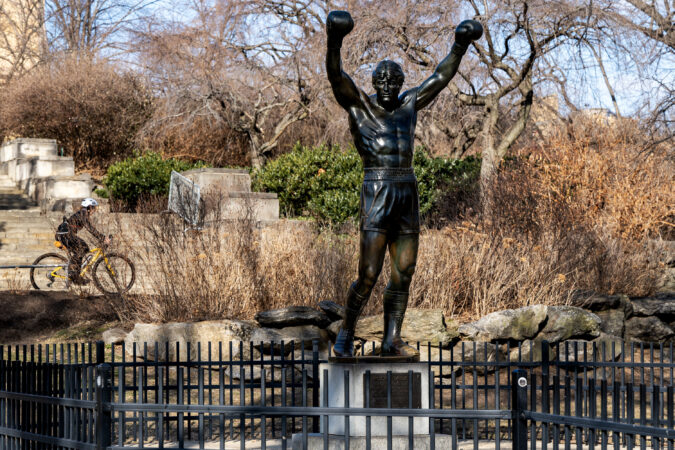
    Our famed Rocky statue could soon be a permanent fixture atop the steps of the Philadelphia Art Museum — again.

    The Philadelphia Art Commission on Wednesday is slated to vote on a plan that, if approved, would affix the original statue — commissioned by Sylvester Stallone for 1982’s Rocky III — at the top of the museum’s East entrance steps later this year. Recently proposed by Creative Philadelphia, the city’s office for the creative sector, the move stands to place the iconic statue in one of the city’s most prominent locations for the umpteenth time since it arrived here more than 40 years ago.

    In fact, Philly’s original Rocky statue has been shuttled back and forth between the museum and the stadium complex in South Philly — another site that was pitched as its permanent home — at least six times, according to Inquirer and Daily News reports. But since 2006, it has sat at the base of the museum’s famed stair set, its most permanent location to date.

    Somehow, though, it always seems to end up overlooking the Benjamin Franklin Parkway from on high, however temporarily. And every so often, debate over the statue seems to reignite, regardless of where the statue sits — a cycle that has been repeating itself since the dawn of the 1980s.

    Here is how The Inquirer and Daily News covered the early days of Philly’s famed Rocky statue:

    https://www.newspapers.com/article/philadelphia-daily-news/188853911/

    Article from Dec 11, 1980 Philadelphia Daily News (Philadelphia, Pennsylvania) <!— –>

    An ‘unnecessarily strident’ monument

    The statue’s roots can be traced back to December 1980, when Stallone proposed the temporary installation of his own bronze visage atop the museum steps for the filming of Rocky III. From the start, the star proposed giving the statue to the city following filming as a “way of reaching the common man and perhaps beginning an interest in fine art,” production manager Jim Brubaker told the Daily News.

    In Budapest, you don’t always see generals and politicians,” Brubaker said. “You see working men with picks and shovels and that relates to the working class.”

    That month, Brubaker and sculptor A. Thomas Schomberg presented a model of the proposed statue to the Art Commission, the Fairmount Park Commission, and the museum’s board. The commission voted 6-2 in favor of letting the statue stay at the museum for the duration of filming, with the two “no” votes indicating that they didn’t want the statue near the museum ever, for any reason, The Inquirer reported.

    “There is a difference between size and greatness,” said local artist and commission member Joseph Brown. “This is unnecessarily strident. I appreciated Rocky, but I don’t think it put our museum and our city on the map.”

    https://www.newspapers.com/article/philadelphia-daily-news/188853847/

    Article from May 9, 1981 Philadelphia Daily News (Philadelphia, Pennsylvania) <!— –>

    Rocky arrives

    The Rocky statue that Philly knows today officially arrived on May 8, 1981, and was unveiled in front of the Philadelphia Art Museum that afternoon — three hours later than expected because the truck that was carrying it got stuck in traffic on the way from West Philly, according to a Daily News report.

    The plan was for the statue to return to California following filming, but Stallone himself was already admittedly embarrassed by the controversy that had quickly cropped up.

    “I’m sorry that got blown out of proportion,” Stallone said, according to a Daily News report. “It’s essentially a prop for the movie. I really don’t want to ruffle anyone’s feathers.”

    After a few days, the Rocky statue was dismantled with the conclusion of filming, and was set to be on its way back to the Golden State. City Representative Dick Doran, however, urged Stallone to reconsider the statue’s relocation, noting that it could be relocated to the Spectrum in South Philly, or placed outside the Philadelphia Tourist Center on JFK Plaza.

    https://www.newspapers.com/article/the-philadelphia-inquirer/188854136/

    Article from May 25, 1982 The Philadelphia Inquirer (Philadelphia, Pennsylvania) <!— –>

    Philly’s ‘Rocky III’ premiere

    In May 1982, Rocky III made its premiere in Philadelphia with a screening at the Sameric Theater at 19th and Chestnut in a star-studded affair that began with a reception at the Art Museum in which Stallone himself presented the Rocky statue to Philadelphia, almost exactly a year to the day that it first arrived in town. It was, The Inquirer reported, a 300th birthday gift to the city.

    On May 24, 1982, the statue was officially unveiled to the city, with Stallone himself pulling the cord on a canvas cover to reveal the sculpture at the top of the museum’s steps as the Lincoln High School band played the Rocky theme, The Inquirer reported. Stallone had “done more for this city than anyone since Benjamin Franklin,” said Doran, then the city’s commerce director.

    “I owe everything to the city of Philadelphia,” Stallone said at the unveiling. “If you could cut up the character of Rocky into a million pieces, each of you would be a part of it.”

    https://www.newspapers.com/article/the-philadelphia-inquirer/188854084/

    Article from May 24, 1982 The Philadelphia Inquirer (Philadelphia, Pennsylvania) <!— –>

    ‘Schlock, chutzpah, and mediocrity’

    Though the statue was displayed prominently, it was not exactly well-received. The Daily News’ Kitty Caparella, for example, called it “only a movie prop.”

    Inquirer columnist Tom Fox, meanwhile, called the statue a “monument to schlock, chutzpah, and mediocrity.” Art Commission member Joe Brown, a local painter, meanwhile, told Fox the statue “violates the spirit of the museum and its environment,” and that the city would be better served by the creation of a statue depicting Tug McGraw, Pete Rose, or Dr. J instead.

    Still, a museum spokesperson said, attendance had increased since the statue’s installation, though they believed it was because of a new exhibit featuring the work of artist Thomas Eakins. Those arriving at the museum to see Rocky, the spokesperson told the Daily News, “don’t even come inside.”

    https://www.newspapers.com/article/philadelphia-daily-news/188854219/

    Article from Aug 3, 1982 Philadelphia Daily News (Philadelphia, Pennsylvania) <!— –>

    Goodbye, Rocky

    Though the statue was only supposed to initially be installed at the Art Museum through mid-July 1982, it remained there through early August that year, Daily News reports from the time indicate. In fact, it wasn’t moved to the Spectrum until Aug. 3, 1982.

    At the time, no one was willing to foot a reported $25,000 bill to get the statue to the Spectrum, and the issue was only settled after negotiations led to splitting the cost between the Spectrum and distributor United Artists, according to a Daily News report from the time. The city, a Commerce Department staffer told The Inquirer, flatly refused to pay.

    But on a hot day, the statue’s run atop the Art Museum’s steps came to an end. Despite encountering difficulties with removal due to the concrete base upon which it had been installed, workers were ultimately able to send the statue on its way to the Spectrum — the spot where it would largely remain until it saw a high-profile move back to the Art Museum for the filming of Rocky V.

    “People are going to miss him,” said onlooker Marcy Landesburg, of Wyncote, amid the statue’s 1982 removal. “They’re having a hard time dislodging him. He doesn’t want to go.”
  • Why touring ‘Suffs’ in Philadelphia under Trump is a ‘radical act’

    Why touring ‘Suffs’ in Philadelphia under Trump is a ‘radical act’

    Broadway playwright, composer, and actor Shaina Taub knows the power of theater to make a political statement. As an enthusiastic teen in Vermont, Taub staged a teach-in to protest the Iraq War at her high school — a bold move inspired by the anti-war musical Hair.

    About a decade later, when she was approached to write a musical about the suffrage movement, Taub recognized another meaningful opportunity to blend activism with theater.

    The one challenge: She was pretty unfamiliar with the American women who fought for the right to vote.

    “I really didn’t know anything,” Taub said.

    She was stunned, but her feelings turned into frustration as she concluded that her American public school education had been seriously lacking. “I was blown back by the scope of this history,” she said.

    That fueled her to create Suffs, the hit musical about the suffrage movement centered on South Jersey Quaker activist Alice Paul, a radical and charismatic organizer played fittingly by Taub herself in the Off-Broadway and Broadway runs.

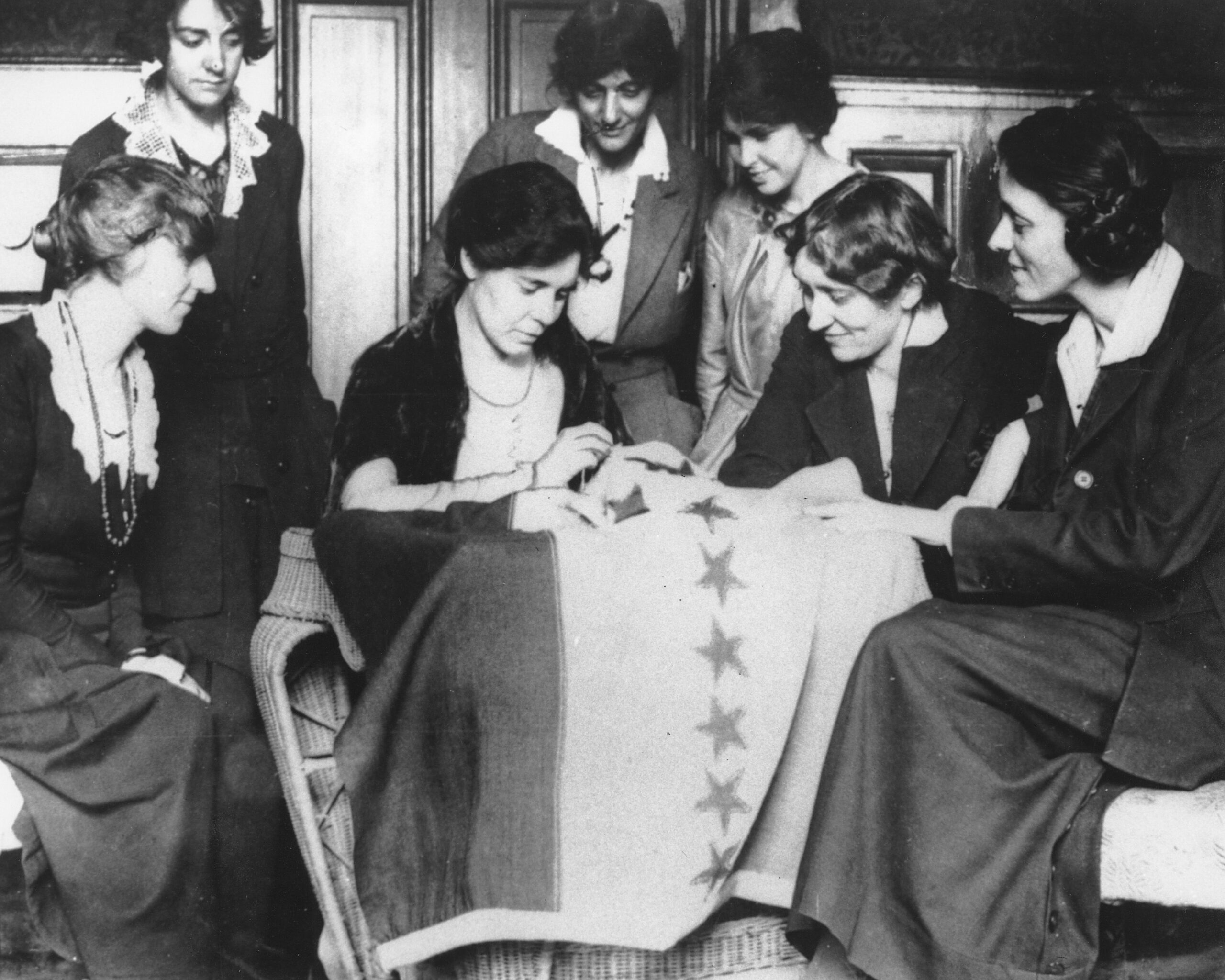
    Alice Paul, seated second from left, sews the 36th star on a banner, celebrating the ratification of the women’s suffrage amendment in August 1920. The 36th star represented Tennessee, whose ratification completed the number of states needed to put the amendment in the Constitution. (AP Photo, File)

    After premiering in 2022 at New York’s Public Theater for a sold-out run — following the trajectory of another history musical box-office success, HamiltonSuffs opened on Broadway in 2024. It went on to earn six Tony Award nominations.

    Taub took home two, for best book and best score, making history as the first woman to win in both categories independently on a night where Hillary Clinton, a Suffs coproducer, introduced Taub and the cast.

    Now on its first North American tour, Suffs has landed at Philadelphia’s Academy of Music this week (running through Jan. 18) to help kick off a year of events commemorating the 250th anniversary of the nation’s founding. The musical graces the same stage where suffragist Susan B. Anthony once spoke some 150 years ago advocating for the right to vote.

    Though mostly set in the District of Columbia, Suffs has some local shout-outs, too: The show mentions Swarthmore College, where Paul studied before pursuing her master’s at the University of Pennsylvania, and Bryn Mawr College, where President Woodrow Wilson (Suffs’ main antagonist) once taught history and politics.

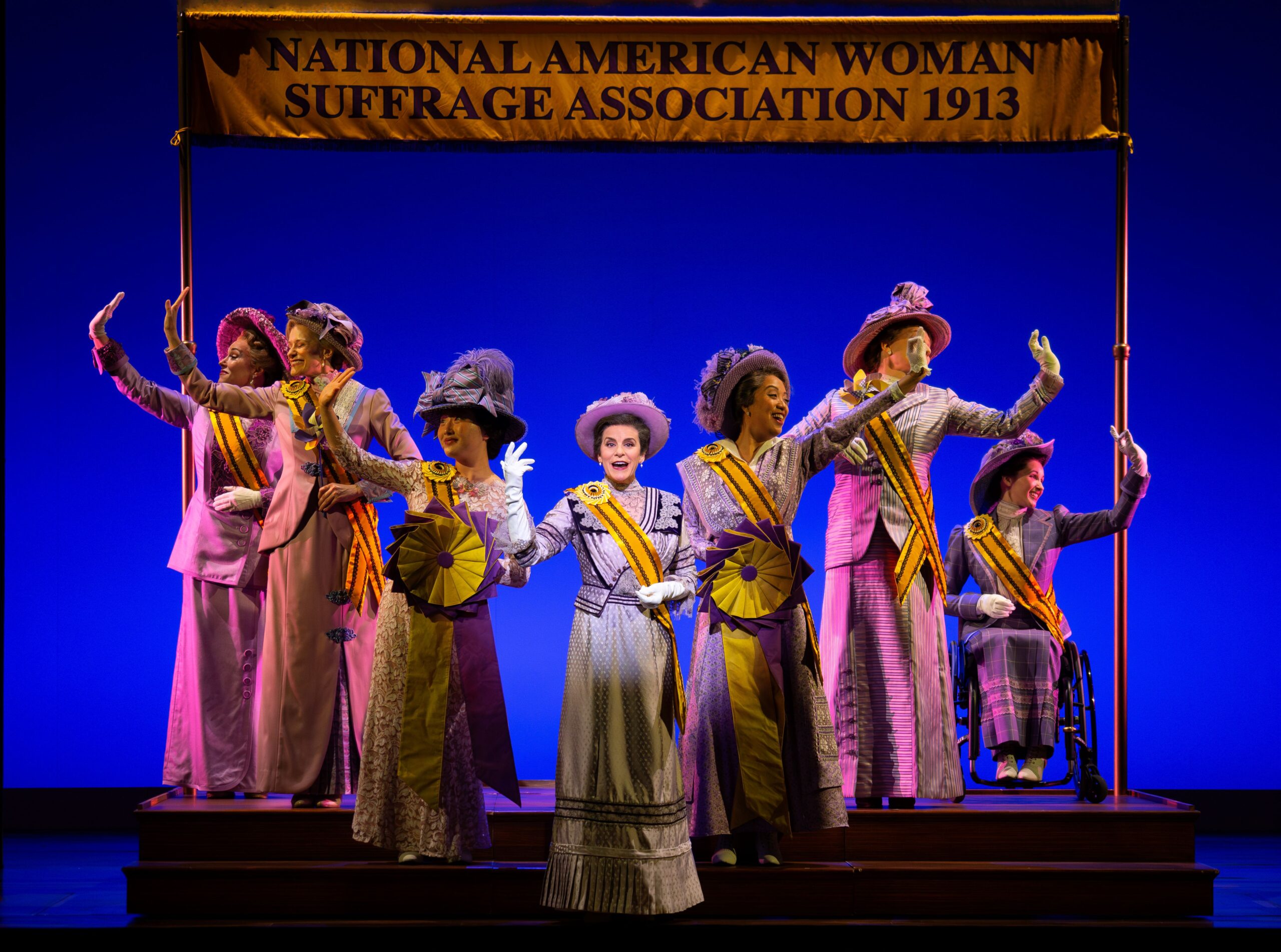
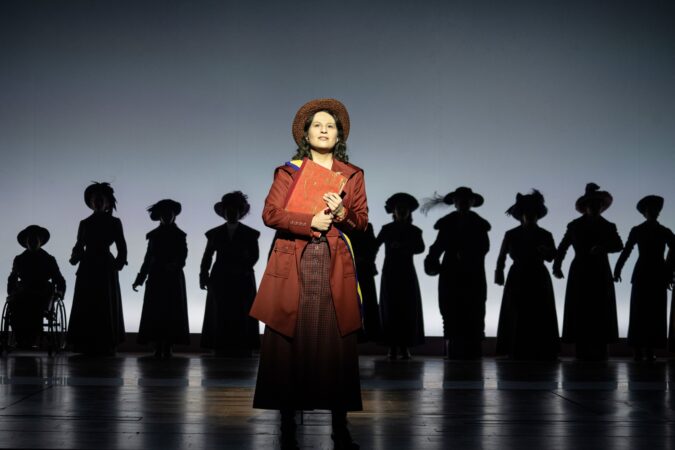
    “Suffs” on Broadway.

    On opening night at the Academy of Music, director Leigh Silverman nodded to Philadelphia’s history in the suffrage movement, mentioning the protests Paul organized at Independence Hall, only a mile away, and across the city.

    “The suffs you met tonight, and the many, many others … were here in Philadelphia, and they remind us of our collective strength and what is possible when we stand up and fight, despite how far it might seem like we have to go, or for how long we have to keep marching,” she said.

    Taub echoed that sentiment in an interview.

    She believes the tour has been especially significant to stage under President Donald Trump following his policies canceling millions in federal grants for arts organizations nationwide and targeting historical institutions (particularly in Philadelphia) to alter the information they present to the public about slavery.

    “This is the first year of Suffs being performed under this president, and [it feels like] a radical act to get together in the theater and tell these stories,” Taub said.

    She added that it’s acutely meaningful to see the show in Philadelphia as the city reflects on the nation’s history for America250 this year.

    Though the actor/playwright grew up in Vermont, she saw shows in Philadelphia as a kid when she visited family in South Jersey; her mother, Susan Taub, was raised in Cherry Hill, just a few miles down the road from Paul’s childhood home in Mount Laurel.

    Today, it serves as the location of the Alice Paul Center for Gender Justice.

    Despite her connections to the region, Taub admitted that she has not yet visited Paul’s home. She plans to march over there soon.

    “Suffs.” Through Jan. 18, Academy of Music, 240 S. Broad St. ensembleartsphilly.org

  • How is this Eagles fan keeping the faith? By churning out Billy Joel parodies

    How is this Eagles fan keeping the faith? By churning out Billy Joel parodies

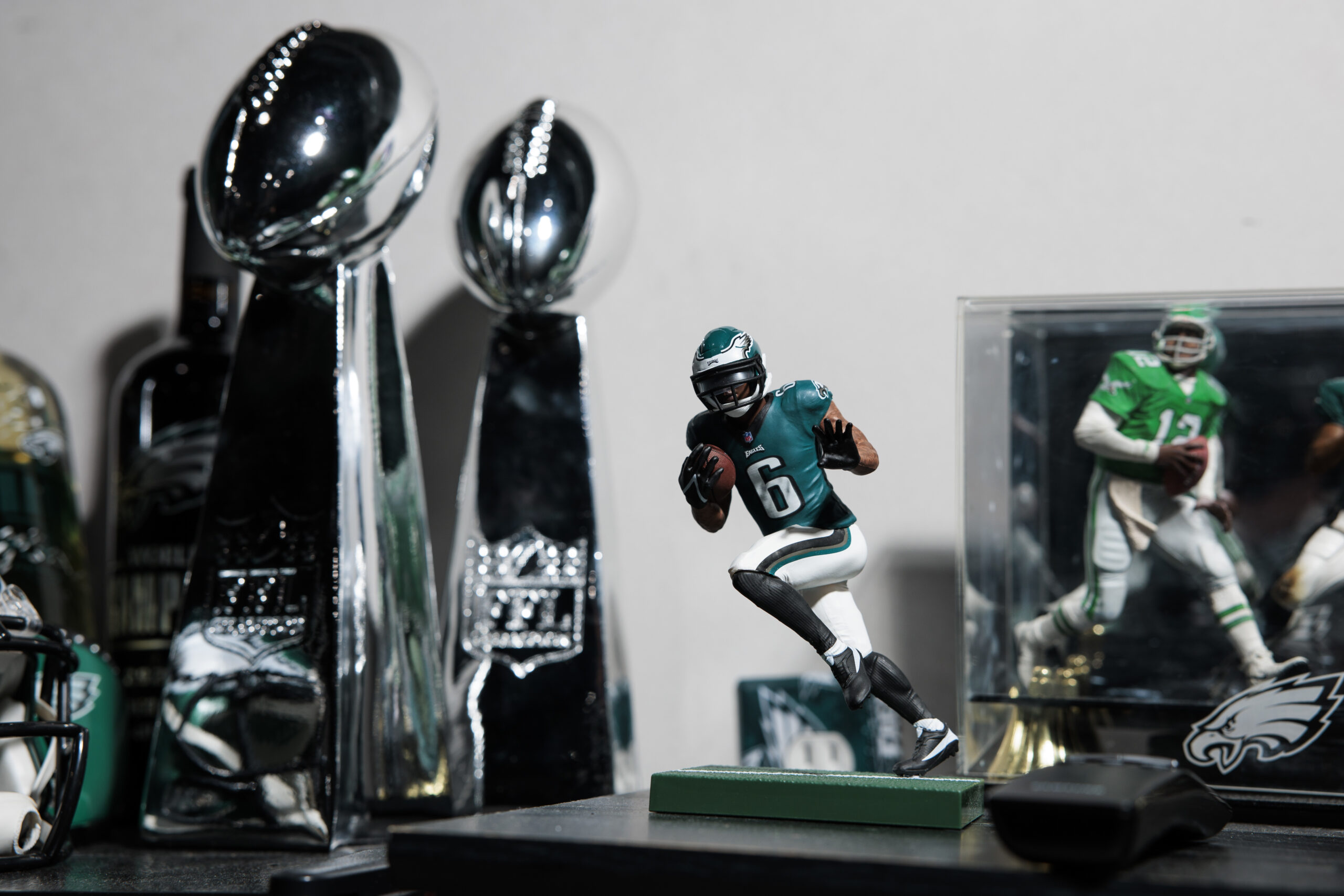
    Robert Williams III never knows which Yacht Rock tune or ’90s hip-hop jam he’ll parody when his beloved Birds take the field.

    But by the top of the fourth quarter, the Philadelphia Eagles fan and social media content creator not only has the song picked (more times than not, it’s a Billy Joel classic), but he has also written most of the lyrics, practiced the hook, the chorus, and the bridge.

    The result looks something like “Allen Down” — a hilarious remix of Joel’s 1982 hit “Allentown.”

    Williams, a retired Army veteran who served in the Afghanistan war, wrote that one as he watched the Birds beat the Buffalo Bills the Sunday after Christmas, clinching their spot in this Sunday’s first round of the NFL playoffs.

    In the video he’s dressed like a giant Eagle while clowning on Buffalo Bills quarterback Josh Allen. The clip has 19,000 likes on Instagram and tens of thousands of likes on TikTok and Facebook.

    “Philadelphia took Allen down

    Every time you looked he was on the ground.

    Vic Fangio did a heck of a job.

    I’m guessing the Bills drank too much eggnog,” the song goes.

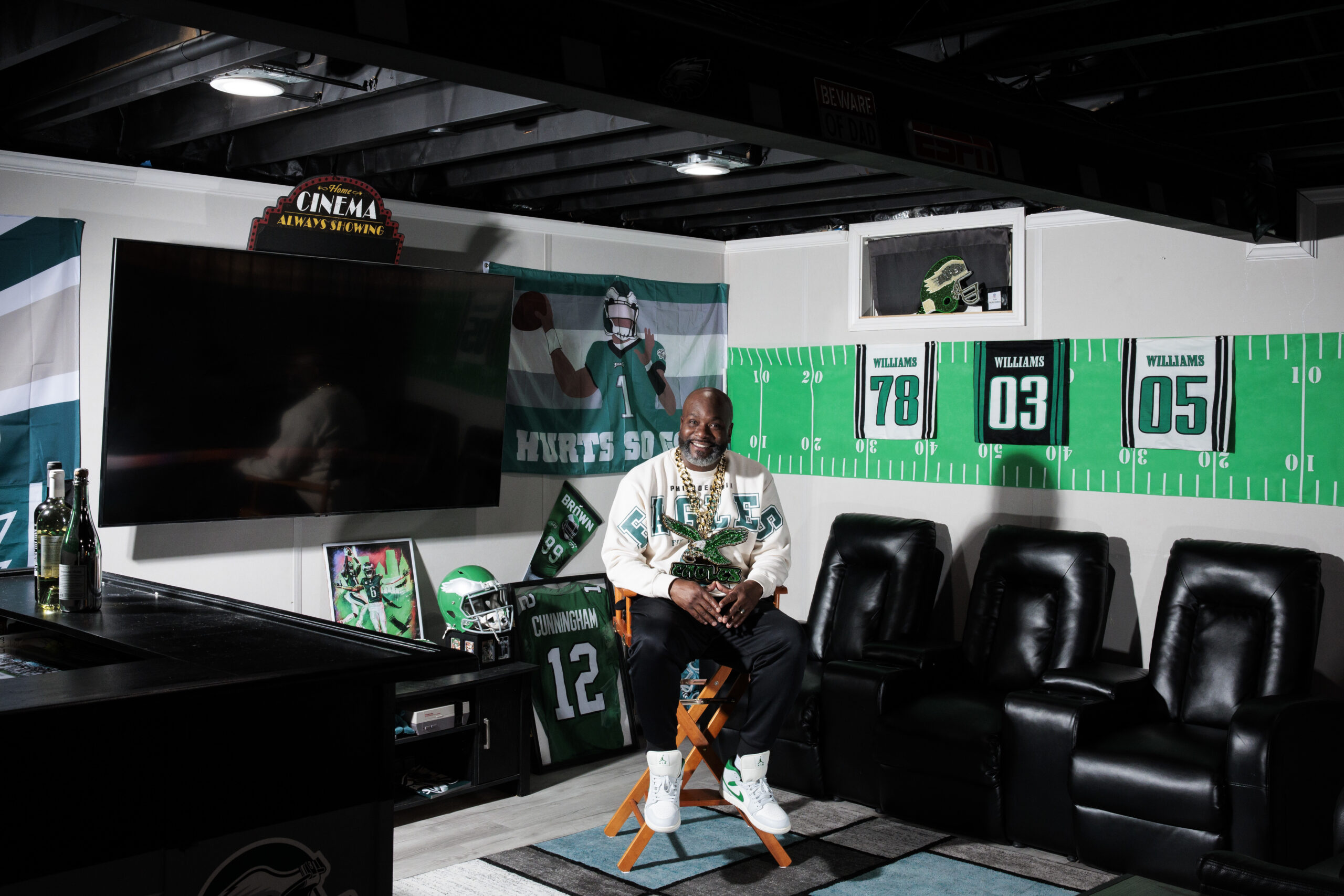
    Williams’ cheeky videos, filmed in his Severn, Md., Kelly green man cave, have earned the Hamilton, N.J., native a combined 2 million followers on TikTok, Instagram, and Facebook. And a lot of those followers are from Philly.

    That includes Questlove, Jazzy Jeff, Chill Moody, State Rep. Joanna McClinton (D., Philadelphia), and legendary WDAS announcer Patty Jackson.

    Robert Williams III posed for a portrait at his home on Thursday, Jan. 8, 2026 in Severn, Md. Williams has an Instagram page where he performs parodies of popular songs with lyrics about the Eagles.

    Star social media influencer Gillie Da King, too, is in on the fun.

    Before the 2025 NFL season even started, former NFL player-turned-podcaster Cam Newton ribbed Jalen Hurts, saying he wasn’t one of the league’s elite quarterbacks. Gillie took offense and hazed Newton on social media all season.

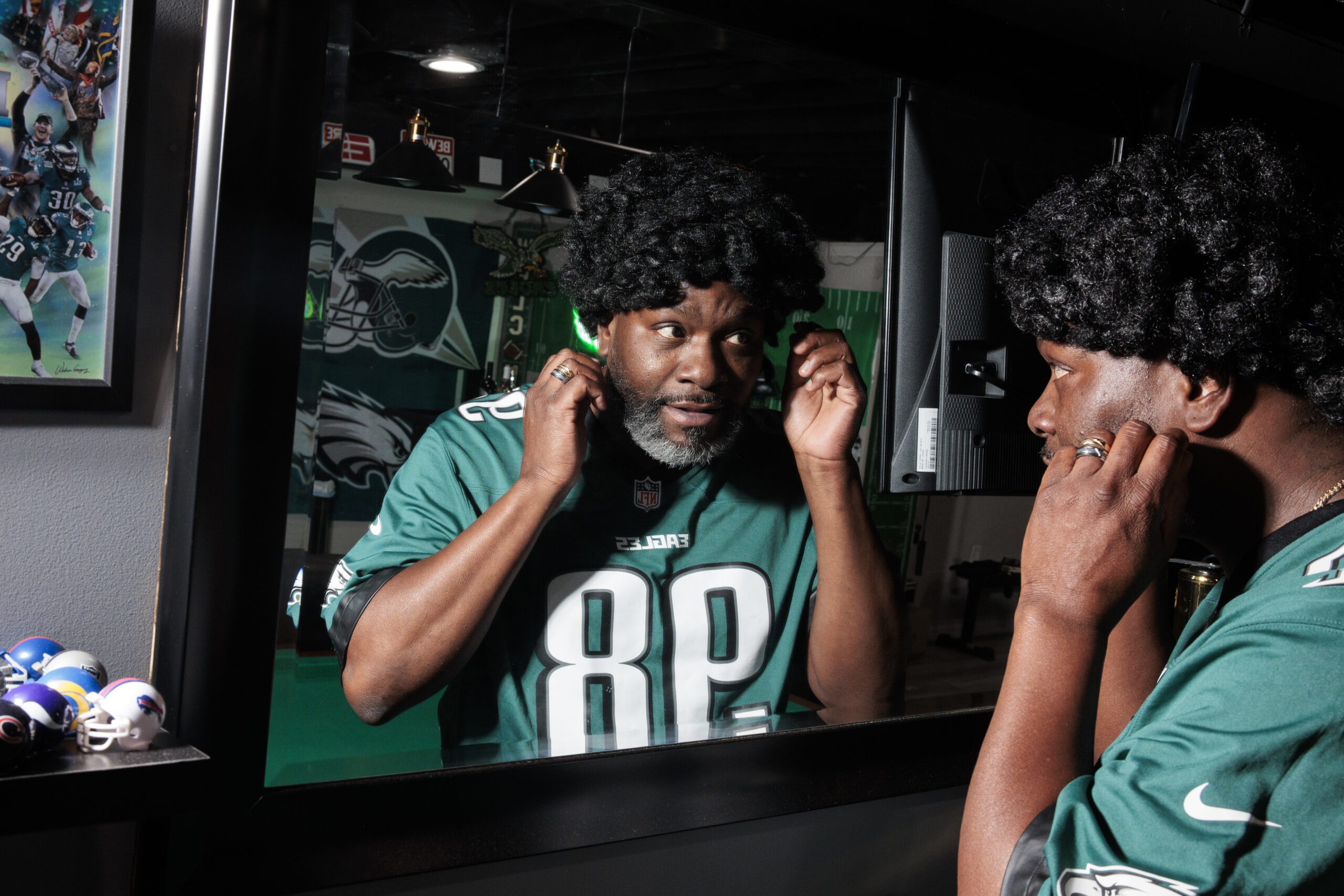
    After Hurts’ stellar game against the New York Giants in Week 8, Williams dropped a video sampling LL Cool J’s 1997 hit “4,3,2,1.” In it, Williams mocks Newton — complete with long hair, wide-brimmed hat, and round glasses offering a fake apology to Gillie through a series of crisp bars.

    Gillie liked and shared it.

    “I was like ‘Wow’,” Williams said. “That right there is a big thing for me.”

    Williams, who is known across social media as @robertwilliamsfilms, is also recognized as being among the influencers who trade in Gen X nostalgia, creators like Maria Ferrer and the Urban Rewind.

    His loyal fans include some of the biggest old-school rappers: Ice Cube, and Wu Tang Clan’s Ghost Face Killah and Inspectah Deck. Common began leaving friendly — albeit slick — comments on Williams’ parodies in Week 13 after the Birds’ devastating loss to the Chicago Bears.

    Williams quickly borrowed the arrangement of Common’s “Go,” changing the lyrics to “No.” That post has 74.3K likes on Instagram.

    Even famously estranged musicians Daryl Hall and John Oates both agree on Williams’ talent. Williams cover of Hall & Oates’ 1975 hit “Sara Smile” after Week 15’s game against the Las Vegas Raiders as ”Jalen Smile” drew likes and comments from each of the musicians.

    Williams’ devotion to the Eagles goes back to the mid-1980s when Buddy Ryan was coach and Randall Cunningham and Reggie White were on the team.

    “I fell in love with the passion they brought to the game,” he said

    Williams, 49, a fan of soft rock groups Tears for Fears, Toto, Air Supply, and Journey, watched a lot of MTV. He enjoyed Weird Al Yankovic’s parodies of ’80s icons Michael Jackson, Madonna, and later, Coolio.

    “I had such an admiration for Weird Al,” Williams said. “Me and my little brothers would walk to school making up our own lyrics … Songs would just pop in my head and I’d rearrange the lyrics.”

    He never stopped.

    Robert Williams III tries on one of his signature wigs for a portrait at his home on Thursday, Jan. 8, 2026 in Severn, Md. Williams has an Instagram page where he performs parodies of popular songs with lyrics about the Eagles.

    While still in the Army, Williams, now a husband and father of two, picked up a side hustle as a videographer, shooting weddings and other special events.

    “I was a student of YouTube University,” he said.

    COVID ended that gig but also marked the beginning of Williams’ social media career.

    He posted his first parody — “It’s Almost Thanksgiving” performed to the melody of The Golden Girls theme “Thank you for Being a Friend” — on social media in 2020.

    His bridge: “It won’t be a party, we’ll be talking to everyone on Zoom.”

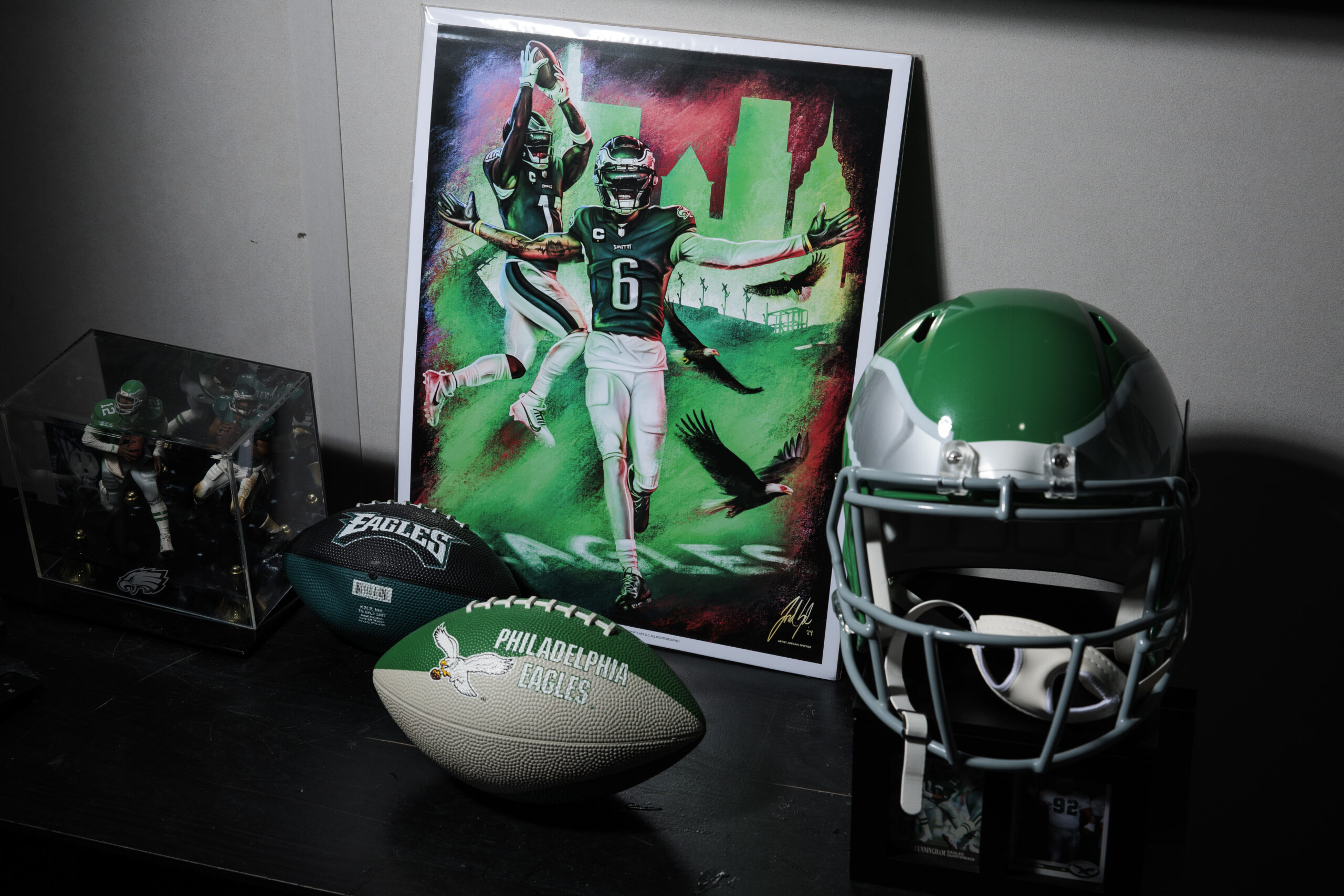
    Some of Robert Williams III’s Eagles collection at his home on Thursday, Jan. 8, 2026 in Severn, Md. Williams has an Instagram page where he performs parodies of popular songs with lyrics about the Eagles.

    He combined his love of sports and parodies during the 2023-24 NFL season. That first post centered on Williams’ disdain for the Dallas Cowboys. In it, his daughter slyly asks, “Daddy, how long has it been since the Cowboys won the Super Bowl?” Williams (also known as Billy Soul) puts on a strawberry blond wig and spoofs a 1984 Billy Joel hit: “For the Longest Time.”

    Some of Robert Williams III’s Eagles collection at his home on Thursday, Jan. 8, 2026 in Severn, Md. Williams has an Instagram page where he performs parodies of popular songs with lyrics about the Eagles.

    That video received 212K likes on Instagram and remains one of his top posts.

    “My Billy Joel parodies seem to do the best and I have a lot of fun doing them,” Williams said. “My favorite genres of music are hip-hop and R&B so those parodies are easy to me. When I’m doing Billy Joel, I’m challenging myself.”

    He is committed to posting an Eagles recap weekly during the 2025-26 season. This year his costumes are more elaborate — he has two boxes of wigs to choose from. His wife, Katrina, and his children, Rakim and Dayla, make regular appearances. He’s also monetized his page, earning a few hundred dollars a month.

    Williams’ videos do well because he’s fast. By the end of the game, not only is the song written but he has also cued up the footage to intersperse between verses. It takes him about a half an hour to record his voice and film the storyline.

    The videos are posted within two hours after the game ends.

    Robert Williams III posed for a portrait wearing his Hall & Oates wig at his home on Thursday, Jan. 8, 2026 in Severn, Md. Williams has an Instagram page where he performs parodies of popular songs with lyrics about the Eagles.

    But sometimes, Williams is scrambling.

    Last Sunday, after the Birds’ surprising fourth-quarter loss to the Washington Commanders, he had to quickly retool his version to Billy Joel’s “Keeping the Faith.”

    In the revamped final verse, he sang: “Some say sitting the starters was a good thing. Now we will play as the No. 3 seed. Now it’s time to be the Broad Street Bullies. ‘Cause the 49ers aren’t all that good and we’ll prove it at the Linc next week …”

    As for Sunday’s game, Williams is keeping the faith.

    “Some people think we can’t turn on a dime and win this whole thing,” Williams said. “But I believe we will.”

  • In ‘Petrushka,’ BalletX and ensemble 132 break into a classical concert and burst out in a circus

    In ‘Petrushka,’ BalletX and ensemble 132 break into a classical concert and burst out in a circus

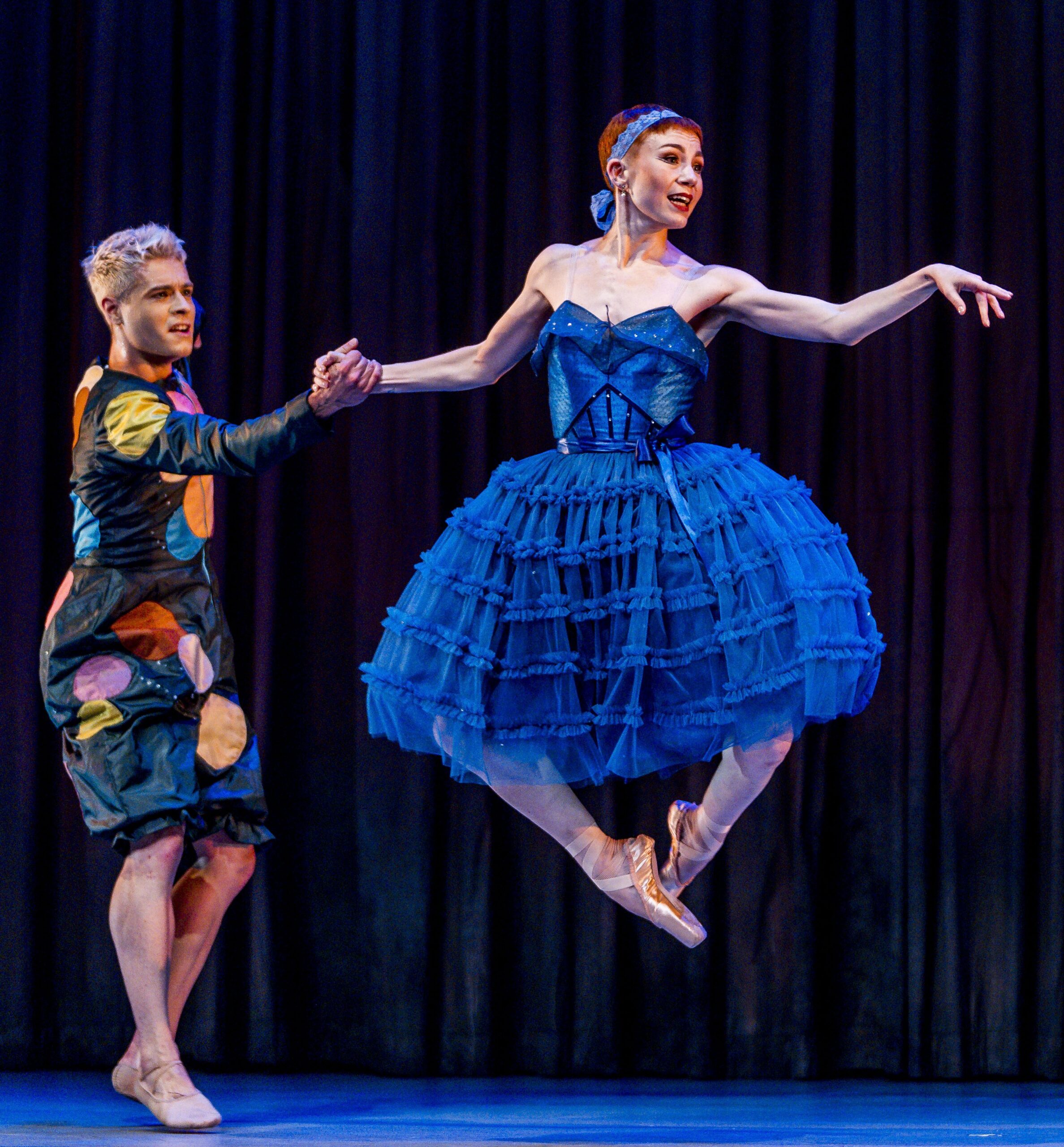
    BalletX and the Philadelphia Chamber Music Society opened the world premiere of Amy Hall Garner’s highly colorful, theatrical Petrushka Thursday night at the Kimmel Center’s Perelman Theater.

    Petrushka takes the second half of a program that opens with ensemble 132 alone in the first act, playing Bartok, Wiancko, and Mozart. So when Peter Weil (as Pete, who becomes Petrushka) wanders on stage and settles in for a nap, it is amusing already.

    It’s as if a Kimmel visitor walked through the wrong door.

    Now the musicians, playing the Stravinsky score — rescored for, and played by, a piano quintet, are backstage while a surreal fever dream of a scene erupts. Pete is woken up by a chorus of dancers who steal his blanket and wrap him into the traveling show that is approaching.

    It’s like we went to a classical concert and a circus broke out.

    BalletX dancers Peter Weil as Petrushka and Lanie Jackson as Belle in Amy Hall Garner’s “Petrushka.”

    Last summer, BalletX offered a preview of Petrushka, for which choreographer-in-residence Garner teamed up with theater director Nancy Meckler and set and costume designer Emma Kingsbury. Then, it was intriguing but hard to parse.

    Petrushka, which Houston Public Media called “the unhappiest puppet story ever,” has been a standard in the ballet cannon since Michel Fokine choreographed the first version in 1911. It is still a known work but no longer performed frequently.

    Garner’s story is still hard to parse without reading the program notes, but it’s a wild adventure.

    BalletX dancers Ashley Simpson, Itzkan Barbosa, Minori Sakita, and Lanie Jackson (back) in Amy Hall Garner’s “Petrushka.”

    This is the first time BalletX has remade an older story, artistic director Christine Cox said on stage before the show.

    Garner’s traveling show is an amusing cast of circus characters who are sometimes puppets, other times human. A hilarious strongman (Mathias Joubert) and a magician/impresario (Jonathan Montepara) share the role as the bad guys. Montepara controls everyone with his wand. Both Pete and the magician are in love with Belle, the ballerina (Lanie Jackson).

    Jackson convinces Pete to change into a costume, thus becoming Petrushka and distracting the audience.

    There are also acrobats and dancers who perform with ribbons, clubs, and hoops.

    BalletX dancers are used to a variety of types of dance and roles. The company specializes in new work, so they are all flexible and able to perform in many ways. More surprising was how good they are as actors. In particular, Weil and Jackson didn’t only impress with their dancing but their strong storytelling and range of emotions.

    BalletX dancers Mathis Joubert lifts Jerard Palazo in Amy Hall Garner’s “Petrushka.”

    Joubert was the strongest supporting character as the egotistical strongman, breaking the fourth wall to use it as a mirror, flexing his muscles and kissing himself.

    The large number of bodies on stage made for a lively scene, but it also overwhelmed the Perelman stage at times. Ensemble 132, which owned the first half, almost faded into the background in the second.

    It would be interesting to see this sometime at the Highmark Mann Center for the Performing Arts, BalletX’s second home.

  • What was the first city-sponsored New Year’s Day procession in America? The answer lies in Philly.

    What was the first city-sponsored New Year’s Day procession in America? The answer lies in Philly.

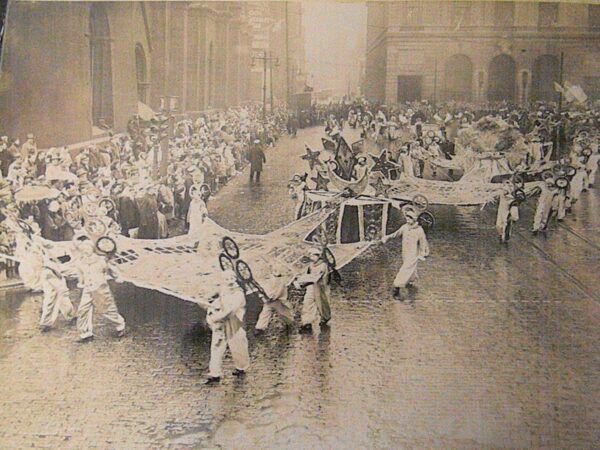
    As the fog lifted on Jan. 1, 1901, four Fancy Dress Clubs and 16 Comic Clubs gathered at the corner of Broad and Reed Streets for the first ever Mummers Parade.

    “Kings, emperors, knights and jesters, clothed in purple royal or tinkling tensel [sic], wended their way up the broad thoroughfare …” reads a front-page story from the Jan. 2, 1901, Philadelphia Inquirer. “In the throng of merry makers, no tribe no nation, scarcely an individual was neglected.”

    That inaugural Mummers Parade was America’s first folk parade. It also marks the first time an American city hosted a New Year’s Day procession.

    It will be remembered Saturday at the Firstival in the Mummers Museum. Firstivals are the Philadelphia Historic District’s weekly day parties celebrating historic events that happened in Philadelphia before anywhere else in America, and often the world. They are part of a yearlong celebration of America’s 250th birthday.

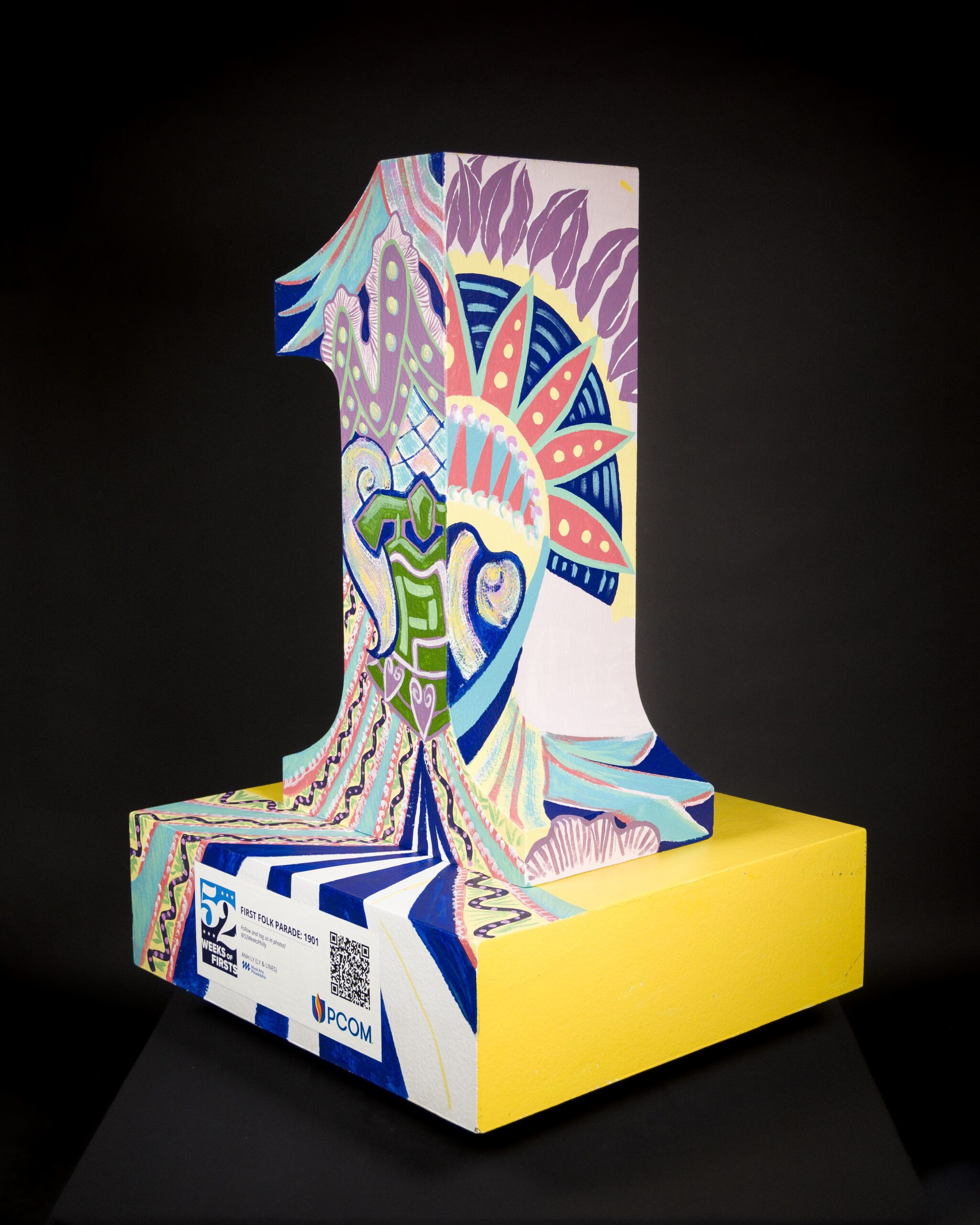
    Artist Anh Ly’s No. 1 highlights the Mummers Parade’s vibrant costumes, instruments and playful traditions.

    That first Mummers Parade began 125 years ago at 9 a.m. on a chilly overcast morning, said Mark A. Montanaro, the Mummers Museum’s curator. It took participants just two hours to march up Broad Street and around City Hall to Girard Avenue.

    Three hundred dollars — $11,575 in today’s money — was awarded to the parade’s two first-place winners: the Elkton Association, part of the Fancy Dressed Club; and the White Cap Association, belonging to the Comic Club.

    Revelers partied all day and into the night.

    The boisterousness remains to this day. So much so that the Philadelphia Historic District did not want to start the Firstival celebrations with the parade, even though that was the initial plan. Why? Because they assumed the Mummers would still be recovering from their parade.

    The word mummer is derived from Momus, the Greek god of satire and mockery. Mommer is the Old French word for mime.

    Philadelphia’s 17th century English and Swedish immigrants dressed in elaborate regalia during the days between Christmas and New Year’s, knocked on their neighbors’ doors, and demanded treats of sweets and nuts. Over the decades, the door-to-door tradition turned into rambunctious neighborhood parties as Dutch, Irish, and Italian immigrants joined in on the fun.

    In November of 1900, Philadelphia Evening Bulletin reporter and theatrical promoter H. Bart McHugh and City Councilman John H. Baizley asked Mayor Samuel Ashbridge if the city would consolidate the block parties into one big parade.

    Plans were finalized by mid-December.

    The Mummers Parade remains one of Philadelphia’s most enduring traditions. It’s only been canceled three times: during the 1919 Spanish Flu, 1934 during the Great Depression, and 2021 during COVID. (This year, the String Band Division called off its competition due to strong winds.)

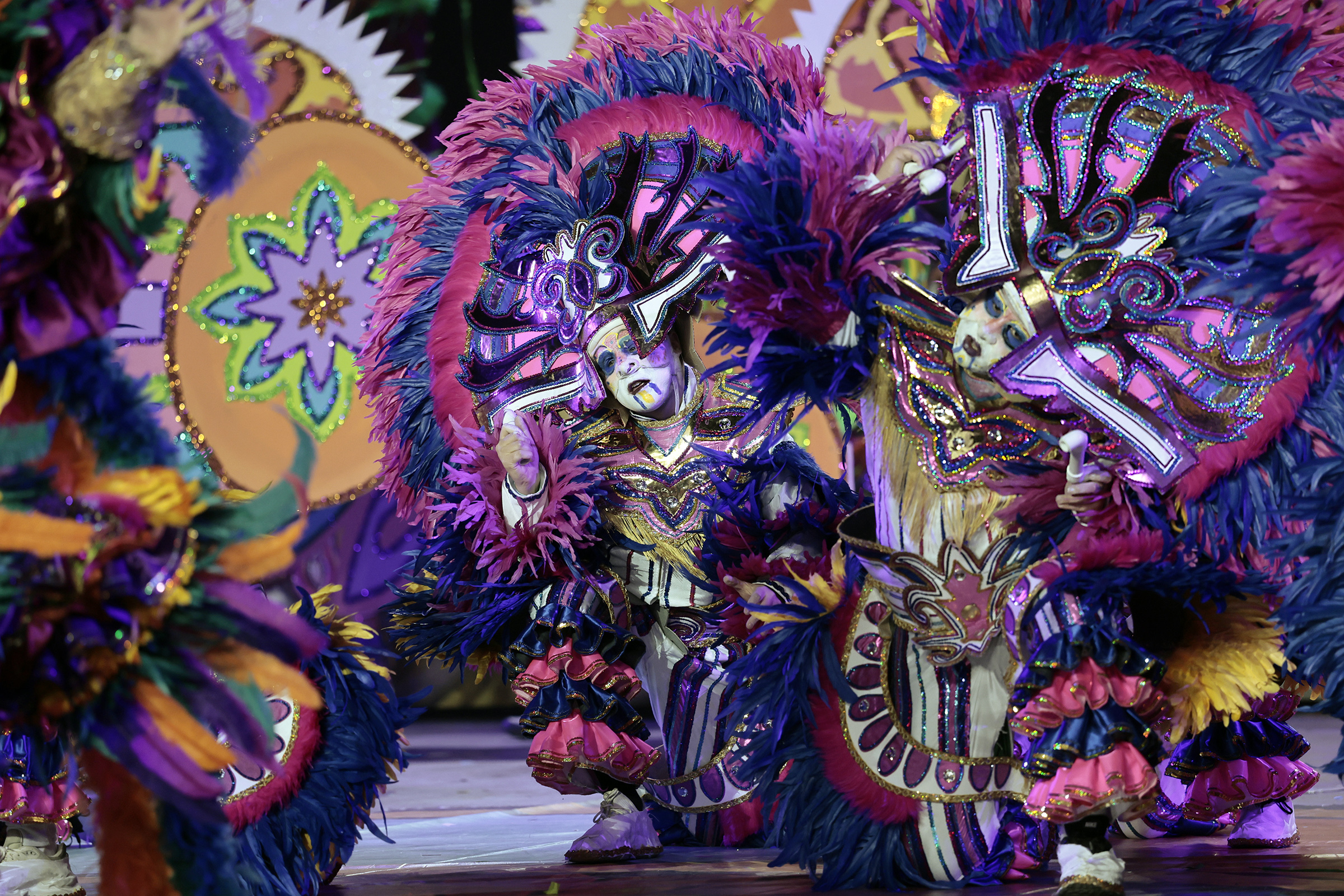
    The Jokers perform during the Fancy Brigade Finale at the Pennsylvania Convention Center during the 2026 Mummers Parade in Philadelphia on Thursday, Jan. 1, 2026.

    Parade routes have changed; today it starts at City Hall and ends at Washington Avenue. At times its been fraught with racial controversy, as some members have appeared in blackface as recently as 2020.

    That’s all in the past, Montanaro stressed.

    “The Mummers are striving for inclusivity,” Montanaro said. “We are a little bit of Mardi Gras, a little bit of Carnival, and a whole lot of Philly.”

    This week’s Firstival is Saturday, Jan. 9, 11 a.m. — 1 p.m., at the Mummers Museum, located at 1100 S. 2nd Street. The Inquirer will highlight a “first” from Philadelphia Historic District’s 52 Weeks of Firsts program every week.

  • John Langdon, innovative award-winning graphic designer, has died at 79

    John Langdon, innovative award-winning graphic designer, has died at 79

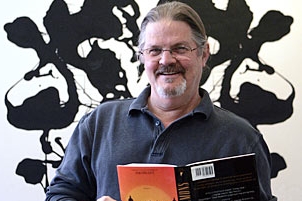
    John Langdon, 79, formerly of Philadelphia, innovative award-winning graphic designer, painter, writer, and longtime adjunct professor of typography at Drexel University, died Thursday, Jan. 1, of complications from a heart attack at French Hospital Medical Center in San Luis Obispo, Calif.

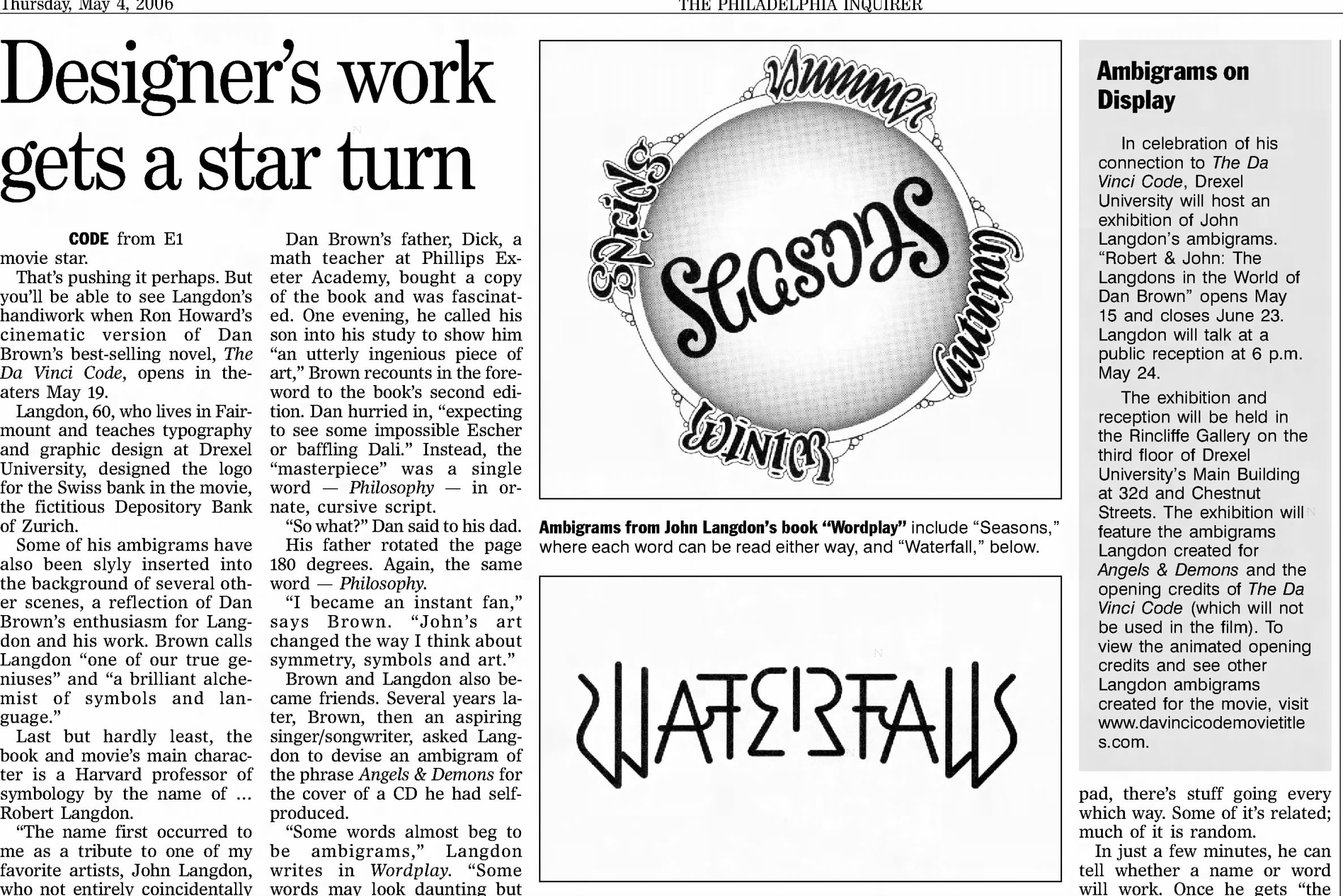
    Mr. Langdon was a lifelong artist and wordsmith. He originated ambigrams in the early 1970s and created distinctive logos for corporate clients, artists, musicians, and others. Ambigrams are words or designs that retain meaning when viewed from different perspectives, and his work influenced countless other designers and typographers who followed.

    “They also present familiar concepts in an unfamiliar way,” he told The Inquirer in 1992, “and thus stimulate the reader’s imagination.”

    On his website, johnlangdon.net, Mr. Langdon described his work as “making abstract concepts visual, almost always through the design of words, letters, and symbols.” He called it “words as art” and said: “I specialize in the visual presentation of words.”

    His designs were featured in more than a dozen solo shows in galleries and museums in Pennsylvania, New Jersey, New York, Connecticut, Maryland, and Delaware, and in more than 50 group exhibitions around the country and Europe. He created six ambigrams for author Dan Brown’s best-selling book, Angels & Demons, and Brown named his fictional protagonist, Harvard symbologist Robert Langdon, after John Langdon.

    “John’s art changed the way I think about symmetry, symbols, and art,” Brown told The Inquirer in 2006.

    Mr. Langdon’s own book about ambigrams, Wordplay, was first published in 1992 and updated in 2005. He also wrote the forwards of other books and articles for journals and newsletters. He said he had a “particular interest in word origins” in an interview on his website.

    He was featured several times in The Inquirer and wrote an op-ed piece in 2014 about the Philadelphia Museum of Art’s new logo. He opened the article with: “Please, beloved Philadelphia Museum of Art, before you print one piece of stationery or a single promotional flier, reconsider your new logo.”
    Mr. Langdon’s work was featured in The Inquirer in 2006.

    In 1996, he began painting what he called his “visual-verbal meditations and manipulations” on canvas. “My paintings still involve symmetry and illusion, a bit of philosophy, and a few puns thrown in for good measure,” he said on his website.

    He cocreated the Flexion typeface and won a 2007 award from the New York-based Type Directors Club. He spoke often about design at colleges and high schools, and to professional societies. He gave a TEDx talk about font and the future of typeface at Drexel.

    Douglas Hofstadter, a professor at Indiana University who coined the term ambigram in 1984, told The Inquirer in 2006 that Mr. Langdon had a “very strong sense of legibility but also a marvelous sense of esthetics, flow, and elegance.”
    Born in Wynnewood and reared in Narberth, Mr. Langdon graduated from Episcopal Academy in 1964 and earned a bachelor’s degree in English at Dickinson College in Carlisle, Pa. He worked in the photo-lettering department of a type house and for a design studio in Philadelphia after college, and began freelancing as a logo designer, type specialist, and lettering artist in 1977.

    He taught typography and logo design classes at Moore College of Art and Design from 1985 to 1988 and at Drexel from 1988 to his retirement in 2015. In an online tribute, one student said he was “one of my favorite teachers of all time.”
    He was interested in Taoism and inspired by artists Salvador Dalí and M.C. Escher, and authors Edgar Allan Poe and Ogden Nash. “In the early ’70s, I tried to do with words what Dali and Escher did with images,” he said in a 2006 interview posted on Newswise.com.

    John Wilbur Langdon was born April 19, 1946. He played high school and college soccer and drew caricatures of classmates for the Episcopal yearbook.

    After college, he took painting and drawing classes at the Pennsylvania Academy of the Fine Arts and the old Philadelphia College of Art. He married Lynn Ochsenreiter, and they had a daughter, Jessica. They divorced later.

    Mr. Langdon enjoyed vacation road trips and told stories of hitchhiking around the country in the 1960s. He followed the Phillies, was interested in genealogy, and traced his family back to the Founding Fathers.

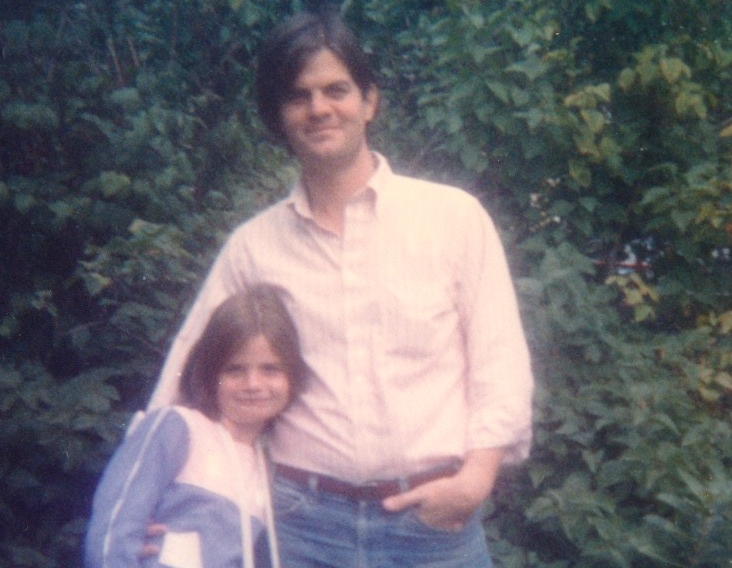
    Mr. Langdon stands with his daughter, Jessica.

    He lived in Darby, Woodbury, Wenonah, and Philadelphia before moving to California in 2016. “He was jovial, social, and amusing,” his daughter said. “People said he was clever, and everyone liked him.”

    He told The Inquirer in 2006: “It may seem counterintuitive, but the more ambiguity you invite into your life, the more things make sense and become understandable.”

    In addition to his daughter and former wife, Mr. Langdon is survived by a brother, Courtney, and other relatives.

    A memorial is to be held later.

    Mr. Langdon lived in Darby, South Jersey, and Philadelphia before moving to California in 2016.
  • Media-based painter Rinal Parikh is redefining Indian folk art with contemporary themes and local imagery

    Media-based painter Rinal Parikh is redefining Indian folk art with contemporary themes and local imagery

    As a blanket of snow and sleet melted into the grass and an early winter fog hung over the Delaware Valley last month, Rinal Parikh’s art studio was a tranquil portal to the outside world.

    In her studio, lofty windows look out onto a sprawling backyard. The walls are adorned with Parikh’s paintings, both completed and in progress, and its shelves are stacked with art supplies and mementos.

    “What inspires me is my surroundings, and I’m blessed with an amazing backyard,” Parikh said, looking out the window. “That is my main inspiration.”

    Parikh is a Media-based painter and biochemist by trade whose art blends traditional Indian folk styles with contemporary themes. Her art, rich in texture, color, and meaning, uses a collection of materials, from sand and fabric to glass, beads, and stucco. She paints with acrylic and watercolors, and creates detailed drawings with thin brushes. Her work fuse her upbringing in India with her current life in Media, an amalgamation of past and present, of here and there.

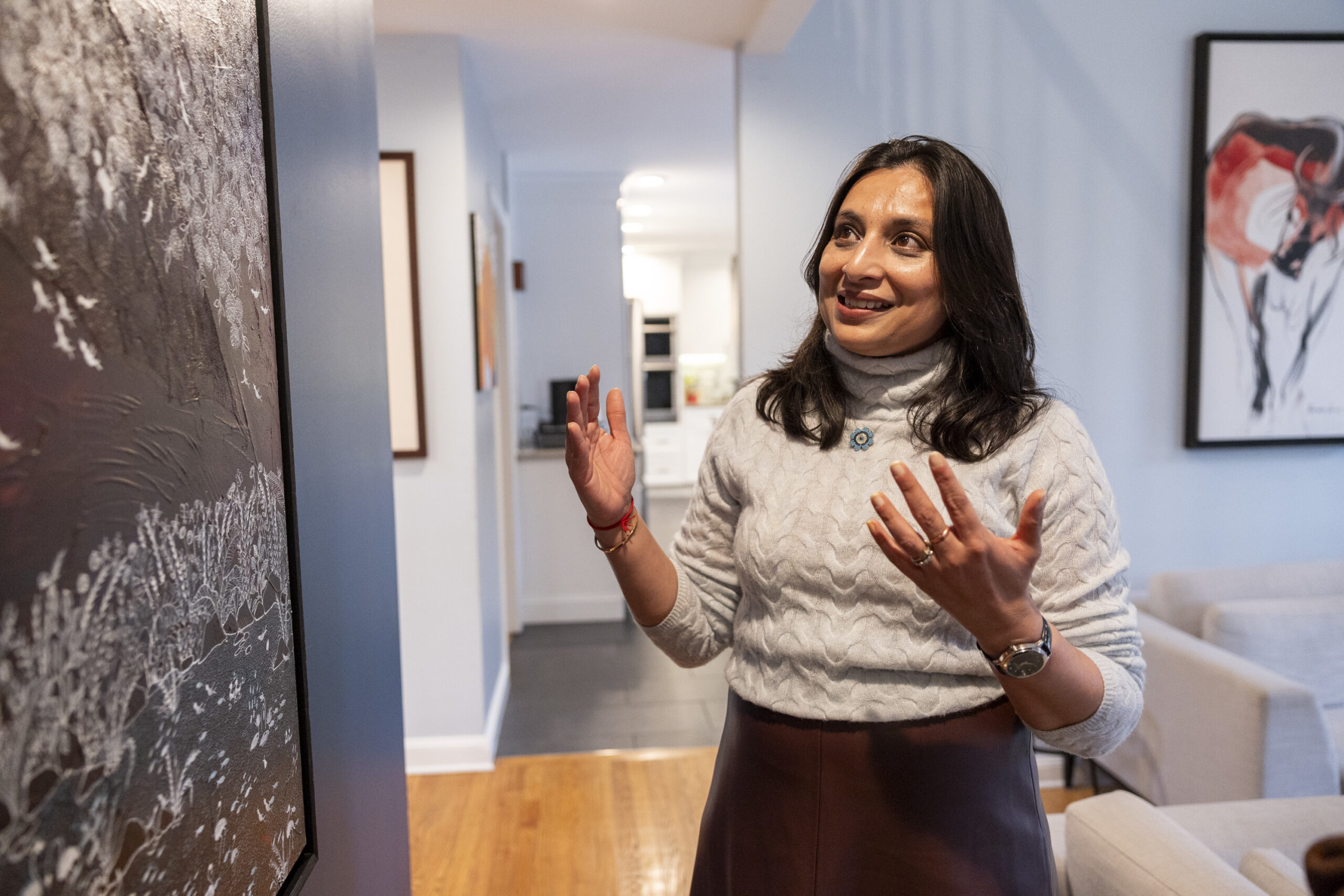
    Rinal Parikh, 43, Media-based artist, talking about her art work in her home in Media, Pa., on Tuesday, Dec. 23, 2025.

    Parikh, 43, took a circuitous route to becoming an artist. She moved to Philly in 2005 from Gujarat, India, to follow her husband, Bhavin, who had immigrated a few years earlier (the day of our interview was the 20th anniversary, to the date, of her arrival in the U.S.). She enrolled in a masters in molecular biology program at Drexel University, a step toward her Ph.D., and got a job in a lab at Penn Presbyterian Medical Center.

    A few years after her move, Parikh’s first son was born with health complications. With no family close by, Parikh quit her job to focus on taking care of her son. He’s now a healthy teenager, she notes.

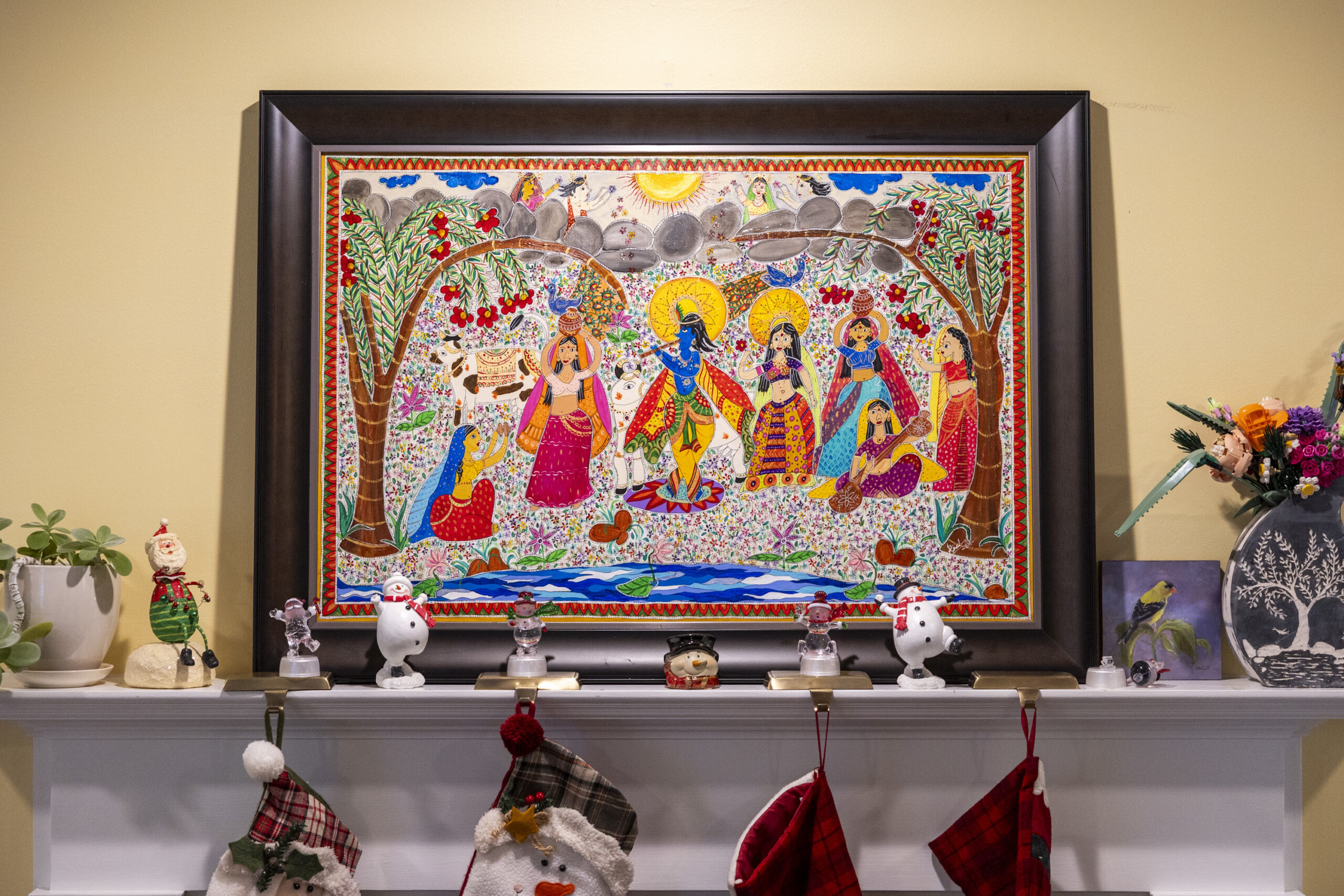
    Seeing that Parikh was missing out on work, her husband made a suggestion: Why not paint something for their new house? That first painting, “Krishna-leela,” now hangs in the Parikhs’ living room, an eye-catching depiction of the Hindu deity Krishna.

    Rinal Parikh’s painting “Krishna-leela” is displayed at home in her formal living room in Media, Pa., on Tuesday, Dec. 23, 2025.

    When her son was 9 months old, Parikh stopped by an art fair at the Creative Living Room, a community arts center in Swarthmore. She struck up a conversation with some of the women there. A few days later, they called with a question: Would she like to do a solo show?

    “I didn’t even know what that means,” she said.

    Nonetheless, she agreed. She worked tirelessly for three months to make 20 pieces. She didn’t know where to buy art supplies, so she imported them from India (someone would later point her toward the now-closed Pearl Art & Craft Supplies on South Street). In fall 2009, she displayed her paintings for the first time as a professional artist — and sold her first painting, too. The rest, she said, is history.

    Parikh melds together three types of Indian folk art — Warli, Madhubani, and Kalamkari. Warli is a tribal art that depicts day-to-day life in a mural-like format. Madhubani uses geometric patterns and typically reflects celebrations of life. Kalamkari, Parikh said, is “very refined,” a style of art that uses a fine brush to create delicate and detailed line drawings. All three art forms have traditionally been practiced by women.

    Parikh feels like she speaks “a global language.”

    Though her paintings take inspiration from the traditional Indian folk style, the scenes depicted are not just of India. They’re often of the Philly area, and of the flora and fauna in her backyard.

    “I still practice Indian folk art, but the subject matters are very ‘now,’” Parikh said. “The language is still very traditional, but the conceptualization, the visualization, is much more contemporary.”

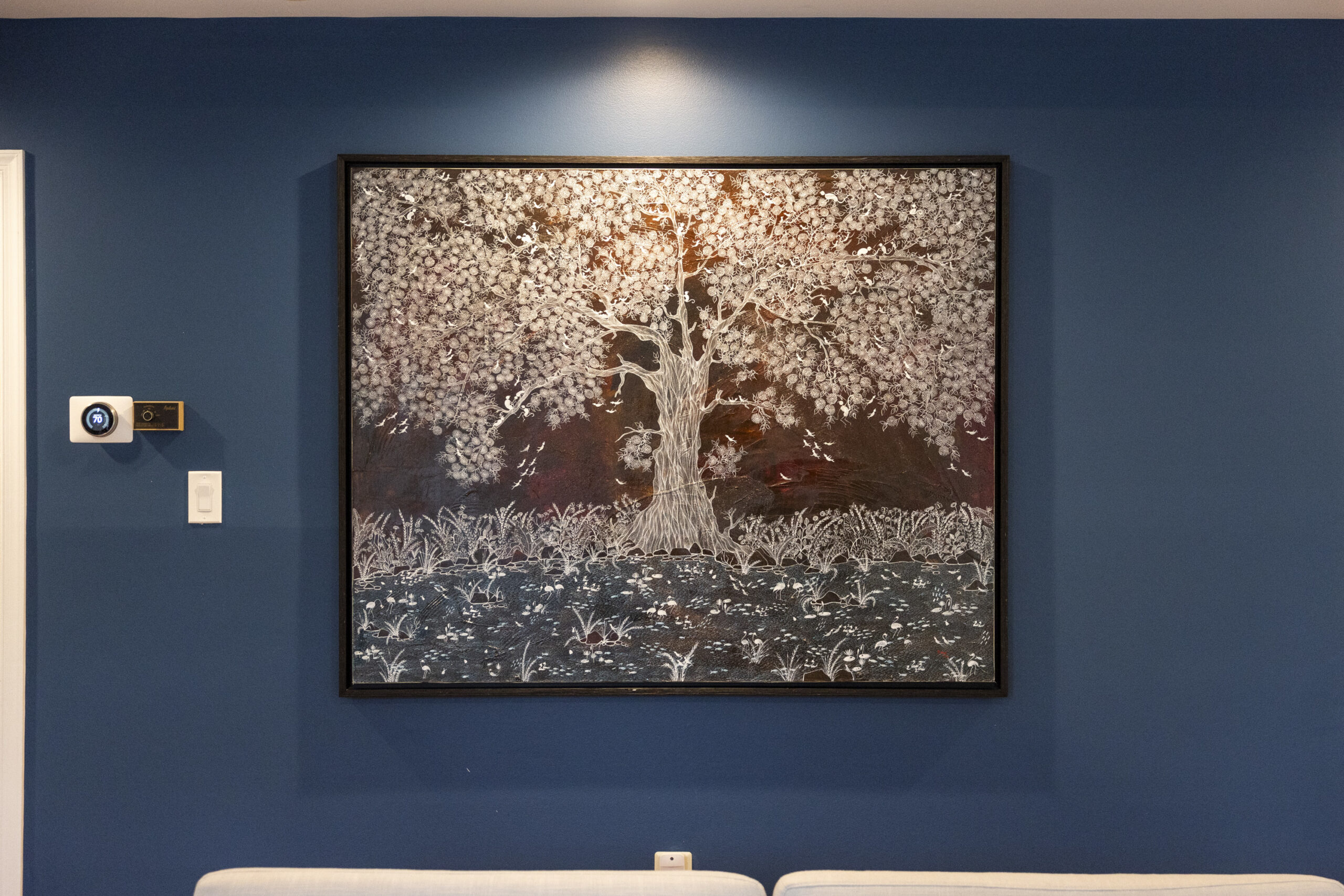
    A painting called “Home” painted by Rinal Parikh, 43, displayed in the family room of her home in Media, Pa., on Tuesday, Dec. 23, 2025.

    In her family room hangs “Home,” a 2021 Warli painting of a tree. The background is complex in both texture and color, with blues, browns, and purples peeking out. Hanging from the tree are monkeys, which Parikh said captures the energy of having two boys, now 17 and 12, in the house. (They’re very good kids, she clarifies.)

    “I observe my surroundings, I experiment with styles, I do a lot of repetitive patterns, and I tell my story,” she said.

    Since jumpstarting her art career, Parikh has become involved in the region’s growing art community. She’s the marketing chair for the Rittenhouse Square Fine Arts Show and is involved with the Community Arts Center of Wallingford.

    She said she understands the anxieties of young artists and wants to support the organizations that nurture their careers.

    “I was supported by the community, and I want to do the same thing.”

    Parikh’s art can be found on her website and her Instagram page.

    This suburban content is produced with support from the Leslie Miller and Richard Worley Foundation and The Lenfest Institute for Journalism. Editorial content is created independently of the project donors. Gifts to support The Inquirer’s high-impact journalism can be made at inquirer.com/donate. A list of Lenfest Institute donors can be found at lenfestinstitute.org/supporters.

  • A Renoir painting was removed from the Barnes’ walls last year. Now it’s coming back with brighter colors.

    A Renoir painting was removed from the Barnes’ walls last year. Now it’s coming back with brighter colors.

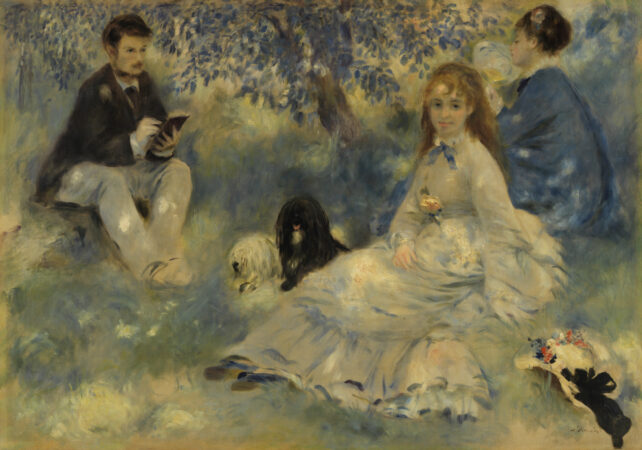
    The Barnes Foundation removed a precious Pierre-Auguste Renoir painting from view last year for some much-needed rehabilitation.

    The Henriot Family (La Famille Henriot), an oil painting completed around 1875, is an impressionist work depicting three people and two long-haired dogs relaxing in a forest. A young woman in a white dress gazes directly at the viewer while a man to her right appears to be drawing her. The central figure is Henriette Henriot, one of Renoir’s frequent models, and her admirer is the painter’s brother, Edmond Renoir.

    It’s one of 181 Renoir paintings that Albert C. Barnes amassed during his lifetime, leading the Barnes Foundation to hold the largest collection of Renoir artworks in the world. He purchased the piece from art dealer Etienne Bignou in 1935 for $50,000, which amounts to about $1.17 million today.

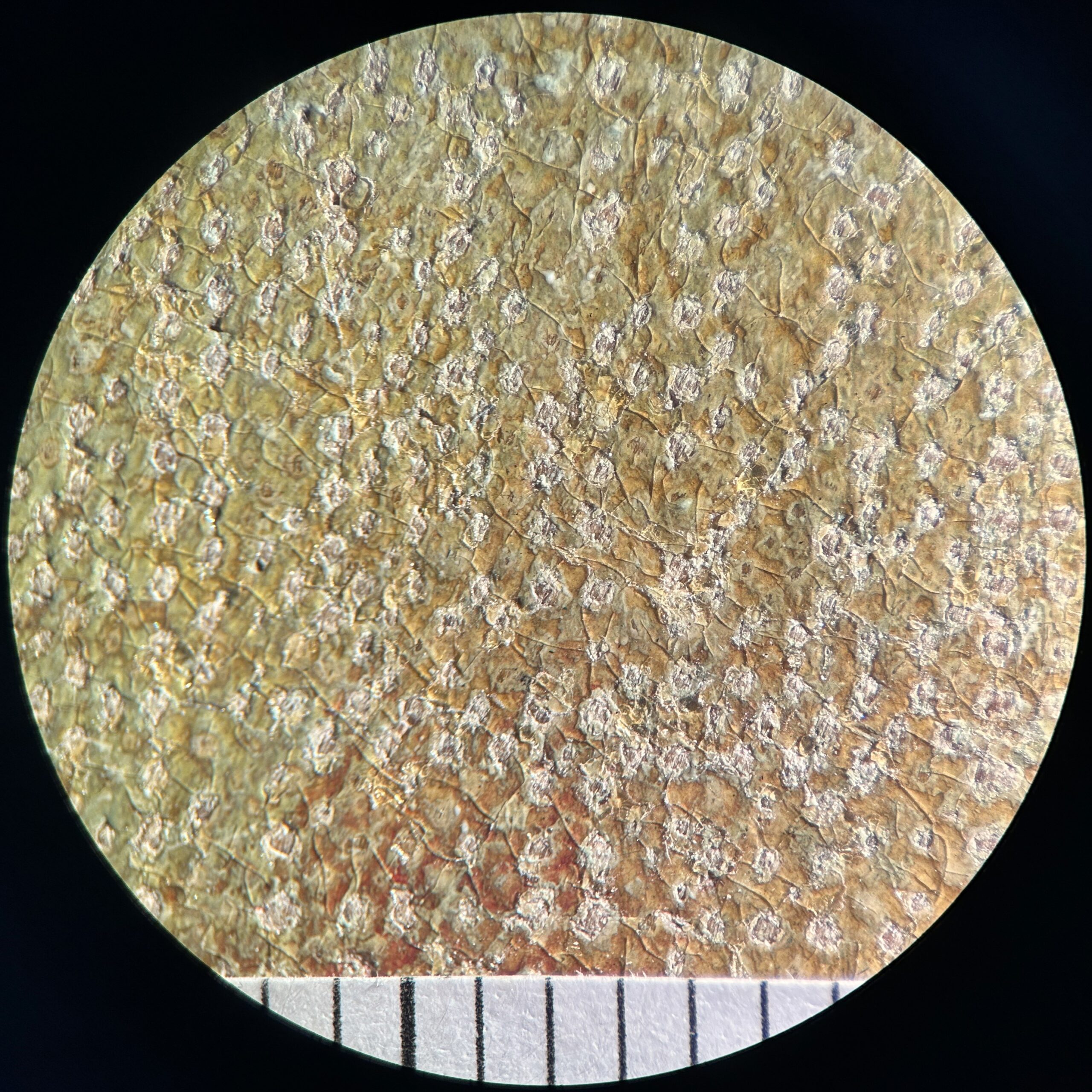
    A close-up of “The Henriot Family” demonstrates the old layer of varnish that has yellowed the painting over time.

    Sitting above a doorway in the museum’s main room, The Henriot Family has long been eyed for restoration, according to WHYY. The staff brought the painting into the conservation lab in February 2025.

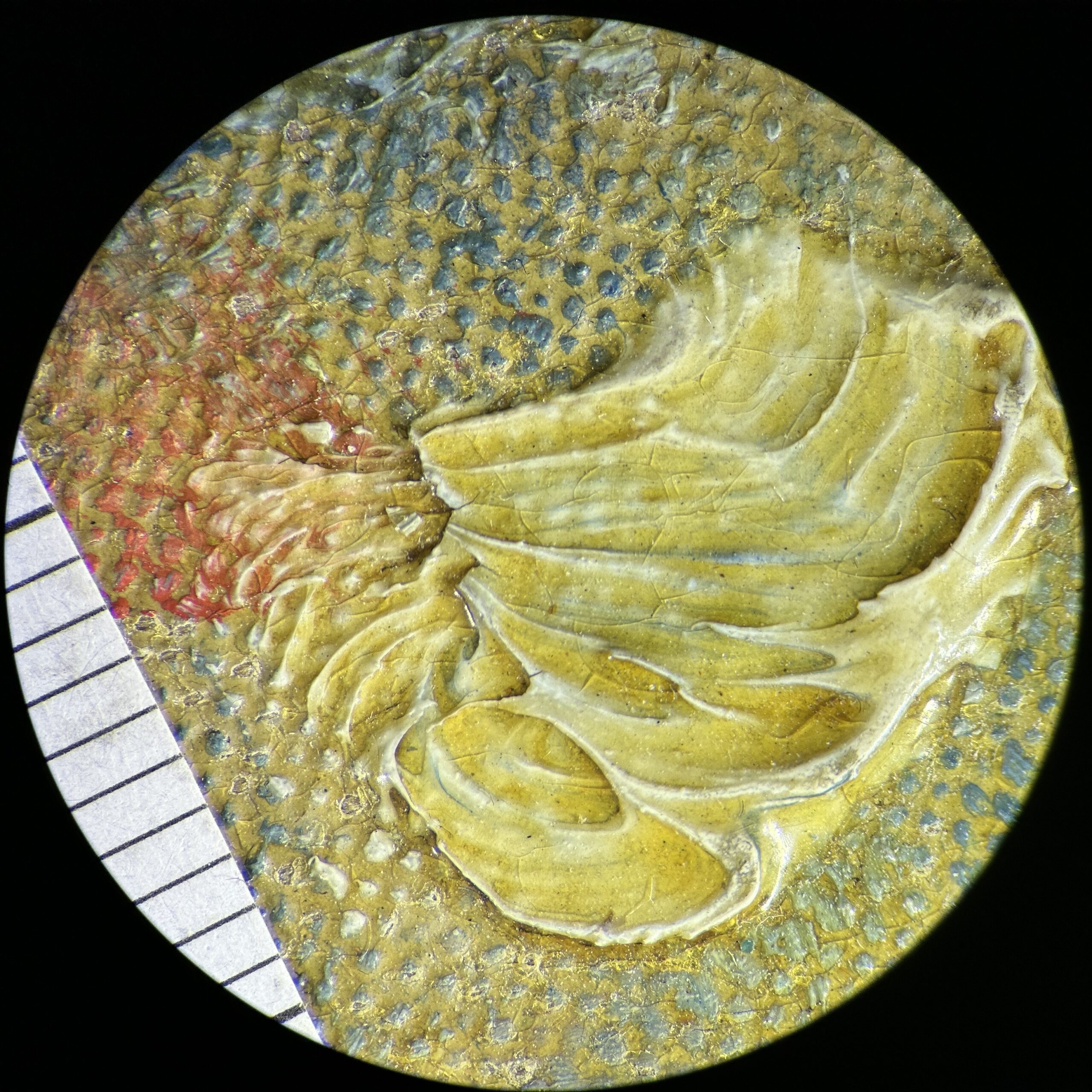
    An old layer of resin varnish on the paint has altered the colors over time, turning them from blue and gray to yellow and green. On a microscopic level, the paint has also begun separating from the canvas and the base layer in a process called “micro-flaking.”

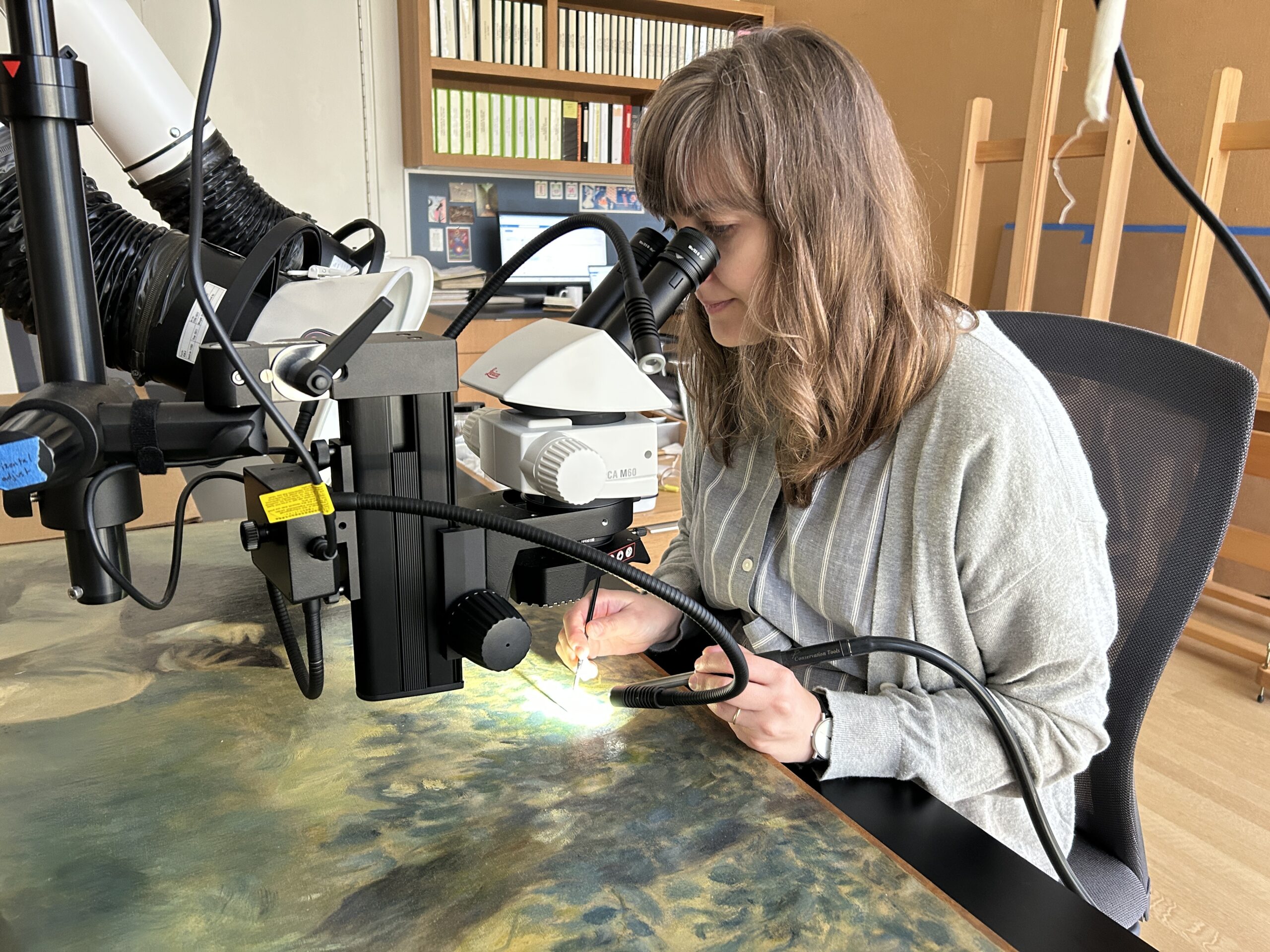
    The Barnes Foundation’s associate conservator of paintings Christie Romano studies “The Henriot Family” under a microscope.

    So far, Barnes’ associate conservator of paintings Christie Romano has reportedly put in some 200 hours studying the painting under a microscope to identify problematic areas.

    The conservation efforts will remove the yellowing layer of resin to restore the original colors underneath and fix the areas most affected by micro-flaking using calcium carbonate. The project is funded by a grant of an undisclosed amount from Bank of America as part of its Art Conservation Project; the Barnes is one of 16 recipients worldwide.

    A microscopic close-up of “The Henriot Family” painting demonstrates “micro-flaking” damage.

    Cultural institutions in Philadelphia have benefited from the bank’s conservation grants in previous years. In 2019, the bank funded the restoration of The Large Bathers by Paul Cézanne at the Barnes and The Great Bathers by Renoir at the Philadelphia Art Museum. Over the past 16 years, the Art Conservation Project has issued grants for some 275 conservation projects across 40 countries.

    The Henriot Family will be back on view at the Barnes sometime in February, with its gray and blue looking brand new.

  • Art makes this Chesco 15-year-old happy. So she launched a nonprofit to teach younger kids.

    Art makes this Chesco 15-year-old happy. So she launched a nonprofit to teach younger kids.

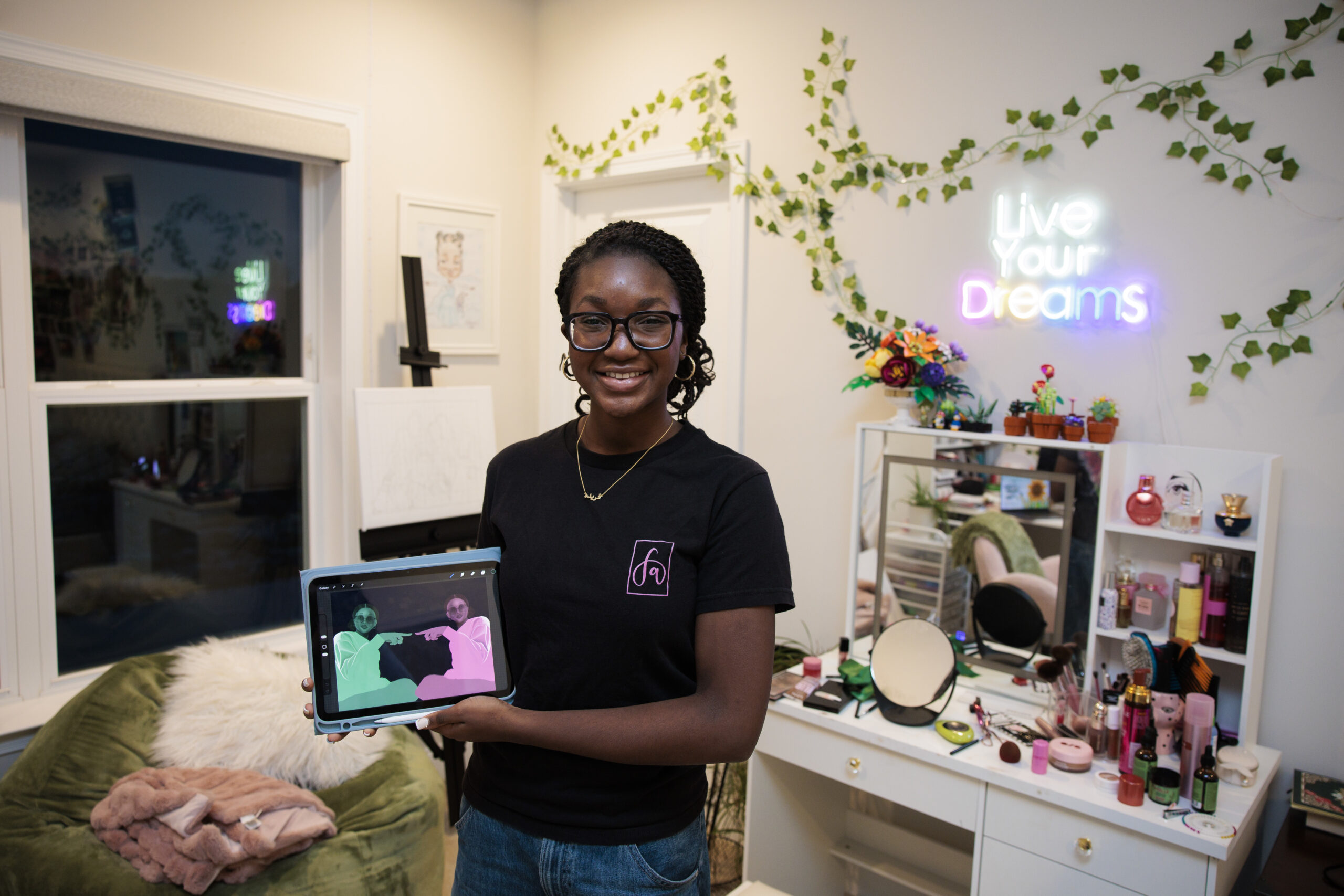
    Something about the phrase “Do what makes you happy” struck Faridah Ismaila. It became the title of, and inspiration behind, one of her art pieces. It’s printed onto the back of her T-shirt. It’s something the 15-year-old artist lives her life by.

    “When I do art, it’s because it makes me happy, and when I can give my art to other people or spread the joy of art, it’s making them happy,” she said.

    Following that guiding light of happiness, Ismaila, a digital artist and a sophomore at Great Valley High School, recently launched her nonprofit, A Paint-full of Promise, which offers free monthly art classes for kids in her school district in kindergarten through grade six.

    Working with educators in the district, Ismaila devises themed art projects and provides supplies and classroom time to teach young artists how to express themselves. The first club is slated for mid-January, with a winter wonderland theme. Children will make snowflakes and paint winter-themed coasters.

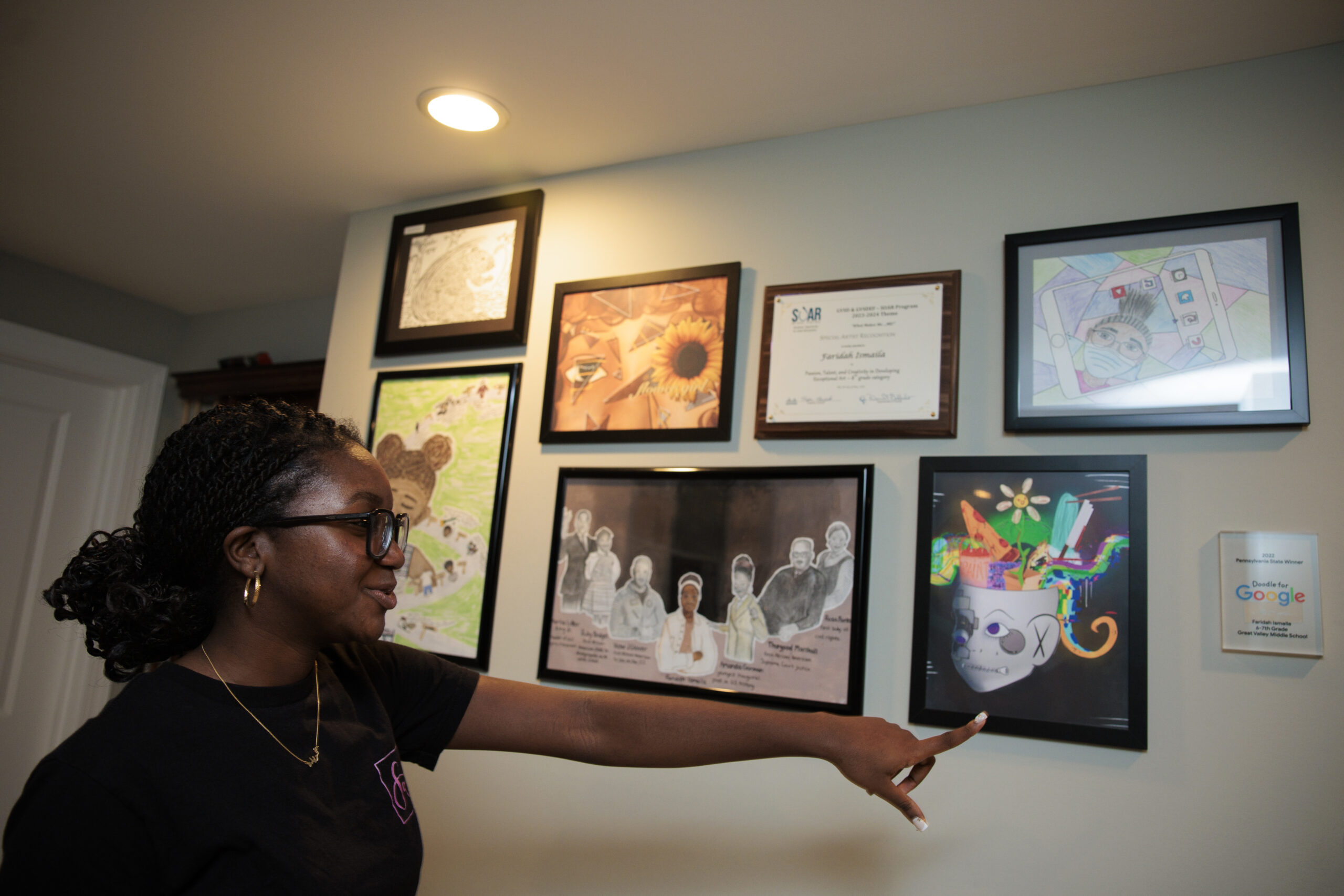
    Ismaila has been recognized for her art nationally: She was the state winner and a national finalist in the 2022 Doodle for Google competition, where young artists compete for their work to be featured as the Google homepage design. That recognition helped give her the confidence to pursue big dreams, like her nonprofit and club.

    “It makes me feel I can still do this. Because sometimes I’ll doubt myself. … I can’t be having all these big dreams,” she said. “But if people want to vote for me and I am recognized nationally, I feel on top of the world. I can do anything.”

    The first brushes of the nonprofit — which she hopes one day will grow to multiple sessions a month — started years ago, when Ismaila began making YouTube videos, teaching the fundamentals of art. She showed viewers how to make a gradient, how to depict a sunrise. She circulated the videos around her Malvern neighborhood, and she thought: Why not hold a class for younger kids?

    Faridah Ismaila, 15, poses for a portrait at her home on Wednesday, Dec. 17, 2025, in Malvern. Ismaila started a kids art nonprofit called A Paint-full of Promise. She also sells her art online.

    Over a summer, in her garage, she set up two art projects — painting and colored pencils — and led about eight kids through a lesson. She called it Faridah’s Art Crafty Corner.

    Holding the class made her happy. So she did it again, but bigger, turning it into a summer camp, under the new name: A Paint-full of Promise.

    “Then I decided, why not actually make this a club, so not only my community can get this, my entire district can?” she said.

    And now, the teenager has a nonprofit under her belt. She officially launched the organization last month at an event in Malvern, where she raised money by auctioning off prints of her work and selling T-shirts with her designs.

    Anne Dale, an art teacher at Great Valley High School who is an adviser for the club, said she was impressed with Ismaila’s ability to get other high school students involved in running the club.

    “A lot of students have big ideas for clubs, but there’s not always follow-through. With her, it’s definitely different, and I knew that when she approached me with it,” Dale said.

    Giving kids the tools and opportunity to create artwork was essential to Ismaila, who gravitates to art to process her emotions.

    “It’s just the best thing ever,” she said. “Once you start doing art as a kid, it’s just a great way to get your feelings out there and express yourself, even if you can’t use words to describe it.”

    One of her pieces, Beauty Within, depicts a skeletal hand holding a white mask, a tear running down its cheek. Behind the mask, flowers bloom. It came from a feeling of constantly analyzing herself, the feeling that what you show people is not necessarily what’s on the inside.

    Another piece, made when she was “seriously sleep-deprived,” shows a face with an assortment of pixels, pizza, stick figures, and paint pouring out.

    Faridah Ismaila, 15, talks about some of her early works at her home on Wednesday, Dec. 17, 2025, in Malvern. Ismaila started a kids art nonprofit called A Paint-full of Promise. She also sells her art online.

    A piece she is working on now shows herself, in vibrant colors, pointing to her reflection. She wanted to capture the feeling of two versions of the self — one confident, the other fragile.

    Sometimes, her mother Nofisat Ismaila said, her parents feel as if they are holding her back.

    “I don’t know how I’m gonna keep keeping up with this girl, because she’s just taking us to places, keeping us busy, keeping us on our toes,” she said. “She’s turning out to be a really young, determined adult.”

    Faridah Ismaila, 15, poses for a portrait at her home on Wednesday, Dec. 17, 2025, in Malvern. Ismaila started a kids art nonprofit called A Paint-full of Promise. She also sells her art online.

    But to Faridah Ismaila, it’s about finding happiness, and giving it to others, too.

    “I really hope the kids just do what makes them happy. … It’s also just not being afraid to get out there, because when I was a kid-kid, I wasn’t afraid of anything,” she said. “I think middle school really kicks some kids in the butt, and getting up out of that — at least for me, art was a way to do that. I just want to give that to kids.”

    This suburban content is produced with support from the Leslie Miller and Richard Worley Foundation and The Lenfest Institute for Journalism. Editorial content is created independently of the project donors. Gifts to support The Inquirer’s high-impact journalism can be made at inquirer.com/donate. A list of Lenfest Institute donors can be found at lenfestinstitute.org/supporters.

  • Robert Caputo, prolific photographer, writer, and filmmaker, has died at 76

    Robert Caputo, prolific photographer, writer, and filmmaker, has died at 76

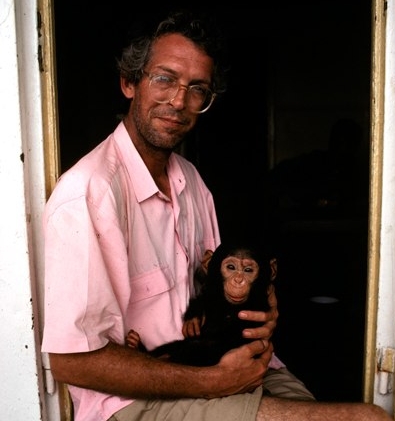
    Robert Caputo was captivated by the natural world, its animals and people. So he spent 35 years, from 1970 through 2005, traveling through Africa, Asia, and South America, taking photos, writing stories, and making films and TV shows for National Geographic magazine, Time, PBS, TNT, and other media outlets.

    From Kenya to Egypt, Venezuela to Zanzibar, in China, Cuba, New Orleans, and Boston, Mr. Caputo chronicled the beauty and tragedy of everyday life. He reported as a freelancer, with a camera and a notepad, for National Geographic for decades, covering political coups, civil wars, and famines in Sudan and Somalia, and the AIDS epidemic in Uganda.

    He worked for photographer and filmmaker Hugo van Lawick in Tanzania in the 1970s and then camera-stalked lions and leopards for National Geographic on the Serengeti Plain. He sent back striking images of the Abu Simbel Temples in Egypt and the old Kingdom of Mustang in Nepal.

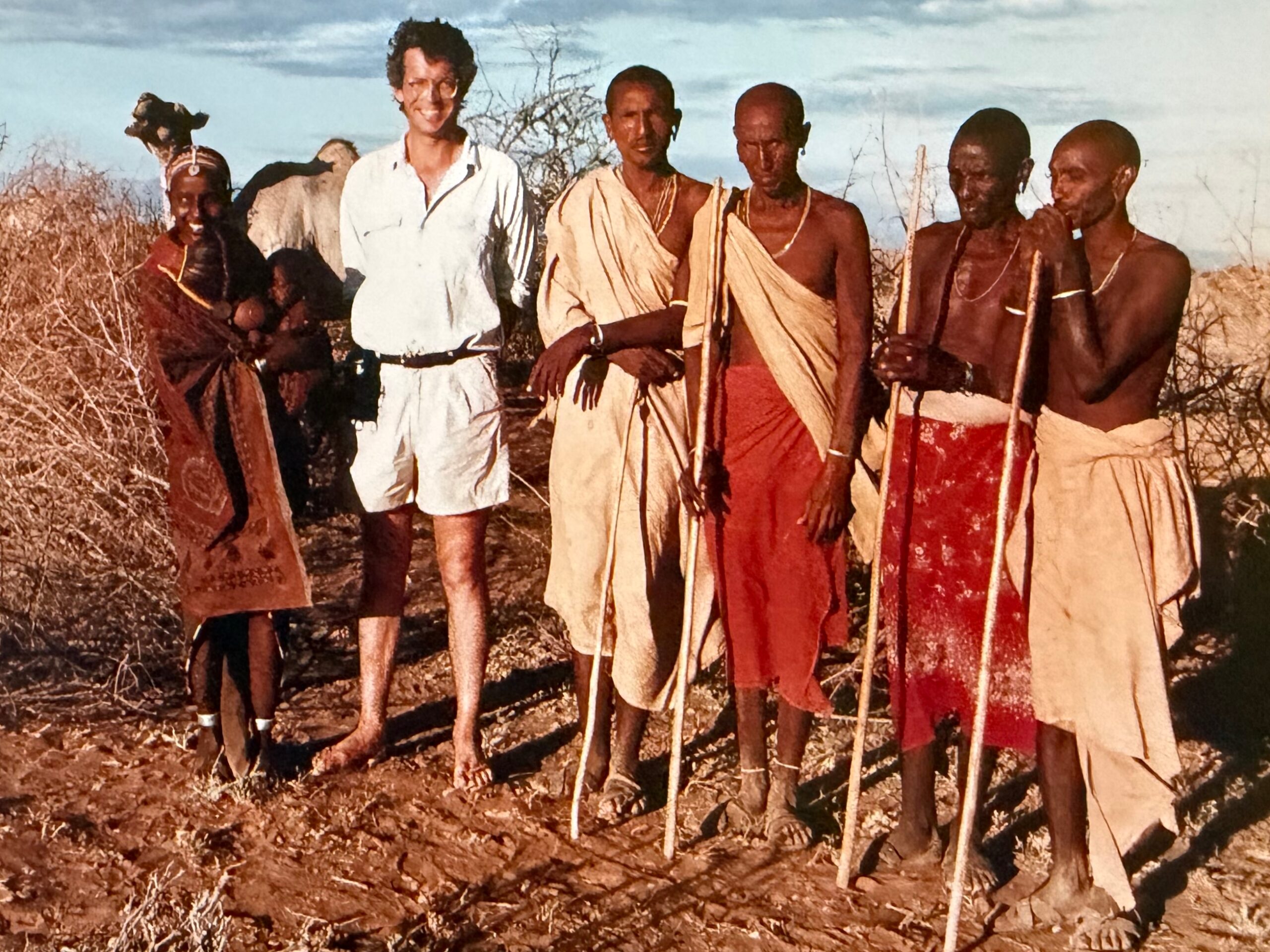
    In Sudan, he sipped tea with camel traders, slept under the stars, and posed for portraits with tribal chiefs. He trekked the Himalayas and photographed fishermen on the Congo, Nile, and Mississippi Rivers. His poignant August 1993 cover photo for National Geographic of a starving Somali woman gained worldwide attention.

    “In fact, it is a great job,” Mr. Caputo told the Washington Post in 1995, when he was featured in a TV show about the Geographic photographers. “You really do get to go places and do things others only dream about.”

    He told the New York Daily News in 1995: “I’ve always thought of my job as a license to be nosy.”

    In 2002, as he was winding down his international travel, Mr. Caputo moved from Washington, D.C., to a farmhouse in Kennett Square, Chester County. In early 2025, he was diagnosed with Alzheimer’s disease. In December, he and his family traveled to the Pegasos Swiss Association voluntary assisted dying center in Basel, Switzerland. He died Thursday, Dec. 18. He was 76.

    “Fairly early on, Bob had expressed his wishes to go out on his own terms,” said his wife, Amy. “We were able to honestly and pragmatically deal with our situation, and he remained his thoughtful self, with his sense of humor intact till the end.”

    Mr. Caputo loved spending time with animals.

    Mr. Caputo first went to Africa in 1970. He dropped out of Trinity College in Connecticut as a senior and meandered with friends across the vast continent, from Morocco to Tanzania.

    He returned to earn a bachelor’s degree in film at New York University in 1976. Then, until 1979, he lived in Nairobi, Kenya, and sold photos and stories about Africa to Time, Life, and other magazines.

    “He liked to learn about things,” said his son Nick. “He was constantly inquiring into things.”

    In 1981, National Geographic hired him to report from Sudan on the verge of its civil war, and he produced striking cover photos, dramatic picture spreads, and detailed stories about Africa. In 1984 and ’85, he spent eight months and traveled 4,000 miles on steamboats, tugboats, and all-terrain vehicles to document traditional daily life along the Nile.

    Mr. Caputo had several cover photos for National Geographic.

    “Everywhere he went,” his family said, “Bob found that the people he met were fundamentally good and generous, happy to share their often limited food with him, a perfect stranger, and excited to tell him about their lives.”

    There were challenges, too, he said in many interviews. He was detained by border guards in Uganda in 1979 and contracted malaria nine times. The monthslong assignments in search of remote Indigenous people were often lonely, and he got hungry and tired.

    But the connections he made with people he encountered were worth it, he said. “The great advantage of working for National Geographic is having time,” he told the New York Daily News. “You can go to a village in Africa and not just have to waltz in and start shooting away. You can spend time getting to know people, and they can know you.”

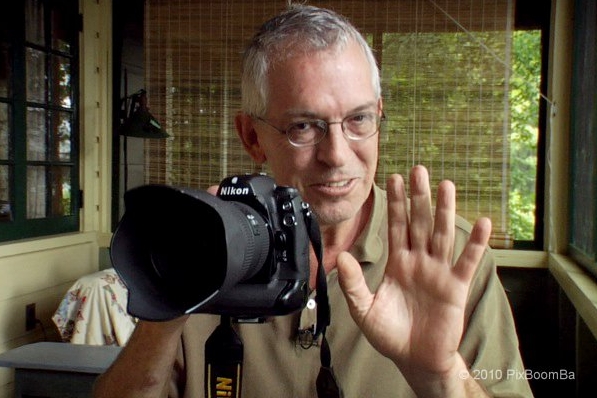
    Mr. Caputo was a natural innovator and teacher, and he organized photo workshops and lectured about photography around the world. He taught digital photography at the Center for Digital Imaging Arts at Boston University and cofounded Aurora & Quanta Productions in Maine in 1985 and the PixBoomBa.com photo website in 2010.

    National Geographic published his Photography Field Guide in 1999 and Ultimate Field Guide to Landscape Photography in 2007. He also authored photo essay books on the Nile and African wildlife, and exhibited his photos at the Delaware Museum of Nature and Science and elsewhere.

    Mr. Caputo (second from left) poses with local people in Africa.

    He wrote and appeared in wildlife shows, hosted TV programs and YouTube videos about photography, and wrote the story on which Glory & Honor, a 1998 award-winning TV film, is based. He made films about making films in Nigeria and the history of Boston’s Fenway Park.

    He earned awards from the National Press Photographers Association, the American Travel Writers Foundation, Communications Arts journal, and other groups. He was personable and energetic, colleagues said, and he cofounded the annual National Geographic Prom at the Washington office.

    “He was a tremendously caring and loving person,” his son Nick said. “He looked out for other people.”

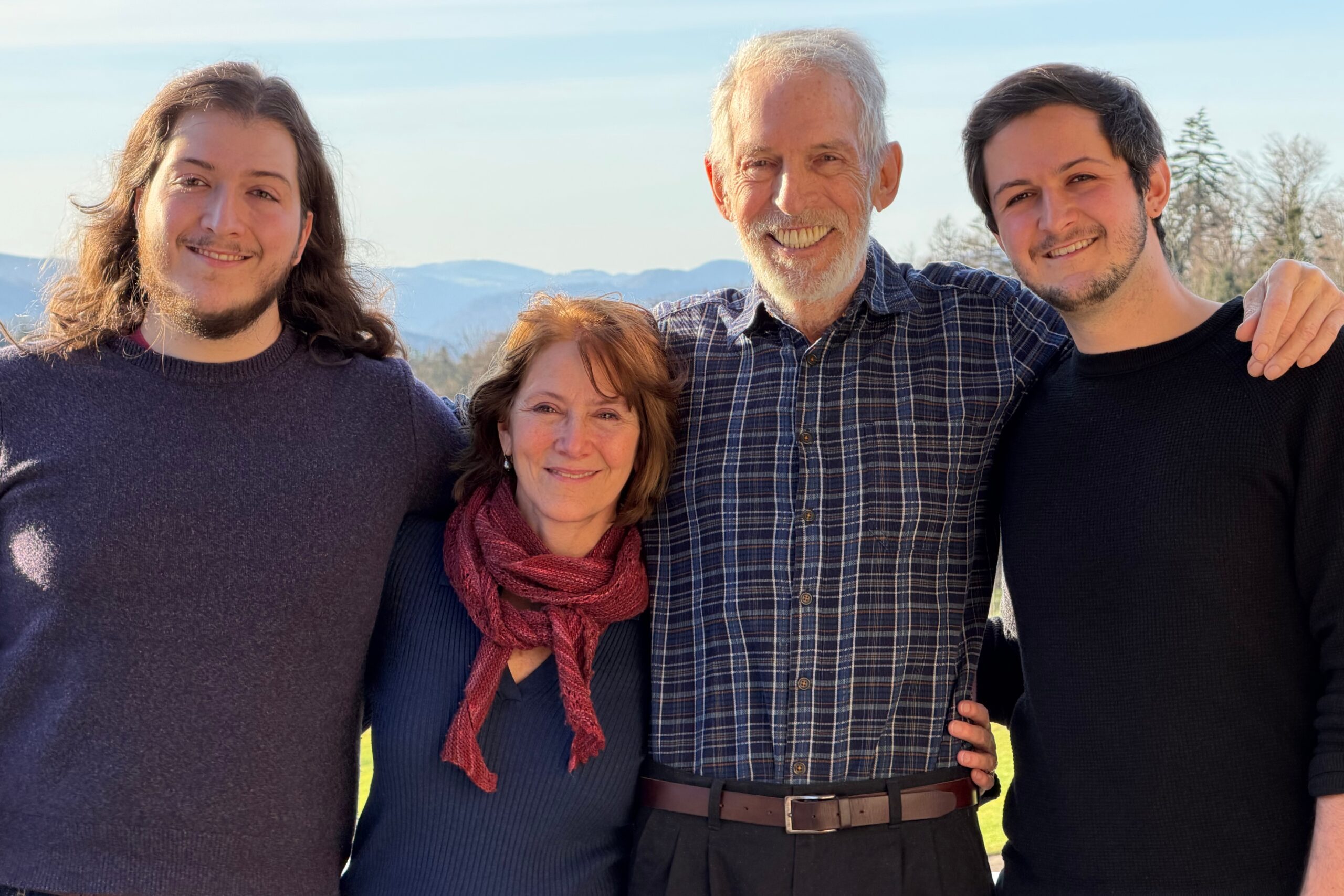
    Mr. Caputo met TV and film producer Amy Wray on a National Geographic TV shoot in the Amazon rainforest. They married in 1997 and had sons Nick and Matt.

    This photo is featured on Mr. Caputo’s website.

    In Facebook tributes, friends and colleagues noted his “wonderful smile” and “deep love of people and animals.” They called him a “legend” and “amazing.” Robert J. Rosenthal, former Africa correspondent and former executive editor of The Inquirer, called Mr. Caputo “one of the best humans I ever knew.”

    Mr. Caputo told MainLine Today in 2009: “My personal heroes are the people who work for aid organizations and nongovernmental organizations, who go to some faraway place to help people they’re not related to and often put themselves in harm’s way.”

    Robert Anthony Caputo was born Jan. 15, 1949, at Camp Lejeune, N.C. His father was a career Marine and moved the family to bases in Virginia and then Sweden for an assignment at the U.S. embassy there.

    In a 1991 interview with the Newhouse News Service, Mr. Caputo said: “I remember as a kid going to sleep listening to artillery going off in the distance down at the range. It was kind of comforting. I wouldn’t change it for anything.”

    Mr. Caputo (second from right) doted on his wife and sons.

    He attended a Swedish middle school, learned the language, skied, and played soccer. He returned to the United States in the late 1960s to attend boarding school in Virginia and then Trinity.

    In Kennett Square, Mr. Caputo was a soccer, baseball, and basketball coach to his sons, and a Cub Scouts leader. He walked the boys to the school bus stop in the morning. He told them bedtime tales about secret agents and pirates, they said, and built a tree house in the backyard.

    He decorated his truck on Halloween and grew impressive gardens. His neighbors called him Farmer Bob.

    He took his family on trips to Kenya and Tanzania. He dabbled in experimental playwriting and literature when he was young, and enjoyed classic movies and William Blake’s poetry.

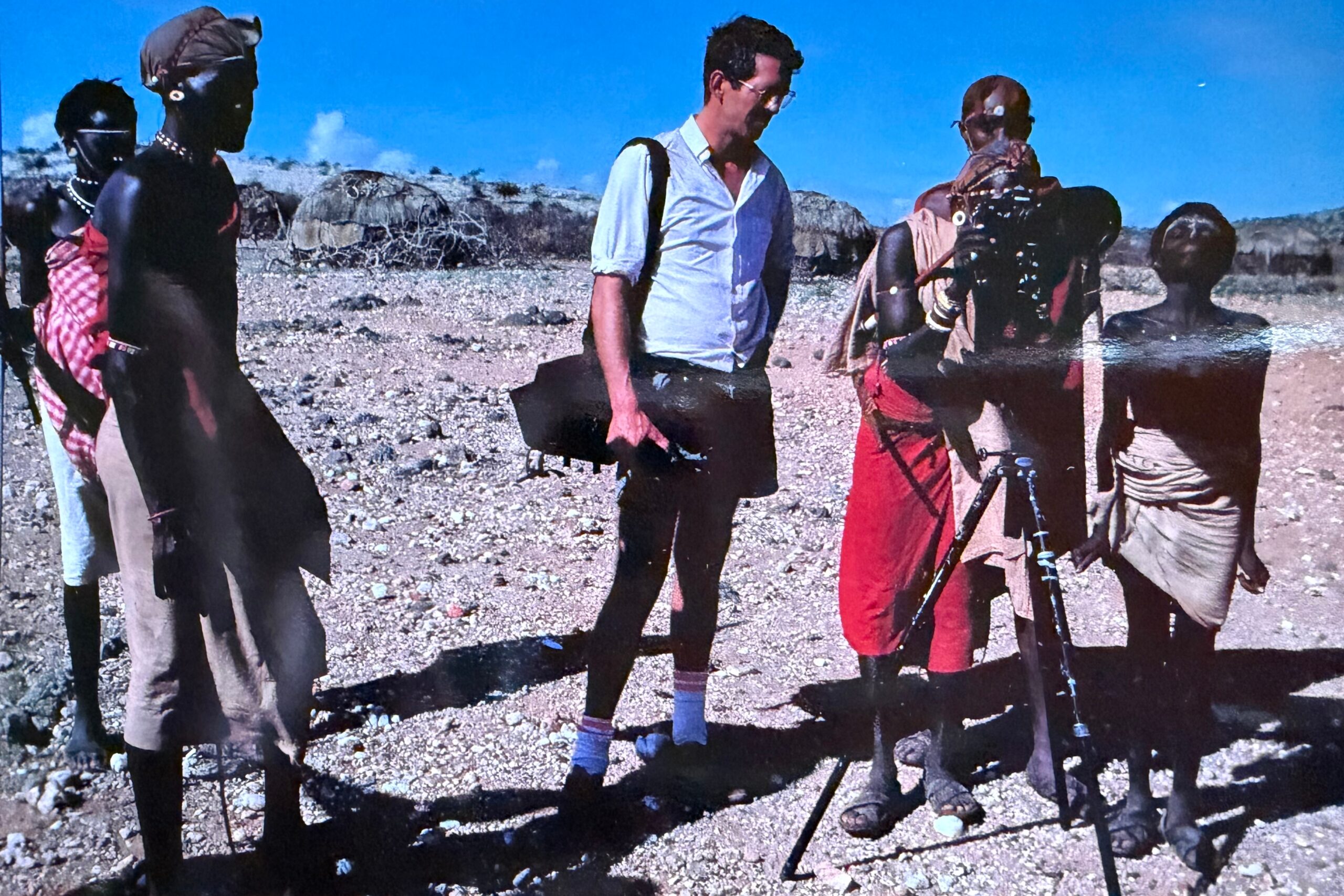
    Mr. Caputo (center) shows his camera to the locals in Africa.

    “He felt extraordinarily lucky to have lived the life he did,” his wife said, “full of adventure, family and friends. And in the end he said, ‘I’m ready.’”

    In addition to his wife and sons, Mr. Caputo is survived by a sister and other relatives.

    Services are to be at 11 a.m. Saturday, Jan. 10, at Kennett Friends Meeting, 125 W. Sickle St., Kennett Square, Pa. 19348.

    Donations in his name may be made to Doctors Without Borders, Box 5030, Hagerstown, Md. 21741.

    His family called Mr. Caputo “buttered side up” when he was young “because no matter
    how he fell he always seemed to end up the right way, and his life was full and lucky.”