As Philadelphia’s largest visual arts institution heads into the new year, it does so shaken by disorder and strife — reeling under a drama as extraordinary in substance as the public nature with which it is playing out.
In a recent court filing from Suda’s legal team, the ousted director was described as a “visionary leader” recruited to “save a struggling museum.” Her efforts, the filing reads, “collided with a small, corrupt Board faction determined to preserve the status quo.”
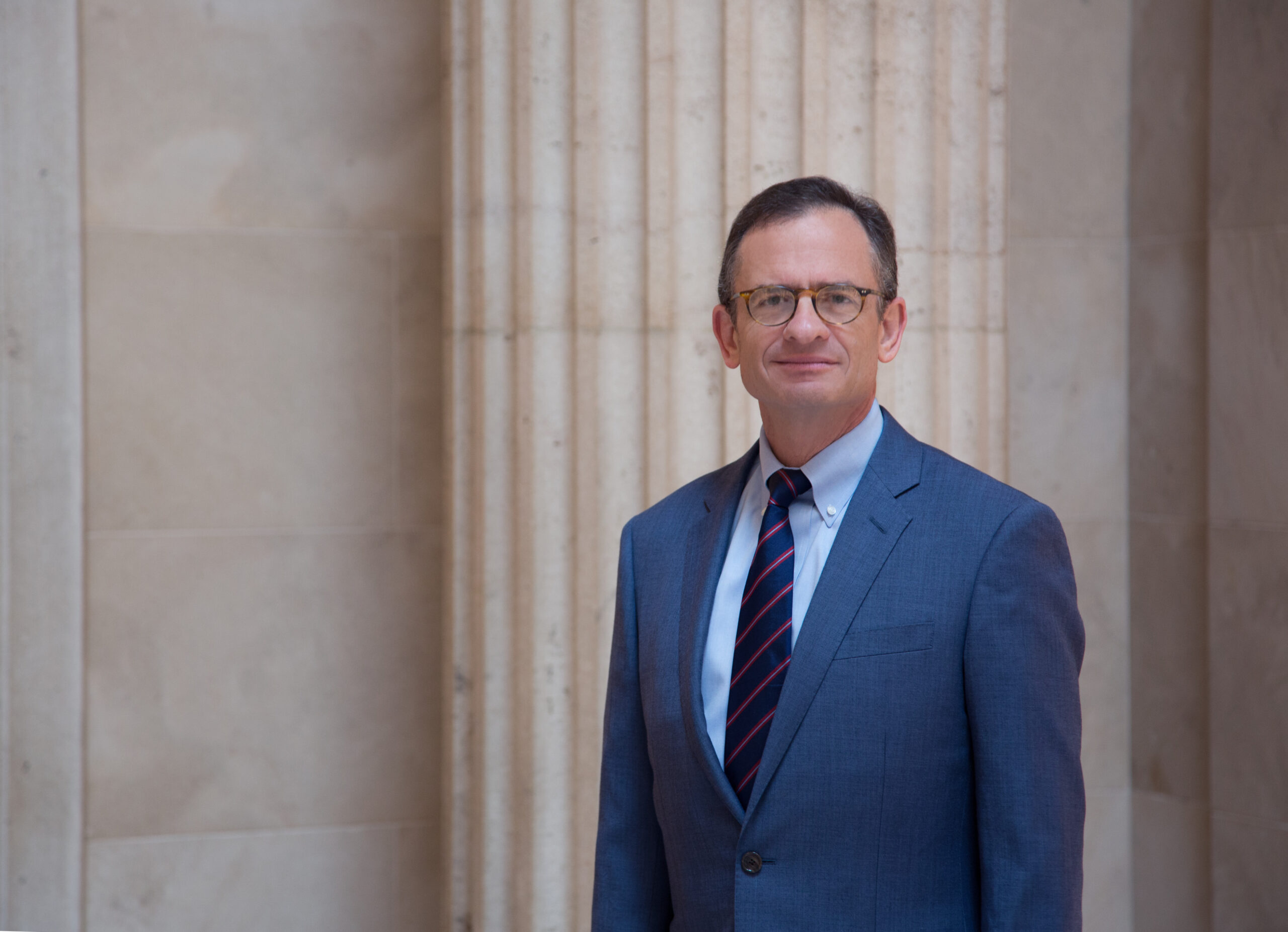
Daniel H. Weiss, director and CEO of the Philadelphia Art Museum
All this comes after three years of organizational turbulence that has left staff angry and bewildered.
“There’s a lot of nervousness about what’s to come now,” said one longtime staffer. “It’s been so chaotic for so long. Nobody feels steady. We’re supposed to be just chugging along like business as usual, but nothing feels stable.”
Though Weiss started at the museum this month, he will also maintain his position as an art history professor at Johns Hopkins University though May 2026.
Among the challenges facing Weiss: depressed attendance, an operating deficit, low staff morale, deferred maintenance on existing buildings, and questions about how to prioritize stalled expansion plans.
This account is based on interviews with former and current staffers, both union and nonunion, ranging from curatorial affairs to finance and operations. All of them spoke on condition they not be named.
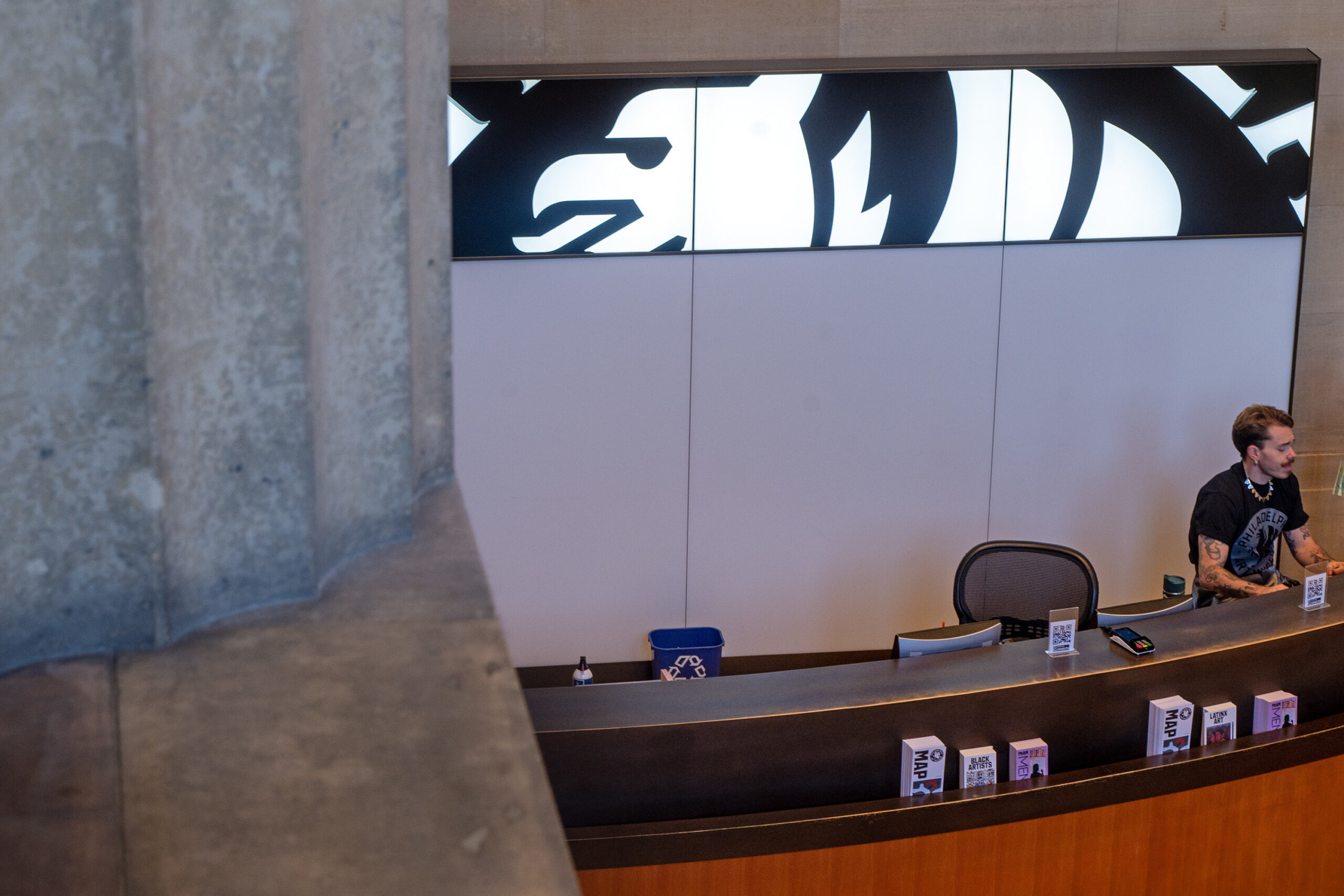
Visitors services staff member Tiago Segundo works the admissions counter at the west entrance of the Philadelphia Art Museum, Oct. 6, 2025.
Staff shortage
Weiss will have to contend with a shortage of staff — which has dropped from 500 in 2019 to 375 today — following years of significant employee turnover.
During Suda’s tenure, at least 60 employees — many from the senior executive team — were fired, laid off, or pressured to leave across departments. These include human resources, curatorial, digital content, communications, facilities, conservation, the library, visitor services, and more, according to museum insiders.
Suddenly gone in the fall of 2024 without explanation to the staff was Carlos Basualdo, earlier promoted by Suda to deputy director and the museum’s first-ever chief curator; he was highly respected and held several important relationships with collectors and top international artists like Jasper Johns and Bruce Nauman.
Basualdo was named director of the Nasher Sculpture Center in Dallas in April.
Curator Kathryn B. Hiesinger, who had been with the museum for 53 years, had talked to Suda in the summer of 2023 about her desire to retire at some point, and discussed ideas about winding down her tenure.
“She said it all sounded very reasonable,” said Hiesinger, 82, in a recent interview.
Several months later, Hiesinger said her computer stopped working and she was called into Suda’s office. A woman Hiesinger didn’t know — who turned out to be from human resources — and Suda handed her a sheath of papers, which she was asked to sign.
“I didn’t realize I was being fired,” Hiesinger said. “I was actually quite shocked by the whole way it was handled. It was so unnecessary. All she needed to do was say, ‘I think it’s time for you to retire; let’s see how we can make it work.’ But it was just like that — shut down the computer, call me into the office, and sign the papers, and that was it.”
A few weeks later, Suda called Hiesinger to apologize after museum leaders intervened. She was given the title of senior curator emeritus of European decorative arts and was told she would be allowed to complete her pending projects for the museum.
Hiesinger has had no official contact with the museum since.
Among others whostopped working at the museum during Suda’s tenure, several were made to sign nondisclosure agreements and could not speak to the media.
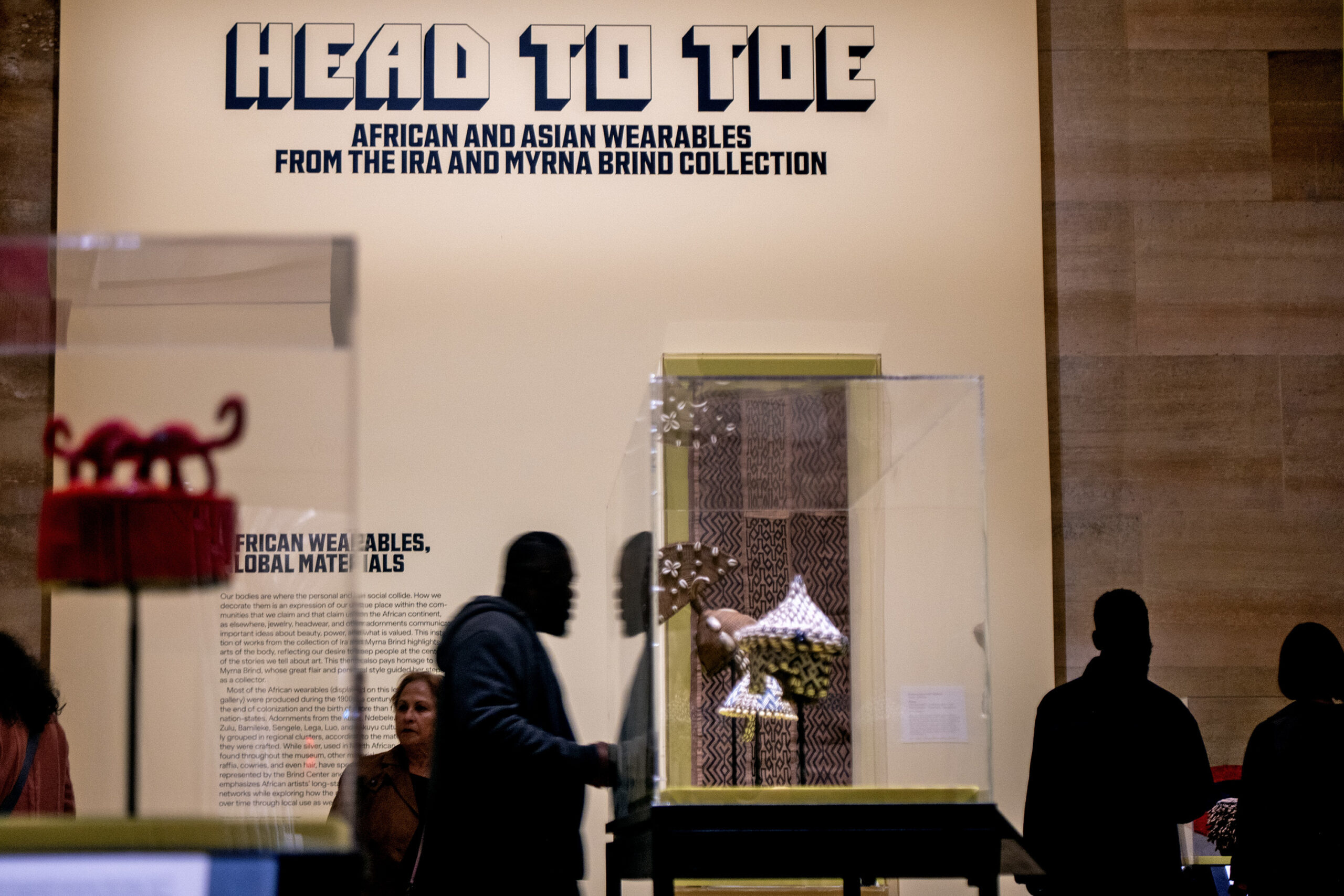
At the museum’s “Head to Toe: African and Asian Wearables” display, Oct. 6, 2025
A declining reputation
For staffers who have remained, there is a sense of internal disorganization.
“We’ve had three reorganizations within three years, and we were only given an org chart [and] an understanding of it in the last couple months,” said a longtime staffer.
Ultimately, the staffers The Inquirer interviewed believe the reputation of the museum has diminished over the years. Colleagues in the larger museum world, another staffer said, “look at me sideways, because this place has gotten such a bad rap … we’ve become a joke.”
Low morale has been a longstanding issue.
In her lawsuit, Suda detailed two instances of board members allegedly “yelling and berating staff.”
At one event, an unnamed board member “verbally assaulted a Museum employee,” the suit said, leading to a formal complaint. The board member later apologized to the staffer.
The second incident reportedly happened in the winter of 2024 when the museum hosted two simultaneous events for major donor Bank of America and a group invited by Philadelphia City Council President Kenyatta Johnson.
According to the lawsuit, board member Melissa Heller was allegedly “berating staff, cursing, and shouting that the team was unprepared.” Suda alleged that a Bank of America representative “witnessed this awful altercation” and called her to discuss it. Board chair Ellen T. Caplan spoke to Heller about it and “declared the matter closed.”
Suda’s lawsuit also recounted an incident when former board chair Leslie Anne Miller allegedly screamed and cursed at Suda.
Miller declined to comment and Heller did not respond to The Inquirer’s request for comment.
Several employees said Suda regularly engaged in similar behavior herself.
Sasha Suda, former director of the Philadelphia Art Museum, at the museum on Jan. 30, 2024.
“Sasha has done the same thing, [being] verbally abusive to staff, yelling at them, telling them that nobody likes them and people don’t want to work with them,” said the longtime staffer who spoke to the museum’s recent reorganizations.
The staffer worried about the museum’s diminishing reputation also claimed that the programming team became less autonomous and more risk-averse under Suda.
Managers, the staffer said, use threats of dismissal and public humiliation, leading curators and others to feel that their jobs depend solely on the success or failure of an exhibit. Staff members are wary of Suda’s executives continuing this culture of insecurity.
“People are afraid to do their work. Curators are afraid to put on exhibitions. They’re afraid to spend money,” the staffer said. “I feel like my work has ground to a near halt. I do a fraction of what I used to do, just in a very dysfunctional way now.”
The museum now puts on fewer of its own shows,a departure from previous administrations. Some of the biggest exhibits in recent years, like “The Time Is Always Now” and “Dreamworld: Surrealism at 100,” have been touring shows organized elsewhere and adapted for the museum.
A forthcoming programmatic highlight is the show “A Nation of Artists.” Featuring art from the family collection of Phillies managing partner John Middleton, the show is scheduled to run at the museum April 12, 2026, to July 5, 2027. It was conceived before Suda’s time at the museum.
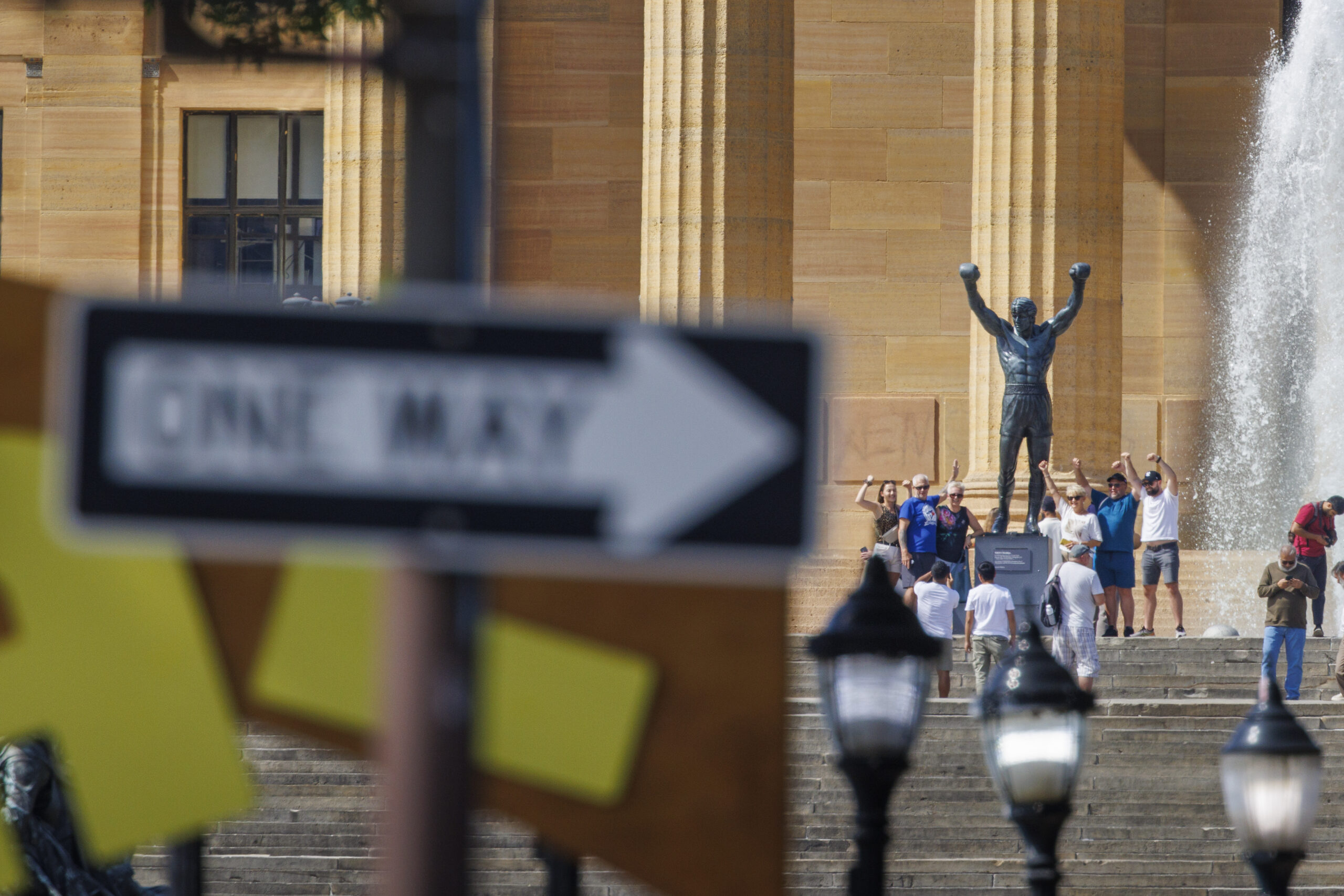
Tourists pose with “Rocky” statue on the steps of the Philadelphia Art Museum, Thursday, September 11, 2025.
Ongoing financial struggles
Over the last several years, the nearly 150-year-old museum has operated with a persistent deficit.
In 2025, that number was forecast as around $2 million on a budget of $62 million. The fiscal year ending June 30, 2023, was the museum’s last period with no deficit. Suda began her tenure as director and CEO in September 2022.
Attendance has not rebounded to pre-pandemic levels. As of Nov. 30, the museum was still falling short of its goal for the fiscal year, clocking 266,282 visitors against a to-date goal of 306,750. Its total goal for the fiscal year — which goes through June 30 — is 731,000. (All of these numbers include not just visitors, but also school groups and people attending special events.)
And even that goal is a considerable downgrade from previous ambitions. A decade ago, the museum in its strategic plan stated the goal of increasing attendance to a million visitors per year within five years.
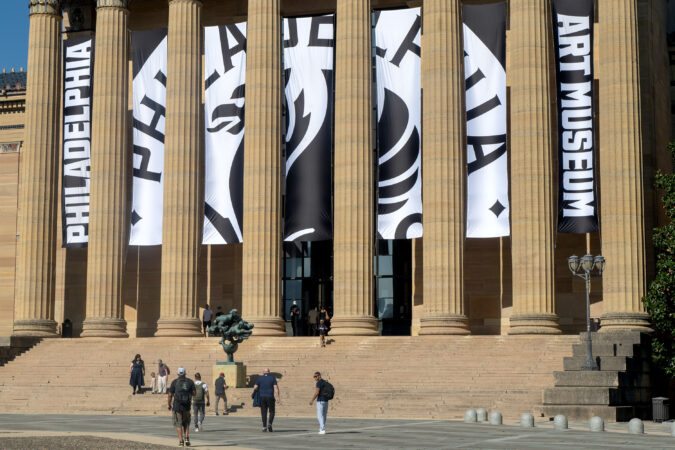
The museum’s widely panned rebrand and name change in October has proven divisive externally and internally. The campaign unveiled a new logo and changed the name of the institution from Philadelphia Museum of Art to Philadelphia Art Museum. Its cost totaled more than $1 million, according to two sources familiar with the details who spoke on the condition of not being named. Leaders hoped the rebrand would drive up attendance and cut down current operating deficits; the impact remains to be seen.
Suda’s lawsuit, staff worry, could worsen the financial outlook.
“We’re already broke as an institution. We could have a messy lawsuit that really takes a lot of funding away,” said the longtime staffer.
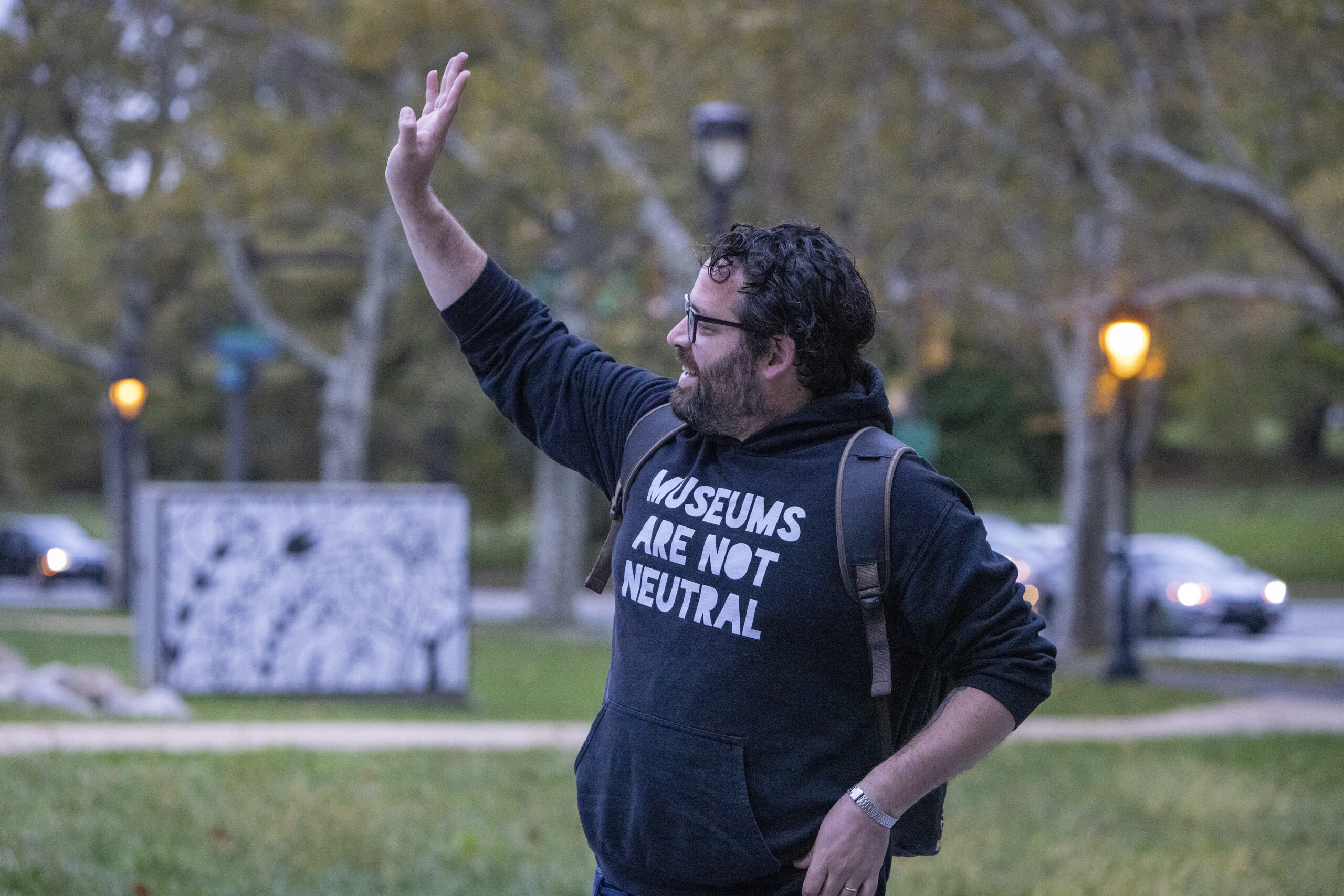
Adam Rizzo, former president of the Art Museum union, an affiliate of AFSCME DC47, waving to a honking supporter on the morning museum employees returned to work after a strike in 2022.
A new contract ratified in July 2025 ensured 3% annual pay raises and increased parental leave from four weeks to eight. But a number of grievances remain unresolved. The PMA Union, part of AFSCME Local 397, which represents Philadelphia culture workers, did not comment for this story.
After their boss was fired earlier this year, a staffer said, they were expected to take on extra responsibilities, with the promise of an hourly wage increase. Eight months later, the employee has not received that compensation and has been working with the union to address the problem.
“What they would rather do is have me go to the union, grieve it, and get the lawyers involved, and that way they can drag it out for another like six to eight months and not have to pay me,” the staffer said. “But they would still have to pay me all the back pay. It’s just them dragging their feet and penalizing people. To be honest, if they get me the higher end of [the raise], it’s only 90 cents extra.”
A museum spokesperson could not respond to this claim, deeming it “a personnel matter.”
Several other staffers have had similar experiences. Under the new leadership, they hope to have these disputes resolved amicably without the need of a grievance process.
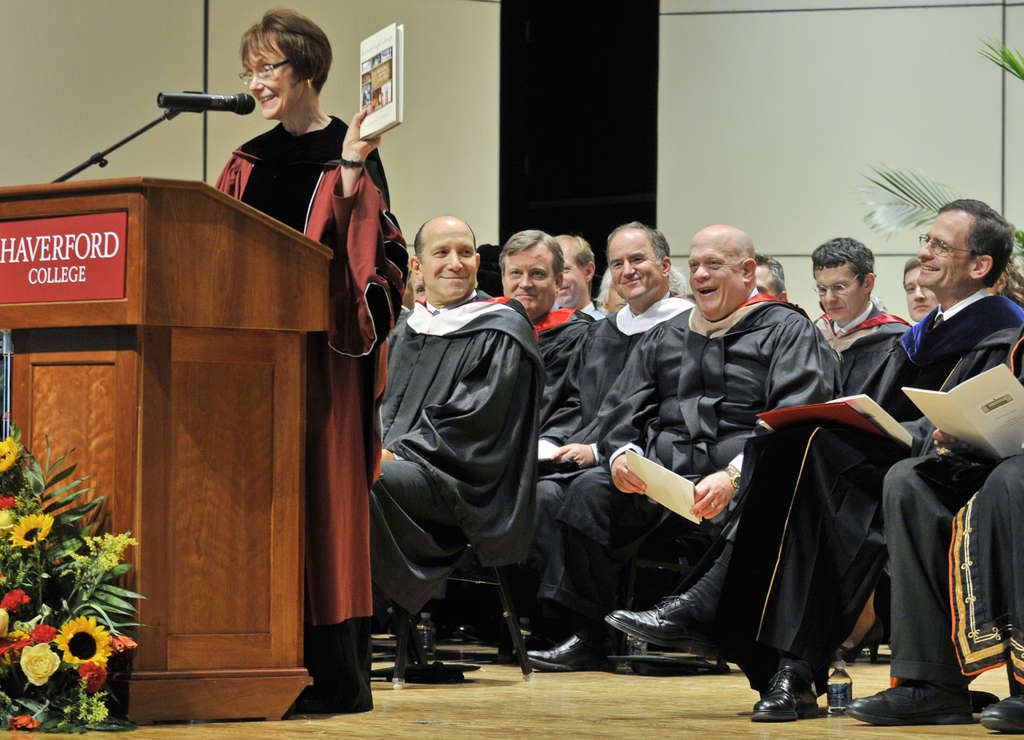
A 2013 photo of then-Swarthmore College president Rebecca Chopp showing off a copy of “Remaking College” at the inauguration of president Daniel H. Weiss at Haverford College, who is now director and CEO of the Philadelphia Art Museum.
What comes next
Weiss declined to be interviewed about specifics of his tasks and priorities, but the museum released a general statement:
“Daniel Weiss was appointed for his extensive leadership experience at major educational and cultural institutions. He began his tenure only weeks ago, and he is focused on learning the nuances of the museum’s ongoing operations regarding its programming, education initiatives, fundraising, and strategic planning. Mr. Weiss is currently working with senior staff to review key priorities and will address updates in the new year.”
Amid the leadership crisis and transition, staff has been kept mostly in the dark with little communication. The staffer seeking a raise shared that during the interim they received invitations for hot chocolate and parfait socials from human resources.
“It’s what the senior management do. That’s their usual MO, like, ‘Oh, well, have a cupcake,’” they said. “They treat us all like children, or like we’re all dumb. It’s pretty insulting.”
Weiss officially began his tenure on Dec. 1 but held an all-staff meeting before Thanksgiving. One staffer who attended said Weiss “said all the right things” so they are feeling “cautiously optimistic.”
“Everything he’s doing, he’s doing with such integrity. It’s heartwarming,” said a member of the curatorial affairs division.
But, they cautioned, “he’s going to lose people’s optimism if he doesn’t make any moves soon.”
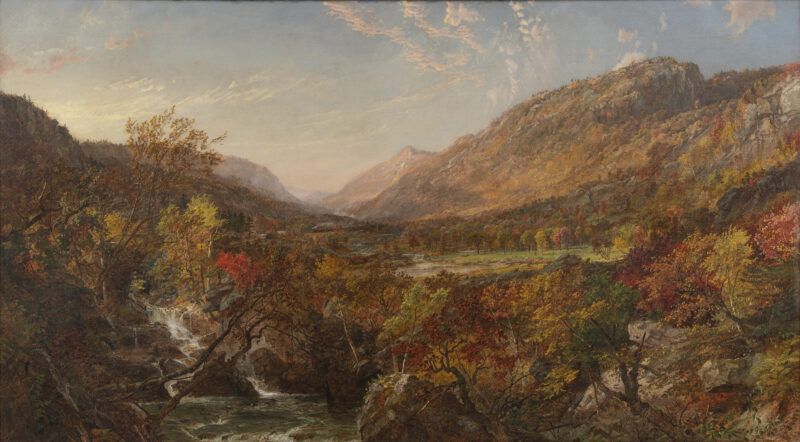
Back in September 1873, the New York Herald announced that the Hudson River School painter Jasper Francis Cropsey had a new painting. Autumn in the Ramapo Valley, Erie Railway, which would be open to public viewing for “only a day or two longer” at the Wall Street office of Charles Day, the article said.
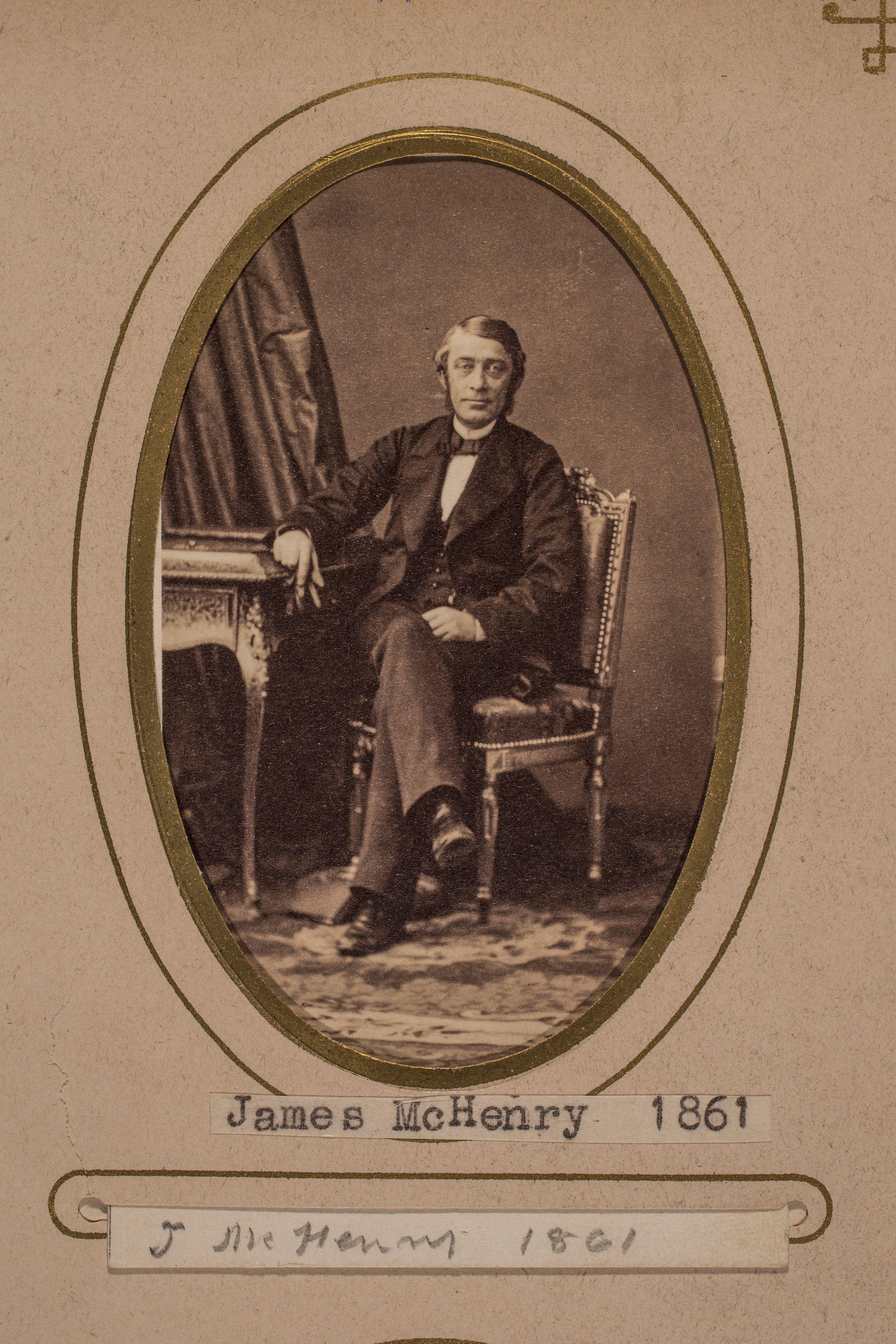
The painting was commissioned by investor James McHenry, who, with Day, was director of Erie Railway. McHenry, who had been a director of the Atlantic and Great Western Railway before that, had his eye set on the Erie Railway, which was founded in 1832.
In 1872, in what is best described as a corporate coup, McHenry ousted the railroad magnate Jay Gould and took full control over Erie Railway. In celebration, he commissioned the Cropsey painting, which, after those few days on Wall Street, made its way to McHenry’s home in London and remained in private collections, away from the public eye since.
Until now.
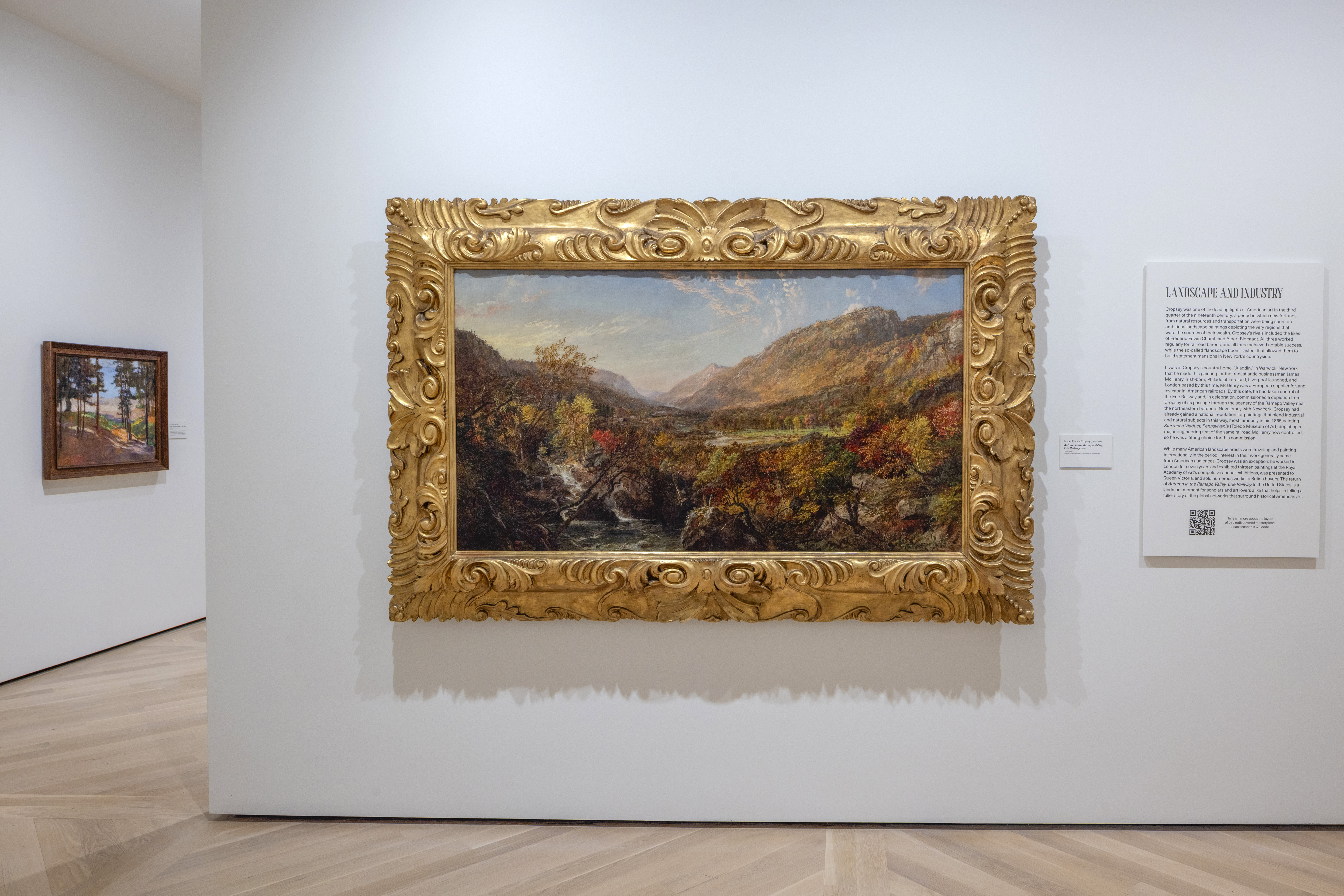
In 2024, philanthropists J. Jeffrey and Ann Marie Fox, who live in Bucks County, bought the painting and brought it back to the United States. It is on view at the Brandywine Museum of Art, some 150 miles away from the original setting of the painting, where flatlands west of the Hudson River meet steep hills near the town of Sloatsburg, N.Y.
Here, it can be seen by an American audience for the first time in 152 years.
The Foxes and American art
J. Jeffrey Fox has built a successful career in finance and education and his wife, Ann Marie, has worked with several nonprofits, often focusing on children with special needs. Together, in 2024, they made a $20 million gift to endow the J. Jeffrey and Ann Marie Fox Graduate School at Pennsylvania State University.
The couple, said Jeffrey Fox, have always been interested in American history.
“We used to collect art as souvenirs. We would go to estate sales and garage sales and sometimes buy a piece of art,” he said. “It wasn’t a collection that was of any significance. So once we got a little bit more money, we wanted to buy one painting that’ll be the centerpiece for the rest of our collection.”
They bought Frederick Childe Hassam’s The Cove, Isles of Shoals (1901) at an auction in 2015.
The discerning eye in the couple has always been Ann Marie’s. She spent 15 years volunteering at the Walters Art Museum in Baltimore, and when the couple lived in Annapolis, Md., she took classes under Matt Herban, a retired professor of art from Ohio State University.
After that first Hassam, the couple wanted a Cropsey. But not just any Cropsey.
“We went to the National Gallery and they had a fabulous Cropsey [Autumn — On the Hudson River (1860)]. It just took our breath away. And we were like, ‘Wow, how could we ever get something that good.’ That’s why it took us this long,” said Ann Marie.
“We were very picky. Every artist has great days, and every artist has OK days. We wanted Cropsey on a great day,” her husband said.
Finding Cropsey on a great day
Last year, the Foxes’ art adviser came to know from a friend in Europe that Autumn in the Ramapo Valley was coming up for auction in London in September. Believing that the painting was best sold to an American buyer, this friend approached the adviser before the painting went under the hammer.
The Foxes had 48 hours to make a decision to buy, never having seen the painting, aided only by a high-quality photograph and a condition report.
Cropsey’s catalog raisonné, put together by the Newington Cropsey Foundation in Hastings-on-Hudson, N.Y., says the painting left the country in September 1873. Documents said the painting has been in an undisclosed buyer’s family since the 1950s.
James McHenry’s carte-de-visite,
1861.
McHenry died in 1891 and “we don’t really know what happened from 1891 to the mid-’50s, but we do know that it never left England,” Jeffrey said. “And we don’t think it was ever shown in England. There are no records that we were able to find.”
Ann Marie said yes, and the couple wrote up a letter of intent.
“We were a bit concerned,” said Jeffrey. Another Cropsey — Richmond Hill in summer of 1862, also owned by McHenry — that came up in an auction in 2013 was deemed a “national treasure” by the U.K. and was not allowed to leave the country.
The clearance for Autumn in Ramapo to leave England took a little over three months.
“The English let that out of England because it was an American artist, and an American scene,” Jeffrey said.
The couple bought the painting in January 2025. Once the artwork arrived in the United States, a restorer found it to be in exceptional condition, exactly as advertised. In March, the conservator finished assessing the painting, and the Foxes traveled to New York to see it in real life.
“It just displayed so much grandeur. I thought it was wonderful,” Anne Marie said. “The autumn colors … just stunning. And the size of it is amazing. The first thing I said when I saw it was, ‘It can’t come to my house. It’s going to tear down my wall.”
Including the frame, the artwork measures 4.75 feet by 7.16 feet.
“Our house isn’t that big, we probably couldn’t get through the door,” Jeffrey said.
The couple couldn’t ship it to their foundation office, either. “We needed a museum that would be willing to show it and buy into the story, because it’s a phenomenal story,” Jeffrey said.
The “Cropsey, Wyeth, and the American Landscape Tradition” exhibition runs through May 31 at the Brandywine Museum of Art.
The painting and the painter
It’s easy to miss the “Erie Railway” part in Autumn in the Ramapo Valley, Erie Railway. Cropsey paints an idyllic fall scene with the Ramapo Valley bathed in yellow, red, and, orange foliage. Bits of green peep out, the sky is clear and a light blue, a waterfall flows gently on the left, the Ramapo River sits still.
The smoke-billowing train chugs through the valley in the distance, but in the center of the painting. Black rails of the railway bridge run parallel to the river and disappear into the leaves.
The setting of the painting falls between what is New York’s Orange and Rockland County, on the western side of the Hudson River, and north of Suffern.
“This painting … really helps in telling a fuller story of the history of American art, and particularly, this brief moment, in the third quarter of the 19th century, when huge sums were being spent on huge paintings,” said William L. Coleman, curator at the Wyeth Foundation and director of the Andrew & Betsy Wyeth Study Center.
“This is part of a larger story with artists like Frederic Church, Albert Bierstadt, and Thomas Moran.”
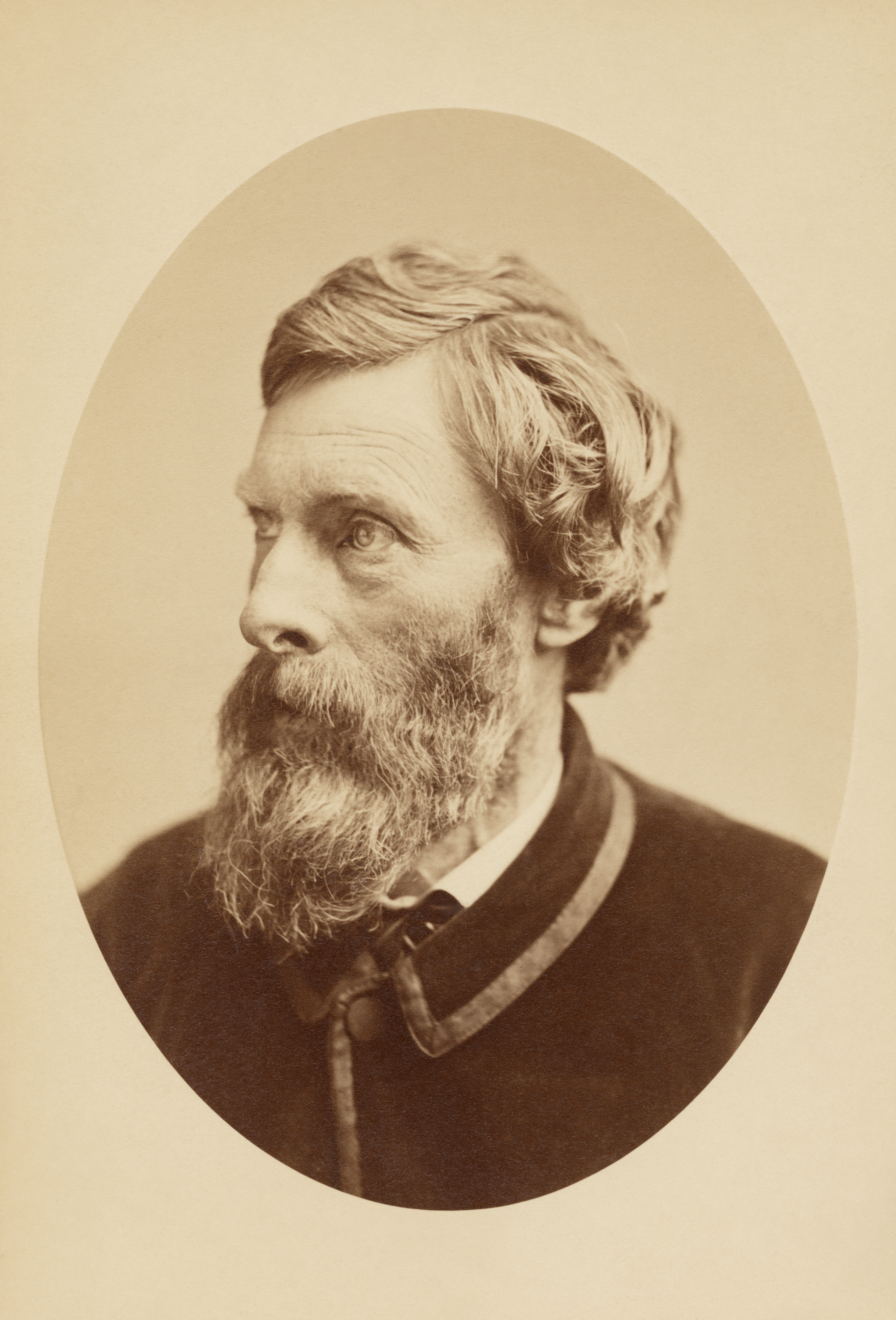
Jasper Francis Cropsey by Napoleon Sarony, circa 1870.
Cropsey, an architect who had designed several railway stations himself, was part of a line of artists who “engaged with the new fortunes being made from the transportation industry, making images of new railroads traveling through the landscapes,” Coleman said.
The artists enjoyed generous patronage and lived well. Cropsey lived in a mansion he built, called Aladdin, less than 10 miles away from the site of the painting. Here he built himself a studio that doubled as a gallery and art marketplace.
The Philadelphia story
Cropsey’s patron James McHenry was born in Ireland in 1817 and was raised in Philadelphia. He moved back to England, living primarily in London, where he made a fortune raising money and investing it in developing railways in America.
His sister remained in Philadelphia until her death.
Jeffrey Fox calls McHenry “notorious,” adding that he often worked against other equally infamous “robber barons” like Cornelius Vanderbilt and Gould.
“He paid $25,000 on a Bierstadt painting in 1865, so he was quite an art collector himself,” Jeffrey said. McHenry, who already owned Richmond Hill in Summerof 1862, perhaps had gotten acquainted with Cropsey when the artist visited England in 1856.
Cropsey had already made a name for himself painting Starrucca Viaduct, Pennsylvania (1865) —where, too, a distant train almost merges into the green slopes of the mountain behind it — when McHenry wanted an artist to commemorate his pushing Gould out of the Erie Railroad directorship in 1873.
“He had already gotten a national reputation for painting part of this exact railroad, and so James McHenry went to the railroad guy,” said Coleman, “and commissioned Autumn in Ramapo.”
Artists like Bierstadt and Sanford Robinson Gifford were also working on similar railroad commissions at the time.
“Most of their stock and trade are images that make use of the aesthetic value of the sublime, the power of the natural world against the small scale of human existence. So they give us that feeling of awe, of wonder,” Coleman said.
Landscape paintings, he said, “tell stories about belonging, about ownership, about your place in a wider society. … And they often risk being underestimated. These are pleasant, old pictures that we see on calendars and postage stamps, but they have a lot to tell us about how we became the nation we are today.”
The model train at Brandywine Museum’s holiday showcase in 2018.
An irrelevant cost
At Brandywine, Cropsey’s train speaks to the museum’s beloved holiday train display, posing questions of tradition and modernity as the nation enters its 250th year.
It will stay at the museum through May and then travel to the Dixon Museum in Memphis, Tenn. Then it heads to the Seed Art Museum in Louisville, Ky.;, Rockwell Museum in Corning, N.Y,; University of Georgia Museum of Art in Athens, Ga.; and the Newington Cropsey Foundation.
The Foxes wanted this piece of American history to be witnessed by Americans.
What they paid for it, Jeffrey Fox said, is irrelevant.
“If you put a value to it, that’s what you’re going to talk about, as opposed to the painting,” he said. “We’re a foundation and at the end of the day, we’re not going to sell it. So it doesn’t matter what we paid.”
“Cropsey, Wyeth, and the American Landscape Tradition,” continues through May 31 at the Brandywine Museum of Art, U.S. Route 1 at Hoffmans Mill Road in Chadds Ford, Chester County. Information: brandywine.org or 610-388-2700.
This article has been updated with the correct year of James McHenry gaining control of the Erie Railway. It was 1872.
Like much on the mind of the general public, climate change is now in the voices of Opera Philadelphia in The Seasons, an ambitious opera/dance expansion of Vivaldi’s The Four Seasons warning of a time when seasons cease to exist.
Sounds like a virtuous West Coast “granola opera”? Not quite. But the Friday opening at Kimmel Center’s Perelman Theater wasn’t as effective as it wanted to be.
The piece’s secondary purpose as a showcase for Vivaldi’s music actually became primary, going beyond the composer’s popular four-violin concertos, collectively known as The Four Seasons, and exploring some great, rarely heard arias from his many operas.
And luckily so.
Bass John Mburu delivers the forecast as the Cosmic Weatherman in “The Seasons,” where the seasons are completely out of order.
Vivaldi’s innately agitated rhythms convey the urgency of climate change in a much more visceral manner than the often on-the-nose libretto by playwright Sarah Ruhl.
That’s a surprising reversal of artistic priorities considering that her 2003 play Eurydice is one of the best works of its decade (especially as seen several years ago, across the street at the Wilma Theater).
Vivaldi wrote 50 or so operas in the capitals of 18th-century Europe, and the pieces from them, employed by The Seasons, were often dark-night-of-the-soul arias that reveal depths not apparent in the composer’s short-breathed concertos.
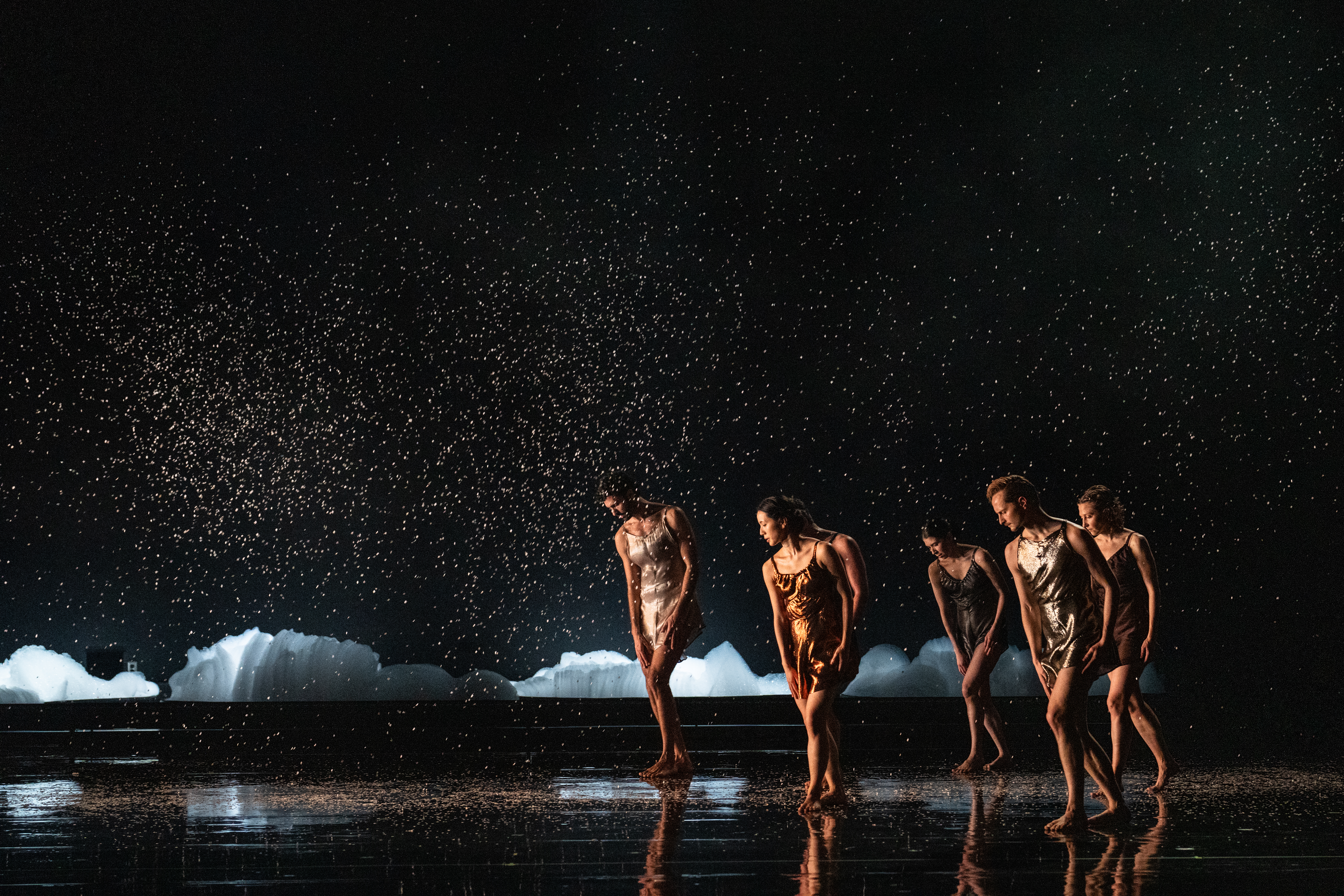
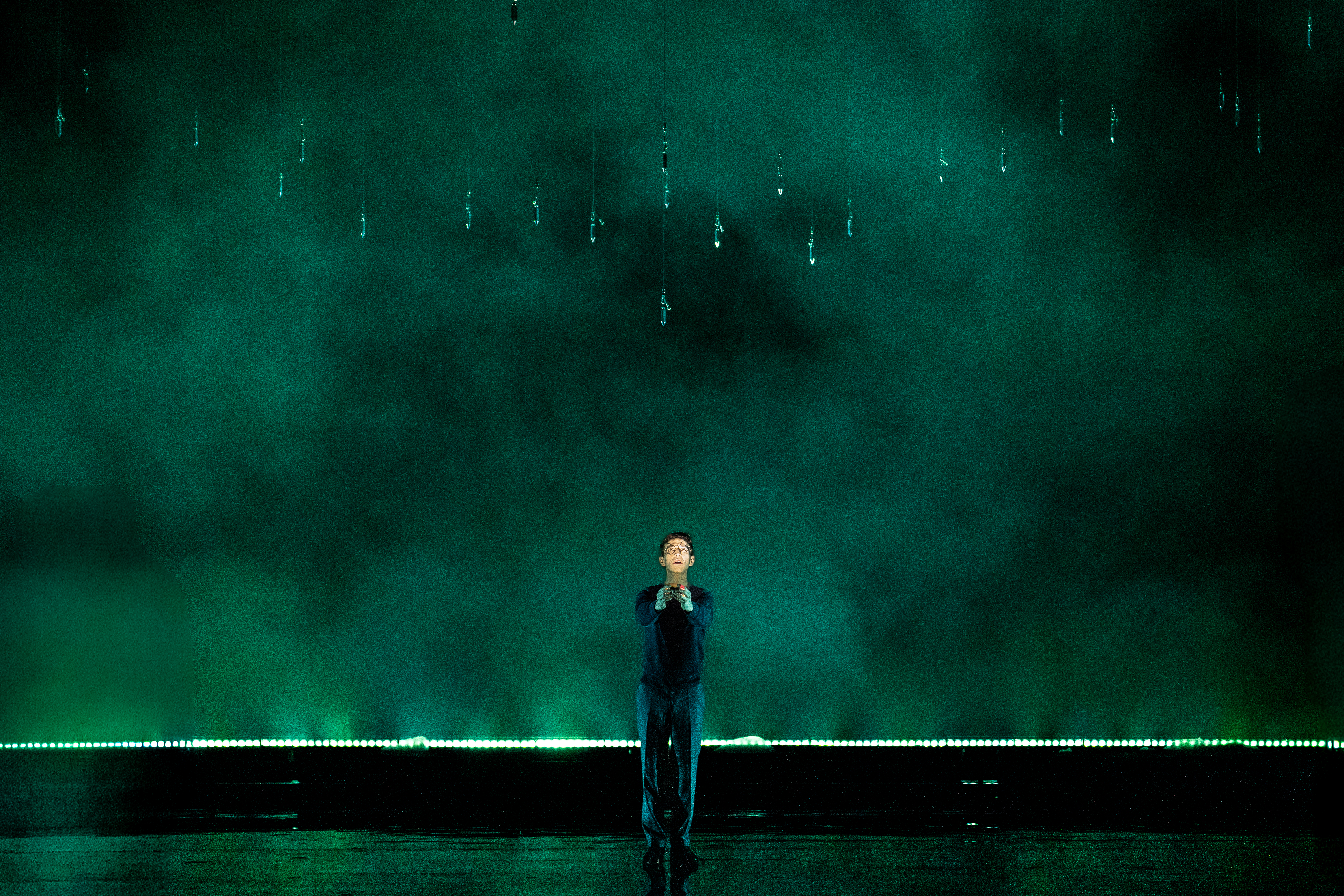
Dancers Marc Crousillat, Stephanie Terasaki, Brian Lawson, Taylor LaBruzzo, Anson Zwingleberg, and Maggie Cloud in the Philadelphia premiere of “The Seasons,” directed by Zack Winokur and choreographed by Pam Tanowitz
These operas have been major discoveries over the last few decades in Europe, and Opera Philadelphia’s presentation constitutes a significant addition to the local operatic culture.
Fitting arias into a new plot was fairly common in 18th-century opera, though The Seasons, conceptualized by Ruhl and Opera Philadelphia chief Anthony Roth Costanzo, is best taken in by those who have missed climate-change news of fish frying in warm ocean water and frozen iguanas falling out of unseasonably cold Florida trees.
The Seasons has somebody resembling a TV weatherman (bass John Mburu) appearing periodically, lecturing the audience to not ignore or forget the dire planetwide shifts in weather (as if we could!).
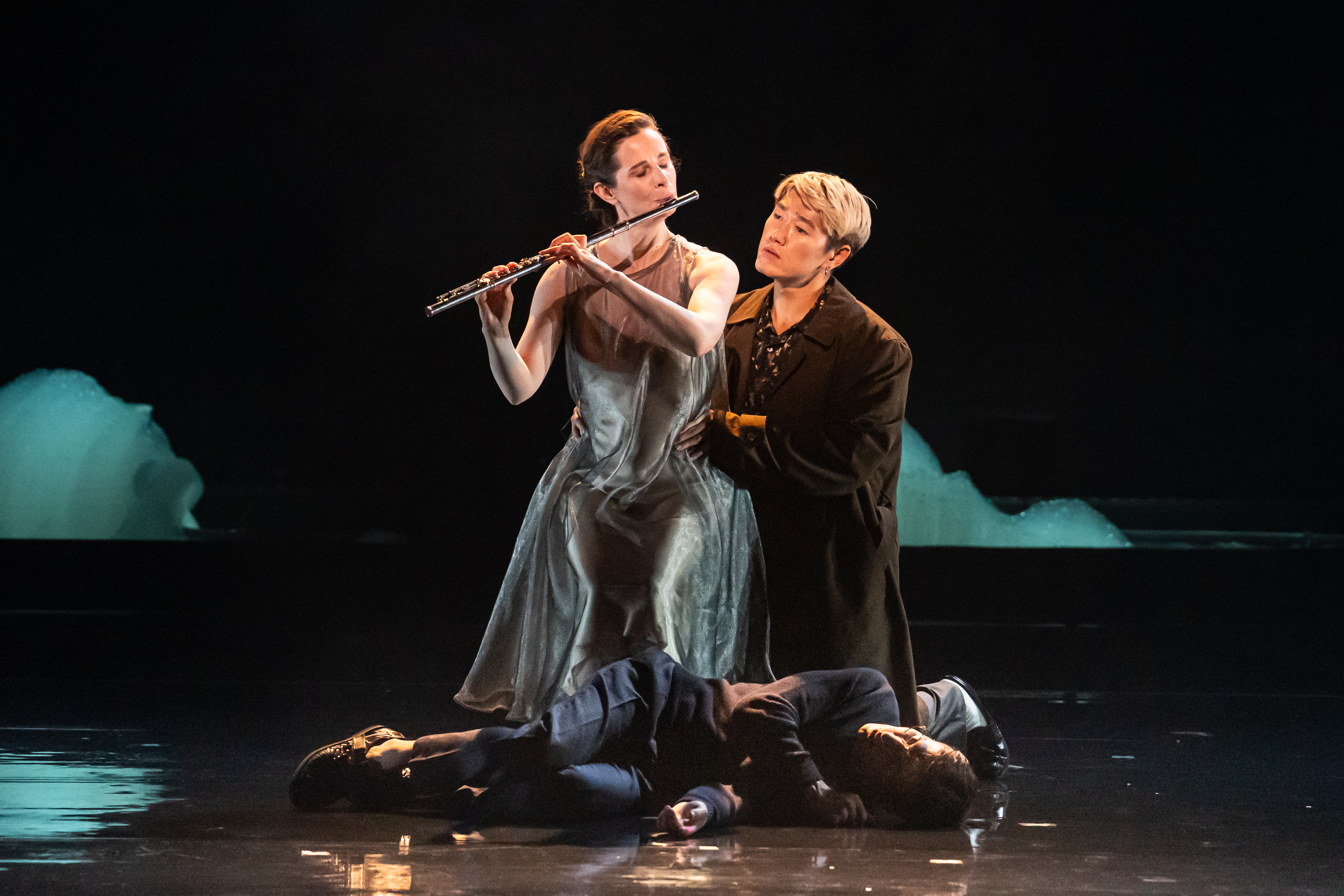
Flute Soloist Emi Ferguson with Kangmin Justin Kim and Anthony Roth Costanzo in the Philadelphia premiere of “The Seasons.”
Other characters are sociological touchstones: A poet, a painter, an actress-turned-farmer, a performance artist, and a choreographer (none with specific names) share the stage, some having troubled same-sex romances — though the purpose of their artistic affiliations had little consequence.
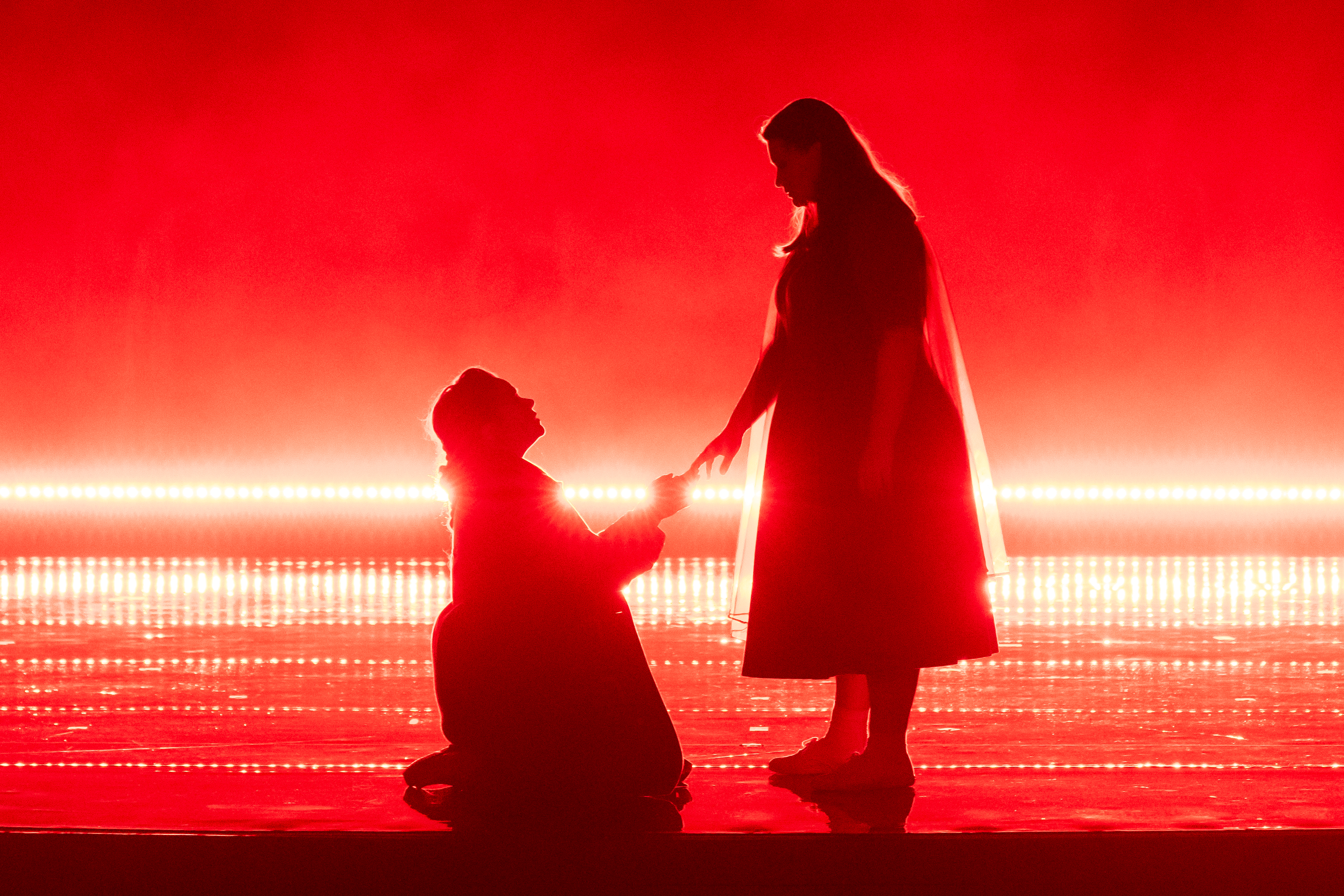
Vivaldi’s Four Seasons was often used as dance interludes in choreography by Pam Tanowitz. Under the overall direction of Zack Winokur, various screens and lighting effect conspired to convey stars, wildfire, and aurora borealis — as characters become climate refugees and, presumably, move north.
It’s not a spoiler to say that the opera ends with a hope-inspiring children’s chorus (Commonwealth Youth Choir and Philadelphia Youth Choral Ensemble) that has an unexpectedly visceral impact. It’s a reminder that their generation is tasked with cleaning up the ecological mess made by their elders.
Abigail Raiford (The Farmer) and Megan Moore (The Choreographer) during a fire.
Amid isolated strong points, The Seasons also showed signs of quick assemblage.
Besides having English lyrics that could certainty be improved with more revision time, the different elements didn’t always flow together comfortably.
The Act I choreography that had the six dancers gracefully balletic from the waist up but appropriately earthy from the waist down tended to slip into and out of obscurity in Act II.
One has to respect the effort put into the production, but the singers’ performances (in arias from Tito Manlio, Giustino, and many others) saved the day — supported by excellent orchestra playing. Conductor Corrado Rovaris instilled a proper baroque style and manner that unlocked the music’s considerable value.
All of the singers had fairly adept coloratura abilities that are necessary with baroque-period opera, including Mburu, who used the vocal passage work in a suitably reckless fashion conveying his character’s distress.
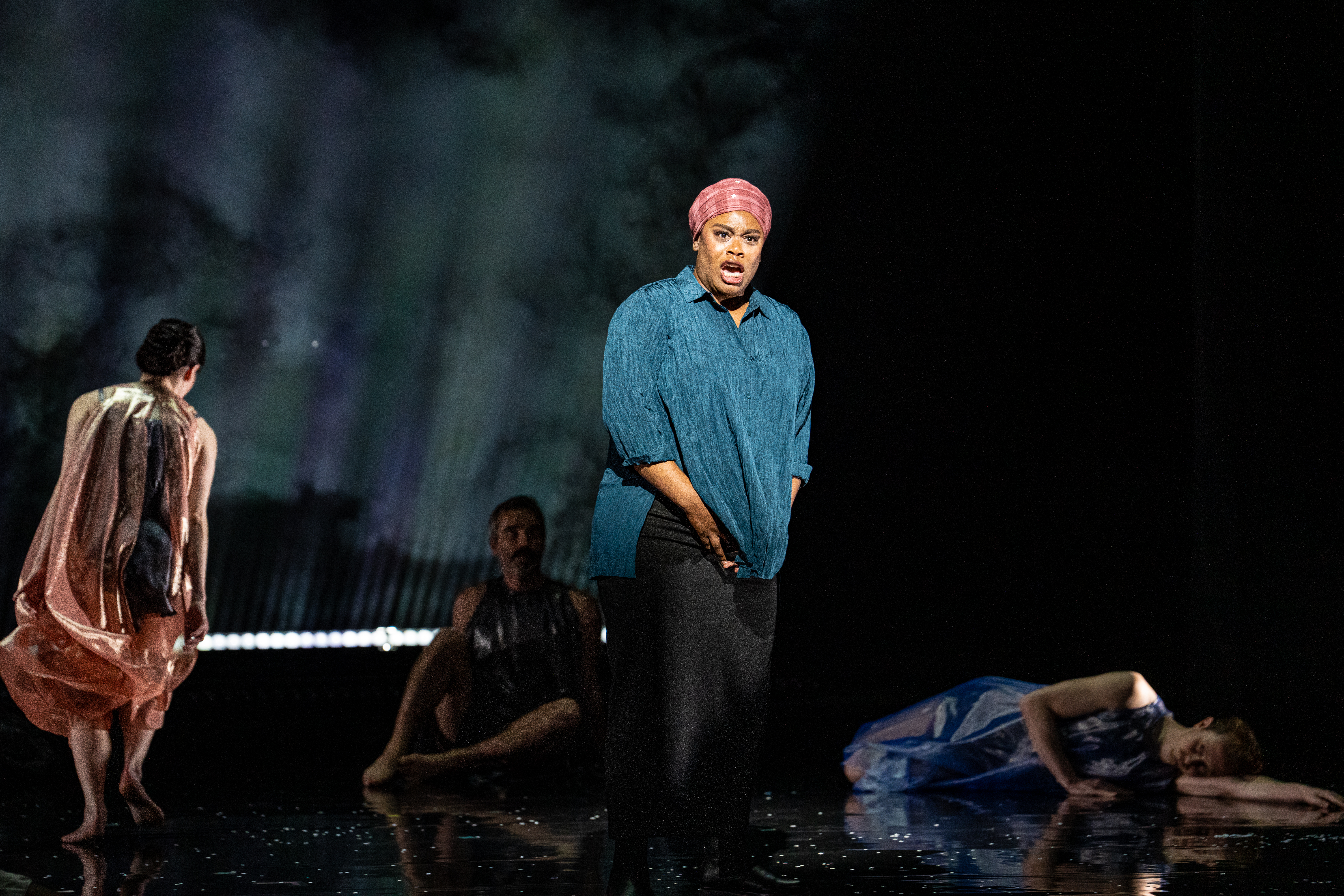
Soprano Whitney Morrison, the Performance Artist, sings about how she used to be an activist upon arriving at an artist retreat in “The Seasons.”
Kangmin Justin Kim (the Painter), Whitney Morrison (the Performance Artist), Abigail Raiford (the Farmer), and Megan Moore (the Choreographer) all had star-turn moments, some gathering momentum in Act II, others audibly tiring as the opera went on.
Costanzo couldn’t help being a dominant presence, not just because he’s a key figure in the opera’s conception (as well as Opera Philadelphia as a whole) but because he is such an accomplished actor and singer.
Countertenor Anthony Roth Costanzo is the Poet in “The Seasons,” based on Vivaldi’s music and a new libretto by playwright Sarah Ruhl.
At times, he actually made the lesser moments in the character dialogue work. He still has one of the most natural and pleasing countertenor voices currently before the public, plus a fine legato line and telling use of words. It’s great to have him at the helm of Opera Philadelphia, but it’s greater just to hear him.
Repeat performances of “The Seasons” are Dec. 20, 8 p.m., and Dec. 21, 2 p.m., at Perelman Theater, 300 S Broad St. The shows are currently sold out. operaphila.org
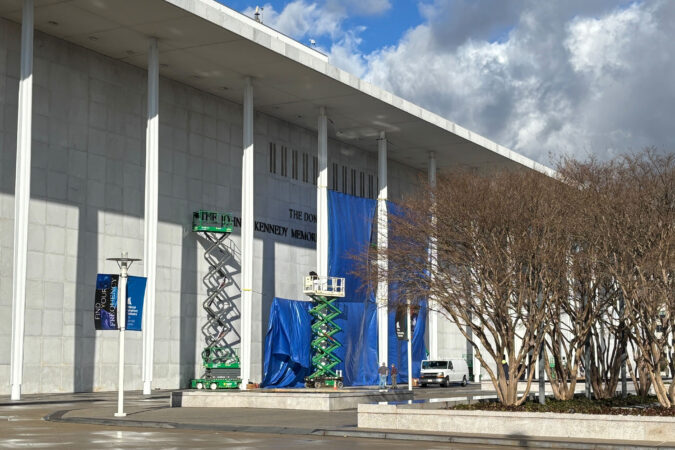
The Kennedy Center began updating signage on the exterior of the building Friday morning, a day after its board voted to rename the institution “The Donald J. Trump and The John F. Kennedy Memorial Center for the Performing Arts.”
A blue tarp was stretched across a portion of the building as a small team on scaffolding started the work. Loud drilling could be heard nearby. Inside the building, large letters spelling “Trump” could be seen on the floor of the entry hall, according to a photograph obtained by the Washington Post. Signage elsewhere around the exterior of the institution remained unchanged.
Thursday’s vote by the board of trustees marked a dramatic change to a building established as a “living memorial” to a slain president. The announcement drew swift condemnation from Kennedy family members and Democratic leaders, who called it illegal and said only Congress could change the center’s name.
For months, Trump had repeatedly joked about the name change, including at the Kennedy Center Honors earlier this month. The center has seen a year of upheaval since Trump overhauled the institution in February, sparking a wave of firings and resignations. Ticket sales have fallen sharply, according to an October analysis by The Post, and many artists have said they will no longer perform there. The new leadership has boasted of hefty fundraising tallies and has begun to ramp up bookings for Christian and right-wing events.
“The Trump Kennedy Center shows a bipartisan commitment to the Arts,” Kennedy Center President Richard Grenell wrote Thursday on X.Officials did not cite an authority for the board’s ability to change the institution’s name.
The current board consists of loyalists to Trump following a purge of trustees appointed by former President Joe Biden. They met Thursday in Palm Beach, Florida.
This is not the only building to which Trump’s name has been added in recent weeks in Washington. Earlier this month, his administration renamed the building that houses the U.S. Institute of Peace downtown, emblazoning “Donald J. Trump” in several areas of the structure.
“Boy, that is beautiful,” Trump said at the time, thanking Secretary of State Marco Rubio for putting his name on the building.
It’s one of the paradoxes of Philadelphia’s 21st-century residential building boom. The more rowhouses and apartments that get built here, the more they look alike.
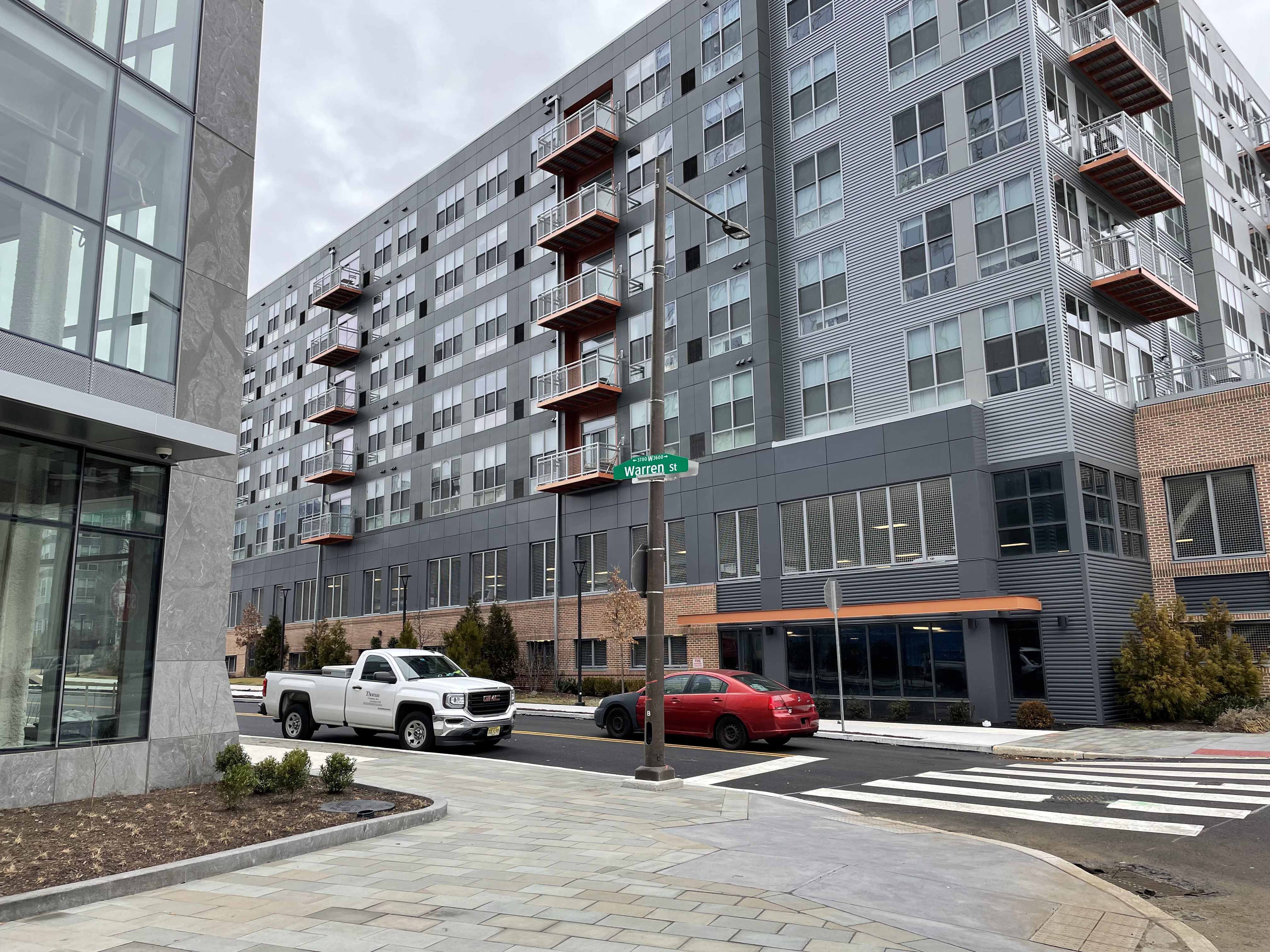
The streets of Fishtown and Graduate Hospital and Spruce Hill are now awash in interchangeable blocky structures, all dressed in the same dreary gray clothing, their aluminum panels shrink-wrapped around the exterior like a sheet of graph paper.
Instead of providing the kind of fine details that enlivened earlier generations of buildings, their architects try to distract us with patches of color and cheap trim.
The look is derisively known as fast-casual architecture, McUrbanism, or developer modern. No one likes these buildings, not even, I suspect, the architects who stamp the drawings. But because they are cheap and easy to build, the no-frills grids have emerged as a developer standard across America.
As bad as they might look in newer cities, their flat, lifeless facades are especially jarring in Philadelphia, where even humble rowhouses are animated by varied textures of brick and recessed windows.
While there’s little chance that developers will start building them like they used to, a few Philadelphia architects have thrown a curve into the works. The arch, which traces its origins to Roman times, is making a comeback.
Once you start looking around the city, you can’t help but see contemporary arches and rounded corners everywhere: on metal-clad rowhouses and brick-faced apartment buildings, in restaurant dining rooms and hotel lobbies.
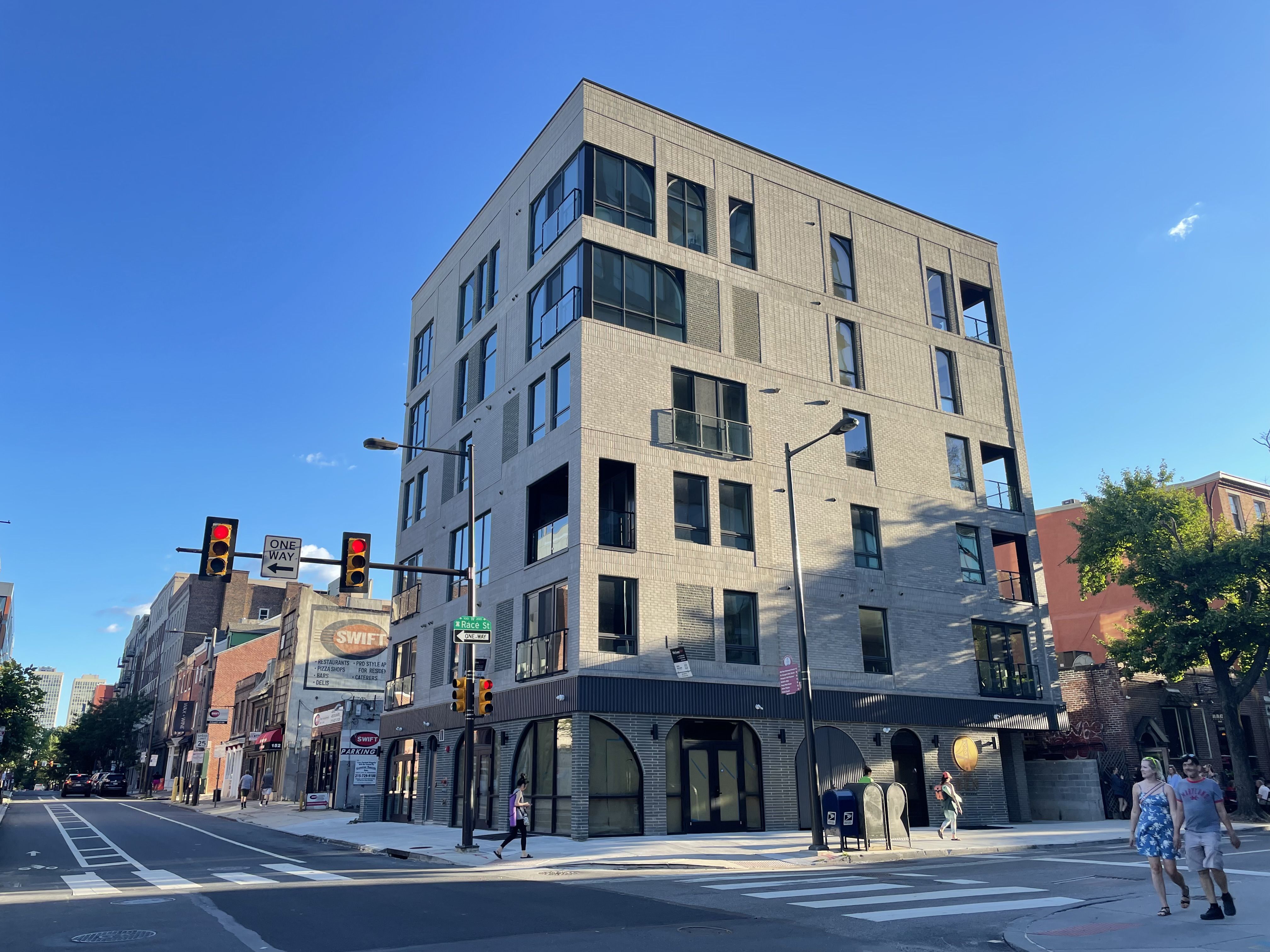
This small apartment building at Second and Race Streets in Old City breaks up the usual grid with arched windows on the ground floor and irregularly spaced windows. Morrissey Design created the facade.
The rise of the arch
To be clear, today’s arches bear only a faint familial resemblance to their brawny predecessors, which come in all sizes and architectural styles, and typically have a large keystone at the apex. Those old masonry arches were workhorses that helped buildings stand up.
But as construction methods advanced in the early 20th century, arches ceased to have a structural purpose. The changes coincided with the rise of modernism, which largely eschewed the form in favor of straight lines, at least until the 1960s, when architects such as Louis Kahn and Robert Venturi — both Philadelphians — began sneaking them back into architecture.
Arches started reappearing on Philadelphia buildings about a decade ago, after Bright Common’s Jeremy Avellino marked the entrance to his Kensington Yards project with an exaggerated arc that seems to be descended from the famous Chestnut Hill house that Venturi designed for his mother. Even though the gesture was also a nod to the arched windows on the 19th-century townhouse next door, Avellino intentionally emphasized his building’s contemporary look by cladding it in metal. He considers his arches as nothing more than a “geometric memory.”
The new-wave arches come from a different place. Although they certainly help architects break free from the oppressive grid, arches help their contemporary designs blend in better with their neighbors.
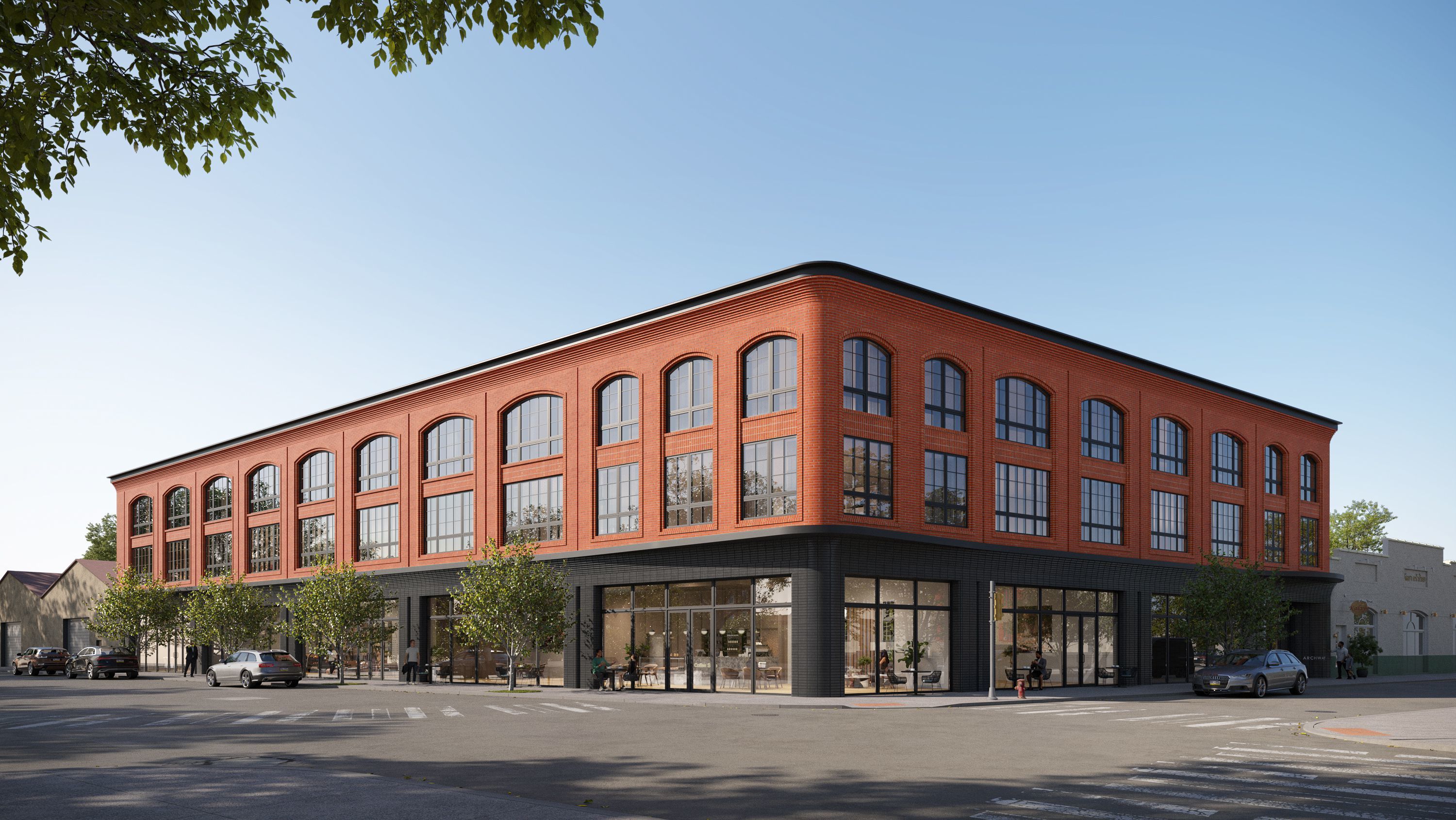
The design for this three-story apartment building at 1716 Frankford Ave. uses shallow, industrial-style arches to enliven the facade. The project, which was designed by Gnome Architects for developer Roland Kassis, was expected to break ground in December.
Eschewing look-alikes
It’s no accident that arches began to proliferate just as brick was enjoying a revival as a building material in Philadelphia. Roland Kassis, a Fishtown developer who is responsible for several buildings with arches on Frankford Avenue and Front Street, says he first began using brick for building facades as a reaction against the poor quality of fast casual architecture.
Even though brick took more time and expertise to install, and ultimately cost slightly more than other materials, he felt it was worth it because it set his projects apart from the competition and signaled quality to potential renters. Later, he added arches.
Most of Kassis’ buildings that feature arches have been designed by Gnome Architects. They include a new mid-rise apartment building and a small hotel that are now under construction on Frankford Avenue.
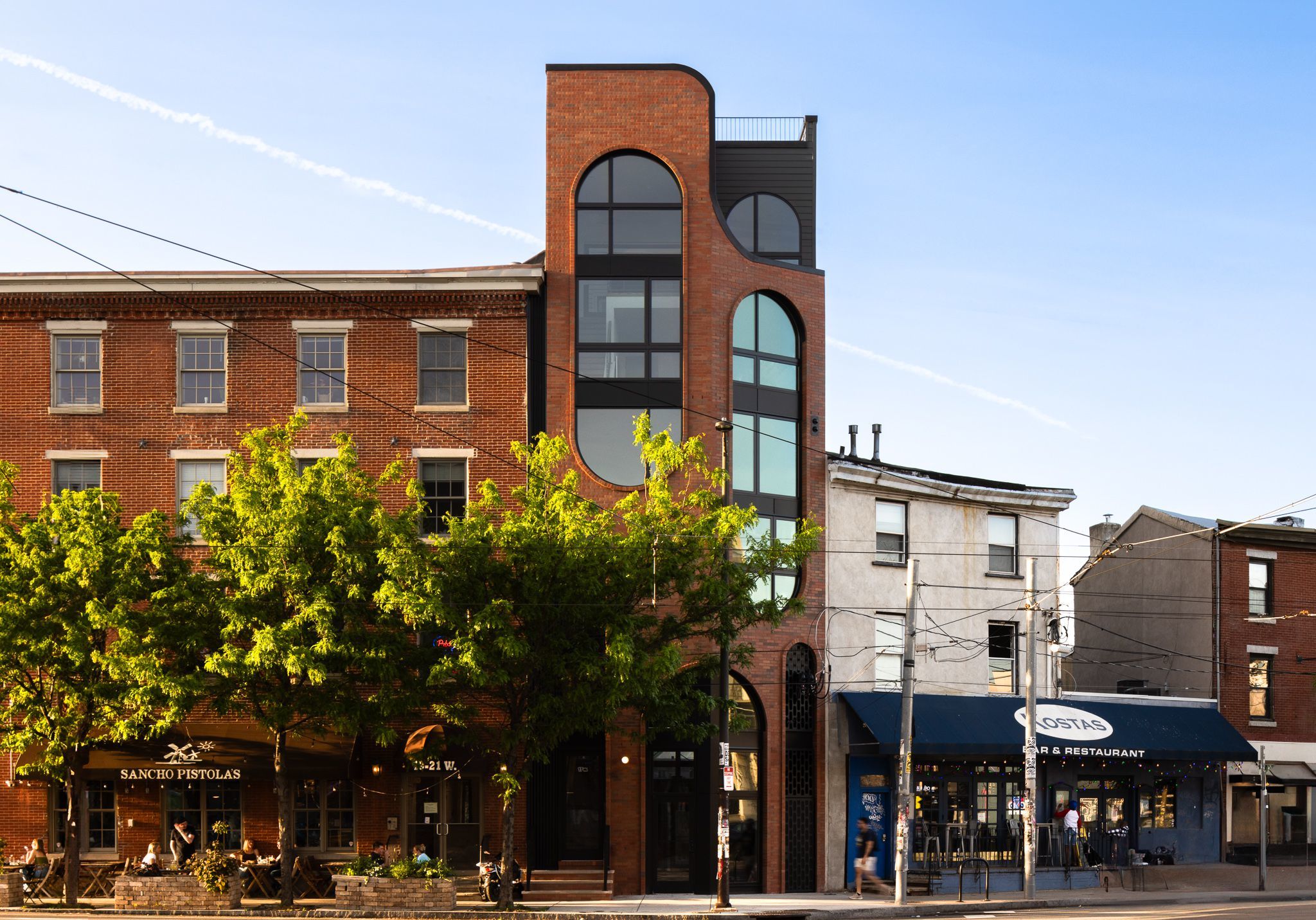
While Gnome’s use of the arches is a way of paying homage to Fishtown’s industrial past, the firm’s most interesting design is less referential. Located at 17 Girard Ave., the skinny, mixed-used building features brick-framed oval windows that float up the facade like elongated soap bubbles. It functions as a sort of urban lighthouse at the entrance to Fishtown.
Gnome’s new three-unit apartment building at 17 Girard Ave. in Fishtown is an exuberant counterpoint to the straight lines of Philadelphia’s traditional brick facades.
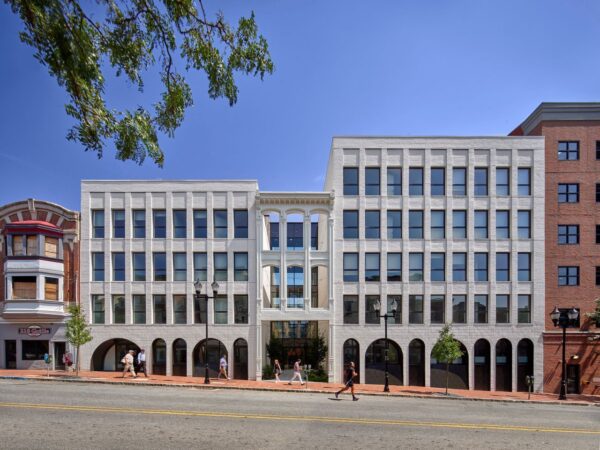
Several other Philadelphia architects have embraced arches in their work for developers, including Digsau, KJO Architecture, and Morrissey Design. What unites their aesthetic is a strong interest in craft. They’re not just pasting factory-made brick panels onto facades; they’re hiring skilled workers from Philadelphia’sbricklayers unionto lay the blocks on site, one at a time.
That kind of craftwork isn’t something architects usually learn in school. To ensure that he gets the arches right, Gnome’s Gabriel Deck signed up for the International Masonry Institute’s training camp, where he tried his hand at using a trowel and spreading mortar. Digsau’s Mark Sanderson, who used a variety of arch types for Wilmington’s Cooper apartments, jokes that “we have the institute on speed dial.”
The institute’s regional director, Casey Weisdock, says she’s noticed an uptick in both the use of brick and modern interpretations of the arch. She attributes brick’s newfound popularity to the Biophilic design movement, which believes natural construction materials are better for people’s health and can improve their moods.
“A brick has a human quality,” she says. “A block fits right into your hand.”
This massive apartment building on Lancaster Avenue, ANOVA uCity Square, typifies the plodding, graph paper-inspired architecture that is sweeping America. It was designed by Lessard Design on the site of the former University City High School, which is now home to life science complex called uCity.
Digsau has a long history of incorporating wood and brick into its projects, yet the firm started adding arches into the mix only a few years ago. Like other architects, Sanderson, one of Digsau’s founders, says he was frustrated that design is increasingly dictated by financial models that result in the mass production of look-alike apartment buildings. Arches were a way of breaking out of that rut.
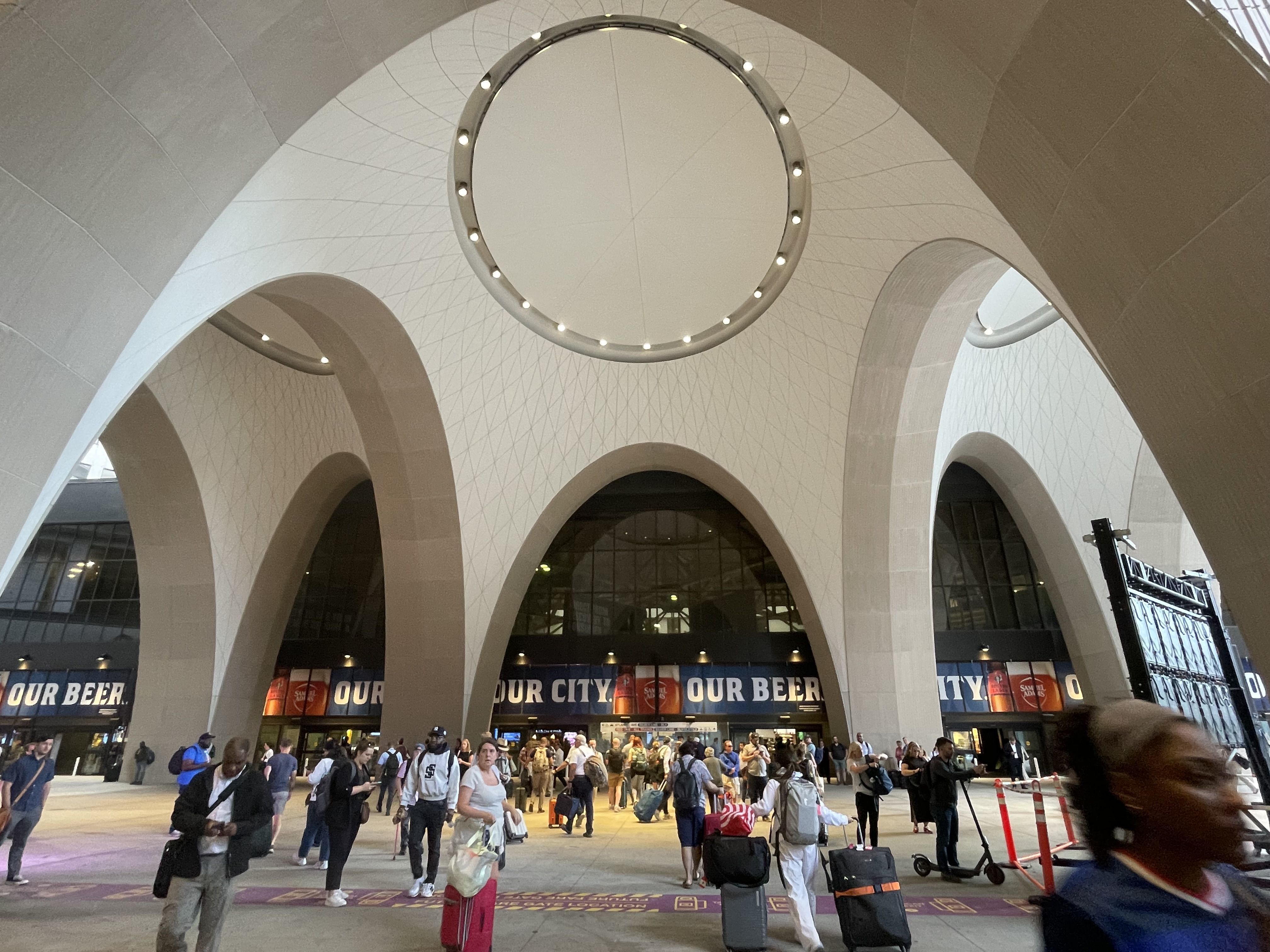
The rebellion against straight lines and slick facades has spread to other big cities, and now even big corporate architects who specialize in skyscrapers are playing with bricks and arches. Pelli Clarke Pelli, which is responsible for designing many of the crystalline towers along the Schuylkill, just dropped a ring of soaring arches into Boston’s newly renovated South Station. (Of course, staying true to type, the firm’s tower, located on top of the station, is still a blue glass ice sculpture.)
Pelli Clarke Pelli inserted these almost parabolic arches into Boston’s newly refurbished South Station.
The urge for curves extends into interior design. Furniture showrooms overflow with tub chairs and sofas with curved backs. Virtually every surface at Enswell, an upscale Center City cocktail lounge designed by Stokes Architecture & Design, bends and flows in some way. The firm is responsible for several rounded counters in Philadelphia’s cafes and was part of the team that created Borromini’s interior arches.
“You hear the words ‘comfy and cozy’ used a lot these days,” and the arch is one way to achieve that, says architect Brian Phillips, the founding principal at ISA. Interestingly, it’s hard to find arches in any of the firm’s work, which relies on textured materials, strategic cutaways, and complex geometry to animate its work. ISA did, however, introduce an arch and some curves for the Frankie’s Summer Club pop-up at the former University of the Arts building.
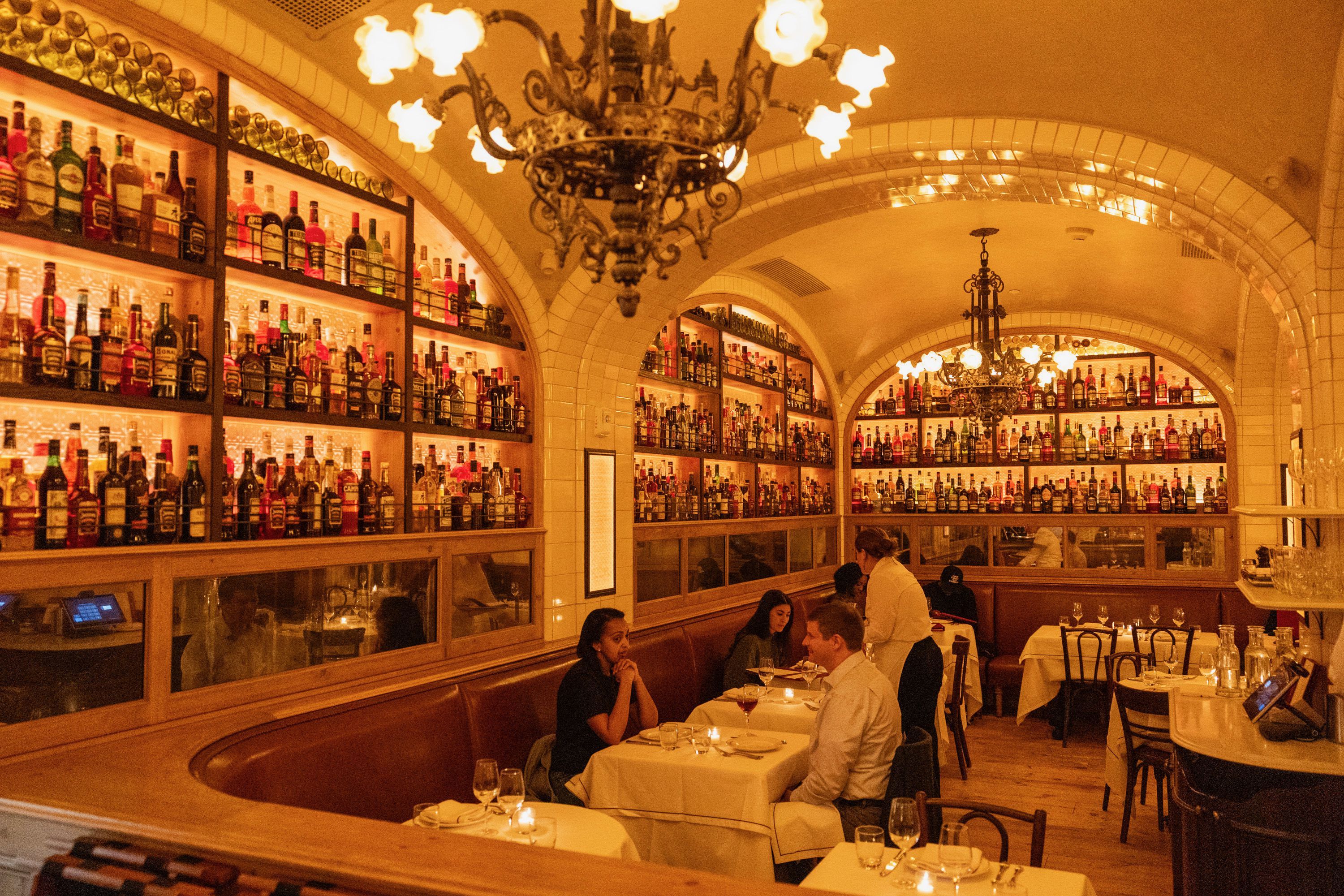
The fashion for arches and curves has also spread to interior design. Stephen Starr’s new Borromini restaurant on Rittenhouse Square — collaboratively designed by Keith McNally, Ian McPheely, and Stokes Architecture & Design — includes a curved banquette and dramatic, tiled arches in the main dining room.
While the arches have allowed architects to fight back against the deadening sameness of Developer Modern, the new style risks becoming its own cliche.
So far, those Philadelphia architects who include arches in their work haven’t embraced the literal historicism of Robert Stern, but neither have they come up with anything as groundbreaking as the exaggerated and ironic forms introduced by Venturi and his partner, Denise Scott Brown. In some cases, the use of arches seems arbitrary — merely decorative, to use the modernist critique. And arches aren’t always well integrated into the composition.
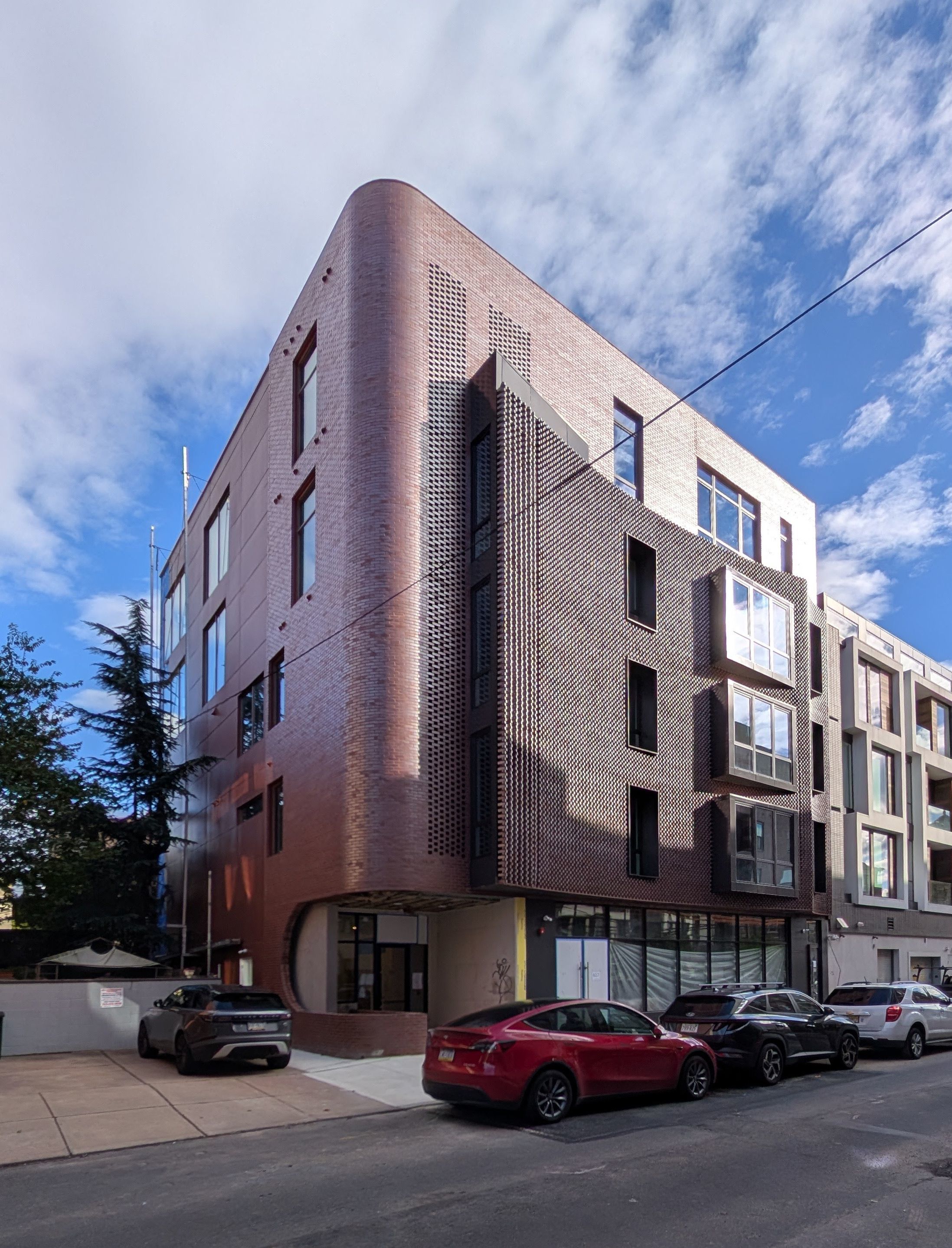
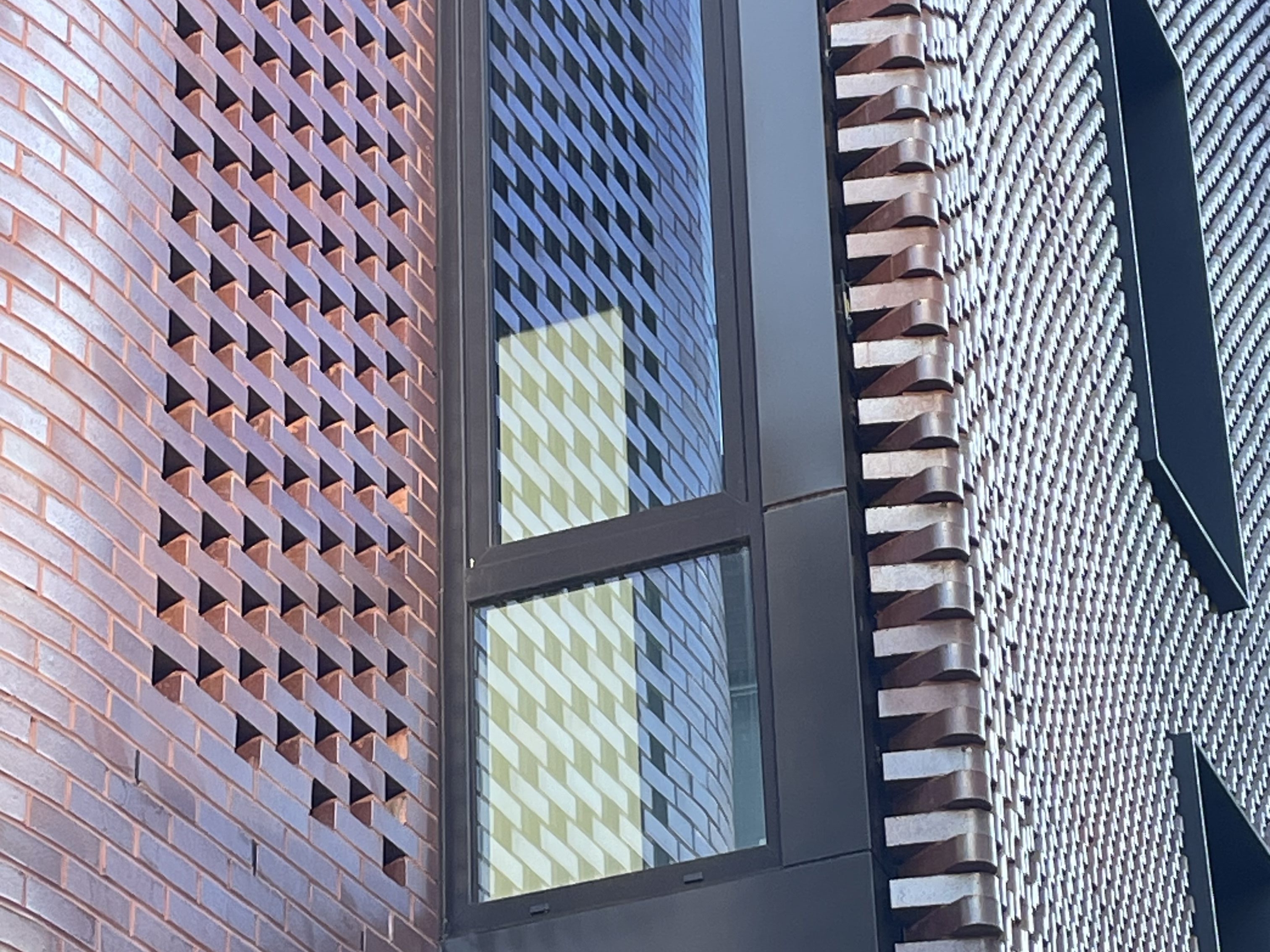
The most satisfying of Philadelphia’s new-wave brick buildings has plenty of curves, but no arches. Bloc24, a small condo building on 24th Street between South and Bainbridge, is a bravura essay in different styles of brickwork.
A curving screen made from bull-nose bricks, laid on the diagonal, sweeps across the facade. Because it protrudes several feet from the surface, it functions as a giant bay window. While it’s a stretch, you could consider the stylish, curved cut-out at the entrance a sideways arch.
While Bloc24, by Moto Designshop, has no arches, it is a bravura essay in brick styles and features plenty of curves. The new condo building is located on 24th Street, between South and Bainbridge.The brickwork on Moto Designshop’s Bloc 24, at 24th and South, is anything but flat.
Bloc24 was designed by Moto Designshop, the firm responsible for the intricate brick chapel at St. Joseph’s University. Moto has made intricate brickwork its signature, and, unlike those designs that use brick as a veneer, every detail of Bloc24 is integrated into the overall concept.
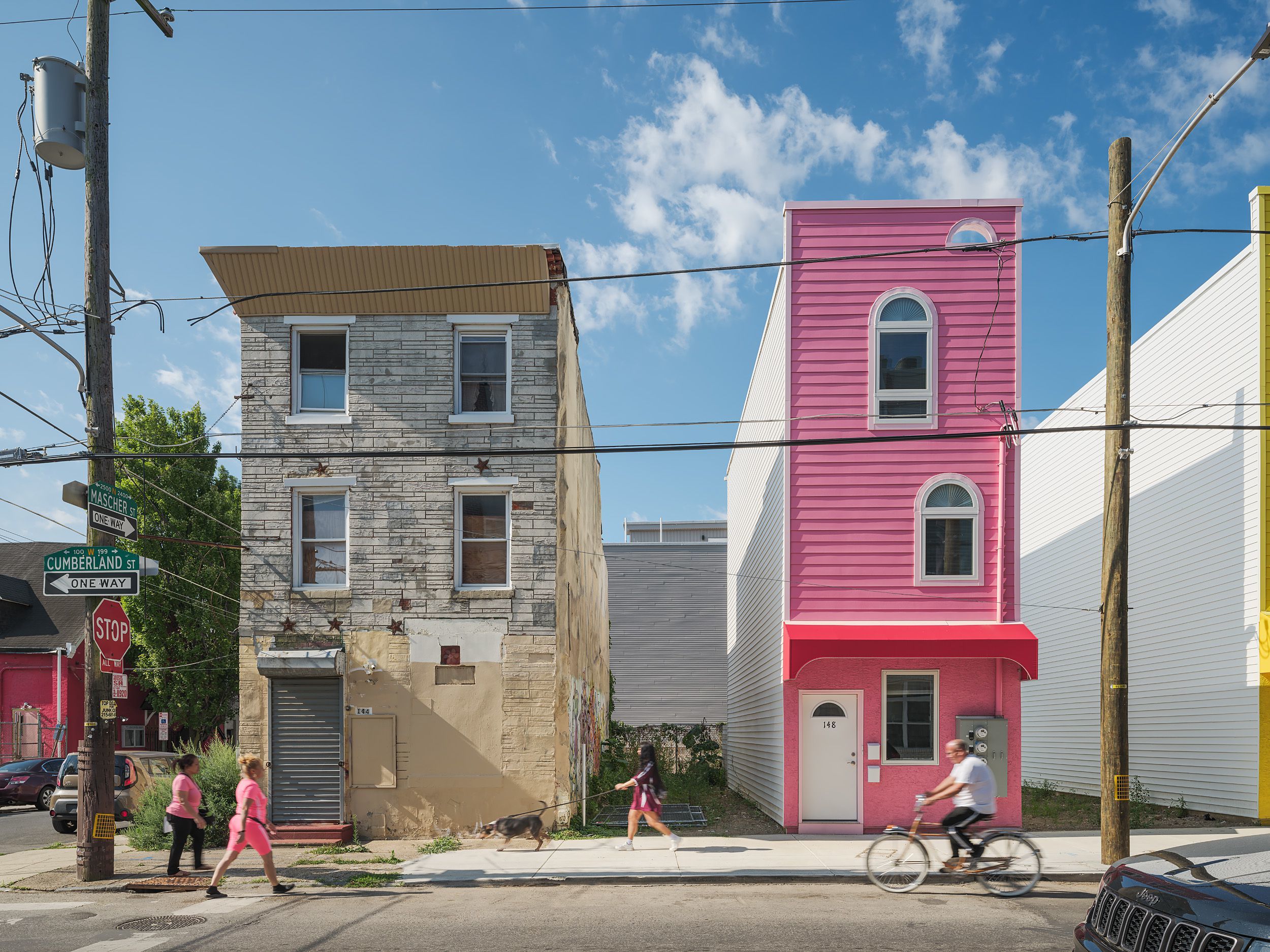
Perhaps the most out-of-the-box use of the arch can be found at Avellino’s Mi Casa houses, a group of rowhouses in tropical colors that he designed as affordable housing for Xiente (formerly the Norris Square Community Alliance). Because the sites are scattered around the neighborhood, often on very narrow lots, he was unable to replicate the standard, double window pattern found on most Philadelphia rowhouses. Instead, he used single arched windows, placed asymmetrically to energize the facades.
There isn’t a single brick in sight, evidence that the arch has come full circle.
Arched windows define this tropical pink house, part of group of affordable houses built on infill sites in the Norris Square neighborhood. Bright Common’s Jeremy Avellino used the arches to energize the narrow facades.
Craig Kellem, 82, of Philadelphia, former talent agent, celebrated TV producer, show developer, writer, longtime script consultant, author, and “comedic genius,” died Monday, Nov. 24, of complications from dementia at Saunders House assisted living in Wynnewood.
Born in Philadelphia, Mr. Kellem moved to New York as a teenager and, at 22, burst onto the entertainment scene in 1965 as a talent scout and agent for what was then called Creative Management Associates. He rose to vice president of the company’s TV Department and, over the next 30 years, served as director of development for late night, syndication, and daytime TV at 20th Century Fox Television, vice president of comedy development at Universal Television, and executive vice president of the Arthur Co. at Universal Studios.
He worked with fellow TV producer Lorne Michaels at Above Average Productions in the 1970s and was a popular associate producer for the first season of Saturday Night Live in 1975 and ’76. He was quoted in several books about that chaotic first season, and his death was noted in the show’s closing credits on Dec. 6.
At Universal Studios, he created and produced FBI: The Untold Stories in 1991.At Universal Television in the 1980s, he developed nearly a dozen shows that aired, including Charles in Charge andDomestic Lifein 1984. In 1980, he developed Roadshow for 20th Century Fox Television.
Mr. Kellem worked for years in New York and Los Angeles.
“He had a lot of energy and ideas,” said his wife, Vivienne. “He had a creative spirit.”
His producing, creating, developing, and writing credits on IMDb.com also include The Munsters Today, The New Adam-12, Dragnet, and What a Dummy. He produced TV films and specials, and worked on productions with Eric Idle, Gladys Knight, Sammy Davis Jr., and the Beach Boys.
“He loved working with writers,” his daughter said. “He was super creative. It was part of his essence.”
Mr. Kellem enjoyed time with his daughter Joelle (left) and his wife Vivienne.
As an agent in the 1960s and ’70s, Mr. Kellem represented George Carlin, Lily Tomlin, and other entertainers. His eye for talent, dramatic timing, and sense of humor were legendary.
“My dad’s humor opened hearts, tore down walls, and allowed people to connect with each other’s humanity, vulnerability, and spirit,” said his daughter Joelle. His daughter Judy said: “He was a comedic genius.”
His wife said: “He was a fascinating, funny, loving, and sensitive man.”
Craig Charles Kellem was born Jan. 24, 1943. He grew up with a brother and two sisters in West Mount Airy, played with pals in nearby Carpenter’s Woods, and bought candy in the corner store at Carpenter Lane and Greene Street.
Mr. Kellem and his son, Sean.
“Craig was like a father to me,” said his brother, Jim. “He helped guide my children and was always there for the whole family.”
He graduated from high school in New York and moved up to senior positions at Creative Management Associates after starting in the mailroom. He married in his 20s and had a daughter, Judy.
After a divorce, he met Vivienne Cohen in London in 1977, and they married in 1980, and had a son, Sean, and a daughter, Joelle. He and his wife lived in California, Washington, New Hampshire, and New Jersey before moving to Fairmount in 2017.
Mr. Kellem enjoyed movies, walking, and daily workouts at the gym. He volunteered at shelters, helped underserved teens, and routinely carried dog treats in his car in case he encountered a stray in need. “That’s the kind of man Craig was,“ his wife said.
Mr. Kellem and his daughter Judy operated their own writing consultation business together for years.
His son, Sean, said: “My dad’s personality was big, and he was deeply compassionate toward other human beings.” His daughter Joelle said: “He was an open, sensitive, warm, and passionate human being who believed deeply in the work of bettering oneself and taking care of others.”
His daughter Judy said: “They don’t make people like my dad.”
In addition to his wife, children, and brother, Mr. Kellem is survived by four grandchildren and other relatives. Two sisters died earlier.
Each of the city’s libraries, from Bustleton to Kingsessing, is a neighborhood hub stocked with books, movies, magazines, video games, and other media that anyone with a library card can access. This year, the Free Library circulated 7.6 million items and hosted 1.7 million people across its 54 branches.
So what were your neighbors reading this year?
We asked the library for the most borrowed fiction, nonfiction, and video games across the city. (The numbers don’t include e-books or audiobooks because they’re handled by a third party.) Can you sort the lists below from most to least popular?
Fiction
Rank
Which was the most popular?
Library Checkouts
Your Ranking
Drag to reorder this list
1
2
3
4
5
6
Liz Moore
The God of the Woods
Percival Everett
James
Alison Espach
The Wedding People
Suzanne Collins
Sunrise on the Reaping
Emily Henry
Great Big Beautiful Life
Dave Pilkey
Dog Man: Big Jim Begins
Liz Moore
The God of the Woods
Percival Everett
James
Alison Espach
The Wedding People
Suzanne Collins
Sunrise on the Reaping
Emily Henry
Great Big Beautiful Life
Dave Pilkey
Dog Man: Big Jim Begins
The most checked-out print book of the year across all Philly’s library branches — in any genre — was Liz Moore’s 2024 The God of the Woods, a propulsive thriller about a girl who goes missing from a summer camp in 1975, eerily mirroring the disappearance of her brother from the same place 14years earlier.
“An extraordinary storyteller, Philly would adore her transportive books even if she weren't an English professor at Temple,” said Kim Bravo, the Free Library’s adult materials selector.
Bravo said she was surprised that a few popular books, including Onyx Storm by Rebecca Yarros and Atmosphere by Taylor Jenkins Reid, weren’t also at the top of this year’s list.
story continues after advertisement
Nonfiction
Rank
Which was the most popular?
Library Checkouts
Your Ranking
Drag to reorder this list
1
2
3
4
5
6
Tariq Trotter & Jasmine Martin
The Upcycled Self
Mel Robbins
The Let Them Theory
Jonathan Haidt
The Anxious Generation
James Clear
Atomic Habits
Ezra Klein & Derek Thompson
Abundance
John Green
Everything is Tuberculosis
Tariq Trotter & Jasmine Martin
The Upcycled Self
Mel Robbins
The Let Them Theory
Jonathan Haidt
The Anxious Generation
James Clear
Atomic Habits
Ezra Klein & Derek Thompson
Abundance
John Green
Everything is Tuberculosis
The most popular nonfiction book borrowed in Philly libraries this year was The Upcycled Self: A Memoir on the Art of Becoming Who We Are by The Roots’ Tariq “Black Thought” Trotter and Jasmine Martin.
The 2023 book traces Trotter’s life growing up in South Philly: “Our history leaks a particular radiation into the blood of those born within its city limits. Loyalty, fight, pride, honor,” he writes. The book was the library’s 2025 One Book, One Philadelphia selection.
The library’s adult nonfiction selector, Ai Leng Ng, said one surprising book that didn’t make the list was Inner Excellence, by Jim Murphy, the self-help book that went viral after wide receiver A.J. Brown was seen reading it on the sidelines of an Eagles playoff game in January.
story continues after advertisement
Video Games
Rank
Which was the most popular?
Library Checkouts
Your Ranking
Drag to reorder this list
1
2
3
4
Nintendo
Super Mario Bros. Wonder
XBox Game Studios
Minecraft Legends
Sega
Sonic x Shadow Generations
Nintendo
Super Smash Bros. Ultimate
Nintendo
Super Mario Bros. Wonder
XBox Game Studios
Minecraft Legends
Sega
Sonic x Shadow Generations
Nintendo
Super Smash Bros. Ultimate
The most popular video game checked out this year was Nintendo’s 2023 Super Mario Bros. Wonder, a 2D adventure in the new, whimsical Flower Kingdom.
All the most checked-out video games were ones that could be played by gamers of all ages, said Kris Langlais, the library’s AV Selector. The top titles “also have a nostalgic factor for our adult patrons.”
Langlais said that books set in the worlds of widely played video games, including the Five Nights at Freddy’s, Minecraft, and Pokémon series, are also popular with patrons.
Thanks for playing! If you think you can hack it, head to our bonus round below and order the Dog Man graphic novel series from most to least popular.
Staff Contributors
Design and development: Charmaine Runes
Reporting and data: Zoe Greenberg
Editing: Sam Morris, Evan Weiss
Copy Editing: Brian Leighton
Bonus Round: Dog Man
The Dog Man graphic novel series is extraordinarily popular all over the country, including Philly. Here are five Dog Man books, each of which were checked out over 100 times across the local library system. Which was the hardest to get your hands on?
Rank
Which was the most popular?
Library Checkouts
Your Ranking
Drag to reorder this list
1
2
3
4
5
Dave Pilkey
Dog Man: Fetch 22
Dave Pilkey
Dog Man: Grime and Punishment
Dave Pilkey
Dog Man: A Tale of Two Kitties
Dave Pilkey
Dog Man: Scarlet Shredder
Mo Willems
Dog Man: Mothering Heights
Dave Pilkey
Dog Man: Fetch 22
Dave Pilkey
Dog Man: Grime and Punishment
Dave Pilkey
Dog Man: A Tale of Two Kitties
Dave Pilkey
Dog Man: Scarlet Shredder
Mo Willems
Dog Man: Mothering Heights
The 14-part Dog Man series by Dav Pilkey features a part-man, part-dog hero.
“We’re in the golden age of graphic novels for children. Most of the most heavily circulated children’s items this year were graphic novels, including graphic adaptations of popular fiction series like The Baby-Sitters Club, Sweet Valley Twins, and Wings of Fire,” said Megan Jackson, the library’s middle grade selector.
As for Dog Man in particular, “Dav Pilkey has been tapping into what kids want to read since Captain Underpants was first published in 1997— fast-paced, emotionally honest, hilarious stories that balance words and illustrations for multi-layered reading.”
In both West Philly and Northeast Philly, a Dog Man book was the top checked-out item across all genres.
Subscribe to The Philadelphia Inquirer
Our reporting is directly supported by reader subscriptions. If you want more journalism like this story, please subscribe today
Another book by South Philly author Liz Moore is heading to the small screen.
Netflix announced it has ordered a series adaptation of The God of the Woods, a multigenerational mystery drama set in the Adirondacks.
Moore will serve as a co-showrunner, writer, and executive producer, Netflix said. It marks the author’s second book that has been adapted for TV.
The 2024 novel is about a teenage girl who disappears from her summer camp in 1975 and how the investigation uncovers years of family secrets and mysteries.
Earlier this year, Moore’s best-selling Long Bright River, which focuses on Kensington’s opioid crisis, was turned into a series for Peacock. That crime thriller premiered in March.
The author, who lives in South Philly, earned local credibility for her efforts to depict Kensington honestly in her book and with producers for the Peacock series. She said at the time her aim was to make something that countered misguided depictions of the neighborhood.
Moore teaches at Temple’s College of Liberal Arts and is the director of the school’s creative writing MFA program.
The God of the Woods is Moore’s fifth novel. It collected several accolades, including multiple Book Club shortlists and a spot on Barack Obama’s Summer Reading List.
No additional details have been publicized about the Netflix series’ cast or release date.
Maya Nazareth was 17, living in Malaysia, when she started training in Brazilian jiujitsu and discovered the discomfort and limitations of women’s fightwear.
She kept adjusting her sports bra, fixing her rash guard and pants while trying to focus on the martial art that demands immense discipline and control. Nazareth, who struggled with body image issues, said the feeling of discomfort and frustration affected how she moved in the gym and in the world.
Back in the U.S, as a “naive” college student with $2,000 to her name, she dreamed of building Alchemize Fightwear, an apparel brand to empower women fighters across the world.
She founded the brand in 2020. Five years later, she won $300,000 on ABC’s Shark Tank, backed by Reddit founder Alexis Ohanian, Lori Greiner, and Kendra Scott in exchange for a 15% stake.
Maya Nazareth at the Vault Jiu Jitsu, Morton, PA., is the founder and CEO of Alchemize Fightwear, Friday, December 5, 2025.
“I was having my chest exposed, my stomach exposed, and my pants fell during training,” she said. “That’s a huge barrier for women to train in these sports, especially in front of 50-plus men in a training room. I just thought I could create something better.”
Nazareth, who grew up in Malaysia and all over New Jersey, realized that she shared her reality with many women in male-dominated gyms and martial arts academies, who are often led to quit before they experience the confidence and power martial arts brought to Nazareth.
“Jiujitsu transformed me into someone who felt strong, powerful, and confident, but the gear I was training in didn’t make me feel that way,” she said.
While studying international business at the University of Delaware, Nazareth placed her first purchase order of rash guards from a manufacturer, trying them out herself and putting them to test.
Her college apartment was Alchemize’s first headquarters, and her car was amobile sales office.
She started by surveying 1,500 fighters, from amateur athletes to professional competitors, asking them what elements would make their apparel more comfortable and functional for their specific disciplines.
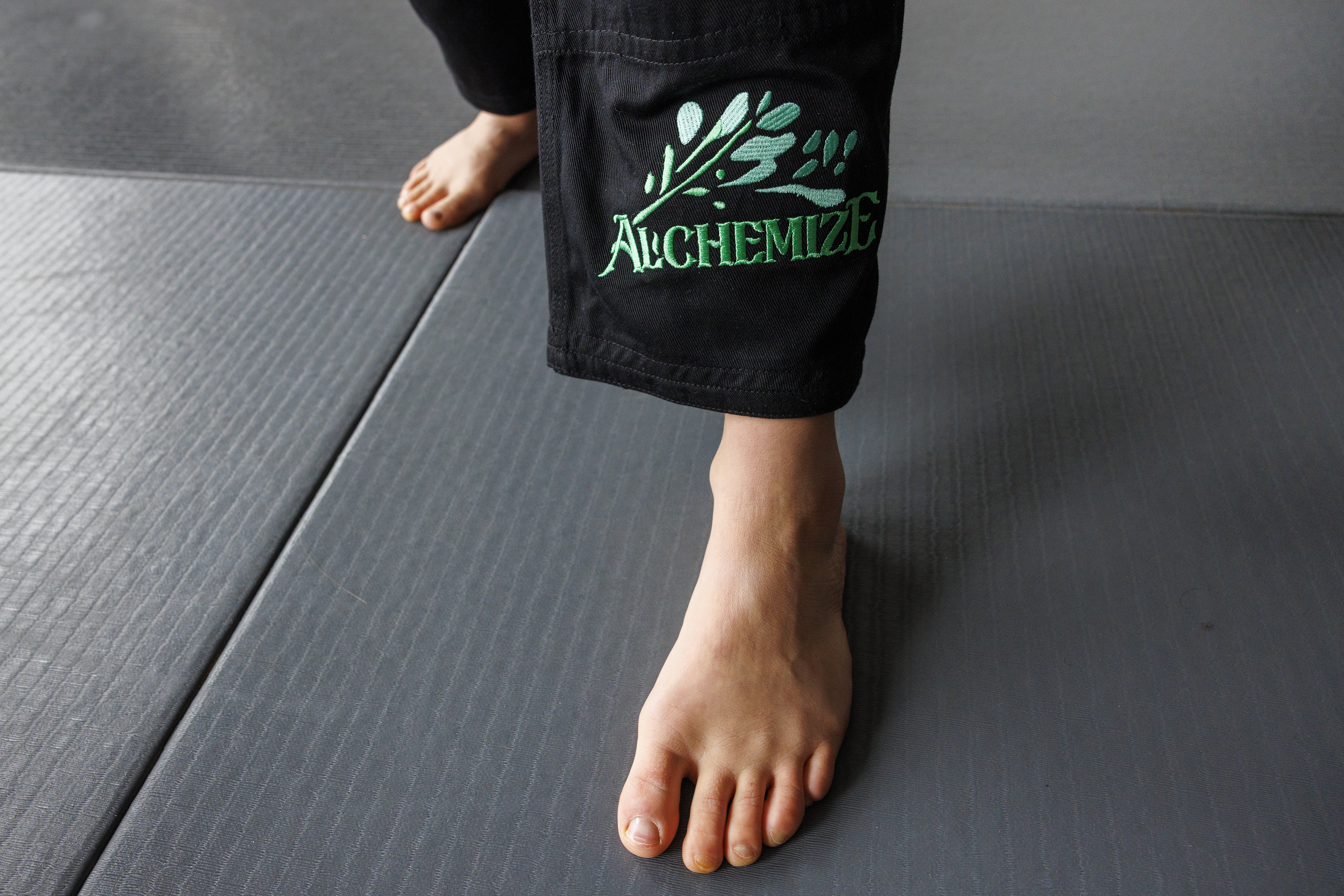
At left is Ashley Razzano with Genisis Medina-Arce in embroidered Gi’s by Alchemize Fightwear. They are shown at the Vault Jiu Jitsu, Morton, PA, Friday, December 5, 2025.
Nazareth reshaped necklines in the tops, removed center seams from the bottoms, inserted silicone waistbands, and built in sports bras for added support and comfort.
What she offered was both stylish and functional for women fighters in jiujitsu, wrestling, and later boxing, Muay Thai, and other disciplines. They were all “customer-centric designs,” she said, that made for a more fluid and functional fit for martial arts practitioners. She even tapped MMA fighter Michelle Waterson to design a collection of her own.
“It’s nothing revolutionary,” Nazareth, 27, said, “but it’s really just thinking about the customer first and what they need from their fight wear.”
When she formed the brand in 2020, she built a company for every woman, in and outside the gym.
“Moms are fighters. People going through medical diagnosis are fighters. People trying to push through in their careers are fighters. And I think fighting is just a natural human movement that we all innately know how to do, want to do, and need training around,” Nazareth said.
“I really love that we have created an avenue for more women to step into that. I think it’s really powerful to say, ‘Hey, it’s safe to show up and express yourself in this way.’”
Ashley Razzano with embroidered gi from Alchemize Fightwear, Friday, Dec. 5, 2025.
Under the Alchemize brand, Nazareth hosts free self-defense classes for survivors of domestic and sexual assault. She also organizes grappling camps in gyms and martial arts academies throughout the region to increase accessibility for women athletes.
“I’m personally passionate about what fight sports can offer survivors of assault and of domestic violence,” Nazareth said. “Just being able to make fight sports accessible to the everyday woman who may think, ‘I’m not a fighter,’ or who doesn’t see themselves rolling on the mat with a bunch of sweaty men. I think that’s something I’m really proud of and something I would like to continue doing.”
Maya Nazareth at the Vault Jiu Jitsu, Morton, PA. She is the founder and CEO of Alchemize Fightwear, Friday, December 5, 2025.
Her work and advocacy haven’t gone unnoticed. In December 2024, the Fairmount resident was named to the Forbes 30 Under 30 list for groundbreaking work in women’s sportswear and retail.
Less than a year later, she was pitching on Shark Tank.
She received an email from the Shark Tank production team in March 2025 and immediately questioned its legitimacy.
“I try not to overcommit to an opportunity before it happens,” Nazareth said.
Despite her initial suspicion, she filled out the application and took the phone screening. Two months later, she flew out to California to compete on the show.
”You never know if you’re going to actually air on the show or what’s going to happen,“ she said. ”But I started my business for the love of the sport and because I wanted to do something cool for women’s jiujitsu. So, every single opportunity that comes up, I try to do my best. It was really exciting.”
As she practiced her script, Nazareth took a moment to reflect on her journey. “I kept saying to myself, this is not the time to play small,” she said. “This is the time to be courageous.”
When she walked out to present, Nazareth said she “blacked out.” But her proposal sparked immediate interest from Ohanian.
She started out seeking a $250,000 investment in exchange for a 5% stake in Alchemize, and ended with $300,000 and a shared deal with Ohanian, Greiner, and Scott.
“It was really emotional and really, really cool,” she said.
In the months since the episode’s airing Oct. 22, Nazareth said the company has seen increased sales and a growing list of new customers. Having weathered the chaos of Black Friday, she looks forward to the slower Christmas season before things pick back up at the top of the year.
Genesis Medina-Arce wears an embroidered gi from Alchemize Fightwear, Friday, December 5, 2025.
She’s excited about the new developments at Alchemize. In 2026, Nazareth and her business partner, Suzette “Suliy” Melendez, will launch the flagship Alchemize Fightwear Athlete Program.
The online program will support athletes as they scale their current and future businesses in and outside of combat sports. Melendez said the move aligns with Nazareth’s mission to empower women in sports and business.
“We want to give other women opportunities outside of jiujitsu and give them a platform to scale,” Melendez said. “Being able to have shoulders to lean on, on the mats or off the mats, helps create community with our events.”
Nazareth also plans to expand Alchemize’s sports camps, making it the “South by Southwest” of women’s combat.
Through all these ventures, the goal remains the same, she says: creating pathways for women to enter martial arts and encouraging them to “own their inner ferocity.”
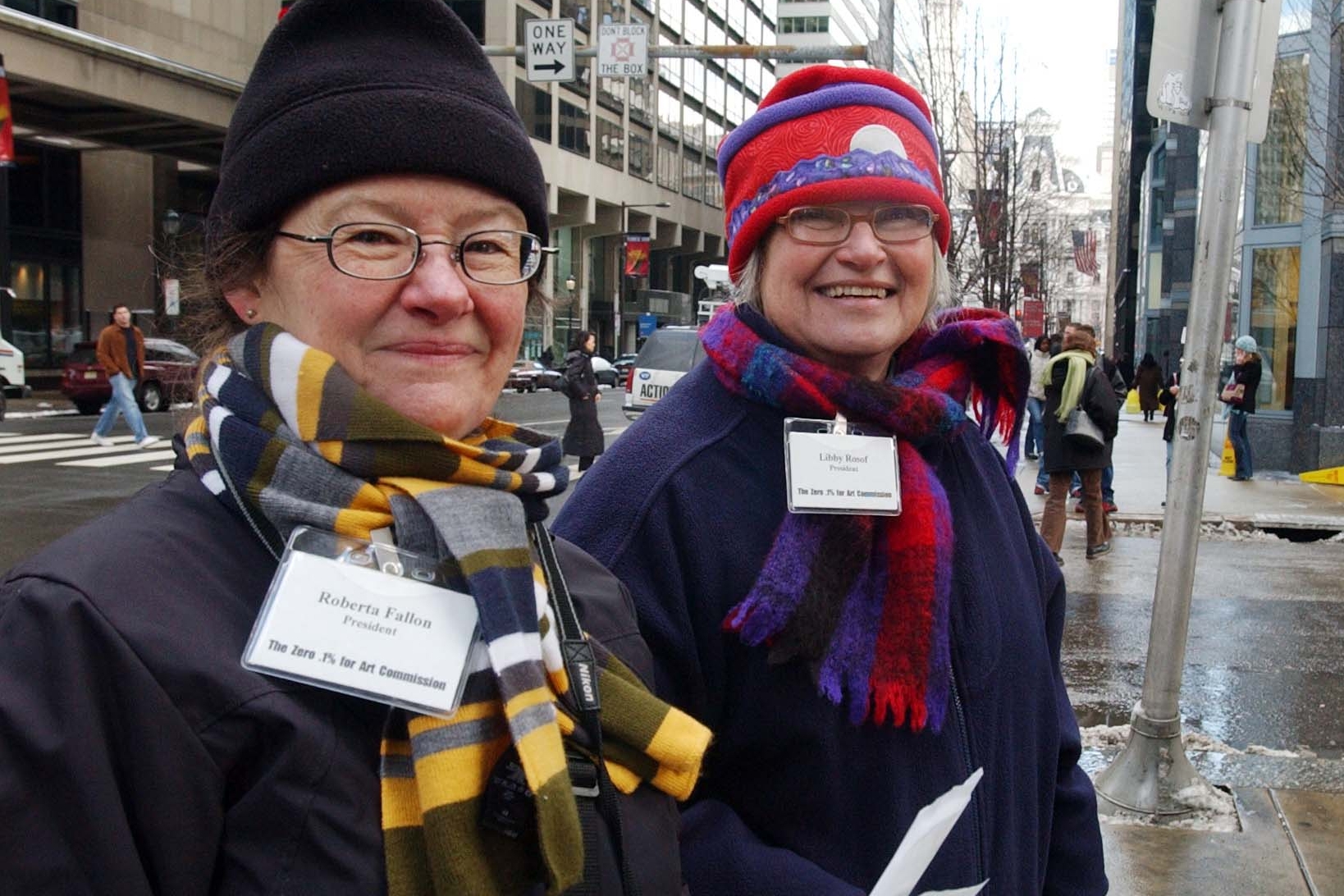
Roberta Fallon, 76, of Bala Cynwyd, cofounder, editor, and longtime executive director of theartblog.org, prolific freelance writer for The Inquirer, Daily News, and other publications, adjunct professor at St. Joseph’s University, artist, sculptor, mentor, and volunteer, died Friday, Dec. 5, at Thomas Jefferson University Hospital of injuries she suffered after being hit by a car on Nov. 24.
Ms. Fallon’s husband, Steven Kimbrough, said the crash remains under investigation by the police.
Described by family and friends as empathetic, energetic, and creative, Ms. Fallon and fellow artist Libby Rosof cofounded the online Artblog in 2003. For nearly 22 years, until the blog became inactive in June, Ms. Fallon posted commentary, stories, interviews, reviews, videos, podcasts, and other content that chronicled the eclectic art world in Philadelphia.
The site drew more than 4,500 subscribers and championed galleries and artists of all kinds, especially women, LGBTQ and student artists, and other underrepresented innovators. “I think we have touched base with every major arts organization in Philadelphia at one point or another, and many of the smaller ones,” Ms. Fallon told The Inquirer in May. “We became part of the arts economy.”
She earned grants from the Knight Foundation and other groups to fund her work. She organized artist workshops and guided tours of local studios she called art safaris.
For years, she and Rosof raised art awareness in Center City by handing out miniatures of their artwork to startled passersby. She said in a 2005 Inquirer story: “We think art needs to be for everyone, not just in galleries.”
She mentored other artists and became an expert on the business of art. “She was so generous and curious about people,” Rosof said. “She was innovative and changed the way art reached people.”
Artist Rebecca Rutstein said Ms. Fallon’s “dedicated art journalism filled a vacuum in Philadelphia and beyond. Many of us became known entities because of her artist features, and we are forever grateful.” In a 2008 Inquirer story about the city’s art scene, artist Nike Desis said: “Roberta and Libby are the patron saints of the young.”
Ms. Fallon never tired of enjoying art.
Colleague and friend Gilda Kramer said: “The Artblog for her was truly a labor of love.”
In November, Ms. Fallon and other art writers created a website called The Philly Occasional. In her Nov. 12 article, she details some of her favorite shows and galleries in Philadelphia and New York, and starts the final paragraph by saying: “P.S. I can’t let you go without telling you about what I just saw at the Barnes Foundation.”
She worked at a small newspaper in Wisconsin before moving to West Philadelphia from Massachusetts in 1984 and wrote many art reviews and freelance articles for The Inquirer, Daily News, Philadelphia Weekly, Philadelphia Citizen, and other publications. In 2012, she wrote more than a dozen art columns for the Daily News called “Art Attack.”
She met Rosof in the 1980s, and together they curated exhibits around the region and displayed their own sculptures, paintings, and installations. Art critic Edith Newhall reviewed their 2008 show “ID” at Projects Gallery for The Inquirer and called it “one of the liveliest, most entertaining shows I’ve seen at this venue.”
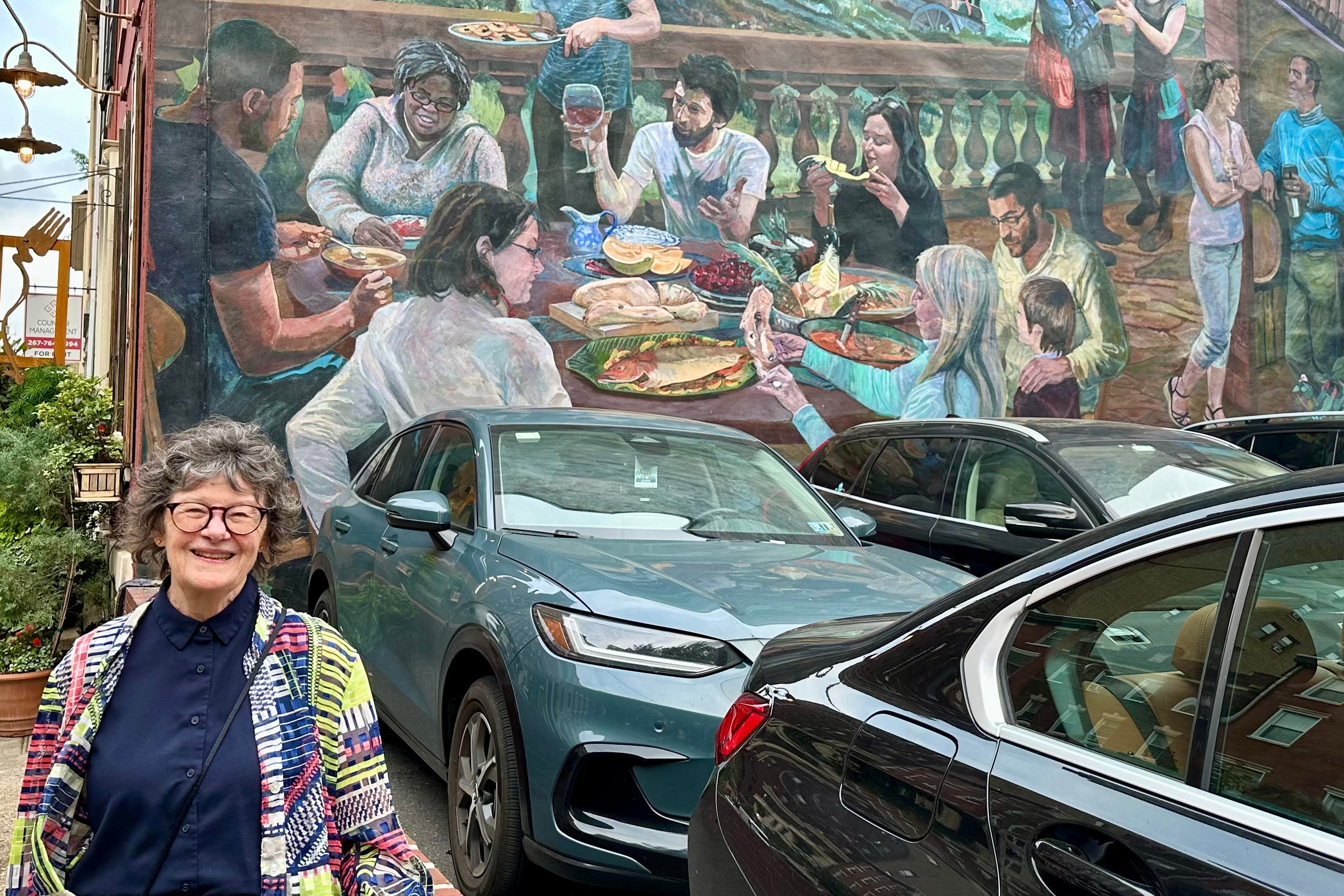
Ms. Fallon stands in front of a mural at 13th and Spruce Streets. She is depicted as the figure profiled in the lower left in the white blouse.
Most often, Ms. Fallon painted objects and sculpted in concrete, wood, metal, textiles, and other material. She was a founding member of the Philadelphia Sculptors and Bala Avenue of the Arts.
She studied at the Pennsylvania Academy of the Fine Arts and Temple University’s Tyler School of Art and Architecture, and later taught professional practice art classes at St. Joseph’s. Moore College of Art and Design, which will archive Artblog, awarded her an honorary doctorate.
“Roberta was an exceptional creative artist” and “a force,” artist Marjorie Grigonis said on LinkedIn. Artist Matthew Rose said: “Robbie was a North Star for many people.”
Her husband said: “Her approach to life was giving. She succeeded by adding value to wherever she was.”
Ms. Fallon (second from right) enjoyed time with her family.
Roberta Ellen Fallon was born Feb. 8, 1949, in Milwaukee. She went to the University of Wisconsin-Madison to study sociology after high school and dropped out to explore Europe and take art classes in Paris. She returned to college, changed her major to English, and earned a bachelor’s degree in 1974.
She met Steven Kimbrough in Wisconsin, and they married in 1980, and had daughters Oona and Stella, and a son, Max. They lived in West Philadelphia for six years before settling in Bala Cynwyd in 1993.
Ms. Fallon was a neighborhood political volunteer. She enjoyed movies and reading, and she and her husband traveled often to museums and art shows in New York and elsewhere.
They had a chance to relocate to Michigan a few years ago, her husband said. But she preferred Philadelphia for its art and culture. “She was like a local celebrity in the art scene,” her daughter Stella said.
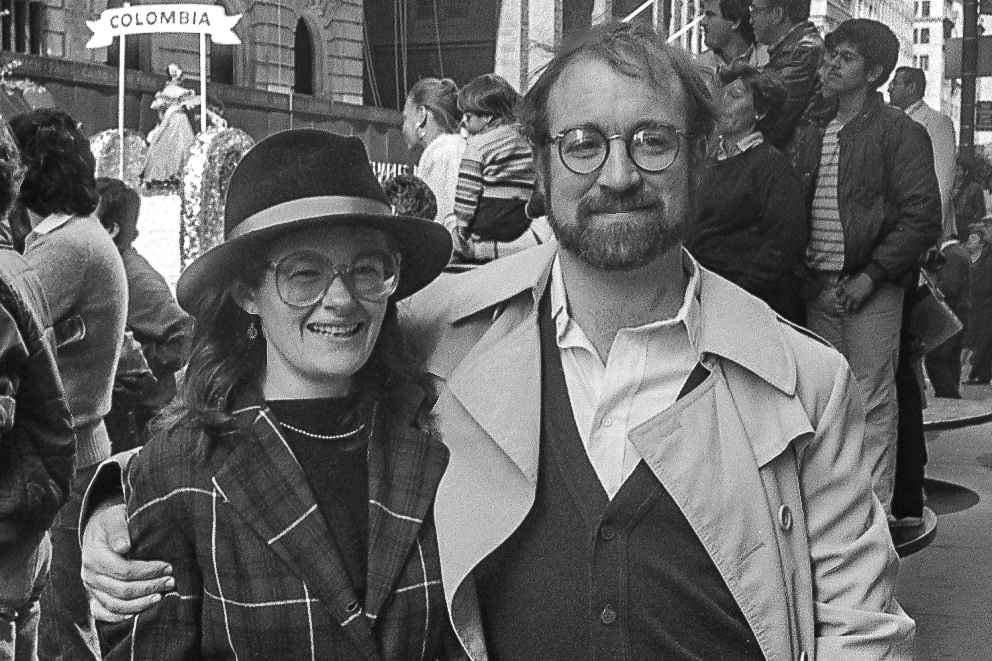
Ms. Fallon and her husband, Steven Kimbrough, visited New York in 1982.
Her husband said: “Everybody likes her. Everybody wants to be around her. She made a difference for a lot of people.”
Her daughter Stella said: “The world would be a better place if we all tried to be like my mom.”
In addition to her husband and children, Ms. Fallon is survived by four grandchildren, a sister, a brother, and other relatives.