Category: Arts & Culture

  • The many versions of ‘A Christmas Carol’ that you can watch in the Philadelphia region this season

    The many versions of ‘A Christmas Carol’ that you can watch in the Philadelphia region this season

    A story about ghosts is barely holiday season fare, but since Charles Dickens’ A Christmas Carol first published on Dec. 19, 1843, it has remained a holiday classic.

    The story of wealthy Ebenezer Scrooge being haunted by three ghosts (four if you’re counting Jacob Marley) in an effort to change his ways and save his soul, was so popular that the first printing sold out before Christmas Eve.

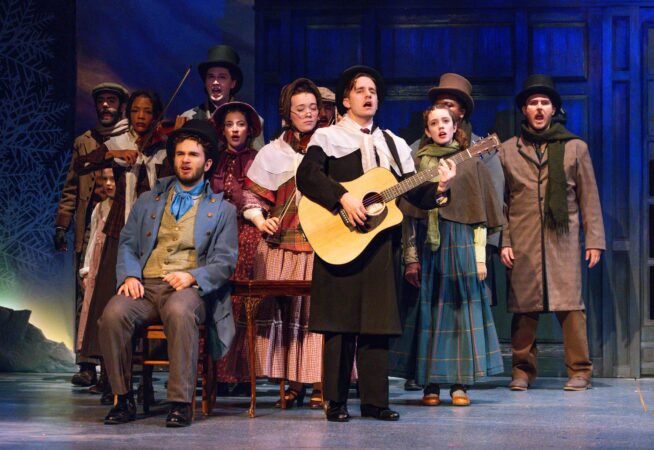
    The haunting narrative was almost immediately adapted for the stage, having its first production in 1844. Since then, there have been countless adaptations in just about every artistic medium. Every holiday season, theaters around the country take this wintry ghost story and add their own theatrical spin to it.

    The Philadelphia region is no different, with four productions currently underway. .
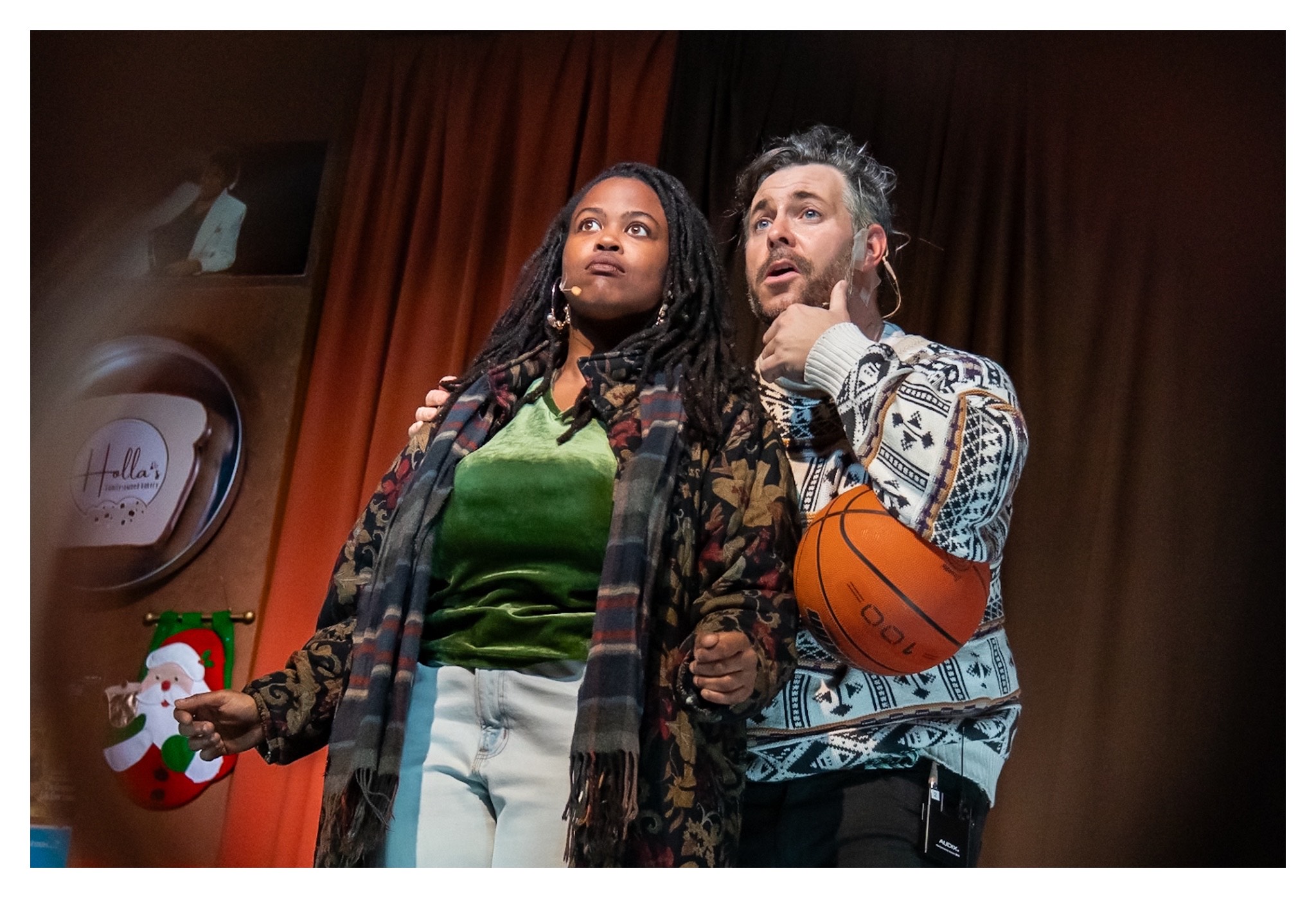
    Kouraj (left) and Righteous Jolly in “A Levittown Christmas Carol.”

    The Levittown version at New Hope Arts Center

    Dec. 18-20, 2 Stockton Ave., New Hope

    Most audiences have seen some version of this story before. While there are many direct adaptations of Dickens’ work, some take the plot and translate it into a different time and place. Such is the case with A Levittown Christmas Carol.

    This production at the New Hope Arts Center ditches the Victorian England setting in exchange for Levittown, with a healthy dose of ’80s and ’90s nostalgia thrown in for good measure.

    This adaptation, written by New Hope native Righteous Jolly, uses the story of Scrooge and spirits to explore more nuanced topics regarding the community’s history of racial segregation and the complexities of growing up among it.

    So what is it about the Dickens novella that still grabs audiences as it celebrates its 182nd anniversary?

    “Mercy, grace, forgiveness. The want to be more whole, and the subsequent excavation that sends a person to discover, what was doesn’t mean what will be, and what can be, may be even more joyous and wholesome than we could imagine,” said Jolly. $33-$39. newhopearts.org
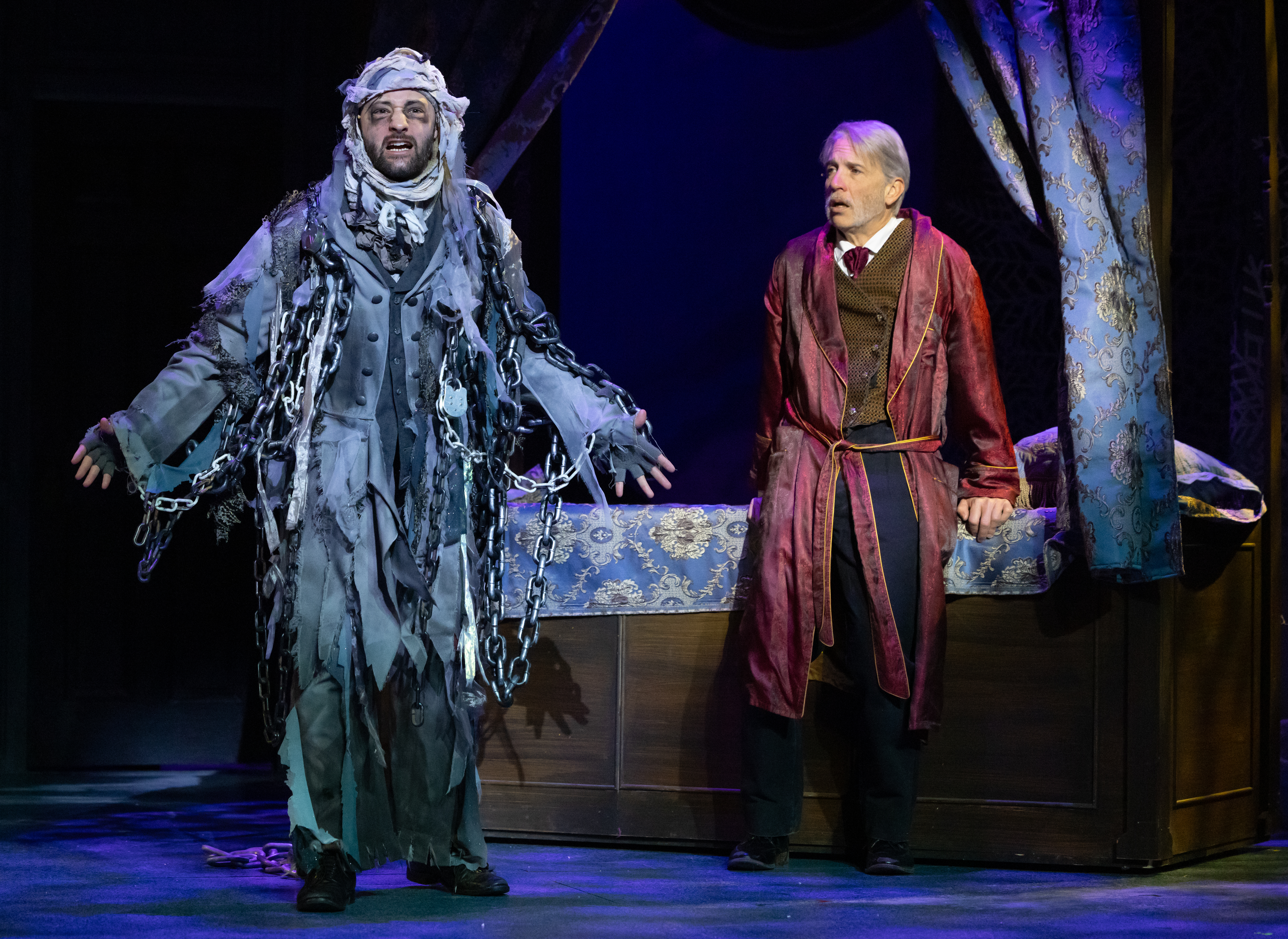
    William R. McHattie and Michael Doheny in Walnut Street Theatre’s “A Christmas Carol.”

    The kids’ version at Walnut Street Theatre

    Through Dec. 21, 825 Walnut St., Phila.

    For some local theaters, this show has become a seasonal tradition. America’s oldest theater, the Walnut Street, puts up an annual production as part of its WST for Kids Series. It’s been around since 2001, and while there are slight changes every year, the core intention of their production is to honor Dickens’ original text.

    “For many, it is their first experience with live theater,” says Jessica Doheny, Walnut’s general manager, “which is a wonderful gift for us to share.” $24-$29. walnutstreettheatre.org
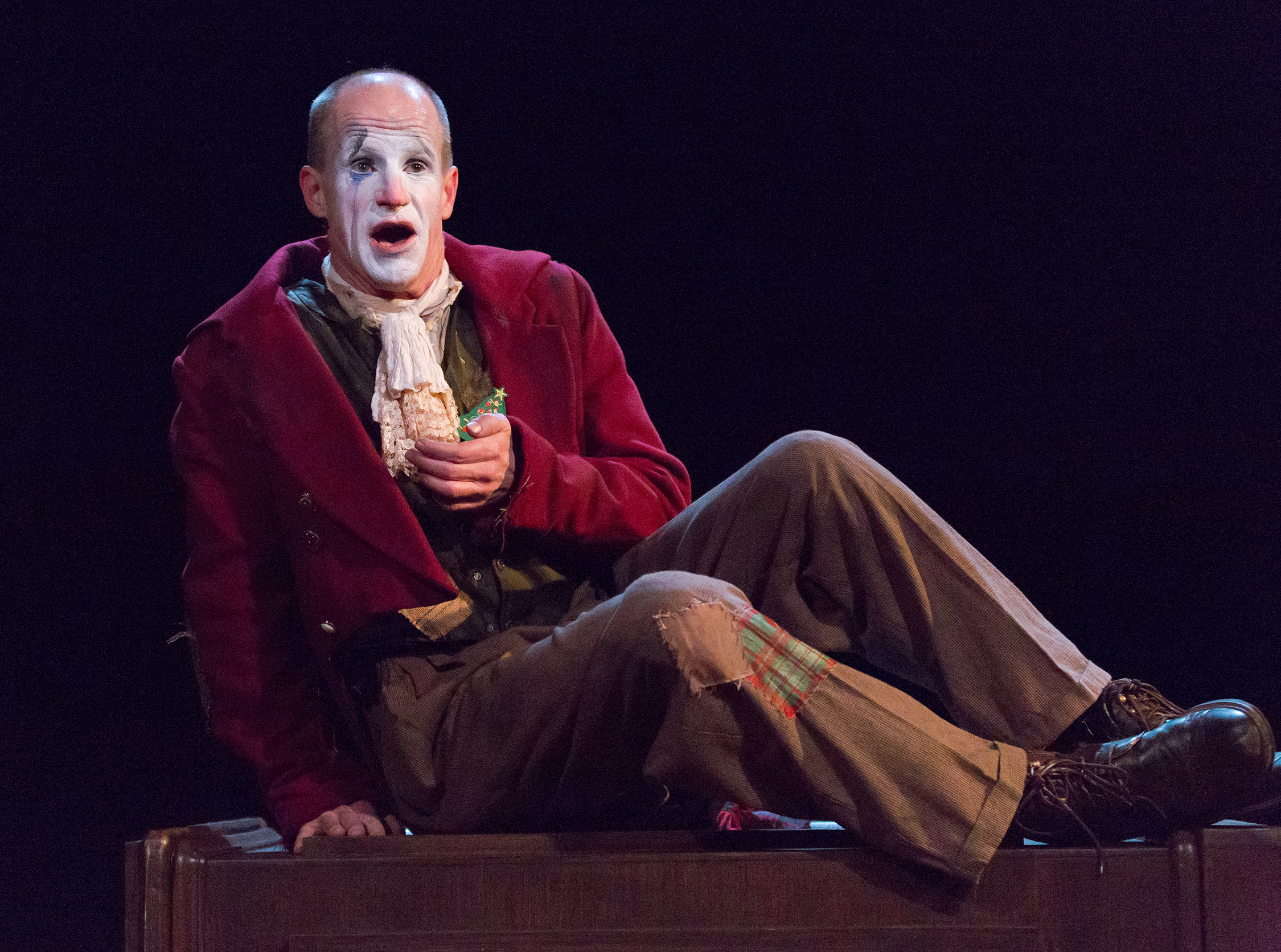
    Tony Lawton plays all the characters in the one-man version of “A Christmas Carol” at Lantern Theater Company.

    The one-man-plays-everyone version at Lantern Theater Company

    Through Dec. 28, 923 Ludlow St., Phila.

    The Lantern Theater’s version is slightly more alternative than the Walnut’s. Here, longtime Lantern Theater collaborator Anthony Lawton revives the show and performs all the characters in the story. Originally presented in this form in 2018, the production, now in its seventh year, has become a bit of a Philadelphia tradition. “When a great story is told effectively, we want to experience that story over and over again because it moves us,” says Stacy Dutton, executive director of Lantern Theater Company. $32-$40. lanterntheater.org
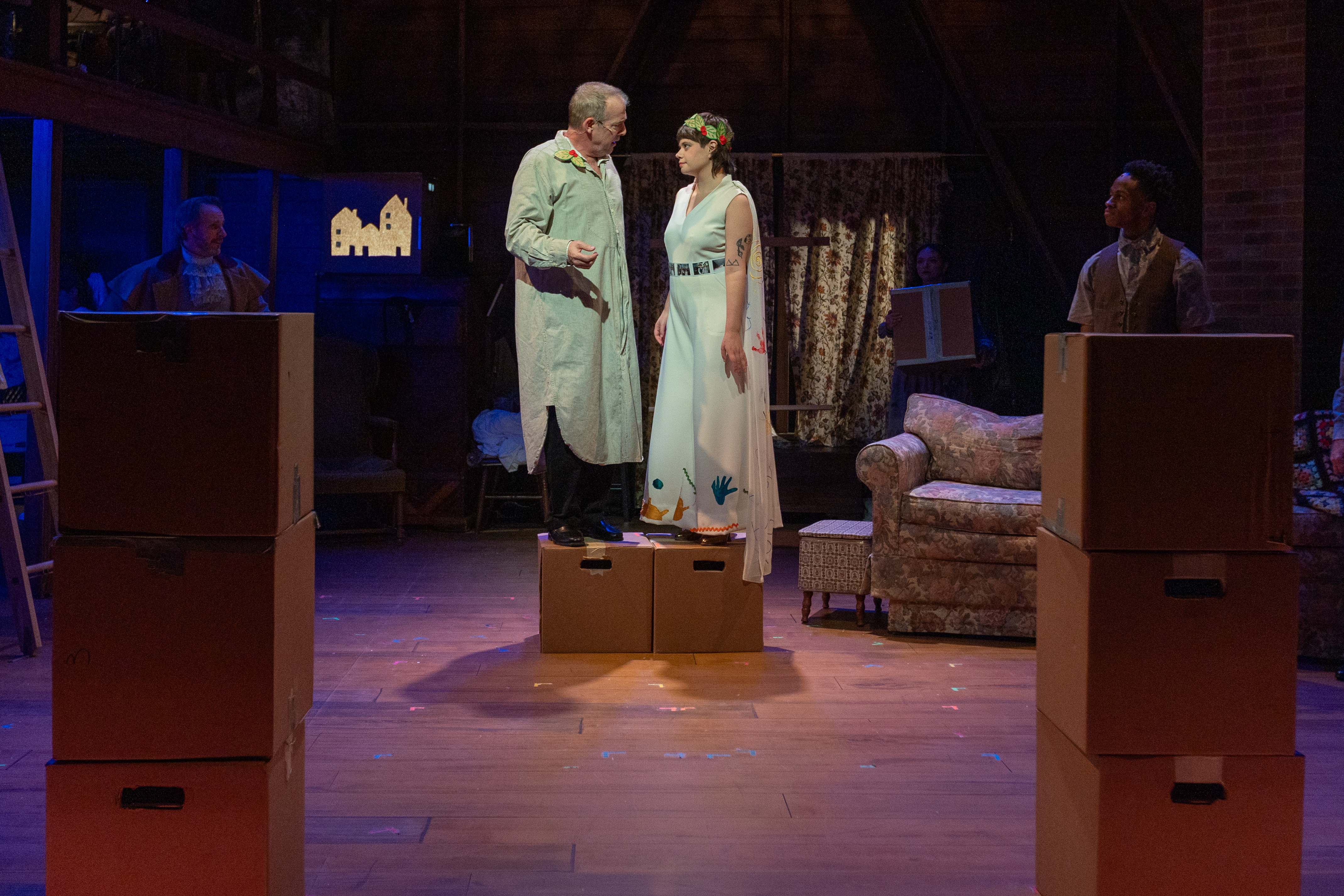
    Ian Merrill Peakes and Anna Faye Lieberman in People’s Light’s “A Christmas Carol” panto.

    The panto version at People’s Light

    Through Jan. 4, 39 Conestoga Rd, Malvern.

    Another theater looking to create an annual holiday tradition is People’s Light in Malvern.

    “Rituals are what make holidays so special. Nothing competes with being with loved ones and doing the same thing together each season,” said Zak Berkman, artistic director of People’s Light. “Our holiday musical pantos at People’s Light, and now this new version of A Christmas Carol, offer a similar opportunity for families and friends to enjoy something together year after year.”

    This production takes the original Dickens narrative and puts it through the lens of a child sitting in their attic, using things around them to create the world of the story and live it out anew. The production’s original music is inspired by 19th-century carols (with a folk spin) and aids in elevating the storytelling of this production. $64-$94. peopleslight.org
  • Philadelphia Orchestra builds up all the color and majesty one could hope for in Handel’s ‘Messiah’

    Philadelphia Orchestra builds up all the color and majesty one could hope for in Handel’s ‘Messiah’

    Making Handel’s Messiah a major occasion — rather than a mere Christmas revisitation — is close to impossible, though not at the Philadelphia Orchestra’s Friday opening of a three-performance Kimmel Center run.

    For years, the orchestra imported one guest conductor after another.

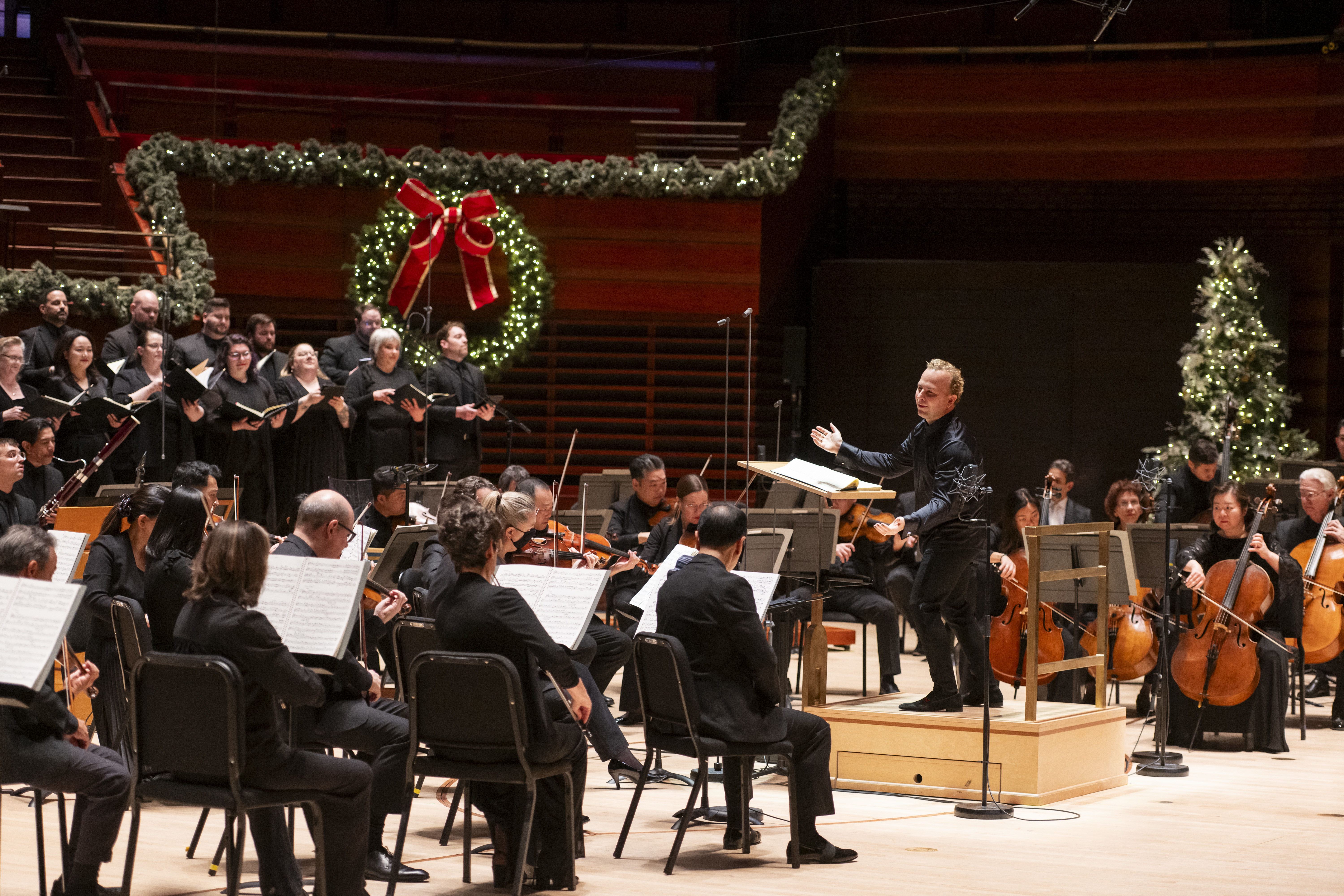
    Now, Messiah is led by artistic director Yannick Nézet-Séguin, who began as a choral conductor in Montreal and happens to have the inside track on excellent solo singers, thanks to that little old opera company where he also works 80 miles up the road.

    It was a highly compelling performance that’s likely to gain more strength on Saturday and Sunday.

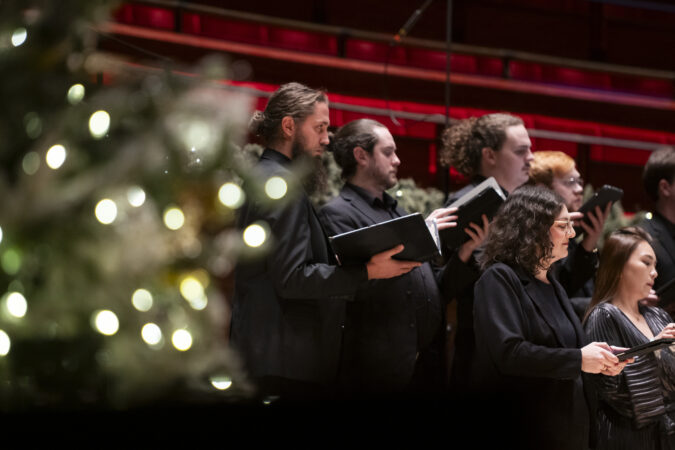
    Yannick Nézet-Séguin conducts the Philadelphia Orchestra during a performance of Handel’s “Messiah” at the Kimmel Center for the Performing Arts on Friday.

    Handel’s epic mosaic of 52 arias, recitatives, choruses, and instrumental interludes has changed enormously over the years; shape-shifting from Victorian grandeur to lean, faster performances more in keeping with the 18th century in which this masterpiece was born.

    With the 40-voice Philadelphia Symphonic Choir rather than the cast-of-hundreds Mormon Tabernacle Choir (which recorded the piece with the Philadelphia Orchestra in 1958), Messiah is now relieved of extraneous sound, and reveals more of its once well-hidden essence.

    Nonetheless, well-matched soloists — vocally and stylistically — are too much to hope for in this busy season, though enjoying their differences among them was definitely possible.

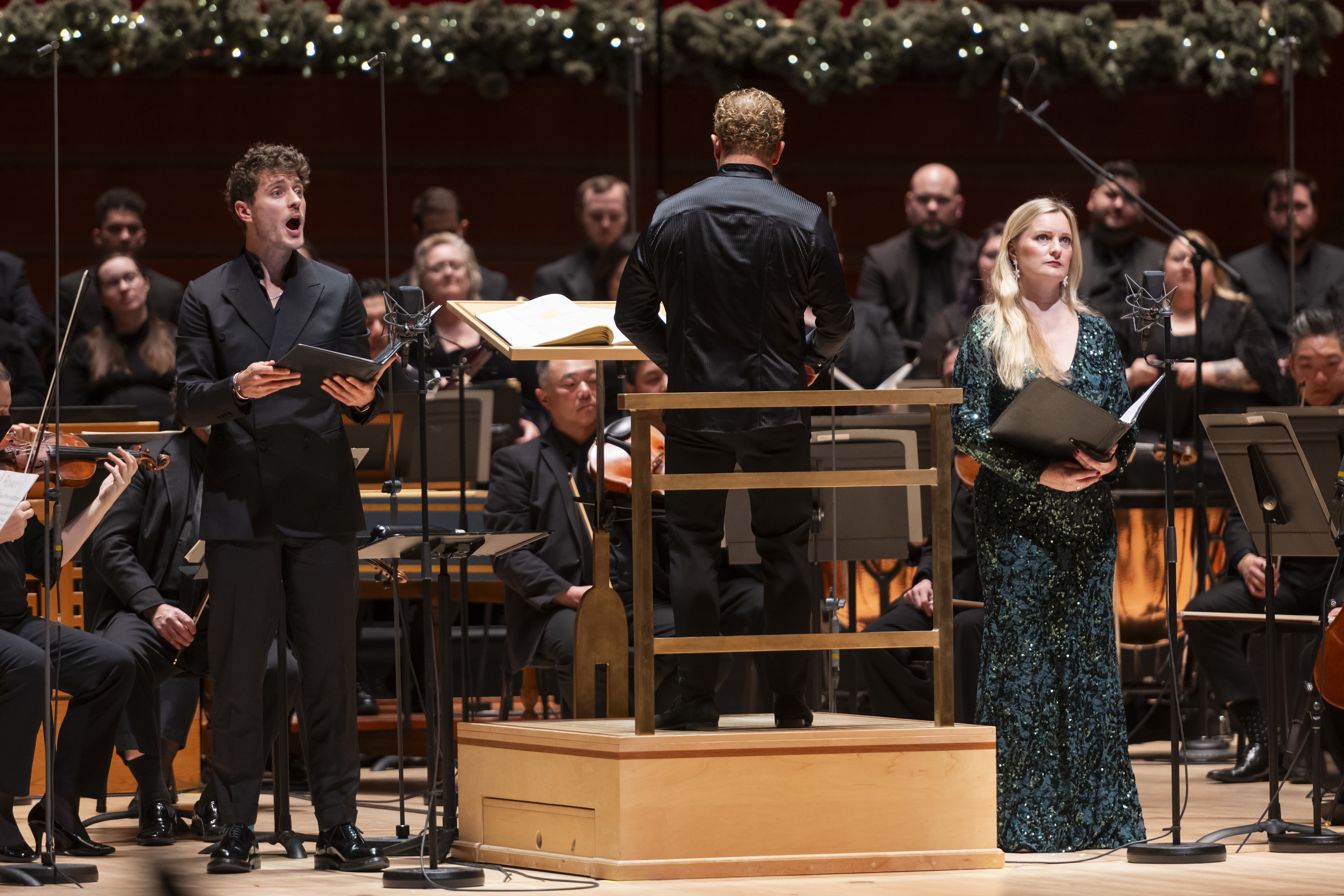
    Jakub Józef Orliński (left), countertenor, and Lucy Crowe (right), soprano, sing with the Philadelphia Orchestra during a performance of Handel’s “Messiah” at the Kimmel Center for the Performing Arts on Friday.

    Tone, agility, diction, and meaningful vocal ornaments were all of a piece with the much-honored British soprano Lucy Crowe, the most seasoned Handelian among them, which was also evident in the way she made upward vocal leaps (normally just a technical feat) charged with emotion.

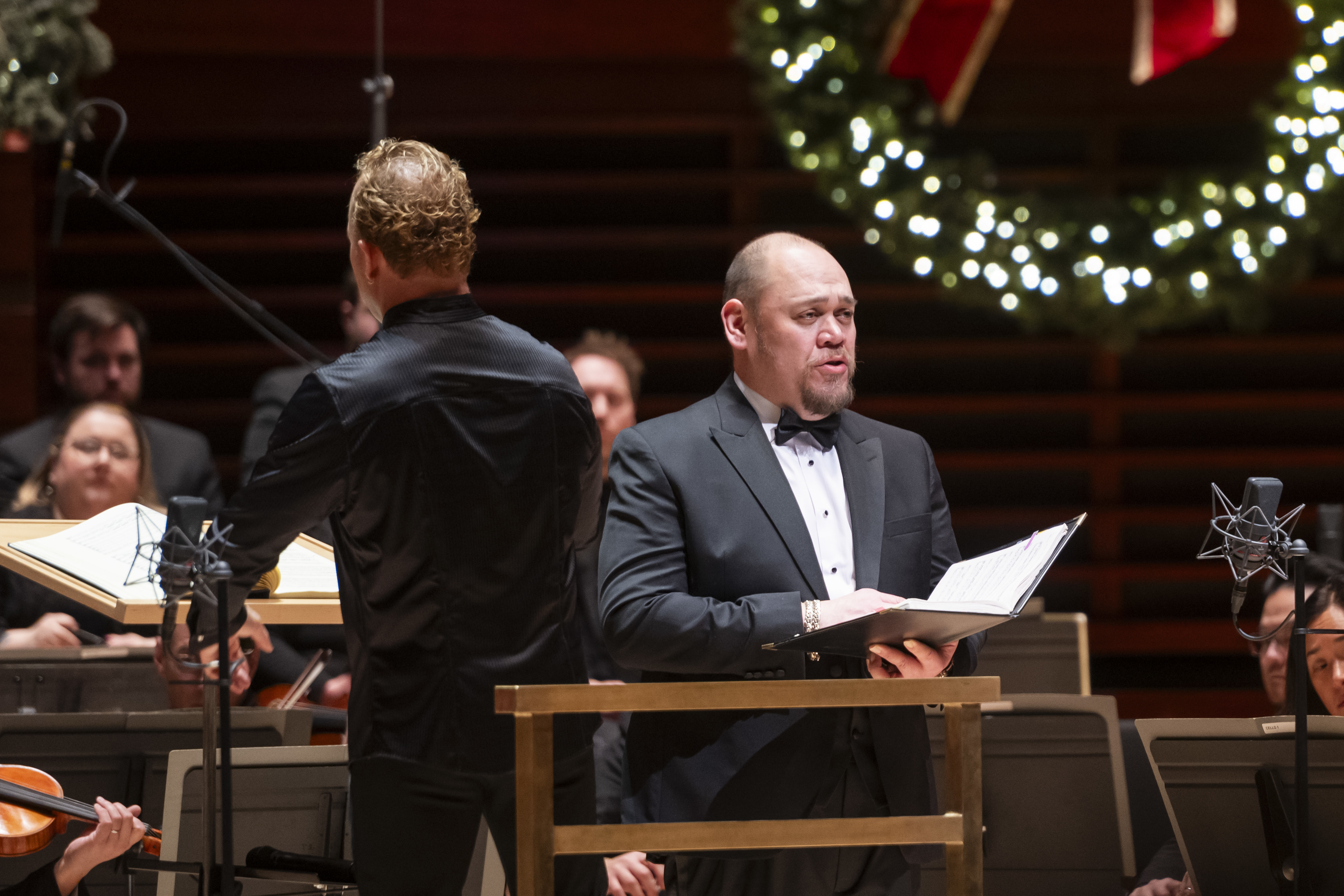
    The least likely Messiah soloist was also one of the biggest names, baritone Quinn Kelsey, whose every Verdi and Puccini role at the Metropolitan Opera is full of new dimensions. Yet Handel’s vastly different skill requirements were also reasonably well in hand. His distinctive theatrical alchemy came alive in recitatives, and ultimately, in his final aria “The Trumpet Shall Sound” (the trumpet itself being capably played by Travis Peterson). Intricate vocal writing once prompted slowed-down tempos to ease vocal discomfort — which is now heard as a sign of defeat.

    Quinn Kelsey, baritone, sings with the Philadelphia Orchestra during a performance of Handel’s “Messiah” at the Kimmel Center for the Performing Arts on Friday.

    Instead, Kelsey lightened his voice and maintained both the tempo and the integrity of the music.

    Similar moments were heard from the popular Polish countertenor Jakub Józef Orliński, who has plenty of Messiah mileage though his voice is evolving toward a deeper, richer sound ― heard especially in “He Was Despised” ― suggesting his future lies in less athletic repertoire. He also has a way of swaying to the music. Whether it’s calculated stagecraft or the inspiration of the moment, his already-strong stage presence doesn’t need it.

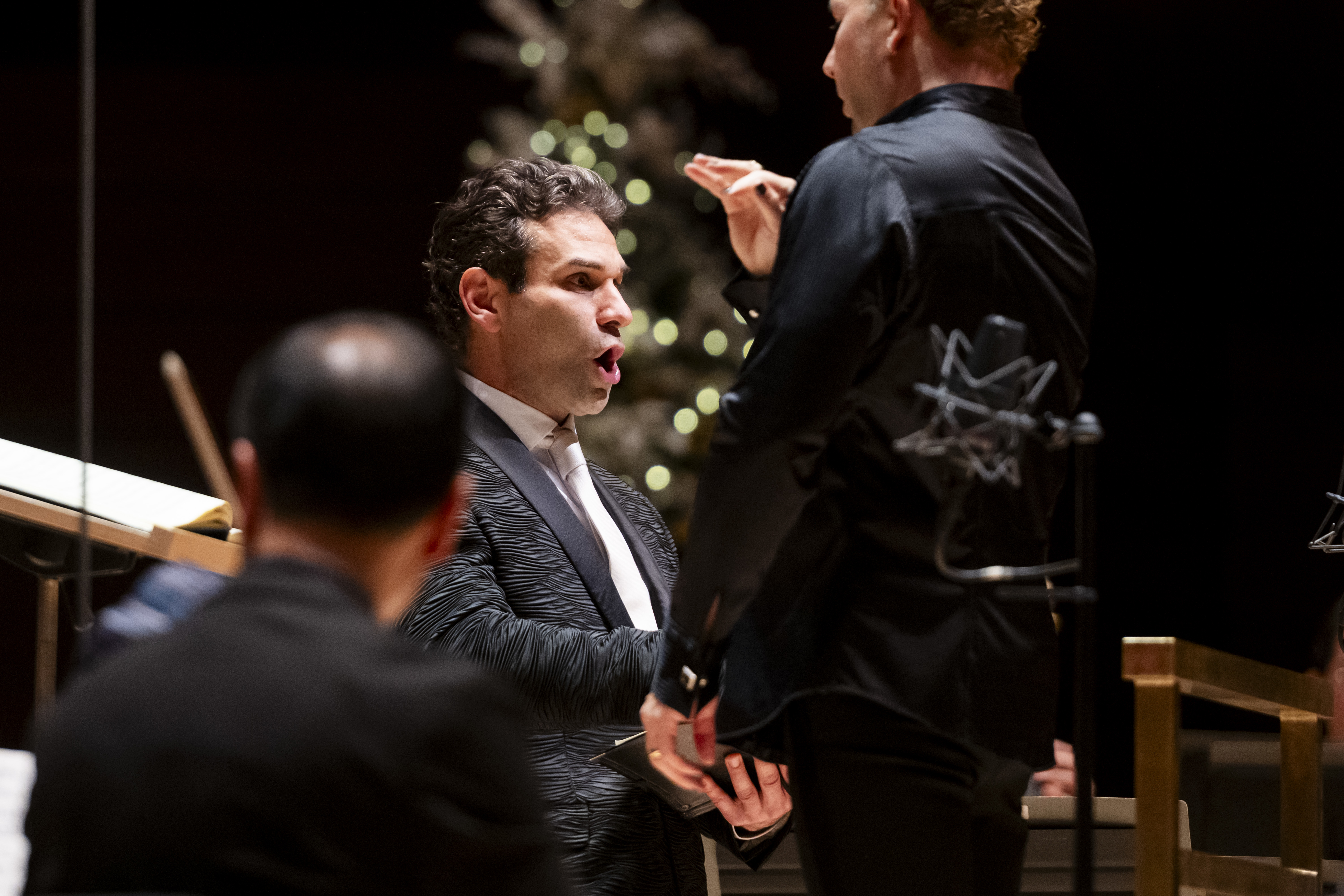
    Frédéric Antoun, tenor, sings with the Philadelphia Orchestra during a performance of Handel’s “Messiah” at the Kimmel Center for the Performing Arts on Friday.

    Tenor Frédéric Antoun seemed a bit Messiah-weary (it’s a busy season) suggesting that his pitch will be steadier and vocal ornaments more spontaneous in future, more rested performances.

    Choral sections — the most beloved parts of Messiah — are often sung for their considerable effect but were treated to detailed coloring of the words, underscored by sympathetic treatment of the accompanying instrumental writing. This element, not often heard in quickly assembled Messiahs, played a major part in giving this performance an air of occasion.

    As is sometimes the case in Nézet-Séguin choral outings, his use of light, shade, quietude and force can be puzzling. At such points, the myriad inflections can seem fussy, or more about creating an overall musical contour than making a rhetorical statement.

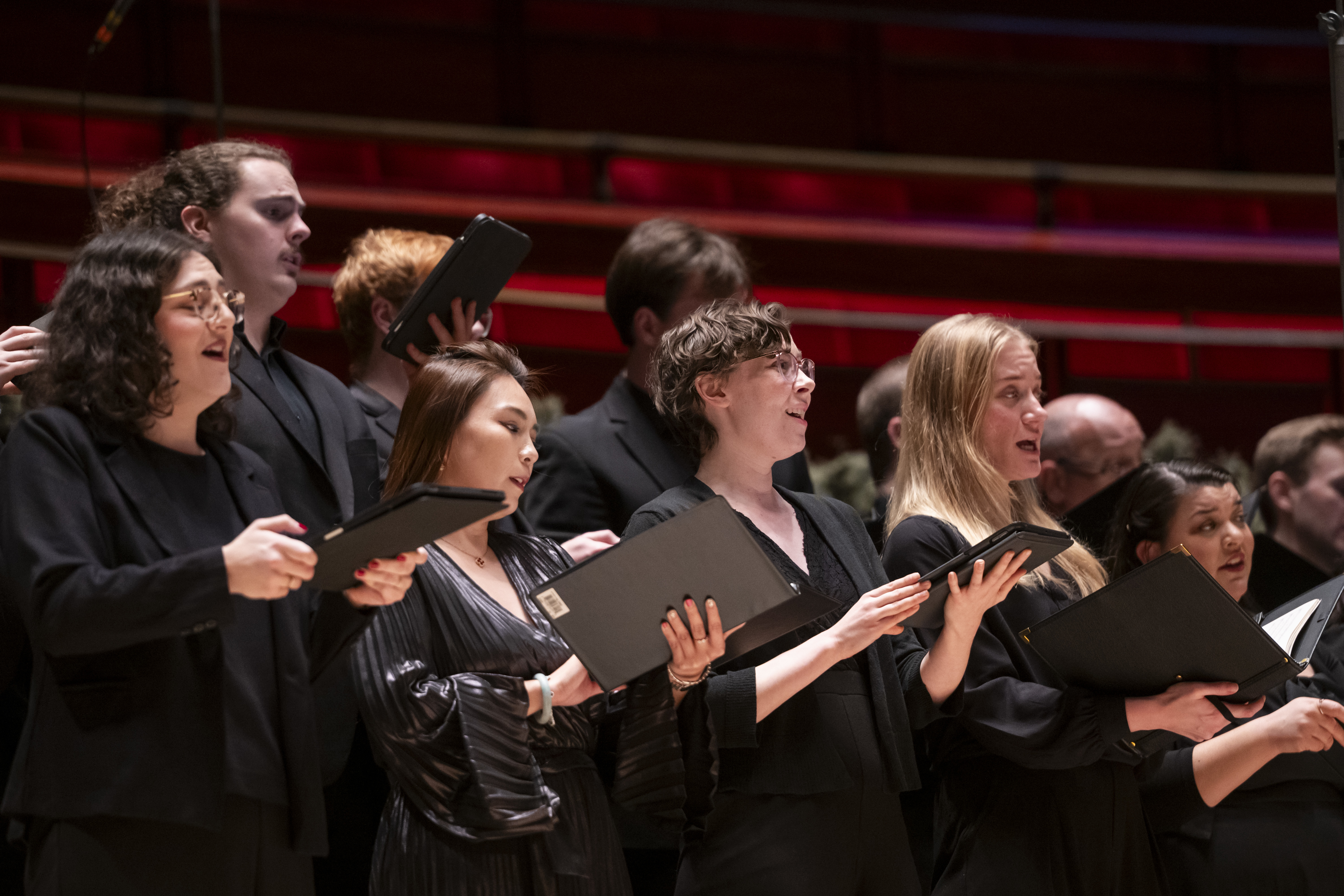
    The Philadelphia Symphonic Choir sings with the Philadelphia Orchestra during a performance of Handel’s “Messiah” at the Kimmel Center for the Performing Arts on Friday.

    At times, it all becomes clear in the long term.

    Example: The “Hallelujah” chorus was more meaningful than bombastic, perhaps to keep the following music from seeming anticlimactic. Then, the final “Amen” chorus at the end of the piece felt suitably conclusive with all of the color and majesty one could hope for.

    The fact that the Philadelphia Symphonic Choir (Joe Miller, director) was able to execute many minute details — plus projecting superb vocal blends that concluded several choruses — shows how the group has emerged into a first-class ensemble.

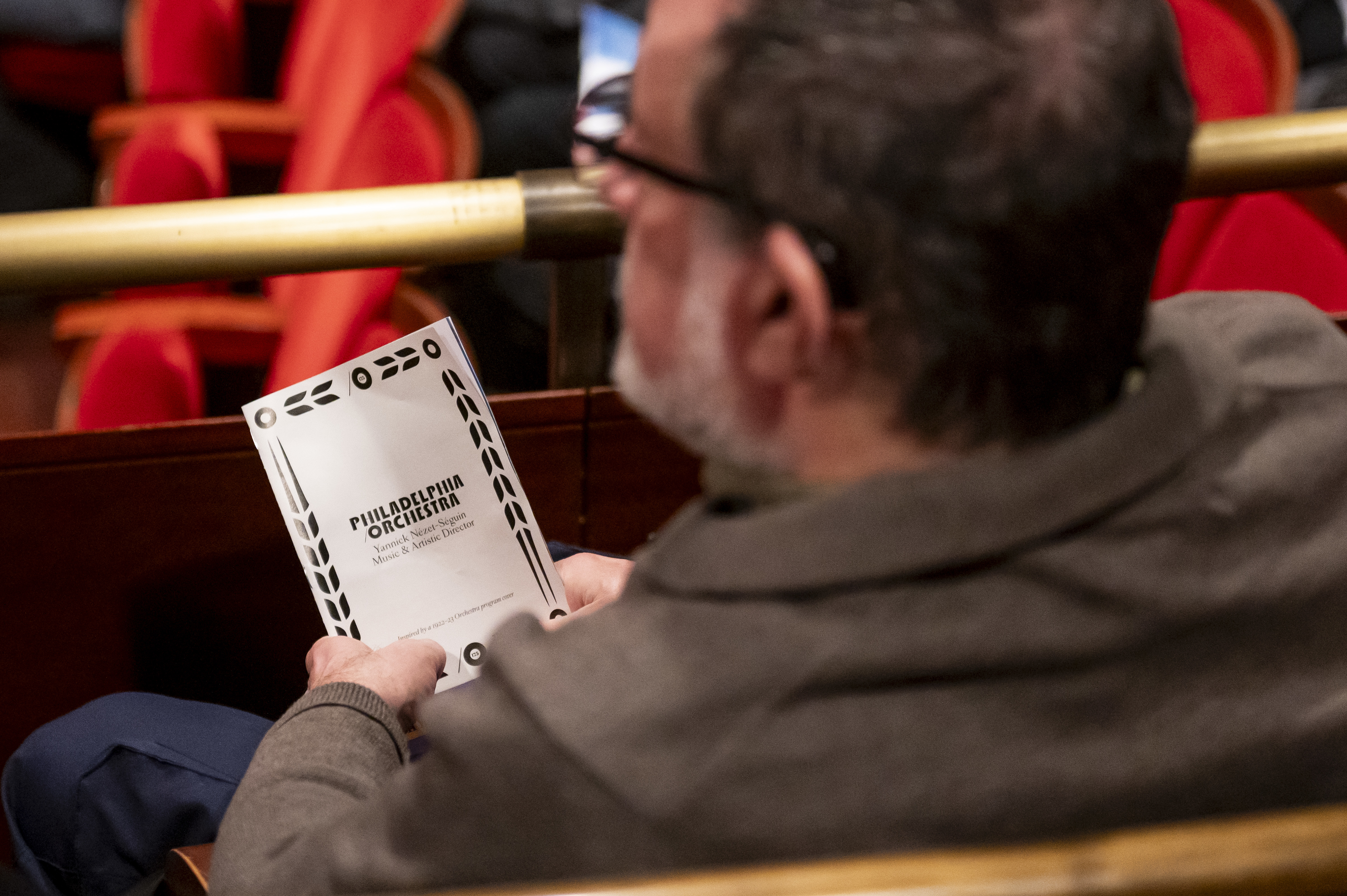
    A concertgoer holds a program before the start of the performance of Handel’s “Messiah” by the Philadelphia Orchestra at the Kimmel Center for the Performing Arts on Friday.

    Word to the wise: Even longtime Kimmel Center goers are advised to leave extra time to navigate Philadelphia’s holiday traffic and sometimes-delayed public transportation. I emerged from the City Hall subway stop in such a state of lateness that I attempted to hijack an Uber discharging passengers at the Ritz-Carlton. It didn’t work.

    Other latecomers and I got to Marian Anderson Hall on foot just as concertmaster David Kim arrived onstage. Whew.

    Subsequent performances of Handel’s “Messiah” are Dec. 13, 8 p.m., and Dec. 14, 2 p.m., Marian Anderson Hall, 300 S. Broad St., Philadelphia. Tickets: $29-240. philorch.ensembleartsphilly.org

  • Read Sasha Suda’s brief against the Philadelphia Art Museum’s petition last month

    Read Sasha Suda’s brief against the Philadelphia Art Museum’s petition last month

    Former Philadelphia Art Museum director and CEO Sasha Suda filed a brief Thursday opposing the museum’s petition last month arguing that their dispute be settled through arbitration.

    Her contract, the brief states, contained “an explicit exception” to the arbitration called for.

    Much of the brief repeats the narrative laid out in the initial lawsuit filing, like her struggle to modernize the museum and her friction with former board chair Leslie Anne Miller and current board chair Ellen T. Caplan.

    Read the full brief here:

  • Ousted Art Museum chief Sasha Suda argues for a trial — not arbitration — in new court filing

    Ousted Art Museum chief Sasha Suda argues for a trial — not arbitration — in new court filing

    In another broadside against the board of the Philadelphia Art Museum, ousted director and CEO Sasha Suda has once again portrayed her difficulties at the museum as a struggle for modernizing an institution in the face of the status quo. A new court filing from Suda, filed on Thursday night, argues for a trial with jury rather than settling the dispute with the museum through arbitration.

    The opposition brief, a response to the museum’s petition last month stating that the matter should be resolved in arbitration, says that Suda’s employment contract contained “an explicit exception” to the arbitration called for by the museum.

    “The Court should therefore deny the museum’s motion and retain jurisdiction over this case — as the parties’ agreement and Pennsylvania law require,” states Thursday’s filing in Philadelphia Court of Common Pleas.

    Suda, 45, was fired Nov. 4 for what the museum said was cause. Less than a week later, she filed a lawsuit against the museum claiming she was dismissed without a “valid basis.”

    Suda’s lawyer, Luke Nikas, did not immediately comment on the matter Friday. The Art Museum had no comment on the new filing, an Art Museum spokesperson said.

    Suda was dismissed after an investigation determined that she “misappropriated funds from the museum and lied to cover up her theft,” the museum alleged in a November court filing in response to her lawsuit.

    Nikas, of Quinn Emanuel Urquhart & Sullivan, at the time called the accusations false. The money in question, $39,000, came in the form of increases to Suda’s compensation, and these increases were “authorized” and “budgeted” cost-of-living increases that were “fully approved” and “disclosed,” a source close to Suda previously stated.

    Much of the new filing repeats the narrative laid out in the initial lawsuit filing, detailing Suda’s unhappiness with former board chair Leslie Anne Miller and current board chair Ellen T. Caplan, as well as a recounting of Suda’s accomplishments at the museum.

    Suda and Miller experienced ongoing friction, and Miller “told third parties that Suda was untrustworthy, incompetent, a snake, immature, would not last, and that others were ‘drinking the Kool-Aid’ by supporting her,’” the new filing states.

    “Those comments from an officer and agent of the Museum violated the Employment Agreement’s Non-Disparagement Clause,” and that violation entitles Suda to “immediate injunctive relief and a temporary order restraining any threatened or further breach, in addition to or in place of the arbitration provisions,” the filing states.

    Miller declined to comment on Friday.

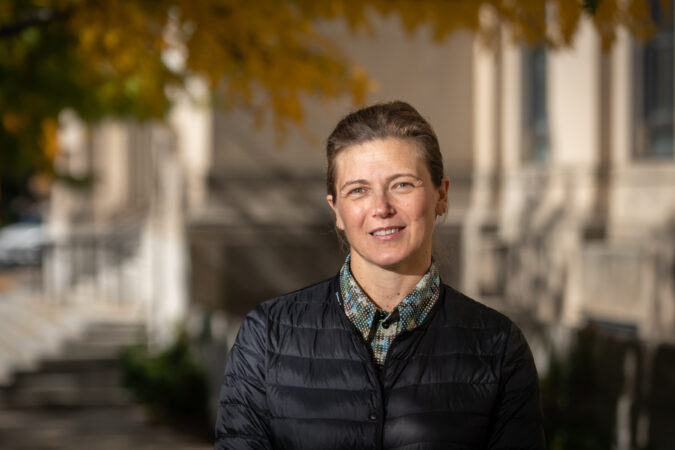
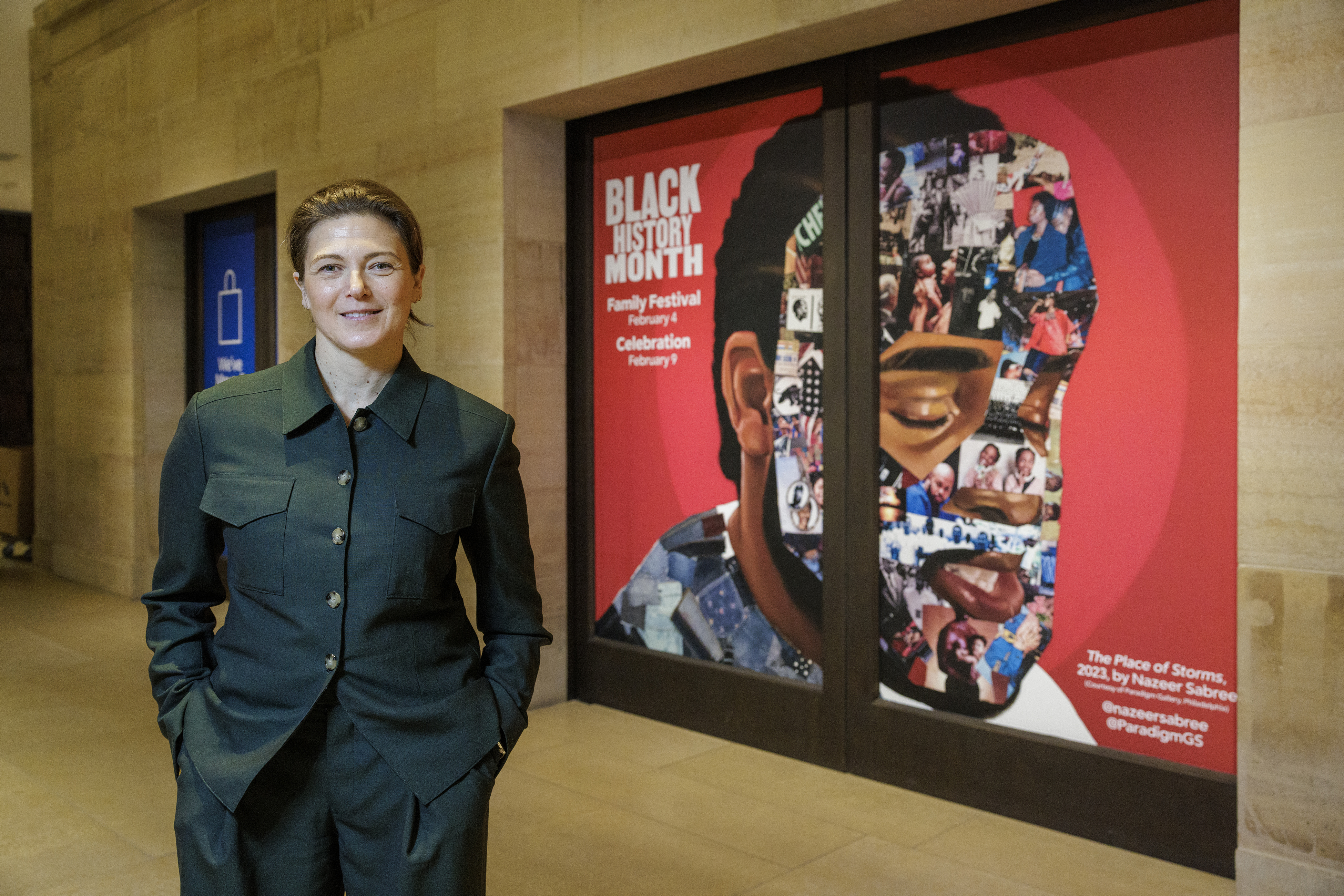
    Sasha Suda, former director of Philadelphia Art Museum, Jan. 30, 2024.

    Suda’s contract stipulates that any changes in her compensation would be determined at the “sole and absolute discretion” of the compensation committee. In its November petition, the museum said that Suda requested, and was denied, a salary increase from the compensation committee on Feb. 8, 2024. She then “awarded herself the salary increase” effective March 1, 2024, followed by a second “unauthorized” increase in July of that year, the petition claims.

    In July 2025, according to the museum’s petition, Suda “awarded herself a third unauthorized pay increase, which she once again failed to disclose to the board.”

    The new filing includes text messages of praise and encouragement from board member John Alchin. It says that in September 2023, Alchin — identified in the filing as chair of the finance committee — examined a draft report for a compensation subcommittee meeting and requested “schedules of salaries along with proposed/recent salary increases.”

    “Suda’s compensation was also reviewed,” the filing states.

    “As the board member with the most oversight of Suda’s financials, Alchin expressed no concerns about Suda’s approach to salary schedules or financial governance, which were discussed openly in committee meetings,” the filing states.

    It provides a copy of an August 2025 letter from the museum to Suda outlining her annual salary increase, from $749,087 to $771,560. The letter is not signed by a specific person — only the museum’s human resources department — and was cc-ed to “finance.”

    The new filing also includes 2023 correspondence from the museum’s CFO, Katherine Harper, to its HR director, Meredith Clayton, “trying to figure out what increase Sasha might be entitled to,” adding that “prior to finalizing, I will check with John Alchin or Leslie to make sure they are comfortable.”

    Suda was in the third year of a five-year contract when she was dismissed in the beginning of November.

    On Dec. 1, she was succeeded by veteran nonprofit administrator Daniel H. Weiss, former chief of the Metropolitan Museum of Art, who had already been engaged by the museum as a consultant prior to being named director and CEO.

  • Harriett’s Bookshop among bookstores receiving a $500 Christmas bonus from James Patterson

    Harriett’s Bookshop among bookstores receiving a $500 Christmas bonus from James Patterson

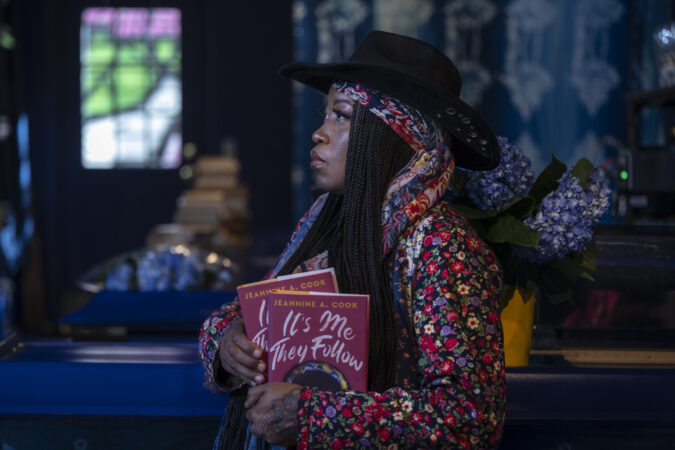
    Three local bookstores are among eight in Pennsylvania to win a $500 grant from award-winning author James Patterson’s annual Holiday Bookstore Bonus Program.

    Harriett’s Bookshop in Fishtown, Main Point Books in Wayne, and the Doylestown Bookshop in Doylestown were the local winners.

    Harriett’s owner Jeannine A. Cook thanked Patterson on her Instagram.

    “Thank you [James Patterson] for supporting Harriett’s in this way and spreading love to our bookshop cousins all across the country when many of us need it most,” Cook wrote, adding that she will use the money to support her Bookshop Without Borders project that brings books and companionship to people who are lonely.

    Patterson, who released Return of the Spider, the latest installment in the popular Alex Cross series in November, pledged $300,000 this year, distributing $500 to 600 booksellers and members of the American Bookstore Association. Bookstores are nominated by authors, customers, employees, fellow bookstore owners, and managers.

    This year’s winners were announced Wednesday. This is Main Point Books second consecutive bonus and it was Harriett’s first. In New Jersey, Inkwood Books in Haddonfield and Words Matter Bookstore in Pitman also received grants.

    Patterson has been doling out cash to bookstores in this holiday bonus program since 2015. The gifts, he said to the New York Times in 2014, are to financially support and recognize the vital work of independent bookstore employees and librarians.

    Patterson alludes to the need to fund independent bookstores in his 2024 book The Secret Lives of Booksellers and Librarians, True Stories of the Magic of Reading.

    “Our bookstores in America are at risk,” he said in 2014 at the advent of the program. “Publishing and publishers as we’ve known them are at stake. To some extent the future of American literature is at stake.”

  • Aaron Goldblatt, award-winning museum planner, exhibit designer, and sculptor, has died at 70

    Aaron Goldblatt, award-winning museum planner, exhibit designer, and sculptor, has died at 70

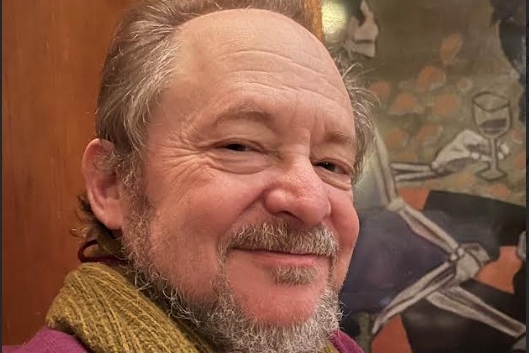
    Aaron Goldblatt, 70, of Philadelphia, award-winning museum services partner emeritus at Metcalfe Architecture & Design, former vice president for exhibits at the Please Touch Museum, exhibit designer, sculptor, adventurer, and mentor, died Sunday, Dec. 7, of lung cancer at his home.

    Mr. Goldblatt was an expert in conceiving and constructing environments of all kinds that encouraged play and what he called “informal learning.” He said in a 2019 article on the Metcalfe website that “novelty and a sense of risk” were the “social lubricator” in public spaces that “invokes a little nervousness and inspires social interaction.”

    He joined business partner Alan Metcalfe in 2002 and specialized in constructing canopy walks, glass floors, elevated walkways, net bridges, abstract playgrounds, multimedia exhibits, and other unique designs in prominent locations. Visitors encounter their creations at the Museum of the American Revolution, the Independence Seaport Museum, Children’s Hospital of Philadelphia, the National Museum of Industrial History in Bethlehem, Pa., and the Whiting Forest at Dow Gardens in Michigan.

    He and colleagues built the Lorax Loft on the Trail of the Lorax at the Philadelphia Zoo, the innovative garden and playground at Abington Friends School, and the lobby at Wissahickon Charter School. At Morris Arboretum, they built the celebrated Out on a Limb and Squirrel Scrambletreetop experiences” that Inquirer architecture critic Inga Saffron called “an irresistible allure, to young and old alike.”

    He earned bachelor’s and master’s degrees in sculpture, hitchhiked from adventure to adventure around the country and South America after high school, and said in 2019 that “learning, laughter, and creating genuine connections between people, nature, and history … really inspire my design.”

    Play, he said, is one of those genuine connections. “Wherever people are, as long as they are there long enough, play will happen,” he said in 2019. “It happens in schools, museums, and even prisons. Play is fundamental to being human.”

    Together, Mr. Goldblatt, Metcalfe, and their colleagues earned design awards from the local chapter of the American Institute of Architects, the American Association of Museums, and other groups. In 2022, they earned the Wyck-Strickland Award from the historic Wyck house, garden, and farm for outstanding contributions to the cultural life of Philadelphia.

    In a tribute, colleagues at Metcalfe said Mr. Goldblatt “transformed our studio into the place we are today.” They said: “His generosity, wisdom, and passion for play emanated throughout every conversation, punctuated only by his wit and sense of humor.”

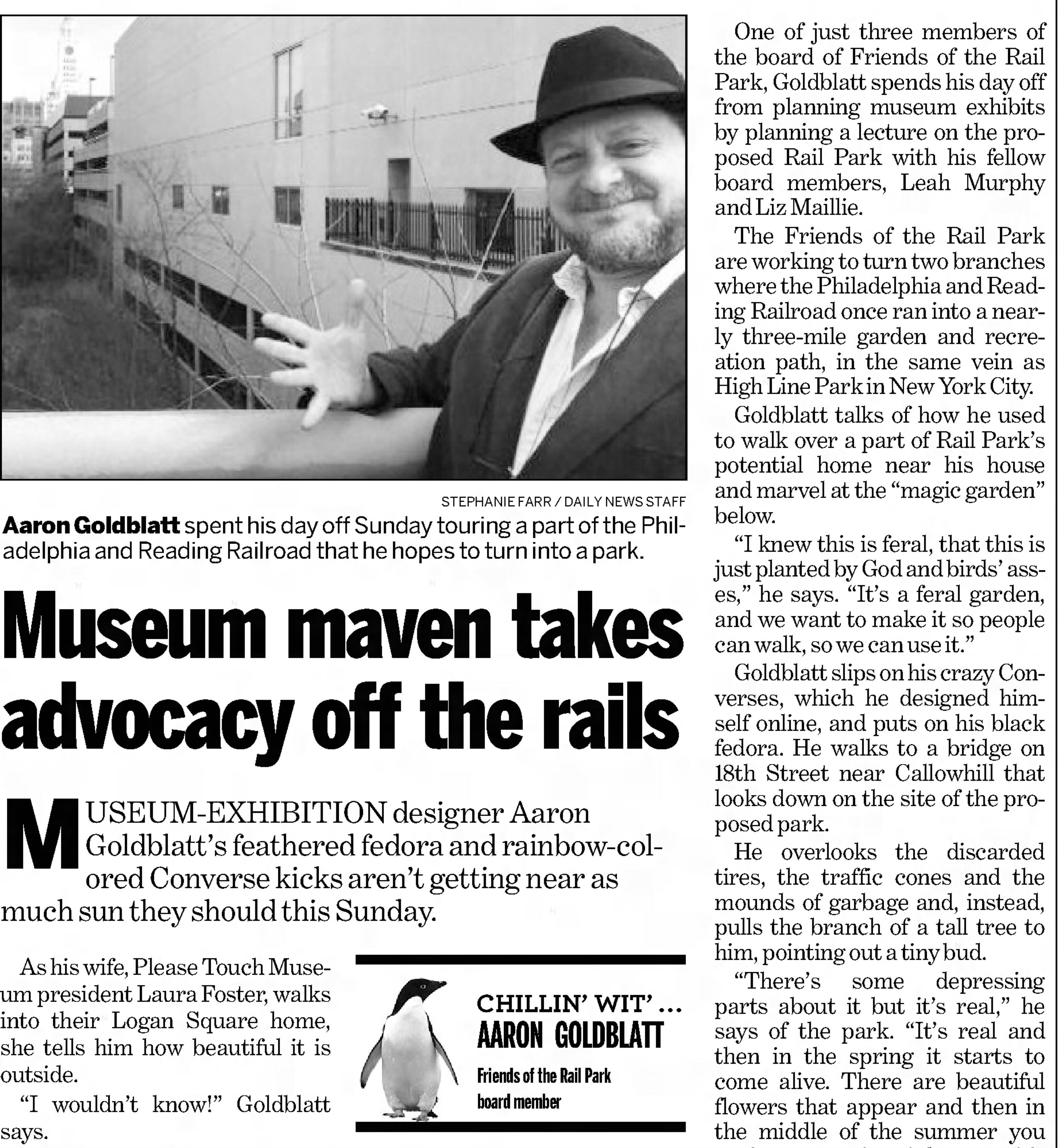
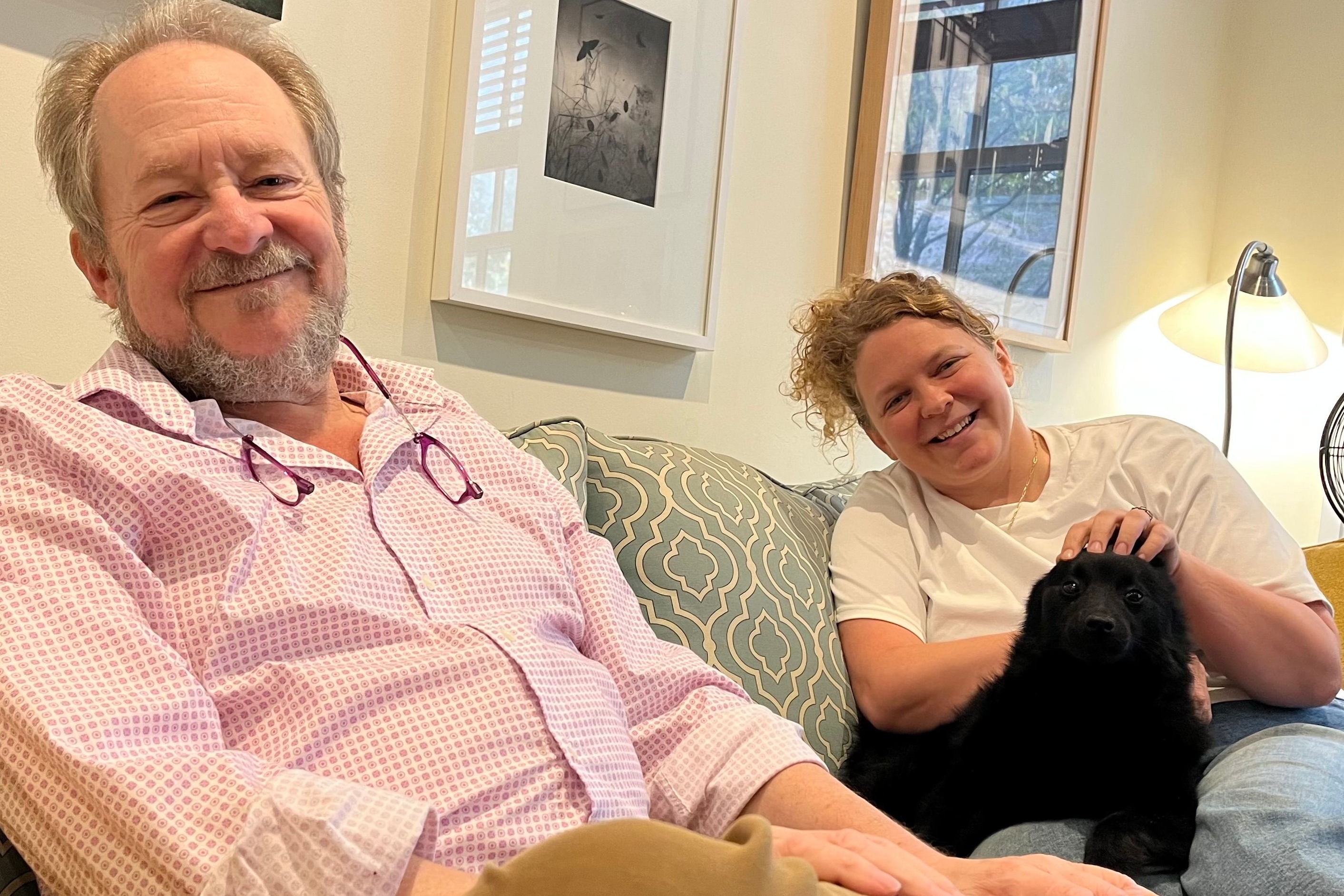
    This photo and story about Mr. Goldblatt appeared in the Daily News in 2013.

    From 1990 to 2002, he designed and developed exhibits at the Please Touch Museum. Earlier, he was director of exhibits for the Academy of Natural Sciences, assistant director at the Wagner Free Institute of Science, and studio assistant to sculptor Alice Aycock and other artists.

    He helped design the Rail Park and was a cofounder and longtime board member of Friends of the Rail Park. He served on boards at the Print Center, the Wagner Free Institute of Science, and other groups, and taught postgraduate museum studies at the University of the Arts for 20 years.

    “He developed a love of the process and philosophy of building,” said his daughter, Lillian. His wife, Susan Hagen, said: “He was always engaged, always asking questions. He was curious, funny, and extremely smart.”

    Friends called him “lovely, smart, and witty” and “warm, wise, and creative” in Facebook tributes. One friend said: “He always had a spark.”

    Aaron Shlomo Goldblatt was born March 22, 1955, in Cleveland. His father was in the Army, and Mr. Goldblatt grew up on military bases across the country and in Germany.

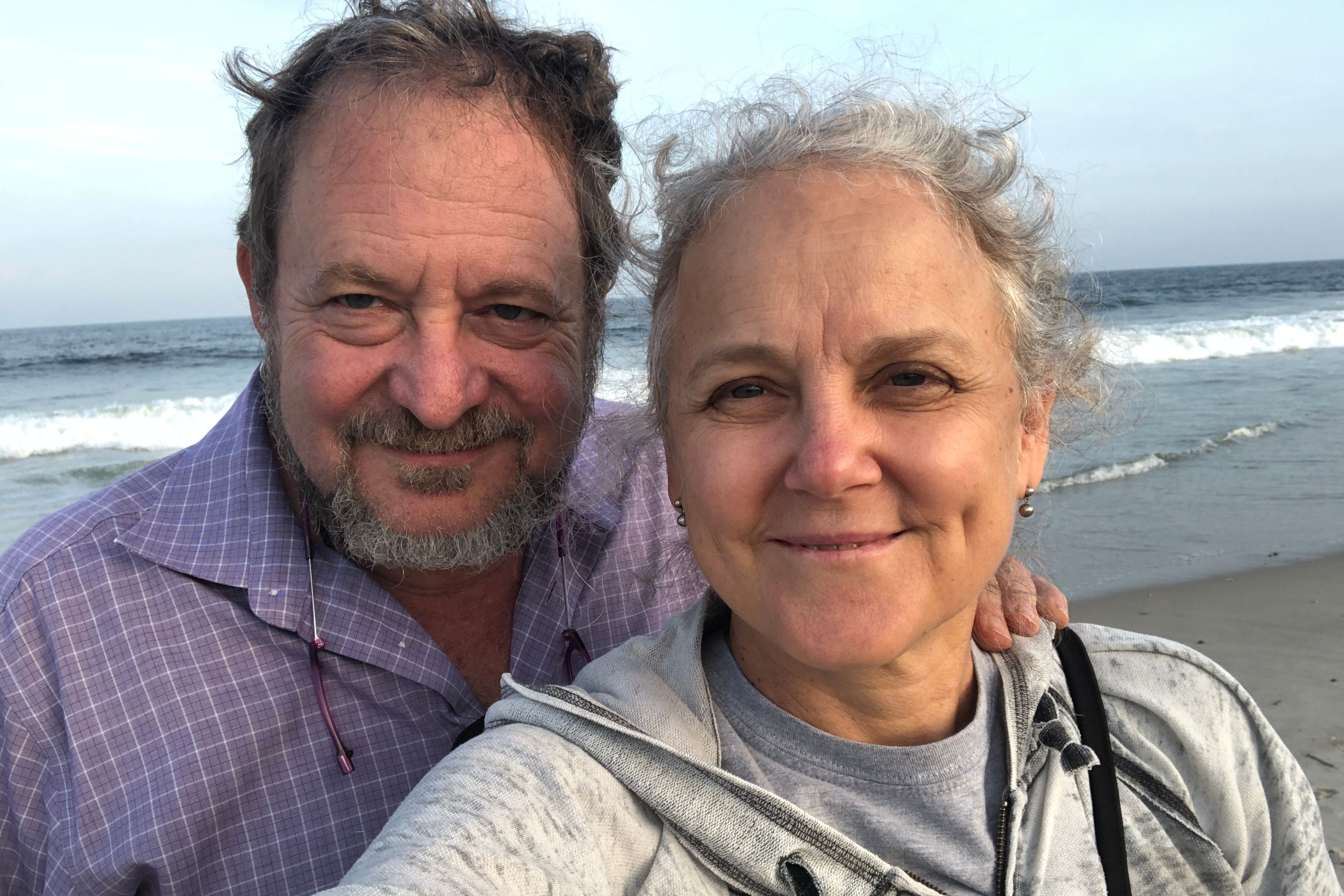
    Mr. Goldblatt and his wife, Susan Hagen, married in 2023.

    He graduated from high school in Maryland and earned his bachelor’s degree at Philadelphia College of Art in 1982 and master’s degree at Rutgers University in 1990. Before settling in Philadelphia, he worked on farms, painted houses, and spent time as a carpenter, a welder, and a potter.

    He married Diane Pontius, and they had a daughter, Lilly. After a divorce, he married Laura Foster. She died in 2019. He married fellow artist Susan Hagen in 2023, and they lived in Spring Garden.

    An engaging storyteller and talented cook, Mr. Goldblatt enjoyed all kinds of art, music, and books. He watched foreign films, wrote letters to politicians and the editor of The Inquirer, and visited the Reading Terminal Market as often as possible. He and his wife started birding during the pandemic.

    “Aaron led with his heart, engaging deeply with the people and ideas around him,” his daughter said. “He could burst into song at any moment.”

    Mr. Goldblatt smiles with his daughter, Lilly.

    His wife said: “He was a family person, and everyone talks about his love and kindness.”

    In addition to his wife and daughter, Mr. Goldblatt is survived by a grandson, a sister, a brother, his former wife, and other relatives.

    A celebration of his life is to be held later.

    Donations in his name may be made to the Aaron Goldblatt Fund at Tree House Books, 1430 W. Susquehanna Ave., Philadelphia, Pa. 19121; the Wagner Free Institute of Science, 1700 W. Montgomery Ave., Philadelphia, Pa. 19121; and the Print Center, 1614 Latimer St., Philadelphia, Pa. 19103.

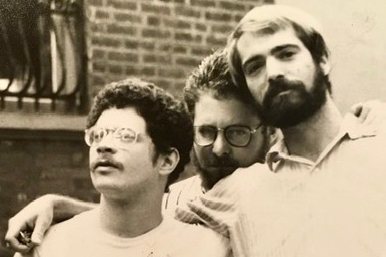
    Mr. Goldblatt (center) enjoyed time with his brother, Eli (right), and friend John Landreau.
  • ‘Eat a cheesesteak’: Will Smith’s advice to a younger Will on ‘Bel-Air’ is the perfect ending to the series

    ‘Eat a cheesesteak’: Will Smith’s advice to a younger Will on ‘Bel-Air’ is the perfect ending to the series

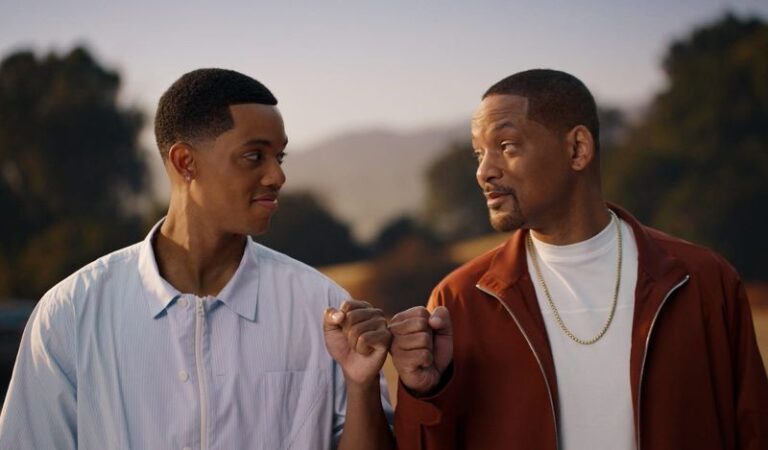
    The original Fresh Prince, Will Smith, makes a cameo in the final scene of Bel-Air, Peacock’s reimagining of the 1990s hit The Fresh Prince of Bel-Air.

    The older, fictional Will has a heartfelt talk with his younger, fictional self (West Philly-born Jabari Banks) on a mountaintop overlooking Los Angeles.

    After a tumultuous four seasons in Bel-Air, Will is returning to Philadelphia to attend the University of Pennsylvania. He’s worried he will forget the life lessons he learned with the Banks family.

    Peacock dropped the season finale on Monday.

    “You know I used to worry this city would make me forget who I was and where I came from,” the younger Will tells OG Will. “Now that I’m going back home I’m afraid I’ll forget who I became.”

    “That’s good,” OG Will replies. “That means you’ve become something worth holding on to.”

    OG Will goes on to tell young boul Will not to worry, that no one has all the answers, especially the people who pretend they do. He tells him that he will make mistakes. Then, he conspiratorially leans in as if he’s dropping knowledge forbidden by the Universe that the younger Smith will be OK.

    In that moment, you wonder if Smith, the Academy Award-winning actor, is speaking to the 1990s version of the Fresh Prince of Bel-Air star.

    “You are going to mess things up,” the older Smith continues. “You will learn, you will grow. Live. Laugh and cry.”

    Then he adds a little levity.

    “Eat a cheesesteak,” the older Smith says laughing. “Not every day, because cholesterol is real.”

    Show us the lie.

    Peacock debuted Bel-Air in 2022, after Kansas City writer Morgan Cooper posted a trailer titled, “What would happen if Will Smith was in ‘The Fresh Prince of Bel-Air’ today?” positioning the classic sitcom as a serious drama with 2020 technology and a modern soundtrack.

    The viral video caught Will Smith’s attention, and after swearing he’d never return to the fictional world of Bel-Air, he signed on as one of the show’s executive producers. Shortly after it debuted, Bel-Air became Peacock’s most streamed original series ever, reaching 8 million subscribers.

    Recently, Smith, the older actor, told ET that the series’ final scene almost didn’t happen.

    “I almost played the father,” Smith said, of the role of Lou played by Marlon Wayans. “It just felt like it might be a little too meta, a little too weird.”

    Smith’s cameo was a perfect ending to a series that was as emotional as it was nostalgic.

    “Life goes by fast, man,” says the older Smith as he closes the series. “Try to enjoy the ride. I’ll let you in on a little secret. We’re going to be all right.”

  • The West Philly rapper whose work has landed on ‘Abbott Elementary.’ Twice.

    The West Philly rapper whose work has landed on ‘Abbott Elementary.’ Twice.

    When Philly artist Amir Bey Richardson first uploaded his rap songs online in 2010, he was told his music was “too corny” to garner an audience.

    “I definitely had friends who encouraged me, but I had other friends who used to call it ‘bus driver rap,’” Richardson said. “Or they said, ‘Too many people rap. Get out of here.’”

    Today, Richardson is a go-to musician-for-hire for major network shows, including for the Emmy-winning, Philly-set comedy series Abbott Elementary.

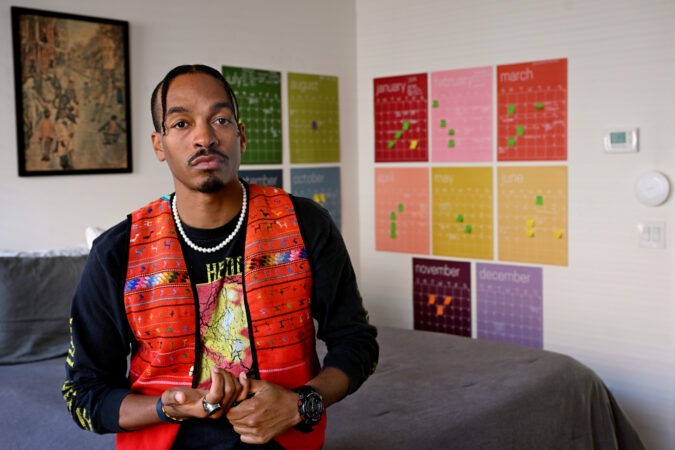
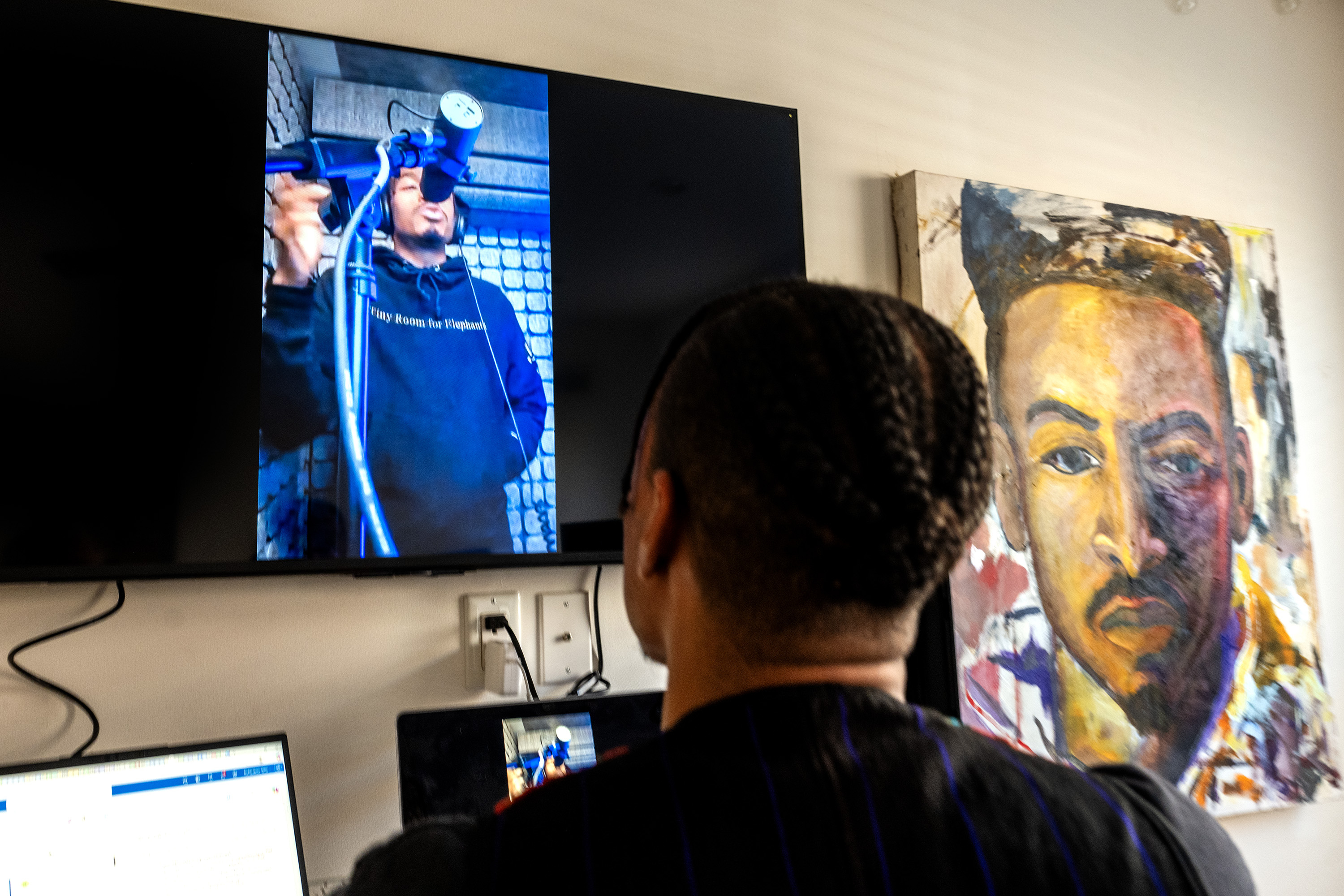
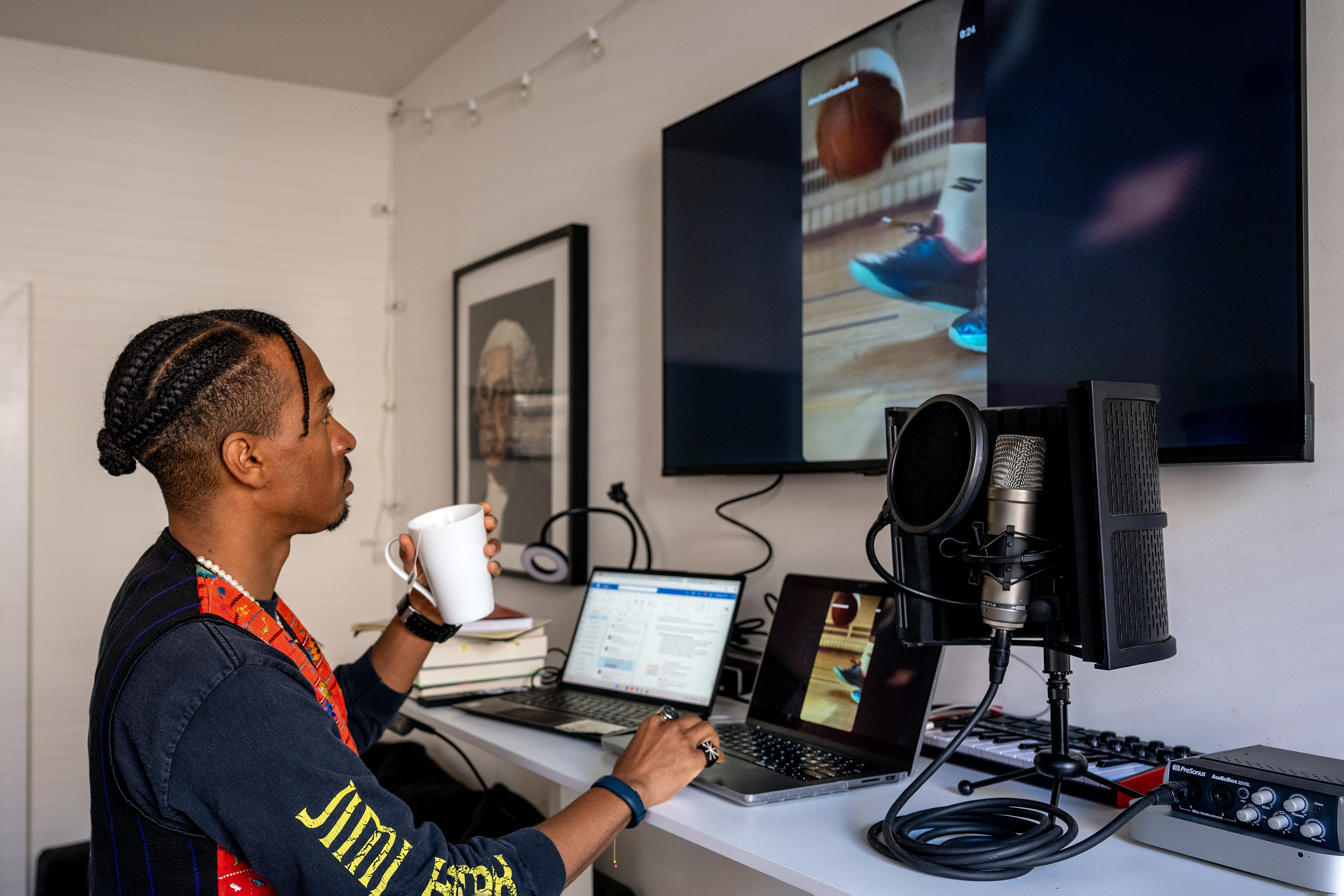
    Philly artist Amir Bey Richardson in his home studio on Monday, Dec. 1, 2025.

    Richardson, who goes by Bul Bey, knows his music doesn’t have the same musical edge that has long defined Philadelphia’s hip-hop sound. But he makes up for it with his more soulful and personal hip-hop records that speak to his West Philly roots and connect with a wider range of rap fans.

    “Philadelphia is one of those cities where rapping is held to a higher standard, so I had to listen to my heart,” he said. “I was an artist whether I wanted to be one or not.”

    While his sound didn’t match that of his contemporaries, he believes it sets him apart from other Philly artists.

    On the Oct. 22 episode of Abbott Elementary, Richardson’s 2024 track “Elbow Deep” can be heard in the background as characters Gregory and Janine (played by Tyler James Williams and show creator Quinta Brunson), set the vibe for a friendly hangout.

    “I lost my mind when I heard it,” Richardson said. “There are some explicit moments in the song, but when I saw the scene, it all made total sense.”

    This was the second time Richardson’s music was placed in the hit series.

    Back in February 2022, Richardson sent an “awkward” introductory message on LinkedIn to Abbott Elementary music supervisor Kier Lehman. Among the tens of tracks Richardson pulled from his catalog to include in that message, the 2014 single “Where I’m From” struck a chord with Lehman.

    Philly artist Amir Bey Richardson at his home studio Monday, Dec. 1, 2025.

    In early 2023, the Grammy-nominated music supervisor reached out to Richardson to request the use of “Where I’m From” for season two, episode 19, of the show.

    Richardson said he’s still processing the achievement. “Sometimes I go back to the episode just to make sure it wasn’t changed,” he said.

    That song placement, Richardson said, arrived at a “time of desperation.”

    After a decade of making music, Richardson was at a creative crossroads. He was confident in his musical talents, but it felt like there were limited avenues to showcase them. “I felt very lost and desperate,” he said.

    He stumbled onto Abbott Elementary like everyone else. Only he paused the TV to find Lehman’s name in the credits and reached out to him months later on the networking platform.

    While he’s now “embarrassed” by his direct message to Lehman, the eventual song placement was the first time Richardson was ever paid for his music.

    “That was definitely me crossing a threshold,” he said. “And in my mind, I was like, ‘I have to do that again.’”

    It would be two years until that would happen. Earlier this year, Lehman reached out to Richardson to use “Elbow Deep.” Richardson approved immediately.

    Philly artist Amir Bey Richardson at his home studio Monday, Dec. 1, 2025. He is seen doing the voice-over for a Joel Embiid Skechers commercial.

    In the meantime, that first placement opened several creative doors.

    Between his role as an event coordinator for the Free Library of Philadelphia Foundation, Richardson dropped a pair of collaborative EPs with producers Sam Live and Patrick Feliciano. He also contributed music to WHYY programs, such as Albie’s Elevator and The Infinite Art Hunt, and served as host of the Franklin Institute’s So Curious podcast.

    He was even tapped to narrate a Skechers ad featuring Sixers star Joel Embiid, showcasing his abilities as a voice-over talent.

    It’s all been a surprising path, Richardson said. One that has inspired him to pursue avenues that meld his love of music and Philadelphia.

    “It let me know I had a narrower view of what I could do as an artist,” Richardson said. “I wouldn’t say I’m doing unconventional things, but it’s more of a wider range.”

    Philly artist Amir Bey Richardson in his home studio Monday, Dec. 1, 2025. He did the voice-over in a new Joel Embiid Skechers commercial, seen on screen.

    His goal is to be a more notable name for big-budget shows and eventually land a placement on a blockbuster film. He currently has his sights on Sony’s animated Spider-Man multiverse saga, which Lehman served as the music supervisor for in 2018.

    For someone who started out making songs from his college radio station at Pittsburgh’s La Roche University, and now sees his name on TV screens, Richardson has learned to avoid limiting his art and musical reach. And to the friends who previously doubted his abilities, he’s proving his music can take him places he’s never been, including prime-time television.

  • Plan to keep a Rocky statue at the top of the Art Museum steps moves forward

    Plan to keep a Rocky statue at the top of the Art Museum steps moves forward

    Keep punching, Rocky.

    Creative Philadelphia’s proposal to permanently install a Rocky statue at the top of the Philadelphia Art Museum’s famed steps is one step closer to reality following a Philadelphia Art Commission meeting Wednesday, though the plan fell short of receiving final approval following a mixed vote. Three commissioners voted to approve the concept, while one disapproved and two abstained.

    And, in perhaps bigger news to supporters, if the plan goes through, the screen-used statue that sits at the bottom of the Art Museum steps would be moved to the top thanks to what appears to be a change of heart from the Italian Stallion himself, Sylvester Stallone. Initially, the city planned to give the original statue back to Stallone, who gifted it to Philadelphia decades ago, and keep the other casting that now sits at the top of the Art Museum steps.

    “In response to the strong and heartfelt feedback from the public, Mr. Stallone has graciously decided that we will no longer move forward with the proposed statue swap,” chief cultural officer Valerie V. Gay said at Wednesday’s meeting. “This outcome reflects our shared commitment to listening deeply to the community and doing what is best for both the art and the people who cherish it.”

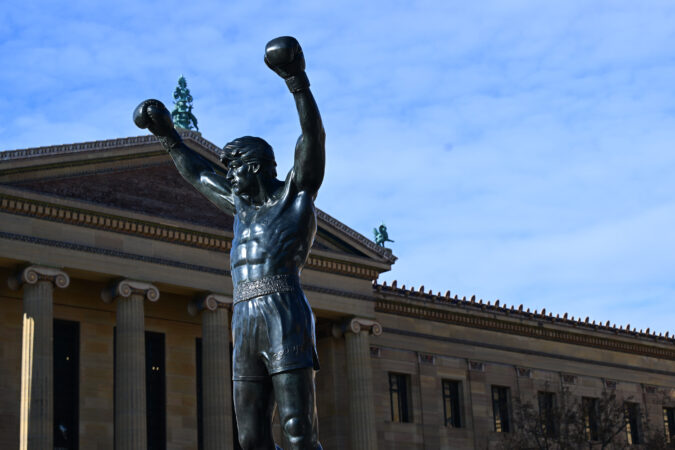
    Now, the city would keep the original, commissioned by Stallone for 1982’s Rocky III, while the second casting — reportedly purchased for about $403,000 at an auction in 2017 — would go back into the actor’s private collection. The second casting has been on (supposedly temporary) display at the top of the Art Museum’s iconic steps since last December, when Stallone lent it to the city for the inaugural RockyFest, which celebrates the Rocky franchise.

    What will happen, however, remained up in the air following Wednesday’s meeting. Commission members largely cited concerns over accessibility and feasibility with moving the Rocky statue to the top of the Art Museum steps, but ultimately approved the concept on the condition that Creative Philadelphia present further information before a future vote for final approval. The art commission is next slated to meet Jan. 14, members said Wednesday.

    The goal, Gay said, is to have only one Rocky statue at the Art Museum, and install another, as-yet-unannounced, city-owned statue at the bottom of the building’s steps where the original Rocky statue now stands.

    “It will not be Rocky,” Gay said. Philly, it should be noted, has a third Rocky statue at Philadelphia International Airport, which made its debut late last month in Terminal A-West.

    If approved, the plan would get underway next year. As part of “Rising Up: Rocky and the Making of Monuments,” an Art Museum exhibit slated to run from April to August, the original Rocky statue would be displayed inside the museum for the first time, while the loaner remains outside. At the conclusion of that exhibit, the original would be moved outside to the top of the Art Museum’s steps for its permanent installation, and the loaner would go back to Stallone, officials said Wednesday.

    Years of moves and debate

    Wednesday’s meeting marked yet another chapter in the Rocky statue’s controversial history in town. It arrived for the filming of Rocky III, but when the shoot wrapped in 1981, a permanent location had not been approved, causing it to be shipped back to Los Angeles. It ultimately came back and was temporarily exhibited again at the top of the Art Museum steps before being moved back and forth several times between that location and the Spectrum at the stadium complex in South Philly.

    Over the years, the statue has ignited public debate about whether it should be displayed at the Art Museum, and whether it is art in the first place. Still, it has been on display at the foot of the museum’s steps since 2006, where it has served as a draw for tourists and residents alike, attracting an estimated 4 million visitors per year, Creative Philadelphia officials said.

    Inquirer readers largely said in September that the statue temporarily installed at the top has overstayed its welcome, with about 46% of respondents to one poll saying no Rocky statue belongs at the top of the steps, but the one at the bottom should stay. Roughly 20% said the city should not have a Rocky statue at all.

    Gay, however, said Wednesday that the proposed permanent Rocky statue installation offers a chance to “allow art to bring our community together” and encourage visitors to the statue to take in the art on display inside the museum.

    “This is absolutely an amazing opportunity to expand our connection, our community’s connection, with art,” she said.

  • The meaning of a sculpture outside the Cherry Hill library is up to you

    The meaning of a sculpture outside the Cherry Hill library is up to you

    Taking his daughters to the Cherry Hill Public Library was a weekend ritual for David Jastrow, and one intricate sculpture out front always gave his family pause.

    “For whatever reason, that sculpture always caught the attention of my daughters. When they were younger, they used to call it the ‘mixed-up elephant,’ which I always thought was funny,” said Jastrow, 51, a township resident who still frequents the library to pick up biographies and mystery novels.

    The Cherry Hill Public Library has upward of 50 works of art inside its halls, in addition to numerous sculptures outside, including the “mixed-up elephant” on the front lawn. That spurred Jastrow to write in to Curious Cherry Hill, The Inquirer’s forum for answering your questions.

    “It’s a very abstract piece of artwork. You can kind of see the trunk coming out at one part,” Jastrow said. “I thought maybe it was designed with the elephant in mind in some way, but I doubt it.”

    » ASK US: Have something you’re wondering about in Cherry Hill? Submit your Curious Cherry Hill question here.

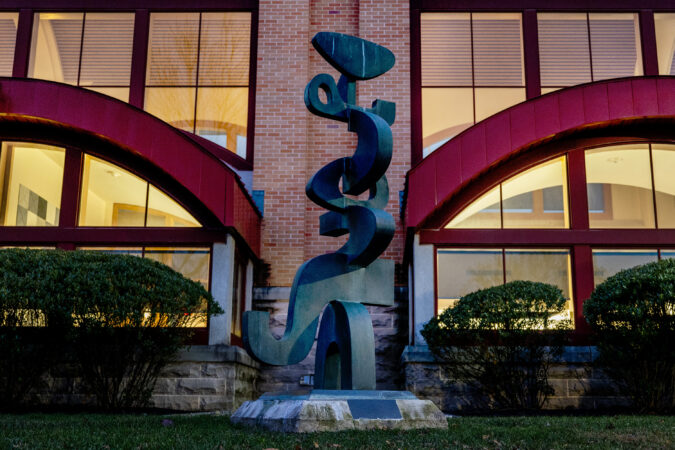
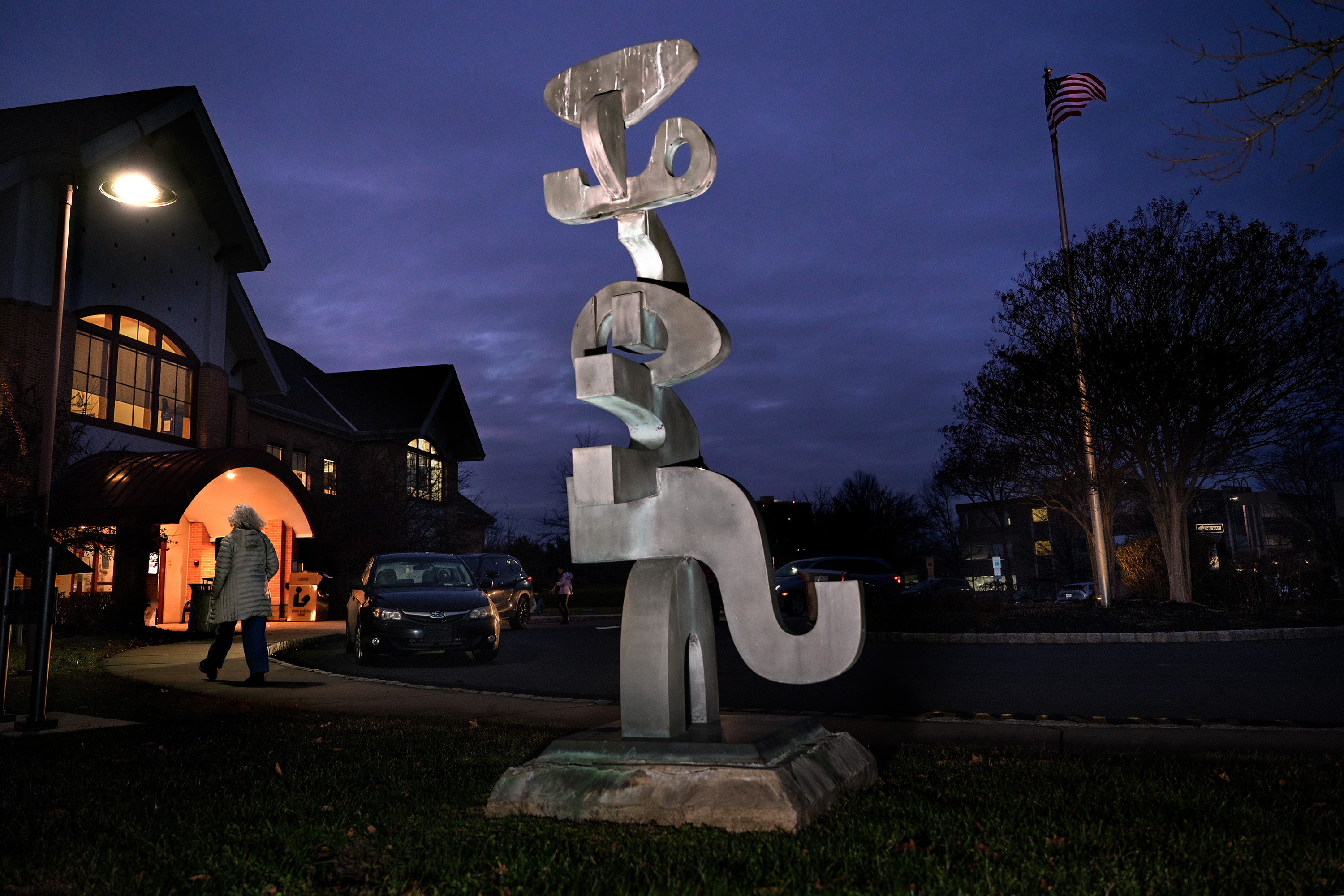
    And Jastrow would be right. “Totem” is an 8-foot-tall bronze sculpture that twists into an elaborate structure reaching toward the sky. Sitting to the left of the library’s main entrance since 2009, visitors can’t help but try to decipher its meaning.

    Eric Ascalon, the son of award-winning sculptor and stained-glass artist David Ascalon, who crafted “Totem,” said that the different interpretations are exactly what his father intended.

    “The sculpture just came from a natural place within his psyche,” Eric Ascalon said. “He feels abstract art is put out there by the artist, but it’s designed to be interpreted in any whatever it means to the viewer.”

    Sculpture often takes long periods of time to conceptualize and design. In David Ascalon’s abstract work, he would swiftly sketch a design on a loose piece of paper and lock that design in. Despite a quick conceptualization, the statue took months to build.

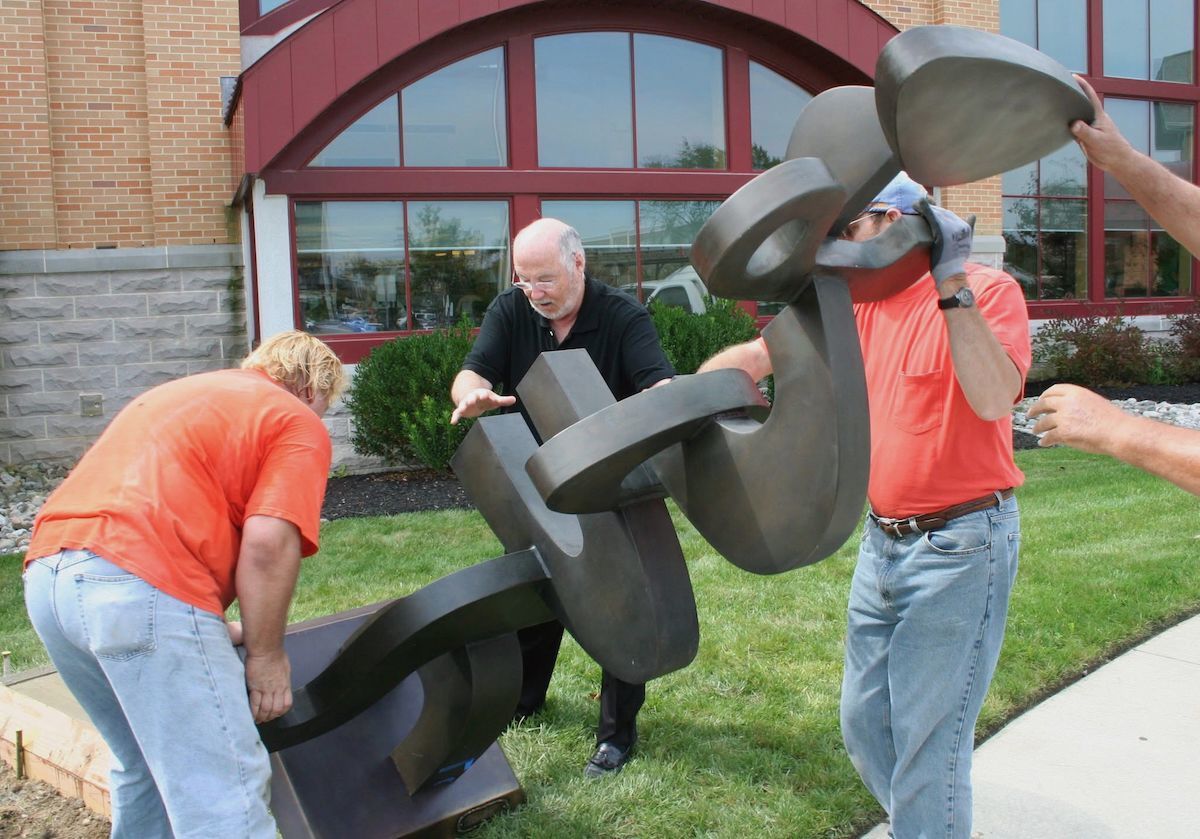
    David Ascalon, center, the creator of the 8-foot-tall bronze sculpture, “Totem,” installing the statue outside of the Cherry Hill Public Library in 2009. The sculpture stands today at the library, enticing visitors to interpret its abstract form.

    “I would say ‘Totem’ is kind of a reflection of his subconscious and just his creative spirit,” Eric Ascalon said.

    For David Ascalon, dipping his toes into abstract art was a way to clear his mind from the painstakingly detailed work of his stained-glass windows, said his son, who worked alongside his father and the rest of the family at their now-closed West Berlin firm, Ascalon Studios.

    After forming Ascalon Studios in 1977, with his father, Maurice, David Ascalon would go on to craft some of the finest stained-glass windows in synagogues and public spaces across the region. His work can be seen in the stained-glass windows in nearby Temple Beth Shalom, and all the way in Harrisburg, where his 15-foot Holocaust Memorial overlooks the Susquehanna River.

    It’s not only Ascalon’s work that draws people into Cherry Hill’s library, either.

    Walking up to the three-acre property, guests are greeted by what looks like a real couple reading the newspaper on the library lawn — perhaps unusual in 2025 — but step a little closer, and see that they’re not human, but a hyperrealistic sculpture of a man and woman lounging in the grass.

    Another abstract sculpture, created in memory of Valerie Porter, a Cherry Hill resident who loved to read but died unexpectedly in 1966 after a neurological condition, sits outside the library. David Ascalon helped restore it in 2016.

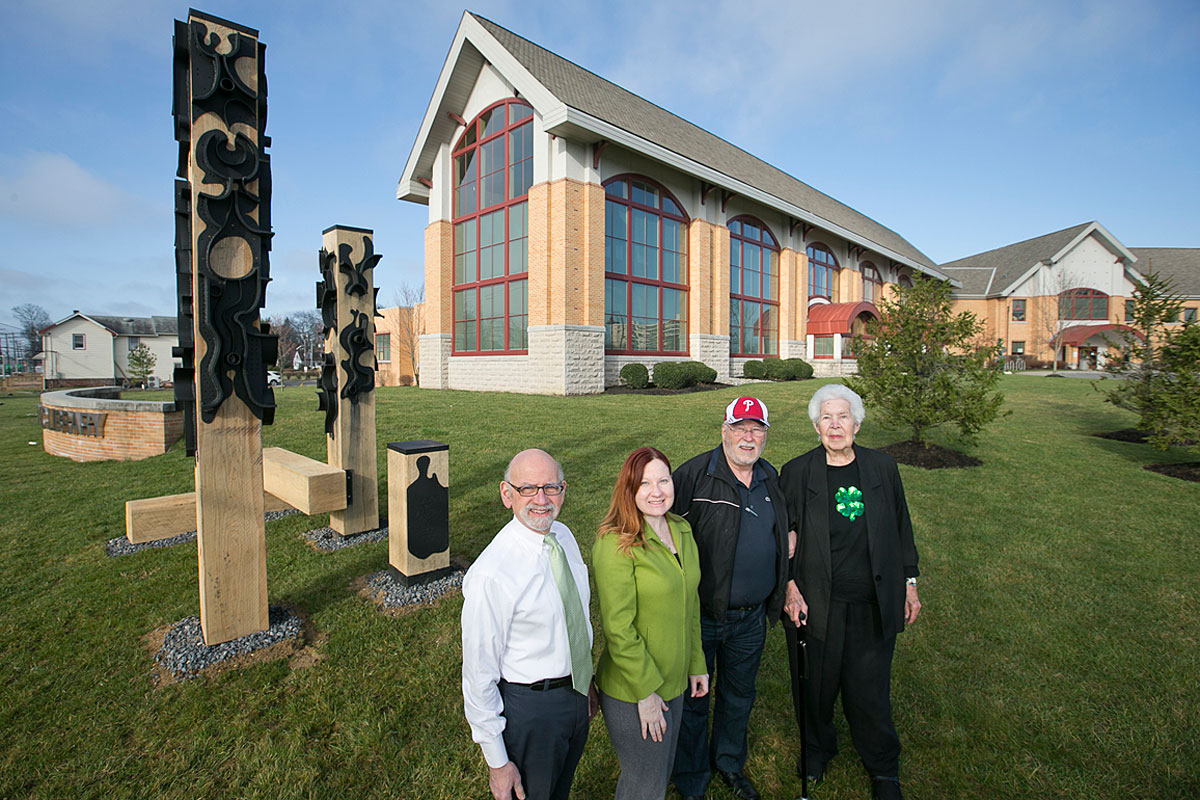
    Fred Adelson, sculpture committee, Laverne Mann, director of Library, artist David Ascalon of Cherry Hill and Sally Callaghan also of sculpture committee, left to right, outside the Cherry Hill Library.

    Inside, several walls are adorned with public art, many created by Cherry Hill residents. Downstairs is a year-round art gallery that promotes a new local artist every month, said library director Tierney Miller.

    Such works amount to small glints in human creativity, something that the library continually fosters through its programming, said Miller.

    The monthly showcase is so popular among local artists that the gallery space is booked years in advance, “2026 is already full, and we’re booking for 2027 now,” Miller said.

    While only Cherry Hill residents can get a free library card — there are paid options for others — anyone can attend its free events.

    The sculpture “Totem” by David Ascalon. It was installed in 2009 on the grounds of the newly opened Cherry Hill Public Library.

    This suburban content is produced with support from the Leslie Miller and Richard Worley Foundation and The Lenfest Institute for Journalism. Editorial content is created independently of the project donors. Gifts to support The Inquirer’s high-impact journalism can be made at inquirer.com/donate. A list of Lenfest Institute donors can be found at lenfestinstitute.org/supporters.