Actor and musician Will Smith is facing a lawsuit filed by violinist Brian King Joseph, who has accused Smith of sexual harassment, wrongful termination, and retaliation during Smith’s “Based on a True Story” tour.
Joseph, who rose to fame as an America’s Got Talent contestant, was hired for Smith’s concerts in 2024. Now, he is suing Smith and his company, Treyball Studios Management, over an alleged incident that took place in March 2025 during the tour’s Las Vegas stop.
According to a civil complaint filed in a Los Angeles court on Tuesday, Joseph said he returned to his Las Vegas hotel room at 11 p.m., which was booked by Smith’s company, to find it was “unlawfully entered” by an “unknown person.”
Brian King Joseph plays the National Anthem before the Los Angeles Rams host the Dallas Cowboys in the NFL Divisional Round at the Los Angeles Memorial Coliseum in 2019.
Max Faulkner/Fort Worth Star-Telegram
A handwritten note was left behind, according to the lawsuit. It read, “Brian, I’ll be back no later [sic] 5:30, just us, Stone F.” The note was left behind with other items that allegedly include “wipes, a beer bottle, a red backpack, a bottle of HIV medication with another individual’s name, an earring, and hospital discharge paperwork belonging to a person” unknown to Joseph, the lawsuit states.
Joseph said he reported the incident to hotel security, local police, and tour management. The musician claims he was accused of fabricating the story and was “shamed” for reporting the incident. He was subsequently fired from the tour, with management telling him the tour was “moving in a different direction.” Another violinist was promptly hired in his place.
In the lawsuit, Joseph claims that tour management had suspiciously lost his bag, which included his room key. Joseph called these a “sequences of events” which, paired with the nature of the hotel intrusion, “all point to a pattern of predatory behavior rather than an isolated incident.”
The lawsuit also claims that Smith, a Philadelphia native, was “grooming and priming” the violinist for “further sexual exploitation.”
Will Smith poses for a portrait on Monday, March 17, 2025, in Los Angeles. (AP Photo/Chris Pizzello)
Joseph said in the filing that he and Smith had developed a close relationship while working together on Smith’s latest album and concert tour.
“You and I have such a special connection that I don’t have with anyone else,” Joseph claims Smith said to him.
Joseph is seeking compensation for personal and financial damages. He claims he made significant financial investments for the tour, and now suffers from major physiological damage and PTSD.
Smith’s attorney, Allen B. Grodsky, denied all claims, calling the allegations “false” and “baseless.”
“They are categorically denied, and we will use all legal means available to address these claims and to ensure that the truth is brought to light,” Grodsky said to People in a statement on Thursday.
Stravinsky’s Petrushka is beloved in the orchestral world, a landmark in the dance community, and for all audiences, one of the most peculiarly passionate ballet stories ever told.
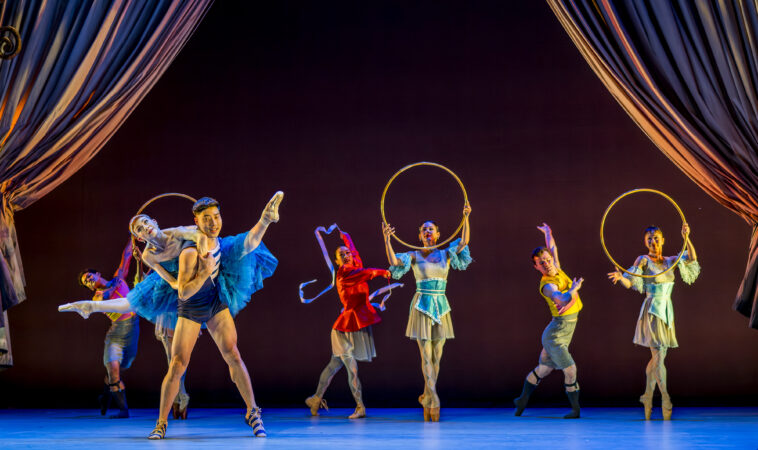
Seedy carnival puppets come to life, fall in love, die bitterly, and haunt adversaries mercilessly. But will that music/theater package thrive when dramatically transformed by BalletX — in its latest collaboration with Philadelphia Chamber Music Society?
Sight unseen, anticipation runs so high that the Jan. 8 and 9 performances at the Kimmel Center’s Perelman Theater are sold out (but with waitlists). The program, including Mozart’s Piano Quartet in G Minor, promises much to be seen — far from the 1911 Paris premiere by the world-changing Ballets Russes.
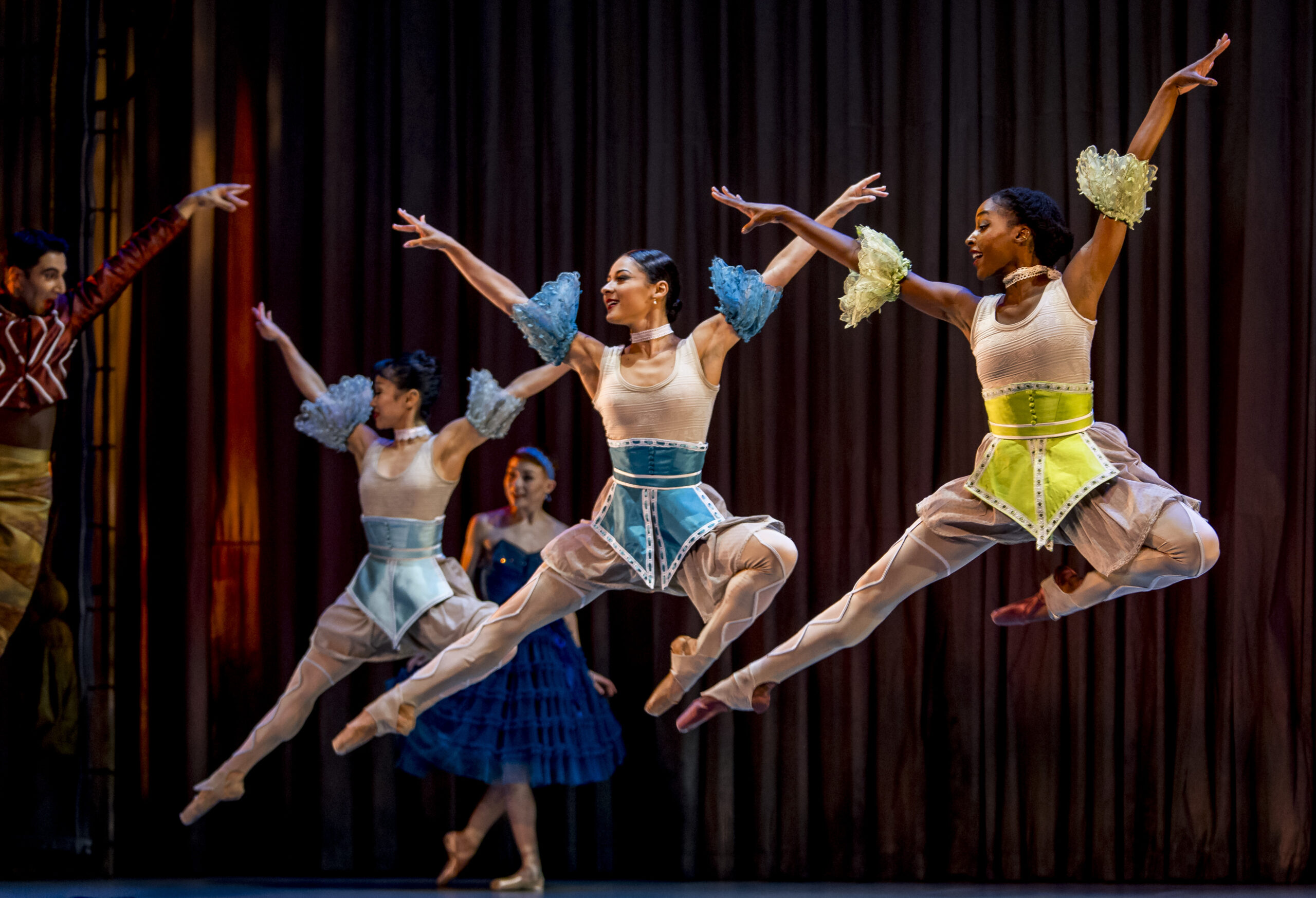
Ashley Simpson, Itzkan Barbosa, Minori Sakita, and Lanie Jackson of BalletX Company rehearse “Petrushka” choreographed by Amy Hall Garner at the Suzanne Roberts Theatre
For the story full of loneliness and jealousy, with a street-theater puppet show, the setting is Shrovetide Tuesday during what is now called Mardi Gras season. In this new version, the time setting for the traveling troupe is updated to the Great Depression. Petrushka — a role once performed by the legendary dancer Vaslav Nijinsky — becomes Pete.
“We’ve changed it up quite a bit,” said BalletX resident choreographer Amy Hall Garner, who has also worked with the Joffrey Ballet. “The beauty of Stravinsky’s music is that the ballet can take different routes and still support the story.”
BalletX Company rehearse “Petrushka”
choreographed by Amy Hall Garner at the Suzanne Roberts Theatre
The ballet was never meant to be cute. The primary point of reference for many modern audiences was a production by the sophisticated puppeteer Basil Twist — which has been seen in several venues since 2001, sometimes with two-piano accompaniment. The challenge, outlined at that time in a video interview by Twist, is projecting intense feelings among characters that “are supposed to be puppets, not supposed to be people.”
In Garner’s version, dancers will be humans at some turns, puppets in others.
The murderous Moor of the original has his plot functions replaced by, among others, a circus Strong Man and a magician known as the Charlatan. Such extrapolations are relatively respectful in light of how Stravinsky’s Rite of Spring has been turned from a ballet about pagan sacrifice to a modern gangster story by the much-admired choreographer Paul Taylor.
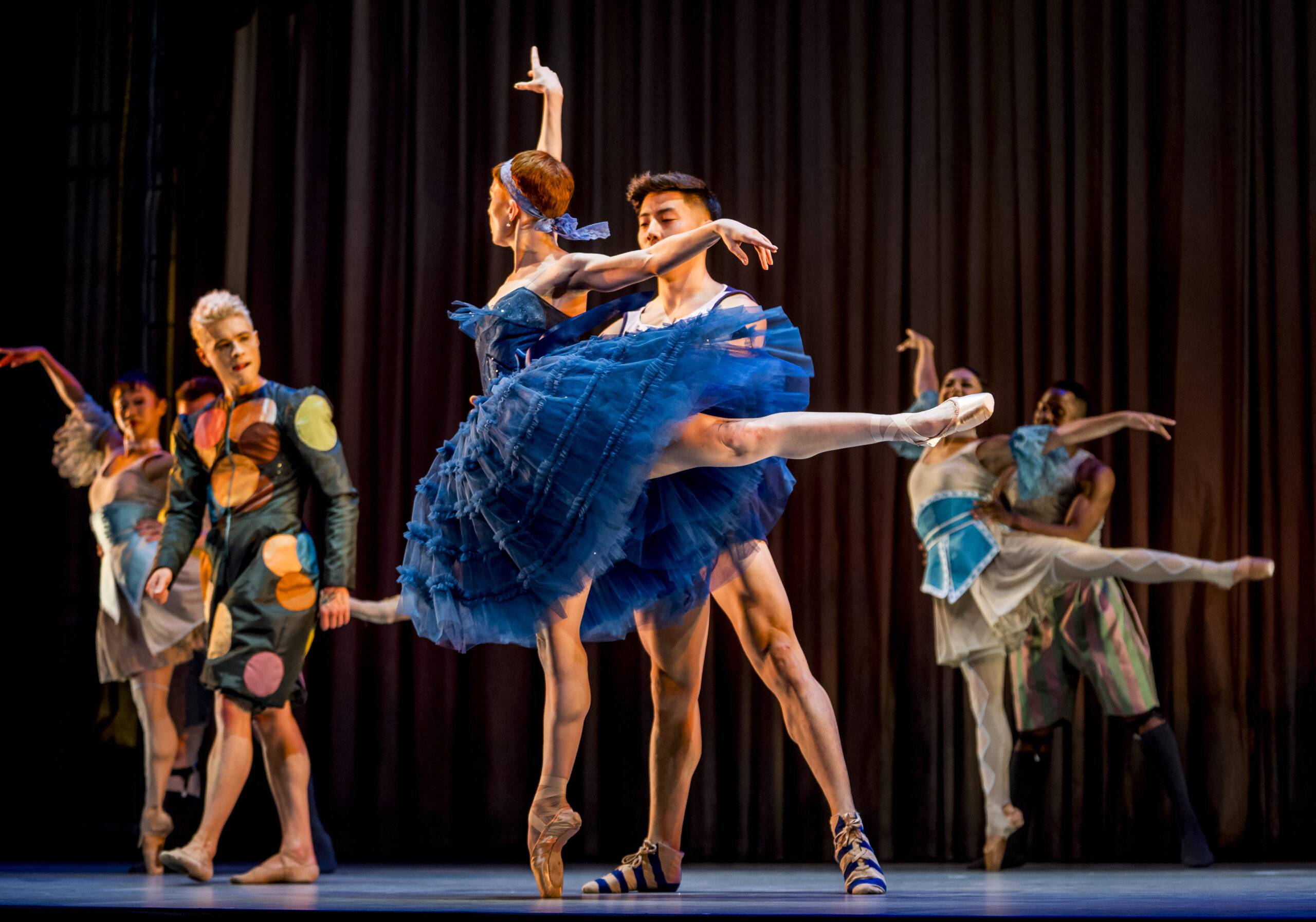
BalletX members rehearse “Petrushka,” choreographed by Amy Hall Garner.
The foundation of any Petrushka is the score. In contrast to many dance companies that use prerecorded music, the lavishly orchestrated Stravinsky original has been transcribed for piano quintet (piano and strings) by the ensemble 132, a collective of musicians in their 20s and 30s, formed in 2019, many having graduated from the Curtis Institute, their name drawn from one of Beethoven’s revolutionary opus numbers. They will not only be in the 500-seat Perelman Theater, but will be seen onstage.
Ensemble 132 is a collective of musicians in their 20s and 30s, formed in 2019, many having graduated from the Curtis Institute.
“There’s no hiding them,” said Garner. “Dance and music are like brother and sister — with all those heartbeats onstage. It’s a special connection that we don’t get to experience all of the time in the arts. It’s an unseen dialogue with the musicians integrated into the story.”
The project is part of a continuing collaboration between BalletX and PCMS that included a 2022 event with the Calidore Quartet — brokered in part by a mutual board member of the two organizations, Vince Tseng.
Mathis Joubert lifts Eli Alford during a rehearsal for “Petrushka.”
It’s also driven by the companies wanting to expand their respective audiences, both sides of which are open to such artistic cross-pollination when presented to them in their regular concert-going flight patterns.
For PCMS, much of the attraction comes out of fascination with BalletX. “We don’t usually get involved with a brand new work like this,” said PCMS artistic director Miles Cohen. “It’s impossible not to love what they do.”
What came first in this case was the Petrushka chamber-size version that was created a few years ago by and for ensemble 132.
Reducing Petrushka’s many details and colors might seem daunting. But because Stravinsky was a piano-based composer, tracing his thoughts back to their sound source isn’t impossible. “My focus was to present the gesture and the mood,” said ensemble member Sahun Sam Hong, co-artistic director and pianist of ensemble 132. “It’s music about characters but I don’t attempt to make value judgments on those characters.”
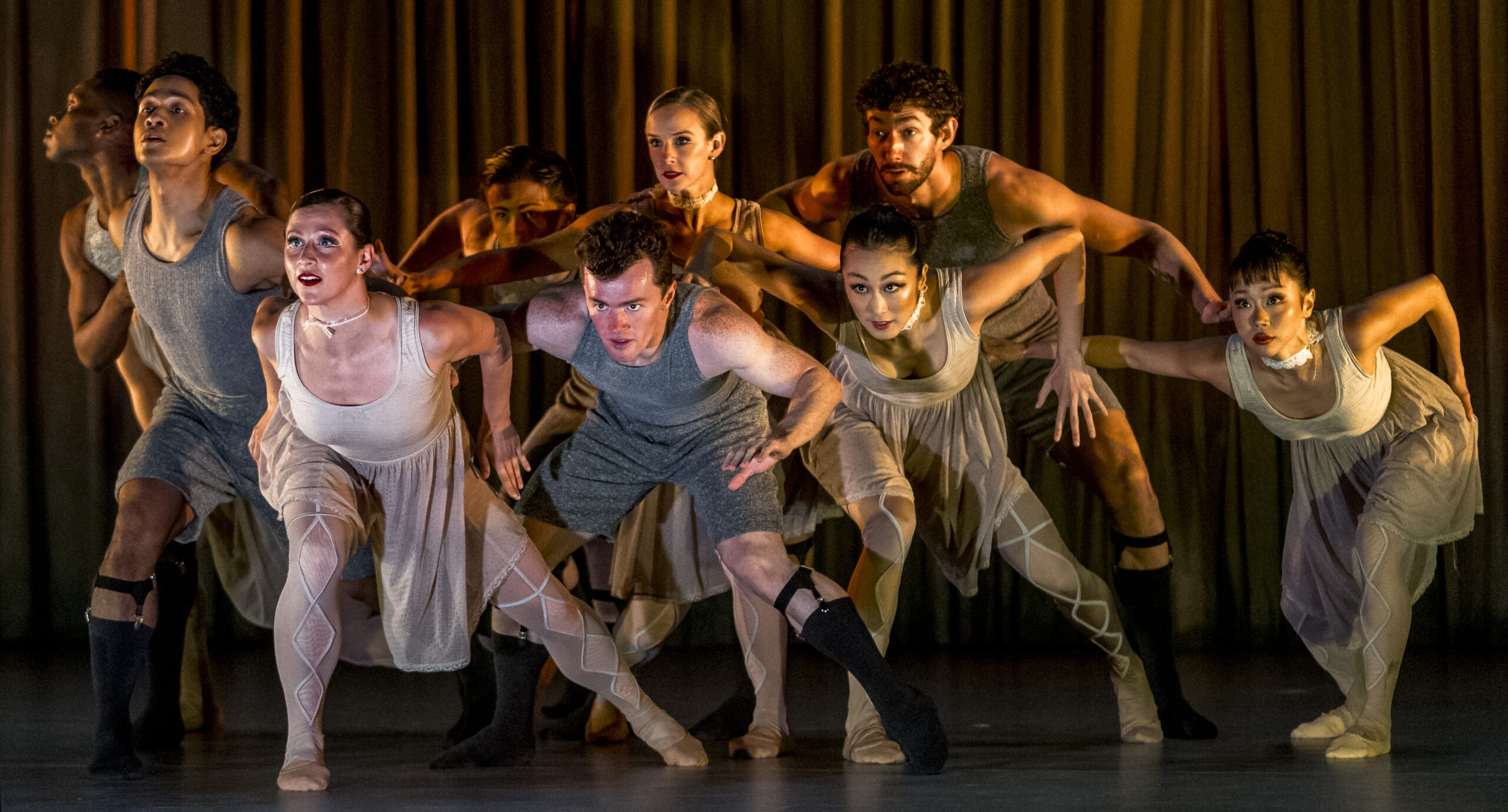
BalletX members rehearse “Petrushka” choreographed by Amy Hall Garner.
Still, psychological questions can’t help but arise for the musicians. Since the Petrushka character has a history of being a mere puppet, ensemble 132 member Zachary Mowitz speculates, “he’s going through adult matters and isn’t prepared to handle it.”
“Where does Petrushka belong?” asks Hong. “That’s a story to be told.”
Such answers fall to Garner, who treats the matter both philosophically and literally: “We put him in an environment where you could see promise. It’s an open field that this traveling show comes to. It’s gritty, it’s haunting, it’s gorgeous.”
BalletX and ensemble 132 perform “Petrushka,” Jan. 8, 9, 7.30 p.m., Perelman Theater, 300 S. Broad St. Tickets are sold out but there is a waitlist. boxoffice@pcmsconcerts.org, 215-569-8080, pcmsconcerts.org
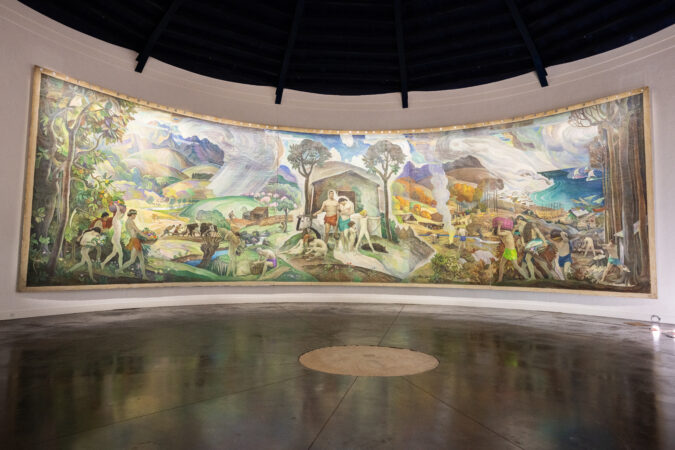
Packed away in 2007, a mural 60 feet long and 19 feet high has been brought back to life and given a swanky new home near Wilmington.
N.C. Wyeth’s colossal 1932 mural, “Apotheosis of the Family,” re-emerges in a gleaming new round barn after years in storage, on Jamie Wyeth’s property near Wilmington, Del.
Artist Jamie Wyeth had to rent a building “the size of an aircraft tanker” to open the rolled-up panels of the five-panel mural Apotheosis of the Family, painted by his grandfather — famed illustrator N.C. Wyeth.
The panels had been in storage for more than a decade, and once unrolled, Wyeth didn’t know what shape they’d be in.
“I didn’t know if I’d see potato chips of paint flying,” he said.
Thankfully, he didn’t.
Instead, in a bid to resurrect the mural from oblivion, he had a “sort of tent thing” built to humidify the panels of what is N.C. Wyeth’s largest artwork ever. “There was a lot of damage to it,” he said, “but certainly not major damage.”
Jamie Wyeth stands in front of his grandfather N.C. Wyeth’s colossal 1932 mural, “Apotheosis of the Family.” The 60-feet-long and 19-feet-high mural is now open for public viewing.
story continues after advertisement
In the late 1920s, while the country reeled under the Great Depression, N.C. Wyeth was commissioned to paint the colossal 60-feet-long and 19-feet-high mural by his friend Frederick Stone, who was the president of the Wilmington Savings Fund Society (now, WSFS). It was the bank’s 100th anniversary and they needed something that would instill some confidence in their clients.
N.C. Wyeth had already painted a 16-by-30-foot mural for New York City’s Franklin Savings Bank, and had added a mural studio to his painting studio in Chadds Ford, Pa. in 1923.
“He was beginning to take the idea of painting murals seriously. It’s a natural progression from illustration to mural painting, because both of them are involved with the painting telling a story, a narrative that really has a specific idea to be conveyed,” said Amanda Burdan, senior curator at the Brandywine Museum of Art, which has the largest collection of N.C. Wyeth paintings and oversees the studios of N.C. Wyeth and his son Andrew.
Jamie Wyeth outside the barn which houses N.C. Wyeth’s colossal 1932 mural, “Apotheosis of the Family”A view of the new round barn from the horse sanctuary built in memory of Jamie Wyeth’s wife, Phyllis
Building a home
Apotheosis was unveiled in January, 1932. Undergoing two restorations, the mural hung on the walls of the Wilmington Savings Fund Society location at Wilmington's Ninth and Market streets until 2007 when the bank sold the building to a developer.
That was when the five humongous panels were rolled away into storage and put under the care of the Historical Society of Delaware.
"Apotheosis" mural installed at Wilmington Savings Fund Society, 9th and Market Streets, Wilmington, DE, circa 1932.Sanborn Studio, Wilmington, DE
“It was all planned how to take it down, and they [possibly, the Historical Society, to whom the mural was donated by the developers and the bank] completely disregarded that, and used a cheaper method of removing it, and then rolled it the improper way,” said Jamie Wyeth, who was born in 1946, a year after his grandfather died from a freak accident where his car was struck by a freight train. N.C. Wyeth was working on a series of murals when he died.
A portrait of N.C. Wyeth around 1930.
When being rolled, the painting side of Apotheosis was supposed to be on the outside to prevent cracking. But it was rolled inside. Chunks of the lead white paint from the wall were still stuck to the panels’ back when they were packed away. For the next 15 years, until 2022, the mural lay forgotten.
In 2021, the Wyeth Foundation for American Art asked the Society for an assessment of the mural’s condition. With restoration estimated at about $903,000, the Historical Society deemed the mural “severely damaged” and its trustees voted to transfer the mural to a proper steward.
In 2022, the ownership of Apotheosis was transferred to the Wyeth Foundation, of which Jamie Wyeth is a trustee.
“And then began the two years of painstaking conservation and restoration,” said Jamie Wyeth who remembers seeing the mural on the bank’s walls several times as a young boy.
The whole project cost close to a million dollars. While the barn was built by Wyeth, the restoration was funded by the Wyeth Foundation for American Art.
A cutout of N.C. Wyeth stands next to a self-portrait of Andrew (right) in N.C.’s studio. Three generations of Wyeth artists have practiced their art in the Brandywine region.Jamie Wyeth stands in front of N.C. Wyeth’s “Apotheosis of the Family.”
“I loved the idea of bringing it back to Pennsylvania. My farm is half in Pennsylvania and half in Delaware. And I thought, ‘Well, this is where the painting was created,’” he said, referring to his Points Lookout Farm and his grandfather’s Chadds Ford studio which are about a mile apart. “And my wife and I thought, ‘What a perfect thing!’ But then we thought, ‘How the hell do we do it?’”
Jamie and Phyllis Wyeth had offered the mural to museums, including the Brandywine, but no one had the space.
“And then the question was, if we build a building, would it be 100-feet-high and 10-feet-wide?”
The answer came from Wyeth’s assistant Caroline O’Neil Ryan. How about building a round barn on the farm?
The new barn on Jamie Wyeth’s Point Lookout Farm near Wilmington, Del.
“And I’ve always just loved round barns. The Shelburne Museum in Vermont has one of the great round barns. Not only was the mural going to be resurrected, but also this structure would be so unique and wonderful, and so in keeping with the farm,” said Jamie Wyeth.
The result is a 62-foot diameter barn with high windows and a slanting roof. Half the curved wall surface holds the mural and the other half remains empty.
When the mural’s first panel was rolled out in the tanker-sized building, conservators Kristin deGhetaldi and Brian Baade could hear the lead white crackling. There was a lot of flaking “along several hundred lines of paint loss,” deGhetaldi said in an email. “We had to then remove the old facing and varnish and stabilize each flake of paint that was lifting.” There were several tears that had to be addressed and each panel “suffered from severe undulations and bulges.”
So before anything could be done, the panels had to be humidified. The conservation team wore protective suits because of the lead and was able to restore the damaged parts.
story continues after advertisement
The panels had to be wrapped around wooden cylinders to be uncurled. Each of them were then glued and mounted onto a custom-made curved frame that matches the curve of the barn. They were then weighed down with sandbags before installing the panels on the wall.
The mural took three years to restore off-site and one week to install.
A small domed cupola stands on the roof of Jamie Wyeth’s new barn while columns guard the entry way. Nearby, retired racehorses neigh within the sanctuary he built in memory of his wife after she passed away in 2019.
The restoration of the mural, however, is not quite finished, wrote deGhetaldi.
For one, the seams that were, as deGhetaldi wrote, “meticulously painted over” by N.C. Wyeth when the mural was installed in 1932, are now visible and need to be fixed. A frame that he had made himself also needs to be re-attached.
The mural spectacle
The five-panelled mural paints a vast picture of a pastoral community.
There are farmers with their cattle, young girls carrying flowers, men carrying multicolored fruits and fish, some chopping wood, sowing seeds, weaving a basket, playing a flute — all spread over a landscape that, valleylike, is nestled among rolling hills, but is also thriving against the seashore.
Details on N.C. Wyeth’s 1932 mural, “Apotheosis of the Family” show people farming and coming together to form a civilization, an optimistic message during the Great Depression“Apotheosis of the Family” is set amidst a varied landscape and shows the passage of all seasons
Woodlands and prairies blend into one another. When the eyes move from left to right, we see a change of seasons. Fruit-laden trees and clear skies transition into an autumnal scenery while winter lurks around in the clouds. A brook streams along as sheep and oxen graze. And in the middle of all the activity, is the artist’s own family.
The father figure, modeled after N.C. Wyeth himself stands bare-torsoed. Beside him, the wife (modeled after his wife Carolyn Wyeth) breastfeeds an infant. There is a toddler daughter holding a doll in her hand — modeled after their daughter, also named Carolyn. Andrew Wyeth—Jamie’s father — is the young boy playing with a bow and arrow. Nearby another daughter, a young Ann Wyeth sits on the ground looking at a sapling and son Nathaniel, carries a bunch of sticks on his back. Several other figures are modeled after the Wyeths’ neighbors.
In the center of N.C. Wyeth’s “Apotheosis of the Family,” is the artist’s own family. The father figure, modeled after Wyeth himself stands bare-torsoed.
“It is showing the most idealized version of life,” said Burdan. “So not everybody is represented faithfully.”
Carolyn Wyeth, the daughter, for example, was well in her 20s when her father painted her as a toddler. In a February 1931 letter to his brother, N.C. Wyeth mentions he weighs 230 lbs., bearing little resemblance to the muscular bare-bodied father in the mural. When N.C. Wyeth pointed out to the almost-naked Andrew to Betsy, Andrew’s future wife, Andrew was rather embarrassed, Jamie Wyeth recalled.
“But still, it was his family that was the center of this mural about the family,” said Burdan. “The family is represented here as the heart of a community of people who are working together to form a civilization.”
A Wilmington Savings Fund advertisement showing a part of the N.C. Wyeth mural, "Apotheosis of the Family." From the 7 Feb 1934 issue of the Morning News(Wilmington, DE)Newspapers.com
“For the family … safety and security,” reads a Wilmington Savings Fund Society ad that appeared on the Feb. 7, 1934 issue of the Morning News.
By this time in his career, N.C. Wyeth had made a name for himself as an illustrator. But even when he illustrated best-selling versions of Treasure Island and Robinson Crusoe, he’d draw them in large sizes which would later be scaled down for the books.
“He wanted the mural to jump out of the page and grab you, they still do. And so the mural was not really that much of a departure to him. He was always thinking on this large scale,” said Jamie Wyeth.
A Wilmington Savings Fund advertisement showing the central motif of N.C. Wyeth’s "Apotheosis of the Family." From the Oct. 18 1933 issue of the Morning Newsnewspapers.comN.C. Wyeth in Chadds Ford studio with the same central panel of the “Apotheosis” mural, undated.Earl C. Roper
“It’s almost like a respite from current time,” said Burdan, “[Like] an encouragement that can build back from the depression.”
A 1920s’ mural commissioned by a bank, she said, would perhaps be very different — “luxuries and cars and millionaires and mansions.” But the stock market crash had sobered the society down and forced artists to look at the roots of what makes a civilization.
Believing the role art plays in recovery from the depression, the American government’s Works Progress Administration started a mural painting program so artists could be employed and the general public could partake of art in their regular surroundings. The artistic medium had already been popularized by the Mexican artists, José Clemente Orozco, Diego Rivera, and David Alfaro Siqueiros.
A logistical home in Brandywine
Just up the river from Jamie Wyeth’s barn is the Brandywine Museum, which will manage the access to the barn. It “is the perfect vehicle for this,” said Jamie Wyeth.
“The land, the barn, and the painting, might all have different owners, but Brandywine is taking on the responsibility of interpreting it and bringing it to the public,” said Burdan.
N.C. Wyeth's art studio on the Wyeth property in Chadds Ford, PA, August 28, 2025. He used the wooden stairway to paint massive murals. On view is Qeth's "William Penn, Man of Vision·Courage·Action."
The museum, home to the Andrew & Betsy Wyeth Study Center, already oversees and conducts tours of the studios of Andrew Wyeth and N.C. Wyeth. In this studio, N.C. Wyeth built a wooden stairway that he climbed to paint Apotheosis — in five panels so that while working on one panel, he has another panel side by side to match colors. He reportedly bore a hole into the floor going up and down the stairs. A door in the studio would lift open and allow for the direct passage of the panels once they were complete.
story continues after advertisement
The William Penn, Man of Vision·Courage·Action mural that Wyeth painted in 1933 still stands in the mural studio.
The Brandywine, therefore, becomes the “logical starting place” for a trip to the barn, said Burdan.
Inside N.C. Wyeth’s studio in Chadds Ford, Pa.Inside N.C. Wyeth’s studio in Chadds Ford, Pa.
The museum owns 350 works of art by N.C. Wyeth, and has just started digitizing a collection of his letters. “So we want to be really good stewards of N.C. Wyeth’s work. And this is his biggest work ever,” said Burdan.
“We want to be the place that people say, ‘If I am interested in NC, Wyeth, I must go there, I must read the archives there, I must see the collection of paintings. And now, his mural.”
The Brandywine Museum is currently sold out for tours happening through March 28, 2026. For information on future availability of tickets,visitbrandywine.org/mural
The article has been updated with added information on the restoration and costs from Kristin deGhetaldi
Staff Contributors
Reporting: Bedatri D. Choudhury
Editing: Kate Dailey
Photography: Jessica Griffin, Charles Fox
Subscribe to The Philadelphia Inquirer
Our reporting is directly supported by reader subscriptions. If you want more journalism like this story, please subscribe today
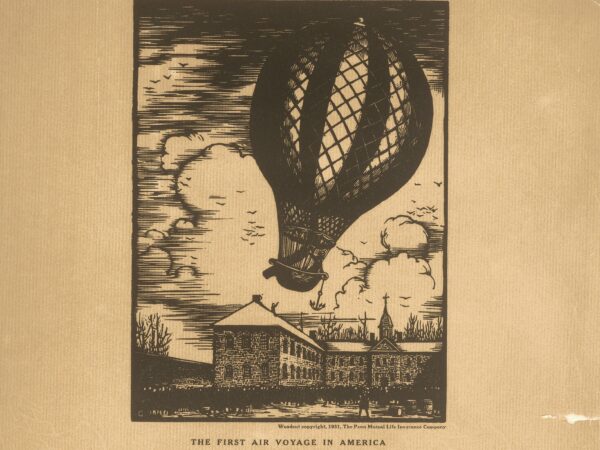
It was a cold January morning in colonial Philadelphia. The year was 1793 and Thomas Jefferson, James Monroe, John Adams, and George Washington were among dozens of spectators gathered in the Walnut Street Prison workyard. The Founding Fathers watched in awe as French aeronaut Jean-Pierre Blanchard prepared to take flight.
Blanchard’s hydrogen-powered balloon rose up into the sky. It was the first time someone had ever seen a balloon take off in America.
Two and a half hours later, Blanchard landed the blue-and-yellow striped silk balloon 15 miles north in a Deptford, N.J., field that today is a Walmart Supercenter parking lot.
That historic moment — America’s first balloon ride — will be remembered on Saturday at the Athenæum, where the Walnut Street Prison workyard once stood.
The festivities will kick off the Philadelphia Historic District’s 52 Weeks of Firsts, a weekly day party marking events that happened in Philadelphia before anywhere else in America, and often the world. Each Saturday, the Historic District will partner with a local institution to host a free festival — or “Firstival.” This will be part of a yearlong celebration of America’s 250th birthday.
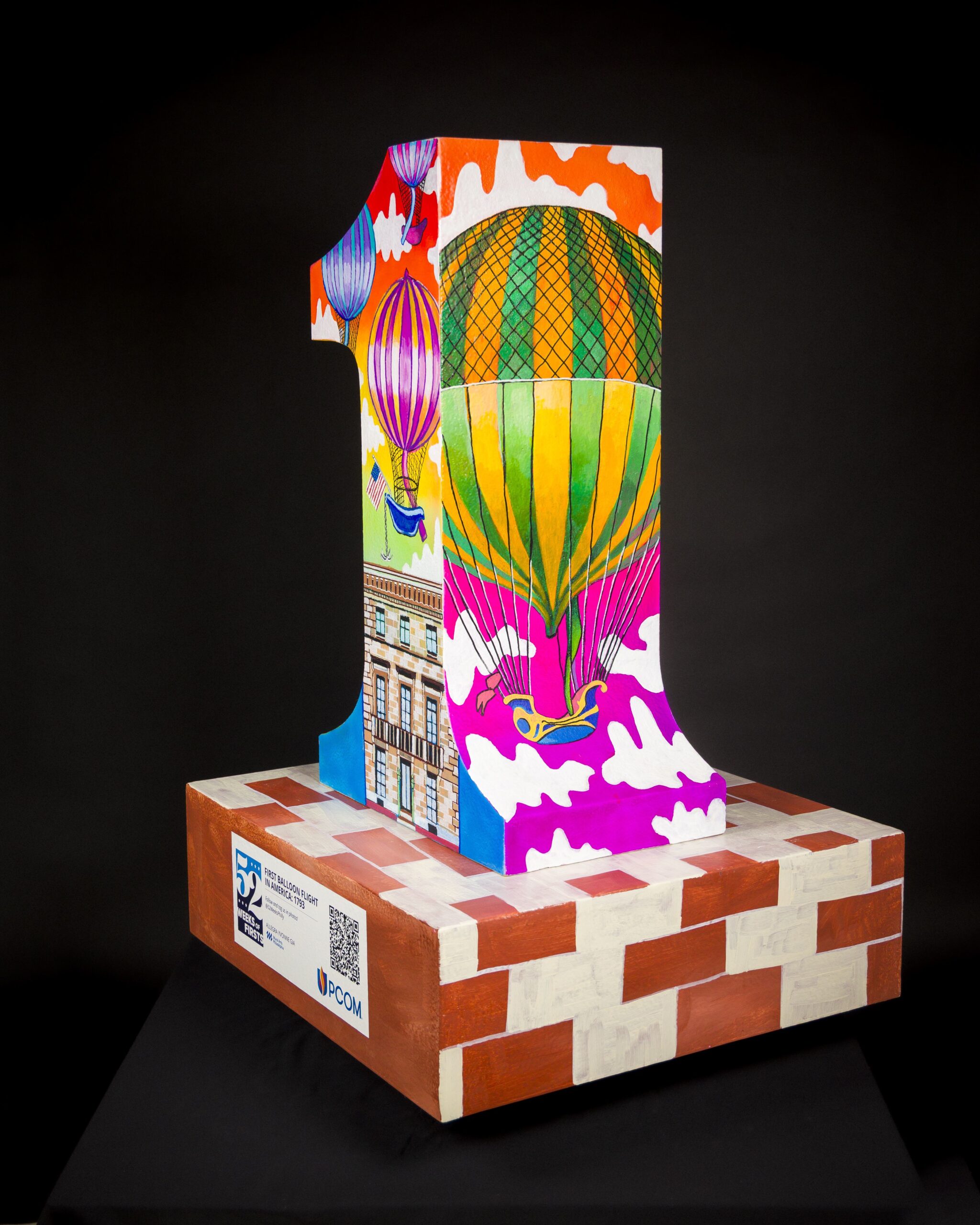
Each of those locations will feature a foam sculpture illustrated by a Mural Arts of Philadelphia artist commemorating the historic event.
Mural Arts artist Allegra Yvonne Gia infused images of the Walnut Street prison yard, The Athenæum of Philadelphia, and hydrogen balloons in this illustration.
While in Paris negotiating an end to the Revolutionary War in 1783, America’s A-list forefathers, Ben Franklin, John Adams, and John Jay witnessed some of the world’s first balloon rides. Impressed, they came back to Philadelphia raving about the innovation.
Two years later, Blanchard, and co-aeronaut John Jefferies, became the first people to sail over the English Channel in a hydrogen balloon. (He chose hydrogen because hot air balloons were powered by fire and prone to explosion, thereby making any flight more than three miles risky.)
The English Channel trip made Blanchard a big deal in aeronautical circles, and he started traveling around the world, flying balloons, and charging spectators, explained Beth Shalom Hessel, executive director of the Athenæum of Philadelphia
On Jan. 9, 1793, Blanchard made his landmark 45th flight in Philadelphia, turning the Walnut Street Prison workyard into the birthplace of aeronautics in America.
Onlookers paid $5 — more than $150 in today’s money — to witness Blanchard take off. He carried with him a dog and a letter from Washington. This letter, which demanded that Blanchard be offered safe passage wherever he landed, is considered by many to be the first ever American passport.
“As a way of making money and drumming up interest in his balloon, Blanchard intentionally chose Philadelphia for his first American flight,” Hessel said. “And that’s fascinating.”
This week’s Firstival is Saturday, Jan. 3, 11 a.m.- 1 p.m., at the Athenæum of Philadelphia, 219 S. Sixth St. The Inquirer will highlight a Philly “first” from the 52 Weeks of Firsts program every week.
Chef Chutatip “Nok” Suntaranon — the culinary genius behind the James Beard Award-winning restaurant Kalaya — is known for her delicious Thai cuisine and trotting her adorable Pomeranians, Titi and Ginji, around her Queen Village neighborhood.
That’s how Suntaranon caught the eye of sustainable fashion designer and Lobo Mau boutique founder Nicole Haddad.
“To me, she was the lady with the restaurant and the Pomeranians,” Haddad said. “I would see her walking around Fourth Street and she’d have her Pomeranians with her. I have an obsession with Pomeranians. They are the most adorable creatures on the planet.”
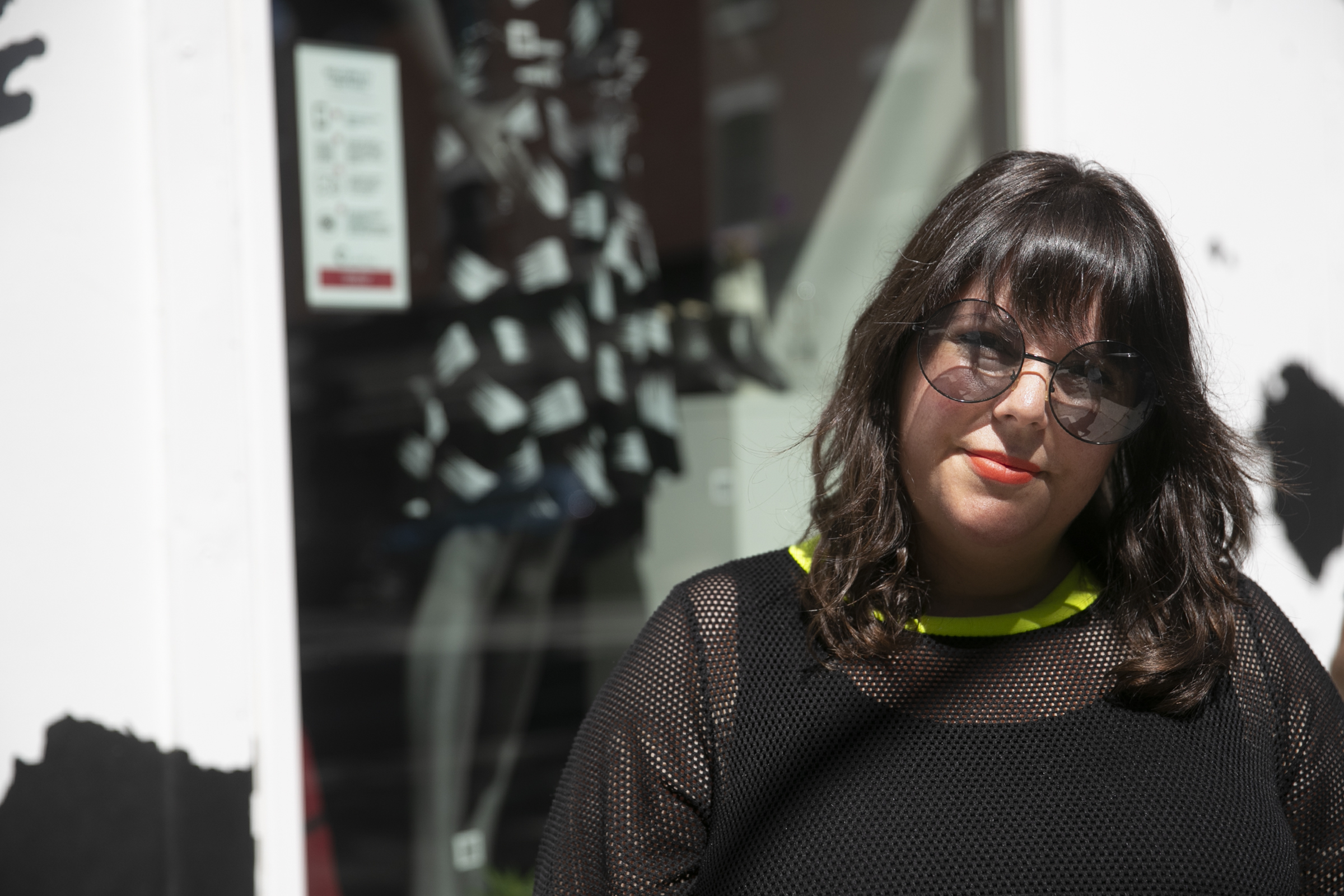
Nicole Haddad stands in front of her boutique, Lobo Mau, in Philadelphia before it closed in 2024.
So when a mutual acquaintance of Haddad and Suntaranon’s suggested the two entrepreneurs work together on a Philly fashion collaboration, Haddad jumped at the opportunity. She had the perfect project, a reimagining of Lobo Mau’s top-selling women’s swing coat, the Pom Jacket, named after Haddad’s favorite breed of dog.
“It felt like kismet from the beginning,” Haddad said.
The original
About 15 years ago, Haddad was in Venice visiting the Peggy Guggenheim Museum when she chanced upon a black-and-white photo of the New York heiress and art collector surrounded by her beloved Lhasa apsos.
“She was wearing a voluminous swing coat surrounded by five little dogs that reminded me of Pomeranians and I immediately thought, ‘I want to design something like this.’”
Back in Philly, Haddad made a black-and-white swing coat just like the ones popularized in the 1930s by jazz musicians. These coats were designed by the likes of Elsa Schiaparelli and Balenciaga and sold in the world’s top specialty stores, including Philadelphia’s Nan Duskin.
Haddad’s swing coat, the Pom Jacket, was tapered at the shoulders and flared at the waist, featuring a wide shawl collar and three-quarter-length cuffed sleeves. Priced at $398, it became a bestseller within weeks; finding a cult following, including NPR host Terry Gross, in the city.
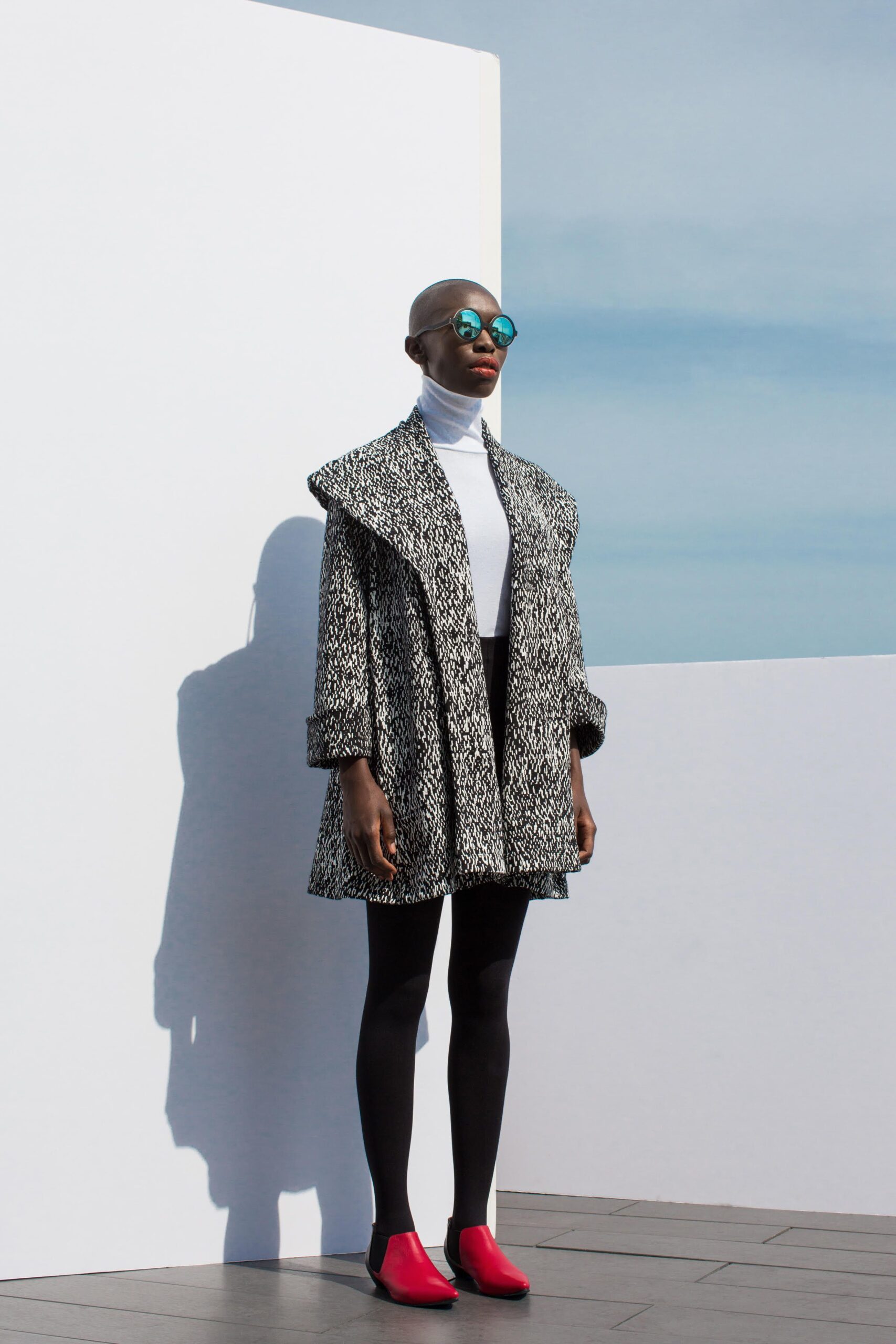
Model Khalil Abner wears Nicole Haddad’s original Lobo Mau Pom Jacket.
In 2022, the Pom caught the eye of a buyer at New York’s Guggenheim Museum where it sold in the museum’s gift shop through 2024.
On a winter afternoon in 2019, Suntaranon stopped on a dime in front Lobo Mau’s then-Bainbridge Street boutique. She had to have the original black-and-white Pom Jacket in the window.
“Within two seconds, we sold her the jacket and she left,” Haddad said.
Suntaranon loved her jacket and has since been a supporter of Lobo Mau. It was Jesionka, a longtime Lobo Mau client who owned several iterations of the Pom, who suggested Suntaranon and Haddad collaborate.
Haddad knew Suntaranon gravitated toward bold-hued pieces that appeared architectural but flowed like liquid over women’s curves. She also knew that Suntaranon collected origami-inspired pieces by Japanese womenswear designer Issey Miyake.
“I’ve been collecting [Miyake] since I was 22,” Suntaranon, 57, said, mentioning the pleated teal, limited-edition Issey Miyake gown she wore to the 2025 James Beard Awards dinner in Chicago. “It’s timeless and beautiful.”
Suntaranon arrived at Haddad’s Bok Building studio in September 2025 — she closed her Bainbridge Street store in 2024 after landlords tripled the rent — with a clear idea of her dream Nok Pom.
She wanted a fuller silhouette that was longer in the back and had a button closure.
“I wanted a more dramatic look,” Suntaranon said.
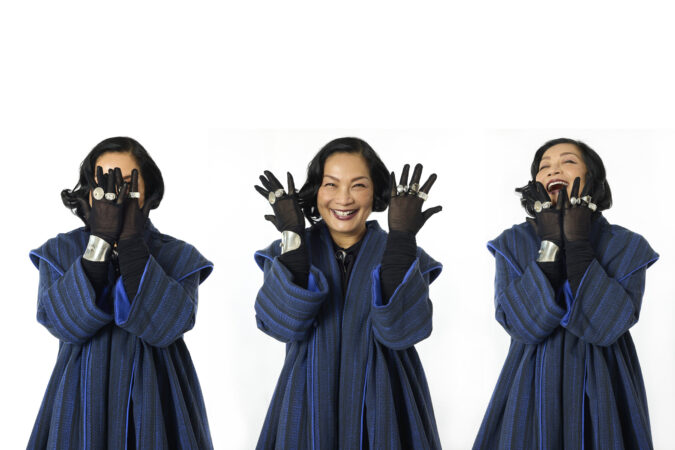
Haddad created a print featuring a trompe-l’oeil 3D-effect that gave the illusion of Issey Miyake-style pleats. She had it digitally printed on cobalt blue sweatshirt material.
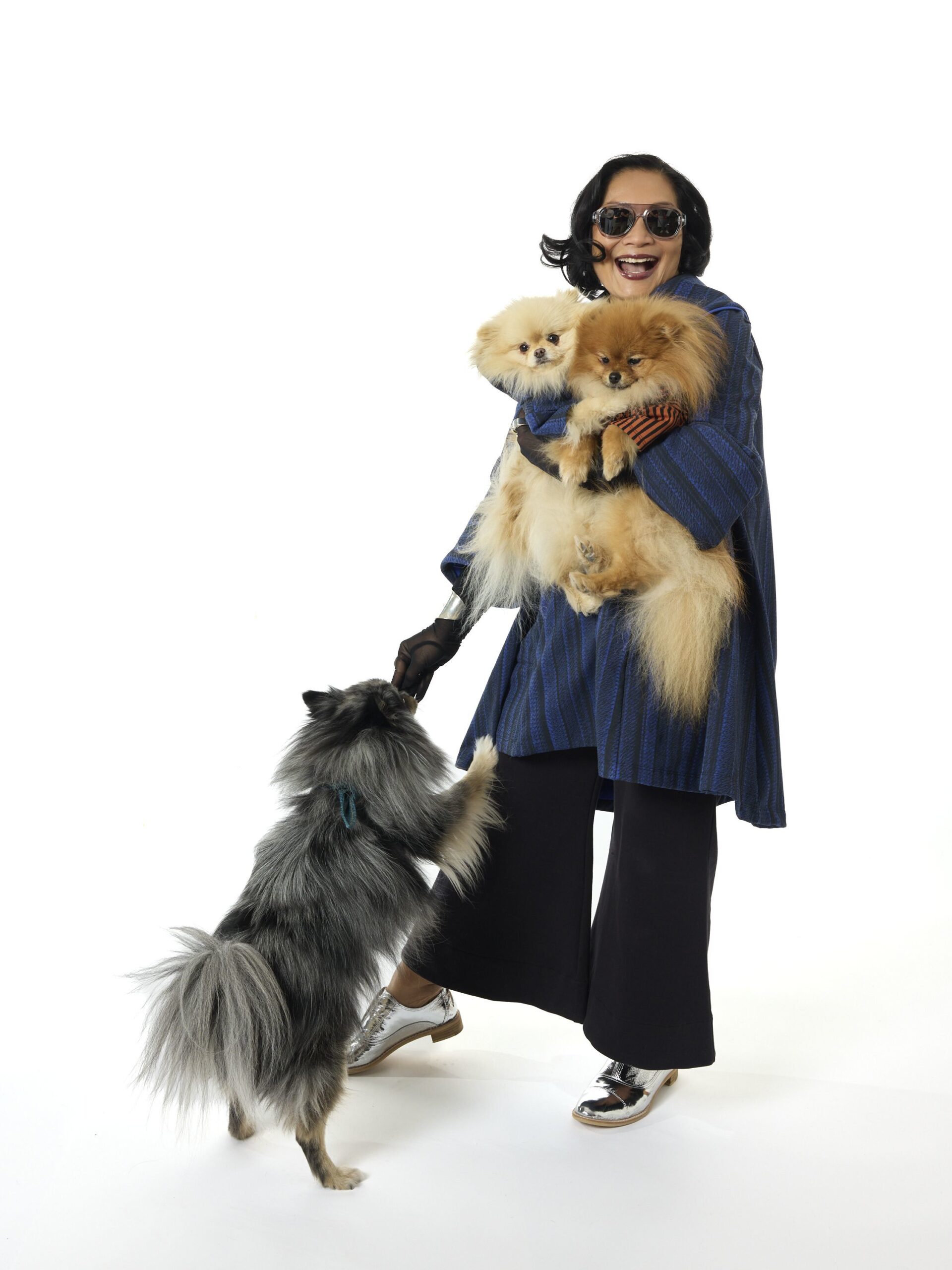
Kalaya’s chef Chutatip “Nok” Suntaranon poses in Lobo Mau’s exclusive Pom jacket. The acclaimed chef collaborated with local designer Nicole Haddad for an updated version of Hadddad’s original Pom Jacket. Styled by Nicole Haddad and Miranda Martel; jewelry by Feast and Forge and Finish; shoes by Elena Brennan; Hair and makeup by Tarah Yoder.
She added a box pleat in the jacket’s center back to create volume and drama, piping along the outer edge of the collar, and pockets on the inside and outside of the jacket. As a final touch, she put a big black button under the bustline.
The Nok Pom was ready.
“It’s beautiful,” Suntaranon said of her eponymous fashion piece. “It’s exactly how I envisioned it.”
The Nok Pom, priced at $450, is a limited-edition item and is available to order through Jan. 10.
In February , Haddad got a Pomeranian of her own that she named Johnny. She designed matching hoodies for Johnny, Titi, and Ginji, that are also for sale.
Suntaranon is flattered that she — and her pooches — are a part of the city’s food and fashion scene.
“Fashion — just like food — is a big part of my life,” Suntaranon said. “Fashion and food are an art. When the fashion industry is thriving and the food industry is thriving, the city is thriving.”
Philadelphia’s congested highways or crowded SEPTA platforms don’t get in the way of Daniel Rodriguez’s commute to work.
That’s because the Philadelphia-based urban designer’s commute between his firm’s two offices consists of two flights, two trains, and a bus between two states each week.
Rodriguez, who lives with his wife in their Jewelers’ Row apartment, ping pongs between his home (and his Center City office) in Philadelphia and his office in midtown Atlanta, twice a week.
Rather than moving to Georgia or embracing a simpler, work-life balance, Rodriguez prefers an 800-mile trek to work that doesn’t have him dealing with Philly rush hour traffic and the restrictions car owners face.
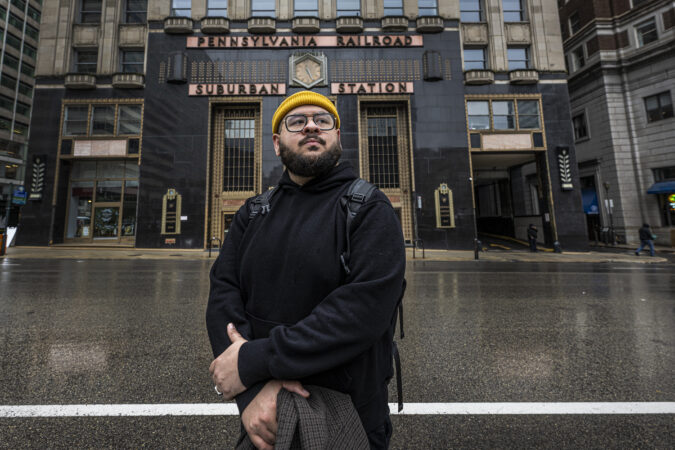
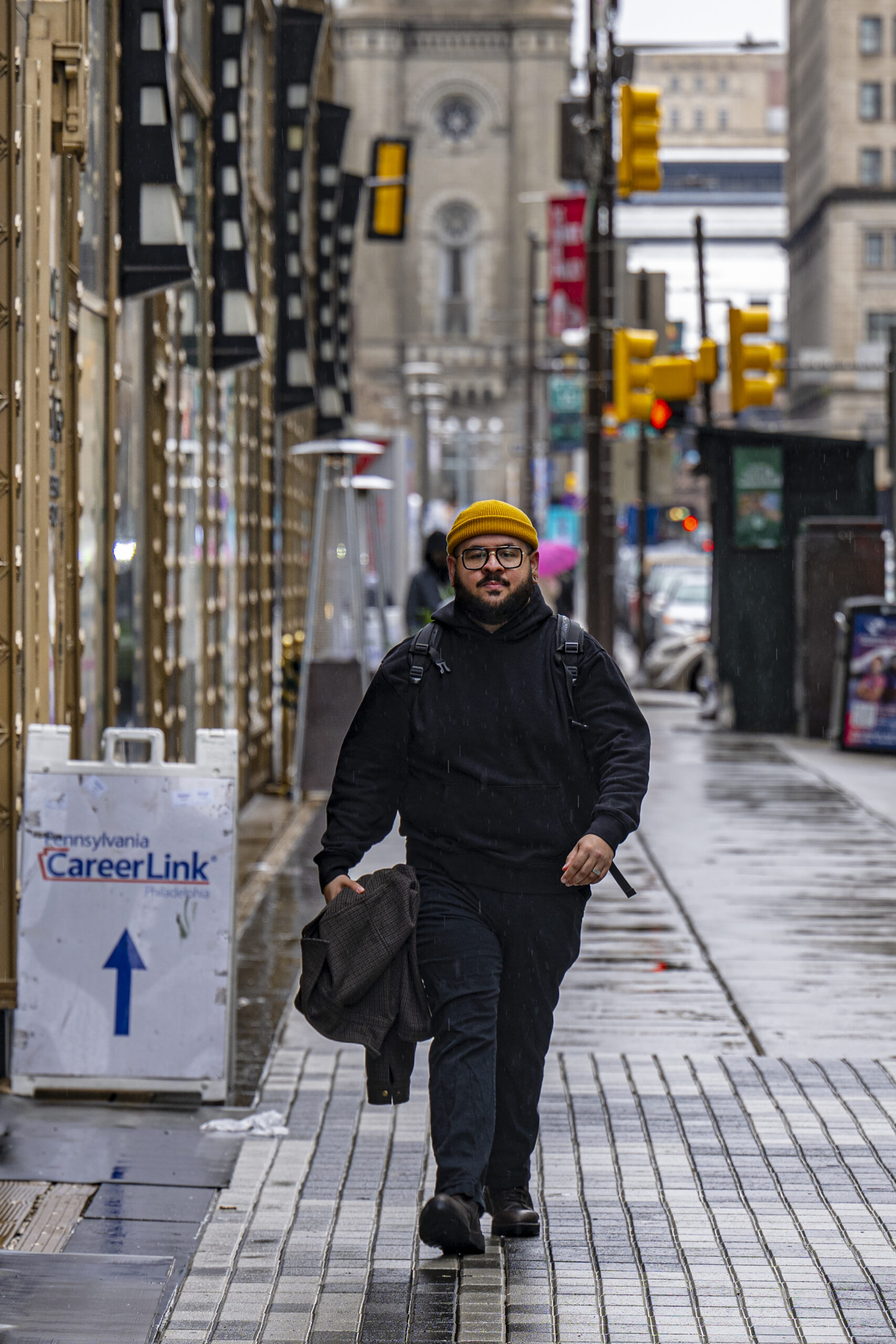
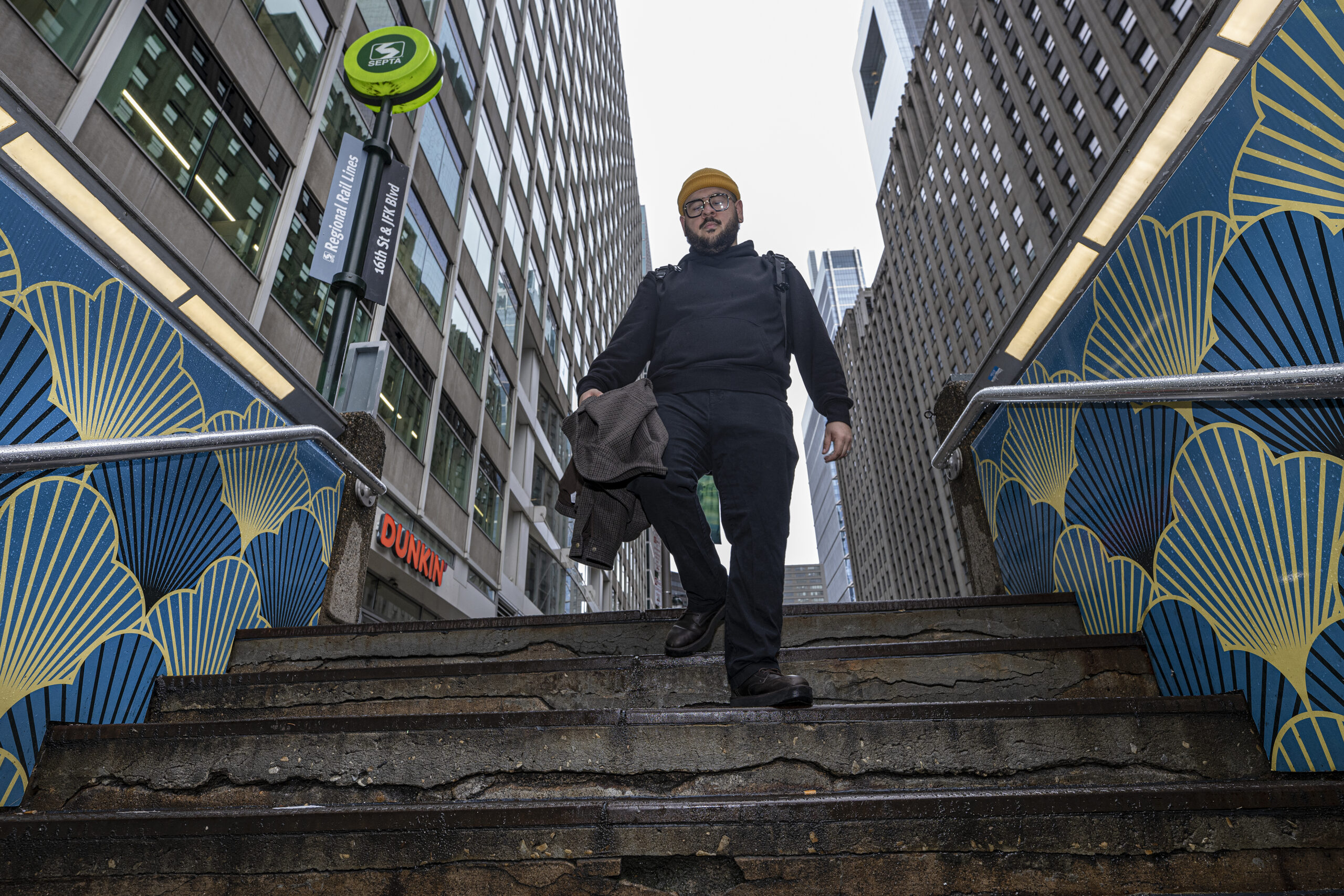
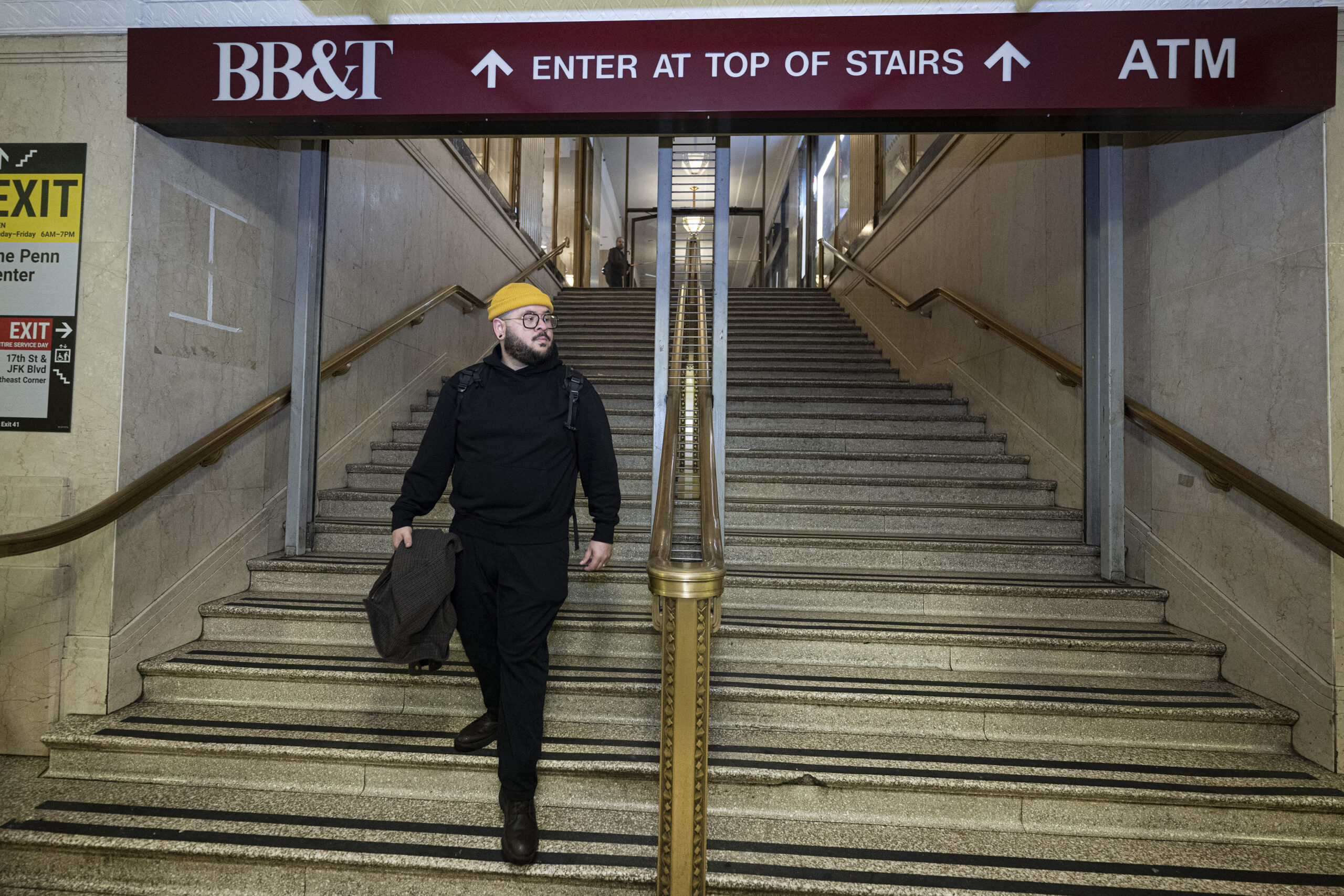
Daniel Rodriguez travels to the Philadelphia’s Suburban Station on Friday, Dec. 19, 2025. Rodriguez uses the station to commute between Philadelphia and metro Atlanta, taking a train from Center City to Philadelphia International Airport before boarding flights to and from his company’s Atlanta office.
“I want to live a life that’s intentionally, anti-whatever everybody else is doing,” Rodriguez said. “I feel like there are problems in society, and this is one of them that just trickles and affects so many things in our personal and professional lives. It’s not anti-car. It’s really about getting away from the dependency and focusing on building systems that help people move. That’s my whole philosophy.”
Rodriguez, who grew up in Bayamon, Puerto Rico, said it’s a lifestyle driven by the independence and movement he felt was missing in his youth.
The geographical barriers of the island often led to feelings of physical and mental entrapment as a child.
“Where I come from, I’ve never seen people so hungry to have something in life, with no ability to achieve it,” he said. “And I’m willing to do extreme things to do that.”
In May, the 34-year-old began posting videos of his travels to and from Philadelphia and Atlanta. His TikTok and Instagram posts have drawn millions of viewers, with hundreds of users questioning how Rodriguez balances his workload and travels.
His schedule varies each week, but he usually flies into Atlanta on Sunday nights and returns to Philadelphia on Tuesday nights. Sometimes, he will fly out on Monday mornings and return on Wednesday mornings. He also does same-day round trips a couple of times a month.
The planning for his trips to Atlanta begins the night before. Rodriguez packs his bags and puts toothpaste on his toothbrush before going to bed.
Daniel Rodriguez travels through Philadelphia’s Suburban Station on Friday, Dec. 19, 2025. Rodriguez uses the station to commute between Philadelphia and metro Atlanta, taking a train from Center City to Philadelphia International Airport before boarding flights to and from his company’s Atlanta office.
He wakes up at 4 a.m., grabs his belongings and walks to Suburban Station. Here, he boards the train to the Philadelphia International Airport and lands in Terminal F for his flight to Atlanta. He does have to factor in the regular delays.
“Terminal F is like the dingleberry of Philadelphia. It’s the last one at the airport, and really far,” he joked.
After the 90-minute flight to Atlanta, he walks over to the Metropolitan Atlanta Rapid Transit Authority platform for a 30-minute train ride to his company office in midtown Atlanta.
He’s not completely “anti-car,” he insists. He often rents a Zipcar for small errands and to explore Atlanta restaurants, art galleries, and sites that feed his architectural interests.
“I’m more along the lines of, ‘I don’t want to be dependent on a car,’” he said. “I don’t want to put my money toward that. I’d rather put that into something else, and suffer the consequences.”
Once his work day is finished, he either uses ride-share or takes a one-and-a-half-hour bus ride to a friend’s apartment in Decatur, arriving around 9 p.m. And before he rests his head for the night, Rodriguez begins his routine all over again for his return to Philly the following morning.
Rodriguez said his travel costs come out to about $180 each week, with the most significant barrier being the time and energy he spends to balance out his travels.
Daniel Rodriguez travels through Philadelphia’s Suburban Station on Friday, Dec. 19, 2025, in Philadelphia. Rodriguez uses the station to commute between Philadelphia and metro Atlanta, taking a train from Center City to Philadelphia International Airport before boarding flights to and from his company’s Atlanta office.
“It’s not unachievable,” Rodriguez said. “I feel like the pain point for a lot of people is the time. People don’t want to spend the time.”
Rodriguez didn’t always live like this. His super commute began after years of uncertainty. He moved to Philly in 2022 and between 2023 and 2025, Rodriguez was laid off twice and incurred thousands in debt.
“I wasn’t even paycheck to paycheck anymore. I was living in the negative,” he said.
After another eight months of job hunting, he was at a crossroads. With limited jobs in his industry in Philly, he applied for roles in other cities.
He applied to an urban design firm in Atlanta, and the week his unemployment ran out, he landed his current role in May 2025. While the company has an office in Center City, the Atlanta location was the only one hiring in his specific field.
Rodriguez consults on transportation, green space, urban design, and master planning in Atlanta and other cities along the East Coast.
While the demands of the commute were challenging at first, Rodriguez believes he has made a decision that works for him. “I have my wife here, and I don’t want to uproot her,” he said.
Since he started making videos of his commute, his world has “completely flipped,” Rodriguez said.
He’s landed brand deals with travel-based companies and has spoken in various cities across the country about how fellow millennials can traverse the country without the burden of a vehicle.
Daniel Rodriguez travels through Philadelphia’s Suburban Station on Friday, Dec. 19, 2025, in Philadelphia. Rodriguez uses the station to commute between Philadelphia and metro Atlanta, taking a train from Center City to Philadelphia International Airport before boarding flights to and from his company’s Atlanta office.
Rodriguez plans to become a content creator full-time to encourage viewers across YouTube, Instagram, TikTok, and other platforms to avoid the pitfalls of car ownership.
His ambitions haven’t gone unchecked. Environmentalists who watch his videos often point to the carbon footprint he leaves behind, despite his aversion to car ownership.
Rodriguez admits his lifestyle could be viewed as contradictory. His modes of travel contribute to gas emissions, but he contends he’s not the sole source of the issue, simply a product of a system already in place.
“I did not pass the laws that allow oil barons to drive or force corporations to fuel jets that release stored carbon,” he said. “I am a participant in society, and there is no fully ethical way to exist within it.”
While he understands people’s precaution and confusion, Rodriguez is confident his weekly commute and lifestyle will work as well for others as they do for him.
“I love to create. I love to build. And I don’t want to do anything where you’re just staying still,” he said.
Philadelphia theaters have weathered a difficult year as arts organizations across the region faced deep cuts in federal funding. The numbers paint a somewhat bleak picture: The state lost $1,463,000 from the National Endowment of the Arts alone, and though some attendance figures have risen from last year, the performing arts sector has struggled overall to recapture prepandemic audiences.
This year, despite challenges, Philly’s scrappy, beloved, and award-winning theater community kept showing up and showing out on local stages with incredible productions and exciting world premieres.
Here are few of our favorites from 2025.
‘La Otra’ from 1812 Productions
Written and directed by Tanaquil Márquez, this Fringe Festival world premiere from 1812 Productions was a heartwarming comedy about three estranged sisters reuniting for their father’s 80th birthday party in Colombia. The real drama all happened in the kitchen as cousins played pranks, sisters bickered endlessly, and at one point the set exploded in a burst of tropical vines that broke into the realm of magical realism. The show fired on all cylinders, from the versatile cast in multiple roles, to its engrossing production design, to the sharp trilingual dialogue that echoed the rhythm and intimacy of a big family much like my own. (The clever use of subtitles ensured that no one got lost in translation, from English to Spanish to Vietnamese.) I laughed a lot, especially thanks to the standout performance from Yajaira Paredes. We named it one of the works with a high chance of post-Fringe Fest success, so here’s hoping to see it back on our stages soon.
Valeria Diaz (Madeleine Garcia) and Professor Qiu (Justin Jain) in InterAct Theatre Company’s “Quixotic Professor Qiu.”
‘Quixotic Professor Qiu’ from InterAct Theatre Company
Another promising world premiere came from playwright Damon Chua with this tense, small InterAct production following a Chinese American mathematics professor accused of being a spy. Inspired by actual instances of academics suspected of espionage, the drama provided a provocative and chilling reflection of the U.S. government’s targeting of immigrants amid the ever-encroaching creep of censorship. As the titular Qiu, Justin Jain played a convincingly aggrieved intellectual who finds the entire investigation absurd. But he’s essentially left helpless at the whims of law enforcement hell-bent on punishing him, regardless of the facts. The minimalist set centered our attention on the high stakes he faces trying to clear his name, with moody lighting that heightened our sense of dread. By the end, Jain breaks the fourth wall to underscore the message: “That’s the world we live in. That’s the world you live in.”
‘King Hedley II’ at Arden Theatre Company
The Arden’s commitment to staging all of August Wilson’s Century Cycle plays is a laudable effort and each production is a major theatrical event. James Ijames directed this run with Akeem Davis playing the titular King, a struggling, formerly incarcerated man released at the height of the 1980s recession. The story depicts a harsh reality for the Black family at the center, played deftly by a well-rounded cast that pivots from warmth to fury to humor. It was not an easy watch — the tragic ending left me in tears — but it was a vital story that felt relevant, urgent, and timeless.
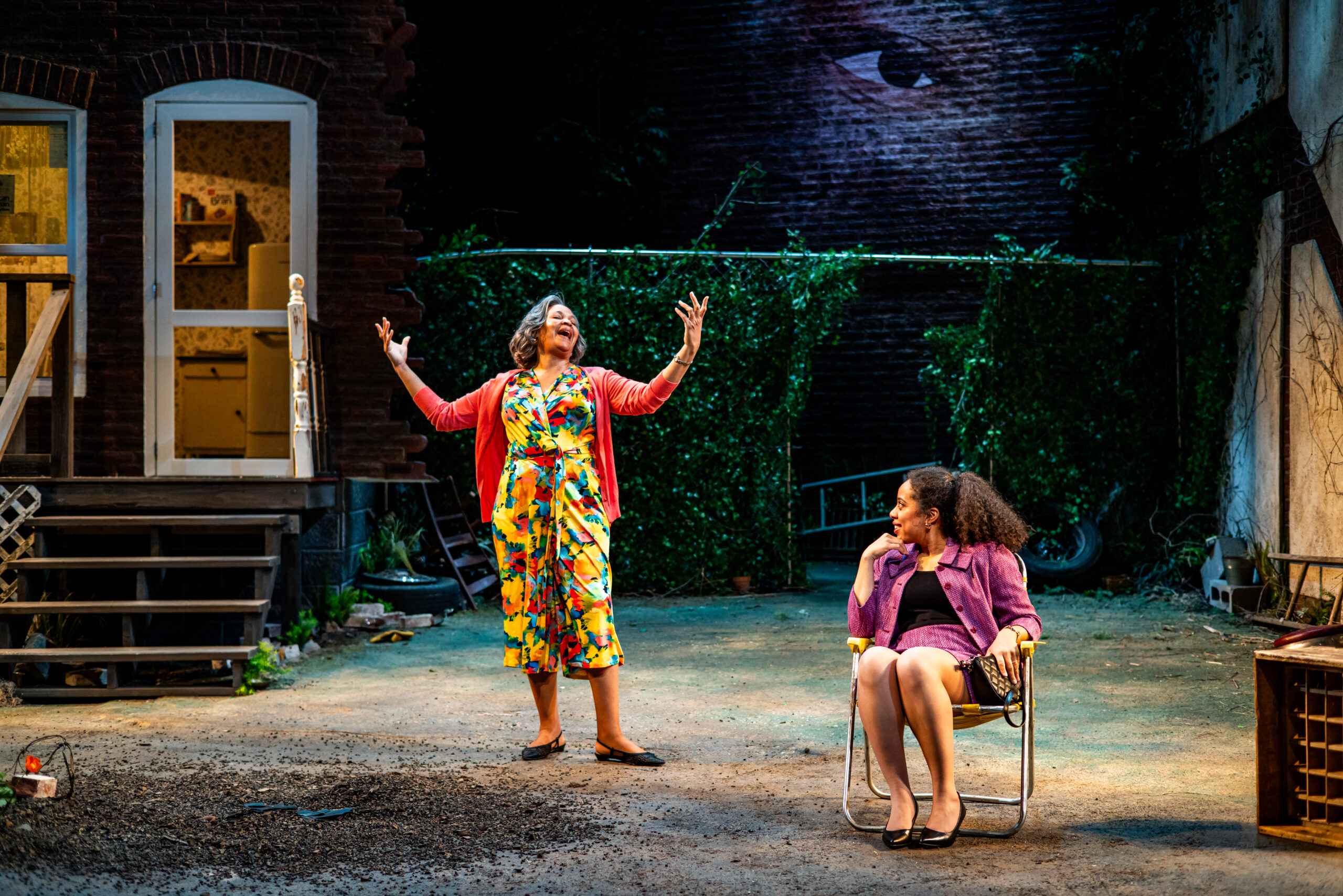
Ruby (Kimberly S. Fairbanks) and Tonya (Taysha Marie Canales) in Arden
Theatre Company’s 2025 production of August Wilson’s “King Hedley II.”
‘Back to the Future: The Musical’ at Academy of Music
At the risk of being a little corny, I had a blast seeing one of my favorite classic movies adapted into a musical — mainly because the much-hyped time-traveling DeLorean was genuinely as impressive as promised. I went in thinking that the car bit would be too gimmicky, but I was proven so wrong in the best way: The masterful production design featured illusions that (tiny spoiler) made the car fly in the air. I gasped! The show also delivered transportive scenery alternating between the 1980s and 1950s, amplified by captivating group choreography and great singing. There were certainly some questionable choices, like leaning into the whole Marty-tries-avoiding-incest plot and songs that try but fail to give depth to Marty’s family. But overall, it was a lot of fun.
‘The Goldberg Variations’ at Fringe Arts
Every year, Philly’s Fringe Fest delivers some of the strangest and most shocking productions with dazzling results. This was the craziest production I saw onstage this year and I’m still obsessed. It started as a petty PowerPoint presentation as the star/creator Clayton Lee explained that all his ex-boyfriends look like wrestler Bill Goldberg. It shifted into an interactive experience as Lee interviewed someone in the audience, flirting with him and asking sexually explicit questions. Then it evolved again into a wrestling ring, where Lee invited Goldberg doppelgängers (who were incognito in the audience) to the stage for a smackdown, complete with BDSM contraptions and a lot of body oil. It was a wild show that had the audience in sidesplitting laughter one moment and stunned silence the next.
‘Snow Queen’ at Wilma Theater
This year, the Wilma presented its first production for all ages in this adaptation of Hans Christian Andersen’s 1844 fable (from which Disney’s Frozen also draws inspiration). Seeing a weekday matinee was such a treat because the rows were filled with eager schoolchildren who responded to the actors with infectious enthusiasm. The sprawling fairy tale features a terrifying ice queen who turns hearts cold and kidnaps a young boy named Kai. His determined friend Gerda goes on a quest to save him after he has been brainwashed. Directed by Yury Urnov, the show spotlights delightful characters with an inventive and quirky production and costume design. The heartfelt, whimsical story about the power of good over evil was a visually dazzling experience, complete with musical talent and a wonderful cast.
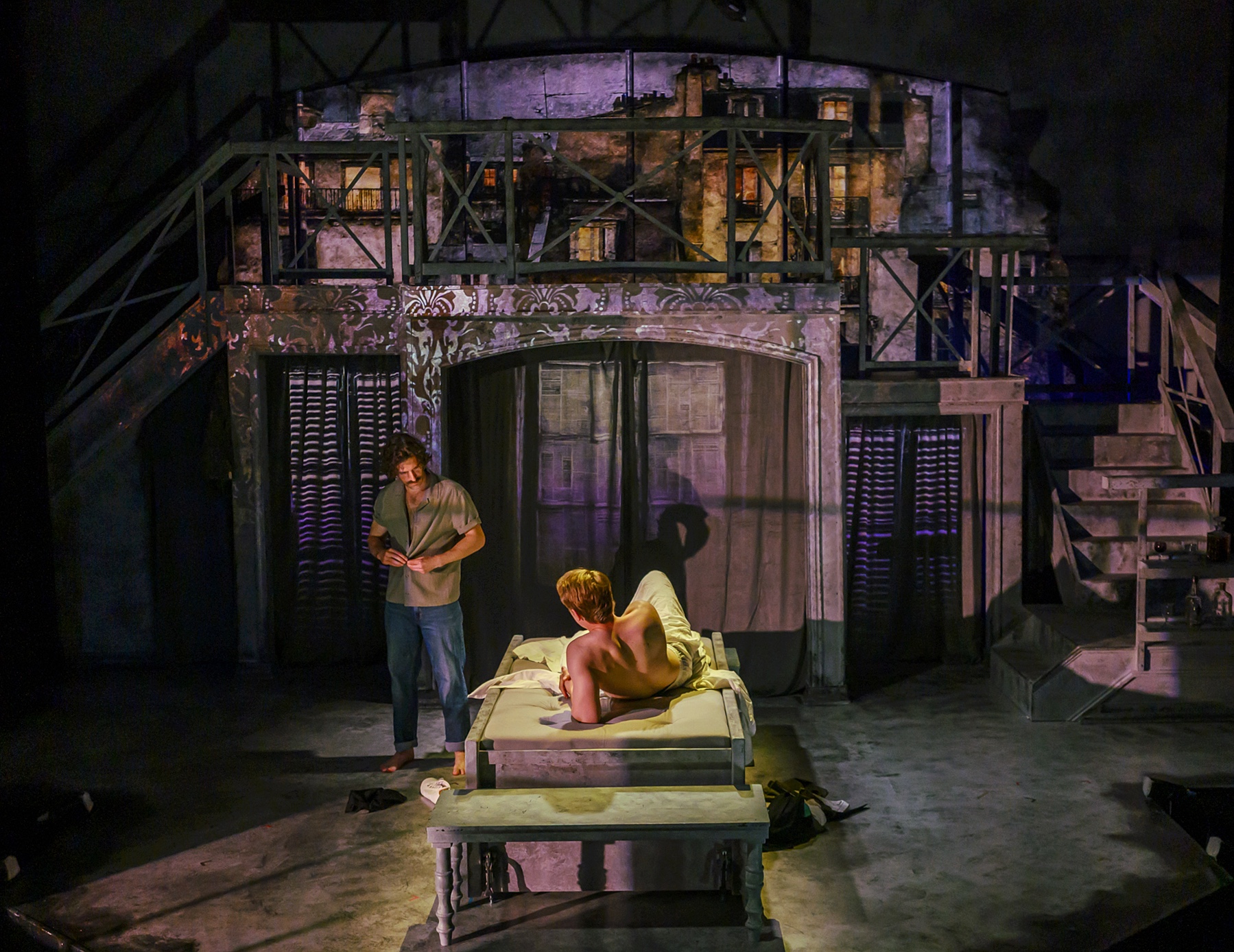
Michael Aurelio and Ethan Check in Quintessence Theatre Group’s “Giovanni’s Room.”
‘Giovanni’s Room’ from Quintessence Theatre
It may surprise people to learn that the first-ever authorized stage adaptation of James Baldwin’s classic 1956 novel Giovanni’s Room held its world premiere right here in Philadelphia. It’s certainly something to brag about: It took nearly 20 years, two rejections, and several rewrites, but actor/playwright Benjamin Sprunger and director/playwright Paul Oakley Stovall made it happen at Quintessence Theatre. The story centers on a closeted gay American who falls in love with a brash Italian bartender in Paris — and it’s no spoiler to say it ends in tragedy. The slim novel was one of Baldwin’s most popular and groundbreaking works, providing rich source material for a play. Onstage, it was a lyrical production with spellbinding light design and fascinating choreography; it was an excellent first run and I hope to see it progress in future productions, too.
No one throws a “Happy 250th Birthday, America” jammy jam like a Philadelphia museum.
Embedded into the fabric of our nation’s birthplace, Philly cultural institutions are gearing up for high-level deep dives into history, fun, folly, and reflection. Just in time for the Semiquincentennial.
Our museums’ dynamic programming for America’s big birthday kicks off on Jan. 1.
The Philadelphia Art Museum, the National Constitution Center, the Museum of the American Revolution, and smaller outfits like Eastern State Penitentiary and Historic Germantown will, as expected, reimagine the history of our republic in an homage to the forefathers’ ingenuity.
Many are also honoring the perspective of marginalized Americans, upon whose backs this country was built.
Mixed into the Semiquincentennial festivities are other milestone birthdays. Carpenters’ Hall will celebrate the Commonwealth of Pennsylvania’s 250th with an exhibit, historical marker, statewide town halls, and virtual lecture series.
The new year also marks Germantown’s the Colored Girls Museum‘s 10th anniversary; it will open its fall 2026 season with a rare show from renowned sculptor vanessa german.
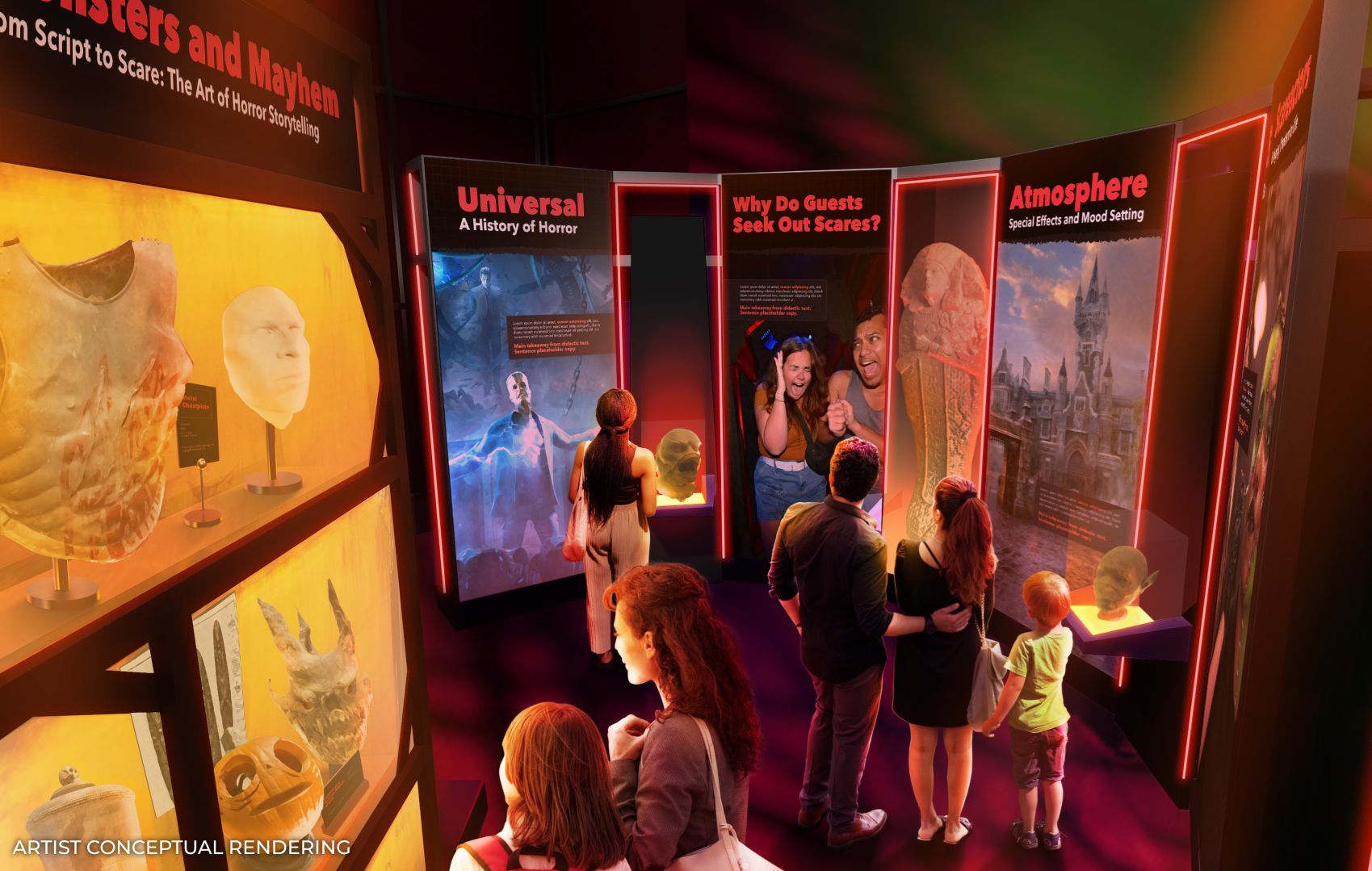
Renderings of The Franklin Institute’s world premiere of “Universal Theme Parks: The Exhibition” February 14, 2026 – September 7, 2026.
Philly is America’s birthplace. Our 250th birthday energy can’t be outdone.
From the looks of it, it won’t be.
Philadelphia Art Museum
The Philadelphia Art Museum has three major shows in 2026.
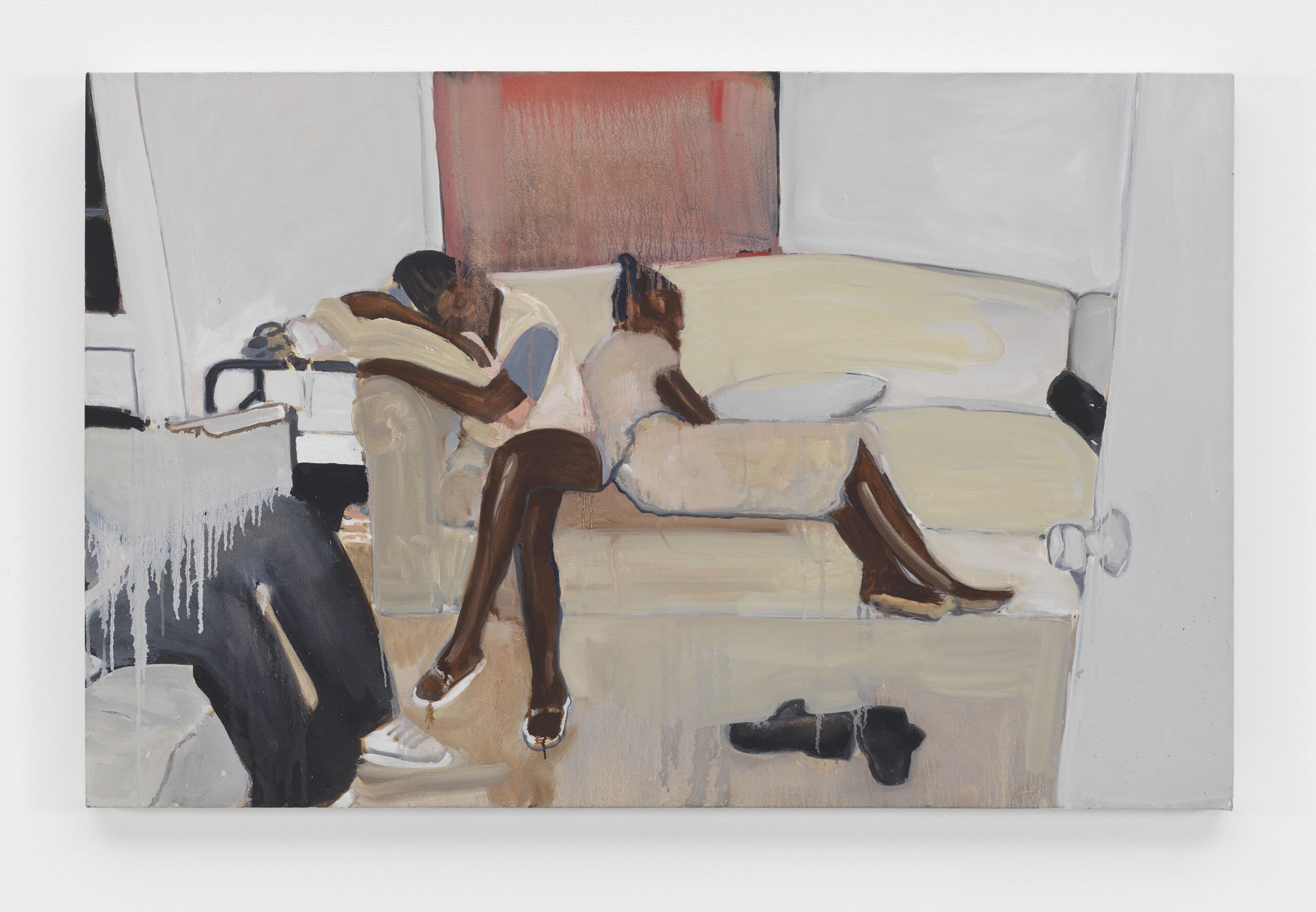
Noah Davis
The art museum’s Morgan, Korman, and Field galleries will feature the work of the late African American artist Noah Davis (1983-2015). Davis’ paintings, sculpture, and works on paper capture the history and intricacies of American Black life from antebellum America through his untimely death. Jan. 24-April 26.
“Untitled Girls” This painting by Noah Davis will be on display in the Philadelphia Art Museum’s 2026 exhibition named after the late artist
A Nation of Artists
Paintings, furniture, and decorative arts from Phillies managing partner John Middleton and his wife, Leigh, will center the “A Nation of Artists” exhibit, telling the 300-yearslong story of American creativity. The exhibit is a joint project between the Philadelphia Art Museum and the Pennsylvania Academy of Fine Arts and is billed as “the most expansive presentation of American art ever mounted in Philadelphia.” Opens April 12.
Rising Up
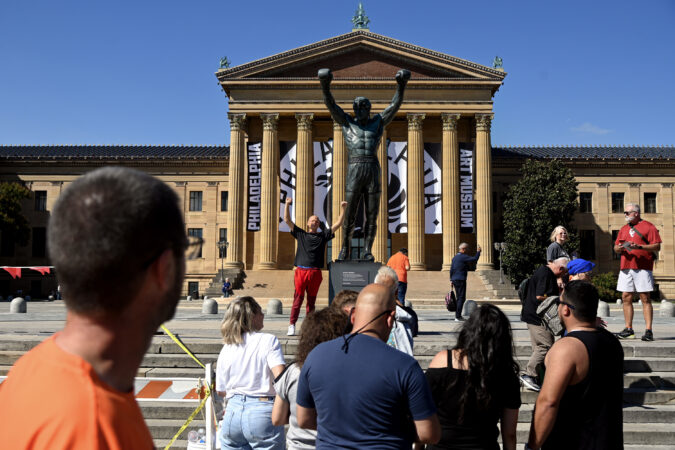
2026 marks the 50th anniversary of the release of the first Rocky film. To coincide, the Art Museum in April will open “Rising Up: Rocky and the Making of Moments” in the museum’s Dorrance galleries. The exhibit will explore how the Rocky statue outside the museum brings people together. April 25-Aug. 2.
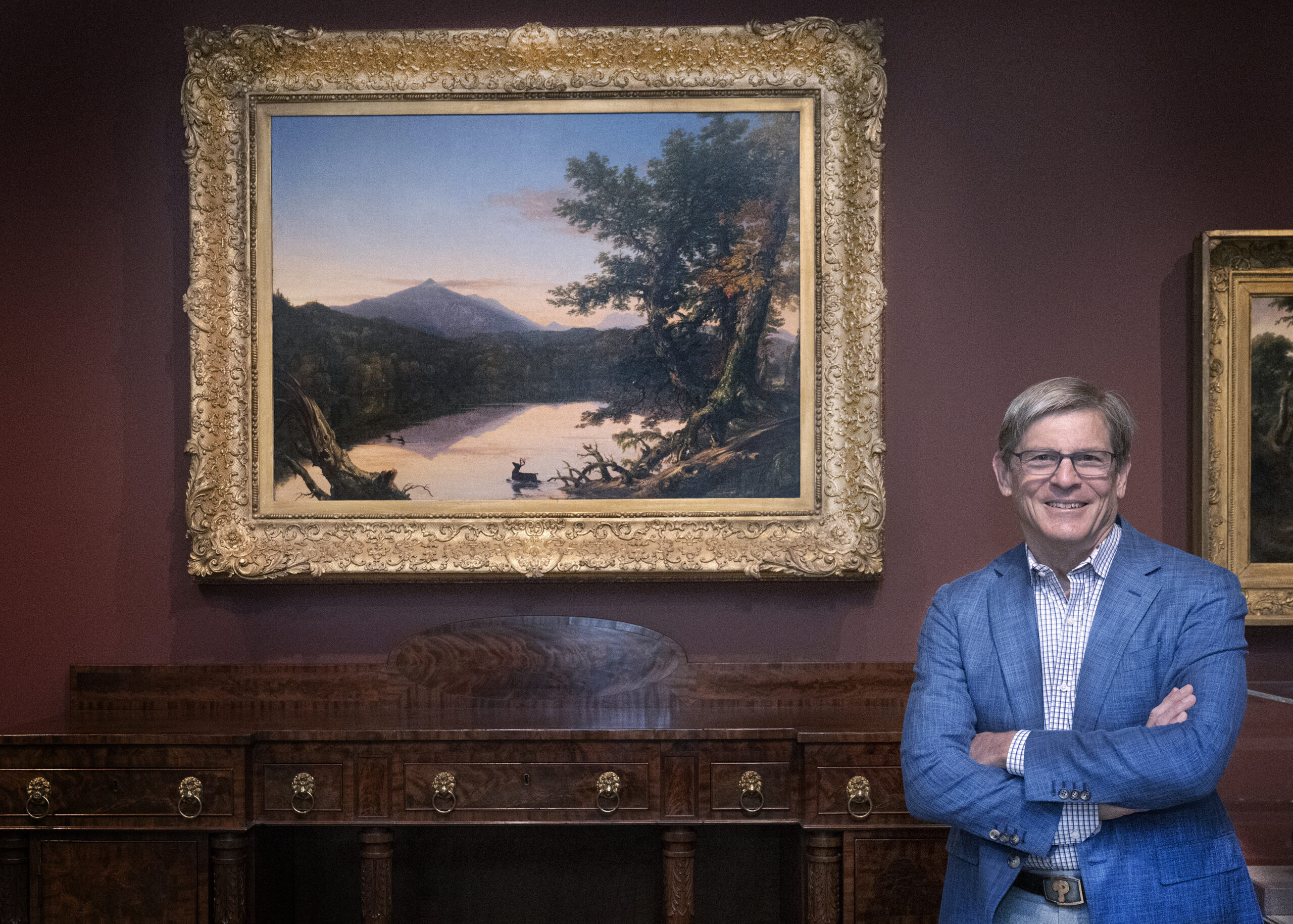
Phillies owner John Middleton is photographed next to a painting to his left, part of his personal collection and soon to be exhibited at the Philadelphia Museum of Art.
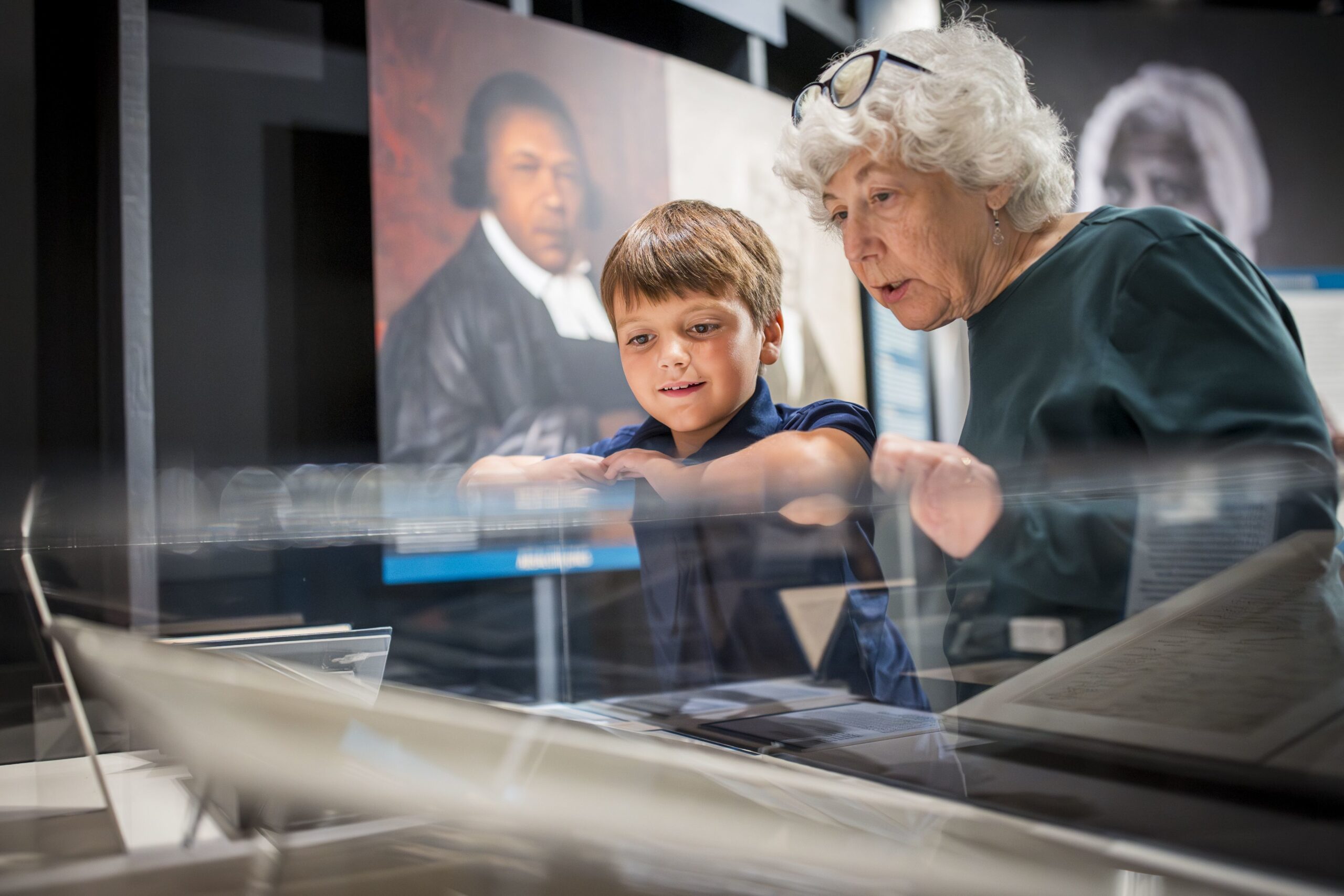
Visitors at the Museum of the American Revolution in front of a portrait of Absalom Jones, abolitionist and founder of The First African Episcopal Church of St. Thomas. Jones’ writings are on display.
Penn Museum
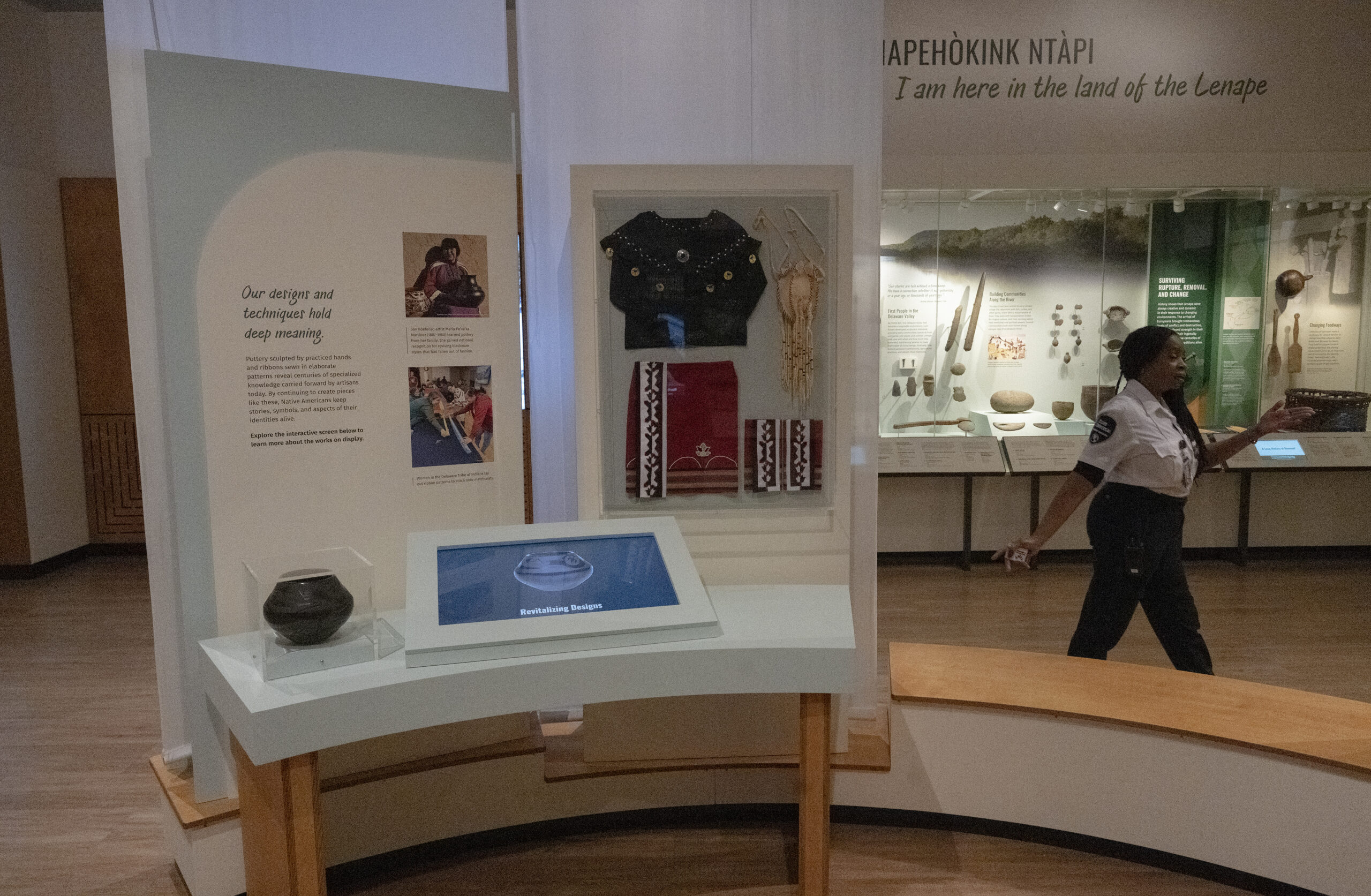
Spear points dating to 3,000 B.C., centuries-old bowls, and 19th century beaded collars are a few of the items that illustrate the lives Lenape Indians led fishing on the banks of the Schuylkill and hunting in Fairmount Park. These are on display at Penn Museum’s new Native North American gallery. Visiting curator Jeremy Johnson chose these artifacts because, he said, they best “tell the story of his people — who the Founding Fathers tried to erase.” Through 2027.
A gallery of Native American art is displayed at the Penn Museum on Friday, Nov. 21, 2025, in Philadelphia. As celebrations of Native American culture and precolonial Philadelphia plants grow, museums across the city prepare for America’s 250th birthday.
Weitzman National Museum of American Jewish History
On Nov. 16, 1776, the Andrew Doria brigantine arrived in the Caribbean on the British colony St. Eustatius, waving the first national flag of the United States. The Jewish merchants and English settlers, treated poorly by their antisemitic Anglican monarchs, greeted the newly minted Americans with a 13-cannon salute. In that moment, St. Eustatius became the first country to recognize America’s sovereignty.
Cannon from the shores of St. Eustatius much like those fired in the 18th century that will will be on display during “First Salute.” 250tharts-12-28-2025
Weitzman National Museum of American Jewish History’s“The First Salute” exhibit will recount this largely untold story — including how the Jewish merchants smuggled the Americans’ gunpowder in tea and rice bags, giving Pirates of the Caribbean meets Hamilton vibes. Artifacts on display will include 18th-century currency, a series of paintings from prominent Jewish Philadelphian Barnard Gratz’s art collection, and an actual cannon shot from the island’s shores. From April 23, 2026, through April 2027.
National Constitution Center
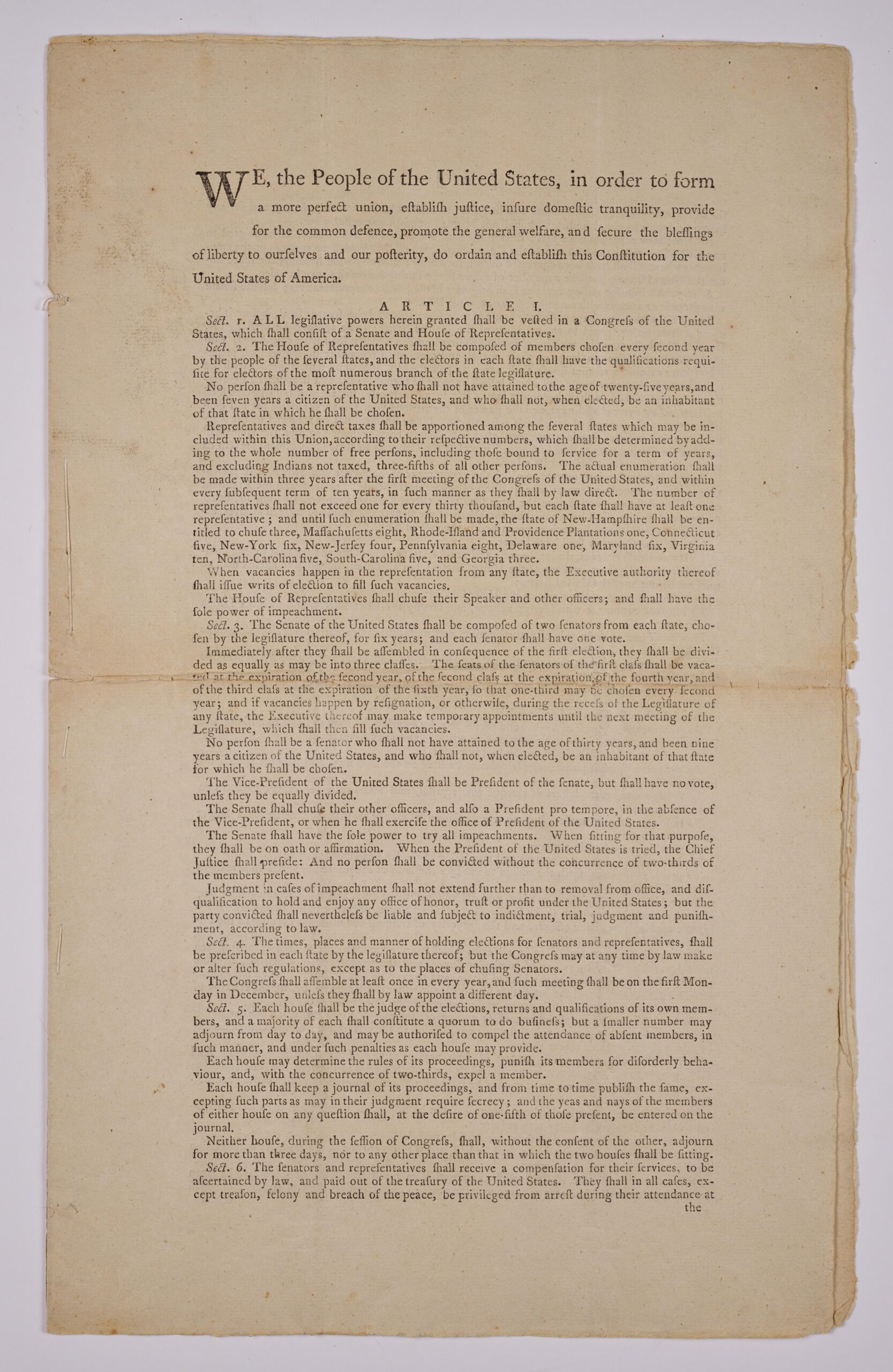
Centered around a rare, centuries-old copy of the U.S. Constitution — a gift from billionaire hedge fund manager Kenneth C. Griffin — the National Constitution Center will present “America’s Founding.“ The gallery will be dedicated to the exploration of our early, colonial principles that led our fight for independence. How do they stand up now? Opens Feb. 13.
This original copy of the U.S. Constitution, one of only 14, was donated to the National Constitution Center by billionaire hedge fund manager Kenneth C. Griffin. It will be featured in the Constitution Center’s upcoming “America’s Founding” exhibit.
A second gallery will explore how the Constitution defines roles and balances power between the legislative, judicial, and executive branches of government. Opens in May.
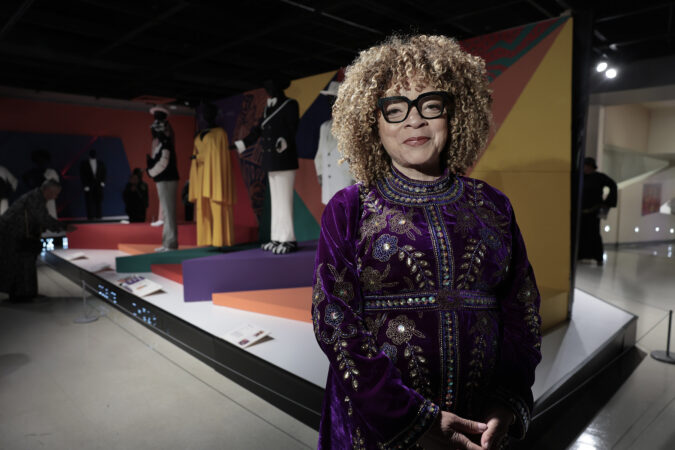
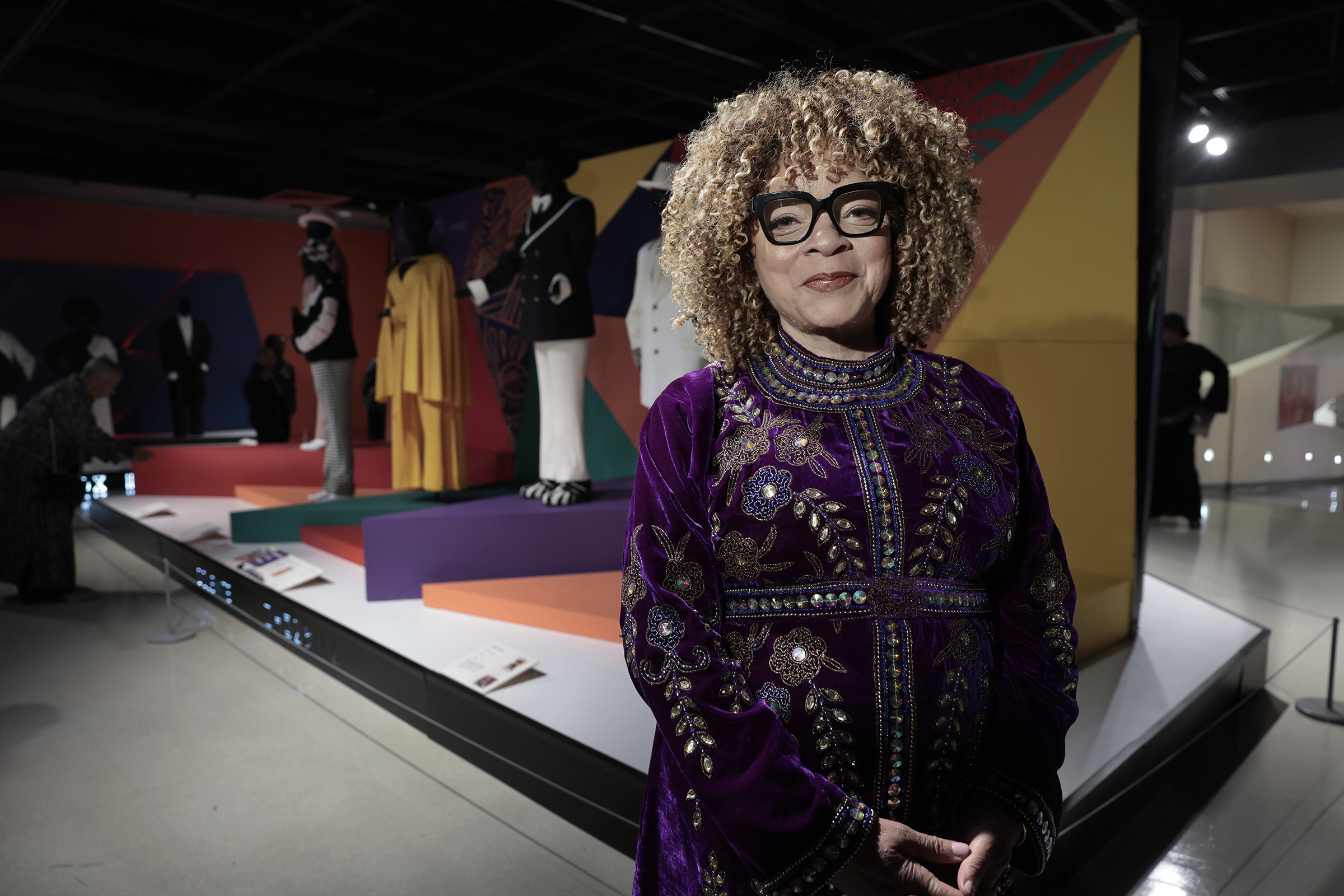
Ruth E. Carter pauses briefly during the “Ruth E. Carter: Afrofuturism in Costume Design” opening gala at the African American Museum in Philadelphia on Saturday, Nov. 1, 2025.
In October 2026, AAMP will premiere the extension of its “Audacious Freedom” exhibit. Currently on the ground floor, the exhibit is a study of Black Philadelphians from 1776 to 1876. The expanded show will bring “Audacious Freedom” up to present day and will include 20th-century artists and educators, from Charles Blockson to Jill Scott.
Woodmere Art Museum
Inspired by Philadelphia illustrator and friend of WoodmereJerry Pinkney, the Chestnut Hill museum’s Semiquincentennial show, “Arc of Promise,” acknowledges America’s painful histories of slavery, injustice, and displacement of its Indigenous people while affirming its capacity to rebuild, renew, and evolve. Featuring art by Philadelphians dating to 1790, “Arc of Promise’s” paintings, sculptures, maps, and flags explore what freedom and justice for all truly means. Opens June 20.
The Academy of Natural Sciences of Drexel University
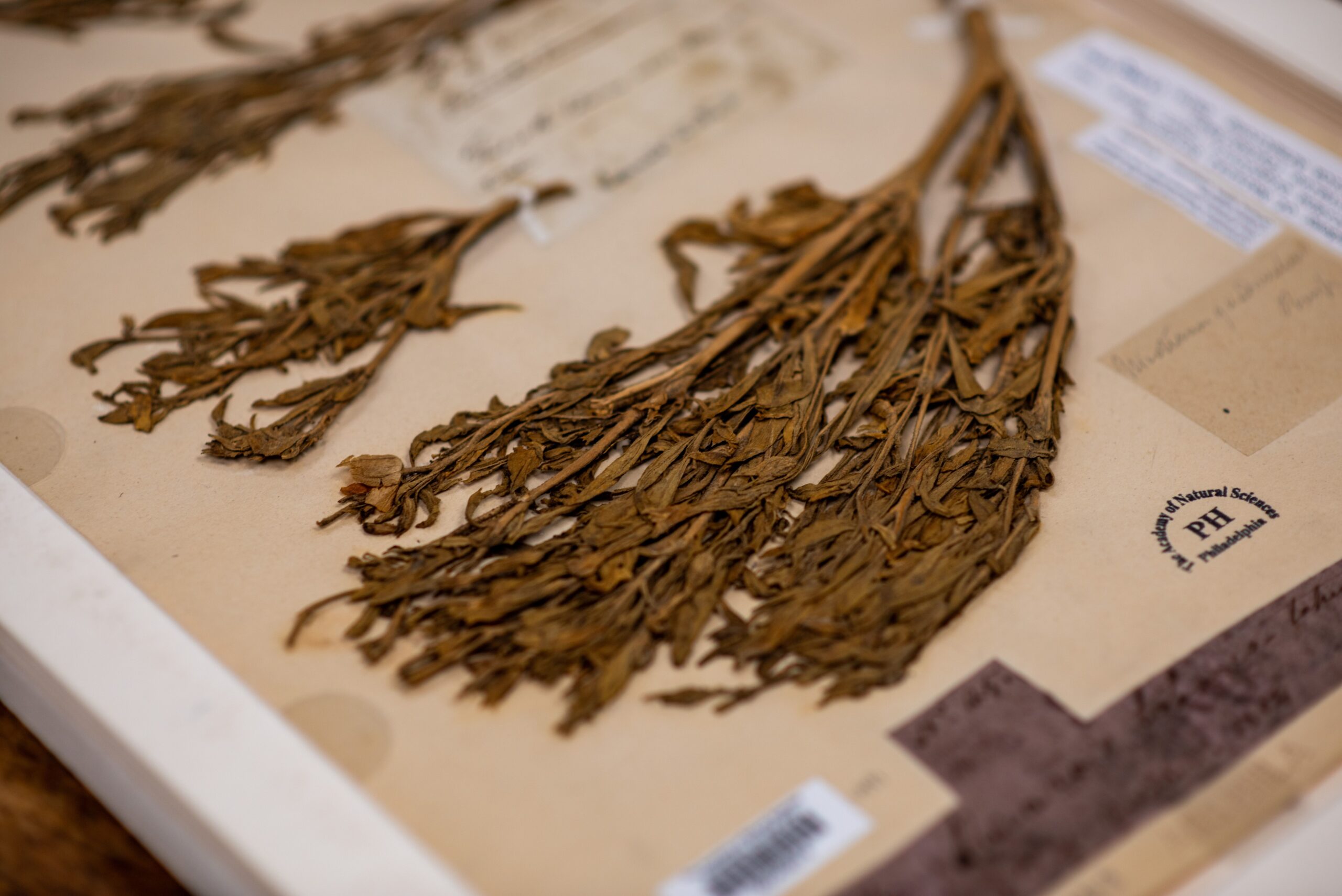
In collaboration with California State University ethnobotanist Enrique Salmón, the Academy of Natural Sciences at Drexel University will debut “Botany of Nations: Indigenous Ecological Knowledge and the Lewis & Clark Corps of Discovery.” These centuries-old plants, collected by explorers Meriwether Lewis and William Clark, were a gift to Philadelphia’s American Philosophical Society from Thomas Jefferson. Organizers hope the selection of now-pressed plants — prairie turnip, camas root, and Western red cedar — will be a vegetative portal to the Indigenous perspective in American frontier life. From March 28, 2026, through Feb. 14, 2027.
Samples from Botany of Nations. Academy of Natural Sciences of Drexel University, March 28, 2026 – February 14, 2027
The Clay Studio: Center for Innovation in Ceramic Art.
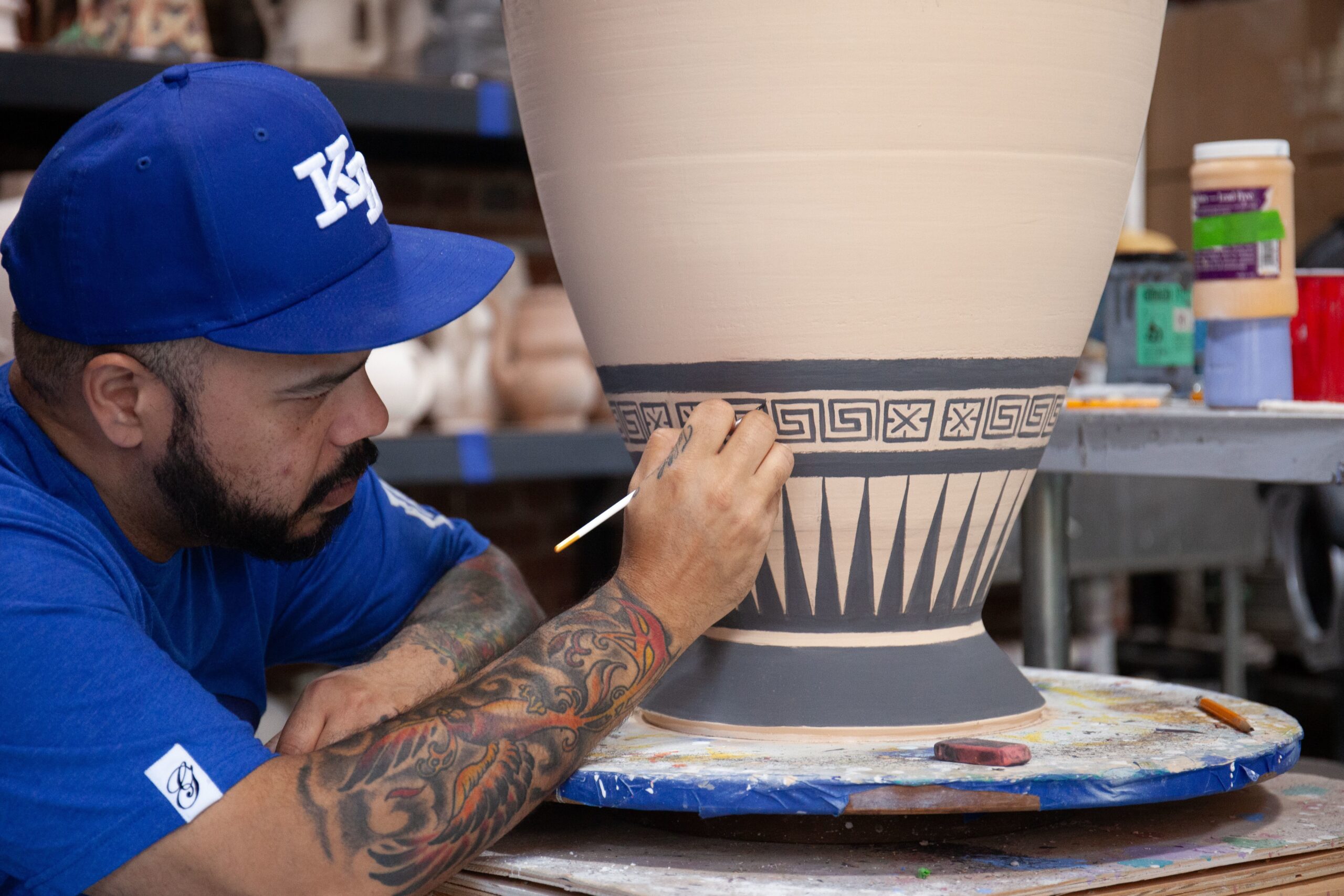
Twenty-five artists from 20 Philadelphia cultural institutions will present projects that show how the definition of independence evolved from 1776 through 1876, 1926, 1976, and 2026 under the umbrella of the Clay Studio. The exhibit, “Radical Americana,” will start with a compelling show by Kensington potter Roberto Lugo on April 9. Artists will mount additional shows at participating institutions throughout the year, including at the Museum for Art in Wood and Cliveden Historic House. A full list is available at theclaystudio.org. Opens April 9.
Roberto Lugo is shown working on one of his Greek vases that is now part of a new exhibition, “Roberto Lugo / Orange and Black” at Art@Bainbridge, a gallery project of the Princeton University Art Museum
Mural Arts Philadelphia
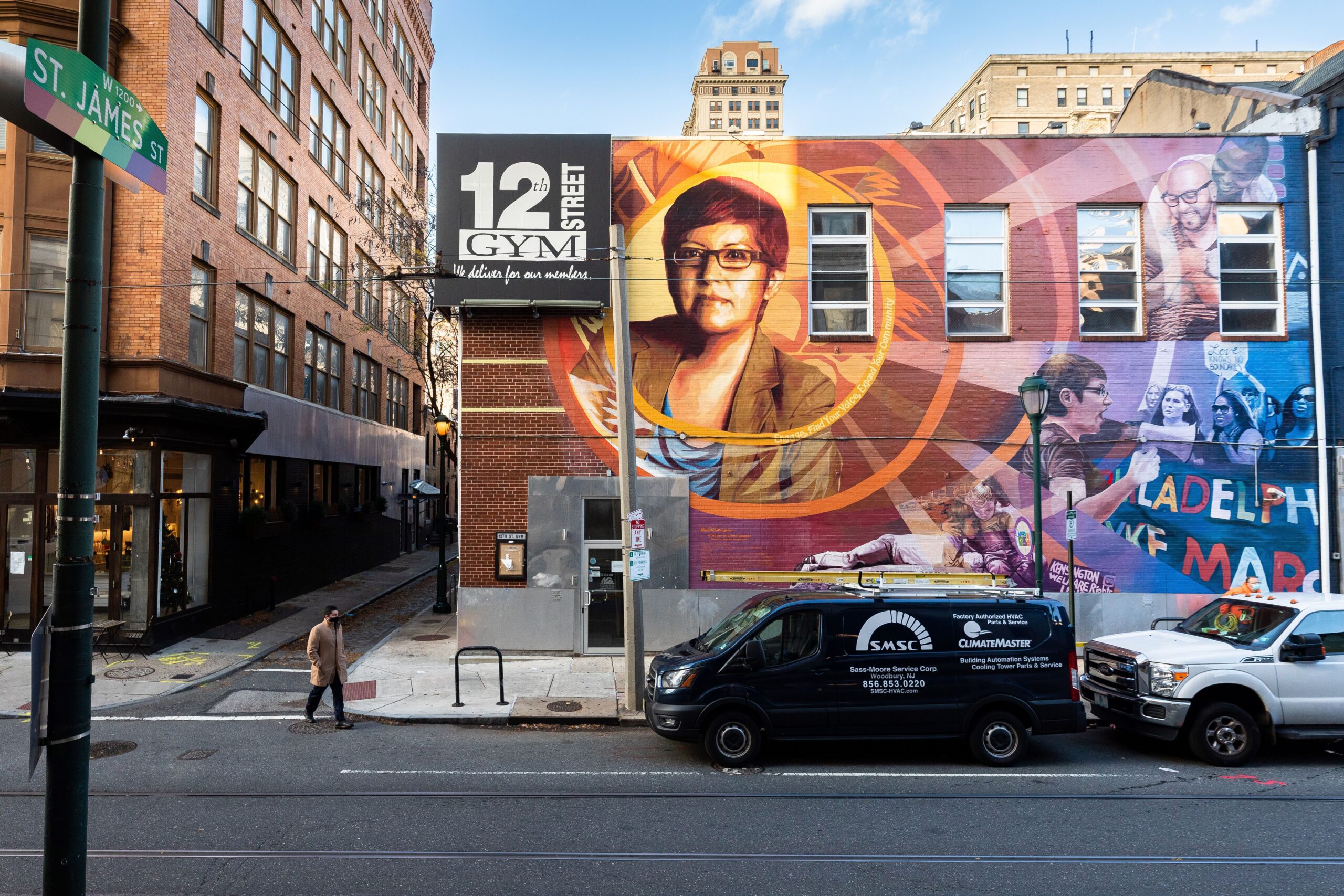
Mural Arts is working on several projects that will spruce up the city in 2026. That includes a new focus on the city’s entryways, the restoration of several murals, and a collaboration between Free Library of Philadelphia in a community printmaking project. At least three new murals will debut and include a tribute to artists Questlove (of the legendary Roots crew) and Boyz II Men. A refurbished mural in honor of Philadelphia’s first director of LBGTQ affairs, the late Gloria Casarez, will be unveiled. Mural Arts also is partnering with the Philadelphia Historic District on sculptures for next year’s 52 Weeks of Firsts programming and with the Bells Across PA program to create Liberty Bell replicas in neighborhoods throughout the city.
A rendering of a tribute to Gloria Casarez City of Philadelphia Mural Arts Program, Michelle Angela Ortiz, 12th Street Gym, 204 South 12th Street.
The Philadelphia Art Museum has reiterated its position in court that a dispute with ousted director and CEO Sasha Suda should be resolved through arbitration.
Later that month, museum trustees fired back at her lawsuit and said she was dismissed after the investigation determined that she “misappropriated funds from the museum and lied to cover up her theft.”
Her contract with the museum stated that “any and all claims or controversies” against the museum should be pursued in “private, confidential arbitration.” But in a filing this month Suda argued that her contract contained “an explicit exception” to the arbitration provision.
But “Suda has no credible response to the museum’s commonsense reading” of her employment contract, the museum said in a Dec. 19 Philadelphia Court of Common Pleas filing by the museum. The nearly 150-year-old organization is represented by lawyers from Philadelphia’s Cozen O’Connor and Washington, D.C. firm Kellogg, Hansen, Todd, Figel & Frederick.
“Arbitration clauses are interpreted literally, but not foolishly,” the new filing argues.
It asks the court to enter an order compelling Suda to submit to arbitration, and to stay legal proceedings until the matter is resolved in arbitration.
On Nov. 21, the museum named former Haverford College president and Metropolitan Museum of Art leader Daniel H. Weiss as new director and CEO.
Even after selling more than $2 billion worth of sports and pop culture memorabilia, and adding celebrities like Drake, Kim Kardashian, and Shane Gillis to his client list, South Jersey’s Ken Goldin hasn’t lost the thrill of the chase.
During a visit to Japan last summer, Goldin made sure to post on social media that he wanted to meet nearby collectors and appraise their items.
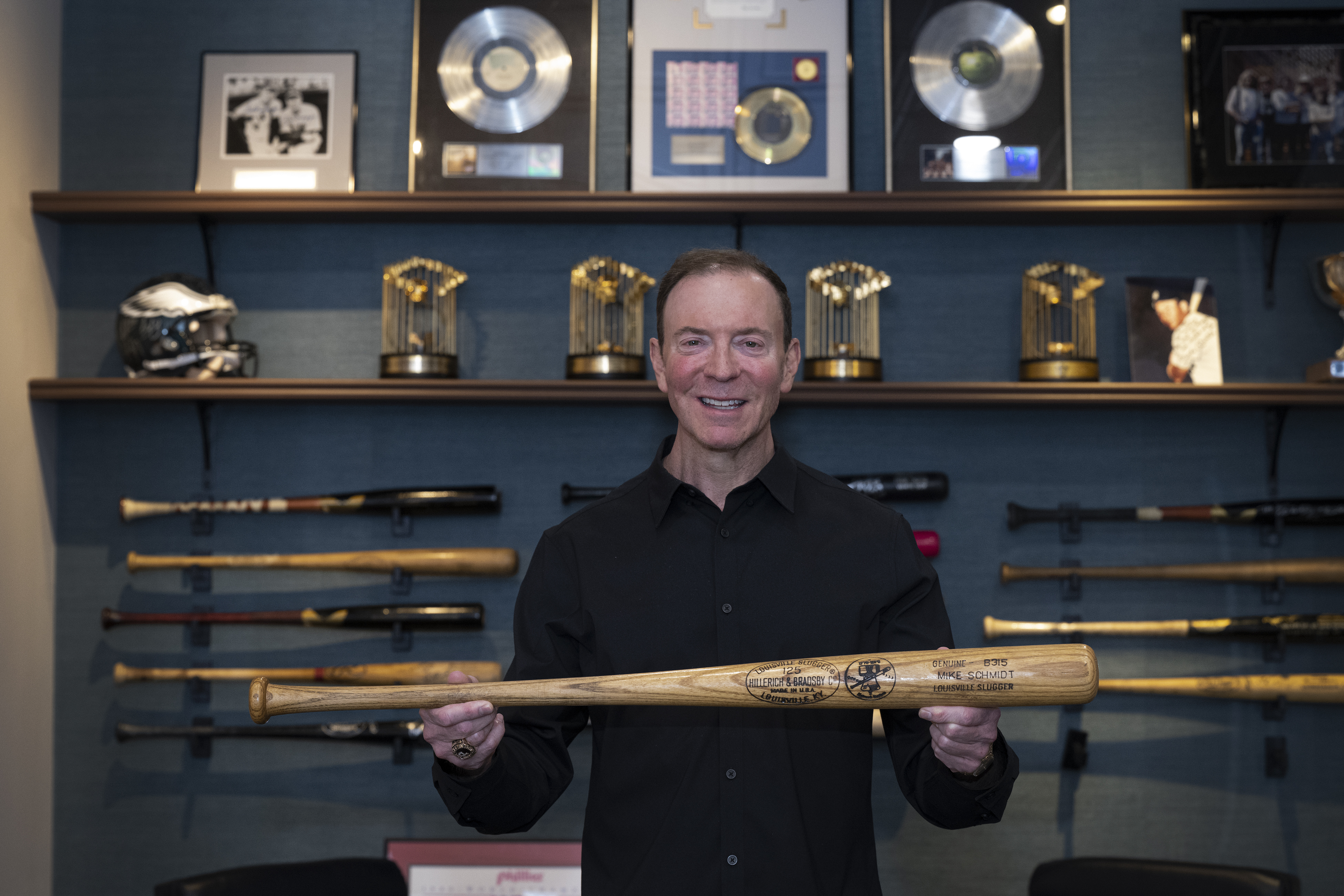
Goldin’s years of collecting are evident in his office. The walls are lined with framed photos, encased music records, World Series trophies, and other prized collectibles, like signed baseball bats from Phillies legend Mike Schmidt and Reebok sneakers worn by Shaquille O’Neal.
The owner of Goldin Auctions in Runnemede said the things he has collected are invaluable heirlooms. Yes, they are rare, but they are also artifacts that carry the glory of pivotal moments in sports history, especially ones he witnessed himself.
Ken Goldin holds a 1976 Phillies bat used by Mike Schmidt, on Thursday, Dec. 11, 2025. Goldin, the star of Netflix’s “King of Collectibles,” the South Jersey-based collector and high-profile dealer has several new finds sure to excite Philadelphia sports fans.
Every time Goldin, 60, looks at the signed 1980s Phillies team poster in his office, he’s reminded of the World Series games he attended with his parents, sitting in the 500 level at Veterans Stadium.
The Phillies were playing the Kansas City Royals, and the teenage Goldin watched relief pitcher Tug McGraw tap his chest on the mound, a sign of his fiery competitiveness.
It’s those memories, not the money, that keep Goldin in the auction game, he said. They’re also the reason Netflix built a reality show around his collection and his business of selling high-value memorabilia.
“Every collectible I sell is a moment, it’s a piece of history,” he said. “And to me, if you love what you do, you will never work a day in your life. What drives me is that I really enjoy what I do.”
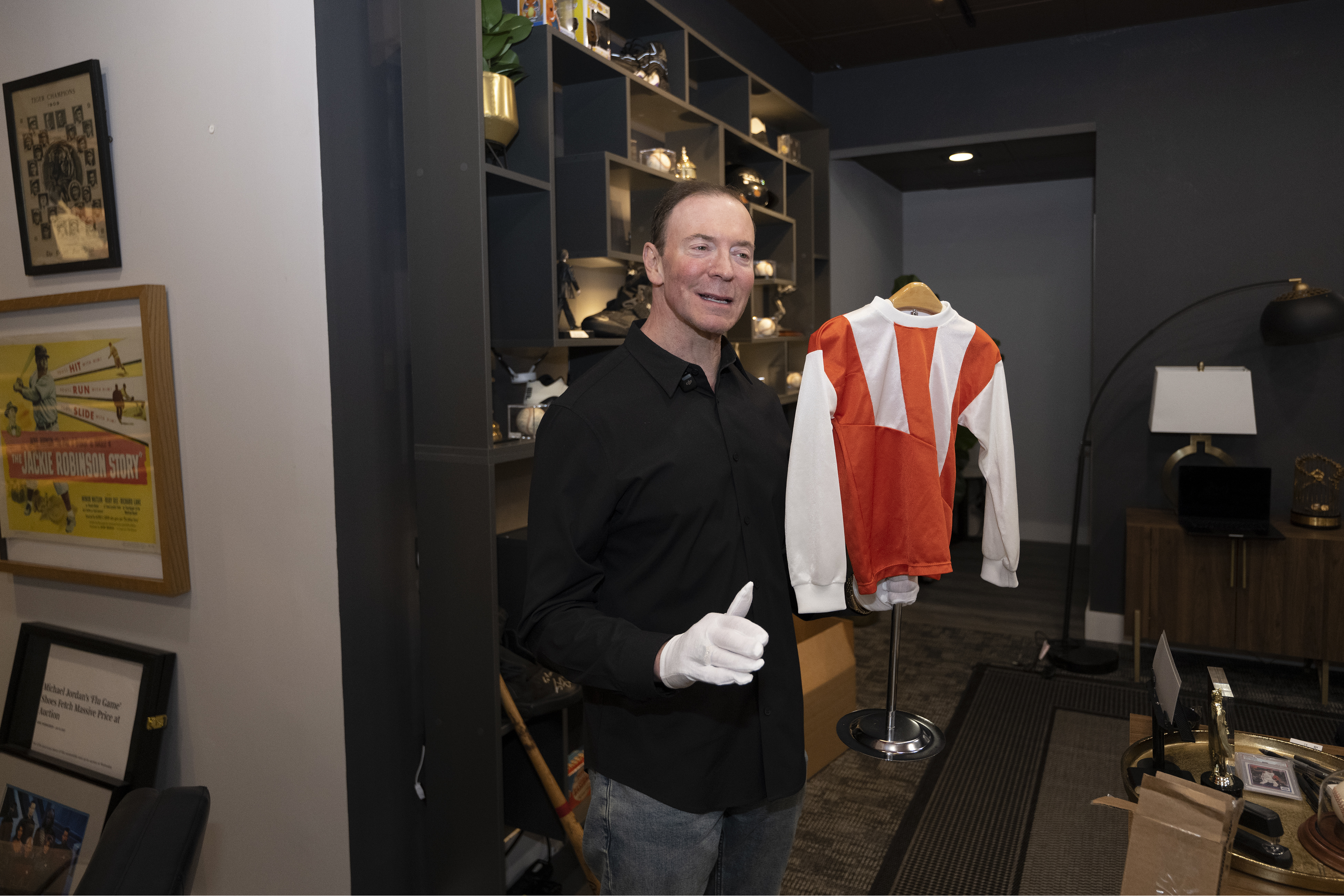
Ken Goldin shows a childhood soccer jersey that belonged to Lionel Messi, on Thursday, Dec. 11, 2025, at his office. Goldin, the star of Netflix’s “King of Collectibles,” the South Jersey based collector and high-profile dealer has several new finds sure to excite Philadelphia sports fans.
Among the season’s biggest surprises is a soccer jersey worn, or verifiably used, by Lionel Messi as a child. The story of how it landed in his hands, he said, is almost too good for TV.
“I’m not allowed to say any more than that, except that the provenance is unbelievable and the story behind it is remarkable,” he said in an interview prior to Tuesday’s premiere.
For Philly sports fans like himself, Goldin said there will be several Kobe Bryant and Allen Iverson items making an appearance on the six-episode season.
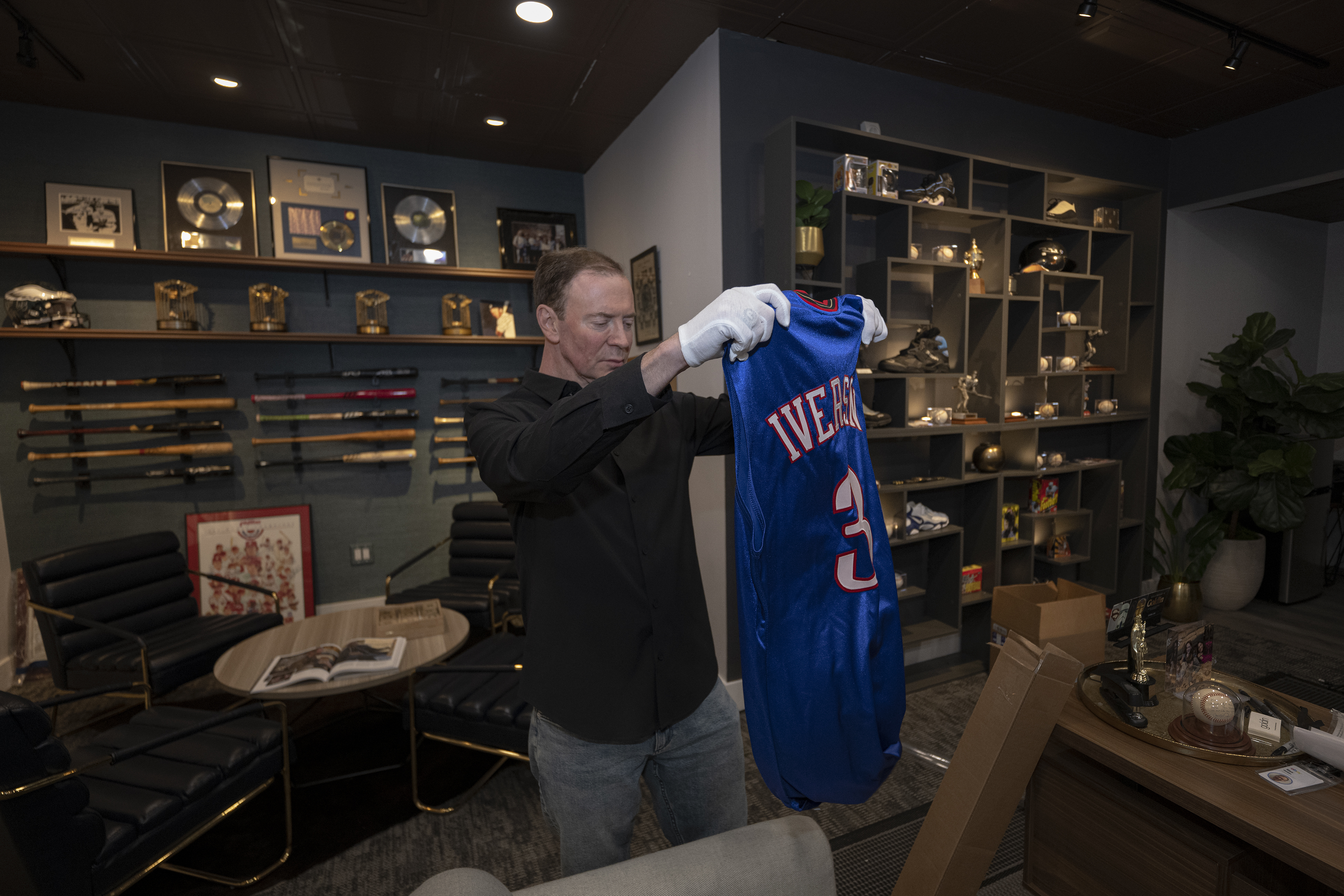
Ken Goldin unpacks a 2006 signed Allan Iverson jersey on Thursday, Dec. 11, 2025 at his office in Runnemede. Goldin, the star of Netflix’s “King of Collectibles,” the South Jersey based collector and high-profile dealer has several new finds sure to excite Philadelphia sports fans.
Some will be things Goldin acquired on his travels to Tokyo, where he met the “single-best Iverson collection in the world.”
Among the people who responded to his social media post was this Iverson fan who had a signed 2006 alternate blue jersey of the Hall of Fame player. It features a classic “Sixers” wordmark with white letters, and red and black trim. It was photo-matched and could be forensically linked to Iverson.
“When I saw it, I was like, ‘Whoa,’” Goldin said.
When it comes to Philly sports, certain athletes and figures transcend international lines, and Iverson is one of them, Goldin said.
“AI is one of those players who connects with everyone, whether they’re 14 years old or in their 50s,” he said. “I’ve lived and breathed Philly sports my whole life, so I know.”
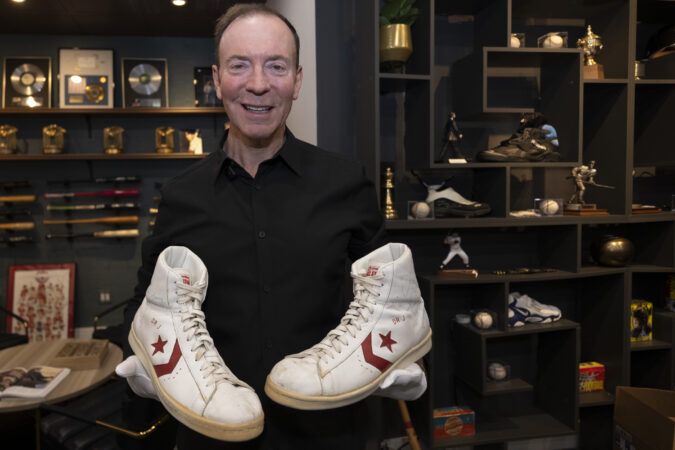
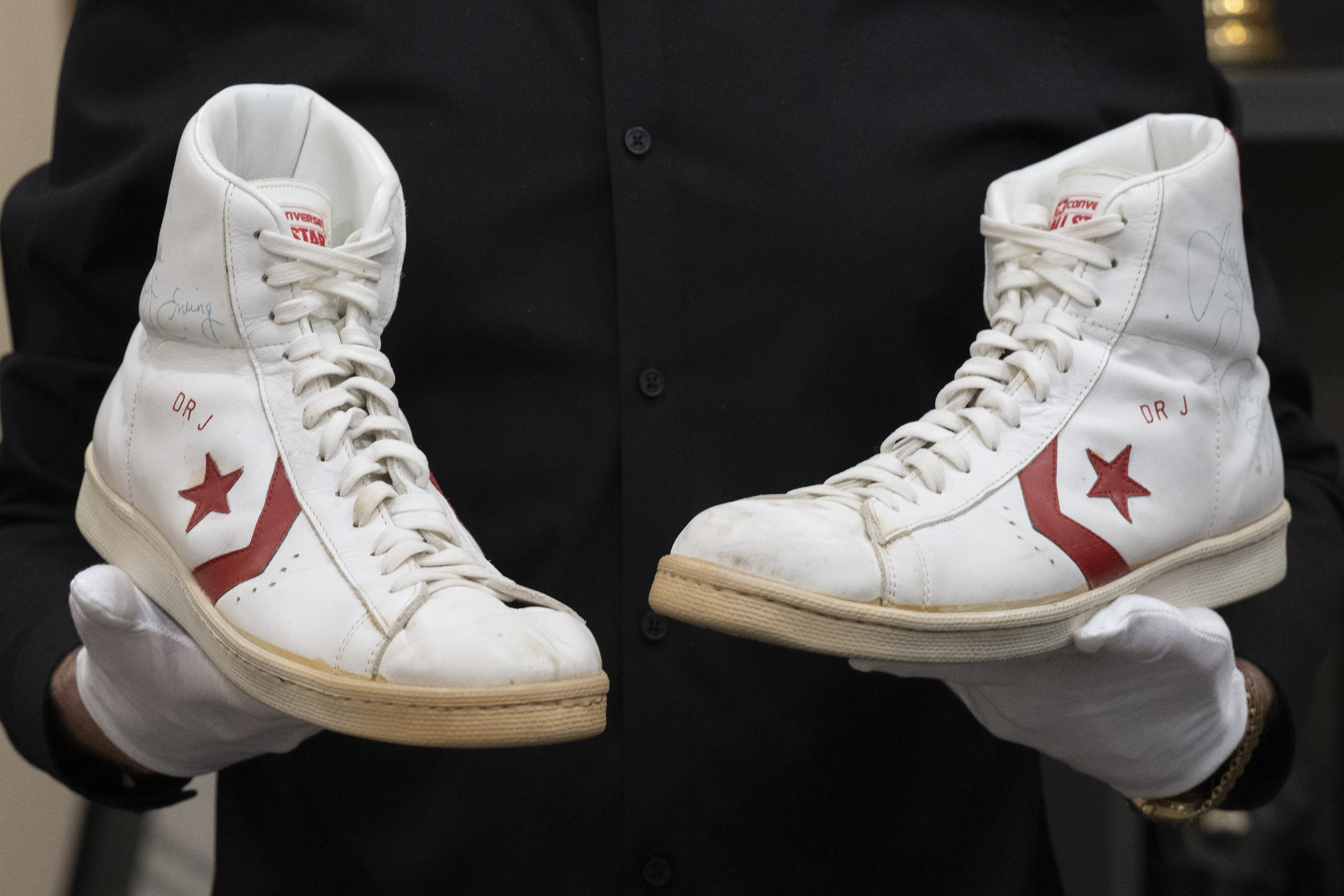
Ken Goldin holds a pair of Converse basketball sneakers on Thursday, Dec. 11, 2025, that belonged to 76ers star Julius “Dr. J” Erving and were worn during a game against the Boston Celtics in the 1980s. Goldin, the star of Netflix’s “King of Collectibles,” the South Jersey based collector and high-profile dealer has several new finds sure to excite Philadelphia sports fans.
On a recent Thursday afternoon, Goldin dug into his personal collection to reveal the sneakers of another legendary Philly sports icon: Julius “Dr. J” Erving.
The Converse All-Stars, worn by the revolutionary ABA and NBA star, feature his signature on both shoes. The sneakers are photo-matched to an early 1980s game that Erving’s Sixers played against Larry Bird’s Boston Celtics.
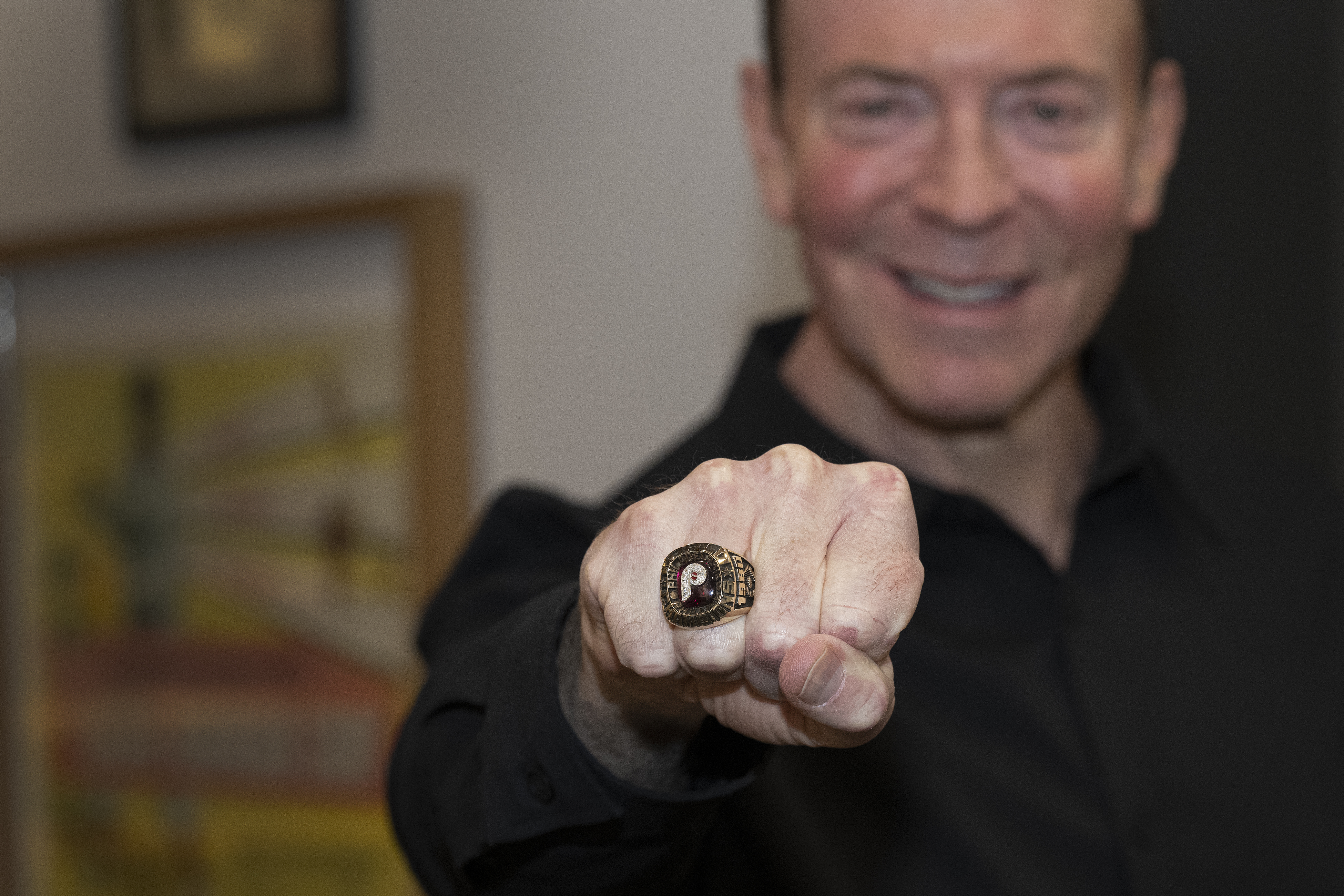
No stranger to TV-level theatrics, Goldin wore former Phillies center fielder and famed broadcaster Richie Ashburn’s 1980s World Championship ring that afternoon.
“I wear it almost never. It is set in a vault. But for this [interview], I said, ‘I’m going to put the ring on,’” Goldin said.
Ken Goldin shows his 1980 Richie Ashburn bicentennial ring on Thursday, Dec. 11, 2025. Goldin, the star of Netflix’s “King of Collectibles,” the South Jersey based collector and high-profile dealer has several new finds sure to excite Philadelphia sports fans.
But sports memorabilia won’t be the only thing Goldin is dealing with this season.
To further hone in on the Philly nature of the show’s new season, Goldin promised a Rocky-related find but wouldn’t share details. The show will also showcase high-priced items like Paul McCartney’s guitar, paintings by Bob Ross, and even the alleged mummified hand of Cleopatra.
Goldin said there will also be guest appearances from Logan Paul, Steve Aoki, and Giannis Antetokounmpo and his three brothers.
He knows Sixers fans aren’t the most welcoming to Eastern Conference contenders, but Goldin makes an exception for Antetokounmpo. “I know it’s Philly, but you have to love the guy,” he said of the Milwaukee player, before signing off with something of a prophecy.
“Who knows, maybe we can get him next year.”
The new season of “King of Collectibles” is streaming on Netflix.