Category: Arts & Culture

  • Philly Fringe Fest is the biggest it’s ever been. Now FringeArts will offer year-round programming in 2026.

    Philly Fringe Fest is the biggest it’s ever been. Now FringeArts will offer year-round programming in 2026.

    Philadelphia’s FringeArts will return to offering seasonal programming, in addition to its monthlong Fringe Festival, beginning with a Winter-Spring 2026 season, the organization announced this week.

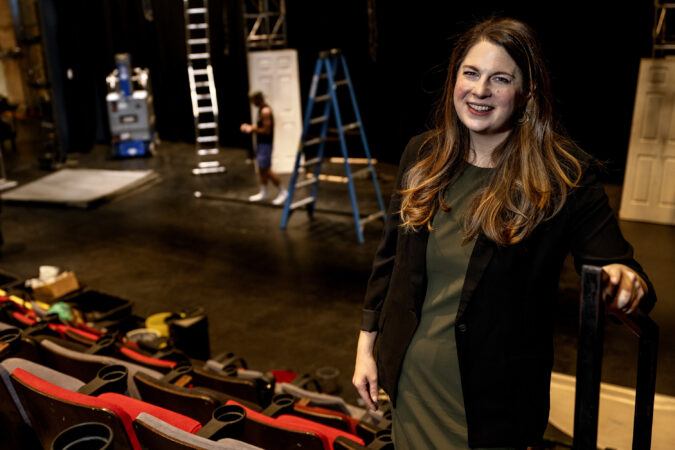
    The legendary festival, known for experimental and boundary-pushing theater, previously offered year-round programming before the COVID-19 lockdown in 2020. In recent years, it has seen record-breaking audience growth, prompting producing director Nell Bang-Jensen to expand beyond the month of September.

    “I’m really proud to say [Fringe Festival 2025] was actually, numbers-wise, our most successful festival ever, which just feels like a light shining, in terms of arts organizations having a win right now,” said Bang-Jensen, who took the helm last year after serving as Theatre Horizon’s artistic director. “It’s an experience that can’t be replicated on a screen, and an experience that celebrates Philly, and I think people are really here for that.”

    The Philly Fringe is one of the largest festivals of its kind in the country. Based on the number of participating venues across the city, Bang-Jensen said, Philly Fringe ranks first ahead of other notable festivals in Rochester, N.Y., and Minneapolis.

    The 2025 Fringe Festival was the largest-ever produced in its 29-year history with 353 shows. More than 35,000 tickets were sold during the month of September, which was a record high, and saw a 17% increase in unique ticket buyers from last year, which “means it’s not just the same people buying more tickets,” said Bang-Jensen.

    She added that they have seen success in reaching younger audiences this year as well, with more than half of the audience composed of Millennials and Gen Z for the first time.

    For the Winter-Spring 2026 season, FringeArts will present four productions from local and international artists at its Old City venue, along with a monthly series of Scratch Nights that invite artists to present works in progress.
    Philadelphia artist Jenn Kidwell will stage her new work “we come to collect: a flirtation with capitalism” at FringeArts in January 2026.

    Jenn Kidwell, the Obie Award-winning cowriter behind The Underground Railroad Game, will stage the Philadelphia premiere of her new work, we come to collect: a flirtation with capitalism (Jan. 22-24), with ASL artist Brandon Kazen-Maddox. It’s an irreverent exploration of “the pigsty of American consumerism.”

    Frequent Fringe artist Lee Minora will bring back her solo show, Baby Everything (Feb. 26-28), for another run. The interactive performance follows a protagonist who doomscrolls through her anxieties about the state of the world. Minora “challenges us to see ourselves as others do, no matter how endearing or insufferable,” wrote Julie Zeglen in The Inquirer’s roundup of the best shows of Fringe Fest 2025.

    Japanese artist Hiroaki Umeda is globally renowned for combining choreography and dynamic digital staging. He’s presenting two shows on a U.S. tour as a double billing: Moving State 1 and the solo performance, assimilating (March 14-15).

    Lastly, FringeArts will stage Girl Dolls: An American Musical (May 8-17) from Philadelphia artists Jackie Soro and Pax Ressler, who’ve teamed up with the Bearded Ladies Cabaret for a production billed as “part tea party, part identity crisis.” They ask, “What does your favorite doll reveal about your childhood trauma?”

    In addition to year-round programming, FringeArts will launch an artist-in-residency program for fostering original works. The Albert M. Greenfield Residency at FringeArts — funded by the local foundation of the same name — will invite three individuals or artist groups to develop new theatrical productions. The inaugural 2026 recipients will be selected by a panel of Philadelphia creatives.

    Bang-Jensen said she’s grateful that Philly audiences have shown up for the “city of makers” every year and she hopes to continue expanding FringeArts’ reach.

    “As many arts organizations are actually feeling pressure in 2025 just based on the economic environment and the political environment to do work that’s a little more mainstream, we have this wide-open field to do more for people who like things off the beaten path,” said Bang-Jensen.

    Tickets for FringeArts’ Winter-Spring 2026 season go on sale to FringeArts members on Dec. 10 and the public on Dec. 12 at fringearts.com.

  • S test 2 – social

    S test 2 – social

    Instagram video

    X video

    YouTube

    Tik tok

    FACEBOOK video

    Instagram image

    X image

    Spotify

    Soundcloud

    Vimeo

    This is all regular text, no ital or other formatting.
    I’m telling folks that we need to reach out and we need to talk about the accomplishments, and that’s how we bring folks in. It’s not personality-based, it’s performance based.

    Calvin Tucker

  • Philly wants to keep the Rocky statue atop the Art Museum steps

    Philly wants to keep the Rocky statue atop the Art Museum steps

    » UPDATE: Plan to keep a Rocky statue at the top of the Art Museum steps moves forward

    The Rocky statue sitting atop of Philadelphia Art Museum’s famed steps could soon be there permanently — and the one at the bottom may be going back to the Italian Stallion himself, Sylvester Stallone.

    That’s according to a recent proposal from Creative Philadelphia, the city’s office for the creative sector, which is slated to present its proposal at an Art Commission meeting for a concept review Wednesday. The plan, the proposal notes, is endorsed by Mayor Cherelle L. Parker and Art Museum officials, as well as leaders in the Parks and Recreation department and at the Philadelphia Visitor Center, all of whom filed letters of support.

    “This project is about more than relocating a sculpture,” chief cultural officer Valerie V. Gay and public art director Marguerite Anglin wrote in a letter to the Art Commission. “It’s about elevating an artwork that, for decades, has symbolized perseverance, aspiration, and the resilience of the human spirit.”

    The statue at the top of the Art Museum’s steps was set there last December as part of the city’s inaugural RockyFest, which celebrates the Rocky franchise. Initially intended to be a temporary installation, that statue — a replica of sculptor A. Thomas Schomberg’s original, made by the artist himself — was lent to the city by Stallone, who purchased it for about $403,000 at an auction in 2017, The Inquirer previously reported.

    The statue at the foot of the steps, meanwhile, is owned by the city, and has sat there since 2006, arriving after years of controversy and moves since it appeared in 1982’s Rocky III. Stallone commissioned that statue for the film, and later gave it to the city.

    As part of the city’s plan, Philly would swap ownership of the two statues, taking ownership of the statue at the top of the steps, and returning the statue at the bottom “to the original donor’s private collection” following its exhibition inside the Art Museum this spring, the proposal notes.

    The city would then “install another City-owned statue at the bottom of the Art Museum steps,” and move the statue at the top back several feet for its permanent installation.

    The project would cost an estimated $150,000, the proposal notes. It was not immediately clear what statue would be relocated to the bottom of the steps, or what prompted the exchange of statues.

    An Art Commission agenda notes that in its concept review Wednesday, the proposal could receive final approval if it is found to be “sufficiently developed.”

    A history of moves

    The proposed move marks yet another chapter in the Rocky statue’s storied history in town. It arrived for the filming of Rocky III, but when the shoot wrapped in 1981, a permanent location had not been approved, causing it to be shipped back to Los Angeles. It ultimately came back and was temporarily exhibited again at the top of the Art Museum steps before being moved to an area outside the Spectrum at the stadium complex in South Philly, where it was supposed to permanently stay.

    But in 1990, the statue was again temporarily installed at the museum for the filming of Rocky V, reigniting public debate about whether it should remain there. The statue was returned to the stadium complex before being moved in 2006 back to the bottom of the museum’s steps, where it has sat ever since.

    Gay and Anglin seem to reference the statue’s history in their letter, noting that a permanent installation at the top of the museum’s steps could be an “an opportunity to lean into the evolving conversation about what is considered ‘art’ and what deserves a place in our most treasured civic spaces.”

    “The Rocky statue is a clear example of this evolution,” they wrote. “Its artistic significance has not been shaped by institutions, but by the millions of people who engage with it year after year.”

    A third statue

    Philadelphia, incidentally, has a third Rocky statue made by Schomberg. That one is located at Philadelphia International Airport, where it was unveiled late last month in Terminal A-West.

    “Rocky is the DNA of this great city of Philadelphia,” Schomberg said in a statement released with the airport statue’s unveiling. “There’s a little bit of Rocky in all of us. Rocky is not just known here in Philadelphia but is known across this country and the world.”

  • Philly will host a five-week-long arts festival as part of America 250

    Philly will host a five-week-long arts festival as part of America 250

    A new arts festival will launch in Philadelphia in 2026 as one of the major events marking the nation’s 250th anniversary. What Now: 2026 is planned to be a five-week-long festival from the nonprofit ArtPhilly. The festival aims to showcase the city’s artistry and talent for both tourists and neighbors alike.

    Dozens of Philadelphia artists across disciplines will present more than 30 original works, staged from late May to July 2026 in venues around Philadelphia, coinciding with the Fourth of July and FIFA World Cup matches as part of the city’s Semiquincentennial events.

    What Now: 2026 will feature new works by Philly artists such as filmmaker Walé Oyéjidé, poet Yolanda Wisher, opera singer/drag queen Cookie Diorio, photographer and pop-up book creator Colette Fu, and sculptor Pedro Ospina. Institutional collaborators in the region will include BalletX, BlackStar, Philadanco!, the Crossing, and Theatre in the X.

    One highlight is The Basil Biggs Project, a new play from actor and playwright Anna Deavere Smith, an alum of Arcadia University. Her great-great-grandfather was a farmer and veterinarian in Gettysburg who, during the Civil War, took a job disinterring and reburying Union soldiers on the battlefield. Smith wrote the work using archival research on her family’s history.

    The festival is the brainchild of renowned local philanthropist Katherine Sachs, a longtime trustee and benefactor of the Philadelphia Art Museum, and arts administrator Bill Adair, who previously led programs at the Pew Center for Arts & Heritage and the Rosenbach Museum & Library.

    Sachs began planning What Now: 2026 in the winter of 2021 to ensure that the arts remained central to the city’s celebration. She gathered a committee of regional arts leaders including Barnes Foundation head Thom Collins, Mann Center for the Performing Arts president Cathy Cahill, and Mural Arts director Jane Golden to brainstorm meaningful ways to spotlight Philadelphia’s artists.

    “I just thought we could do a better job than we did in 1976 [for the Bicentennial],” said Sachs, who serves as chair of ArtPhilly. “We want people to see what Philly has to offer every day of the year, so they come back.”

    “We’re rah-rah sports. We’re rah-rah about our history and our Independence Hall, and Liberty Bell,” said Adair, ArtPhilly’s creative and executive director. “Those are amazing parts of our identity and who we are, but we know that the arts and culture sector is one of the strongest in the country and the world, and we deserve to be known for that.”

    Part of the duo’s work involved creating the nonprofit organization ArtPhilly, that would provide infrastructure and allow for planning the inaugural festival in 2026 and also future years. Sachs and Adair plan for it to be a recurring festival every two or three years.

    The pair fundraised about $7.5 million for ArtPhilly and the festival with support from the William Penn Foundation and the Pew Center for Arts & Heritage along with private foundations and corporate sponsors. ArtPhilly also received $750,000 from the Philadelphia Funder Collaborative for the Semiquincentennial.

    Working with choreographer Tania Isaac, ArtPhilly’s curatorial and deputy director, they selected 17 Philadelphia curators who proposed 45 projects. The team narrowed down the list to 32 works that received between $20,000 to $400,000 in project funding.

    “Other cities have done [festivals like] this, and the return on the investment is about six times, meaning the economic impact is really pretty great, between the hotels and restaurants, and what the artists have to build and all the people that you have involved,” said Sachs.

    Los Angeles’ Pacific Standard Time festival was a helpful model. Sachs said the result led to increased attendance at institutions in the city, a major goal for Philadelphia organizations that have struggled with foot traffic since the COVID-19 lockdown.

    “Artists are going to interpret this anniversary in a way that no one else can … For us, this festival isn’t a celebration of the anniversary, as much as it is a kind of marking and interrogation of the anniversary. Hence the question, ‘What now?’,” said Adair. “We feel like we’re adding something very important to the public discourse around the anniversary by having artists as the interpreters, but also the provocateurs.”

    What Now: 2026 projects include:

    This article was updated after receiving a revised total for the amount that the Philadelphia Funder Collaborative for the Semiquincentennial granted ArtPhilly.

    This article was updated to reflect Jane Golden’s current title.

  • All the Golden Globe Awards nominees with ties to the Philly region

    All the Golden Globe Awards nominees with ties to the Philly region

    Pennsylvanians know how to bring home a trophy, from the reigning Super Bowl champions to Philly natives awarded an Oscar.

    The Golden Globe Awards on Monday announced its nominees for the best in television and movies, and with it, another chance for victory for regional productions and local actors.

    The ceremony airs Jan. 11 with awards given in 28 categories.

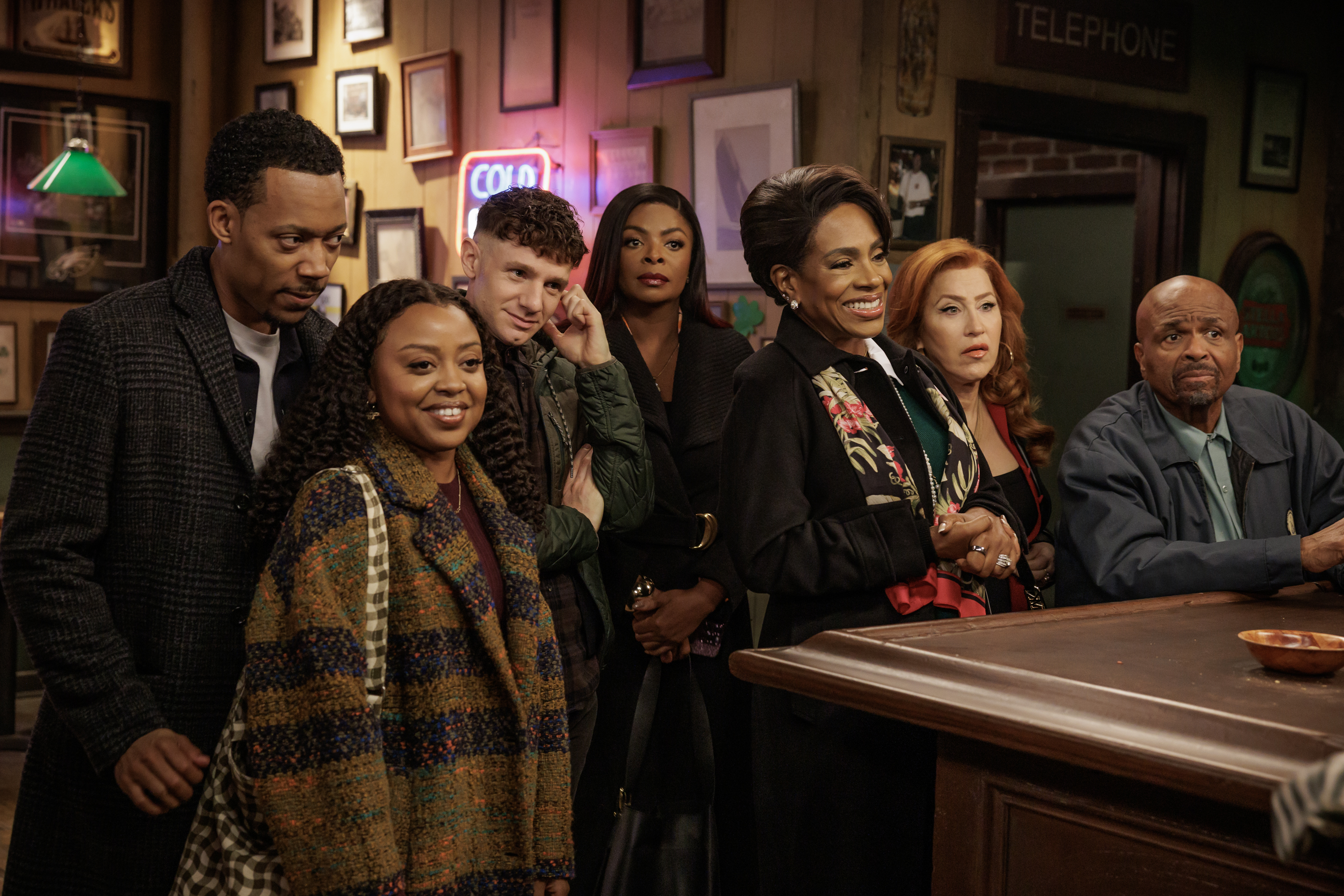
    The Abbott Elementary crew visits the Always Sunny gang at Paddy’s Pub in the “It’s Always Sunny in Philadelphia” and “Abbott Elementary” crossover.

    In its fifth season, Abbott Elementary has already won the hearts of Philadelphians and three Golden Globes. Still, this wholesome band of teachers, starring Philly-native Quinta Brunson, is up again for best musical or comedy television series.

    HBO’s Task and Peacock’s Long Bright River, two crime thrillers set in Philadelphia neighborhoods and suburbs, both have leading actors nominated for Golden Globes this season.

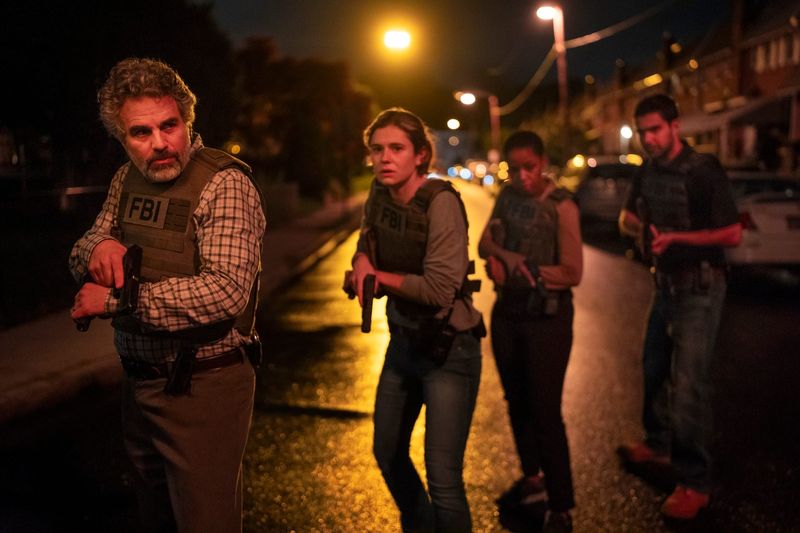
    Mark Ruffalo as Tom, Alison Oliver as Lizzie, Thuso Mbedu as Aleah, and Fabien Frankel as Anthony in “Task.”

    In Task, Mark Ruffalo plays an FBI investigator hunting down thieves targeting drug houses in Delco. While Ruffalo may not know the definition of “jawn” in real life, his portrayal of a tortured former priest turned agent resonated with critics and earned a nomination for best male actor in a dramatic television series. The Inquirer compiled a list of the real-life locations used in the show.

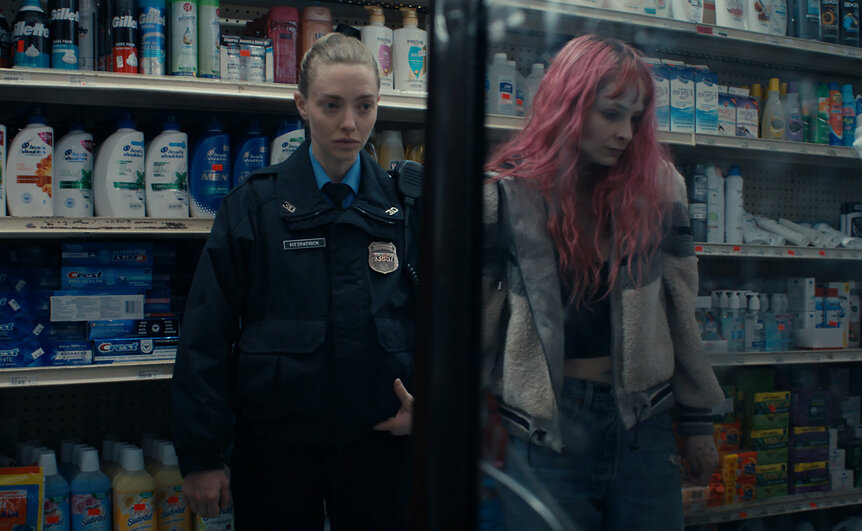
    Amanda Seyfried (left) and Asleigh Cummings in the Kensington-set Peacock series “Long Bright River,” based on the novel of the same name by Temple professor and novelist Liz Moore.

    Liz Moore’s crime novel Long Bright River turned heads when it was released in 2020, detailing the harrowing story of a Kensington police officer, played in the series by Amanda Seyfried, searching for her sister in a cat-and-mouse chase with a killer targeting sex workers. While the television adaptation was filmed in New York City, the bulk of the show takes place in Kensington and other Philadelphia neighborhoods, with Seyfried grabbing a nomination for best female performance in a dramatic limited series.

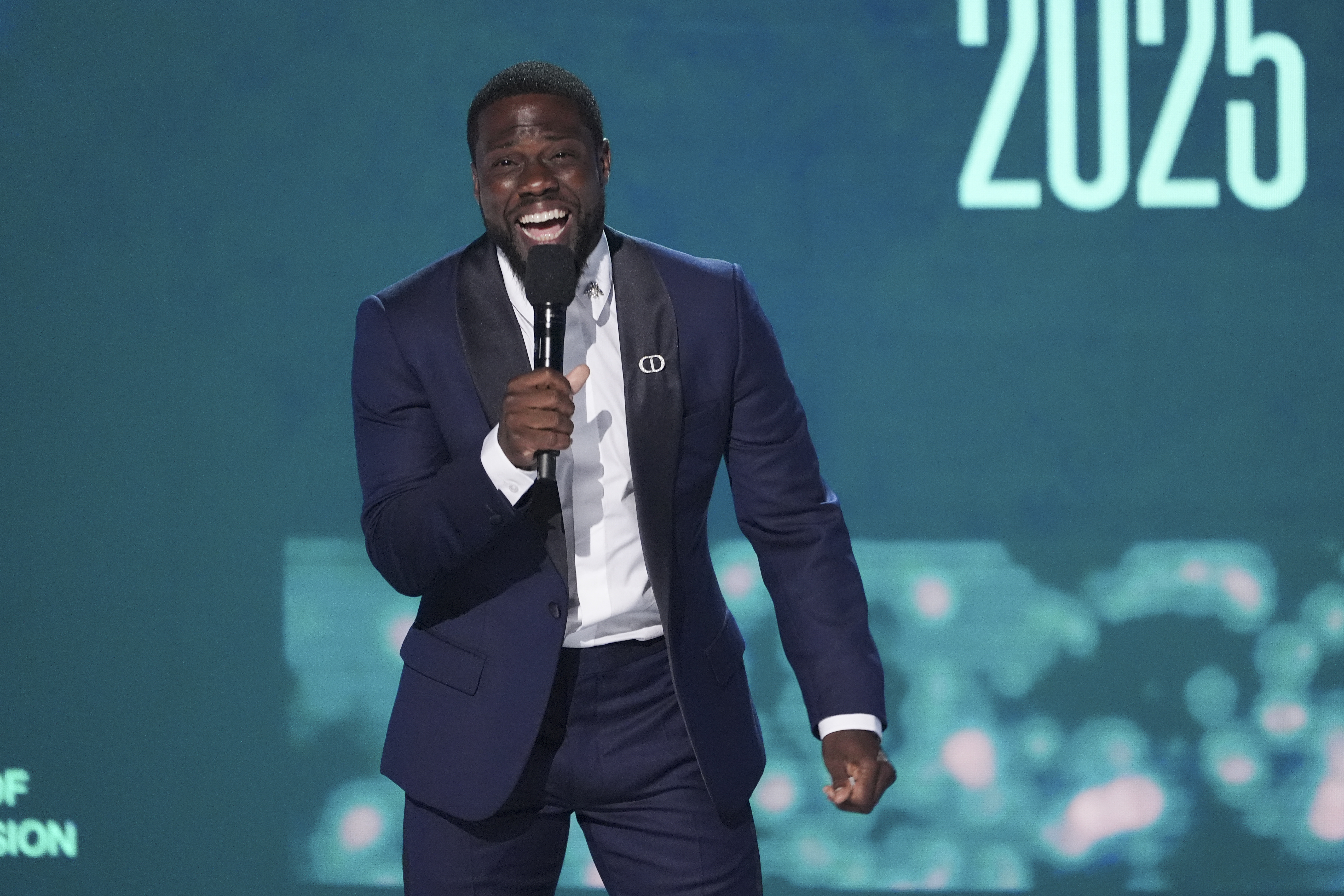
    Hometown stand-up icon Kevin Hart was back to his roots with a new comedy special, Kevin Hart: Acting My Age, tackling injuries after 40, Chick-fil-A’s spicy chicken sandwich consequences, and slipping in the shower. He earned a nomination for best stand-up comedy performance on television.

    Host Kevin Hart speaks during the BET Awards on Monday, June 9, 2025, at the Peacock Theater in Los Angeles.

    The Golden Globes are introducing a new best podcast category this year, for which Bucks County native Alex Cooper is nominated for her sex-positive show, Call Her Daddy. Alongside celebrity guests like Gwyneth Paltrow, Miley Cyrus, and Kamala Harris, Cooper delves into the taboo of female pleasure and pop culture. She grew the show’s popularity into a $60 million Spotify deal in 2021.

    And through a few degrees of separation, several other nominees can be claimed as Philly-adjacent.

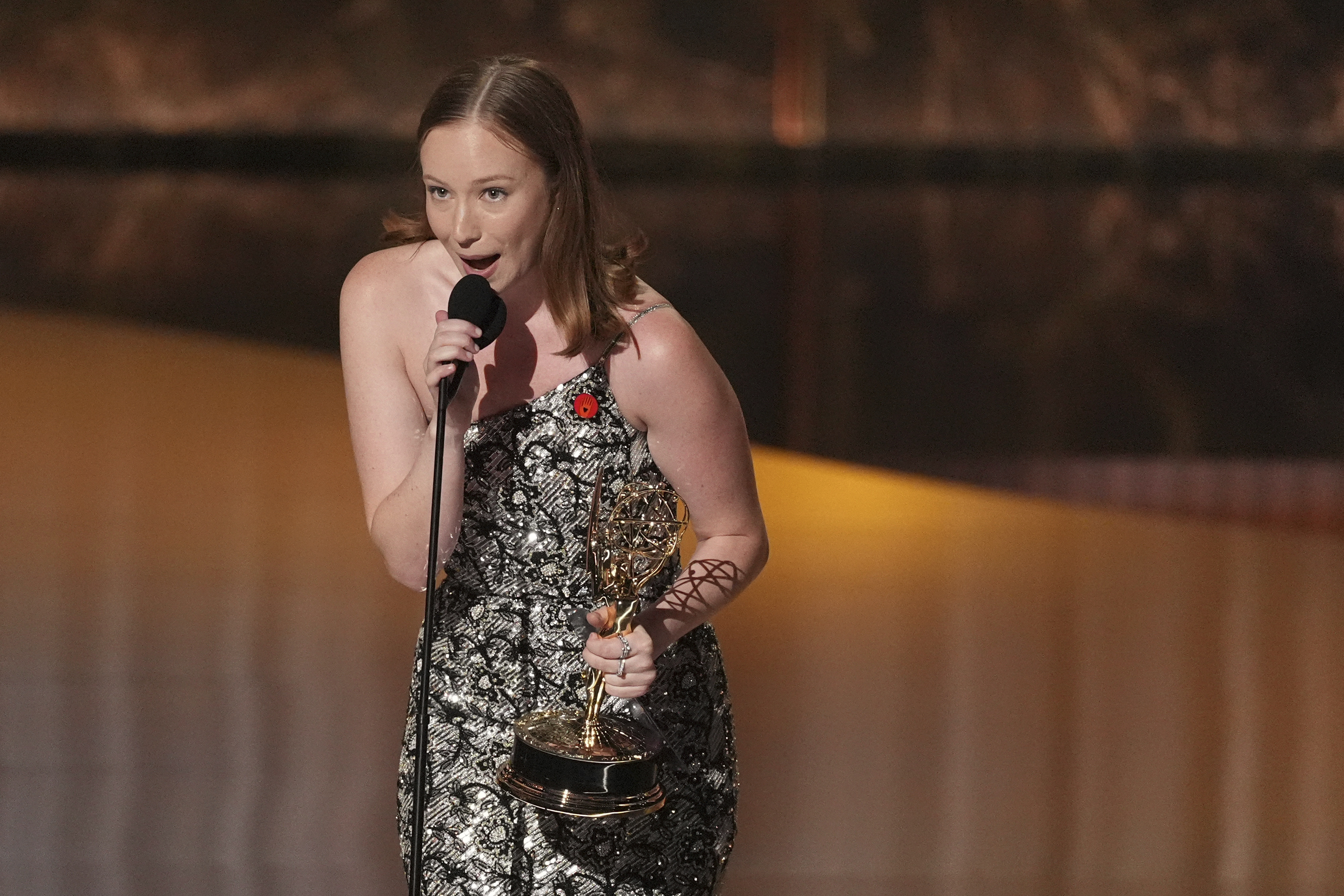
    Hannah Einbinder, whose father is from Doylestown, accepts the award for outstanding supporting actress in a comedy series for “Hacks” during the 77th Primetime Emmy Awards on Sunday, Sept. 14, 2025, at the Peacock Theater in Los Angeles. (AP Photo/Chris Pizzello)

    Take Hacks actress Hannah Einbinder, who shouted “Go Birds!” during her speech after winning an Emmy for best supporting actress in a comedy series, and was filmed by the evening news crying in the streets of Los Angeles after the Eagles’ 2018 Super Bowl win.

    She may not be from Philadelphia (her father, actor Chad Einbinder, is from Doylestown), but she reps the city. HBO’s Hacks, which follows a veteran Las Vegas comic mentoring a young comedy writer, is up for best musical or comedy television series, with Einbinder and costar Jean Smart nominated for best supporting female actor and best actor in a musical or comedy series, respectively.

    And there are some broader Pennsylvania and New Jersey ties among the nominees.

    The breakout medical drama The Pitt, which takes place in the fictional Pittsburgh Trauma Center, depicts a 15-hour shift in an emergency room, split across 15 one-hour episodes. The Pitt’s lead actor, Noah Wyle (known for his role as Dr. John Carter in NBC’s ER), is up against Ruffalo for best male actor in a dramatic television series.

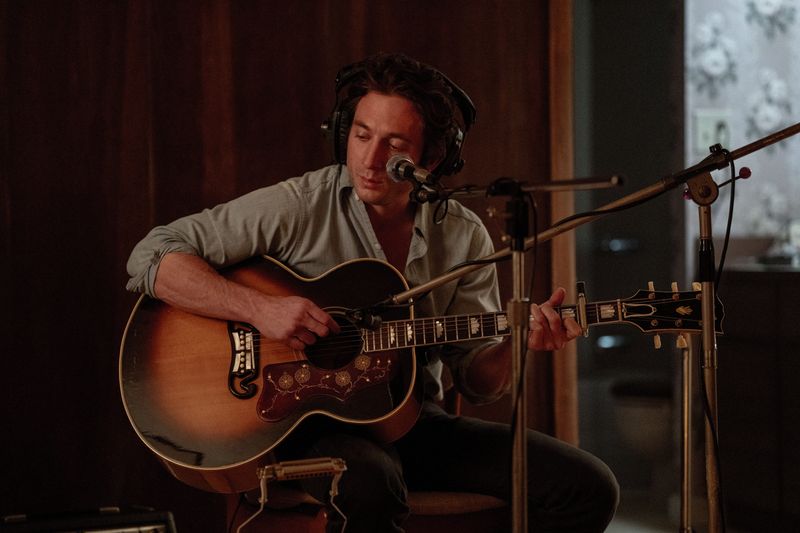
    Jeremy Allen White as Bruce Springsteen.

    Jeremy Allen White stars in the latest Bruce Springsteen biopic, Springsteen: Deliver Me From Nowhere, and is nominated for best actor in a dramatic film. The production was almost entirely filmed around New Jersey — at the request of The Boss — including in Cape May and other parts of South Jersey.

    After a major overhaul of the award show in recent years, including the sunsetting of the Hollywood Foreign Press Association due to ethics and diversity concerns, the new Golden Globe Awards are judged by a panel of 400 journalists from across the world.

    The Golden Globes will be broadcast live on Jan. 11 at 8 p.m. Philadelphia time on CBS and streaming on Paramount+.

  • Pew announces a new head of arts and culture and millions in grants for Philly

    Pew announces a new head of arts and culture and millions in grants for Philly

    When Christina Vassallo was head of the Fabric Workshop and Museum, she landed several substantial grants from the Pew Center for Arts & Heritage.

    Now she is moving to the other side of that donor-recipient relationship.

    Vassallo is the newly named executive director of the Pew Center for Arts & Heritage, starting Jan. 5, Pew announced Monday.

    “The center embodies everything I value about arts leadership — intellectual curiosity, rigorous support for artists and arts organizations, and a true commitment to public life,” said Vassallo. “So for the center, I’m drawn to its dual identity as a grantmaker and as a hub for ideas, and for the opportunity to connect the arts with civic purpose.”

    Leadership and operational changes at the Pew arts center are closely watched in Philadelphia’s arts and culture community since the center, along with the William Penn Foundation, accounts for some of the largest foundation giving in the area.

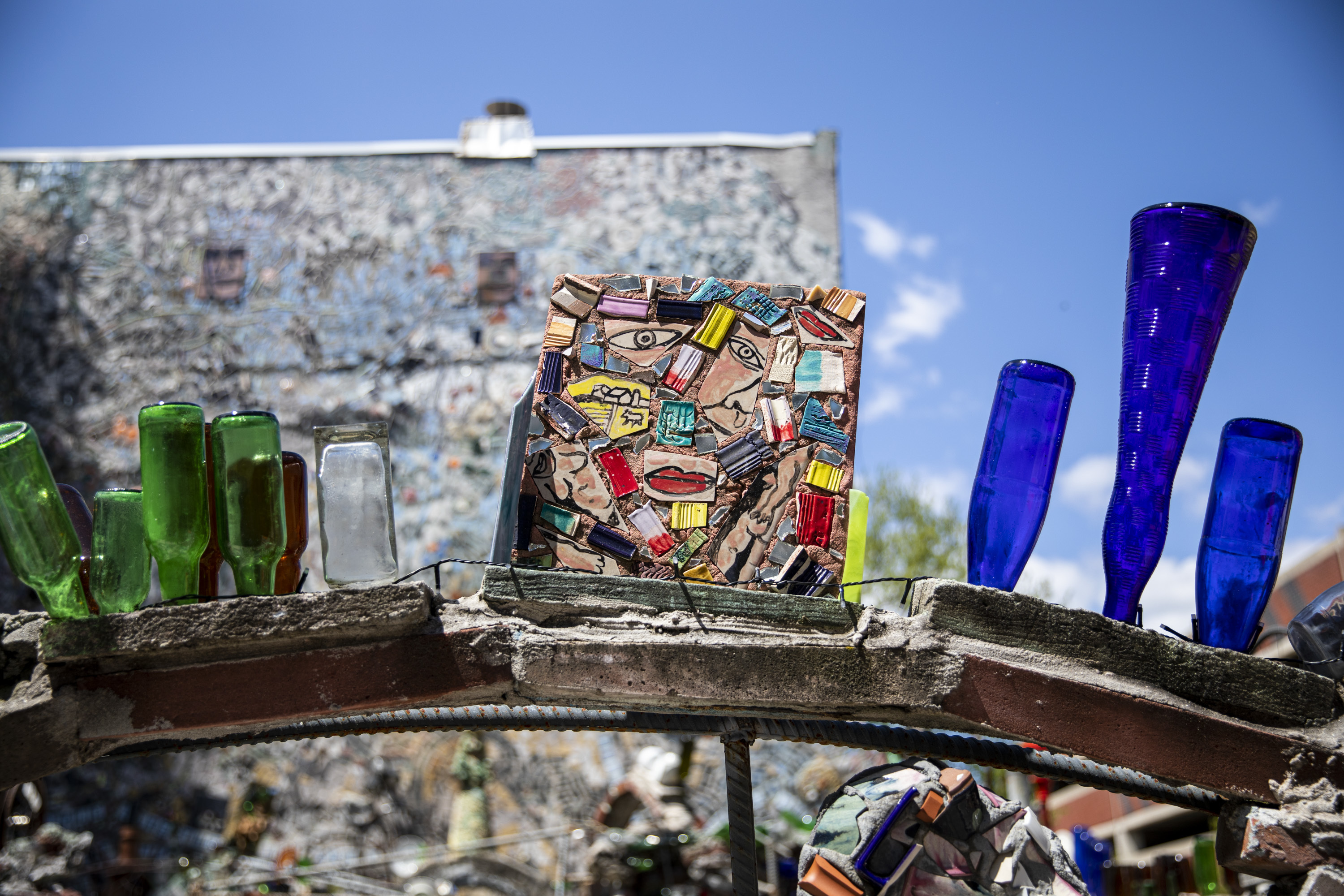
    Pew’s center, for instance, also announced on Monday that it has awarded $8.6 million to 44 Philadelphia-area groups — nearly $180,000 to the Black Pearl Chamber Orchestra for a project on Black women composers, $360,000 to Monument Lab for the creation of environmental soundworks as a “living monument to Philadelphia’s birds,” and to projects by Mural Arts Philadelphia, Philadanco, Philadelphia’s Magic Gardens, theater companies, dance troupes, and museums.

    The Magic Gardens, April 27, 2022.

    Vassallo, 45, follows Paula Marincola, who retired in October after serving as the center’s first director, since 2008.

    After leaving the Fabric Workshop in 2023, Vassallo became director of the Contemporary Arts Center in Cincinnati. Before the Fabric Workshop, she was executive and artistic director of the alternative art gallery SPACES, in Cleveland. She was born in the Bronx and grew up in New York City and northern New Jersey, and holds two degrees from New York University — a bachelor’s in art history and a master’s in nonprofit visual arts management.

    Vassallo arrives as Philadelphia’s arts scene grapples with a number of challenges. Many groups are facing the double whammy of attendance numbers that are still lower than pre-COVID levels, and cuts in federal funding under the Trump administration.

    The Pew arts center specifically has undergone a significant change with the 2024 collapse of the University of the Arts, which had been its operational partner. In June, Pew announced that the Barnes Foundation would take UArts’ place, and Vassallo suggested that the Barnes — which also had a hand in her hiring — could take on a more significant role.

    “I think there is tremendous potential there programmatically beyond their administrative role,” said Vassallo, who called the relationship between the Pew center and the Barnes an “evolving” one.

    Dancers from Philadanco, which received a grant from the Pew Center for Arts & Heritage.

    One significant change has already occurred. Vassallo will report to Barnes Foundation executive director and president Thomas Collins, whereas Marincola reported directly to Pew. The Barnes isn’t seen as getting involved with the Pew center’s grant-making process, but, rather, could work with the center on creating new programming.

    “We could imagine partnerships between the [Pew Fellowships in the Arts] fellows … being able to engage in the collection at the Barnes, for example, we can imagine the center and the Barnes partnering on community conversations,” said Elinor Haider, senior director of Pew’s Philadelphia Program.

    The Pew Center for Arts & Heritage will continue to be based in its offices on Walnut Street, Haider said.

    Vassallo called Philadelphia’s arts scene “incredibly rich and vital.” About its challenges, she said — while noting that she needs to relearn Philadelphia’s arts and culture community — that “we are having to find new ways to fund our work. I have seen this in the form of creating new business models, coming up with innovative ways to increase ticket sales and engage current and new audiences to create new revenue streams.”

    She said she has “always been a strong believer in nurturing the next generation of art enthusiasts, ensuring that kids have access to the arts across disciplines.”

    As for future funding priorities, the center has not yet determined whether it will undertake a strategic planning process, she said.

    “Not only are we assessing feedback from grantees and external parties, but we’re also understanding the state of the city, and then you have the various partners involved — you have Pew, you have the center staff, and now you have the Barnes. So I think within that there’s going to be a very special alchemy that starts to further determine the future of center funding decisions.”

    A complete list of Pew’s latest grants to art and culture groups: pewcenterarts.org/2025grants.

  • Philadanco’s Winter Residency boasts of stunning revisions and a soaring premiere

    Philadanco’s Winter Residency boasts of stunning revisions and a soaring premiere

    Philadanco is currently celebrating its 25th anniversary in residence at the Kimmel Center’s Perelman Theater with a mixed bill that showcases the company’s extraordinarily skilled dancers in works by a quartet of award-winning choreographers.

    “Then and Now!,” as the program is called, includes revised productions of pieces by Donald Byrd and Tommie-Waheed Evans, plus a company premiere from Ronald K. Brown and a brand-new work by up-and-comer Juel D. Lane.

    Friday’s opening-night audience was large and enthusiastic, giving an extended ovation to Lane’s Heirborne, a pun on its theme of literal and metaphorical flight.

    In the printed program, Lane cites among his inspirations Bessie Coleman, the first Black woman to hold a pilot’s license, and Mae Jemison, the first African American female astronaut.

    While those specific sources weren’t clear to this viewer, the dancers’ outstretched arms, perfectly controlled suspensions, and quicksilver entrances and exits clearly evoked the sensation of flying.

    Philadanco dancers during their Then & Now performance at the Kimmel Center’s Perelman Theater in Philadelphia on Saturday, Dec. 6, 2025.

    It is difficult to single out individuals in this — or, in fact, in any of the works on the program, which frequently had 10 dancers onstage at a time, performing in expert unison. But long-limbed Aliyah Clay began Heirborne with an exquisite solo, moving inside a dramatic shaft of light (designed by Nick Kolin). The piece ended on an even stronger — and unexpected — note when all eight dancers suddenly leaped forward, disappearing into the darkness.

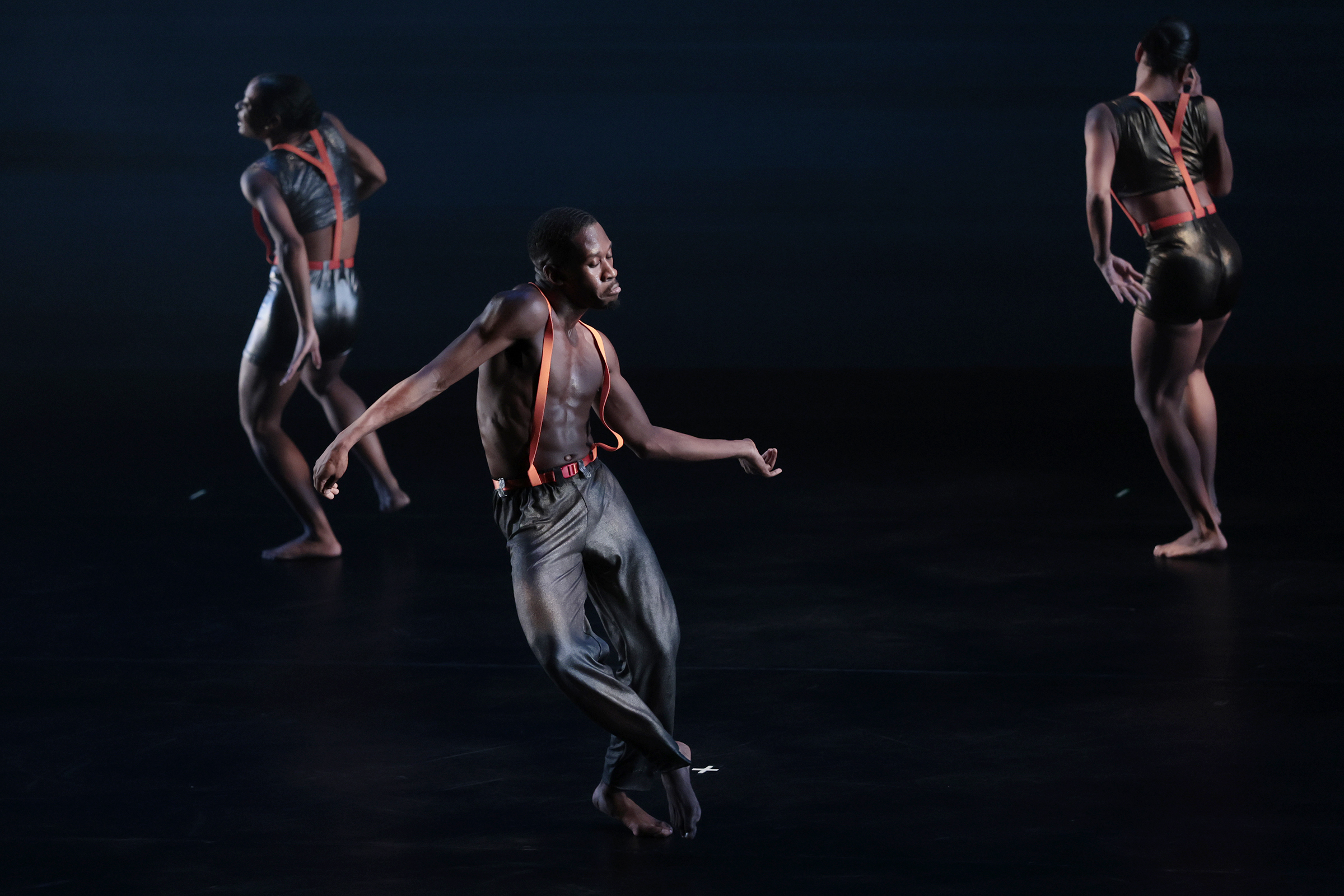
    The music, for this and the other items on the bill, was recorded, favoring mixtures of rap, gospel, and jazz. For Heirborne, Atlanta native Lane chose pieces by several Georgia-based artists: RAHBI, Bryce Raburn, and Leo Ra Soul. Costume designer Anna-Alisa Belous dressed the women in shiny black shorts, a somewhat curious choice, and everyone wore neon-orange suspenders (a nod to airport safety equipment?).

    From Exotica Back to Us, Brown’s contribution to the program, was originally choreographed for Philadanco in 1999 and revised this year.

    Philadanco dancers during their Then & Now performance at the Kimmel Center’s Perelman Theater in Philadelphia on Saturday, Dec. 6, 2025.

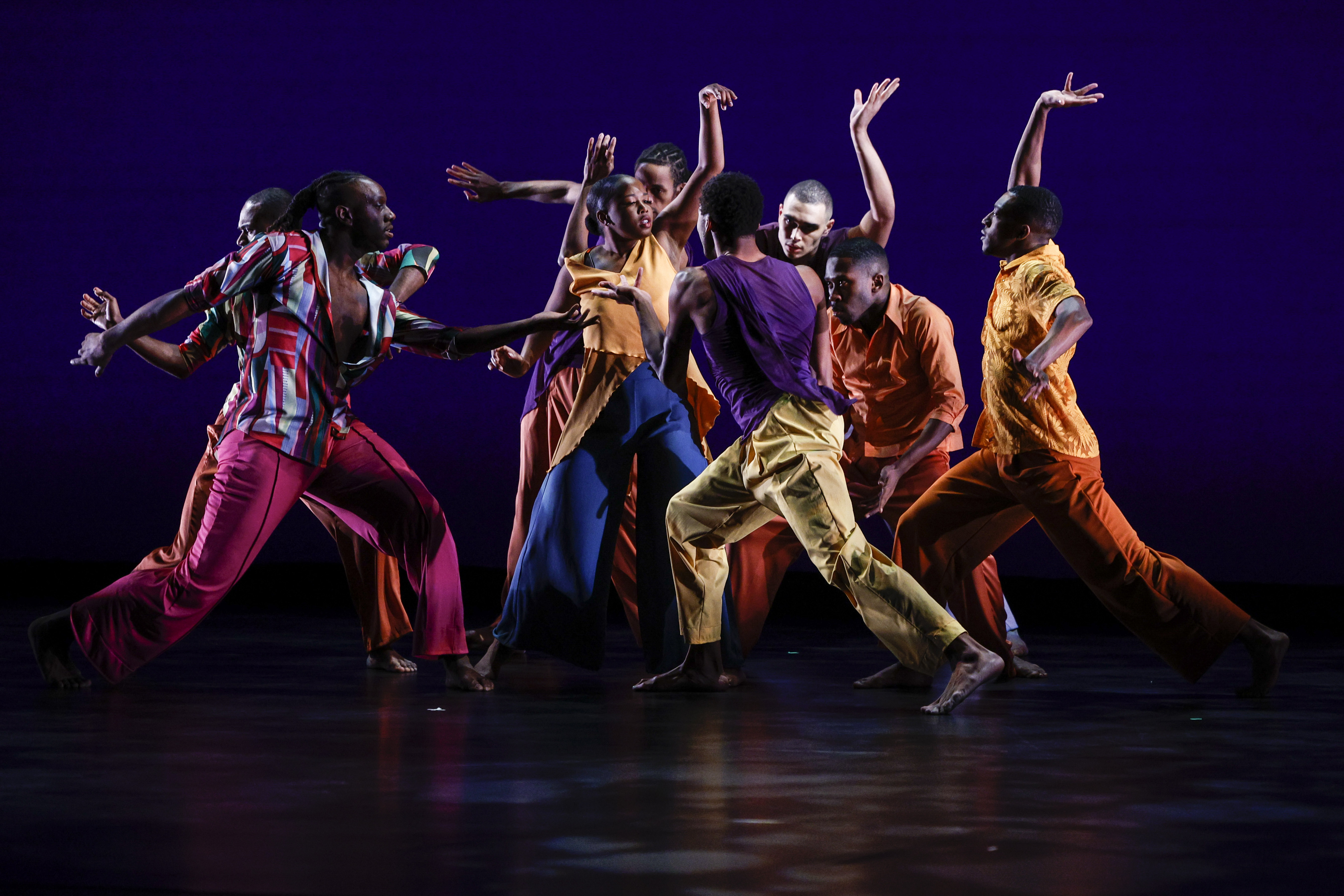
    Not having seen the earlier version, I can’t comment on how the work has changed. However, its current iteration is stunning: from the richly colored and textured costumes by Wunmi Oliya (a British Nigerian singer, dancer, and fashion designer who also provides part of the score for this piece) to Brown’s seamless combination of traditional West African dance and percussion with his own, distinctive movement vocabulary.

    There is an obvious spiritual and emotional dimension to these short vignettes — as the dancers raise their arms, hide their faces in their hands, or kneel as though in prayer. This powerful effect is enhanced, at several points, by the outstanding work of dancer William E. Burden.

    Tommie-Waheed Evans created Withinverse… in 2018. In Friday’s “refreshed” version, dancer Kaylah Arielle embodies the deep emotions mentioned in the program. Sometimes she and her fellow dancers appear as supplicants, responding to sad, slow gospel music. Yet at other points they seem frantic, their bodies reflecting the heavy, insistent beat of electronic club music.

    Philadanco dancers during their Then & Now performance at the Kimmel Center’s Perelman Theater in Philadelphia on Saturday, Dec. 6, 2025.

    Evans has included a series of complicated and innovative lifts, which the dancers execute seemingly without effort. They are equally expert when performing challenging passages in unison.

    The evening begins with Everybody by Donald Byrd. Billed as a parody, it seems more like an uneasy hybrid than, say, the comedic works of Mark Morris or Les Ballets Trocadero de Monte Carlo.

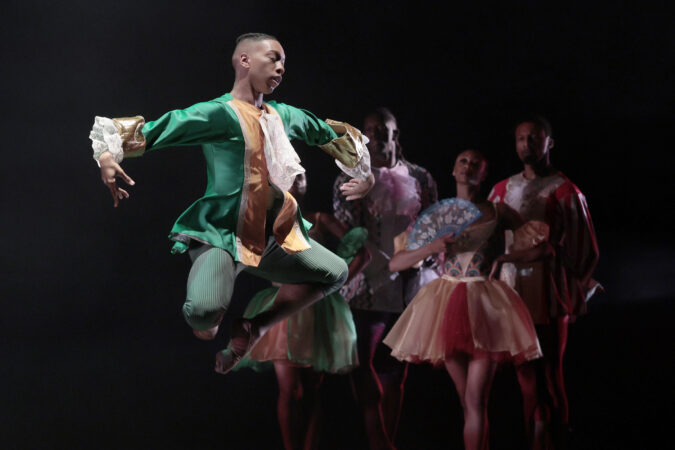
    This work contrasts a harpsichord piece by J.S. Bach with hip-hop music by Ruffhouse, and Natasha Guruleva’s costumes reveal foppish men (notably the statuesque Yasir Jones) dressed in ruffled tunics, while the women wear tutus. Yet everyone is barefoot, alternating between impeccable ballet technique and decidedly non-classical body language.

    Philadanco dancers during their Then & Now performance at the Kimmel Center’s Perelman Theater in Philadelphia on Saturday, Dec. 6, 2025.

    The comparison is amusing, and — as a classically trained flutist who, in his youth, spent six years studying with the celebrated ballerina Mia Slavenska — Byrd knows his way around both Baroque music and classical dance. He enjoys himself by inserting sly touches of physical humor, here and there, and excels at creating intricate and unusual partnering sequences for two or more individuals.

    In a brief pre-performance introduction, Tommie-Waheed Evans (who is also the company’s co-artistic director, along with Kim Bears Bailey) noted that Philadanco had just returned from a successful, multicity tour of Germany. This troupe, which the indomitable Joan Myers Brown established 55 years ago, has many reasons to be proud. But, next time, I hope that ’Danco will include the work of at least one female choreographer.

    Philadanco, “Then and Now!” through Dec. 7, Perelman Theater, 300 S. Broad St. Tickets $43-$63. 215-387-8200, ensembleartsphilly.org

  • ‘Lord of the Rings’ lands at the Philadelphia Orchestra, but the magic remained in the music

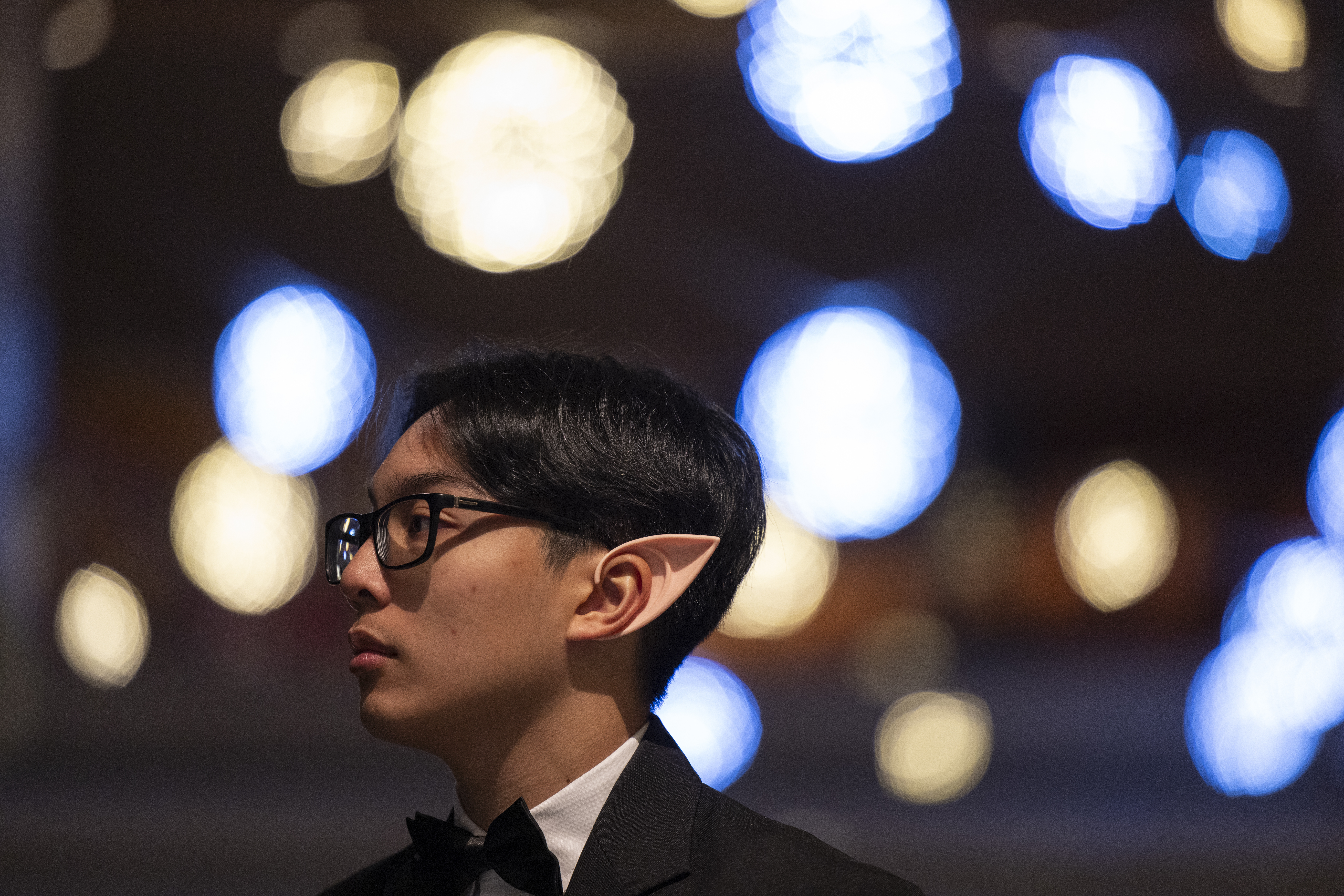
    It was the kind of night at the orchestra when any good hobbit could show up in a Bilbo Baggins waistcoat and feel right at home. Previously-human ushers had suddenly sprung elven ears. And the action on stage involved a twisty, unlikely tale of a magical gold ring whose purpose seemed to be to exploit the flaws and weaknesses of those who encounter it.

    The Philadelphia Orchestra’s presentation of The Lord of the Rings: The Fellowship of the Ring Friday night in Marian Anderson Hall was one of those cross-cultural experiences that ricocheted with surprising power. Two subcultures, each with its own specialized language — classical music, and the fandom around J. R. R Tolkien’s world of wizards, dwarfs and the dark forces — intensified the other.

    The Philadelphia Orchestra, Singing City and Philadelphia Boys Choir on stage in Marian Anderson Hall for ‘Lord of the Rings: The Fellowship of the Ring.’

    For anyone keeping score in the ongoing battle for younger audiences in classical music, Friday was a night when it seemed everyone in the hall was 31 years old and deeply engaged. Never at an orchestra performance have I heard the audience break in so many times with applause and hoots of approval.

    Of this happy synergy, the orchestra sold out all three performances, with tickets topping out at more than $250 a pop.

    Lead usher Ryan Viz, in elven ears, in the Kimmel Center lobby Friday night.

    Not all of the orchestra’s live-to-screen presentations have justified themselves musically, but here, Howard Shore’s score was a canvas both vast (about three hours of music) and colorful.

    If there’s a single label for Shore’s musical language, it’s Celtic Craggy — with notable excursions into the bellicose, sentimental, and moods more subtle. The great value of hearing a great orchestra live in dialogue with the screen is in the emotional epiphanies, moments where the music tells you something the dialogue and action alone can’t.

    The sound engineering on this night favored the music over the dialogue, and smartly so.

    Ian McKellen as Gandalf looms over members of Singing City Friday night in Marian Anderson Hall during a Philadelphia Orchestra live-to-screen presentation of ‘Lord of the Rings: The Fellowship of the Ring.’

    The other beautiful dynamic at play: You didn’t have to walk into the hall with any prior knowledge of classical music or Middle-earth nomenclature to feel the experience. This level of communication is simply embedded deep in being human.

    The definition of human becomes hazy in the 2001 installment of Peter Jackson’s film trilogy. But time and time again, the musical score honed in on the universal goodness and country-folk sincerity embodied in instruments. Two different soprano tin whistles (one in C, the other in D), whose very pitch and story-telling inflection were skillfully stretched by orchestra flutist Erica Peel. Hornist Jennifer Montone perfectly conveyed what it feels like to be a lonely leader in the Council of Elrond scene.

    The percussion section was a city in itself, conjuring folk sounds on the bodhrán drum, and the anvils of war (struck by musicians on, essentially, flat sheets of steel).

    Brian Johnson sits rapt with attention at the Philadelphia Orchestra’s live-to-screen presentation of ‘Lord of the Rings: The Fellowship of the Ring’ Friday night.

    Anvils? The quest for a magical ring? Dwarfs, warriors and flawed characters? Tolkien drew on some of the same sources as Wagner did in his Ring Cycle, and while Shore’s score might have a Wagnerian touch here or there, the larger influence was Carl Orff, whose Carmina Burana became the musical DNA of video games and car commercials.

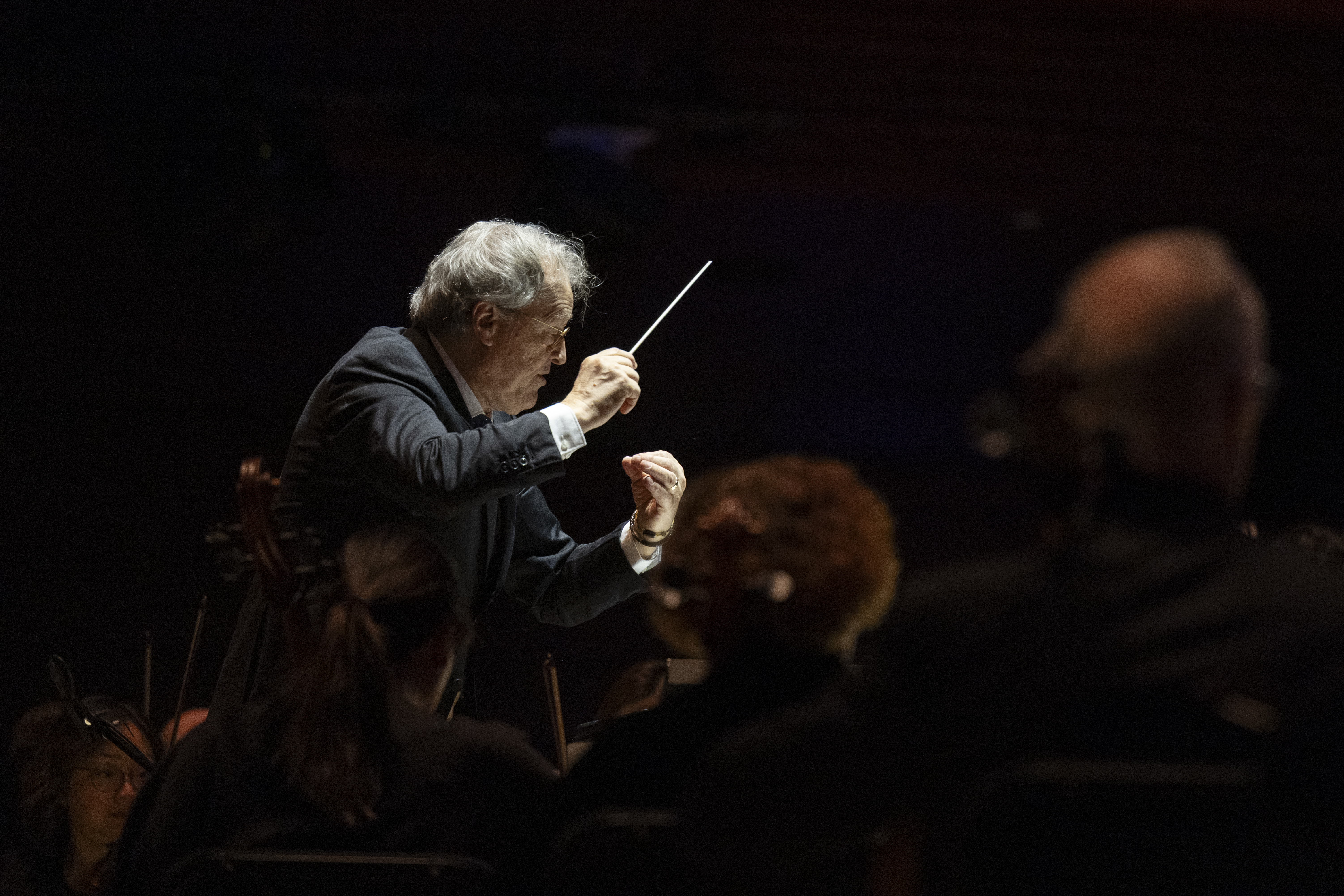
    Conductor Ludwig Wicki leading the Philadelphia Orchestra and other musical forces in Marian Anderson Hall.

    Colossal forces brought both precision and brutality, particularly in the repeating combination of driving percussion, screaming brass and blocs of choral sound amassed for battle. With Ludwig Wicki conducting, the Singing City Choir and Philadelphia Boys Choir — both quite strong — provided chaos and balm. Vocalist Kaitlyn Lusk and chorus were the gentle healing we needed to hear after Gandalf’s death.

    The good thing was, when you tired of watching yet another wave of fiendish Orcs getting clobbered, you could always turn your eyes to the stage, decode the instrumentation and imagine for yourself an entirely different narrative. This is the enduring promise of orchestral sound on any night at the orchestra.

    No additional magic needed.

  • The Philadelphia theater shaped by late, legendary playwright Tom Stoppard

    The Philadelphia theater shaped by late, legendary playwright Tom Stoppard

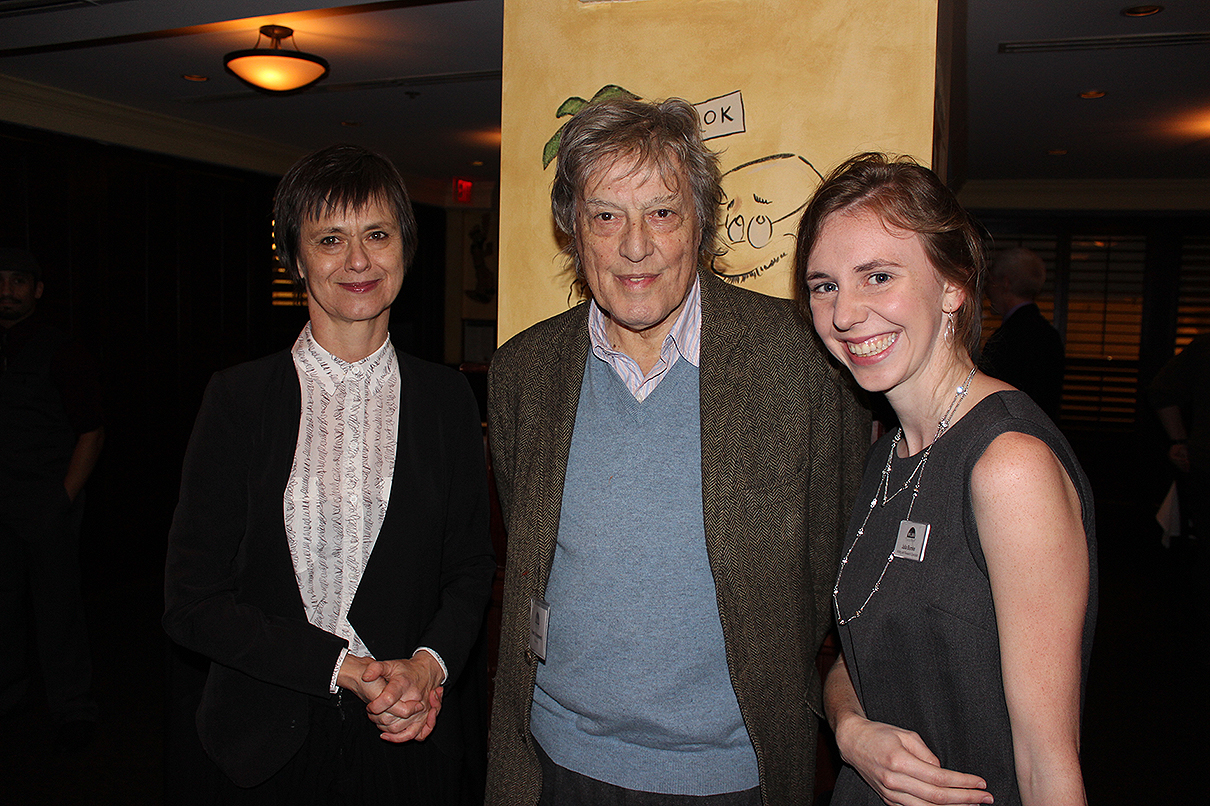
    Theater communities across the globe have been mourning Tony Award-winning playwright Tom Stoppard, the beloved Czech writer who died last week at his home in Dorset, England, at 88.

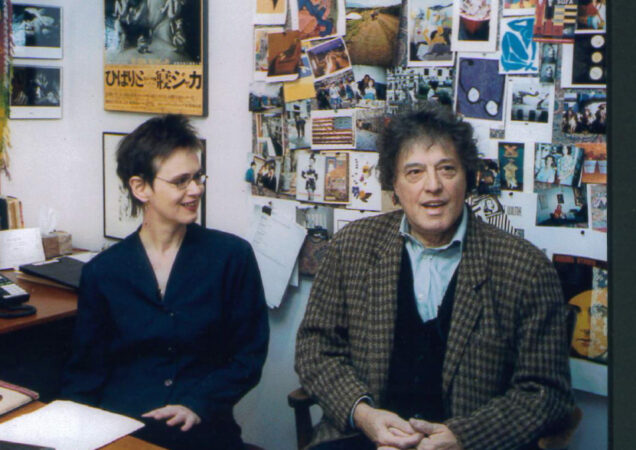
    Stoppard’s acclaimed dramas graced countless stages over six decades, but he had a special place in his heart for Philadelphia’s Wilma Theater, where he formed deep, longstanding friendships with founders Blanka Zizka and her late husband, Jiri.

    The prolific playwright, known for irreverent, cerebral dramas with dense and rather dizzying rhetoric, was often compared to William Shakespeare and George Bernard Shaw. Some of his most popular works include Rosencrantz and Guildenstern Are Dead (a clever take on Hamlet), The Real Thing, The Coast of Utopia, and the screenplay for the 1998 Oscar-winning rom-com Shakespeare in Love.

    He made Tony Award history and broke his own records, winning best play five times between 1968 (Rosencrantz and Guildenstern Are Dead) and 2023 (Leopoldstadt).

    The latter beat out Pulitzer Prize-winning Fat Ham — also a clever take on Hamlet, in wildly different ways — from former Wilma co-artistic director James Ijames. (The Wilma coproduced the Broadway production that earned five Tony nominations.) A year later, the Wilma received the 2024 Regional Theatre Tony Award, becoming the first theater in Pennsylvania to earn the recognition.

    But beyond his international fame, Stoppard is an integral part of the Wilma’s history and, in turn, Philadelphia theater history.

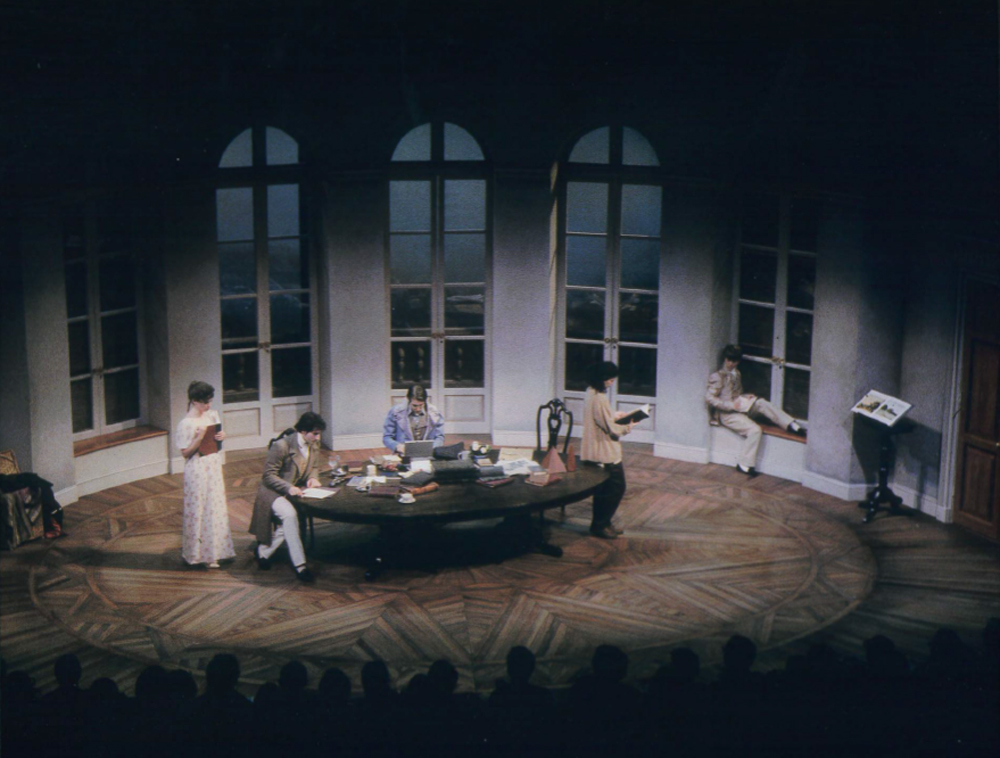
    The Wilma Theater’s 1997 production of Tom Stoppard’s “Arcadia.”

    Blanka Zizka first met Stoppard in 1996, when they both participated in a panel discussion at the University of Pennsylvania. The dramatist was visiting the city for a three-day residency on Penn’s campus following a symposium dedicated to his play Arcadia.

    At the time, the Zizkas, political refugees also from the Czech Republic, were in the process of moving the Wilma from a small Sansom Street theater to its current larger venue on Broad Street. The first play of the season at the new location happened to be Arcadia, which they had chosen before meeting Stoppard. (The Wilma had produced his 1974 play Travesties as well.)

    “He was very impressed by the fact that Jiri and I were from Prague, and we came all the way to the United States, to Philadelphia, and that we were creating a new theater,” said Zizka, who now lives in New York’s Catskills region. “He’s from Czech Republic, originally. He left when he was 2 years old, and he doesn’t speak too much Czech, but he still had a very strong connection to the country. … So for him, [ours] was just a very impressive story.”

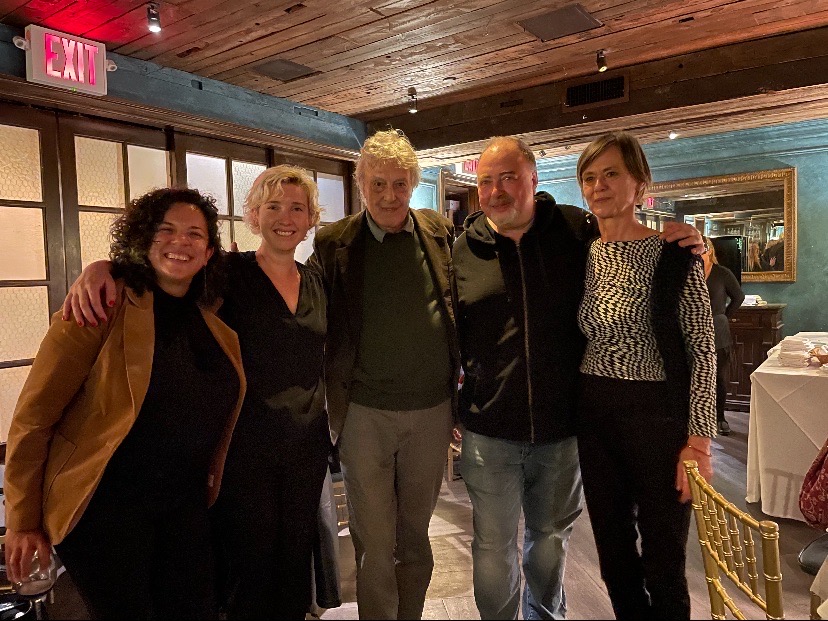
    From left: Wilma managing director Leigh Goldenberg, coartistic director Morgan Green, playwright Tom Stoppard, coaristic director Yury Urnov, and founder Blanka Zizka in 2022.

    Stoppard came to the Arcadia opening and became a frequent Wilma visitor over the years as the theater went on to produce 12 of his plays; he made his way to town for nearly every show and often attended rehearsals, too. He even helped with fundraising for the Wilma by visiting the homes of board members.

    Zizka has happy memories of Stoppard’s visits, as well as the times he invited her to join him in New York for tea parties. Whenever she and her son traveled to England, Stoppard let them stay at his apartment and set them up with tickets to whatever shows they wanted to see. He would send her books to read and ask about not only her theater work but her other passions, like painting.

    Stoppard was generous with his time, Zizka said, especially with younger theater artists and organizations like the Belarus Free Theater, which was forced to flee to England after facing political persecution for their work.

    His plays provided a thrilling challenge for Zizka as a director and for the Wilma actors. She spent months preparing for brainy Stoppard shows, which the playwright meticulously researched as his characters included historical figures like Oscar Wilde, Vladimir Lenin, James Joyce, and Mikhail Bakunin.

    “A lot of people consider him this intellectual playwright, but I think Tom is also full of emotions that are covered by those intellectual ideas. And for me, as a director, I didn’t have to look for the intellect … because it was there, but I had to always look for the world that is underneath the words,” she said.

    The Wilma Theater’s 2000 production of Tom Stoppard’s “The Invention of Love.”

    That effort proved particularly difficult in the 2000 production of The Invention of Love, which centered on poet A.E. Housman. There’s a scene in which Housman meets a younger version of himself and the two engage in a lengthy debate over the placement of a comma — not typically the most entertaining of topics.

    “It was two or three pages of dialogue, and it was so intense. … I just could not sleep over it. I felt we were in our heads, and it was boring,” said Zizka.

    She had the actors try speaking in their own words to get the idea across but ultimately had a breakthrough when she asked them to perform in gibberish. The result was “an amazing, intense and exciting scene” in one of the most successful productions in Wilma history.

    Gibberish helped them crack Stoppard’s code again in 2016, when the Wilma staged the U.S. premiere of The Hard Problem, which Zizka also directed. It followed a psychology student at a neuroscience research center attempting to understand the root of human consciousness.

    Lindsay Smiling, now a co-artistic director at the theater, performed in the play and remembers meeting the famous dramatist in rehearsal, when they replaced Stoppard’s dialogue with nonsense words.

    “It was nerve-wracking to do that in front of this playwright who is a legend,” said Smiling. “His work is so much about the language and his plays are very talky. … He was like, ‘I don’t know what you all did, but that is the scene with none of my words.’ And he was thrilled.”

    As exciting as it was to discuss the work, Smiling marveled even more at Stoppard’s friendliness. After rehearsal, a group, including Zizka, went to Caribou Cafe for burgers and beer.

    Wilma cofounder Blanka Zizka, playwright Tom Stoppard, and former Wilma staffer Julia Bumke in 2015.

    “We sat outside on the sidewalk on Walnut Street and we talked about beer, we talked about history, we talked about Philadelphia,” said Smiling. “He was interested not just in theater makers and our lives … I remember him just coming back with all these conversations he’s had with random people on the street around Philadelphia.”

    Though Stoppard did not spend too much time in the city, his contributions were profoundly meaningful to Philadelphia artists — and of course his work will continue to be produced across the region. Earlier this year, the Pennsylvania Shakespeare Festival staged Rosencrantz and Guildenstern Are Dead alongside Hamlet.

    Of course, he’ll always be part of Wilma history.

    “He was very much a strong part of what the Wilma was,” said Zizka. “We have not done any other playwright in such a big measure as we did his work.”

    This article was updated with the correct release year for ‘Travesties.’

  • In Philadelphia, Frank Gehry’s legacy lives on at the Art Museum

    In Philadelphia, Frank Gehry’s legacy lives on at the Art Museum

    Famed architect Frank Gehry died Friday in his home in Santa Monica at 96 after a brief respiratory illness. And while he is gone, cities all over the world will continue to hold a piece of him — including Philadelphia.

    Though he is known for the striking, rambunctious architecture of buildings like the Guggenheim Museum in Bilbao, Spain, and the Walt Disney Concert Hall in Los Angeles, around here, Gehry will perhaps be best remembered as the man behind the Philadelphia Art Museum as we know it today. Gehry in 2006 was selected from a slate of more than 20 renowned architects to oversee what would become a $233 million renovation of the Art Museum.

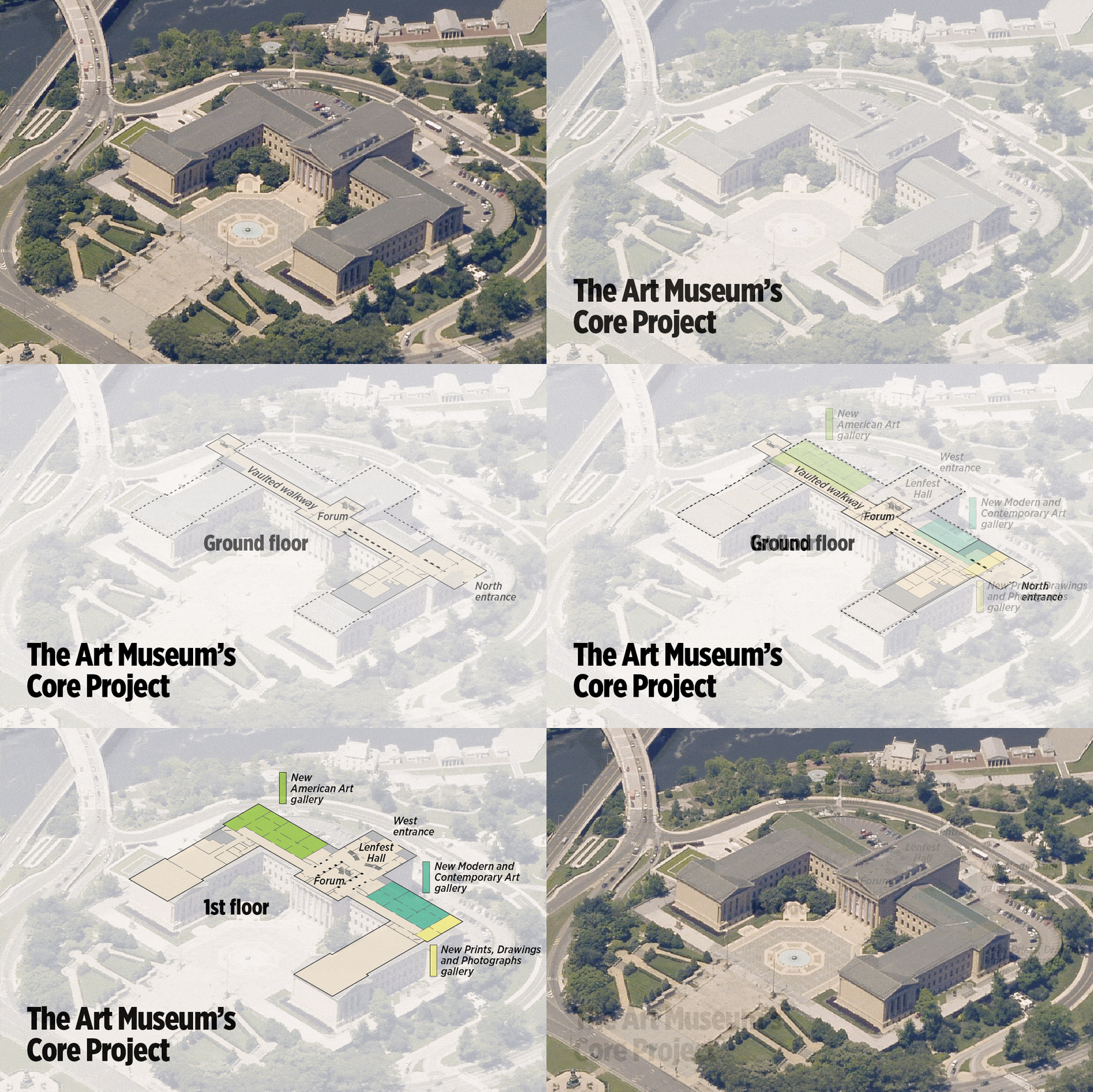
    Known as the Core Project, the effort — completed in 2021 — was designed to open up the museum’s floor plans, reclaim a ground level that had been closed to the public for decades, and add some 20,000 square feet of new gallery space. Completed in phases over more than a decade, Gehry’s planned renovations were designed to make the building more accessible, revitalize its aging infrastructure, and give the space more flow — all while not disrupting the museum’s iconic look.

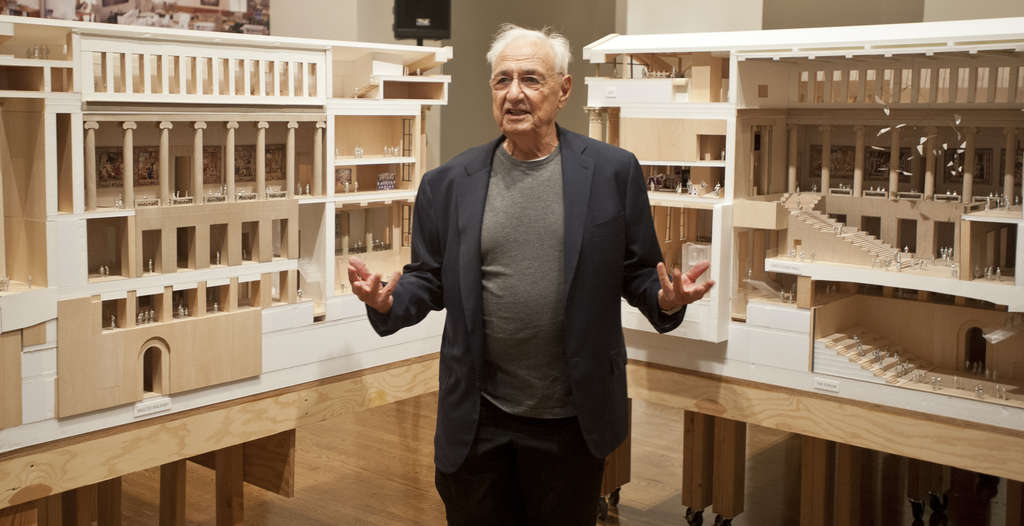
    Frank Gehry with a model of his design for the museum’s expansion, to be on display in the exhibit “Making a Classic Modern: Frank Gehry’s Master Plan for the Philadelphia Museum of Art.”

    “Frank always felt in the design of the core project that he was collaborating with the original architects,” said retired Philadelphia Art Museum chief operating officer Gail Harrity Friday. “He often said he was following the bread crumbs left by the original architects to revitalize a building that needed a flow, needed the restoration of the east-west access, the north-south access.”

    Gehry’s work on the Art Museum created “views toward a work of art that pull you like a magnet into the galleries,” Harrity said. And in a 2021 Inquirer review of the revamp, architecture critic Inga Saffron found that the redesign gave “museum officials precisely what they wanted: clarity, light, and space.”

    A contentious choice

    But when he was selected to lead the effort, Gehry was something of a controversial choice. At the time, Gehry was known for flamboyant architecture dotted with playful, tumbling forms — much different from the Greek Revival and Neoclassical design that made the Art Museum an icon on the Benjamin Franklin Parkway. Some museum lovers worried he would desecrate Philly’s art museum, while others pondered why museum officials would pick such a high-profile architect to design features that largely would not be seen from the outside.

    “Nothing [Gehry] has done gives me a good feeling,” one reader wrote to The Inquirer in 2006. “Please rethink using this man to destroy the Philadelphia Museum of Art.”

    Gehry himself did little to quell his detractor’s worries. As he put it to The Inquirer at one point: “We will set off a bomb. But I can’t tell what kind till the fat lady sings. I think we’ll make it memorable.”

    A $233 million Frank Gehry-designed renovation of the Art Museum focusing on the building’s bottom two floors. The Core Project’s goals were to open up the museum’s floor plans, reclaim a ground level that had been closed to the public for decades, and add 20,000 square feet of new gallery space.

    Ultimately, Gehry’s design would be understated and in line with the museum’s existing structure. In fact, it was Gehry’s work on the ’60s-era Norton Simon Museum in Pasadena — which he transformed into a series of serene, classically arranged galleries in the 1990s — that convinced Art Museum officials to go with him for their redesign, so there was perhaps little to be concerned about all along.

    Museumgoers got their first taste of the revamp in the fall of 2012, when work on an art-handling facility was completed. That project moved a loading dock and backstage area from the building’s northeast side near Kelly Drive to the Schuylkill side, and would allow for Gehry’s redesign project to progress.

    And, at least to Gehry, big plans were afoot.

    “I wonder if people in Philadelphia know what a big deal this is,” he told The Inquirer in 2014. “Bilbao was a sleepy little town before the Guggenheim came along. This is going to change Philadelphia.”

    The unveiling

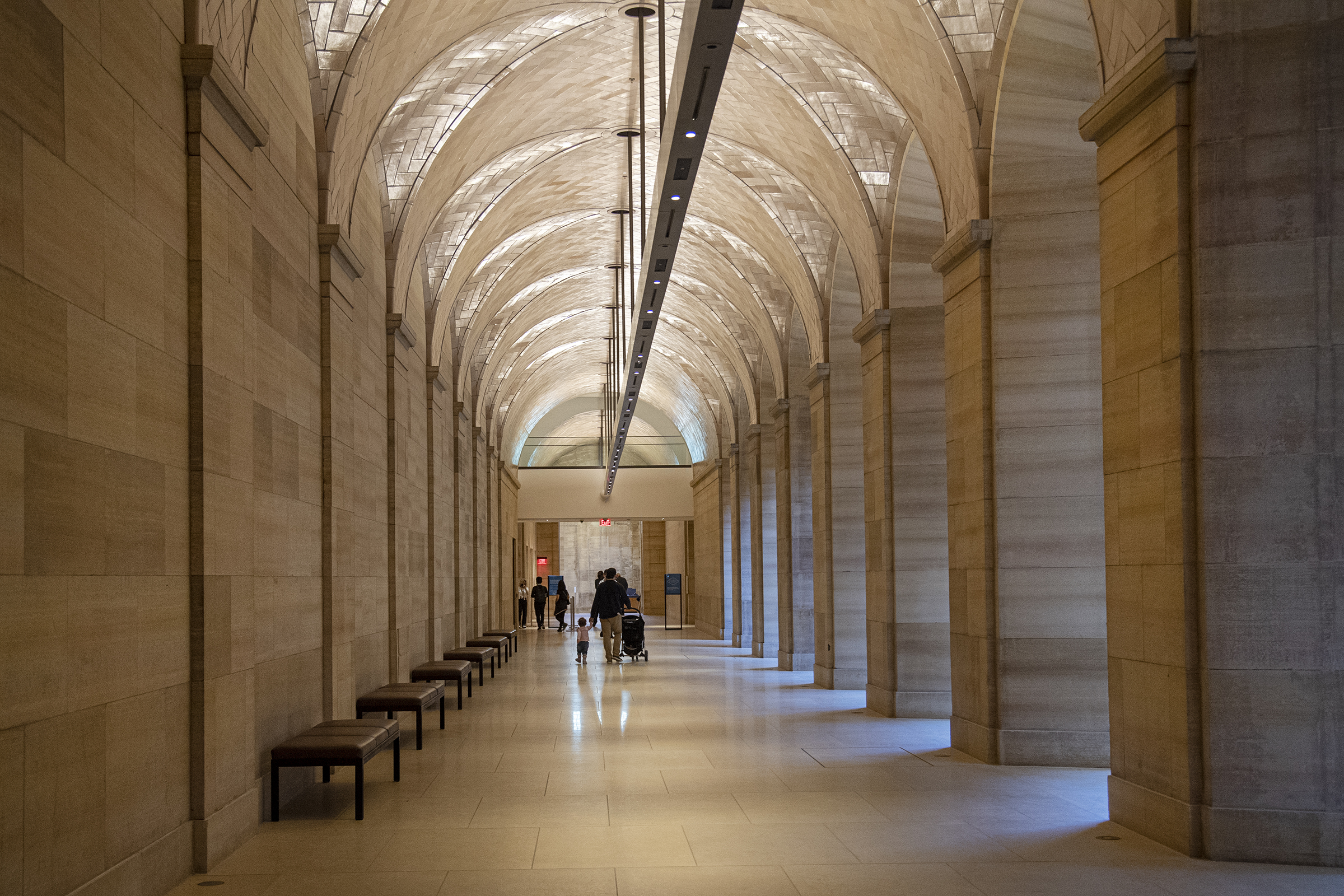
    By 2017, the Art Museum officially broke ground on the Core Project phase of its redesign. Two years later, in 2019, it reopened a long-shut entryway on the building’s north side, leading to a vaulted walkway more than 600 feet long, running the width of the museum. An auditorium was demolished, being replaced by the area today known as the Williams Forum.

    Its removal opened up the interior of the museum, allowing visitors to see through the entire building, bringing in light and street vistas through windows, and “possibly ending that feeling of being lost amid proliferating galleries of art,” The Inquirer reported at the time.

    In 2021, the Art Museum officially unveiled Gehry’s work, showing off the result of 15 years of planning, design, and reconstruction. The Daniel W. Dietrich II Galleries and Robert L. McNeil Jr. Galleries made their debut, housing contemporary and American art, respectively.

    “Gehry has provided the canvas,” Saffron wrote of the redesign. “Now it’s up to the museum to make the most of it.”

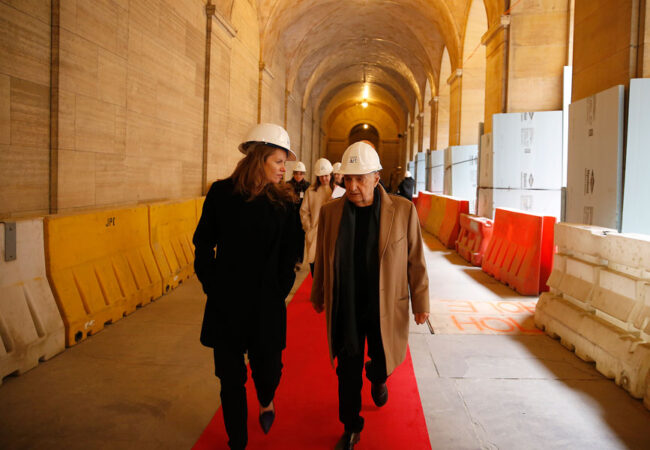
    View of the vaulted walkway at the Art Museum.

    But the design wasn’t exactly completely finished. Gehry also created the Philadelphia’s museum’s master plan that includes a proposed next phase: building more gallery space beneath the museum’s east steps. The project has been on hold for a number of years, and its status remains undetermined, a museum spokesperson said Friday.

    The museum had also had informal discussions recently with Gehry about designing a learning and engagement center, but that project‘s status is also undetermined, the spokesperson said.

    “The building is a landmark that is iconic in Philadelphia, that’s difficult to change the exterior of, and in many respects is on a site that is hard to expand,” said Harrity. “So in looking at previous ideas and designs I think Frank’s solution for further increasing gallery space while responding to the architectural integrity of a landmark that is beloved in Philadelphia is brilliant.”

    This article contains information from the Associated Press.