Category: Business

Business news and market updates

  • New grocery stores are coming to Chester County. Here’s what and where.

    New grocery stores are coming to Chester County. Here’s what and where.

    From national chains to homegrown operations, as Chester County continues to grow, so too do the grocery store offerings.

    Here’s a look at some of the stores opening around the county.

    Kimberton Whole Foods expanding

    This spring, locally owned Kimberton Whole Foods will open its largest location in the county in Eagleview Town Center. Construction began in 2024, roughly 20 years after the location in Kimberton Village opened at a former hardware store.

    “We look forward to serving Eagleview and the surrounding communities with healthy, locally sourced grocery options in a customer-focused environment,” Ezra Brett, chief operations officer for Kimberton Whole Foods, said in a statement.

    The new 14,000-square-foot facility will continue the store’s offerings of organic produce, grass-fed meats, specialty cheese, grab-and-go meals, and more.

    The store will join the growing Eagleview Town Center, which offers restaurants, salons and spas, professional offices, daycares, and more.

    West Chester Cooperative slated for opening

    West Chester is slated to get a brick-and-mortar member-owned grocery this year, with West Chester Cooperative at 204 W. Market St.

    Permits were submitted to the borough in December, according to the grocery’s website.

    The cooperative kicked off more than a decade ago, formed by a group of borough residents who wanted sustainable, local alternatives to chain grocery stores.

    Over the next 10 years, the group launched outreach efforts, opened a pop-up market, and did curbside pickup and limited in-store shopping hours. In 2022, it reached 500 member-owners.

    The grocery will be open to all shoppers, but member-owners will receive select benefits.

    Kennett Square is also getting its own cooperative grocery store

    West Chester isn’t the only municipality in Chesco getting a different model of grocery store. Also nearly a decade in the works, Kennett Square’s Kennett Community Grocer is expected to open this spring at 625 E. Cypress St.

    Renovations began in 2025, and the store will offer locally grown produce; dairy, eggs, and meat from county farms; local baked goods and prepared foods; pantry staples from local producers; and a cafe for community members. It will also hold educational and other events led by healthcare professionals and farmers.

    “It felt like doing this was to highlight for everyone that we have this precious land that’s quite beautiful, that is very bountiful with products, not just mushrooms, but meat, dairy, produce, fruit, vegetables,” said Edie Burkey, president of the nonprofit board leading the grocer. “We felt that bringing people together for the common cause of supporting the land that we’re very, very proud to be part of was a good thing.”

    Farmers will get a free cup of coffee at the cafe, which will sell locally roasted coffee, and local teas and honey. The store hopes to partner with the high school’s culinary students for an internship program. Products that don’t sell will be donated to organizations like Philabundance’s Mighty Writers, Children’s Advocacy Centers of Pennsylvania, and others, Burkey said.

    “We all eat, and to create a community around eating — things that are grown around here — and protecting the land so that maybe farmers don’t sell their land to developers, you’re just creating a sense of community in and around an activity that is so vital to every part of your day, every day of the year,” Burkey said.

    Other national chains coming to the county

    Meanwhile, bigger chains are also looking to call the county home. Phoenixville could see two national stores coming in the coming months.

    Construction for an Aldi, an international discount supermarket, began over the summer at 297 Schuylkill Road.

    Meanwhile, Sprouts Farmers Market, the Arizona-based organic and natural grocery store, is also eyeing a location in Phoenixville. Most of the grocer’s local footprint is within Philadelphia, but a Phoenixville location would broaden the store’s reach further west.

    The Phoenixville location is proposed at 808 Valley Forge Road, where the former Royal Bank used to sit. It would operate 7 a.m. to 10 p.m. daily, next to an indoor self-storage facility.


  • Is Wegmans collecting shoppers’ biometric data at its Philly-area stores? The company won’t say.

    Is Wegmans collecting shoppers’ biometric data at its Philly-area stores? The company won’t say.

    Grocery chain Wegmans came under fire earlier this month after signage at its New York City stores revealed it was collecting biometric data on shoppers.

    But the Rochester, N.Y.-based supermarket chain won’t say whether it’s collecting biometric data on shoppers at eight Philly-area stores. There are Wegmans stores in Cherry Hill and Mount Laurel in New Jersey and in Glen Mills, Malvern, King of Prussia, Collegeville, Warrington, and North Wales in Pennsylvania.

    Patrons at some New York City Wegmans locations learned earlier this month that the supermarket chain had begun to collect, retain, store, and share data on their faces, eyes, and voices. The information, Wegmans said, was being used for “safety purposes.”

    “This is information that can be used to identify or help identify you,” a sign posted at Wegmans in New York City said, according to reporting from the online news site Gothamist. “We use facial recognition technology to protect the safety and security of our patrons and employees, and do not lease, trade or otherwise profit from the transfer of biometric identifier information.”

    Wegmans does not “get into the specific measures used at each store” for “safety and security purposes,” Wegmans spokesperson Marcie Rivera said in an email.

    Rivera said Wegmans has deployed cameras equipped with facial recognition technology in “a small fraction of our stores that exhibit an elevated risk.” Wegmans is using the technology in a “handful of states.” It posted mandated signage in New York City to comply with local regulations, Rivera said.

    Wegmans has previously said that the surveillance software is used to help identify individuals who “pose a risk to our people, customers, or operation.”

    Biometric surveillance is becoming increasingly common but is not yet widespread, said Gus Hurwitz, senior fellow and academic director of the Center for Technology, Innovation and Competition at Penn’s Carey Law School.

    Companies that use biometric surveillance do so for a number of reasons, but seldom tell consumers what their data is being collected for. Data collection can help companies understand what consumers are purchasing and how they’re moving through stores, Hurwitz said. Biometric data collection can also be used for dynamic pricing, when retailers change prices in real-time depending on a number of factors, including time of day, demand, weather, and consumer behavior.

    Hurwitz said it’s important to distinguish between real-time and non-real-time biometric screening. Non-real-time screening has been happening for decades in the form of security cameras and other data collection tools, often used for market research purposes.

    Real-time screening, however, is a newer frontier with a far murkier regulatory landscape.

    Businesses in New York City that collect biometric data are required to post signage notifying customers, per a 2021 city law, however the agency in charge of implementing the law has no enforcement mechanism for noncompliant businesses, a city official told Gothamist.

    A bipartisan bill regulating biometric data collection is currently moving through the Pennsylvania legislature. A recently introduced bill in the New Jersey Legislature would require any entity collecting biometric information to post a “clear and conspicuous notice” at every entryway to their business, like in New York City.

    Hurwitz said we’re “still very much in the development era of these sorts of technologies,” and that he expects more and more government entities to hone in on regulating them in the near future.

  • Ikea is testing a digital Roblox experience

    Ikea is testing a digital Roblox experience

    Ikea is expanding.

    But this time it’s not with new physical stores. The home design company is entering the virtual world.

    The retailer, which has its U.S. headquarters in Conshohocken, announced this week that it is testing an immersive product experience on the Roblox platform.

    Sweden and Australia are the first two pilot countries, according to the company, and the tests there “will better inform future decisions.” Ikea spokespeople did not respond Friday to questions about whether there were plans for similar pilots in the U.S.

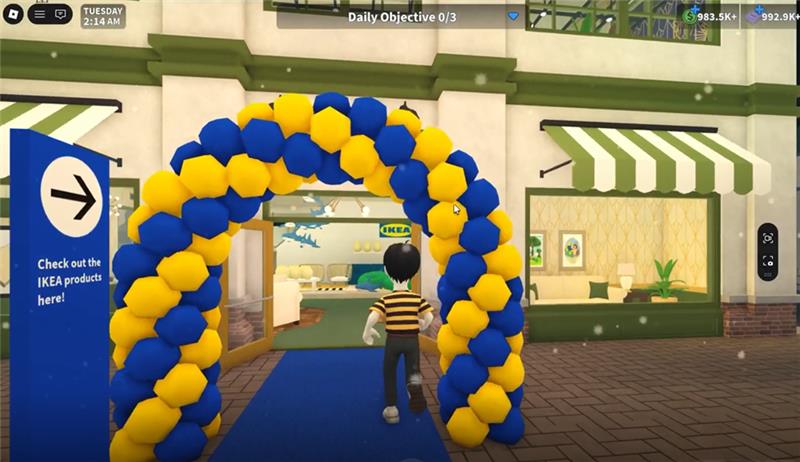
    What users of “Welcome to Bloxburg,” a Roblox game, will see when they go to search for Ikea digital products in the simulation.

    “We’re delighted to bring some of our most loved Ikea products into this digital space,” Sara Vestberg, home furnishing direction leader at Ikea Retail, said in a statement. “With curiosity, we’re looking forward to seeing the home furnishing ideas people create, and how our products feel at home in their digital lives.”

    Swedish and Australian customers can experience Ikea digitally on Welcome to Bloxburg, a life-simulation and role-playing game that is similar to The Sims. Welcome to Bloxburg is one of millions of games on the massively popular Roblox platform, which has more than 151 million active users every day.

    Companies including Walmart, Chipotle, and Gucci have used the digital platform to advertise their brands. Executives say it’s a way to reach Gen Z and Gen Alpha consumers, who are in their teens and 20s and with whom Roblox is particularly popular. Sports leagues like the NFL and MLB are also active on the platform.

    During the Ikea pilot, the company is making six of its popular products available in virtual form to Welcome to Bloxburg users in the select countries. The digital items include the Stockholm sofa, the Elsystem rug, and the Blahaj stuffed shark.

    The virtual experience can collide with the in-real-life shopping experience, too, if customers scan QR codes hidden around physical stores in these countries. The QR codes unlock extra virtual products, according to Ikea. In Sydney, Roblox users can compete to win real products at in-store events next week.

    “This pilot is very much about learning and exploring,” said Parag Parekh, chief digital officer at Ikea Retail. “We’re using it to better understand how digital environments can enrich the Ikea experience, while continuing to stay true to our values and what customers expect from us.”

    Ikea was founded in Sweden in 1943, and is currently based in the Netherlands. Its U.S. headquarters in Conshohocken employed more than 800 people as of June. Nationwide, Ikea has more than 50 stores, including in Conshohocken and South Philadelphia.

  • Comcast agrees to $117.5 million settlement to resolve data breach lawsuits

    Comcast agrees to $117.5 million settlement to resolve data breach lawsuits

    Comcast is one step closer to settling 24 class-action lawsuits over a 2023 data breach that potentially impacted over 30 million former and current customers.

    A $117.5 million settlement agreement received preliminary approval from a federal judge in the Eastern District of Pennsylvania last week.

    Impacted customers would be able to receive three years of financial monitoring and identity-theft-protection service and choose between reimbursement of expenses up to $10,000 or a $50 cash payment, if the current terms of the agreement gain final approval.

    Comcast did not oppose the request for preliminary approval of the agreement, but noted in court records that it does not agree with the facts as told by the representatives of the customers and denies all liability.

    Neither a representative for the Philadelphia-based telecommunication giant nor its attorneys responded to requests for comment.

    The settlement resolves 24 lawsuits, filed in federal courts nationally and consolidated under one judge in Philadelphia.

    The flurry of litigation centers on a data breach that took place between Oct. 16 and 19, 2023, when hackers gained access to Comcast’s internal system. The hack was possible because the company delayed implementing a patch to fix a vulnerability in the Citrix Systems cyber software that Comcast has relied on, court records say.

    Citrix warned customers of the problem and offered a solution in an Oct. 10 bulletin, court records say. The class attorneys accuse Comcast of having failed to heed the cyber-company’s advice, allowing hackers to take advantage of the vulnerability.

    The data breach made the usernames, passwords, names, contact information, privacy questions and answers, and last four digits of Social Security numbers for more than 30 million customers potentially available to hackers, according to court records.

    The settlement agreement was reached following a November negotiation session after multiple attempts at mediation.

    The $117.5 million would be used to compensate customers, administer the settlement process that includes notifying customers and processing claims, and pay attorneys’ fees. The class attorneys could pocket as much as one third of the total settlement amount, according to court filings, but the exact amount will be decided later.

    U.S. District Judge John Milton Young has set a final approval hearing for July. Once the settlement is approved, Comcast and Citrix will be released from all claims related to the data breach.

    Citrix’s attorneys did not respond to a request for comment.

  • TikTok finalizes a deal to form a new American entity

    TikTok finalizes a deal to form a new American entity

    TikTok has finalized a deal to create a new American entity, avoiding the looming threat of a ban in the United States that has been in discussion for years on the platform now used by more than 200 million Americans.

    The social video platform company signed agreements with major investors including Oracle, Silver Lake, and the Emirati investment firm MGX to form the new TikTok U.S. joint venture. The new version will operate under “defined safeguards that protect national security through comprehensive data protections, algorithm security, content moderation and software assurances for U.S. users,” the company said in a statement Thursday. American TikTok users can continue using the same app.

    President Donald Trump praised the deal in a Truth Social post, thanking Chinese leader Xi Jinping specifically “for working with us and, ultimately, approving the Deal.” Trump add that he hopes “that long into the future I will be remembered by those who use and love TikTok.”

    Adam Presser, who previously worked as TikTok’s head of operations and trust and safety, will lead the new venture as its CEO. He will work alongside a seven-member, majority-American board of directors that includes TikTok’s CEO Shou Chew.

    The deal ends years of uncertainty about the fate of the popular video-sharing platform in the United States. After wide bipartisan majorities in Congress passed — and President Joe Biden signed — a law that would ban TikTok in the U.S. if it did not find a new owner in the place of China’s ByteDance, the platform was set to go dark on the law’s January 2025 deadline. For a several hours, it did. But on his first day in office, President Donald Trump signed an executive order to keep it running while his administration sought an agreement for the sale of the company.

    “China’s position on TikTok has been consistent and clear,” Guo Jiakun, a Chinese Foreign Ministry spokesperson in Beijing, said Friday about the TikTok deal and Trump’s Truth Social post, echoing an earlier statement from the Chinese embassy in Washington.

    Apart from an emphasis on data protection, with U.S. user data being stored locally in a system run by Oracle, the joint venture will also focus on TikTok’s algorithm. The content recommendation formula, which feeds users specific videos tailored to their preferences and interests, will be retrained, tested and updated on U.S. user data, the company said in its announcement.

    The algorithm has been a central issue in the security debate over TikTok. China previously maintained the algorithm must remain under Chinese control by law. But the U.S. regulation passed with bipartisan support said any divestment of TikTok must mean the platform cuts ties — specifically the algorithm — with ByteDance. Under the terms of this deal, ByteDance would license the algorithm to the U.S. entity for retraining.

    The law prohibits “any cooperation with respect to the operation of a content recommendation algorithm” between ByteDance and a new potential American ownership group, so it is unclear how ByteDance’s continued involvement in this arrangement will play out.

    “Who controls TikTok in the U.S. has a lot of sway over what Americans see on the app,” said Anupam Chander, a professor of law and technology at Georgetown University.

    Oracle, Silver Lake, and MGX are the three managing investors, each holding a 15% share. Other investors include the investment firm of Michael Dell, the billionaire founder of Dell Technologies. ByteDance retains 19.9% of the joint venture.

  • Fallcatcher scammer has been sentenced to 5+ years

    Fallcatcher scammer has been sentenced to 5+ years

    A Florida fraudster who fooled 60 mostly Philadelphia-area investors into contributing $5 million to develop biometric anti-addiction systems, then fled investigators and spent five years as a multinational fugitive before surrendering, was sentenced Wednesday to 5½ years in federal prison.

    Henry Ford, also known as Cleothus “Lefty” Jackson, had pleaded guilty to securities fraud and seven counts of wire fraud for forging documents from insurance companies to inflate the prospects of Fallcatcher, a company he said he was developing to track people in recovery and reduce the risk they would fall back into addiction.

    At his plea hearing last year, Ford insisted his idea for a platform that would track people in recovery was legitimate but admitted that he had falsified claims that insurers and state agencies supported the project and would soon make it profitable. The goal had been to sell the company at a big profit for its investors.

    He was sentenced Wednesday by U.S. District Judge Joel H. Slomsky to the prison term, plus three years supervised release and $2.1 million in restitution.

    Ford started the business in Florida in 2017 but by 2018 was running out of money, according to prosecutors. He then incorporated the company in Delaware and hired managers and a board. He paid Montgomery County insurance salesman Dean Vagnozzi to recruit private investors from Vagnozzi’s network with email pitches and free meals in Montgomery County and South Jersey. But he gave Vagnozzi and the investors false information about Fallcatcher’s prospects.

    Ford fled Philadelphia in 2019 after giving SEC investigators phony documents in an attempt to disprove allegations that he was exaggerating Fallcatcher’s prospects and after learning that he and Fallcatcher were subjects of a criminal investigation.

    He went to Miami, then flew to Morocco, according to federal investigators. Ford later told officials he lived and worked in the United Arab Emirates; Thailand; Malaysia; Indonesia; Tunisia; Guinea; and Mexico.

    Ford filed a Freedom of Information Act request from Mexico in 2024 with the U.S. Marshals Service to see if they were still looking for him.

    Ford crossed the border into Arizona in April 2024, where he was arrested on a warrant for the Fallcatcher case. He was sent to Philadelphia for trial and detained in the federal jail as a flight risk. In 2011, he had been convicted of mortgage fraud in federal court in Arizona as Cleothus “Lefty” Jackson and served a prison term before starting Fallcatcher.

    Part of the money Ford raised for Fallcatcher has been collected for investors from business and personal accounts seized from him in 2019 after Scott Bennett, a company executive, became suspicious that Ford was collecting improper payments from the company and reported him to the SEC.

    According to prosecutors, Ford gave salesman Vagnozzi and investors “false and misleading information” about Fallcatcher and showed them phony documents about an insurer’s promise to fund a pilot Fallcatcher program. Ford paid Vagnozzi $500,000, which Vagnozzi refunded as part of a civil settlement with the SEC, plus 4 million shares of Fallcatcher stock, which proved worthless.

    Vagnozzi is suing that agency, alleging that federal officials improperly seized his former business, A Better Financial Plan, as part of the 2020 court-ordered government takeover of Par Funding, a Ponzi scheme whose unregistered securities Vagnozzi also sold to clients. He later sued his lawyer, former Eckert Seamans partner John Pauciulo, who Vagnozzi said gave him bad advice about Par, Fallcatcher, and other investments.

    The case against Ford was investigated by the FBI and the SEC’s New York regional office.

  • A massive and controversial AI data center is under construction in South Jersey

    A massive and controversial AI data center is under construction in South Jersey

    The French developer of South Jersey’s first large-scale AI data center made his case to residents on Wednesday, saying his massive under-construction facility will benefit them in ways unprecedented in the emerging industry.

    But at a contentious town hall, several residents said they’re not taking his word for it, especially given the timing at which the developer was asking for their input.

    “You couldn’t do this before the building was built?” asked one resident, who spoke during public comment but declined to give their name. “You kind of took our voice away.”

    The 2.4 million-square-foot, 300-megawatt Vineland data center was approved by city council more than a year ago. The center is already under construction, and the developer expects to complete it by November.

    Located on South Lincoln Avenue, off State Route 55, the site was formerly a private industrial park.

    DataOne, a French company that manages advanced data centers, is the owner, operator, and builder. Its client, Nebius Group, an Amsterdam-based AI-infrastructure company, will operate the center’s internal technology, which will fuel Microsoft’s AI tools.

    Located on South Lincoln Avenue, off State Route 55, the site was formerly a private industrial park. It was sold to DataOne in a private transaction, the details of which Charles-Antoine Beyney, DataOne’s founder and chief executive officer, declined to disclose.

    At city council meetings and on social media, some residents have voiced concerns about the environmental, financial, and quality-of-life impacts of the site. Prior to Wednesday’s meeting, residents were prompted to submit questions online that were then addressed in a presentation. Dozens also took to the mic afterward.

    Beyney said he understood their concerns, but they don’t apply to his center, which will use “breakthrough” technology to reduce its environmental impact.

    “Most of the data centers that are being built today suck, big time,” Beyney said Wednesday. “They consume water. They pollute. They are extremely not efficient. This is clearly not what we are building here.”

    “No freaking way am I am going to do what the entire industry is doing … just killing our communities and killing our lungs to make money,” he added.

    Developers tout promises of data centers

    Data centers house the technology needed to fuel increasingly sophisticated AI tools. In recent years, they have been proliferating across the country and the region.

    In June, Gov. Josh Shapiro announced a $20 billion investment by Amazon in Pennsylvania data centers in Salem Township and Falls Township.

    Politicians on both sides of the aisle — from Republican President Donald Trump to Democratic Pa. Gov. Josh Shapiro — have encouraged the expansion, as have certain labor and business leaders. Yet environmental activists and some neighbors of proposed data centers have pushed back.

    Across the Philadelphia region, residents have recently organized opposition to proposals for a 1.3 million-square-foot data center in East Vincent Township and a 2 million-square-foot facility near Conshohocken (that was forced to be withdrawn in November due to legal issues).

    This week, Limerick Township residents voiced concerns about the possibility of data centers being built in their community. And in Bucks County, a 2-million-square-foot data center is already under construction in Falls Township.

    Pennsylvania and New Jersey are home to more than 150 data centers of varying sizes and scopes, according to Data Center Map, a private company that tracks the facilities nationwide. But so far, the AI data center boom has largely spared South Jersey.

    A 560,000-square-foot data center is being built in Logan Township, Gloucester County, and is set to have a capacity of up to 150 megawatts once completed in early 2027, according to the website of its designer, Energy Concepts. There are also smaller, specialized data centers in Atlantic City and Pennsauken, according to Data Center Map.

    In Vineland, Beyney said his gas-powered center will have nearly net-zero emissions, not consume water while cooling the equipment, and generate 85% of its own power. He told residents: “You will not see your bill for electricity going and skyrocketing.”

    Opponents of data centers worry their electric bills will rise due to the centers. The developer in Vineland says that won’t happen in South Jersey.

    The facility will be 100% privately funded, he said, after the company turned down a nearly $6.2 million loan from the city amid resident backlash. The loan was approved at a December council meeting, and Beyney said DataOne would have paid about $450,000 in interest, money that could have gone back into the community.

    “That’s a shame,” Beyney said, “but we follow the people.”

    At a meeting next week, Vineland City Council could approve a PILOT agreement that would give DataOne tax breaks on the new construction in exchange for payments to the city.

    Beyney said DataOne plans to be a good neighbor. Across the street from the data center, he said they will build a vertical farm — which grows crops indoors using technology — and provide free fruits and vegetables to Vineland residents in need.

    Residents voice concerns about Vineland data center

    Several residents expressed skepticism, and even anger, about Beyney’s data-center promises, noting that Cumberland County already has plenty of farms.

    Regarding the data center itself, they asked how Beyney could be so confident about new technology, questioned the objectivity of his data, and accused him of taking advantage of a city where nearly 14% of residents live below the poverty line.

    Beyney denied the allegations.

    At least one resident said he was moved by Beyney’s assurances.

    “I was a really big critic of [the data center all along], but I think what you said tonight has alleviated a lot of my concerns,” said Steve Brown, who lives about a mile away from the data center. He still had one gripe, however: The noise.

    “What I hear every night when I wake up at 2, 3, 4 o’clock in the morning is this rumble off in the distance,” Brown said. “When I get out of my car every day when I get home, I hear it.”

    Brown invited Beyney and his team to come hear the noise from his kitchen or back patio. Beyney said they would do so, and promised to get the sound attenuated as soon as possible, certainly by the end of the project’s construction.

  • Philly bill to ban waste incineration gets put on hold after failing to gain Council support

    Philly bill to ban waste incineration gets put on hold after failing to gain Council support

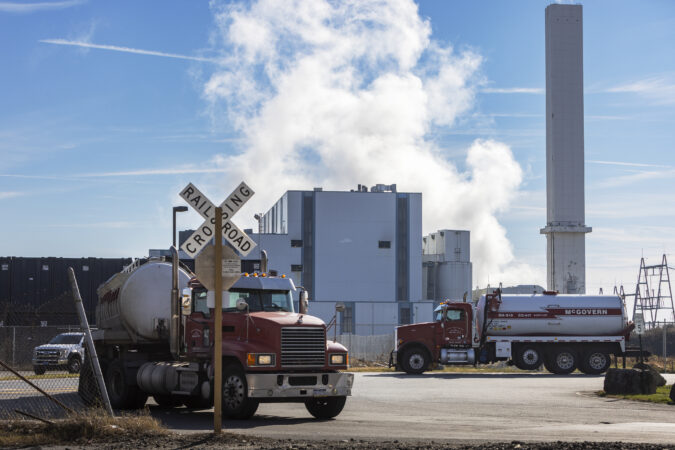
    A high-profile bill to ban Philadelphia from incinerating its trash was put on hold Thursday after intense lobbying by residents, activists, and industry put its future in doubt.

    The bill’s sponsor, Councilmember Jamie Gauthier, made a last-minute decision to pull the measure, which would prevent the city from shipping its trash to be burned for energy at the Reworld Delaware Valley Resource Recovery Facility in Chester.

    “I made the difficult decision to hold the bill today because my colleagues have asked for more time with it,” Gauthier said, noting she had not given up on the bill.

    Gauthier said the bill would prevent “dumping on cities that are more vulnerable than us.”

    “This would never happen in a community that wasn’t populated mainly by Black people, and mainly by poor Black people,” she said of Chester. “The people that are lobbying otherwise — they know that they would never accept this where they live.”

    The move to hold the bill came after hours of public testimony by people speaking for and against it.

    However, almost all of those speaking against the bill either work for Reworld, the Chester waste-to-energy plant, or represent labor unions. Reworld employees could be seen lobbying Council members in the hallways.

    File: Philadelphia Councilmember Jamie Gauthier.

    What’s in the bill?

    Gauthier’s “Stop Trashing Our Air Act” would prohibit the city from contracting with companies that incinerate solid waste or recyclables. Gauthier said that 37% of the city’s trash is incinerated.

    The bill, she has said, is designed to combat environmental injustice, contending incineration has been particularly harmful to the Chester area.

    Chester Mayor Stefan Roots and local activists expressed support for the legislation on Thursday, citing health and environmental concerns.

    “I’m asking you and begging you,” Roots said in asking Council to vote in favor of the bill. “We’re counting on all of you to support it.”

    Chester resident Zulene Mayfield, left, Philadelphia Councilmember Jamie Gauthier, right, and Chester Mayor Stefan Roots meet to discuss Gauthier’s “Stop Trashing Our Air Act,” which would ban the city from incinerating waste, during a visit with lawmakers and staff in Chester, Pa., on Friday, Nov. 7, 2025.

    Roots said the Reworld plant burns more trash than all of Delaware County produces.

    Multiple Chester and Philly residents say the emissions from Reworld either caused or exacerbated asthma and other health conditions.

    Andrea Robinson moved to Chester three years ago, she testified to Council. But she was unaware of the Reworld facility when she moved there.

    “I walk out my door and smell the stinky odor. I’m embarrassed to invite family and friends over. There are dust and dirt all over the car and windows,” she said.

    Fierce lobbying

    Gauthier’s bill ran up against a fierce effort to prevent its passage.

    Alex Piscitelli, facility manager at Reworld, testified that the plant operates under “the strict requirements of the Clean Air Act.”

    He said claims that the facility causes human health issues “are simply not supported by the data” and emissions “operate well below federal limits.”

    Multiple representatives of the company spoke, including workers who lived in Chester and Philadelphia.

    Ramona Jones, who lives in Chester and works at Reworld, said the job allows her to be close to her children and family. She said the company has given her ”a livable wage, a higher wage.”

    Matt Toomey, a business agent for the operating engineers union, told Council that “up to 120 family-sustaining jobs” were at stake, and noted the Reworld plant is heavily regulated and located in an already industrialized area.

    Political reality

    Aides for Mayor Cherelle L. Parker, whose administration opposes the legislation, also worked the room.

    Council members hardly ever call for votes on doomed bills. But Gauthier initially appeared to be willing to roll the dice by calling the measure up for a vote despite its uncertain fate.

    As the morning progressed, however, it became clear she did not have the nine votes needed for passage and almost certainly did not have the 12 votes that would be needed to overcome a likely veto by Parker.

    Insisting on the vote would mean that Gauthier was putting colleagues in the uncomfortable position of choosing between environmental advocates and trade unions, two important constituencies in Democratic primaries.

    But Gauthier pledged to push for the bill.

    “I am committed to this,” she said. “At the City of Philadelphia, we have to be a model for brotherly love, sisterly affection.”

  • Lawyers take on shuttered Philly law firm over unpaid bonuses

    Lawyers take on shuttered Philly law firm over unpaid bonuses

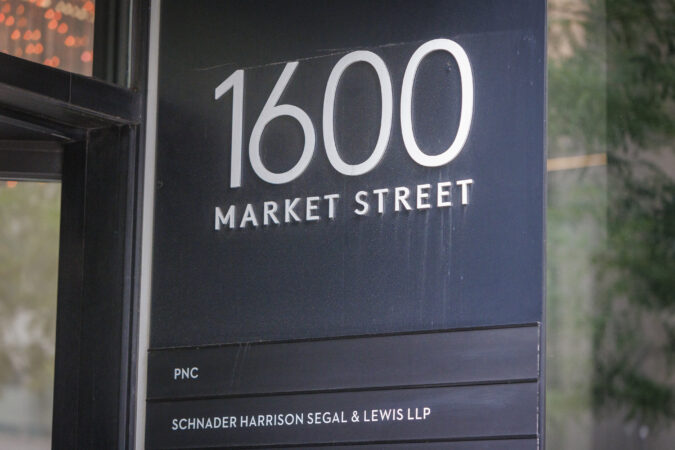
    The management of shuttered Philadelphia law firm Schnader Harrison Segal & Lewis has just settled with a group of partners who sued over unpaid retirement funds but continues to face separate allegations that the firm failed to properly pay some lawyers in its last year open.

    In a class action over allegedly mismanaged retirement funds, the former firm’s top leaders agreed to a settlement last year of $675,000, which was approved Thursday in federal court in Philadelphia. Lawyer Jo Bennett, who left Schnader Harrison in early 2023, filed the suit on behalf of several dozen former colleagues.

    It’s hard for anyone to sue their former employer, said R. Joseph Barton, one of Bennett’s lawyers. “It’s also hard for an active, practicing attorney to sue her former colleagues.”

    U.S. District Judge John Milton Younge said Thursday that he had expected the case might be held up because the law firm, as a business, had closed. He asked the lawyers, “Where did the fund come from?” in reference to the settlement money. Barton said some likely came from insurance, and some may have come from individual shareholders of the former firm.

    During Thursday’s hearing, lawyers for Schnader Harrison said they would not oppose any of the conditions Bennett’s lawyers asked for.

    Before that settlement’s final approval, several former partners of the firm asked the judge to ensure the agreement wouldn’t stop their other lawsuit against the shuttered firm, filed in the Philadelphia Court of Common Pleas in April. That suit alleges that the firm withheld their bonuses during its final year in business, violating their employment contracts. The six lawyers suing the firm each allege that they missed out on between $40,000 and $200,000 of compensation.

    Leslie Corwin of law firm Duane Morris, who is handling Schnader Harrison’s dissolution, said “Schnader disputes the claims” in the Philadelphia suit. “It’s part of the windup process, which is still ongoing.”

    Corwin declined to comment on Bennett’s settlement and did not represent Schnader Harrison in that case. He noted that the shuttered firm is currently in the process of paying its secured creditor, WSFS Bank.

    The six former Schnader Harrison lawyers suing in Philadelphia court were based in other cities — four in New York, one in Pittsburgh, and one in San Francisco. As in the retirement funds case, these lawyers did not have an ownership stake in the firm.

    Each of the lawyers was entitled to additional compensation each year beyond their base salary, the lawsuit says, but the year Schnader Harrison closed, the firm failed to pay those bonuses. The six lawyers allege that was a violation of their employment contracts.

    Suing former colleagues

    The retirement funds settlement is expected to be split among 76 people after the class’ lawyers are paid one-third of the settlement as their fee. The amount paid to each class member is based on how much their retirement fund should have grown during the time in question, Bennett’s lawyers said, with a minimum payout of $25.

    Bennett is also set to receive a $10,000 service award from the settlement fund for bringing the case on behalf of her colleagues.

    “It takes quite a bit of nerve to sue your former colleagues,” Adam Garner, one of Bennett’s lawyers, said during Thursday’s hearing. “It takes chutzpah to do what Ms. Bennett did.”

    Bennett had alleged that Schnader’s equity partners — the lawyers who shared ownership of the firm — did not put employees’ retirement contributions into its 401(k) plan as promptly as it should have. Instead, Bennett alleged, the firm “commingled the employee contributions” with the firm’s other assets and used them “for their own purposes, including funding Schnader’s operations and funding the distributions made to the firm’s equity partners.”

    The firm’s equity partners did not put in their own money to help the firm pay its bills, she alleged, as it faced lawsuits over missed rent on its offices in Philadelphia and San Francisco. The firm announced its plans to dissolve in August 2023.

  • Iconic Coney Island hot dog hawker Nathan’s Famous is sold for $450 million

    Iconic Coney Island hot dog hawker Nathan’s Famous is sold for $450 million

    Nathan’s Famous, which opened as a 5-cent hot dog stand in Coney Island more than a century ago, has been sold to packaged meat giant Smithfield Foods in an all-cash $450 million deal, the companies announced Wednesday.

    Smithfield, which has held rights to produce and sell Nathan’s products in the U.S. and Canada and at Sam’s Clubs in Mexico since 2014, will acquire all of Nathan’s outstanding shares for $102 each.

    Like almost every food company, Nathan’s has been under significant inflationary pressure. Nathan’s sales costs of branded products rose 27% compared with last year in its most recent quarter, the company said in a filing with the U.S. Securities and Exchange Commission. There was a 20% increase in the average cost per pound of hot dogs, it said.

    Nathan Handwerker opened the first Nathan’s hot dog stand on Coney Island in 1916 with a $300 loan, according to the company. After opening a handful of other locations around New York over the years, the Handwerker family sold the Nathan’s Famous business to investors in 1987. The franchise has continued to expand.

    Nathan’s has an outsized cultural presence in the U.S. both because of its history and the famous, or infamous, hot dog-eating contest held at its flagship Coney Island shop, where contestants from around the world gather every July 4 to see who can down the most hot dogs in 10 minutes.

    The restaurant sits on the same lot where Handwerker opened his first hot dog stand.

    American Joey Chestnut is the reigning Nathan’s hot dog-eating champion after eating 70.5 hot dogs and buns last year. Chestnut has won 17 of the last 19 events, setting a record in 2021 after wolfing down 76 hot dogs and buns.

    While the first recorded hot dog-eating contest was held in 1972, Nathan’s says informal contests began the year the stand opened early in the 20th century. It says the 2025 contest was its 103rd.

    Smithfield said Wednesday that the event, which has been televised on ESPN with a crowd estimated at 30,000 at Coney Island each year, will continue.

    Smithfield said it expects to achieve annual savings of about $9 million within two years of closing the deal.

    “As a long-time partner, Smithfield has demonstrated an outstanding commitment to investing in and growing our brand while maintaining the utmost quality and customer service standards,” said Nathan’s CEO Eric Gatoff.

    Nathan’s board of directors, which own or control nearly 30% of the outstanding shares of Nathan’s Famous common stock, approved the buyout and agreed to recommend to its shareholders to vote in favor of the deal.

    Smithfield, which also owns the Gwaltney bacon and Armour frozen meat brands, rang up more than a billion dollars in operating profit in 2024 on sales of $14.1 billion.

    Smithfield shares closed down 1.1% Wednesday.

    In fiscal 2025, Nathan’s reported profit of $24 million on revenue approaching $150 million. Its acquisition is expected to close in the first half of this year.