Category: Business

Business news and market updates

  • 2026 Honda CR-V Hybrid: Still the top of the hybrid heap?

    2026 Honda CR-V Hybrid: Still the top of the hybrid heap?

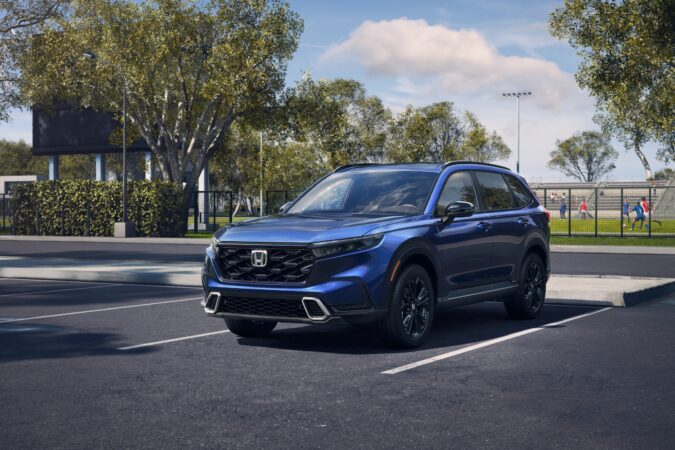
    2026 Honda CR-V Hybrid AWD Sport Touring vs. Kia Sportage Hybrid: A challenger for the hybrid crown?

    This week: Honda CR-V Hybrid

    Price: $42,550 for the trim level (which is top of the line)

    What others are saying: “Highs: Civilized and efficient hybrid powertrain, roomy interior, new larger standard infotainment touchscreen. Lows: Price premium over nonhybrid CR-V, could use a few more ponies,” says Car and Driver.

    What Honda is saying: “The hybrid that gives you more.”

    Reality: The Honda is still in the running.

    What’s new: When you have a vehicle Mr. Driver’s Seat rated as “so nice,” you’re wary of updates. Are they going to make this better?

    They haven’t changed too much about the underpinnings of this model — same powertrain, but with a new look. A TrailSport model gives it more Passport-type off-roady features.

    It really looked like a Passport parked in the driveway.

    Competition: In addition to the Sportage Hybrid, competitors include the Hyundai Tucson Hybrid, Mazda CX-50 Hybrid, Mitsubishi Outlander Hybrid, Subaru Forester Hybrid, and Toyota RAV4 Hybrid.

    Up to speed: The CR-V Hybrid feels like a surprisingly quick little SUV. The two-motor hybrid system creates 204 horsepower and is coupled to a 2-liter four-cylinder engine that gets updates for 2026.

    It got to 60 mph in 7.1 seconds, according to Car and Driver, about average for the vehicle type, and surprisingly almost a second quicker than the 2023 model with the same powertrain.

    In any case, the CR-V has a nice feel of momentum as it goes about daily driving, even if the hard numbers are actually kind of soft.

    Shiftless: A Honda with a shift lever continues to excite me far more than it really should. But that’s how disappointed I was with the old buttons. I just found them unattractive and cumbersome.

    The power band is fairly even in this hybrid version of the CR-V; gasoline-powered Hondas with CVTs can be a little uneven.

    On the road: The CR-V appeared quite mannerly and easy to drive.

    And then I found Sport mode. This really turns the small SUV into a Volkswagen or Mazda competitor. It doesn’t quite have the fun factor but it really wiggles through the curves nicely. Cornering is a real bright spot, as I made some left turns at stoplights far more enthusiastically than I’d have thought possible, and the tall SUV never even flinched.

    The CR-V also rates highly for maneuverability. With a backward-garage at Chez Sturgis, a lot of three-point runs happen, and the CR-V let me go from one corner to another in one swoop, much like the smallest vehicles out there.

    Honda favors basic black in its interiors and it gives the CR-V Hybrid a classic look.

    Driver’s Seat: The seat seemed a little stiff at first, and my time in the Civic Hybrid made me paranoid — Civic seats tend to jab me just the wrong way. But no Mr. Driver’s Seats were harmed in the making of this review, and a comfortable time was had by almost all.

    The gauges are clear and the default offers pretty much all the info you’ll need, which is how it should be.

    A heated steering wheel comes courtesy of the Sport Touring trim.

    Friends and stuff: The rear seat is where happy Honda seat dreams go to, well, not exactly die, but suffer a little bit. The seat back is flat except for an annoying lumbar bump near the bottom. At least there are several recline choices.

    Legroom is fantastic, as is foot room, while headroom is snug, about an inch from Mr. Driver’s Seat’s head.

    Cargo space is a whopping 36.3 cubic feet behind the rear seat and 76.5 with the seat folded; the seat bottom folds down with the back rest to maximize cargo space.

    In and out: It’s a slight step up into the CR-V. Not too much of a climb.

    Play some tunes: After experiencing true audio joy from the Honda Odyssey stereo once upon a time, I keep expecting dynamite sound from Hondas, but often I’m disappointed. The Bose premium system in the CR-V Hybrid Sport Touring performs OK, an A- or a B+. Sigh.

    Operation of the system is not bad, with dials for volume and tuning. Sound adjustments are in the larger 9-inch touchscreen but are unavailable when the vehicle is moving. This is a precaution I like for you and all the other drivers out there, but I’m special and don’t need it.

    Keeping warm and cool: Dials control temperature and fan speed while buttons handle the rest. It’s a pretty easy setup.

    Fuel economy: The CR-V hybrid averaged 35.2 mpg for almost the entire visit, a nice reward for the hybrid premium, and just the overall chance to feel smug.

    Where it’s built: Greensburg, Ind.; East Liberty, Ohio; and Alliston, Ontario.

    How it’s built: Consumer Reports predicts the CR-V Hybrid reliability to be a 4 out of 5.

    Next week: How does the Kia Sportage Hybrid compare?
  • Franklin Mall in Northeast Philly closed because of small fire

    Franklin Mall in Northeast Philly closed because of small fire

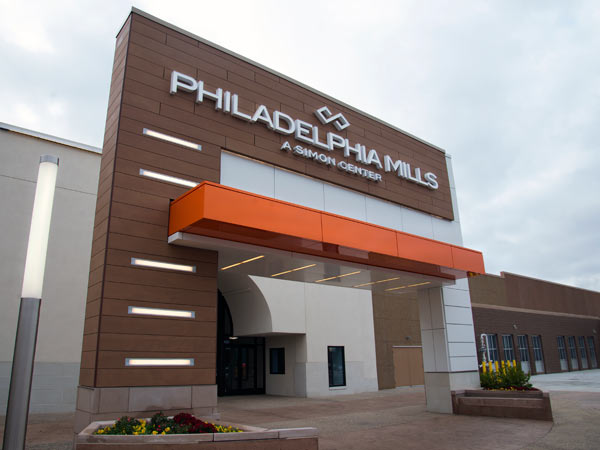
    The Franklin Mall, which many locals still call Franklin Mills, is temporarily closed due to required city inspections after a small fire over the weekend at the once-popular Northeast Philadelphia retail destination that is now listed for sale, the property management said Wednesday.

    No injuries were reported after the fire occurred on Feb. 21 within a single tenant space, the management said in a Facebook post.

    The Philadelphia Department of Licenses and Inspections “issued a temporary closure notice while required inspections are completed to ensure building safety and building structural integrity,” the post said.

    The management said it “immediately engaged licensed professionals and qualified vendors to evaluate the affected area and confirm that all life-safety systems are fully operational.”

    City officials could not be reached for comment Wednesday.

    The management of Franklin Mall said it was “working closely with city officials to complete all necessary inspections and secure the approvals required to safely reopen the property as quickly as possible. The safety of our tenants, employees, and visitors remains our top priority.”

    In the meantime, Walmart, Marshalls and HomeGoods, and Dave & Buster’s remain open for business, according to the mall’s website.

    The Inquirer reported in early December that the mall was listed for sale and the 36-year-old, 1.8-million-square-foot facility at Knights and Woodhaven Roads could be repurposed or demolished for non-retail uses.

    The mall opened in 1989 to great fanfare as the largest outlet mall ever, with a zigzag-shaped, one-story-tall concourse that stretched for 1.2 miles.

    Franklin Mills once attracted 20 million visitors annually, but now has less than a third of that traffic.

    Under new ownership, it was renamed Philadelphia Mills, and most recently it has been called Franklin Mall, though a main entrance sign still says Philadelphia Mills.

    <iframe src="https://www.facebook.com/plugins/post.php?href=https%3A%2F%2Fwww.facebook.com%2Fpermalink.php%3Fstory_fbid%3Dpfbid0LN5MiLAiJLd9hQYrFFSiEdvn1RVaZYTcpKuXvWF5YbxVnQ6PgXNL22s2CHEeMWAbl%26id%3D100064487808439&show_text=true&width=500" width="500" height="705" style="border:none;overflow:hidden" scrolling="no" frameborder="0" allowfullscreen="true" allow="autoplay; clipboard-write; encrypted-media; picture-in-picture; web-share"></iframe>
  • Trump floats new retirement benefit for 54 million workers

    Trump floats new retirement benefit for 54 million workers

    President Donald Trump, in his State of the Union address Tuesday night, suggested a major new retirement benefit for tens of millions of American workers, embracing an economic policy that proponents say could bolster the federal retirement safety net.

    Speaking to congressional lawmakers, Trump pledged to extend to private-sector workers the same type of retirement plan already available to federal employees. He also said the government would kick in up to $1,000 per year to their accounts, presumably in matching benefits. Roughly 54 million workers in the private sector have no workplace retirement benefits and do not benefit from stock market gains, according to research cited by the Economic Innovation Group, a Washington-based think tank, as part of what some experts have termed a “retirement crisis” in America.

    “Half of all of working Americans still do not have access to a retirement plan with matching contributions from an employer,” Trump said. “To remedy this gross disparity, I’m announcing that next year, my administration will give these often forgotten American workers — great people, the people that built our country — access to the same type of retirement plan offered to every federal worker. We will match your contribution with up to $1,000 each year.”

    The announcement was celebrated by Trump supporters as a major new economic policy heading into the 2026 midterm elections, but critics pointed out some problems with Trump’s pledges, and are skeptical it will substantially boost savings for working-class Americans.

    The most obvious challenge is that it’s not clear how much Trump can do on his own. Under existing authorities, the administration can create portable retirement accounts — modeled on the Thrift Savings Plan used by federal employees — and make them available to workers who currently lack a workplace plan. But the government cannot compel employers or workers to automatically enroll, nor can it unilaterally appropriate funds to provide a universal $1,000 match to all eligible workers.

    Instead, the administration can facilitate take-up of a benefit that already exists. The bipartisan Secure 2.0 bill, signed by President Joe Biden in 2022, created a “Saver’s Match” — a federal contribution of up to $1,000 annually for qualifying workers who put $2,000 in an eligible retirement account. One problem has been that many eligible workers have had nowhere to put their contributions. Trump’s executive action could create additional account infrastructure, but eligibility would still be constrained. Only workers who make less than $25,000 per year, or roughly $41,000 for couples, are eligible.

    More impactful would be if Trump’s comments spur congressional action. A White House official suggested that the administration will support bipartisan legislation to automatically enroll eligible workers in federal accounts, provide the $1,000 federal match for low- and moderate-income workers, and make those accounts portable across jobs. One bill is backed by a coalition that spans Charles Schwab, AARP, DoorDash, and Uber.

    White House economist Kevin Hassett has backed a similar kind of approach. Of the more than $200 billion in annual income tax expenditures related to retirement savings, less than 1% flows to workers in the bottom income quintile, according to the Economic Innovation Group. This would move some of those benefits down the income distribution.

    “Since we’ve had the 401(k) system this has always been the problem: A huge share of the workforce has not been participating and doesn’t have access to these benefits. Closing that gap is a big first step,” said John Lettieri, cofounder of the Economic Innovation Group. “It’s a long-run exercise to get people into the market, engaged in long-term savings and investment behavior with matching benefits. That’s a proven way of building wealth over time, including for low-income savers.”

    That said, there are reasons to doubt that even the legislation being debated in Congress would do much to increase retirement security for low-income workers. Low-income Americans often do not have enough to live on already, much less an extra $2,000 per year to put into retirement accounts, said Matt Bruenig, founder of the People’s Policy Project, a left-leaning think tank.

    The Survey of Consumer Finances suggests that fewer than 12% of people who earn below $43,000 save for retirement.

    “Almost no low-income people have retirement accounts. This is not because they are disallowed from having them,” Bruenig said. “It’s because they can barely pay their bills. Nothing in the president’s plan changes that.”

  • Main Line Health reported an operating profit of $8.7 million in the first half of fiscal 2026

    Main Line Health reported an operating profit of $8.7 million in the first half of fiscal 2026

    Main Line Health had an $8.7 million operating profit in the six months that ended Dec. 31, the nonprofit health system reported to bond investors Wednesday.

    Main Line’s swing from an $8.9 million loss in the same period of 2024 benefited from a change in accounting for depreciation that reduced expenses. Without that change, Main Line would have had another loss.

    “We have been pleased with our continued improvement in fiscal performance year over year, which has been strong outside of the change in depreciation,” Main Line’s chief financial officer, Leigh Ehrlich, said in a statement.

    Here are more details on Main Line’s results:

    Revenue: Main Line reported $1.35 billion in patient revenue in the first six months of fiscal 2026, up 10.5% from $1.22 billion a year ago. Strong gains in hospital discharges, emergency department visits, and same-day surgeries contributed to the increase. Main Line’s Riddle Hospital near Media has seen a 36% increase in patients following the closure of Crozer Health’s hospitals last spring, contributing to revenue growth, Ehrlich said.

    Expenses: Last year, Main Line changed how it accounts for investments in facilities and equipment, significantly reducing depreciation and amortization expenses. In the first two quarters of fiscal 2026, Main Line’s depreciation and amortization expense was $68.8 million, down from $84.5 million the year before. Excluding those expenses from both years, Main Line’s operating profit margin fell slightly, to 5.5% from 5.9%.

    Notable: Main Line provides more detail than most systems on its patients’ health insurers. After just two years in Southeastern Pennsylvania, Pittsburgh insurance giant Highmark accounted for 12.5% for the business at Main Line Health. That is just 2 percentage points less than Aetna, which as been in the market for decades.

  • Breeze Airways is expanding again at the Atlantic City Airport

    Breeze Airways is expanding again at the Atlantic City Airport

    The Atlantic City International Airport will soon offer even more southbound flights.

    Breeze Airways, a budget carrier founded in 2021, is set to add direct flights between A.C. and Tampa twice a week starting this summer, the company announced Tuesday.

    The routes will be offered on Wednesdays and Saturdays beginning July 1, according to Breeze, and fares for a one-way ticket will start at $79 per person.

    The airline announced the new route to and from the Jersey Shore along with more than a dozen other nonstop flights nationwide.

    Breeze Airways is adding nonstop flights from Atlantic City to Tampa twice a week starting in July.

    “The addition of these new cities and routes will give even more travelers the opportunity to save precious hours that would otherwise be spent flying through hubs or driving,” David Neeleman, Breeze Airways’ founder and CEO, said in a statement, noting his company’s mission to offer affordable airfare in underserved markets. Neeleman has founded four other airlines, including JetBlue.

    Last month, Breeze announced new nonstop service from Atlantic City to Charleston, S.C., and Raleigh-Durham, N.C., as well as a flight to Tampa, Fla., that includes a stopover.

    The Charleston flights are set to be offered on Wednesdays and Saturdays starting May 6. And the Raleigh-Durham and stopover Tampa routes are scheduled for Thursdays and Sundays starting June 11.

    All Breeze flights out of Atlantic City can be booked online now at flybreeze.com.

    Breeze Airways is a private company, so it is not required to publicly report its finances. Last year, however, the airline announced that it had turned a profit for the first time in the fourth quarter of 2024, a period in which the company generated more than $200 million in revenue.

    The Utah-based carrier has expanded in recent years, now operating more than 300 routes, including seasonal flights, to 86 cities in the U.S., Mexico, and the Caribbean.

    Breeze is one of only a few major airlines that operate a dozen or so flights in and out of Atlantic City every day, depending on the season.

    Last year, Allegiant Air started offering flights from A.C. Spirit Airlines, meanwhile, has trimmed its flight schedule from the airport, a move that resulted in the 2024 decision to shut down its crew hub there.

    American Airlines allows passengers to go through security in Atlantic City and then get on a bus to catch flights at the Philadelphia International Airport.

  • Pennsylvania spent $397 million in overtime last year. Here’s why government workers are logging such long hours

    Pennsylvania spent $397 million in overtime last year. Here’s why government workers are logging such long hours

    Pennsylvania pays out hundreds of millions in overtime pay to its employees annually. For some agencies, overtime work is in the nature of the jobs, which involve responding to emergencies. But understaffing sometimes plays a role as well.

    Last year, Pennsylvania paid $397 million in overtime to roughly 56,000 employees, according to state data. The state plans to spend a similar amount this year.

    “Overtime is a necessary part of operating state government,” Daniel Egan, a spokesperson for the Pennsylvania Office of Administration, said via email in February. “Many Commonwealth agencies provide 24-7 services Pennsylvanians rely on, including plowing roads, responding to emergencies, staffing correctional facilities, and caring for patients in state hospitals and nursing homes.”

    In Pennsylvania, overtime spending has increased by nearly 50% since 2019. Some of the agencies that paid the most overtime were the Department of Corrections, Department of Transportation, Department of Human Services, and the State Police.

    Dolling out millions in overtime is not uncommon in state governments and it’s been increasing among some. New York spent 1.3 billion on overtime in 2024, a roughly 10% increase from the previous year. Maryland spent $404 million that year, up almost 38% from four years prior. In Delaware, overtime spending reached $84 million in 2025, about a 20% increase from 2023.

    While staffing shortages contribute to overtime needs, agencies say a variety of factors contribute to this spending.

    Top spenders on overtime in Pa.

    Overtime accounted for 3.9% of Pennsylvania’s personnel costs in 2025, says Egan, which last year ran up to over $10 billion.

    These costs include salaries, wages, employee benefits, and other personnel costs like overtime.

    window.addEventListener(“message”,function(a){if(void 0!==a.data[“datawrapper-height”]){var e=document.querySelectorAll(“iframe”);for(var t in a.data[“datawrapper-height”])for(var r,i=0;r=e[i];i++)if(r.contentWindow===a.source){var d=a.data[“datawrapper-height”][t]+”px”;r.style.height=d}}});

    Pennsylvania’s personnel costs have grown from $8.2 billion to $10 billion between 2019 and 2025, while overtime spending increased from $269 million to nearly $400 million last year.

    But the state’s other expenses have grown even more. Personnel was 9.4% of the budget in 2019, and dropped to 7.8% last year.

    window.addEventListener(“message”,function(a){if(void 0!==a.data[“datawrapper-height”]){var e=document.querySelectorAll(“iframe”);for(var t in a.data[“datawrapper-height”])for(var r,i=0;r=e[i];i++)if(r.contentWindow===a.source){var d=a.data[“datawrapper-height”][t]+”px”;r.style.height=d}}});

    Egan noted that state employee pay rates have increased by roughly 28% since 2019 “to keep up with the cost of living and ensure the commonwealth remains a competitive employer for high-quality employees,” and overtime is based on employees’ base rate of pay. He also noted that many state agencies must operate “around the clock.”

    Staffing shortages

    Corrections doled out roughly $163 million in overtime to 13,600 employees in 2025.

    “Overtime in corrections will always be a reality due to the 24/7 operation of essential security posts,” but the department has been working to curb its staffing shortages, said spokesperson Maria Bivens.

    State prisons have been plagued by staffing shortages across the country.

    In Pennsylvania, Corrections has looked to address the shortage in recent years by dropping the age requirement for trainees and allowing out-of-state applicants.

    “As corrections officer vacancies decrease, our facilities become safer, more cost-effective, and better equipped to meet the needs of the incarcerated population,” department secretary Laurel Harry said last year.

    Curbing the staffing shortage helps reduce the agency’s reliance on overtime, which in turn reduces employee burnout and saves taxpayers money, the department has noted.

    The officer vacancy rate fell from 11.3% in September 2022 to 6.4% in September 2025. Bivens said vacancy should continue to drop to roughly 3% in March once two facilities close and their staff are deployed to other positions.

    A Pennsylvania State Police vehicle parked in Center City Philadelphia.

    At the Pennsylvania State Police, “overtime is not determined solely by vacancy rates,” said spokesperson Logan Brouse. It can include responding to critical incidents and court appearances, Brouse noted.

    “As part of our public safety operations, overtime is sometimes necessary to uphold our mission by ensuring we can respond efficiently and effectively to emergencies, maintain adequate staffing levels, and meet operational demands,” said Brouse.

    The department paid roughly $55 million in overtime to about 5,700 employees last year.

    Pennsylvania’s State Police is among several police departments across the country that recently cut their college requirement. As of Feb. 19, the agency had 206 trooper vacancies and 110 open civilian positions.

    The governor’s budget proposal includes funds to add 380 troopers, and removes a cap on how many the state can hire, said Brouse.

    “The department continually reviews staffing levels, scheduling practices, and operational needs to manage overtime responsibly,” said Brouse. “We always strive to be good stewards of taxpayer money while ensuring that public safety services are delivered effectively and without interruption.”

    Agencies on call 24-7

    Some agencies say overtime is inevitable given the all-hours nature of their work.

    Last year, PennDot paid $70 million in overtime to roughly 12,100 employees. Their work includes emergency response during weather events, as well as roadway or bridge repairs, noted spokesperson Erin Waters-Trasatt.

    “Pennsylvanians expect our employees to respond to emergencies 24-7 and during major events — like the January 2026 snowstorm,” said Waters-Trasatt. “Overtime is required to keep our roadways clear and safe for travel.”

    PennDot trucks load up on salt at their facility on Hunting Park Avenue on Friday morning Jan. 19, 2024.

    The Department of Human Services paid about $65 million in overtime to 8,513 employees last year.

    The department runs psychiatric hospitals and other residential care facilities that operate 24-7 and “must continue to function even when employees have reached the standard number of work hours per day or week,” said spokesperson Natalie Scott.

    The department has also been trying to fill vacancies, Scott noted, adding that Gov. Josh Shapiro’s administration has cut down the time it takes to hire state employees.

    “Progress made to increase staff will allow employees more time and resources to effectively do their work and reduce the amount of overtime spent,” said Scott.

  • This Philly-founded company is selling empanadas out of vending machines. Here’s where to find them.

    This Philly-founded company is selling empanadas out of vending machines. Here’s where to find them.

    The fire-engine-red Empanadas United machine arrived in Philadelphia last fall. It appeared in the lobby under the SEPTA Regional Rail tracks at 30th Street Station, where yearslong renovations have shut restaurants, leaving a gap for automation to fill.

    The empanada machine works like this: Tap your card. Choose one of four fillings. Whirr, beep, the ovens ignite, the rich smell rises. A minute passes. A pair of mottled, tan, crusted, half-moon-shaped empanadas, each bigger than a man’s hand, drop into a topless personal-pizza-sized box. The little plastic door opens, and your account is $8 lighter.

    That’s a premium price compared to what you pay in Philly’s corner stores; but it costs extra to eat in a transit hub. The empanada machine is one of several rival meal-vending machines at the station, such as the California Pizza Kitchen machine that charges $12 for a plain, 7-inch pizza.

    These turnovers were formed — from flour and fat, chicken or beef, sazon and cebolla — last night or yesterday, at Empanadas United. The Philadelphia-based empanada bakery serves restaurants across the region, from its base 15 blocks north of the train station.

    Pedro Rodriguez (left) with Pedro Rodriguez (center) and his son, Yorby Rodriguez, load empanadas for delivery at Empanadas United in Philadelphia in 2024.

    The vending machine, assembled by LBX Food Robotics of Sunnyvale, Calif., used two ovens to finish the turnovers — convection for the crust, infrared for the fillings. It is also furnished with a microwave oven, for use with prepared foods, but the empanadas don’t need that. The machine sees steady use, say SEPTA staff who watch the busy lobby below the train platforms.

    The machine is profitable, says Victor Tejada, the former Comcast designer who started Empanadas United in 2023. The bakery, using order software including Tejada’s Dominican Food App, was supplying empanadas to takeout customers at 160 stores, Tejada says, when he and his partners sold it last year to Virtual Dining Concepts (VDC). The acquirer says it has taken the brand national and expanded service to more than 500 locations — plus a handful of vending machines, starting with the one at 30th Street Station. Tejada stayed on to run the brand.

    The Philadelphia empanada factory makes a fraction of the empanadas now sold under its name. In other cities they are made by local bakeries to Empanadas United specifications, according to Adam Robin, VDC’s chief operating officer.

    Taking brands national

    Florida-based VDC focuses on taking local and celebrity food brands national, contracting chain restaurants, food delivery services, and other food retailers. They aim to set standards so the products can be reproduced in local plants anywhere and mass-marketed fresh. Its other brands include Barstool Sports’ Pardon My Cheesesteak, MrBeast Burger, and MLB Ballpark Bites.

    VDC last year hired Evolvending, founded by former VDC executive Valentina Ellison, to deploy the Philly empanadas in machines at transit centers, as colorful working billboards for the brand.

    “Empanadas United has a really excellent concept, Victor Tejada has an entrepreneurial spirit that we love working with, and we are growing the brand all over the country,” said VDC’s Robin. He learned the restaurant business as a teenager, rising from busboy to chef, and joined VDC as chief operating officer in 2021.

    “We are a virtual dining company. We targeted this brand for acquisition, we bought it last year, we manage the online storefronts,” Robin added. The company has sold more than 2 million empanadas since the deal, and plans to sell six million this year, he said.

    The machines, a small part of total Empanadas United distribution, each have 60 slots, each of which holds two empanadas, filled on a two-day cycle, according to Robin. If they sell out, that’s more than 20,000 empanadas and $80,000 per machine per year.

    “They cover their costs. We are thinking of expanding them,” Robin says.

    Evolvending has also put Empanadas United machines at Boston Logan Airport and Hartsfield-Jackson Atlanta International Airport. But it’s not yet at Philadelphia International Airport.

    The company also hasn’t set up Empanadas United machines in its hometown of Miami yet, while it considers what flavors to offer in that large and diverse market, Robin said. Among empanada fans, “Some love Venezuelan, some Cuban, some Mexican, and some like fun flavors like apple pie.”

  • North Coventry residents and leaders reject data center plan — before it was even formally submitted

    North Coventry residents and leaders reject data center plan — before it was even formally submitted

    The developer of a “boutique data center” will look elsewhere after public outcry and a preemptive board of supervisors vote showed no appetite for the facility in North Coventry Township.

    The data center, informally proposed by Envision Land Use, would have been situated adjacent to Route 100 at 299 W. Schuylkill Road, in an industrial lot sitting near a Peco utility substation and a residential development.

    But swift and early public discontent — and the township’s leadership— stopped the data center before a formal application was even submitted to the Chester County municipality.

    The township’s board of supervisors voted, 3-2, on Monday that they would reject a proposal for the site eyed by Envision Land Use, said Erica Batdorf, the township’s manager. It was the first data center to be proposed in North Coventry.

    The board’s chair did not immediately respond to a request seeking comment.

    Though the developer could still formally submit its plans, it will scrap them for the municipality, said Envision Land Use’s Reiss Rosenthal.

    “[With] this much public pushback, we just thought at this time it didn’t make sense to try to go forward with this,” he said.

    On Monday, the crowd of roughly 100 residents booed when the supervisors discussed pushing back the vote to a subsequent meeting, Rosenthal said.

    The vote follows a growing public pushback of data centers in the region, particularly in Chester County. Last week, East Vincent’s planning commission told the township’s board of supervisors that it should reject a massive data center project there after months of tense public meetings. A proposed project in East Whiteland also saw backlash from residents last month after it sought to expand the footprint of its project.

    Though roughly 38% of Pennsylvanians support data centers being built in the commonwealth, residents are less likely to support data centers in their own backyards, according to a December survey, even as Democratic Gov. Josh Shapiro seeks to entice such projects to Pennsylvania by cutting some regulations.

    There are more than 150 data centers in Pennsylvania and New Jersey.

    Data centers are buildings or campuses that handle cloud-storage and computing needs of massive corporations, like Amazon, Google, Microsoft, or Meta.

    And though those kinds of corporations are looking at setting up shop in Pennsylvania, at about 17 acres the North Coventry project would have been smaller than its proposed counterparts in other pockets of Chester County, the developer said. These smaller centers have been around for longer than the ones making recent headlines, Rosenthal said.

    The proposed site would have been a 120,000 square-foot three-story building, making it relatively small compared with the sprawling plans in East Vincent and East Whiteland, which would both exceed a million square feet.

    Plans for the site say that it would have preserved and added trees and that its proximity to the Peco station would have required minimal additional power supply.

    The proposed project would have been within the township’s residential zoning district that has an industrial overlay. It would have had six full-time employees.

    “We were kind of surprised that this ended in a vote already,” Rosenthal said. “We thought it was possibly going to be a little bit more down the line, after we were able to meet with the neighbors as well as show our hands on what we were actually planning on doing.”

  • Paul F. Engstrom, award-winning pioneer in cancer prevention and control at Fox Chase Cancer Center, has died at 89

    Paul F. Engstrom, award-winning pioneer in cancer prevention and control at Fox Chase Cancer Center, has died at 89

    Paul F. Engstrom, 89, formerly of Ambler, Montgomery County, celebrated pioneer in cancer prevention, education, and treatment, former chair and professor emeritus of the hematology and oncology department at Fox Chase Cancer Center, retired vice president of cancer control and senior adviser to the president at Fox Chase, Army veteran, and mentor, died Friday, Dec. 26, of Parkinson’s disease at Normandy Farms Estates in Blue Bell.

    The son of a small-town doctor, Dr. Engstrom accompanied his father on house calls in Minnesota when he was young and assisted sometimes on routine procedures. Later, after earning his medical degree at the University of Minnesota, he excelled at identifying cancer-related health problems and creating solutions.

    Starting in the 1960s and ’70s, Dr. Engstrom noticed large gaps in cancer prevention programs and treatment strategies. So he compiled comprehensive clinical care guidelines for cancer doctors and hospitals around the world, forged sustainable oncology research networks and community education partnerships, and established one of the country’s first cancer prevention and control programs at Fox Chase.

    “Most doctors and oncologists in the 1970s were training to treat cancer, not necessarily to prevent it,” former Fox Chase colleague Carolyn Fang said in a 2018 story for Fox Chase’s Forward magazine. “He was one of the first to recognize that prevention was important.”

    In 1991, Dr. Engstrom told the Daily News: “Changing the behavior of the public is only part of my job. We must change the physicians, too.” In 2000, he told The Inquirer: “Nowadays, the trend is toward identifying high-risk individuals and treatments we can give to prevent cancer from ever starting.”

    Dr. Engstrom was adept at organization and collaboration, former colleagues said in online tributes. He recruited other cancer experts to Fox Chase and established cutting-edge programs for cancer screening, smoking cessation, and education at hospitals, schools, private companies, and other organizations.

    He taught clinical science classes, secured vital grants from the National Cancer Institute and other groups, and made seminal clinical trials available to many more patients. “He was really aware of the need to integrate the community into this work.” Fang said in 2018.

    Dr. Engstrom joined the old American Oncologic Hospital in Philadelphia in 1970 and oversaw its merger with the Institute for Cancer Research in 1974 to become the Fox Chase Cancer Center. He was named vice president of cancer control and continuing education in 1984, and head of community cancer program activities in 1989.

    Dr. Engstrom (center) earned many awards over his long career.

    He was also vice president for population science and held the Samuel M.V. Hamilton endowed chair in cancer prevention. He specialized in treating gastrointestinal cancers and neuroendocrine tumors. He retired in 2018 but continued as a special adviser to the Fox Chase president.

    He cofounded the National Comprehensive Cancer Network and was a fellow of the American College of Physicians and longtime member of the American Association of Cancer Research and other groups. He served on many boards and earned a clinical care achievement award in 2013 from the Association of Community Cancer Centers.

    In 2016, Dr. Engstrom and his wife, Janet, were honored by Fox Chase colleagues for their combined 80 years of service to the center. In 2020, colleagues published a series of articles about his career in the journal Cancer Prevention Research. In 2023, friends, colleagues, patients, and his family established the Paul F. Engstrom professorship in oncology at Fox Chase.

    Dr. Engstrom edited, wrote, or cowrote hundreds of research papers and lectured around the world. He was drafted into the Army in 1967, rose to the rank of major, and served three years as head of hematology and oncology at Tripler Army Hospital in Honolulu.

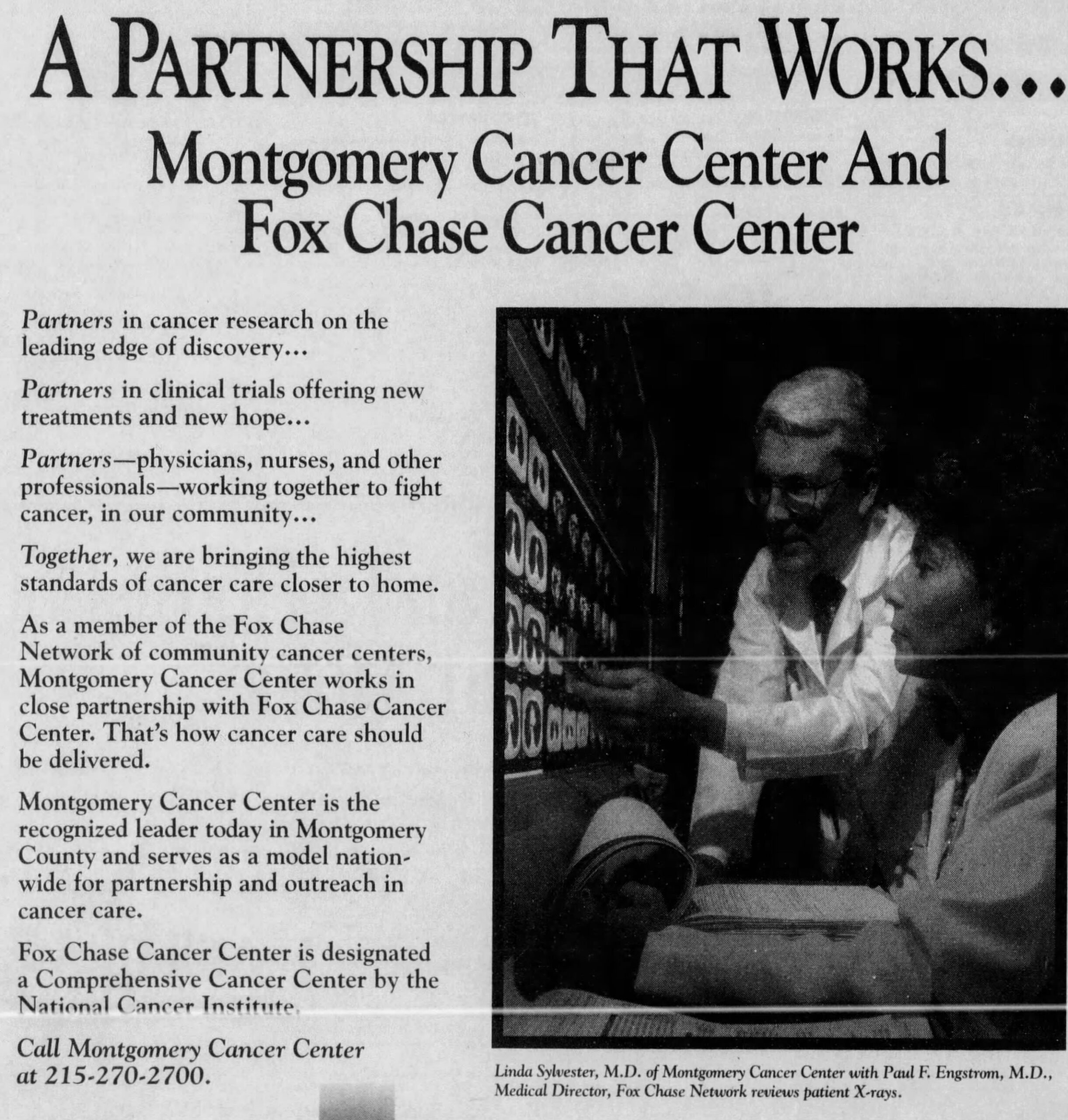
    Dr. Engstrom (left in the photo) appeared in many print advertisements for the Fox Chase Cancer Center, such as this 1995 ad in The Inquirer.

    “Medicine is a great career,” he said in 2018. “It is still the most satisfying and the best opportunity to do well, but most importantly to do good.”

    Paul Frederick Engstrom was born May 28, 1936, in St. Cloud, Minn. He played football and basketball, ran track, played trombone in the high school band, and sang in the school chorus.

    His father was the only doctor in Belgrade, Minn., and Dr. Engstrom knew early he was going to be a doctor, too. He earned a bachelor’s degree at St. Olaf College in Minnesota and completed a public health fellowship at the California Department of Health during medical school.

    He met nurse Janet Johnson during a procedure in a Minnesota hospital in 1960, and they married in 1961. They lived in Hawaii while he served in the Army and in Ambler until recently, and had daughters Karin and Maria, and a son, David.

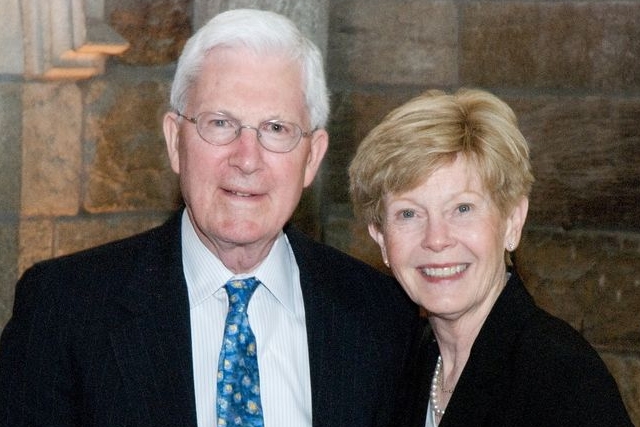
    Dr. Engstrom met his wife, Janet, when she was an intensive care unit nurse.

    Dr. Engstrom and his wife enjoyed the orchestra, ballet, and theater in Philadelphia. He liked to garden, read, and travel. He was thrifty, his wife said.

    He followed many of the local college and professional sports teams, especially the Eagles, and sang in the choir at Christ’s Lutheran Church in Oreland. He survived prostate cancer and remained a lifelong learner.

    “He liked being a student,” his wife said. “He was quiet. He was persistent.”

    His family said in a tribute: “He cherished every moment spent with his wife, children, and grandchildren.”

    Dr. Engstrom (right) enjoyed time with his family.

    In addition to his wife and children, Dr. Engstrom is survived by eight grandchildren, a brother, and other relatives. A brother died earlier.

    A celebration of his life was held earlier.

    Donations in his name may be made to the Fox Chase Cancer Center, 333 Cottman Ave., Philadelphia, Pa. 19111; and Christ’s Lutheran Church, 700 E. Pennsylvania Ave., Oreland, Pa. 19075.

  • Trump’s newest tariffs could face legal challenge, though time is short

    Trump’s newest tariffs could face legal challenge, though time is short

    President Donald Trump’s new tariffs are not legally justified, according to several prominent economists and trade experts, who say there is no sign of the profound international financial problems that such measures were intended to remedy.

    Hours after the Supreme Court invalidated the emergency tariffs that he imposed last year, Trump on Friday invoked a 1974 law to announce a new 10% global import tax, later raising it to 15%. The president cited a provision known as Section 122 that authorizes temporary restrictions on imports to deal with “fundamental international payments problems.”

    In an official proclamation, the president said the nation’s “balance of payments,” a comprehensive account of Americans’ financial transactions with foreigners, was suffering “a large and serious deficit.” And he listed a number of metrics reflecting a deteriorating U.S. financial posture.

    The law does not define “balance-of-payments deficit,” and economists disagree about what should be included in the term. But several critics, including the International Monetary Fund’s former chief economist and a prominent conservative legal commentator, disputed the president’s claim. Trump wrongly conflated an alleged payments deficit with the merchandise trade deficit that he targeted last year with his first set of comprehensive tariffs under the International Emergency Economic Powers Act (IEEPA), they said.

    “The U.S. does not have a ‘payments’ problem. It can finance its trade deficits,” Gita Gopinath, the former IMF official, now teaching at Harvard University, wrote on X.

    Added Andrew McCarthy, a former federal prosecutor, writing in the conservative National Review: “These new tariffs are even more clearly illegal than Trump’s IEEPA tariffs.”

    Opposition to the new import taxes erupted even before they took effect at 12:01 a.m. on Tuesday. The outcry suggested that the president, still smarting from his 6-3 Supreme Court defeat, could face renewed legal jeopardy over the centerpiece of his economic agenda.

    “I do anticipate a lawsuit,” said Scott Lincicome, vice president of general economics for the Cato Institute and a former trade lawyer.

    U.S. importers would have the right to sue once they paid the tariffs. Liberty Justice Center, the nonprofit public-interest law firm that represented several small businesses in one of the tariff cases decided by the Supreme Court, said Monday that it is “closely monitoring” the president’s latest actions.

    “We will ensure that whatever authority the executive branch relies on, it follows the rules Congress actually wrote and the constitutional guardrails that protect our system of separated powers,” said Sara Albrecht, the center’s chairman.

    The debate over the Section 122 levies shows that questions of law and economics will continue to dog Trump’s bid to remake the global trading system. This time, there is no question that Congress has delegated to the president the power to levy tariffs — only under what circumstances. At issue are complex definitional questions of international economics and the legislative intent behind the wording of an untested provision in U.S. trade law.

    Time may also be a factor. The Section 122 tariffs expire after 150 days unless Congress votes to extend them, which is unlikely.

    Judges might be reluctant to “second guess” the president’s judgment on whether a balance-of-payments problem exists, said John Veroneau, a lawyer who served as deputy U.S. trade representative under President George W. Bush.

    Still, the administration’s newfound reliance upon Section 122 reverses the legal arguments it made last year. Defending the president’s emergency tariffs, Justice Department attorneys told an appeals court that Section 122 did not apply to Trump’s trade deficit concerns, which were “conceptually distinct from balance-of-payments deficits.”

    The White House declined to elaborate on the president’s Feb. 20 proclamation and fact sheet, which blamed a loss of domestic manufacturing for an excessive number of dollars leaving the country. Problems with the nation’s balance of payments can “endanger the ability of the United States to finance its spending, erode investor confidence in the economy, and distress the financial markets,” the proclamation said.

    Congress passed the Trade Act of 1974 when the United States was dealing with a distinctly different set of economic issues. In 1971, President Richard M. Nixon abruptly ended the convertibility of dollars into gold, marking the end of the Bretton Woods system of fixed exchange rates.

    At the time, foreign central banks were rushing to trade their unwanted dollars for gold, threatening to deplete U.S. financial reserves.

    There’s no sign of that sort of crisis today. The dollar has dropped about 10% over the past year, but it remains above its level for most of the decade leading to 2015. There’s certainly no sign of the “imminent and significant depreciation” that Section 122 requires.

    But even some Democrats say the administration is reacting to worrisome financial ailments.

    Economist Brad Setser, who served in the Treasury Department under President Barack Obama, said the global economy is characterized by dangerous imbalances.

    For years, the U.S. has run a deficit in its current account, the broadest measure of the nation’s trade balance, while China has run a mirror-image surplus. To keep running a large trade deficit, the U.S. must attract financing from abroad. So far, it’s been able to do that, which is why many analysts do not share the administration’s urgency.

    But the nation’s net international investment position — which balances the value of foreign stocks and bonds owned by Americans against what foreigners own in this country — is also deteriorating. That figure reached negative $26.7 trillion last year, down sharply in recent years.

    Some of that decline reflects foreigners’ large purchases of U.S. stocks, which have outperformed other markets, and thus is not a problem, Setser said. But the deterioration in the investment account also stems from the growth in the U.S. external debt, which carries a rising interest burden.

    “At this level of the current account [deficit], U.S. external debt will tend to rise. The external position will tend to weaken, which is one definition of a balance-of-payments problem,” he said. “The debt position does worry me.”