Category: Business

Business news and market updates

  • The Franklin Mills mall opened in Northeast on this week in Philly history

    The Franklin Mills mall opened in Northeast on this week in Philly history

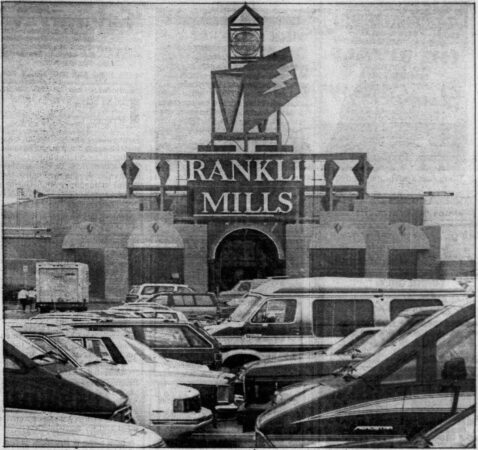
    The design of the Franklin Mills mall was inspired by disaster.

    “The mall was built in the fashion of a modified train wreck,” Jeffery Sneddon, the mall’s general manager, told The Inquirer in 1989, the year it opened. “There are several buildings connected at odd angles.”

    Years later, the inspiration for the mall’s design underwent a little revisionist history, with publicists claiming the mall’s shape was inspired by the lightning bolts courted by Ben Franklin.

    Appropriate, as change would ultimately become the story of the mall in Northeast Philadelphia.

    At the outset, the goal of the design was to break up the long stretches of the single-level space.

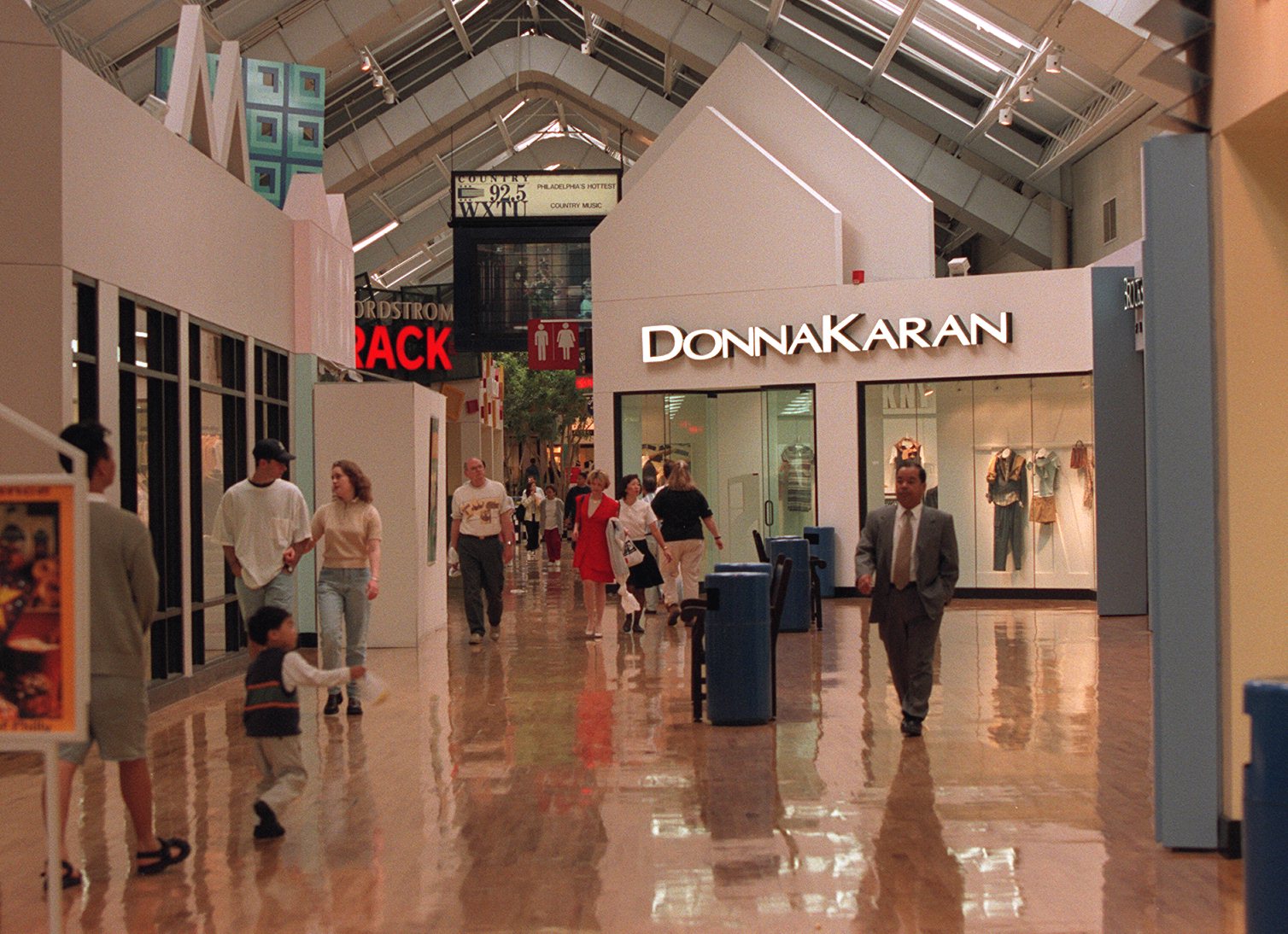
    Shoppers at Franklin Mills walk through the mall in 1997.

    The result was a mile of winding concourse lined with 250 storefronts, and organized so a shopper would always have merchandise shoved into their face.

    The 1.8 million-square-foot mall was built at Knights and Woodhaven Roads on the former Liberty Bell racetrack site. The build cost was $300 million, about $773 million in today’s money.

    When the doors opened on May 11, 1989, to the then-world’s largest outlet mall, the shops were 70% leased, with 120 stores rented by shoe and clothing outfits, restaurants, and anchor stores like a J.C. Penney Outlet and Sears Outlet.

    The title of world’s largest had previously belonged to the Potomac Mills mall, which was a prototype in the suburbs of Washington, D.C. Both shopping meccas were the brainchild of Washington-based commercial real estate tycoons Herbert S. Miller and Richard L. Kramer.

    The duo wanted to build destination venues with value stores. And they paired that with an aggressive marketing campaign that targeted tourists, as well as shoppers who lived up to 60 miles away.

    And it worked. Far Northeast Philadelphia became a destination in the shopping mall era. They’d later add a movie theater, a skate park, and a Jillian’s restaurant and arcade. The mall would host autograph signings and celebrity appearances. And throughout the 1990s and early aughts, it was a popular hangout for discount shoppers and teenagers, and attracted nearly 20 million shoppers yearly.

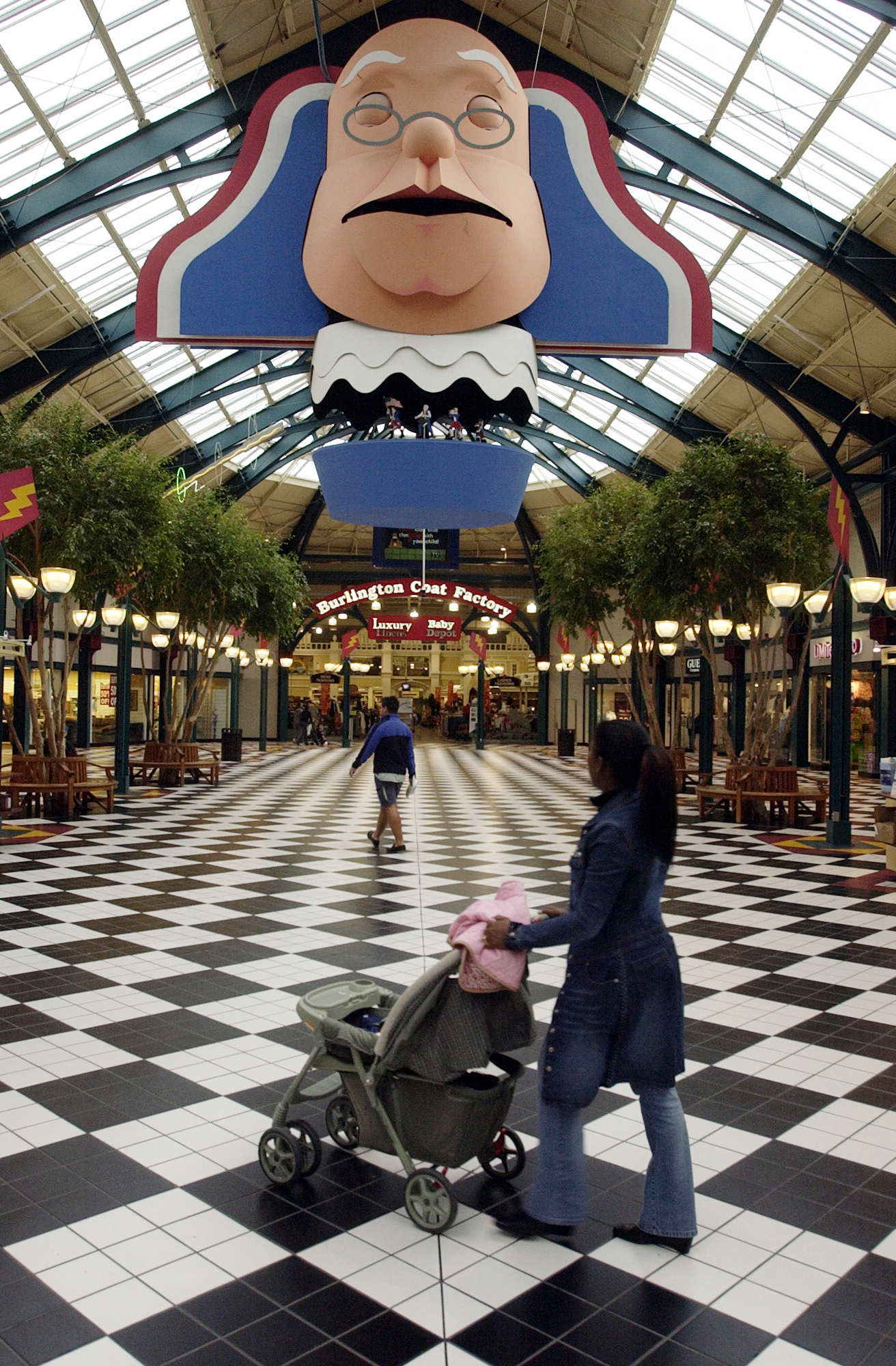
    Shoppers stroll through the Franklin Mills mall in 2014.

    But by the 2010s, it started to lose its charm. It changed names multiple times, became a haven for flash mobs, and saw its share of Black Friday melees, and a fatal shooting in the food court.

    The fall of the mall concept and the rise of online shopping added to its financial issues, and the building is in receivership as debt holders determine next steps, according to the Business Journal.

    John Chism, manager of Granite Run Mall in Middletown Township back in ’89, didn’t see the mall’s value at the time.

    “Malls are in business to sell,” he said, “not to be attractions for sightseers.”

    But that was the innovation of the Franklin Mills.

    It aimed to be both.

  • The classic Pennsylvania Lottery Christmas commercial is back. We explain the beloved ad’s history.

    The classic Pennsylvania Lottery Christmas commercial is back. We explain the beloved ad’s history.

    Picture it: The Birds game is on, you’re snacking on the couch, and suddenly, you hear it: “This holiday season, my good friend gave to me: seven Powerball tickets — .” With the start of Pennsylvania’s annual showing of its prized lottery Christmas commercial, the holiday season is truly here.

    Dating to 1992, the ad, which is titled “Snowfall,” features a group of carolers singing an abridged and heavily modified version of “The Twelve Days of Christmas,” swapping the usual swans a-swimming and geese a-laying for an array of lottery games.

    On social media, the return of the ad — which typically begins airing in early November — is celebrated. “It’s practically a holiday tradition,” one Reddit user wrote 13 years ago about the ad (from a Reddit thread in 2011 discussing its return that holiday season). A new Reddit thread posted this week also embraced the holiday ad.

    “The moment they hear the carolers sing, many Pennsylvanians reflexively smile, sing along, and mentally count the weeks until they can put up the tree,” Drew Svitko, the Pennsylvania Lottery’s executive director, said in 2016 ahead of the ad’s 25th anniversary. “We are proud that our popular commercial brings back so many warm memories for viewers and has become a Keystone State holiday tradition.”

    But the ad we see today is not the exact ad that was shown over three decades ago.

    The original version was filmed in Pittsburgh ahead of its 1992 debut. It features an older man, Joe, leaving his place on a snowy night to dole out lottery ticket gifts throughout his neighborhood, including to coffee- and newsstand owners. Carolers sing. That version was shown from 1992 through 2011.

    In 2011, the Pennsylvania Lottery reproduced the holiday commercial in high-definition video and to accommodate modern TV specs. This time, the shoot took place in Philadelphia. But the shot-for-shot remake was so carefully executed, many viewers didn’t notice the difference when it was shown in 2012 until it was pointed out.

    “The lottery took great care in recreating the beloved ad,” Pennsylvania Lottery spokesperson Ewa Swope said Tuesday. “By retaining the original audio track and voice-over, along with the shot-for-shot remake, we stayed true to the look and feel of the original spot.”

    Local Philly blog Crossing Broad posted a side-by-side comparison of the 1992 and 2012 ads to highlight the matching.

    Of course, the 2012 ad has been tweaked slightly over the years to account for changes to the lottery’s game offerings. Swope said a visual card within the ad is also updated annually to spotlight a featured holiday scratch-off game — this year’s is the Jingle Jangle Jackpot.

    “Because the original spot is so beloved, we didn’t want to upset anyone by going in a vastly different creative direction,” Connie Bloss, a marketing pro who worked on both the 1992 and 2012 “Snowfall” ads, told the Associated Press at the time of the new spot’s debut. “We meticulously examined each frame to match the outfits, props, location, and other small details. We really wanted to get it right.”

    Swope said the ad’s aim has always been the same: to remind consumers that lottery products can be given as gifts. Becoming a holiday classic was just a bonus.

    “We could not have imagined in 1992 that this spot would become such a holiday classic,” Swope said. “We routinely hear from players that when they see the commercial, they know the holiday season is starting. We are happy that so many players enjoy and look forward to this spot as a part of their holiday tradition.”

    You can watch the latest version of “Snowfall” below:

  • Starting a gym was one scary workout for City Fitness’ Ken Davies

    Starting a gym was one scary workout for City Fitness’ Ken Davies

    Think your gym time is killer? That hour on the elliptical machine? That muscle-taxing combination of burpees, lunges, and side planks that make you want to collapse in a pile of sweat and tears?

    Try owning the gym.

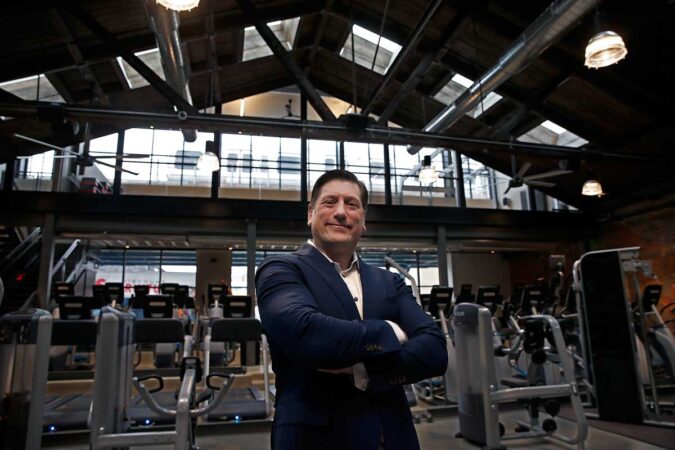
    With his fifth City Fitness location recently opened in Fishtown, and No. 6, the biggest and swankiest of them all, planned for 44,000 square feet in the Sterling apartment building at 18th  Street and JFK Boulevard late this year or early next, founder and CEO Ken Davies is in a good place. But it wasn’t that long ago just the opposite was true.

    The financial hole Davies was in was the ultimate cardio challenge.

    He hit bottom in 2008, a year after opening the first City Fitness on the edge of Northern Liberties, at Second and Spring Garden Streets, just as a recession was bearing down. He reached the precipice of bankruptcy before pulling back.

    “I was beat up,” Davies, 44, a standout wide receiver at Radnor High School and Millersville University, recalled recently. “I didn’t even enjoy it anymore. I wasn’t even working out.”

    It’s a wonder he was making it out of bed those days.

    Davies, who is divorced, had drained the $175,000 he had accumulated in a 401(k) from earlier lucrative jobs in risk management and commercial real estate. He was missing mortgage payments on a house in Stratford, which he had remortgaged for $125,000 and then for an additional $25,000, to help meet his capital needs. He also was delinquent on repayment of a $1.25 million loan from the U.S. Small Business Administration, owed $75,000 on credit cards, had an unsecured loan for $50,000, and needed to repay $70,000 he had borrowed from two friends.

    Plus, he had lost his primary job in information, analytics, and marketing for the commercial real estate industry because he didn’t disclose his gym business.

    One of the worst times, Davies said, was “when I basically slept in a van for a week because I was locked out of my house because I couldn’t pay my mortgage.” The other was when his debit card was declined at Wawa for a $1 purchase.

    “That was the lowest point in my life,” he said.

    City Fitness is now profitable, with gross revenues of $7.5 million, 100 employees, and national growth aspirations, Davies said.

    “I believe he is someone to watch in the fitness industry,” said Wes Deming, principal of All Commercial Capital L.L.C., who was a member of City Fitness before agreeing three years ago to serve as its financial adviser. As such, he is helping Davies locate expansion financing.

    “It can be tough,” Deming said.

    That’s true for many reasons, said Mike Trimble, a vice president in commercial lending at TD Bank. Lack of collateral is one, because most gym owners lease facilities. Another is uncertainty of membership duration.

    Which explains the lack of enthusiasm Davies encountered early on:

    “One banker said, ‘If you were Walt Disney, we wouldn’t lend to you if it was a gym.’ They hated gyms. Even to this day, even with my success, it’s still difficult.”

    Incorporating in May 2005, Davies started paying $20,000 a month to rent the Second and Spring Garden location, which he expected to have open for business in 2006. He was selling memberships for $29.99 a month based on poster-board depictions of what he planned for the site.

    About 300 memberships were sold. Buyers turned against Davies when no gym materialized, accusing him on at least one blog site of stealing their money, he said.

    It took five months to secure the Small Business Administration loan. Build-out  took  an additional six or seven. The first City Fitness gym opened in August 2007. By then, about 10 percent of the presale members had asked for refunds, Davies said.

    Then “things turned from bad to worse,” as can be expected when expenses — equipment leases, instructors, software, office and cleaning supplies, rent — exceed income. Membership sales were slow and revenue from personal training virtually nonexistent, which Davies largely attributed to the recession. Debt mounted.

    To help turn things around, he borrowed the low-cost strategy of a competitor, Planet Fitness. City Fitness memberships dropped to $19.99 a month, quickly attracting 1,000 sign-ups.

    “They have a great model,” Davies said of Planet Fitness, where memberships are currently offered for $10 a month. “But you can’t provide the gym I wanted.”

    That’s a place where equipment is replaced every three years, a robust schedule of group exercise is offered along with top-notch training programs, and where service with a smile and fastidious cleaning are priorities, said Tom Wingert, marketing director for City Fitness. Memberships now start at $49.99 a month.

    “City Fitness’ costs are a direct result of how expensive it is to maintain the level of quality seen in our clubs,” said Wingert, who last year created the city wellness initiative, My City Moves, to achieve another City Fitness objective: community-building.

    “Fitness is a moving target,” said Tracy Shannon, an owner of competitor Sweat, which has been in business since 1997 and plans to open its eighth gym in March at 1 South Broad Street.

    Success is “about staying ahead of the game” and keeping members happy, Shannon said. “If you think you have it figured out, it changes.”

    It wasn’t until 2012 that Davies could open a second location, in the city’s Graduate Hospital section. A smaller “express gym” opened in South Philadelphia in November 2014, followed in April 2015 by what Davies said has been the only failure so far, a personal-training studio in Society Hill at Fourth and Walnut Streets. It reopened Feb. 6 as an express gym.

    Opening in December in Fishtown was a full-scale gym that will offer 25,000 square feet of workout space when fully built out. TD Bank is sold on what Trimble said is “a model that works.”

    Integral, he said, is “an unbelievably strong brand particularly driven by the quality of the offering and Ken’s commitment to building a culture there.” TD has provided $1 million in financing for Fishtown, and a $100,000 letter of credit to support the Sterling lease.

    These days, Davies said, he functions in a state of  “productive paranoia”  because “things can always change.”

    “It’s something that keeps me driven but grounded at the same time.”