Category: Business

Business news and market updates

  • Workplace discrimination remains an important issue for employers. Here’s how to protect yourself | Expert Opinion

    Workplace discrimination remains an important issue for employers. Here’s how to protect yourself | Expert Opinion

    Workplace discrimination guidelines have been changing under President Donald Trump’s administration.

    The Equal Employment Opportunity Commission has been rolling back Biden-era guidelines — particularly with regard to Diversity, Equity and Inclusion (DEI) policies. But avoiding discriminatory practices remains a top concern among employers, both when hiring and terminating employees.

    Taking several important steps can ensure that your business is not on the wrong side of a discrimination claim.

    Write job descriptions thoughtfully

    Avoiding claims of discrimination can be mostly accomplished by focusing on job descriptions, said Claude Schoenberg, a labor attorney based in Bala Cynwyd.

    Schoenberg says that a good job description fully lays out what’s required of an employee to adequately perform their job. “It becomes your Bible and it takes a lot of the subjectivity out of the conversation,” he said.

    It is clear about the physical nature of the work such as moving large boxes, lifting heavy items, operating equipment, or working outdoors in all kinds of weather. A good job description details every single required job function, so if any of these functions are not being completed, the employer has the right to take action.

    “If you have employees for whom there is no job description, then develop one. It’s a critical document and it cannot be vague,” Schoenberg said. “If you don’t have that job description, then you are vulnerable to claims alleging things that you may not have said or done.”

    Some jobs make this tricky, Schoenberg warns, such as roles that require wearing a specific type of clothing at work, or positions that are only open to one gender (such as a male attendant in a men’s locker room).

    “You should always have an attorney review your job descriptions before using them,” he said. “And there should be a very detailed job description for every single employee at your company, from hourly workers to your top managers and executives.”

    But job descriptions do not broadly protect employers from any kind of discrimination claim, said Christina M. Reger, a labor attorney at Loutel Law in Newtown.

    “They’re helpful in things like disability accommodation disputes, but not as a catch-all defense against all age, gender, and race claims,” she said.

    Update company policies and train managers

    Anti-discrimination rules should be a “critical part of every company’s handbook,” Reger said, and must be communicated to employees regularly. She recommends ongoing training for managers so they can identify any potential issues.

    “Policies should be living and broad without listing specific protected classes one-by-one, which would help avoid constant updates and prevent misunderstandings when language changes,” she said.

    To help enforce these rules, Reger also recommends having a clear complaint procedure and an external source for complaints. This could include an outside attorney with a dedicated email or phone line for complaints, or a third-party human resources consultant.

    “Many small employers get burned because the complaint path is not credible,” she said. “You want complaints going to an external source, not directly to the EEOC.”

    How has EEOC guidance on discrimination changed?

    The EEOC’s new policies are pushing back against corporate DEI practices that became mainstream in recent years. Instead, the EEOC is encouraging employers not to discriminate based on factors such as skin color, religion, and sexual orientation. The agency now says all employees should be treated equally regardless of these factors and hiring practices should reflect the same.

    The change in policy can be confusing, but Schoenberg reminds his clients that when it comes to discrimination in the workplace, the EEOC only sets guidelines. Depending on the political environment, the EEOC has been known to flip-flop. But court rulings are binding.

    “The EEOC’s own regulations do not have the force of law,” he said. “Employers should focus on actual statutes and court interpretation — not the administration’s latest guidance.”

    Before terminating an employee, Reger suggests the employer do a “retaliation/discrimination risk check.” This involves running through a checklist of documentation — recent complaints, leave, accommodation requests, protected status signals — and documenting the legitimate reason for termination.

    Employers should “also strongly consider severance pay if it can help reduce the risk of a lawsuit,” she said.

    Schoenberg advises companies to get Employment Practices Liability Insurance (EPLI) as a “backstop.” Most general liability policies don’t cover employment practices, he said, and employers should not assume that they’re covered if a discrimination lawsuit is filed against them.

    All of this points toward treating employment as a life cycle from hiring to termination.

    “The more you document that life cycle, the better off the employer is,” said Schoenberg.
  • Delaware’s only Nordstrom is closing

    Delaware’s only Nordstrom is closing

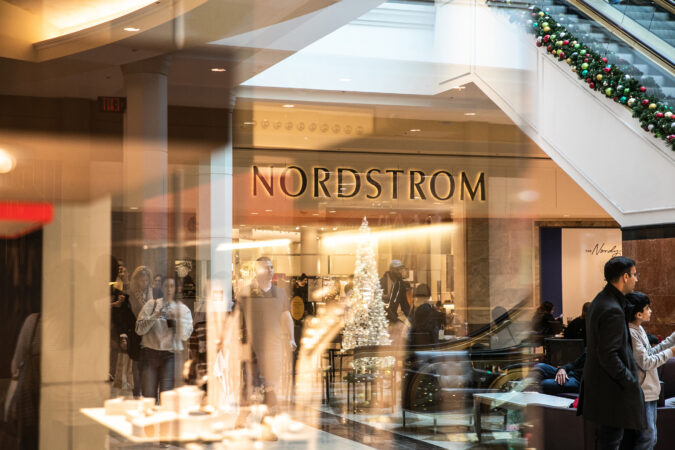
    Delaware’s only Nordstrom store is set to close its doors next month.

    The Christiana Mall location will shutter on April 30, the company confirmed in an email on Monday. The closure was reported over the weekend by the Delaware News Journal.

    “We believe we’ll be best able to serve customers in the area by leveraging our surrounding stores and through our digital channels,” Nordstrom said in a statement.

    The two-story, 123,000-square-foot department store opened in the Newark mall 15 years ago. The high-end retailer is one of four anchors alongside J.C. Penney, Macy’s, and Target.

    Once Nordstrom closes, the nearest full-price location will be more than 30 miles away at the King of Prussia Mall. The company’s discount counterpart, Nordstrom Rack, operates a store nearby at the Christiana Fashion Center complex in Newark.

    In the past year, the company has expanded its off-price footprint, with new Nordstrom Rack stores in Deptford and Marlton in South Jersey.

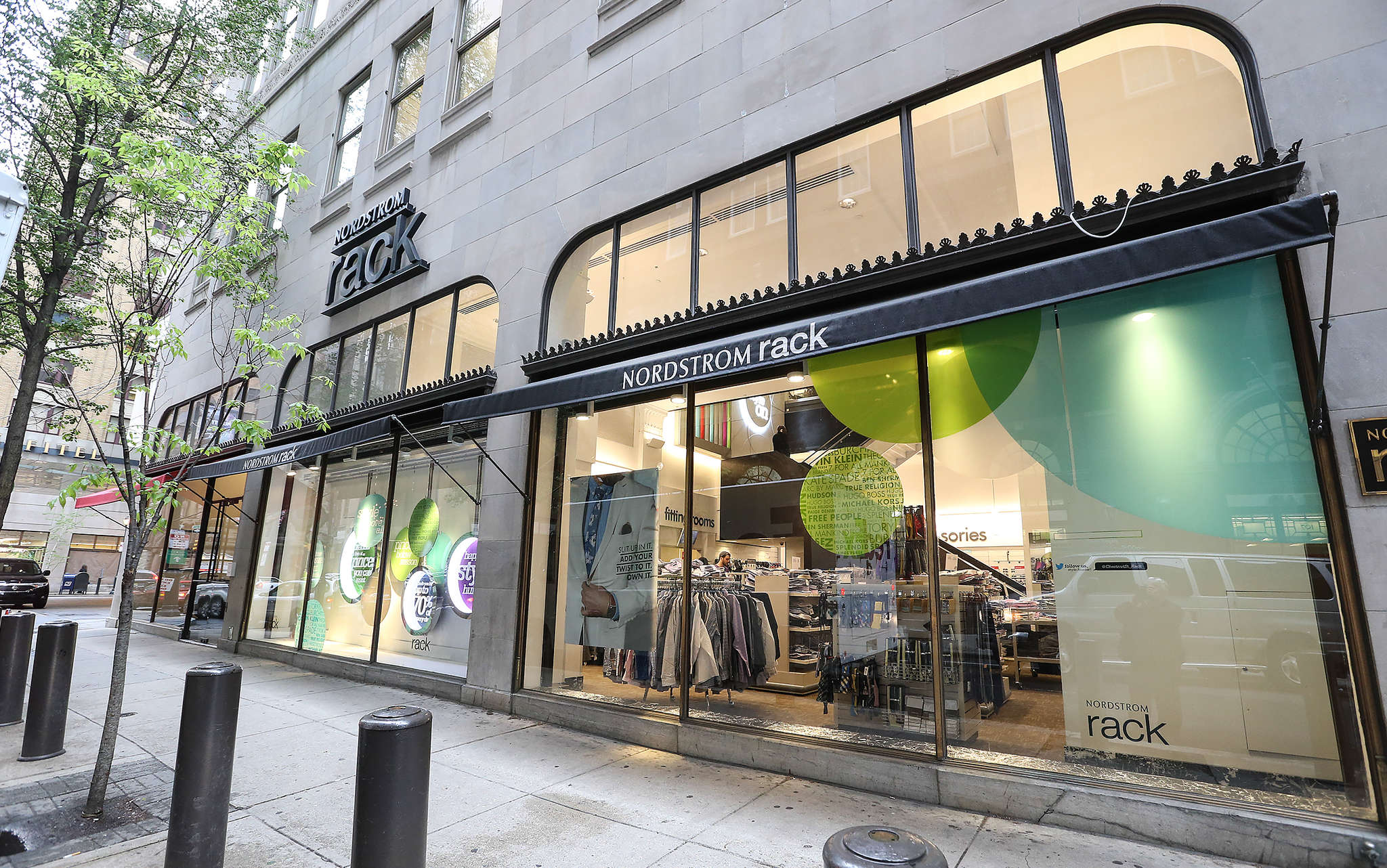
    Nordstrom Rack in Center City is shown in 2018. Recently, the retailer has been expanding its off-price footprint.

    The retailer has announced plans to open more than a dozen additional locations this year. They include Nordstrom Rack stores in the Main Street at Exton shopping center and at the Promenade at Granite Run in Media.

    At the Christiana Mall, Nordstrom said it is “committed to taking care of our employees through this transition, including supporting those who are interested in finding another role within Nordstrom.” It did not say how many people would lose their jobs.

    A search of Delaware’s online database of WARN Act notices, which are required in advance of closures and mass layoffs, did not yield any results.

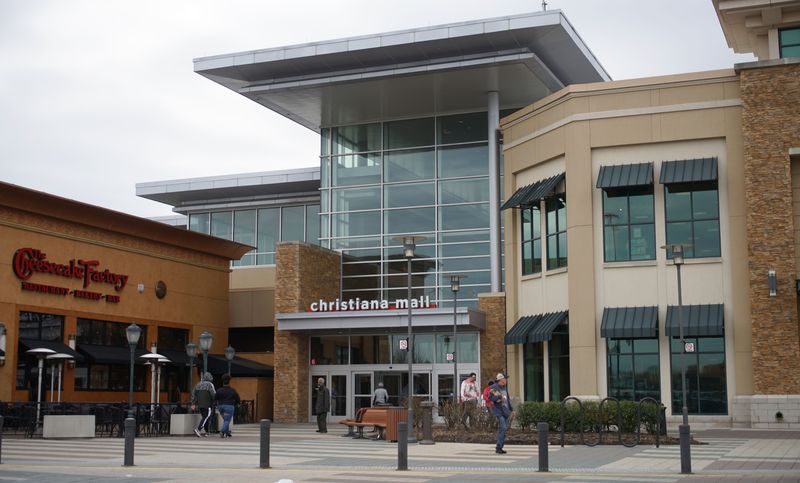
    Christiana Mall is billed by its owner, General Growth Properties (GGP), formerly Brookfield Property Partners, as “one of the most productive retail centers in the country.” The developers say that each year 10 million people visit the 1.2-million-square foot “tax-free shopping destination” that is home to more than 140 stores. Delaware has no state or local sales tax.

    The Christiana Mall is shown in 2018. Its owners say 10 million people visit the Newark shopping destination each year.

    A GGP spokesperson declined to comment on Nordstrom’s departure and said it was too soon to discuss what’s next for the space.

    The news of the closure comes amid an uncertain time for the retail industry.

    Some shopping destinations, such as the King of Prussia and Cherry Hill malls, appear to be thriving. Others struggle amid economic uncertainty and increased competition from online retailers. Several local malls are flat-out dead, with some in the process of being resurrected as mixed-use complexes with apartments, restaurants, and entertainment.

    Individual retailers have also seen disparate results.

    After decades in business, Saks Fifth Avenue in Bala Cynwyd is set to close next month after its parent company filed for Chapter 11 bankruptcy. In another segment of the retail industry, West Chester-based home shopping network QVC Group, according to a Bloomberg report, is considering filing for Chapter 11 bankruptcy to reorganize billions in debt.

  • Oil prices surge as Strait of Hormuz tanker disruptions rattle global supply

    Oil prices surge as Strait of Hormuz tanker disruptions rattle global supply

    FRANKFURT, Germany — Oil prices rose sharply Monday as disruptions in tanker traffic through the Strait of Hormuz chokepoint raised uncertainty about how U.S. and Israeli attacks on Iran would affect supply to the world economy.

    US oil traded 7.4% higher at $71.97 per barrel, while international standard Brent was up 7.7% at $78.46 per barrel.

    Higher oil prices raise the prospect of costlier gasoline prices for U.S. drivers as well as for other goods at a time when people in many countries have been stung by inflation.

    A key focus was the situation around the strait at the southern end of the Persian Gulf, through which 20% of the world’s oil supply passes. Tanker traffic dropped sharply amid disruption of satellite navigation systems, data and analytics firm Kpler said on X, while the UK Maritime Trade Operations Centre reported attacks on several vessels in the area on either side of the strait and warned of elevated electronic interference to systems that show where ships are.

    A bomb-carrying drone boat struck a Marshall Islands-flagged oil tanker in the Gulf of Oman on Monday, killing one mariner on board, Oman said. Iran has been threatening vessels approaching the Strait of Hormuz and is believed to have launched multiple attacks.

    Saudi authorities reported they intercepted Iranian drones that attacked the Ras Tanura oil refinery near Dammam and the refinery was shut down as a precaution, Saudi state television reported. Market attention has focused on whether the conflict would widen to other oil-producing countries in the region.

    Monday’s price increase was within the $5-$10 per barrel range expected by analysts based simply on the fear factor associated with the outbreak of war. And some war concerns were already reflected in the price before the conflict started.

    However, long-term disruption to ship traffic in the strait could send prices even higher, and so could damage to oil infrastructure in other Gulf countries. Meanwhile, a shorter conflict in which disruptions are easily reversible could mean the current price spike won’t last.

  • Can Pierre Brondeau save FMC, the global pesticide maker he put on Philly’s skyline?

    Can Pierre Brondeau save FMC, the global pesticide maker he put on Philly’s skyline?

    Pierre Brondeau is back in charge at FMC, laboring to keep the global pesticide maker independent and save one of Philadelphia’s last big corporate headquarters as his board weighs a sale.

    When Brondeau, a French-born naturalized U.S. citizen, stepped down as FMC’s chief executive in 2019, he had made the road ahead sound not easy, but straight.

    His right-hand man, Mark R. Douglas, whom Brondeau called “a little smarter and a little younger,” stepped up to run FMC. He implemented “precision agriculture,” the AI-enhanced application of crop-protecting insect, weed and fungus killers in growing markets such as Brazil and India.

    Shares topped $100 for the first time in 2020 and stayed high as sales rose during COVID.

    But in 2023, revenues and profits slowed, and the share price fell below $50. In 2024, Douglas left with nearly $6 million in severance. Brondeau, still board chair, came back as day-to-day leader, with a cost-cutting mandate.

    This past July, he announced plans to sell FMC’s India commercia business, which FMC expects will fetch less than the company invested. In October, FMC cut its dividend and announced plans to outsource routine production. Brondeau’s second-in-command, Brazil-born Ronaldo Pereira, left the company.

    On Feb. 4, FMC warned that it won’t recover fast in 2026. New products are catching on slowly as patents expire and generic competitors target FMC’s best-selling insecticide Rynaxypyr, which selectively kills crop-damaging moths and worms

    Moody’s cut FMC’s debt rating to junk-bond status. The stock has been trading below $15. The company is hiring Bank of America and Goldman Sachs to see whether they could attract a good price from potential buyers.

    But the global farm slowdown is bigger than FMC.

    Shares of larger rivals Bayer, BASF, and Syngenta also are down over the past five years. Among global pesticide makers, only Wilmington-based Corteva, which includes the former Dow and DuPont farm chemical units, has risen in that period.

    Brondeau, 68, says FMC has rebounded before and has pesticides “in the pipeline” to grow again. The company employs 5,500 worldwide, including more than 300 at its University City headquarters and 330 at Stine research labs in Delaware.

    He took questions from The Inquirer in his FMC tower office in University City before leaving for a Bank of America conference in Florida, then to visit in Southeast Asia, and Latin America.

    The conversation has been edited for length and clarity.

    You retired, and then you’ve had to come back. What went wrong?

    People don’t realize how impactful COVID was. China had shut down their supply chain. So many raw materials came from China it created a period of incredible uncertainty. We were less impacted than some of our competitors; we had moved a lot of manufacturing to India.

    But the farmers had so much fear they would not be able to protect crops, they placed a lot of double and triple orders. They put product in storage, which they don’t usually do.

    And then we got into a period of incredible cost inflation. By the end of 2023, we were in a mega downturn — maybe the longest since I have been in the industry. We are still very slowly mending. Farm economics is not good. Pricing is a challenge.

    We have new products, very good products. But in a situation like this, growers very often make decisions more on prices than technology. And the generic manufacturers now have extra capacity, even though they are also experiencing increased resistance [by pests to older pesticides].

    Is it time to sell FMC?

    Today my path number one is keeping the company independent.

    When we present our very solid 2026 plan to the board, including divesting some assets, they approved the plan as they always do.

    They also said any business plan has risks. We need a safety net. We need to explore what would happen if we put the company for sale.

    But the main path is the 2026 plan. That’s where I spend most of my time.

    What’s your model for FMC’s recovery?

    I would look at ourselves — we’ve done this before. 2015 was a low point for the company. We had a few months where we were wondering where the company was going. We did what we had to do commercially and structurally. By 2018, we were back to a top level.

    Agriculture is a very cyclical business. 2026 is a very difficult time. The agricultural economy around the world is weak. And FMC has its patent issues. We have the talent we need, the organization we need. The executive team here working with me has a steady hand.

    Nobody here is panicking that the board wants us to look at the potential sale of the company. They’d better not!

    The biggest challenge a CEO faces is making sure your employees — the people who carry the company despite what we have to announce — have faith. That they stay focused.

    Are you cutting across the board, including your U.S. research center at Stine Labs near Newark, Del., and the labs in Europe, Asia, Brazil?

    No, we are not touching research. It’s who we are. Research in our field is very expensive; it is critical for a company like us to sustain spending on R&D to renew the market.

    The European Commission supported your acquisition of some of DuPont’s product lines. They were glad to have a big pesticide maker that doesn’t depend on genetically modified crops. Won’t this make it hard for a Big Four pesticide company to now purchase FMC?

    My gut feel would be to say, yeah, we are in a different world than we were in 2019. But we have not had contact with the regulators in any country [about] the announcement. So I cannot really answer.

    Why is this happening now?

    2026 is critical for us. Our key molecule Rynaxypyr lost its patent protection in 2025. We have three new molecules which are growing. But they are not yet at the size where they compensate. We believe we are at the bottom the cycle. If we do what our plan says in 2026, we are prepared to grow in 2027, 2028.

    You were a famous fan of Philadelphia and its institutions. Are you still?

    I’m still a Philadelphia fan. I’ve done way less than I used to because of the situation of the company.

    I intend to keep this tower here. What a great location. We’ll be back to growth. That’s my intent; that’s my objective.

    It’s very simple. If we do what we have to do in 2026, then 2027 and 2028 will be up. There is no doubt. We just have to get through this year.

  • Media, the nation’s first Fair Trade Town, marks 20 years supporting farmers in the developing world

    Media, the nation’s first Fair Trade Town, marks 20 years supporting farmers in the developing world

    Elizabeth Killough remembers the beginning of Media’s Fair Trade history as follows: She was sitting at her desk at UnTours, an unconventional Media-based travel company, next to her boss and UnTours founder Hal Taussig.

    Taussig, sitting in his beloved rickety desk chair, began to share a vision with Killough: What if his hometown of Media could become a hub for Fair Trade, a global trading system that prioritizes quality products and fair wages for farmers in the developing world? What if Media’s shops and restaurants could stock products made and sold with equity and respect?

    “I couldn’t even begin to imagine what that would be [like],” Killough remembers.

    To humor Taussig, she googled “Fair Trade towns” (the internet was remarkably slow in the mid-2000s, so it took a few minutes to populate the results, she said). An email for Bruce Crowther, the father of Fair Trade in Garstang, England, popped up. Killough sent him a note. Despite the fact that it was 10 p.m. in England, Crowther wrote right back. He wanted to help make Taussig’s dream a reality.

    In the months that followed, Taussig and Killough would help spearhead an effort to make Media the first Fair Trade town in the United States, a push that took the cooperation of local business owners, civic leaders, and borough council members. As Media marks 20 years of its Fair Trade Town status, Fair Trade products, and Taussig’s formidable footprint, can be found all over the Delaware County community.

    State Street, near Olive Street, on Wednesday, June 4, 2025, in Media, Pa. Businesses that sell Fair Trade products dot Media’s main commercial artery, a sign of the enduring legacy of Hal Taussig and Media’s Fair Trade advocates.

    What is Fair Trade?

    Fair Trade is a global trading arrangement under which farmers are paid higher wages in exchange for assurances that they will use eco-friendly practices, ensure safe working conditions, and invest in their communities. The trading practice seeks to uplift producers in the developing world, where environmental exploitation and forced labor can be common in the agriculture business. Common Fair Trade products include coffee, chocolate, and bananas.

    Fair Trade guarantees farmers can charge minimum prices for goods, acting as a safety net against market instability. Some Fair Trade suppliers receive a “premium fund,” or an additional sum of money put aside to invest in education, healthcare, infrastructure, or business improvement products in their communities. In exchange for economic security, Fair Trade producers must provide workers with reasonable work hours, safe working conditions, and maternity leave, and are barred from using child and forced labor.

    Fair Trade products are certified through a collection of governing bodies, including Fairtrade International and Fair Trade USA.

    How did Media become a Fair Trade town?

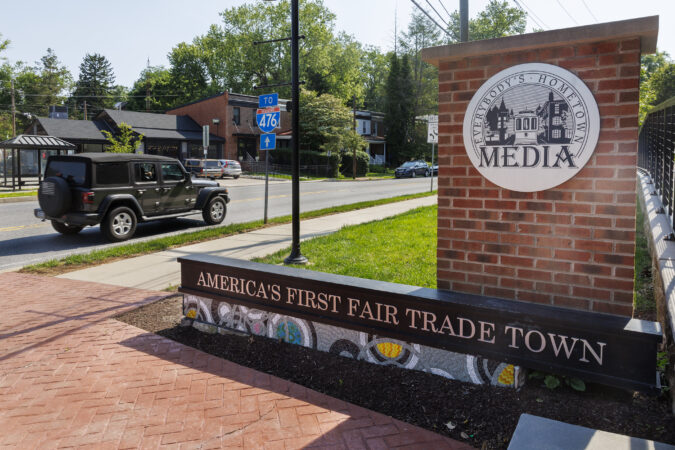
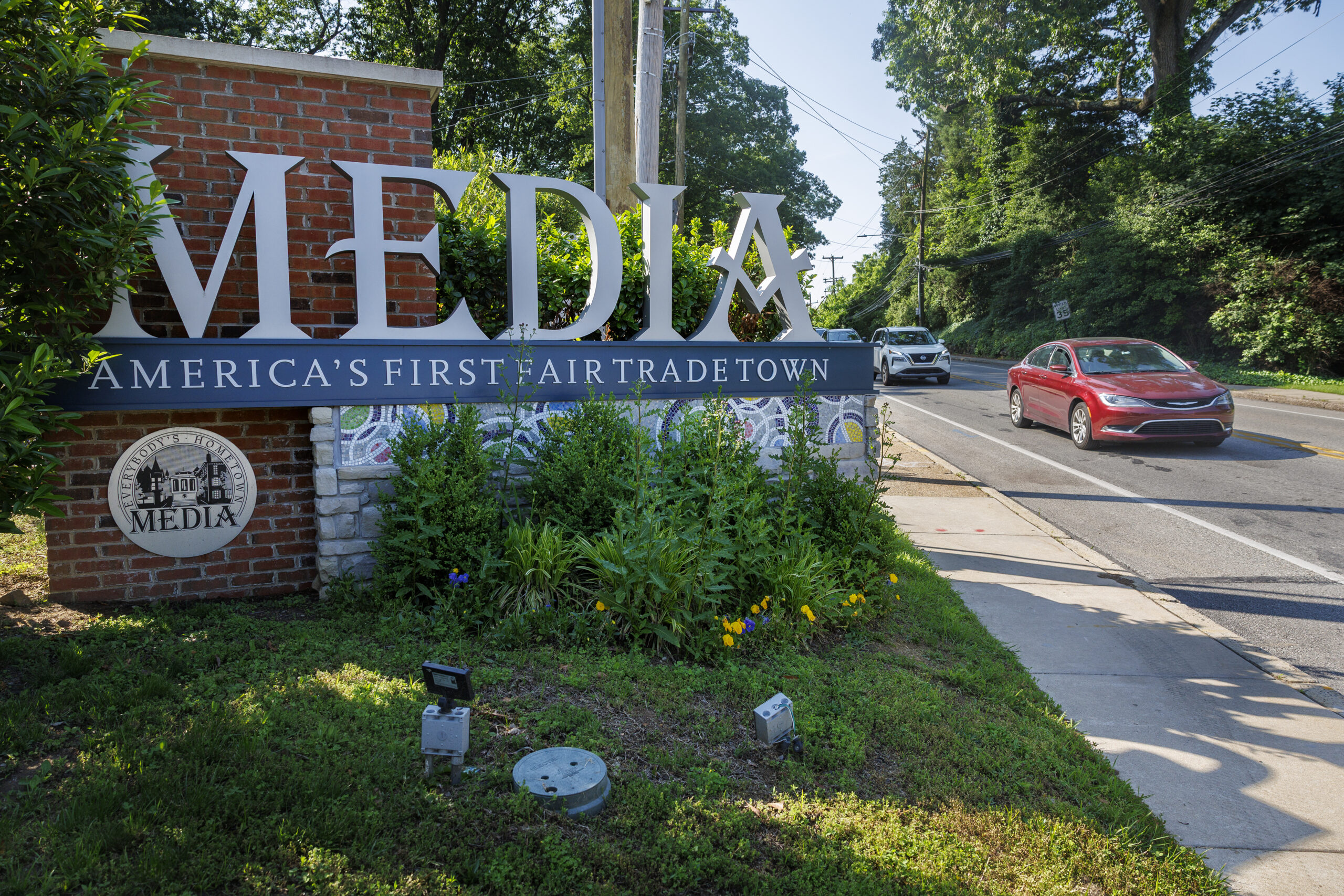
    Killough’s email to Crowther set off a monthslong campaign to make Media the United States’s first Fair Trade Town, a moniker now proudly displayed on “Welcome to Media” signs on the borough’s outskirts.

    Taussig had been thinking about sustainability in the global economy for decades before Media’s formal designation. In 1992, Taussig and his wife, Norma, founded UnTours, an unconventional “slow travel company” that helped people connect to faraway lands through community engagement and sustainable tourism practices. Friends described Taussig as unique and empathetic. He was famously averse to making a profit, sharing UnTours’ returns with customers, staff, and, later, the UnTours Foundation, which invests in sustainable business ventures.

    Taussig, who died in 2016, was “a really sweet man that cared about the world a lot,” said Ira Josephs, the executive director of the Media Fair Trade Committee.

    Taussig and Killough began meeting with a group of stakeholders who shared the goal of bringing Fair Trade to Media. At the time, there was no organization overseeing Fair Trade communities in the U.S., so the Media group decided to “self-declare” under the criteria used by Garstang, the first Fair Trade Town in the world. They needed to persuade a certain number of Media retailers to sell Fair Trade-certified items and ask local schools and businesses to use Fair Trade goods. The guidelines also required Media to establish a Fair Trade committee; have an elected body pass a resolution supporting Fair Trade; and promote media coverage and education around Fair Trade.

    A number of stores in Media already carried Fair Trade products, and many of its churches and Quaker meetinghouses used Fair Trade coffee and sugar. The working group made a website and brought on board Monica Simpson, a borough council member who helped convince the governing body to pass a Fair Trade resolution. The borough council saw it as a way for “this local community to make an international connection,” Killough said.

    Once all of the criteria were met, “we just self-declared that we were the first Fair Trade town,” Josephs said.

    At the time, New York City and Los Angeles were working on their own Fair Trade proposals. Yet Media, a 5,000-resident borough in the heart of Delco, beat them to the punch.

    “It was rebellious,” Josephs said.

    On July 12, 2006, Media held a public ceremony unveiling its status as a Fair Trade town.

    Many of Media’s businesses got on board.

    When Tara and Brent Endicott, the owners of downtown Media’s Burlap & Bean, first got into the coffee business, they knew they wanted “to feel like we were making a difference,” Tara Endicott said.

    All of the coffee sold at Burlap & Bean is Fair Trade-certified and organic, a decision the Endicotts made in 2006 when they opened their first location in nearby Newtown Square, inspired in part by Media’s Fair Trade push.

    Though their coffee-industry friends told them they were crazy for stocking only Fair Trade products, which are more expensive and harder to source, the Fair Trade beans won over the coffee purveyors and their Media-area customers.

    Signage that reads, America’s First Free Trade Town, Media, PA., Wednesday, June 4, 2025. This sign is at N. Providence Road where it crosses N. Monroe Street.

    Fair Trade in Media, two decades later

    Fair Trade lives on in the stores, restaurants, and coffee shops that dot Media’s bustling downtown.

    All of the international products at Earth & State, a pottery and craft shop, are from Fair Trade groups. Bittersweet Kitchen, a pizza and brunch spot, serves Fair Trade hot chocolate and coffee. Mom-and-daughter-owned yarn shop Homesewn sells yarn from Fair Trade Federation members and other companies that follow Fair Trade principles. Even Trader Joe’s, located in Media’s old armory building, stocks Fair Trade coffee.

    On Valentine’s Day, the Media Fair Trade Committee hosted its annual Fair Trade chocolate tasting. The committee also hosts an annual juggling contest with Fair Trade soccer balls at Dining Under the Stars.

    Fair Trade’s future is not entirely certain.

    Fair Trade groups have come under scrutiny in recent years for corporatizing a once mission-driven practice. It has been hard at times to get businesses to splurge on Fair Trade goods, first during the 2008 recession and then again during the pandemic, Killough said. As rents rise in Media, there is a “constant turnover of store owners and restaurateurs,” Killough added, making it an ongoing effort to keep Fair Trade practices alive.

    “It’s going to continue to require a lot of work, a lot of commitment, and a lot of education,” she said.

    Last year was “the worst year financially that we’ve ever had,” Tara Endicott of Burlap & Bean said. Despite having the highest customer counts in Burlap & Bean’s history, high coffee prices and tariffs left the Endicotts taking home meager profits at the end of the day. They have thought about opening up their business to non-Fair Trade coffee but have not yet, relying on the hope that economic conditions will improve.

    Ultimately, Brent Endicott said, he and his wife are proud to be in Media and to be serving Fair Trade beans.

    “We’re thrilled to be able to do our part to help Media stay a certified Fair Trade town,” he said.

    This suburban content is produced with support from the Leslie Miller and Richard Worley Foundation and The Lenfest Institute for Journalism. Editorial content is created independently of the project donors. Gifts to support The Inquirer’s high-impact journalism can be made at inquirer.com/donate. A list of Lenfest Institute donors can be found at lenfestinstitute.org/supporters.

  • New Philadelphia-area cardiovascular surgery centers are pulling profitable procedures from hospitals and charging less

    New Philadelphia-area cardiovascular surgery centers are pulling profitable procedures from hospitals and charging less

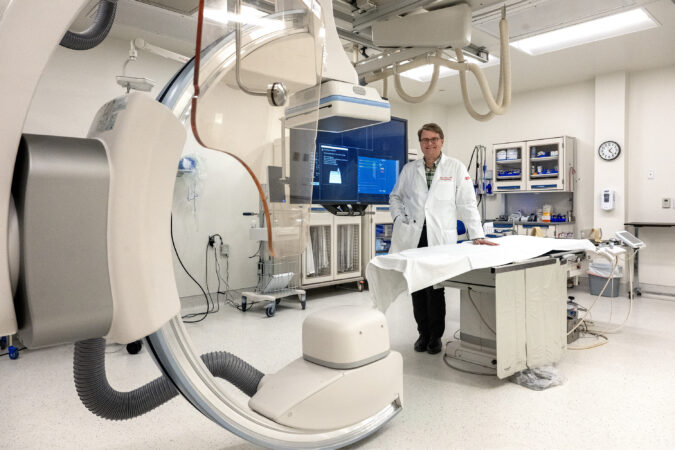
    At AMS Surgery Center in suburban Montgomery County, patients can park right in front of the entrance, walk through just a few doors, and undergo cardiac procedures in a sterile operating room with equipment as high-tech as in any hospital procedure room.

    In the year and a half since its first patient underwent a cardiac catheterization, the center has performed more than 1,000 cardiac procedures that previously required patients to go to full-service hospitals.

    The Horsham center showcases a new front as sophisticated healthcare procedures move to freestanding outpatient medical facilities, promising to save patients money. The shift also adds to the financial pressures facing the region’s hospital-centered health systems.

    Four centers have opened or are in the final stages of approvals in Southeastern Pennsylvania. Their arrival comes after state lawmakers in 2022 broadly expanded the types of procedures allowed outside hospitals to include cardiac catheterizations, pacemaker implants, and other treatments that until then had to be done in a hospital.

    Pennsylvania is the first Northeastern state to allow the minimally invasive procedures in freestanding surgery centers, but Southern states like Florida, Louisiana, and Texas have permitted the practice for decades, experts said. Research has found surgery centers generally are as safe as outpatient departments in hospitals.

    An independent physicians group, Bryn Mawr Medical Specialists Association, opened Heart & Vascular Center of the Main Line — the Philadelphia region’s first such center — in late 2022. in Bryn Mawr. AMS Surgery Center in Horsham performed its first procedure in the fall of 2024, initially treating only Medicare patients. It added patients with private insurance last summer.

    The market has continued to rapidly expand: ReVaMP Heart & Vascular Surgery Center in Center City started treating Medicare patients last fall. The Ambulatory Cardiovascular Center of Pennsylvania, near King of Prussia, expects to perform its first procedures on patients next month.

    Medicare pays the centers about a third less than hospital outpatient departments for the same procedures, but the centers have significantly lower costs, allowing them to be profitable. Medicare pays physicians the same wherever procedures are done.

    Independent cardiology groups traditionally have performed interventional procedures, such as implanting stents and pacemakers, in hospitals. Some are jumping at the opportunity to expand through the surgery centers, where they can have a financial stake in the entire operation.

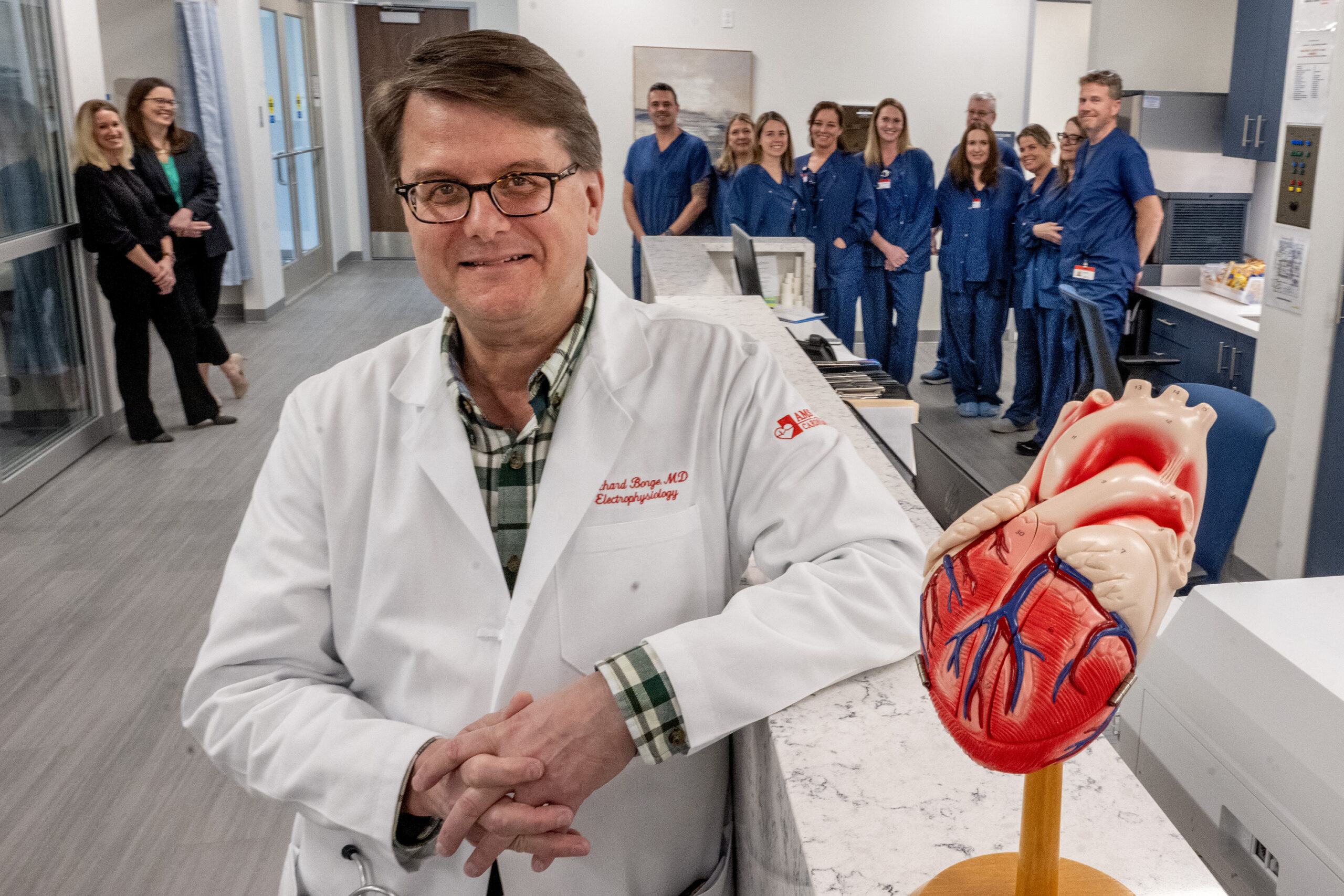
    “We’ve always been very fiercely independent, fiercely entrepreneurial, and patient-centered,” said Richard Borge, an AMS interventional cardiologist who is medical director for the group’s surgery center.

    How much cardiac care — among the most profitable business lines for hospitals — will move out of hospital outpatient departments remains unknown. But cardiac surgical clinics will not take over heart care to the extent seen when outpatient orthopedic centers began offering hip and joint replacements, predicted Lauren Clementi, a senior vice president at Kaufman Hall, a Chicago consulting firm.

    “This one’s a little trickier because the acuity of patients,” she said.

    Cardiologists will continue treating many patients with complex medical needs in hospitals, which remain the only option for riskier procedures such as open-heart surgeries.

    Gregory Schmitt went to AMS Surgery Center to undergo procedures for a heart stent and stents in both legs. The retired machine-shop owner, who lives in Ivyland, called such centers great for patients.

    “I highly recommend it. It’s much easier than trying to navigate a hospital,” Schmitt said.

    How we got here

    Healthcare has been shifting away from requiring overnight hospital stays, even for common procedures like cataract surgery. The trend started decades ago with same-day procedures in hospitals, followed by the rise of freestanding surgery centers.

    In cardiology, people now commonly receive stents and pacemakers as outpatient care. But until recently, doctors had to implant the devices in a hospital.

    “Once upon a time, every patient we cathed had to spend the night in the hospital,” said veteran cardiologist Mark Victor, referring to cardiac catheterization.

    With the rise of outpatient procedures, Victor said, the question for many clinicians became: “If they’re hospital ambulatory, why do they have to be in the hospital at all?”

    Victor has long advocated for the adoption of outpatient cardiology procedures as the CEO of Cardiology Consultants of Philadelphia. The large cardiology practice joined last year a national private-equity backed group, Cardiovascular Logistics, and will soon start performing surgical procedures at the center opening near King of Prussia.

    In 2020, Medicare started paying for outpatient cardiac catheterizations — which entail running a catheter through a blood vessel in the thigh or wrist to examine the heart and install devices like stents.

    Richard Borge is medical director of AMS Cardiology Surgery Center in Horsham, whose arrival is moving advanced cardiac care from hospitals to outpatient clinics.

    Even then, Pennsylvania rules required cardiac catheterizations to occur in an acute-care hospital, according to Stephen Abresch, director of government affairs for the Ambulatory Surgery Center Association, a national trade group in Alexandria, Va.

    Pennsylvania lawmakers cleared the way for expansion by eliminating that restriction in 2022 as part of a broad expansion of what the state’s surgery centers were allowed to do. “It had been a quarter century since the state had gone in and reviewed that,” he said.

    Beginning this year, Medicare started paying surgery centers to perform treatments for irregular heartbeats, known as cardiac ablations.

    The Heart & Vascular Center of the Main Line has scheduled its first cardiac ablations this week. Horsham’s AMS aims to start offering those procedures in June. Victor’s King of Prussia group expects to add ablations in the future as well.

    Impact on hospitals

    It is too soon to know how the new surgery centers will impact the region’s existing health systems. In some cases, independent cardiologists generate significant patient numbers for hospitals’ cath labs.

    After Bryn Mawr Medical Specialists opened its cardiovascular surgery center near Main Line Health’s Bryn Mawr Hospital, the private group performed fewer procedures on low-risk patients at the hospital.

    To sustain patient volumes, Main Line has increased collaboration with other physician practices, while continuing to treat an “older patient population, whose more complex health conditions require the advanced expertise and emergency support only a hospital setting can provide,” officials said in a statement.

    In Horsham, most of the patients coming to AMS would have gone to Jefferson Abington Hospital before the surgery center opened in partnership with Atria Health, a private-equity backed group, Borge said.

    Jefferson declined to comment.

    King of Prussia’s Ambulatory Cardiovascular Center of Pennsylvania is opening through an unusual four-way partnership involving Cardiology Consultants of Philadelphia, Cardiovascular Logistics, SCA (a unit of UnitedHealth’s Optum), and the University of Pennsylvania Health System.

    “Ours is not going to seriously impact any one hospital system, which they’re all relieved about,” said Victor, who is also president of the Mid-Atlantic region for Cardiovascular Logistics. He said other health systems were invited to invest in the surgery center, but only Penn did so.

    Penn declined to comment for this article. On the Alvarez & Marsal What’s Your Moonshot podcast, the health system’s chief operating officer, Michele Volpe, recently said the system needs ”to move a bit faster in taking much of the work that we are doing in inpatient ORs and moving them into outpatient or ambulatory freestanding ORs.”

    AMS Cardiology’s ambulatory surgery center in Horsham is one of four new cardiovascular surgery centers in Southeastern Pennsylvania.

    Center City’s ReVaMP Health & Vascular Surgery Center wants to bring in cardiologists from nonaffiliated practices, and even the city’s big health systems. The facility opened last year, spearheaded by Re-Vasc Med Professionals’ two interventional cardiologists in partnership with Surgery Partners, a publicly traded manager of surgery centers nationwide.

    “I’m 100% sure this is going to be the trend of the future,” Re-Vasc CEO and founder Jon George said.

    A health insurer’s perspective

    Richard Snyder, a top executive at Independence Blue Cross, the largest health insurer in Southeastern Pennsylvania, has for years watched joint replacements and other procedures shift from hospitals to lower-cost surgery centers.

    The financial impact goes beyond the lower prices at surgery centers, he said, expecting that hospitals will not simply cede these patients to new competitors.

    Some hospitals might decide to take a lower payment for outpatient procedures. “Traditionally, that happens when we have capacity in lower-cost settings,” he said.

    At the same time, Medicare is pushing to pay the same price for services, wherever they are performed. “Hospitals, by necessity, will need to move some things to lower-cost settings in order to not lose money on them,” Snyder said.

  • Employers to job seekers: Your AI resumé isn’t fooling anyone

    Employers to job seekers: Your AI resumé isn’t fooling anyone

    As part of a job search, outsourcing and offshoring company Oceans asked candidates to make a video answering one question: What is your most controversial personal conviction about the workplace? The company received more than 300 responses and most of them were eerily similar.

    “It was abundantly clear it was [artificial intelligence],” Matt Wallaert, Oceans’ chief experience officer, said of the repeated answers, which also followed the same structure. It was like “you did the laziest possible … you failed the basic task of sharing your personal beliefs.”

    The situation left Wallaert and the hiring team bewildered on how to evaluate the candidates, as even some of the most qualified blended together.

    Job seekers are turning to AI to help them land jobs more quickly in a tough labor market. With a plethora of AI tools, some employers may be screening applicants’ resumés, deprioritizing them as candidates. Employers say that’s having an unintended consequence: Many applications are looking and sounding the same. AI has complicated the process for both employers and job seekers leaving both sides at odds over how to get what they want.

    It’s easy to spot when candidates over-rely on AI, some employers said. Oftentimes, executive summaries will look eerily similar to each other, odd phrases that people wouldn’t normally use in conversation creep into descriptions, fancy vocabulary appears, and someone with entry-level experience uses language that indicates they are much more senior, they added.

    It’s worse when they use auto-apply AI tools, which will find jobs, fill out applications, and submit resumés on the candidate’s behalf, some employers said. Those tend to misinterpret some of the application questions and fill in the wrong information in inappropriate spots. If these applications were evaluated alone, employers say they’d have a harder time identifying AI usage. But when hundreds of applications all have the same issue, they said, AI’s role in it becomes obvious.

    Joseph Eitner, chief human resources officer for New York-based investment firm Eaton Capital Management, said he has no issue with candidates turning to AI to add some keywords, clean up their grammar, or even help them think through a question on the application. But ultimately, he said, candidates should do the writing themselves, express their own ideas and personalities, and take the time to manually submit their applications.

    “If that’s how you apply and how you work, I don’t want to hire you,” he said. AI auto-apply services are “snake oil. It’s a disservice to yourself and to the people you’re applying to.”

    Not all employers rely heavily on AI to screen applicants, according to Ron Sharon, chief information security officer in Denver at financial advisory firm PTMA Financial Solutions, and some only use it to help them prioritize people with the necessary experience. Sharon said he uses an AI tool that assigns percentages to candidates based on their qualifications. Anyone who hits a 75% or above will be considered for the job, he said, but AI never automatically rejects a candidate.

    “I use AI as a tool to help me augment what I do,” he said. “Job seekers should use it to help them augment what they do. They shouldn’t use AI for the complete process.”

    But some job seekers say the ways that employers started using the technology to rank candidates prompted them to adopt it.

    Stephen Harris, a 37-year-old in San Antonio who’s seeking a job as a tech support specialist, said he’ll stop using AI to write his resumé once recruiters stop using AI to evaluate it.

    “You’re saying, ‘You shouldn’t be doing this’ when I know a good chunk of them do this,” Harris said.

    Employers are often focusing too hard on finding the perfect candidate and losing some of the most adaptable ones in the process, he said. And while he still tries to stand out by sending his resumé via mail, he says using AI to quickly tailor his resumé makes it easier to be among some of the earlier applicants.

    Job seekers say one of the benefits of AI is it can help people make ideas flow better, punch up their words, and fill in blanks they may struggle with. But some employers say they’d much rather see the person as they are.

    Prateek Singh, founder and CEO of the start-up LearnApp in New Delhi, said that when candidates use AI for their applications, it doesn’t allow him to evaluate what excites them about the job and what they’re less interested in. In their cover letters, candidates are asking him to “chat over coffee,” a phrase he said isn’t common in India.

    “This is the best time for you to stand out based on all of your flaws and eccentricity,” he said. “If 100 applicants come to us with AI, and you are authentic, you stand out.”

    The advice rings true to applicants such as Sneha Sharma, who said that when she stopped using AI for her resumé, she started to gain more traction in her job search.

    In the course of about six months she had applied to up to 300 jobs, using AI tools such as ChatGPT and some that helped her find leads. She briefly tried an AI application that auto-applied to jobs for her but gave up on that in a couple weeks. But she couldn’t land any interviews.

    After taking a break, she adopted a new approach: She stopped using AI, built a couple of resumés from scratch, adding a little personality such as including details about her move to the United States, and cold calling and emailing recruiters. Within two weeks she landed seven interviews, and in less than two months, she had a job.

    “Don’t be blinded by the internet and that ChatGPT will do everything,” she said. “Use your brain, keep changing and experimenting.”

    Wallaert, the Oceans executive, said the company planned to reach back out to qualified candidates who used AI to tell them to try again. The company also plans on updating the application’s instructions to ask that candidates not use AI for their video response. Wallaert has faith that eventually the problem will solve itself, but in the meantime, he feels badly for candidates who may lose out because of relying too much on AI.

    “This gap will close over time but at what cost?” he said. “That’s the bummer.”

  • ‘Clothespin building’ is slated to become a hotel and up to 500 apartments after office vacancy crisis tanked the price

    ‘Clothespin building’ is slated to become a hotel and up to 500 apartments after office vacancy crisis tanked the price

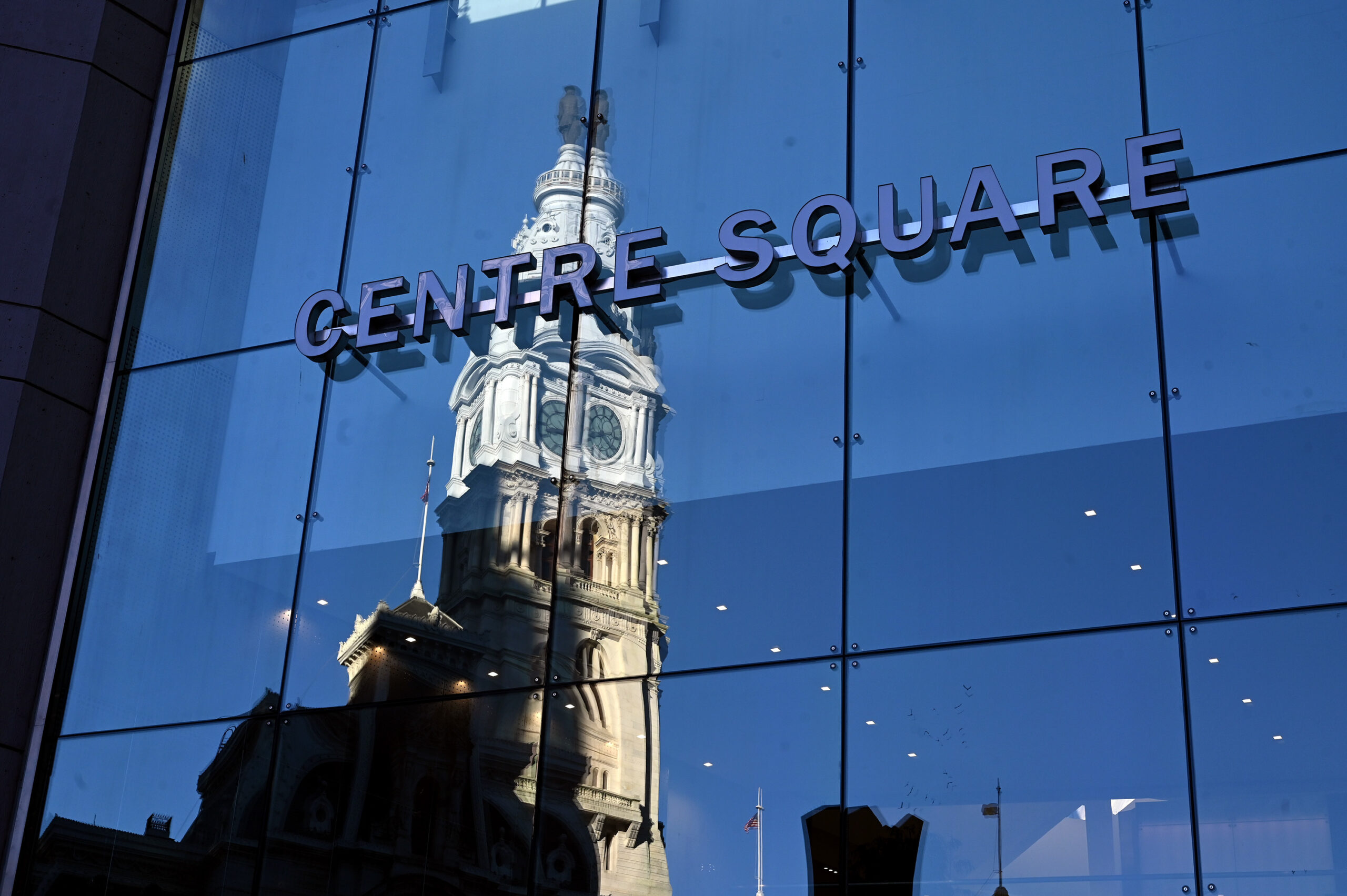
    When it opened in 1974, the connected concrete towers of Centre Square boasted the most office space in Philadelphia, at over 1.7 million square feet.

    Over 51 years later, the Brutalist behemoth still holds that title.

    But probably not for much longer.

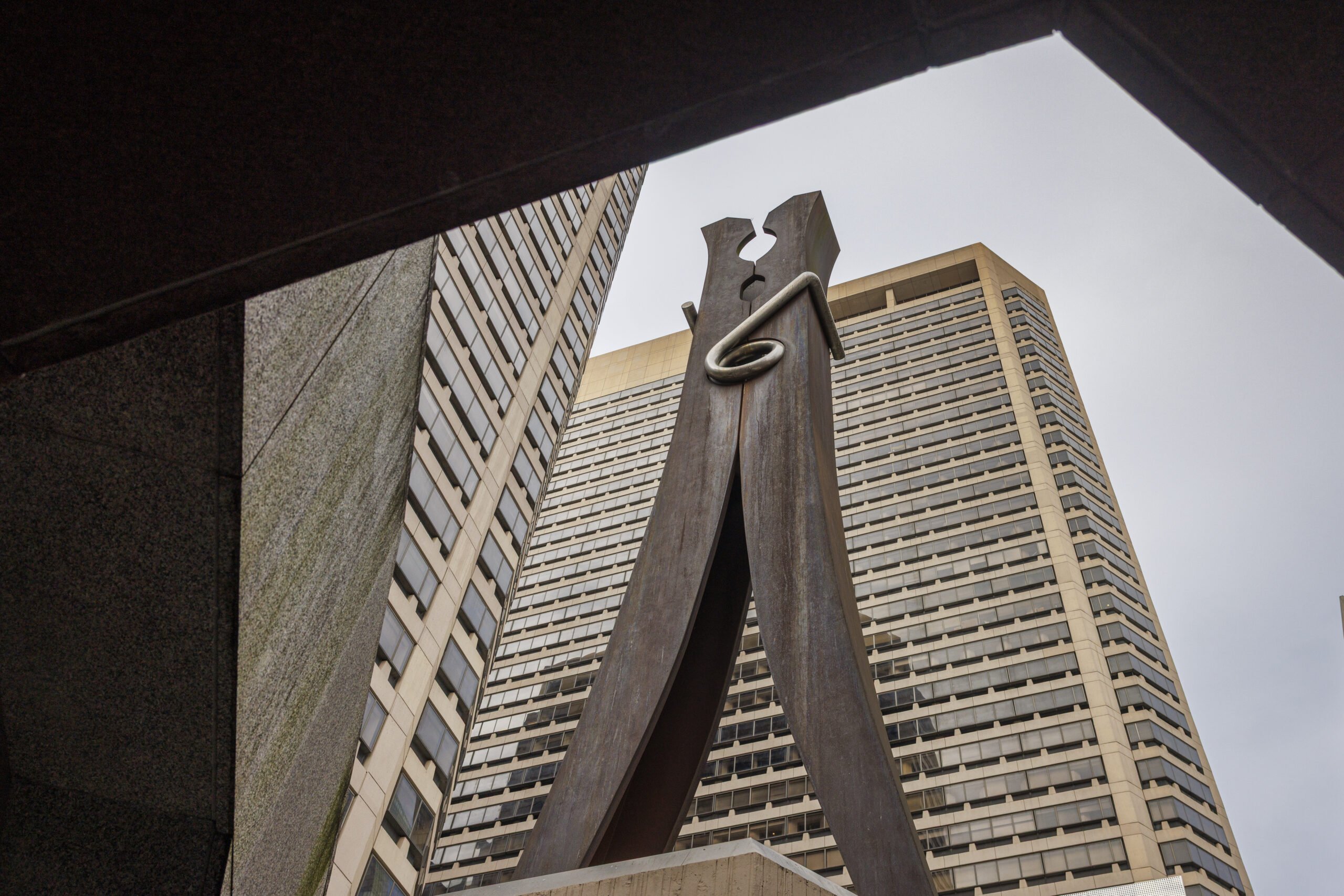
    Centre Square — also known as the “Clothespin building” for its four-story pop art sculpture — is slated for mixed-use redevelopment by PMC Property Group and investor and developer Dean Adler, with much of the complex being devoted to hotel rooms and apartments.

    “That corner of West Market is the best corner in the city,” Adler said. “You get …all the visibility going around the circle. When you look at City Hall, it may not be so nice inside, but outside, it’s a 1904 Beaux Arts building.”

    Centre Square’s fortunes sank when COVID-19 struck and have never recovered. At the end of 2025, occupancy stood at 37.6%, giving it the highest vacancy rate in Center City, according to Morningstar Credit.

    In 2017, when Centre Square last sold, it went for $328 million. Last July, the complex was appraised at $104.4 million and is now under agreement of sale to PMC and Adler for less than $94 million, according to Adler.

    He says the plan is to retain 500,000 square feet of office space, enough to house the remaining tenants. Then there will be between 250 and 500 apartments spread between the building’s two towers. Three hundred luxury hotel rooms will be built on the upper floors of the east tower, facing City Hall.

    “William Penn is in your bedroom,” Adler said of the hotel.

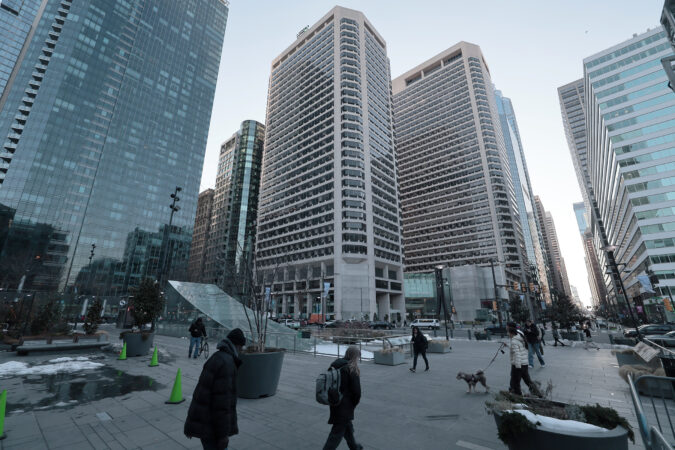
    Centre Square is located across from City Hall on what investor Dean Adler calls “the best corner in the city.”

    On the lower levels of Centre Square, Adler says there will also be a spa and a 50-meter pool — amenities that he says the building previously had.

    The acquisition of Centre Square is part of a wave of high-profile redevelopments between Adler and PMC, led by its president, Ron Caplan.

    In recent years, the partners have purchased and redeveloped the Bellevue on South Broad Street, the Battery on the Delaware River, and the Bourse on Independence Mall.

    “In today’s environment, there’s a real estate crisis, and we are buying these buildings for 20 cents on the dollar,” Adler said. “We …are rejuvenating architectural gems that are functionally obsolete.”

    PMC declined to comment. News of Centre Square’s acquisition was first reported by the Philadelphia Business Journal.

    Centre Square (center) at 1500 Market Street in Philadelphia on Friday, Feb. 27, 2026

    More than ‘an office district’

    The new Centre Square is part of a trend in which struggling office buildings have sold for less than half their previous prices with plans to convert the spaces into homes.

    Centre Square’s discount was even deeper: The reported sale price is almost half what it sold for in 2002, not even adjusting for inflation.

    The Wanamaker Building, which had over 1.4 million square feet of office space, is another example. Previously one of Philadelphia’s largest office buildings, it is being turned into apartments by TF Cornerstone and Alterra Property Group. Only a small number of offices will be preserved.

    Supporters say that taking huge blocks of empty office space off the market will mean good things for Center City, as apartment leasing remains healthy.

    “The office district isn’t only an office district anymore,” said Prema Katari Gupta, president of the Center City District.

    “There’s hospitality; there’s increasing residential. What makes a city great is when you have these layered neighborhoods with a lot of different types of demand drivers,” Gupta said.

    The partners in Centre Square’s redevelopment have worked together for decades, including on the new Aramark headquarters on the Schuylkill and 2040 Market St.

    Adler‘s longtime business partner, Ira Lubert, with whom he founded real estate investment group Lubert-Adler, is not involved in the project. Instead, the Centre Square project partnership with PMC is being done under the auspices of a new venture, Adler & Co.

    Philadelphia’s No. 1 business address

    Centre Square spans two towers because it dates to an era when developers would not build taller than the William Penn statue atop City Hall, an unofficial agreement with the city that lasted until the 1980s when the Liberty Place skyscrapers were erected.

    Planning for Centre Square began in the mid-1960s, signaling a shift, along with the construction of Penn Center, for Philadelphia’s office district from the Art Deco South Broad Street to West Market Street.

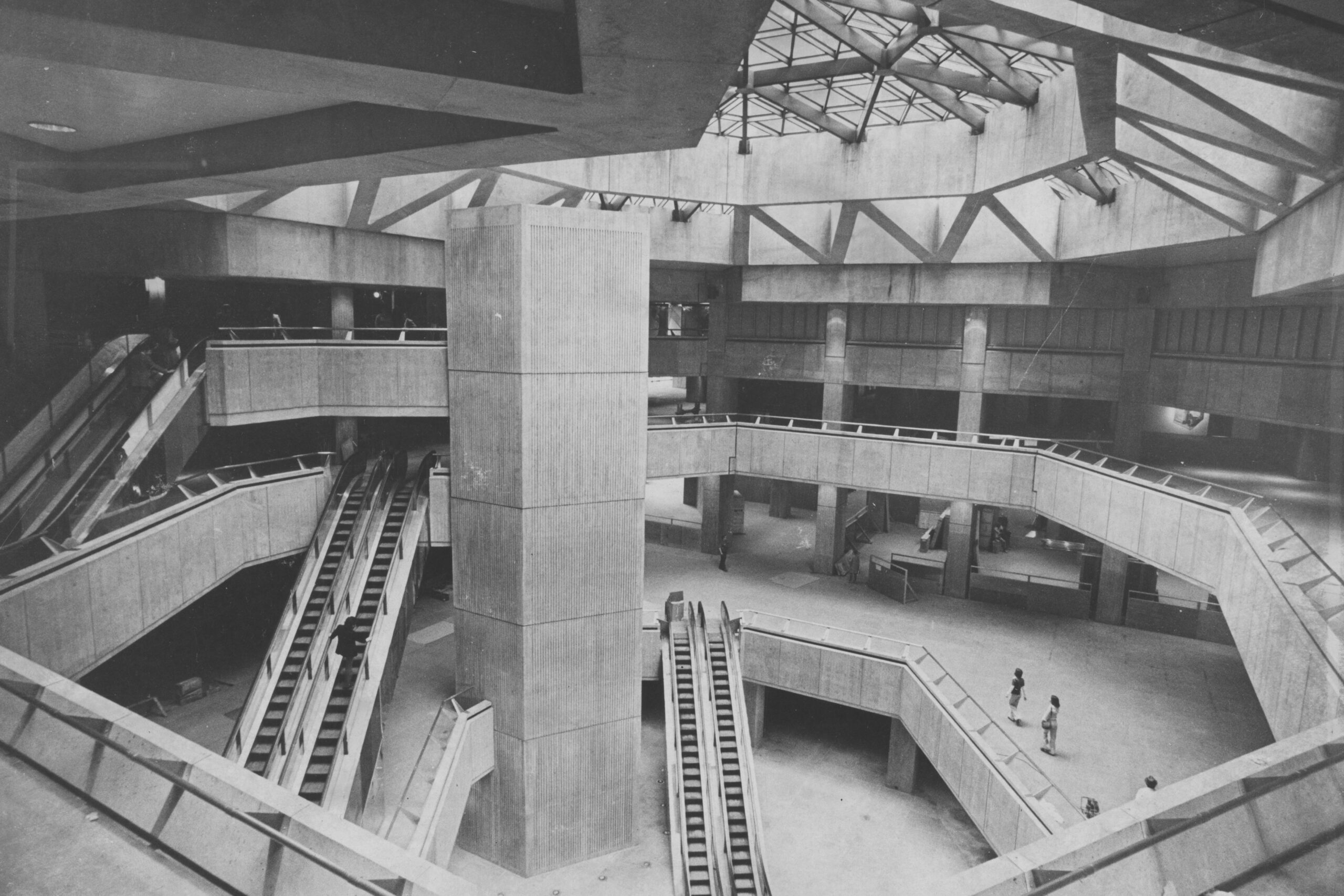
    Centre Square’s atrium and retail space in in 1974.

    “Those buildings created the momentum,” said Bill Hankowsky, former CEO of Liberty Property Trust, which developed neighboring office skyscrapers like Liberty Place and the Comcast towers. “It was the biggest single project that said we’re going down Market West.”

    Designed by architect Vincent Kling and developer Jack Wolgin, it was seen as a revolutionary project and hailed as Philadelphia’s No. 1 business address in ads in The Inquirer.

    Centre Square also bears the architectural hallmarks of the 1960s, like its poured concrete building materials that — along with its respect for the old height limit — set it apart from the steel skyscrapers built farther down West Market later in the decade.

    The building’s Brutalist architecture — often a polarizing style — has bedeviled many of its subsequent owners, who pumped millions of dollars into Centre Square nearly every decade since the 1970s to keep it competitive.

    “It is structurally built differently than other buildings on Market West,” Hankowsky said. “It’s a substantial building, but also it is a tougher building to deal with. The walls are thick, the floors are thick. It’s a big challenge.”

    That’s part of what deterred many other developers who considered buying the building.

    The sheer scale is a challenge, too. Some interested parties were put off by the percentage of the building that would have to remain office, as a full residential conversion is unlikely.

    “The buildings don’t particularly lend themselves to a complete conversion to apartments,” said John Grady, who used to lead the Philadelphia Industrial Development Corp. and studied the building for its prior ownership. “They’re too big, and the floor plates don’t work as well as other buildings.”

    A photo of the long vacant lot while Centre Square went through its fiscal and legal trials during construction.

    Born in drama, considered for Comcast HQ

    Centre Square’s birth was not easy. Its planning and construction took almost 10 years, with legal and financial delays that included an investigation of the project by then-District Attorney Arlen Specter. (Wolgin told reporters that the Republican politician was “out to get” him.)

    The delays left a yawning vacant lot just west of City Hall, which led Mayor James Tate to describe Centre Square as “doomed” in 1969.

    When Wolgin eventually began construction, he then faced blowback from powerful critics of Claes Oldenburg’s Clothespin sculpture that he wanted to place in front of his towers.

    “It was a disaster!” Jack Wolgin told The Inquirer in 2001. “They said, ‘How can you take something like this pop art and put it in front of City Hall? It’s a monstrosity! It’s a disgrace!’”

    Despite the building’s polarizing beginnings, it became a mainstay of the office market, attracting one-time corporate giants like CoreStates bank and Towers Perrin consultants.

    Claes Oldenburg’s pop art Clothespin sculpture stands in front of Centre Square.

    It snagged Comcast as a tenant in the early 1990s, after the company was forced out of its first urban home by the fire that destroyed One Meridian Plaza.

    Comcast studied the building as a possible headquarters for the company before eventually turning to Liberty Property Trust to build their skyline-defining towers.

    Still, many of its 1960s-era flourishes proved difficult to adapt to the modern era. By the 1980s, the atrium that connects the two towers and houses its inward-facing retail received its first renovation.

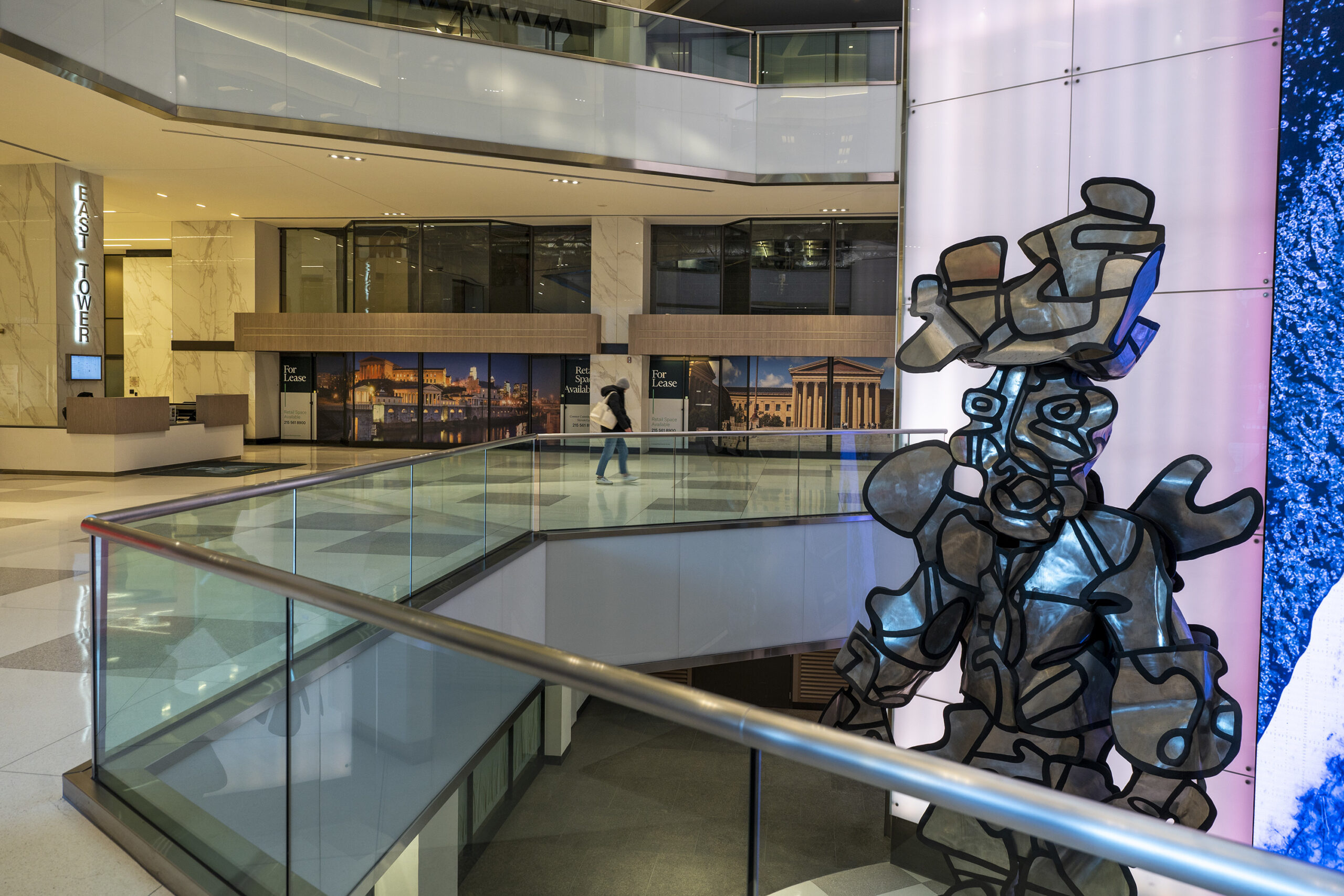
    Centre Square’s atrium has undergone renovations almost every decade since.

    The lobby of Centre Square in 2024.

    Looking ahead

    Inquirer architecture critic Inga Saffron wrote about Centre Square‘s latest update in January 2020.

    “Fortunately for Philadelphia, the city’s biggest, baddest Brutalist complex, Centre Square, has always been too big to fail,” she wrote just before COVID-19 struck and emptied office towers around the country.

    Now, six years later, Adler and PMC Property Group believe they can bring it back as something new.

  • Trump orders all federal agencies to phase out use of Anthropic technology

    Trump orders all federal agencies to phase out use of Anthropic technology

    WASHINGTON — The Trump administration on Friday ordered all U.S. agencies to stop using Anthropic’s artificial intelligence technology and imposed other major penalties, culminating an unusually public clash between the government and the company over AI safety.

    President Donald Trump, Defense Secretary Pete Hegseth, and other officials took to social media to chastise Anthropic for failing to allow the military unrestricted use of its AI technology by a Friday deadline, accusing it of endangering national security after CEO Dario Amodei refused to back down over concerns the company’s products could be used in ways that would violate its safeguards.

    “We don’t need it, we don’t want it, and will not do business with them again!” Trump said on social media.

    Hegseth also deemed the company a “supply chain risk,” a designation typically stamped on foreign adversaries that could derail the company’s critical partnerships with other businesses.

    Anthropic had said it sought narrow assurances from the Pentagon that its AI chatbot Claude would not be used for mass surveillance of Americans or in fully autonomous weapons. The Pentagon said it was not interested in such uses and would only deploy the technology in legal ways, but it also insisted on access without any limitations.

    The government’s effort to assert dominance over the internal decision-making of the company comes amid a wider clash over AI’s role in national security and concerns about how increasingly capable machines could be used in high-stakes situations involving lethal force, sensitive information or government surveillance.

    Trump and others lash out at Anthropic

    Trump said Anthropic made a mistake trying to strong-arm the Pentagon. He wrote on Truth Social that most agencies must immediately stop using Anthropic’s AI but gave the Pentagon a six-month period to phase out the technology that is already embedded in military platforms.

    “The United States of America will never allow a radical left, woke company to dictate how our great military fights and wins wars!” he wrote in all caps.

    After months of private talks exploded into public debate this week, Anthropic said Thursday that the government’s new contract language would allow “safeguards to be disregarded at will.” Amodei said his company “cannot in good conscience accede” to the demands.

    Anthropic can afford to lose the contract. But the government’s actions posed broader risks at the peak of the company’s meteoric rise from a little-known computer science research lab in San Francisco to one of the world’s most valuable startups.

    The president’s decision was preceded by hours of top Trump appointees from the Pentagon and the State Department taking to social media to criticize Anthropic, but their complaints posed contradictions.

    Top Pentagon spokesman Sean Parnell said on social media Thursday that Anthropic’s unwillingness to go along with the military’s demands was “jeopardizing critical military operations and potentially putting our warfighters at risk.” Hegseth said Friday that the Pentagon “must have full, unrestricted access to Anthropic’s models for every LAWFUL purpose in defense of the Republic.”

    Trump’s social media post also mandated the company “better get their act together, and be helpful” during a six-month phase-out period or there would be “major civil and criminal consequences to follow.”

    However, Hegseth’s choice to designate Anthropic a supply chain risk uses an administrative tool that has been designed for companies owned by U.S. adversaries to prevent them from selling products that are harmful to American interests.

    Virginia Sen. Mark Warner, the top Democrat on the Senate Intelligence Committee, noted that this dynamic, “combined with inflammatory rhetoric attacking that company, raises serious concerns about whether national security decisions are being driven by careful analysis or political considerations.”

    Anthropic didn’t immediately reply to a request for comment on the Trump administration’s actions.

    Dispute shakes up Silicon Valley

    The dispute stunned AI developers in Silicon Valley, where venture capitalists, prominent AI scientists and a large number of workers from Anthropic’s top rivals — OpenAI and Google — voiced support for Amodei’s stand in open letters and other forums.

    The move is likely to benefit Elon Musk’s competing chatbot, Grok, which the Pentagon plans to give access to classified military networks, and could serve as a warning to two other competitors, Google and OpenAI, that have still-evolving contracts to supply their AI tools to the military.

    Musk sided with Trump’s administration, saying on his social media platform X that “Anthropic hates Western Civilization.”

    But one of Amodei’s fiercest rivals, OpenAI CEO Sam Altman, sided with Anthropic and questioned the Pentagon’s “threatening” move in a CNBC interview and a letter to employees that said OpenAI shared the same red lines. Amodei once worked for OpenAI before he and other OpenAI leaders quit to form Anthropic in 2021.

    “For all the differences I have with Anthropic, I mostly trust them as a company, and I think they really do care about safety,” Altman told CNBC, hours before he gathered employees for an all-hands meeting Friday.

    Retired Air Force Gen. Jack Shanahan, a former leader of the Pentagon’s AI initiatives, wrote on social media this week that “painting a bullseye on Anthropic garners spicy headlines, but everyone loses in the end.”

    Shanahan said Claude is already being widely used across the government, including in classified settings, and Anthropic’s red lines were “reasonable.” He said the AI large language models that power chatbots like Claude, Grok, and ChatGPT are also “not ready for prime time in national security settings,” particularly not for fully autonomous weapons.

    Anthropic is “not trying to play cute here,” he wrote Thursday on LinkedIn. “You won’t find a system with wider & deeper reach across the military.”

  • Aramark is out as food provider for new South Philly arena slated for 2030

    Aramark is out as food provider for new South Philly arena slated for 2030

    Aramark will not be the official food, beverage, and hospitality provider at the new South Philadelphia arena where the 76ers, Flyers, and the city’s new WNBA team are expected to play.

    Harris Blitzer Sports & Entertainment, which owns the Sixers, and Comcast Spectacor, which owns the Flyers and Xfinity Mobile Arena, announced that Levy Restaurants will take over food and beverage duties in the new arena, which is slated to open by 2030.

    “Very few cities are as devoted to their teams as Philadelphia, the loyalty and passion are part of the DNA that make the community so special. It’s both an honor and an invigorating opportunity to help amplify the best of Philadelphia,” Levy CEO Andy Lansing said in a statement.

    Smoked chicken cheesesteak is on the 2025-26 menu at the Xfinity Mobile Arena.

    Aramark has overseen hospitality at the Sixers’ and Flyers’ arena since it opened in 1996. Lincoln Financial Field and Citizens Bank Park hospitality services are still operated by the Philadelphia-based food services provider.

    A spokesperson for the arena said that the decision to go with a new provider was not based on Aramark’s performance, but was the result of a standard pitch process.

    “We have a great relationship with our friends at Aramark,” Comcast Spectacor chairman and CEO Dan Hilferty told SportsBusinessJournal. “We have, on both sides, committed that while Xfinity Mobile Arena is still in operation, we’re going to deliver the best possible product.”

    Aramark will continue its tenure at Xfinity Mobile Arena until the new arena opens. The new arena was announced last year after plans to build a Center City arena for the Sixers were abandoned in favor of a new building at the South Philly sports complex.

    Xfinity Mobile Arena used to be known as the Wells Fargo Arena, from 2010 into August 2025.

    “Our team is fully committed to delivering memorable game day experiences, and we are grateful for the many decades spent fueling the passion and energy of the fans,” an Aramark spokesperson said in a statement.

    The hometown food service provider has come under fire in recent years over labor disputes with the thousands of people who work in the stadiums. Before Unite Here Local 274 won its latest contract, fewer than 100 workers represented by the union had year-round healthcare. The contract, signed last March, increased wages and brought hundreds of workers onto the union healthcare plan.

    Levy’s portfolio includes nearly half the NBA/NHL shared arenas, such as Los Angeles’ Crypto.com Arena, according to a Sixers spokesperson. Levy, which has headquarters in Chicago, also provides services for such large events as the Kentucky Derby and the Grammys.