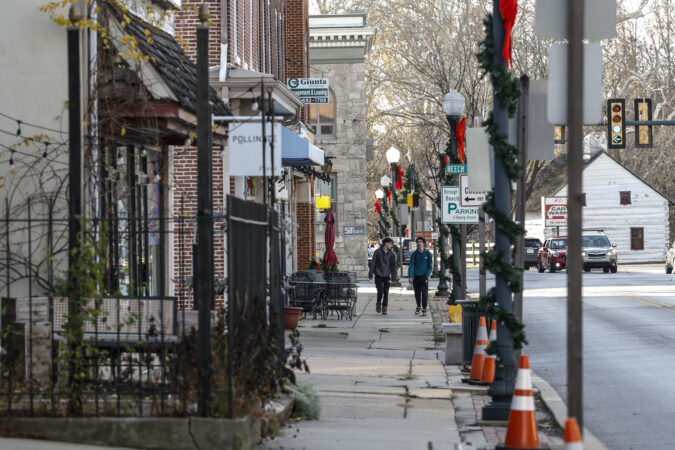
Springfield Hospital has a new buyer, with the same local investor group that bought Taylor Hospital in September agreeing to purchase it for $1 million.
Bankrupt owner Prospect Medical Holdings said in a court filing Friday that it now plans to sell Springfield Hospital and an associated parking garage to KQT Aikens Partners 2. The group paid $1 million for Taylor.
Todd Strine, one of the investors involved in KQT Aikens, declined to comment Saturday on the Springfield development. The company has been trying to find healthcare tenants for Taylor, which is in Ridley Park. Among the goals is reestablishing emergency services there, according to local officials.
At Springfield, KQT Aikens is replacing a partnership of Restorative Health Foundation and Syan Investments LLC, which won an October auction for the hospital property with a $3 million bid but was not making progress toward closing the deal, Prospect’s filing said.
Prospect sent a letter on Dec. 11 giving the partners a Dec. 15 deadline to complete the purchase. When that did not happen, Prospect terminated the agreement, the filing said. Restorative did not immediately respond to a request for comment.
A challenge for any buyer of Springfield Hospital is a deed restriction that requires 24-7 emergency services at the site. The KQT Aikens deal is contingent on township officials removing that restriction. The KQT Aikens agreement also calls for local taxing authorities to set the assessment of the Springfield Township property at the sale price, as happened at Taylor.
Jeff Rudolph, president of the Springfield Township Board of Commissioners, said in an email that local officials look forward to restoring the property to a productive use.
“Prospect will determine the ultimate buyer of the property and, while the township plays no role in that process, we look forward to discussions with the new owner about any proposed future use of the site,” he said.
Taylor and Springfield Hospitals were part of Crozer Health, which was Delaware County’s largest healthcare provider. That was before Prospect’s bankruptcy a year ago led to the closures last spring of Taylor and Crozer-Chester Medical Center, which was an important safety-net provider for low-income Chester residents.
Prospect had closed Springfield in early 2022, and Delaware County Memorial Hospital in Drexel Hill in the fall of 2022. In both cases, Prospect blamed the closures on staffing shortages during the COVID-19 pandemic.
City revenue officials expect to collect more than $35 million in new BIRT payments this year from the expanded pool of taxpayers, even with slightly lower tax rates.
“This is applicable to every sole proprietorship, limited-liability company, incorporation, or partnership engaged in a business, profession, or activity for profit in the City of Philadelphia,” said Scott S. Small, trust counsel in the Philadelphia-area office of Fiduciary Trust International, a New York-based advisory firm for families and business owners.
“Think of folks that have houses they rent. Daycare in their homes. For-hire drivers at Uber or Lyft. Estates and trusts that own property,” Small said. “A return now has to be filed, regardless of whether you made a profit.”
Even with extensive city guidance, “it becomes a logistical nightmare” for small taxpayers, who may have to hire professionals to figure out what they owe and exemptions that can reduce the total, said Will Gonzalez, who runs CEIBA, a Latino business and economic education group.
Business taxes and the general difficulty of doing business in Philadelphia were “the number one issues” reported in a survey of 200 city businesses by the Independence Business Alliance, a chamber of commerce for LGBTQ+ business owners, that was presented to members of Mayor Cherelle L. Parker’s tax reform commission last year, said Zach Wilcha, the alliance’s chief executive.
“Small businesses pay on revenues, sales, profits [there is a separate net profits tax along with the BIRT income tax], and wages,“ Wilcha said. ”People love being in Philadelphia; they want to stay here. But they feel the tax structure is forcing them to leave.”
Eliminating the BIRT’s income tax and curbing the revenue tax has been a longtime goal of business advocacy groups like the Chamber of Commerce for Greater Philadelphia. It was a goal of business members on the tax reform commission. City leaders in the end decided on gradual rate reductions instead, a move tax commission chair Richard Vague called “disheartening.”
The BIRT tax rate on sales is dropping by half a penny per $1,000 this tax season to $1.41 per $1,000 of sales. And the income tax is decreasing to $57.10 per $1,000 of profits from $58.10. The city plans to slowly cut the revenue tax to zero and the BIRT income tax by half by 2039.
But this year, far more taxpayers will be paying the tax, which is due by April.
Philadelphia formerly exempted businesses that gross less than $100,000 in sales per year from paying BIRT. That exemption failed to survive a court challenge. Under the “uniformity clause” of the Pennsylvania state constitution, taxes can’t exempt whole classes of taxpayers based on income.
“It’s the same reason we can’t have a [state or local] tax just on billionaires, or millionaires,” Small said.
A smaller-business exemption on the city’s use and occupancy tax exemption is also gone, leaving more small-business owners liablefor that 1.21% a year tax, paid in monthly installments.
Among Pennsylvania communities, only a minority, including Radnor Township and other Main Line communities, charge similar business taxes.
Kathleen McColgan, Parker’s revenue commissioner, says Philadelphia expects to collect “an additional $35 million to $40 million in fiscal year 2026″ from the broadened BIRT. The city has earmarked that money for “commerce and business development.”
City officials have said they will spend $7.5 million this year for programs to help new taxpayers figure out how to manage the city’s complicated tax programs and exemptions.
In recent years, the city has collected BIRT from around 40,000 larger businesses, McColgan said. She estimates that 50,000 businesses that have paid other city taxes will start owing BIRT for the first time. Roughly 25,000 other registered businesses that hadn’t incurred any taxes in recent years before might also owe.
City officials could provide no estimate of how many businesses that never registered to pay taxes may be required to pay BIRT for the first time.
To spread the word, McColgan said the city sent around 80,000 notices to registered business taxpayers in and outside the city, plus 119,000 postcards to businesses “who may have a responsibility to file” from lists the city purchased from a private vendor.
Besides the promised multilingual tax education and assistance for first-time filers, officials noted that the city has an array of tax discounts that can reduce the small-business burden.
First-time filers can get an extension if they can’t get the form in by April 15, but they will still owe the tax accruing from that date with any late fees.
And, after the first year, taxpayers are expected to pay the next year’s BIRT in advance, in quarterly installments.
Even with the city’s initial guidance, many first-time taxpayers will need professional help to navigate all those rules and realize available discounts, Small said. “It’s a nightmare” for a layperson to attempt to follow all the instructions and file correctly.
“People want to pay their taxes,” CEIBA’s Gonzalez said. “It’s the right thing to do. They also need to pay their taxes, if they want to buy a house or send a child to college.
“But anyone who is going to pay the BIRT for the first time is going to need a city business license. And for that, they have to pay any outstanding tickets and bills. And that can be a lot to resolve all at once.”
His group and others have held online and remote workshops to advise drivers, independent home-health aides, and other first-time BIRT payers.
Gonzalez predicted “a rude awakening for Philadelphians” as the tax fits in. “Our economy is built on a lot of this gig work, and we’d hate to see people punished for making more money for their families.
“And this puts people in Philadelphia at a disadvantage. In a year we are celebrating the 250th year of the American Revolution that started with unfair tax concerns, we need to find a better way.”
Small, of Fiduciary Trust, said the Philadelphians he advises tend to complain without leavingthe city. “Folks kind of suck it up, and say, ‘It’s not as bad as it could be.’”
Still, many people have noticed how the city and state also offer incentives to bring in new businesses that aren’t given to regular taxpayers, he said. “The small guy gets the higher burden, while larger ones who have more ability to pay, pay less.”
New York’s government disclosed an eye-popping number this week: The average customer tip on the food delivery apps DoorDash and Uber Eats is 76 cents in the city, compared to $3.66 two years ago.
Everyone agrees why tips dried up — not because we’re tired of tipping. It’s largely because those two companies changed the in-app tip feature to make New Yorkers less likely to leave a gratuity.
The apps moved the tip option from just before customers place an order to after. Average tipping amounts immediately plummeted, the city says. It’s proof that app design influences our behavior.
What’s hotly disputed, though, is whether the tip decline is a healthy sign for workers, as the companies say, or a result of delivery couriers being deprived of a collective $550 million in income, as the new administration of New York Mayor Zohran Mamdani says.
While this tipping fracas is unique to New York, it also reveals two broader realities about app-based convenience services such as Uber, Lyft, DoorDash, and Instacart.
First, people are confused and angry about tipping, and the delivery app boom makes it worse. (Keep reading for food delivery tipping suggestions from a worker advocate.)
Second, 15 years after app-based “gig work” emerged as an alternative to conventional employment, there remains profound disagreement about whether these are good jobs and how to make them better.
Those struggles raise questions about whether Americans and our political leaders are prepared to address the risks of artificial intelligence wiping out jobs or cratering incomes.
Regulating gig work
If a restaurant server’s tips are low, the restaurant must pay the worker more until she reaches the legally mandated minimum wage.
But people who work for apps such as Uber, Lyft, DoorDash, and Instacart are considered independent contractors rather than employees. Minimum wage laws don’t typically apply to them.
The workers often say that as a result, their pay is unpredictable and highly dependent on tips, which can comprise half or more of app workers’ pay. Some states and cities have tried forms of pay guarantees for app workers.
Starting in December 2023, New York mandated a minimum hourly wage for couriers of six food delivery apps. DoorDash, Uber Eats, and Grubhub were by far the largest.
App companies warned that the wage mandate would hurt workers, raise prices for consumers, and drive restaurants out of business. That was true on the margins, but largely the law worked as intended without ruining what people like about food delivery.
Average hourly pay for delivery couriers of the six apps more than doubled, from $11 in the spring of 2023 to $24 in spring 2025, New York data show. Tips have declined significantly, but the higher total pay is now mostly coming from the app companies’ pockets rather than tips.
This average hourly pay isn’t necessarily comparable to what a restaurant cook or a Starbucks barista makes. Employers of those conventional hourly workers may pay the costs of benefits, job-related expenses ,and workers’ compensation. Delivery app workers typically must pay those expenses out of their own wages.
Ligia Guallpa, executive director of the Worker’s Justice Project, a labor advocacy group, said workers still need tips. She criticized DoorDash and Uber Eats for moving the in-app tipping option.
The city says that the average customer tip on apps such as Grubhub that didn’t move the in-app tipping option in late 2023 is $2.17 compared to the 76-cent average for DoorDash and Uber Eats.
DoorDash and Uber Eats say the city suggested they move or remove the in-app tipping option, essentially to avoid scaring off customers facing higher delivery fees from the minimum-wage law. DoorDash and Uber Eats now say that the city wanted workers to rely less on tips; it worked and New York is blaming them for a change the city itself suggested.
The two companies sued to stop a looming mandate to put the in-app tipping option back where it was, at the moment New Yorkers place an order.
Again, this dispute isn’t about one city. It shows the difficulties in making food deliveries fair for everyone involved — restaurants selling you meals, delivery workers, app companies, and diners.
What workers want you to know about tips
An oddity of tipping for many app-based delivery services is that you’re often asked for a gratuity when you place an order. It’s like tipping at a restaurant just as you sit down for dinner rather than after the meal.
This breaks American norms of tipping as a reward for a job well done. But fairly or unfairly, app companies built their system around tips.
Tips may determine whether your order is assigned a delivery courier right away or not, and tips can make or break an app worker’s paycheck.
I asked Guallpa for a road map on how food delivery workers would like us to tip. She said:
Consider tipping 10% to 20% of your order amount. And she suggested tipping more during bad weather or if you’re placing a large order.
If you can, opt for Grubhub over DoorDash or Uber Eats.Guallpa said Grubhub tends to treat workers better than other food delivery apps. (DoorDash’s comment didn’t address the criticism. Uber Eats didn’t comment.)
Consider tipping both in the app and in cash at the door if you’re happy with the service.Guallpa also said that some delivery couriers suspect the app companies don’t pay them all the in-app tips they earn. (Wage theft is a common claim among hourly workers, and delivery apps have previously been forced to reform over tip-stealing allegations.)
If you tip in the app, she said that couriers tend to appreciate it when customers show them the amount, at the door or with a texted screenshot, for the worker’s records.
OCEAN CITY, N.J. — Along the commercial stretch of Ocean City’s boardwalk, from Sixth to 14th Streets, there are 167 storefronts, including four Kohr Bros. Frozen Custards, three Johnson’s Popcorns, three Manco & Manco Pizzas, and eight Jilly’s stores of one type or another.
There are eight mini-golfs, nine candy shops, 18 ice cream places, 10 pizza shops, 18 arcades or other types of amusements, five jewelry stores, three surf shops, five T-shirt shops, and 47 clothing or other retail shops. There is one palm reader.
Even without Gillian’s Wonderland Pier, the iconic amusement park at Sixth Street that famously closed in October 2024, it still adds up to a classically specific, if repetitive, Jersey Shore boardwalk experience. Many of the shops are owned by the same Ocean City families, some into their third generation.
But now these very shop owners are sounding the alarm.
“This is a group that’s been hanging on for a long time,” Jamie Ford, owner of Barefoot Trading Co., at 1070 Boardwalk, said in an interview last week. “These places are hanging in there. They’re not going anywhere, but we’re nervous.”
Chuck Bangle, owner of the storied Manco & Manco Pizza, warned planning officials he might close one of his three locations if business did not pick up. Other boardwalk property owners said longtime tenants were not returning.
“It’s the 70th year of our family business, the 34th year on the boardwalk,” Bangle told the planning board Jan. 7, before it eventually deadlocked 4-4 on whether the Wonderland site should be declared in need of rehabilitation. “I wrestled with closing the Eighth Street location. I don’t want to close. The impact of Wonderland’s closing on all the merchants has been substantial.”
Business along Boardwalk near 7th Street, Ocean City, NJ., Thursday, Jan. 15, 2026.
Into blustery January, the debate has raged about whether a luxury hotel, even one that would save the Ferris wheel, would bolster or undermine the essential character of this dry town and its beloved boardwalk.
At this point, even the most ardent members of the Save Wonderland faction seem resigned to the reality that, as Will Morey of Morey’s Piers himself came up from Wildwood to say to the planning board, the odds of Wonderland coming to life again as an amusement park are slim to none.
A rendering of the proposed new Icona in Wonderland Resort, to be built on the site of the old Wonderland Pier. The proposal for a 252-room resort includes saving the iconic Ferris wheel and carousel.
It’s the rest of the boardwalk that now wants to be heard: merchants with the voice of their ancestors ringing in their ears.
“This is an incredible opportunity,” said Ocean City Councilman Jody Levchuk, a member of the family that owns the Jilly’s stores on the boardwalk. He is also a member of a boardwalk subcommittee that will report its findings on Feb. 7. “My grandfather — who’s a big boardwalk guy — he’d walk up and he’d say this man wants to spend $170 million and you’re ignoring him.”
Plummeting parking revenue
A season without Wonderland took its toll. Parking figures from municipal lots tell the story.
The 249-spot lot at Fifth and the boardwalk across from Wonderland brought in $483,921 in parking fees in 2024 (people paid an average of $21 to park there during the summer season), but dropped to $290,895 in 2025, a 40% decrease. Overall, parking revenue dropped by about a half-million dollars, from $2.46 million in 2024 to $1.95 million in 2025.
At the end of 2025, there were a half-dozen empty storefronts, according to boardwalk merchants who keep track, mostly in the 600 block adjacent to Wonderland, though there is inevitable churn during the offseason.
Becky Friedel, owner of 7th Street Surf Shop, said in an interview that the shop is planning to expand and take over two of the vacant boardwalk storefronts for a new breakfast and lunch spot and a clothing boutique.
She said that while businesses have seen the loss of some of the younger clientele who used to fill Ocean City rooming houses and group Shore houses, the newer second-home owners come “with a fair amount of money.” The boardwalk also has a handful of higher-end boutiques, including the Islander. The downtown saw the opening of a Lululemon last year. Some envision a boardwalk that might include more boutiques in the mix, and fewer repeating sequences of ice cream-french fries-pizza-beachwear.
“We’re optimistic,” Friedel said. “Obviously [Wonderland closing] hurt us a little bit, especially in the evening. Our night business isn’t as strong as it was. We’re taking over the french fry place to focus on breakfast and lunch.”
Taking on the boardwalk
Also optimistic are the partners behind Alex’s Pizza, the Roxborough stalwart dating to 1961 that is opening up this summer at 1214 Boardwalk, next to Candyland. Coming in hot with a tomato sauce swirl atop the pizza not unlike the Manco’s staple, Alex’s partner Rich Ennis said, “We’re more of a thin-crust pizza.”
The enthusiasm of Ennis and partner Dylan Bear to take on the boardwalk also raises the question of whether the center of gravity will continue to shift southward, away from the no-longer-Wonderland end.
Dylan Bear, owner of Alex’s Pizza, 1214 Boardwalk, Ocean City, NJ., Thursday, Jan. 15, 2026.
“If you don’t have an anchor down there, people are not going to walk down there,” said Mark Benevento, owner of Congo Falls golf at 1132 Boardwalk, among other properties he rents out. “They will turn around at the music pier.”
Rather than seeing the hotel proposal as a threat to the character of the town, the merchants have united to stress that they view it as essential to Ocean City’s preservation. In other Shore towns, it has been the push of residential development that has eaten away at commercial zones. The parcel is currently zoned for amusements.
In places like Seaside Heights, Long Beach Island, and Avalon, condo and new residential construction has chipped away at the essential character of the places, replacing some of their most distinctive destinations, from restaurants to motels to bars and nightclubs.
Mark Raab, a local pediatric dentist whose family owns five boardwalk properties in Ocean City, called the closing of Wonderland “devastating” in remarks to the planning board.
“People don’t know what’s going on,” he said. “This year we had three businesses that closed, longtime tenants that did not renew their leases. Six years ago we had a waiting list for these properties.
“The boardwalk is not thriving,” he said. “The boardwalk is slowly going down. It’s going down piece by piece. It is rapidly becoming a snowball effect.”
‘Now they have galvanized us’
Ford, of Barefoot Trading, thinks the time has come for the view of the merchants to be heeded. The 4-4 tie at the planning board is being seen not as an outright rejection of a rehabilitation designation, which would expedite zoning allowances and possible tax abatements, but as a pass back to the city council.
The families, he said, are “the backbone of it. What we’re speaking in favor of should carry a little bit of weight.”
In a usually sleepy Jersey Shore January, there has been an awful lot of intrigue, and packed meetings, with the latest talk of perhaps a limited zoning change that would allow a hotel, though perhaps one not as grand (252 rooms, seven stories) as Mita is seeking.
There is also talk of allowing residential units above boardwalk storefronts. And many believe the city council will essentially give the tie to the nonvoting planner, Randall E. Scheule, who told his deadlocked board he believed the Wonderland site did meet two needed criteria — significant deterioration and a pattern of underutilization — and to go ahead and approve the rehabilitation zone.
Mita has said that time is of the essence. He said he has been shocked at the way the town has stymied his plan twice.
Councilman Keith Hartzell, who twice voted against advancing Mita’s development plan, said he still wants to negotiate with Mita over height, parking, and other issues. One possibility, in conjunction with the boardwalk subcommittee, is rezoning just the 600 block of the boardwalk to allow a hotel. Hartzell has also been trying to bring a playground to that end in the meantime.
“I’m not anti-hotel at all,” Hartzell said. “Our job is to come up with something [Mita] can do that he can make money with and be happy with.”
For Ocean City’s merchants, the Wonderland saga, and Mita’s difficulty in getting his hotel off the ground, has prompted them to step out from behind the counter or out of the ticket booths and speak up.
Said Benevento, the Congo Falls owner: “Maybe we have never gotten political. Now they have galvanized us.”
With Americans reeling from high consumer prices, the federal government will suspend tax refund seizures and wage garnishments for people in default on theirstudent loans, the Education Department said Friday.
The action dials back the Trump administration’srecent decision to resume involuntary collections after a nearly six-year suspension because of the pandemic.
The suspensions take effect immediately, with no defined end date. The move offers relief to the millions of Americans in default but means the government is losing out on billions of dollars.
The Education Department said Friday that the temporary suspensionwill help the agency implement student loan repayment reforms to give borrowers more options to repay their loans and give defaulted borrowers more time to rehabilitate their loans. The tax bill that President Donald Trump signed into law last year calls for the creation of new repayment plans, while phasing out a few existing ones starting July 1.
“The Department determined that involuntary collection efforts such as Administrative Wage Garnishment and the Treasury Offset Program will function more efficiently and fairly after the Trump Administration implements significant improvements to our broken student loan system,” Under Secretary of Education Nicholas Kent said in a statement Friday.
About 5.3 million people have not made a payment on their federal student loans for nearly a year — defaults that place them at risk of having a portion of their paycheck, Social Security, or disability income garnished or their tax refund withheld by the federal government. Many were in default before the federal government stopped collecting defaulted loans six years ago. Another 4.3 million borrowers are severely delinquent and nearing default, according to an analysis by the Congressional Research Service.
In December, the Education Department told the Washington Post that starting the week of Jan. 7, it would notify about 1,000 defaulted borrowers of plans to withhold a portion of their wages. After that, notices were supposed to be sent to a larger number of borrowers each month. The department would not confirmFridaywhether those notices ever went out.
Under garnishment regulations, the Education Department can withhold up to 15% of a borrower’s disposable, or after-tax, income. The garnishment continues until the defaulted loans are paid off in full or the borrower takes action to get out of default.
“Borrowers were in an absolute panic about the government garnishing wages during an affordability crisis,” said Persis Yu, deputy executive director at the advocacy group Protect Borrowers. “Garnishing wages right at this moment was always a terrible idea.”
Protect Borrowers and the National Consumer Law Center have also been warning struggling borrowers to check if they are in student loan default before they file their taxes. The groups released a public service announcement Tuesday that encouraged people to call the Treasury Department to find outif they are on the list to lose some or all of their refund. Refunds of federal Child Tax Credits and Earned Income Tax Credits can be critical lifelines for impoverished families, the advocates said.
Defaults have historically been concentrated among borrowers with low loan balances who never completed their degree, leaving them less likely to find work that could pay off the debt.
While itwas widely anticipated that the government would one day resume seizing the money, the collections wouldrun counter to Trump’s promise to make life more affordable for Americans — a message he is heralding ahead of the midterm elections.
But Republicans have historically denounced student loan relief as an affront to taxpayers, who they say shouldn’t be on the hook for the debt of college students. Pausing involuntary collection is far from the debt forgiveness the Biden administration pushed, but it does give borrowers a reprieve at the expense of taxpayers.
The White House’s decision to suspend involuntary collection undercuts the administration’s messaging around student loan repayment. The Education Department previously said the portfolio is headed toward a “fiscal cliff” if the Trump administration doesn’t restart involuntary collections.
When the Education Department announced the resumption of involuntary collection in April, Education Secretary Linda McMahon said her agency, with the help of the Treasury Department, would “shepherd the student loan program responsibly and according to the law, which means helping borrowers return to repayment — both for the sake of their own financial health and our nation’s economic outlook.”
But at an event in Rhode Island this week, McMahon signaled that the administration was changing plans. Asked if she had any concerns about making borrowers’ financial situation worse by garnishing their wages, the secretary said there was a pause on taking any action, even though no official announcement had been made.
Even with a suspension in place, interest will continue to accrue on defaulted loans and borrowers will still contend with the negative credit reporting. The Education Department is encouraging defaulted borrowers to explore resolutions, noting that it reports student loan defaults to credit reporting agencies.
Next month, the Old City establishment will also roll out a “lighter portions, lighter prices” section of its regular menu.
This is all to keep up with the evolving preferences of Philly-area diners, said Barry Gutin, cofounder of Cuba Libre.
“We said, ‘We should put something on the menu for all sorts of people watching their diet and their money,’” said Gutin, whose staff has noticed GLP-1 users and nonusers alike requesting these options more over the past year. This trend has also been seen at Cuba Libre restaurants in Atlantic City, Washington, and Orlando, as well as at its Paladar Latin Kitchen and Bomba Tacos locations in the Philadelphia suburbs.
For customers, an added perk is that they pay less for these smaller-portioned menu items, Gutin added. He said diners have become more focused on value amid broader financial uncertainty.
“The economy dictates that we have a diversity in pricing that meets more people’s needs,” Gutin said. “You think about the way people look at menus online. They’re scanning through prices as well.”
The dining room at Cuba Libre in Philadelphia. A cofounder says staff has noticed GLP-1 users and nonusers alike requesting smaller-portioned, less expensive options more over the past year.
In August, more than a third of U.S. diners said they were dining out less frequently than they did a year ago, according to a survey from YouGov. Of the less-frequent diners, 69% said they were eating out less in part because of the perceived cost of restaurant meals, the survey found.
Lower-income consumers were most likely to have cut back on dining out, according to the survey, while middle- and higher-income folks hadn’t changed their habits substantially.
This jibes with what executives at the Federal Reserve Bank of Philadelphia are hearing, too.
“Even individuals with discretionary income to spend are being careful,” Anna Paulson, president of the Federal Reserve Bank of Philadelphia, said Wednesday. “For example, although people are still eating out in Philadelphia, contacts tell us that less expensive options on the menu are becoming more popular.”
“The only exception to this trend is at more upscale restaurants,” Paulson added. “High-income households, bolstered by a strong stock market, appear to be driving elevated consumption growth.”
The Ropa Vieja meal from the GLP-Wonderful menu at Cuba Libre as shown on Jan. 14.
Alcohol use among adults has plummeted, with just 54% of respondents saying they drink in a July Gallup survey. That’s the lowest percentage in at least 90 years. It likely drops even lower this month as some people abstain from alcohol as part of the Dry January trend.
All of these trends are on display at Philly-area bars and restaurants. And owners are trying to keep up.
“We’re definitely at a time of dramatic shift in people’s preferences and tastes,” said Avram Hornik, owner of FCM Hospitality, which runs about a dozen venues in the region. They include Morgan’s Pier, Harper’s Garden, Craft Hall, and Concourse Dance Bar, as well as seasonal cocktail and beer gardens such as the traveling Parks on Tap.
“I don’t think people are spending less or going out less,” Hornik said, “but I just think they are doing it differently.”
Customers dine at Liberty Point, one of Avram Hornik’s restaurants, in 2023.
At Hornik’s restaurants, overall sales have been consistent year over year, he said. Some customers are looking for smaller portions, he said, and late-night business has dropped precipitously. But group dining and special events have made up for losses in other areas, he said.
When customers decide an outing is worthwhile, Hornik said, they generally aren’t sparing expenses.
People are “looking for more of an experience when they go out to eat,” Hornik said. “It’s really about value: Am I getting a good value for the money that I’m spending?”
To retain customers, Hornik said his restaurants are leaning into weekly specials, such as $1 tacos at Rosy’s, and happy-hour deals.
At Cuba Libre, Gutin said he sees the GLP-1 menu, as well as the forthcoming lighter-portions menu, as a way to make his restaurants as appealing as possible for all diners.
At each location, only about a dozen people request the GLP-1 menu each week, he said. But if a group is considering dining at Cuba Libre and one person is on a GLP-1, the special menu could make or break their decision. He said it could keep the GLP-1 user from exercising their “veto vote,” sending the entire group to dine elsewhere.
Dining trends differ by location
In the Philadelphia suburbs, restaurateurs said dining trends vary depending on location and type of restaurant.
The dining room at Joey Chops, the Malvern steakhouse that Stove & Co. restaurants co-owner Joe Monnich said has been least impacted financially by changing consumer habits.
Joe Monnich, co-owner of Stove & Co. restaurant group, said food sales are up at his higher-end restaurants, including Joey Chops steakhouse in Malvern. But farther from the Main Line, in more “blue-collar” Lansdale, he said, Stove & Tap’s business is less steady of late.
There, “I feel more economic up and downs,” Monnich said. He felt similarly about his Al Pastor restaurant in Havertown, which is now closed after a local buyer came in last month and offered Monnich cash on the spot for the building.
At his more casual concepts all over the region, people are spending less on average, he said, and about the same at the higher-end spots. Recently, he added, staff have noticed diners being more mindful of how much they’re consuming.
“People aren’t getting that second drink,” Monnich said. “People aren’t getting dessert. People aren’t getting that appetizer.”
Changing drinking habits have hurt alcohol sales, too, Monnich said. In recent years, many customers have turned away from local microbrews and gravitated toward canned cocktails and “macro beers” like Michelob Ultra and Miller Lite.
“Three years ago I barely sold Michelob Ultra and right now it’s one of my top sellers,” Monnich said. As are canned cocktails. “Surfsides are expensive, and I don’t make a lot of money off them.”
Stove & Co. executives have talked about creating special menus catering to these evolving consumer preferences, Monnich said, but he gets anxious about making portions smaller. So for now, he too is leaning into happy-hour deals and other value-focused items.
“I try not to be too focused on trends because trends come and go,” Monnich said. “I do see the current trend, these weight-loss drugs, I don’t see that going anywhere … [and] people are going to be drinking less-octane alcohol.”
Staff writer Ariana Perez-Castells contributed to this article.
BEIJING — In China, the names of things are often either ornately poetic or jarringly direct. A new, wildly popular app among young Chinese people is definitively the latter.
It’s called, simply, Are You Dead?
In a vast country whose young people are increasingly on the move, the new, one-button app — which has taken the country by digital storm this month — is essentially exactly what it says it is. People who live alone in far-off cities and may be at risk — or just perceived as such by friends or relatives — can push an outsized green circle on their phone screens and send proof of life over the network to a friend or loved one. The cost: 8 yuan (about $1.10).
It’s simple and straightforward — essentially a 21st-century Chinese digital version of those American pendants with an alert button on them for senior citizens that gave birth to the famed TV commercial: “I’ve fallen, and I can’t get up!”
Developed by three young people in their 20s, Are You Dead? became the most downloaded paid app on the Apple App Store in China earlier this month, according to local media reports. It is also becoming a top download in places as diverse as Singapore and the Netherlands, Britain and India, and the United States — in line with the developers’ attitude that loneliness and safety aren’t just Chinese issues.
“Every country has young people who move to big cities to chase their dreams,” Ian Lü, 29, one of the app’s developers, said Thursday.
Lü, who worked and lived alone in the southern city of Shenzhen for five years, experienced such loneliness himself. He said the need for a frictionless check-in is especially strong among introverts. “It’s unrealistic,” he said, “to message people every day just to tell them you’re still alive.”
A reflection of life in modern China
Against the backdrop of modern and increasingly frenetic Chinese life, the market for the app is understandable.
Traditionally, Chinese families have tended to live together or at least in close proximity across generations — something embedded deep in the nation’s culture until recent years. That has changed in the last few decades with urbanization and rapid economic growth that have sent many Chinese to join what is effectively a diaspora within their own nation — and taken hundreds of millions far from parents, grandparents, aunts, and uncles.
Today, the country has more than 100 million households with only one person, according to an annual report from the National Bureau of Statistics of China in 2024.
Consider Chen Xingyu, 32, who has lived on her own for years in Kunming, the capital of southern China’s Yunnan province. “It is new and funny. The name Are You Dead? is very interesting,” Chen said.
Chen, a “lying flat” practitioner who has rejected the grueling, fast-paced career of many in her age group, would try the app but worries about data security. “Assuming many who want to try are women users, if information of such detail about users gets leaked, that’d be terrible,” she said.
Yuan Sangsang, a Shanghai designer, has been living on her own for a decade. She’s not hoping the app will save her life — only help her relatives in the event that she does, in fact, expire alone.
“I just don’t want to die with no dignity, like the body gets rotten and smelly before it is found,” said Yuan, 38. “That would be unfair for the ones who have to deal with it.”
Is the app tapping into a particular angst?
While such an app might at first seem best suited to elderly people — regardless of their smartphone literacy — all reports indicate that Are You Dead? is being snapped up by younger people as the wry equivalent of a social media check-in.
“Some netizens say that the ‘Are you dead?’ greeting feels like a carefree joke between close friends — both heartfelt and gives a sense of unguarded ease,” the business website Yicai, the Chinese Business Network, said in a commentary. “It likely explains why so many young people unanimously like this app.”
The commentary, by writer He Tao, went further in analyzing the cultural landscape. He wrote that the app’s immediate success “serves as a darkly humorous social metaphor, reminding us to pay attention to the living conditions and inner world of contemporary young people. Those who downloaded it clearly need more than just a functional security measure; they crave a signal of being seen and understood.”
That name, though
Death is a taboo subject in Chinese culture, and the word itself is shunned to the point where many buildings in China have no fourth floor because the word for four and the word for death sound the same — si. Lü acknowledged that the app’s name sparked public pressure.
“Death is an issue every one of us has to face,” he said. “Only when you truly understand death do you start thinking about how long you can exist in this world, and how you want to realize the value of your life.”
Early Friday, the app had disappeared from Apple’s App Store in China, at least for the time being. The developers wouldn’t say why, only that the incident “occurred suddenly.”
A few days ago, though, the developers said on their official account on China’s Weibo social platform that they’d be pivoting to a new name. Their choice: the more cryptic Demumu, which they said they hoped could “serve more solo dwellers globally.”
Then, a twist: Late Wednesday, the app team posted on its Weibo account that workshopping the name Demumu didn’t turn out “as well as expected.” The app team is offering a reward for whoever offers a new name that would be picked over the weekend. Lü said more than 10,000 people have weighed in.
The reward for the new moniker: $96 — or, in China, 666 yuan.
Introducing the highest U.S. tariffs since the Great Depression, President Donald Trump made a clear promise in the spring: “Jobs and factories will come roaring back into our country.”
They haven’t.
Manufacturing employment has declined every month since what Trump dubbed “Liberation Day” in April, saying his widespread tariffs would begin to rebalance global trade in favor of American workers. U.S. factories employ 12.7 million people today, 72,000 fewer than when Trump made his Rose Garden announcement.
The trade measures that the president said would spur manufacturing have instead hampered it, according to most mainstream economists. That’s because roughly half of U.S. imports are “intermediate” goods that American companies use to make finished products, like aluminum that is shaped into soup cans or circuit boards that are inserted into computers.
So while tariffs have protected American manufacturers like steel mills from foreign competition, they have raised costs for many others. Auto and auto parts employment, for example, has dipped by about 20,000 jobs since April.
“2025 should have been a good year for manufacturing employment, and that didn’t happen. I think you really have to indict tariffs for that,” said economist Michael Hicks, director of the Center for Business and Economic Research at Ball State in Muncie, Ind.
Small- and midsize businesses have found Trump’s on-again, off-again tariffs especially vexing. Fifty-seven percent of midsize manufacturers and 40% of small producers said they had no certainty about their input costs in a November survey by the Federal Reserve Bank of Richmond. Only 23% of large manufacturers shared that complaint.
Smaller companies also were more than twice as likely to respond to tariffs by delaying investments in new plants and equipment, the survey found. One reason could be that taxes on imports raise the price of goods used in production much more than they do with typical consumer items, according to a study by the San Francisco Fed.
Industries producing more technologically complex goods such as aircraft and semiconductors also are paying an outsize price, according to Gary Winslett, director of the international politics and economics program at Middlebury College. Makers of semiconductors, for example, shed more than 13,000 jobs since April.
“They’re the ones who need the imported inputs. Really advanced manufacturing is actually what’s getting hit the hardest,” he said.
Trump’s tariffs, however, are not the industrial sector’s only headache. Factory payrolls began their post-pandemic decline in early 2023, almost two years before Trump returned to the White House.
High interest rates and a shift in consumer spending patterns are hurting the nation’s manufacturers, economists said. Business loans are more than twice as expensive as they were four years ago, with banks charging their most creditworthy borrowers interest rates of 6.75%. That discourages businesses from expanding operations and hiring additional workers.
After bingeing during the height of the pandemic on durable goods, consumers have gradually redirected their spending to in-person services. Money that once went to makers of furniture, televisions, and exercise machines now goes instead to restaurants and entertainment venues.
In Indiana, the spending switch can be glimpsed in the fortunes of the recreational vehicle industry, a local mainstay. RV shipments soared to a record 600,400 in 2021 as consumers trapped at home by the pandemic hit the road. But by 2024, the work-from-home era was over, and sales fell by nearly half. Thor Industries, the largest RV manufacturer, laid off several hundred workers last year, as demand flagged.
Once Trump returned to the White House, manufacturers responded by over-ordering imports to beat the anticipated tariffs. That’s left many producers with more inventory than they need, suggesting cuts lie ahead, according to Hicks.
“The manufacturing job losses that we see now are really just the beginning of what will be a pretty grim couple of quarters as manufacturing adjusts to a new lower level of demand,” he said.
Modest numbers of manufacturing jobs have been trimmed throughout the economy. In December, Westlake Corp., a Houston-based producer of industrial chemicals, said it would idle four production lines at facilities in Louisiana and Mississippi, putting 295 employees out of work. Speaking on an investor call, company executives blamed excess global capacity and weak demand for the move.
While the jobs that Trump promised have not materialized, factory output rose in 2025, reaching its highest mark in almost three years, according to Federal Reserve data, and administration officials said it is only a matter of time before the full benefits of the president’s plan are felt.
Trump’s tariffs and jawboning encourage CEOs to invest in new U.S. plants. Provisions in the president’s signature fiscal legislation permitting companies to quickly write off the full expense of new investments in equipment and research and development expenses will spur modern manufacturing, they said.
“It also encourages the build-out of high-precision manufacturing here at home, which will lead to high-paying construction and factory jobs,” Treasury Secretary Scott Bessent said in a speech this month.
Companies are spending more than three times as much on constructing new factories as they did when Trump was first inaugurated, though less than during the Biden-era peak. The White House last fall hailed recent investment announcements by companies such as Stellantis and Whirlpool.Last month, T. RAD North America, a subsidiary of a Japanese manufacturer, announced plans for a new auto parts plant in Clarksville, Tenn., which would employ 928 workers.
Nick Iacovella, a spokesperson for the Coalition for a Prosperous America, which backs Trump’s manufacturing policies, said the roughly 1% shrinkage in factory employment last year was less significant than the uptick in business investment.
“We saw a significant increase in capital expenditures, which is the earliest signal that reindustrialization is taking hold. Those investments take time to permit, build ,and staff before they show up in employment data,” he said.
The president’s hopes of increasing manufacturing employment defy decades of experience in the United States and other advanced economies. American factory jobs peaked at 19.5 million in the summer of 1979 and have been sliding ever since, largely because of the introduction of machinery that can do the job of several workers.
As two presidents sought to revive domestic production over the past decade, manufacturing employment rode a roller coaster. Factory jobs increased by 421,000 during Trump’s first term before sinking by more than 1 million during the pandemic. President Joe Biden used government subsidies to encourage hiring, especially for green energy projects, and manufacturing payrolls rose more than 100,000 above Trump’s highest mark.
But those gains evaporated by the end of 2024.
On Tuesday, the president addressed the Detroit Economic Club, touting “the strongest and fastest economic turnaround in our country’s history.” He boasted about growth, productivity, investment, incomes, inflation and the stock market.
“The Trump economic boom is officially begun,” the president said.
If you’re one of the more than 1 million people who were laid off this past year, you’ve probably been busy tackling your checklist to land your next job.
You need to spruce up that resumé, start your online job hunt, and connect with old colleagues and professional contacts. But there’s also one more thing you should do right now, experts say. If you’re on the professional social network LinkedIn, a few strategic moves could boost your visibility to hiring managers and recruiters.
“It’s much harder to break into the labor market right now,” said Elise Gould, senior economist at Economic Policy Institute. “Employers just aren’t hiring at the rate that they did last year or the previous years.”
From Amazon to Meta, Walmart, and Starbucks, recent data show that layoffs accelerated in October, bringing the total to 1.1 million, a level not seen since 2020. While the job market may be particularly challenging for some, especially those in industries that are cutting back or young people entering the workforce, the rate of job openings has stayed relatively stable — meaning there’s still opportunity for job seekers, Gould said.
Here are a few things you can do on LinkedIn to increase your chances of landing your next gig.
List your new consulting firm
Some people worry about showing that their employment has ended at one employer without being able to add a new job. So add a new job, said Michelle Volberg, founder of an executive search firm and CEO of Twill, a talent recommendation platform.
“The job market is so competitive right now, you really have to stand out and you want to do it in thoughtful ways,” she said. “Create value.”
Start by opening a limited liability company, which usually involves filling out some paperwork and paying a fee. Start building a portfolio of projects and clients, which at first might be your friends and family who let you do a few things free, Volberg said. Then make a list of 25 employers you want to work for and offer your free consulting services. You can say something like, “I’m interested in your company’s mission, and I have some ideas I’d like to share with you free that could help you with” a specific named client. The idea is to give them a preview in the outreach without giving away your ideas. Save those for a Zoom or in-person meeting, Volberg said.
Be clear about boundaries around your work, including the scope of the project and time expectations. Put them in writing. Use the time to create value and establish a relationship with the employer, but don’t offer free work beyond 30 days, Volberg said. Once you’ve done three or four projects, start charging. You can research market rates through ChatGPT and other AI services and gut check them with connections or professionals in industry social networking groups, including those on Slack, Volberg said.
In the end, you may have a foot in the door at a new employer or a new path to working for yourself.
Don’t lie about the break
Update your LinkedIn as soon as you can to signal you no longer work at your employer. If you’re not interested in consulting, you can update your LinkedIn profile to include a career break.
The feature is under “Experience” on your profile and allows you to include details and skills that could be useful to employers during your unemployment.
“Make sure you’re including what you’re doing in that time that could be seen as transferrable skills,” said Catherine Fisher, career expert at LinkedIn.
You could include a community project you led or a marketing campaign you did for your child’s school fundraiser, or maybe you built something with AI that helped a volunteer organization improve their processes. “AI literacy is a top skill, so is communication, leadership, and collaboration,” Fisher said about what employers seek. “Ways you can show you possess those skills are important.”
Show off your expertise
Face it: You have skills and knowledge. It’s time to share that with your professional network to help get you some visibility, Volberg said.
Regularly publish thoughtful or educational posts relevant to people in your industry, like other people’s posts, and leave smart comments.
“It’s highly underrated,” said Volberg. “You can really stand out by posting as a thought leader.”
Recruiters and hiring managers are always looking, Volberg said. Even if they don’t know you’re available to hire, if they like you, they’re more likely to message you. Posting and publicly engaging with others about industry topics just helps you increase your reach.
Signal that you’re looking
Let people know you’re looking. There are several ways to do this, depending on your comfort level.
One way to do this is to click the “open to” button below your name in your profile and hit “finding a new job.” You can set preferences like job titles and locations as well as choose whether only recruiters can see it or all LinkedIn members. If you choose all LinkedIn members, a green frame will appear around your profile photo that says “#OpenToWork.”
The banner is the best way to remind everyone in your network that you’re searching and LinkedIn’s data shows people are more likely to get noticed that way, Fisher said. But some hiring managers may see this as the worker being not in demand, Volbergcautioned.
Another way to signal you’re open is to post about your layoff on the network. Tell your story, explain your expertise, and let people know what you’re looking for.
Engage with employers
Search for employers you’d like to work for, follow their pages, and connect with people who work for them in your direct or extended networks.
LinkedIn recently released AI-powered people and job searches, which allows users to ask for what they’re looking for using natural language. You might type something like “product managers that work at Apple,” and LinkedIn can surface relevant people. Similarly, you can say, “I’m looking for a full-time sales role in financial services” to find jobs that might fit.
Follow your dream employers’ pages so you can get updates from them and so recruiters can get a sense that you’re interested, Fisher said. Message people who arefirst or second connections. They may also be able to make introductions.
“A secret I always share is that everyone loves to talk about themselves, so just say, ‘I want to learn about you,’” Volberg said. “Find ways to bring value to them.”
Being laid off in a competitive job market can be taxing. But think of it like a really tough breakup, with LinkedIn helping you “glow up,” Volberg said.
“You can be on your couch with ice cream for a couple of days, but then get up,” she said.
Standing in front of Chester County business and corporate leaders, financial expert Patti Brennan asked them to rank how they were feeling about the economy.
“If you’re feeling a little worried, you’re uneasy, welcome to America, you’re not alone. This is the way Americans are generally feeling right now; the consumer sentiment is low,” she told them. She pointed to the instability that dominated the country last year: tariffs, the longest government shutdown in history, international unrest.
There are signs of stress: people are not paying their bills on time, delaying payments on car loans, credit card bills, and student loans.
But it’s not all bad news. Brennan and financial expert Dianne P. Manges, senior investment adviser with Truist Foundations & Endowments Practice, advised the business community not to act based on chaos.
The analysis was part of the Chester County Economic Development Council’s 22nd annual economic outlook, which offers assessments of the local, national, and global economic landscape.
Here are some of the takeaways from the conversation.
Tax refunds will be a big driver
An expected $517 billion nationally will come to consumers through tax refunds this year — a 44% increase from last year, Manges said. It’s a bigger boost than the second round of stimulus checks issued in December 2020, she said.
“Two things to remember about all of us here as consumers: No. 1, we are about 68% of the economy,” in terms of gross domestic product, she said. “And No. 2, we’re Americans. When we have extra money in our wallets, we spend it.”
It’s important to be mindful of whether those positive themes are applicable to everyone, she said, noting that people with lower incomes are struggling. A majority of people making a lower income will still benefit from those tax return refunds,she said.
“People will be feeling warm and fuzzy when they get those tax returns,” Brennan said.
Pennsylvania has had job growth — with one particular sector leading
Pennsylvania is the only state in the Northeast showing expansion, said Michael Grigalonis, president of the economic development council. Nationally,the commonwealth was second behind Texas in job growth in the year between November 2024 and November 2025, with roughly 97,000 jobs created during that period.
Half of the jobs were created in one industry: healthcare, Grigalonis said. “We’re one of the oldest states; we have one of the most aging populations,” he said.
Broadly, Manges and Brennan said that companies aren’t hiring, but they aren’t firing large-scale, either.
In Chester County, the unemployment rate is below the federal level, Brennan said.
Even with one of the highest GDPs in the state, affordability is an issue in the county
Chester County is a place people want to live, work, and raise families. But it’s tough to afford it.
Chester County has the fourth-largest GDP in the commonwealth, Grigalonis said. (It rang in at $57.3 billion in 2023, behind Philadelphia, Allegheny, and Montgomery Counties) and it boasts the highest median income in the state, with 43% of households in the county earning more than $150,000 annually, Brennan said.
But even with that, housing is an issue — both cost and availability, she said. The average cost of a home in Chester County is $500,000, above the state average of roughly $300,000.
“It is not affordable, and we all know that,” Brennan said. “It’s a challenge for so many people. … Inventory is increasing, but it’s really limited overall.”
Chester County saw the second-highest population growth
“This population growth comes with its own set of challenges, but I will take these challenges to many of our colleagues throughout the commonwealth, [who] are struggling to get people to move into their communities, to provide a talented workforce that can help companies grow,” Grigalonis said.
Still, more people are living outside of Chester County and commuting in, Brennan said — mostly because they can’t afford to live within the county boundaries.