Category: Business

Business news and market updates

  • The Shops at Liberty Place are for sale

    The Shops at Liberty Place are for sale

    The 147,201-square-foot mall between the Liberty Place towers, two of Philadelphia’s most iconic skyscrapers, is up for sale.

    Chicago-based Metropolis Investment Holdings sees a sale of the Shops at Liberty Place as a way to put the property in the hands of a company that specializes in retail.

    “With the property established as a leading retail destination in Center City, we believe it is at a natural point for a new owner to build on this foundation with additional investment and fresh ideas,” Tom Dempsey, head of asset management for Metropolis, said in an email.

    Metropolis is focused on office real estate and owns the 61-story One Liberty Place. The company purchased both properties in 1999.

    The sale of the Shops at Liberty Place is not an indication that Metropolis is planning to sell the skyscraper, too.

    “We are focused on our office portfolio, and One Liberty Place will continue to be a cornerstone asset for Metropolis,” Dempsey said. “It has demonstrated strong and consistent performance, benefits from a loyal tenant base, and remains one of Philadelphia’s most iconic and competitive office buildings.”

    There is no listed price, but a source familiar with Metropolis’ thinking says they are hoping to sell the Shops for $20 million.

    The shops at 1625 Chestnut St. are 77.7% occupied and include tenants like Jos. A. Bank, Victoria’s Secret, and Bloomingdale’s. The food court proved especially popular and has long been a draw for office workers.

    In 2024 indoor minigolf facility Puttshack opened as part of a wave of experiential retail in Center City.

    “The venue is particularly strong in group sales, hosting corporate events, social gatherings, and celebrations, which reinforces its role as a destination — its mix of entertainment, dining, and social interaction helps drive consistent foot traffic and contributes to the overall vibrancy of The Shops,” Dempsey said.

    Real estate brokerage Jones Lang LaSalle (JLL) is handling the sale of the Shops at Liberty Place.

    The company’s listing for the Shops at Liberty Place describes it as an “established in-fill urban location with significant population density and economic demand drivers” and boasts its “irreplaceable location along highly trafficked Chestnut Street within Philadelphia’s premier shopping district.”

    JLL says that it attracts 5.1 million visitors a year.

    An aerial view of One Liberty Place, the Shops at Liberty Place, and Two Liberty Place taken during 1990.

    The Shops at Liberty Place opened in 1990, three years after One Liberty, which famously broke the gentleman’s agreement that no building in Philadelphia be taller than William Penn’s hat atop City Hall. Two Liberty Place also opened in 1990.

    The Shops at Liberty Place proved a bright spot on Chestnut Street, which has long been overshadowed by Walnut Street as Center City’s premier shopping destination.

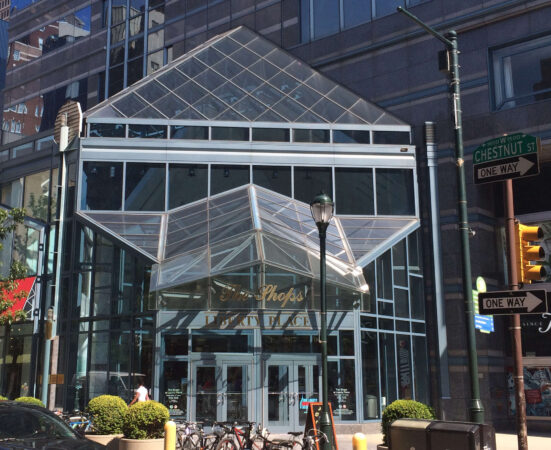
    The Inquirer’s architecture critic, Inga Saffron, praised the design of the building’s entrance, which seeks to echo its sister skyscrapers that soar above.

    “The glass structure sits a generous distance back from the hectic corner, providing plenty of elbow room for harried pedestrians,” she wrote in 2016. “The best detail is the batwing canopy over the doors. … The canopy’s angles recall the tiered chevrons that distinguish the crowns on Liberty Place’s towers.”

    The Shops at Liberty Place’s occupancy suffered a blow following the COVID-19 pandemic, but its general neighborhood is looking healthy. Both the Liberty Place skyscrapers have strong occupancy, and Center City’s residential population is climbing.

    “We’ve managed the asset carefully through challenging times,” Dempsey said. “Today, the property is well-positioned with a diverse mix of tenants, including strong experiential and destination offerings, and continues to attract interest from retailers and visitors alike. We see solid potential for continued growth and momentum under new ownership.”
  • Margaret Dupree, longtime funeral director and teacher’s aide, has died at 104

    Margaret Dupree, longtime funeral director and teacher’s aide, has died at 104

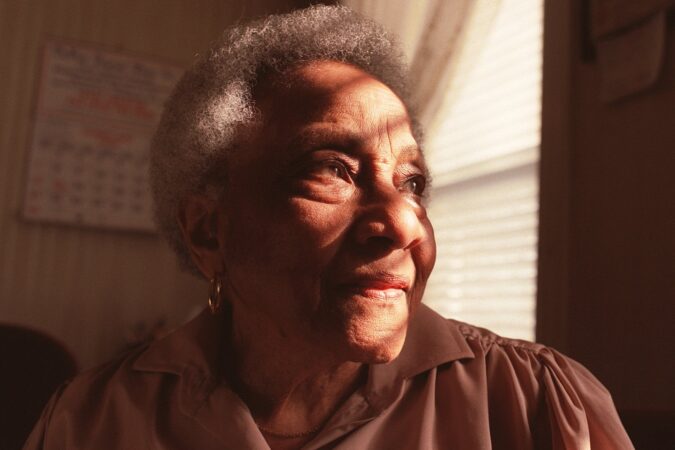
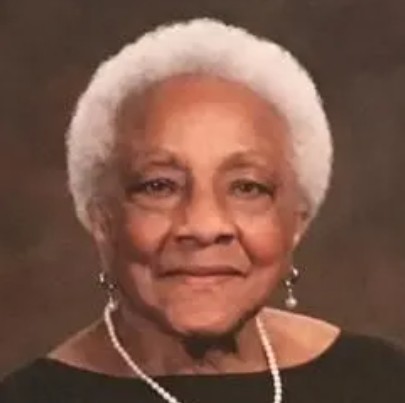
    Margaret Dupree, 104, of Philadelphia, cofounder, director, and president of Dupree Funeral Home Inc. at 28th and Diamond Streets in North Philadelphia, former teacher’s aide for the School District of Philadelphia, beautician, and mentor, died Monday, Dec. 15, of age-associated decline at Thomas Jefferson University Hospital.

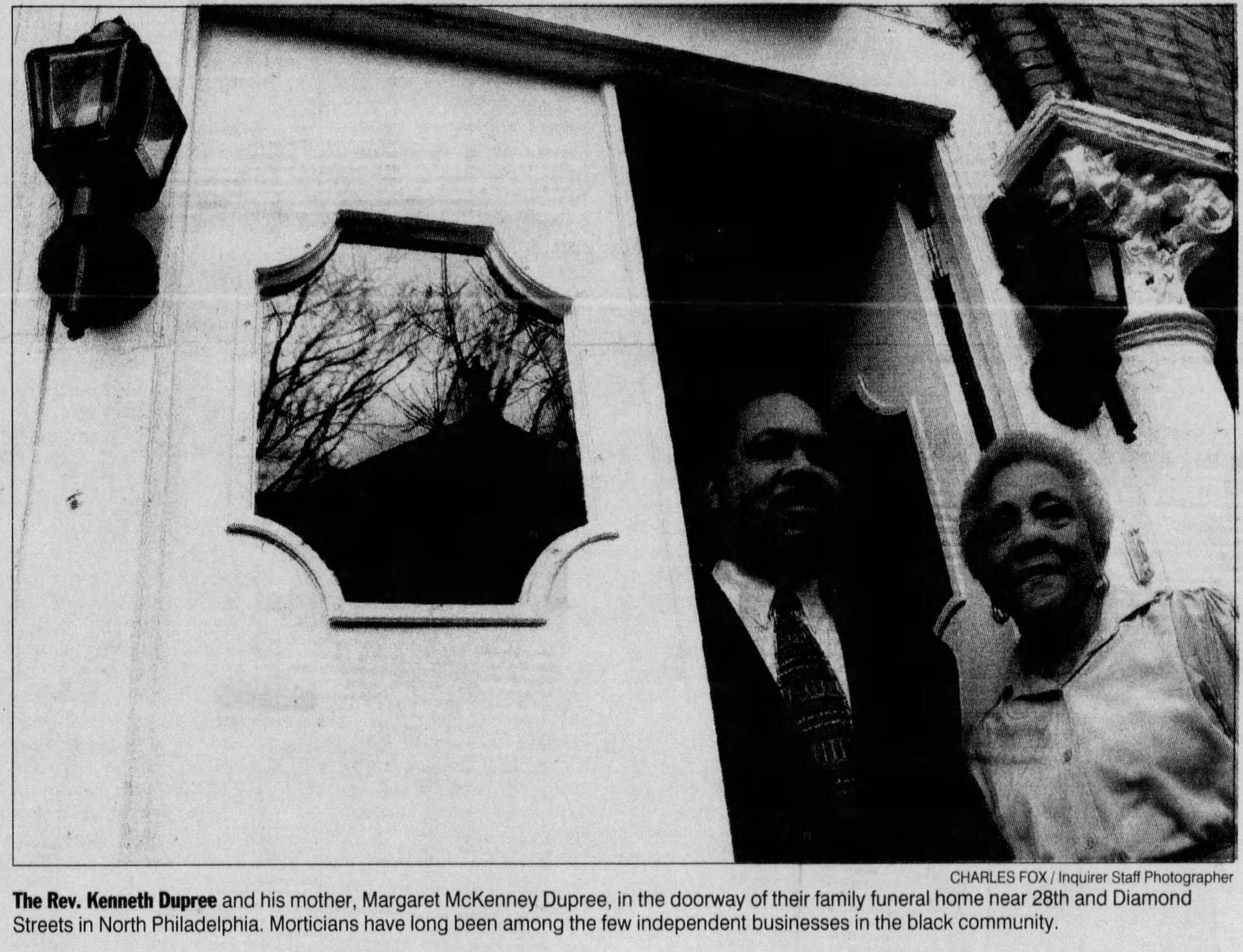
    Mrs. Dupree and her husband, Troy, established the Dupree Funeral Home in 1955, and she became sole owner and president when he died in 1987. Her son Kenneth joined her as supervisor, and together, for nearly 40 years, they conducted thousands of funerals and oversaw a building expansion in 2000 and renovation in 2003.

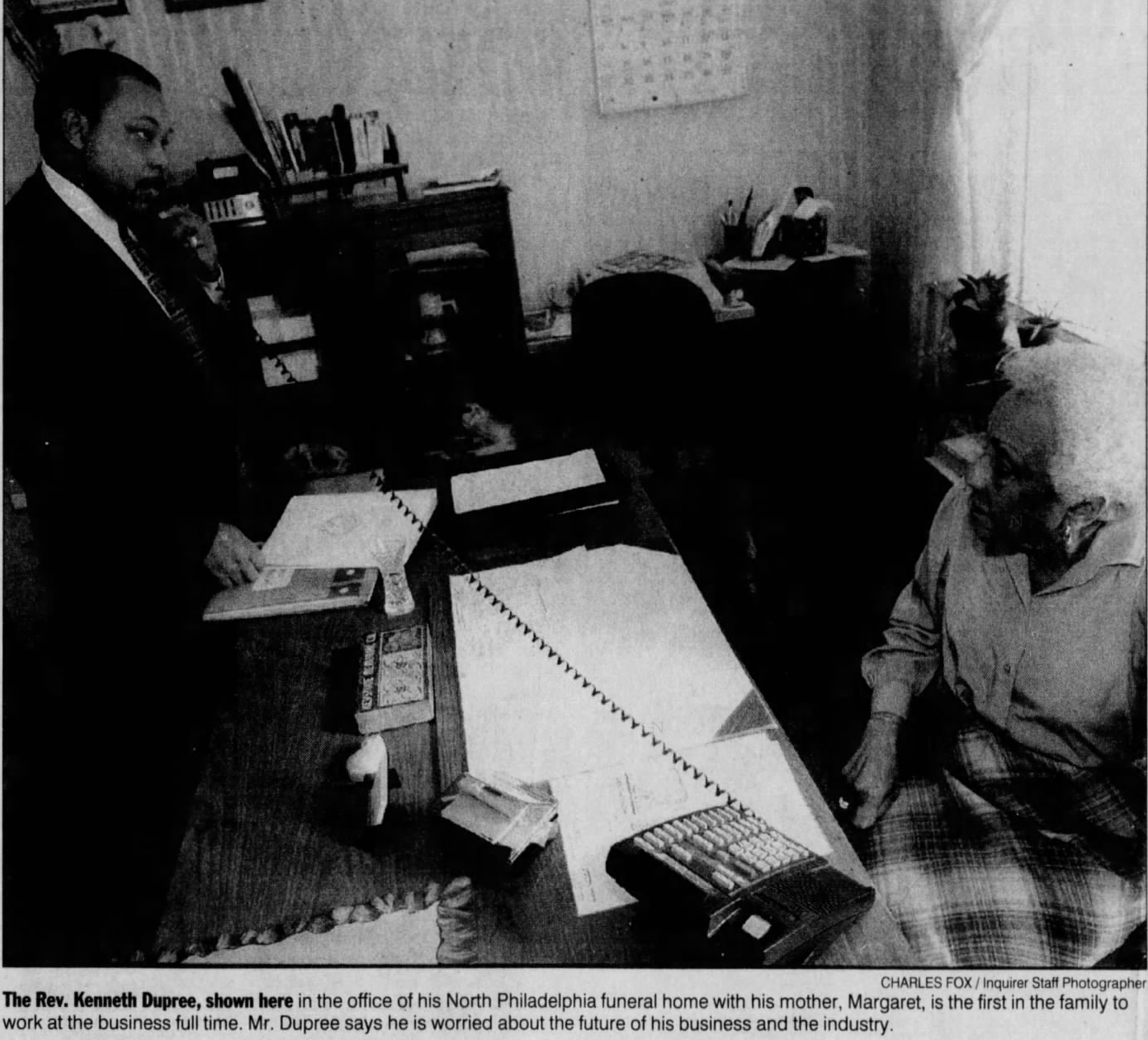
    Most often, Mrs. Dupree supervised the books and answered the office telephone. Her son handles the funeral arrangements. “She was very meticulous and organized,” her son said. “She continued our legacy and served with integrity.”

    In the 1960s and ‘70s, Mrs. Dupree told The Inquirer in 1999, funerals were held at night because most people worked during the day. So she and her husband had day jobs, too. She was a reading and math aide at William Dick and Richard R. Wright Elementary Schools. He worked for the telephone company.

    Mrs. Dupree earned a beautician’s license after graduating from Philadelphia High School for Girls in 1941.

    She earned a beautician’s license after graduating from Philadelphia High School for Girls in 1941 and worked at her mother’s beauty shop at 13th Street and Susquehanna Avenue for a while. She became licensed as a funeral director in 1949 and met her husband when they were interns at a funeral home in South Philadelphia.

    “Her lifelong commitment to funeral service stands as a rare and remarkable testament to dedication, professionalism, and service to families during their most sacred moments,” her family said in a tribute.

    Mrs. Dupree was among the oldest licensed funeral directors in the country, her family said, and she told The Inquirer she went into the business because morticians and barbers were so respected when she was a child. “They were the people who were looked up to,” she said.

    She used her makeup and beauty expertise to augment the cosmetic work on bodies in the mortuaries and said in 1995: “In the early stages, I liked doing reconstructive work. I relished doing the ‘invisible stitch.’”

    This photo of Mrs. Dupree (right) and her son Kenneth appeared in The Inquirer in 1999.

    Her family called her career “a powerful symbol of her lifelong devotion to the calling of funeral service” and praised her “mentoring others, serving families with dignity, and remaining deeply connected to the profession she loved.”

    She was a charter member of Child’s Memorial Baptist Church, known now as Keeping It Real Christian Fellowship, and supported affordable housing initiatives in North Philadelphia. “I like for women to have a place to raise their children,” she told The Inquirer in 1998 regarding a proposed housing renewal project. “If you give people a place to work and take care of their children, then the whole neighborhood will be improved.”

    Friends and former colleagues called her “funny and sweet” and a “history maker” in online tributes. One friend said she was “a woman of grace, and her radiant smile always was contagious.” Another said: “She has had a positive impact on so many Philadelphians.”

    Margaret Alma McKenney was born July 8, 1921, in Belvedere, S.C. She relocated with her family to North Philadelphia when she was 5 and grew up at 13th and Diamond Streets.

    Mrs. Dupree doted on her grandchildren and great-grandchildren.

    During World War II, she worked for the Army Signal Corps and at the Frankford Arsenal. Afterward, she earned her funeral director’s license at the old Eckels College of Mortuary Science in Philadelphia.

    She married Troy Dupree in 1951, and they had daughters Melanie and Carrie, and sons Troy Jr. and Kenneth. For years, she reared the children, worked at the funeral home, and helped out at her mother’s shop.

    Later, she doted on her grandchildren and great-grandchildren, and a friend said online: “I am a better grandma having watched from one of the best to ever do it.”

    Mrs. Dupree enjoyed knitting sweaters for her children, solving cryptograms in the newspaper, and traveling with family and friends to Bermuda, Africa, and elsewhere. She always, even at restaurants, her son Kenneth said, ate her dessert first.

    Mrs. Dupree (right) sits at her office desk while her son Kenneth talks on the phone in a photo that was published in The Inquirer in 1999.

    “She had a multifaceted personality,” her son Kenneth said. “She was a comedian, an organizer, and a fan of the underdog.”

    Her family said: “Margaret lived a life rooted in service, compassion, and purpose. Funeral service and education were never just her profession. It was her calling.”

    In addition to her children, Mrs. Dupree is survived by six grandchildren, six great-grandchildren, and other relatives. Two sisters and five brothers died earlier.

    Services were held on Dec. 28 and 29.

    Donations in her name may be made to Project Home, Development Dept., 1515 Fairmount Ave., Philadelphia, Pa. 19130.

  • Carpenters union buys $52.5 million Navy Yard building and plans move

    Carpenters union buys $52.5 million Navy Yard building and plans move

    The Eastern Atlantic States Regional Council of Carpenters plans to relocate its headquarters and two local training centers to the Philadelphia Navy Yard.

    “We’re extremely excited about the prospects and what this facility is going to transform into over the next few years,” William Sproule, executive secretary-treasurer for the Carpenters, said on Tuesday. “It’s really only the beginning of the story, and we’re going to be doing a lot of neat things down there.”

    The council had outgrown its Spring Garden Street facility, Sproule said, and started seeking a new property 2½ years ago. Philadelphia buildings continue to have vacancies as a result of the pandemic, he said, and the current state of the real estate industry represented an opportunity.

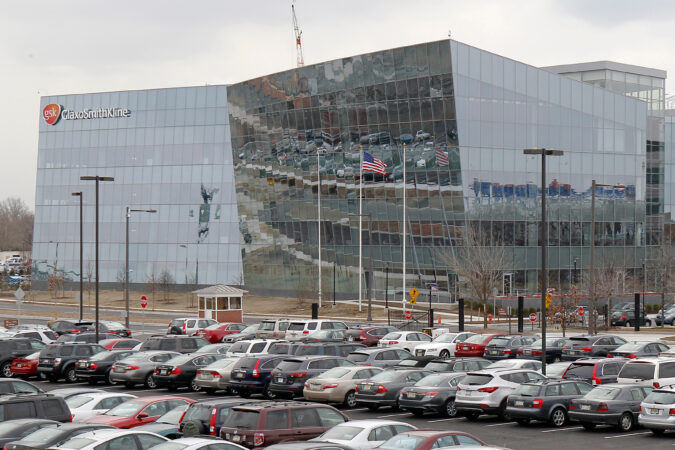
    The council purchased the Navy Yard building for $52.5 million, said Sproule, and the deal closed on Dec. 19. The building at 5 Crescent Dr. previously sold for $130.5 million in 2018.

    The four-story, 208,000-square-foot building was designed for drugmaker GSK by the architectural firm of Robert A.M. Stern, which is also responsible for the first Comcast tower.

    The pharmaceutical company moved its operations to the Navy Yard from Center City in 2013.

    Although GSK was a remote-friendly company since before the COVID-19 pandemic, the building remained well used until 2020.

    Then, in 2022, GSK moved its operations out of the then-lightly used Navy Yard office to a 50,000-square-foot office in University City’s FMC Tower. In an unusual move the company continued to pay rent at the former location, and did not seek to sublease the space.

    That left the building at 5 Crescent Dr. in a tricky position: it is difficult to get new financing on a vacant building, even if rent is still being paid, because it is clear that when the lease is up the tenant will not renew. As a result, the building owner, Korea Investment Management Co., ran into financial problems on the property which went into foreclosure.

    Special servicer Rialto Capital Management has been handling the day-to-day care of the building in recent years. Neither Rialto nor GSK immediately replied to requests for comment.

    Office space in the Navy Yard is in high demand, with no official vacancy thanks to GSK’s continued rental of their former space. According to the official website, it hosts over 16,500 workers from 150 companies.

    Carpenters union’s plans for the Navy Yard

    Plans for the Navy Yard site include constructing a training facility adjacent to the purchased building that would eventually replace the council’s Northeast Philly and New Castle training centers, said Sproule. He estimated that it could cost $30 million to build out “on the low end,” and take at least 24 months to complete.

    The move to the Navy Yard will also improve accessibility for some, said Sproule. When apprentices who live in the city are first starting out, they might not have access to a car, he said, adding that the new site is conveniently located near the NRG SEPTA stop.

    “I think it’s going to be extremely convenient for members doing journeyman upgrade classes that live within the city limits as well as apprentices that live within the city limits that may not drive as much as folks that live out in the suburbs,” he said.

    Sproule said employees of the union could be working out of the Navy Yard site as soon as the end of April, with initially up to 125 people based out of the building’s fourth floor.

    The council has also already identified some potential tenants to lease out parts of the Navy Yard building.

    Sproule said the council is considering selling the Spring Garden facility, or getting it “zoned for a mid-rise, multifamily structure.”

    “We may try to build something similar to what’s across the street, or we may sell it to an interested party. We haven’t made those decisions yet,” he said. “I guess it’s just going to be a matter of what’s more practical and feasible.”

    Cyclists ride past 5 Crescent Dr. at the Navy Yard in Philadelphia, Pa., on Monday, April 29, 2024.

    Sproule said the purchase of the Navy Yard site seemed from the start like “a really good deal.” Then when he learned from an article in the Philadelphia Business Journal that the building at one time had sold for roughly $130 million, he said, “knowing that somebody actually invested that kind of capital for that building back then — which wasn’t that long ago, when you think about it — makes me really feel good about our endeavors that we’re about to embark on.”

    “Aside from our pension funds and all the investments that we do on that end to make sure that they are strong and secure for generations to come, we do have general fund assets that our Regional Council uses for operational purposes. We just hit a spot in time where we had an opportunity to possibly look at an investment of this size and magnitude, and it was just a matter of being at the right time, at the right place,” he said.

    Navy Yard neighbors

    The Carpenters are not the first building trades union to move to the Navy Yard from Spring Garden.

    In 2023, International Brotherhood of Electrical Workers Local 98 announced that it would be relocating its headquarters from 1719 Spring Garden St. The union purchased two properties for $18.5 million.

    “We’re excited to be their neighbors,” said Sproule.

    The Regional Council of Carpenters and Local 98 are among the most powerful building trades unions in Philadelphia, and they have strong membership bases in South Jersey and South Philadelphia, making the Navy Yard location at the edge of the city ideal for many members.

    The spacious property at the Navy Yard also allows room for training facilities, which could be difficult to co-locate with a headquarters office in other parts of the city.

    On the other side of Philadelphia is another concentration of building trades infrastructure in the Far Northeast. Near the Bucks County line, this hub provides similar advantages for union locals that include the Steamfitters, Ironworkers, and Bricklayers.

  • ‘It’s time’: Trump Store in Bucks County closing due to declining sales

    ‘It’s time’: Trump Store in Bucks County closing due to declining sales

    One Trump supporter’s journey from a mall kiosk to a Bucks County strip mall is coming to an end this month.

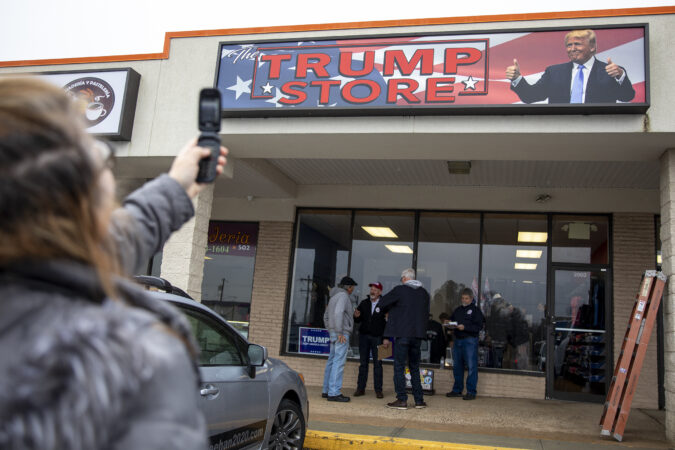
    The “Trump Store,” a Bensalem spot for merchandise and knickknacks celebrating President Donald Trump, is closing its doors after six years in business. The store’s final day is Jan. 31.

    Mike Domanico, who co-owns the store with his wife, Monica, remains an ardent supporter of the president. But business is business, and Domanico said sales have declined since Trump returned to the White House, forcing the “tough decision” to shut down.

    “Business has slowed down some because there’s not really much action going on with Trump,” Domanico said. “It’s time.”

    There were other factors. The store’s lease is up in February, and Domanico wants to devote more of his time to a booming side business selling gun show merchandise.

    Domanico said Trump’s tariffs on imported goods haven’t impacted his business at all.

    “Any of the stuff I buy is priced the same as it was before all the tariffs took effect,” Domanico said.

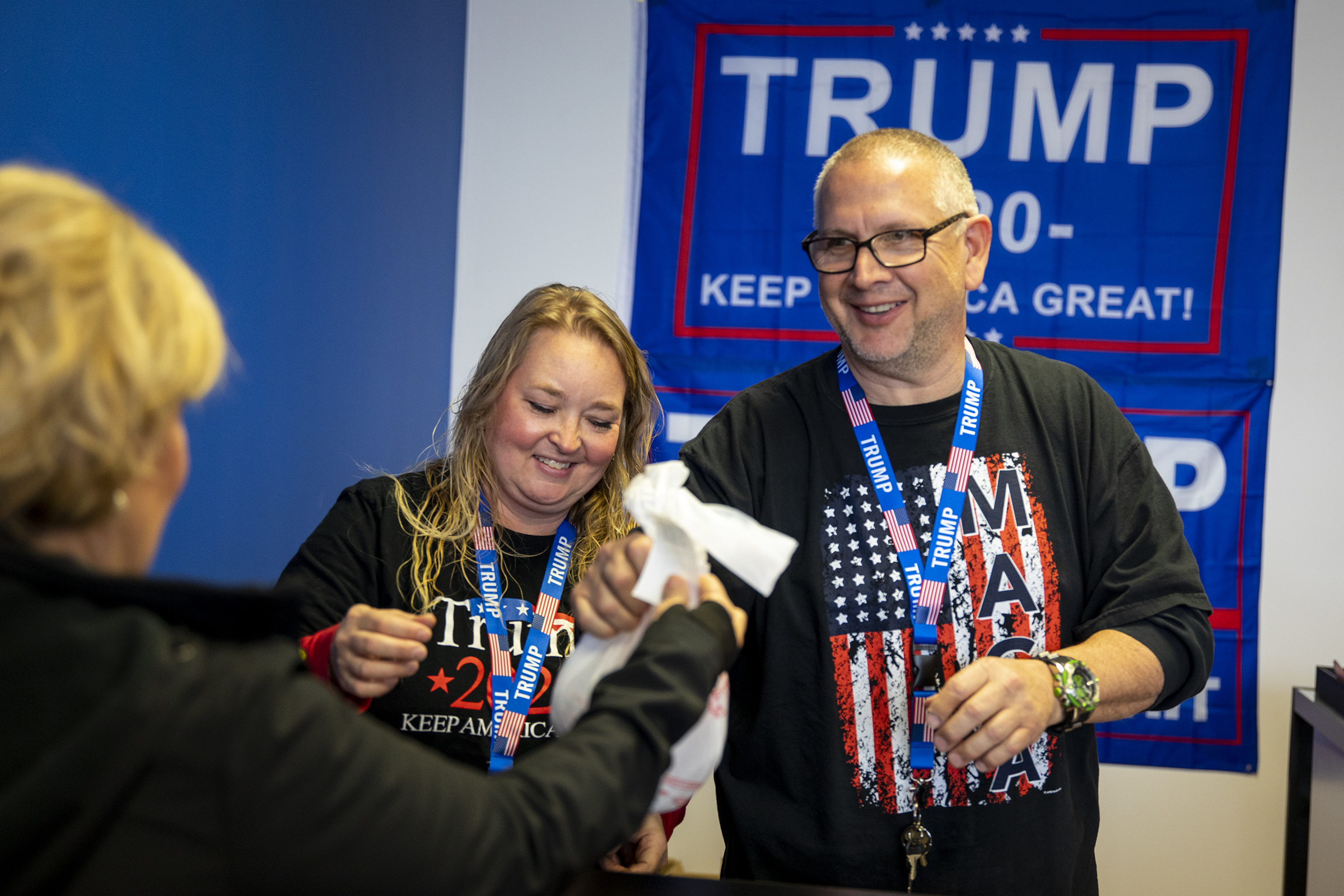
    Michael Domanico and his wife, Monica, seen here in 2020 during the grand opening of their Trump Store in Benaslem.

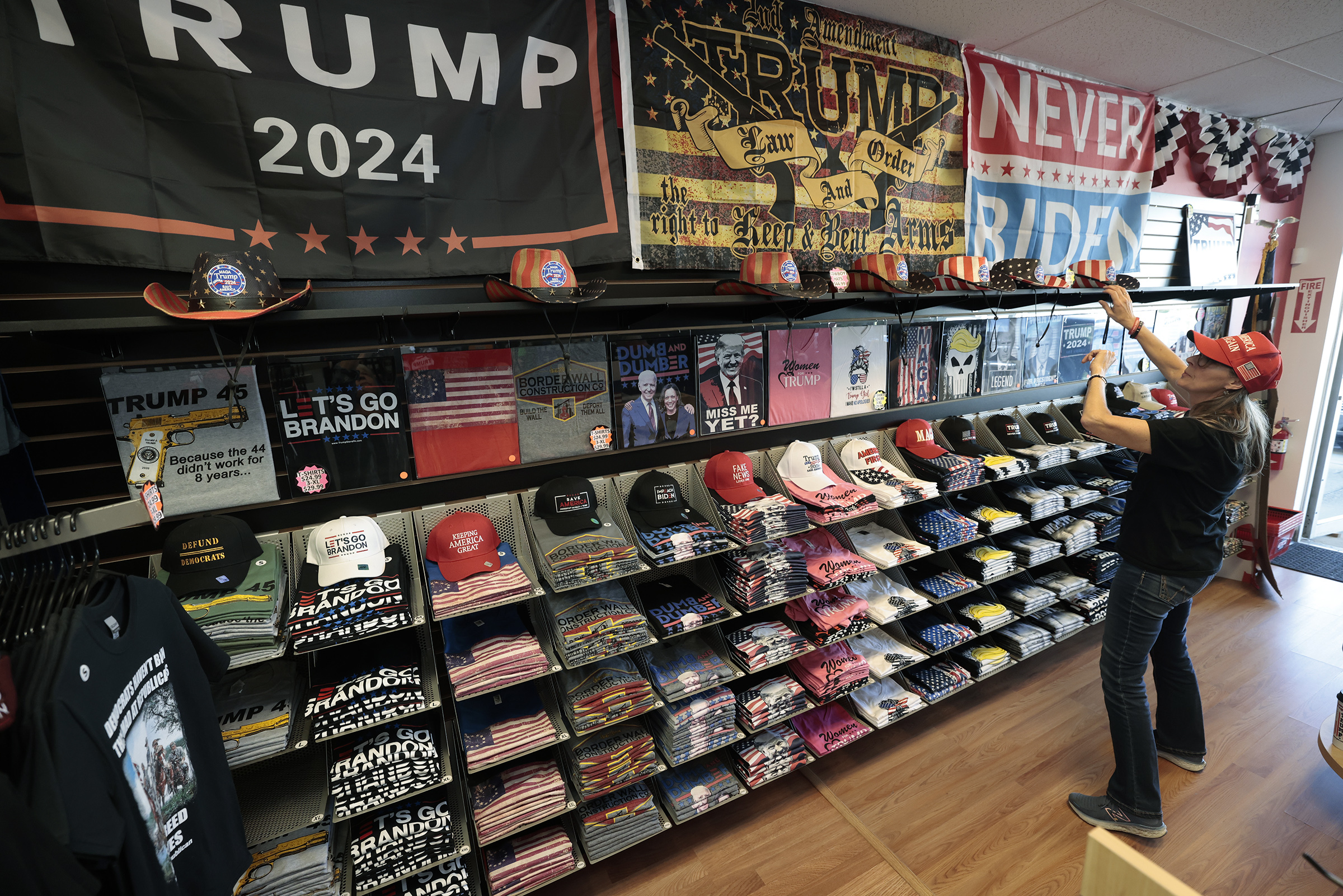
    The store began its closeout sale on Tuesday, Jan. 6, exactly five years to the day when Trump supporters stormed the U.S. Capitol in an unsuccessful attempt to overturn the 2020 election results. Everything’s on sale, from shirts featuring the president as an Eagles player to hats promoting a fictitious 2028 reelection campaign barred by the U.S. Constitution.

    Domanico, who founded his T-shirt business, Sik-Nastee, in 2017, began selling Trump merchandise at a kiosk in the Neshaminy Mall in November 2019.

    After the holidays, Domanico ditched the Biden merchandise he was forced to sell by the mall’s management company and opened his first Trump Store in a strip mall alongside a Hispanic bakery and a travel agent. The store remained open during COVID closures by selling Trump face masks, allowing it to operate as a “life-sustaining business.”

    Domanico opened a sister Trump Store in Chalfont in July 2022, but closed it last year due to issues with the landlord and some vandalism. He has two full-time employees helping him run the store.

    In his six years selling Trump merchandise, Domanico said the only tough year was after the 2020 election. Following his second impeachment, Trump appeared to lose support from most Republicans, and sales at the store slowed.

    “I stuck with it because I knew he was going to run again, and it worked out very well,” Domanico said.

    Trump Store manager Lisa von Deylen, seen here replenishing the store’s inventory in May 2024.

    Sales grew during the final years of Joe Biden’s tenure, fueled by Trump becoming the first former president indicted for a crime. “Free Trump” shirts became a particularly hot seller, and the store saw a spike in sales when the president’s Mar-a-Lago estate in Palm Beach, Fla., was raided by FBI agents.

    The store’s closing comes just a few months after Democrats swept every countywide race in off-year elections in Bucks County. It’s a dramatic political shift compared to just last year, when Trump became the first Republican presidential candidate since 1988 to win the swing county.

    While many Bucks County residents appear to have soured on the president and his policies, Domanico isn’t among them.

    “I think his second term has been great,” Domanico said. “I know the liberal media turns everything around, making it look bad, but he’s doing some great stuff. I love it.”

  • Sheetz president and CEO dies, but the convenience store rivalry is eternal

    Sheetz president and CEO dies, but the convenience store rivalry is eternal

    The namesake behind Wawa’s biggest rival, Sheetz, has died.

    Stephen G. Sheetz, the man responsible for taking a family-owned convenience store in Altoona, Pa., and transforming it into a multibillion-dollar empire, was 77. The company announced his death in a statement Monday, citing respiratory complications after having been hospitalized with pneumonia.

    And while Wawa fans may be suspicious of how the chain’s fried food, or coffee, or even gasoline stacks up against their supreme leader’s, there’s no denying Sheetz’s legacy and vision.

    Sheetz served as the chain’s CEO and president from 1984 to 1995, overseeing its expansion. After that, he was chairman of the board for another 18 years.

    The former president was just 12 when he began working at the original Sheetz Kwik Shopper, founded by his brother, Bob Sheetz. He graduated from Altoona Area High School in 1965 and from Pennsylvania State University four years later.

    Penn State named Steve and his wife, Nancy Sheetz, as its 2010 philanthropists of the year, following their donation of $2.5 million to the school’s Altoona campus. It was the campus’ largest donation in its 70-year history. The couple tacked on another half a million that year, funding the establishment of an entrepreneurial center and a Sheetz Fellows program.

    “I try to provide a positive influence,” Steve Sheetz said at the time in a university statement. “I really hope that students in the program will be better prepared for the world they’re about to enter, whether it’s business or another profession.”

    As supervisor and director of operations at the chain, he oversaw the expansion of Sheetz convenience stores, with the intention of opening a new location every year, according to the company’s website. Over the next 14 years, Sheetz would grow to 100 locations.

    “Above all, Uncle Steve was the center of our family,” Sheetz president and CEO Travis Sheetz said in a statement. “We are so deeply grateful for his leadership, vision, and steadfast commitment to our employees, customers, and communities.”

    Today, with over 800 locations across six states and about 25,000 employees, the business remains largely family-run.

    Offering a hodgepodge of fast food, including burgers, hot dogs, and mozzarella sticks, the chain has its super fans, just like Philly’s own Wawa phanatics.

    They call themselves “Sheetz Freakz.” And they start them young.

    Take Dylan LaMotte of Lynchburg, Va.

    In 2020, then-8-year-old Dylan went viral for his mom’s video of him wearing a shirt that said “Youngest Sheetz Freak” and pitching ideas for the chain’s menu.

    Steve Sheetz himself flew to Lynchburg to surprise Dylan and gift him $5,000 toward his daily order of fries and a slushie. In other instances over the years, the company has rewarded other superfans with hefty donations to their charities of choice.

    Perhaps worse than the Eagles-Steelers contention, the Wawa vs. Sheetz clash is considered among “the most heated food rivalry in the country.” There’s even a documentary in the works. In its simplest terms, it’s a question of taste, regional devotion, and loyalty.

    In 2020, The Inquirer tapped Pennsylvanians Sen. John Fetterman (who was lieutenant governor at the time) and U.S. Rep. Brendan F. Boyle to weigh in on the debate.

    Boyle, who is team Wawa, helped cut the ribbon on Wawa’s first D.C. location. He joked that it was the “Philly Embassy in Washington.”

    “Sure enough, as I approached the D.C. Wawa right after the game, the crowd of people wearing Eagles jerseys was out the door. The Philly diaspora had had the same thought I did. We flocked to our ‘embassy’ to celebrate,” he said.

    Fetterman, who is pro-Sheetz, said, “Whether I’m Jeeping it home from Harrisburg, or on the road asking yinz and youse about legalizing cannabis, the warm red glow of a Sheetz awning beckons with red beet eggs, a hunk of cheese, and the rich cavalcade of the entire family of Duke’s smoked shorty sausages.” He added, “It is a given that Sheetz is far superior.”

    At the end of the day, the rivalry isn’t going anywhere. But you can still respect the man behind the mystique.

    “Steve’s guidance shaped nearly every aspect of our family business,” said Joe Sheetz, chairman of the Sheetz board of directors. “He was a mentor for every leader who has followed him, and his vision, wisdom, and entrepreneurial spirit will be missed deeply by everyone at Sheetz.”

    Altoona Mayor Matt Pacifico also released a statement, saying “Steve had a genuine, tangible love for the City of Altoona, as shown by his contributions, actions and initiatives. We send our sincere sympathy to Steve’s family during this difficult time, as well as immense gratitude for his lasting contributions to our City and its residents, that will be his legacy for years to come.”

    In addition to his wife, Nancy, Steve Sheetz is survived by two daughters, Megan Sheetz and Nicole Sheetz Frith; seven grandchildren; and six of his seven siblings, including his brother Bob Sheetz.

  • Coatesville’s 106-year-old Presence Bank acquired in $55M deal

    Coatesville’s 106-year-old Presence Bank acquired in $55M deal

    A Pennsylvania-based bank has acquired the parent company of Coatesville’s Presence Bank, giving the two combined assets of about $3 billion.

    The $54.9 million deal was first announced in July and received regulatory and board approvals in December. It closed Monday.

    PB Bankshares, the holding company for Presence Bank, has been merged into Norwood Financial Corp., the holding company for Wayne Bank.

    “We are pleased to welcome PB Bankshares’ shareholders, customers and employees to our Norwood family,” Jim Donnelly, president and CEO of Norwood, said in Monday’s announcement. “We expect this combination will allow us to offer expanded products and services to the communities in our combined market areas.”

    Norwood’s Wayne Bank, based in Honesdale, had $2.4 billion in assets at the acquisition. Wayne Bank was founded in 1871, and Norwood Financial Corp, the holding company, was created in 1996. It has grown to 15 offices in Northeastern Pennsylvania and 12 in the Southern Tier of New York.

    PB Bankshares had $467 million in assets from its Presence Bank when the deal closed.

    Presence Bank first opened in 1919 in Coatesville, Chester County, as Coatesville Federal Savings & Loan Association, and in 2021 was renamed Presence Bank.

    Over the years, the bank added branches in Oxford, Chester County, and in New Holland and Georgetown, both in Lancaster County. Presence Bank also has an administrative office in Lancaster and a loan office in Harrisburg.

    Norwood has said the strategic combination allows the company to expand its footprint “into higher growth markets in Central and Southeastern Pennsylvania” while “enhancing Presence Bank’s capacity to provide exceptional service and solutions to its existing customers.”

    Janak M. Amin, president, CEO, and director of PB Bankshares, is now executive vice president and chief operating officer for Norwood and Wayne Bank.

    “We will be able to provide more products and services to our customers given Wayne Bank’s strength in retail banking,” Amin said.

    He added that Wayne Bank’s larger capital base will allow Presence Bank to “take better care of commercial customers with growing needs and the increased lending limit will allow us to retain and attract more customers.”

  • Musk’s AI chatbot faces global backlash over sexualized images of women and children

    Musk’s AI chatbot faces global backlash over sexualized images of women and children

    LONDON — Elon Musk’s AI chatbot Grok is facing a backlash from governments around the world after a recent surge in sexualized images of women and children generated without consent by the artificial intelligence-powered tool.

    On Tuesday, Britain’s top technology official demanded that Musk’s social media platform X take urgent action while a Polish lawmaker cited it as a reason to enact digital safety laws.

    The European Union’s executive arm has denounced Grok while officials and regulators in France, India, Malaysia, and Brazil have condemned the platform and called for investigations.

    Rising alarm from disparate nations points to the nightmarish potential of nudification apps that use artificial intelligence to generate sexually explicit deepfake images.

    Here’s a closer look:

    Image generation

    The problem emerged after the launch last year of Grok Imagine, an AI image generator that allows users to create videos and pictures by typing in text prompts. It includes a so-called “spicy mode” that can generate adult content.

    It snowballed late last month when Grok, which is hosted on X, apparently began granting a large number of user requests to modify images posted by others. As of Tuesday, Grok users could still generate images of women using requests such as, “put her in a transparent bikini.”

    The problem is amplified both because Musk pitches his chatbot as an edgier alternative to rivals with more safeguards, and because Grok’s images are publicly visible, and can therefore be easily spread.

    Nonprofit group AI Forensics said in a report that it analyzed 20,000 images generated by Grok between Dec. 25 and Jan. 1 and found that 2% depicted a person who appeared to be 18 or younger, including 30 of young or very young women or girls, in bikinis or transparent clothes.

    Musk response

    Musk’s artificial intelligence company, xAI, responded to a request for comment with the automated response, “Legacy Media Lies.”

    However, X did not deny that the troublesome content generated through Grok exists. Yet it still claimed in a post on its Safety account, that it takes action against illegal content, including child sexual abuse material, “by removing it, permanently suspending accounts, and working with local governments and law enforcement as necessary.”

    The platform also repeated a comment from Musk, who said, “Anyone using Grok to make illegal content will suffer the same consequences as if they upload illegal content.”

    A growing list of countries are demanding that Musk does more to rein in explicit or abusive content.

    Britain

    X must “urgently” deal with the problem, Technology Secretary Liz Kendall said Tuesday, adding that she supported additional scrutiny from the U.K.’s communications regulator, Ofcom.

    Kendall said the content is “absolutely appalling, and unacceptable in decent society.”

    “We cannot and will not allow the proliferation of these demeaning and degrading images, which are disproportionately aimed at women and girls.”

    Ofcom said Monday it has made “urgent contact” with X.

    “We are aware of serious concerns raised about a feature on Grok on X that produces undressed images of people and sexualised images of children,” the watchdog said.

    The watchdog said it contacted both X and xAI to understand what steps it has taken to comply with British regulations.

    Under the U.K.’s Online Safety Act, social media platforms must prevent and remove child sexual abuse material when they become aware of it.

    Poland

    A Polish lawmaker used Grok on Tuesday as a reason for national digital safety legislation that would beef up protections for minors and make it easier for authorities to remove content.

    In an online video, Wlodzimierz Czarzasty, speaker of the parliament, said he wanted to make himself a target of Grok to highlight the problem, as well as appeal to Poland’s president for support of the legislation.

    “Grok lately is stripping people. It is undressing women, men, and children. We feel bad about it. I would, honestly, almost want this Grok to also undress me,” he said.

    European Union

    The bloc’s executive arm is “well aware” that Grok is being used to for “explicit sexual content with some output generated with childlike images,” European Commission spokesman Thomas Regnier said

    “This is not spicy. This is illegal. This is appalling. This is disgusting. This is how we see it, and this has no place in Europe. This is not the first time that Grok is generating such output,” he told reporters Monday.

    After Grok spread Holocaust-denial content last year, according to Regnier, the Commission sought more information from Musk’s social media platform X. The response from X is currently being analyzed, he said.

    France

    The Paris prosecutor’s office said it’s widening an ongoing investigation of X to include sexually explicit deepfakes after officials receiving complaints from lawmakers.

    Three government ministers alerted prosecutors to “manifestly illegal content” generated by Grok and posted on X, according to a government statement last week.

    The government also flagged problems with the country’s communications regulator over possible breaches of the EU’s Digital Services Act.

    “The internet is neither a lawless zone nor a zone of impunity: sexual offenses committed online constitute criminal offenses in their own right and fall fully under the law, just as those committed offline,” the government said.

    India

    The Indian government on Friday issued an ultimatum to X, demanding that it take down all “unlawful content” and take action against offending users. The country’s Ministry of Electronics and Information Technology also ordered the company to review Grok’s “technical and governance framework” and file a report on actions taken.

    The ministry accused Grok of “gross misuse” of AI and serious failures of its safeguards and enforcement by allowing the generation and sharing of ”obscene images or videos of women in derogatory or vulgar manner in order to indecently denigrate them.”

    The ministry warned failure to comply by the 72-hour deadline would expose the company to bigger legal problems, but the deadline passed with no public update from India.

    Malaysia

    The Malaysian communications watchdog said Saturday it was investigating X users who violated laws prohibiting spreading “grossly offensive, obscene, or indecent content.”

    The Malaysian Communications and Multimedia Commission said it’s also investigating online harms on X, and would summon a company representative.

    The watchdog said it took note of public complaints about X’s AI tools being used to digitally manipulate “images of women and minors to produce indecent, grossly offensive, or otherwise harmful content.”

    Brazil

    Lawmaker Erika Hilton said she reported Grok and X to the Brazilian federal public prosecutor’s office and the country’s data protection watchdog.

    In a social media post, she accused both of generating, then publishing sexualized images of women and children without consent.

    She said X’s AI functions should be disabled until an investigation has been carried out.

    Hilton, one of Brazil’s first transgender lawmakers, decried how users could get Grok to digitally alter any published photo, including “swapping the clothes of women and girls for bikinis or making them suggestive and erotic.”

    “The right to one’s image is individual; it cannot be transferred through the ‘terms of use’ of a social network, and the mass distribution of child pornography by an artificial intelligence integrated into a social network crosses all boundaries,” she said.

  • FAA picks 2 firms to replace 612 outdated radar systems that air traffic controllers rely on

    FAA picks 2 firms to replace 612 outdated radar systems that air traffic controllers rely on

    The federal government has picked two companies to replace 612 radar systems nationwide that date back to the 1980s as part of a multibillion-dollar overhaul of the nation’s air traffic control system.

    Transportation Secretary Sean Duffy and the Federal Aviation Administration said Monday that contractors RTX and Spanish firm Indra will replace the radar systems by the summer of 2028. The administration set an ambitious goal of completing the overhaul by the end of 2028 near the conclusion of President Donald Trump’s current term in office.

    “Our radar network is outdated and long overdue for replacement. Many of the units have exceeded their intended service life, making them increasingly expensive to maintain and difficult to support,” FAA Administrator Bryan Bedford said.

    The FAA has been spending most of its $3 billion equipment budget just maintaining the fragile old system that still relies on floppy discs in places. Some of the equipment is old and isn’t manufactured anymore, so the FAA sometimes has to search for spare parts on eBay.

    Technical failures twice knocked out the radar for air traffic controllers managing planes around Newark Liberty International Airport last spring, and those problems led to thousands of cancellations and delays at the major hub airport.

    Redundancy in the system helps keep flights safe, but there have been a number of occasions when both the primary and backup systems failed, as happened in the Philadelphia facility directing planes into and out of the Newark airport.

    The FAA didn’t immediately provide an estimate of the cost of the new radar systems that will replace 14 different existing radar systems in use across the country and will simplify maintenance and repairs.

    The FAA has already committed more than $6 billion of the $12.5 billion that Congress approved to pay for the overhaul, but Duffy has said that another $20 billion will be needed to complete the project. The agency has already replaced more than one-third of the outdated copper wires the system was relying on with modern connections like fiber optic lines, and it hired a national security contractor named Peraton to oversee the work.

  • Side-gig advice from people who make money on Uber, Lyft, and Airbnb in the Philadelphia area

    Side-gig advice from people who make money on Uber, Lyft, and Airbnb in the Philadelphia area

    The number of people doing gig work has increased significantly over the past few years. It was more than 76 million people in the U.S. last year, according to recent reports.

    And the work can pay well. Almost 5 million freelancers are earning more than $100,000 per year, according to freelancer site Upwork. These side gigs can include everything from driving an Uber and running an Airbnb to managing websites, tutoring, or even walking a dog.

    Benefits to this kind of work include flexibility, control, independence, variety, and the ability to make extra money outside a day job.

    But having a successful side gig isn’t easy.

    Marketing yourself and getting work is a topic for a different day. But before you get to that — and yes, you will need to — here are a few things you should know.

    It’s a business

    Your side gig is a business, so make sure you’re treating it like one. You are an independent contractor and the company owner.

    You will need to track your costs and revenues separately from your personal life. You should probably have a separate bank account so funds aren’t intermingled.

    You may need insurance. This not only gives your business credibility, but it also makes it easier for companies to hire you as an independent contractor rather than classifying you as an employee.

    A proper contractor is “really someone already running their own business — they provide the service to a number of other companies,” said Sarah Holmes, a small-business attorney based in Ardmore.

    It helps to set up a corporation or limited liability company, said Jeff Burke, a partner at law firm McElroy Harvey in West Chester.

    “If you set up a corporation or an LLC and you’re doing a business-to-business contract, you are way more likely to pass muster,” Burke said. “A freelancer should have some written proof — business cards, advertisements, websites — that shows you’re actually out in the marketplace.”

    No matter what the business, you always have to remember that “you’re the owner,” Uber and Lyft driver Joseph Casasanto told me.

    “As drivers, we are independent business contractors,” he says. “So that means everything is our responsibility, like gas, oil changes, alignments, tires, repairs, miles, depreciation, etc.”

    Don’t ignore the paperwork

    As a business, you’ll need to make sure you’ve filed the right paperwork and take your taxes seriously. This means either reporting your income and expenses on the Schedule C to your individual tax return or setting up your business separately as an LLC, corporation, or other entity recognized for both federal and state purposes.

    Because your customers don’t withhold taxes like an employer does, you’ll need to pay in estimated taxes to avoid penalties and interest for underpaying throughout the year.

    Experienced freelancers, like part-time Uber driver Jason Napolitan, are scrupulous about tracking their expenses separately and keeping good tax records.

    “My expenses are not only the obvious ones like gas and insurance but also tires and wear and tear on my vehicle.” he said. “For example, I always make sure to track my mileage for the IRS allowance given on my taxes.”

    As a freelancer, you should have an agreement in writing that stipulates the services provided and is clear about your role, so that you’re in compliance with federal and state worker classification rules.

    Guidance around independent contractor rules has been shifting, said Josh Ganz, a labor and employment attorney at Duffy North in Hatboro. But there is a baseline to follow.

    Important questions to consider, he said, are: “Is your client or customer controlling your entire day? Do they tell you where to be and provide the tools for you?”

    Set boundaries

    Having a side gig should never affect your primary job. Make sure you have clear boundaries and there are no conflicts so you don’t get into trouble with your primary employer.

    Running a side gig means you’ll have a lot to juggle between your personal life, your job, and your business. So it’s important to create a schedule. Your customers will want to know when you’re available and so will your family.

    It’s important to set goals as to how much you want to earn and stick to those parameters. It’s easy to get caught up in doing the extra work but it can also quickly take up your time.

    “If you want to do this full time, you have to set goals,” Lyft driver Kendra Brigman said. “You have to have a good attitude when you’re doing your side gig and provide great service. But your availability is also very important.”

    Be smart about pricing

    If you’re doing freelance work for an established company like Uber or Lyft, those rates are usually set for you. Others, like Airbnb, can suggest rates based on your local market. But the rest will be up to you.

    Setting a price too low may set a precedent that becomes unprofitable over the long term. Charging too much may turn off potential customers. You’ll need to research the competition and make a few mistakes over time to learn the right balance.

    It’s also important to know your limitations.

    For example, Airbnb host Julie Seda said, “We are always up-front to prospective guests that our house is not suitable for people with mobility restraints.”

    Lyft driver Brigman said knowing your pricing and comparing it with what you’re being asked to do can make a big difference, and it’s important to figure out what’s worth your time.

    “Sometimes the miles requested doesn’t equate with the amount of money I would like to earn,” she said. “I’ve learned to turn down those jobs.”

  • P.J. Whelihan’s restaurant group may move into a former Iron Hill Brewery

    P.J. Whelihan’s restaurant group may move into a former Iron Hill Brewery

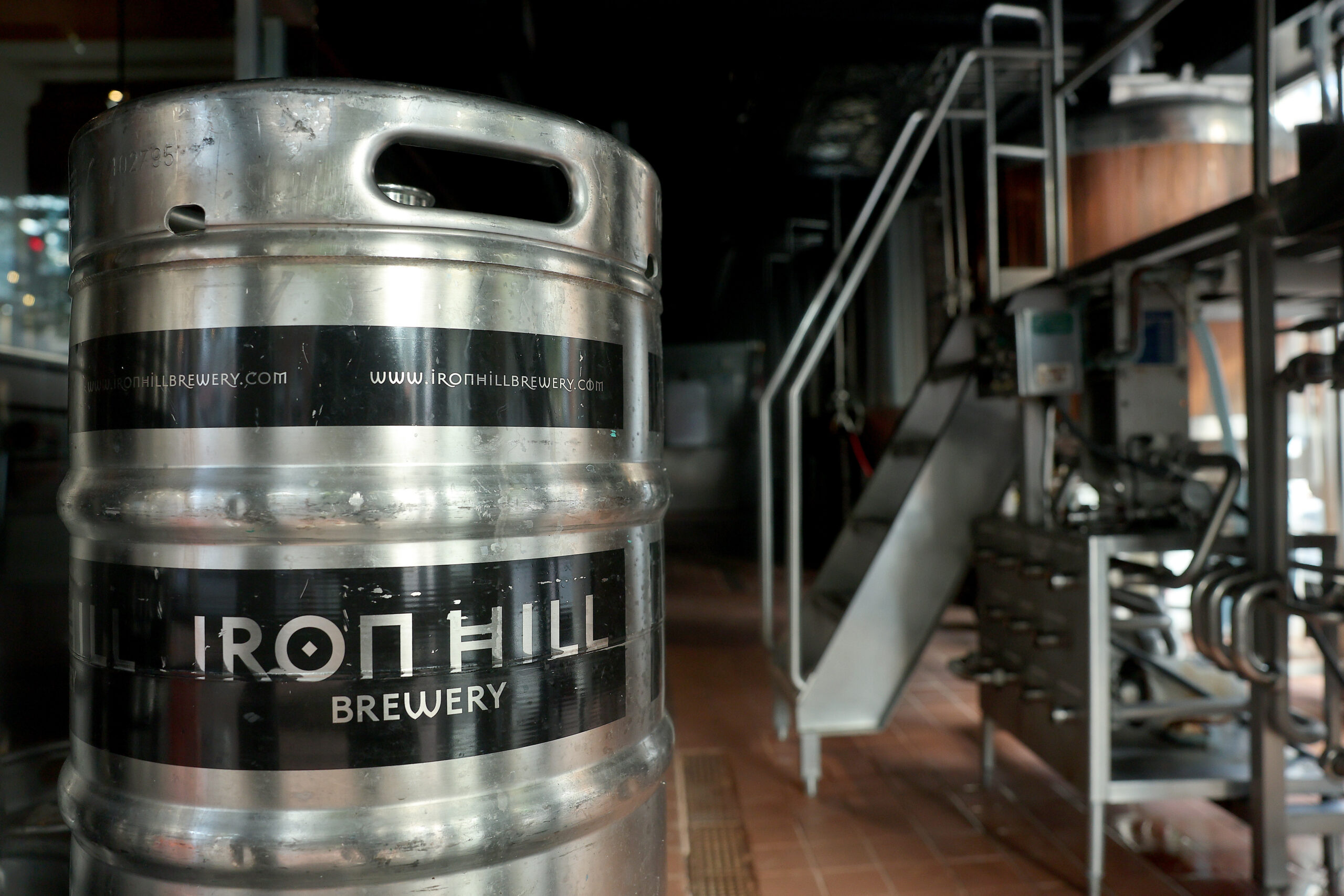
    The company that owns P.J. Whelihan’s may be moving into a former Iron Hill Brewery in Bucks County.

    PJW Opco LLC, which is registered at the headquarters of PJW Restaurant Group, was approved to take over a lease for the shuttered Iron Hill in Newtown, effective Dec. 31, according to documents filed in U.S. Bankruptcy Court in New Jersey.

    PJW marketing director Kristen Foord declined to comment.

    The nearly 8,000-square-foot brewpub in the Village at Newtown shopping center has sat empty since September, when Iron Hill abruptly closed all its locations and filed for liquidation bankruptcy. The Newtown Iron Hill had been among the chain’s newest locations, having opened in 2020.

    A view from the outside looking in on the closed Iron Hill Brewery in West Chester in October.

    Brixmor Property Group, which owns the Village at Newtown, is “excited about what’s in the works” for the former Iron Hill space, spokesperson Maria Pace said in a statement, but she declined to share details.

    The court documents did not indicate PJW’s plans for the Newtown site.

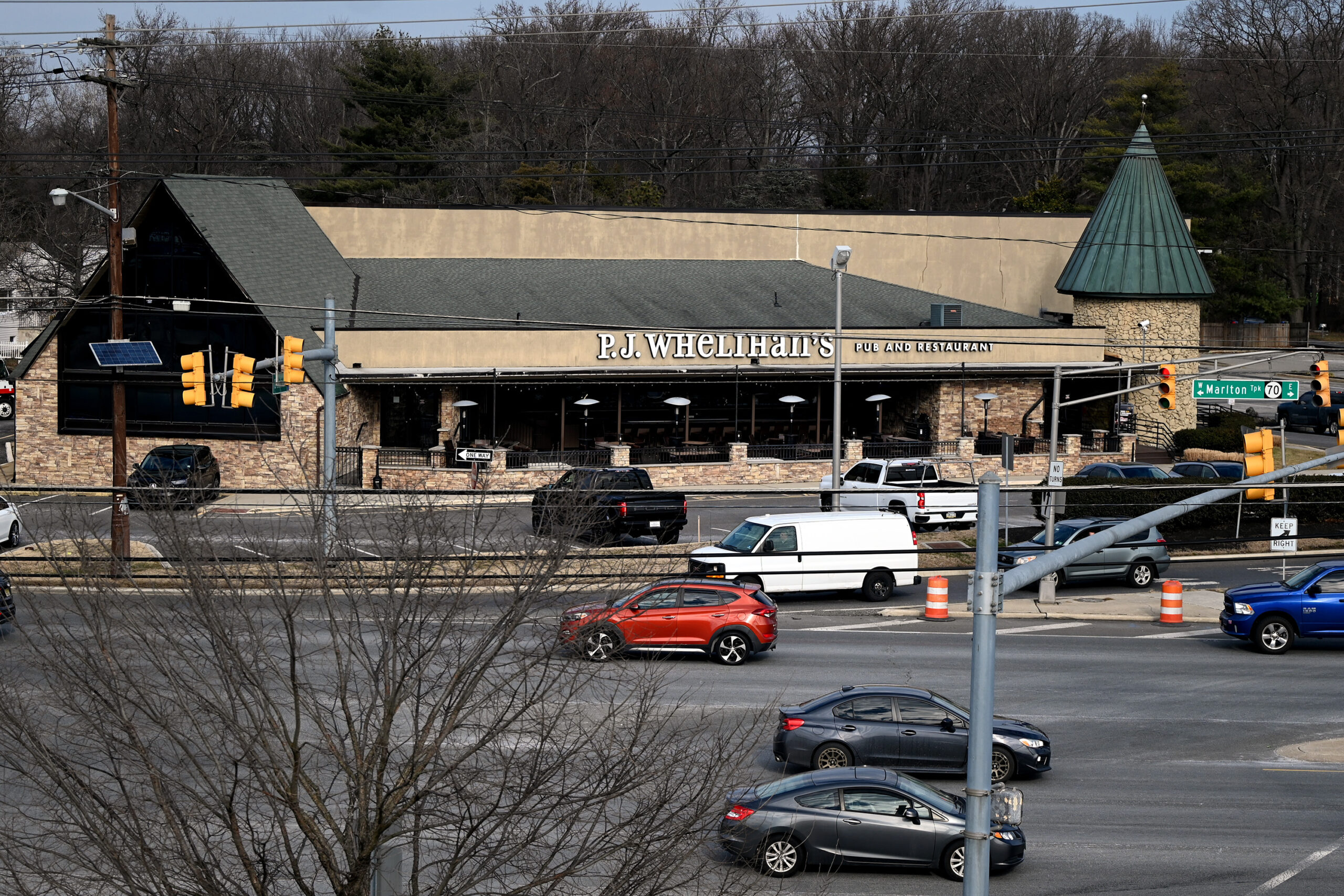
    PJW’s most well-known franchise is P.J. Whelihan’s, the regional bar-restaurant chain that started in the Poconos in 1983. There are now 25 P.J. Whelihan’s locations from Harrisburg to Washington Township, with the vast majority in the Philadelphia area.

    Haddon Township-based PJW also owns the Pour House, which has locations in Exton, North Wales, and Westmont, Haddon Township; the ChopHouse in Gibbsboro; the ChopHouse Grille in Exton; Central Taco & Tequila in Westmont; and Treno, also in Westmont.

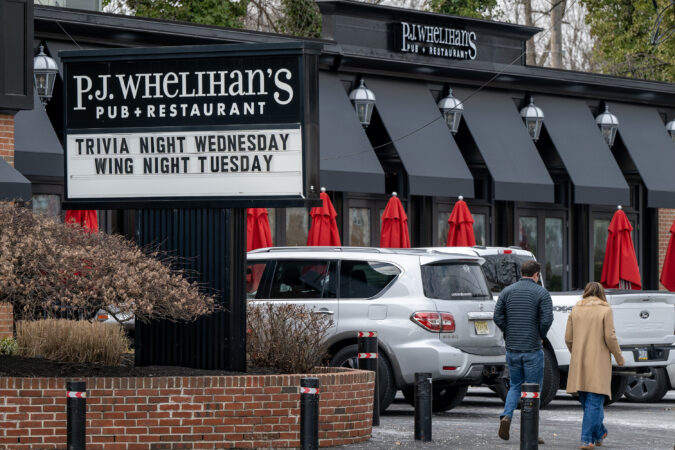
    The P.J. Whelihan’s on Route 70 in Cherry Hill.

    As 2026 gets underway, Iron Hill’s bankruptcy case continues to make its way through the courts. In recent weeks, Iron Hill’s leases in Exton, Maple Shade, and North Wales were formally rejected, according to court documents. That means these empty breweries are getting closer to finding new tenants.

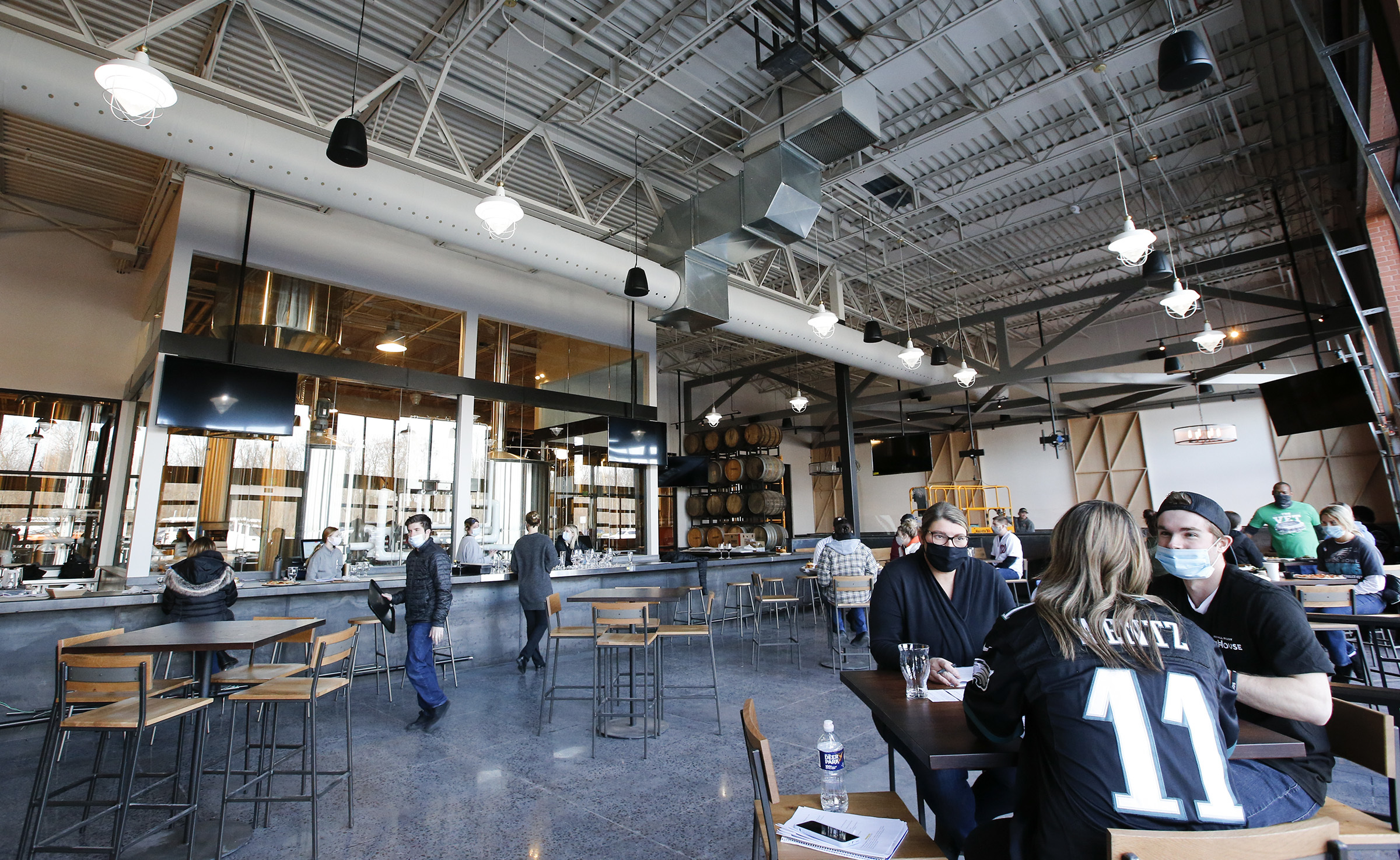
    At the Shops at Eagleview in Exton, landlord Suresh Kagithapu is already advertising the nearly 20,000-square-foot taphouse and production facility that Iron Hill vacated.

    “Any out-of-town brewery with plans to leverage existing brewery infrastructure and scale its operations in the region would be a good fit, as it would save significant tenant improvement costs,” Kagithapu said in a statement. “I also believe a grocery store would serve the community very well.”

    The Iron Hill Brewery TapHouse in Exton is pictured in 2020. After Iron Hill’s bankruptcy, the Exton landlord is seeking a new tenant for the massive space.

    In West Chester, landlord John Barry is also on the hunt for a new restaurateur to take over prime real estate long occupied by Iron Hill.

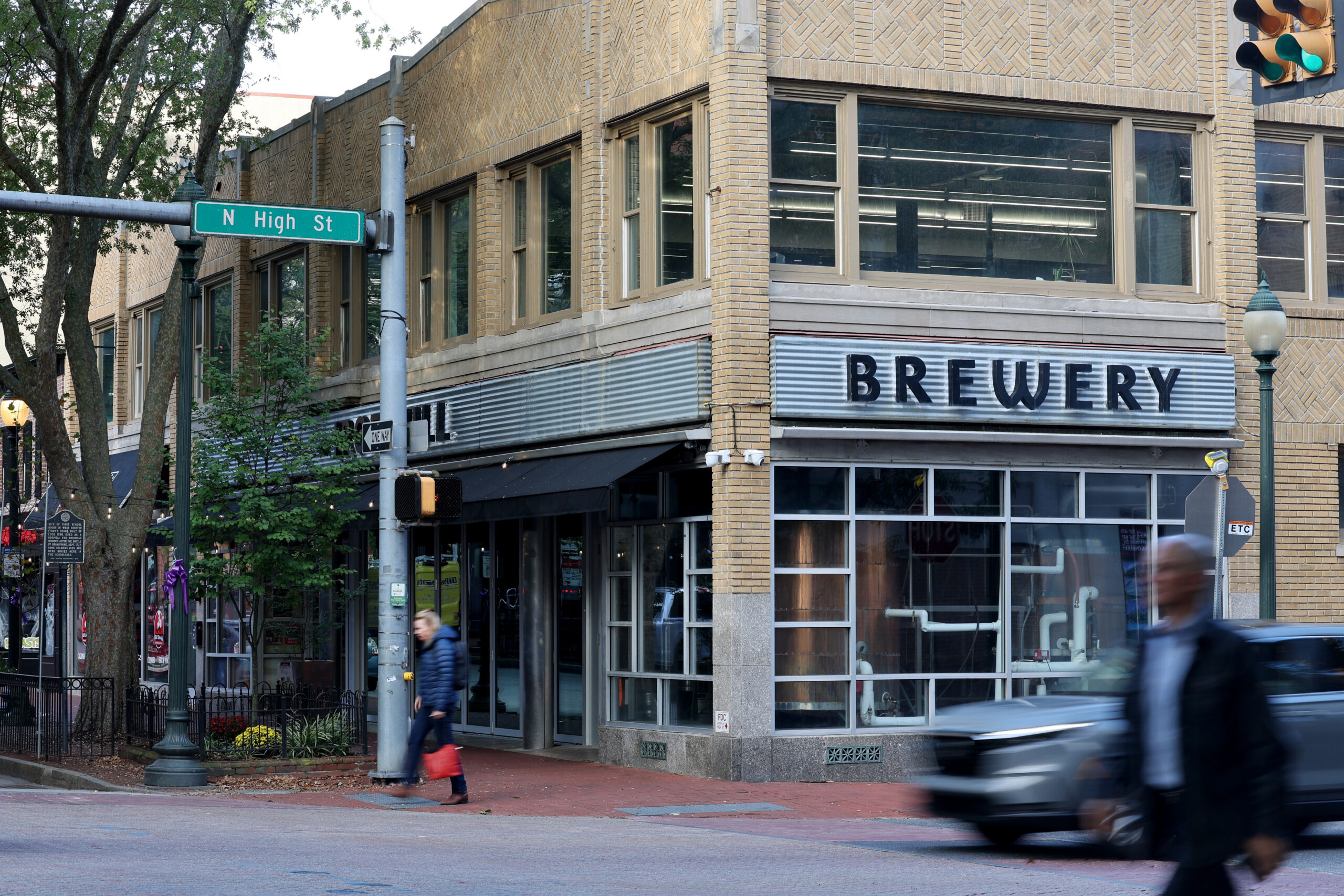
    On Christmas Eve, Barry, a Massachusetts-based real estate investor, inked a deal to buy the liquor license and all interior assets of the location at the borough’s central corner of High and Gay Streets.

    “It will not be reopening as Iron Hill Brewery,” Barry said in a recent interview. “My goal would be to find something similar,” though not necessarily a brewery.

    Barry purchased the assets from Jeff Crivello, the former CEO of Famous Dave’s BBQ, who in November was approved by a bankruptcy judge to revive 10 Iron Hills under the same name or as a new concept. Barry and Crivello declined to disclose the financial details of the West Chester deal.

    Pedestrians walk by the closed Iron Hill Brewery in West Chester in October.

    Crivello said he has since sold the assets of the South Carolina Iron Hills — in Columbia and Greenville — to Virginia-based Three Notch’d Brewing Co.

    The Newtown location was originally among the locations of which Crivello was approved to buy the assets, pending negotiations with landlords. Court documents indicate the asset sale was put on hold amid a landlord objection.

    Founded in Newark, Del., Iron Hill Brewery operated for nearly 30 years, earning a reputation as a local craft-brewing pioneer and a family-friendly mainstay in the Philadelphia suburbs. In recent years, the chain had expanded into South Carolina and Georgia and had announced plans to open a Temple University location that never materialized.

    When brewery executives filed for bankruptcy, they reported that they owed $20 million to creditors and had about $125,000 in the bank.