Category: Business

Business news and market updates

  • Sandra Schultz Newman, the first woman elected to the Pa. Supreme Court, has died at 87

    Sandra Schultz Newman, the first woman elected to the Pa. Supreme Court, has died at 87

    Sandra Schultz Newman, 87, of Gladwyne, Montgomery County, the first woman elected to the Pennsylvania Supreme Court, the first female assistant district attorney in Montgomery County, the first woman named to the board of directors of the old Royal Bank of Pennsylvania, longtime private practice attorney, role model, mentor, and colorful “Philadelphia icon,” died Monday, Feb. 2. Her family did not disclose the cause of her death.

    Reared in South Philadelphia and Wynnefield, and a graduate of Drexel, Temple, and Villanova Universities, Justice Newman, a Republican, was elected to the Commonwealth Court of Pennsylvania in November 1993 and to the state Supreme Court in 1995. She won a second 10-year term on the Supreme Court in 2005 but, having to step down in just two years due to a mandatory retirement age, left at the end of 2006.

    “I love the court. I love my colleagues. The collegiality was great, and I’m going to miss that,” Justice Newman told The Inquirer. “But I just felt like I wanted to move on.”

    During her 10-year tenure, Justice Newman was chair of the Supreme Court’s Judicial Council Committee on Judicial Safety and Preparedness and the court’s liaison to Common Pleas Court and Municipal Court in Philadelphia. She ruled on hundreds of issues and wrote opinions about all kinds of landmark cases, from environmental protections to school funding to clergy privilege to the Gary Heidnik and John E. du Pont murder cases.

    She had worked in criminal and family law and handled many divorce and custody cases as a private attorney in the 1980s, and was praised later by court observers for her attention to Philadelphia Family Court matters. Lynn Marks, of Pennsylvanians for Modern Courts, told the Daily News in 2005: “She’s been a wonderful justice, and she’s made herself accessible to the public interest community.”

    In 2025, her colleagues on the Supreme Court named their Philadelphia courtroom after her. “She was a remarkable jurist, public servant, and trailblazer for women, whose work and impact will leave a legacy beyond the bench,” Supreme Court Chief Justice Debra Todd said in a tribute.

    News outlets across the state covered Justice Newman’s election to the Supreme Court as she campaigned in 1995, and she easily collected more votes in the Nov. 7 election than any of the other three candidates, all men. She told the Daily Item in Sunbury, Pa., in September ’95: “I don’t think anyone should be elected solely on their gender. But I don’t think anybody should not be elected because of it, either.”

    Justice Newman touted her collegiality and feminine life experience during the 1995 campaign and told The Inquirer she wanted to be a “role model for everyone in Pennsylvania.” She told the Press Enterprise in Bloomsburg, Pa.: “I think I can bring a sensitivity and understanding on many issues, such as criminal issues like rape. I have a deep sense for the need of a safe society.”

    Justice Newman speaks in 2025 during the ceremony in which the Supreme Court named its Philadelphia courtroom after her.

    After her election, Inquirer staff writer Robert Zausnersaid: “Wealthy yet down-to-earth, Newman talked often during the campaign about her grandchildren and insisted that people ‘call me Sandy’ once she was outside her courtroom.”

    Former Gov. Tom Ridge called Justice Newman a “pioneering legal giant” and said she “inspired generations of legal professionals across the Commonwealth.” Ezra Wohlgelernter, chancellor of the Philadelphia Bar Association, noted her “pathbreaking career” and “valuable service to our city and to the Commonwealth” in a tribute.

    Either “the first” or “the only” in many of her professional pursuits, Justice Newman was called a “Philadelphia icon,” “a force of nature,” and a “beautiful and radiant star” in online tributes. She flirted with running for political office several times and was colorfully profiled in Philadelphia Magazine in 1988. In that story, writer Lisa DePaulo called her “part woman/part tigress.”

    She famously endorsed a controversial cosmetic product on TV in 2006 and attended many galas and charity auctions, and her name appeared in the society and opinion pages nearly as often as the news section. In a 1983 feature, Inquirer writer Mary Walton described Justice Newman as “beautiful … with tousled auburn hair and a slender figure that she liked to cloak in expensive designer clothes.”

    Justice Newman was the only woman on the state Supreme Court in 2002.

    A friend said online she was “irrepressible in an Auntie Mame sort of way.” Another said: “The world has become a little quieter.”

    Justice Newman served as the first female assistant district attorney in Montgomery County from 1972 to 1974 and was an in-demand, high-profile partner at Astor, Weiss & Newman from 1974 to 1993. She returned to private practice in 2006 and handled mostly alternative dispute resolution cases until recently.

    She told the Press Enterprise in 1995 that colleagues in the Montgomery County District Attorney’s Office had adorned her desk with a green plant on her first day in 1972. “It was marijuana from the evidence room,” she said.

    She wrote papers and book chapters about trial practice, death penalty statutes, and the electoral system in Pennsylvania. She spoke about all kinds of legal topics at seminars, conferences, and other events.

    This photo of Justice Newman, her husband, Julius, and grandson Shane was taken for The Inquirer after she won on Election Day in 1995.

    She cofounded what is now the Drexel University Thomas R. Kline School of Law in 2006, was a trustee for Drexel’s College of Medicine, and received dozens of service and achievement awards from Drexel, Villanova, the Pennsylvania and Philadelphia Bar Associations, the Women’s Bar Association of Western Pennsylvania, the Pennsylvania Association for Justice, and other groups.

    She was the president of boards, chair of many committees, and active with the National Association of Women Justices, the Juvenile Law Center, the American Law Institute, and other organizations. She taught law classes at the Delaware Law School of Widener University in 1984 and ’85, and at Villanova from 1986 to 1993.

    She earned a bachelor’s degree at Drexel in 1959 and a master’s degree in hearing science at Temple in 1969. In 1972, she was one of a handful of women to get a law degree at what is now Villanova’s Charles Widger School of Law. Later, she received four honorary doctorate degrees and was named a Distinguished Daughter of Pennsylvaniaby then-Gov. Ridge in 1996.

    Outside the courtroom, Justice Newman volunteered for charities and legal associations. She was part of a group that tried unsuccessfully to buy the Eagles from then-owner Leonard Tose in 1983, and she was criticized in the early 2000s for her financial involvement in a bungled long-running effort to fund a new Family Court Building in Philadelphia.

    Justice Newman chats with philanthropists and business leaders Raymond G. Perelman (middle) and Joseph Neubauer at the gala opening of the new Barnes Museum in 2018.

    “Justice Newman filled every room she entered with her strength, energy, and exuberance for life and for the law,” Supreme Court Justice P. Kevin Brobson said in a tribute. “She lived with intention and spent her entire career focused on creating and expanding opportunities for future generations of legal professionals, especially women.”

    Sandra Schultz was born Nov. 4, 1938. She graduated from Overbook High School and married cosmetic surgeon Julius Newman in 1959. They had sons Jonathan and David, and lived in Wynnefield, Penn Valley, and Gladwyne.

    Her husband and son David died earlier. She married fellow lawyer Martin Weinberg in 2007, and their union was annulled 11 months later.

    Justice Schultz was a longtime fashionista. She reveled in shopping trips to New York, and DePaulo reported in 1988 that her closet in Gladwyne was 800 square feet. She was also funny, generous, and kind, friends said.

    Justice Newman dances with her grandson on Election Day in 1995. This photo appeared in the Daily News.

    She funded several college scholarships, collected art, owned racehorses, cooked memorable matzo balls, enjoyed giving gifts, and tried to have dinner every night with her family. Sometimes, DePaulo reported, in the 1970s, she took her young sons to her law school classes at Villanova.

    “Despite how busy she was, her family was always her priority,” said her brother, Mark. “She was also a true bipartisan who fought for equal rights and preserving our democratic institutions.”

    In 2003, she was asked by Richard G. Freeman, editor in chief of the Philadelphia Lawyer, to describe her judicial decision-making process. She said: “There are beliefs that you have to put aside. One of the wonderful things about being on our court is that you can make new law where your beliefs fit into the law.”

    In addition to her son Jonathan and brother, Justice Newman is survived by four grandchildren and other relatives. A grandson died earlier.

    This photo of Justice Newman appeared in The Inquirer in 1983.

    Services are private.

    Donations in her name may be made to the Crohn’s and Colitis Foundation, 733 Third Ave., Suite 510, New York, N.Y. 10017.

    Correction: One of the communities that Justice Schultz grew up in has been corrected.

  • How to claim tax breaks on overtime, tips, and more this filing season

    How to claim tax breaks on overtime, tips, and more this filing season

    Many Americans stand to collect larger tax refunds this year, whether they itemize or not.

    Certain filers can now write off tips, overtime pay, and auto loan interest because of changes enacted under last year’s sweeping tax and spending bill. People 65 and older can collect a $6,000 write-off. And the standard deduction has grown, as has the child tax credit.

    Many workers may have had more money withheld from their paychecks than needed because the IRS did not adjust withholding tables after Republicans’ One Big Beautiful Bill was signed into law on July 4. Excess withholding is different from a tax cut, of course, but it generally translates into larger refunds because the government returns the overpayment.

    Overall, the law disproportionately benefits the wealthy and shifts government benefits from low-income households to higher-earning ones, according to independent analyses. Though most people will see some reduction in taxes, many low-income households lost more in federal benefits like SNAP or Medicaid than they would gain from tax cuts.

    Here’s what filers need to know about the new provisions heading into tax season, which runs through April 15.

    Tips

    Workers in specific jobs — such as bartenders, gambling dealers, DJs, babysitters, tailors, and many more — can deduct as much as $25,000 in tips from their taxable income. They don’t need to itemize; however, married filers must file jointly. Those who earn more than $150,000 (or $300,000 jointly) cannot claim the full deduction.

    The new deduction is only available to filers with a Social Security number, which will prevent some immigrants from claiming it.

    Next year, employers will have new tax forms for recording their workers’ tips that qualify for the deduction. This year, however, workers will need to figure out their qualifying tips on their own.

    The IRS estimates that about 6 million people can claim the new deduction. The Congressional Budget Office estimates they will collectively pay about $10 billion less in taxes this year.

    Overtime wages

    When workers earn a bonus for working extra hours — the “half” part of those “time-and-a-half” earnings — that money won’t be taxed. The income limitation is the same as those on tips, but the total allowable deduction is capped at $12,500 for an individual and $25,000 for joint filers.

    This deduction also requires taxpayers to have a Social Security number and to file jointly if married. It isn’t limited to specific named occupations, though not all workers are entitled to overtime pay under the Fair Labor Standards Act. The number of salaried, full-time workers who are guaranteed overtime based on their wages dropped from roughly 65% in the 1970s to 15% in 2024, according to the National Employment Law Project. Still, this deduction is one of the more costly ones in the new law, projected to decrease tax revenue by more than $32 billion.

    Like tips, the deduction is available whether taxpayers itemize or not. And workers will be responsible for calculating their overtime pay this year, as the IRS will not have forms available until next tax season. Many employers will provide workers with pay statements to help them figure out what they can claim.

    Car loan interest

    If you took out an auto loan in 2025, you may be able to write off as much as $10,000 in interest. The deduction is Republicans’ response to rising car payments: Consumers are now paying more than $50,000, on average, for a new vehicle, leaving 1 in 5 of them with payments in excess of $1,000 a month.

    The deduction is reserved for automobiles that had their “final assembly” in the United States. A long list of popular cars and SUVs from both American and foreign brands are assembled here, but some vehicles won’t qualify. The Nissan Sentra, for example, is assembled in Mexico, and many Toyota Corollas are assembled in Japan. You can look up your own car at vpic.nhtsa.dot.gov/decoder.

    Only taxpayers with modified adjusted gross income below $100,000, or joint filers below $200,000, can claim the full deduction.

    The CBO estimated that the deduction will cost the government $5.4 billion in 2026.

    Senior citizens

    Taxpayers 65 and older already get a larger standard deduction than younger people. The Republican law bumps it up by $6,000 for low- and moderate-income seniors (individuals with as much as $75,000 in income or joint filers with $150,000). It also allows those seniors who itemize instead of claiming the standard deduction to be eligible for the same additional $6,000 deduction.

    Republicans created this deduction instead of exempting Social Security income from taxes, an idea floated by President Donald Trump during his campaign. With the new deduction, few seniors will wind up owing taxes on their Social Security benefits.

    The Joint Committee on Taxation has estimated that the enhanced deduction will cost the government more than $17.6 billion a year.

    Bigger deductions

    The standard deduction rises to $15,750 for individuals, $23,625 for heads of households, and $31,500 for couples filing jointly.

    The Republican bill passed in July extended many of the provisions of a 2017 tax law that otherwise would have expired — including a larger standard deduction and no more personal exemptions.

    The law increased the maximum Child Tax Credit to $2,200 per child, and the amount of state and local taxes (SALT) that filers can deduct from their taxable income, from $10,000 to $40,000.

  • As West goes after Russia’s oil fleet, Moscow fears for its war funding

    As West goes after Russia’s oil fleet, Moscow fears for its war funding

    Europe is tightening the net on Russian oil being shipped through its waters, squeezing Moscow’s ability to fund its war even as officials and business executives in Russia fear the window is narrowing to reach a peace deal before the economy deteriorates.

    The European Union is considering imposing an outright maritime ban on services needed to ship Russian oil, such as insurance and transportation, as part of a new sanctions package marking four years of Russia’s war.

    The ban would significantly ratchet up the sanctions imposed on Russian oil, replacing the current oil price cap system, and comes as 14 European nations — including Britain, France, and Germany — warned last week they could intercept the shadowy fleet of tankers Russia created to help it evade sanctions operating in breach of international maritime law.

    Russian oil revenue plummeted by 50 percent in January compared with the same month the previous year after tough new sanctions imposed by the U.S. Treasury on Russian oil majors Rosneft and Lukoil in October. The penalties forced Moscow to accept ever-steeper discounts of more than $20 per barrel for its oil. Combined with India’s apparent agreement to halt Russian oil purchases in favor of increased imports from the United States and potentially Venezuela, the measures threaten to further strain the resources Moscow needs to fuel its war machine, risking crisis as nonpayments grow across the economy.

    Inspired by the seizure last month by U.S. forces of the Marinera tanker after a weeks-long pursuit despite a Russian submarine escort, the French navy briefly captured another suspected Russian shadow fleet tanker, the Grinch, which had been traveling from the Russian Arctic port of Murmansk across the Mediterranean carrying 730,000 barrels of oil under the flag of Comoros.

    French President Emmanuel Macron said the vessel was subject to international sanctions and suspected of flying a false flag.

    After Russia launched its full-scale invasion of Ukraine in February 2022, the Kremlin used intermediaries to buy up aging tankers and created what became known as the shadow fleet, to lessen its dependency on Western shipping services and reduce sanctions risks. Instead of being insured through Western companies, these tankers often receive insurance from Russia, backed by the country’s central bank, and sail under the flags of less stringent jurisdictions such as Sierra Leone and Cameroon, to conceal the origin of the oil.

    If enforced, the proposed measures could impact nearly a half of Russia’s oil exports, or about 3.5 million barrels per day, which head through European waters via the Baltic and Black seas, with crude shipments mostly bound for refineries in India, China, and Turkey.

    It’s not yet clear if the proposed EU maritime services ban, which requires a unanimous vote by member states, will be passed. But with the risk on the shadow vessels increasing from interceptions as well as attacks by Ukrainian drones, the costs are rising for shipments through Europe.

    “Russian oil exports are highly sensitive to disruptions in shipping. It is an Achilles’ heel,” said Janis Kluge, an economist at Germany’s Institute for International and Security Affairs. “If I were in Russia’s shoes, I would be very worried about the developments both with regards to a stricter policy against the shadow fleet and the Ukrainian drone attacks against tankers. Because both create significant risks. It is critical for Russia to have these shipping lanes open for its oil, or it will really run into big trouble.”

    A Russian academic close to senior Moscow diplomats said any European ban on maritime services for Russian oil and any further interceptions of shadow fleet tankers were “serious threats for Russia.”

    “This is a threat not just for the economy, but also it’s a political question about whether Russia can allow such actions without losing its political reputation,” the academic said.

    Even without the further risk to oil exports, Russian finance officials have been writing with increasing urgency to President Vladimir Putin to warn of a potential crisis by the summer, according to a person in contact with these officials and who spoke on the condition of anonymity because of the sensitivity of the subject.

    The officials have warned falling revenue means the budget deficit is only set to grow without further tax hikes while pressure is mounting on the Russian banking system due to high interest rates and a corporate borrowing spree to fund the war.

    One Moscow business executive said the crisis could hit in “three or four months” as signs appear that real inflation is spiraling far beyond the officially declared 6 percent despite interest rates being held at a high 16 percent. Signs of growing strain in the economy are the biggest numbers of closures of restaurants in Moscow since the pandemic and the forced layoffs of thousands of workers as costs grow, the executive said, also on the condition of anonymity.

    But there is little sign that Putin is set to change his calculus and step back from the Kremlin’s maximalist war demands. Last week, Foreign Minister Sergei Lavrov dismissed the Western security guarantees Ukraine says it needs for any deal, calling instead for an end to the regime in Kyiv.

    “We have no understanding about when the war will end,” the business executive added.

    The growing economic pressures are nevertheless weighing on Moscow as it seeks to keep the Trump administration on its side during negotiations to end the war. “If Trump comes to the conclusion that Russia is sabotaging the negotiation process then it’s possible there could be new sanctions including on the energy sector, and this is a serious challenge for Russia,” the Russian academic said.

    If anything, Russia is only growing more vulnerable to economic pressure, said Craig Kennedy, a former vice president at Bank of America Merrill Lynch now at Harvard University.

    “Oil revenues are sliding, credit is overextended. And Moscow knows things are only likely to get worse in 2026,” he said.

    Not all of Russia’s oil is under sanction, and Western companies can ship this oil as long as it is sold under the price cap first imposed by the European Union in December 2022. The EU had hesitated over imposing a full ban over fears it could cause a counterproductive oil price spike.

    But when the U.S. sanctioned Russia’s two biggest oil majors, Rosneft and Lukoil, in October last year, it sharply increased the share of Russia’s total oil output under U.S. sanctions to 80 percent. Moscow became even more reliant on its shadow fleet to transport its oil through the Baltic and Black seas to refineries in India, Turkey, and China.

    “The amount of unsanctioned oil now produced in Russia is a lot lower,” Kennedy said. “If shipping compliance gets tightened, it could put even more pressure on Russian export revenue.”

    Ukraine has also been stepping up its own efforts to target the shadow fleet, further increasing the risks and costs of shipping Russian oil. Since late November its forces have attacked at least nine Russia-linked tankers, deploying naval and aerial drones, as well as mines.

    European officials will likely still face a game of cat and mouse in targeting the illicit Russian oil. Already since the U.S. imposed sanctions on Rosneft and Lukoil, two mysterious new intermediary companies — Redwood Global Supply FZE LLC and Alghaf Marine DMCC — emerged out of nowhere to become major exporters of Russian oil, according to data from Kpler, a global commodities intelligence firm, compiled by the Kyiv School of Economics.

    Redwood sold 757,000 barrels per day in December, and Alghaf sold 174,000 barrels per day after trading zero amounts of oil previously, according to the data. “What we observed is that volumes traded by these new companies skyrocketed,” said Borys Dodonov, head of the Center for Energy and Climate Studies at the Kyiv School of Economics.

    European governments also argue that many of the Russian shadow fleet vessels flying flags of convenience from nations such as Cameroon and Sierra Leone are not compliant with international maritime safety standards, while those that sail under more than one flag during a voyage — as the Marinera did — can be treated as “stateless” under international maritime law allowing them to be boarded and searched.

    Amid the crackdown, Russia could be forced to register more of its shadow fleet under Russian flags, making them easier targets for sanctions, analysts said, especially if they are de-registered by other flag states.

    Any such move however could also increase the possibility of conflict over attempts to board Russian-flagged vessels with Moscow seeking to intimidate Europe out of taking any action. Russia’s Maritime Board, overseen by hawkish former Security Council chief Nikolai Patrushev, warned late last month that measures would be taken to protect Russian shipping interests against actions by “unfriendly states.”

    “It’s a question of whether these actions will be taken by the Europeans by themselves without the participation of the U.S.,” the Russian academic said. “Then there could be some measures in response like protection by a military convoy.”

  • Inside the toxic legacy of America’s multibillion-dollar carpet empire

    Inside the toxic legacy of America’s multibillion-dollar carpet empire

    DALTON, Ga. — Bob Shaw glared at the executives from the chemical giant 3M across the table from him. He held up a carpet sample and pointed at the logo for Scotchgard on the back.

    “That’s not a logo,” fumed Shaw, CEO of the world’s largest carpet company, one attendee later recalled. “That’s a target.”

    Weeks earlier, 3M Company announced it would reformulate its signature stain-resistance brand under pressure from the Environmental Protection Agency because of human health and environmental concerns.

    Mills like Shaw’s had been using Scotchgard in carpet production, releasing its chemical ingredients into the environment for decades. And on a massive scale: The shrewd CEO built Shaw Industries from a family firm in Dalton, Georgia, into a globally dominant carpet maker worth billions.

    “I got 15 million of these out in the marketplace,” Shaw told his 3M visitors. “What am I supposed to do about that?”

    A 3M executive replied that he didn’t know. Shaw threw the sample at him and left the room.

    The answer to Shaw’s Scotchgard question from that moment in 2000 would be the same as that of the broader industry. Carpet makers kept using closely related chemical alternatives for years, even after scientific studies and regulators warned of their accumulation in human blood and possible health effects. Customers expected stain resistance; nothing worked better than the family of chemicals known as PFAS.

    A lack of state and federal regulations allowed carpet companies and their suppliers to legally switch among different versions of these stain-and-soil resistant products. Meanwhile, the local public utility in Dalton responsible for ensuring safe drinking water coordinated with carpet executives in private meetings that would effectively shield their companies from oversight.

    Year after year, the chemicals traveled in water discarded during manufacturing from mills across northwest Georgia, eventually reaching a river system that provides drinking water to hundreds of thousands of people in Georgia and eastern Alabama.

    The pollution is so bad some researchers have identified the region as one of the nation’s PFAS hot spots. Today, the consequences can be found everywhere. PFAS, often called forever chemicals because they can take decades or more to break down, are in the water and the soil.

    They’re in the dust on floors where children crawl, the local fish and wildlife, and as ongoing research has shown, the people.

    Doctors have few answers for those like Dolly Baker who live downriver from Dalton’s carpet plants. She recently learned her blood has extraordinarily high PFAS levels.

    “I feel like, I don’t know, almost like there’s a blanket over me, smothering me that I can’t get out from under,” she said. “It’s just, you’re trapped.”

    An investigation by newsrooms including The Atlanta Journal-Constitution, The Associated Press and FRONTLINE (PBS) has revealed how the economic engine that sustained northwest Georgia contaminated the area and neighboring states, too. Downriver from Dalton, AL.com found cities in Alabama are struggling to remove PFAS from drinking water. And in South Carolina, The Post and Courier traced a local watchdog’s discovery of forever chemicals to a river by a Shaw factory.

    The full story of Georgia’s power structures prioritizing a prized industry over public health is only now emerging through dozens of interviews and thousands of pages of court records from lawsuits against the industry and its chemical suppliers. Those records, including testimony from key executives, emails and other internal documents, detail how carpet companies benefited from chemistry and regulatory inaction to keep using forever chemicals.

    All the while, the mills still hummed.

    Pointing fingers in a company town

    A sign welcomes Dalton’s visitors to the “Carpet Capital of the World.”

    Fleets of semitrucks stamped with company logos rumble out of behemoth warehouses. Textiles have employed generations here, propelling the city from 19th-century cotton mills into a manufacturing hub — and the region into a supplier of carpet to the globe.

    The durability that makes PFAS so good at protecting carpets from spilled tomato sauce and muddy boots lets them survive in the environment. It also makes them dangerous for humans. Because they bind to a protein in human blood and absorb into some organs, PFAS linger.

    The blood of nearly all Americans has some amount of the chemicals, which have been used in a variety of consumer products: nonstick cookware, waterproof sunscreen, dental floss, microwave popcorn bags.

    Few industries used them as much as carpet did in northwest Georgia. While huge amounts were needed for stain resistance on an industrial scale, minuscule amounts — the equivalent of less than a drop in an Olympic-sized swimming pool — can make drinking water a health risk. For certain PFAS, U.S. regulators now say no level is safe to drink.

    More than a year before the Scotchgard announcement in 2000, 3M informed Shaw Industries and its biggest competitor, Mohawk Industries Inc., that it was finding Scotchgard’s chemical in human blood and that it stayed in the environment, 3M records show.

    Carpet executives have long insisted they are not to blame. They point out that 3M and fellow chemical manufacturer DuPont assured them their products were safe, for decades hiding internal studies that were finding harm to the environment, animals and people.

    Shaw and Mohawk both said they relied on and complied with regulators and stopped using PFAS in U.S. carpet production in 2019.

    In an interview, a Shaw executive said the company acted in good faith as it worked hard to exit PFAS as quickly as suitable substitutes could be found.

    “Hindsight is 20/20,” said Kellie Ballew, Shaw’s vice president of environmental affairs. “I don’t think that we can call into question our intentions. I think Shaw had every good intention along the way.”

    Shaw in a follow-up statement said it complied with its wastewater permits and took guidance from chemical companies, some of which “instructed Shaw to put spills of product into the public sewer system.”

    Mohawk declined an interview request, instead referring to a 2024 filing in its lawsuit against chemical companies: “For decades, DuPont and 3M sold their carpet treatment products to Mohawk without disclosing the actual or potential presence of PFAS in their products.”

    Later, in response to detailed questions, Mohawk attorney Jason Rottner wrote that, “Any PFAS contamination issues in northwest Georgia are a problem of the chemical manufacturers’ making.”

    Now, uncertainty and feelings of betrayal are boiling across the region. Communities fear their drinking water is unsafe and local governments say the problem is too vast for them to fix alone.

    In Washington, Republicans and Democrats alike have been slow to act. Under President Joe Biden, the Environmental Protection Agency in 2024 established the first PFAS drinking water protections. The Trump administration has announced plans to roll back some and delay enforcement of others.

    The agency declined interview requests but in a statement said it is committed to combating PFAS contamination to protect human health and the environment, without causing undue burden to industry.

    Georgia’s regulatory system has done little to scrutinize PFAS and depends mostly on industry to self-report chemical spills, imposing modest penalties when companies do. The Georgia Environmental Protection Division, which declined an interview request, said it “relies on the expertise of” the EPA.

    Meanwhile, carpet makers still can’t seem to shake PFAS. Just last year, EPA concluded “PFAS have been and continue to be used” by the industry, based on wastewater testing. The agency did not name companies and said it’s unclear whether the chemicals were from current or prior use.

    The mess in northwest Georgia has led to a series of lawsuits over the past decade with hundreds of millions of dollars at stake.

    Buried in this avalanche of litigation, finger-pointing and politics are the people who live here. They have been forced to navigate a public health and economic crisis of a magnitude still not fully understood.

    “They ought to have to clean this land up,” Faye Jackson said, referring to carpet companies. A former industry worker, she raised her family in a house next to a polluted river and has elevated PFAS levels in her blood. “They ought to have to pay for it.”

    The creek ran blood red

    Lisa Martin watched the creek beside the Mohawk Industries mill run red with carpet dye.

    It was one of her first days as a planning manager at Mohawk in 2005, and she tried to hide her unease as the dye runoff turned the water into what looked like blood.

    The red she saw in Drowning Bear Creek had come from the nearby dyehouse, where carpets got their colors. There, machines whirred as workers sloshed around in rubber boots in ankle-deep dyewater, reminding Martin of fishermen. The acrid odor made her eyes tear up.

    A recent California transplant at the time, Martin recalled her initial culture shock.

    “At a gut level, you know it’s not right. And unfortunately, when you try to raise the flag and everybody’s like, ‘Well, that’s just the way it is,’” Martin said in an interview.

    “I became complacent.”

    Like Shaw, Mohawk is based in northwest Georgia and is among the largest carpet companies in the world. The industry supported the entire community, employing someone in what seems like every family. Martin realized carpet was in the region’s DNA.

    Martin said the chemical runoff was routine during her 20 years at Mohawk, which ended with her 2024 retirement. Sometimes, when the company dyed carpets blue, the water in the creek would be blue, too. One spill that turned the creek purple for a mile downstream killed thousands of fish, records show.

    Mohawk’s attorney called such spills “rare instances” that were promptly reported and said there is no evidence any spills directly discharged PFAS.

    In the dyehouse, what neither Martin nor the workers could detect were the colorless, odorless compounds also included in the wastewater: forever chemicals. Machines bathed the carpets in these soil-and-stain blockers, and what didn’t stick washed away.

    For decades, Mohawk’s and Shaw’s mills sent PFAS-polluted wastewater through sewer pipes to the local Dalton Utilities plants for treatment that did not remove the chemicals. Much of the tainted water ended up in the Conasauga River.

    Both Shaw and Mohawk said they operated in accordance with permits issued by Dalton Utilities. The utility said it takes direction from federal and state regulators, who have not prohibited PFAS in industrial wastewater.

    The Conasauga watershed is filled with lush green pastures, creeks and tributaries that help fuel the water-hungry industry. The river’s waters emerge out of Georgia’s Blue Ridge Mountains and eventually flow southwest, past Dalton, Calhoun and Rome, and then into Alabama.

    Residents downriver from the mills didn’t know about the chemicals running through their towns. But the industry’s top leaders did.

    PFAS is a catchall term for a group of thousands of related synthetic compounds also known as fluorochemicals. They have been fundamental to the carpet business since the 1970s, as market demand for stain resistance transformed the industry, and carpet makers began buying millions of pounds. In the mid-1980s, the introduction of DuPont’s Stainmaster, accompanied by a successful marketing blitz, further established these products as essential.

    Neither DuPont nor its related chemical companies that supplied PFAS provided comment for this story.

    The carpet industry used so much PFAS that Dalton’s mills became the largest combined emitters of the chemicals among 3M’s U.S. customers, according to a 1999 internal 3M study that looked at 38 industrial locations.

    Before 3M had pulled Scotchgard, leading to Bob Shaw’s showdown in the spring of 2000, both Shaw Industries and Mohawk had been privy to inside information that PFAS were accumulating in human blood. Bob Shaw did not respond to requests for comment.

    In late 1998 and early 1999, 3M held a series of meetings with carpet executives to disclose its blood-study research, according to 3M’s internal meeting notes from court records.

    “When we started finding the chemical in everybody’s blood, one of the biggest worries was Dalton, because we knew how sloppy they were,” Rich Purdy, a 3M toxicologist who alerted the EPA to his company’s hiding of PFAS’ dangers, said in an interview.

    Notes by a 3M employee from a January 1999 meeting said Mohawk executives did not express grave concerns about the revelations. “No real sense of Mohawk problem/responsibility,” 3M noted. “If it’s good enough for 3M, it’s good enough for Mohawk.” Mohawk’s attorney said of the meetings over two decades ago that 3M assured the company its chemicals were safe.

    At another meeting that January, Shaw executives were “concerned but quiet,” with one executive expressing he “felt plaintiffs’ attorneys would be involved immediately,” according to 3M’s notes. Shaw Industries maintains it learned of the concerns about Scotchgard at the same time everyone else did.

    In follow-up letters to top executives with Shaw and Mohawk later that month, 3M noted the company’s efforts were guided by the idea that reducing exposure “to a persistent chemical is the prudent and responsible thing to do” while emphasizing current evidence did not show human health effects.

    “We trust that you appreciate the delicate nature of this information and its potential for misuse,” the letters said. “We ask that you treat it accordingly.”

    3M then asked for access to Shaw and Mohawk mills to see if they were handling the chemicals safely, records show. Those internal reports, produced in 1999, would fault how carpet companies handled PFAS products, exposing workers and the environment, according to court records.

    The next year, 3M and EPA announced concerns about Scotchgard.

    The day of the announcement, the director of EPA’s Chemical Control Division sent an email to his colleagues and counterparts in other countries calling the key ingredient in Scotchgard an “unacceptable technology” and a “toxic chemical.” The email said the compound should be eliminated “to protect human health and the environment from potentially severe long-term consequences.”

    3M declined an interview request. In a statement, the company said it has stopped all PFAS manufacturing and has invested $1 billion in water treatment at its facilities. “3M has taken, and will continue to take, actions to address PFAS manufactured prior to the phase out,” the company said.

    In 2000, the year 3M announced it was pulling Scotchgard, Mohawk logged more than $3.4 billion in net sales. Shaw Industries reported $4.2 billion.

    EPA would not issue its first provisional health advisories for nearly another decade. Absent federal guidance, the carpet industry could legally continue to use these products.

    Despite accumulating health and environmental concerns, federal law at the time did not let EPA ban any chemical without “enormous evidence” of harm, said Betsy Southerland, a former director of the agency’s water protection division who spent over three decades there.

    “So we were really hamstrung at the time,” said Southerland, who has become a critic of EPA.

    At Mohawk, Lisa Martin was not an executive making decisions about PFAS, she said, but her time at the company weighs on her still.

    “Unfortunately, I later learned that there are more people that I worked with that were aware of it,” she said. “They were aware of it and didn’t do the things they should have done.”

    Years into her tenure, the athletic and inquisitive Martin began getting sick and feeling lethargic. Her doctor said she’d grown nodules on her thyroid, a gland that is a key part of the immune system and which studies have shown forever chemicals can harm.

    She had no family history of thyroid issues. It was a mystery to her.

    Cozy relationship

    Inside the Dalton headquarters of the Carpet and Rug Institute, industry executives and the local water utility conferred in 2004 about EPA’s growing scrutiny.

    For several months, EPA representatives had negotiated with Dalton Utilities and the carpet industry through the institute, its influential trade group, over gaining access to their facilities to test the water. Mohawk and Shaw were using DuPont’s Stainmaster and other products, which also contained forever chemicals akin to Scotchgard’s older formulation.

    Still, federal regulators worried these compounds were exhibiting similar harmful properties. Dalton Utilities and the carpet industry were uneasy about welcoming in government officials. Companies could not be guaranteed confidentiality and feared test results could lead to “inaccurate public perceptions and inappropriate media coverage,” records show.

    The public utility and the carpet industry chose to resist.

    Their close ties went back years. Carpet executives have long sat on Dalton Utilities’ board, appointed by the city’s mayor and city council. Fueled by the growth of the carpet industry, Dalton Utilities’ fortunes rose with the industry’s success.

    At the carpet institute’s 2004 annual meeting, officials with carpet and chemical companies convened to discuss the EPA’s increasingly aggressive posture. Shaw’s director of technical services, Carey Mitchell, addressed his colleagues. He was blunt. No company would allow testing.

    “Dalton Utilities has said not no, but hell no,” Mitchell said, according to notes made by a 3M attendee. Mitchell did not respond to requests for comment.

    In response to questions for this story, Dalton Utilities declined an interview request but said it and the carpet industry “have always operated independently of one another” and that the EPA testing request was informal.

    The carpet institute declined an interview request, sending a written statement instead.

    “The CRI’s conduct was and continues to be appropriate, lawful, and focused on our customers, communities, and the millions of people who rely on our products every day,” institute President Russ DeLozier said, adding: “Today’s carpet products reflect decades of progress, and The CRI members remain committed to moving forward responsibly.”

    The EPA stiff-arm was the latest run-in between Dalton Utilities and federal regulators.

    A public water utility’s obligation, above all else, is to ensure clean drinking water. Dalton’s utility had previously gone to criminal lengths to deceive regulators.

    In the early 1990s, Dalton Utilities’ staff traced a drop in oxygen levels in its wastewater treatment to stain-resistant chemicals from carpet mills, the utility’s top engineer at the time, Richard Belanger, said in an interview. While the utility didn’t know about PFAS then, something in these chemicals was impacting its ability to process the wastewater, he said. Rather than clamping down on industry, according to Belanger, his bosses ordered him to manipulate pollution figures the utility reported to government regulators.

    “I was told, OK, make this work,” Belanger, now retired, said.

    In June 1995, EPA investigators interviewed Belanger. He told them Dalton Utilities’ program to clean industrial pollutants was “a sham.” The treatment was so poor, the smell of carpet chemicals carried throughout the utility’s plant, and local creeks were often “purple and foamy,” according to investigators’ notes from the interview.

    Two months later, agents with the FBI and EPA raided Dalton Utilities’ offices.

    Federal prosecutors charged the utility with violating the Clean Water Act by falsifying wastewater reports, which concealed the full extent of the carpet industry’s pollution. The case did not address PFAS specifically, which was not yet a pollutant of concern for EPA. Dalton Utilities pleaded guilty in 1999 and was fined $1 million. Its CEO was removed.

    The utility was also put under federal monitoring in 2001 to ensure it was making key changes to protect the water supply and agreed to pay a $6 million penalty.

    The era of legal troubles with the federal government was pivotal, the utility said, adding it “has remained committed to avoiding the issues that led to those proceedings” and is transparent with regulators.

    Around the same time, emerging data showed the fluorochemicals used in carpets caused cancer in rats.

    The carpet institute’s then-president, Werner Braun, forwarded the rat study to several carpet and chemical executives in a 2002 email, calling the findings a “troubling issue,” records show. Braun, now in his 90s, was unable to comment for this story due to his health, his wife said.

    In preparing to respond to Braun, a 2002 email shows DuPont officials planned to explain that Stainmaster didn’t contain the type of PFAS that was then EPA’s focus. The next year, DuPont would tell carpet companies the opposite, acknowledging the chemical was indeed in Stainmaster. DuPont maintained in later legal proceedings it wasn’t aware until 2003 that Stainmaster contained the chemical.

    Despite its success in fending off EPA testing, the industry faced a mounting challenge, and the carpet institute focused on shoring up its influence and image.

    At a meeting in the spring of 2004 attended by top executives, the carpet institute decided to solicit donations from company employees for its political action committee “in an effort to submit friendships, gain access, and say thank you to legislators,” according to meeting notes.

    Later that year, PFAS made news in a high-profile legal case involving DuPont. The class-action lawsuit brought by residents in West Virginia claimed their water had been contaminated by a nearby chemical plant that used PFAS. Although DuPont said the settlement did not imply legal liability, it agreed to pay $70 million and to establish a health monitoring panel. Some two decades later, Braun was shown the rat study email during a legal deposition.

    “I wouldn’t necessarily call it a red flag but a flag, you know, that you might want to be aware of,” he said.

    Only years later did people downstream begin to learn the toll.

    The river brought the poison

    When Marie Jackson’s goats started dying about a year ago, nobody could explain why. Jackson saw it as just another sign something was wrong with her land.

    Marie and her mother, Faye Jackson, have lived on their 12 acres near Calhoun for decades. Today they keep mostly to themselves, inseparable, equal parts bickering and loving.

    Most days, Marie makes the short drive down a gravel road, Jackson Drive, to her mother’s house to check on her. She tends to Faye’s chickens, mows her grass and drives her to doctor’s appointments. Behind their homes is a rolling stretch of grassy pasture where their cattle graze — and the goats did as well, she said, until they all died.

    Past a curtain of trees on the far end of the pasture lies the Conasauga.

    Marie, 50, spent her childhood playing and swimming in the muddy river with rocks on the banks that made a good fishing spot. The Jacksons now know the water that sustains their homestead, about 15 miles downstream from Dalton, is contaminated.

    Tests of the river by the AJC found levels of what was once a key ingredient in Scotchgard at more than 30 times the proposed EPA limits for drinking water. Tests of Faye’s drinking water well by the AJC and the city of Calhoun found PFAS just under these federal health limits.

    Calhoun city officials used that health standard to guide a program designed to address contaminated wells. A 2024 legal settlement between the city and the Southern Environmental Law Center included a condition to test local water. As of August, 30% of private wells tested had levels above the health limit.

    Because Faye’s test was just below the cutoff, she does not qualify to receive a filtration system.

    Uncertainty about the chemicals continues to permeate every aspect of the Jacksons’ lives. They fear PFAS are behind their declining health. They fear their drinking water. They fear for the health of the cattle and chickens they raise; and for the health of those who may eat them.

    “I know they’ve got it in their systems,” Faye said.

    Even Marie’s memories are filled with second-guessing. Idyllic scenes of her childhood are now overshadowed by recollections of foam on the river and dead fish. She blames the mills.

    The Jacksons, like generations of northwest Georgians, relied on the carpet industry. Both of Marie’s parents worked in the mills: Faye with yarn machines and her dad in the dyehouse. Marie would end up working in carpet, too.

    Everyone suspected the work was dangerous. Faye said she’d get headaches from the strong chemical smells. The hours were long. But with the risk came a steady wage.

    “Around here, you have to understand the people, that’s all we know, right? That’s all we’ve ever been around,” Marie said, fidgeting with her plastic water bottle. “It’s like you don’t think. It’s routine. You go in, you know your job, you do your job, you go home.”

    Faye’s failing health eventually forced her to stop working. Today she drinks water she buys from the store.

    In 2022, Faye’s husband, Robert, died after struggling with several illnesses. She now wonders whether decades of PFAS exposure was to blame. And Marie has nodules growing on her thyroid.

    The Jacksons long suspected they had forever chemicals in their blood. With their consent, the AJC commissioned testing last fall and the mother and daughter finally learned the truth. Their PFAS levels were above the safety threshold outlined by the National Academies of Sciences, Engineering and Medicine.

    “They’ve poisoned us,” Faye said.

    Among the highest ever recorded

    In 2006, the carpet industry and Dalton Utilities faced a new dilemma.

    University of Georgia researchers were testing the Conasauga for PFAS, and early results seen by carpet companies showed high levels. Shaw Industries began conducting its own tests, which confirmed UGA’s results: PFAS coursed through the river.

    As Georgia’s scientists worked on their PFAS study, the majority of outside experts on an EPA advisory panel determined the PFAS associated with DuPont’s Stainmaster was ” likely to be carcinogenic.” In 2005, the year prior, EPA and DuPont settled a claim that the chemical company failed to report for decades what it knew about the risks. At $10.25 million, it was then the largest penalty ever obtained under a federal environmental law. DuPont did not admit liability.

    The university’s study, eventually published in 2008, made headlines. The UGA researchers reported PFAS levels in the Conasauga were “among the highest ever recorded in surface water” like a river or a lake. Not just in the United States, but worldwide.

    Journalists from a local newspaper also began asking questions about the study and the earlier decision by the utility and the industry to deny regulators access for testing.

    A Chattanooga Times Free Press reporter was “hot on the trail” of a story, wrote Denise Wood, at the time a Mohawk environmental executive and Dalton City Council member, in a February 2008 email to Dalton Utilities CEO Don Cope.

    One of the university researchers told the paper that UGA’s test results were “staggeringly high.” Cope did not respond to requests by the AJC and AP for an interview, and Wood declined to comment.

    At the carpet institute, officials rushed to create a crisis management team, internal records and emails show. The industry downplayed the UGA study and broader concerns about PFAS.

    “In our society today, it is absolutely known that you report the presence of some chemical and everybody gets all up and arms,” the institute’s head, Braun, told reporters.

    UGA’s study had an impact. The EPA returned in 2009. Unlike before, the agency now had provisional health advisory limits for certain PFAS compounds, offering regulators some enforcement authority.

    This new scrutiny would uncover a major source of pollution along the Conasauga.

    On the edge of Dalton, the Loopers Bend “land application system” occupies more than 9,600 acres on the river’s banks. The public utility had long hosted hunts for wildlife at the forested site, which is crisscrossed by a network of 19,000 sprinklers that sprayed PFAS-laden wastewater for decades.

    For years, the site’s design allowed runoff to leak into the river, according to EPA’s former water programs enforcement chief. The wastewater was so poorly filtered the ground felt like walking on “shag carpet” due to all the fibers, the EPA official, Scott Gordon, said in an interview. He noted gullies cut by wastewater led directly to creeks and the river.

    Because Dalton Utilities distributed the treated wastewater over land instead of discharging it into the river directly, it didn’t need a federal Clean Water Act permit. After EPA inspected and saw the conditions, the agency ordered the local utility to apply for one. The state, however, had approval power in Georgia and rejected the application, saying the permit wasn’t necessary.

    Today, Loopers Bend remains a significant source of PFAS in the Conasauga.

    The EPA worked with Dalton Utilities to upgrade the site starting in 1999, but it would be years before the agency would require testing of the Conasauga’s water.

    In 2009, testing reports submitted by Dalton Utilities to EPA confirmed what the UGA research had already shown: Forever chemicals had infiltrated the region. In addition to river and well water, deer and turkey taken from Loopers Bend had PFAS in their muscles and organs.

    Dalton Utilities said that levels of PFAS in its wastewater and the compost it provided to enrich soil for farmers and homeowners were not a health risk. PFAS were everywhere and a “societal problem,” and not one Dalton Utilities could solve, the utility’s lawyer wrote the EPA in 2010.

    Nonetheless, the utility agreed to restrict its compost distribution ​​and test wastewater from a quarter of its industrial customers annually.

    As later testing showed, the chemicals would persist for years.

    A health reckoning

    Why is the doctor calling? Dolly Baker wondered as she rinsed the hair of a client at her salon “Dolled Up” in Calhoun. Dr. Dana Barr’s number had popped up on her cellphone.

    Baker had taken part in a 2025 Emory University study of northwest Georgia, where she was one of 177 people who had their blood tested. Now one of the study’s lead scientists was on the phone.

    Barr, an analytical chemist with epidemiological experience, had been mailing study participants about the results. When she saw Baker’s test data, she dialed her phone.

    Baker, a lifelong Calhoun resident now in her 40s, had PFAS levels hundreds of times above the U.S. average.

    “I don’t want to alarm you, but we’re just trying to figure out what can be causing this,” Barr told her, Baker later recalled. “I suggest you talk to your doctor and let them know that there are certain cancers that can come into play later.”

    Baker was speechless.

    She walked back to her wash station and slowly started rinsing her client’s hair again, quietly processing what this all meant. How did she have such high levels? Her mind raced.

    What was she supposed to do about the forever chemicals in her body?

    “Unfortunately, there is no easy answer,” Baker said Barr told her.

    Emory tested Baker’s water and hair products, but the tests came back low. Almost a year after learning her blood test results, Baker is no closer to knowing why her levels are so high.

    She said she’s frustrated by the lack of action and leadership, especially after years of testing and community meetings to discuss the problem.

    “You know, people go in other countries to help them get clean water,” Baker said, “and do we have clean water?”

    Barr, who spent years at the U.S. Centers for Disease Control and Prevention studying environmental toxicants, realized there was too little data to grasp the problem in northwest Georgia. She helped launch Emory’s study to understand the extent of contamination in human blood.

    Three out of four residents tested by Emory had PFAS levels that warrant medical screening, according to clinical guidelines from the National Academy of Sciences.

    “People in Rome and in Calhoun tended to have higher levels of PFAS than most of the people in the U.S. population,” Barr said.

    Mohawk and Shaw say they stopped using older fluorochemicals around 2008. These were known by chemists as “long-chain” or C8 because each had eight or more carbon atoms on their molecular chains. Scotchgard, Stainmaster and Daikin’s Unidyne have since been reformulated without these C8 compounds.

    Chemical manufacturers made new “short-chain” or C6 versions with six carbon atoms. Daikin U.S. Corp. said in a statement it “is committed, as it always has been, to regulatory compliance, evolving PFAS science, and global standards.”

    Despite the chemical variations, short-chain PFAS had the stain-busting and water-repellant traits of the older chemicals. Scientists in the 2010s also expressed concerns that the newer formulations might carry similar environmental and health risks. Some began calling them “regrettable substitutes.”

    After saying it got out of PFAS completely in 2019, Shaw has struggled to remove the chemicals from its facilities. The company said the compounds have so many applications they appear elsewhere in the machines and processes it takes to produce carpet.

    “You can’t just say you stopped using them and you’re done,” said Ballew, Shaw’s vice president for environmental affairs.

    She said the company installed filters at some mills and sleuthed out PFAS sources from its supply chain to remove them. Shaw developed a testing technology and shared it with suppliers so they could do the same, offering it as an example of strong corporate citizenry from a company with roots in the region.

    “Shaw didn’t quit looking, and that’s what I’m really proud of,” Ballew said. “That’s the story. It’s not how long it took us to get here.”

    Worries, but few answers

    Down the road from Baker’s hair salon, Dr. Katherine Naymick operates a private medical practice. She’s practiced in Calhoun since moving there in 1996.

    Naymick’s office sits in a small strip mall off Calhoun’s main road — a tidy, white-walled office decorated with retro medical equipment. She’s been mystified that many of her young patients’ thyroid glands had just “quit on them.” Similarly, she said her patients also had higher rates of endocrine cancers than the national average.

    Doctors have few tools to address patient concerns, as the understanding of these chemicals’ links to health effects is still evolving. One resource is guidance the National Academy published in 2022 for physicians, which cites the “alarming” pervasiveness of PFAS contamination.

    That guidance recommended doctors offer blood testing to patients who live in high exposure areas. The panel also cautioned the results could raise questions about links to possible health effects that cannot be easily answered.

    People like Dolly Baker are at higher risk of kidney or other cancers, and thyroid problems, research shows.

    When Naymick started in Calhoun, chemical manufacturers knew about the potential dangers of forever chemicals, but the public did not. The doctor said she did her best to treat her patients while feeling powerless to understand why they were so sick.

    Then studies began to emerge in the 2000s showing high levels of forever chemicals in the Conasauga. In the 2010s, the first large health studies tied PFAS to issues with childhood development and the immune system.

    Naymick enrolled in environmental medicine training, which focuses on patients’ exposure to contaminants, among other factors. Through study, Naymick gained tools to investigate the area’s heavy industrial footprint she long suspected. She started looking for clues, including blood tests, that might help explain her patients’ problems. Soon she zeroed in on forever chemicals.

    In 2025, Dr. Barr’s group at Emory used Dr. Naymick’s clinic to draw blood. Naymick now thinks all her patients should get tested because of their high chance of exposure. But insurers rarely cover PFAS tests, and many of her clients can’t afford the hundreds of dollars they cost.

    As they wait, the full extent of the human toll in northwest Georgia remains unknown.

    The pollution continues

    This past June, more than a hundred people crammed into a barn in Chatsworth, about 10 miles east of Dalton.

    Law firms operating under the name PFAS Georgia had been testing properties across northwest Georgia.

    Nick Jackson, one of the attorneys, stood up to address the crowd, which was eager to hear about the contamination in their midst.

    “If you feel compelled to lift up your test results so that your neighbors could see, please feel free to do so at this time,” he said. At once, people raised signs displaying the levels found on their properties, many substantially above EPA health guidelines.

    PFAS Georgia has filed numerous lawsuits against chemical manufacturers and carpet makers since last June. Today the group represents dozens of residents and farmers in northwest Georgia who allege their properties are contaminated with PFAS from the carpet industry. The wave of litigation is the latest development in a legal saga that began a decade ago.

    In 2016, the eastern Alabama town of Gadsden filed the first of a series of municipal drinking water lawsuits against the carpet industry, accusing the mills upriver of contaminating its drinking water more than 100 miles away.

    Three years later, Rome filed its own lawsuit against the carpet industry, chemical companies and Dalton Utilities. The city’s water, drawn downriver from Dalton, had tested at over one-and-a-half times the EPA’s health advisories at the time. Rome estimated a new water treatment plant would cost $100 million, to be paid for by a series of steep rate increases.

    After several years of bitter litigation, Rome reached a series of settlements with carpet and chemical companies and the utility for roughly $280 million. None admitted liability.

    For many, the lack of state and federal PFAS regulations means the courts are their only chance for accountability.

    Georgia environmental officials have done little to regulate forever chemicals beyond drafting drinking water limits on two types of PFAS, deferring to their federal counterparts. The Trump administration’s EPA has said it intends to remove drinking water limits finalized by the Biden administration for some forever chemicals and is delaying limits on others until 2031.

    EPA said it is working on better PFAS detection methods. “EPA is actively working to support water systems who are working to reduce PFAS in drinking water,” an agency spokesperson said in a statement.

    In a statement, Georgia EPD pointed to testing it has done throughout the state. If PFAS is found above health advisory levels, the agency said it works to ensure safe drinking water is available.

    Last year, several northwest Georgia legislators proposed a state bill that would have shielded carpet companies from PFAS lawsuits. The lead sponsor, state Rep. Kasey Carpenter, R-Dalton, said legal action should target chemical makers, not carpet companies. The bill failed.

    Carpenter said he was not aware of the evidence showing the carpet industry knew of PFAS’ potential health risks and will consider it when he reintroduces the bill this year. He said, ultimately, he wants EPA to fix the contamination.

    “There needs to be some kind of federal deal where money’s dumped in for cleanup. That, to me, is a solution,” Carpenter said.

    The pollution continues. Dalton Utilities, in its own recent lawsuit against carpet and chemical companies, said PFAS applied long ago at the sprawling Loopers Bend land application system will continue to spread for the “foreseeable future.” The suit estimated PFAS contamination cleanup would likely exceed hundreds of millions of dollars.

    “The contamination that exists today is the result of the carpet industry’s use and application of PFAS and PFAS-containing products, purchased from chemical suppliers,” the utility said.

    Sludge spread by local municipalities to fertilize farms and yards over decades has pushed the crisis past the banks of the river and has heightened fears among some people over contamination in the local food supply.

    PFAS Georgia said it has collected more than 2,600 samples of dust, soil and water from hundreds of properties. The group said it has detected PFAS at levels exceeding EPA limits in over half of its water samples. No such limits exist for dust or soil, but the sampling has found the compounds at high levels in both, particularly in the dust inside people’s homes.

    “There’s nothing like northwest Georgia,” the group’s testing expert, Bob Bowcock, said. “I don’t know how we’re going to begin to tackle it.”

    Last year, Lisa Martin, the retired Mohawk manager, received her results from the Emory study. Her blood tested higher than most Americans for a type of PFAS used by the carpet industry.

    After she moved to Calhoun decades ago to work in carpet, Martin’s health declined. She has struggled with a suppressed immune system and long COVID. There were the nodules on her thyroid. She began to suspect PFAS.

    “What are the odds with my health that I’m going to live to old age?” said Martin, 64.

    Martin said she struggles with guilt from years of silence when she worked at Mohawk. Like many of her neighbors, she also wrestles with a sense of betrayal.

    “How many people have lost their health,” she asked, “because somebody made a decision not to do anything?”


  • This developer wants to revive one of South Jersey’s deadest malls. But it’s not a done deal.

    This developer wants to revive one of South Jersey’s deadest malls. But it’s not a done deal.

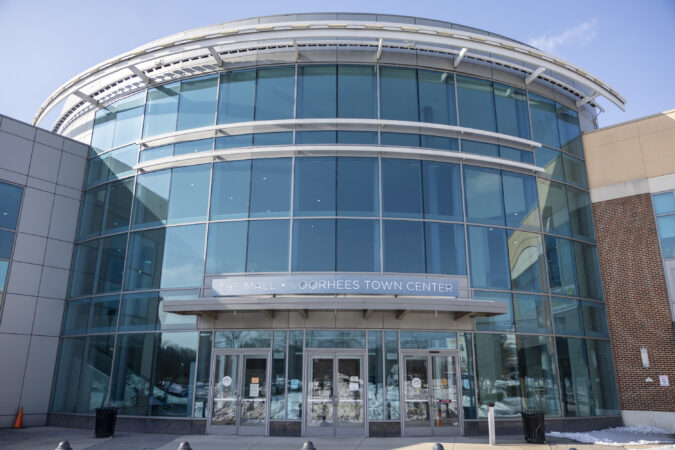
    A North Jersey developer has plans to finally transform the long-dead Echelon Mall, saying he’d spend more than $250 million to create a “regional destination” with high-end restaurants, entertainment venues, sports retailers, housing, and perhaps even an “upscale supermarket.”

    “We’re going to try to make it Voorhees’ main street” inside the old mall building, said George Vallone, president of the Hoboken Brownstone Co. “Just sort of reinvent the whole thing.”

    The project, which would include townhouses, apartments, a parking garage, and community spaces, was unanimously approved by the Voorhees Township Committee in October.

    But Vallone said his plans aren’t set in stone: The revitalization of the former mall, now called the Voorhees Town Center, depends on whether Hoboken Brownstone can get financial help from the state.

    The entrance to the food court at the Voorhees Town Center, which has been closed for nearly two years after a fire.

    Vallone said his company is applying for a $90 million tax credit for development projects and expects to hear in the coming months whether it is approved. If not, he said, “we walk.”

    Vallone made similar statements in a Philadelphia Business Journal report earlier this week.

    Voorhees Township Mayor Michael Mignogna said he supports “the thoughtful redevelopment of the former Echelon Mall site” as proposed by Hoboken Brownstone.

    “Throughout the process, the township has worked collaboratively with Hoboken Brownstone and Namdar in their private transaction to advocate for the rejuvenation of Town Center, specifically a strong business and retail presence that will restore the site as the center of Voorhees tradition and community,” Mignogna said in a statement.

    He noted that a state tax credit would not affect the developer’s local tax responsibilities.

    The uncertainty represents the latest hurdle in the long quest to revive the sprawling complex off Somerdale Road. Over the years, the 400-acre property, one of the Philadelphia region’s many lifeless malls, has been redeveloped in fits and starts under multiple owners.

    Recently, transformations have begun at nearby malls, including Moorestown and Burlington Center, as the old Echelon Mall languishes.

    What $250 million could do for dead Voorhees mall

    The Voorhees Township Town Hall would not be included in a potential sale of the closed mall building.

    Voorhees officials, including Mignogna, have been talking about the troubled mall’s revival for two decades.

    Built in the 1970s, the once-bustling Echelon Mall has been struggling with vacancies since the early 2000s.

    In an attempt to turn the mall around, it was partially demolished, and a Main Street-style mixed-use development was built on part of the property in 2008. After this makeover, which cost an estimated $150 million, the complex was rebranded as the Voorhees Town Center.

    Namdar Realty Group, which is known to scoop up distressed malls, bought the property from PREIT for $13.4 million in 2015, but the situation did not improve. Retailers continued to flee. Customers followed. In 2024, a two-alarm fire damaged the inside of the building. It has not reopened since.

    A sign on the door of the Voorhees Town Center, which has been closed for nearly two years due to fire damage.

    Hoboken Brownstone plans to buy the mall building from Namdar in a pending sale, dependent on the tax break, Vallone said. He declined to disclose how much he would pay for the property, and Namdar executives could not be reached.

    The sale would not include the Voorhees Town Hall, which occupies 22,000 square feet of the mall and cost the township $5.5 million.

    Nor would it include the property’s existing mixed-use section, Boulevard Shoppes, which had been home to an Iron Hill Brewery until the company filed for bankruptcy and closed all locations this fall. (Township administrator Stephen Steglik said Voorhees hasn’t heard anything from Namdar about what’s next for the Iron Hill space.)

    Voorhees Township officials are in the dark about the future of the closed Iron Hill Brewery.

    Boscov’s, the site’s sole department store, would also be excluded from the sale, and executives have said it would remain open.

    If the sale goes through, Vallone said, construction could begin in early 2027.

    The company plans to build more than 200 market-rate townhouses; more than 100 units of affordable housing, including for-sale townhouses and rental apartments; and a parking garage with at least 1,300 spaces.

    As for the retail space inside the mall, “we’re going to invest a lot of money because there has been very little maintenance done on that thing for the last 20 years,” Vallone said. The mall building will not be torn down, he said, and may look largely the same from the outside.

    Why this developer invests in dead New Jersey malls

    The former Echelon Mail, as seen through a window in October 2024, after a fire damaged the building. The mall has not reopened since.

    In Voorhees, Hoboken Brownstone’s plan differs from its other major mall redevelopment in New Jersey.

    In Flemington, Hunterdon County, Vallone said they’re demolishing Liberty Village, considered the country’s first outlet center, and turning it into a mixed-use complex that will also include townhouses and apartments.

    After buying Liberty Village from Namdar, Vallone said he reached back out to the real estate company to inquire about other mall properties for sale. That’s how he became interested in the Voorhees Town Center.

    Vallone said he believes dead and dying malls can make good investments.

    “Here we have a substantial amount of infrastructure that is feeding the mall,” including plumbing and electric, Vallone said. “That de-risks the project quite a bit.”

    And he said he thinks customers will come to malls-turned-town-centers if they are developed thoughtfully.

    After all, retailers like Amazon can’t deliver everything same-day, Vallone said, and shopping online doesn’t offer the same experience as browsing at a store.

    In-person entertainment, fine dining, and even grocery shopping are also hard to replicate at home, he said: “Certain things, you have to go somewhere to do.”

  • How the Canadian prime minister’s anti-Trump speech could change the U.S. economy | Expert Opinion

    How the Canadian prime minister’s anti-Trump speech could change the U.S. economy | Expert Opinion

    Canadian Prime Minister Mark Carney may have given the most important economic speech of all the attendees at the World Economic Forum in Davos, Switzerland.

    In it, he addressed the changing face of world economic relationships with a clear, challenging conclusion: “Let me be direct: We are in the midst of a rupture, not a transition.”

    His statement made it clear that the imposition of rules by the world’s most powerful nations will no longer be accepted quietly.

    On behalf of Canada, the tenth largest economy, Carney threw down the gauntlet, saying the pattern of trade and economic relationships that has persisted for decades will undergo great changes, led not by the world’s superpowers, but by the midsize nations who trade with them.

    This is the clearest indication that the backlash to the tariff wars that President Donald Trump started has cut the cords with previously passive but supportive nations.

    The potential economic consequences for the U.S. are massive, though it could take many years before the impacts are clearly understood.

    Many countries will alter their U.S. trade

    While trade is a country-to-country activity, it is no different from a business-to-business relationship.

    If your business partners work well with you, the relationship is long-lasting. But if your partner becomes abusive, a change in the nature of the collaboration is inevitable. You diversify.

    After all the tariffs and threats, our trading partners realize they cannot remain overly dependent on the U.S. They must spread their exports and imports across a larger number of nations.

    Already, Canada, Britain, and the European Union are discussing or finalizing deals with China and India on a variety of goods. These are just the start.

    Agriculture in the crosshairs

    China has cut back on soybean purchases from U.S. farmers. For the five months ending in October 2025, China bought no soybeans.

    Given that China has been purchasing about 55% of U.S. production, U.S. soybean farmers have been devastated, requiring a multibillion-dollar bailout.

    And to make it clear this is not a one-time reduction, China is working to expand its agricultural relationships with South American nations to more permanently diversify its farm supply chain.

    The Canadian call to arms indicates other nations will likely follow the Chinese playbook to escape the political/tariff consequences of disagreeing with U.S. policy.

    There is no coming back from that, to the long-term detriment of U.S. farmers.

    Other key industries at risk

    The military industrial complex is one. Europe purchases a significant amount of U.S. military products because its defense industry cannot supply the continent with enough weapons to go it alone. Instead, it has been hiding behind the U.S. defense shield.

    With U.S. support for NATO in question, Europe now understands it must expand its domestic defense production and diversify its military supply chain.

    While in the near-term, much of the growing European military demand might be met by U.S. suppliers, over the next five to 10 years, a whole new European defense industry is likely to be developed, putting sales to NATO nations by U.S. manufacturers at risk.

    EVs and alternative energy

    The Trump administration is ending much of the government’s support for electric vehicles (EVs). At the same time the rest of the world is gravitating toward EVs.

    In China, EV sales topped 50% of the market last year, while in Europe, EV demand exceeded gasoline-powered vehicles in December for the first time. Sales growth in areas such as South Korea and South and Central America were up by about 50% in 2025.

    Placing tariffs on products being embraced by the rest of the world, while disincentivizing their purchases domestically, is shifting the EV supply chain to countries where it is welcomed.

    Similarly, the antagonism toward renewable energy is also creating competitive issues for U.S. companies.

    Europe blew it badly when it decided to depend on Russian oil and natural gas for a significant portion of its energy needs. That has changed dramatically.

    Europe is in a race to diversify its energy supply chain. But instead of ramping up demand for U.S. petroleum products, it is making agreements with energy companies based in the Middle East, North Africa, and Canada, and is rushing into renewable energy sources such as wind and solar.

    As long as the U.S. wants to dictate to foreign countries how they should behave, the search for more dependable trading partners will continue. That will affect not just the industries highlighted but the entire economy.

    The delinking of Europe and other countries from the U.S. will, over time, reduce foreign demand for our exports. They will have other sources of supply. That slows growth.

    Prices and interest rates may rise

    Interestingly, this change in the world’s trade patterns could force some manufacturers to return to the U.S.

    That may sound positive, but it’s not. The reason goods aren’t produced domestically is that they can be produced more cheaply outside the U.S.

    The only way previously imported products can be manufactured here is if the tariffs are high enough to make foreign goods more expensive than the domestically produced ones.

    If the price we pay for the made-in-America goods is higher than what we paid when they were imported, replacing imported goods with tariff-protected domestic production is inflationary.

    Higher prices also reduce consumer spending power.

    Which brings us to the Federal Reserve and interest rates.

    In this new tariff-driven world, inflation is likely to remain higher than the Fed desires.

    It will be difficult to cut interest rates significantly if inflation doesn’t come down.

    In summary

    Demand for U.S. exports will decline, slowing growth, while prices of imported products continue to rise.

    Inflation is likely to remain high, cutting consumer spending power and keeping interest rates elevated.

    A wide variety of industries could see their worldwide sales hurt, potentially significantly.

    So, buckle up, the future is no longer what it used to be.

  • Meet the architect whose style defined modern Jersey Shore homes

    Meet the architect whose style defined modern Jersey Shore homes

    Coastal homes featuring wooden gambrel roofs, cedar siding, covered porches, and inside spaces that flow out to patios and pools are mainstays of Jersey Shore properties. The architect who brought that look to the area, arguably, is Mark Asher.

    For more than four decades, Asher has left his imprint on homes from Cape May to Rumson to the Philly suburbs, everything from 1,200-square-foot cottages to 15,000-square-foot mansions.

    Now principal of Asher Slaunwhite + Partners in Jenkintown, Asher has come a long way since designing his first house in 1986: an 1,800-square-foot Cape Cod in Ocean City for his parents.

    “I suppose my parents were looking for a return on their investment,” Asher said. “The house was serviceable. It stood up and didn’t leak, which puts me well ahead of most architects’ first-house experience.”

    Architectural blueprints in Asher’s office.

    That first solo experience taught him many lessons, mostly “that there was a lot to learn,” he said.

    One of those lessons he acquired along the way was that many cultural myths about architects exist, beginning with the notion that architects are generalists who know a little bit about a lot of things. In fact, he said, the reality is that you have to become very, very good at many, many things.

    “We are balancing the skills in land use, regulatory environment, technology, budget, and design,” Asher said. “And of course, client relationships. The house — the finished product — is the tip of an enormous iceberg.”

    Those relationships have been the cornerstone of his business. He has a long list of repeat customers and takes pride in designing homes for the children of former clients.

    Early in his career, Shore homes on Seven Mile Island, home to Avalon and Stone Harbor, were his bread and butter. Today, about 60% of his work comes from the Shore, and the rest from coastal clients who hire him for their inland homes.

    Steve and Nancy Graham had Asher design two homes: their Avalon beach house in 2003, and their primary home in Wayne a year later. Nancy had worked for a builder at the time, and was a true collaborator during the design process.

    The house of Steve and Nancy Graham in Avalon, which architect Mark Asher designed for the family in 2003.

    They razed an existing cottage, replacing it with a two-story, 4,000-square-foot, six-bedroom vacation home for their family, which at the time included their three children. Now, eight grandchildren make memories there.

    The Graham’s Shore house was nothing like the Wayne house he designed for them, which replicated that house’s traditional, historical neighbors. Their Avalon property was Asher’s first foray into designing Shore homes and included a gambrel roof, cedar siding, and a covered porch.

    “I had designed many houses like this before anyone built one, but I kept getting shot down,” Asher said. “Once it was done, it was like a hit song, and it was all people wanted.”

    A childhood passion

    As early as he can remember, Asher loved to sail. Spending his summers at the Shore, he’d tool around in a small dinghy, hugging the Jersey coast from Brigantine to Cape May.

    “The sights and sounds, the feel, and even the smells of these coastal towns became etched in my memory,” Asher said. “So when I started to work in the various beach towns, it was really just going back to a place I’d already been.”

    He had a similar passion for architecture at an early age, curious about old houses. He’d park himself on the curb, sketch pad in hand, and draw the houses he found most interesting. Those were his Architecture 101 lessons.

    (From left) Laura Glantz, Jeanine Snyder, Mark Asher, and Deborah Slaunwhite chat in the office of Asher Slaunwhite + Partners in Jenkintown.

    “I grew up in old houses, warts and all,” he recalled. “They were constantly being worked on. Saturday mornings invariably meant a trip to the lumberyard or the hardware store. And I love old houses still — their history and their stories.”

    After graduating from Virginia Tech School of Architecture in 1982, he worked at various architecture firms, learning the subtleties of his profession. In 1992, the Ocean City Yacht Club hired Asher for a redesign, and in 1995 the Avalon Yacht Club followed suit.

    “This was pre-computer, pre-Internet, so the OCYC project was drawn by hand,” he recalled. “Hard work and passion will cover the sins of inexperience.”

    Building for today’s family dynamic

    Asher’s first home design came in 2000, a relatively small two-coastal cottage that cost about $125 per square foot to build. Today, that same house would cost about eight times that, outpacing the inflation rate by 1,200%, Asher said.

    His designs have evolved along with the needs of his clients. Shore houses today are often designed for three generations of living.

    “Now you need areas for people to come together, but also to separate under the same roof,” said Michael Buck, president of Buck Custom Homes in Avalon and Ocean City, who has worked with Asher on about 30 projects.

    A home in Ocean City designed by architect Mark Asher.

    Although homes previously housed multiple generations, they weren’t purposefully designed to accommodate the needs of extended families. In many cases, homes are shifting to a more contemporary style, with five en-suite bedrooms, an elevator, and dedicated HVAC closet.

    “Mark’s plans capture a certain simplicity of the coastal environment of the home,” Buck said. “His architecture speaks to a classic, thoughtful approach to how a house blends in with its environment on a micro and macro level.”

    Asher’s entry into coastal building brought a greater emphasis on the home’s exterior, both in beauty and function.

    “When Mark came to town, the shift toward second homes from purely rental properties had already begun,” said Jack Binder Sr., broker at Ferguson Dechert Real Estate in Avalon. “The affluent, personal-use buyer wanted to express themselves through custom housing that stood apart from the rest and featured high-end amenities.”

    “Mark married functional interior space that flowed to exterior entertaining areas allowing his clients to enjoy their home to the max,” Binder said.

    One of the homes designed by Mark Asher in Avalon.

    Asher’s home interiors are thoughtfully designed, said Allison Valtri, principal of Allison Valtri Interiors in Avalon.

    “His windows are very carefully placed so that the light comes in in a way that is unexpected,” Valtri said. “Some of my favorite windows are ones that are capturing the sky. That fulfilling moment of peace is very thoughtful.”

    Asher also brought a desire for lush, green lawns to replace the stones that had previously filled the yards. “The stones were hot in the summer, cold in the winter, and ugly all year round,” he said.

    “When I began, I was working in a very traditional architectural palette,” he said. “The ’70s and ’80s were not very kind to beach architecture — think big hair and shoulder pads or stucco and a fondness for inexplicable round windows. So I was on a sort of reclamation project.”

    If it’s true that imitation is the sincerest form of flattery, Asher should feel quite proud.

    An architectural model at the offices of Asher Slaunwhite + Partners.

    “He elevates and then watches everyone else catch up,” Buck said. “For example, not long ago, a wood roof was an anomaly, but now it’s mainstream.”

    But Asher sees it differently. Imitation just means he needs to challenge himself to find something better.

    He shares credit for his successes with those who have helped and inspired him, including his wife and longtime collaborator, Susan Asher, as well as his architect partners, Deborah Slaunwhite and Laura Glantz, and his business partner Jeanine Snyder. He also enjoys mentoring young architects.

    “Any profession has a responsibility for the generation that comes after it,” Asher said. “And I’ve often believed that my own start was a little rockier than it might have been. Some early guidance would have been helpful. So you pay it forward.”

  • 2026 BMW iX garners some rave reviews

    2026 BMW iX garners some rave reviews

    2026 BMW iX xDrive45 vs. 2026 Cadillac Vistiq: A lot for a lot?

    This week: BMW iX

    Price: $96,275 as tested. M Sport Package added $4,500 for a lot of M’s (on the steering wheel, among exterior and interior elements); Executive Package, $3,250 for soft-close doors and more; Driving assistant professional, $2,550. And there’s more, mentioned below.

    What others are saying: “Highs: Tranquil cruising, competitive driving range, deluxe cabin. Lows: Busy exterior styling is polarizing, low rear seating position,” says Car and Driver.

    Consumer Reports gushed: “We were thoroughly impressed with BMW’s all-electric iX, which is speedy, ultraquiet, and delivers a cushy ride. Even with its complicated controls, the iX earned one of the highest road test scores ever.”

    What BMW is saying: “The new age of iX.”

    Reality: And this $100,000 model is the low-budget iX.

    What’s new: The iX electric SUV is new and improved for model year 2026, BMW says, with a redesigned exterior, cutting-edge technology, and versatility.

    Competition: In addition to the Vistiq, there are the Genesis Electrified GV70, Lexus RZ, Mercedes-Benz EQE, Tesla Model X, and Volvo EX90.

    Up to speed: Car and Driver reports the iX xDrive45 gets to 60 mph in 4.6 seconds. An M70 version takes just 3.6. It’s still quite fast, but there are other reasons to upgrade. Read on.

    Shiftless: A small toggle gets you into Reverse or Drive; there’s a button for Park.

    On the road: The iX handles nicely like a good all-wheel-drive EV should. It’s not stellar but it’s smooth and fun. It was actually a little rough on highways.

    Vehicle modes are accessed via a touch pad on the console, which gives you a touchscreen full of choices to take your mind and eyes off the road. When you press Sport then there’s an activation dialogue to capture your attention. Who cares about the car that stopped in front of you, the cyclist, the deer, the kid chasing the ball, when there’s all this touchscreen to look at.

    The interior of the 2026 BMW iX is striking in red leather. It’s comfortable and spacious but with some quirks.

    Driver’s Seat: Here’s another of the iX’s mysteries. The seat is nicely appointed and most comfortable (and on the roomy side), but I was stuck with a lumbar bump that I couldn’t get rid of. The controls are on the door a la old Hyundais but there’s there nothing for lumbar. The touchscreen wasn’t offering any clues either.

    The seats do offer massage, and that function helped take my mind off the lumbar issues — and convinced me there has to be a control for it … somewhere.

    All this for the bargain price of $3,500, for the leather seats.

    Steady speed: The steering wheel controls allow for changing from adaptive cruise to a more intrusive driving assist mode.

    All I wanted to do was simply figure out how to set the distance to the next car. It flashed on the screen when I set the system up and then disappeared forever. Because it was set to the farthest distance, cruise control became useless on Philly-region roads, because everyone here will just cut right in front of you. Mr. Driver’s Seat included.

    Friends and stuff: The rear seat is comfortable and luxurious, although the backrest is a little recline-y for me. There’s ample room for three people across and for everyone’s legs.

    Cargo space is 35.5 cubic feet behind the rear seat and 77.9 with the seat folded.

    In and out: The iX is at a nice height so anyone who doesn’t like climbing or bending will be pleased.

    Play some tunes: The Harman Kardon stereo system produces among the best sound I’ve heard in a long time. Notes and chords that are buried by normal speakers are allowed to sparkle as intended; this is an A+.

    The system is all in the touchscreen or through BMW’s dial and buttons on the console. A volume roller knob on the console just monkeys things up; it’s fairly smooth to the touch and hard to roll. The latter controls remain a favorite and bring this system a step above many other modern BMW offerings (I’m glaring at you, 228).

    Keeping warm and cool: Temperature settings are available on the main touchscreen. A small fan icon on the touchscreen opens the larger menu, and I confess for the first couple days I found that HVAC system annoying — it would blow too hard on auto, even on the lowest setting — and then occasionally boil us. In manual mode I had to run the fan at four out of five to get any coolness.

    Range: The iX xDrive45 has a range of 312 miles, according to BMW. That jumps to 340 miles in the mid-range xDrive60, and drops back to 302 in the high-performance M70.

    Where it’s built: Dingolfing, Germany

    How it’s built: Consumer Reports gives the iX a 3 out of 5 for reliability.

    Next week: Step into the Cadillac Vistiq.

  • Washington Post cuts a third of its staff in a blow to a legendary brand

    Washington Post cuts a third of its staff in a blow to a legendary brand

    The Washington Post laid off one-third of its staff Wednesday, eliminating its sports section, several foreign bureaus, and its books coverage in a widespread purge that represented a brutal blow to journalism and one of its most legendary brands.

    The Post’s executive editor, Matt Murray, called the move painful but necessary to put the outlet on stronger footing and to weather changes in technology and user habits. “We can’t be everything to everyone,” Murray said in a note to staff members.

    He outlined the changes in a companywide online meeting, and staff members then began getting emails with one of two subject lines — telling them their role was or was not eliminated.

    Rumors of layoffs had circulated for weeks, ever since word leaked that sports reporters who had expected to travel to Italy for the Winter Olympics would not be going. But when official word came down, the size and scale of the cuts were shocking, affecting virtually every department in the newsroom.

    “It’s just devastating news for anyone who cares about journalism in America and, in fact, the world,” said Margaret Sullivan, a Columbia University journalism professor and former media columnist at the Post and the New York Times. “The Washington Post has been so important in so many ways, in news coverage, sports and cultural coverage.”

    Martin Baron, the Post’s first editor under its current owner, billionaire Jeff Bezos, condemned his former boss and called what has happened at the newspaper “a case study in near-instant, self-inflicted brand destruction.”

    Journalists pleaded with Bezos for help

    Bezos, who has been silent in recent weeks amid pleas from Post journalists to step in and prevent the cutbacks, had no immediate comment.

    The newspaper has been bleeding subscribers in part due to decisions made by Bezos, including pulling back from an endorsement of Kamala Harris, a Democrat, during the 2024 presidential election against Donald Trump, a Republican, and directing a more conservative turn on liberal opinion pages.

    A private company, the Post does not reveal how many subscribers it has, but it is believed to be roughly 2 million. The Post would also not say how many people it has on staff, although the New York Times estimated that more than 300 journalists were let go.

    The Post’s troubles stand in contrast to its longtime competitor the New York Times, which has been thriving in recent years, in large part due to investments in ancillary products such as games and its Wirecutter product recommendations. The Times has doubled its staff over the past decade.

    Eliminating the sports section puts an end to a department that has hosted many well-known bylines through the years, among them John Feinstein, Michael Wilbon, Shirley Povich, Sally Jenkins, and Tony Kornheiser. The Times has also largely ended its sports section, but it has replaced the coverage by buying The Athletic and incorporating its work into the Times website.

    The Post’s Book World, a destination for book reviews, literary news and author interviews, has been a dedicated section in its Sunday paper.

    A half-century ago, the Post’s coverage of Watergate, led by intrepid reporters Bob Woodward and Carl Bernstein, entered the history books. The Style section under longtime Executive Editor Ben Bradlee hosted some of the country’s best feature writing.

    All Mideast correspondents and editors laid off

    Word of specific cuts drifted out during the day, as when Cairo Bureau Chief Claire Parker announced on X that she had been laid off, along with all of the newspaper’s Middle East correspondents and editors. “Hard to understand the logic,” she wrote.

    Lizzie Johnson, who wrote last week about covering a war zone in Ukraine without power, heat, or running water, said she had been laid off, too.

    Anger and sadness spread across the journalism world.

    “The Post has survived for nearly 150 years, evolving from a hometown family newspaper into an indispensable national institution, and a pillar of the democratic system,” Ashley Parker, a former Post journalist, wrote in an essay in The Atlantic. But if the paper’s leadership continues its current path, “it may not survive much longer.”

    Fearing for the future, Parker was among the staff members who left the newspaper for other jobs in recent months.

    Atlanta paper also makes cuts

    Also on Wednesday, the Atlanta Journal-Constitution, which stopped print editions and went all-digital at the end of last year, announced that it was cutting 50 positions, or roughly 15% of its staff. Half of the eliminated jobs were in the newsroom.

    Murray said the Post would concentrate on areas that demonstrate authority, distinctiveness and impact, and resonate with readers, including politics, national affairs, and security. Even during its recent troubles, the Post has been notably aggressive in coverage of Trump’s changes to the federal workforce.

    The company’s structure is rooted in a different era, when the Post was a dominant print product, Murray said in his note to the staff. In areas such as video, the outlet hasn’t kept up with consumer habits, he said.

    “Significantly, our daily story output has substantially fallen in the last five years,” he said. “And even as we produce much excellent work, we too often write from one perspective, for one slice of the audience.”

    While there are business areas that need to be addressed, Baron pointed a finger of blame at Bezos — for a “gutless” order to kill a presidential endorsement and for remaking an editorial page that stands out only for “moral infirmity” and “sickening” efforts to curry favor with Trump.

    “Loyal readers, livid as they saw owner Jeff Bezos betraying the values he was supposed to uphold, fled The Post,” Baron wrote. “In truth, they were driven away, by the hundreds of thousands.”

    Baron said he was grateful for Bezos’ support when he was editor, noting that the Amazon founder came under brutal pressure from Trump during the president’s first term.

    “He spoke forcefully and eloquently of a free press and The Post’s mission, demonstrating his commitment in concrete terms,” Baron wrote. “He often declared that The Post’s success would be among the proudest achievements of his life. I wish I detected the same spirit today. There is no sign of it.”

  • Burlington plans to open another South Philadelphia location with new store format

    Burlington plans to open another South Philadelphia location with new store format

    A new Burlington Stores location is coming to South Philadelphia.

    The New Jersey-based discount retailer on Monday announced plans to open a store this spring in a shopping center on South 24th Street, with discount retailers Five Below and Ross Dress for Less nearby.

    Between 65 and 75 people are expected to be employed there, according to the Philadelphia Business Journal.

    Burlington got its start in 1972, opening its first store on Route 130 in Burlington Township under the name Burlington Coat Factory. Since then, it has grown to over 1,000 locations and has shed “coat factory” from its name, reflecting the larger product line it carries including apparel, shoes, and home decor.

    The Fortune 500 company reported $10.6 billion in net sales in 2024.

    Burlington headquarters is shown last year in
    Burlington City.

    Burlington started implementing a smaller store model in 2017. About a decade ago its stores were roughly three times larger than the 20,000-square-foot new ones.

    New stores feature a “refreshed format, including wider, more organized aisles and bold signage,” according to a company news release this week. Many existing stores have been remodeled to fit this format, and all sites are expected to have transitioned by the end of the year.

    Burlington has been expanding in recent years. In 2023, Burlington opened its 1,000th store, and that same year, the discount retailer took over Bed Bath & Beyond locations after that company declared bankruptcy. In 2024, Burlington reported opening 100 stores.

    The discount retailer has over 40 stores in Pennsylvania, including seven stores in Philadelphia and several more in the surrounding counties. Another South Philly Burlington is located at Whitman Plaza on Oregon Avenue, roughly two miles from where the new site will open.