Category: Business

Business news and market updates

  • Moody’s boosts Atlantic City to investment grade a decade after its near bankruptcy

    Moody’s boosts Atlantic City to investment grade a decade after its near bankruptcy

    ATLANTIC CITY — A decade after teetering on the edge of bankruptcy and being taken over by the State of New Jersey, Atlantic City has been given an investment-grade rating by Moody’s Ratings.

    “Today is a tremendous day to start the new year,” Atlantic City Mayor Marty Small Sr. said Monday at a livestreamed news briefing. “The city of Atlantic City is officially investment grade.”

    The credit rating of Baa3 puts the city in the lowest long-term investment-grade category, several steps from the top A ratings. But it marks a dramatic rise from 10 years ago, Small noted, when he was sworn in as the City Council president.

    “We had the junkiest junk bonds imaginable,” he recalled. “The city’s finances were not in a good state. Employees were getting paid once a month. People were running to the bank to cash their checks. The outlook was bleak. We even entertained that we were bankrupt. It was a long, drawn-out fight. However, that was then; this is now.”

    Small himself ended 2025 in dramatic fashion: a two-week trial that ended in an acquittal on charges that he physically abused his teenage daughter.

    Small and business administrator Anthony Swan said at the Dec. 31 meetings that Moody’s expressed interest in seeing a stable government and experienced department directors.

    Small was sworn in to a new four-year term on New Year’s Day with his daughter in attendance and said then that the family has begun the healing process. A decision is expected soon by the Atlantic County prosecutor on whether to pursue similar charges against his wife, La’Quetta Small, the city’s schools superintendent.

    The state’s takeover of Atlantic City expired Dec. 1. But another bill is moving through the legislature that will leave the state in charge of Atlantic City finances for another six years. It calls for a “master developer” to oversee major projects, even as the city is trying to regain control over planning and zoning.

    There are other challenges ahead for Atlantic City: New York City approved three casino licenses that could cut a substantial hole in Atlantic City’s gambling revenue and prompt state lawmakers to approve casinos in North Jersey. Casino owners also oppose an effort to ban smoking in the city’s casinos that is now before an appellate court.

    Though the state takeover began a decade ago in hostile fashion, it evolved to a cooperative partnership. Small praised the decision by incoming Gov. Mikie Sherrill to keep Jacquelyn Suárez as head of the state’s Department of Community Affairs, which would oversee the next takeover.

    Atlantic City Mayor Marty Small Sr. speaks to the media after being found not guilty on all counts of abusing his teenage daughter, on Dec. 18.

    But Monday was a day of triumph for the city.

    Small noted that the city had substantially reduced its debt to $228 million, down from a peak of $550 million, and cut taxes six years in a row. Of that, only $71 million is debt directly incurred by the city; the rest are legacy debts from money owed to casinos from tax appeals. He anticipated announcing a seventh tax cut in the coming weeks.

    “This government gets criticized all the time,” he said. “People say, ‘Oh they’re spinning like drunken sailors, spinning spinning spinning like it’s out of control.’ Ladies and gentlemen, that’s just not true.”

    Business administrator Swan said Moody’s was interested in more than just numbers. “It’s about the stability of the city,” he said. “It’s about how the city is run.”

    Finance director Toro Aboderin called the announcement “an extraordinary milestone.” She said Moody’s asked about “bulkheads, roads, infrastructure.”

    “Restoring Atlantic City to sound financial footing has been our top priority every single day,” she said. “A lot of people talk about Atlantic City and how we’re terrible, how the finances are the worst, and the roads are messy. They say all kinds of things, but we have attained something quite remarkable.”

    Officials hope the vote of confidence from Moody’s will signal to investors and developers to look again at their city, which has some of the most affordable beachfront real estate on the East Coast.

    An investment-grade credit rating signals to financial markets that Atlantic City is a lower-risk borrower, although the mayor emphasized that the city currently has no need to borrow.

  • Giant’s online orders won’t be delivered by the grocery store’s employees anymore

    Giant’s online orders won’t be delivered by the grocery store’s employees anymore

    Giant is changing how it handles online orders as customers demand fast grocery delivery.

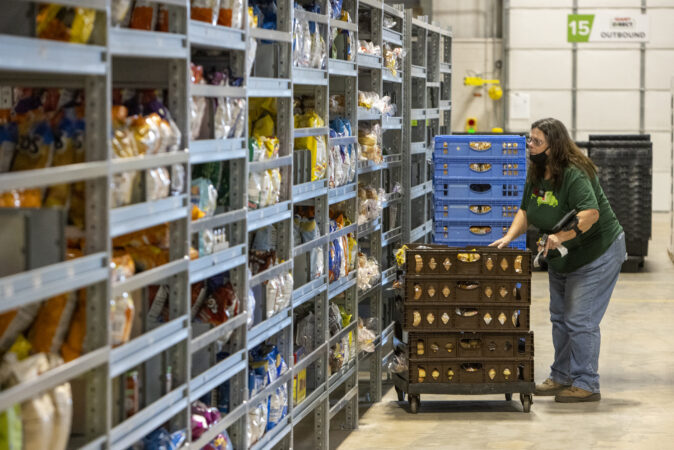
    The supermarket chain, which got its start in 1923 in Carlisle, Cumberland County, is closing five e-commerce fulfillment centers in Pennsylvania as it transitions to a new business model.

    “We’ve learned over the past few years that there isn’t a one-size-fits-all approach to our e-commerce business, particularly our fulfillment model,” said company spokesperson Ashley Flower. “With customers expecting faster delivery, we need to ensure we are operating as efficiently as possible to meet their ever-changing needs.”

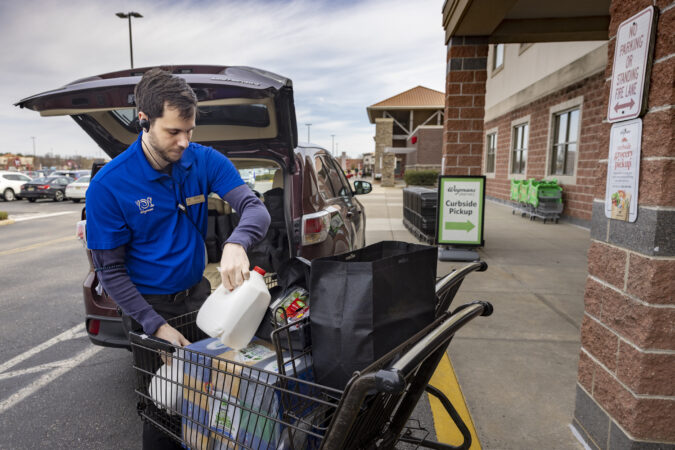
    Under the new model, Giant employees will select the items for customers’ orders at Giant stores, instead of fulfillment centers, and the groceries will then be delivered by Instacart or DoorDash instead of GIANT Direct drivers.

    The company will transition to the new model by the end of April and customers can continue to place their orders through the Giant app, said Flower.

    The new model is intended to allow faster delivery, more product variety, and one-hour delivery windows, said Flower.

    Customers will also be able to make changes to their orders closer to the scheduled delivery time.

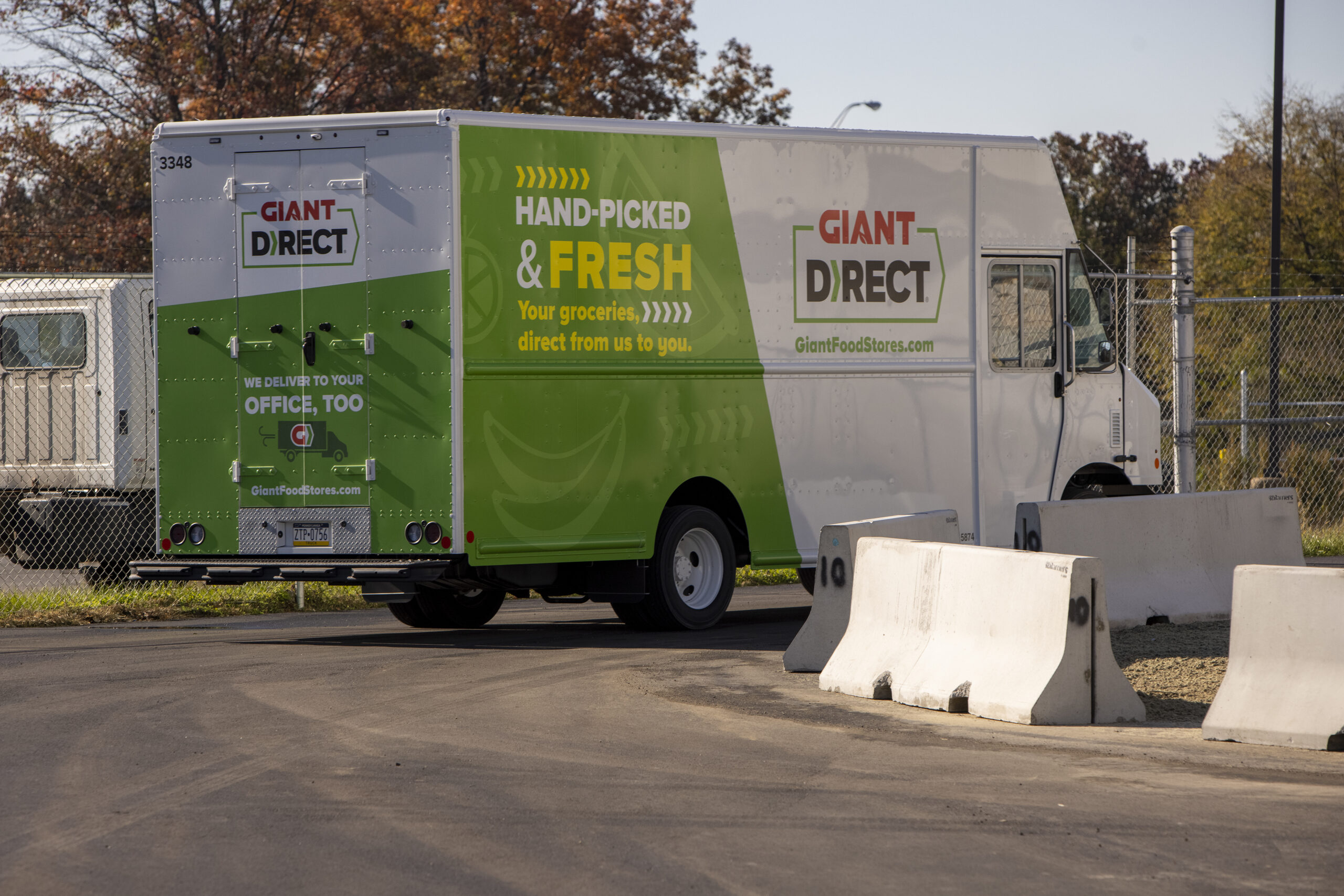
    Trucks leave the Giant Company e-commerce fulfillment center in Eastwick in November 2021, when the center had just opened. Going forward under the new delivery model, grocery orders will be delivered by a third-party company instead.

    During the pandemic, more consumers turned to online shopping for their groceries. Today, consumers in the Philadelphia area are able to shop from several supermarkets through the Instacart and DoorDash digital platforms, including ShopRite, Aldi, and Sprouts. Customers have been able to shop for Giant groceries with third-party providers prior to the announced e-commerce model change.

    Giant will close its five area fulfillment centers, Flower said. They are at: 3501 Island Ave. in Philadelphia, 315 N. York Rd. in Willow Grove, 216 E. Fairmont St. in Coopersburg, 86 Glocker Way in Pottstown, and 235 N. Reservoir St. in Lancaster.

    Some fulfillment centers share their address with a supermarket site but are not accessible to shoppers at those locations. At those sites, the fulfillment center will close, but there will be no change to store operations, said Flower.

    The e-commerce facilities employ 493 workers, who will be offered “equivalent jobs within our stores, with the same pay and benefits.” But drivers who take on a new position at a store will no longer receive tips, noted Flower.

    When Giant’s 124,000-square-foot Southwest Philadelphia fulfillment center opened in 2021, it allowed the company to expand online order delivery to South Jersey. That was part of a $114 million expansion.

    Meanwhile, Giant has been expanding its store footprint with a new South Philly location opening in 2024, and a Jenkintown supermarket in 2025.

    “E-commerce remains an important segment of our business strategy and key to our future omnichannel growth,” said Flower. “We remain committed to providing an outstanding experience to our customers by offering speedy delivery, more delivery windows, broad product assortment, and value.”

  • Why this nonprofit CEO says Philly ‘cannot just be a place of eds and meds and Comcast’

    Why this nonprofit CEO says Philly ‘cannot just be a place of eds and meds and Comcast’

    Philadelphia is often referred to as an “eds and meds” economy — the region’s colleges, universities, and health systems employ hundreds of thousands.

    But Sean Vereen, president and CEO of Heights Philadelphia, doesn’t want the city to just be defined by those employers. The nonprofit he leads helps connect young people with education and career opportunities.

    “I often say Philly should be a city for working-class people. We have a lot of working-class sensibilities, but we don’t have an economy that works for working-class people,” said Vereen. “We are going to have to be much more dedicated across all kinds of sectors to really try to create that kind of city and region.”

    The Inquirer spoke with Vereen about recent unemployment data released by the Bureau of Labor Statistics, and the opportunities available to young adults. He says companies should have a vested interest in employing and training these entry-level workers — it’s a savvy business decision.

    “Companies are not doing this out of charity. They’re doing it because they need a better workforce, and they cannot just be dependent on people who have done everything right, or have had access to all the opportunities,” said Vereen.

    The following conversation has been edited for length and clarity.

    U.S. unemployment is at the highest level since 2021. What does that mean for workers and those looking for work in Philadelphia and across the country?

    Entry-level work is getting harder for people to find and have. Whether it’s [because of] tariffs or it is economic trends with hiring in general, it’s clear that the labor market is weakening. I think that’s particularly true for families of color, particularly Black folks seeking employment.

    Then, I think the other piece is that the cost of living increases. There’s a ton of pressure for people through their employment to be able to maintain lifestyles. As much as [the Philadelphia area] is a great place to live, economically we’re not producing enough jobs that can sustain people in a working-class, middle-class lifestyle.

    I recently wrote about how college graduates are facing one of the toughest job markets in recent years. What can young people expect when they’re entering the workforce? How can they prepare?

    When you’re looking at the employment rates of people without a college degree, or even without a high school degree, the employment rates are much worse. So … it’s still the best bet that you’re going to have to get access to employment, particularly in this region because we are very much an “eds and meds”-driven economy in the five counties. We have to diversify and build up what the economic opportunities are here, but that’s also a reality that young people are facing.

    Particularly first-generation-to-college students, they need networks and support systems, because they don’t have the connections that other folks from higher-income groups may have. We’re never gonna get people who have experience unless we give young people an opportunity and a chance. Employers have to be more dedicated to that entry-level work and paying fair and decent wages for that.

    Scene from Rowan University’s College of Education graduation ceremony at Rowan University in Glassboro.
    Tell me a bit about underemployment. Have we seen a change in how many people are employed part-time who would like to have more work?

    It is clear that the cost of living has increased significantly over the last four or five years since the pandemic, and people are doing a lot of different things to try to supplement what their income is.

    Everybody has got some kind of side hustle. Now, the question I would have is: Does it add up to actually real economic prosperity?

    Are there many people who are in jobs that don’t match the amount of education they have? What can be done about that?

    I think that is happening, one, because [there are] just more college graduates, period.

    We need institutions and universities more dedicated to giving opportunities to low-income and first-generation students. We don’t have this connection between education and employment as much as we need to.

    We’re really trying to push [for] kids to go to institutions that have the support and ability for kids to be able to graduate. We think Temple [University] is one of those places.

    Some people … in their economic status [have] built-in networks that allow them to be connected to industries and professions. They may know somebody who’s already an investment banker … or does government work. For everybody else who does not have those connections, we need to have stronger networks. We need to have more people in career fields who are willing to mentor and engage people who are not their cousin, or their sibling, or a family member, but people who are different from them, but will benefit the industry, and the field, and all of us.

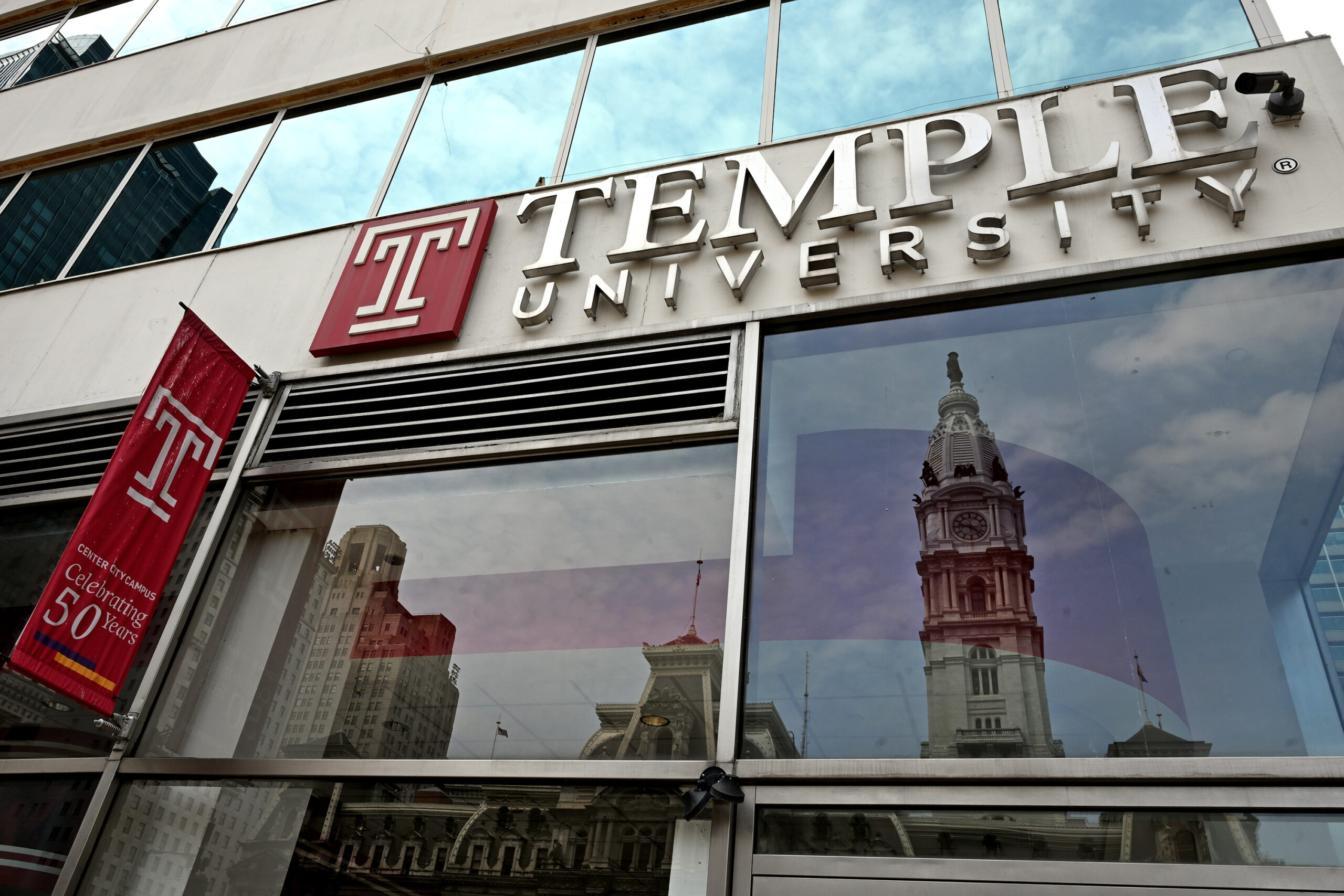
    City Hall is reflected in glass of Temple University Center City Campus at 1515 Market St. on Jun. 5, 2025.
    The unemployment rate for Black workers increased by over 2 percentage points last year, up to 8.3%. What’s happening? What could help?

    It’s the canary in the coal mine. What we saw during the pandemic, and coming out of the pandemic, was enormous amounts of opportunity for low-income, lower-wage workers … and now that’s wearing out. Then we think about the cutbacks in government work, cutbacks that are happening across many industries, that often Black folks are the folks who are first to be hitting those headwinds.

    We still need to create long-term careers. We need to be thinking in this system. Even after the end of diversity, equity, and inclusion, we need to be creating opportunities in communities where that has not been the case. That’s both really thinking about lowering the cost of education … [and] making a stronger connection to what happens to you at the end of your educational journey.

    We’re trying to press universities to be thinking harder about what happens to kids once they graduate. We’re trying to press the School District of Philadelphia to be thinking more about what happens, not just to get a kid to graduation, but have we connected them to an opportunity?

    We cannot just be a place of “eds and meds” and Comcast. There has to be more economic opportunity for more people.

    Public art “For Philadelphia” (top) by Jenny Holzer and “Exploded Paradigm” (left) by Conrad Shawcross and the Universal Sphere (rear) in the second-floor lobby of the Comcast Technology Center, Monday, March 17, 2025.
    How should workforce development programs help people in Philadelphia secure good jobs? What kind of industries, skills, or training should they be focused on right now?

    Whether you’re going to be a welder, or whether you’re going to be an electrician, or whether you’re going to work in a hospital, your reading and math skills still matter.

    The other piece is just understanding what a field is. A med technician, they make, actually, good living wages. It is a job that you can do without a college degree, happening in many of the hospitals and research labs around the region. Kids don’t know about those things. No one is waking up in the morning and being like, “I want to be a med technician, [or a] sterilization technician.”

    We have to do a better job of actually, at scale, introducing young people to fields and what opportunities are [available]. When they think about medicine, it’s not just about being a nurse or a doctor. There are thousands of jobs and opportunities there.

    We have a ton of jobs that are going unfilled while we have employment going up, for example, in some of the hospitals. We’ve got to be better about trying to get people connected to opportunities. And that is possible to do. We just haven’t really looked at it, I think, in the right way.

  • The big obstacles to Trump’s plan for a Venezuelan oil windfall

    The big obstacles to Trump’s plan for a Venezuelan oil windfall

    There’s a familiar ring to President Donald Trump’s plan to send U.S. energy giants to Venezuela to use the wealth generated from rekindling long-stalled oil production to stabilize that country and cement American energy dominance: Similar ambitions accompanied the U.S. invasion of Iraq in 2003.

    The quick riches promised did not materialize there, as firms grappled with years of political turmoil and security threats, struggled to negotiate workable contract terms and confronted vexing infrastructure inadequacies. Venezuela may not be any easier, industry analysts warn.

    “One of the clear lessons from Iraq — and it is not unique to Iraq — is that you need to have stability and be able to assess risk before you can start production,” said Kevin Book, managing director at ClearView Energy Partners, a research firm. Until then, he said, companies may not be enthusiastic about making the billions of dollars in investments required in Venezuela.

    It’s unclear which firms Trump was referencing at a news conference Saturday morning, when he said: “We’re going to have our very large United States oil companies, the biggest anywhere in the world, go and spend billions of dollars to fix the badly broken infrastructure, the oil infrastructure.”

    Chevron, which operates there now, declined to comment on plans.

    ExxonMobil and ConocoPhillips exited the country and saw their assets seized after refusing to meet the terms of Venezuela’s government nearly two decades ago. ExxonMobil did not respond to requests for comment.

    “It would be premature to speculate on any future business activities or investments,” ConocoPhillips spokesperson Dennis Nuss said in an email.

    But the appeal is clear. Venezuela has one of the biggest oil reserves in the world, estimated at 300 billion barrels.

    “Every major oil company in the world and some of the smaller ones will look closely at this because there are very few places on Earth where you could increase production so much,” said Francisco Monaldi, director of the Latin American Energy Program at Rice University. “But first you need political stability and clarity.”

    He said restoring peak oil production there would cost up to $100 billion and take about a decade. And that is assuming there is enough political stability for companies to operate unencumbered during that entire period.

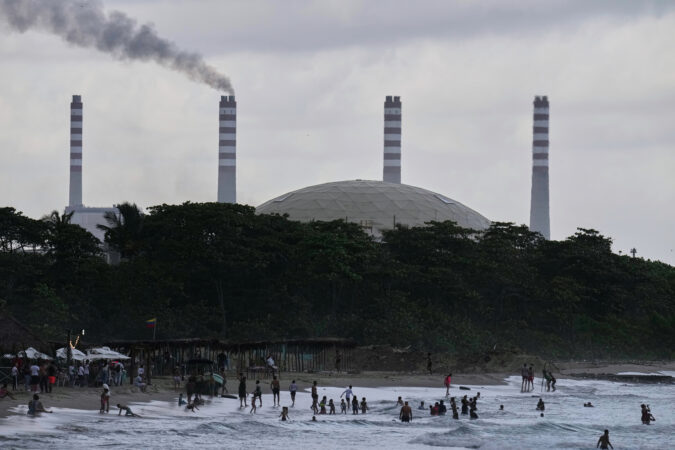
    There are other obstacles. The oil in Venezuela is a heavy form of crude that is more difficult to process and carries a heavier carbon footprint than oil pumped elsewhere. Venezuela’s power grid is on the brink, creating an uncertain outlook for oil production, which requires massive amounts of energy. Also, Russian and Chinese firms partnered with Venezuela after U.S. companies left the nation, complicating the reestablishment of U.S. firms.

    Returning to Venezuela has hardly been a central talking point of U.S. oil companies.

    In this era of relatively low oil prices and uncertainty about how robust future demand will be amid an on-again, off-again global energy transition from fossil fuels, firms are anxious about reinvesting tens of billions of dollars more in pumping in Venezuela absent assurances that their investments would be secure for at least a decade, according to industry analysts.

    Trump’s removal of Venezuela’s leader and plan to put the U.S. in charge of the country for now does not ensure that, despite his sweeping promises.

    “We built Venezuela’s oil industry with American talent, drive, and skill, and the socialist regime stole it from us,” Trump said. “The oil companies are going to go in. They’re going to spend money there that we’re going to take back the oil that, frankly, we should have taken back a long time ago. A lot of money is coming out of the ground. We’re going to get reimbursed for all of that. We’re going to get reimbursed for everything that we spend.”

    Today, the nation’s oil production is a fraction of what it could be and its infrastructure is badly frayed because of domestic turmoil, the departure of foreign oil companies, and related international sanctions. The nation is pumping a mere 1 million barrels of oil per day, less than 1% of global output. That is also less than a third of its peak production under the Hugo Chávez regime and a quarter of what experts say it is capable of generating.

    That oil has largely been purchased by China.

    The only American company operating in Venezuela is Chevron, with its production constrained by considerable Venezuelan government restrictions.

    “Chevron remains focused on the safety and wellbeing of our employees, as well as the integrity of our assets,” said a statement from Bill Turenne, a company spokesman. “We continue to operate in full compliance with all relevant laws and regulations.”

    While acknowledging that firms have reason to be reticent, Monaldi, of Rice University, pointed to forecasts showing Venezuelan oil could be crucial to meet rising global demand over the next decade.

    But none of that can happen overnight.

    “Oil companies do not operate in a vacuum and we are years from significant volume increase,” said Pedro Burelli, a critic of Venezuelan President Nicolás Maduro now living in the United States, and a former board member of the Venezuelan state oil company. “Regulations and contracts matter, as U.S. oil companies are publicly traded companies with shareholders who will demand rational investment decisions.”

    Oil companies have even been reluctant to increase their rig counts here, despite Trump’s repeated calls for more drilling, amid demand uncertainty and dropping market prices. U.S. oil production soared during the Biden administration, but the pace of growth has slowed since Trump returned to office, with some forecasts predicting declines this year.

    Book said oil companies will be looking to sign contracts that they are confident will be honored for the long term, and there is no government in Venezuela that right now can honor such a contract.

    “Before you make all these big investments and start running operations, you also need a stable country with reliable electricity, functioning ports, and an available workforce,” he said. “A lot of factors go into pulling this off.”

    Trump may have further complicated the outlook for U.S. oil firms returning to Venezuela by declaring that he does not believe the popular opposition leader there, María Corina Machado, commands the respect to run the country immediately following Maduro’s ouster.

    Machado has been a vocal proponent of helping U.S. firms re-establish operations in Venezuela. One of her energy advisers, Evanan Romero, a former Venezuelan oil executive and government minister, stressed in an interview that if the oil firms wish to return, “we will welcome them.”

    “They will make money, Venezuela will make money,” he said.

  • Shopping secondhand for kids’ stuff is getting more popular in Philly

    Shopping secondhand for kids’ stuff is getting more popular in Philly

    When Jennifer Kinka was pregnant with her first child, she stood in the aisle of Babies R Us with a registry sheet, looking over the wall of plastic consumables the company deemed required for having a baby. What she saw was waste.

    “I was just like, this is crazy that there’s no system for this,” Kinka said. “There’s no problem-solving around how this is happening and how we could do this better.”

    After a few more years, her second pregnancy, and a small inheritance from the loss of her terminally ill parents, Kinka was able to implement her solution: The Nesting House, a kids’ consignment shop based in Mount Airy that she founded 15 years ago.

    Shoppers across Philadelphia, including parents buying for their children, are increasingly forgoing new items in favor of secondhand and lightly used in an effort to save money and live more sustainably.

    Chris Baeza, associate program director of Fashion Industry & Merchandising at Drexel University, asks her students each semester who shops in the secondhand market. While five years ago she might have had a single student raise a hand, now it’s nearly all of them.

    The global secondhand apparel market grew by 15% in 2024, according to online consignment store ThredUp’s annual report, and it’s expected to continue growing each year. ThredUp estimates that the resale apparel market is growing 2.7 times faster than the overall apparel market.

    For Abby Sewell, a South Philadelphia mom of two, secondhand clothing and furniture was a mainstay of her childhood, when she spent weekends trash picking and combing through yard sales to find reusable items. Her father is artist Leo Sewell, who built a replica of the Statue of Liberty’s arm and torch at the Please Touch Museum.

    “I just know how much there is out in the world,” said Sewell, who also describes herself as an environmentalist. “There’s just so much kids clothes that it kills me to buy something new when I know there’s like 50 pairs of 2T leggings in someone’s basement.”

    A dramatic shift toward secondhand not only coincided with the proliferation of social media but followed the 2013 Rana Plaza factory collapse in Dhaka, Bangladesh, that killed more than 1,000 people. People began to wonder how their clothing was being made, and the conditions laborers were under, Baeza said.

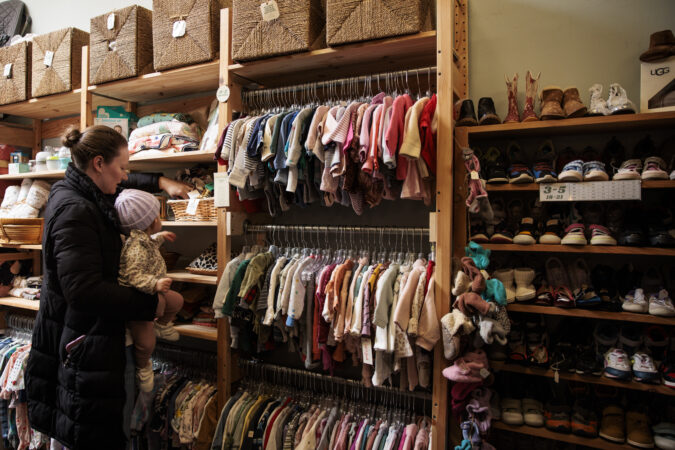
    Used baby shoes on display at the Nesting House.

    Next came the broader revelation of textile waste — pictures and video of clothing from the United States washing up on the shores of African countries — which plays into the interest in the secondhand market, she said.

    “This was stuff that we just throw away, or we put in a drop box [thinking] it’s going to a good cause,” Baeza said. “They’re actually packing stuff up, and it’s a commodity they’re selling abroad.”

    While Beaza teaches her students to scrutinize the marketing of sustainable fashion and to understand secondhand may not be the be-all-end-all of building circularity into the industry, she gets the sense they want to be part of what she describes as a renaissance period.

    “They want to be part of the solution, not the problem,” Baeza said.

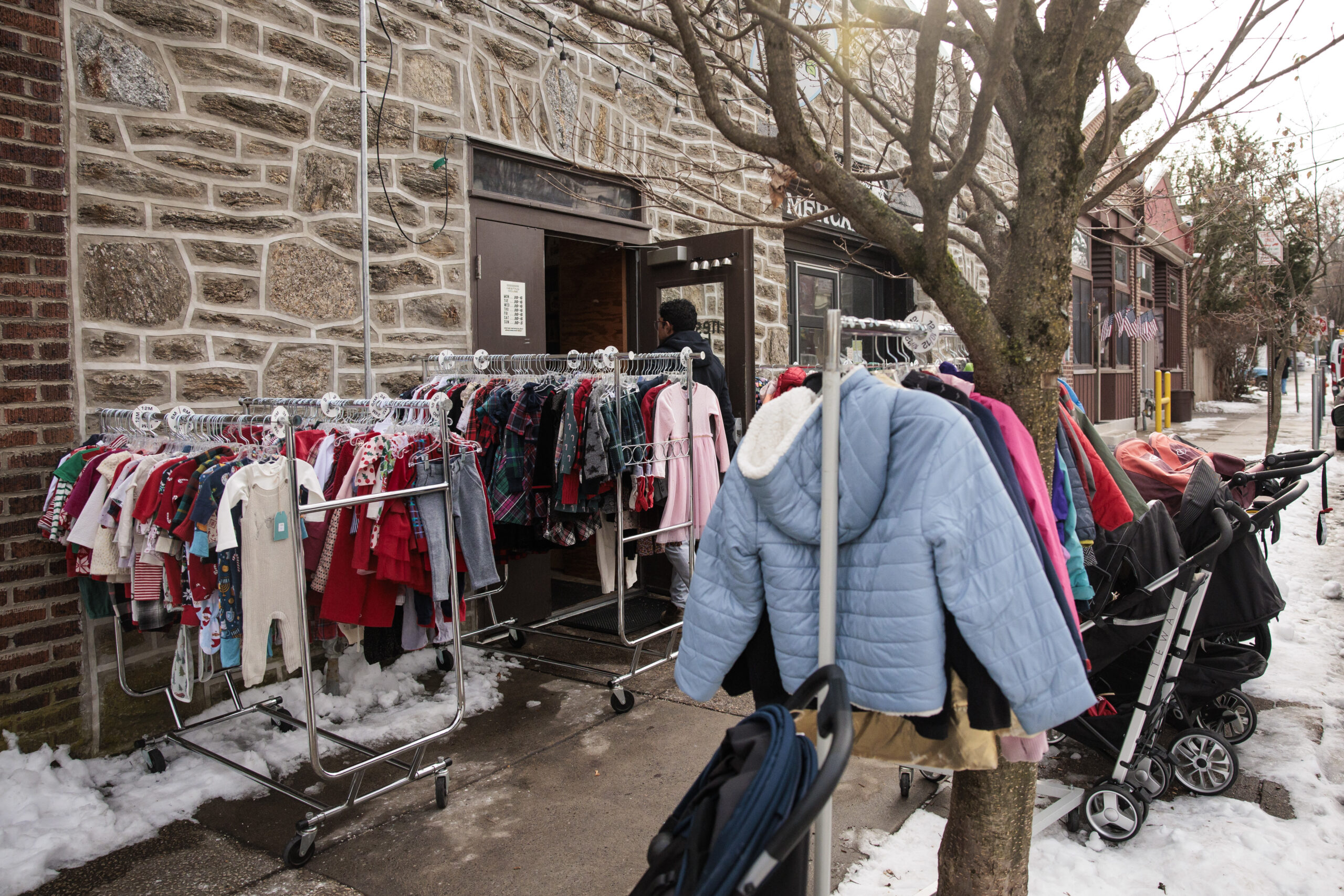
    Childrens clothes on display outside the Nesting House.

    Sewell prefers to shop thrift and consignment around her neighborhood and frequents stores like Lilypad and 2A. She also goes to annual church sales in the suburbs and uses eBay for more specific items — a specific kind of sleep sack that works for her 1-year-old or an item in a specific color or fabric for her 4-year-old.

    “I’m still shocked to this day when I learn that other parents still are buying mostly new clothes for their children,” Sewell said. “I think I’m on a very different end of the spectrum, and I always have been as a consumer.”

    Lilypad, which began as a play space on Broad Street, expanded to include a small thrift shop in its basement after the COVID-19 pandemic sidelined its twice-yearly City Kids consignment events. The nonprofit sells only donated items at its shop, now located in East Passyunk, to support charging an affordable annual membership to its play space.

    Lilypad board member Maria Hughes said the number of people actively seeking out secondhand clothing for their kids, particularly babies, has increased exponentially over the last several years. The store sees more pregnant people, who don’t want to go through the process of building a registry. Hughes added that there are also more grandparents and grandparents-to-be shopping at Lilypad now.

    “They’re not going to Marshalls and buying the things,” Hughes said. Instead they’re opting for pre-owned items “either at the directive of their children or because they believe now.”

    Kinka said the early days of the Nesting House “felt like it was mission work.”

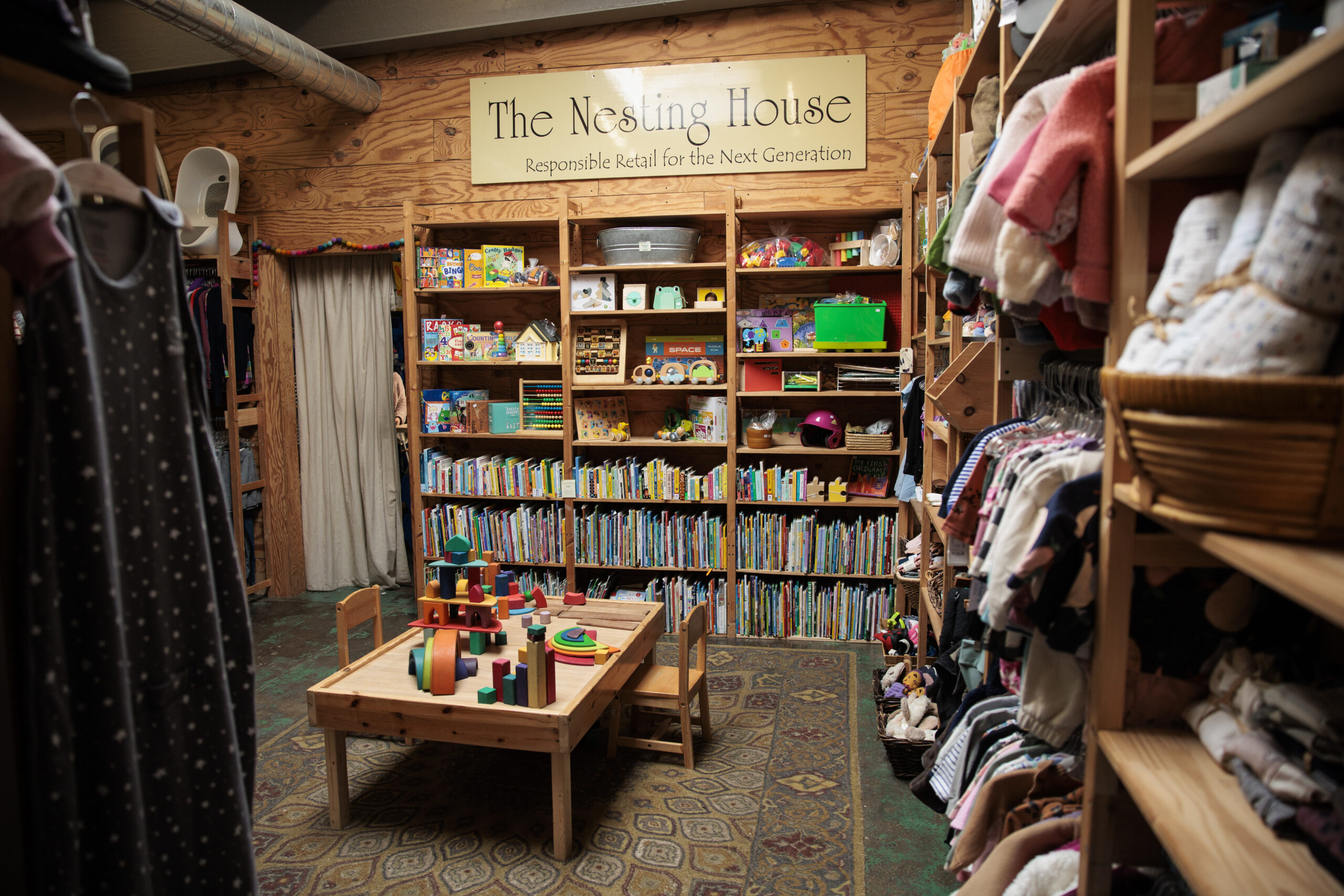
    Used baby goods and books on display at the Nesting House.

    “Nobody understood what we were doing,” Kinka said. “People would come in very confused. They would oftentimes refer to us as a thrift store.”

    Eventually people saw the store as a sound economic choice: get high-quality children’s clothing at a great price. But she has seen “a huge shift” over the last five years.

    “It’s this current generation,” Kinka said. They’re on board with the concept “before they come. They’re ready for us.”

  • Trump says the job market is booming for U.S.-born. The data don’t show it.

    Trump says the job market is booming for U.S.-born. The data don’t show it.

    President Donald Trump and White House leaders say that American workers are winning because of his immigration crackdown. But the data don’t back that up.

    Since the summer, Trump officials have been trumpeting the idea that job creation is booming for U.S.-born workers. Trump said so, too, during a prime-time address last month aimed at assuaging Americans’ concerns about the economy.

    “In the year before my election, all net creation of jobs was going to foreign migrants. Since I took office, 100% of all net job creation has gone to American-born citizens,” Trump declared. “One hundred percent.”

    Trump administration officials also said recently that more than 2.5 million U.S.-born workers gained jobs in 2025 as 1 million immigrants left the workforce.

    But economists on both sides of the political aisle say they have seen no evidence that American-born workers are getting jobs by the millions or moving en masse into positions abandoned by deported immigrants.

    In fact, data show that U.S.-born workers are doing moderately worse under Trump than they were under President Joe Biden because the labor market has weakened — partly due to a sharp slowdown in immigration.

    “The unemployment rate has been rising for both native-born and foreign-born adults,” said Jed Kolko, a senior fellow at the Peterson Institute for International Economics and a former Commerce Department economist.

    Taylor Rogers, a White House spokesperson, said in a statement to the Washington Post that “mindless nitpicking doesn’t change the simple fact that President Trump has done more for American workers than any president in history by cracking down on visa program abuses, successfully negotiating new trade deals, securing our border, and carrying out the largest mass deportation of illegal aliens.”

    Those policies ensure “American-born workers can finally benefit from our new economic resurgence,” Rogers said.

    Here’s what to know about how U.S.-born workers are faring under Trump’s immigration crackdown.

    Fewer immigrants are in the workforce

    Immigrants are leaving the U.S. labor market, economists agree.

    The Trump administration prioritized deportations in 2025, with immigration officials deporting about 579,000 people, according to a Dec. 7 social media post by Trump border czar Tom Homan.

    Meanwhile, admissions under refugee and other humanitarian programs have been slashed, and illegal border crossings declined sharply last year. And the Trump administration has moved to strip legal status from more than 1 million immigrants with temporary protections.

    After years of labor market growth fueled by immigration, 2025 could mark a turning point, with more immigrants leaving the United States than arriving. That could result in a net drop in migration for the first time in at least 50 years, economists say.

    But economists don’t know yet how many fewer immigrants there were in 2025 compared to 2024, and they say they won’t have good estimates for a while.

    What is clear is the share of immigrants with jobs has fallen since hitting longtime highs earlier in the Biden era. But there has been little change compared with a year ago, at the end of Biden’s term.

    U.S.-born employment is not surging

    The Trump administration said in December that 2.57 million U.S.-born citizens had obtained jobs last year, while about 1 million immigrants lost work. And officials have repeatedly said some variation of that since August.

    These claims are based on Bureau of Labor Statistics data derived from the U.S. Census showing large gains in employment for native-born workers and falling employment for immigrants.

    But economists warn against using counts of native-born workers derived from census population estimates — or comparing those numbers with figures from previous years. Doing so would be “a multiple-count data felony,” Jed Kolko wrote in August.

    That’s because the census data were hemmed in by a population estimate set by the Census Bureau last January, before any new immigration policy had gone into effect.

    Basically, the number of foreign-born and native-born workers in Bureau of Labor Statistics data have to add up to a total based on the U.S. Census population estimate that is set at the beginning of the year, according to several economists consulted by the Post.

    When the monthly responses from foreign-born households drop, which has been happening, then the math takes over: The native-born population totals automatically increase, so responses in the monthly household survey reflect the population controls. That’s why it looked like the United States had so many more native-born workers in 2025.

    Any drop in foreign-born workers artificially boosts the number of native-born workers reported each month. And currently, fewer immigrants are responding to these surveys. (More on that below.)

    “The main thing [the Trump administration] has been saying is that 2 million people left the country and 2 million native-born workers have joined the labor force as a result,” said Stan Veuger, a senior fellow in economic policy studies at the American Enterprise Institute, a conservative think tank. “That’s the incorrect analysis of the [government data] that has been plaguing us all year.”

    As an extreme illustration, Kolko has said that if the entire foreign-born population vanished, this dataset would show the population of native-born residents skyrocketing by tens of millions of people.

    Trump’s prime-time speech assertion last month that “100% of all net job creation has gone to American-born citizens” also relies on misuse of the same dataset, according to Kolko.

    “Their claim is based on looking at the change of the level in employment for native and foreign-born workers,” Kolko said. “And you cannot use that dataset to look at those levels.”

    Immigrants are disappearing from the data

    There are a few reasons fewer immigrants are responding to the Current Population Survey. First, the number of immigrants in the United States likely did go down last year because of deportations, a closed border, and immigration restrictions.

    Immigrants who are still here could also be reluctant to respond to government surveys for fear of becoming targets of heightened immigration enforcement. Or they could be responding inaccurately to surveys because of the same fears, several economists said.

    “If there’s a sudden drop in immigration, or if fewer foreign-born residents respond to the survey, then, by design, the number of native-born workers would almost certainly go up,” Kolko said. “The way the calculation is set up, it’s not like you can lower the population of foreign-born workers without raising the population of native-born.”

    Unemployment rate for U.S.-born is on the rise

    So how are U.S.-born workers doing?

    Economists say the best real-time measure of how U.S.-born workers and immigrants are doing in the labor market is the unemployment rate. And that rate climbed for native-born workers last year as job creation slowed, while changing little compared to a year ago for foreign-born workers.

    The unemployment rate for native-born Americans was 4.3% in November, up from 3.9% the previous year, which economists say is the strongest indication that the labor market has worsened for U.S.-born workers, though it’s still strong compared to recent decades.

    “We know that it’s just been harder for native-born workers to find work because more of them are unemployed,” Veuger said.

    Meanwhile, job growth for all workers in the United States has slowed significantly in recent months, and the unemployment rate has climbed to the highest level in four years.

    “The labor market is not in a better place than it was a year ago,” said Dean Baker, senior economist at the Center for Economic and Policy Research. “It is harder to find a job.”

    U.S.-born are not rushing into jobs left by immigrants

    There is little evidence that millions of U.S.-born workers rushed into jobs typically worked by immigrants in 2025, as Trump officials have suggested, several economists told the Post.

    Trump economic adviser Kevin Hassett said on CBS’s Face the Nation last month: “When foreign-born workers depart, then it creates jobs for people who are native-born.”

    There are likely cases of U.S.-born workers stepping up for jobs previously worked by immigrants. But the rising unemployment rate for native-born workers indicates that native-born Americans are not moving in large numbers into those jobs.

    “We don’t know what’s happening definitively, but the fact that the native-born unemployment rate is rising — and over the past year has risen faster than the foreign-born unemployment rate — suggests that it is not simply that native-born workers are taking the jobs of foreign-born workers,” Kolko said.

    Immigration restrictions and deportations also could be pushing U.S. citizens out of work. Research on the construction industry has shown that the deportation of immigrants working in lower-skilled positions, such as roofers and laborers, can lead to the disappearance of work for native-born construction workers, especially those in higher-skilled jobs, such as electricians and plumbers.

    “A lot of immigrants take low-wage, generally less-skilled jobs in construction on projects that wouldn’t otherwise go forward,” said Baker, the economist at the Center for Economic and Policy Research. “You have native-born workers in higher-skilled jobs, but when the immigrants aren’t there, they aren’t able to do it.”

  • Tesla loses title of world’s biggest electric vehicle maker as sales fall for second year in a row

    Tesla loses title of world’s biggest electric vehicle maker as sales fall for second year in a row

    NEW YORK — Tesla lost its crown as the world’s best-selling electric vehicle maker on Friday as a customer revolt over Elon Musk’s right-wing politics, expiring U.S. tax breaks for buyers, and stiff overseas competition pushed sales down for a second year in a row.

    Tesla said that it delivered 1.64 million vehicles in 2025, down 9% from a year earlier.

    Chinese rival BYD, which sold 2.26 million vehicles last year, is now the biggest EV maker.

    It’s a stunning reversal for a car company whose rise once seemed unstoppable as it overtook traditional automakers with far more resources and helped make Musk the world’s richest man.

    For the fourth quarter, sales totaled 418,227, falling short of even the much reduced 440,000 target that analysts recently polled by FactSet had expected. Sales were hit hard by the expiration of a $7,500 tax credit for electric vehicle purchases that was phased out by the Trump administration at the end of September.

    Tesla stock closed down nearly 3% on Friday.

    Even with multiple issues buffeting the company, investors are betting that Tesla CEO Musk can deliver on his ambitions to make Tesla a leader in robotaxi services and get consumers to embrace humanoid robots that can perform basic tasks in homes and offices. Reflecting that optimism, the stock finished 2025 with a gain of approximately 11%.

    The latest quarter was the first with sales of stripped-down versions of the Model Y and Model 3 that Musk unveiled in early October as part of an effort to revive sales. The new Model Y costs just under $40,000 while customers can buy the cheaper Model 3 for under $37,000. Those versions are expected to help Tesla compete with Chinese models in Europe and Asia.

    For fourth-quarter earnings coming out in late January, analysts are expecting the company to post a 3% drop in sales and a nearly 40% drop in earnings per share, according to FactSet. Analysts expect the downward trend in sales and profits to eventually reverse itself as 2026 rolls along.

    Investors have largely shrugged off the falling numbers, choosing to focus on Musk’s pivot to different parts of business. He has been saying the future of the company lies with its driverless robotaxis service, its energy storage business, and building robots for the home and factory — and much less with car sales.

    Tesla started rolling out its robotaxi service in Austin earlier this year, first with safety monitors in the cars to take over in case of trouble, then testing without them. The company hopes to roll out the service in several cities this year.

    To do that successfully, it needs to take on rival Waymo, which has been operating autonomous taxis for years and has far more customers. It also will also have to contend with regulatory challenges. The company is under several federal safety investigations and other probes. In California, Tesla is at risk of temporarily losing its license to sell cars in the state after a judge there ruled it had misled customers about their safety.

    “Regulatory is going to be a big issue,” said Wedbush Securities analyst Dan Ives, a well-known bull on the stock. “We’re dealing with people’s lives.”

    Still, Ives said he expects Tesla’s autonomous offerings will soon overcome any setbacks.

    Musk has said he hopes software updates to his cars will enable hundreds of thousands of Tesla vehicles to operate autonomously with zero human intervention by the end of this year. The company is also planning to begin production of its AI-powered Cybercab with no steering wheel or pedals in 2026.

    To keep Musk focused on the company, Tesla’s directors awarded Musk a potentially enormous new pay package that shareholders backed at the annual meeting in November.

    Musk scored another huge windfall two weeks ago when the Delaware Supreme Court reversed a decision that deprived him of a $55 billion pay package that Tesla doled out in 2018.

    Musk could become the world’s first trillionaire later this year when he sells shares of his rocket company SpaceX to the public for the first time in what analysts expect would be a blockbuster initial public offering.

  • A Phoenixville shopping center sold for more than $7 million

    A Phoenixville shopping center sold for more than $7 million

    A fully occupied shopping center near downtown Phoenixville recently sold for nearly $7.4 million.

    Chester County property records show that the 33,000-square-foot complex was sold in late November by one private investor based in Malvern to another based in Glen Mills, with both registered as limited liability companies. The sale was first reported Thursday by the Philadelphia Business Journal.

    Located at 785 Starr St., the center is about a mile down the road from Phoenixville’s main drag. It is shadow-anchored by a corporately owned Acme, according to Marcus & Millichap, the firm that represented the seller. The Acme is connected to the rest of the shopping center — and drives traffic to other stores — but was not included in the sale.

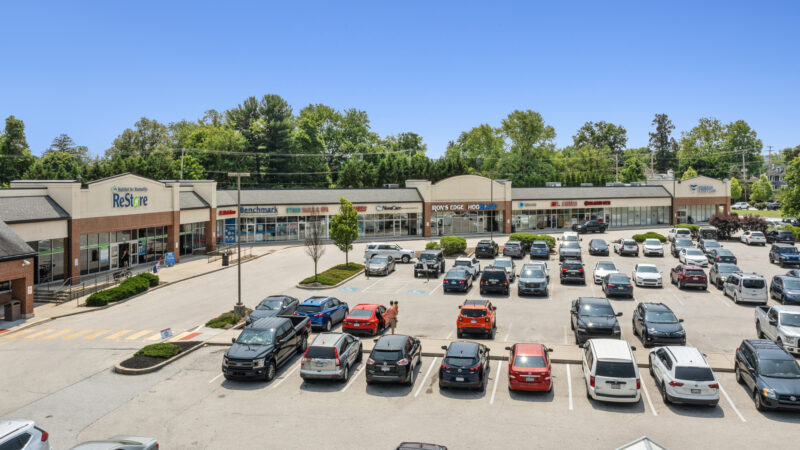
    The center’s other tenants include Benchmark Federal Credit Union, Habitat for Humanity ReStore thrift store, Fresenius Kidney Care, Labcorp, NovaCare Rehabilitation, and State Farm. It also has a martial arts gym, a dry cleaner, and several quick-service restaurants.

    “This closing highlights the strength of essential-service tenants, 100% occupancy, and strong tenant performance,” Scott Woodard, senior director of investments for Marcus & Millichap, said in a statement. “Phoenixville’s expected population growth and proximity to major anchors, such as Acme, made this center a standout asset with long-term stability.”

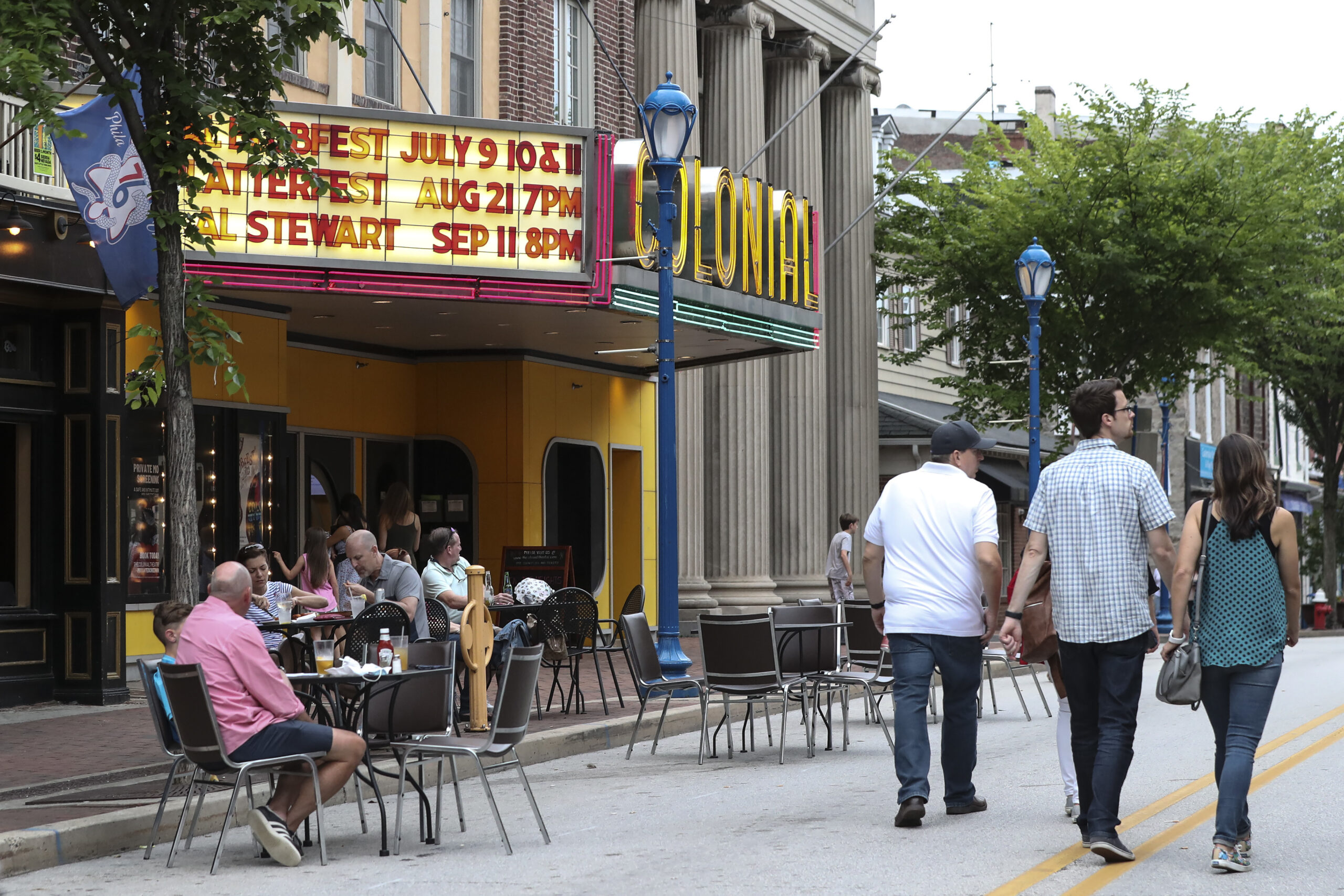
    People walk along Bridge Street by the historic Colonial Theatre in Phoenixville in this June 2021 file photo.

    Woodard represented the seller alongside Derrick Dougherty, senior managing director of investments.

    The shopping center sits on 3.7 acres, near the corner of Nutt Road and Starr Street, and was built in 2007. According to Chester County property records, it previously sold for $6.35 million in 2018.

    Prior to that, the property had last changed hands in 2006, when the land was purchased for $325,000, according to the records.

    Phoenixville, a once-dilapidated former steel town, has experienced a rebirth over the past two decades.

    Its restaurant and bar scene has flourished, and Bridge Street is bustling, especially on the weekends. Luxury apartment complexes have attracted both millennials and empty nesters to the quaint 3.8-square-mile borough.

    Since the pandemic, Phoenixville has continued to grow: Its population increased 9% between 2020 and 2024, according to census data.

    In 2010, it was home to roughly 16,000 people. Today, that number is estimated to be more than 20,000.

    The Acme shopping center sits just inside the bounds of Phoenixville, near its border with Schuylkill Township and not far from Valley Forge National Historic Park.

    The Phoenixville center’s sale occurred around the same time that grocer Jeff Brown bought a 98,000-square-foot Northeast Philadelphia complex, anchored by one of his ShopRites, for $30.8 million.

  • Nvidia gains, hospitals hurt: 2025 winners and losers with Congress

    Nvidia gains, hospitals hurt: 2025 winners and losers with Congress

    The Republican-controlled Congress has been very good to most of corporate America this year. Foremost among the boons is a $4 trillion tax-cut package that extended and added generous breaks for businesses large and small.

    But it hasn’t been all good news for U.S. companies, and some industries have benefited more than others. The legislative branch’s acquiescence to Donald Trump’s sharp tariff increases raised input costs across the economy and provoked retaliatory moves against U.S. farm exports.

    The healthcare sector, renewable energy companies, and Las Vegas’ casinos have taken legislative hits while chipmakers, drug companies, and private equity fended off potentially costly congressional interventions.

    Here are this year’s winners and losers.

    Winners

    Nvidia

    America’s most valuable company beat back influential Republican China hawks’ efforts to insert provisions in legislation aimed at ensuring U.S. companies get first dibs on Nvidia’s products. Chief executive officer Jensen Huang’s visits to Congress and the White House also helped pave the way for Trump administration actions easing export restrictions so the company could sell advanced chips to Chinese customers.

    Private equity

    The struggle to preserve a tax break cherished by private equity proved to be one of the rare instances this year when congressional Republicans stood up to Trump, rebuffing the president’s early demands to raise taxes on carried interest. The provision would have eliminated a lower income tax rate for a key portion of private equity executives’ compensation. PE firms worked to squelch the change in tandem with venture capital and real estate partnerships, whose executives and dealmakers also benefit. Better yet, private equity also won an expanded interest expensing tax break.

    Oil and gas

    Energy companies secured a tax break worth more than $1 billion for oil and gas producers in the Trump tax package. The provision allows businesses subject to a 15% corporate alternative minimum tax to deduct certain drilling costs when calculating their taxable income. Companies including ConocoPhillips Co., Ovintiv Inc., and Civitas Resources Inc. lobbied in favor of it.

    Crypto

    Digital-assets companies achieved a breakthrough with the passage of a light-touch regulatory law for dollar-pegged stablecoins, clearing the way for broader use of the technology in everyday finance. An industry drive for a broader rewrite of securities and commodities laws to set up favorable regulation of crypto assets is moving closer to the finish line. A $263 million campaign war chest the crypto industry has amassed in super-PACs is sure to help.

    Pharma

    Drug companies mostly succeeded in blocking legislative efforts to control their soaring prices. While Trump talked up requiring massive price cuts from pharmaceutical companies, Republican leaders on Capitol Hill made no moves to codify such a policy. Still, the Senate’s confirmation of Health and Human Services Secretary Robert Kennedy Jr. empowered a foe of vaccine makers.

    Tech giants

    Technology giants have stymied public pressure for federal legislation to regulate social media and other tech products amid rising concern over harm to children. Even so, the industry so far hasn’t been able to secure a federal law blocking state regulation of artificial intelligence. The Trump administration stepped in with an executive order to override state AI regulations, though that faces legal challenges.

    Financial planners

    The wealth management industry came out ahead when Senate Republican leader John Thune’s campaign to add a repeal of the estate tax to Trump’s tax law foundered. The tax overhaul kept in place the complex loopholes that the rich employ financial planners to navigate on their behalf.

    Defense and aerospace

    The defense industry thwarted efforts by Elon Musk’s DOGE team to cut military spending and scored big increases in the Pentagon budget. Trump’s massive tax and spending package included $150 billion in new defense spending. A defense policy bill Congress just passed came in $8 billion above the White House request. Notable beneficiaries include Anduril Industries Inc., Palantir Technologies Inc., and Boeing Co. with the new F-47 fighter. A provision to allow the Pentagon to repair weapons systems without paying contractors to do so was defeated.

    Domestic car dealers

    Car dealers won a tax break for loan interest on purchases of new U.S.-built automobiles.

    Large corporations

    The $4 trillion Trump tax cut bill extended a bevy of 2017 tax breaks that had expired. Manufacturers won bonus depreciation for the cost of production upgrades and a research and development tax break. Attempts to pay for these by scaling back the corporate state and local tax deduction and to increase the stock buyback tax were beaten back by a heavy lobbying effort.

    Small businesses

    The 2017 law that allowed pass-through businesses to deduct up to 20% of their qualified business income from their taxable income was permanently extended.

    Losers

    Hospitals

    A $50 billion bailout for rural hospitals included in Trump’s tax cut plan won’t offset the loss of funding from Medicaid cuts in the law. Millions of Americans will lose health insurance in the coming years, according to forecasts, leading to a surge in uncompensated care in emergency rooms.

    Health insurers

    Big insurers are in line to lose millions of customers with the expiration of enhanced Obamacare premium tax credits at the end of December. Fewer healthy people signing up for policies also could further harm insurers’ bottom lines. While a bipartisan group of moderates in both parties are trying to renew the credits in January, they face an uphill battle against Republican congressional leaders, who oppose the effort.

    Green energy

    The Trump tax bill ended Joe Biden’s signature tax credits for solar, wind, and other renewable energy sources, and curtailed the $7,500 consumer electric vehicle tax credit for cars made by such companies as Tesla Inc., Rivian Automotive Inc., and General Motors Co. Renewable energy companies Sunnova Energy International Inc., Solar Mosaic Inc., and Pine Gate Renewables LLC all filed for bankruptcy protection this year in part due to the ending of tax incentives.

    Banks

    Crypto bros’ gain is bankers’ loss as the stablecoin legislation Congress passed this year threatens the banking sector’s long and profitable dominance of the payments system. Still, bankers’ congressional allies blocked votes on credit card competition legislation, which would cut into the nearly $190 billion in swipe fees retailers pay annually to banks, Visa Inc., and Mastercard Inc. Congress also repealed a Biden-era regulation limiting bank overdraft fees.

    Casinos

    Under the tax bill, professional gamblers would only be able to deduct 90% of their losses against their winnings, leading to a situation where they could still owe income tax if they break even over a year or lose money overall. Major casino companies are pushing to repeal the provision, fearing a drop-off in business from their best customers.

    Airlines

    Airlines lost hundreds of millions of dollars in ticket revenue during the longest government shutdown in history as the Trump administration moved to curtail flights during the congressional impasse. Delta Air Lines Inc. alone estimated it took a $200 million hit from the shutdown.

    Importers

    Retailers and other importers stung by Trump’s tariffs got little help from lawmakers this year, as Republicans largely sat back while the president claimed broad authority to rewrite the world’s trading order. House Speaker Mike Johnson, a close Trump ally, has so far managed to delay a looming floor fight over the legality of the tariffs until at least the end of January.

  • Which Philadelphia-area grocery stores offer the best prices and quality?

    Which Philadelphia-area grocery stores offer the best prices and quality?

    Over the last five years, American grocery costs have soared.

    In 2022, prices for food prepared at home jumped by a historic 11.8% from the year before, according to the Bureau of Labor Statistics’ Consumer Price Index survey. While prices didn’t drop in 2025, the rate of inflation for groceries has for the most part slowed. In July, costs for groceries were 2.2% higher than the year before.

    The nonprofit Consumers’ Checkbook’s latest evaluations of Delaware Valley grocery stores found most shoppers can save by choosing low-cost stores. Checkbook researchers shopped stores using a 150-item list to compare prices.

    To evaluate stores on quality of products and service, we surveyed our members. Here’s what we found.

    Wegmans is still a winner

    Wegmans now has 11 stores in the Delaware Valley area. Since opening its first area location in 2003, the Rochester, N.Y.-based chain has consistently earned high ratings from its customers for quality. In our latest survey, 85% of its customers judged it “superior” on each of our survey questions on produce, meat, and overall quality.

    Although Wegmans’ prices aren’t among the lowest in the region, it remains competitive. Its prices were about 2% lower than average prices at Giant and ShopRite, 4% lower than Redner’s, about 12% lower than Acme and McCaffrey’s, and 25% lower than Whole Foods.

    McCaffrey’s gets raves but isn’t low-cost

    The locally owned small chain ranked among the area’s best grocery options for quality, with 87% of its surveyed customers judging it “superior” overall, 90% rating it “superior” for produce, and 88% rating it tops for meat.

    But McCaffrey’s prices were about 12% higher than the all-store average.

    Aldi and Lidl offer the biggest savings

    Germany-based discounters Aldi and Lidl continue to expand their U.S. footprints. These chains focus on low costs, and our survey found them quite inexpensive: For our shopping list, Aldi’s prices were 35% lower than the all-store average, and Lidl’s were 26% lower. Aldi’s per-unit prices were even lower than wholesale clubs BJ’s, Costco, and Sam’s Club.

    These savings are partly explained by Aldi’s and Lidl’s smaller-format stores, which have much lower overhead costs than conventional supermarkets. Shoppers at quirky Aldi and Lidl don’t expect wide choices of brands or sizes. Instead, they’re offered comparable house-brand products in exchange for big savings.

    Other price standouts: Amazon Fresh, Food Lion, Grocery Outlet, and Walmart

    Amazon Fresh’s prices were about 16% lower than the all-store average, Walmart’s were 10% lower, and Food Lion’s 7% lower.

    Grocery Outlet, which offers a somewhat odd assortment of steeply discounted surplus national-brand products, offered prices that were about 12% lower than average.

    Amazon Fresh opened its first Delaware Valley area location in 2022, and the region now has five. These small-format stores focus on low costs and convenience. The company’s app keeps track of what you remove from shelves; when finished, you simply exit without scanning items.

    For a family that spends $300 per week at the supermarket, a 16% price difference totals savings of $2,496 per year; a 10% price difference totals $1,560 a year.

    Trader Joe’s remains popular

    Among survey respondents, 83% rated the funky-and-fun chain “superior” for “overall quality.”

    Although not a price leader in the area, TJ’s prices were about 3% lower than the all-store average and about 14% lower than Acme.

    Whole Foods remains an expensive choice

    Whole Foods built a loyal following by offering high-quality produce, meat, prepared foods, and generic staples. It continues to receive high marks in our consumer surveys, especially for produce and meat quality.

    But our price survey found that Whole Foods remains among the most expensive stores we shopped: Its overall prices were about 32% higher than the average prices at all stores we surveyed, or about 33% higher than top-rated Wegmans, 18% higher than McCaffrey’s, and 57% higher than Amazon Fresh, its corporate sibling.

    Most other large chains receive dreadful ratings from their customers for quality

    When it came to quality, Target scored lowest; Acme, Food Lion, the Fresh Grocer, Walmart, and Weis also received abysmal scores.

    Target was rated “superior” overall by only 18% of its surveyed customers; the other chains mentioned above were each rated “superior” overall by fewer than 40%.

    Although Redner’s and ShopRite did not receive stellar ratings for quality, they did get considerably higher scores than many other conventional supermarkets. Among Redner’s customers, 54% rated the store “superior” overall; ShopRite’s score was 52%.

    Within the largest chains, there is relatively little store-to-store price variation

    Prices at the Acme, Giant, and ShopRite locations we surveyed were about the same from store to store.

    MOM’s Organic Market received raves

    MOM’s, which sells only organic products, was the highest scoring chain for produce quality and overall quality.

    We’ve found that its prices are competitive with other local stores when we look only at organics.

    Warehouse clubs will save you money — if you shop there often

    The three warehouse chains all offer most shoppers significant savings. Sam’s Club, for example, beat Acme’s prices by 35%. And compared to Acme, the savings were about 33% at Costco and 32% at BJ’s.

    In addition to having low prices, Costco received high customer ratings for meat quality and overall quality. (BJ’s and Sam’s Club’s ratings were considerably lower than Costco’s.)

    While the warehouse clubs offered significant savings compared to prices offered at grocery stores, that might not justify paying their annual membership fees if you don’t visit often.

    For example, BJ’s prices were only about 14% lower than Walmart’s; you’d have to spend $429 at BJ’s on products you could buy at Walmart before breaking even on BJ’s $60 annual fee.

    Delaware Valley Consumers’ Checkbook magazine and Checkbook.org is a nonprofit organization with a mission to help consumers get the best service and lowest prices. It is supported by consumers and takes no money from the service providers it evaluates. Until Feb. 5, Inquirer readers can access Checkbook’s ratings of local grocery stores and delivery services free at Checkbook.org/Inquirer/Groceries.