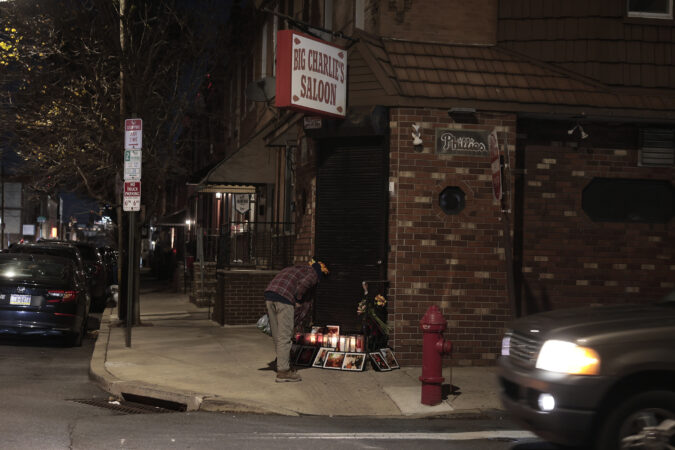
Big Charlie’s Saloon, a South Philly haven for Kansas City Chiefs fans at 11th and McKean Streets, announced on Instagram that it has permanently closed after the recent death of owner and Philadelphia native Paul Staico.
“While this was not how we ever imagined closing our doors, we know Big Charlie’s will never be the same without Paulie, and this is the path we must take,” according to a statement on the bar’s Instagram page.
Staico died suddenly on Nov. 30, three days after Big Charlie’s stayed open on Thanksgiving because the Chiefs were playing. He was 59.
“I wasn’t a Chiefs fan. I’m a Paul Staico fan,” City Councilmember Jimmy Harrity told The Inquirer earlier this month. “If I could name three players, that’s a lot. I was there cheering for him. Some are there to watch the game. But for the most part, they were there for Paul.”
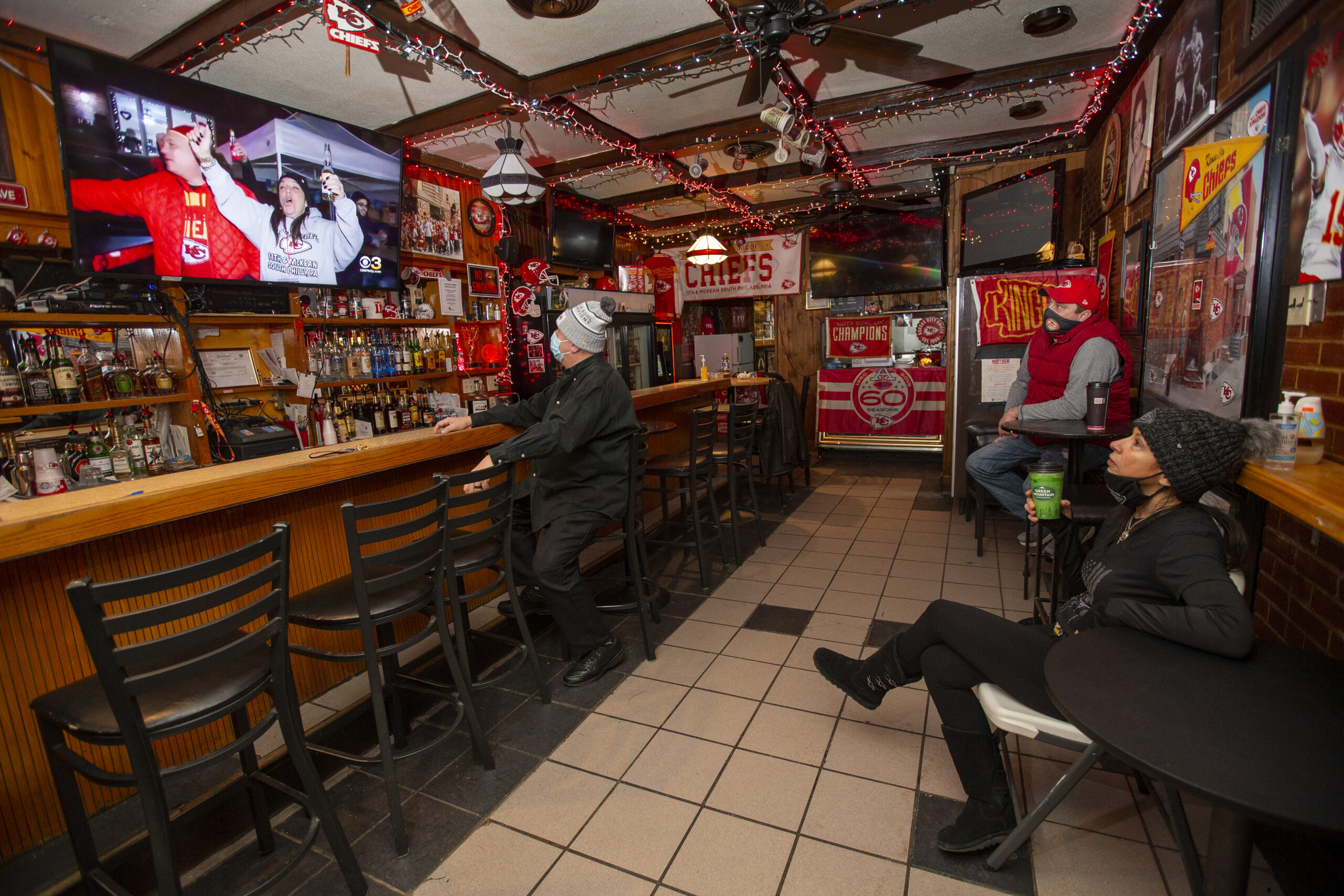
The two-room bar, with its wood paneling, jukebox, vending machine of snacks and cigarettes, and countless Chiefs memorabilia scattered about, became a local media darling in 2023 when the Eagles played — and lost — to the Chiefs in Super Bowl LVII. It was featured by NFL Films in 2003 and 2020 and in The New York Times and The Athletic on the same day in 2023. It got nearly the same treatment in February when the Eagles beat the Chiefs in Super Bowl LIX.
And why was a South Philly bar dedicated to the Chiefs? Staico’s father, Charlie, the former owner of the place, made a bet that the Chiefs would beat the Minnesota Vikings in Super Bowl IV in 1970. When they did, Charlie bought his young son a brand new bike to celebrate. In 1986, an eternally grateful Paul Staico, the bar’s owner since 1983, bought a satellite dish so he could watch the Chiefs, his new favorite team, in every game from then on.
Saloon patrons watch the Chiefs play the Tampa Bay Buccaneers in the Super Bowl in 2021.
“We will continue to find ways to honor Paulie’s legacy and the community he built,” the Instagram post said. “This is not goodbye. This is simply see you later. …As always, go Chiefs.”
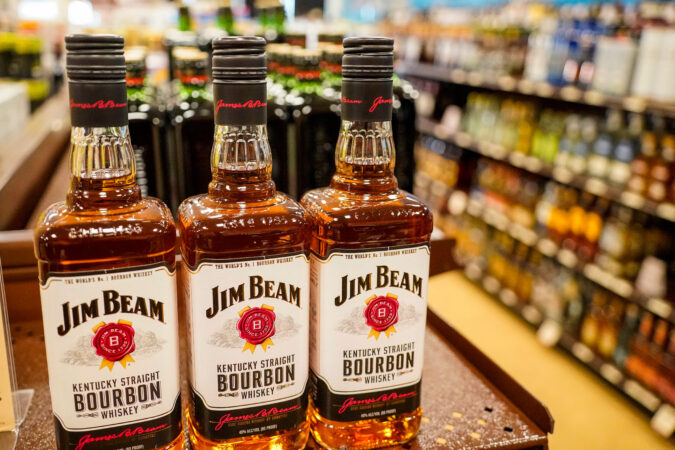
Bourbon maker Jim Beam is halting production at one of its distilleries in Kentucky for at least a year as the whiskey industry navigates tariffs from the Trump administration and slumping demand for a product that needs years of aging before it is ready.
Jim Beam said the decision to pause bourbon making at its Clermont location in 2026 will give the company time to invest in improvements at the distillery. The bottling and warehouse at the site will remain open, along with the James B. Beam Distilling Co. visitors center and restaurant.
The company’s larger distillery in Boston, Ky., will continue to operate, the company said.
“We are always assessing production levels to best meet consumer demand,” the company said in a statement that added they were talking with the distillery’s union to determine whether there will be layoffs or other reductions.
Bourbon makers have to gamble well into the future. Jim Beam’s flagship bourbon requires at least four years of aging in barrels before being bottled.
Whiskey makers are dealing with back-and-forth arguments over tariffs in Europe and in Canada, where a boycott started after the Trump administration suggested annexing the country into the U.S.
Overall exports of American spirits fell 9% in the second quarter of 2025 compared to a year ago, according to the Distilled Spirits Council of the United States. The most dramatic decrease came in U.S. spirits exports to Canada, which fell 85% in the April-through-June quarter
Bourbon production has grown significantly in recent years. As of January, there were about 16 million barrels of bourbon aging in Kentucky warehouses — more than triple the amount held 15 years ago, according to the Kentucky Distillers’ Association.
But sales figures and polling show Americans are drinking less than they have in decades.
About 95% of all bourbon made in the U.S. comes from Kentucky. The trade group estimated the industry brings more than 23,000 jobs and $2.2 billion to the state.
2026 Genesis GV80 Coupe 3.5T E-supercharger vs. 2026 Land Rover Defender 130 V-8 vs. 2026 Mercedes Benz GLE 450 4Matic SUV: Off-roading in high style.
This week: Genesis GV80 Coupe
Price: $87,780 as tested.
Conventional wisdom:Motor Trend likes the “gorgeous interior,” that it “retains rear headroom” and is “more luxurious than ever.” Reviewers panned that it’s “not actually sporty,” has a “confused personality” and “reduced cargo space.”
Marketer’s pitch: “The pinnacle of comfort.”
Reality: It has some high points, but comfort isn’t what I would market.
What’s new: The GV80 Coupe — essentially an SUV with some of the cargo capacity lopped off — joined the GV80 lineup for the 2025 model year. Some color changes and new trim levels have been added for 2026.
Competition: In addition to the Defender and the GLE 450, there are the BMW X5, Lexus RX, Lincoln Nautilus, and Toyota Land Cruiser.
Up to speed: Woohoo, that e-supercharger really works, dialing up the horsepower from the 3.5-liter turbo up to 409. Turn the dial to Sport+ and this baby gets off the ground; 0-60 takes 5.2 seconds, according to Car and Driver. It seemed faster.
Shifty: The eight-speed automatic transmission operates through the dial on the console — twist counterclockwise for Reverse or clockwise for Drive. It’s a nice setup that’s easy for back-and-forth motions when parking.
There’s no corresponding move for shift mode, though. Just use the paddles on the steering wheel and keep fighting the vehicle for control. I usually blinked first and just let it do the shifting for me.
On the road: The handling in the GV80 Coupe is almost as impressive as the acceleration. The sporty shaped SUV does nice on the slalom and has a lot of good road feel. The steering is nice as well.
The only drawback for me came on cornering. The GV80 had a lot of drift, and I had to slow down for the sharper movements.
Off the road: The GV80 gets a new terrain mode for 2026, with settings for snow, mud, and sand.
The interior of the 2026 Genesis GV80 Coupe looks inviting, but it turns out comfort is lacking. Also, adjusting the temperature settings is harder than it should be.
Driver’s Seat: The seat seemed quite hard, and the lumbar support seemed more like a kidney punch than a feature. I’m not sure I could live with this seat day to day. It really seemed as uncomfortable as the old Hyundai basic seats and not quite worthy of this fancy a vehicle, even covered in Nappa leather.
The fancy digital dashboard also leaves a bit to be desired. So many of the features are hidden by the steering wheel that it could be hard to know what was going on. The gauges are fine, though, and everything sure is attractive.
Friends and stuff: The rear seats offer nice amenities — power fold and lift, and power recline that provides quite a bit of choice.
Unfortunately, the low ceiling means headroom is less than plentiful — I still have a little space above my head but not much — and foot room is kind of snug.
Cargo space is 61.1 cubic feet with the rear seat folded and 29.3 when it’s upright, both numbers down about 15% from the regular GV80.
The GV80 Coupe can tow up to 6,000 pounds.
In and out: There’s a bit of a climb into the GV80, naturally, but you must have been expecting that.
Play some tunes: Sound from the system is delightful, an A+.
Operation uses either a dial or the touchscreen. A home screen shows all the possible places you can go and swiping to the right shows even more. It’s easy to use and to follow, even through the layers of nested elements.
Keeping warm and cool: Would that the HVAC were so easy to operate. It features simple dials for temperature but then the source, fan speed, and seat heater and ventilator icons are so tiny in their handsome little ebony touch pad, and it offers zero feedback. So there’s a lot of potential vehicle drift just to keep the air at the right temperature. I’ve been panning Hyundai for this left and right and will continue to do so.
There also seems to be a lot of thrust in the airflow, so it might not be everyone’s cup of tea. The Lovely Mrs. Passenger Seat was having none of it, lest her perfect hair get blown about.
Fuel economy: I averaged about 16 mpg, which is pretty pitiful.
Where it’s built: Ulsan, South Korea. The vehicle is made up of 85% Korean parts and 3% from the U.S. and Canada.
How it’s built: Consumer Reports predicts the GV80 reliability to be a 2 out of 5.
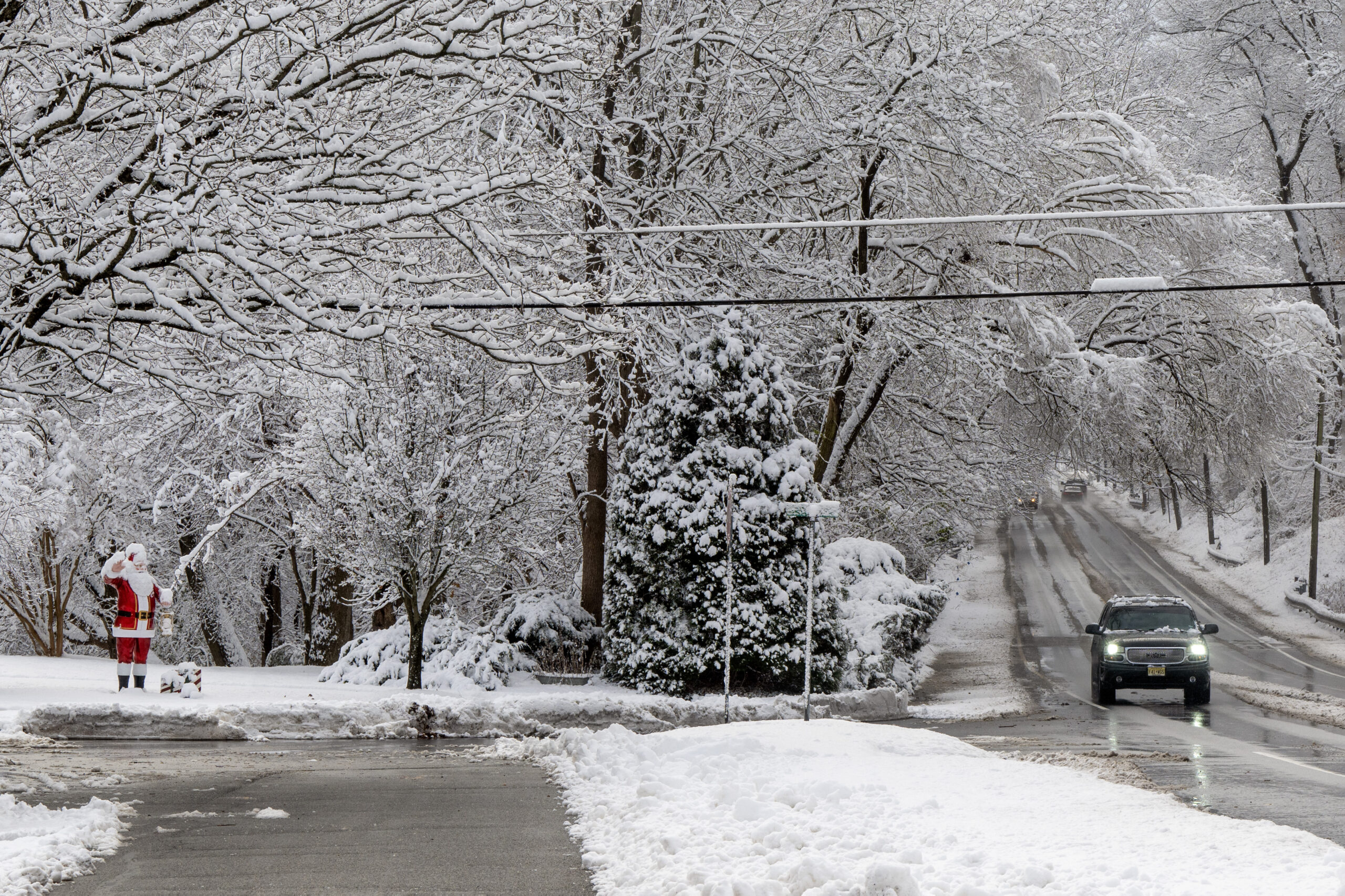
A Santa statue “waves” to drivers along Brace Road in Cherry Hill on Dec. 14, 2025. The Philly region may see its second snowfall of the season on Friday night. Read more
Tom Gralish / Staff Photographer
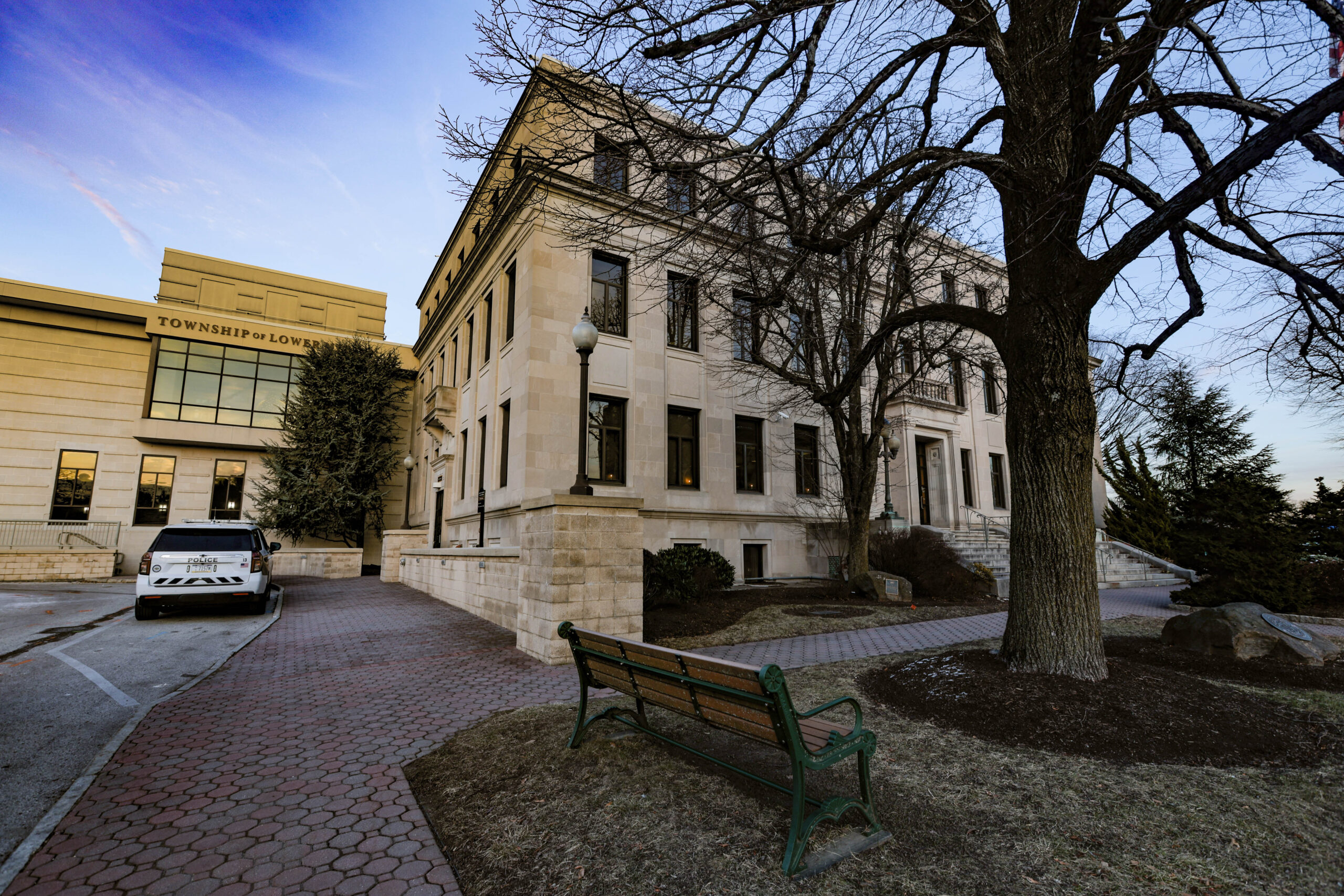
Lower Merion residents can expect tax hikes on the township and countywide level in 2026.
Steven M. Falk / Staff Photographer
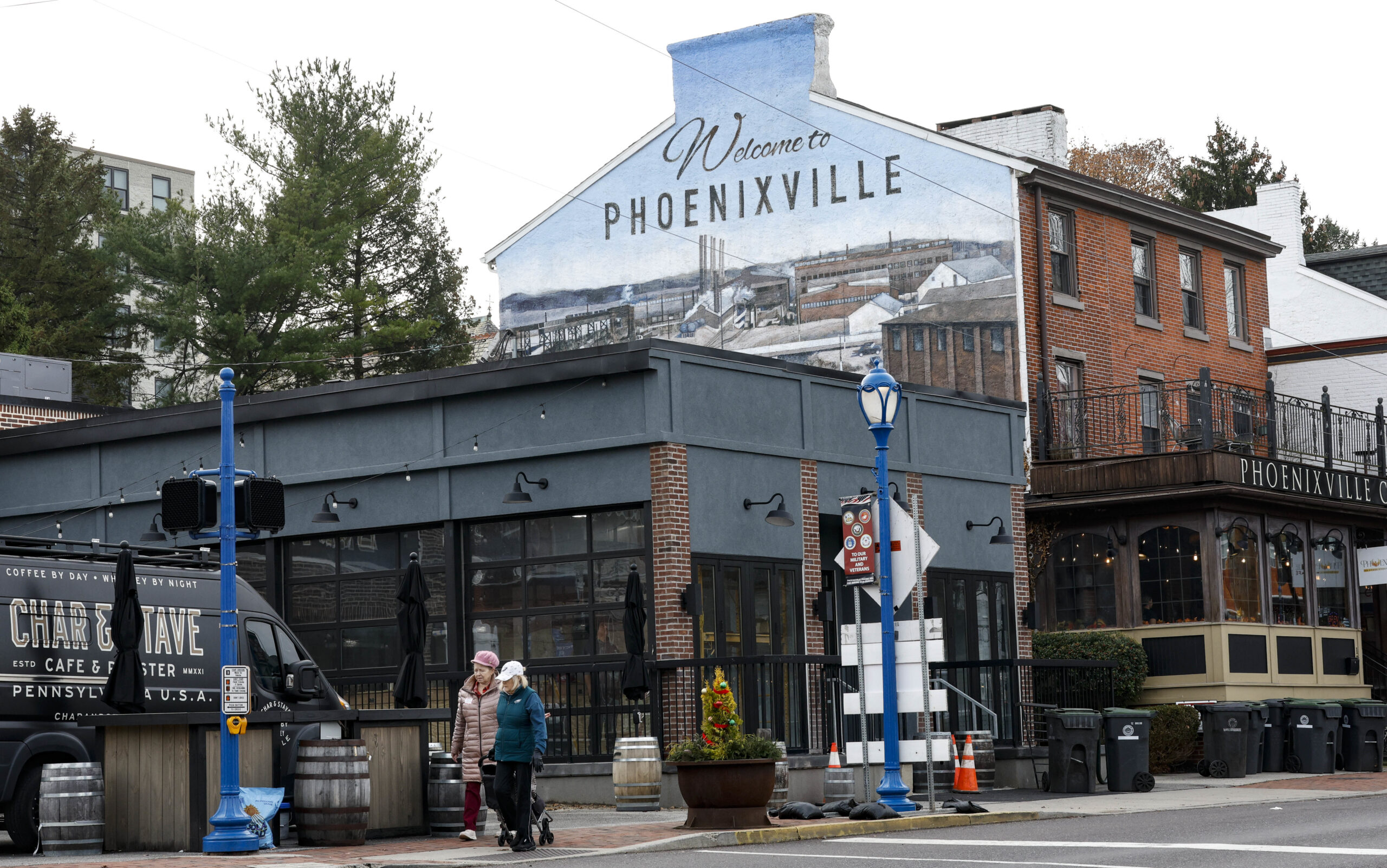
Phoenixville recently welcomed a pair of eateries, just some of the new businesses that have opened recently in Chester County.
Steven M. Falk / For The Inquirer
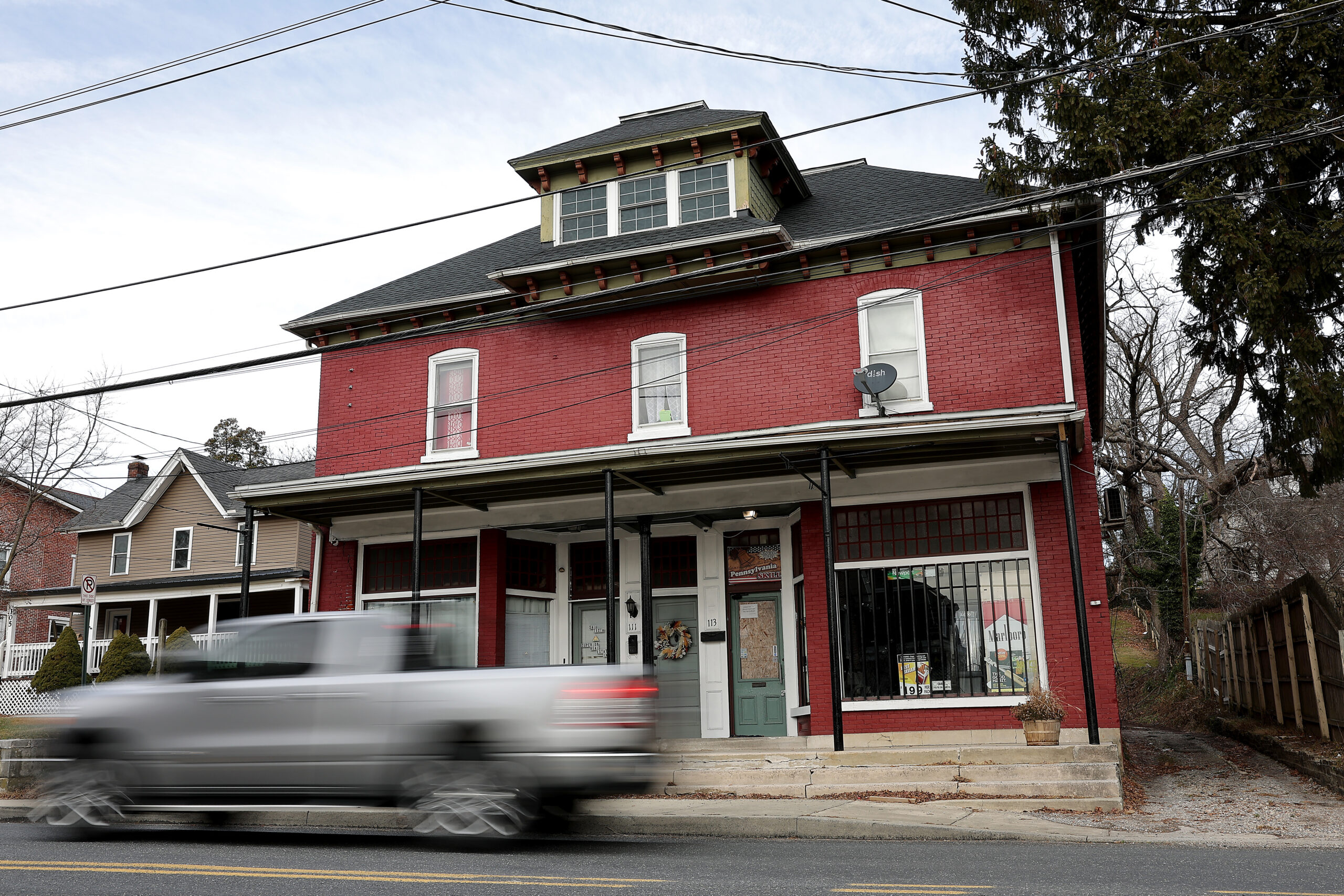
An exterior view of the former West Grove Smoke Shop in the borough of West Grove, Chester County.
David Maialetti / Staff Photographer
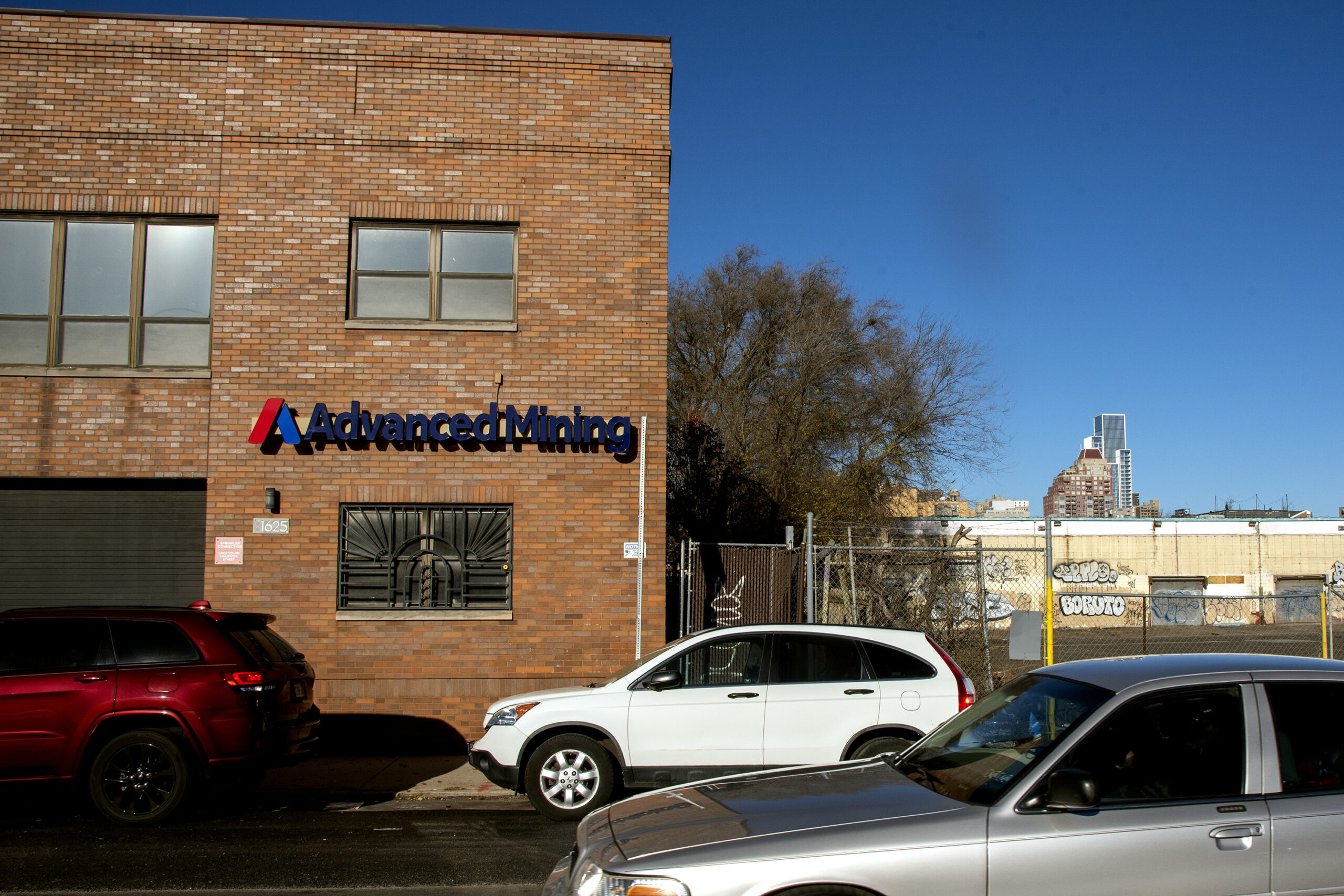
The scene at 1625 Washington Avenue Tuesday Dec. 13, 2022. The sign reads “Advanced Mining” the business that acquired the cryptocurrency company VBit Technologies which is facing several new lawsuits in federal court after its customers claim the company froze them out of millions of dollars in assets this summer. Read more
Tom Gralish / Staff Photographer
Law enforcement officers stand guard outside a detention center in Los Angeles on June 10, the day a curfew took hold following clashes in days prior between protesters and law enforcement. Read more
Salwan Georges
The Trump administration will begin seizing the pay of people in default on their student loans early next year, marking the first wave of new wage garnishments since the pandemic, the Education Department confirmed this week.
Starting the week of Jan. 7, the department told the Washington Post, it will notify about 1,000 defaulted borrowers of plans to withhold a portion of their wages to pay down their past-due debt. After that, the department said, notices will be sent to larger numbers of borrowers each month.
There were about 5.3 million borrowers who had not made a payment on their federal student loans for at least 360 days as of June 30, according to the latest available data from the Education Department. Many of them were in default before the federal government stopped collecting defaulted loans because of the pandemic nearly six years ago.
In May, the Trump administration resumed seizing tax refunds and Social Security benefits to recoup past-due student loan debt. At the time, the administration said wage garnishments would restart in the summer.
While the Education Department started the process over the summer, department spokesperson Ellen Keast said turning on the system after it was dormant for five years took more time than expected. She said the record-longgovernment shutdown further delayed the process.
There are several steps involved in wage garnishment, including identifying and verifying a borrower’s employer, who is ultimately responsible for withholding the money. By law, the Education Department must notify people in default 30 days before garnishing their wages. During that time, borrowers can request a hearing to challenge the order, pay the balance, or negotiate repayment terms to avoid garnishment.
The department can withhold up to 15% of a borrower’s disposable, or after-tax, income. The garnishment continues until the defaulted loans are paid off in full or the borrower takes action to get out of default.
Roughly 6 million people were at least 60 days late on their student loan payments as of August, according to an analysis of credit reporting data by the think tank Urban Institute.
The rise in delinquencies corresponds with the end of a 12-month grace period, known as the on-ramp, that allowed borrowers to ease their way back into repayment after a pandemic-related pause that lasted more than three years. Since the Biden administration’s policy ended Sept. 30, millions of borrowers have fallen behind on payments. And many of them could wind up in default.
Student loan borrowers have been spared from the most severe consequences of default since the early days of the pandemic. Back then, President Donald Trump instituted a moratorium on the collection of defaulted student loans that Congress later codified and extended in the 2020 stimulus package.
President Joe Biden’s administration extended the moratorium several times as part of the broader suspension of student loan payments. Under pressure from liberal lawmakers and student advocates, Biden allowed anyone in default on a federal loan held by the Education Department to rehabilitate the debt through an initiative called Fresh Start. While a portion of borrowers resolved their debt through the initiative, many remained in default.
Education Secretary Linda McMahon has called Biden’s policies irresponsible and blamed his administration for giving borrowers false hope of loan forgiveness that led to a rise in delinquencies.
When the Education Department announced the resumption of involuntary collection in April, McMahon said in a statement that “the Biden Administration misled borrowers: the executive branch does not have the constitutional authority to wipe debt away, nor do the loan balances simply disappear.”
Instead of promoting debt cancellation, McMahon said, the Trump administration will help borrowers return to repayment — “both for the sake of their own financial health and our nation’s economic outlook.”
Armed and unarmed guards who weren’t paid for some of their hours patrolling Philadelphia public housing developments and other buildings have filed class-action complaints against their former employer, Sovereign Security LLC, owner Richard D. Cottom, and manager Maurice Dupree.
The guards are seeking back pay for unpaid work, sick and vacation days, overtime violations, damages under state law, and the return of uniform deposits.
The guards, led by plaintiff Shirell Williams, say Sovereign violated the state Minimum Wage Act and Wage Payment Collection Law and breached employment contracts over four years, starting in late 2021. Williams worked for Sovereign at PHA and at the city-owned Philadelphia Gas Works, the Navy Yard business center, the Philadelphia Department of Human Services, and the former Delaware County Memorial Hospital.
Through their attorney, Center City labor lawyer Josh Dubinsky, the guards seek unpaid wages, damages, interest, and attorneys’ fees stemming from “systemic wage abuse” while working at Sovereign. They seek certification as a class including more than 100 current and former Sovereign staff.
Cottom, a former Drexel University security executive who founded Sovereign in 2004, and other Sovereign officials didn’t return calls seeking comment.
The lawsuit also named a Sovereign manager, Maurice Dupree, as codefendant. Guards have described Dupree as their off-site supervisor, who managed assignments, hired and fired, and scheduled their work, and who they turned to for help when paychecks were late or bounced.
Pennsylvania’s wage and hour law requires companies to set regular paydays and meet them. Sovereign’s contract with PHA required it to comply with city rules and applicable laws.
PHA renewed Sovereign’s contract last spring even after The Inquirer reported on late and bounced Sovereign paychecks.
The housing authority canceled Sovereign’s contract on July 9, giving owner Cottom two days to stop work and file final reports.
The official cancellation letter stated only that PHA and its property management unit had determined “that it is in the best interest” of the agencies to terminate Sovereign.
Correspondence collected under an Inquirer Right to Know request also shows PHA had warned Cottom that “it has come to the attention” of PHA that Sovereign “may be delinquent in paying its employees in a timely manner,” that late payment was “a breach of the contract,” and that it is “imperative” to ensure guards are paid and show up.
That letter was dated Jan. 27, 12 days after The Inquirer first reported on the late payments.
Sovereign had held the largest of at least three outside security guard contracts at PHA, which also has its own police department and a staff security force. PHA has paid Sovereign more than $7 million since 2021.
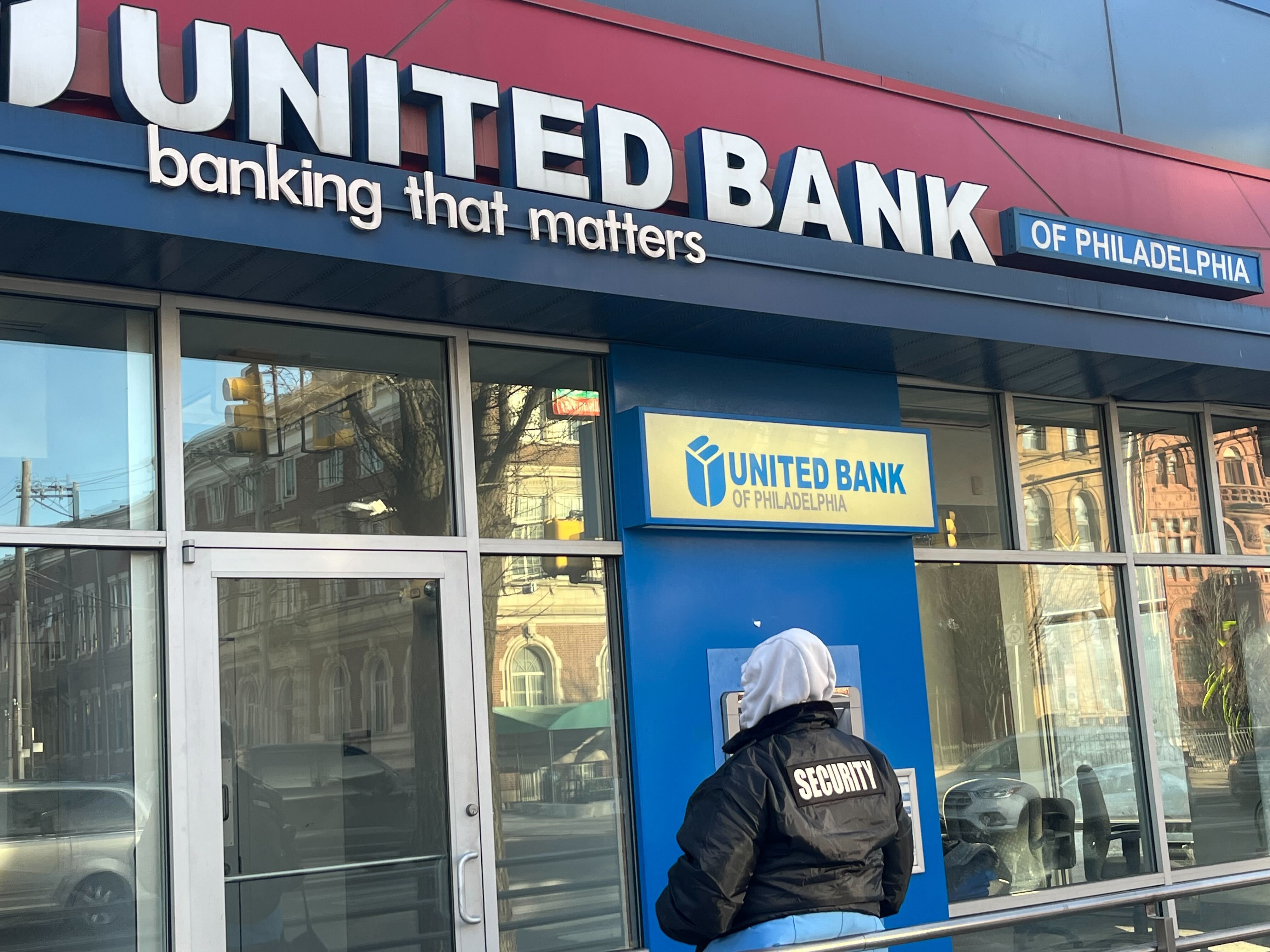
Tahazha Woodard, a guard at a jointly operated PHA and School District site in North Philadelphia, was the first in a stream of Sovereign Security LLC employees who tried to cash delayed Sovereign paychecks on Jan. 10. United was one of the few Philadelphia institutions willing to cash Sovereign checks at that time, after incidents when the company left its accounts underfunded and paychecks bounced, according to guards.
PGW ended its agreement with Sovereign in 2023. As of last summer, Sovereign no longer worked at the Navy Yard either.
The guards in the suit say a trial would show whether Sovereign had a “pattern or practice” of shorting their pay, failing to pay overtime, and not refunding uniform deposits. Other issues are whether Sovereign violated state wage laws and failed to keep required time and pay records, and the damages they are owed.
Williams, the lead plaintiff, was paid $14.40 an hour when she started in 2022.
Besides back pay,the suit also seeks to collect $500 or 25% of wages due for each violation, plus attorneys’ fees, under provisions of state law.
The word was out among Chester County teens: West Grove Smoke Shop wasn’t checking IDs.
“Many students frequented it,” a student told a Pennsylvania State Police officer investigating how scores of local high schoolers were getting their hands on an array of marijuana products. “So many, in fact, that there were long lines at the smoke shop after school.”
The tip — revealed in a grand jury report released in October — launched one of the largest stings of smoke shops in Pennsylvania this year. While those shops are allowed to sell hemp-based THC products that fall below a certain potency threshold, undercover detectives found widespread deception. After investigators made purchases from 19 stores in Chester, Delaware, and Lancaster Counties, lab tests determined all but one were selling unregulated marijuana falsely labeled as hemp.
It was a striking, if rare, example of local law enforcement cracking down on smoke shops selling hemp-based THC products, which an Inquirer investigation this year found are often just black market weed, sometimes contaminated with harmful toxins and chemicals. Several teens in Chester County told police they got sick from such products, with one landing in the hospital.
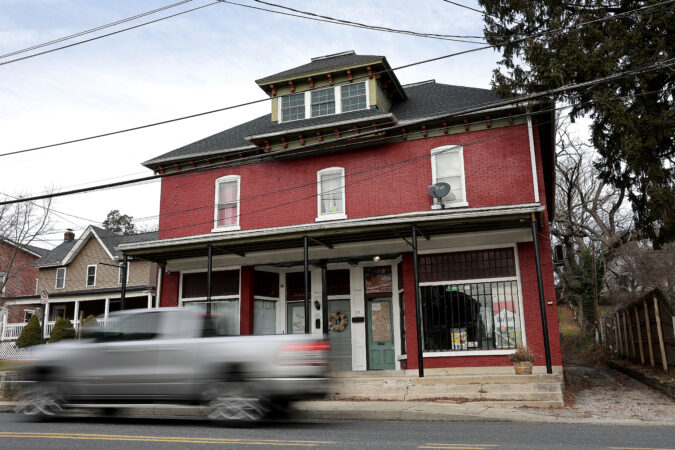
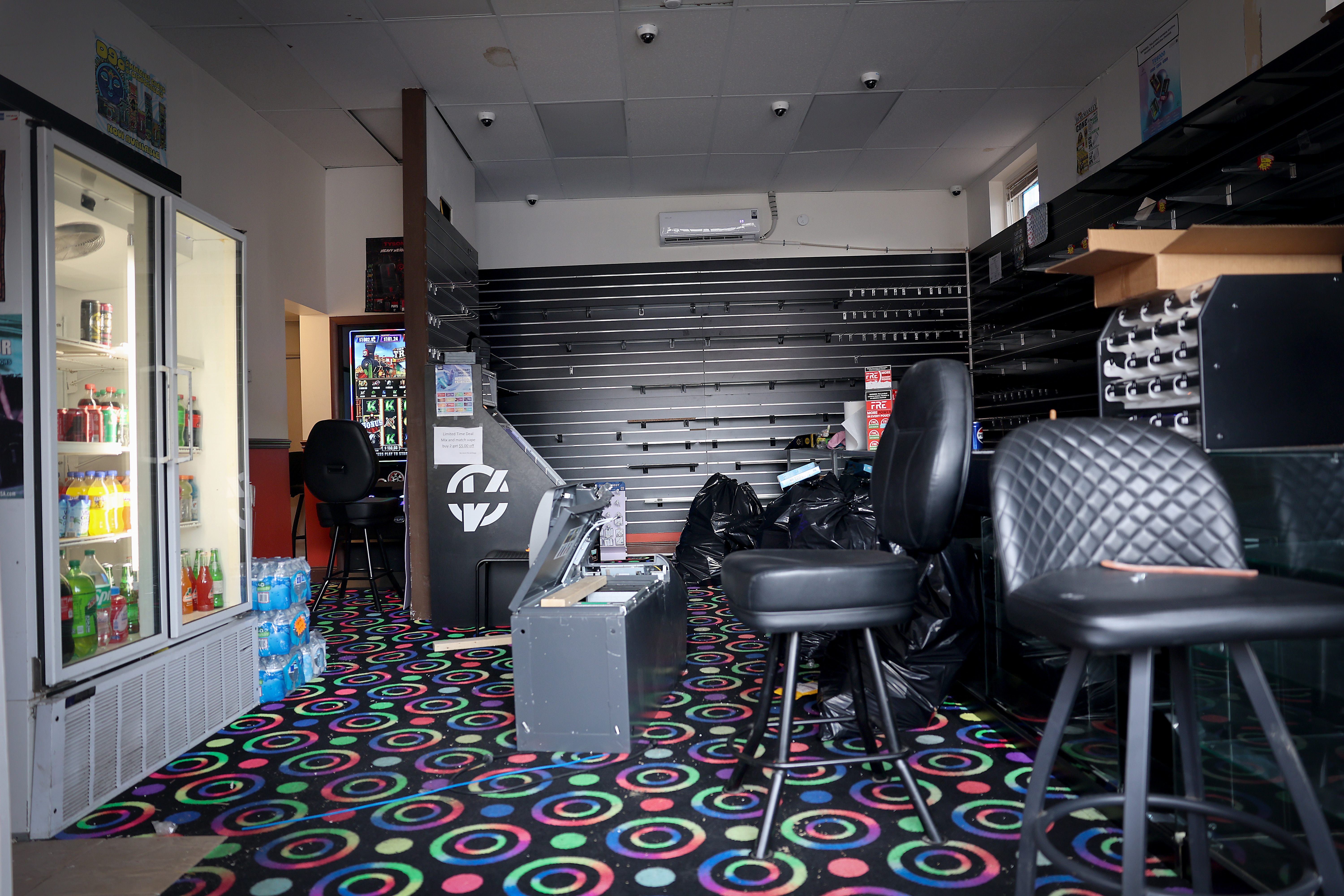
A view looking into the front window of the former West Grove Smoke Shop in West Grove, on Sunday, Dec. 21, 2025.
Confusion over federal hemp law, and the inability of lawmakers in Harrisburg to pass regulations in a state lacking a recreational cannabis program, has led to smoke shops popping up all over Pennsylvania. But the emerging effort to police these shops has so far been inconsistent and haphazard.
Philadelphia City Councilmember Katherine Gilmore Richardson has advanced a series of bills designed to crack down on scofflaw operators, who typically pull fraudulent grocery store licenses to open up shop. An Inquirer analysis found that the city has taken a stricter approach to smoke shops that operate under grocery store permits while peddling drug products and paraphernalia — with investigators doubling violations for improper licensing over the last two years.
“[It] marks important progress in the city’s efforts to better enforce against illegal smoke shops and nuisance businesses devastating our neighborhoods,” Gilmore Richardson said.
But block after city block, smoke shops remain open and continue to operate with relative impunity — sometimes within view of a similar shop that authorities have closed down.
Many use thinly veiled references in their names, such as “High Time Convenience” or “Hi Baby,” the latter featuring a logo meant to resemble the popular RAW rolling paper brand. Since 2022, nearly 100 zoning permits filed by the Frankford-based permit expediter Tina Accounting & Tax Services on behalf of would-be grocery store proprietors were later cited by inspectors as invalid, an Inquirer analysis found. (“There is no assumption that they are aware that these businesses may later become nuisance businesses,” a city official said.)
With the city short of investigators, many shops simply reopen even after they are shut down. Philadelphia has cited at least 42 stores, many of them smoke shops, for resuming operations after receiving an official shutdown order from inspectors over the last two years. One store, Market Mini Mart, located in the shadow of the 52nd Street El station, was cited 10 times for illegally reopening, records show.
City officials said the lack of a specific “smoke shop” permit makes it difficult to track the scope of the problem. Yet an Inquirer analysis of the city’s list of top 35 “nuisances businesses” found more than a third either had “smoke shop” in their names or advertised drug paraphernalia.
Going after technical violations remains one of the few tools available to local authorities, short of conducting raids and lab tests to determine if the over-the-counter products comply with federal law.
The supply line for smoke shops, however, could dry up next year. A provision in a federal spending bill would ban intoxicating THC products derived from hemp nationally, potentially closing a loophole that has created a glut of these quasi-legal products across the country.
The grand jury investigation acknowledged that the growing number of smoke shops presents a daunting challenge. The lead investigator in the Chester County case “quickly realized the sheer number was overwhelming, and many stores were interconnected, operating across multiple counties,” according to the grand jury report.
That investigation resulted in the September arrest of Satish Parsa, 33, the owner of three establishments, including the West Grove Smoke Shop, a redbrick storefront that now sits empty. Parsa faces more than 60 counts of drug trafficking and related charges, according to court records.
His attorney, Elliot Marc Cohen, said Parsa, who has pleaded not guilty, intends to “vigorously” fight the prosecution.
Ellie Siegel, CEO of Longview Strategic, a Philadelphia-area cannabis consultancy firm, argued that selective enforcement is ineffective.
When the federal ban goes into effect late next year, she reasoned, many smoke shops will shut down as the supply line dries up, while others will attempt to pivot toward the regulated marijuana market.
“The manufacturers won’t have a way to manufacture the intoxicating hemp products they’re making now,” she said. “It’s the closing of a loophole.”
A sample of hemp-based THC flower that was purchased by The Inquirer and sent for lab testing this summer.
The rise and fall of the Philly smoke shop
In interviews with about a half dozen Philly-area smoke shop owners over the last month, several told The Inquirer that they are bracing for closure, saying survival is nearly impossible in an already saturated market.
Others said they are confident they can endure.
On South Street, more than a dozen smoke shops crowd the mile-long stretch east of Broad Street. The longtime operator of Munchies Reloaded recalled thriving years when bongs and pipes brought in roughly $600,000 annually, before he expanded into hemp.
Now, he said, business has plunged nearly 80%. City inspectors have increasingly fined and shuttered stores for selling glassware used for smoking. Those items are easier to classify as “drug paraphernalia” prohibited by city codes, rather than quasi-legal hemp, which is superseded by federal laws.
“There used to be good money in it,” said the store owner, who declined to give his name. “Now there is no money.”
Smoke shops proliferated during the pandemic, often launched by marijuana enthusiasts, immigrant entrepreneurs, or small grocers looking to replace revenue lost to increasingly strict tobacco sale regulations.
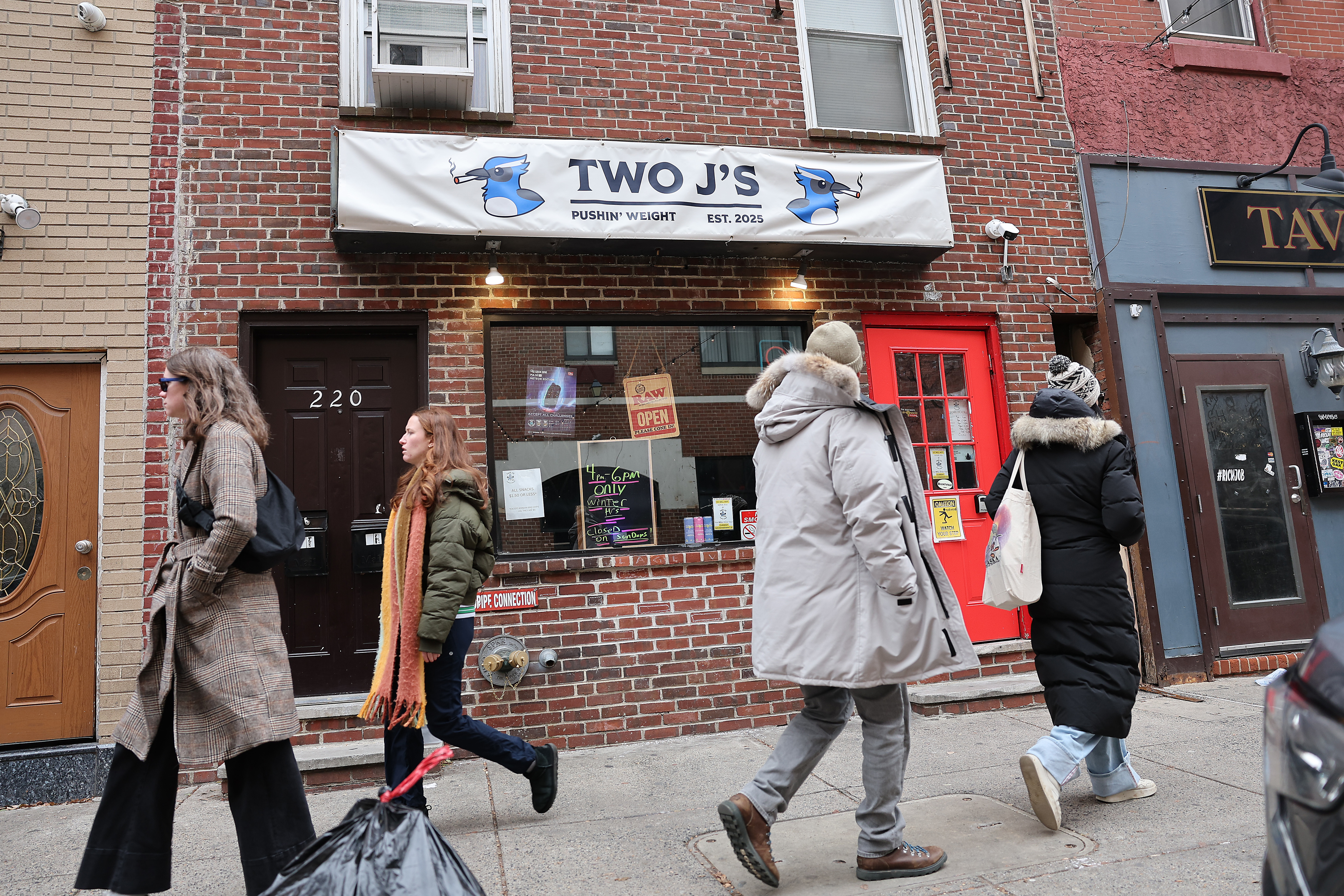
Pedestrians walk along South Street by Two J’s Pushin’ Weight shop in Philadelphia, on Sunday, Dec. 21, 2025.
Some shop owners have migrated to Philadelphia from the New York City area, lured by lower rents and higher demand in a state without legal recreational cannabis. A business permit for Green Broad Smokeshop on Broad Street, for instance, lists an owner based in Queens.
At the peak, a single shop could net between $250,000 and $1 million annually, depending on foot traffic and product line, according to two owners who spoke with The Inquirer on the condition they not be named so they could speak frankly about their businesses. Low overhead and high demand made for a tempting copycat model — a cheap pound of hemp might cost $600 in bulk but retail for more than $5,500.
On the same block as Munchies Reloaded, Abtein Jaeger and his brother in January opened Two J’s Pushin’ Weight. Jaeger said he sources high-grade hemp from West Coast farmers, positioning his store as a premium dispensary amid competitors selling a lower-quality product.
He said he is upbeat about surviving a potential crackdown on stores like his next year.
“It’s not the worst thing in the world,” Jaeger, 34, said.
He added that he would comply with any testing requirements and try to apply for a license, and that he already enforces a 21-plus age limit.
Reforming the Wild West of weed
Unlike in state-run cannabis programs, which mandate costly contaminant testing, hemp products need only carry a certificate of authenticity showing the flower tested under 0.3% Delta-9 THC at harvest.
The Inquirer, in its investigation earlier this year, commissioned a lab to test 10 products. Nine of them exceeded that limit, and most were tainted with banned pesticides, harmful mold, or heavy metals. Manufacturers had also used forged certificates to make their products appear safe and legitimate, The Inquirer found.
But the complexity of federal drug law makes it difficult to prove products are illegal, as many hemp-based products use THC variants like Delta-8 or Delta-10 that are not specifically banned.
For now, most shop owners say, local police leave them alone. Undercover stings, like those led in the suburbs, remain rare because they demand expensive lab testing and significant resources.
One South Street establishment has a singular strategy for surviving a potential crackdown.
South Street Cannabis Museum, whose logo includes a Liberty Bell festooned with marijuana leaves, exhibits a small collection of Reefer Madness-era newsprint, historical pamphlets, and other weed-themed memorabilia.
Exterior view of South Street Cannabis Museum in Philadelphia, on Sunday, Dec. 21, 2025.
“We are a museum, first and foremost, where we can engage with the public about the history, science, culture, and art of cannabis,” said owner Kristopher Wesolowski, 42, a former neuroscience lab manager and event planner, who pivoted into hemp sales after the pandemic.
The back half of the museum is a gift shop where visitors can buy hemp-derived THC flower under glass display cases.
“It’s almost like a simulated dispensary,” Wesolowski said. “But it’s not like some spot where people can just go and get high. … You can get historically stoned at our museum, in a sense.”
Like other proprietors, Wesolowski said the hemp industry has been “screaming for regulation,” as “bad actors” gave well-intentioned store owners a bad name.
But he also cautioned that overregulation would only create new problems, like increasing demand for unpredictable designer drugs on the black market.
“When you close one door, another will open,” he said. “And that one might be a little bit more dangerous.”
Members of the 71-year-old Spirit Financial Credit Union in Levittown, Bucks County, voted decisively against their leaders’ plan to merge the $70 million-asset, member-owned lender with $2 billion-asset Credit Union 1 of suburban Chicago.
“We respect the decision our members made through this vote,” David Obarowski, the 3,800-member credit union’s chief executive, said in a statement. He thanked members for voting and commenting on the plan. “There are no plans for another vote on this specific matter. Spirit Financial will continue operating independently.”
Todd Gunderson, Credit Union 1’s CEO, in a statement offered “utmost respect” for “the democratic member voter outcome.”
He said most members voted in advance by mail, adding that a smaller group showed up Monday, engaging with him and Obarowski. He called members “constructive, thoughtful and respectful” and rightly focused on adding younger members since Spirit Financial’s member count has barely risen since the 1990s.
Obarowski declined to provide vote totals. Member Richard Kilian, a building-materials company owner who opposed the merger, said more than 500 of the credit union’s 3,800 members voted, with more than 400 voting no, according to a count he said was made public at the meeting.
Gunderson said last week that Credit Union 1 had won 12 of 13 merger votes since he took the top job in 2020.
Pages listing benefits from the proposed merger, such as more loan and deposit products and lower travel ATM fees, no longer appear on either credit unions’ website.
Kilian attributed the vote to members’ preference for local control, though he agreed its aging membership needs new energy.
Spirit Financial was started by workers at the former U.S. Steel Fairless Works but is now open to people who live or work in Bucks or are members of Bucks-based churches and other institutions.
Kilian said he hoped Spirit Financial would recruit younger customers and leaders, boost its presence by using more social media and other community engagement, and add staff licensed to write more loans.
For years after the abrupt folding of a South Philadelphia-based company that promised big returns on cryptocurrency, investors who lost thousands of dollars had two questions — where was the firm’s elusive CEO, and when would he be held accountable?
A lawsuit brought by the Securities and Exchange Commission this month is offering answers.
Danh C. Vo, the 37-year-old founder of the now-defunct VBit Technologies Corp., was accused last week of misappropriating more than $48 million of investor funds in a nationwide scheme that affected 6,400 people. Vo’s alleged victims, many of them in the Philadelphia region, gave him money to maintain highly advanced computers they believed would generate passive income through the cryptocurrency Bitcoin.
While Vo possessed some of the computers — devices that process cryptocurrency transactions and reward the owner with a fraction of Bitcoin in exchange for maintaining the costly technology — SEC investigators found VBit’s customers did not own the computers Vo said he had sold them.
That was hardly the only alleged fabrication in VBit’s four-year existence.
In all, Vo raised more than $95 million from investors and kept much of the Bitcoin the company generated in a personal account before fleeing the Philadelphia area to Vietnam in 2021,SEC investigators say.
Weeks earlier, Vo had learned he was the subject of a federal investigation.
As customers grew increasingly suspicious of VBit’s supposed sale that winter to an “Asia-based company” — an organization the SEC now says existed only on paper — Vo blamed his lack of communication on mysterious health issues, the complaint says.
All the while, the company’s day-to-day operations ground to a halt and investors found they were no longer able to withdraw their money.
The complaint also names a handful of Vo’s family members, who are not accused of wrongdoing but have been ordered to return investor funds.
Investigators say that before he fled the country, Vo gifted $5 million to his wife and others close to him.
Vo has yet to hire an attorney, court records show. The complaint does not show whether investigators know his current location.He could not be reached by phone, and a number for his wife was disconnected.
Bitcoin ‘without the headaches’
Before the cryptocurrency industry’s rise in the public eye, Bitcoin and other digital tokens were considered niche financial tools used by only the most devout believers.
Then, in the thick of the pandemic, crypto was seemingly everywhere, from Matt Damon-assisted Super Bowl commercials to the portfolios of billion-dollar hedge funds and international banking institutions.
When used for making transactions or storing value, Bitcoin and other cryptocurrencies can serve legitimate purposes.
But companies like VBit took the hype a step further. In the view of burgeoning executives like Vo, “mining” for Bitcoin with advanced computers offered the average person a near-mythic opportunity to get rich.
Vo started VBit Technologies in 2018 with the uninitiated in mind. He set up shop in a redbrick office building on bustling Washington Avenue, keeping a small staff of employees there.
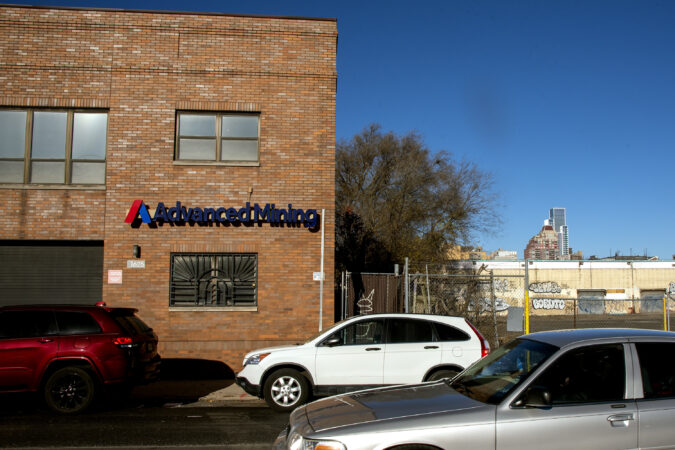
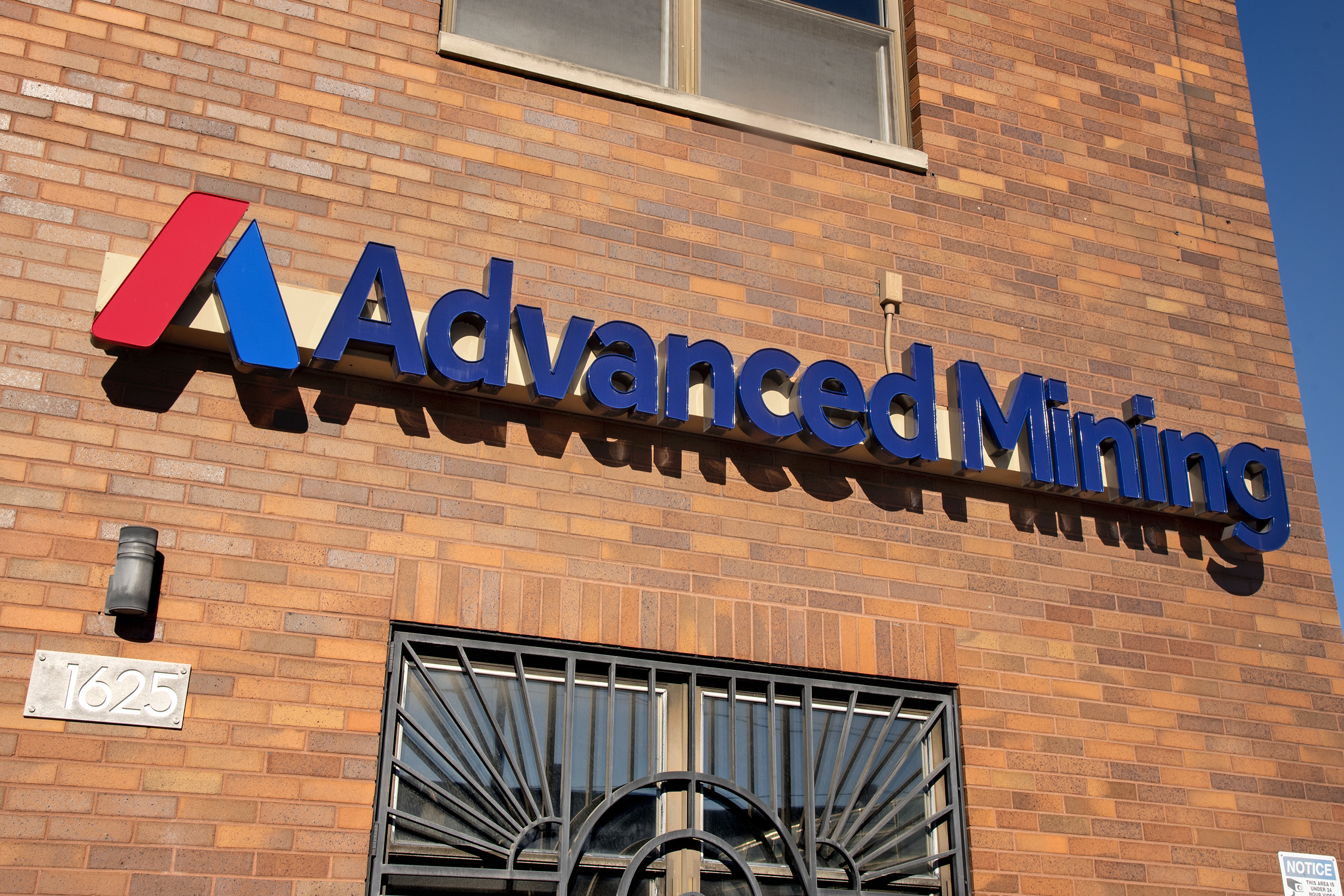
The scene at 1625 Washington Avenue Tuesday Dec. 13, 2022. The sign reads “Advanced Mining” the business that acquired the cryptocurrency company VBit Technologies which is facing several new lawsuits in federal court after its customers claim the company froze them out of millions of dollars in assets this summer.
An investigation published in The Inquirerin 2022 found some of Vo’s customers had little knowledge of how cryptocurrencies actually worked. SEC investigators say customers believed VBit would provide them with a “turnkey solution” for those complexities.
Vo sold investors “hosting agreements” for the computers that, in some cases, cost upward of $100,000 per package, according to the complaint. VBit told customers that if they purchased one of the Bitcoin-earning computers, the company would pool together their devices’ collective computing power, generating even greater returns.
Vo owned a building in rural Montana and leased facilities elsewhere to house thousands of the noisy devices, which use massive amounts of power and rarely make sense for an individual to operate at home.
As the Bitcoin piled up, customers tracked their profits on digital portals that VBit had created for them.
According to the SEC, those figures were nothing more than pixels on a screen.
The complaint says the actual profits went directly into accounts that only Vo controlled. Meanwhile, customers had no way to know what exactly the CEO had even sold them.
Investors were not provided serial numbers for their computers, and were largely barred from visiting the far-flung facilities that housed them, according to the complaint. Instead, Vo alone controlled the devices — and sold many more than he actually possessed.
In 2021, the company’s peak sales year, VBit sold agreements to host more than 8,400 computers, according to the complaint. The company had just 1,643 on hand.
Meanwhile, of the $48 million of investor funds Vo allegedly misappropriated, the CEO “gambled away” around $32 million on other cryptocurrency investments, the complaint says.
For customers who did choose to cash in on their profits, Vo kept several million in a separate account to dole out. Still, the SEC found that VBit had never had enough money to back up the total value of the investments.
And because many customers had only partially purchased their computers, using their newfound income to pay VBit back the balance they owed on the device, the scheme largely averted their suspicions.
At least until the company’s final days.
A mysterious exit
On Oct. 19, 2021, Vo learned the SEC was investigating his company for selling unregistered securities, according to the complaint.
The CEO soon began laying the seeds of a supposed sale of his company to a new firm, Advanced Mining Group.
A website for Advanced Mining was registered on Nov. 1, and by January 2022, a news release went out to crypto-related news outlets announcing that VBit had been sold for more than $100 million.
The sale would give Vo “peace of mind and freedom to focus on my health,” the CEO said in a cryptic statement.
Meanwhile, investigators say, Vo began transferring investors’ money to his family and himself.
More than $15 million went to Vo’s personal bank account, according to the complaint. His sister received $300,000, his brother, $500,000, and his mother, $100,000.
Vo’s daughter, who is a minor, received $1 million in a trust fund. None of the family members provided services in exchange for the funds, the complaint says.
The only person who received more than Vo’s daughter was his wife, Phuong D. Vo. The CEO gifted her $1.8 million over a monthlong period, according to the complaint.
And on Nov. 19 — the day Vo began transferring the funds — he filed for divorce from his wife, the complaint says. The CEO’s travel records indicated he was headed for Vietnam the following day.
For VBit’s customers, Vo’s secretive exit and the supposed sale to Advanced Mining began a period of decline and confusion.
Customers who had been incentivized to recruit other investors through video-based information sessions soon began to lose communication with those higher up in the marketing chain.
And for the sliver of investors who had been cashing in, withdrawals went from taking hours to weeks. By June 2022, customers found they were frozen out of their accounts entirely.
Attempting to explain the chaos, representatives with Advanced Mining told customers through email that the company was having regulatory issues with the SEC. The agency declined to comment on any such probe at the time.
In July, Advanced Mining promised refunds that investors say never came. By the fall, company communication had gone dark.
Customers soon launched a series of unsuccessful lawsuits in multiple states, hoping to claw back their money via a judge. In Washington state, financial regulators opened a smaller-scale investigation into potential fraud on behalf of a group of residents.
In group chats on the messaging app Telegram, hundreds of investors began to gather, finding solace that others, too, had allegedly been victims of Vo’s company. Members spent the months after VBit’s collapse speculating about the CEO’s whereabouts and the increasingly unlikely odds of getting their money back.
The SEC’s lawsuit this month signals the first sign of closure in those customers’ yearslong quest for justice.
There has not been a post in one of those chats, dubbed “PA Advanced Mining Lawsuit Group,” since 2023.
New Year’s Day is still more than a week away, but already, everything’s coming up Philly in 2026.
In the latest sign that the city is poised for a banner year, the Wall Street Journal has named Philadelphia the world’s top place to visit in ‘26 — echoing what various national and international publications have been saying for weeks.
The primary draw, of course, is the nation’s 250th birthday celebration, which is expected to bring an endless stream of tourists — not to mention contribute to as much as $2.5 billion to the city and region in additional tourism dollars, by one estimate.
The city’s sports calendar in the coming year ain’t looking too bad, either.
Most notably, the FIFA World Cup arrives next summer with a much-anticipated slate of games in June and July. (France and Brazil are among the teams that’ll take part in six matches slated for Lincoln Financial Field.)
And in July, Major League Baseball’s All-Star Game festivities will take place at Citizens Bank Park — in the same year the Phillies rank among the betting favorites to win a third World Series title, no less — while Xfinity Mobile Arena will be hosting first- and second-round games for the NCAA men’s basketball tournament.
Oh, and the PGA Championship returns to the Philadelphia area, May 11-17 at the Aronimink Golf Club in Newtown Square.
The Wall Street Journal’s recognition marks the latest in a spate of hype for Philadelphia in the coming year. Last month, Travel + Leisure named the city one of its top places to travel in ’26, as did the BBC.
Joining Philadelphia in the Journal’s top five destinations for ‘26 were Basque Country, Spain; Okavango Delta, Botswana; Yunnan, China; and Guadalupe Valley, Mexico.
Tulsa, Okla. — which in June will celebrate the 100th birthday of the country’s favorite lonely highway with its annual Route 66 Road Fest — was the only other American city to make the Journal’s top 10.