Category: Business

Business news and market updates

  • Chester County draws in business, but people struggle to afford to live there, an analysis finds

    Chester County draws in business, but people struggle to afford to live there, an analysis finds

    Standing in front of Chester County business and corporate leaders, financial expert Patti Brennan asked them to rank how they were feeling about the economy.

    “If you’re feeling a little worried, you’re uneasy, welcome to America, you’re not alone. This is the way Americans are generally feeling right now; the consumer sentiment is low,” she told them. She pointed to the instability that dominated the country last year: tariffs, the longest government shutdown in history, international unrest.

    There are signs of stress: people are not paying their bills on time, delaying payments on car loans, credit card bills, and student loans.

    But it’s not all bad news. Brennan and financial expert Dianne P. Manges, senior investment adviser with Truist Foundations & Endowments Practice, advised the business community not to act based on chaos.

    The analysis was part of the Chester County Economic Development Council’s 22nd annual economic outlook, which offers assessments of the local, national, and global economic landscape.

    Here are some of the takeaways from the conversation.

    Tax refunds will be a big driver

    An expected $517 billion nationally will come to consumers through tax refunds this year — a 44% increase from last year, Manges said. It’s a bigger boost than the second round of stimulus checks issued in December 2020, she said.

    “Two things to remember about all of us here as consumers: No. 1, we are about 68% of the economy,” in terms of gross domestic product, she said. “And No. 2, we’re Americans. When we have extra money in our wallets, we spend it.”

    It’s important to be mindful of whether those positive themes are applicable to everyone, she said, noting that people with lower incomes are struggling. A majority of people making a lower income will still benefit from those tax return refunds, she said.

    “People will be feeling warm and fuzzy when they get those tax returns,” Brennan said.

    Pennsylvania has had job growth — with one particular sector leading

    Pennsylvania is the only state in the Northeast showing expansion, said Michael Grigalonis, president of the economic development council. Nationally, the commonwealth was second behind Texas in job growth in the year between November 2024 and November 2025, with roughly 97,000 jobs created during that period.

    Half of the jobs were created in one industry: healthcare, Grigalonis said. “We’re one of the oldest states; we have one of the most aging populations,” he said.

    Broadly, Manges and Brennan said that companies aren’t hiring, but they aren’t firing large-scale, either.

    In Chester County, the unemployment rate is below the federal level, Brennan said.

    Even with one of the highest GDPs in the state, affordability is an issue in the county

    Chester County is a place people want to live, work, and raise families. But it’s tough to afford it.

    Chester County has the fourth-largest GDP in the commonwealth, Grigalonis said. (It rang in at $57.3 billion in 2023, behind Philadelphia, Allegheny, and Montgomery Counties) and it boasts the highest median income in the state, with 43% of households in the county earning more than $150,000 annually, Brennan said.

    But even with that, housing is an issue — both cost and availability, she said. The average cost of a home in Chester County is $500,000, above the state average of roughly $300,000.

    “It is not affordable, and we all know that,” Brennan said. “It’s a challenge for so many people. … Inventory is increasing, but it’s really limited overall.”

    Chester County saw the second-highest population growth

    The county saw the some of highest population growth in the state between 2020 and 2024.

    “This population growth comes with its own set of challenges, but I will take these challenges to many of our colleagues throughout the commonwealth, [who] are struggling to get people to move into their communities, to provide a talented workforce that can help companies grow,” Grigalonis said.

    Still, more people are living outside of Chester County and commuting in, Brennan said — mostly because they can’t afford to live within the county boundaries.


  • The White House and a bipartisan group of governors, including Josh Shapiro, want to fix AI-driven power shortages and price spikes

    The White House and a bipartisan group of governors, including Josh Shapiro, want to fix AI-driven power shortages and price spikes

    Washington — The Trump administration and a bipartisan group of governors on Friday tried to step up pressure on the operator of the nation’s largest electric grid to take urgent steps to boost power supplies and keep electricity bills from rising even higher.

    Administration officials said doing so is essential to win the artificial-intelligence race against China, even as voters raise concerns about the enormous amount of power data centers use and analysts warn of the growing possibility of blackouts in the Mid-Atlantic grid in the coming years.

    “We know that with the demands of AI and the power and the productivity that comes with that, it’s going to transform every job and every company and every industry,” Interior Secretary Doug Burgum told reporters at the Eisenhower Executive Office Building, next to the White House. “But we need to be able to power that in the race that we are in against China.”

    Trump administration says it has ‘the answer’

    The White House and governors want the Mid-Atlantic grid operator to hold a power auction for tech companies to bid on contracts to build new power plants, so that data center operators, not regular consumers, pay for their power needs.

    They also want the operator, PJM Interconnection, to contain consumer costs by extending a cap that it imposed last year, under pressure from governors, that limited the increase of wholesale electricity payments to power plant owners. The cap applied to payments through mid-2028.

    “Our message today is just to try and push PJM … to say, ‘we know the answer.’ The answer is we need to be able to build new generation to accommodate new jobs and new growth,” Energy Secretary Chris Wright said.

    Govs. Josh Shapiro of Pennsylvania, Glenn Youngkin of Virginia, and Wes Moore of Maryland appeared with Burgum and Wright and expressed frustration with PJM.

    “We need more energy on the grid and we need it fast,” Shapiro said. He accused PJM of being “too damn slow” to bring new power generation online as demand is surging.

    Shapiro said the agreement could save the 65 million Americans reliant on that grid $27 billion over the next several years. He warned Pennsylvania would leave the PJM market if the grid operator does not align with the agreement, a departure that would threaten to create even steeper price challenges for the region.

    PJM wasn’t invited to the event.

    Grid operator is preparing its own plan to meet demand

    However, PJM’s board is nearing the release of its own plan after months of work and will review recommendations from the White House and governors to assess how they align with its decision, a spokesperson said Friday.

    PJM has searched for ways to meet rising electricity demand, including trying to fast-track new power plants and suggesting that utilities should bump data centers off the grid during power emergencies. The tech industry opposed the idea.

    The White House and governors don’t have direct authority over PJM, but grid operators are regulated by the Federal Energy Regulatory Commission, which is chaired by an appointee of President Donald Trump.

    Trump and governors are under pressure to insulate consumers and businesses alike from the costs of feeding Big Tech’s data centers. Meanwhile, more Americans are falling behind on their electricity bills as rates rise faster than inflation in many parts of the U.S.

    In some areas, bills have risen because of strained natural gas supplies or expensive upgrades to transmission systems, to harden them against more extreme weather or wildfires. But energy-hungry data centers are also a factor in some areas, consumer advocates say.

    Ratepayers in the Mid-Atlantic grid — which encompasses all or parts of 13 states stretching from New Jersey to Illinois, as well as Washington, D.C. — are already paying billions more to underwrite power supplies to data centers, some of which haven’t been built yet, analysts say.

    Critics also say these extra billions aren’t resulting in the construction of new power plants needed to meet the rising demand.

    Tech giants say they’re working to lower consumer costs

    Technology industry groups have said their members are willing to pay their fair share of electricity costs.

    On Friday, the Information Technology Industry Council, which represents tech giants Google, Meta, Microsoft, and Amazon, said it welcomed the White House’s announcement and the opportunity “to craft solutions to lower electricity bills.” It said the tech industry is committed to “making investments to modernize the grid and working to offset costs for ratepayers.”

    The Edison Electric Institute, which represents investor-owned electric companies, said it supports having tech companies bid — and pay for — contracts to build new power plants.

    The idea is a new and creative one, said Rob Gramlich, president of Grid Strategies LLC, a Washington, D.C.-based energy markets and transmission consultancy.

    But it’s not clear how or if it’ll work, or how it fits into the existing industry structure or state and federal regulations, Gramlich said.

    Part of PJM’s problem in keeping up with power demand is that getting industrial construction permits typically takes longer in the Mid-Atlantic region than, say, Texas, which is also seeing strong energy demand from data centers, Gramlich said.

    In addition, utilities in many PJM states that deregulated the energy industry were not signing up power plants to long-term contracts, Gramlich said.

    That meant that the electricity was available to tech companies and data center developers that had large power needs and bought the electricity, putting additional stress on the Mid-Atlantic grid, Gramlich said.

    “States and consumers in the region thought that power was there for them, but the problem is they hadn’t bought it,” Gramlich said.

    Associated Press writer Matthew Daly and The Washington Post contributed to this article.

  • What’s open and closed in the Philly area on Martin Luther King Day 2026: Grocery stores, postal services, trash pickup, and more

    What’s open and closed in the Philly area on Martin Luther King Day 2026: Grocery stores, postal services, trash pickup, and more

    Martin Luther King Jr. Day, a federal holiday honoring the civil rights leader’s legacy, is Monday and it brings with it changes to schedules across the Philadelphia region. From government offices and post offices to trash collection and banks, many services will operate on adjusted hours or close entirely.

    Here’s what you need to know so you can plan your Monday with confidence.

    GROCERY STORES

    Acme Markets

    ✅ Acme Markets locations will be open for normal hours. Check your local store’s hours at local.acmemarkets.com.

    Whole Foods

    ✅ Whole Foods will be open during normal business hours. Check your local store’s hours at wholefoodsmarket.com/stores.

    Giant Food Stores

    ✅ Giant locations will be open regular hours. Check your local store’s hours at giantfoodstores.com/store-locator.

    South Philly Food Co-op

    ✅ South Philly Food Co-op will be open during its normal hours.

    Sprouts Farmers Market

    ✅ Sprouts will be open regular business hours.

    Trader Joe’s

    ✅ Trader Joe’s stores will be open.

    Aldi

    ✅ Aldi will be open for normal hours. Use the store locator at aldi.us/stores/ to check your local store’s hours.

    Reading Terminal Market

    ✅ Reading Terminal Market will be open.

    LIQUOR STORES

    Fine Wine & Good Spirits

    ✅ Fine Wine & Good Spirits will be open. Check your local store’s hours on the Fine Wine & Good Spirits store locator online.

    MAIL AND PACKAGES

    U.S. Postal Service

    ❌ Post offices are closed and the USPS will not be delivering regular mail.

    UPS, FedEx, and DHL

    UPS services will operate normally.

    FedEx will work regular hours, except for FedEx Express and Ground Economy.

    DHL will operate as normal.

    BANKS

    ❌ TD Bank, Bank of America, Wells Fargo, and Chase bank will be closed.

    PHARMACIES

    CVS

    ✅ CVS locations will operate on normal business hours. Call your local store before visiting or view its hours at cvs.com/store-locator/landing.

    Walgreens

    ✅ Walgreens locations will be open for regular business hours. Check your local store’s hours at walgreens.com/storelocator.

    TRASH COLLECTION

    ❌ There is no trash or recycling pickup on MLK Day. But trash pickup will resume a day later than scheduled. To find your trash and recycling collection day, go to phila.gov.

    BIG BOX RETAIL

    Target

    ✅ Target locations will be open for regular business. Check your local store’s hours at target.com/store-locator/find-stores.

    Lowe’s

    ✅ Lowe’s stores are open for normal business hours. Check your local store’s hours at lowes.com/store.

    Home Depot

    ✅ Home Depot locations will be open during normal business hours. Check your local store’s hours at homedepot.com/l/storeDirectory.

    SHOPPING MALLS

    ✅ The Shops at Liberty Place, Fashion District Philadelphia, Franklin Mall, Cherry Hill Mall, and King of Prussia Mall will be open for their regular hours.

    TRANSIT

    SEPTA

    ✅ SEPTA subways, trolleys, buses, the Norristown High Speed Line, and Regional Rail will run on a regular Monday schedule. Visit septa.org.

  • Trump’s promised manufacturing boom is a bust so far

    Trump’s promised manufacturing boom is a bust so far

    Introducing the highest U.S. tariffs since the Great Depression, President Donald Trump made a clear promise in the spring: “Jobs and factories will come roaring back into our country.”

    They haven’t.

    Manufacturing employment has declined every month since what Trump dubbed “Liberation Day” in April, saying his widespread tariffs would begin to rebalance global trade in favor of American workers. U.S. factories employ 12.7 million people today, 72,000 fewer than when Trump made his Rose Garden announcement.

    The trade measures that the president said would spur manufacturing have instead hampered it, according to most mainstream economists. That’s because roughly half of U.S. imports are “intermediate” goods that American companies use to make finished products, like aluminum that is shaped into soup cans or circuit boards that are inserted into computers.

    So while tariffs have protected American manufacturers like steel mills from foreign competition, they have raised costs for many others. Auto and auto parts employment, for example, has dipped by about 20,000 jobs since April.

    “2025 should have been a good year for manufacturing employment, and that didn’t happen. I think you really have to indict tariffs for that,” said economist Michael Hicks, director of the Center for Business and Economic Research at Ball State in Muncie, Indiana.

    Small- and midsize businesses have found Trump’s on-again, off-again tariffs especially vexing. Fifty-seven percent of midsize manufacturers and 40 percent of small producers said they had no certainty about their input costs in a November survey by the Federal Reserve Bank of Richmond. Only 23 percent of large manufacturers shared that complaint.

    Smaller companies also were more than twice as likely to respond to tariffs by delaying investments in new plants and equipment, the survey found. One reason could be that taxes on imports raise the price of goods used in production much more than they do with typical consumer items, according to a study by the San Francisco Fed.

    Industries producing more technologically complex goods such as aircraft and semiconductors also are paying an outsize price, according to Gary Winslett, director of the international politics and economics program at Middlebury College. Makers of semiconductors, for example, shed more than 13,000 jobs since April.

    “They’re the ones who need the imported inputs. Really advanced manufacturing is actually what’s getting hit the hardest,” he said.

    Trump’s tariffs, however, are not the industrial sector’s only headache. Factory payrolls began their post-pandemic decline in early 2023, almost two years before Trump returned to the White House.

    High interest rates and a shift in consumer spending patterns are hurting the nation’s manufacturers, economists said. Business loans are more than twice as expensive as they were four years ago, with banks charging their most creditworthy borrowers interest rates of 6.75 percent. That discourages businesses from expanding operations and hiring additional workers.

    After bingeing during the height of the pandemic on durable goods, consumers have gradually redirected their spending to in-person services. Money that once went to makers of furniture, televisions and exercise machines now goes instead to restaurants and entertainment venues.

    In Indiana, the spending switch can be glimpsed in the fortunes of the recreational vehicle industry, a local mainstay. RV shipments soared to a record 600,400 in 2021 as consumers trapped at home by the pandemic hit the road. But by 2024, the work-from-home era was over, and sales fell by nearly half. Thor Industries, the largest RV manufacturer, laid off several hundred workers last year, as demand flagged.

    Once Trump returned to the White House, manufacturers responded by over-ordering imports to beat the anticipated tariffs. That’s left many producers with more inventory than they need, suggesting cuts lie ahead, according to Hicks.

    “The manufacturing job losses that we see now are really just the beginning of what will be a pretty grim couple of quarters as manufacturing adjusts to a new lower level of demand,” he said.

    Modest numbers of manufacturing jobs have been trimmed throughout the economy. In December, Westlake Corp., a Houston-based producer of industrial chemicals, said it would idle four production lines at facilities in Louisiana and Mississippi, putting 295 employees out of work. Speaking on an investor call, company executives blamed excess global capacity and weak demand for the move.

    While the jobs that Trump promised have not materialized, factory output rose in 2025, reaching its highest mark in almost three years, according to Federal Reserve data, and administration officials said it is only a matter of time before the full benefits of the president’s plan are felt.

    Trump’s tariffs and jawboning encourage CEOs to invest in new U.S. plants. Provisions in the president’s signature fiscal legislation permitting companies to quickly write off the full expense of new investments in equipment and research and development expenses will spur modern manufacturing, they said.

    “It also encourages the build-out of high-precision manufacturing here at home, which will lead to high-paying construction and factory jobs,” Treasury Secretary Scott Bessent said in a speech this month.

    Companies are spending more than three times as much on constructing new factories as they did when Trump was first inaugurated, though less than during the Biden-era peak. The White House last fall hailed recent investment announcements by companies such as Stellantis and Whirlpool. Last month, T. RAD North America, a subsidiary of a Japanese manufacturer, announced plans for a new auto parts plant in Clarksville, Tennessee, which would employ 928 workers.

    Nick Iacovella, a spokesman for the Coalition for a Prosperous America, which backs Trump’s manufacturing policies, said the roughly 1 percent shrinkage in factory employment last year was less significant than the uptick in business investment.

    “We saw a significant increase in capital expenditures, which is the earliest signal that reindustrialization is taking hold. Those investments take time to permit, build and staff before they show up in employment data,” he said.

    The president’s hopes of increasing manufacturing employment defy decades of experience in the United States and other advanced economies. American factory jobs peaked at 19.5 million in the summer of 1979 and have been sliding ever since, largely because of the introduction of machinery that can do the job of several workers.

    As two presidents sought to revive domestic production over the past decade, manufacturing employment rode a roller coaster. Factory jobs increased by 421,000 during Trump’s first term before sinking by more than 1 million during the pandemic. President Joe Biden used government subsidies to encourage hiring, especially for green energy projects, and manufacturing payrolls rose more than 100,000 above Trump’s highest mark.

    But those gains evaporated by the end of 2024.

    On Tuesday, the president addressed the Detroit Economic Club, touting “the strongest and fastest economic turnaround in our country’s history.” He boasted about growth, productivity, investment, incomes, inflation and the stock market.

    “The Trump economic boom is officially begun,” the president said.

    All that’s missing now are the jobs.

    GRAPHIC

  • Dodge Charger, Ford Maverick Lobo, and Hyundai Palisade win the 2026 North American vehicle awards

    Dodge Charger, Ford Maverick Lobo, and Hyundai Palisade win the 2026 North American vehicle awards

    DETROIT — The Dodge Charger won the 2026 North American Car of the Year award, while the Ford Maverick Lobo took the crown for trucks, and the Hyundai Palisade won the utility award.

    The awards were announced Wednesday morning during an Automotive Press Association event at the start of the North American International Auto Show in Detroit.

    Automakers prize the awards, which are decided by a group of journalists from the U.S. and Canada who evaluate factors such as vehicle innovation, design, performance, driver satisfaction, and more in their decisions.

    Pamela Wylie, Ford Motor Co. vehicle programs director, holds the North American Truck of the Year award in front of the Ford Maverick Lobo.

    The honors are considered a key gauge for how media perceive automakers’ new and redesigned vehicles, and buyers often use them in selecting vehicles for purchase.

    In addition to the winning Dodge Charger midsize car, car finalists included the Honda Prelude hybrid sports coupe and the Nissan Sentra compact car.

    The truck finalists this year included the Ram 1500 Hemi alongside the Ram 2500.

    Olabisi Boyle, Hyundai Motor North America senior vice president for product planning and mobility strategy, with the North American Utility Vehicle of the Year award in front of the Hyundai Palisade.

    The remaining utility finalists were the Lucid Gravity luxury electric vehicle and Nissan Leaf small electric crossover SUV.

    This year’s finalists represented a mix of internal combustion engine, hybrid, and electric vehicles.

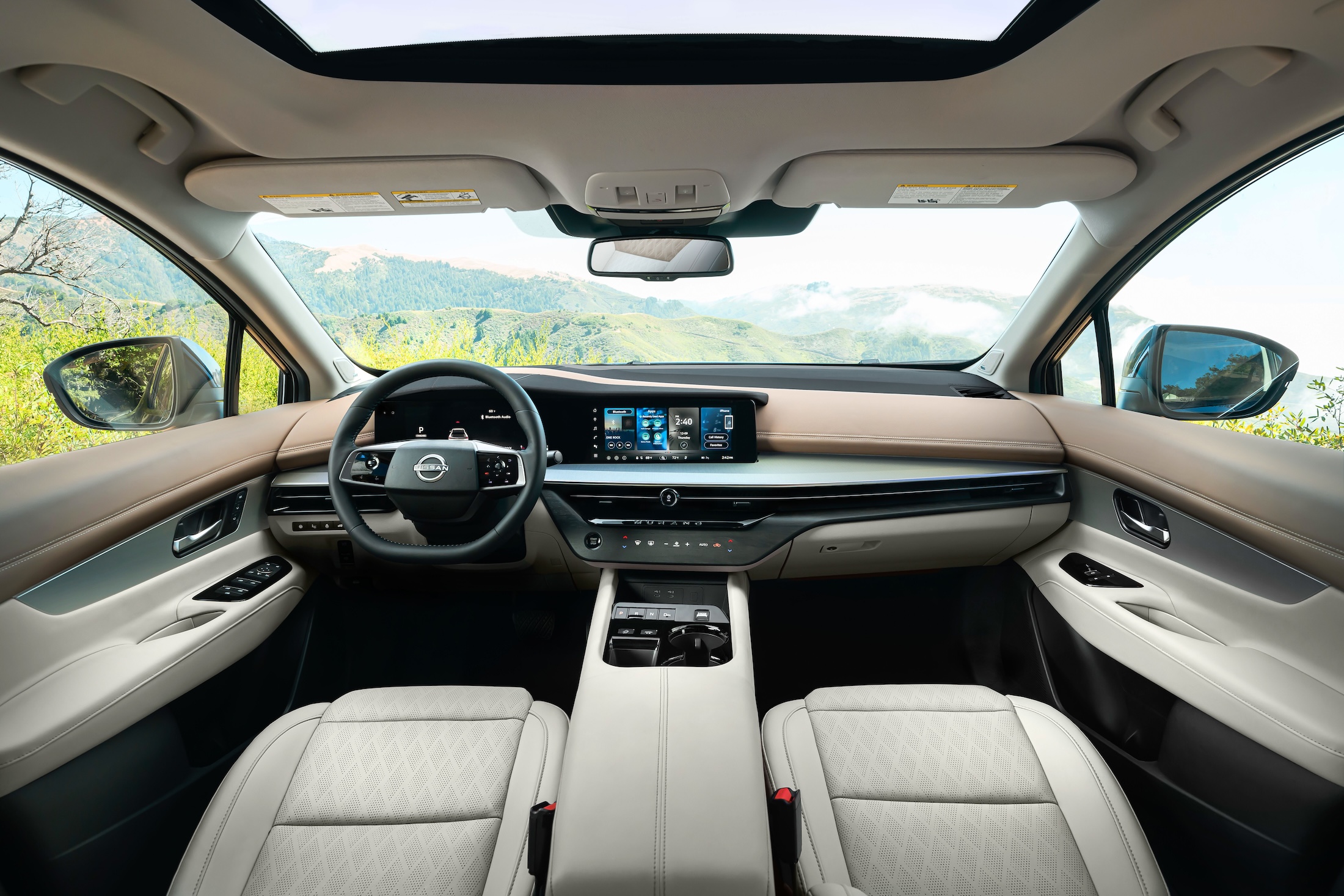
  • 2026 Nissan Murano: I’ll probably forget I drove it this time, too

    2026 Nissan Murano: I’ll probably forget I drove it this time, too

    2026 Nissan Murano Platinum AWD vs. Volkswagen Atlas SEL Premium R-Line: Midsize SUV comparison.

    This week: Nissan Murano

    Price: $53,950 as tested

    What others are saying: “Highs: Comfortable front seats; short stopping distances. Lows: Rough-shifting transmission, uneven power delivery, stiff ride, unintuitive controls,” says Consumer Reports.

    What Nissan is saying: “Energetic elegance.”

    Reality: I promise I checked Consumer Reports after I wrote the column.

    What’s new: I was excited to have a Murano in my lineup because after all these years of columnizing, I would finally get to review one.

    (Googles “Scott Sturgis” “Inquirer” “Murano.”) Well, huh. I drove 2015 and 2018 models.

    Memorable, evidently.

    This is not the same Murano, naturally. A redesign for 2025 gives the awkward old two-row, midsize SUV an awkward new look, along with a new engine and transmission.

    Competition: In addition to the Volkswagen Atlas, there are the Chevrolet Blazer, Honda Passport, Jeep Grand Cherokee, Mazda CX-70, Subaru Outback, and Toyota Crown Signia.

    Shifty: Hooray! A Nissan without a CVT! The Murano came with a 9-speed automatic, so I should be this delighted. But read on.

    Up to speed: Gone is the V-6 that powered the old model. The 2.0-liter turbocharged engine creates 241 horses, which is not a ton for this size of vehicle. It gets the vehicle to 60 mph in 7.2 seconds, according to Car and Driver.

    But the acceleration story has many more chapters. When I first pulled out of my neighborhood, the Murano seemed to alternate between lag and lurch. “OK, it’s cold,” I thought, offering the benefit of the doubt even while it was probably 85 degrees outside. “I’ll give it some time.”

    But the unsteadiness continued. Sometimes SUVs and minivans can have an awkward accelerator-foot interface, so I looked into that. But, no, it felt comfortable.

    “Aha! Here’s a drive mode selector,” I cried. “I’ll try that.” When I shifted to sport mode, it got sporty all right — in the way that your eighth-grade gym teacher forced you to run laps around the gym at 8 a.m. until you felt like throwing up. It was even rougher than before, although the roughness came at you faster.

    “All right, I never do this,” I sighed and shifted into eco. Surprisingly, the power didn’t completely die out. The Murano felt smooth. Sure, it took a lot of foot stomping to get the Murano on highways and such, but the SUV delivered power much better.

    On the road: Mode, schmode, driving the Murano was never more than OK. Country roads are blah; highways are a faster blah. There are just so many more enjoyable competitors to get around in.

    The lane-keeping system drove me nuts for a few days, and the menus to adjust it are inscrutable. Press one of two little dotted lines on the steering wheel to change them. The screen says “OK Menu,” and there’s a tiny OK button next to a microphone/button, and that seemed to function at somewhat regular intervals. I’d need practice to do it again.

    The interior of the 2026 Nissan Murano is elegant, as are many of Nissan’s offerings. Unfortunately its user-friendliness is lacking.

    Driver’s Seat: The seat itself is on the plush side, roomy and wide. Nissan has long offered classy interiors even down to the Sentra (sorry, Versa, not you). Silver buttons and trim with nice colored material add to the upscale feel.

    But here’s a better place to complain about the transmission controls. Why did some designer think a row of buttons at the front of the console would be a great idea? My phone and other items forever covered them. Also, they’re just not intuitive, so when you’re in a tight spot and have to maneuver forward and back to get out, it requires far more concentration than it should.

    Friends and stuff: The rear seat is roomy, comfortable, nicely appointed, and well positioned. Heads, legs, and feet have no shortage of space, even in the middle seat.

    Cargo space is 32.9 cubic feet in the back, and 63.5 with the rear seat folded.

    In and out: The Murano rides at a height perfect for entry and exit without leg stretches.

    Play some tunes: A single large volume knob is available outside the touchscreen. The 12.3-inch screen sounds like a good size, but it’s very short and wide, and a row of icons along the side and HVAC display along the bottom eat into the space.

    Sound from the Bose Premium system is OK, about a B+ or so, and leaves me wondering what the not-premium system sounds like.

    Keeping warm and cool: Going one better (or worse) than the popular ebony touch pads, which Mr. Driver’s Seat doesn’t love, the Murano offers a cheap-looking black plastic controller pad with temperature, fan speed, and source, and it requires a forceful push to engage your choices.

    While you’re fighting with that, a teeny tiny display at the bottom of the touchscreen shows the changes. Let’s all say it in unison: “Eyes on the road!”

    Fuel economy: I couldn’t get the trip display to do more than show me how each individual trip went, and the car said the best fuel economy was 22.8 mpg. So, the rest were worse. Let’s call it 20.

    Where it’s built: Smyrna, Tenn. Half the parts come from the U.S. and Canada, including the transmission. The engine hails from Japan.

    How it’s built: The Murano gets a predicted reliability of 3 out of 5 from Consumer Reports.

    In the end: Nissan has a comfortable, roomy, attractive (on the inside) SUV here. If they can tweak the engine and suspension and start over with infotainment and HVAC controls, this could be a winner.

    Next week: 2026 Volkswagen Atlas

  • Some Philly-area firms say AI is replacing workers or changing their jobs

    Some Philly-area firms say AI is replacing workers or changing their jobs

    AI has already replaced some workers at Philly-area firms, a new report says. But the bulk of the AI-related job loss is yet to come, the Federal Reserve Bank of Philadelphia CEO and president Anna Paulson said.

    Paulson, speaking Wednesday at the Chamber of Commerce for Greater Philadelphia’s State of the Economy event, said AI could further reduce demand for workers in the years ahead.

    Also Wednesday, the Fed released its annual report, which surveyed 54 Chamber businesses on the past year and what lies ahead. They found that the biggest concern area businesses faced in 2025 were uncertainty about regulations and government policies, and that nearly 39% of respondents expected better business conditions overall in this coming year.

    Amid a slow labor market, a central topic of Wednesday’s event was jobs.

    Job growth slowed, but healthcare helped Philadelphia

    Last year, the majority of private-sector jobs created were in healthcare and social assistance, Paulson noted. Philadelphia has a larger-than-average share of workers in this sector, which means the region has “been somewhat insulated from the national slowdown in job creation,” she said.

    But in other sectors, AI and immigration trends have contributed to a hiring slowdown.

    “On the supply side, the sharp drop in immigration has slowed the growth of labor supply,” said Paulson. “On the demand side, firms — both nationally and here in Philadelphia — tell us that uncertainty is holding back hiring as they consider a range of factors: trade policy and the potential for artificial intelligence to transform the need for workers.”

    AI is just starting to replace jobs, and isn’t creating many

    AI has been widely adopted by companies in the region, the Chamber’s survey found. Nearly 76% of respondents said they used AI for their work.

    That’s changing what kinds of human work firms need.

    Among those surveyed, 9.5% said generative AI had decreased the need for workers at their firm, while 23.8% said it changed the kinds of workers they needed but not the number.

    Only 4.8% reported needing more workers because of generative AI.

    The AI boom has brought plans for more data center development in the region. But those kinds of facilities don’t require a lot of workers, says Paulson.

    “Going forward, we can see a period of strong growth where relatively few jobs are created as AI becomes fully embedded,” she said.

    Amazon data centers loom over houses at the edge of the Loudoun Meadows neighborhood in Aldie, Va., in 2023.

    Some Philadelphians are spending money cautiously

    As uncertainty slows hiring on the business side, it seems to be influencing consumer trends as well.

    Paulson noted that low-income households are struggling due to high prices and worries around job security.

    Individuals with discretionary income are being careful of how they spend their money, noted Paulson. “A retailer who is active in the Philadelphia area told us they are seeing a lot of headwinds for the consumer, especially for lower-income individuals,” she said.

    While people in Philadelphia continue to eat at restaurants, “contacts tell us that less expensive options on the menu are becoming more popular,” she said. Upscale restaurants are an exception, she noted, adding that “high-income households, bolstered by a strong stock market, appear to be driving elevated consumption growth.”

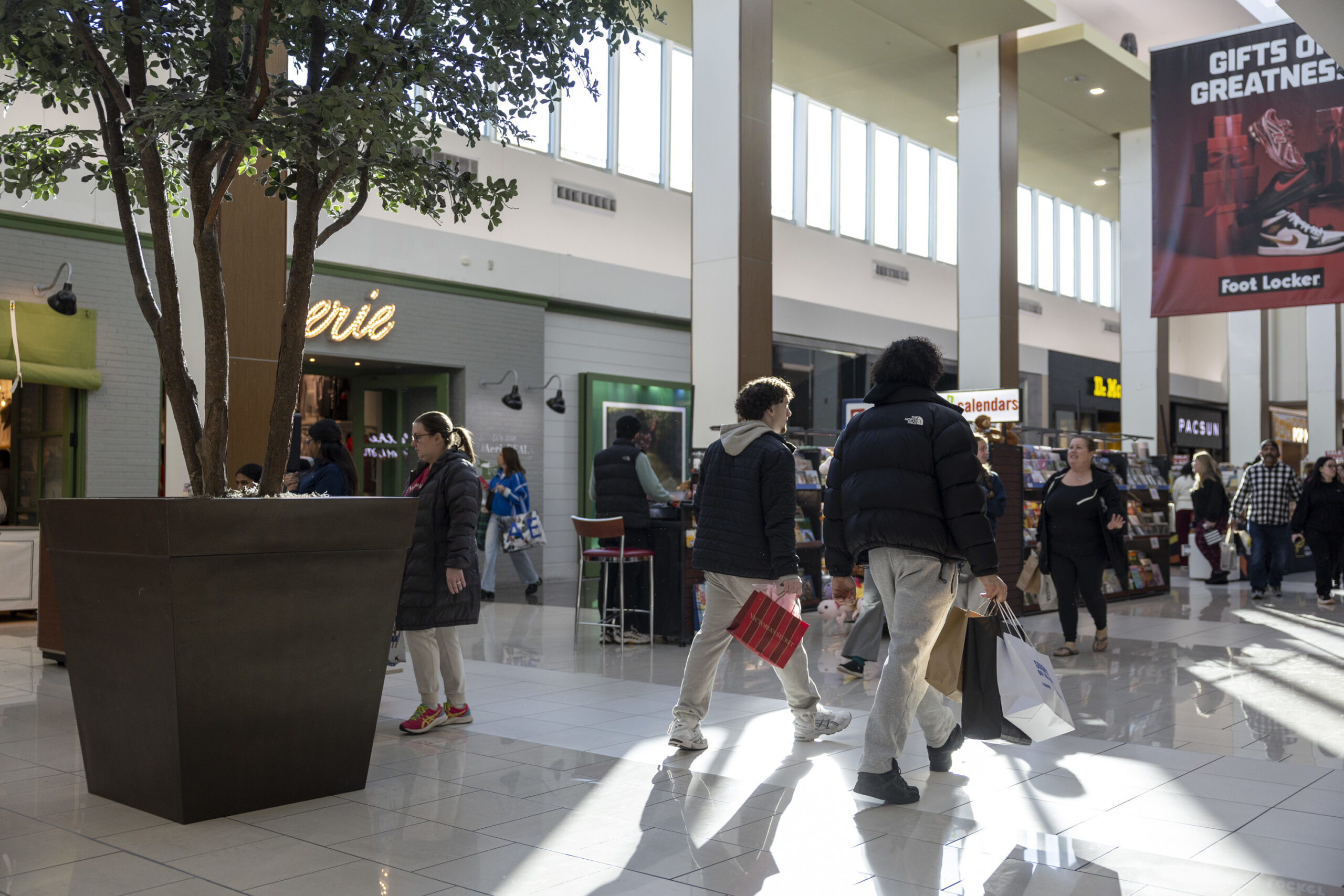
    People shop on Black Friday at Cherry Hill Mall on Nov. 28, 2025. Philadelphia Fed CEO Paulson said people are being more careful with their discretionary income amid economic uncertainty.

    Some employers want better applicants. Working people want better jobs.

    When they are hiring, companies are often challenged to find the right candidates. About 30% of employers surveyed struggled to hire last year because they lacked applicants, or lacked qualified applicants, the Chamber’s report said.

    Comcast executive Bret Perkins, who leads the company’s external and government affairs, noted at Wednesday’s event that the Philadelphia area is “just not creating enough opportunity jobs,” that lend workers upward mobility. He pointed to Philadelphia ranking 50th among 50 metro areas for upward economic mobility recently.

    The Philadelphia Fed recently partnered on a survey of Philadelphians in the city’s lower-income zip codes, in which roughly one-third said “a better-paying job is the single thing that would be most helpful to them,” said Paulson.

    But getting that job is a challenge, Paulson said. Health, caretaking responsibilities, and reliable transportation are among the barriers these Philadelphians are facing, the survey found.

  • What the Saks bankruptcy means for Philly-area shoppers

    What the Saks bankruptcy means for Philly-area shoppers

    Saks Global, which operates Saks Fifth Avenue and Neiman Marcus, has filed for bankruptcy.

    The high-end clothing retailer announced the move on Wednesday, saying in a statement that the Chapter 11 filing will “facilitate its ongoing transformation.”

    In the Philadelphia region, Saks Global has long operated an expansive Saks Fifth Avenue store off City Avenue in Bala Cynwyd. The company also has a Neiman Marcus at the King of Prussia Mall, as well as Saks Off 5th discount outlets at the Franklin Mall in Northeast Philadelphia and at the Metroplex shopping center in Plymouth Meeting.

    Both local Saks Off 5th locations are slated to close soon, as was reported this fall by several news outlets, including the Philadelphia Business Journal.

    Here’s what the bankruptcy filing means for local Saks shopper.

    Is Saks Fifth Avenue in Bala Cynwyd closing?

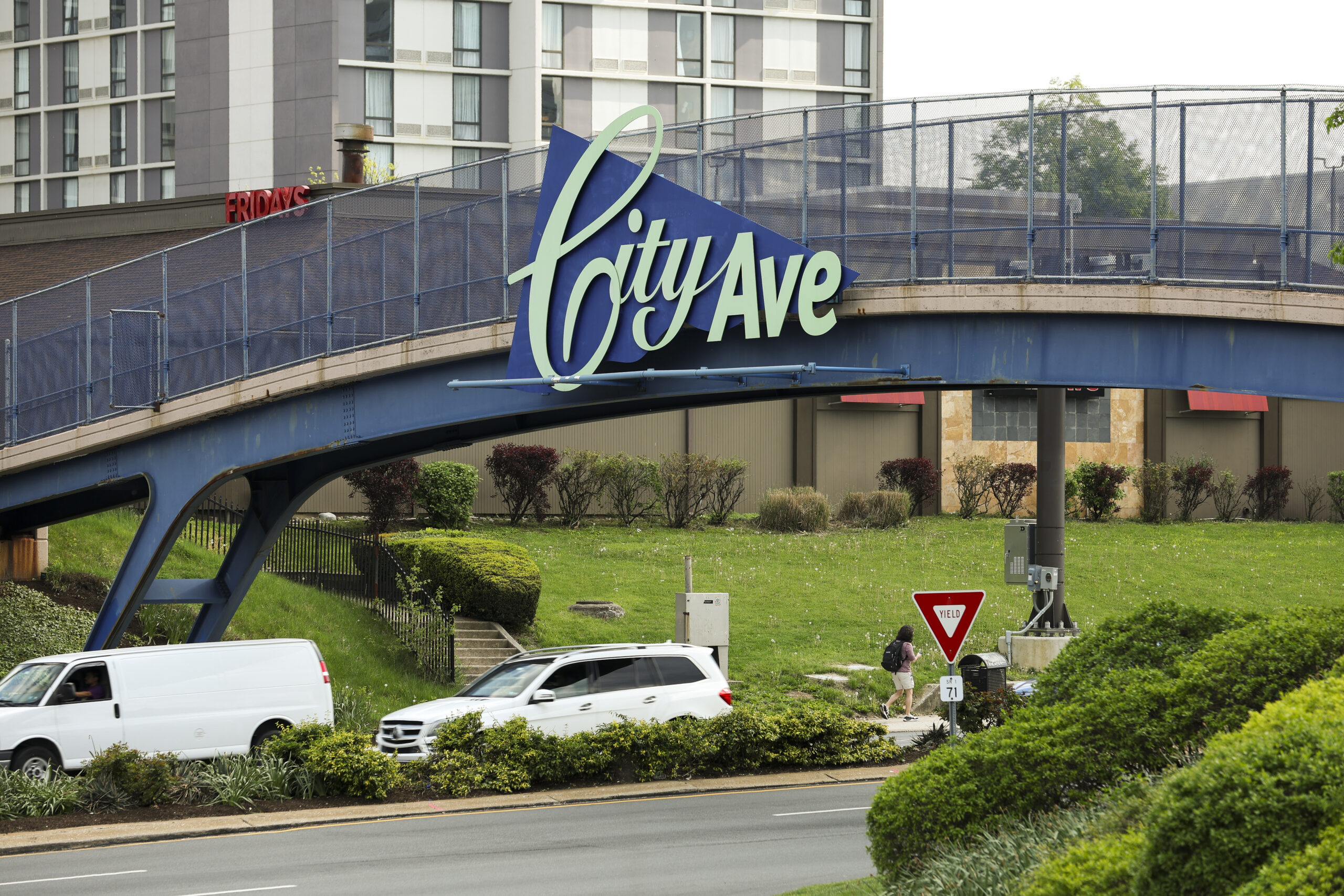
    Saks Fifth Avenue has been a retail success along City Avenue in Bala Cynwyd, as shown in April 2024.

    No. At least not in the immediate future.

    Saks has filed for Chapter 11 bankruptcy, which means the company intends to reorganize financially and stay in business. That’s opposed to Chapter 7 bankruptcy — as is the Iron Hill Brewery case — through which businesses liquidate all their assets and close locations.

    “To be clear, a Chapter 11 filing does not mean that Saks Global is going out of business,” Saks wrote in a bankruptcy FAQ on its website.

    But when companies reorganize through bankruptcy, they sometimes do close stores, particularly underperforming ones.

    Saks executives alluded to the possibility of this in its statement, which read in part: “As part of the Chapter 11 process, the company is evaluating its operational footprint to invest resources where it has the greatest long-term potential. This approach reflects an effort to focus the business in areas where the company’s luxury retail brands are best positioned for sustainable growth.”

    The Saks Fifth Avenue opened in Bala Cynwyd decades ago. It is now the retailer’s only location in the Philadelphia region and is called “Saks Philadelphia” on the company’s website.

    The Inquirer reported in 2024 that business at the store was strong and that the chain had resisted offers to move to King of Prussia, according to the City Ave District.

    In response to questions from The Inquirer about the future of Philadelphia-area stores, Saks Global said: “Our footprint evaluation is underway, and we have already begun to work collaboratively with our real estate partners to find future-facing solutions, where possible, to achieve a stable and sustainable business model and optimized portfolio on the other side of this process.”

    Is Neiman Marcus in King of Prussia closing?

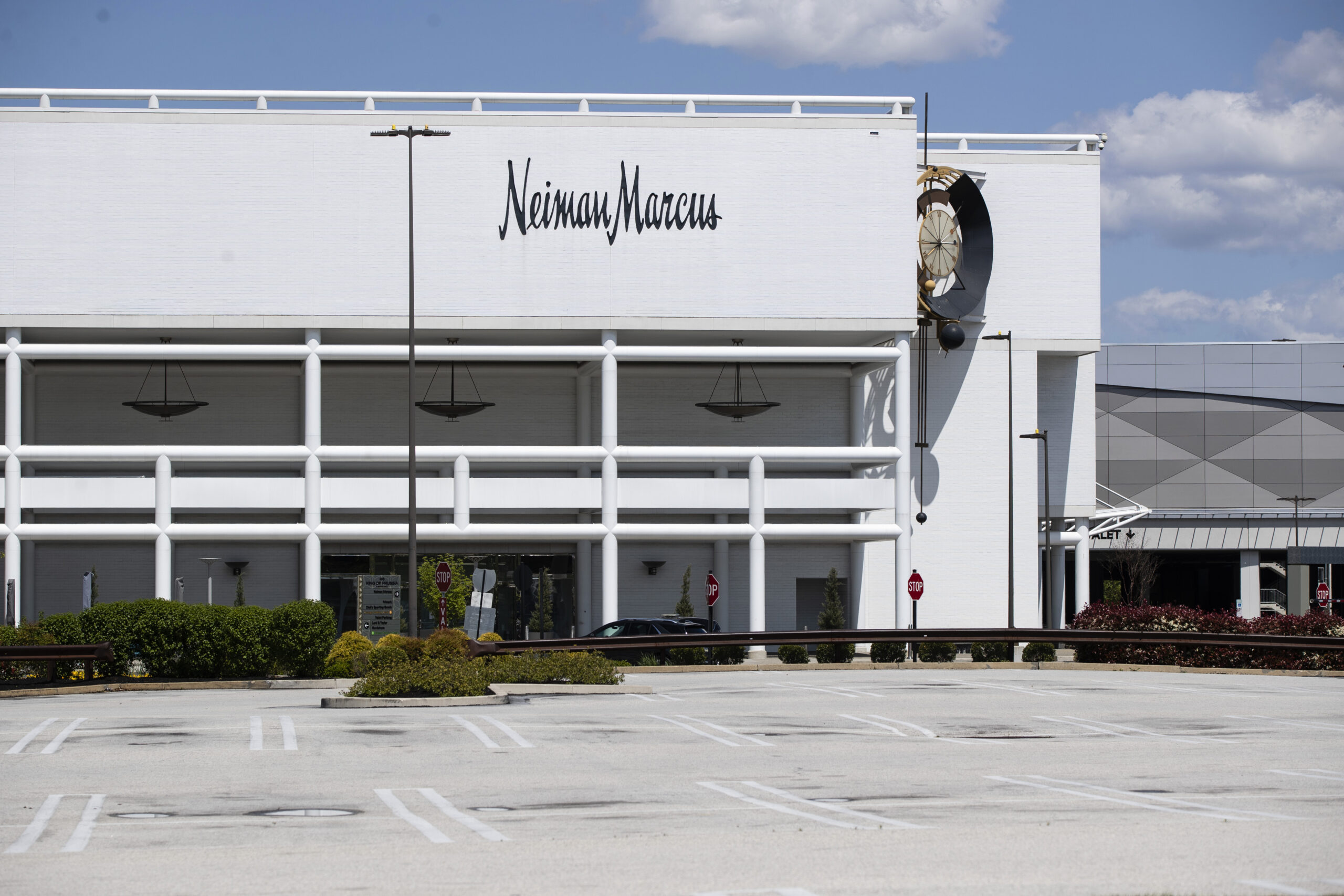
    The Neiman Marcus store in King of Prussia, as shown in May 2020.

    Also not in the immediate future.

    King of Prussia Mall has long been a go-to spot for retailers. Even after the challenges of the pandemic, and amid competition from online retailers, the center remains among the region’s thriving shopping destinations.

    In 2024, Saks Global bought Neiman Marcus in a $2.65 billion deal after Neiman Marcus filed for Chapter 11 bankruptcy during the pandemic.

    Are Saks credit cards or gift cards impacted by the bankruptcy?

    No, the company says.

    “There are no changes to our credit card programs and rewards, with customers continuing to shop, earn and redeem benefits as usual,“ the company wrote in the FAQ. ”We continue to accept payments as usual, including credit cards and gift cards, with no changes to how customers transact with us.”

    Are Saks’ return policies impacted by the bankruptcy?

    No, according to the company.

    “Our refund and exchange policy is expected to remain unchanged, with refunds and exchanges being accepted and issued as usual,” the company wrote.

    I am waiting on a package from Saks. Will my order still arrive?

    Yes, all current and future orders will be delivered as usual, the company said.

    What’s next for Saks?

    In New York, Saks Fifth Avenue’s holiday light show and window was revealed in November.

    The company says it is not going anywhere.

    “Saks Global is firmly focused on the future, and we look forward to continuing to serve customers and deliver for our stakeholders,” the company wrote in the FAQ.

    As of Wednesday, Saks was waiting for court approval of a $1.75 billion financing deal that would come with an immediate $1 billion debtor-in-possession loan from an investor group.

    If approved, the deal “will provide ample liquidity to fund Saks Global’s operations and turnaround initiatives,” the company said in a statement.

    Saks estimates its assets and liabilities at between $1 billion and $10 billion, according to court documents filed in U.S. Bankruptcy Court in Houston. Saks has between 10,001 and 25,000 creditors, including luxury brands like Chanel, to which Saks owes $136 million, according to the documents.

    To lead the company during this transition, Saks also announced a new chief executive, with former Neiman Marcus CEO Geoffroy van Raemdonck replacing Richard Baker.

    Saks said it hopes to emerge from bankruptcy later this year.

    The company said in its FAQ: “With new capital and a stronger financial foundation on the other side of this process, we are confident that we can play a central role in shaping the future of the luxury retail industry while delivering the elevated shopping experience our customers expect from our dedicated team.”

  • She made a Facebook comment about her mayor. Then the police arrived.

    She made a Facebook comment about her mayor. Then the police arrived.

    Raquel Pacheco began recording on her phone Monday as she opened her front door to the pair of police officers standing outside.

    They told her they had questions about a Facebook comment she had written.

    “Is that your account?” one officer asked. The other held out his phone, showing a message Pacheco had written days earlier about the mayor of Miami Beach, where she lives.

    Pacheco had left the comment about a post from Mayor Steven Meiner, calling his city a “safe haven for everyone.” Meiner, who is Jewish, contrasted Miami Beach with “places like New York City,” where he accused officials of discriminating against Jews and “promoting boycotts” of Jewish and Israeli-owned businesses.

    In a series of replies, Pacheco called him racist and criticized his actions toward a number of communities, including Palestinians and LGBTQ people. She said she felt his words of welcome were superficial.

    At her door, the officers told Pacheco they were looking for the commenter because that person’s words could “probably incite somebody to do something bad,” her video shows. Pacheco refused to answer their questions without an attorney present, and the officers left within minutes.

    Heart racing, Pacheco shut her door and texted her recording of the exchange to three friends who practice law. She struggled to comprehend why the officers were sent to question her – a private citizen who once ran for elected office, knew the mayor and other local officials, and had deep faith in American values. Where the officers saw a comment that could incite violence, Pacheco saw an expression of her right to free speech, she said.

    “If we can’t hold this line, we are screwed,” Pacheco, 51, told The Washington Post.

    The Miami Beach Police Department on Tuesday evening told The Post that detectives had “conducted a brief, consensual encounter” to make sure there was no safety threat to the mayor or the community. They assessed the social media posting, the department said, to be cautious, citing “recent national concerns regarding antisemitism.”

    Meiner said in a statement Tuesday evening that the situation was “a police matter,” adding that he was “a strong supporter of the State of Israel” and its “right to defend its citizens.”

    “Others might have a different view and that is their right,” Meiner wrote. “In this situation, our police department believed that inflammatory language that is false and without any factual basis was justification for follow-up to assess the level of threat and to protect the safety of all involved.”

    The now-public tussle over Pacheco’s Facebook comment, which was first reported by the Miami Herald, is another salvo in a battle between activists across the country and authorities whom they accuse of stifling speech about divisive political topics, all against the backdrop of political violence that has rocked the country. In recent years, people have faced suspensions, firings and other punishments for social media posts about the Israel-Gaza war, the assassination attempts against President Donald Trump and the killing of Charlie Kirk.

    Pacheco, who has lived in Miami Beach since 2004 and has run for local elected office three times as a Democrat, said she voted for Meiner in 2023. But she started speaking out against the mayor when he began addressing issues such as crime and homelessness by taking a page from “the Trump playbook,” using measures that she saw as laden with cruelty, Pacheco said. Her criticism often took the form of Facebook posts and comments, alongside advocacy work in the community.

    Miami Beach voters elected Meiner to his office, which is nonpartisan, a month after the Oct. 7, 2023, Hamas-led attack on Israel in which about 1,200 people were killed. Since then, the city has experienced a deepening rift among residents, including between Meiner and his constituents.

    In March, the mayor tried to end the lease of a local cinema after it screened “No Other Land,” a movie made by Palestinian and Israeli filmmakers that shows Israelis bulldozing a town in the West Bank. Meiner described the documentary at the time as a “false one-sided propaganda attack on the Jewish people.” He backpedaled his efforts against the theater after a fraught, nine-hour city commission meeting.

    Pacheco referenced the incident in the comment that led police to her doorstep.

    On Jan. 6, Meiner’s official Facebook account published the post about Miami Beach being a welcoming place. It featured a photo of the mayor with the following text: “Miami Beach is a safe haven for everyone. We will always stand firm against any discrimination.”

    Pacheco replied: “‘We will stand firm against any discrimination’ – unless you’re Palestinian, or Muslim or you think those people have a right to live.” She added: “Careful your racism is showing.”

    The next day, the mayor’s post was shared on a community Facebook page, where Pacheco again responded.

    “The guy who consistently calls for the death of all Palestinians, tried to shut down a theater for showing a movie that hurt his feelings, and REFUSES to stand up for the LGBTQ community in any way (even leaves the room when they vote on related matters) wants you to know that you’re all welcome here,” she wrote, alongside three clown emojis.

    It was this comment that police showed her when she opened her door Monday, Pacheco said.

    “This is freedom of speech, this is America, right? I’m a veteran,” she told the officers, according to her recording of the two-minute conversation.

    “And I agree with you 100 percent,” one officer responded. “We’re just trying to see if it’s you, because if we’re not talking to the right person, we want to go see who the right person is.”

    Pacheco, who said she served in Connecticut’s Army National Guard from 1993 to 1999, said the officers told her she was not going to jail and that they were “just here to have a conversation.” Later in the video, an officer tells Pacheco: “I would think to refrain from posting things like that, because that can get something incited.”

    After the brief exchange, Pacheco sat in disbelief.

    “There were cops at my door because of something I said,” Pacheco told The Post on Tuesday. “It felt like such a foreign, alien feeling.”

    In the day since the officers’ visit, she has retained an attorney and made public records requests about the situation. Should it escalate, she said she was “prepared to sue.” While she described herself as progressive, she said she is “conservative when it comes to the Constitution,” a document she had come to revere since moving to the United States from Portugal in the 1980s. She said she strongly sees Monday’s interaction at her home as a violation of the rights guaranteed by it.

    “I’m not one to stand down,” Pacheco said. “I don’t do well with bullies.”

    And the next time she sees a social media post from her mayor, or other elected officials for that matter, Pacheco said she knows what she will do: open the comment section, type her thoughts and hit send.

  • St. Christopher’s Hospital for Children announced its third leadership change in less than two years

    St. Christopher’s Hospital for Children announced its third leadership change in less than two years

    St. Christopher’s Hospital for Children, a key safety-net provider in North Philadelphia, on Wednesday announced its third leadership change in less than two years.

    Claire Alminde, the hospital’s chief nursing officer and a 37-year veteran of the institution, is St. Chris’ new acting president.

    She is the third interim or acting executive appointed to the top management position at the nonprofit hospital since February 2024 and its fourth leader since 2020. Drexel University and Tower Health have owned St. Chris in a 50-50 joint venture since 2019.

    “Claire is firmly committed to St. Christopher’s mission and exemplifies the compassion, expertise and steadfast commitment that define this hospital and the care we provide to children and families across our region,” St. Chris said in an e-mailed statement.

    St. Chris’ chief nursing officer Claire Alminde has been named acting president of the North Philadelphia safety-net provider.

    There are no immediate plans for a national CEO search. “Right now, Tower’s focus is on helping Claire onboard successfully and lead the organization forward. We are grateful that Claire has committed to serving in this position as long as necessary,” Tower said.

    Alminde is replacing Jodi Coombs, who was appointed interim president and CEO last April. Coombs’ previous position was executive vice president at Children’s Mercy Kansas City, in Missouri. Before that, she worked in Massachusetts.

    Coombs replaced Robert Brooks, who was named president and interim CEO in February 2024 following the announcement that the institution’s last permanent CEO, Don Mueller, was departing for a job in Chattanooga, Tenn., closer to his family.

    Mueller took the job at St. Christopher’s in the summer of 2020, about seven months after Tower and Drexel University bought the facility, but did not permanently move to Philadelphia.

    State health officials in 2023 blamed safety lapses at the hospital on Mueller’s absence and ordered him to be in Philadelphia five days a week.

    Tower oversees day-to-day management of the facility, where about 85% of patients have Medicaid insurance for low-income people. That’s an extremely high rate.

    St. Chris, which has received significant financial support from other local healthcare institutions in recent years, has not published its financial results for the year that ended June 30, 2025. In fiscal 2024, St. Chris had a $31.6 million operating loss.