The U.S. is turning 250 next year, and among its birthday gifts will be newly designed quarters, dimes, and half-dollar coins.
On Wednesday evening, the U.S. Mint unveiled the new coins at the National Constitution Center in Philadelphia, to commemorate the 250th anniversary of the Declaration of Independence.
“The designs on these historic coins depict the story of America’s journey toward a ‘more perfect union,’ and celebrate America’s defining ideals of liberty,” said Kristie McNally, the Mint’s acting director. “We hope to offer each American the opportunity to hold our nation’s storied 250 years of history in the palms of their hands as we connect America through coins.”
Several coins feature Philadelphia-area landmarks.
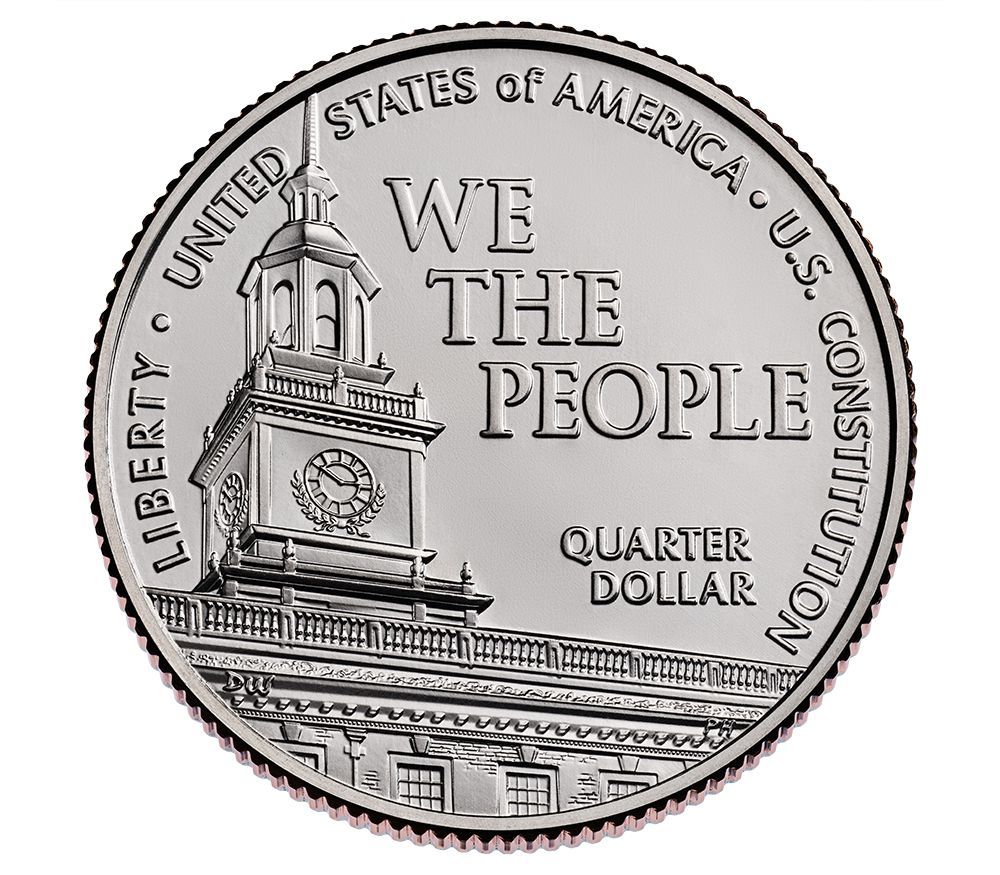
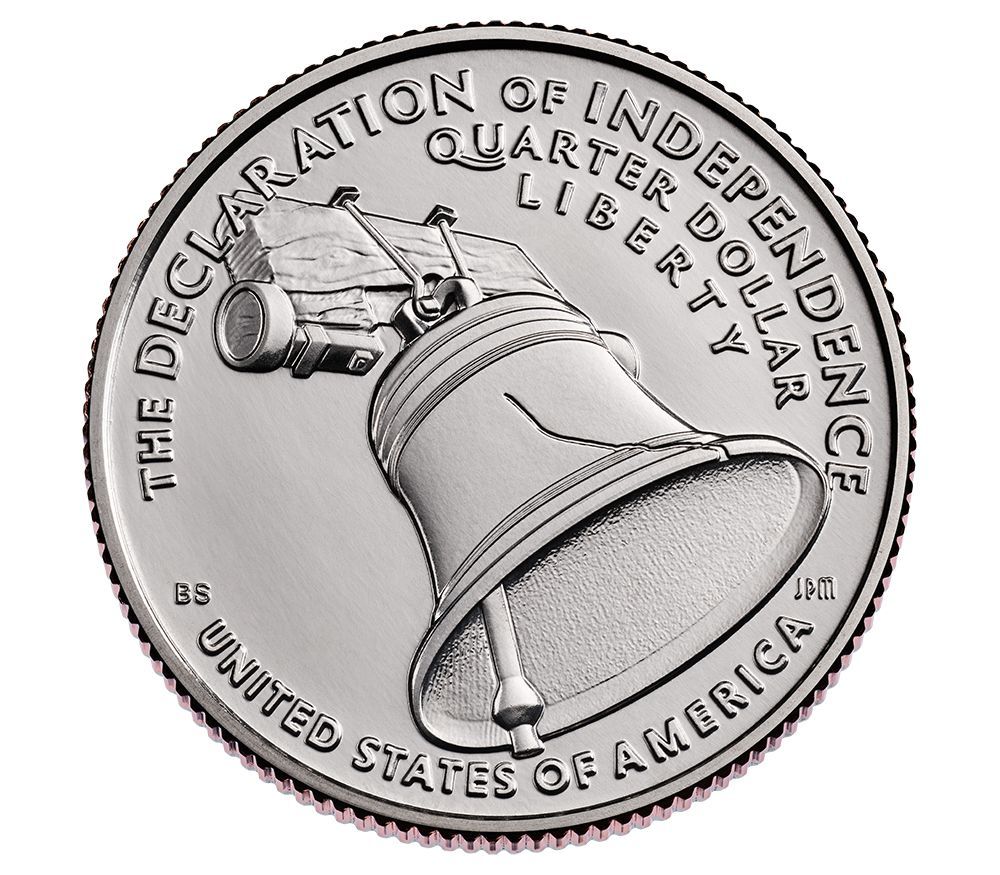
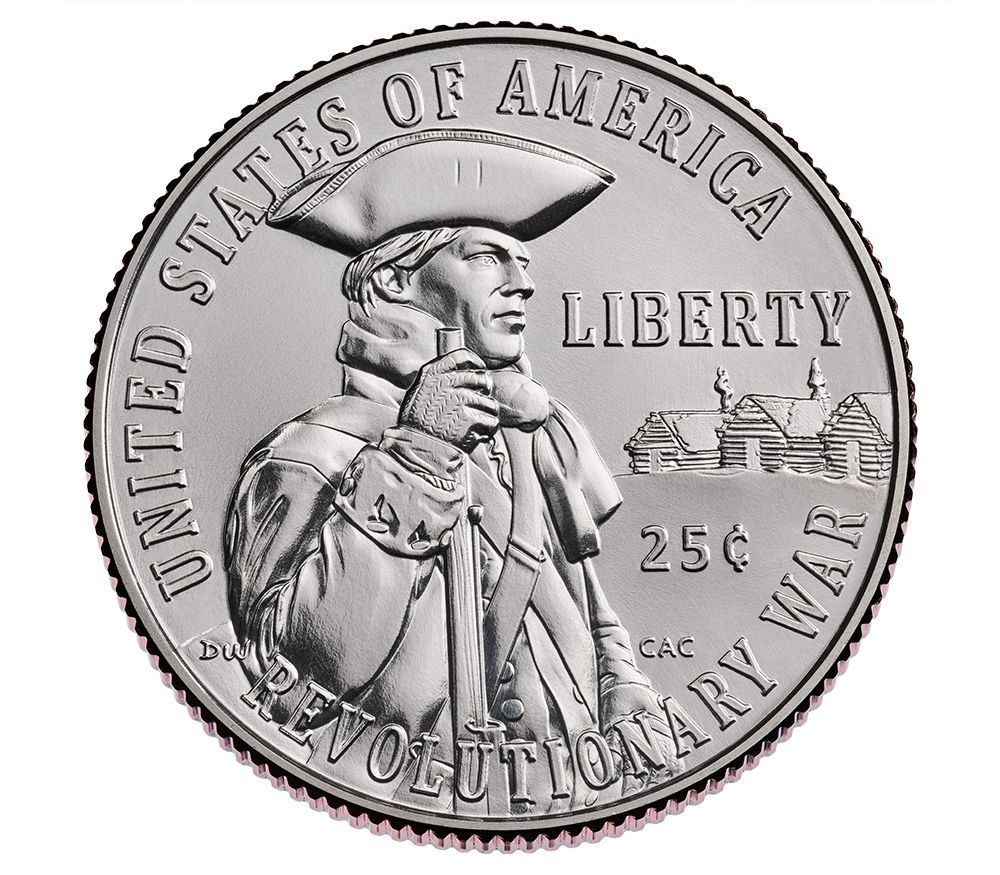
Three separate quarter designs include images of Independence Hall, where the Declaration of Independence was signed; the Liberty Bell, housed and managed by the National Park Service in Philadelphia; and a Continental Army soldier at Valley Forge commemorating the Revolutionary War.
This new design for the quarter commemorates the U.S. Constitution and depicts Independence Hall in Philadelphia, where the Declaration of Independence and U.S. Constitution where signed. The other side of this quarter has a depiction of President James Madison.
The new dime represents the founding era of the country. Its design includes Liberty depicted as a woman wearing a cap patterned with stars and stripes. The other side of the dime will feature an American eagle, which was on early dimes that circulated in 1796, and it hasn’t appeared on the coin since 1837, according to the U.S Mint.
In addition to the Philadelphia-area landmarks, the quarters also don images of pilgrims and the Mayflower. The five new quarters reference the Mayflower Compact, the Revolutionary War, The Declaration of Independence, the U.S. Constitution, and the Gettysburg address, and also feature images of Presidents James Madison, Thomas Jefferson, George Washington, and Abraham Lincoln.
This new design for the quarter commemorates the Declaration of Independence, and depicts the Liberty Bell, housed in Philadelphia. The other side of this quarter features President Thomas Jefferson.
The half-dollar coin is intended to look to the future of the country with an image of the Statue of Liberty on one side, and on the other, a torch being passed from her hand to another hand.
The coins will be produced at the U.S. Mint facilities in Philadelphia and Denver and begin circulating in 2026. The new designs are authorized under legislation signed by President Donald Trump just before he left office in 2021. It noted that these coins can be issued for a one-year period starting in January 2026.
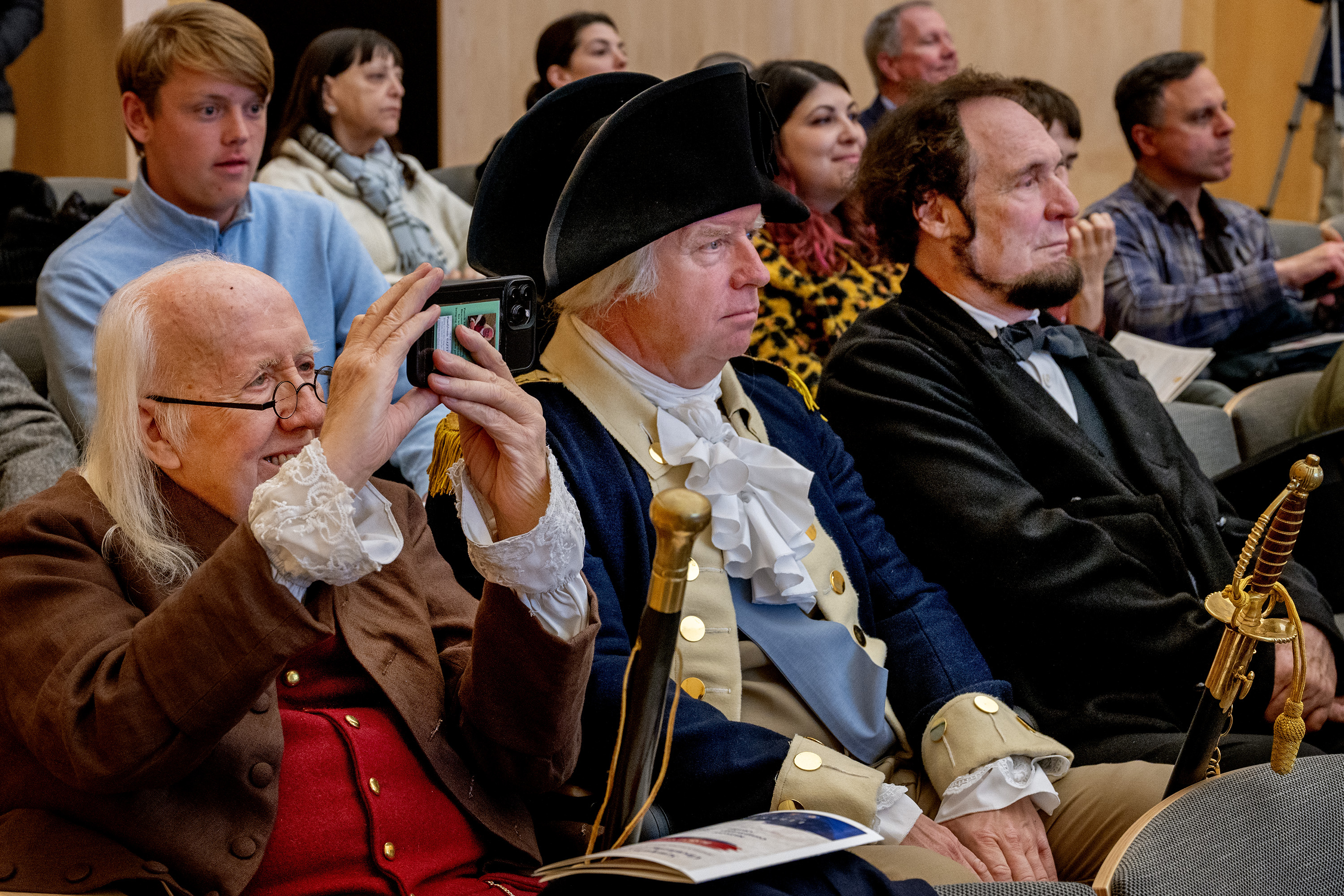
Historical interpreters Benjamin Franklin (from left) Gen. George Washington, and President Abraham Lincoln are in the audience as the U.S. Mint unveils new coins for the Semiquincentennial at the National Constitution Center in Philadelphia Wednesday.
Philadelphia is expected to see an influx of visitors in 2026 for the Semiquincentennial.
This year, the U.S. Mint, which had 389 employees in Pennsylvania in 2024 according to federal database FedScope, stopped producing pennies in Philadelphia. The one-cent coins are more expensive to make than they are worth due to inflation and the high cost of metals.
A newly designed quarter for the 250th anniversary of the country commemorates the time of the Revolutionary War. It depicts a Continental Army soldier at Valley Forge, Pa. The other side of this quarter features President George Washington.
Airbnb expects to host 17,000 guests at its short-term rentals across the Philadelphia region when the FIFA World Cup comes to town next summer.
That’s according to a new report done by Deloitte at Airbnb’s behest and released last week. Airbnb guests are expected to spend about $52 million on average during their stays in the Philly region, and about $14 million of that total will be spent on the rentals.
Over the course of the six matches in June and July, Airbnb hosts are expected to rake in about $1,900 on average, totaling about $8 million in earnings for all area hosts, according to the report.
Officials from Philadelphia Soccer 2026 have estimated that the World Cup will bring 500,000 visitors to the region. Airbnb’s report estimates that 149,000 of them will require overnight accommodations.
Each Airbnb guest is expected to spend about $109 a night on average on the rentals, as well as another $301 a night on food, entertainment, and other expenses, according to the company’s report.
Airbnb guests will have a total impact of about $167 million, including direct and indirect spending, the report projected, and that activity is expected to spur additional spending in the city over the following five years.
After the games were announced, some people went online to secure their short-term rentals. All host cities saw a 33% spike in new bookings last weekend, according to AirDNA, a site that analyzes data on short-term rentals. In Philadelphia, occupancy across all game days has reached 20%, a year and a half ahead of the event.
It’s December, by far the coldest week of the season to date and due to get colder, but to Jeff Hulbert, the Brandywine Valley these days evoke July — July at the Jersey Shore, that is.
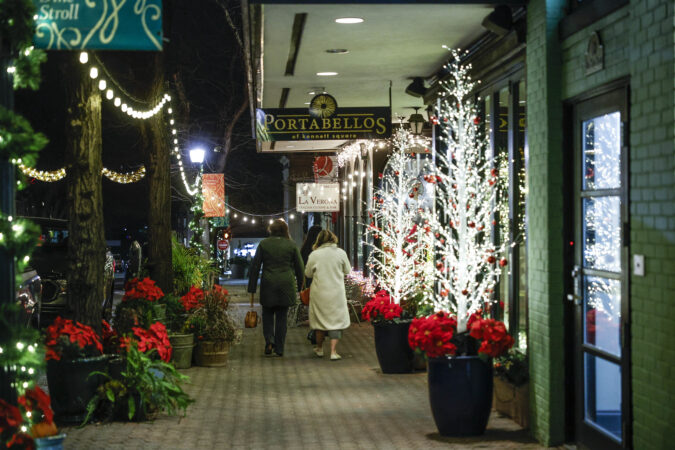
Business has been brisk, and the human traffic thick along State Street, where he and partner Sandra Morris own and operate the popular Portabello’s of Kennett Square restaurant.
Like the peak summer weeks at the Shore, where Hulbert used to work in Atlantic City, this time of year, the Kennett Square area “is twice as busy.” The reason, in a word, is “Longwood.”
Specifically, the annual “Longwood Christmas” festival, an “economic engine” not only for Kennett but for other towns in the region, said Cheryl B. Kuhn, CEO of the Southern Chester County Chamber of Commerce.
Longwood has played a “significant role in the area’s growth,” said Nancy Toltain, director of hotel operations at the Hilton Garden Inn in Kennett. Some guests book their reservations a year in advance, she said.
This year, the merchants on Kennett Street got a jump on the season by turning on the holiday lights and staging the July Fourth-style parade — complete with Mummers and a marching band — on Nov. 22, a week earlier than usual.
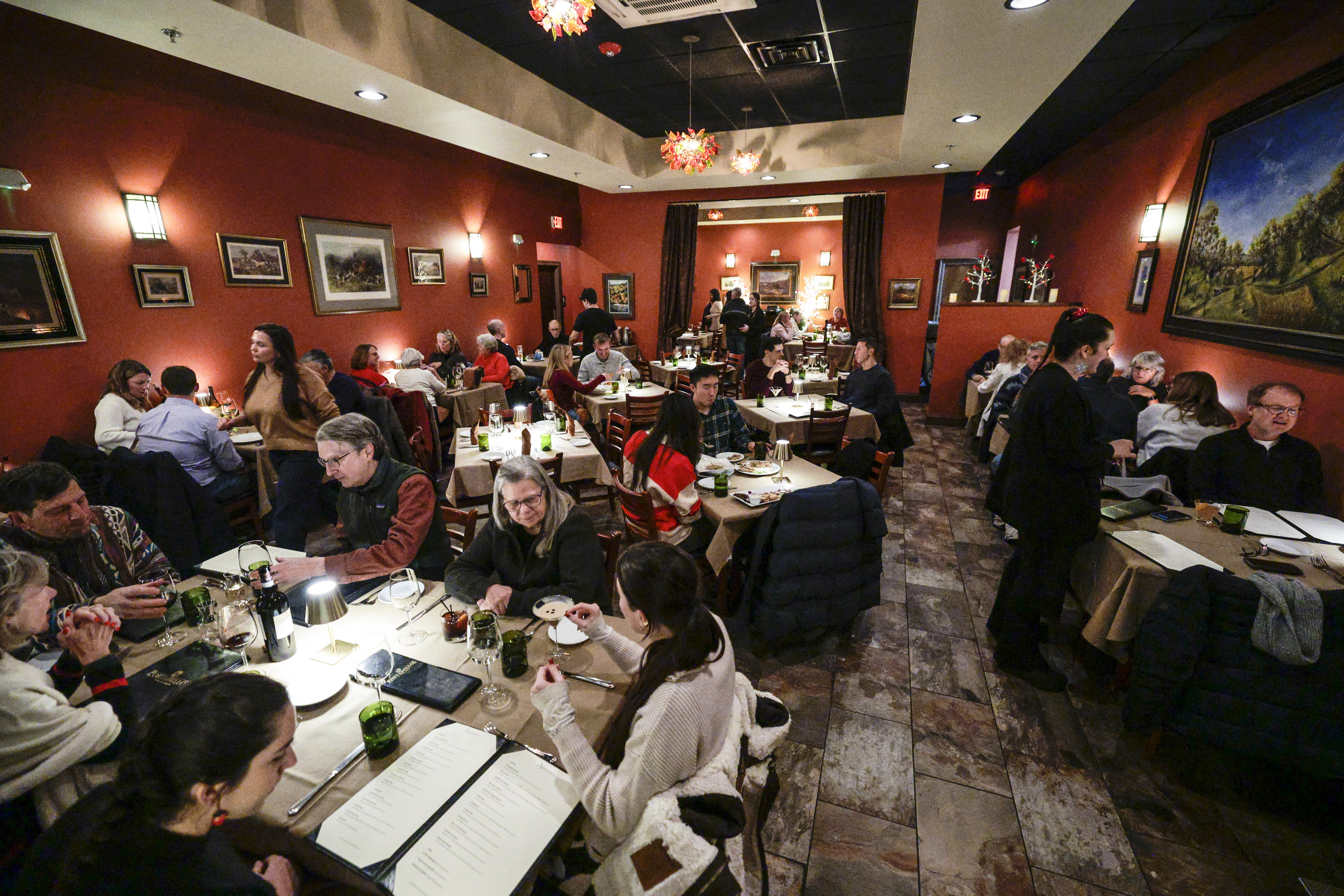
Diners at Portabello’s on Friday evening.
It was no coincidence that the event coincided with the first weekend that Longwood, four miles to the northeast and about twice the size of the borough, was throwing the switch to illuminate about 500,000 lights for its annual “Longwood Christmas” festival.
The exuberance is understandable. The Longwood light show is a cause for celebration among the merchants in downtown Kennett Square, a time when business, shall we say, mushrooms in the so-called Mushroom Capital of the World.
Longwood Christmas is a huge draw — 650,000 people visited last season, which ran from Nov. 22, 2024, to Jan. 11, 2025 — one-third of the annual total. And a whole lot of those who bonded with the plants and the lights ended up in downtown Kennett eating or shopping.
Moving up the Kennett fest paid immediate dividends, said Daniel Embree, executive director of the Kennett Collaborative, a nonprofit development group that works with Kennett businesses.
Downtown merchants reported “record-breaking” sales Thanksgiving week, he said, and it gave them five pre-Christmas weekends to make hay, rather than four. They’re planning an encore early start next year.
Sandra Morris said she and Hulbert will be ready, that in the run-up to the Longwood Christmas, “We know that we need to be staffed up and ready.”
Local business people and tourism officials say the region’s diverse population and attractions, in addition to Longwood, are tourist draws.
The Brandywine Museum in Chadds Ford, famous for its Wyeth family paintings, not to mention its elaborate toy train set, and northern Delaware’s Winterthur, with a museum renowned for its Americana collection and its walking paths winding through 1,000 pastoral acres, have long lured holiday crowds.
But if the area could be likened to a decorated room, Longwood would be the lighted tree with the star on top.
“If there were no Longwood Gardens, there would be no Portabello’s,” said Hulbert.
About the Gardens and the Longwood effect
The theme for Longwood Christmas in 2021 was Fire and Ice, a study in contrasts.
Longwood Gardens, located on land that Pierre DuPont opened to the public in 1921, is one of the nation’s preeminent horticultural attractions.
It covers about 1,100 acres, the majority of which is in East Marlborough Township, with the rest in Kennett and Pennsbury Townships. (It has a Kennett Square postal address, but none of it is in the borough, popular perception notwithstanding.)
About 1.78 million people visited in the fiscal year that ended Sept. 30, said spokesperson Patricia Evans, more than double the total of 15 years ago. According to its tax filing for the previous fiscal year, it generated about $35 million in admission and restaurant revenue.
Longwood’s $250 million investment in new buildings and landscaping, part of the “Longwood Reimagined” project, was completed just before last season’s Longwood Christmas, and that likely contributed to a 7% increase in the holiday traffic, compared with last season, Evans said.
All the land and its building are worth about $160 million, according to Chester County tax records.
Close to 90% of that is tax exempt, Longwood having won a landmark case in the late 1990s, but local officials and business people say the region has reaped significant economic benefits from the gardens.
“Longwood is an excellent regional partner,” said Chester County Tourism’s Nina Kelly.
While the biggest impacts have been on local tourism and hotels, the presence of Longwood probably has given a boost to property values in the area, at least indirectly, said Geoffrey Bosley owner of the local real estate concern LGB Properties & The Market at Liberty Place, a food court and event space on State Street.
In Kennett Square, aggregate commercial property values have increased nearly 30% in the last 20 years, adjusting for inflation,state tax records show.
Longwood and Kennett Square
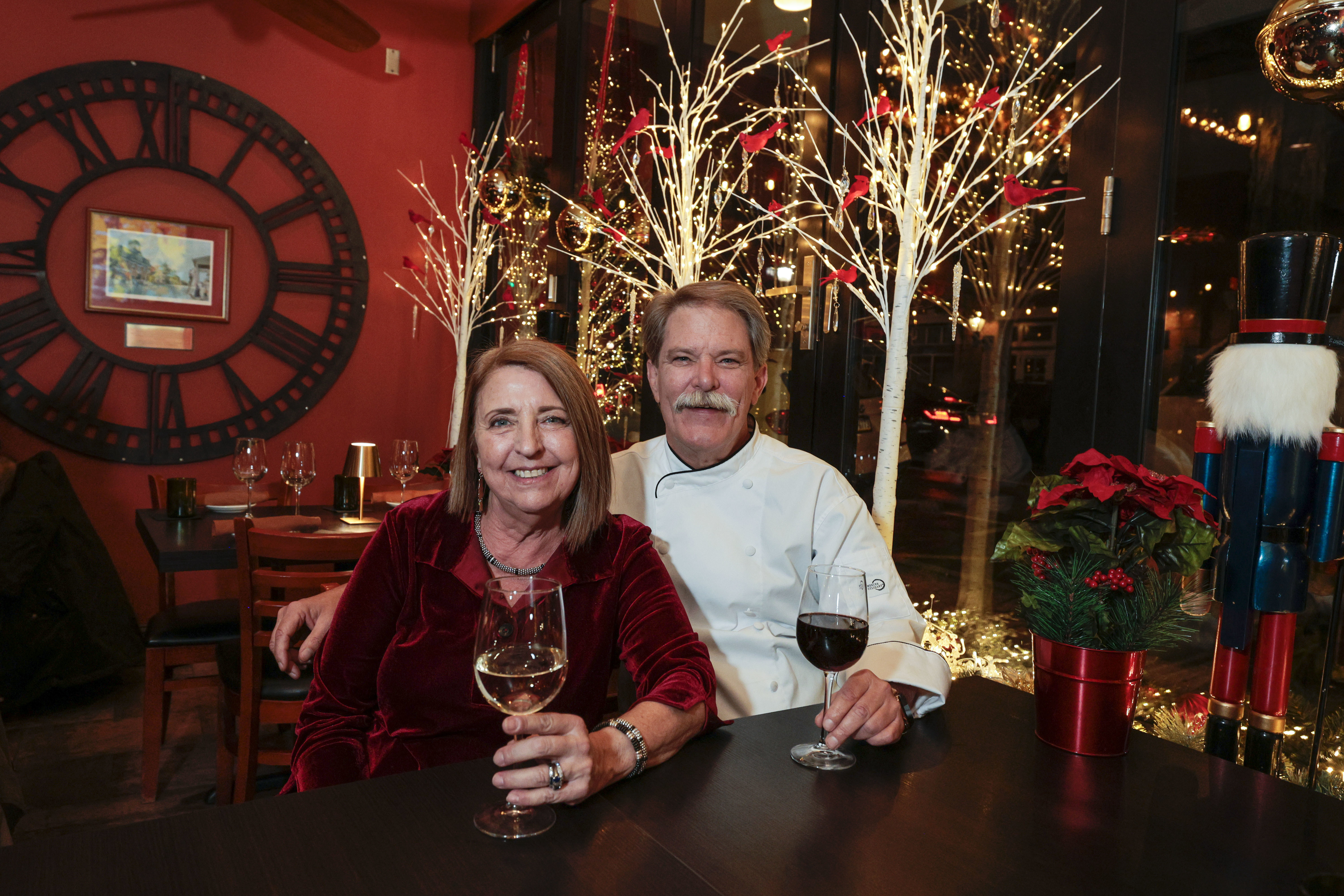
Portabello’s Restaurant with the owners, Sandra Morris and Brett Hulbert.
Kennett Square, literally a square mile, is home to many of those who work in the local mushroom industry. Latino residents constitute about half the borough’s population.
Its median household income, about $75,000, according to Census figures, is among the lowest in Chester County and about half that of some of its wealthier neighboring towns.
Tourism, particularly Longwood-related, has been a huge boon to the businesses by any measure.
While the town has just under 6,000 residents, it has a total restaurant seating capacity of 2,000, said Hulbert.
In all, the downtown has about 150 businesses, said Embree. Part of the allure is Kennett Square’s quaintness and unaffected small-town atmosphere, but Longwood is a huge factor. “That’s why they want to be here,” he said.
Said Hulbert, “When Longwood Gardens is slow, we are slow. When they are busy, we are busy.”
While moving up the Kennett Square’s holiday parade gave sales a healthy boost, “I don’t want to overstate the significance of the date,” Embree said.
Longwood has supported the Kennett Collaborative financially and in other ways, said Embree. The illuminated decorative bunting on State Street was donated by Longwood, a highlight in the conservatory during the 2023 display.
Said Geoffrey Bosley, “I don’t think you would have as robust a town if we didn’t have a Longwood that would drive so much traffic, especially during the holiday season.”
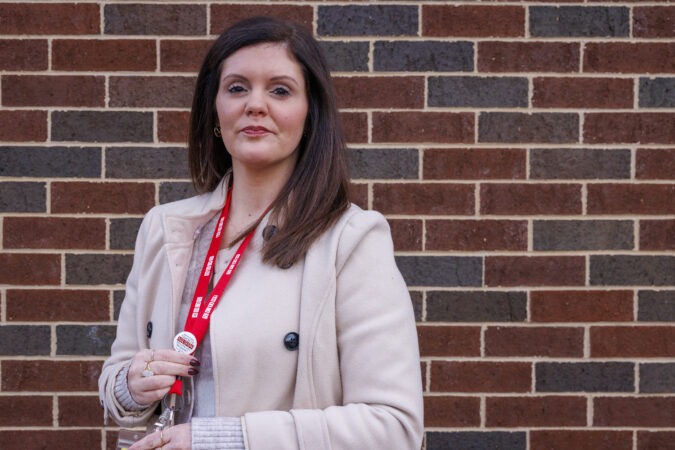
Mental health professionals at Rogers Behavioral Health in West Philadelphia have formed a union, citing increased workloads and business changes that diminished patient care.
The nonprofit mental healthcare provider last year transitioned from individual patient sessions to a group care model, said Tiffany Murphy, a licensed professional counselor and therapist at the facility. Some workers there were also moved from salaried to hourly positions then forced to reduce hours, their union has said.
Some patients and workers have left amid the changes, says Murphy, estimating that 22 of her colleagues have quit in the past year.
“A lot of us sort of put our jobs on the line by [unionizing], because we believe in the organization, but more so, we believe in our patients. We wanted to provide the best patient care that we possibly could for them,” said Murphy.
The 19 West Philadelphia Rogers employees, including therapists and behavioral specialists, filed their petition last month to unionize with the National Union of Healthcare Workers. Rogers voluntarily recognized the union, according to NUHW, marking the union’s first unit in Pennsylvania.
NUHW represents some 19,000 healthcare workers, primarily in California.
Sal Rosselli, NUHW president emeritus, said the union is pleased that Rogers accepted the petition. “All too often, employers do the opposite and put together very anti-union campaigns, spending all kinds of patient care dollars to prevent their workers from organizing,” he said.
A spokesperson for Rogers declined to comment on employees’ organizing efforts and remarks on workplace changes.
Rogers provides addiction treatment and mental healthcare with facilities in 10 states. In Philadelphia, the nonprofit offers outpatient treatment and partial hospitalization, treating patients with depression, anxiety, and obsessive-compulsive disorder.
In recent years, Rogers workers in California also unionized with NUHW. Their recently forged union contract includes caseload limits and a cap on how many newly admitted patients can be assigned to each therapist or nurse.
Thousands of healthcare workers in the Philadelphia area have moved to unionize in recent years.
The organizing push means that about 81% of the city’s resident physicians are unionized.
What do workers want?
When Murphy first started working at the Rogers facility in Philadelphia 4½ years ago, she said there was “a really good work-life balance.”
At the time, clinicians had four patients per day, provided individualized care, and led group sessions. As the organization moved toward group counseling, she said, caseloads have grown, with up to 12 patients in each group.
The organization hired behavioral specialists to support therapists, said Murphy, but “it was difficult to provide the patients with the care that they really needed and deserved with the new structure.”
Some patients and staff left because of the new model, said Murphy.
This year, some salaried workers were switched to hourly, and Rogers started sending workers home due to low patient demand, leaving the rest with larger workloads, according to the union. That meant some used paid time off to avoid going without pay, said Murphy.
When Philadelphia Rogers employees heard their colleagues in California were unionizing, “That became a bit enticing to us,” said Murphy, noting the workplace had become challenging and sometimes “unbearable.”
Now, she says, the union members want more manageable caseloads — or pay increases to account for the larger caseloads — and a return to the old pay model for those who were switched to hourly work.
“We are unionizing to have a voice at work that will allow us to promote a healthier work-life balance as well as high-quality sustainable patient care,” therapist Sara Deichman said in a union news release.
“The industry is forcing fewer providers to care for more and more patients because the focus is on the bottom line,” said Rosselli.
Staffing concerns plague the healthcare industry generally, said Rebecca Givan, an associate professor at Rutgers University’s School of Management and Labor Relations.
“If the facility wants to hold down costs, it tries to keep staffing levels as low as possible,” said Givan. “In the case of mental health providers, it can be about shortening appointment times or increasing caseloads so that each provider has a very large number of cases or clients.”
She says there’s not “a huge amount of union representation” in stand-alone behavioral health facilities, but some public hospitals are unionized.
Private practice mental health workers can’t unionize because they’re self employed, Givan noted, but “one could argue that they might benefit from collectively negotiating, for example, with the insurance companies that determine their reimbursement rates.”
NUHW is leading efforts to organize independent providers. The goal, Rosselli says, is to “establish an employer for them so that they can have leverage against insurance companies to increase pay and increase access to patient care issues.”
The union has already done this in the home care industry in California, Rosselli noted.
Staff reporter Aubrey Whelan contributed to this article.
One man, buried under $20,000 in online gambling debt, became homeless. A woman lost $13,000 and missed her last five mortgage payments. A mother gambled away her son’s college tuition, piling up over $100,000 in debt.
Such dire stories — shared with gambling helplines in Pennsylvania and New Jersey in recent years — are on the rise. And for the growing number of people, the problem isn’t the casino, but the apps on their phones that let them gamble anywhere, 24-7.
“My family is hosting fundraisers for my son who had a stroke, and here I am, gambling on my phone,” one caller said. “What’s wrong with me?”
The Philadelphia media market — which encompasses the city, Southeastern Pennsylvania, and central and southern New Jersey — has become an epicenter of online gambling in the United States. In 2024, internet gaming and sports wagering revenues alone topped $6 billion in Pennsylvania and New Jersey, up from about $3.6 billion in 2021.
In the same period, the number of calls and texts to 1-800-GAMBLER rose in both Pennsylvania and New Jersey, two of only six states in the U.S. where both sports betting and online casino games are legal. But calls about online gambling problems rose significantly more — 180% in Pennsylvania and 160% in New Jersey in that period. In 2019, only about one in 10 Pennsylvania callers said online gambling was the main issue. By 2024, it was every other caller.
window.addEventListener(“message”,function(a){if(void 0!==a.data[“datawrapper-height”]){var e=document.querySelectorAll(“iframe”);for(var t in a.data[“datawrapper-height”])for(var r,i=0;r=e[i];i++)if(r.contentWindow===a.source){var d=a.data[“datawrapper-height”][t]+”px”;r.style.height=d}}});
The Inquirer analyzed anonymized helpline call logs, state revenue reports, and advertising data to shed light on how the Philadelphia-area market has become a hub for the online gambling industry. An increasing volume of gamblers face financial devastation as they struggle to get off the apps.
As of this fall, the Philadelphia media market outpaced New York City and Las Vegas as the No. 1 market for internet gambling advertisement, with companies spending more than $37 million on ads between January and September, according to data provided by Nielsen Ad Intel.
As many as 30% of Pennsylvania adults now gamble on online sports with some regularity, according to researchers at Pennsylvania State University who conduct an annual, state-funded survey of online gambling. And as many as 6% of Pennsylvanians, or 785,000 people, are estimated to be problem gamblers, according to the most recent survey, which is not yet published.
While problem gambling has a range of severity, the American Psychiatric Association recognizes it as a mental health condition. A gambling disorder is defined by a persistent pattern of problematic betting with an inability to limit or stop, leading to emotional, financial, and or relational distress.
For many, the losses are crushing. In New Jersey, helpline callers reported a combined $28 million in debt at least among people who disclosed this financial information, averaging about $34,000 for each of these callers. In Pennsylvania, 60% of those people willing to share said they owed money, though the state does not track totals.
Across both states, callers reported they had drained entire retirement accounts, lost homes to bank foreclosure, or blown through entire paychecks. One anonymous caller in New Jersey reported losing $400,000 in a single night — his life savings.
“We [also] have people who call us and say, ‘I think I’m doing this too much. I think I need a little bit of help,’” said Josh Ercole, executive director of the Council on Compulsive Gambling of Pennsylvania, the state-funded nonprofit that runs the hotline for the commonwealth’s residents.
Four calls made in New Jersey between 2023 and 2024 were about children under the age of 12 struggling with gambling problems, according to the state’s fiscal year report. Ten other calls were about children under the age of 18. In Pennsylvania, 10 calls involved children between the ages of 13 and 17.
Experts say the explosion of sports betting and casino apps has fueled what is increasingly seen as a public health crisis, as gambling profits and state tax revenues derived from them have soared since sports betting’s legalization in 2018. And Philadelphia is now viewed as something of a promised land for e-gambling boosters.
window.addEventListener(“message”,function(a){if(void 0!==a.data[“datawrapper-height”]){var e=document.querySelectorAll(“iframe”);for(var t in a.data[“datawrapper-height”])for(var r,i=0;r=e[i];i++)if(r.contentWindow===a.source){var d=a.data[“datawrapper-height”][t]+”px”;r.style.height=d}}});
Uttara Madurai Ananthakrishnan, an economics professor at the University of Washington who has studied the psychology of gambling, said lawmakers have struggled to keep pace with the industry’s meteoric growth.
“I don’t think people expected it to explode at this level,” said Madurai Ananthakrishnan, who previously worked in Pennsylvania. “All of this is going to slowly add up and cause a ton of issues downstream.”
Harrisburg also benefited handsomely from the high rollers, drawing $165 million last year in gambling taxes, up from $46 million five years prior. About $10 million was earmarked for gambling addiction helplines and treatment programs, which came directly from industry profits.
Online betting now accounts for nearly half of all gambling revenue in Pennsylvania, according to an Inquirer analysis of state reports. Pennsylvanians wagered a staggering $8.3 billion during the 2024-25 fiscal year in online sports betting alone, making it by far the most popular gambling method. Total revenue for sportsbook and iGaming sites rose past $2.9 billion last year.
window.addEventListener(“message”,function(a){if(void 0!==a.data[“datawrapper-height”]){var e=document.querySelectorAll(“iframe”);for(var t in a.data[“datawrapper-height”])for(var r,i=0;r=e[i];i++)if(r.contentWindow===a.source){var d=a.data[“datawrapper-height”][t]+”px”;r.style.height=d}}});
In New Jersey gaming revenue was nearly $6.3 billion in 2024 — $3.3 billion of which came from internet gaming and sports wagering, according to the state’s Casino Control Commission’s annual report.
Yet the amount spent online is almost certainly higher than what states can track — as is the number of people who have developed online problems.
Caron Treatment Center, a Pennsylvania-based substance use treatment facility, said 160 people in their inpatient treatment problem were struggling with gambling this year — a 162% increase from five years ago.
“I’ve been getting call after call about gambling,” said Eric Webber, a behavioral health specialist and gambling counselor at Caron. “It’s a national crisis that doesn’t have a national solution.”
Fewer than two dozen gambling sites are technically legal in Pennsylvania. But thanks to pervasive online advertising, many gamblers now use so-called offshore gambling sites that are not regulated by the state.
As of last year, more than 20% of online gamblers were using these illegal or unregulated sites, according to the 2024 Penn State report. Such sites often lack state-mandated guardrails like easily allowing users to set weekly betting limits or request a “self-exclusion” — avoluntary ban from licensed casinos, internet-based gambling, video gaming terminals, and fantasy sports wagering.
Self-exclusions in Pennsylvania are higher this year than last year — 8,315 people have already opted out compared with the 7,489 people who requested a ban through Dec. 31 of last year.
Major online sportsbooks say they are going above and beyond.
Beyond self-imposed spending limits, FanDuel, one of the largest sports betting advertisers in the Philadelphia market, introduced a dashboard to allow gamblers to track their spending habits. The company also began tracking betting patterns on its platform and alerting customers when they bet more than their normal wager.
“When users attempt to deposit significantly more than their predicted amount, we surface that information to them and prompt them to reduce their deposit or to set a go-forward deposit limit,” a FanDuel spokesperson said.
DraftKings, in a statement, said it works closely with a gambling company alliance to support responsible betting, “leveraging technology to help detect signs of potentially problematic behavior.”
Some lawmakers want to see more regulation.State Rep. Tarik Khan, a Democrat who represents parts of Montgomery County and Philadelphia, has called for hearings to examine best practices to rein in an industry that he said heavily targets youth.
“More and more people, especially young people, are getting addicted to it, and blowing large portions of their paychecks on feeding this addiction,” Khan said. “It’s already pervasive, and it’s going to get worse.”
‘I’ve gambled everything away on FanDuel’
In New Jersey, more than half of the callers to gambling hotlines who disclosed their age were under 35. In Pennsylvania, people under 35 accounted for 41% of callers.
“Things have shifted to a younger crowd,” said Ercole, of the Council on Compulsive Gambling of Pennsylvania. “Typically our highest call volume used to be in the 35 to 55 ranges.”
People from all professions are affected — nurses, construction workers, software engineers, chefs, attorneys, postal workers, microbiologists, and tattoo artists. Some are students, retirees, or unemployed.
Regardless of one’s income level, online gambling can put serious strain on personal and professional lives. Some people told of losing contact with their parents, getting divorced, or being cut off from friends.
Others lost jobs or had their homes and cars repossessed.
“I have nothing,” a 30-year-old caller told a New Jersey helpline operator in 2023. “I’ve gambled everything away on FanDuel.”
Most people are calling about their own gambling problems. But dozens of family members called to ask for help with their loved ones’ betting. In one case, a woman asked if she could use her father’s Social Security number to ban him from online betting apps.
Many gamblers do not call the hotlines or seek professional help until they face financial ruin or they are confronted by family members.
At the height of his problem, one man from New Jersey started gambling on Russian table tennis matches and Australian basketball games. His wife, who spoke to The Inquirer on condition of anonymity to discuss a sensitive family matter, said his compulsion had grown so severe that he needed a fix to hold him over between sports seasons.
“He was betting $1,000 on a sport he knows nothing about, played by people he’s never heard of before,” his wife said.
The husband kept his gambling hidden for her years, until she found his secret bank account — along with two dozen maxed-out credit cards and records of tribal loans he had taken out, one of them with a 300% interest rate. She also learned that, in 2021, he had quietly lost $70,000 while the newlyweds were on their honeymoon in France.
“It’s horrifying,” she said.
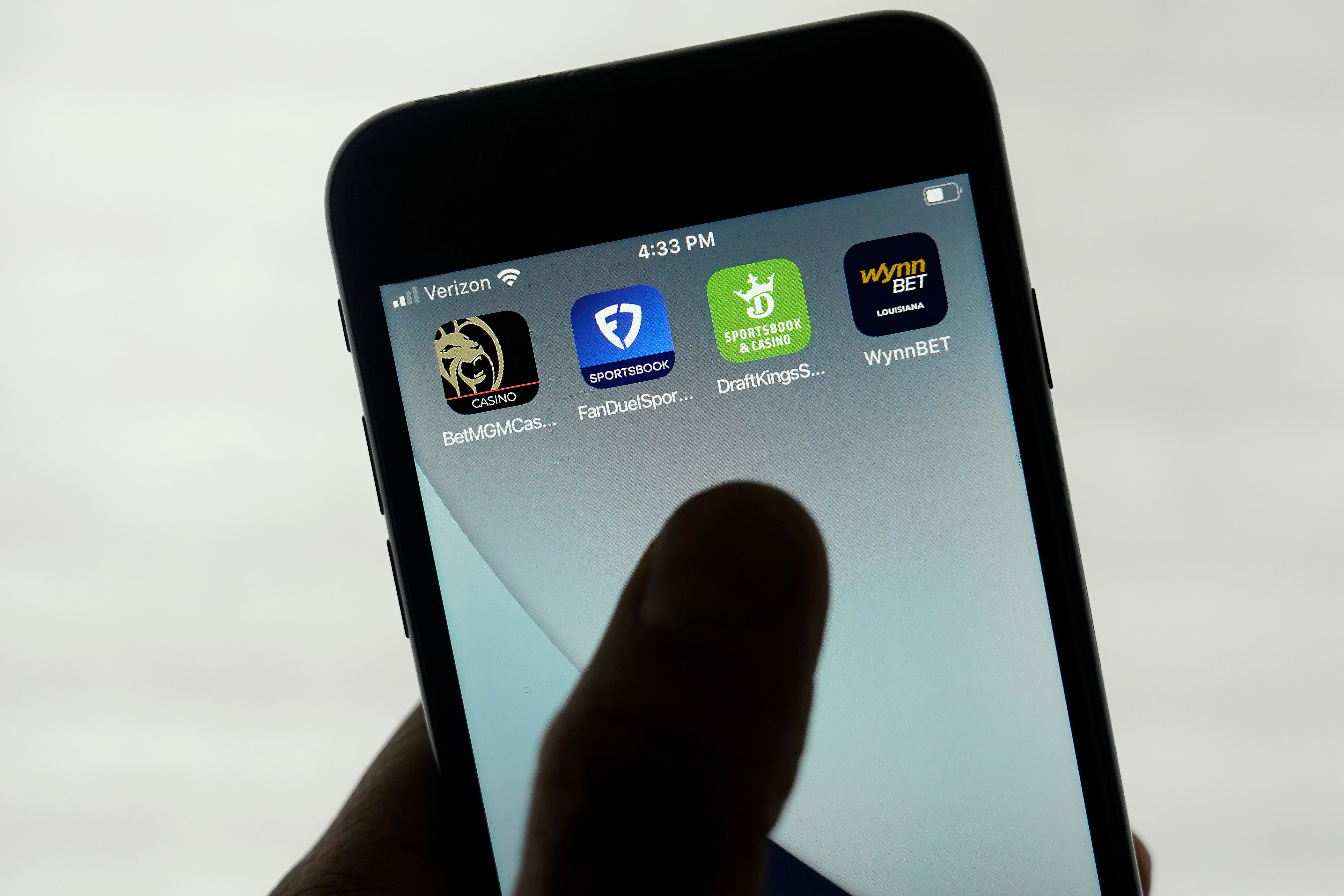
FanDuel, DraftKings and other online gambling apps are displayed on a phone. (AP Photo/Jeff Chiu, File)
The casino-to-app pipeline
Across Pennsylvania, as of 2024, people sought help for addiction to internet games more than any other type of gambling, especially in the suburbs.
In Montgomery County, the most common type of gambling problem cited was internet slots — with 47 calls. In Bucks, internet sports had the highest volume with 34 calls.
In Philadelphia, home to both Live! Casino and Rivers Casino, in-person games remain the largest reported problem for struggling gamblers, according to call center logs.
Some brick-and-mortar casinos, however, have seen business drop as bettors migrate to their phones. At Rivers Casino Philadelphia, sports-betting revenue fell from $29 million in fiscal 2019 — the first full year of legal wagering — to $11 million in 2024, according to state records.
But even in Philadelphia, a county with two casinos, the number of calls and texts for online gambling shot up in recent years. And experts say that people who gamble exclusively online show heightened risk.
“You can get cut off at the casino. You could walk away from the machine,” said Gillian Russell, an assistant Penn State professor who works on the annual online gambling survey. “Those things that maybe cause breaks, a lot of those things are removed.”
About 13% of people who gamble both online and in person were classified as problem or pathological gamblers, according to the 2024 Penn State survey. Online-only gamblers, though just 3% of the total gambling population, showed even greater risk: 37% fell into problem categories.
Prop bets, the practice of betting on various occurrences within a game rather than just the outcome, are a pointed concern. Such wagers have come under scrutiny as bet-fixing schemes ensnare athletes from the NBA, MLB, the NCAA, and even niche sports like table tennis.
Among normal gamblers, however, prop bettors are far more likely to develop problems, Russell said. Webber, the gambling counselor, likened in-game prop betting to a constant stream of small dopamine hits, which create a kind of withdrawal.
And with gambling sites offering bonus cash and rewards points, he said, the temptation can feel constant.
“DraftKings says, ‘Hey, I haven’t seen you in a couple weeks, here’s $50.’ The local beer distributor doesn’t say, ‘Hey, you haven’t been here in a while, here’s a cold six-pack,’” he said. “That doesn’t help somebody who’s struggling.”
President Donald Trump at the White House: In August, Trump said he was “looking at reclassification” of marijuana.
Carolyn Van Houten
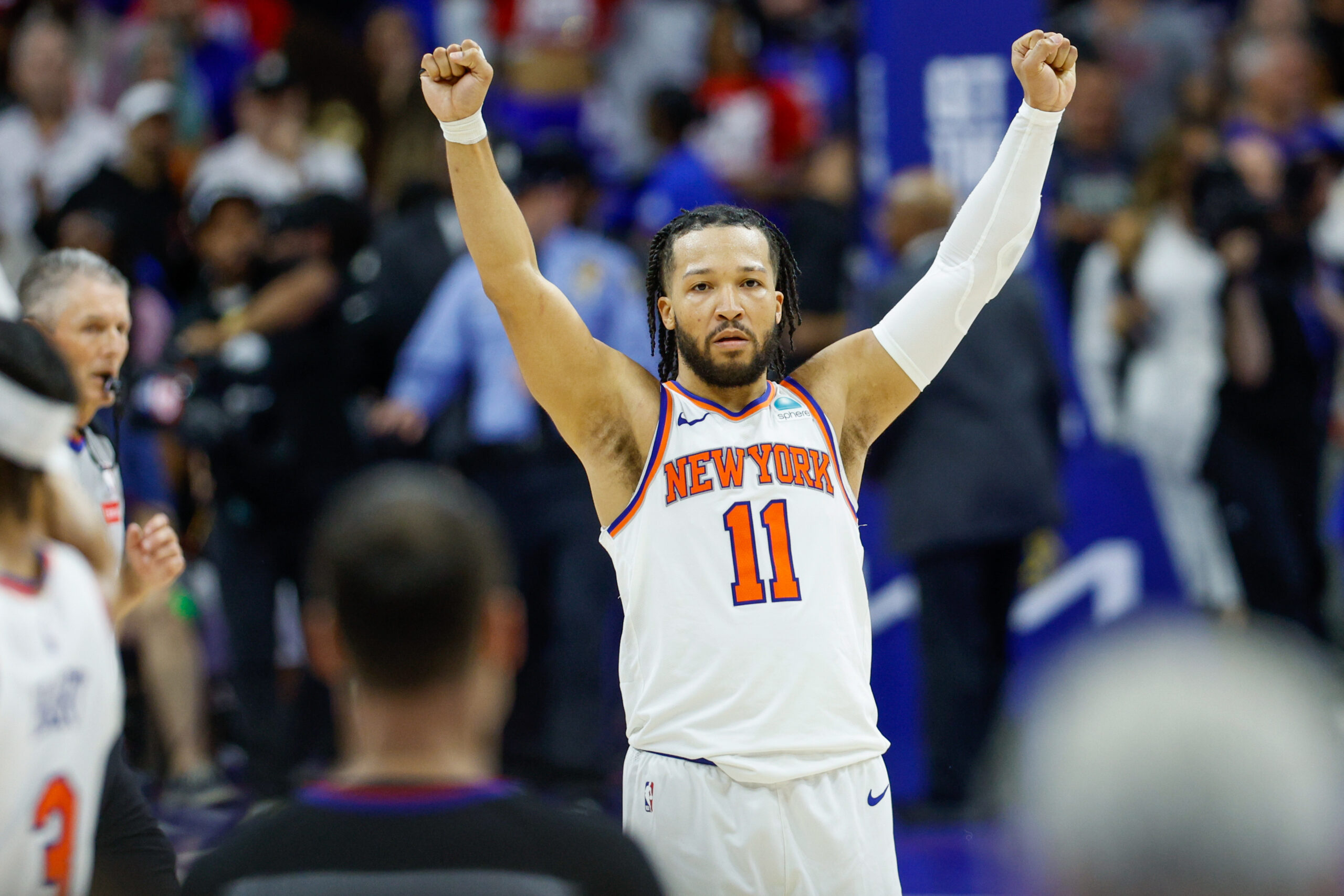
New York Knicks star Jalen Brunson has a new shoe and made sure to drop some off at his alma mater, Villanova.
Steven M. Falk / Staff Photographer
Raiders quarterback Kenny Pickett completed eight of 11 passes in relief against the Broncos last week.
Gregory Bull
Carter Hart was on the ice Thursday at Xfinity Mobile Arena but will not start vs. Flyers.
Yong Kim / Staff Photographer
Adding HTML
(function() {
var l2 = function() {
new pym.Parent(‘xgraves14’,
‘https://media.inquirer.com/storage/inquirer/projects/innovation/arcgis_iframe/xgraves14.html’);
};
if (typeof(pym) === ‘undefined’) {
var h = document.getElementsByTagName(‘head’)[0],
s = document.createElement(‘script’);
s.type = ‘text/javascript’;
s.src = ‘https://pym.nprapps.org/pym.v1.min.js’;
s.onload = l2;
h.appendChild(s);
} else {
l2();
}
})();
President Donald Trump at the White House: In August, Trump said he was “looking at reclassification” of marijuana.
Carolyn Van Houten
New York Knicks star Jalen Brunson has a new shoe and made sure to drop some off at his alma mater, Villanova.
Steven M. Falk / Staff Photographer
Raiders quarterback Kenny Pickett completed eight of 11 passes in relief against the Broncos last week.
Gregory Bull
Carter Hart was on the ice Thursday at Xfinity Mobile Arena but will not start vs. Flyers.
Yong Kim / Staff Photographer
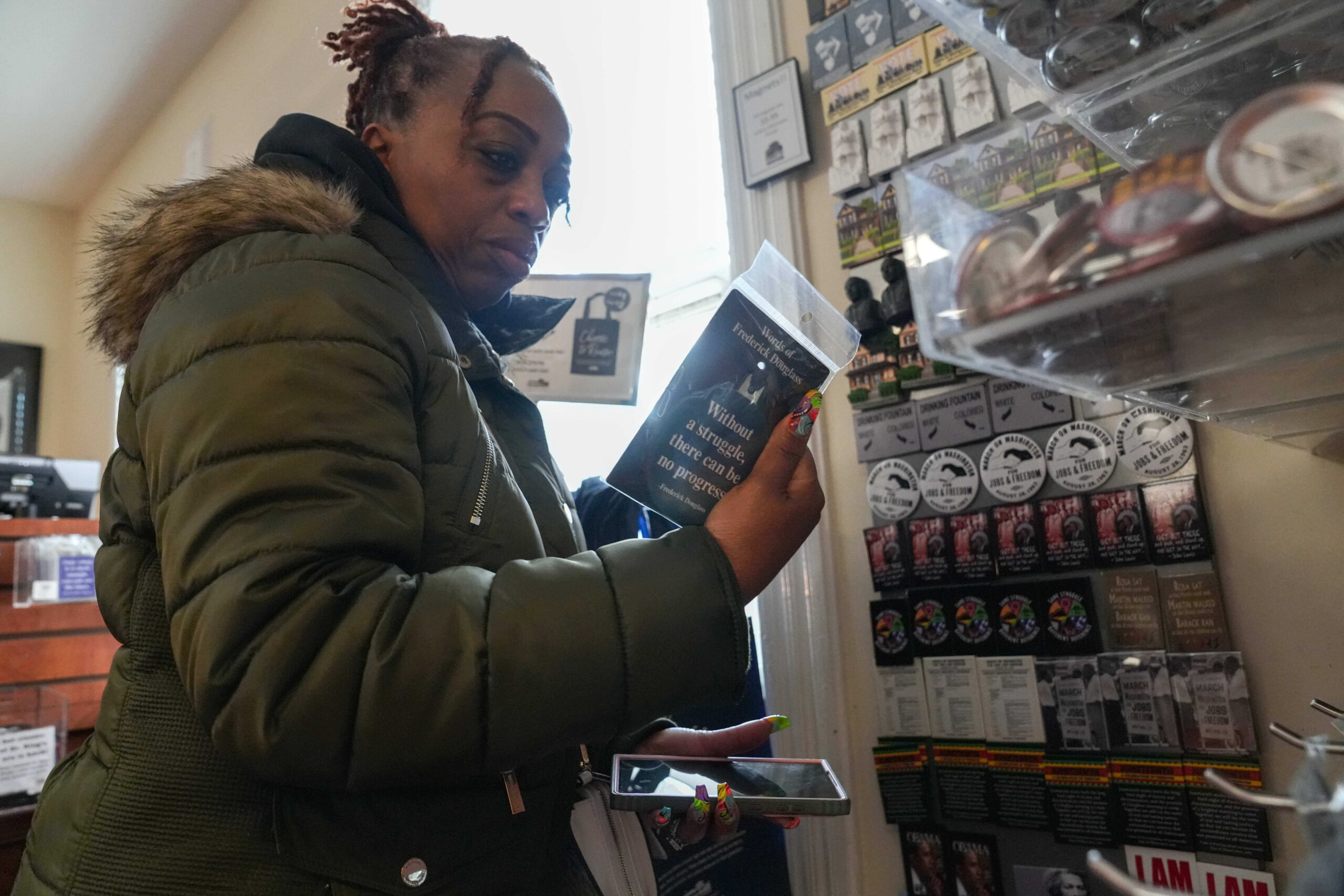
Keisha Burse looks at items for sale at Martin Luther King Jr. National Historical Park in Atlanta earlier this week.
Megan Varner
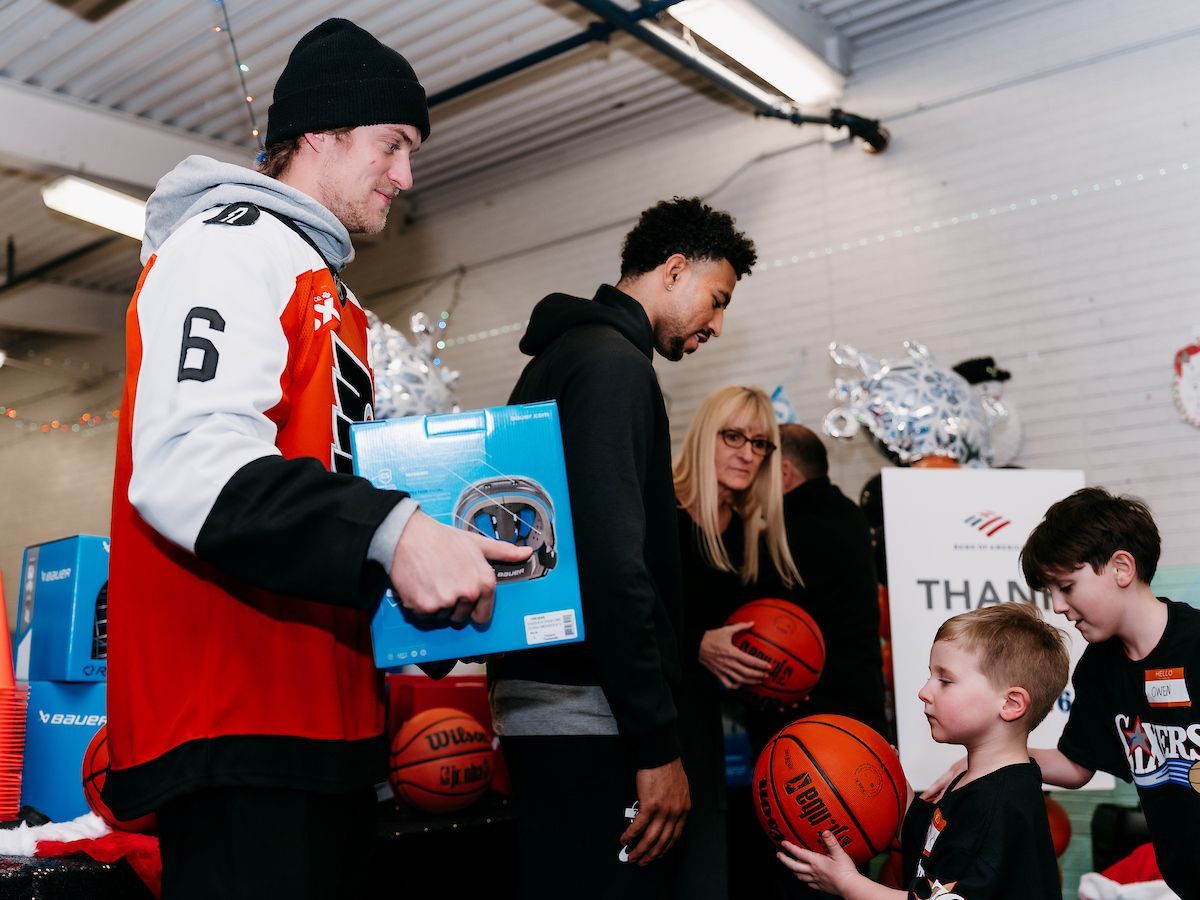
Travis Sanheim and Quentin Grimes deliver $15,000 worth of donated hockey and basketball equipment to kids at the Scanlon Recreation Center in Kensington. Read more
Courtesy of the Flyers
The 2026 FIFA World Cup is officially six months away, and Philadelphians’ next chance to buy general admission tickets starts Thursday.
From Dec. 11 to Jan. 13, fans can enter a lottery for the chance to buy World Cup match tickets, like the two previous lottery phases. The “random selection draw” is the third of several ticket sale phases leading up to the World Cup’s first match on June 11, 2026, in Mexico City.
During the first two ticket phases, the United States, Canada, and Mexico (in that order) drove the bulk of ticket sales, according to FIFA. Fans in 212 countries have bought tickets.
However, since the final draw on Friday, the World Cup matchups and schedule have been finalized. This will be the first ticket sale phase in which fans can apply for single-game tickets for exact matchups and teams.
Brazil’s Raphinha (center) celebrates with teammate Vinícius Júnior after scoring his side’s opening goal against Venezuela during a World Cup qualifying match.
How to enter the random selection draw for FIFA World Cup tickets
The lottery application form will become available on FIFA’s website starting at 11 a.m. Thursday and will close at 11 a.m. on Jan. 13.
Log in during the application window and complete the random selection draw application form.
Winners will be selected in a random draw, with notifications starting soon after Jan. 13. Those selected will receive an assigned date and time to purchase tickets, subject to availability.
Single-match tickets to all 104 games, plus venue-specific and team-specific options, will be made available to choose from. That means fans in the Philadelphia area could buy tickets for matches at Lincoln Financial Field — if selected.
Fans who have applied to previous ticket sale lotteries must submit a new application form.
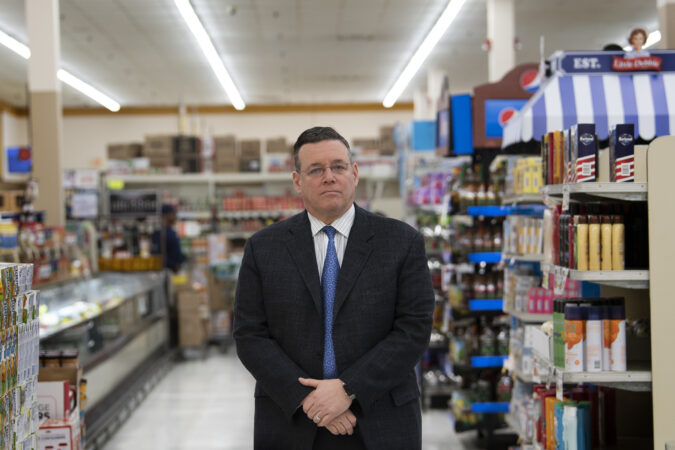
The Brown family, which operates a dozen local ShopRites, recently purchased the Shoppes at Wissinoming for $30.8 million, according to JLL real estate, which represented the seller. The nearly 98,000-square-foot complex in Northeast Philadelphia is anchored by one of Brown’s ShopRites.
“We think it’s important to own the real estate where our supermarkets are located, so we can ensure the long-term healthy food access for the local community and the overall sustainability of our stores,” Brown, executive chairman of Brown’s Super Stores, said in a statement. “We are excited to add the Shoppes at Wissinoming shopping center to our real estate properties.”
Brown said he owns the shopping centers surrounding his ShopRites in Cheltenham, Brooklawn, and Roxborough.
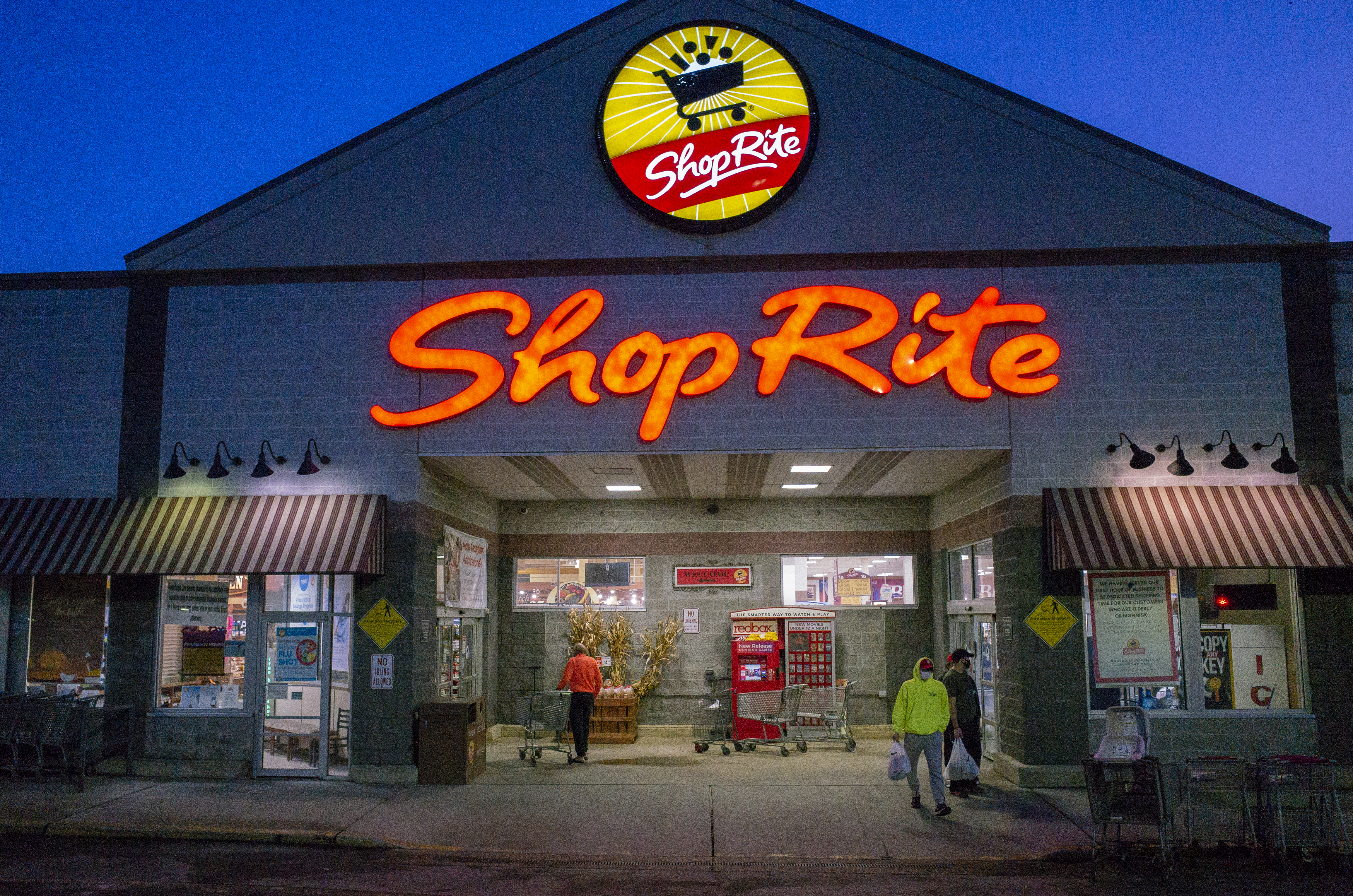
The ShopRite in Roxborough, pictured in 2020, is run by Jeff Brown and located in a complex owned by the longtime grocer.
The family also runs ShopRites in Eastwick, Nicetown, Parkside, Port Richmond, South Philadelphia, Bensalem, Fairless Hills, and Mullica Hill..
The ShopRite at the Shoppes at Wissinoming opened in 2018, and was acquired by Brown earlier this year. The grocery store anchors the center, occupying about 68,000 square feet.
The complex is 98% occupied, according to JLL. Other tenants include Wawa, Popeyes, and AT&T.
“The transaction reflects broader trends in the retail investment market, where investors continue to prioritize grocery-anchored properties with proven tenant performance,” said Jim Galbally, JLL senior managing director. “Shoppes at Wissinoming has an ideal combination of dominant grocery anchor, diverse tenant mix, and strategic location within one of Philadelphia’s most densely populated submarkets.”
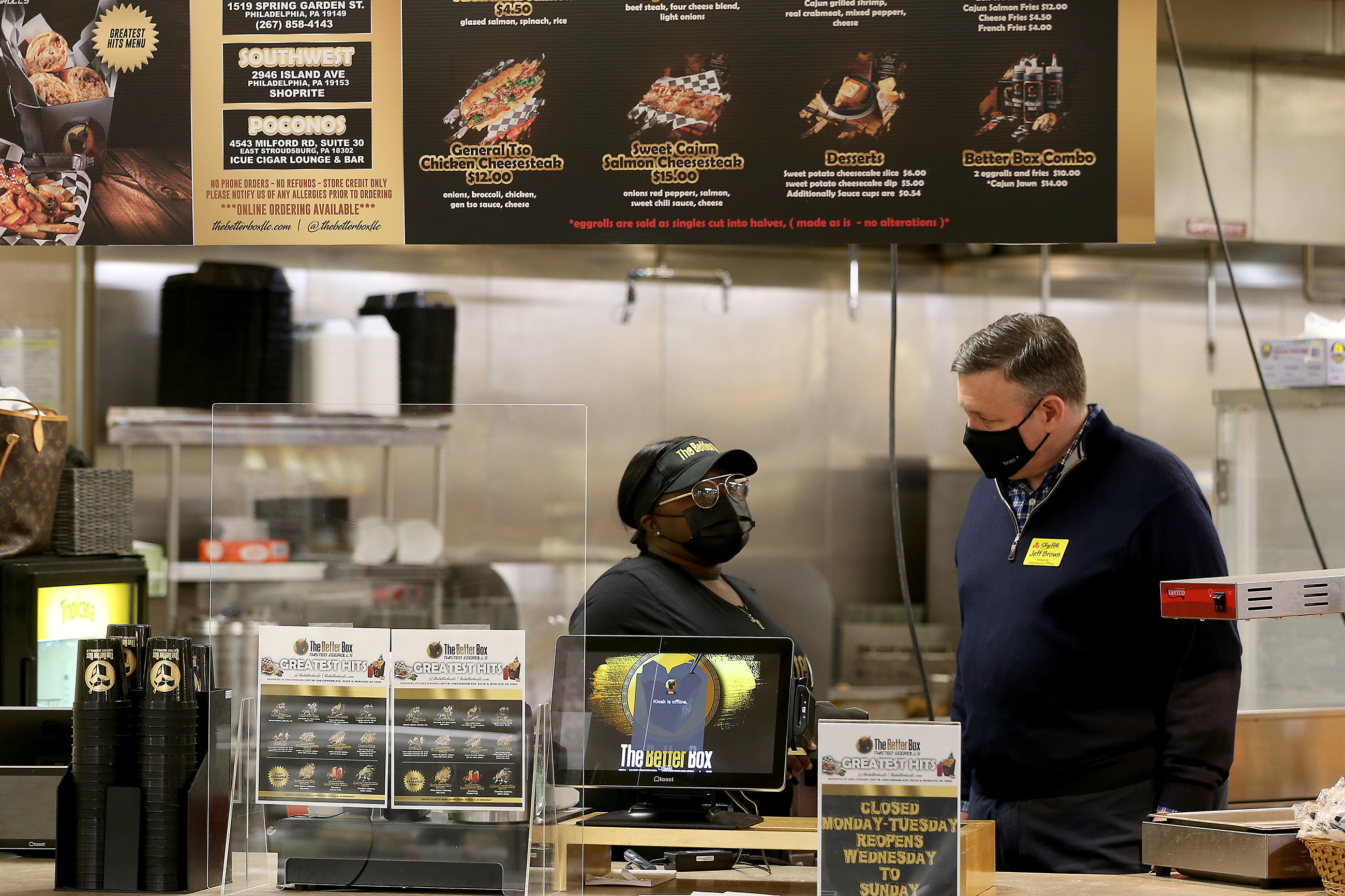
Better Box owner Tamekah Bost (left) talks with ShopRite owner Jeff Brown at the Cheltenham ShopRite in 2021. Brown has brought local restaurateurs into his stores.
Thinking of selling your business? Or starting a business? You may want to consider a worker cooperative.
This type of business structure is different from a consumer cooperative, where customers each own a piece of the organization in exchange for a membership. It’s also different from an employee stock ownership plan where ownership is assigned to employees based on other factors such as compensation, responsibility, and tenure; retirement value builds up; and day-to-day control is given up to management.
A worker cooperative is a form of business organization where all workers equally own the business. There are no majority shareholders. Management is elected by the workers and reports to the workers. All profits are shared equally.
One example is Home Care Associates of Philadelphia, a worker-owned, women-led cooperative providing in-home personal care, mobility support, and household assistance to seniors and people with disabilities in the Philadelphia region. Employees can buy one share of the company for $500 via payroll after a probationary period.
“You have full rights at that point to run for a seat on the board, to participate in the worker-owner meetings, and to vote,” said CEO Tatia Cooper. “If anyone decides not to be a worker-owner anymore, they get the full amount back that they invested.”
Pennsylvania is one of the easier places in the country to form a worker’s cooperative, according to Kevin McPhillips, the CEO of the Havertown-based nonprofit Pennsylvania Center for Employee Ownership, because the commonwealth has designated this type of organization separately from other business forms like corporations and partnerships. New Jersey also has specific regulations enabling the formation of worker cooperatives.
Why should a business consider the worker cooperative structure?
For many it builds stronger retention and loyalty to the organization. When people are owners, they have more devotion to the company, so turnover is generally lower, resulting in lower costs for recruiting, hiring, and onboarding.
Some believe worker cooperatives are more apt to deliver better service because the employees care more about their end work product. They’re more devoted to safety, quality, and minimizing waste.
“Home care agencies struggle with retention and providing consistent care,” says Cooper. “For the simple fact that you have workers who stay longer, it really impacts your bottom line.”
Cooper also believes that when workers have a say in how the business is run and the work that they do, they feel more empowered and that then translates to better care.
Scott Moon, the executive director at Baker Project, an employee ownership advocacy group related to the Pennsylvania Center for Employee Ownership, says that while worker cooperatives can be a good vehicle for succession planning, owners will need to make some hard decisions about their objectives if they’re looking to sell their business.
“Business owners who are having a difficult time finding a buyer for their company but want to see it continue to exist and support their employees can use a worker cooperative as a way to pass their work to a new generation of owners,” he said.
Jobs and the company’s brand can be kept in place and the owner can be paid for the value of their company by the workers via a seller’s note or through a bank loan, which is serviced by the company.
“There are many owners who feel it’s not just about selling and that their business has an ongoing responsibility to their employees, their customers, and their community,” Moon said. “So this type of strategy best fits those goals.”
Cooper has found that their organization has a unique culture because of their employee ownership structure.
“It’s the kind of environment where workers can say, ‘Hey, listen, I see a problem, I see a gap. Here’s how I think we should solve it. What do we need to do to make it happen?,” she said. “We have a happiness committee, we have a policy action group, we have a safety committee all led by board members who are worker-owners.”
Downsides of worker cooperatives
Worker cooperatives have their drawbacks. Owners need to understand that they’re giving up complete control.
Because decisions are being made by elected groups of managers that need approval from employees, processes can be slower and potentially messier. Everything is open for scrutiny, and sometimes this level of transparency can hinder decision-making. Some employees may be enthusiastic about attending meetings and paying attention to the organization’s management, but others may not be up for the time and responsibility it takes.
Financing is also harder. According to Cooper, banking is a “real challenge” because, in her experience, worker cooperatives can’t apply for typical small-business loans.
“Most financial entities are looking for someone who owns 5% or more of the company, and we’re constantly explaining to banks and other institutions that this is a different model,” she said. “This is something that we’ve been advocating for with legislators, but it still continues to be a struggle.”
NEW YORK — Paramount has gone hostile bid for Warner Bros. Discovery, challenging Netflix which reached a $72 billion takeover deal with the company just days ago.
Paramount said Monday that it is going straight to Warner Bros. shareholders with a $30 per share cash bid for the entirety of the company including its Global Networks business, asking them to reject the deal with Netflix.
That is the same bid that Warner Brothers rejected in favor of the offer from Netflix in a merger that would alter the U.S. entertainment landscape.
Paramount criticized the Netflix offer, saying it “exposes WBD shareholders to a protracted multi-jurisdictional regulatory clearance process with an uncertain outcome along with a complex and volatile mix of equity and cash.”
Paramount said it had submitted six proposals to Warner Bros. Discovery over a 12 week period.
“We believe our offer will create a stronger Hollywood. It is in the best interests of the creative community, consumers and the movie theater industry,” Paramount Chairman and CEO David Ellison said in a statement. ”We believe they will benefit from the enhanced competition, higher content spend and theatrical release output, and a greater number of movies in theaters as a result of our proposed transaction,”
On Friday Netflix struck a deal to buy Warner Bros. Discovery, the Hollywood giant behind “Harry Potter” and HBO Max. The cash and stock deal is valued at $27.75 per Warner share, giving it a total enterprise value of $82.7 billion, including debt. The transaction is expected to close in the next 12 to 18 months, after Warner completes its previously announced separation of its cable operations. Not included in the deal are networks such as CNN and Discovery.