Category: Business

Business news and market updates

  • William L. Elkins, pioneering research immunologist at Penn and innovative Chester County cattle rancher, has died at 93

    William L. Elkins, pioneering research immunologist at Penn and innovative Chester County cattle rancher, has died at 93

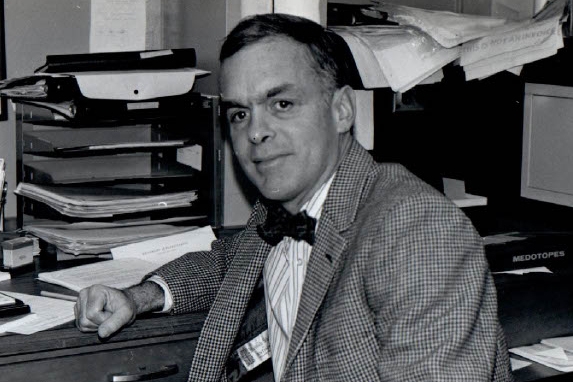
    William L. Elkins, 93, of Coatesville, pioneering research immunologist at what is now the University of Pennsylvania’s Perelman School of Medicine, associate professor emeritus of pathology and laboratory medicine, innovative longtime Angus cattle rancher in Chester County, avid sailor, and veteran, died Tuesday, Nov. 11, of complications from pneumonia at Chester County Hospital.

    The great-great-grandson of Philadelphia business tycoon William Lukens Elkins, Dr. Elkins fashioned his own distinguished career as a scientist, medical researcher, and professor at Penn from 1965 to 1985, and owner of the Buck Run Farm cattle ranch in Coatesville for the last 39 years.

    At Penn, Dr. Elkins conducted pioneering research on how the human immune system fights infection and disease. He collaborated with colleagues in Philadelphia and elsewhere around the country to provide critical new research regarding bone marrow transplants and pediatric oncology.

    His work contributed to new and more effective medical procedures at Penn, Children’s Hospital of Philadelphia, and elsewhere, and he instructed students and residents at Penn. But his lifelong love of the fields and rolling hills he roamed as a boy in Chester County never faded, he told Greet Brandywine Valley magazine in 2023.

    Dr. Elkins was a lifelong outdoorsman.

    “Farming is in my blood,” he said. “So even when I went to medical school and all that, the enthusiasm never left, and I wanted to go back to it.”

    So he retired from medicine at 53, and he and his wife, Helen, bought nearly 300 acres of the old King Ranch on Doe Run Church Road in Coatesville. She kept the books and looked after the business. He became an expert on breeding cattle and growing the high-energy grass they eat.

    Wearing floppy hats and riding a colorful ATV from field to field, Dr. Elkins worked his land for decades. He mended fences and tended daily to his 120 cows, heifers, and prize bulls.

    He championed holistic regenerative farming and used new scientific systems to feed his cattle. He rejected commercial fertilizer and knew all about soil composition, grass growing, and body fat in cattle.

    Dr. Elkins and his wife, Helen, married in 1966.

    In a 1995 Inquirer story, he said: “Cattle are just like anyone else. If you just turn a few cattle out in a great big field, they will wander around, eat the grass they like best, and leave what they don’t want. That means the less desirable grasses tend to predominate.”

    He traveled the country to confer with other cattlemen and helped found the Southeast Regional Cattlemen’s Association in 1994. He sold his beefsteaks, patties, jerky sticks, and kielbasa grillers to private customers online and to butchers and restaurants.

    At least one local chef featured an item on the menu called Dr. Elkins’ Angusburger. Lots of folks called him Doc.

    He earned his medical degree at Harvard University in 1958 and served two years in the Navy at the hospital in Bethesda, Md. He was a surgical intern in New York and discovered that he preferred the research lab. Before Penn, he worked at the Wistar Institute of biomedical research.
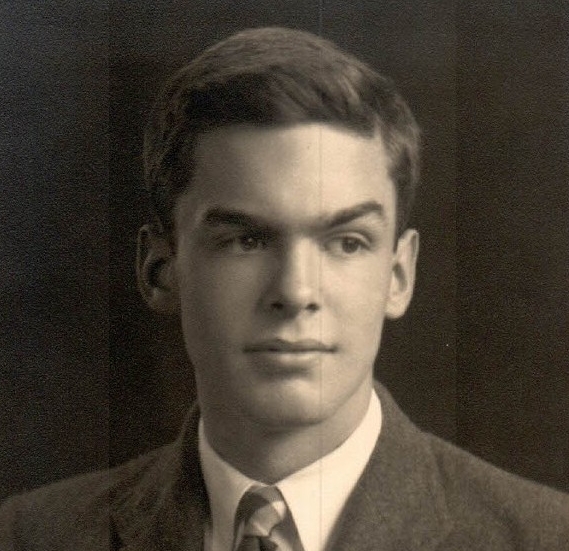
    Dr. Elkins graduated from St. Mark’s School in Massachusetts in 1950.

    Away from the lab, Dr. Elkins was an ocean sailor, expert navigator, and former boat club commodore. He was active with the Brandywine Conservancy, Natural Lands, and other groups, and was lauded by national organizations for his wide-ranging conservation and wildlife efforts.

    He made his farm a haven again for the bobolink grassland songbird and other migratory birds and butterflies that had dwindled. “Buck Run Farm is more about growing grass and trees than beef,” he told Greet Brandywine Valley. “We’re blessed by the land.”

    William Lukens Elkins was born Aug. 2, 1932, in Boston. He lived on the family dairy farm in Pocopson, Chester County, when he was young, went to boarding school in Massachusetts for four years, and earned a bachelor’s degree in biology at Princeton University.

    He met Helen MacLeod at a party in Washington, and they married in 1966 and had a daughter, Sheila, and a son, Jake. They lived in Center City, Society Hill, and Villanova before moving to the farm. “He was easy to be with,” his wife said.

    Dr. Elkins enjoyed sailing and fishing.

    Dr. Elkins loved nature, fishing, and baseball, and he followed the Phillies, the Flyers, and other sports teams. “He had a wonderful bedside manner,” his daughter said. “He was a great listener. He really knew how to support people.”

    His son said: “He was unassuming and direct. He spoke his mind. He connected with so many different people. He was curious about the world around him.”

    His wife said: “He was thoughtful and always concerned about people. He had good humor. He was fun.”

    In addition to his wife and children, Dr. Elkins is survived by five grandchildren and other relatives. A sister died earlier.
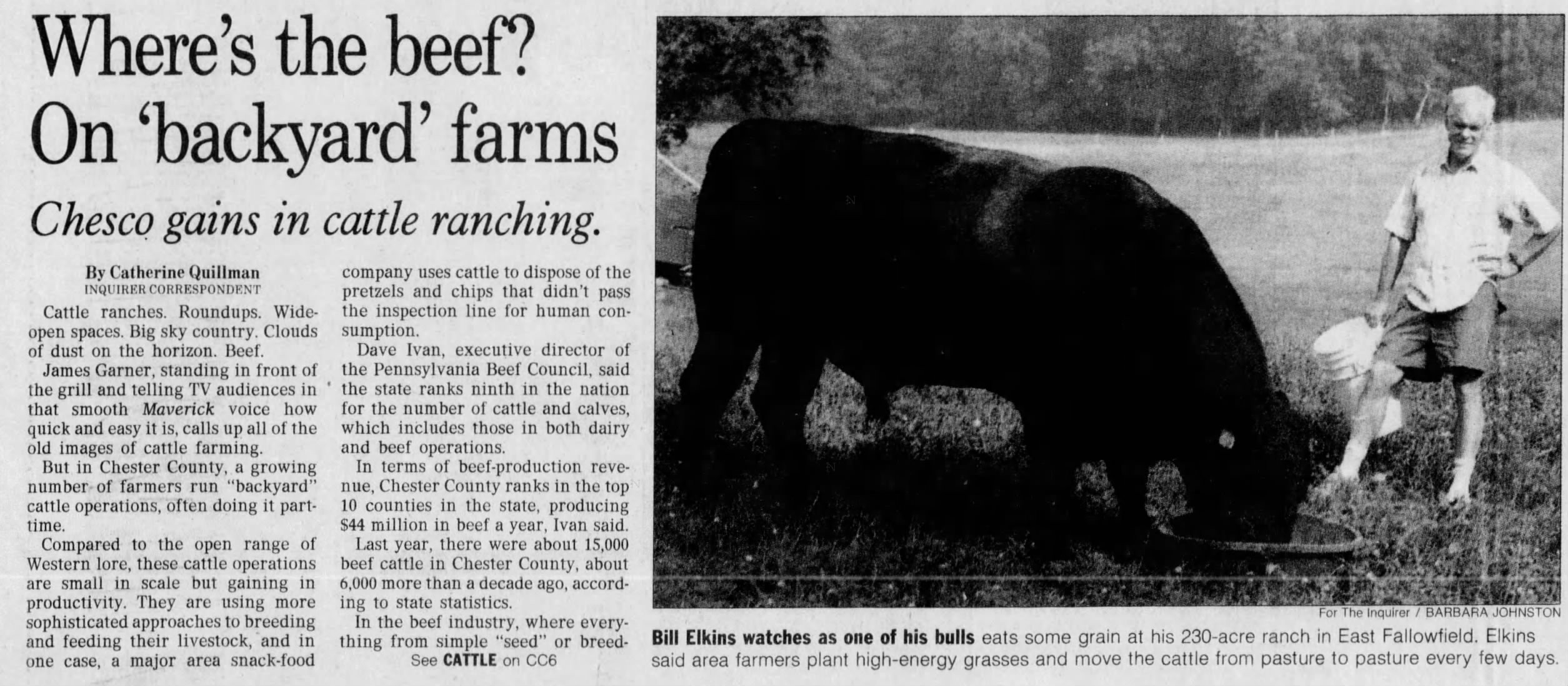
    This article about Dr. Elkins and his ranch appeared in The Inquirer in 1995.

    A celebration of his life is to be held later.

    Donations is his name may be made to the Stroud Water Research Center, 970 Spencer Rd., Avondale, Pa. 19311.
  • Tower Health’s audit for fiscal 2025 reversed its reported operating profit

    Tower Health’s audit for fiscal 2025 reversed its reported operating profit

    Tower Health’s preliminary financial report in August for fiscal 2025 showed a $5.9 million operating profit, a gain that came thanks for the sale of a shuttered hospital in Chester County.

    But that apparent annual profit, the Berks County nonprofit’s first since 2017, turned into a $20.6 million loss when Tower released its annual audit.

    Auditors from KPMG decided that Tower should boost medical malpractice reserves and give up on collecting millions owed by patients, Tower said in a statement.

    “As part of our standard accounting process, the audited financials for the full year reflect increased malpractice insurance reserves and final adjustments to accounts receivable,” Tower said.

    Most of the $26 million swing to a loss came from medical malpractice, but Tower also reduced what is called patient accounts receivable, representing unpaid bills, to $236.6 million from $251.6 million in August’s preliminary results, according to Tower’s audited financial statements that were published Friday.

    Separately, Tower reported a $15.9 million operating loss for the three months that ended Sept. 30. That loss was a bit bigger than the $14.2 million loss in the same period last year. Tower’s revenue for the quarter was $501 million, up 4% from $479.8 million last year.

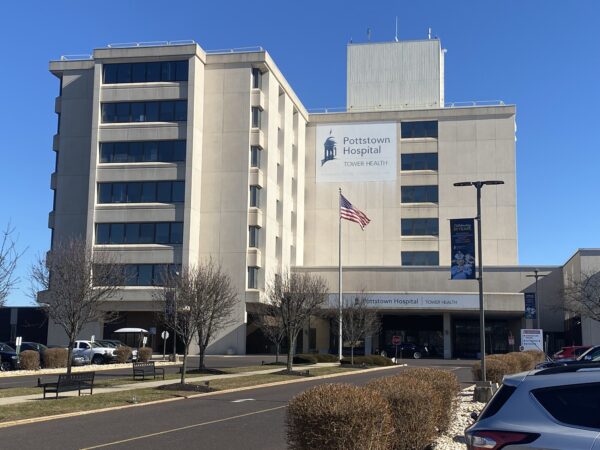
    The results for the first quarter of 2026 did not include expenses for Tower’s layoff of 350 employees, or about 3% of its workforce, earlier this month. The cuts hit Pottstown Hospital particularly hard. Tower is eliminating 131 jobs there and eliminating some services.

    The closures include the combined intensive care/critical care unit, the Pottstown location of the McGlinn Cancer Institute, and the hospital’s endoscopy center.

    Two unions that represent Pottstown employees, the Pennsylvania Association of Staff Nurses and Allied Professionals and SEIU Healthcare Pennsylvania have decried the cuts and called on management to engage in discussions on how to preserve jobs and services.

  • SEPTA workers authorized a strike for the fourth year in a row. Here’s when they walked off the job in the past.

    SEPTA workers authorized a strike for the fourth year in a row. Here’s when they walked off the job in the past.

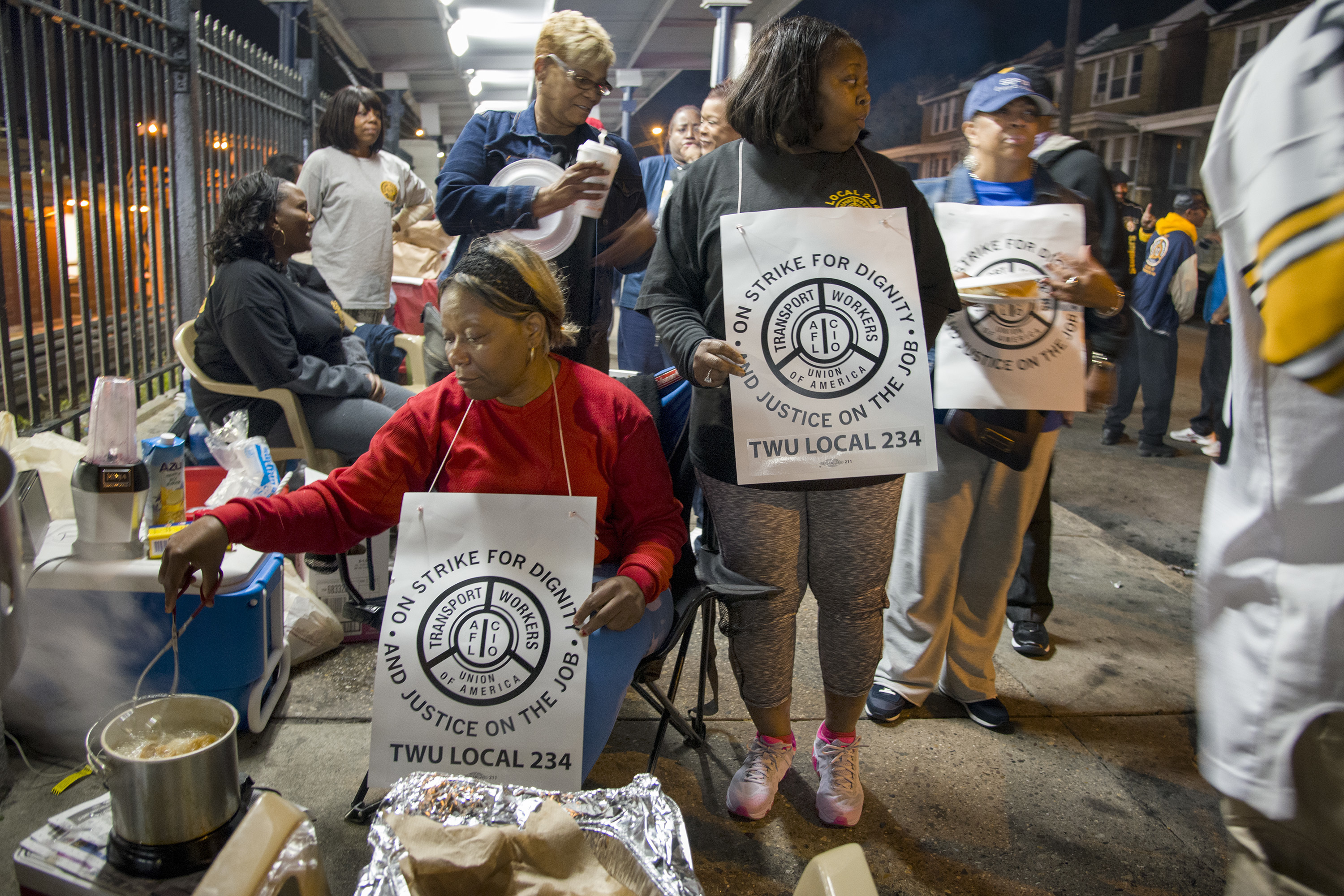
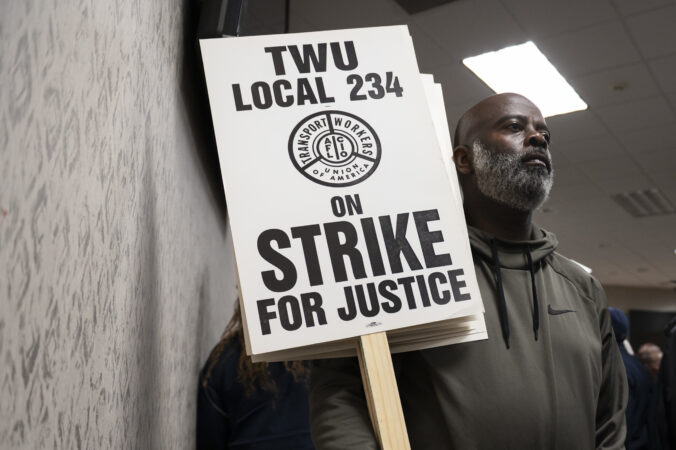
    Members of the Transport Workers Union Local 234 on Sunday, Nov. 16 voted to authorize a strike if union and SEPTA negotiators can’t reach an agreement on a new contract.

    Shortly before the current contract ran out at 11:59 p.m. on Nov. 7, TWU’s new president, Will Vera, urged union members to stay on the job. In an unusual move, he delayed a strike vote at the time of contract expiration, saying he had hope that a deal could be reached without the usual brinksmanship.

    “We’re asking you to please continue to come to work and put money aside. We want you to be prepared in case we have to call a work stoppage,” he told members in a video at the time.

    Local 234 leaders say they’re prioritizing a two-year deal with raises and changes to what the union views as onerous work rules, including the transit agency’s use of a third party that Vera said makes it hard for members to use their allotted sick time.

    Three TWU contracts in a row have run for one year each, all negotiated as SEPTA weathered what it has called the worst period of financial turmoil in its history.

    In a statement, SEPTA said it was aware of the authorization vote and is committed “to continue to engage in good-faith negotiations, with the goal of reaching a new agreement that is fair.”

    SEPTA unions have walked off the job at least 12 times since 1975, earning the authority a reputation as the most strike-prone big transit agency in the U.S.

    Here is what happened in previous SEPTA strikes:

    2023 Fraternal Order of Transit Police Lodge 109 (three days)

    SEPTA police officers walked off the job after bargaining with the transit agency for almost nine months, largely over the timing of a 13% pay raise for members. The agreement, partially brokered by Gov. Josh Shapiro, came amid heightened fears about safety on public transit and a funding crisis for SEPTA.

    2016 TWU Local 234 (six days)

    TWU Local 234 walked off the job for six days; the biggest issue was retirement benefits. SEPTA’s contributions toward union members’ pensions did not rise in tandem with wages when workers made more than $50,000. Managers’ pension benefits were not capped. The union also wanted to reduce out-of-pocket health-care costs and win longer breaks for bus, trolley, and subway operators between shifts and route changes.

    SEPTA and the union reached an agreement Nov. 7, the day before the general election. Democrat Hillary Clinton’s presidential campaign was worried about voter turnout, and the city sought an injunction to end the strike. It proved unnecessary.

    2009: TWU Local 234 (six days)

    Talk about leverage. TWU was ready to strike just before the first home game of the World Series between the Phillies and the New York Yankees. Gov. Ed Rendell pushed the two sides to continue talking, and the transit workers waited to walk out until three hours after the end of Game 5, the last in the series played at Citizens Bank Park.

    It was a bitter strike, coming just a year after the stock market’s meltdown started the Great Recession. TWULocal 234 President Willie Brown called himself “the most hated man” in Philadelphia. Mayor Michael Nutter was harshly critical. Brown called him “Little Caesar.”

    The strike was settled Nov. 7 with a deal on a five-year contract. Transit workers got a $1,250 bonus, a 2.5% raise in the second year, a graduated increase in SEPTA pension contributions from 2% to 3.5%, and the maximum pension benefit was raised to $30,000 from $27,000.

    2005: TWU Local 234 and United Transportation Union Local 1594 (seven days)

    Two unions walked off the job on Halloween, halting most bus, subway, and trolley service in Philadelphia and its Pennsylvania suburbs.

    Negotiations collapsed mostly over SEPTA’s insistence that workers pay 5% of medical insurance premiums. At that point, the authority paid 100% of the workers’ premiums for family coverage.

    In the end, it was solved by Gov. Rendell, a Democrat who had been Philadelphia mayor in the 1990s. He agreed to give promised state money to SEPTA early, so it could pay premiums in advance, reducing its costs.

    In the resulting four-year deal, the unions had to pay for 1% of their medical premiums. They also received 3% yearly raises.

    Pedestrians and cars in a chaotic dance at the intersection of Market and 30th Streets during the afternoon commute on the first day of the SEPTA city workers’ strike Nov. 1, 2016.

    1998: TWU Local 234 (40 days)

    City transit workers’ contract expired in March, but they did not strike until June — and then stayed out for 40 days. The two sides reached an agreement in July, but it fell apart. TWU members had returned to their jobs and kept working under an extension of their old contract. A final agreement was signed Oct. 23.

    The union agreed to SEPTA’s demand that injured-on-duty benefits be limited. The old contract gave them full pay and benefits while on leave after a work injury. SEPTA wanted to hire an unlimited number of part-time workers. The union agreed to 100 part-timers to drive small buses.

    SEPTA’s chief negotiator was David L. Cohen, famous for reining in unions representing city workers during Philadelphia’s bankruptcy in 1992, as Rendell’s mayoral chief of staff.

    1995: Local 234 TWU (14 days)

    A two-week strike stilled city buses, trolleys and subways until an agreement was reached April 10. Transit workers would get 3% raises per year over the three-year span of the new contract, as well as increases in pension benefits and sick pay.

    The union agreed to several cost-reduction measures, including a restructuring of SEPTA’s workers compensation policies.

    Mayor Ed Rendell, a villain to many in labor for winning givebacks from city unions in 1992, pushed SEPTA to offer more generous terms to TWU than it had initially. Cohen, who was his chief of staff, crunched the numbers to make it work. Three years later, out of the city administration and working as a lawyer, he was hired as SEPTA’s chief negotiator.

    1986: TWU Local 234 (four days) and UTU Local 1594 (61 days)

    When TWU struck the city transit division in March 1986 over a variety of economic issues and work rules, some bus drivers pulled over mid-route and told passengers to dismount, The Inquirer reported.

    Members were particularly incensed at what they considered SEPTA’s draconian disciplinary procedures. Union leaders said the issue was a basic lack of respect. The strike was settled in four days.

    Drivers for 23 suburban bus routes, two trolley lines in Delaware County and the Norristown High-Speed Line — all members of the United Transportation Union — struck for just over two months, affecting about 30,000 passengers a day.

    Employees in what was then known as SEPTA’s Red Arrow Division — after the private transit company that used to own the routes and lines — made considerably less than their city counterparts and had weaker pension benefits. They won raises and pension changes that brought them closer to parity.

    1983: Regional Rail (108 days)

    Thirteen separate unions walked off the job on the commuter rail lines that SEPTA had taken over at the beginning of the year from Conrail, successor to the bankrupt Pennsylvania and Reading Railroads.

    In addition to wages, a key issue was SEPTA’s demand that union train conductors accept pay cuts. The authority had already cut the number of those workers by more than half.

    Eventually SEPTA reached deals with a dozen of the unions. The 13th local, which represented 44 railroad signalmen, held out longer. Main issue: Whether SEPTA had the right to contract with outside firms for some types of signal work.

    The Regional Rail strike remains SEPTA’s longest work stoppage since 1975.

    Joyce Woodford (center), a 25-year veteran cashier on SEPTA’s Broad Street Line, serves up fried fish for her fellow striking cashiers outside the Fern Rock Transportation Center during dinnertime on the third day of the SEPTA strike in 2016.

    1982: TWU Local 234 (34 days)

    About 36 suburban bus drivers and mechanics operating routes primarily in Montgomery County, and some routes in Bucks, won an 8.5% wage increase over three years.

    The bus routes were the descendants of the Schuylkill Valley Lines and the Trenton-Philadelphia Coach Lines, which SEPTA acquired in 1976 and 1983, respectively. Service has grown, and the collection of bus routes is known as the Frontier Division today.

    1981: TWU Local 234 (19 days) and UTU Local 1594 (46 days)

    Transit workers shut down buses, trolleys and subways in the city on March 15, seeking job security in the form of a no-layoff clause, wage increases and a bar on SEPTA hiring part-time workers.

    And the Red Arrow division went out for 46 days seeking higher wages and better medical benefits. SEPTA also backed down a demand for permission to hire private contractors for some work on the suburban buses, trolleys, and the Norristown High Speed Line.

    1977: TWU Local 234 (44 days)

    After a bitter strike, union members who run the city transit division got higher wages and more benefits, after rejecting an arbitrator’s proposed contract that was portrayed in news reports as generous.

    A furious Mayor Frank Rizzo told reporters the strike “can last 10 years for all I care.” He said of the union’s rejection of the earlier offer: “It is outrageous, and I hope the people won’t forget it.”

    1975: TWU Local 234 (11 days)

    Transit workers, concerned about the ravages of inflation, wanted a clause giving them cost-of-living increases and enhancements to health-care benefits. Those were granted after Rizzo agreed to add $7.5 million to the city’s annual SEPTA contribution. Perhaps that’s one reason the mayor was so annoyed two years later.

    Staff writer Erica Palan contributed to this article.

  • DuPont’s latest spin-off, Qnity, soars with demand from Nvidia and AI

    DuPont’s latest spin-off, Qnity, soars with demand from Nvidia and AI

    The latest DuPont Co. spin-off, Qnity, supplies Nvidia, the world’s most valuable company, and other Big Tech giants with high-tech materials to make the high-speed and artificial-intelligence systems that have drawn billions in new investments and sparked the data center building boom.

    Though DuPont is a larger company, Qnity, which started trading Nov. 1, is worth more on the stock market, a sign that investors expect its Big Tech customers — chipmakers like AMD and electronics giants like Samsung — will buy Qnity’s Kalrez sealants, Pyralux adhesives, and other products.

    And they expect it will do so faster than DuPont can boost sales to its remaining brands such as Tyvek and Corian.

    With expected sales of $7 billion next year, DuPont has a stock market value of about $16 billion. Qnity, with sales expected to approach $5 billion, is worth $20 billion. Both companies are profitable, but Qnity’s margins are bigger.

    Based a five-minute walk from DuPont headquarters in suburban Wilmington, Del., Qnity was given away to DuPont shareholders — one share for each two DuPont shares. The company employs around 10,000 at 39 factories and 17 labs worldwide, including 1,300 in the Wilmington area.

    It was the latest in a string of sales and spin-offs that have cut DuPont sales from $62 billion in 2017 — after Edward Breen of New Hope, now DuPont’s executive chairman, took over with a mandate to cut costs and boost shareholder payouts — down to an expected $7 billion next year.

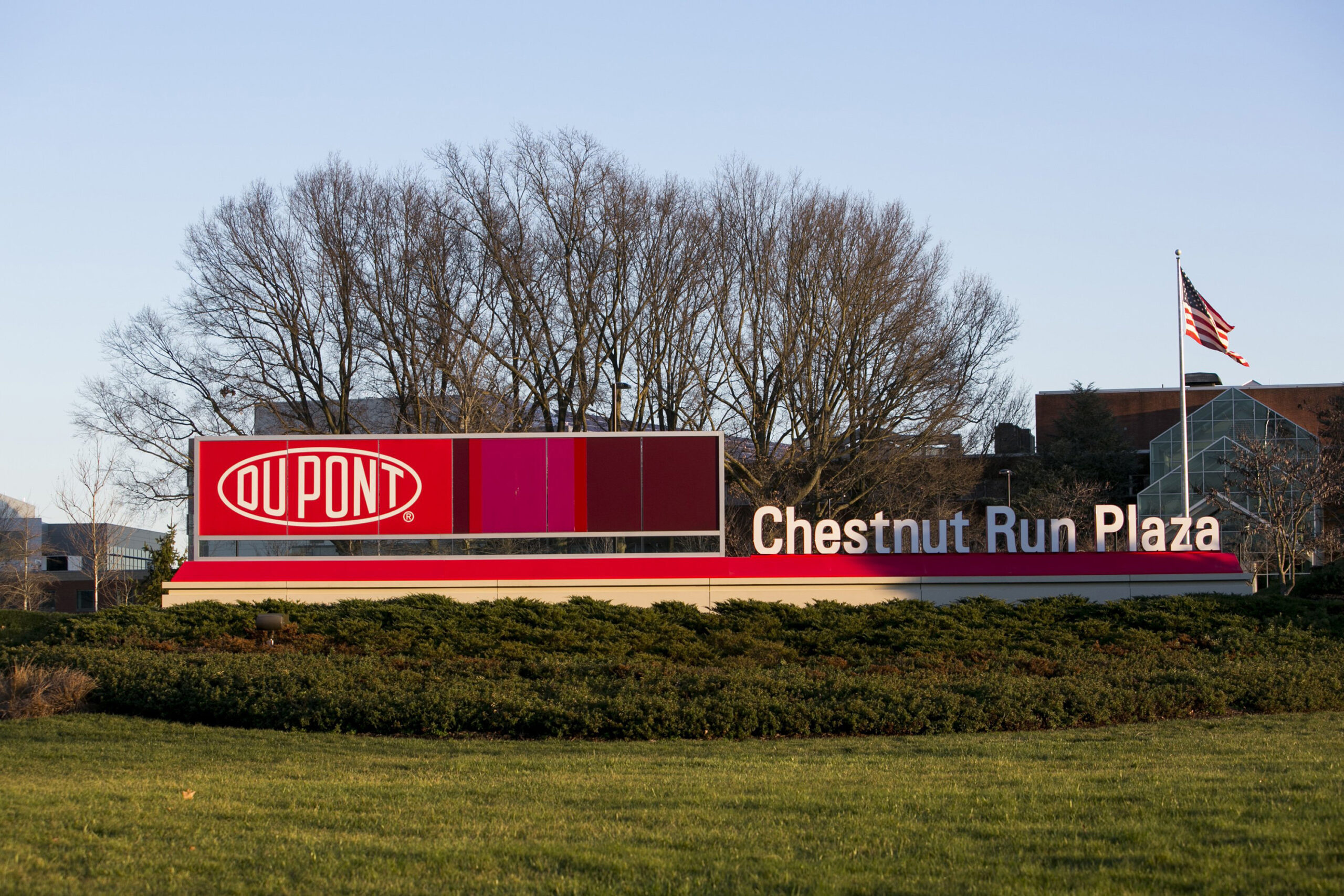
    DuPont’s Chestnut Run Plaza headquarters in Wilmington, Del. The company’s November 2025 spin-off, Qnity, is based at the south end of the campus.

    Qnity’s price quickly spiked from an initial $70 a share to around $100 in early November trading, and stock analysts predict it will go higher on relentless demand for AI and high-speed computer chips.

    The company’s name (pronounced CUE-nitty) was “inspired” by the letter Q’s role in electrical notation. It trades as Q on the New York Stock Exchange.

    Q is “the symbol for electrical charge and unity,” Qnity CEO Jon Kemp said in a meeting with DuPont investors.

    What does Qnity make?

    Qnity’s profit margin before financial expenses is a robust 30%, but analysts warn the chip business might not stay so profitable.

    “Wafer starts,” a count of how many new silicon pieces are being used to build new chips, rose roughly 5% this year. Qnity is growing faster than the industry because some of its products are in special demand, “fueled by the adoption of leading-edge technologies for AI applications,” Kemp told the investors earlier this year.

    Qnity’s “AI-driven technology ramps” include densely layered circuit boards that allow more computing power in a smaller space and barriers to keep data centers from overheating. The company also sells to aerospace, and military equipment and vehicle makers.

    At an August investor meeting, JPMorgan analyst Steve Tusa noted the soon-to-be-spun-off company’s reliance on AI growth. He asked whether the global slump in consumer electronics demand was likely to end, broadening the company’s growth prospects.

    Kemp, in response, acknowledged that consumer demand had been “weak,” noting that “all of the growth for the last several quarters is really coming from AI-driven applications.”

    Worth more in pieces?

    DuPont has sold or spun off many of its once-familiar products in recent years.

    In August, DuPont agreed to sell its Aramids fiber business, which includes Kevlar bulletproofing, to a private equity-backed firm for $1.8 billion. The company sold its remaining nylon lines and other polymer businesses for $11 billion in 2022.

    DuPont still makes Tyvek house and medical wraps, Corian counters, Molykote lubricants, FilmTec membranes, and medical-device packaging systems, automotive battery and aerospace parts, as well as water, gas, and mining products.

    In all, it’s a radical reduction from the 1950s, when DuPont was the most valuable company in the world, and owned major stakes in General Motors and other customers, or in the 1990s, when DuPont owned oil giant Conoco and attempted a drug-making joint venture with Merck.

    DuPont was dropped from the Dow Jones 30 industrial stock index in 2017. It remains one of the S&P 500 stocks, a list Qnity has also joined.

    The Qnity spin-off is just the latest in the dismemberment that began before Breen joined DuPont and became chief executive and chairman in 2015. Breen, who similarly broke apart the former Tyco International in the 2000s, came to DuPont at a time when some investors were discontented with low profit growth.

    As CEO, Breen led a merger with Dow Chemical, enacted in 2017. He gutted central staff including a large part of the company’s research establishment, then broke up DowDuPont into three successors, and kept selling or spinning off business groups.

    The result is a string of DuPont successor companies, most still based in the Wilmington area.

    They include Corteva Agrisciences, a 2019 combination of DuPont and Dow pesticide lines and genetically engineered seeds with offices at the old DuPont headquarters. The company expects more than $17 billion in sales this year.

    Corteva, whose U.S. operations are mostly in the Midwest, announced this month that it was moving corporate offices from the suburban Wilmington office park that also houses DuPont and Qnity to the former DuPont headquarters complex in central Wilmington.

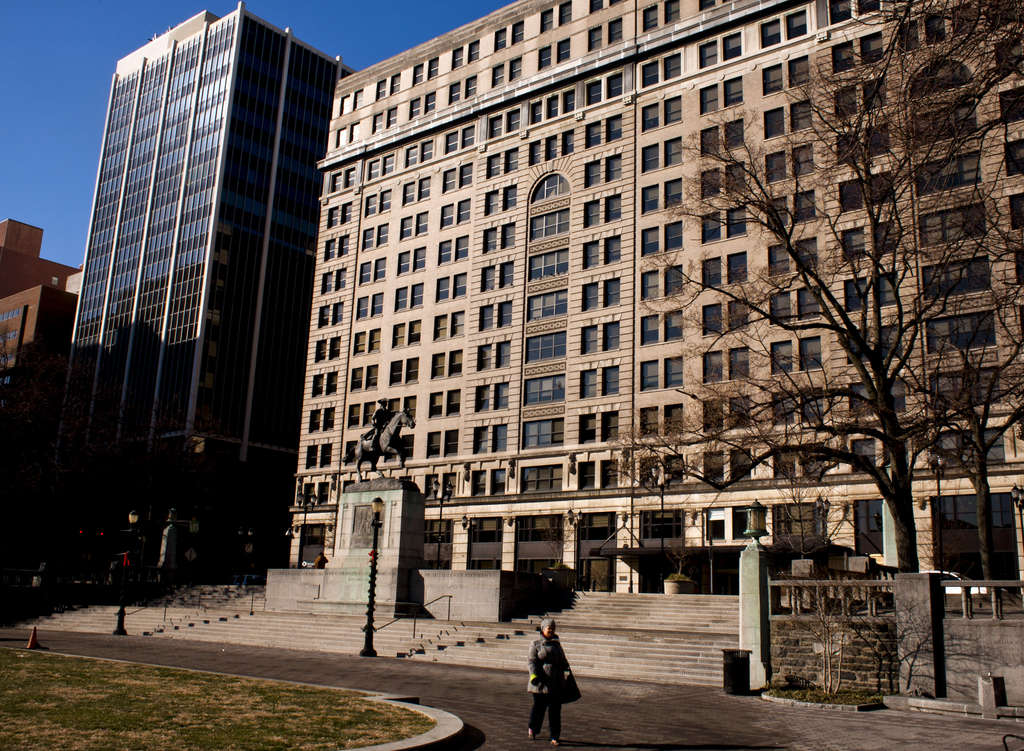
    The Rodney Square side of the former DuPont Co. headquarters in Wilmington is now home to its chemical spin-off, Chemours. The western end of the same campus will soon be home to offices of Corteva, which includes DuPont’s former pesticides business. This 2019 photo also shows a statue of independence leader Caesar Rodney, which was removed from its pedestal after protests in 2021.

    Another global leader in pesticides, Philadelphia-based FMC, owns some former DuPont products and the company’s Newark, Del., research farm.

    In 2020, DuPont sold its food and biosciences business to a smaller company, IFF, for $7.3 billion. Both companies had plants in the Philadelphia area.

    In 2015, before Breen joined DuPont, it spun off a group of its old chemical businesses, calling it Chemours. It has joined DuPont in settling some of the long-running chemical pollution claims for damages related to Teflon and other former DuPont products.

    In 2013, DuPont sold its automotive paints group, Axalta, to private-equity giant Carlyle Group. Carlyle took Axalta public the next year, making three times what it paid DuPont for the South Philly-based company.

    Axalta and Corteva shares have roughly doubled in value since DuPont spun them off, though the S&P 500 index is up more. DuPont itself trades at about the same price it was worth just before the Dow merger in 2017. Chemours shares are also roughly flat since it went public. (Update: Axalta announced its sale to rival AkzoNobel NV in November, 2025.)

    With its stock trading at a premium over DuPont’s, thanks to investor faith that digital demand will keep going up, Qnity has given shareholders more to celebrate — so far.

  • How Philly-area outlets survive and sometimes thrive in an era of dying malls

    How Philly-area outlets survive and sometimes thrive in an era of dying malls

    For the Nowell family, the outlets are an annual tradition.

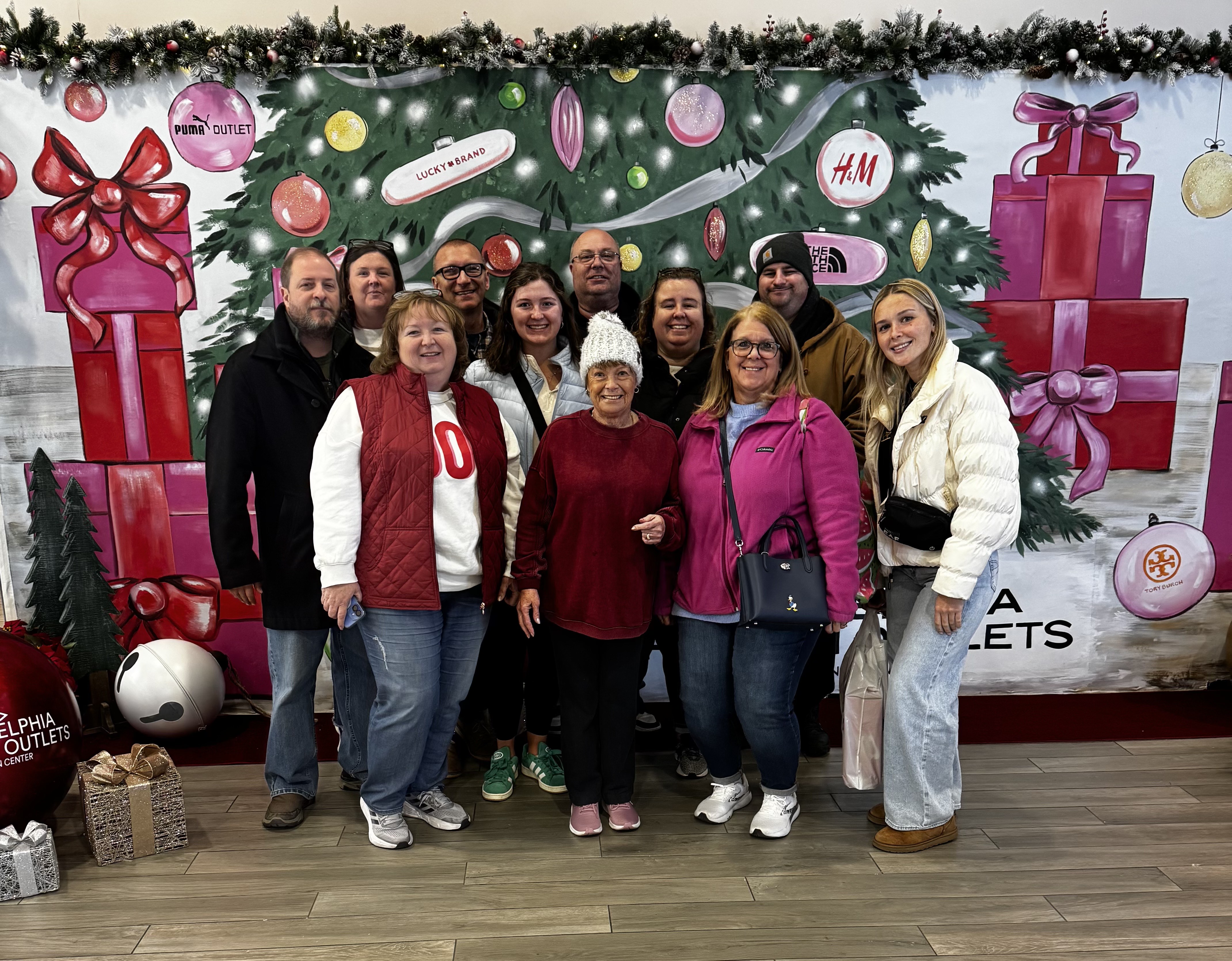
    Every Veterans Day, a dozen relatives venture to Limerick Township in Montgomery County, where they kick off their holiday shopping at the Philadelphia Premium Outlets.

    Even this year, as bitter winds whipped through the outdoor plaza, the family was undeterred.

    After a morning of shopping, the multigenerational group, which included two veterans, warmed up with their yearly food-court lunch, courtesy of matriarch Geri Nowell, 77, of Telford. Then, the men returned to the cars and dropped off dozens of shopping bags, which they’d been carting around in a wagon. The women walked on, hunting for their next find among the more than 130 shops.

    The Nowell family poses in front of a holiday backdrop during their annual outing to the Philadelphia Premium Outlets.

    “It’s super fun,” said Ann Blaney, 47, of Drexel Hill.

    “We get great deals,” added Kim Woodman, 55, of Hatboro.

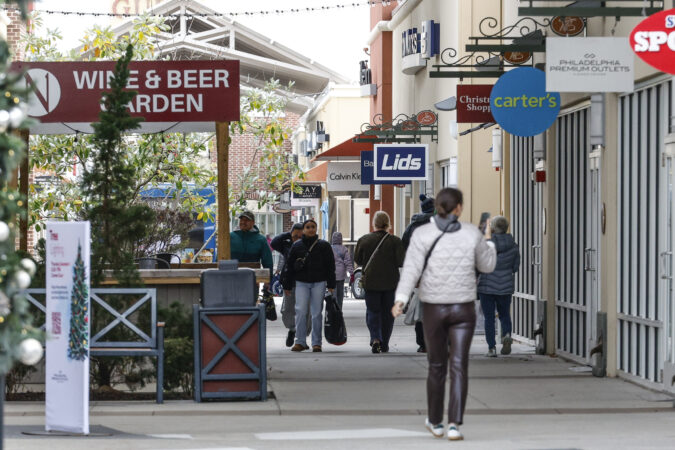
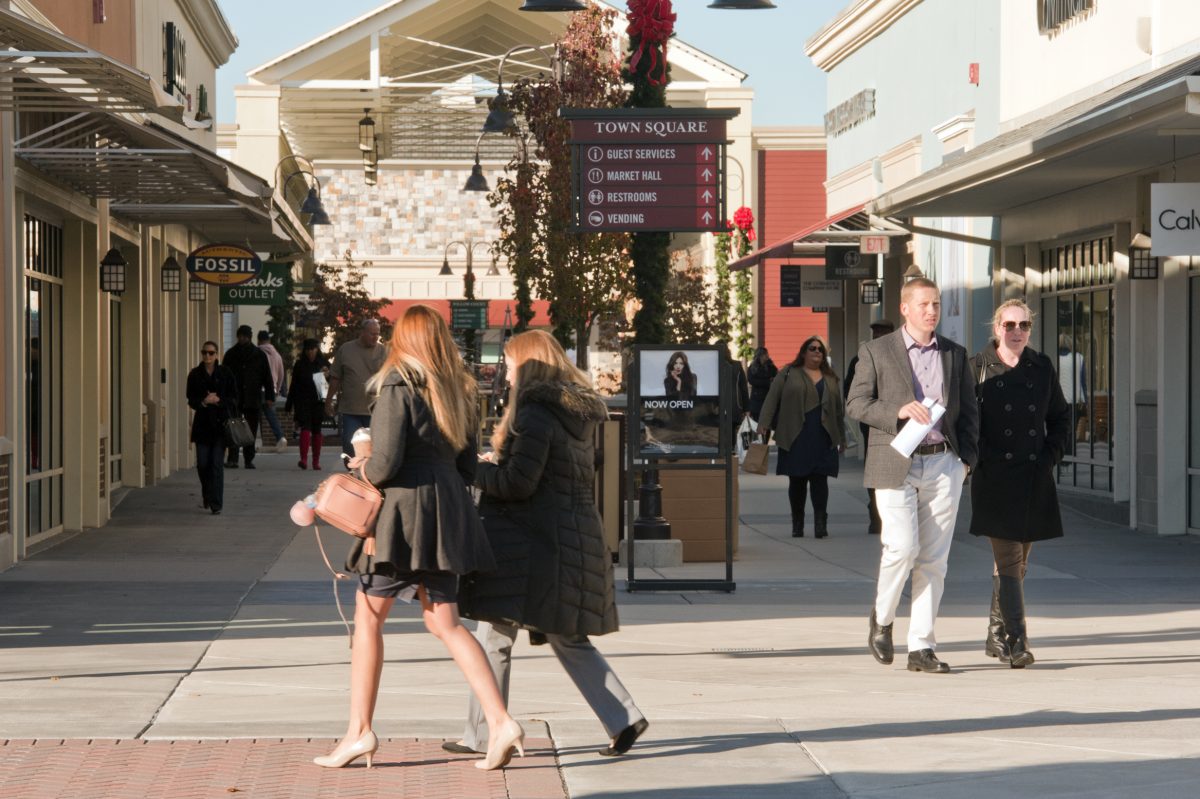
    The tradition is an experience they say can’t be replicated online. The fact that the complex is open-air and contained in a 550,000-square-foot plaza somehow adds to the fun, they said.

    As Kathy Nelson, 48, of Broomall, browsed the outlets with her friends, she said she also shops at the nearly 3 million-square-foot King of Prussia Mall, less than 20 miles away. But otherwise, she said, “there aren’t many indoor malls left” with the variety of stores she prefers.

    As some indoor malls have struggled and died, leaving fewer than 1,000 left nationwide, the outlets remain alive.

    Outlets have always accounted for a fraction of the in-person retail market, which is partly why there have been few headlines about dying outlet malls. But some of the country’s roughly 200 outlet malls seem to be downright thriving, with full parking lots on weekends, few vacant stores, and relatively strong revenue.

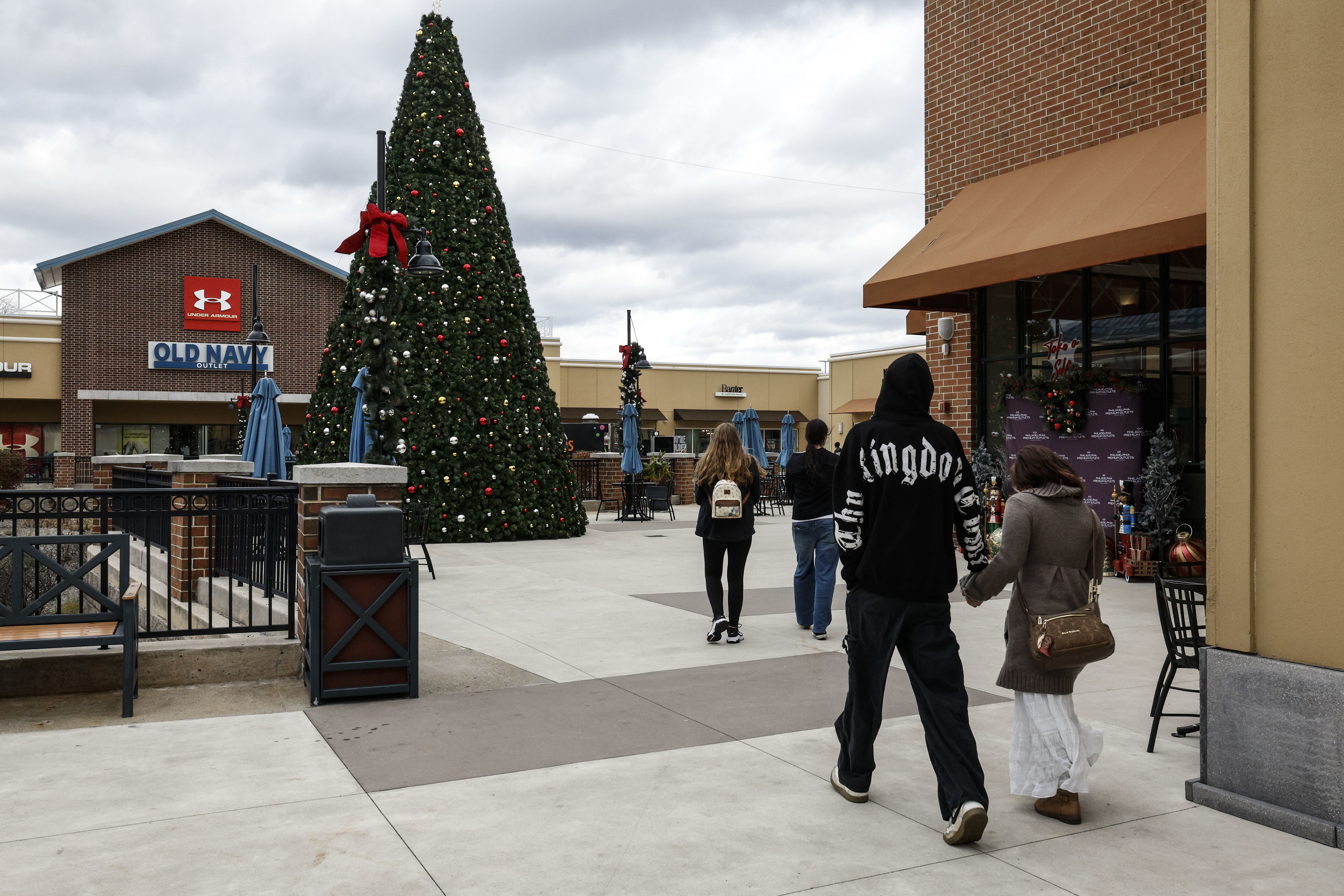
    Shoppers walk by the tree at the Philadelphia Premium Outlets on Nov. 11.

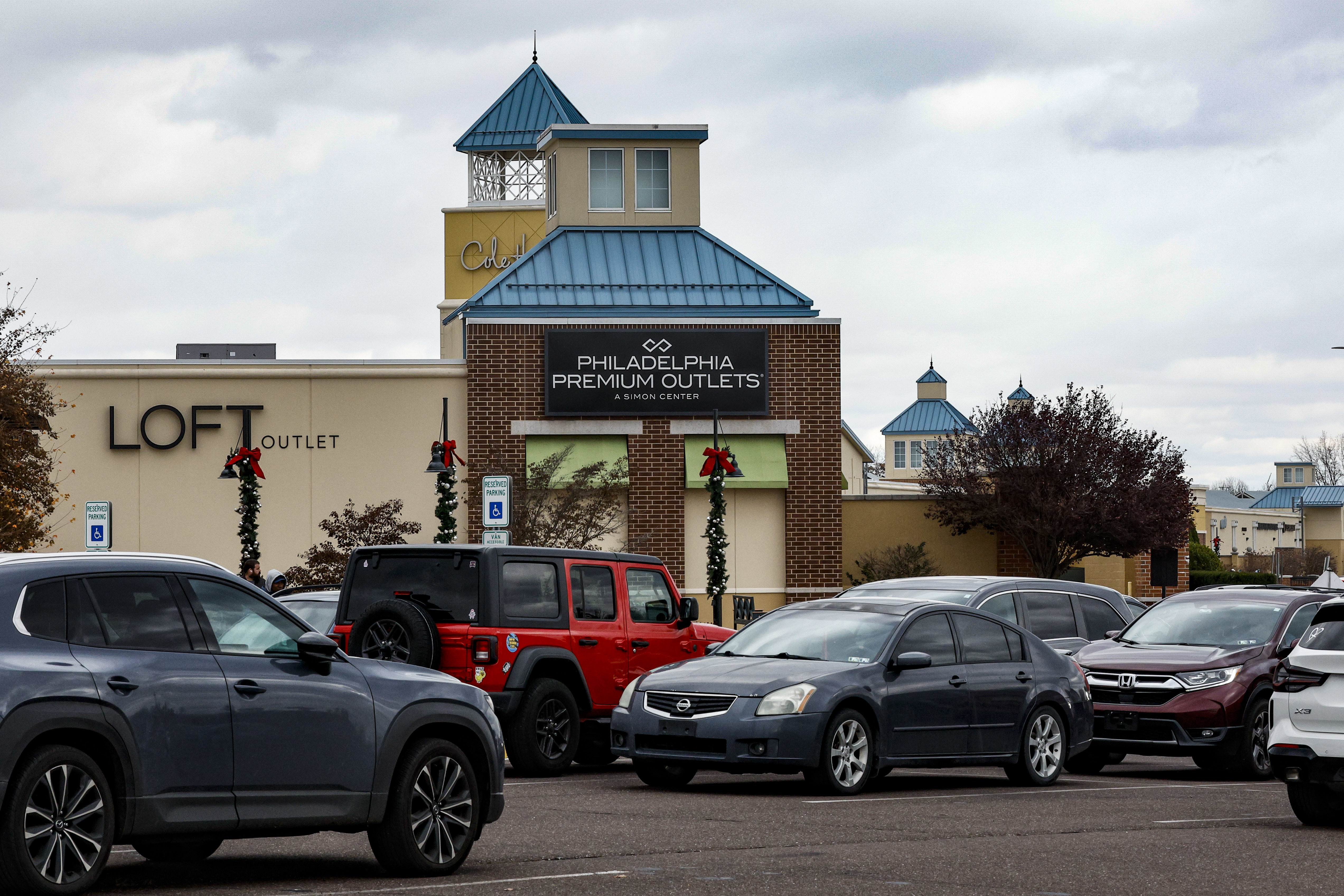
    The Philadelphia region’s two major outlet malls — the Philadelphia Premium Outlets in Limerick Township and the Gloucester Premium Outlets, both owned by Simon Property Group — are more than 92% occupied, according to a count by The Inquirer during visits to each location this month. Both outlets have found success despite being less than 20 miles from thriving indoor malls in King of Prussia and Cherry Hill.

    Tanger Outlets, which has locations in Atlantic City and Lancaster, recently reported more than 97% occupancy across its 39 open-air centers and an increase in average tenant sales per square foot.

    “Outlets do good in good times and great in bad times,” said Lisa Wagner, a longtime consultant for outlets, repeating a common refrain in the industry.

    The centers have evolved amid the broader push toward more experiential retail and most now have a mix of discount stores and full-price retailers. But they have done so while embracing their reputation as the go-to destination for snagging deals, said Wagner, a principal at the Outlet Resource Group.

    “Honestly no one knew what was going to happen after COVID, but [the outlets] came out incredibly strong,” she said. More recently, the retail industry has been rattled by tariffs and economic uncertainty. The outlets have not been immune to those challenges, but they have held strong despite them.

    “People want value right now,” Wagner said. “They need it.”

    The Philadelphia Premium Outlets has more than 130 stores in its 500,000-square-foot complex.

    Outlet malls become one-stop shops

    On a rainy, early November Sunday, hundreds of people descended on the Gloucester Premium Outlets.

    Shoppers pulled up hoods and huddled under umbrellas as they made their way from store to store. Many balanced several large bags bearing brand names like Columbia and Kate Spade, Rally House and Hey Dude shoes. Some munched on Auntie Anne’s pretzels or sipped Starbucks from holiday cups. An acoustic version of Jingle Bells played over the speakers.

    For some, the dreary, drizzly weather was even more reason to spend their afternoon at the 86-store complex in Blackwood, Camden County, about 15 miles outside Philadelphia.

    With two young children in tow, Jessica Bonsu, 30, of Sicklerville, was on a mission.

    “We came out to go to the indoor playground,” called Stay & Play, Bonsu said, pointing to her rambunctious kids. “Just to get some energy out.”

    “And then we can also get some shopping done,” added her cousin, Taneisha Laume, 30, who was visiting from D.C. She needed a gift for her uncle. “Kill two birds with one stone.”

    Shoppers peruse the stores at the Gloucester Premium Outlets in this 2019 file photo.

    These kind of multipurpose visits are buoying outlet malls, which are increasingly becoming mixed-use destinations for dining, drinking, entertainment, and shopping.

    “You’re coming for a little bit of everything,” said Gerilyn Davis, director of marketing and business development at Philadelphia Premium Outlets.

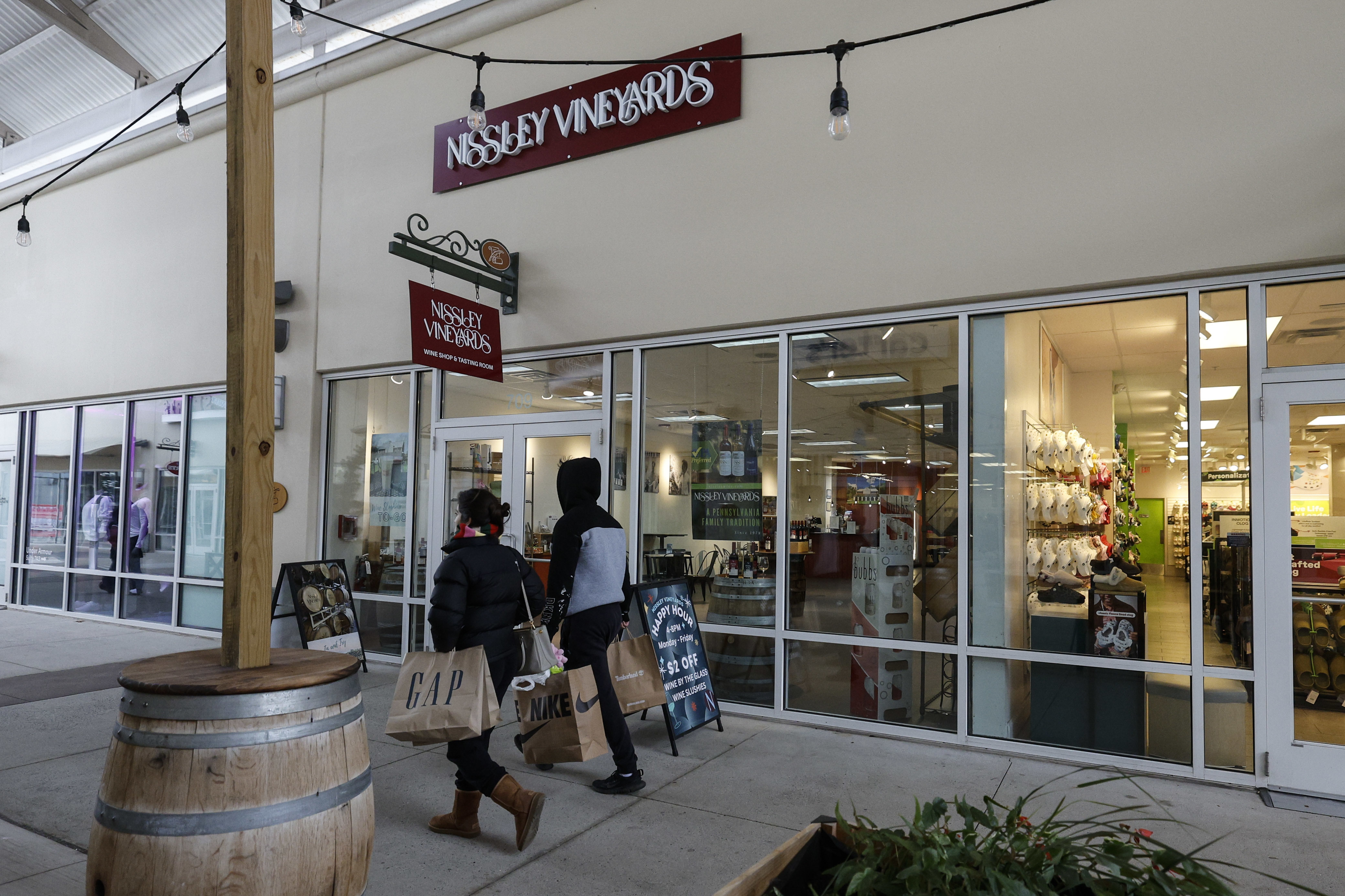
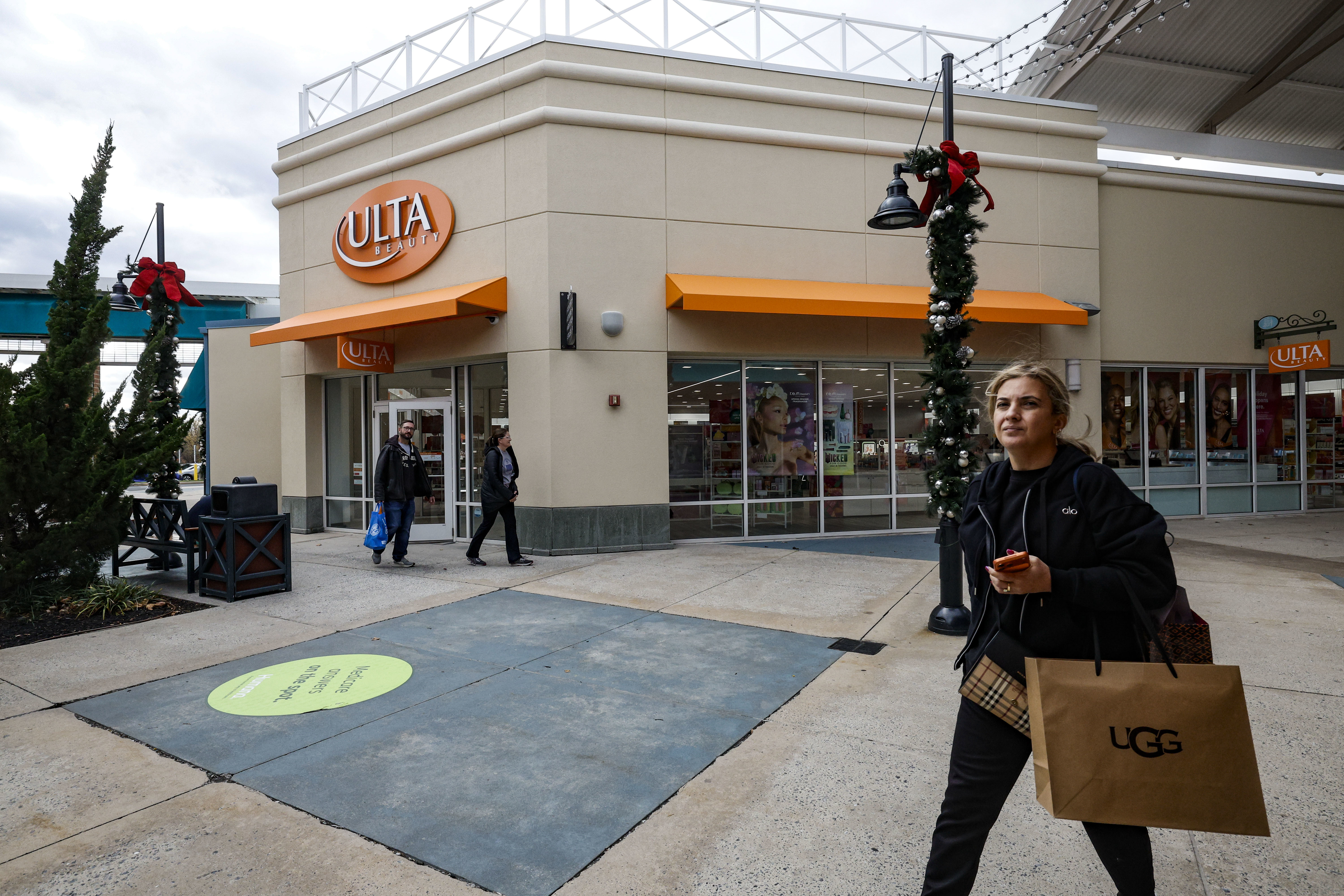
    The Limerick Township complex recently welcomed a slate of new tenants, including Marc Jacobs’ first Pennsylvania outlet store, a BOSS outlet, an Ulta Beauty, and an outpost of central Pennsylvania’s Nissley Vineyards, which has an outdoor seating area.

    Shoppers walk by the Nissley Vineyards store at the Philadelphia Premium Outlets.

    New Balance, whose shoes are trendy again, is also opening stores in both the Philadelphia and Gloucester outlets.

    Justin Stein, Tanger’s executive vice president of leasing, said the North-Carolina-based company is focused on adding more food, beverage, and entertainment options.

    While overall occupancy at its Atlantic City center is lower than others, the complex has a Dave & Buster’s and a Ruth’s Chris steakhouse. The Simpson, a Caribbean restaurant and bar, is also set to open there in early 2026.

    In Lancaster, Tanger is looking to add food and beverage options, Stein said. But that center is still performing well, with a 97% occupancy rate, according to an online map, and only two vacancies.

    When there are places to eat and drink at the outlets, “people stay longer,” Stein said, “and when they stay longer, they spend more.”

    Philadelphia Premium Outlets had a steady crowd on a bitter cold Veterans Day.

    From ‘no frills’ to outlets of the future

    Today’s outlet malls look vastly different from what Wagner calls the “no frills” complexes of the 1990s.

    At the time, an outlet mall served as “a release valve for excess goods,” Wagner said. “There were some stores that had really broken merchandise.”

    To comply with branding rules and avoid competition with department stores, outlet malls were often located along highways between two major metro areas, she said.

    “What became clear is that customers loved it,” Wagner said. Soon, brands started overproducing to supply these outlet stores with products in an array of a sizes and colors.

    This effort to bulk up outlet offerings was “a roaring success,” she said, with companies finding that more than a third of outlet customers went on to buy their products at full price at other locations.

    Philadelphia Premium Outlets, which opened in 2007, has very few vacant storefronts.

    As their popularity rose, more outlet malls were built across the country.

    The Atlantic City outlets, originally called The Walk, opened in 2003, followed by the Philadelphia Premium Outlets four years later. In 2015, the Gloucester Premium Outlets opened, with local officials calling the approximately 400,000-square-foot center the largest economic development project in township history.

    As the centers look to the future, their executives are continuing to hone their identity as “not just a discount-and-clearance center,” said Deanna Pascucci, director of marketing and business development at Gloucester Premium Outlets.

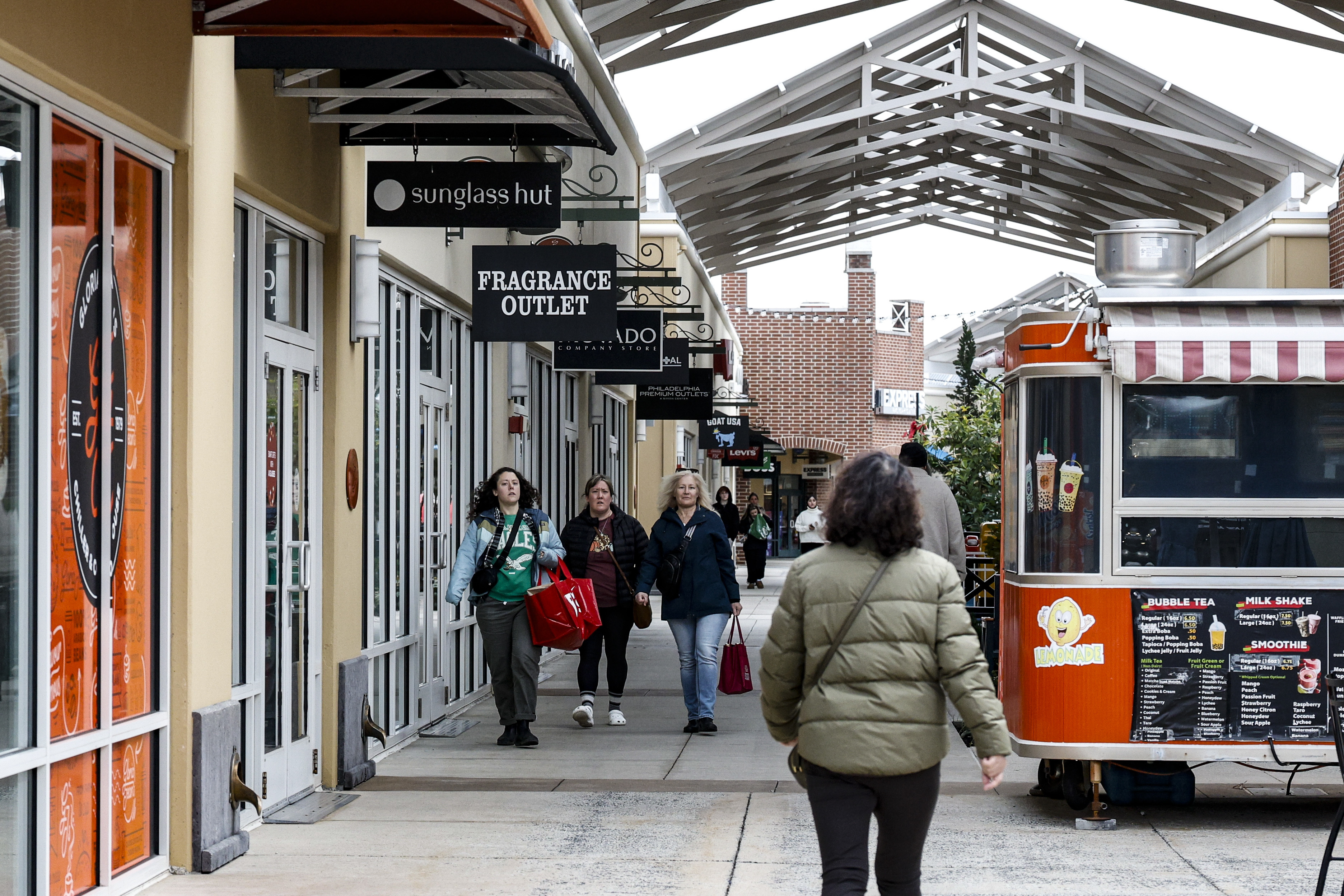
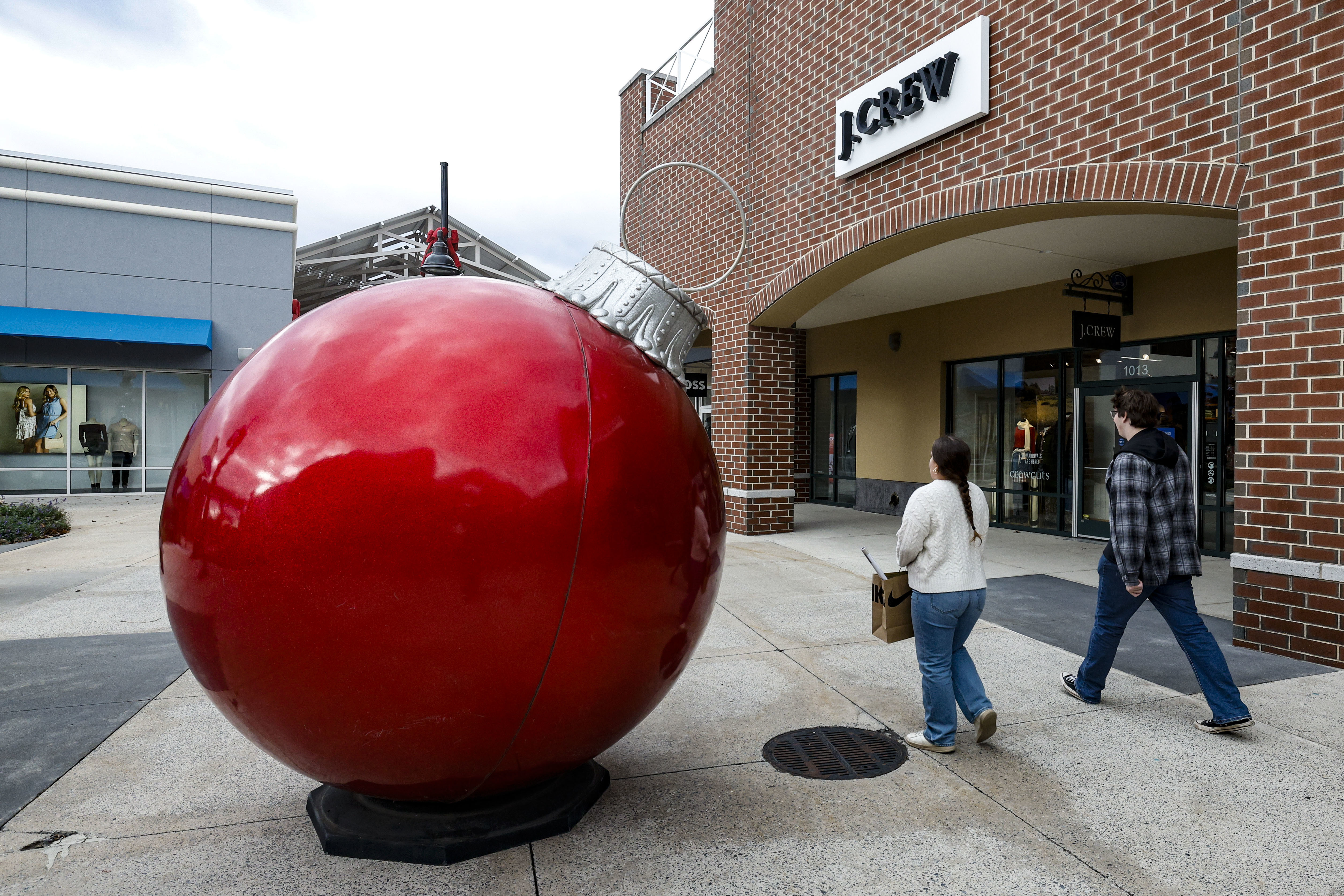
    Center leaders are bringing in food trucks, leaning into rewards programs, and promoting community events, such as Gloucester’s holiday tree lighting, which took place Saturday. Starting Black Friday, the Philadelphia Premium Outlets will offer Santa photos after a successful pilot program last year.

    And the complexes are finding new ways to attract and retain shoppers, online and in real life.

    Tanger recently announced an advertising partnership with Unrivaled Sports, which operates youth sports complexes, including the Ripken Baseball Experience in Aberdeen, Md., an hour drive from its Lancaster outlets. Stein said the company hopes to attract families looking to pass the time between tournament games.

    Tanger is also using AI and data analytics to email specific deals to customers based on where they’ve previously shopped, Stein said.

    “We want you to start your experience online and end it in the store,” Stein said.

    Shoppers walk by a new Ulta store at the Philadelphia Premium Outlets.

    At Simon outlets, customers can search a store’s inventory online before they make the trip, Davis said.

    “Online shopping at this point, it’s a complement,” Davis said. “It’s not viewed as competition.”

    Wagner, the outlet consultant, said she thinks even more centers will be built in the coming years, with a focus on urban and close-in suburban locations that are accessible by public transit.

    As for existing centers, she sees them thriving for the foreseeable future.

    “As long as outlets continue to emphasize a value message and use their loyalty programs to reward customers,” Wagner said, “I think they will hold their own.”

  • Pa.’s new budget has financial help for Delco’s Riddle and Mercy Fitzgerald Hospitals

    Pa.’s new budget has financial help for Delco’s Riddle and Mercy Fitzgerald Hospitals

    Pennsylvania’s new budget has $5 million in supplemental payments for the two Delaware County Hospitals that have seen significant increases in patient volumes since Crozer-Chester Medical Center and Taylor Hospital closed in the spring.

    Main Line Health’s Riddle Hospital, near Media, is getting $3 million. The amount for Trinity Health Mid-Atlantic’s Mercy Fitzgerald Hospital, in Darby, is $2 million, according to budget documents.

    The $5 million will be doubled by a federal match, said Democratic State Sen. Tim Kearney, who represents part of Delaware County. The $5 million is from a fund used to help hospitals the serve a large number of patients with Medicaid and used to go to Crozer Health, Kearney said Friday.

    Main Line said in a statement Thursday that the money will help it maintain services in the county.

    “Since Crozer’s shutdown in April, Riddle’s Emergency Department has experienced an unprecedented surge — 46% more patients than the same period last year, an increase of nearly 4,000 overall,“ the nonprofit said.

    Main Line, which also owns Lankenau Medical Center, Bryn Mawr Hospital, and Paoli Hospital, said it has seen 55,000 patients from the Crozer market — a 15% increase over the same time period last year. That figure includes 8,000 patients who went to a Main Line facility for the first time, the health system said.

    Trinity Health did not respond to a request for comment.

    Shuttered hospitals in limbo

    While Riddle and Mercy Fitzgerald have scrambled to accommodate patients who used to rely on Crozer Health, efforts are underway to bring healthcare services back to at least Taylor Hospital in Ridley.

    Local investors bought that facility in September for $1 million and are trying to entice one of the region’s nonprofit health systems to bring it back as a hospital.

    A group from New Jersey called Chariot Allaire Partners LLC has agreed to pay $10 million for the former Crozer-Chester Medical Center in Upland but has not disclosed its plans. That facility served as a key safety provider for a low-income area of Delaware County.

    A partnership of Restorative Health Foundation and Syan Investments won an auction for Springfield Hospital for $3 million, but it does not have support from township officials.

    Delaware County legislators also obtained $1 million from the state to buy emergency department equipment if one of the closed hospitals, such as Taylor, reopens, Kearney said.

    Editor’s note: This story has been updated with additional detail on the funding.

    This suburban content is produced with support from the Leslie Miller and Richard Worley Foundation and The Lenfest Institute for Journalism. Editorial content is created independently of the project donors. Gifts to support The Inquirer’s high-impact journalism can be made at inquirer.com/donate. A list of Lenfest Institute donors can be found at lenfestinstitute.org/supporters.

  • As data center water demand surges, rivals American Water and Aqua are merging

    As data center water demand surges, rivals American Water and Aqua are merging

    Camden-based American Water has agreed to buy its Bryn Mawr rival Essential Utilities and its Aqua water division in an all-stock deal that combines the two largest municipal water and sewage system companies in the U.S. into a single entity that aims to acquire more.

    The deal joins two companies that trace their roots to the late 1800s, Essential chairman and chief executive Christopher Franklin told investors Monday in a conference call.

    Joined under the American Water brand at its Camden headquarters, the enlarged company will be worth around $40 billion on the stock market, ranking with water and electric companies among the 10 most valuable U.S. utility stocks, American Water CEO John Griffith, said in an interview.

    “It’s going to be a real powerhouse, must-own” stock, said Griffith, a former investment banker who took over as American Water CEO last year and will head the merged companies.

    With around 10,000 total employees, the companies together serve around 5 million water and wastewater customers across 17 states, plus military bases in more than a dozen states, with Pennsylvania accounting for around one-third of the total.

    The two companies are “by far the two largest players in the regulated water utility industry,” said Ryan M. Connors, a veteran utility analyst now with Northcoast Research in Cleveland. Together they would be “a truly dominant” water utility, he said.

    Locally, American Water serves users in the Coatesville, Downingtown, Exton, Norristown, Phoenixville, and Plymouth Meeting areas, and in Burlington, Glassboro, Haddonfield, and other areas in South Jersey.

    Aqua has customers in communities throughout Philadelphia’s Pennsylvania and New Jersey suburbs.

    Franklin acknowledged that Essential’s share price has been trading “at a discount,” adding that sales and profits should grow more quickly under American Water.

    The companies are looking for a possible buyer for Essential’s Pittsburgh gas utility, Peoples, which Franklin bought for $4.3 billion in 2020.

    The partners will need approvals from shareholders and state utility regulators in at least five states, including Pennsylvania and New Jersey, to close the deal on schedule by early 2027. Connors said the combined company from its New Jersey headquarters needs to show it can continue Aqua’s success getting Pennsylvania regulators to approve water charges and plans.

    Franklin said that on Sunday, he told his predecessor, longtime Aqua CEO Nicholas DeBenedictis, about the merger. “He said, ‘It could have happened 20 years ago. These companies belong together.’”

    As a combined company, the leaders said it would be easier to finance the $28 billion in improvements needed over the next five years to upgrade systems.

    About two-thirds of that total will go toward routine upgrades and new technology. The rest includes environmental improvements, including the cost of complying with lead and copper limits, and cleaning water from potentially cancer-causing PFAS chemicals formerly leached into U.S. waters by chemical manufacturers and government firefighting gear.

    Franklin said the merger would make it easier to “keep customer rates affordable” as the business expands.

    As a larger company, the two CEOs said they also would be able to more easily service AI and high-speed data centers and other large new customers.

    Essential has committed to investing $26 million to supply 18 million gallons a day to International Electric Power’s 1,400-acre data center and nearly 1,000-megawatt natural gas and battery storage plant, which sit on former coal-mining lands in western Pennsylvania’s Greene County. Griffith said other large projects are under consideration.

    Though neither company ruled out back-office job cuts, offices in Bryn Mawr and Pittsburgh as well as the Camden headquarters will remain open. Griffith said he plans to honor union contracts with dozens of labor organizations, including locals of the Operating Engineers and Steelworkers.

    “This is really not a cost savings-driven transaction. Both American Water and Essential are growing in a robust way,” Griffith said.

  • Montco woman files for class action after her cat suffocated in a food container

    Montco woman files for class action after her cat suffocated in a food container

    Curiosity killed the cat, the adage goes, but in the case of Ace the kitten, the fault lies with a defective pet-food container, according to a proposed class-action lawsuit filed in Philadelphia’s federal court.

    Valentina Mallozzi, of Montgomery County, says in the complaint that, in July, Ace managed to get into a locked Iris pet food container she ordered from Amazon. But once the 3-pound kitten was inside, the airtight lid dropped and locked Ace inside.

    The lawsuit, filed last week, accuses Iris USA of creating a defective product that it markets as safe for pets. The complaint says Mallozzi is one of many pet owners who tragically lost their cat to an Iris container.

    The complaint aims to represent all people in the United States who purchased an Iris container. The complaint does not include an estimate of how many people are included in the class, or how much money Iris would owe each person.

    Iris USA, a subsidiary of Japanese plastics manufacturer Iris Ohyama, did not respond to a request for comment.

    Mallozzi bought the Iris airtight stackable containers for $29.99 from Amazon in March, the complaint says. The containers have a locking mechanism that Iris claimed is designed to “keep pets from sneaking a second or even third breakfast with the secure locking latch,” according to the complaint.

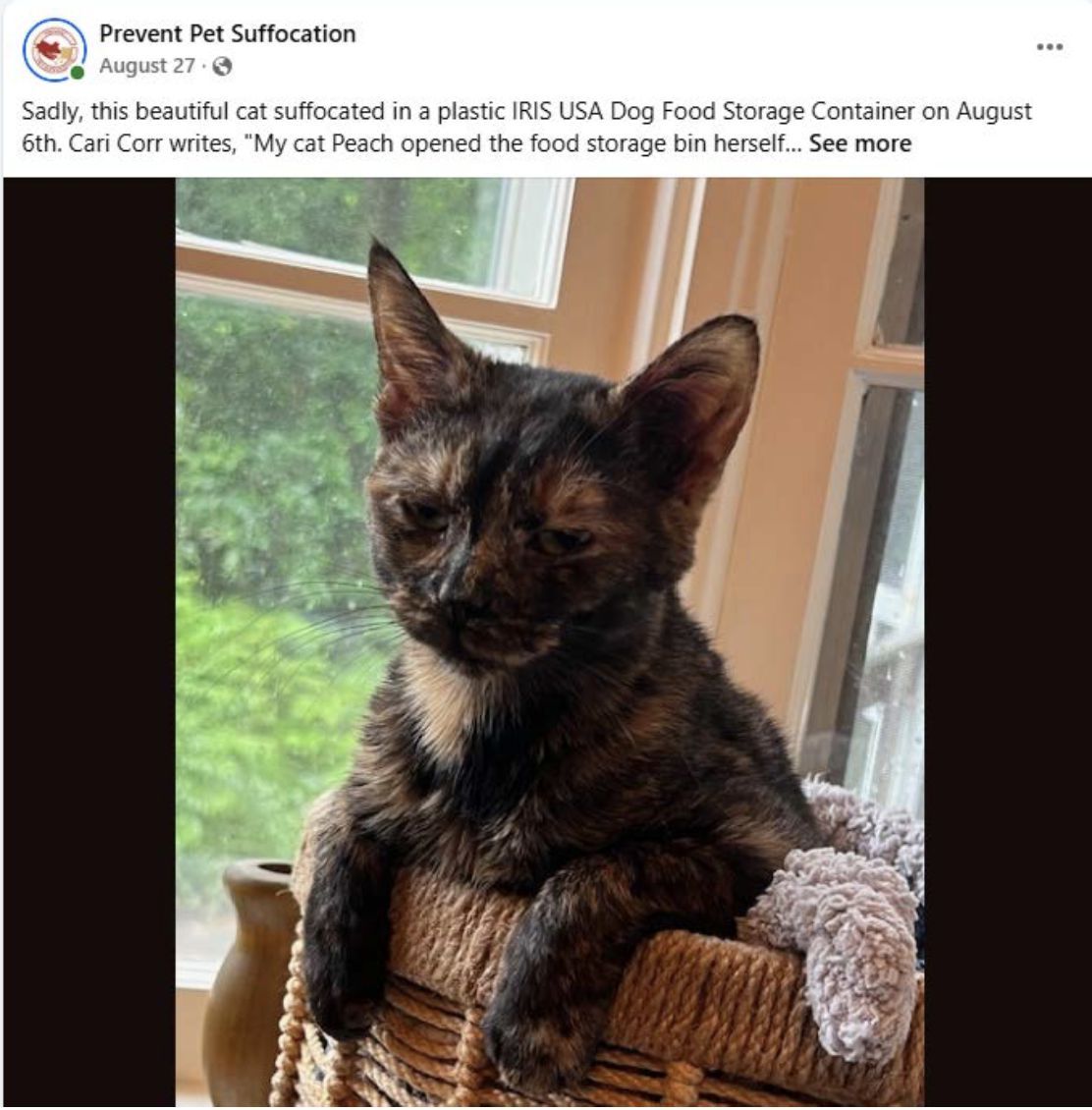
    Screenshot of a post in the Prevent Pet Suffocation Facebook group, which shares the story of Peach the cat who died trapped in a Iris USA food storage container, from Valentina Mallozzi’s lawsuit against the company.

    The problem, the suit says, is that cats can open the latch from outside, climb in, and get trapped as the mechanism automatically locks them in. The airtight seal that keeps pet food fresh makes the trap deadly, as a “pet will suffocate within a few minutes,” the complaint says.

    The lawsuit cites posts from the Prevent Pet Suffocation Facebook group in which cat owners share stories about their beloved pets getting trapped in an Iris container.

    One post included in the complaint shares the story of Baby Bear, a family’s cat who was found dead in an Iris container by an 8-year-old girl.

    “My cat, Max, also suffocated in an Iris pet food container,” a woman responded. “I know the pain you’re going through.”

    Iris USA was put on notice, and not only by people on social media, the complaint says. In March, the Center for Pet Safety, a Virginia-based nonprofit, put out a report evaluating the risk food containers represent for pet suffocation that specifically calls out Iris.

    The latch mechanism on the lid “significantly increases the risk of pet suffocation,” the report says.

    The lawsuit says the product should have come with a label warning of the suffocation risk for pets that can unlatch the lid.

  • Jefferson Health says it will terminate Lehigh Valley Health Network’s contracts with UnitedHealthcare

    Jefferson Health says it will terminate Lehigh Valley Health Network’s contracts with UnitedHealthcare

    Jefferson Health says it will terminate Lehigh Valley Health Network’s contracts with UnitedHealthcare next year, stating United, the nation’s largest health insurer, is paying less than their negotiated rates, Jefferson said Monday.

    The contracts will remain in effect until Jan. 26 for Medicare Advantage patients and until April 25 for patients with commercial insurance through their employer. In the last 18 months, Lehigh Valley Health facilities treated 70,000 people with United insurance, Jefferson said.

    “Like all health systems, we are facing significant headwinds as costs rise faster than reimbursement,” Mark Whalen, Jefferson’s chief strategy and transformation officer, said in an email.

    “When reimbursement falls substantially below negotiated levels, it threatens our ability to fulfill our mission of providing exceptional care to all patients.”

    Whalen said Jefferson will continue working to secure a better deal with United, as it has for more than two years.

    United said in a statement that its most recent proposal went to Lehigh Valley in April. “We have yet to receive a counter proposal from the health system, whose last proposal was provided in December 2024 and included a near 30% price hike in the first year of our contract,” the statement said.

    Jefferson countered with a statement saying that its dealings with United are not part of a normal contract renegotiation. “This ongoing dispute is caused by United Healthcare’s implementation of a multiyear 30% price decrease that was not agreed to, not accepted and is not sustainable, Whalen said.

    The timing of the United announcement is noteworthy. Medicare Advantage open enrollment is underway until Dec. 7 for plans that take effect Jan. 1.

    The potential termination of United’s Medicare plans on Jan. 26 puts United’s customers who depend on Lehigh Valley for health services in a quandary. Should they stick with United or switch to another plan, such as those offered by Jefferson’s insurance arm?

    United said Jefferson’s decision to make its announcement during open enrollment looked like “a negotiating tactic.”

    The Minnesota company has about 27,500 Medicare Advantage enrollees in the main counties served by Lehigh Valley Health doctors, according to federal data from September.

    The impasse does not affect Philadelphia-area Jefferson patients with insurance from UnitedHealthcare.

    Insurance regulations require notice to patients before contracts end.

    In March, Jefferson went out-of-network with Cigna Health for a few weeks during a similar impasse in negotiations. Jefferson and Cigna quickly reached a deal after the termination.

  • Tracking the sharp drop in Philadelphia health systems’ operating margins after COVID-19

    Tracking the sharp drop in Philadelphia health systems’ operating margins after COVID-19

    The worst of the coronavirus pandemic that started nearly six years ago is well in the past, but Philadelphia’s biggest nonprofit health systems are still contending with the financial disruption unleashed by the virus that led to thousands of deaths in the area.

    Operating conditions for hospitals started improving in 2023, but “the slope of the recovery is a bit more shallow than a lot of health systems had planned for,” said Mark Pascaris, a senior director at Fitch Ratings, one of three major credit ratings agencies.

    Patients have returned, but the pandemic led to a resetting of expenses for labor and supplies at a higher level, Pascaris said. “That’s been the challenge over the last two or three or four years now, trying to manage through a very challenging expense situation,” he said.

    To show how the financial landscape has changed, The Inquirer compiled financial data for the region’s six biggest health systems that have fiscal years ending June 30 each year. The analysis compared average operating profits in three years before the pandemic (fiscal years 2017-19) to the results in most recent three years (fiscal years 2023-25).

    All six systems showed a substantial drop in a measure of earnings that excludes certain accounting expenses and interest costs. This slice of financial results is known as earnings before interest, depreciation, and amortization. Abbreviated as EBIDA, it’s a primary indicator watched by influential credit ratings agencies.

    window.addEventListener(“message”,function(a){if(void 0!==a.data[“datawrapper-height”]){var e=document.querySelectorAll(“iframe”);for(var t in a.data[“datawrapper-height”])for(var r,i=0;r=e[i];i++)if(r.contentWindow===a.source){var d=a.data[“datawrapper-height”][t]+”px”;r.style.height=d}}});

    The experience of Children’s Hospital of Philadelphia clearly illustrates what has happened: The organization’s aggregate revenue in the most recent three fiscal years was 58% higher than it was in the three years that ended June 30, 2019, but its EBIDA climbed only by half a percentage point.

    “Hospitals and healthcare systems across the country continue to face significant headwinds, driven by reimbursement challenges, increased supply and labor costs, uncertain governmental pressures, and the continued ripple effect of the pandemic,” CHOP said in a statement.

    Officials at ChristianaCare, Main Line Health, and Temple University Health System echoed CHOP’s remark.

    “Margins were far better prior to the pandemic, largely due to lower supply and labor costs,” Main Line’s chief financial officer Leigh Ehrlich said. “Those costs rose sharply during the pandemic and continue to rise.”

    ChristianaCare’s CFO Rob McMurray noted: Not only have Medicare and Medicaid rates not kept up with inflation, but more people have those government forms of insurance for people 65 and older and for low-income people.

    The nonprofit is expanding from its base in northern Delaware to Southeastern Pennsylvania and is expanding alternative formats, such as hospital-care-at-home and micro hospitals, to reduce costs, McMurray said.

    A significant worry for Temple University Health System is the impact of the 2025 budget reconciliation bill, sometimes called the One Big Beautiful Bill Act. The North Philadelphia nonprofit estimates that Medicaid cuts in that law will cost it $519 million over the next 10 years, said Jerry Oetzel, the system’s CFO.