Category: Business

Business news and market updates

  • Barry Leonard, celebrated crimper and longtime Center City beauty salon owner, has died at 87

    Barry Leonard, celebrated crimper and longtime Center City beauty salon owner, has died at 87

    Barry Leonard, 87, formerly of Philadelphia, celebrated crimper, longtime innovative owner of the Barry Leonard Crimper & Spa in Center City, unisex beauty salon groundbreaker, fashion and marketing trendsetter, haircutting mentor, and Army veteran, died Sunday, Oct. 12, at his home in Hallandale Beach, Fla. The cause of his death has not been disclosed.

    Born in Philadelphia to a family of hairstylists, Mr. Leonard swept the floor at his father’s beauty salon in West Philadelphia as a boy and, in 1955, became the first male to graduate from the beauty culture curriculum at Murrell Dobbins Career and Technical Education High School. He went on to help rewrite state statutes to allow unisex beauty salons in the 1970s, wow the marketing world with innovative ads that featured Fidel Castro, Albert Einstein, Santa Claus, and the Wolfman, and own high-end shops in the old Marriott Hotel on City Avenue and then on Chestnut Street for 43 years.

    A proponent of what he called “natural haircutting,” Barry Leonard, Crimper, counted politicians, musicians, actors, and other celebrities as well as local residents as his regulars, and most of them were fine with waiting months for an appointment. He moved his bustling salon from the Marriott to 1527 Chestnut St. in 1972, relocated to 1822 Chestnut in 1995, and retired to Florida in 2005.

    In the early 1970s, he saw that men appreciated hair care, too, and he successfully challenged an old state law that required separate locations for male and female haircuts. So unisex salons became common in the 1980s and ’90s.
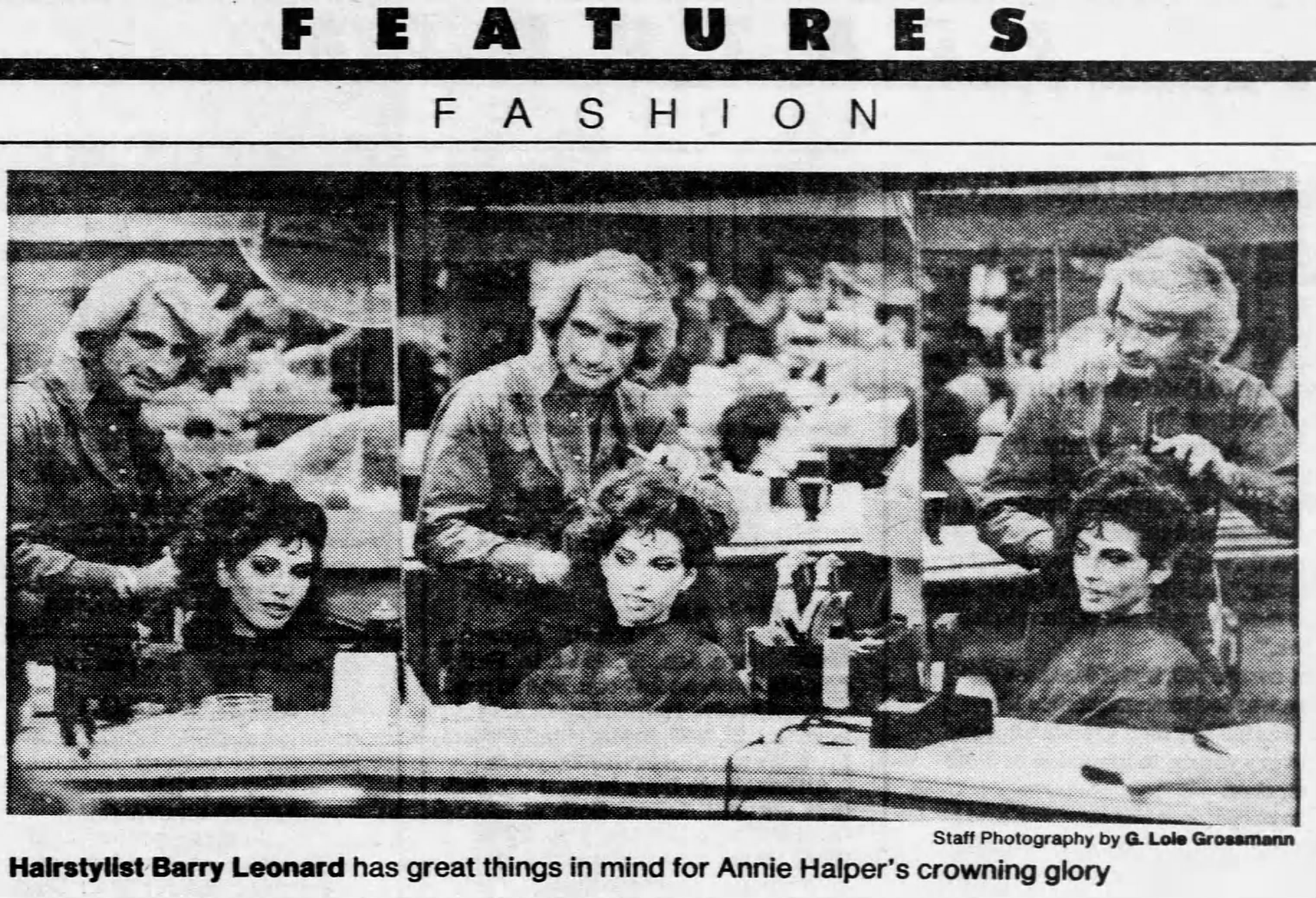
    Mr. Leonard is shown styling the hair of Annie Halpern, his future wife, in this 1985 photo in the Daily News.

    “Hair,” he told The Inquirer in 1973, “is the only part of the body that can be changed readily and allows the individual to play his role as he feels it at that particular moment — protest, freakiness, sensuality, anything.”

    His New Age salon featured wicker furniture, hanging plants, big pillows, Japanese koi, and free coffee, fruit, and wine. He charged $12.50 per cut in 1973 and $25 in 1991. Sometimes, he booked 75 heads a day, his wife, Annie, said.

    Most often, he consulted with customers before the cut, assigned the job to an assistant stylist, and checked back when the work was done. Over his career, he told his wife, he likely attended to more than 1 million customers. In 1991, he told The Inquirer: “My general philosophy is to make people happy.”

    He also created and distributed do-it-yourself manuals for those who couldn’t get appointments and introduced computerized styling technology in the 1980s so clients could design their own cuts on video screens. “I’m a firm believer that nothing lasts forever,” he told the Daily News in 1977. “But right now, I’ll stay the way I am. It’s really a matter of the world catching up with me.”
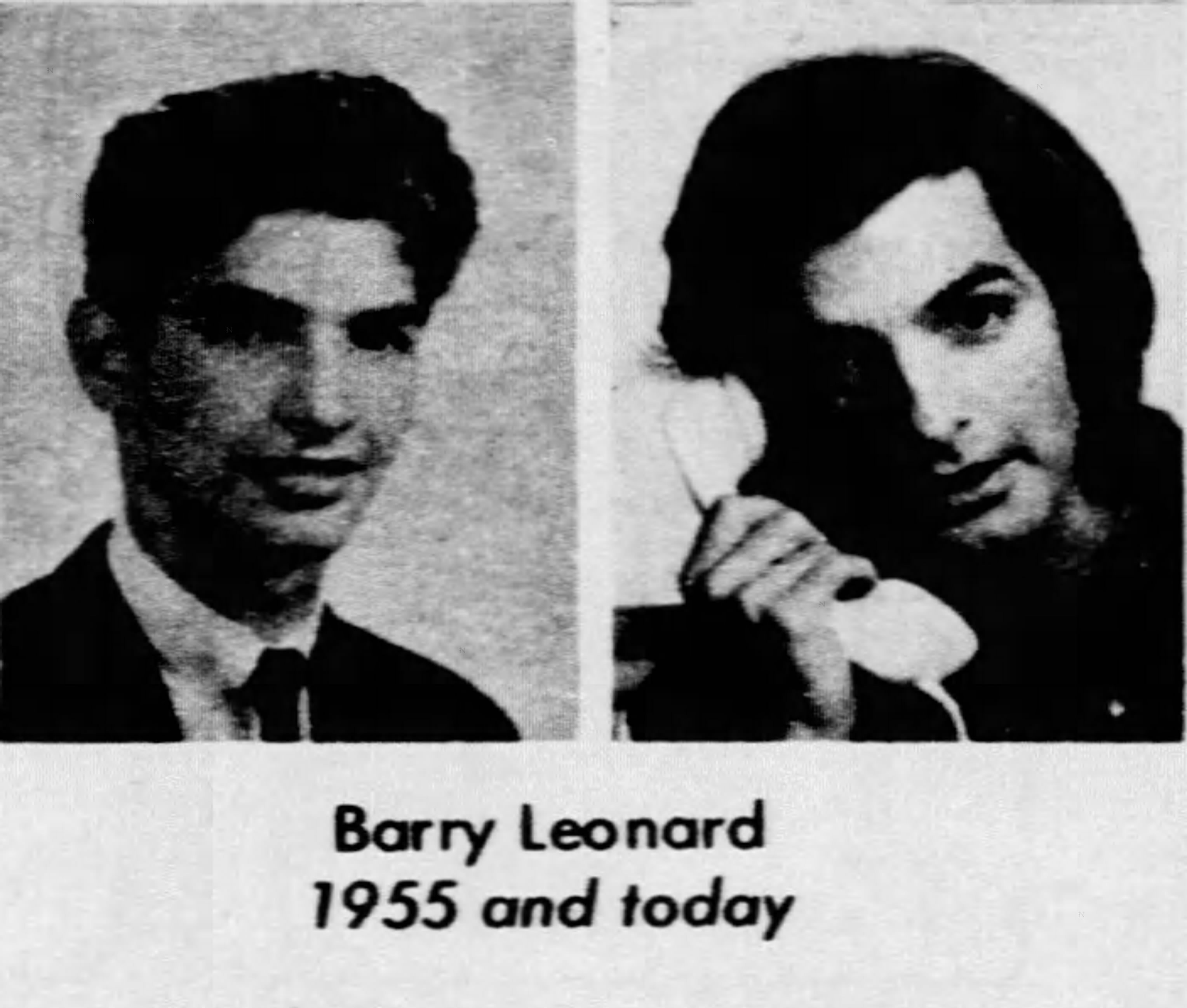
    This then and now photo appeared with a story in The Inquirer in 1973.

    He was featured often in The Inquirer, Daily News, Philadelphia Magazine, Philadelphia Business Journal, and other publications, and writers dubbed him the “top hair gun” in Philadelphia, “the dashing haircutter,” and “Philadelphia’s leading proponent of hair as art.” He dabbled in selling franchises, endorsed a new Japanese hair-straightening process, and hosted runway-style hair shows and crimper workshops.

    Women told him his beauty advice changed their lives. Men said his haircuts improved their sex lives. “I was the image changer,” he told The Inquirer in 2002.

    In the late 1960s, Mr. Leonard gave local advertising whiz Elliott Curson a haircut, and Curson, delighted with the result, suggested rebranding Mr. Leonard as “a crimper,” British slang for hairdresser. What followed was a hugely successful ad campaign and a friendship that lasted more than 50 years.

    One of their first ads featured the phrase: “When I come out of Barry Leonard’s, I won’t look like my mother.” Curson said: “He had that look, the outfit, and the vision that worked so well.”

    Mr. Leonard and his wife, Annie, married in 1986.

    Mr. Leonard liked to wear a work shirt, vest, blue jeans, boots, designer glasses, and turquoise jewelry to work. His own hair flowed down to his shoulders when he was young. He told the Daily News in 1977: “Anybody can be where it’s at. But I’m where it’s going to be.”

    He was a member of Intercoiffure America and participated in its competitive showings in New York and elsewhere. He was included in a display called “Movers and Shakers” at the now-closed Philadelphia History Museum.

    “He would meet you once and have an impact on the rest of your life,” his wife said. “Everybody loved him. He was passionate and compassionate.”

    Barry Leonard was born Jan. 27, 1938, in Philadelphia. He grew up in Wynnefield and Bala Cynwyd, and served in the Army’s 101st Airborne Division for two years after high school.

    Mr. Leonard (second from right) celebrated his 80th birthday with his children.

    He wore a traditional tie and jacket, and cut hair with his father and in a few local shops before opening his place at the Marriott in 1962. He also spent some time working in London and first heard the word crimper there.

    He married Charlene Brooks, and they had daughters Karen, Susan, and Elizabeth and a son, Brett. After a divorce, he met Annie Halpern at a party in 1983. They went to a Neil Diamond concert on their first date in 1984, married in 1986, and moved from Center City to Florida in 2005.

    Mr. Leonard was an avid boxing fan, and he knew his way around the popular Blue Horizon venue on Broad Street. He had a summer home in Longport, N.J., and enjoyed time at Gulfstream Park racetrack in Florida.

    He was spiritual and loquacious, his wife said. He had favorite witty quips, and his family and friends refer to them as “Barryisms.”
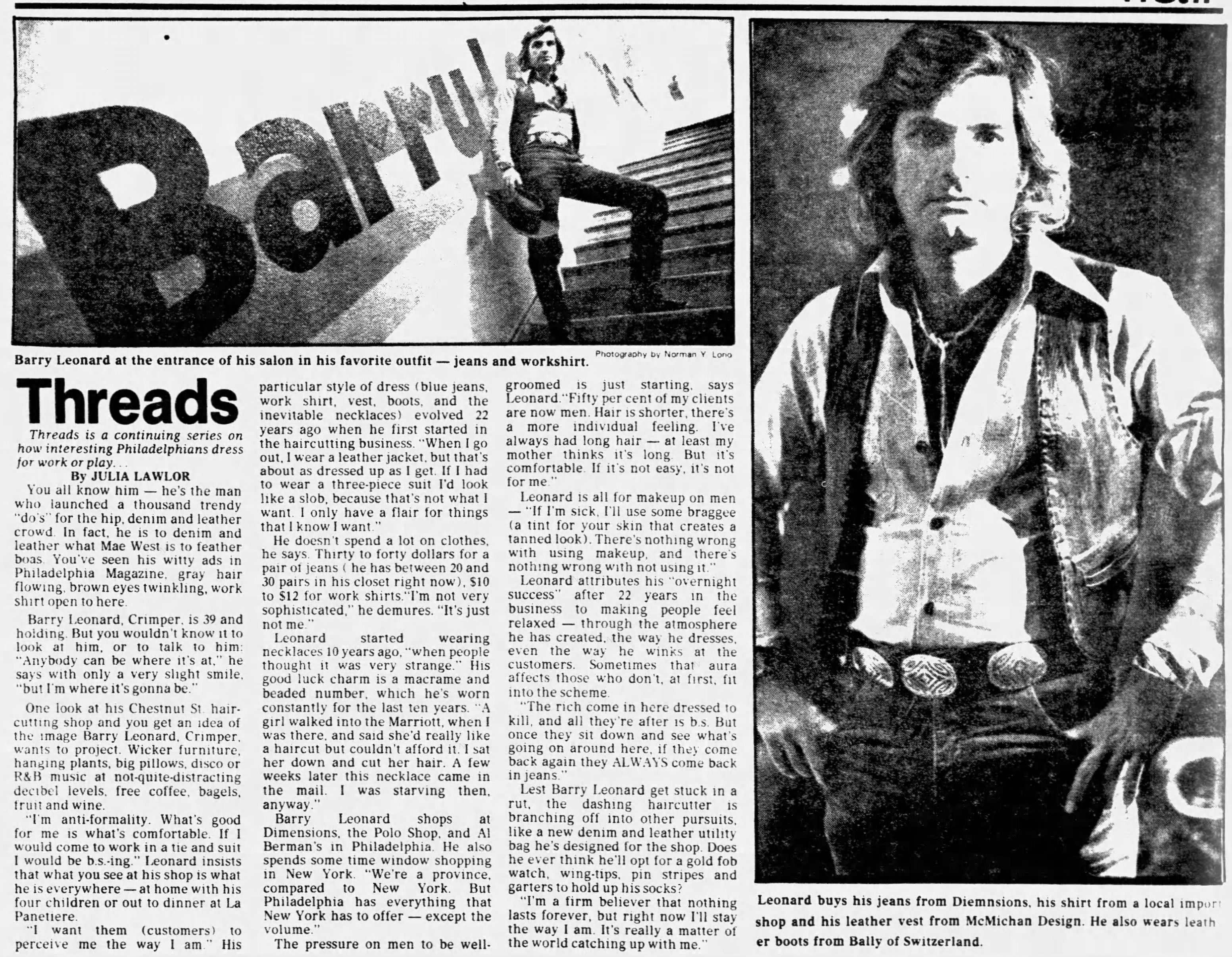
    This article about Mr. Leonard’s fashion sense was published in the Daily News in 1977.

    He attended all kinds of galas and benefits, and doted on his children. “He gave me my first shag” haircut, a longtime friend said on Facebook. Another friend said her neighbor cut her hair once. “The results were not good,” she said. “Barry fixed me.”

    They called him “one of a kind,” “truly the best around,” and a “mentor and a friend.” His wife said: “He was the love of my life.”

    In addition to his wife, children, and former wife, Mr. Leonard is survived by eight grandchildren and other relatives. A brother died earlier.

    A celebration of his life is to be at 11 a.m. Saturday, Dec. 6, at Gulfstream Park, Third Floor, Flamingo Room, 901 S. Federal Highway, Hallandale Beach, Fla. 33009. RSVP to blcrimper@aol.com.

    This ad by Mr. Leonard and Elliott Curson appeared in The Inquirer in 1982.
  • U.S. finance ban takes effect after already crippling Mexico firms

    U.S. finance ban takes effect after already crippling Mexico firms

    An unprecedented order by the U.S. Treasury to cut off three Mexican financial firms for allegedly helping drug cartels launder funds takes effect Monday. But its impact has already swept through the country’s banking industry.

    The three designated firms — CIBanco SA, Intercam Banco SA, and Vector Casa de Bolsa SA — have been broken up and sold for parts. Their clients have decamped with their business — a big chunk of which was foreign exchange — to other banks or brokerages.

    And beyond those firms, the banking system at large is on high alert: Lenders have purged clients, bolstered internal controls, and upped communication with both Mexican and U.S. regulators in an effort to avoid becoming the next example of the Trump administration’s crackdown on drug cartels.

    U.S. officials have made their intentions clear: There’s a zero-tolerance policy when it comes to helping traffickers launder funds connected to America’s fentanyl crisis. The ban on the three firms — announced in June — was the first use of powers given to the Treasury’s Financial Crimes Enforcement Network by last year’s Fend Off Fentanyl Act. High-level Treasury officials have repeatedly visited the country to hammer home the message.

    “This was a shot across the bow in terms of telling banks that Treasury has this tool and intends to use it,” said Craig Timm, a former Department of Justice lawyer and senior director at the Association of Certified Anti-Money Laundering Specialists. “You don’t want to be next, because as we’re seeing with these institutions, it’s an existential threat the moment it becomes public.”

    Among the order’s knock-on effects: Kapital Bank is acquiring a significant part of Intercam’s operations while Vector has transferred some assets and clients to Casa de Bolsa Finamex SAB.

    CIBanco had its banking license revoked earlier this month and BanCoppel, part of Grupo Coppel, is buying the firm’s portfolio of auto loans. Banco Multiva SA is taking over CIBanco’s trustee business — an operation of substantial importance in Mexico’s financial system. CIBanco was trustee for most of the country’s issuances of private equity certificates and real estate investment trusts. Intercam also had a significant trustee business.

    While the U.S. order had downplayed the potential impact on the Mexico banking system and economy, saying that CIBanco and Intercam together represented less than 2% of the country’s commercial bank assets, it made no mention of the significant size of CIBanco’s trustee offering.

    In the wake of the order, Mexican real estate trusts and U.S. private equity firms had rushed to change trustees in investment vehicles to avoid potentially running afoul of the U.S. designation.

    Unconventional arsenal

    The FinCEN orders are among the Trump administration’s unconventional arsenal of tools it has been deploying both domestically and abroad, such as the recent deadly military strikes on alleged drug-trafficking boats from Venezuela.

    The move against the Mexican banks was part of a broader U.S. administration strategy for the “total elimination of cartels” using powerful tools with a relatively low bar for action. There was no recourse to the order by FinCEN, and just last week Mexican President Claudia Sheinbaum said the U.S. had not delivered convincing evidence that linked the firms to drug trafficking. She said Mexican regulators found only administrative faults and “nothing to do with money laundering.” The banks were fined in late June, in tandem with the U.S. orders, by local regulators over anti-money laundering controls while Vector faced fines related to updating fund information.

    Amid the deeper clampdown by U.S. officials, banks in Mexico and globally are enhancing their scrutiny of transactions, particularly those involving Chinese companies that could be linked to the trade in precursor chemicals, Timm said.

  • Six months in, how are Philly-area businesses handling Trump’s tariffs?

    Six months in, how are Philly-area businesses handling Trump’s tariffs?

    It’s been six months since President Donald Trump announced new tariffs on U.S. imports. For local small-business owners, the impact so far depends on what they sell. But they’re all thinking ahead about more adjustments they will have to make.

    Trump declared an “Independence Day” on April 2, implementing a minimum 10% tariff on all countries selling products into the U.S., with larger ones on countries including India and China. Since then the president has either threatened or implemented additional tariffs on certain products such as steel and aluminum, sectors such as furniture, and “reciprocal tariffs” on countries to match their tariffs on American imports.

    Many economists have warned that these higher costs will drive up inflation, slow our economy, and hurt many small businesses that rely on imported goods.

    Fred Woll, president of Philadelphia packaging products supplier F.P. Woll & Co., said he’s seen tariffs from overseas suppliers but “decided to eat a 5% price increase.” He doesn’t think he can do that again.

    “We have been in business in the City of Philadelphia since 1907, and gone through many, many challenges over the last 100-plus years,” he said. “This current challenge may end up being existential, and it’s our country doing it to itself.”

    George Patti, the owner of Head Start Shoes in Philadelphia, is also feeling pressure.

    “Everything is costing me more money and the dollar has dropped in value,” Patti said. “The costs of our merchandise is higher, and we’ve had to raise prices 10% to 15%.”

    At Tildie’s Toy Box in East Passyunk and Haddonfield, owner Michelle Gillen-Doobrajh said tariffs have made this year “confusing and difficult” and the added costs will “absolutely” have an impact on how they do business going forward.

    Michelle Gillen-Doobrajh (right) talks with 10-year-old customer Harlowe McGrath at Tildie’s Toy Box shop in downtown Haddonfield.

    “I am beginning to pass on items where the cost has gone up too much to be realistic for the consumer,” she said. “I fear that product selection will decrease, and many manufacturers will end up going out of business and retailers will follow.”

    “We will have to get used to paying more money for less product,” Gillen-Doobrajh added.

    Not every company is suffering. The family-run Trappe Tavern in Trappe, Montgomery County, has not seen a significant impact.

    “We’ve had some prices creep up,” David Duryea, the restaurant’s owner said. “In general, it hasn’t really had much of an effect at all.”

    If the costs of his food and other supplies continue to go up, Duryea said, people will eventually cut back on their spending and that could affect his business.

    “If that happens, we’re going to have to raise prices like everyone else,” he said.

    Despite new tariffs on steel, Upper Darby-based Delaware Valley Steel has not been significantly impacted, at least for now. That’s because “we don’t import any of our inventory,” said Jerry Sharpe, the company’s CEO.

    However, Sharpe warns that whenever tariffs are applied, the domestic steel mills that sell him products see that as an opportunity to raise prices.

    “If demand picks up, which I believe it will later this year, we will see increased pricing from the domestic mills,” he said. “We’re also going to be hit with a 20% tariff on an expensive piece of machinery we have ordered.”

    Kevin McLaughlin, a partner at business advisory firm Centri Consulting in Philadelphia, said the common theme among his firm’s clients is uncertainty.

    “While the full impact of tariffs has not yet sifted through every corner of the economy, growing businesses and businesses with thinner margins and less negotiating power than large corporations are often the first to feel the pressure,” he said.

    Ten year-old customer Harlowe McGrath looks through figures — all of them 3D printed in the U.S. — at Tildie’s Toy Box shop in downtown Haddonfield Wednesday, Oct. 15, 2025. Store owner Michelle Gillen-Doobrajh is one of many Philly-area business owners dealing with tariffs. McGrath, who lives in town, was shopping with her mother, Kimberly McGrath.

    How small-business owners are navigating tariff uncertainty

    Woll says he’s focusing on cutting his overhead and may lay off employees. Gillen-Doobrajh is changing her product mix by “stocking up where tariffs are low” and foregoing unnecessary items.

    “I’m trying to be really smart and frugal with buying overall,” she said. “I am also paying attention to where items are made and holding out hope that these tariffs will dissolve so that our industry can survive.”

    Frank Cettina, who runs operations at Computer Components Corp., a precision tools contract manufacturer based in Philadelphia, is passing along any added costs to customers, with transparency. Tariff-related cost increases are noted separately and determined “on a customer-by-customer basis,” he said.

    “We are not making blanket cost increases because our intention is to remove them when and if they go away or change,” Cettina said. “We are also offering any alternative sources where we can.”

    Patti said he will likely buy less product but will also “buy higher quality just to pick up my margins” and compensate for the loss of volume.

    McLaughlin, the consultant, struck a more positive tone. He said clients are “stress-testing” multiple “what-if” scenarios so their businesses can adapt quickly.

    “With all the uncertainty, we are consistently encouraged by how resourceful our clients are through this unique time,” he said. “Many are using this moment as an opportunity to strengthen supplier relationships, accelerate efficiency, and polish their value propositions.”

  • Massive Amazon cloud outage has been resolved after disrupting internet use worldwide

    Massive Amazon cloud outage has been resolved after disrupting internet use worldwide

    LONDON — Amazon says a massive outage of its cloud computing service has been resolved as of Monday evening, after a problem disrupted internet use around the world, taking down a broad range of online services, including social media, gaming, food delivery, streaming and financial platforms.

    The all-day disruption and the ensuing exasperation it caused served as the latest reminder that 21st century society is increasingly dependent on just a handful of companies for much of its internet technology, which seems to work reliably until it suddenly breaks down.

    About three hours after the outage began early Monday morning, Amazon Web Services said it was starting to recover, but it wasn’t until 6 p.m. Eastern that “services returned to normal operations,” Amazon said on its AWS health website, where it tracks outages.

    AWS provides behind-the-scenes cloud computing infrastructure to some of the world’s biggest organizations. Its customers include government departments, universities and businesses, including The Associated Press.

    Cybersecurity expert Mike Chapple said “a slow and bumpy recovery process” is “entirely normal.”

    As engineers roll out fixes across the cloud computing infrastructure, the process could trigger smaller disruptions, he said.

    “It’s similar to what happens after a large-scale power outage: While a city’s power is coming back online, neighborhoods may see intermittent glitches as crews finish the repairs,” said Chapple, an information technology professor at the University of Notre Dame’s Mendoza College of Business.

    Amazon blames domain name system

    Amazon pinned the outage on issues related to its domain name system that converts web addresses into IP addresses, which are numeric designations that identify locations on the internet. Those addresses allow websites and apps to load on internet-connected devices.

    DownDetector, a website that tracks online outages, said in a Facebook post that it received over 11 million user reports of problems at more than 2,500 companies. Users reported trouble with the social media site Snapchat, the Roblox and Fortnite video games, the online broker Robinhood and the McDonald’s app, as well as Netflix, Disney+ and many other services.

    The cryptocurrency exchange Coinbase and the Signal chat app both said on X that they were experiencing trouble related to the outage.

    Amazon’s own services were also affected. Users of the company’s Ring doorbell cameras and Alexa-powered smart speakers reported that they were not working, while others said they were unable to access the Amazon website or download books to their Kindle.

    Many college and K-12 students were unable to submit or access their homework or course materials Monday because the AWS outage knocked out Canvas, a widely used educational platform.

    “I currently can’t grade any online assignments, and my students can’t access their online materials” because of the outage’s effect on learning-management systems, said Damien P. Williams, a professor of philosophy and data science at the University of North Carolina at Charlotte.

    The exact number of schools impacted was not immediately known, but Canvas says on its website it is used by 50% of college and university students in North America, including all Ivy League schools in the U.S.

    At the University of California, Riverside, students couldn’t submit assignments, take quizzes or access course materials, and online instruction was limited, the campus said.

    Ohio State University informed its 70,000 students at all six campuses by email Monday morning that online course materials might be inaccessible due to the outage and that “students should connect with their instructors for any alternative plans.” As of 7:10 p.m. Eastern, access was restored, the university told students.

    Record of past outages

    This is not the first time issues with Amazon cloud services have caused widespread disruptions.

    Many popular internet services were affected by a brief outage in 2023. AWS’s longest outage in recent history occurred in late 2021, when a wide range of companies — from airlines and auto dealerships to payment apps and video streaming services — were affected for more than five hours. Outages also happened in 2020 and 2017.

    The first signs of trouble emerged at around 3:11 a.m. Eastern time, when AWS reported on its “health dashboard” that it was “investigating increased error rates and latencies for multiple AWS services in the US-EAST-1 Region.” Later, the company reported that there were “significant error rates” and that engineers were “actively working” on the problem.

    Around 6 a.m. Eastern time, the company reported seeing recovery across most of the affected services and said it was seeking a “full resolution.” As of midday, AWS was still working to resolve the trouble.

    Sixty-four internal AWS services were affected, the company said.

    Just a few companies provide most internet infrastructure

    Because much of the world now relies on three or four companies to provide the underlying infrastructure of the internet, “when there’s an issue like this, it can be really impactful” across many online services, said Patrick Burgess, a cybersecurity expert at U.K.-based BCS, The Chartered Institute for IT.

    “The world now runs on the cloud,” Burgess said.

    And because so much of the online world’s plumbing is underpinned by so few companies, when something goes wrong, “it’s very difficult for users to pinpoint what is happening because we don’t see Amazon, we just see Snapchat or Roblox,” Burgess said.

    “The good news is that this kind of issue is usually relatively fast” to resolve, and there’s no indication that it was caused by a cyberattack, Burgess said.

    “This looks like a good old-fashioned technology issue. Something’s gone wrong, and it will be fixed by Amazon,” he said.

    There are “well-established processes” to deal with outages at AWS, as well as rivals Google and Microsoft, Burgess said, adding that such outages are usually over in “hours rather than days.”

  • The wooded Malvern-area home of a famous Main Line builder is for sale for nearly $2 million

    The wooded Malvern-area home of a famous Main Line builder is for sale for nearly $2 million

    A Chester County home full of beautiful woodwork and secluded on five acres of land is for sale for nearly $2 million.

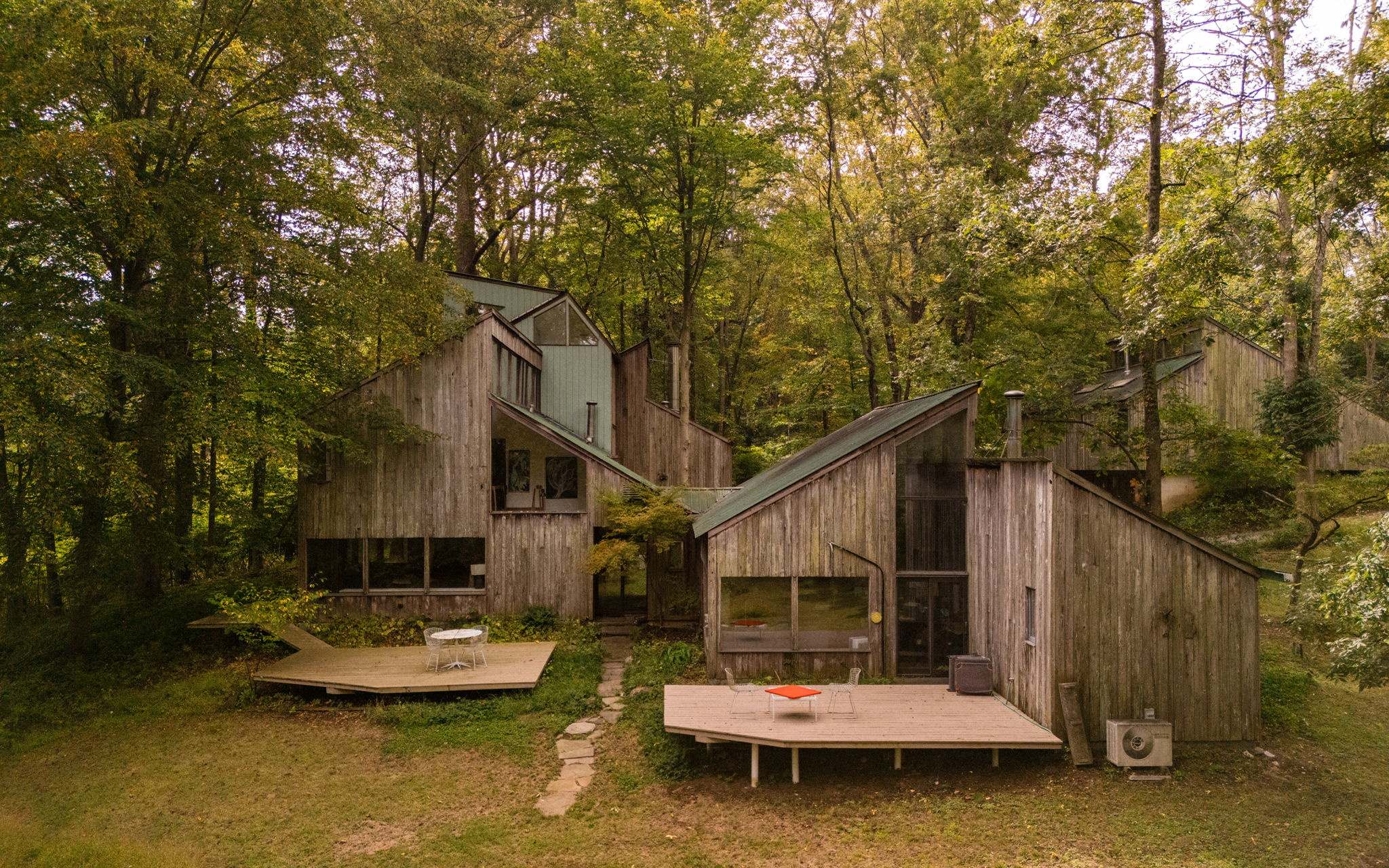
    Advertised as the “McElroy House” in an ode to the late builder Robert McElroy, the 4,300-square-foot property near Malvern hit the market last week for $1.99 million.

    This Willistown Township home, for sale for nearly $2 million, was designed by Robert McElroy and has a wing that was devoted to his wife Annamaria’s art studio.

    McElroy, who is credited with building more than 200 homes around the Main Line, designed and built this home for his own family in 1975, according to Marion Dinofa, Compass RE Realtor and modern home specialist.

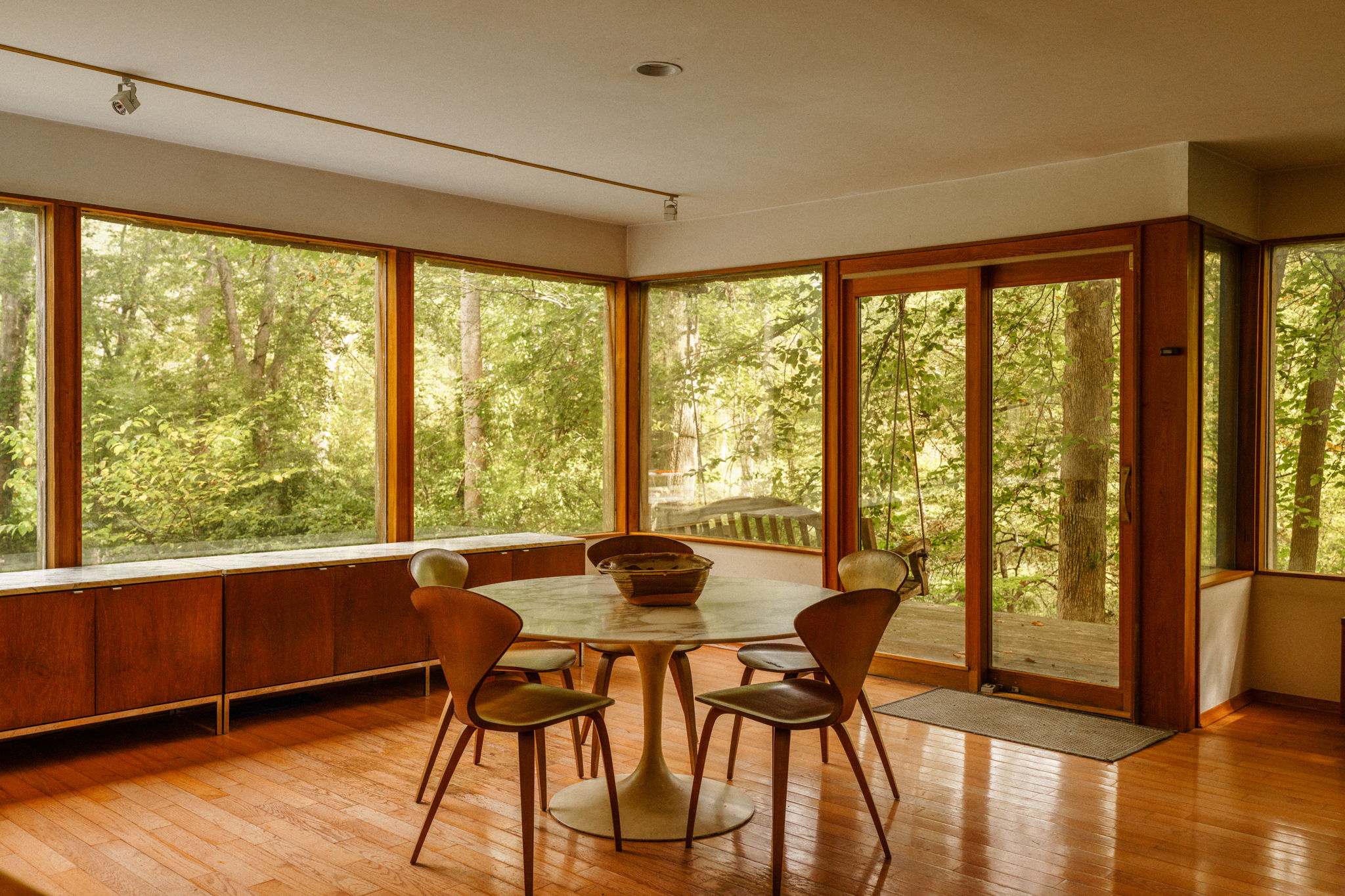
    Tucked far off Rabbit Run Road in Willistown Township, McElroy’s three-bedroom, 3½-bath home features a contemporary design and floor-to-ceiling windows that let in abundant natural light.

    “I see a lot of really cool houses, but this one, almost more than any other house, is truly like you’re living in a work of art, between the craftsmanship of the woodworking, the views through the windows that are ever changing with the seasons, and the design of the home itself,” Dinofa said.

    Wooden details make Robert McElroy’s former home in Willistown Township unique, said Realtor Marion Dinofa.

    Almost every piece of wood in the home was crafted by Horace Hartshaw, who collaborated with the renowned sculptural furniture maker Wharton Esherick. This includes everything from the wood doors to the custom kitchen cabinets to the staircases, including a spiral one at its center.

    McElroy wasn’t the only artist who resided in the home: His wife, Annamaria, a painter and sculptor, also left her mark, showcasing her artwork on the walls and using a wing of the home as her studio.

    Dinofa noted that the house also includes a detached two-story garage that could be converted into more creative space.

    The secluded home features custom wood features that were crafted by renowned artist Horace Hartshaw and lots of windows.

    Between Robert’s vision and Annamaria’s artistic touches, their home “was a labor of love,” Dinofa said. “And it’s really well preserved. You can tell it hasn’t changed much.”

    Annamaria and Robert lived at the home into their 90s, Dinofa said. They died in 2023 and 2024, respectively. Dinofa said the home is being sold by their daughter, Loretta.

    Dinofa said she could see the property being bought by artists or by adventurous young parents who want to raise their children amid nature.

    “It would be such a fun place for kids to play outside,” with a stream in the backyard and plenty of space to run around, Dinofa said. “I can only imagine the wildlife that they have viewed from that house.”

  • Regional banks’ bad loans spark concerns on Wall Street

    Regional banks’ bad loans spark concerns on Wall Street

    NEW YORK — Wall Street is concerned about the health of the nation’s regional banks, after a few of them wrote off bad loans to commercial customers in the last two weeks and caused investors to wonder if there might be more bad news to come.

    Zions Bank, Western Alliance Bank, and the investment bank Jefferies surprised investors by disclosing various bad investments on their books, sending their stocks falling sharply this week. JPMorgan Chase CEO Jamie Dimon added to the unease when he warned there might be more problems to come for banks with potentially bad loans.

    “When you see one cockroach, there are probably more,” Dimon told investors and reporters on Tuesday, when JPMorgan reported its results.

    The KBW Bank Index, a basket of banks tracked by investors, is down 7% this month.

    There were other signs of distress. Data from the Federal Reserve shows that banks tapped the central bank’s overnight “repo” facilities for the second night in a row, an action banks have not needed to take since the COVID-19 pandemic. This facility allows banks to convert highly liquid securities like mortgage bonds and treasuries into cash to help fund their short-term cash shortfalls.

    Zions Bancorp shares sank Thursday after the bank wrote off $50 million in commercial and industrial loans, while Western Alliance fell after the bank alleged it had been defrauded by an entity known as Cantor Group V LLC. This came on top of news from Jefferies, which told investors it was might experience millions of dollars in losses from its business with bankrupt auto parts company First Brands.

    All three stocks recovered a bit Friday. Jefferies’ CEO told investors that the company believes it was defrauded by First Brands and that there were no broader concerns in the lending market.

    The last banking flare-up, in 2023, also involved midsize and regional banks that were overly exposed to low-interest loans and commercial real estate. The crisis caused Silicon Valley Bank to fail, followed by Signature Bank, and led to the eventual sale of First Republic Bank to JPMorgan Chase in a fire sale. Other banks like Zions and Western Alliance ended up seeing their stocks plummet during that time period.

    While banks do fail or get bought at fire sale prices, all bank deposits are insured by the Federal Deposit Insurance Corporation, up to $250,000 per account, in case of a bank failure. In the nearly 100 years since the FDIC was created in 1933, not one depositor has lost their insured funds.

    Still, even the larger banks aren’t immune in this latest round of trouble. Several Wall Street banks disclosed losses this week in the bankruptcy of Tricolor, a subprime auto dealership company that collapsed last month. Fifth Third Bank, a larger regional bank, recorded a $178 million loss from Tricolor’s bankruptcy.

    That said, the big banks believe that any losses will be manageable and do not reflect the broader economy.

    “There is no deterioration, we’re very confident with our credit portfolio,” Deutsche Bank CEO Christian Sewing said, in an interview on Bloomberg Television on Friday.

    While the big Wall Street banks get most of the media and investor attention, regional banks are a major part of the economy, lending to small- to medium-sized businesses and acting as major lenders for commercial real estate developers. There are more than 120 banks with between $10 billion and $200 billion in assets, according to the FDIC.

    While big, these banks can run into trouble because their businesses are not as diverse as the Wall Street money center banks. They’re often more exposed to real estate and industrial loans, and don’t have significant businesses in credit cards and payment processing that can be revenue generators when lending goes south.

  • Penn Medicine is investing more than $500 million in new cancer facilities

    Penn Medicine is investing more than $500 million in new cancer facilities

    The University of Pennsylvania Health System, the Philadelphia region’s biggest provider of cancer care and a national leader in developing new treatments, is spending more than $500 million on two new cancer facilities in Philadelphia and central New Jersey to keep growing.

    Those big projects — a fourth proton center at Presbyterian Medical Center in University City and a large cancer center at Princeton Medical Center in Plainsboro — follow years of expansion through outpatient centers in communities like Cherry Hill and Radnor. Its newest is a relocated, $18.5 million infusion center in Yardley that opened in June.

    “What we’ve seen pretty consistently is that demand is there to meet any capacity increases,” Julia Puchtler, the health system’s chief financial officer, said in an interview about fiscal 2025 financial results.

    Penn is not alone in its push to expand cancer services. Jefferson’s Sidney Kimmel Cancer Center, Temple’s Fox Chase Cancer Center, and the MD Anderson Cancer Center at Cooper are pushing into the suburbs to reach more patients.

    The same thing is happening nationally as financially pressured health systems are looking for ways to increase revenue in a growing and lucrative market for cancer care.

    Penn stands out locally for the scale of its investment in a strategy to deliver cancer care seamlessly across its seven hospitals and a growing network of outpatient clinics, with the expectation that patients will keep coming back for their ongoing health needs.

    Penn sees an opportunity to expand its market share even more, as cancer diagnoses rise. The U.S. is expected to see a nearly 40% increase in cancer diagnoses between 2025 and 2050, according to the Philadelphia-based American Association of Cancer Research.

    Experts attribute the rise to a wide variety of factors, from better early detection, to longer life spans, and to environmental exposures that are poorly understood.

    Much of Penn’s investment is in outpatient facilities, including a $270 million center being built in Montgomeryville that will have radiation oncology and an infusion center. “More and more patients want to receive care closer to home,” according to Lisa Martin, a senior vice president at Moody’s Rating. “All of that is really what’s behind all of this investment.”

    Cancer treatment overall is profitable. At Penn, cancer services account for up to 60% of the system’s operating margin by one simple measure that subtracts direct costs from direct revenue and excludes back-office expenses and other centralized costs.

    Puchtler attributed the profitability of cancer care to the prevalence of drugs, such as chemotherapy, that Penn can buy at a discount, while getting the full price from insurers, and the higher percentage of younger cancer patients with better-paying private insurance than is typical for many healthcare services.

    The expansion efforts are expensive in an industry where the consumers both benefit from advances and pay ever-rising healthcare costs. Proton therapy, in particular, costs more, but has not yet been proven to have better outcomes across a wide range of cancers.

    The intensifying competitive landscape

    Penn treats about one-third of adults with cancer in its market area, which stretches from central New Jersey to the Susquehanna, according to Robert Vonderheide, who is director of Penn’s Abramson Cancer Center and leads all of Penn’s efforts in oncology treatment and research.

    Penn counted 47,053 new cancer patients in the 12 months that ended June 30, up 40% from five years ago, according to Penn. The system has 14 locations where patients can receive chemotherapy and even more radiation oncology sites.

    Competitors are also trying to expand their reach, and Temple’s Fox Chase Cancer Center is succeeding.

    window.addEventListener(“message”,function(a){if(void 0!==a.data[“datawrapper-height”]){var e=document.querySelectorAll(“iframe”);for(var t in a.data[“datawrapper-height”])for(var r,i=0;r=e[i];i++)if(r.contentWindow===a.source){var d=a.data[“datawrapper-height”][t]+”px”;r.style.height=d}}});

    Fox Chase had 21,442 new patients in fiscal 2025, up 148% from 2020, the nonprofit said. Fox Chase has added suburban offices in Voorhees and Buckingham, Bucks County, and is expanding its infusion capacity at its main campus on Cottman Avenue. Fox Chase has a significantly smaller footprint than Penn, with six locations for infusions and four for radiation.

    The MD Anderson Cancer Center at Cooper said it had 4,326 new patients last year, up 27% over the last five years. Cooper has taken the MD Anderson Cancer Center brand to the former Cape Regional Medical Center, which it acquired last year and which used to be part of the Penn Cancer Network. Cooper also offers cancer services at its new Moorestown location.

    Jefferson Health’s Sidney Kimmel Cancer Center did not respond to requests for patient data, but has in recent years opened cancer center locations at its Torresdale and Bucks County Hospitals. Jefferson’s cancer center also attained the highest designation from the National Cancer Institute last year — the Philadelphia region’s third comprehensive cancer center, matching Penn and Fox Chase.

    Virtua Health, Penn’s partner in a proton therapy center in Voorhees, is exploring a merger with ChristianaCare, which has already been expanding from its Delaware base into Chester and Delaware Counties. Another South Jersey system, AtlantiCare, has signed a contract with the Cleveland Clinic to boost its competitiveness in cancer care.

    How Penn is trying to build a ‘cancer system’

    Lancaster County resident Susan Reese, 56, said she experienced smooth cooperation between her doctor at Penn’s Lancaster General Hospital and the team at HUP during her treatment for non-Hodgkin lymphoma.

    “I never had any question in my mind that one doctor didn’t know what the other doctor was doing,” said Reese, who received CAR-T therapy at HUP in September 2022. Penn has since started offering CAR-T at Lancaster General.

    After she relapsed in early 2023, she came back to HUP for a stem cell transplant. She could have gone to Penn State Health’s Hershey Medical Center for that. It’s significantly closer to her home in Willow Street, but she wanted to stay within the Penn system.

    Reese’s experience of integration of services at HUP and Lancaster General is what Penn is aiming for in a territory that stretches from central New Jersey to central Pennsylvania.

    Oncologist Robert Vonderheide, director of Penn Medicine’s Abramson Cancer Center, oversees all Penn’s cancer services and research.

    Electronic medical records help with the integration needed to ensure the thousands of cancer patients Penn physicians treat annually get the most advanced care possible, according to Vonderheide, whose research focuses on cellular immunotherapies.

    “We treat patients’ cancers now in a very precise way; the precise mutation, the precise type of chemotherapy, the precise dose” are the focus for doctors, Vonderheide said. “This is no longer appropriate for the telephone game. This has to be data-driven.”

    Reese’s decision to stay within Penn is part of a broader trend of patients tending to receive all their care within one health system, according to Rick Gundling, a healthcare expert at the Healthcare Financial Management Association in Washington, D.C.

    That’s particularly important in oncology, which typically involves multiple specialties, such as medical oncology, radiation oncology, and surgical oncology, he said.

    “Seamless coordination across all those disciplines really makes it a better patient experience and clinical experience because it reduces delay, improves access,” Gundling said.

    Taking advanced treatments from HUP to the network

    Part of Penn’s strategy is to begin offering advanced services at locations beyond HUP. That’s where Penn pioneered CAR-T cell therapy, which harnesses the immune system to attack cancer, and for years that was the only place Penn offered it.

    HUP still performed the bulk of the CAR-T treatments for blood cancers, 123 inpatient cases and 14 outpatient cases last year, but now CAR-T is also available at Lancaster General and at Penn’s Pennsylvania Hospital in Center City.

    Fox Chase was the next biggest center in the region for the relatively new treatment that Penn scientist Carl June and his research teams helped develop. For the fiscal year that ended June 30, 2025, Fox Chase had 21 inpatient cases and 67 outpatient cases, the center said.

    In the Penn system, certain kinds of bone marrow transplants also used to be available only at HUP. “Now we do them at HUP and Pennsylvania Hospital,” Vonderheide said.

    Even the most complicated pancreatic surgeries are going to be done at Princeton, in conjunction with experts at HUP, Vonderheide said. Penn held a ceremonial groundbreaking Monday for the hospital’s $295 million cancer center.

    Remaining only at HUP are bone marrow transplants that use another person’s cells to treat blood cancers, Vonderheide said. HUP performed 118 of those so-called allogeneic bone marrow transplants on the top floor of its $1.6 billion patient pavilion, now known as the Clifton Center.

    Pennsylvania’s next-biggest provider of the treatment was Hershey Medical Center, near Harrisburg, with 71, according to state data.

    window.addEventListener(“message”,function(a){if(void 0!==a.data[“datawrapper-height”]){var e=document.querySelectorAll(“iframe”);for(var t in a.data[“datawrapper-height”])for(var r,i=0;r=e[i];i++)if(r.contentWindow===a.source){var d=a.data[“datawrapper-height”][t]+”px”;r.style.height=d}}});

    Penn started offering proton therapy at HUP in 2010, and expanded its availability in the last three years to Lancaster General and Voorhees, through a joint venture with Virtua Health. Those two centers only have one proton machine each, compared to five at HUP.

    It’s a type of radiation that is designed to precisely target tumors and do less damage to surrounding tissues. That makes the treatment, which costs more, particularly helpful for children, and it is proving beneficial for treating certain neck and throat cancers. The use of proton therapy for the more common prostate cancer has been more controversial.

    Penn’s fourth proton center, with two machines, is under construction and is expected to open at Presbyterian in late 2027. When that $224 million center opens, Penn will have more proton treatment rooms than the entire West Coast, said Jim Metz, chair of radiation oncology at Penn.

    Currently about 10% of Penn’s roughly 10,000 annual radiation oncology patients are treated with protons, though it’s a higher percentage at locations with proton machines, Penn said.

    Penn officials have noted that some cancer patients come to Penn for proton therapy. Even when it’s not appropriate for them, they tend to stay within Penn. “We have seen, when we build protons, our market share increases, ” Metz said.

    Editor’s note: This article has been updated with more recent Fox Chase data.

  • Pennsylvania state government relies on H-1B workers. Trump wants to charge employers $100,000 for those visas.

    Pennsylvania state government relies on H-1B workers. Trump wants to charge employers $100,000 for those visas.

    Government contractors are among the big employers grappling with President Donald Trump’s plan to charge employers $100,000 for new H-1B visas, which allow hundreds of thousands of workers from foreign countries to work in the United States every year.

    Leading contractors such as Amazon Web Services at the federal level and Deloitte Consulting in Pennsylvania rely on H-1B visas to bring in foreign skilled professionals for their U.S. workforces.

    Once a supporter of the 35-year-old program, Trump said in a September executive order that he now agrees with critics that “systemic abuse” of the visas has displaced U.S. workers, “discouraging Americans from pursuing careers in science and technology,” and driving down wages. He announced a fee of $100,000 for new H-1B visas, which would significantly boost costs for government contractors and other employers that continue to use the visas.

    U.S. immigration officials issue up to 85,000 new H-1B visas a year. Generations of engineers and technical workers have moved to the United States to work for government agencies using these visas. Some remain as permanent residents and become citizens.

    window.addEventListener(“message”,function(a){if(void 0!==a.data[“datawrapper-height”]){var e=document.querySelectorAll(“iframe”);for(var t in a.data[“datawrapper-height”])for(var r,i=0;r=e[i];i++)if(r.contentWindow===a.source){var d=a.data[“datawrapper-height”][t]+”px”;r.style.height=d}}});

    About 50% of all U.S. H-1B visa holders arrive from India, and the percentage is higher in technical fields. More than 80% of Deloitte H-1B visa holders stationed in the Harrisburg area from 2022-2024 originated in India, according to federal visa data. These professionals earned a median of around $100,000 a year.

    Recruiters promoted the visas extensively in 2000 to help U.S. companies update systems under Y2K programs, said Akanksha Kalra, an immigration attorney in Philadelphia who has represented many H-1B visa holders. Since then the program became so popular among employers and applicants that H-1B visas have been awarded through a lottery.

    Here’s what you need to know about H-1B visas.

    Who are the largest employers of H-1B workers in Pennsylvania?

    Among Pennsylvania-based employers, Deloitte Consulting is by far the top H-1B contractor. More than 3,000 of the 9,930 H-1B visas the government granted in Pennsylvania last year were for Deloitte Consulting and its tax and accounting affiliates. The company ranked among the 10 largest H-1B visa users across the U.S. last year. Pennsylvania was a major Deloitte client, paying $260 million for its services to state health, labor, and transportation programs, among others.

    window.addEventListener(“message”,function(a){if(void 0!==a.data[“datawrapper-height”]){var e=document.querySelectorAll(“iframe”);for(var t in a.data[“datawrapper-height”])for(var r,i=0;r=e[i];i++)if(r.contentWindow===a.source){var d=a.data[“datawrapper-height”][t]+”px”;r.style.height=d}}});

    How long can people with H-1B visas work in the U.S.?

    Employers can apply to have H-1B visas extended for a total of six years, boosting the total of H-1B workers in the country at any one time to hundreds of thousands. Spouses of H-1B visa professionals often apply for H-4 work visas.

    Another program popular with employers, the Optional Practical Training work authorization, is available to foreign students entering the workforce, for up to three years; more than 400,000 were granted in 2024.

    Which states have the most H-1B workers?

    Six states — California, Texas, New York, New Jersey, Virginia, and Pennsylvania — account for more than half the 283,000 new and returning H-1B visas approved by the federal government for fiscal year 2024, the most recent data available.

    window.addEventListener(“message”,function(a){if(void 0!==a.data[“datawrapper-height”]){var e=document.querySelectorAll(“iframe”);for(var t in a.data[“datawrapper-height”])for(var r,i=0;r=e[i];i++)if(r.contentWindow===a.source){var d=a.data[“datawrapper-height”][t]+”px”;r.style.height=d}}});

    The largest H-1B employers include Amazon’s Virginia operations, whose clients include the Pentagon and other U.S. security, surveillance, and technology agencies; other Big Tech employers such as Meta, Oracle, and Google; banks such as J.P. Morgan and Goldman Sachs; and manufacturers, such as automakers General Motors, Ford, and Tesla. Hospitals use the visas to bring in doctors, universities for professors.

    How does Pennsylvania state government rely on H-1B workers?

    Besides Deloitte, the visas are popular among small firms that specialize in IT contracting for Pennsylvania state government, according to a check of information technology firms contracted to Pennsylvania state departments under the no-bid Information Technology Supplemental Assistance (ITSA) program, which started in 2010 as a way to add short-term technical project assistance.

    Payments to ITSA contractors rose from $24 million in 2010 to $188 million last year, spread among hundreds of mostly small and specialized firms, according to data The Inquirer obtained in a Right to Know request.

    In each year, more than half of ITSA spending went to firms that were granted at least one H-1B visa. Together ITSA firms were awarded 171 H-1B visas last year, not counting Deloitte.

    What do Pennsylvania officials say about Trump’s $100,000 plan?

    A spokesperson for Gov. Josh Shapiro’s administration said state officials are studying Trump’s proposal.

    State agencies don’t themselves sponsor H-1B visa applicants, and the state “does not have information hired by suppliers through the federal H-1B visa program,” said Dan Egan, a spokesperson for the state Office of Administration.

    However, OST Inc., the state contractor that oversees hundreds of information technology contractors to more than 30 Pennsylvania state agencies, requires them to report H-1B visa holders, as well as participants in other foreign guest worker programs such as the OPT visa. OST didn’t respond to inquiries.

    Is a scarcity of Pennsylvania tech talent forcing employers to bring in staff from abroad?

    The National Bureau of Economic Research says H-1B has reduced employment and wages for U.S. citizen data scientists but also cut technology costs, benefiting the economy. American workers have testified in Congress about being laid off by employers who hired visa holders.

    Pennsylvania legislators who held hearings on the ITSA program in 2017 did not dispute that the state faced a shortage of tech talent in the Harrisburg area. Contractors said the state should verify visa holders’ education and work experience to avoid overpaying.

    The Shapiro administration says it has created technology apprenticeship, internship, and fellowship programs that help Pennsylvanians without a college degree qualify for state tech jobs and help fill IT positions.

    Several publicly traded companies formerly based in central Pennsylvania, including TE Connectivity, Enviri, and Rite Aid moved their headquarters from the Harrisburg area to the Philadelphia metropolitan area in recent years. Each cited the difficulty finding American tech workers and managers willing to live in Central Pennsylvania.

    Why is Trump so interested in H-1B visas?

    In his Sept. 19 executive order, Trump noted that the visas are supposed to go to people who could do “high-skilled” jobs that Americans aren’t doing — but, he said, technology employers “have abused the H-1B statute and its regulations to artificially suppress wages” to the disadvantage of U.S. workers.

    That’s a switch for Trump, who last December defended H-1B. “I’ve always liked the visas. I have always been in favor of the visas. That’s why we have them,” Trump told the New York Post last December. “I have many H-1B visas on my properties. I’ve been a believer in H-1B. I have used it many times. It’s a great program.”

    How are business and labor reacting to Trump’s H-1B plan?

    Though labor groups have long called for employers who use H-1B staff to pay higher wages, the United Auto Workers and American Association of University Professors have joined in a lawsuit to stop Trump from imposing what they call an illegal fee. On Oct. 16, the U.S. Chamber of Commerce also sued, calling Trump’s action “unlawful.”

  • Ambler’s small businesses want to make the borough a destination

    Ambler’s small businesses want to make the borough a destination

    Maura Manzo, founder and director of yoga studio Camaraderie in Ambler, previously owned the Yoga Home studio in Conshohocken but stepped away during the pandemic.

    When she was looking to get back into the business, she chose Ambler.

    “I was looking for a vibrant, walkable downtown, rooted in community,” Manzo said.

    She was encouraged by the presence of a food co-op, Weavers Way, which “signaled to me that this is a community invested in sustainable, healthy living — values that align beautifully with a yoga community,” as well as the other businesses around.

    “There’s a balance of restaurants, arts and culture, and shopping that creates a wonderful, rich community and attracts people,” Manzo said.

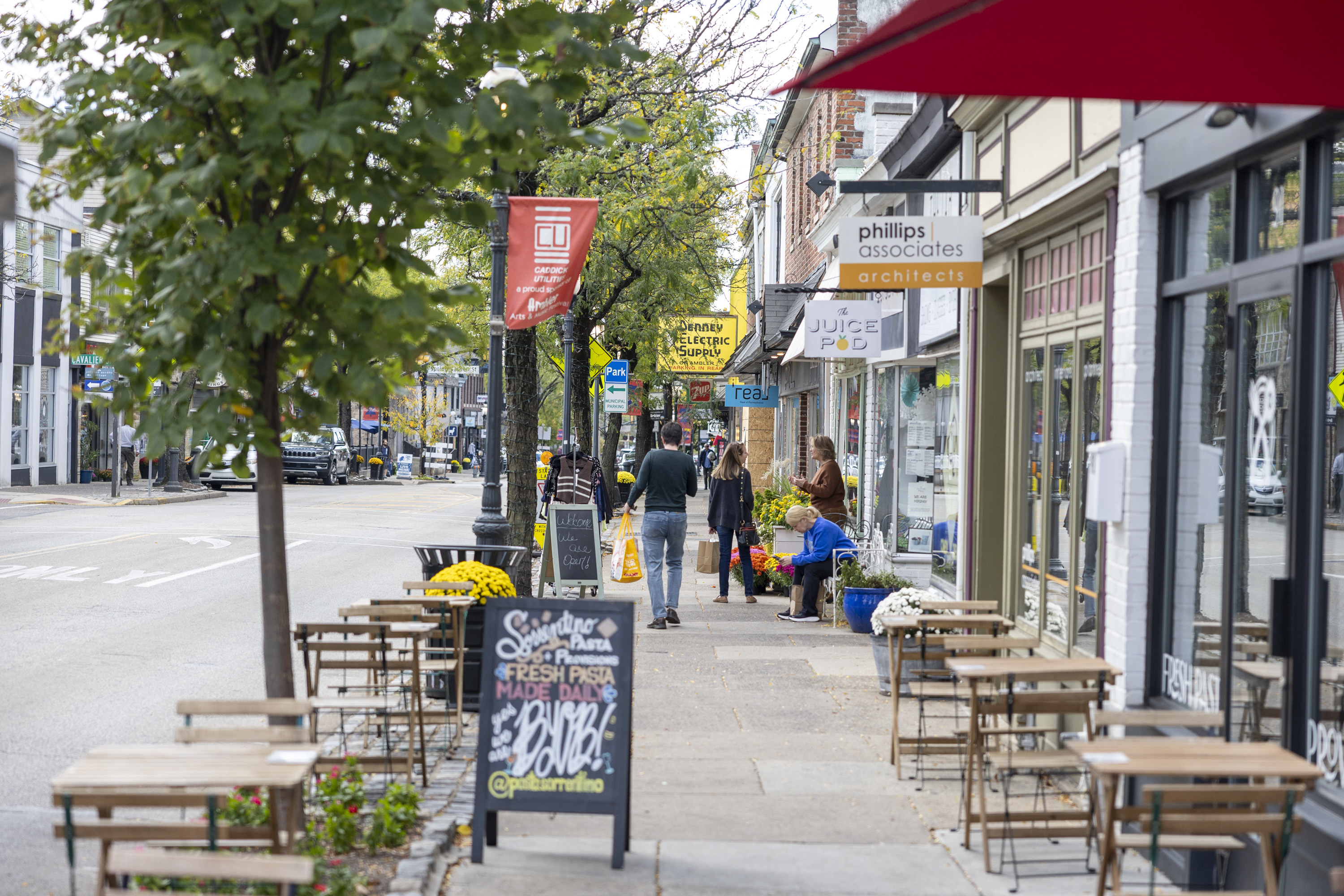
    Centrally located in Montgomery County, the borough of Ambler has become home to an eclectic blend of retailers, restaurants, and services. Its downtown business district includes a spa, tuxedo rentals, a bakery, a tattoo parlor, hair salons, and restaurants from all different culinary genres.

    People walk along Butler Avenue among various shops and restaurants in Ambler.

    The borough started as a mill town in the 1700s and evolved into a factory town run by the Keasbey & Mattison Co. in the 1800s. Many of the original buildings from that period still exist in the downtown district.

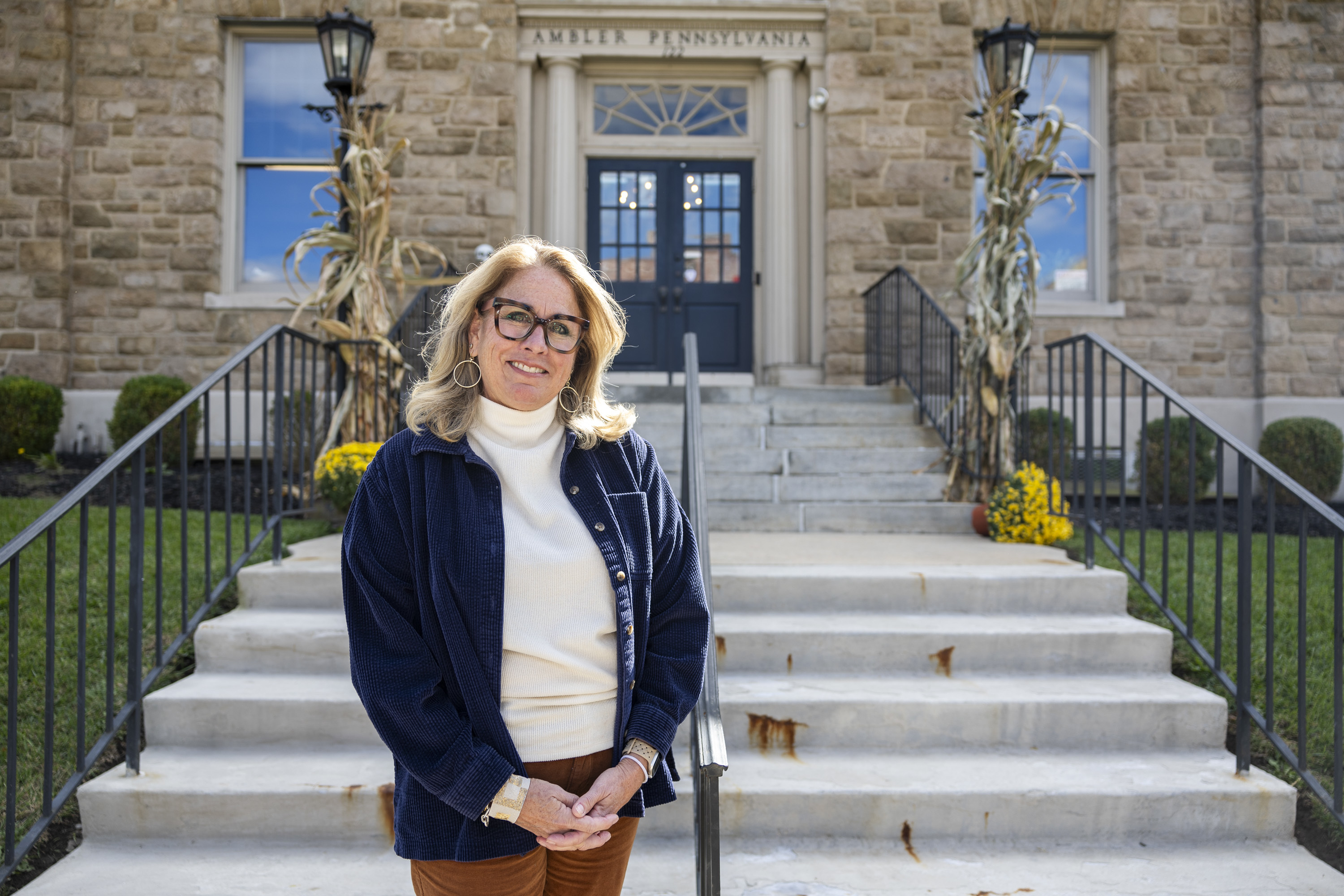
    The borough has been consistent in its preservation efforts. Recently an ordinance passed to be sure that any new construction reflects the existing architectural charm, said Ambler Main Street manager Elizabeth Wahl Kunzier.

    Still, the area has continued to evolve, recently adding a food hall with 10 vendors, seeing the merger of two established Ambler boutiques into one new storefront, and promoting downtown events on social media. With the holiday season approaching, business owners are looking ahead to their busiest time of year and gearing up for a number of seasonal events.

    “We have a pretty good organic social media reach,” Wahl Kunzier said. “It took a long time to get that where it is today, but given the nature of how the public gets information, it is very important to have a good following.”

    Building momentum behind the scenes

    Elizabeth Wahl Kunzier, Ambler Main Street manager.

    Wahl Kunzier serves as the marketing lead for Ambler Main Street — the name of the nonprofit that promotes downtown Ambler, even though many of its businesses are on Butler Avenue rather than Main Street. She monitors the businesses’ social media accounts daily to see what they’re advertising and share the information more broadly.

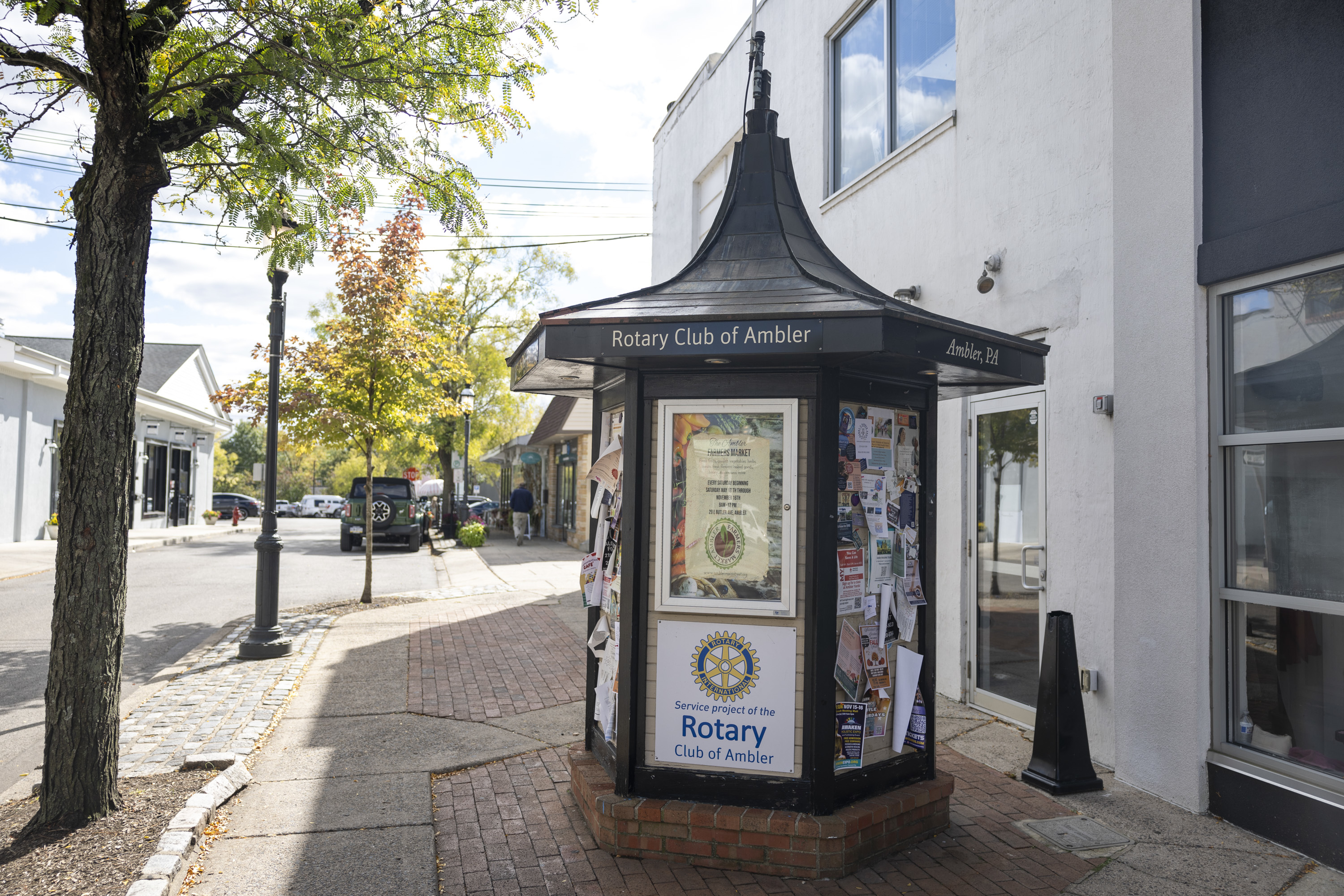
    Her office also organizes special events such as a semiannual restaurant week and a holiday shopping weekend. And the borough hosts a Farmer’s Market every Saturday from May through the weekend before Thanksgiving at the old Ambler train station.

    “I work with business owners brainstorming on everything from vacant storefronts to customized events to keep the foot traffic coming,” Wahl Kunzier said.

    The small business district and the community’s “people” are what drew Daniel J. DeCastro to Ambler, where he opened Ridge Hall last month.

    “They were a large family of small businesses that looked out for each other and supported one another while also having patrons who were cheerleaders of their businesses,” he said.

    An event board with various posters and advertisements for Ambler businesses and events.

    Located in a historic warehouse, Ridge Hall has 10 dining spots and a second-floor venue called The Mercantile.

    DeCastro is optimistic this food hall and retail concept will do well in Ambler, which he described as “on the cusp of breaking through as a destination town.”

    “Chestnut Hill, Doylestown, New Hope, and Phoenixville have become towns that you simply go to without a commitment. Unless you live in Ambler, it takes a commitment to drive into town,” DeCastro said. With Ridge Hall, “I wanted to create a destination that would entice people to stay for the day and return sooner rather than later.”

    Customers dine at Ridge Hall in front of Mary’s Chicken Strip Club.

    Some of the district’s established restaurateurs perhaps would argue that Ambler was already a destination.

    At Sorrentino Pasta + Provisions, customers find fresh pasta, house-made focaccia, and imported Italian goods for sale. The restaurant is open for lunch Wednesday through Sunday and dinner Thursday through Saturday, and it’s a BYOB.

    “Lunch is steady and a great opportunity to grab a table since it’s a little more difficult at dinner time,” proprietor Rich Sorrentino said. “We are extremely lucky to have the customers we do. Most are from the borough, but a surprising amount travel a bit to come join us.”

    Geronimo’s Peruvian Cuisine, also a BYOB, offers signature dishes such as ceviche, lomo saltado, anticucho de corazón, arroz con mariscos, pollo a la brasa, and many other authentic Peruvian dishes, said co-owner Daniel Salazar. It’s open Wednesday through Sunday.

    “Weekends are busy nights for us, we highly recommend calling the restaurant for a reservation,” she said. “Our goal here is to bring a cultural experience, to share a great cuisine that has history, flavor, and a little bit of mystery.”

    A tale of two stores

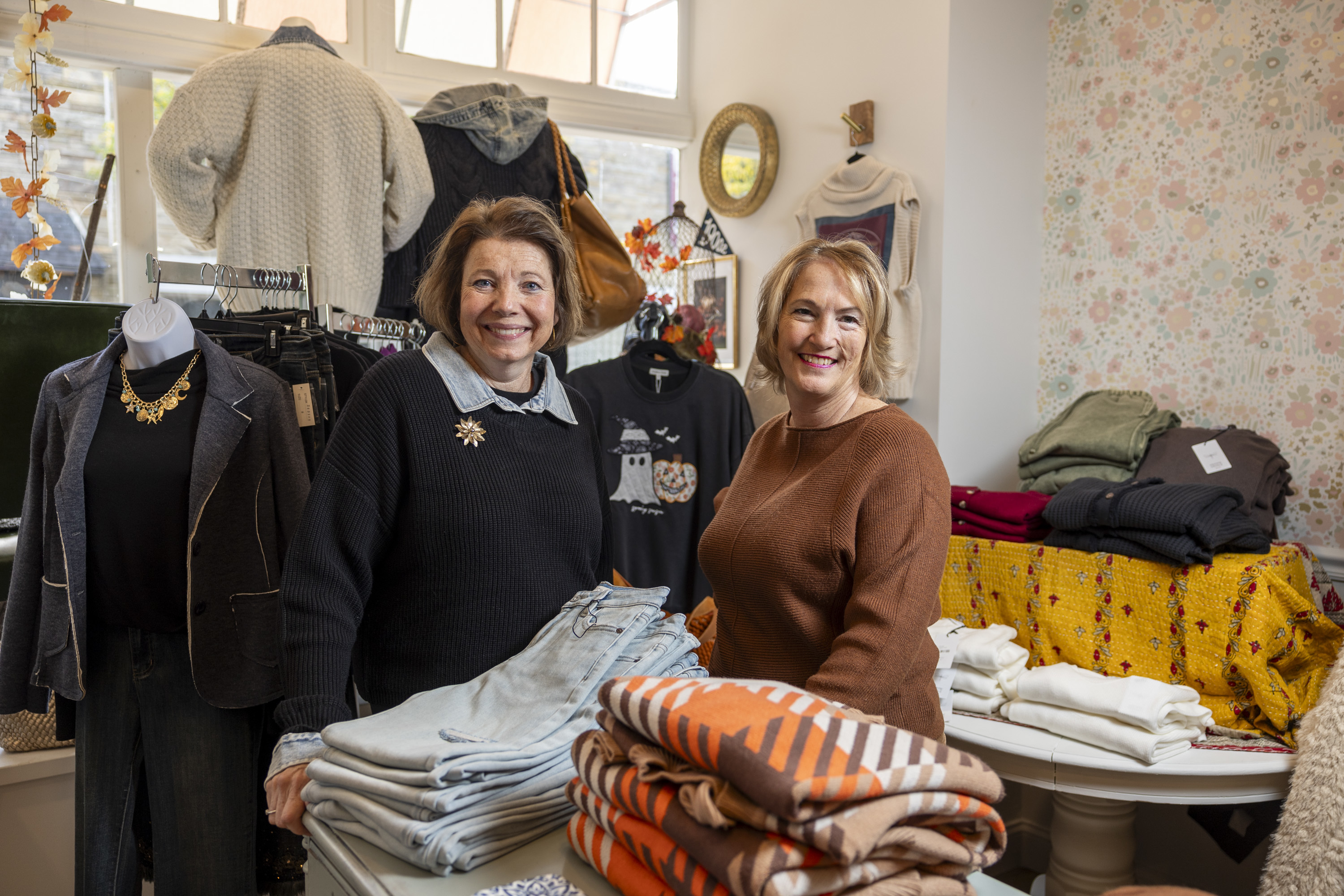
    Jeanne Cooke (left) and Barb Asman in their combined store, which opened earlier this year, bringing together XTRA Boutique and Main Street Vintage.

    Jeanne Cooke, owner of Main Street Vintage, sold painted furniture, vintage wood furniture, new and vintage home accessories, and artwork at her Butler Avenue shop for years. Just down the street, Barb Asman’s XTRA Boutique was selling women’s clothing.

    In August, they combined their businesses, merging into one larger storefront on Butler.

    “Barb and I have been looking in windows in Ambler for years. We felt we needed more square footage to take our businesses to the next level,” Cooke said. “The merge was seamless. I guess because we talked about it for quite some time.”

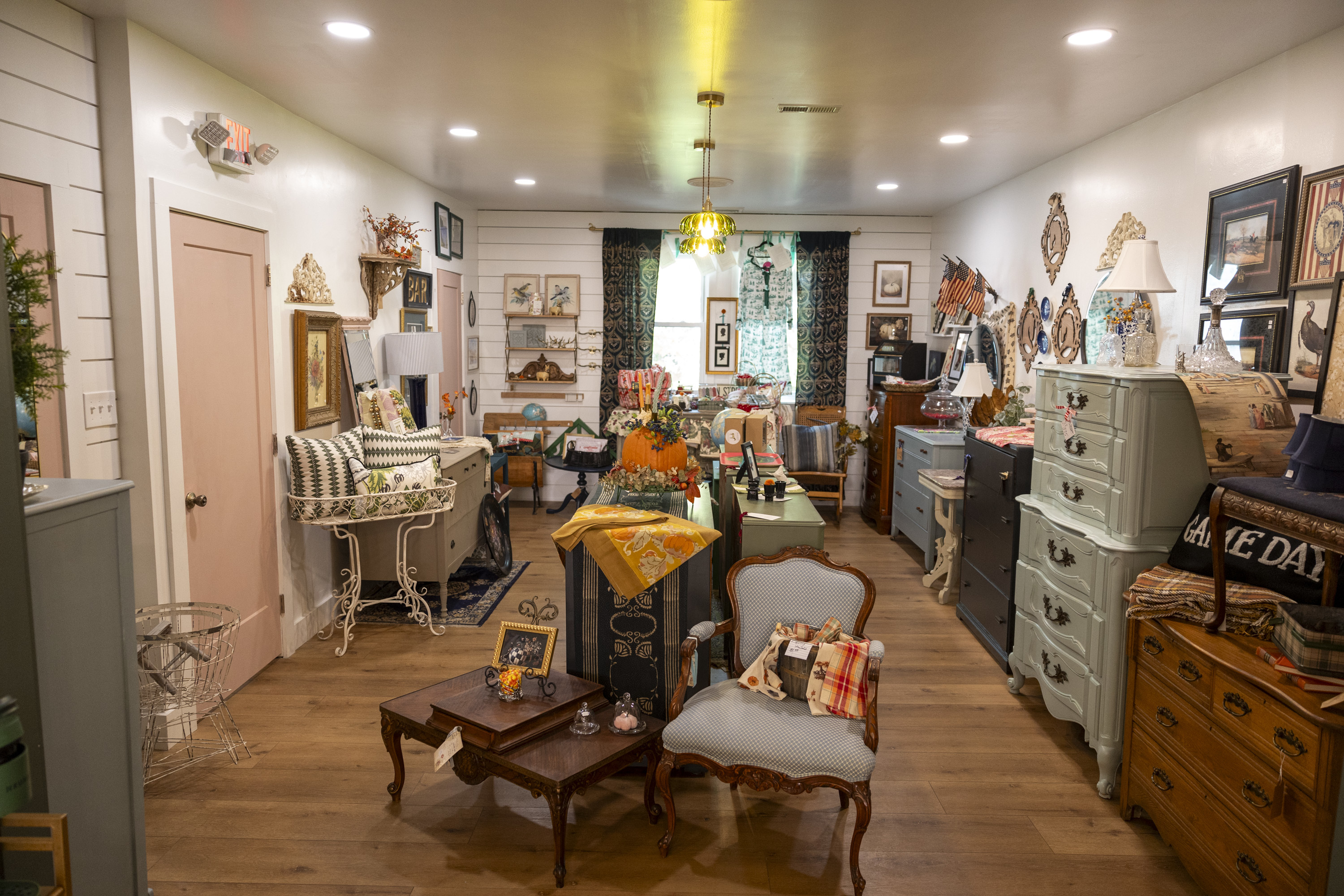
    The new experience is like shopping in a beautifully decorated home where you can buy all the furnishings. The two owners design the merchandising collaboratively, and the two businesses are intertwined.

    The back of the store, where Main Street Vintage’s furniture and home decor are on display.

    Asman said they are excited for what the future holds.

    “I sometimes stand in the middle of the store and say: ‘Wow, this feels so good.’ It’s hard to put it into words,” Asman said. “It’s a really good feeling.”

  • A changing death industry puts Philly cemeteries at risk

    A changing death industry puts Philly cemeteries at risk

    It always figured to be an emotional day when the Alter family gathered at Har Jehuda Cemetery in Upper Darby. They were commemorating their mother’s first yahrzeit, the anniversary of death in the Jewish tradition.

    But when the family arrived at her grave, they found it in devastating condition.

    Beatrice Reina Alter, 93, was buried last year next to her husband, Milton Alter, in plots that the couple bought in the Jewish cemetery in the 1990s. When their family came together for her yahrzeit in August, they expected there to be a new headstone to match Milton’s.

    Instead, her grave was covered in a fresh mound of dirt. The corner of a plywood board stuck out. And there was no headstone to be seen.

    “We were shaken and appalled,” said Daniel Alter, one of the couple’s five children.

    Yet issues at the cemetery — and for the burial industry — extend beyond placing headstones on time. Har Jehuda reflects an industry facing serious challenges to its longevity, where sometimes small, antiquated businesses must reinvent themselves. The country’s relationships with cemeteries and burials are changing, putting a seemingly timeless business at risk.

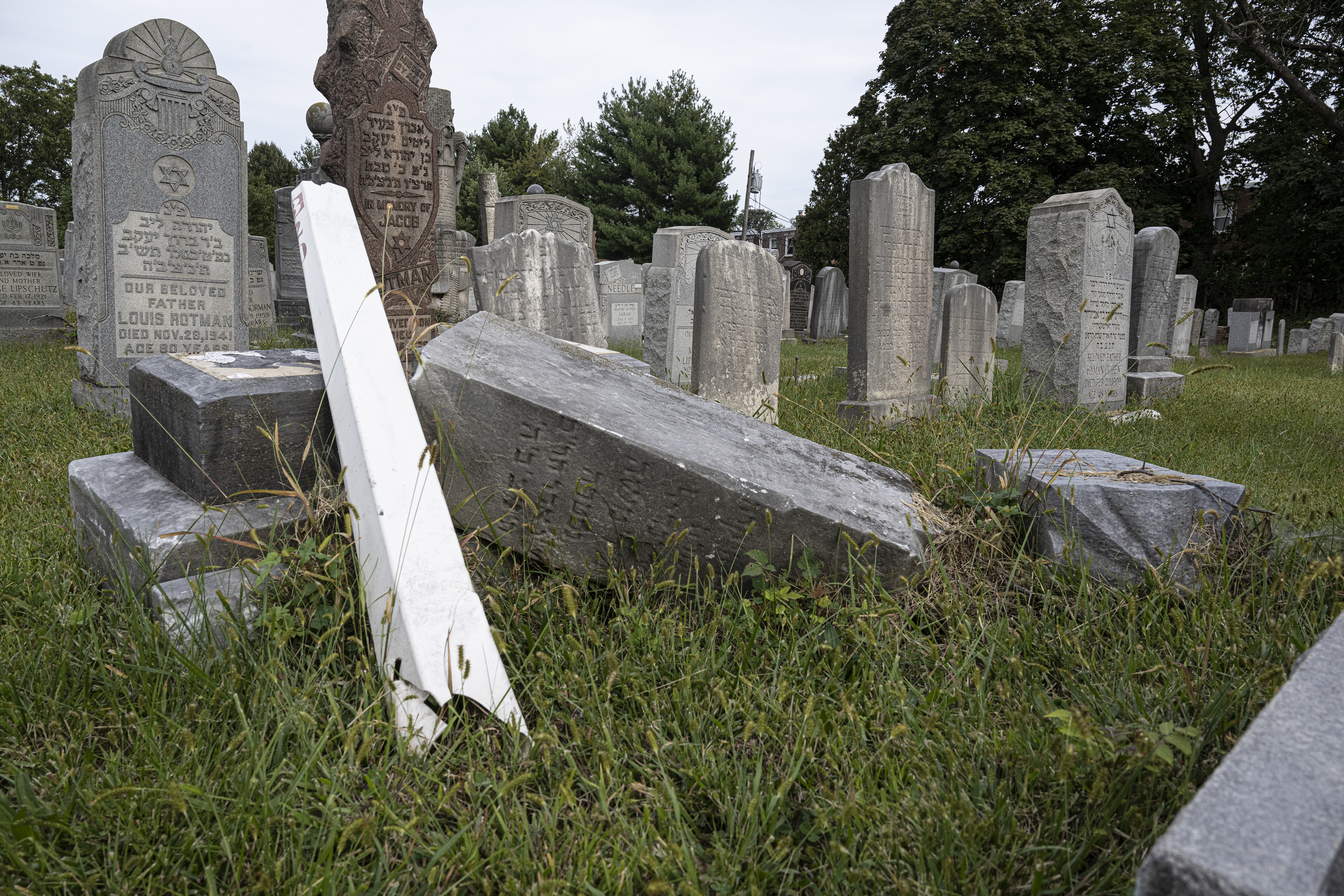
    Har Jehuda, for instance, has been an important institution for the region’s Jewish community since its founding in the 1890s, holding more than 20,000 graves. But today, its grounds are largely overgrown and unkept, and numerous gravestones have fallen into disrepair. A volunteer group has stepped in to cover some of the maintenance and landscaping costs but fears it cannot sustain the cemetery for long.

    Overgrown weeds and displaced headstones at Har Jehuda Cemetery in Upper Darby.

    “The reality is that there are not enough staff or funds to maintain the cemetery, and there hasn’t been for years,” Randi Raskin Nash, a member of the Friends of Har Jehuda Cemetery group, said by email.

    The cremation boom

    A hundred years ago, cremation was an unusual choice in the United States. Things started to shift in 1963, when the Catholic Church lifted its prohibition of the practice and Jessica Mitford’s book The American Way of Death, an exposé of the death industry, was published. Before then the cremation rate was reported to be in the single digits, and even as it rose, by 1999 only about 25% of Americans were cremated. But that is changing.

    Cremations are expected to double the number of burials in 2025, according to a report from the National Funeral Directors Association. By 2045, the cremation rate in Pennsylvania is projected to reach over 82%, with burials dropping to just under 14%.

    Several factors appear to be driving the shift, according to Christopher Robinson, the president of the association’s board of directors. Those include costs, environmental concerns, declines in religious affiliation, and growing cultural acceptance of cremation.

    window.addEventListener(“message”,function(a){if(void 0!==a.data[“datawrapper-height”]){var e=document.querySelectorAll(“iframe”);for(var t in a.data[“datawrapper-height”])for(var r,i=0;r=e[i];i++)if(r.contentWindow===a.source){var d=a.data[“datawrapper-height”][t]+”px”;r.style.height=d}}});

    But that is not the business model that most cemeteries were built upon.

    When folks secure a plot for interment, they are really buying an easement for burial rights, or essentially a license to use the cemetery’s land. Plots can cost thousands of dollars and are often nonrefundable.

    Once it comes time for a person to be buried, the cemetery may charge for other parts of the process, like digging and closing the plot, creating a headstone monument, or supplying a vault for the casket.

    Most cemeteries sustain themselves for the future by putting a portion of that revenue into an endowment fund, where the return on investment can be used for maintenance and repairs. Friends of Har Jehuda estimates that it requires roughly $50,000 to $75,000 just to cover lawn mowing and weeding per season.

    Cremations are much less profitable, particularly if a cemetery does not actually perform it — a walled recess with an engraved cover for a loved one’s urn may cost only a few hundred dollars.

    It’s unknown exactly how many cemeteries have formally closed or been abandoned in recent years, since the statistic does not appear to be widely tracked. What is clear is that cremation trends and dwindling space for future burials have left cemeteries struggling.

    “There’s going to be a lot of cemeteries going out of business in the next 20 years,” said Tanya Marsh, a law professor at Wake Forest University who teaches funeral and cemetery law, in an episode of The Economics of Everyday Things podcast last year.

    Would you get married at a cemetery?

    Some cemeteries have embraced the changes and creatively diversified their offerings.

    “We’re an outdoor museum. We’re a sculpture garden, we’re an arboretum … we’re more than just a cemetery,” said Nancy Goldenberg, CEO of Laurel Hill Cemeteries in Philadelphia.

    Laurel Hill uses its combined 265 acres on both sides of the Schuylkill to its advantage. On a given day at the historic cemetery, you might see visitors on a history tour, stretching out to watch a movie screening, attending a wedding, or meeting with the official book club, Boneyard Bookworms.

    The 49 Burning Condors singer Kimber Dulin, Christopher Tremogile on guitar and Jason Gooch on drums play as folks shop for unusual antiques, vintage items, artwork and handmade wares at the Market of the Macabre at the Laurel Hill Cemetery in 2021.

    Goldenberg said the extensive offerings are meant to build connections between people and the cemetery: They will be more likely to contribute money, or when they eventually need a resting place for their loved ones, they will look there first.

    This all used to be more common — the first U.S. cemeteries in the mid-19th century also served as the country’s first public parks, with open grassy fields fit for a picnic. Before then, people buried their dead in smaller graveyards that eventually became overcrowded and sources of disease.

    Laurel Hill is readying itself for a changing death industry, too. Goldenberg said she anticipates a rise in “green burials,” in which a person is buried without embalming or a casket, and said the cemetery was designating a section for them.

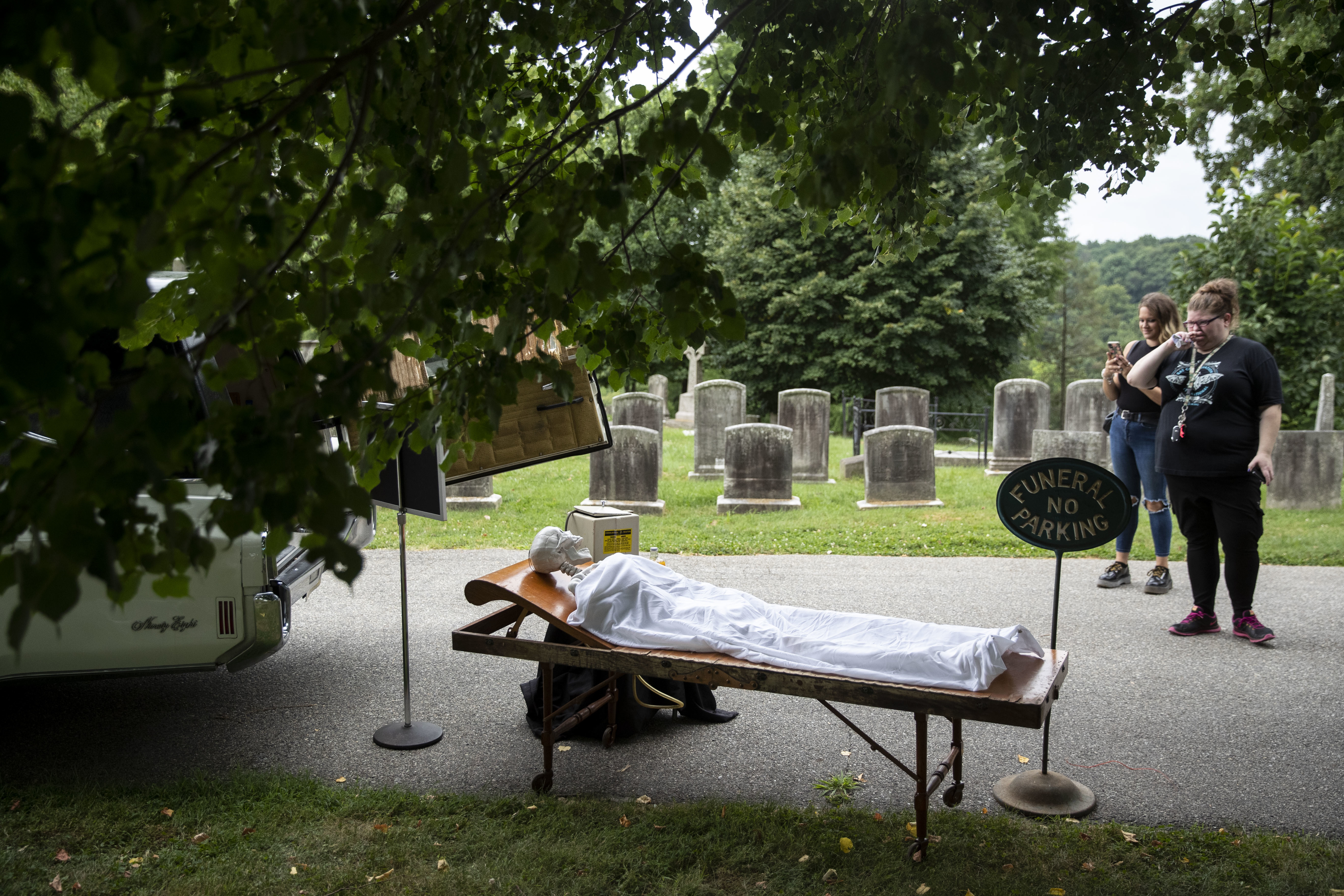
    Visitors view a display behind a hearse during the 13th Car & Hearse Show presented by the Mohnton Professional Car Club at Laurel Hill Cemetery in 2021.

    And while Goldenberg said she would be long gone before the cemetery runs out of space for new burials, it is a reality officials are planning for.

    Laurel Hill is adding space for an additional 225 niches for cremated remains.

    “There are small cemeteries, and once they fill up, that’s the revenue stream. … You have to be prepared for that,” she said.

    “If you don’t, that’s when you fall on hard times.”

    If a cemetery reaches the point of closure or abandonment, it’s not always clear what would happen to it. Last year, Gov. Josh Shapiro signed into law a bill sponsored by State Rep. Tim Brennan (D., Bucks) that would give financial relief to municipalities that take over abandoned cemeteries, since doing so can be a costly burden that local governments want to avoid.

    Uncertain futures for cemeteries

    Days after the Alter family made it through the prayers and memorial they planned, the emotional weight of the experience hit them even harder.

    Daniel Alter later confirmed with Har Jehuda that a fresh grave had been dug where he believed his mother was buried. Recently, he hired a ground-penetrating radar company to examine the burial site, which determined the freshly dug grave was directly adjacent to where his mother was buried. While Alter was relieved to learn his mother’s grave had not been disturbed, he said Har Jehuda could have prevented the anguish he and his family have felt over the last few months.

    Har Jehuda Cemetery’s owner, Larry Moskowitz, declined to comment for this article. Moskowitz was previously prosecuted by the state attorney general’s office over allegations that his other business, Wertheimer Monuments, had failed to deliver headstones to people who had paid for them. Complaints like these against the burial industry happen occasionally — the attorney general’s office also sued another Philadelphia monuments company in 2023 for failing to deliver headstones. There are multiple organizations dedicated to protecting consumers against predatory burial providers.

    The Alters, like other families, continue to visit and bury their loved ones at Har Jehuda, but they hope that no one else goes through their experience.

    “Our collective wish is that it never, ever, ever happens again to anyone in the Philly area,” Daniel Alter said.