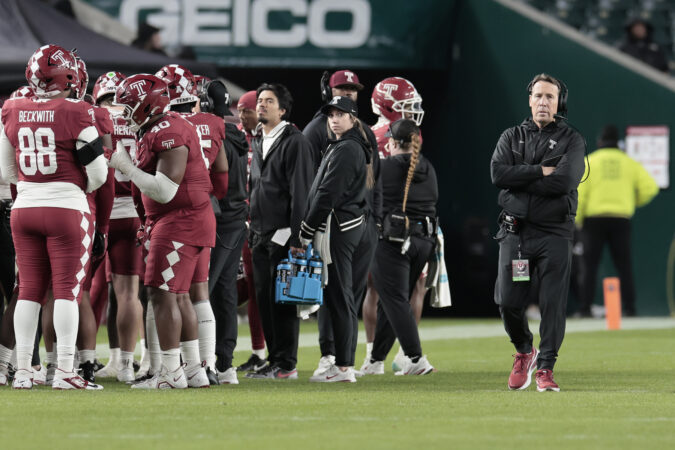
Ajani Sheppard, a former quarterback at Rutgers and Washington State, announced his commitment to Temple on Sunday.
Sheppard is the second quarterback Temple has landed out of the transfer portal after former Penn State reserve Jaxon Smolik committed to the Owls on Saturday.
Sheppard attended Iona Preparatory School in New Rochelle, N.Y., where he threw for 2,393 yards and 21 touchdowns as a senior. He committed to Rutgers before the 2023 season and spent two seasons with the Scarlet Knights, but saw sparse playing time.
He completed two passes for 23 yards and added a 10-yard rush as a freshman in 2023 before taking a redshirt. Sheppard had three carries for 24 yards in 2024 and did not attempt a pass.
Sheppard transferred to Washington State to compete for the starting job, but did not play for the Cougars last season. He will have two seasons of eligibility left and could compete for the starting spot with Smolik.
Temple coach K.C. Keeler said on signing day that the Owls planned to bring in two quarterbacks. The two transfers join Camren Boykin, who saw no action last season as a freshman, and incoming recruits Lamar Best, Brody Norman and Brady Palmer.
Reading was tough, and staying focused on even simple things proved difficult.
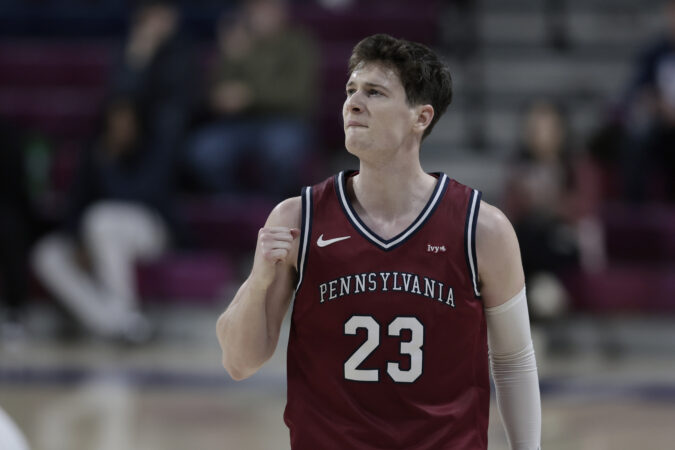
But on Saturday, in only his second game back from what was described weeks earlier as a “severe” concussion, Penn’s captain scored 28 points to help the Quakers secure their first Ivy League win of the season over Brown, 81-73.
Penn now enjoys a week before its next Ivy League test at Dartmouth on Saturday (3 p.m., ESPN+).
The Drake transfer started the season on top of the world, reaching as high as third in the nation in scoring while leading Penn to its first Big 5 Classic championship game against Villanova.
But in that matchup, disaster struck.
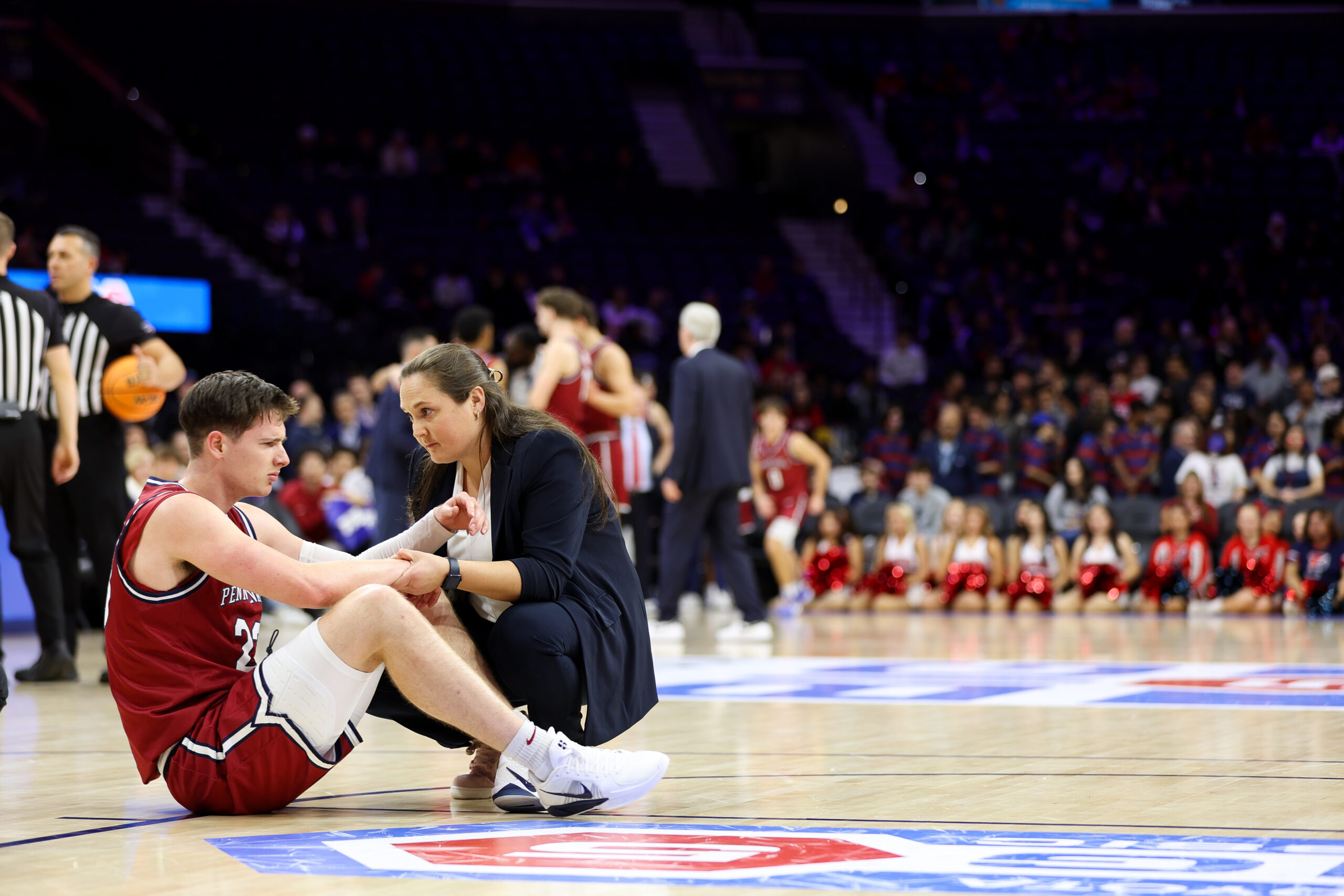
Ethan Roberts suffered a concussion during the Big 5 Classic championship game against Villanova on Dec. 6.
A hard foul resulted in Roberts leaving Xfinity Mobile Area before the final buzzer, being taken to the hospital in an ambulance.
“I know it happened, obviously, but I don’t remember getting hit,” Roberts said. “I lost memory from that day. I got hit and gained consciousness in the emergency room before my CAT scans.”
Penn was eventually blown out by Villanova, and Roberts was released from the hospital early the next morning after doctors confirmed there was no bleeding in his brain. The team went 2-2 in the subsequent four games he missed.
As the Quakers attempted to stay afloat without their captain, Roberts was busy working back from his injury.
“I’ve never had a concussion before,” Roberts said. “The doctor told me that it was a severe one, and that it would take a while. For two weeks, I had every symptom at its worst. I was extremely sensitive to light, extremely sensitive to noise, I had really bad headaches and eye pain, and more so than anything, I couldn’t read and lost memory. I was helpless, I had to have someone around me, so for two weeks I was in a cocoon.”
Over Christmas break, Roberts attended vestibular therapy at Penn Medicine in which he relearned to read while battling coordination issues, including practicing walking in a straight line.
QUAKERS ON TOP.@PennMBB improves to 1-1 in Ivy League play with an 81-73 victory over Brown. Michael Zanoni and Ethan Roberts combined for 48 points in the win. 🌿🏀pic.twitter.com/yQm5stqWwA
After more than four weeks of recovery, Roberts was given only three days to prepare for his team’s Ivy League opener vs. Princeton, when much of his time was spent working through non-contact and contact practices while still impacted by symptoms. Roberts reported an inability to remember plays and problems with his hand-eye coordination.
“Even just my hand control,” Roberts said before facing off against Princeton. “I’ve had to revamp everything, not to be dramatic. Sometimes, I’m out there playing, and it just doesn’t calibrate in my head.
“I was out for a month. Missing games I really wanted to play in, too, but it makes me want to savor the moment a little bit more and enjoy it a little bit more, truthfully, because when I’m not wearing Penn across my chest, it’s going to hurt.”
Against the Tigers, Roberts led the team in scoring with 19 points, but with the Quakers down two during the waning moments of the game, he passed away the final shot in the 78-76 loss.
“He just has to get back in rhythm,” coach Fran McCaffery said. “He missed five weeks, so he’s trying to remember the plays. He’s trying to remember where he goes … but when I’m making calls, you can tell he’s a little slow registering sometimes.”
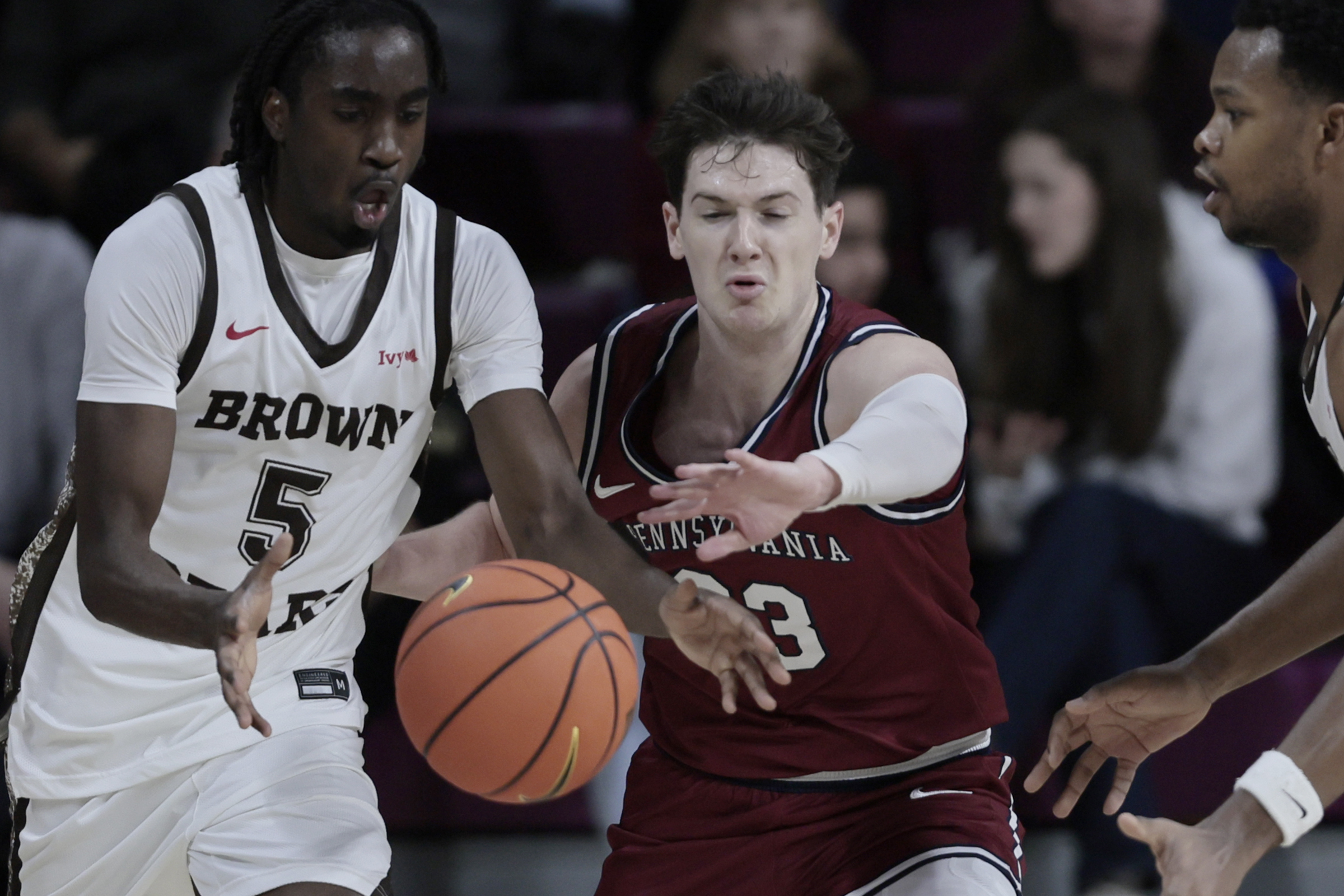
In Saturday’s win against Brown, Roberts (right) poured in a team-high 28 points.
Against Brown, Roberts once again found that rhythm, ending the first half by scoring eight of his team’s last nine points to pull the game to a 42-42 tie. At the end of the second half, Roberts scored 10 of the team’s last 14 points to secure a narrow win.
Roberts’ physical play led to 14 free-throw attempts despite only sitting for five minutes in the contest, a huge step forward in his recovery. When McCaffery was asked about Roberts still dealing with mental blocks after the game, he was happy to poke fun at his star player.
“He’s one of the best scorers, if not the best scorer, in the league, probably in the country,” McCaffery said. “It takes the pressure off everyone else. [His brain] can’t be that fuzzy. He had 28 points; tell him [BS].”
NATION'S BEST.@PennMBB's Ethan Roberts is the Lou Henson Award National Player of the Week! 🌿🏀
Despite still not feeling back to his normal self, Roberts is grateful to be able to keep playing in his final year at Penn. This isn’t the first time Roberts has dealt with serious injuries, having suffered from an undisclosed illness that forced him to medically redshirt at Drake — but with every roadblock, Penn’s captain has only felt more grateful to be a Quaker.
“It means everything,” Roberts said. “Just to wear Penn across your chest and to represent these people, it’s serious. It’s the best honor I’ve ever had in my life, and to win in front of them, it doesn’t get old. I’m just super grateful to be here wearing Penn, like I said, getting this win at the most historic venue in college basketball — the cathedral, baby.”
Powered by its star newcomer, Villanova snapped a losing streak at Marquette that was approaching six years long.
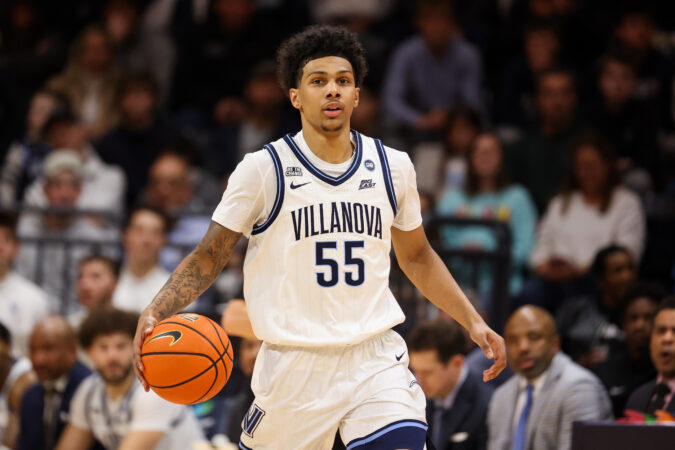
It took the game’s final minutes, but, fueled by Acaden Lewis, the Wildcats won, 76-73, marking the first time since Dec. 23, 2020, that they beat Marquette on the road. Lewis, a freshman guard who has impressed since arriving on the Main Line, scored a team-high 20 points and had eight assists, tying a career-best.
Villanova (13-3, 4-1 Big East) picked up its third consecutive conference road win. Wildcats coach Kevin Willard noted that while he’s pleased, replicating that success inside the Finneran Pavilion has been a challenge.
“I think we’ve really developed a road identity,” Willard said. “I think we need to take that identity and bring it home and really have that same kind of dog mentality that we have on the road at home. I think if we can develop that same attitude, we’ll continue to get better.”
Lewis, the four-time Big East Freshman of the Week, is averaging 12.5 points and 5.0 assists.
Despite being outscored in the second half for the second consecutive game and third time this season, Villanova shot 48.2% in the second half to escape Milwaukee. Graduate guard Devin Askew led Villanova’s second-half effort with 13 points off the bench.
“[Devin] has been playing really well,” Willard said. “The last four or five games, [he] hasn’t been shooting well, but he’s been playing well. And I thought he got a couple of good mismatches, hit a couple of really big pull-up jumpers that kind of settled us down and kept the lead going.”
Overall, the Wildcats shot 31-for-56 (55.4%) from the field, including 7-for-25 from beyond the arc, and 7-for-7 from the free throw line.
Defensive ups and downs
Villanova struggled defensively to stop the worst three-point shooting team in the Big East from beyond the arc in the first half. However, the Wildcats shut Marquette down in the second half, though they lacked defensive stops throughout the game, much like in their four-point home loss to Creighton on Wednesday.
The Golden Eagles (6-11, 1-5) entered the game 340th in the country in three-point percentage, averaging 29.5% but shot 11-for-31 on three-pointers on Saturday. Nigel James Jr. led the way with a career-high 31 points, shooting 7-for-9 from deep.
James was perfect in the second half offensively with 12 points, shooting 4-for-4 from the field, including 2-for-2 from beyond the arc. Royce Parham scored 15 of his 17 points. The duo accounted for 27 of Marquette’s 35 second-half points.
“[Marquette was] just scrappy,” Askew said. “They were playing hard, and I’m glad we could pull it through.”
In the second half, Villanova held Marquette to 3-for-13 (23.1%) from beyond the arc and 11-for-24 (45.8%) from the field.
Villanova got into foul trouble in the back half of the game. Duke Brennan (12 points, four rebounds), the nation’s third-leading rebounder, picked up four fouls in the second half and fouled out with 4 minutes, 29 seconds to go.
After Brennan’s fourth foul, at the 8:28 mark, Villanova shifted to a small-ball lineup, with Matt Hodge (14 points, five rebounds) at center.
“Luckily [Marquette] went small,” Willard said. “So we were able to play [Hodge] at the five and Malachi [Palmer] at the four. And so we didn’t have to really worry about battling something at the rim. We were able to kind of go small with them.”
Villanova committed 16 personal fouls, and Marquette was in the double bonus with 8:13 to go. Marquette shot 12-for-15 (80%) from the free-throw line.
Up next
Villanova will look to make it four straight away from home in a road game against Providence (8-7, 1-3) on Tuesday (6:30 p.m., FS1). Providence defeated Villanova, 75-62, in Rhode Island in the teams’ last matchup.
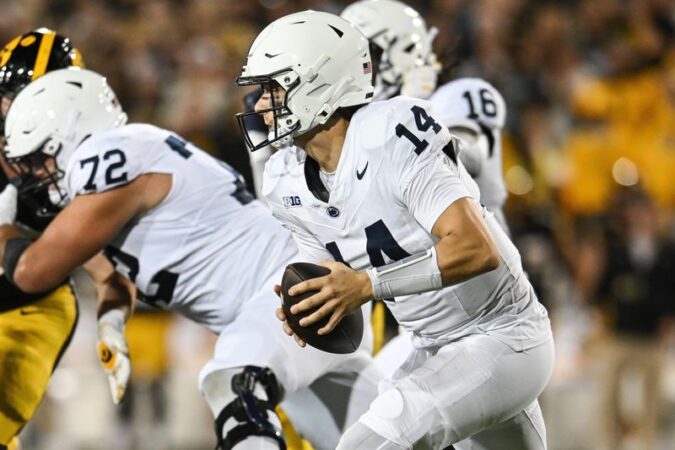
Former Penn State quarterback Jaxon Smolik announced his commitment to Temple on Saturday morning. He joins the program with a chance to earn the Owls’ starting quarterback job in 2026.
Smolik committed to the Nittany Lions in 2023 out of Iowa’s Dowling Catholic. He had originally committed to Tulane but decommitted from the Green Wave after earning an invite to the Elite 11 showcase, which boosted his recruiting profile.
He went 25-8 during his time as Dowling Catholic’s quarterback, leading the Maroon to multiple state semifinal appearances. As a high school senior, the 6-foot-1 signal-caller was all-state in Iowa after tallying 1,967 passing yards and 19 touchdown passes and leading Dowling to a 10-2 record. Smolik was ranked the No. 24 quarterback recruit in the 2023 class by Rivals and the No. 29 quarterback by ESPN.
The former three-star recruit redshirted as a freshman behind starter Drew Allar and then missed the entirety of the 2024 season due to an injury. He entered the 2025 season competing for the backup job with Ethan Grunkemeyer, who ultimately won the job.
Smolik eventually became the backup after Allar suffered a season-ending ankle injury against Northwestern on Oct. 11. He appeared in two games this season, but did not throw a pass and only carried the ball four times for three yards. Smolik entered the transfer portal at the end of the year.
Head coach K.C. Keeler said that Temple was going to open up its starting quarterback competition following the departure of five of its quarterbacks. Starter Evan Simon and backup Gevani McCoy both graduated, as well as Anthony Chiccitt. Third-stringer Tyler Douglas and fellow reserve Patrick Keller both entered the portal following the year.
“We’re probably thinking two out of the portal,” said Keeler on signing day. “We told all the high school recruits the same thing. Two of these guys will be here mid-year, so they will come here in January. We definitely want to have a quarterback competition once we get the kids here in January.”
The Owls will now have four quarterbacks with the team when spring camp opens, barring another addition. Temple currently has Cam Boykin, the only quarterback that was on the roster last year, and high school commits Brady Palmer, Brody Norman, and Lamar Best. Palmer and Norman will join the team for the spring semester, while Best won’t enroll until the summer.
Smolik joins the team with three years of eligibility remaining. If he wins the starting job, he will have a chance to play his former team when Temple plays Penn State at Lincoln Financial Field on Sept. 12.
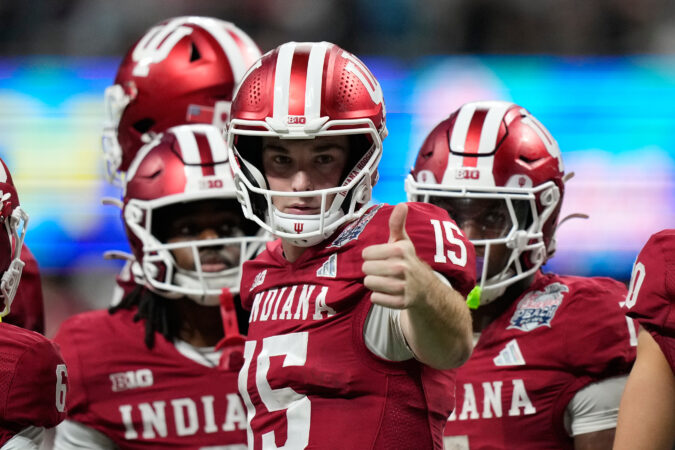
ATLANTA — Undefeated Indiana’s already impressive march through the College Football Playoff gained momentum as its dominant defense created three first-half touchdowns with turnovers, Fernando Mendoza threw five scoring passes and the Hoosiers overwhelmed No. 5 Oregon 56-22 in the Peach Bowl semifinal on Friday night.
No. 1 Indiana (15-0, No. 1 CFP) will face No. 10 Miami on Jan. 19 in the national championship game at Hard Rock Stadium in Miami Gardens. Miami beat Mississippi 31-27 in the Fiesta Bowl semifinal on Thursday night.
Indiana will try to give the Big Ten its third straight national title, following Ohio State and Michigan the last two seasons. Few teams from any conference can compare with the Hoosiers’ season-long demonstration of balanced strong play.
Led by Mendoza and the defense, Indiana is making a case to be considered among the top teams in history.
Though Miami will be home for the national championship game, Mendoza, the Heisman Trophy winner and Miami native, will enjoy a homecoming following an almost perfect game against Oregon. Mendoza completed 17 of 20 passes and the five touchdowns, including two to Elijah Sarratt and a 36-yarder to Charlie Becker.
Kaelon Black ran for two touchdowns to lead the Indiana running game.
Oregon (13-2, No. 5 CFP) was doomed by the three first-half turnovers while also being short-handed by the absence of two of their top running backs.
The Hoosiers led 35-7 at halftime as the Ducks were held to nine rushing yards on 17 carries. Noah Whittington, who leads Oregon with 829 rushing yards, was held out with an undisclosed injury after Jordon Davison, who had rushed for 667 yards and 15 touchdowns, already was listed as out with a collarbone injury.
Backup running backs, including Jay Harris and Dierre Hill Jr, provided too little help for quarterback Dante Moore. Moore’s task against Indiana’s stifling defense would have been daunting even with all his weapons.
Indiana’s defense didn’t wait long to make an impact. On Oregon’s first snap, cornerback D’Angelo Ponds intercepted Moore’s pass intended for Malik Benson and returned the pick 25 yards for a touchdown. Only 11 seconds into the game, the Hoosiers and their defense already had made a statement this would be a long night for Moore and the Oregon offense.
Moore’s 19-yard scoring pass to tight end Jamari Johnson tied the game. The remainder of the half belonged to Indiana and its big-play defense.
After Mendoza’s 8-yard touchdown pass to Omar Cooper Jr. gave the Hoosiers the lead for good at 14-7, Indiana’s defense forced a turnover when Moore fumbled and Indiana recovered at the Oregon 3, setting up Black’s scoring run.
Moore lost a second fumble later in the second quarter when hit by Daniel Ndukwe and Mario Landino recovered at the Oregon 21. Mendoza’s first scoring pass to Sarratt gave the Hoosiers’ the 35-7 lead.
Indiana extended its lead to 42-7 on Mendoza’s 13-yard scoring pass to E.J. Williams Jr.
Oregon finally answered. A 70-yard run by Hill set up a 2-yard scoring run by Harris.
Indiana’s special teams added a big play in the fourth quarter when Ndukwe’s blocked punt set up Mendoza’s second scoring pass to Sarratt.
Following their undefeated regular season, the Hoosiers have only gained momentum in the CFP. Indiana overwhelmed Alabama 38-3 in the Rose Bowl quarterfinal as Mendoza passed for 192 yards and three touchdowns.
Honorary captains
Philadelphia Phillies slugger Kyle Schwarber was an honorary captain for Indiana and watched the game from the Hoosiers’ sideline. Former Oregon and Carolina Panthers running back Jonathan Stewart was the Ducks’ honorary captain.
Season sweep
Indiana completed a sweep of two games against Oregon this season. Defense played a lead role in each win. The Hoosiers took a 30-20 win at Oregon on Oct. 11 when Moore threw two interceptions and was sacked six times.
Indiana also dominates the stands
The game was a sellout and the red-clad Indiana fans were almost as dominant as the Hoosiers on the field. Indiana appeared to claim at least 80% of the 75,604 fans.
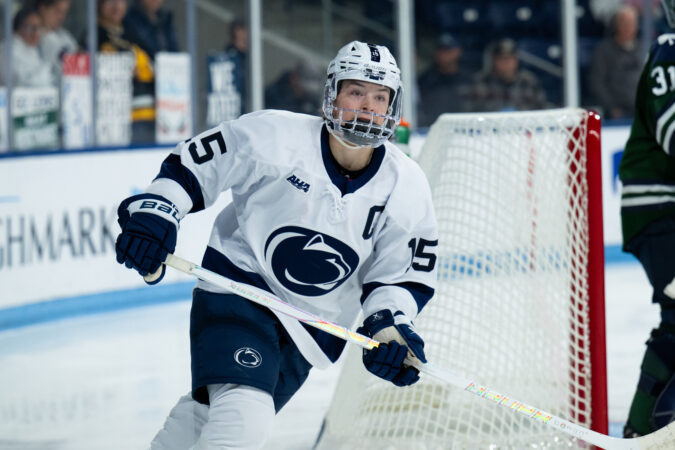
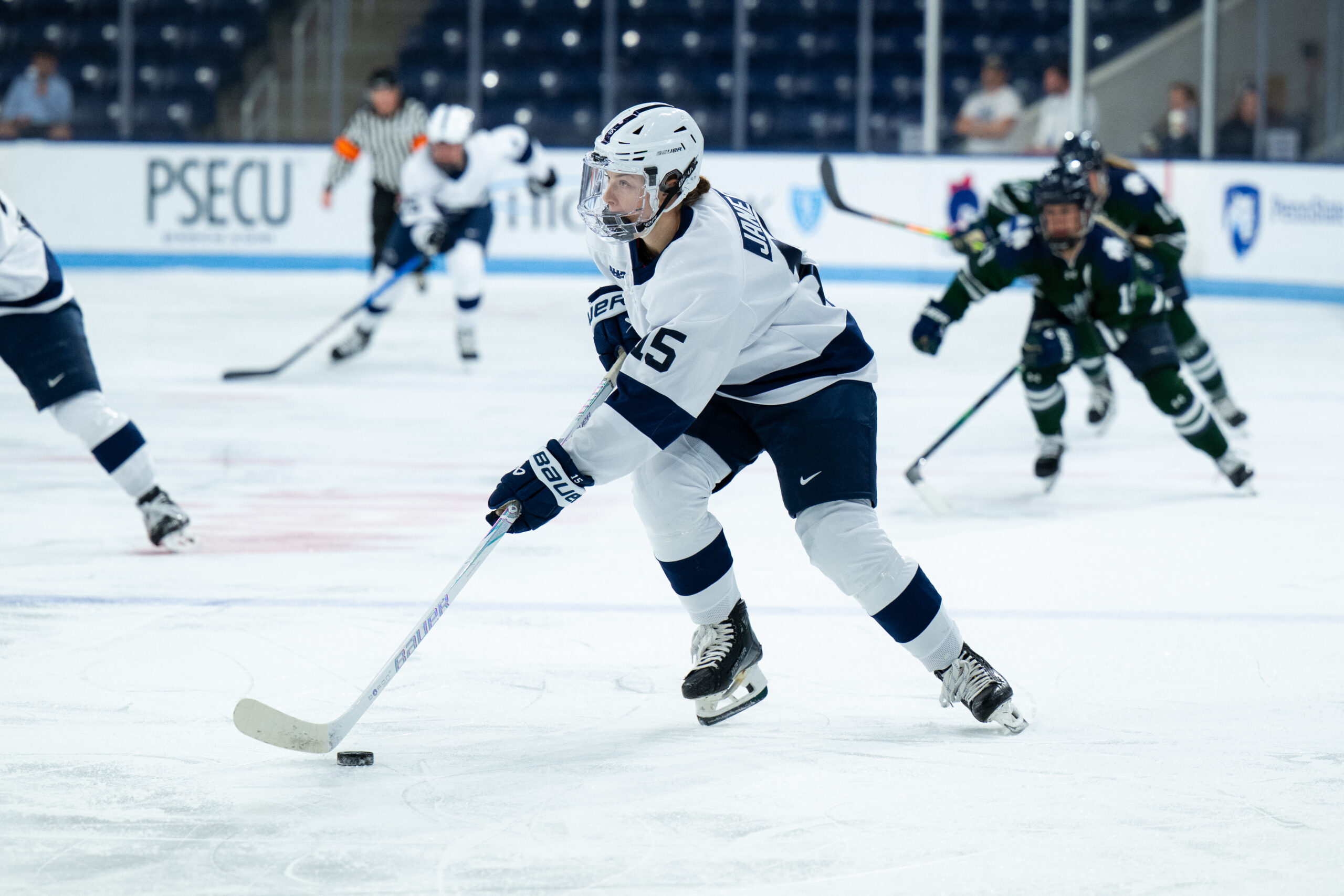
Tessa Janecke has dominated college hockey since arriving at Penn State in 2022.
Following a 47-point rookie campaign, Janecke earned the College Hockey America conference’s Freshman of the Year award. In the last two seasons, she was named a second team All-American.
And Friday of last week, the senior became the first Penn State player named to the United States Olympic women’s ice hockey team. The Winter Games, in Milan, Italy, have opening ceremonies on Feb. 6, though the team’s first game is Feb. 5.
In a collegiate career filled with stellar goals and nearly 100 wins, being a member of Team USA marked a monumental achievement for the Orangeville, Ill., native — one she had envisioned since the first time she put on skates.
“[Making the Olympic team] was always my dream,” Janecke said. “Going to college games and seeing those players on national teams, players I’m now playing with, I think [it shows] that no dream is ever too big if you work hard for it.”
Tessa's headed to Milan!
She becomes the first Nittany Lion ever to be named to the USA Women's Ice Hockey Olympic roster🇺🇸
— Penn State Women’s Hockey (@PennStateWHKY) January 2, 2026
Janecke said she was “relieved” when she found out that she made the team. She gave the news to her parents and teammates, phone calls she labeled as “very cool moments” with those who had made her achievement possible.
The 5-foot-8 forward made her USA Hockey debut in 2022, winning a silver medal at the International Ice Hockey Federation under-18 Women’s World Championships. She later won two gold medals and a silver medal across three appearances at the IIHF World Championships.
In 38 appearances with the U.S. senior national squad, Janecke has scored 13 goals and added 15 assists. Her highlight moment came this past April, when she scored the game-winning overtime goal to give the United States a 4-3 victory over Canada and secure a gold medal at the IIHF World Championships.
Bottom line: Janecke is no stranger to the international stage. And in Milan, she is eager to add another gold medal to her collection.
“Everything is going to come down to the gold medal game,” Janecke said. “So cutting out noise and focusing on the people in the locker room is going to be what’s most important.”
In four seasons at Penn State, Janecke has tallied 181 points, with 75 goals and 106 assists, all the best in program history, which began play on the Division I level in the 2012-2013 season. As a junior, she became the university’s all-time points leader, setting the record for both the men’s and women’s programs.
Halfway through Janecke’s senior campaign, her trophy case is packed.
Tessa now owns the record for both the most career goals (75) and career assists (106) in program history
— Penn State Women’s Hockey (@PennStateWHKY) January 3, 2026
She is a two-time Atlantic Hockey America Player and Forward of the Year and a two-time All-AHA first team selection. In Janecke’s four seasons at State College, Penn State is 98-31-6 with three NCAA Tournament appearances.
Now in Italy, she’s looking forward to representing something more.
“It’s always an honor to throw on your flag, to take in that moment and appreciate what has led you to that moment,” Jackecke said. “You just have to be grateful for how you’ve gotten there in the past and how it’s set you up for these moments.”
Janecke will miss “about a month” of Penn State’s season for the Olympics. But she remains confident that her team can sustain its success during her absence.
And she has the backing of Jeff Kampersal, Penn State women’s hockey coach, who lauded his star forward’s opportunity to “make history” at the Olympics.
“We are proud of Tessa making the USA Olympic Team,” Kampersal said. “Coming to Penn State, Tessa wanted to make history, not join history … [There is] no question Tessa has elevated all standards in our program. We appreciate her loyalty, and we are proud of her.”
Penn State’s Tessa Janecke in action during the Nittany Lions’ 5-2 win over St. Lawrence on Sept. 26 at Pegula Ice Arena.
The U.S. women’s team opens Olympic play on Feb. 5 against Czechia before dates with Finland, Switzerland, and Canada in the preliminary round. The quarterfinals, semifinals, and gold medal game are scheduled for Feb. 13-19.
“This is going to be [played] on a much bigger scale, a lot more eyes on you,” Janecke said. “We have to go in there with the right mindset. There can’t be a moment too big or one that we’re not prepared for.”
After a deep semifinal run in the Football Championship Subdivision playoffs, Villanova football will have to retool its roster for an upcoming inaugural season in the Patriot League.
Villanova lost a large portion of its starters to the transfer portal or graduation. With Power Four programs being able to spend more money on players, it is becoming increasingly difficult for Villanova to retain its players.
The program will be losing at least 15 players who no longer have collegiate eligibility. Notably, that includes quarterback Pat McQuaide, wide receivers Luke Colella and Lucas Kopecky, most of the offensive line, and linebackers Shane Hartzell and Richie Kimmel.
Nine players have officially entered the transfer portal, with three of them already committing to new schools.
Villanova historically is a program built on culture and growth. The program has retained key assets each offseason over the last six years. Current Buffalo Bills defensive back Christian Benford spent four years with the Wildcats and was drafted in the sixth round of the 2022 NFL draft. Benford recently signed a $76 million contract with the Bills last March.
Last year, Villanova convinced David Avit to return to the program after he entered his name in the transfer portal and visited multiple Football Bowl Subdivision programs.
Villanova has to fill some key position openings for the 2026 season.
Here is where Villanova stands one week into the transfer portal window, which closes next Friday.
David Avit (left) departed Villanova for Arizona State via the transfer portal.
Portal addition and subtractions
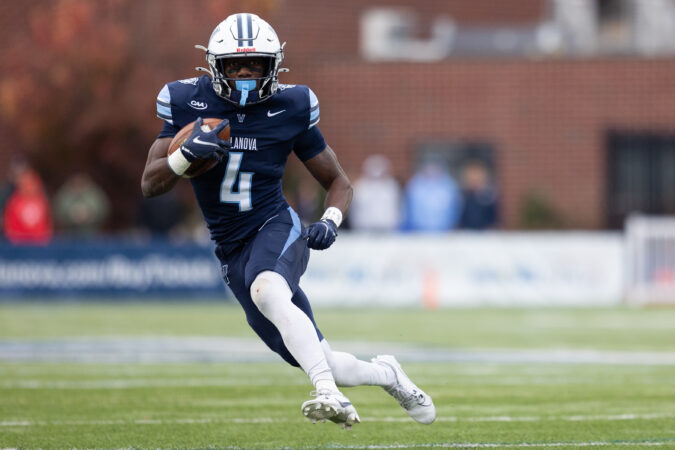
Villanova is bringing back Ja’briel Mace, who had a breakout season at running back and as a kick returner.
Mace withdrew his name from the transfer portal and announced he was returning to Villanova for the 2026 season on social media. The 5-foot-9, 175-pound running back rushed for a career-high 946 yards and 11 touchdowns on 128 carries..
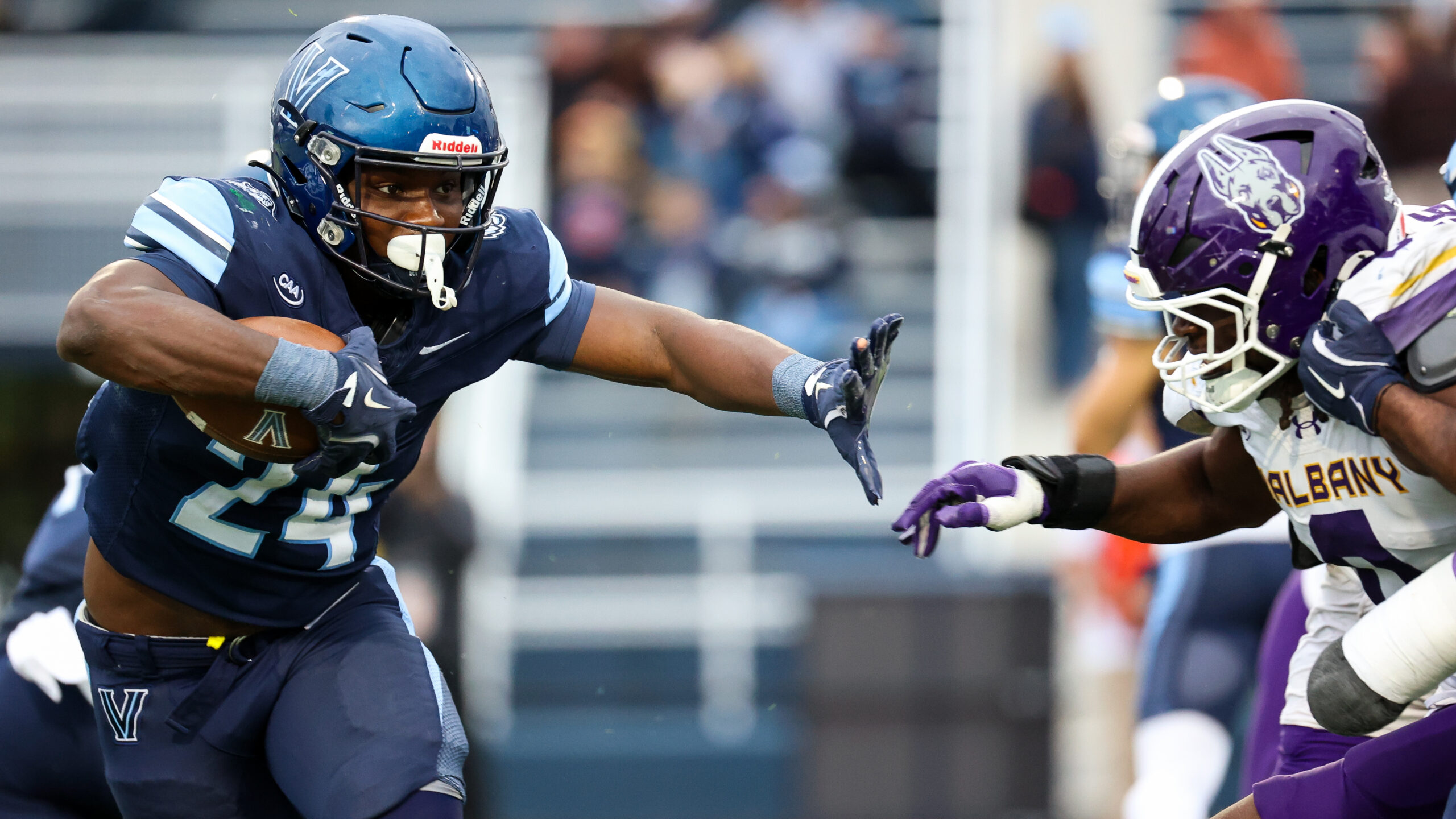
Avit entered the transfer portal and quickly toured Arizona State before committing officially the following day on Jan. 4. The former Coastal Athletic Association offensive rookie of the year, Avit was Villanova’s main running back this past season. He rushed for 687 and eight touchdowns on 125 attempts until he suffered a knee injury against Towson on Nov. 8. It forced him to miss five consecutive games.
Defensive back duo redshirt sophomore Zahmir Dawud and redshirt freshman Anthony Hawkins also departed from Villanova via the transfer portal. Dawud, who only allowed one touchdown in coverage last season, committed to Rutgers in his hometown state of New Jersey.
Hawkins, a FCS Freshman All-America honoree, committed to Iowa.
Tight end Antonio Johnson, defensive back Nino Betances, offensive lineman Capri Martin, defensive back Damill Bostic Jr., and punter Daniel Mueller remain in the transfer portal.
As of Thursday, Villanova has not signed anyone from the transfer portal.
High school class
Villanova signed 13 high school recruits on National Signing Day on Dec. 3. Five recruits signed to join Villanova’s offense, and eight signed to its defense.
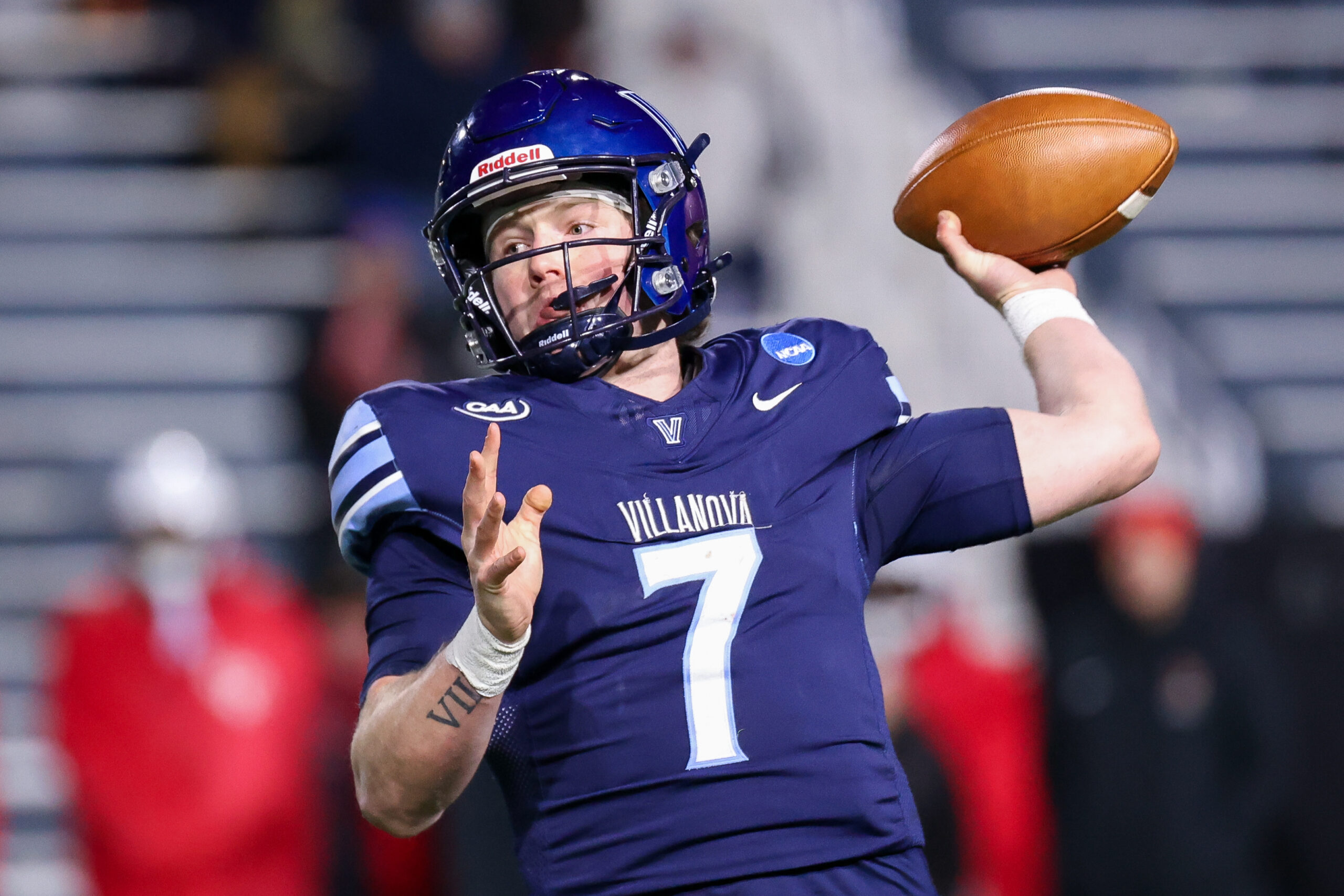
Villanova quarterback Pat McQuaide is graduating, leaving a vacancy at quarterback next season.
Who will be the next quarterback?
McQuaide has exhausted his eligibility. He became Villanova’s starter after a quarterback battle with junior Tanner Maddocks the entire summer camp. Maddocks ended up being Villanova’s backup quarterback and saw playing time late in games.
While Maddocks still had two years of eligibility remaining, he announced on LinkedIn that he had “wrapped up (his) time” with Villanova football. He instead is going forward full-time with his faith-branded energy drink brand, Agape Energy.
That means Villanova’s next starting quarterback is unknown. Villanova had seven quarterbacks on its roster last season. It could be a position that Villanova could pursue in the transfer portal after McQuaide’s success.
No current rostered quarterbacks have played any snaps under center for Villanova.
After getting Kopecky, a former Villanova lacrosse player, an extra year of football eligibility and adding Colella out of the transfer portal last year, the Wildcats had legitimate receiving weapons.
Villanova will now need to replenish its wideouts along with having a new quarterback under center. Colella caught a team-high 77 receptions, totaling 1,071 receiving yards and eight touchdowns.
Retooling the defense
There will be needs at various positions on Villanova’s defense, including at linebacker and in the secondary.
In addition to Dawud and Hawkins’ departures to the portal, Villanova also lost safety Christian Sapp, who is out of eligibility. Villanova had depth on its defense in 2025, but it will need to refill its depth chart even if the current rostered players step into starting positions.
At linebacker, Hartzell and Kimmel are large holes that will need to be filled after five years.
With the depth at linebacker, Villanova still has redshirt freshman Omari Bursey and juniors JR Strauss and Turner Inge, who will step into the starting roles as long as they remain on the Main Line.
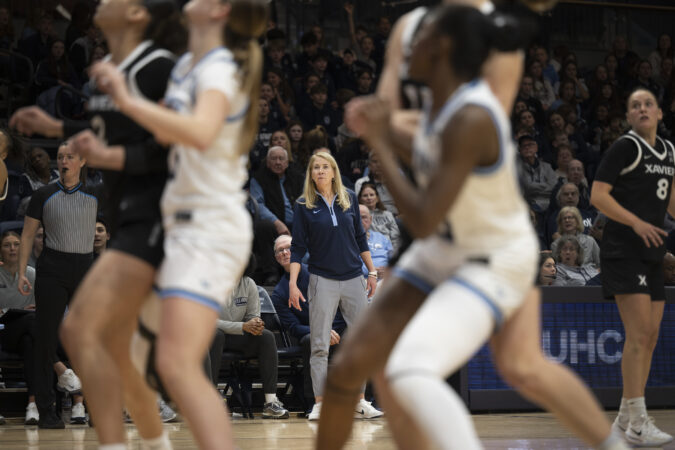
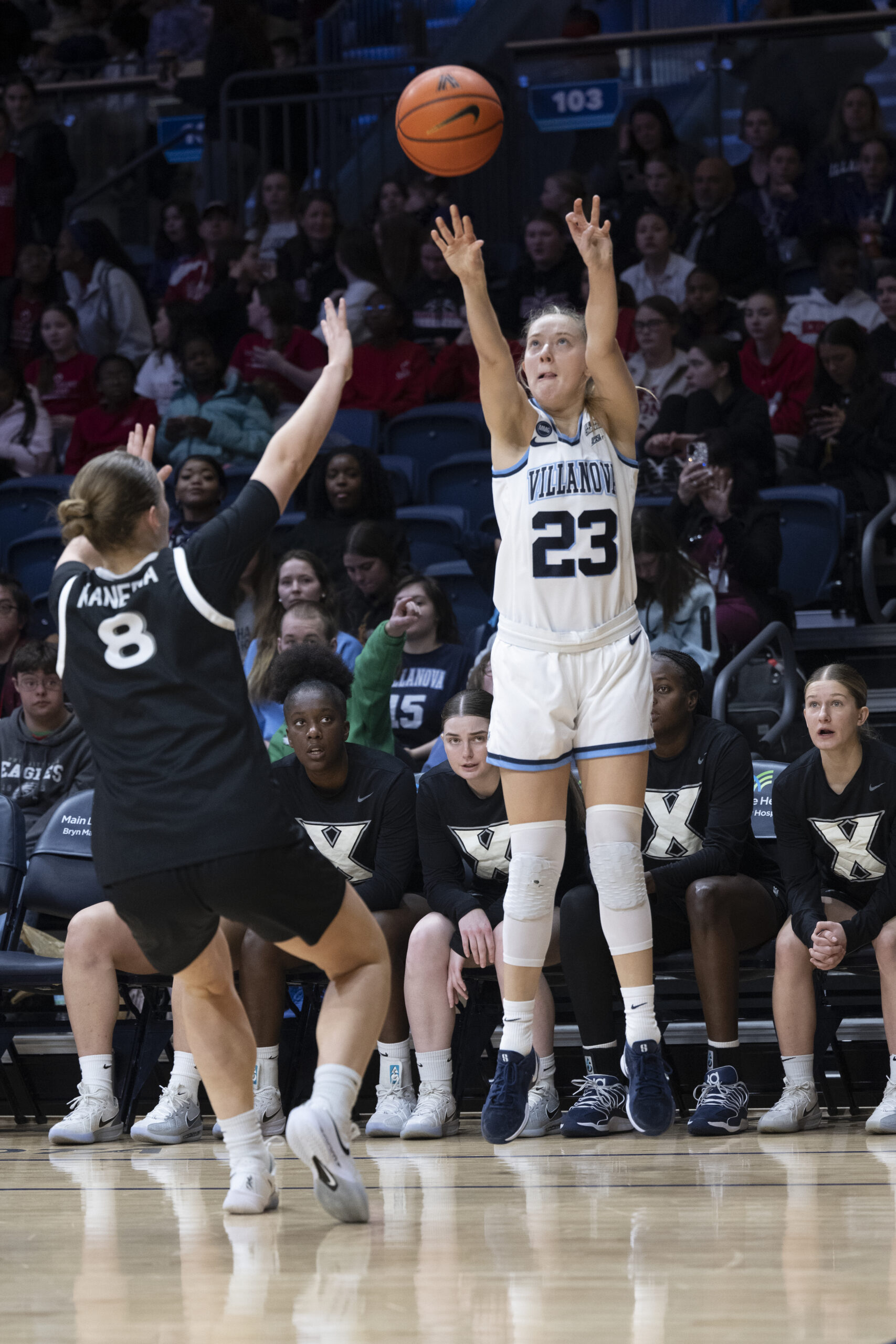
Villanova maintained second place in the Big East women’s basketball standings with a 67-50 victory over Xavier on Thursday afternoon at the Finneran Pavilion.
On Sunday, Villanova (13-3, 6-1 Big East) was handed its first conference loss by Marquette, which snapped a 10-game winning streak. The loss also dropped Villanova from No. 28 to No. 34 in the NCAA’s NET rankings.
But the Wildcats bounced back against the Musketeers, thanks to junior guard Kelsey Joens. The Iowa State transfer scored a career-high 18 points on six three-pointers with four rebounds.
Villanova’s Kelsey Joens finished with a career-high 18 points against Xavier on Thursday.
The Wildcats’ three-point shooting propelled their win. Villanova made 15 of 32 three-pointers, while Xavier shot 4 of 13.
Sophomore guard Jasmine Bascoe added 15 points along with four rebounds and seven assists. Bascoe is the conference’s third-leading scorer, averaging 17.5 points.
Dropping threes
The Wildcats shot 5-for-9 from deep in the first quarter, which set the tone.
Villanova started to break away at the end of the first quarter, scoring eight consecutive points to take a 17-11 lead. To open the second, Villanova’s scoring run stretched to 11-0.
From there, the Wildcats maintained a double-digit lead and entered halftime with a 33-20 advantage.
Villanova held Xavier (9-7, 2-5) to 35% shooting from the field, including 2-for-9 from deep, and exploited its errors, as the Wildcats scored 18 points off turnovers in the first half.
Bascoe controls the court
The Musketeers picked up their shooting in the second half. Xavier went on an 8-0 run across 2 minutes, 35 seconds, shrinking Villanova’s lead to seven.
Bascoe took care of Villanova’s response. With two minutes left in the third quarter, she notched a steal and drove to the basket for an uncontested layup. Bascoe then assisted a Joens three-pointer to end the quarter.
Villanova succumbed to Creighton, 76-72, marking its first home and conference loss of the season on Wednesday night.
Villanova (12-3, 3-1 Big East) had its five-game winning streak snapped and picked up its first defeat since Dec. 9. The Wildcats could not find defensive stops in the second half, which was coupled with poor three-point shooting. Creighton (10-6, 4-1) pulled away after shooting 18-for-27 (67%) from the field in the second.
Acaden Lewis finished with a team-high 20 points for Villanova. He dished out five assists within the first few minutes of the game and ended with seven and only one turnover. The freshman guard also collected a game-high three steals. Lewis is averaging 13.4 points and 4.3 assists in conference play.
In the paint, ’Nova’s Duke Brennan continued to be a force, picking up his sixth double-double of the season with 16 points and 12 rebounds (seven offensive).
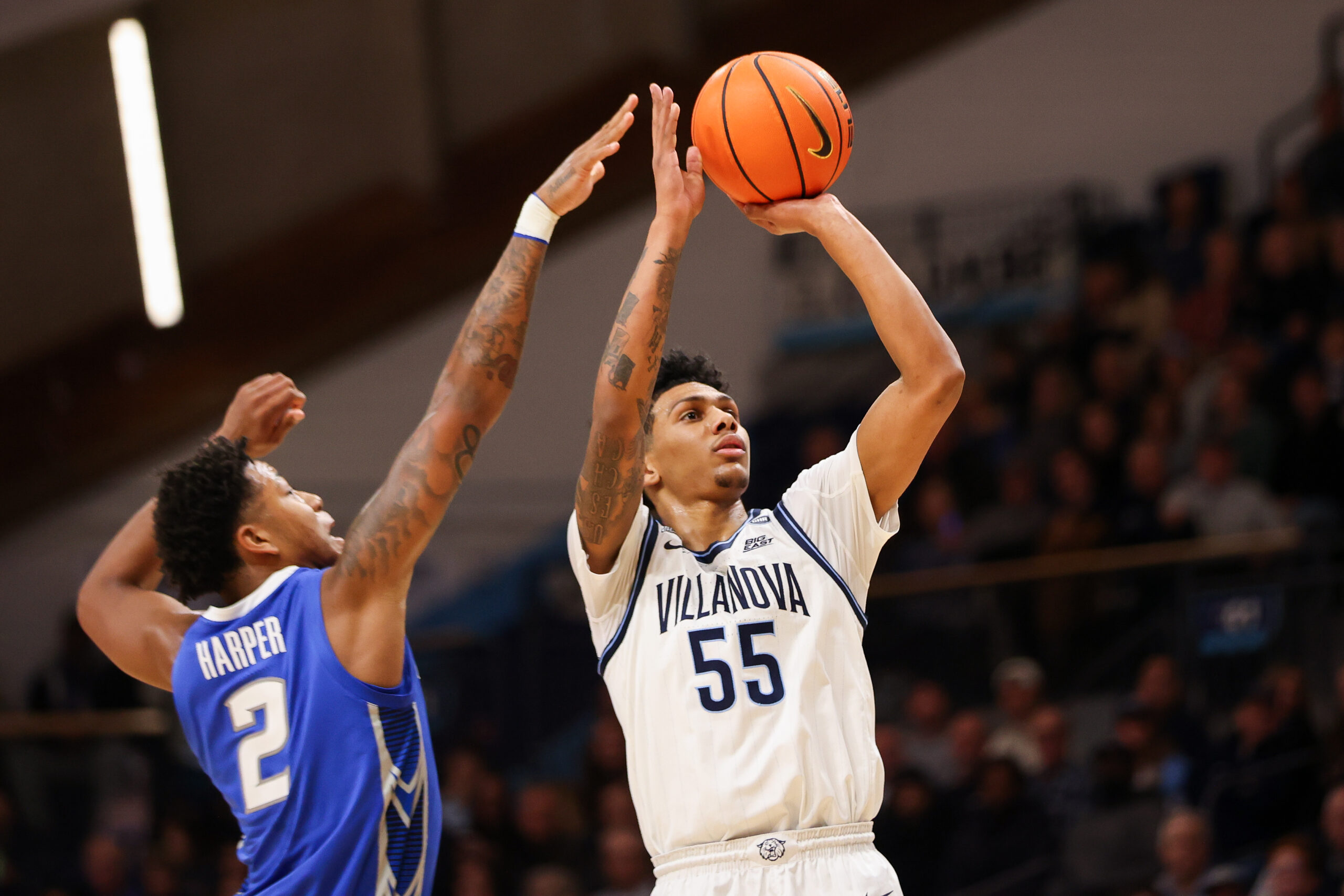
Villanova guard Acaden Lewis led the team with 20 points against Creighton on Wednesday.
Villanova shot 44% from the field and 25% from beyond the arc, compared to Creighton’s 50% on field goals and 30.4% on three-pointers.
Next, Villanova will visit Marquette (6-10, 1-4) on Saturday at 2:30 p.m. (TNT/truTV). The Wildcats lead the all-time series, 28-20.
Decisive second half
For just the second time this season, Villanova was outscored in the second half, 46-38. The only other time was in the 76-66 overtime win against Wisconsin on Dec. 19.
Villanova had no answer defensively for a surging Creighton offense. The Bluejays spun off a 13-2 run, while Villanova went on a three-minute scoring drought.
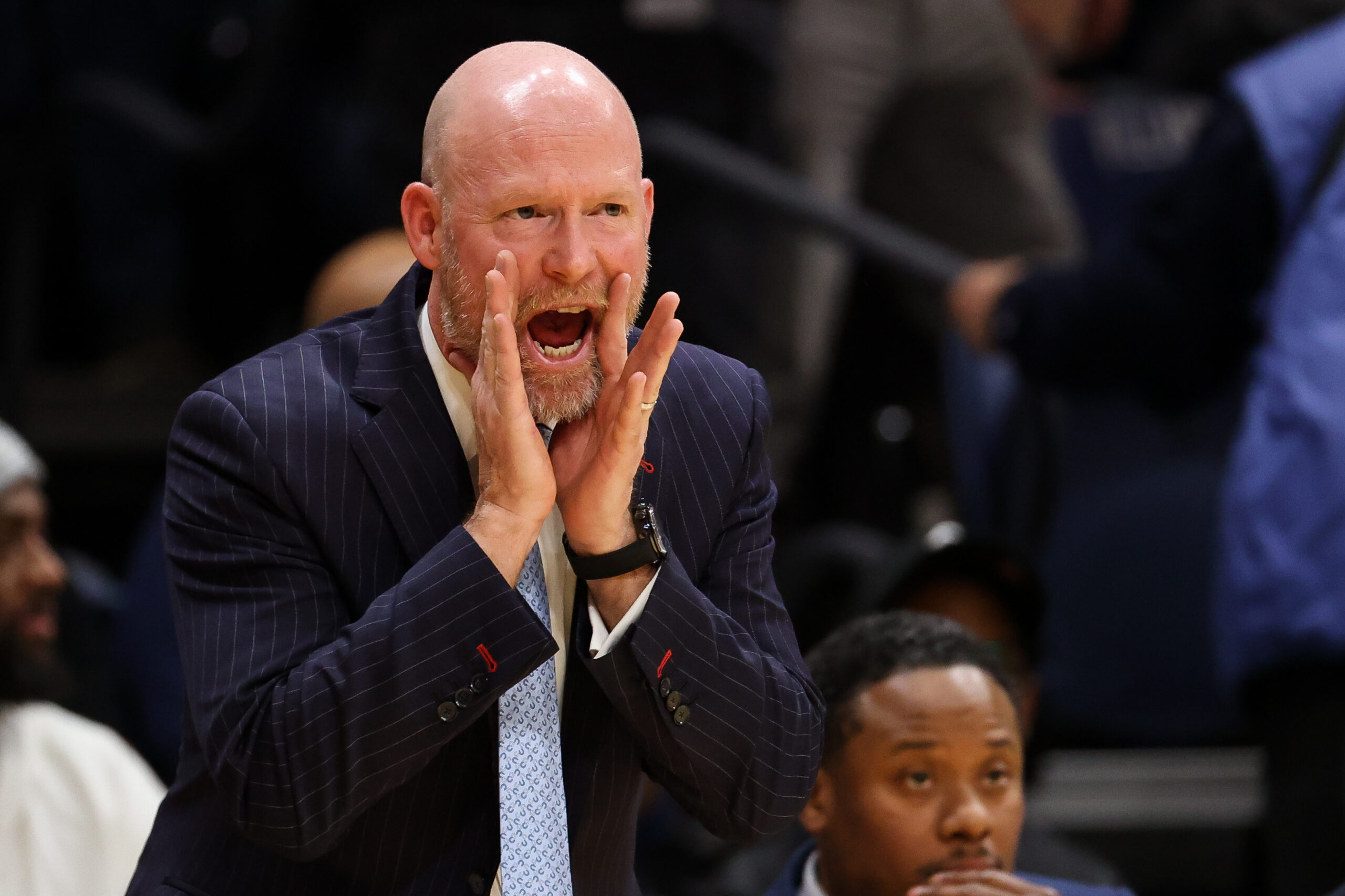
Kevin Willard coaching Villanova during the second half against Creighton on Wednesday.
“I thought [the Bluejays] did a really good job of using their size to their advantage,” Villanova coach Kevin Willard said. “I thought [Josh] Dix and [Blake] Harper made some really big plays just using their size against us, and every time we tried to get a stop. You’ve got to give those two credit. They played really well.”
Creighton made Villanova’s best shooter, redshirt sophomore Bryce Lindsay, a nonfactor. Lindsay, who averaged 45.8% from deep in the last three games, went 0-for-3 on three-pointers against Creighton. Villanova made only 2 of 12 three-pointers in the second half.
“We had our opportunities at the rim,” Willard said. “I thought [Jasen] Green had two really good wall-ups towards the end, but we had our opportunities. It had nothing to do with [our] offense. It was totally just abysmal defense.”
Beaten on the boards
Villanova kept Creighton at bay in the first half, and at one point led by25-15. However, it all slipped away after halftime. Villanova gave up 13 offensive rebounds, which Creighton turned into 11 second-chance points.
“Just defense,” Willard said when asked about what he took away from the loss. “I thought we took some bad shots in the first half, when we had a good run going. And I thought we were playing good defensively early. So I thought our offense in the first half was the issue. But defensively, you just can’t give up 13 offensive rebounds to a Greg McDermott team. You’ve got no chance.”
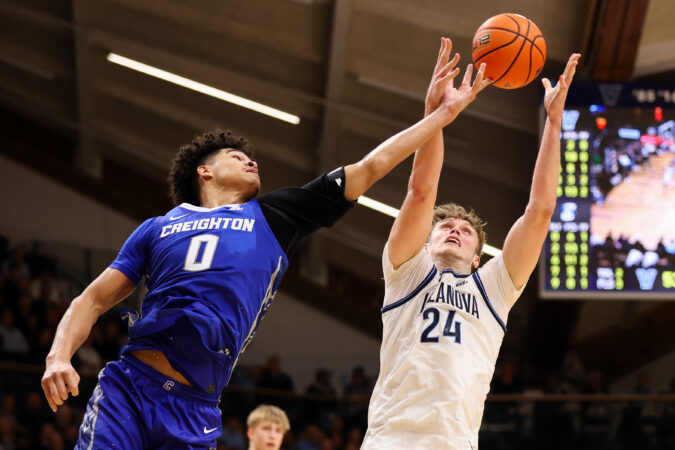
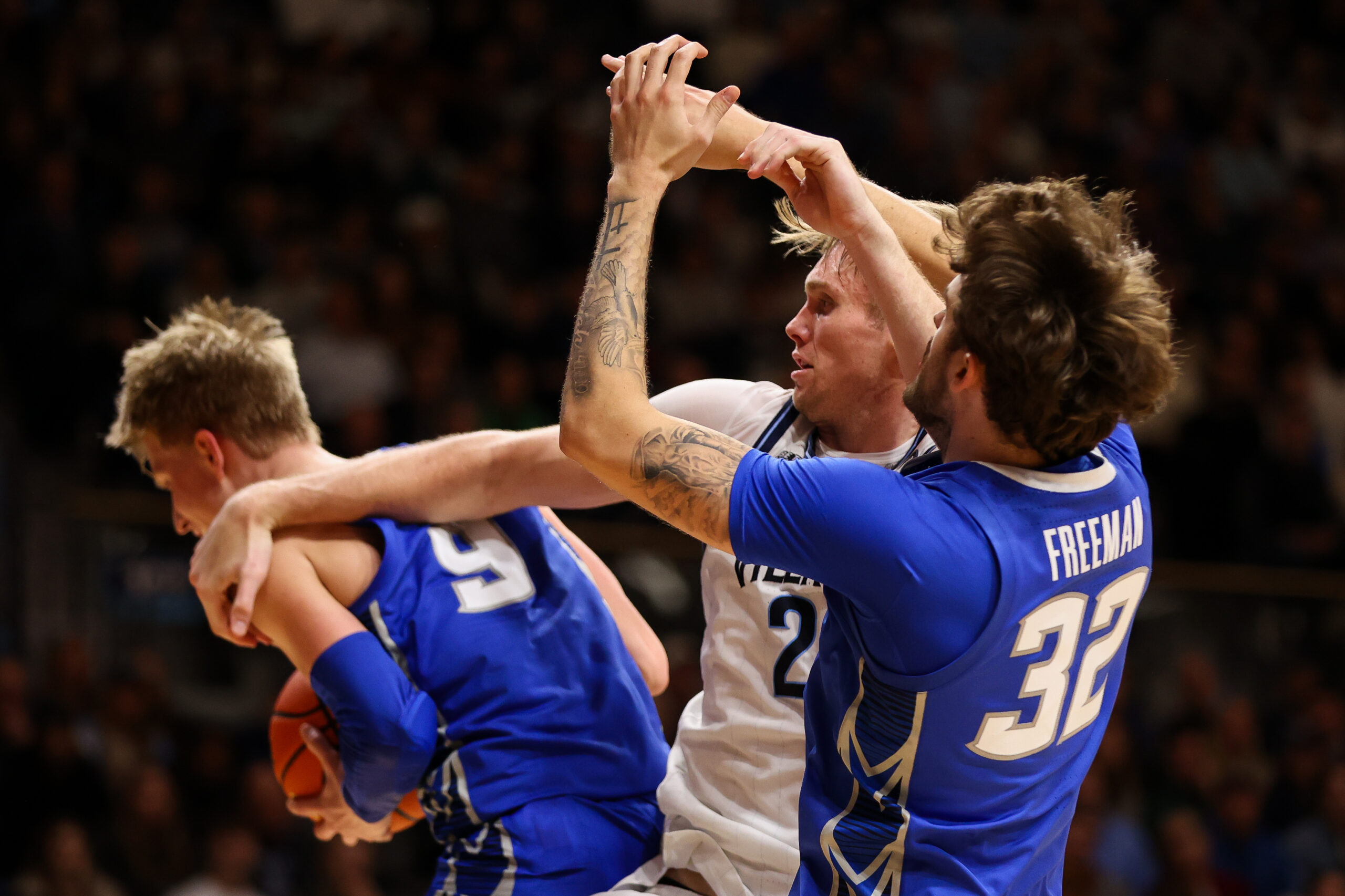
Villanova forward Duke Brennan (center) reaches for the ball against Creighton guard Ty Davis (9).
Brennan was quick to take accountability for Villanova’s defensive performance.
“Being a senior, I need to adjust my ball-screen coverages on different teams as we play,” Brennan said. “I don’t think I did a great job at it tonight, but I do look at the film and help out our defense. I’m that line for us.”
Creighton’s 76 points were the most a conference opponent has scored against the Wildcats this season.
Watching rotations
At the beginning of the season, Willard consistently rotated nine to 10 players each game. Injuries limited the rotations with Devin Askew and Zion Stanford missing time to start the season. Villanova had multiple games with eight or more scorers.
Now, it looks like Willard has found his rotations that work efficiently. The coach has leaned on his starting five of Lewis, Lindsay, Tyler Perkins, Matt Hodge, and Brennan for a bulk of the minutes, with most of them playing an average of 30 minutes or more.
As of recently, only Askew and Malachi Palmer have had meaningful minutes off the bench. Freshman guard Chris Jeffrey has missed the last five games due to a knee injury that required surgery, sidelining him indefinitely.
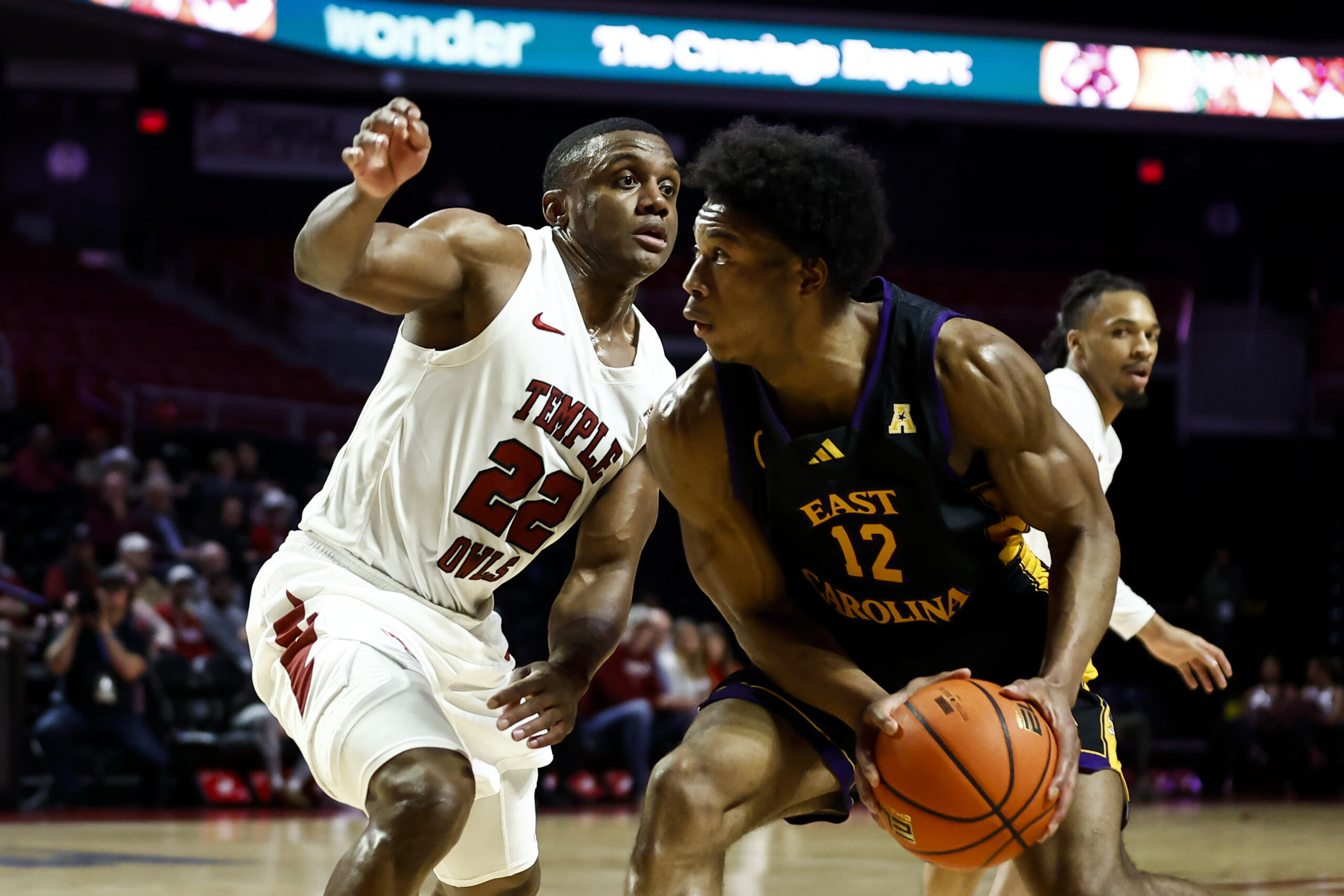
Temple looked like it would easily secure its seventh straight victory by beating East Carolina, a team that sits at the bottom of the American Conference, on Wednesday at the Liacouras Center.
The Owls (11-5, 3-0 American) carried a 15-point lead into halftime. Then ECU started to crawl back. The Pirates (5-10, 0-2) got within five points in second half, but it was too little too late.
A 29-point surge from ECU guard Jordan Riley wasn’t enough as Temple shook off its horrid offensive slump and finished with a 75-67 victory, marking its longest winning streak since the 2014-15 season.
“We told our guys at halftime, ‘Hey, they’re going to ramp it up. They’re going to go on a run. We’ve got to be ready,’” coach Adam Fisher said. “I know we got a little stagnant and didn’t score as much as we would have liked in parts of that second half. But winning is hard. … So again, I’m really proud of our guys and I thought it took everybody to prepare the right way and then to get this win here tonight.”
Next, Temple will face a true test in the American when the Owls visit defending conference champion Memphis (7-7, 2-0) on Wednesday (8 p.m., ESPN+).
First-half defense
Temple’s mentality all season has been simply to play defense. The Owls had one of the worst defenses in the country last season, and they’ve shown signs of improvement this year, allowing 70.4 points per game, the fourth-lowest average in the American.
On Wednesday, the Pirates had little room to breathe as Temple searched for momentum on offense.
The result was 12 turnovers, with eight coming in the first half. ECU had multiple scoreless stretches, including a five-minute drought, which helped Temple push the lead to seven points.
The biggest win was Temple’s success on the glass. After ECU center Giovanni Emejuru picked up his second foul, Temple managed to get through.
Guards Gavin Griffiths, who finished with a season-high 24 points, and Masiah Gilyard were key contributors for the Owls, as they finished with six and five rebounds, respectively.
Griffiths also was Temple’s best defender. He swatted away four shots and had two steals.
Hot-and-cold offense
Toward the end of the half, Griffiths ended his 12-minute scoreless stretch with a three-pointer. Owls guard Derrian Ford, who missed the last game with an injury, started finding his rhythm. He finished with 18 points, with 10 coming at the free-throw line.
But the offensive slump returned after halftime.
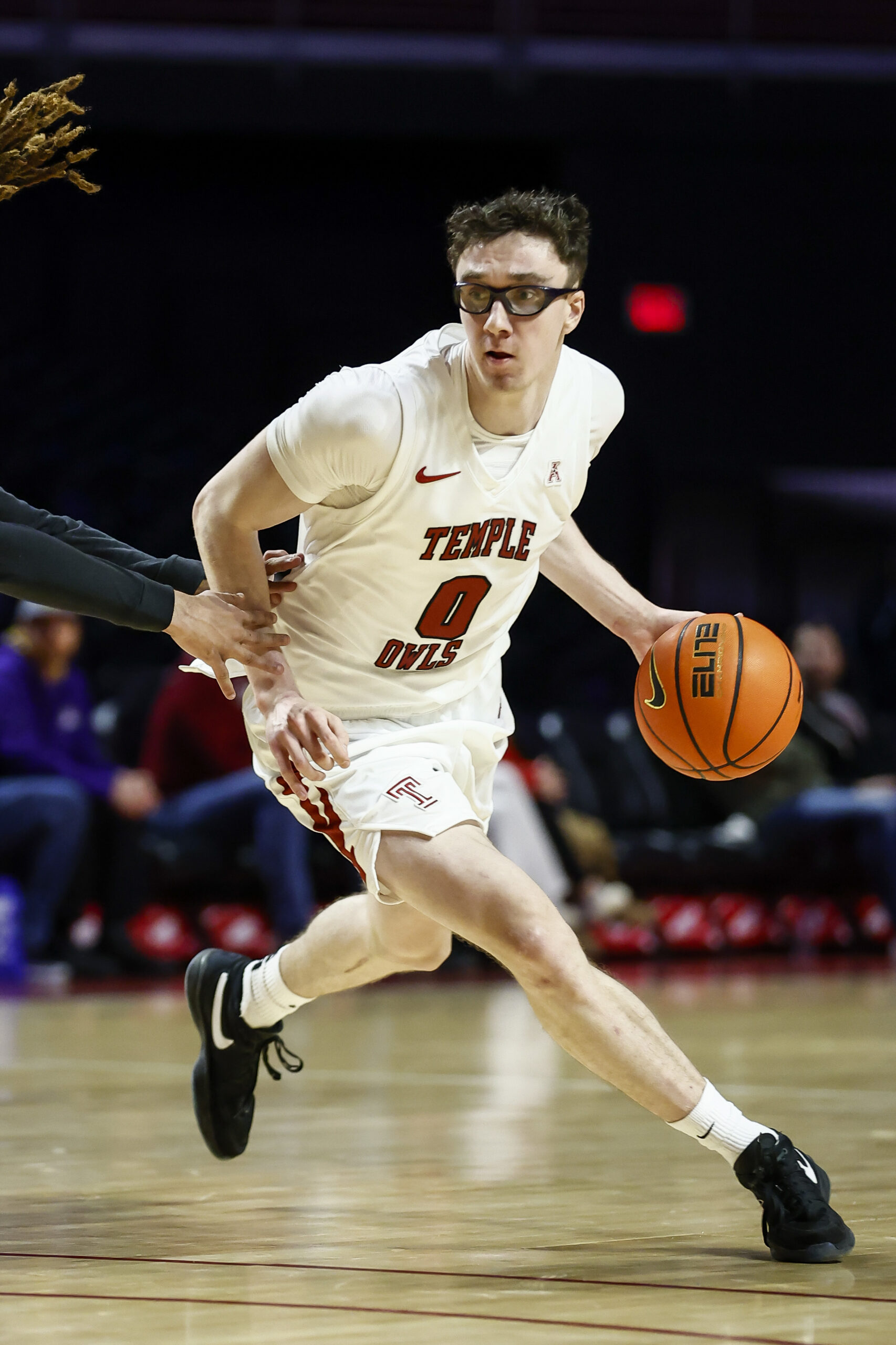
Temple guard Gavin Griffiths scored a season-high 24 points on Wednesday.
The Pirates clamped down after the break, limiting any chance for the Owls to stay comfortable.
Guard Aiden Tobiason, who is second on the team in scoring, was a nonfactor. His first and only field goal came late in the game, as he finished with four points.
Temple finished the second half going 8-for-22 and had six turnovers, forcing the defense to save the game. Then came a big three-pointer from Griffiths to make it 65-56 with 3 minutes, 21 seconds left.
“I just felt like I was open, so I was going to shoot it,” Griffiths said. “My teammates did a great job finding me. I think I only took one dribble for my three. So most of them are catch-and-shoot.”
Containing Riley
Temple’s game plan was to stop Riley. The former Temple guard entered his homecoming as the conference’s leading scorer with 20.8 points per game, powering an offense that averages 67.3.
In the first half, Riley was stuffed. But in the second half, the seal was lifted, and Temple had no way to stop him.
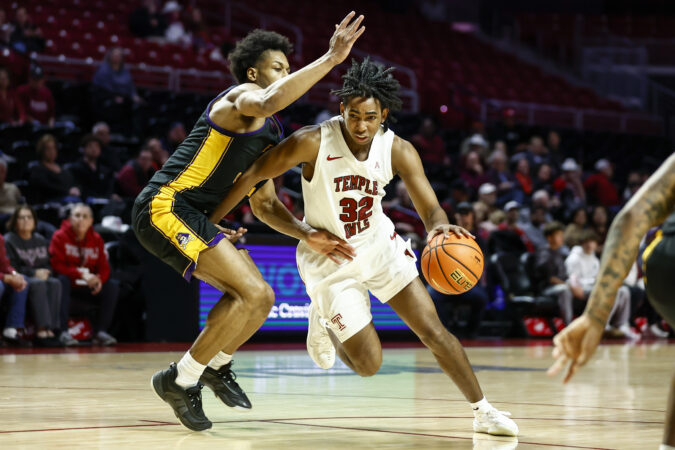
Temple guard Derrian Ford guards East Carolina guard Jordan Riley on Wednesday.
“Jordan Riley is a fantastic player,” Fisher said. “I thought Jordan made some tough shots. He gets downhill. We know how good he can be, but in the second half they were really good, and we’ve got to be better. Our second-half defense wasn’t where we needed to be.”
Riley’s 23 second-half points kept the Pirates in the game as they finished the half with 46 points. But ultimately Temple’s lead was too big to overcome.