The layoffs are planned forthe end of April, according to a Thursday WARN Act filing with the Pennsylvania Department of Labor and Industry. They include the employees of all six Philly-area Amazon Fresh locations — 205 at the Northern Liberties store, 189 in Broomall, 161 in Bensalem, 157 in Langhorne, 144 in Warrington, and 127 in Willow Grove, according to the filing.
By the end of April, Amazon also plans tolay off nearly 900 New Jersey employees, the vast majority of whom work in northern counties where there are Amazon Fresh stores, according to a WARN Act filing with New Jersey Department of Labor & Workforce Development.
The day after announcing the Amazon Fresh closures, Amazon said 16,000 employees companywide would be losing their jobs as part of a broader reorganization.
“We’ve been working to strengthen our organization by reducing layers, increasing ownership, and removing bureaucracy,” Amazon said in a statement announcing the layoffs.
The company said most U.S. employees will have 90 days to look for a new role internally. After that, those leaving the company will receive severance pay, “outplacement services,” and health insurance benefits, as applicable, according to Amazon.
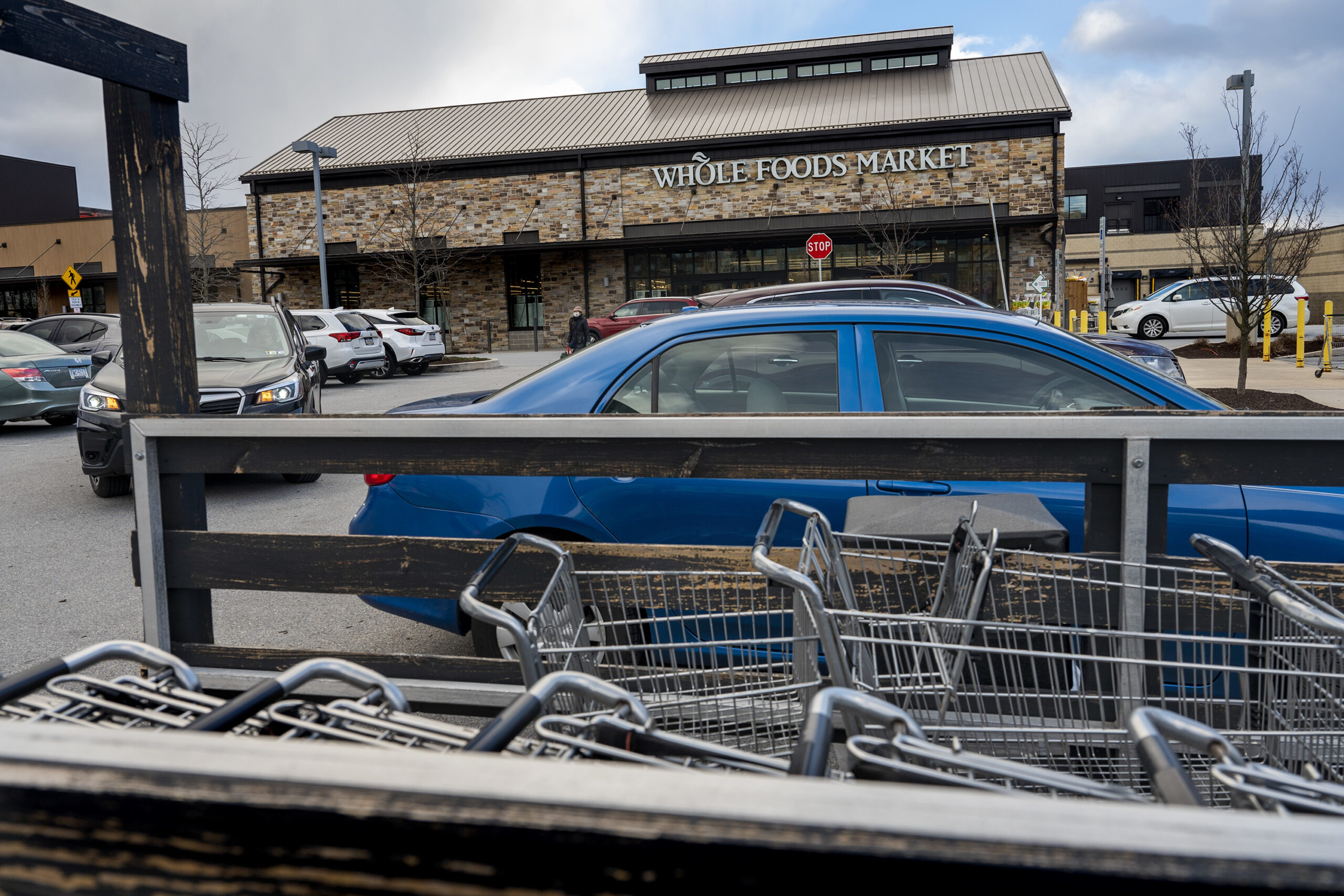
With its move to shutter the Fresh stores, Amazon has said it will “double down” on online grocery delivery and expand its Whole Foods footprint. Whole Foods, which Amazon bought in 2017, has more than a dozen locations in the Philadelphia area.
“Amazon Whole Foods, a trillion dollar entity, treats us like robots to be exploited and squeezed for maximum profits,” Jasmine Jones, a Philadelphia Whole Foods worker and member of Whole Foods Workers United, said Tuesday in a statement that noted the company’s Whole Foods expansion plans. “They are making billions of dollars off of our labor and we deserve better pay and benefits.”
Amazon will be closing all its physical Amazon Fresh stores, including six in the Philadelphia region, as it expands its Whole Foods footprint and grocery delivery services.
“While we’ve seen encouraging signals in our Amazon-branded physical grocery stores, we haven’t yet created a truly distinctive customer experience with the right economic model needed for large-scale expansion,” the company said.
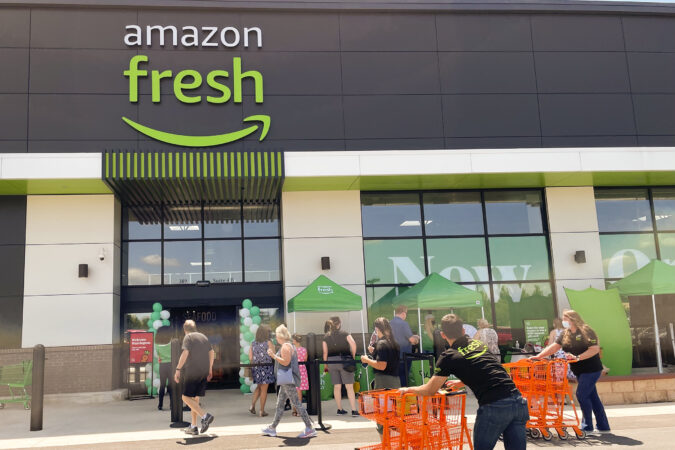
People shop inside the Amazon Fresh in Warrington in August 2021. The store and all other Amazon-branded grocers are closing.
The statement did not specify which Amazon Fresh stores would become Whole Foods, and company spokespeople did not answer questions about whether any Philadelphia-area locations would be converted.
Amazon Fresh has stores in Broomall, Bensalem, Langhorne, Northern Liberties, Warrington, and Willow Grove. The Northern Liberties location on Sixth and Spring Garden Streets opened this summer after years of construction.
Two more potential Amazon Fresh stores seemed to be in the works in Havertown and Northeast Philadelphia as of the summer, according to PhillyVoice.
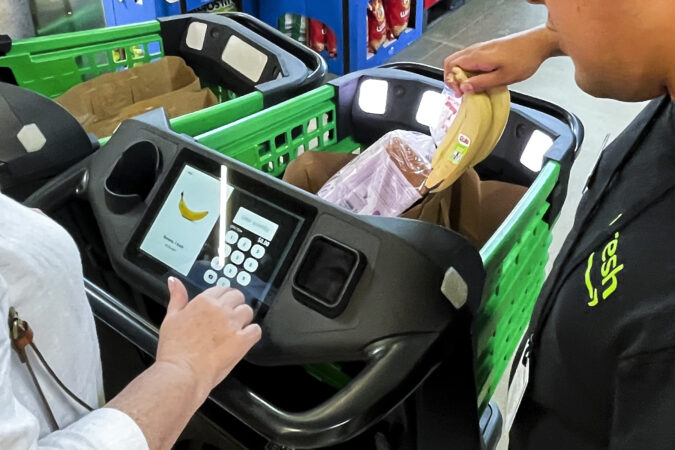
Customers use the Amazon Dash Cart at the Amazon Fresh grocery store in Warrington in 2021.
As the company winds down its Amazon-branded physical stores, it says it will “double down” on online grocery delivery, including by expanding its same-day services to more communities.
Whole Foods has 550 locations nationwide, including more than a dozen in the Philadelphia area. Amazon spokespeople did not answer questions about whether more Whole Foods stores were in the works in the Philly region.
Amazon also expects to open at least five more smaller-format Whole Foods Market Daily Shop stores by the end of the year. The company said that decision was based on “strong performance” at the five existing shops in the New York City area and Arlington, Va.
The Center City Whole Foods Market as pictured in February 2025.
The online retailer said it plans to continue to experiment with new ways of shopping at its physical stores.
In its statement, Amazon gave a shout-out to one such test in the Philadelphia area: “The store within a store” experience at the Whole Foods in Plymouth Meeting.
Since November, customers at that store have been able to browse the physical aisles of Whole Foods, while digitally ordering unique products from Amazon and Whole Foods. The orders are then packaged in minutes in an automated micro-fulfillment center within the grocer’s back-of-house area.
The social video platform was one of three companies — along with Meta’s Instagram and Google’s YouTube — facing claims that their platforms deliberately addict and harm children. A fourth company named in the lawsuit, Snapchat parent company Snap Inc., settled the case last week for an undisclosed sum.
Details of the settlement with TikTok were not disclosed, and the company did not immediately respond to a request for comment.
At the core of the case is a 19-year-old identified only by the initials “KGM,” whose case could determine how thousands of other, similar lawsuits against social media companies will play out. She and two other plaintiffs have been selected for bellwether trials — essentially test cases for both sides to see how their arguments play out before a jury and what damages, if any, may be awarded, said Clay Calvert, a nonresident senior fellow of technology policy studies at the American Enterprise Institute.
A lawyer for the plaintiff said in a statement Tuesday that TikTok remains a defendant in the other personal injury cases, and that the trial will proceed as scheduled against Meta and YouTube.
Jury selection starts this week in the Los Angeles County Superior Court. It’s the first time the companies will argue their case before a jury, and the outcome could have profound effects on their businesses and how they will handle children using their platforms. The selection process is expected to take at least a few days, with 75 potential jurors questioned each day through at least Thursday. A fourth company named in the lawsuit, Snapchat parent company Snap Inc., settled the case last week for an undisclosed sum.
KGM claims that her use of social media from an early age addicted her to the technology and exacerbated depression and suicidal thoughts. Importantly, the lawsuit claims that this was done through deliberate design choices made by companies that sought to make their platforms more addictive to children to boost profits. This argument, if successful, could sidestep the companies’ First Amendment shield and Section 230, which protects tech companies from liability for material posted on their platforms.
“Borrowing heavily from the behavioral and neurobiological techniques used by slot machines and exploited by the cigarette industry, Defendants deliberately embedded in their products an array of design features aimed at maximizing youth engagement to drive advertising revenue,” the lawsuit says.
Executives, including Meta CEO Mark Zuckerberg, are expected to testify at the trial, which will last six to eight weeks. Experts have drawn similarities to the Big Tobacco trials that led to a 1998 settlement requiring cigarette companies to pay billions in healthcare costs and restrict marketing targeting minors.
“Plaintiffs are not merely the collateral damage of Defendants’ products,” the lawsuit says. “They are the direct victims of the intentional product design choices made by each Defendant. They are the intended targets of the harmful features that pushed them into self-destructive feedback loops.”
The tech companies dispute the claims that their products deliberately harm children, citing a bevy of safeguards they have added over the years and arguing that they are not liable for content posted on their sites by third parties.
“Recently, a number of lawsuits have attempted to place the blame for teen mental health struggles squarely on social media companies,” Meta said in a recent blog post. “But this oversimplifies a serious issue. Clinicians and researchers find that mental health is a deeply complex and multifaceted issue, and trends regarding teens’ well-being aren’t clear-cut or universal. Narrowing the challenges faced by teens to a single factor ignores the scientific research and the many stressors impacting young people today, like academic pressure, school safety, socio-economic challenges, and substance abuse.”
A Meta spokesperson said in a statement Monday the company strongly disagrees with the allegations outlined in the lawsuit and that it’s “confident the evidence will show our longstanding commitment to supporting young people.”
José Castañeda, a Google Spokesperson, said Monday that the allegations against YouTube are “simply not true.” In a statement, he said “Providing young people with a safer, healthier experience has always been core to our work.”
TikTok did not immediately respond to a request for comment Monday.
The case will be the first in a slew of cases beginning this year that seek to hold social media companies responsible for harming children’s mental well-being. A federal bellwether trial beginning in June in Oakland, Calif., will be the first to represent school districts that have sued social media platforms over harms to children.
In addition, more than 40 state attorneys general have filed lawsuits against Meta, claiming it is harming young people and contributing to the youth mental health crisis by deliberately designing features on Instagram and Facebook that addict children to its platforms. The majority of cases filed their lawsuits in federal court, but some sued in their respective states.
TikTok also faces similar lawsuits in more than a dozen states.
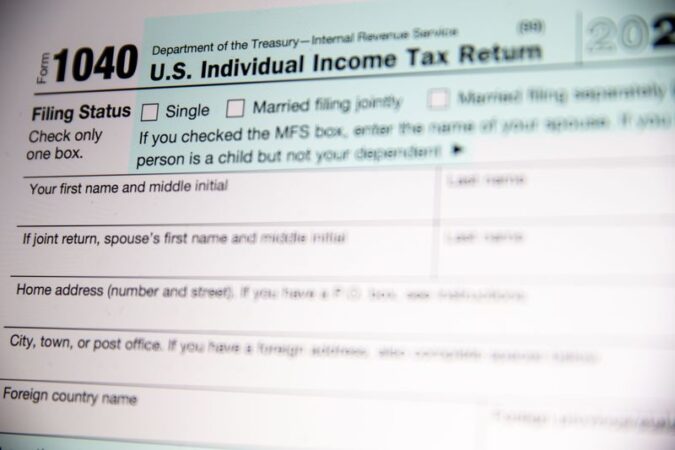
Each year, Americans spend an average of $240 to prepare and file their tax returns, according to the IRS Taxpayer Advocate Service. And the process is so complicated that about a million taxpayers who could get money back don’t file returns, allowing the U.S. Treasury to keep more than $1 billion of their money.
Many taxpayers can get free assistance preparing and filing their returns. Below is a rundown of available services, who is eligible, and how to avoid scams.
All these prep-and-filing options require you to track down documents and then enter or verify data. Fortunately, most websites are easy to navigate. Instead of filling out complicated forms and instructions, you answer simple questions, such as “Do you have children living with you?” and “Did you have interest income from a bank, savings, or investment account?”
Warning: Don’t search the internet using terms such as “file my taxes for free” — you could end up on the website of a scammer, or even a well-known tax-prep brand that will charge you hefty fees. Instead, use the links provided in this article, or go to irs.gov.
Free services from tax-prep companies
Several tax-prep companies provide free online resources for those with low- or moderate-low incomes.
“Free File” is a partnership between the IRS and eight companies (the IRS calls them “trusted partners”) to provide free tax preparation and filing services for individuals and families with adjusted gross incomes of $89,000 or less.
Although H&R Block and TurboTax, the most popular tax-prep software companies, do not participate in the IRS’s Free File program, they do offer free online prep-and-filing services to those with relatively simple tax returns. In general, you can use these two companies’ free options if you had wages reported on a W-2, had only one job, take the standard deduction, and are entitled to the most common credits, such as the child tax credit or earned income credit. H&R Block says 55% of taxpayers can use its free option; TurboTax estimates 37% can use its free online software.
Free tax-prep help for low-income taxpayers
The Volunteer Income Tax Assistance (VITA) program helps community organizations offer free basic tax preparation help, using IRS-certified volunteers, generally to households with adjusted gross incomes of $67,000 or less or to those with disabilities. Some programs specialize in assisting those who speak limited English. Selected help centers also have workstations where taxpayers can input info and electronically file their own tax returns with or without the assistance of an IRS-certified volunteer. Click here for a searchable database of VITA in-person-help sites.
VITA also operates GetYourRefund.org, a website offering free tax-prep software. It was built by Code for America, a nonprofit organization, with help from the IRS. To qualify, you must meet income requirements (in general, it’s limited to individuals and families with adjusted gross incomes under $89,000 per year).
Instead of meeting in person with a tax-prep volunteer, with GetYourRefund.org you upload your tax documents to its website and provide basic information. A VITA volunteer completes your return and then a second volunteer reviews it; you likely will be contacted several times with questions. It usually takes two or three weeks to complete the process.
If you don’t need any help, you can also use the website to file your return for free.
Free tax-prep help for older taxpayers
Similar to VITA, the Tax Counseling for the Elderly (TCE) program helps community nonprofits provide free tax help to older adults. In general, you must be 60 or older, but some sites will help those in their 50s with low-to-moderate incomes. The AARP Foundation’s Tax Aide program staffs most sites, and many advisers specialize in pension and retirement issues unique to seniors. Between now and April 15, use the AARP’s “Tax-Aide Site Locator” webpage to find nearby help.
At some TCE locations, you can prepare and file your own return on-site for free using tax-prep software and with help from a volunteer. This option is available only at locations that list “Self-Prep” in the AARP online site finder tool.
Free tax-prep help for military and recent veterans
MilTax is a free resource backed by the Department of Defense for service members, eligible family members, survivors, and recent veterans (up to 365 days from their separation or retirement date).
It includes tax preparation and electronic filing software, as well as personalized support from military tax experts. MilTax assists with issues involving deployments, combat and training pay, housing, and multistate filings. Eligible service members (and some veterans) can use MilTax to electronically file a federal tax return and up to three state returns for free. Get free one-on-one tax help from MilTax experts over the phone by calling 800-342-9647, use the live chat feature, or visit a VITA location for in-person help.
Protect against fraud
There are several steps you can take to protect yourself against tax-related identity theft.
First, don’t answer phone calls or respond to texts or emails that say they’re from the IRS. Its agents send all notices via mail; they won’t ever call you out of the blue.
Also, be on the lookout for warning signs of fraud. Monitor your mail. Most victims don’t realize they’ve been targeted until they send in their tax return and receive a warning letter from the IRS that more than one return was filed with their Social Security number, or that they didn’t declare all their income from a company they didn’t work for. Other IRS notifications that could indicate a problem: an online account that you didn’t open was created in your name, or you were assigned an employee identification number that you didn’t request.
A simple but effective way to prevent tax identity theft is to request an identity protection PIN (IP PIN) from the IRS. This unique six-digit number prevents anyone else from using your Social Security Number or individual taxpayer identification number (ITIN) to file a return in your name. It’s like freezing your credit files to lock out the bad guys. (Note: The IP PIN is different from the five-digit PIN you may use to sign your return electronically.)
It takes only minutes to create an IP PIN. You will first need to have or create an online IRS account or visit an IRS Tax Assistance Center. And you’ll need to obtain a new number each year.
Hundreds of thousands of Americans become victims of tax-related identity theft each year. Committing the crime has become easier because so much personal information has been exposed through massive data breaches. The average time to resolve tax-return-theft claims is nearly two years.
Delaware Valley Consumers’ Checkbook magazine and Checkbook.org is a nonprofit organization with a mission to help consumers get the best service and lowest prices. It is supported by consumers and takes no money from the service providers it evaluates. Until March 5, Inquirer readers can access Checkbook’s ratings and advice free at Checkbook.org/Inquirer/taxes.
Four months after the chain closed nearly 20 locations and filed for bankruptcy, a federal judge has approved the acquisition of Iron Hill’s trademark and intellectual property in conjunction with the transfer of five restaurant leases, including one in Philadelphia, according to court documents filed over the weekend.
The shuttered brewpubs in Center City, Huntingdon Valley, Hershey, Lancaster, and Wilmington are set to be taken over by new tenants, each of which is referred to as “IHB” in the documents. Earlier this month, these tenants registered as business corporations under “IHB” and the name of each location, according to state records in Pennsylvania and Delaware.
Judge Jerrold N. Poslusny Jr. also approved a written agreement that allowed for “Rightlane LLC” to assume Iron Hill Brewery’s trademark and intellectual property, according to the same filing in U.S. Bankruptcy Court in New Jersey.
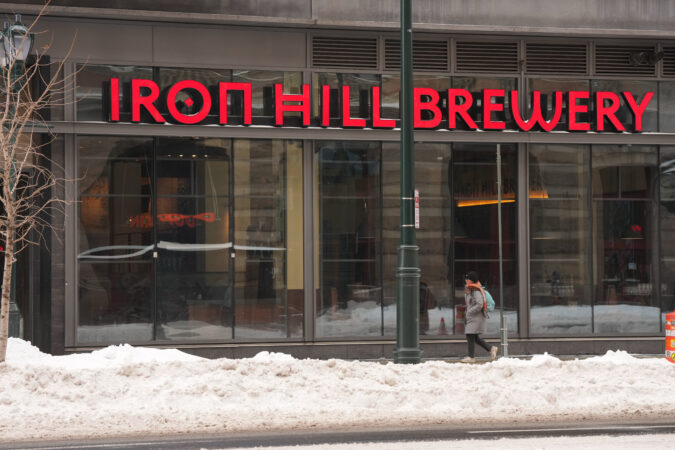
A view from the outside looking in on a closed Iron Hill Brewery.
On Monday, Crivello confirmed that the assets of his five remaining Iron Hills, along with the brand’s trademark and intellectual property, had been acquired by a buyer called Right Lane.
There are several companies that go by the name Rightlane or Right Lane. Attempts to reach representatives of the Right Lane that was involved in the Iron Hill deal were unsuccessful.
Iron Hill Brewery, which was founded in Newark, Del., developed a loyal following over its nearly 30 years in business. Fellow business owners and brewers considered it a pioneer in the local craft beer scene and a restaurant that helped put suburban downtowns like West Chester and Media on the map. Customers said they loved its family-friendly atmosphere.
Since then, massive shells of former breweries have sat vacant throughout the region. As the case made its way through bankruptcy court, landlords were delayed in their searches for new tenants.
Many locations still remain empty, with no word on what might fill the spaces. But in some spots, there are signs of life.
The company that owns P.J. Whelihan’s may be moving into the former Iron Hill in Newtown, Bucks County.
Last month, PJW Opco LLC, which is registered at the headquarters of PJW Restaurant Group, was approved to take over a lease for an 8,000-square-foot closed Iron Hill in the Village at Newtown shopping center.
But this time it’s not with new physical stores. The home design company is entering the virtual world.
The retailer, which has its U.S. headquarters in Conshohocken, announced this week that it is testing an immersive product experience on the Roblox platform.
Sweden and Australia are the first two pilot countries, according to the company, and the tests there “will better inform future decisions.” Ikea spokespeople did not respond Friday to questions about whether there were plans for similar pilots in the U.S.
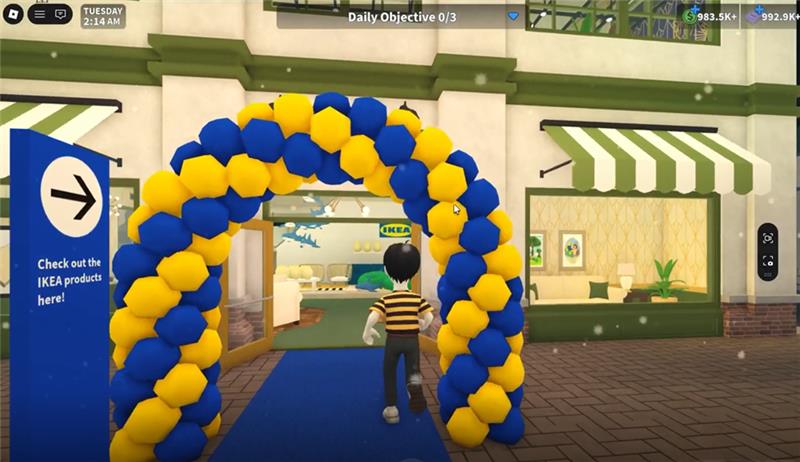
What users of “Welcome to Bloxburg,” a Roblox game, will see when they go to search for Ikea digital products in the simulation.
“We’re delighted to bring some of our most loved Ikea products into this digital space,” Sara Vestberg, home furnishing direction leader at Ikea Retail, said in a statement. “With curiosity, we’re looking forward to seeing the home furnishing ideas people create, and how our products feel at home in their digital lives.”
During the Ikea pilot, the company is making six of its popular products available in virtual form to Welcome to Bloxburg users in the select countries. The digital items include the Stockholm sofa, the Elsystem rug, and the Blahaj stuffed shark.
The virtual experience can collide with the in-real-life shopping experience, too, if customers scan QR codes hidden around physical stores in these countries. The QR codes unlock extra virtual products, according to Ikea. In Sydney, Roblox users can compete to win real products at in-store events next week.
“This pilot is very much about learning and exploring,” said Parag Parekh, chief digital officer at Ikea Retail. “We’re using it to better understand how digital environments can enrich the Ikea experience, while continuing to stay true to our values and what customers expect from us.”
Ikea was founded in Sweden in 1943, and is currently based in the Netherlands. Its U.S. headquarters in Conshohocken employed more than 800 people as of June. Nationwide, Ikea has more than 50 stores, including in Conshohocken and South Philadelphia.
The French developer of South Jersey’s first large-scale AI data center made his case to residents on Wednesday, saying his massive under-construction facility will benefit them in ways unprecedented in the emerging industry.
But at a contentious town hall, several residents said they’re not taking his word for it, especially given the timing at which the developer was asking for their input.
“You couldn’t do this before the building was built?” asked one resident, who spoke during public comment but declined to give their name. “You kind of took our voice away.”
Located on South Lincoln Avenue, off State Route 55, the site was formerly a private industrial park.
DataOne, a French company that manages advanced data centers, is the owner, operator, and builder. Its client, Nebius Group, an Amsterdam-based AI-infrastructure company, will operate the center’s internal technology, which will fuel Microsoft’s AI tools.
Located on South Lincoln Avenue, off State Route 55, the site was formerly a private industrial park. It was sold to DataOne in a private transaction, the details of which Charles-Antoine Beyney, DataOne’s founder and chief executive officer, declined to disclose.
At city council meetings and on social media, some residents have voiced concerns about the environmental, financial, and quality-of-life impacts of the site. Prior to Wednesday’s meeting, residents were prompted to submit questions online that were then addressed in a presentation. Dozens also took to the mic afterward.
Beyney said he understood their concerns, but they don’t apply to his center, which will use “breakthrough” technology to reduce its environmental impact.
“Most of the data centers that are being built today suck, big time,” Beyney said Wednesday. “They consume water. They pollute. They are extremely not efficient. This is clearly not what we are building here.”
“No freaking way am I am going to do what the entire industry is doing … just killing our communities and killing our lungs to make money,” he added.
Developers tout promises of data centers
Data centers house the technology needed to fuel increasingly sophisticated AI tools. In recent years, they have been proliferating across the country and the region.
In June, Gov. Josh Shapiro announced a $20 billion investment by Amazon in Pennsylvania data centers in Salem Township and Falls Township.
A 560,000-square-foot data center is being built in Logan Township, Gloucester County, and is set to have a capacity of up to 150 megawatts once completed in early 2027, according to the website of its designer, Energy Concepts. There are also smaller, specialized data centers in Atlantic City and Pennsauken, according to Data Center Map.
In Vineland, Beyney said his gas-powered center will have nearly net-zero emissions, not consume water while cooling the equipment, and generate 85% of its own power. He told residents: “You will not see your bill for electricity going and skyrocketing.”
Opponents of data centers worry their electric bills will rise due to the centers. The developer in Vineland says that won’t happen in South Jersey.
The facility will be 100% privately funded, he said, after the company turned down a nearly $6.2 million loan from the city amid resident backlash. The loan was approved at a December council meeting, and Beyney said DataOne would have paid about $450,000 in interest, money that could have gone back into the community.
“That’s a shame,” Beyney said, “but we follow the people.”
At a meeting next week, Vineland City Council could approve a PILOT agreement that would give DataOne tax breaks on the new construction in exchange for payments to the city.
Beyney said DataOne plans to be a good neighbor. Across the street from the data center, he said they will build a vertical farm — which grows crops indoors using technology — and provide free fruits and vegetables to Vineland residents in need.
Residents voice concerns about Vineland data center
Several residents expressed skepticism, and even anger, about Beyney’s data-center promises, noting that Cumberland County already has plenty of farms.
Regarding the data center itself, they asked how Beyney could be so confident about new technology, questioned the objectivity of his data, and accused him of taking advantage of a city where nearly 14% of residents live below the poverty line.
Beyney denied the allegations.
At least one resident said he was moved by Beyney’s assurances.
“I was a really big critic of [the data center all along], but I think what you said tonight has alleviated a lot of my concerns,” said Steve Brown, who lives about a mile away from the data center. He still had one gripe, however: The noise.
“What I hear every night when I wake up at 2, 3, 4 o’clock in the morning is this rumble off in the distance,” Brown said. “When I get out of my car every day when I get home, I hear it.”
Brown invited Beyney and his team to come hear the noise from his kitchen or back patio. Beyney said they would do so, and promised to get the sound attenuated as soon as possible, certainly by the end of the project’s construction.
NEW YORK — What sounds like President Donald Trump narrating a new Fannie Mae ad actually is an AI-cloned voice reading text, according to a disclaimer in the video.
The voice in the ad, created with permission from the Trump administration, promises an “all new Fannie Mae” and calls the institution the “protector of the American Dream.” The ad comes as the administration is making a big push to show voters it is responding to their concerns about affordability, including in the housing market.
Trump plans to talk about housing at his appearance at the World Economic Forum in Davos, Switzerland, where world leaders and corporate executives meet this week.
This isn’t the first time a member of the Trump family has used AI to replicate their voice, first lady Melania Trump recently employed AI technology firm Eleven Labs to help voice the audio version of her memoir. It’s not known who cloned President Trump’s voice for the Fannie Mae ad.
Last month, Trump pledged in a prime-time address that he would roll out “some of the most aggressive housing reform plans in American history.”
“For generations, homeownership meant security, independence, and stability,” Trump’s digitized voice says in the one-minute ad aired Sunday. “But today, that dream feels out of reach for too many Americans not because they stopped working hard but because the system stopped working for them.”
Fannie Mae and its counterpart Freddie Mac, which have been under government control since the Great Recession, buy mortgages that meet their risk criteria from banks, which helps provide liquidity for the housing market. The two firms guarantee roughly half of the $13 trillion U.S. home loan market and are a bedrock of the U.S. economy.
The ad says Fannie Mae will work with the banking industry to approve more would-be homebuyers for mortgages.
Trump, Bill Pulte, who leads the Federal Housing Finance Agency, and others have said they want to sell shares of Fannie Mae and Freddie Mac on a major stock exchange but no concrete plans have been set.
Trump and Pulte have also floated extending the 30-year mortgage to 50 years in order to lower monthly payments. Trump appeared to back off the proposal after critics said a longer-term loan would reduce people’s ability to create housing equity and increase their own wealth.
Trump also said on social media earlier this month that he was directing the federal government to buy $200 billion in mortgage bonds, a move he said would help reduce mortgage rates at a time when Americans are anxious about home prices. Trump said Fannie Mae and Freddie Mac have $200 billion in cash that will be used to make the purchase.
Earlier this month, Trump also said he wants to block large institutional investors from buying houses, saying that a ban would make it easier for younger families to buy their first homes.
Trump’s permission for the use of AI is interesting given that he has complained about aides in the Biden administration using autopen to apply the former president’s signature to laws, pardons, or executive orders. An autopen is a mechanical device that is used to replicate a person’s authentic signature.
However, a report issued by House Republicans does not include any concrete evidence that autopen was used to sign Biden’s name without his knowledge.
Next month, the Old City establishment will also roll out a “lighter portions, lighter prices” section of its regular menu.
This is all to keep up with the evolving preferences of Philly-area diners, said Barry Gutin, cofounder of Cuba Libre.
“We said, ‘We should put something on the menu for all sorts of people watching their diet and their money,’” said Gutin, whose staff has noticed GLP-1 users and nonusers alike requesting these options more over the past year. This trend has also been seen at Cuba Libre restaurants in Atlantic City, Washington, and Orlando, as well as at its Paladar Latin Kitchen and Bomba Tacos locations in the Philadelphia suburbs.
For customers, an added perk is that they pay less for these smaller-portioned menu items, Gutin added. He said diners have become more focused on value amid broader financial uncertainty.
“The economy dictates that we have a diversity in pricing that meets more people’s needs,” Gutin said. “You think about the way people look at menus online. They’re scanning through prices as well.”
The dining room at Cuba Libre in Philadelphia. A cofounder says staff has noticed GLP-1 users and nonusers alike requesting smaller-portioned, less expensive options more over the past year.
In August, more than a third of U.S. diners said they were dining out less frequently than they did a year ago, according to a survey from YouGov. Of the less-frequent diners, 69% said they were eating out less in part because of the perceived cost of restaurant meals, the survey found.
Lower-income consumers were most likely to have cut back on dining out, according to the survey, while middle- and higher-income folks hadn’t changed their habits substantially.
This jibes with what executives at the Federal Reserve Bank of Philadelphia are hearing, too.
“Even individuals with discretionary income to spend are being careful,” Anna Paulson, president of the Federal Reserve Bank of Philadelphia, said Wednesday. “For example, although people are still eating out in Philadelphia, contacts tell us that less expensive options on the menu are becoming more popular.”
“The only exception to this trend is at more upscale restaurants,” Paulson added. “High-income households, bolstered by a strong stock market, appear to be driving elevated consumption growth.”
The Ropa Vieja meal from the GLP-Wonderful menu at Cuba Libre as shown on Jan. 14.
Alcohol use among adults has plummeted, with just 54% of respondents saying they drink in a July Gallup survey. That’s the lowest percentage in at least 90 years. It likely drops even lower this month as some people abstain from alcohol as part of the Dry January trend.
All of these trends are on display at Philly-area bars and restaurants. And owners are trying to keep up.
“We’re definitely at a time of dramatic shift in people’s preferences and tastes,” said Avram Hornik, owner of FCM Hospitality, which runs about a dozen venues in the region. They include Morgan’s Pier, Harper’s Garden, Craft Hall, and Concourse Dance Bar, as well as seasonal cocktail and beer gardens such as the traveling Parks on Tap.
“I don’t think people are spending less or going out less,” Hornik said, “but I just think they are doing it differently.”
Customers dine at Liberty Point, one of Avram Hornik’s restaurants, in 2023.
At Hornik’s restaurants, overall sales have been consistent year over year, he said. Some customers are looking for smaller portions, he said, and late-night business has dropped precipitously. But group dining and special events have made up for losses in other areas, he said.
When customers decide an outing is worthwhile, Hornik said, they generally aren’t sparing expenses.
People are “looking for more of an experience when they go out to eat,” Hornik said. “It’s really about value: Am I getting a good value for the money that I’m spending?”
To retain customers, Hornik said his restaurants are leaning into weekly specials, such as $1 tacos at Rosy’s, and happy-hour deals.
At Cuba Libre, Gutin said he sees the GLP-1 menu, as well as the forthcoming lighter-portions menu, as a way to make his restaurants as appealing as possible for all diners.
At each location, only about a dozen people request the GLP-1 menu each week, he said. But if a group is considering dining at Cuba Libre and one person is on a GLP-1, the special menu could make or break their decision. He said it could keep the GLP-1 user from exercising their “veto vote,” sending the entire group to dine elsewhere.
Dining trends differ by location
In the Philadelphia suburbs, restaurateurs said dining trends vary depending on location and type of restaurant.
The dining room at Joey Chops, the Malvern steakhouse that Stove & Co. restaurants co-owner Joe Monnich said has been least impacted financially by changing consumer habits.
Joe Monnich, co-owner of Stove & Co. restaurant group, said food sales are up at his higher-end restaurants, including Joey Chops steakhouse in Malvern. But farther from the Main Line, in more “blue-collar” Lansdale, he said, Stove & Tap’s business is less steady of late.
There, “I feel more economic up and downs,” Monnich said. He felt similarly about his Al Pastor restaurant in Havertown, which is now closed after a local buyer came in last month and offered Monnich cash on the spot for the building.
At his more casual concepts all over the region, people are spending less on average, he said, and about the same at the higher-end spots. Recently, he added, staff have noticed diners being more mindful of how much they’re consuming.
“People aren’t getting that second drink,” Monnich said. “People aren’t getting dessert. People aren’t getting that appetizer.”
Changing drinking habits have hurt alcohol sales, too, Monnich said. In recent years, many customers have turned away from local microbrews and gravitated toward canned cocktails and “macro beers” like Michelob Ultra and Miller Lite.
“Three years ago I barely sold Michelob Ultra and right now it’s one of my top sellers,” Monnich said. As are canned cocktails. “Surfsides are expensive, and I don’t make a lot of money off them.”
Stove & Co. executives have talked about creating special menus catering to these evolving consumer preferences, Monnich said, but he gets anxious about making portions smaller. So for now, he too is leaning into happy-hour deals and other value-focused items.
“I try not to be too focused on trends because trends come and go,” Monnich said. “I do see the current trend, these weight-loss drugs, I don’t see that going anywhere … [and] people are going to be drinking less-octane alcohol.”
Staff writer Ariana Perez-Castells contributed to this article.
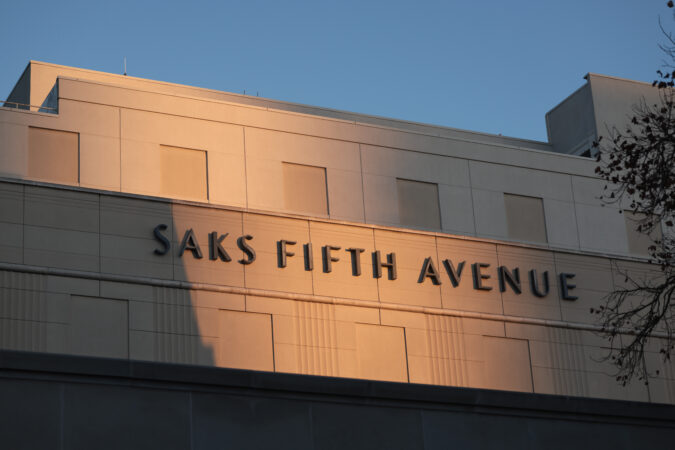
In the Philadelphia region, Saks Global has long operated an expansive Saks Fifth Avenue store off City Avenue in Bala Cynwyd. The company also has a Neiman Marcus at the King of Prussia Mall, as well as Saks Off 5th discount outlets at the Franklin Mall in Northeast Philadelphia and at the Metroplex shopping center in Plymouth Meeting.
Both local Saks Off 5th locations are slated to close soon, as was reported this fall by several news outlets, including the Philadelphia Business Journal.
Here’s what the bankruptcy filing means for local Saks shopper.
Is Saks Fifth Avenue in Bala Cynwyd closing?
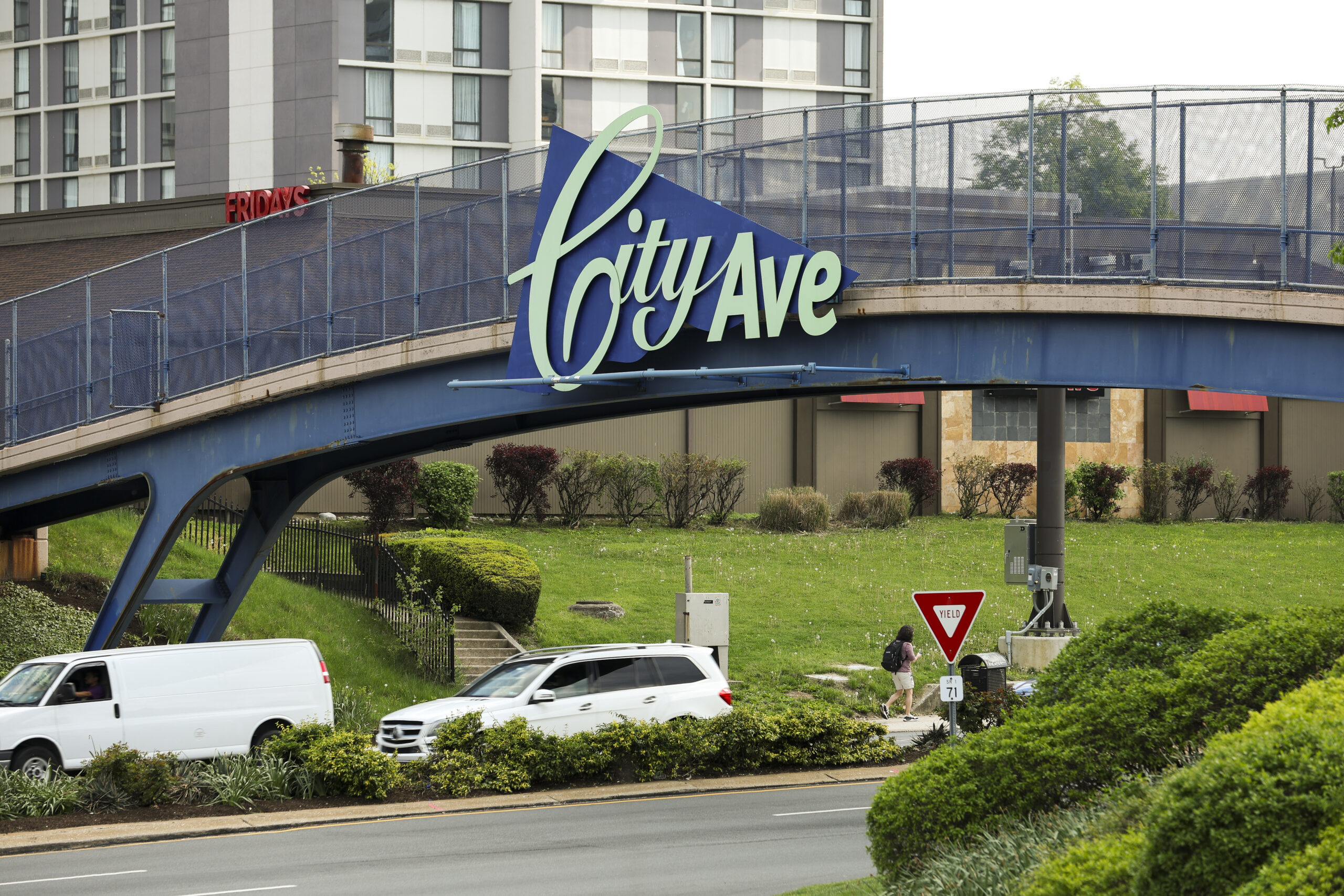
Saks Fifth Avenue has been a retail success along City Avenue in Bala Cynwyd, as shown in April 2024.
No. At least not in the immediate future.
Saks has filed for Chapter 11 bankruptcy, which means the company intends to reorganize financially and stay in business. That’s opposed to Chapter 7 bankruptcy — as is the Iron Hill Brewery case — through which businesses liquidate all their assets and close locations.
“To be clear, a Chapter 11 filing does not mean that Saks Global is going out of business,” Saks wrote in a bankruptcy FAQ on its website.
But when companies reorganize through bankruptcy, they sometimes do close stores, particularly underperforming ones.
Saks executives alluded to the possibility of this in its statement, which read in part: “As part of the Chapter 11 process, the company is evaluating its operational footprint to invest resources where it has the greatest long-term potential. This approach reflects an effort to focus the business in areas where the company’s luxury retail brands are best positioned for sustainable growth.”
The Inquirer reported in 2024 that business at the store was strong and that the chain had resisted offers to move to King of Prussia, according to the City Ave District.
In response to questions from The Inquirer about the future of Philadelphia-area stores, Saks Global said: “Our footprint evaluation is underway, and we have already begun to work collaboratively with our real estate partners to find future-facing solutions, where possible, to achieve a stable and sustainable business model and optimized portfolio on the other side of this process.”
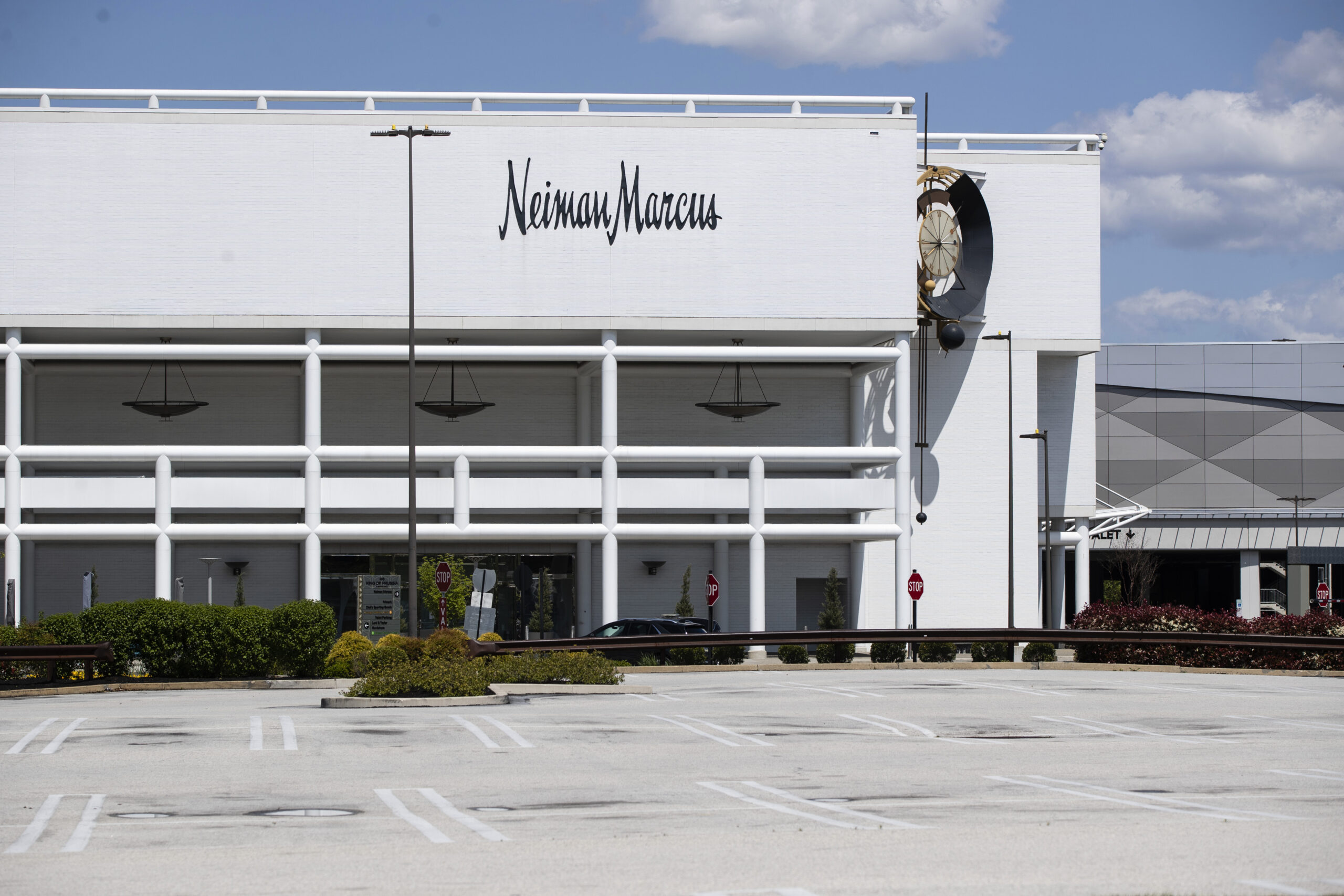
Is Neiman Marcus in King of Prussia closing?
The Neiman Marcus store in King of Prussia, as shown in May 2020.
Are Saks credit cards or gift cards impacted by the bankruptcy?
No, the company says.
“There are no changes to our credit card programs and rewards, with customers continuing to shop, earn and redeem benefits as usual,“ the company wrote in the FAQ. ”We continue to accept payments as usual, including credit cards and gift cards, with no changes to how customers transact with us.”
Are Saks’ return policies impacted by the bankruptcy?
No, according to the company.
“Our refund and exchange policy is expected to remain unchanged, with refunds and exchanges being accepted and issued as usual,” the company wrote.
I am waiting on a package from Saks. Will my order still arrive?
Yes, all current and future orders will be delivered as usual, the company said.
What’s next for Saks?
In New York, Saks Fifth Avenue’s holiday light show and window was revealed in November.
The company says it is not going anywhere.
“Saks Global is firmly focused on the future, and we look forward to continuing to serve customers and deliver for our stakeholders,” the company wrote in the FAQ.
As of Wednesday, Saks was waiting for court approval of a $1.75 billion financing deal that would come with an immediate $1 billion debtor-in-possession loan from an investor group.
If approved, the deal “will provide ample liquidity to fund Saks Global’s operations and turnaround initiatives,” the company said in a statement.
Saks estimates its assets and liabilities at between $1 billion and $10 billion, according to court documents filed in U.S. Bankruptcy Court in Houston. Saks has between 10,001 and 25,000 creditors, including luxury brands like Chanel, to which Saks owes $136 million, according to the documents.
To lead the company during this transition, Saks also announced a new chief executive, with former Neiman Marcus CEO Geoffroy van Raemdonck replacing Richard Baker.
Saks said it hopes to emerge from bankruptcy later this year.
The company said in its FAQ: “With new capital and a stronger financial foundation on the other side of this process, we are confident that we can play a central role in shaping the future of the luxury retail industry while delivering the elevated shopping experience our customers expect from our dedicated team.”