Category: Consumer

  • Dina Powell McCormick, former Trump official and Dave McCormick’s wife, will be president of Facebook’s parent company

    Dina Powell McCormick, former Trump official and Dave McCormick’s wife, will be president of Facebook’s parent company

    Dina Powell McCormick, a former Trump official and former member of Meta’s board, has been hired as the company’s new president and vice chair, CEO Mark Zuckerberg announced Monday morning.

    “Dina has been a valuable member of our board and will be an even more critical player as she joins our management team,“ Zuckerberg wrote on Threads, one of Meta’s platforms alongside Facebook and Instagram. ”She brings deep experience in finance, economic development, and government.“

    He also noted that she will be involved in all of Meta’s endeavors, but will particularly focused on ”partnering with governments and sovereigns to build, deploy, invest in, and finance Meta’s AI and infrastructure.”

    Powell McCormick has extensive business leadership and government experience. She spent 16 years in different leadership roles at Goldman Sachs, according to her LinkedIn page. Powell McCormick was most recently the vice chair, president, and head of global client services at BDT & MSD Partners, a banking company.

    She worked in the White House and the U.S. Department of State under former President George W. Bush and was deputy national security adviser during President Donald Trump’s first term.

    The move also signifies what appears to be Meta’s intention to create stronger ties with the federal government as it develops artificial intelligence tools. Trump praised Zuckerberg’s decision Monday.

    “A great choice by Mark Z!!! She is a fantastic, and very talented, person, who served the Trump Administration with strength and distinction!” Trump said on Truth Social, his social media platform.

    U.S. Sen. Dave McCormick (R., Pa.), Powell McCormick’s husband, has been heavily involved with AI and tech policy. For instance, he convened an AI summit in Pittsburgh in July 2025 where billions of dollars in planned projects for Pennsylvania were announced.

    The senator is also a member of the Senate Banking Committee and the Subcommittee on Digital Assets, which, among other things, oversees cryptocurrency and stablecoins. Last spring, Fortune reported that Meta could return to the crypto space after scrapping its initial foray, Diem, in 2022.

    McCormick, in a post on X Monday, said he is “incredibly proud” of his wife.

    Asked about how he would mitigate potential conflicts of interest that arose from Powell McCormick’s position, a spokesperson for the senator said: “As he has from day one, Senator McCormick will continue to comply with all U.S. Senate ethics rules and honorably and enthusiastically serve the great citizens of Pennsylvania.”

    Powell McCormick is also the second former Trump official to be hired by Meta in recent weeks, CNBC reported. Earlier this month, Meta said that it had hired Curtis Joseph Mahoney, a former deputy U.S. trade representative, to be its chief legal officer.

  • Kenneth W. Ford, hydrogen bomb physicist, educator, and author, has died at 99

    Kenneth W. Ford, hydrogen bomb physicist, educator, and author, has died at 99

    Kenneth W. Ford, 99, of Gwynedd, Montgomery County, theoretical physicist who helped develop the hydrogen bomb in 1952, university president, college professor, executive director, award-winning author, and Navy veteran, died Friday, Dec. 5, of pneumonia at Foulkeways at Gwynedd retirement community.

    Dr. Ford was a 24-year-old physics graduate student at Princeton University in 1950 when he was recruited by a colleague to help other scientists covertly build a hydrogen bomb. “I was told if we don’t do it, the Soviet Union will,” Dr. Ford told The Inquirer in 2023, “and the world will become a much more dangerous place.”

    So he spent one year at the Los Alamos National Laboratory in New Mexico and another back at Princeton, creating calculations on the burning of the fuel that ignited the bomb and theorizing about nuclear fission and fusion. The H-bomb was tested in 1952.

    Dr. Ford’s expertise was in nuclear structure and particle and mathematical physics. He and Albert Einstein attended the same lecture when he was young, and he knew Robert Oppenheimer, Fredrick Reines, John Wheeler, and dozens of other accomplished scientists and professors over his long career.

    He came to Philadelphia from the University System of Maryland in 1983 to be president of a startup biotech firm. He joined the American Physical Society as an education officer in 1986 and was named executive director of the American Institute of Physics in 1987.

    “He always seemed to be the head of something,” his son Jason said.

    He retired from the AIP in 1993 but kept busy as a consultant for the California-based Packard Foundation and physics teacher at Germantown Academy and Germantown Friends School. Michael Moloney, current chief executive of the AIP, praised Dr. Ford’s “steady and transformative leadership” in a tribute. He said: “His career in research, education, and global scientific collaboration puts him among the giants.”

    As president of the New Mexico Institute of Mining and Technology from 1975 to 1982, Dr. Ford oversaw improvements in the school’s enrollment, faculty, budget, and facilities. He “was an accomplished researcher, scholar and teacher,” Michael Jackson, interim president of New Mexico Tech, said in a tribute, “a techie through and through.”

    Dr. Ford wrote “Building the H Bomb,” and it was published in 2015.

    Before Philadelphia, he spent a year as executive vice president of the University System of Maryland. Earlier, from 1953 to 1975, he was a researcher at Indiana University, physics professor at Brandeis University in Massachusetts and the University of Massachusetts, and founding chair of the department of physics at the University of California, Irvine.

    Officials at UC Irvine said in a tribute: Dr. Ford “leaves an enduring legacy as a scientist, educator, and institution builder. … The School of Physical Sciences honors his foundational role in our history and celebrates the broad impact of his distinguished life.”

    He told The Inquirer that he hung out at the local library as he grew up in a Kentucky suburb of Cincinnati and read every book he could find about “biology, chemistry, geology, you name it.” He went on to write 11 books about physics, flying, and building the H-bomb.

    Two of his books won awards, and 2015’s Building the H Bomb: A Personal History became a hit when the Department of Energy unsuccessfully tried to edit out some of his best material. His research papers on particle scattering, the nuclear transparency of neutrons, and other topics are cited in hundreds of publications.

    Dr. Ford was a popular professor because he created interesting demonstrations of physics for his students.

    In 1976, he earned a distinguished service citation from the American Association of Physics Teachers. In 2006, he earned an AAPT medal for notable contributions to the teaching of physics.

    He was the valedictorian at Phillips Exeter Academy in New Hampshire in 1944. He served two years in the Navy and earned a summa cum laude bachelor’s degree in physics at Harvard University and his doctorate at Princeton in 1953.

    In 1968, he was so opposed to the Vietnam War that he publicly declined to ever again work in secret or on weapons. “It was a statement of principle,” he told The Inquirer.

    Kenneth William Ford was born May 1, 1926, in West Palm Beach, Fla. He married Karin Stehnike in 1953, and they had a son, Paul, and a daughter, Sarah. After a divorce, he married Joanne Baumunk, and they had daughters Caroline and Star, and sons Adam and Jason. His wife and former wife died earlier.

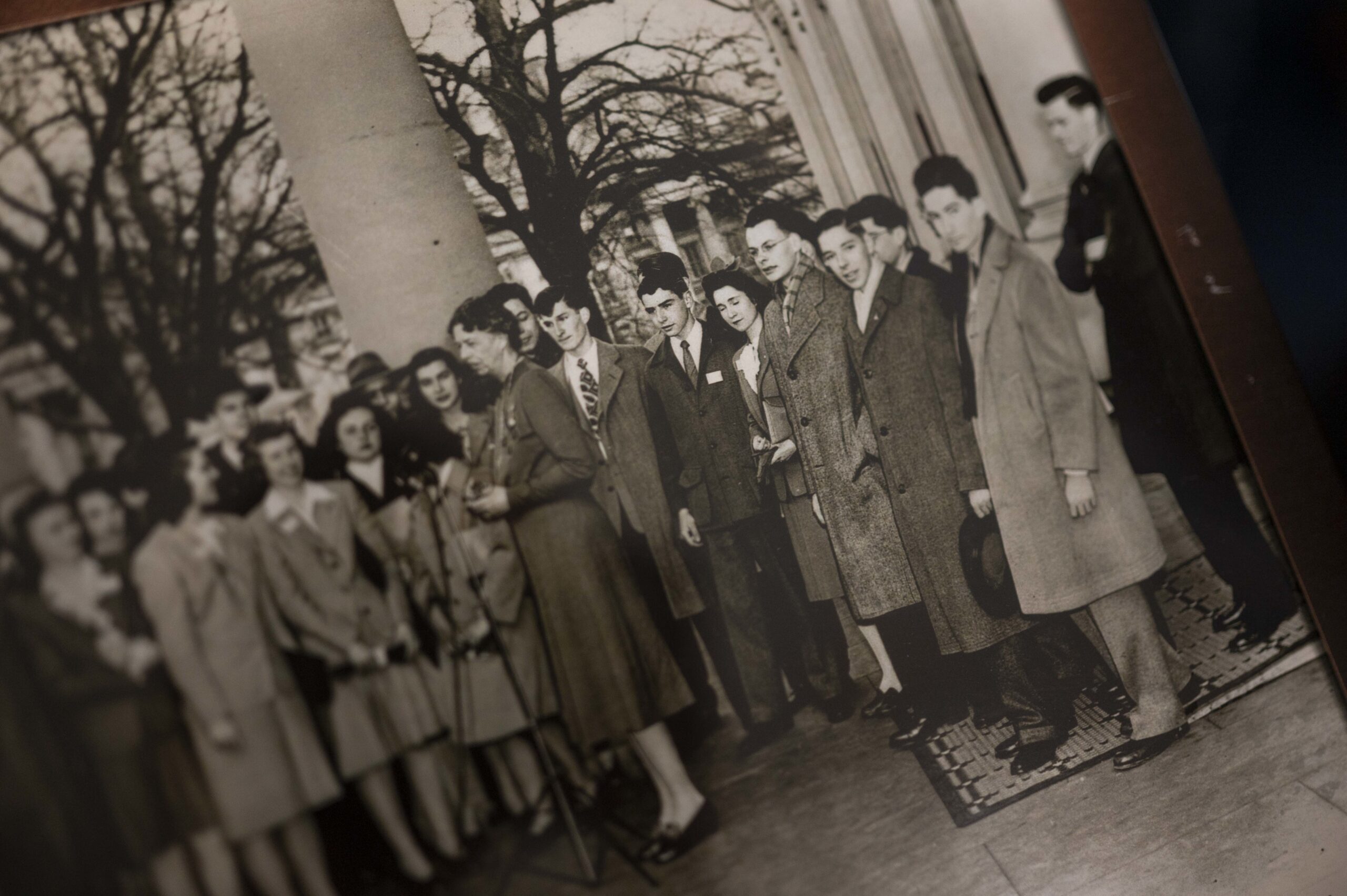
    This photo shows Dr. Ford (center) and other students listening to former First Lady Eleanor Roosevelt speak in 1944.

    Dr. Ford lived in University City, Germantown, and Mount Airy before moving to Foulkeways in 2019. He was an avid pilot and glider for decades. He enjoyed folk dancing, followed the Eagles closely, and excelled at Scrabble and other word games.

    He loved ice cream, coffee, and bad puns. He became a Quaker and wore a peace sign button for years. Ever the writer, he edited the Foulkeways newsletter.

    In 2023, he said: “I spent my whole life looking for new challenges.” His son Jason said. “He found connections between things. He had an active mind that went in all different directions.”

    In addition to his children, Dr. Ford is survived by 14 grandchildren, a great-grandson, a sister, a stepdaughter, Nina, and other relatives.

    Services are to be from 2 to 4:30 p.m., Saturday, Jan. 24, at Foulkeways at Gwynedd, 1120 Meetinghouse Rd., Gwynedd, Pa. 19436.

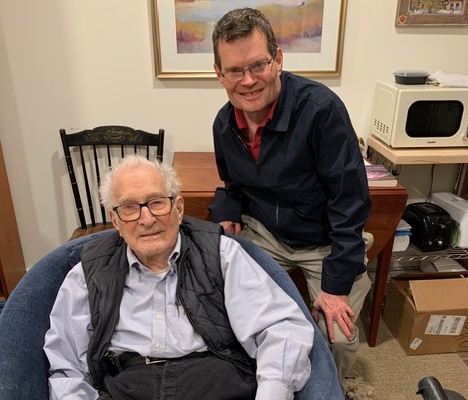
    Dr. Ford and his son Jason
    Dr. Ford wore a peace sign button for years.
  • The first Philly-area Sheetz is set to open next month across from a Wawa

    The first Philly-area Sheetz is set to open next month across from a Wawa

    Sheetz’s encroachment into Wawa territory has an official ETA.

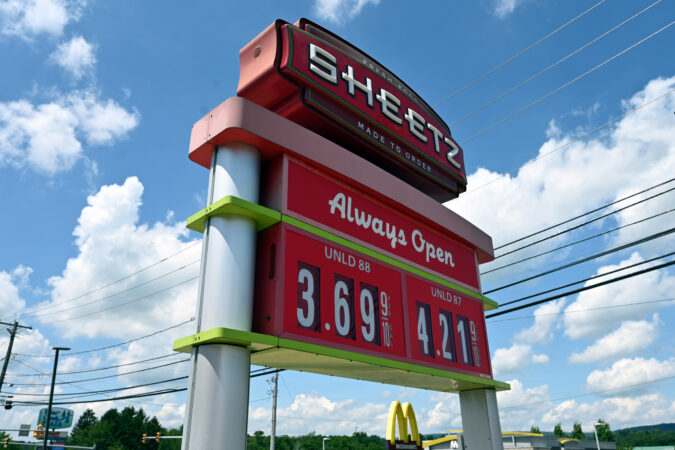
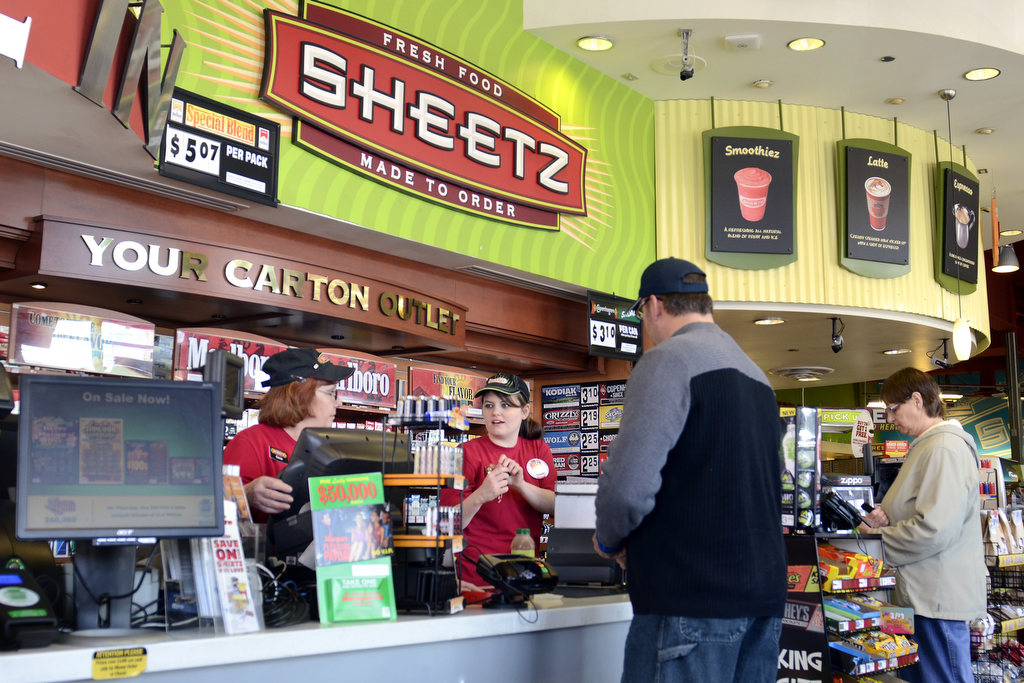
    The Altoona-based convenience store chain is set to open its first Philadelphia-area store on Feb. 12 in Limerick Township, Montgomery County, according to Sheetz public affairs manager Nick Ruffner.

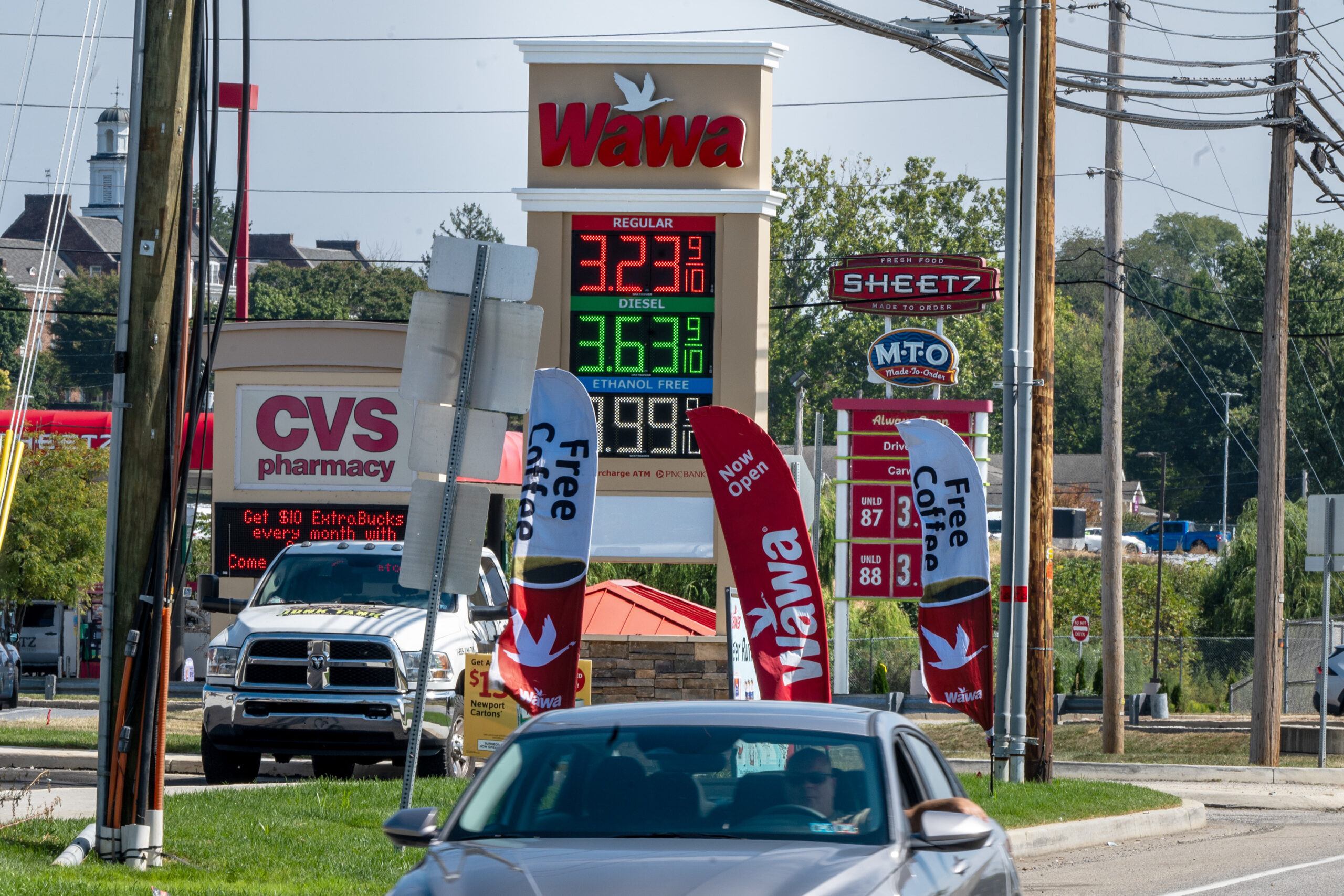
    It will be located at 454 W. Ridge Pike, across the street from an existing Wawa.

    Sheetz presented its site plans to Limerick’s board of supervisors about a year ago. The area was already zoned for this type of development, officials said at the time, and no other township permits were required.

    “As Sheetz continues its expansion into communities near its existing footprint, we remain committed to being the best neighbor we can be and delivering the convenience, quality, and service Pennsylvania communities have come to expect from us for more than 70 years,” Ruffner said in a statement.

    A Sheetz convenience store and gas station near Carlisle, Pa. in 2020.

    For decades, Sheetz opened its convenience-store gas stations in the western and central parts of the Commonwealth, while Wawa added locations in communities near its Delaware County headquarters.

    Over the years, both companies expanded into other states: Wawa has more than 1,100 locations in 13 states and Washington, D.C., while Sheetz has more than 800 stores in seven states.

    But neither of the two chains would encroach on the other’s traditional strongholds in Pennsylvania. At least for a while.

    That changed in 2024, when Wawa opened its first central Pennsylvania store. The location outside Harrisburg was within eyesight of a Sheetz.

    In 2024, Wawa moved into Dauphin County, just 0.3 miles down the road from a Sheetz.

    By this October, Wawa announced it had opened its 10th central Pennsylvania store. At the time, the company said in a news release that it planned to add five to seven new locations in the region each year for the next five years — to “reach new Pennsylvania markets along the Susquehanna River.”

    Wawa plans to open its first outposts in the State College area, near Penn State’s campus.

    As of early January, Sheetz’s closest store to Philadelphia is just over the Chester County border in Morgantown.

    But along with the forthcoming Limerick location, Sheetz has also expressed interest in opening at least one store in western Chester County.

    For awhile, Sheetz, shown here in Bethlehem, Pa. in 2018, and Wawa expanded in different parts of the state, never overlapping into the other’s territory. That’s changed.

    This fall, Sheetz presented Caln Township officials with a sketch plan for a store on the site of a former Rite Aid on the 3800 block of Lincoln Highway in Thorndale, according to the township website.

    Sheetz’s namesake, Stephen G. Sheetz, died Sunday due to complications from pneumonia. The former president, CEO, and board chairman was 77.

    “Above all, Uncle Steve was the center of our family,” Sheetz president and CEO Travis Sheetz said in a statement. “We are so deeply grateful for his leadership, vision, and steadfast commitment to our employees, customers, and communities.”

  • How to recycle your old electronics the right way, according to e-waste experts

    How to recycle your old electronics the right way, according to e-waste experts

    If you got an iPhone, smart TV, or laptop as a holiday gift, you may be facing the age-old dilemma of what to do with your old electronics.

    Or maybe you’ve already thrown your now-outdated device in the kitchen junk drawer to languish for years alongside flip phones from the early aughts.

    “People want to do the right thing, but they don’t know what to do,” Joe Connors, CEO of the Pennsylvania-based secure e-waste recycler CyberCrunch. Something like an old TV “often ends up in their basement or in their garage.”

    There is a better way to bid adieu to these electronics, experts say, and it’s not even that complicated.

    “It’s easier than people think,” said Andrew Segal, head of operations at eForce Recycling in Grays Ferry. “A lot of people scratch their heads, [saying] ‘I don’t know what to do with this stuff.’ … [But] there are plenty of electronics recyclers out there.”

    The industry has grown in recent decades, particularly after state laws began governing e-waste recycling in the early 2000s.

    Let experts answer your questions about how to responsibly dispose of old electronics.

    Can I put TVs, phones, and other electronics out with my regular trash or recycling?

    Electronics can’t be picked up with regular trash or recycling, but they can be taken to places like Philadelphia’s sanitation services centers.

    That’s a resounding no.

    Throwing out electronics is technically illegal in Pennsylvania and New Jersey, and consumers can face fines for disposing of e-waste. As of January, 25 states and D.C. have such laws on the books.

    Leaving TVs and other large electronics outside also poses environmental risks.

    “The screens wind up getting cracked, and they get rained on, and that all can wash up into the waterways,” Segal said. “It’s not good.”

    Only put electronics on the curb if you have arranged a pickup with a certified recycler, experts say.

    It can be difficult to find a company that will pick up electronics, e-recycling executives say. Some said they used to recommend the service Retrievr, but it recently paused its Philly-area services indefinitely. If a consumer does find such a service, they say it’s likely to come at a cost.

    If an electronic is too heavy to lift alone, and you don’t want to pay for a pickup, experts recommend asking neighbors, friends, or relatives to help get the item into the car. Once you get to a collection site, they say, workers can usually take it from there.

    So what should I do with old electronics?

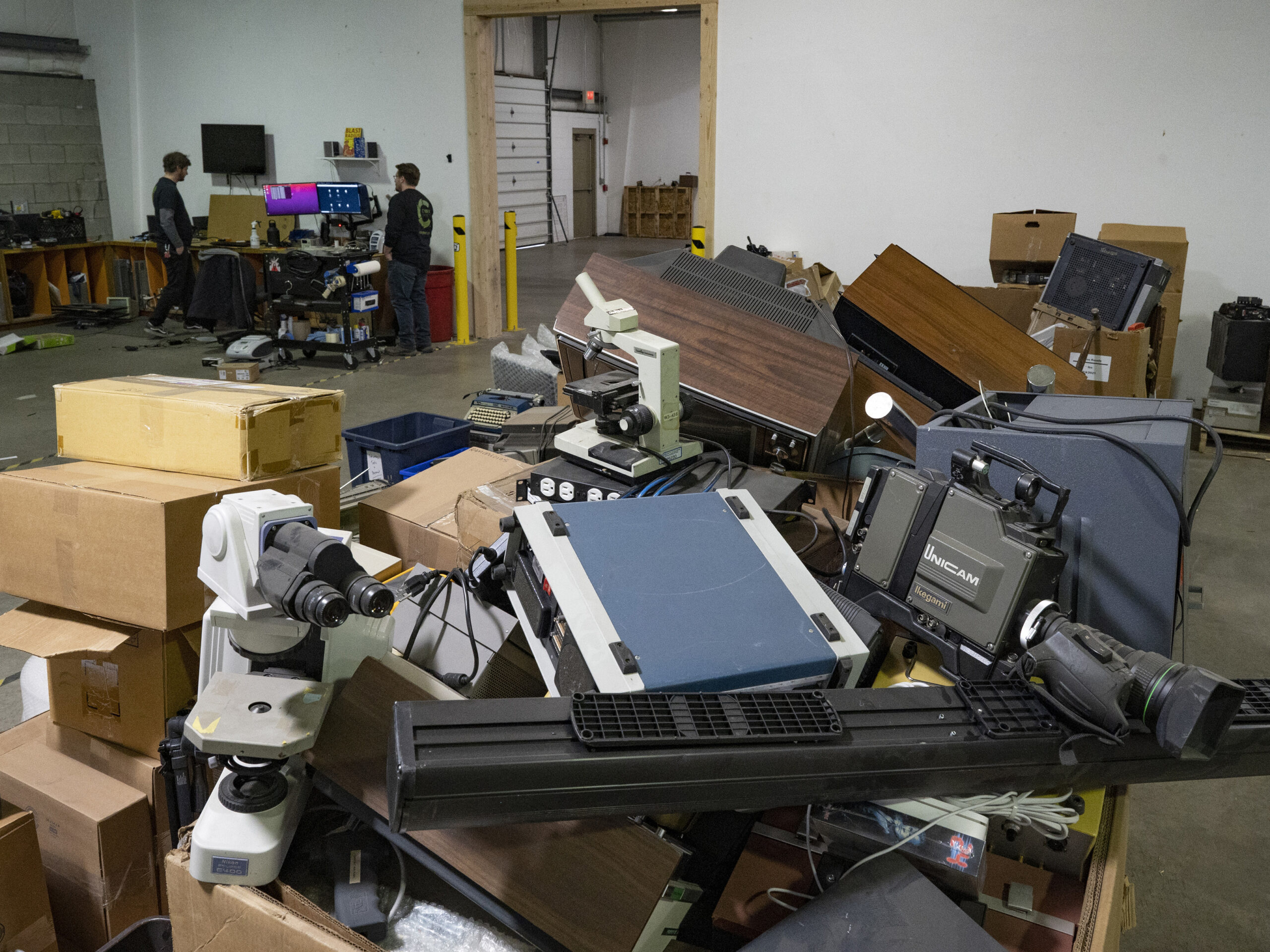
    Electronics are stacked on pallets at the Greensburg, Pa., facility of CyberCrunch, an electronics recycling and data destruction service, as pictured in 2022.

    Take it to a certified electronics collection site.

    “Google ‘e-waste recycling’ and see what options exist” in your area, said Tricia Conroy, executive director of Minneapolis-based MRM Recycling, which helps electronics manufacturers recycle sustainably. “Most phone carriers will recycle on the spot.”

    Other programs and services vary by location, Conroy said.

    Philadelphians can drop off items for free at any of Philadelphia’s sanitation convenience centers. And in New Jersey, you can search free sites by county at dep.nj.gov/dshw/rhwm/e-waste/collection-sites.

    Elsewhere, you can search for township or county e-recycling events. You can also bring electronics to Goodwill Keystone Area stores, Staples, or Best Buy to be recycled. Call or go online to check a store’s specific e-recycling policy before making the trip.

    North Jersey-based Reworld waste management helped design Goodwill’s program in 2024 to “address a gap in Pennsylvania’s electronics recycling infrastructure,” spokesperson Andrew Bowyer said in a statement.

    “Prior to its launch, many counties, including densely populated areas around Philadelphia, had limited or fee-based options for recycling electronics — particularly bulky items like televisions — which often led to illegal dumping.”

    Consumers can also make appointments to drop off devices at places like CyberCrunch in Upper Chichester, said Connors, whose company specializes in data-destruction, e-waste recycling, and reuse.

    About 90% of CyberCrunch’s business comes from commercial clients, Connor said. But the Delaware County warehouse, he said, accepts drop-offs from consumers, usually for no fee (with the exception of TVs, which cost money to sustainably discard, Connors said).

    What should I do before I recycle an old smartphone, computer, or smart TV?

    Consumers should take care to remove data from old smartphones before they are recycled, industry experts say.

    Delete all data, experts say.

    “Most people, once [a device] leaves their hands, they don’t think about it,” Connors said. And “people don’t think that bad things are going to happen.”

    But consumers’ digital information gets stolen every day in increasingly creative ways, Connors said.

    To be safe, Connors recommends people remove the SIM cards from all old smartphones, whether they’re sitting in a junk drawer or heading to an e-recycling facility. SIM cards hold much of a user’s important, identifying data. On iPhones, SIM cards are located in a tray on the side of the phone and can be removed by putting a straightened paper clip or similar tool into the tiny hole on the tray.

    When removing data from an old laptop, Connors recommends more than a factory reset. Take it to a professional who can wipe the computer clean entirely, he said.

    Don’t forget to also remove data from old smart TVs, where users are often logged into multiple apps, including some like Amazon that are connected to banking information, Connors said.

  • Musk’s AI chatbot faces global backlash over sexualized images of women and children

    Musk’s AI chatbot faces global backlash over sexualized images of women and children

    LONDON — Elon Musk’s AI chatbot Grok is facing a backlash from governments around the world after a recent surge in sexualized images of women and children generated without consent by the artificial intelligence-powered tool.

    On Tuesday, Britain’s top technology official demanded that Musk’s social media platform X take urgent action while a Polish lawmaker cited it as a reason to enact digital safety laws.

    The European Union’s executive arm has denounced Grok while officials and regulators in France, India, Malaysia, and Brazil have condemned the platform and called for investigations.

    Rising alarm from disparate nations points to the nightmarish potential of nudification apps that use artificial intelligence to generate sexually explicit deepfake images.

    Here’s a closer look:

    Image generation

    The problem emerged after the launch last year of Grok Imagine, an AI image generator that allows users to create videos and pictures by typing in text prompts. It includes a so-called “spicy mode” that can generate adult content.

    It snowballed late last month when Grok, which is hosted on X, apparently began granting a large number of user requests to modify images posted by others. As of Tuesday, Grok users could still generate images of women using requests such as, “put her in a transparent bikini.”

    The problem is amplified both because Musk pitches his chatbot as an edgier alternative to rivals with more safeguards, and because Grok’s images are publicly visible, and can therefore be easily spread.

    Nonprofit group AI Forensics said in a report that it analyzed 20,000 images generated by Grok between Dec. 25 and Jan. 1 and found that 2% depicted a person who appeared to be 18 or younger, including 30 of young or very young women or girls, in bikinis or transparent clothes.

    Musk response

    Musk’s artificial intelligence company, xAI, responded to a request for comment with the automated response, “Legacy Media Lies.”

    However, X did not deny that the troublesome content generated through Grok exists. Yet it still claimed in a post on its Safety account, that it takes action against illegal content, including child sexual abuse material, “by removing it, permanently suspending accounts, and working with local governments and law enforcement as necessary.”

    The platform also repeated a comment from Musk, who said, “Anyone using Grok to make illegal content will suffer the same consequences as if they upload illegal content.”

    A growing list of countries are demanding that Musk does more to rein in explicit or abusive content.

    Britain

    X must “urgently” deal with the problem, Technology Secretary Liz Kendall said Tuesday, adding that she supported additional scrutiny from the U.K.’s communications regulator, Ofcom.

    Kendall said the content is “absolutely appalling, and unacceptable in decent society.”

    “We cannot and will not allow the proliferation of these demeaning and degrading images, which are disproportionately aimed at women and girls.”

    Ofcom said Monday it has made “urgent contact” with X.

    “We are aware of serious concerns raised about a feature on Grok on X that produces undressed images of people and sexualised images of children,” the watchdog said.

    The watchdog said it contacted both X and xAI to understand what steps it has taken to comply with British regulations.

    Under the U.K.’s Online Safety Act, social media platforms must prevent and remove child sexual abuse material when they become aware of it.

    Poland

    A Polish lawmaker used Grok on Tuesday as a reason for national digital safety legislation that would beef up protections for minors and make it easier for authorities to remove content.

    In an online video, Wlodzimierz Czarzasty, speaker of the parliament, said he wanted to make himself a target of Grok to highlight the problem, as well as appeal to Poland’s president for support of the legislation.

    “Grok lately is stripping people. It is undressing women, men, and children. We feel bad about it. I would, honestly, almost want this Grok to also undress me,” he said.

    European Union

    The bloc’s executive arm is “well aware” that Grok is being used to for “explicit sexual content with some output generated with childlike images,” European Commission spokesman Thomas Regnier said

    “This is not spicy. This is illegal. This is appalling. This is disgusting. This is how we see it, and this has no place in Europe. This is not the first time that Grok is generating such output,” he told reporters Monday.

    After Grok spread Holocaust-denial content last year, according to Regnier, the Commission sought more information from Musk’s social media platform X. The response from X is currently being analyzed, he said.

    France

    The Paris prosecutor’s office said it’s widening an ongoing investigation of X to include sexually explicit deepfakes after officials receiving complaints from lawmakers.

    Three government ministers alerted prosecutors to “manifestly illegal content” generated by Grok and posted on X, according to a government statement last week.

    The government also flagged problems with the country’s communications regulator over possible breaches of the EU’s Digital Services Act.

    “The internet is neither a lawless zone nor a zone of impunity: sexual offenses committed online constitute criminal offenses in their own right and fall fully under the law, just as those committed offline,” the government said.

    India

    The Indian government on Friday issued an ultimatum to X, demanding that it take down all “unlawful content” and take action against offending users. The country’s Ministry of Electronics and Information Technology also ordered the company to review Grok’s “technical and governance framework” and file a report on actions taken.

    The ministry accused Grok of “gross misuse” of AI and serious failures of its safeguards and enforcement by allowing the generation and sharing of ”obscene images or videos of women in derogatory or vulgar manner in order to indecently denigrate them.”

    The ministry warned failure to comply by the 72-hour deadline would expose the company to bigger legal problems, but the deadline passed with no public update from India.

    Malaysia

    The Malaysian communications watchdog said Saturday it was investigating X users who violated laws prohibiting spreading “grossly offensive, obscene, or indecent content.”

    The Malaysian Communications and Multimedia Commission said it’s also investigating online harms on X, and would summon a company representative.

    The watchdog said it took note of public complaints about X’s AI tools being used to digitally manipulate “images of women and minors to produce indecent, grossly offensive, or otherwise harmful content.”

    Brazil

    Lawmaker Erika Hilton said she reported Grok and X to the Brazilian federal public prosecutor’s office and the country’s data protection watchdog.

    In a social media post, she accused both of generating, then publishing sexualized images of women and children without consent.

    She said X’s AI functions should be disabled until an investigation has been carried out.

    Hilton, one of Brazil’s first transgender lawmakers, decried how users could get Grok to digitally alter any published photo, including “swapping the clothes of women and girls for bikinis or making them suggestive and erotic.”

    “The right to one’s image is individual; it cannot be transferred through the ‘terms of use’ of a social network, and the mass distribution of child pornography by an artificial intelligence integrated into a social network crosses all boundaries,” she said.


  • P.J. Whelihan’s restaurant group may move into a former Iron Hill Brewery

    P.J. Whelihan’s restaurant group may move into a former Iron Hill Brewery

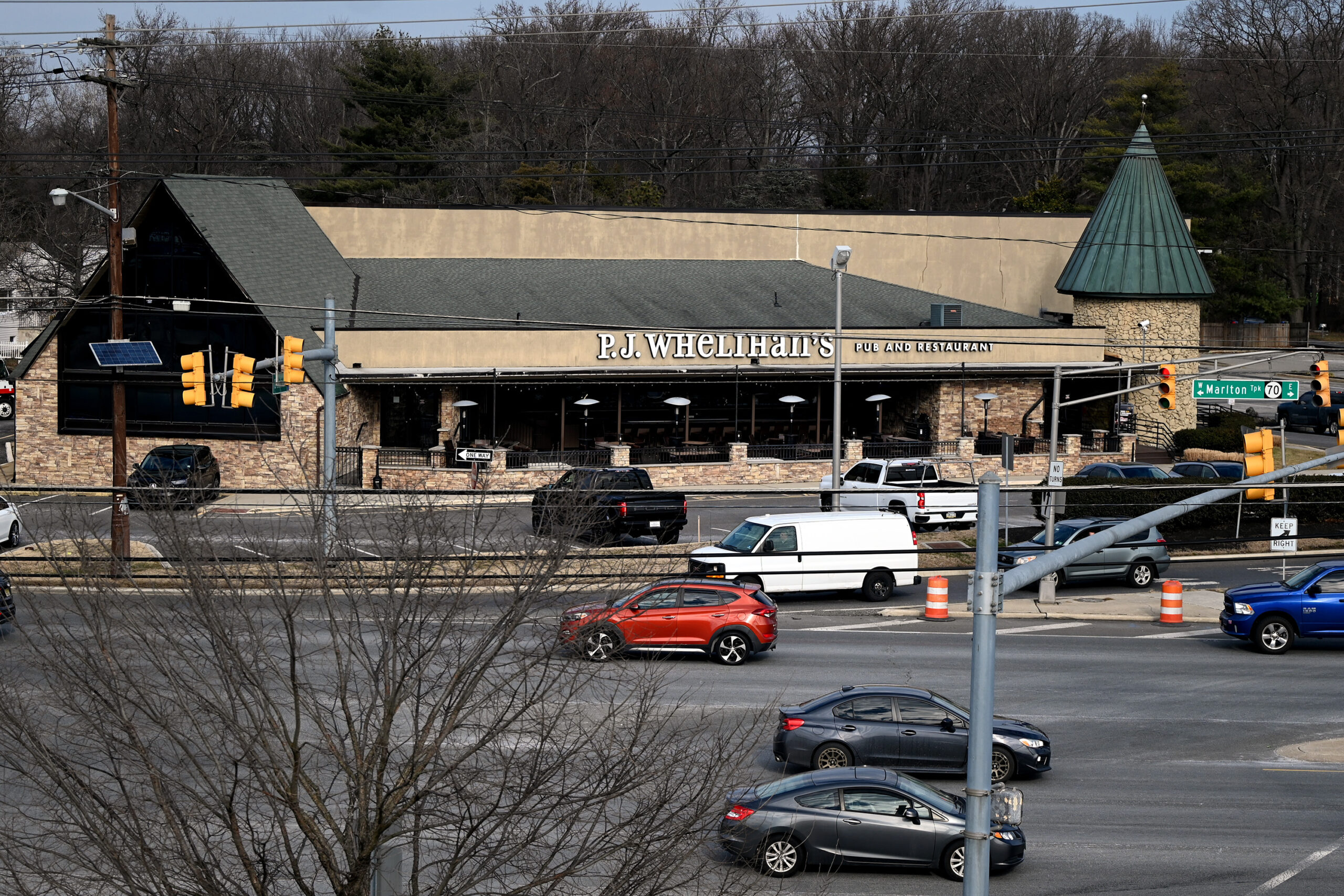
    The company that owns P.J. Whelihan’s may be moving into a former Iron Hill Brewery in Bucks County.

    PJW Opco LLC, which is registered at the headquarters of PJW Restaurant Group, was approved to take over a lease for the shuttered Iron Hill in Newtown, effective Dec. 31, according to documents filed in U.S. Bankruptcy Court in New Jersey.

    PJW marketing director Kristen Foord declined to comment.

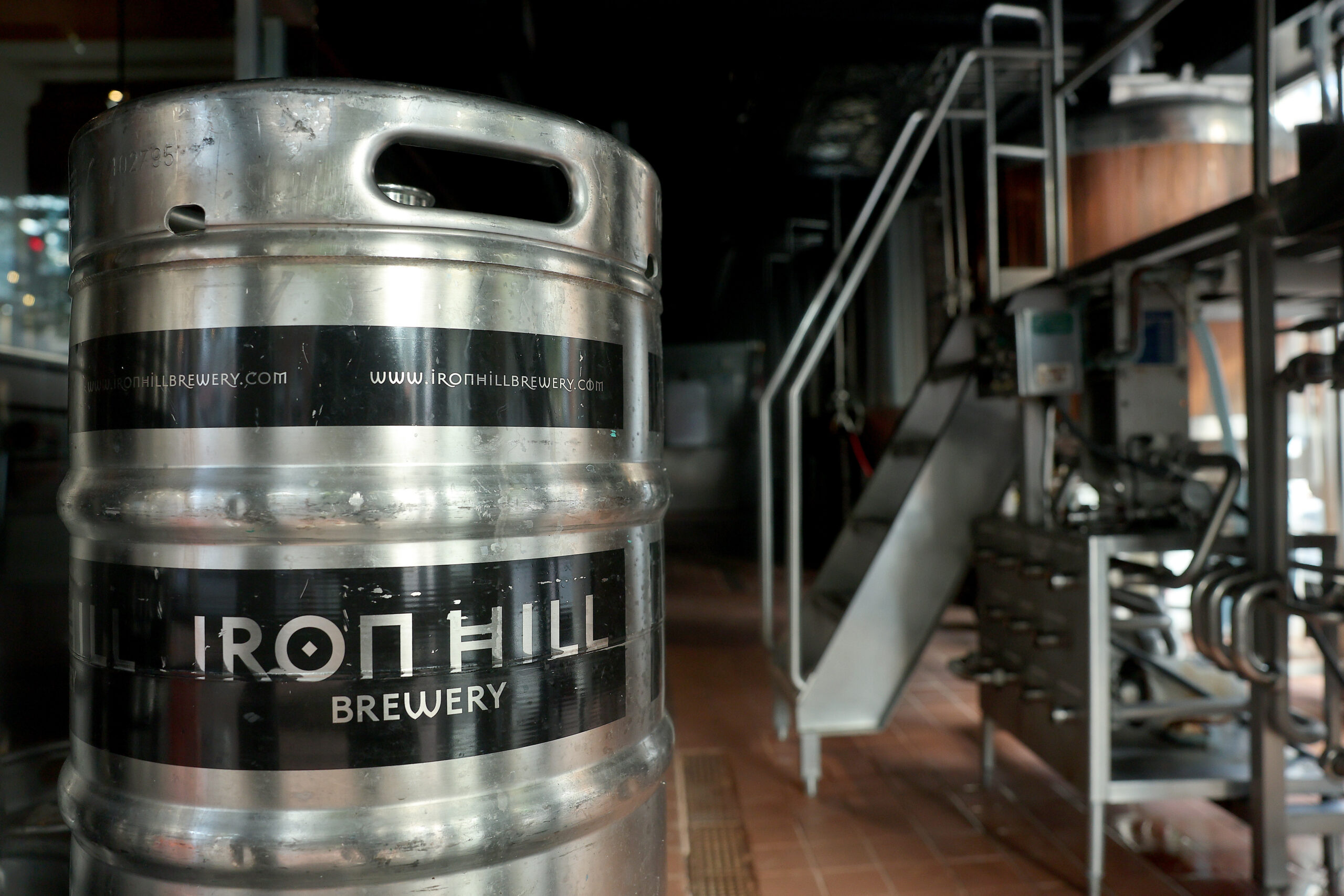
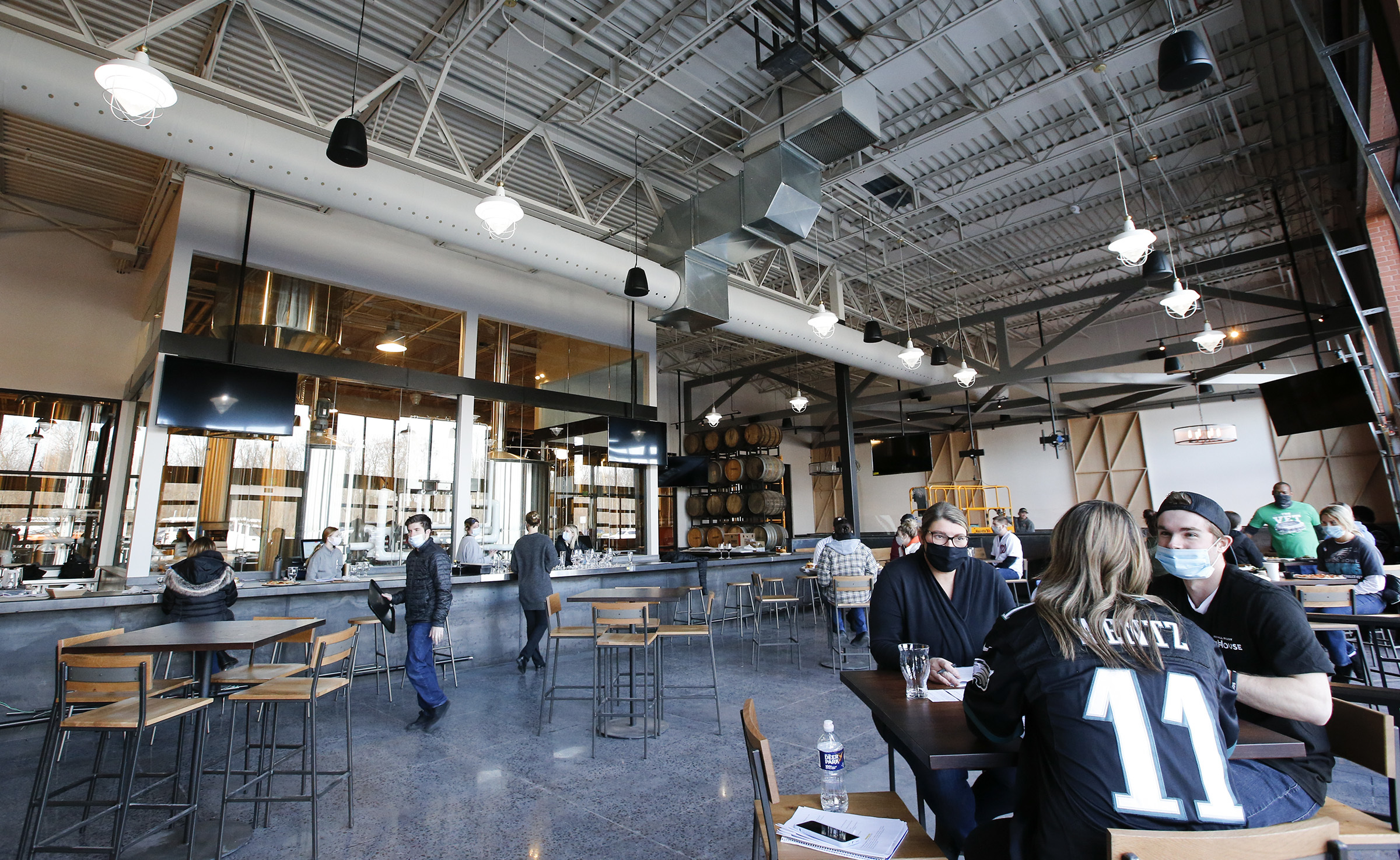
    The nearly 8,000-square-foot brewpub in the Village at Newtown shopping center has sat empty since September, when Iron Hill abruptly closed all its locations and filed for liquidation bankruptcy. The Newtown Iron Hill had been among the chain’s newest locations, having opened in 2020.

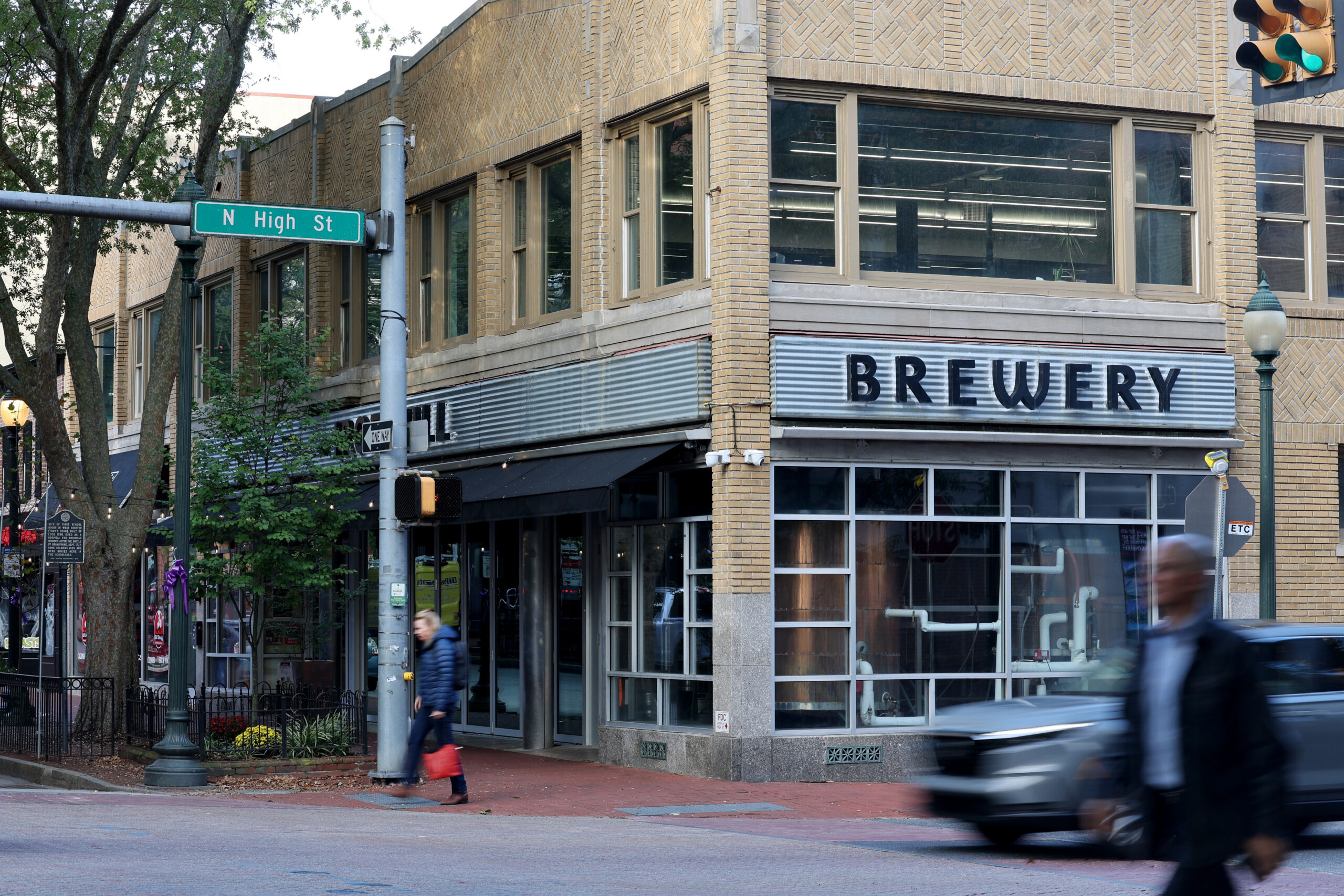
    A view from the outside looking in on the closed Iron Hill Brewery in West Chester in October.

    Brixmor Property Group, which owns the Village at Newtown, is “excited about what’s in the works” for the former Iron Hill space, spokesperson Maria Pace said in a statement, but she declined to share details.

    The court documents did not indicate PJW’s plans for the Newtown site.

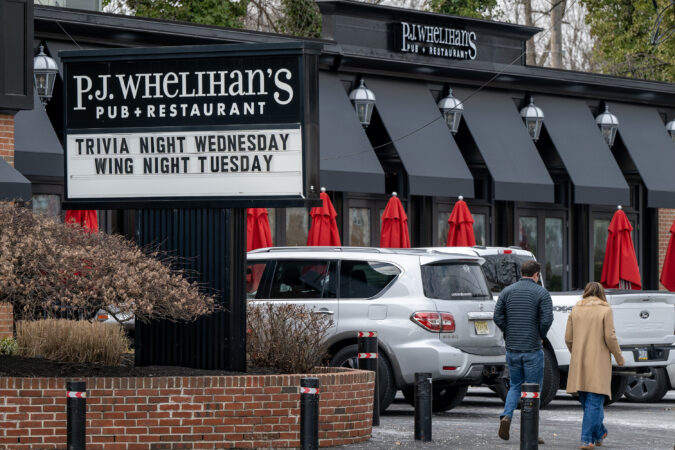
    PJW’s most well-known franchise is P.J. Whelihan’s, the regional bar-restaurant chain that started in the Poconos in 1983. There are now 25 P.J. Whelihan’s locations from Harrisburg to Washington Township, with the vast majority in the Philadelphia area.

    Haddon Township-based PJW also owns the Pour House, which has locations in Exton, North Wales, and Westmont, Haddon Township; the ChopHouse in Gibbsboro; the ChopHouse Grille in Exton; Central Taco & Tequila in Westmont; and Treno, also in Westmont.

    The P.J. Whelihan’s on Route 70 in Cherry Hill.

    As 2026 gets underway, Iron Hill’s bankruptcy case continues to make its way through the courts. In recent weeks, Iron Hill’s leases in Exton, Maple Shade, and North Wales were formally rejected, according to court documents. That means these empty breweries are getting closer to finding new tenants.

    At the Shops at Eagleview in Exton, landlord Suresh Kagithapu is already advertising the nearly 20,000-square-foot taphouse and production facility that Iron Hill vacated.

    “Any out-of-town brewery with plans to leverage existing brewery infrastructure and scale its operations in the region would be a good fit, as it would save significant tenant improvement costs,” Kagithapu said in a statement. “I also believe a grocery store would serve the community very well.”

    The Iron Hill Brewery TapHouse in Exton is pictured in 2020. After Iron Hill’s bankruptcy, the Exton landlord is seeking a new tenant for the massive space.

    In West Chester, landlord John Barry is also on the hunt for a new restaurateur to take over prime real estate long occupied by Iron Hill.

    On Christmas Eve, Barry, a Massachusetts-based real estate investor, inked a deal to buy the liquor license and all interior assets of the location at the borough’s central corner of High and Gay Streets.

    “It will not be reopening as Iron Hill Brewery,” Barry said in a recent interview. “My goal would be to find something similar,” though not necessarily a brewery.

    Barry purchased the assets from Jeff Crivello, the former CEO of Famous Dave’s BBQ, who in November was approved by a bankruptcy judge to revive 10 Iron Hills under the same name or as a new concept. Barry and Crivello declined to disclose the financial details of the West Chester deal.

    Pedestrians walk by the closed Iron Hill Brewery in West Chester in October.

    Crivello said he has since sold the assets of the South Carolina Iron Hills — in Columbia and Greenville — to Virginia-based Three Notch’d Brewing Co.

    The Newtown location was originally among the locations of which Crivello was approved to buy the assets, pending negotiations with landlords. Court documents indicate the asset sale was put on hold amid a landlord objection.

    Founded in Newark, Del., Iron Hill Brewery operated for nearly 30 years, earning a reputation as a local craft-brewing pioneer and a family-friendly mainstay in the Philadelphia suburbs. In recent years, the chain had expanded into South Carolina and Georgia and had announced plans to open a Temple University location that never materialized.

    When brewery executives filed for bankruptcy, they reported that they owed $20 million to creditors and had about $125,000 in the bank.

  • Shopping secondhand for kids’ stuff is getting more popular in Philly

    Shopping secondhand for kids’ stuff is getting more popular in Philly

    When Jennifer Kinka was pregnant with her first child, she stood in the aisle of Babies R Us with a registry sheet, looking over the wall of plastic consumables the company deemed required for having a baby. What she saw was waste.

    “I was just like, this is crazy that there’s no system for this,” Kinka said. “There’s no problem-solving around how this is happening and how we could do this better.”

    After a few more years, her second pregnancy, and a small inheritance from the loss of her terminally ill parents, Kinka was able to implement her solution: The Nesting House, a kids’ consignment shop based in Mount Airy that she founded 15 years ago.

    Shoppers across Philadelphia, including parents buying for their children, are increasingly forgoing new items in favor of secondhand and lightly used in an effort to save money and live more sustainably.

    Chris Baeza, associate program director of Fashion Industry & Merchandising at Drexel University, asks her students each semester who shops in the secondhand market. While five years ago she might have had a single student raise a hand, now it’s nearly all of them.

    The global secondhand apparel market grew by 15% in 2024, according to online consignment store ThredUp’s annual report, and it’s expected to continue growing each year. ThredUp estimates that the resale apparel market is growing 2.7 times faster than the overall apparel market.

    For Abby Sewell, a South Philadelphia mom of two, secondhand clothing and furniture was a mainstay of her childhood, when she spent weekends trash picking and combing through yard sales to find reusable items. Her father is artist Leo Sewell, who built a replica of the Statue of Liberty’s arm and torch at the Please Touch Museum.

    “I just know how much there is out in the world,” said Sewell, who also describes herself as an environmentalist. “There’s just so much kids clothes that it kills me to buy something new when I know there’s like 50 pairs of 2T leggings in someone’s basement.”

    A dramatic shift toward secondhand not only coincided with the proliferation of social media but followed the 2013 Rana Plaza factory collapse in Dhaka, Bangladesh, that killed more than 1,000 people. People began to wonder how their clothing was being made, and the conditions laborers were under, Baeza said.

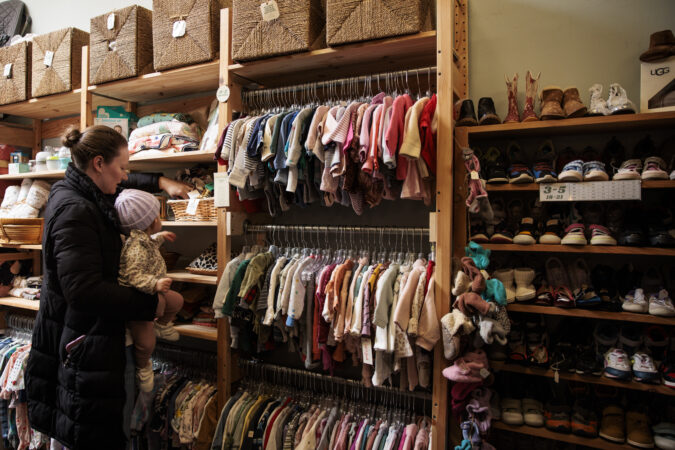
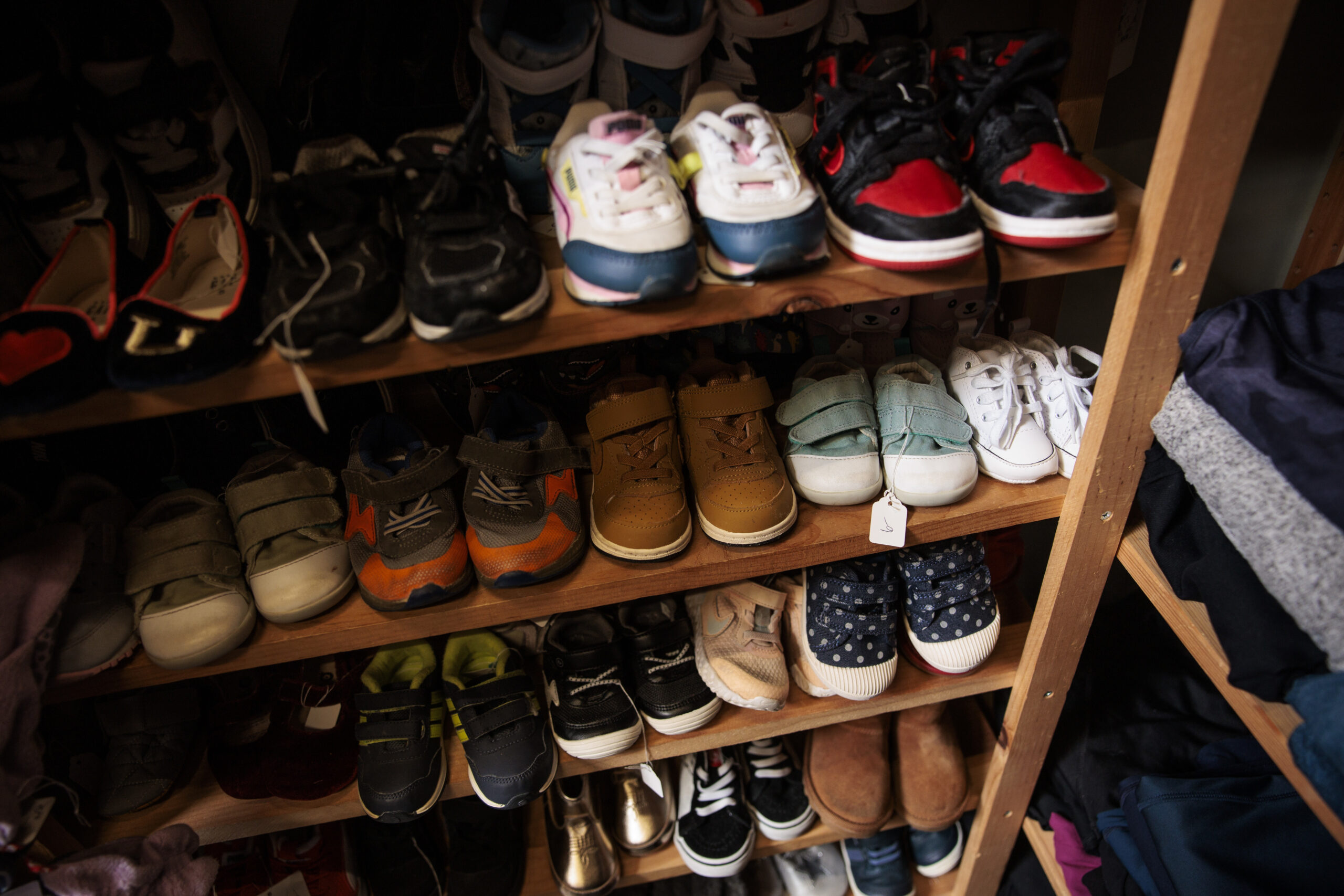
    Used baby shoes on display at the Nesting House.

    Next came the broader revelation of textile waste — pictures and video of clothing from the United States washing up on the shores of African countries — which plays into the interest in the secondhand market, she said.
    “This was stuff that we just throw away, or we put in a drop box [thinking] it’s going to a good cause,” Baeza said. “They’re actually packing stuff up, and it’s a commodity they’re selling abroad.”

    While Beaza teaches her students to scrutinize the marketing of sustainable fashion and to understand secondhand may not be the be-all-end-all of building circularity into the industry, she gets the sense they want to be part of what she describes as a renaissance period.

    “They want to be part of the solution, not the problem,” Baeza said.

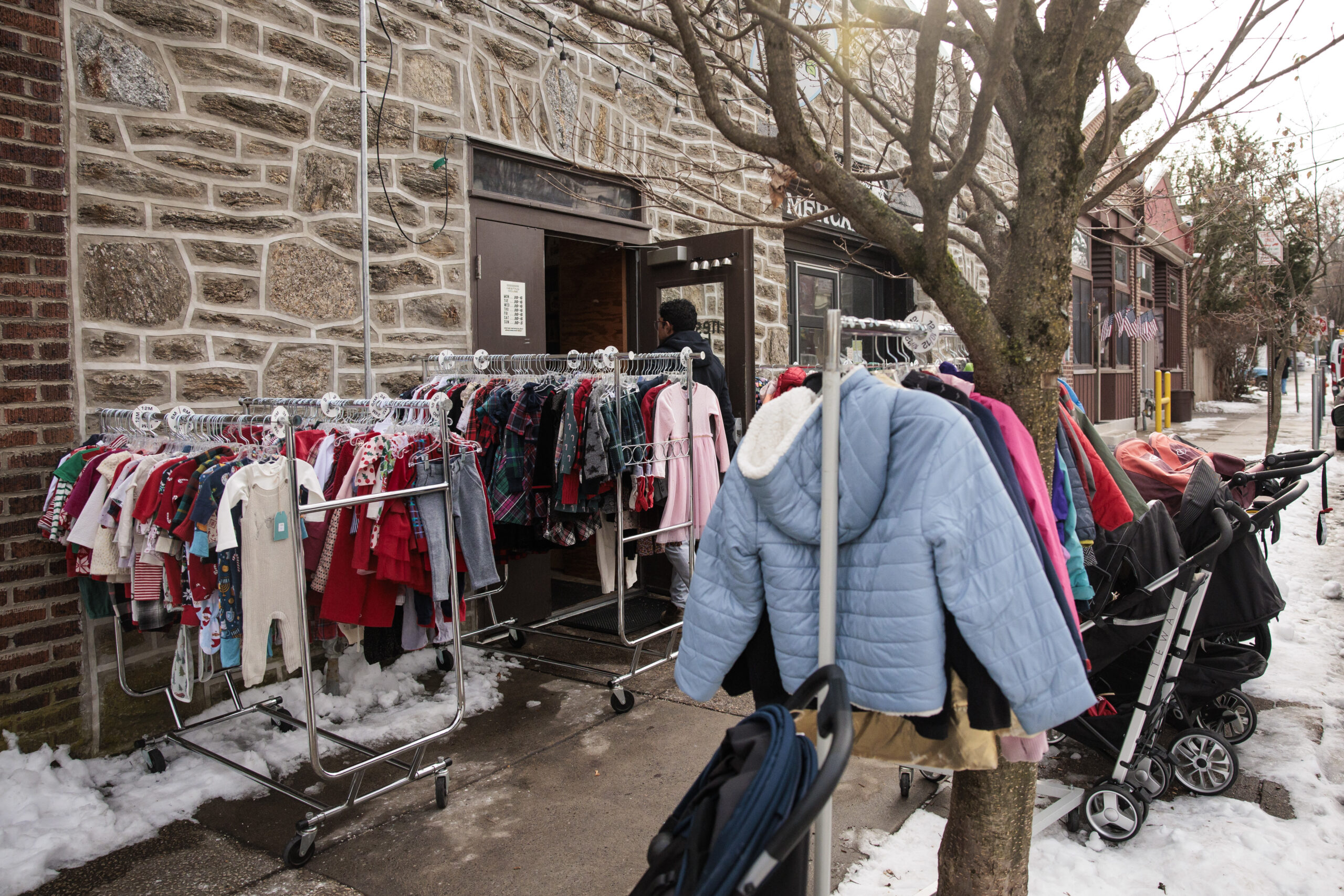
    Childrens clothes on display outside the Nesting House.

    Sewell prefers to shop thrift and consignment around her neighborhood and frequents stores like Lilypad and 2A. She also goes to annual church sales in the suburbs and uses eBay for more specific items — a specific kind of sleep sack that works for her 1-year-old or an item in a specific color or fabric for her 4-year-old.

    “I’m still shocked to this day when I learn that other parents still are buying mostly new clothes for their children,” Sewell said. “I think I’m on a very different end of the spectrum, and I always have been as a consumer.”

    Lilypad, which began as a play space on Broad Street, expanded to include a small thrift shop in its basement after the COVID-19 pandemic sidelined its twice-yearly City Kids consignment events. The nonprofit sells only donated items at its shop, now located in East Passyunk, to support charging an affordable annual membership to its play space.

    Lilypad board member Maria Hughes said the number of people actively seeking out secondhand clothing for their kids, particularly babies, has increased exponentially over the last several years. The store sees more pregnant people, who don’t want to go through the process of building a registry. Hughes added that there are also more grandparents and grandparents-to-be shopping at Lilypad now.

    “They’re not going to Marshalls and buying the things,” Hughes said. Instead they’re opting for pre-owned items “either at the directive of their children or because they believe now.”

    Kinka said the early days of the Nesting House “felt like it was mission work.”

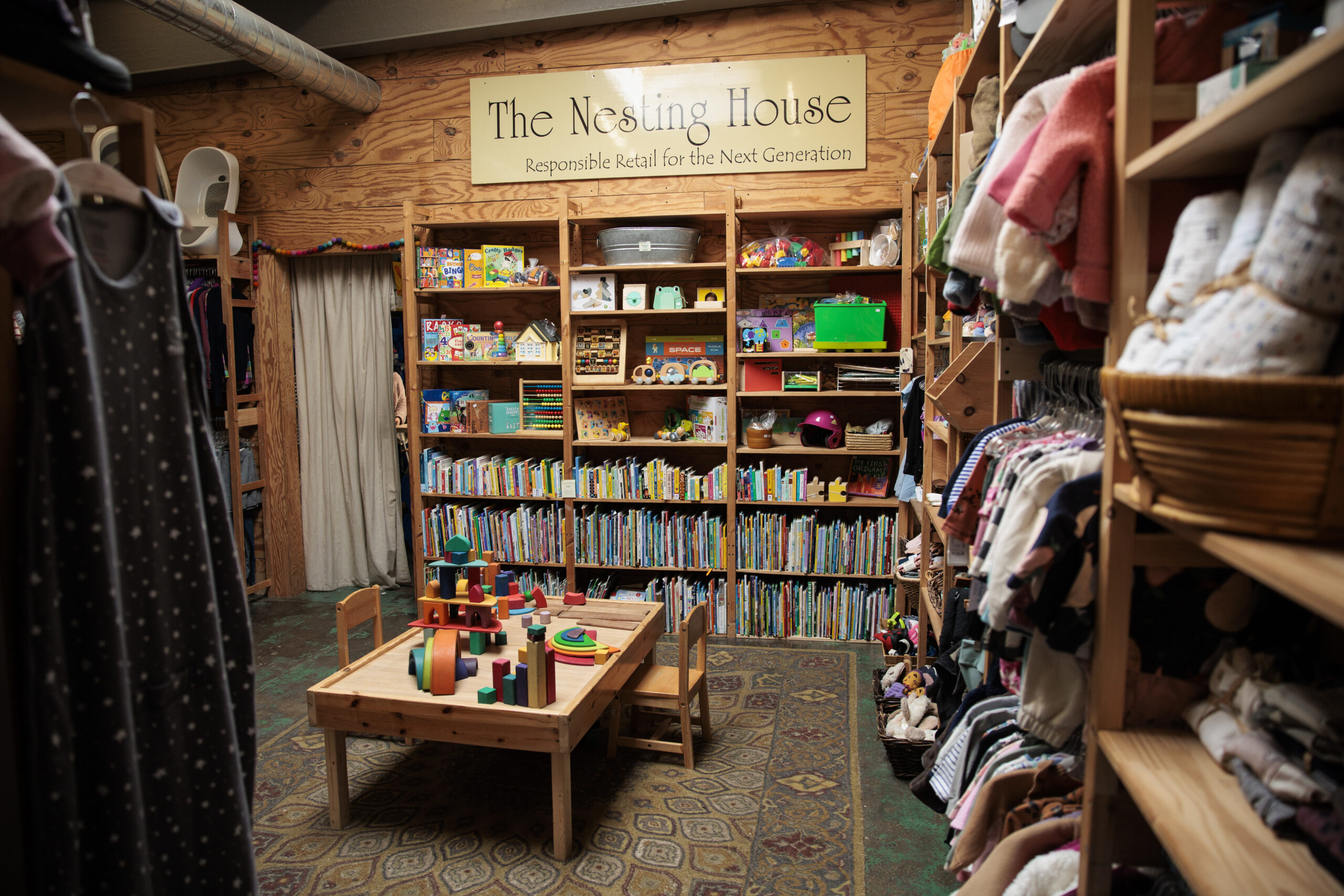
    Used baby goods and books on display at the Nesting House.

    “Nobody understood what we were doing,” Kinka said. “People would come in very confused. They would oftentimes refer to us as a thrift store.”

    Eventually people saw the store as a sound economic choice: get high-quality children’s clothing at a great price. But she has seen “a huge shift” over the last five years.

    “It’s this current generation,” Kinka said. They’re on board with the concept “before they come. They’re ready for us.”

  • A Phoenixville shopping center sold for more than $7 million

    A Phoenixville shopping center sold for more than $7 million

    A fully occupied shopping center near downtown Phoenixville recently sold for nearly $7.4 million.

    Chester County property records show that the 33,000-square-foot complex was sold in late November by one private investor based in Malvern to another based in Glen Mills, with both registered as limited liability companies. The sale was first reported Thursday by the Philadelphia Business Journal.

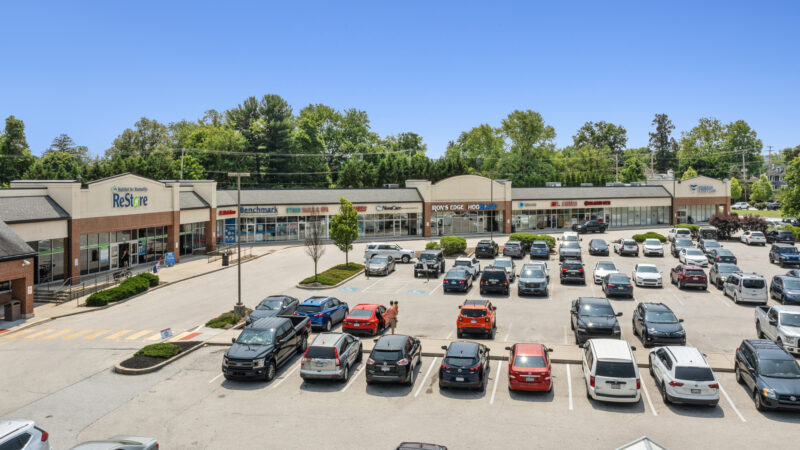
    Located at 785 Starr St., the center is about a mile down the road from Phoenixville’s main drag. It is shadow-anchored by a corporately owned Acme, according to Marcus & Millichap, the firm that represented the seller. The Acme is connected to the rest of the shopping center — and drives traffic to other stores — but was not included in the sale.

    The center’s other tenants include Benchmark Federal Credit Union, Habitat for Humanity ReStore thrift store, Fresenius Kidney Care, Labcorp, NovaCare Rehabilitation, and State Farm. It also has a martial arts gym, a dry cleaner, and several quick-service restaurants.

    “This closing highlights the strength of essential-service tenants, 100% occupancy, and strong tenant performance,” Scott Woodard, senior director of investments for Marcus & Millichap, said in a statement. “Phoenixville’s expected population growth and proximity to major anchors, such as Acme, made this center a standout asset with long-term stability.”

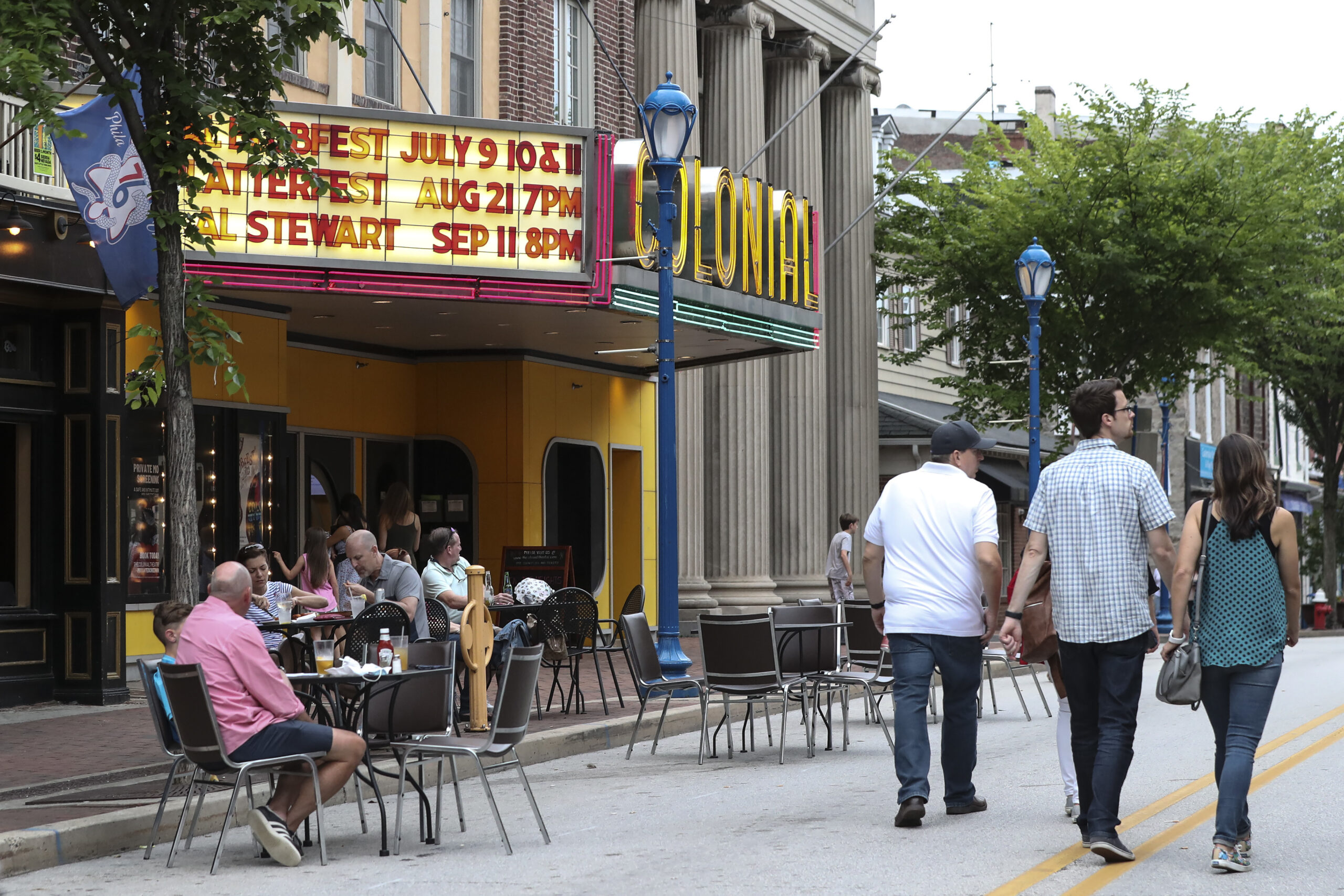
    People walk along Bridge Street by the historic Colonial Theatre in Phoenixville in this June 2021 file photo.

    Woodard represented the seller alongside Derrick Dougherty, senior managing director of investments.

    The shopping center sits on 3.7 acres, near the corner of Nutt Road and Starr Street, and was built in 2007. According to Chester County property records, it previously sold for $6.35 million in 2018.

    Prior to that, the property had last changed hands in 2006, when the land was purchased for $325,000, according to the records.

    Phoenixville, a once-dilapidated former steel town, has experienced a rebirth over the past two decades.

    Its restaurant and bar scene has flourished, and Bridge Street is bustling, especially on the weekends. Luxury apartment complexes have attracted both millennials and empty nesters to the quaint 3.8-square-mile borough.

    Since the pandemic, Phoenixville has continued to grow: Its population increased 9% between 2020 and 2024, according to census data.

    In 2010, it was home to roughly 16,000 people. Today, that number is estimated to be more than 20,000.

    The Acme shopping center sits just inside the bounds of Phoenixville, near its border with Schuylkill Township and not far from Valley Forge National Historic Park.

    The Phoenixville center’s sale occurred around the same time that grocer Jeff Brown bought a 98,000-square-foot Northeast Philadelphia complex, anchored by one of his ShopRites, for $30.8 million.

  • Which Philadelphia-area grocery stores offer the best prices and quality?

    Which Philadelphia-area grocery stores offer the best prices and quality?

    Over the last five years, American grocery costs have soared.

    In 2022, prices for food prepared at home jumped by a historic 11.8% from the year before, according to the Bureau of Labor Statistics’ Consumer Price Index survey. While prices didn’t drop in 2025, the rate of inflation for groceries has for the most part slowed. In July, costs for groceries were 2.2% higher than the year before.

    The nonprofit Consumers’ Checkbook’s latest evaluations of Delaware Valley grocery stores found most shoppers can save by choosing low-cost stores. Checkbook researchers shopped stores using a 150-item list to compare prices.

    To evaluate stores on quality of products and service, we surveyed our members. Here’s what we found.

    Wegmans is still a winner

    Wegmans now has 11 stores in the Delaware Valley area. Since opening its first area location in 2003, the Rochester, N.Y.-based chain has consistently earned high ratings from its customers for quality. In our latest survey, 85% of its customers judged it “superior” on each of our survey questions on produce, meat, and overall quality.

    Although Wegmans’ prices aren’t among the lowest in the region, it remains competitive. Its prices were about 2% lower than average prices at Giant and ShopRite, 4% lower than Redner’s, about 12% lower than Acme and McCaffrey’s, and 25% lower than Whole Foods.

    McCaffrey’s gets raves but isn’t low-cost

    The locally owned small chain ranked among the area’s best grocery options for quality, with 87% of its surveyed customers judging it “superior” overall, 90% rating it “superior” for produce, and 88% rating it tops for meat.

    But McCaffrey’s prices were about 12% higher than the all-store average.

    Aldi and Lidl offer the biggest savings

    Germany-based discounters Aldi and Lidl continue to expand their U.S. footprints. These chains focus on low costs, and our survey found them quite inexpensive: For our shopping list, Aldi’s prices were 35% lower than the all-store average, and Lidl’s were 26% lower. Aldi’s per-unit prices were even lower than wholesale clubs BJ’s, Costco, and Sam’s Club.

    These savings are partly explained by Aldi’s and Lidl’s smaller-format stores, which have much lower overhead costs than conventional supermarkets. Shoppers at quirky Aldi and Lidl don’t expect wide choices of brands or sizes. Instead, they’re offered comparable house-brand products in exchange for big savings.

    Other price standouts: Amazon Fresh, Food Lion, Grocery Outlet, and Walmart

    Amazon Fresh’s prices were about 16% lower than the all-store average, Walmart’s were 10% lower, and Food Lion’s 7% lower.

    Grocery Outlet, which offers a somewhat odd assortment of steeply discounted surplus national-brand products, offered prices that were about 12% lower than average.

    Amazon Fresh opened its first Delaware Valley area location in 2022, and the region now has five. These small-format stores focus on low costs and convenience. The company’s app keeps track of what you remove from shelves; when finished, you simply exit without scanning items.

    For a family that spends $300 per week at the supermarket, a 16% price difference totals savings of $2,496 per year; a 10% price difference totals $1,560 a year.

    Trader Joe’s remains popular

    Among survey respondents, 83% rated the funky-and-fun chain “superior” for “overall quality.”

    Although not a price leader in the area, TJ’s prices were about 3% lower than the all-store average and about 14% lower than Acme.

    Whole Foods remains an expensive choice

    Whole Foods built a loyal following by offering high-quality produce, meat, prepared foods, and generic staples. It continues to receive high marks in our consumer surveys, especially for produce and meat quality.

    But our price survey found that Whole Foods remains among the most expensive stores we shopped: Its overall prices were about 32% higher than the average prices at all stores we surveyed, or about 33% higher than top-rated Wegmans, 18% higher than McCaffrey’s, and 57% higher than Amazon Fresh, its corporate sibling.

    Most other large chains receive dreadful ratings from their customers for quality

    When it came to quality, Target scored lowest; Acme, Food Lion, the Fresh Grocer, Walmart, and Weis also received abysmal scores.

    Target was rated “superior” overall by only 18% of its surveyed customers; the other chains mentioned above were each rated “superior” overall by fewer than 40%.

    Although Redner’s and ShopRite did not receive stellar ratings for quality, they did get considerably higher scores than many other conventional supermarkets. Among Redner’s customers, 54% rated the store “superior” overall; ShopRite’s score was 52%.

    Within the largest chains, there is relatively little store-to-store price variation

    Prices at the Acme, Giant, and ShopRite locations we surveyed were about the same from store to store.

    MOM’s Organic Market received raves

    MOM’s, which sells only organic products, was the highest scoring chain for produce quality and overall quality.

    We’ve found that its prices are competitive with other local stores when we look only at organics.

    Warehouse clubs will save you money — if you shop there often

    The three warehouse chains all offer most shoppers significant savings. Sam’s Club, for example, beat Acme’s prices by 35%. And compared to Acme, the savings were about 33% at Costco and 32% at BJ’s.

    In addition to having low prices, Costco received high customer ratings for meat quality and overall quality. (BJ’s and Sam’s Club’s ratings were considerably lower than Costco’s.)

    While the warehouse clubs offered significant savings compared to prices offered at grocery stores, that might not justify paying their annual membership fees if you don’t visit often.

    For example, BJ’s prices were only about 14% lower than Walmart’s; you’d have to spend $429 at BJ’s on products you could buy at Walmart before breaking even on BJ’s $60 annual fee.

    Delaware Valley Consumers’ Checkbook magazine and Checkbook.org is a nonprofit organization with a mission to help consumers get the best service and lowest prices. It is supported by consumers and takes no money from the service providers it evaluates. Until Feb. 5, Inquirer readers can access Checkbook’s ratings of local grocery stores and delivery services free at Checkbook.org/Inquirer/Groceries.

  • Atlantic City Expressway is going cashless. Drivers without E-ZPass will be paying double.

    Atlantic City Expressway is going cashless. Drivers without E-ZPass will be paying double.

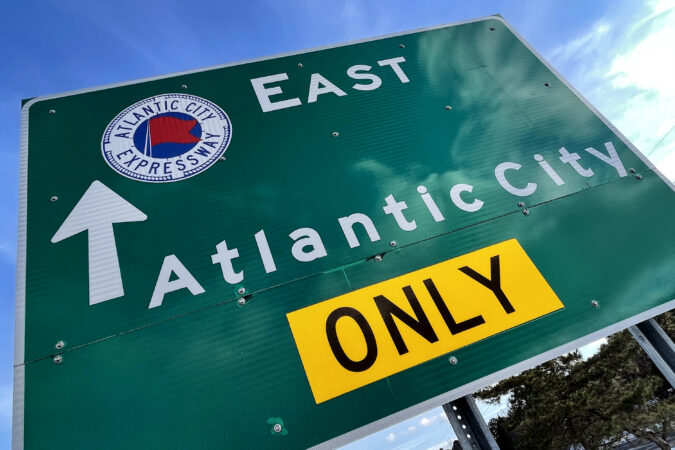
    The Atlantic City Expressway is set to become the first of New Jersey’s major toll roads to go cashless.

    Starting Sunday, drivers on the highway must pay via E-ZPass or be billed by plate, according to the South Jersey Transportation Authority (SJTA).

    Drivers who don’t have E-ZPass will be mailed a bill for the toll, plus a 100% surcharge and a $1 administrative fee. Driving the length of the expressway without E-ZPass would cost about $14. The SJTA says the extra charges will help “offset the administrative costs associated with the new billing process.”

    If drivers fail to pay the first bill, they will receive another with an extra $5 late fee. If they still don’t pay, it will be considered a toll violation, which can result in fines and a suspension of vehicle registration.

    The cashless system’s rollout coincides with a 3% toll rate increase for all drivers.

    The start of all-electronic tolling on the A.C. Expressway comes after a $77 million multiyear project that replaced the Egg Harbor and Pleasantville barrier toll plazas with overhead gantries that digitally read E-ZPass transponders and license plates. All ramp toll machines were also replaced with gantries.

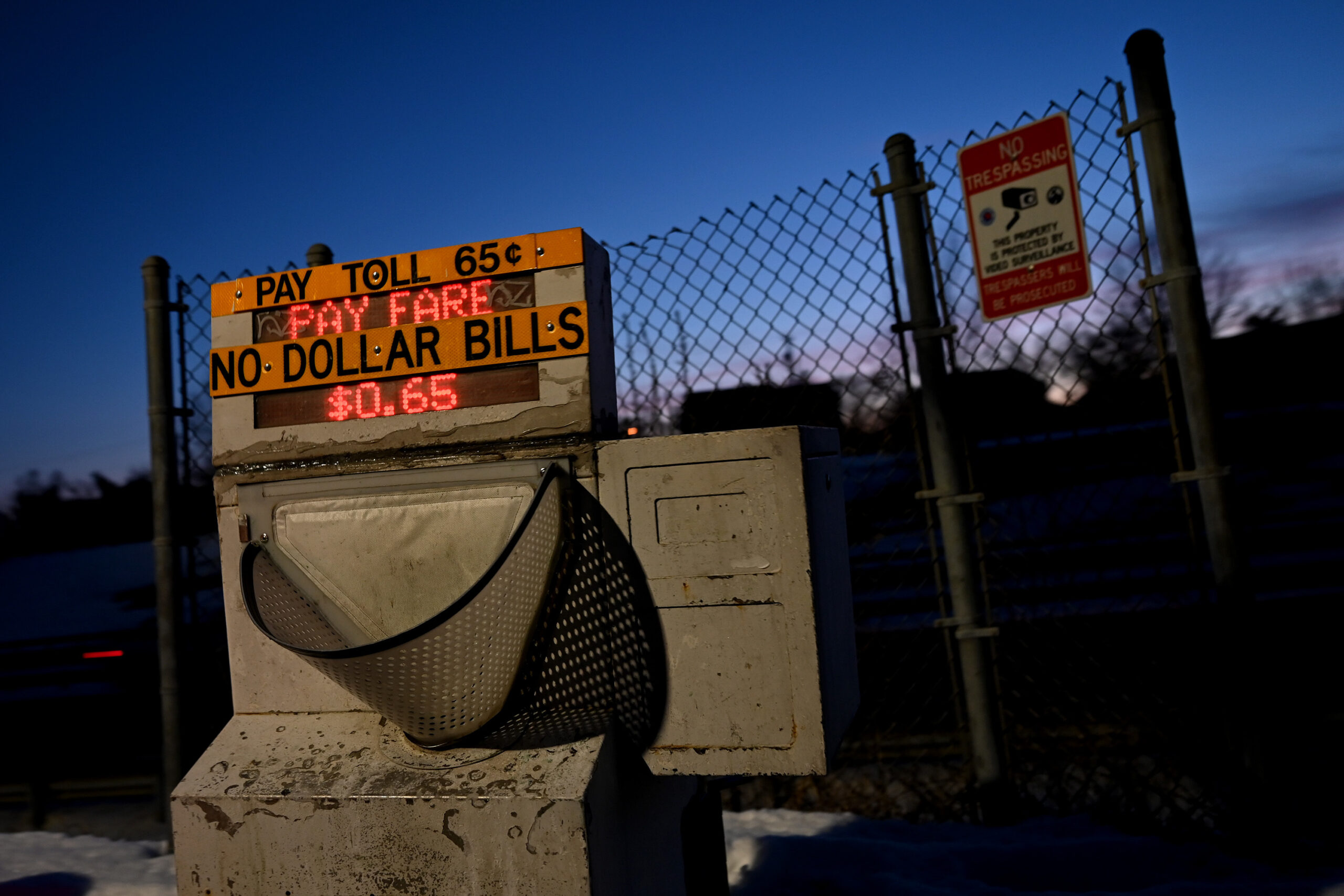
    A cash lane at the Berlin-Cross Keys toll booth on the Atlantic City Expressway as shown in 2022.

    With the new system, drivers don’t stop to go through a toll booth; they keep moving, which state officials have said will be safer and more environmentally friendly. It may also result in quicker drives on the 44-mile highway that connects Camden County to the Shore.

    The Garden State Parkway and the New Jersey Turnpike are also set to go cashless sometime in the future.

    The New Jersey Turnpike Authority’s 2020 long-range capital plan estimated that endeavor would cost $900 million — $500 million for the parkway and $400 million for the turnpike.

    The Pennsylvania Turnpike went cashless in 2020, laying off hundreds of toll workers.

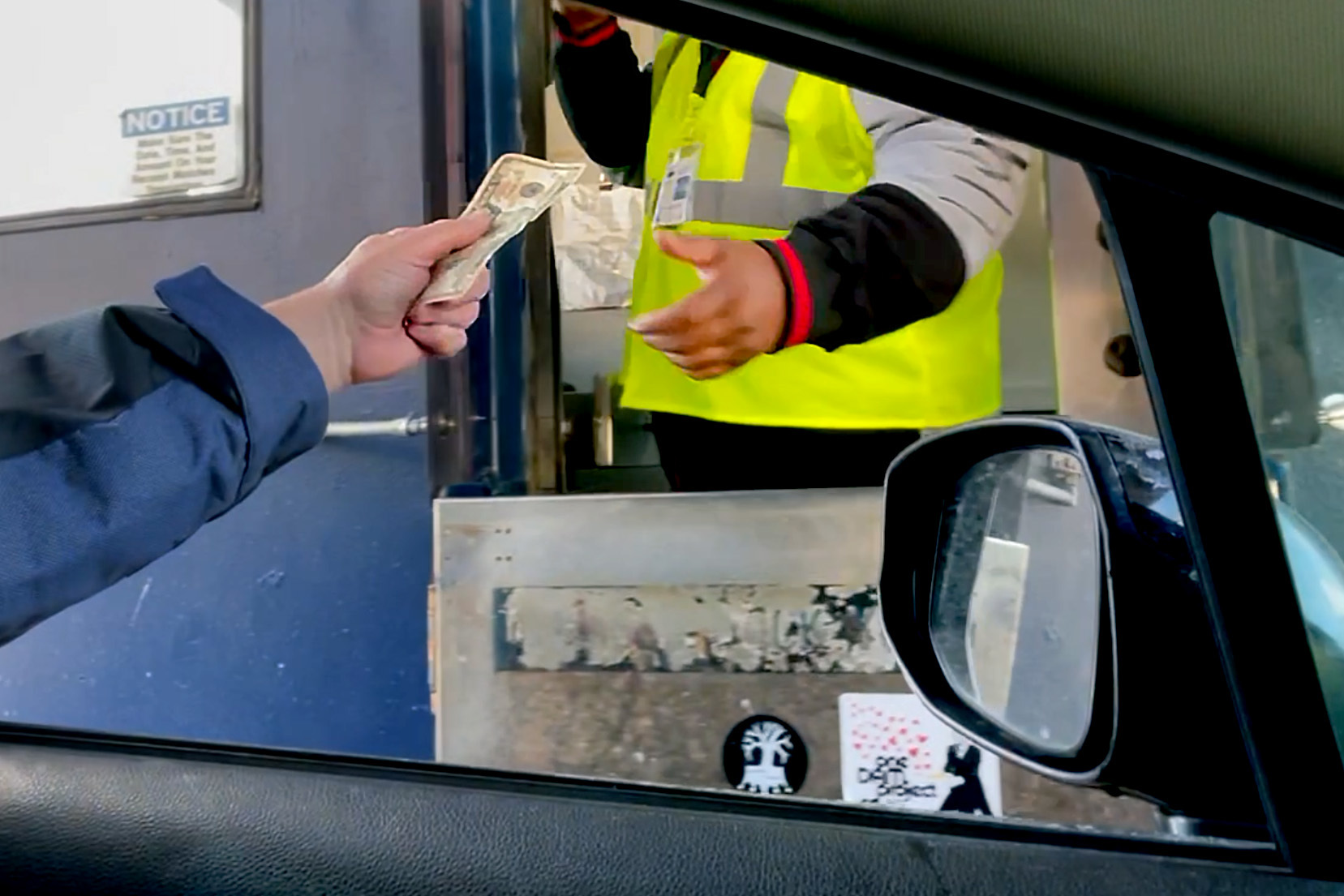
    A driver pays a toll in cash at the Egg Harbor Toll Plaza on the Atlantic City Expressway in 2022.

    Spokespeople for the South Jersey Transportation Authority could not immediately be reached for comment Tuesday regarding whether Atlantic City Expressway toll workers were losing their jobs.

    The authority, which runs the expressway, has been using its social media accounts to encourage drivers to get E-ZPass. They can do so online at ezpassnj.com, by phone at 1-888-288-6865, or by stopping at the Customer Service Center at milepost 21.3 on the expressway.

    The in-person center is open from 8 a.m. to 3 p.m. Monday, 9 a.m. to 4 p.m. Tuesday through Thursday, and 11 a.m. to 6 p.m. Friday. It is closed on weekends and holidays, including New Year’s Day.