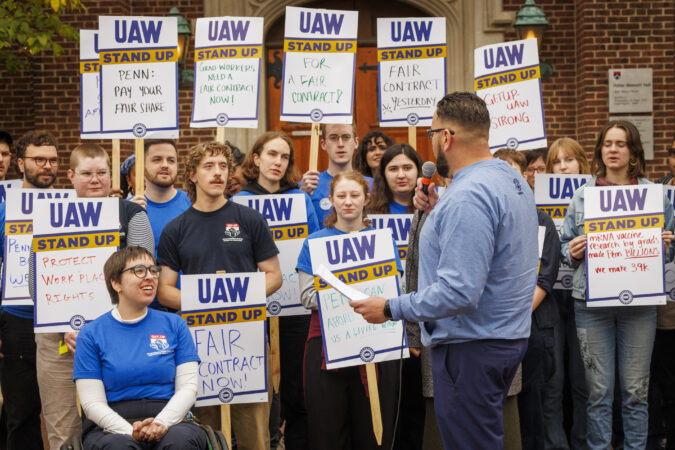
Penn’s graduate student workers have reached a tentative agreement on a first union contract, averting a strike.
The two-year tentative agreement includes increases to wages among other benefits.
“I am so proud of what we were able to accomplish with this contract,” Clara Abbott, a Ph.D. candidate in literary studies and member of the bargaining committee said in a statement. “We won a historic contract that enshrines gains for grad workers.”
Research and teaching assistants at the university voted to unionize in 2024. The union, which represents about 3,400 graduate student workers, is known as Graduate Employees Together-University of Pennsylvania (GET-UP) and is part of the United Auto Workers (UAW). The union has been negotiating with the university since October 2024 for a first contract.
In November, the union’s bargaining members voted to authorize a strike, if called for by the union. In January, they set a strike deadline, announcing that they would walk off the job on Feb. 17 if they had not reached a deal.
A deal was announced in the early morning hours Tuesday.
While tentative agreements had been reached on a number of issues, some remained without consensus ahead of the final bargaining session on Monday before the strike deadline. Those sticking points included wages, healthcare, and discounts on SEPTA passes.
“We are pleased to announce that a tentative agreement has been reached between Penn and GETUP-UAW,” a university spokesperson said in a statement. “Penn has a long-standing commitment to its graduate students and value their contributions to Penn’s important missions. We are grateful to all the members of the Penn community who helped us achieve this tentative agreement.”
A date to vote on the ratification of the tentative agreement has not yet been announced.
The deal comes as earlier this month Pennsylvania state senators and representatives and Philadelphia City Council members addressed letters to the university’s president and provost, urging them to come to an agreement with the student workers and avoid a strike.
“A strike at the University of Pennsylvania would seriously disrupt life for the tens of thousands of Philadelphians who are students, employees, and patients at Penn,” the letter signed by City Council members reads. “As such, we strongly urge the Penn administration to avert a strike by coming to a fair agreement that meets the needs of graduate student employees prior to February 17th.”
Monday’s bargaining session brought tentative agreements on sticking points that included wages and healthcare coverage.
If ratified, the tentative deal would provide graduate student workers with an annual minimum wage of $49,000, which the union has said is a 22% increase over the previous standard. For those paid on an hourly basis, the minimum hourly rate would be $25. Those rates would go into effect in April and a 3% increase would be provided in July 2027.
The deal would also create a fund with $200,000 annually from which graduate student workers could seek reimbursements to cover up to 50% of their dependent’s health insurance premiums.
Ahead of the Monday bargaining session, other tentative agreements had come together around leave. The university agreed to give six weeks of paid medical leave, as well as eight weeks of paid parental leave.
The university and the union had also recently reached a tentative agreement that would create an annual $50,000 fund to help international graduate student workers with expenses associated with reinstating or extending visas.
What would have happened in the event of a strike?
Graduate student workers in the bargaining group teach and conduct research at the university.
Classes, research, and other academic activities would have continued during a strike, according to the university spokesperson. Penn published guidance on how to continue this work in the event of a work stoppage or other disruption.
Striking graduate student workers would not have been paid throughout a work stoppage, but would have continued to be covered by their health insurance for the time being, according to a university statement.
If others employed at the university who are not in the bargaining group chose to join the work stoppage, they would not have been paid and could have faced consequences “up to and including separation from that position, depending on the circumstances of the refusal to work,” according to a university statement.
Ahead of the tentative agreement on Monday, hundreds signed a pledge indicating that they are employed at Penn and would not do the work of those on strike or assign it to others in the event of a work stoppage.
One night in early December, the phones of Radnor High School students started buzzing. Some freshmen girls were getting disturbing messages: A male classmate, they were told, had made pornographic videos of them.
When one of the girls walked into school the next morning, “she said everyone was staring at her,” said her mother, who requested anonymity to protect her daughter’s identity. “All the kids knew. It spread like wildfire.”
So-called AI deepfakes — pictures of a real person manipulated with artificial intelligence,sometimes with “nudify” features that can convert clothed photos into naked ones — have become the talk of school hallways and Snapchat conversations in some area schools.
As Pennsylvania lawmakers have pushed new restrictions cracking down on deepfakes — defining explicit images as child sexual abuse material, and advancing another measure that would require schools to immediately alert law enforcement about AI incidents — schools say they have no role in criminal investigations, and are limited in their ability to police students off campus.
But some parents say schools should be taking a more proactive stance to prepare for AI abuse — and are failing to protect victims when it happens, further harming students who have been violated by their peers.
In the Council Rock School District, where AI-generated deepfakes were reported last March, parents of targeted girls said administrators waited five days to contact the police about the allegations and never notified the community, even after two boys were charged with crimes.
“They denied everything and kind of shoved it under the rug and failed to acknowledge it,” said a mother in Council Rock, who also requested anonymity to protect her daughter’s identity. “Everybody thought it was a rumor,” rather than real damage done to girls, the mother said.
Council Rock spokesperson Andrea Mangoldsaid that the district “recognizes and understands the deep frustration and concern expressed by parents,” and that a police investigation “began promptly upon the district’s notification.”
Mangold said that current laws were “insufficient to fully prevent or deter these incidents,” and that the district was “limited in what we know and what we can legally share publicly” due to student privacy laws.
In Radnor, parents also said the district minimized the December incident. A district message last month said a student had created images of classmates that “move and dance,” and reported that police had not found evidence of “anything inappropriate” — even though police later saidthey had charged a student with harassment after an investigation into alleged sexualized images of multiple girls.
A Radnor spokesperson said the alleged images were never discovered and the district’s message was cowritten by Radnor police, who declined to comment.
The district “approaches all student-related matters with care and sensitivity for those involved,” said the spokesperson, Theji Brennan. She said the district was limited in what it could share about minors.
In both Radnor and Council Rock, parents said their daughters were offered little support — and were told that if they were uncomfortable, they could go to quiet rooms or leave classes early to avoid crossing paths with boys involved in the incidents.
“She just felt like no one believed her,” the Radnor mother said of her daughter.
How an investigation unfolded in Radnor
In Radnor, five freshman girls first heard they were victims of deepfakes on Dec. 2, according to parents of two of the victims who requested anonymity to protect their daughters’ identities. They said boys told their daughters that a male classmate had made videosdepicting them sexually.
In a Snapchat conversation that night, one boy said, “‘Nobody tell their parents,’” a mother of one of the victims recalled. Reading her daughter’s texts, “it quickly went from high school drama to ‘Wow, this is serious.’”
The girls and their parents never saw the videos. In an email to school officials the next morning, parents asked for an investigation, discipline for the students involved, and efforts to stop any sharing of videos. They also asked for support for their daughters.
Schooladministrators began interviewing students. The mother of one of the victims said her daughter was interviewed alone by the male assistant principal — an uncomfortable dynamic, given the subject matter, she said.
One mother said the principal told her daughter that it was the boys’ word against hers, and that he was “so glad nothing was shared” on social media — even though no one knew at that point where videos had been shared, the mother said.
The principal said the school had no authority over kids’ phones, so the girl and her family would need to call the police if they wanted phones searched, the mother said.
Brennan, the Radnor spokesperson, said that administrators contacted Radnor police and child welfare authorities the same day they spoke with families. “The district’s and the police department’s investigations have found no evidence that the images remain or were shared, posted, or otherwise circulated,” she said.
The male classmate acknowledged making videos of the girls dancing in thong bikinis, the parents said police told them. But the app he used was deleted from his phone, and the videos were not on it, the police told them.
The parents didn’t believe the admission.
“I don’t think a 14-year-boy would report a TikTok video of girls in bikinis,” said one of the mothers, who said her daughter was told she was naked and touching herself in videos.
The police told parents they did not subpoena the app or any social media companies, making it impossible to know what was created.
Radnor Police Chief Chris Flanagan declined to comment, as did the Delaware County District Attorney’s Office.
In a message sent to the district community Jan. 16 announcing the end of the police investigation, officials said a student, outside of school hours, had taken “publicly available” photos of other students and “used an app that animates images, making them appear to move and dance.”
“No evidence shared with law enforcement depicted anything inappropriate or any other related crime,” the message said.
A week later, the police released a statement saying a juvenile was charged with harassment after an investigation into “the possible use of AI to generate non-consensual sexualized imagery of numerous juveniles.”
Asked why the district’s statement had omitted the criminal charge or mention of sexualized imagery, Brennan said the statement was also signed by Flanagan, who declined to comment on the discrepancy.
Brennan said the district had provided ongoing support to students, including access to a counselor and social worker.
Parents said the district had erred in failing to initiate a Title IX sexual harassment investigation, instead telling parents they needed to file their own complaints.
“They kept saying, ‘This is off campus,’” the mother said. But “my daughter could not walk around without crying and feeling ashamed.”
Parents say girls were ‘not supported’ in Council Rock
In Council Rock, a girl came home from Newtown Middle School on March 17 and told her mother a classmate had created naked images of her.
“I’m like, ‘Excuse me? Nobody contacted me,’” said the mother, who requested anonymity to protect her daughter’s identity. She called the school’s principal, who she said told her: “‘Oh, my God, I meant to reach out to you. I have a list of parents, I just have not gotten to it’ — you know, really downplaying it.”
The mother and other victims’parents later learned that administrators were alerted to the images on March 14, when boys reported them to the principal. But instead of calling the police, the principal met with the accused boy and his father, according to parents. Police told parents they were contacted by the school five days later. The Newtown police did not respond to a request for comment.
Mangold, the Council Rock spokesperson, declined to comment on the specific timing of the school’s contact with police.
Police ultimately obtained images after issuing a subpoena to Snapchat; in total, there were 11 victims, the parents said.
Through the Snapchat data, police learned that a second boy was involved, the parents said, which made them question what was created and how far it spread.
Parents said they believe there are more pictures and videos than police saw, based on what their daughters were told — and because the delayed reporting to police could have given boys an opportunity to delete evidence.
“That’s kind of what the fear of our daughters is — like, what was actually out there?” said one mother, who also requested anonymity to protect her child’s identity.
Manuel Gamiz, a spokesperson for the Bucks County district attorney, said Newtown Township police had charged two juveniles with unlawful dissemination of sexually explicit material by a minor. Gamiz said the office could not provide further information because the case involved juveniles.
Juvenile cases are not public, but victims’ parents said both boys were adjudicated delinquent. While the boys had been attending Council Rock North High School with their daughters, the district agreed to transfer both after their cases were resolved, according to a lawyer representing four of the parents, Matthew Faranda-Diedrich.
“How can you let this person be roaming the halls?” said Faranda-Diedrich, who said it took formal demand letters in order for the district to transfer the boys.
He accused the district of mishandling the incident and “protecting the institution” rather than the victimized girls.
“They’re putting themselves above these students,” Faranda-Diedrich said.
Parents said school leaders warned their daughters against spreading rumors, and never sent a districtwide message about the incident.
“These girls were victims,” one of the mothers said, “and they were not supported.”
She and the other mothers who spoke to The Inquirer said the incident has deeply affected their daughters, from anxiety around what images may have been created — and how many people saw them — to a loss of trust in school leaders.
Some of the girls are considering switching schools, one mother said.
State law changes and a debate around education about deepfakes
Those changes came in 2024 and 2025, after a scandal over deepfakes of nearly 50 girls at a Lancaster private school.
Another bill that passed the state Senate unanimously in November would require school staff and other mandated reporters to report AI-generated explicit images of minors as child abuse — closing what prosecutors had cited as a loophole when they declined to bring charges against Lancaster Country Day School for failing to report AI images to the police. That legislation is now pending in the House.
Schools can also do more, said Faranda-Diedrich, who also represented parents of victims in the Lancaster Country Day School incident. He has pressed schools to conduct mandated reporter training for staff. “By and large they refuse,” he said.
In Radnor, parents urged the school board at last week’s committee meeting to make changes.
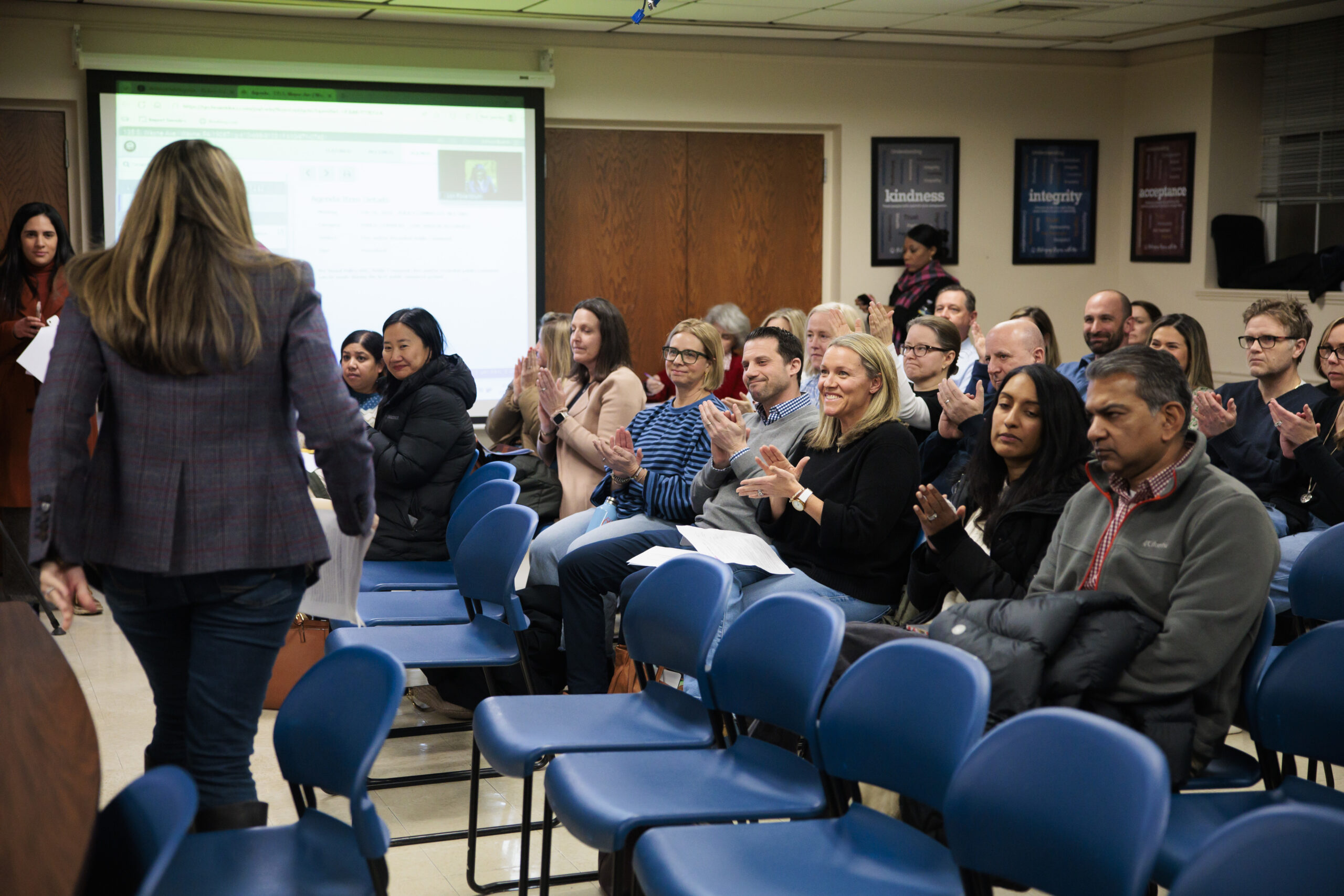
Parent Luciana Librandi walks back to her seat after speaking during a Radnor school board committee meeting last week.
Luciana Librandi, a parent of a freshman who said she had been “directly impacted by the misuse of generative AI,” called for timelines for contacting police following an AI incident, safeguards during student questioning, and annual education for students and parents on AI.
Others called for the district to communicate the criminal charge to families, to enforce existing policies against harassment, and to independently review its response to the recent incident.
Radnor officials said they are planning educational programming on the dangers of making AI images without a person’s consent.
There is somedebate on whether to teach children about “nudify” apps and their dangers, said Riana Pfefferkorn, policy fellow at the Stanford Institute for Human-Centered AI, who has researched the prevalence of AI-generated child sexual abuse material. Alerting kids to the apps’ existence could cause them “to make a beeline for it,” Pfefferkorn said.
While “this isn’t something that is epidemic levels in schools just yet,” Pfefferkorn said, “is this a secret we can keep from children?”
One of the victims’ parents in Radnor said education on the topic is overdue.
“It’s clearly in school,” the mother said. “The fact there’s no video being shown on the big screen in your cafeteria — we don’t live in that world anymore.”
The city’s teachers union has significant concerns with the Philadelphia School District’s sweeping facilities plan, and it has taken them to a City Council committee.
Superintendent Tony B. Watlington Sr.’s $2.8 billion proposal “does not provide sufficient detail or data to inform binding decisions about school closures, co-location, re-purposing, or widespread impact and disruption that will be incurred,” Philadelphia Federation of Teachers president Arthur Steinberg wrote in a letter to Council’s education committee obtained by The Inquirer.
The appeal, sent late last week, comes as the district prepares for a Tuesday Council hearing on the school blueprint, which currently calls for 20 school closings, six colocations, and 159 modernization projects.
Council members are not the decision-makers — Philadelphia’s school board will ultimately vote on the plan sometime this winter — but as one of the district’s main funders, “you hold powerful levers that may be used to encourage the district to craft a more equitable [plan] that achieves our shared goals of improving student learning conditions and educators’ working conditions,” Steinberg wrote.
About 40% of the district’s nearly $2 billion budget comes from local revenue and city funding, which City Council and Mayor Cherelle L. Parker must approve in the annual city budget by the end of June.
What does the PFT letter say?
Before any decisions are made about what to do with the district’s buildings, the PFT wants system officials to do better by “showing their work and providing all data used to reach their determinations and recommendations for school improvement,” Steinberg wrote.
The teachers union also flagged compliance inconsistencies with the district’s own standards, implementation questions, and “substantial problems with data interpretation and application.”
The conclusions came after Jerry Roseman, the PFT’s longtime director of environmental science, scrutinized the plan. Roseman has decades of experience working with district officials on environmental issues.
The PFT and Roseman want access to all data. The district has released some details officials used to make their calls, but some remain opaque.
“How is the district ensuring that decisions regarding closing and receiving schools are based on comprehensive, up-to-date, and easily verifiable facility data (e.g., lead, asbestos, ventilation, overall condition)?” Steinberg wrote.
The PFT also wants to “definitively show that the facility condition of receiving schools is not, in fact, worse than the facilities thatare slated to close. If students are moving to a facility with worse current conditions, what will happen at the facility to improve it prior to students being moved there?”
District officials outlined some modernization and renovation plans ahead of Tuesday’s Council hearing, but some remain a mystery to the public. Watlington has promised all projects will be detailed before Feb. 26, when he’s scheduled to formally present the plan to the school board.
Don’t close schools or displace students based on incomplete data, PFT says
The school system’s own data contains some inconsistencies, Steinberg said — including some schools judged to be in “good” or “fair” building condition by the district’s metrics that have “severely inadequate” critical systems, such as roofing, windows, or electrical and plumbing systems.
And though the district said it could modernize all 85 school buildings currently in poor or unsatisfactory condition for $2.8 billion, the PFT questioned that price tag as overly optimistic. (City and district officials had previously put the system’s total deferred maintenance cost at $7 billion or more.)
“The cost to fully repair poor-inadequate buildings and systems could actually exceed $3.5 billion,” the PFT said.
The teachers union also highlighted the inequitable distribution of adverse conditions, noting that “Black and brown children and children from economically disadvantaged families are more vulnerable — to health risks, learning disruptions, and the long-term effects of instability and displacement.”
While the information the district has made public is “useful and has value as a ‘baseline,’ it is insufficient for its use in supporting the proposed conclusions, recommendations and other plan details released,” Steinberg said.
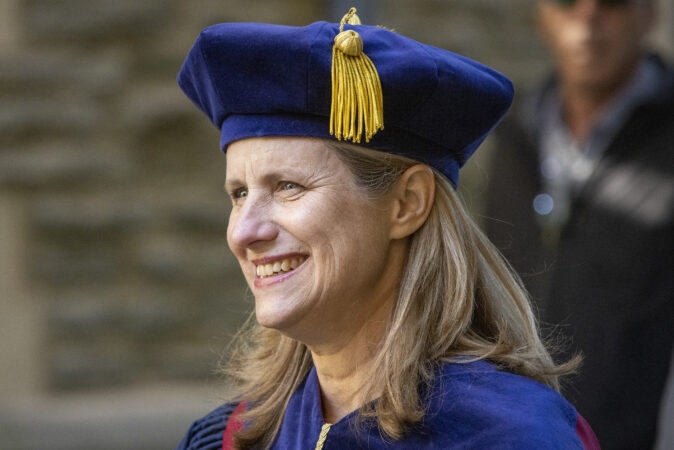
Former University of Pennsylvania president Liz Magill has been named the new executive vice president and dean of Georgetown University’s law school in Washington, D.C.
The move comes a little more than two years after Magill resigned from Penn following a bipartisan backlash over her testimony to a congressional committeeabout the campus’ handling of antisemitism.
“I am honored to join Georgetown Law, one of this country’s great law schools, and the university, an exceptional and distinctive research institution,” Magill said in an announcement posted Friday on the Jesuit institution’s website.
Magill did not immediately return a request for comment.
Magill, a lawyer and academic, previously served as dean of Stanford’s law school from 2012 to 2019 and had been executive vice president and provost of the University of Virginia before joining Penn. She resigned from Penn in December 2023 — just 18 months after she started the job — but has remained a faculty member at Penn Carey Law.
She starts at Georgetown Aug. 1.
“Liz Magill brings the experience and leadership that we need to lead Georgetown Law,” Thomas A. Reynolds, chair of Georgetown’s board of directors, said in the school’s announcement. “Her ability to connect with others, her humility and her unwavering belief in higher education will make her an exceptional next dean.”
Three of Magill’s siblings have degrees from Georgetown Law School, the announcement noted.
Magill became Penn’s president July 1, 2022, following the record-setting 18-year tenure of Amy Gutmann. Tensions began to mount about a year into her tenure, and her departure from Penn followed a tumultuous semester, marked by near-weekly student protests and complaints from deep-pocketed donors over the school’s response to antisemitism following Hamas’ attack on Israel in October 2023. There was also unrest over the school’s allowing the Palestine Writes Literature Festival to be held on campus in September of that year.
Then, during her congressional testimony, U.S. Rep. Elise Stefanik (R., N.Y.) asked her about whether calling for the genocide of Jewish people would violate Penn’s code of conduct. “It is a context-dependent decision,” Magill had answered.
Less than a week later, she stepped down. Scott L. Bok, then chair of the board of trustees, also resigned. And former Harvard president Claudine Gay, who also testified that day, resigned, too, less than a month later.
“I provided this 30-second sound bite that went viral and just swamped everything else about what I’d said and my record at Penn,” Magill said last May when she and Bok talked about their experiences at the New York Public Library following the publication of Bok’s book that discussed the controversy. “And I really regret that. It hurt Penn. It hurt Penn’s reputation, and my job was to protect the institution that I led.”
That’s one of my favorite questions to ask students. I want them to scrutinize their most deeply held beliefs. When you do that, I tell them, you sometimes find out you don’t believe them any longer.
A few weeks ago, a student put the same question to me. I thought about it for a few days, and then I came back with my answer: I changed my mind about protesters wearing masks on campus.
I used to think they should be allowed to cover their faces, and that it was a mistake for universities to prohibit them from doing so. But I think differently now.
And my reason has three letters: ICE.
Like many other Americans, I’m appalled by the presence of masked agents from U.S. Immigration and Customs Enforcement on our streets. Even before they killed two protesters in Minnesota, I was afraid of them. Now, I’m terrified.
And I’m proud of Democrats in Congress for demanding that ICE agents be prohibited from wearing masks that hide their identities. Blocking a GOP spending bill that lacked any new curbs on ICE, the Democrats forced a partial shutdown of the federal government over the weekend. They should hold out until the mask ban is in place.
I also support a proposed City Council measure that would block law enforcement officers in Philadelphia — including ICE agents — from obscuring their identities with facial coverings.
A demonstrator in Los Angeles wears a mask in front of an image of Renee Good during a protest last month to denounce the Trump administration’s immigration enforcement polices.
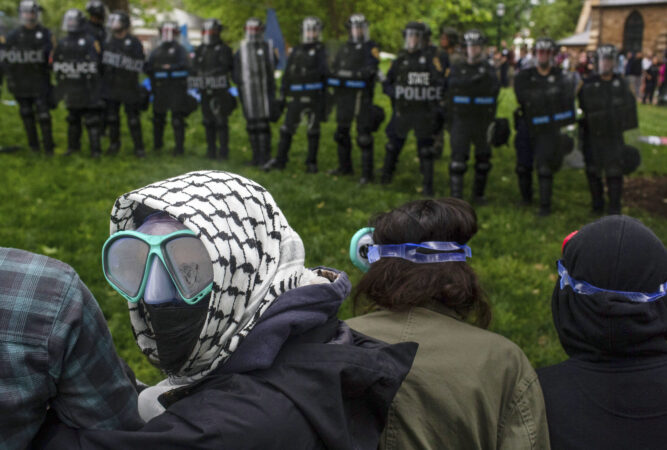
But now I believe campus demonstrators — like ICE agents — should also be barred from wearing masks. Their facial coverings stoke fear, too. And they make it next to impossible for officials to keep everyone else safe.
If you think otherwise, consider what happened at Haverford College earlier this month. Interrupting a talk by a pro-Israel speaker, several masked demonstrators burst into the room. One of them shouted into a bullhorn that “Israeli occupation forces” were killing children. “When Gaza is burned, you will all burn, too,” she said.
Most universities already have rules barring disruption of public events. But masks add something worse: intimidation.
When the masked protesters entered the room, a Haverford professor said he thought they were “terrorists trying to get in and kill us.” Another witness said she worried she might be attacked.
“No one knew who they were or whether they were armed,” the witness added. “Imagine fully masked people entering through emergency exits, hiding objects under their coats, blocking basic points of egress. It is reasonable to fear for your physical safety.”
And it’s also reasonable for colleges to ban masks. In a statement, Haverford officials said the protester carrying the bullhorn was not a member of their community. But nobody could know that when she entered the room.
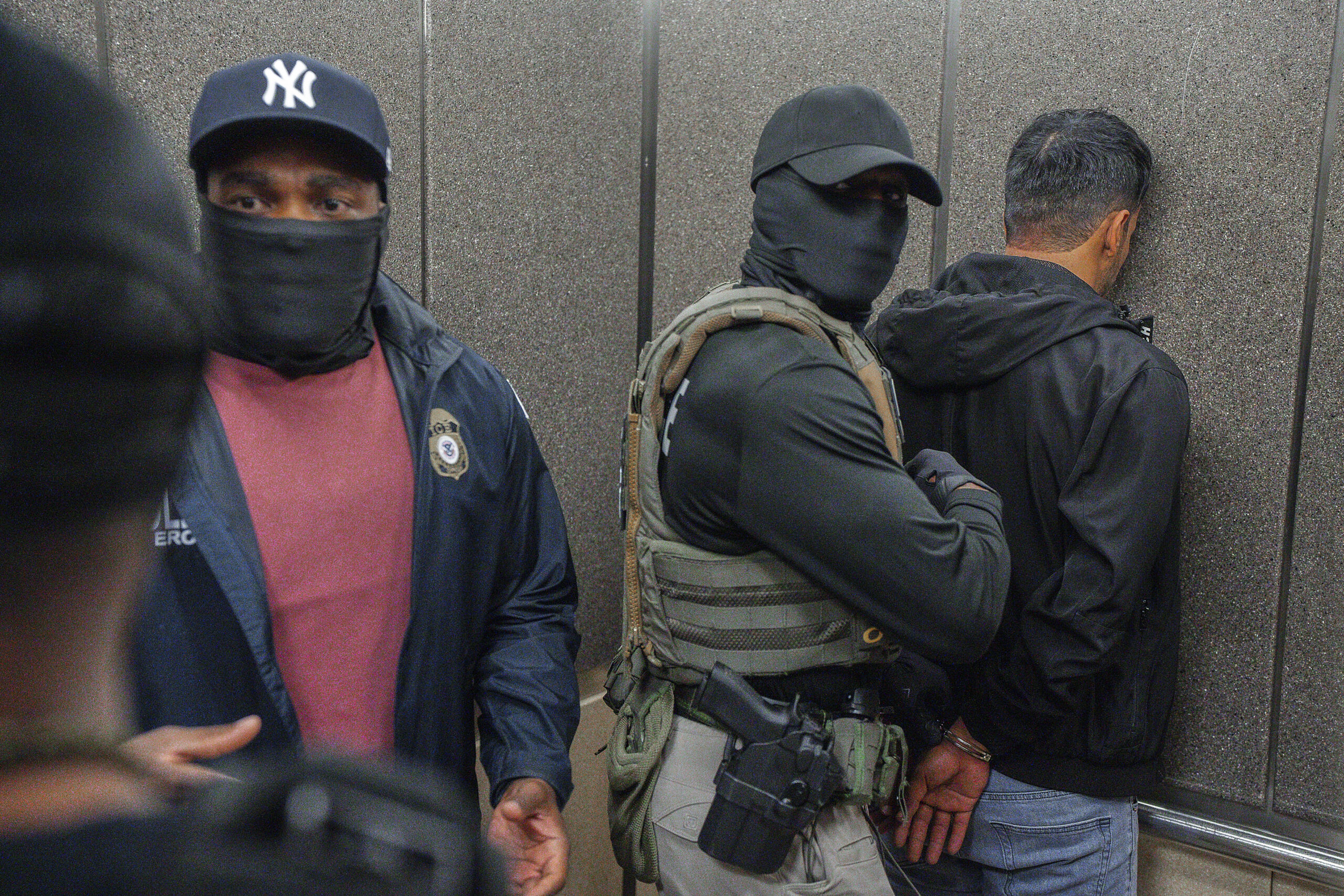
Masked U.S. Immigration and Customs Enforcement agents escort a detained immigrant into an elevator after he exited an immigration courtroom in New York in June.
How can we keep the university safe if we don’t know who is from the university and who isn’t?
At the University of Pennsylvania, where I teach, only nine of 33 people arrested during the clearing of pro-Palestinian encampments in May 2024 were students at the university. At Swarthmore, just two of nine arrested demonstrators were members of the college community.
It shouldn’t be. We need a free and open dialogue about Israel, and everything else. And that’s also why we should ban masks, which inhibit that same dialogue. You can’t have a conversation if you don’t know who is talking.
I used to think masks were a form of free expression, so universities should allow them. I also thought protesters needed to hide their identities so they wouldn’t get doxed, which would subject them to violence and harassment.
Then the Trump administration said the same thing about ICE agents — they need masks to protect them from doxing — and I changed my mind. Regular police officers don’t wear masks; instead, they wear numbers and name tags. That’s how we hold them accountable for their actions.
Putting masks on ICE agents does the opposite: It lets them act with impunity. The goal of the masks is not to protect the agents. It’s to foster fear in our communities and our nation.
They need to take their masks off. But so do we.
Of course, we should make exceptions for people who cover their faces for reasons of health, religion, sports, or entertainment. I’d hate to see a college kid barred from wearing a Halloween mask, for example.
But a protester? Let us see who you are. Don’t cower behind a mask. That’s what ICE does.
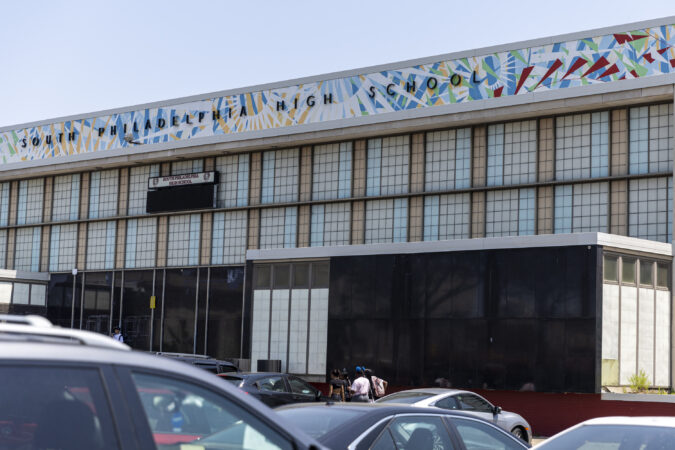
Nearly $58 million for South Philadelphia High School. Over $27 million for Forrest Elementary in the Northeast. Almost $55 million for Bartram High in Southwest Philadelphia.
Ahead of a Tuesday City Council hearing on the Philadelphia School District’s proposed facilities master plan, district officials have dangled the carrot that would accompany the stick of 20 school closings.
The district released Monday morning how much it would spend onmodernization projects at schools in each City Council District if Superintendent Tony B. Watlington Sr.’s plan is approved by the school board this winter.
The totals range from $443 million in the 9th District — which includes parts of Olney, East and West Oak Lane, Mount Airy, and Oxford Circle — to nearly $56 million for the 6th District in lower Northeast Philadelphia, including Mayfair, Bridesburg, and Wissinoming.
The district’s announcement comes as the plan has already raised hackles among some Council members, and City Council President Kenyatta Johnson has said he’ll hold up the district’s funding “if need be” if concerns are not answered to Council’s satisfaction.
Tailoring the release to Council districts — including highlighting one major project per district — appears to be an effort to calm opposition ahead of Tuesday’s hearing.
Details on every school that would get upgraded under Watlington’s plan — 159 in total — have not yet been released.
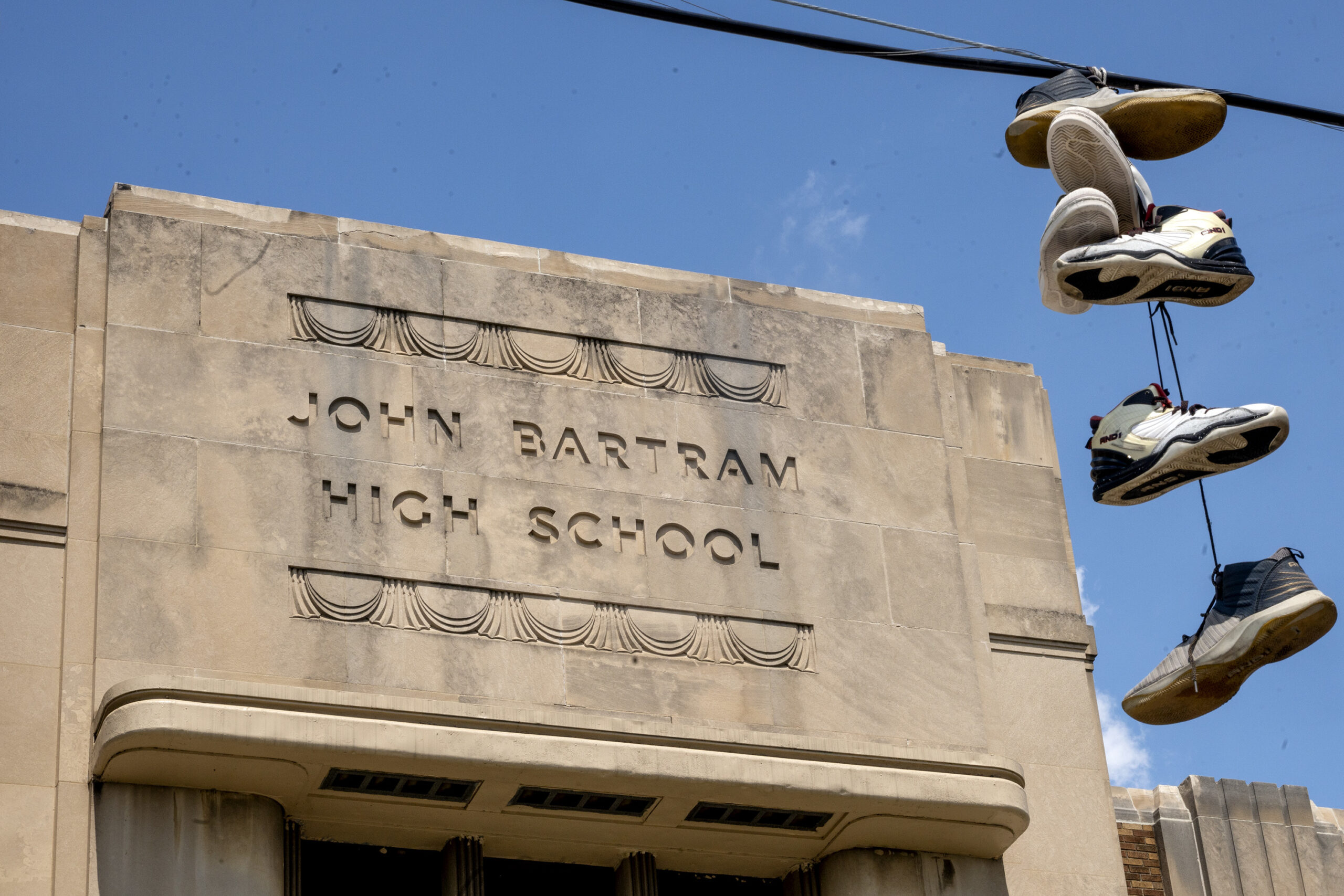
John Bartram High School at 2401 S. 67th St in Southwest Philadelphia.
Watlington has stressed that the point of the long-range facilities plan is not closing schools, but solving for issues of equity, improving academic programming, and acknowledging that many buildings are in poor shape, whilesome are underenrolled and some are overenrolled.
“This plan is about ensuring that more students in every neighborhood have access to the high-quality academics, programs, and facilities they deserve,” Watlington said in a statement. “While some of these decisions are difficult, they are grounded in deep community engagement and a shared commitment to improving outcomes for all public school children in every ZIP code of Philadelphia.”
But at community meetings unfolding at schools across the city that are slated for closure, Council members have expressed displeasure about parts of the plan — a preview, perhaps, of Tuesday’s meeting.
Councilmember Quetcy Lozada, represents the 7thDistrict, including Kensington, Feltonville, Juniata Park, and Frankford. Four schools in her district — Stetson,Conwell, Harding, and Welsh —are on the chopping block.
“The fact that they are being considered for closure is very concerning to me,” Lozada said at a meeting at Stetson Middle School on Thursday.
Councilmember Quetcy Lozada is shown in a 2025 file photo.
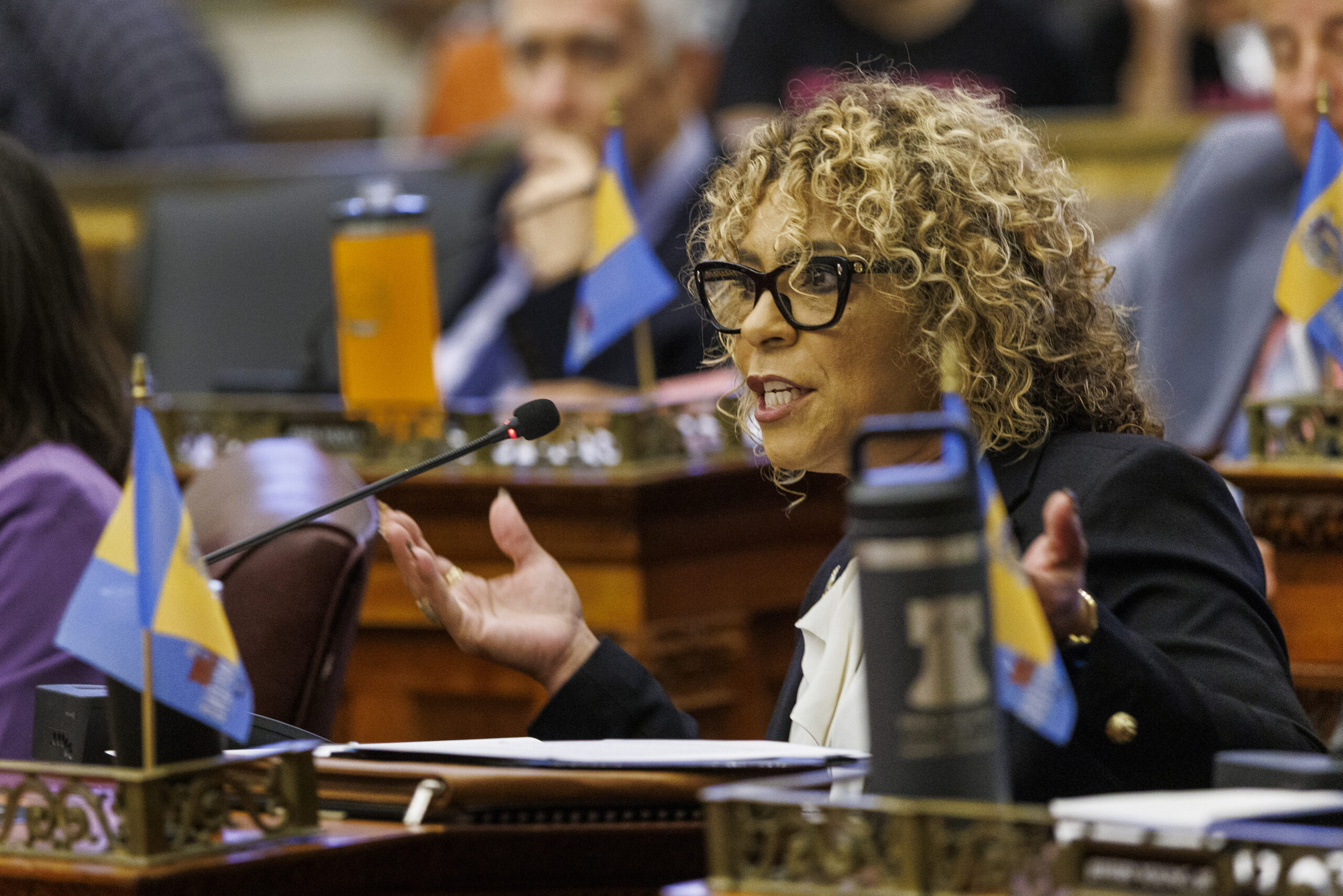
Councilmember Cindy Bass, speaking at a Lankenau High meeting, objected to closing schools that are working well. (Three schools in Bass’ 8th District, Fitler Elementary, Wagner middle school, and Parkway Northwest High School, are proposed for closure. Lankenau is in Curtis Jones Jr.’s district but has citywide enrollment.)
“I do not understand what the logic and the rationale is that we are making these kinds of decisions,” said Bass.
While Council members will not have a direct say on the proposed school closures or the facilities plan, Council wields significant control over the district’s budget. Funding for the district is included in the annual city budget that Council must approve by the end of June.
Local revenue and city funding made up about 40% of the district’s budget this year, or nearly $2 billion. Most of that is the district’s share of city property taxes which, unlike other school systems in Pennsylvania, are levied by the city and then distributed to the district.
(function() {
var l2 = function() {
new pym.Parent(‘schools_districts2’,
‘https://media.inquirer.com/storage/inquirer/projects/innovation/arcgis_iframe/schools_districts2.html’);
};
if (typeof(pym) === ‘undefined’) {
var h = document.getElementsByTagName(‘head’)[0],
s = document.createElement(‘script’);
s.type = ‘text/javascript’;
s.src = ‘https://pym.nprapps.org/pym.v1.min.js’;
s.onload = l2;
h.appendChild(s);
} else {
l2();
}
})();
Where will the money go?
Despite city and schools officials saying in the past that the district has more than $7 billion in unmet facilities needs, Watlington has said the district could complete its plan — including modernizing 159 schools — for $2.8 billion.
Officials said further details about modernization projects and the facilities plan will be released before the Feb. 26 school board meeting, where Watlington is expected to formally present his proposal to the school board.
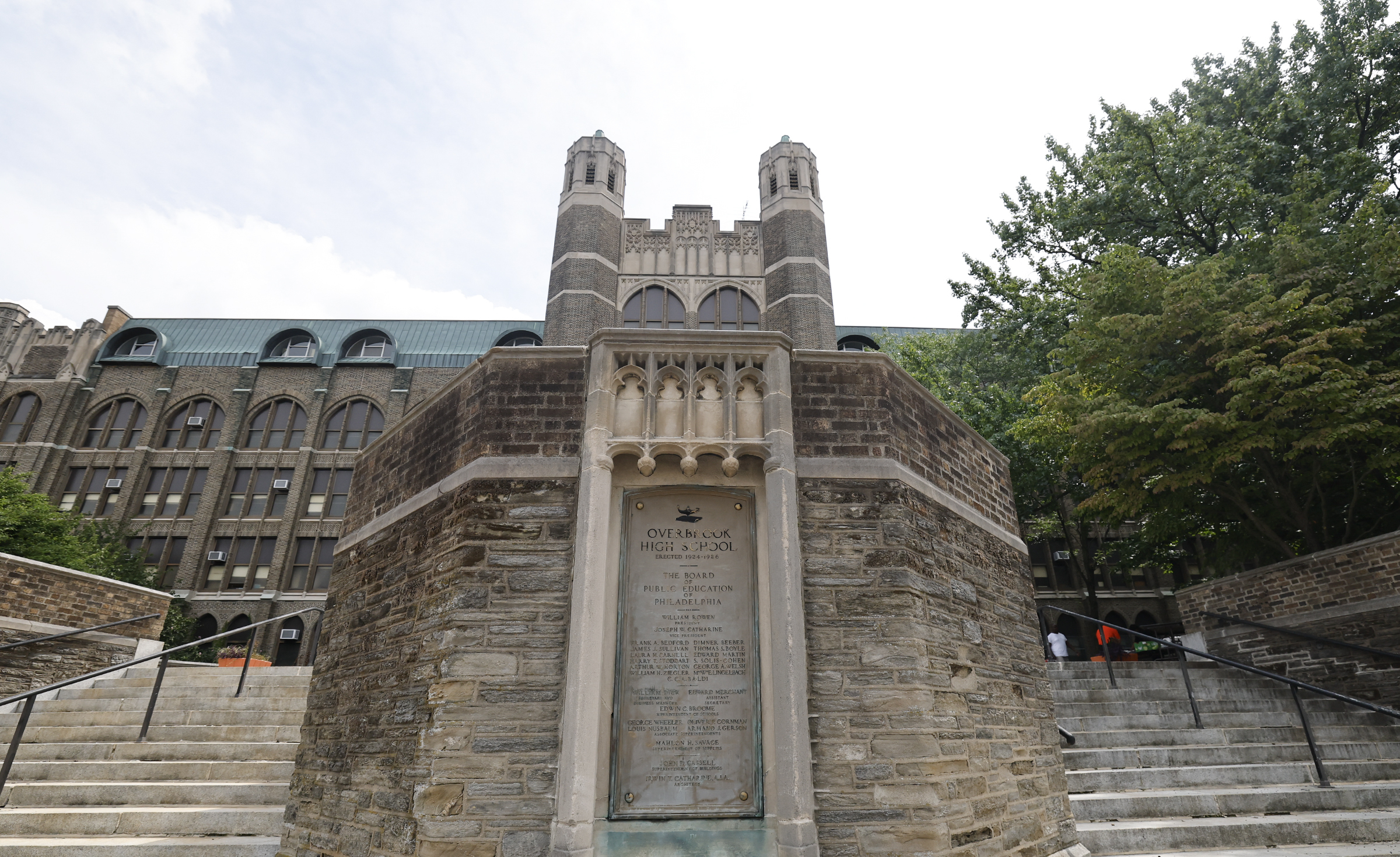
Overbrook High School, in West Philadelphia, will get major renovations in preparation for The Workshop School, a small, project-based district school, colocating inside the building.
Here are the total proposed dollar amounts per Council district and the 10 big projects announced Monday:
1st District: $308,049,008. Key project: $57.2 million for South Philadelphia High, turning the school into a career and technical education hub and modernizing electrical, lighting, and security systems.
2nd District: $302,284,081. Key project: $54.6 million for Bartram High, to renovate the school and grounds, career and technical education spaces, restroom and accessibility renovations, new painting, and new athletic fields and facilities (on the site of nearby Tilden Middle School, which is slated to close). Motivation High School would close and become an honors program inside Bartram.
3rd District: $204,947,677. Key project: $19.6 million for the Sulzberger site, which currently houses Middle Years Alternative and is proposed to house Martha Washington Elementary. (It currently houses MYA and Parkway West, which would close.) Improvements would include heating and cooling and electrical systems, classroom modernizations, andthe addition of an elevator and a playground.
4th District: $216,819,480. Key project: $50.2 million for Overbrook High School, with updates including new restrooms, accessibility improvements, and refurbished automotive bays. (The Workshop School, another district high school, is colocating inside the building.)
5th District: $290,748,937. Key project: $8.4 million for Franklin Learning Center, with updates including for exterior, auditorium, and restroom renovations, security cameras, accessibility improvements, and new paint.
6th District: $55,769,008. Key project: $27.2 million for Forrest Elementary, including modernizations that will allow the school to grow to a K-8, and eliminate overcrowding at Northeast Community Propel Academy.
7th District: $388,795,327. Key project: $32.3 million at John Marshall Elementary in Frankford to add capacity at the school, plus a gym, elevator, and schoolwide renovations.
8th District: $318,986,215. Key project: $42.9 million at Martin Luther King High in East Germantown for electrical and general building upgrades and accommodations for Building 21, a school that will colocate inside the King building.
9th District: $442,934,244. Key project: $42.2 million at Carnell Elementary for projects including an addition to expand the school’s capacity, restroom renovations, exterior improvements, and stormwater management projects.
10th District: $275,829,539. Key project: at Watson Comly Elementary in the Northeast, an addition to accommodate middle grade students from Loesche and Comly, and building modernizations. District officials did not give the estimated cost of the Comly project.
What’s next?
The facilities Council hearing is scheduled for 10 a.m. Tuesday at City Hall. It will also be livestreamed.
Members of the public also have the opportunity to weigh in on the facilities plan writ large at three community town halls scheduled for this week: Tuesday at Benjamin Franklin High from 4:30 to 6:30 p.m., Friday at Kensington CAPA from 4:30 to 6:30 p.m., and a virtual meeting scheduled for 2 p.m. on Sunday.
Meetings at each of the schools proposed for closure continue this week, also; the full schedule can be found on the district’s website.
But four years later, the Philadelphia School District hasrecommended closing Robeson, suggesting its small size limited students’ opportunities. Superintendent Tony B. Watlington Sr. wants its students to attend Sayre High, where Robeson would become an honors program, losing its separate identity, administration, and staff.
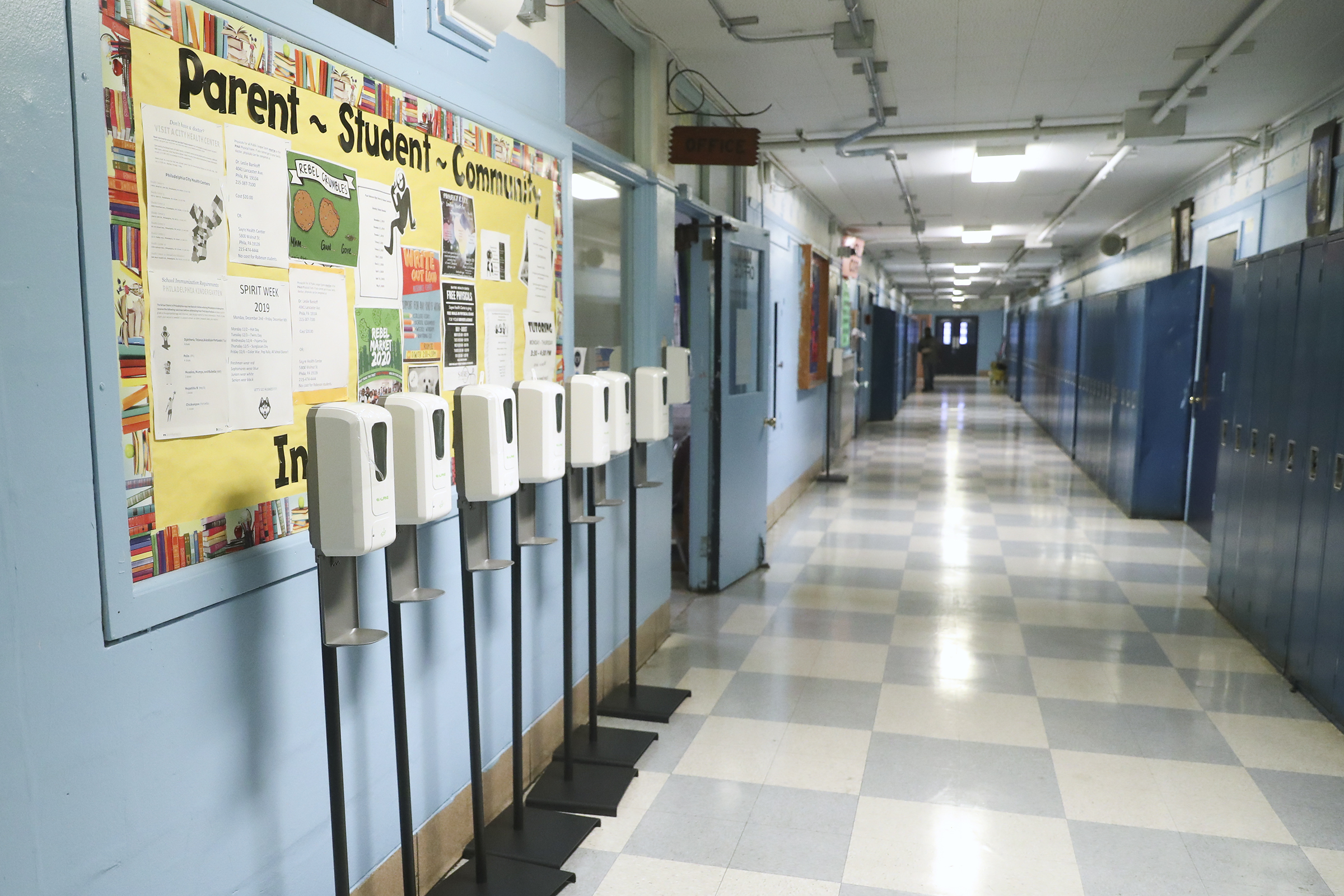
A hallway at Paul Robeson High School, which the district is attempting to close for the second time.
Having Robeson listed among 20 schools slated for closure was the worst kind of déjà vu for some in the Robeson community: In the last round of large-scale Philadelphia school closures, district officials recommended closing Robeson and sending students to Sayre, which is about two miles away.
“This is the exact same plan,” said Andrew Saltz, who helped organize the Robeson community against closure in 2013 and who is doing it again 13 years later. “We need a different plan.”
The community is speaking out, hoping to persuade the school board to save Robeson again when it votes on Watlington’s recommendations later this winter.
An upward trajectory
Robesonsoared after successfully fending off its last attempted shutdown.
By 2017, it was named the district’s most-improved high school. It built upon its core of dedicated teachers and students; though most Robeson students come from its own West Philadelphia neighborhood, it is a citywide school, meaning they have to apply to be there.
Robeson expanded existing partnerships and formed new ones that gave students opportunities to get onto nearby college campuses. Richard Gordon, who came to lead the school in 2013, was recognized as national principal of the year. (Gordon has since been promoted to assistant superintendent in the district.)
Multiple Robeson teachers have been honored as among the district’s best.
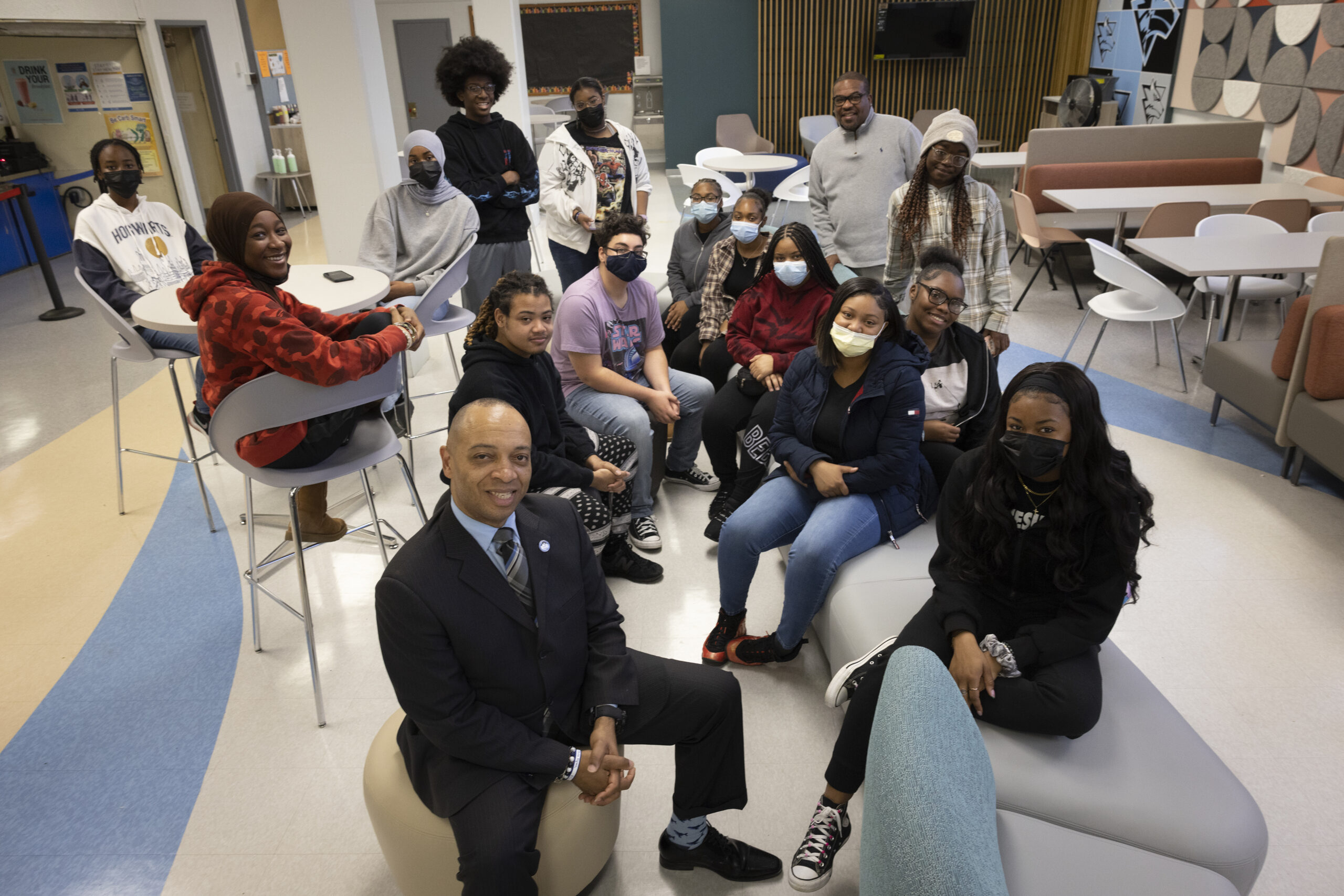
Then-Principal Richard Gordon (front, tie), then-assistant principal Lawrence King (rear, gray sweater) and members of the Robeson High student body in the newly renovated cafeteria in this 2022 file photo.
Then-Mayor Jim Kenney visited Robeson to tout its success. So did then-Gov. Tom Wolf.
Elana Evans, a beloved Robeson teacher and the school’s special education compliance monitor, has already weathered one school shutdown — she taught at the old University City High School, closed in 2013
That loss was brutal, Evans said. But she is proud of what the community has built at Robeson.
“It’s an amazing story that continues to stay amazing because we still keep growing,” Evans said. “To say, ‘OK, you’re going to merge with this school, and your name is just going to fade to nothing,’ is, to me, disrespectful.”
District officials are pitching Robeson’s closure — and the closingswrit large — as a move to expand opportunities for all students.
Sayre, with Robeson as a part of it, would get modernized career and technical rooms and equipment in the facilities plan, Sarah Galbally, Watlington’s chief of staff, told the Robeson community. Sayre would get more accessibility features; renovated stormwater management, roof, and restrooms; and new paint.
But that didn’t convinceEvans.
“You say one thing, ‘This is how it’s going to look like,’ but for real for real, stop gaslighting me,” Evans said.
‘They needed something small’
Samantha Bromfield homeschooled her twins for seven years, and was wary when she enrolled her children in public school — until Robeson made her believe.
The move to shut the school frustrated and saddened her, Bromfield said. Sheand many other Robeson parents said they would not send their children to Sayre.
“If you as a board choose to close Paul Robeson, I choose to pull my children from the public school system,” Bromfield said at meeting held at Robeson on Saturday. “They needed something small. They needed a family. They needed someone who could hold their arms around the children and say, ‘Hey, are you having a bad day?’”
Multiple parents echoed Bromfield’s statements.
The district is choosing to invest in some schools but not others under the facilities proposal, they said.
“Cassidy got a new school, why not us?” one parent told district officials, referring to a $62.1 million new building for a West Philadelphia elementary school.
‘Y’all don’t know’
Ahrianna DeLoach, a Robeson ninth grader, struggled in middle school but is soaring at Robeson, she said, because of the nature of a place where teachers know every student’s name.
“I don’t want it to close down,” DeLoach said. “I was looking forward to graduating from this school. It would devastate me if I couldn’t.”
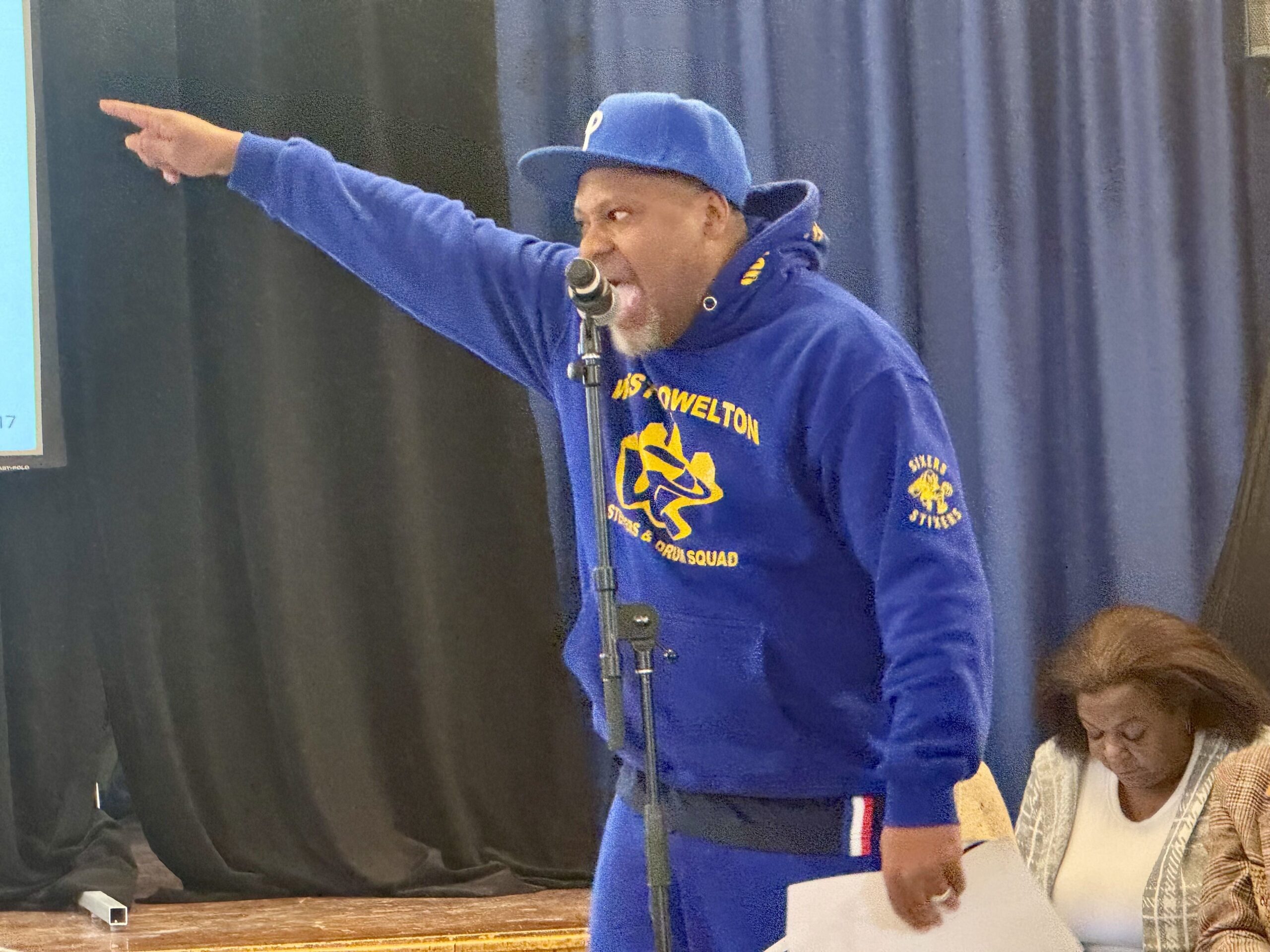
Antoine Mapp Sr., a West Philadelphia resident, expresses frustration that the Philadelphia School District is attempting to close Paul Robeson High School. Mapp spoke at a district meeting on the subject.
West Philadelphia resident Antoine Mapp Sr. graduated from University City High, but has been spending time at Robeson since he was 11. Mapp’s West Powelton Steppers and Drum Squad rehearses inside the Robeson gymnasium.
It feels especially cruel to lose Robeson as gentrification creeps in, Mapp said, and with gun violence still plaguing Philadelphia. He worries about the routes children would have to take to get to Sayre, and about neighborhood rivalries.
“You guys don’t understand what it’s like living in the community or our neighborhood, or what we go through,” Mapp said. “Y’all don’t know how hard it is just to go to the store in our community. Y’all don’t know what it’s like trying to go to an activity in our neighborhood. We have none of those things. Now you want to take this school away from us and send our kids to different communities. I want you to know that the crime rate and the murders are going to increase and there’s nothing y’all can do about it.”
Amid President Donald Trump’s crackdown on immigration and deployment of federal officers to cities across the country, students at Philadelphia-area colleges are protesting against the appearance of U.S. Customs and Border Protection at campus career fairs.
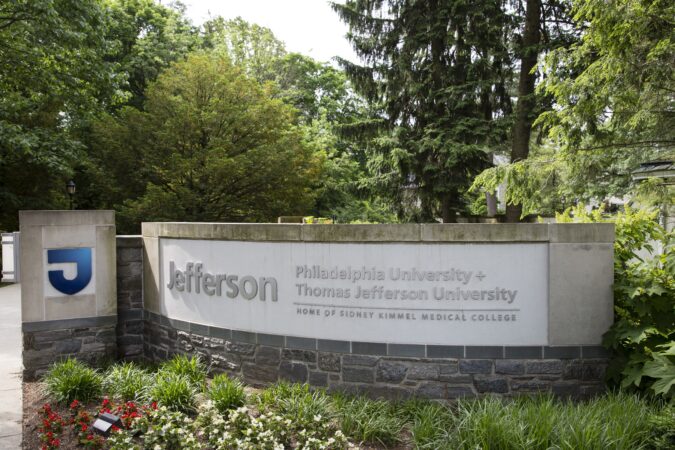
At least four local universities — Thomas Jefferson, Villanova, Temple, and Rowan — have faced opposition to allowing recruitment in recent months.
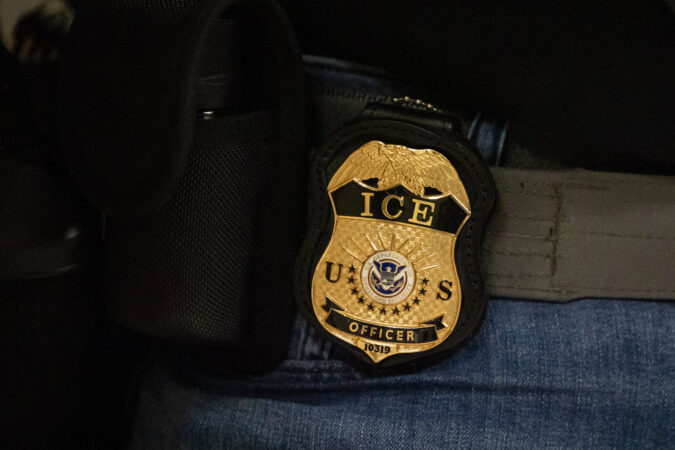
A petition circulated at Jefferson last week sought to keep CBP from appearing at a campus career event. CBP and ICE — both agencies that enforce immigration laws under the Department of Homeland Security — have been at the center of a national debate after two Minneapolis residents were killed by federal immigration enforcement agents in shootings now under investigation.
“Due to the harm CBP has caused to communities across the nation, it is abhorrent for TJU to accept CBP at their institution,” said anoccupational therapy student who signed the petition and asked that her name be withheld, fearing retribution. “I don’t think any institution should be encouraging students to get involved in these kinds of agencies, given the current climate.”
But the petition has since come down, the student said, and CBP is not on the list of employers due to appear at the event, called the 2026 Career Day and Design Expo, on Thursday at the East Falls campus. Jefferson has not acknowledged that CBP was on the list initially or responded to questions on whether it was removed.
CBP, which has offices in Philadelphia, has appeared at campus career events in the area in the past.
An email seeking comment from CBP’s media office was not returned.
At Rowan University in New Jersey earlier this month, the participation of CBP’s Trade Regulatory Audit Philadelphia Field Office in a career fair drew some student protest. Members of a student activist group distributed fliers speaking out against CBP during the fair, according to Rowan’s student newspaper, the Whit, and campus police and administration officials came to the scene.
The agency also reserved a table and came to afall event at Rowan to share information about accounting-related auditing internships, said Rowan spokesperson Joe Cardona,and has done so at the public university for the last decade.
Rowan’s Rohrer College of Business Center for Professional Development hosts more than 200 employers each year, including local, state, and federal agencies as well as private-sector groups, he said.
“The presence of any employer on campus does not constitute institutional endorsement of that organization’s policies or actions,” Cardona said. “Rather, it reflects our commitment to supporting student career exploration while upholding principles of open access and free expression.”
At Villanova, CBP pulled out of a career fair it had planned to attend earlier this month, according to the Villanovan, the student newspaper. The withdrawal followed criticism on social media about the organization’s planned appearance.
The organizer of an Instagram account that opposed the agency’s participation said they wished that Villanova had made the decision to disallow the group rather than the group withdrawing, according to the student newspaper.
“I think a lot of students will feel a lot safer and more comfortable attending this Career Fair,” the organizer said. “But it doesn’t take away the anger that this was ever something that was gonna happen.”
Villanova said in a statement that CBP‘sOffice of Trade had participated in prior career events and that employers with prior participation were contacted “through standard outreach” about this year’s event.
Temple’s law school last semester had planned to host a “Coffee and Careers” networking event with a DHS and Immigration and Customs Enforcement lawyer but later canceled it, according to the Temple News, the student newspaper. The event was replaced with a talk on public interest law by Philadelphia City Councilmember Rue Landau.
DHS “chose to engage directly with students interested in DHS opportunities rather than participate in a scheduled career event,” Temple spokesperson Steve Orbanek said.
He also noted that “career fairs are university-sponsored events, and actions that disrupt these events may violate university policy and established on-campus demonstration guidelines.”
NEW YORK — It’s been a confusing time for people with student loans. Collections restarted, then were put on hold. At the same time, borrowers had to stay on top of changes to key forgiveness plans.
Last year, the long-contested SAVE plan introduced by the Biden administration ended with a settlement agreement. President Donald Trump’s “Big Beautiful Bill” introduced new borrowing limits for graduates and raised challenges to the Public Service Loan Forgiveness program. While several changes for student loan borrowers will take effect this summer, other key questions remain unresolved.
More than 5 million Americans were in default on their federal student loans as of September, according to the Education Department. Millions are behind on loan payments and at risk of default this year.
Borrowers “genuinely struggle to afford their loans and then to hear that the administration is making it more expensive and taking away some of the tools and resources that help folks afford their loans is really, it’s panic-inducing,” said Winston Berkman-Breen, legal director at Protect Borrowers.
Last month, the Education Department announced that it would delay involuntary collections for student loan borrowers in default until the department finalizes its new loan repayment plans. The date for this is still unclear.
If you’re a student loan borrower, here are some key things to know.
If you were enrolled in the SAVE plan
The SAVE plan was a repayment plan with some of the most lenient terms ever. Soon after its launch it was challenged in court, leaving millions of student loan borrowers in limbo. Last December, the Education Department announced a settlement agreement to end the SAVE plan. What is next for borrowers who were enrolled in this repayment plan is yet to be determined.
“Seven and a half million borrowers who are currently enrolled in SAVE need to be moved to another plan,” Berkman-Breen said.
As part of the agreement, the Education Department says it will not enroll new borrowers, will deny pending applications, and will move all current SAVE borrowers into other repayment plans.
The Education Department is expected to develop a plan for borrowers to transition from the SAVE plan, yet borrowers should be proactive about enrolling in other repayment plans, said Kate Wood, a lending expert at NerdWallet.
If you are looking to enroll in an income-driven repayment plan
Borrowers can apply for the following income-driven plans: the Income-Based Repayment Plan, the Pay as You Earn plan, and the Income-Contingent Repayment plan.
“They all have similar criteria, and they function similarly. Your payment is set as a percentage of your income, not how much you owe, so it’s usually a lower payment,” Berkman-Breen said.
The payment amount under income-driven plans is a percentage of your discretionary income, and the percentage varies depending on the plan. Since many people are looking to switch plans, some applications to income-driven repayment plans might take longer to process, said Jill Desjean, director of policy analysis at the National Association of Student Financial Aid Administrators.
You can find out which repayment plan might work best for you by logging on to the Education Department’s loan simulator at studentaid.gov/loan-simulator/.
If you’re working toward your Public Service Loan Forgiveness
There are no changes to the Public Service Loan Forgiveness Program yet. Last year, the Trump administration announced plans to change the eligibility requirements for participating nonprofits.
The policy seeks to disqualify nonprofit workers if their work is deemed to have “substantial illegal purpose.” The Trump administration said it’s necessary to block taxpayer money from lawbreakers, while critics say it turns the program into a tool of political retribution.
The proposal says illegal activity includes the trafficking or “chemical castration” of children, illegal immigration, and supporting foreign terrorist organizations. This move could cut off some teachers, doctors, and other public workers from federal loan cancellation.
“This is something that obviously is very stressful, very nerve-wracking for a lot of people, but given that we don’t know exactly how this is going to be enforced, how these terms are going to be defined, it’s not really something that you can try to plan ahead for now,” Wood said.
While this policy is currently being challenged by 20 Democrat-led states, it’s expected to take effect in July. In the meantime, Wood recommends that borrowers enrolled in the PSLF program continue making payments.
If your student loans are in default
Involuntary collections on federal student loans will remain on hold. The Trump administration announced earlier this month that it is delaying plans to withhold pay from student loan borrowers who default on their payments.
Federal student loan borrowers can have their wages garnished and their federal tax refunds withheld if they default on their loans. Borrowers are considered in default when they are at least 270 days behind on payments.
If your student loans are in default, you can contact your loan holder to apply for a loan rehabilitation program.
“They essentially come up with a payment plan where you’re making a reduced payment,” Woods. “After five successful payments on that rehabilitation plan, wage garnishment will cease.”
If you’re planning to attend graduate school
Trump’s “Big Beautiful Bill” has changed the amount graduate students can borrow from federal student loans. Graduate students could previously borrow loans up to the cost of their degree; the new rules cap the amount depending on whether the degree is considered a graduate or a professional program.
Wood said that if you’re starting a new program and taking out a loan after July 1, you will be subject to the new loan limits.
Under the new plan, students in professional programs would be able to borrow up to $50,000 per year and up to $200,000 in total. Other graduate students, such as those pursuing nursing and physical therapy, would be limited to $20,500 a year and up to $100,000 total.
The Education Department is defining the following fields as professional programs: pharmacy, dentistry, veterinary medicine, chiropractic, law, medicine, optometry, osteopathic medicine, podiatry and theology.
If you want to consolidate your loan
The online application for loan consolidation is available at studentaid.gov/loan-consolidation. If you have multiple federal student loans, you can combine them into a single loan with a fixed interest rate and a single monthly payment.
The consolidation process typically takes around 60 days to complete. You can only consolidate your loans once.
The Lindenwold School District reported Thursday that fourth- and fifth-grade students waiting at a bus stop ran away in a panic when a U.S. Customs and Immigration Enforcement operation occurred nearby.
The incident happened in the morning as the students were waiting to take a bus to school from the Woodland Village Apartments, the district said in a statement.
Superintendent Kristin O’Neil said about 44 students were waiting at the bus when unmarked vehicles arrived at the complex. Officers in tactical gear and wearing masks fanned out, she said.
(function() {
var l2 = function() {
new pym.Parent(‘lindenwold’,
‘https://media.inquirer.com/storage/inquirer/projects/innovation/arcgis_iframe/lindenwold.html’);
};
if (typeof(pym) === ‘undefined’) {
var h = document.getElementsByTagName(‘head’)[0],
s = document.createElement(‘script’);
s.type = ‘text/javascript’;
s.src = ‘https://pym.nprapps.org/pym.v1.min.js’;
s.onload = l2;
h.appendChild(s);
} else {
l2();
}
})();
“The presence of multiple enforcement vehicles caused significant fear and confusion, and several students ran from the bus stop. Our bus driver acted quickly and responsibly, circling back multiple times to ensure as many children as possible were safely transported to school,” the district said, also thanking the bus driver.
A Ring video from the apartment complex provided to some news outlets shows the children running with some shouting: “ICE! ICE!”
“Upon arrival to school, many children were understandably upset and emotional,” the district said.
“All students currently in school are safe,” the district said. “ICE Agents are NOT at the Lindenwold School District.”
O’Neil said the students attend the district’s school No. 5. About 20 students didn’t show up Thursday, she said. The district will work with families of students who will be marked absent, she said.
“To us, these are our children,” O’Neil said.
About 60% of the district’s 3,100 students are Hispanic, according to its latest school performance report. O’Neil said it is not unusual for parents to keep their children home when there are reports of ICE activity in the area.
A district leader reached out to county and state representatives to alert them about the incident and to advocate for protocols that prioritize the safety of children during any future ICE operations, the district said.
“Our students deserve to feel safe while waiting for their school bus and while attending school each day,” the district said.
A spokesperson for ICE could not be reached for comment Thursday night.
U.S. Rep. Donald Norcross, (D., NJ), who represents the district, was among several dozen people who showed up Friday at an “ICE Out of Lindenwold” protest at Lindenwold Borough Hall. The protest was announced before the bus stop incident.
“Schoolchildren are not criminals, and enforcement actions must reflect that,” Norcross said in a statement. “… Our community will not be terrorized, and we will keep fighting to protect our neighborhoods.”
Lindenwold, located about 16 miles southeast of Philadelphia, has been among several communities in Camden County that have been subject to ICE operations.
County Commissioner Director Louis Cappelli Jr. said in a statement Thursday night that “the absolute chaos sowed by this ICE operation in Lindenwold this morning was appalling.”
Cappelli added that “we are short on facts and details about the intentions of ICE,” however at some point ICE called 911 to request local police assistance.
“That said, the impact and fear that struck the children of our county was painful to watch, and I can’t imagine the anxiety and trauma that came from this incident,” Cappelli said.
He added, “As a community, segments of our population are being terrorized and scared to leave their homes. This is no way for any of us to live.”
County Commissioner Jonathan Young said in a statement: “As a former Lindenwold resident, I’m disgusted to watch the videos of children running in absolute terror along a busy county thoroughfare.”
Young said that “no one wants criminals in their community,” but added that, “under Trump, ICE has been inhumane in how it conducts its operations. We’ve seen that firsthand throughout other cities in the country, and now it’s happening here.”