Category: Education

  • How Haverford High’s national teacher of the year is coaching aspiring teachers, on topics from racism to connecting with students

    How Haverford High’s national teacher of the year is coaching aspiring teachers, on topics from racism to connecting with students

    As the newly appointed National Teacher of the Year, Haverford High School’s Leon Smith has been celebrated on television: from CBS Mornings and Good Morning America to the Kelly Clarkson Show.

    But as the lone Black teacher when he started teaching at Haverford 25 years ago, Smith got a different reception. He experienced racism, he told a group of young people interested in teaching, and if it weren’t for a Black vice principal that listened and supported him, he might not still be teaching today.

    “She would just be very honest with me, and be like, ‘First of all, you’re an excellent educator. … Keep being you. Somebody calls and says something crazy, I’m just hanging up,’” Smith told teaching fellows gathered in Germantown on Wednesday with Breakthrough of Greater Philadelphia, a nonprofit that trains aspiring teachers to lead enrichment programs for middle-school students.

    The event, sponsored by the Equitable Foundation, was just one of many for Smith during his yearlong stint as Teacher of the Year, a platform he was awarded in April by the Council of Chief State School Officers. In that role, he’s spending the year traveling the country to advocate for the teaching profession and growing its ranks.

    Smith, who teaches Advanced Placement U.S. History and Advanced Placement African American Studies at Haverford, spoke passionately to the fellows Wednesday about his motivation to be the teacher he didn’t have growing up, and the immense impact teachers can have on students’ lives — presenting the profession as a deeply rewarding opportunity to help kids recognize their talents.

    But he was also honest about the challenges. Fielding questions about his career from fellows gathered in an auditorium on the Germantown Friends School campus, Smith said he had struggled to find his way as a new teacher, staying up too late trying to perfect lessons.

    He described the sometimes lonely experience of being his predominantly white high school’s only Black teacher, and how he developed strategies to respond to racism, including learning when to walk away and when to speak out.

    He told fellows to find supportive colleagues and to be selective when they considered job offers.

    “Do your research. Make sure it’s a space that’s going to take care of you,” he said.

    Smith also described feeling self-conscious when he was younger about some of his lessons — worrying that students would say, “‘Oh, all he does is talk about Black history,’” Smith said. But he began hearing from students about how grateful they were to have learned about subjects that hadn’t been covered in other classes; an audit later identified African American studies as a class community members wanted to see added.

    ‘My why’

    His comments resonated with the teaching fellows, some of whom said they’re committed to careers in education.

    Dominique Sidae, a 23-year-old rising senior at Florida A&M University, is planning to become a special-education teacher. She said she was inspired by her appreciation for a teacher who helped her younger brothers, who have autism.

    Sidae said she is often the only Black person in teaching spaces. “It feels good to know this isn’t only happening to me,” she said. “You don’t really learn that in college.”

    Dominique Sidae, 23, a fellow with the Breakthrough of Greater Philadelphia, listens to a talk by Leon Smith last week.

    Miles Baldwin, an 18-year-old graduate of Harriton High School in Lower Merion, isn’t sure he wants to become a teacher. But he enjoyed working with students last summer in the Breakthrough program — “a lot of kids came in hating it, and left wanting more,” he said — and Smith’s pitch about being a mentor was compelling to him.

    “Honestly, yeah,” he said, when asked if hearing from Smith made him more interested in teaching.

    That’s part of the goal of Smith’s role as Teacher of the Year, as a dwindling pipeline has challenged recruitment efforts.

    Smith’s agenda this summer includes attending the National PTA Convention in Pittsburgh and giving a keynote speech at the Smithsonian’s National Education Summit. He also will be joining other state teachers of the year at Space Camp in Alabama and participating in professional development.

    But addressing the Breakthrough teaching fellows Wednesday “reminds me of my why,” Smith said in a brief interview. He said the fellows’ eagerness to ask questions “shows they want to be the best they can be,” and reflects qualities of good teachers: “You have to be curious, sometimes silent … often humbled,” Smith said.
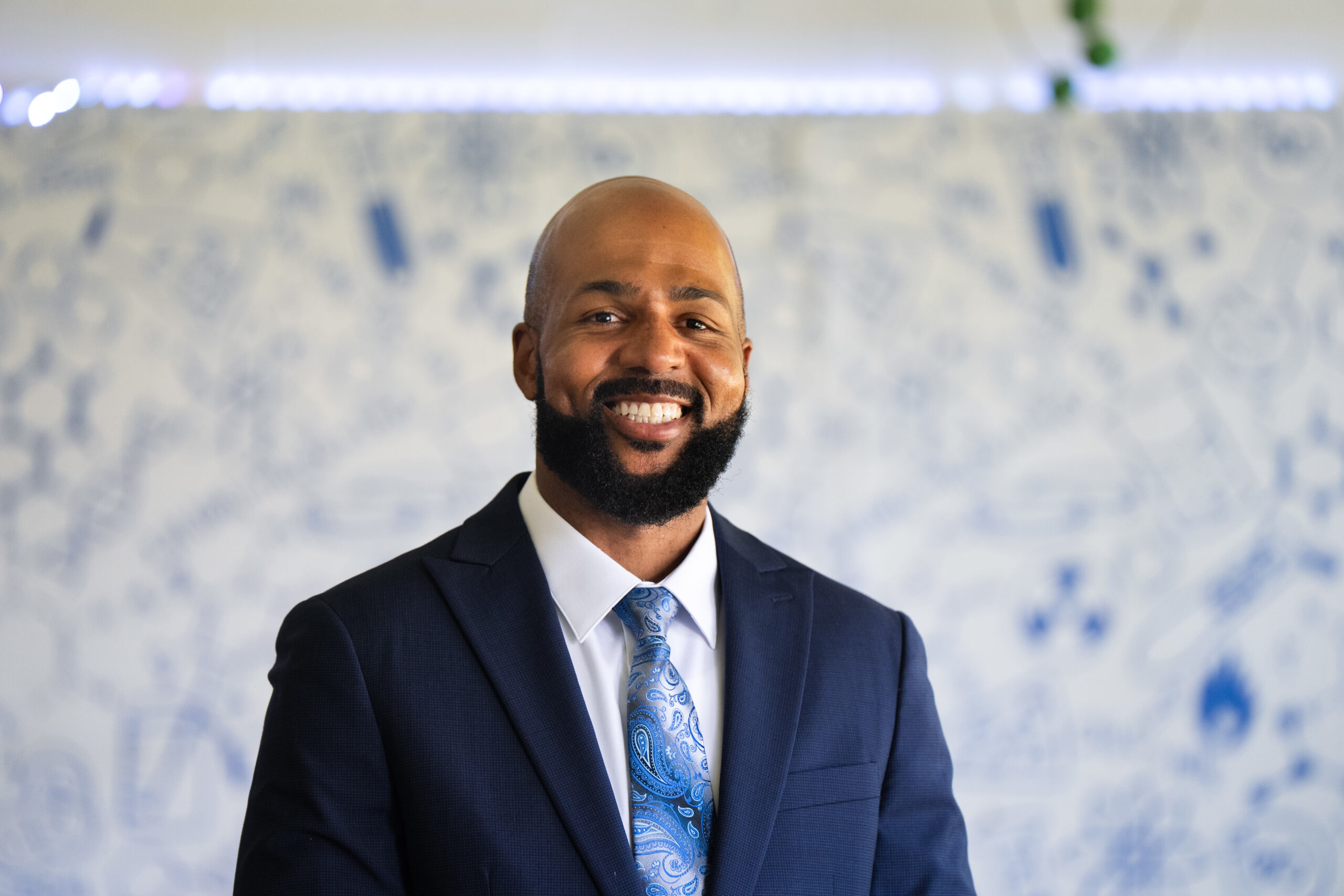
    Leon Smith, a teacher at Haverford High School, was named National Teacher of the Year this spring.

    Teaching students to lead

    In a model lesson after his talk, Smith put some of those skills on display. He started by gathering the 34 fellows in a circle, asking them each to share their name and a brief story about it; the group periodically broke into laughter at humorous anecdotes.

    Smith then outlined the objectives for his lesson about assessing the credibility of sources. He passed out copies of a photo, asking fellows to silently write and then discuss in small groups whether it provided strong evidence of the Fukushima power plant explosion.

    “I always tell my students, you want to be a leader,” Smith said, encouraging fellows to stand by their analyses, even if others disagreed. He then called on people, asking them to explain their thinking while challenging some of their points.

    Leon Smith talks to fellows at Breakthrough Collaborative last week.

    Matt Greenawalt, co-dean of faculty for the Breakthrough summer program and a teacher at Germantown Friends — which supports Breakthrough — was planning to breakdown Smith’s approach for the fellows after the lesson. He noted how Smith was walking through the room, engaging with the fellows as they talked, and Smith’s ability to affirm and redirect them when an answer wasn’t on point.

    Smith’s visit came on day three of a two-week orientation for the fellows, before they would begin teaching students during Breakthrough’s six-week free summer program.

    While access to academics is key for the program’s students, many of whom come from Germantown, “a big piece of it too is having role models,” Greenawalt said.

    Smith told fellows that when the students arrived, “they’re going to just admire you so much.”

    “You’re going to be able to see the light inside of them, and sometimes it just takes someone else to notice, right? … They’ll just kind of be doing their work, and then as you get to know them, you’ll notice certain characteristics and you’ll just pour into it.”

    What really helps make a connection with kids, Smith said, is “just you being yourself.”

    “You walking in there and walking in your own life, and bringing your passion and all the reasons why you wanted to become a teacher,” he said. “Your students are going to feel that.”
  • Vineland schools are allowing teachers to wear jeans and dress more casually for the end of the school year

    Vineland schools are allowing teachers to wear jeans and dress more casually for the end of the school year

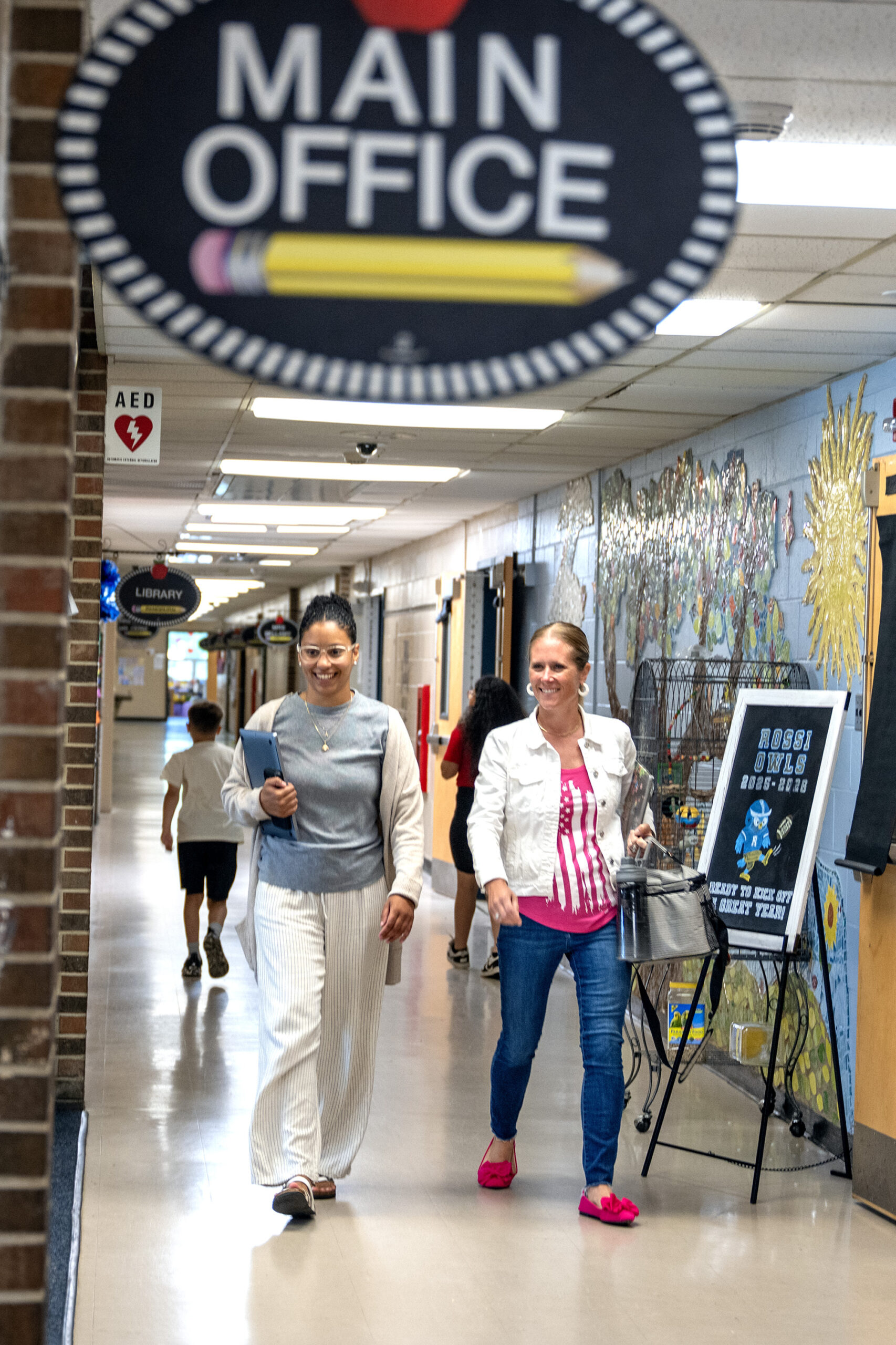
    Vineland’s public school teachers are having an easier time with the question of what to wear to work — at least for the final days of the school year.

    In a move to boost morale in the South Jersey school system and make teachers’ lives easier this spring during a hectic testing period, the district eased its dress policy to allow denim jeans until the end of the school year on June 25.

    Teachers love it and hope it will continue in September.

    “It’s one small way to make the world of work a little friendlier,” said Vineland Education Association president Louis Russo, a social studies teacher. “It’s one small thing off of their shoulders.”

    Teachers Andrea Ruiz (left) and Elaine Petrini (right) at Rossi Elementary in Vineland on June 9. The teachers are allowed to wear jeans until the end of the school year.

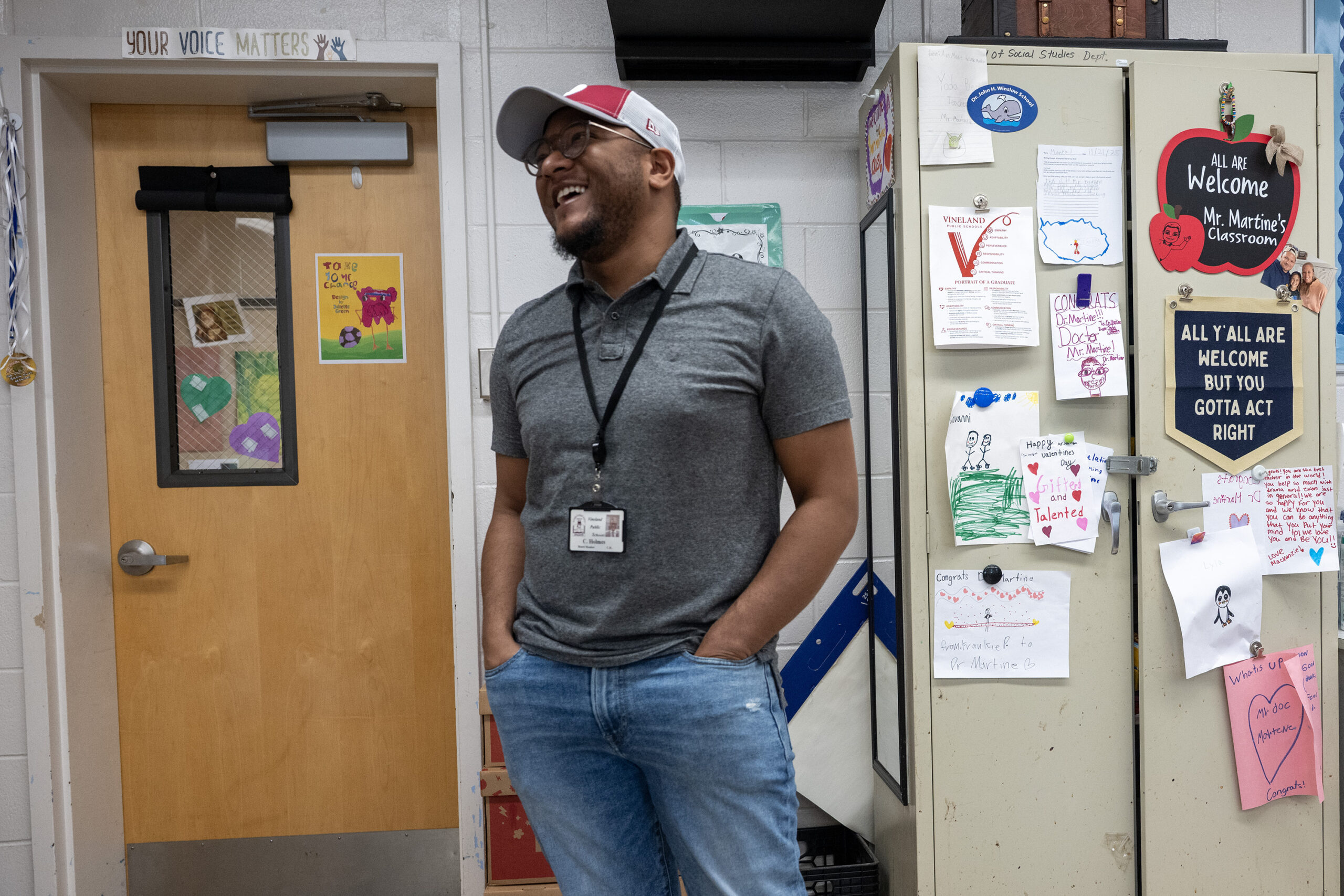
    School board president Cedric Holmes said the Cumberland County district notified employees when they returned from spring break in April that they could wear jeans any day of the week under a pilot program.

    Holmes said there had been rumblings among staff because the district — the largest in Cumberland County, with 11,000 students — had to extend the school year to make up snow days. Vineland‘s June 25 last day of school is among the latest in the region.

    The months following spring break are among the toughest with students undergoing standardized state testing, Holmes said. There are also end-of-the year field trips and outings when it makes sense to allow more relaxed clothing, he said.

    “It was important to the board that staff felt that we saw the stress of all of that of this as a practical way to give a morale boost for the end of the year,” Holmes said.

    Teachers typically dress a bit more formally for school. According to Vineland’s policy, female teachers must wear skirts, slacks, skorts, or dresses with blouses or sweaters, or school uniform. The skirt, skort, or dress should not exceed three inches above the knee.

    Male staffers can wear suits or slacks with jackets and ties, sweaters, school uniform, or sports or dress shirts. Deemed unacceptable for both are sneakers, flip-flops, bedroom slippers, combat boots, and work boots. There are exceptions for teachers attending field trips or who work in specialized areas such as health and physical education or arts.

    The district also has a uniform policy for students, but Holmes said that has been relaxed and the board also plans to reexamine that policy.

    New Jersey’s 600 school districts set their own policies for staff and students.

    Steve Baker, a spokesperson for the New Jersey Education Association, which represents 200,000 teachers and support staff, said the union supports the efforts in Vineland “to develop policies that help create a positive learning and working environment for students and staff.“

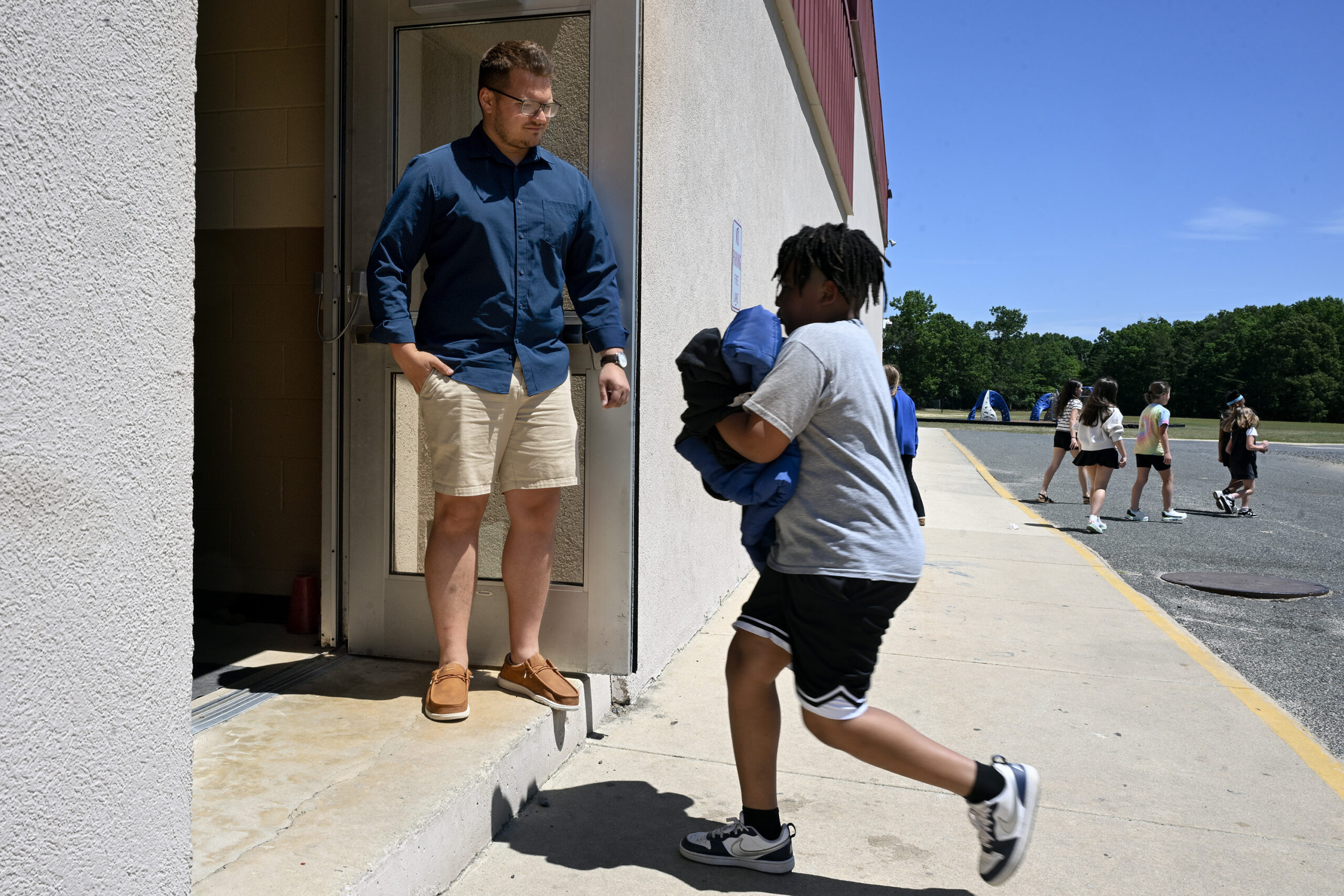
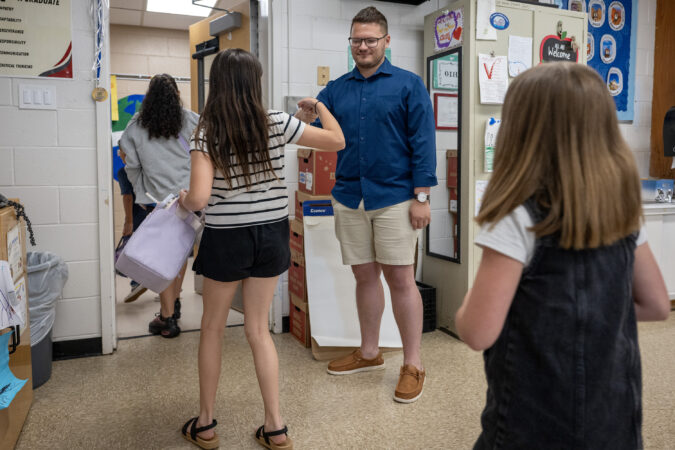
    On a busy morning last week at Anthony Rossi Elementary in Vineland, third-grade teacher Jeffrey Martine stood in front of the class dressed in khaki shorts, a button-down blue dress shirt, and slip-on loafers. As an added bonus, it was a dress-down day, which allowed teachers to wear casual attire beyond jeans.

    Jeffrey Martine, a teacher at Rossi Elementary in Vineland, greets a student at the school last week.

    “If you do your job well, you have to be able to move,” Martine said. “I’m all about comfort.”

    Students in Martine’s gifted and talented class were spread around the room working on a project in small groups. Some sat at desks making posters, while others were stretched out on the floor.

    “I don’t think professionalism and comfort are mutually exclusive,” Martine said. “Teachers should be judged more on how they interact with their students than the pants they select.”

    Holmes acknowledged the dress code was outdated and revisions are needed. The board plans to review the changes implemented this spring and may allow teachers to wear jeans during the new school year, he said.

    “It was time for a change,” said Kaitlynn Rossi, a long-term substitute teacher. “People don’t dress like that.”

    Teacher dress codes have evolved nationally over the years, especially during the pandemic, when more casual attire was the norm.

    Based on responses from teachers around the world, the website We are Teachers in 2024 compiled a list of “16 Ridiculous Dress Code Rules for Teachers You Won’t Believe Are Real.” The list included prohibiting hats, capri pants, pants with pockets, UGGs, hoodies, or dark underwear.

    In Philadelphia, where classes ended last week, there is no system-wide dress code for staff. Arthur Steinberg, president of the Philadelphia Federation of Teachers, which represents about 14,000 teachers, counselors, nurses, secretaries, and other workers, said employee dress typically does not come up as an issue.

    School board president Cedric Holmes at Rossi Elementary in Vineland last week. Holmes said the teacher dress code policy was relaxed in an effort to improve morale at the end of the school year.

    Holmes said teachers have responded well to the changes in Vineland and there have been few infractions, like torn or ripped jeans.

    Before Vineland implemented the pilot dress code, teachers were allowed to wear jeans only for special days. The schools sponsor fundraisers that allow teachers to pay $2 to wear jeans. Students are allowed to wear jeans on dress-down days determined by their school principal, and they do not have to pay.

    Fourth-grade teacher Andrea Ruiz said dressing more casually helps her students see her differently. A sign in her classroom says: “Be the best version of you.” She enjoys sitting with students on the carpet in her classroom or playing kickball on the playground.

    “We’re meeting them where they are,” said Ruiz, who was wearing a gray T-shirt and striped pants. “It’s definitely something different for us.”

    Teacher Kaitlynn Rossi with students at Rossi Elementary in Vineland last week.

    Timothy Purnell, executive director of the New Jersey School Boards Association, said a decision as simple as allowing jeans can have an impact on the learning environment.

    “If jeans support a positive environment during testing, that’s a local call we respect,” Purnell said.

    Russo believes a less-stringent dress code will help attract and retain younger teachers amid a national teacher shortage. He wants them to still dress in a manner that gets respect from students.

    “We just have to find the right balance,” Russo said.

    Staff writer Kristen A. Graham contributed to this article.

  • The Philly school board voted to nonrenew a charter run by a veteran administrator

    The Philly school board voted to nonrenew a charter run by a veteran administrator

    The Philadelphia School Board voted Thursday to nonrenew a charter school run by a veteran former district administrator, pointing to poor test scores and operational problems.

    The board voted 8-0 to nonrenew Global Leadership Academy Southwest at Huey, a charter run by Naomi Johnson-Booker, who operates another GLA charter in West Philadelphia. Board member Whitney Jones abstained, citing personal reasons.

    Charter schools are publicly funded but independently managed. In Philadelphia, about one-third of public school students attend brick-and-mortar charters.

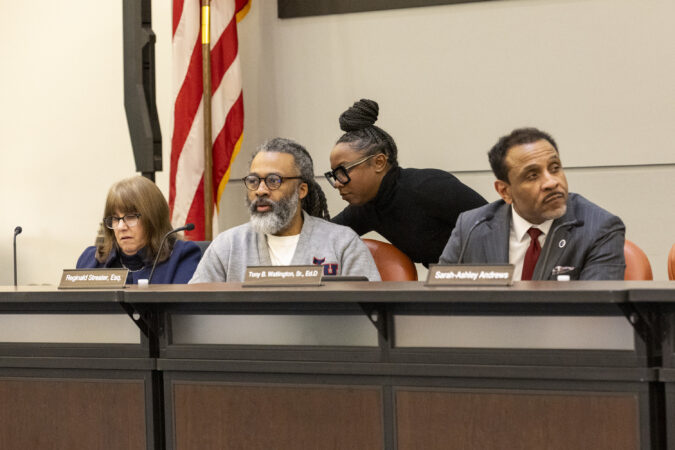
    “We have a responsibility that is clear … to protect every child’s right, civil right, to a high-quality public education,” said the board’s president, Reginald Streater. He noted that GLA Southwest, a K-8 enrolling close to 600 students at 52nd and Pine Streets, has posted poor academic performance, with only 7% of students scoring proficient or advanced in math on the Pennsylvania System of School Assessments in 2025.

    The school also has poor student attendance, and has not met district governance and financial standards, with conflicts of interest in counsel representation, insufficient cash on hand, and “questionable financial payment plans,” Streater said.

    Noting GLA Southwest’s status as a Renaissance school — a former district school handed over to charter management a decade ago as part of an initiative to turn around failing schools — Streater said it was the board’s obligation “to do everything we can to create seats or incentivize seats that truly support student achievement, and as a Renaissance school, to complete the turnaround.”

    The board’s vice president, Sarah-Ashley Andrews, said the fact that the charter didn’t meet academic, operational, or fiscal standards on the district’s evaluation was “a clear red flag.”

    The vote doesn’t mean GLA Southwest will close, but triggers public hearings on the school’s performance.

    Supporters of the charter said the school’s test scores weren’t a full reflection of its value to students and the community.

    Zenobia Story, the school’s principal, said students had been improving, with proficiency on the state’s English language arts tests growing from 9.6% in 2022 to 22.4% in preliminary 2026 results.

    The results tell “a story of progress, not stagnation,” and “a school community moving in the right direction,” Story said. “The response should not automatically be closure.”

    Nutina Martin, the school’s director of climate and culture, said the school had inherited “significant climate and safety challenges.” But she said it had transformed since it became a charter in 2016, when there were 147 out-of-school suspensions in a single school year, Martin said. Now, she said, there were fewer than 30.

    Streater said the charter’s nonrenewal hearings would give the school “an opportunity under oath with evidence” to support statements made by staff Thursday.

    The board pulled a planned vote to nonrenew Philadelphia Montessori Charter School, in light of a Common Pleas judge’s order Wednesday to delay the vote following a lawsuit brought by the charter.

    Philadelphia Montessori’s executive director, Amanda Wilson, said the board had “created needless uncertainty” for the school’s families and staff.

    Streater said the board was “simply trying to do our duty, in being responsible charter school authorizers” and fiscal stewards.

    Spending on SEPTA

    In other business, the school board agreed to spend up to $34 million on SEPTA fare cards for students in the 2026-27 school year. Officials estimate 62,000 district, charter, and parochial school students are eligible for free fare cards — but that money is reimbursed through a state transportation subsidy.

    SEPTA, with district cooperation, is warning students that they have to use those cards. It’s launching a crackdown on student fare evasion in the coming school year.

    Transit system officials, who said they’re losing an estimated $11 million annually on students not swiping their fare cards.

    Under the new fare diversion system, any student caught not swiping their card — technically a theft of service offense — will begin receiving formal warnings that will also be sent to transportation liaisons at their schools.

    After a student’s third warning, they would receive a theft of service citation and court referral.

    Money for technology and to fix a closing school

    The board also voted to spend $4.1 million on technology — an advanced Google system officials said was “foundational to the district’s educational and operational objectives” and GoGuardian, an internet-filtering service.

    The contract for both services lasts through 2029.

    Also approved was $3.4 million worth of repairs to John B. Stetson Middle School in Kensington, one of the 17 schools the board voted earlier this year to close.

    Students, teachers and supporters rally before a community meeting at John B. Stetson Middle School on Thursday, Feb. 12, 2026 in Philadelphia. Stetson is one of 20 Philly public schools facing closure.

    Stetson is getting a new roof and masonry repairs, work that’s necessary, according to board documents, “to preserve and protect the building’s structural integrity and long-term functionality.”

    According to the facilities plan the board adopted in April, the school will begin phasing out grades, eventually closing in the 2029-30 school year. Stetson will remain in district hands, used as “swing space” — a place to house district students or programs that need a temporary spot to learn.

    Members of the Stetson community fought to keep their school open, objecting to the district’s years of neglect of their building.

    Some schools closed by the board are mostly empty; Stetson is about 60% full, but its building was judged to be in “unsatisfactory” condition.

    Memphis Street back to the district

    The board also moved to formally return a Port Richmond charter school back into its fold.

    Memphis Street Academy at J.P. Jones, a former district school run by the nonprofit American Paradigm since 2012, was ordered by a judge last year to surrender its charter after a long legal battle.

    The board first moved to close Memphis Street in 2022 after the school missed the mark on meeting conditions it had previously agreed to.

    To make the reabsorption of the school official, the board had to vote to report “Memphis Street Middle School” to the Pennsylvania Department of Education as a new district school opening in the fall. The school will serve students in grades 6 through 8; the current Memphis Street Academy also educates fifth graders.

    In its first go-round as a district school, the building was known as John Paul Jones Middle School.

  • MaryJane Hackney, longtime first grade teacher and diehard Phillies fan, has died at 80

    MaryJane Hackney, longtime first grade teacher and diehard Phillies fan, has died at 80

    MaryJane Hackney, 80, of Gloucester Township, longtime first grade teacher at Loring-Flemming Elementary School, singer, theater devotee, and diehard Phillies fan, died Sunday, May 3, of Alzheimer’s disease at the Residence at Voorhees Senior Living Center.

    Inspired by her own favorite grade school teacher, Mrs. Hackney knew early in life that she wanted to be a teacher, too. She earned a bachelor’s degree in education, taught elementary school students in Pennsylvania for a few years, and spent nearly three decades, from 1981 to her retirement in 2010, working with thousands of first graders at Loring-Flemming in Gloucester Township.

    “She loved the energy first graders have,” said her husband and caregiver, David. “She taught fourth, fifth, and sixth grades at first. But after going to first grade, she said she would never go back.”

    Mrs. Hackney was so influential at school and at Loring-Flemming for so long that she taught children of her former students. Until a few years ago, she was routinely greeted around town by 40-year-olds who said: “Do you remember me?” Often, she did.

    “MaryJane was a force to be reckoned with,” a former colleague said in an online tribute. “When I arrived at Loring-Flemming with only one year of teaching experience, she took me under her wing and taught me so many important lessons about life and education.”

    Mrs. Hackney especially enjoyed teaching her students to read, and she told her husband that “one of her greatest joys was seeing the excitement of young children when they realized they could read.” The father of one of her former students told David Hackney recently that his son became an avid reader — and the father had to buy many books — thanks to Mrs. Hackney’s tutelage.

    “She was a constant source of good books and brought all of her best reads for us to share,” a former teaching colleague said in a tribute. “Everyone drifted to her classroom for support, information, or just to have a good laugh.”

    Affable, innovative, and energetic, Mrs. Hackney participated in projects for the local and state education associations, and raised funds to buy new school equipment. She was a champion of new early education programs and a popular guest on the local Emmy Award-winning public TV program “Classroom Close-up, NJ.”

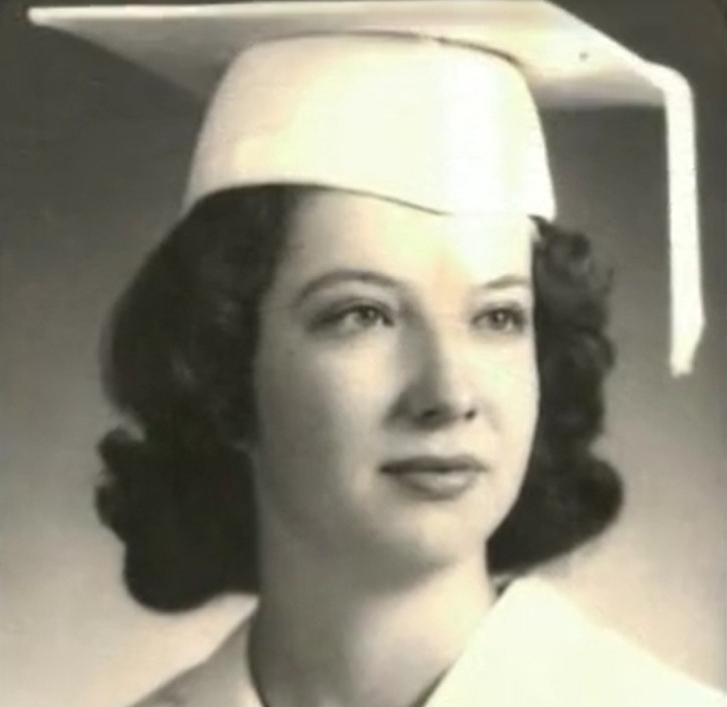
    Mrs. Hackney stands with her Grade 1 students at Loring-Flemming during the 1962-63 school year.

    She was funny and witty, a former colleague said, “and her ability to know what was going on in our school, district, county, and state was incredible.” Before Loring-Flemming, Mrs. Hackney taught for a few years at a Lutheran elementary school in Delaware County and Ralph Waldo Emerson Elementary School in Bucks County.

    Outside the classroom, Mrs. Hackney enjoyed singing, the theater, and the Phillies. She sang alto in choirs in high school and college, and attended nearly every performance of the Arden Theatre Co. in Philadelphia from 1996 until recently. Her husband worked several jobs over the years, and her absolute favorite, he said, was the one that had company tickets to Phillies games.

    “She even met the players,” he said.

    MaryJane Pierce was born June 22, 1945, in Abington. She grew up in Croydon, was so smart that she skipped third grade, and graduated from Delhaas High School in 1962.

    Mrs. Hackney studied education and American history in college.

    She studied education and American history at what is now Concordia University Chicago in Illinois, and later enjoyed traveling to historic sites with her husband. She knew David Hackney from high school, and they got serious during a double date to celebrate her 21st birthday in 1966.

    Eight weeks later, they got engaged. They married in 1967 during the famous Glassboro Summit Conference, had a daughter, Jennifer, and lived in Drexel Hill and Havertown before moving to Gloucester Township in 1974.

    Mrs. Hackney liked histories and mysteries, and was longtime friends with local author Lisa Scottoline. She knew the words to Elvis Presley songs, doted on her daughter and grandson, Joshua, and visited relatives in Ireland several times after retiring.

    She moved to the Residence at Voorhees a year ago. “I will forever remember her lessons, her delicious brownies, and helping hand that was used not just for her students but for the entire faculty and staff,” a former colleague said.

    Mrs. Hackney smiles with her daughter, Jennifer.

    Her husband said: “She was fascinated by people, curious about people. And if you started talking about teaching, she could go on for hours.”

    In addition to her husband, daughter, and grandson, Mrs. Hackney is survived by a sister, Deborah, and other relatives.

    Services were held earlier.

    Donations in her name may be made to the Alzheimer’s Association, 399 Market St., No. 250, Philadelphia, Pa. 19106.

    Mrs. Hackney doted on her grandson, Joshua.
  • Haverford College president declines to consider removing Howard Lutnick’s name from the library

    Haverford College president declines to consider removing Howard Lutnick’s name from the library

    Haverford College will not consider removing U.S. Commerce Secretary and mega donor Howard Lutnick’s name from its library despite student calls to do so, the school announced Wednesday.

    President Wendy Raymond’s announcement came 30 days after the student body voted by an overwhelming majority to ask that she establish a review committee to consider removing his name. But Raymond said she will not accept the student body’s resolution.

    “I do not believe this matter meets the threshold necessary to move forward with a committee,” Raymond wrote in an email to the students’ council copresidents.

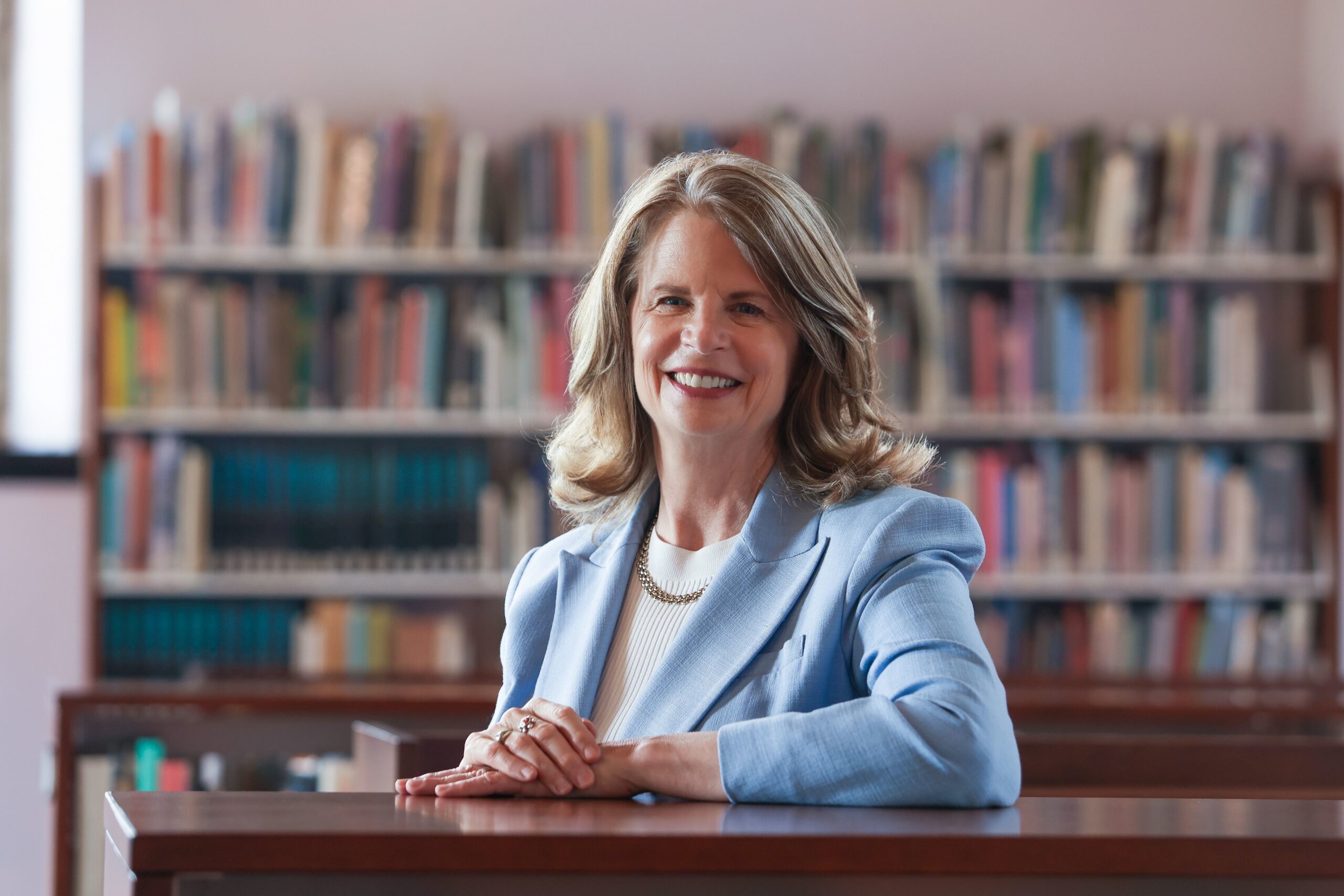
    Haverford College President Wendy Raymond announced she would not consider removing Howard Lutnick’s name from the school’s library.

    Concern has been mounting about Lutnick, the former chair of Haverford’s board of managers, since Department of Justice documents released earlier this year showed he had contact with sex offender Jeffrey Epstein as recently as 2018, long after Epstein pleaded guilty to obtaining a minor for prostitution and soliciting a prostitute.

    Raymond did not elaborate on her reasons and declined to comment through a spokesperson, but the decision was immediately panned by students.

    The council copresidents expressed their “deep disappointment” in an email to students.

    “The committee would have been a valuable step in our college’s ongoing reckoning with sexual assault,” wrote Ben Fligelman and Sarah Weill-Jones. “We hope that in the coming weeks and months, President Raymond will reevaluate her decision and understand the profound importance of convening a review committee.”

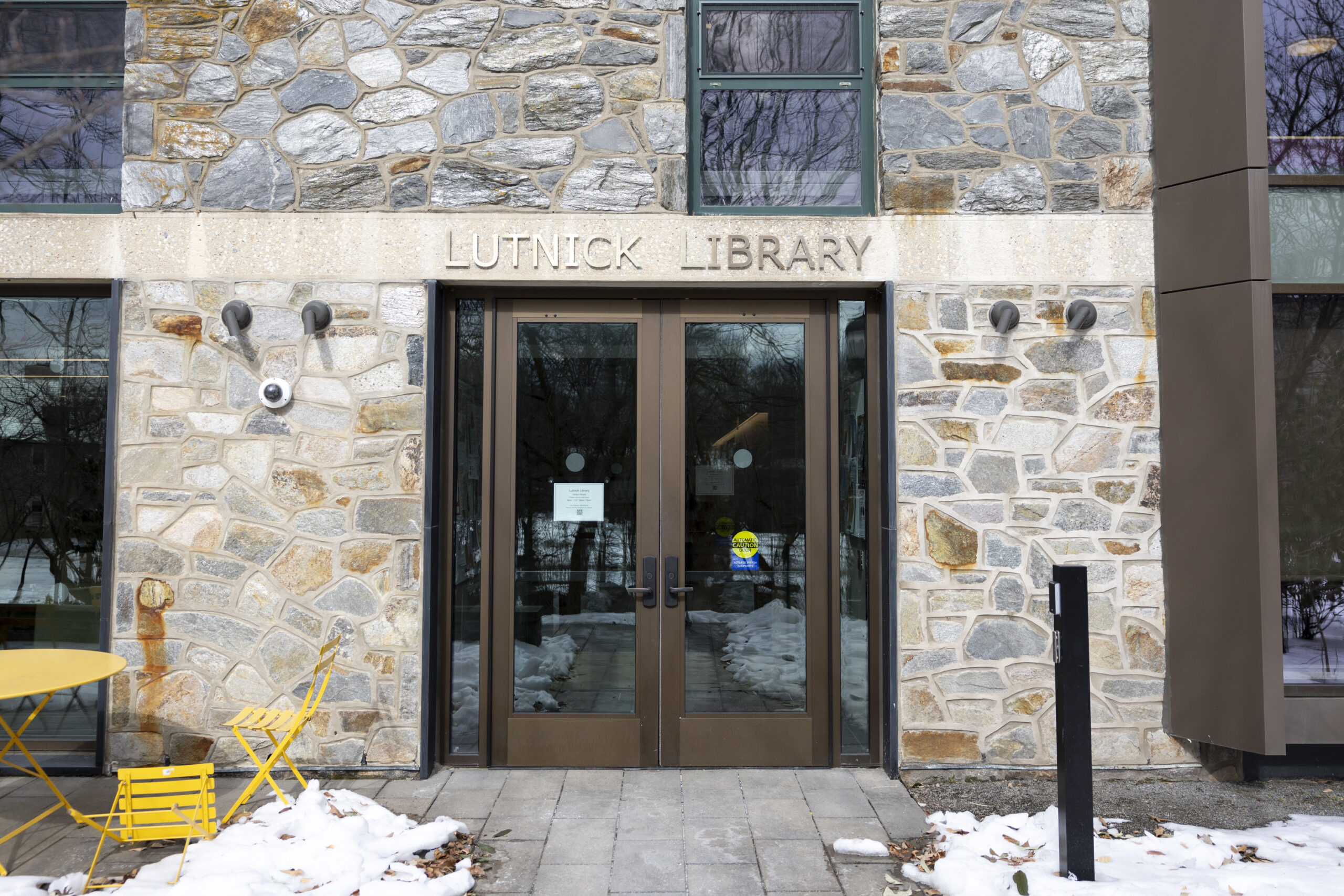
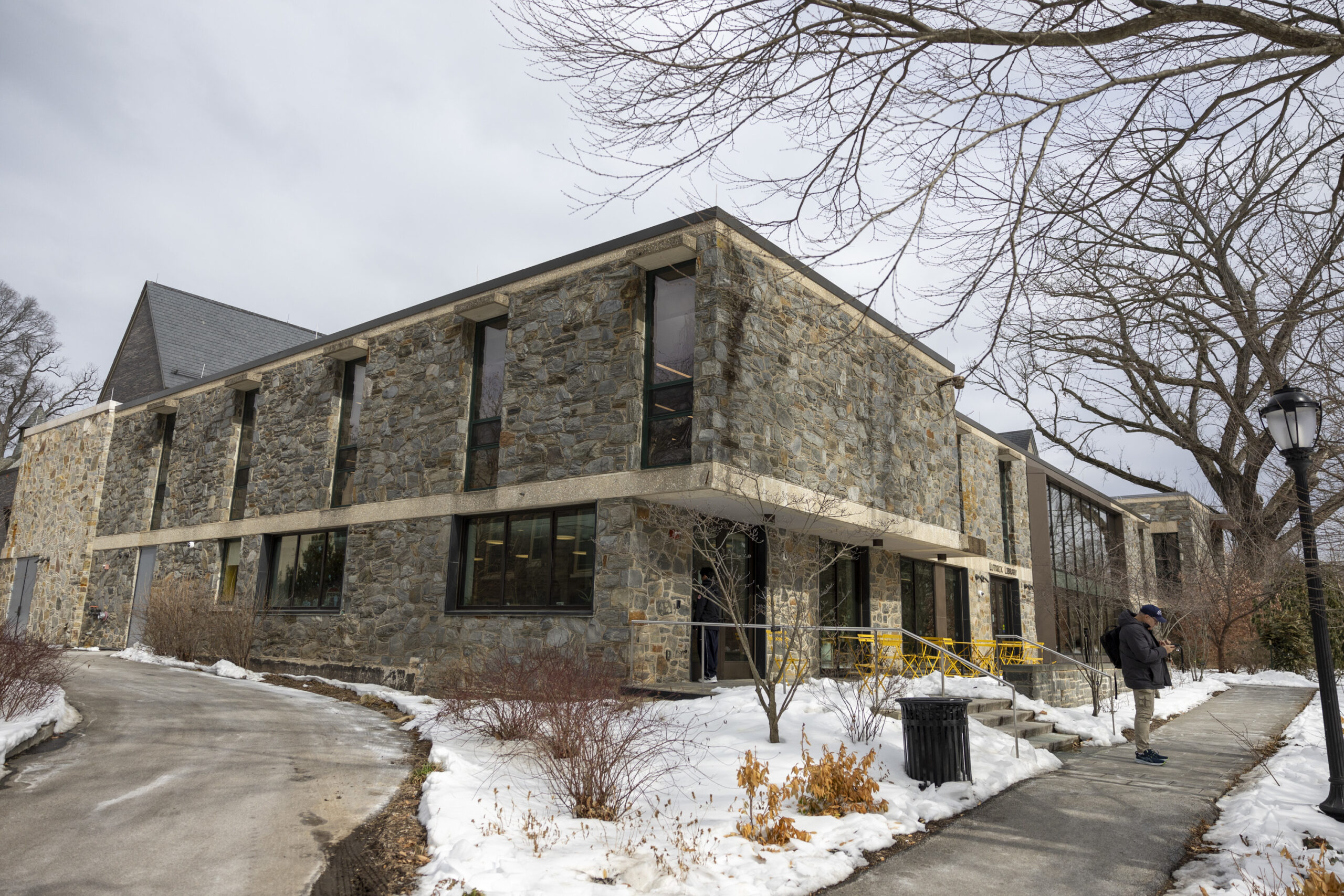
    The outside of the Lutnick Library at Haverford College.

    The Haverford Survivor Collective, which started in 2023 and is led by Haverford students and survivors of sexual assault, called the decision “disappointing, unsurprising and categorically insulting” in a statement. It is even more painful that the decision was released on Denim Day, an international day of support for survivors, the collective wrote.

    “What should have been a meaningful day of solidarity and collective support has instead become a stinging reminder of how far Haverford still has to go,” the group wrote.

    Senior English major Paeton Smith-Hiebert, co-founder of the collective, said Raymond in a meeting with some students Tuesday shared her reasoning for why the Lutnick situation did not meet the threshold.

    Raymond said, according to Smith-Hiebert, there needed to be “pretty unambiguous evidence of harm being directly committed” and that “association wasn’t enough.”

    Arshia Seth, another student who is a member of the collective board, said when pressed by those present, Raymond said the threshold would be if Lutnick had “direct ties to trafficking.”

    The president also told students she wished she had had more time to make the decision, but plenary rules require that she respond within 30 days, Smith-Hiebert said. Whether that means she will continue to weigh the matter is unclear.

    “Looking forward, … I — and future presidents — will retain the ongoing responsibility to consider the relevant facts at any given moment in time, and to act in consideration of the best interests of Haverford’s educational mission,” Raymond, who announced in November she would retire as president in June 2027, said in her statement. “…The board of managers too will remain engaged.”

    Raymond’s announcement Wednesday also said she and the college “stand in solidarity with survivors of sexual violence.”

    Raymond previously said she had heard from “a growing number” of Haverford alumni “who have written to express their dismay” about Lutnick’s ties to Epstein, which included a visit by Lutnick and his wife to Epstein’s private island. She said in February that she would consider forming a review committee.

    Lutnick’s name was put on the library after a then-record $25 million donation he and his wife made in 2014. Lutnick, a 1983 Haverford graduate, has given the school $65 million and is one of its biggest donors.

    If Raymond had established a committee, it would have kick-started a multistep process that the school follows when considering changing building names. Raymond would have considered the committee recommendation before then making her own recommendation to the external affairs committee of the board of managers, as well as to its chair and vice chair. The external affairs committee then would have made its recommendation to the full board of managers, who ultimately decide whether a building should be renamed.

    Under Haverford’s gift policy, the school can rename a building if “the continued use of the name may be deemed detrimental to the college, or if circumstances change regarding the reason for the naming.”

    The students’ vote came during their plenary session on March 29. At least 66% of the student body living on campus had to be present at the session for discussion and votes to occur, and to pass, the resolution needed to win a simple majority. That 66% represents almost 900 students.

    “Students feel harmed and hurt by the presence of his name and association on campus,” Milja Dann, a sophomore psychology major from Woodbury, N.J., said in March, after attending the session.

    The Haverford Survivor Collective had been urging the college to form a committee even before the plenary.

    “Given the gravity of this situation, survivors are among those most directly affected,” Smith-Hiebert had written to Raymond earlier this year. “Many are feeling significant harm and institutional betrayal … While I understand there are many stakeholders to consult, it is difficult to reconcile the stated commitment to engagement with the apparent absence of those most impacted.”

    The student resolution asked the college to include student representation on the review committee, along with staff from several offices, including institutional diversity, equity, and access. It also called on college leadership “to stand in solidarity with victims of assault.”

    And it asked the board of managers to consult directly with students before making final decisions to rename the library and or whom it would be named for.

    The resolution also called into question Lutnick’s leadership at Cantor Fitzgerald, the New York City financial firm where he formerly served as chairman. The Securities and Exchange Commission charged the firm in 2024 with violating laws related to regulatory disclosure, and Cantor agreed to pay a civil penalty. Cantor Gaming in 2016 agreed to pay $16.5 million in penalties to the federal government “to resolve a criminal investigation into the company’s past involvement in illegal gambling and money laundering schemes,” according to a release from the U.S. Attorney’s Office.

    During congressional testimony, Lutnick said he visited Epstein’s island with his family in 2012. Lutnick previously said he had not been in a room with Epstein, whom he found “disgusting,” since 2005.

    A Commerce Department spokesperson told The Associated Press in January that Lutnick had had “limited interactions” with Epstein, with his wife in attendance, and had not been accused of “wrongdoing.” Lutnick told lawmakers during his testimony: “I did not have any relationship with him. I barely had anything to do with him.”

    The outside of the Lutnick Library at Haverford College.

    In addition to the library, which also bears the name of Lutnick’s wife, Allison, Haverford’s indoor tennis and track center is named for his brother Gary Lutnick, a Cantor Fitzgerald employee who was killed on 9/11, and the fine arts building carries the name of his mother, Jane Lutnick, a painter. Lutnick also funded the college’s Cantor Fitzgerald Art Gallery.

    Students, however, said they were focusing on the library in the resolution because of its prominence.

    Before Raymond’s decision was announced, Adam Marcello, a Haverford student, in an opinion piece for the Haverford Clerk, the student newspaper, said students needed to keep the pressure on.

    “If students want the renaming to succeed, they will need to sustain visible, organized pressure,” Marcello wrote. “Epstein posters scattered across the library or letters tacked to the doors are not enough. We need to make inaction more costly than action.”

  • Edna B. Foa, celebrated pioneering psychologist and longtime Penn professor, has died at 88

    Edna B. Foa, celebrated pioneering psychologist and longtime Penn professor, has died at 88

    Edna B. Foa, 88, of Philadelphia, renowned clinical psychologist, pioneering mental health researcher, creator of the celebrated prolonged exposure therapy for post-traumatic stress disorder, longtime professor of clinical psychology in psychiatry at the University of Pennsylvania, lecturer, mentor, and volunteer, died Tuesday, March 24, of complications from pneumonia at Pennsylvania Hospital.

    Dr. Foa was among the first psychologists in the 1970s and ‘80s to infuse empirical case study research into existing behavior protocols to create more effective mental health treatments for victims of rape, combat trauma, childhood sexual abuse, and other ordeals. She became an expert in PTSD, obsessive-compulsive disorder, and social phobia, and her prolonged exposure therapy for PTSD and exposure and response prevention treatments for OCD are still hailed as breakthrough innovations.

    From 1971 to 1997, she was a fellow, professor, and clinical researcher in the psychiatry departments at Temple University and the old Medical College of Pennsylvania, now part of Drexel University. She joined Penn’s Department of Psychiatry in 1998 and, over more than 50 years, evaluated thousands of mental health cases to determine which behavior therapy was best for each condition.

    “Her work truly changed the field,” colleagues at the Ardmore-based Center for Hope and Health said on Instagram. They said she “spent her career doing what she believed mattered most: studying what actually helps people get better, and making those treatments more accessible.”

    She created the Center for the Treatment and Study of Anxiety at Temple in 1979 and directed it later at Penn. Colleagues at the center said on Facebook: “Through her brilliance, determination, and unwavering belief in the power of evidence-based care, she transformed the understanding and treatment of anxiety-related disorders and changed the lives of countless individuals and families around the world.”

    Other colleagues and friends called her “brilliant,” “amazing,” and “extremely influential” in online tributes. One said she was “a giant who taught the world how to conquer fear and reclaim life.”

    Dr. Foa earned grants for research and education, and taught her therapy techniques to veterans counselors in the United States and Israel, to therapists for the U.S. Army and the City of Philadelphia, and to clinicians at Women Against Rape and other groups around the world. In 2010, she was named one of Time magazine’s 100 most influential people in the world.

    To share her innovations and encourage peer review, Dr. Foa edited Failures in Behavior Therapy in 1983 and cowrote Emotional Process of Fear in 1986 and Emotional Processing of Traumatic Experiences in 2007. The hundreds of books, manuals, articles, and papers she wrote, cowrote, or edited about memory, stress, anger, depression, and guilt have been cited more than 13,000 times by other authors.

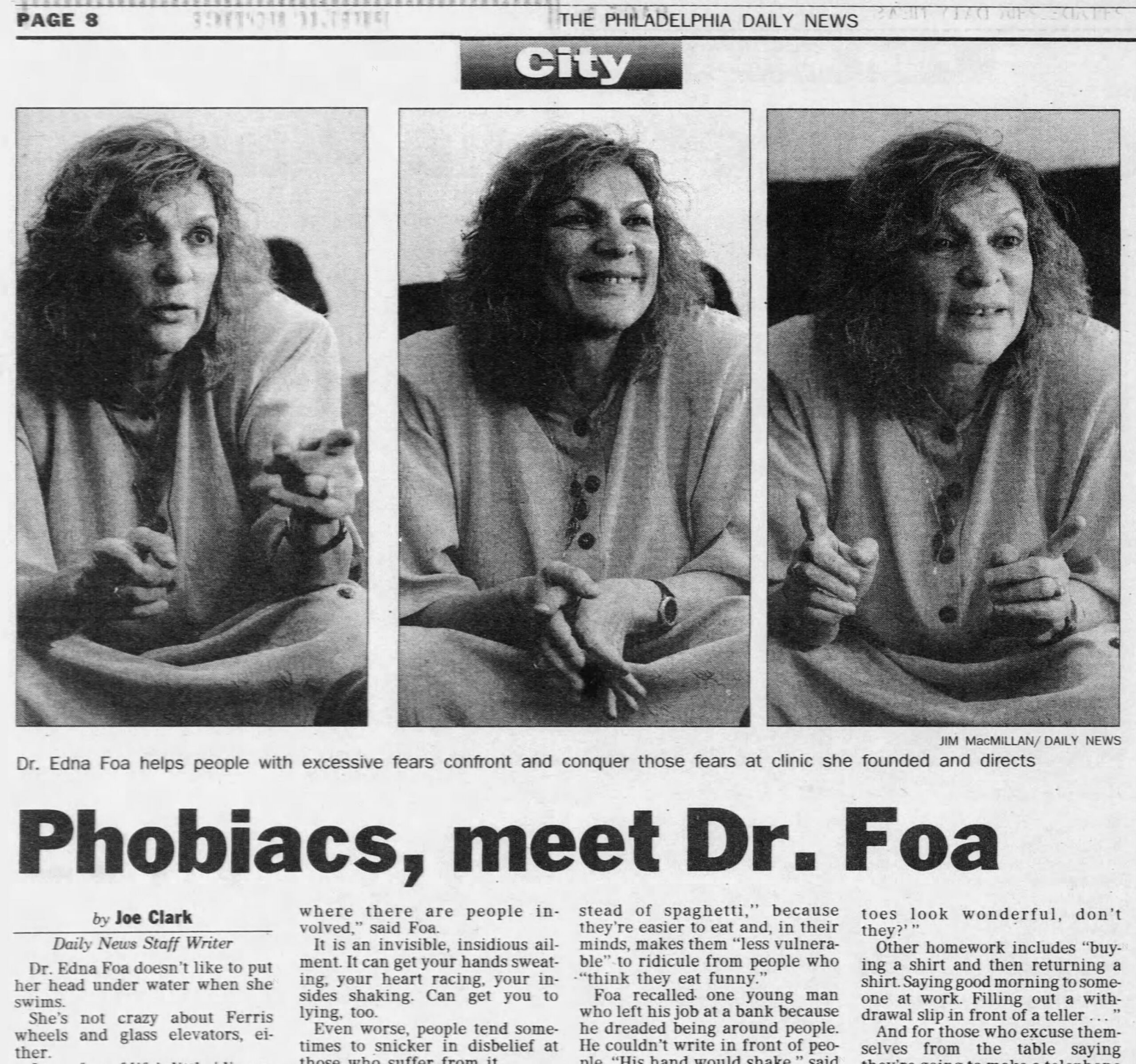
    The Daily News published this story and photos of Dr. Foa in 1993.

    She also volunteered as a consultant and supervisor at clinics and medical centers. She lectured and organized clinical workshops in the United States, Israel, and elsewhere. In 2010, she told Time magazine: “If you develop a wonderful protocol, it’s useless if nobody uses it.”

    She was affiliated with many mental health societies and associations, and earned lifetime achievement awards from the American Psychological Association, the International Society for Traumatic Stress Studies, and other groups. She was featured often in The Inquirer and the Daily News, and told the Daily News in 1993 that “everyone has little fears.” She said her little fears were of heights and swimming underwater.

    In 1970, Dr. Foa earned both a doctorate in clinical psychology and personality from the University of Missouri, and a master’s degree in clinical psychology at the University of Illinois. In 1962, she earned a bachelor’s degree in psychology and literature at Bar-Ilan University in Israel.

    She stopped working full-time at Penn in 2023 but never really retired. In April, she was scheduled to lead a workshop in prolonged exposure therapy. In 2011, she told The Inquirer: “If I die tomorrow, I think that what I have achieved is fine. If I don’t die, I don’t need to stop.”

    Edna Ben Jacob was born Dec. 28, 1937, in what is now Haifa, Israel. She became fascinated by the work of psychologist Sigmund Freud, she told the Encyclopedia of Behavior Modification and Cognitive Behavior Therapy, and she worked briefly with juvenile offenders near Tel Aviv after high school.

    In 2011, she told The Inquirer she was shattered by her own trauma in 1948 when her brother, Uri, was killed in the war and her father, Abraham, died four years later.

    She married and divorced when she was young, and met Professor Uriel Foa at Bar-Ilan. They married when she was 24, had daughter Dora, and moved to the United States in 1966. They had daughters Yael and Michelle, and lived in Illinois and Missouri before moving to Glenside and then Penn Valley. She moved to Philadelphia a few years ago.

    After a divorce, she married Penn professor Charles Kahn. Her husband and former husband died earlier.

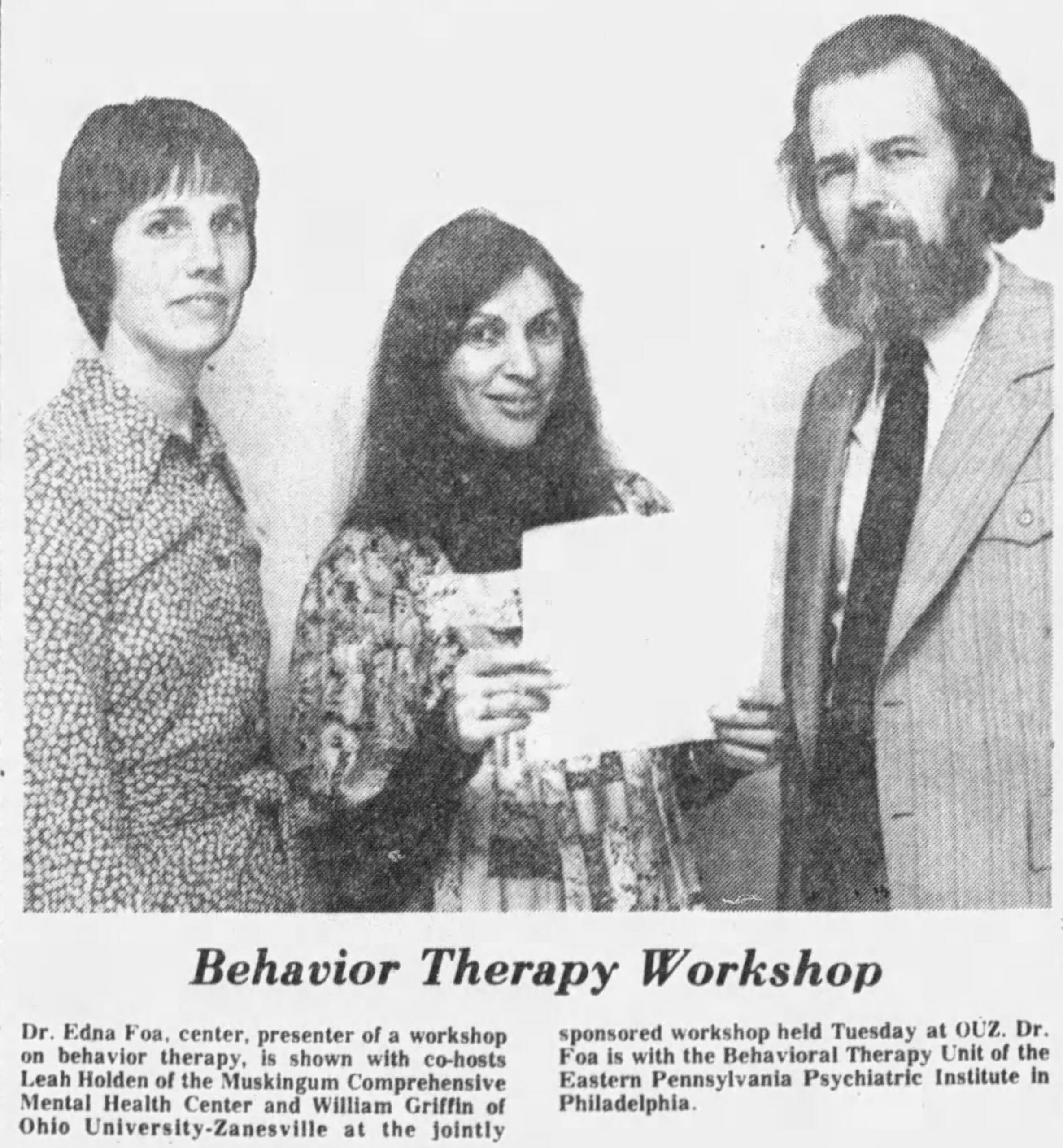
    This photo of Dr. Foa (center) appeared in the Times Recorder in Ohio in 1978.

    Away from work, Dr. Foa enjoyed traveling, gardening, and hosting family and friends at holidays. She collected art and antiques.

    She told an interviewer she had a bad habit of deleting emails before reading them. She managed lung cancer years ago.

    “She was full of energy, vivacious, a force of nature,” said her daughter Yael. Her daughter Michelle said: “She was an extraordinary figure who lived a very rich life.”

    In addition to her daughters, Dr. Foa is survived by five grandchildren, a great-granddaughter, and other relatives.

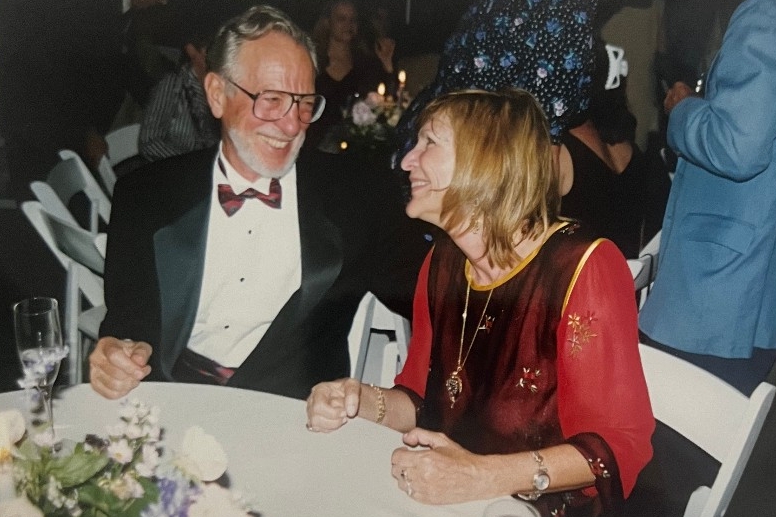
    Dr. Foa laughs with her husband, Charles Kahn.

    Private services are to be held later.

    Donations in her name may be made to the Philadelphia Museum of Art, 2600 Benjamin Franklin Parkway, Philadelphia, Pa. 19130; and the Philadelphia Orchestra, 300 S. Broad St., Philadelphia, Pa. 19102.

  • There’s now a ‘Club America’ at Great Valley High School. Turning Point USA says interest grew after Charlie Kirk’s assassination.

    Making his pitch to the Great Valley school board, Jed Lu said he and fellow students seeking to bring slain conservative activist Charlie Kirk’s Turning Point USA organization into their high school weren’t racists or extremists.

    “We simply have a different perspective,” Lu told the board at a late February meeting.

    The Chester County district is one of the latest in the Philadelphia area to approve a Club America chapter — the high school offshoot of Kirk’s group. The organization seeks to mobilize “anti-woke warriors” and has rapidly been adding new local chapters since his assassination in September, provoking debate around right-wing influence in public schools.

    Nationally, chapters have nearly tripled — from 1,200 prior to Kirk’s death, to more than 3,300, according to Turning Point officials. Governors in Republican-led states like Arkansas and Nebraska are partnering with Turning Point to expand clubs throughout their states.

    In eastern Pennsylvania, there were 11 Club America chapters at the end of last school year. Now, “we’re currently approaching 40,” said Nick Cocca, Turning Point’s enterprise director.

    The group’s expansion might be overstated in the Philadelphia region. Seven area high schools listed by Turning Point on its website or Instagram graphics as having Club America chapters said they didn’t have clubs.

    Souderton Area High School, for instance, appears on Turning Point’s map, but doesn’t have a club. The school’s assistant principal, Matthew Haines, said “a student made an inquiry” in September about starting a chapter, but never applied to do so.

    In some schools, like Springfield High School in Delaware County, “we have a few students who started running an after-school student pilot a few months back,” said principal Monica Conlin, but the district doesn’t officially recognize the club. Conlin said new clubs must complete a three-year pilot before gaining district approval.

    Still, the organization has gained traction. In addition to Great Valley, Penncrest High School in Rose Tree Media School District lists Club America among its student clubs; district officials and staff didn’t respond to requests for comment.

    Turning Point says it also has a Club America chapter at Pennsbury High School, and an Instagram account for “Club America at Pennsbury” invited students to a Feb. 25 meeting to discuss the State of the Union and “participate in prayer for law enforcement and our nation.” District officials didn’t respond to requests for comment.

    ‘An outpouring of support’ after Kirk’s death

    A spokesperson for Turning Point couldn’t explain the discrepancy between its list and schools that say they don’t have any Club America chapters.

    The organization was also unable to provide a local student willing to be interviewed.

    Cocca said Turning Point “saw an outpouring of support and outreach from young people across the country” in the wake of Kirk’s Sept. 10 assassination. To support its growth, the organization is hiring more field representatives to work with high school students, Cocca said.

    People hold posters of Charlie Kirk during a Turning Point USA rally at Utah State University, as a part of the organization’s push to memorialize Kirk in Logan, Utah, in September.

    Turning Point, which began as an organization advocating for conservative views on college campuses, had previously been expanding its presence in high schools. (A Turning Point chapter launched years ago at Pennridge High School in Upper Bucks County, for example.)

    Turning Point last July renamed its high school operation Club America. “We wanted a brand that spoke specifically to them,” Cocca said. He said that “when Charlie was alive, he used to say ‘I want a Club America chapter in every high school in America.’”

    The expansion has spurred conflict. Critics have highlighted Kirk’s controversial statements, including referring to the Rev. Dr. Martin Luther King, Jr. as “an awful person” and calling the passage of the 1964 Civil Rights Act a “mistake.”

    Kirk also promoted the so-called “great replacement theory,” framing non-white immigration as a plot to replace white populations.

    “This club is an easy way to incorporate hate and discrimination within our high school. This should not be normalized,” a Change.org petition launched in January against a proposed Club America chapter at West Chester East High School read. An update to the petition later declared that Turning Point “was shut down at West Chester East.”

    Molly Schwemler, a district spokesperson, said that earlier this year, some students expressed interest in starting a Club America chapter.

    But “after discussing the process and need for sponsorship from a teacher with school administration,” students “instead decided to organize independently outside of the school,” Schwemler said. (On its website, Turning Point lists West Chester East as having a chapter.)

    In an Instagram post, the club said it decided to operate independently “because people can’t be mature, open minded or respectful at our school.”

    Activism hubs and kits

    In addition to identifying a teacher adviser, students looking to form clubs often have to supply information to administrators like their purpose, planned activities, and funding needs.

    Schools have little discretion to reject a new club, based on the federal Equal Access Act and First Amendment, said Jeffrey Sultanik, a solicitor for numerous Philadelphia-area districts.

    Districts need “to be viewpoint-neutral,” Sultanik said, noting that “once you open up the door to clubs coming in,” administrators can’t pick and choose which to permit.

    In its handbook for Club America chapters, Turning Point calls it “imperative that every chapter works to become officially recognized by the school,” offering students help if schools deny them.

    Students can form an “activism hub” outside of school for a specific geographic area “as a last resort,” the handbook says.

    In Downingtown — where Turning Point says there is an activism hub — a school district spokesperson said the district has not sponsored any clubs “related to religious or political groups in recent history.” (Some other area schools have official political clubs: Penncrest High School, for instance, lists Penncrest Democrats of America.)

    Turning Point says its Club America chapters are nonpartisan and don’t support specific candidates.

    But the group’s ideology is clear from materials it supplies to student members. Presentations available in Turning Point’s “Activism Library” for students to use have titles including “Taxes Are Shady,” “Socialism Kinda Sus,” and “Big Gov Scares.”

    “Why are those on the left not proud to be Americans?” a presentation titled “Always Love America” asks.

    Kids can order “Activism Kits” from Turning Point with posters and stickers. A “2A” kit features slogans like “Gun rights are women’s rights” and “Guns are the greatest equalizer.”

    Cocca said Turning Point provides students “anything they may need, to promote what they want to promote, and what they want to make their club about” — whether that’s registering students to vote, or learning about the Constitution, he said.

    “Ultimately, it’s up to the students to use those resources the way they want to use them,” he said.

    Opposition to Club America groups

    Critics accuse Turning Point of trying to indoctrinate high schoolers.

    “They are grooming at the high school level, and college level, for a generational change,” said Sherry Lawrence, a parent in Great Valley who opposed the district’s new Club America chapter. “All the red flags are there for people who don’t subscribe to this brand of conservatism, or this brand of Christianity.”

    Lawrence questioned whether adults were driving some efforts to organize Club America chapters.

    In an October Facebook post in a Turning Point Pennsylvania Action group, George Sabo, then a GOP candidate for township supervisor in East Whiteland, said his daughter was starting a chapter at Great Valley High School. “We had discussed it over the summer but pulled the trigger after Charlie’s assassination,” Sabo wrote.

    In a brief phone interview, Sabo said it was his daughter’s idea to start the chapter.

    “My daughter and family, who believe in the Bible, and believe God is king, value those properties and want to see that brought more into the school district,” Sabo said.

    He said that while there had been pushback from other kids, “there’s some support from other kids, too.”

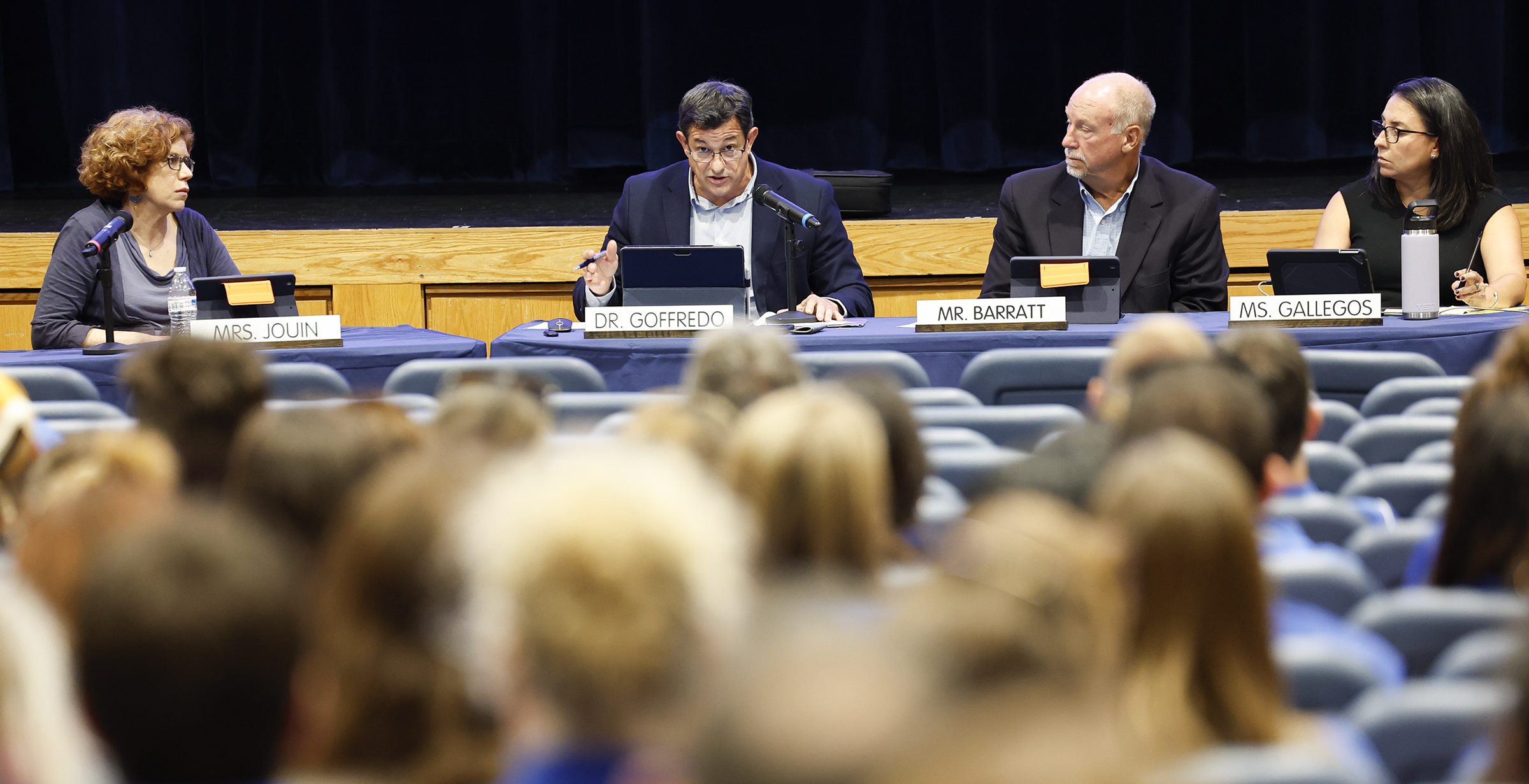
    Great Valley school board members during a meeting at Great Valley High School in Malvern in 2024.

    The Great Valley board approved the club 7-0 at its February meeting.

    At the board meeting, Lu, the club president, said he and the three other club officers had initiated its formation.

    While the club has a “conservative viewpoint,” Lu said, “our purpose is civic debate and civil discussion.” He added that the club is motivated by “the Christian value of love and compassion.”

    The club hopes to be an “impactful addition to Great Valley High School,” Lu said.

  • Abington high school principal returns after investigation into antisemitic social media post

    Abington high school principal returns after investigation into antisemitic social media post

    The principal of Abington Senior High School has been reinstated after an investigation into social media posts with antisemitic content.

    Alice Swift, who was placed on leave Feb. 12, returned to school Wednesday. District officials said in a letter to high school staff and families Tuesday that the findings of a third-party investigation had supported Swift’s reinstatement.

    The district had referred to allegations of “inappropriate social media posts” when it placed Swift on leave last month.

    In the letter Tuesday, Superintendent Jeffrey Fecher said one of the posts “contained an antisemitic stereotype and was not aligned with the values of Abington School District.” He said the district could not provide further information about the posts.

    “Given the sensitive nature of the posts that were called into question, we understand that there are members of our school community who may still be experiencing a sense of hurt, especially those in our Jewish community,” Fecher said.

    He said the district would work with faith leaders and the Anti-Defamation League “to ensure that Dr. Swift, along with students and staff, receive additional programming and training that align with our commitment to fostering welcoming, safe and positive learning environments for all of our students.”

    In a statement shared with staff and families Tuesday, Swift said that “recent content associated with my social media account has circulated within our community, and it is important to me that I address it directly.”

    “I want to be clear that this content does not represent me, my values, or anything I would ever choose to share,” Swift said. “I recognize, however, that regardless of how this content came to be shared, it caused real distress for members of our school community.”

    She said she accepted “full responsibility for not ensuring appropriate safeguards for my social media account, as the content does not reflect my core values and beliefs.”

    District officials said Swift would be meeting with student and community groups over the coming weeks.

    “I am pleased that Dr. Swift is willing to engage in such conversations in order to begin the process of restoring trust,” school board president Melissa Mowry said in Tuesday’s letter to families. “Central to this process is Dr. Swift’s welcome recognition that the post in question was corrosive and her explicit rejection of its antisemitism.”

    A former teacher and administrator in Maryland schools, Swift became principal of Abington Senior High School in 2024. She graduated from Abington in 1983.

  • Montco school officials expensed international trips, including a 14-day African safari

    Montco school officials expensed international trips, including a 14-day African safari

    The Montgomery County Intermediate Unit’s mission is to support schools in the county with early childhood intervention, professional development, and bulk-purchasing programs that save taxpayers’ money.

    In recent years, however, the Norristown-based intermediate unit has also served as an international travel agency of sorts — for its own leaders.

    Expense reports obtained by The Inquirer through a Right-to-Know request show that, since 2023, the Montco IU’s executive director, Regina Speaker, and its assistant executive director, Sandra Edling, have used public funds to book about $40,000 worth of professional-development travel to three continents.

    That includes a 14-day African safari that cost about $18,000.

    “Travel from towering Mount Kenya to the wild expanses of the Serengeti to witness the drama of the bush unfolding around you,” reads the online brochure for the trip Speaker and Edling took to Kenya and Tanzania in the summer of 2023.

    The expense reports show that Speaker subsequently used her IU credit card to fly to South Korea and Singapore for 11 days last spring. Edling used hers to purchase a trip to Central Europe in the fall, before the intermediate unit canceled it amid funding concerns.

    Some of the credit card charges lacked receipts or didn’t state a destination, or provide any indication that they involved overseas travel. Yet, they were approved by two presidents of the Montco IU board and a now-retired assistant executive director. The 21-person board is composed of members from each school district board in the county.

    The trips raise questions about how forthcoming the IU’s executive staff has been with the board about its spending, as well as the level of oversight provided by the board.

    In a recent interview, Speaker defended the trips as legitimate professional-development outings. She said she followed the proper procedure for spending money the board had already budgeted for that purpose.

    “Everything was signed off on by the board president and clearly communicated,” she said. “There was nothing underhanded about it.”

    Jennifer Wilson, who served on the intermediate unit’s board from 2017 to last November, first learned of the trips from an Inquirer reporter last month. She said some looked more like “vacations” that shouldn’t have been covered by the publicly-funded IU.

    “We never got notice [Speaker] was going on these trips at all,” said Wilson, who still serves as vice president of the Hatboro-Horsham School Board. “In my home school district, the superintendent tells us if he’s going out of town for the weekend.”

    Public finance experts also questioned whether taxpayers should pay for professional-development trips that include extensive leisure time, such as giraffe feeding and guided tours through the Great Rift Valley.

    Marguerite Roza, director of the Edunomics Lab at Georgetown University, said those types of expenses could leave taxpayers feeling cynical about how their money is being spent.

    “We use examples like this to warn people that these are public funds,” Roza said. “You need to make sure your expenditures make sense and are justified, but also, contemplate the optics.”

    The Montco IU, one of 29 state-mandated agencies in Pennsylvania, has a $198 million budget and 848 employees. It receives a mix of local, state, and federal funding, and provides support services to more than 200 public and private schools.

    Speaker, who was named executive director in 2020, has been thinking on a larger scale.

    “Our big mission is to be part of the global community,” Speaker, a former Great Valley School District superintendent, said in explaining her travel bills.

    The trip to Kenya and Tanzania, Speaker said, culminated a yearlong academy for education leaders run by the the School Superintendents Association, or AASA.

    “Everything was through the lens of leadership,” she said of the trip. “It was about that process of survival of the fittest, and how are you a leader, and what do you prioritize.”

    The itinerary included six sightseeing tours and eight wildlife drives in search of zebras, monkeys, lions, baboons, cheetahs, hippos, elephants, wildebeests and “the exceedingly rare black rhino,” as well as 11 nights in “handpicked hotels.”

    Speaker noted that the trip featured a visit to a tribal school.

    Expense reports show that in March 2025 Edling used her procurement card for about $7,000 related to what is described on the purchasing log as a “conference.” The documents don’t name a location or offer specifics.

    In response to questions from The Inquirer, Speaker said that Edling’s expenditure, which was approved by another assistant executive director in the office, was for a 10-day trip to Germany, Switzerland, and Austria in October 2025 sponsored by AASA, the superintendents group that put together the African safari.

    “The whole idea was to bring her up to speed on the leadership component,” Speaker said of Edling, who previously served as the IU’s chief financial officer.

    That trip, according to the online brochure, was to include a tour of Munich, quick-tempo Viennese waltz lessons, an underground train ride into Austria’s ancient Hallein salt mine, a “journey to crazy King Ludwig’s fairy tale castle of Neuschwanstein,” and an alpine hut dinner.

    “Ascend into the Alps for an evening of true Swiss hospitality,” reads the itinerary. “As you feast on beautiful views from your hosts’ mountain chalet, enjoy traditional food, entertainment and fun Swiss games and activities.”

    School visits were planned on day five and day nine, according to the itinerary.

    Speaker said that she subsequently froze all travel last year because Pennsylvania’s four-month budget impasse held up a large portion of the intermediate unit’s funding. The IU didn’t know if it would be able to pay its staff. The cancellation also came after The Inquirer had requested the records. Speaker said the IU was able to get a refund for that trip.

    Edling said that while she didn’t get to go on that trip, meeting with education leaders abroad is a justifiable public expense.

    “We believe we need to grow the global partnership concept. Other intermediate units are also working on that,” she said. “As an educational service agency, we have to be at the forefront of what’s next, what’s new.”

    Lara Wade, AASA’s director of communications, said in an email that her group is involved in planning the trips, but does not track whether participants bill taxpayers or pay their own way.

    “From AASA’s perspective, these international delegations are designed as professional learning experiences for senior education leaders,” Wade said. “They include school visits and meetings with education leaders, but they’re not intended to mirror classroom-style professional development or be evaluated solely by the number of hours spent inside schools.”

    A recurring theme

    Justin Marlowe, director of the Center for Municipal Finance at the University of Chicago, said questionable spending is a recurring theme at intermediate units and other regional educational agencies around the country.

    They received a lot of public money and are often given wide latitude in how to spend it.

    “The presumption is that everything is going to be on the up and up,” Marlowe said.

    At the same time, these organizations operate largely outside of public view and are overseen by board members who aren’t always as engaged as they are in their home school districts. Intermediate unit board meetings are open to the public but rarely draw much interest.

    “They don’t get the same level of scrutiny from taxpayers,” Marlowe said. “The stuff they do is not on people’s radar in the same way.”

    Still, he said, “I don’t know if I’ve seen African safaris.”

    Roza, the education finance expert at Georgetown, said board members have to be able to trust the judgment of executive directors and superintendents because they can’t review every expense. She said the safari, in her opinion, is a “misuse of public funds.”

    “If I was a board member and my superintendent was taking trips like this, I’d be like, ‘I think I just lost confidence in you,’” Roza said, after reviewing the itineraries for the African and Central European trips.

    A 2020 drone photograph of the annual migration of wildebeest in Serengeti National Park in Tanzania. Montco IU officials visited three years later on a professional-development trip.

    Roza compared the trips to those that made news in Clark County, Nevada in 2024. School district officials there spent more than $150,000 to attend job fairs and conventions around the country, including in Hawaii, with little to show for it.

    “Just because it’s legal doesn’t mean it’s advisable or a good use of public funds,” Roza said.

    Juliane Ramić, the former Montco IU board president who in 2023 approved Speaker’s credit card charges for the Africa trip, said this month that she could not recall if she was aware at the time what the charges were for.

    The records The Inquirer obtained show that some of the expenses Speaker submitted for that trip lack supporting documentation, even though she included receipts for routine business expenses.

    For instance, Speaker in May 2023 included a receipt for a $54.47 lunch at Redstone American Grill. But the $9,342 in purchases related to the safari only included what appears to be a screen grab from her phone showing the amount of money charged to the card.

    The only mention of Africa in the records came months later when she purchased a Tanzanian eVisa for $139.

    Ramić did not sign off on the expenses until August and September 2023, after Speaker and Edling had returned from Nairobi.

    Ramić, who now serves as the Montco IU board’s treasurer, said board members are focused more on big-picture issues, such as whether the unit’s programs are working correctly.

    “There is no onboarding or training for serving on an intermediate unit board,” said Ramić. “There is no guidance. There are gaps there.”

    In April 2025, with a new board president in place, Speaker traveled to South Korea and Singapore, as part of a leadership academy run by the Association of Educational Service Agencies. The registration cost $13,000, paid in two installments with Speaker’s IU credit card.

    Records show that one of the payments, in December 2024, apparently was not approved. That month’s expenses were not signed or dated by either Speaker or Janet Flisak, then the board president.

    Both lines are blank. Flisak, who has since left the board, could not be reached for comment.

    Ramić said she does not believe Speaker or Edling did anything wrong, but the board has requested more information from her office about travel expenses going forward. She said she intended to follow up with the board to see if new policies are needed to better monitor IU operational expenses.

    ‘It’s a personal trip’

    Not everyone who flew to Nairobi in 2023 billed their employer.

    Lee Ann Wentzel, who retired last year as superintendent of the Ridley School District, also went on the African safari, as well as an earlier trip to Israel that AASA sponsored. She paid for both trips herself.

    “Some people look at it as a vacation, others work related,” Wentzel said. “I think both things can be true.”

    Wentzel said she did not use Ridley school-district funds because her trips were too last-minute to include in her long-term professional development budget. But, she said, other superintendents are justified in using public funds.

    “Speaking to locals, learning about their personal education journeys and how different the government schools are versus the religious and private schools, and what services are offered, that’s something you’re not going to see unless you go to international settings,” Wentzel said.

    Janet Fike, superintendent of the Morris-Union Jointure Commission, a state-established educational service agency in New Jersey, also went on the Africa trip. In a detailed account written for the New Jersey Association of School Administrators’ website, she described it as a “bucket list” trip that she’d dreamed about for decades and explained how “a safari Jeep became our home on the road.”

    “The majestic Amboseli National Park, in the backdrop of Mt. Kilimanjaro, or ‘Kili’ as it is called in Africa, beckoned,” Fike wrote. “On this game drive, we saw the elusive cougars, cheetahs, plentiful wildebeests, elephants, and more giraffes, my favorite! Each species was more spectacular than the other.”

    Fike said recently that she paid for the trip out of pocket, instead of charging it as a business expense to the Morris-Union Jointure Commission.

    “I paid for my own trip because it’s a personal trip,” Fike said. “And I took vacation days.”

    Inquirer staff writer Kristen Graham contributed to this article.

  • Marilouise H. James, retired longtime schoolteacher and home and school visitor, has died at 101

    Marilouise H. James, retired longtime schoolteacher and home and school visitor, has died at 101

    Marilouise H. James, 101, formerly of Willingboro, a retired English and social studies teacher for the Philadelphia School District, certified home and school visitor, 80-year member of Alpha Kappa Alpha Sorority Inc., mentor, and volunteer, died Friday, Feb. 13, of age-associated decline at the Masonic Village retirement community in Burlington.

    Naturally empathetic and energetic, Mrs. James was skilled at spelling, language, and assisting students in school and families at home. Beginning in the late 1940s, she taught English and social studies at the old Sulzberger Middle School in West Philadelphia, social studies at Audenried Junior High School in South Philadelphia, and English at Northeast High School.

    She appreciated the beauty and nuances of the French language as a girl and earned second place in a statewide spelling bee in Delaware. Later, when she saw that students at Sulzberger had no French Club, she started one.

    “She was one of a kind,” said her niece Sonya Thompson. “Big smile. Big laughter. Big heart.”

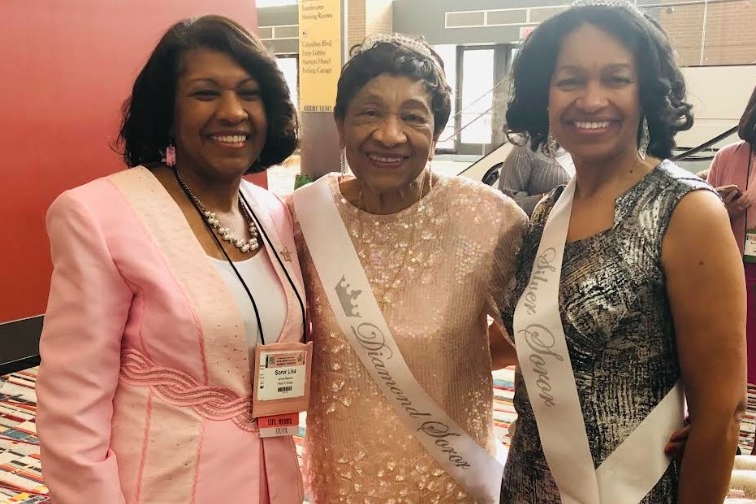
    Mrs. James (center) and her daughters, Lisa (left) and Shelley, all joined Alpha Kappa Alpha Sorority Inc.

    Mrs. James earned a bachelor’s degree in French at Temple University, a master’s degree in counseling at Antioch University, and teaching certifications in English, French, social studies, home and school visiting, and guidance counseling.

    When her children came along in the 1950s, she left the classroom and, as a school district home and school support expert, managed difficult situations regarding student truancy and behavior, and crisis intervention at homes. She retired in the late 1980s.

    “She was the easiest person to talk to,” said her daughter Lisa James-Beavers. “She was warm and never judgmental. She made you feel like she always knew you.”

    Mrs. James was an active mentor in Alpha Kappa Alpha for 80 years, and her sorority sisters threw a 101st birthday party for her last August. She was a charter member of the Gamma Epsilon chapter in Philadelphia in 1945, moved to the Theta Pi Omega chapter in South Jersey in 1969, and served as its vice president, secretary, assistant secretary, treasurer, and in other roles.

    Mrs. James graduated from Howard High School at 16 after skipping two grades.

    “If anyone ever needed a smile, Soror Marilouise was always there ready to share one,” a friend said on Facebook.

    She also joined the Sickle Cell Anemia Resources Board and the Board of the Black Adoption Consortium. She belonged to the Rancocas Valley chapter of the Links Inc. and was a charter member of the Burlington-Willingboro chapter of Jack and Jill of America Inc.

    She volunteered as a patient representative at what is now Virtua Willingboro Hospital and as a library assistant at Twin Hills Elementary School. “She was a walking, talking breath of fresh air,” her niece said. “She taught all of us that kindness matters. She always said, ‘I am doing the best I can for as long as I can.’”

    Friends called her “a radiant inspiration and a true joy” and “a beautiful phenomenal woman” in online tributes. Her family said: “She did not simply experience joy. She created it. She carried it into every room, poured it into every relationship, and planted it in the hearts of all who knew her.”

    Mrs. James (right) was fun and funny, her family said.

    Marilouise Holland was born Aug. 23, 1924, in Milford, Del. She grew up in Wilmington and graduated from Howard High School at 16 after skipping two grades.

    She met Raymond James in Philadelphia, and they married in 1953. They had a son, Dennis, and daughters Shelley and Lisa, and lived in Lansdowne before moving to Willingboro in 1969. Her husband died in 1979.

    Mrs. James was fun and funny, her family said. She had an infectious laugh, loved shopping, and was, they said, “always stylish from head to toe.”

    She enjoyed hosting her family for reunions. Her niece said: “Her hospitality was off the charts.” Her daughter Lisa said: “She was easy to be around.”

    Mrs. James (front right) enjoyed time with her family.

    She read often and belonged to a book club. She saw shows at the Walnut Street Theatre for more than 25 years and attended Corpus Christi Catholic Church in Willingboro.

    She liked pizza on Friday nights and doughnuts after Sunday Mass. Her family said it was only fitting that she died during Black History Month. Her life, they said, was “a reflection of the barriers she broke and the lasting legacy she carved.”

    In addition to her children, Mrs. James is survived by seven grandchildren, five great-grandchildren, a sister, and other relatives. A sister and a brother died earlier.

    Services were held earlier.

    Donations in her name may be made to the EAF Theta Pi Omega Chapter Scholarship Fund, Box 2902, Cherry Hill, N.J. 08034.

    Mrs. James (right) and her sister, Betty