Category: Education

  • Mother of 20-year-old killed in Lincoln University homecoming shooting sues school

    Mother of 20-year-old killed in Lincoln University homecoming shooting sues school

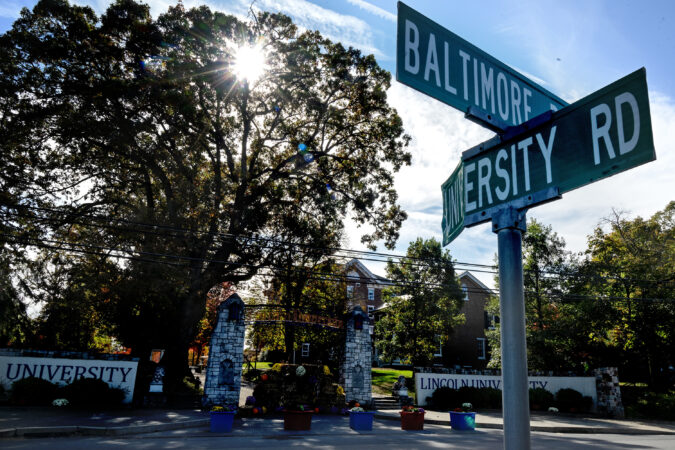
    The mother of Ju’Juan Jeffers, the 20-year-old man killed during a shooting at Lincoln University homecoming last October, has filed a lawsuit against the school, the university police chief, and others.

    Attorneys for Marchelle Hargroves, Jeffers’ mother, allege that Lincoln prioritized the “college experience” over safety and, in doing so, fostered a campus culture that permitted violent and sometimes fatal acts,” according to the suit filed Friday in Common Pleas Court in Philadelphia.

    “Lincoln University allowed unrestricted public access to its homecoming events and negligently failed to implement or enforce adequate security measures, including … controlled entry points, attendee screening, handheld wands, metal detectors and/or bag checks,” the suit said.

    Jeffers, of Claymont, Del., was one of seven people shot at the Oct. 25 event; he was the only one who died.

    Jeffers was not a student at Lincoln, but had been invited to attend, according to the suit.

    A university spokesperson said the school does not comment on active litigation. Its police chief, Marc Partee, declined comment.

    Also named as a defendant in the lawsuit is Zecqueous Morgan-Thompson, who was charged with possessing a concealed firearm without a license at the event, but has not been charged in Jeffers’ shooting. Prosecutors have said Morgan-Thompson is not a student at Lincoln, nor an alumnus, and that it had been unclear why he was on campus. Law enforcement officials said after the shooting that they had confirmed a match between a fired .380 cartridge at the scene and the Glock 28 semiautomatic pistol that Morgan-Thompson had.

    Morgan-Thompson, the lawsuit said, fired a round during the event, “thereby helping to incite the crowd, which negligently and recklessly contributed to the shooting death of Mr. Jeffers.”

    Morgan-Thompson’s attorney in his criminal case did not immediately respond to a request for comment Friday. A trial is scheduled this month for Morgan-Thompson; no other charges have been filed in connection with the homecoming shooting or Jeffers’ death.

    Other defendants listed in the lawsuit complaint include unnamed Lincoln security officers, as well as unnamed outside companies that Lincoln hired to provide additional security.

    Michael T. van der Veen, an attorney for Hargroves, described Jeffers as an honor student, chess player, and “dedicated athlete” who wanted to serve in the military and start his own clothing company.

    “He loved basketball and played throughout his school years,” van der Veen said at a news conference Friday announcing the suit. “He had a beautiful life ahead of him.”

    At a board of trustees meeting last month, the university announced new safety plans for large events, including holding no outdoor events after dusk, screening guests, and allowing only one registered guest per student for the upcoming Spring Fling event in April.

    Lincoln, a historically Black university with 1,650 students in rural Chester County, has been under pressure from its neighbors and Lower Oxford Township to make changes since the shooting.

    Several officials in Lower Oxford had reported ongoing problems with parking, trash on neighbors’ lawns, disturbances, and, in some cases, crime when the university hosts events. After thousands gathered for homecoming, emergency personnel had to use all-terrain vehicles to transport patients on stretchers because ambulances could not access the campus, given how many cars were parked around the venue, they said.

    The township’s board of supervisors is expected to vote at their meeting at 7 p.m. Monday on a special events ordinance that would require a permit process for large events.

    According to the lawsuit, thousands packed Lincoln’s International Cultural Center parking lot after the homecoming football game, and there was alcohol consumption.

    It took hours for Jeffers to receive medical care after he was shot, the complaint says, because the roads were clogged around the university.

    “Multiple invitees were forced to render emergency medical aid because emergency medical personnel could not promptly access and reach him,” the suit said. “Lincoln University knew or should have known that the Homecoming football game and celebrations would attract a substantial number of attendees to its campus and were on notice of the need for protocols for adequate safety of and about the University.”

    Partee, the Lincoln police chief, “failed to take reasonable steps to correct or remedy these dangerous conditions,” the suit said.

    Concerns about behavior during large events had been raised with Lincoln officials by township officials and others over several years, but no adequate action was taken, the suit said.
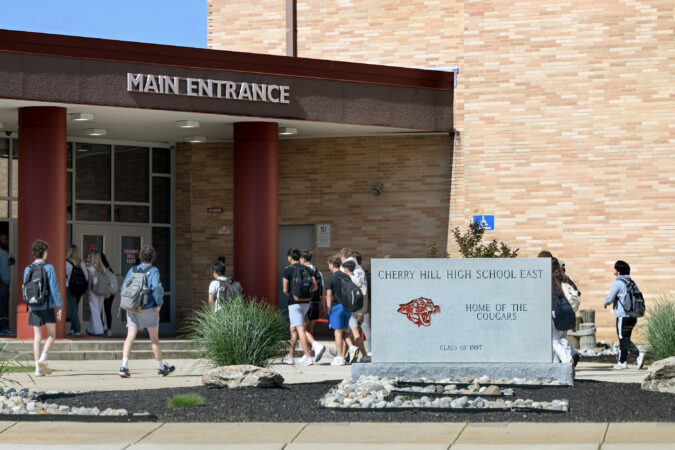
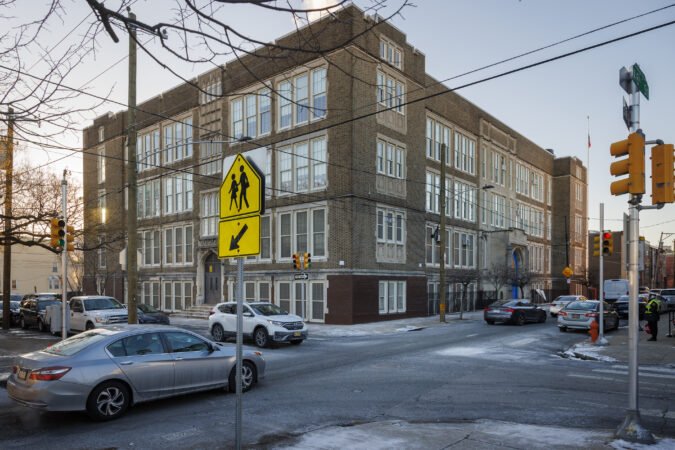
  • Cherry Hill High School East is getting a new principal after its former leader resigned amid a legal battle

    Cherry Hill High School East is getting a new principal after its former leader resigned amid a legal battle

    A longtime township educator will become Cherry Hill High School East’s new principal this summer, months after the former principal resigned amid an ongoing legal battle with another former administrator.

    The Cherry Hill school board on Feb. 24 appointed John Cafagna, currently the principal of Rosa International Middle School, to take the helm of East beginning July 1.

    “I look forward to providing operational stability, being the wellness guardian for our students and staff, honoring our great traditions, and leading us as we move forward together as one East, one community, and one vision,” Cafagna said, addressing the school board.

    Cafagna has worked in the Cherry Hill Public Schools for nearly three decades, starting as an educational technologist and working his way up as a teacher, assistant principal, and, most recently, principal. He holds a bachelor’s degree in psychology from Rowan University, master’s degrees in education and educational leadership from the University of Pennsylvania and Capella University, and a doctorate in educational administration from Capella University.

    Cafagna will earn a salary of $200,000 as East’s principal.

    Leslie Walker, a longtime educator who became interim East principal in October, stepped down abruptly late last month, according to Eastside, the high school’s student newspaper. Walker’s contract was set to end in June. Walker told Eastside personal stressors in her life prompted her resignation.

    Neil Burti, Cherry Hill’s director of secondary education, will handle East’s principal responsibilities in the interim, said Nina Baratti, the district’s public information officer.

    Cafagna’s appointment came five months after the school’s former principal resigned.

    Daniel Finkle resigned in September after David Francis-Maurer, a former assistant principal, accused Finkle and the school district of discrimination and a “calculated campaign of targeted retaliation” in a lawsuit. According to Francis-Maurer, the district retaliated against him by not renewing his contract after he blew the whistle on Finkle for skirting school policies and engaging in offensive behavior.

    Finkle has denied the allegations in legal filings, saying that he did not discriminate against Francis-Maurer and that the decision to not renew Francis-Maurer’s contract was due to “job performance and nothing else.” Finkle alleged Francis-Maurer was argumentative and made “egregious errors” as assistant principal. Finkle also denied allegations that he did not follow school policy when sensitive student issues emerged.

    Cherry Hill High School East, located on Kresson Road, enrolls around 2,000 students in grades nine through 12.

    This suburban content is produced with support from the Leslie Miller and Richard Worley Foundation and The Lenfest Institute for Journalism. Editorial content is created independently of the project donors. Gifts to support The Inquirer’s high-impact journalism can be made at inquirer.com/donate. A list of Lenfest Institute donors can be found at lenfestinstitute.org/supporters.

  • Closing this North Philly school would be ‘severing a lifeline’ for special-education students, supporters say

    Closing this North Philly school would be ‘severing a lifeline’ for special-education students, supporters say

    James R. Ludlow Elementary School in North Philadelphia educates a substantial population of special-education students.

    And the learning environment for those students would be upturned by the school district’s recommendation to close Ludlow after next school year, teachers say.

    “For our children in special education, that consistency isn’t a luxury, but a requirement for them to learn. If we relocate our students, we aren’t just changing their school address; we’re breaking their routines and undoing their progress,” Vanessa Martin, an autistic support teacher in kindergarten through second grade at Ludlow, said at a community meeting last month with school district officials.

    “This building isn’t just a facility. It’s the one predictable place where our students feel safe and supported every single day,” she said.

    The district says Ludlow was slated for closure because of an “unsatisfactory” building quality score, a lack of appropriate space for programming, and only utilizing 47% of its capacity. Ludlow has 237 students enrolled across general and special education, of whom 75% are Black and 20% are Hispanic.

    The K-8 school will celebrate its 100th anniversary in what could be its final school year of operation. The district, which has proposed closing 18 schools, plans to convey the building at 550 Master St. to the city so it could be converted into affordable housing or used for job creation. Ludlow students would be reassigned to one of three schools: Paul L. Dunbar School, Spring Garden School, and Gen. Philip Kearny School.

    ‘Severing a lifeline’

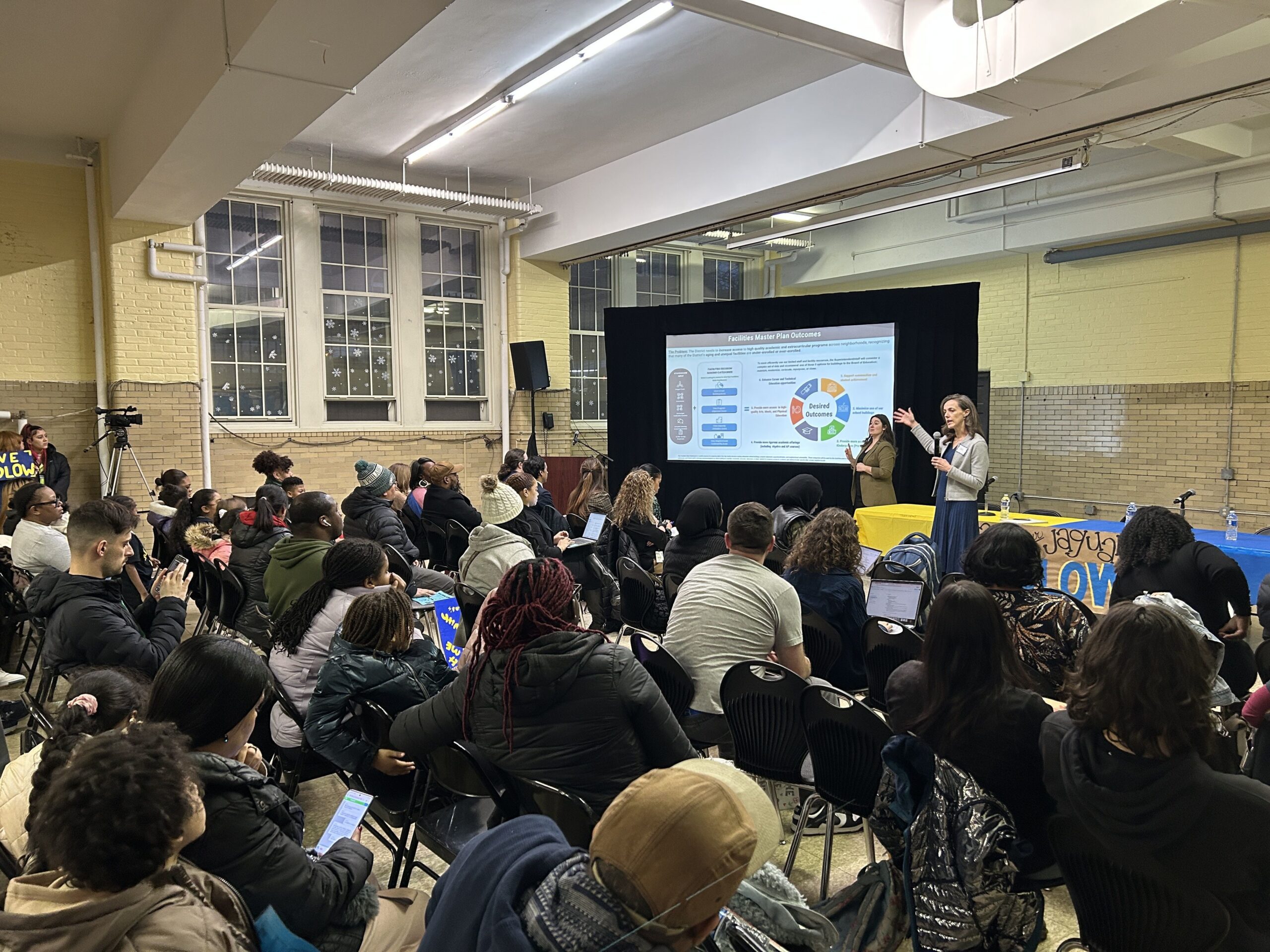
    The Ludlow community is strong and connected, and about a hundred people packed the school’s cafeteria for the community meeting on a recent Thursday evening to show their support for the school and fight against the district’s plan.

    District officials present their plan for closing Ludlow at the February community meeting.

    “I felt very angry. I felt upset. I felt like they were taking something away that was a part of me,” said Deilyhanix Vazquez, a Ludlow eighth-grade student who has attended the school since kindergarten. She said her teachers “feel like home,” and she had been planning to continue visiting the school even after she graduates.

    “I’m worried that the students will have to travel far just to get an education. Something they have to do on the daily starts to feel like a burden,” said Savannah Lindsay, another Ludlow eighth grader.

    Another young student broke down into tears as she spoke into the microphone, saying she had planned to attend Ludlow for “my whole life.”

    If the plan goes forward, she said, she may have to split up from her friends as they get assigned to one of three different schools.

    “I don’t want to leave them,” she said, as others in the room clapped and cheered her on.

    Should Ludlow close, the neighborhood and the wider school district would lose a valuable special-education resource and hub. Its offerings include autistic and other learning support for all grades, and emotional support for grades three through eight.

    Ludlow often receives student referrals from other schools and catchments across the district, staff members said, including from the schools that would take in Ludlow students in the closure plan. It can feel like the district dumps its most difficult students on Ludlow, Martin said, but those children are accepted and become like family.

    District officials have said that in addition to closing buildings that are not operating at full capacity, another goal is focusing on K-8 schools over middle schools to reduce transitions. That goal especially doesn’t square with the plan to close Ludlow, critics said.

    “Ludlow is an exceptional school that works. By moving forward with this proposal, the district would be doing more than just closing Ludlow’s doors — it would be severing a lifeline and dismantling a support system that children and families depend on for their stability,” Martin said.

    Affordable for whom?

    Community members questioned the plan to turn Ludlow into affordable housing. They doubted whether those units would actually be affordable for the people living in the neighborhood, where the annual median household income is about $58,000.

    The area sits next to Fishtown and Olde Kensington, where gentrification has made living more expensive for longtime residents.

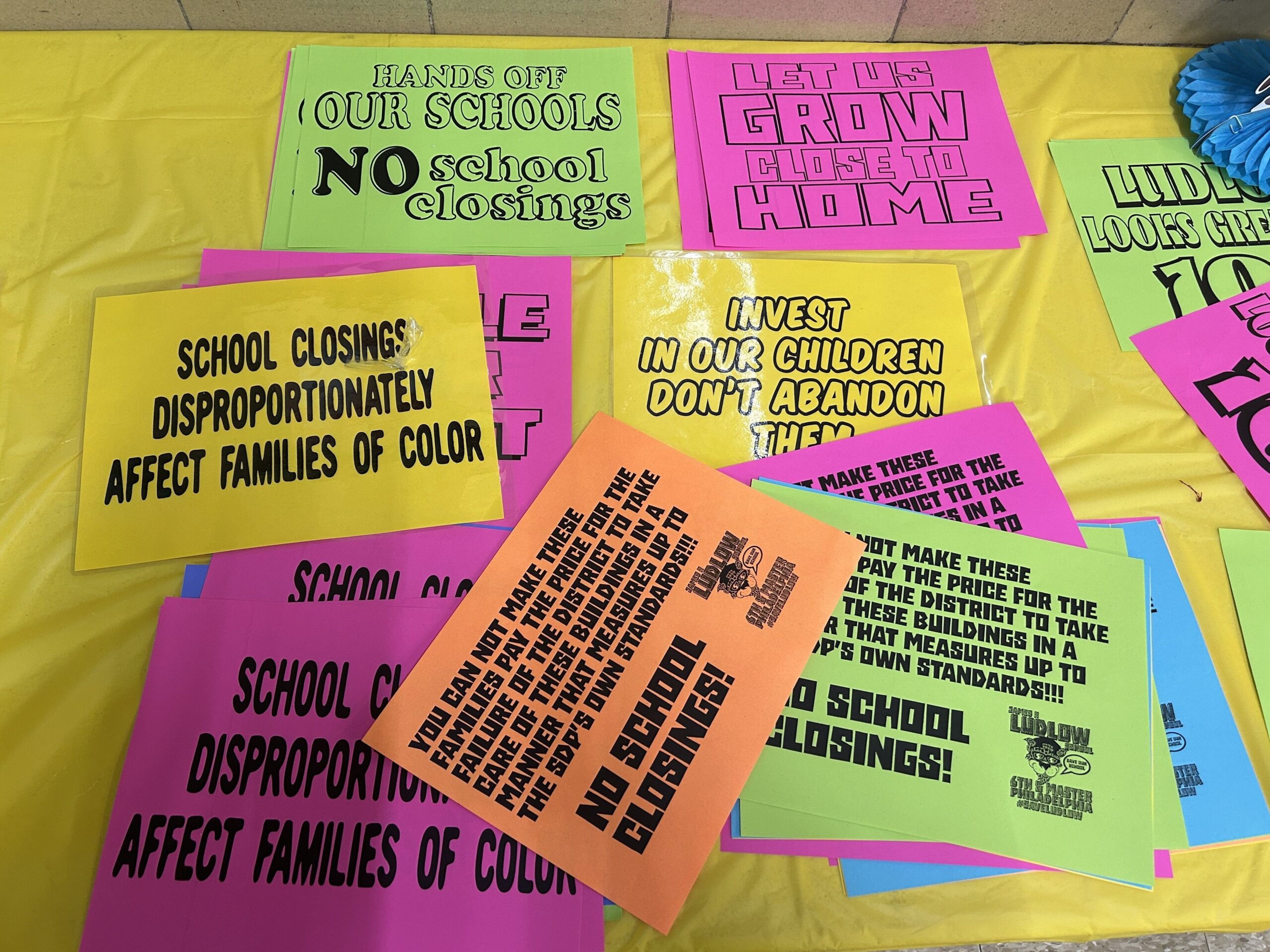
    Various signs protesting the closure of James R. Ludlow School, available at a community meeting with district officials in February.

    Ludlow community members said they did not want or need more housing. They wished the district would instead invest in the building for learning purposes, and said the district had let it fall into its poor condition.

    “It’s money before our kids,” said Valerie Johnson, known better as Valerie Brown, a beloved former Ludlow staff member who worked at the school for more than 30 years.

    While housing may bring new residents and investment to the neighborhood, the loss of Ludlow could drive some to leave, one mother said.

    “I stay in this neighborhood because of Ludlow,” said Darlene Abner, a mother of six whose children have attended the school, including a kindergartner enrolled this school year.

    Abner herself was born in the neighborhood, and she said she does not want her children to attend any school but Ludlow.

    She wears a nearly full face-covering niqab, and credited the school and its teachers for never letting that be a barrier to building a relationship with her and caring for her children.

    “They know me. They see me,” she said.

  • Penn tuition, fees, and room and board will exceed $94,000 for 2026-27

    Penn tuition, fees, and room and board will exceed $94,000 for 2026-27

    The full cost to attend the University of Pennsylvania next school year will exceed $94,000 under a resolution approved by the school’s budget and finance committee Thursday.

    The 3.8% increase in overall costs for the 2026-27 academic year is slightly more than last year, when costs rose 3.7%, but slightly less than the year before that, which was a 3.9% increase. Overall, the tab will rise from $91,112 to $94,582 for 2026-27.

    The costs include tuition of $65,670, fees of $8,308, room charge of $13,644, and $6,960 for meals.

    “People ask me when are we going to break through the $100,000 barrier,” Trevor Lewis, vice president of budget and management analysis, told board members. “Probably in FY28 or 29.”

    Lewis said Penn also will increase its undergraduate financial-aid budget 3.8%, to $347 million. Penn guarantees full tuition scholarships for students from families with incomes of $200,000 or less with typical assets and covers full attendance costs for students from families earning $75,000 or less. Of the university’s approximate 10,000 students, 46% receive need-based aid.

    Tuition for graduate and professional students will be set by the individual schools, the university said.

  • Philly school officials want to close this Frankford middle and replace it with a K-8. Teachers worry programs will be lost.

    Philly school officials want to close this Frankford middle and replace it with a K-8. Teachers worry programs will be lost.

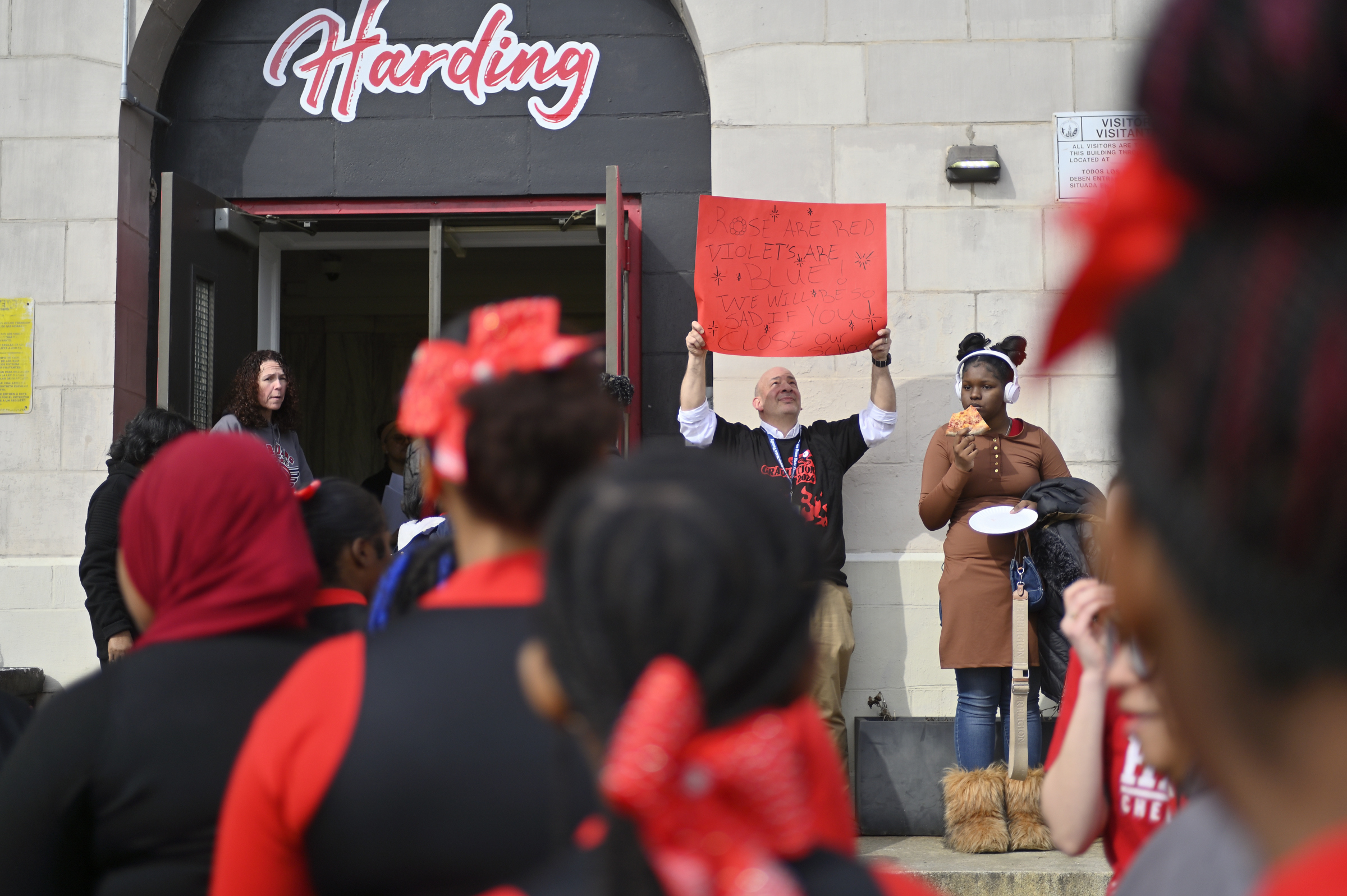
    From sports like soccer, football, and cheerleading to Model United Nations and unified programs for students with and without special needs, Harding Middle School’s offerings reflect its diverse enrollment.

    Of the Frankford school’s 570 students, more than 150 — nearly 27% — receive special-education services. About one quarter of students are English learners — with languages ranging from Spanish and Portuguese to Pashto and Ewe.

    Teachers say the school will not be able to offer the same depth of programming if the Philadelphia School District moves forward with a plan to close Harding, which serves grades six through eight. The district is proposing to move Sullivan Elementary School into the Harding building, and expand that school into a K-8 as part of a sweeping facilities plan.

    “We offer something for everybody,” said Beth Ann Dufner, a Harding teacher who coordinates the school’s English learner programs and has worked at Harding for six years.

    Because transitioning the building from a 6-8 school to a K-8 would mean fewer students per grade, Dufner said, she does not think the school’s programs for middle school kids could be replicated in the district’s plan — “not on a large scale like we have at Harding.” Teachers say students would have to travel to other schools to compete on some sports teams.

    Harding, which has capacity for 1,110 students, is one of five middle schools recommended for closure under the plan. In total, the district proposes to close 18 schools, pitching the plan as a better use of limited resources.

    Harding teachers disagree with the district’s shift away from standalone middle schools — saying that surveys did not give community members the option to voice support for the model.

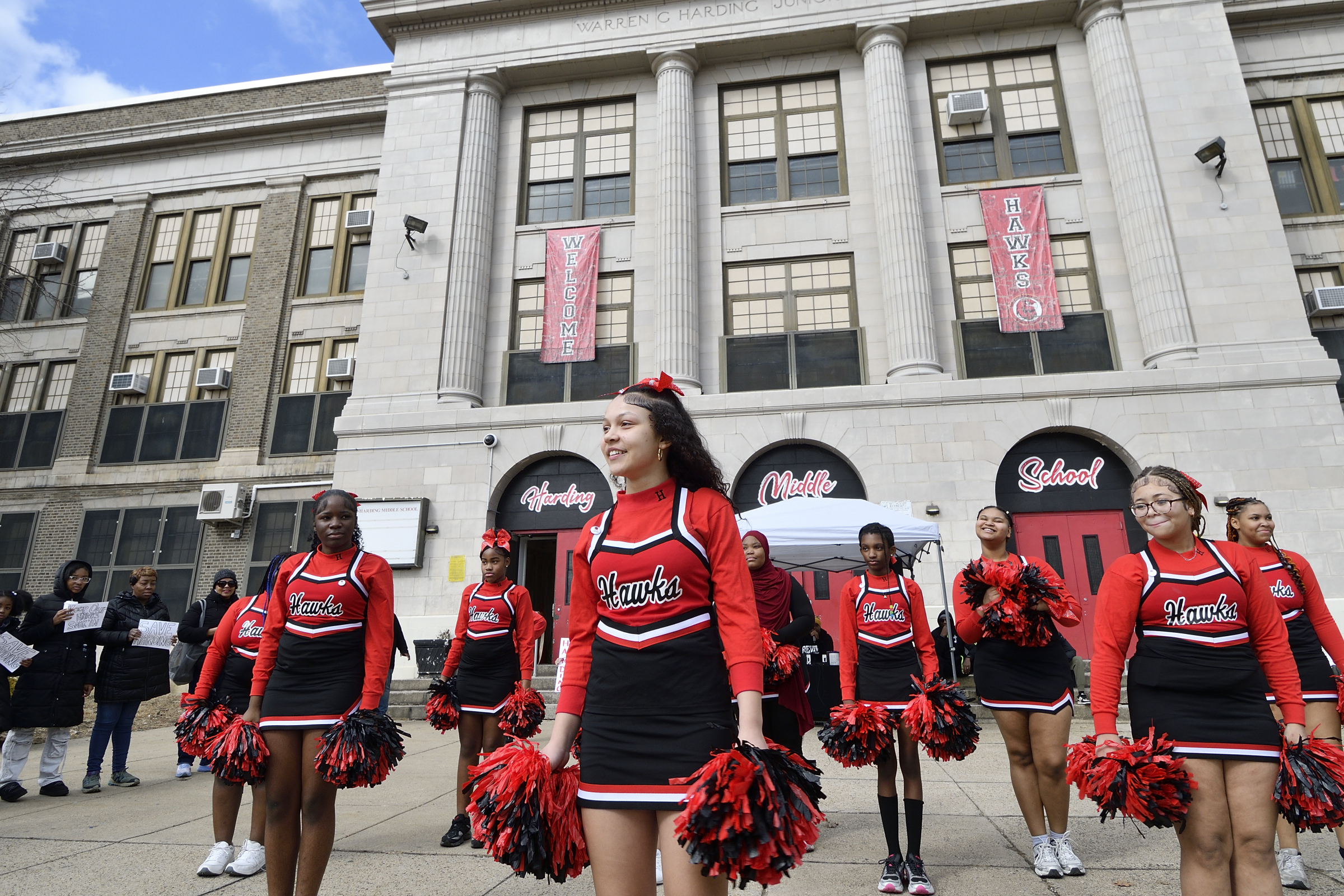
    Arianna DeJesus (front, center), 8th Grader and captain of the Harding Hawks cheerleading squad, during a rally in support of the middle school in the Frankford neighborhood last month.

    “I’ve never heard any parents we’ve had enrolled say, ‘We hate middle schools,’” said Jessica Peruso, an autistic support teacher at Harding. “That was a theme — but where did that come from?”

    A hub for special-education students

    Teachers also dispute the rationale for closing Harding specifically — questioning how the district scored Harding as “poor” for program alignment on a rubric for determining which schools to close.

    At one session, teachers were told the school did not have enough closet space, according to Dufner.

    “The things they said they based their score on — we have all of those things,” Dufner said, noting that Harding has two gyms, media and technology labs, and dedicated spaces for English learners and special-needs students.

    Like other teachers, Dufner faulted the district for Harding’s underenrollment, saying its decision to allow charter schools had drawn students away.

    But she also questioned whether Harding — which the district rated as only half utilized — was being penalized for its large population of students receiving special-education services. Autistic support classrooms, for instance, are required to have no more than eight students, far smaller than a standard class size.

    That “creates the appearance of underutilized space,” but it’s not, Dufner said.

    A district spokesperson said building utilization scores are not adjusted to account for smaller class sizes for special-needs students.

    The spokesperson, Monique Braxton, said numerous factors resulted in Harding scoring poorly on program alignment, from gym facilities in disrepair to lack of appropriate spaces for music and art classes.

    Harding serves as a hub for special-education students from a range of neighborhoods beyond the Harding catchment, teachers said. They described the school’s culture as particularly inclusive of kids with special needs.

    “That makes me the most nervous for closing,” said Peruso, who has taught at Harding since 2014 and was recently named the district’s Teacher of the Month. “I’m concerned about my kids. I’ve been teaching autistic support here forever. I don’t want them to get lost.”

    Under the district’s plan, Harding would have a phased closure, starting in the 2027-28 school year. Students previously assigned to Harding would instead attend Sullivan, John Marshall, Lawton, or Carnell schools. Meanwhile, the Harding building — rated by the district as in “unsatisfactory” condition — would receive upgrades before the expanded Sullivan school moves in.

    “You’re going to come here and fix the building for Sullivan students? Why aren’t the Harding students worth that investment?” Peruso said.

    Harding Middle School Principal Mary Sanchez stands at the front door as students, staff, community members, and elected officials rally to support the school last month in the Frankford neighborhood. It’s one of 18 the district has proposed closing.

    A ‘tight knit’ community

    While current students would not be affected by the closure, some have expressed dismay that they would not be able to return to the school and visit their teachers, said Amanda Chandler, who teaches English language arts at Harding.

    Chandler, who has taught at Harding for seven years, called it “very tight knit.” Every year, she said, former students have come back to see her or her colleagues.

    Compared with past teaching jobs, “I have never had kids more loyal to me, my well-being … than I have at Harding Middle School,” Chandler said.

    In letters shared by Peruso, several students said they wanted Harding to stay open because of its welcoming environment. “Everyone is united like a big family,” one sixth grader wrote. Another sixth grader said that teachers “let me know that I am safe and that everything will be okay.”

    Amarika Thomas, a paraprofessional at Harding who has lived in the community for 20 years, had been working in the school’s cafeteria when principal Mary Sanchez noticed her strong connections with students.

    Sanchez “pushed me to come out of the cafeteria,” said Thomas, who hopes to become a special-education teacher.

    While Thomas’ daughter attends a K-12 charter, she had hoped to possibly send her daughter to Harding for middle school, citing its array of activities.

    The district should invest in Harding, Thomas said: “Harding literally just needs a fighting chance.”

  • Temple University and the Philadelphia Orchestra and Ensemble Arts have signed a deal for a new partnership

    Temple University and the Philadelphia Orchestra and Ensemble Arts have signed a deal for a new partnership

    Broadway stars and orchestral players might lead budding Philadelphia musical talent in master classes, and new college internships could open up at the city’s largest performing arts producer and presenter.

    As Temple University prepares to establish an outpost in Philadelphia’s major arts district, the school, and Philadelphia Orchestra and Ensemble Arts have signed a memorandum of understanding for a new partnership, formalizing a dream stage for joint activities already underway.

    The new arrangement is expected to benefit not only Temple University students, but also younger students of Temple Music Prep and the Philadelphia School District.

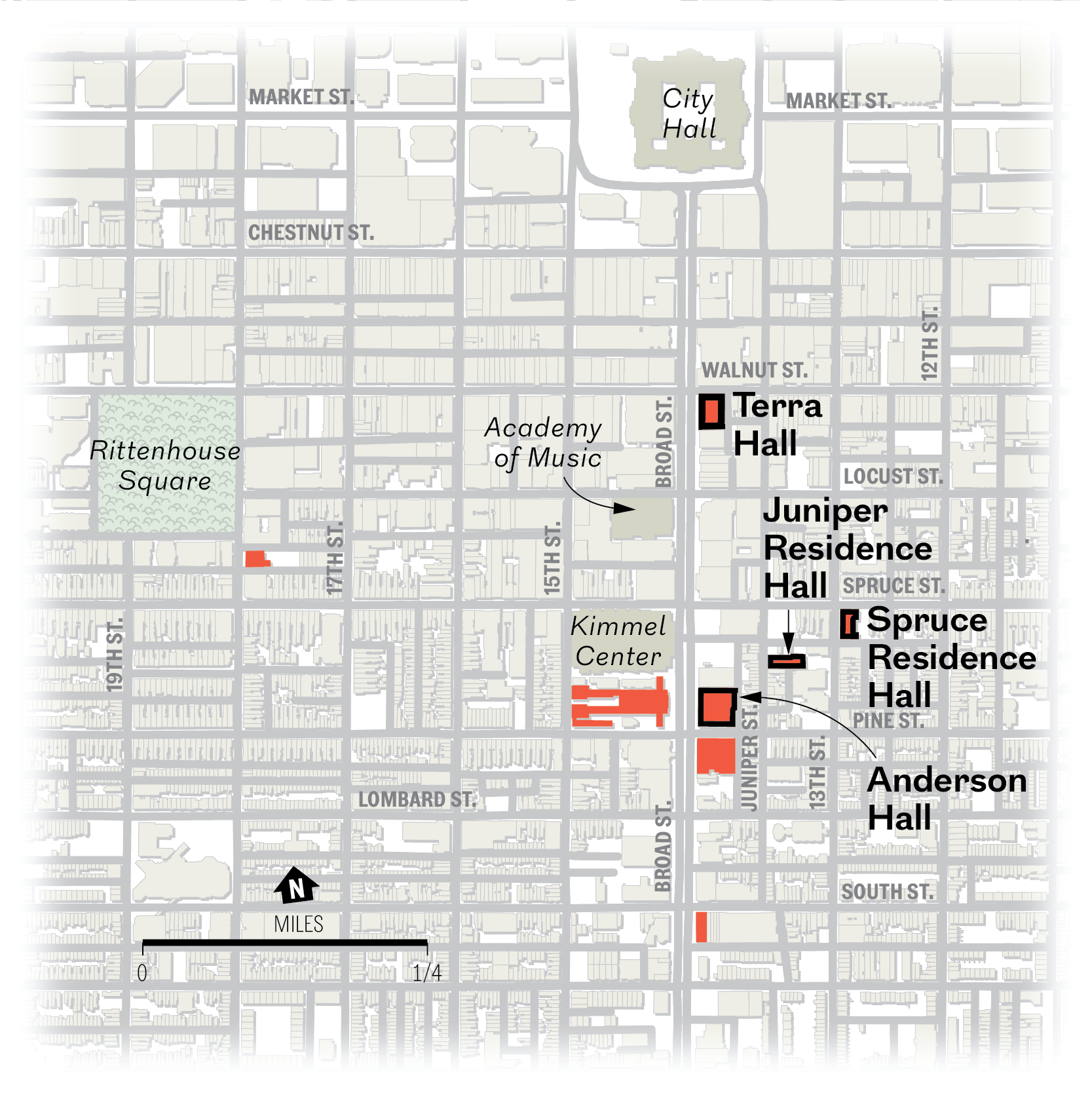
    Temple and the orchestra have long partnered on projects, but the university’s purchase of Terra Hall — near the orchestra and Kimmel Center — will allow a deeper level of involvement, leaders said.

    In the fall of 2027, for instance, about three dozen Philadelphia Orchestra current and retired musicians are expected to move their teaching studios from Temple’s main campus to Terra. Other collaborations are expected to take shape over the next year and half.

    “The gist of it is, Temple University and the Philadelphia Orchestra and Ensemble Arts are committed to working together to build a tangible partnership. It’s aspirational,” said POEA president and CEO Ryan Fleur of the memorandum of understanding, which was signed last month.

    “There’s a lot around the exchange of talent and supporting one another,” said Temple president John Fry.

    Terra Hall – shown here with other former University of the Arts buildings – is near the Academy of Music and Kimmel Center.

    For POEA, the partnership means it will no longer pursue the possibility of building an additional education wing at the Kimmel Center that had been in the early planning stages.

    “When I heard Temple was acquiring Terra Hall,” said Fleur, “the priority shifted from the idea of an education wing over the loading dock to how we could work with Temple to deploy the space in Terra Hall. Our greatest strength is not about building things, and if we unite in Terra Hall for the benefit of Philadelphia students, it’s a win for Philly.”

    An education annex at the Kimmel might have cost in the neighborhood of $100 million.

    “It was a large figure,” said Fleur. POEA is already in the process of raising hundreds of millions of dollars for a variety of needs from endowment to repairing and renovating its facilities, which include Marian Anderson Hall, the Academy of Music, and the Miller Theater.

    The Pennsylvania Academy of the Fine Arts on North Broad Street, where Temple University has established a presence in PAFA’s Hamilton building (on right).

    Temple has been establishing a series of partnerships south down Broad Street from its main North Philadelphia campus. It has leased space at the Pennsylvania Academy of the Fine Arts and is developing programs there, and is in the process of taking over the Library Company of Philadelphia, on Locust Street just east of Broad.

    It acquired Terra Hall in 2025 for $18 million after the abrupt bankruptcy and closing of the University of the Arts. Terra was already outfitted with practice rooms, a recording studio, performance space, a dance studio, and classrooms.

    Fry said that Temple is currently doing work on the Terra building, with particular attention to the foundation and elevators, and that the major part of renovations would be done by September 2027. But he said that some of the spaces will be usable this fall.

    Both POEA and Temple have existing relationships with the Philadelphia School District. Fleur said the next step is “uniting” the efforts among the three. Fry said Temple was in discussions with other arts organizations as potential partners in Terra Hall.

    “We want people to think of this as a public resource,” he said, “not a closed academic building just for Temple. Where Temple can play a role, we want to be a part of that.”

  • A Camden preschool teaching assistant is the first-ever from the city to win statewide award

    A Camden preschool teaching assistant is the first-ever from the city to win statewide award

    From the moment her rambunctious preschoolers arrive, instructional assistant Angela Feliciano tends to their every need, doling out lessons and discipline.

    Affectionately known as Miss Angie at the Riletta Twyne Cream Early Childhood Center in Camden, Feliciano has been a classroom assistant for nearly 30 years. She is also working to become a teacher soon.

    Feliciano has received accolades for her dedication and was recently recognized by the New Jersey Education Association as its Educational Support Professional of the Year for 2025-26.

    She is the first instructional assistant from Camden schools to get the recognition. She will represent New Jersey later this month at the National Education Association’s ESP conference in Anaheim, Calif.

    “She’s the first from Camden. It’s a proud moment,” said Camden Education Association president Pamela Clark, who represents about 1,050 teachers and support staff, including secretaries, clerks, bus drivers, custodians, and security officers.

    Clark nominated Feliciano, a childhood friend, for the award. Feliciano is well-liked by students and respected by parents in the community, and puts in extra effort to encourage learning, she said.

    Nominees were considered based on professional practices, advocacy and association involvement, community engagement, personal achievement, and how well they advance the image of support professionals.

    “I’m representing Camden. Not just bad things happen in Camden,” Feliciano said.

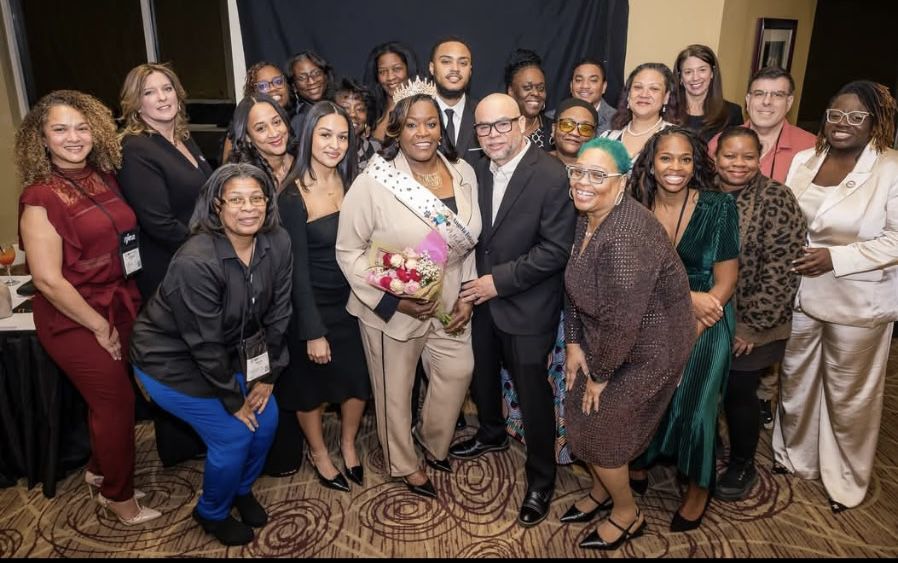
    Angela Felicano (center, third from left) celebrates her award with Camden Education Association members.

    Principal Medinah Dyer credited Feliciano with boosting preschool enrollment at Cream from about 120 students to 350 in three to four years. Feliciano attended weekend events to encourage parents to enroll their children.

    Feliciano purchases toiletries and items for students in need, and has been an advocate for children who experienced trauma or have behavioral issues, Dyer said. She is the first to arrive at school, and the last to leave, she said.

    “She is a role model for both students and staff, and her contributions have made our school a better place for everyone,” Dyer wrote in her nomination letter.

    Teaching assistant Angela Feliciano with students in the pre-K classroom of teacher Carey Hiatt at the Riletta Twyne Cream Early Childhood Center in Camden last month.

    During a recent morning at Cream, located in the city’s Centerville section, Feliciano and teacher Carrie Hiatt were in full swing with 15 preschoolers. The students are 3 to 5 years old.

    Feliciano and Hiatt crisscrossed the room, working with small groups of students for music instruction and reading. Feliciano sat on the floor with her charges or in tiny chairs to talk with them at eye level.

    In one corner, Feliciano played a game with a boy, pretending it was her birthday.

    “How old are you?” he asked.

    “I’m 7 years old,” she replied with a smile.

    Teaching assistant Angela Feliciano “spies” students as they clean up in a pre-K classroom at the Riletta Twyne Cream Early Childhood Center in Camden last month.

    Feliciano moved to different stations, engaging in dramatic play with a student, donning miniature clothes. At one point, she used a puppet for a letter exercise.

    “I just come to work and do what I do,” Feliciano said. “They’re my kids from 8:40 a.m. to 3 o’clock.”

    The entire class stood in place for a lively round of “Head, shoulders, knees and toes,” an exercise song that had the giggling preschoolers and Feliciano huffing and puffing.

    “That was so hard,” a preschooler gasped.

    The preschoolers spend the entire day in the classroom with Feliciano and Hiatt. The pair served lunch — chicken, rice, and plantains — while jazz played softly in the background.

    “She goes out of her way to make this place special for the kids,” Hiatt said. “She is excellent, an amazing teammate.”

    Feliciano was born and raised in Camden. After graduating from Camden County Technical School, she worked for two years as a data processor.

    It was always her dream to become a teacher, and she got a chance in 1989 when she joined the district as a paraprofessional. She has worked with older children, but enjoys the little children the best.

    “I love to see them grow,” she said. “I love when they grasp things, and they look at me and smile.”

    Feliciano, 53, now lives in Pennsauken and has acquired the credentials to become a teacher, earning bachelor’s and master’s degrees from Wilmington University.

    She still needs to pass the New Jersey Praxis exam to obtain her teaching certification, which has been a challenge. She has taken the exam three times and failed — the last time by a single point.

    Feliciano plans to take the exam again this spring. She has been studying vigorously and getting coaching from Hiatt. She hopes to inspire other paraprofessionals.

    “We are the core of the building. If it wasn’t for us, teachers wouldn’t be able to teach,” Feliciano said.

    Hiatt said Feliciano has already demonstrated an ability to prepare lessons, manage the classroom, and reach students. She believes she will be a great teacher, but would miss having her in her classroom.

    Married and the mother of two adult sons, Feliciano said she wants to remain in the classroom for many years, hopefully as a teacher.

    “I’m not ready to go. I don’t want to leave the babies yet,” she said.

    Teaching assistant Angela Feliciano helps students eat lunch in her pre-K classroom at the Riletta Twyne Cream Early Childhood Center in Camden one day last month.
  • Two Philly-area Jewish schools are merging, a ‘proactive’ push to remain competitive in the region’s strong academic market

    Two Philly-area Jewish schools are merging, a ‘proactive’ push to remain competitive in the region’s strong academic market

    Two prominent Jewish day schools in the Philadelphia suburbs are set to merge, a decision school leaders say will keep the institutions competitive in the region’s strong educational market.

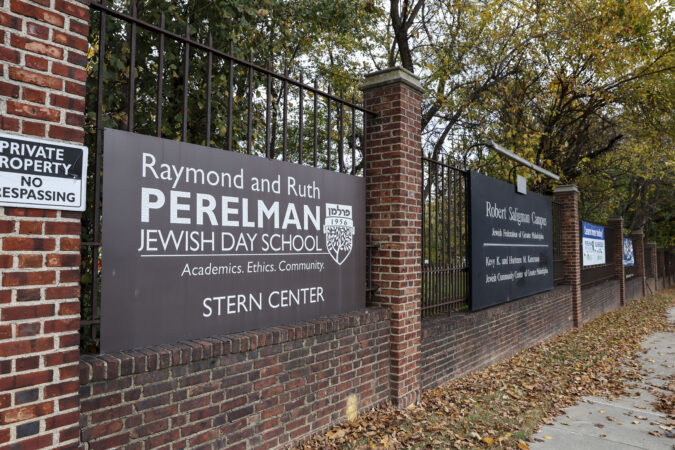
    Perelman Jewish Day School, a private Jewish pre-K and elementary school located in Melrose Park and Wynnewood, and Jack M. Barrack Hebrew Academy, a Jewish middle and high school located in Bryn Mawr, will merge next year to become the only unified pre-K through twelfth-grade Jewish day school in the Philadelphia area.

    Perelman and Barrack will maintain their current operations for the 2026-27 school year, while beginning to combine their admissions and development programs. Faculty, staff, and students will come under the unified school umbrella beginning in fall 2027. Perelman and Barrack will continue to operate on all three campuses.

    School officials say the merger will help streamline curriculum development and strategic planning while bringing more families into the Jewish day school system by offering a consistent, pre-K-through-high-school experience.

    Perelman Jewish Day School was founded in 1956 as the Solomon Schechter Day School of Greater Philadelphia. The school operates across two campuses, one in Melrose Park, which serves parts of Philadelphia County, eastern and northern Montgomery County, and Bucks County, and another in Wynnewood, which serves Center City and Philadelphia’s western suburbs.

    Jack M. Barrack Hebrew Academy, originally Akiba Hebrew Academy, was the nation’s first pluralistic Jewish secondary day school when it opened in Center City in 1946. The school moved to Merion Station in 1956, then Bryn Mawr in 2008. Barrack boasts numerous notable alumni, including Gov. Josh Shapiro and CNN anchor Jake Tapper.

    Perelman and Barrack completed a partial merger in 2012, when the schools combined their middle schools into a single sixth-through-eighth-grade program on Barrack’s campus.

    Tuition at Perelman ranges from $21,500 to $32,300 per year, and tuition at Barrack ranges from $34,900 to $42,700. Both schools offer tuition assistance. Perelman says it awards over $3 million in tuition assistance each year to families earning up to $500,000.

    School leaders say the merger will ensure Perelman and Barrack are an attractive option for families in Philadelphia’s rich educational ecosystem, where parents can choose from dozens of strong public and private schools. Often, families choosing private education are looking for continuity from pre-K through high school, something that Perelman and Barrack have not been able to provide until this point.

    The ability to have students “become part of an educational system from their earliest years and grow within that system” will be academically and socially “deeper and more impactful,” said Rabbi Marshall Lesack, Barrack’s head of school and a Barrack alumnus. Lesack will lead the unified school beginning in 2027.

    Daniel Eisenstadt, a member of the Perelman board of directors who will chair the new, combined board, said the merger will also allow for more cohesive planning. The schools will be able to align their vacation calendars, external messaging, and curriculum plans.

    Though the overwhelming majority of Perelman students already matriculate to Barrack, bringing the schools under one system will allow for more parity in what to teach and when to teach it. Elementary, middle, and high school teachers will be able to sit in the same room and plan best practices for everything from math to art to Jewish studies, considering the arc of a student from ages 5 to 18, Eisenstadt said.

    Both schools’ enrollment has been “stable to growing” in the past few years, said Eisenstadt. Both he and Lesack were clear that the merger is not in response to a souring financial outlook, as can be the case when educational institutions merge.

    “We’re both coming from a place of strength,” Lesack said.

    Barrack reported revenue of $20.9 million in 2024, an increase of $3.4 million over 2023, according to tax records. Perelman reported a revenue of $13.4 million in 2024, up $400,000 from 2023.

    However, Eisenstadt said, “there is a recognition that we operate in an environment where there are excellent other independent schools, and excellent public schools. Rather than waiting for a moment where we see a dip in enrollment or where there are challenges, I think the general feeling from a leadership point of view was, ‘Let’s be proactive.’”

    Amid rising reports of antisemitism, some Jewish day schools have seen a spike in enrollment, as families seek more opportunities for Jewish affiliation for their children.

    When it comes to growing enrollment at Barrack and Perelman, however, Eisenstadt said there’s no one cause. He is “a little bit skeptical about the generic narrative” that the Israel-Hamas war and rising antisemitism have solely driven increased interest in Jewish education. He says Perelman and Barrack can’t rest on the assumption that larger forces will inevitably push families toward the Jewish day school experience. In a “dynamic world,” the schools need to continue to evolve, he said.

    In Eisenstadt’s words, Barrack and Perelman can’t “assume that any one thing that’s occurred, any one event, or any one trend is the future.”

    Lesack and Eisenstadt said many of the merger’s details are still up in the air and will be decided by the board. However they noted that there are plans for major investments across all of Perelman and Barrack’s facilities. Plans have long been in the works to find a new home for Perelman’s Melrose Park campus. School leaders say they are committed to having a continued presence in Philly’s northern suburbs.

    Lesack and Eisenstadt acknowledged the challenges of merging two schools with different campuses and cultures. Yet there’s “an unbelievably strong foundation” upon which to build, Lesack said, citing the many families, values, and traditions that the schools already share.

    This suburban content is produced with support from the Leslie Miller and Richard Worley Foundation and The Lenfest Institute for Journalism. Editorial content is created independently of the project donors. Gifts to support The Inquirer’s high-impact journalism can be made at inquirer.com/donate. A list of Lenfest Institute donors can be found at lenfestinstitute.org/supporters.

  • Two Philly high schools are still fighting their proposed closures, even after officials tweaked plans to appease them

    Two Philly high schools are still fighting their proposed closures, even after officials tweaked plans to appease them

    Superintendent Tony B. Watlington Sr. said he heard the public outcry over his recommendations to close 20 schools.

    The Philadelphia School District leader fine-tuned his facilities plan last week, dropping the closure list down to 18 schools — and changing recommendations for Paul Robeson High School and Lankenau High School.

    Both schools would still close under the plan, which is now in the school board’s hands. Instead of merging into large neighborhood high schools, however, the small, selective-admission schools would be absorbed by magnets.

    Watlington said the tweaks would still allow the district to bring more high-quality academic and extracurricular opportunities into neighborhood schools while acknowledging the need to manage limited resources.

    But students, staff, parents — and some powerful allies at both schools — say Watlington’s counter-proposal isn’t enough. Both communities are still fighting.

    Under the revised plan, Lankenau would merge with Saul, not Roxborough, and Robeson would merge into Motivation, not Sayre.

    State Rep. Morgan Cephas (D., Phila.) recently visited the Philadelphia Flower Show, where she and other officials marveled at Lankenau students’ exhibit, which examines abundance, roots, and connections through culturally important plants. The display won a gold medal and the prestigious Alfred M. Campbell Memorial Trophy.

    The dichotomy struck Cephas, she said. Lankenau students “are at the Flower Show, and [the district] is trying to close the school?”

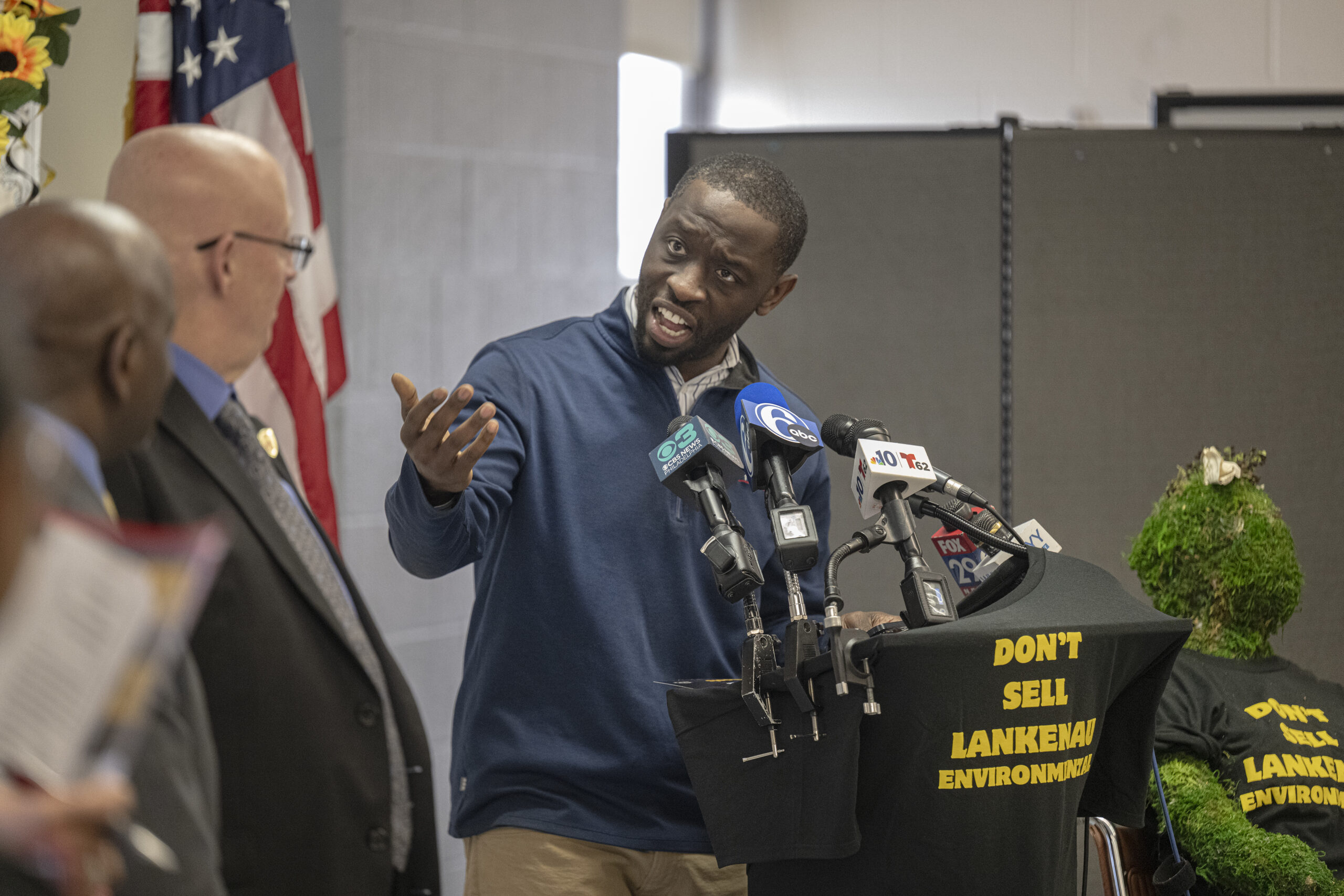
    On Wednesday, students, parents, lawmakers, and Philadelphia Federation of Teachers officials gathered at Lankenau to drum up support for Gov. Josh Shapiro’s budget proposal. But really, it was another save-our-school rally.

    A ‘prime example of a successful school’

    Lankenau “is a prime example of a successful school,” said Messiah Stokes, an 11th grader at the Upper Roxborough school. The school has a 100% graduation rate, and is Pennsylvania’s only three-year agriculture, food, and natural resources career and technical education program.

    The school itself sits on 17 acres, which district officials have proposed giving to the city — though a 1970s legal agreement could foil that plan. Lankenau is also adjacent to 400 more wooded acres via the Schuylkill Center for Environmental Education. The environmental center shares its land and its opportunities with students, who hold bird-watching clubs on breaks and hold classes outside when weather permits, and have abundant internship opportunities.

    “My school is a prime example of a successful school,” said Stokes.

    Watlington has said that Saul — the city’s agricultural magnet on a working farm on Henry Avenue — has a mission that’s closely aligned with Lankenau’s, but supporters say Lankenau’s success is closely tied with its wooded campus, its streams, and its ecosystems.

    Councilmember Isaiah Thomas speaks at Lankenau High School during a gathering to support the efforts to fight closing recommendations on Wednesday.

    Councilmember Isaiah Thomas, chair of City Council’s education committee, is incredulous that the district is attempting to close the school, which educates mostly Black students.

    “I wonder if Lankenau did everything that it currently does: graduation rate … community involvement, the educators’ participation — I wonder if Lankenau was 98% white, will we be closing Lankenau?” Thomas said.

    Lankenau enrolls 228 students; its enrollment took a hit when the district changed its special-admissions policy. District officials have said that the school system lacks the long-term funding to drive academic improvement while continuing to operate 216 schools that have 70,000 empty seats.

    Still, “small schools are worth the investment,” said Amy Szymanski, a special-education teacher at the school. “Shutting down a school doesn’t just impact one community, it shakes other schools that have to absorb the impact as well.”

    Szymanski urged district officials and decision makers to come up with different plans.

    ‘Culture is not transferable’

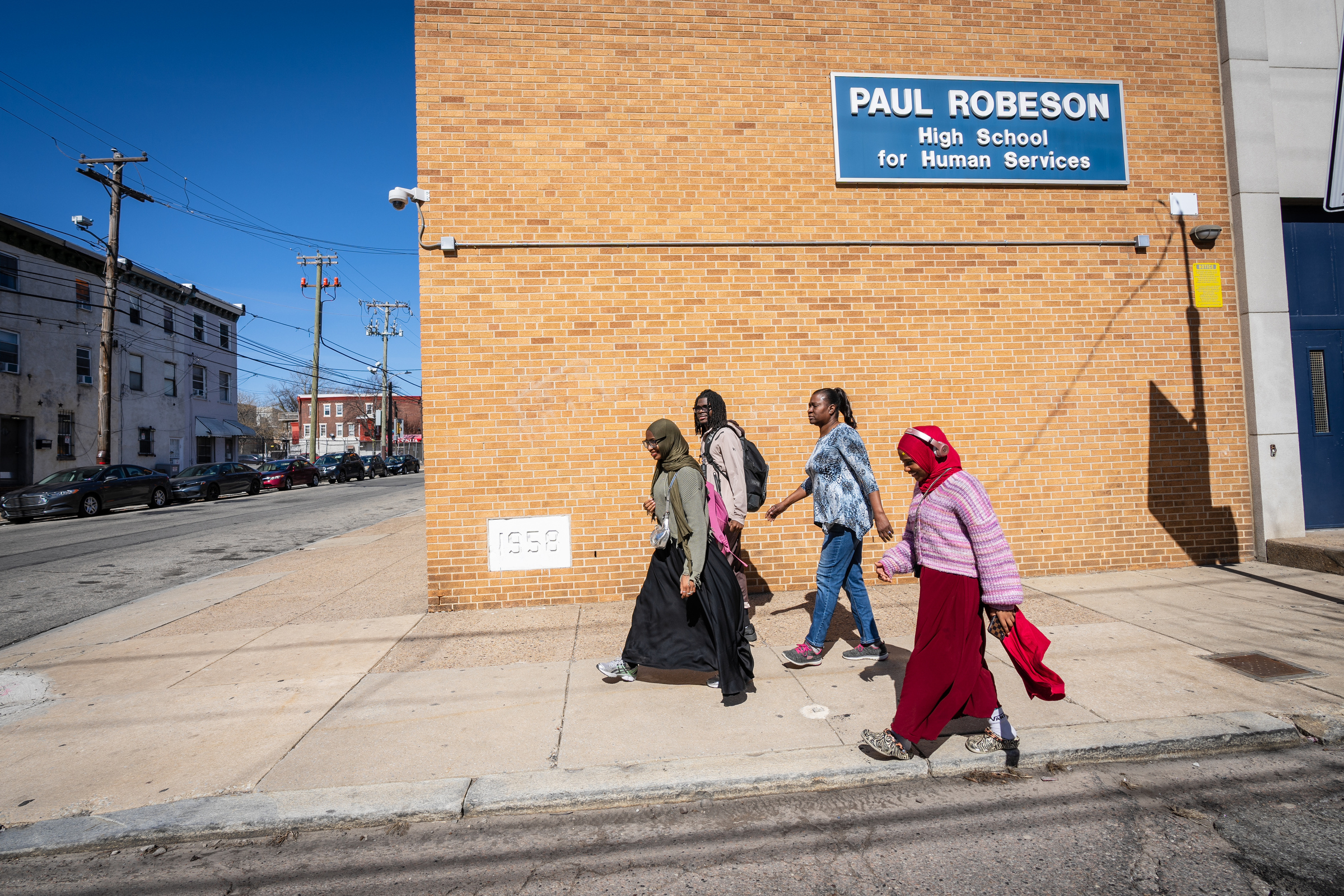
    Robeson did everything the district asked it to do and then some, said Elana Evans, a longtime educator at the West Philadelphia school.

    The school was heralded as a model for other Pennsylvania public schools by former Gov. Tom Wolf. It won citywide prizes and sent a student to Harvard University. Its students successfully petitioned district leaders for air-conditioning in their building. And its staff secured donations to have a major cafeteria renovation, though its building is still judged in “poor” condition by district standards.

    “Why can’t Paul Robeson have a new school?” said Evans, who previously taught at University City High, closed by the district in 2013. “Haven’t we proved ourselves, haven’t the kids sacrificed enough? Haven’t they shown what they can do and what they’re willing to do?”

    Students walk outside Paul Robseon High School with Elana Evans, a Robeson teacher (in blue) in this 2025 file photo.

    And though moving to Motivation, in Southwest Philadelphia, may be slightly more palatable for some Robeson parents, for most, it won’t, said Evans.

    “Students would still have to go to 60th Street, traveling a distance,” said Evans. “If those parents wanted them to go to Motivation, they would have picked Motivation.”

    Motivation had initially been on the chopping block as well, but Watlington removed it from the list last week.

    The district has said it wants to preserve the successful Robeson culture, just elsewhere, but Kyana Hopkins, said that won’t work.

    “Culture is not transferable,” Hopkins said. “Make it make sense.”

    Samantha Bromfield, president of Robeson’s Home and School Association, said the district will lose families if Robeson goes away.

    “Understand that a parent like me will send my child back to being homeschooled” if Robeson closes, Bromfield said. “Your choice doesn’t fit my criteria of what I’m looking for my children.”

    Inheritance, and questions

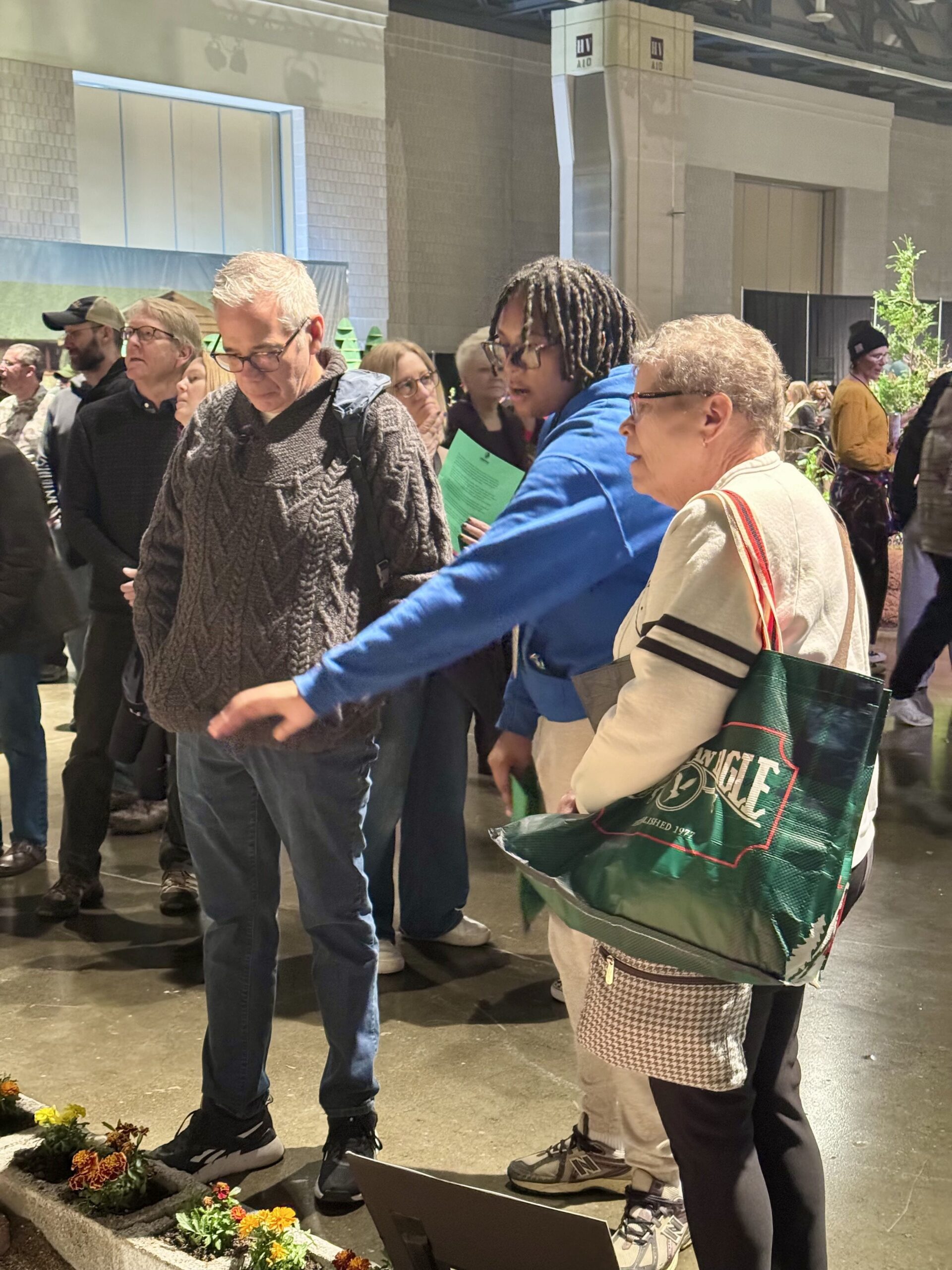
    The Flower Show was abuzz Wednesday, with a crowd hovering around the Lankenau exhibit. “Inheritance” — a verdant wonderland showcasing plants grown from local seeds, set around a weathered wooden table — asked viewers to think of the question, “What tastes like home to you?”

    Lankenau High senior Sasha John (blue hoodie) explains her prize-winning school’s Philadelphia Flower Show exhibit to visitors on Wednesday.

    Several Lankenau students staffed the exhibit, answering questions — and showing visitors green “Keep LANK Open” fliers, encouraging passersby to share words of support for the school with the school board and City Council.

    “It doesn’t make sense to me,” said Amelia Pennycooke, a Lankenau senior, of the proposed closing. “We have so many opportunities at Lank.”

    Lankenau High School’s exhibit, which the school’s eco art class worked on all school year, won a gold medal and the Alfred M. Campbell Memorial Trophy at the Philadelphia Flower Show. “Inheritance” examines the question “what plants taste like home to you?” It was designed and built by Lankenau students.

    Noel Alford, a Lankenau parent, said the school needs to remain open, its land not used for any other purpose. The amendment to Watlington’s plan falls short, she said.

    “Saul is a mistake,” said Alford. “Saul is an agricultural school. They are two different magnet schools.”

    While elected officials have no say in which schools close, Thomas said it’s up to them to keep pressuring the board to rethink some closures, including Lankenau’s.

    “This is a legacy moment for us as elected officials,” said Thomas. No one “wants to add that black mark on their career that says you were the person that was in charge when this injustice took place.”

  • The Quakertown school board has accepted its superintendent’s resignation

    The Quakertown school board has accepted its superintendent’s resignation

    The Quakertown Community School District board accepted the resignation of Superintendent Matthew Friedman at a meeting Tuesday night.

    Friedman, a former Ocean City, N.J., superintendent who took over the 4,600-student district in Upper Bucks County in 2023, had been on leave since Feb. 13, a week before a student walkout protesting federal immigration enforcement ended in a confrontation with police.

    District officials did not give a reason for the leave.

    On Tuesday, the board voted 9-0 to accept Friedman’s resignation, without any discussion.

    Lisa Hoffman, the assistant superintendent who filled Friedman’s role during the recent U.S. Immigration and Customs Enforcement walkout that garnered national attention, was appointed Tuesday as interim superintendent.

    Addressing the board before the vote, Ryan Wieand, the president of Quakertown’s teachers union, said that selecting the next superintendent “is not simply about filling a position at this point. It’s about restoring trust.”

    Wieand said the superintendent’s job “demands presence, visibility, and leadership that requires showing up, and not just for social media photo ops.”

    The district “can’t be led effectively by someone who is absent more often than not,” Wieand said. “Our next superintendent needs to be 100% invested in Quakertown every single day,” and not view the job as “a stepping stone to another destination.”

    He called Hoffman the best candidate for the job, praising her loyalty to the district and “true accountability.”

    Friedman could not immediately be reached for comment Wednesday.